I started drafting this blog while unknowingly coming down with COVID, and now can’t remember what I wanted to say…
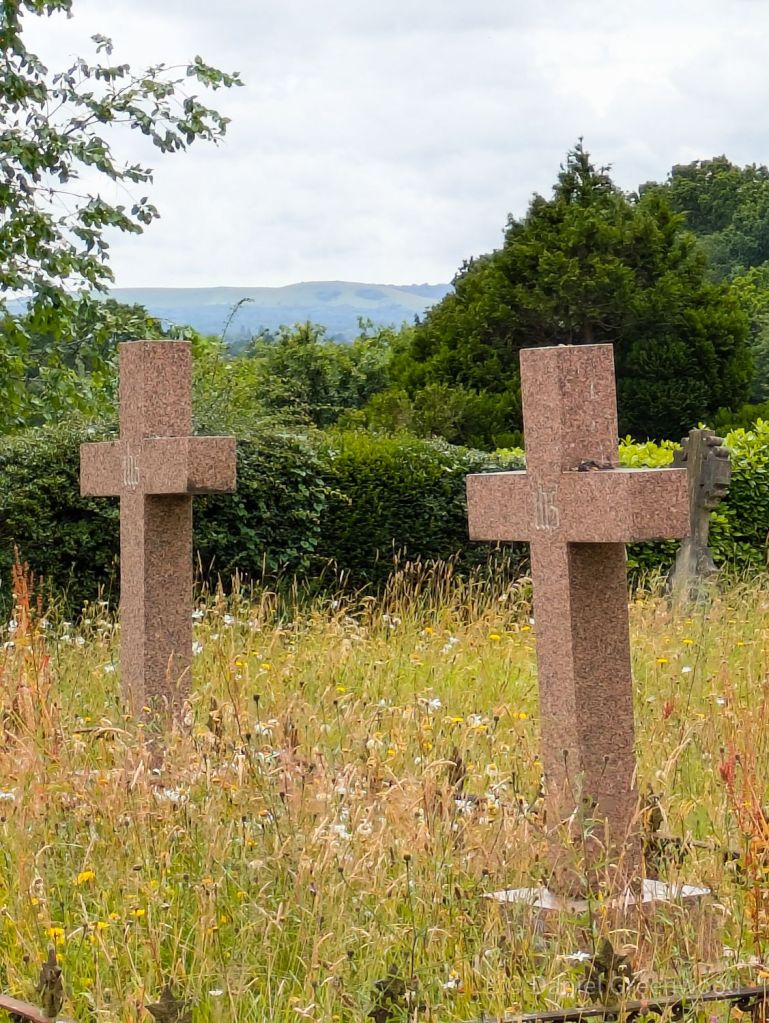
Nevertheless, the photos here are a few phone pics from a wonderful churchyard in Haywards Heath in West Sussex.
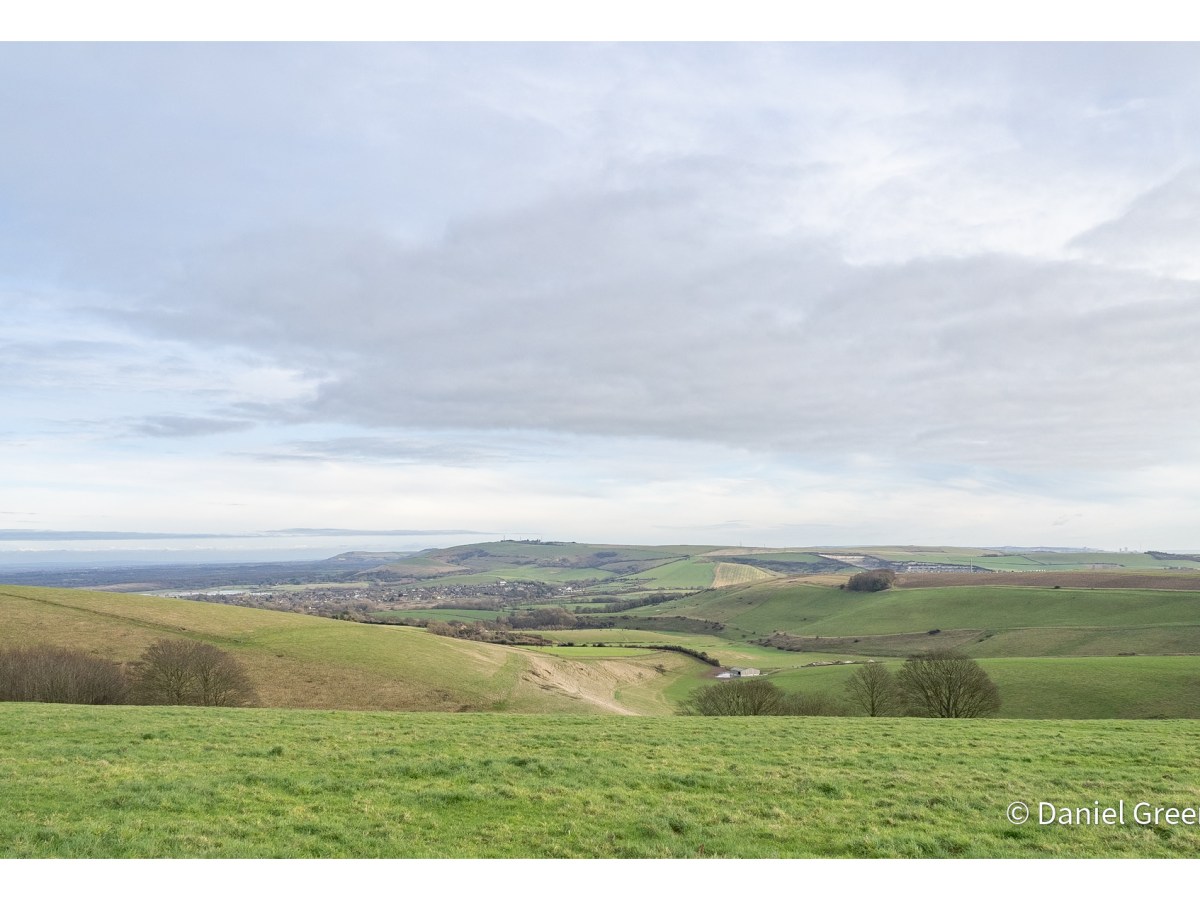
The churchyard has views of the South Downs, in this case towards Wolstonbury Hill. I was actually going to be walking there for the coming weekend but the virus has robbed me of that dream. I must spend less time hugging 5G phone masts.
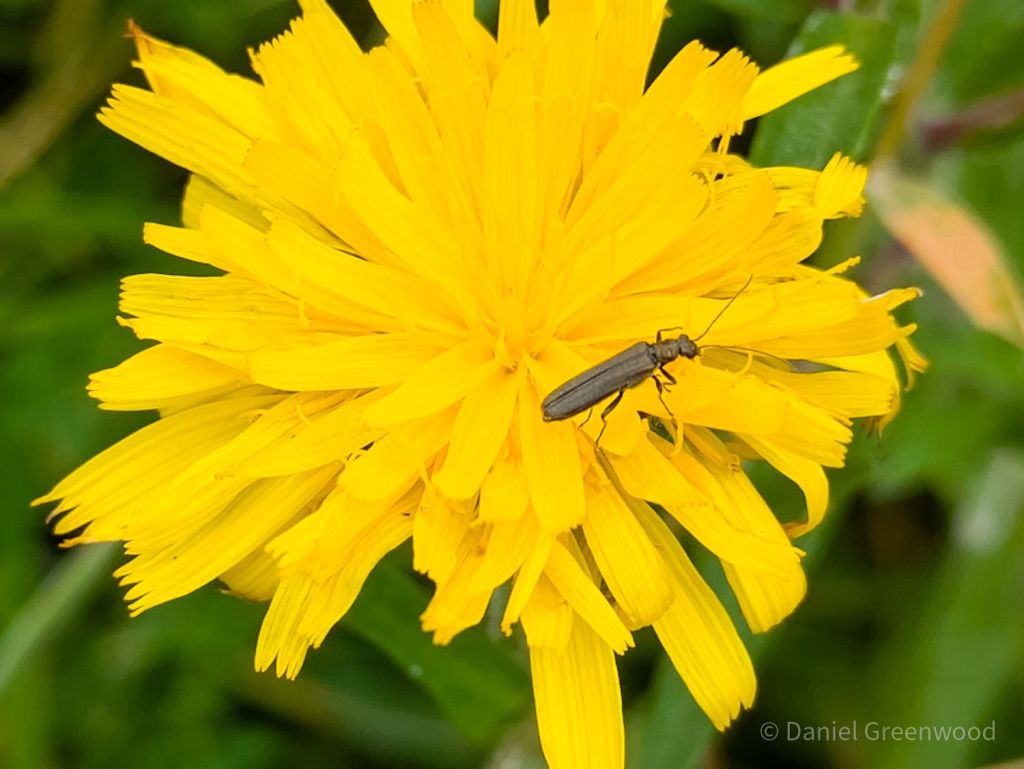
Again, I am so impressed by the detail that the newer phone cameras can achieve. This is probably a furrow bee (I think sometimes referred to as sweat bees?) in a common knapweed flower head. Did you know that daisies are some of the most evolutionarily-recent flowers and they make use of multiple florets, as seen here. Bees are impressed.
Hawksbeard or hawkbits (too ill to check) abound in these Sussex Weald grasslands. This is an Oedemera beetle, so a relative of the iconic swollen-thighed beetle. You may have seen him pumping iron in your local gym.
The nicest find was among the ragwort, a plant that inspires those on the margins of society, and upsets those who worry about their livestock being poisoned by it.
This is a cinnabar moth caterpillar, like the socks of some experimental Netherlands football kit. Their homestrip warns of their toxicity, so I had a sandwich for lunch on this occasion, just to be safe. Not that it made any difference! #Sick
I recently upgraded my phone from a Fairphone 3+ to a G**gle Pixel 7a. The Fairphone dream is dead for me. I bought the Fairphone 3+ looking for a sustainable option that would last a long time and be invested in. Instead two new models were soon released and the 3+ was effectively archived.
The Fairphone 4 and 5 are just too big and expensive, but the company have pushed sustainability and human rights up the agenda. Surely people shouldn’t be getting a new phone every year. I would argue it’s irresponsible due to the sensitive materials required and the shady employment practices across the production line.
I don’t think I would be interested in smartphones if they didn’t have cameras. Phones are thought to have killed off much of the entry-level camera market, especially when they are so good now and storage and sharing has become digital.
Back in 2002 I took Media Studies A-Level and we were taught about ‘convergence’, the coming together of all manner of tech into single devices. Photography has been a key part of that process. Radios, TVs, typewriters, even people’s jobs have disappeared into phones. This has been predicted for a long time.
So can anyone who considers themselves a photographer (always sounds very serious and self-important, doesn’t it) ignore phone photography? I don’t think so. Especially because Instagram has become the prime mechanism for professional photographers to promote their work.
Also, I’m writing this blog post on my phone!
Anyway, here are some of the first images I captured on the evil Pixel 7a. The camera is exceptional.
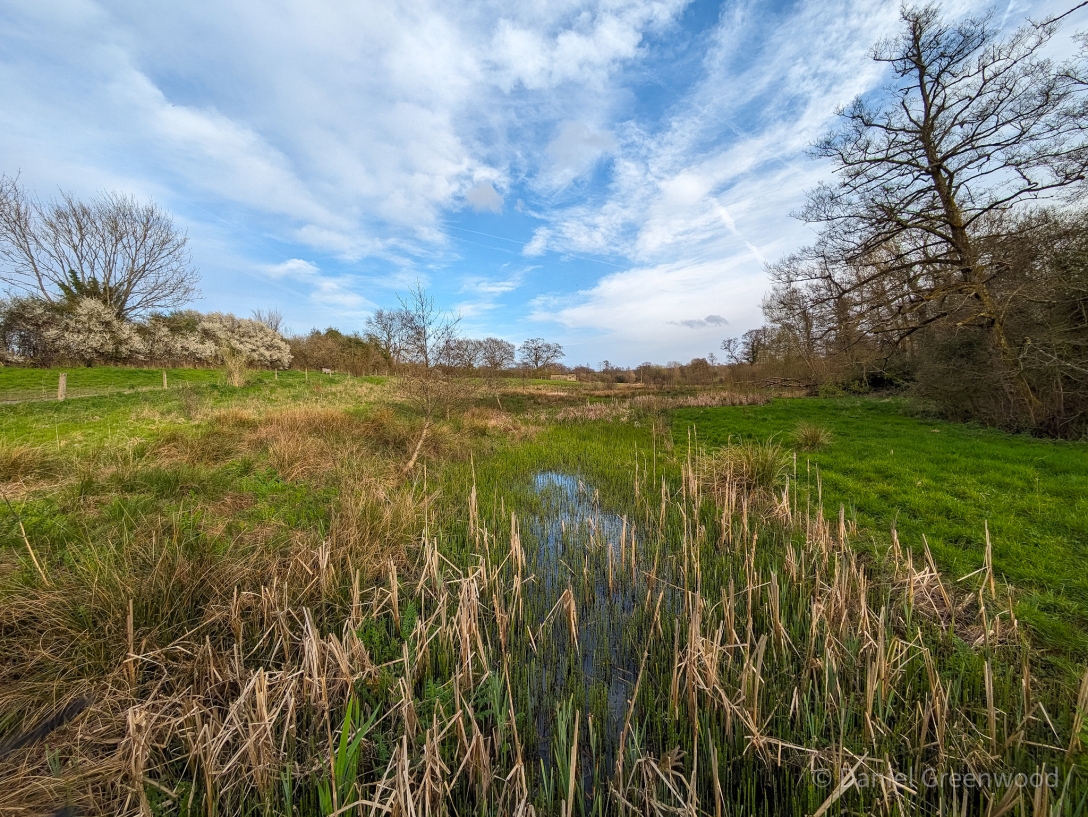
One thing that recent camera phones are doing so well is controlling glare. The sky here would be ‘blown out’ or over-exposed in normal images taken on a camera. AI is working here, I expect, to effectively take two images – one exposing for the foreground, a second for the sky. It can look quite over-edited, but for random snaps it’s really helpful.
Another interesting change with newer phone cameras is the inclusion of a wide angle lens. This lens type is probably one of the most controversial in the world of photography, because they’re rarely needed, heavy, expensive and often have extreme barrel distortion on either side of the image. Ever been at the far end of a photo taken with a wide angle lens? You probably looked quite warped!
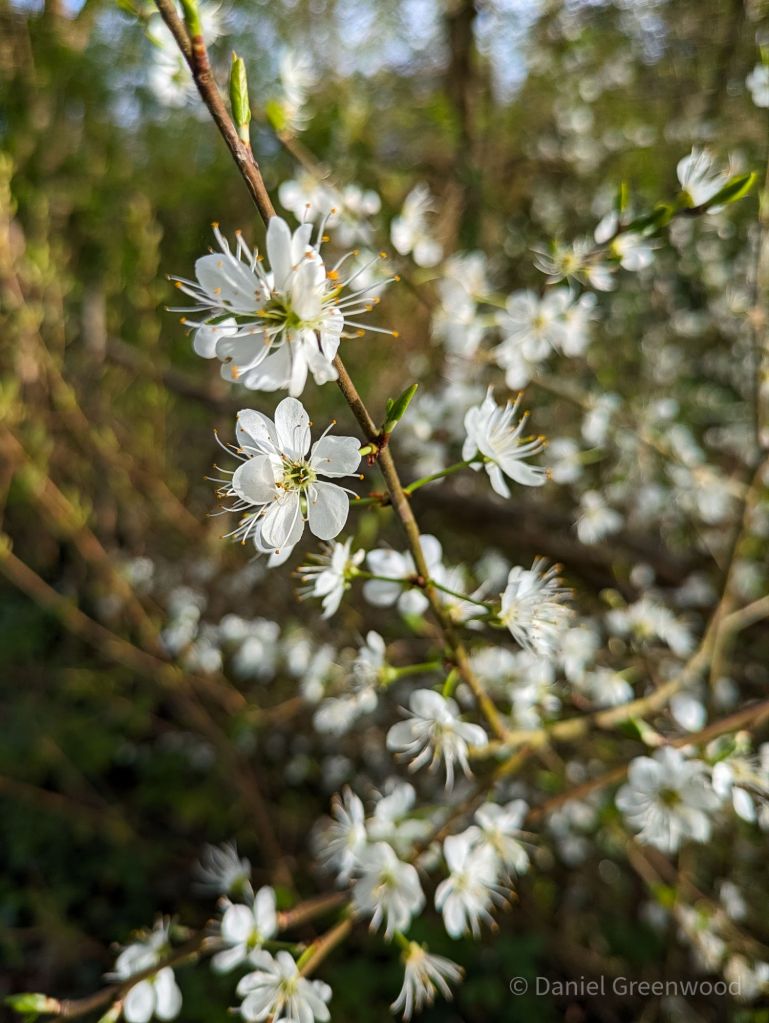
One thing that impresses with the Pixel 7a is the autofocus. These blackthorn flowers were blowing in the wind and yet the detail is so good.
Lichens are a great thing to photograph because they stand still and can be very attractive subjects. I was considering stretching my budget for a Pixel 8 Pro because it had a macro function. Reviews of the 7a said that it can focus closely, and that is true, to a degree. Also it sounded like the AI in that phone maybe does too much.
One potential block on macro potential is that the phone seems to do auto noise reduction. That can make these weirdly impressionist details were the AI is trying to hide graininess from a high ISO. I’ve noticed it a couple of times and it’s not ideal. The detail and focus is otherwise really good. This is not what the tech people call ‘flagship’ or top of the range.
All in all, I am amazed by what this camera can do. It is so much better than the Fairphone 3+, which shows how quickly cameras are developing in phones.
Would this phone make me sell my standalone camera? No way. Lenses and sensors of mirrorless, standalone cameras can’t be matched by phones currently. It just provides a great option for capturing nice images on the go. It’s going to be especially good for fungi.
Looking out over the Brooks, two dark bird-shapes soar against the faint outline of the South Downs. Below them are green conifers and leafless oaks.
Buzzards, I think.
A woman approaches me from behind and stands to the side of me. ‘Dude,’ she says. ‘There’re eagles out there!’.
I look through my binoculars again but can’t see any sign of white-tailed eagles (it’s not going to be golden eagle). They’re known to hang around the wetlands of Amberley and Pulborough, having been reintroduced to the Isle of Wight in recent years. This is an ideal place for them.
The images I’m looking for are brown and white Muppet-like characters, as I remember seeing them in Hungary and Czechia. Never before in Britain, though.
The eagle messenger tells me to head down to some of the hides where ‘someone will have a scope’.
I march down there and drop into the first hide, benches packed out. But people are only looking down at the bank right outside where a snipe stands still against the grass. There is no eagle energy here.
A man with a telescope and tripod on his shoulder and a camera around his neck walks down the path towards me. I ask about the eagles. They’ve gone off somewhere, he says, wishing he could be more help.
Heading to the next hide, which I recognise as the one the eagle messenger told me to stop off at, there’s palpable excitement among the benches. I find a spare seat and ask the woman next to me – is everyone looking for eagles?
She smiles, pointing out where they had just been seen. I listen as others describe their apparent return to view. Against the South Downs two dark shapes soar. Then I realise it – I’d already seen them, before I even knew what they were.
They weren’t buzzards, they were white-tailed eagles.
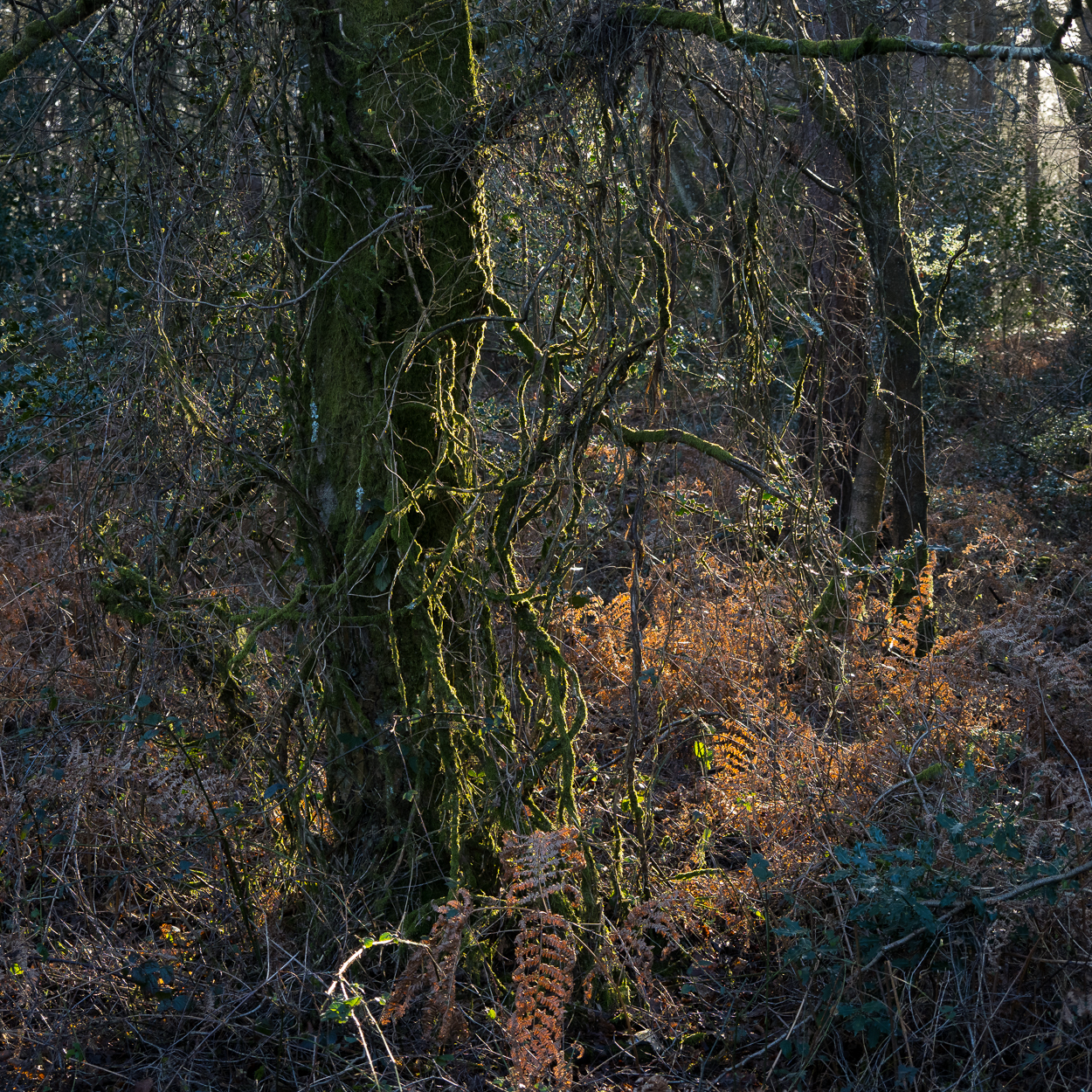
At the entrance to the woodland a sign warns of forestry activities. It’s time to expect deep rutting to the tracks and soil, and conifers pulled out of this vast area of afforested heathland, and old oak and beech woodland.
A song thrush lifts up from the track and onto a nearby branch. Their lives are bitter battles of survival in January. In early spring their music travels the woods and fields, parks and gardens. The bird stoops on the branch, eyeing me in that wild way.
The sun is shining and the birches gleam white in the treetops.
Pine needles are bleached to an almost aquamarine.
On the main trackway the machine rutting appears from a tract of maturing pine, oak and birch. A track churned-out by huge tyres and now full of milky-brown rainwater. The tyres, inevitably, have dug up sections of ditches where fleabane, hemp agrimony and common spotted orchids abound in summer.
Then again, this trackway and its ditches were likely created for the forestry works, so it’s maybe a case of swings and roundabouts. The extraction works are set to end here in the near future, no doubt to allow the woodland to move at its own pace. Plantation trees will be replaced by self-seeded birch, and the jays’ forgotten oak cache, if the deer don’t eat them.
There is something unexpectedly wild about forestry landscapes, their lack of obvious human culture. There is not much coppicing here, not much lopping or billhooking. No dining tables are set by charcoal burners, or mud huts packed up inside clearings.
No one is claiming it for their own, not even the foresters.
It’s been a very busy summer so far for me of working and commuting. I had a free afternoon and so headed to my local dreamspace, but with no mushrooms on the mind – literally or figuratively.
Red admiral (phone pic)
The number of butterflies was remarkable, perhaps the sense of doom about 2023’s poor invertebrate spring had dampened my expectations too much. There were red admirals, skippers, whites of course, and even a white admiral on the sandy track. White admiral is something I don’t see that often, mainly because I lived in London for so long. Then again, it is cropping up in SE London now, which is interesting.
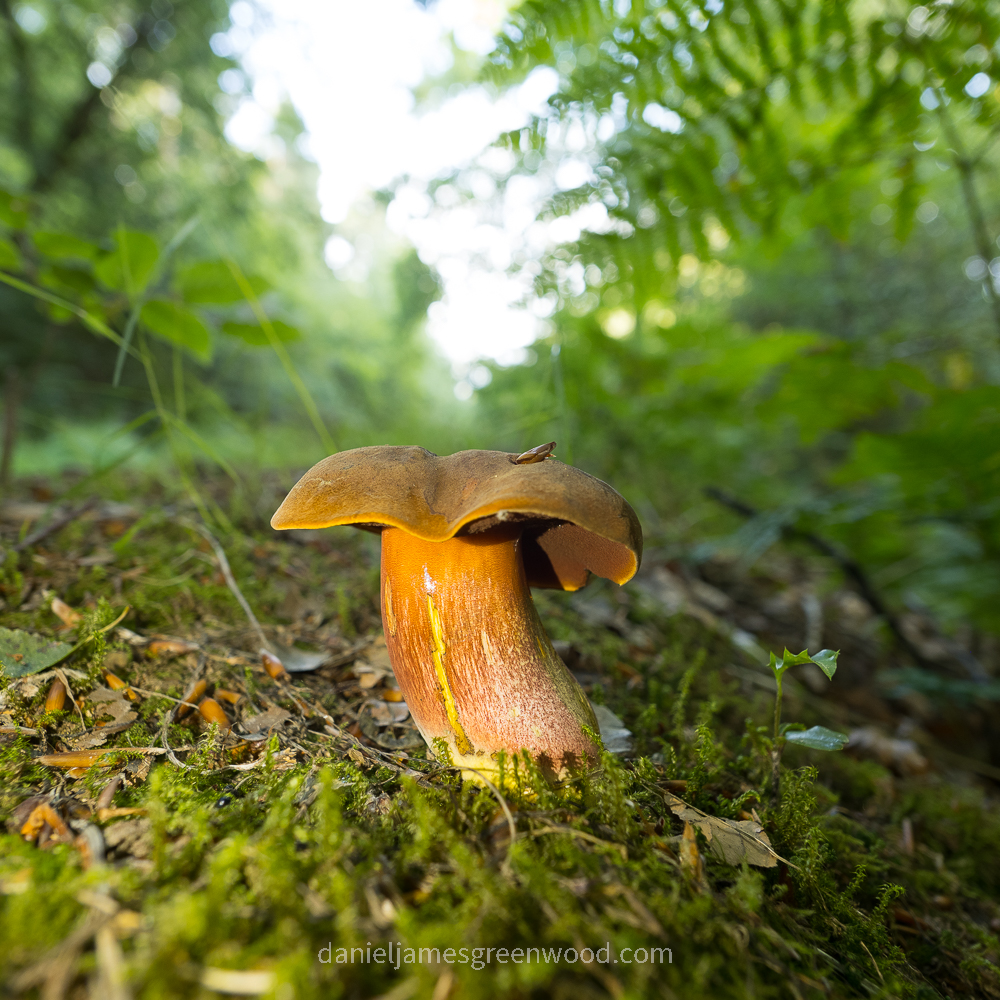
I was enjoying the sense of a butterfly summer, when I nearly spilled my invisible coffee at the sight of a deep red mushroom on the edge of the track.
Mushrooms, so abrupt, unapologetic. They know how welcome they are, even if you don’t realise it yourself at the time.
This was one of the summery, colourful boletes that can be found at this time of year. It’s probably a neoboletus, but my iNaturalist record is without community input and I haven’t had the time to do any research myself. So it remains an unknown jewel.
A few paces away was a more common and typical summer shroom, what I would guess is a blusher.
This short walk on the edge of the High Weald was notable for its green-ness, surely close to peaking as August nears.
We’re lucky over here that we aren’t experiencing the mega burns and record high temperatures of Greece, Italy and Arizona. You have to wonder how some of our fungi will cope with the drought and the impact on our woods. No doubt fungi will outlive humans in the long, long run (they can survive and thrive in nuclear reactors) but the heat can’t be good for the health of our woods which may struggle to adapt to pace and intensity of change.
When are we going to see serious action on climate, rather than flip-flopping by both major political parties? The kind of urgency we saw in crisis-managing COVID-19? Am I destined to see meaningful environmental policy remain as a marginal ideal in my lifetime?
No doubt fungi will rise into conservation thinking beyond the obsession with bringing back questionable, extinct species. But will that be too late as the heat rises and the woods burn?
Fungi, ever-resilient, have been found to benefit from burning in Australia, but of course that is just a handful of species.
It would be foolish no to follow one of the key messages fungi can teach us: don’t forget the present, you never know what might pop up.
I’ve been trying to keep my macro photos rolling in the absence of June’s one pic each day. It’s a bit like keeping your lawn growing after No Mow May.
Actually, no, it’s harder because you have to be proactive.
By far the best encounter with the macro world this past week was a patch of hogweed along a footpath by the local river. A cyclist went past me as I was taking these photos – even though it was a footpath – and glared at me as if I was doing something truly evil or dangerous to the public.
I have a bike, too, so if that exercised the cycling community, we’re all friends here on djg.com…
Hogweed is a weird plant, in that it’s part of a family that both kills, but also provides edible plant matter. Its sap is photocorrosive (not as bad as its big brother, giant hogweed) but its flowers are very, very good for pollinators. It can also be a bit invasive because it burgeons in places where nitrogen levels are artificially high (probably dog urine here…) therefore most of England.
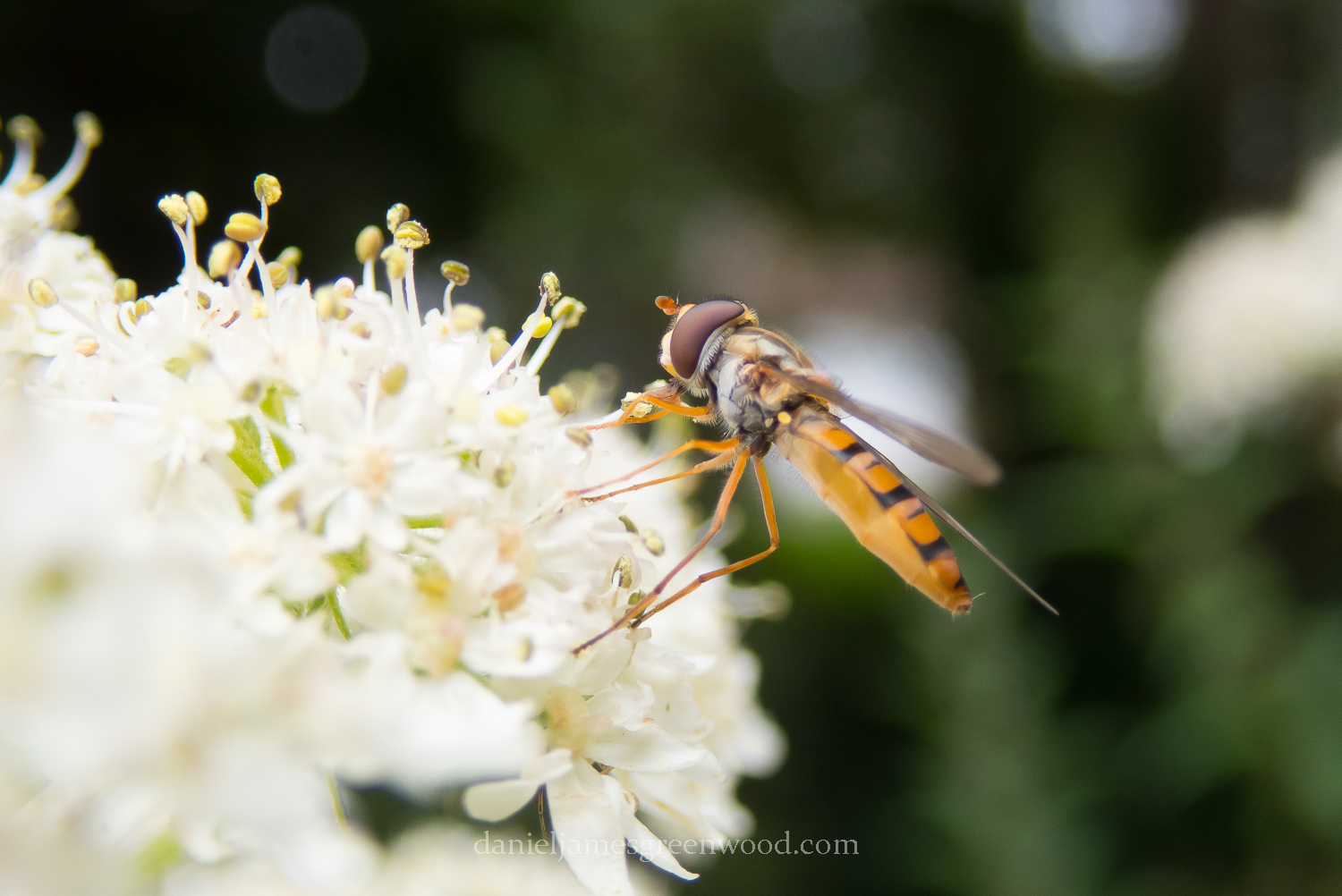
A marmalade hoverfly feeding on the hogweed stamens
A soldier beetle also drinking from the carrot fountain
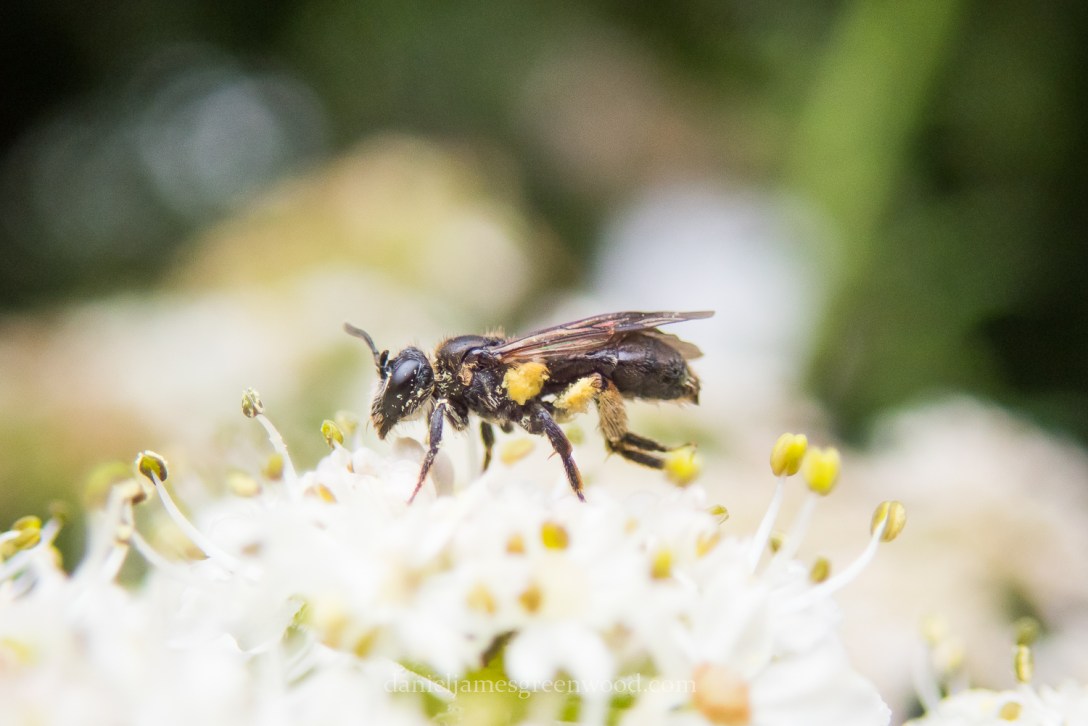
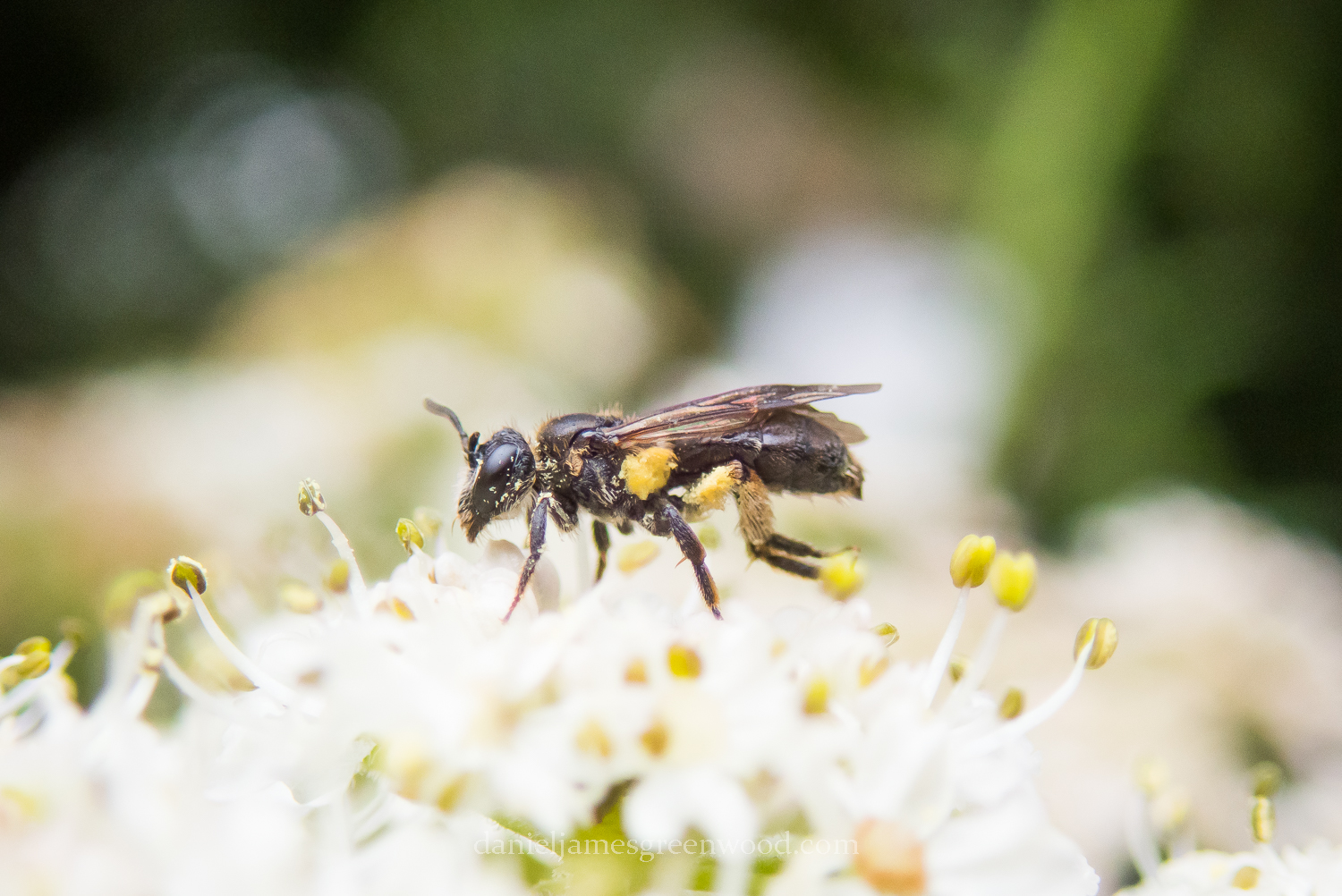
I would say this was maybe an ashy mining bee, but a little faded and low on the ‘ashy’ body hair
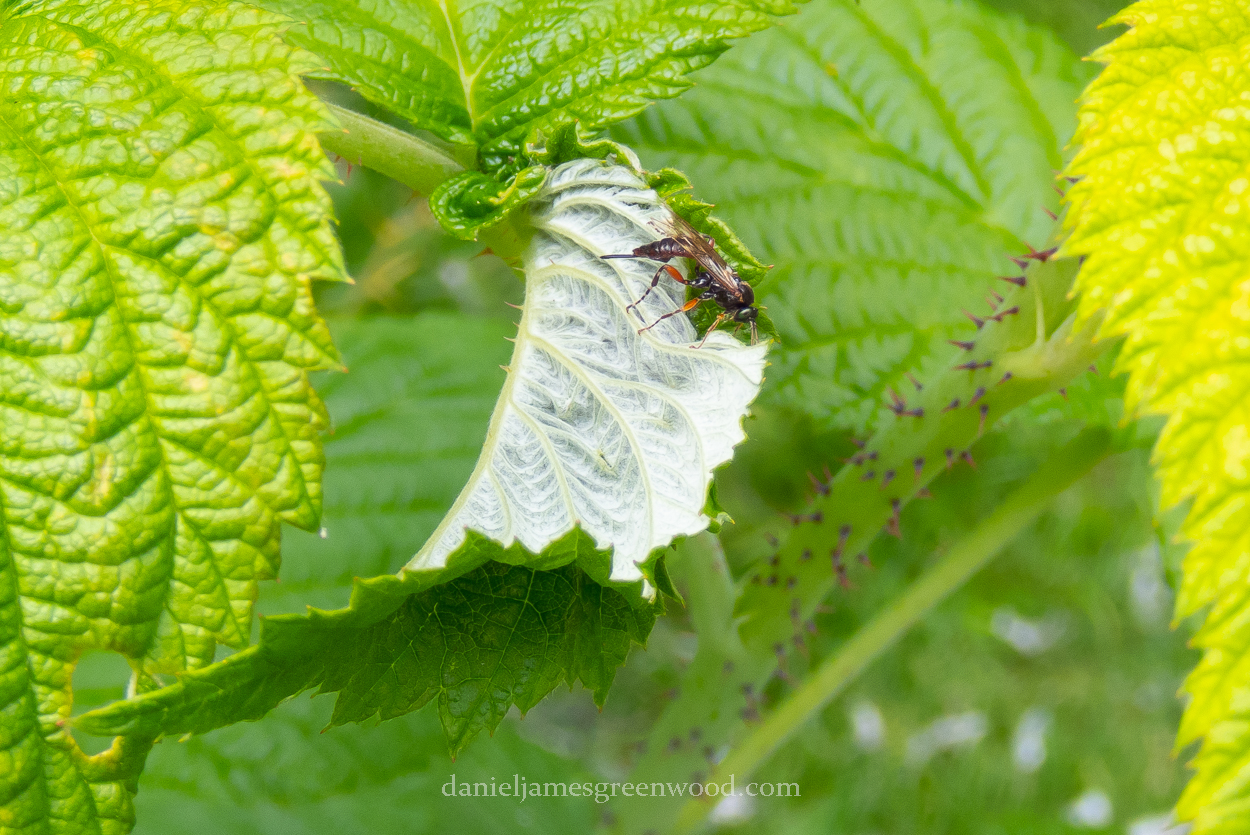
Earlier this week I noticed an ichneumon wasp exploring the raspberry patch in my garden. It was pausing to use its ovipositor on the curled up leaf – presumably the work of some other organism creating a sort of cocoon. I love them!
No nationalism was expounded in the making of this blogpost.
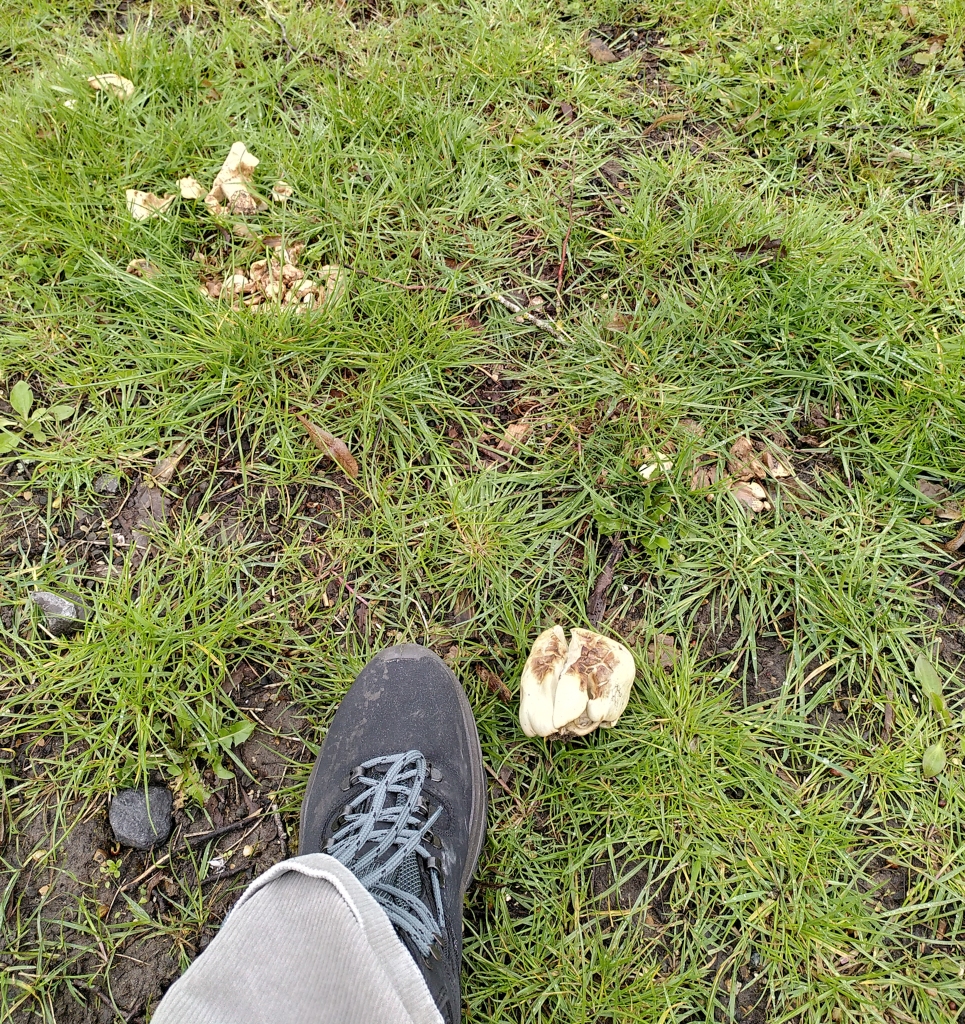
On a recent visit to the National Trust’s Nymans Gardens I spotted some big, cream-coloured things in the lawns near the car park. No, these were not scones or cream cakes, or even pasties discarded by visitors. It clicked almost immediately for me that these might be St. George’s mushroom – and guess what? I found them on 23rd April, St. George’s Day!
That is definitely the most enthusiasm I have offered for this national day. If it were to be made a holiday, then we can talk.
Spring can be a time of shrooms, as the frosts end and the temperatures rise. We’ve had quite a lot of rain this spring in SE England and so some mushrooms will fruit in response. St. George’s mushroom is one of those springshrooms.
Like many people in the UK my sense of personal identity is not straightforward, and I don’t celebrate St. George’s Day. I have strong Irish roots and as a Londoner of 50% Scouse parentage I feel an affinity with a more regional, culturally complex identity, rather than one of red and white, chest-thumping ‘Englishness’, whatever that is.
It makes me wonder though – is this England’s unofficial national mushroom?
A simple online search shows up no such award, which is probably a good thing. Surely that accolade should go to honey fungus!
You may not be surprised to find that its common name changes depending on its location. In Germany the mushroom fruits in May and is known as Maipilz. That means ‘May mushroom’. In fairness to Maipilz, that’s only 8 days later.
St. George’s mushroom is also edible. I didn’t pick or eat this one, and it’s not on my radar to do so anytime soon. The above seems to have been nibbled free in actual fact. Also, I wouldn’t encourage people to forage from National Trust properties generally because I don’t want to get banned.
The cap turns brown over time making it look like a barbecued chicken piece
St. George’s mushroom appears to enjoy garden lawns, so if you’re lucky you may have one popping up outside your front/garden door. As ever, you should be cautious about eating wild white mushrooms as there are several toxic species which can be confused for edible ones.
A lot of rain has fallen in Britain in January. One way I like to gauge just how much, is to visit the wetlands around Pulborough and Amberley in West Sussex.
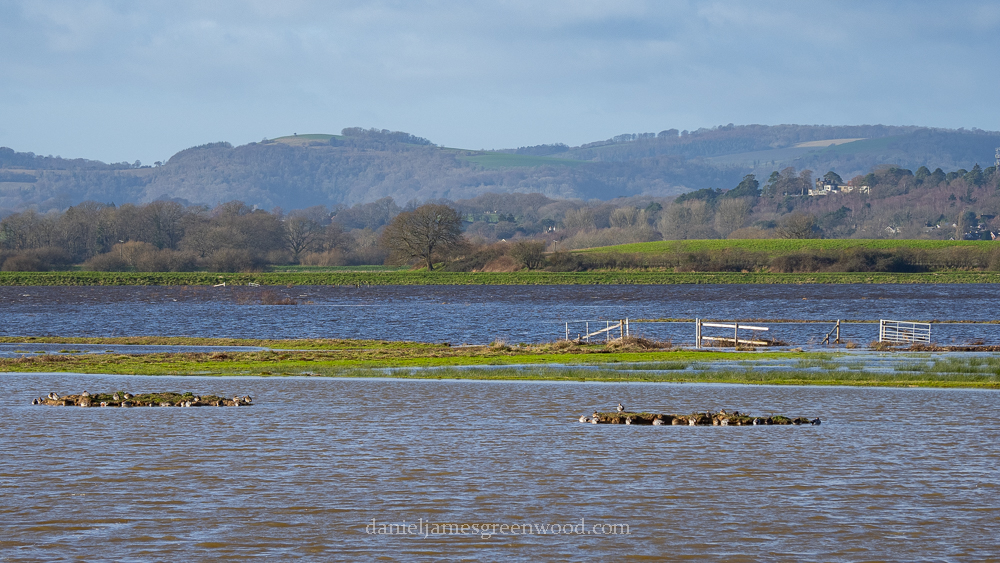
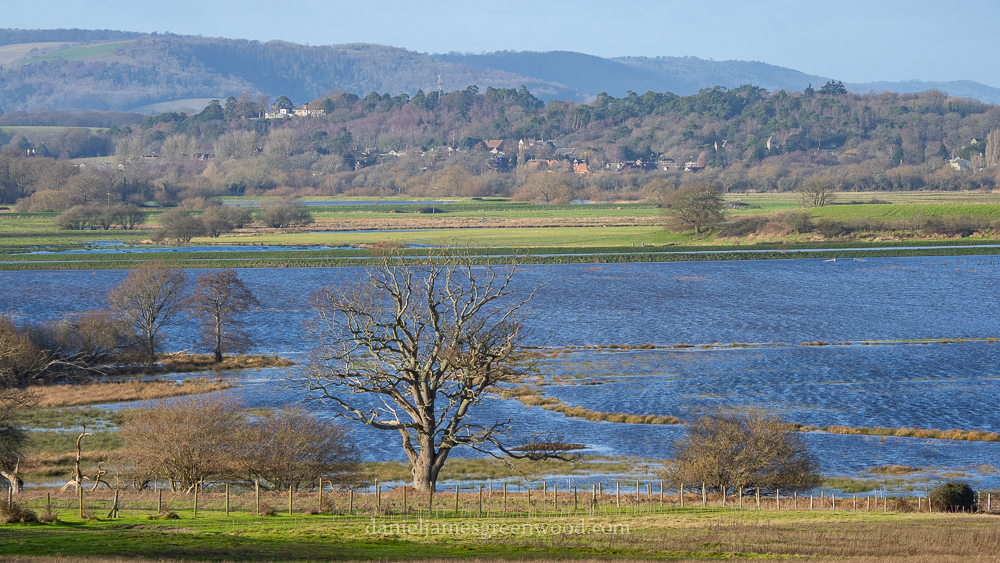
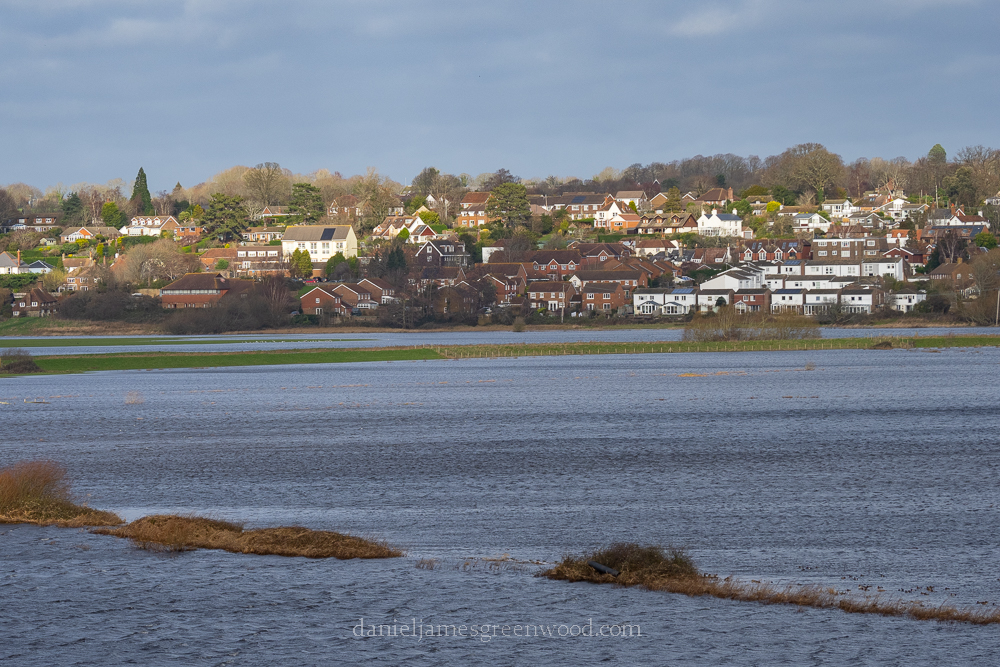
In the winter months, roads are routinely closed as the Arun breaks its banks, doing what it used to without much issue. On the morning of Friday 13th January, the green fields of the Arun valley were a deep, oceanic blue.
It’s rare in England that you get to see nature’s raw, awesome power. When you do, it’s not always a good thing. Seeing water flooding the landscape as it should, where it won’t destroy homes, is easier to enjoy.
Towards Pulborough, the flooded fields were speckled with hundreds of ducks: mallard, shoveler, widgeon. The buildings of Pulborough town looked ready to slip down into the deep blue sea.
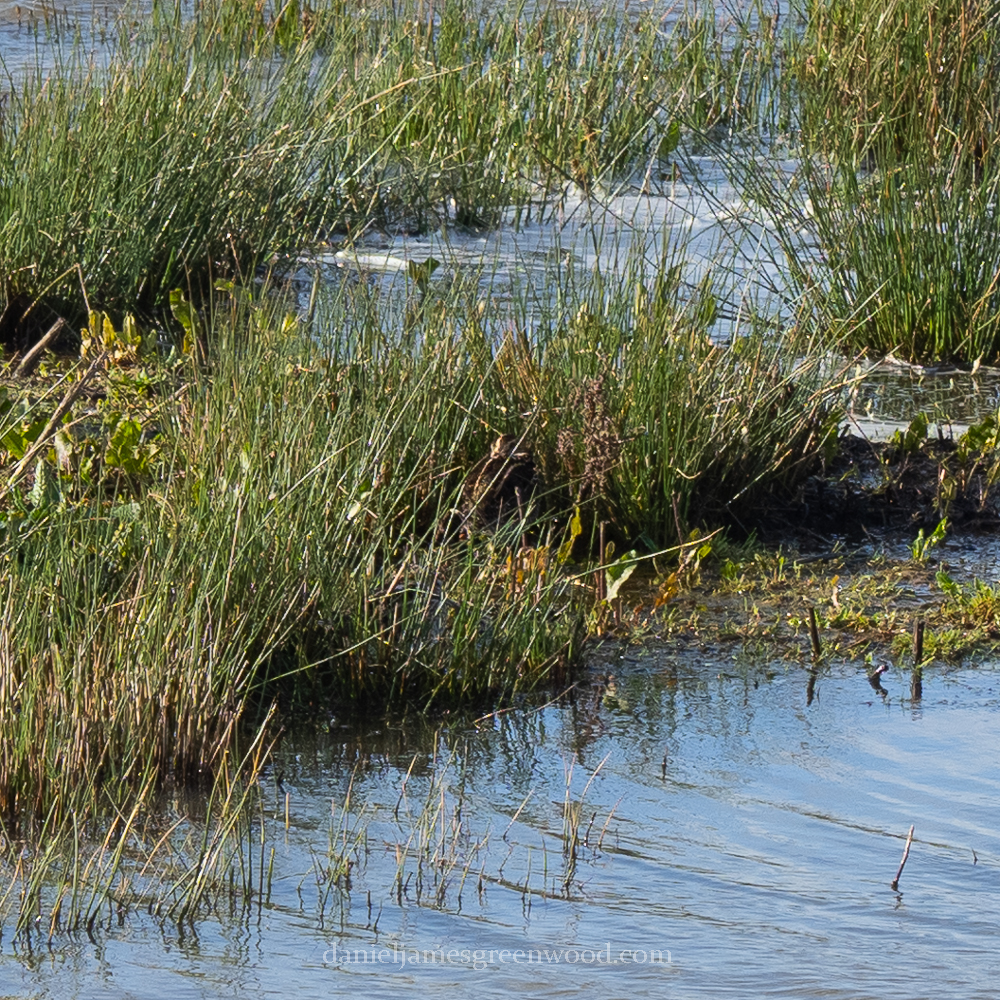
On the human-made islands lapwings contended with ducks for a spot on the bank. Elsewhere I overheard a man point out a snipe tucked away between rushes – ‘you can see it with the naked eye,’ he said.
Sure enough, there it was but 25ft away inside the fenced wetland. I wonder what it must have made of its small, safe spot, out there among the winter floodwaters.
A chilly afternoon in the Weald of West Sussex on one of those days in early January when you remember their names again. “Moonday” 9th January 2023 was appropriate seeing as the famous old block of cheese was up in the sky that night, howling back down to us. A wolf moon, indeed.
Moons are easier to come by than ‘shrooms, the main focus of my walk around a wet woodland reserve where the river ran free of its banks, merging among poplars like something from prehistory (i.e. no Internet).
A boardwalk cuts the edge of the wetlands where I usually expect to find velvet shank mushrooms. Along with scarlet elf cup, this is one of the winter gems of the fungal kingdom in Northern Europe. In truth, I didn’t find any that I could photograph without having to (theoretically) enter into a wetsuit or small boat.
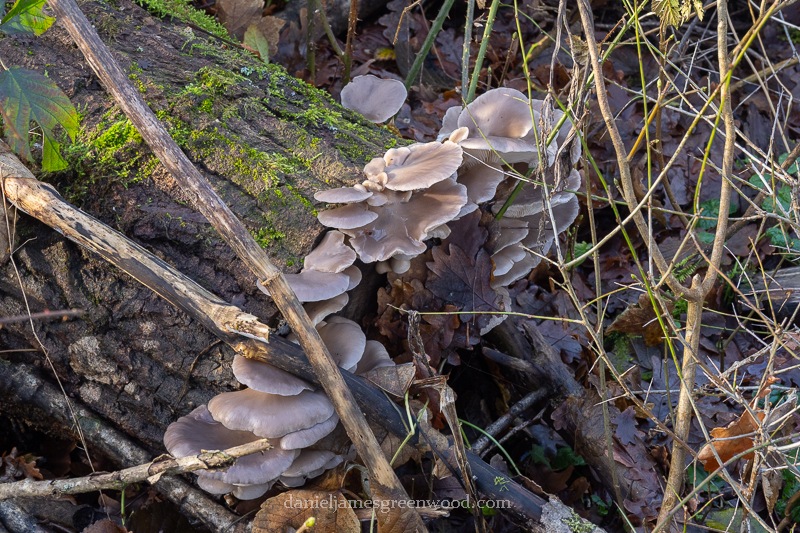
Instead it was a coastal species that proved easiest to snap, if only in name. One of my favourite Twitter accounts and reader of this blog recently posted some oyster mushroom photos. Another timeline glimpse made me think – this is a seasonal trend, and I should keep an eye out in real life.
They’re a beautiful fungus with dark, purple-grey tops and pale, almost white gills underneath. They’re edible, but I was just there for the pics. You can buy them in the shops or grow them yourself at home. Another friend/regular reader even has them growing in her garden from timber sleepers. Well jel.
One of my favourite actual, single funguses lives here. I’m pretty sure it’s a willow bracket, growing from the bottom of a branch like a hat plucked off someone’s head below/a UFO/some kind of weird leather cushion from the Victorian period.
It makes me laugh every single time. A reminder: if some part of nature isn’t humouring you, “you’re not doing it right”.
Pulborough Brooks, West Sussex, Friday 16th December 2022
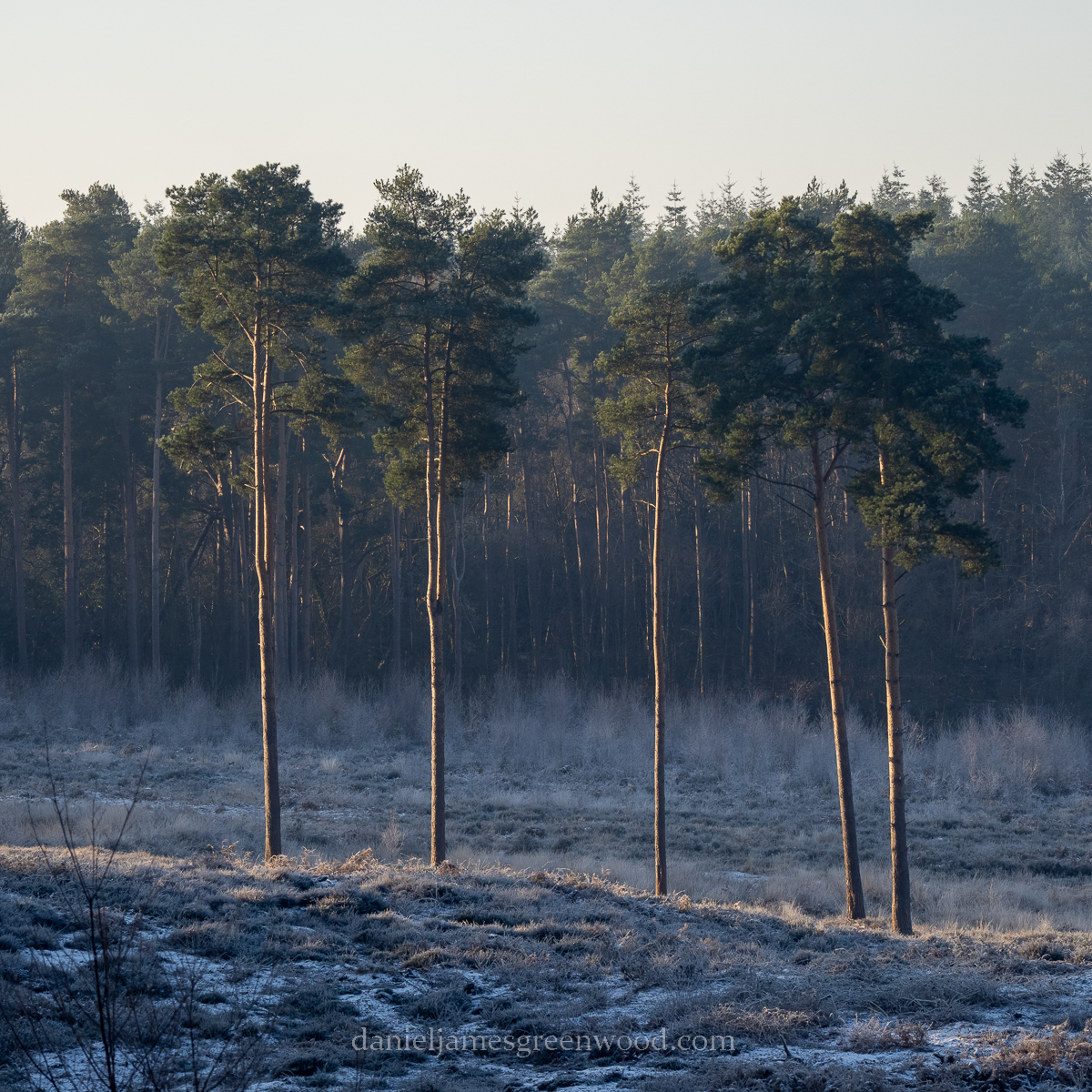
I arrived at Pulborough Brooks as the sun began to rise over Wiggonholt, the heath on the hill.
There are five pine trees that stand together in the open heath, I always seek them out in this light.
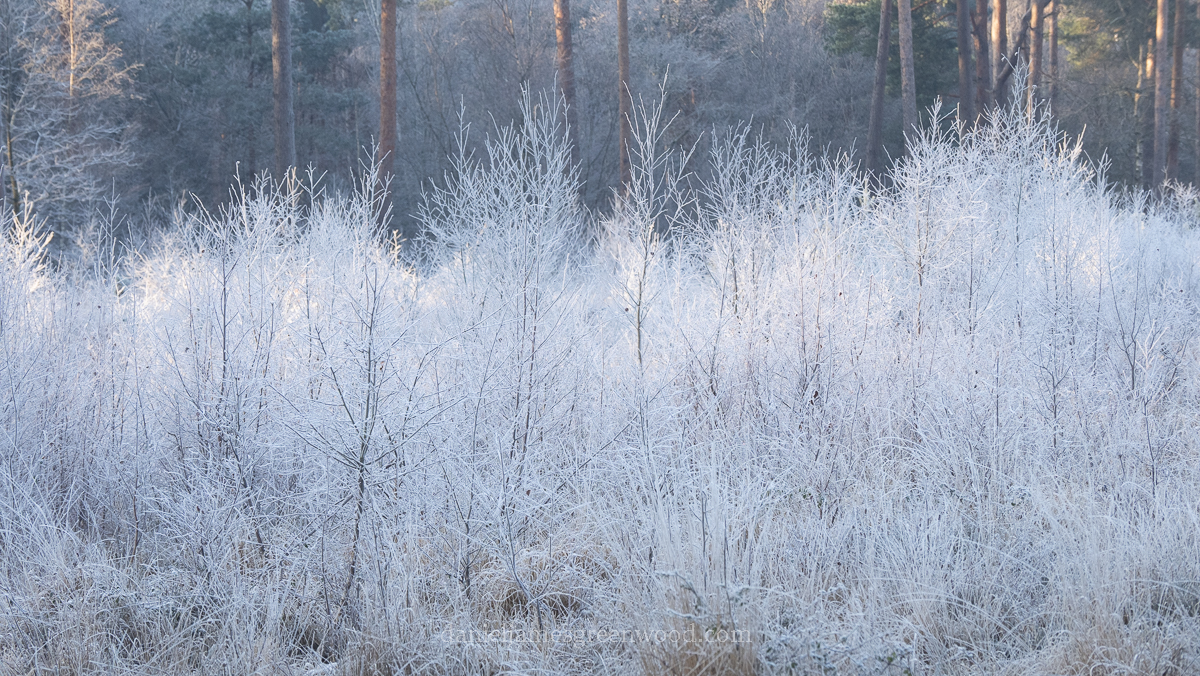
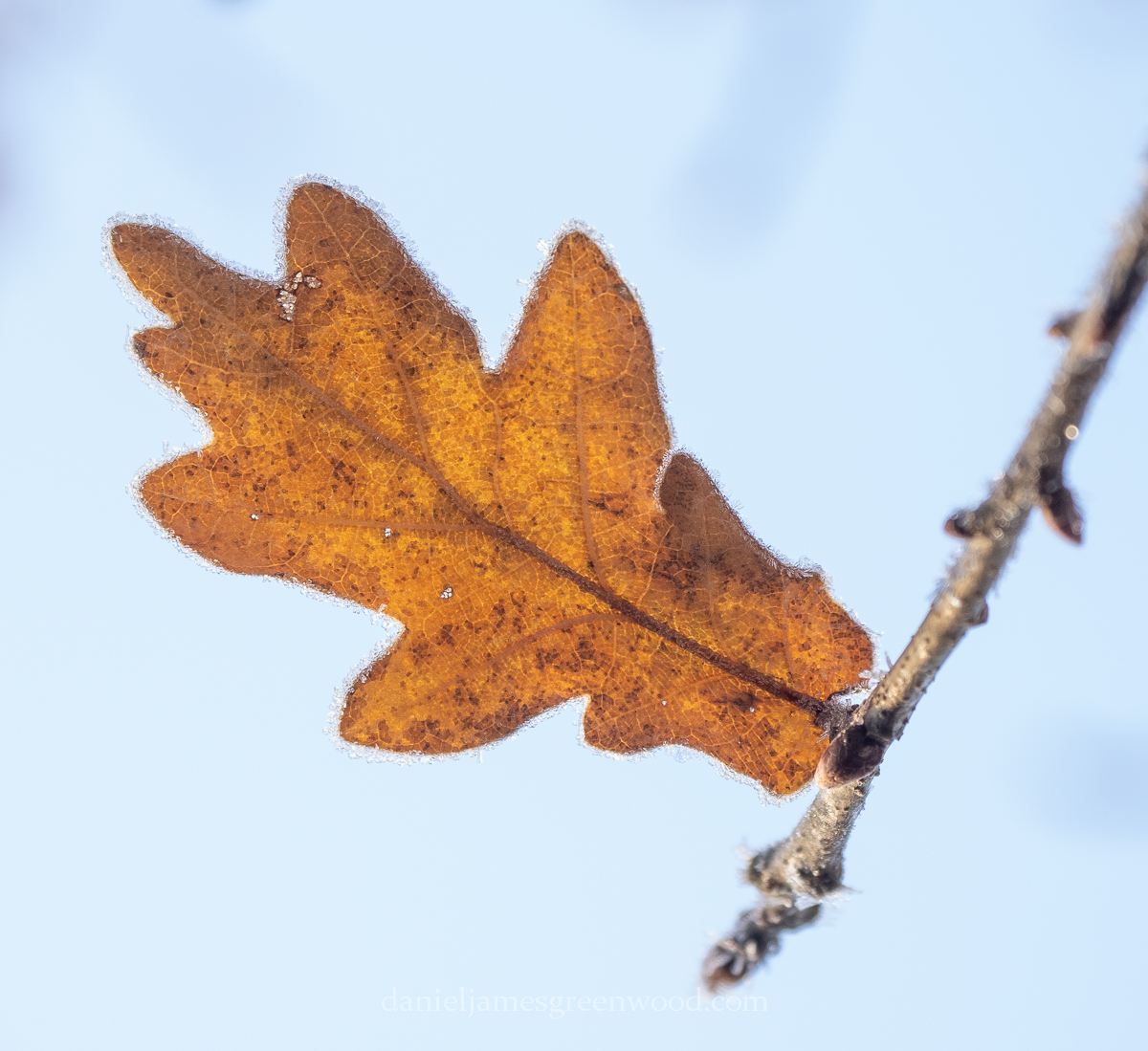
Frost encrusted everything where the sun was yet to reach. Young birches were thick with hoar frost, the yellow leaves of oaks held an edge of ice flakes.
There was little to hear, so much so that even a goldcrest moving through brambles made a sound.
Further round the hill the Highland Cattle were grazing among the frozen bracken. They looked so at home in their Viking get-up, heavy coats whitened by the temperatures. At 8am it was -5.
Out onto the reserve a winter landscape opened out: rock-hard fields with a herd of deer making a break for it; frozen ponds and lakes without ducks and wading birds; and in the distance the South Downs almost hidden by a rising mist.
I’ve had a burst of American visitors in recent days (to my blog, not my house). So thanks for visiting, y’all, and sorry about the year you’ve had. You may have noticed I’ve slipped to monthly posts on here. Between April and October I posted blogs every Monday without pause, which is a tricky task…























 Unlocking Landscapes