#FungiFriday: witches’ butter? Of gorse, it is.

Due to Christmas hols I’m a couple of days late to Fungi Friday on my blog, morphing instead to Mushroom Monday!

A couple of weeks ago I spent some time at Lullington Heath in the South Downs National Park. Lullington Heath is a National Nature Reserve with the super rare habitat chalk heath. It had lots of little waxcaps fruiting at the time.

As you can see Lullington Heath is dominated by gorse which affects the diversity of plants and fungi that can prosper there.
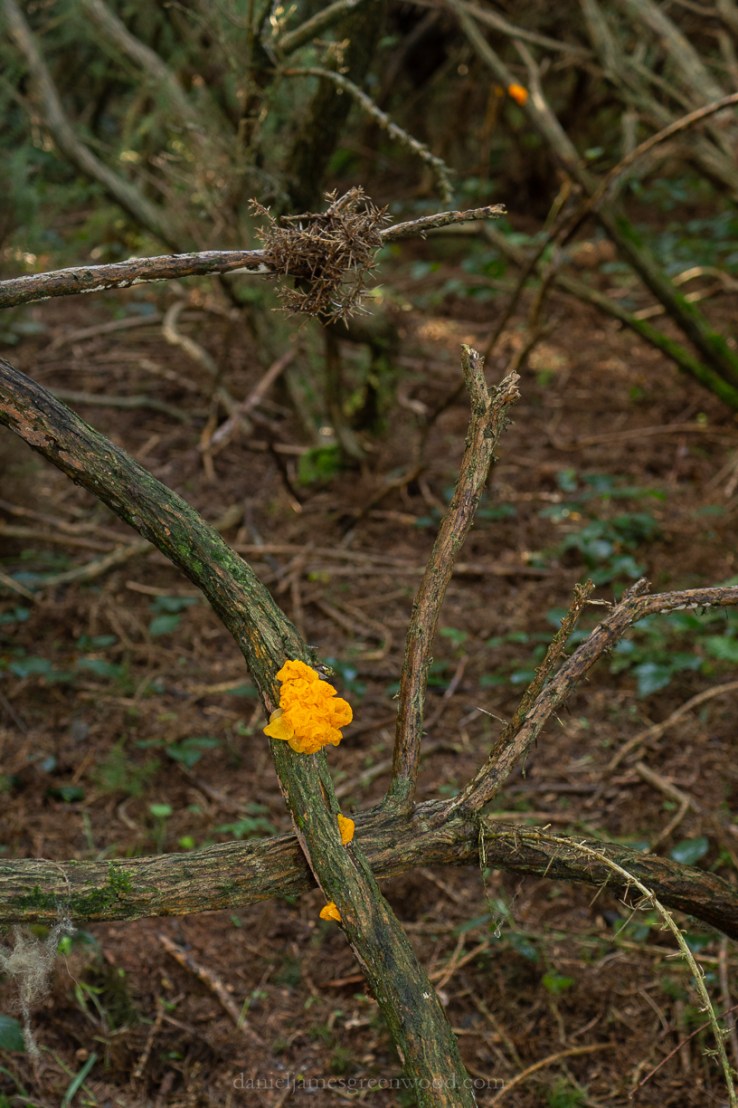
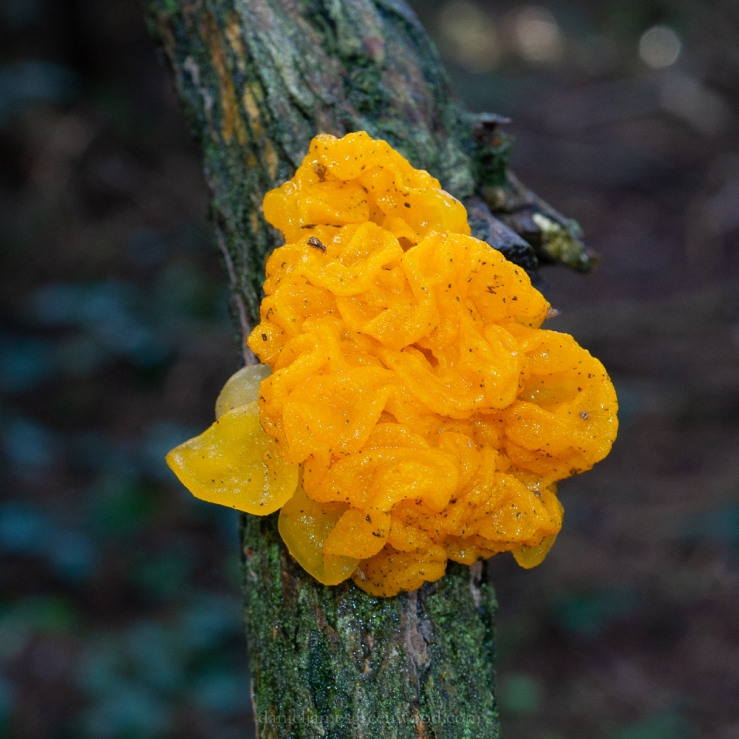
The gorse forms a scrubby woodland and provides ample habitat for one of the most striking species of fungus: yellow brain. It’s also known as witches’ butter, a lovely colloquial name that hints at the role fungi has in British folklore.

This is the yellow brain from the pics above. I cut it out before it was cleared and brought it into the sun. I hid it further away in the gorse afterwards.
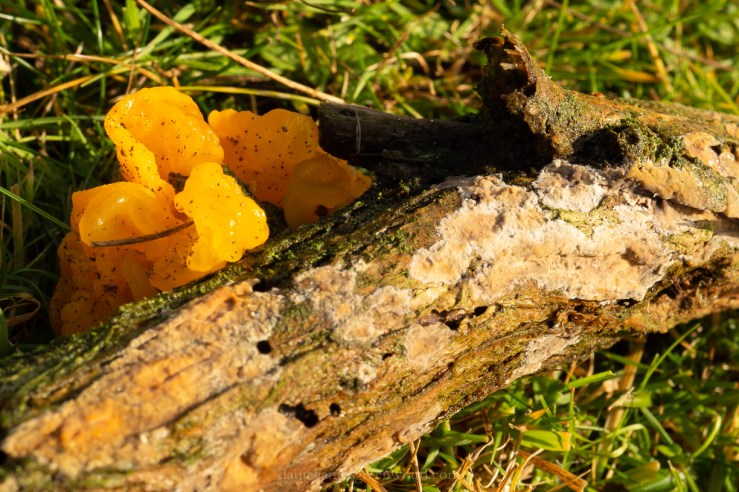
It’s actually parasitic on crust fungi which you can see on the right hand side here.

Keep an eye out for my fungal year 2019, an account of things I found and photographed this year, which I’ll be hoping to post in January.

Merry Christmas to all the funguys and gals out there!

More mushrooms

#FungiFriday: little white brittlegills

SLF - 14-12-2019 blog-26

Happy Fungi Friday!

When temperatures touch freezing, it spells the end for the mushroom season. This is because fungal fruiting bodies are largely made of water and most species simply can’t excel if they’re frozen stiff. But temperatures in Sussex have been mild at times this week.

A good 6 mile walk in the High Weald produced almost no soil-based fungi. That is except for these tiny Russulas, otherwise known as brittlegills. This family of mushrooms is very big and beyond identifying them to that level, I find that doing the same to species level (especially with a photograph) is not really possible. These specimens had already been uprooted and had a pinkish cap to go with their Kendal mint cake white stipe. I would guess it is birch brittlegill (Russula betularum) due to the colouring and the fact it was under birch trees.

SLF - 14-12-2019 blog-23

You can see from the comparison with my thumb just how small but perfectly formed this mushroom was. They are a family of mushrooms to see in late summer when autumn’s cogs are beginning to turn and all the way through to the season’s close.

SLF - 14-12-2019 blog-2

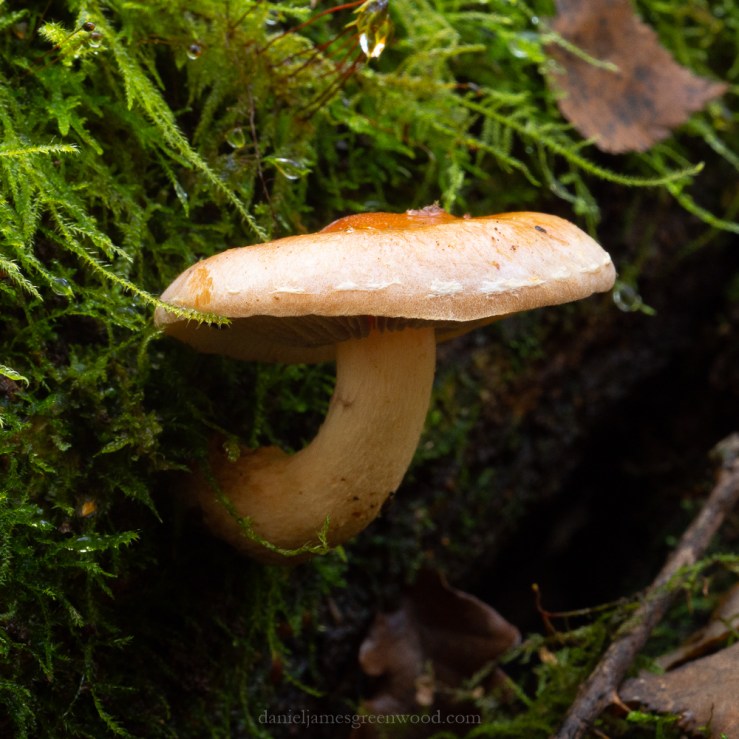
On a mossy log I found this staunch shroom growing. The faint white remnants of a veil on the edges of the cap made me wonder if it was a webcap (Cortinarius). The webcaps are a huge family of mushrooms.

SLF - 14-12-2019 hi-res-35

You know you’re getting desperate when you’re photographing mushrooms in the condition above. This is an oyster mushroom growing from a dead birch tree alongside a stream.

More mushrooms

#FungiFriday: December jelly ear

Midhurst - 10-12-2019 blog-2-2

Happy #FungiFriday!

You may have seen my attempts to photograph a mushroom every week on Twitter. I have hundreds of fungi images that I want to share so I’m now going to start posting a species each week (or one I’ve seen in that week). I’m not a forager and have never cooked or picked wild mushrooms to eat. I prefer taking pics and leaving shrooms for others to see.

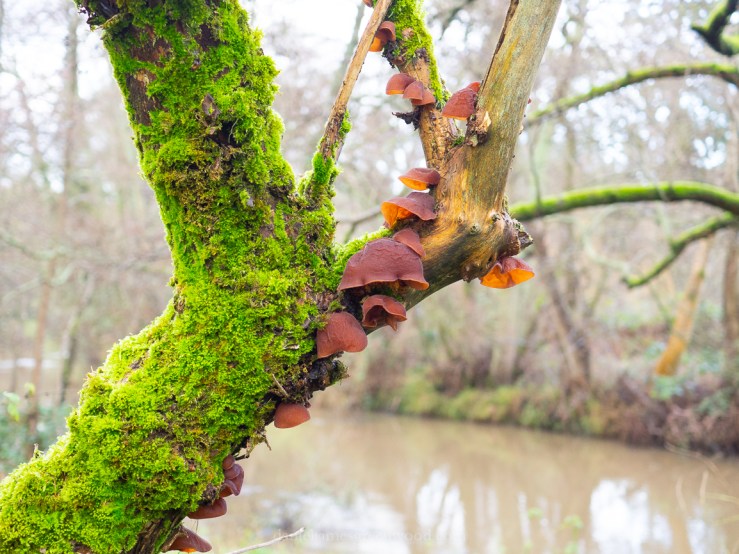
To kick things off, this week I photographed jelly ear. This is a common species that, like in the image above, can be found growing on elder trees. It stays on a branch all year round and goes through a process of de- and rehydration. It seems happy in the winter months.

Jelly ear once had a more derogatory or racist name. This is largely because of the Latin name (Auricularia auricula-judae) which relates to Judas Escariot and the species’s association with elder. Judas is said to have died from hanging in an elder tree but that is almost certainly impossible because it is a very soft wood. The ears are said to be a remnant of his spirit. I call it jelly ear, as do all up to date field guides.

SHW 17-1-18 djg-11

More about fungi