These days of lockdown have made me appreciate the places I’ve had the privilege of visiting in the before Covid times. Also, I haven’t been to the woods properly in what feels like ages and I’ve not found any fungi locally, until it was too late for this post. And this one is late!
In spring 2015 I went to Romania by train, something that seems like a lifetime ago now. My friend Eddie and I spent several days hiking in the High Carpathians spruce woodlands.
One of the areas we walked in was the Bucegi Mountains.
This was a quite touristy area due to the presence of a waterfall, but there were very nice woodlands flanking the main walk. Flowers like winter aconite were common.
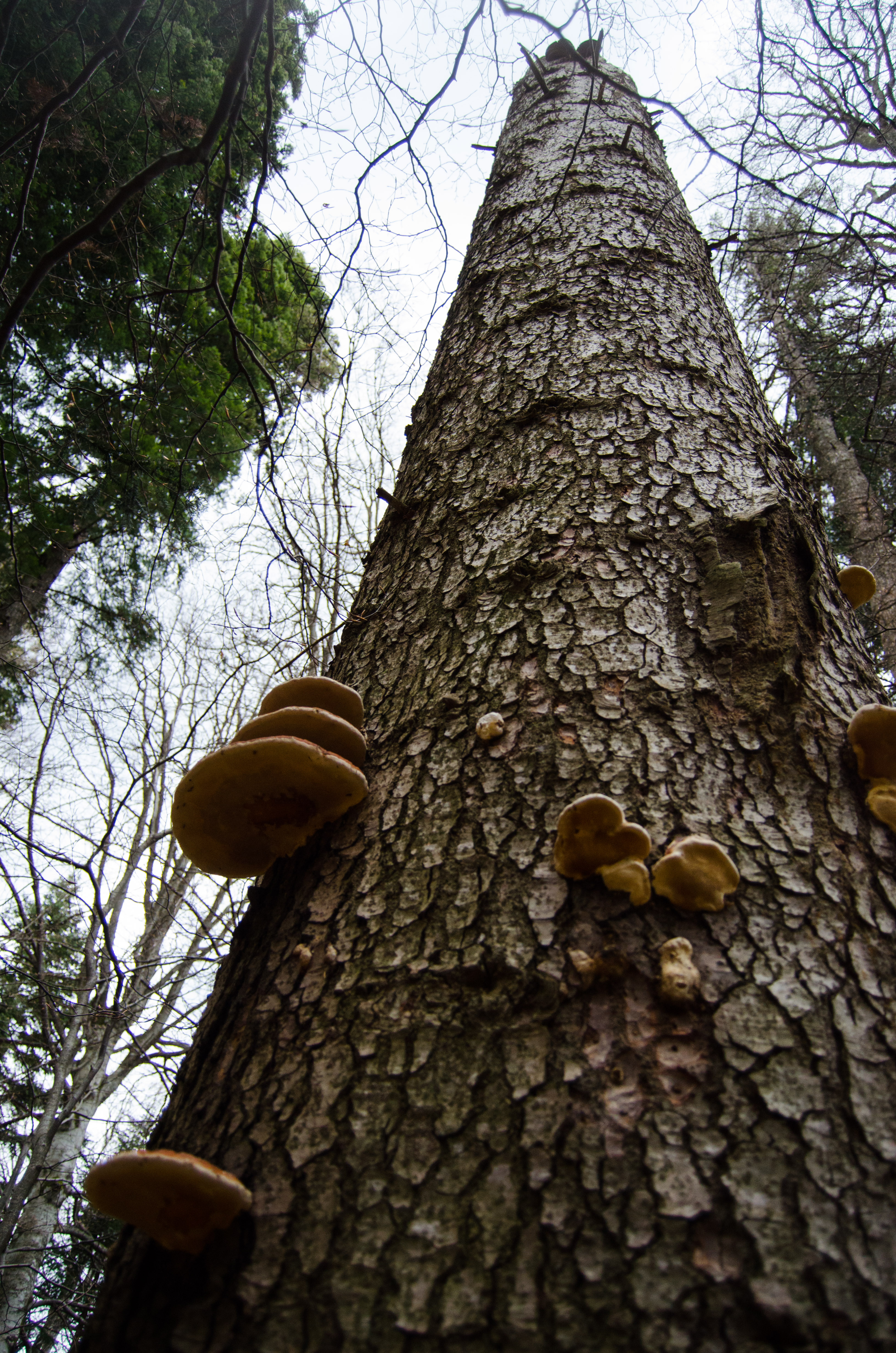
There were some huge spruce trees, covered in these beautiful bracket mushrooms:
They are a species I have seen mainly in Poland, Czechia and here in Romania. They’re red banded polypore.
I didn’t have the right lens on to capture the scene, but the mushrooms were covered in what I think were fungus gnats. The gnats were mating en masse! Some insects are actually dependent on fungi for habitat. I’ve seen them roosting within mushrooms gills before. Quite amazing.
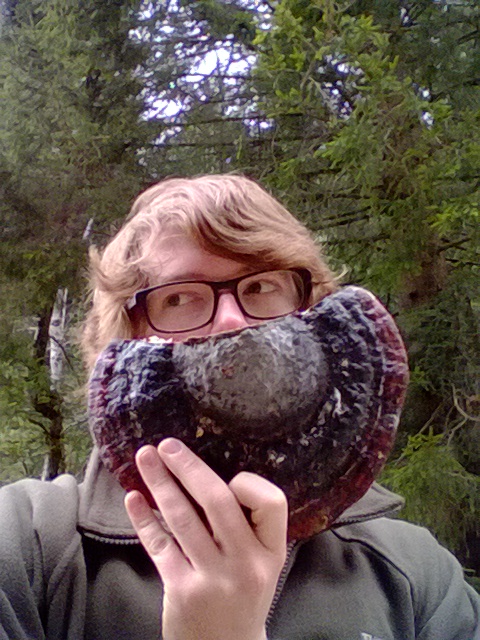
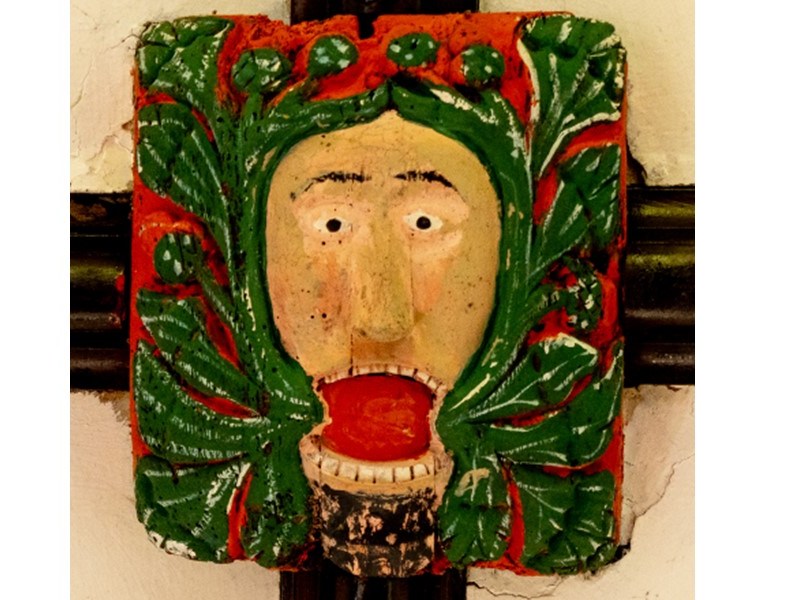
I found a red banded polypore which had fallen from a tree. I don’t know if it managed to look like a smiley face. In Covid times it looks more like a mask. I think I’ll stick to the ones my mum made me!
This week’s encounters with the fungal kingdom (that I know about), are piecemeal. I am still sticking close to home, so no woods or wildernesses, if you even believe in the latter. You might think fungi can only be found in specific places, but we’d all be wrong about that. Let me tell you, fungi are everywhere. We’re the ones who are harder to find.
Stick of the week
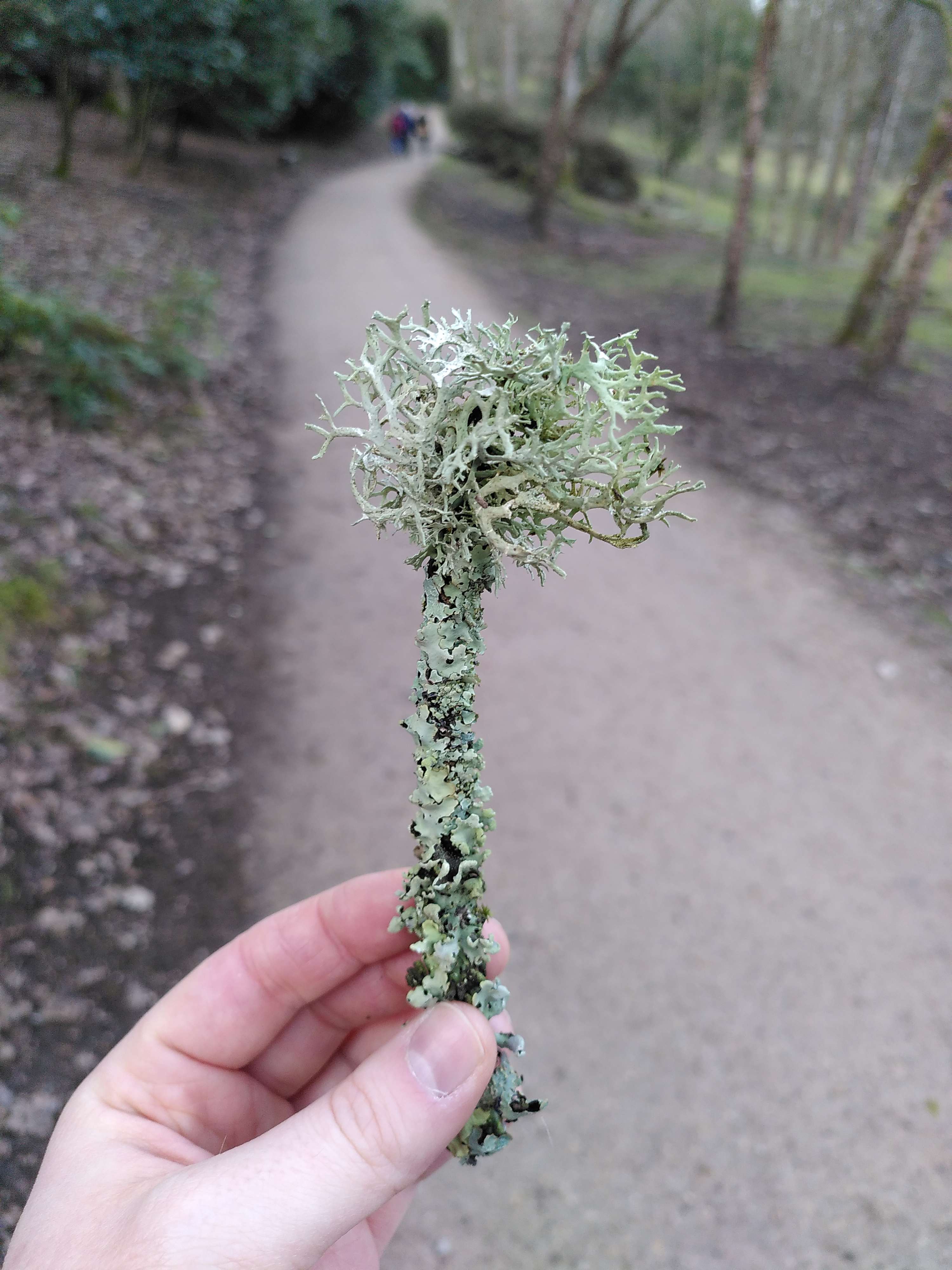
On a walk at a local estate garden in the Sussex Weald, I found and nominated this lichen-encrusted twig for stick of the week. I’m not sure where the hashtag #StickOfTheWeek started but I think it has something to do with the illustrator @Bernoid.
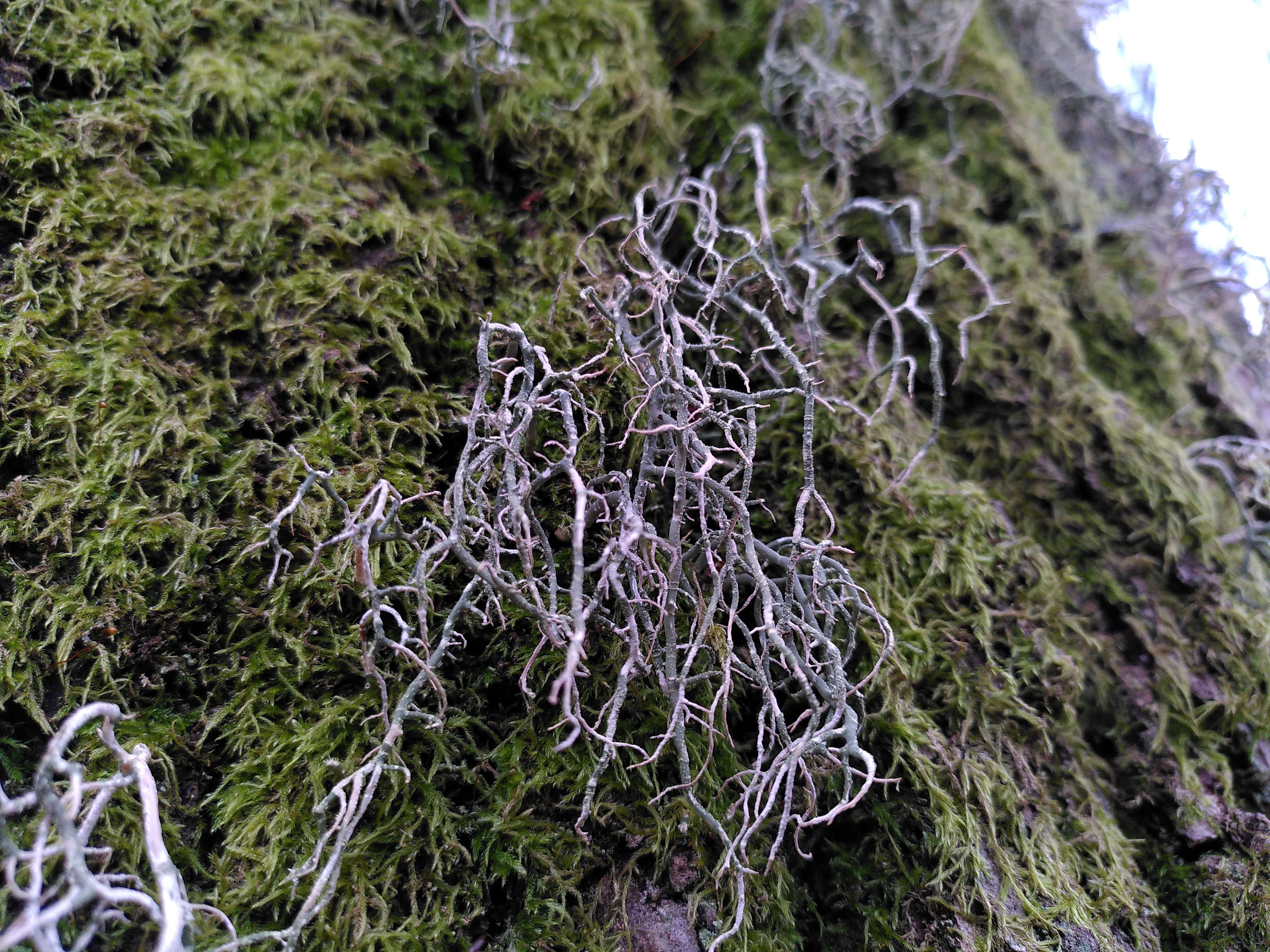
It’s not common that I personally find any unusual lichens in south-east England. Usually you need to go west to Devon, Cornwall, Wales, Ireland or up north to Scotland. This massive oak tree had a sheath of moss growing on its trunk, which was then home to a colony of beard lichens!
I think these are a species of usnea lichen, species I’m more used to seeing in Ireland and on Dartmoor. I learned from a fellow blogger recently that you are supposed to say ‘on Dartmoor’, because ‘in Dartmoor’ means you’re in the prison. I’ve been to the prison museum and have no intention of being ‘in Dartmoor’ no matter how good to lichens are on its doorstep.
Velvet shank
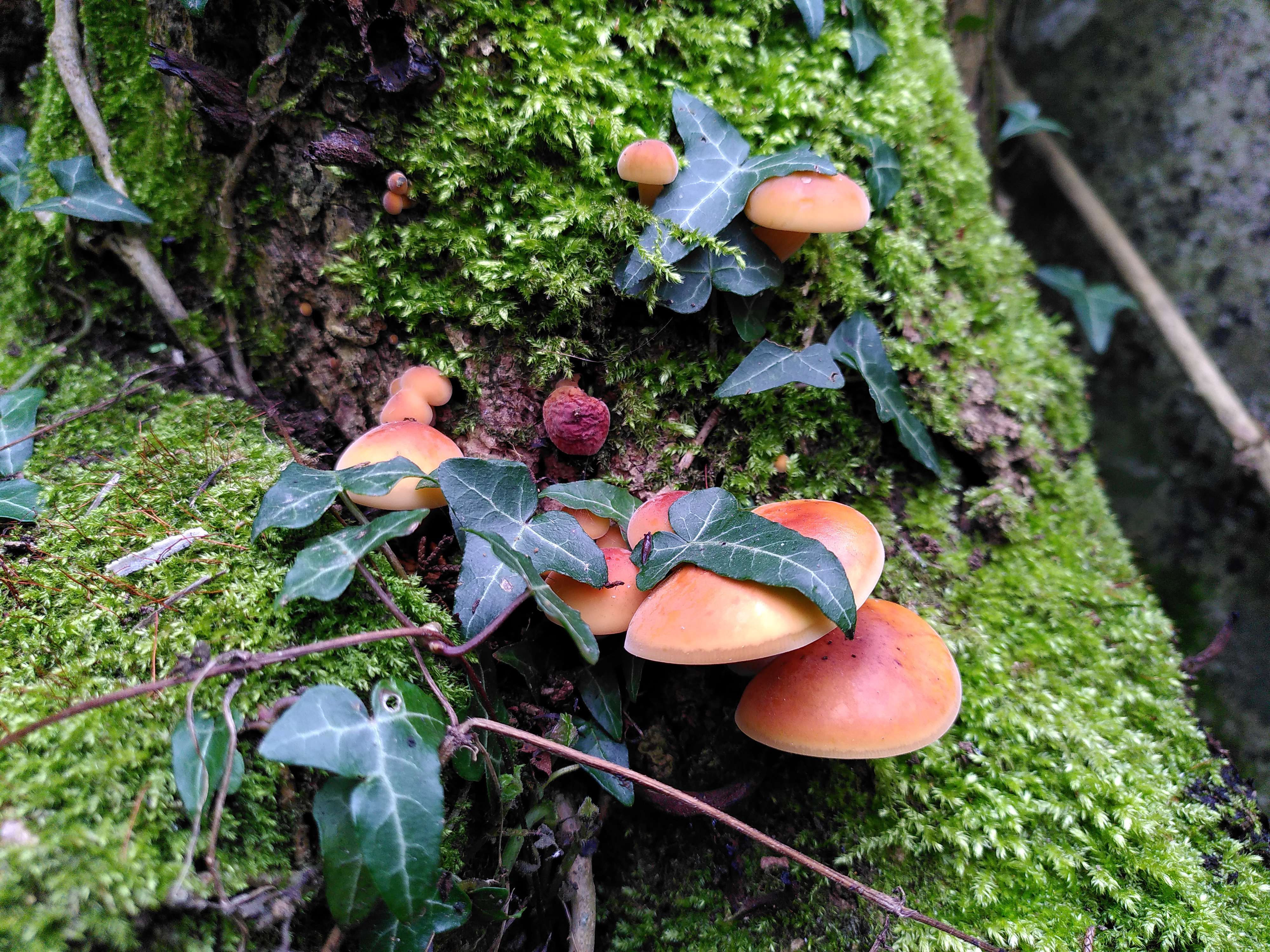
On a lunchtime march from home I re-stumbled upon a gang of velvet shank (Flammulina). I was actually drawn to the site of the first cherry blossom of spring, when I spotted that this churchyard stump was still sprouting shrooms. This is fungus is hard as nails, in terms, because it has toughed it out through the snow and continued to put out fruit. It’s a prime candidate for snowcapped shrooms.
I have some exciting mushroom-related announcements to make in the next couple of weeks. I’m also about to start Merlin Sheldrake’s much anticipated Entangled Life. Have you read it, is it as good as everyone says? Maybe I’ll share some of it in the weeks ahead.
Get ready for bad mushroom photography. But first I wanted to link to this interesting Mushroom Hour podcast with Learn Your Land, that I listened to this week. Some very thought-provoking ideas around landscape conservation, belonging in the landscape and our own impact as individuals. Here’s an example of one of the Learn Your Land YouTube videos:
Back to the bad fungi photography.
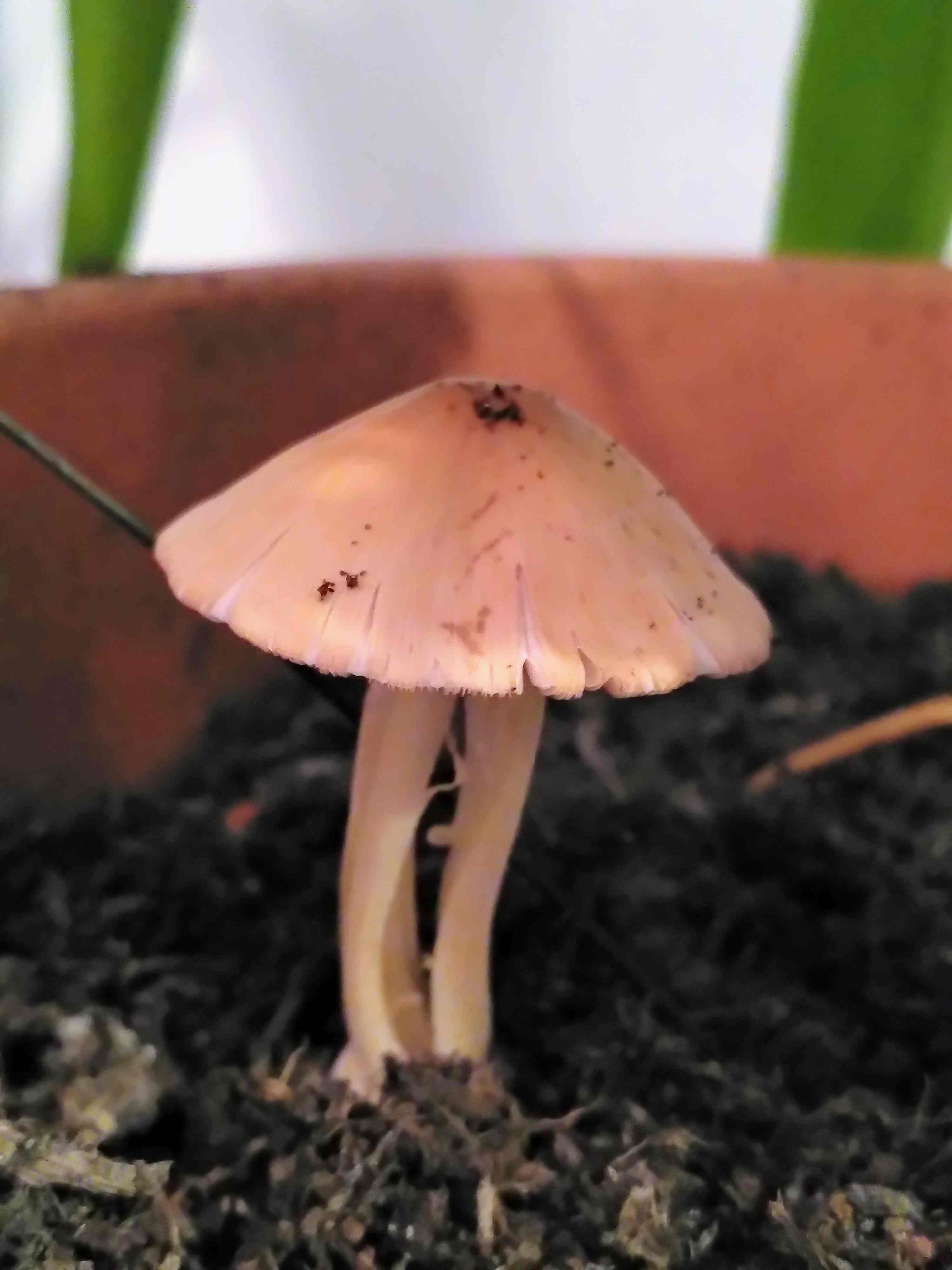
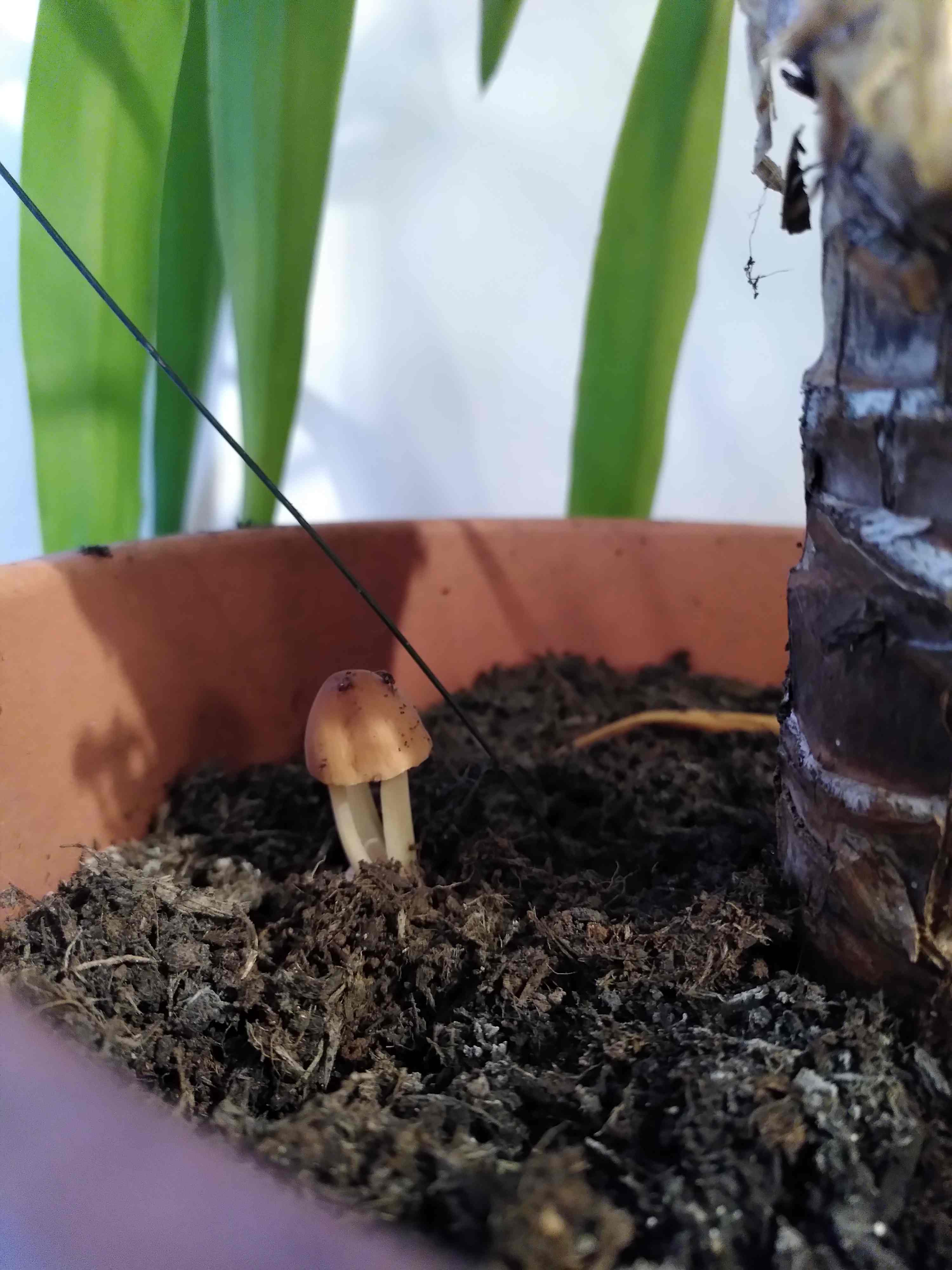
In December, I was sitting at my desk, working from home, when I turned around and saw a mushroom growing behind me. This was quite unexpected. The mushroom was growing from the soil of a houseplant on a cabinet behind me.
The plant itself had spent the summer outdoors, so I expect the spores of the fungus have landed on the soil while outside. You can see that the stipe (or stem) has split, probably due to rapid growth and the heat coming from the nearby radiator.
Here is that same mushroom possibly a couple of hours earlier. It moved incredibly quickly through its fruiting stages.
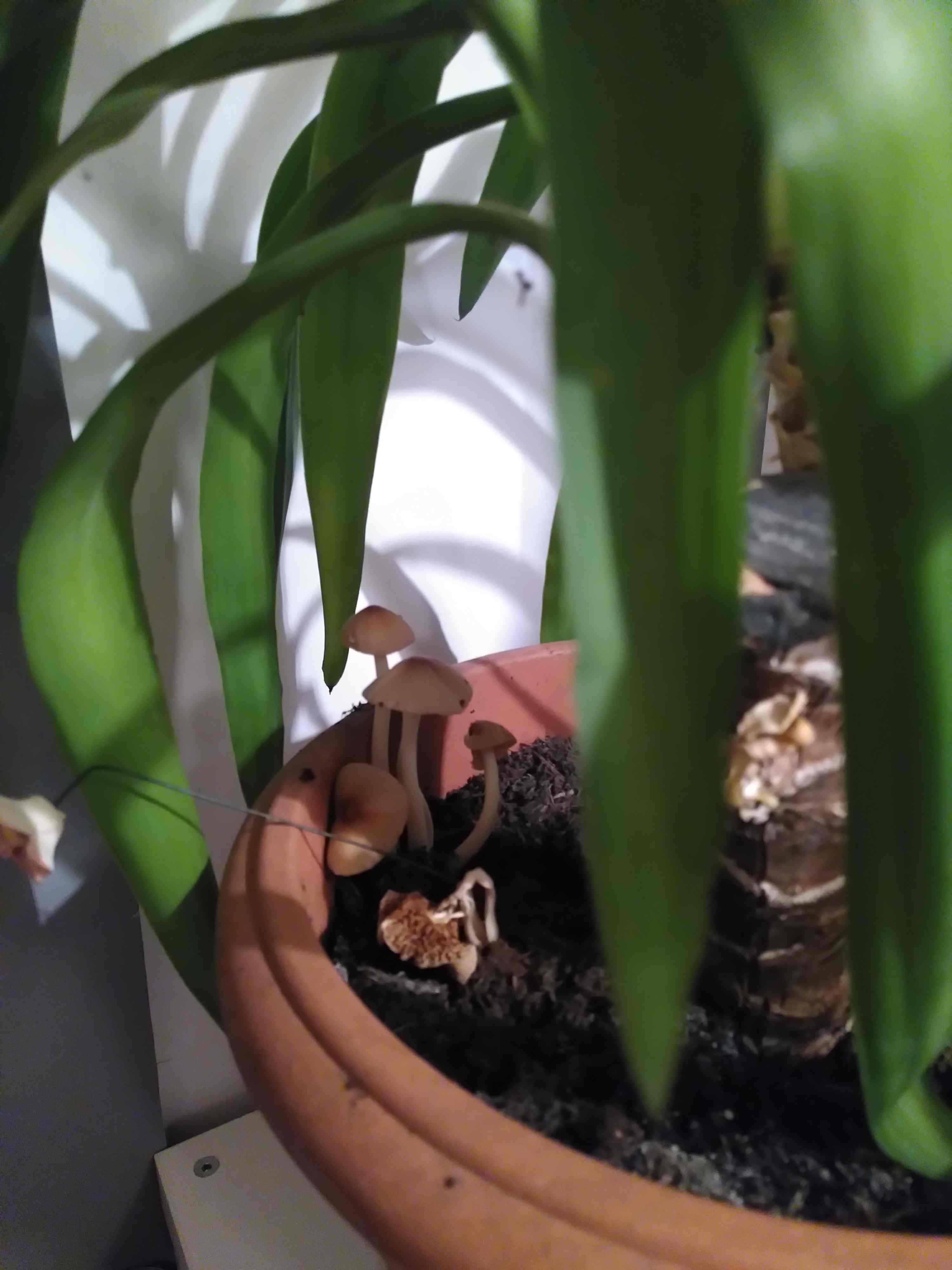
That wasn’t to be the end of it. The following day I noticed more shrooms appearing at the edge of the pot.
This shroom family also moved fast. I think they’re a species in the very big brittlestem or Psathyrella family.
Didn’t I promise you the pics would be bad?
It’s probably not great having mushrooms growing in your house, and I fully expect a barrage of comments about how my house is going to fall down now from builders. All in all, however, I was quite pleased with the tropical scene on those dark midwinter nights.
I’ve had a burst of American visitors in recent days (to my blog, not my house). So thanks for visiting, y’all, and sorry about the year you’ve had. You may have noticed I’ve slipped to monthly posts on here. Between April and October I posted blogs every Monday without pause, which is a tricky task…
This has been a surprisingly good winter for fungi. One thing I have learned about following the stuff all year round is that it is everywhere, all the time. I knew before that fungi ruled the world, now I know it. Look at the blusher mushroom dominating this post and try and tell me it ain’t true.
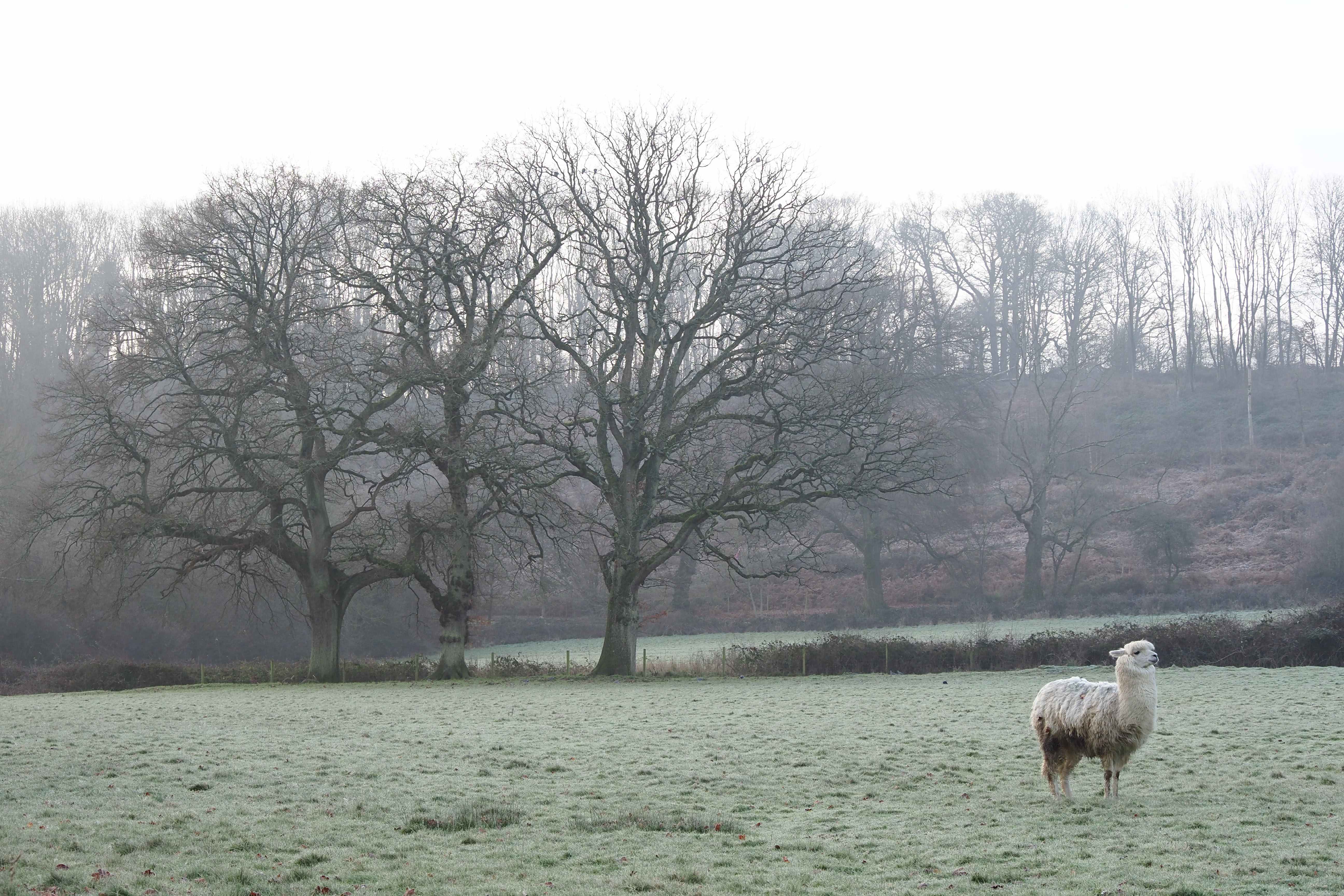
Frosty the alpaca
December in southern England has been colder than we are used to. In the past decade some Decembers have been, on average, around 10 degrees Celsius (remember him?), with one Christmas Day rocking an incredible 16 degrees. Instead we have had temperatures around zero for longer periods and last weekend there was snow. It lingered in London, Hampshire and other parts of the UK but in Sussex, it didn’t. Oh well.
I should probably move on, I have a lot of photos to catch up on.
I learned a new species in December, thanks to an ID on iNaturalist. I was walking in woodland in the Sussex Weald, in my local area, looking for macro subjects. By chance I saw some small white mushrooms on a piece of oak wood on the ground. I have a new camera which can stack together several photos to make one which has a large range of focus.
I hunkered down with these tiny shroomlets and managed to work the image stacking, as seen above. These tiny white mushrooms are oak pin (Cudoniella acicularis).
On the same day, and on several following, I noticed the prevalence of blewits. The blewit above (probably wood blewit) was growing from some leaf litter on the buttress of an old oak.
Around Christmas I found some other populations in a local cemetery. It obviously was having a little winter fruiting period, or shroom-boom.
This felled fungus offered a good chance to show off the mycelium. The white fibres in the substrate of twigs and leaves, are the hyphae of the fungus. They are what produce the mushroom that we see above ground. These hyphae will be extracting the minerals and nutrients from this detritus and turning it into soil. Fungi rule the world.
In that same cemetery I found an absolute stonker of a twig. This is a species of oysterling (Crepidotus). From above they look like weird little white bits on a damp twig, but when you turn them over, they are beautiful. I always look for them in December when there is generally not as much to see.
Also in the cemetery I found this. What on earth is this? It was growing on the single lobe of an oak leaf, lying on the soil near to the oysterling twig above. This image is also a stack done in the camera. I think it’s probably a slime mould, so not a fungus, but behaving in a way that is similar of course. If you know what this is, please do enlighten us the comments!
While we’re on slime moulds, this is a very happy cluster of something like dog vomit slime mould. You can see its journey across the ivy leaf from the white trails in the background. Let’s leave that one there.
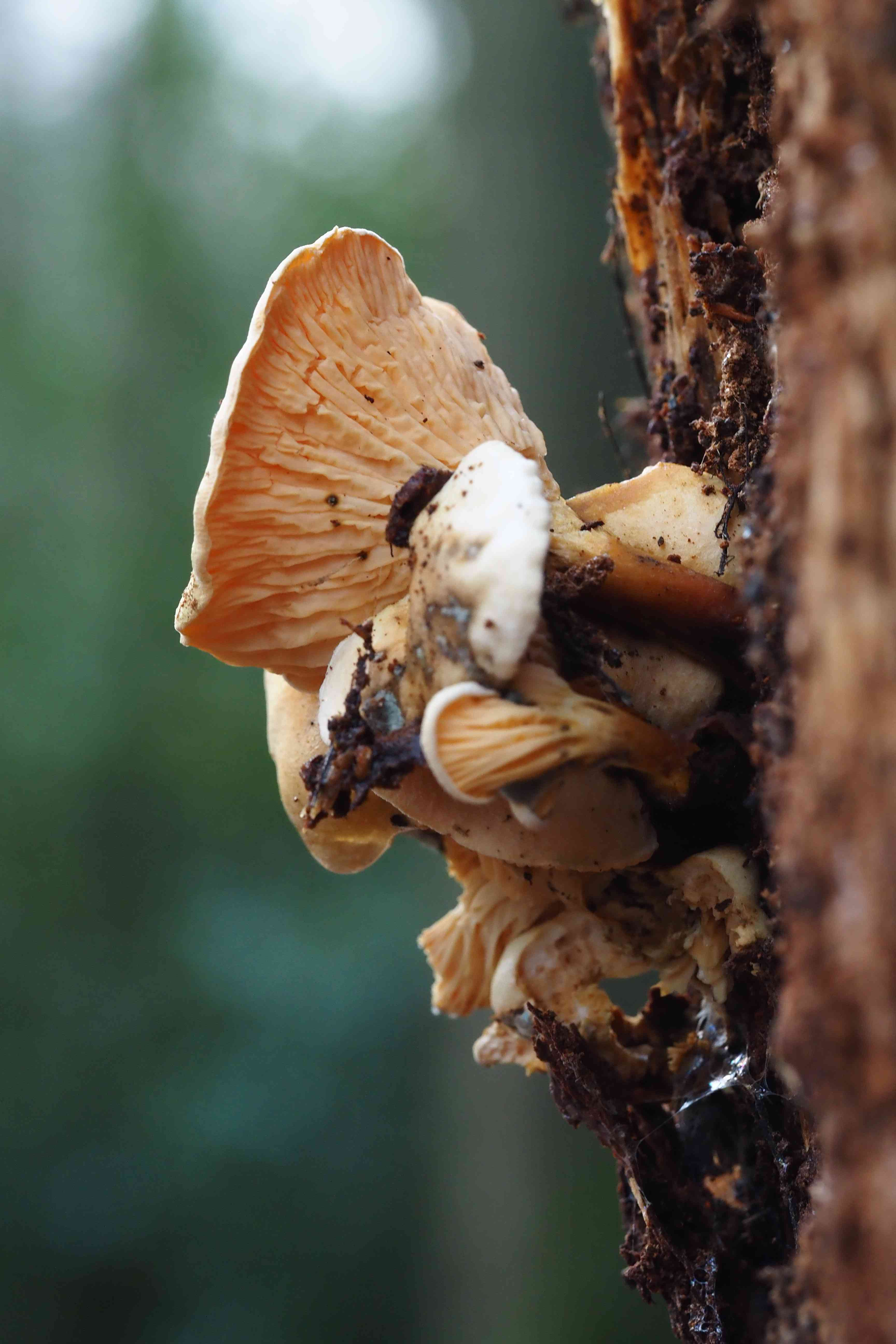
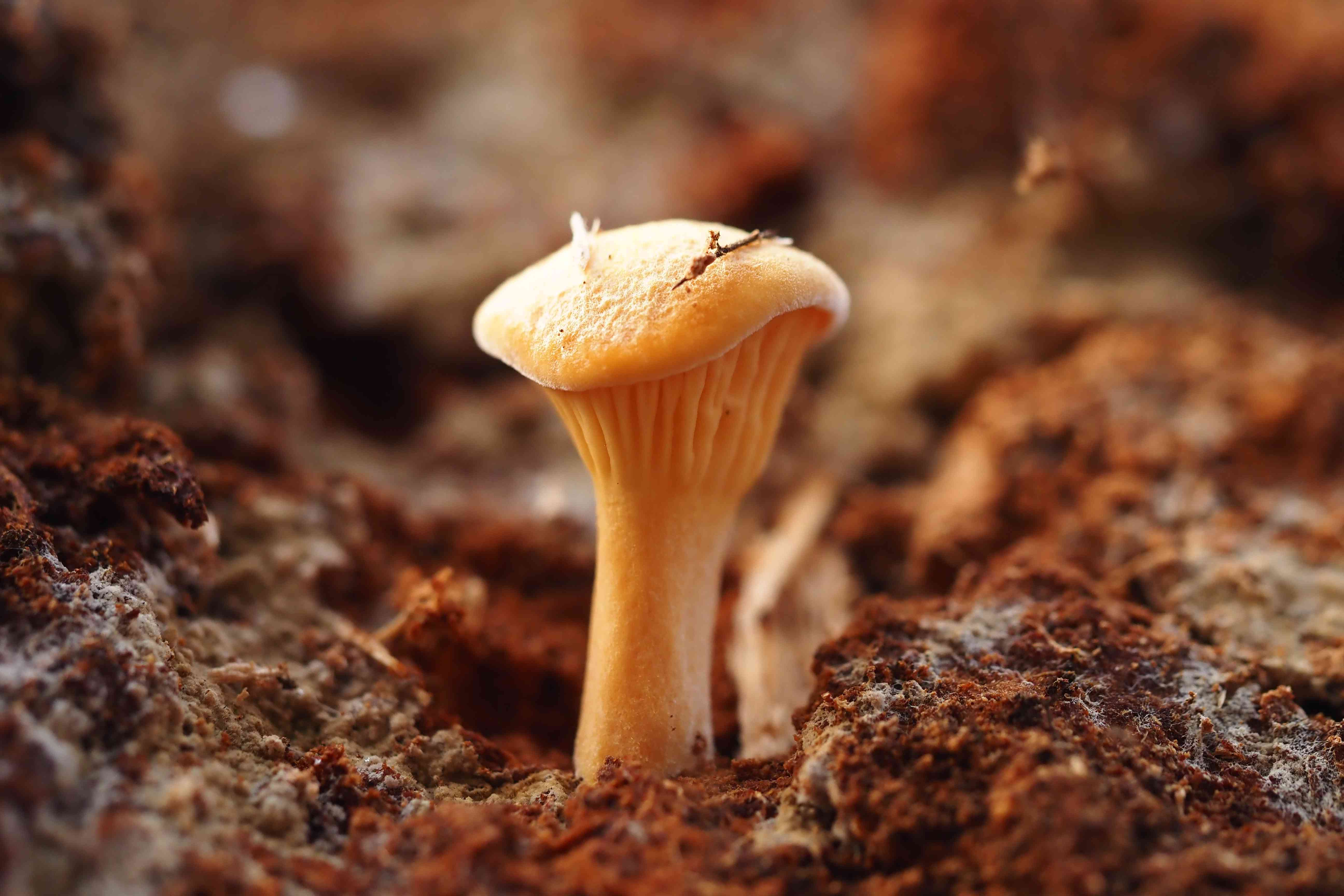
This one kept me guessing over Christmas. I found several of this species growing out of a standing dead pine tree in oak woodland. It smelled really nice, so sweet, just like chantarelles in fact. People on social media were unable to identify it, but the consensus was that it was probably false chantarelle.
You can see why people might confuse it with the real deal. There are several features which will help you not to make that mistake… Maybe another time.
I have been lamenting my lack of luck with the flammulina family, as in the mushroom, not a group of people. That would be a great surname though. My one true encounter with velvet shank, the most common of this family, was at a distance from a boardwalk surrounded by high levels of water.
This illustrates that point rather well. This is funny (only for me) because they are one of the most photogenic species you can find:
Velvet shank in January 2019
One rests one’s case.
While this toffee-like secretion may not be quite so eye-catching, it’s a new species for me. It’s cushion bracket (Phellinus pomaceus) growing on a blackthorn or other cherry family wood.
It’s probably best to end with a more appropriate species for the times. My walks are now close to home, in a town and into the rural edges if there’s time and light. On one lunchtime walk I found this colony of coral fungus from right next to the pavement. I have seen this before in London, at the roadside.
It’s even difficult to get photos of something like this because people are passing by and me lingering too long can literally force someone into the road to avoid me. So the photos aren’t focus stacked and they’re a fast food alternative to the slower pace I usually prefer for taking a mushroom pic.
Dartmoor is renowned for its moorland and rocky hillscape in Devon, south-west England. It’s famous for its graphite outcrops or ‘tors’ which dot the landscape. It’s a very wet place, another reason why it’s so boggy. All in all a tremendous place for lichens and other moisture-loving organisms like mosses.
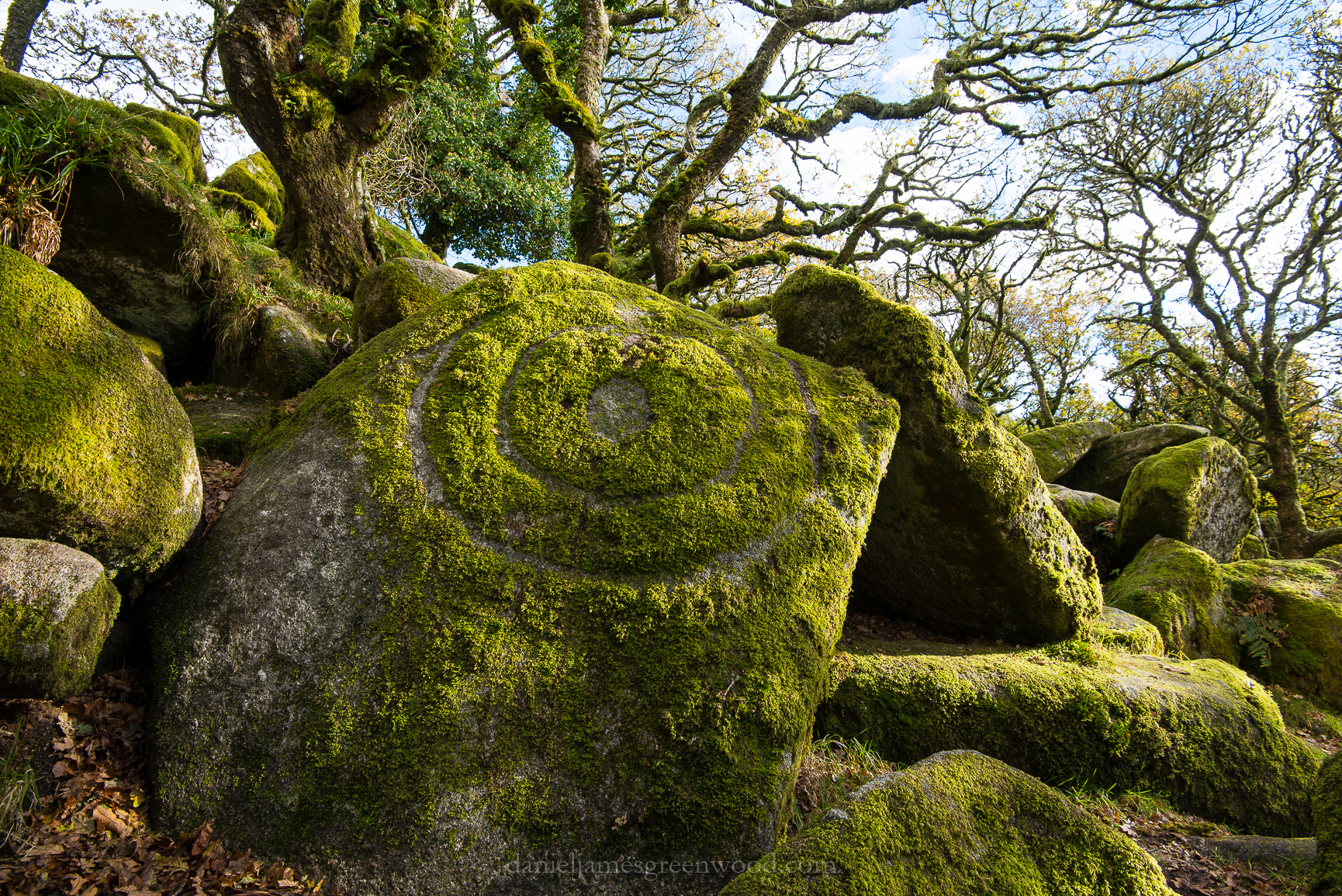
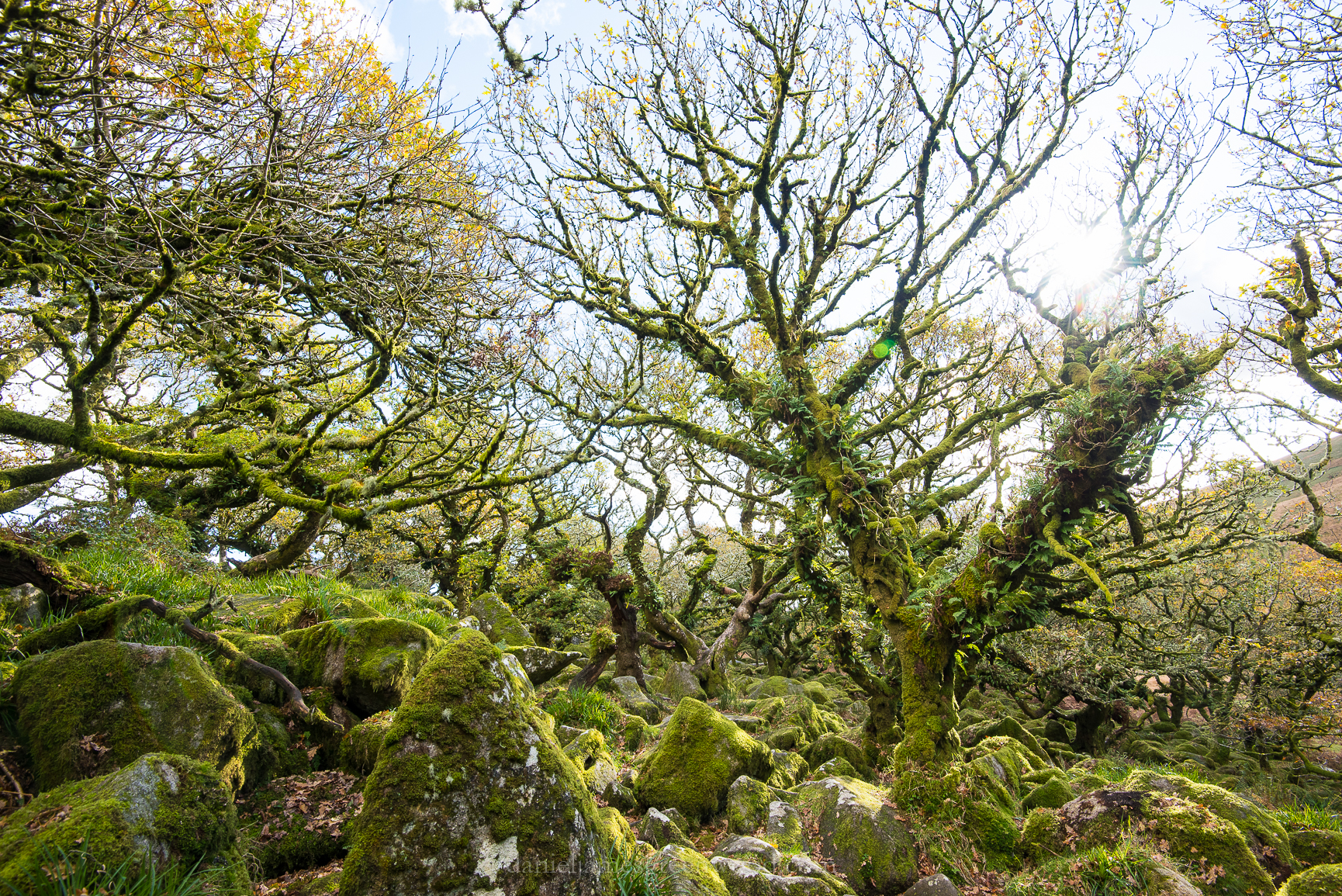
One of the most famous places in Dartmoor is a small area of woodland called Wistman’s Wood, a National Nature Reserve near Postbridge. This well-loved wood is home to scraggly oaks dripping in moss and lichen. These are also exceptional places for lichens. The wood itself is known for its misty scenes, with the trees clinging on to the moisture in the air. That is only a good thing for lichens and mosses.
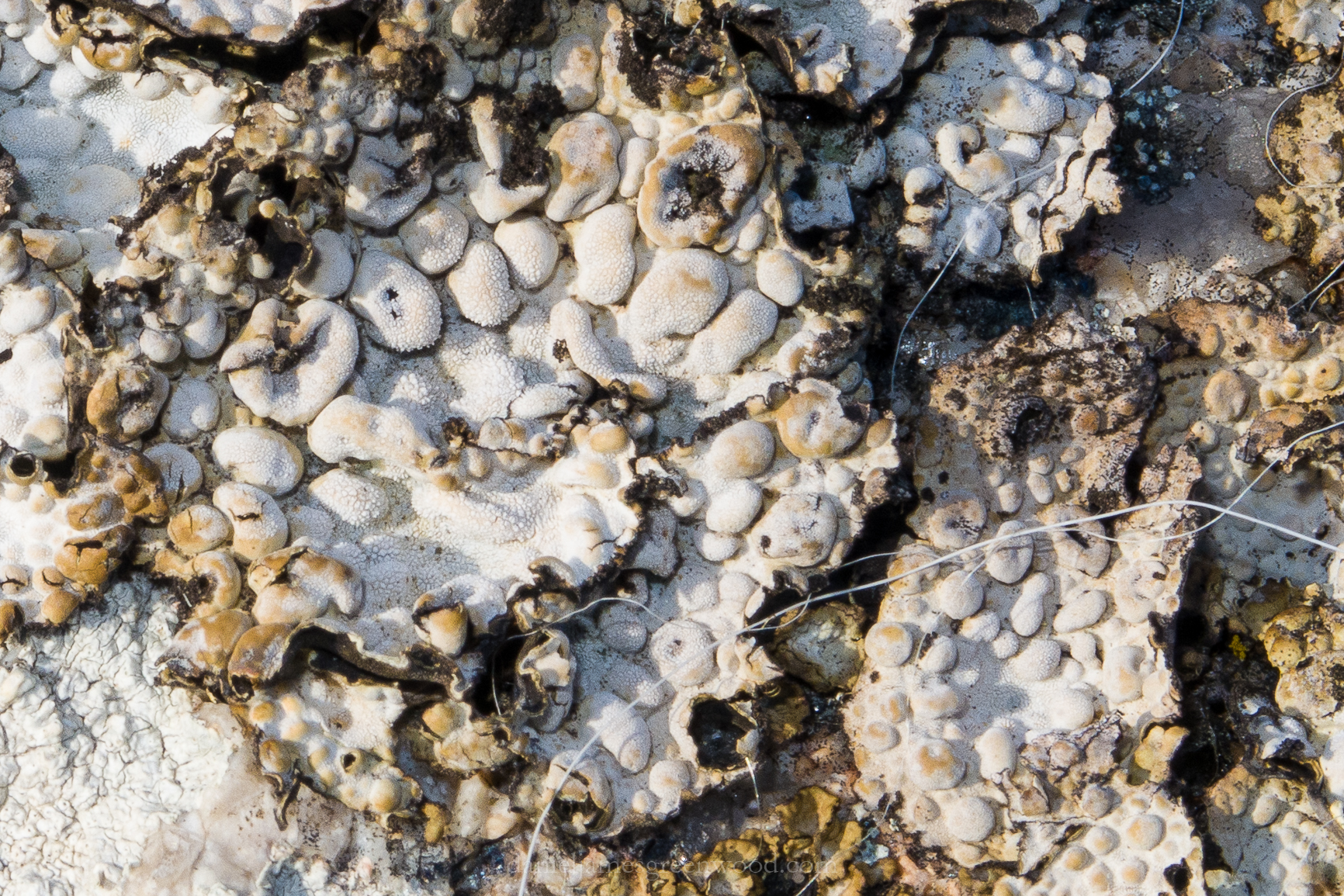
This bubbly-looking boulder lichen was growing on the approach to Wistman’s Wood. The threads in the lower right-hand part of the image are hairs from sheep or cattle which have squeezed past the rock.
Another boulder held a spidery community of foliose (leafy) lichens.
Mandarin duck with ducklings
Here is a rather nice example of a lichen-covered boulder in the river Dart. This is a female mandarin with her ducklings. This was in June and while rain isn’t unusual in Dartmoor in summer, you can see it has been warmer around the time of the photo because the mosses are blackened and dessicated.
Wistman’s Wood
The lichens in woodland like Wistman’s are found on rocky substrates and the branches of the trees. It’s interesting that these boulders are at great density in this woodland but not the same in the wider landscape. That is probably because the wider landscape has been cleared of woodland and then the boulders left behind, for livestock grazing. Woodland was cleared from Dartmoor long ago, mainly during the Bronze Age, from what I know.
This photo won’t display in portrait, but it’s an oak trunk covered in epiphytes – lichens, mosses and ferns coating the bark. This is the British and Irish equivalent of rainforest, or Atlantic oak woodland.
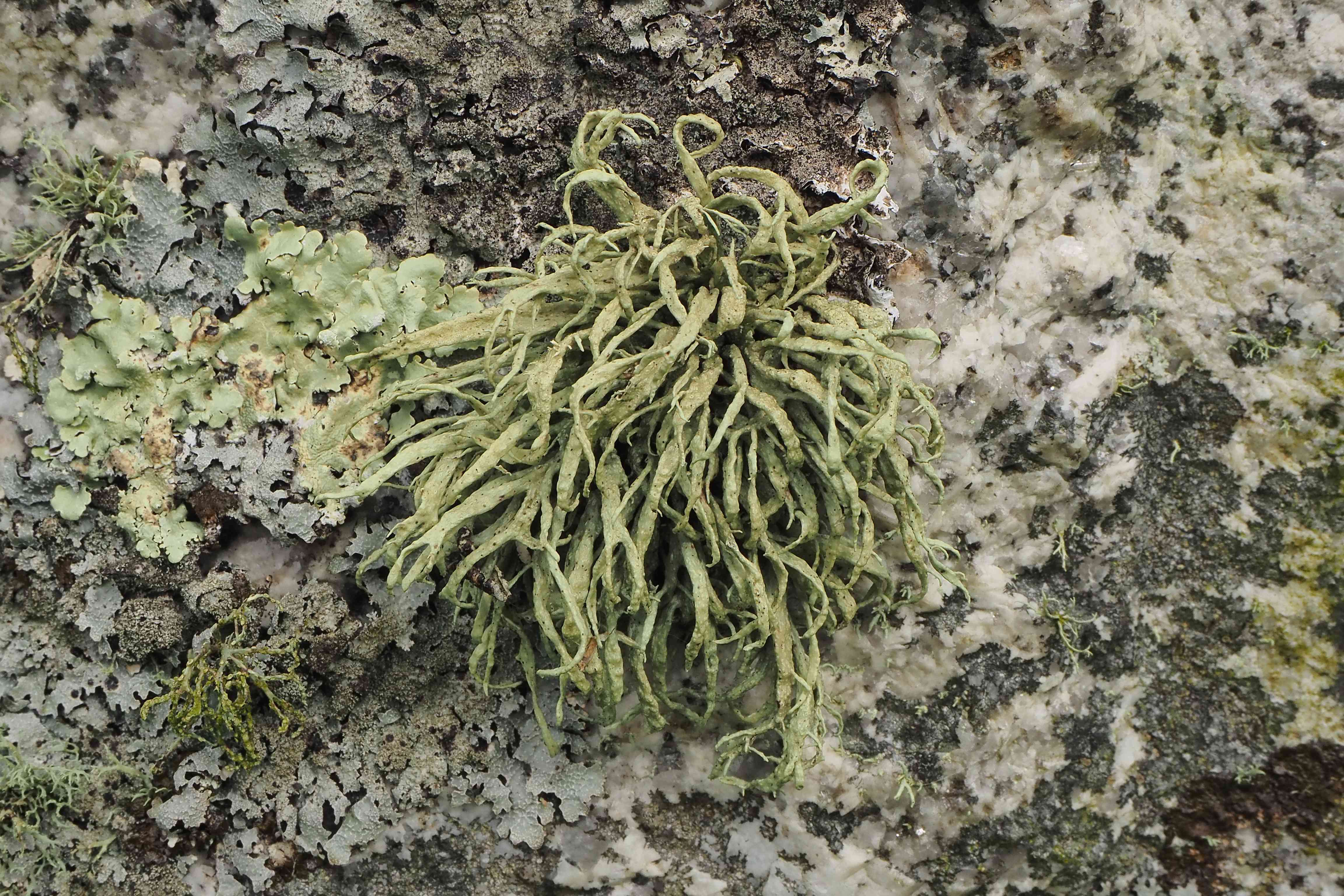
Dartmoor’s oak branches are rich in beard lichens, I think this is a species of usnea.
Some of the less flamboyant lichens, but probably more common, are these pore lichens. I think pore lichen is an American name, which isn’t used in Britain. I don’t really care and am always frustrated with the rigidity by which species recorders approach these issues. We need common names to encourage more interest in nature. I know Tyrannosaurus rex is a popular name, but Latin names do not capture the imagination in the way that common names do. Stinkhorn, anyone?
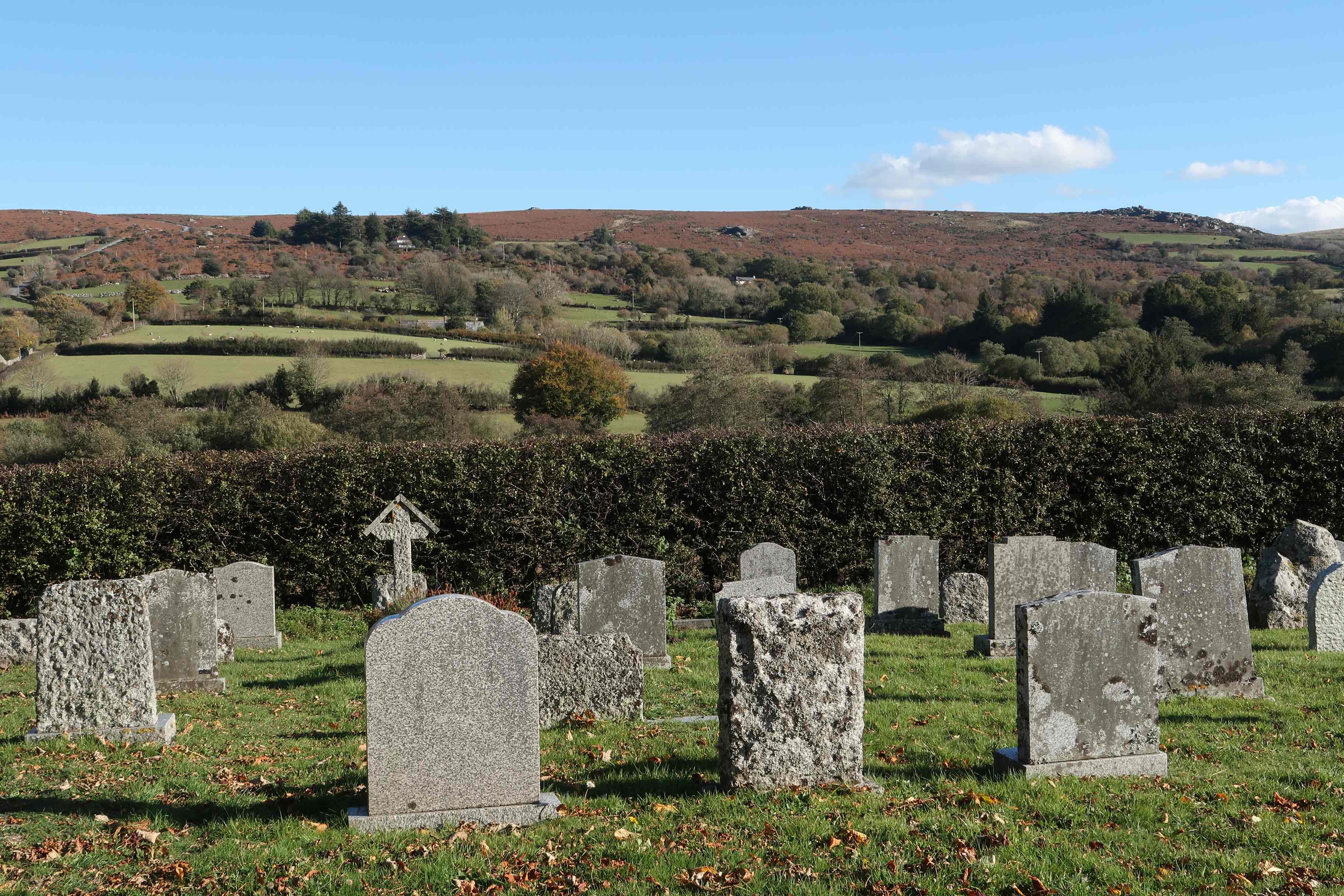
As someone who grew up in a city, cemeteries were some of the first places I began to notice wildlife. I think they are special places also because their atmosphere is so different to the rest of the built-upon or managed landscape. At Widecombe-in-the-Moor, there is one of the best lichen cemeteries I know. Not that they’re dead, they’re well and truly alive and kicking.
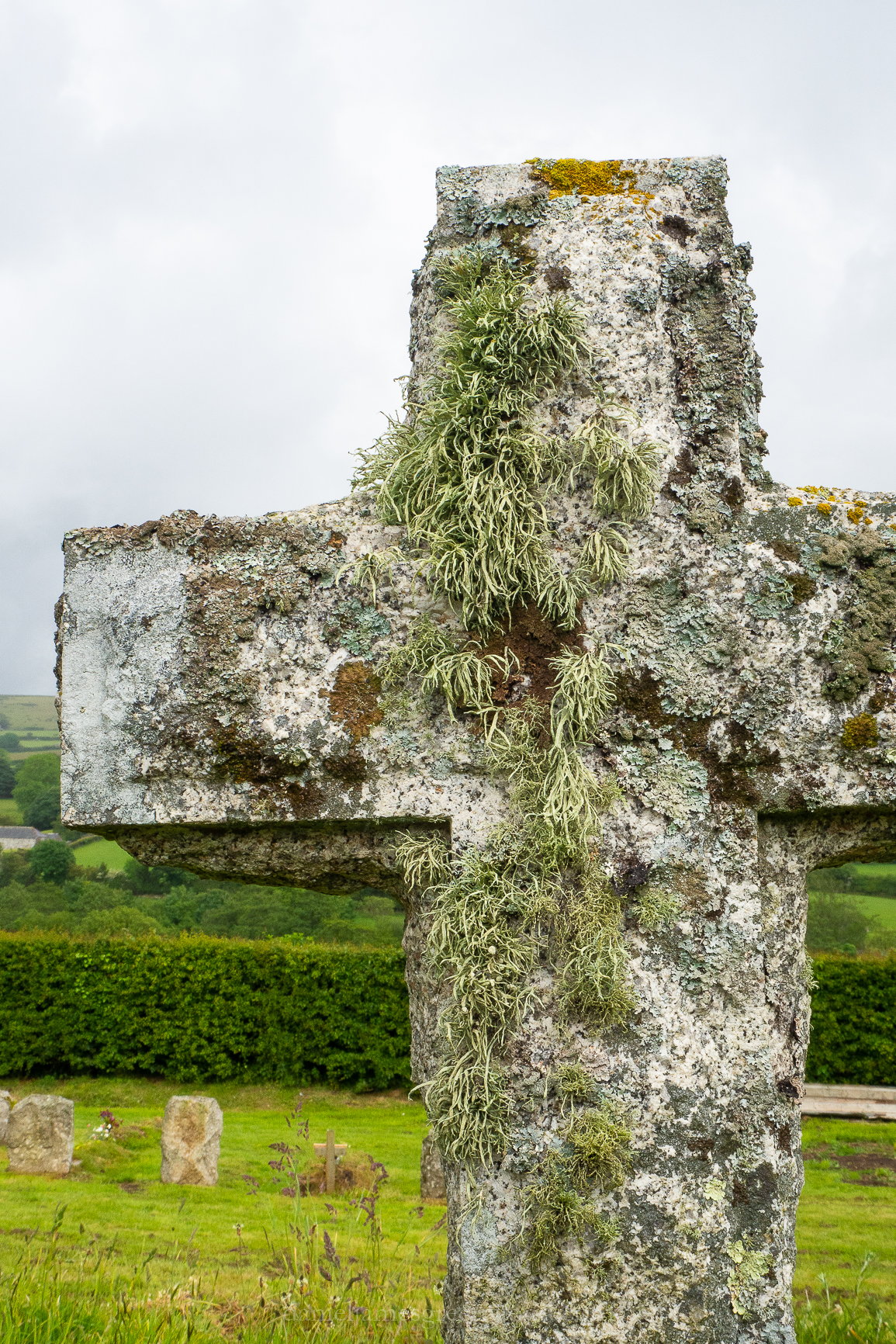
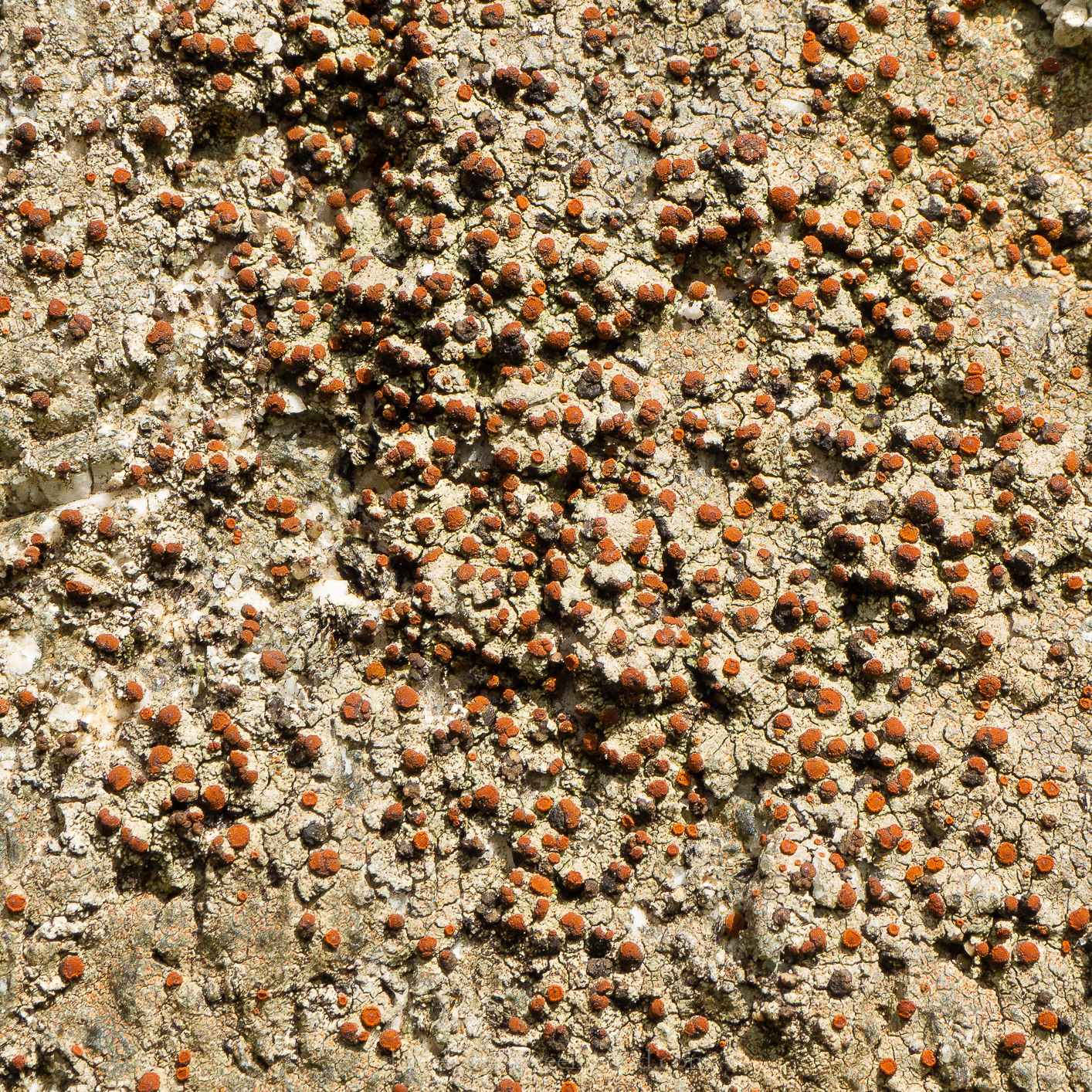
This cross is a dream. There are foliose and crustose lichens, and it hasn’t been tidied up by the cemetery managers (I don’t. The air quality is also excellent in this area, allowing for more species to find a place to live. Below is a selection of the species I found growing on gravestones in this cemetery:
I couldn’t let this woodlouse get away without being included along with these frosty fruiting cups.
Above is a really cool insect, a downlooker snipefly! I’ve also found this species on lichen-encrusted boulders in Western Ireland, a similar climate and landscape type.
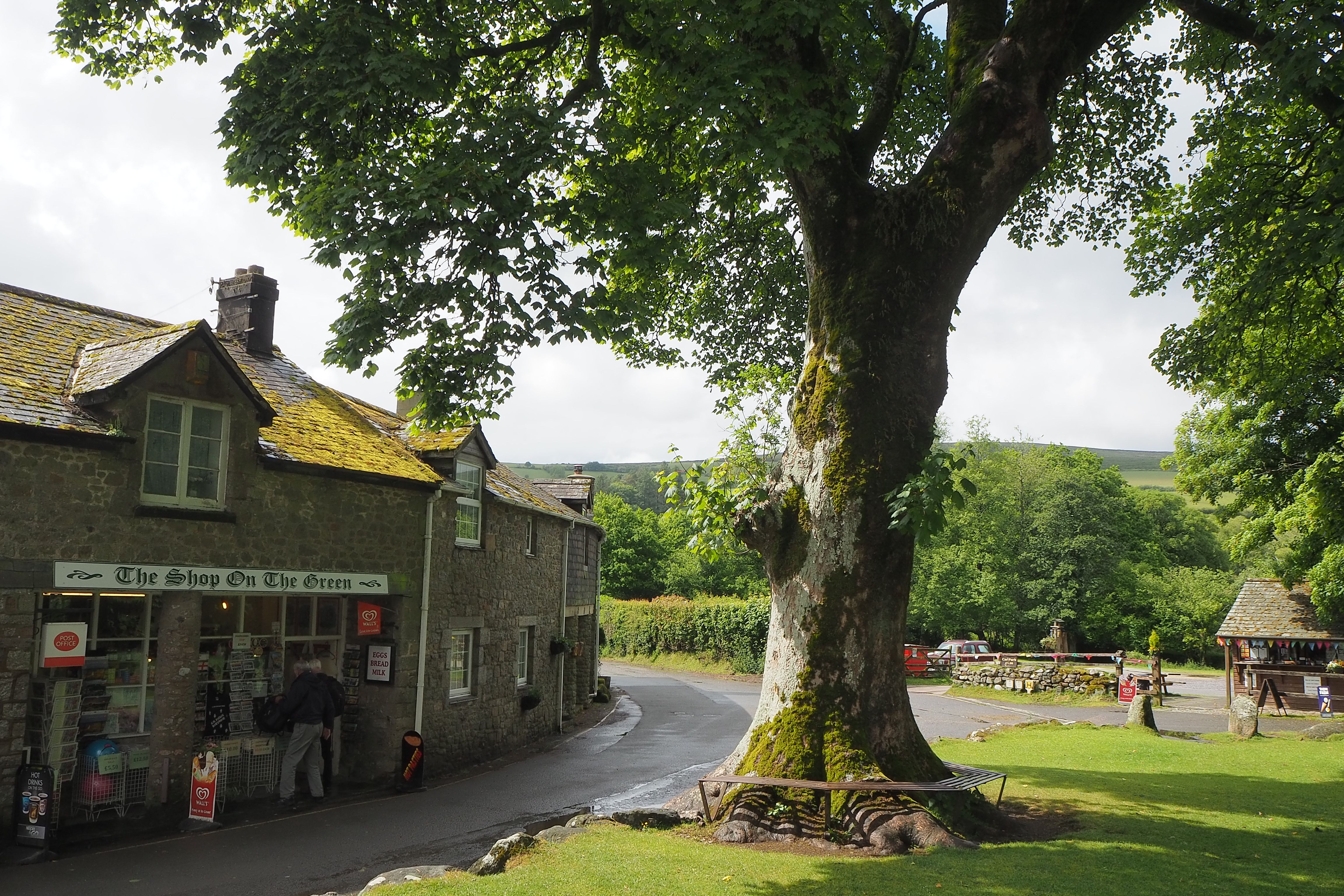
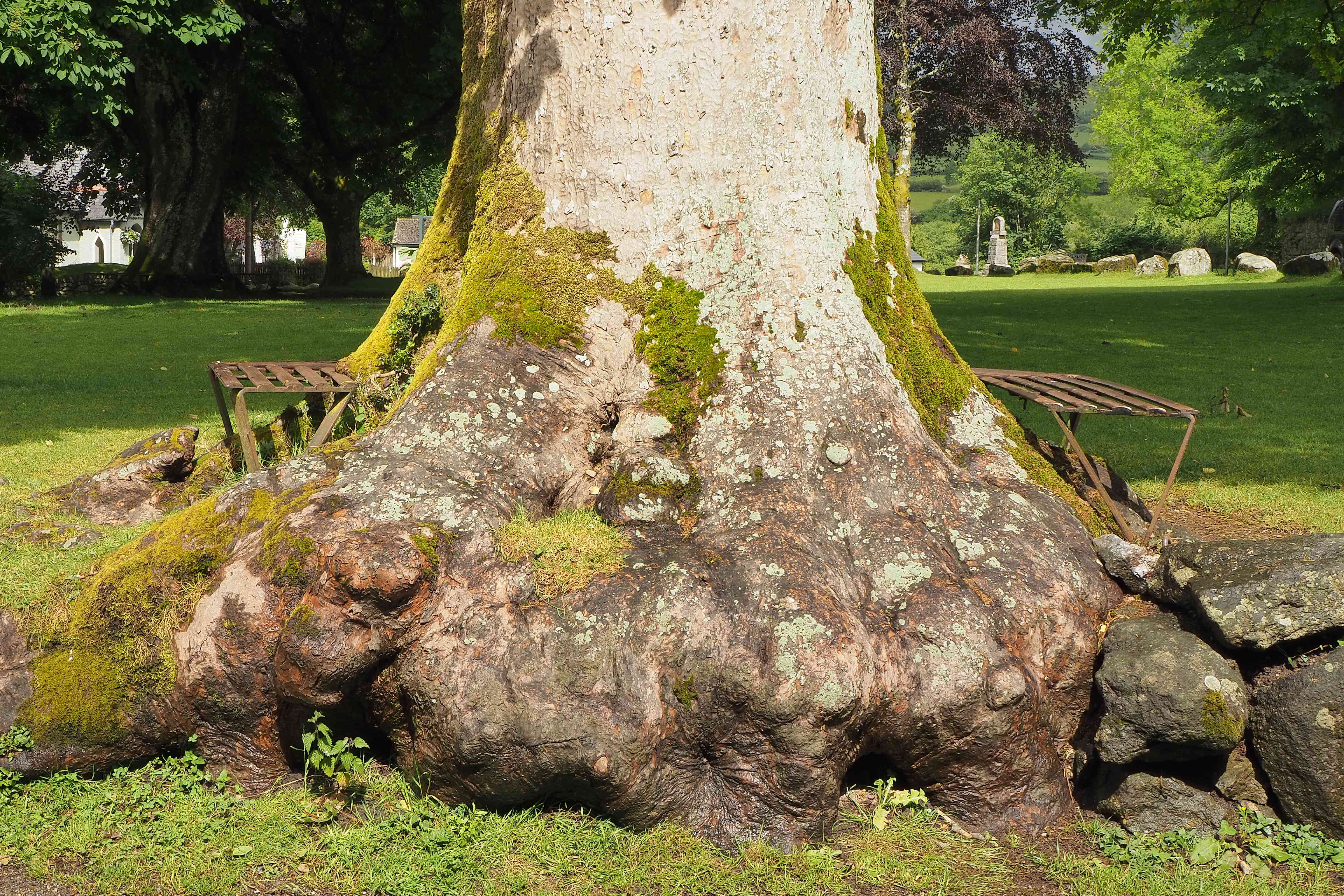
The village of Widecombe has a large sycamore growing on the edge of the green. This tree shows why scyamore (Acer pseudoplatanus) is a good wildlife tree, because it can provide habitat for lichens.
It looks like a perfect place to sit and cotemplate the amazing lichens you can find in Dartmoor.
This week it’s a continuation of #LichenJanuary. It’s a time of year when winter is at its deepest, more grey than snowy in southern England. In towns and cities lichens come to the fore. If you’re looking for something to take your mind of the wider world this month, lichens are your friend.
The other day I had the idea to post on Twitter asking for people to share their lichen photos from around the world. In a time when we are unable to travel anywhere and people are suffering, it felt like a positive thing to do:
Dear People of the World (cc #LichenTwitter): where are good places anywhere in the world to see lichens?
I will start. My mum's side are from a very rainy Western Ireland, where lichens are in charge.
After a little while, people from all over the world began to post their photos. Over night UK time there were a series of posts from Japanese lichen lovers. It is one of the most incredible things about social media and the Internet, that someone can post in Japanese and the software does a decent job of translating it. A couple of the Japanese tweets included Cladonia lichens, what in English we generally refer to as cup lichens:
My interest in lichen originates from my Irish roots. There is a track at the foot of the Ox Mountains in Mayo, western Ireland, that I have walked many times with my family. It is surrounded by old boulders and bogs, all drenched in lichens. Some of the species I got to know there were reindeer lichens, Cladonia portenosa.
Reindeer lichen, February 2012
Reindeer lichens seem to get their name from the fact their structure is like reindeer antlers. They are also known to be grazed by reindeer where they grow in Scandinavia. I believe they are also used as for dyeing cloth and as a delicacy in posh restaurants.
Lipstick lichens, May 2017
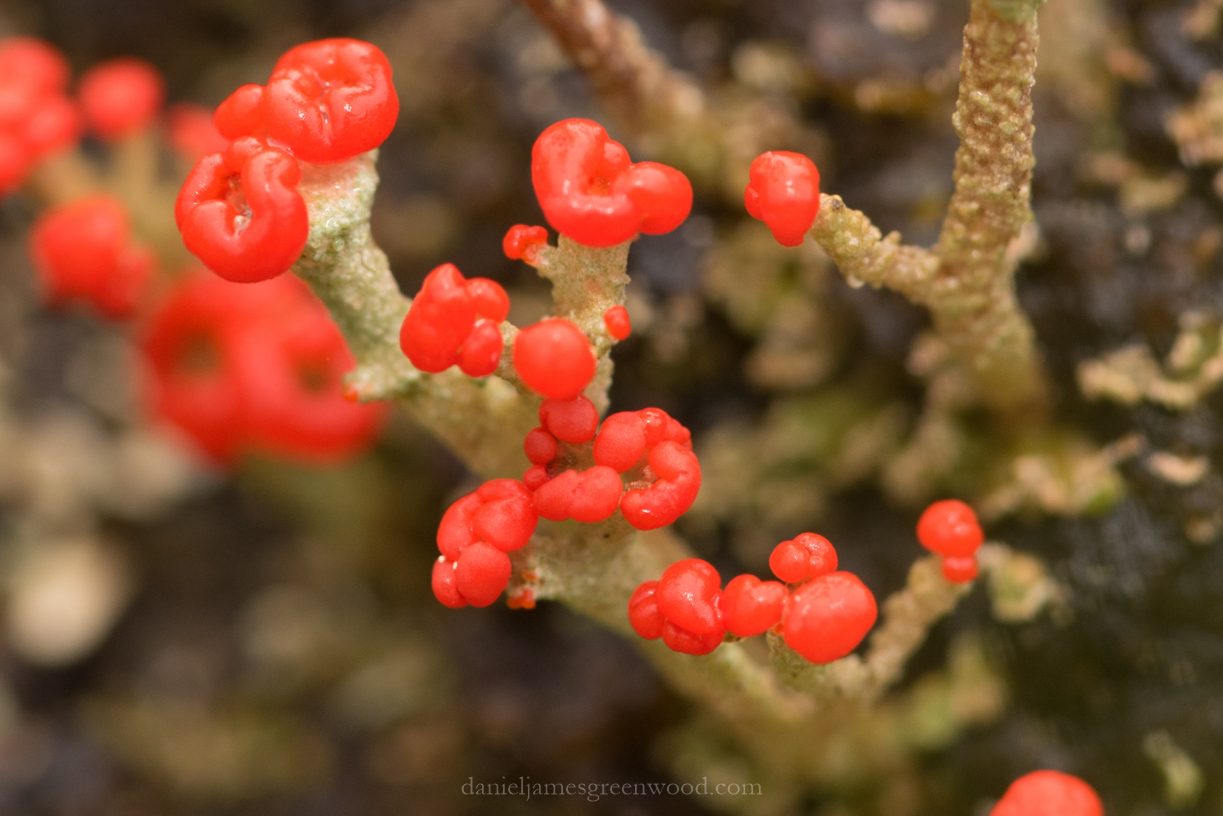
One Cladonia that catches the eye is Cladonia floerkeana, also known as devil’s matchstick lichen. Seriously, anything red is devilish?! I like the name lipstick lichens, and I will be calling them that.
Lipstick lichens, May 2017
These lichens were growing on top of the Ox Mountains (what are really hills when it comes to height). They are covered by boglands on the plateau. Mayo is a place with very high levels of annual rainfall, making it perfect for these moisture dependent organisms.
Lipstick lichens, March 2013
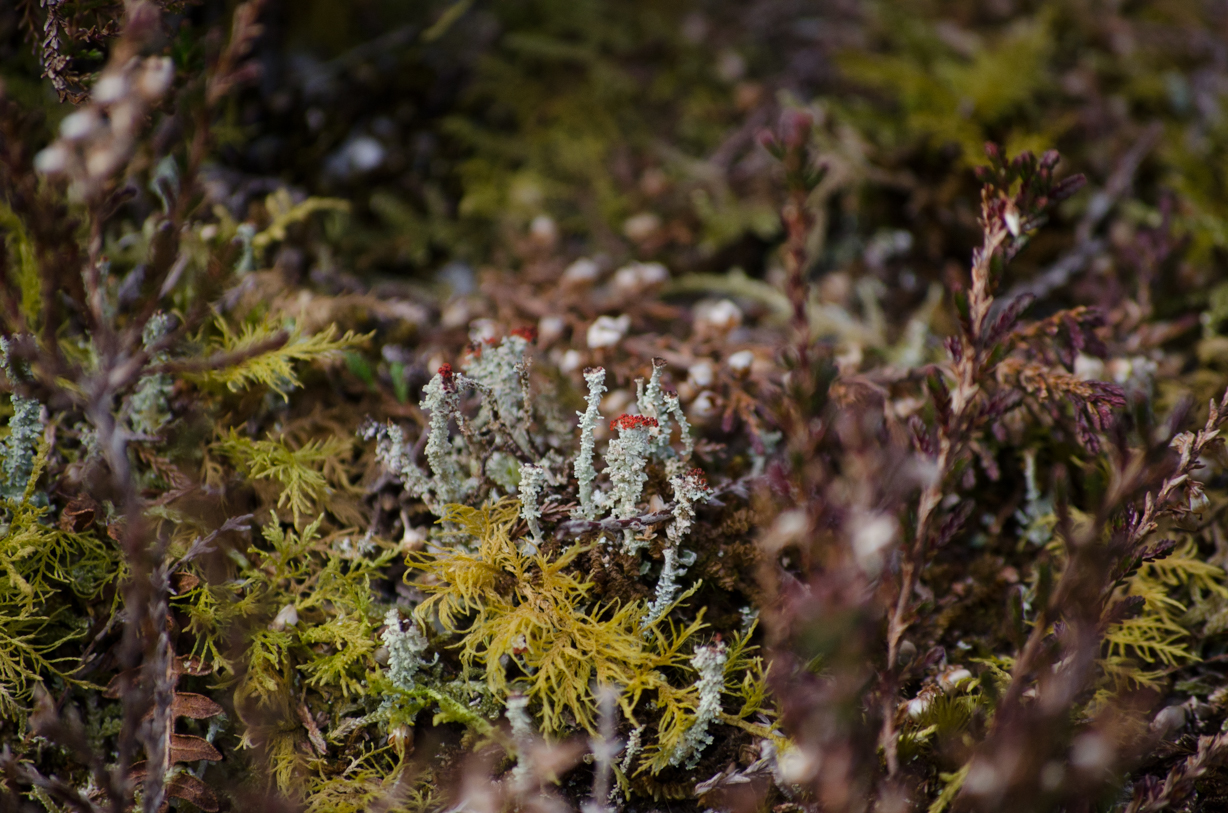
The lipstick lichens were growing on top of a boulder, while others could be found growing among vegetation in the bogs. I can’t wait to go back there and see what I can find. Here is an image from a few years earlier, when I didn’t own a macro lens. It gives a sense of their habitat.
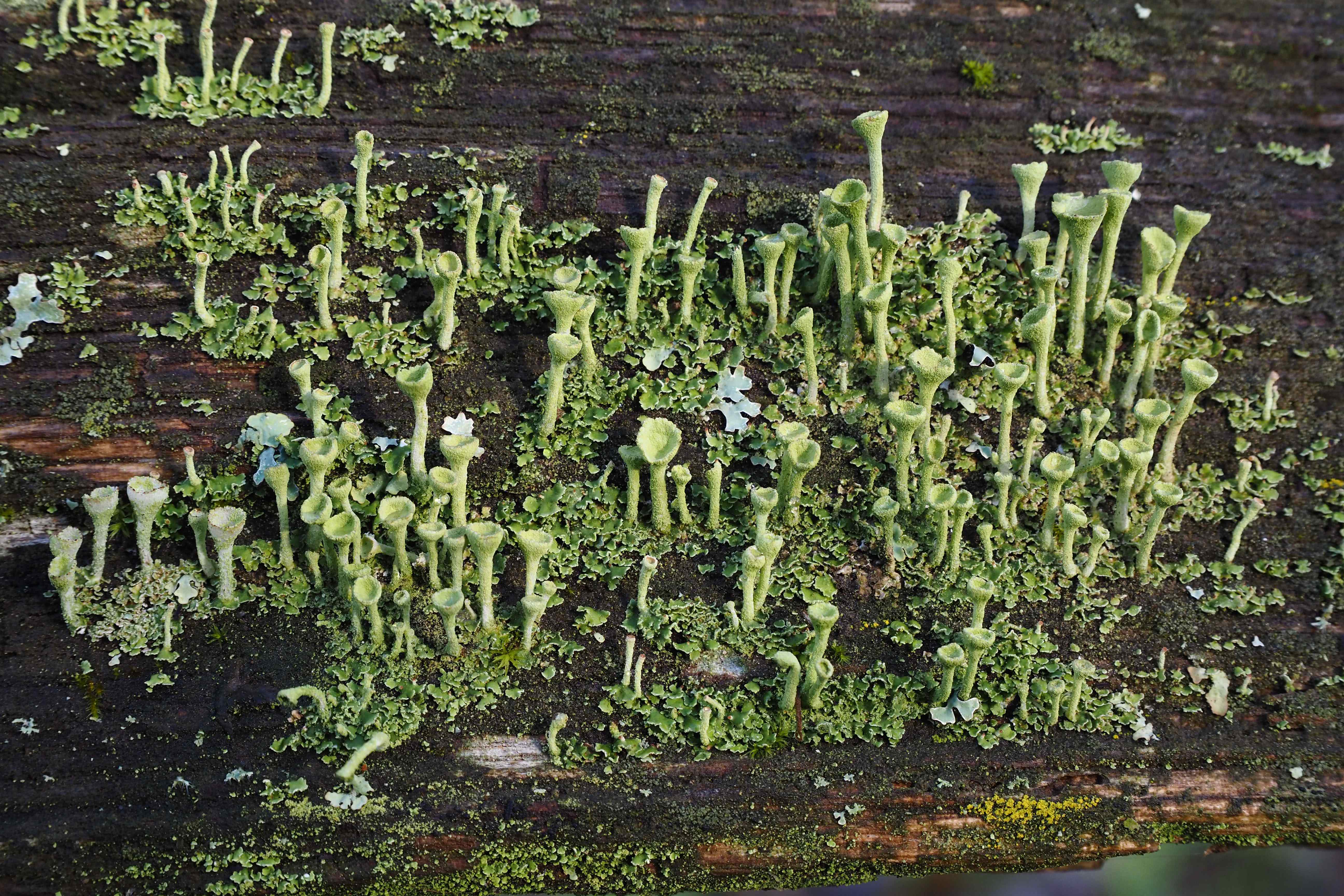
There is a farm near to where I live now in Sussex that has its own populations of cup lichens. I have noticed in recent years how fencing posts which are not treated with chemicals can important habitats for lichen, moss and fungi. The cup lichens above are very happy with their current abode.
Cup lichens, 2019, Sussex
These lichens seem to be noticed more than any other. They look splendid holding onto droplets of water in their cups, and their very nature of reaching upwards draws them to our attention. They are the quintessential ‘pixie’ cup lichens.
Here’s my seasonal update of stuff you don’t need to know about, but then welcome to the Internet. What I’m writing Soon I will be self-publishing my third poetry collection, Fool’s Wood. It’s seven years since my last one and this collection has taken longer because of LIFE. There will be a booklet and also…
Here’s another entry in my slow-blogging Oak Timbers series. You can view my galleries and posts archive here. I visited Salisbury in Wiltshire (south-west England) for the first time in 2023 and was really charmed by the place. If you’re interested in this kind of thing, Salisbury is the place for you. Here’s a gallery…
I’m getting into more of a routine of recording and editing audio, so here is the latest episode of Unlocking Landscapes. Listen on Podbean or via the usual platforms. Also via YouTube: https://youtu.be/y1K9Pqx68to?si=B-Fdhf3sdDH35Z8w Following on from July’s rather optimistic fungi walk, I popped back to the same area of ancient Wealden woodland to see if…
The temperatures have crept up again after a period of freezing cold and foggy mornings. During one of those colder December days I visited a favourite place to find fungi. I was surprised by just how much had managed to fruit, though it was mostly quite small.
My first find was this common puffball mushroom, looking well nibbled and past its pomp. Almost all of the mushrooms I found and spent time trying to photograph were growing in beds of moss. That says to me that the mosses were providing a warmer, wetter platform to fruit from, protecting the mycelium of the fungus from the cold beyond its fronds.
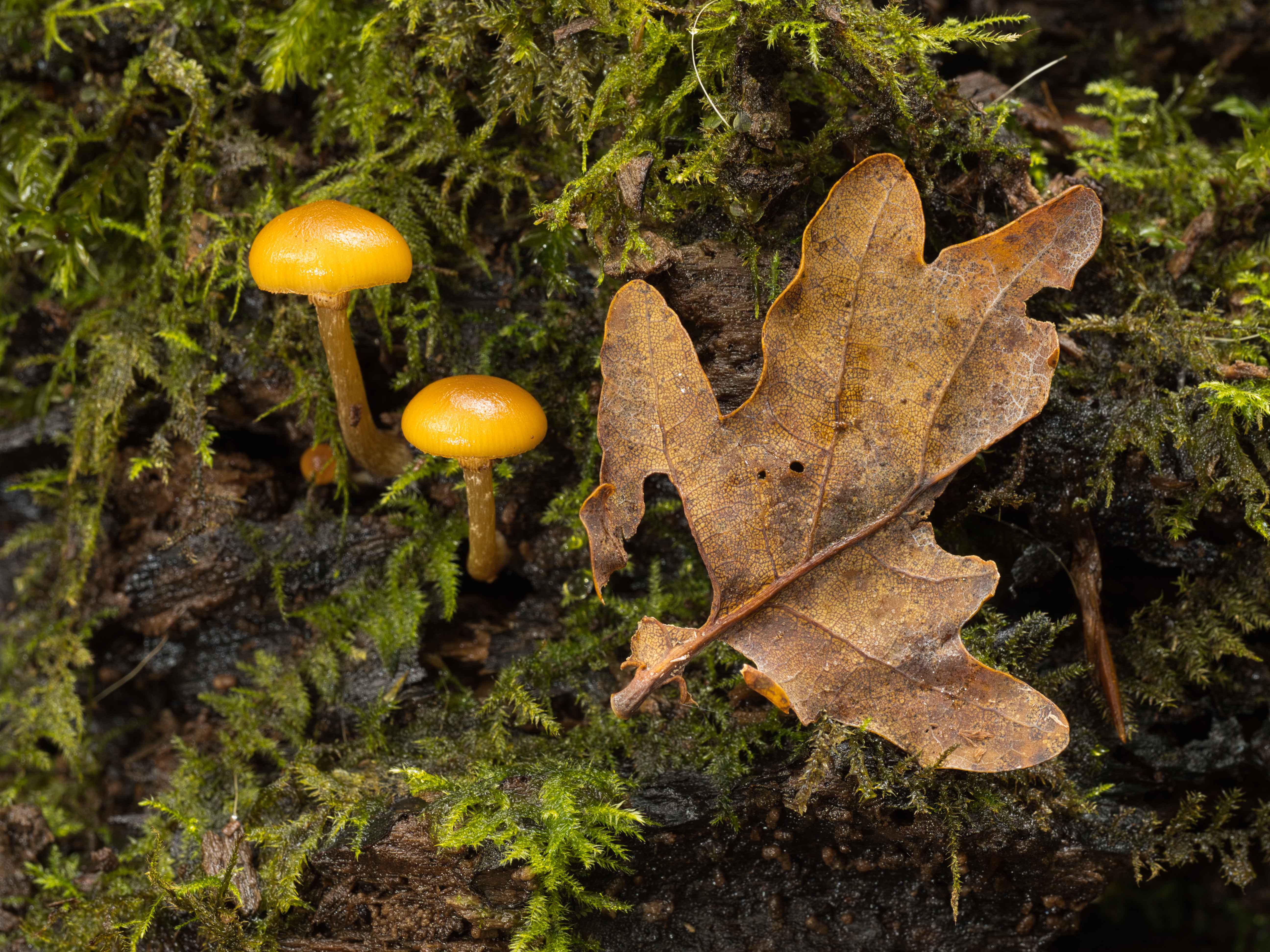
I had a lot of fun photographing galerina mushrooms, otherwise known as moss bells. One of the most famous mushrooms in this family is the funeral bell, for reasons you can probably guess. I am not at a point to identify moss well, but I do know this is common feather moss. And that is an old oak leaf.
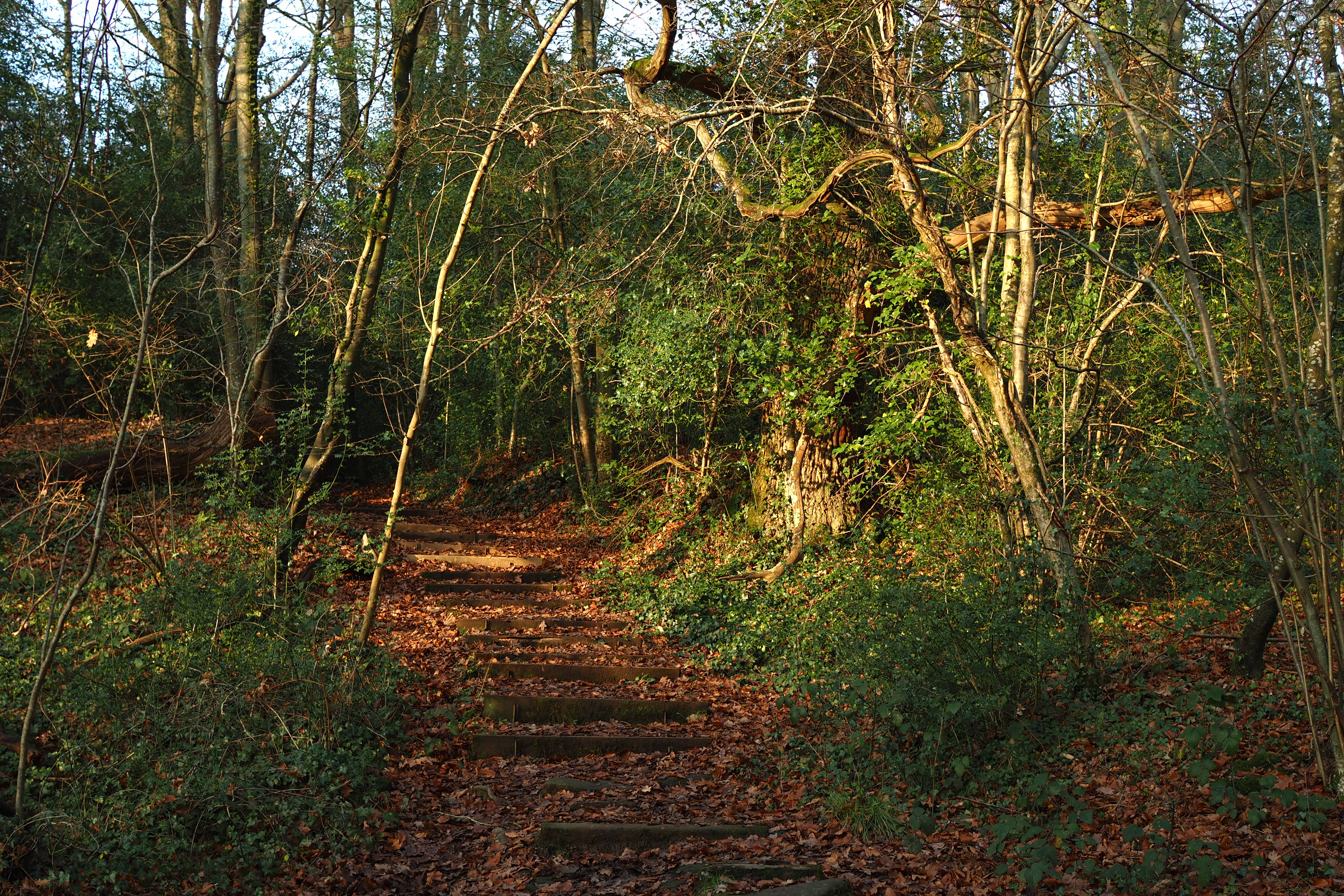
I found some lovely moss bells as I worked my way further into the beech, oak, hazel and holly woodland. In England we don’t have much in the way of wooded ‘wilderness’ that North America or Russia is famed for. But in the south-east of England, the Sussex Weald is perhaps the closest thing we have to a vast woodland area. Woods in England are split up by private ownership and mixed land use, with many small woods cleared for agriculture or building. If you want to see what a fence looks like, come on over. However, the Weald to the east of Sussex is the most wooded area in England, and much of it is ancient, broad-leaved and ‘natural’ woodland.
Moss bells are actually parasitic on mosses, though they evidently do not cause it the kind of bother the word ‘parasite’ brings to mind. The submarine telescopes surrounding the shroom here are moss sporophytes, which release the spores to allow the mosses to reproduce elsewhere. Much like mushrooms!
Have a look on moss growing on fallen trees or on the trunks of trees. You might get lucky and find yourself a moss bell.
I’m annoyed with myself because I’ve seen this tiny mushroom with its Hellraiser-esque, spiny cap, but I didn’t take the chance to note it and now I’ve forgotten. It was growing in a crevice in a fallen tree. The veins in the decaying oak leaf show just how small it was. That’s the second time it’s made its way onto this blog without a name. Sorry no refunds.
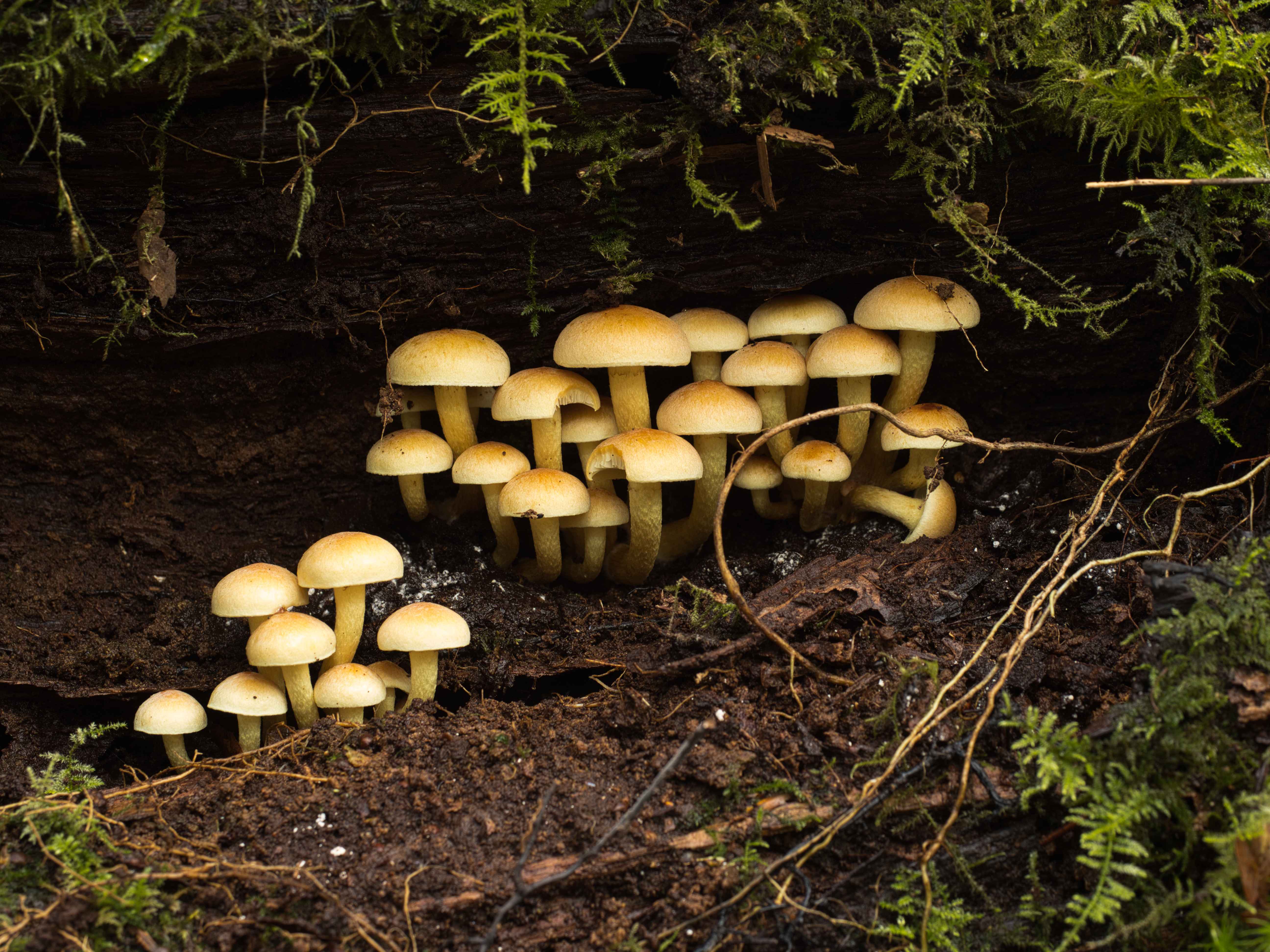
Another fallen tree was covered in mosses, ferns, lichens and, of course, a community of mushrooms. Sulphur tuft is a winter stalwart. So if you’re reading this, sulphur tuft, thank you. There are some other interesting things going on here, with the decaying wood already beginning to turn into something like soil, and the roots of something trailing across and feeding on the substrate. That’s life.
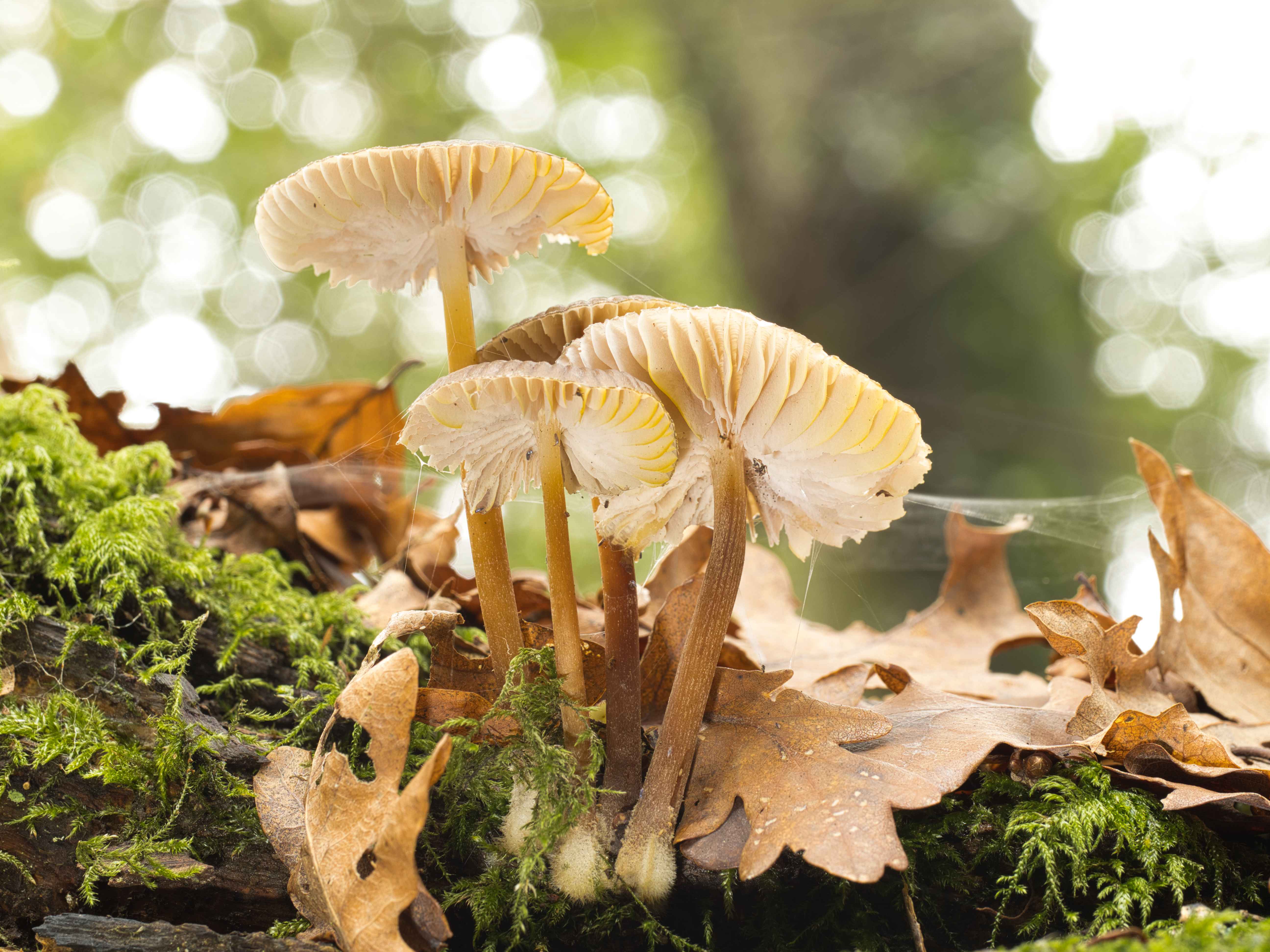
The final species group I found on mossy logs was the bonnets. They also seem able to handle the cold weather in the way that ground-based shrooms can’t.
I always forget that September can be a good month to find fungi, if it’s not too cold. Hopefully this blog, which has now been running for a year, does go to show how many things you can find throughout the year. Autumn is not the only time to find fungi. It’s everywhere, all of the time.
This woodland is quite heavily dominated by holly. For many people in the UK, that’s seen as a bad thing, with the idea that woods should be nothing but light. In the Sussex Weald, holly indicates ancient woodland and holly is a key species. At least one woodland was protected because of its populations of wild holly. I absolutely love it, having worked with it for several years. It coppices very well and the timber is great for small-scale green woodworking like fencing and posts. Of course at Christmas it makes lovely wreaths.
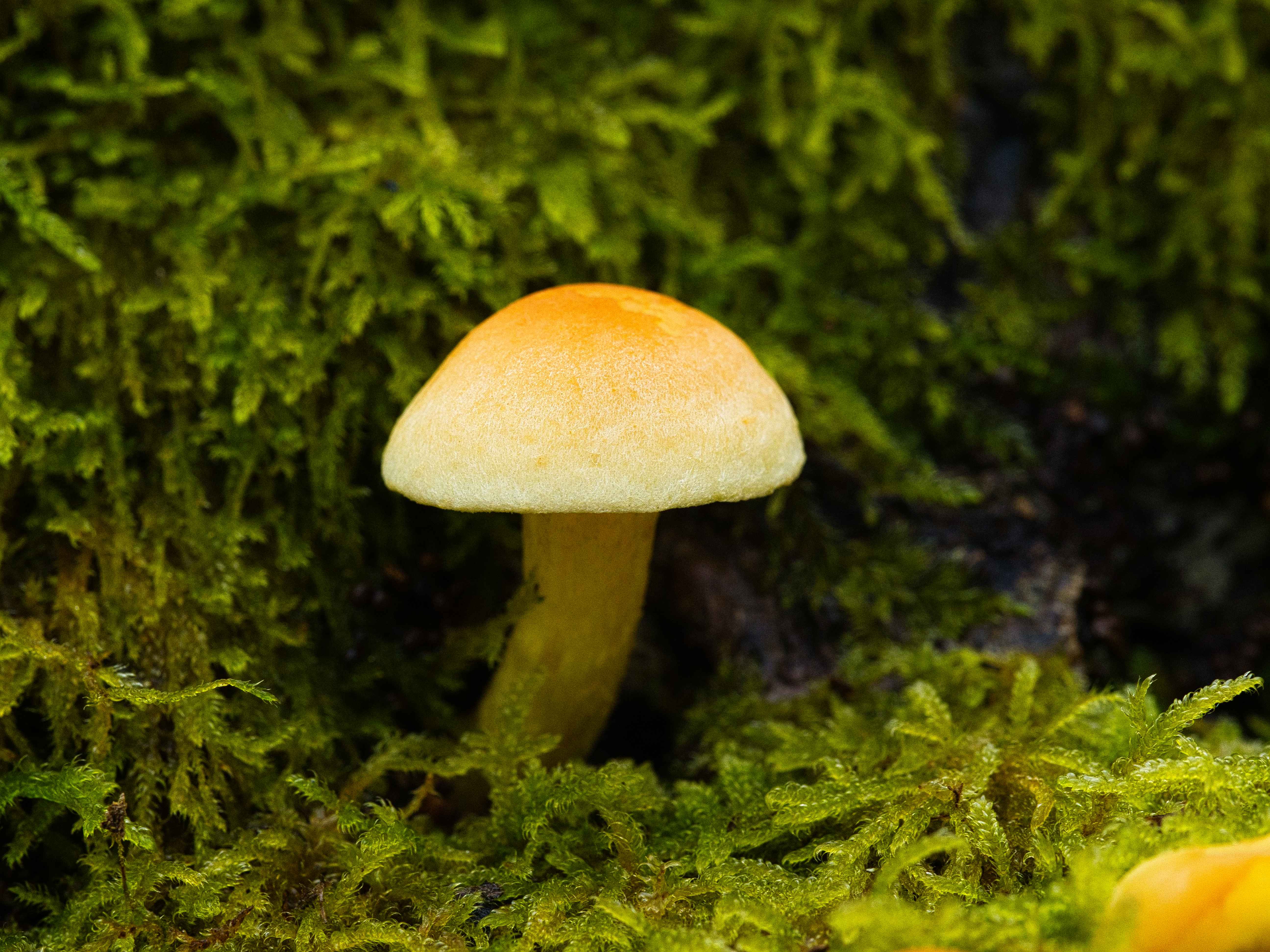
The holly was providing protection for areas of the woodland floor that seemed to be very rich in smaller fungi. This bizarre thing is a yellow club fungus. It was part of a community of many more.
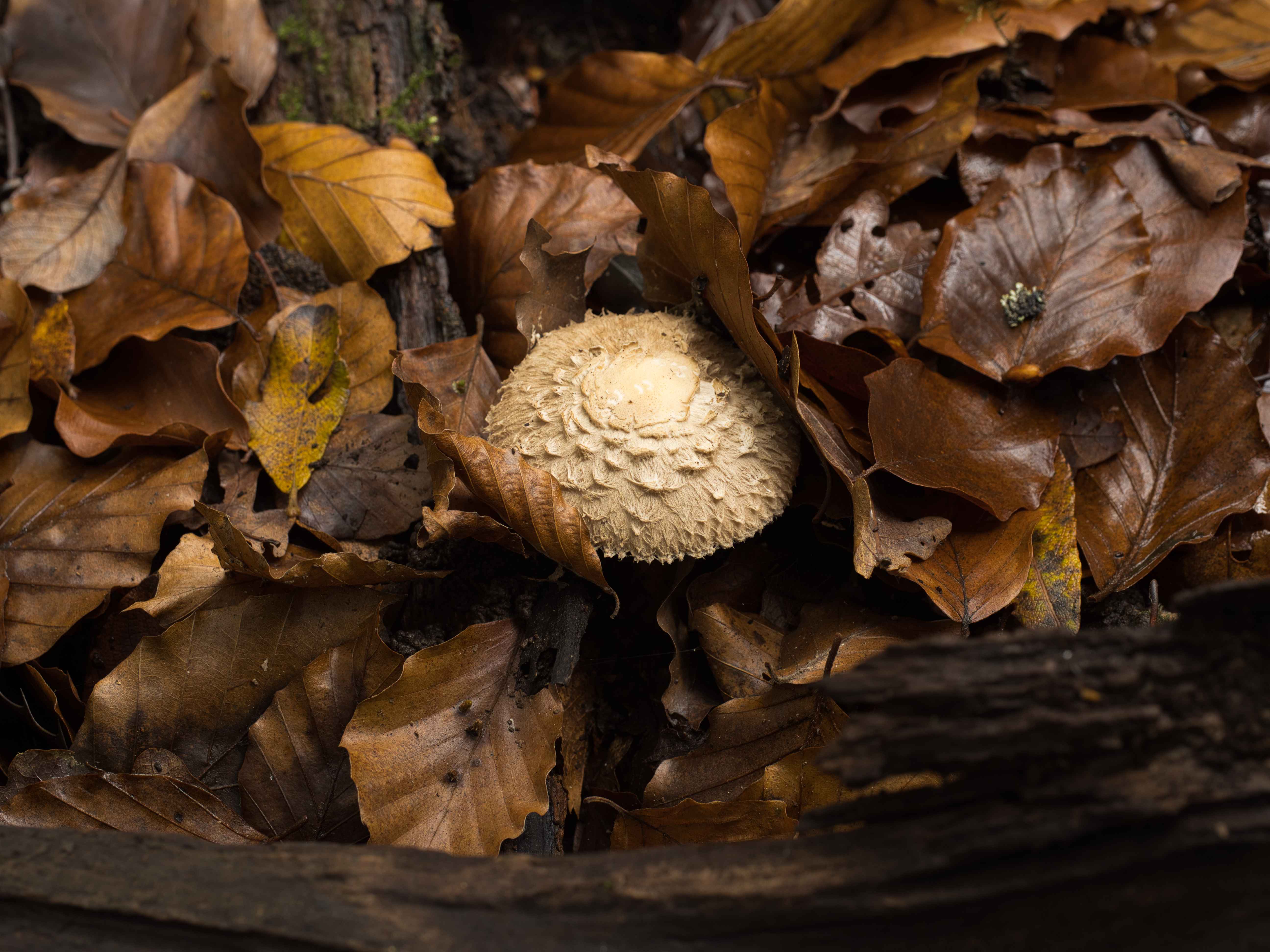
Though I’m not quite sure what this species is, probably a parasol relative of some kind, it was a surprise to see it. I wonder if the newly fallen beech leaves were providing a layer of warmth which protected the fungal mycelia in the soil from frost, allowing them to produce mushroom fruiting bodies?
I’ll end this week’s post with perhaps the most strange thing I found, down in the leaf litter again (but not without moss). Having looked at my massive fungus tome, I think this is a species of clavulina, which is not far away from a coral fungus. These fungi are ectomycohrizzal which means they have a symbiotic relationship with a plant. That means they have been able to agree a trade deal of things that they could not otherwise gain as standalone species. I hope the British and European toadstools in Brussels can take some inspiration. Though the trade between plant and fungus might have taken several million years to agree. Uh oh.
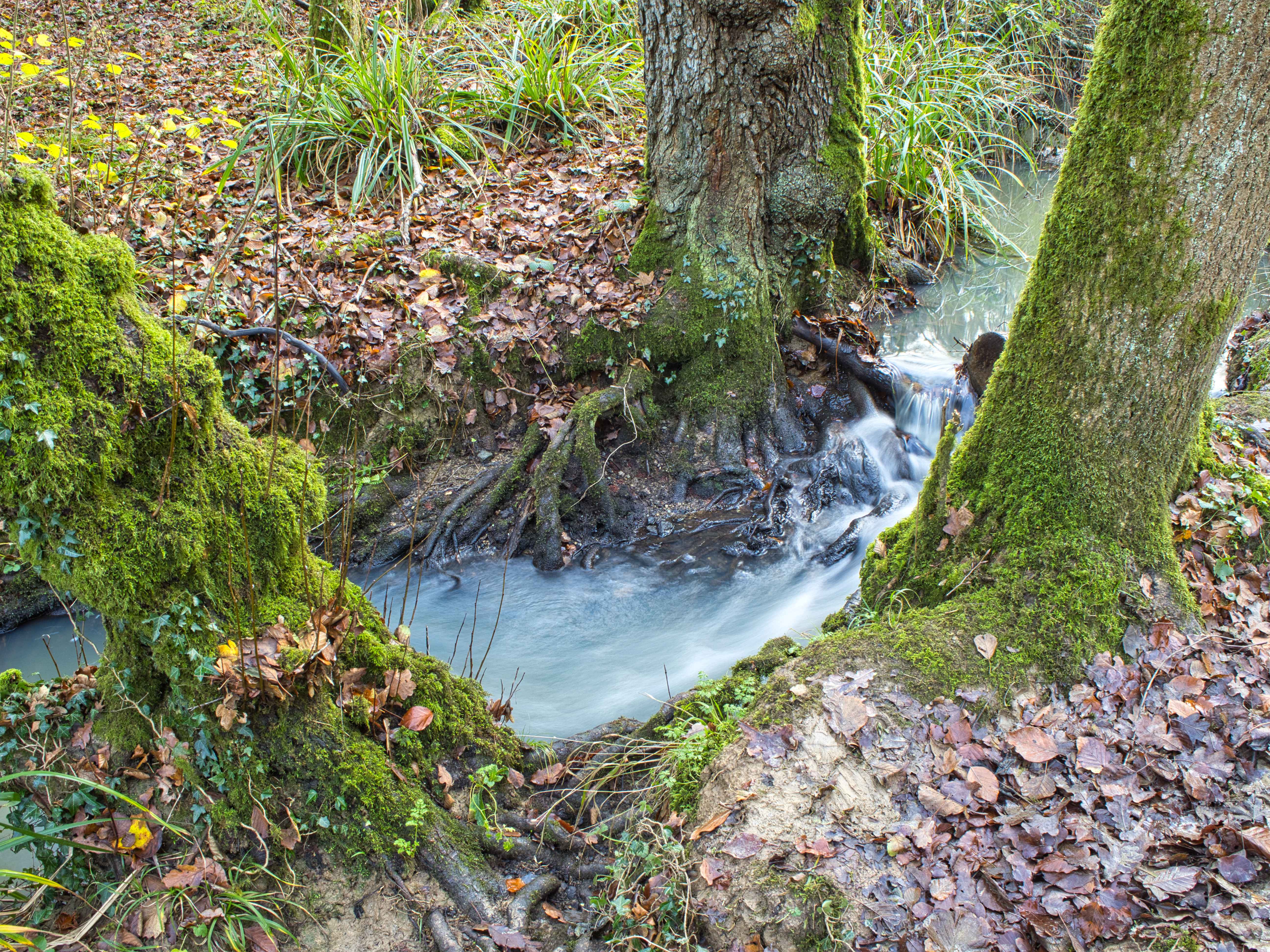
There is something special about woodlands in December. For wildlife, they can be a forbidding and barren place, which is why so many birds now move to warmer urban areas for food and shelter at this time of year. I’ve spent a good amount of time in woodland recently and the amount of fungi was a pleasant surprise. The gills in the Sussex Weald (a local name for a stream, plural) were gushing after lots of rain. They kept good company on their edges – mushrooms.
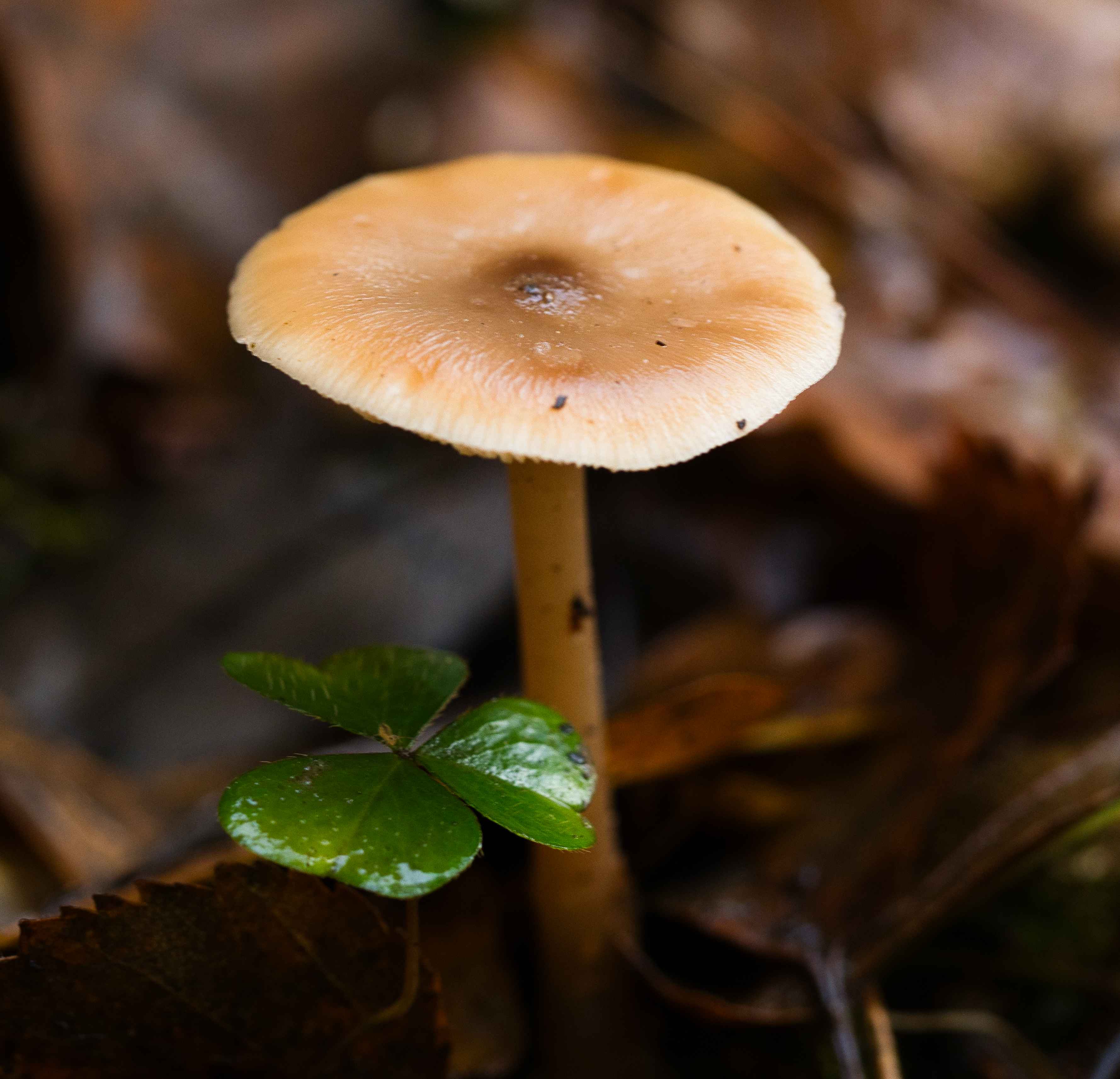
I spent a couple of hours following the edge of a network of Wealden gills. I found a number of smaller mushrooms along the edges of the gushing gills, like this very dapper looking mushroom with a wood sorrel bowtie. You may also notice a tiny springtail on the plant! The word gill is also used in Scotland and northern England, where it’s often spelled ‘ghyll’.
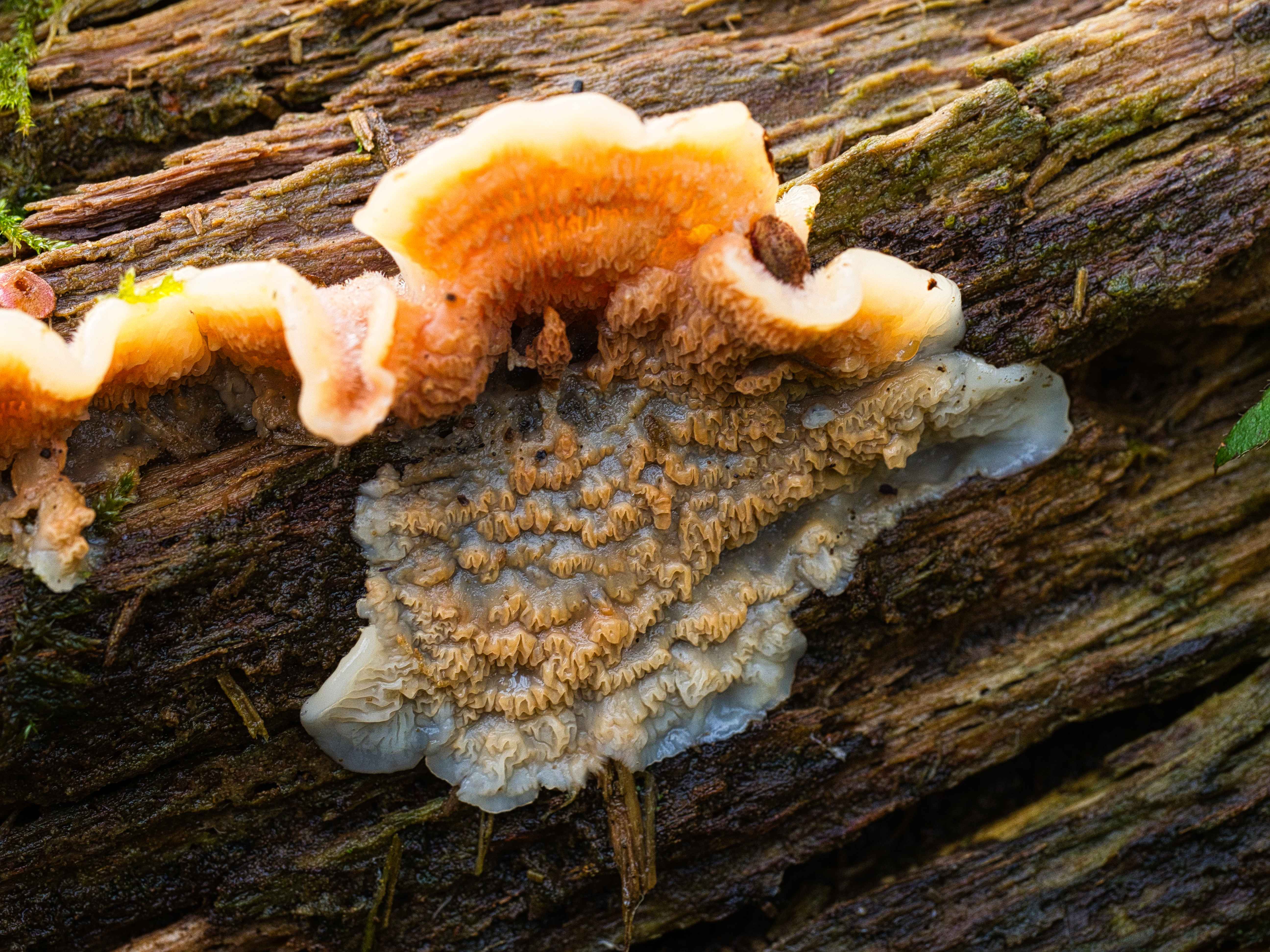
Something that really caught my eye was the work of this wrinkled crust fungus, which is its actual name.
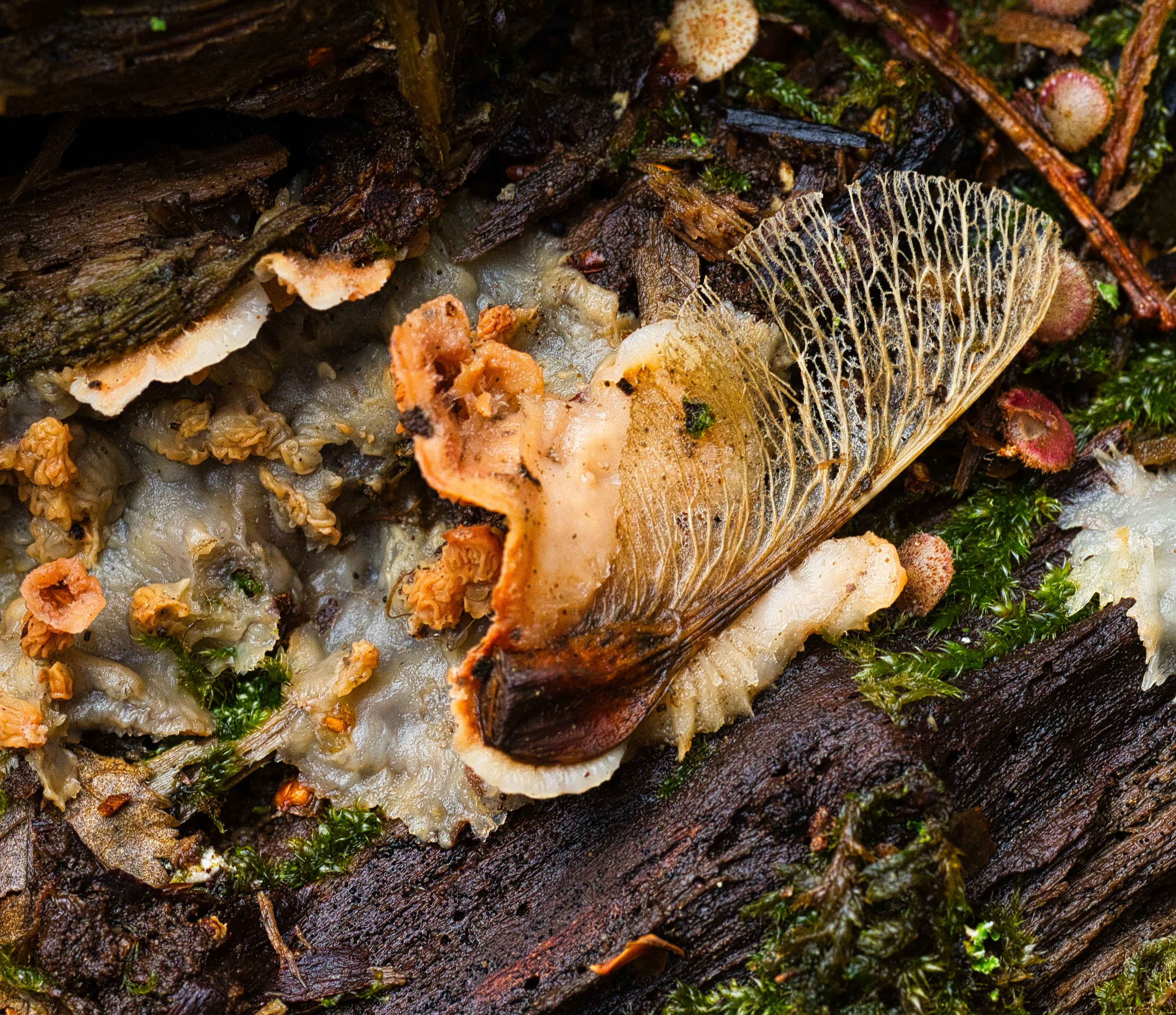
Fungi’s main function (fungtion?) in a woodland is to break down organic matter into soil and other minerals and nutrients which can support other species. It was fascinating to see this fungus ingesting (perhaps) organic waste material in its path. In this case it was consuming a sycamore seed.
Nearby, another specimen of the fungus was getting to work on a sycamore leaf.
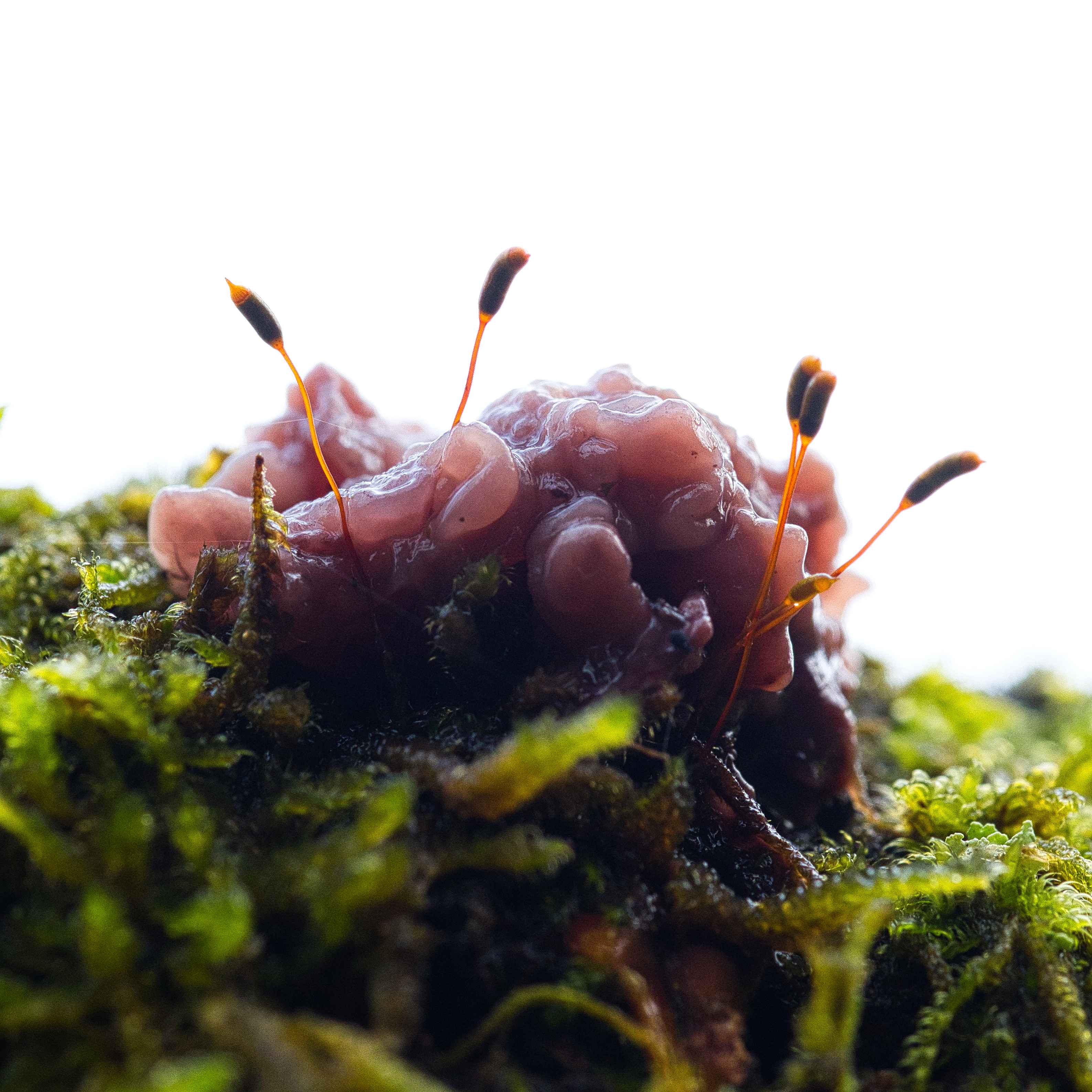
On a tree growing over the gill, this purply jellydisc looked like something out of a 1950s b-movie horror film. I think it’s the moss’s sporophytes that make it look so low-budget sci-fi.
I think you probably get what I mean.
I had my binoculars with me for this walk and they were very useful in, unsurprisingly, spotting things from a distance. Without them I would have missed a fallen birch tree that was covered in many species of fungi, as well as slime moulds and mosses. Above is a species of either trametes or stereum, two kinds of smaller polypore.
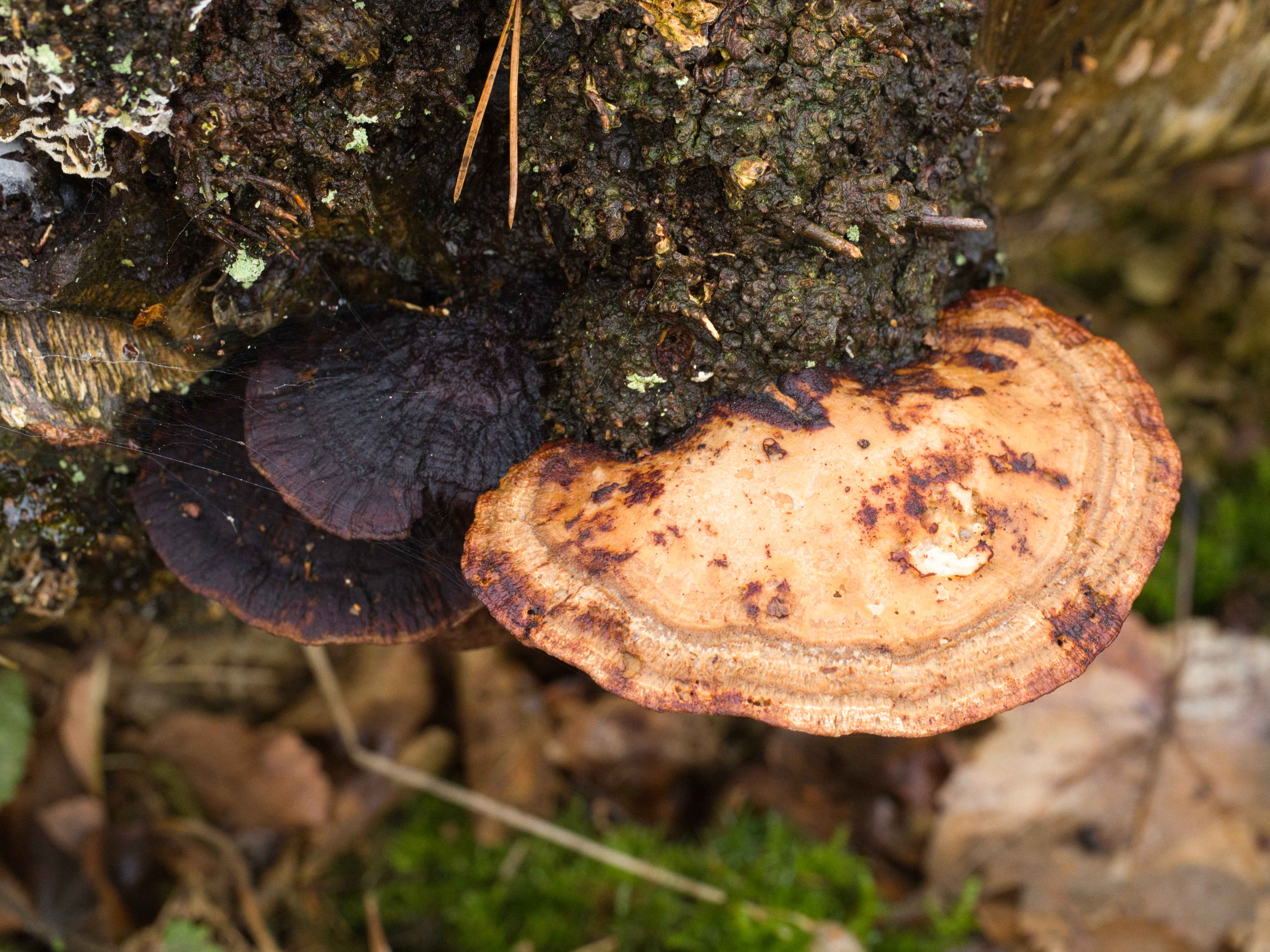
There was a helpful illustration of blushing bracket’s lifecycle, moving from a pale coloured fruiting body, to red and then something much darker. That’s a long blush.
Sulphur tuft is a very common species which seems able to tough it out through the colder months. I have seen so much of it recently.
Though it may look nice, it’s a toxic fungus, so don’t get any ideas.
Take nothing but photographs, in this instance. Give nothing but likes and nice comments.
In Sussex we have now inched out of a national ‘lockdown’ and into more localised restrictions on hugs, walks and purchases. Not that fungi (if it could) cares a jot about any of these psychological blockades. They have enough on their hyphae feeding the world’s woods, trees and forests. I will admit that after seeing the mushrooms fading away into a typical ‘mush’ in my local woods (not actually mine) I had sweated on this post. Again, not literally. Temperatures are loitering around the five degrees Celsius mark (I learned this week that Celsius was an actual person) which means frost and therefore frozen fungi. Fungi are 90% water which means they can only really produce fruiting bodies above ground – it can be quite toasty in the soil, where they can remain active socialising with tree roots – when it’s warmer than this.
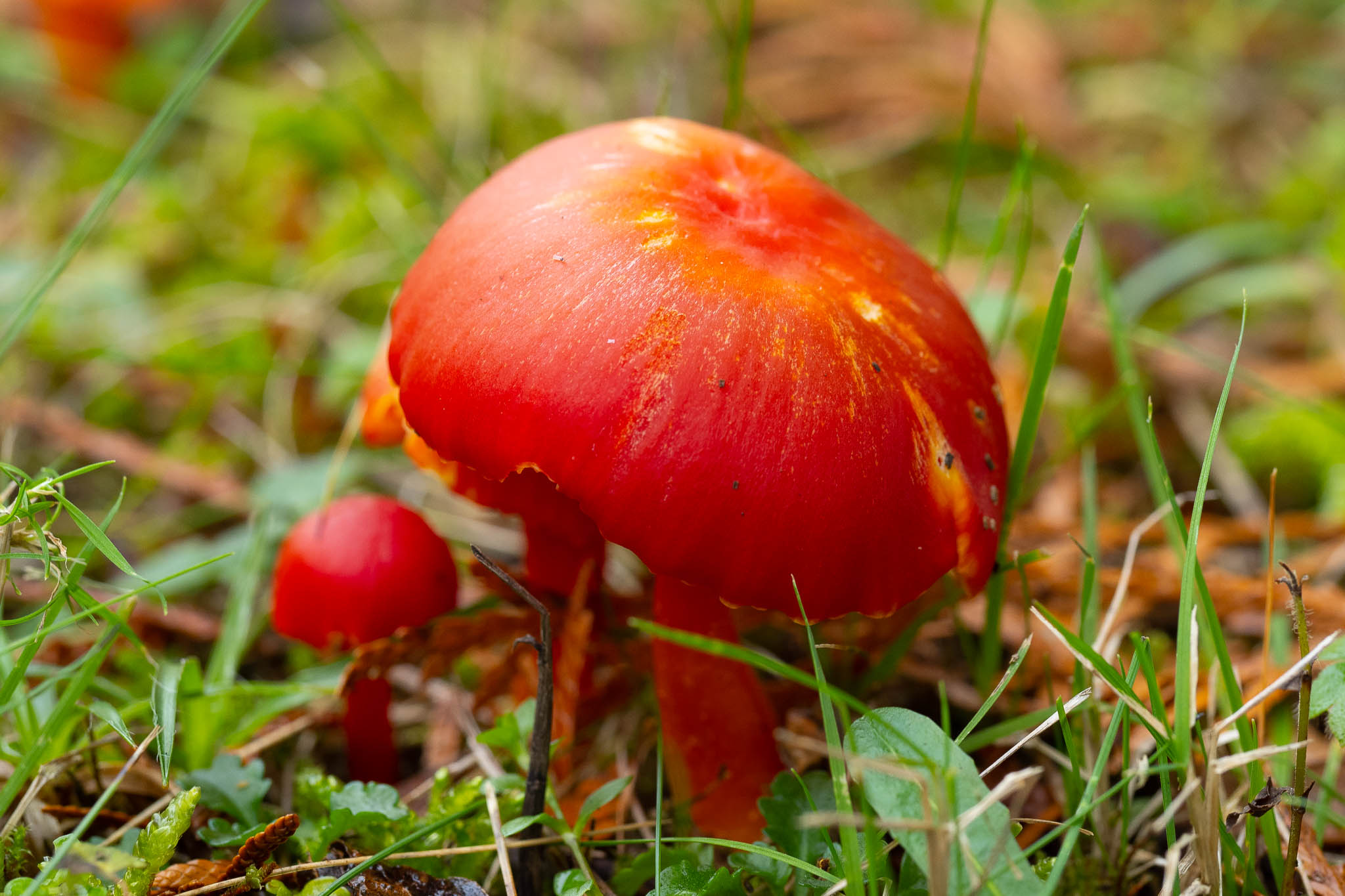
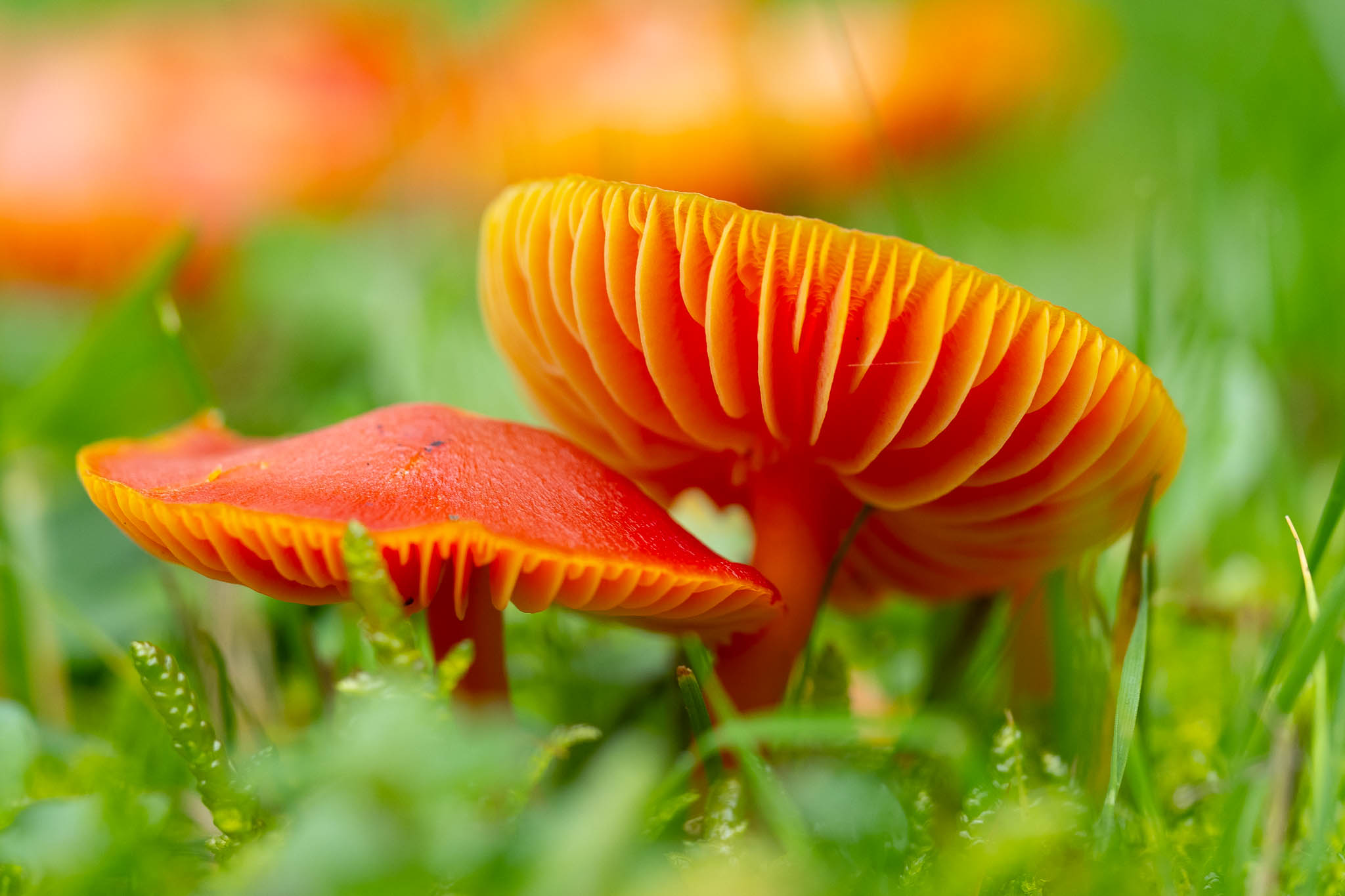
One thing I have noticed is that fungi are lingering longer in grasslands. Last week I saw inkcaps in golfing greens. Recently I passed a local cemetery and spotted some white mushrooms in the grasslands. On closer inspection I could see these were a white species of waxcap. Waxcaps are rare mushrooms which are largely dependent on ancient grasslands or those which are stable, i.e. not regularly ploughed up or disturbed. Among the white mushrooms I saw some stonking red ones – which iNaturalist helped me to ID as scarlet waxcap. I am put off identifying this family of shrooms because it is not always straightforward, a bit like webcaps, of which there are thousands of species, even in the nature-depleted UK.
These are gorgeous mushrooms. Cemeteries are a great place to find these fungi because the grasslands are sometimes as old as 300 years or more, do not suffer from the use of chemicals, and the lack of footfall out of respect, means the grasslands are soft and accommodating to species trying to move through them. There are lots of projects to monitor grasslands for waxcaps, such as this project from Plantlife and the very interesting charity Caring for God’s Acre.
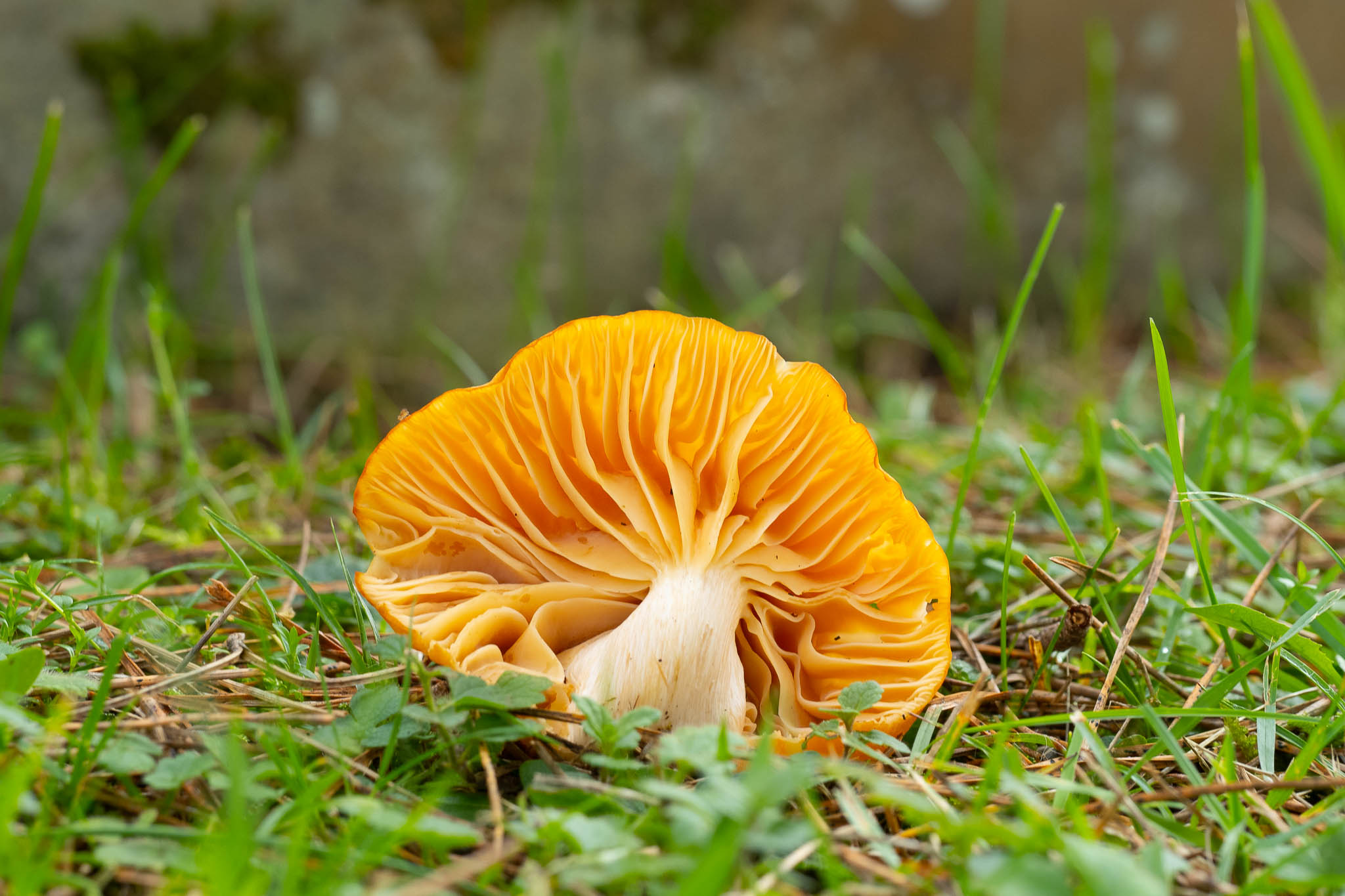
My best find was this keeled-over meadow waxcap, fanning its gills like some feral peacock. It may have been the frost that has caused it to pose like an ancient tree, but it will probably help with the spread of its spores.
As you can see, waxcaps are incredibly beautiful fungi. If you see any on your travels please do submit species records to Plantlife or your local Wildlife Trust. You can also take a photo and submit it to iNaturalist or iRecord depending on your preference. Better still, inform the people who own the land – ‘do you know you have rare wildlife living on your land?’ – and ask them to take this into consideration when managing it.
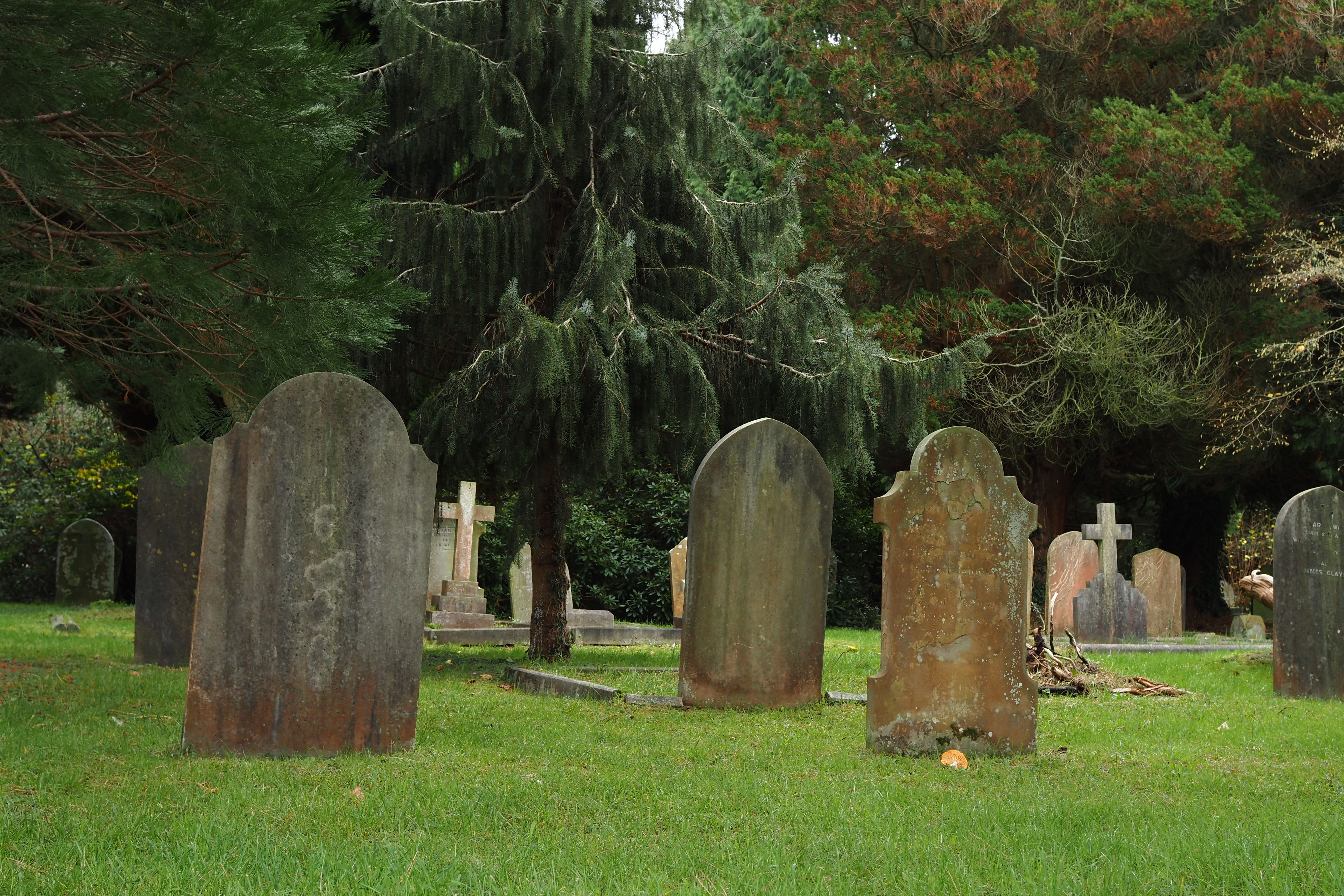
Here’s a wider view where you can see just how big the meadow waxcap is! Those surrounding trees will not be great for the waxcaps due to shading, so for their benefit tree planting should be avoided and cutting of the grasslands is a priority.
It wasn’t just waxcaps though, I found something more suitably Gothic growing alongside a grave.
This is a species in a group known as the goblets! What a great name. I need to get myself a goblet.
It’s nearly over. Mushroom season 2020 has been a short, sharp shock of fungi in southern England. I spent some time this week scouring local woodlands and walking on the rural edges. I found little in the way of soil-based mushrooms. To me this is a sign that autumn is over and winter has made its claim. We’re entering into the Tier 3 of seasons.
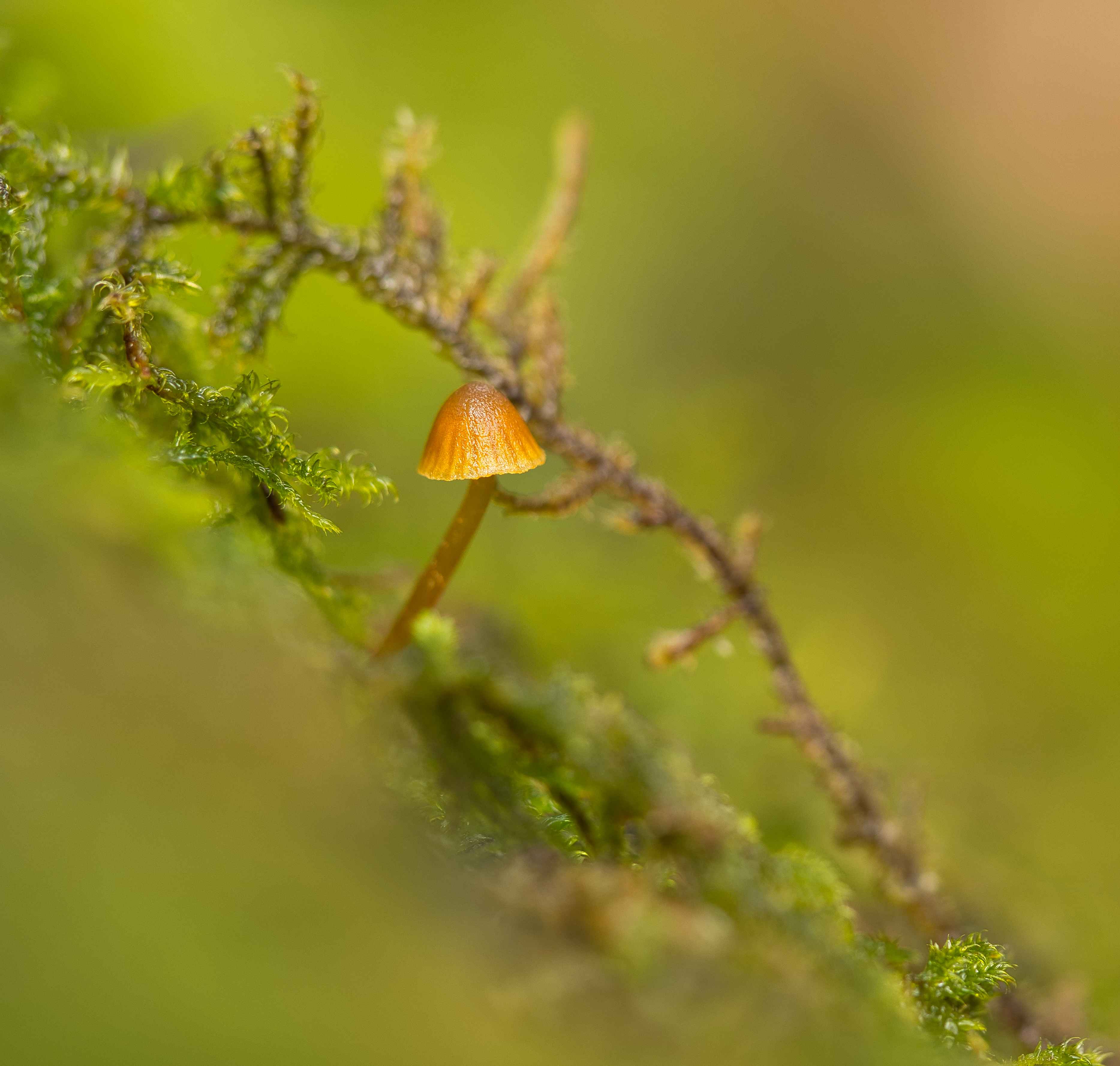
A good sign that mushroom season is over is when you are only able to spot very small species on moss or in tree bark. There are micro-climates in trees and mosses that allow for humidity and the fruiting of some species. This is a moss bell in the family Galerina.
I did find some mushrooms on the woodland floor but they were mostly mush, collapsed in on themselves after heavy rain. I found one emerging blusher (Amanita rubescens) in an area of heathy pine woodland.
As you can see, most of the trees had shed their leaves but for younger silver birches which still held some colour.
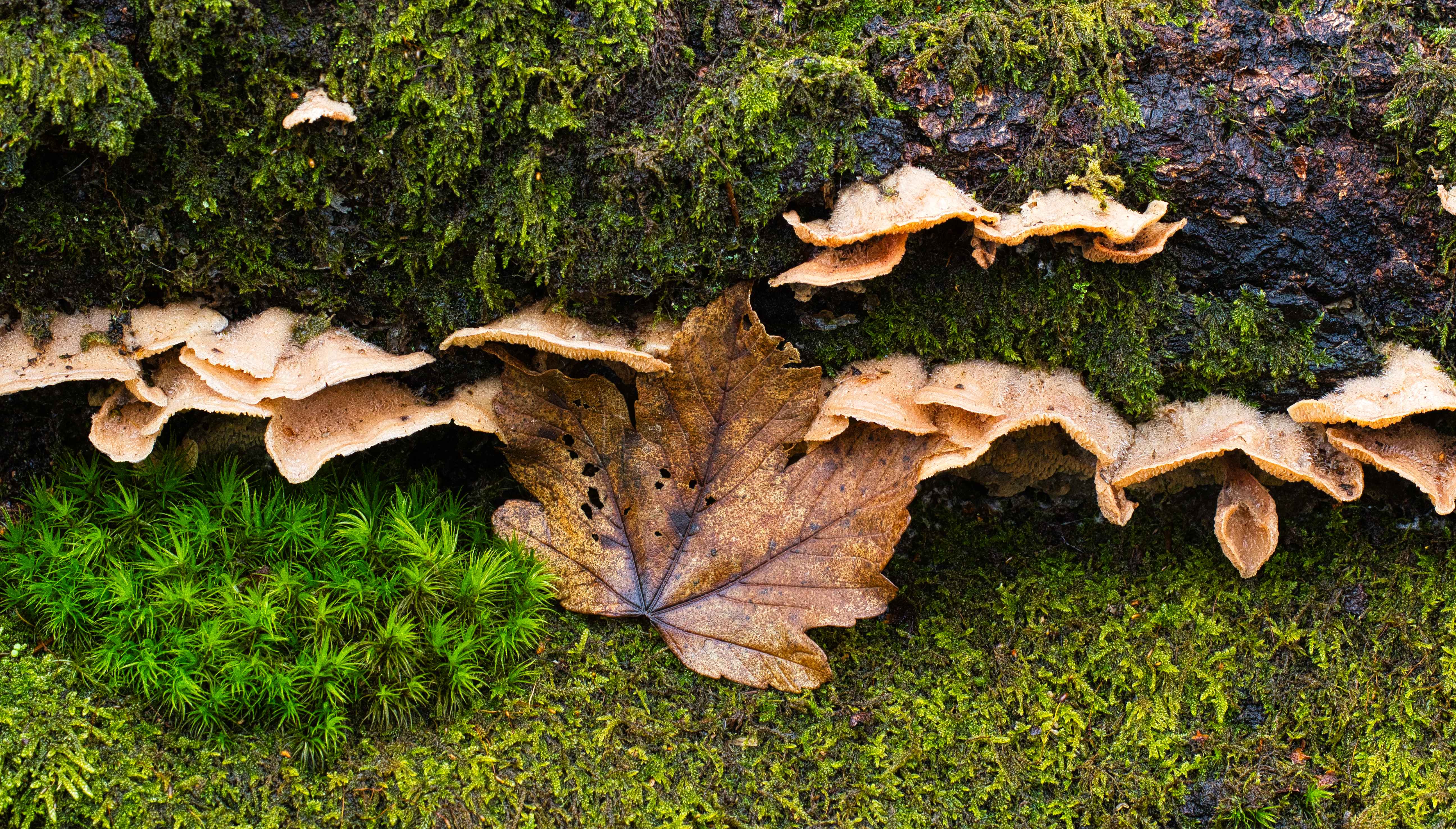
I found most of my fungi on a massive fallen beech tree. Beech jellydisc was just fruiting.
It’s easily confused with jelly ear, which is usually found on elder rather than beech and grows much more floppy. Perhaps beech jellydisc is also more pale in colour.
I was pretty intrigued by this weird crust fungus, wrinkled crust. It was lovely and vibrant, with an interesting orange fruiting body appearing from its base.
December is a month when I really begin to notice slime moulds, maybe because the woods are growing bare.
Though not a fungus, this very small slime mould is a Lycogala, with the common name of wolf’s milk. You can pop it with your finger and liquid gushes out. It’s harmless and quite fun. That may also help the organism to reproduce.
The following day I went for a walk from my house and found these shaggy inkcaps trespassing on a deserted golf course. Golf, like other outdoor sports, has not been allowed during the UK’s recent lockdown. It was eerily quiet and I was the only person there.
I thought these mushrooms were charming, like a parent protecting its offspring all at sea in the grasslands.
Grasslands seem able to hold fungi later into the year than woodlands. I think that’s down to the leaf-fall in woodland, which may repress some species from being able to push through. Just an untested theory.
I’m confident this is a species of waxcap, perhaps snowy waxcap. Waxcaps are indicators of ancient grasslands and have suffered in Britain due to agricultural intensification. The chalk grassland of the South Downs is a great place for them, but churchyards and even some moorlands can be good, too.
One lunchtime I made a break for the woods, with much lower expectations than previously. I spotted this blusher pushing through in the cradle of a tree root. Only later did I notice that an ichneumon wasp had landed, in focus, on the cap of the mushroom. It was a complete accident. You can read more about ichneumon wasps in my Macro Monday blog.
A new find for me (and once again not a fungus) was this coral slime mould. It was spreading across a small piece of wood at the side of the path. Slime moulds are fascinating because they are something of a mystery to science. They are believed to show early evolutionary forms of memory and are not closely related to fungi. I still need to buy the ID book.


















































 Unlocking Landscapes