#FungiFriday: the silence of the shrooms

SLF - 31-5-2020-lo-res-2

Fungi Friday 5th June 2020

This blog has now entered into its sixth month and the real-time fungi action hasn’t really happened, as this one will illustrate. Last week I went for an optimistic jaunt to my local ancient woodland/plantation/heathland to see if anything had popped up. I was astonished, not that there was very little to see, but at how dry the woodland was.

SLF - 31-5-2020-lo-res-1

It should come as no surprise that I only found one fruiting body, growing out of a bit of deadwood, which would already have some moisture inside the decaying wood. My footsteps were so loud as I walked across the leaf litter. But then we have just had the sunniest May and one of the driest springs on record. Across the south of England warnings have been in place about the high risk of fire. Very disappointingly but not surprisingly, fires are ravaging heathlands as I type. At least some of these are because of visitor impact, either arson or things like disposable barbecues.
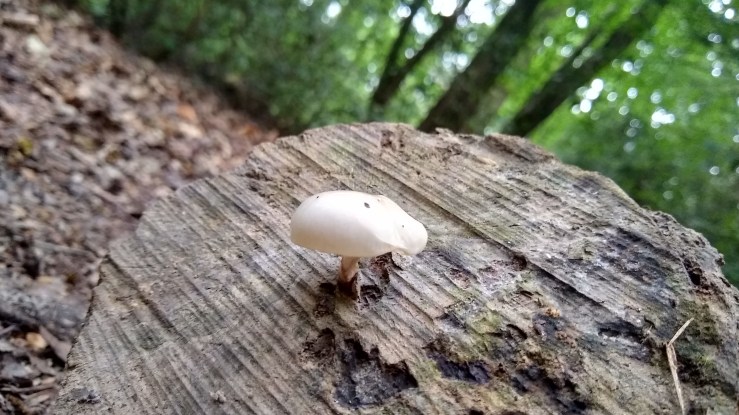
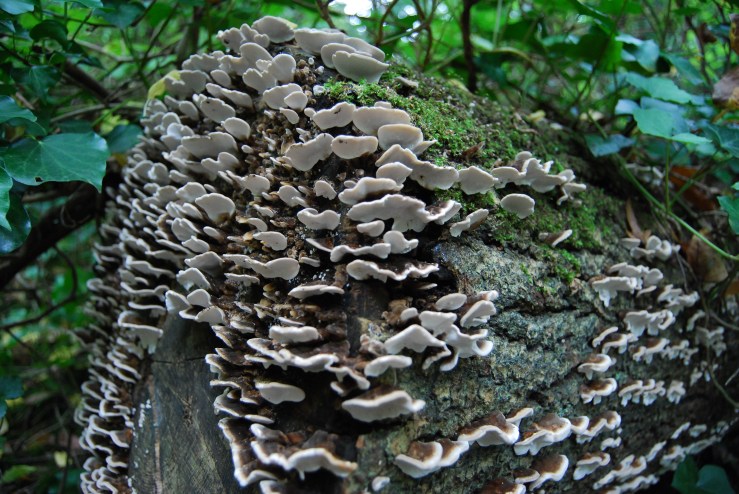
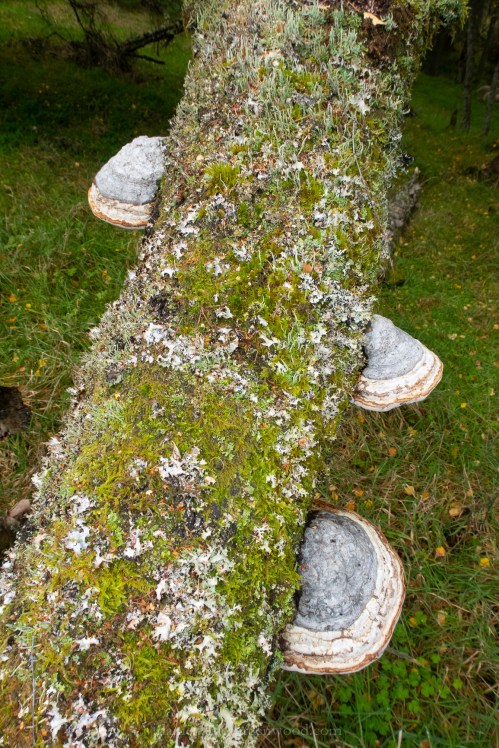
I went for a second mushroom hike – that’s how dedicated I am to this series – and found that an area of more wet oak woodland also had almost nothing appearing. I found so little that I didn’t even get my camera out and instead just used my average phone camera. Sign of the times. The best I could muster was the porcelain fungus above, growing from a beech log that had rolled into the dried out gill. Last winter I saw that stream overflowing.

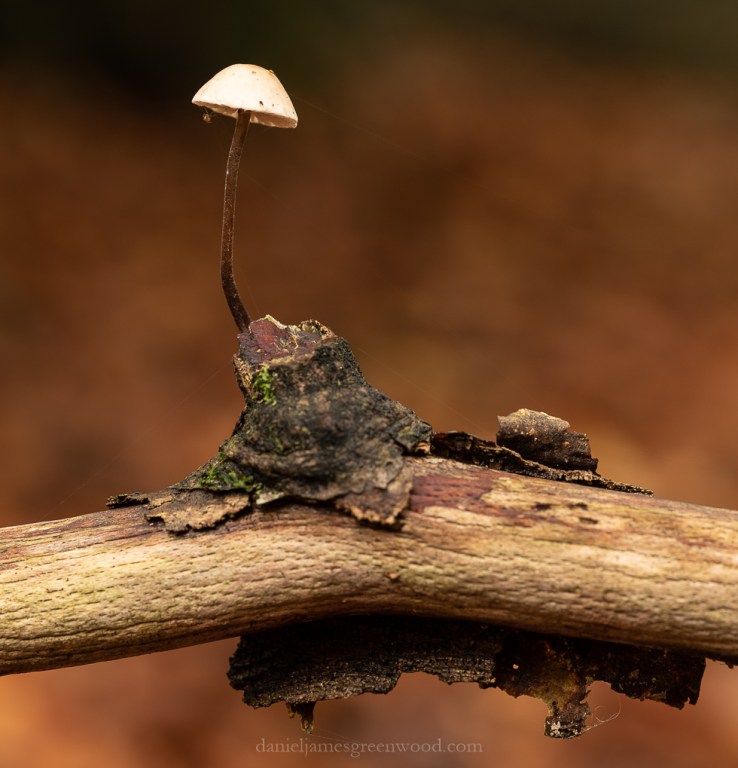
It would be wrong to say that there is no fungi, because fungi is the life we do not see. This stick, looking a bit like a blue whale or a squid, is made green by green elf cup. This is the work of the mycelium, the true living part of the fungus.

OLYMPUS DIGITAL CAMERA

In autumn small green fruiting bodies will appear as above. This was taken in October 2019.
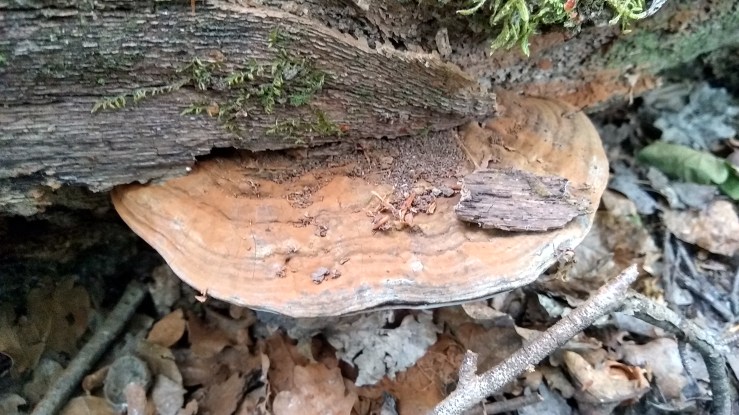
If you need them, you can always rely on a bracket fungus in the dry season. This is artist’s or southern bracket, what most people will generally call by its Latin name Ganoderma.

I found these blushing brackets (I think) on the path, they were crisp and dry. This species begins pale, blushing red and then turning to black.
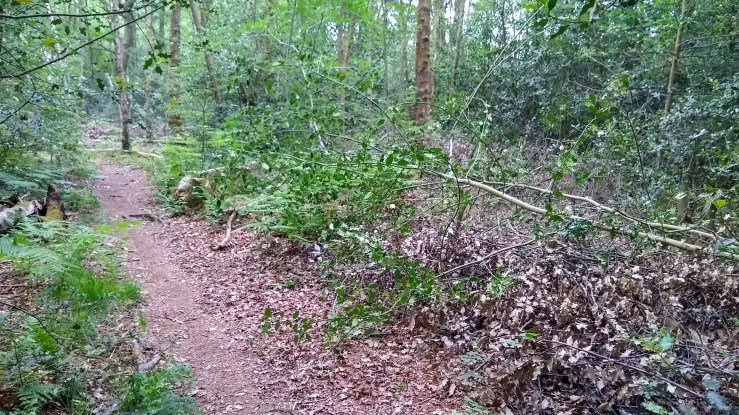
This is an area of woodland that is quite good for fungi, compared to the wider condition of the wood. It suffers from a huge amount of trampling. Please see what I’m about to say as objective comments on the physical state of this place, I am not attacking the land managers. Last autumn much of the holly in this area was cut and left. The aim was almost certainly to allow more light in to replenish the woodland floor. The brash, as it’s called, now covers where most of the fruiting bodies appear, and the holly will not break down soon enough for those fruiting bodies to appear again in perhaps the next five years.

In a previous job we would undertake thinning of holly and dead hedging to protect areas from trampling. The majority of pubicly accessible woodlands in southern England have fairly high levels of footfall, dog walking and the nitrogen enrichment that comes from dog waste. I mention this because I worked in a woodland which was only 20 acres in size but which had 100,000+ visitors annually, with probably around 50,000 dog visits. Holly was absolutely key to protecting soils from erosion and the creation of news paths, and protecting birds and other wildlife from disturbance.

Removing holly on this scale can result in the opening of areas to unintended impact where it could infact have the reverse effect desired. More light will come in to replenish the woodland floor, but more feet will come too and the soil will suffer, along with everything that needs it. Basically everything. I write this absolutely knowing that I provide some of those footsteps, but they are kept to desirelines and I do not have a dog that I allow to run free in these areas. Dog walkers will tell me that children have the same impact.
SLF - 26-7-19 - djg-12
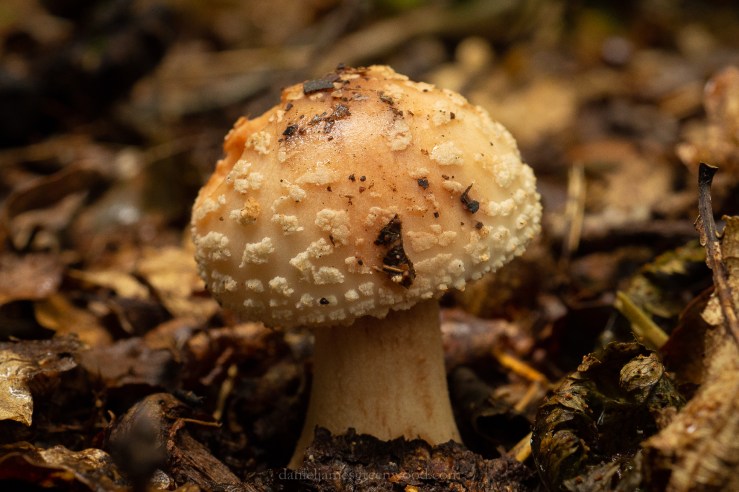
The blusher, found in this area in July 2019

The holly creates a microclimate which in hot dry periods such as this, means that soil retains moisture and fungal fruiting bodies can do their thing, a thing that is a key part of the reason a woodland is there in the first place: reproduce, break down organic matter, feed the trees that need them, and recycle organic matter into new soils.

SLF - 26-7-19 - djg-16
Grey spotted amanita, July 2019

I wonder, do woodland managers ever think about fungi through anything beyond leaving dead trees to stand and logs to rot down on the ground? Does anyone consider the need for microclimates within woodland to ensure a mosaic of micro-habitats? Again, this is not an attack, just observations and pointers from my own experience.
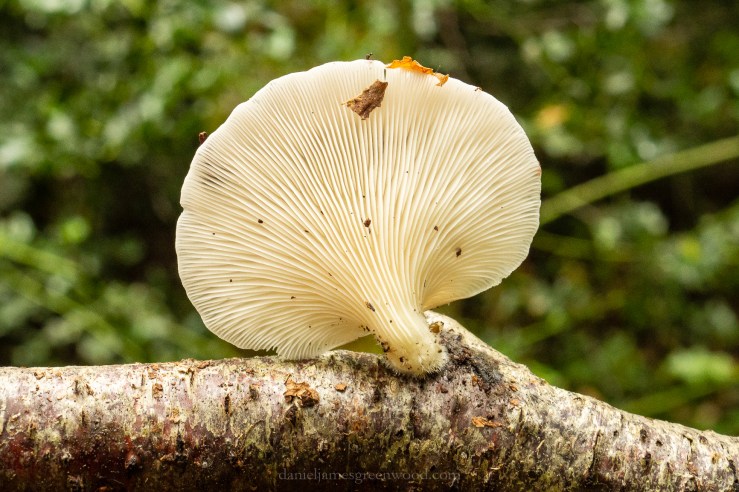
SLF - 26-7-19 - djg-13
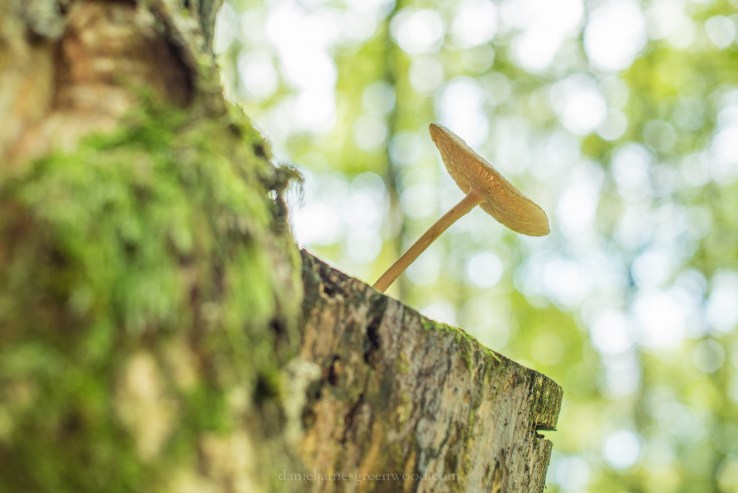
An oysterling on a birch branch in this area, July 2019

When I began in woodland management (the account of one of my first days is the post visitors seem to read in their droves to on this website) I did not consider fungi as I do now. Seeing as fungi has such a crucial role to play in our woodlands, sooner or later we need to ensure that in dry spells such as these there are safeguards, like holly, to support fungi.

Thanks for reading.
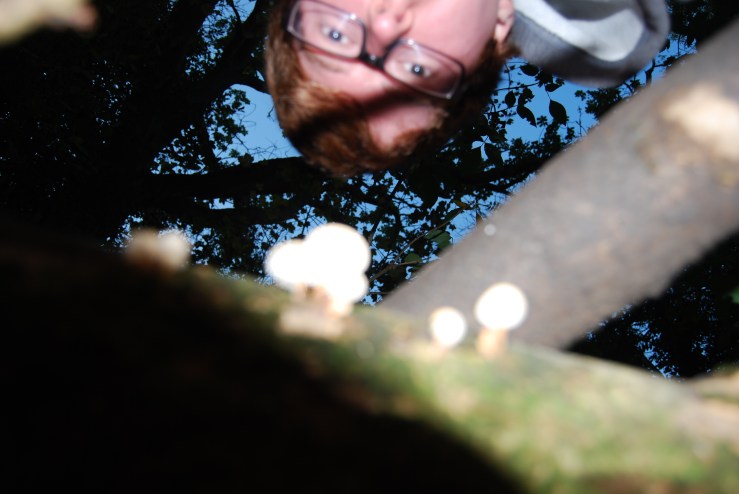
More mushrooms

#FungiFriday: how I first discovered mushrooms (not literally)

Picture 096

Fungi Friday 29th May 2020 via November 2011

This autumn it will be 9 years since I first began photographing fungi. I want to share how I found a passion for these incredible organisms and show the first photos I ever took of fungi.

I owe thanks to several people for tuning me into the world of mushrooms. David Warwick, who led fungi walks for volunteers and the public for London Wildlife Trust at Sydenham Hill Wood, shared his knowledge with his fellow volunteers and helped me to gain an interest. That was where I learned about fungi and, over 7 years, had the opportunity to watch them pop up and fade away across the nature reserve.

SHW September 2011 (52)
Turkeytail

The biggest thanks of all go to Ashley White who was the Project Officer who managed the Wood when I was a volunteer. For anyone who has ever volunteered, you will know that the person who leads you is as important as the thing you’re volunteering to do. Ashley inspired many of us to follow our interests in many areas of conservation and ecology.

Picture 091
Velvet shank

My first real attempts to photograph fungi took place in November 2011 during a volunteer day. I used a Nikon D60, a 10 megapixel camera (the equivalent today is double that) that I was given as a birthday present in 2008. I had no editing software and the photos here are as they were taken in the camera, which you can probably appreciate.

SHW September 2011 (49)
Sulphur tuft

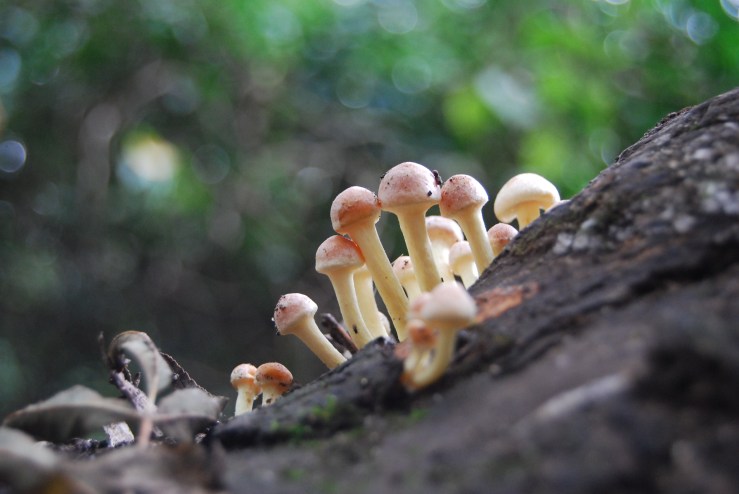
One of the more memorable images that I contributed to London Wildlife Trust was this happy bunch of sulphur tuft. This species is probably one of the most common in the UK. It’s toxic but charming to look at. I respect its ability to show up in the street and in all manner of other locations.

Picture 100
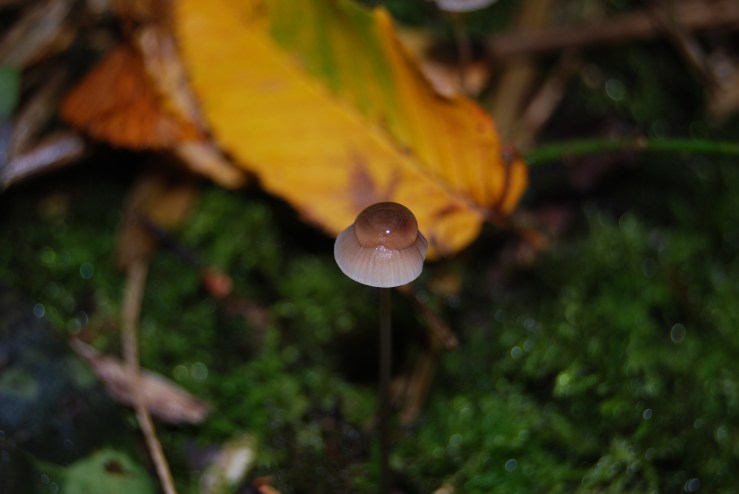
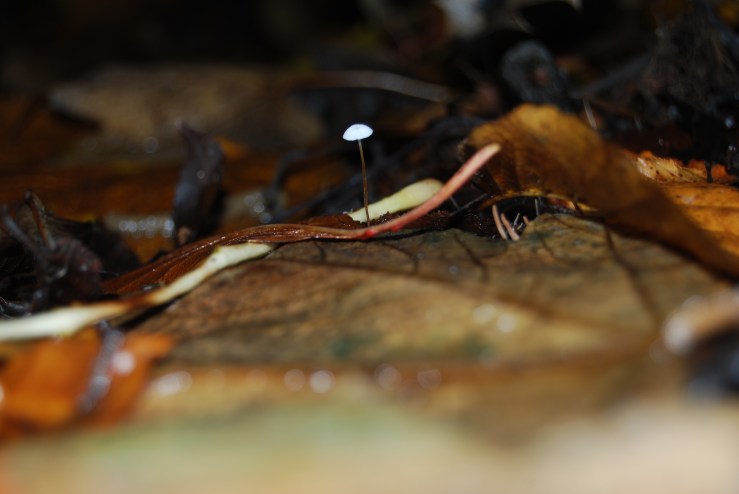
Bonnet with a droplet on top

Photography has always been a way for me to learn about much more than cameras. To identify the majority of species of fungi, you’ll need to undertake all manner of experiments that I am way too lazy/skilled enough for. I want to spend as much time outside in the company of the things I enjoy photographing. Too much time is already spent indoors. All these are excuses, I know.

Picture 084
Parachute

I think one of the most interesting things about fungi are their diversity. This doesn’t just mean there are a lot of species (over 120,000 accounted for on Earth, probably more than 1,000,000 in reality). It also means they appear in all kinds of places: leaf litter, holes in trees, the ground, the pavement, sometimes even inside your house. That’s not really what you want.

Picture 071
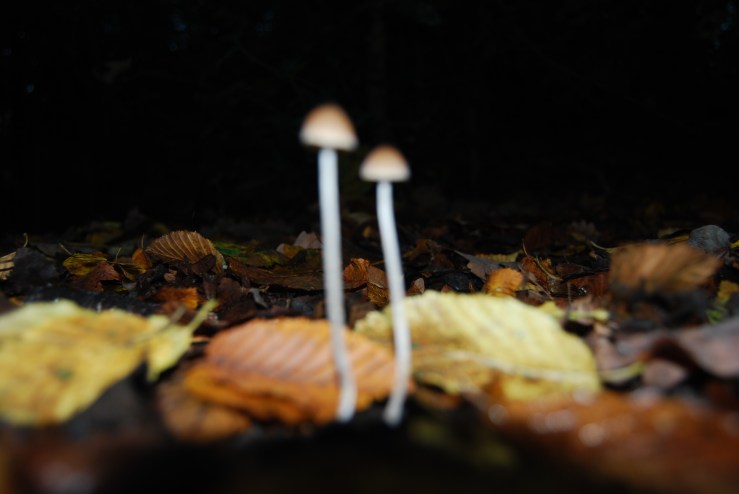
Brittlestems out of focus

After autumn volunteer days I would seek out fungi anywhere I could find them. I had begun to notice some growing down in the leaf litter. As you can see from the photo above, it’s difficult to take photos on the ground without a reticulating screen. Mine was fixed which led to classic images such as the above. These are brittlestems. Over the years at the Wood I would notice this family of mushrooms popping up in damp patches under leaf litter.

Picture 018
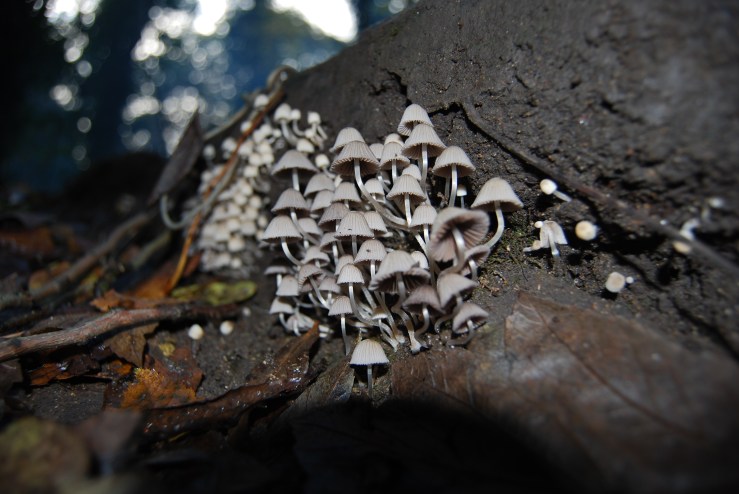
Fairy inkcap

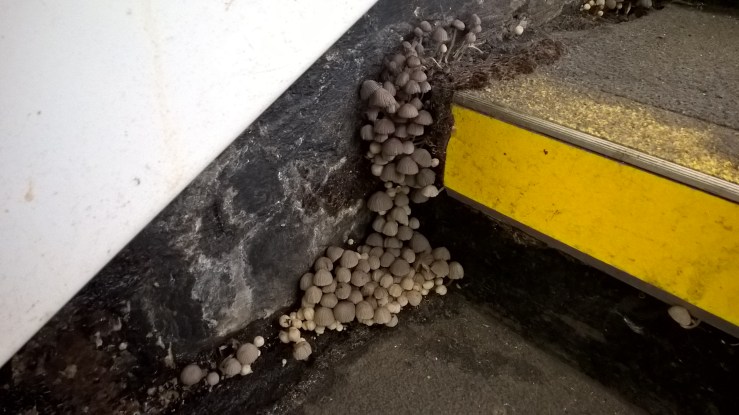
Many of the mushrooms in an urban woodland like Sydenham Hill Wood are common species that can pop up after a decent amount of rain. These fairy inkcaps are often found at the base of steps. The steps in the Wood were constructed by volunteers using wooden sleepers, planks for the edges and then filled with gravel. These mushrooms like steps so much I have even found them growing in Clapham Junction station on steps! For those who don’t know, this was once one of the busiest railway stations in the world. Thousands of people rush up and down these stairs every day.

WP_20150705_13_07_27_Pro
What’s not to love?

For all the negativity around nature conservation in Britain – and for me all contact with nature in the UK fosters a relationship with conservation – fungi gave me a sense of nature’s attitude of I will show up where I want, when I want. For anyone who has ever felt constricted by the physical environment we are forced to live in, nature is always looking to re-align it. As with fungi, it just takes time.

Picture 272
A miniscule fairy bonnet on a piece of mud

Fungi says to me (not literally) that life does not stand still. Fungi are a part of life processes which have no end. Fungi are always building and feeding a new world whether we like it or not. Perhaps that’s what seeing those fairy inkcaps on the steps of Clapham Junction station taught me. We may be extinguishing a beautiful diversity of life on Earth, first with large, charismatic animals. But nature is complex, unknowable in its entirety, and it will never stop.

Thanks for reading. Have faith.

More mushrooms


#FungiFriday: Chicken of the woods

DH-29-4-2020-lo-res-3

Fungi Friday 15th May 2020

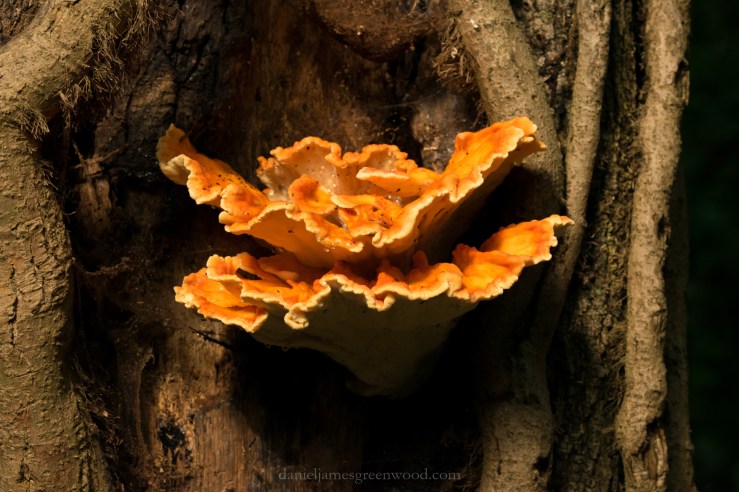
I mentioned a fungi photo project which I was working on, watching the development of a fungus on my daily exercise ration. Both of those things have now been foraged and are consigned to the past. We can go out for a walk more than once a day, and my subject has been sliced and munched by someone who knows what they’re doing.

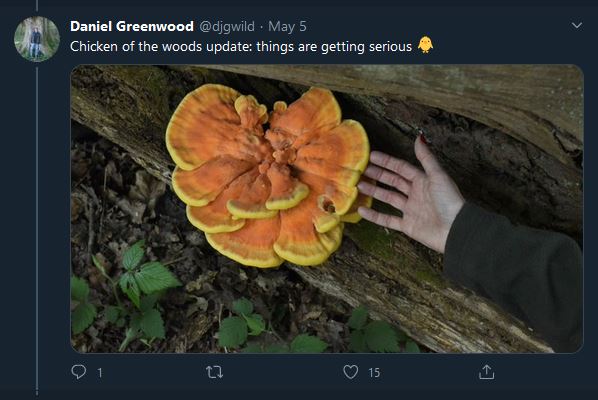
I was watching the slow mushrooming of a chicken of the woods fruiting body on a circular walk from my house but its progress was interrupted last week. Now the post looks wafer thin. Here’s how it played out on Twitter:

COTW_1

I first saw this mushroom developing on 25th April on a fallen oak tree next to a footpath, lodged between farmland and a wooded estate.

COTW_2

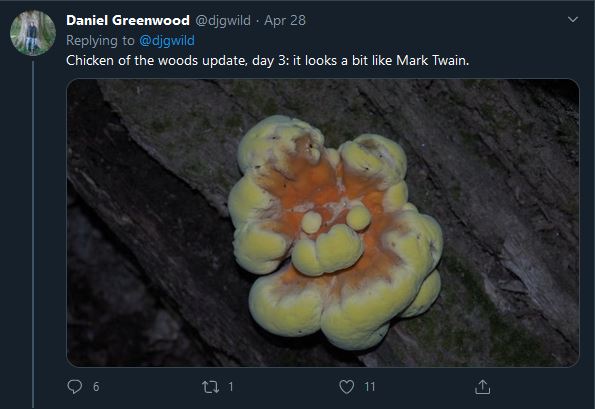
Three days later I passed it again under twilight and the advancement was pretty clear.

mark-twain-medium

I also felt it looked quite a lot like Mark Twain, one of the great American writers. His characters sure ate plenty a chicken in the woods, sure did.

COTW_3

Chicken of the woods is a highly desirable edible fungus for people who desire that sort of thing. It’s one that’s easy to identify and is not known to have any serious side-effects. I have noted ecologists arguing that it should be left for the many species of invertebrate that find a home in it.

SHW 23-7-17 djg-10SHW 23-7-17 djg-14SHW 23-7-17 djg-17

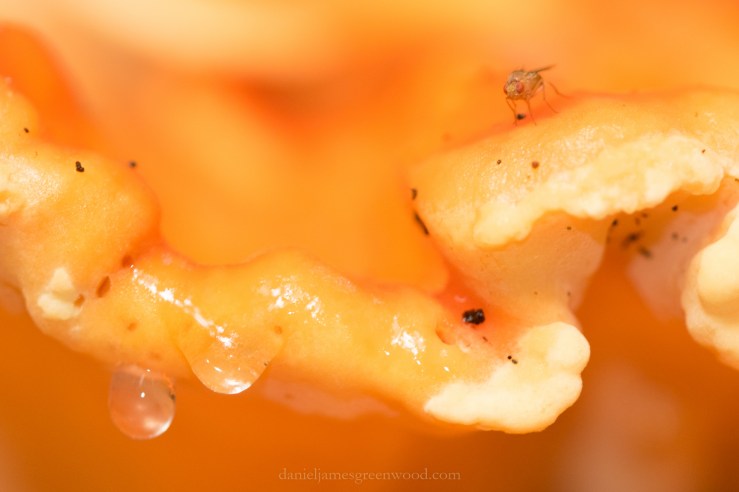
The images above show a chicken of the woods fruiting body with some of the invertebrates hanging out on it. Believe me, there were so many more.

COTW_4

At this stage, on May Day, the chick was beginning to make its way in the world.

COTW_5

Four days later, it was positively enjoying life. Then, this happened:

COTW_6

The moral of this story is: we all get foraged in the end.

Ches-9-5-2020-lo-res-05

Here you can see the clean cuts of someone who knows what they’re doing. They’ve brought a knife with them on their walk and have made an attempt to not damage the mycelium which is attached to the dead wood itself, and not visible here.

Fungi - July 2018 djg-6

I’ve found some pretty epic chicks in the past, like this 1-2m long gathering on a fallen oak or sweet chestnut next to a river in West Sussex. It’s the biggest one I’ve ever seen. It does make me laugh how bites have been taken from the side, possibly the teeth of deer which are common in this area.

IMG_20180729_111426071IMG_20180729_110927744

This one is several months old and had begun the process of falling apart. This is in July and is probably a June fruiting body.

IMG_20180729_111303742

This is the same day, and here Richard’s coat was not dissimilar to the fungus itself. He is a bit of a chicken in the woods at times, too.

Thanks for reading.
More mushrooms


#FungiFriday: the biggest mushroom I’ve ever seen in the White Carpathians

Czechia 2017 lo-res djg-8

Fungi Friday 8th May 2020

Happy Bank Holiday Friday! I hope you’re having and are permitted a nice extended weekend off.

I am working on a fungi photography project just now through my daily exercise walk but it’s too early to share just now. So it’s another ramble down mushroom memory lane. In the week that the UK became the country worst hit in Europe by the Covid-19 pandemic, I bring you one of the countries that has dealt with the situation far better: Czechia.

In September 2017 my friend and I visited the White Carpathians, an area of mountains that stretch across the border with neighbouring Slovakia. I wrote this post about the landscape of the White Carpathians. Here I am sharing never-before-seen photos of some of the fungi we encountered on one hike in the White Carpathians.

Czechia 2017 lo-res djg-109

The Carpathians are a mountain range that stretch across central and eastern Europe crossing Austria, Czechia, Poland, Slovakia, Hungary, Romania, Serbia and the Ukraine. The White Carpathians are so called because of their white limestone (which I think is chalk!). In Czech they are called Bรญlรฉ Karpaty. I am indebted to my friend Zuzka Veverkova for introducing me to this landscape.

Czechia 2017 lo-res djg-17

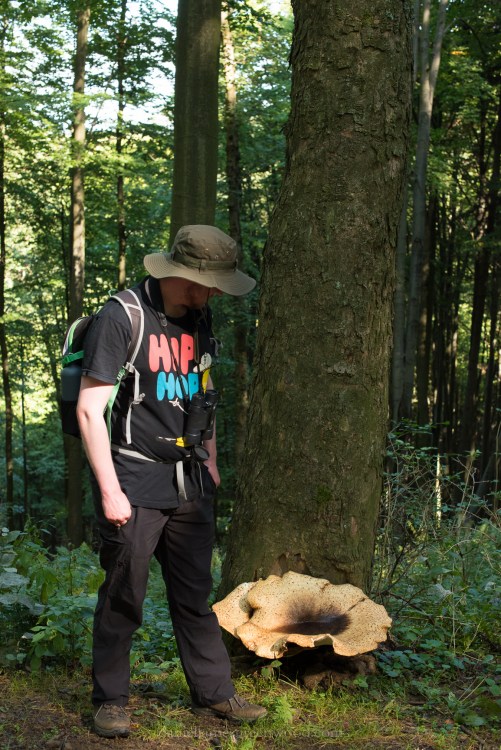
Eddie and I were hiking to the Czech-Slovak border from a hostel we were staying in a tiny village called Vรกpenky. We hiked up through beech woodlands which were actively managed as plantations to reach some ancient woodland close to the accessible peak of Velka Javorina. The walk began well with this absolutely massive dryad’s saddle. It was so big it had become like a giant petunia and held rainwater in its cap!

Czechia 2017 lo-res djg-18

Here is Eddie, who is over 6ft, giving a sense of scale. This is a species which is fruiting now in May. It’s the biggest seasonal fruiting body of a fungus I’ve ever seen. Ones that are present all year round as brackets don’t quite count!

Czechia 2017 lo-res djg-62

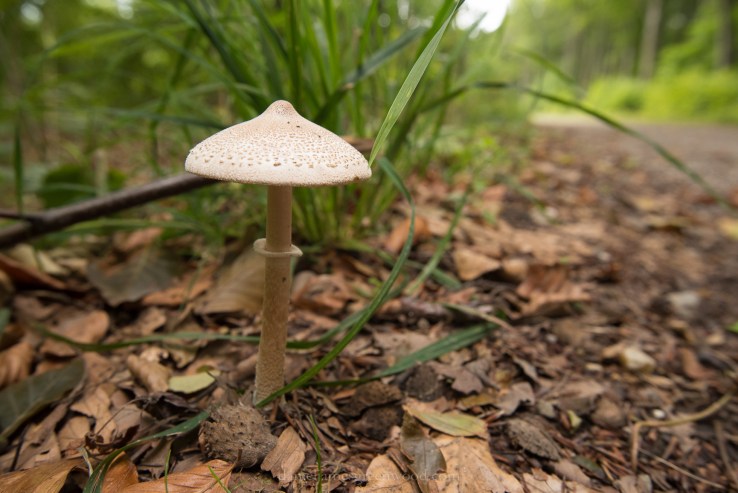
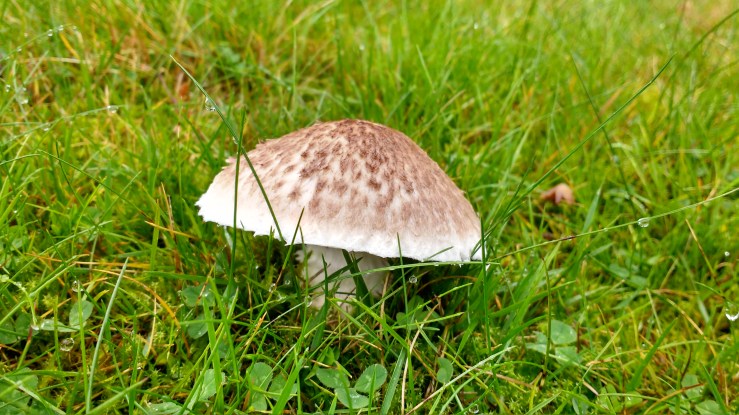
In the beech plantations (beech is remnant of the climax vegetation in the Carpathians – basically the naturally occurring dominant tree species) parasol mushrooms were pushing up from the leaf litter. We also encountered a woman returning from the mountain with a small number of these mushrooms collected for cooking. She had picked them when they were young and just appearing from the soil. It was evidence of local knowledge that is diminishing in many parts of the world as urbanisation increases.

Czechia 2017 lo-res djg-64

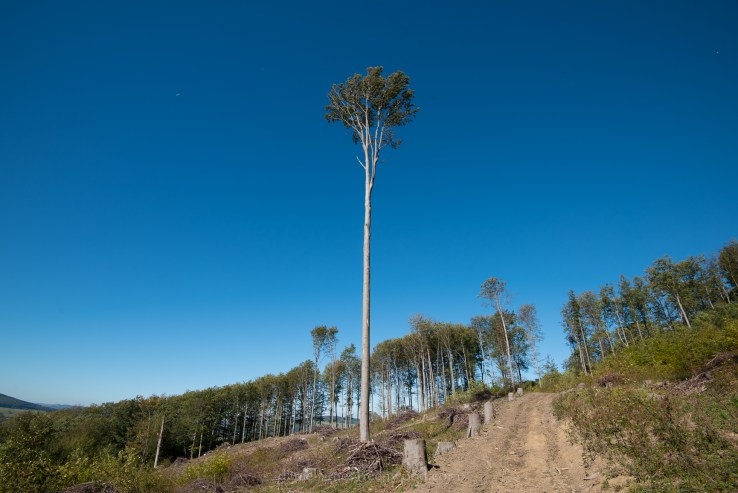
The forestry practices in the area bordered on the surreal.

Czechia 2017 lo-res djg-133

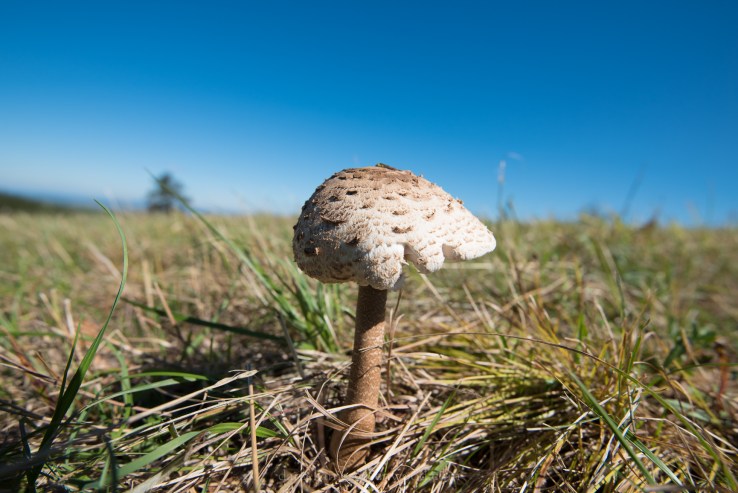
We saw much larger parasols on the steeply wooded slopes.

Czechia 2017 lo-res djg-43

At the sides of the forestry roads they were also common.

Czechia 2017 lo-res djg-75

I find this family of mushrooms quite confusing and need to spend some time getting to know them better. The Lepiota/Macrolepiota group can appear very similar and I am not quite dedicated enough to find out what each one is.

IMG_20170914_112829124

I will lie down for a photo though, to take one that is (thanks Ed). You may not realise but these are some of the richest grasslands in the world. September is not a good time to see them however, April-July is best.

For reference, above is a collection of images of the plants found in these grasslands in May 2014 when I first visited. The Steppe grasslands of the White Carpathians are the richest in the world, according to the Landscape Protection Agency. The orchids seen here are elder-flowered orchid. The woods were frothing with wild garlic.

Czechia 2017 lo-res djg-53

On trees and stumps, a fungus that was common was red-belted bracket. This was nice to see as it is not so common in the UK, if present at all.

Czechia 2017 lo-res djg-41

This very colourful bracket was growing on the stump of a felled tree close to the top of the mountain.

Czechia 2017 lo-res djg-34

For most of my hiking comrades this is the feeling of, ‘oh for God’s sake not another mushroom photo’. Soz Ed.

Czechia 2017 lo-res djg-33

On the way back down from the summit we found this shroom which I think is rooting shank. It’s a dream vantage point for a photo, especially with some blissful bokeh blur in the background.

Czechia 2017 lo-res djg-28

This is a species I associate with late summer or early autumn when the wetter weather hasn’t quite arrived and the soil is still a bit dry. They’re often close to the trunks of trees.

Czechia 2017 lo-res djg-20

This has the look of a shield of some kind, but I didn’t spend much time looking at it. This was in one of the protected areas of woodland where forestry was not permitted. It happened also to be the place where biting flies where most interested in us so we didn’t stand still for long.

Czechia 2017 lo-res djg-118

The White Carpathians are a fantastic place for nature and I would love to visit in the prime mushroom season to see what shows up.

Thanks for reading.

More mushrooms

#FungiFriday: September shrooms in Scotland, part three โ€“ Lochnagar

Cairngorms - September 2018 djg-34

Fungi Friday 1st May 2020

For another week the Covid-19 pandemic is keeping me away from the woods and therefore the shrooms. This fungal breaking news desk has run out of scoops, so itโ€™s more like a sports channel airing classic re-runs.

I had been intending to post about some fantastic fungal hiking experiences (sounds weird) from a 2018 visit to Scotland but work and life stopped me. I do hope anyone reading this is doing well and that youโ€™re following the guidance.

Cairngorms - September 2018 djg-4

These posts remind me of my uncle Joe Reilly who passed away in November. Joe was a Glaswegian by birth who, along with my aunt Marg, introduced me to some of the most beautiful places the UK has to offer in Perthshire, among so many other gifts. I would visit Marg and Joe in Perthshire as often as I could, often in autumn when going to meet my hiking companion Eddie (seen here) for a jaunt in the Cairngorms.

Joe fell for fungi like I did in recent years and I will always miss his WhatsApp messages with mushrooms he had found on Perthshire walks. We miss his thirst for life terribly but carry it on just as he did.

Last week I was sharing fungi found on a hike to the top of Ben Vrackie in Perthshire.

This week my final Scotland post makes me feel like a bit of a cheat. The post is built around an incredible hike led by the rangers of the Balmoral Estate in the Cairngorms National Park with only one serious mushroom to be found. But it was one special shroom, and probably one you want to eat if you haven’t already. I will soften that blow with some dodgy phone pic shrooms.

IMG_20180920_082927299

I was visiting the Cairngorms for a Europarc Conference and there was very little time to get out on foot in the mountains and hills. Most of my photos looked like this one above, a phone pic taken while being ferried around in a minibus.

IMG_20180918_120728899_HDR

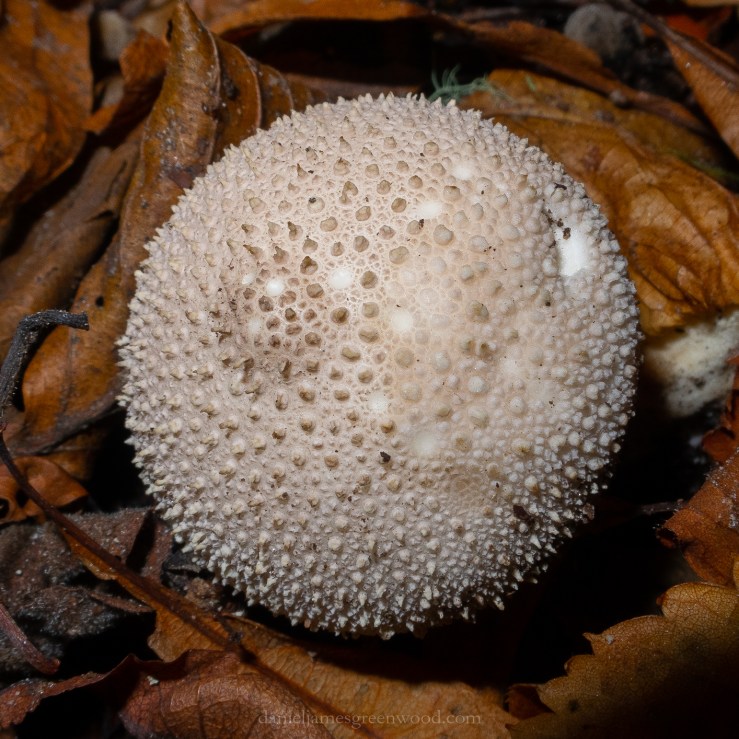
I was staying in Aviemore and there were a pleasing selection of shrooms found right next to the pavement in the verges. This is a giant puffball in its early stages, part brain part, well, bottom.

IMG_20180918_121133071_HDR

I’m not entirely sure what this species is, I thought it might be in the Macrolepiota/Lepiota family (where parasols are found) but can’t find a candidate just now.

IMG_20180919_180948746_HDR

This is almost certainly brown rollrim, a deadly poisonous fungus. It’s growing out of ballast, which is no surprise as I’ve seen it growing next to pavements in south London.

IMG_20180918_121355902

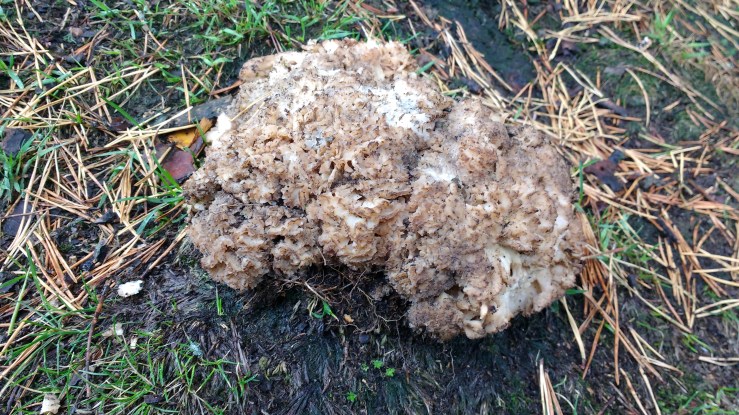
And behold, a very well trampled cauliflower fungus.

IMG_20180918_190309993

Winner of the truly worst phone pic was this fly agaric which was absolutely belting it out from underneath a hedge in a residential area.

Cairngorms - September 2018 djg-17

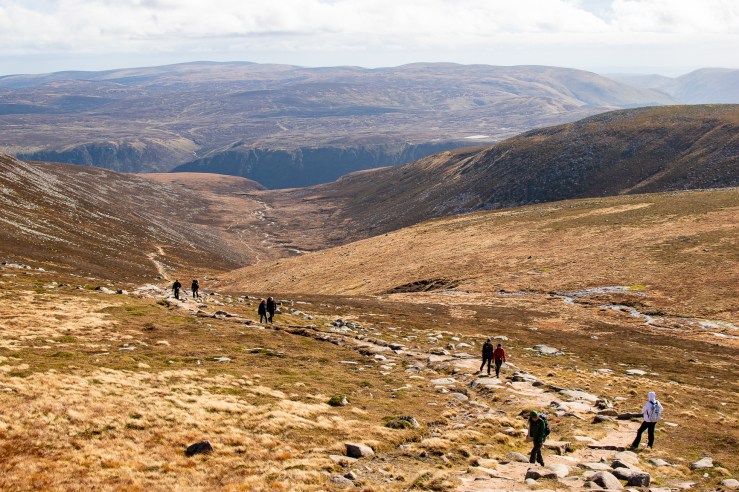
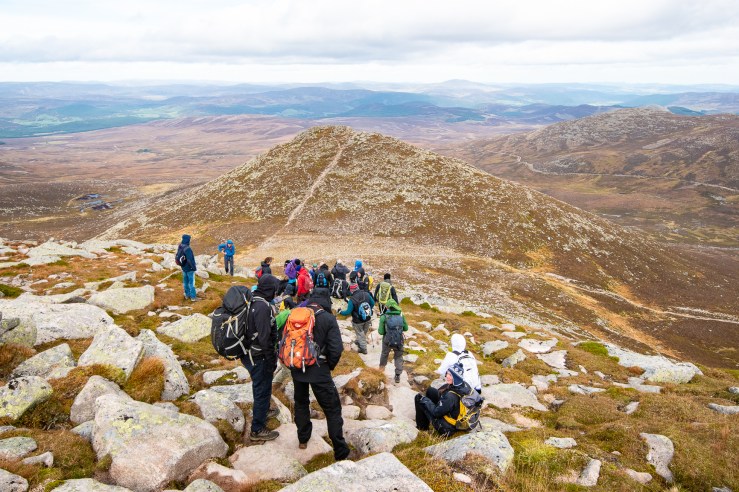
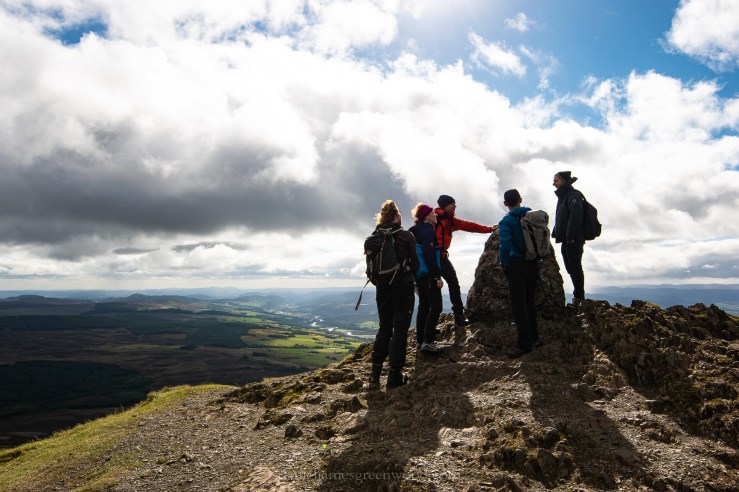
As mentioned at the start of this blog, I was lucky enough to go on a hike to Lochnagar on the Balmoral Estate, led by a very nice ranger and a professional guide, who was also very nice. There were National Park staff from all across Europe. I spoke to one ranger from Iceland who would be spending her winter driving around the vast areas of her Park undertaking works to signage and all manner of other things. She was the real deal. Our National Parks are tiny in comparison to many in Europe, though the Cairngorms is the closest we probably get to some of Europe’s most rugged wildness. The Balmoral Estate is not a good example of that because of the intensive management to support grouse shooting. Apparently the Queen still drives around the Estate in her Land Rover.

Cairngorms - September 2018 djg-18

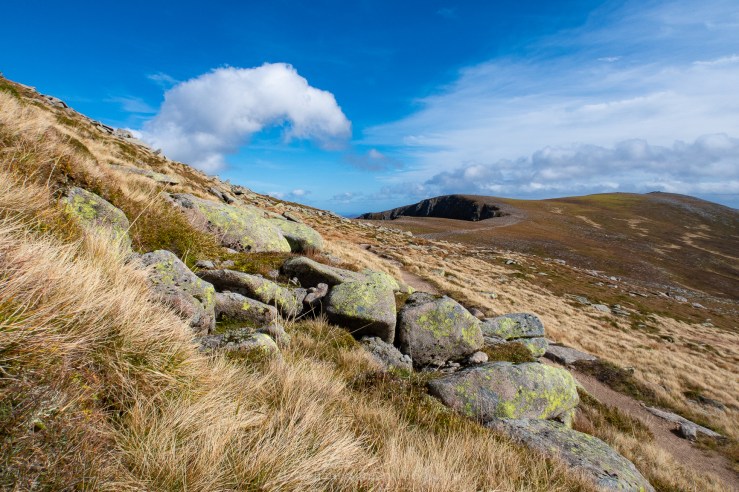
There were extreme winds at the time of the walk and we didn’t make it to the peak of Lochnagar. It was too dangerous. Though you’re unlikely to find much fungal diversity at these altitudes (1000m+) there was a familiar neon lichen on the boulders. This is Rhizocarpon geographicum.

Cairngorms - September 2018 djg-26

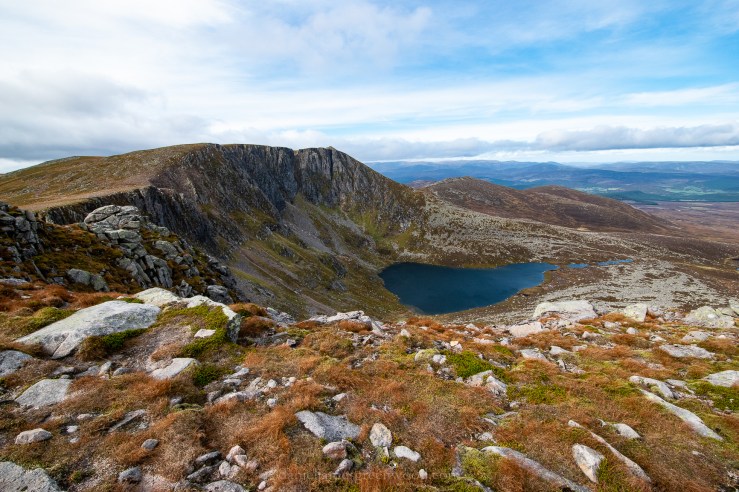
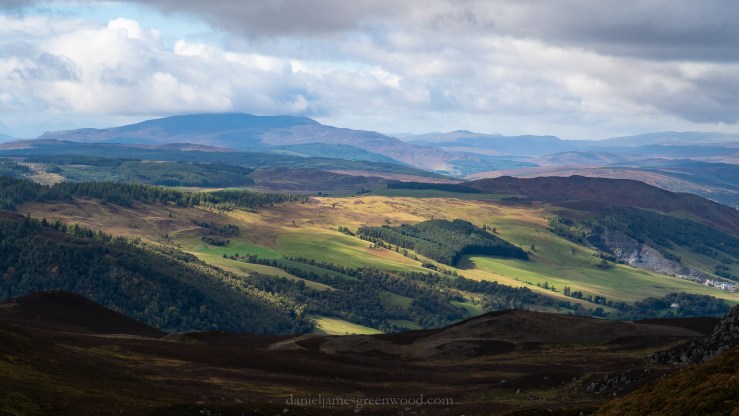
It took a real effort to actually hold my camera in place and take this photo. It was incredibly windy. This is Lochnagar. The peak can be seen in about the middle distance where a small cairn stands.

Cairngorms - September 2018 djg-32

At this point we were all told to put our cameras away because the winds were going to hit hard. They did, it was incredible.

Cairngorms - September 2018 djg-1

You’re probably wondering – where are the shrooms? But let it be a lesson to you, finding fungi can be really hard. Sometimes it’s all there at the side of the pavement, but at other times you will see nothing.

Cairngorms - September 2018 djg-3

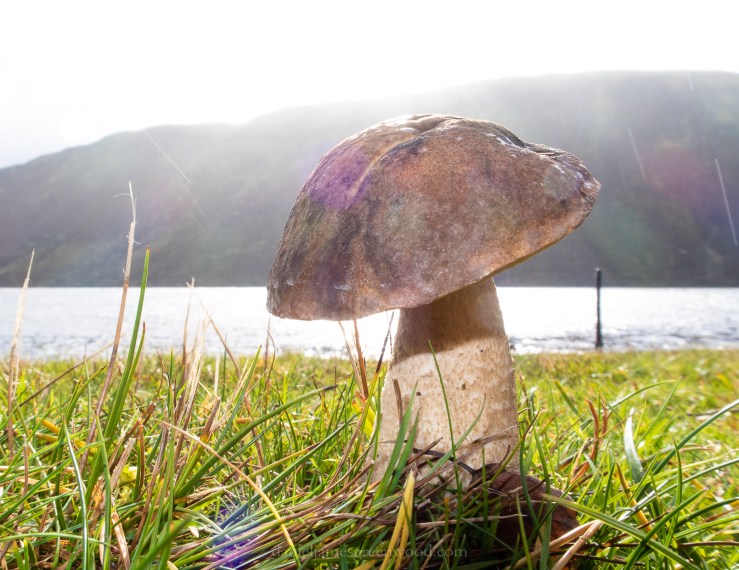
At the point where our minibus was parked I could not believe what I saw. This is a cep, otherwise known as porcini or pennybun. Its Latin name is Boletus edulis. It is the most prized edible mushroom. This was the most perfect specimen I have ever come across. In the background is Loch Muick, with the classic Scottish rain, sun and wind falling in the background. I can still get a tingle of the joy of finding this mushroom, against that background, in such a stunning location.

Thanks for reading.

More mushrooms


#FungiFriday: September shrooms in Scotland, part two – Ben Vrackie

Perthshire - September 2018 djg-47

#FungiFriday 25th April 2020

For another week the Covid-19 pandemic is keeping me away from the woods and therefore the shrooms. This fungal breaking news desk has run out of scoops, so it’s more like a sports channel airing classic re-runs.

I had been intending to post about some fantastic fungal hiking experiences (sounds weird) from a 2018 visit to Scotland but work and life stopped me. I have three hikes to share with you which should get you through the next three weeks of lockdown. I do hope anyone reading this is doing well and that youโ€™re following the guidance.

Perthshire - September 2018 djg-38

These posts remind me of my uncle Joe Reilly who passed away in November. Joe was a Glaswegian by birth who, along with my aunt Marg, introduced me to some of the most beautiful places the UK has to offer in Perthshire, among so many other gifts. I would visit Marg and Joe in Perthshire as often as I could, often in autumn when going to meet my hiking companion Eddie (seen here) for a jaunt in the Cairngorms.

Joe fell for fungi like I did in recent years and I will always miss his WhatsApp messages with mushrooms he had found on Perthshire walks. We miss his thirst for life terribly but carry it on just as he did.

Last week I was sharing fungi found on a walk around Clunie Wood in Pitlochry.

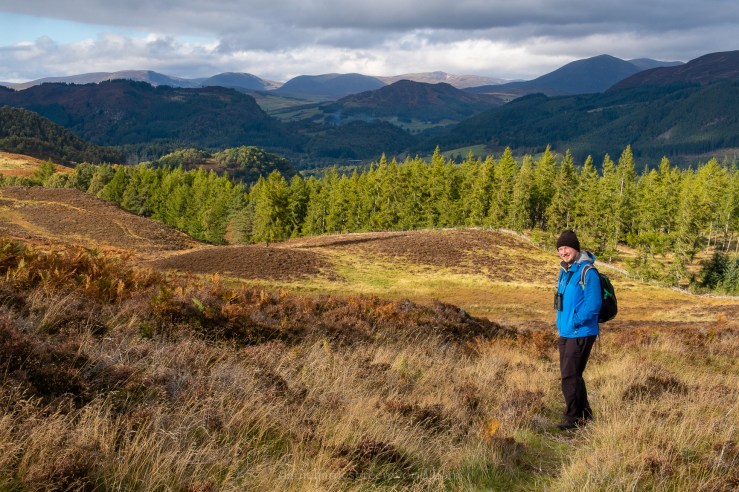
This week Iโ€™m reminiscing about a hike from Pitlochry up to the summit of Ben Vrackie accompanied by my friend Eddie. Below the tree line, a pleasing range of fungi were found.

Perthshire - September 2018 djg-26

The walk leaves the town of Pitlochry and heads up through suburbs. This manicured field had a rowan so heavy with berries it looked like it was falling over. I have never seen so many on one tree.

BenVrackie_Sept2018-1

The day was warm and while I waited for Eddie to change out of his underlayers behind a tree I scoped out some shrooms in the first piece of woodland we encountered. I’m not sure what this species is. I found them pre-plucked at the side of the path.

BenVrackie_Sept2018-2

Further up through the woodland this common puffball was sitting among the leaf litter. This has to be one of the most common woodland mushrooms to find in the UK. This is always a good sign of what is to come on a longer walk. Puffballs can be an indicator of a good amount of fungi on the ground.

Perthshire - September 2018 djg-28

The woodland broke into something more open as the moorland and hills approached, with large birch trees growing along the edge of the path. A tree stump held this gathering of yellow staghorn. I asked Eddie if he would help to add something to this pic! Probably one of my fave fungi photos.

Perthshire - September 2018 djg-33

As we ascended towards the winding set of steps that take you to the top of Ben Vrackie, we saw two golden eagles floating above another hill nearby. This was only the second time I’d seen golden eagles in the UK. They are massive!

Perthshire - September 2018 djg-34

The fungi in these areas thins out to small species connected to the habitat and the odd common species which is particularly good at spreading its spores and growing in a range of habitats (stuff like sulphur tuft on dead wood). For those who don’t know, this is heather moorland. Short on trees so not the richest place for fungi. Then again I haven’t spent enough time looking.

Perthshire - September 2018 djg-52

This is a popular walk from Pitlochry. Lots of people were coming and going from the 841m summit of Ben Vrackie. Here is Eddie trying to get some soul signal from the gods. He failed.

BenVrackie_Sept2018-3

The views north into the Cairngorms were beguiling. Landscape photographers would have appreciated the range of weather available and the clouds which gave extra character to the views. While we sat up here eating lunch, a man and his two sons reached the top. He told them a story of when he had climbed a hill with ยฃ200 cash in his pocket. He knew it was a bad idea and half way up the money slipped out of his pocket and away into the landscape. He salvaged ยฃ20. His boys told him it had indeed been a bad idea.

BenVrackie_Sept2018-5

Rain following the River Garry through the valley from Blair Atholl. This photo has been enhanced to bring out the distant peaks and rainfall.

BenVrackie_Sept2018-6

Rain arriving in the hills.

BenVrackie_Sept2018-9

Descending back down through the tree line, we took the same path back. It’s interesting how you see things so differently when you walk a single route in another direction. Here was a very large birch polypore, also known as razorstrop fungus. It is a natural controller of birch trees and is possibly one of the easiest species to find.

Perthshire - September 2018 djg-96

On the way back we found what I think is a birch bolete. It was reaching out from the path edge and had already been nibbled on by slugs. A real treat to find something like this.

BenVrackie_Sept2018-10

It was a pleasant surprise was to find a chantarelle, one of the most sought-after edible fungi. This one had already been plucked (I think).

BenVrackie_Sept2018-11

I’m really not sure what species these shrooms are, but they were a nice find.

BenVrackie_Sept2018-12

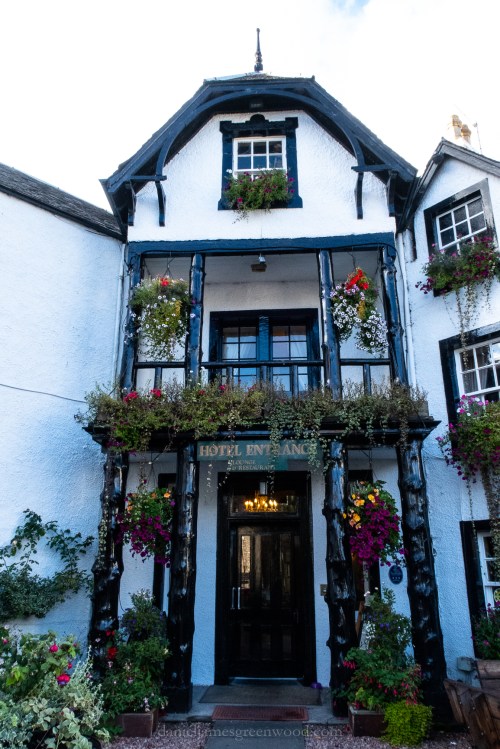
On the way back we visited this beautiful pub, the Moulin Hotel, with conifer beams holding up a balcony. It dates from the 17th century.

BenVrackie_Sept2018-13

The rain was coming and going throughout the afternoon. It reminded me why Scotland is so good for fungi. There is a high level of rainfall, large areas of woodland and acidic soils which seem so good for mushrooms.

Next week it’s fungal royalty in the Cairngorms.

Thanks for reading.

More mushrooms


#FungiFriday: September shrooms in Scotland, part one: Pitlochry

Perthshire - September 2018 djg-25
Ben Vrackie as seen from Clunie Wood

Fungi Friday 17th April 2020 via September 2018

For another week the Covid-19 pandemic is keeping me away from the woods and therefore the shrooms. To be honest though, my town is so deserted at the moment that I am kind of hoping some shrooms start popping up soon in the paving. Especially considering there is rain coming today.

I had been intending to post about some fantastic fungal hiking experiences (sounds weird) from a 2018 visit to Scotland but work and life stopped me. I have three hikes to share with you which should get you through the next three weeks of lockdown. I do hope anyone reading this is doing well and that you’re following the guidance.

These posts remind me of my uncle Joe Reilly who passed away in November. Joe was a Glaswegian by birth who, along with my aunt Marg, introduced me to some of the most beautiful places the UK has to offer in Perthshire, among so many other gifts. I would visit Marg and Joe in Perthshire as often as I could, often in autumn when going to meet my hiking companion Eddie (seen here) for a jaunt in the Cairngorms. Joe fell for fungi like I did in recent years and I will always miss his WhatsApp messages with mushrooms he had found on Perthshire walks. We miss his thirst for life terribly but carry it on just as he did.

This week I’m reminiscing about a great walk in the wooded hills of Pitlochry.

Perthshire - September 2018 djg-14

The walk was on a Friday afternoon from the door of our guesthouse in Pitlochry but can also be done from Pitlochry railway station. It’s a stunning place, close to the southern border of the Cairngorms National Park. My friend Eddie lives in Glasgow and his journey was a wee bit quicker than mine from Sussex. Above you can see Eddie not at all incongruous in the landscape All these pics are taken with the amazing Canon Powershot G7X MII in RAW format and processed in Adobe Lightroom.

Perthshire - September 2018 djg-1

Scotland has deliciously wet and humid woodlands which in some parts constitute what is affectionately known as ‘Celtic Rainforest’. This is my habitat, the milder temperatures and shadier conditions far better suit my Celtic biology (which is not actually something that exists in Science).

Perthshire_Sept2018-1

Perthshire_Sept2018-2

These birch trees were host to large hoof fungus brackets and many foliose lichens. These are commonly found on the acidic soils of heather moorland that covers so much of the Scottish Highlands.

These dead standing trees are a vital source of biodiversity in woodlands. They are the thing we have lost but are slowly, very slowly, returning to the landscape thanks to sensitive management.

Perthshire - September 2018 djg-4

In Clunie Wood I found my first ever jelly babies. These are a bizarre species that do look like the sweets. They were growing in large numbers under shade in a wet area alongside the path.

Perthshire - September 2018 djg-21

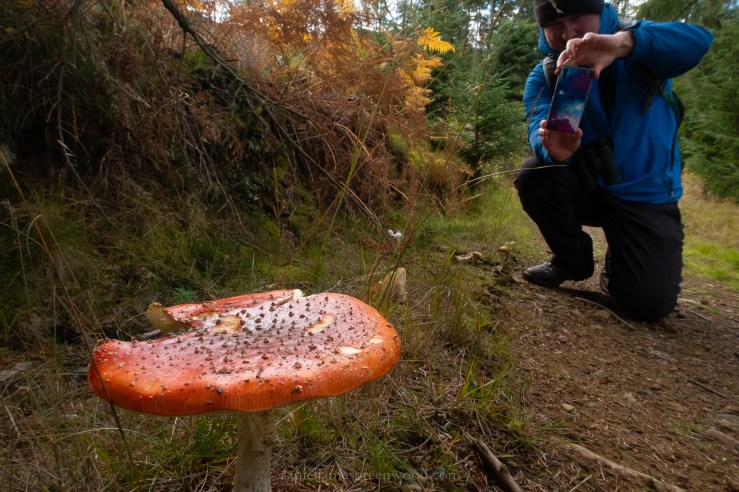
At the edge of a plantation we found a huge fly agaric.

Here is Eddie getting a pic which gives a sense of scale. September seems a good month for fly agaric in the Highlands of Scotland.

Perthshire - September 2018 djg-24

The conditions were perfect for fungi and these beautiful bonnet mushrooms were alongside lichens on a tree stump.

Perthshire - September 2018 djg-5

This quite hilarious clump of mushrooms (they were growing from one small stump… had to be there) are probably a type of honey fungus described in Latin as Oystoyae.

Perthshire - September 2018 djg-2

This cheeky slime mould was another sign of the exceptional conditions with the mixture of broadleaf woodland and conifer plantation providing lots of moisture.

I always think orange peel fungus is some kind of plastic pollution. Having worked in urban nature conservation it reminds me of litter picks pulling old bits of traffic cone out of the soil!

At the edge of the woodland the beautiful heather moorland appears and views expand into the Grampian Mountains of the Cairngorms National Park.

Thanks for reading and keep dreaming!

More mushrooms

#FungiFriday: looking back on a mushroom classic

Ebernoe - 8-11-2019 blog-75

Fungi Friday 3rd April 2020 (or Friday 9th November 2019)

I can’t get out to anywhere that has mushrooms to photograph and we’re also experiencing something of a dry spell in Sussex. That means that this week I’m posting about my fungal highlight of autumn 2019, which took place on Friday 9th November. Consider this a bit of a sporting or cinematic classics TV show, until we’re allowed to venture further and any spring rain arrives. The inconsistent nature of mushroom fruiting bodies means I may have to wheel this out again to keep it going every week.

Ebernoe - 8-11-2019 blog-91

It was mid-November with autumn at its peak. The colours of the beech trees were at their most explosive. In the woodlands of the Sussex Weald, there were millions of mushrooms. They seemed to be under every footstep and fruiting from every fallen tree.

Ebernoe - 8-11-2019 blog-10

It was clear it was peak mushroom time. The bonnets were out en masse and many leaves were still on the trees. I have come to think that fungi hunting is so much easier before the leaves fall. The leaf litter created by oak and beech is very hefty.

Ebernoe - 8-11-2019 blog-88

I would also consider using hazel as an indicator. When those leaves start to yellow and fall, you know it’s going to be more difficult. Winter is on its way.

Ebernoe - 8-11-2019 blog-39

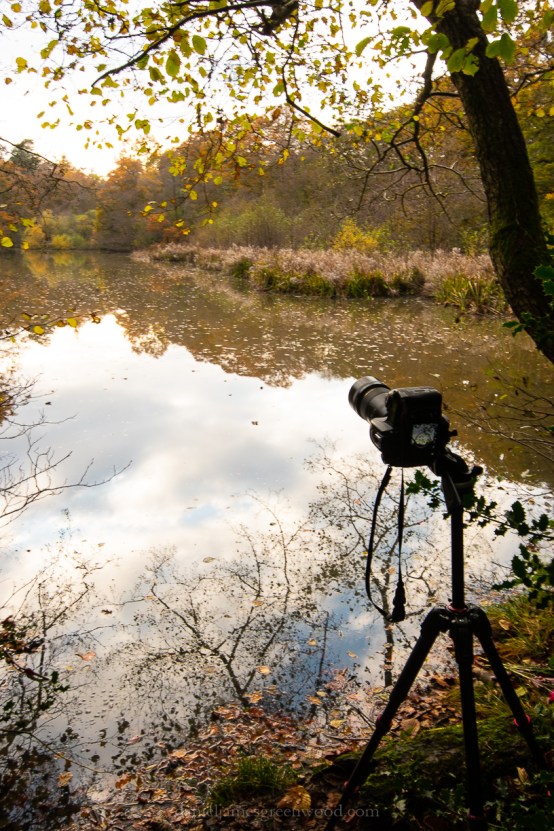
Bonnets are some of the best fungi to photograph because they’re often elevated on the limbs of fallen trees, meaning you don’t have to scrabble around on the ground. It’s also a very nice height for a tripod. A tripod gives you the steadiness to use slow shutter speeds which makes it so much easier to take pics in a dark woodland in autumn. Also, mushrooms don’t move!

Ebernoe - 8-11-2019 blog-14

What I am looking for in general is a mushroom that can be isolated. A macro lens gives a very shallow depth of field, which means that the focus is thin and the background easily blurs. This kind of thing is perfect. I don’t focus stack images (a complex process of threading images together which have different stages of focus) but this would look really good with every aspect in focus.

Ebernoe - 8-11-2019 blog-48

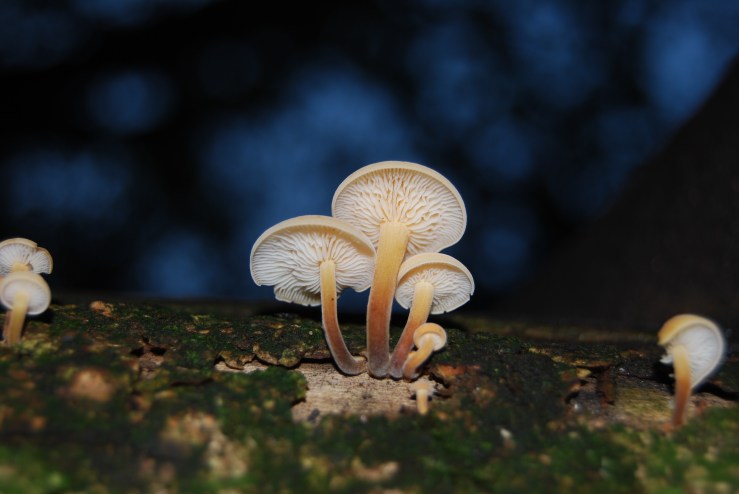
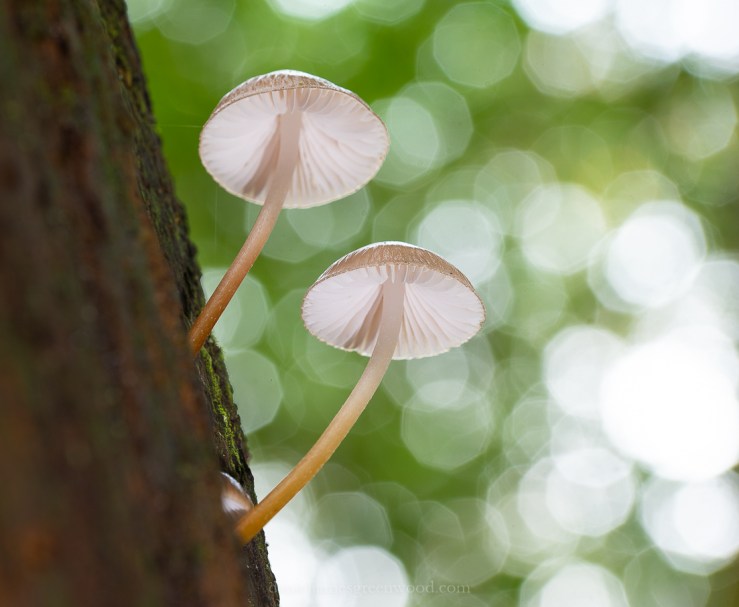
This is also what’s so nice about elevated fungi. You can play around and get some nice bokeh (the circles in the background). This is created by daylight flooding through the leaves – can you see the wash of green? I used a small LED light to light the gills of the bonnets. They look almost like paper or plastic to me. The idea also occurred to me that the white bokeh circles look like the mushrooms, too.

Ebernoe - 8-11-2019 blog-27

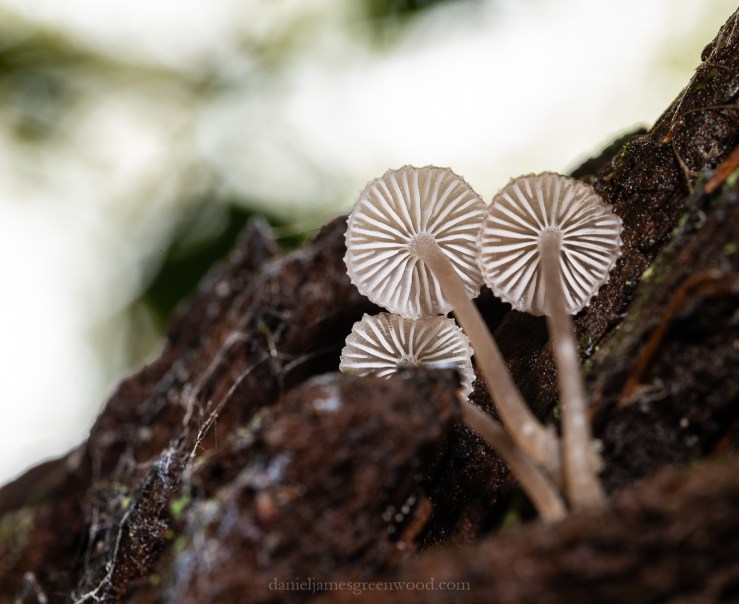
These are probably more bonnets. Again, taking a photo of the gills underneath can create a really beautiful effect. I could have pulled the bit of dead wood off to reveal the other mushroom but I fundamentally disagree with damaging habitats for the sake of a photo.

Ebernoe - 8-11-2019 blog-18

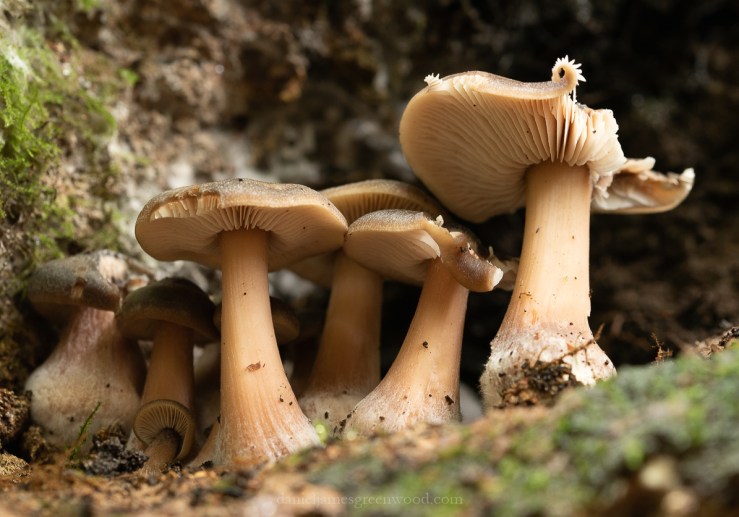
A species I learned last year was buttercap (or at least I think I have). This is said to be a common species. I like the fairytale shape of the stipe as it bulges at the base.

Ebernoe - 8-11-2019 blog-1

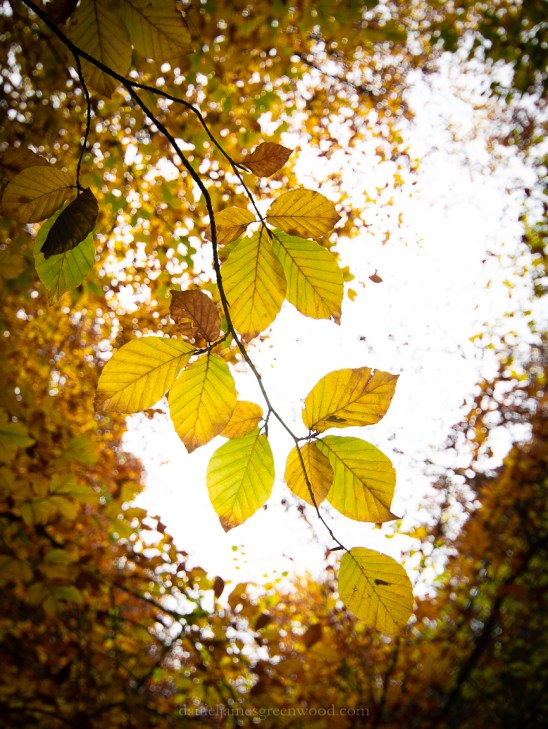
The woodland was entering peak autumn colour. These beech leaves still held traces of their chlorophyll.

Ebernoe - 8-11-2019 blog-62

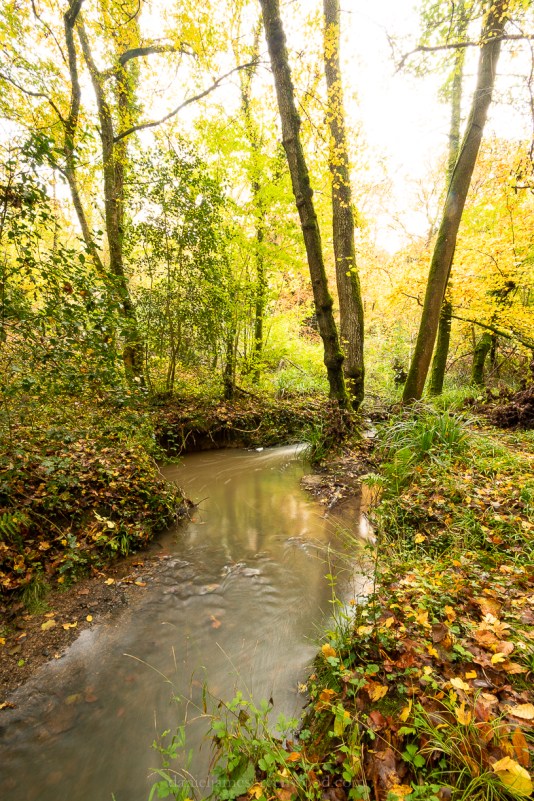
It was a beautiful day to be in the woods. I can’t tell you how much a woodland stream adds to the overall experience!

Ebernoe - 8-11-2019 blog-79

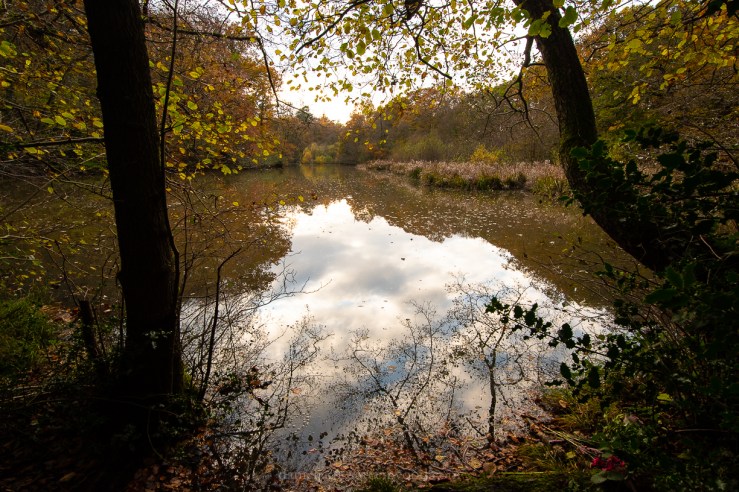
With what is approaching a lake, you’re spoiled rotten.

Ebernoe - 8-11-2019 blog-21

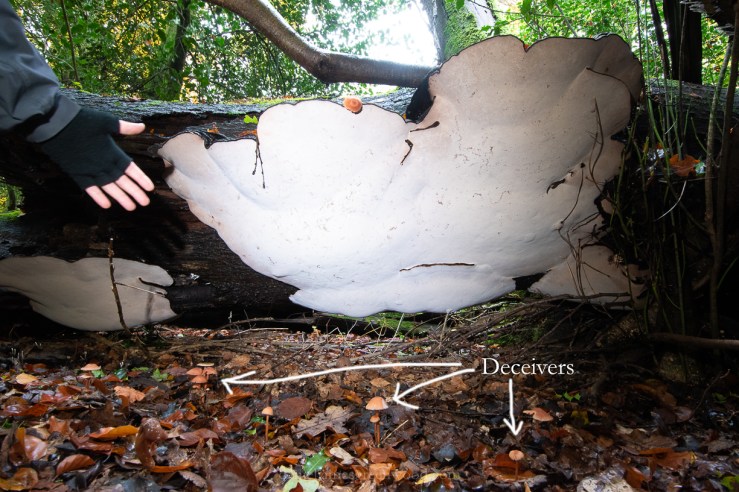
Back to the shrooms. I found probably the biggest fungus I have ever seen, though you could argue it is several fruiting bodies fused together. I even added some in-photo text to help explain the situation to you. Very advanced. This is a bracket fungus that looks more like a ray. It’s probably artist’s bracket, a Ganoderma species. Below it you can see some smaller mushrooms, these are all deceivers. They were just about covering the entire area here. It was almost impossible not to step on one. By the way don’t worry that’s my hand not a mushroom burglar’s.

Ebernoe - 8-11-2019 blog-77

All in all this was my peak mushroom experience in autumn 2019.

Thanks for reading.

More mushrooms


#FungiFriday: the gifts of spring

Warnham_19-3-2020_lo-res-04

Fungi Friday 20th March 2020

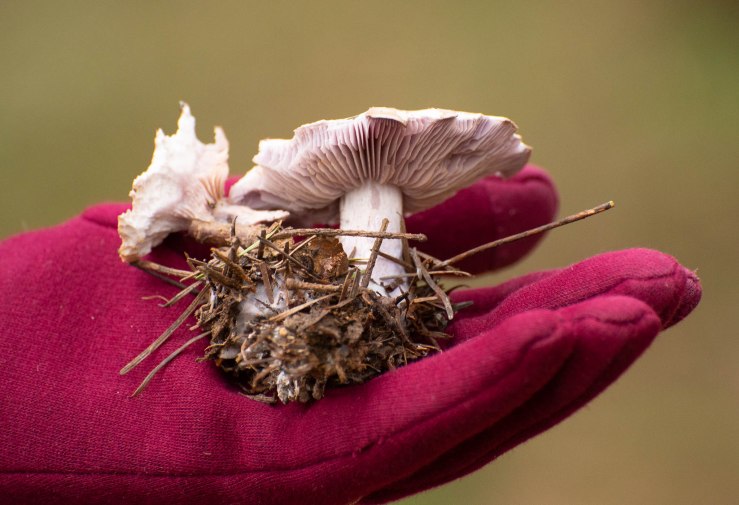
Happy Spring Equinox! Yesterday was a special day, the first proper mushrooms of 2020 made an appearance in Sussex, to me at least. Problem was I completely missed this mushroom, blewit! Wood blewit, that is (sorry). Thankfully it was pointed out to me and I had a glove model on hand (lol) to show it off.

Warnham_19-3-2020_lo-res-08

This has been an incredibly difficult week for people and it’s hard not to talk about it here. Heading out to see which birds are now singing or which mushrooms might be fruiting is a massive tonic to the social frenzy which is hitting pretty much everywhere at the moment. This week I heard my first singing chiffchaff of the year, a rubberstamp of ecological spring. This female great tit may soon become a mum.

Chesworth_17-3-2020_lo-res-6

We have to look to nature now as spring arrives. It puts you back in your place and gives a picture of the longer term. The wild life will go on. But we should also consider that the problems we are now facing are linked to our awful devastation of the natural world, the abuse of its wildlife and ecosystems. Seriously people, we have to consider what we are doing to wildlife and their habitats first hand and also by our consumption of unsustainable products like beef from Brazil or chocolate from companies with poor ethical standards. I really hope that people can find a love of nature now that makes us slow down, consume less and see that our impact has to change forever before nature changes us more abruptly. After this, there can be no going back.

Warnham_19-3-2020_lo-res-03

As I say quite often on this website, I’m not a forager of edible plants and mushrooms, though I know a fair number that I could eat. By that I mean plants and mushrooms, not actual foragers. I have never lived in a place where the foraging of anything beyond blackberries is sustainable. Some foragers must have been banking on this moment of temporarily empty supermarket shelves. Though our numbers are too great and nature’s larder probably too diminished to sustain our diets now. Shame that the toilet roll you find in the woods ain’t ripe yet.

Warnham_19-3-2020_lo-res-01

Most of the fungi I saw yesterday was not edible, either because of its species or just generally because something else had already eaten it. The Coronavirus situation should remind us that there are millions of other species with lifestyles that are far more sustainable than ours, and we are vulnerable to pandemics, especially as we force our way ever deeper into untouched ecosystems that have been intact for millions of years or disturb people who have lived in harmony with those landscapes for a long time. The fungus above is probably shaggy bracket or Inonotus hispidus, one you usually find in bits on the floor having dropped off from higher up. I learned this species conducting tree health surveys with tree inspectors.

Warnham_19-3-2020_lo-res-09

A common mushroom popping up now is glistening inkcap. The ‘record shot’ above is enough to show you how few mushrooms I’ve seen recently. The standards should get better as winter diminishes in the rearview mirror.

Warnham_19-3-2020_lo-res-10

Some fungi need a bit more before they’re ready to go on stage. Here we have a splitgill fungus, which I covered a few weeks ago. Still this snowy white shroomster was a pleasant sight against the blackened rings of this log.

Garden_18-3-2020_lo-res-4

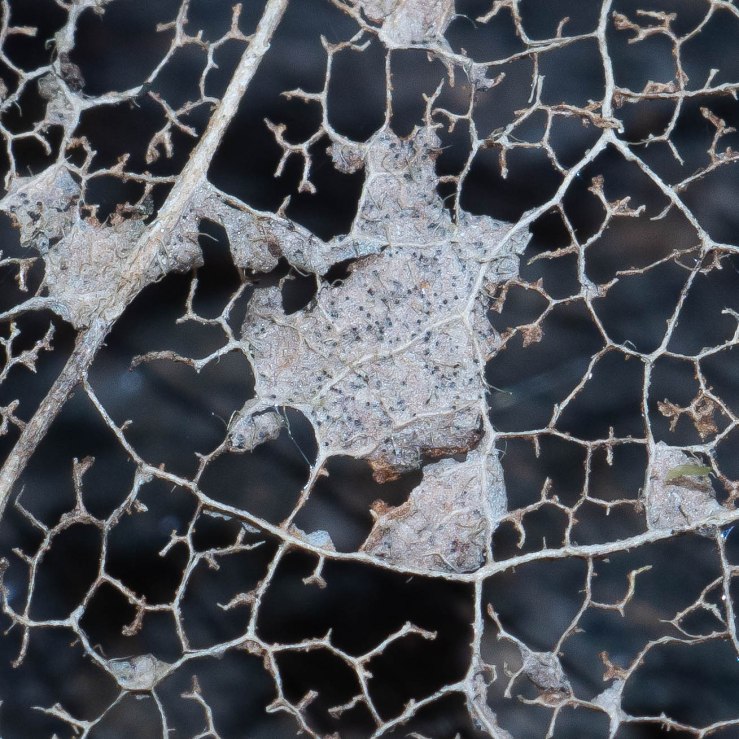
I am getting mentally ready to spend a lot of time in my garden this spring. I am very privileged to have a garden and, having eventually got to this point, I will never take it for granted. During one of this week’s WFH lunch breaks, I found this miniscule fungus frowing on the remains of a magnolia leaf. I wasn’t even looking for it, I saw it later when editing the RAW file on the computer.

Garden_18-3-2020_lo-res-1

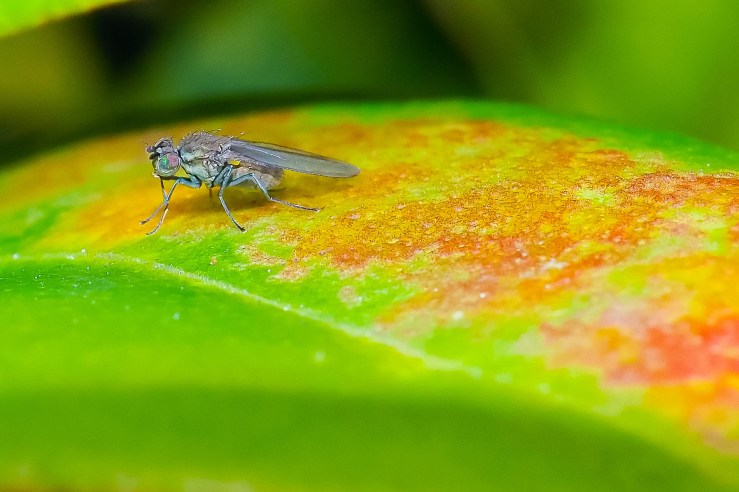
This very tiny fly was resting on a patch of fungus in the pigment of this leaf. I’d like to learn more about these types of fungi but one of the more recognisable ones is that which grows on bilberry (blaeberry, blueberry) leaves.

Warnham_19-3-2020_lo-res-11

I owe lichens for getting this #FungiFriday blog close to completing its third month. Let’s hope that Fungi Friday can help us adapt to the life changes we are all experiencing just now. I plan to do a virtual Fungi Friday guided walk if we’re still allowed out, in a couple of weeks. Stay tuned for that, but most of all stay tuned to the season rather than your news app on your smartphone. It will help you when you need it.

More mushrooms

#FungiFriday: a weird week for mushrooms

Warnhqm_8-3-2020_LRCC-01

Fungi Friday 13th March 2020

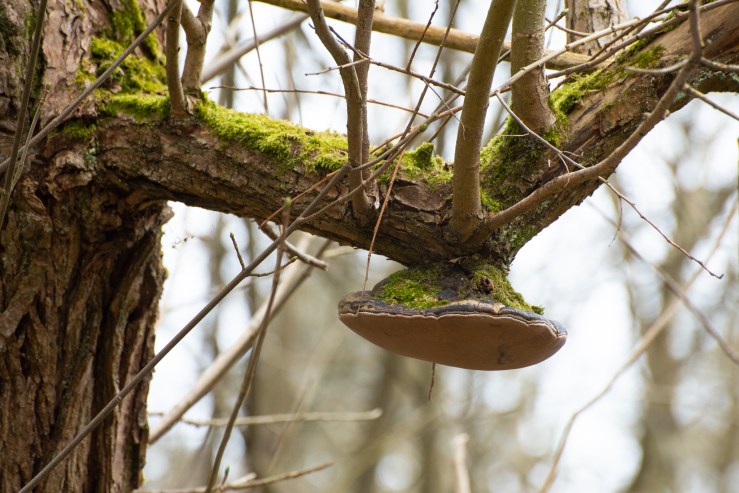
No self-respecting person goes out looking for mushrooms in March. The mushrooms come to you. Or in this case (above), the bracket mushrooms will hover over your head and attempt to abduct you ala UFOs visiting nocturnal fields in the southern states of the USA. I’m unsure of what this bracket fungus is but it is probably the funniest. I actually ‘laughed out loud’. It’s growing from a poplar in a wetland reserve in the Sussex Weald. If you look closely enough it also looks like a grumpy frog.

Warnhqm_8-3-2020_LRCC-16

This great spotted woodpecker was looking for his lunch nearby. Thankfully his attempt to fool me into thinking he was a bracket fungus didn’t work. It got more weird:
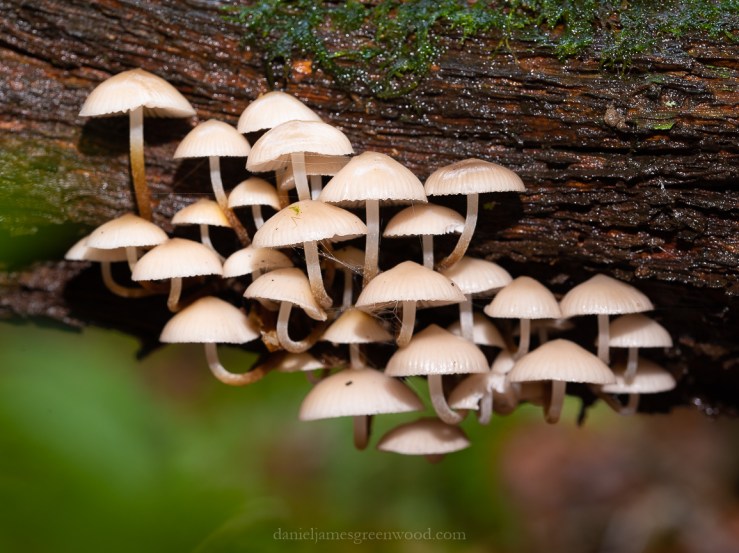
Fungi_Friday_13-3-2020_lo-res-1

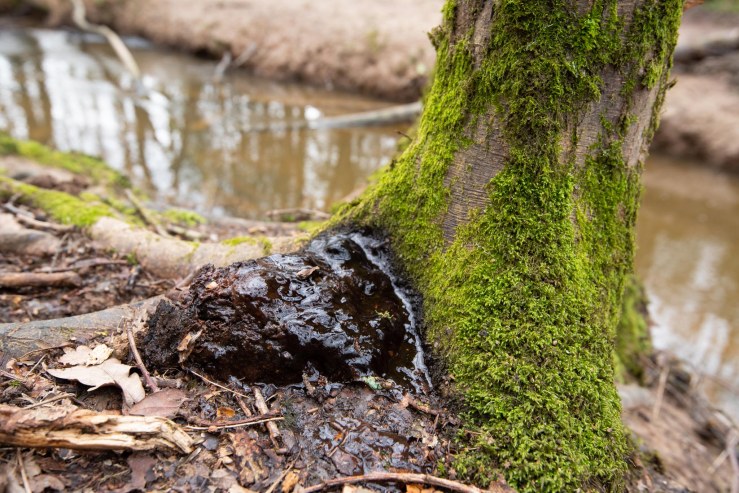
Alongside what is known in Sussex as a ‘gill’, a stream rushing through woodland, I found this horror. Now I’m unsure whether this is the jellied remains of an old bracket fungus or simply the remains of a jelly fungus. It could also be something far worse. I prodded it with a twig and it jiggled, so I would go with it being a jelly fungus. It was delicious. Kidding, it wasn’t. As in, I didn’t eat it.

Fungi_Friday_13-3-2020_lo-res-3

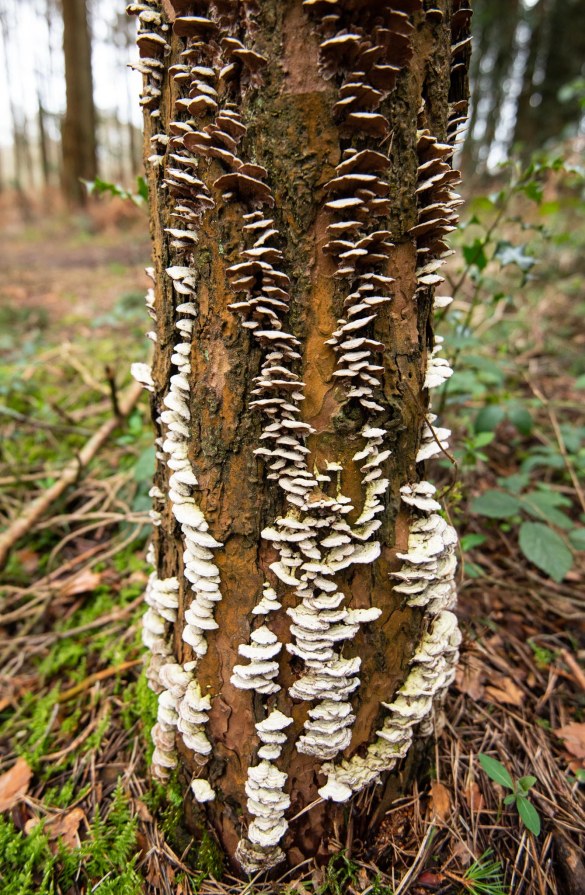
The only fungal wow moment of the past week has been this encounter with splitgill fungus growing from a pine tree. This was a plantation of thousands of pine trees with very little variety in structure, tree species or ground flora. Keep an eye out for my next Sussex Weald post on that. These mushrooms stood out like many sore thumbs.

Warnhqm_8-3-2020_LRCC-13

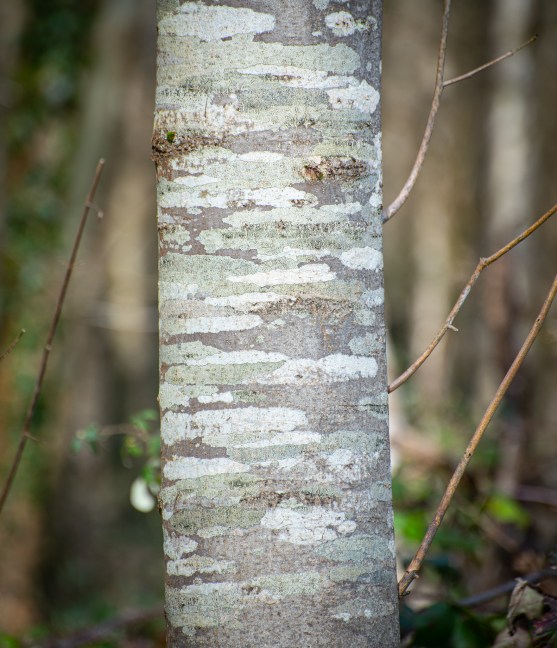
The lichenised fungi also provided a rather artistic sight. I think this is a species of poplar. It has crustose lichens growing around the trunk. In a tweet the British Lichen Society pointed out that this is evidence that trees grow outward rather than upward. Why is this? It’s because trees are constantly putting on new layers of wood internally, behind the bark. These layers of tissue form the static mass of the tree. It is in effect a kind of waste product but it gives the tree some structure.

Warnhqm_8-3-2020_LRCC-02

Take this stunning dead oak which was also seen on the same day as the lichens. The bark is falling away from the tree as it decays (thanks to fungi in part) and the layers of wood internally are exposed.

Warnhqm_8-3-2020_LRCC-12

All that, from the fact that lichens look a bit like bird poos delivered at high velocity from the leftfield.

Thanks for reading!

More fungi