#FungiFriday: fungi giveth and they taketh away

SLF_LRCC_14-2-2020-1

Fungi Friday 21st February 2020

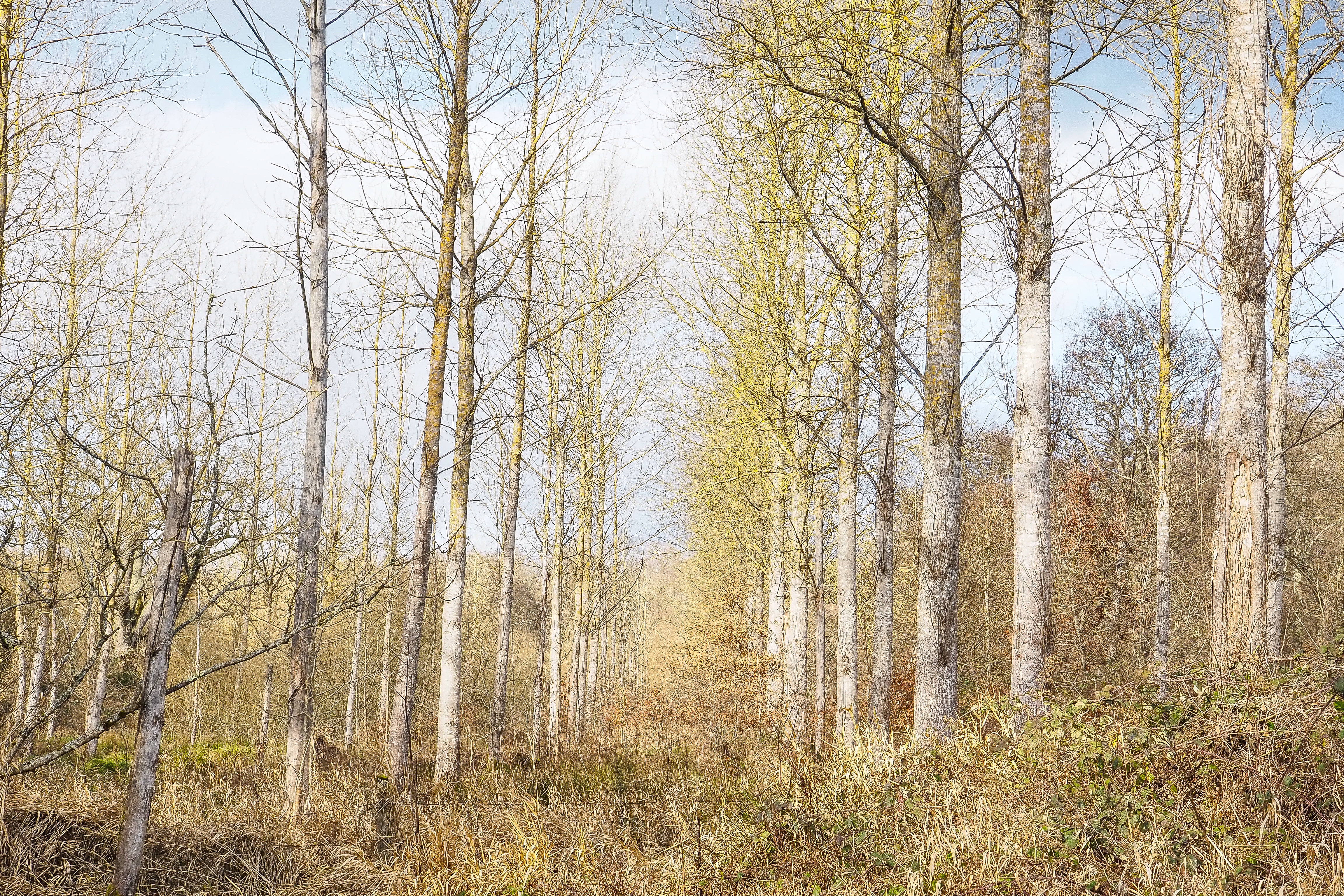
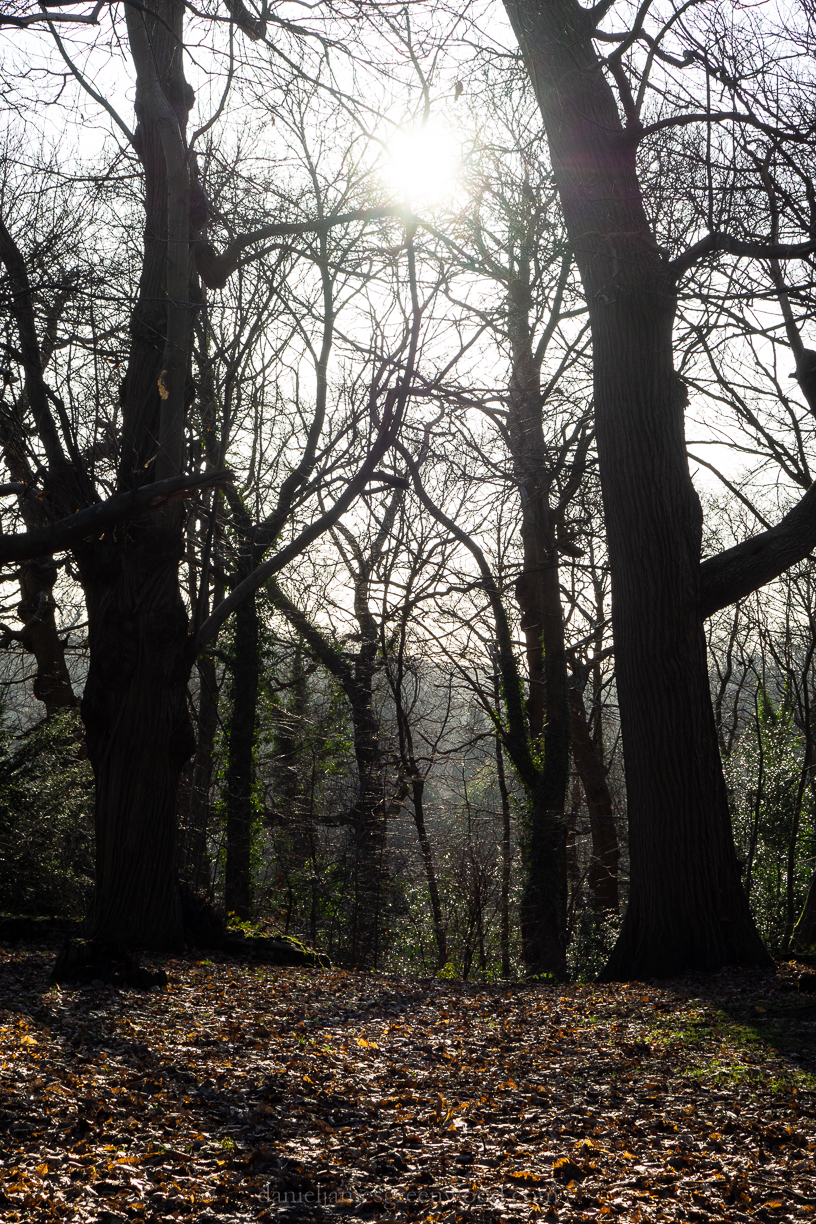
The Weald holds so many future Fungi Fridays. It’s an ancient wooded landscape that stretches across Sussex, parts of Surrey and into Kent. It covers the most wooded part of the UK in East Sussex. Once it will have connected with the New Forest, forming much of England’s post-glacial ‘wildwood’. I am very privileged to live within rambling distance of the Weald. I write about walks in it once a month, check that out if you will.

I managed to sneak ninety minutes in locally last week and found plenty of interesting things. As well as the ‘dark side’ of fungi, a reminder that a fungus giveth, and it taketh away.

SLF_LRCC_14-2-2020-11

We have had two storms in two weeks in Sussex and the winter streams are tickling through the woodland understory. Above, a tree was resting in a winterborne. This means a stream that only flows in winter when rainfall is higher. In Ireland, lakes (or loughs) that appear in winter are known as ‘turloughs’. Got plenty of those right now in Brexit-land.

SLF_LRCC_14-2-2020-09

The log was covered in some nice looking turkeytail, a very common polypore that is said have anti-carcinogenic properties. It was a nice way to start.

SLF_LRCC_14-2-2020-06

Then I happened upon these absolute corkers growing on a dead birch tree. These are blushing bracket in their mature stage. This area of the woodland is very wet, with mosses like sphagnum attempting to recolonise more places. It is set in amongst mature beech trees at the edge of heath-ier habitats, largely consumed by pines that were planted, rank and file, by the Forestry Commission in the 20th Century. It’s very wet and many birches are succumbing there. This is natural.

SLF_LRCC_14-2-2020-07

This is a standalone dead birch tree with birch polypore, also known as razorstrop fungus. It’s a tough bracket fungus that people probably once used to sharpen their razors. It naturally controls birch trees and breaks them down for other organisms to devour, and therefore new soils to be created.

SLF_LRCC_14-2-2020-6

Here’s a quick macro of one of the mosses from the work of the razorstrop, looking much like a cedar or a fern.

SLF_LRCC_14-2-2020-1

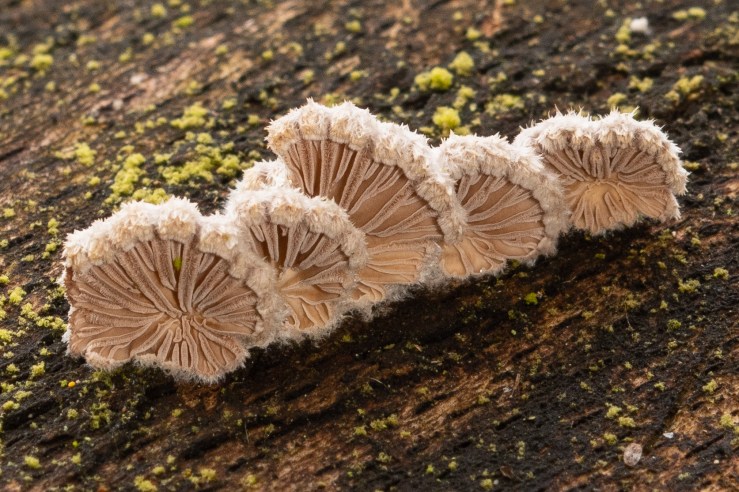
I found some split gills looking rather shaggy, in a good way. If you look at the yellow smatterings around, I think that’s a slime mould making its way across the surface of the bark.

St. Leonards Forest - 12-5-2019 djg-6

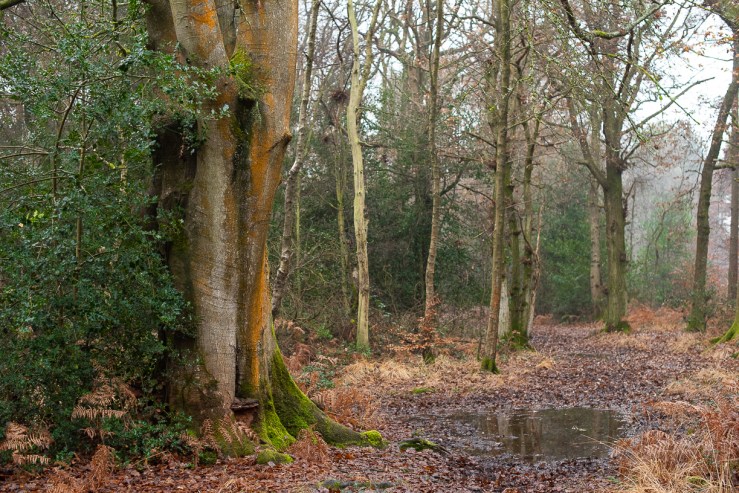
Rewind to May in this area, when the first leaves were appearing on the trees and the ground was far drier. This is one of my favourite trees to photograph in this woodland because of the orange algae and the beautiful buttresses at the tree’s base.
SLF - 5-12-2019 blog-18

Here it is in December, the ground much more wet, the leaves all gone. Can you see the bracket fungus at its base? It has been damaged, probably by a visitor testing its strength.

SLF_LRCC_14-2-2020-04

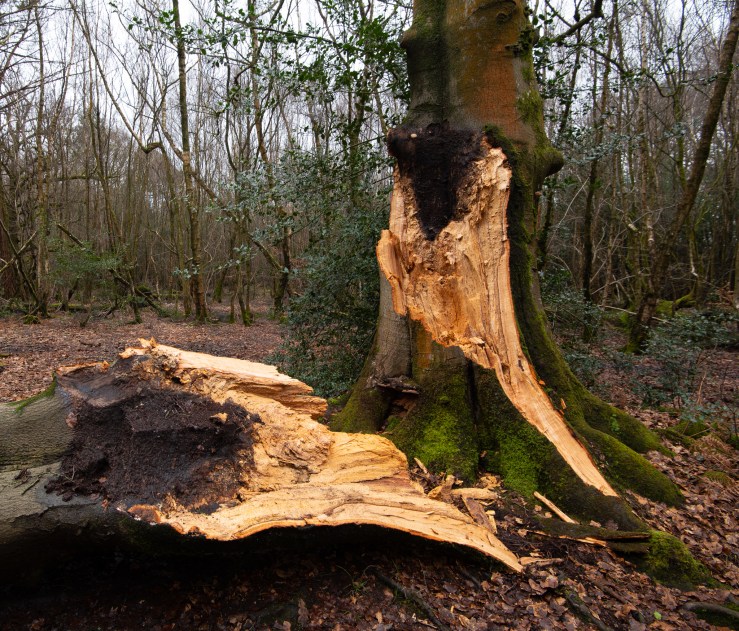
And here it was last week. Evidently the tree has been destabilised by the decay which has been accelerated by the fungus. This has softened the heartwood which leaves the tree vulnerable to storm damage.
SLF_LRCC_14-2-2020-03

But this veteran beech tree still lives, it has only lost one of its three trunks. I hope it can remain where it is and continue down its veteran path into the realm of the ancients.

It’s just another reminder that fungi has its own way in the world and there is no sentimentality involved. It’s there to break down organic matter. Trees were not a safety concern until we started walking underneath them everyday.

Some species share what they can find, others take, take, take. It’s in their nature. But in the end fungi are contributing to vital processes of organic recycling and renewal. Without the ecological role of fungi our species would not exist writing blogs, taking photos, hurling abuse at passers by, or walking under veteran trees in the woods.

More fungi

#FungiFriday: still loving lichen

OLYMPUS DIGITAL CAMERA

Fungi Friday, 14th February 2020

Storm Ciara blew in on Sunday and probably washed any winter shrooms away. But I’m still spending my time with the symbiotic fungal folk found in lichens. The lichens have had a good week, heavy rain has been interspersed with some lovely winter sun.

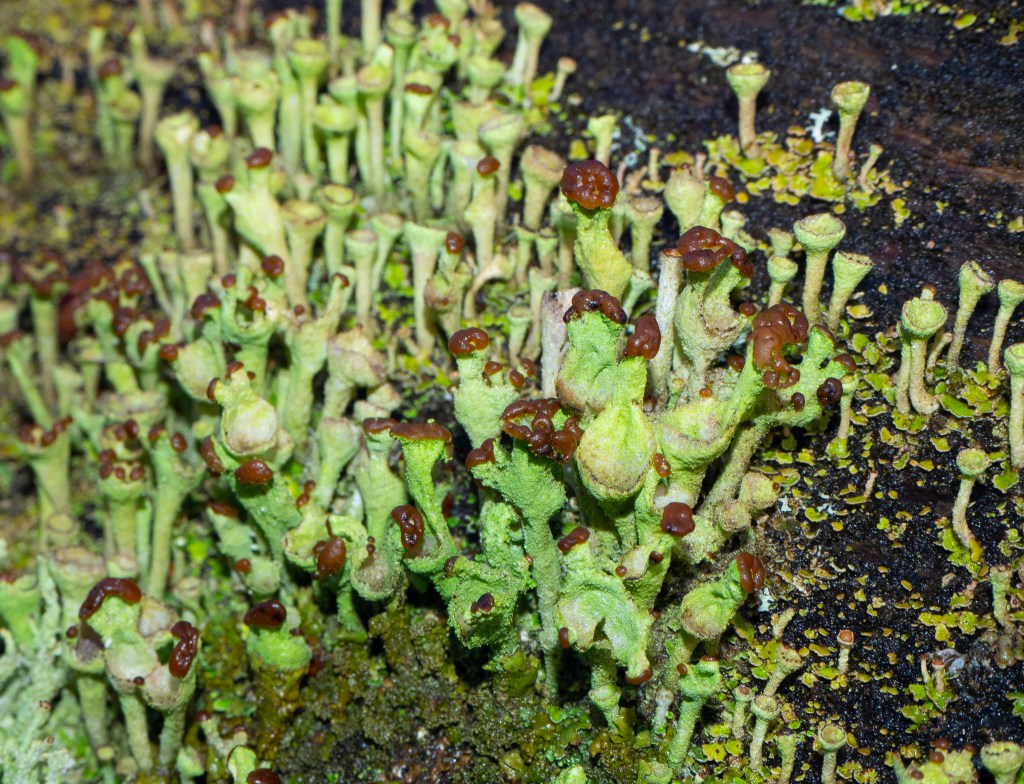
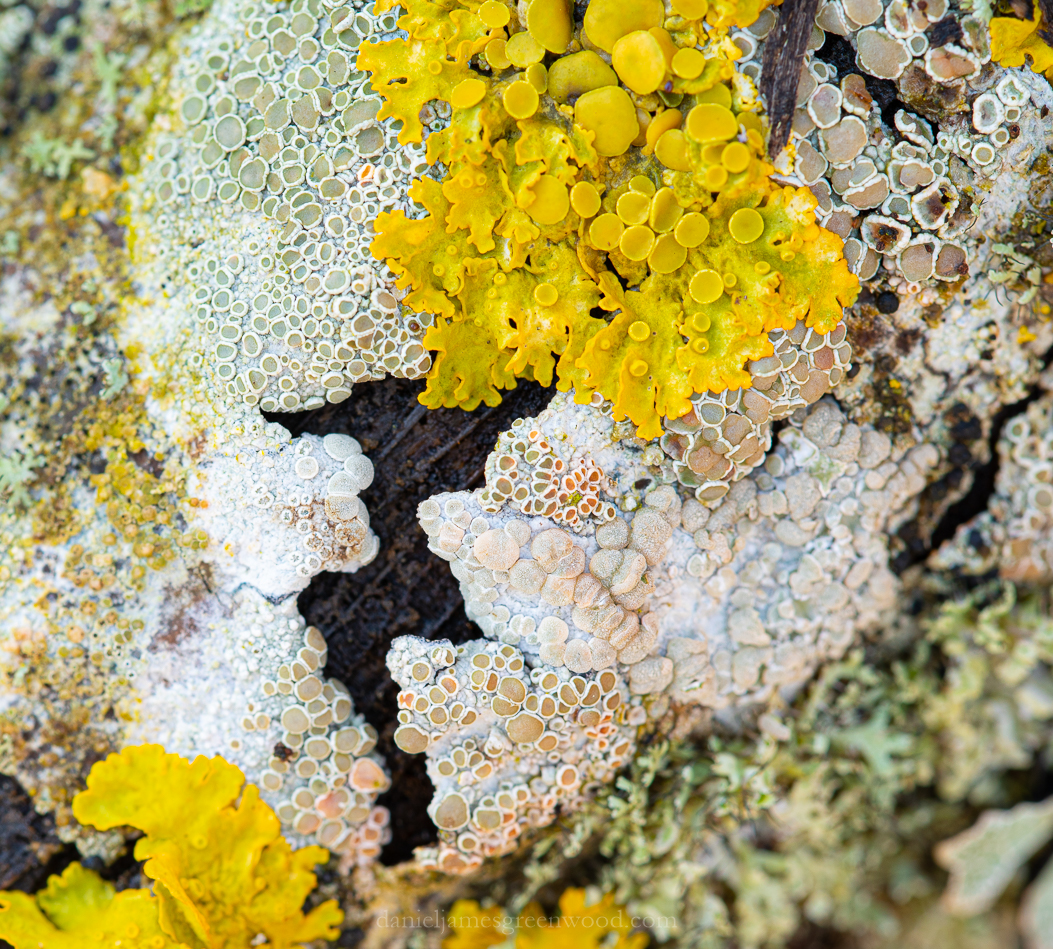
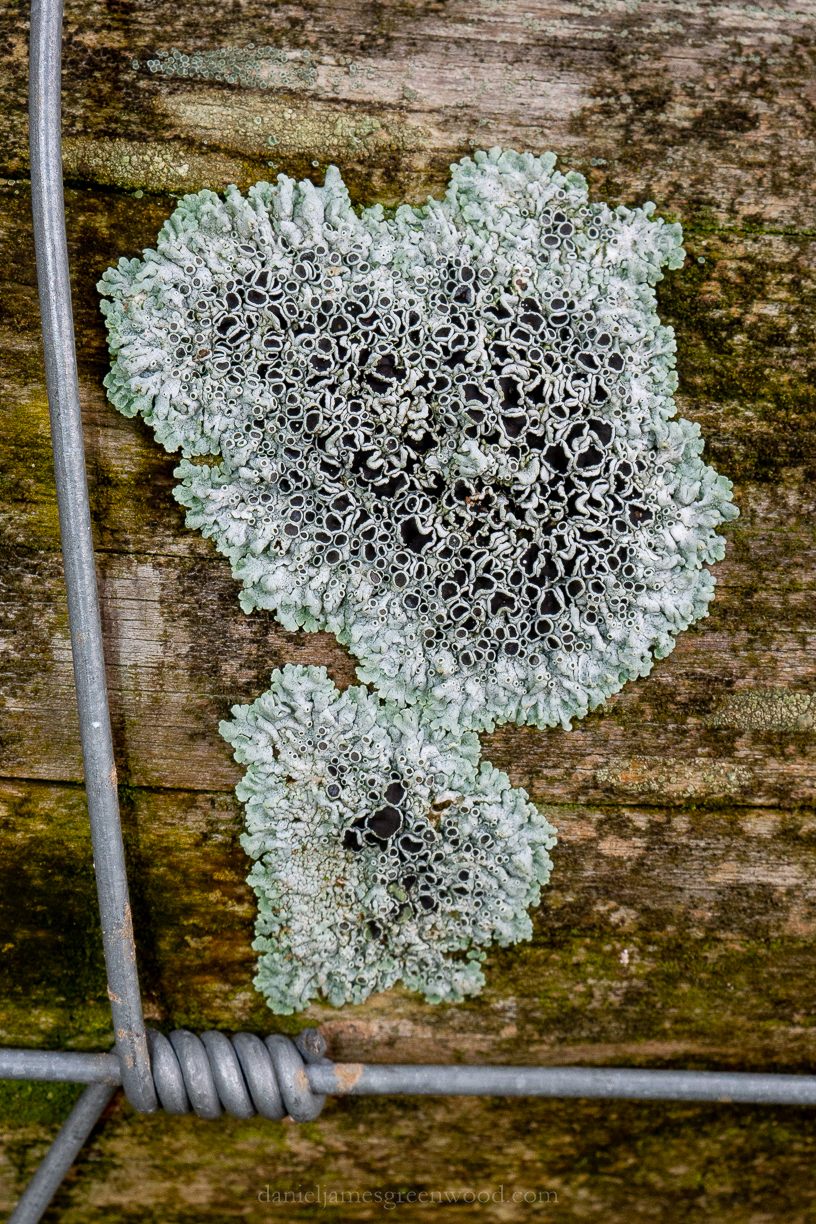
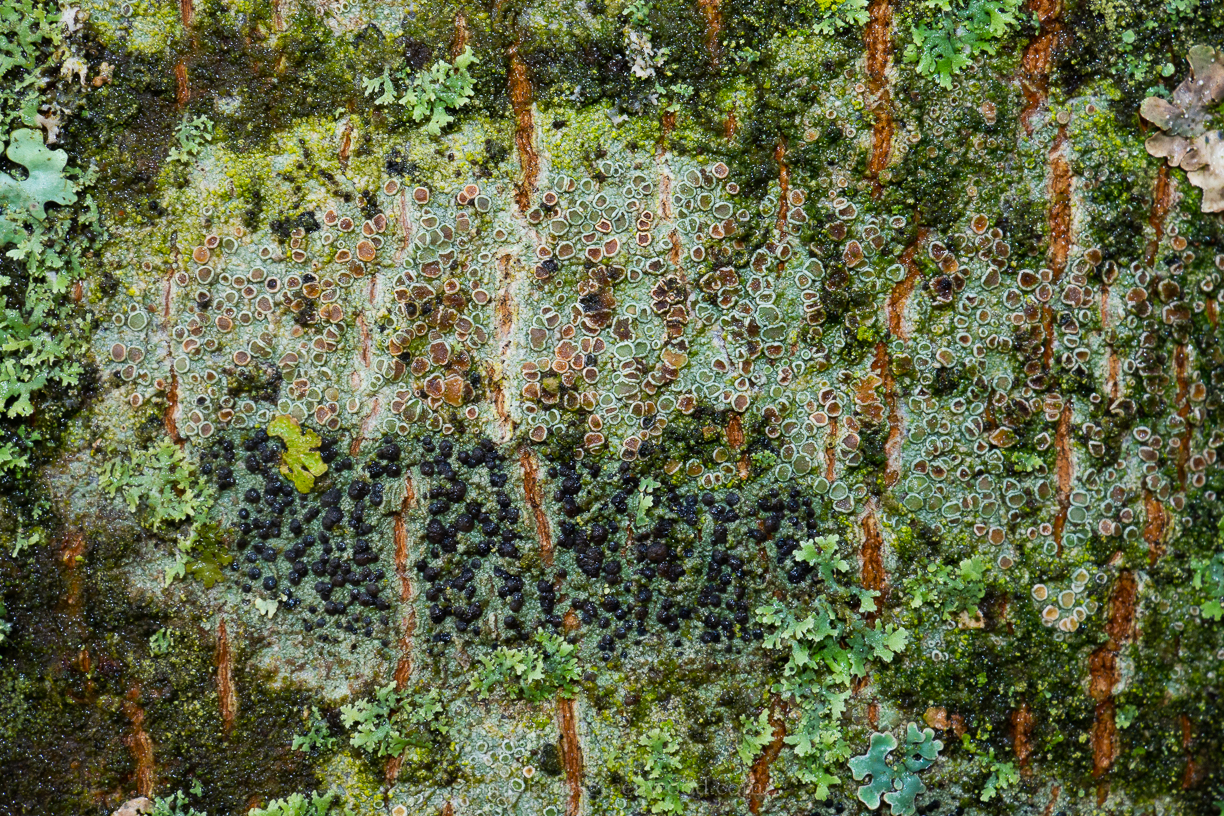
Near where I work there are lengths of low post-and-rail fences that are covered in lichens. They’re likely to be sweet chestnut and not to be treated with any chemicals. This patch above is a joy, a mass of cladonia cup lichens with mosses and some crustose lichens smattered in between.

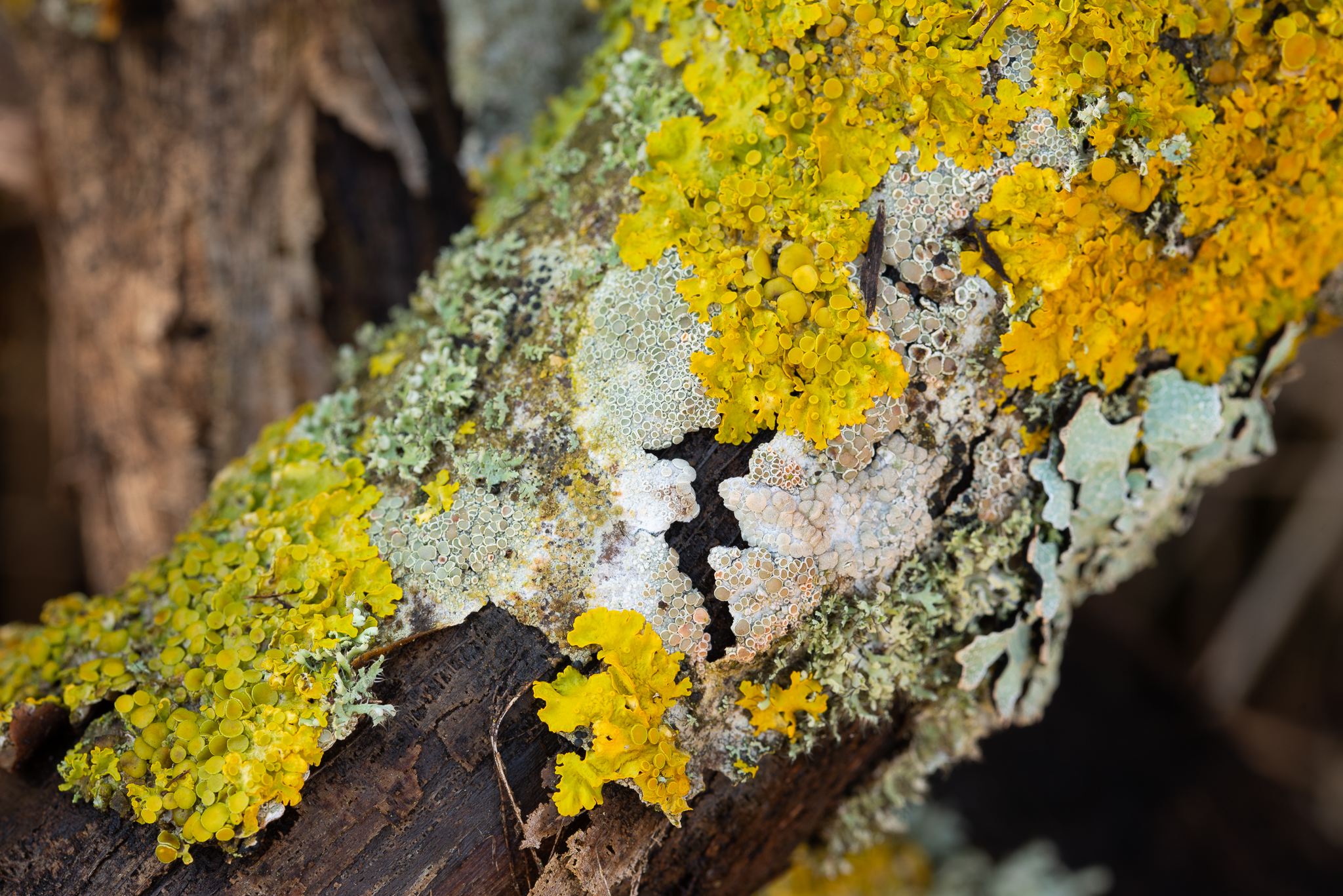
This is probably Xanthoria parietina which is a very common yellow lichen. I think it looks like scrambled eggs! The colours have only been very mildly edited here, it really was vibrant.

These are the fruiting bodies of the cladonia cup lichens in the previous image, far more alien-like.

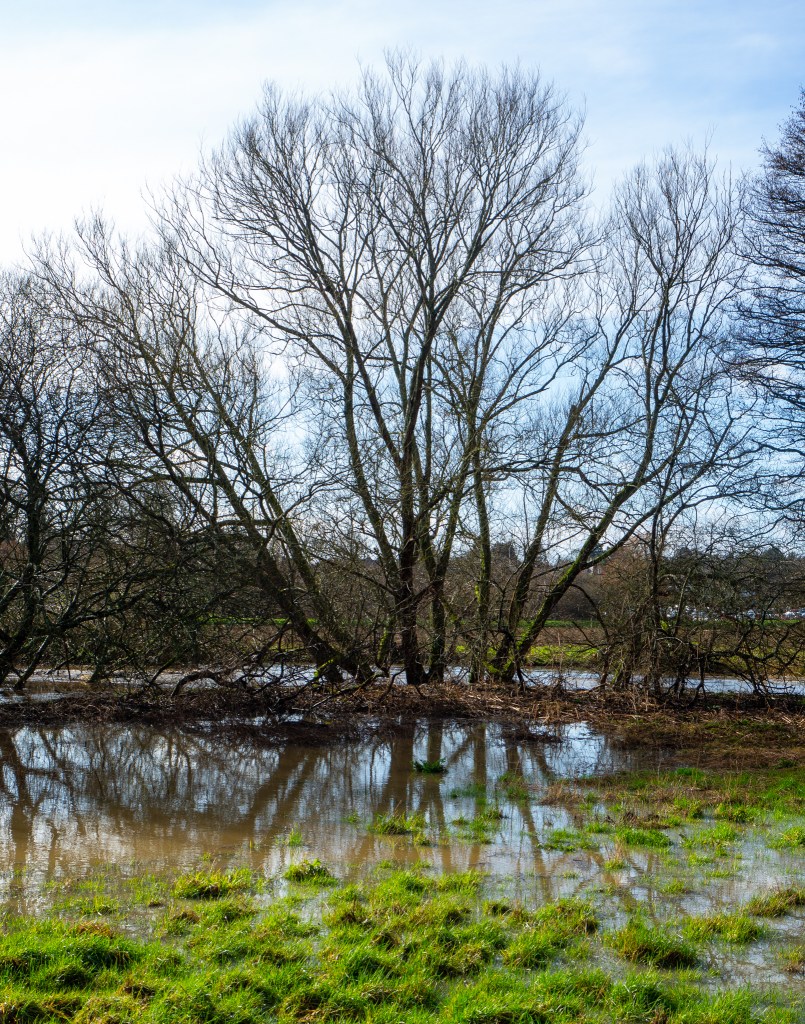
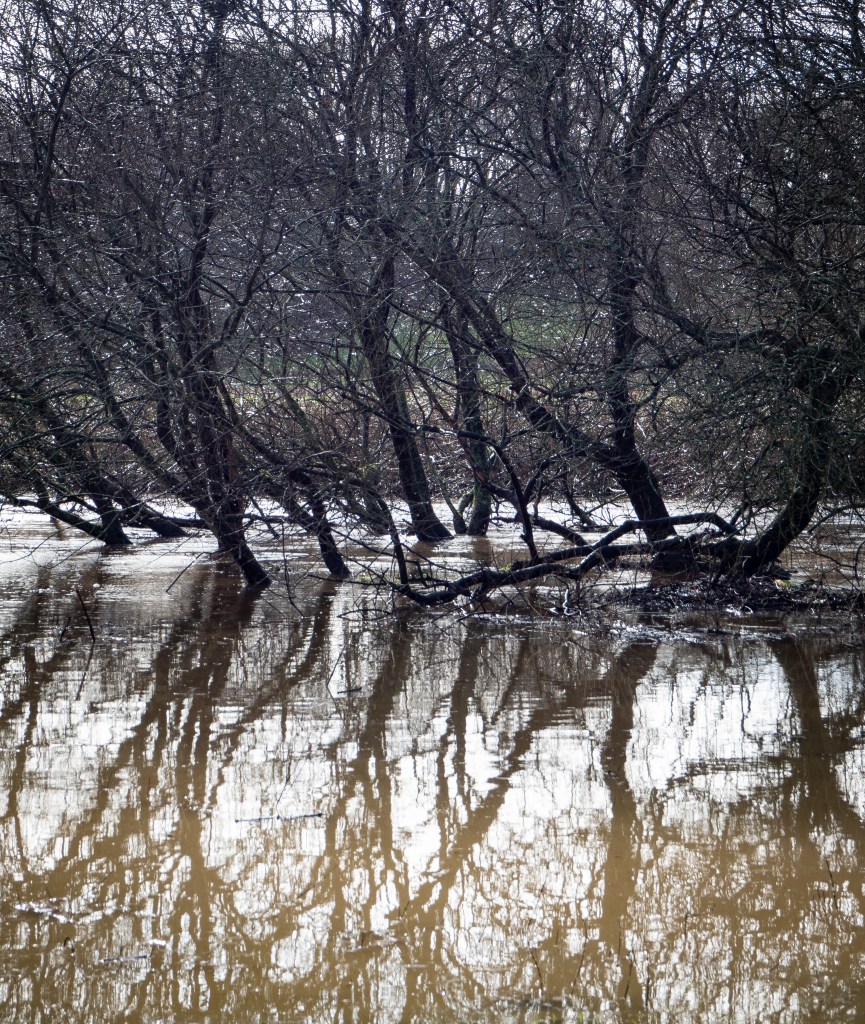
These fences are close to the river Rother which was flooding the surrounding landscape in an epic manner. It’s done it twice now this year.

As you can imagine, for the mushrooms of the fungal world, this is too much water!

This is a dead alder tree that sits in the centre of the river. You can see the blue-green hue from the riverbank, the presence of lichens enjoying a sunny and moist spot to prosper in.

Next week I will actually have some 100% fungi to share!

More fungi

How mushrooms are helping to fight poverty in China – Time

#FungiFriday: a shedload of shrooms

IMG_20200202_153118125

Fungi Friday: 7th February 2020

Welcome to my weekly #FungiFriday post! Every Friday I aim to post my latest photos and learning from the Kingdom of Fungi (where I live). You can see my Fungi Friday archive here.

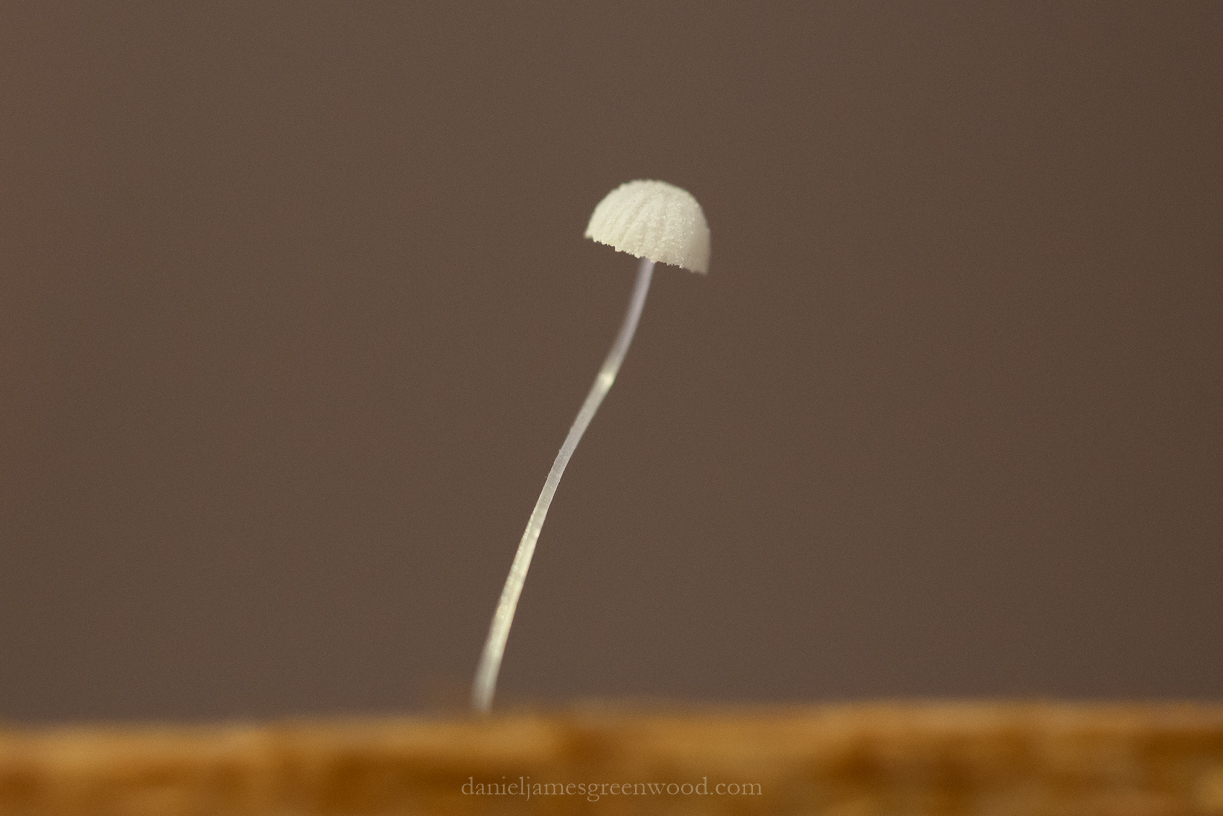
Last Sunday I was taking apart an old shed. Plenty of wildlife had made a home in the shed, including lots of large spiders, woodlice and springtails. Pulling the panels away, I was amazed to find this very small mushroom sitting there on a wooden panel.

shedshroom - 2-2-2020 blog-2

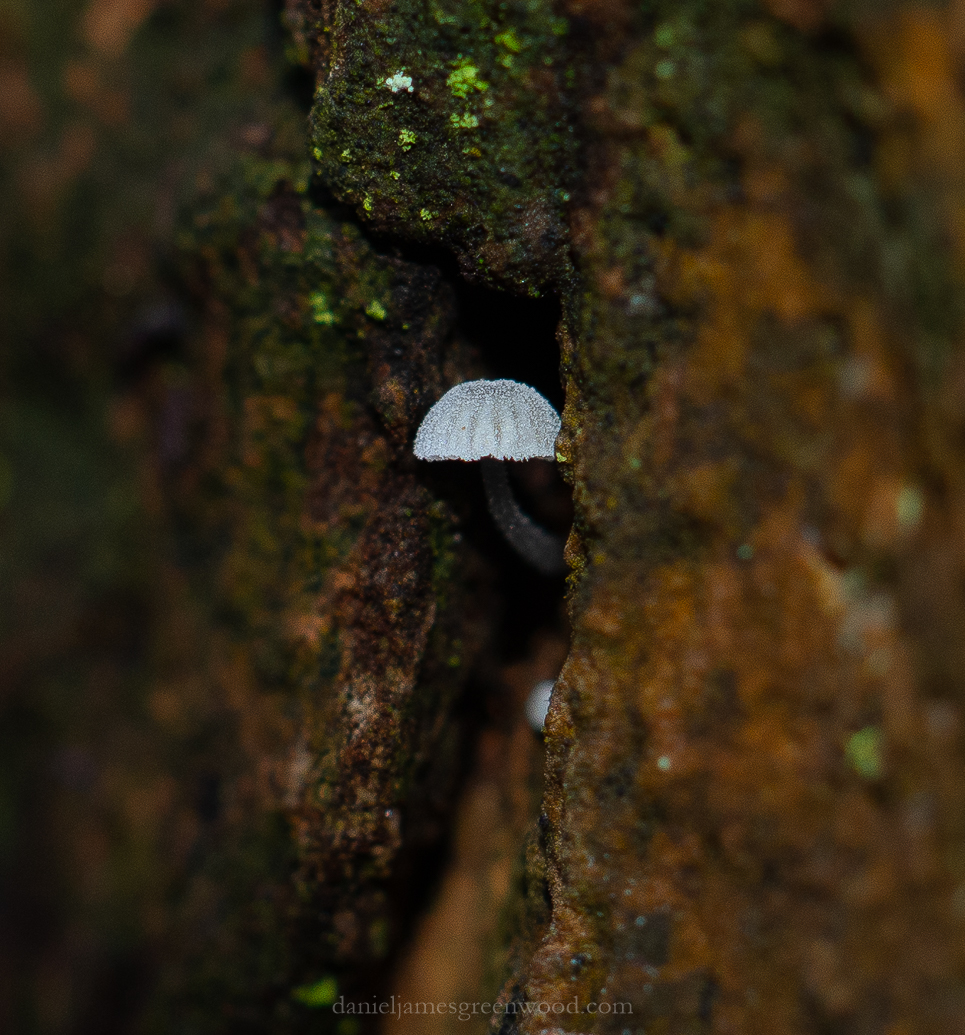
This is a species that I’ve posted about on a previous Fungi Friday but instead when it appears in the fissures of tree bark. This shroom shows the ability for fungi to get into any appropriate micro-habitat if the spores can reach them. This shed was very damp and moulds were already building in places. I was simply speeding up a process that fungi and other recyclers had started.

IMG_20200202_153123730

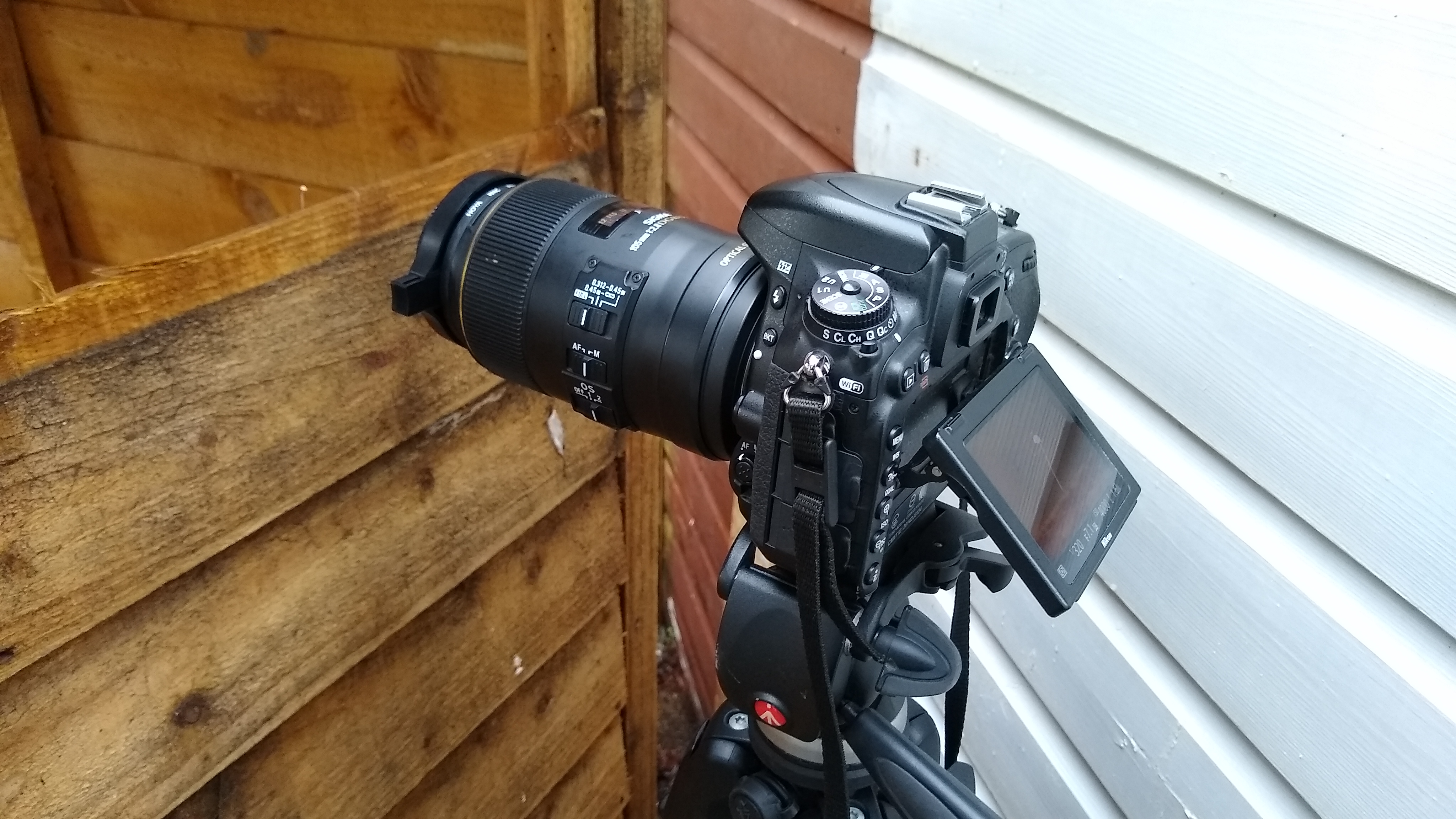
If you look at the image above you can see the scale of the mushroom. It’s miniscule! To photograph it I used a macro lens and a macro adaptor to get even closer.

Rother lichens - 5-2-2020 blog-2

Meanwhile at the river Rother in West Sussex, my poplar branch patch was drying out due to lack of rain and some unseasonably warm sun. It gave the cyanobacteria and algae the chance they need to turn some of that light into sugar and feed the fungus that puts a roof over (under?) their heads.

Rother lichens - 5-2-2020 blog-5

The common yellow lichenย Xanthoria parietinaย continued undimmed. Life goes on. There’s a storm coming…

More fungi

Extreme Macro Photos Unveil the Hidden World of Fungi in the Forest

The History of European Forest Exploitation

#FungiFriday: not just lichen it, lovin’ it!

Rother - 28-1-2020 AL (14)

Fungi Friday: 31st January 2020

Anyone who works full time and is trying to keep weekly photographic habits alive will know the challenge that is January. Lunch breaks (if they continue after Bre*it) are the saving grace. This week I got out a couple of times and rescued my pseudo-Fungi Friday. Why pseudo? Because lichens are a mixture of organisms fused together through the evolutionary benefits of their respective differences. As Britain enters the transition phase of leaving the European Union, what better example can you find for the prosperity of working closely together. Algae, cyanobacteria, fungi, together they become so much more than the sum of their parts. Together they created the first soils from seemingly indestructible rocks.
Rother - 29-1-2019 blog-4

The beautiful diversity of life is what makes our world unique, it’s also what makes it live. As we continue to wreck biodiverse landscapes and our ways of farming, building and emitting eradicates species on a scale only seen five times previously in the 4billion years Earth has been a thing, we can’t forget that. Thankfully, lots of people haven’t. Lots of them will be tomorrow’s policymakers and, living with the anxiety of the planet’s poor health, will bring much-needed change.

This attempt to photograph fungi all year round is a silly mission but it has challenged me. In trying to find something to photograph, it’s taken me to read more on the diversity of fungal life that exists in the absence of typical mushrooms. One week I may have to post a photo of the black mould a former landlord is blaming me for. It has also taught me that most of my photography is in fact built around dead stuff. This doesn’t half make you look odd in the real world.

Rother - 29-1-2020 (1)

Just like the march of unsustainable consumer-based economies, we should be mindful of the spread ofย Xanthoria parietina, a pollution-tolerant species seen here in bright yellow making its way across the lichen community.

Rother - 28-1-2020 AL (18)

Lichens are good indicators of air quality, due to their intolerance of nitrogen dioxide and sulphur dioxide. These chemicals are produced through emissions from pollution caused by car engines and from farming chemicals respectively. My studio this week is an abandoned poplar plantation along the river Rother in West Sussex surrounded by arable farming. If you look at the uppermost branches in the image above, you can see the spread ofย Xanthoriaย in the golden glow it creates.

Rother - 28-1-2020 AL (11)

Here it is once more, spreading across more species of lichen on a fallen poplar.

Rother - 29-1-2020 (13)

Lichen has saved my photographic January. Whether you use your phone or anything else, I know I’m not the only one.

I’m not just lichen it, I’m lovin’ it!

Fungal decisions can affect climate

Ash trees recovering from ash dieback in Norfolk

More fungi

#FungiFriday: deadwood brings the disco

OLYMPUS DIGITAL CAMERA

Fungi Friday: 24th January 2020

A week of blissful winter sunshine and endless starry skies, cut short by low clouds. What is the point of January, many ask. If fungi asked themselves that question, they probably wouldn’t be here and therefore nor would we. Nature does not disappear completely in winter. The paucity of species can help introduce us to new ones we never knew existed.

OLYMPUS DIGITAL CAMERA

January to me is a good time to find slime moulds. Yes, I suppose this is two straight weeks of cheating after last week’s lichen love-in. But if this is the only way to raise awareness about slime moulds, I don’t think fungi will mind. I had an hour to look through the wooded slopes of an old estate in East Sussex, to find this week’s quarry.

OLYMPUS DIGITAL CAMERA

There was very little fungi of the mushroom kind, in fact, none. But one of the bad funguys had been making itself felt in the wood. Ash trees had been felled after becoming infected with ash dieback. I used to monitor a woodland at the time of ash dieback’s arrival in the UK and have, since about 2014, watched it rocket across the country. In Sussex it is killing lots of ash trees that are under 50 years of age and the landscape of the South Downs is losing a lot of its higher woodland.

OLYMPUS DIGITAL CAMERA

Here you can see the effect of the fungus, though of course many other fungal organisms will be benefitting from the decay caused by the disease. The rot has moved from the outside in through what are the softer layers of waste wood. Had the fungus weakened two thirds of the overall mass, the tree would probably have fallen down. Lots of people walk under these trees, so that’s why they have to be pushed before the wind shoves them.

OLYMPUS DIGITAL CAMERA

I have been exchanging emails with a fellow macro photographer this week who has been spending hours looking for slime moulds. One day this week he looked for four hours and found nothing. I was lucky enough to walk straight outdoors for a few minutes and happened upon this epic spread on the tree above:

OLYMPUS DIGITAL CAMERA

No, slime moulds aren’t fungi, they’re not even moulds, which are another kind of fungus. I still don’t have the slime mould ID book so any help is welcome.

OLYMPUS DIGITAL CAMERA

The thing that amazed me about these slimeys was that you could barely see them, even when I knew they were there. They camouflaged so well with the glowering winter light. The photos here have been taken with a flash.

OLYMPUS DIGITAL CAMERA

I could have spent all day with this spread but only had an hour and my small camera. Up close they look like little black kalamata olives. Nom, nom and nom. Though inedible.

OLYMPUS DIGITAL CAMERA

The land managers had left lots of standing dead trees which is excellent. There is some epic misinformation going around about deadwood in woodlands and their contributions to forest fires. It’s guff aimed to misinform people, appeal to people’s fears (what a surprise) and promote the destruction of these habitats. In Britain our native woods of oak, beech and so on, are far too wet to ever burn like a heath.

OLYMPUS DIGITAL CAMERA

The crevices seen above are the perfect places to find slime moulds in cold weather. This is because they provide microclimates and protection from the elements.

OLYMPUS DIGITAL CAMERA

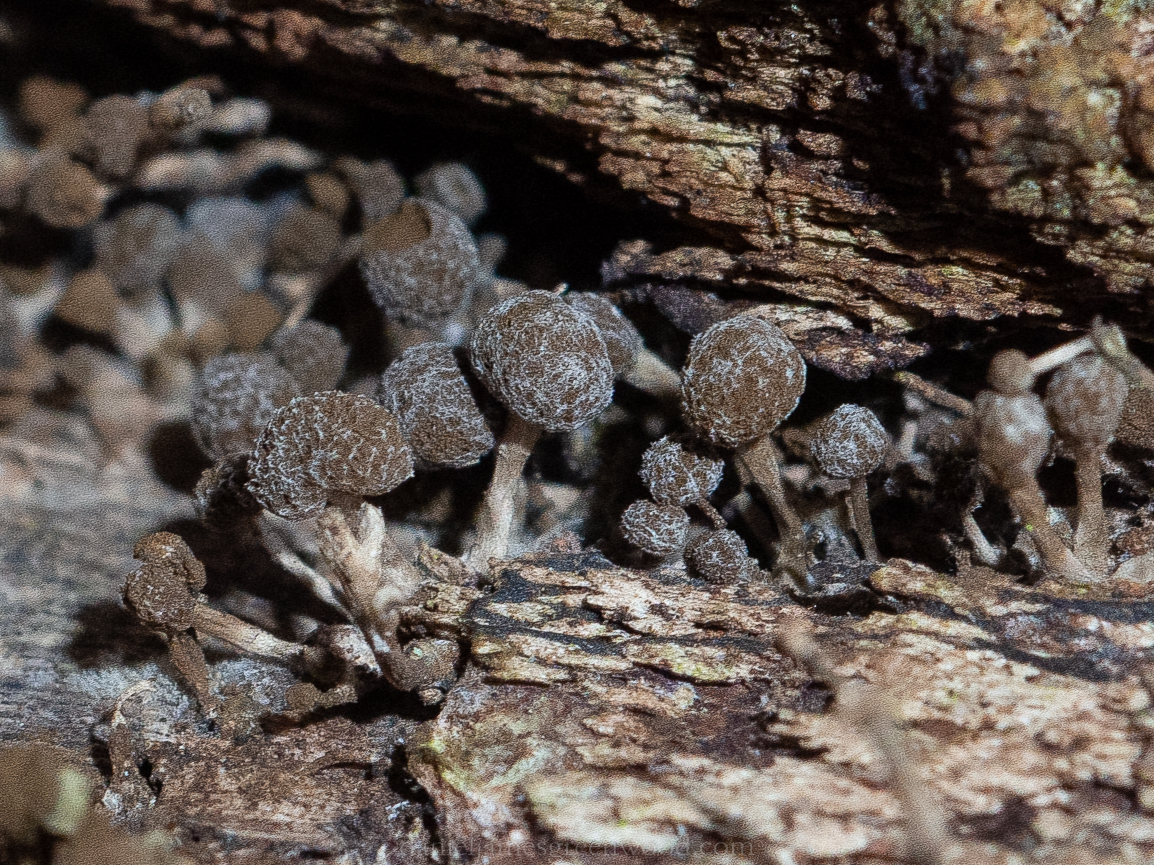
Here I found some old stalkballs which are fungi (or maybe a species of slime mould, am not quite sure), plus the real life of the party:

OLYMPUS DIGITAL CAMERA

DISCO. I’m not sure which species of disco the blue cup fungi are, but the orange fruiting body is definitely a slime mould. They were few and I couldn’t get a good angle on them.

OLYMPUS DIGITAL CAMERA

Thankfully this blue disco brought the party on Fungi Friday.

Please do share your finds this week in the comments below. Also here are some fungi things of interest this week.

Thanks for reading.

First mushrooms appeared earlier than originally thought

More mushrooms


#FungiFriday: more like #LichenJanuary

Midhurst - 15-1-2019 blog-1
Flooding from the river Rother in West Sussex

Fungi Friday: 17th January 2020

Storm Brendon rocked up this week in Sussex and gave freedom of movement to the Arun and Rother. Temperatures have tickled 11 degrees but are set to crunch back down this weekend. Mushrooms must think, guys, WTAF?

Midhurst - 15-1-2019 blog-18

I see images of nice looking shrooms on social media, things like velvet shank glowing orange like sweets on tree trunks. All I saw were the melted ice lollies of sulphur tuft (Hypholoma fasiculare) on an embankment. It gets worse:

Midhurst - 15-1-2019 blog-14

Probably some bonnets, like a scene from the Netflix drama You. The rain has been too much for these Mycena. But have hope.

Midhurst - 15-1-2019 blog-15

Where there are non-chemical treated fence posts, there is hope. That hope comes in the form of our symbiotic fungi-algae friends, the lichens. This is a great time of year for lichens due to the amount of rain and their resistance to winter weather. They are hard to shift.

Midhurst - 15-1-2019 blog-13

The fruiting bodies here are known as apothecia. I love them. They are like cartoon eyes or mouths. Wonder what they’re trying to say. Obviously it’s a climate warning.

Midhurst - 15-1-2019 blog-12

This one just takes the biscuit. My lichen guide is in Ireland where it belongs, with all the other lichens. So I’m sailing in the dark and just here to appreciate the beauty of these ancient, life-giving organisms.

Midhurst - 15-1-2019 blog-5

These fencing rails are a reminder of how important dead wood is in the biosphere as a structural support for biodiversity. No doubt lots of other organisms will make a home for themselves in these lichens.

Midhurst - 15-1-2019 blog-17

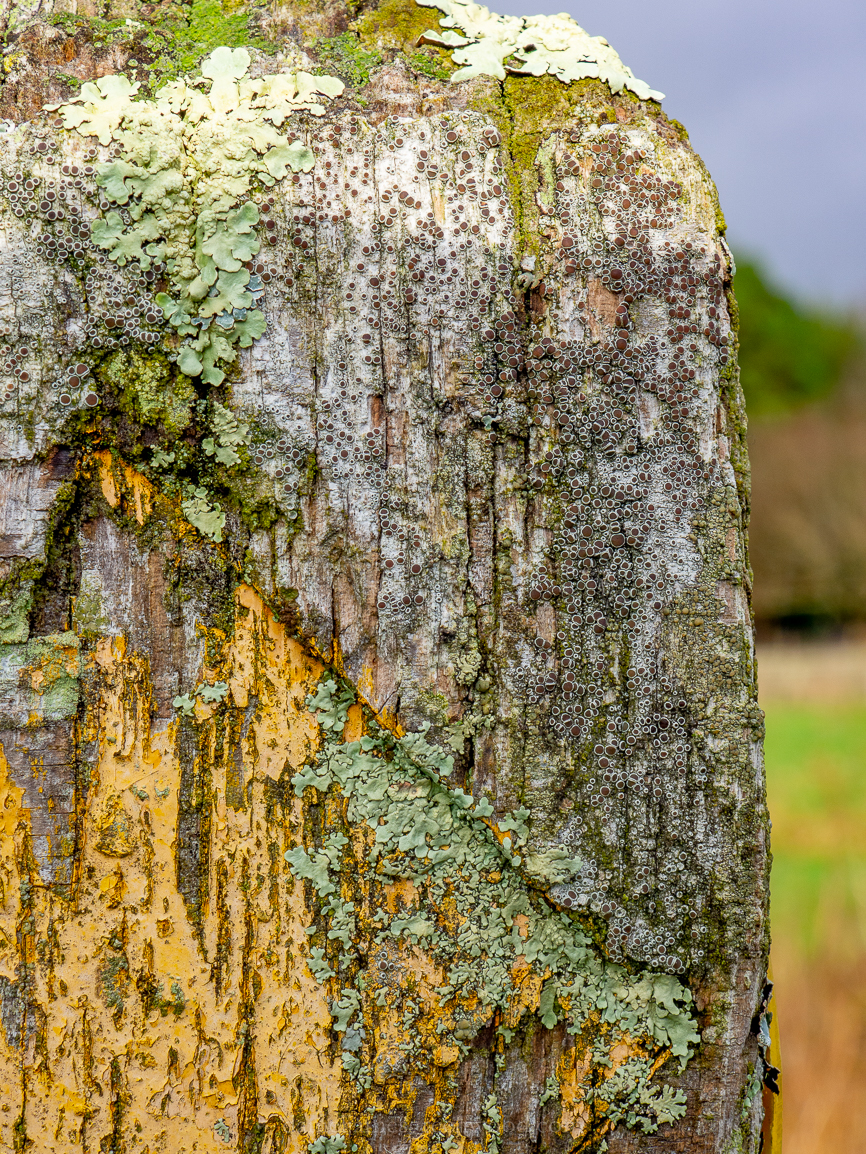
This is a finger post with the yellow being the paint of an arrow pointing in the direction of the public footpath. I love the little apothecia eye cups on the right hand side.

Midhurst - 15-1-2019 blog-10

Living wood also provides a platform for lichens to grow. I can’t cope with the colour range in the species which dominates the image here. They were growing on the bark of a fairly young beech tree. A few people did glance over when they saw me effectively hiding behind the tree with a camera. In actual fact the camera was jammed up against the bark taking macro pics. Still, could have gone wrong.

Midhurst - 15-1-2019 blog-11

Here you can see the brown streaks which are fissures in the maturing bark as it grows. Patches of foliose or leafy lichens are growing in among the crustose species.

Midhurst - 15-1-2019 blog-19

This was their view, an oak tree fanned out before the South Downs ridge. Not a bad place to be for a lichen.

The British Lichen Society are running the hashtag #LichenJanuary. Lichens are for everyone so it’s good to see such a niche group spreading their knowledge to the masses(?) for free.

Thanks for reading and please share any interesting lichen finds (or indeed identifications) in the comments. Some interesting mycological articles this week:

Mushrooms and orange peel: could biotech clean up the building industry?

Ikea to use packaging made from mushrooms that will decompose in a garden within weeks

More mushrooms


#FungiFriday: snuffling for shrooms in midwinter

Midhurst - 3-1-2019 blog-6

Fungi Friday: 10th January 2020

I’ve barely made it out this year, as young as it’s been. That poses a big threat to the Fungi Friday machine but thankfully I know where to look. The focus at this time of year is on small and hardy species in the Kingdom of Fungi, species like candlesnuff fungus (Xylaria hypoxylon):

Midhurst - 3-1-2019 blog-2

I found this macabre specimen at the foot of a handrail post. They look so much like hands reaching out from the soil. No wonder other Xylaria have the names of dead man’s fingers and dead moll’s fingers. This species is called candlesnuff because you can flick the tips, in drier weather, and the white spores are released. It looks like a puff of smoke from a snuffed out candle.

In the fungal world candlesnuff is an Ascomycete or spore-shooter. Most mushroom-style fungi are Basidiomycetes, a group which spread their spores by ‘dropping’, usually on the wind. Mushrooms with gills are the perfect example of this. Wind-dispersal of spores is one of the oldest forms of reproduction on Earth.

St. Leonards - November 2018 djg-35

Other classic spore-shooters are beech jellydisc (Neobulgaria pura) above, which is common on fallen beech trees in November.

Midhurst - 3-1-2019 blog-13

The lack of January fungi can be helpful in reminding us of those which are more slow to colonise, things like lichen. This foliose lichen was growing on a fencepost (do not underestimate the wonder of fenceposts). Lichen is a symbiotic relationship between fungi, algae and cyanobacteria. The fungus produces the physical structure which provides a home to the cyanobacteria and algae which are capable of photosynthesis. It’s another reminder that fungi exists in the world in partnership with other organisms, something which we are so ignorant of as a species at times. For anyone who has tried to read Hegel, the German philosopher, I once read that a lichen is an example of the master-slave complex. The fungus is the master and the alga is the slave. The thing is, without the slave the master can’t prosper or maintain its status, so the master is in fact enslaved to its own prisoner. What’s that, myco-philosophy?

Midhurst - 3-1-2019 blog-7

In winter I look for signs of spring. In the 10 years that I’ve spent looking closely, the often mild winters have provided glimpses of the coming season far earlier than we expect. Here bluebells were breaking through the fractured leaf litter of oak and chestnut. It’s been a mild winter again at the end of the warmest decade on record.

Midhurst - 3-1-2019 blog-3

Winter sun, that precious resource.

Thanks for reading. Let me know if you found anything interesting this week. Here are some articles I spotted recently:

100 million years in amber: Researchers discover oldest fossilized slime mold

โ€˜Decompositionโ€™ Series Knitted By Fiber Artist Leigh Martin aka Bromeleighad

My fungal archive

#FungiFriday: a mushy Christmas in south London

OTH 25-12-2019 blog-4

Happy Fungi Friday everyone!

I’m a Londoner and I learned most of what I know about fungi and nature in London. Take that in physical and psychological terms, having spent most of my life there. One Tree Hill is a Local Nature Reserve in south-east London that has offered many happy wild hours (ecologically). I visit One Tree Hill as often as I can and did so to find some Christmas shrooms this year.

One Tree Hill has a weird history of being a remnant ancient woodland that had been cleared of trees and then has re-wooded itself in the past 60 years. It has old oak trees and new oak woodland spread across areas of old acid grasslands, which are rare but not in good condition anymore. It provides one of the best views of London you can find. You can read more about it here.

OTH April 2016 lo-res-5

December is never a good month for the most exciting fungi species because it’s cold and they struggle to fruit without milder weather. But I found a few species that I look for at this time of year.

OTH - December-2018 djg-1

This photo was actually taken over Christmas 2018 at One Tree Hill but it’s one of the more photogenic things you can find at this time of year. They grow out of the fissures in bark, most of the time on oak. I’m not sure of the species.

The Mens - 19-10-2018 djg (5)

I think this is the same species but growing from a horizontal position in the late summer.

OTH 25-12-2019 blog-6

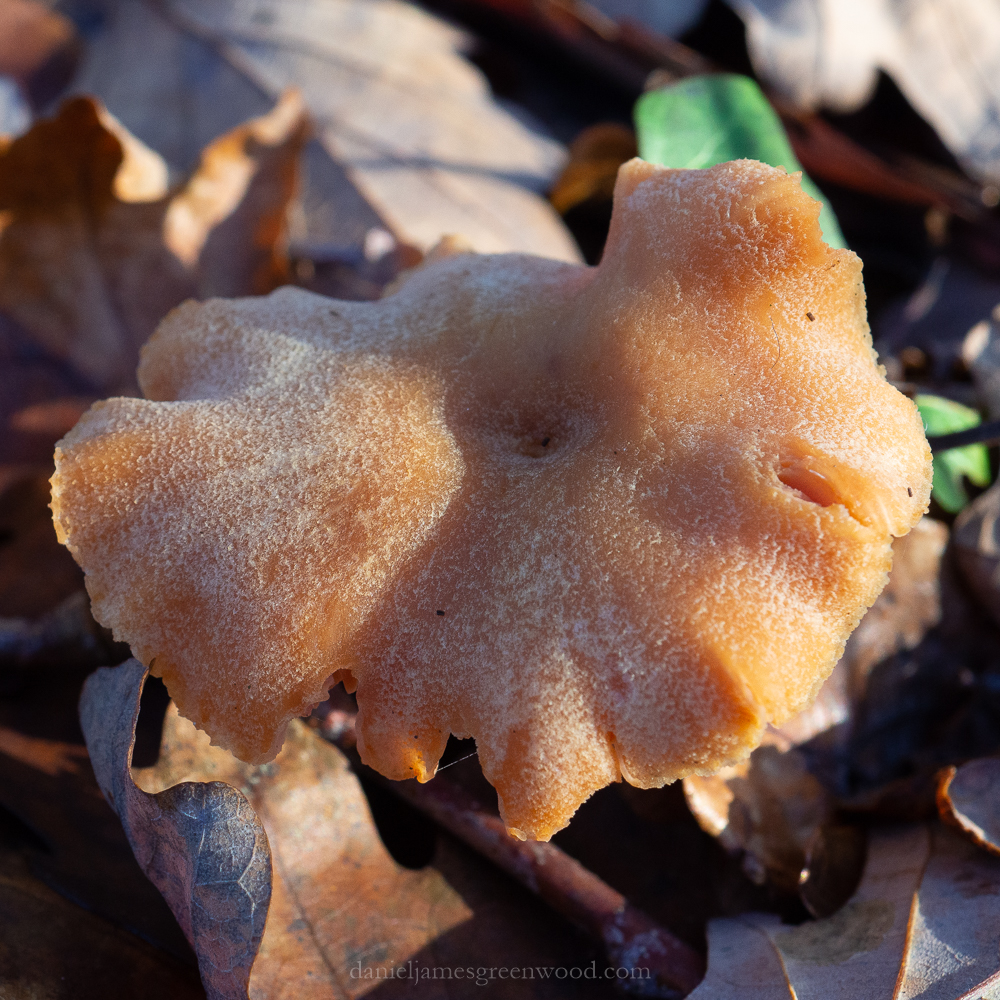
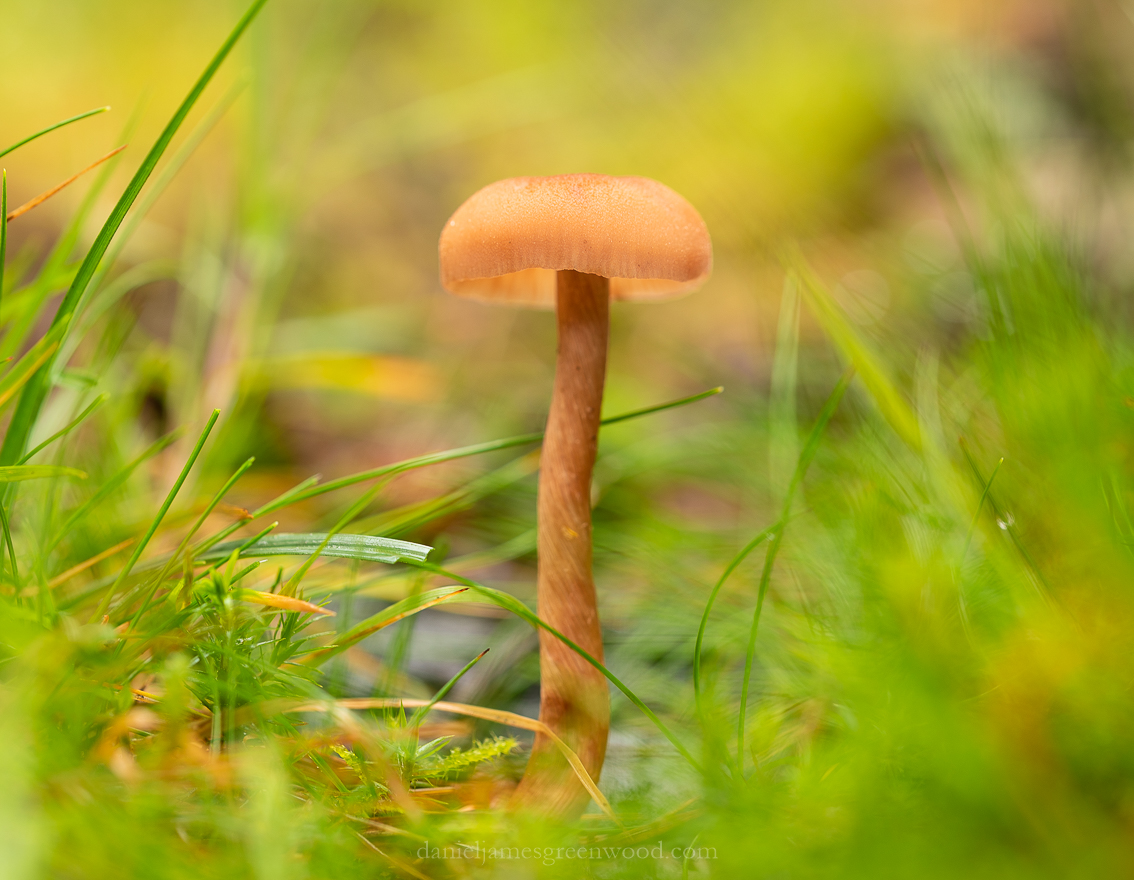
In the more open, grassy areas atop One Tree Hill I found something I’ve not seen before. This is a deceiver (Laccaria laccata) with gills growing out of the top of the cap. I don’t know what the name for this ‘deformity’ is and an internet search definitely didn’t help.

OTH 25-12-2019 blog-8.jpg

Deceivers get their name because they come in many different shapes and sizes, looking like different species each time. This year I saw huge numbers of them in the Sussex Weald. Here’s one in better condition:

Scotland - September 2019 djg lo-res-2

This is from Scotland in September, which you can read about here.

Wishing you many happy wild adventures in 2020. Thanks for reading and of course please share any interesting sightings or ID requests in the comments below!

Daniel

More mushrooms

#FungiFriday: witches’ butter? Of gorse, it is.

Due to Christmas hols I’m a couple of days late to Fungi Friday on my blog, morphing instead to Mushroom Monday!

A couple of weeks ago I spent some time at Lullington Heath in the South Downs National Park. Lullington Heath is a National Nature Reserve with the super rare habitat chalk heath. It had lots of little waxcaps fruiting at the time.

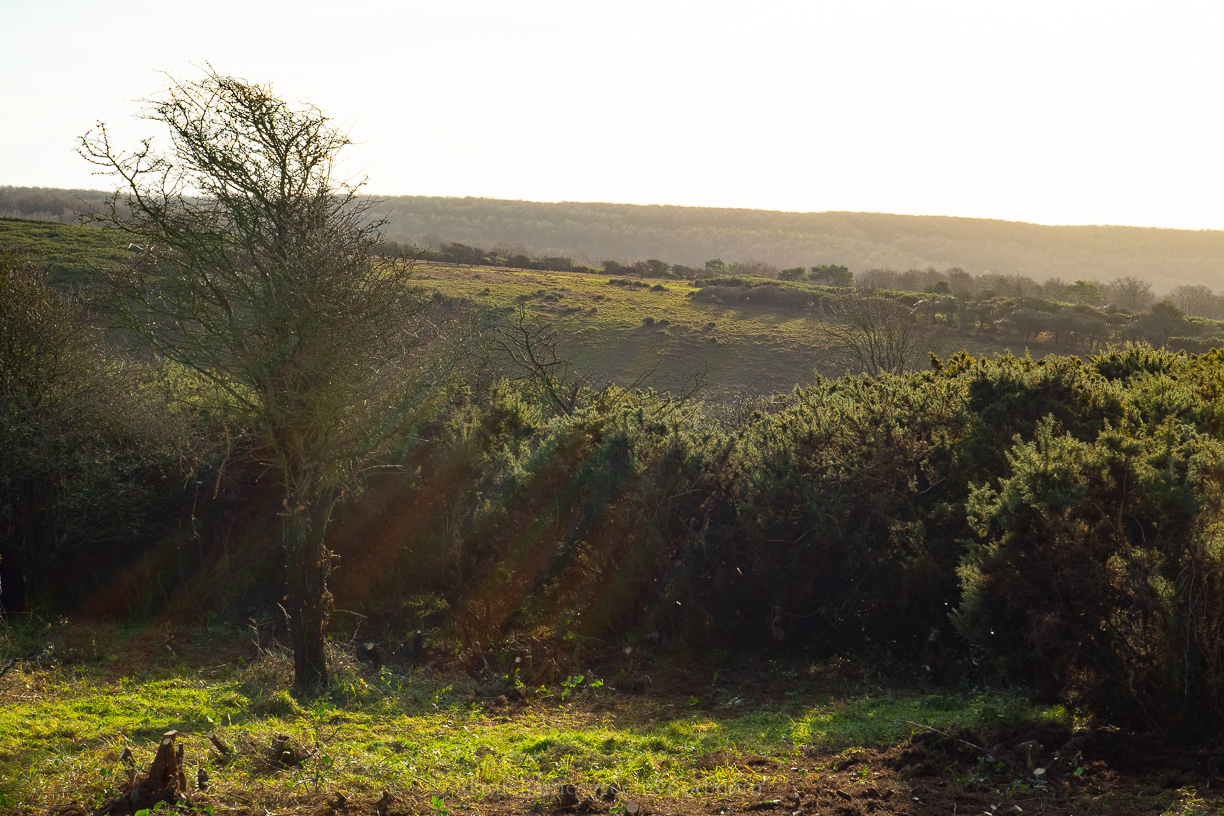
As you can see Lullington Heath is dominated by gorse which affects the diversity of plants and fungi that can prosper there.

The gorse forms a scrubby woodland and provides ample habitat for one of the most striking species of fungus: yellow brain. It’s also known as witches’ butter, a lovely colloquial name that hints at the role fungi has in British folklore.

This is the yellow brain from the pics above. I cut it out before it was cleared and brought it into the sun. I hid it further away in the gorse afterwards.

It’s actually parasitic on crust fungi which you can see on the right hand side here.

Keep an eye out for my fungal year 2019, an account of things I found and photographed this year, which I’ll be hoping to post in January.

Merry Christmas to all the funguys and gals out there!

More mushrooms

#FungiFriday: little white brittlegills

SLF - 14-12-2019 blog-26

Happy Fungi Friday!

When temperatures touch freezing, it spells the end for the mushroom season. This is because fungal fruiting bodies are largely made of water and most species simply can’t excel if they’re frozen stiff. But temperatures in Sussex have been mild at times this week.

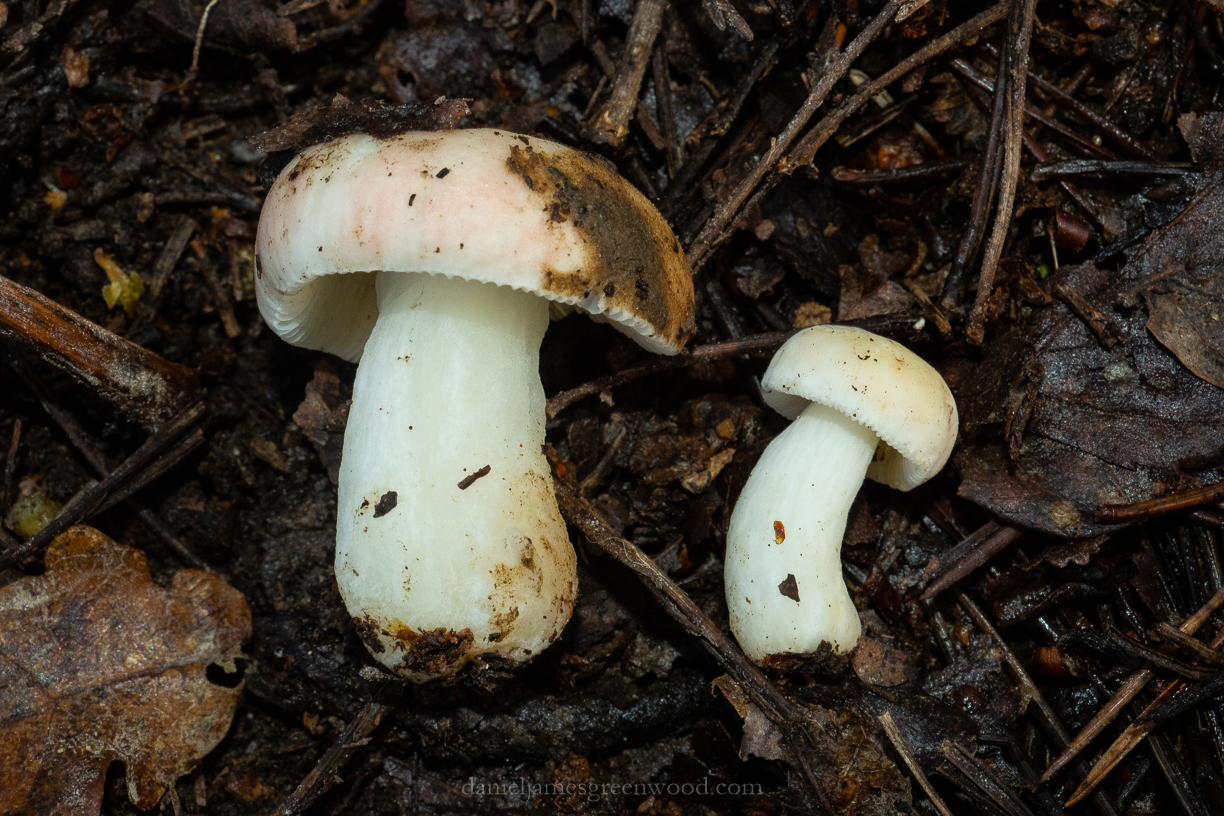
A good 6 mile walk in the High Weald produced almost no soil-based fungi. That is except for these tiny Russulas, otherwise known as brittlegills. This family of mushrooms is very big and beyond identifying them to that level, I find that doing the same to species level (especially with a photograph) is not really possible. These specimens had already been uprooted and had a pinkish cap to go with their Kendal mint cake white stipe. I would guess it is birch brittlegill (Russula betularum) due to the colouring and the fact it was under birch trees.

SLF - 14-12-2019 blog-23

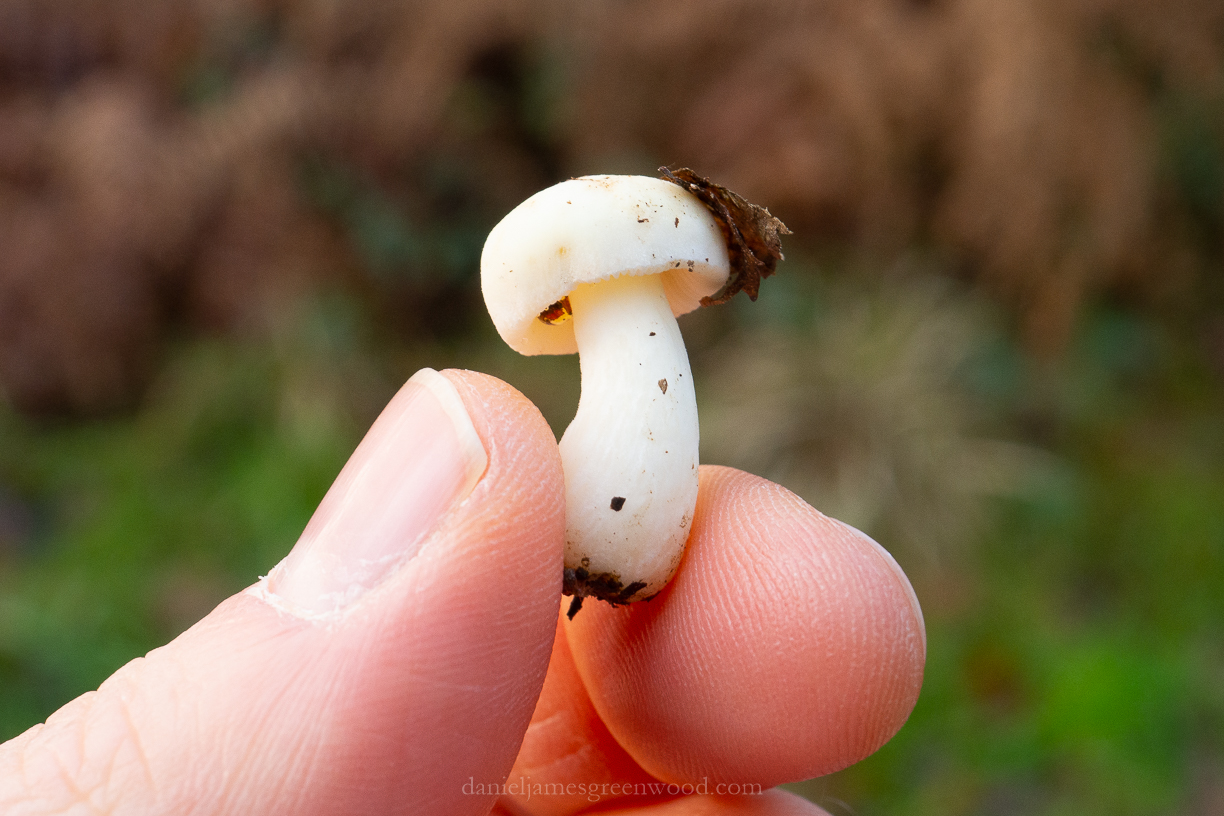
You can see from the comparison with my thumb just how small but perfectly formed this mushroom was. They are a family of mushrooms to see in late summer when autumn’s cogs are beginning to turn and all the way through to the season’s close.

SLF - 14-12-2019 blog-2

On a mossy log I found this staunch shroom growing. The faint white remnants of a veil on the edges of the cap made me wonder if it was a webcap (Cortinarius). The webcaps are a huge family of mushrooms.

SLF - 14-12-2019 hi-res-35

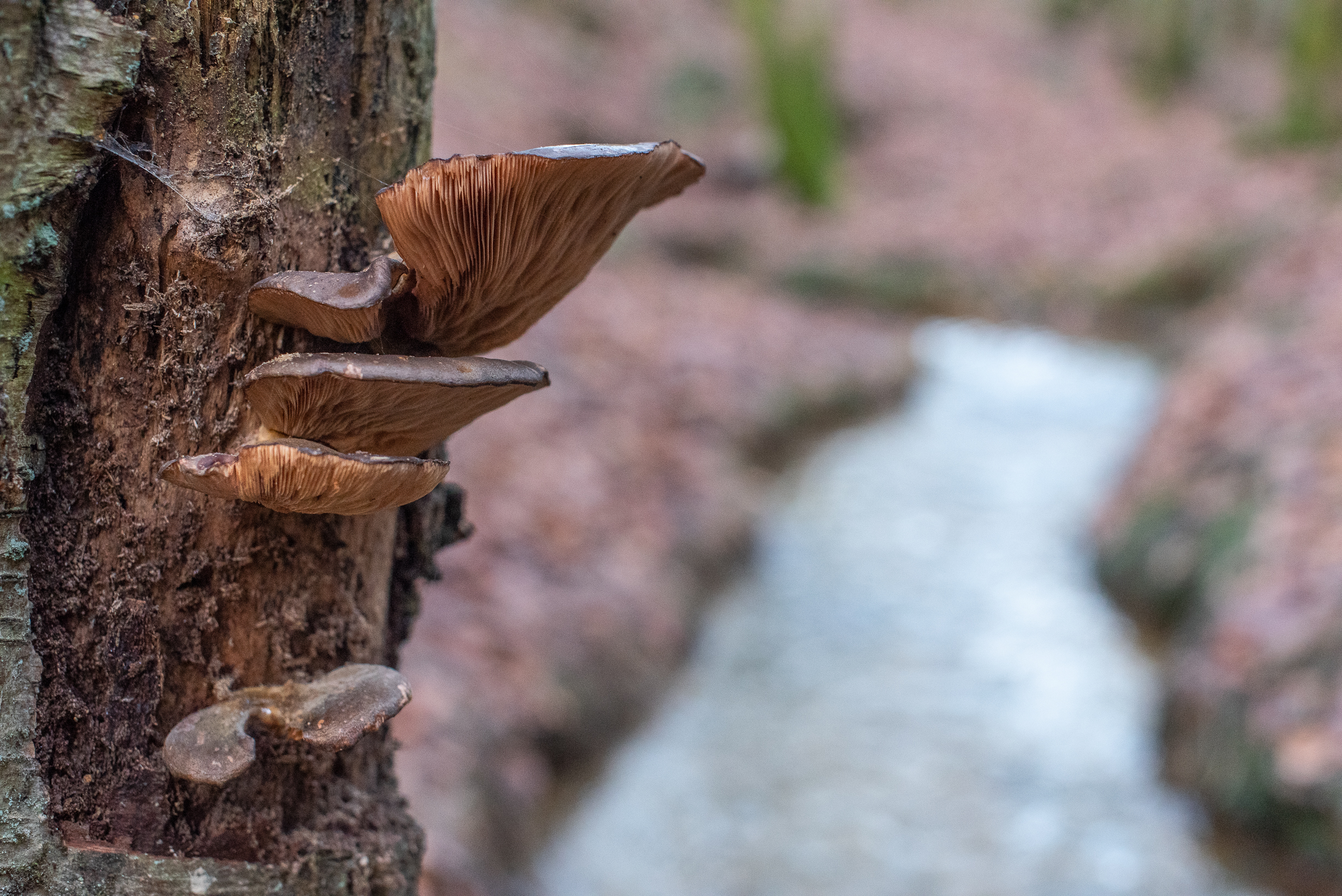
You know you’re getting desperate when you’re photographing mushrooms in the condition above. This is an oyster mushroom growing from a dead birch tree alongside a stream.

More mushrooms