The article was outlining how significant wasps are in our world, as controllers of other invertebrates that, in over abundance, would create a damaging imbalance in our farming- and eco-systems.
We should worry about the lack of wasps this summer, the article said. Helena Horton would probably enjoy this blog, to be honest!
As you may have noticed, there are very few images in this post. There’s a reason for that, which I’ll get to. After reading the article I went to put the washing on the line. With a cursory glance at the fennel in the flowerbed I noticed that one of my favourite wasps was visiting.
I skipped indoors, grabbed my camera with macro lens and began following the wasp around the fennel flowers. I didn’t get anything worth sharing, until the wasp was spooked and dropped down to cover in some grasses. As you can see above, it then began to clean pollen from its face and antennae. I fired off some pics and then checked them. They were super sharp and beautifully lit by the soft light from the clouds overhead.
There are only two pictures, almost identical but for their crop, because they represent the wasp in the best way I can. Clear, in focus, and sharp.
The insect season is drawing to a close and it’s been a poor one. Hopefully absence may make the heart grow fonder, and action taken at scale to ensure these pollinators, not just honeybees, can be protected.
Warnham Local Nature Reserve, West Sussex, July 2024
I was making my first meaningful trip out to a wild space after being ill with Covid, to see if I could concentrate enough on taking some macro pics. Thankfully there were some very docile bugs pleading for their close up. Here you go, team.
I’ve missed a lot of the macro season this year, what has probably been one of the ‘worst’ summers in this part of England. Lots of rain, quite cool, clear lack of insects. I’m only just getting over brain fog so not able to compute how worrying the insect declines are right now. It seems that approving the use of bee-killing pesticides without appropriate risk assessment doesn’t help.
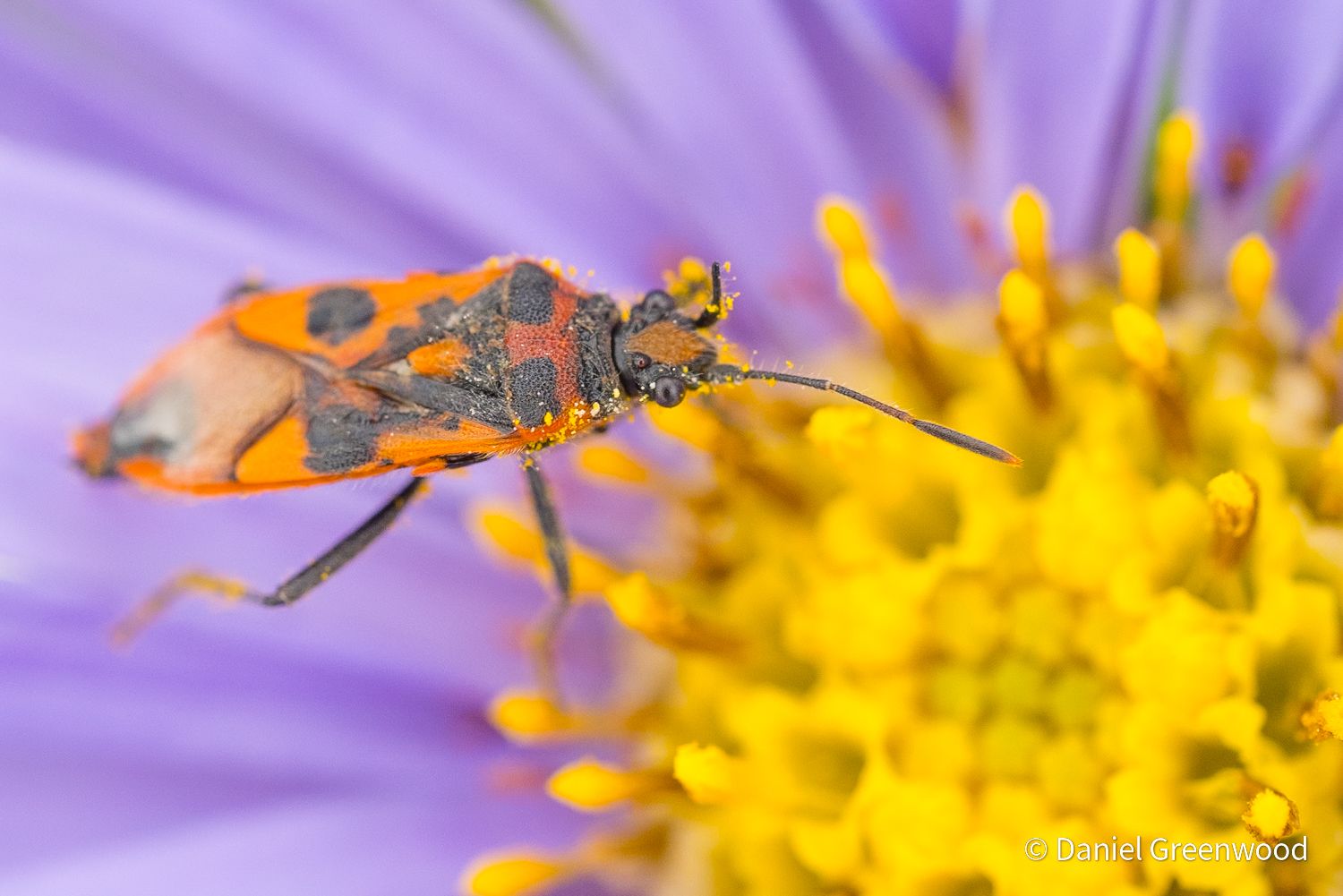
I was fortunate to spot this cinnamon bug nectaring in the flowerhead of a Michaelmas daisy within a few minutes of my visit to Warnham Local Nature Reserve. I love how this pollinating beetles get so covered by the pollen. It’s a bit like me after eating a choc ice.
Though flies are feared and reviled for their connections with unpleasant organic matter in this world, some of them are very interesting to look at. Many of them also tend to be pollinators. It’s not all about the bees. This fly is probably Nowickia ferox, which feeds on flowers. Moth fans – look away now. Their larvae develop in the dark arches moth.
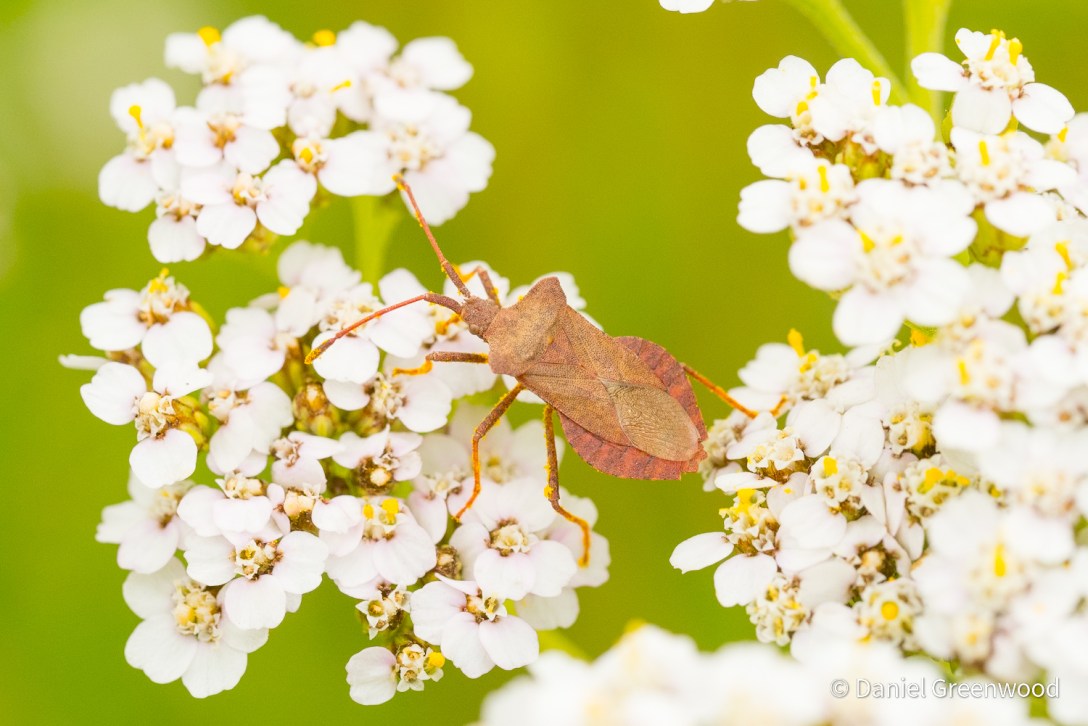
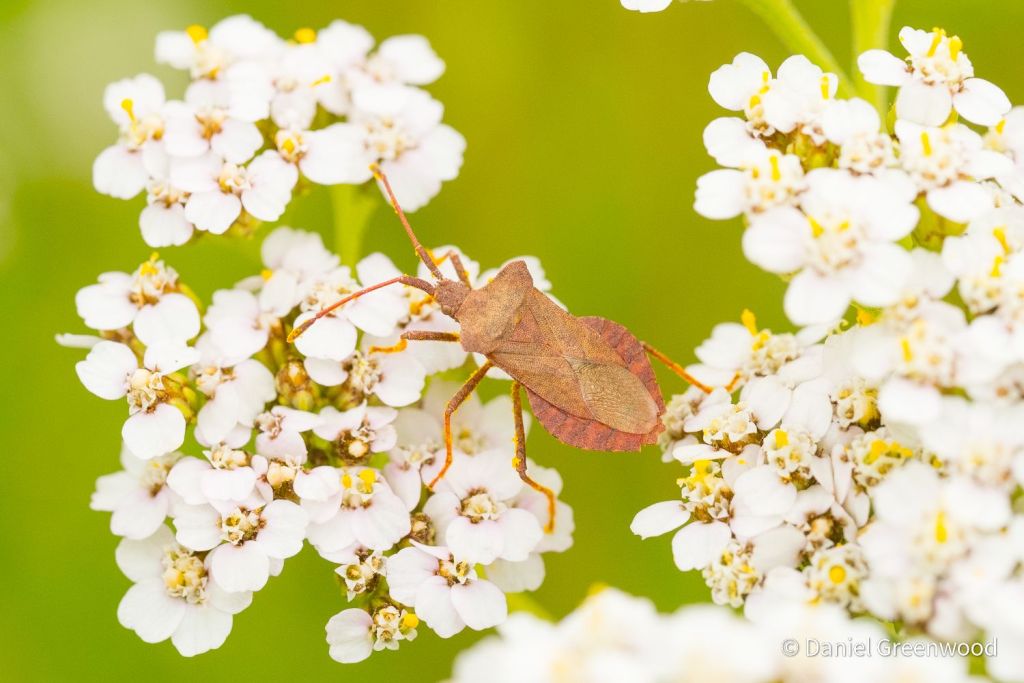
Dock bugs are a common sight in southern England, especially in flowery grasslands and meadows. They are very easy to photograph – they’re like the mushrooms of the insect world, slow moving, if at all. How trusting.
Elsewhere, this mid-summer period is one of hoverflies, many which looked very similar to the untrained eye (this one) but which can be nice subjects among the flowers of hogweed and other umbellifers.
I was pleased with this photo of a dancefly as it nectared on some ailing hogweed flowers. That is one heck of a proboscis. The light is very soft and the background is a serene green.
Over the years (I’ve been using a dedicated macro lens since 2014) I’ve learned about species behaviour, and how a little bit of knowledge can really help you to find wildlife. In terms of invertebrates, I remember a blog written about fenceposts and how they were a good place to find roosting insects. This is solid advice.
During this visit, in the forefront of my mind was a past, failed attempt to photograph a robberfly where it sat on a handrail. On that same handrail I didn’t find a robberfly, but instead my mother and father-in-law, which was also nice. But, that wasn’t the end of the story…
Turning to head home, realising how fatigued I was, and lacking in normal, basic levels of energy, I spotted something. A robberfly was sat on a different handrail! It’s so pleasing to have this sense of validation for my fencepost knowledge.
In the world of wasps, we are of course in the throes of the UK Media Silly Season (despite there being a General Election, potential dictatorship in the US, and far-right riots across the UK!) and wasps are in the news. Interestingly the mwin story is, where are they?
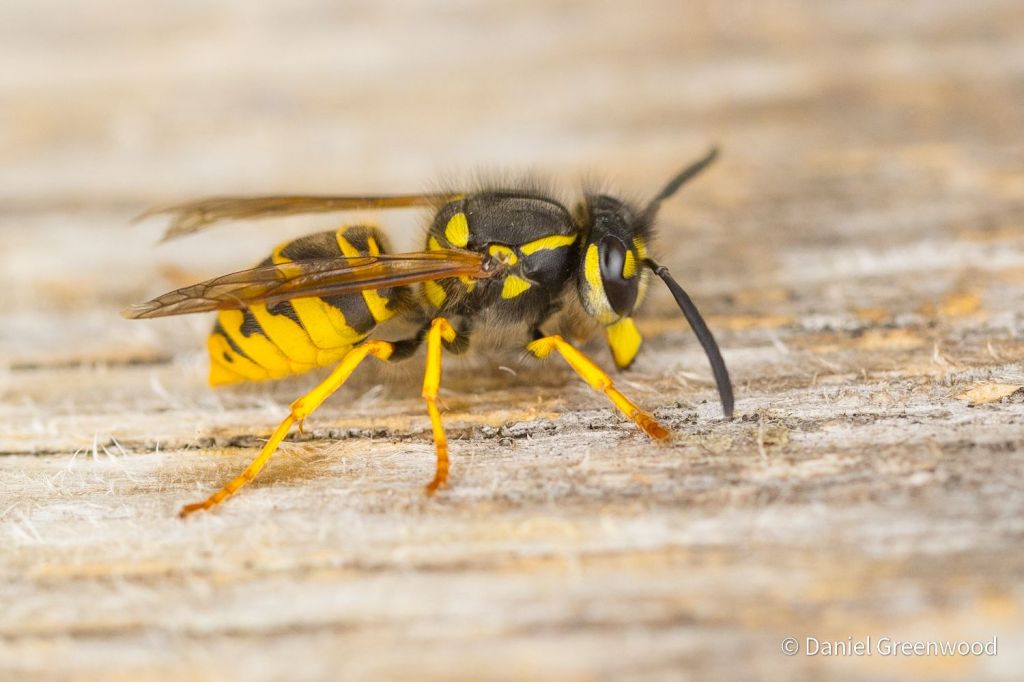
iNaturalist users think the wasp above is a German wasp. What you can see is the wasp gathering wood shavings for a nest. But that wasn’t the only wasp I saw.
July and August are good months to see the iconic ichneumon wasps. I absolutely love them, an interest which was deepened by reading The Snoring Bird (I recommend it). I wasn’t fast enough for this ichneumon to really get a strong pic, but this will do.
Even worse was this attempt to photograph one of the Gasteruption ichneumons. People, I am just too short for plants that want to grow this tall. I do enjoy the bokeh here though (circular light in the background). Take that, full-frame cameras!
So, all in all a decent showing for a fatigued individual.
Thanks for reading.
Photos taken with Olympus EM1 Mark III and 60mm f2.8 macro lens, edited in Lightroom.
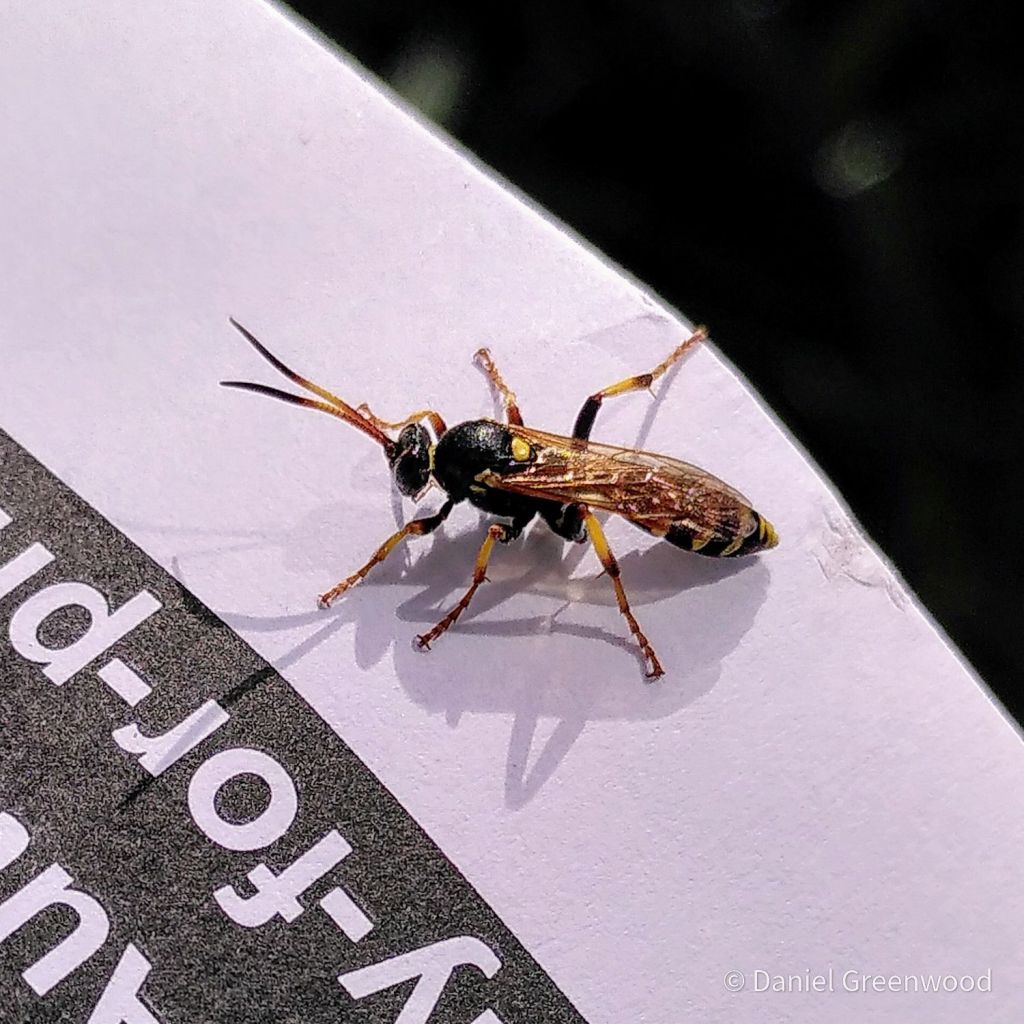
You know it’s spring when the bees and things start getting trapped indoors again. I visited my mum on Easter Sunday and her kitchen (which has lots of windows) turned into a veritable insect survey trap. Not just the ‘horrible flies’ she pointed out, but this lovely ichneumon wasp which I rescued with a glass and a local elections envelope.
You can probably tell that these are phone pics, I haven’t quite got into proper macro lens work yet this year, but soon! I love the orange-yellow-black fade of the antennae, which is probably where the name ‘xanthoria’ comes from in the scientific name.
Xanthoria is a genus of lichens which are commonly known as sunburst lichens. In Latin it means golden yellow, which is perfect.
And here’s the proof – Xanthoria parietina, a pollution-tolerant lichen that grows everywhere.
Welcome to the second week of my #30DaysWild macro photo challenge which I call #30DaysMacro. All photos here are taken with an Olympus TG-6 Tough compact camera and cropped/tweaked in Lightroom.
This week was another hot and dry one, and possibly showed a bit more of an increase in insect numbers after a worryingly scant spring. These photos were taken in London and West Sussex, and both areas are in desperate need of rain.
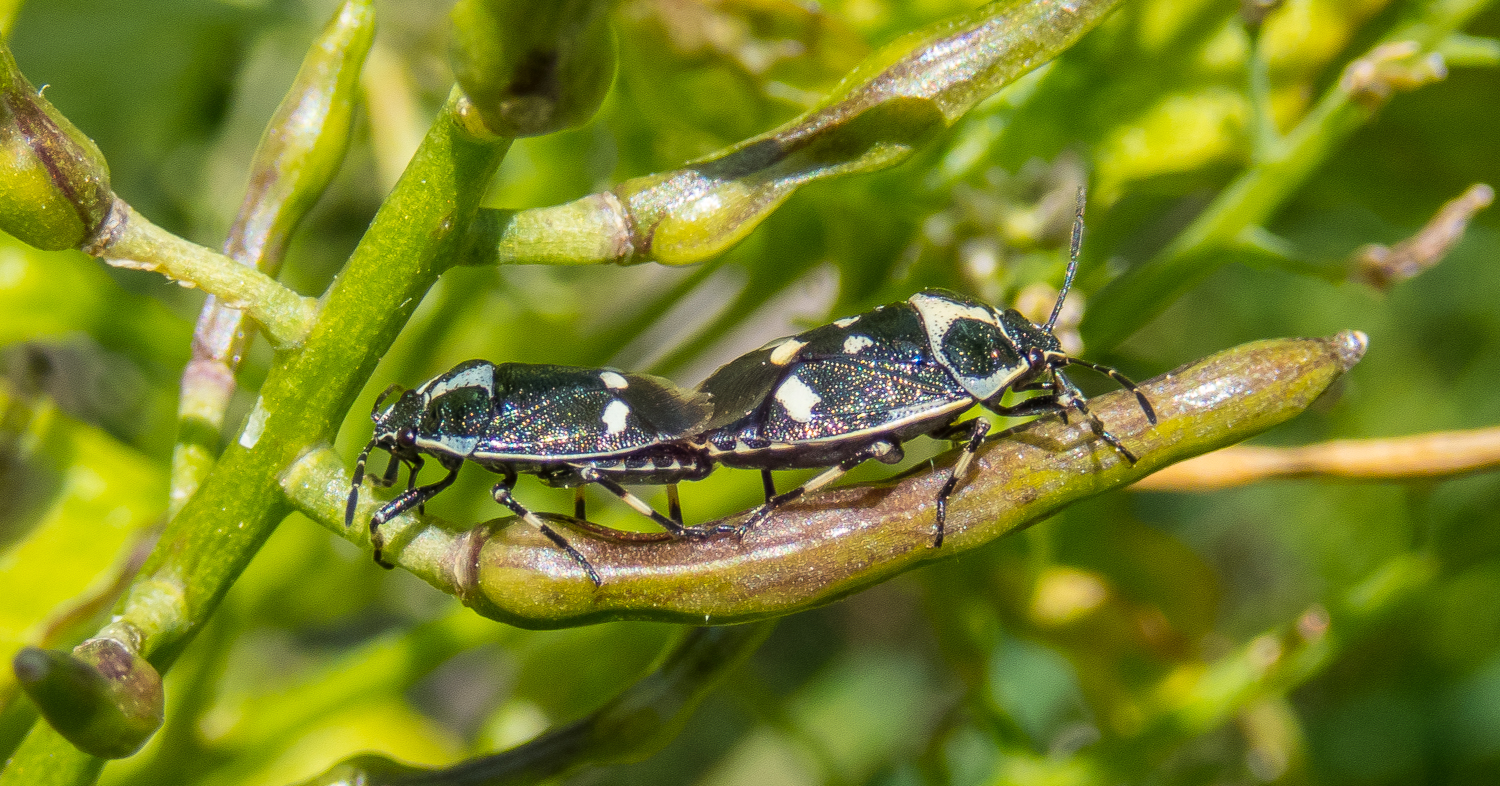
Day 8/30: shield bugs (known as stinkbugs in North America) are some of the most charismatic insects out there and easiest to see. These two cabbage bugs were mating in what I reckon is a plant in the cabbage family, in south-east London. I think this is my first sighting of them.
Day 9/30: this photo is part of an experience that will benefit from a dedicated post. This is a red-belted clearwing moth laying eggs in a diseased or cankered apple tree in a residential road in West Sussex. It’s only one of maybe three clearwings I’ve ever encountered and you can see that it’s a really extravagant, day-flying species. Maybe I could be swayed by moths after all. Scroll down for another part of this story.
Day 10/30: a click beetle takes flight from a flowering climber in my small hedge. This click beetle is one that I think is common as I’ve seen one very similar on several occasions. Probably need to upload it to iNaturalist to identify it.
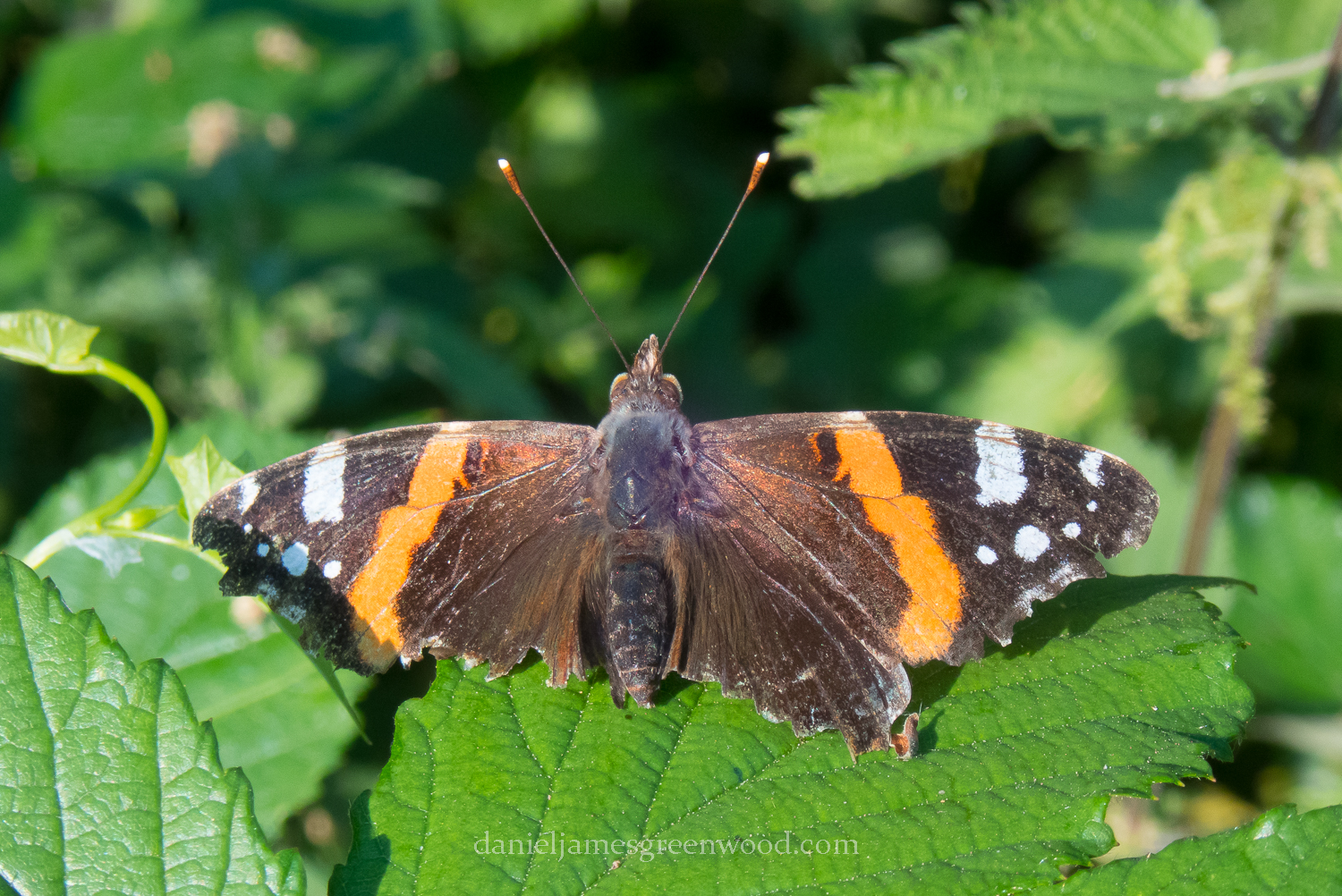
Day 11/30: a tangled web for this poor red admiral in West Sussex. I was surprised to see one so still in the hedge but on closer inspection it has been caught by a spider.
Day 12/30: the emerging larvae of the clearwing can be seen here, pressing out of the apple tree’s bark, just like in certain sci-fi movies. The plot twist here is the arrival of an ichneumon seeking out red-belted clearwing larvae. The ichneumon’s epic ovipositor will be used to lay eggs in the unsuspecting larvae and parasitise the host. You can read more a blog post I wrote about that here.
Day 13/30: a busy day working from home (yes there is such a thing) left me pressed for time, but I managed to snap one of the common hoverflies in my garden. I don’t go out for long in the hottest parts of the day so I am usually reliant on the early mornings or evenings for macro encounters.
Day 14/30: a difficult week for red admirals, with this much-pecked butterfly enjoying(?) some evening rays. You have to make do with what you have in this life.
The insect world is winding down, it’s true, but September can be a great month to see invertebrates. This is especially true for spiders in gardens (and in your house!). At the beginning of the month I visited Suffolk Coast and Heaths Area of Outstanding Natural Beauty. This blog focuses on two locations, firstly the National Trust’s Sutton Hoo, near Ipswich.
Sutton Hoo is famous for its Anglo-Saxon ship burials which, on the eve of the Second World War in 1939, threw up one of the most incredible archaological finds in British history. An entire ship was found to have been buried, with much of the discovery based on the chemical shadow of what was once there. An amazing haul of items was discovered with the boat, thought to be that of King Rædwald of East Anglia, a pre-Christian Anglo-Saxon king who died in approximately 625 AD.
The boat he was buried in was probably hauled up here from the river Deben, where the boats are moored, by Anglo-Saxon warriors and buried under a mound of earth.
The National Trust have an exhibition centre which displays mainly replicas of some of the 3000 things found in the mounds. Museum collections are great for macro because they’re well lit and isolated by the darker backgrounds. This was a replica of one of the items found.
This gold pendant dates from the 4th-5th century AD, so 1600-1700 years ago.
Outside, I didn’t have macro in mind. I was carrying my micro four thirds camera and lenses which are so light they can be carried anywhere. Walking around the estate I noticed a feather on the ground, and that an insect was resting on it. I couldn’t believe it when I looked closer.
It was a robberfly, with prey in its spear-like mouth parts. Note here how I cropped to include the beautiful fronds of the feather.
The robberfly wasn’t bothered about me. When I got really close, I could see it had an ichenumon wasp as prey! Heathlands are exceptional landscapes for insect diversity, so there was always a thought in the back of my mind that something like this could crop up. This blog could not be posted without some reference to wasps.
This is an image which I hope I haven’t laboured, but it’s just an incredible thing to find resting on such a beautiful macro subject in its own right – a feather. You do see this kind of image again and again on Instagram, where I’m sure people are feeding prey to robberflies in order to get a photo in a studio. That’s not my style.
Walking around the burial mounds of Sutton Hoo, we found lots of red and orange caterpillars on the move. I’m not sure of the species! ID welcome in the comments please.
We then moved on to the Suffolk coast, which is just down the road from the Sutton Hoo estate (great job by the way, National Trust). In the long grass of one of the dunes this very similar black and orange moth was holding tight to a blade of grass.
He’s a pretty rad looking dude up close.
Coastal landscapes are something of a foreign language to me in ecological terms. A visit to the coast is far more an emotional or spiritual experience (I don’t swim), a reminder of childhood, or our vulnerability when faced with the vastness of the sea. A line was drawn in the sand.
I managed my first marine macro photo! This tiny crab was pointed out to me by my companian who was spending her time seeking out stones and other small things on the shoreline. Taking photos of tiny animals under moving water is a challenge I probably won’t have to take up again any time soon.
Thanks for reading.
Photos taken with Olympus OM-D EM10 MIII with 60mm f2.8 macro lens and 45mm f1.8 lens
Since the end of the heatwave my garden has been hammered by rain and wind. That is not what you need to write a weekly blog about taking macro photos. So I went to my local woodland and put the hard graft in to see what I could find.
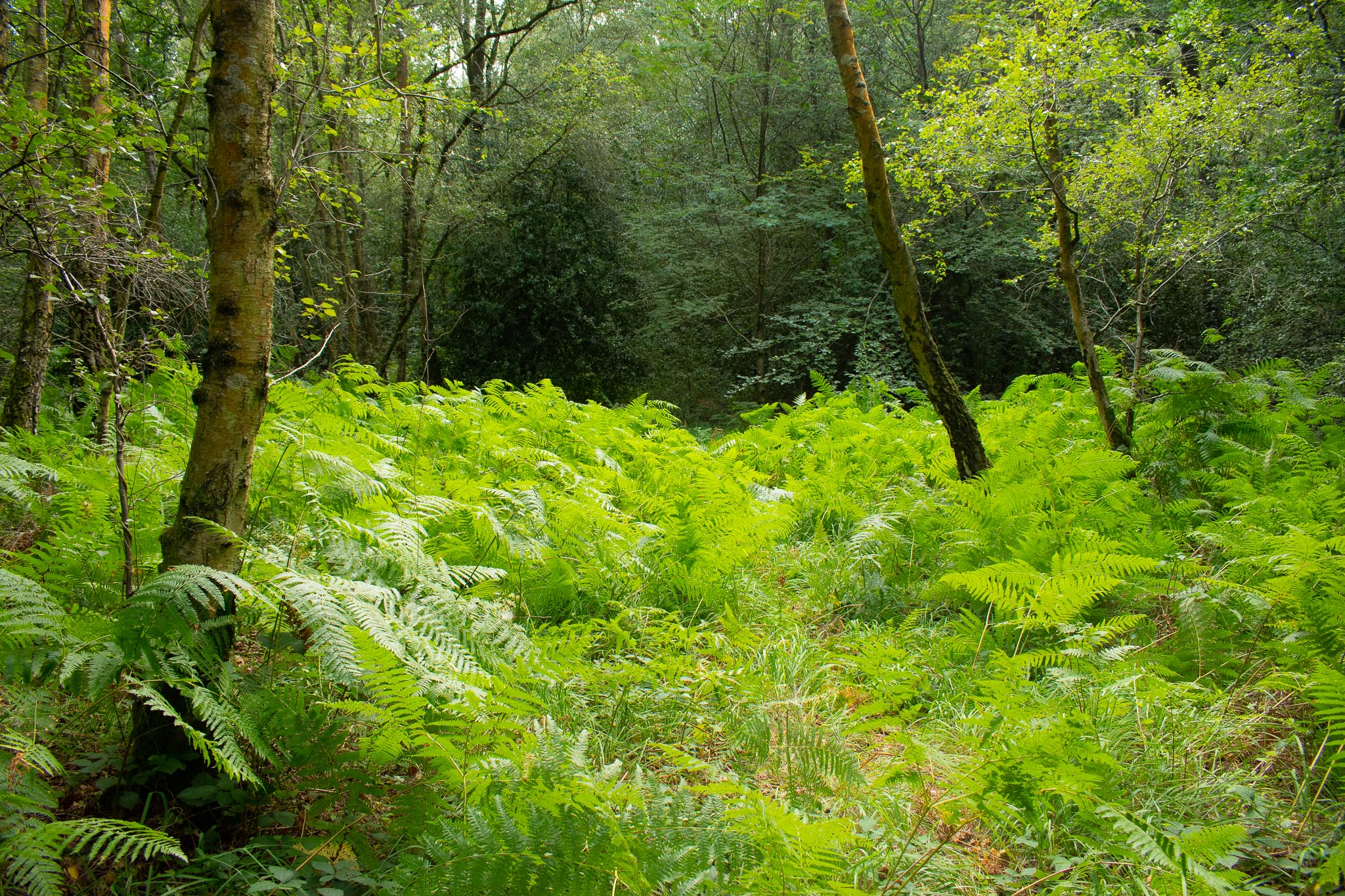
Bracken and birch glade
The place I visited is an area of oak woodland in the Sussex Weald. It was very windy, not the safest place to be in those conditions. I sought out a spot where I usually find fungi – of which there was nothing – and spent some time looking on the bark of trees and under leaves.
I carefully turned over oak leaves and my first find was this quite unusual flying insect. I’ve looked through my book and can’t find it in there. My instinct says it’s a lacewing relative. If you know, please comment below.
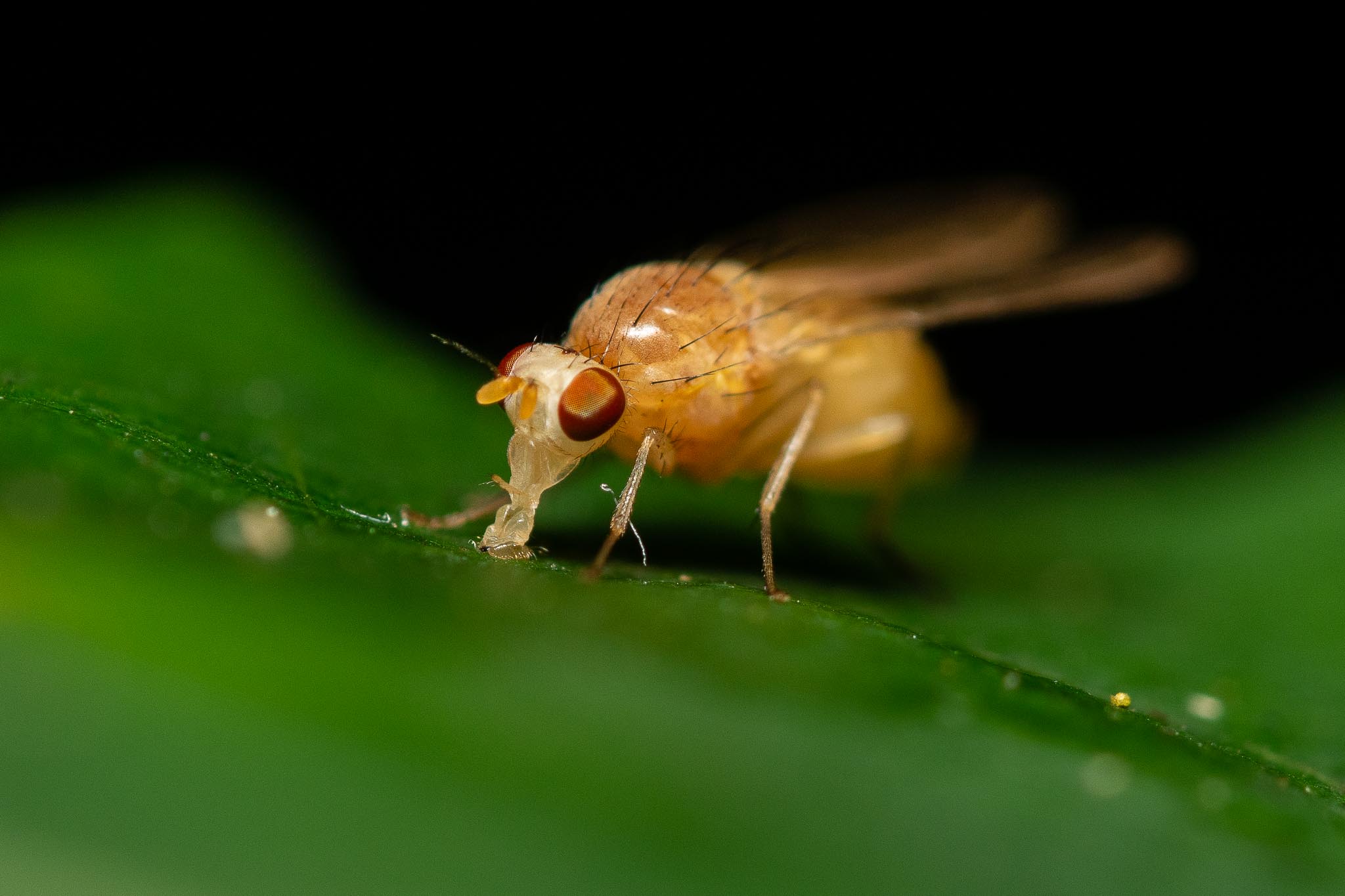
This capsule-shaped fly was hoovering up something tasty from the surface of an oak leaf. Soon I was to be haunted by similar mouthparts, on a very different kind of fly.
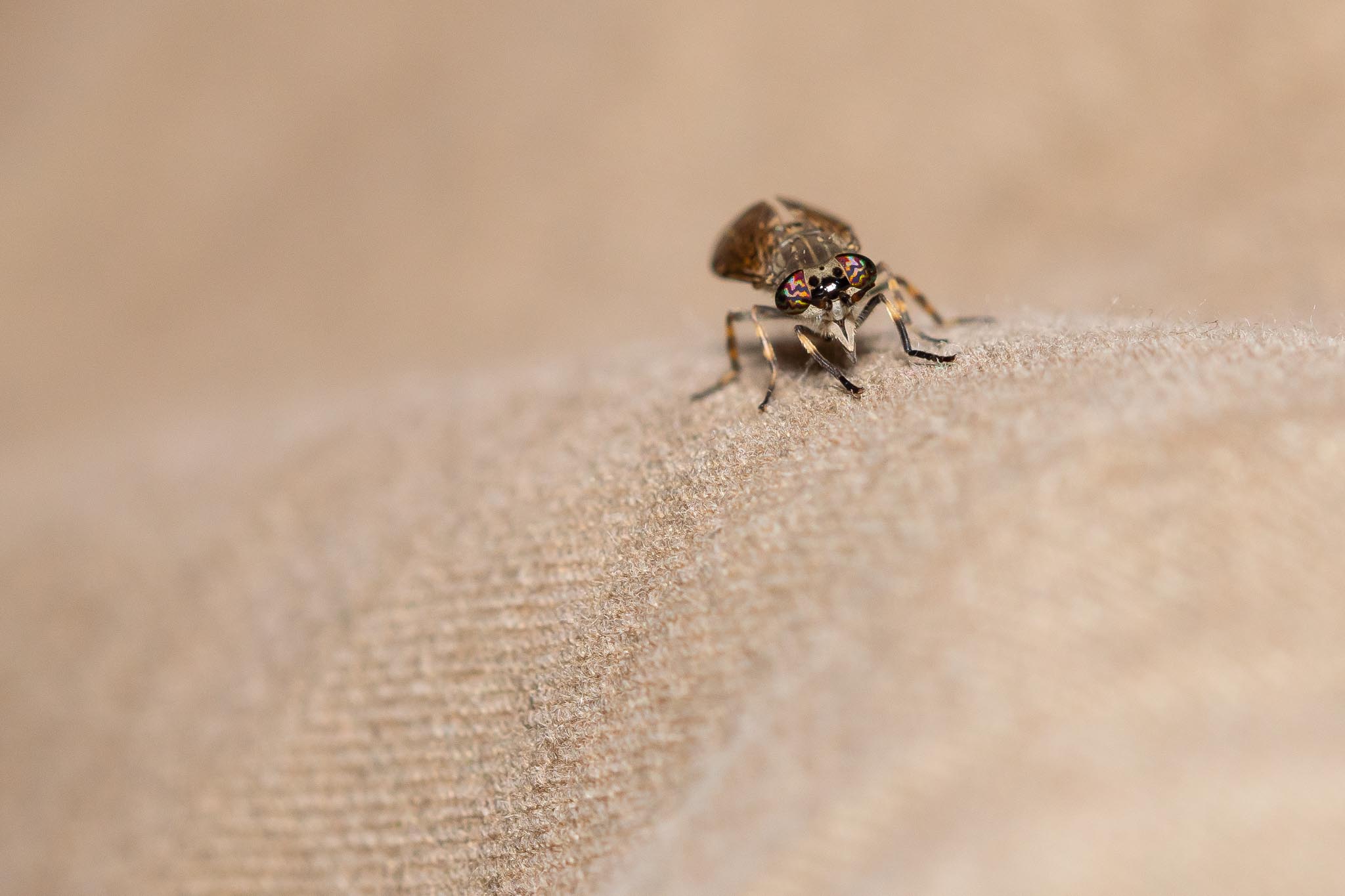
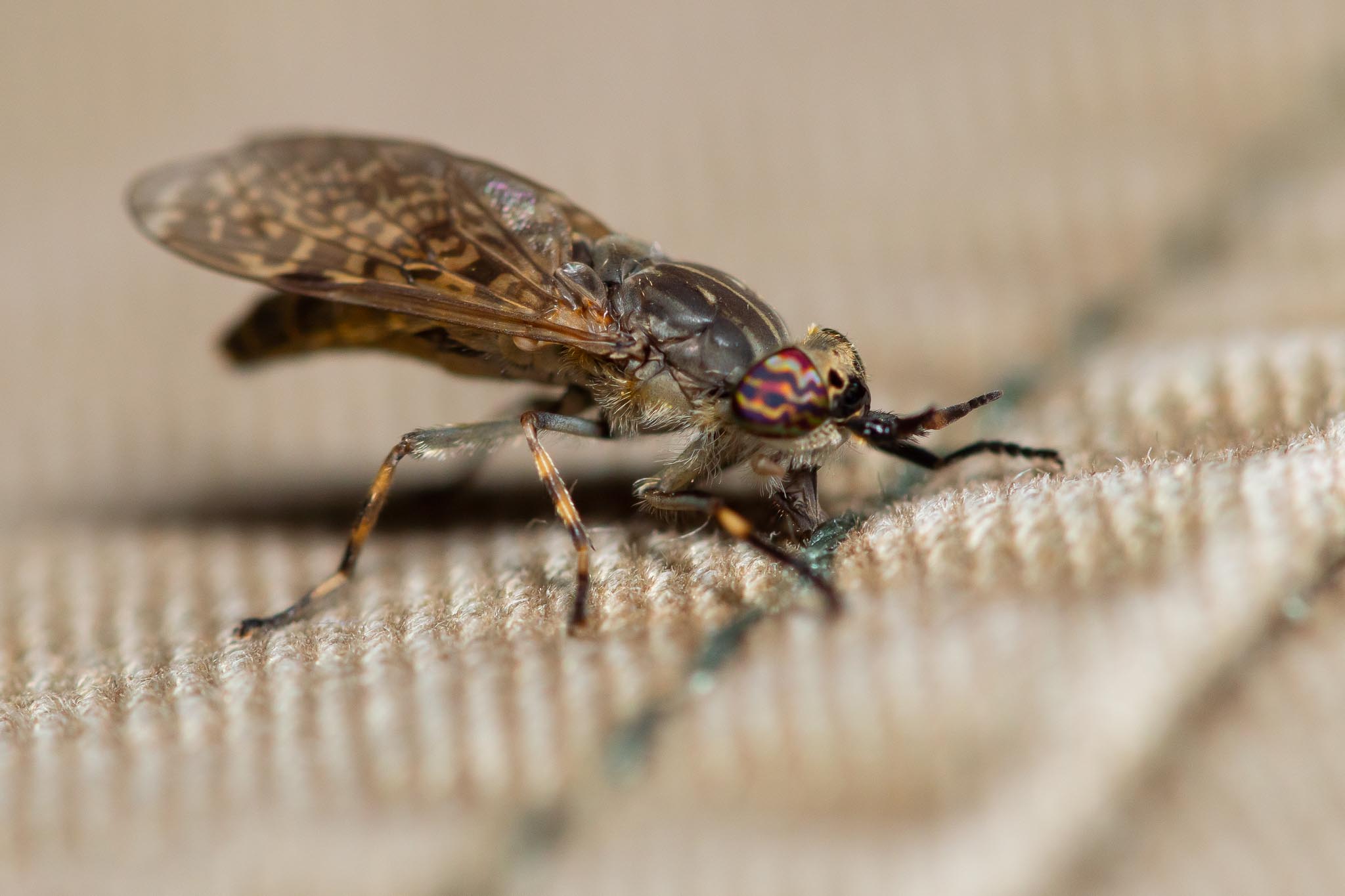
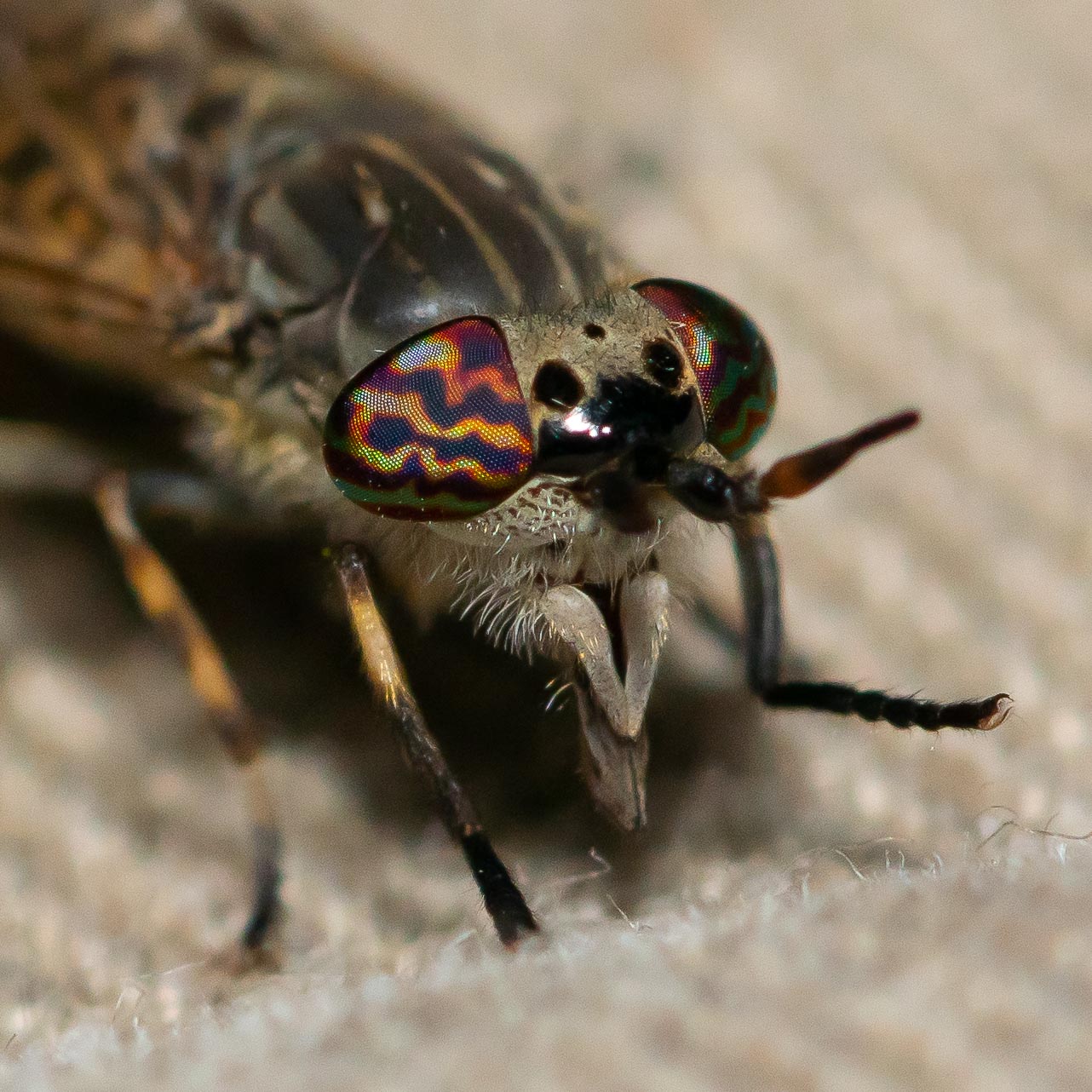
I don’t wear shorts in the woods I wear TROUSERS. This is why. In shady areas of woodland which are protected from wind and sun, biting insects lurk. With horseflies, sometimes you don’t know they’re there. I spotted this beautiful insect on my trouser leg by chance. This weird, nervous adrenaline begins to pump when I encounter one of these insects.
Horseflies have a nasty bite and there is something unsettling about their predatory focus on you. I was desperate to get a photo because of how beautiful and mesmeric their eyes are. I managed to lure the horsefly but keep the trousers away from my skin far enough to stop the bite. Above you can see how intelligent it is. It’s trying to bite through the seam in the trouser lining.
Unlucky for the horsefly, it didn’t manage to break through. After a while, it became so ‘annoyed’ that it started aiming for my face so I just left! The thing I always forget is that horseflies follow you and don’t give up easily. I did have the images I was hoping for, though.
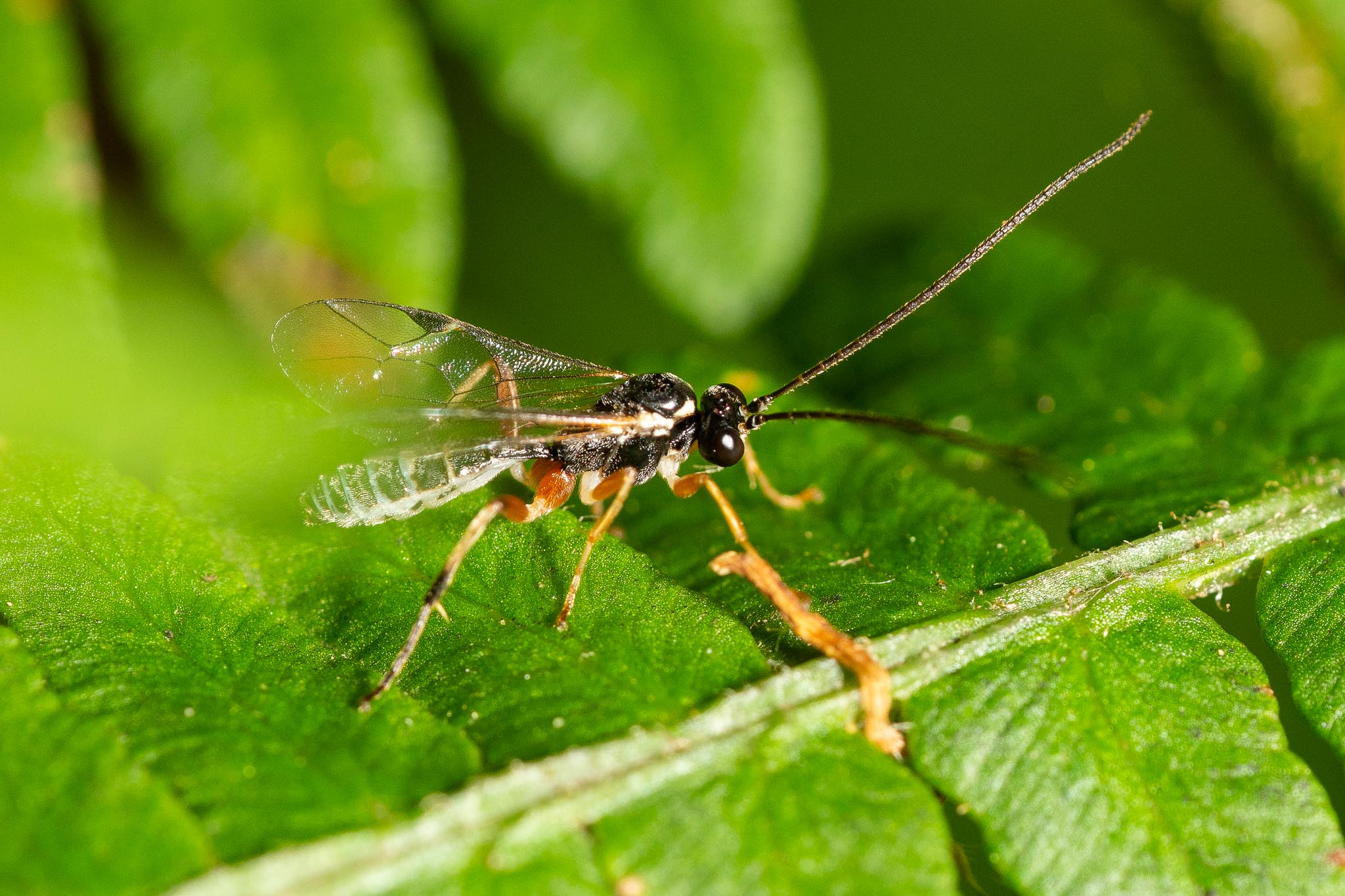
I haven’t mentioned wasps this week. But there are just so many species out there that it’s almost inevitable one will turn up. This is probably one of over 2000 species of ichneumon wasp that we have in the UK, which you can read more about here. Those long antennae are an indicator, for my untrained eye.
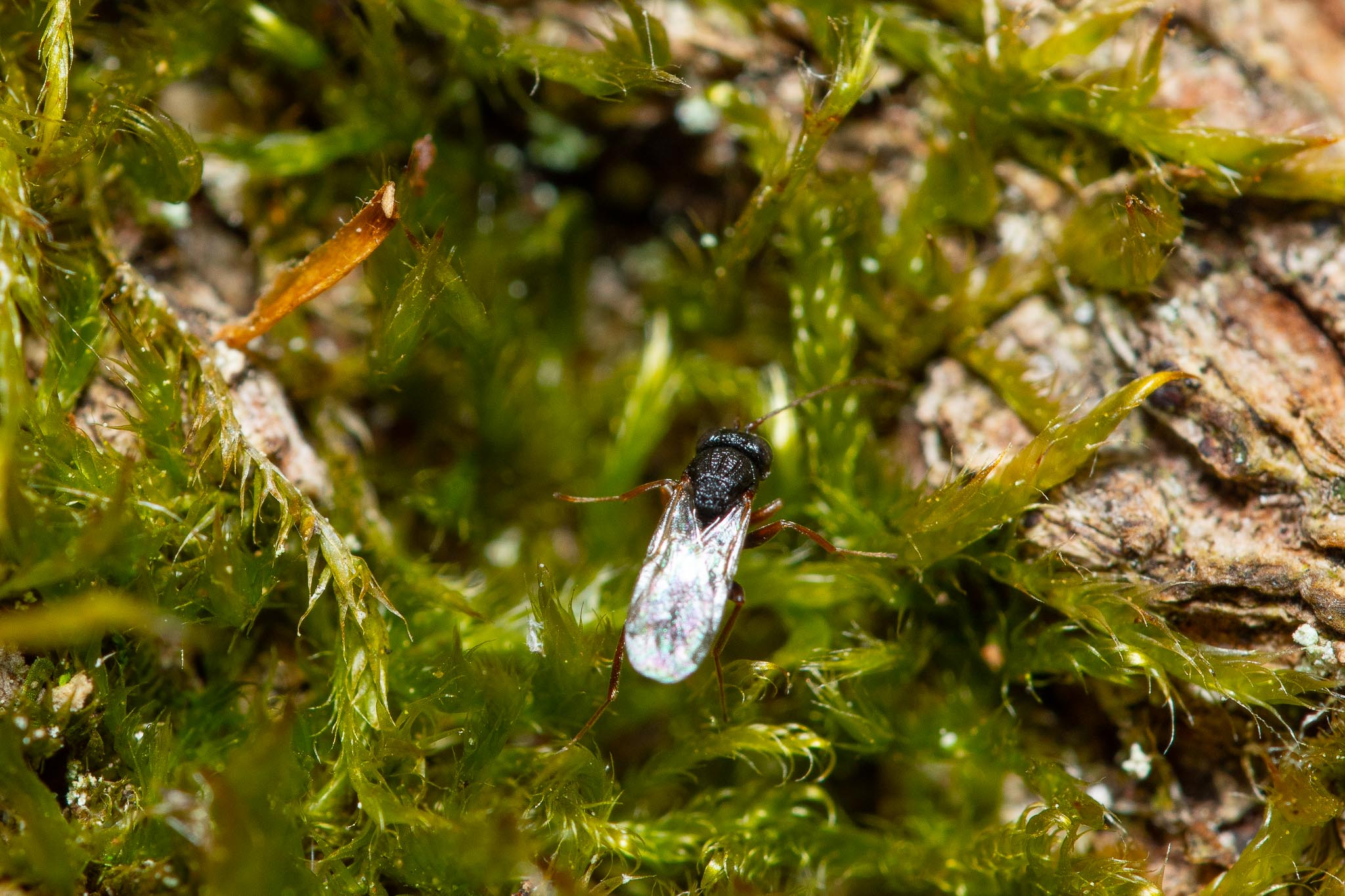
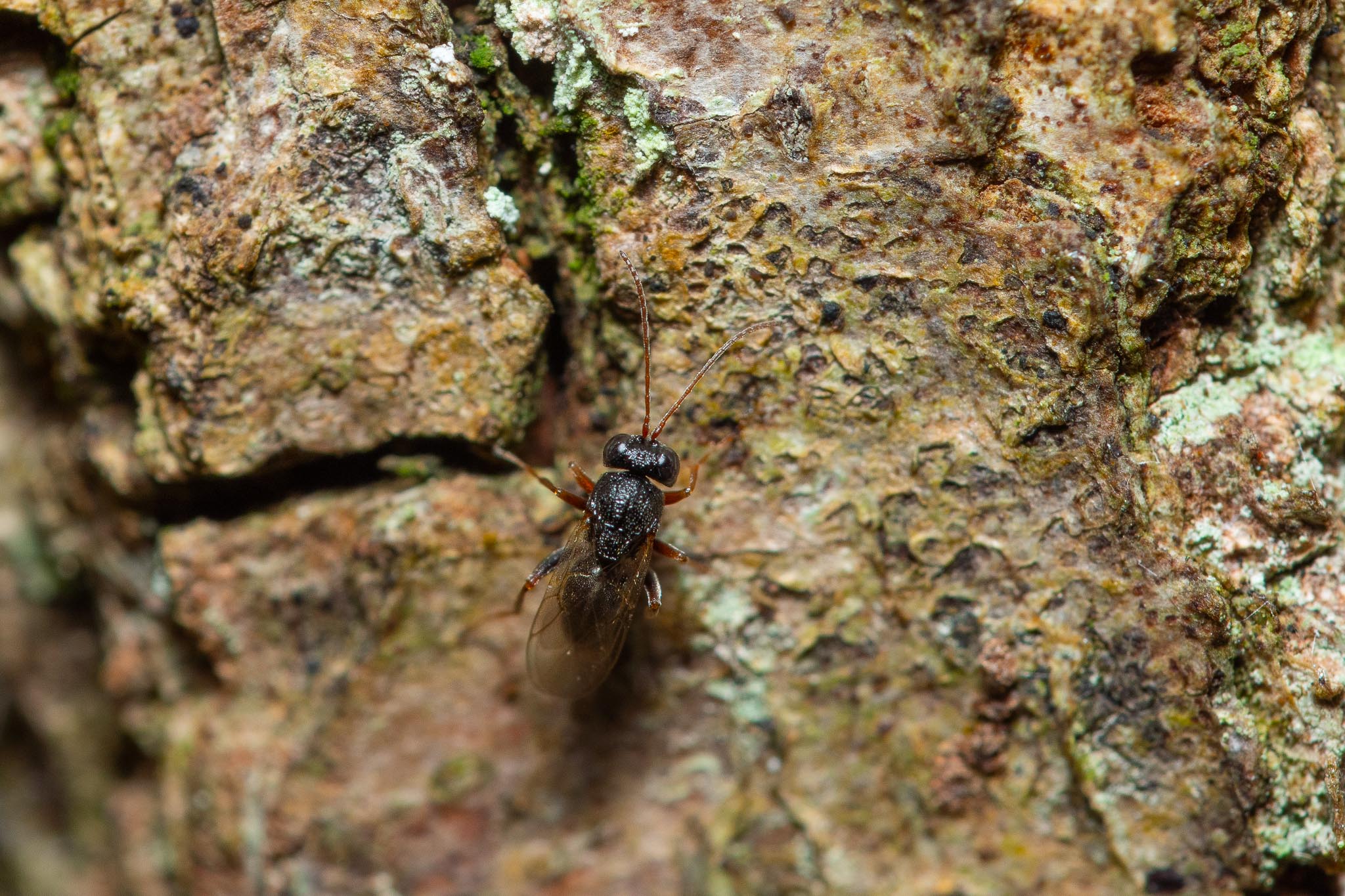
That wasn’t the last wasp I saw. I was checking out the trunk of an oak tree, having just watched Thomas Shahan’s latest video where he did the same (I’ll embed it at the bottom of the post, it’s worth watching). I saw a black fly-like insect about the size of a moss frond running up the trunk. It was really hard to photograph but I got some pics in focus.
I could see that it was a gall wasp, the first one I have ever managed to photograph. We should be thankful to these wasps because without them we would never have produced the major written works our own species has managed to produce so beautifully.
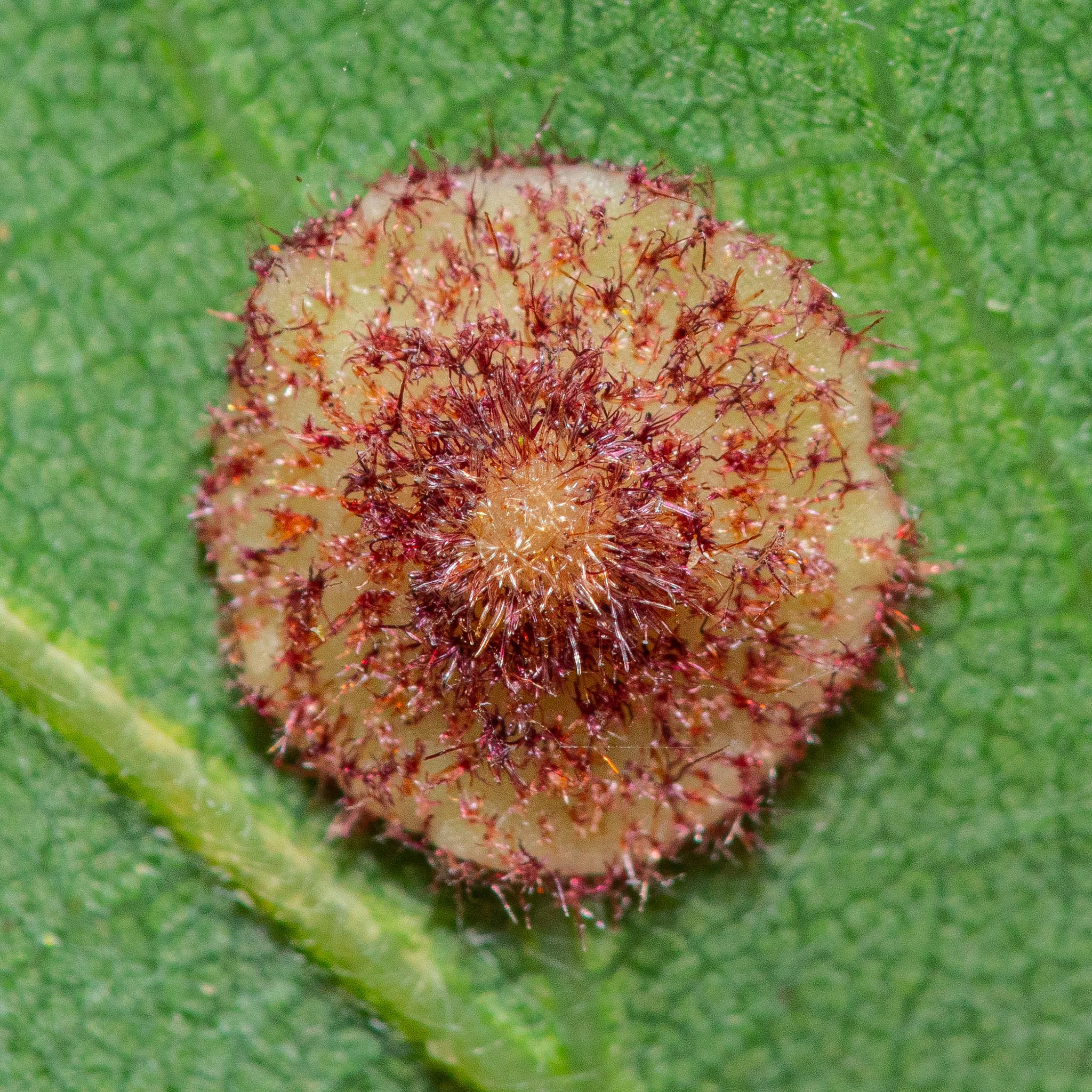
What am I on about? These are galls, a growth which forms on oak leaves. Within the protective casing you see above is the egg or developing larva of a gall wasp. In the autumn the casings will fall away and the insect will hatch out in the spring. Galls come in many shapes and sizes. Some oak galls are used to create ink, and have been used across the world in producing texts and other works for thousands of years.
Oak apple galls are the most famous (not pictured here). The galls are used to produce the inks that penned the American Declaration of Independence and the Magna Carta, among so many other important texts. Another thing to thank wasps for!
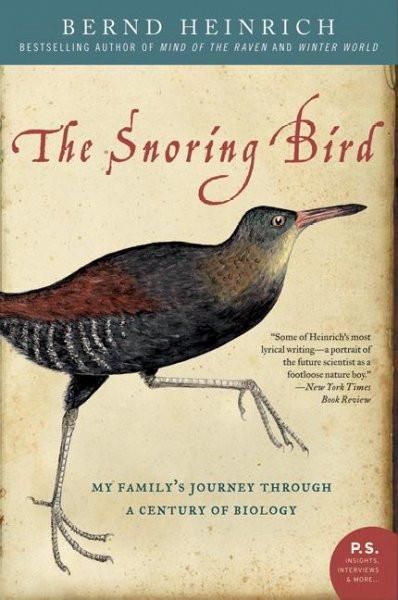
A couple of years ago my friend recommended a book called The Snoring Bird by Bernd Heinrich. The book is a memoir about Heinrich’s relationship with his father, Gerd, an entomologist who collected ichneumon wasps but who was never fully accepted by the scientific or academic community. Bernd tells the story of his father’s escape from the Red Army in 1945 and how he buries his collection of ichenumonids so they aren’t destroyed. Gerd travelled around the world collecting specimens.
In Britain we have poorer biodiversity than even our closest continental neighbours because of physical separation from the European landmass, intensifying land management practices, the impact of successive ice ages and, furthermore, the fact our climate is not tropical. But even then, we still have over 2000 species, which you can’t say for other fauna like birds or butterflies.
Reading The Snoring Bird consolidated a personal fascination with wasps, one which has not really travelled beyond blogposts, photos and seeking them out where I can. I’m not a collector of anything other than images.
Ichneumons have what we perceive as an unpleasant ecology. Females use their needle-like ovipositor to ‘inject’ their eggs into the burrows of insects, into crevices in wood or, most appallingly to our species, caterpillars or the larvae of bees. The eggs hatch inside the live caterpillar and eat it. It’s probably where the inspiration for the Alien films came from. To balance things out, insects inspired the creation of Pokemon.
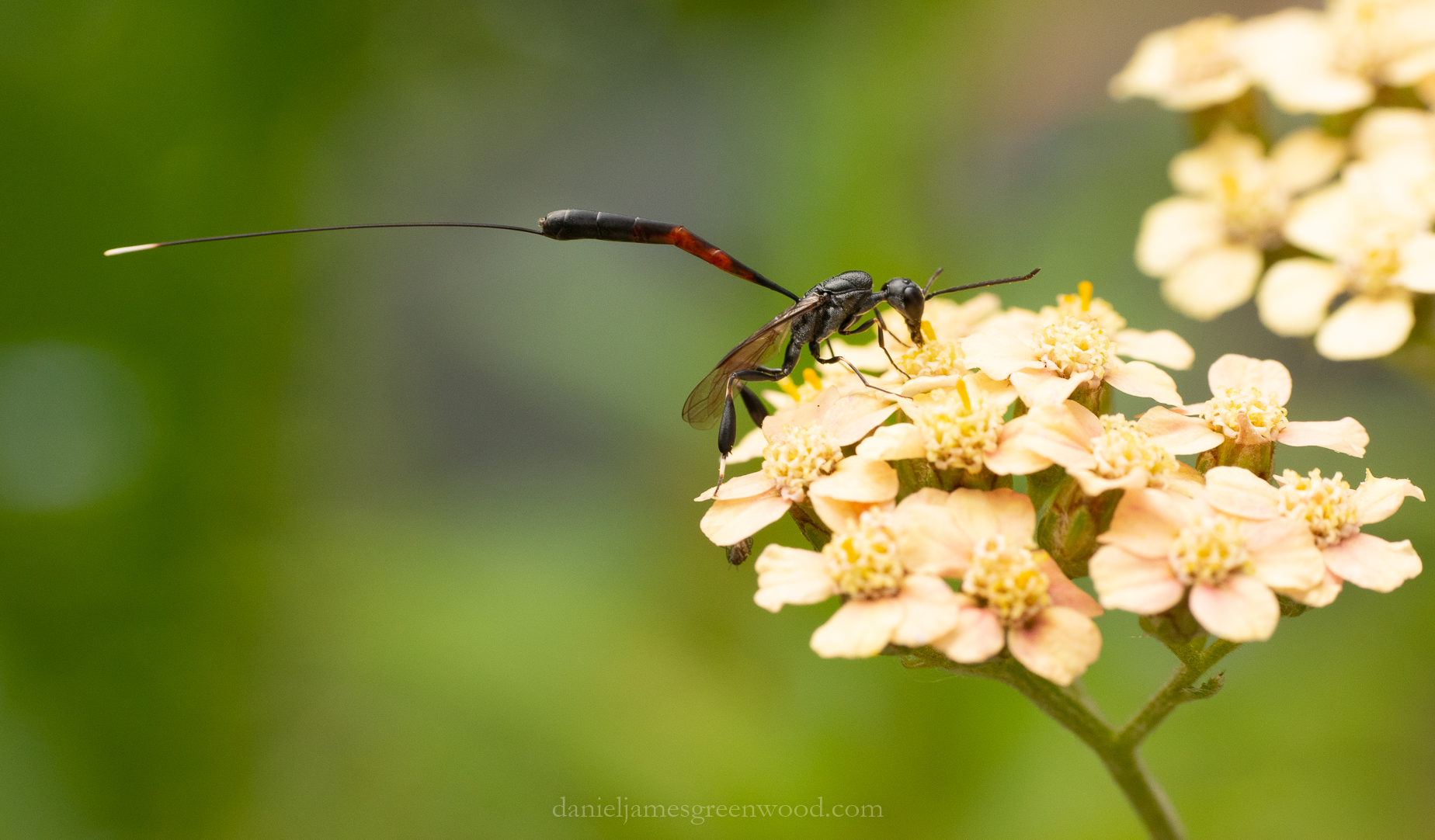
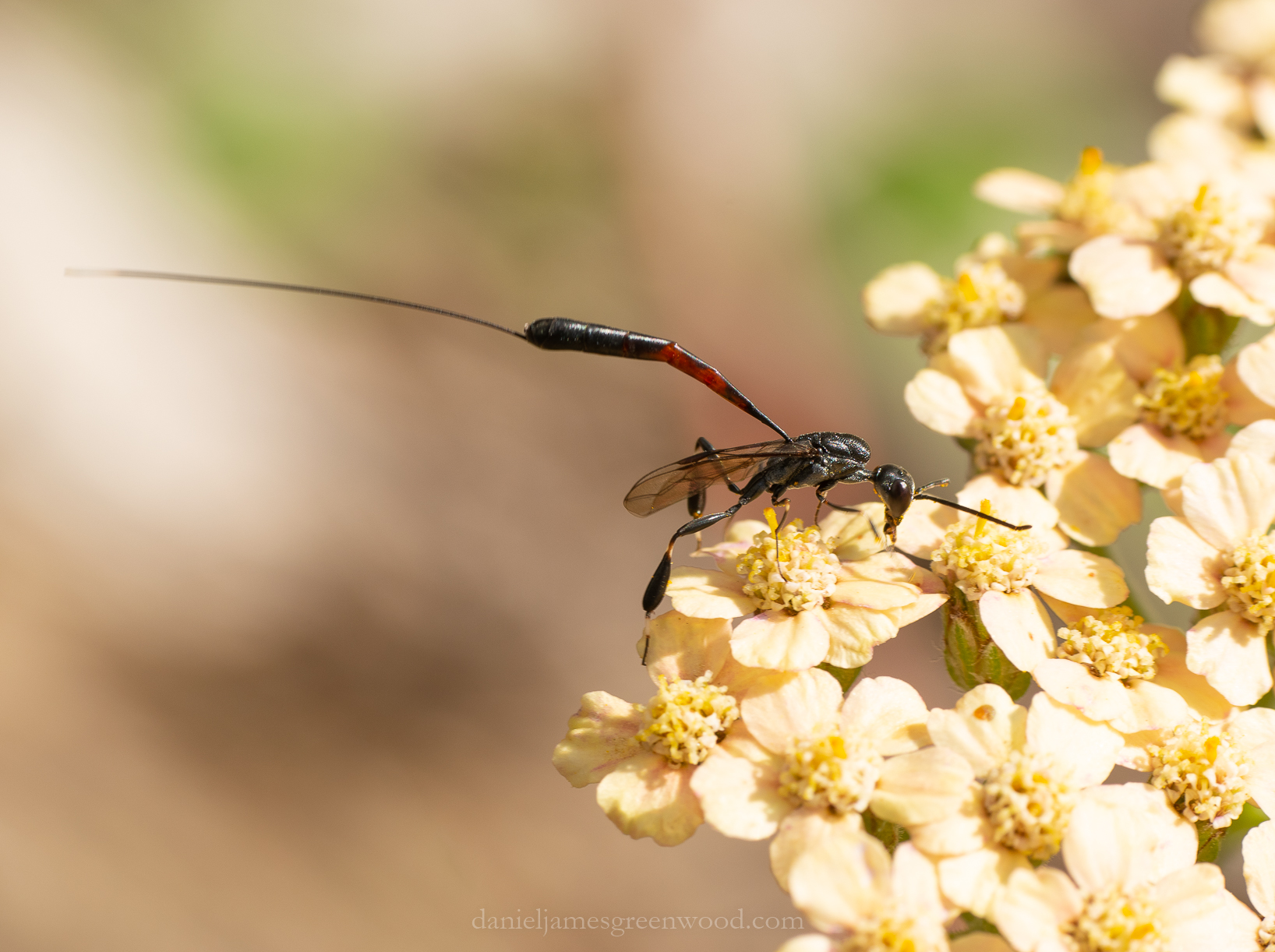
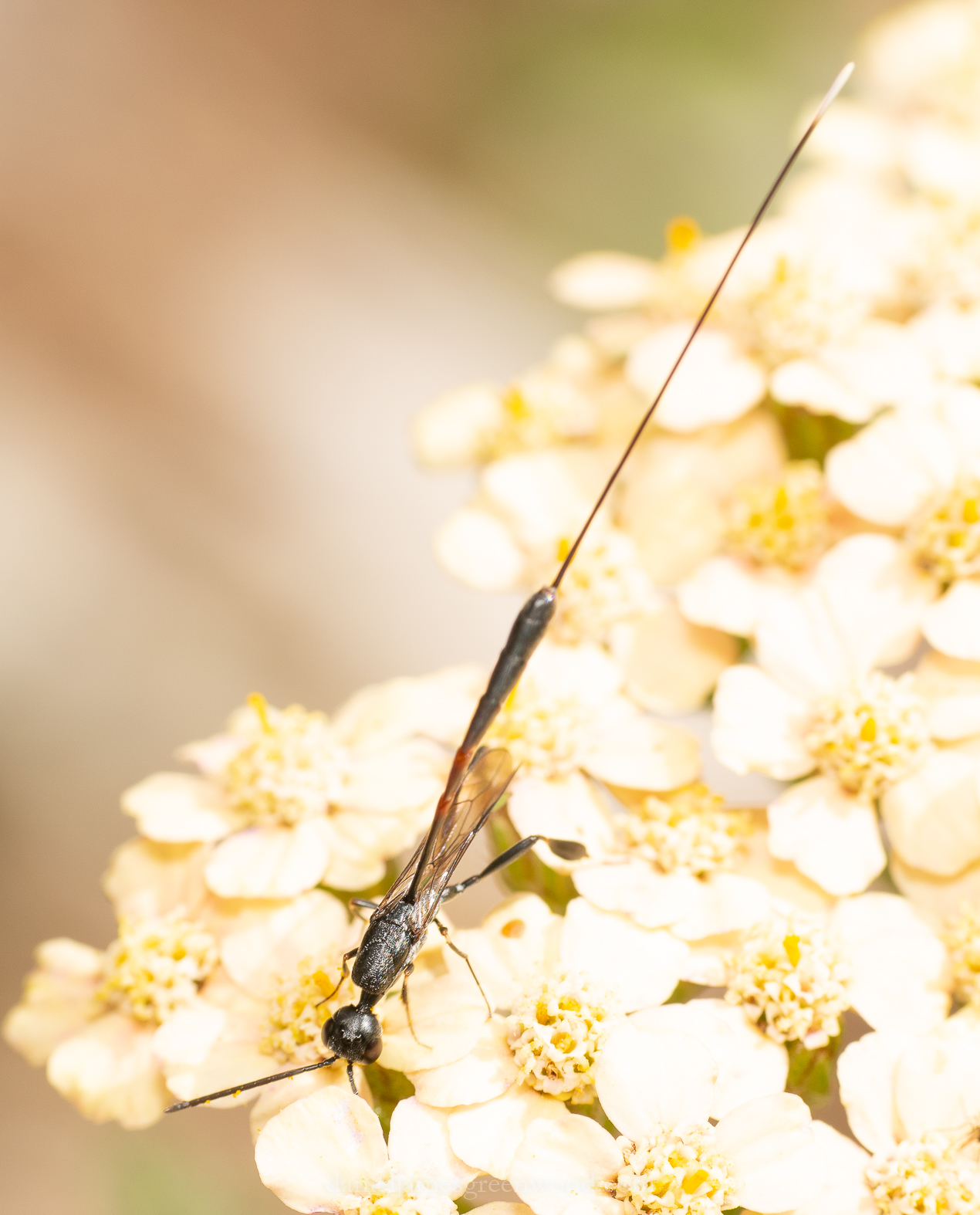
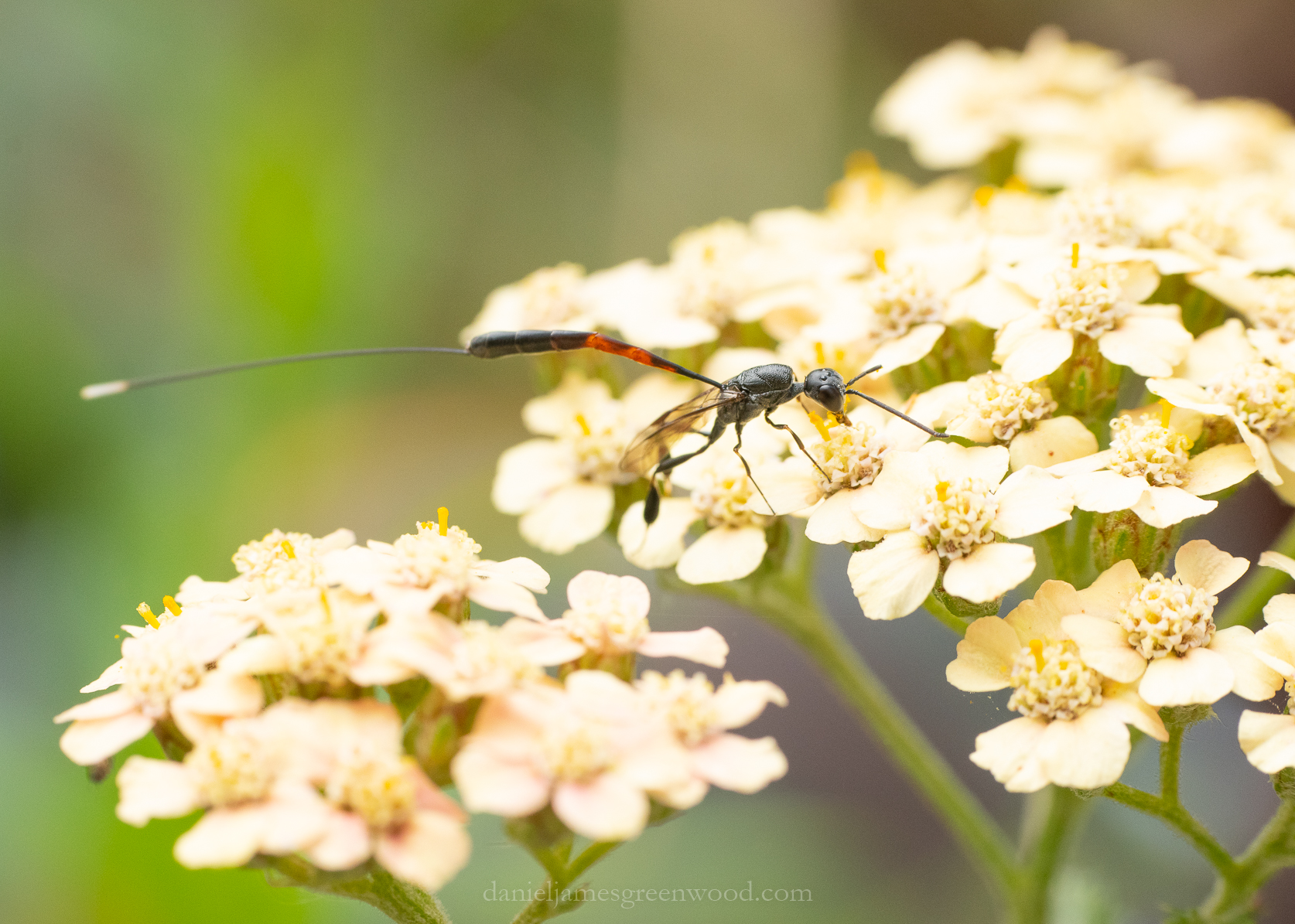
Last week I was sitting in my garden catching up with visiting family. I looked to my right at a pot of ornamental yarrow flowers (Achillea). I had noticed a bit of activity and glanced over to see a slender insect flying around the flowers. It was the equivalent of a video buffering over a poor quality internet connection. When it landed on one of the flowers I recognised it instantly as an ichneumon wasp. I ran inside to get my camera and managed to get some good photos: in focus, well lit and sharp enough.
I have always wanted to see this species. Its scientific name is Gasteruption jaculator. To find it in my garden was a real surprise and one of the highlights of my time seeking wildlife.
Why might it have visited? We actively garden for wildlife, insects particularly, and there is a log store that this kind of species will seek out. A couple of months ago I saw a similar species hovering around the logs, but I couldn’t get my camera quick enough and it moved on.
There are people whose first reaction to seeing this insect may be to kill it because of its ecology. That, to me, says everything about our misunderstanding of nature. A natural history lesson will tell us that without solitary wasps such as these we would have no social bees, a community of insects which prop up our dependencies on pollination of both crops and other flowering plants (including trees). Social bees evolved from solitaries wasps. The ichneumon’s ecological relationship with bees is one millions of years old, one small part of a web of life that has given human societies licence to develop through an abundance of food.
However, this is an insect which has affected the way some of the science’s key thinkers have framed their own mortality. Darwin doubted that any benevolent God could have created animals which behaved in this way. Not sure about you, but I often think that about Donald Trump or Boris Johnson.
A few years ago I encountered a cousin of the ichneumon that visited me in my garden. It has a far shorter ovipositor and its scientific name is Gasteruption assectator. I was walking on the North Downs when I found the insect nectaring on hogweed flowers. A woman passed me and asked what I had found. I said I’d found the insect that made Darwin doubt God. She looked away with a knowing smile:
It’s true that I started last week’s post with a parasitic wasp in my living room. That phrase is enough to make most of the UK faint. This week it happened again. But rest assured, there are other species to enjoy this week.
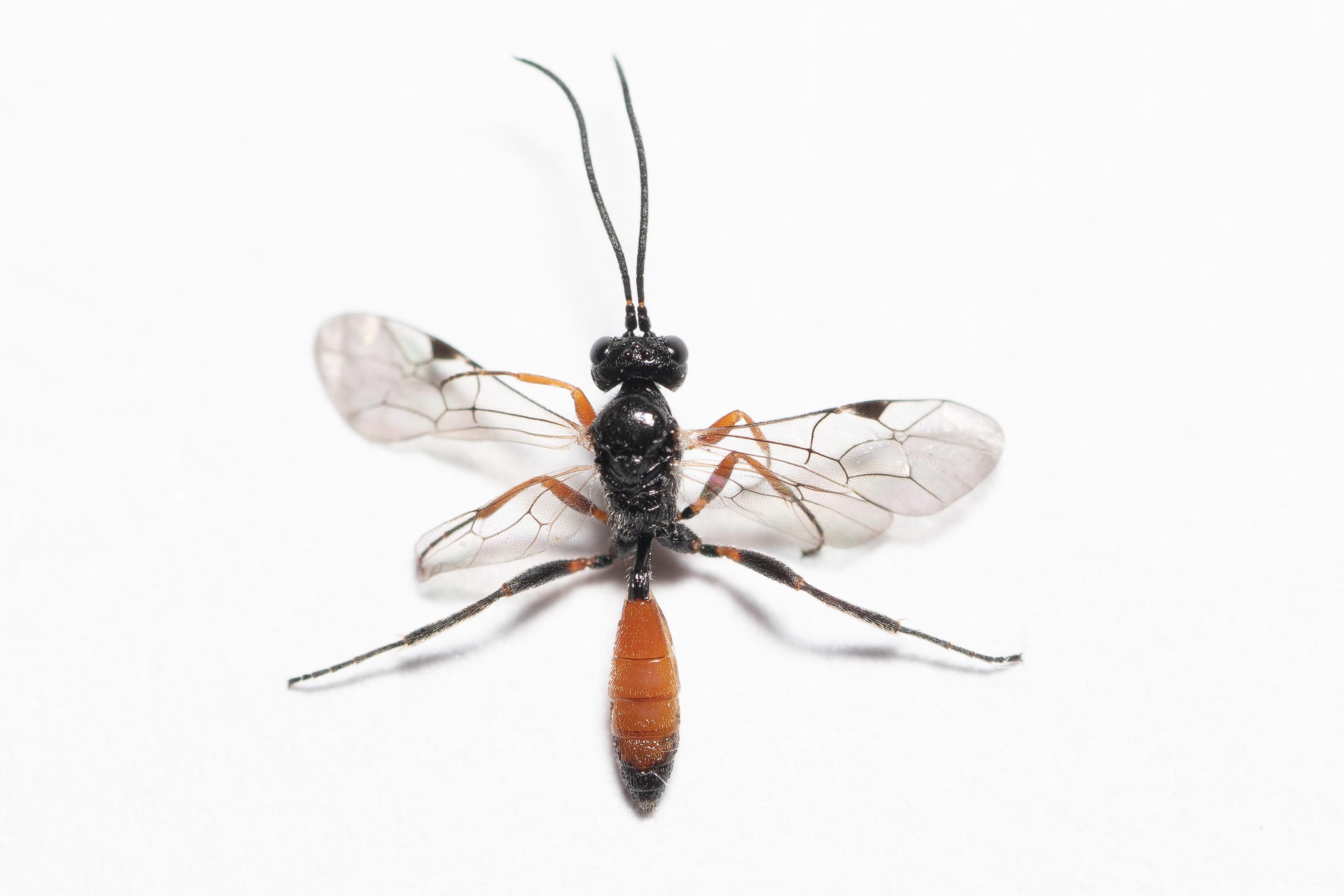
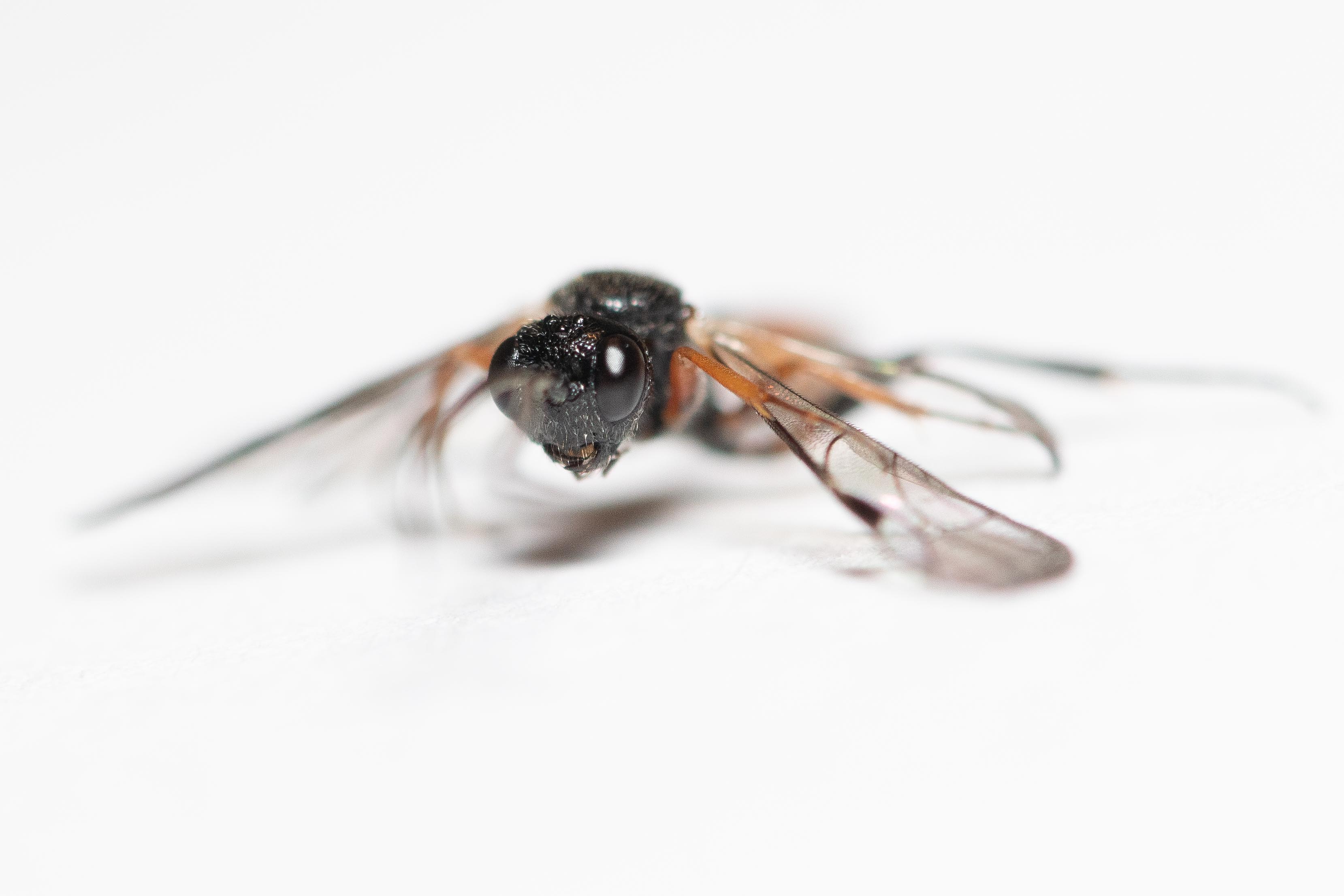
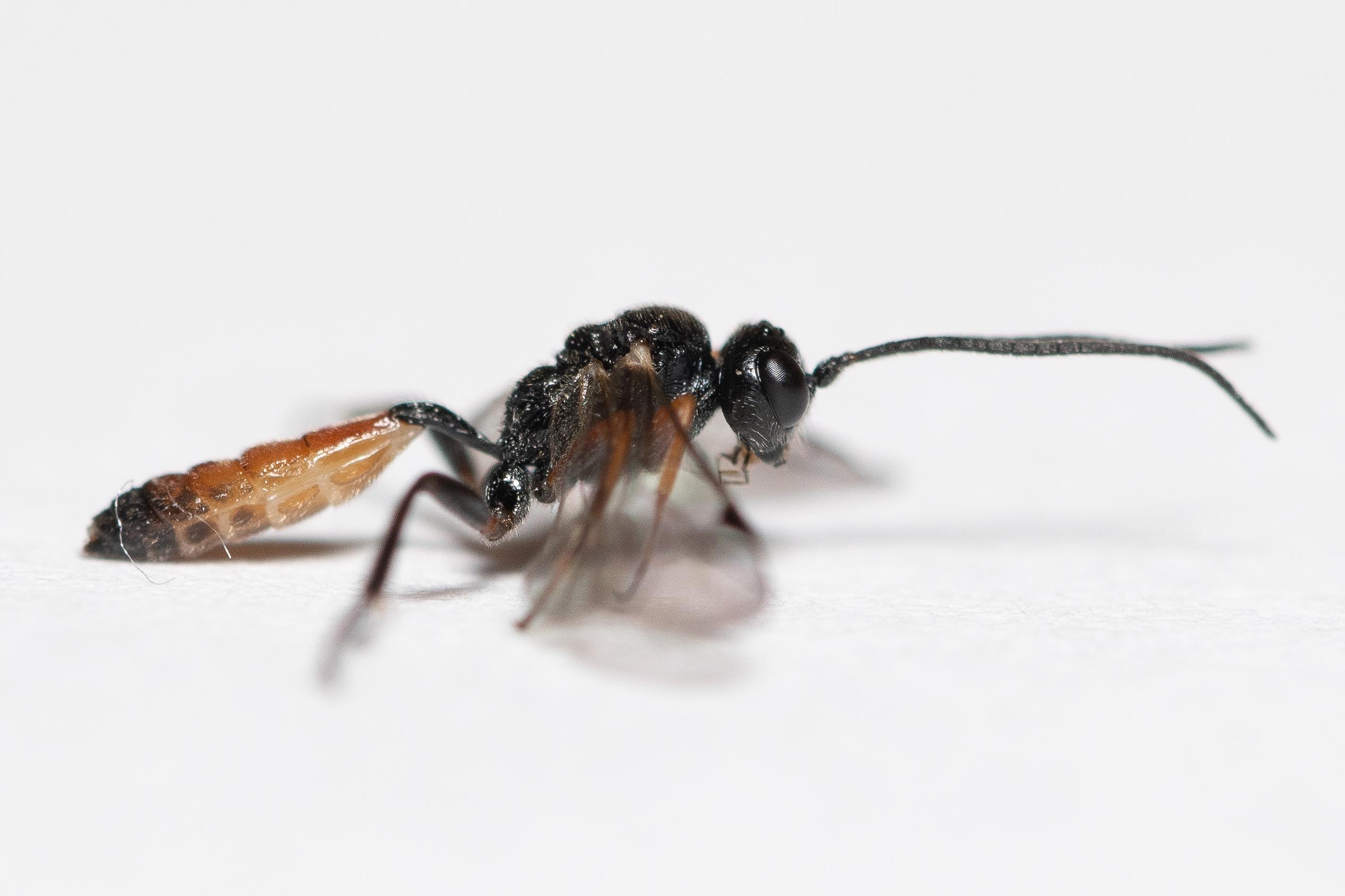
When I see an insect trapped indoors, I am the sort of person who needs to try and let them all out before being able to sleep at night. I accept that is probably a compulsive behaviour reflecting an anxiety disorder. In this instance I didn’t get the chance. I went to drink from my camomile tea, dear reader, and there was a small insect floating in the water.
I plucked the insect out of my tea and it lay perfectly splayed on my fingertip. It was a tiny ichneumon wasp, a group of insects which I went into more detail about last week. As it dried out its beautiful form began to appear. I found a piece of paper and placed it on the white surface. My cameras are now living in the living room so they were close by and I took a few snaps. It was a beautiful specimen. I am not intending to try and identify it because I will probably get told off by the local Hymenopterist via iRecord.
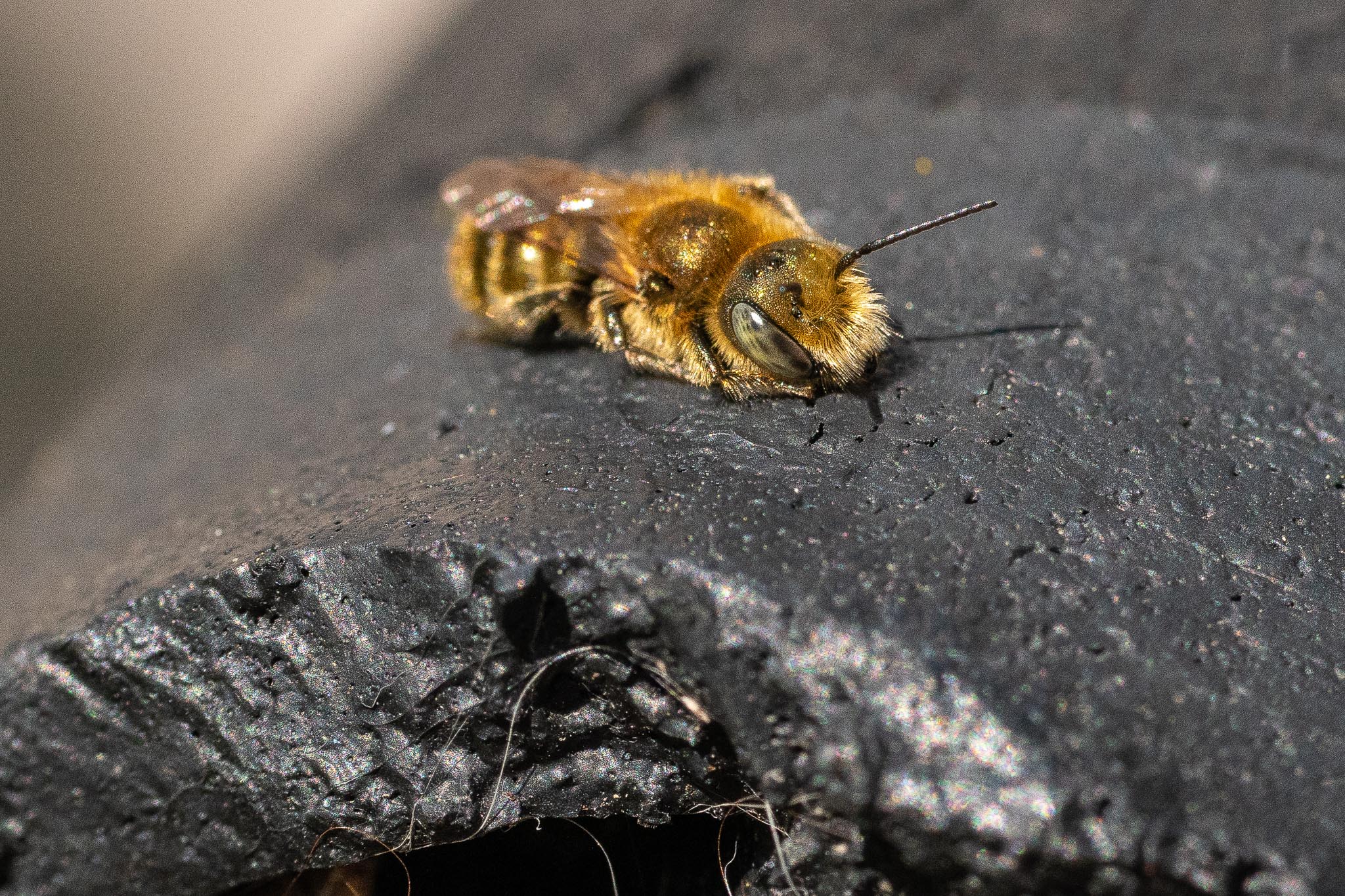
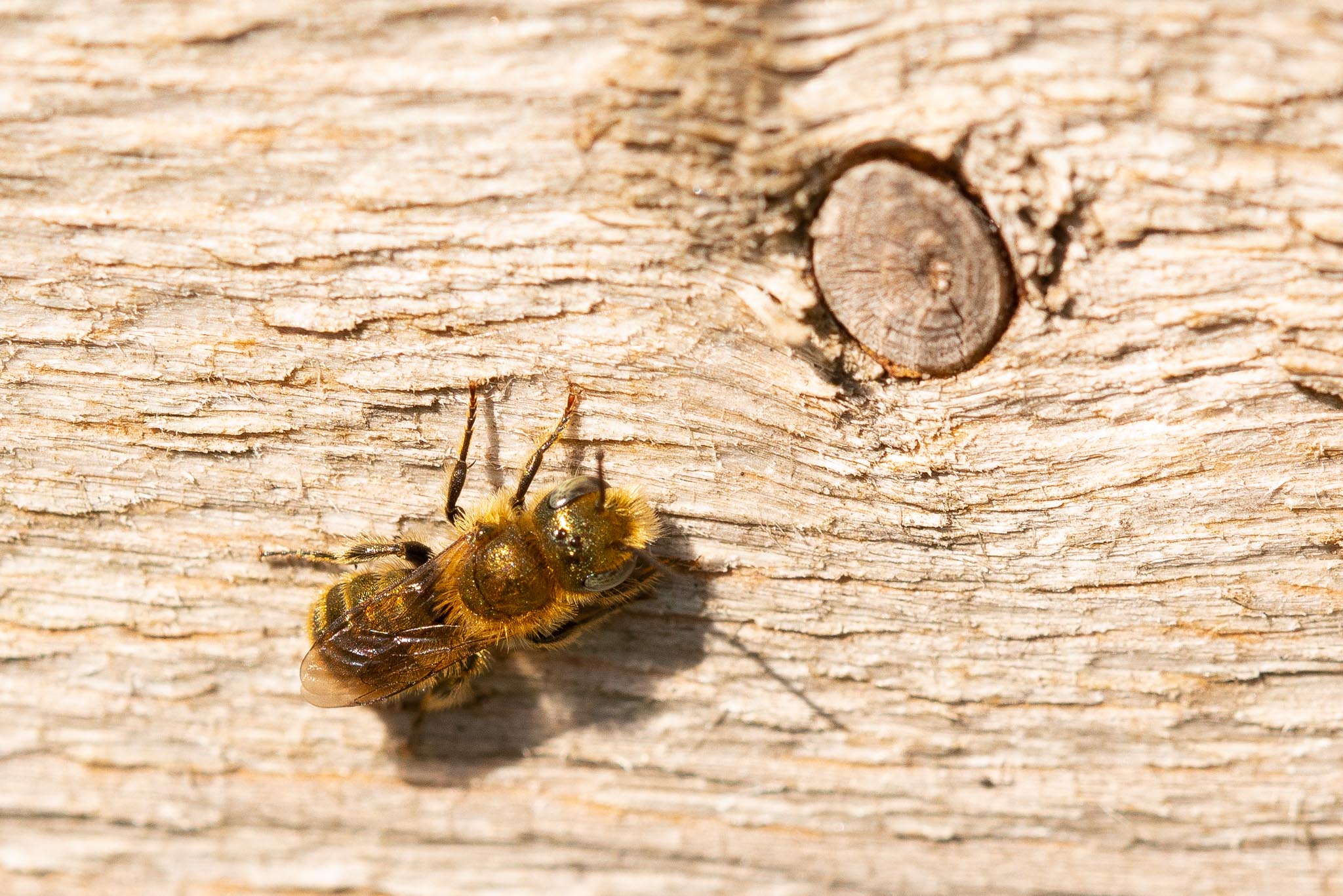
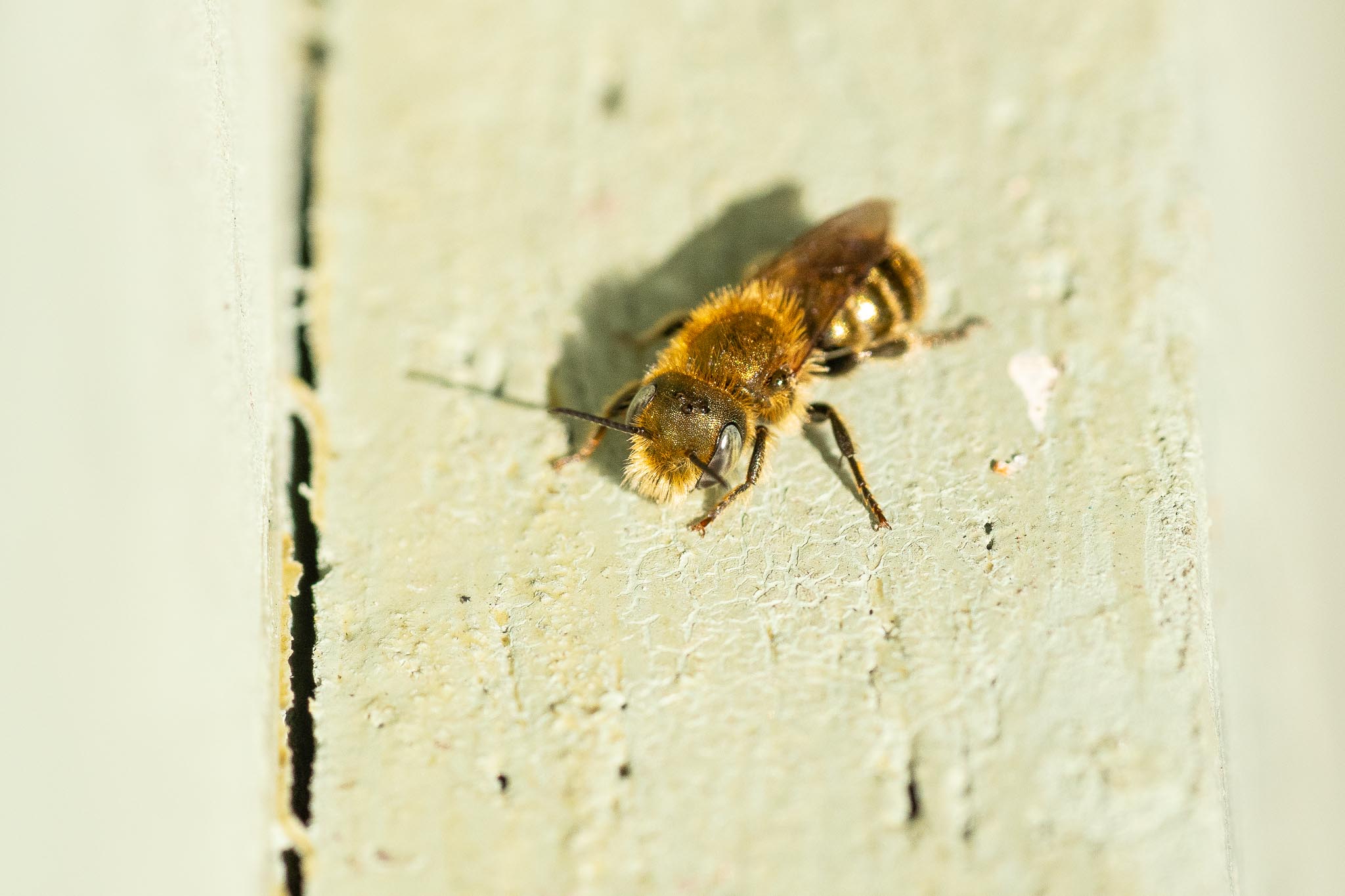
My time in the garden in the past week has largely been spent chasing this small bee around. It’s probably a male blue mason bee with the Latin name of Osmia caerulescens. Another book is telling me (not literally) that it’s Osmia leaiana. They have large green-blue eyes and zip around for a while before settling down on a hot surface like a cat in a sun patch.
To say this tiny solitary bee gave me the run around is probably understatement of the lockdown era next to ‘drinking disinfectant will not help you’.
The bee liked to rest just long enough on a surface for me to get there. I had to approach it with exactly the right camera settings and focus on my lens to be able to get a decent photo. The satisfaction of getting a decent image was massive. Little wins and all that.
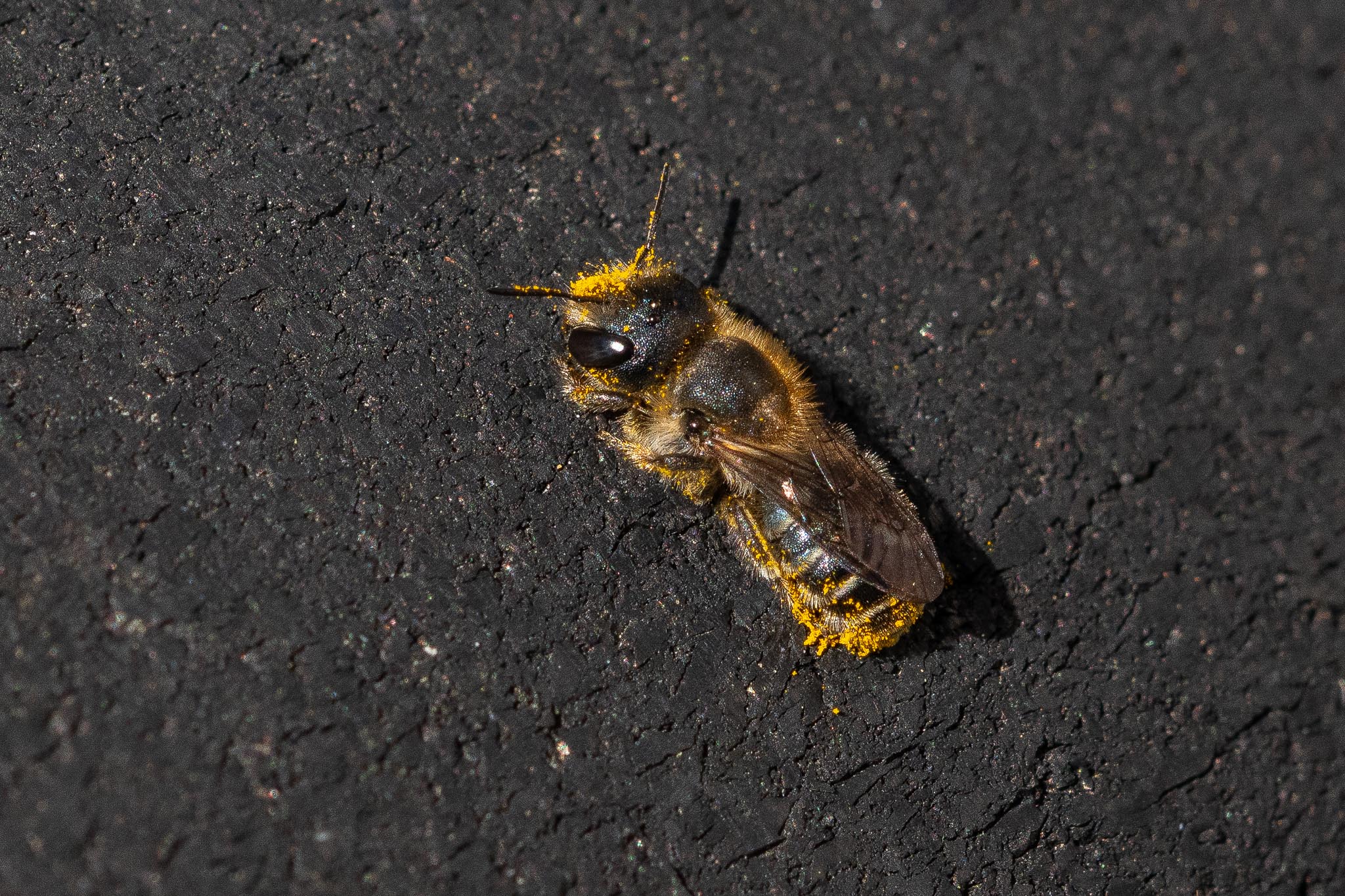
I think this is a female blue mason bee having a bit of a rest on the roof of the logstore. Safe to say the highlights of the past six weeks in many ways have been getting an in-focus photograph of an insect like this.
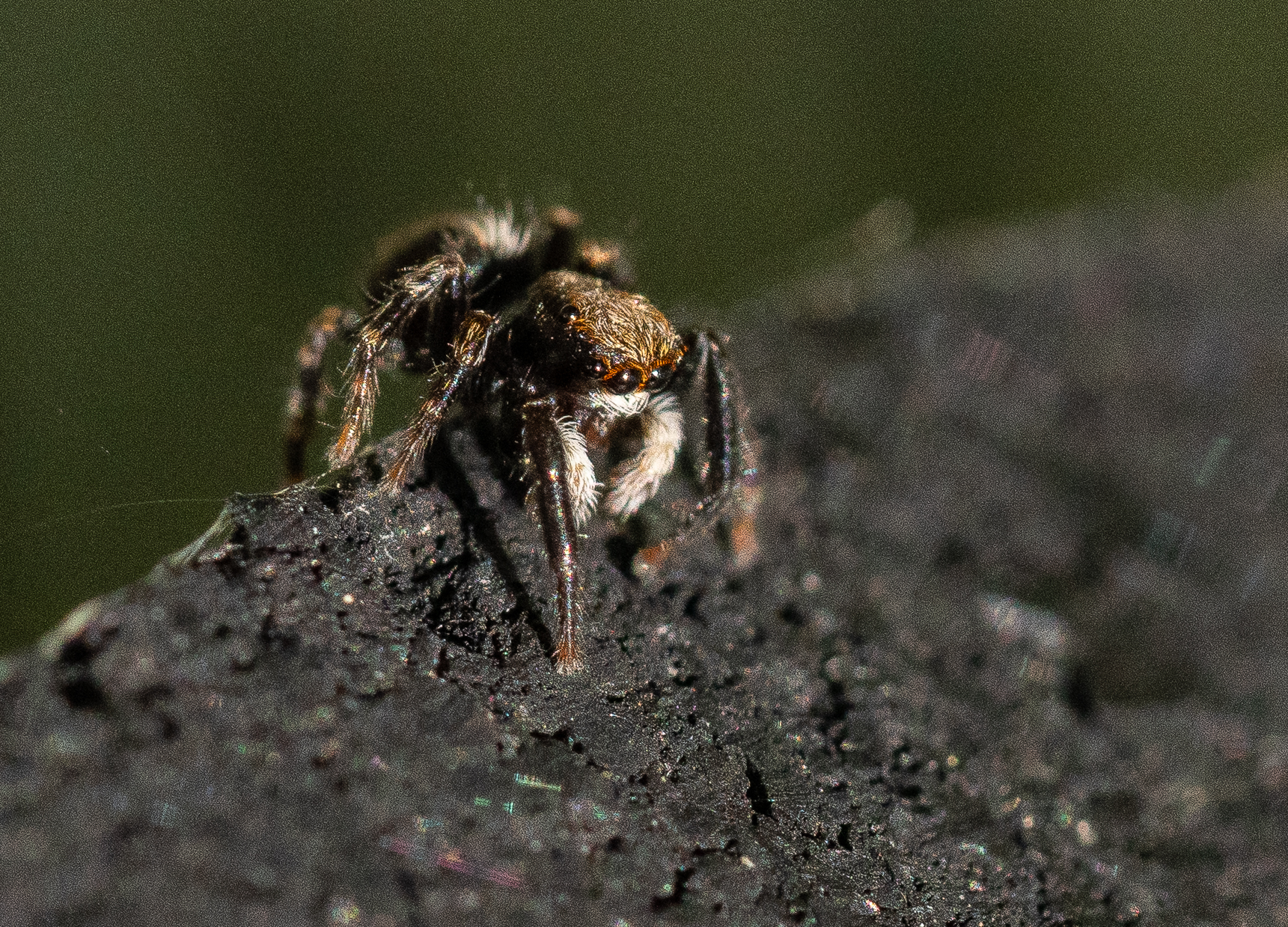
The internet is awash with stunning photos of jumping spiders. They are cute and fluffy with massive cartoon eyes. This was the best attempt I made at getting something in focus. I don’t believe in taking them out of the wild for a photography shoot – the ichneumon wasp doesn’t count! – so I am trying to get them in focus in the wilds of my woodstore shelf roof. If there is any type of spider that will help people get over a fear of spiders, it should be this one.
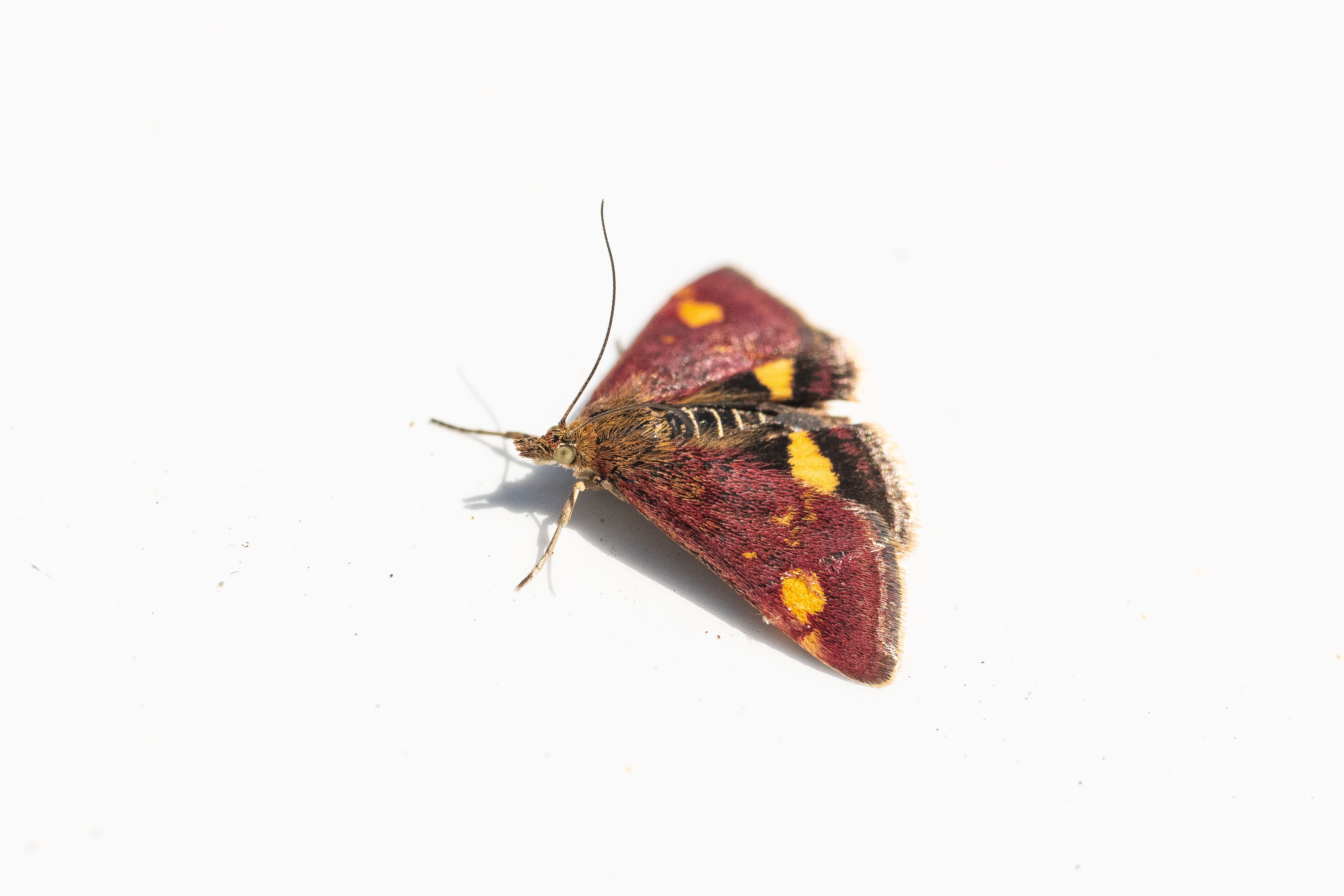
My car hasn’t moved very much in the past 6 weeks but it’s proving useful for insects basking in the afternoon sun. This mint moth was doing just that on the bonnet.
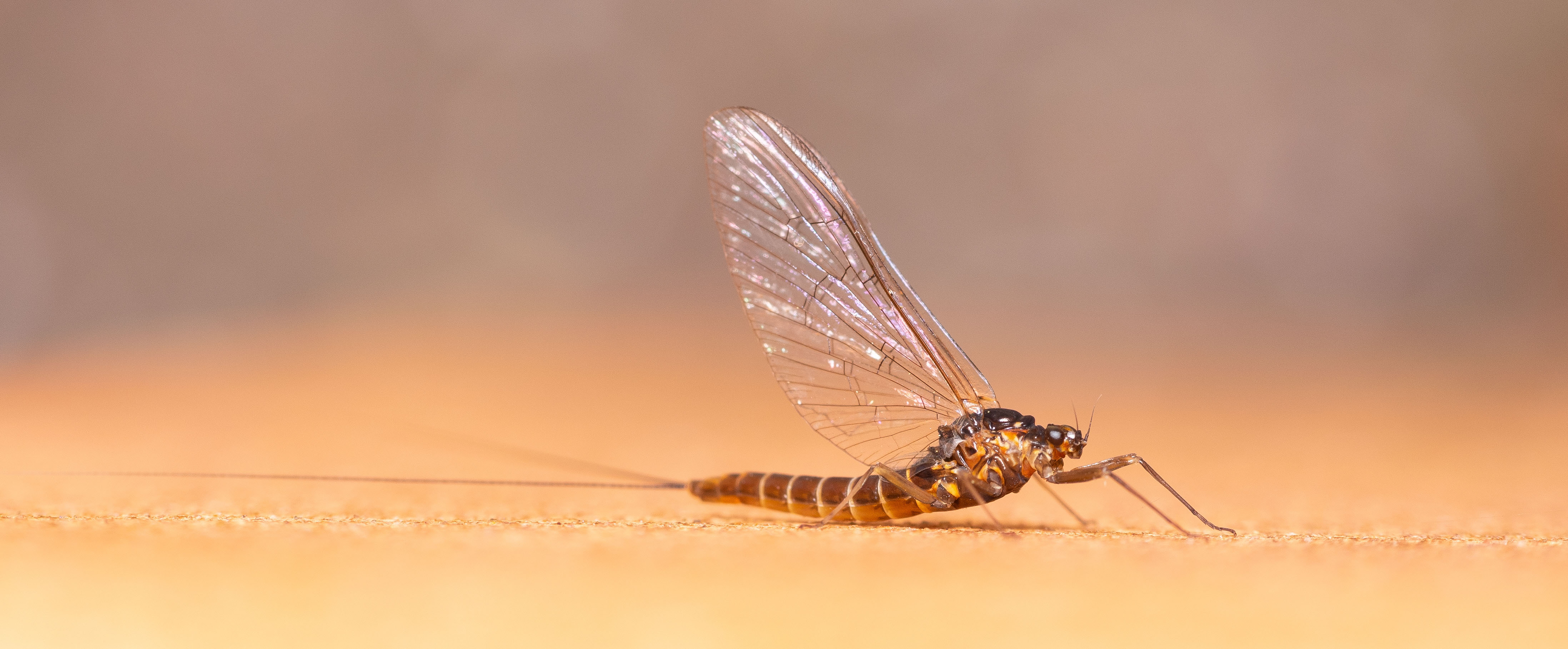
The biggest surprise in the garden this week was spotted early one morning before I started work. On the side of a hexagonal flower pot I noticed some unusual wing shapes. I realised it was an insect and nipped inside to get my camera. It was in the shade and temperatures were only just rising. It was a mayfly, one of 51 species in the UK. I know very little about this group of insects other than that they appear en-masse over rivers and that they only live for one day. How did it get to my garden? The River Arun is ten minutes walk away but it was a real joy to think it had used my garden to shelter for half its short life.















 Bracken and birch glade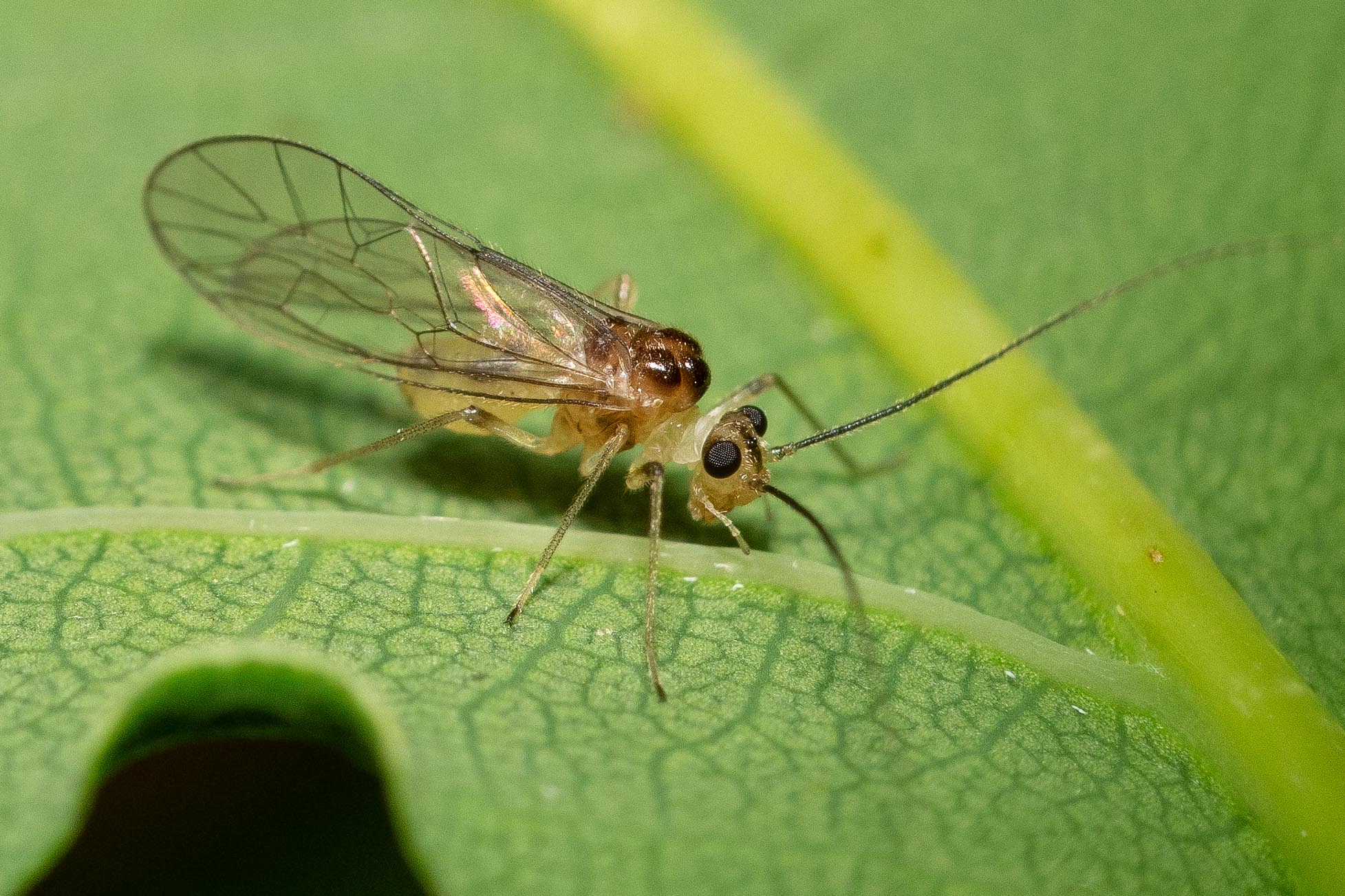


 Unlocking Landscapes