Oaks of London: Bexley and Beckenham oaks on the edge

Bexley oaks - March 2017 djg-4

This is an update on my Oaks of London photography series. The photos have been taken with DSLRs, compact cameras and my phone camera. Rather than trying to put together a glossy array of ancient oak photos, I want to draw attention to the unseen trees fighting it out with modern London, many of which are teetering on the margins. Lack of funding to protect and manage London’s oaks is biting, as is a lack of understanding and appreciation of their heritage and wildlife value. These trees have stories to tell.

Photographing the oaks of London is a fairly impossible but very slow and enjoyable project. South-east London is, quite literally, a walk in the park. Such is the extent of green space south of the river that there are many oaks to be found and some very closely concentrated, especially in Dulwich or Honor Oak, which I covered last year. But moving into new areas can be tricky, London’s oaks are on the margins now, they no longer form the central, spiritual role of Celtic or event recent times, when gospel oaks held prominence in settlements or when the Druids (the knowers of oak) made sacrifices before them, something I am not suggesting we bring back in 2017. One of the things I’ve learned this year, also after having read some of Aljos Farjon’s new book Ancient Oaks in the English Landscape, is that old parks and estates are key to the survival of oaks.

In March 2017 as part of a walk with London Wildlife Trust, we were led by Mathew Frith around Danson Park and Bexley Woods. Two oaks stood out in this walk, an area I would not have known about without the connections I have with the Trust and exposure to knowledge of people like Mathew. One oak, the Bexley Charter Oak, can be found in TimeOut’s The Great Trees of London, and it has a lovely fence around it protecting its root plate. The tree is some 200 years old and reflects the treatment that all these oaks deserve to have, if they stand in similar surroundings.

Bexley oaks - March 2017 djg-1

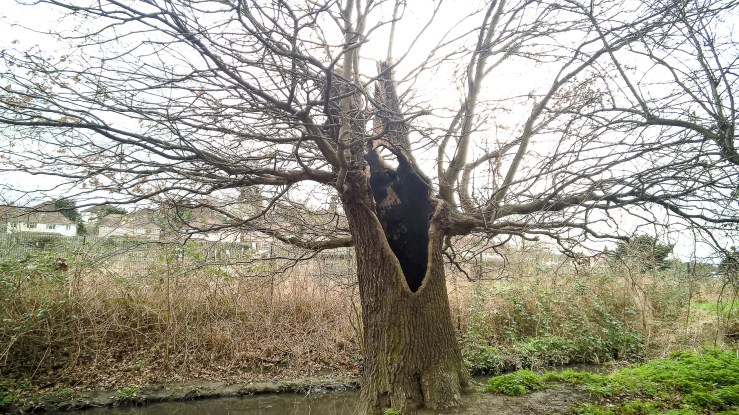
Another oak is not faring so well and is not treated with the same level of affection, or perhaps simply a different kind. Walking through Bexley Woods and following the river Shuttle east brings you to an oak quite unlike one I’ve seen.
Bexley oaks - March 2017 djg-3

The oak is entirely hollowed out until about human waist-height, with charred sapwood that shows it has had fires lit inside. It is a stunning tree, wild and exposed on the edge of the river and a footpath. It is a symbol of London’s oaks on the edge: unprotected, vandalised but fighting on. The tree still lives. In many ways the actions here of what you can only expect to have been children or ‘wayward’ teens, is a process of veteranisation. The only difference is that rather than being undertaken by arboriculturalists, it’s the unintended work of the public.

BPP - 7-11-17 djg-11

Shifting south-west to the boundary of Lewisham and Bromley is Beckenham Place Park. This old country estate, fit with a mansion house very similar in style to that of Danson Park, has open parkland and many fine veteran trees. On the hill is a remnant of the Great North Wood, the typical oak-hornbeam and hazel mixture that can be found in chunks all the way up to Dulwich. Thanks to Lucy Mitchell for showing me round.

BPP - 7-11-17 djg-3

The oak featured here is a lapsed pollard, meaning that it was likely once cut back higher up but has, like many old oak and beech trees across London, been left to restructure itself. This oak is somewhere between the two Bexley oaks mentioned above. It needs the care of the Bexley Charter Oak as it is experiencing stress and strain from its exposure to footfall. Looking closely at the buttresses you could see that dogs had been digging holes, pooing on the roots, and that the collective trampling was exposing roots in some places. It’s a tree you just want to hug and climb, but its spot right there in front of the house leaves it open to quiet, unintended harm.

Oaks of London archive
Oaks of London Flickr photos

Woodlands: BBC Open Country on One Tree Hill

OTH oaks-1

In December I did some recording with BBC Radio 4’s Open Country, presented by David Lindo and featuring The River Effra, the London National Park City and Queen’s Wood. It was great to be able to represent the Friends of One Tree Hill and London Wildlife Trust on the programme. Please listen here: http://www.bbc.co.uk/programmes/b088fx30

You can read my photo essay about One Tree Hill here: The Honor Oaks


Photography: Kestrel

Kestrel

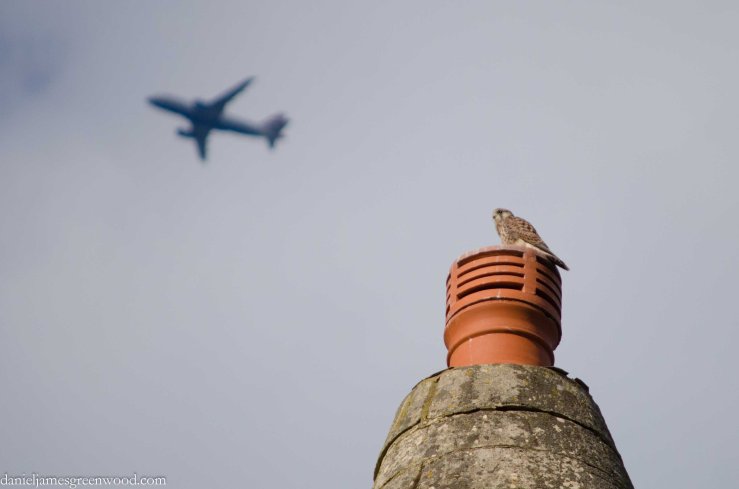
Kestrel, St. Peter’s Church, London, June 2015

There is a church spire in south London where, most years, a pair of kestrels rear chicks. This year four chicks fledged and provided onlookers with great entertainment. These birds depend on a mixture of habitats, breeding in a Victorian manmade structure, learning to hunt from the roof of a neighbouring cricket pavilion and sustaining themselves on small mammals captured from the rough edges of woods, allotments and playing fields. The urban environment can support amazing wildlife.

This photo is for Sarah Robinson who has given so much time and attention to these animals.

Have you seen a stag beetle in London recently? You’d be surprised

This article was featured in the News Shopper

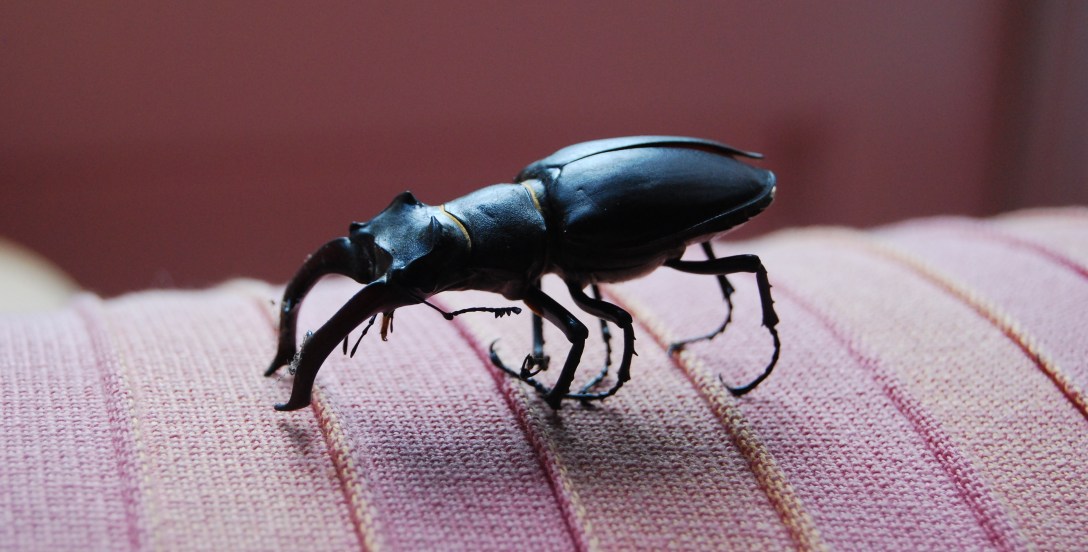
Growing up in Lewisham as a kid, the sight of a stag beetle on the pavement was not unusual. You can see where insects get the name ‘mini-beasts’ when you look at this particular creature: its huge mandibles give it a sense of outward aggression, as if it’s constantly spoiling for a fight. When you witness a stag flying around the impression is of a veritable thug who’s had too much to drink. But stag beetles are perfectly harmless and have, like much of Britain’s wildlife, suffered immense declines since the Second World War. Why is this? Stag beetles are dependent on rotting wood in woodland habitats. The suburban sprawl of the post-war period saw extensive loss of habitat, ancient woods were felled and grubbed out and the ensuing countryside tidy-up has been so damaging to our wildlife, particularly for our bees and butterflies. But, funnily enough, London is a great place to find stag beetles, particularly Lewisham and Southwark. In the past week I’ve seen three male stag beetles, two of them in flight looking for a mate and one dead on a doorstep. The heavy rain and summer break-outs have created good opportunities to view male stags flying around, as windy and wet weather is unsuitable for a cruising stag dude. London Wildlife Trust has launched a campaign to map the distribution of stag beetles in the city, and people have been sending in their sightings in the hundreds. It seems there’s a real affection for this mini-monster amongst Londoners, it’s ignited people’s interest in wildlife, rekindling memories of childhood, when stags were more common (and, apparently, treated very unfairly!). It’s also interesting a new-wave of wildlife watchers who can take the lead on protecting this precious species in the decades to come.

What can you do to help stag beetles after you’ve let London Wildlife Trust know about your sighting? If you have a garden, allow a wild fringe to evolve and create deadwood piles near trees to mimic a woodland habitat. If you have a tree that’s dead or been felled, let the part of the wood or at least the stump remain there. It’s all about keeping things messy. It’s a good idea to keep your cat in from dusk onwards, when the beetles are likely to be roaming. If you don’t own a garden why not join a local Friends of group for a park or nature reserve and help to create stag beetle habitat, or set an area aside for them in your community garden. Stags beetles need our help, and by finding out where they are today we can help to protect and promote them for the foreseeable future.

More information:

People’s Trust for Protection of Endangered Species (PTES)

London Wildlife Trust

BBC Nature

Hutchinson’s Bank butterflies

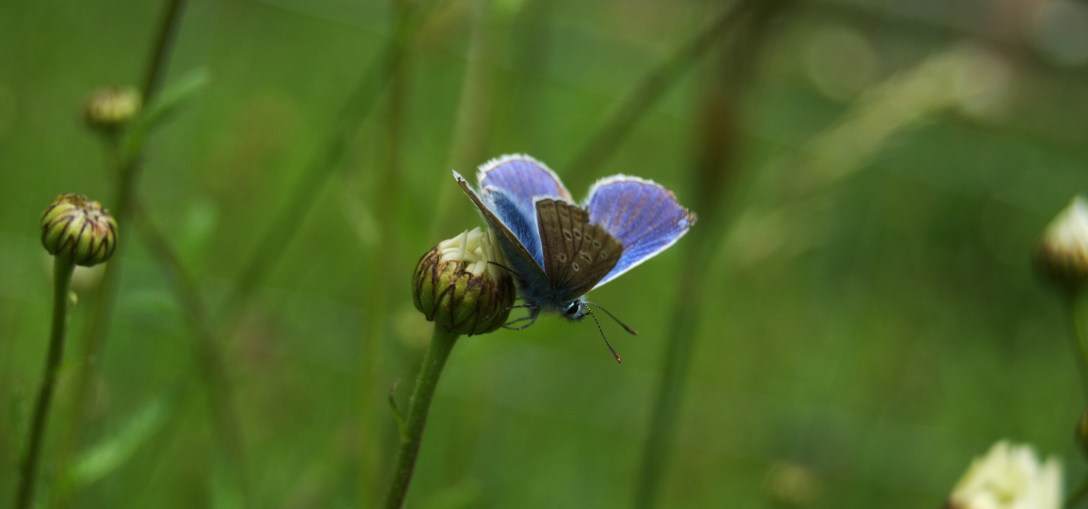
On Saturday (9th June 2012) London Wildlife Trust and the Old Surrey Downs Project held the annual Hutchinson’s Bank open day. With the Heritage Lottery Funded From Thorn to Orchid Project, Hutchinson’s Bank has been managed instensively by both local and travelling volunteers over the past 12 months to remove the encroaching scrub of young trees which, if left unchecked, will shade-out the foodplants of a diverse array of butterflies. Here are some of the butterflies encountered on the day, many of which will thrive thanks to the ongoing management of the 35 acre reserve. The small blue and dingy skipper are two butterflies suffering severe declines nationally.

Small blue (Cupido minimus)

Brimstone (Gonepteryx rhamni)

Green hairstreak (Callophrys rubi)

Dingy skipper (Erynnis tages)

Small heath (Coenonympha pamphilus)

Common blue (Polyommatus icarus)