
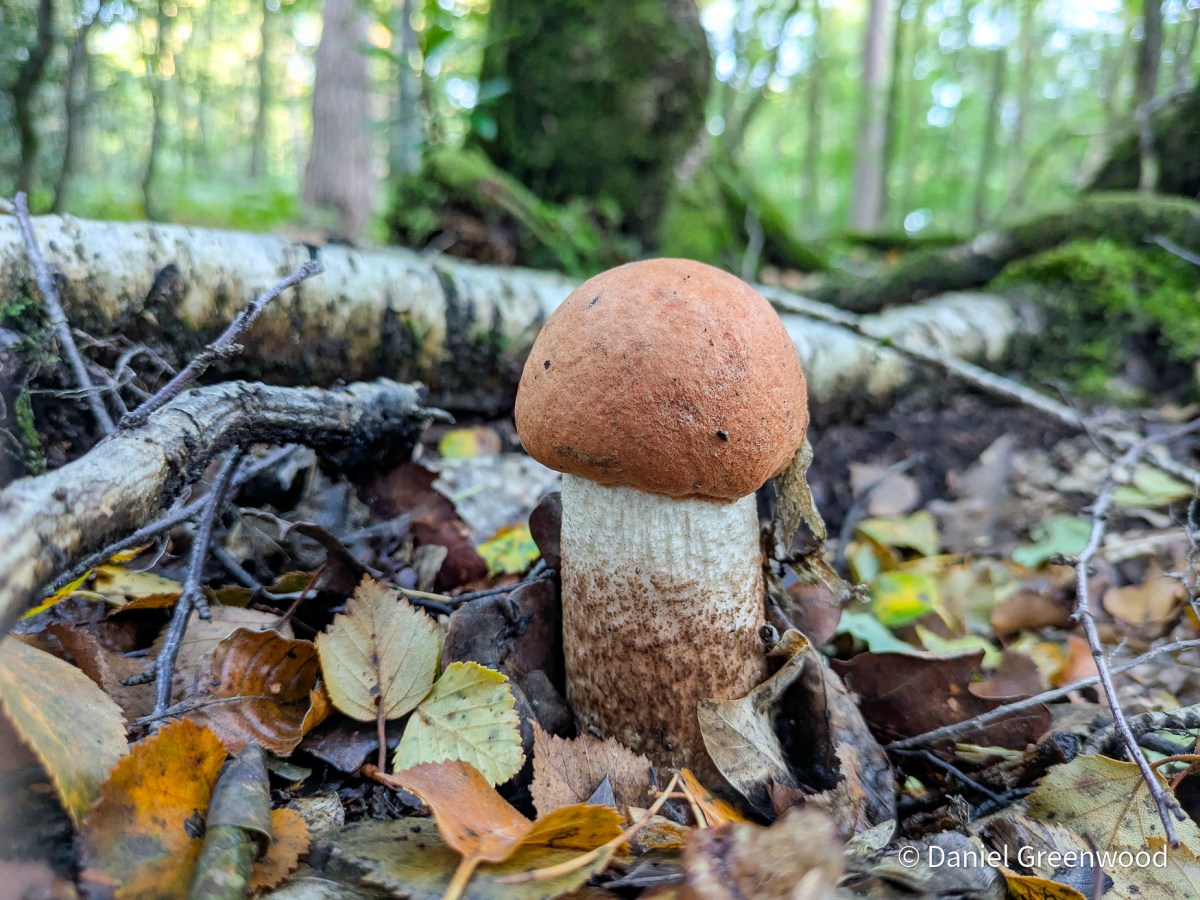
I was visiting a local and very popular woodland on 2nd October when I discovered an incredible scene, like something out of a folk tale. To the side of the path were four bay bolete mushrooms (Imleria badia) growing on the mossy mound created by a fallen tree. They were aligned in some hilariously synchronised arc from the bottom left to the top right.

I couldn’t believe that no one else had noticed this display, seeing as it was so close to the footpath and there were lots of families in the area. I suppose it makes a difference that I was actively looking for this sort of thing. This species is bay bolete, an edible mushroom in that most famous of families, which I have found before in Sussex but never in such a photogenic state. I didn’t pick the mushrooms.

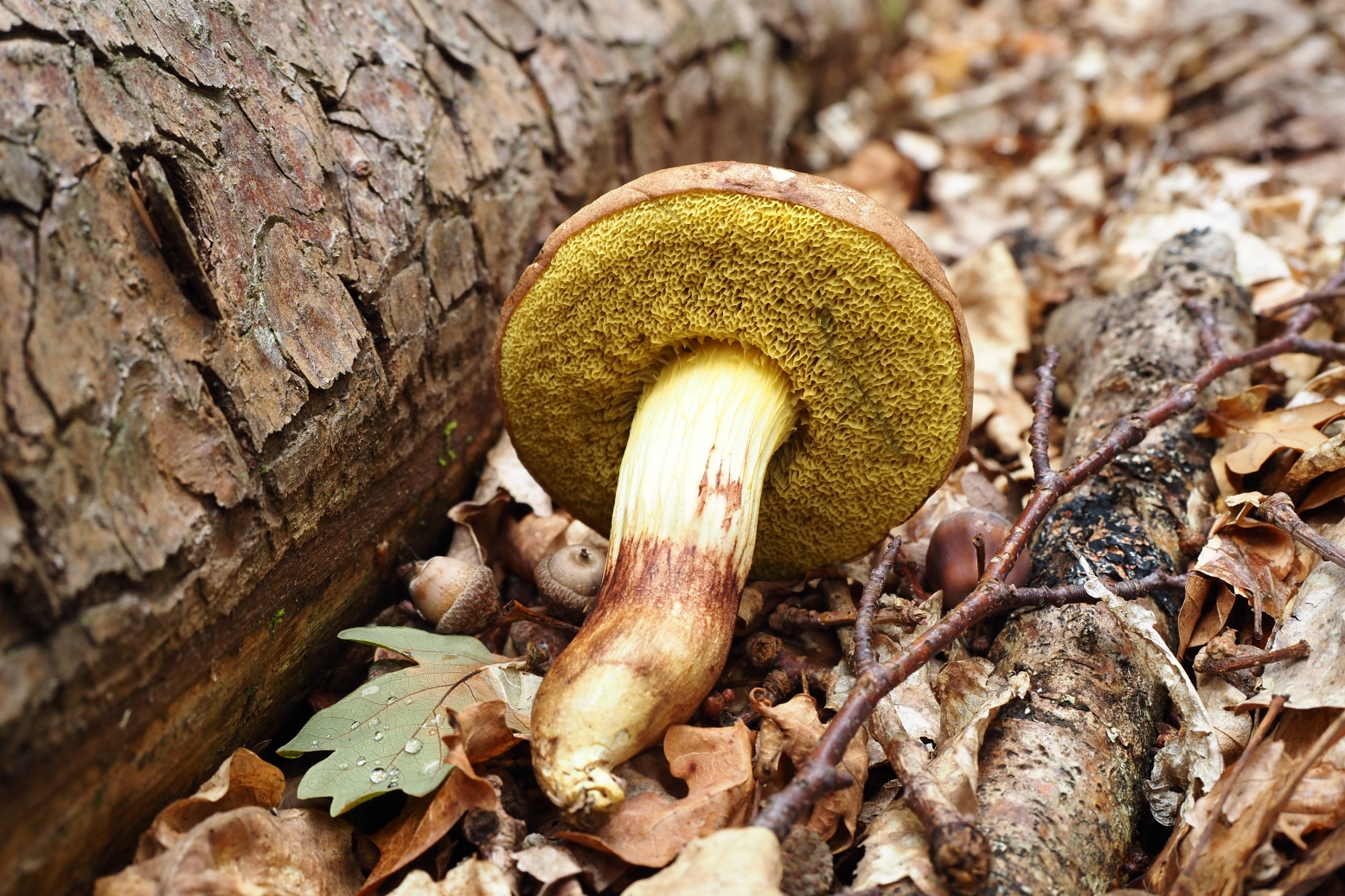
Another important way to identify boletes and their relatives (or allies, as they are oddly known), is to look for pores rather than gills under the cap, as can be seen above.

They really were a joy to find! These kinds of encounters are what make this time of year so special.
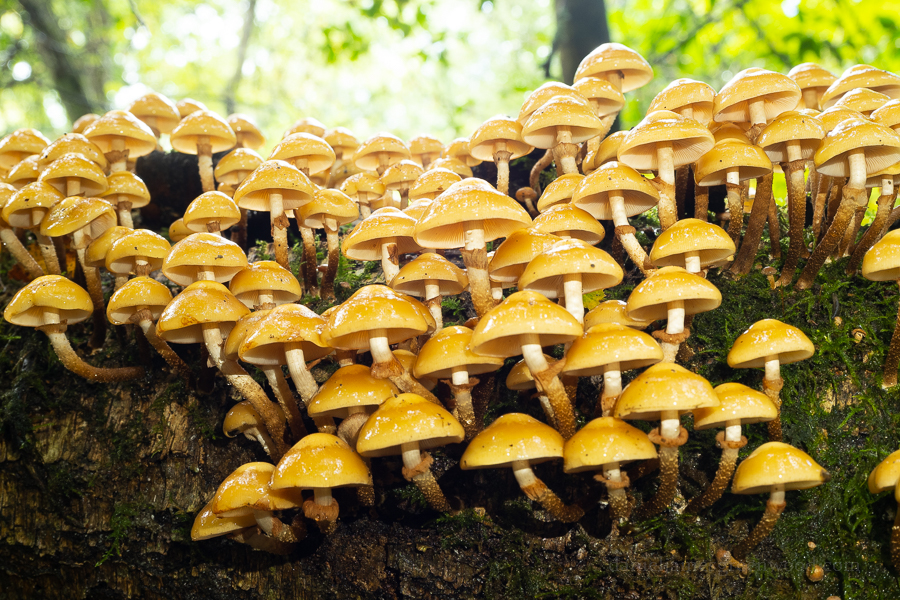
There were more great mushrooms sightings to be found during this walk, what will probably go down as one of the best days of the season for me. This is a gathering of sheathed woodtuft (Kuehneromyces mutabilis) on a fallen tree. This is known to be edible but can be confused with the drop-dead poisonous funeral bell (Galerina marginata).
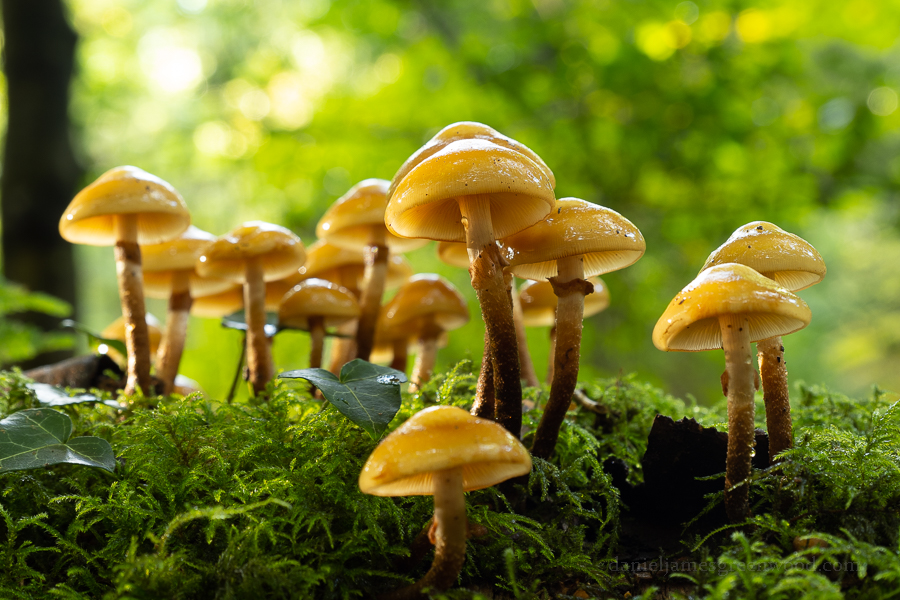
The lighting and recent wash of rain made the mushrooms lovely to look at. Once again you can see where the idea for lampshades probably came from.

I got into an interesting conversation with a man who approached me when he saw I was taking photos of this patch. He said he had been taking photos of mushrooms for years with his phone, and that this would be a very good year because ‘the rollrims were out’.

I think the mushrooms above are rollrims, a group that are renowned for their inedibility and toxicity. The man I spoke to was convinced that their abundance was a pointer to a strong showing to come from the mushrooms. That’s new information for me, and something I will consider as the season progresses.
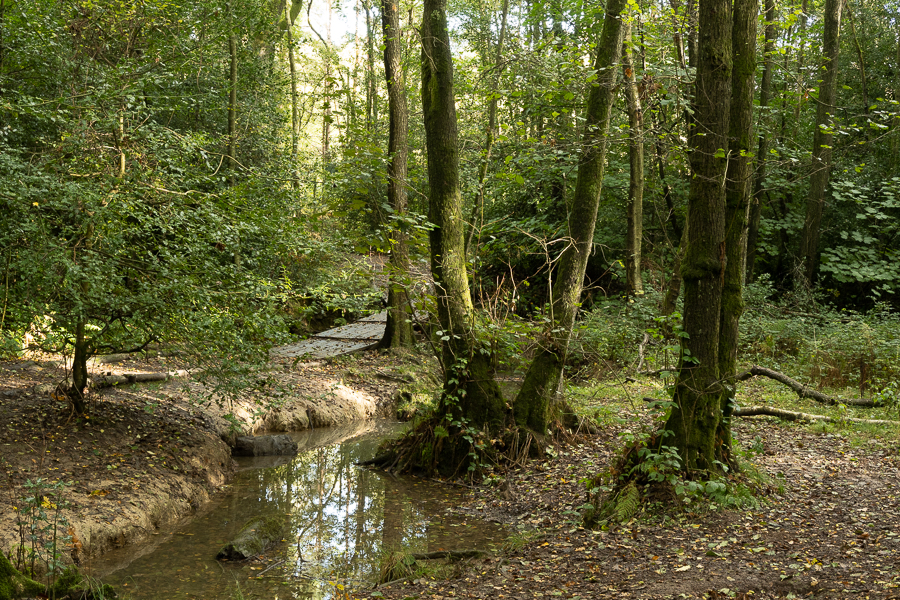
I judge the potential of a mushroom season by the amount of rain. For example, the woods now (10th October) look as dry as summer only days after heavy downpours. I would put this down to drought in the local area and the lack of deeper levels of water that trees can draw up and provide to the fungi around them or the wider ecosystem. Trees are known to trade water with mushrooms in return for certain minerals and things they can’t capture alone. The rain had swelled some of the gills (streams, as they’re known in Sussex) that had remained dry throughout the summer.

I found one rather boggy area to be covered in thousands of an orange species which I’m not able to identify.
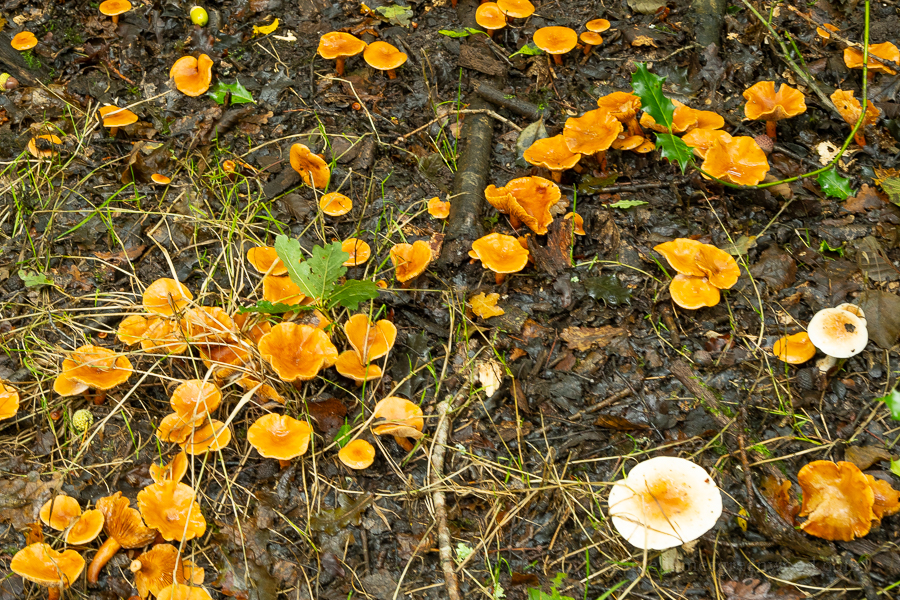
Here’s a closer view for anyone who may have an idea – please let me know in the comments!
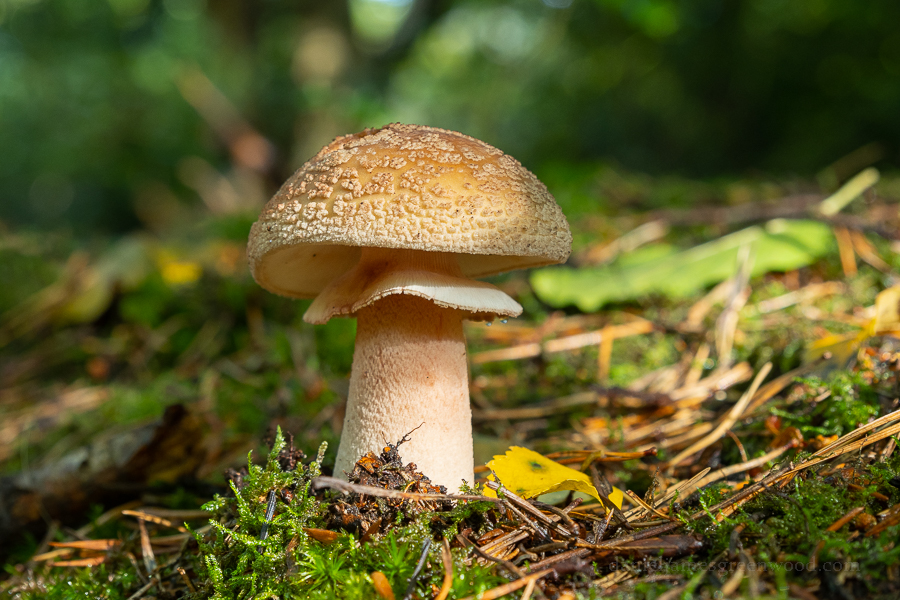
Blushers (Amanita rubescens) were out in force, with some really beautiful specimens to be found. This very nicely set mushroom caught the late afternoon light from its position in moss. I would consider this a portfolio mushroom image!

Another nice species to find is porcelain fungus (Oudemansiella mucida) which almost always occurs on dead beech wood (Fagus sylvatica). Nice images of these mushrooms can be achieved when you focus your lens on the underside of the cap to see the dramatic gills.
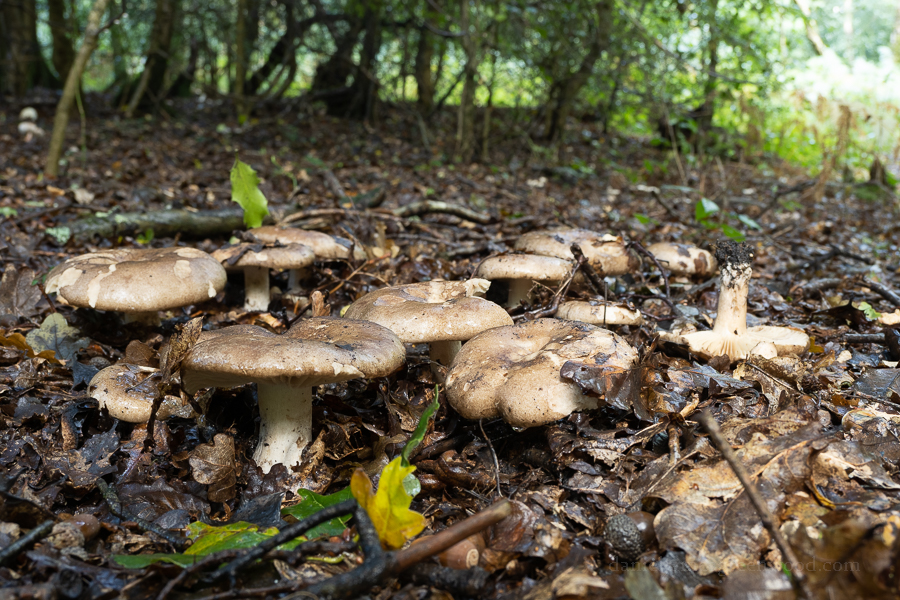
These days when mushrooms dominate the woodland floor are a reminder that you need to keep pushing yourself to learn more, and not just about the colourful and common species. The better quality leaf litter was, well, littered with grey and brown-capped fungi that I am unable to identify. The photo above gives a good example. I’m not sure if these are Russula or something else.
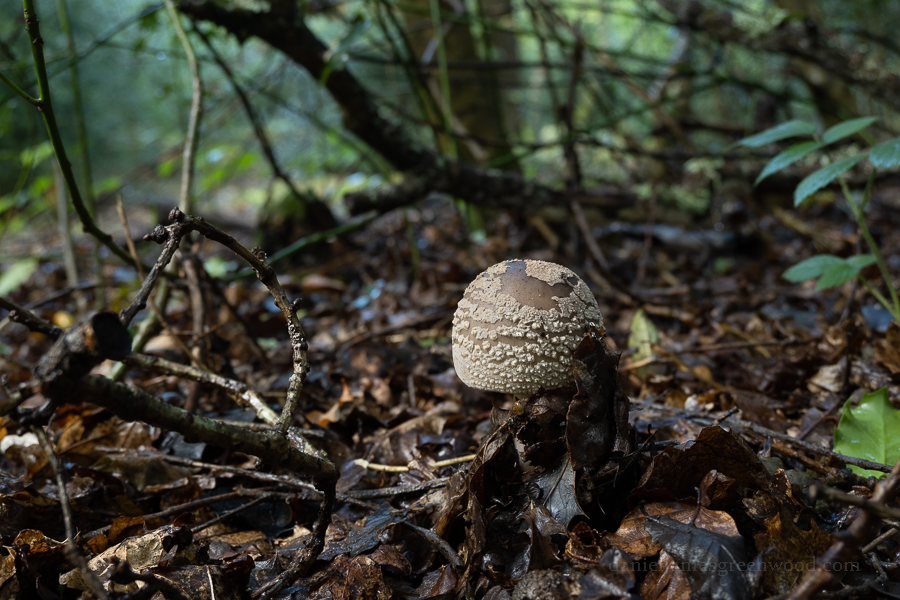
Under the hollies there were lots of Amanitas appearing, with this potentially being a grey-spotted amanita (Amanita excelsa var. spissa).
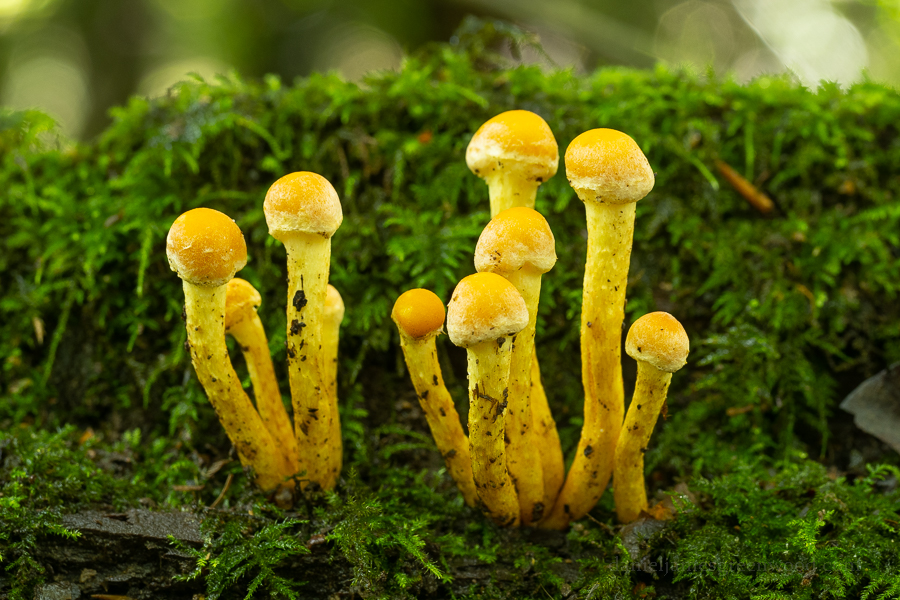
Sulphur tuft (Hypholoma fasciculare) was as common as it usually is, probably making up about 15% of all sightings. It’s a very nice species to photograph due to its colour and the shapes of the mushrooms when young.

These bonnets (Mycena) were a nice find, very hard to miss alongside a main path on a mossy branch. The one on the left really does look like an alien spacecraft.
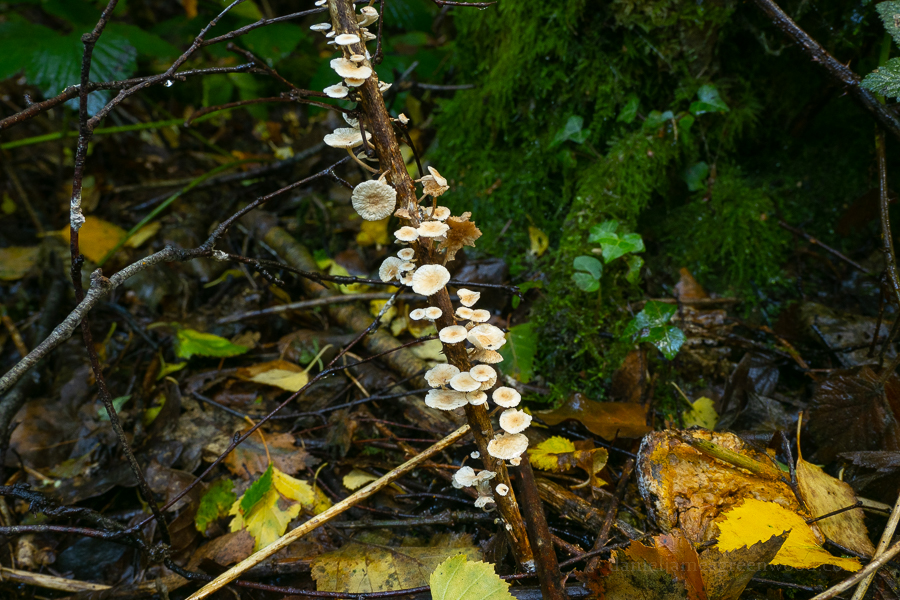
To finish, one of my favourite things to see at this time of year is the twig parachute (Collybiopsis ramealis). You can potentially take some incredible images with this species, as it sprouts along twigs and other bits of wood.
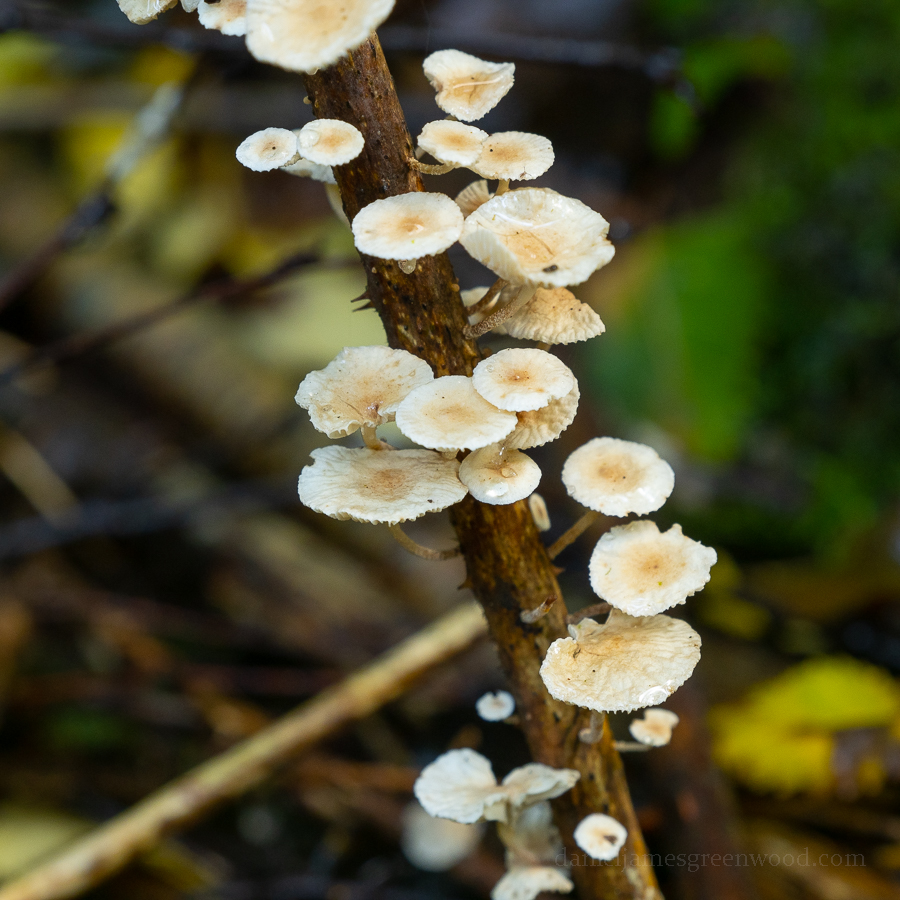
I didn’t do that on this occasion(!), but the most important thing is to get out there and experience this fleeting time of year. The mushrooms are calling.
Thanks for reading.
Further reading: Fungi | The Sussex Weald
Enjoyed what you saw here? If so, please support my work: https://ko-fi.com/djgwild
Latest from the Blog
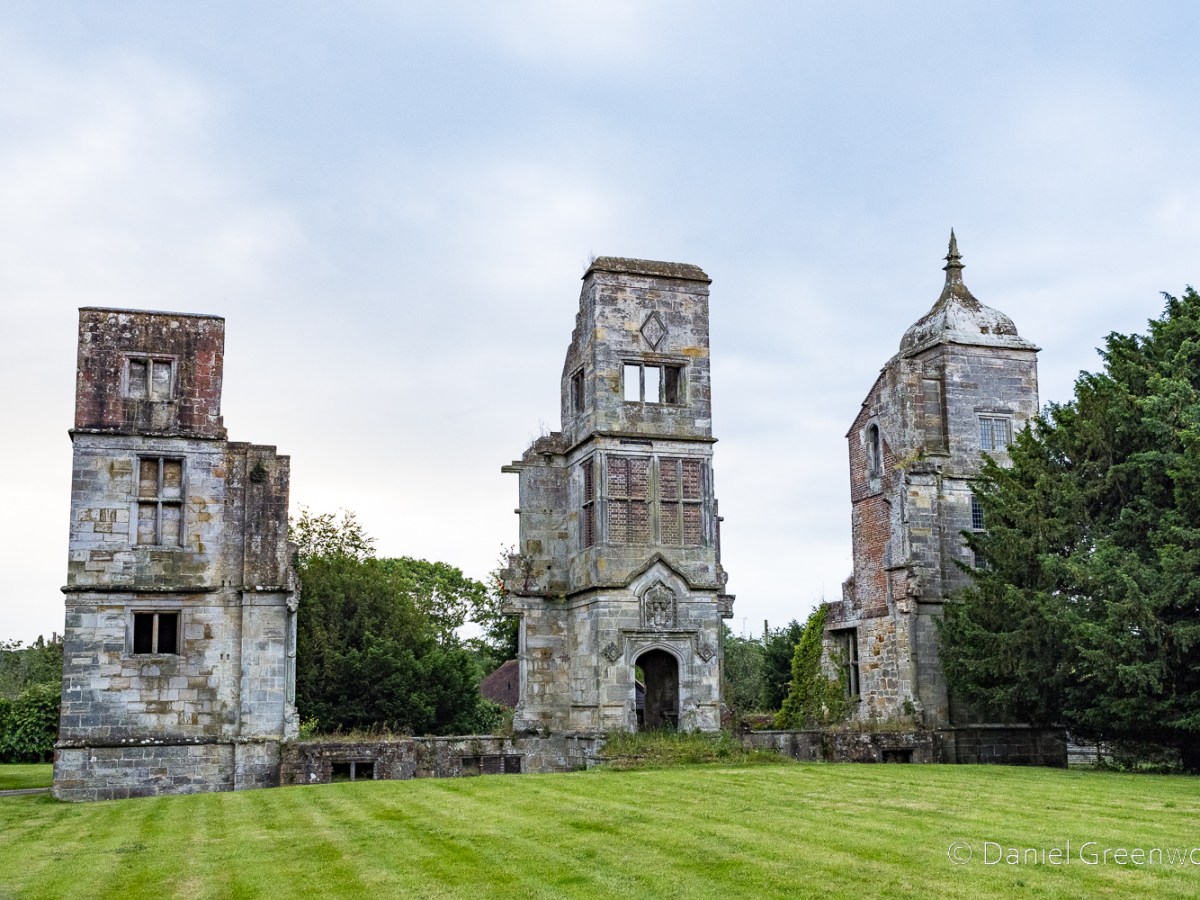
The ruins of Brambletye
A walk from Forest Row to the Brambletye ruins in Ashdown Forest, with some ancient woodland and rocky outcrops scattered along the way.
Winter-spring 2026: the loud lie
What I am experiencing culturally in this rather wet winter of 2025-26
Arun valley oaks around Billingshurst
A long ramble (in both senses) around the oaken landscapes of Billingshurst, including the Wey & Arun Canal



























 Unlocking Landscapes