Salisbury’s oak timbers

Here’s another entry in my slow-blogging Oak Timbers series. You can view my galleries and posts archive here.

I visited Salisbury in Wiltshire (south-west England) for the first time in 2023 and was really charmed by the place. If you’re interested in this kind of thing, Salisbury is the place for you. Here’s a gallery of the timber-framed buildings that interested me the most.

Photos are with my Olympus EM-5 MIII and 12-45mm f4 lens.

Like the good lad that I am, I’ve linked to the Historic England listing for each building where possible.

8, Queens Street (15th century). The timber-framed heritage of Salisbury is blended with the modern consumer outlets. I suppose this is just free advertising for them!
51 Marketplace/Blue Boar Row. This was a large market-hall style timber-framer. I wonder if the lower floor was actually open once upon a time and held an agricultural purpose.
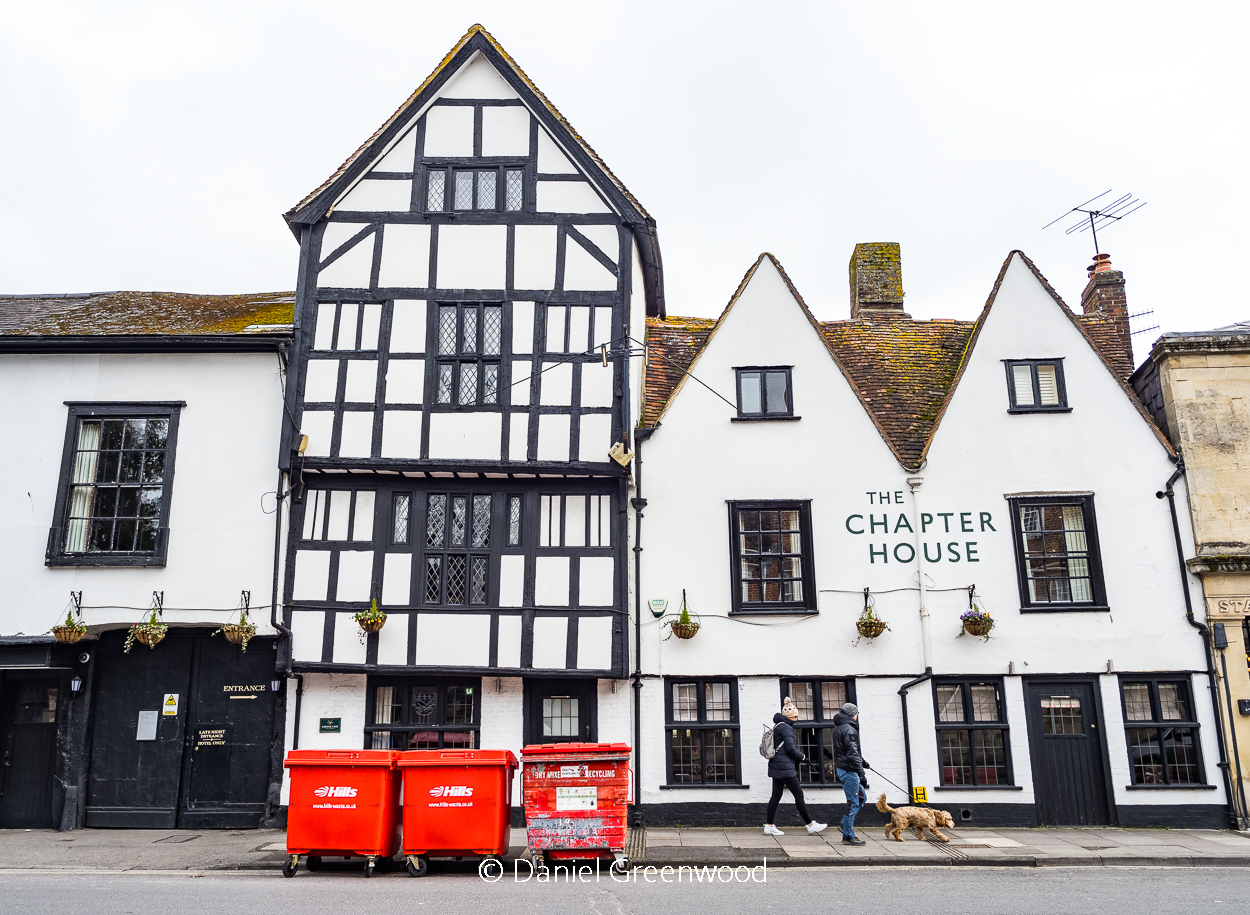
The Chapter House. This was an interesting blend of styles, with the large four-storey house stuck between two different styles. Those steep gables are perhaps quite uncommon in England, looking more like what you might find in Germany, Holland or Belgium. Just a thought.

The Cloisters. These curved timbers are lovely, as is the undulating spine of the roof. The building dates to the 1500s.

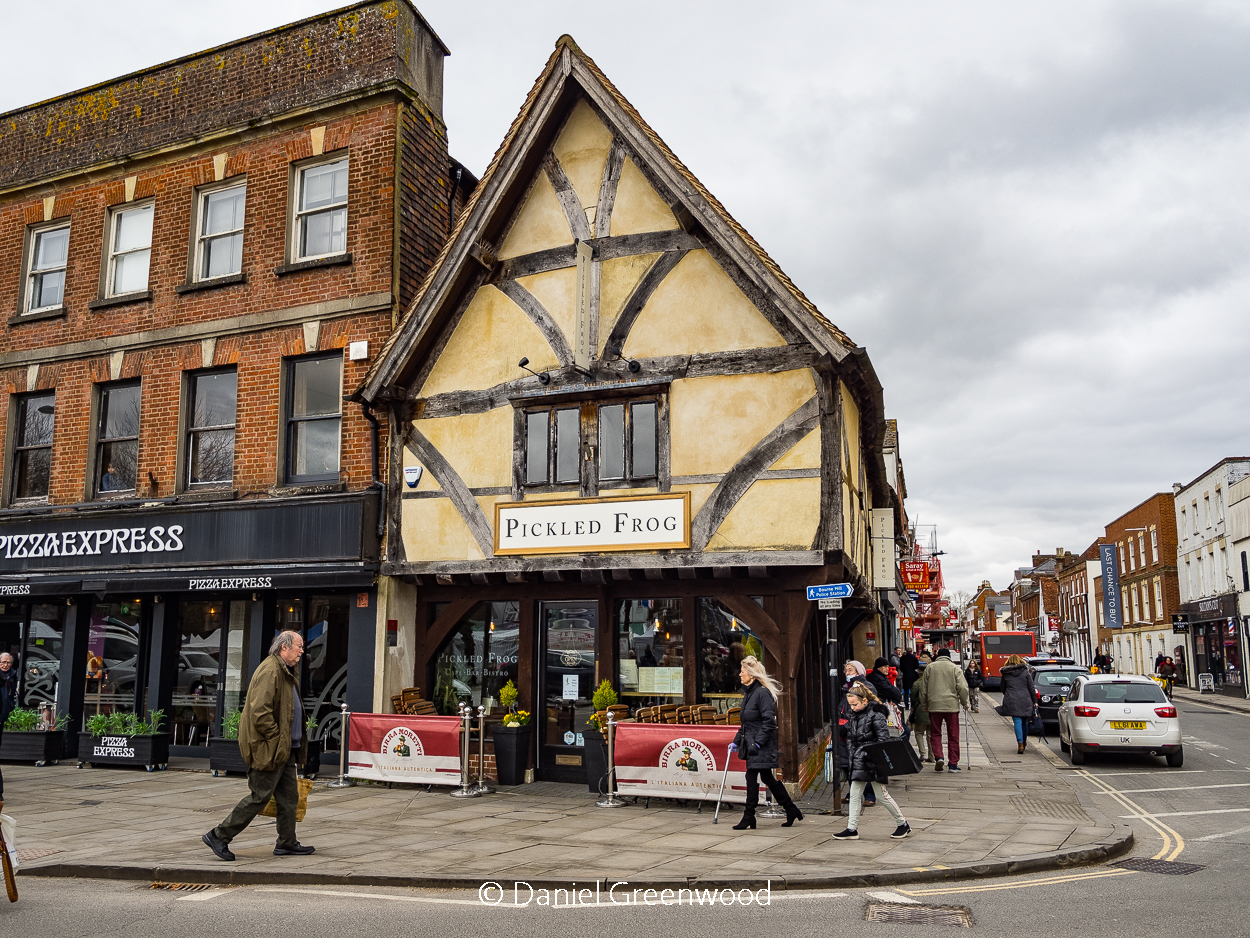
52 and 54 High Street, 1300s! An ‘Italian’ restaurant with one of the most higgledy-piggledy timber-frames in Salisbury. There has been quite a lot of movement upstairs. I wish more buildings had this much character, but that comes with age and flexibility.

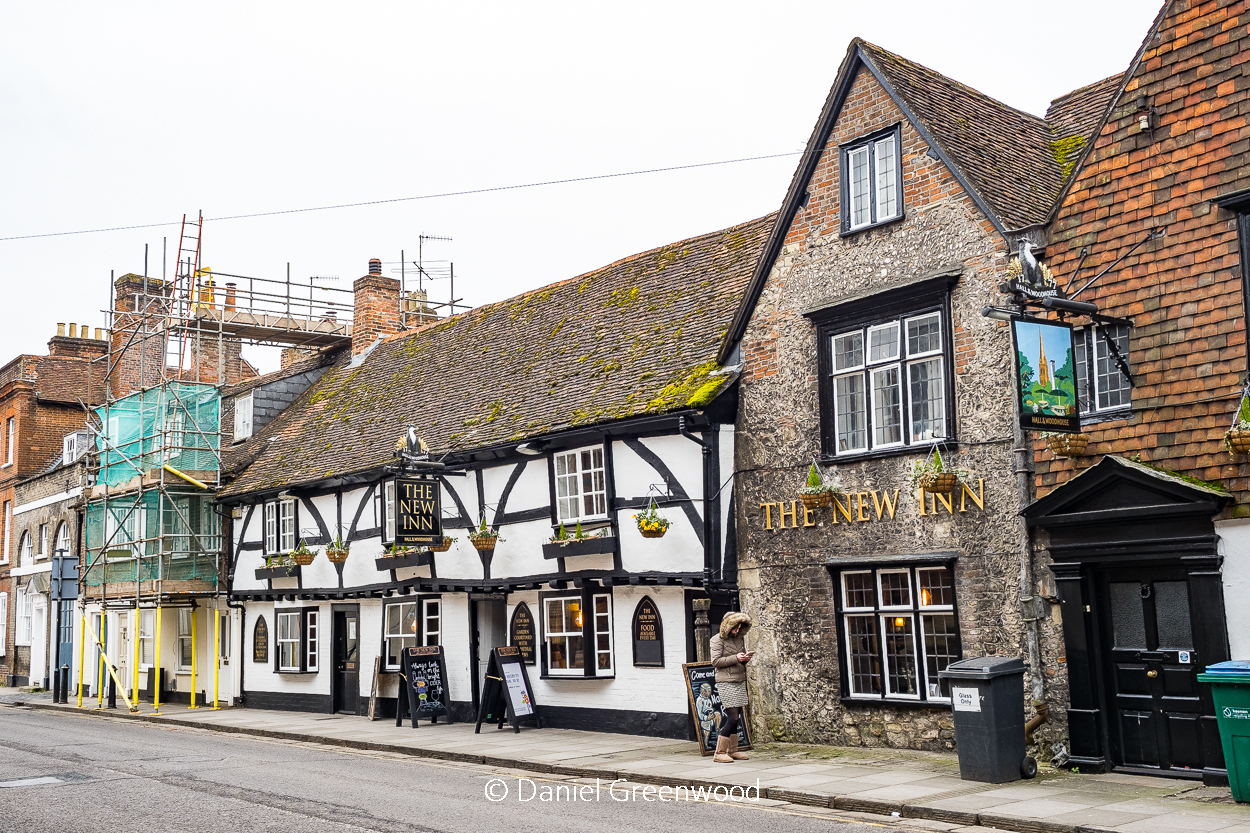
The New Inn. I like including people (without identifying features) in these photos as it brings them to life a bit more. I wonder what was on her mind, maybe just checking the football scores (it was a Saturday afternoon).

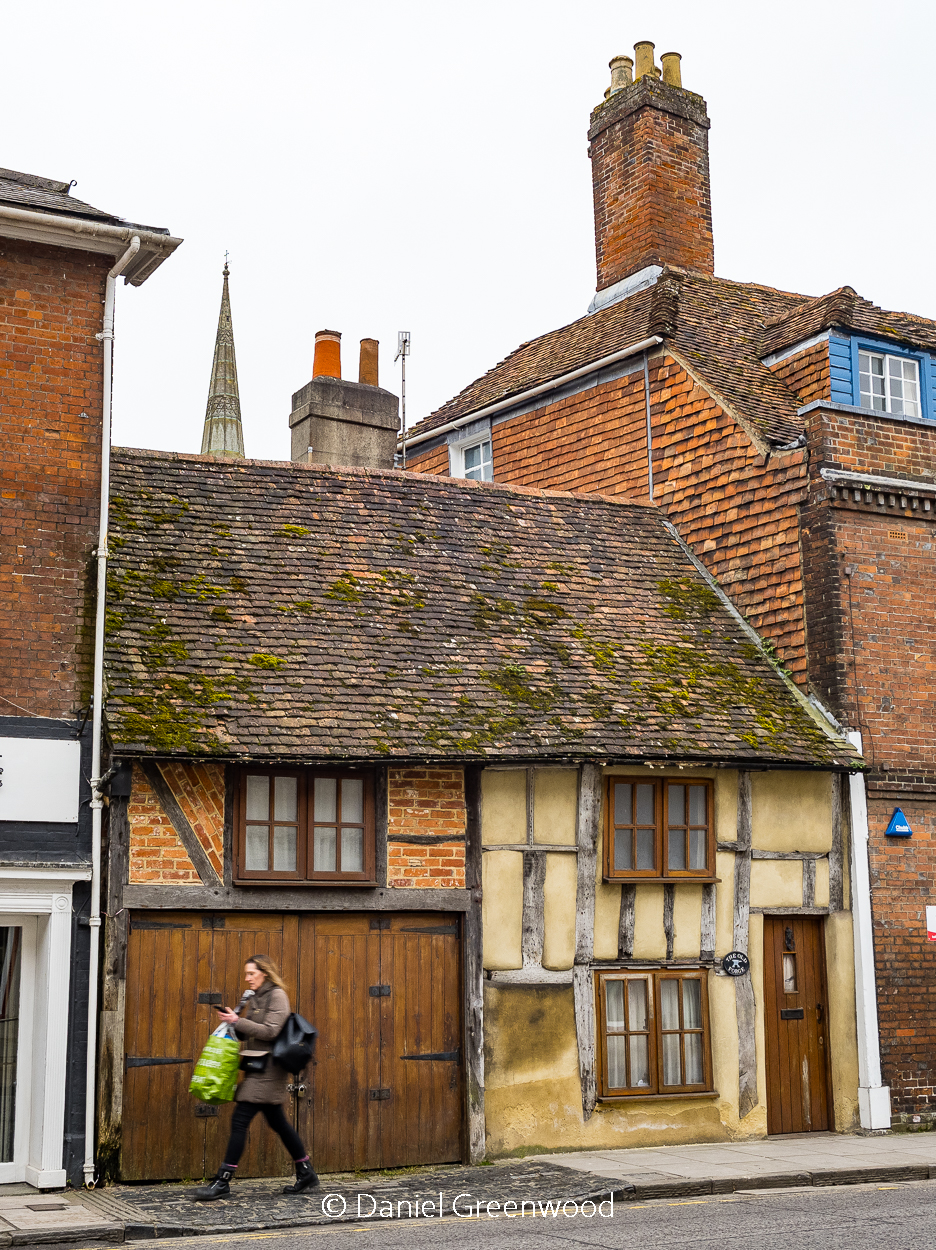
The Old Forge – with the spire of Salisbury Cathedral in the background. There’s oak in that, too.
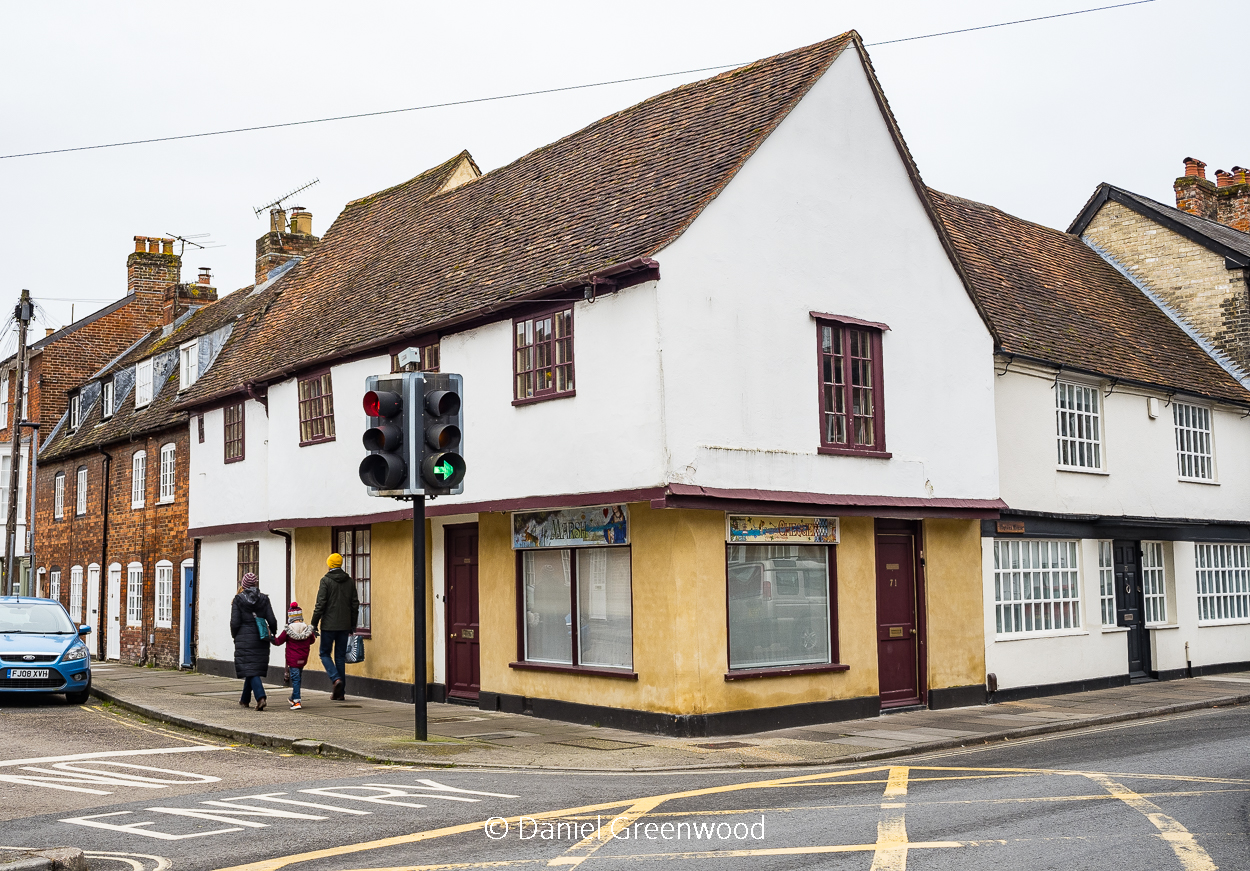
Brown Street. Difficult to photograph, but this is an old house with the timbers well hidden behind plaster or whatever’s on it.

This one had been bought and redone, it didn’t seem to have quite the same character as some of the other timber-framers. The struts (curved beams on the middle level) are quite varied. Not how different most of the windows are.
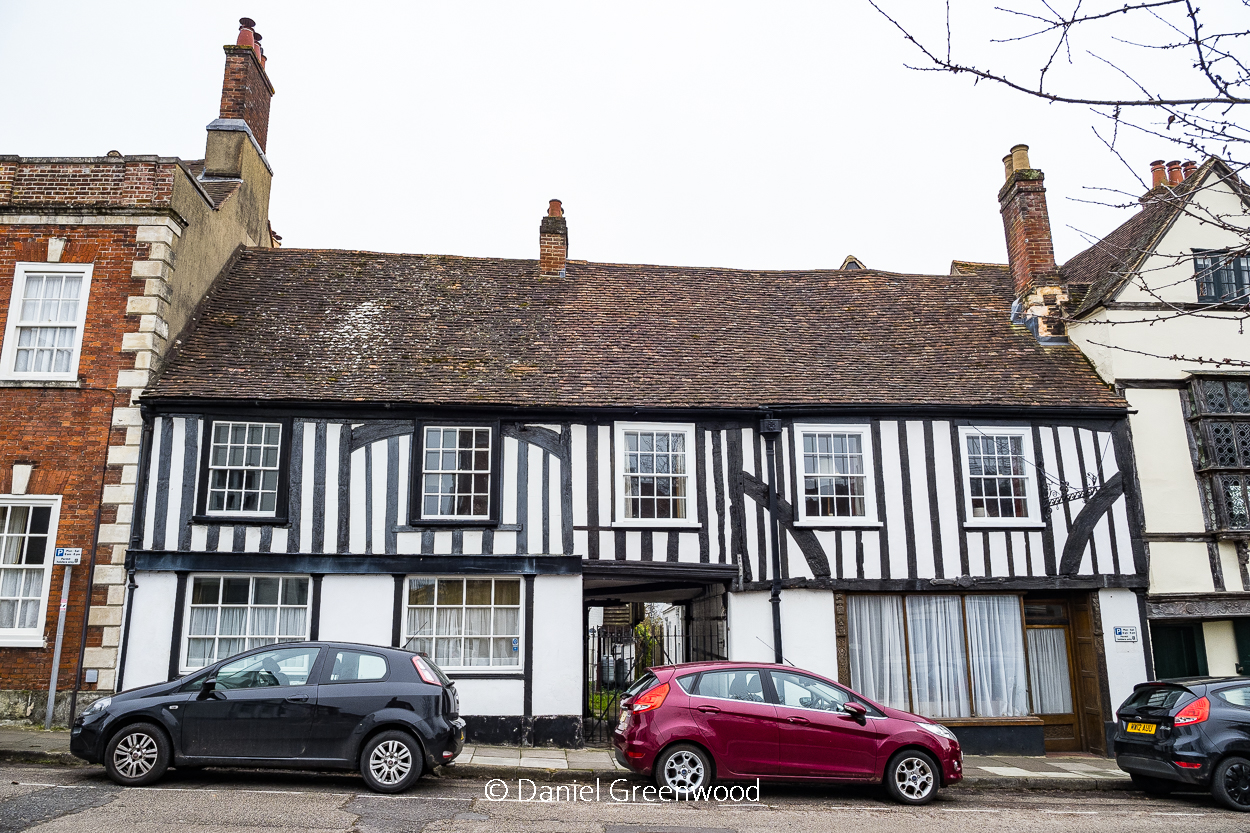
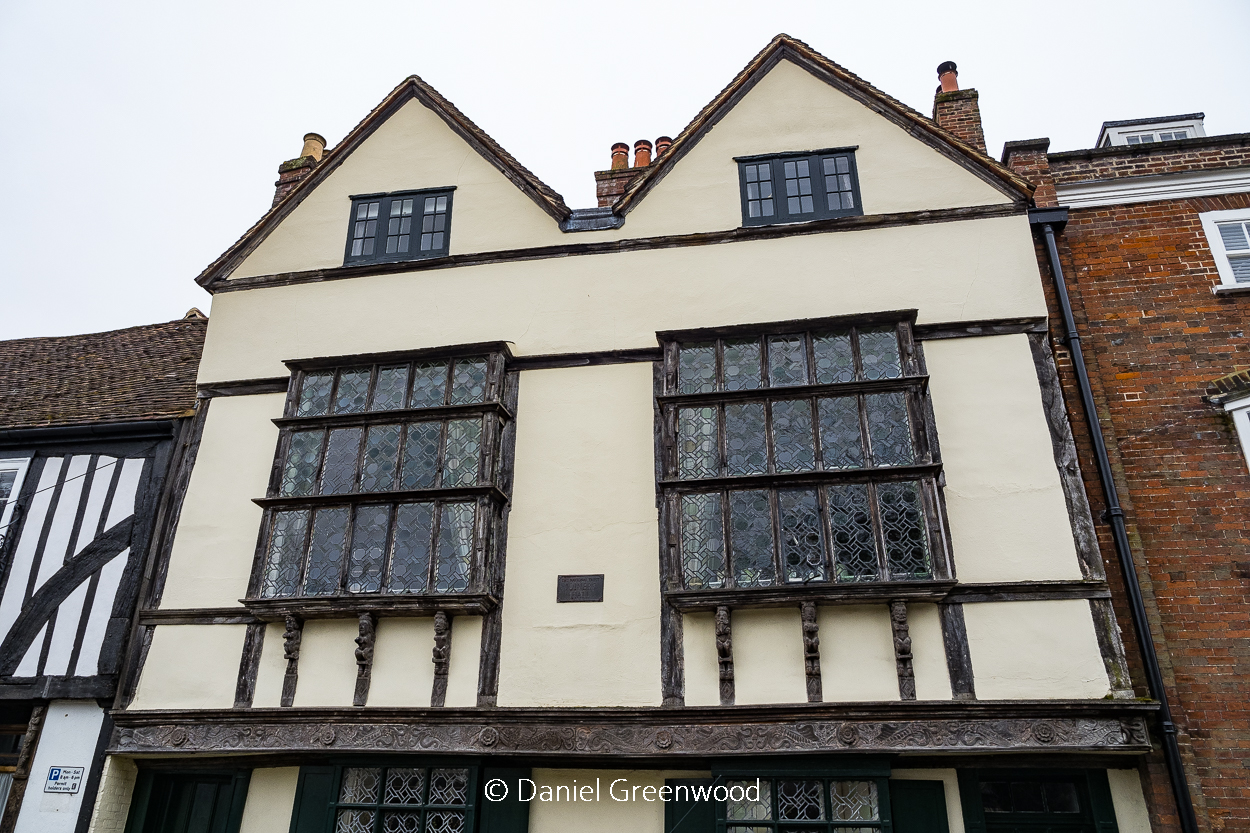
Joiners Hall is a National Trust property built in the 1600s. The carvings on the woodwork are some of the most intricate and beautiful I saw in Salisbury. As ever, the figures are weird.
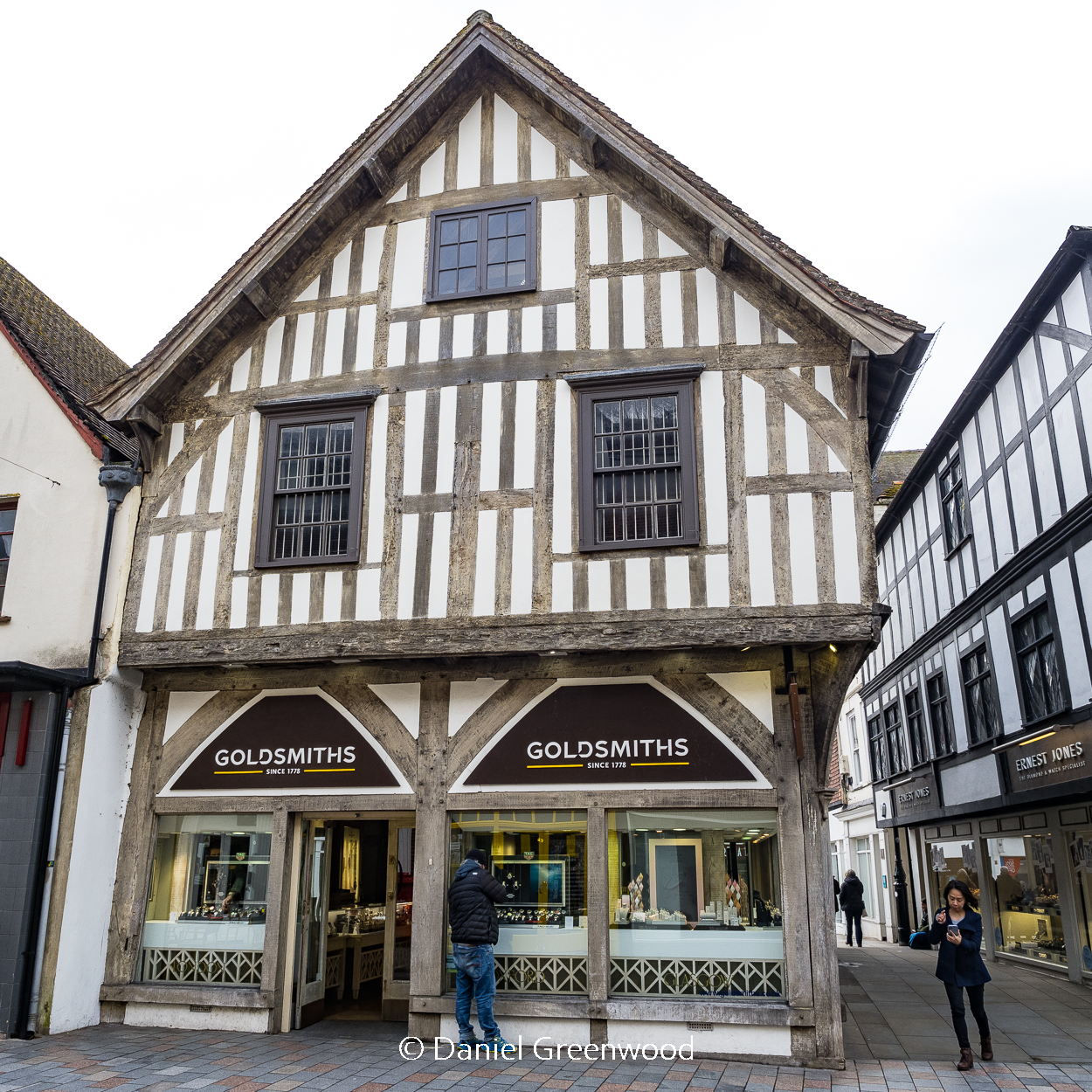
33 Butcher Row. Quite neat and tidy-timbers here but dating to the 1400s.
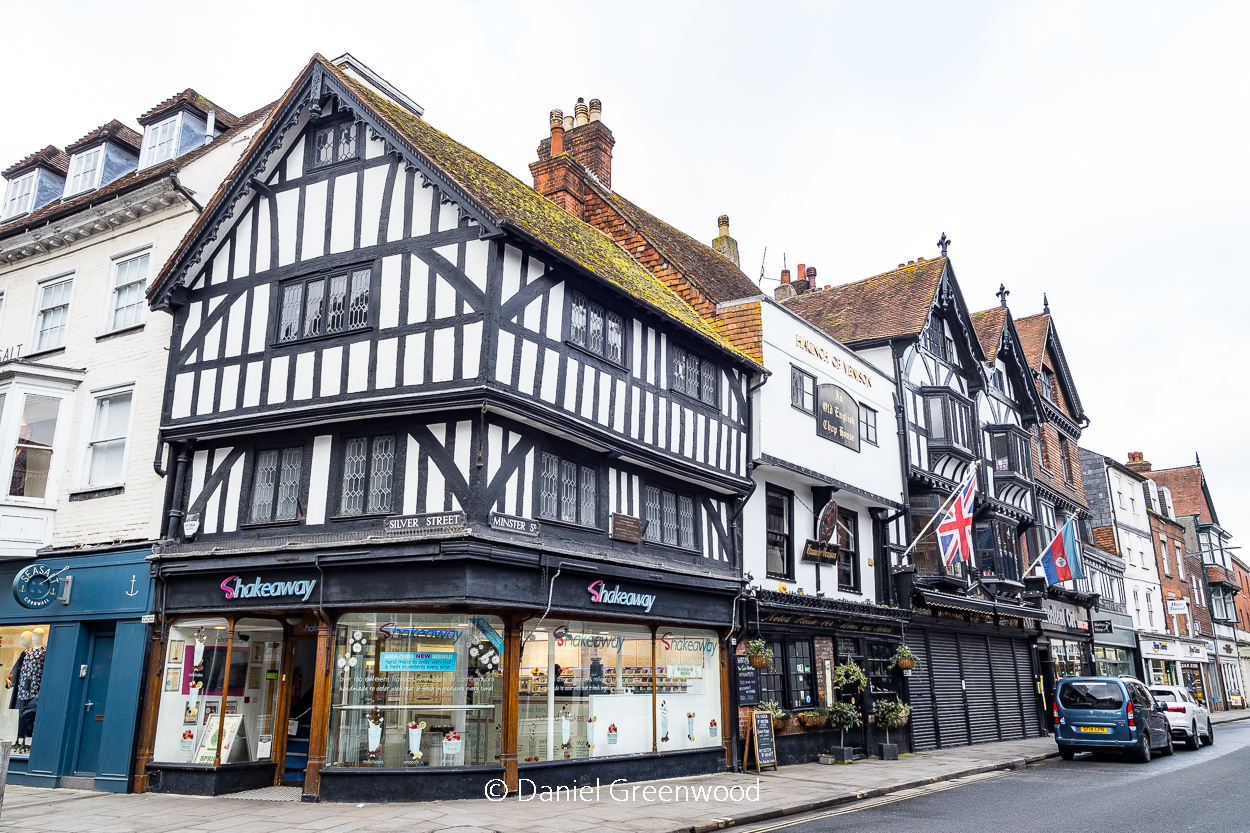
Haunch of Venison, Minster Street. This is an incredible place. I didn’t get great pictures of the interior as my phone camera wasn’t quite up to it, but it was very wonky inside which is good. According to the pub it dates back 700 years to the 1320s.
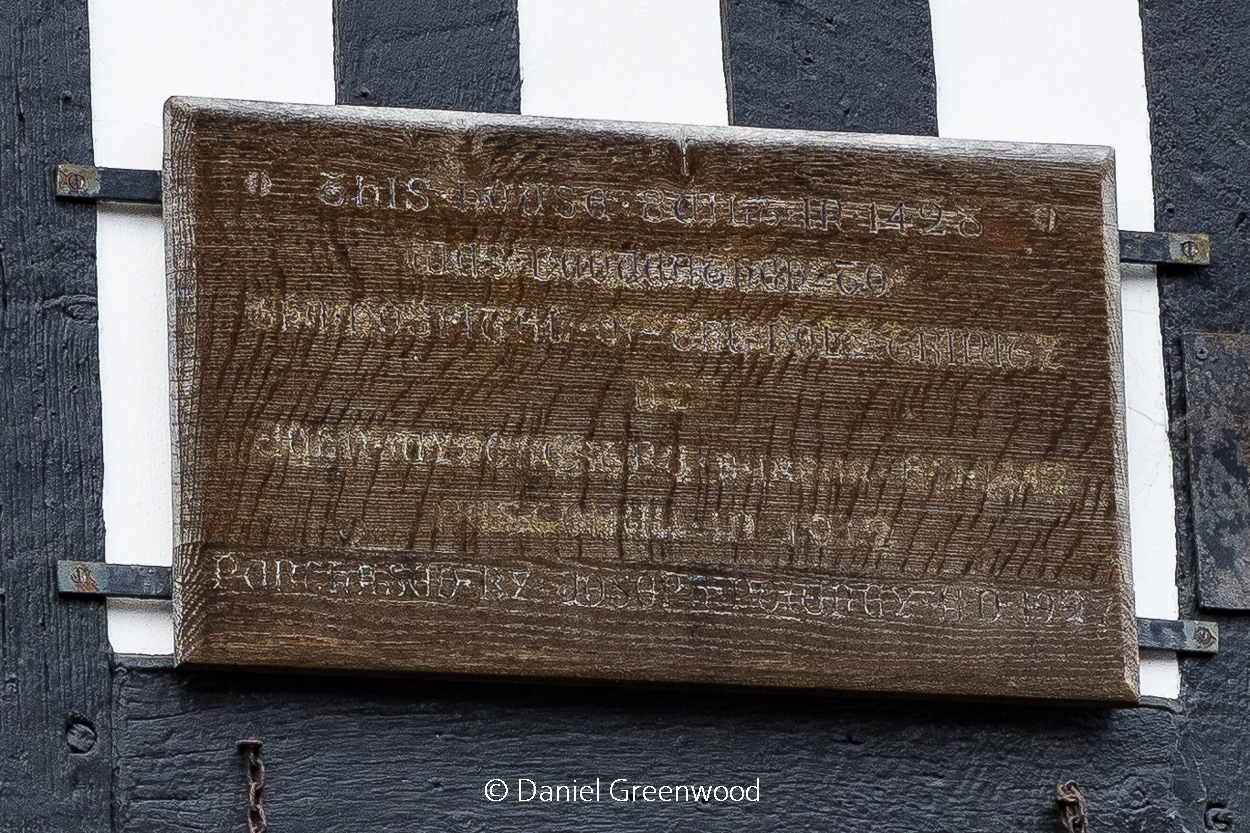
There’s a wooden sign on the pub but it’s difficult to read. I can make out: “This house built 1428.” Bottom line says ‘purchased by — 1927’.

Thanks for reading.

Oak timbers gallery

Oak timbers: Poplar cottage

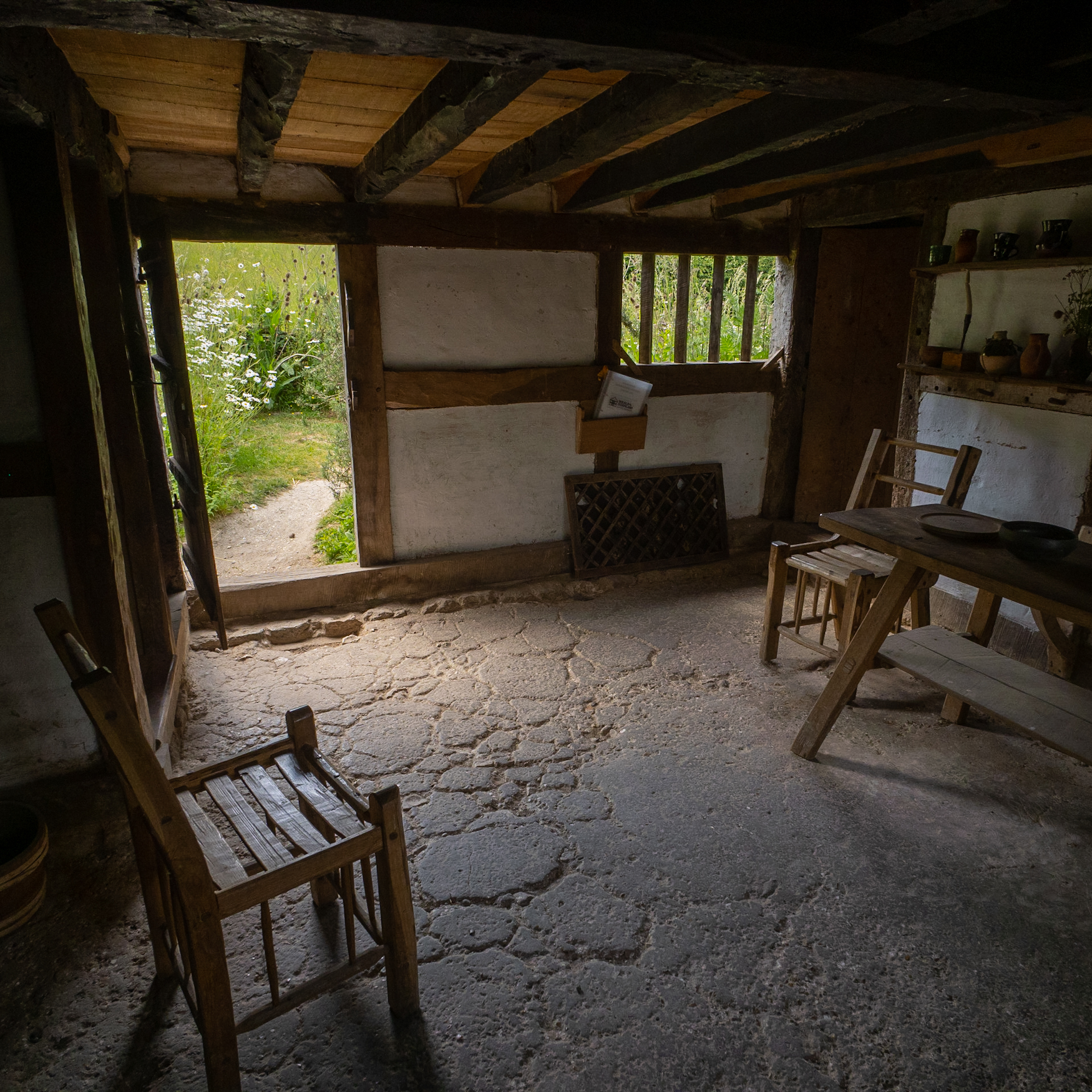
In June I spent some time at the Weald & Downland Living Museum in Singleton, West Sussex. I was trying out a new wide-angle lens and in the perfect place to do so. I focused on Poplar Cottage, one of the most attractive ‘installations’ at the museum. Below are some images and also the italicised text which is written in the cottage’s binder, and therefore copyright Weald & Downland Living Museum.

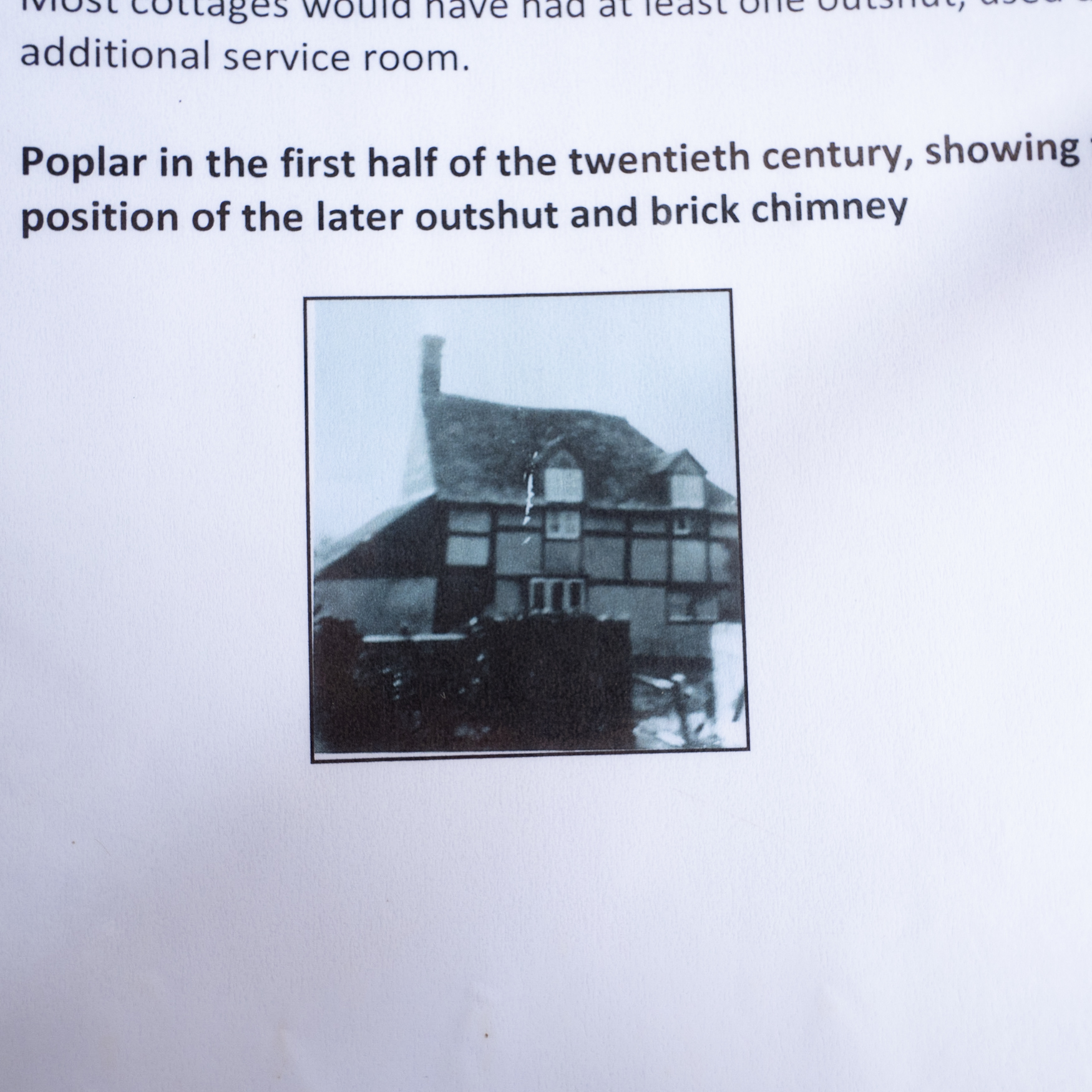
Poplar Cottage was originally built on a small plot of common land on the edge of Washington Common in West Sussex. It is a building of a distinctive type with a hipped roof at one end and a gabled roof at the other. The gabled end originally contained a smoke bay.

Washington is a village at the foot of the South Downs in West Sussex, near Chanctonbury Ring. Its name relates to “Wassa’s people” rather than a place renowned for cleaning.

© Weald & Downland Living Museum

This cottage type is associated with ‘wasteland’ or ‘wayside’ encroachment onto common land. The earliest occupants of the cottage are likely to have been husbandmen or rural craftsmen. Husbandmen were socially inferior to yeomen but superior to labourers.

Many cottagers engaged in small-scale craft activities, like making wooden hoops for barrels or spars for thatching, or indeed shoe-making. We have evidence to suggest that a shoe-maker may have lived here in the 17th century.

Thanks for reading.
Oak timbers

Oak timbers: Arnside Cottage, Hampshire

I was travelling into East Hampshire for work in August and realised it would probably be one of my last chances to photograph a cottage I had passed several times.

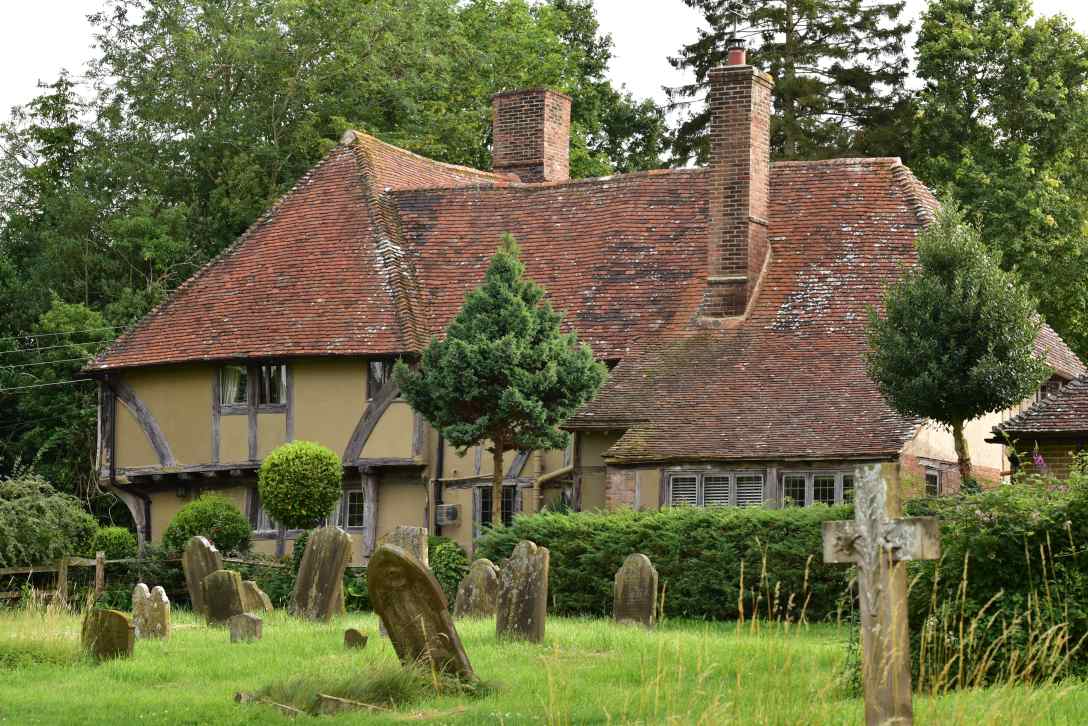
Arnside Cottage is, as you can see, situated at the road side, in the village of Clanfield in East Hampshire. Technically it has been adapted on several occasions over the centuries, as most timber framed buildings have.

From what I know, the square timbers so closely boxed together show it is likely not one of the oldest of its kind out there. That said, Historic England have dated its origins to the 1500s. You can see that the gaps in between aren’t wattle and daub, but look like flint built in, much like the garden wall. The flints will have come from mines in the nearby South Downs.

The mixed locations of windows is quite entertaining, and the thatch is always nice to see. I’m glad I made one final stop-off to take its picture.

Thanks for reading.
Oak timbers | South Downs

Latest from the Blog

November 2025: beware of pity

I’ve had a burst of American visitors in recent days (to my blog, not my house). So thanks for visiting, y’all, and sorry about the year you’ve had. You may have noticed I’ve slipped to monthly posts on here. Between April and October I posted blogs every Monday without pause, which is a tricky task…

Oak timbers: Old Stack Cottage, Amberley

Follow @OakTimbers on Instagram

In early December I was passing through the village of Amberley in West Sussex. It’s a very quaint village at the foot of the South Downs in West Sussex. This rather well updated cottage is located at the roadside, at the end of the village’s main throughway. It was surrounded by rather sinister, leaden skies, as rain threatened to pass through. Thankfully it didn’t.

It’s very difficult to get photos of these buildings without cars nearby, but I feel that it gives a sense of the cottage’s place in time. The model and type of vehicle will likely be very different in 50 years time, when the cottage should still be there, such is the level of investment and care that goes into these buildings in this area.

On the left hand side you can see part of an old barn, with its sloping thatched roof and its clapboard-style entranceway, where wagons would once have been drawn in to unload.

Historic England have dated the building to the 1600s.

Thanks for reading.

Oak timbers | South Downs

Latest from the Blog

Summer-autumn 2025: unveiling the sun

Here’s my seasonal update of stuff you don’t need to know about, but then welcome to the Internet. What I’m writing Soon I will be self-publishing my third poetry collection, Fool’s Wood. It’s seven years since my last one and this collection has taken longer because of LIFE. There will be a booklet and also…

Salisbury’s oak timbers

Here’s another entry in my slow-blogging Oak Timbers series. You can view my galleries and posts archive here. I visited Salisbury in Wiltshire (south-west England) for the first time in 2023 and was really charmed by the place. If you’re interested in this kind of thing, Salisbury is the place for you. Here’s a gallery…

Podcast: September fungi walk 🍄

I’m getting into more of a routine of recording and editing audio, so here is the latest episode of Unlocking Landscapes. Listen on Podbean or via the usual platforms. Also via YouTube: https://youtu.be/y1K9Pqx68to?si=B-Fdhf3sdDH35Z8w Following on from July’s rather optimistic fungi walk, I popped back to the same area of ancient Wealden woodland to see if…

Oak timbers: Palace Street, Canterbury

Follow @OakTimbers on Instagram

Buckle up, there’s a lot of timber coming! This post concludes the series of posts (literally) showcasing Canterbury’s timber framed buildings. Of course there are many more for you to see and explore if you ever visit.

Palace Street must be one of Canterbury’s most interesting historic parts of the city itself. Some of the buildings on this small road are hundreds and hundreds and hundreds of years old.

Number 8 (above) is approximately 800 years old! So the oaks it’s built with were growing at least 1000 years ago in Anglo-Saxon woodlands (pre-Norman invasion of 1066). There’s more detailed information and images on this site.

I overheard the man pictured here giving a guided city tour. He pointed out that the sun emblem was how people once showed their house to be insured – the original Sun Insurance company logo, now the RSA group.

Buildings insurance was created in London after the great fire of 1666 when the city of was devastated. You can imagine that a lot of timber-framers were lost then, part of the problem really.

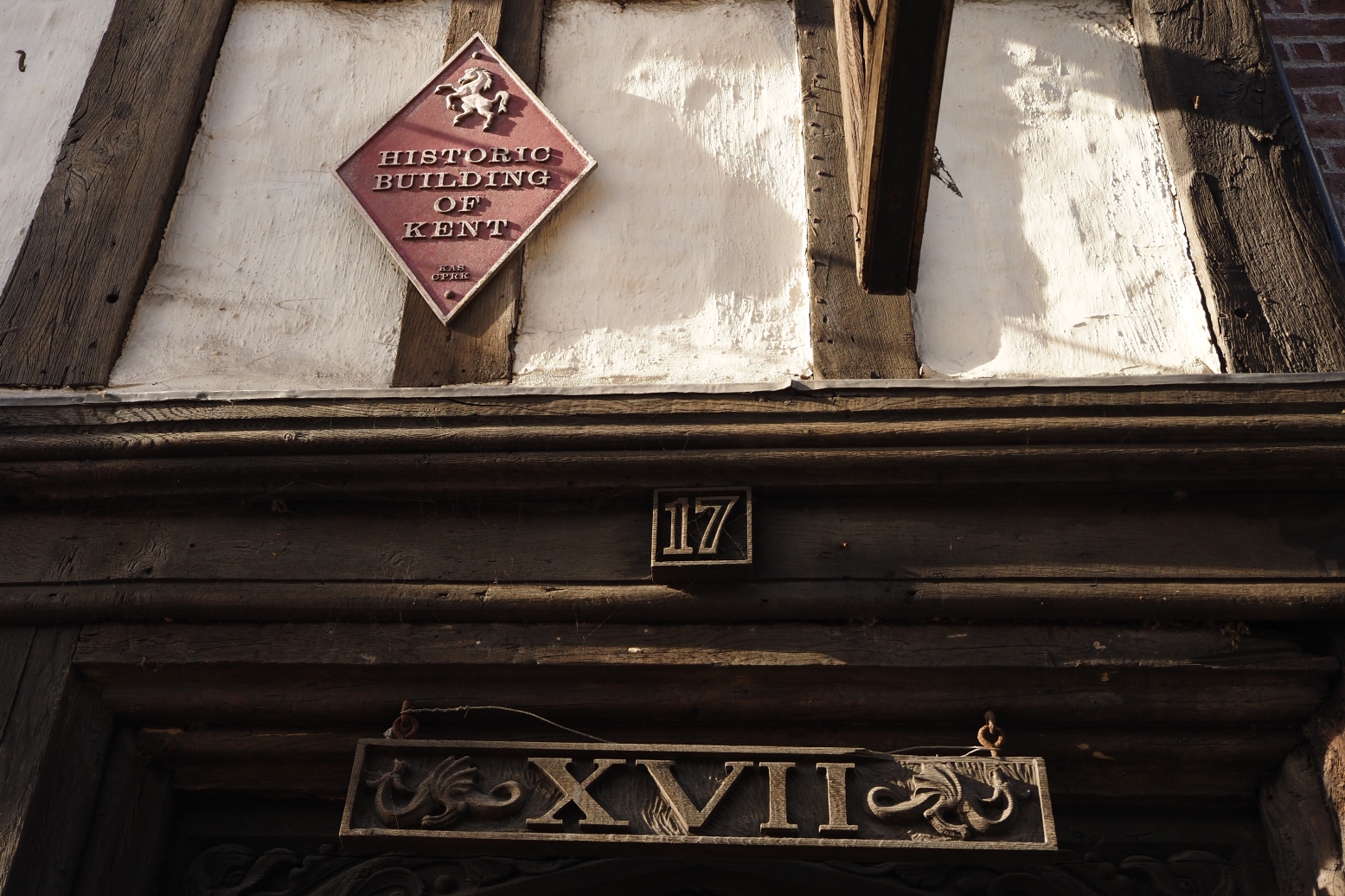
That demon carving is actually really weird. I believe they were used to ward off bad luck. Life will have been incredibly hard in the 1200-1800s so you’d do what you could, I suppose. Then again, this website quotes dates much later than the building itself. The plaque belongs to the Historic Buildings of Kent CPRE group.


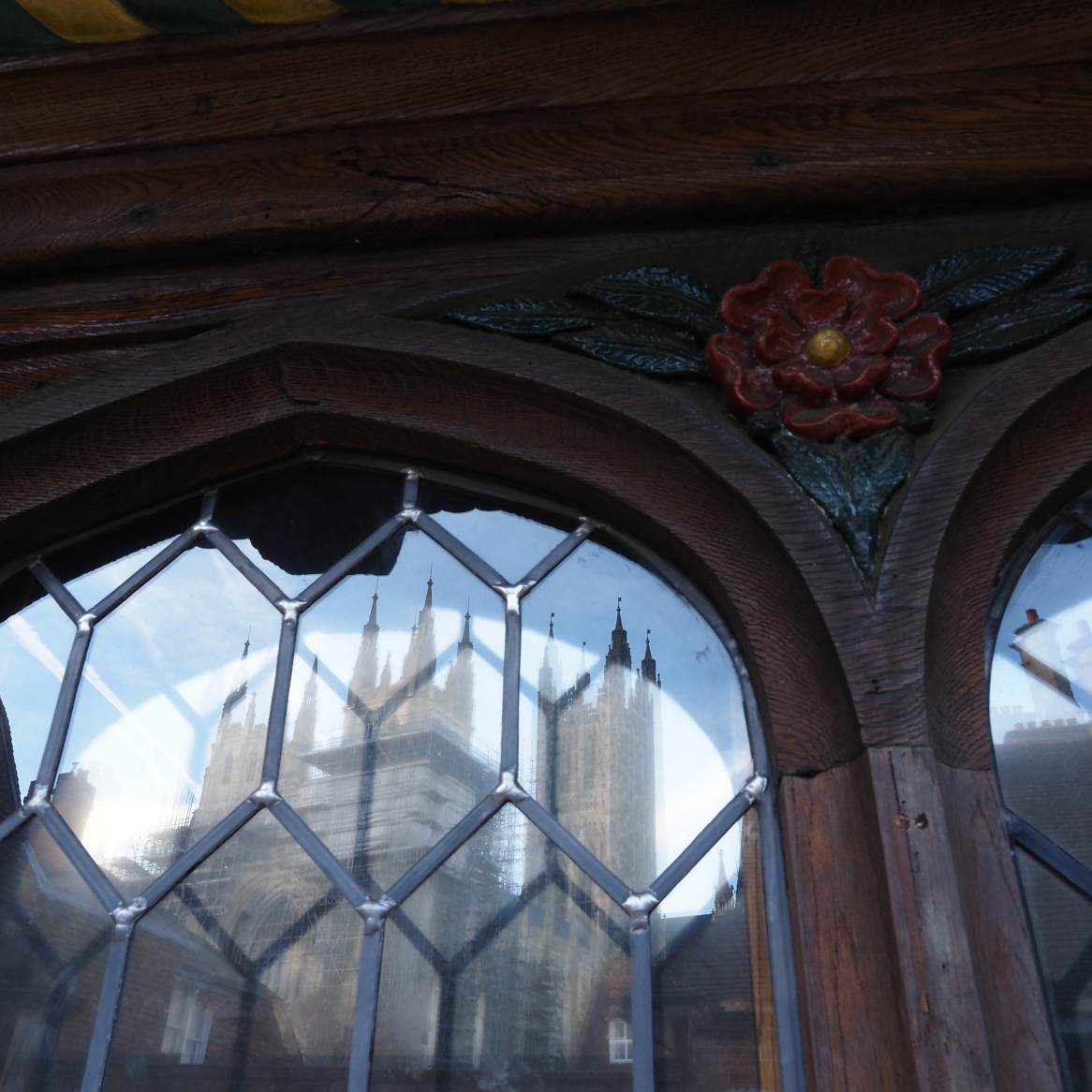
In the windows of the house you can see the cathedral’s reflection. A little further down the road was Conquest House, another Historic Buidling of Kent:

Peering in through the windows it was possible to see a plan of the interior. Check it out below:

Looking further into the room there was a rather old fresco (I think) above the open fireplace. The red signs on the wood below reads: “Please do not touch the painting. It was drawn circa 1625 and is very fragile”.

I wasn’t the only person peering through the glass to try and learn more about this intriguing building.

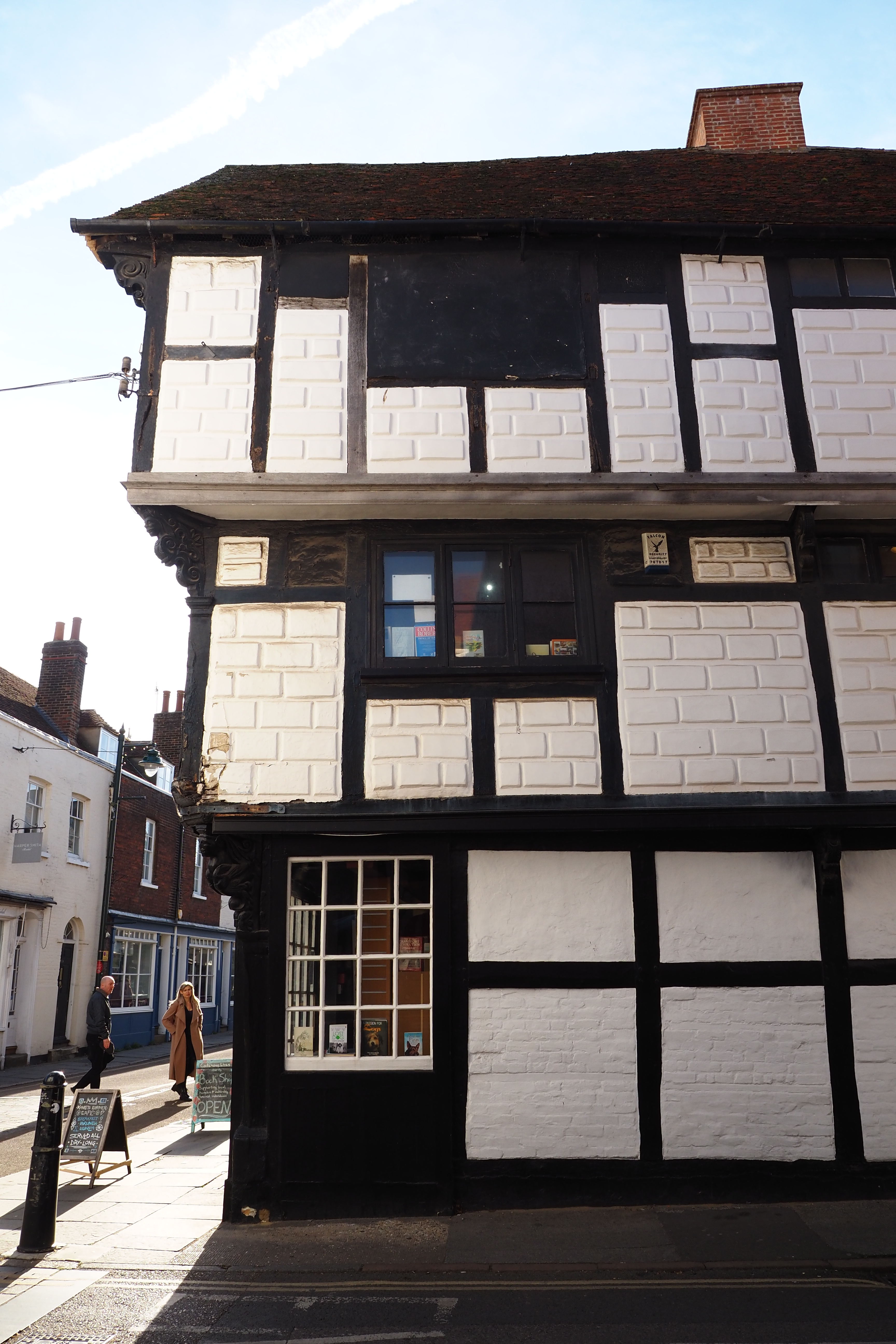
Down at the bottom of the street, but in no way at the bottom of the pile, is the The Catching Lives Bookshop. It’s famous for its crooked doorway.

Charles Dickens visited Canterbury and is quoted (in the doorway) as describing the house as follows: ”..A VERY OLD HOUSE BULGING over the road…leaning forward, trying to see who was passing on the narrow pavement below…” (1849)

Built in around 1615, the dodgy doorway is said to have been caused when a chimney was altered.

The bookshop is run by volunteers and sales go to homelessness charity Catching Lives.

Thanks for reading.

Follow @OakTimbers on Instagram

Oak timbers: All Saints Lane, Canterbury

Follow @OakTimbers on Instagram

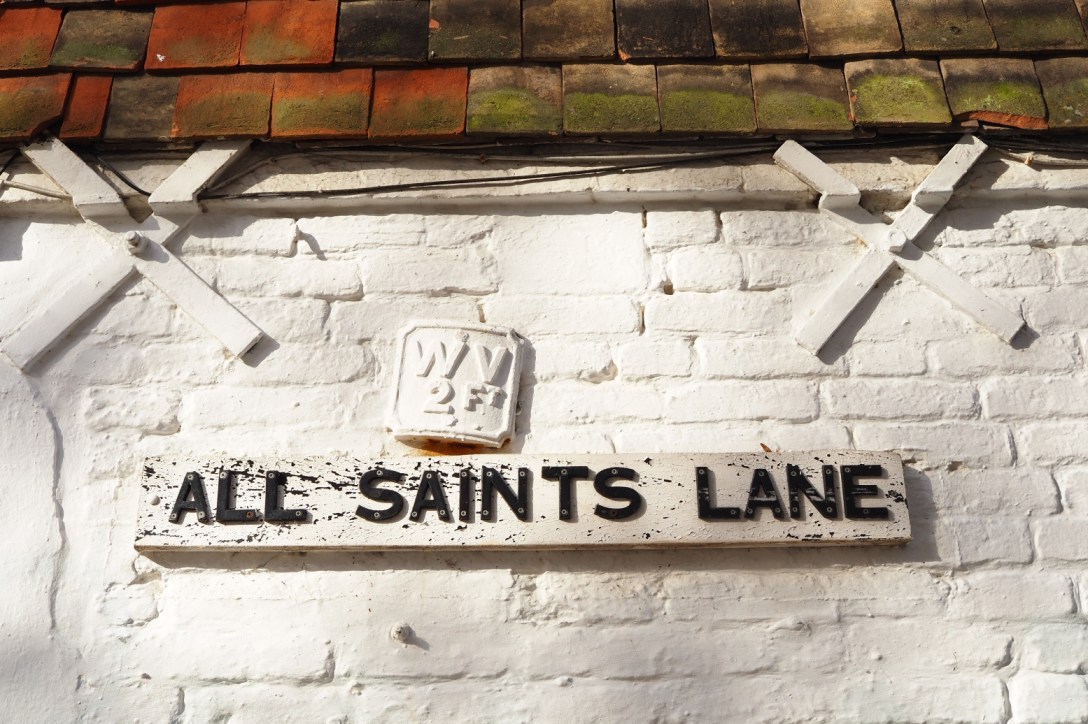
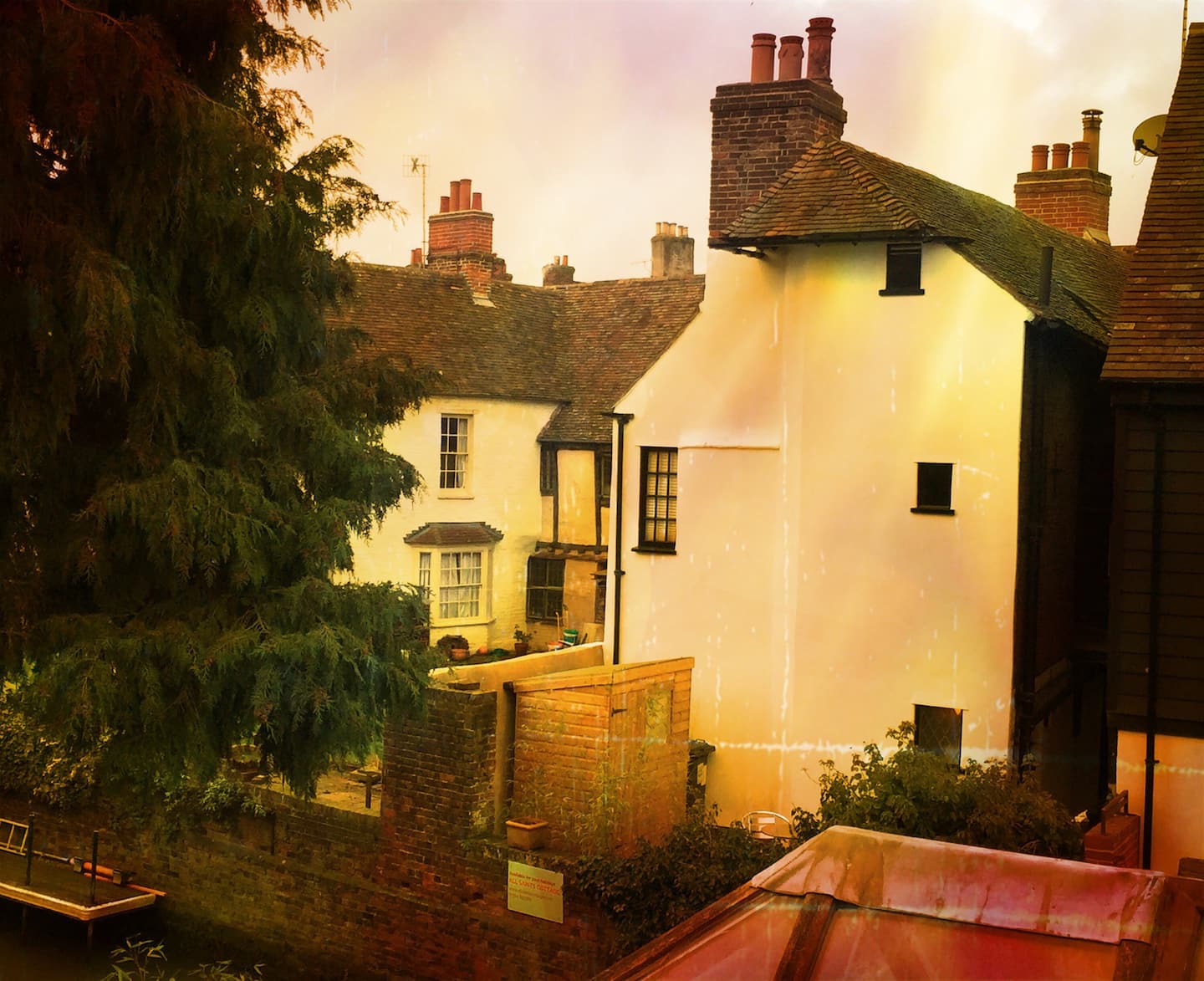
All Saints Lane is a residential cul-de-sac (apologies to anyone living there who saw me peering in) which has one incredible stretch of timber framing. Turns out you can rent one of the cottages and they have their own website. Possibly the least information you’ll find on any website, however.

All Saints Cottage is dated to the 1500s and is described on the Historic England website as an “L-shaped timber-framed range.” According to this TripAdvisor review, it “was a pilgrims’ rest associated with Eastbridge Hospital. It later became cottages. At one time, a school of dancing operated on its upper level, which comprises one, very long room.”

I hope those dancers didn’t bang their heads too often on those low-hanging oak beams! Looking at these these buildings from the outside, it’s the squiffy-ness that can give a sense of their age. This is not a technical term, but if it’s neat and tidy it’s probably from the 1900s.

I think a lot of people consider all doors in England to look like this. They don’t.

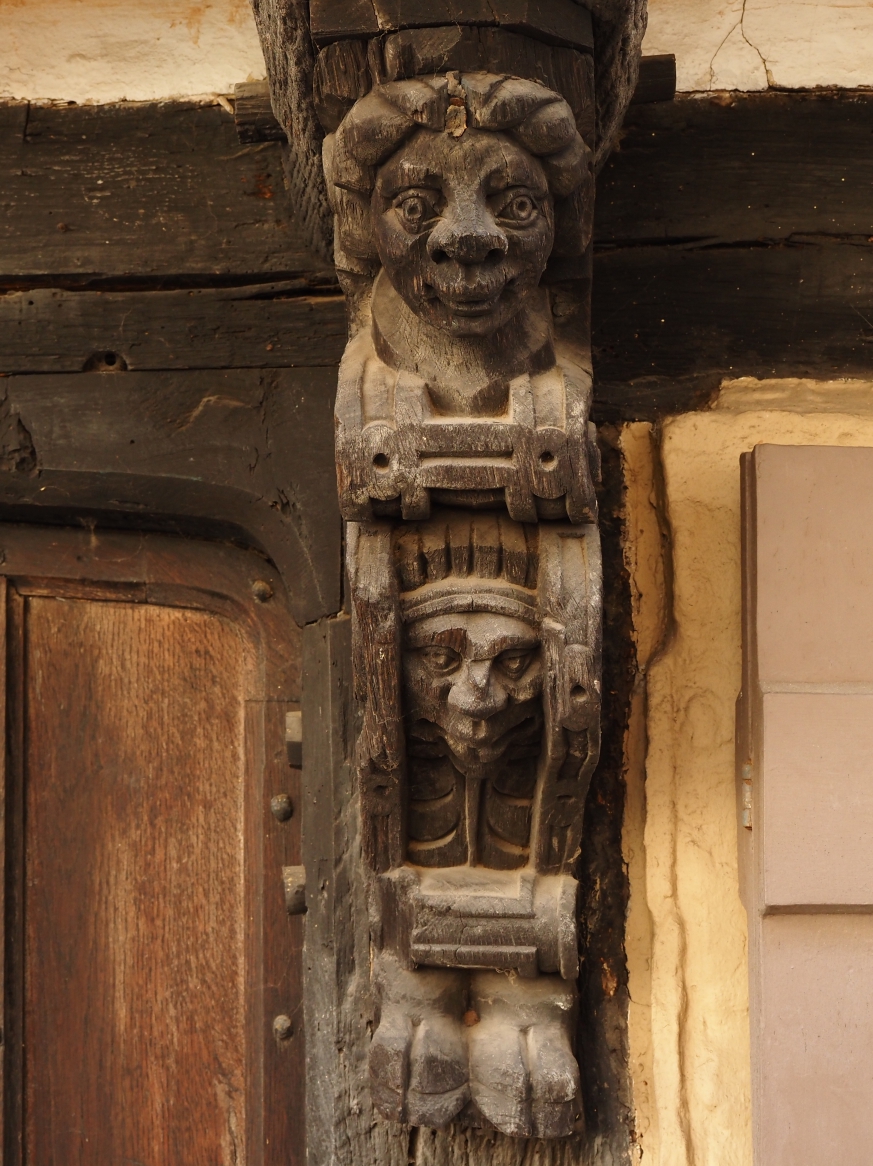
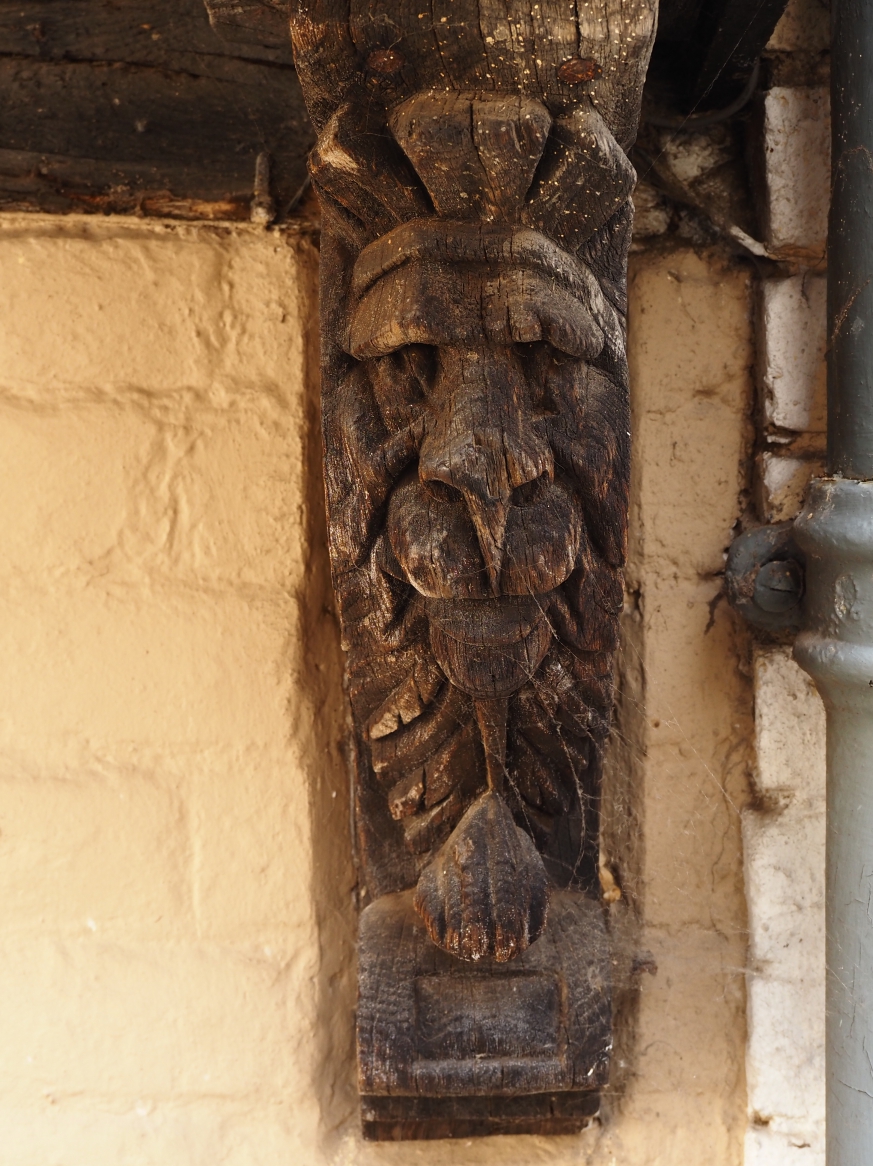
These are the other demons I mentioned in a previous post. The one on the left hand side has hoofs, the one on the right seems to be a lion with a mane. It seems the hoofs are indicative of a demonic or devilish nature.

In this photo from the AirBnB page you can see how it’s been swallowed up by a side extension. Poor timbers.

If you’re not staying for the night, All Saints Lane is a dead-end, so your only option is to head back out onto St. Peter’s Street.

Follow @OakTimbers on Instagram

Oak timbers: St. Peter’s Street, Canterbury

Follow @OakTimbers on Instagram

A really good guide for buildings in Canterbury can be found here.

I recently visited the English city of Canterbury, encountering many, many timber-framed buildings. I photographed so many that I drafted one post and found it was far too long and complex for this blog. So I have broken it up to focus on a couple at a time.

St. Peter’s Street on a busy Saturday morning. You can see the diversity of building types which show how old the townscape is. Right in the distance the tower of Westgate can be glimpsed, dating to the late 1300s, it’s the largest surviving city gate in England. That is obviously a building I didn’t manage to photograph!

On St. Peter’s Street you can see number 13, a building that houses a charity shop and a barbers. It’s got lots of signs of renovation with a few old elements standing out. The building dates to around the 1600s.

Note the beautiful carvings of the wooden ‘barge boards’ in the gables.

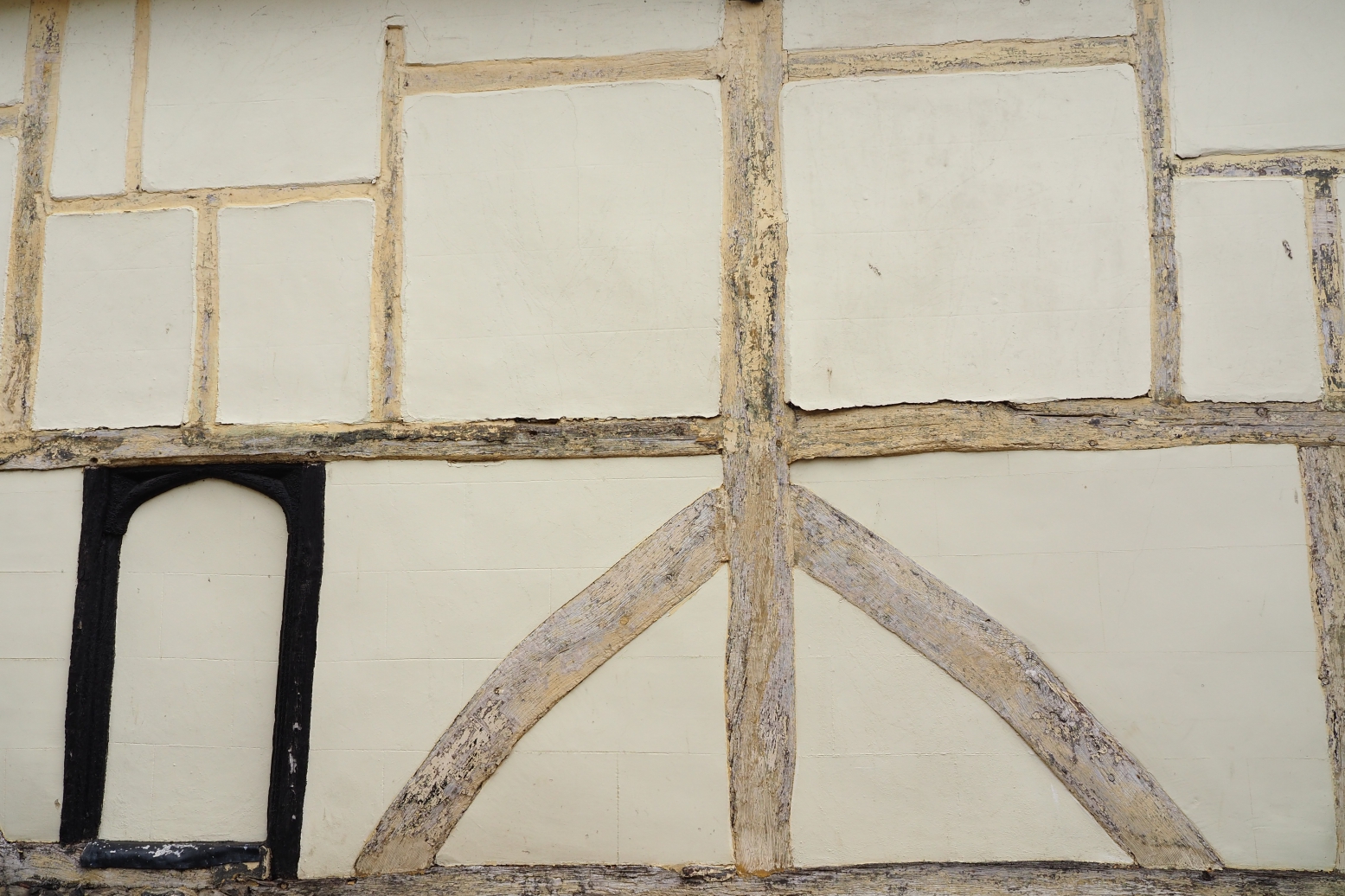
At the side you can see an old entrance way outlined in black. It’s a very small door.

These demons are designed to protect the building’s inhabitants from, well, demons I suppose. More of them to come in a later post. You can see where smaller, older windows have been filled in between them.

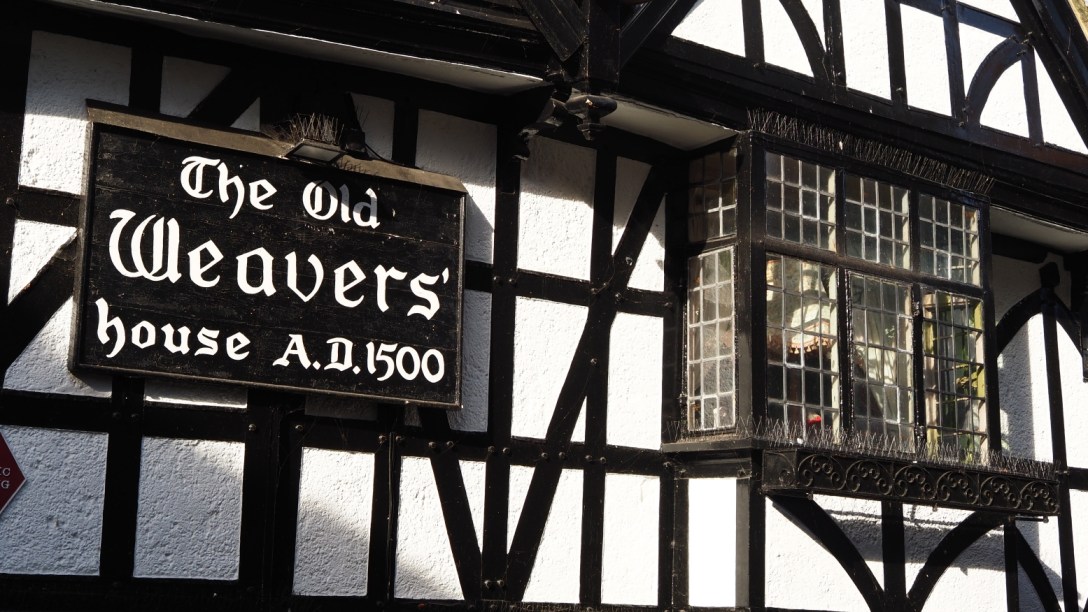
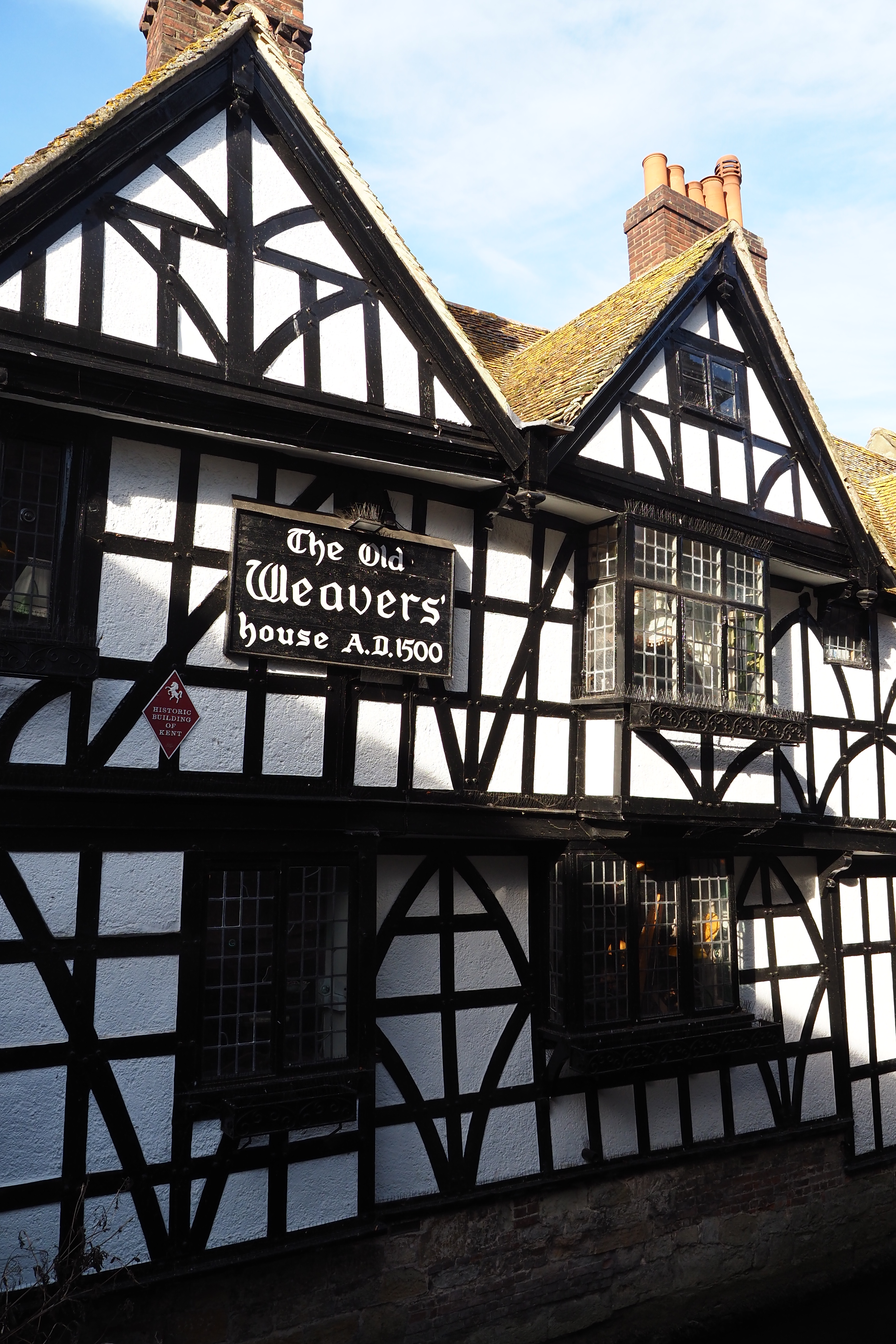
The Old Weavers’ house A.D. 1500. This is a well-photographed spot as it’s clearly visible from the bridge over the Great Stour where the boat tour company wait for business.

Here you can see the river. It has the feel of something out of Bruges, situated along a waterbody in this way. Interestingly it is thought to have been built to house weavers fleeing religious persecution in Flanders (i.e. Belgium)!

This is an possibly early 20th Century image of the building with a better view of the river, technically.

Thanks for reading.

More timbers

Follow @OakTimbers on Instagram

Oak timbers: new post series

Hi everyone. This year I’m starting a new blog series alongside my regular macro, fungi and Sussex Weald posts.
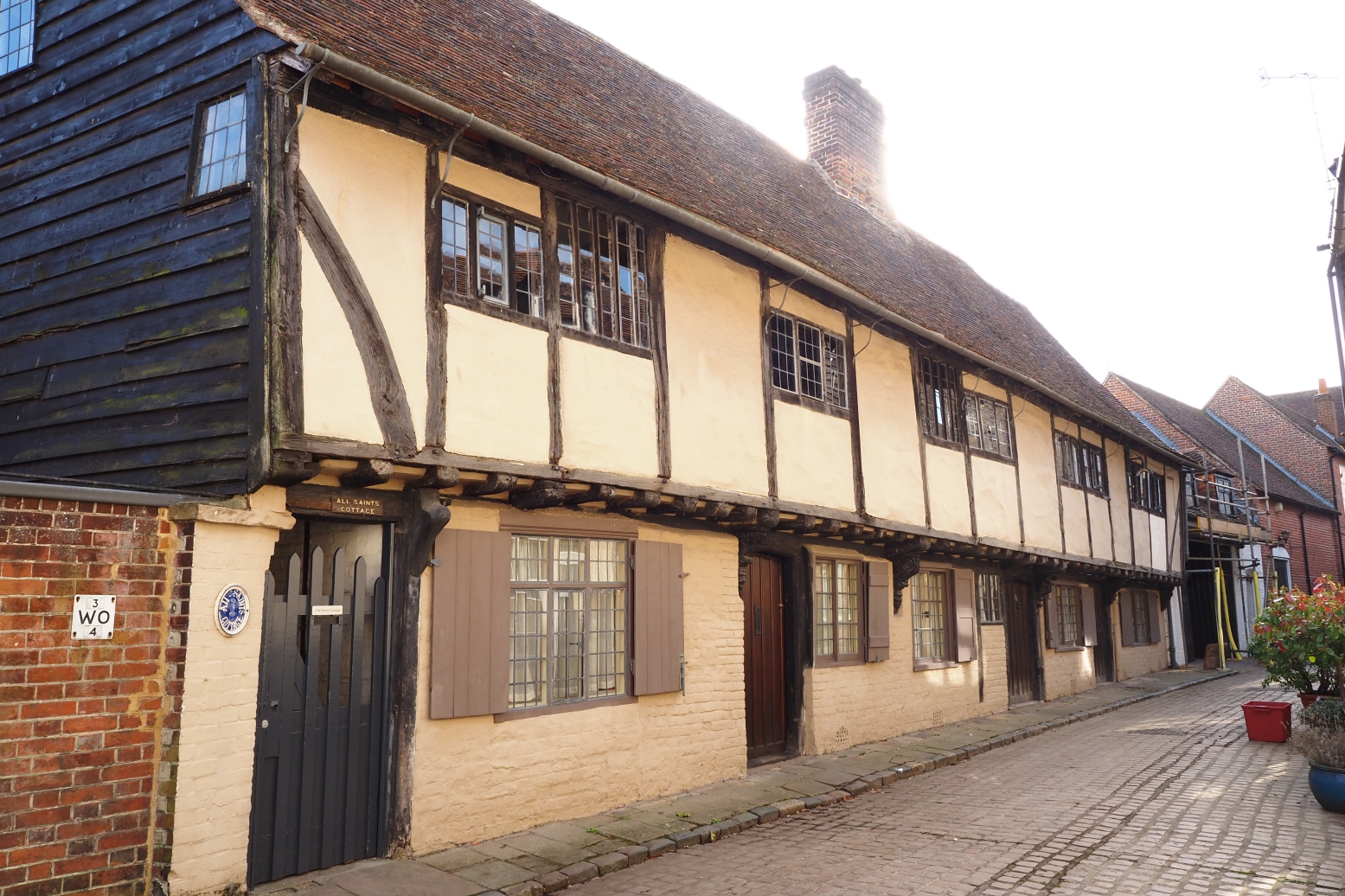
This series focuses on the use of oak trees in the construction of old buildings in England, mainly in Sussex where I live.

I’ve also launched a Ko-fi page if you want to support my work through a donation of some kind. Thank you to everyone has been so generous. The main aim of this is to help cover the £200 annual costs of hosting this website and also my podcasting platform.

Oak as a tree species is a key area of research, creativity and learning for me. This comes from the general love we nurture towards oak trees in England, but more from my time working in an oak woodland and the subsequent understanding I gained from teaching myself about the cultural and ecological significance of the species around the world.

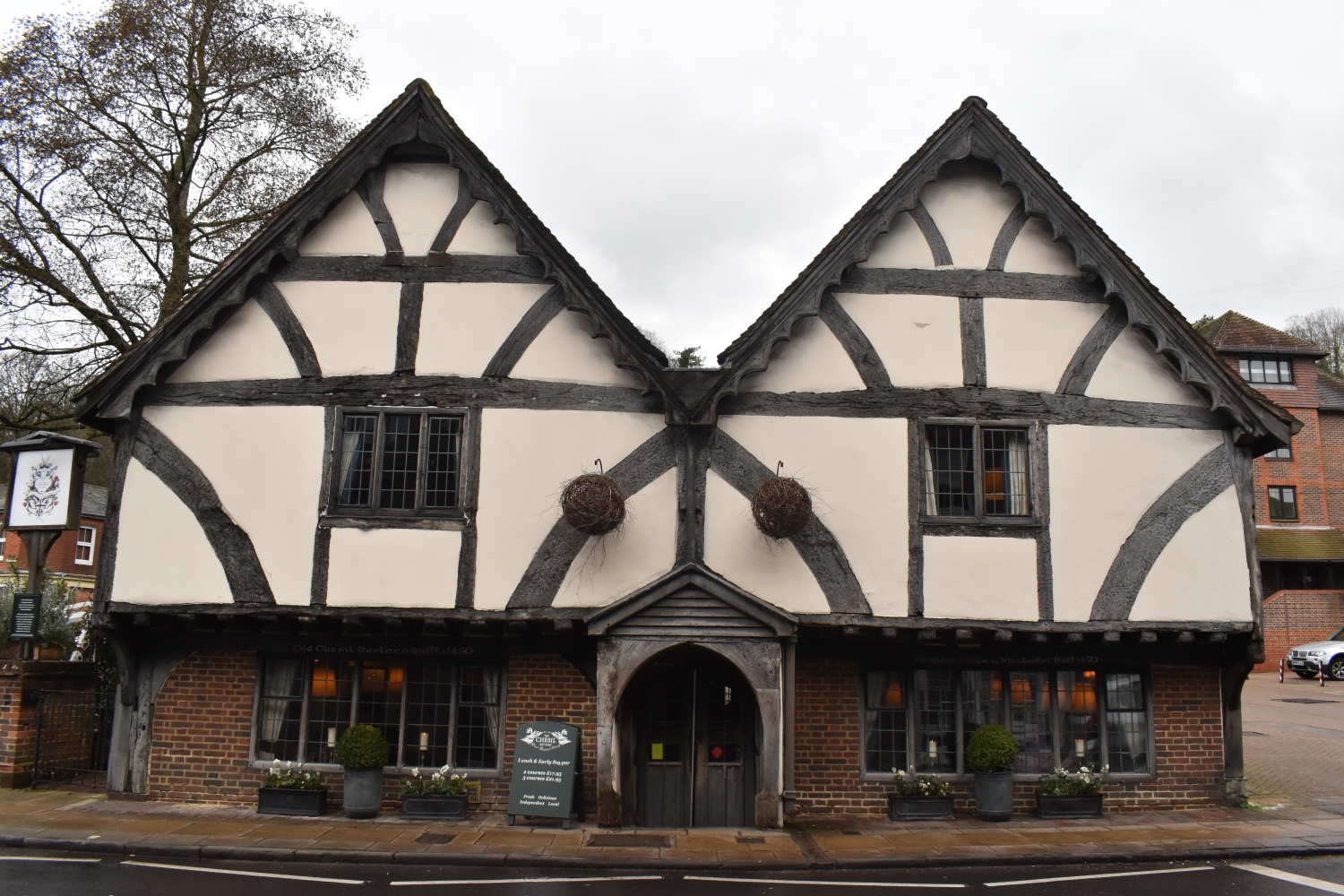
The Chesil Rectory, Winchester, England

Oak trees were once a key resource in Britain and Europe, in the production of timber for construction and the other uses of the materials that arise from an oak tree. Here I mean bark used for the leather tanning industry.

Timber-framed cottages have become sought after by some of the wealthiest in society, when once they were the main timber used by some of the poorest in European society. The aim here is to draw a link between the landscape and human civilisation, not to promote expensive properties for estate agents in SE England!

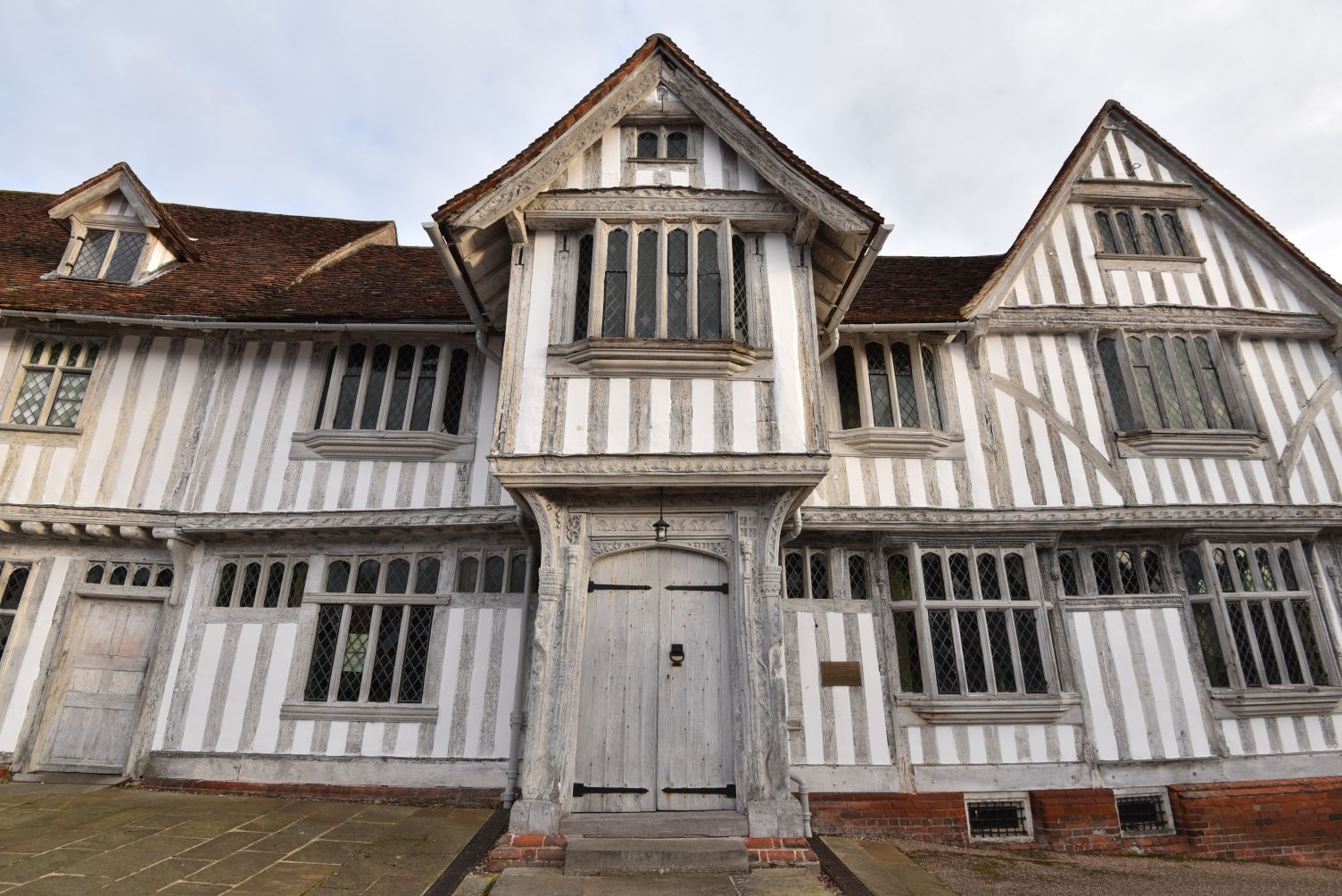
The Lavenham Guildhall in Suffolk, eastern England

With this photographic research project I want to document these buildings but also to tell their stories.

The first post will be arriving this month. I would really appreciate comments, information and suggestions around these subjects as the point here is for me to learn but also to share any knowledge and nice images.

Wishing you all the best and I look forward to sharing the images and research with you.

Daniel