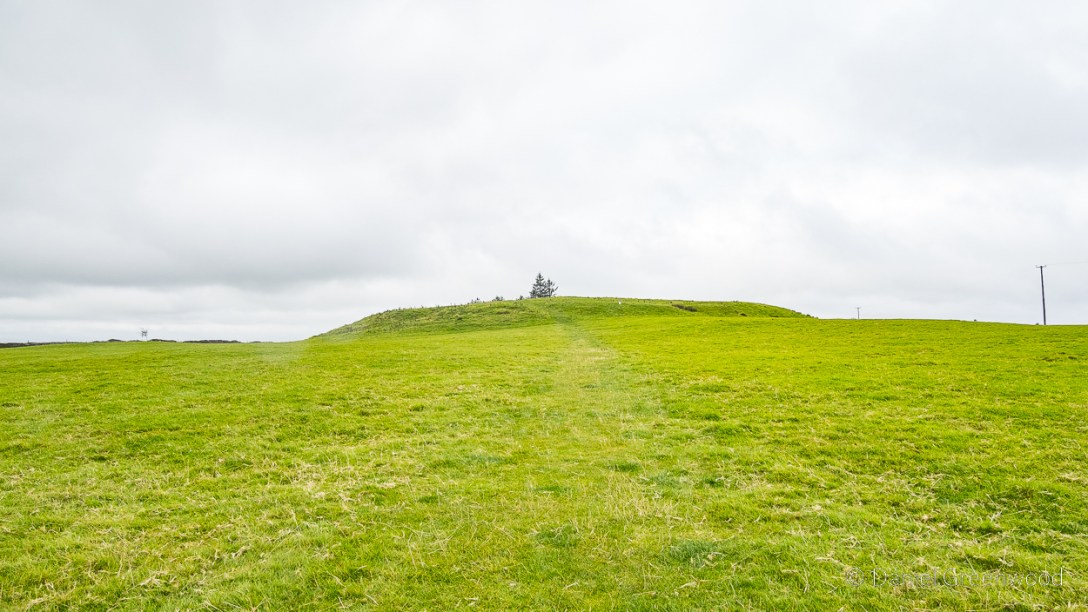
Rathcroghan, Roscommon, Ireland, September 2024
This short post shows some of the images I snaffled from a pit stop at the ancient Celtic landscape of Rathcroghan, while travelling from Mayo to Dublin.
Apologies if I mangle any of the Irish mythology, it is not a subject I’m at all familiar with.
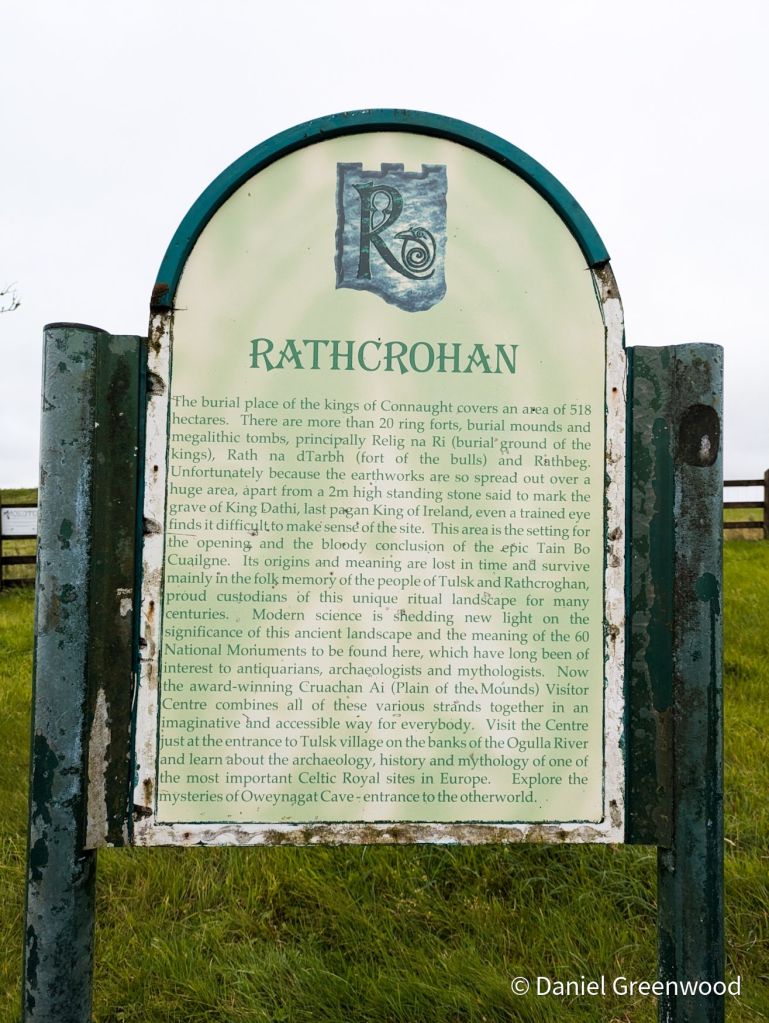
Rathcroghan is one of the most significant archaeological and cultural landscapes in the whole of Ireland, and has influenced western culture in surprising ways. I definitely hope to go back to visit the museum and explore more of the landscape itself.
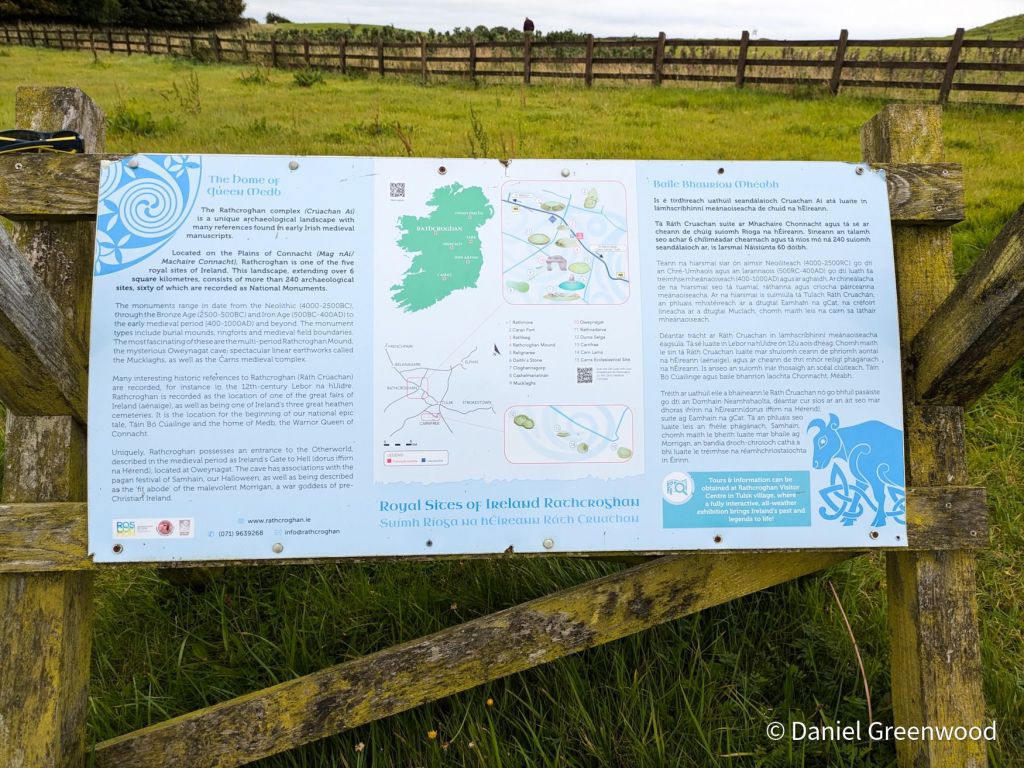
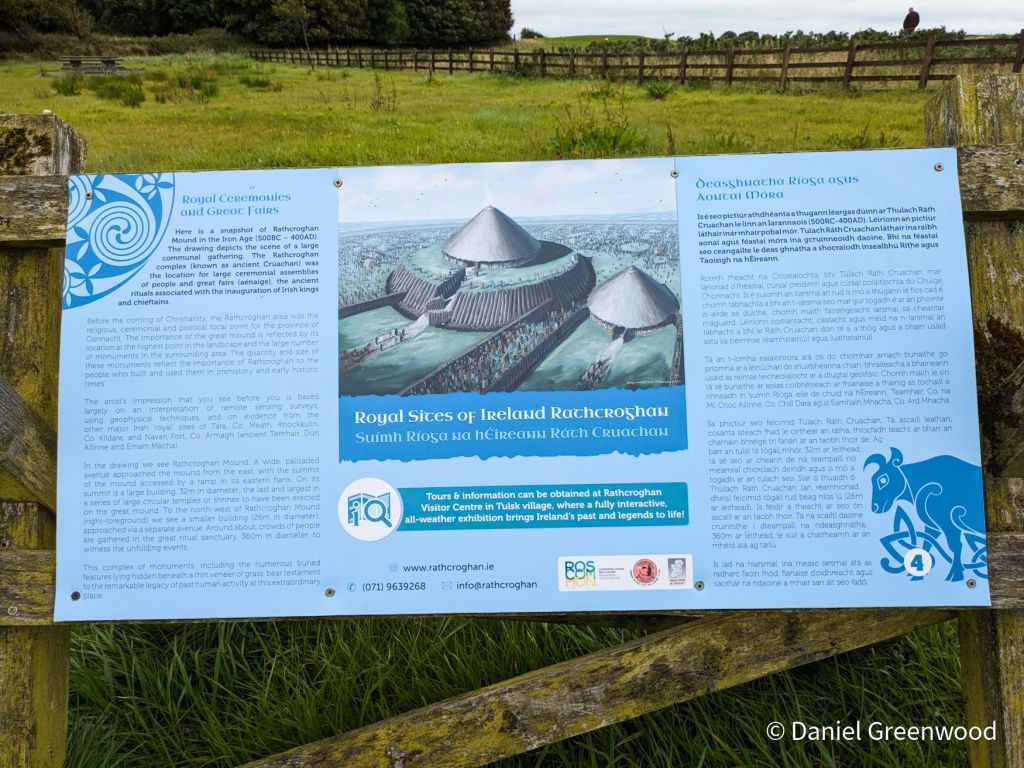
Rathcroghan, Cruachan Aí, is known as the Ancient Capital of Connacht, where the festival of Samhain (Halloween) is said to originate. This majestic landscape is the oldest and largest unexcavated Royal Site in Europe.
Rathcroghan Visitor Centre
The home of Samhain (“Halloween”)?
The modern Halloween is inspired by Samhain, an Irish festival taking place on the evening of 31st October to sundown of 1st November. It could be a product of Rathcroghan folklore. Samhain celebrates the end of the harvest period and the beginning of winter. It’s celebrated on the evening of the 31st October because Celtic days begin and end when the sun goes down.
I didn’t have a lot of time so couldn’t visit the Owenagcat/Oweynagat cave (also ‘Cave of the Cats’) (very good pictorial tour here). The cave is where Samhain may originate from.
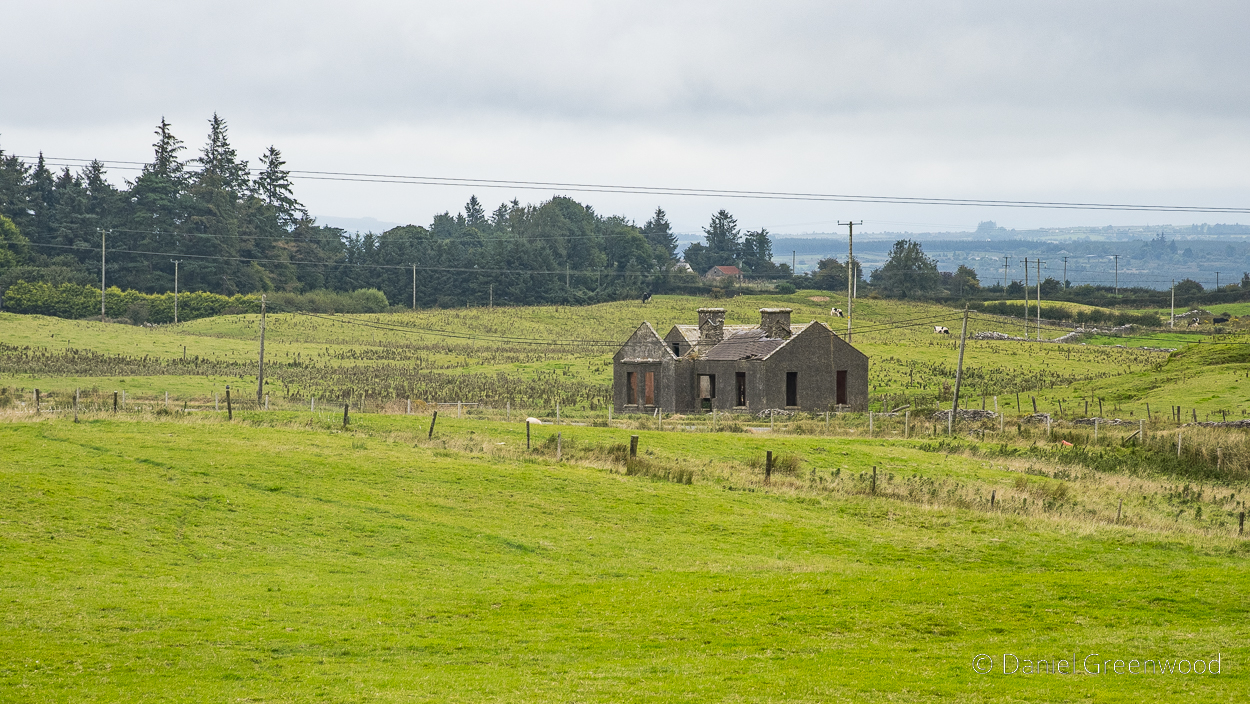
The story goes that every 31st October at nightfall monsters would emerge from the cave to kill livestock. It’s a time when the living world and that beyond death was at its closest (something you also hear about the Winter Solstice).
The cave is said to be “Ireland’s Gates to Hell”.
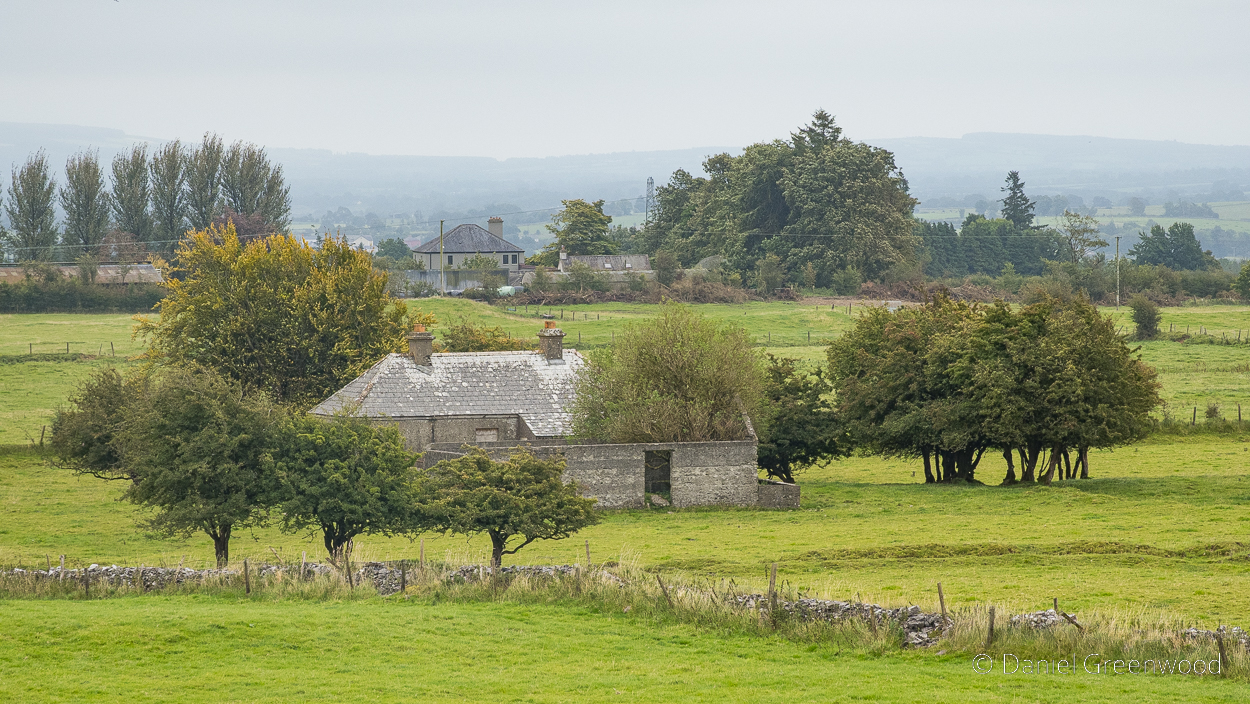
While not hellish, there is a melancholy to the sight of abandoned cottages across Rathcroghan, something that is so commonplace in Western Ireland (and which I love to see). I wonder if this cottage has older parts to it, where the tree (willow, maybe) is growing where the roof used to be. This is a bit like seeing an abandoned house on the site of Stonehenge (something you don’t see!).
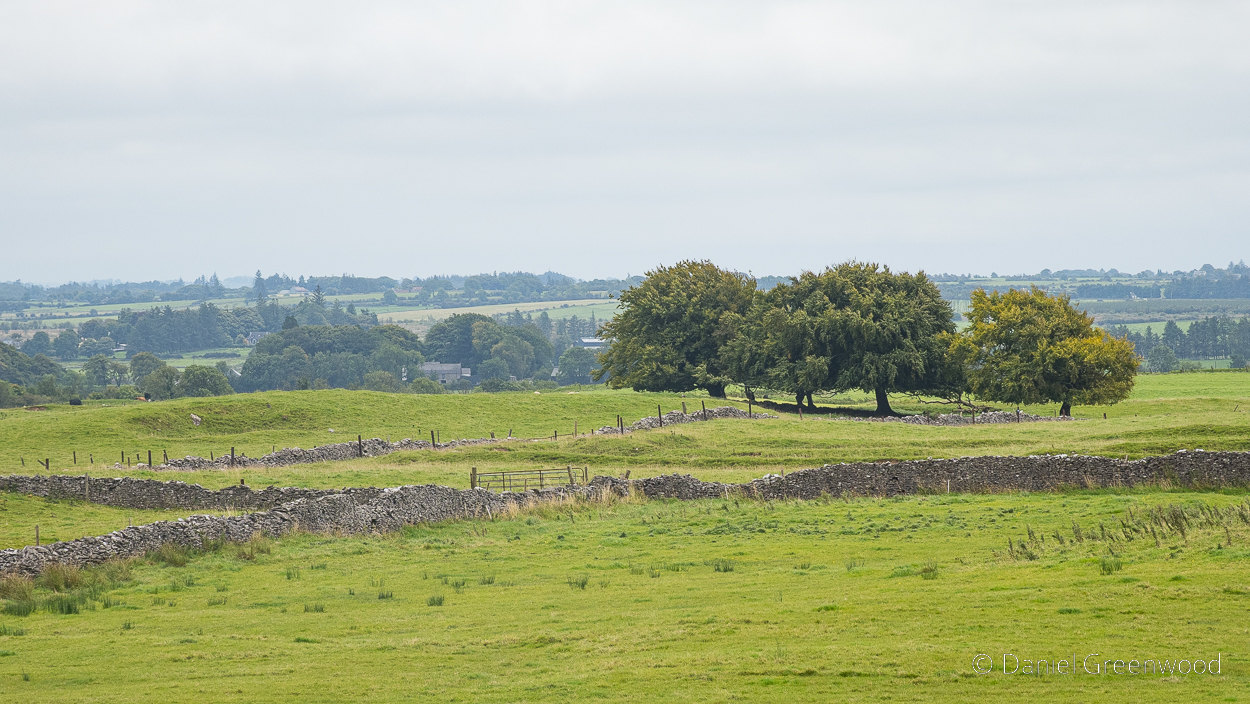
The ebb and flow of the archaeology is likely visible here on the left where the mound can be seen. The openness of the landscape shows the advantage of the location – you can see far and wide, and also be seen.
Rathcroghan is said to be one of Ireland’s most important Pagan cemeteries. The visibility of the site reminds me of the South Downs, and how one archaeologist once described it as a hundred-mile-long cemetery, visible to all in the valleys below.
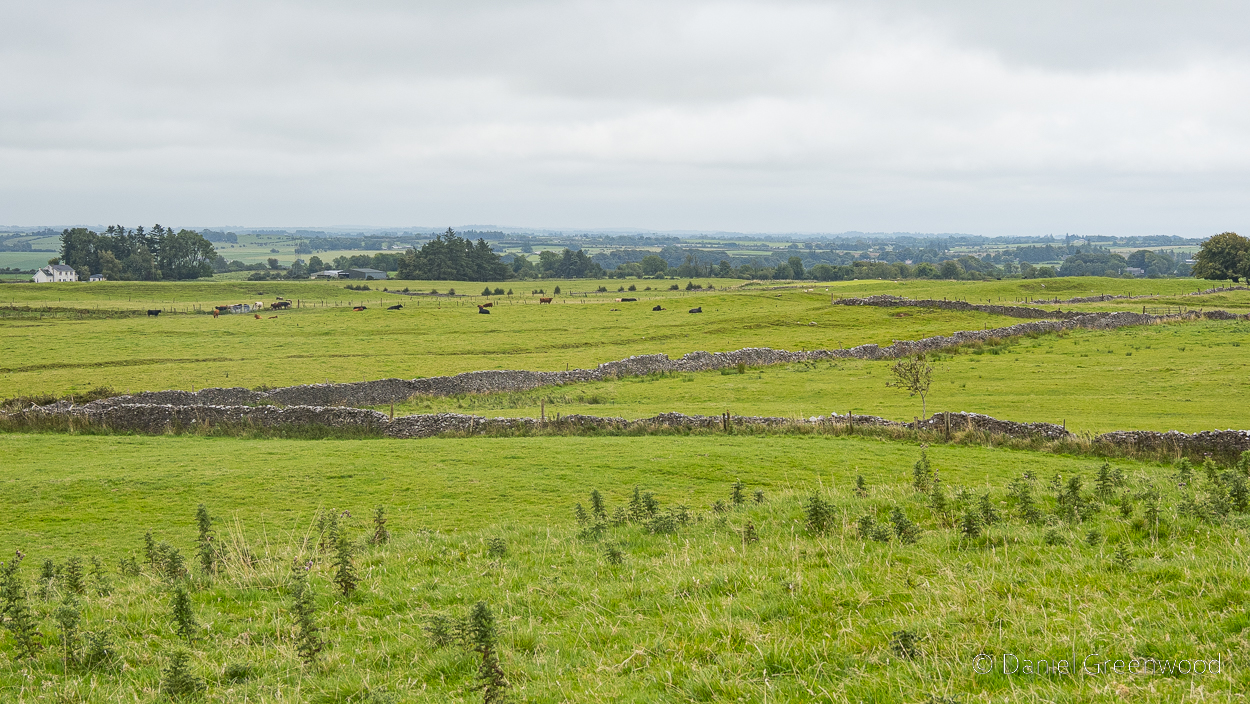
I don’t know about the age of the stone walls but presume they are post-medieval. You can see the land is farmed with cattle. The nettles in the foreground are the lip of the Rathcroghan Mound – seen in the next image.
The Ancient Capital of Connacht
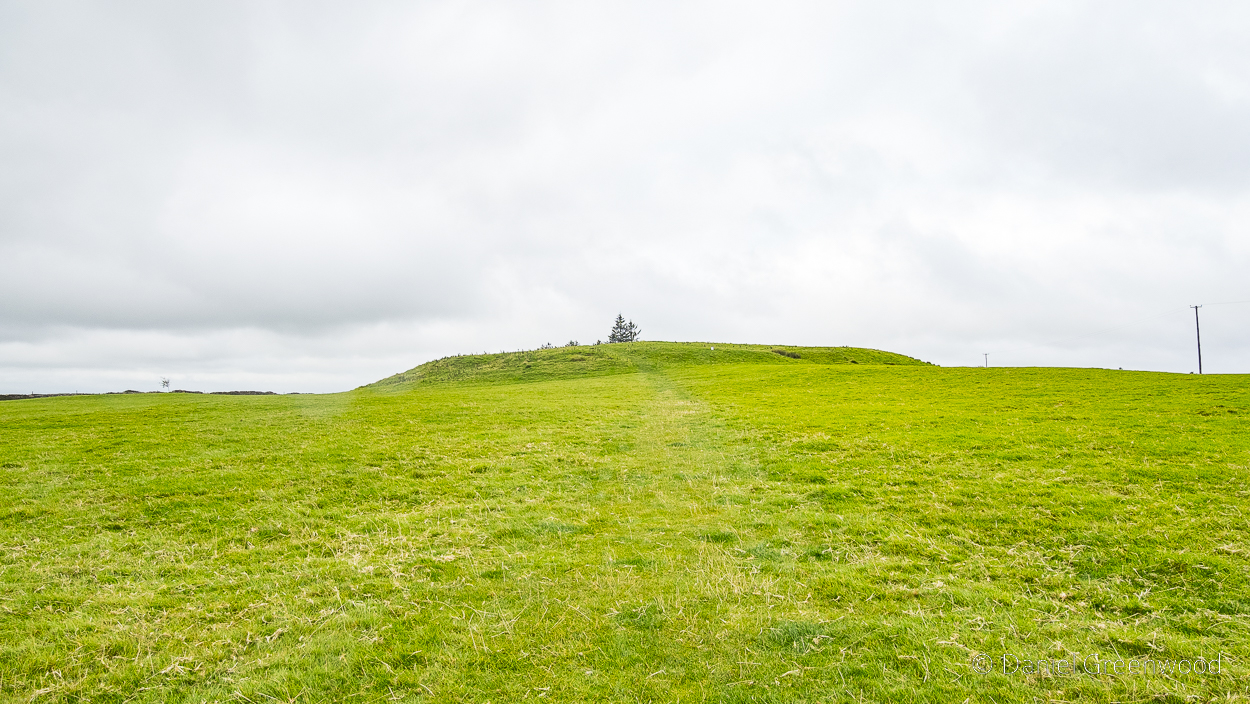
The Rathcroghan Mound has lost a lot of its grandeur over the millenia, but it still has an allure. And that’s coming from someone who knows very little about the history of the place.
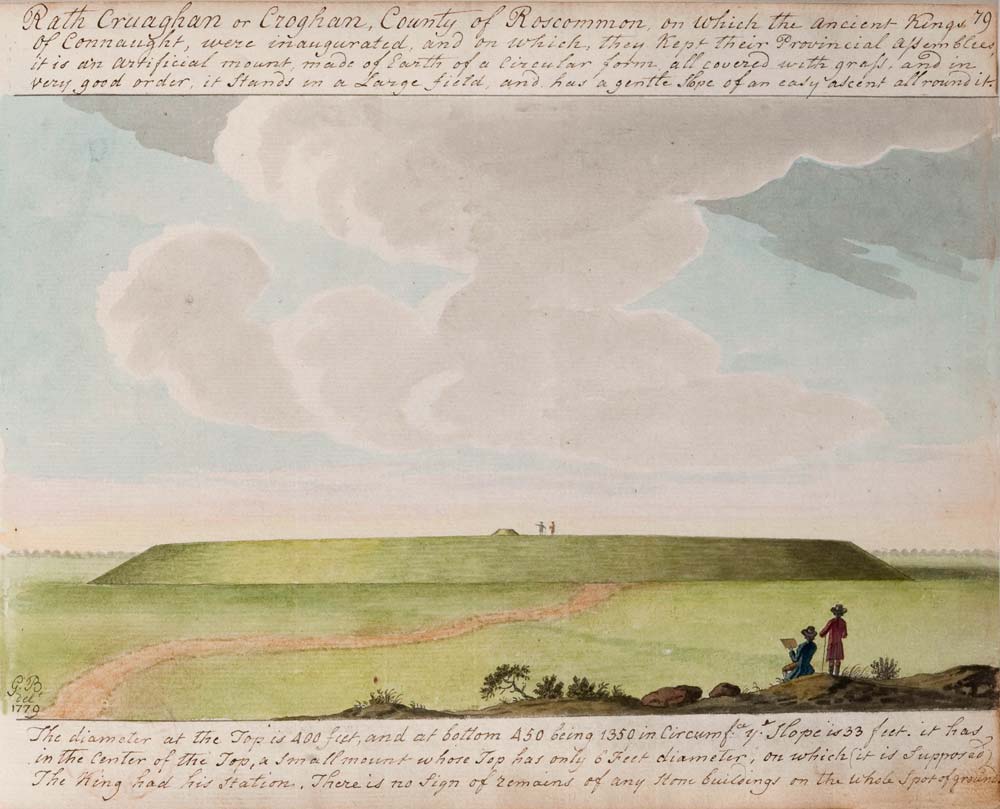
Apparently the mound looked like this in 1779 – which is quite hard to believe!
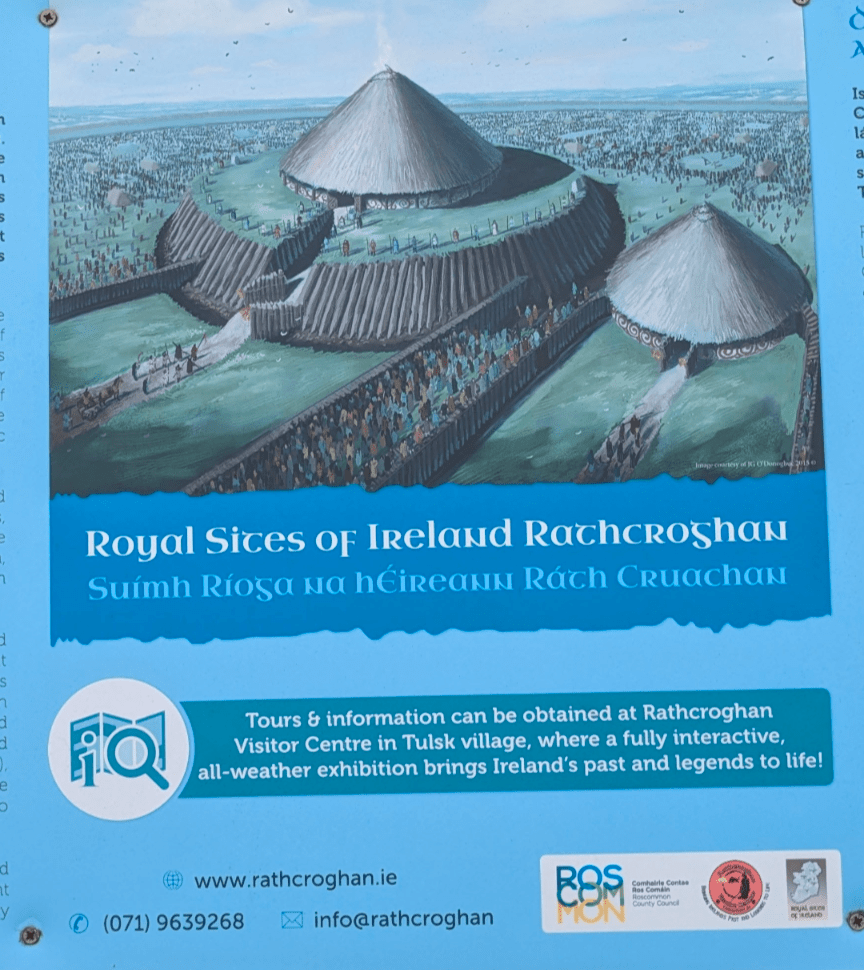
Now that’s more like it! For those who don’t know, Connacht is today one of Ireland’s four provinces which includes Mayo, Galway, Sligo, Leitrim and Roscommon. In ancient times it was a Kingdom. The ancient Kingdom of Connacht’s capital (until it was abolished in 1451) was Rathcroghan. People would have travelled from far and wide to visit Rathcroghan, having been described as home to one of the “great fairs of Ireland”.
Not anymore, unfortunately. Everyone’s at home watching short videos on their phones.
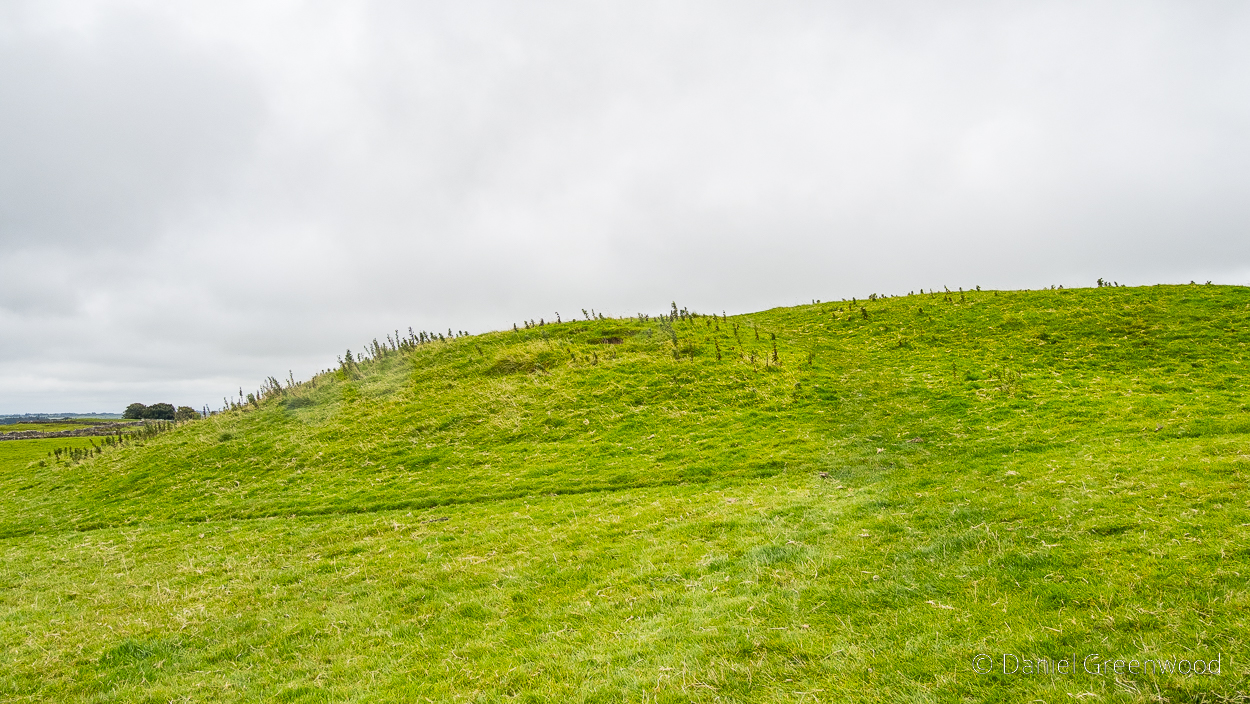
The desire-line that people take up onto the Mound can be seen through the centre-right of the image. The diagonal line is probably a cattle path.

This map shows where the key features of the site are found. The car park is right beside the N5 on the southern side.
Rathcroghan is a total mystery to me, so I will have to head back for a better look in future.
The Rathcroghan Visitor Centre is nearby Tulsk where you can book a tour of the archaeological site: https://www.rathcroghan.ie/
Thanks for reading.

