I’m still dining out on mid-April at the moment, it’s such a lovely time of year.
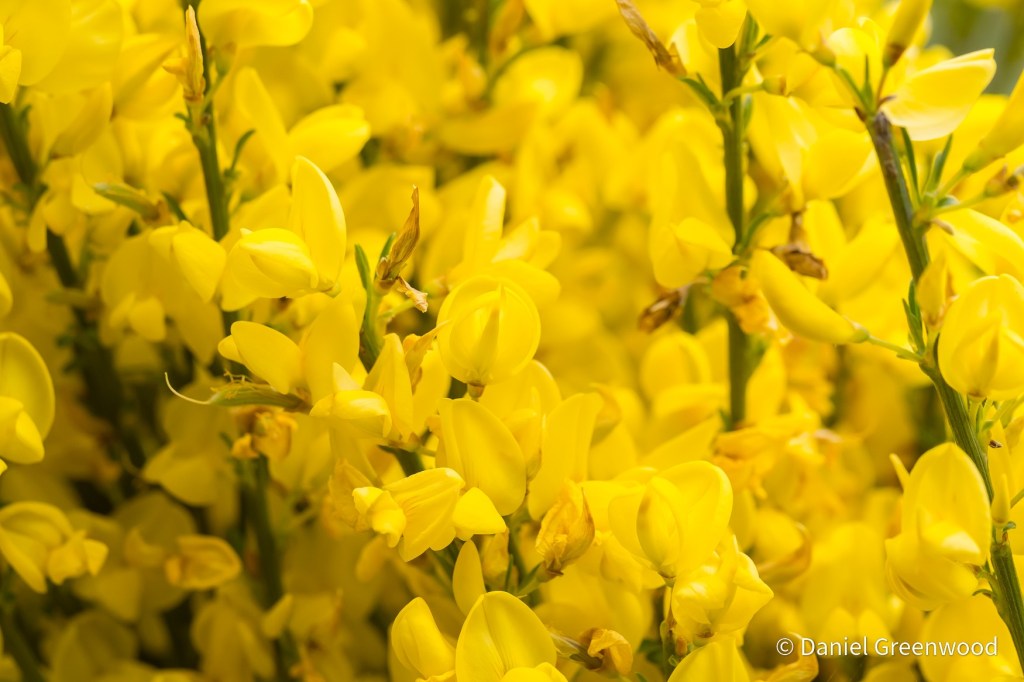
The broom (Cytisus scoparius) we planted several years ago has bloomed magnificently this year. It’s been a treat to both smell, and to see it attract a whole range of pollinators.
Dandelions have been all over social media recently with the recipes for ‘dandelion honey’. I am reliably informed that it’s jam or syrup rather than honey because you’re not a bee. It’s good that people are becoming more aware of dandelions which are incredibly important for pollinators.
We’ve expanded our berry bed in the garden to include an extra redcurrant, blueberry and gooseberry. Above are the lovely flowers of redcurrant.
My little laid hazel hedge is coming along nicely. These fresh red stems are a welcome sign.
As part of the hedge I’ve planted a couple of oaks that have been in pots in our garden for a number of years. One of the oaks is from my grandmother-in-law’s garden near Epping Forest, the other grown from an acorn from Dulwich Wood. I love the redness of the leaves when they first appear, whether or not these are tannins I would need to check the science.
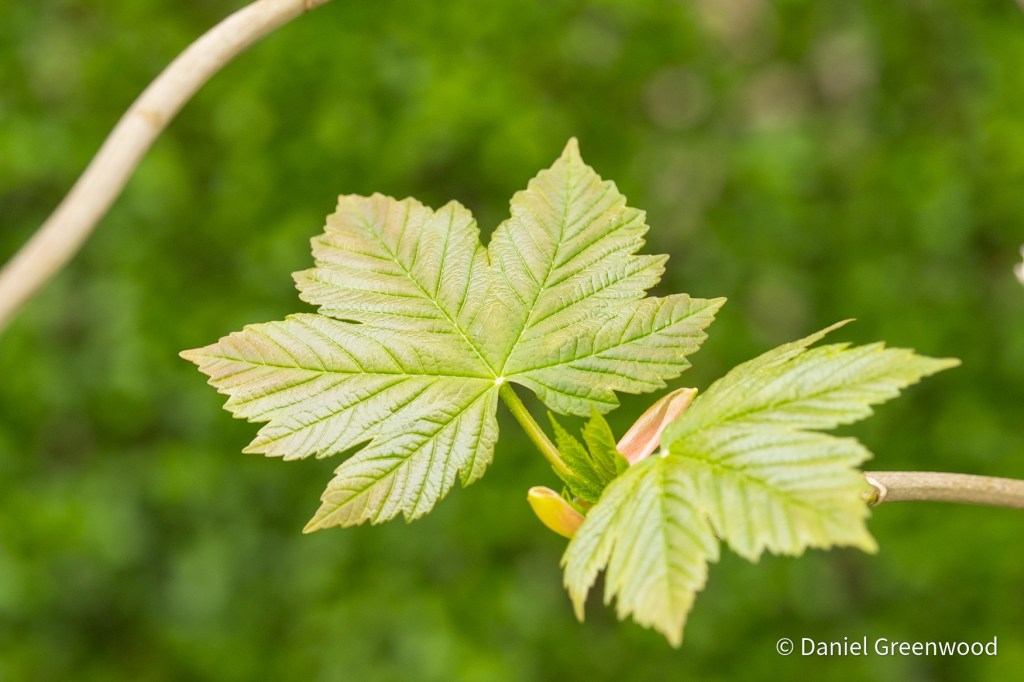
Elsewhere the sycamore is now leafing. Soon these will be sticky with aphid honeydew. The sparrows and blue tits will be hoovering the aphids up to feed their nestlings.
Speaking of those little devils, our swift box has been moved-into after 3 years of waiting for something to happen. Of course it would be best if swifts were there, but sparrows are also red-listed and their habitat is being lost as people are forcing them out of the eaves. Much of that is probably unintentional, but it’s still something we need to look at.
In the invertebrate world, the droneflies have calmed down a bit and are willing to pose for their macro close-up. This is probably a tapered dronefly (Eristalis pertinax).
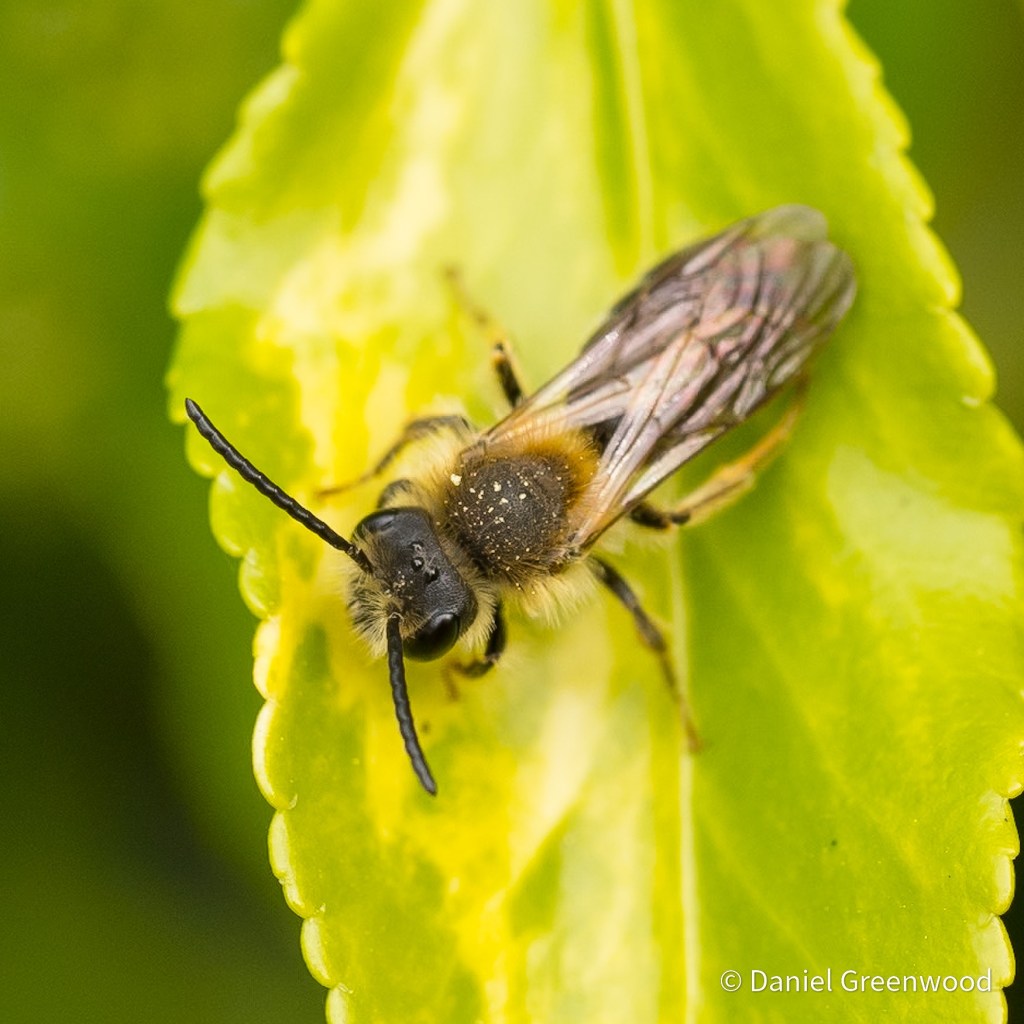
This is my first decent set of images of a solitary bee this year. It’s probably one of the mining bees (Andrena) but I don’t have an ID yet.
Another solitary bee species had found its way into our living room. I took a few photos before letting the little bee back out into the world.
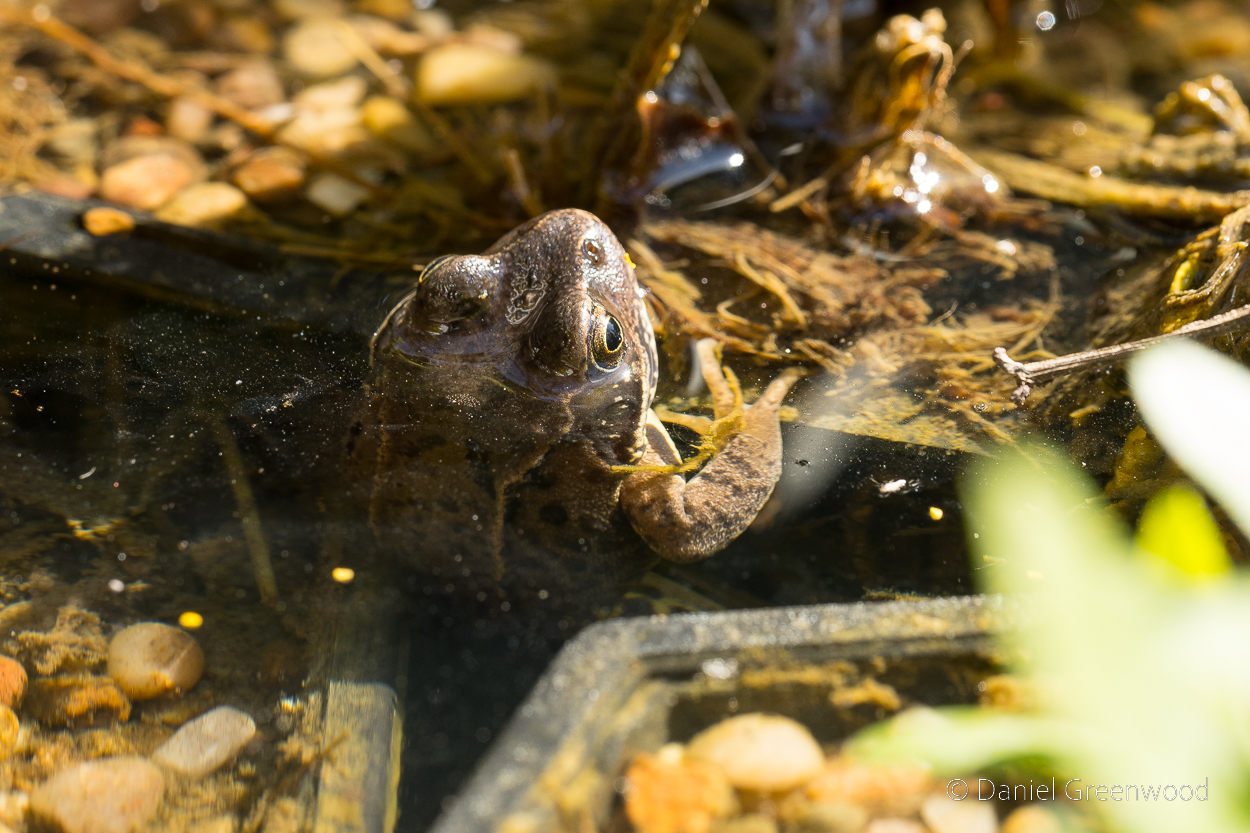
On Friday 11th April I was hanging out in the garden when I glanced over at the small container pond on our brick patio. It’s an old metal wash basin filled with plants and, well, water.
Birds bathe in it, foxes drink from it, and something rather special now lives in it.
The first thing I saw in the ‘pond’ were two eyes looking back at me, and two big arms and webbed hands (are they hands?) holding onto one of the plastic plant containers.
It’s been so dry for the time of year, wildlife is really suffering with the lack of water. If you have the chance to build any kind of pond you should do it! We don’t have enough space in our garden to dig a ‘proper pond’, but we have been able to use a container we bought at an antique dealer. Without it, where would the frog go?
Elsewhere I’ve noticed the number of drone flies has ebbed a bit, but there are still plenty around. This is probably a tapered-drone fly, a species of hoverfly.
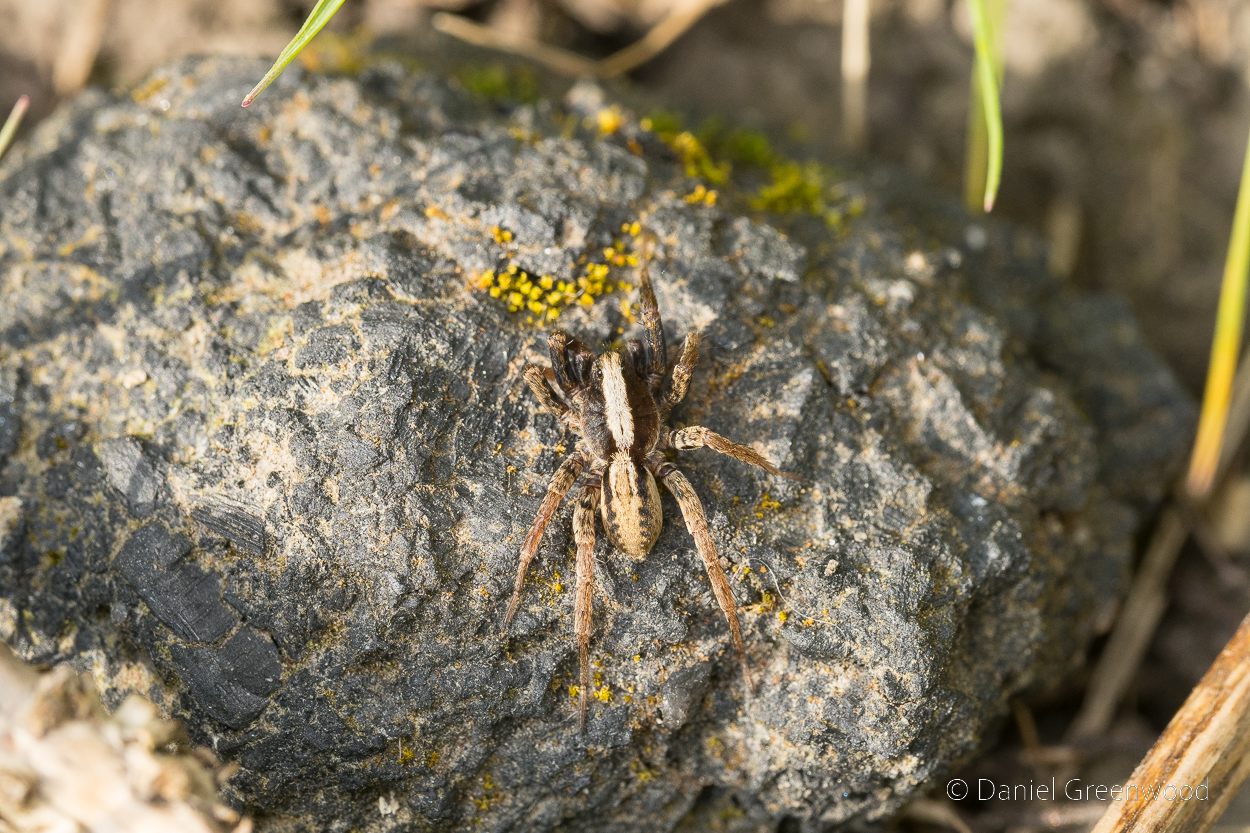
Sitting on this piece of charcoal (which you may notice is now being colonised by a very small moss) was a little spider. iNaturalist has suggested this is a fox spider.
It’s rather cuddly isn’t it? No?
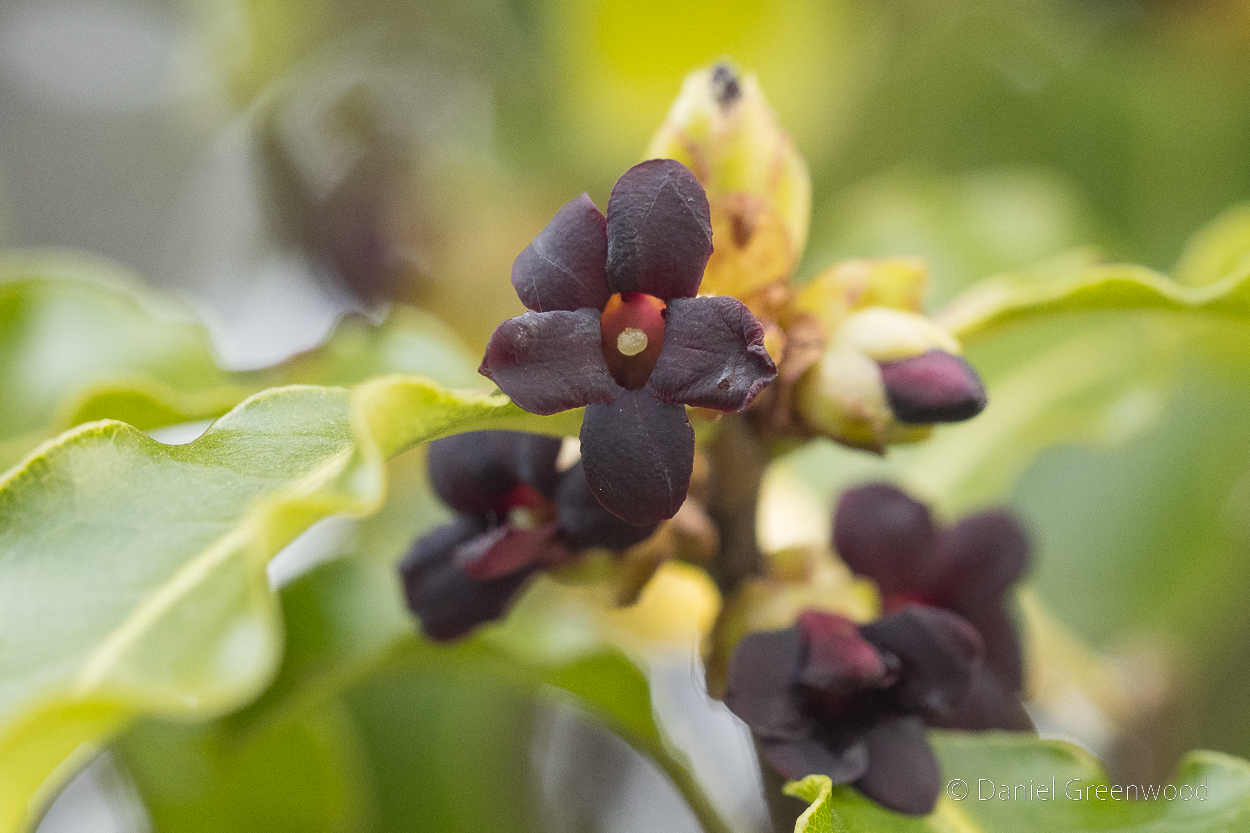
At night we’ve begun to notice a powerful fragrance around the house. It’s a bit like honeysuckle but is probably a cheesewood, a species of plant from New Zealand. This grows in a neighbouring garden but reaches over to us. It’s absolutely covered in pollinators and the smell- wow. It doesn’t seem to be invasive so could be a good option for your garden if you like pollinator-friendly shrubs.
I’ve been making an effort to go for a walk in my local slice of the Sussex Weald before work in recent weeks. The impact it has on my brain, body and soul is profound, having lost my connection with woodland somewhat recently.
Early spring is a special time in woodland, watching the the leaves appear, the first spring birds, and the woodland flowers. It is so much better than those hot, shady and sterile days of summer, in my view.
The chiffchaffs have been arriving, but the song thrush rules this chunk of the Weald. Its repeated phrases echo through the still leafless branches.
Wild branches against ranks of pine and birch.
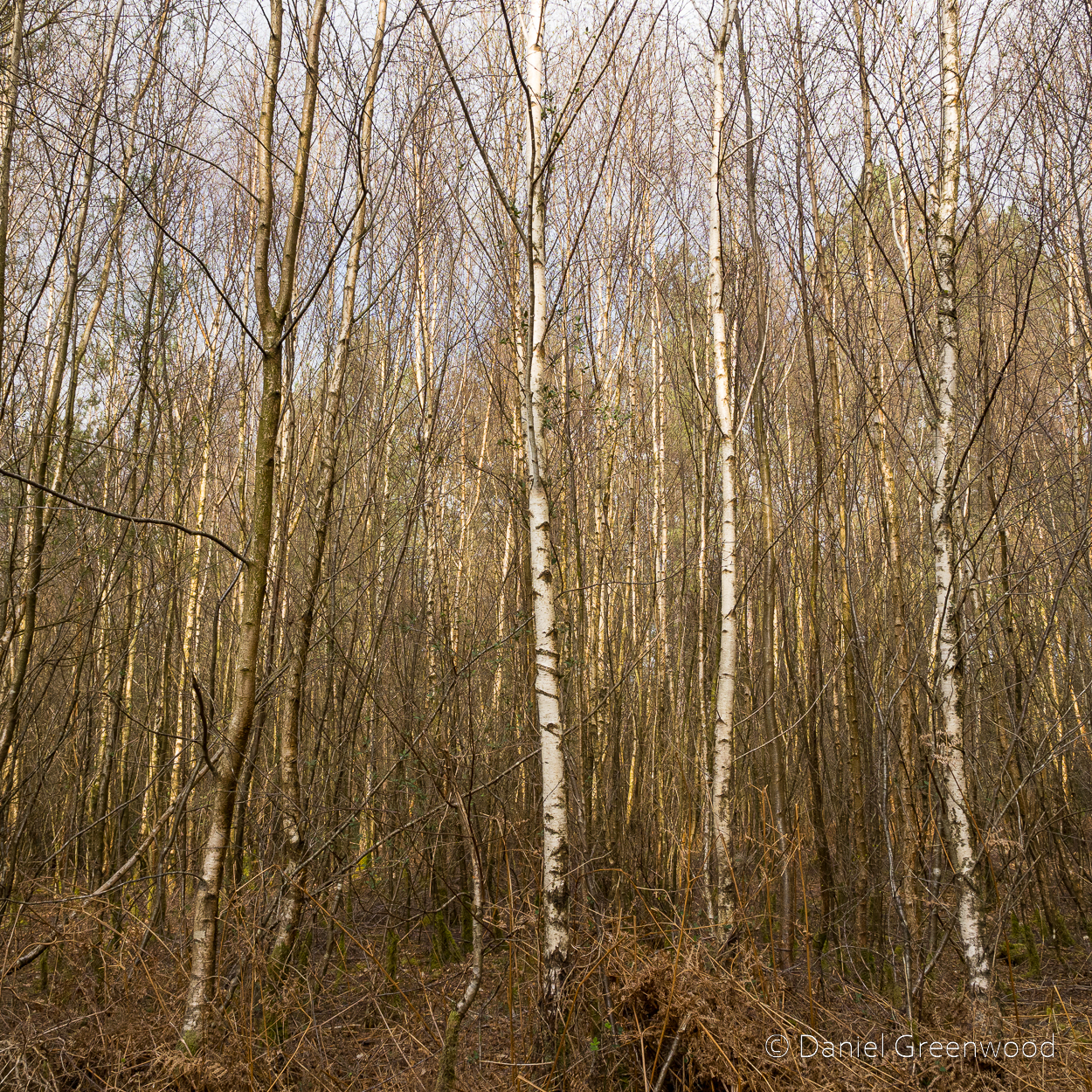
Those birches, growing on old heathland, waiting for the onset of new leaves.
A birch tree harassed by honeysuckle, catching the morning light.
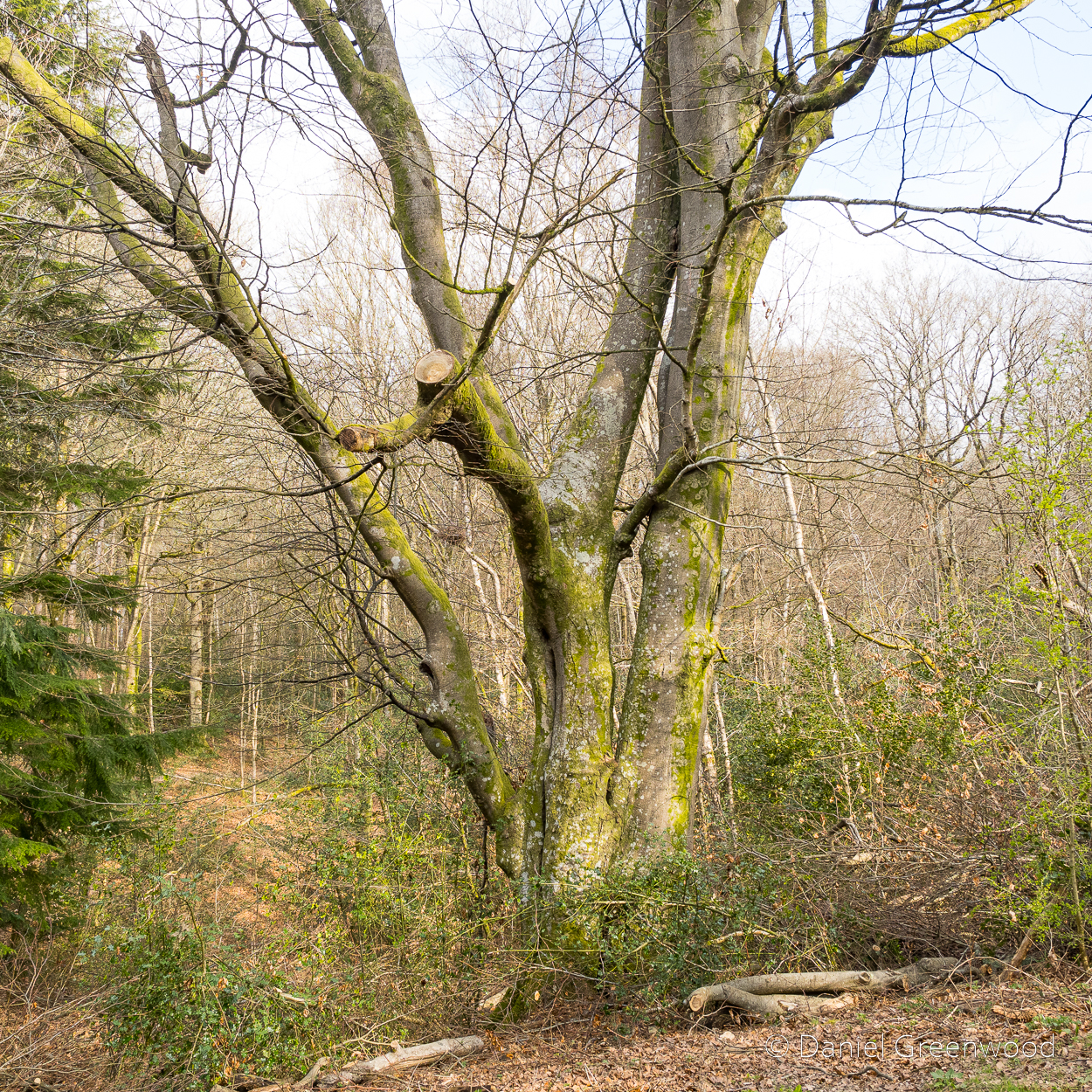
A green beech tree with lots of moss and algae.
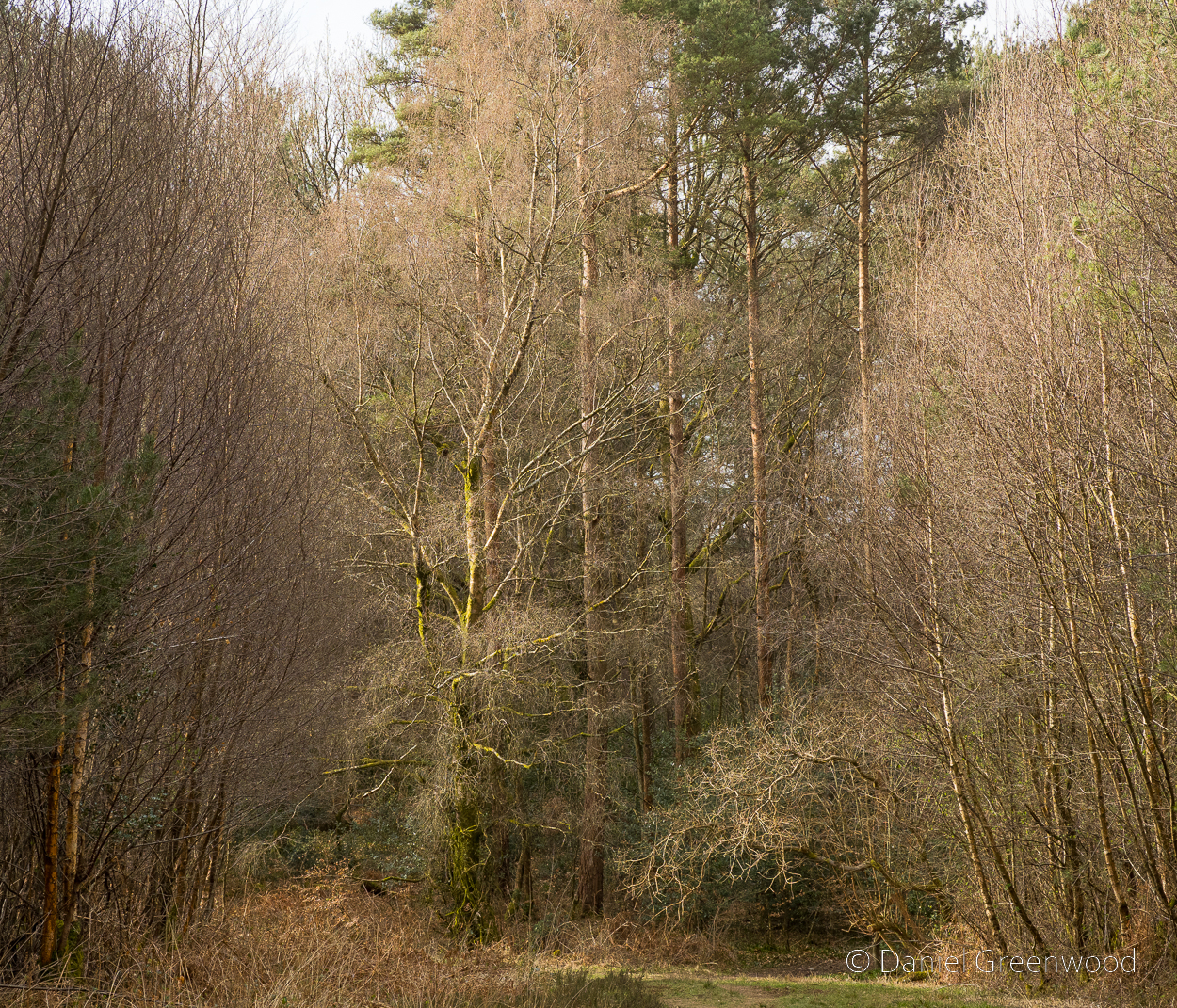
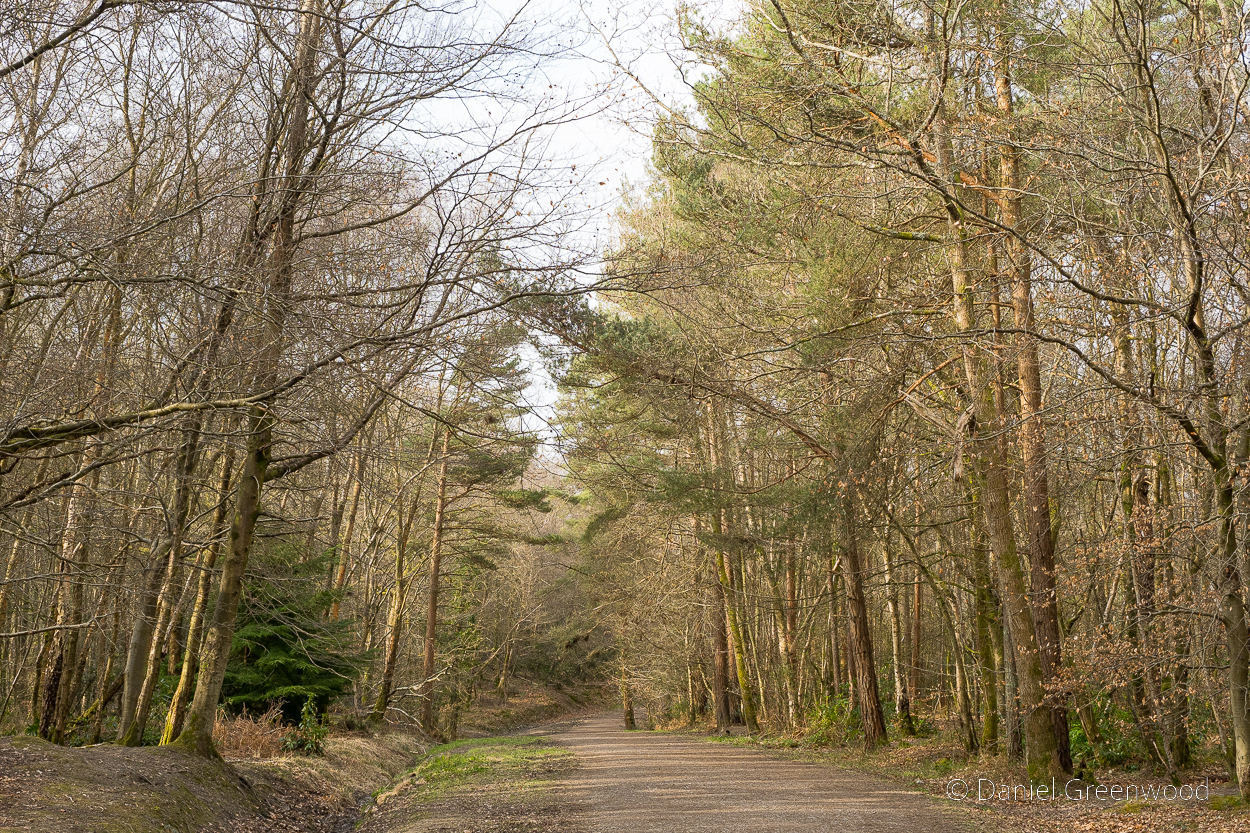
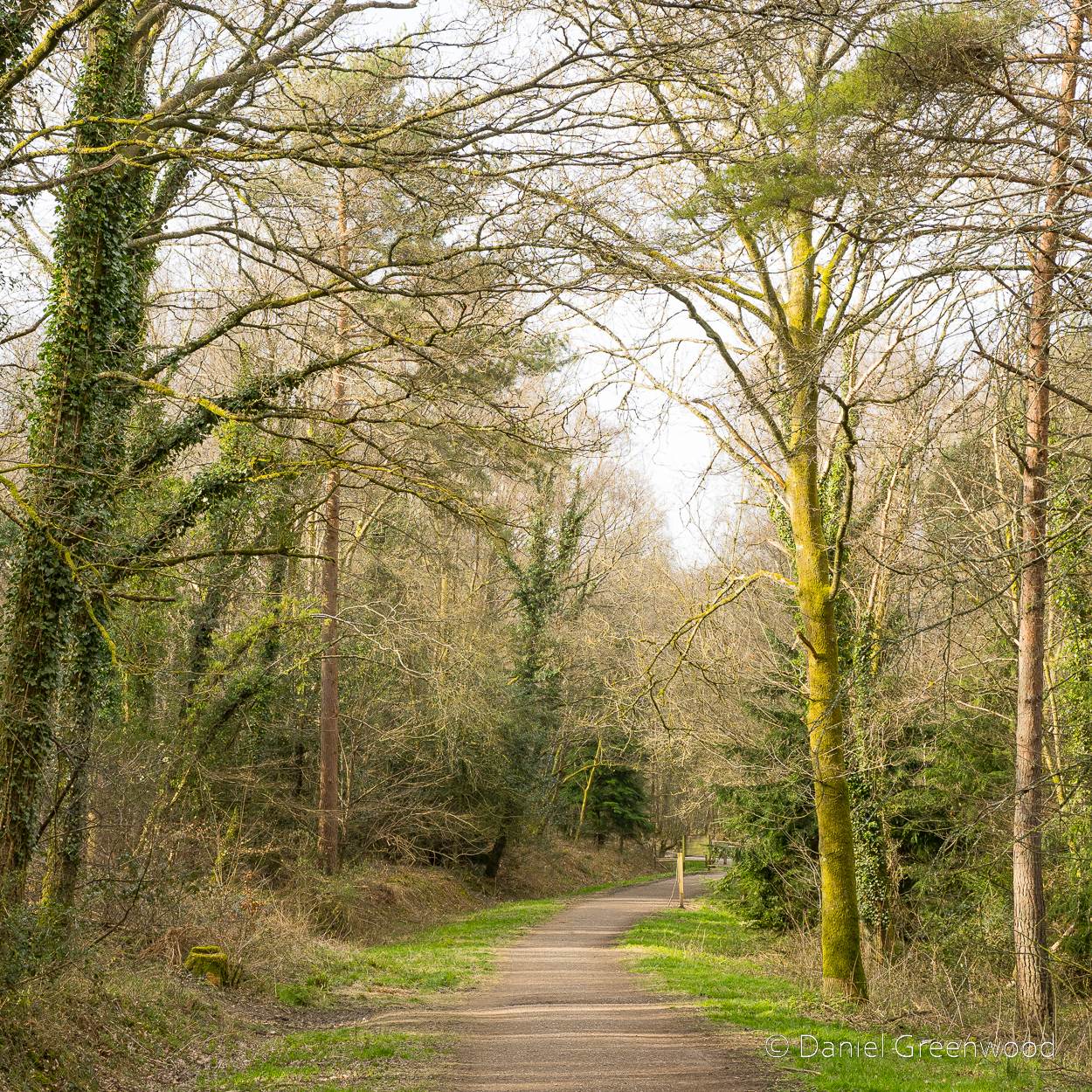
The ride, with pines reaching across on either side.
Silver birches among bluebell leaves.
An old beech tree.
Bluebell leaves appearing below a mess of beech twigs and old leaves.
The grassy banks of the woodland ride. I often hear firecrest singing along these edges where the ivy climbs and a few evergreen trees like the cypresses grow.
This is a showcase of the posh mushroom pics I gathered with my proper camera during a visit to the wonderful Dartmoor National Park in November 2024. Mad props to my wife who is chief squirrel during these Devonian photo forages.
The photos were taken on Sunday 10th November 2024.
I write these blogs in my spare time because I want to raise awareness about the beauty and diversity of fungi. If you enjoy reading them you can support my blog here.
A reminder that I am not encouraging people to pick or remove mushrooms in these areas. You could very easily clear all the mushrooms we saw within minutes. I think that would be sad because it would mean other people wouldn’t get to see them and learn or be inspired by them. I think with rare species like waxcaps that are featured here, we should be taking photos and submitting them to apps like iNaturalist or Plantlife’s waxcap campaign. In some areas that would be illegal anyway, due to site protections.
While I don’t believe 2024 will go down as a vintage mushroom season, there were a lot of lovely waxcaps to be found on the moor in a place we’ve been visiting since 2016. Moorlands seem to be quite good for waxcaps, not that I know why, and also for lichens because they are rocky, wet and the air is fresh.
I’ll post the images in chronological order for my own sanity.
This is the landscape where the fungi lived – moorland with a view towards the Teign estuary.
The first fungal find were these eyelash cups (Scutellinia) growing on animal dung! Plenty more dungi to come.
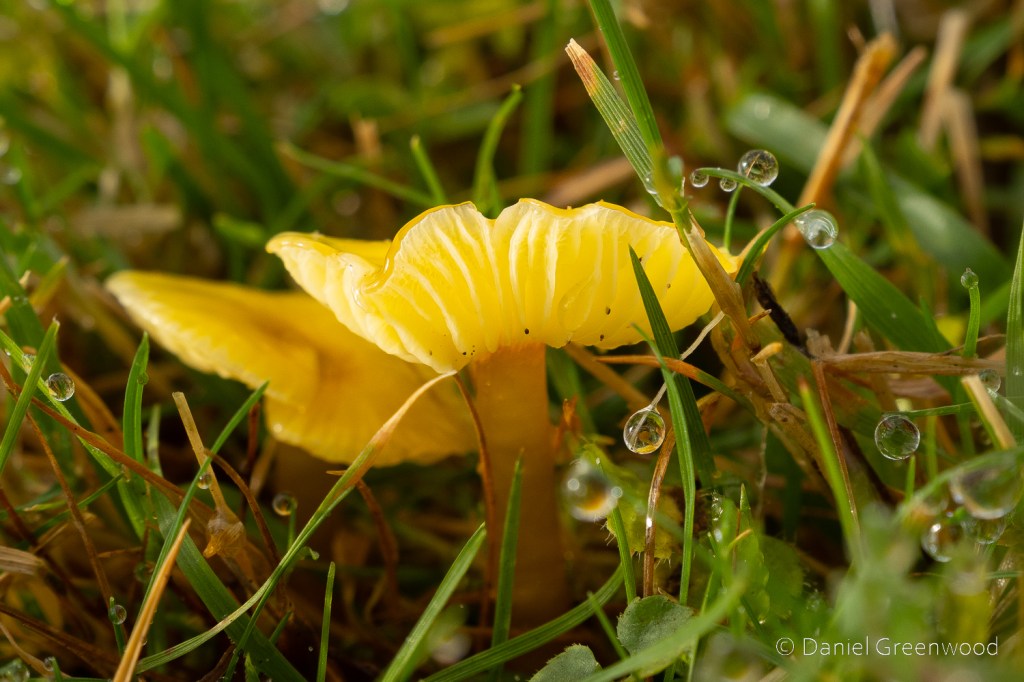
Waxcaps make up the crux of the mushrooms we found. These beauties are butter waxcaps (Hygrocybe ceracea).
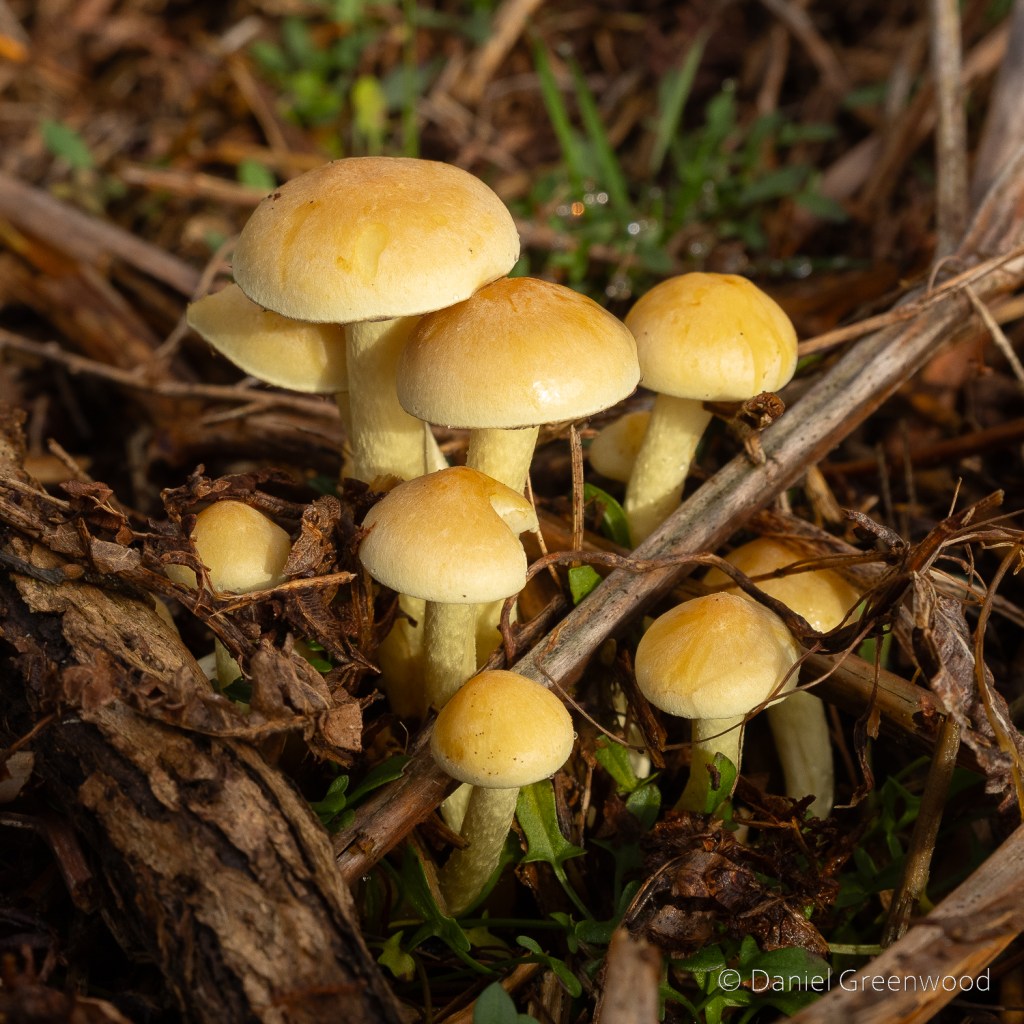
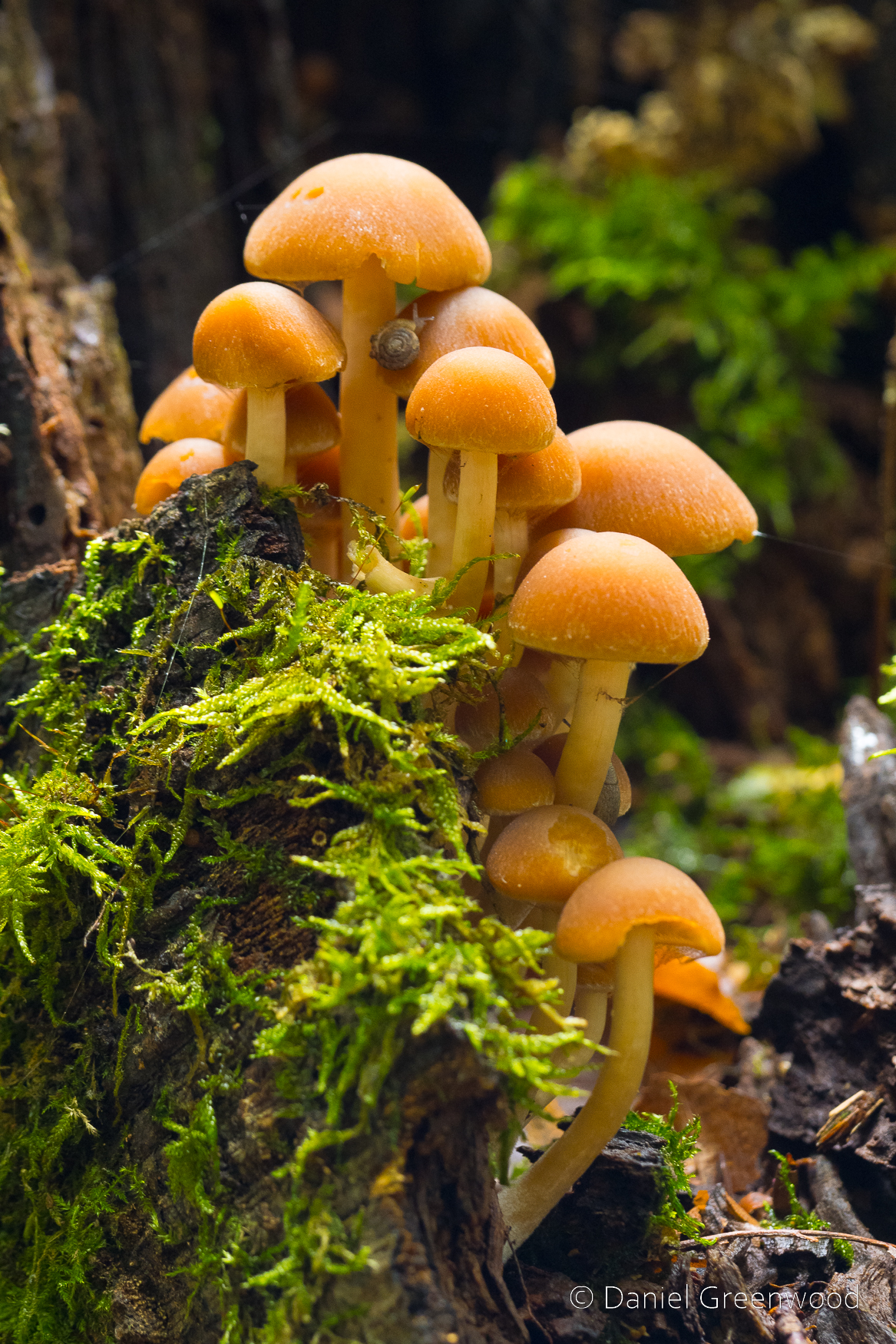
Not to be outdone, some very photogenic sulphur tuft (Hypholoma fasciculare) were found as we climbed the moor.
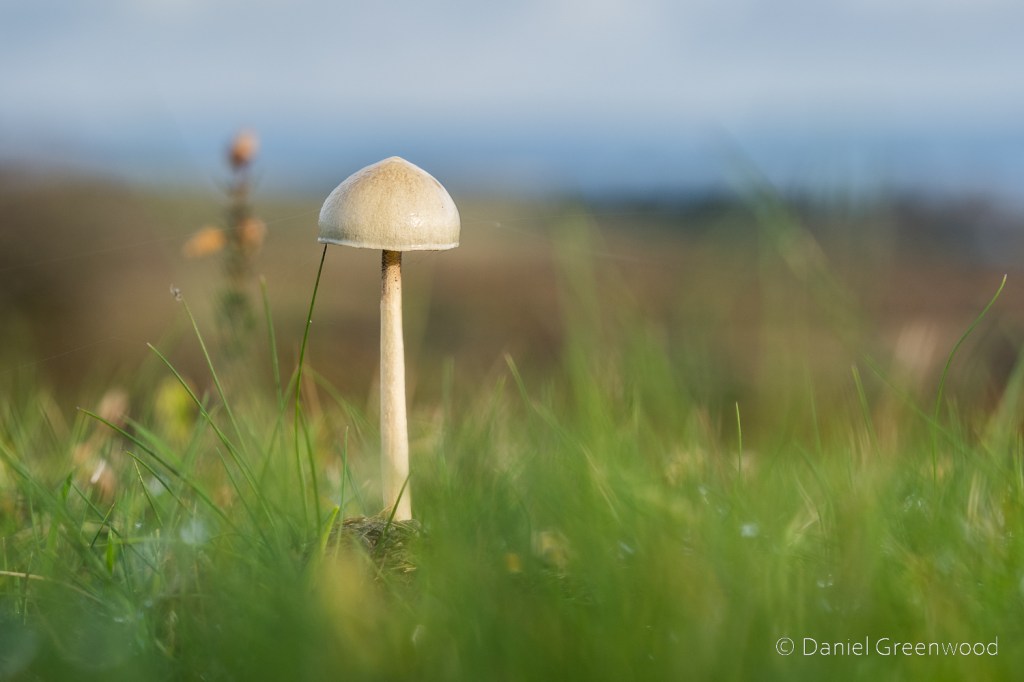
These mottlegills (Panaeolus) are quite common in places with grazing livestock like Dartmoor ponies.
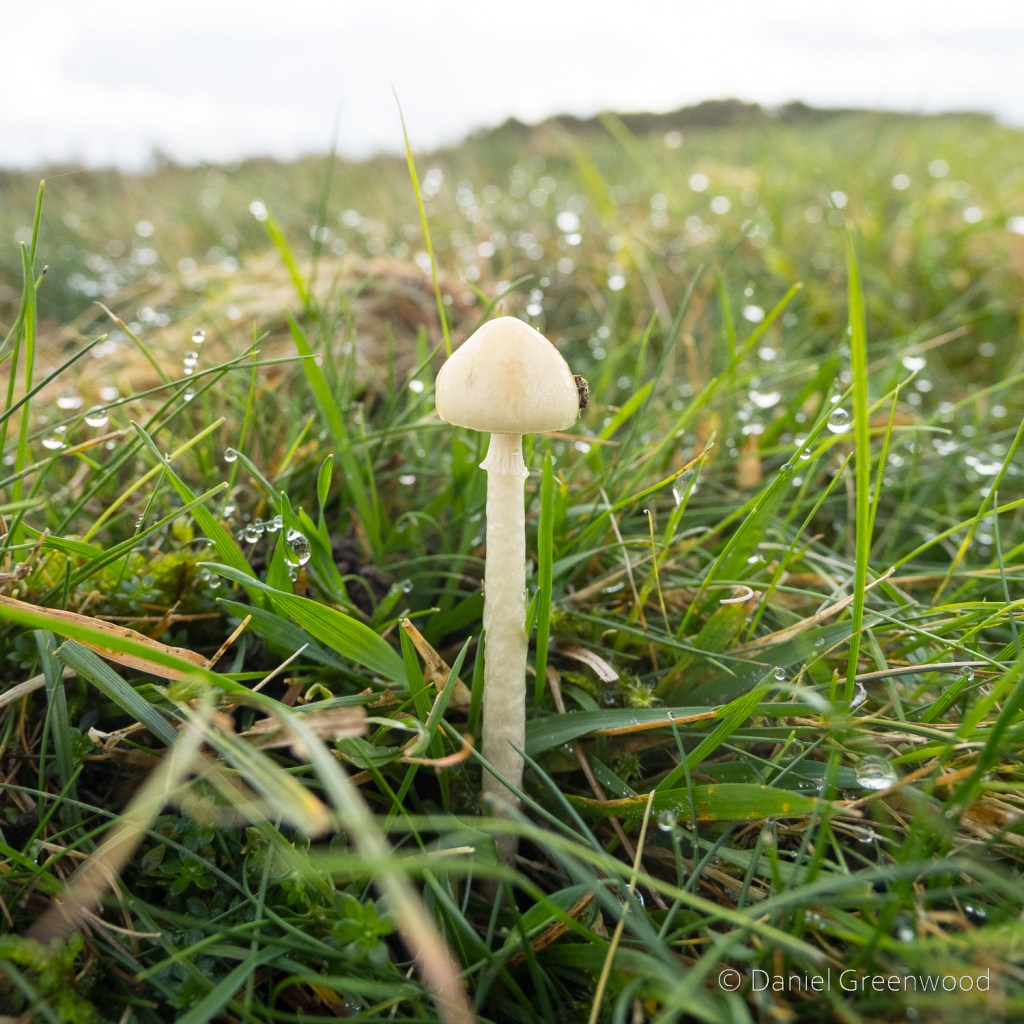
My best guess is that this was one of the moss bells (Galerina).
These lichens are beautiful. I don’t see them very often because I have to travel west see moorland. They’re probably gritty British soldier lichens (Cladonia floerkeana).
I’m unsure what this species is, but it’s a beauty.
As we approached the more remote moorland (in terms of people living out there) the waxcaps began to appear in the cropped turf. This is another example of how important grazing to some degree is, and how it mimics very ancient processes. These mushrooms would not grow in closed-canopy woodlands.
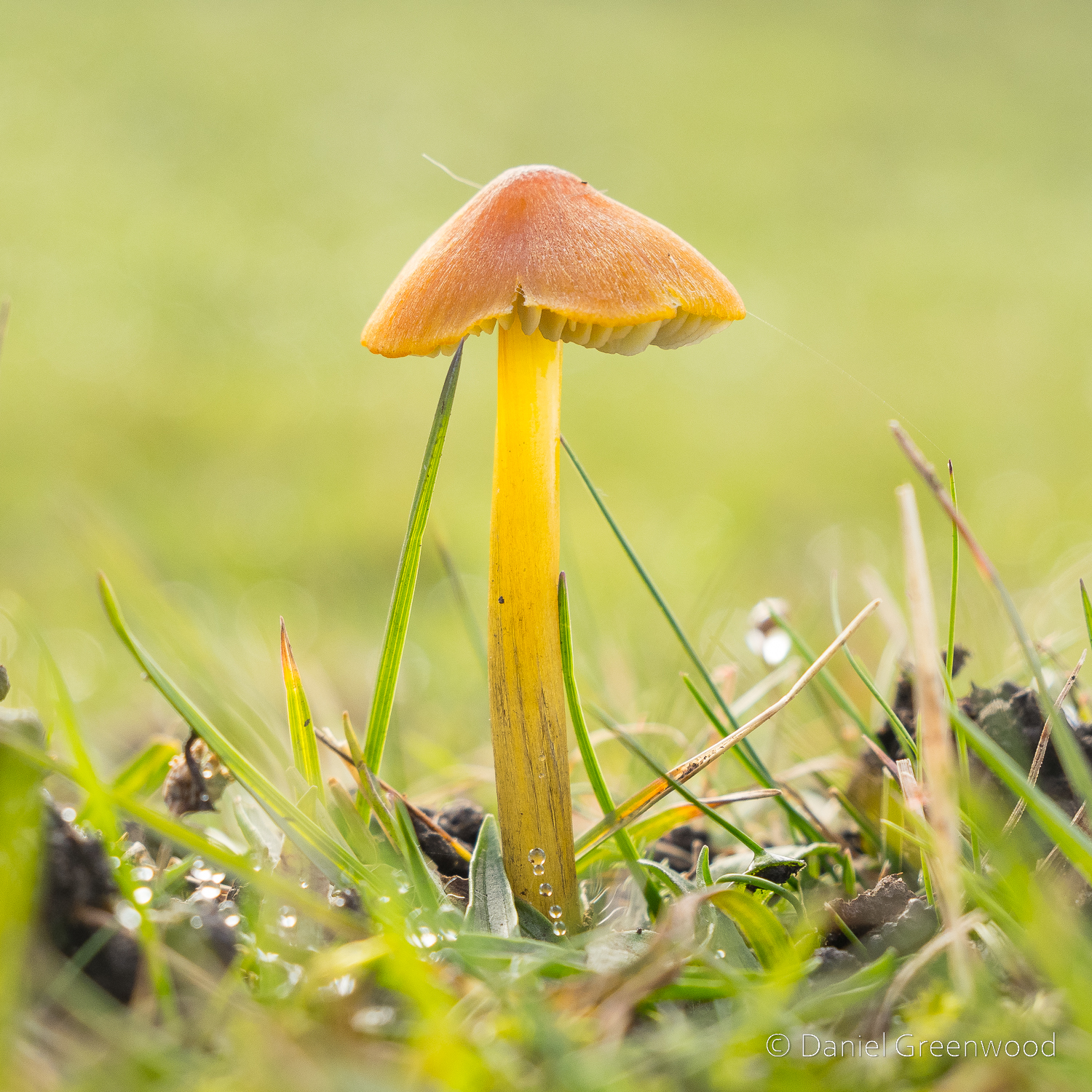
This is one of the red waxcaps, but I’m unsure if it’s honey waxcap or not. It looks too orange for scarlet waxcap.
This is one of several species under the umbrella of blackening waxcap or witches’ bonnet (Hygrocybe conica complex).
This is a species I only really see in the west of England or Ireland. It’s one of the dog lichens (Peltigera).
These are crimson waxcaps (Hygrocybe punicea), stunning mushrooms indeed. There were some young men passing by who stopped to admire the colours of these impressive shrooms.
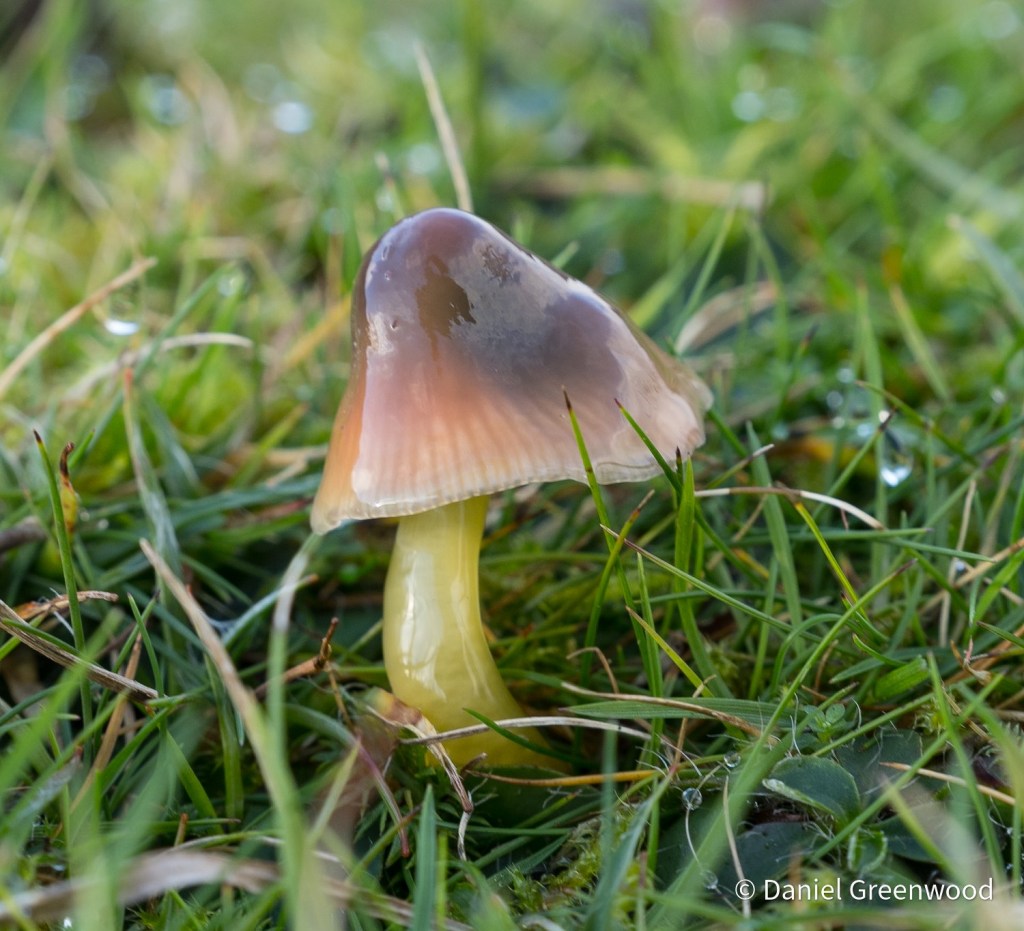
I don’t have an identification yet for this gorgeous waxcap and the closest I can guess is a colour variation of parrot waxcap (Gliophorus psittacinus).
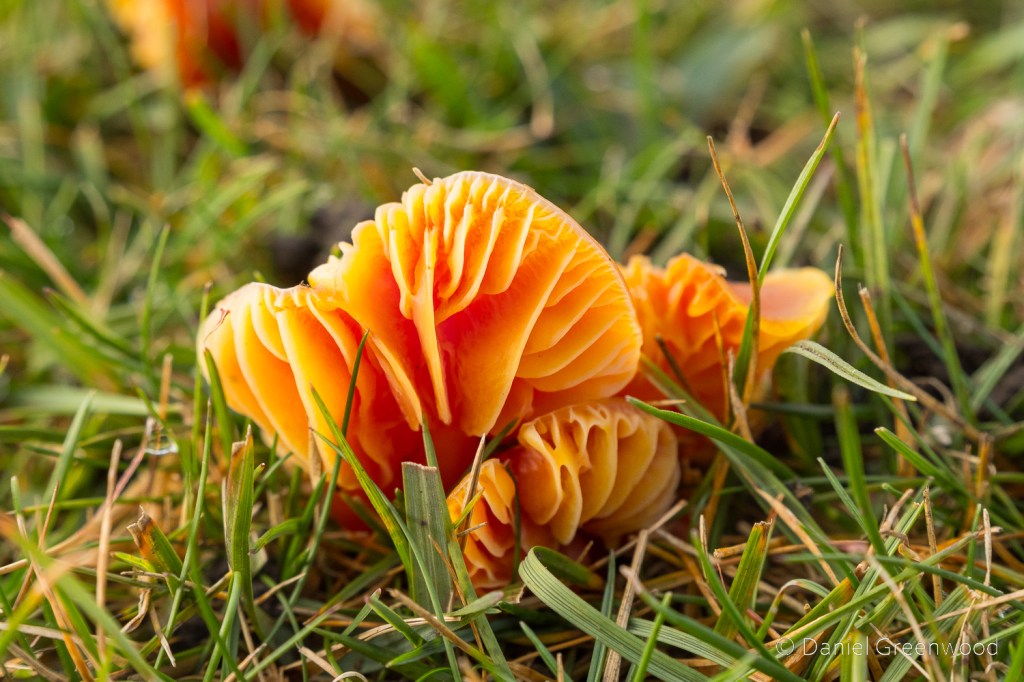
This is meadow waxcap (Hygrocybe pratensis), often fan-like, always best photographed from ground level.
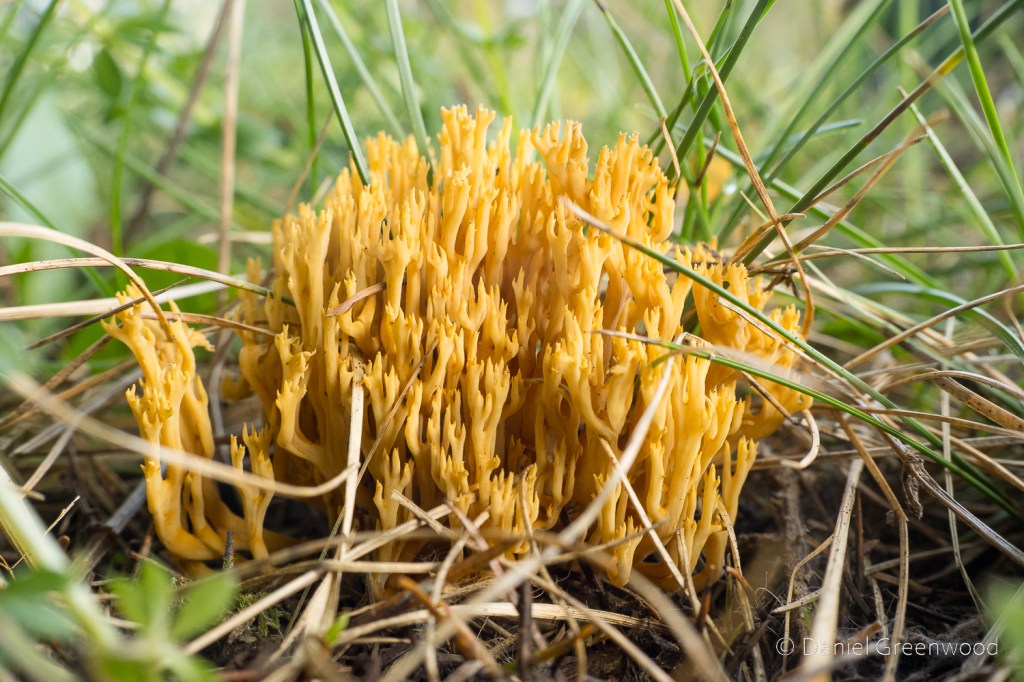
I’m not up on my corals and suchlike, but these are probably in this family.
The walk ended in a little graveyard, great places for waxcaps, by the way. That was evidenced again by this clutch of what I would say were scarlet waxcaps (Hygrocybe coccinea).
Phew!
Thanks for reading.
I write these blogs in my spare time because I want to raise awareness about the beauty and diversity of fungi. If you enjoy reading themyou can support my blog here.
Another year completed and lessons learned. Creatively I have found a balance with my equipment and the actual process of photography. I’m into my 6th year of working with Micro Four Thirds cameras and lenses, giving more space to enjoy the process of gathering photos – walking – because the equipment is light.
Cameras used include Olympus EM-5 Mark III, Oly EM-1 Mark III, Olympus TG-6 Tough compact camera, and Pixel 7a phone camera.
These photos should show the range of things I like to take pics of – not just mushrooms! 😂
With the privileges available to me – health, location, resources, freedom of expression – here are my photographic highlights of 2024:
January
I did a couple of long walks in Sussex at the beginning of the year, exploring some new locations around the South Downs. I visited St. Botolphs church for the first time, one of Sussex’s special ones among thousands of already significant churches. Last year I set up a gallery for my fledging church photographs project which can be viewed here.
February
This felt like the moment of the light returning after the dark winter months. The Downs at Amberley are my gateway to the South Downs, and walking here is always worth the gentle climb.
March
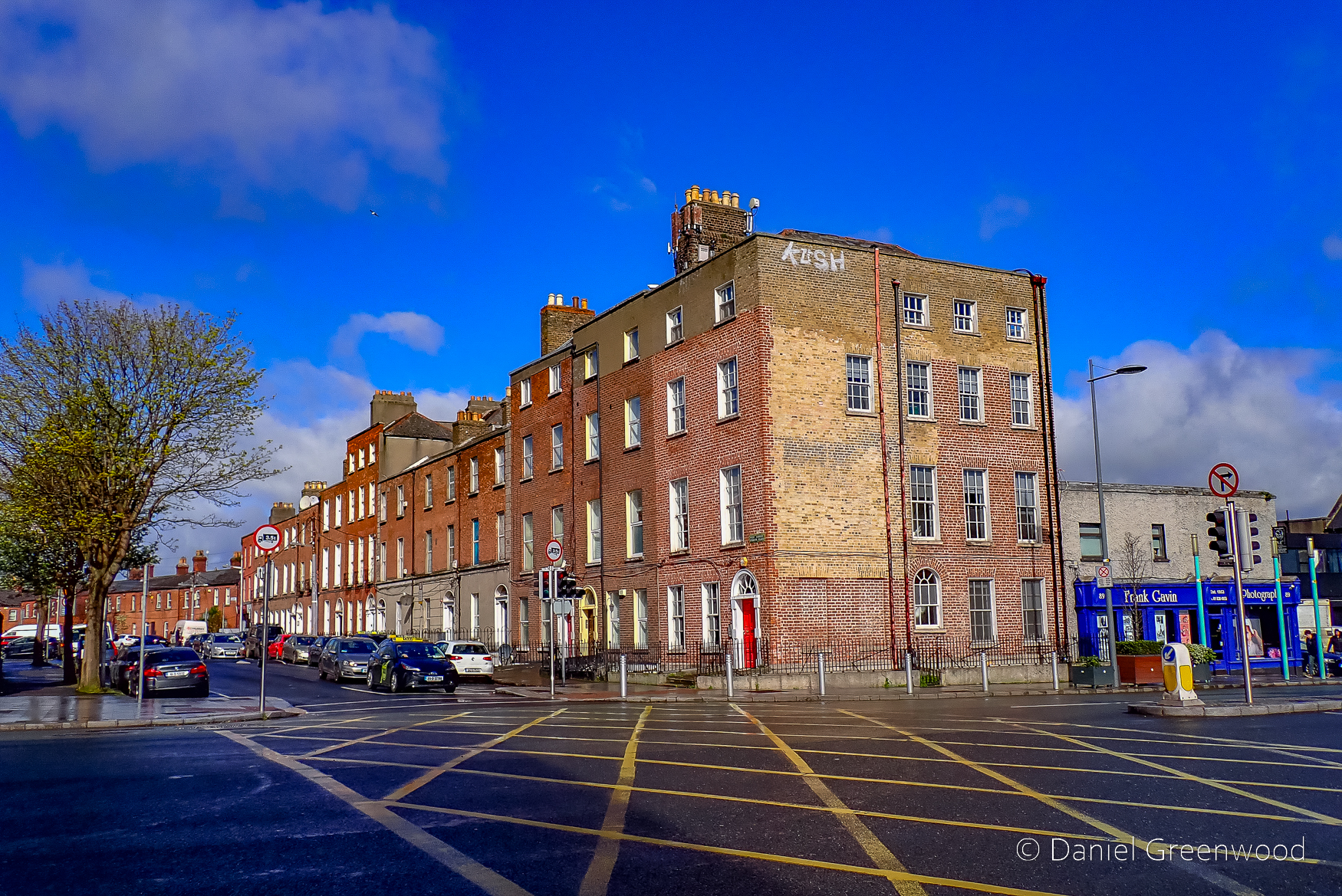
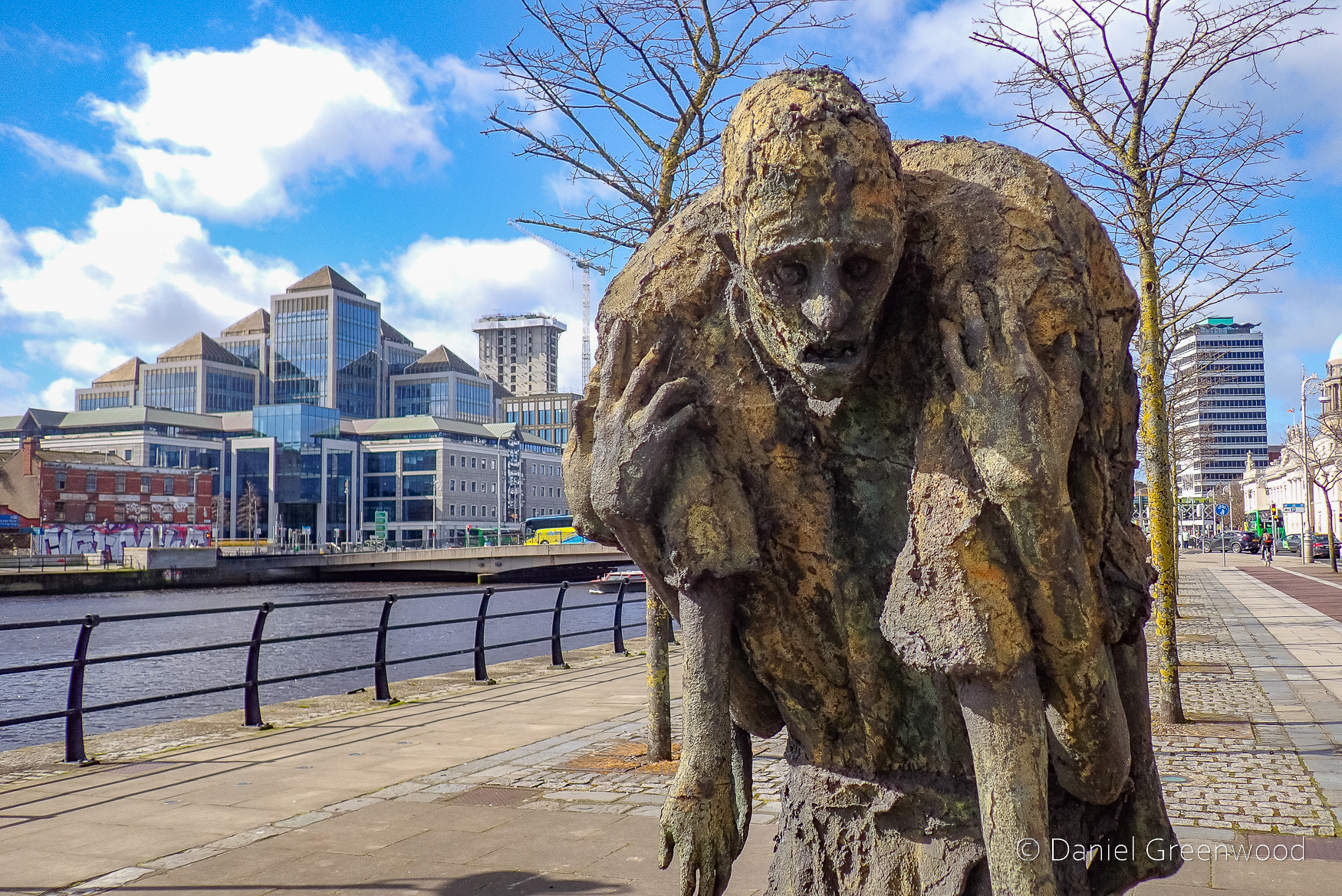
In March I visited Dublin for a weekend and took in the sights along the great river Liffey.
For a friend’s birthday we spent the weekend in York, which gave me a chance to take some compact camera pics of a few of the oak timber framed buildings. I’ve added a gallery for my ‘Oak Timbers’ project here.
April
I got married in April so there wasn’t time for much beyond the odd local walk. I was trying out my new Pixel 7a, bought because of its value and reported image quality. The camera is spectacular, I just wish it wasn’t a G**gle product. I blogged about it here.
May
Ah, memories. In May we went on our honeymoon to Austria and Switzerland, all by train. You may be sick of reading about that! I am definitely not sick of blogging about it though!
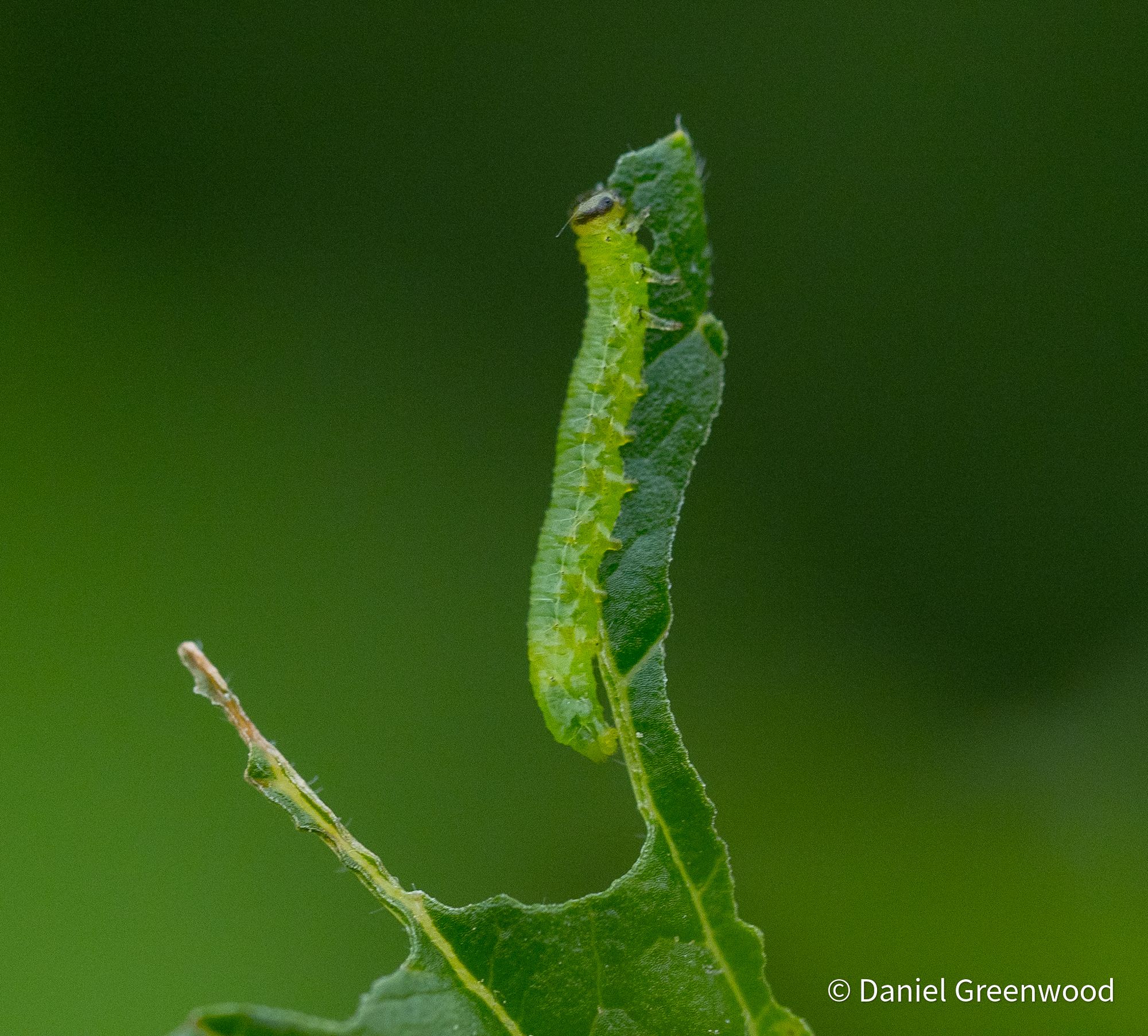
A bit of a lost month for photography because I started (yet another) new job and had to settle into a new routine. The highlight was probably these sawfly larvae which ate through some of the leaves on my gooseberry. Blog here.
July
“July, July, it never seemed so strange”, as the Decemberists sang. I caught Covid and didn’t really get back to normal for 3 months afterwards (Vitamin D is very important, people). My macro work was reduced by the evil contagion but I did find some nice bugs near home to share.
August
I managed to pap some pretty fine inverts in August, with this beautiful ichneumon wasp seen in my garden. I’ve not got anywhere near enough out of my Olympus EM-1 Mark iii and 60mm macro, but this showed just how good Micro Four Thirds cameras are for macro.
Another strongpoint for M43 cameras is that they can ‘stack’ images internally, something now copied by the big hitters. This is a composite of about 10 photos the camera has laced together to ensure the depth of field covers a deeper focus range. It means more of the, rather gruesome, subject can be seen in detail.
September
In September I made my first ever visit to the iconic sea stacks at Downpatrick Head on the North Mayo Coast in Ireland. Mayo has an international dark skies designation so I was able to mess around with the Milky Way. But for the astro photo I haven’t processed these images yet so here are a couple of phone photos.
October
As I have lamented on my Fungi Friday blog, 2024 was not the best mushroom season. But there are always things to find out there. I found this knocked over fly agaric, which was in perfect condition, ready for its portrait.
November
Autumn is a time for Dartmoor for me and my wife, and despite colds we managed some walks onto the moors in the National Park. We found an amazing array of waxcaps, like the crimsons above, which you can see in full on Fungi Friday.
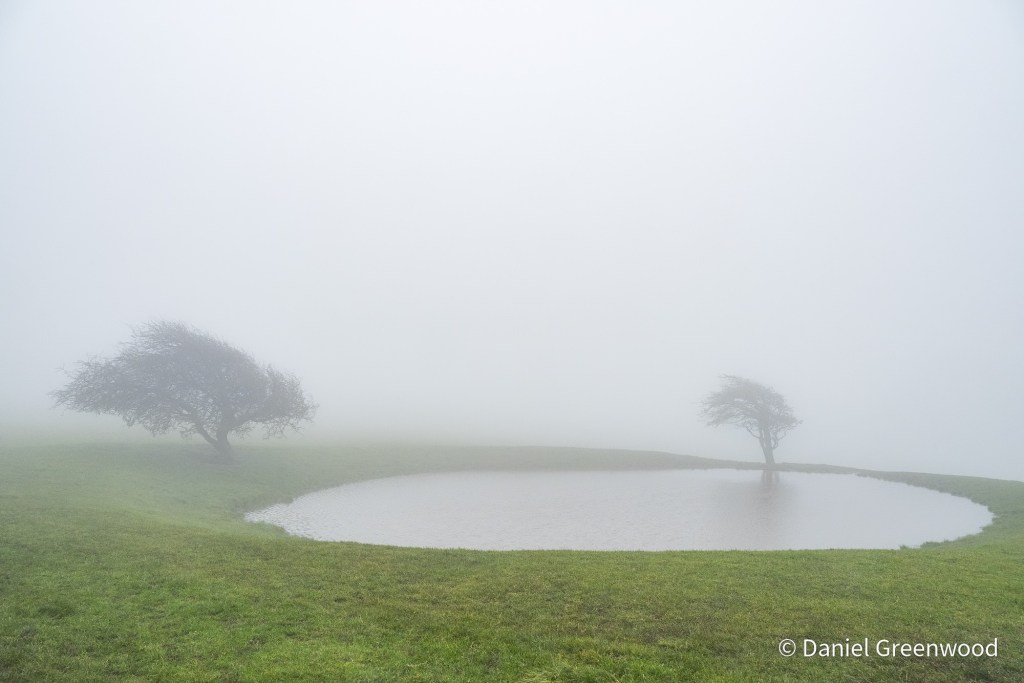
On the last day of November I hiked with my South Downs amigo from Ditchling into the mist. This is the much-photographed Ditchling dew pond, shrouded in mist.
December
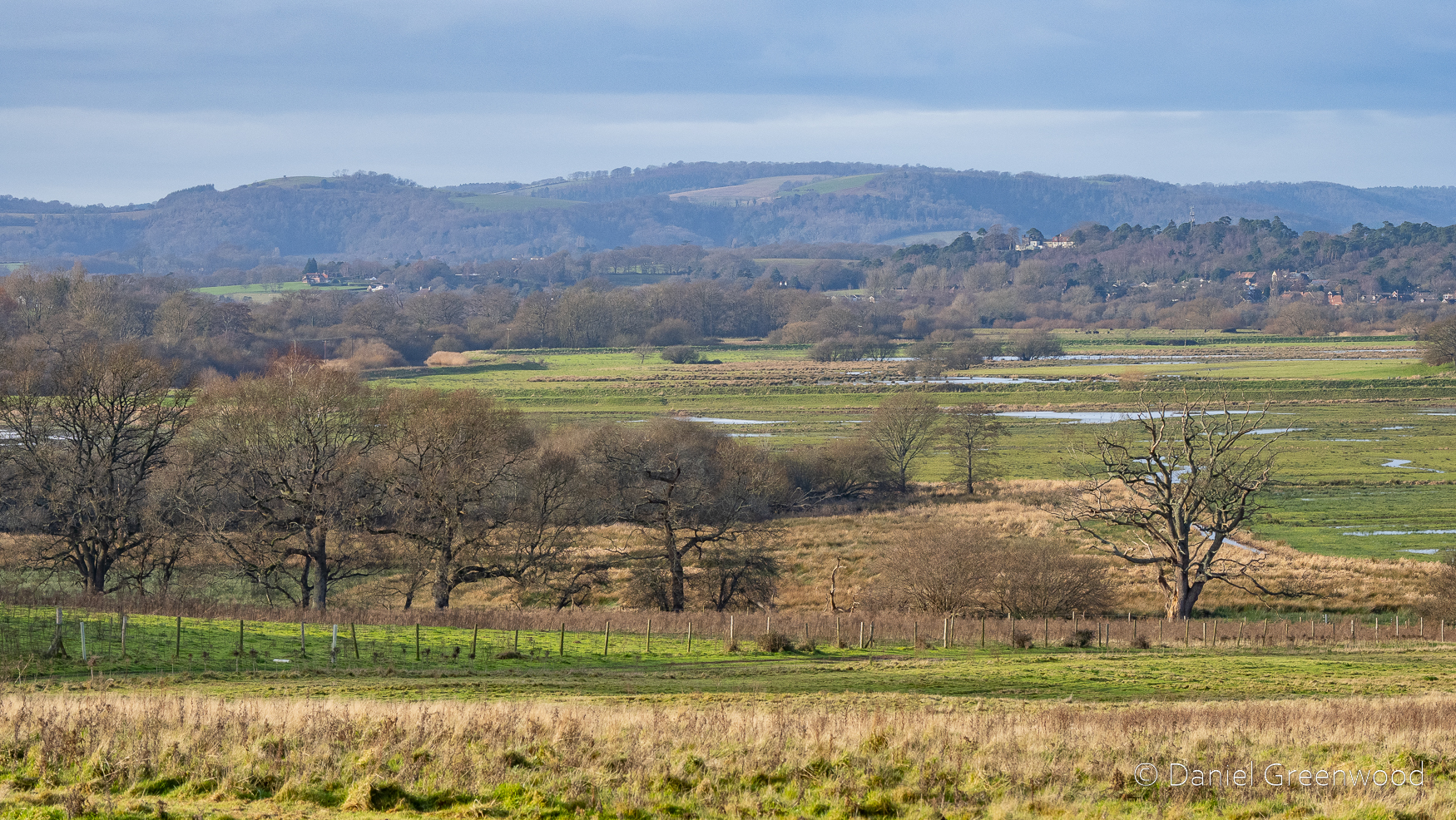
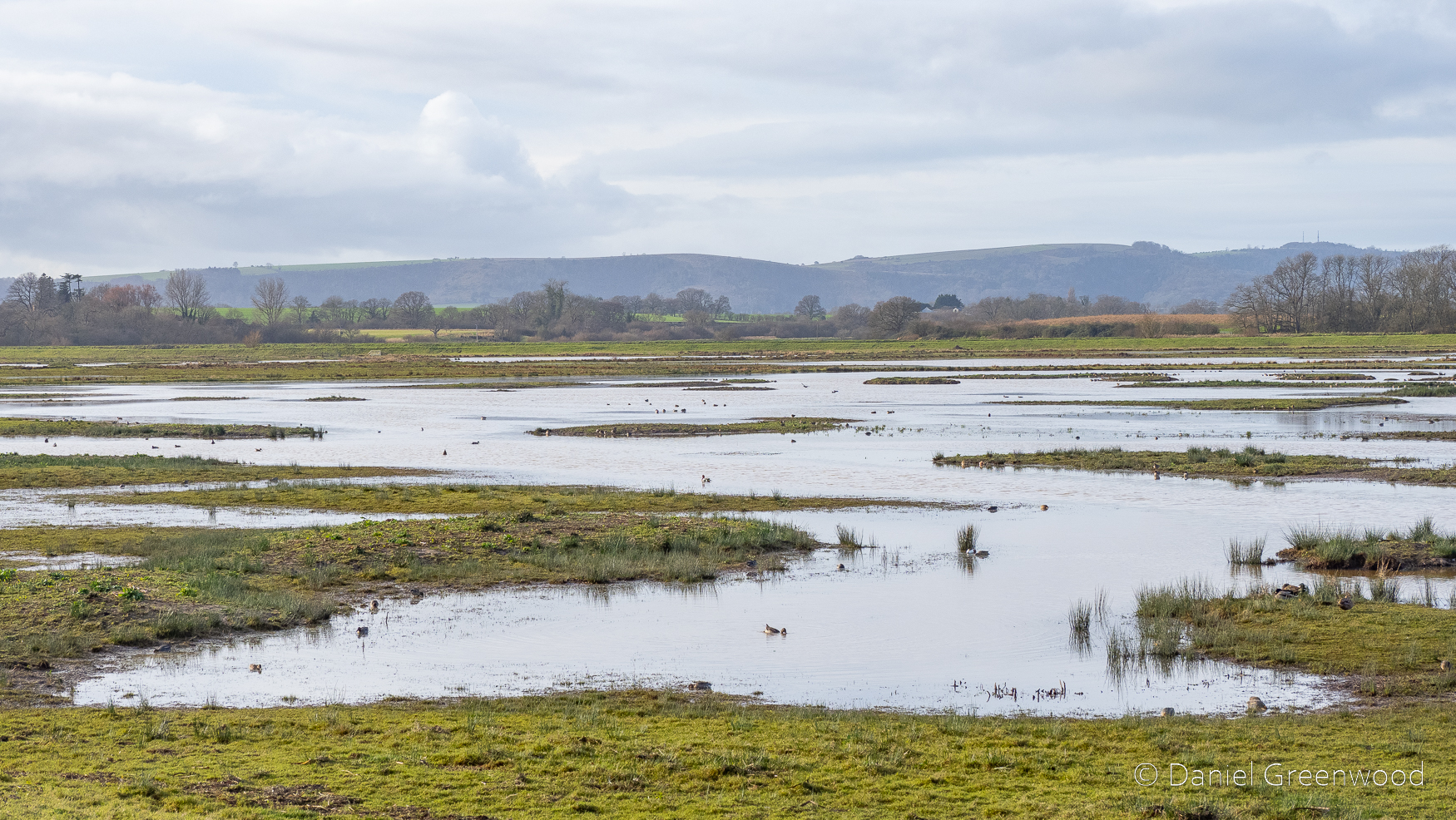
The weather in December was very grey and damp, and all the Christmas demands gave me only one meaningful walk – to Pulborough Brooks in West Sussex.
Thanks for all your support in 2024 and wishing you peace and happiness in 2025.
Continuing my series of posts about the landscape of the Jungfrau mountains in Switzerland, here is a look at some of the woodland plants seen above Grindelwald.
Just to say: picking or trampling on wildflowers is not advised, and may be illegal in some locations. The meadows shown here form part of people’s livelihoods as well as being sensitive habitats. Woodlands are extremely sensitive to our footsteps so stick to designated paths where you can. Check the regulations around foraging before you go and show respect for people and wild plants, animals and fungi when you visit. There’s a lot of livestock around, usually behind fences, but they’re so noisy you can’t miss them.
The photos here are a mix of mirrorless camera and phone. The plants photos are mainly taken with my Pixel 7a, the landscape photos with my Olympus EM1 Mark III. All have been lightly processed.
The walk
The walk was a fairly short one in length, mainly due to the altitude and general tiredness from travelling. It would be a good one if you’re visiting from Interlaken on a day when it’s not worth going higher or it’s too early in the season.
The walk is about 2.5 miles and can be done more quickly if you’re not taking photos of plants!
All the high trails, including the Eiger Trail, were closed when we visited. Climate change may be making rockfall more common and therefore the higher trails are more dangerous.
It’s possible you can do this walk and see absolutely no one, but for a farmer or two, after you pass the toboggan run.
We took the Pfinstegg cable car up to the Berghaus restaurant, had some chips, and walked down to the village, past the toboggan run.
What you can’t hear is the sound of middle-class Americans talking about their Adriatic travel plans.
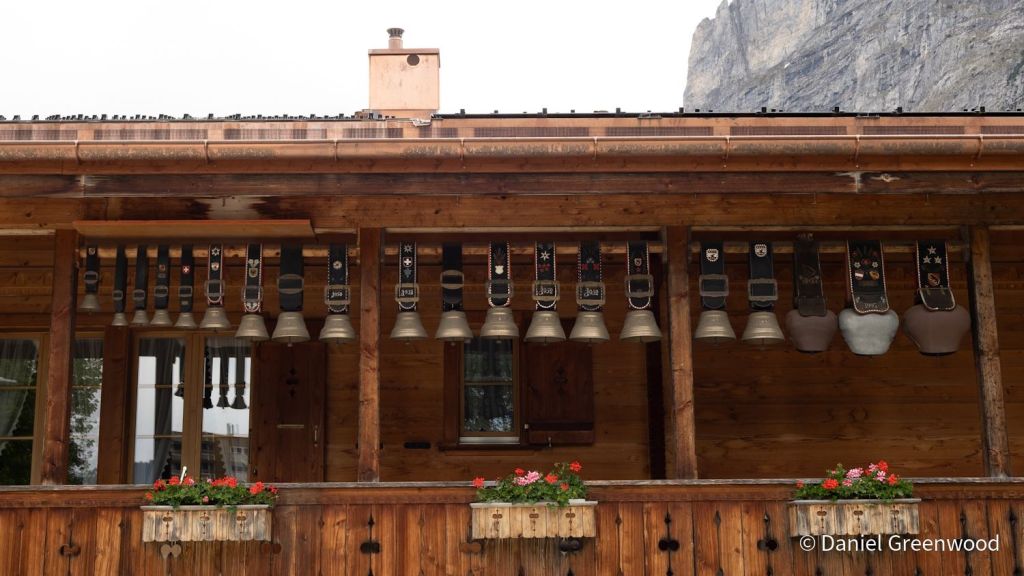
One image I wanted to share was this exhibition of alpine heritage. Here you can see the array of bells used in the Jungfrau for cattle management. The sound of the cowbells is one of the signifiers that you are in the Swiss Alps. Of course the same can be said for many mountain regions, but each one has its cultural differences. That’s a different blog entirely!
Alpine flowers (1300m)
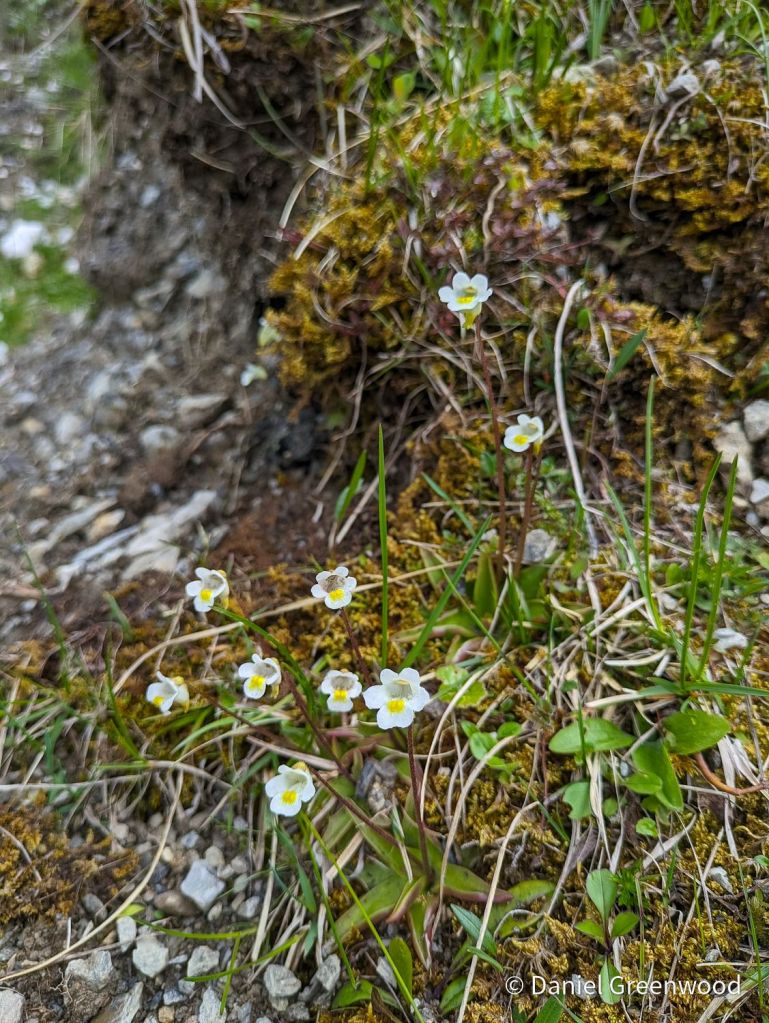
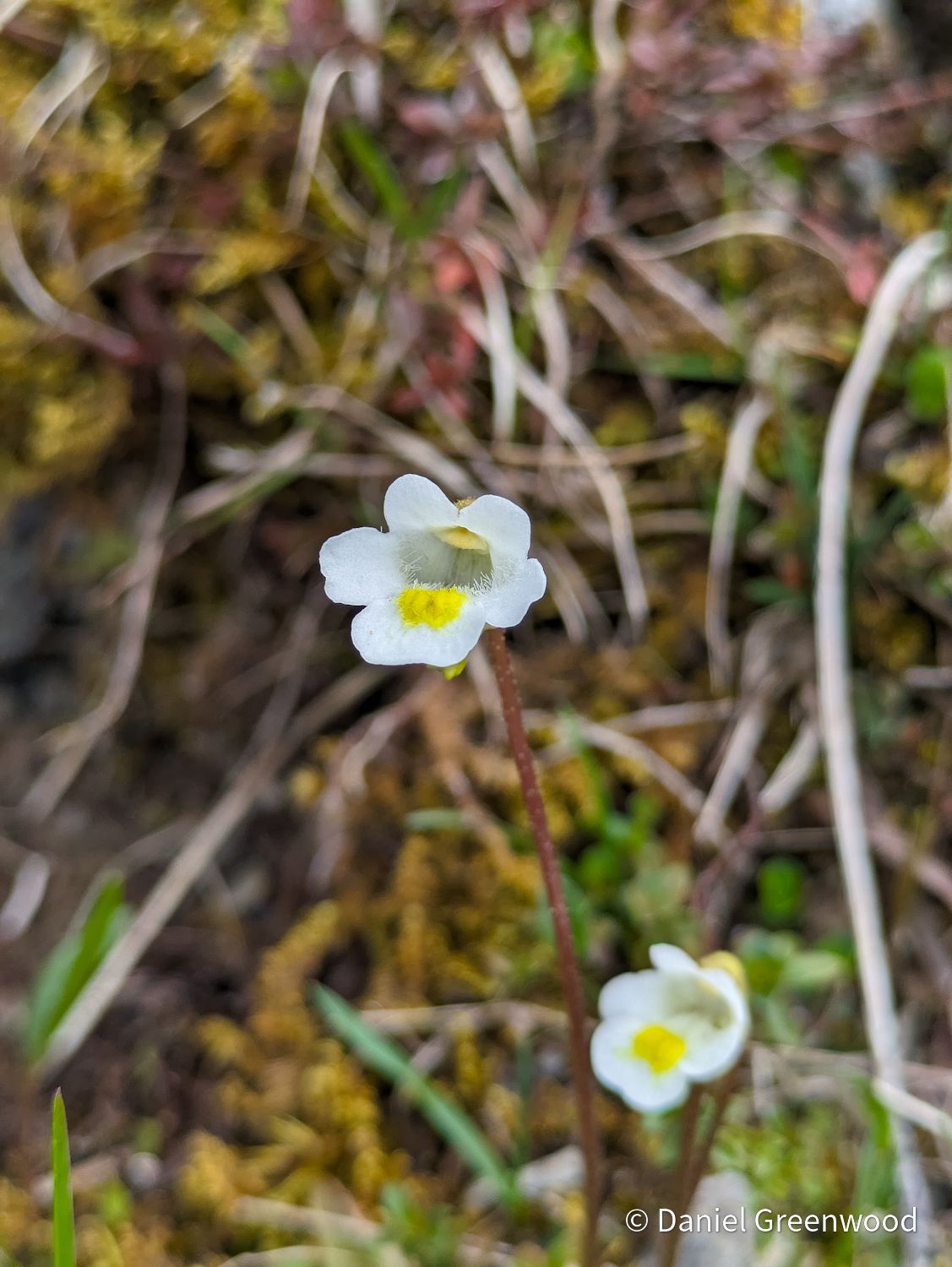
One of the more common sightings in the alpine zone was alpine butterwort, (Pinguicula alpina).
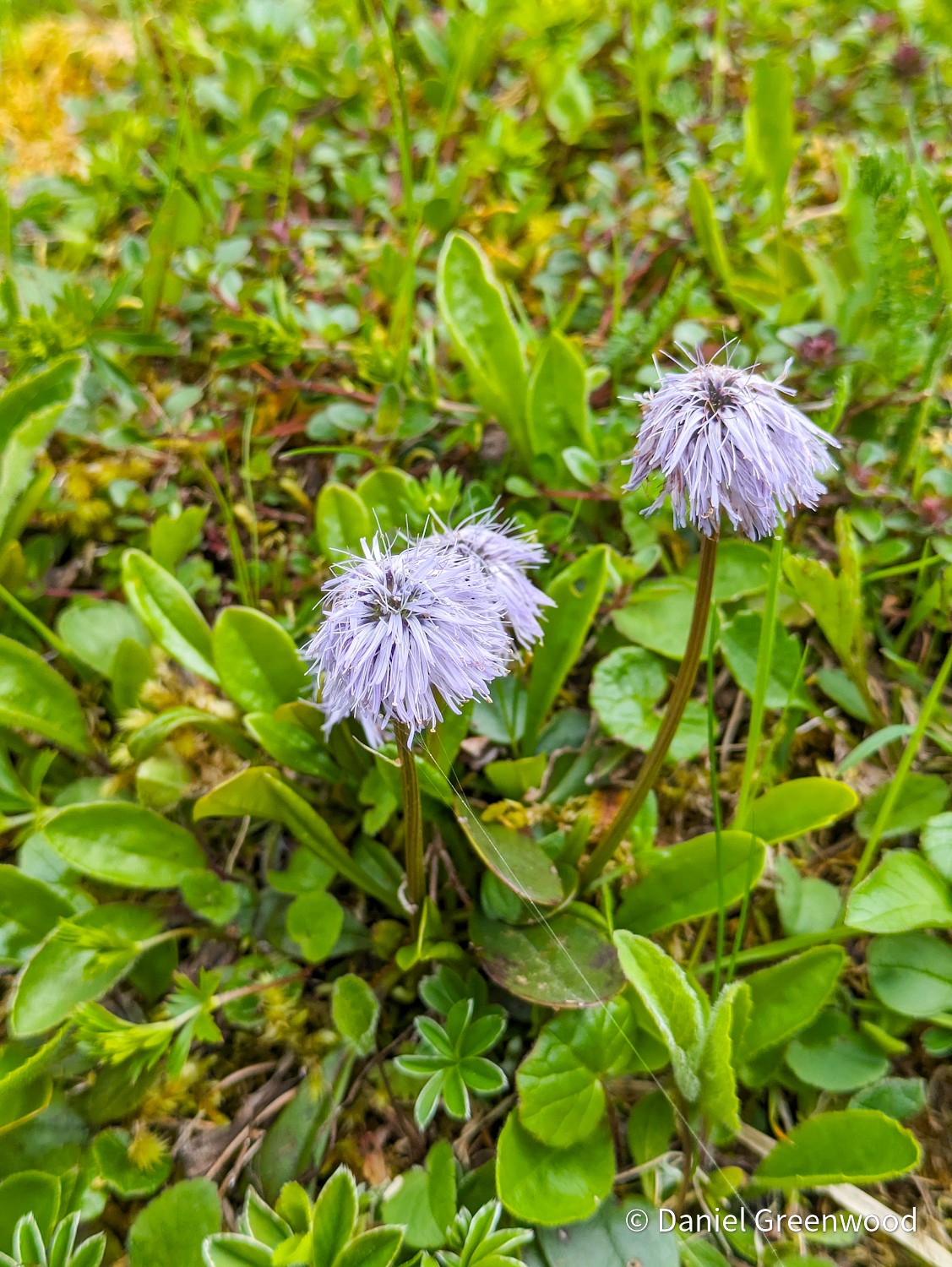
A regular of this habitat was leafless stemmed globularia (Globularia nudicaulis). They look like little lilac mops.
At this point the views of Grindelwald began to be swallowed by the spring woodlands.
In the woods
As you can imagine, the water was crashing down as the snow melted. A lot of work is going into observing the changes in the glaciers in the Swiss Alps, which is happening at an alarming rate here.
You can get views of the Lower Grindelwald Glacier from this walk (though this was taken lower down). This glacier shrunk by over a mile between 1973 and 2015.
I love a new violet species that’s easier to identify than ours at home. This is twoflower violet (Viola biflora) and was only seen in the woods at the edge of lanes.
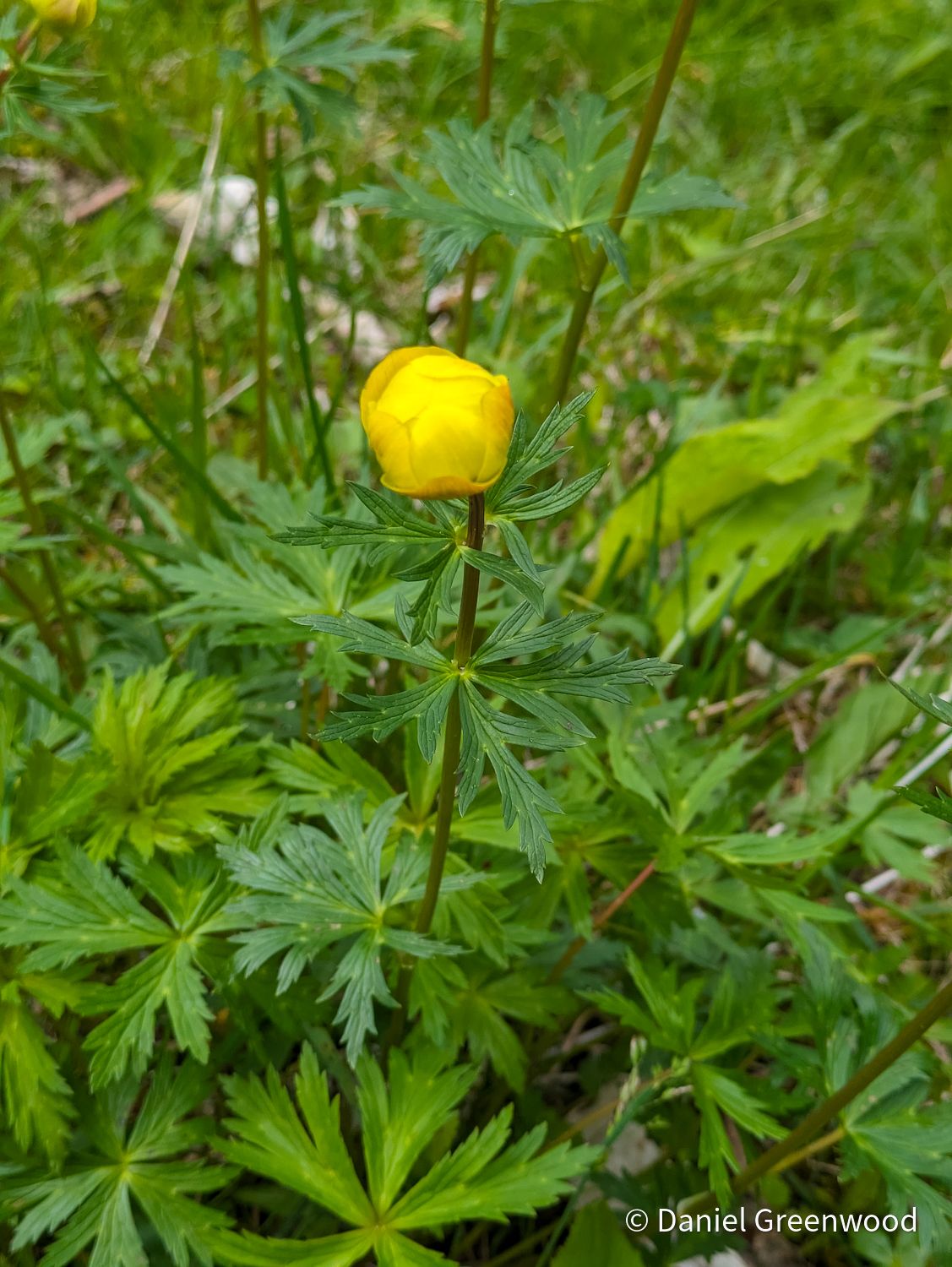
It’s always nice to find globeflower (Trollius europaeus), a species of buttercup.
This was a new species for me – may lily (Maianthemum bifolum). It looks more similar to something like black bryony or bindweed to the untrained eye (this one).
This cranefly was resting on the leaves of yellow archangel, a woodland plant we seem to be losing in the UK.
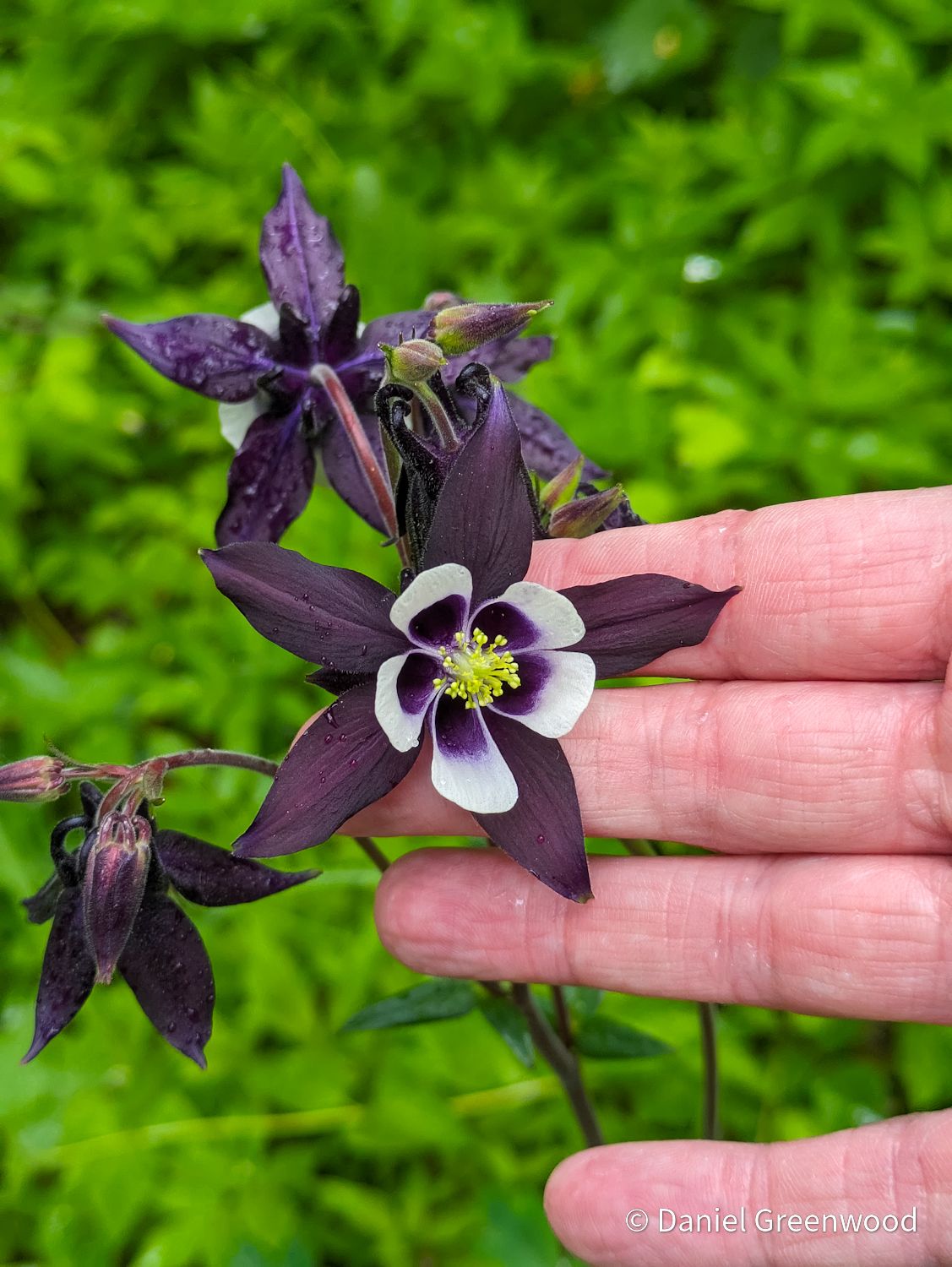
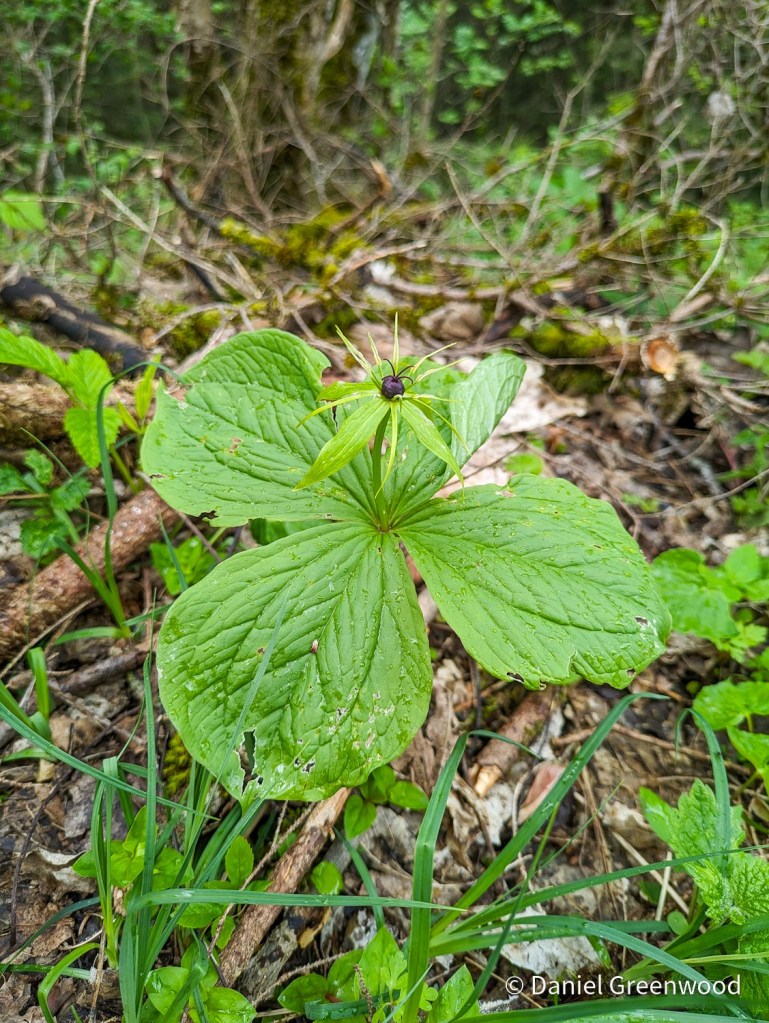
It’s always a joy to encounter herb paris (Paris quadrifolia). I think the columbine (Aquilegia vulgaris) seen here is probably a garden escape, though it is an ancient woodland plant as well, so I may be wrong. I hope it’s the wild one!
There was more herb paris, but only in the woods.
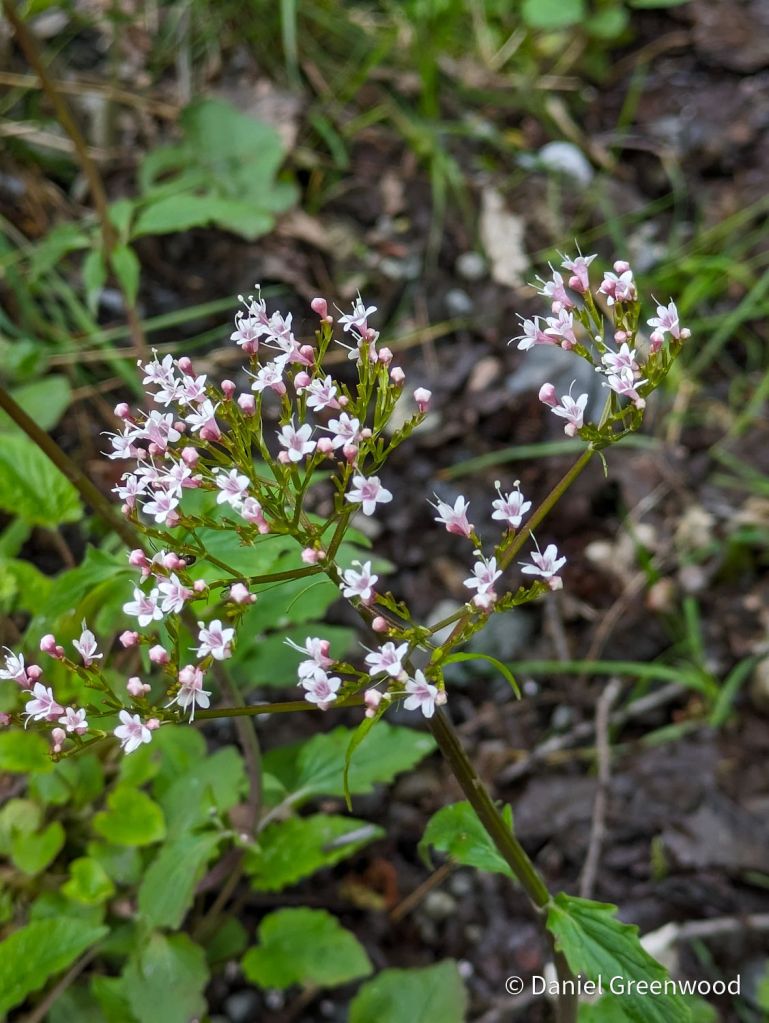
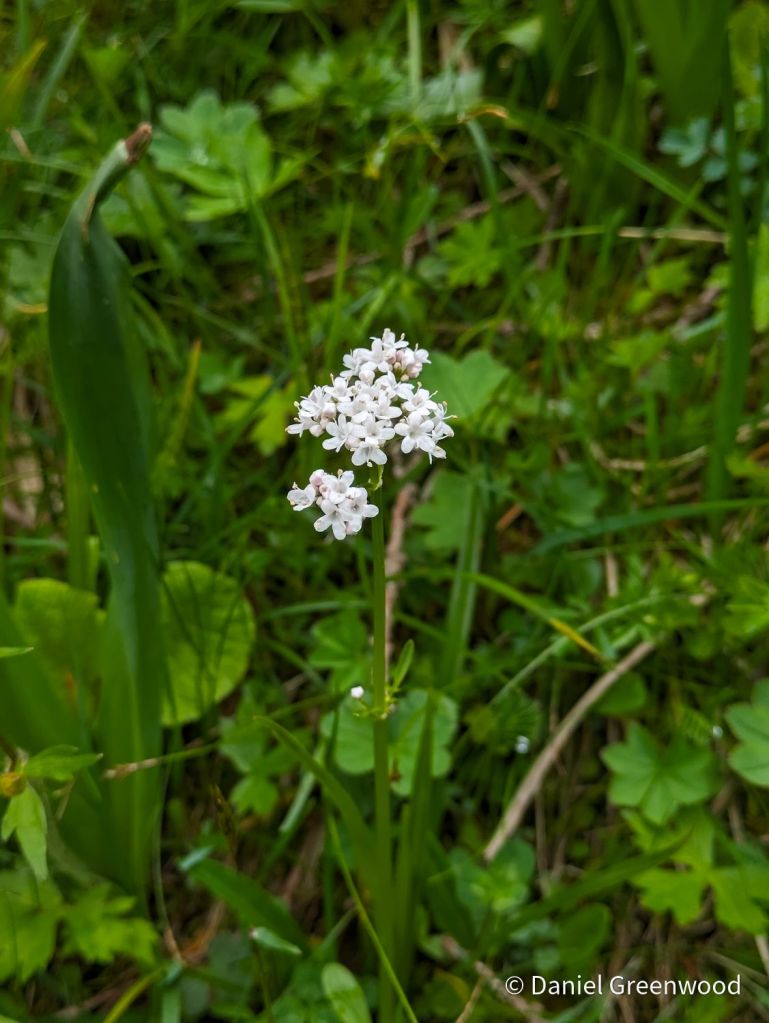
There were a couple of valerians. This one is three-leaved valerian (Valeriana tripteris). It was growing in wet areas.
Now, there weren’t a lot of orchids out at the time as it was probably too early in the season. But this is bird-nest orchid (Neottia nidus-avis), which I’ve only really seen in the chalky woods of the North Downs in England.
This is fly honeysuckle (Lonicera xylosteum), a strangely shrubby honeysuckle compared with the climber we have in the UK. It’s been introduced to Britain but I’ve never bumped into it.
Hillside meadows
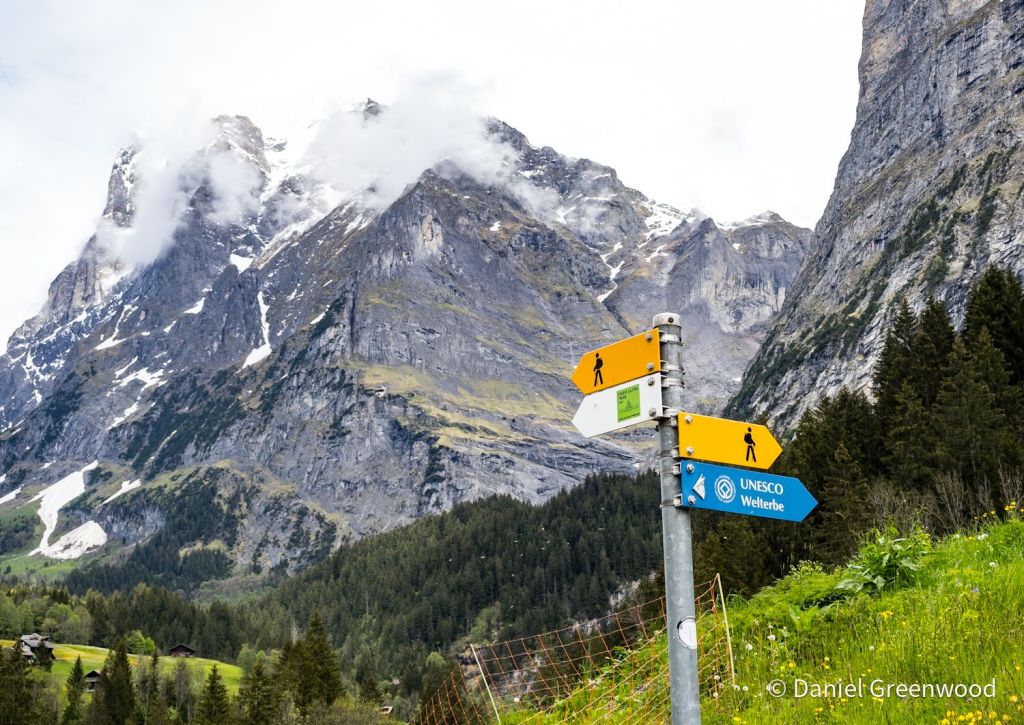
Let’s just take in the views of the Wetterhorn for a bit…
I’d like to be out walking in World Heritage landscapes every week, but alas, it will just have to be once or twice in life.
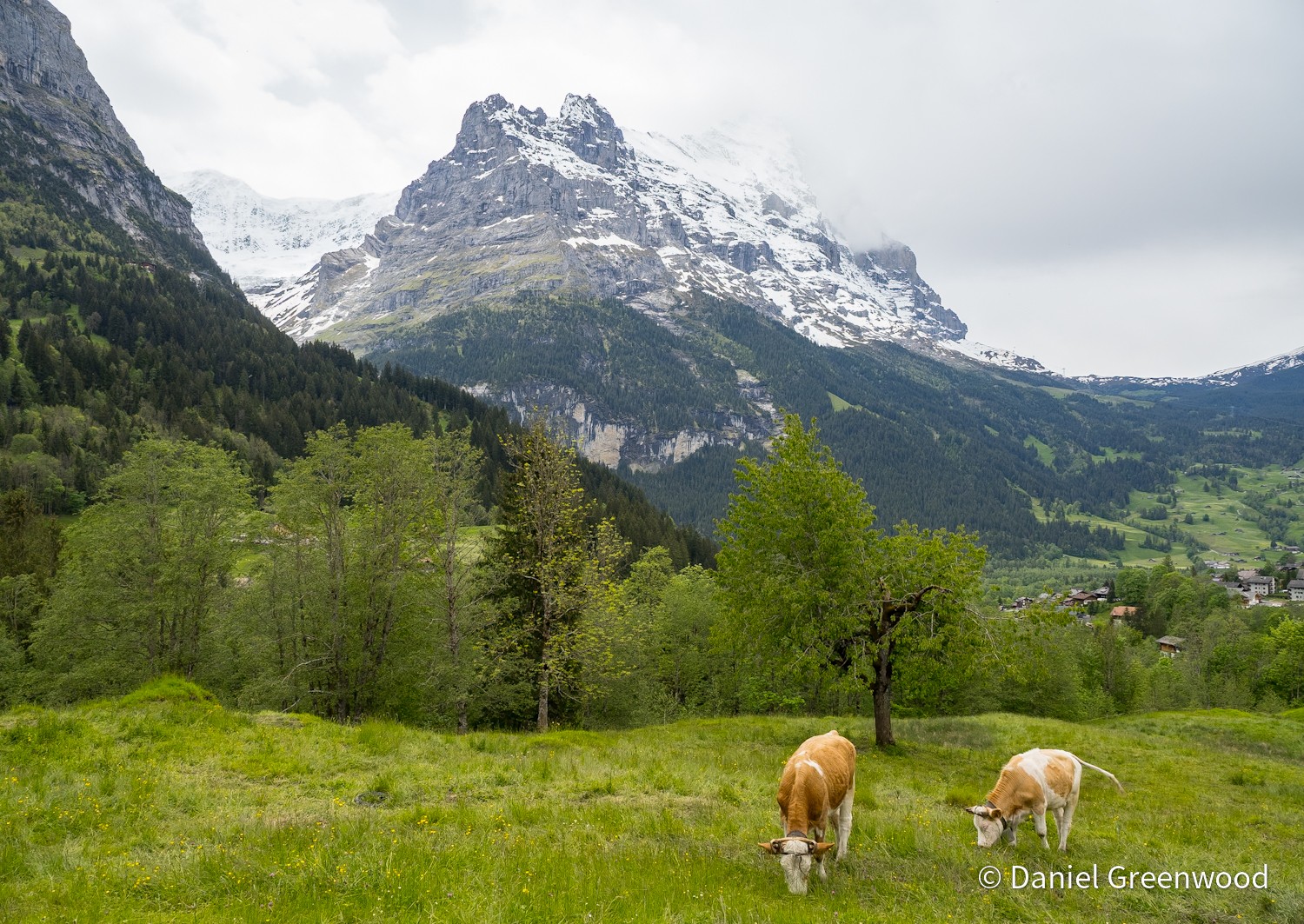
Looking south-west towards the Eiger.
Mountain sainfoin (Onobrychis montana) was one of the most eye-catching plants, growing at the edges of the lane if I remember rightly.
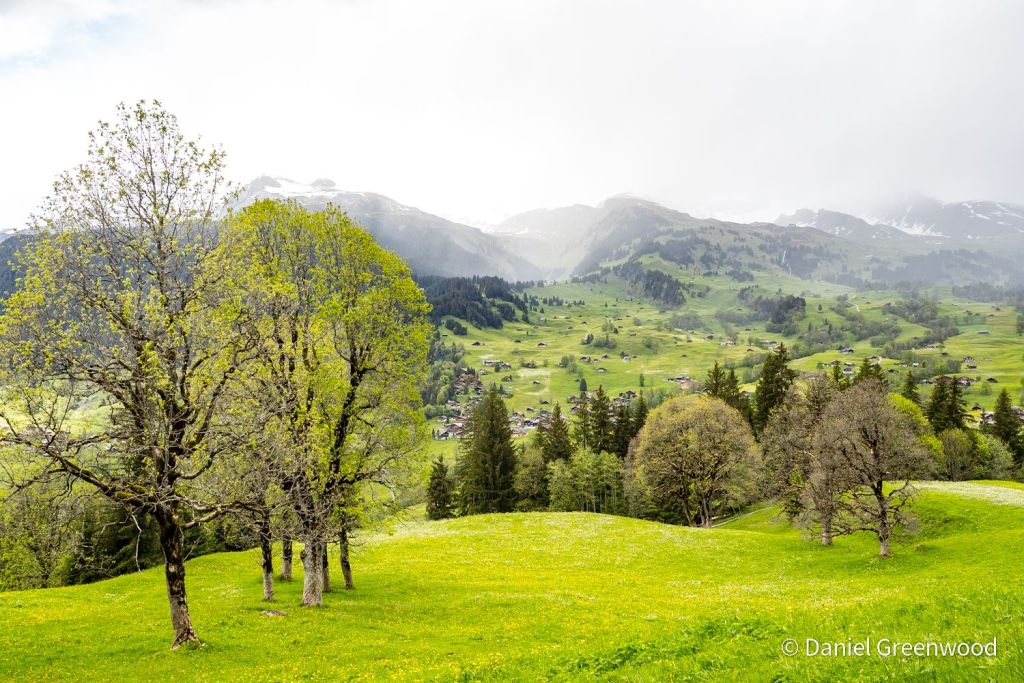
The spring really glows in this image, despite the misty conditions. The sycamores are coming into leaf.
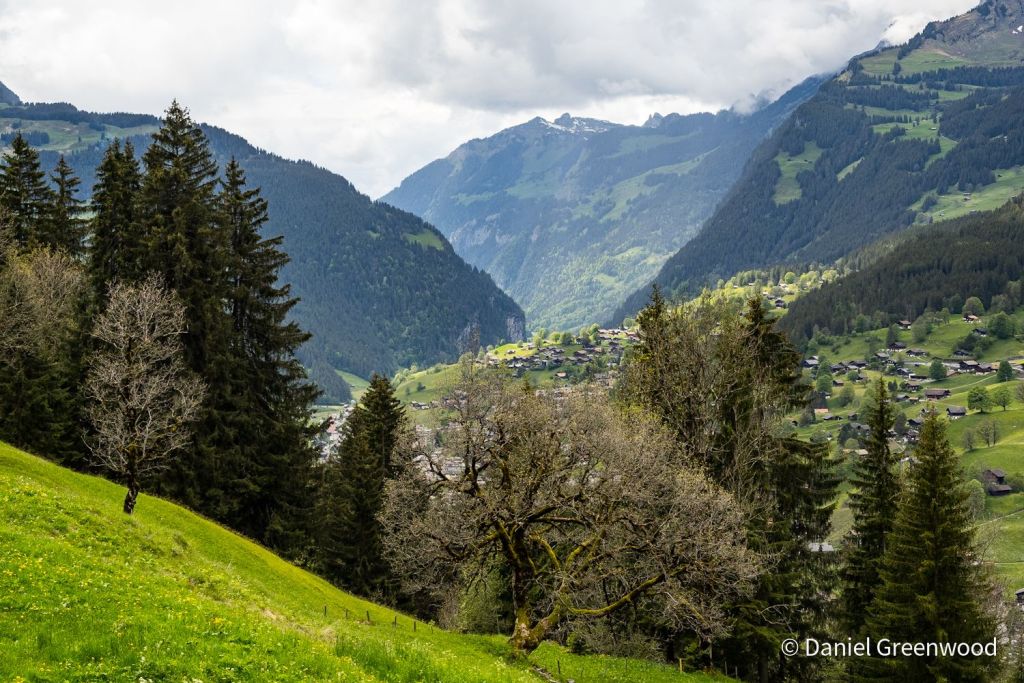
This is a view down the valley where the train returns to Interlaken.
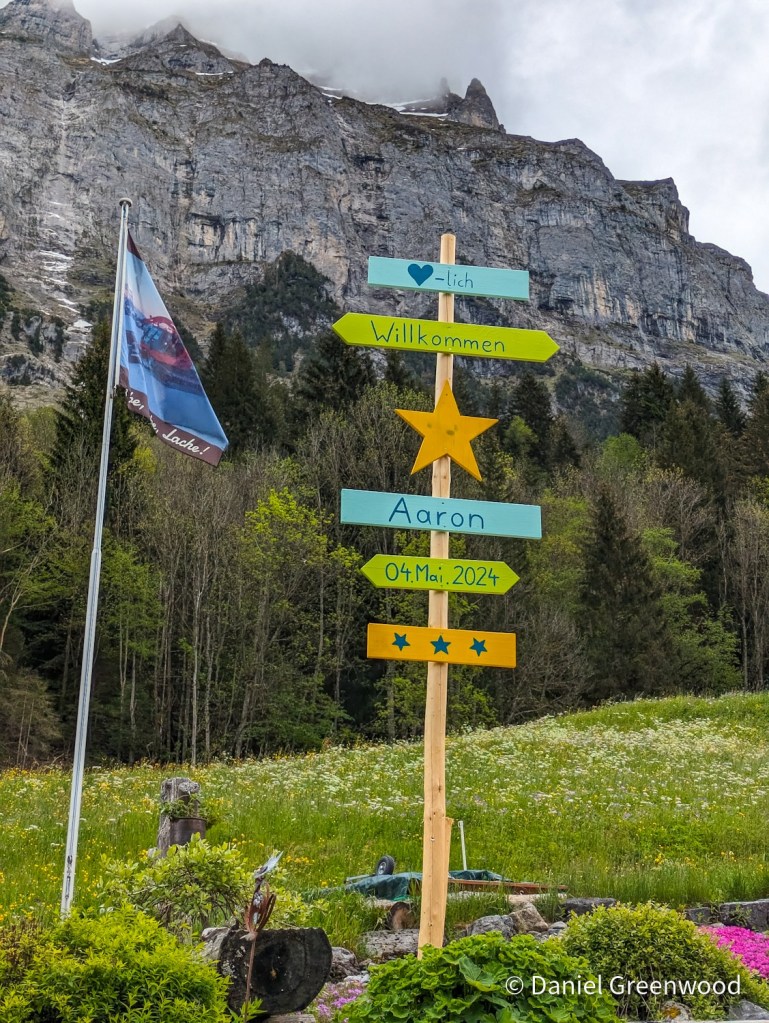
This is something I’d never seen before – a totemic welcome for Aaron who was born on 4th May 2024. Perhaps this is a tradition in this part of Switzerland?
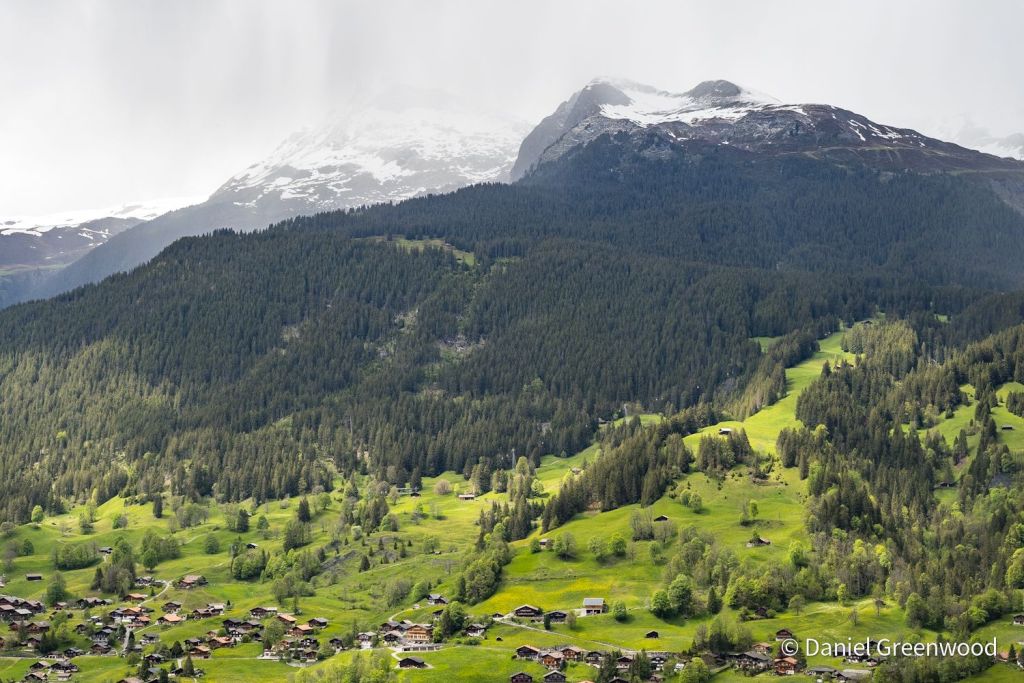
The views across towards Grindelwald First come into view as space opens up on the woods. You can see all of the chalets that dot the meadows.
I was intrigued by these rustic chalets that were more indicative of a rural way of life, compared with the guesthouses in the valley. It looked lived-in or at least used by people who made use of wood products. What a lovely place to be able to escape to in the summer. Of course communities would have developed from these single dwellings across the Alps.
This image looks north towards the other side of the valley. The yellow hue in the meadows is either kidney vetch or birds-foot trefoil.
The lovely spiralling shell of a snail roosting in a tree.
These umbellifer-rich meadows were a joy to behold.
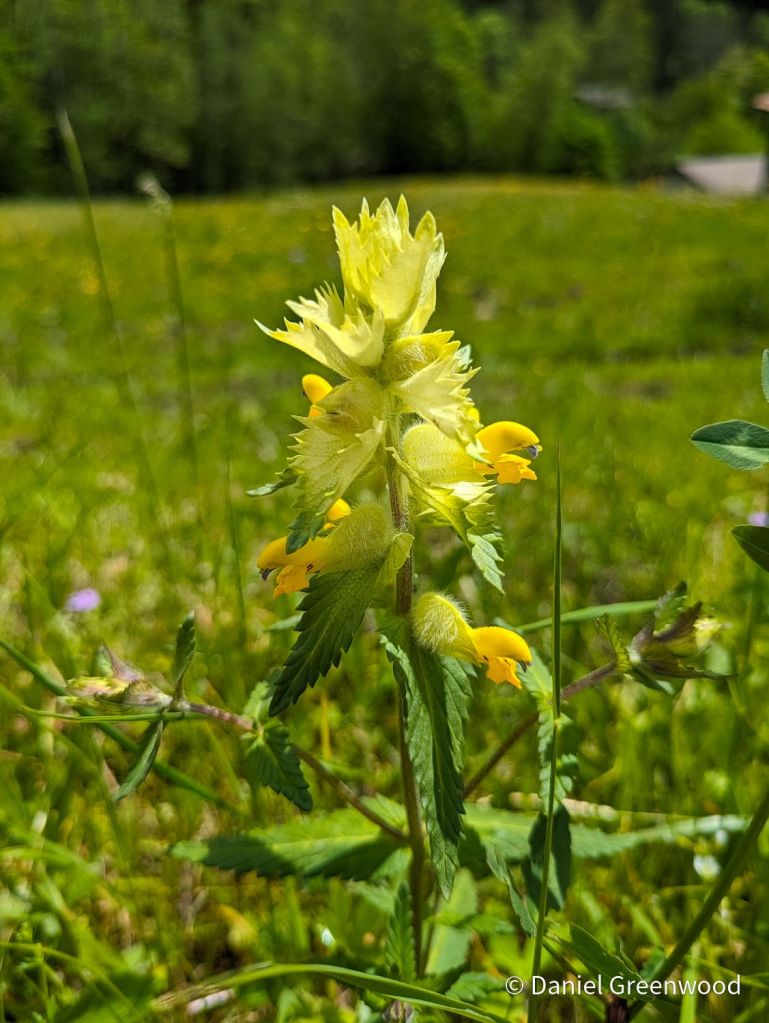
The lower we got (c.1000m) the more abundant yellow rattle become. This is probably Rhianthus serotinus.
This is the Black Lütschine, one of the rivers that flows into Lake Brienz. It was very powerful. Its source is the Lower Grindelward Glacier, pictured earlier in this post.
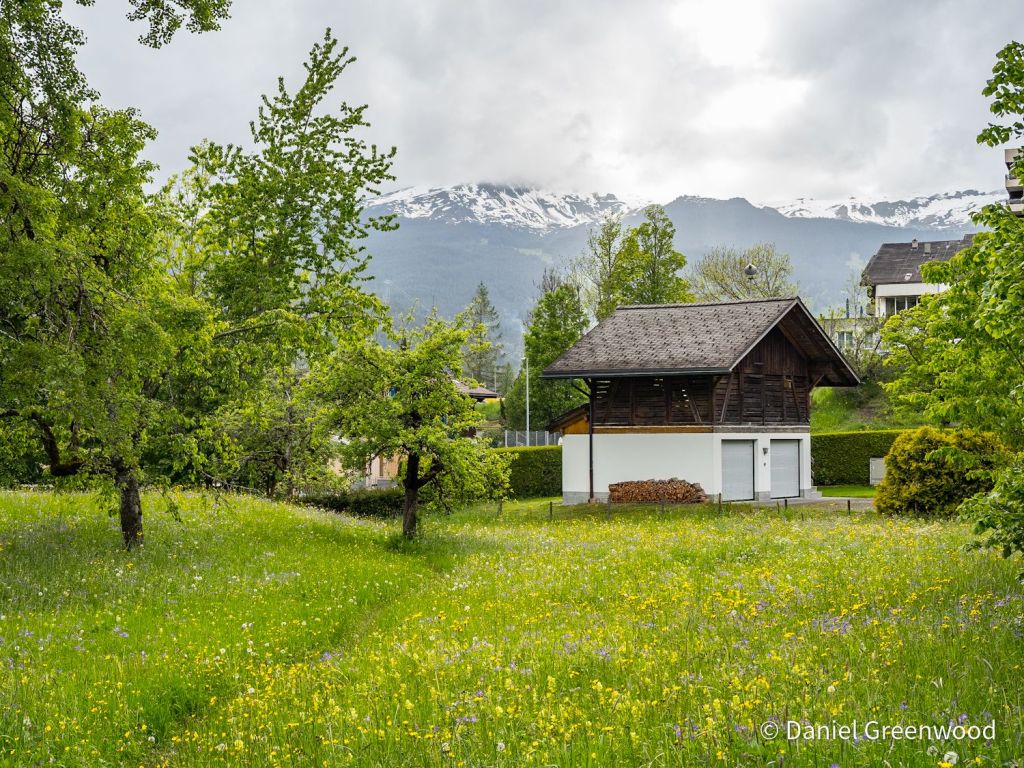
The meadows around people’s houses – this looks like an orchard – were in fine condition.
Thanks for reading.
I write these blogs in my spare time because I want to raise awareness about the beauty and diversity of our landscapes. If you enjoy reading themyou can support my blog here.
Warnham Local Nature Reserve, West Sussex, July 2024
I was making my first meaningful trip out to a wild space after being ill with Covid, to see if I could concentrate enough on taking some macro pics. Thankfully there were some very docile bugs pleading for their close up. Here you go, team.
I’ve missed a lot of the macro season this year, what has probably been one of the ‘worst’ summers in this part of England. Lots of rain, quite cool, clear lack of insects. I’m only just getting over brain fog so not able to compute how worrying the insect declines are right now. It seems that approving the use of bee-killing pesticides without appropriate risk assessment doesn’t help.
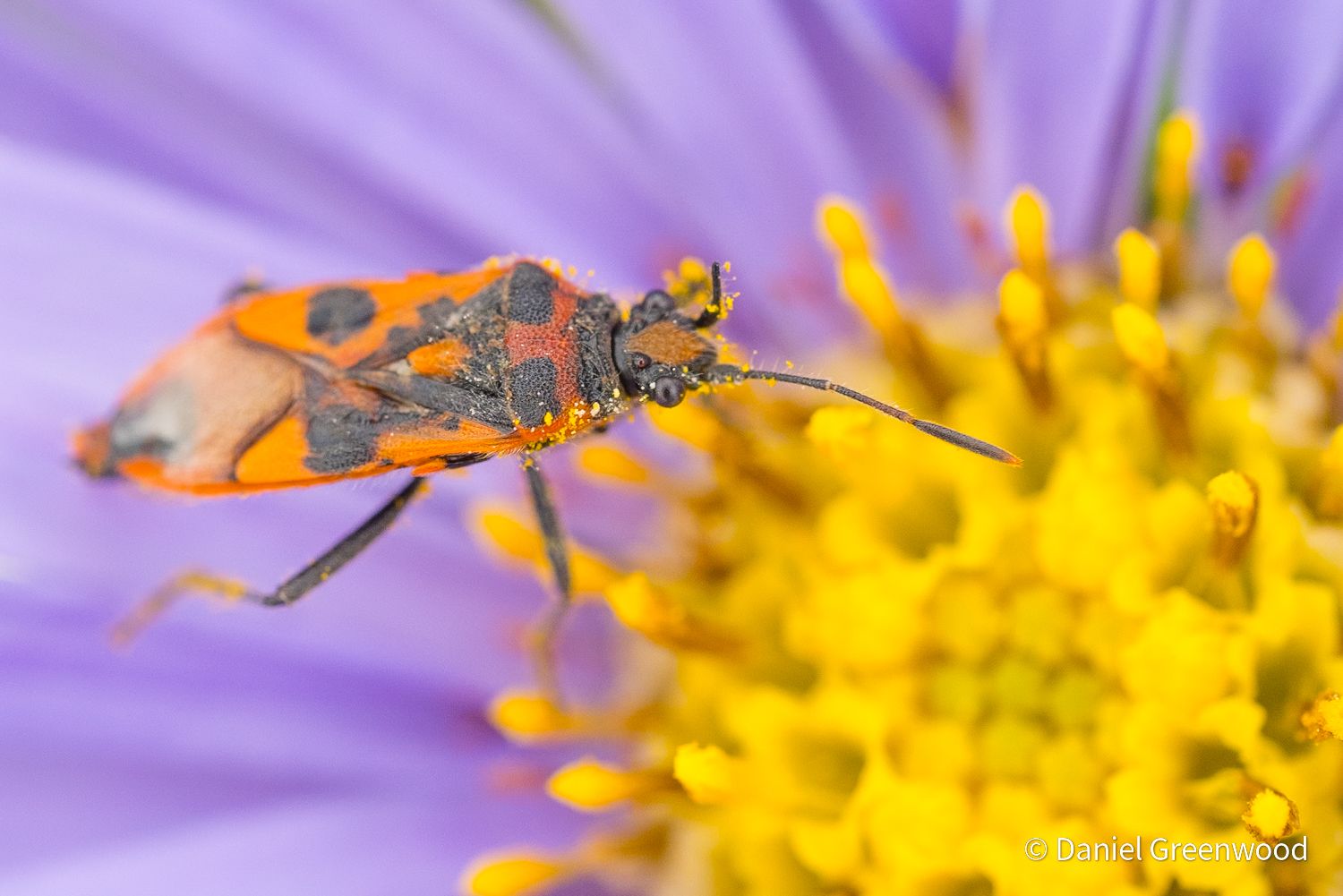
I was fortunate to spot this cinnamon bug nectaring in the flowerhead of a Michaelmas daisy within a few minutes of my visit to Warnham Local Nature Reserve. I love how this pollinating beetles get so covered by the pollen. It’s a bit like me after eating a choc ice.
Though flies are feared and reviled for their connections with unpleasant organic matter in this world, some of them are very interesting to look at. Many of them also tend to be pollinators. It’s not all about the bees. This fly is probably Nowickia ferox, which feeds on flowers. Moth fans – look away now. Their larvae develop in the dark arches moth.
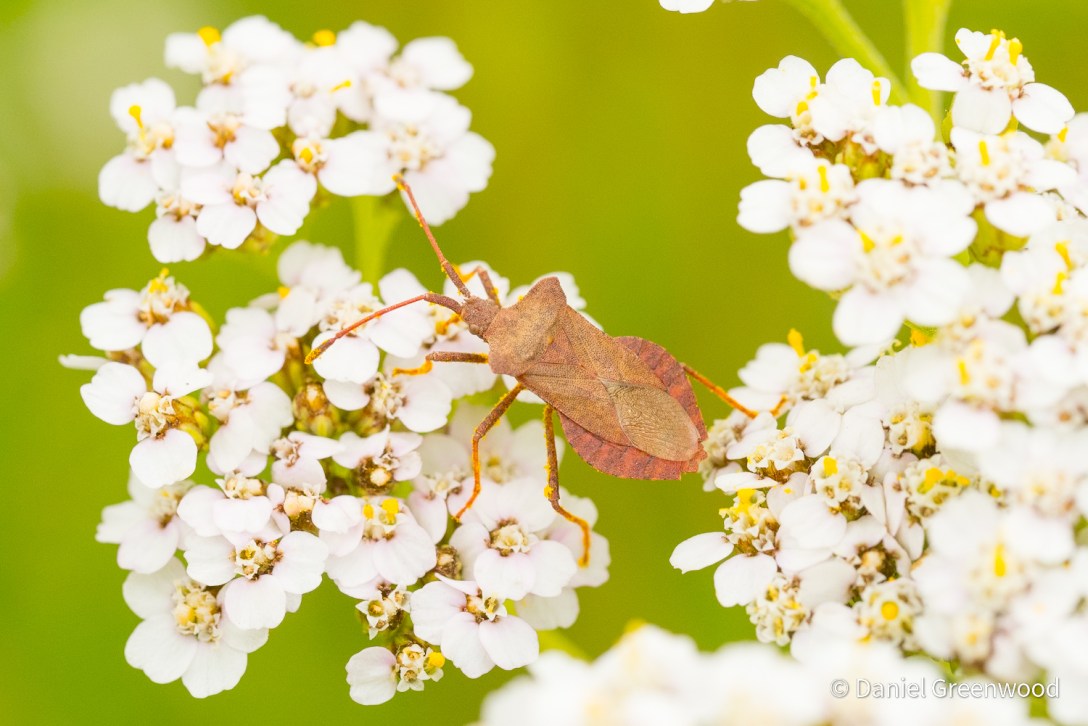
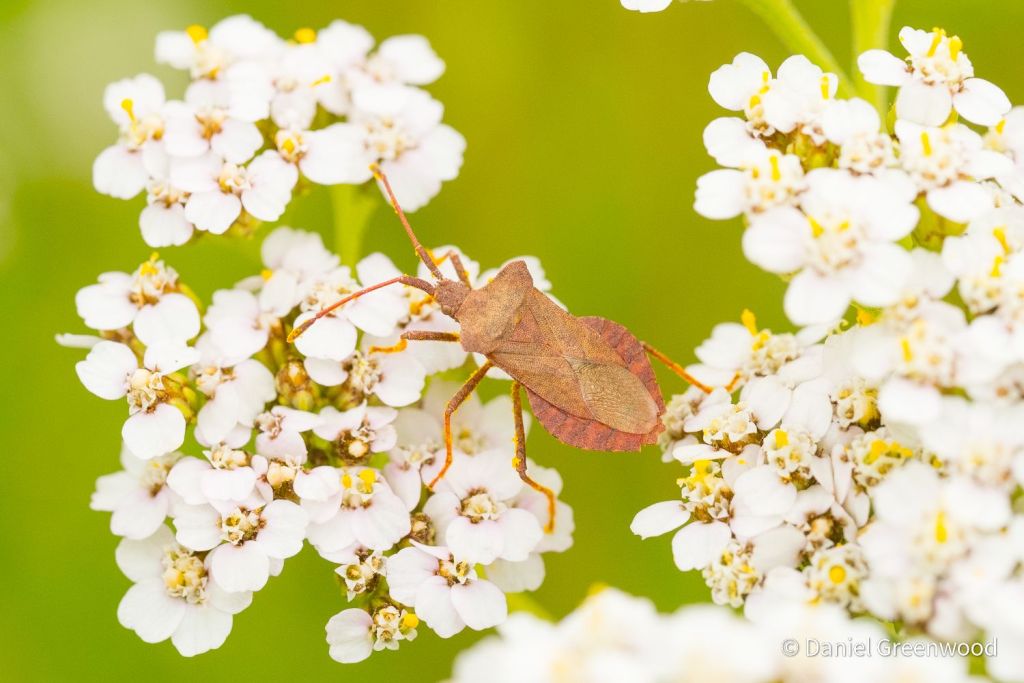
Dock bugs are a common sight in southern England, especially in flowery grasslands and meadows. They are very easy to photograph – they’re like the mushrooms of the insect world, slow moving, if at all. How trusting.
Elsewhere, this mid-summer period is one of hoverflies, many which looked very similar to the untrained eye (this one) but which can be nice subjects among the flowers of hogweed and other umbellifers.
I was pleased with this photo of a dancefly as it nectared on some ailing hogweed flowers. That is one heck of a proboscis. The light is very soft and the background is a serene green.
Over the years (I’ve been using a dedicated macro lens since 2014) I’ve learned about species behaviour, and how a little bit of knowledge can really help you to find wildlife. In terms of invertebrates, I remember a blog written about fenceposts and how they were a good place to find roosting insects. This is solid advice.
During this visit, in the forefront of my mind was a past, failed attempt to photograph a robberfly where it sat on a handrail. On that same handrail I didn’t find a robberfly, but instead my mother and father-in-law, which was also nice. But, that wasn’t the end of the story…
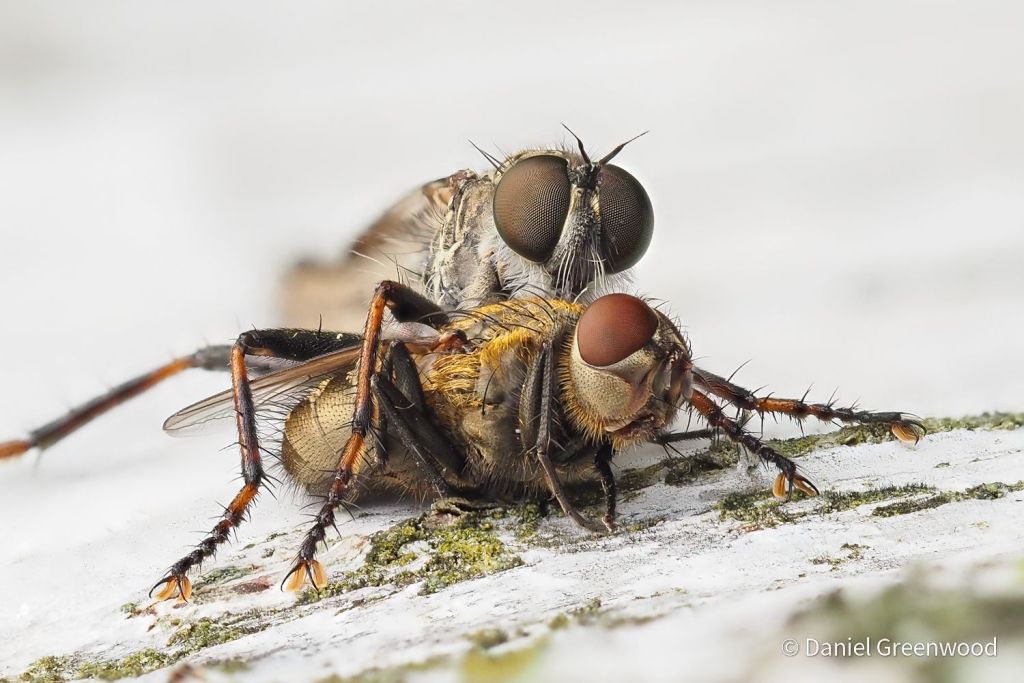
Turning to head home, realising how fatigued I was, and lacking in normal, basic levels of energy, I spotted something. A robberfly was sat on a different handrail! It’s so pleasing to have this sense of validation for my fencepost knowledge.
In the world of wasps, we are of course in the throes of the UK Media Silly Season (despite there being a General Election, potential dictatorship in the US, and far-right riots across the UK!) and wasps are in the news. Interestingly the mwin story is, where are they?
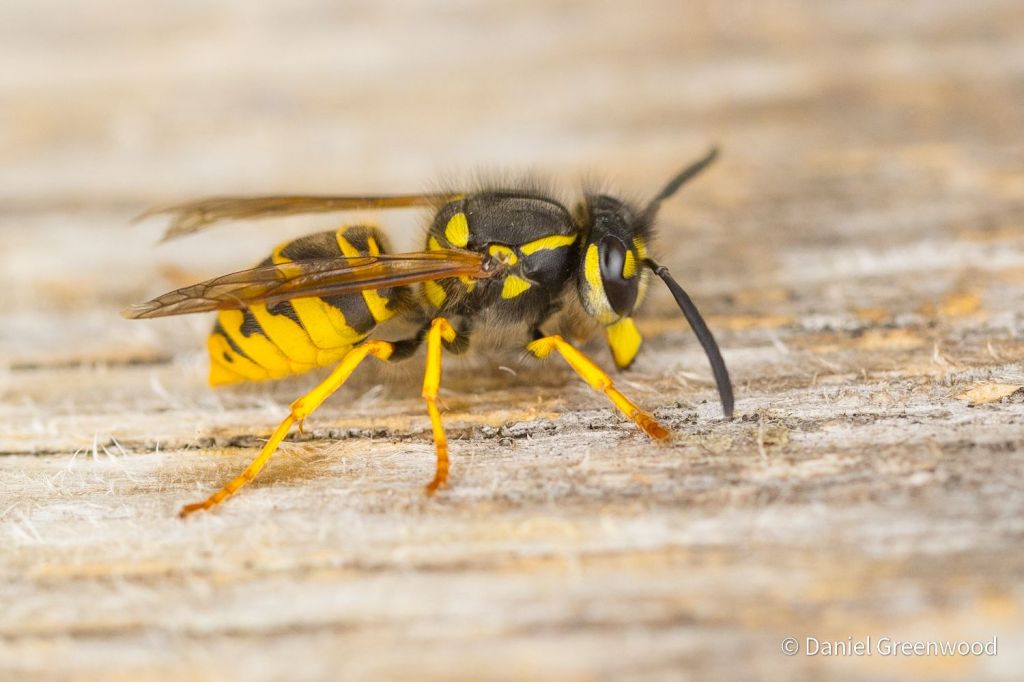
iNaturalist users think the wasp above is a German wasp. What you can see is the wasp gathering wood shavings for a nest. But that wasn’t the only wasp I saw.
July and August are good months to see the iconic ichneumon wasps. I absolutely love them, an interest which was deepened by reading The Snoring Bird (I recommend it). I wasn’t fast enough for this ichneumon to really get a strong pic, but this will do.
Even worse was this attempt to photograph one of the Gasteruption ichneumons. People, I am just too short for plants that want to grow this tall. I do enjoy the bokeh here though (circular light in the background). Take that, full-frame cameras!
So, all in all a decent showing for a fatigued individual.
Thanks for reading.
Photos taken with Olympus EM1 Mark III and 60mm f2.8 macro lens, edited in Lightroom.
At the entrance to the woodland a sign warns of forestry activities. It’s time to expect deep rutting to the tracks and soil, and conifers pulled out of this vast area of afforested heathland, and old oak and beech woodland.
A song thrush lifts up from the track and onto a nearby branch. Their lives are bitter battles of survival in January. In early spring their music travels the woods and fields, parks and gardens. The bird stoops on the branch, eyeing me in that wild way.
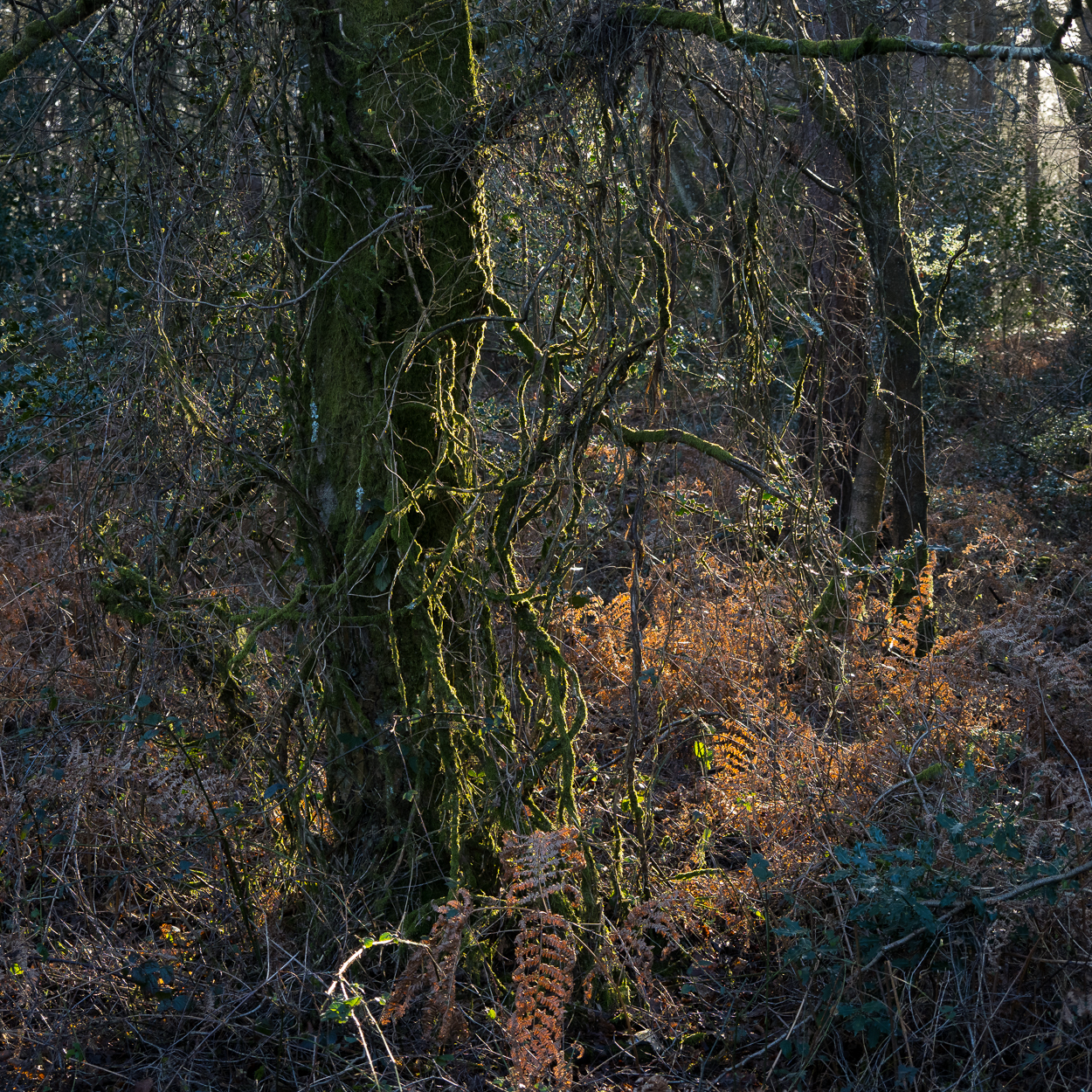
The sun is shining and the birches gleam white in the treetops.
Pine needles are bleached to an almost aquamarine.
On the main trackway the machine rutting appears from a tract of maturing pine, oak and birch. A track churned-out by huge tyres and now full of milky-brown rainwater. The tyres, inevitably, have dug up sections of ditches where fleabane, hemp agrimony and common spotted orchids abound in summer.
Then again, this trackway and its ditches were likely created for the forestry works, so it’s maybe a case of swings and roundabouts. The extraction works are set to end here in the near future, no doubt to allow the woodland to move at its own pace. Plantation trees will be replaced by self-seeded birch, and the jays’ forgotten oak cache, if the deer don’t eat them.
There is something unexpectedly wild about forestry landscapes, their lack of obvious human culture. There is not much coppicing here, not much lopping or billhooking. No dining tables are set by charcoal burners, or mud huts packed up inside clearings.
No one is claiming it for their own, not even the foresters.
Hello! Here’s another of those seasonal blogs where I post stuff you don’t necessarily need to know.
The header image visible on the blog here is of November in the South Downs looking south towards Angmering.
Thanks to everyone who has viewed, commented on and liked my posts this year. Posting stuff on here is a joy for me and it’s really nice to have your questions and comments to deepen the narrative. These posts tend to get more comments than some of my most finely-sculpted photo or prose posts, so let’s see what you have this time.
Where have all the mushrooms gone?
Not a comment on a mycological crisis in the woods, but the content that seems to ‘drive traffic’ to this website. As some of you may have seen, I’ve set up a separate fungi blog/website for my mushrooms pics: www.fungifriday.co.uk
The Fungi Friday blog is a home for my fungi photos with a focus on southern England’s rich funga.
I created it for a couple of reasons. One the main motivations was enforced – social media like Twitter (RIP) and Instagram are moving away from photography and instead towards poorly functioning hate-posting for the latter, and TikTok-lite in the case of ‘The Gram’.
Then there’s Threads, which reminds me of the ‘smartshop’ self-scanning interface from Sainsbury’s. It’s also owned by Meta/Facebook, which is not great.
The second reason was that constant mushroom content doesn’t really fit with a personal website with varied, landscape-related subject matter. I value bringing hand-written landscape writing to this website, which the fungi content is not. If I’m ever going to make it as a writer, I’ll need to spend more time working offline with a pen and paper, and typing it up later.
Another key point is that fungi are ‘hyper-diverse’ and there is a lot to cover. I’m aware that quite a few people read this blog through their email inbox, and a mushroom a day probably isn’t what you need (though to some people, that’s exactly what they need). I’d like to post more longer reads about fungi in the cultural sense, as I did in lockdown (2020-21).
Anyway, I hope FungiFriday.co.uk can last the pace, and I’ll be posting my autumn photos over these bleak midwinter months. Please do #LichenSubscribe if you have a WordPress account.
Music in 2023
My favourite album of 2023 (though released in 2022) is Blue Rev by Alvvays. You can watch a live studio set from them above. Molly Rankin is part of the famous Rankin Family, and her voice positively sings of her ancestry. After the Earthquake is the song I couldn’t stop listening to in the spring/summer and the album has such depth to it for something so rockin’ and short. They are a total joy. Check them out!
As mentioned in the spring, The Gallows Pole by Benjamin Myers has been one of the best books I’ve read in ages. It’s brutal, violent and bleak, which isn’t my thing, but it had that pull that keeps you wanting to know what’s going to happen next.
Colm Tóibín has been one of my other favourite authors I’ve read this year. My Irish diaspora family seem to spend a lot of their time consuming Irish culture in books, films, TV and music. I know I’m getting older because I am now doing that. This year I read Brooklyn, The Magician, House of Names and The Blackwater Lightship by Tóibín. Those books aren’t all about the Irish, but Brooklyn tells the story of a young woman’s migration to New York from a rural Irish village. England has descended into extreme far-right territory with its political language around migration, which you are probably sick of hearing about. But reading about the stories of migrants is probably a helpful way to educate one another and those close to us about the plight of others.
In other Irish lit, I also enjoyed reading all of Donal Ryan’s novels, especially The Queen of Dirt Island.
Another book I really enjoyed was close to home – Between the Chalk and the Sea by Gail Simmons. Simmons walks a path from Southampton to Canterbury she translates from the Gough Map, visiting large areas of the South and North Downs along the way. I love this part of the world and am so lucky to be a few train stops away from either landscape. This is definitely a great Christmas present and a book that walkers will love, especially if you like how the landscape can be read to tell the story of its past.
Also shout out to Owls of the Eastern Ice, which is an astonishing book that’s been around for a while now. I loved it.
My favourite film of 2023 is obviously Barbie.
Thanks for reading and your support in 2023. Ciao for now!
The wind blew off the Irish Sea, throwing spray at people walking down the stone steps towards the white observation tower. We were all there to enjoy the view. Making our way down from the RSPB car park, a man clocked my camera and confided that dolphins were feeding out at sea. He had a dog on a lead, those old, broad-barrelled binoculars, and a St. Helens rugby jersey. His accent matched it.
It was a bright but hazy morning. We didn’t see any dolphins, but something more rare. As I took some photos of the lighthouse stretched sphinx-like out to sea, a crow flew in and landed on the coastal trail path, where the track sloped down towards where I stood. This was no carrion crow, rook, jackdaw or magpie. It wasn’t a raven, either.
Its legs were an orangey-red, its bill the same. It was a chough!
I had only ever seen chough in the Picos de Europa, the mountains in Asturias, in the north of Spain. The closest I had got to this now rare British bird, a cliff-dweller, in Britain was a crest or coat of arms in Canterbury cathedral.
It was only after visiting Salisbury Cathedral that I found a cushion with three chough and the name of Thomas Becket embroidered beneath them.
The story goes that as Thomas Becket lay dying, having been attacked on the orders of Henry II in December 1170, a crow flew in and dipped its bill and legs in Becket’s blood. This was thought to be how chough as a bird came to exist(!).
These echoes in culture and defunct emblems shows they were once more common (though of course the same can’t be said for lions and dragons that make up so many crests in Britain). Kent Wildlife Trust have begun to return chough to their native range, though not in response to that crest in Canterbury cathedral.
At South Stacks the real life chough (probably pronounced ‘chow’, as in ‘ciao’, because that’s the call they make) pottered around in a crow-like fashion, inquisitive, confident, always on the move. A visitor’s arrival flushed it overhead towards the sea, wings tucked in, expert in negotiating the sea air’s sudden, shifting patterns.
As we had made our way back up the steps, my mum commented on the colours packed together – the pink, purple, green and gold. Meadow pipit alarm calls rang out and a sparrowhawk appeared low over the heather cascading down to the sea.







































































 Unlocking Landscapes