As seen on Sunday 11th December, my final guided walk of 2022 for London Wildlife Trust.
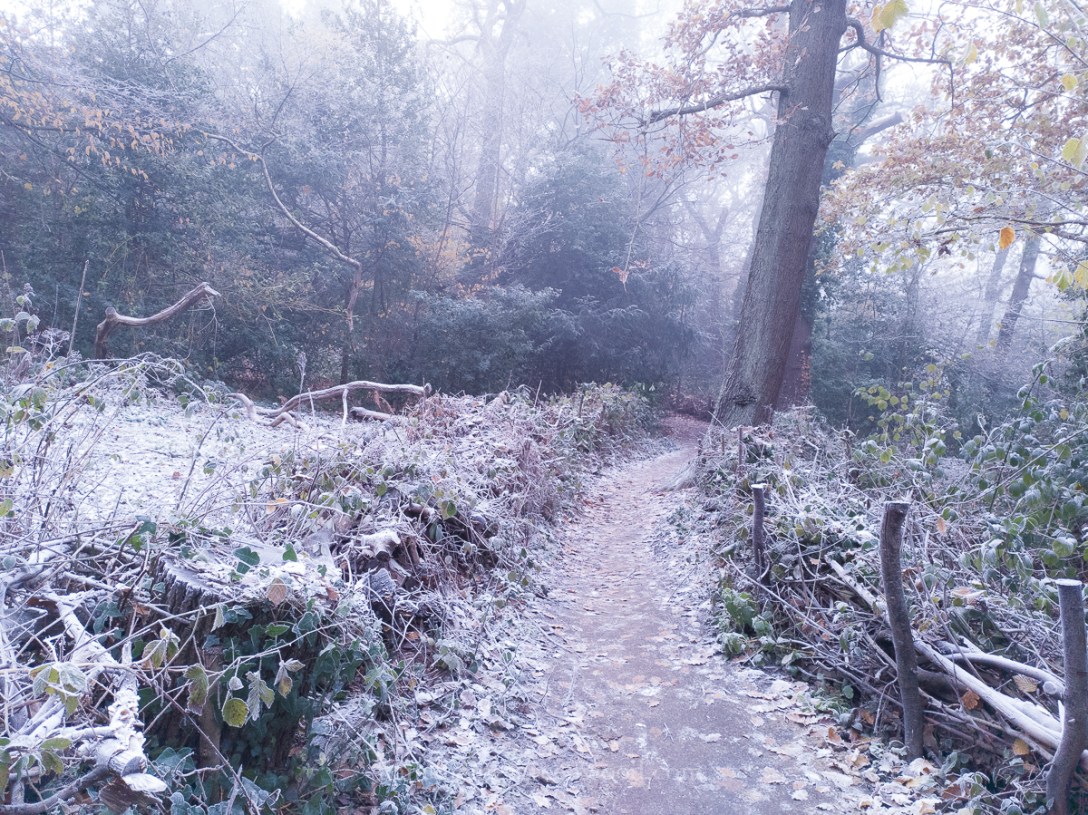
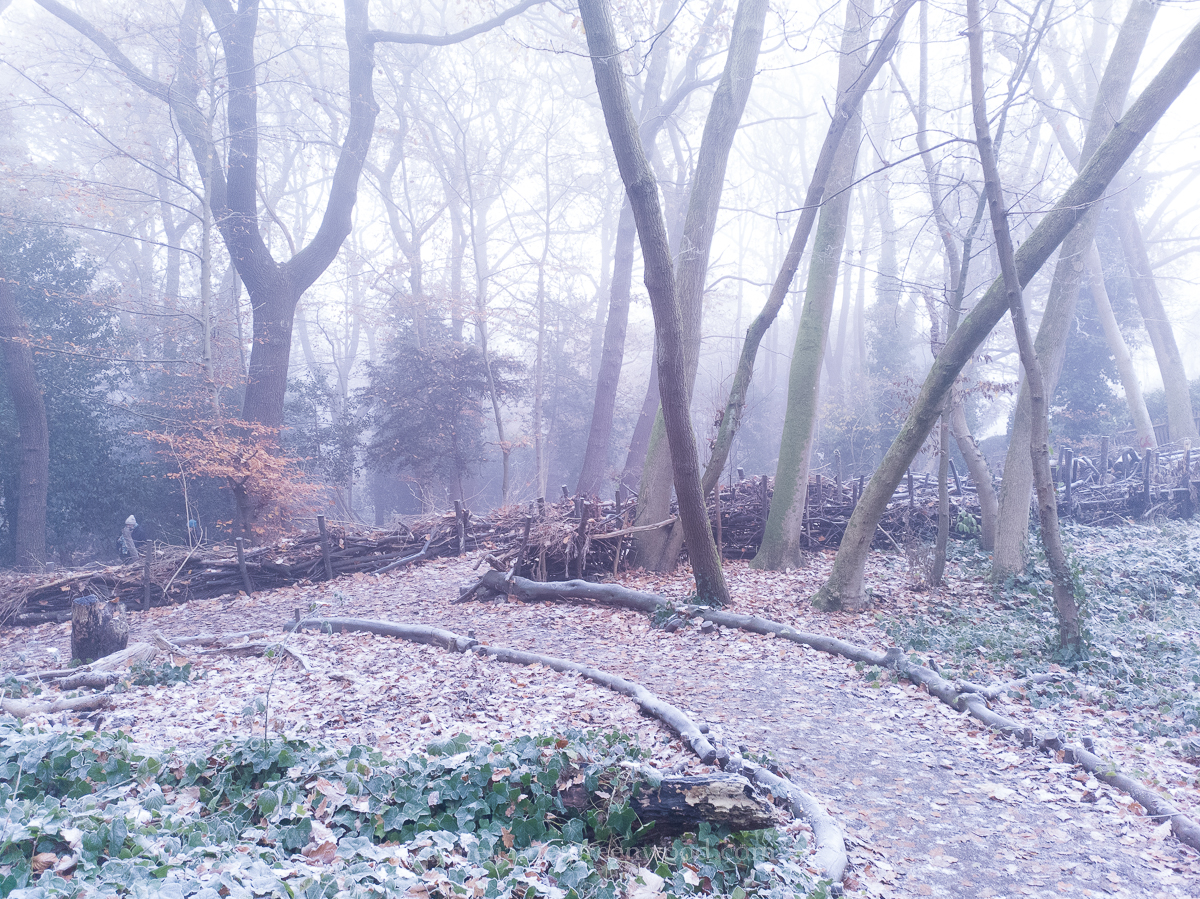
London woke to freezing fog with hoar frost in places, as temperatures stayed well below zero. These are difficult days to get out of bed, but the rewards of a foggy, frosty oak woodland are too good to miss.
In the woods the fog broke in places, shifting north, making for very tricky birdwatching conditions. We were treated to the tapping of a great spotted woodpecker searching for food in dead branches. Flocks of long-tailed tit hurried through holly and ivy.
One attendee wanted to see redwing for their annual list, which came eventually in an energetic flock high in an oak, then low by a small pond where the guelder rose berries still remained.
I was fascinated by the perspective of a couple who joined us. They were astonished to find ring-necked parakeets in their garden, a bird they had seen growing up in, and one found all across, India. London’s woods don’t sound the same without their shrieking nowadays, whatever the view is on that.
There were a few mushrooms still to be seen, mainly sulphur tuft, the allseeing fungus (it’s just so common), and turkeytail.
Unfortuntaly we didn’t manage to find firecrest or anything as outrageous as lesser redpoll, but it was still a lovely walk.
The photos shared here are taken on my Fairphone in RAW format, then processed in Lightroom. It’s pretty impressive what you can do now with phone cameras.
I was travelling into East Hampshire for work in August and realised it would probably be one of my last chances to photograph a cottage I had passed several times.
Arnside Cottage is, as you can see, situated at the road side, in the village of Clanfield in East Hampshire. Technically it has been adapted on several occasions over the centuries, as most timber framed buildings have.
From what I know, the square timbers so closely boxed together show it is likely not one of the oldest of its kind out there. That said, Historic England have dated its origins to the 1500s. You can see that the gaps in between aren’t wattle and daub, but look like flint built in, much like the garden wall. The flints will have come from mines in the nearby South Downs.
The mixed locations of windows is quite entertaining, and the thatch is always nice to see. I’m glad I made one final stop-off to take its picture.
One of my favourite things to photograph in winter is a frost-encrusted leaf. Where the frost remains long enough it allows for us non-early risers to enjoy some at lunchtime (to look at, rather than eat).
On the morning of Thursday 8th December I could hear sycamore leaves falling in the garden. There was a thick frost, the trigger for these leaves to let go.
At a nearby nature reserve I found this yellow hawthorn leaf, a colour hawthorn isn’t really known for. It’s one of the most underrated trees, despite its prevalence, and ecological and cultural value in England.
The image doesn’t do the real thing justice but even lichens get frosty sometimes. This is a little cluster of oak moss lichen that had fallen from a tree.
I’ve had a burst of American visitors in recent days (to my blog, not my house). So thanks for visiting, y’all, and sorry about the year you’ve had. You may have noticed I’ve slipped to monthly posts on here. Between April and October I posted blogs every Monday without pause, which is a tricky task…
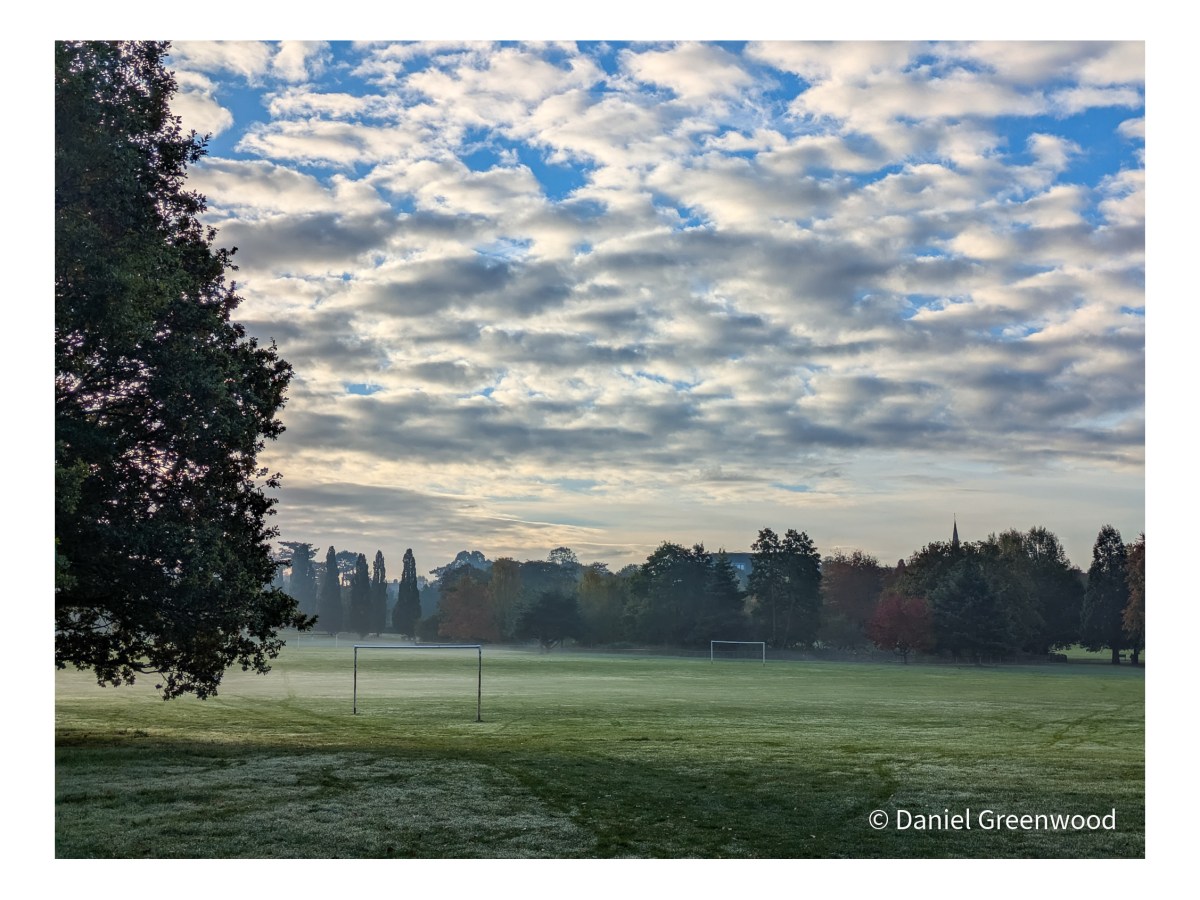
There’s a field I pass by on walks near where I live. Recently I was walking along the path next to the field and took the photo above, the oaks turning to yellow across the landscape.
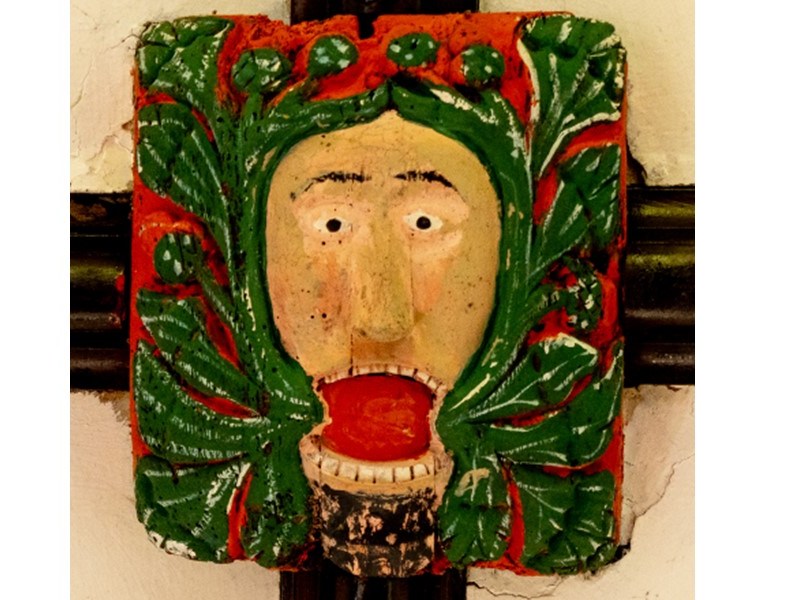
The shadow of trees to the right, combined with the sunbeam, make it look like half of the Green Man’s face. At least that’s what I see.
There is a campaign called Keep Muggeridge Field Green where you can read more about attempts to protect it from being built on: https://keepmfgreen.wordpress.com/
In early December I was passing through the village of Amberley in West Sussex. It’s a very quaint village at the foot of the South Downs in West Sussex. This rather well updated cottage is located at the roadside, at the end of the village’s main throughway. It was surrounded by rather sinister, leaden skies, as rain threatened to pass through. Thankfully it didn’t.
It’s very difficult to get photos of these buildings without cars nearby, but I feel that it gives a sense of the cottage’s place in time. The model and type of vehicle will likely be very different in 50 years time, when the cottage should still be there, such is the level of investment and care that goes into these buildings in this area.
On the left hand side you can see part of an old barn, with its sloping thatched roof and its clapboard-style entranceway, where wagons would once have been drawn in to unload.
Here’s my seasonal update of stuff you don’t need to know about, but then welcome to the Internet. What I’m writing Soon I will be self-publishing my third poetry collection, Fool’s Wood. It’s seven years since my last one and this collection has taken longer because of LIFE. There will be a booklet and also…
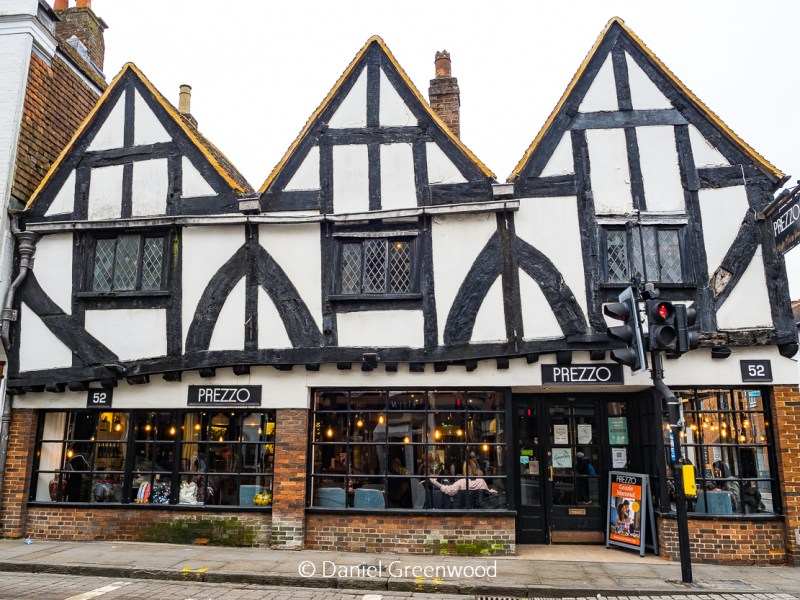
Here’s another entry in my slow-blogging Oak Timbers series. You can view my galleries and posts archive here. I visited Salisbury in Wiltshire (south-west England) for the first time in 2023 and was really charmed by the place. If you’re interested in this kind of thing, Salisbury is the place for you. Here’s a gallery…
I’m getting into more of a routine of recording and editing audio, so here is the latest episode of Unlocking Landscapes. Listen on Podbean or via the usual platforms. Also via YouTube: https://youtu.be/y1K9Pqx68to?si=B-Fdhf3sdDH35Z8w Following on from July’s rather optimistic fungi walk, I popped back to the same area of ancient Wealden woodland to see if…
Here’s an account of the final fungi walk of my calendar for 2022. It was held on Saturday 19th November on the birch and pine heaths of Bramshott Common, where Hampshire and Surrey cross paths. West Sussex isn’t far away either. It’s an area that is arguably Wealden in character, but inside the South Downs National Park.
I wasn’t able to take any photos during the walk, other than the header image (not visible in email). For a better account of the fungal communities at Bramshott Common, please see my blog from a couple of months ago.
Back in October this Ministry of Defence site contained basketfuls of mushrooms. On 19th November however, they had all gone on holiday. Where fly agarics had previously flung themselves onto paths, only one could be found across the entire walk, tucked away behind a heather shrub. Interestingly, I had been speaking to the person who did find it, moments earlier. She had grown up in Sweden and spoke about how as a child she was taught about mushrooms in school. This heathy, birchy, piney landscape must have been similar to landscapes she knew from Sweden.
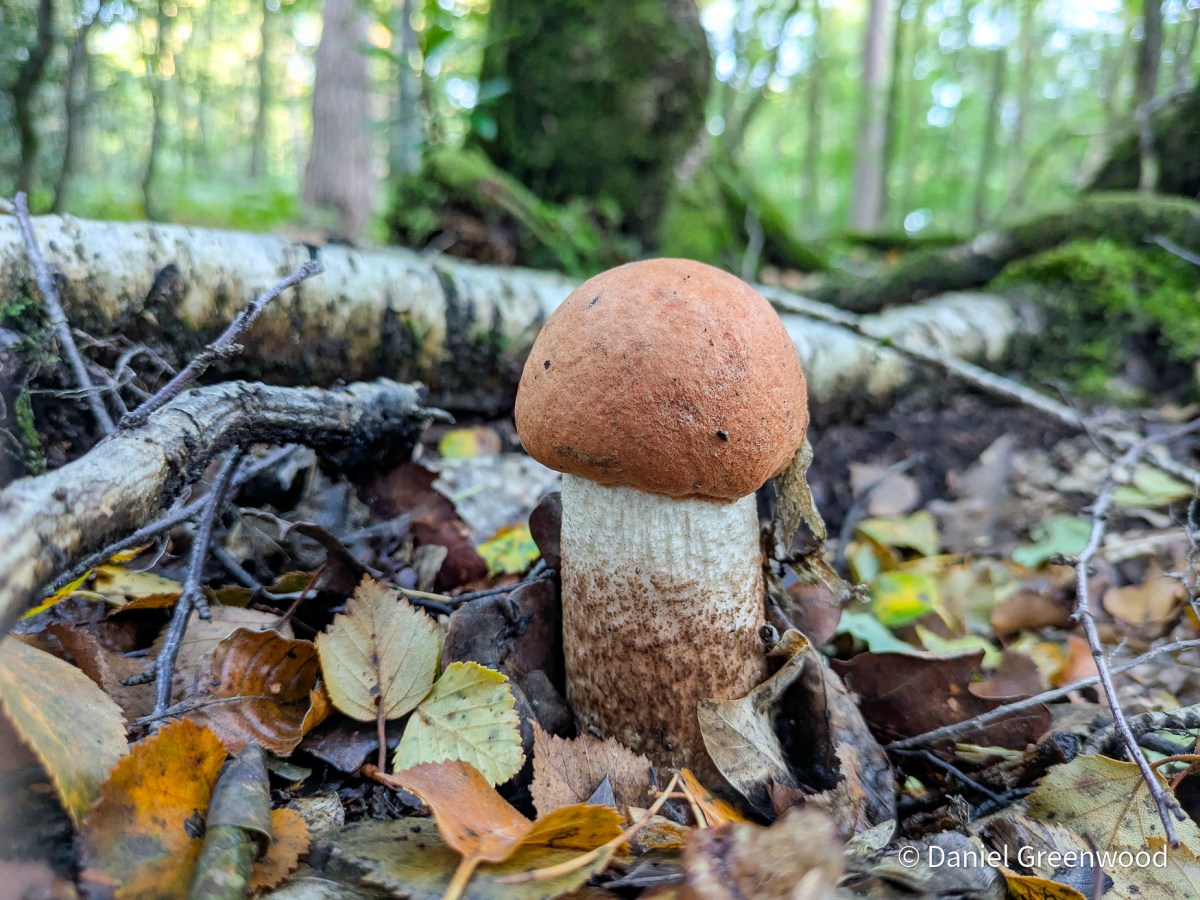
The brown birch bolete parties of the previous visit had dwindled to the last man standing, spotted somehow among the identical shades of fallen birch leaves on the ground. As my scouse family says, well in that lad.
My personal highlight of the walk was when an attendee found a small bonnet-like mushroom among the leaves. I picked up the pine cone it was growing from. The spindly bonnet slumped, but it seemed to have bioluminescence. The one we saw is not the same species as the one in the image above (Mycena luxaeterna) which is found in rainforest in Brazil, but it had a glow and was a bonnet so that’s not too far off.
Does anyone out there know this magical bonnet mushroom in a European context?
Anyway, holding the pine cone up to show off the glow-in-the-dark mushlette – let’s call it that – I mentioned earpick fungus to the group, a species I had only seen once before that is found on pine cones. Looking at the cone again I noticed a small antenna poking up from the cone’s segments. It was earpick fungus! I wish I could have taken a photo with my macro kit but it wasn’t possible. I was surprised by how small and difficult to see the fungus was, only really spotted because it was so close to my face.
Big thanks to Olivia and Dan from the South Downs National Park’s Heathlands Reunited project for putting on the walk, and to all the lovely people who came along and made it worthwhile!
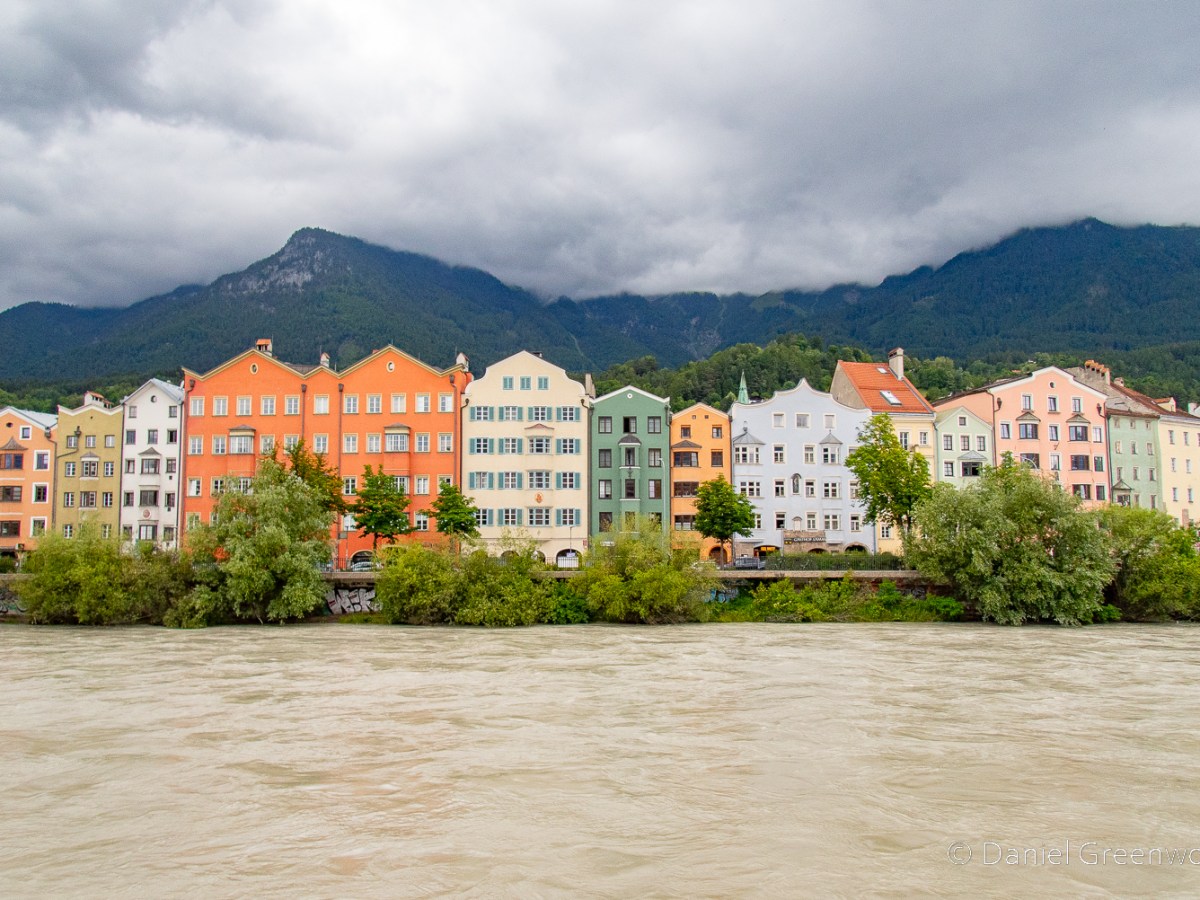
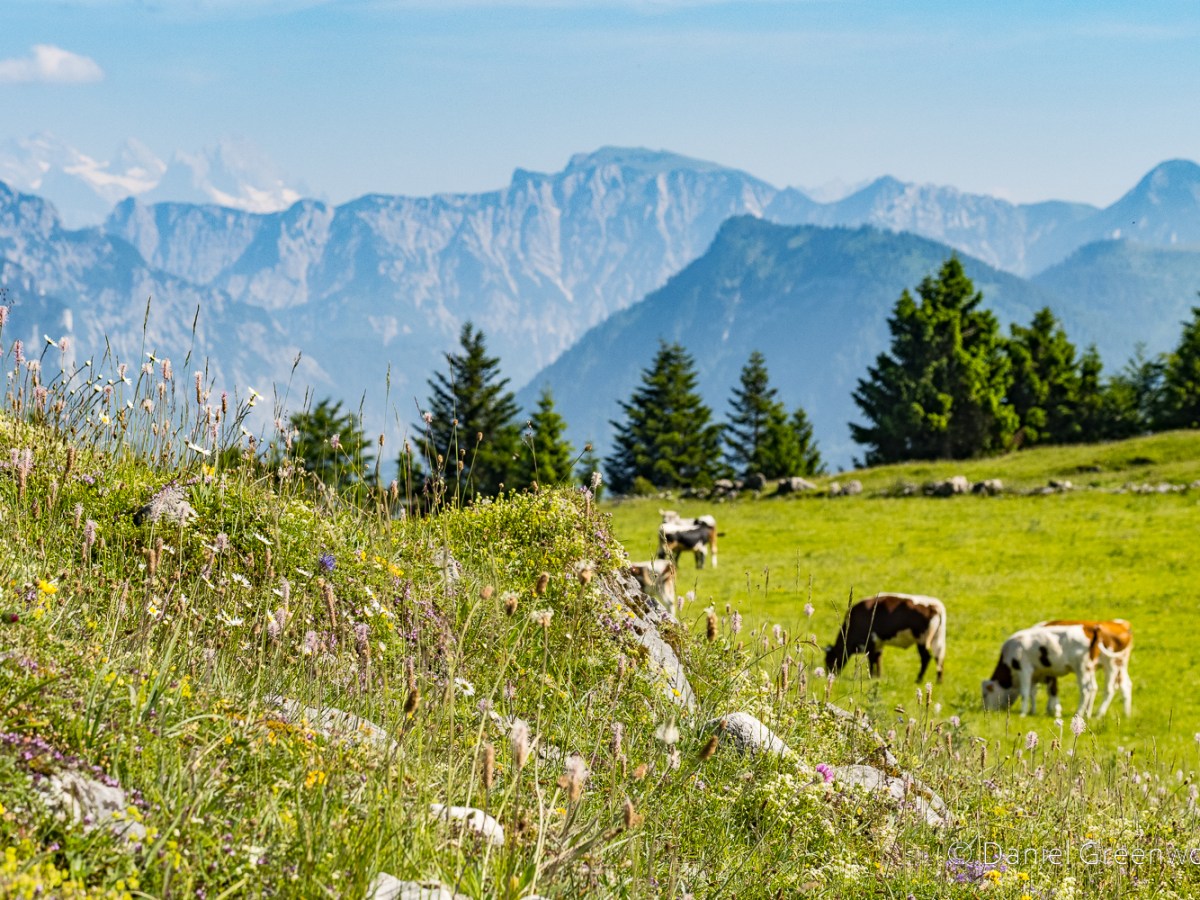
Innsbruck, Tyrol, Austria, June 2025 This is a longer post of the images I captured during a recent visit to Innsbruck in the Austrian Alps. We travelled to Innsbruck on a sleeper train from Amsterdam. It’s such a great experience and is significantly lower in carbon emissions compared with flying. If you consider the fact…
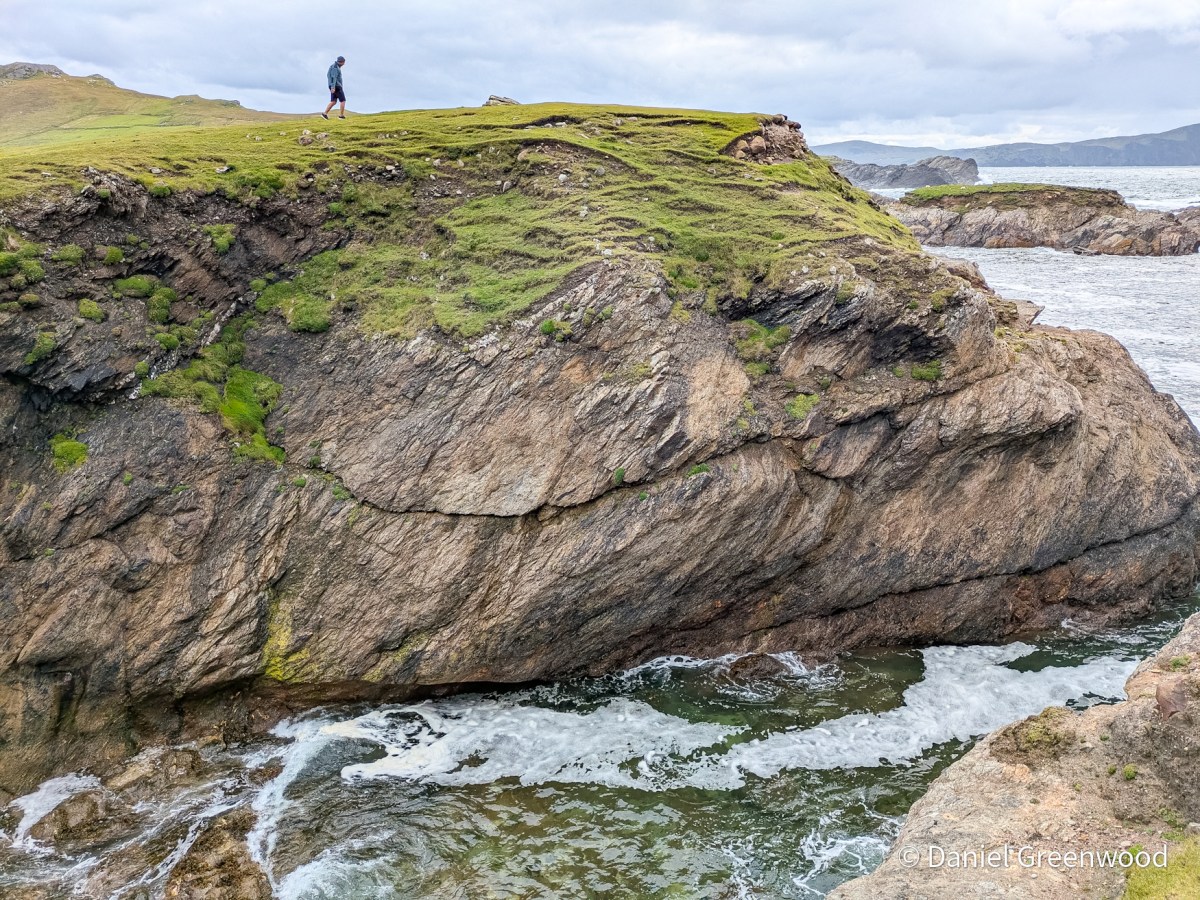
I’m back from my annual visit to the west of Ireland. I managed a couple of day trips to forage for photos, which will crystallise later this year into dedicated posts, all being well. Like many people I enjoy the Blind Boy Podcast, none more so when I have the headspace to take in all…
This is the first of a series of posts I’ve been working on covering national relationships with mushrooms. It’s just a bit of fun, but there’s definitely some interesting stuff to share.
A grey heron (Ardea cinerea) at the edge of a woodland at Warnham Nature Reserve in West Sussex, Sunday 4th December 2022.
The heron was looking back and forth across the reeds and wetlands. The temperatures have dropped to more typical winter levels, meaning birds and mammals that don’t hibernate will be under added pressure to find food.
Recent mild Decembers have been replaced this year with colder than average temperatures.
Another short book review to point you in the direction of a great read.
On Gallows Down by Nicola Chester is a personal account of a life lived within a frame of chalk – Berkshire, Hampshire and Wiltshire. It’s a story of major development threats, many of which prove unstoppable. We’re talking here about the Newbury Bypass and the Greenham Common protests of the 1980s-1990s. These are issues I don’t know much about, but I do have a hint of the landscape having worked nearby on occasion. Nicola’s accounts and research are enlightening and illuminating. The anguish is real, the Newbury Bypass is something she can see or hear from Gallows Down today (below), the hill that gives her the name for the book.
Nicola Chester is clearly a gifted writer in her evocations of the Wiltshire hills the book spends much of its time in. She isn’t writing for the sake of ‘being a nature writer’ but expressing a deep need to find meaning and belonging in the place where she lives, and all the diversity of non-human life that lives and dies in the land around her family home. The details of the book remain with me in fragments like memories that I can’t sometimes differentiate from lived experience.
Nicola Chester launches her book in the mist on Gallows Down
Personal stories intertwined with nature can often miss the mark, becoming too much a platform for a person’s story, rather than how it might relate to the landscape. But in this book, the personal story, especially at the end, is one of the most affecting things I’ve read in a long time
The story of Nicola’s loss of her father cut right through to me, having experienced something only a year ago that felt almost identical. I have to thank her for her honesty.
The book also makes clear how precarious rural life remains for many people, especially for families without property or the wealth of many rural landowners. This is a story that is rarely told, because ‘the countryside’ is sold as an idyll, a place of wealth and peace where anxieties are few. On Gallows Down will show you another world.
Nicola’s accounts of local landowners and the excruciating processes of trying to get people on side to her ecologically-minded way of thinking ring true. She goes to show how passion and love for nature, and wise diplomacy in human conflict can rival the power and authority of a landowner, despite their untouchable wealth and privilege.
This passion play can go wrong for individuals in a community setting, but Nicola comes across as a master of campaigning and negotiation, a deeply compassionate person. So much of what she says echoed things I’ve witnessed first hand in similar situations, but in different parts of southern England.
There is the sense that this is a book only one person could write, with Nicola’s experience, love and knowledge of a certain part of England. On Gallows Down will always stand up to me as a classic of English biography, landscape, place and nature writing.
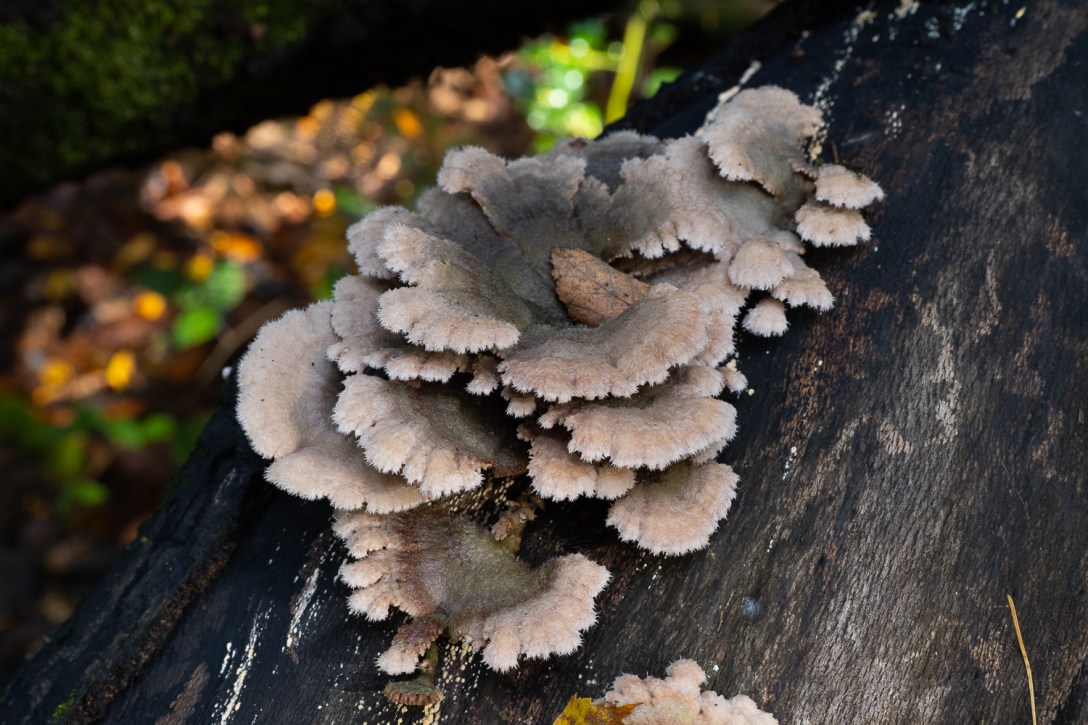
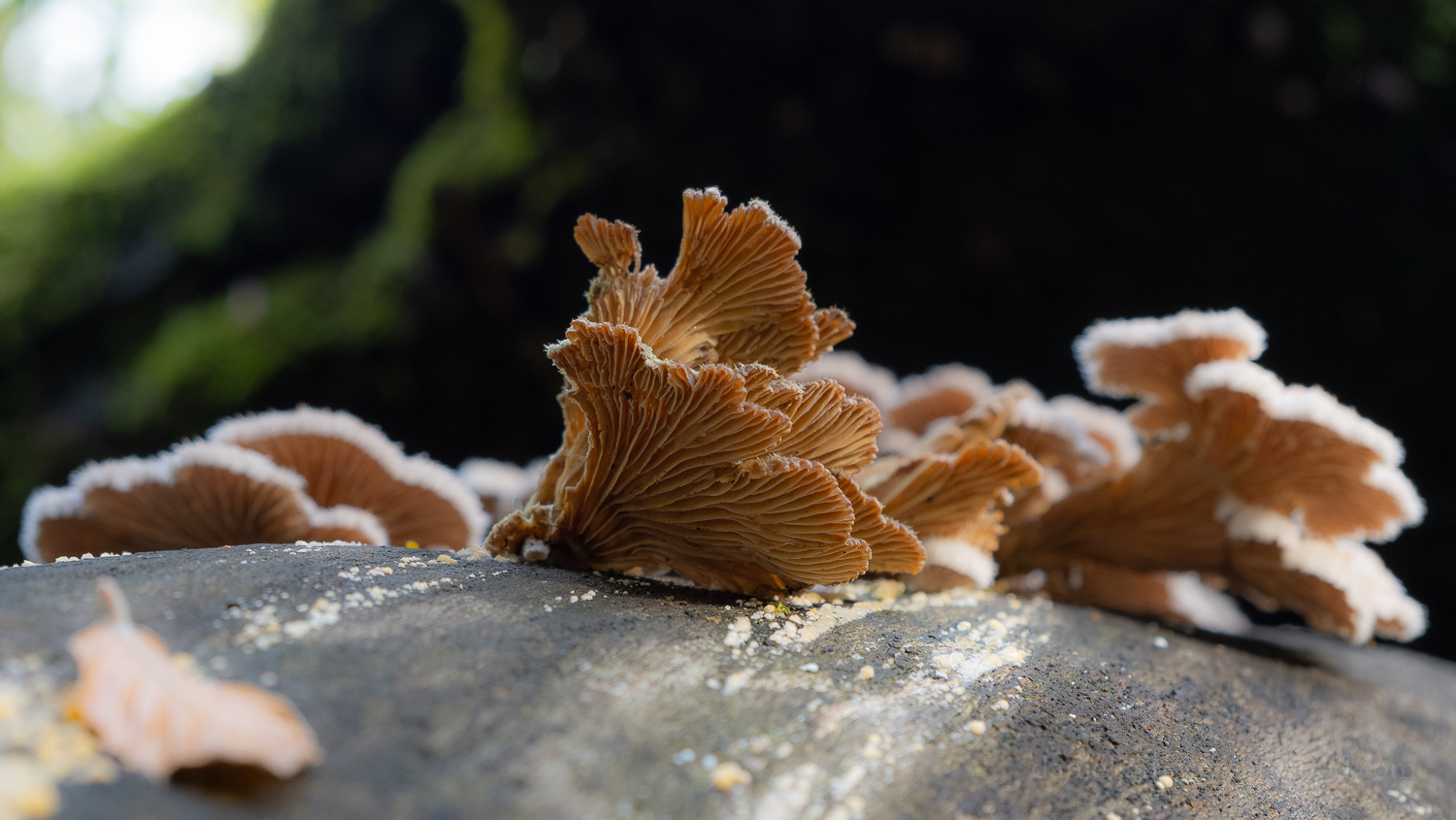
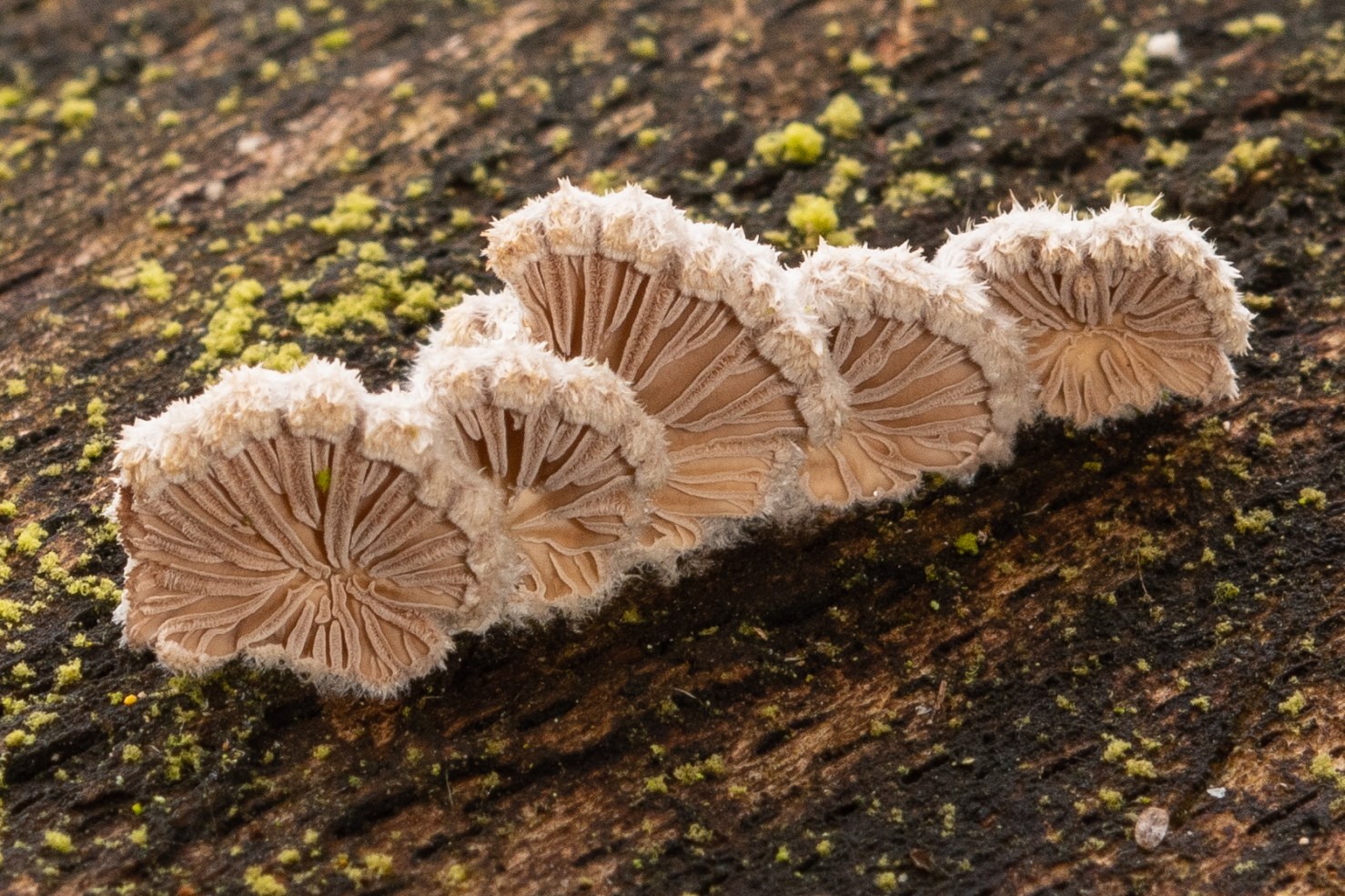
I encountered splitgill fungus again at the end of October. It’s a very attractive species due to its interesting ‘split gills’. But it also has a fascinating biological story. I considered outlandish titles for this blog post, including ‘the fungus that has 20,000 sexes and sometimes lives in humans’. After researching a bit more, that 20,000+ figure was so common it looked like clickbait. I have standards, people.
Visually splitgill fungus is known for its vein-like gills, as seen in some of the images here. Otherwise it’s known for its potentially serious impact on the lungs if you’re ever incredibly unlucky enough to have it make a home in, well, you. As Covid-19 has reminded us, despite our attempts to lord it all over nature, we are a habitat in ourselves, with fungal spores also being present in our bodies as they are pretty much everywhere in the environment.
The splitgill apparently has 28,000 sexes, which may not be as remarkable as us simple humans think. I don’t have the space to go into sex in fungi on this blog, it’s complicated, but it’s also not the same as it is for humans.
The splitgill is also perhaps the most widespread fungus in the world.
It’s a species I most often find on deadwood, usually on fallen beech trees in Sussex. It’s particularly visible in the winter months.
One of the best articles online about the splitgill mushroom is this one, from February 2000! I was a teenager just encountering chat rooms then via my parents’ 56k dial-up modem. Coincidentally, the author of this blog, Tom Volk, passed away in recent weeks. He obviously has contributed a great deal to people’s enjoyment and understanding of the fungal kingdom.
As mentioned earlier, splitgill fungus is also known for some extreme medical issues in isolated cases. Not that you should worry about it:
This is a very interesting YouTube video on the Learn Your Land channel. It lays out all the information about the fungus affecting people medically, and some examples, in a much more interesting way than I can here. Do have a look if you want to know more.
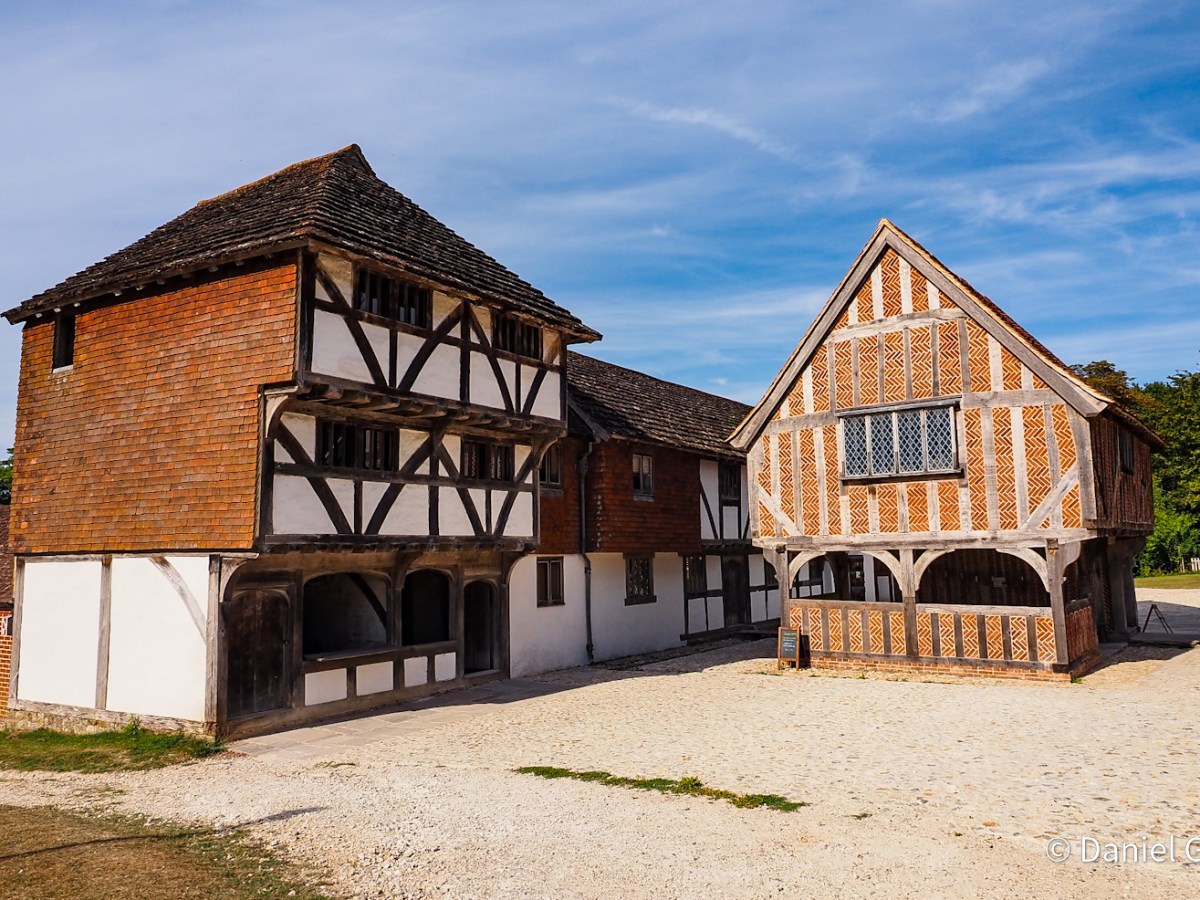
In August I made my annual visit to the Weald and Downland Living Museum in the South Downs. You can see my timber-framed building photo gallery here. This is the first view you encounter inside the museum grounds after you pay your entry fee. Amazing to think the medieval hall house is from Cray in…
Not that kind of battle, but instead to the village in East Sussex. Battle the village is the site of one of the major battles of the Norman Conquest of England of 1066, when the Normans invaded Britain and defeated the Anglo-Saxons. It’s a period in history that absolutely fascinates me. The land ownership brought…
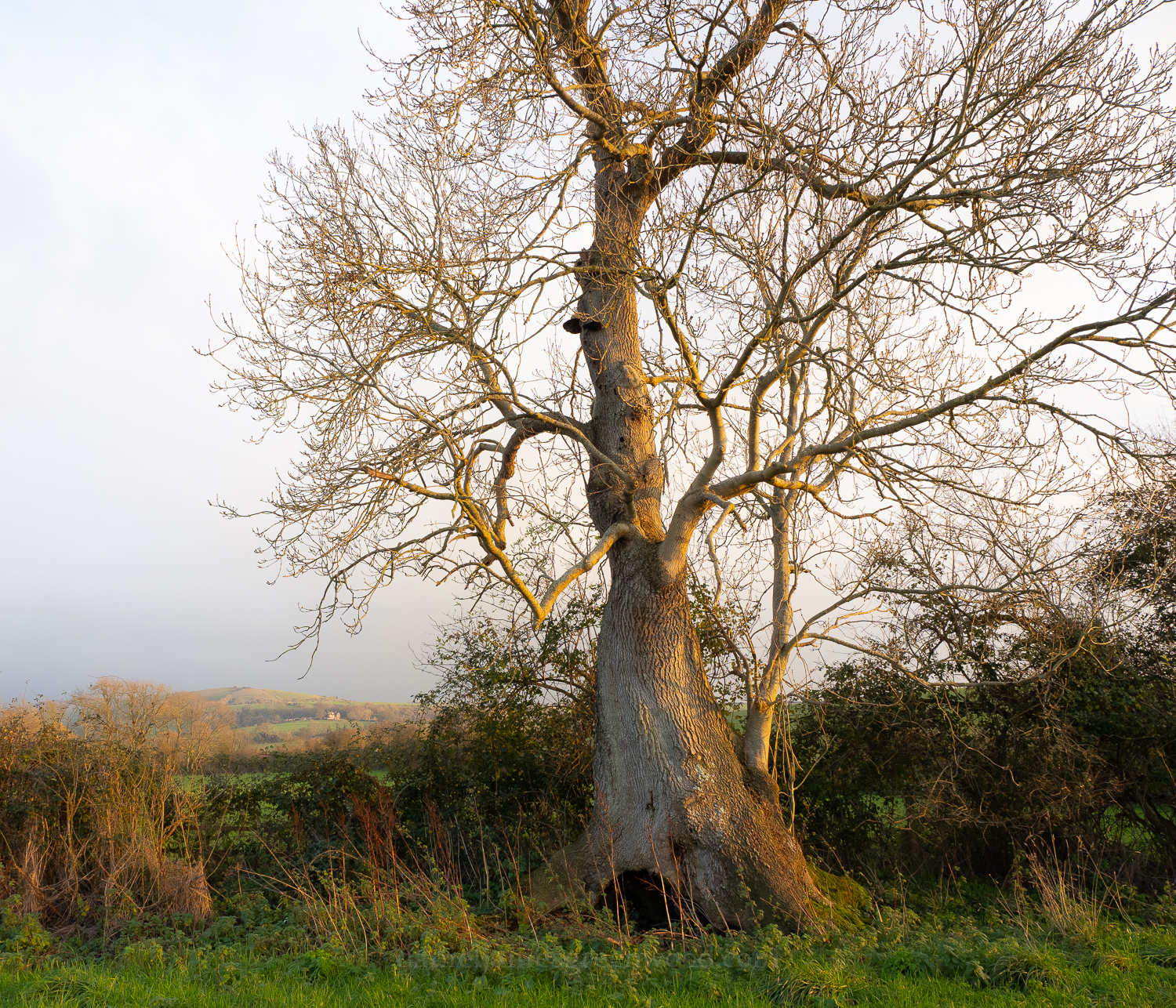
This week’s single photograph is an old ash tree in Amberley, West Sussex, taken on 2nd December 2022. This tree may once have been part of a laid hedgerow, hence its wider base. Ash trees are disappearing from the British landscape thanks to the invasive fungus known as ash dieback. I do try and record the older ash trees when I see them. This tree’s left-hand branch is pointing to one of the highest hills locally, Amberley Mount, up on the South Downs. The bracket fungus seen higher up the tree is probably shaggy bracket.















 Unlocking Landscapes