Four years ago I was starting a weekly Macro Monday photoblog as we entered into the Covid-19 restrictions. Now I reflect on how that extra time helped me to post more regularly on here, and just how hard I find that now in the post-pandemic lifescape.
It’s magnolia season in West Sussex
I’ve not got into macro mode proper yet this year, but a few recent sightings and reasonable phone pics have provided some inspiration.
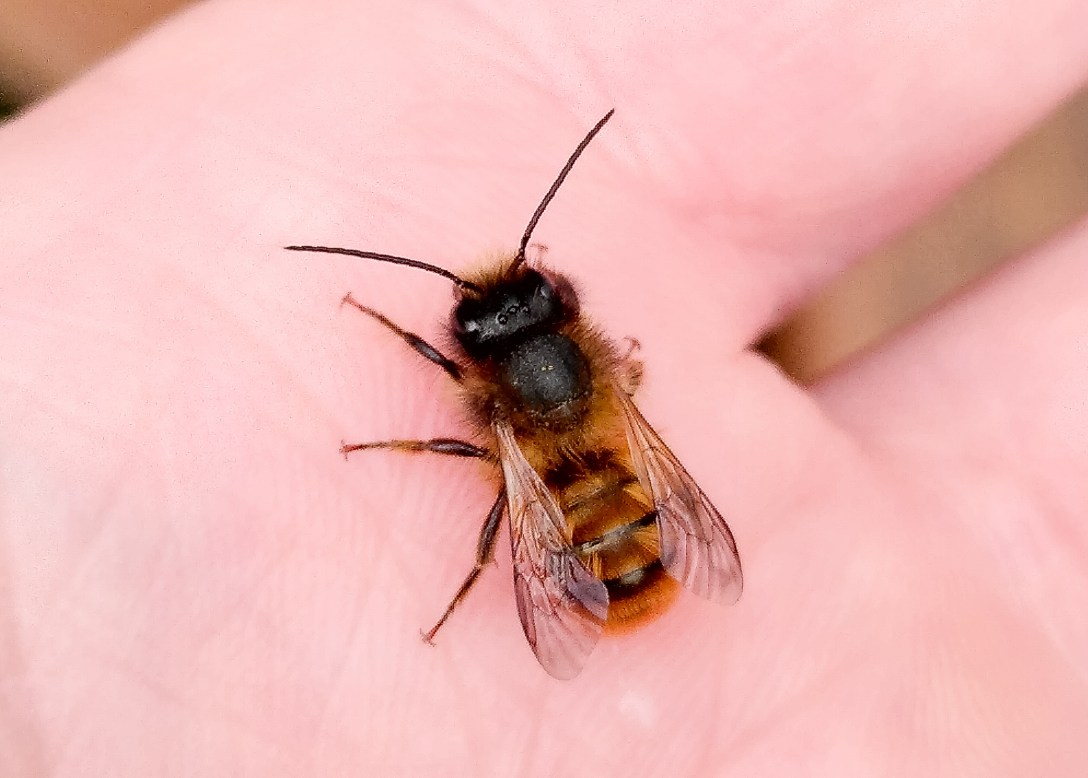
On Saturday 16th March my partner was investigating the state of some of the potted plants in our garden when she found a small bee. I swooped in and enticed it onto my fingertip. It was a red mason bee, the first one I had seen this year.
Red mason bee in the palm of my hand
I placed the little mason bee among some mutant AI primroses that flower weekly throughout the year. Later that evening as we walked out I somehow managed to spot another mason bee sat on the concrete path, looking wet and cold. I picked the bee up and put it into a bonsai tree pot and hid it under a leaf.
The next morning I found it was still there but looking altogether more wet and cold, so again I gave it a ride to the warmer side of the house and back to the primroses.
Then on Monday morning I passed our latest bee hotel installation and saw a hairy-footed flower bee (one of the first bees of the spring) undertaking a session of weather-watching from the cover of a larger bamboo stem.
It’s not often you find these characterful bees stationary, they’re usually zipping around at max speed.
Later, I found yet another red mason bee looking cold and damp on the concrete path. Again, I picked it up and put it on the warmer side of the house.
I’m wondering if this is the same bee every time or if perhaps there are a number of these bees emerging from the old mortar of the exposed side of my house, and that the weather isn’t quite right for them yet.
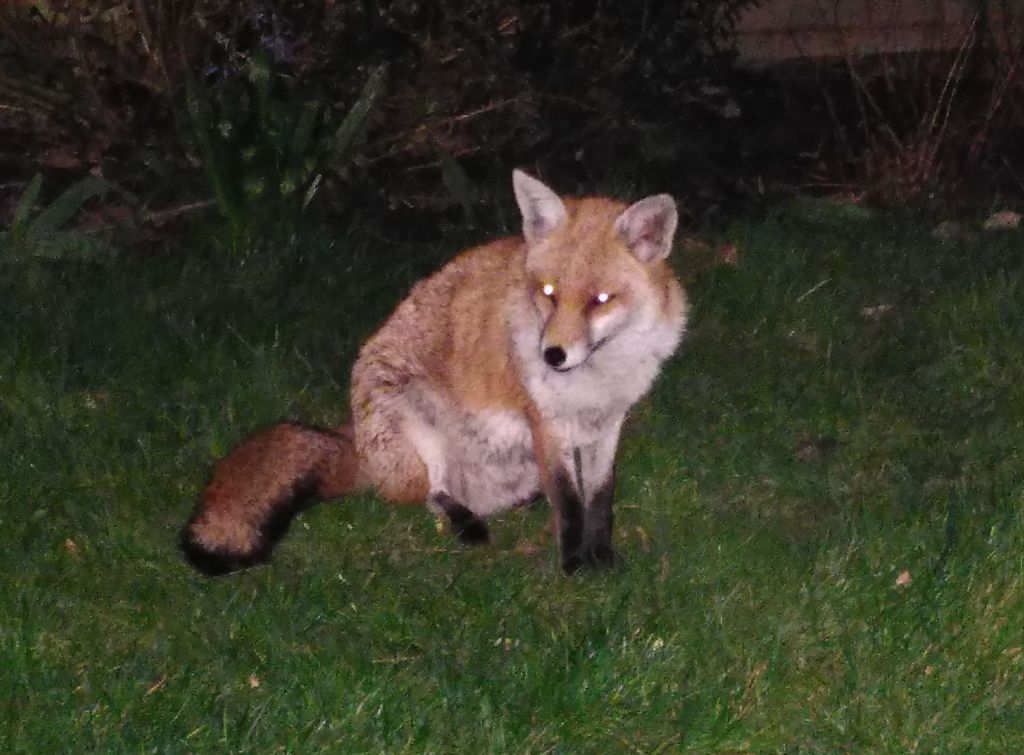
One animal that I also keep finding on the concrete path alongside the house is Socks the fox. Whether she has several other little foxes in tow will be known soon enough.
Looking out over the Brooks, two dark bird-shapes soar against the faint outline of the South Downs. Below them are green conifers and leafless oaks.
Buzzards, I think.
A woman approaches me from behind and stands to the side of me. ‘Dude,’ she says. ‘There’re eagles out there!’.
I look through my binoculars again but can’t see any sign of white-tailed eagles (it’s not going to be golden eagle). They’re known to hang around the wetlands of Amberley and Pulborough, having been reintroduced to the Isle of Wight in recent years. This is an ideal place for them.
The images I’m looking for are brown and white Muppet-like characters, as I remember seeing them in Hungary and Czechia. Never before in Britain, though.
The eagle messenger tells me to head down to some of the hides where ‘someone will have a scope’.
I march down there and drop into the first hide, benches packed out. But people are only looking down at the bank right outside where a snipe stands still against the grass. There is no eagle energy here.
A man with a telescope and tripod on his shoulder and a camera around his neck walks down the path towards me. I ask about the eagles. They’ve gone off somewhere, he says, wishing he could be more help.
Heading to the next hide, which I recognise as the one the eagle messenger told me to stop off at, there’s palpable excitement among the benches. I find a spare seat and ask the woman next to me – is everyone looking for eagles?
She smiles, pointing out where they had just been seen. I listen as others describe their apparent return to view. Against the South Downs two dark shapes soar. Then I realise it – I’d already seen them, before I even knew what they were.
They weren’t buzzards, they were white-tailed eagles.
Here’s the best image I captured while waiting for the sun to disappear over the Downs recently. To the right hand side of the image (north) you can see the Arun flooding the area known as Amberley Wildbrooks. It was surprisingly mild up there but as the sun slid away the cool air arrived with the moon. Red kites floated overhead and trains echoed through the valley on their way to Arundel. A beautiful evening in a special place.
At the entrance to the woodland a sign warns of forestry activities. It’s time to expect deep rutting to the tracks and soil, and conifers pulled out of this vast area of afforested heathland, and old oak and beech woodland.
A song thrush lifts up from the track and onto a nearby branch. Their lives are bitter battles of survival in January. In early spring their music travels the woods and fields, parks and gardens. The bird stoops on the branch, eyeing me in that wild way.
The sun is shining and the birches gleam white in the treetops.
Pine needles are bleached to an almost aquamarine.
On the main trackway the machine rutting appears from a tract of maturing pine, oak and birch. A track churned-out by huge tyres and now full of milky-brown rainwater. The tyres, inevitably, have dug up sections of ditches where fleabane, hemp agrimony and common spotted orchids abound in summer.
Then again, this trackway and its ditches were likely created for the forestry works, so it’s maybe a case of swings and roundabouts. The extraction works are set to end here in the near future, no doubt to allow the woodland to move at its own pace. Plantation trees will be replaced by self-seeded birch, and the jays’ forgotten oak cache, if the deer don’t eat them.
There is something unexpectedly wild about forestry landscapes, their lack of obvious human culture. There is not much coppicing here, not much lopping or billhooking. No dining tables are set by charcoal burners, or mud huts packed up inside clearings.
No one is claiming it for their own, not even the foresters.
Hello! Here’s another of those seasonal blogs where I post stuff you don’t necessarily need to know.
The header image visible on the blog here is of November in the South Downs looking south towards Angmering.
Thanks to everyone who has viewed, commented on and liked my posts this year. Posting stuff on here is a joy for me and it’s really nice to have your questions and comments to deepen the narrative. These posts tend to get more comments than some of my most finely-sculpted photo or prose posts, so let’s see what you have this time.
Where have all the mushrooms gone?
Not a comment on a mycological crisis in the woods, but the content that seems to ‘drive traffic’ to this website. As some of you may have seen, I’ve set up a separate fungi blog/website for my mushrooms pics: www.fungifriday.co.uk
The Fungi Friday blog is a home for my fungi photos with a focus on southern England’s rich funga.
I created it for a couple of reasons. One the main motivations was enforced – social media like Twitter (RIP) and Instagram are moving away from photography and instead towards poorly functioning hate-posting for the latter, and TikTok-lite in the case of ‘The Gram’.
Then there’s Threads, which reminds me of the ‘smartshop’ self-scanning interface from Sainsbury’s. It’s also owned by Meta/Facebook, which is not great.
The second reason was that constant mushroom content doesn’t really fit with a personal website with varied, landscape-related subject matter. I value bringing hand-written landscape writing to this website, which the fungi content is not. If I’m ever going to make it as a writer, I’ll need to spend more time working offline with a pen and paper, and typing it up later.
Another key point is that fungi are ‘hyper-diverse’ and there is a lot to cover. I’m aware that quite a few people read this blog through their email inbox, and a mushroom a day probably isn’t what you need (though to some people, that’s exactly what they need). I’d like to post more longer reads about fungi in the cultural sense, as I did in lockdown (2020-21).
Anyway, I hope FungiFriday.co.uk can last the pace, and I’ll be posting my autumn photos over these bleak midwinter months. Please do #LichenSubscribe if you have a WordPress account.
Music in 2023
My favourite album of 2023 (though released in 2022) is Blue Rev by Alvvays. You can watch a live studio set from them above. Molly Rankin is part of the famous Rankin Family, and her voice positively sings of her ancestry. After the Earthquake is the song I couldn’t stop listening to in the spring/summer and the album has such depth to it for something so rockin’ and short. They are a total joy. Check them out!
As mentioned in the spring, The Gallows Pole by Benjamin Myers has been one of the best books I’ve read in ages. It’s brutal, violent and bleak, which isn’t my thing, but it had that pull that keeps you wanting to know what’s going to happen next.
Colm Tóibín has been one of my other favourite authors I’ve read this year. My Irish diaspora family seem to spend a lot of their time consuming Irish culture in books, films, TV and music. I know I’m getting older because I am now doing that. This year I read Brooklyn, The Magician, House of Names and The Blackwater Lightship by Tóibín. Those books aren’t all about the Irish, but Brooklyn tells the story of a young woman’s migration to New York from a rural Irish village. England has descended into extreme far-right territory with its political language around migration, which you are probably sick of hearing about. But reading about the stories of migrants is probably a helpful way to educate one another and those close to us about the plight of others.
In other Irish lit, I also enjoyed reading all of Donal Ryan’s novels, especially The Queen of Dirt Island.
Another book I really enjoyed was close to home – Between the Chalk and the Sea by Gail Simmons. Simmons walks a path from Southampton to Canterbury she translates from the Gough Map, visiting large areas of the South and North Downs along the way. I love this part of the world and am so lucky to be a few train stops away from either landscape. This is definitely a great Christmas present and a book that walkers will love, especially if you like how the landscape can be read to tell the story of its past.
Also shout out to Owls of the Eastern Ice, which is an astonishing book that’s been around for a while now. I loved it.
My favourite film of 2023 is obviously Barbie.
Thanks for reading and your support in 2023. Ciao for now!
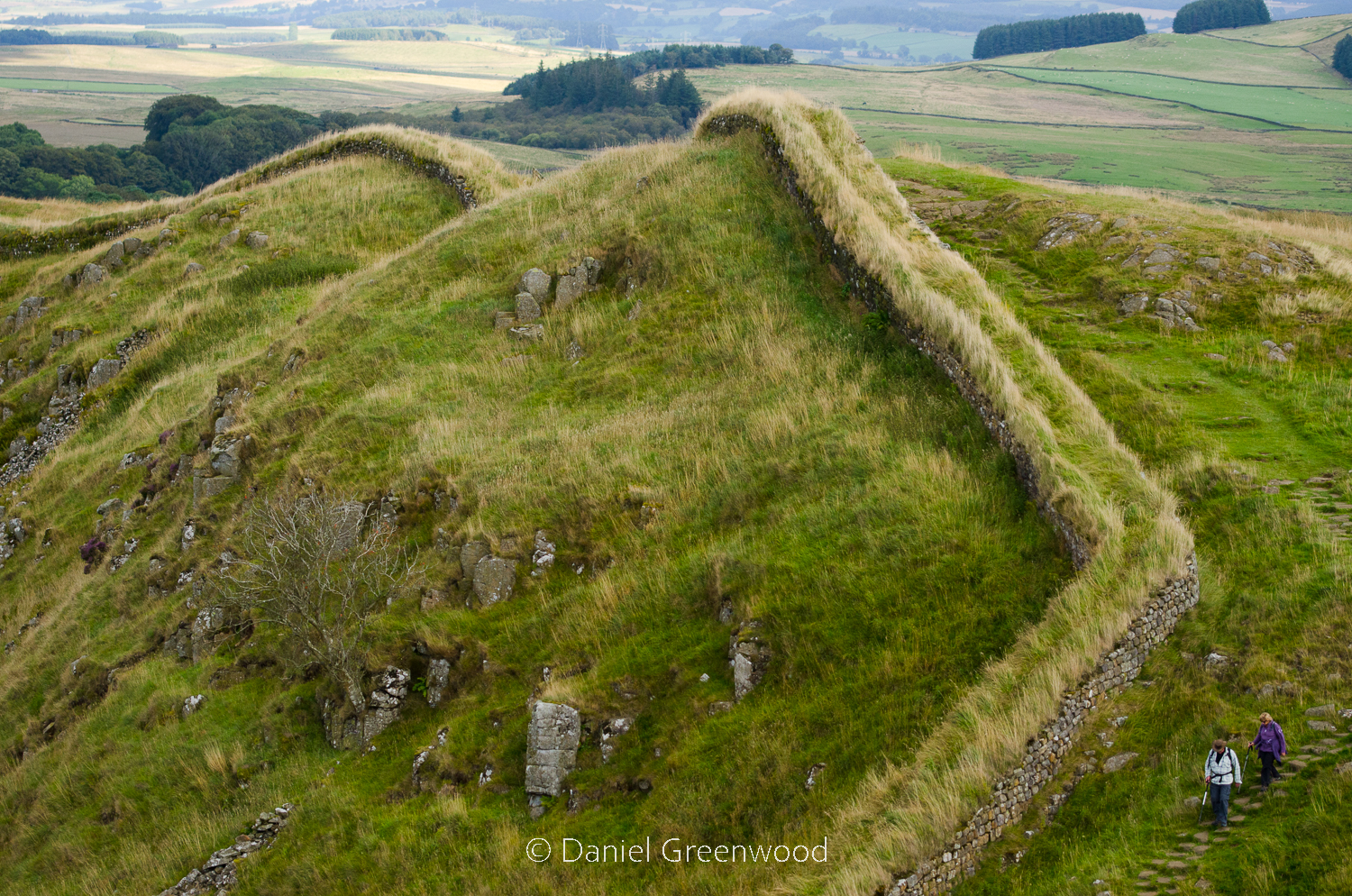
One tree story has captivated the UK media in recent months – the illegal felling of the 200-year-old sycamore that grew at Sycamore Gap, one of the most iconic sections in Hadrian’s Wall. For those who don’t know, Hadrian’s Wall is a Roman wall that is also a National Trail in Northumberland, northern England. It was Roman Britain’s northern frontier, the last holdout against the Scots further north.
The appalling felling of this wonderful tree, and subsequent degradation of Britain’s cultural heritage, has unleashed torrents of anger from many different quarters. The culprits, whoever they are, probably now realise that life will be far from simple for them going forward. The regret, you would hope, is immense.
A stretch of Hadrian’s Wall, August 2014
There is a need to understand why anyone would do this, and for it to be understood in the wider context of nature depletion taking place in England, often under Government sponsorship. We should consider infrastructure projects like HS2, which have felled far larger and older trees, and degraded our landscape heritage in ways that have not been seen in a long time. And it’s not a project that is going particularly well.
I don’t want to go on about tree felling misery too much. Instead I thought this would be a useful opportunity to look at the place of sycamore in Britain. It’s not exactly everyone’s favourite tree, but I do love it. If you have any perspectives on sycamore, please feel free to contribute in the comments.
The helicopter tree
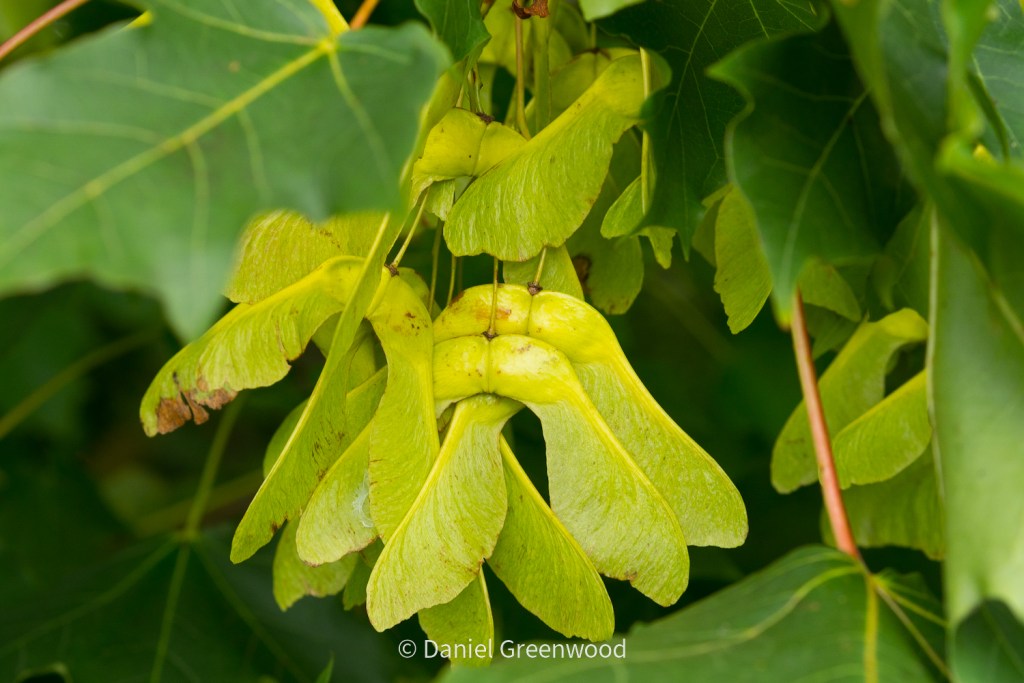
As a child my relationship to trees was about seeds rather than leaves. Acorns, conkers, and ‘helicopters’ were the ones I knew. ‘Helicopters’ was the game we would play in the playground throwing the winged seeds of sycamores into the air to see whose landed first. The seeds spun as they fell from the sky, a very happy memory of childhood nature connection.
It is strange how as children these seeds were used as tools of competition, with conker matches taking place via attached strings (a hole had to be drilled through the middle of the conker) and the seeds smashed against each other until only one was left in one piece. Conkers in this instance are the nuts of horse chestnuts.
Winged-seeds are not uncommon in nature, with birch seeds being one very effective winged-seed that can travel for miles and sprout in many different landscapes.
A lonely sycamore on Cissbury Ring, West Sussex in 2020
An unloved ‘non-native’?
In woodland management circles sycamore is often viewed as a non-native ‘weed’. People hate it! One problem is that its place in Britain is not fully understood, and there are some reversions to arguably xenophobic views of ‘non-native’ species. Oliver Rackham said that sycamore is either 400 years a British tree or from the Roman period (43-400AD). Though it probably had human help in ‘arriving’ in Britain, it has happily naturalised in many places. It’s likely to have been in Britain for longer than 400 years (see below).
Its lack of popularity among land managers, and particularly volunteer community groups (for some weird reason), is that it’s not believed to support a lot of insects or have expansive fungal relationships. But some of these ideas are contested, and I have seen sycamores in the Scottish Highlands that are dripping in lichen, moss and algae.
Sycamores hold a high density of aphids in the spring which makes them an important foraging resources for birds like blue tit, house sparrow and other small passerines during the nesting season. We have lost massive amounts of insect biomass in England since the 1980s, so sycamore has a big role to play in restoring that.
The blogger next to the Birnam Sycamore, Dunkeld, Scotland 2012
The Birnam Sycamore
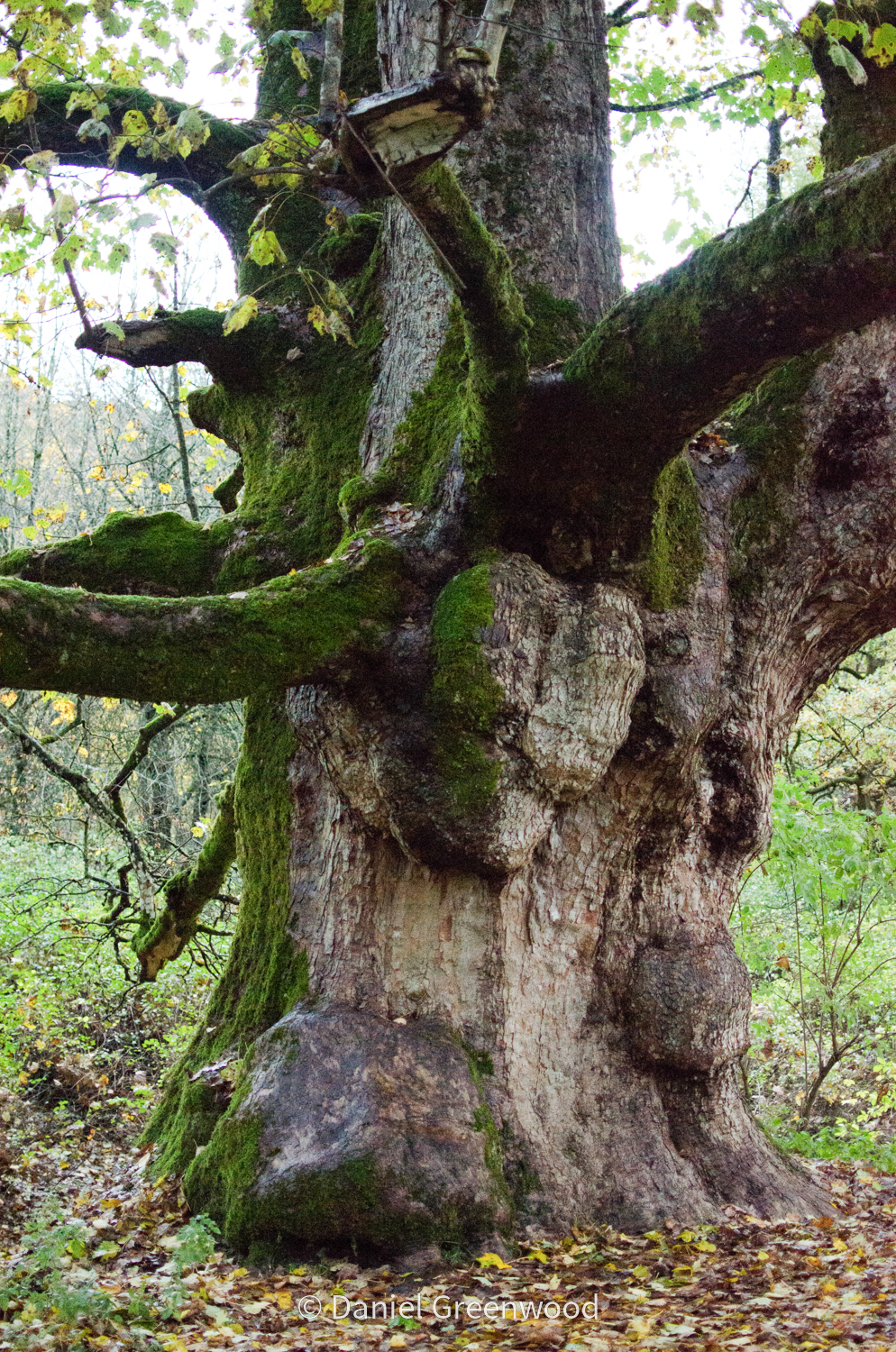
In 2012 my late uncle Joe took me to see the Burnham Sycamore, an ancient and gigantic tree in Dunkeld in Perthshire. This tree is said to be 300-years-old, pushing very close the idea that it has only been in Britain for 400 years. I haven’t seen a sycamore of this size since, but it goes to show that it could become one of the giants of the British Isles, given time.
Another special sycamore that has now been felled – seen here in Widecombe in the Moor, Dartmoor June 2019
A potential replacement for ash?
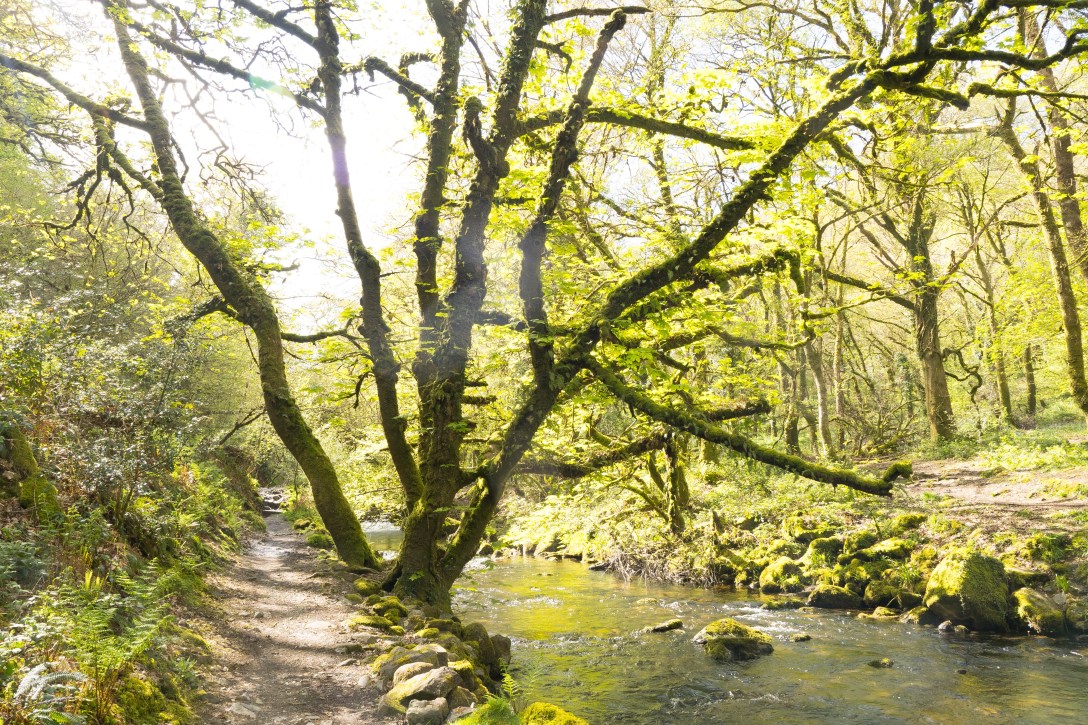
The wet and cooler climates of Britain and Ireland provide a happy home for sycamore. In Dartmoor National Park in Devon, sycamore grows in places where ash no longer can due to its severe dieback. Again it can be seen festooned with mosses and lichens, providing habitat for lots of different organisms. It seems to enjoy the ‘Celtic landscapes’ of Britain and Ireland and their high levels of rainfall, just like the lichens and mosses it hosts.
Sycamore woodland along the river Taw in Sticklepath, Dartmoor 2023
New self-seeded woodlands are rather unloved by most land managers in Britain, but with so many tree diseases affecting native trees, sycamore’s ability to create new woodland from scratch is significant. Ash is no longer able to create new woodland, whereas sycamore can. As a pioneer species it can create the condition for the ancient oak and beech woods of the future that are loved by so many.
Squirrel damage
In London, sycamore is struggling to reach maturity in some woodlands. This is because of the actions of grey squirrels, another non-native but classified invasive species that, unsurprisingly, divides opinion. Squirrels strip the bark of sycamore in summer, probably to gather material for their drays. Perhaps they are also aware of the antiseptic nature of the tree, a bit like how some birds of prey add oak leaves to their nests as a natural insecticide. The impact of squirrels results in a mess of dead brown leaves and fragmented twigs. It veteranises a tree but usually at an age too young to make them of long-term ecological value.
Spoon-maker’s dream
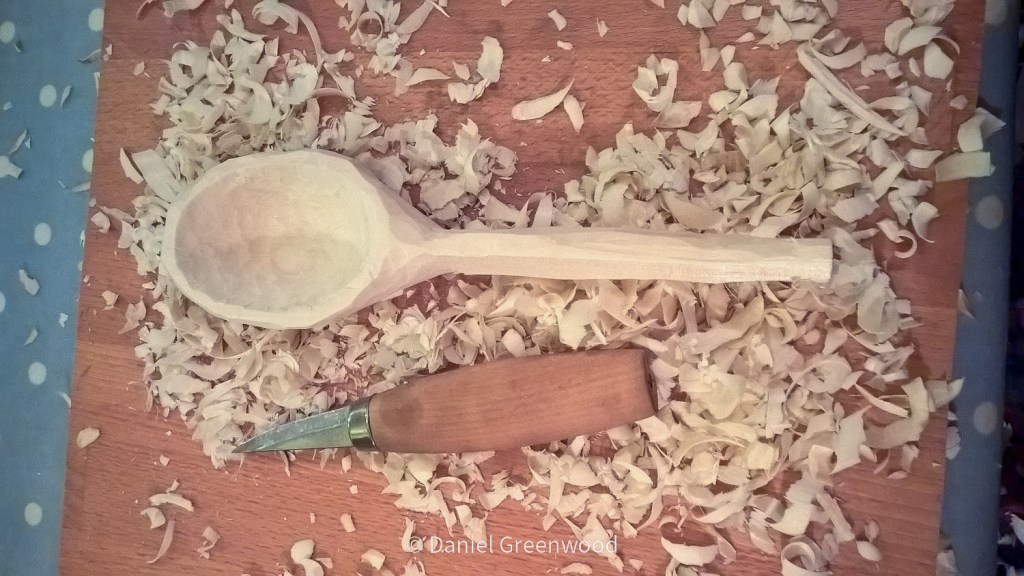
For anyone who’s dabbled in whittling, sycamore is one of the absolute best options available. It is naturally antiseptic and has a lovely soft and smooth wood for carving when fresh. There are untapped industries in this kind of woodland produce that could have reduce the demand for plastic utensils and other wooden products from questionable sources.
So, as many people mourn the illegal felling (or maybe coppicing?!) of the sycamore gap tree, it gives us the chance to see where this wonderful tree species sits in our lives. It appears that the fondness is far greater than people realised.
Thanks for reading.
I write these blogs in my spare time because I want to raise awareness about the beauty and diversity of our landscapes. If you enjoy reading them you can support my blog here.
The wind blew off the Irish Sea, throwing spray at people walking down the stone steps towards the white observation tower. We were all there to enjoy the view. Making our way down from the RSPB car park, a man clocked my camera and confided that dolphins were feeding out at sea. He had a dog on a lead, those old, broad-barrelled binoculars, and a St. Helens rugby jersey. His accent matched it.
It was a bright but hazy morning. We didn’t see any dolphins, but something more rare. As I took some photos of the lighthouse stretched sphinx-like out to sea, a crow flew in and landed on the coastal trail path, where the track sloped down towards where I stood. This was no carrion crow, rook, jackdaw or magpie. It wasn’t a raven, either.
Its legs were an orangey-red, its bill the same. It was a chough!
I had only ever seen chough in the Picos de Europa, the mountains in Asturias, in the north of Spain. The closest I had got to this now rare British bird, a cliff-dweller, in Britain was a crest or coat of arms in Canterbury cathedral.
It was only after visiting Salisbury Cathedral that I found a cushion with three chough and the name of Thomas Becket embroidered beneath them.
The story goes that as Thomas Becket lay dying, having been attacked on the orders of Henry II in December 1170, a crow flew in and dipped its bill and legs in Becket’s blood. This was thought to be how chough as a bird came to exist(!).
These echoes in culture and defunct emblems shows they were once more common (though of course the same can’t be said for lions and dragons that make up so many crests in Britain). Kent Wildlife Trust have begun to return chough to their native range, though not in response to that crest in Canterbury cathedral.
At South Stacks the real life chough (probably pronounced ‘chow’, as in ‘ciao’, because that’s the call they make) pottered around in a crow-like fashion, inquisitive, confident, always on the move. A visitor’s arrival flushed it overhead towards the sea, wings tucked in, expert in negotiating the sea air’s sudden, shifting patterns.
As we had made our way back up the steps, my mum commented on the colours packed together – the pink, purple, green and gold. Meadow pipit alarm calls rang out and a sparrowhawk appeared low over the heather cascading down to the sea.
On Saturday 21st October I led a fungi walk in the Bramshott area for the South Downs National Park’s Heathlands Reunited project. Thanks to Olivia and Dan for setting the walk and guiding us on the day.
It was a chilly and showery day with breaks of sunshine to light up the birch and bracken.
Autumn had crashed in with its typical rain and leaf fall. I think the early mushroom season has been shortened by the hot September and sudden shift to seasonal storms. Just a thought.
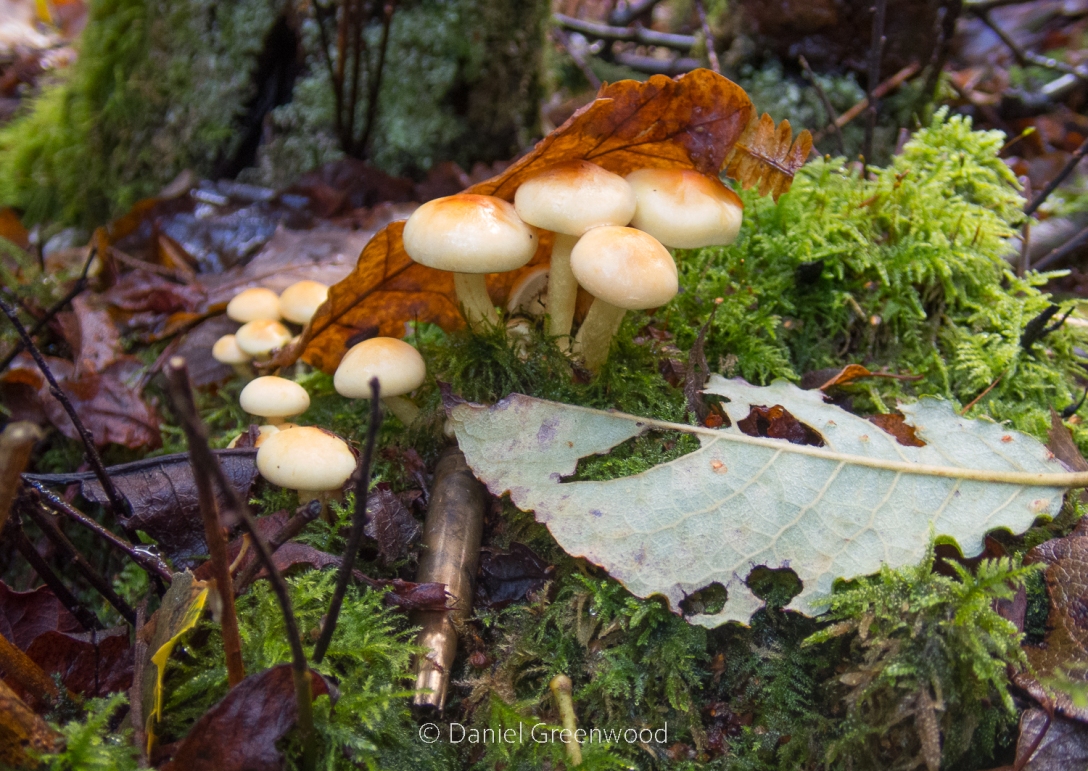
Sulphur tuft was one of the first mushrooms encountered, among a whole load of small grey/brown mushrooms that I wasn’t able to ID on the spot.
This looks to me like one of the grey spotted amanitas but after a bit of a downpour.
This is very probably a blusher, amanita rubescens. You can see a slight pink hue at this premature stage.
Fly agarics were slow to show but when the walk passed through grassy open woodland, they abounded. This one was almost like a russula with its typical white veil remnants
Amanita citrina, the false deathcap, was one of the most common mushrooms on the walk. It was abundant in the areas of beech woodland and also the open, grassy birch and oak woodland.
I’m not sure which waxcap this is, but heath waxcap, Gliophorus laetus, would make sense because it’s a waxcap on a heath!
This was one of the few red russulas, though there were tens of different-coloured varieties along the way. Sometimes the only mushroom around was a russula.
This was a very large mushroom under an oak tree. I’ve not seen this species before but am leaning towards an ID of giant funnel, Aspropaxillus giganteus.
The only cep, Boletus edulis, in the whole area. I think most of these have been picked for the pot already by other visitors.
This nicely shows the change that occurs in blackening waxcap, Hygrocybe conica. It looks like a jelly sweet to begin with then becoming rather liquorice.
One picture that sums up the status of this wooded heath – an empty blank bullet casing underneath sulphur tuft.
On the corner of the street, a mass of ivy was spilling over a wall. It was an explosion of leaves and flowers, sound and smell. The flowers were alive with insects: hoverflies, honeybees, bumblebees, and that ivy specialist, the ivy bee.
I hadn’t seen many ivy bees before, and wasn’t aware they were now so far into the centre of London. They nectared in a frantic fashion, with at least two having been captured by a massive garden spider that scarpered when it realised how close I was to its web.
At this time of year very few plants are flowering, and none like the ivy can. Even so, ivy in London has an awful reputation. People hate it, calling it a parasite and tree killer.
Some years ago a man gave me his opinion by leaning in and whispering that he had seen it sucking the sap from a tree, like it was some dark truth kept hidden from the world.
In reality it’s not a tree killer and it’s not a parasite. But like so many things in society now, people will believe what they want, regardless of the facts.
In a wood near to this jungle of ivy, mature growths of it have been found hacked and severed by visitors acting on their instincts without reason (or permission).
I remember a local tree surgeon unloading on me one morning when I was in the woods about to start a working day, telling me how terrible ivy was at that location. I was taken aback by the man’s strength of feeling and let him say his piece. When he had finished I asked if I could go and start my day’s work.
“You didn’t like that, did you?” he said.
Is it any wonder tree surgeons don’t like ivy? I’m sure many appreciate its place in the ecosystem, a habitat for bats, birds, insects and autumnal nectar for pollinators. But to a tree surgeon it makes your work so much harder, what is already one of the most dangerous and brutal jobs available in the UK. I suppose I had just expected someone who works with trees all day to have a little more imagination and ecological flexibility.
I’ve made the faux-pas while leading guided walks of talking about the value of ivy nectar to honeybees and been informed that it’s not so good for them. One very polite beekeeper corrected me and said that the nectar can crystallise too quickly in the hive and leave the bees to starve. For wild pollinators there is no such problem, of course. The beekeeper said the issue was mostly where the only nectar source was ivy.
Should ivy be cut off trees in some cases? Of course. But is it often framed for crimes it didn’t commit? Yes, all the time.
I remember driving with my parents through Ireland back in 2008, when I knew very little about trees. Ivy was everywhere and I worried it was going to harm the trees. I later learned that the story is different.
Ivy often grows on trees that are in decline, meaning more light comes through the canopy, encouraging the growth upwards. Then when the tree does die, there stands the ivy, ‘throttling’, ‘suffocating’, ‘killing’, as some hyperbolise. In high winds ivy can act like a sail, and trees do come down.
In my experience it is often life-giving.
People come to nature looking for absolutes, but just end up finding more questions and often being humbled. The trick is to embrace the ambiguity, your own lack of knowledge and mastery of any given subject.
Personally, I was thankful for that final flush of insect buzz on an unseasonably warm September morning. Who do I thank for that? That’ll be the ivy.
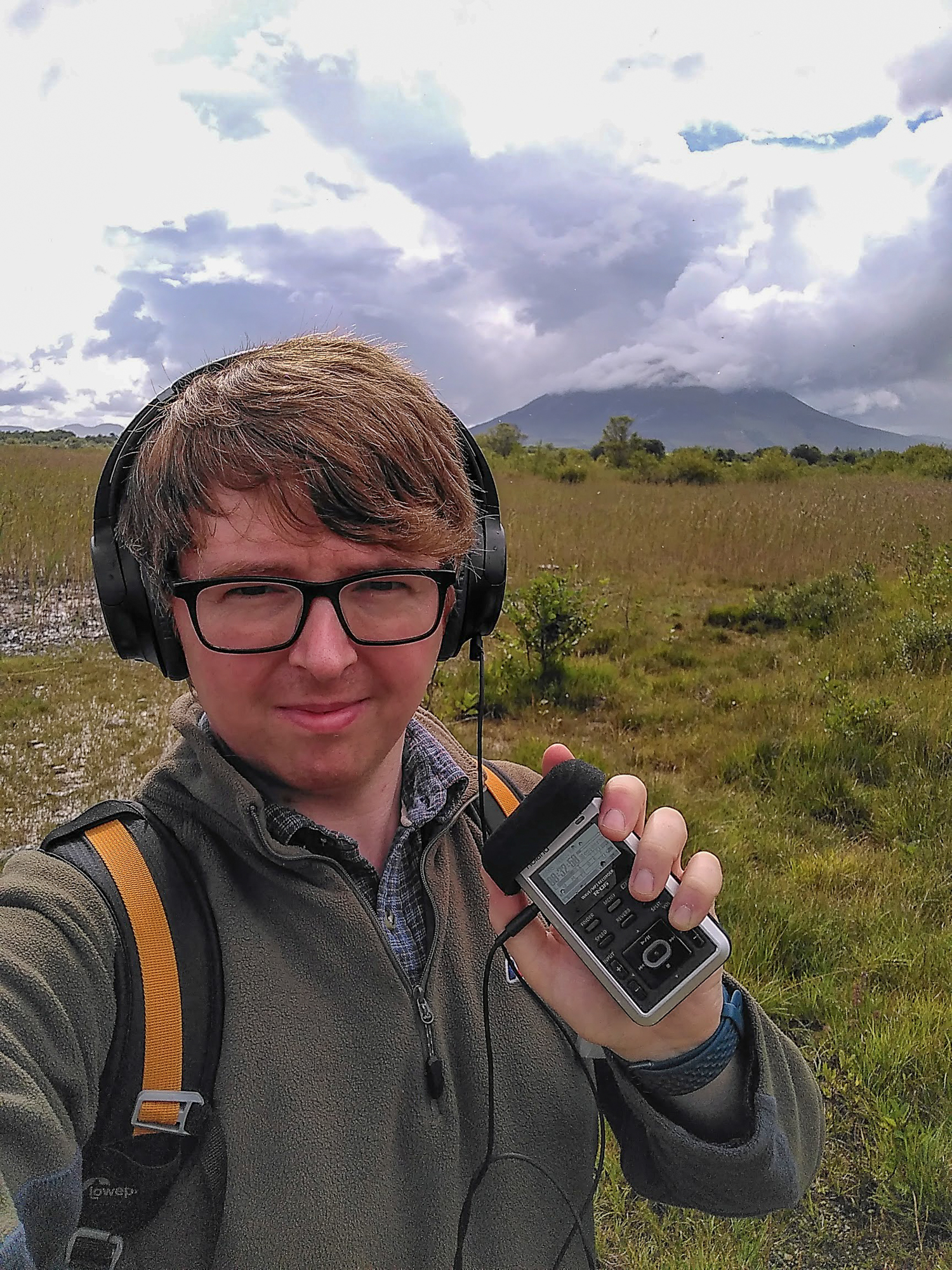
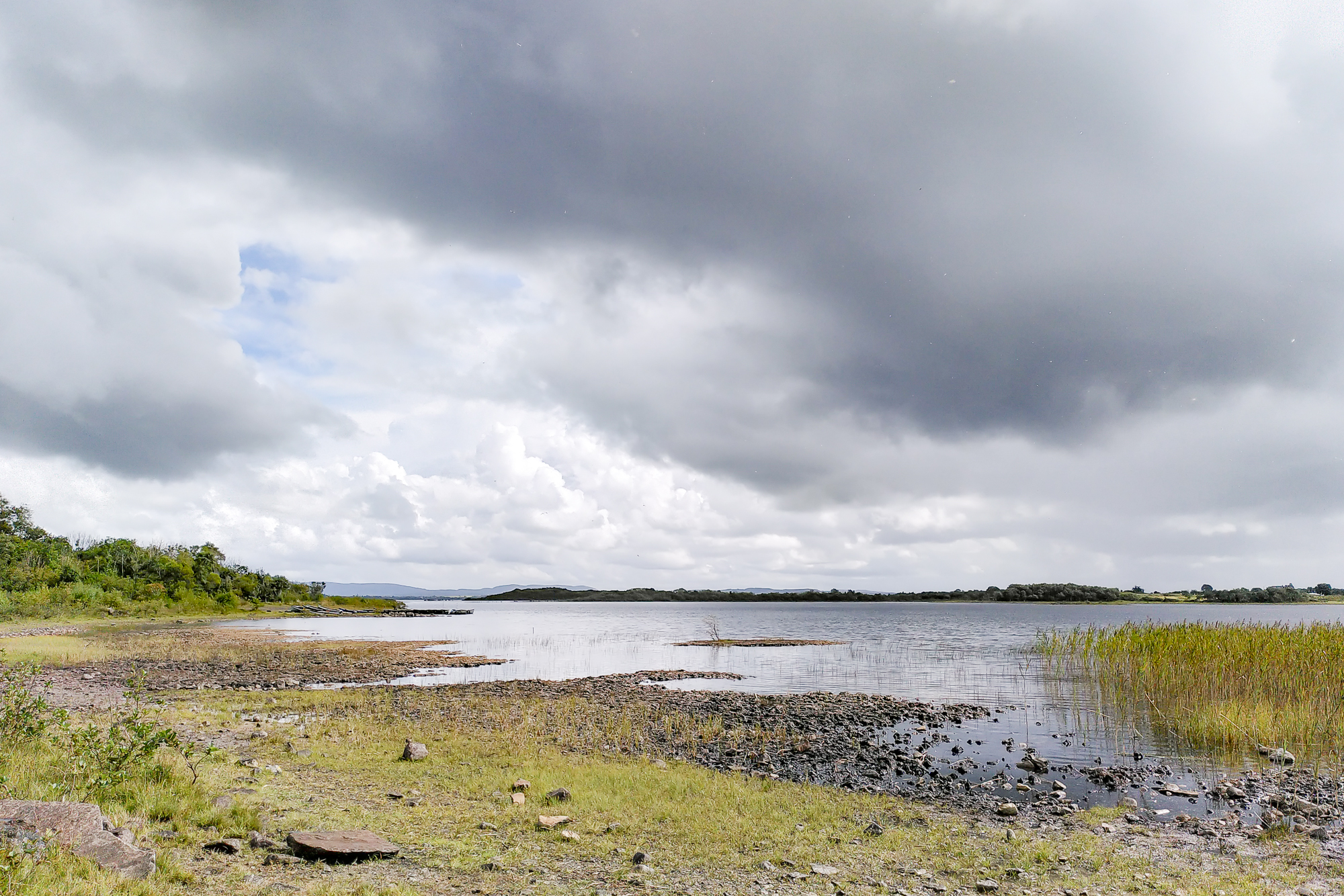
In September 2022 I had the privilege of walking through the woods of Enniscoe House in Co. Mayo, Ireland, to the shore of Lough Conn with Seán Lysaght. Seán is a poet and author who has taught me a great deal (through his books and poems) about the nature, landscape and heritage of County Mayo.
We cover a lot of ground and experience all the weathers, with Seán reading one of his poems at the close of the episode. It ends in dramatic fashion, with the rain sweeping in off Lough Conn and making further recording impossible.
This is fundamentally a conversation about woods and trees. We encounter a lot of different species which spur conversations about all kinds of things. We also discuss invasive species, bogs, Irish attitudes to nature conservation, and fit in a bit of wildflower identification on the shores of Lough Conn.

















 Unlocking Landscapes