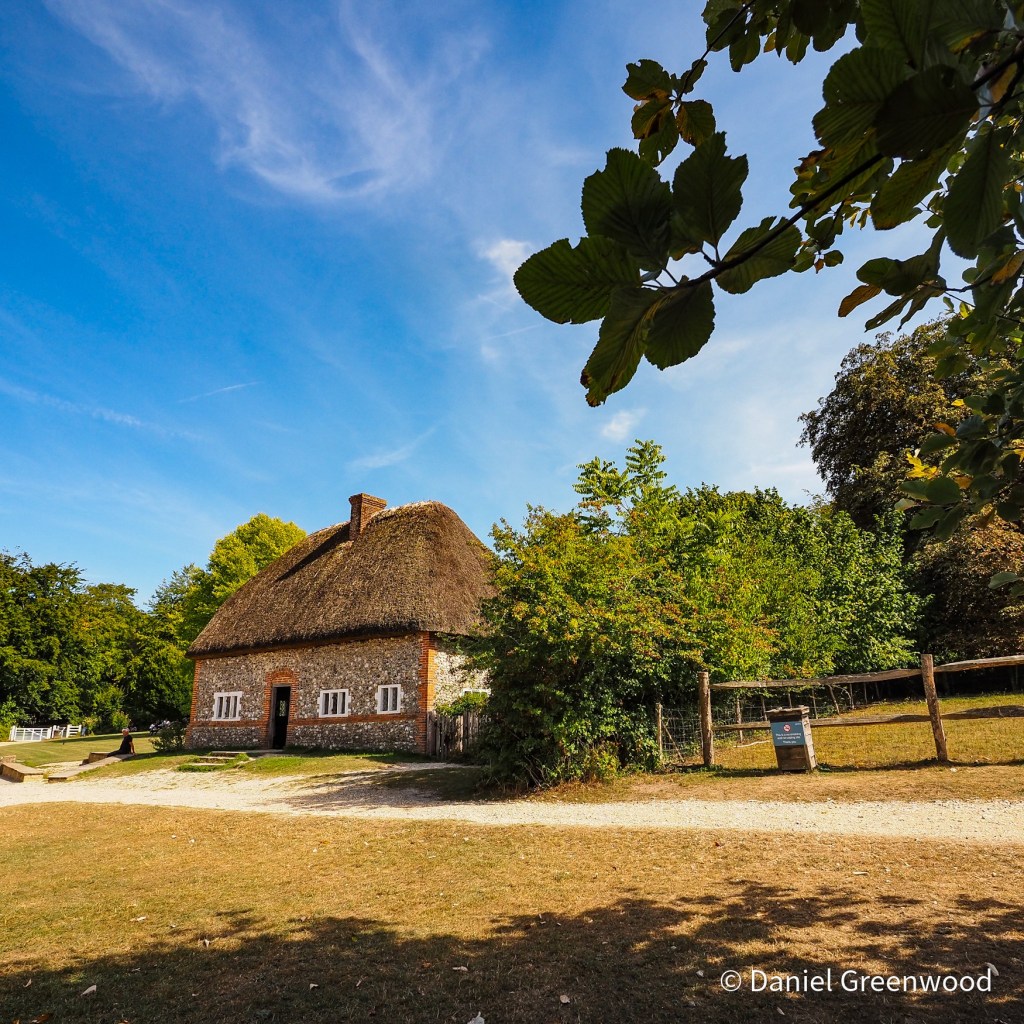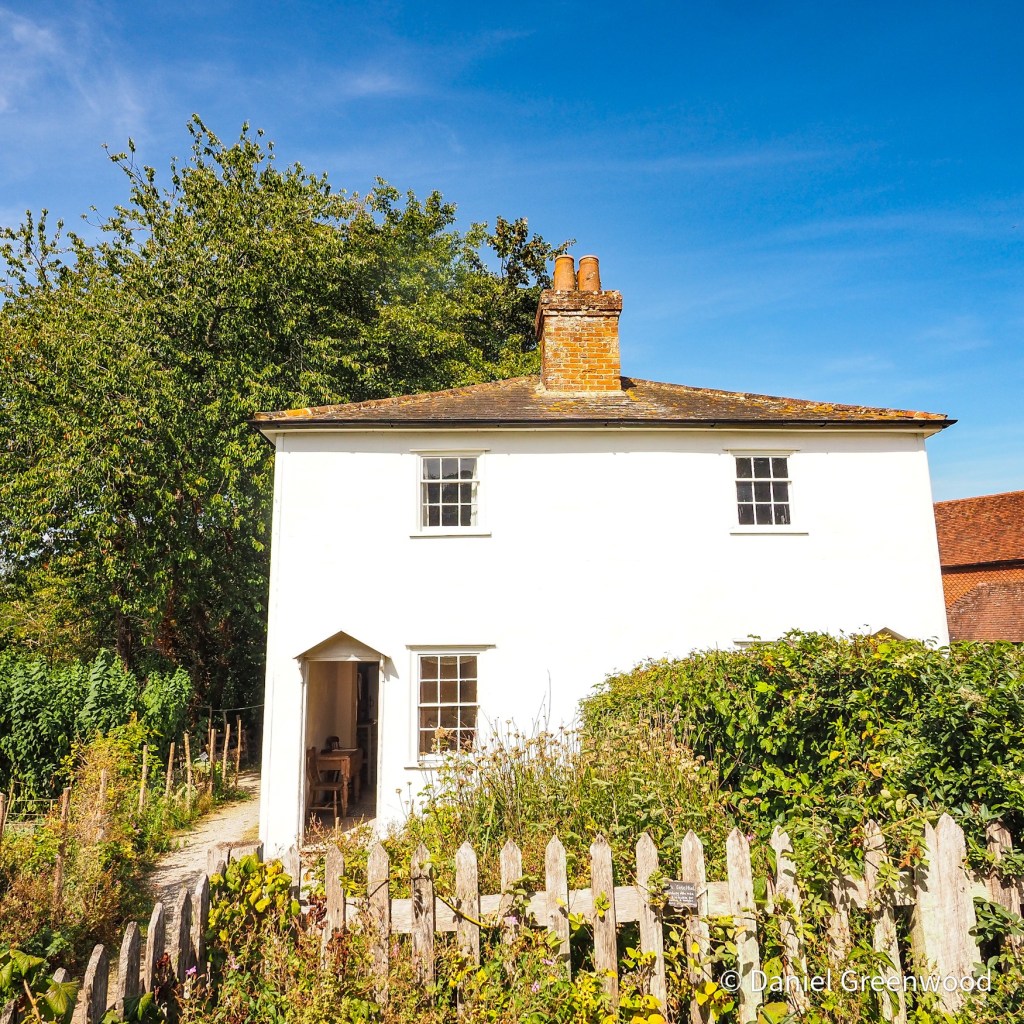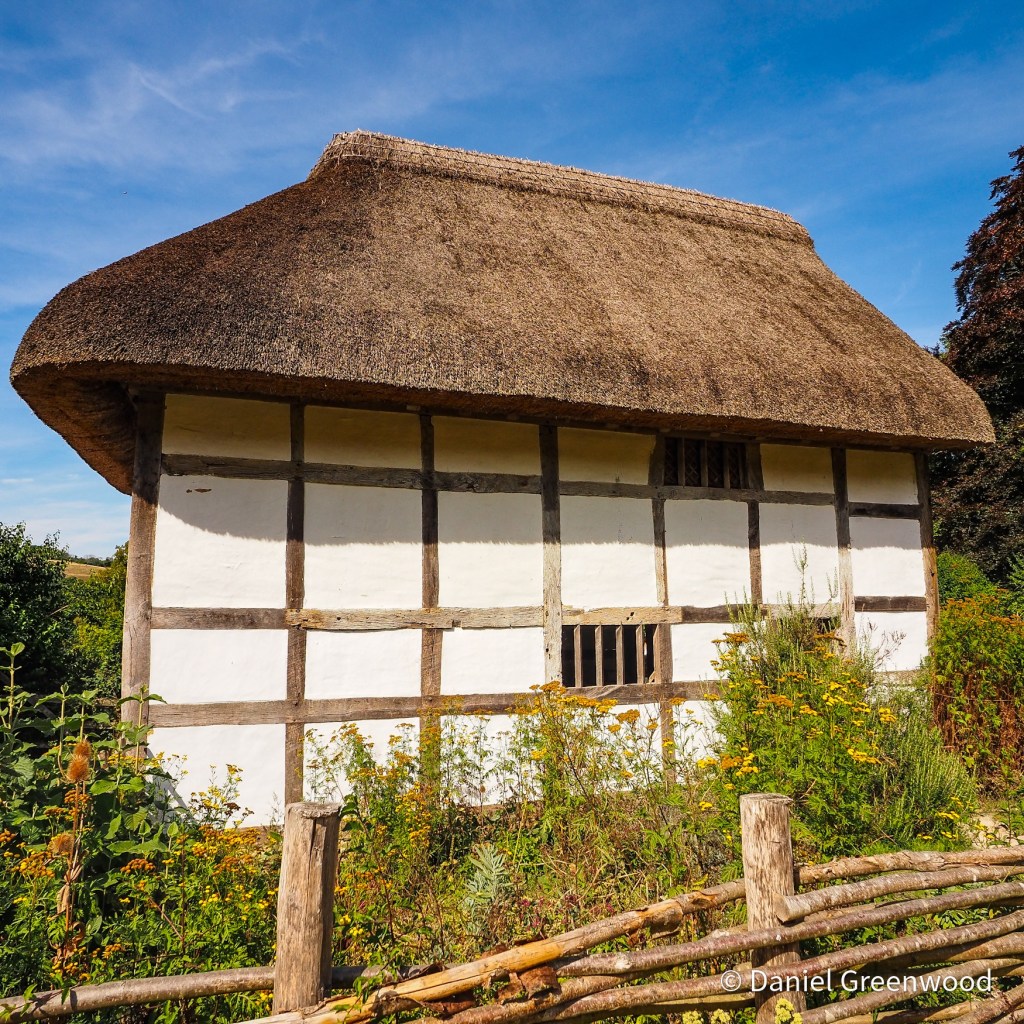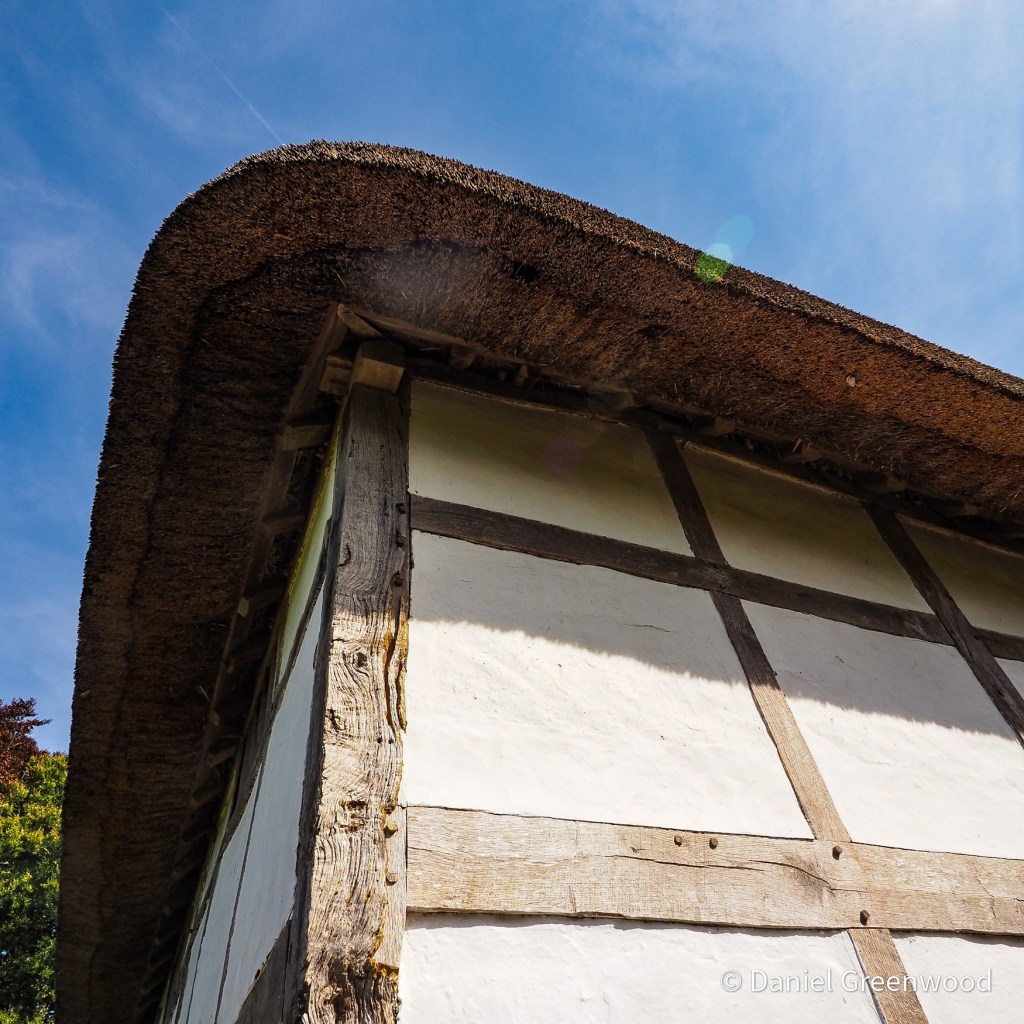
Salisbury’s oak timbers

Here’s another entry in my slow-blogging Oak Timbers series. You can view my galleries and posts archive here.

I visited Salisbury in Wiltshire (south-west England) for the first time in 2023 and was really charmed by the place. If you’re interested in this kind of thing, Salisbury is the place for you. Here’s a gallery of the timber-framed buildings that interested me the most.

Photos are with my Olympus EM-5 MIII and 12-45mm f4 lens.

Like the good lad that I am, I’ve linked to the Historic England listing for each building where possible.

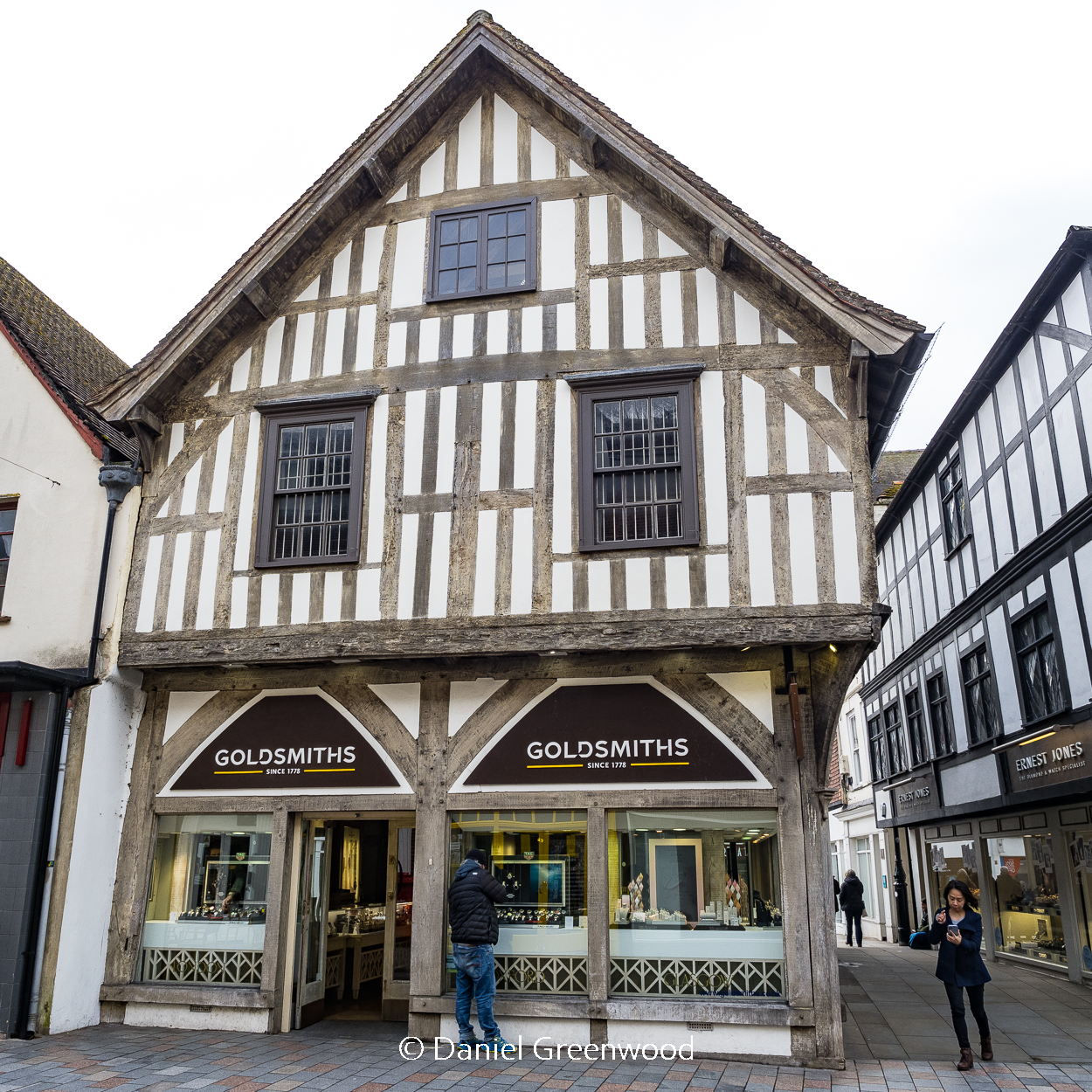
8, Queens Street (15th century). The timber-framed heritage of Salisbury is blended with the modern consumer outlets. I suppose this is just free advertising for them!

51 Marketplace/Blue Boar Row. This was a large market-hall style timber-framer. I wonder if the lower floor was actually open once upon a time and held an agricultural purpose.

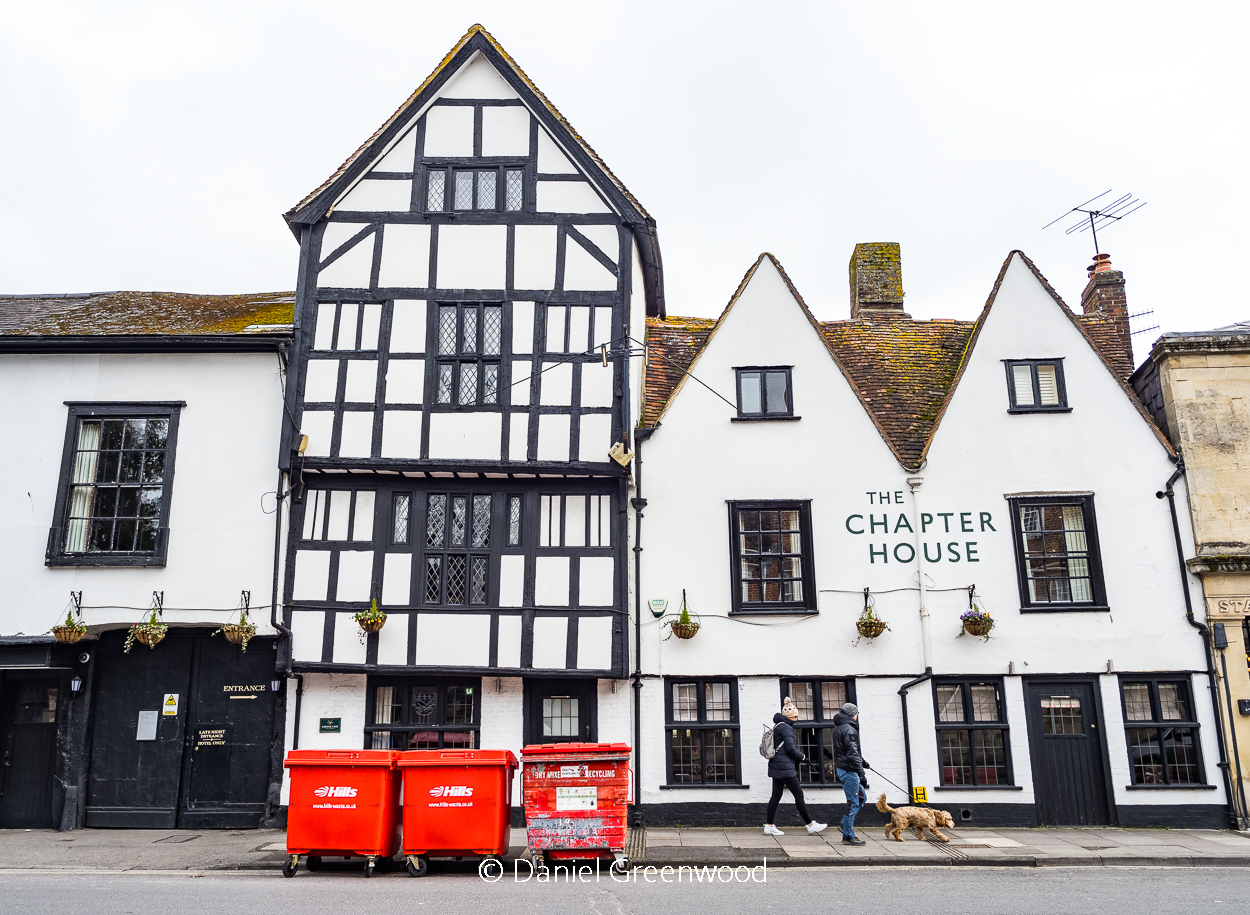
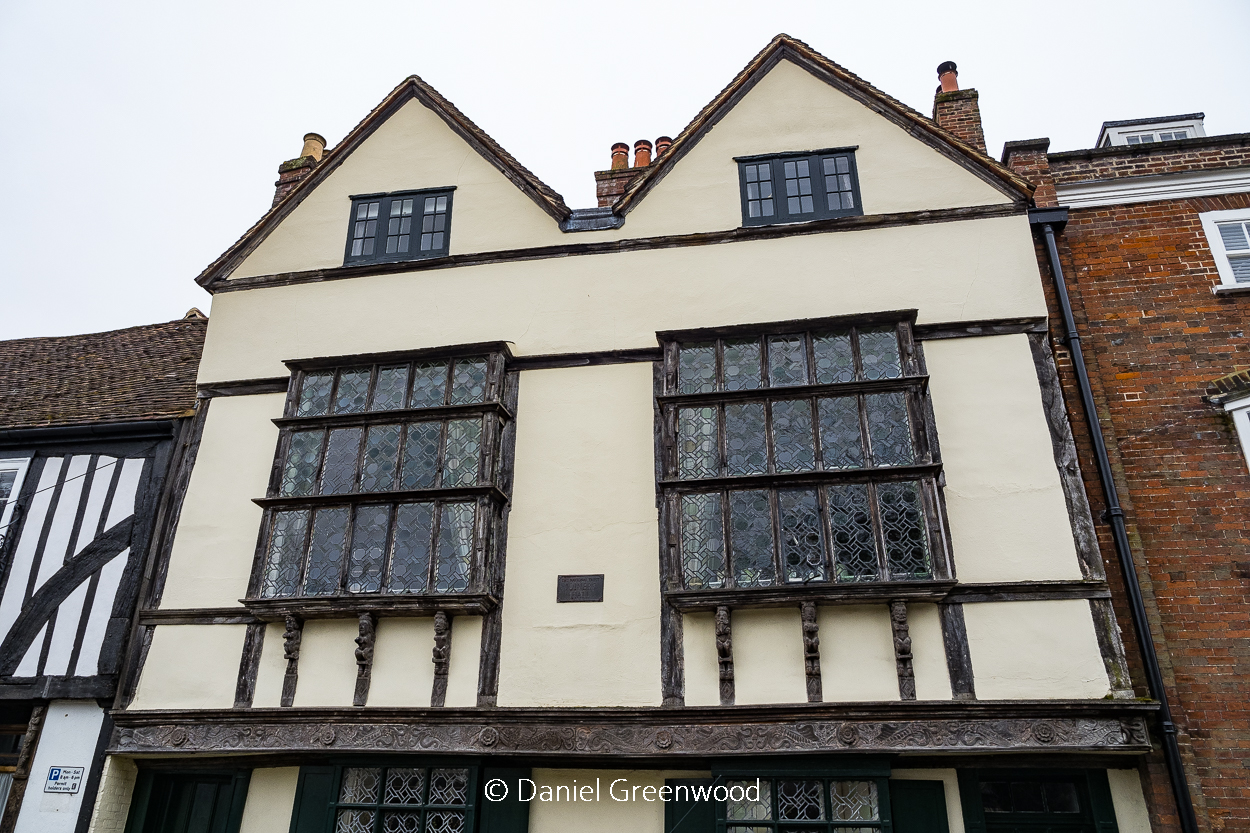
The Chapter House. This was an interesting blend of styles, with the large four-storey house stuck between two different styles. Those steep gables are perhaps quite uncommon in England, looking more like what you might find in Germany, Holland or Belgium. Just a thought.

The Cloisters. These curved timbers are lovely, as is the undulating spine of the roof. The building dates to the 1500s.

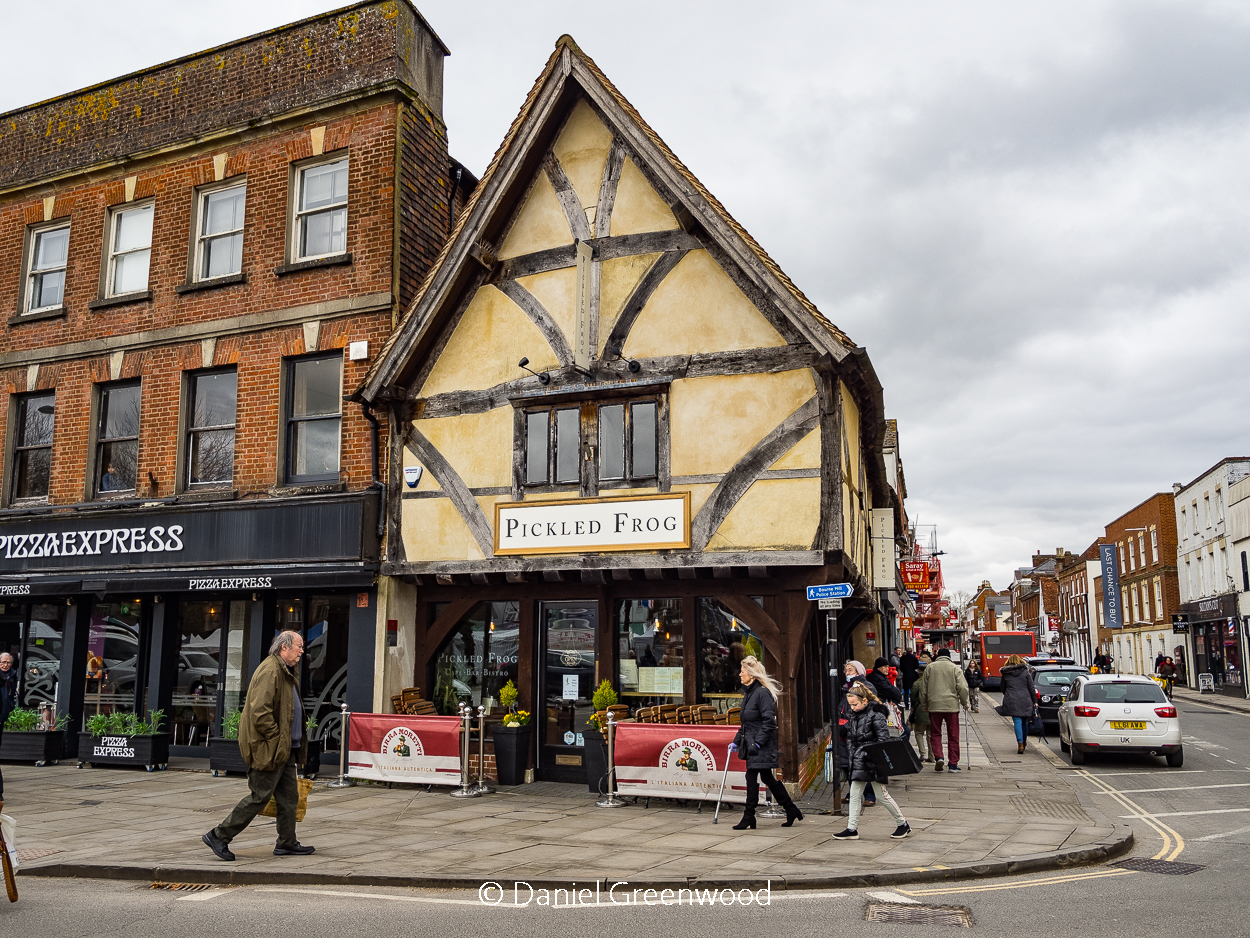
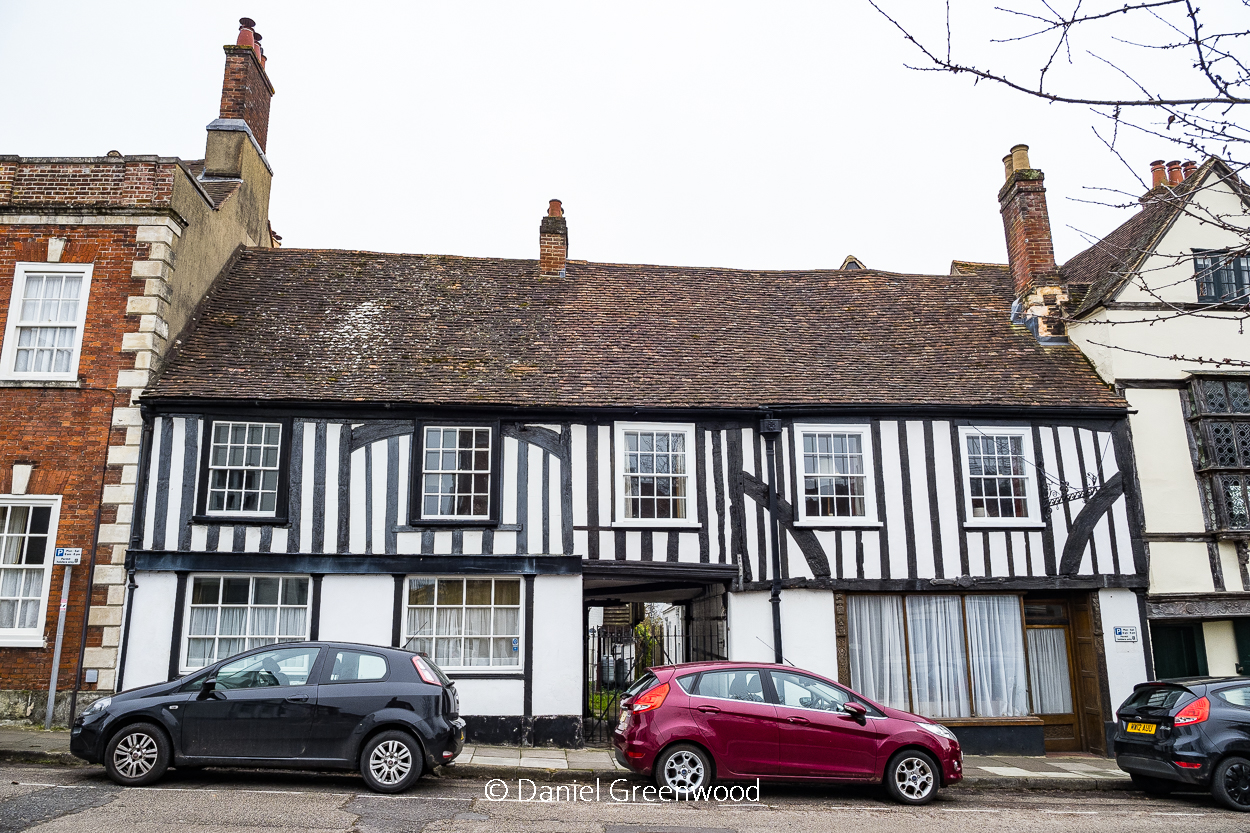
52 and 54 High Street, 1300s! An ‘Italian’ restaurant with one of the most higgledy-piggledy timber-frames in Salisbury. There has been quite a lot of movement upstairs. I wish more buildings had this much character, but that comes with age and flexibility.

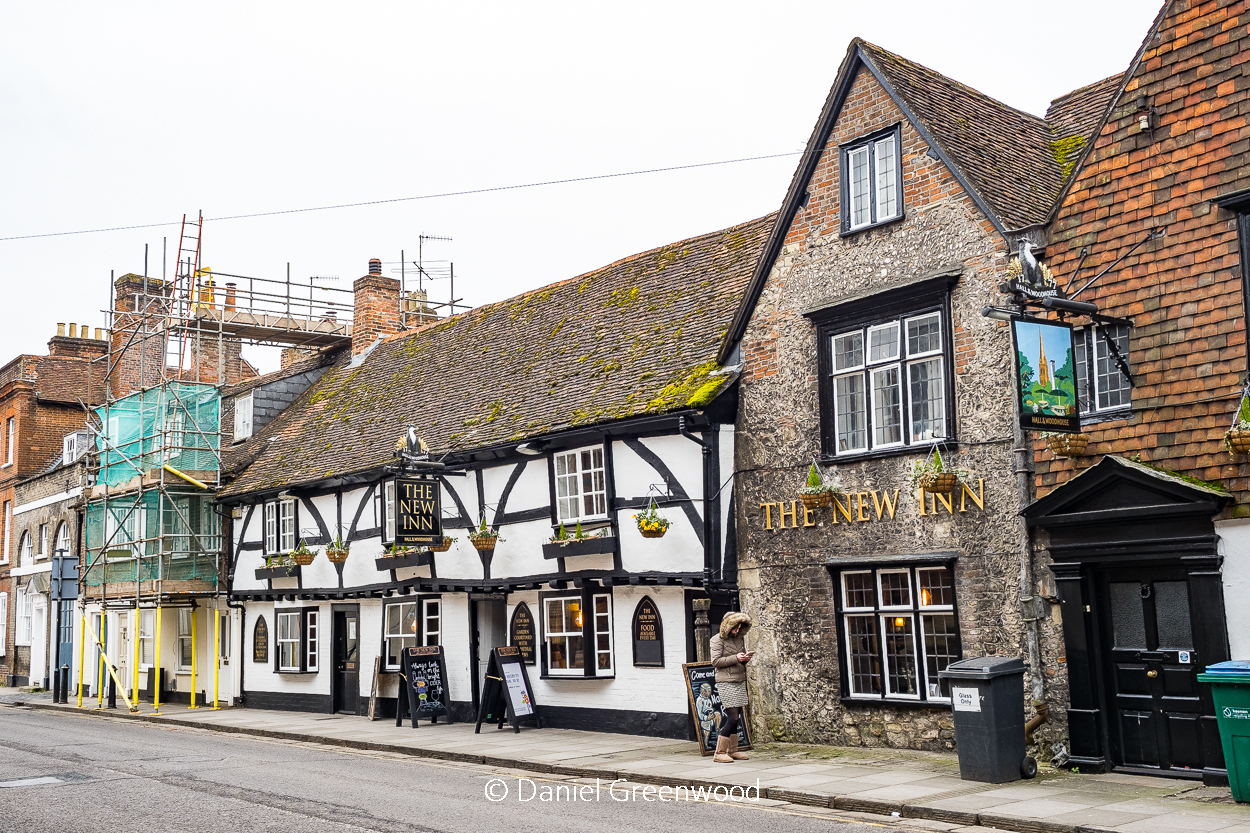
The New Inn. I like including people (without identifying features) in these photos as it brings them to life a bit more. I wonder what was on her mind, maybe just checking the football scores (it was a Saturday afternoon).

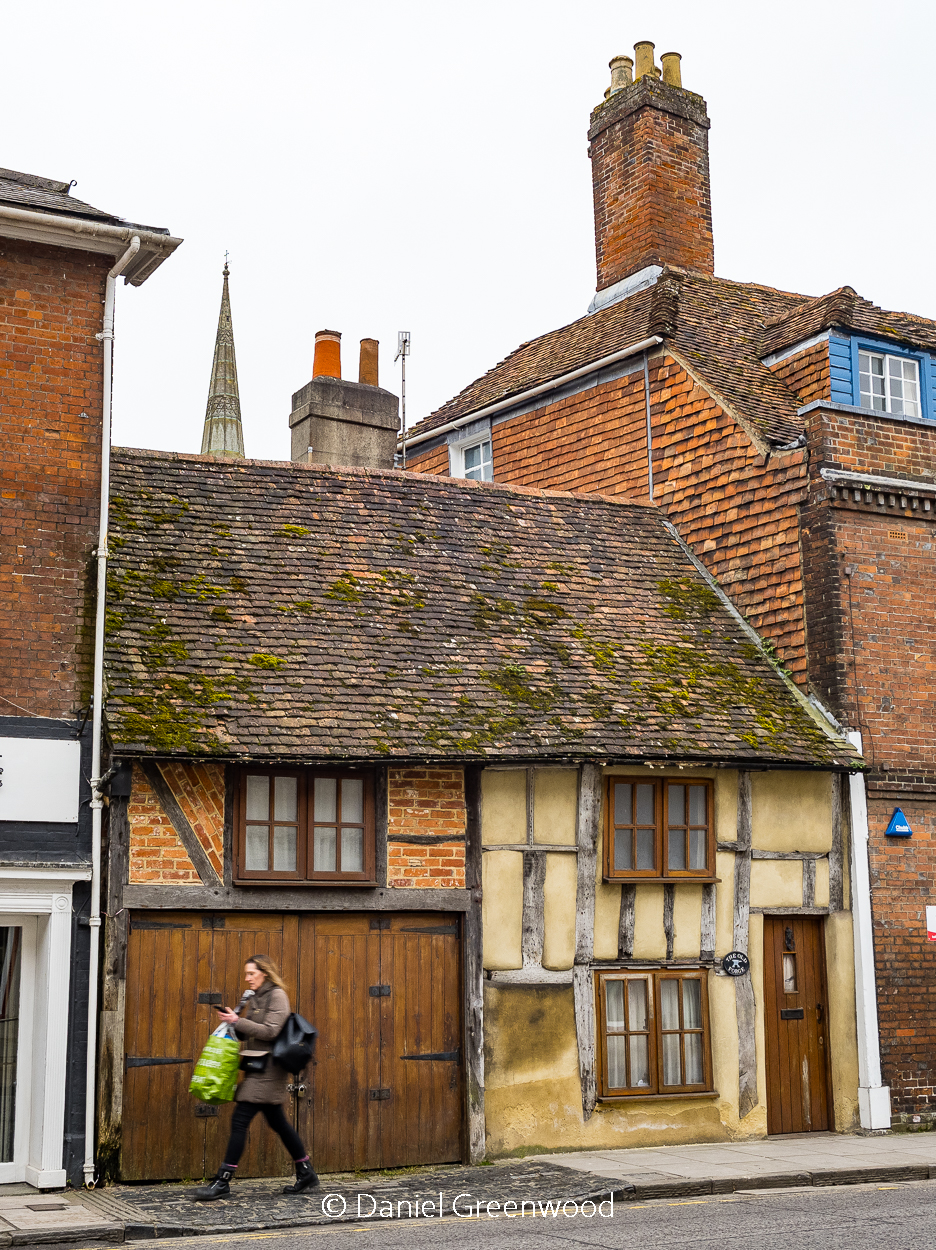
The Old Forge – with the spire of Salisbury Cathedral in the background. There’s oak in that, too.

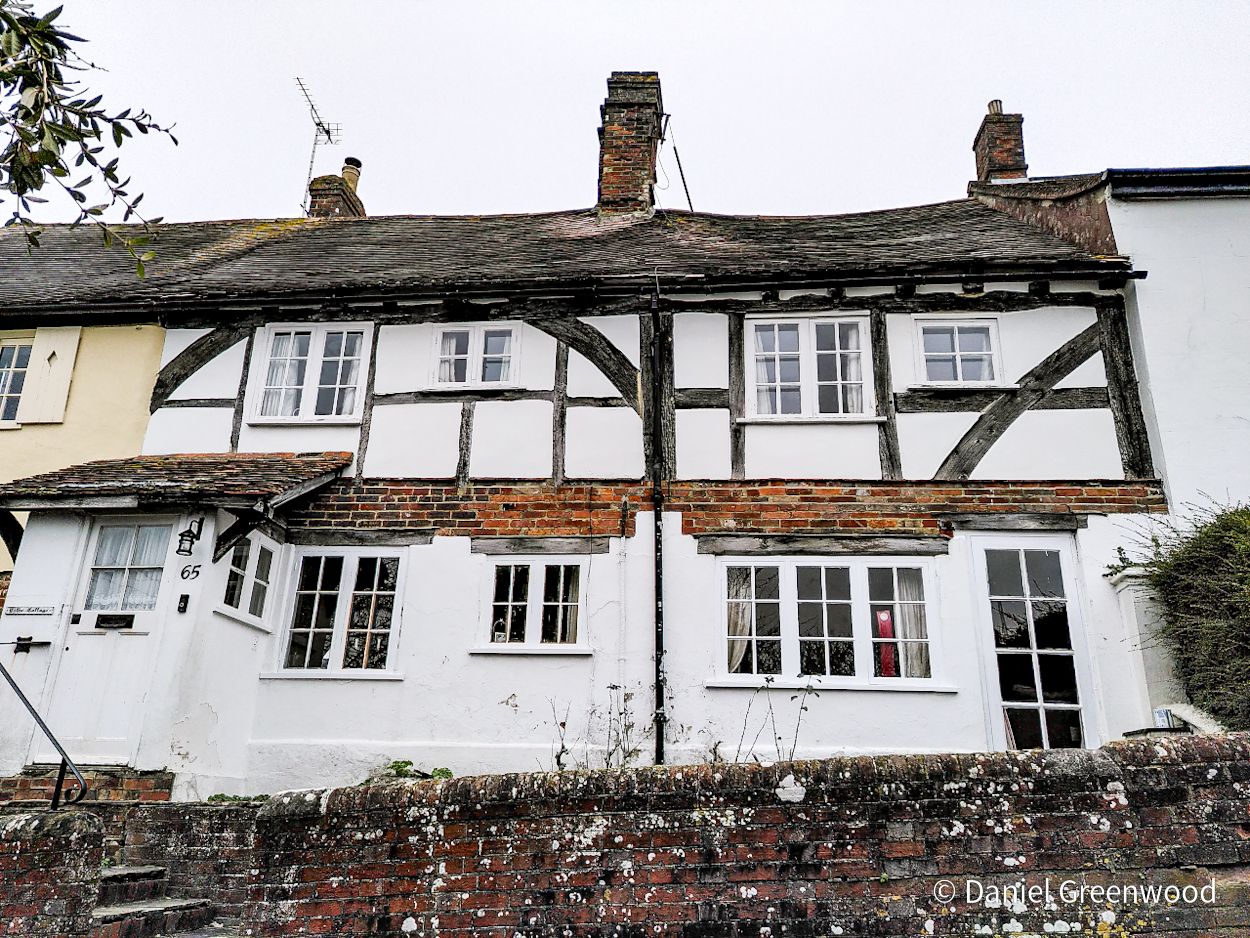
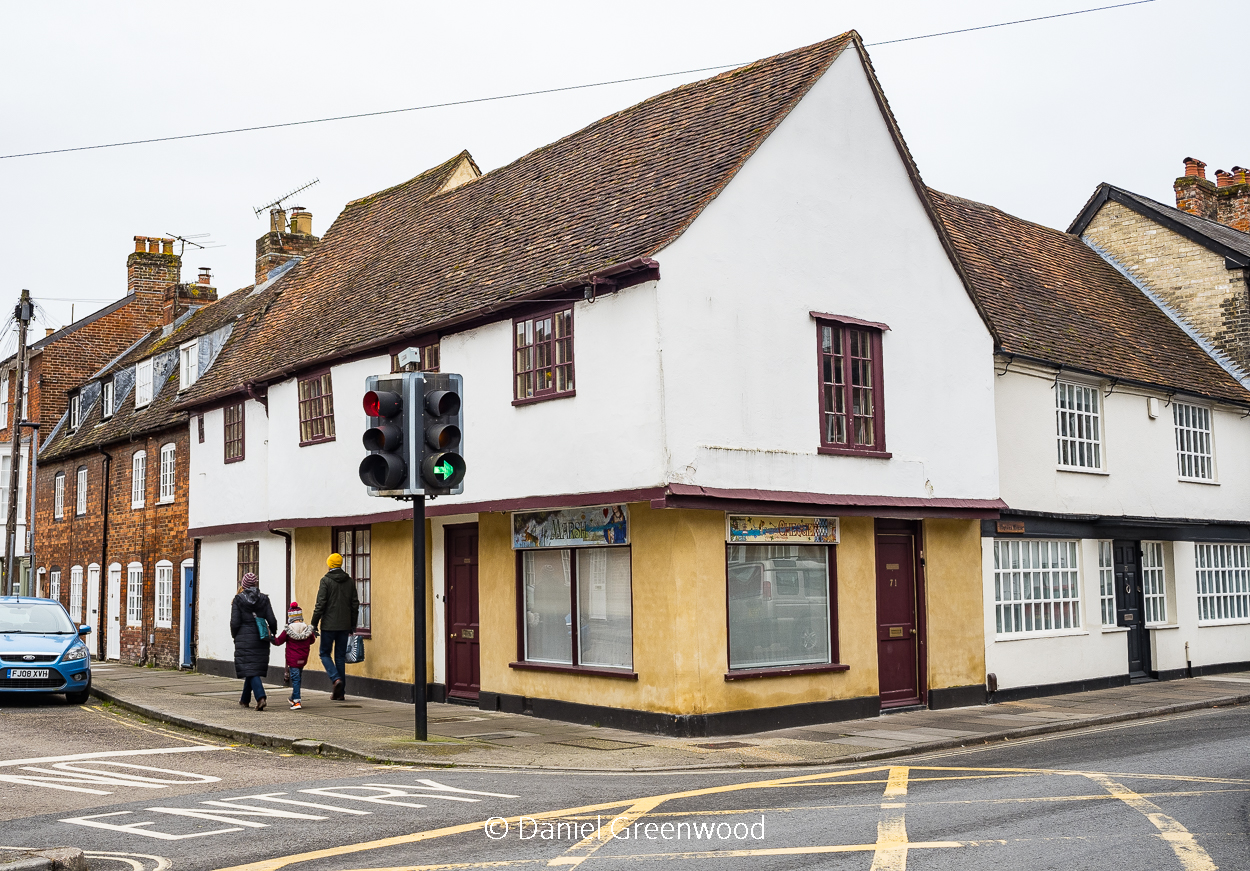
Brown Street. Difficult to photograph, but this is an old house with the timbers well hidden behind plaster or whatever’s on it.

This one had been bought and redone, it didn’t seem to have quite the same character as some of the other timber-framers. The struts (curved beams on the middle level) are quite varied. Not how different most of the windows are.

Joiners Hall is a National Trust property built in the 1600s. The carvings on the woodwork are some of the most intricate and beautiful I saw in Salisbury. As ever, the figures are weird.

33 Butcher Row. Quite neat and tidy-timbers here but dating to the 1400s.

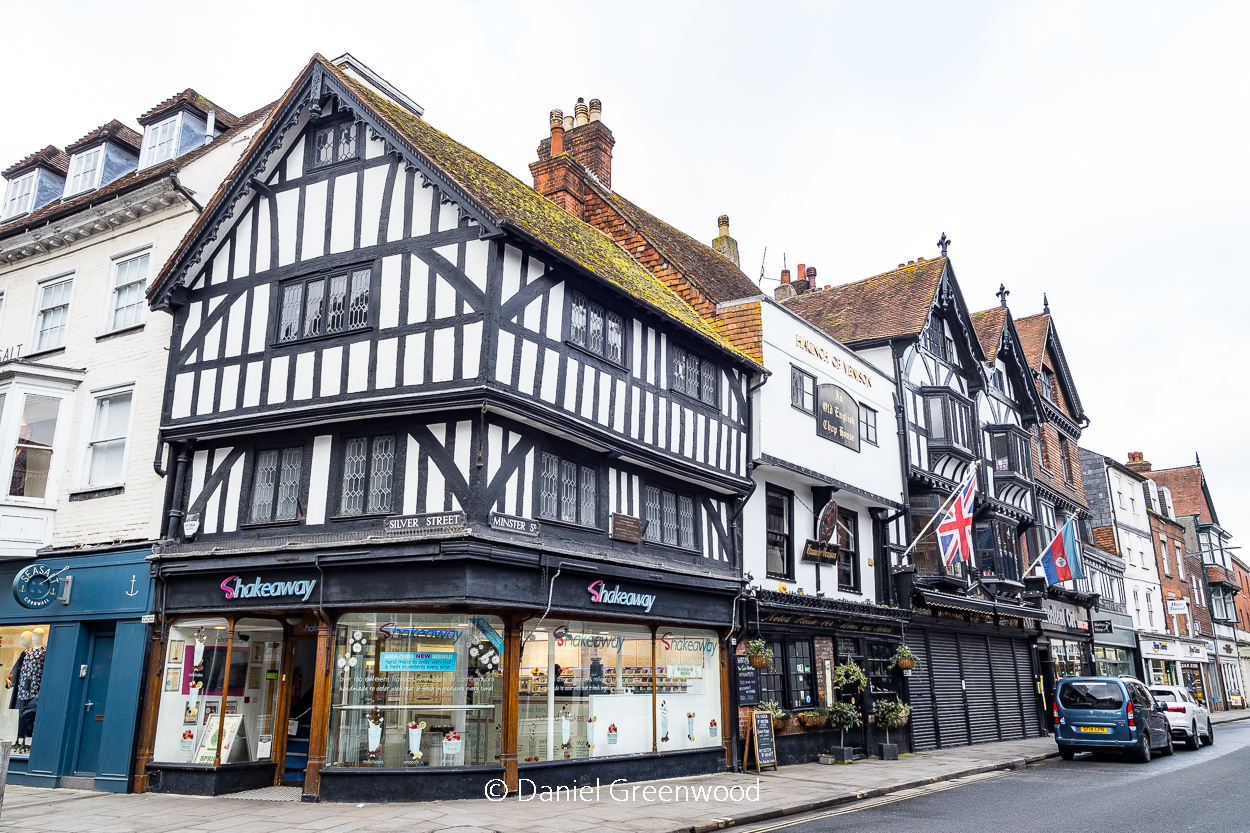
Haunch of Venison, Minster Street. This is an incredible place. I didn’t get great pictures of the interior as my phone camera wasn’t quite up to it, but it was very wonky inside which is good. According to the pub it dates back 700 years to the 1320s.

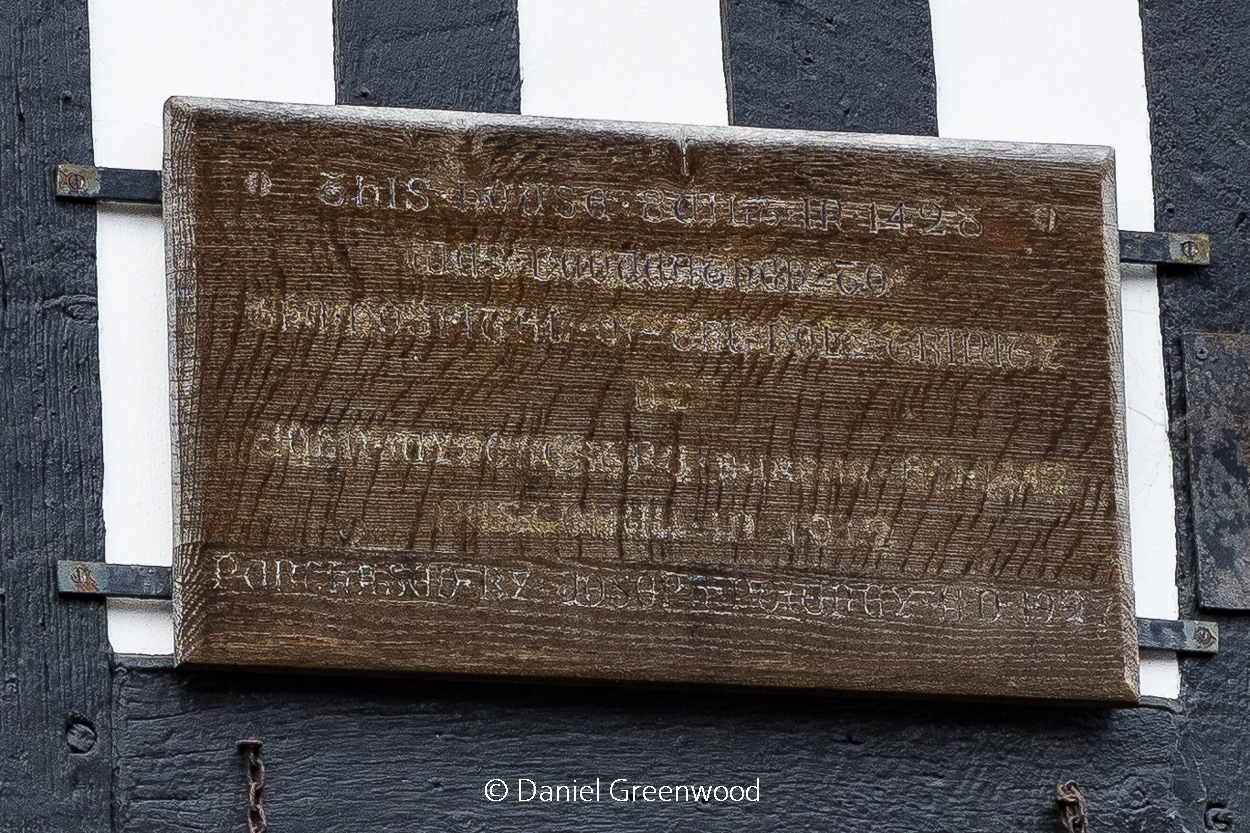
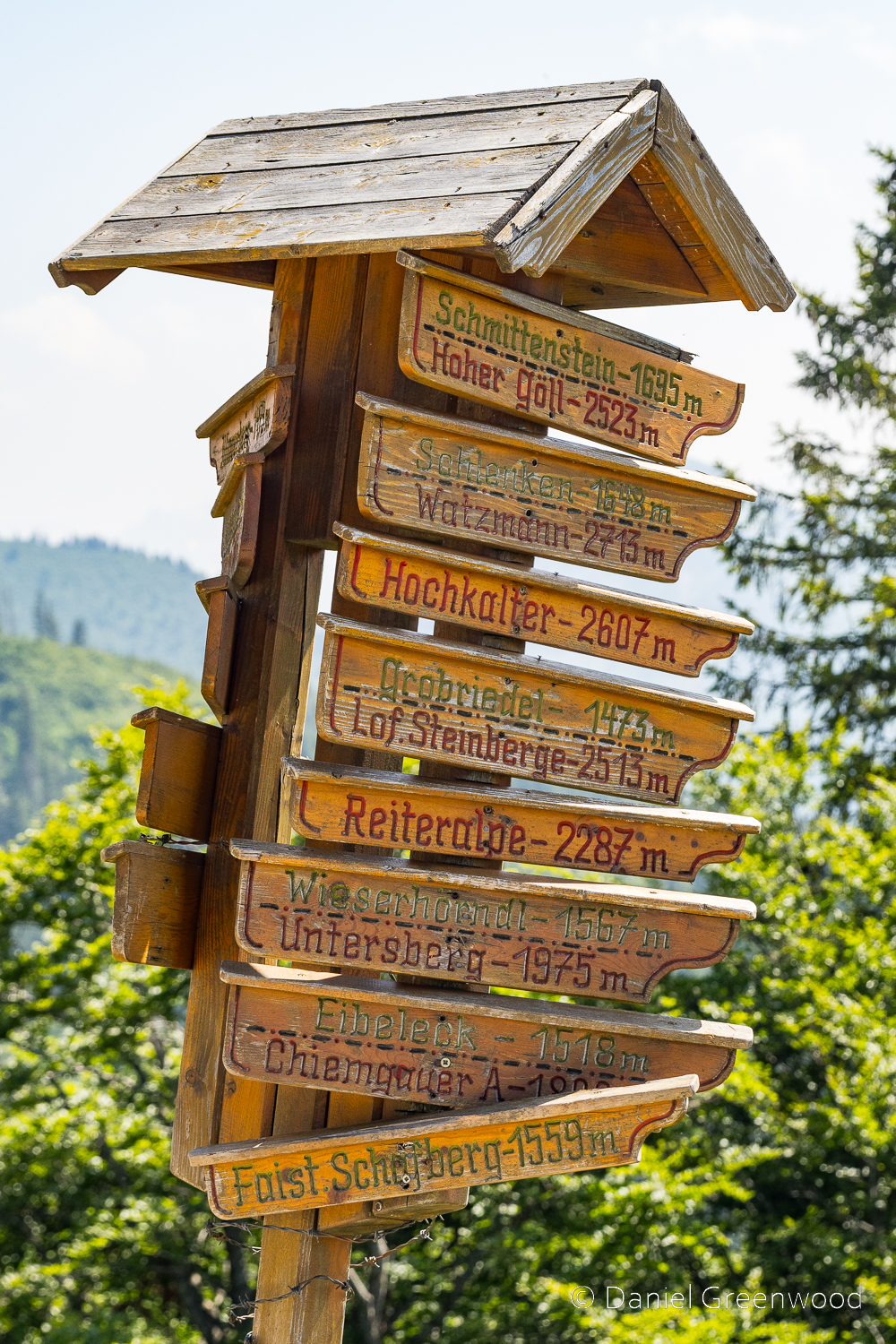
There’s a wooden sign on the pub but it’s difficult to read. I can make out: “This house built 1428.” Bottom line says ‘purchased by — 1927’.

Thanks for reading.
Oak timbers gallery

Austrian Alps: Innsbruck by sleeper train

Innsbruck, Tyrol, Austria, June 2025

This is a longer post of the images I captured during a recent visit to Innsbruck in the Austrian Alps. We travelled to Innsbruck on a sleeper train from Amsterdam. It’s such a great experience and is significantly lower in carbon emissions compared with flying. If you consider the fact it’s travel and accommodation, as well as the ability to see so much more, it’s a better way to travel. We set off from London on the Friday morning, on an 11am train to Amsterdam, and by 19:00 we were on the sleeper and heading south-east towards Germany.

All that said, we booked a sleeper train from Brussels to Vienna on our honeymoon in 2024 and the train didn’t show up! So travelling by train needs flexibility and patience. I still think it’s worth it, for you as well as the climate.

The photos here are taken with my Olympus EM-1 MIII and TG-6 compact cameras, edited in Lightroom.

In Innsbruck

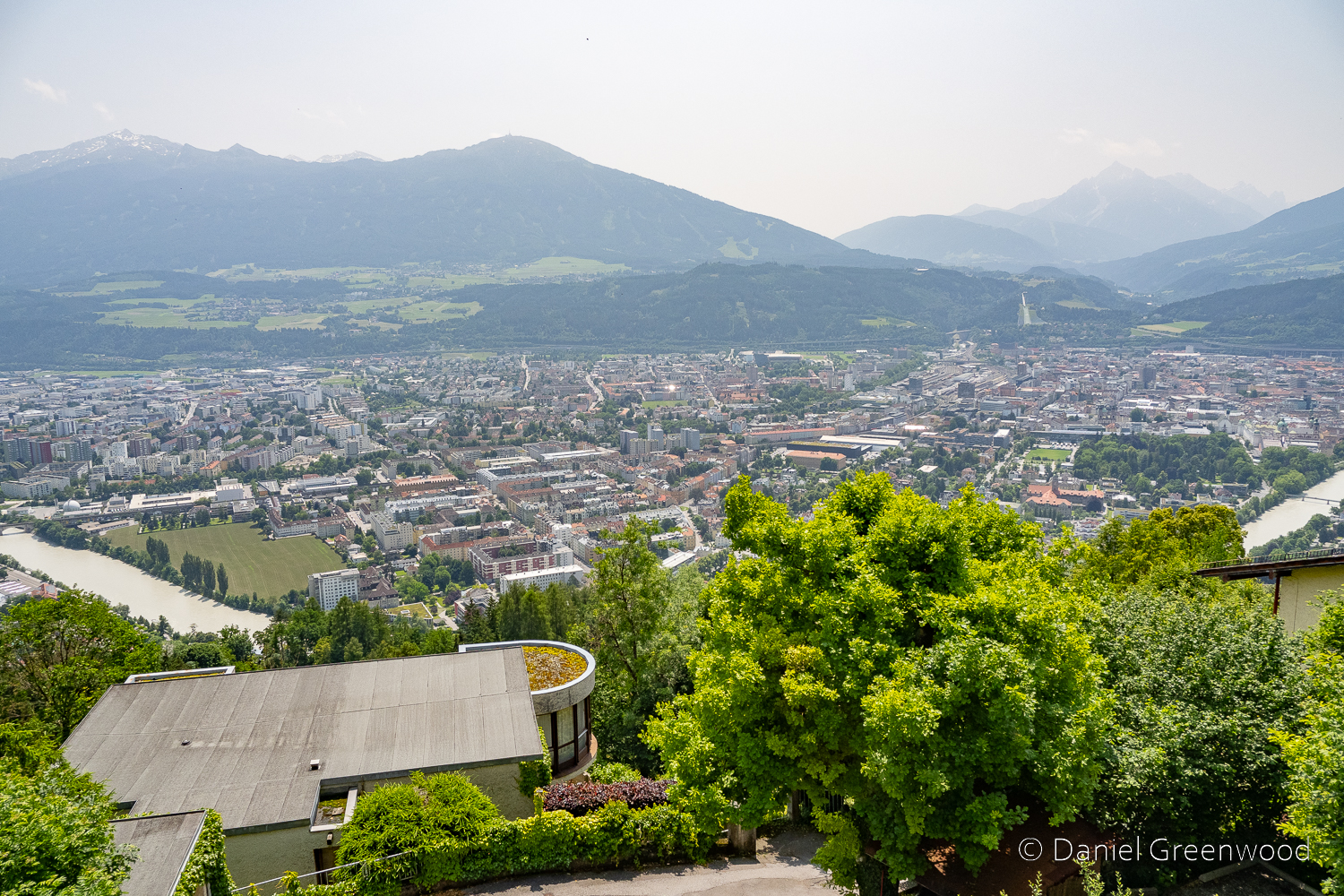
According to my Lonely Planet guide to Austria, Innsbruck was founded in the 1100s. The name basically means ‘bridge over the River Inn’, which splits the north from the south of the city. It’s an epic river, which was in full flow when we visited, probably bolstered by glacial melt from the surrounding mountains.

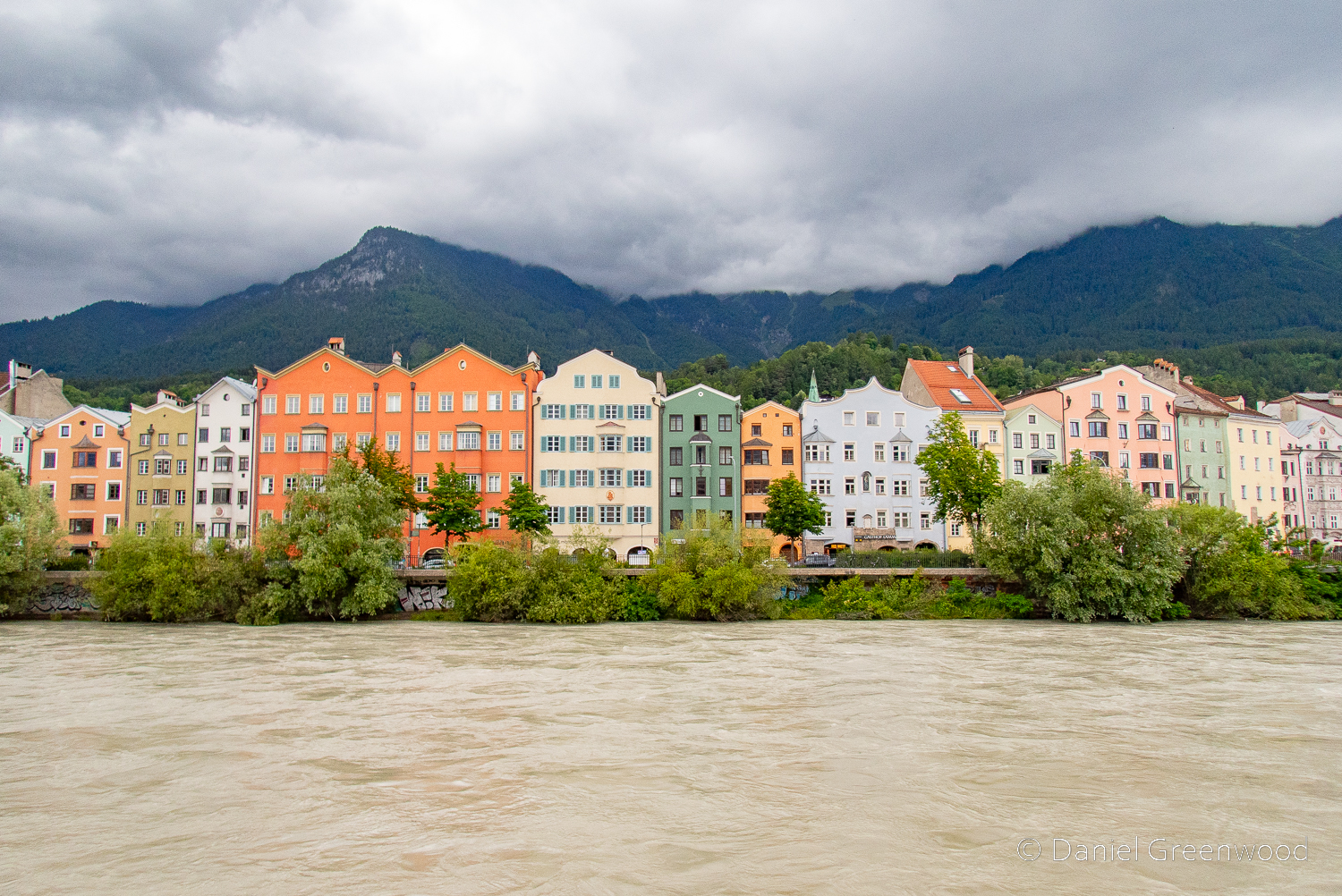
The colourful apartment buildings on the north side of the Inn (seen here at the bottom of the frame) are a sight to behold from the banks of the south side. It’s hard to appreciate how difficult it would been to build a bridge over a river of this size and power once upon a time. No wonder that when they did manage it, the whole place was named after it!

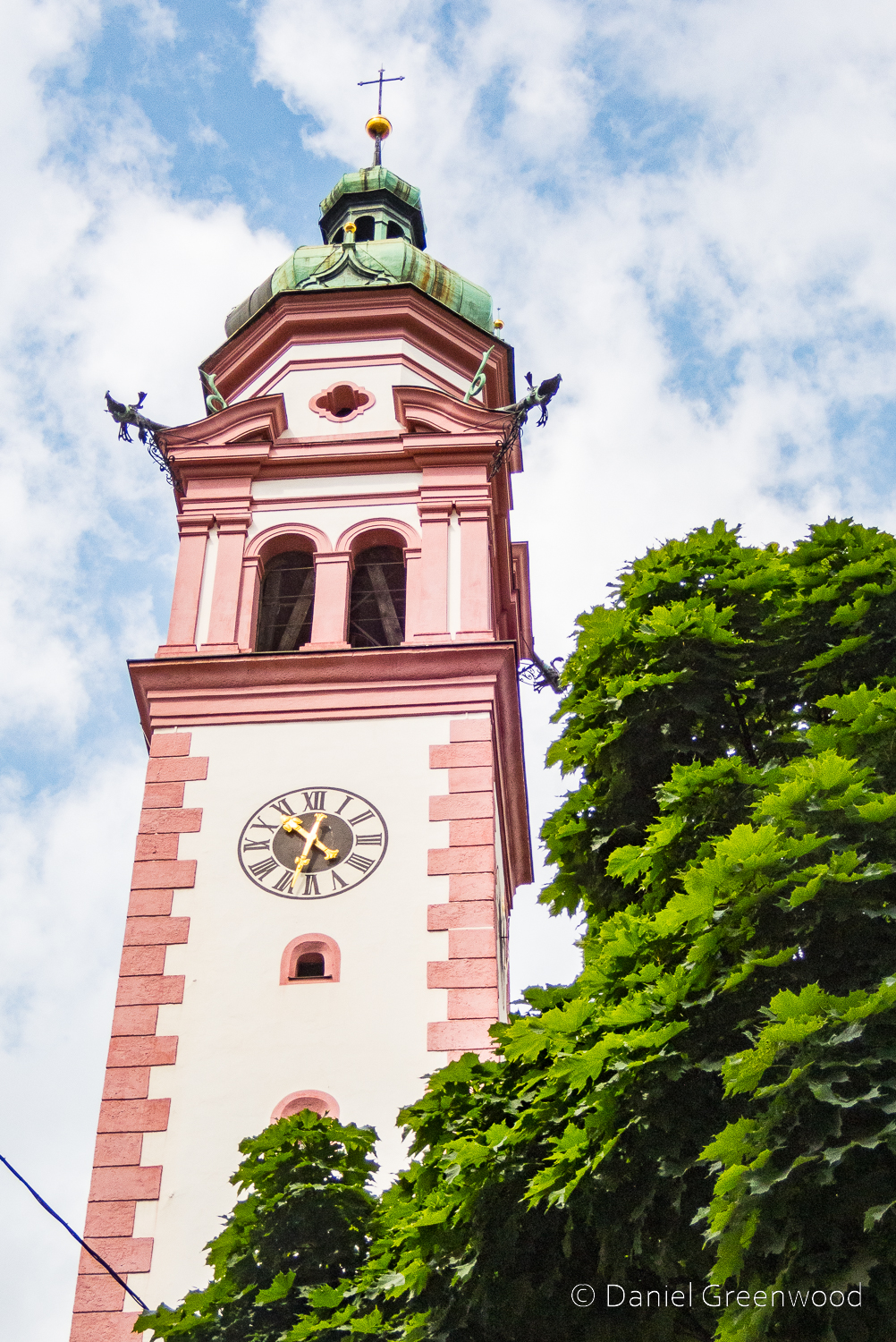
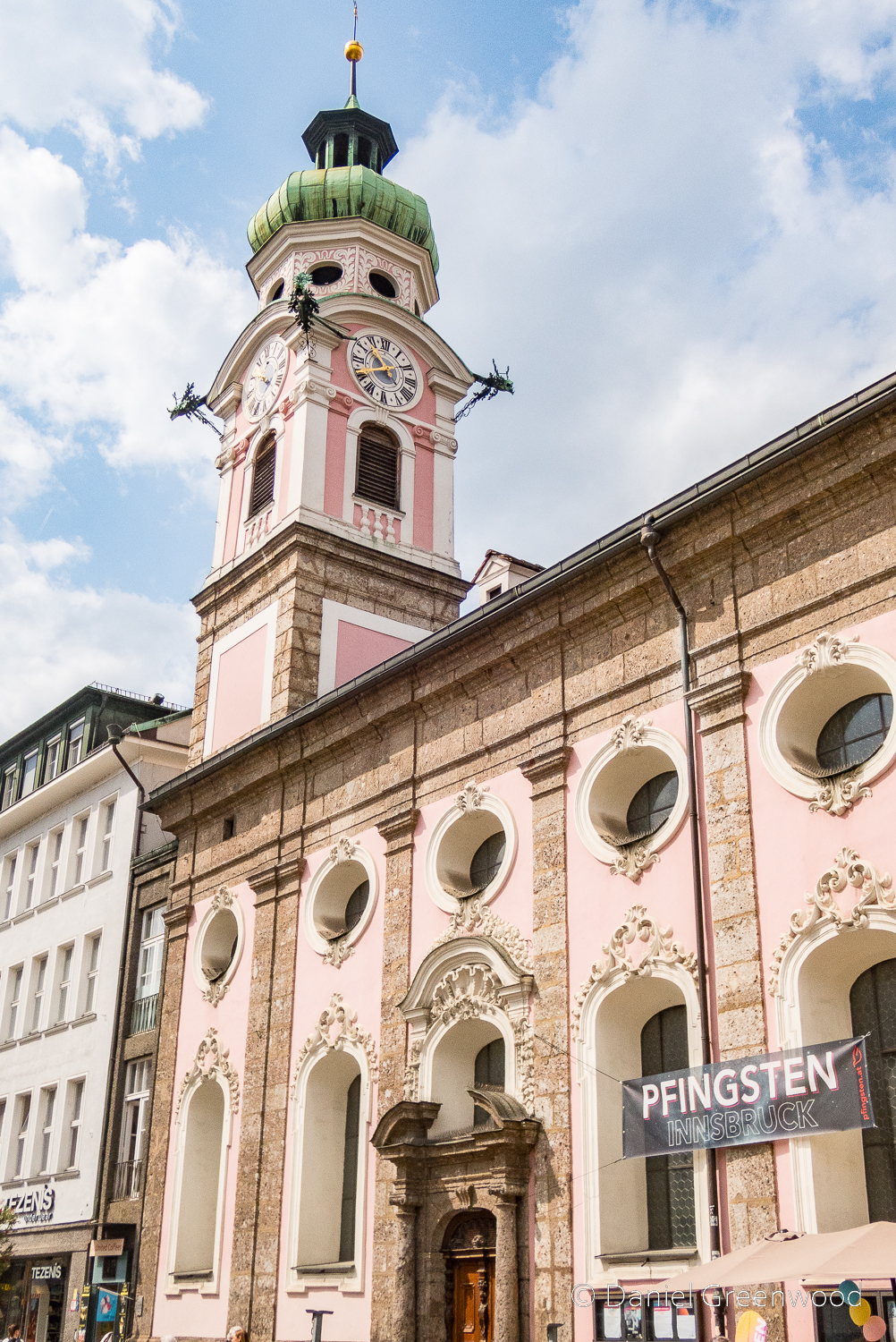
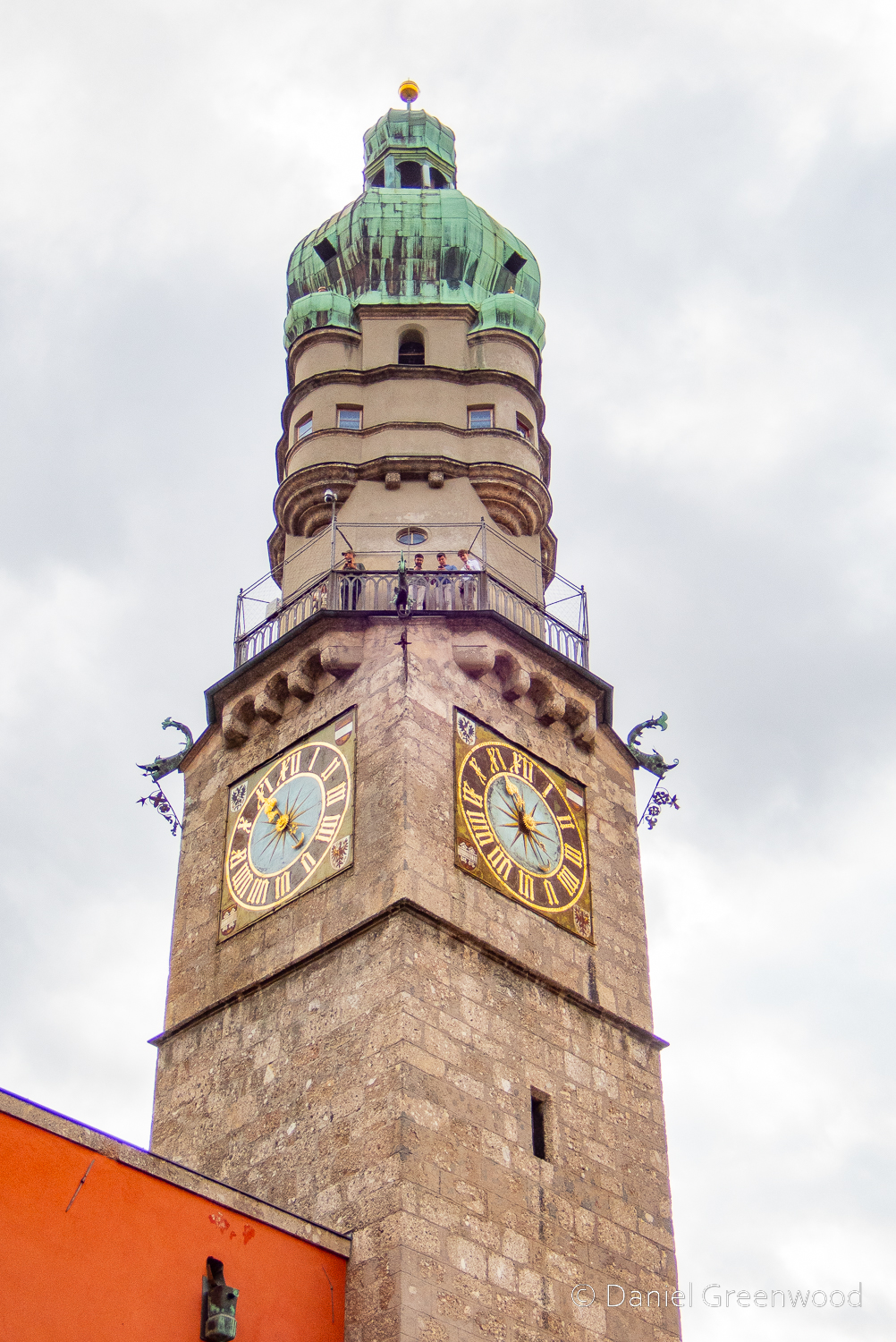
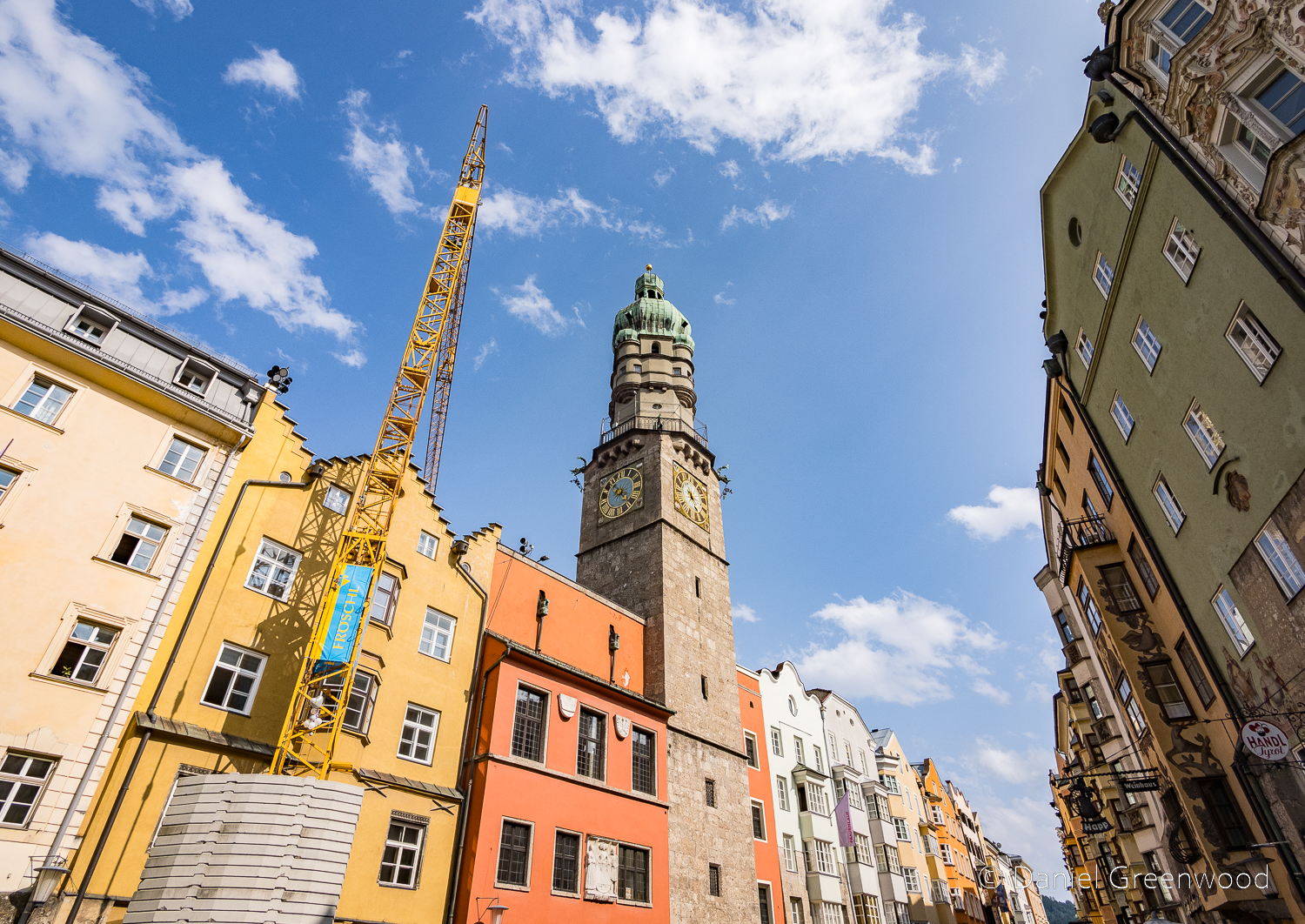
Innsbruck is a city of towers and spires. I don’t know how many were destroyed in the Second World War. As in Salzburg, I’m sure many were rebuilt. The tower seen in the last of the images above can be ascended for a small entry fee via a pair of spiral staircases. I have issues with heights, and I found this quite difficult. I was a bit ill at the time so that probably made it worse. The views from the tower are of course worth it if you can cope with the ascent.

These metal workings were prevalent in the Aldstadt. They’re nice to photograph, particularly against cloud where their colours come to life. I don’t know anything about them, but they seem to be an Austrian thing, and date back several hundred years.

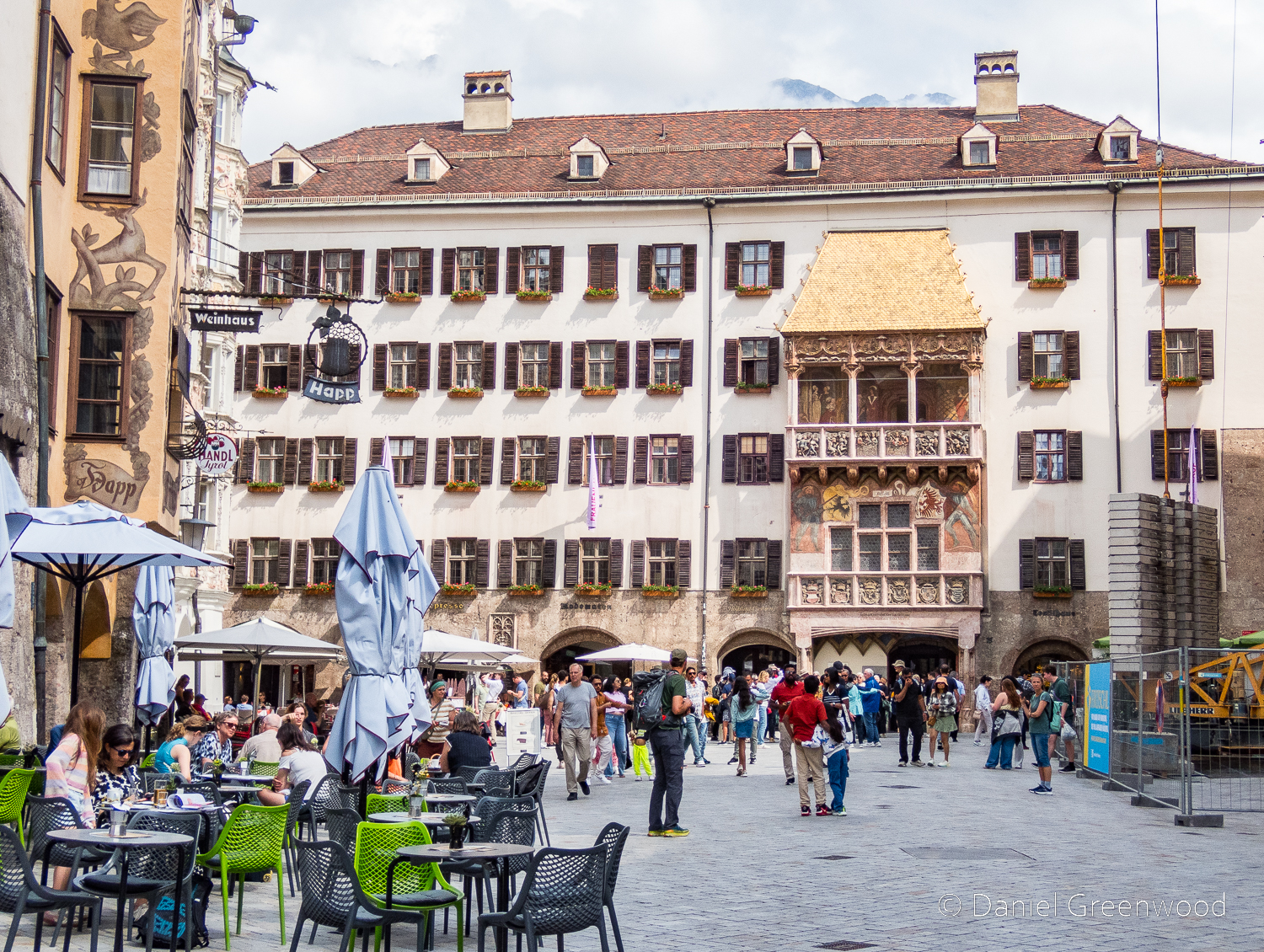
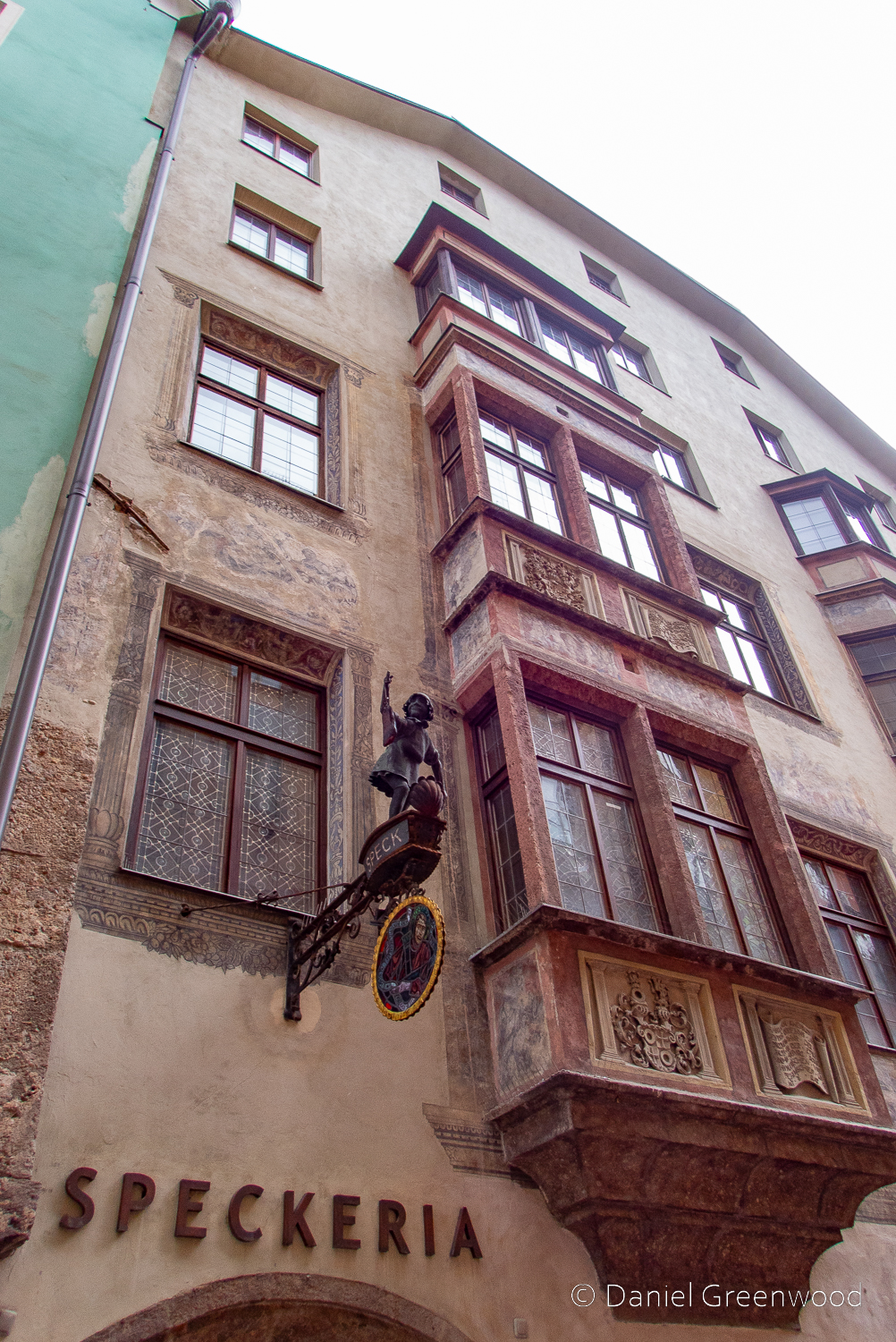
The ‘Golden Roof’ (Goldenes Dachl) was the main draw for tourists (I had read about it but wasn’t thinking of it when we found it). It was created in 1500 and was used by Habsburg royalty to purvey the scenes below.

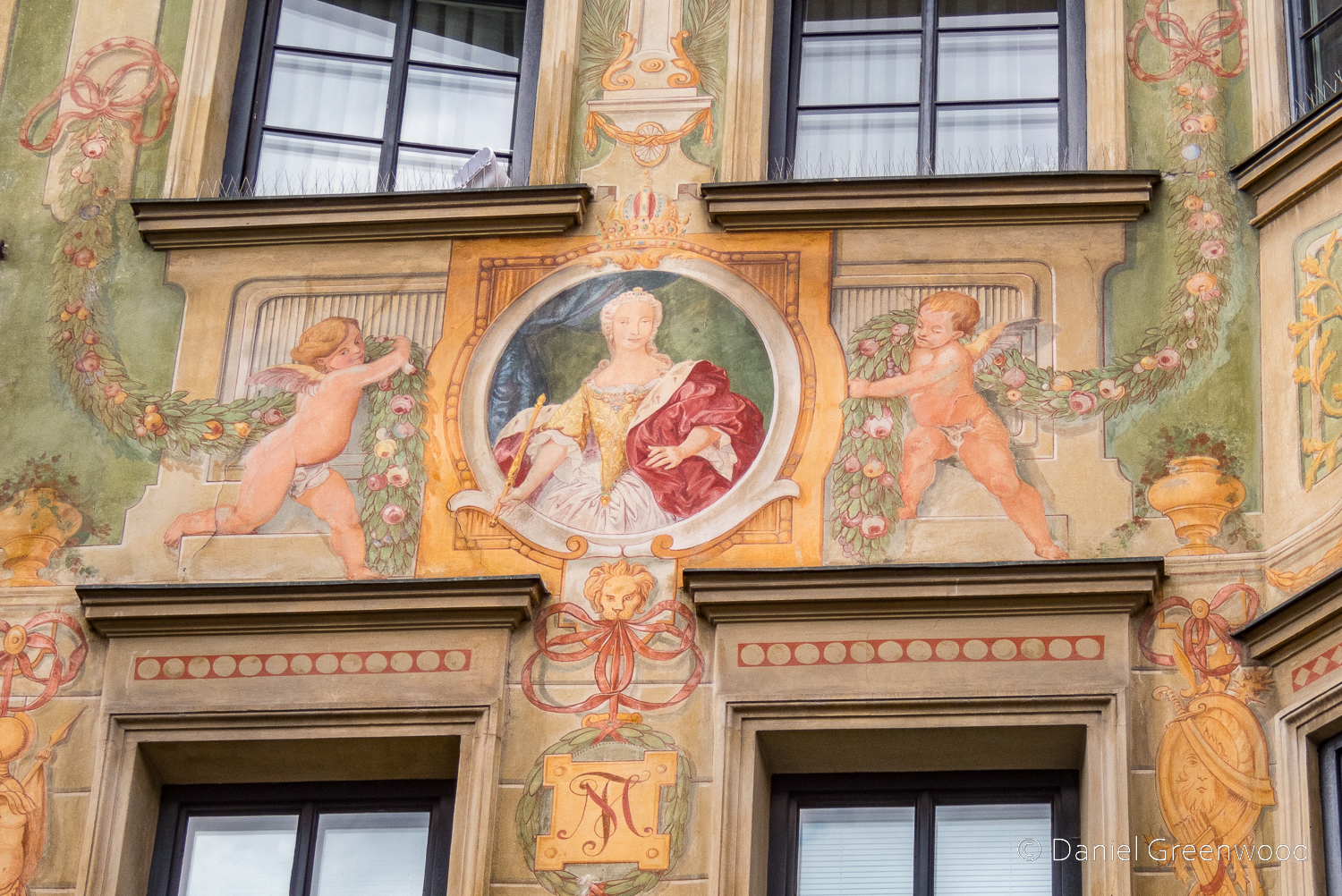
On the 700-year-old Maria Theresa Street (Maria-Theresien-Straße) you can see frescoes depicting Maria, the only female ruler of the Habsburg Empire between 1740-1780. There’s a good summary of the history of this ancient street on the Innsbruck tourism website.

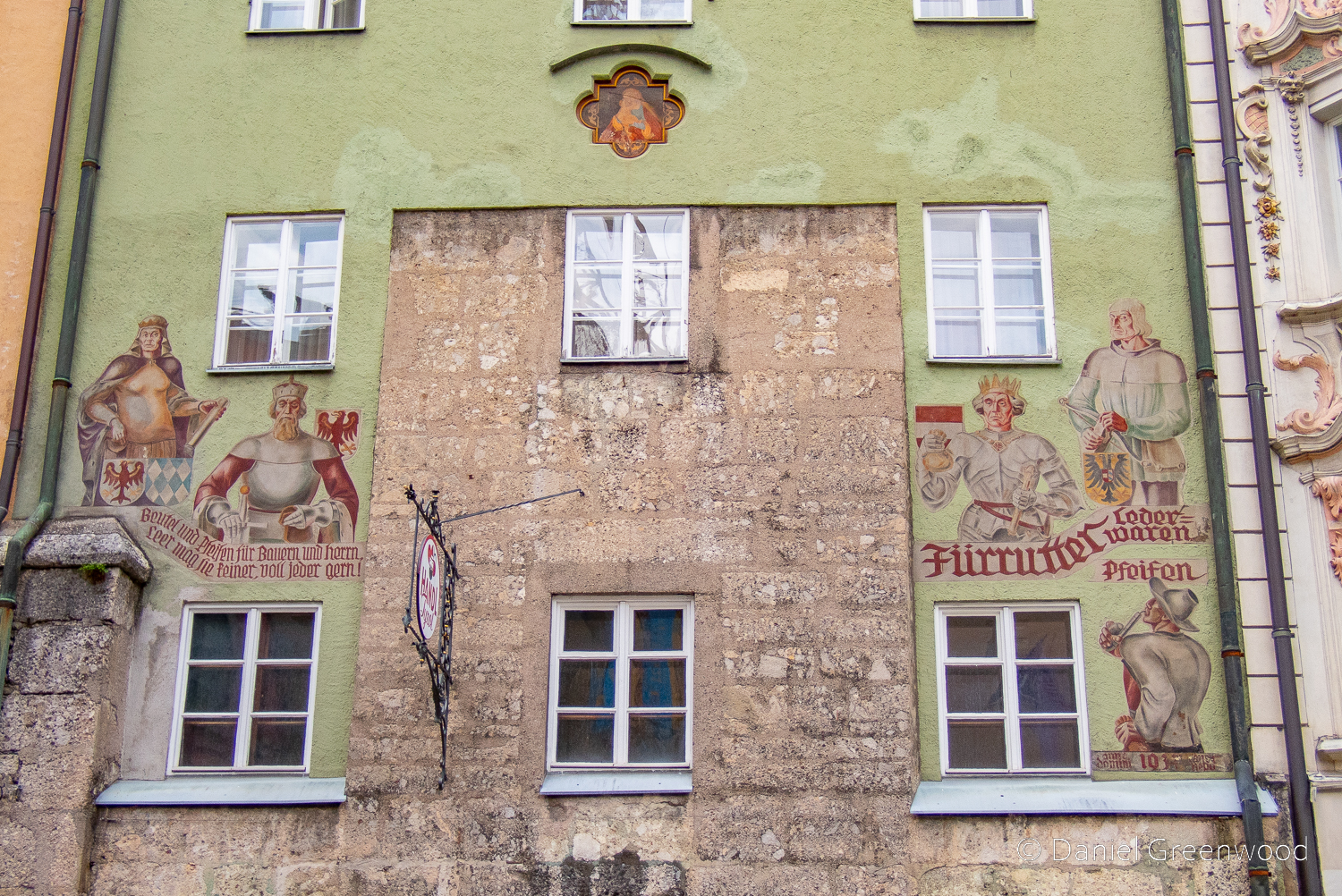
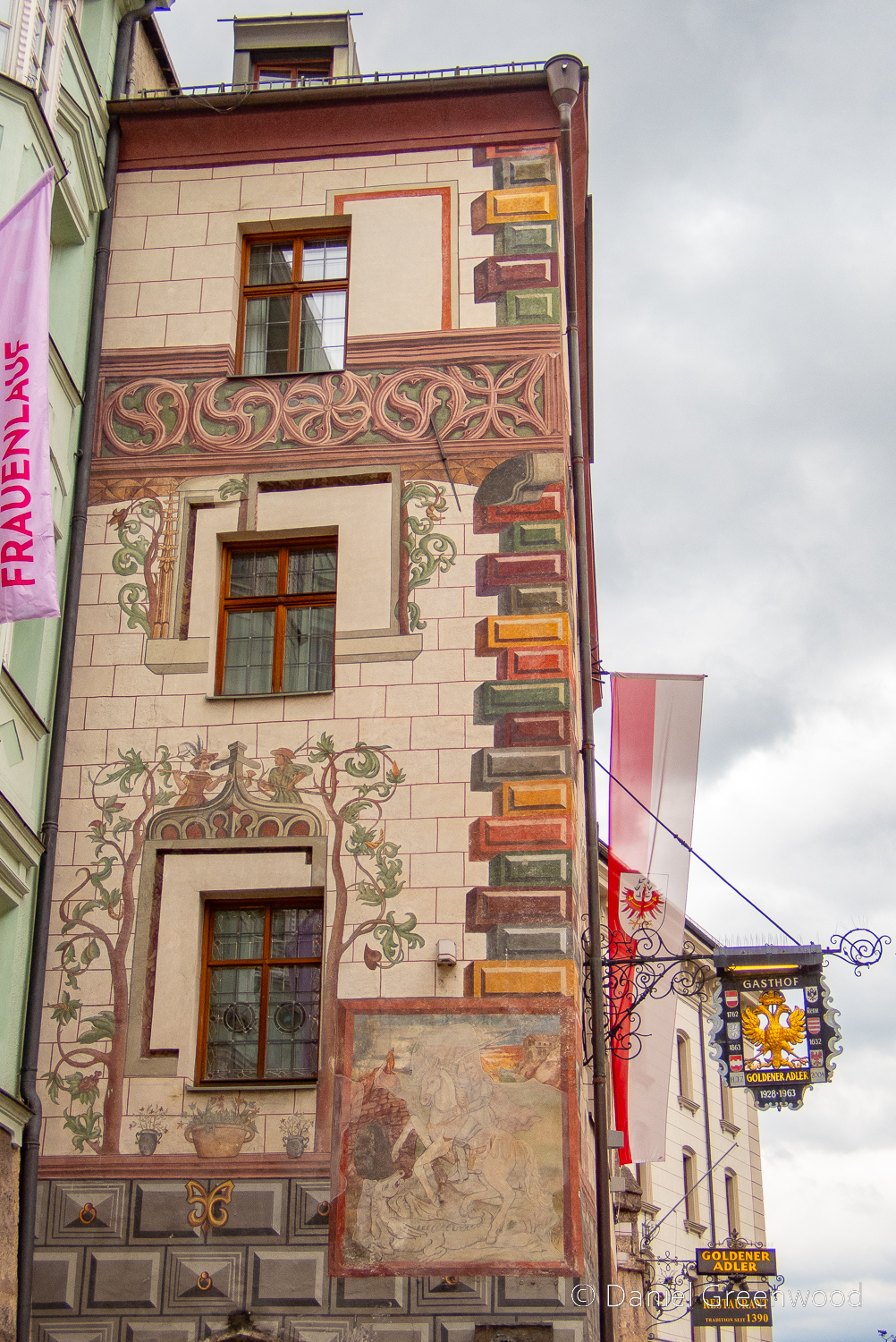
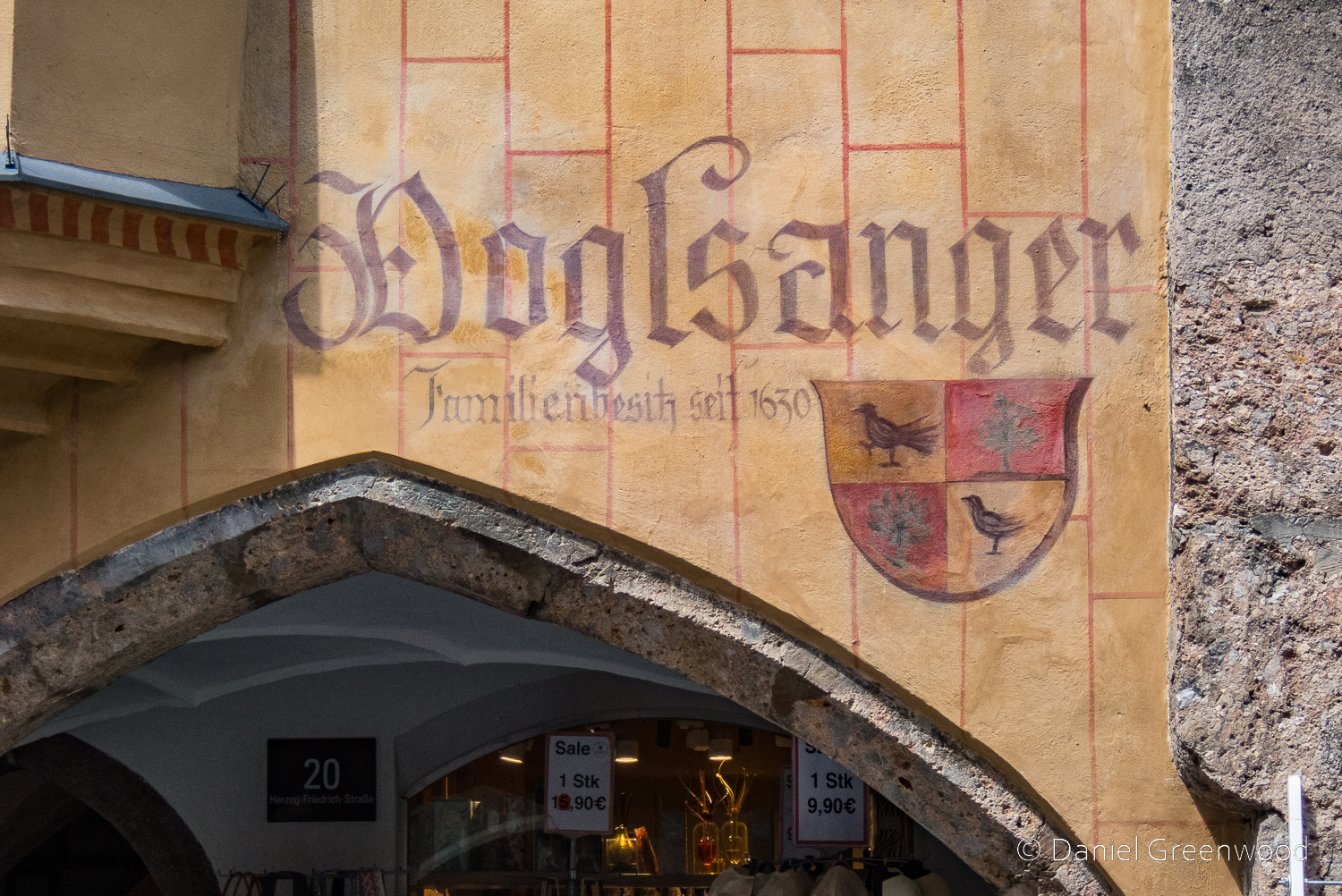
There are lots of interesting frescoes around the Aldstadt (Old Town) in Innsbruck, some originally painted as much as 400 years ago.

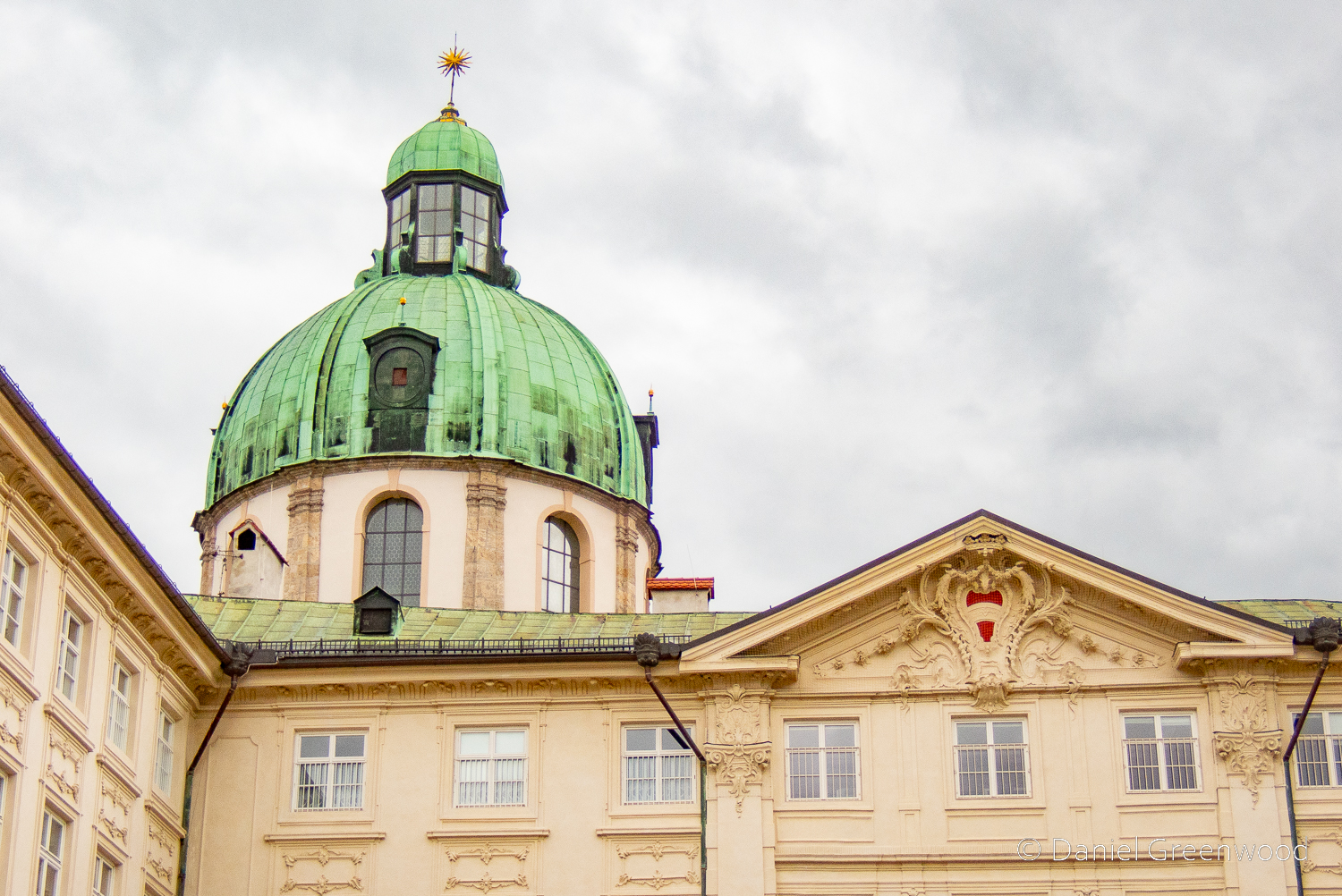
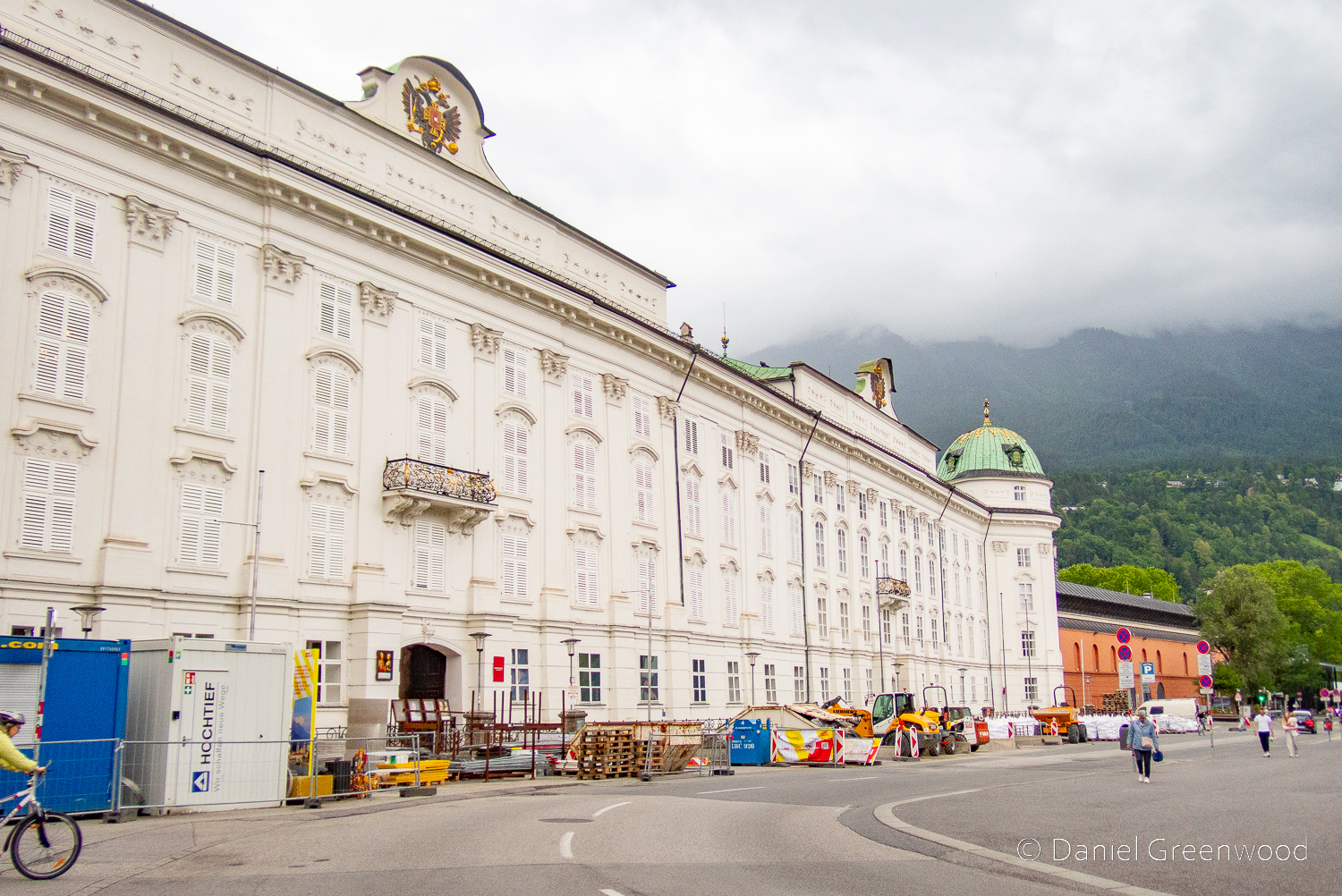
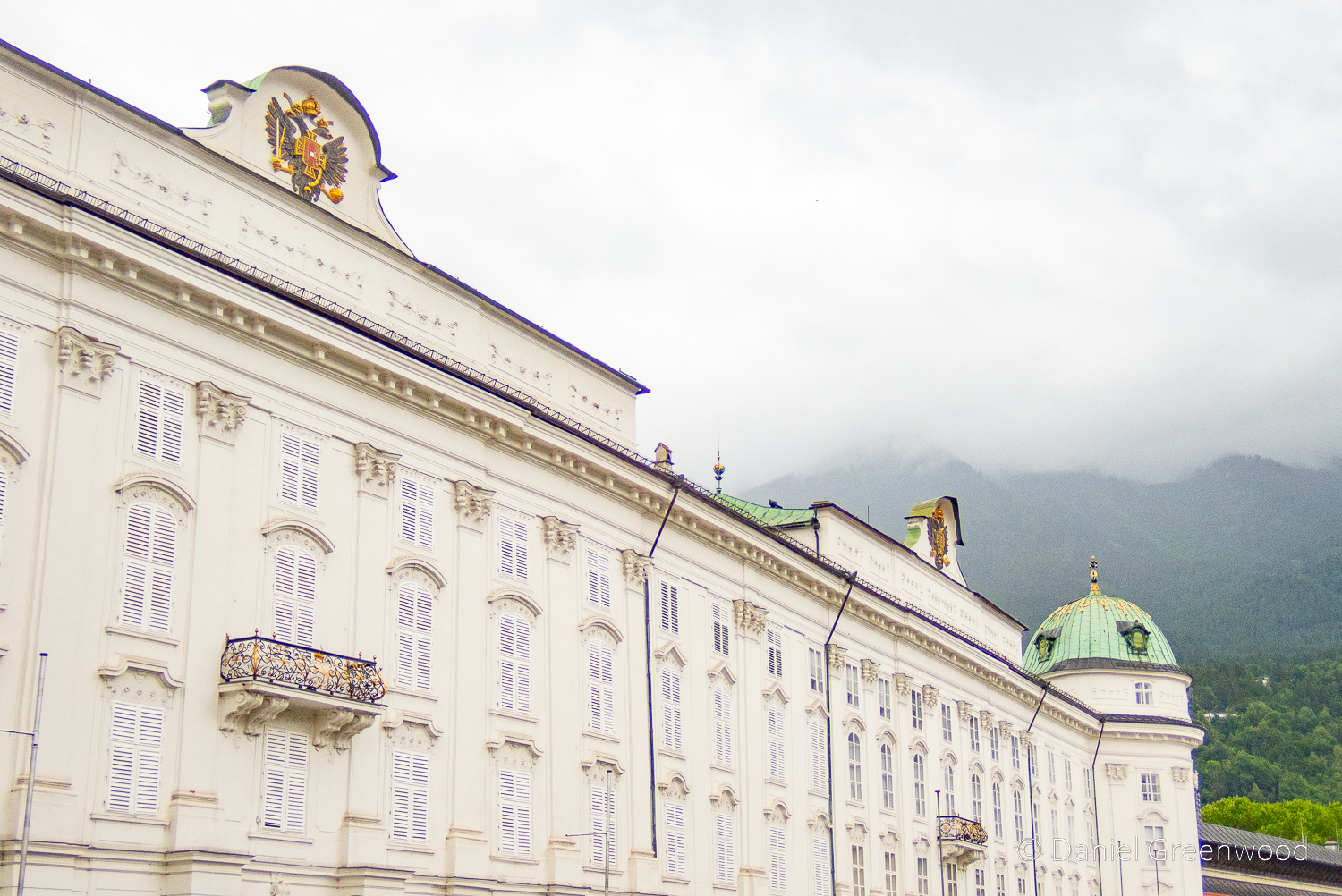
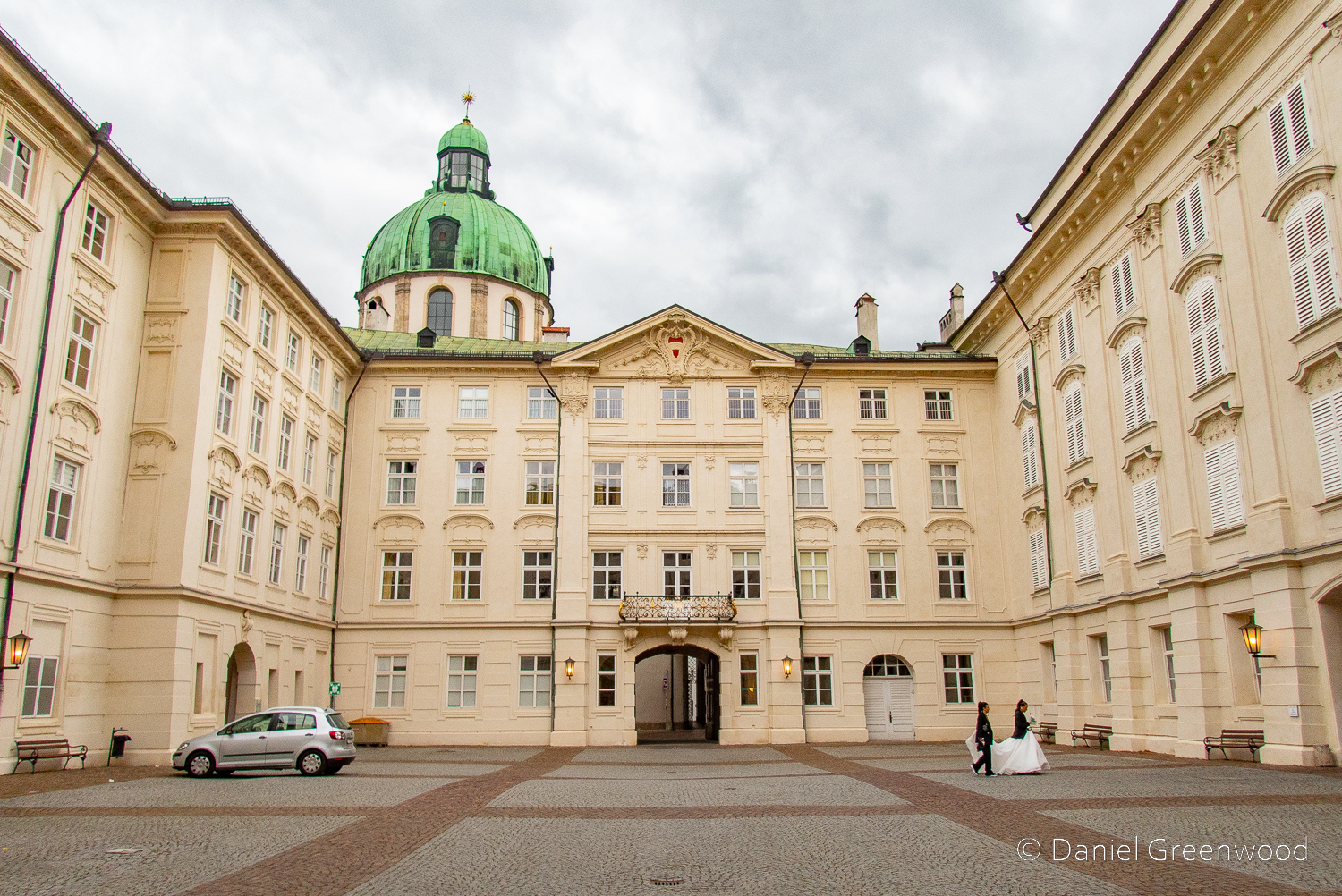
The Hofburg or Imperial Palace encloses the Aldstadt. Dating to the 1400s, it is considered one of the three most important Austrian buildings (according to Wikipedia). There were a number of weddings happening when we arrived on the Saturday morning. In the final image of the set here you can see one woman in her wedding dress being escorted somewhere – presumably before the ceremony.

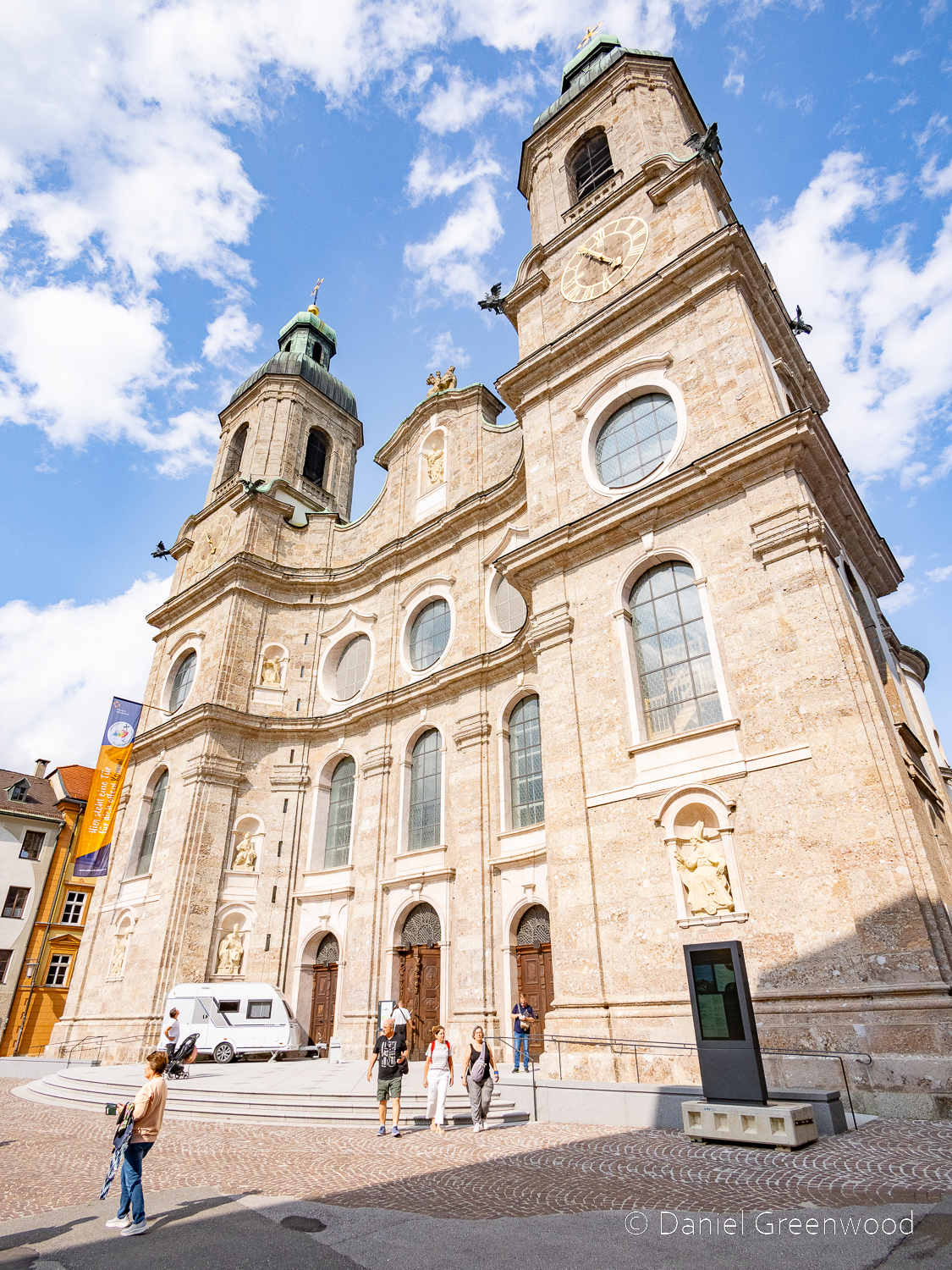
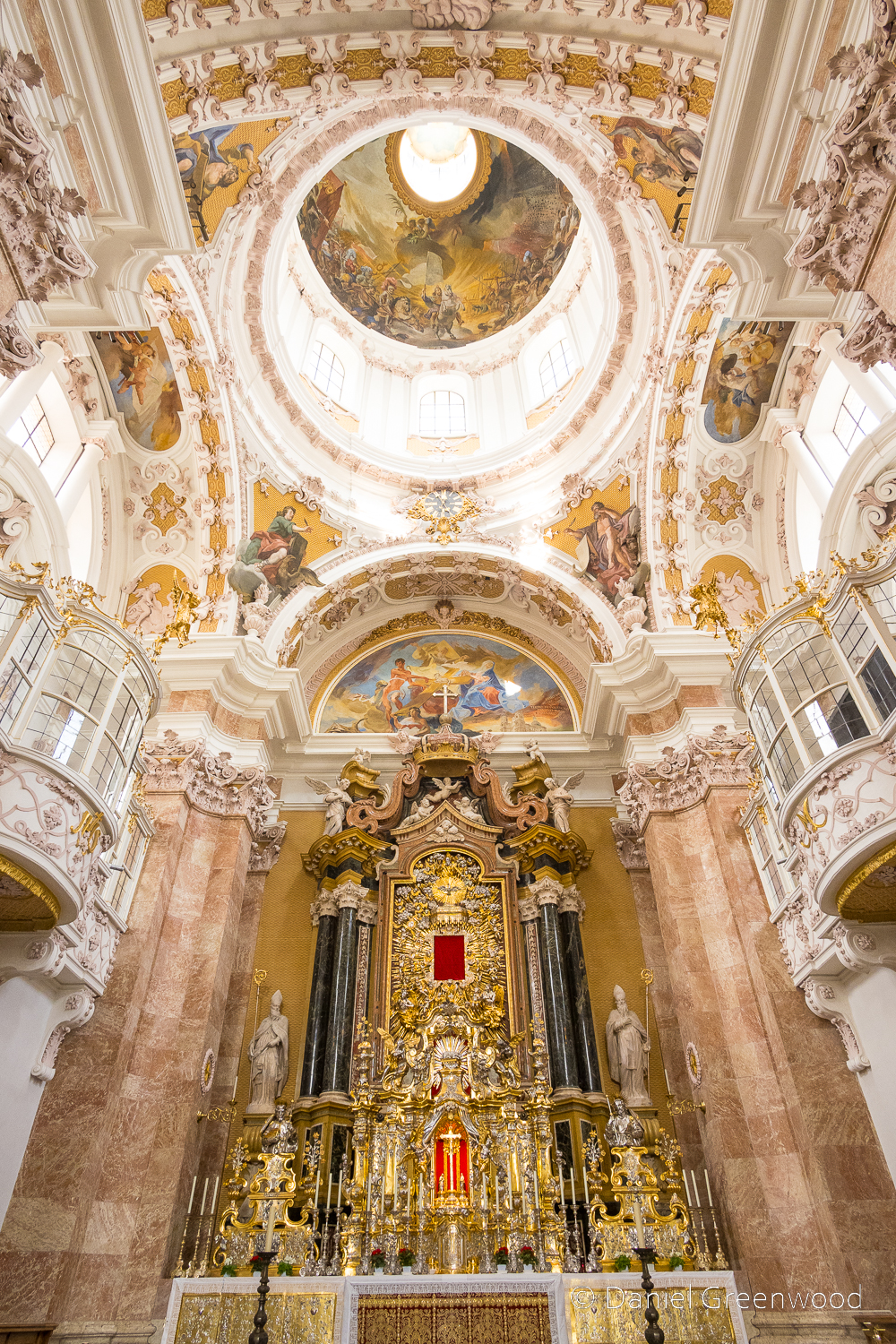
Innsbruck Cathedral (Dom zu St. Jakob) sits close to the Inn. These were taken with my 9mm f1.7 wide angle lens, which is a thing of beauty.

Now it’s time to head into the hills (by cable car)!

Above Innsbruck

You can travel to the ‘Top of Innsbruck‘ via the Nordkette cable car. It’s a good option for high level walking and to get a sense of the grandeur of the Alps around Innsbruck.

The first cable car is the Hungerburgbahn which drops you at Hungerburg – and no, that’s not a marketing ploy for a restaurant. Here you change for a cable car to take you up to Seegrube.

It was mid-June and the views from Seegrube were dimmed by the thick haze that rested across the mountains. I have edited these photos to draw out the shapes and colours of the peaks as best I can without ruining them.

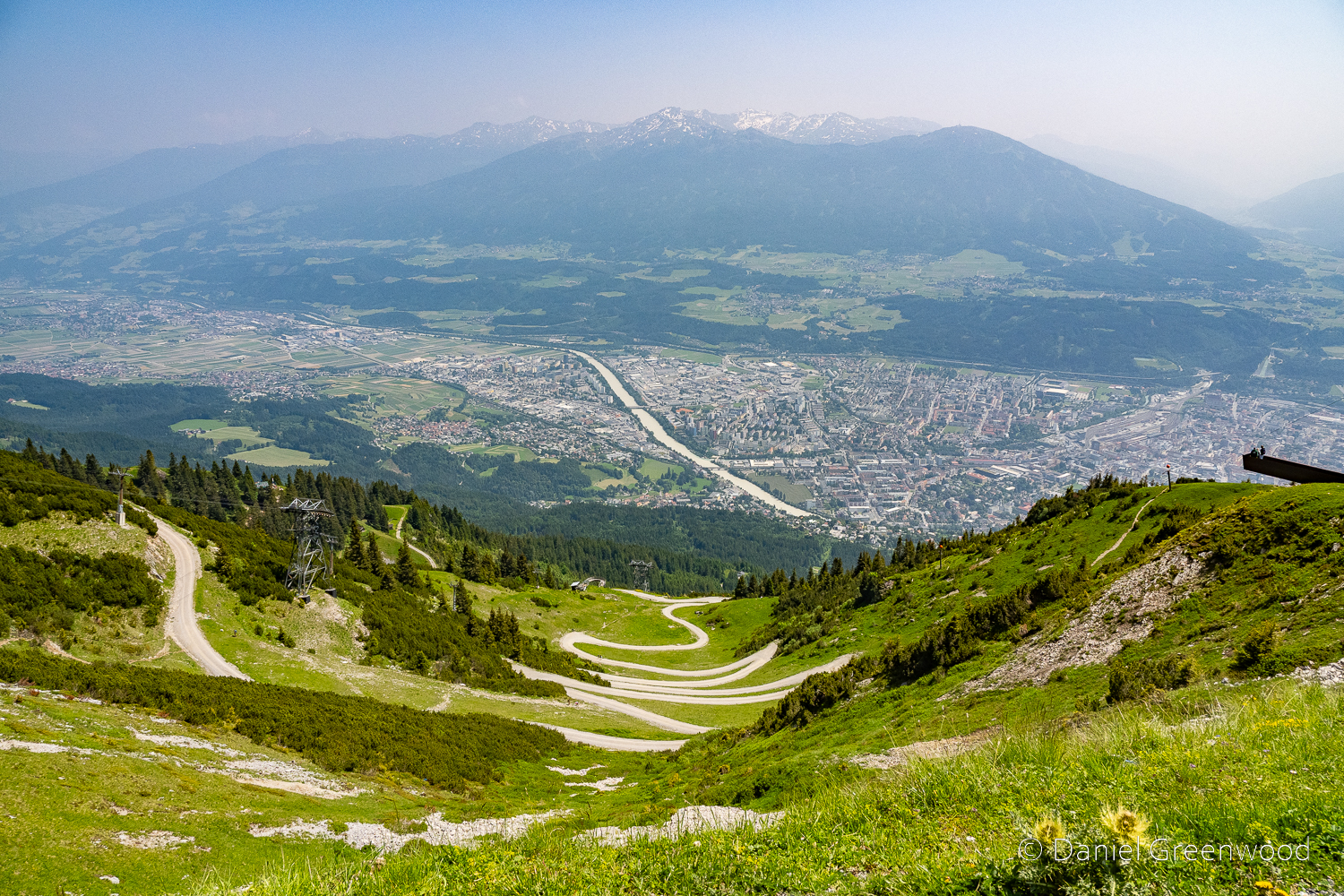
The road winds down to Hungerburg. In the middle-distance the Inn cuts through the city.

This is looking south towards the Italian Alps. Brutal warfare took place here between the Austro-Hungarian/German army, and newly-founded Italian army in the First World War. I didn’t know anything about this element of WWI (known as the White War) until my uncle told me about it. It was only after visiting Innsbruck that I realised the setting for the fighting was not far from here. Over 150,000 soldiers died in those battles, mostly due to disease or the extreme cold.

From Seegrube you can take a final cable car (not absolutely final!) to Hafelekarspitze (2,256m at the point of stepping off the cable car).

There are plenty of paths to take.

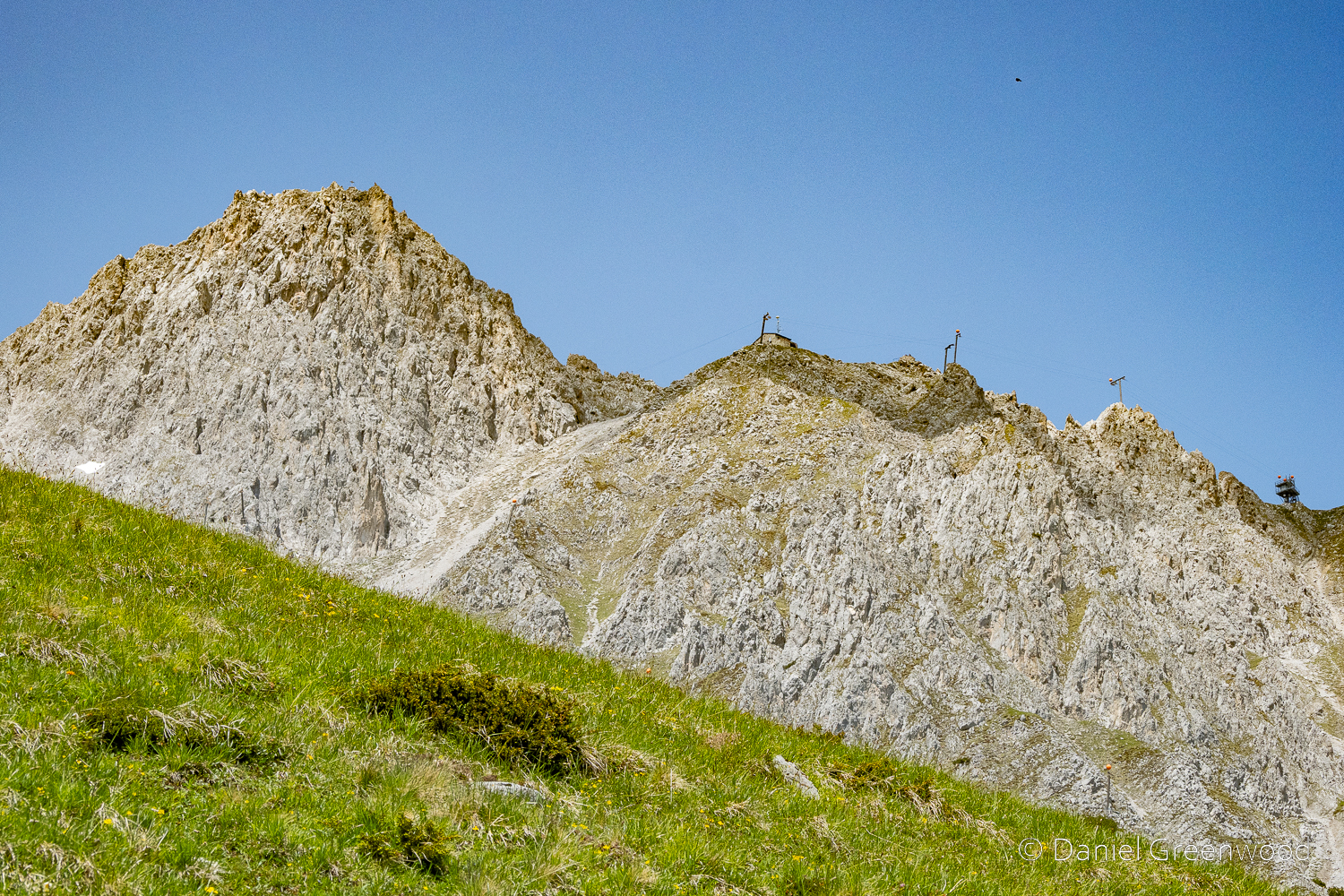
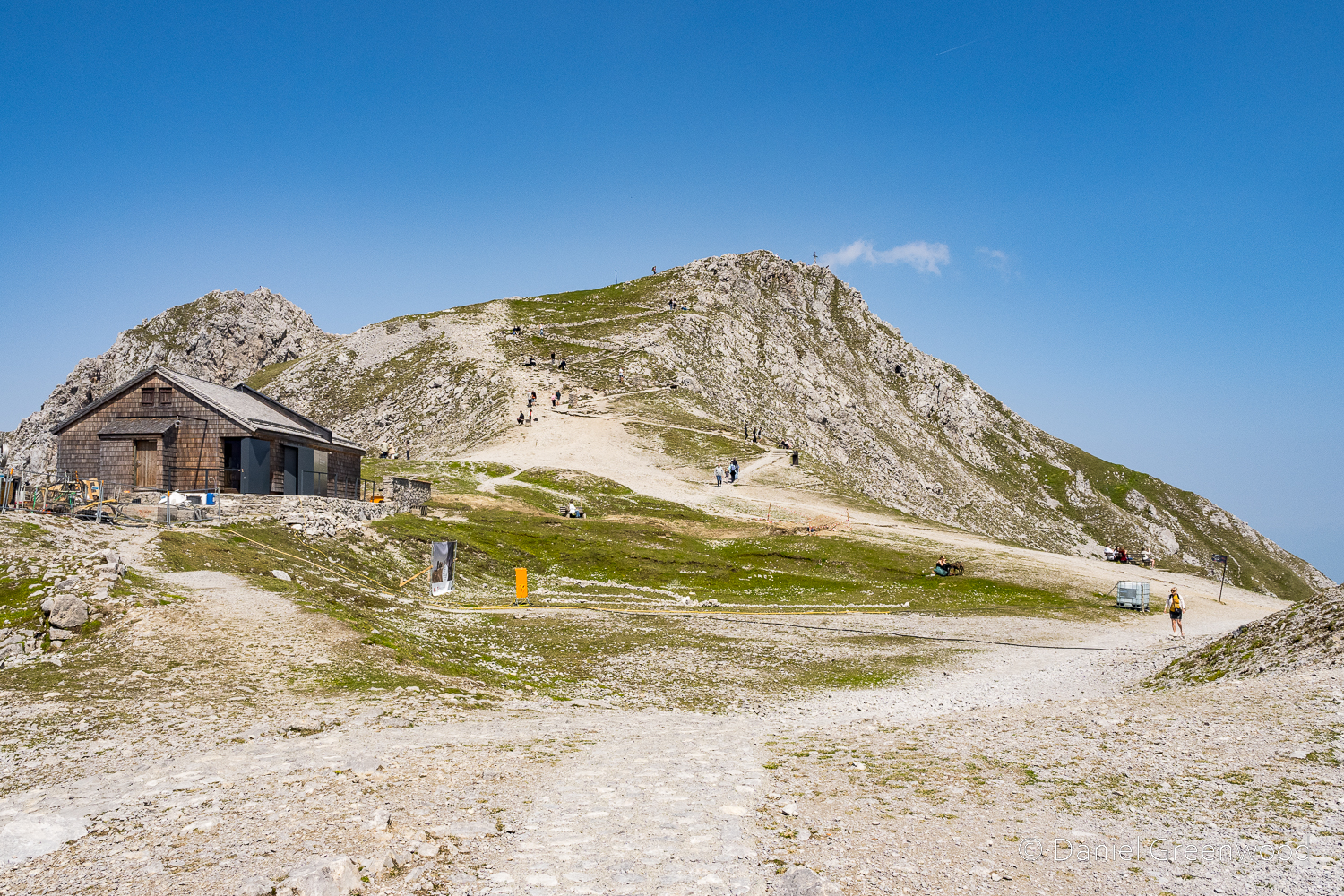
Looking back down from the Hafelekarspitze terminus. Unfortunately I wasn’t well enough to crouch down for any macro photos of the alpine plants, but there weren’t actually that many here because of the erosion.

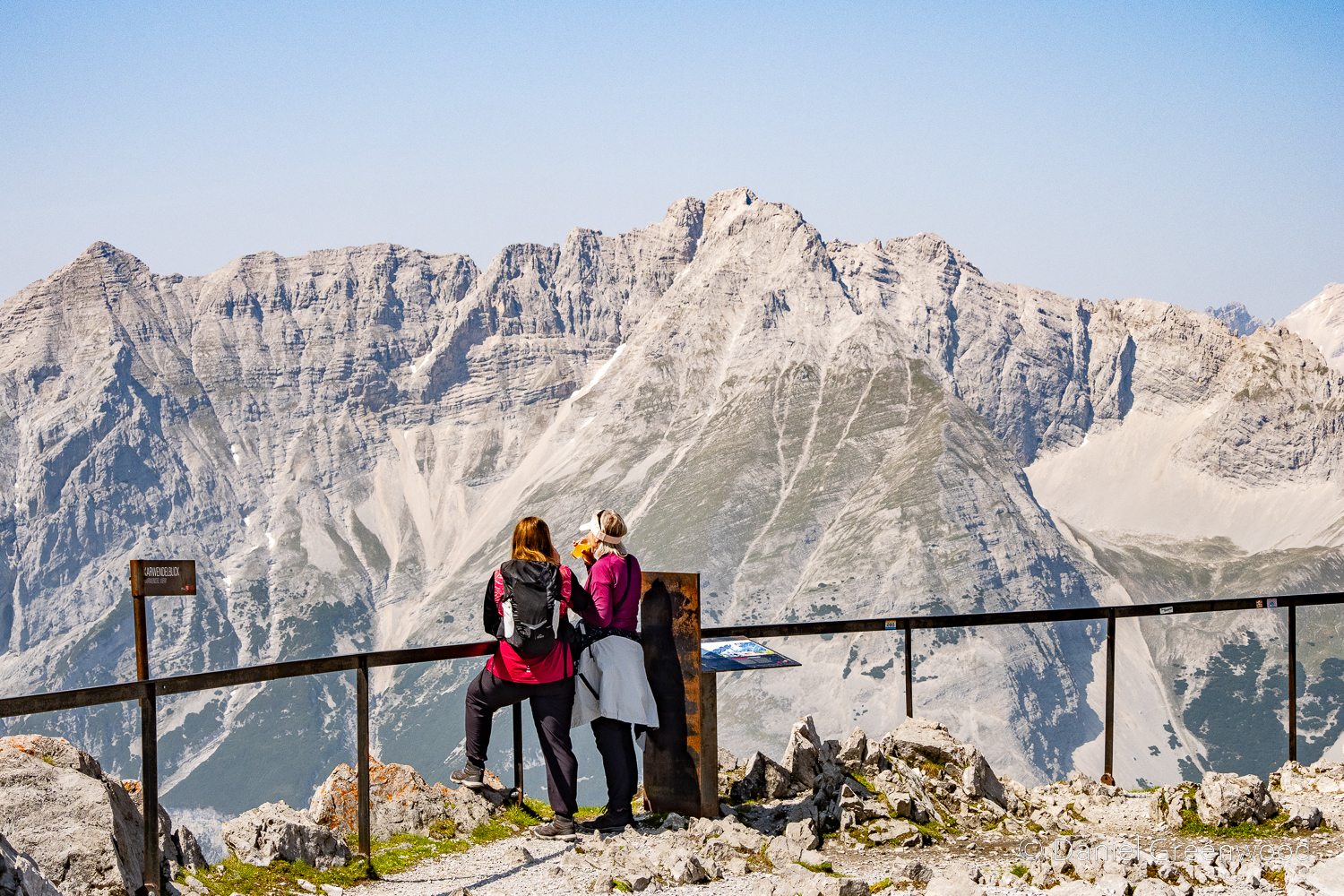
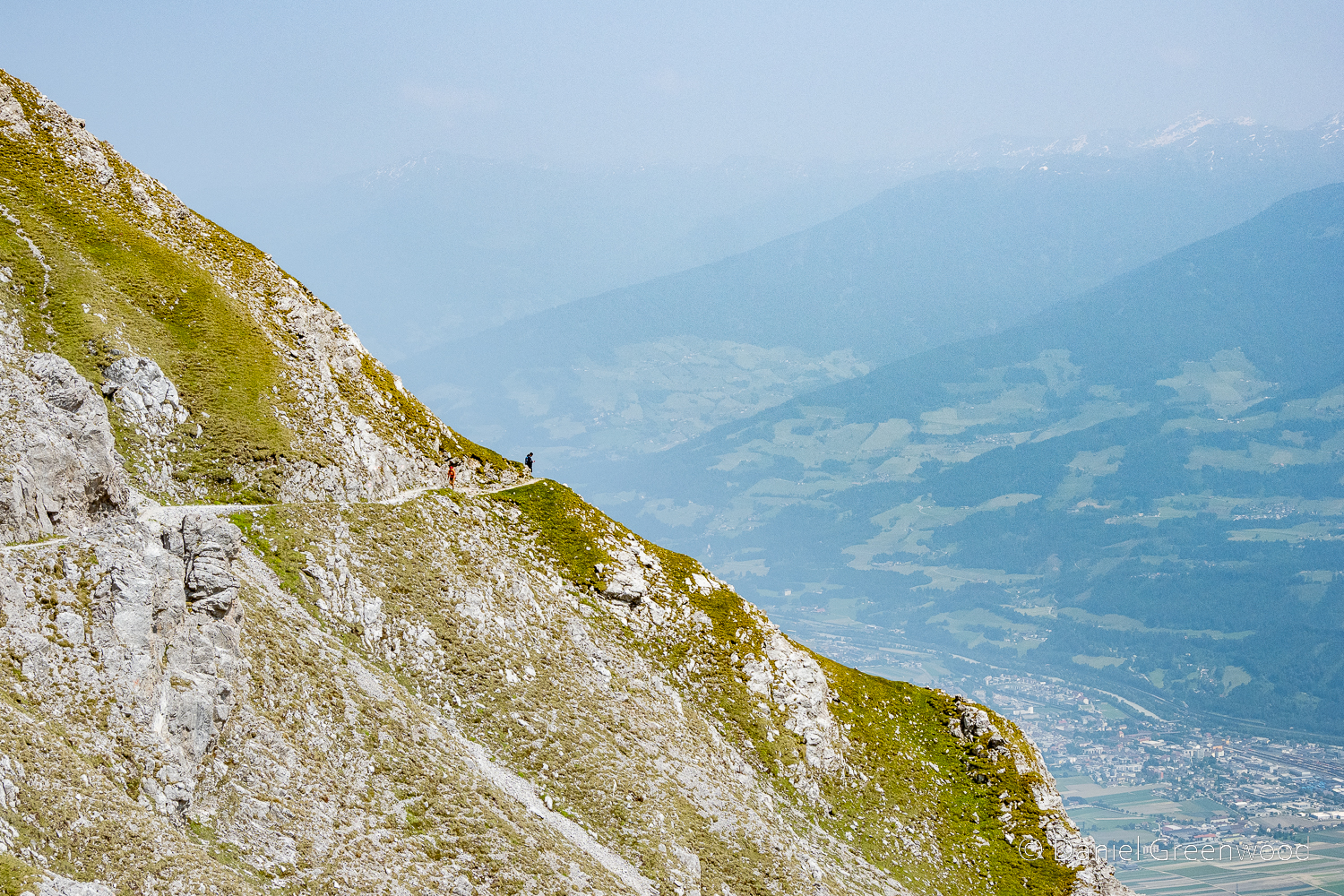
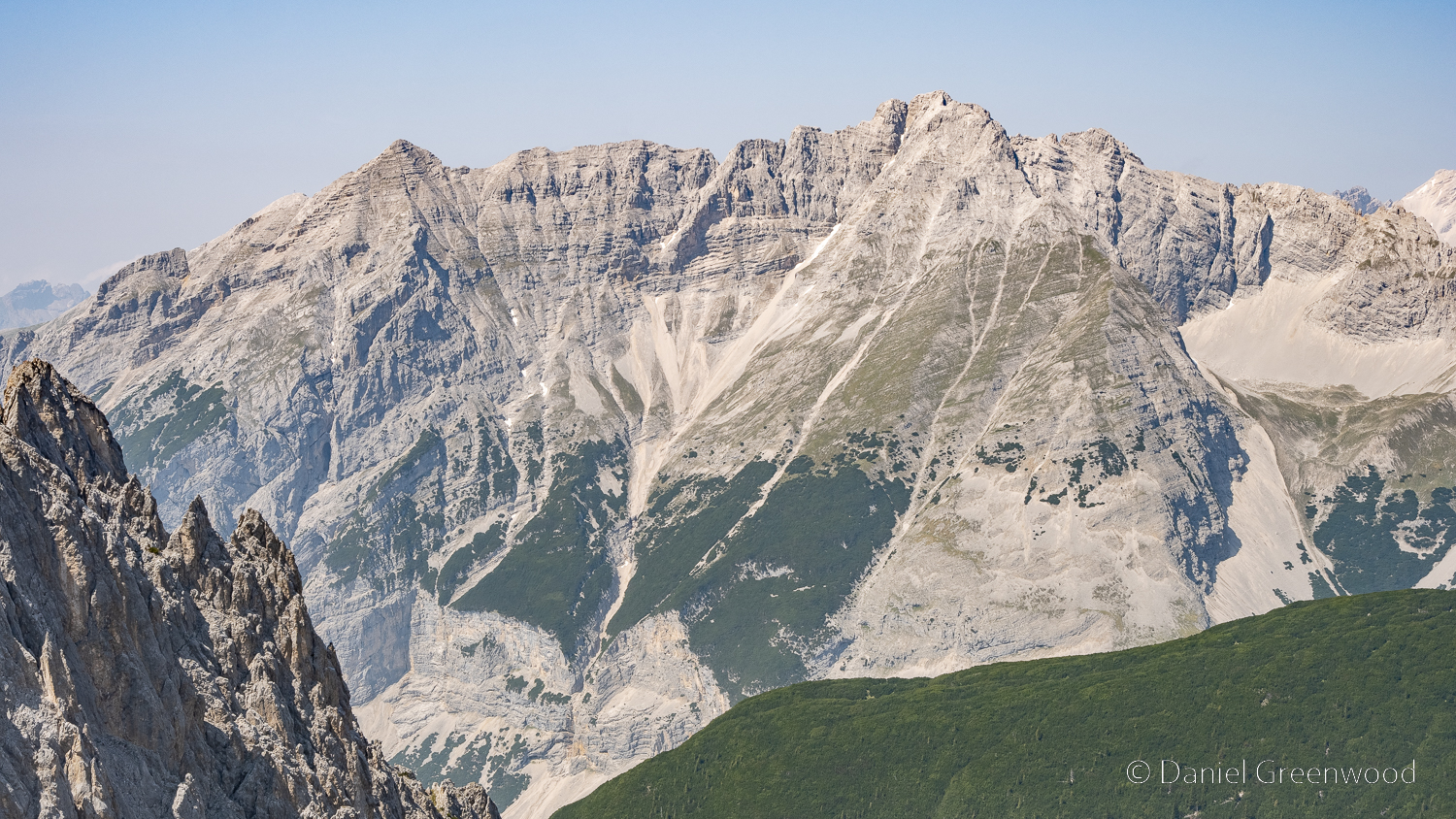
Heading over a mound (sounds like a terrible understatement) you arrive at breathtaking views into the Alps. The sudden rearing up of these vast rocky peaks almost knocked me sideways. The cable car fees are worth it for these views.

Some snow was still lingering among the clefts in the limestone.

I love the streaks in the vegetation where water finds its quickest way down of the tops of the peaks. And then there’s just a random chunk of woodland there like the arm of a velvet green divan.

The reality of the space behind the camera – lots of limestone, hundreds of people, and a lot of erosion (of which I was obviously contributing to!).

Leaving Innsbruck

We left Innsbruck on a train to Salzburg, passing the peaks of the Karwendel Alps which lead eventually to Bavaria in Germany. I love travelling on Austrian trains, especially in the Alps. I don’t read a word of a book because the views are so amazing, and you can order food if you’re in first class, which is so much more affordable than in the UK.

I like to use my compact camera on these journeys and just snap photos randomly at the window without considering framing, or worrying to much about what the frame will capture. In the image above there’s what looks like a haybarn in the Inn valley, where the grass will be grown for either feeding animals or some kind of biomass.

Thanks for reading.
Austrian Alps | Support my work

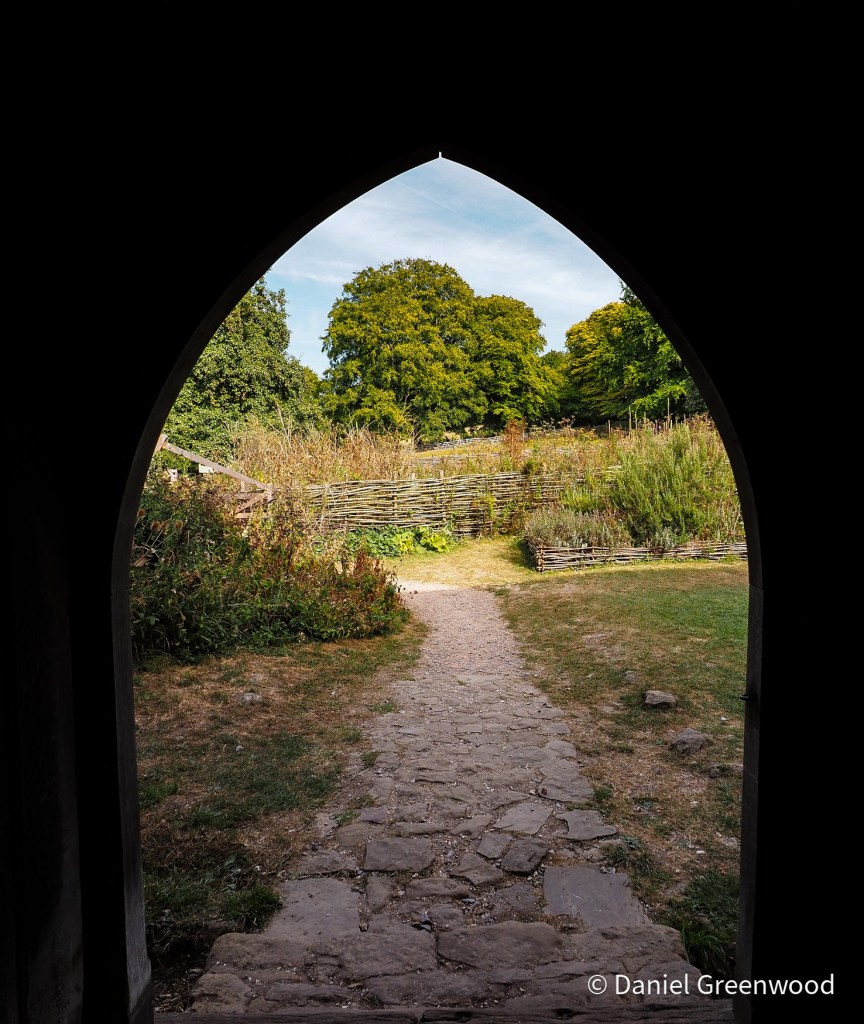
Late summer timbers at the Weald & Downland Museum

In August I made my annual visit to the Weald and Downland Living Museum in the South Downs.

You can see my timber-framed building photo gallery here.

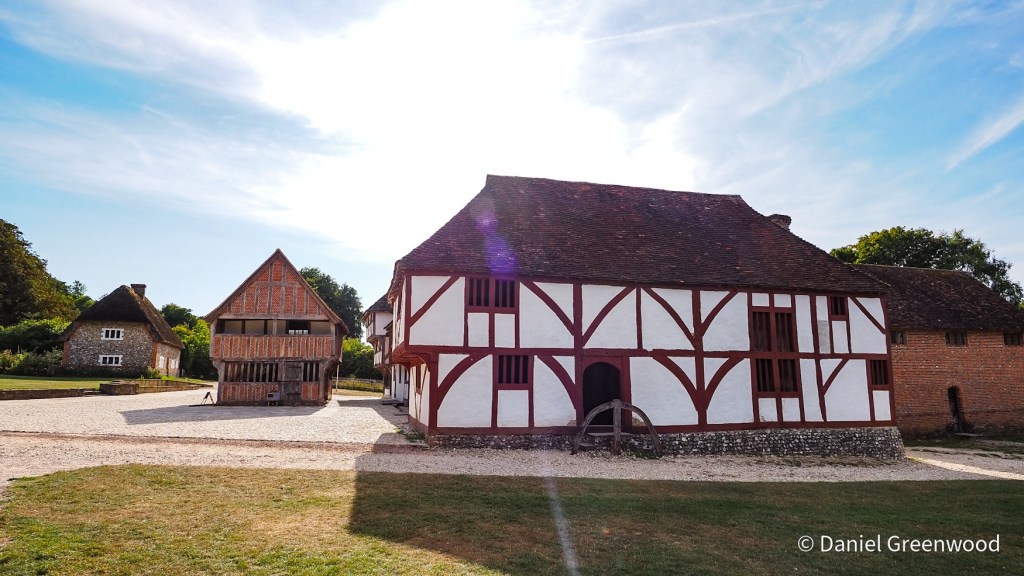
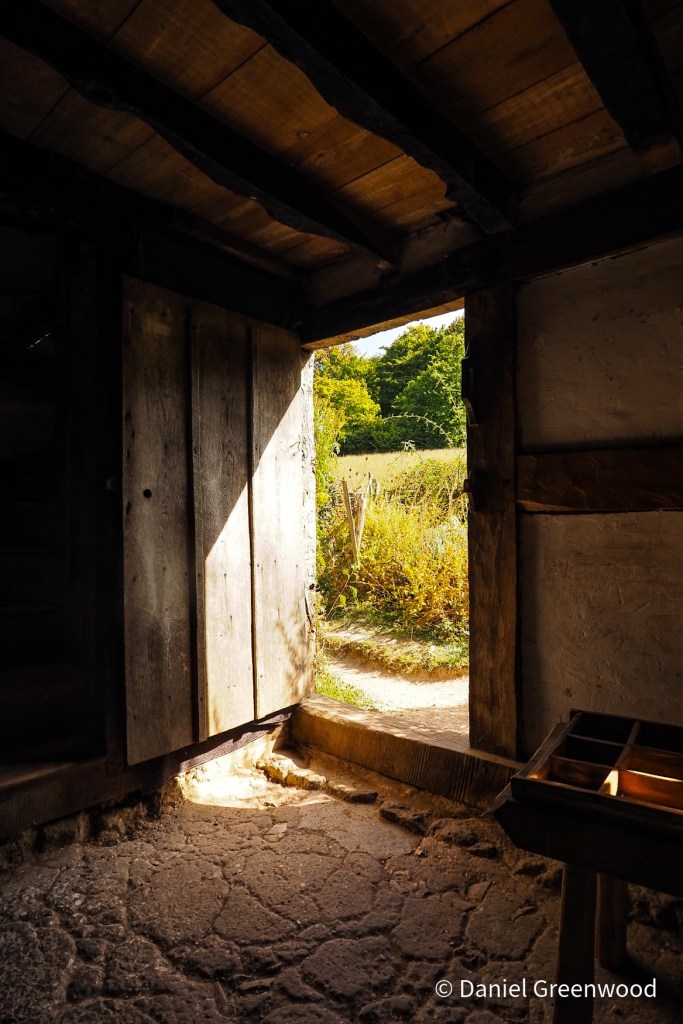
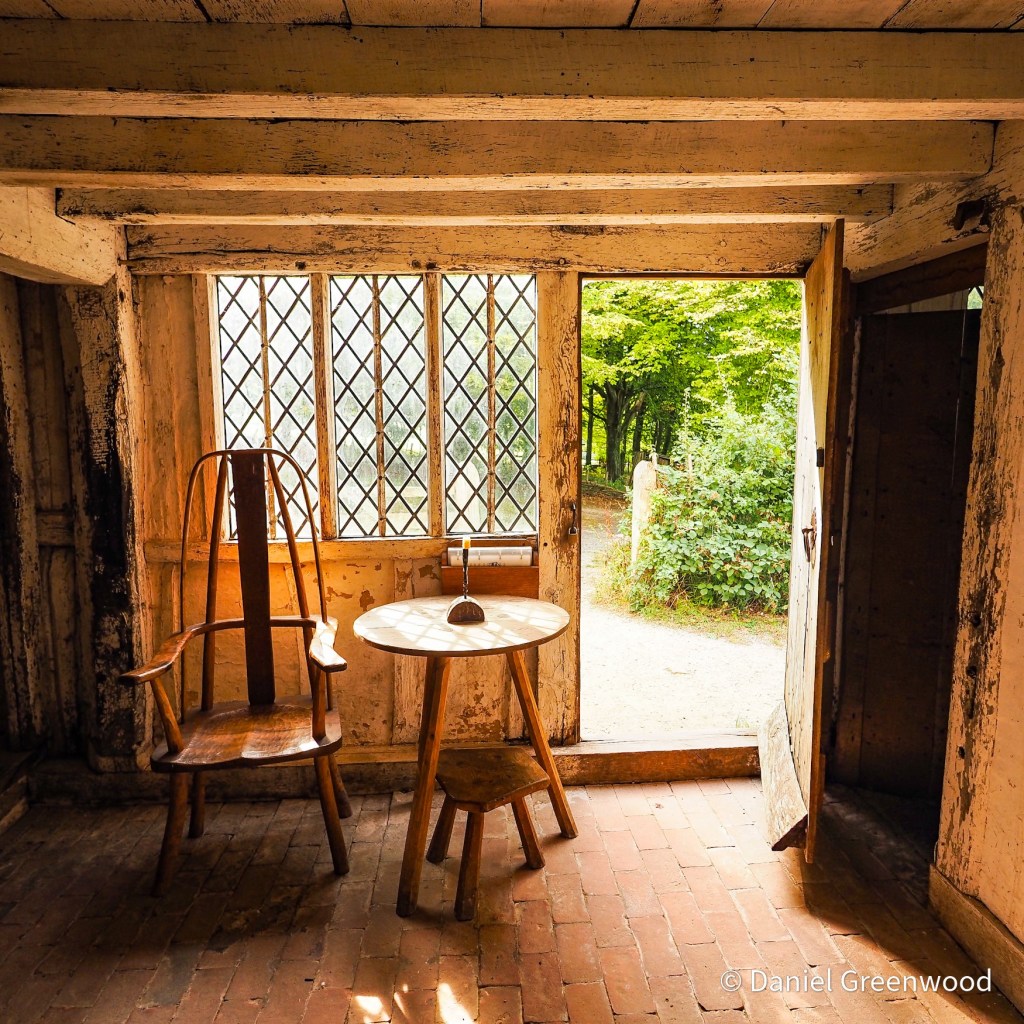
This is the first view you encounter inside the museum grounds after you pay your entry fee. Amazing to think the medieval hall house is from Cray in the London Borough of Bexley. It dates to the 1400s.

The Titchfield Market Hall has recently been restored. It’s looking very good indeed now. These halls were once more common in English market towns, but I can’t say I’ve ever seen one in situ. How times change.

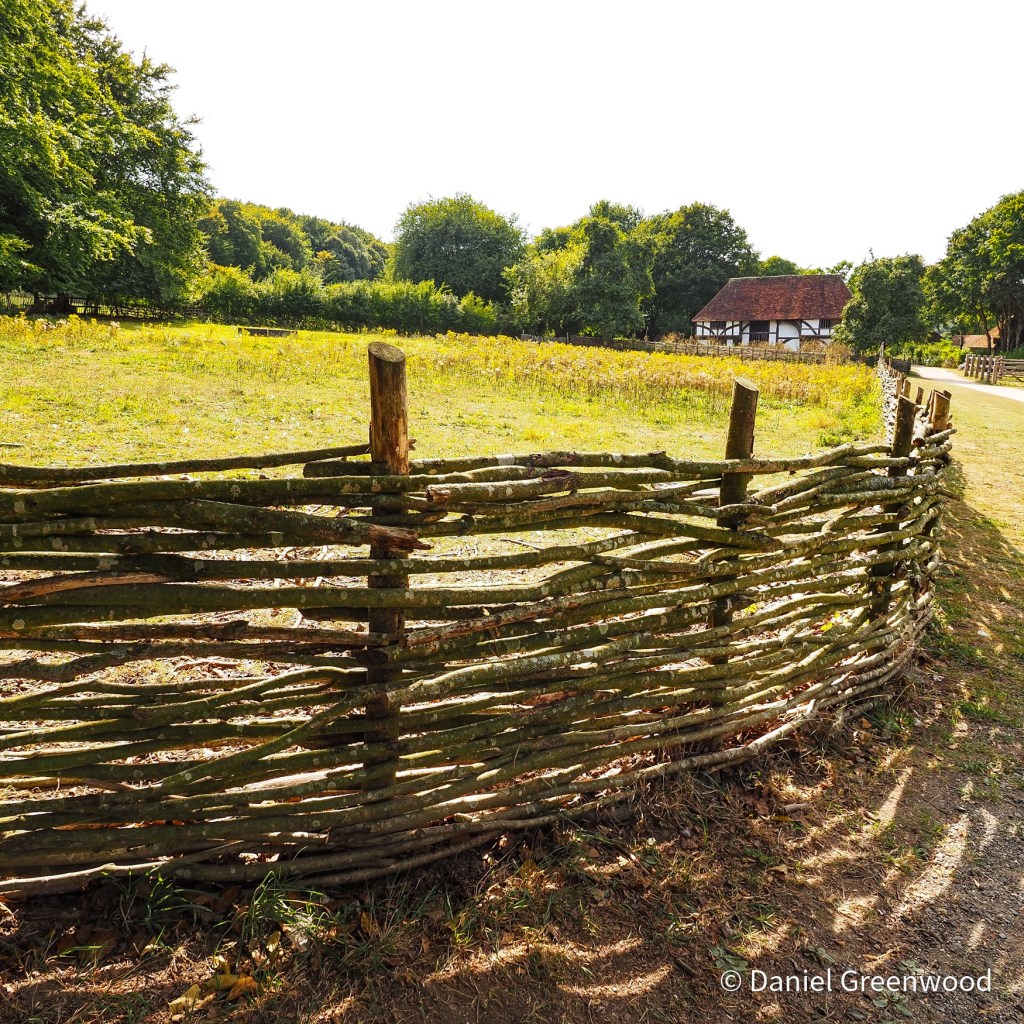
The House from Walderton punctuates a quintessential Weald and Downland Museum scene.

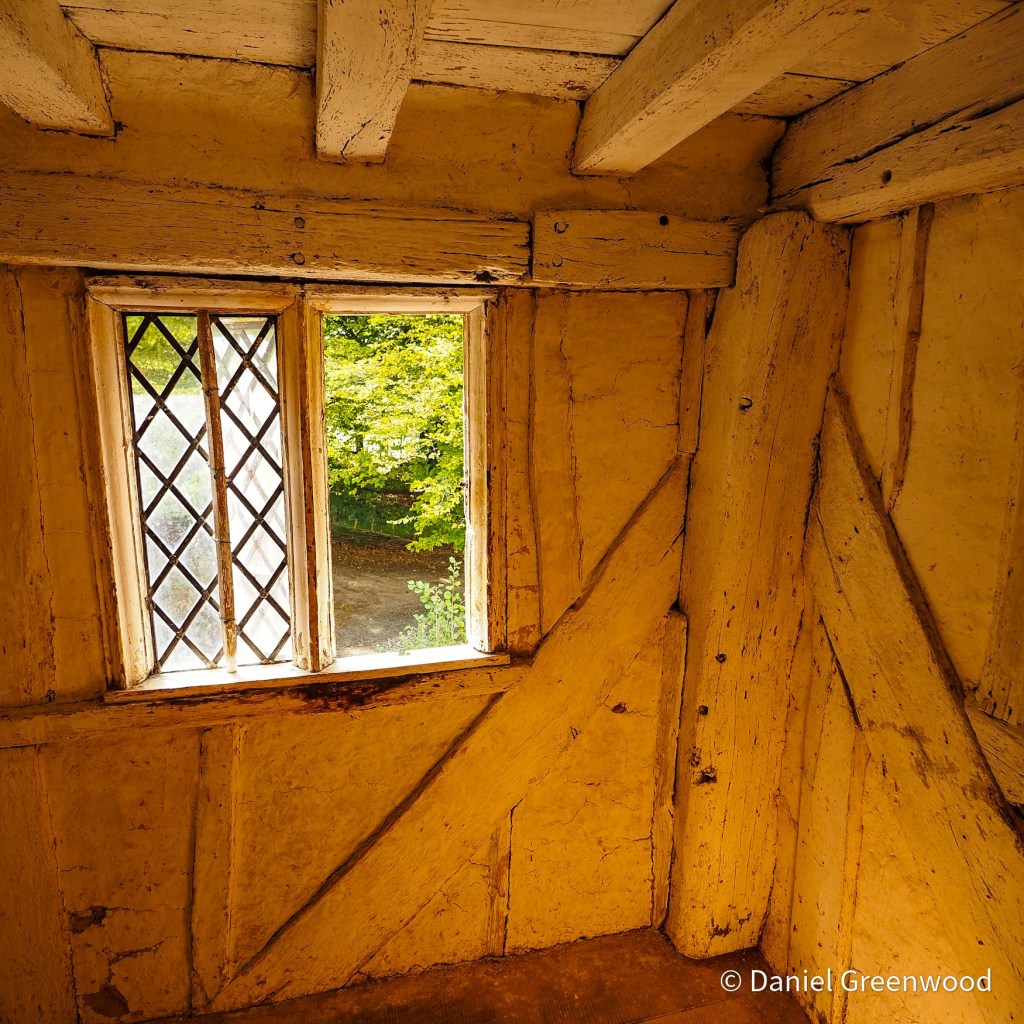
These charming railway cottages are a game of two halves. In one part (here on the right) you can see the internal structure of the building. On the left hand side you can see a furnished representation of the cottage.

Poplar Cottage is one of my favourites. I’ve posted about it before.

Bayleaf‘s grandeur isn’t fully accounted for in these three images. It’s a large Wealden Hall that has been dated to the early 1400s.

Pendean sits out of view on the top slopes of the museum grounds. Its timbers are dated to 1609 (the year they were felled – amazing, isn’t it).

Tindalls Cottage is more recent, being from the 1700s. It has a bit of an eerie vibe about it, not sure why.

Mediaeval Hall dates from the 1600s. It’s a beauty.

I’ve been visiting the museum since 2018 but only managed to see the cart and vehicle section for the first time during this visit. Some of the wheels on show were huge. It would have been amazing to see these carts wending their way around Sussex once upon a time.

Thanks for reading

Oak timbers

Austrian Alps: up and down Schafberg

Schafberg, Salzkammergut, Austria, June 2025

Welcome to a big blog of sunny alpine images, from my walking highlight of the year so far. Down we go!

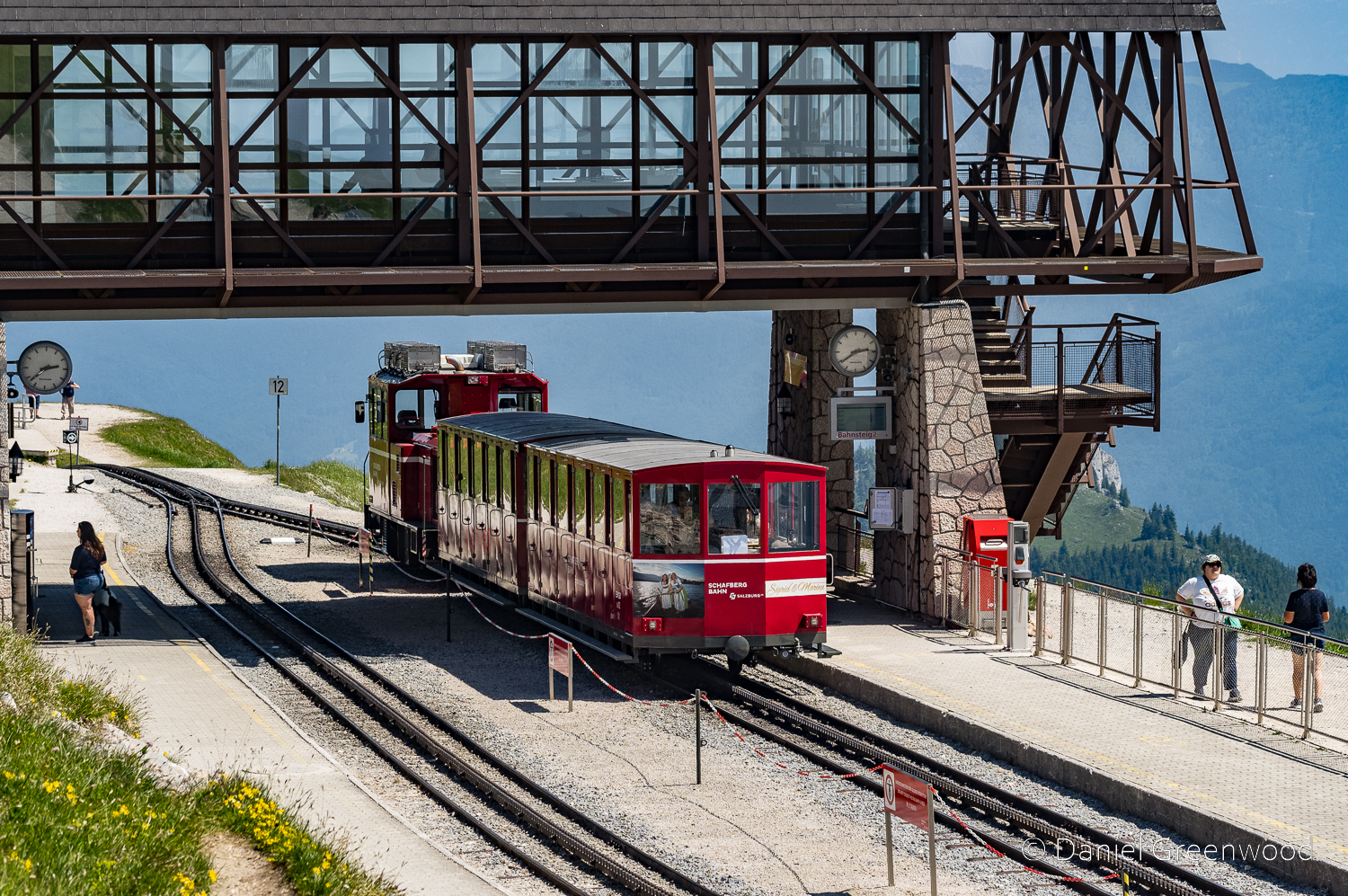
My wife and I travelled by train to the Austrian Alps this summer, and we took one more train to reach the top of Schafberg (1782m) – the Schafbergbahn.

The images here are in chronological order as we descended, trying not to be too distracted as we picked our way down through the rocky tracks. I would recommend using at least one walking pole while doing this walk because it is so steep. The walk was nearly 8 miles and took us about 5 hours (because I stop a lot to take photos).

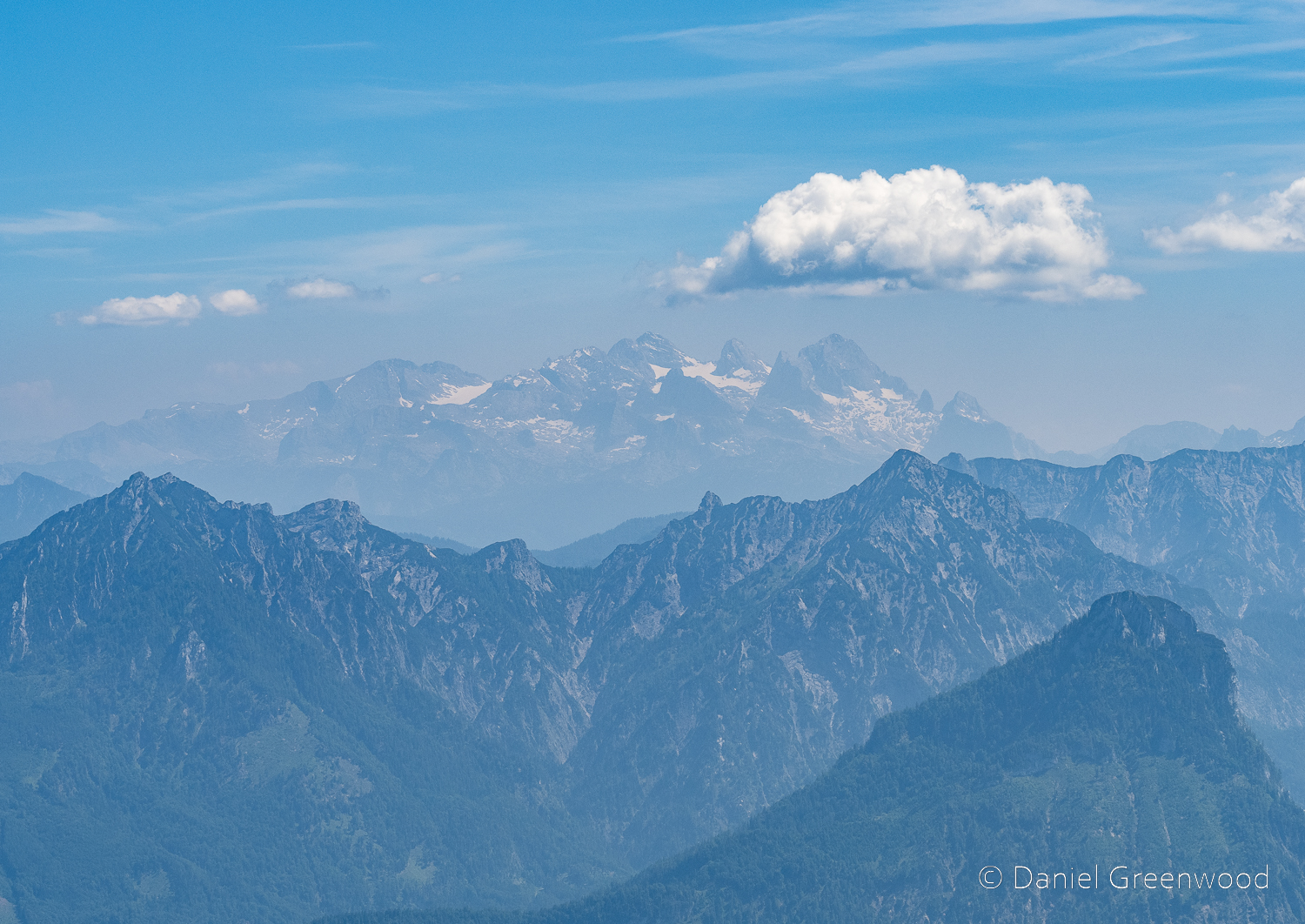
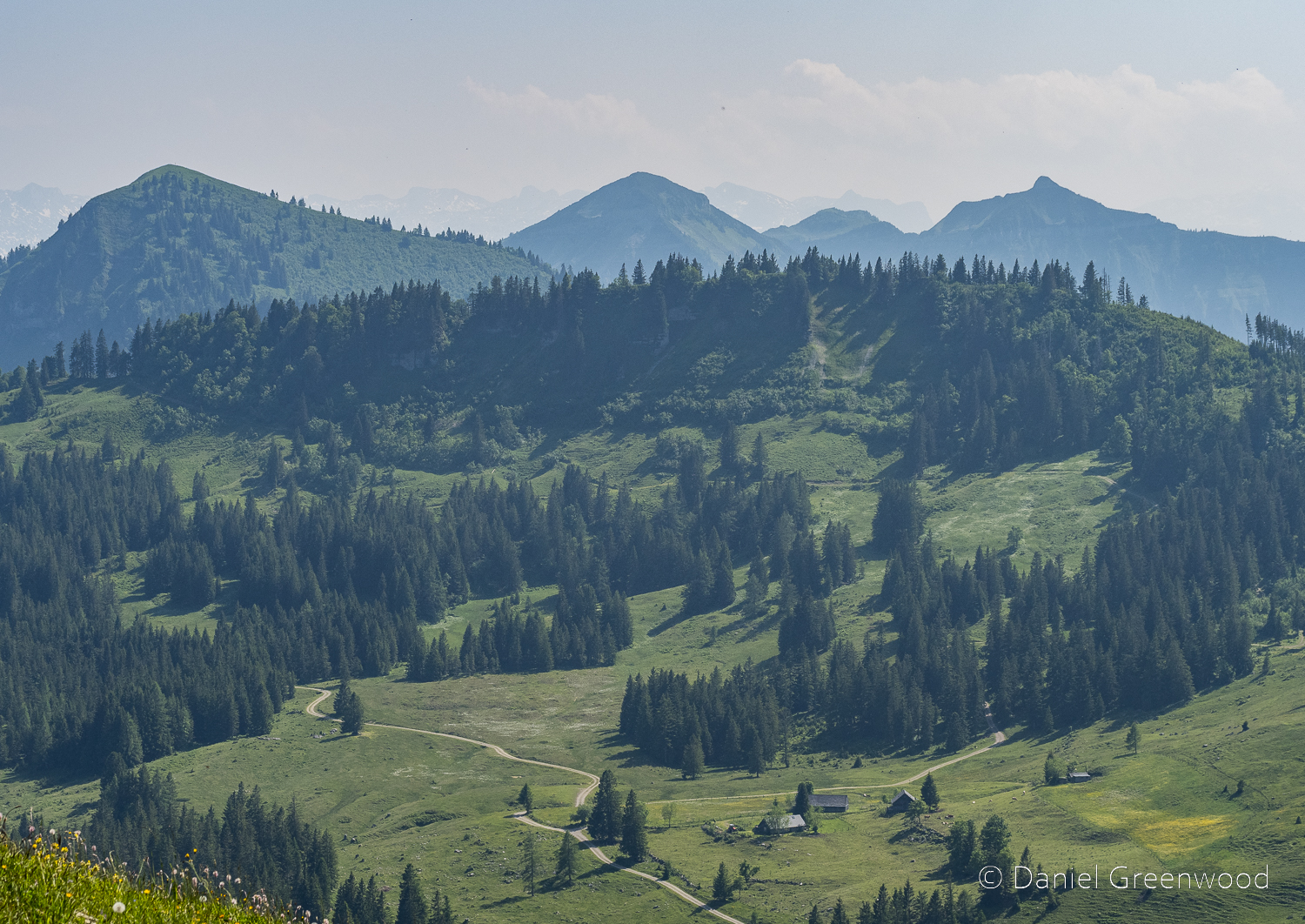
To the south-west you can see the high peaks of the Dachstein range (3600m), an area we haven’t explored yet.

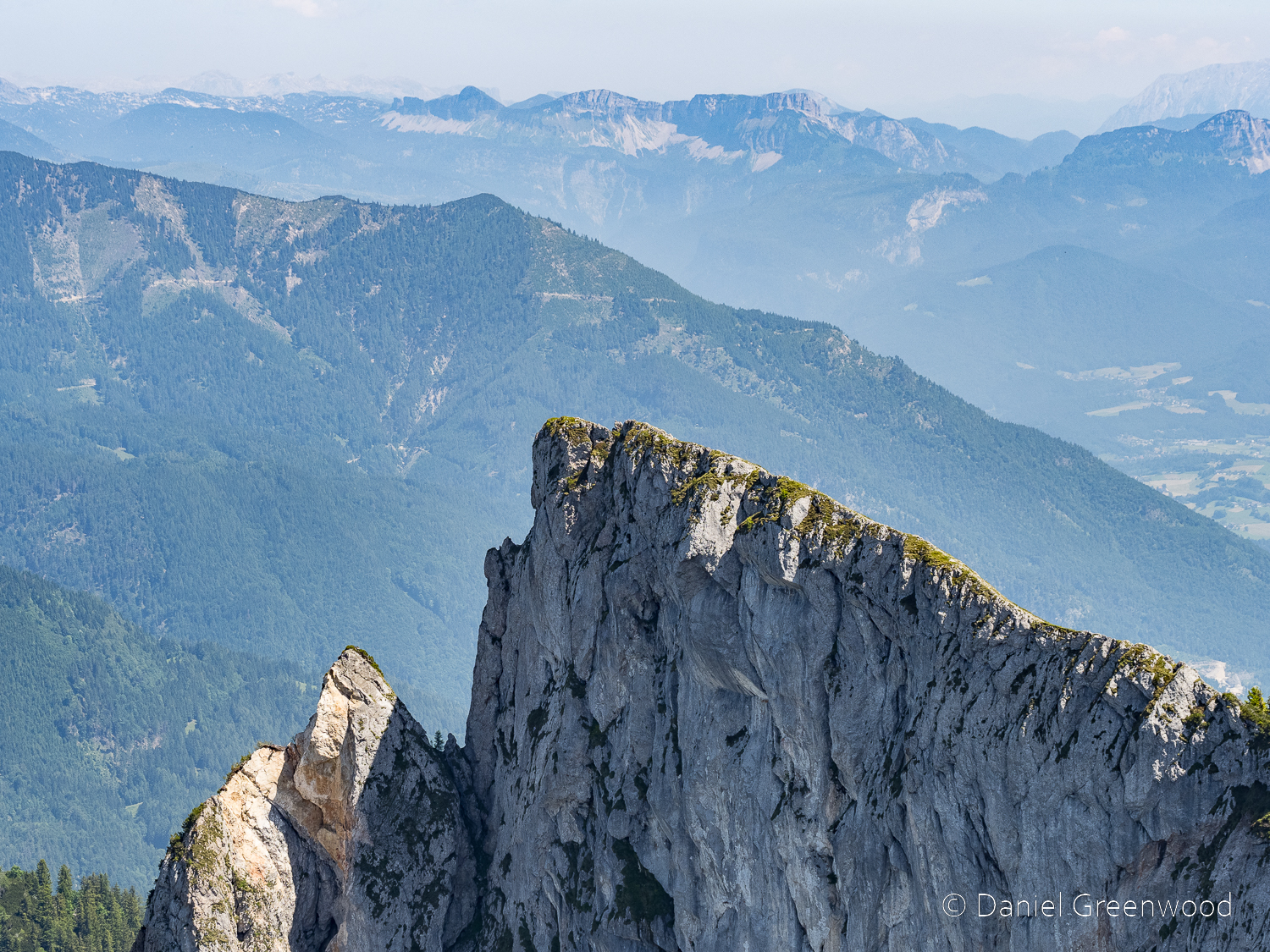
The dramatic peak of Spinnerin seen from the top of Schafberg

This walk is simply heading down the main (uneven and steep) paths to Wolfgangsee, ending up at St. Gilgen. You can do this as a daytrip from Salzburg, but you need to get the boat to the train station.

You can stay on Schafberg for the night in the hotel, or you can just have lunch and enjoy the views.

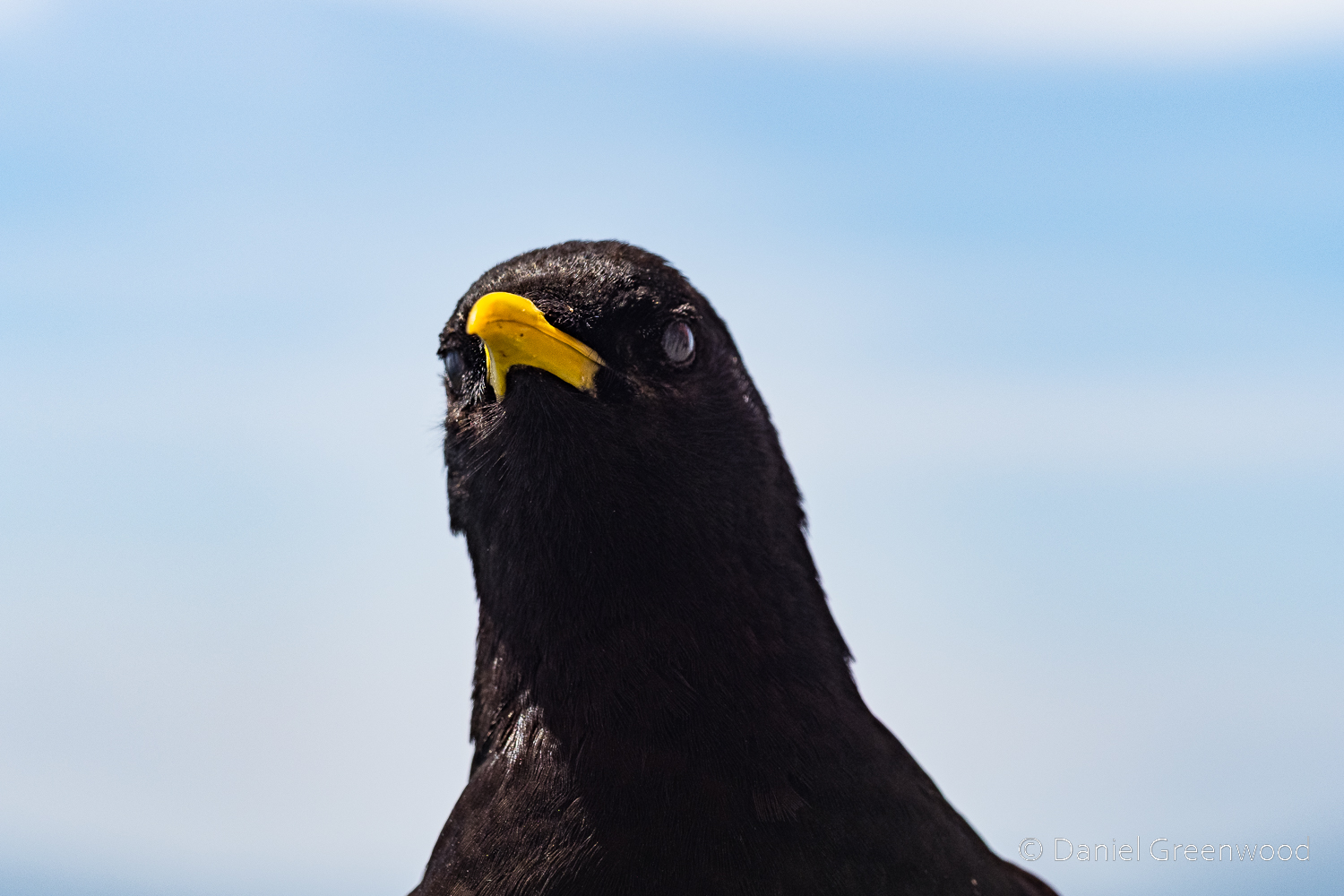
You’ll have to get approval from the alpine choughs though, they rule the roost up there.

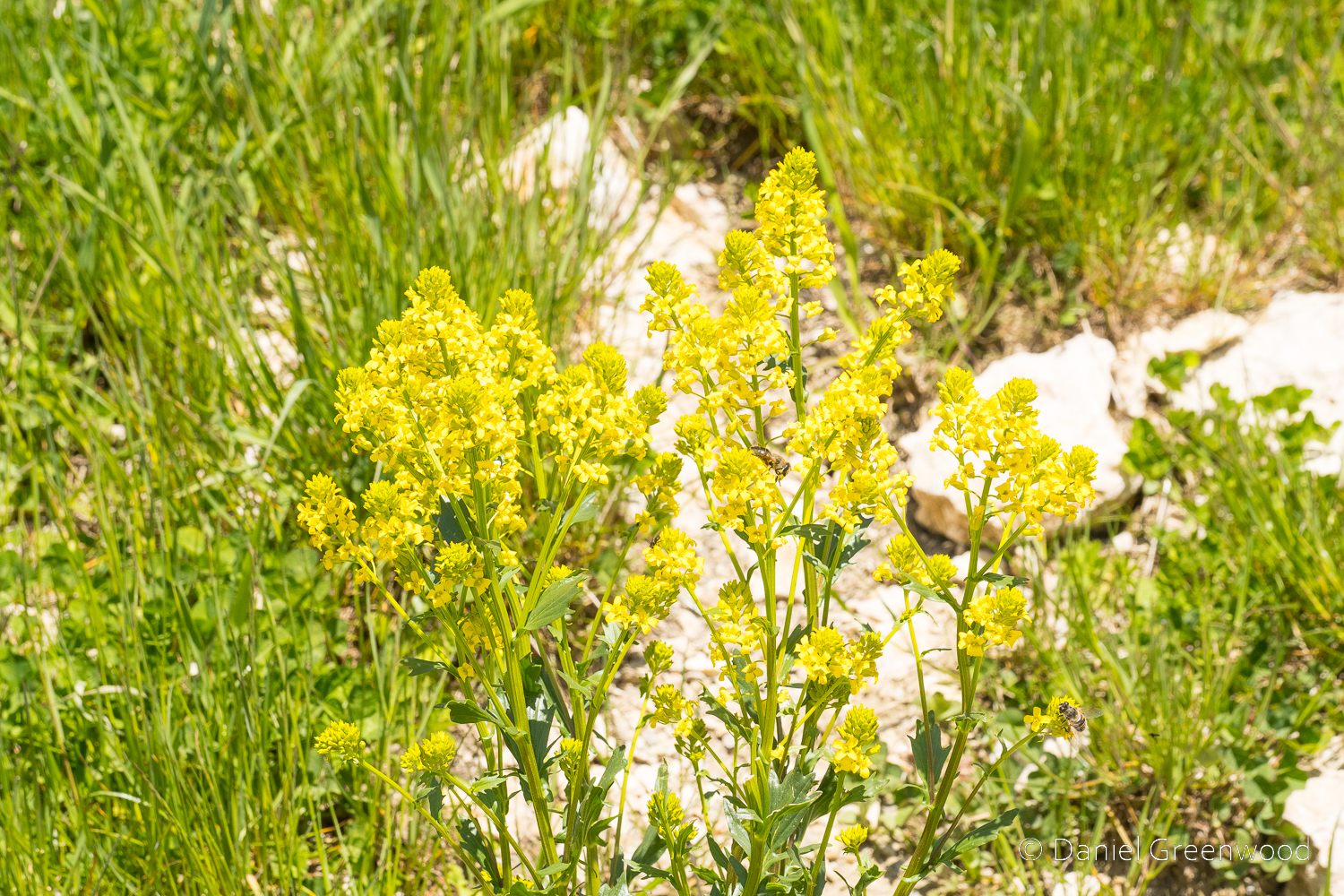
The first inverts I noticed were these hoverflies (probably droneflies) feeding on this brassica.

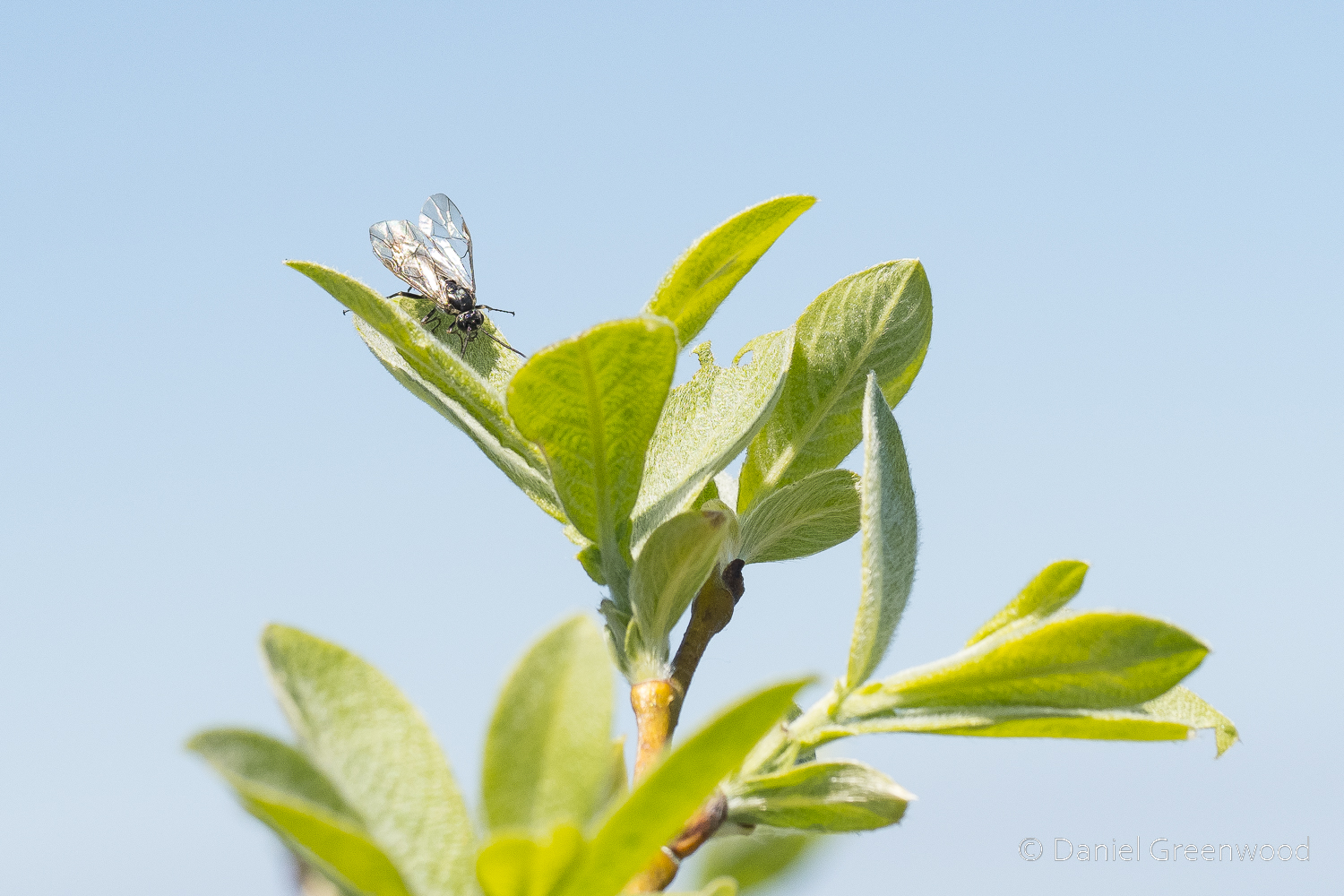
This willow shrub was growing out of one of the viewpoints (see below), and had lots of insects waiting for their close up. This is a saw-fly.

This chrome beetle is in the Genus Chrysolina.

This is one of the Cercopis froghoppers.

To put these pics in context, here’s me taking the photos above!

And a video to show some of the lakes to the north.

I love scorpion-flies and this photo nicely shows the faux-stinger on the insect’s tail. This landed on my wife’s arm, as with the images below.

This is one of those tiny solitary wasps, possibly a gall-wasp.

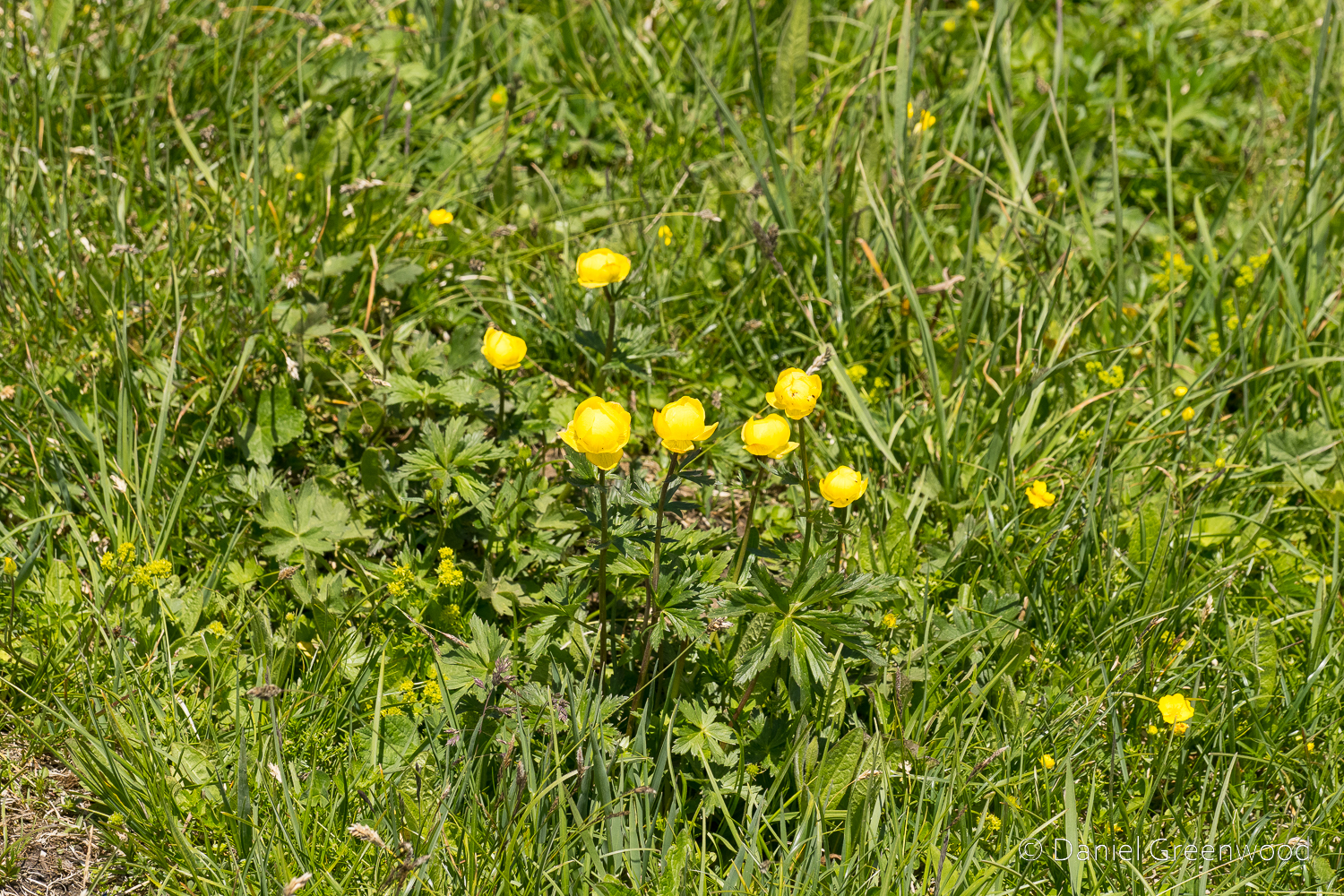
Globeflower is a common occurrence in the Alps.

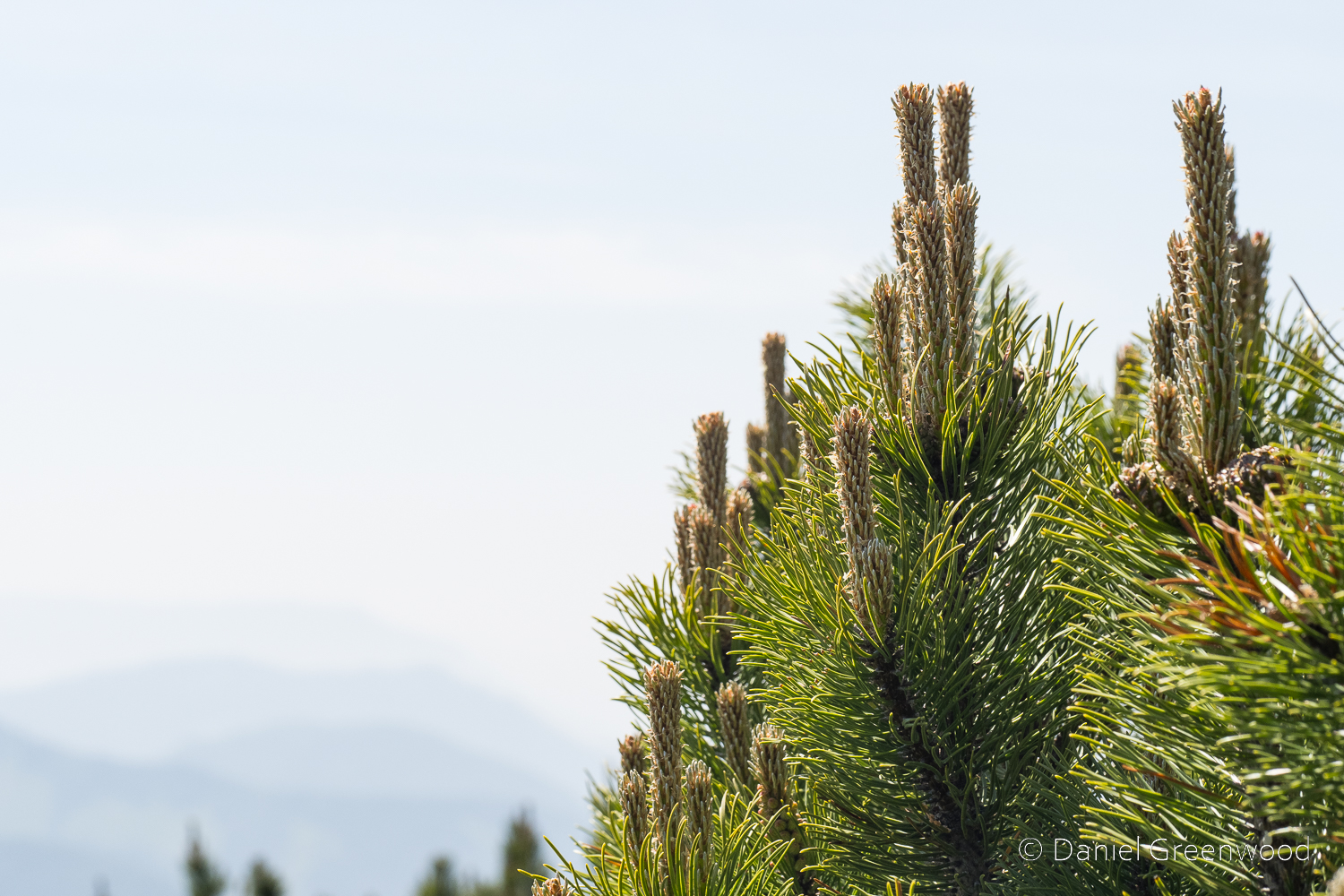
Mountain pine is like a shrub dotted around the alpine grasslands.

The limestone can be seen where the grasslands can’t grow. Thankfully the decline wasn’t as steep as this on the main path, but it wasn’t that far off.

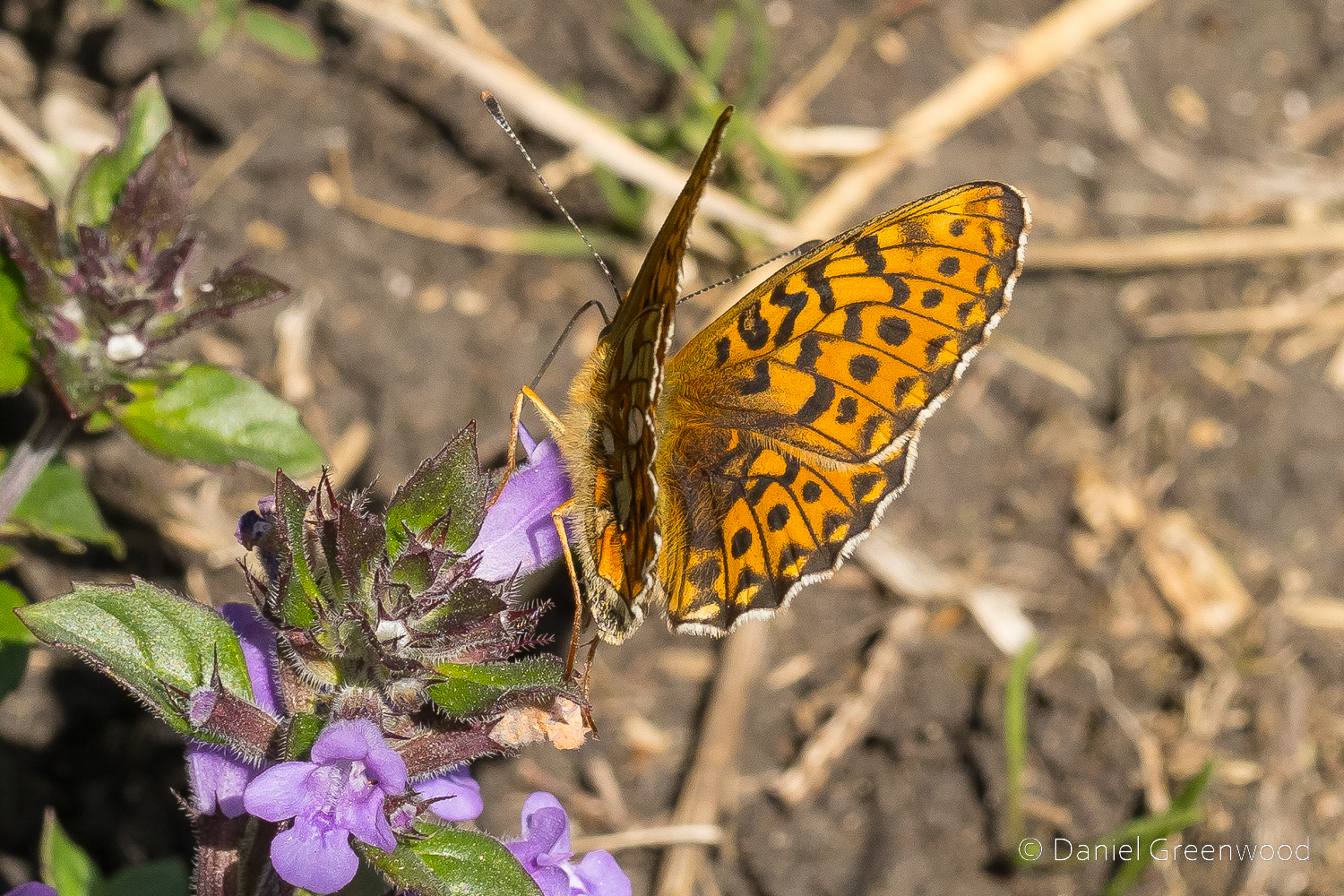
The butterflies were not as numerous as they were lower down on Zwölferhorn, but there were a good number of fritillaries. iNaturalist is suggesting this is pearl-bordered frit.

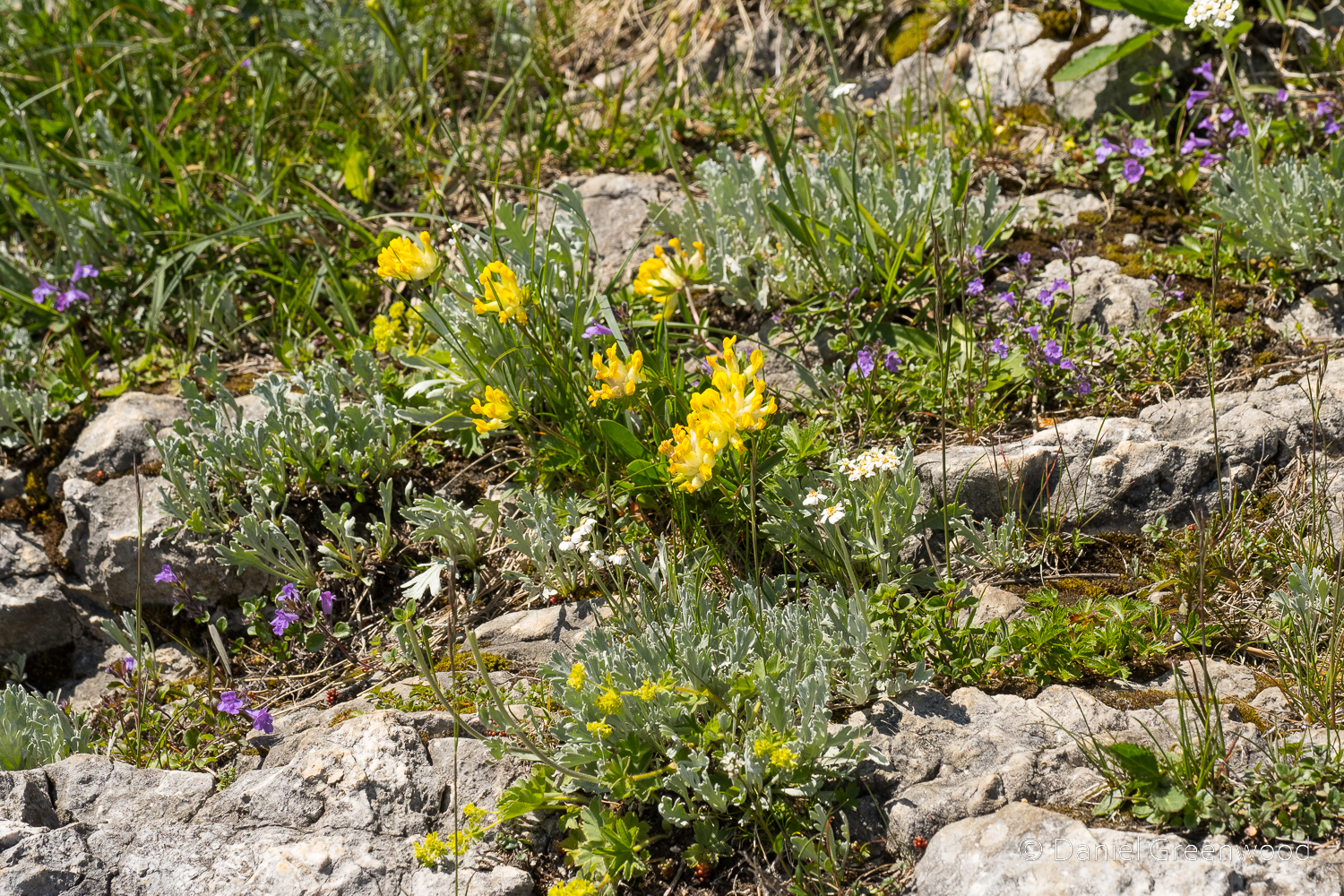
On the rocky outcrops of the path the flowers were a-bloomin’. This is kidney-vetch, unless I’m mistaken.

Silvery-yarrow is a new species for me.

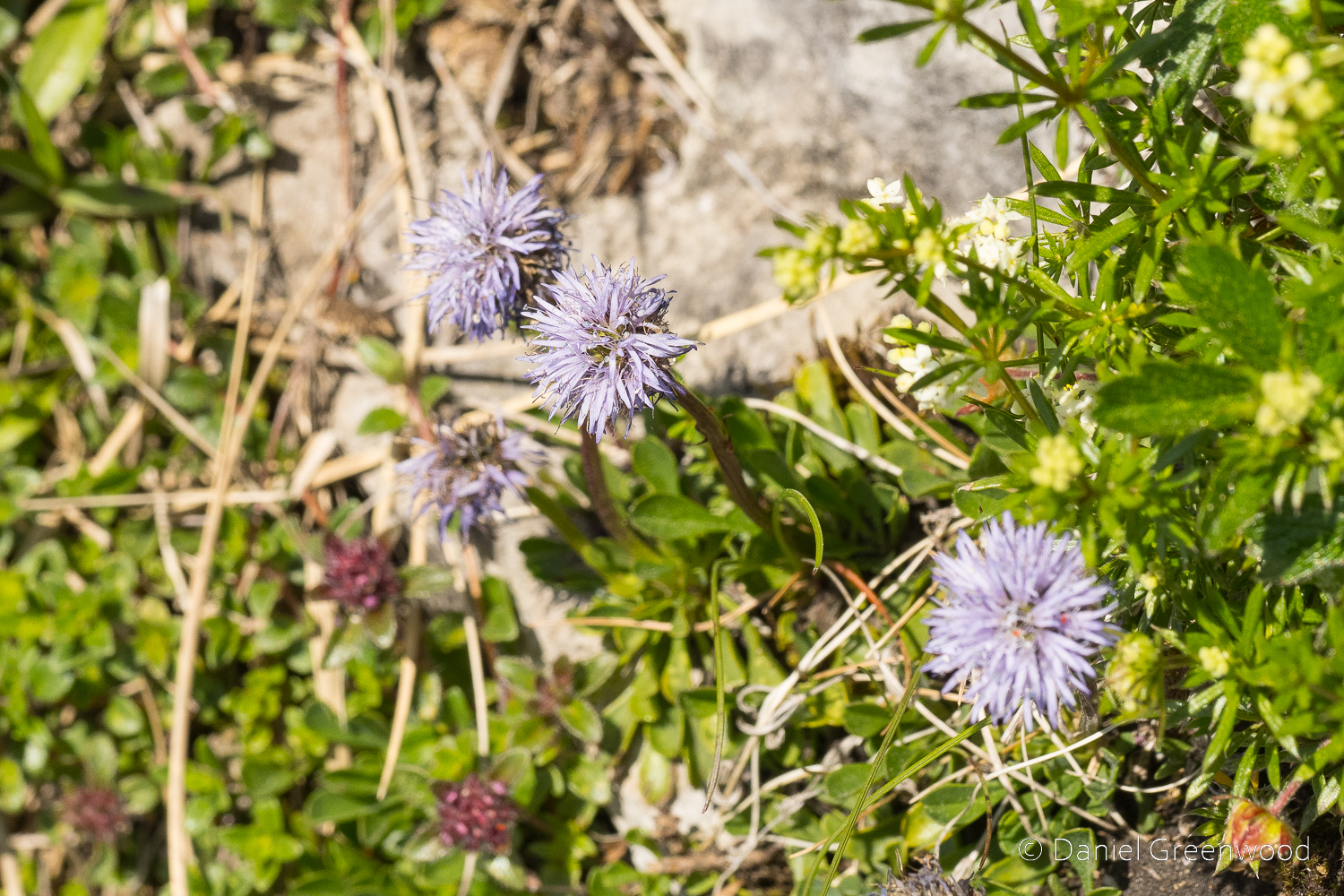
Globe flowers are a group I remember well from the Swiss Alps, they are probably more of a spring species than in mid-June. Not to be confused with the buttercup globeflower seen above.

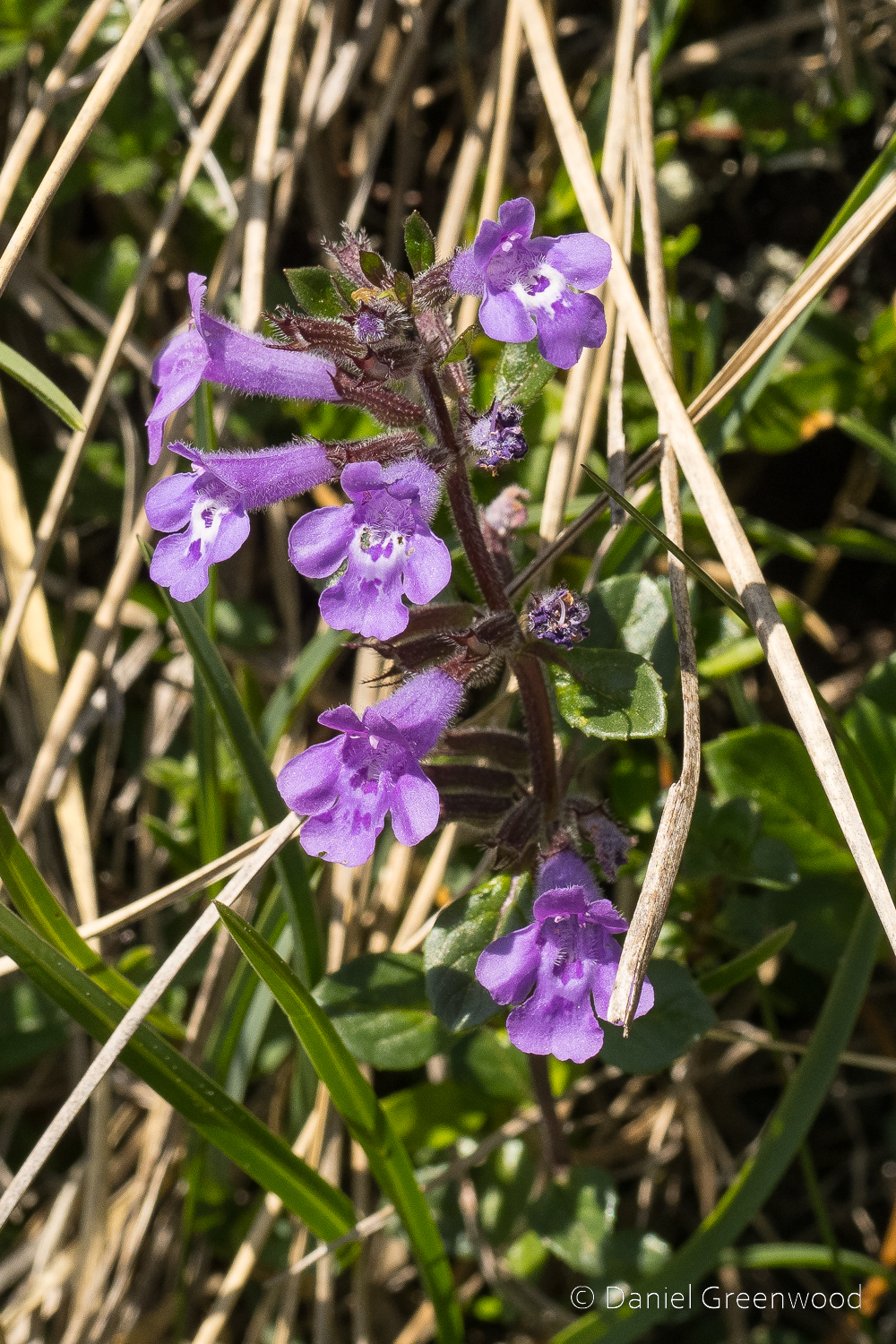
I think this is rock thyme, which looks a lot like ground-ivy.

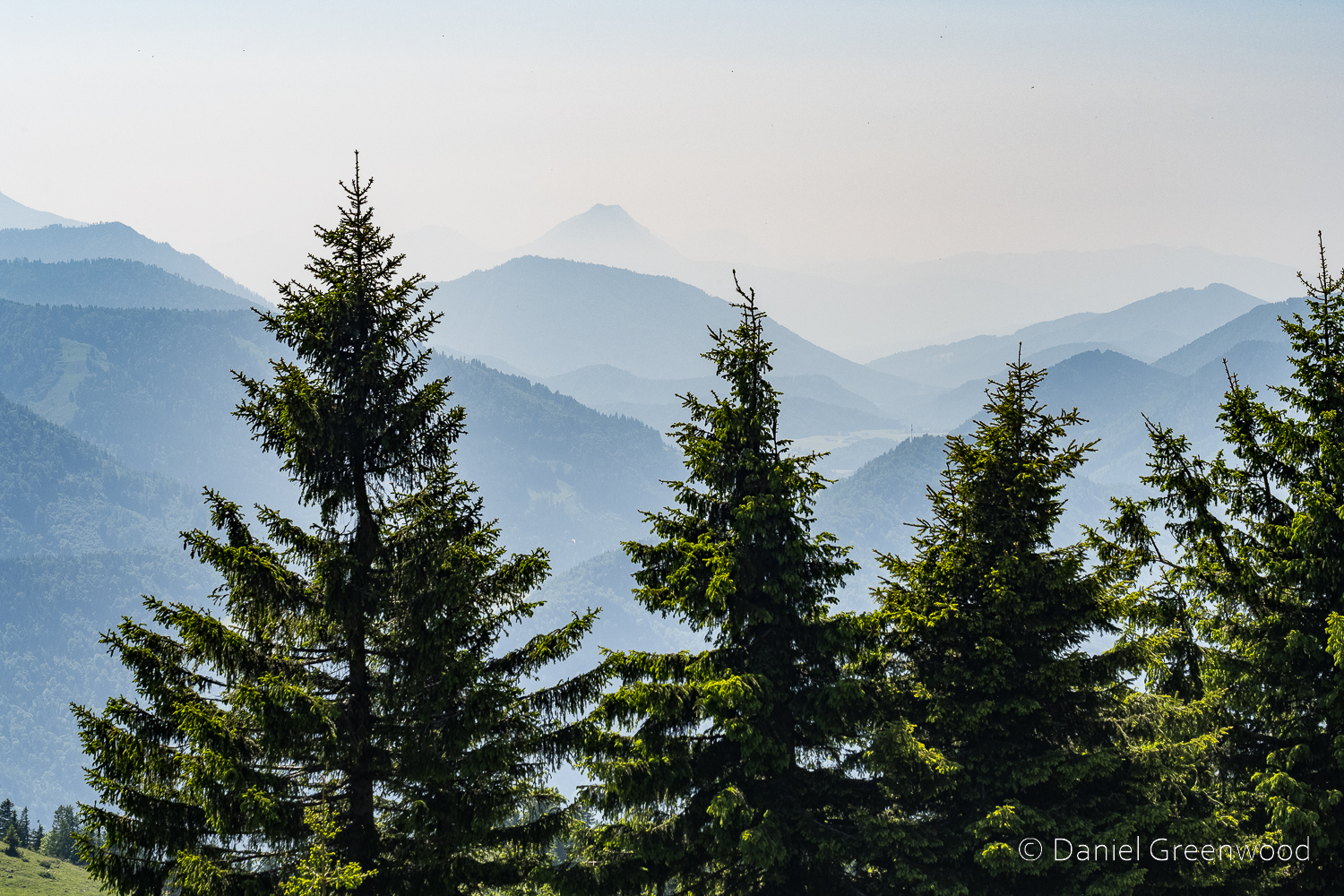
The views are spectacular along this part of the walk, so it’s a matter of looking at the plants and butterflies around your feet, and the vistas beyond, without tripping up!

The train meets you as the steepest stretch of the walk comes to an end. The gradient is nicely illustrated here.

You pass the Gasthof Schafberg-Alpe which is not in use at the moment. It’s the site of the station before the top of Schafberg. You can jump out here and walk up, or get the train back down. We continued on to St. Gilgen, down through the woods.

The ground levels out here and the walking is gentler for a time. The views are some of the most awe-inspiring I’ve encountered.

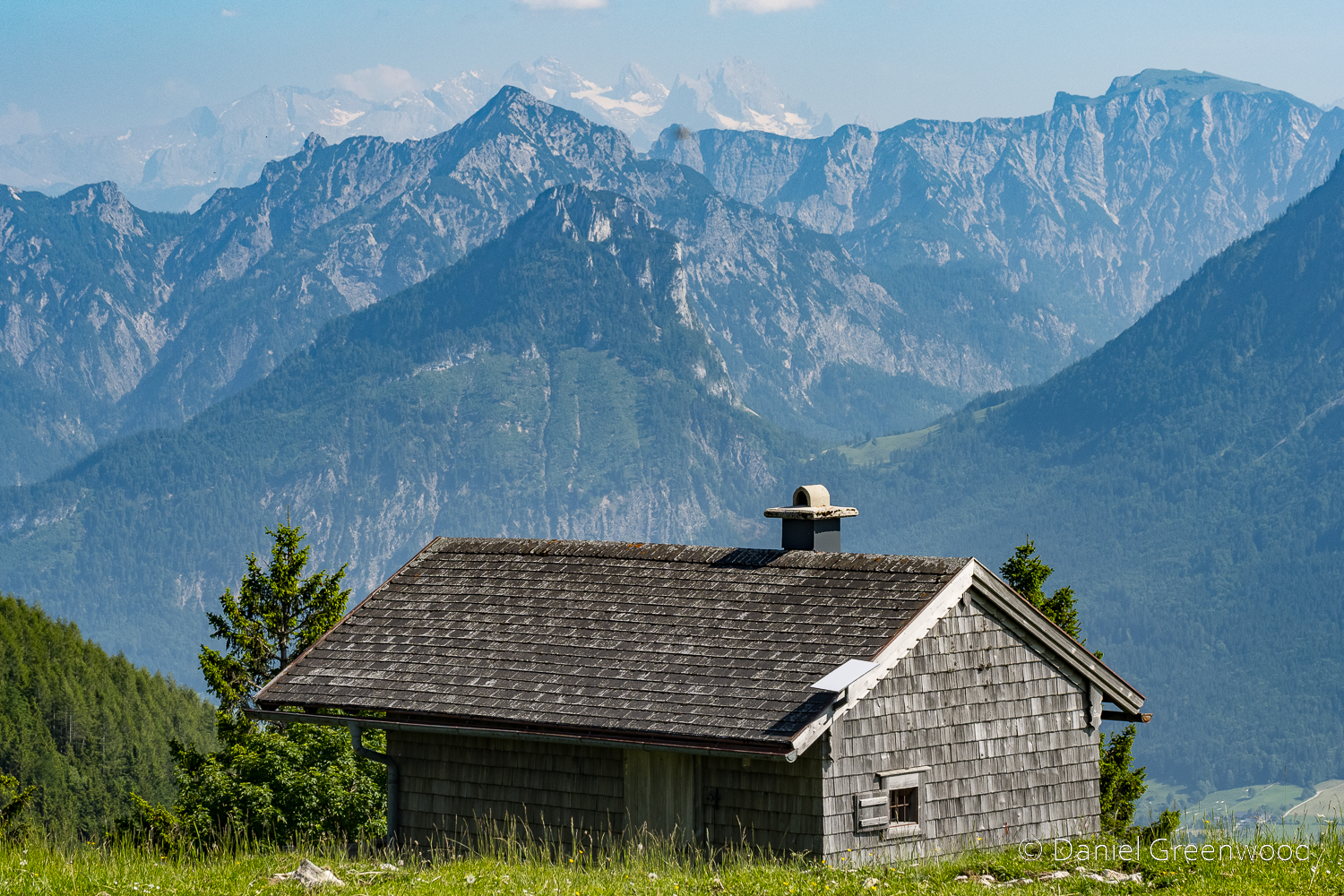
There are a number of wooden huts in this part of the walk, which make for helpful foreground subjects, with Dachstein in the distance.

As per my previous Austrian Alps post, the only orchids on show were early-purples.

The meadows were looking mighty fine.

It’s at this point that you can see how far you’ve come (literally) as the path then moves into woodland.

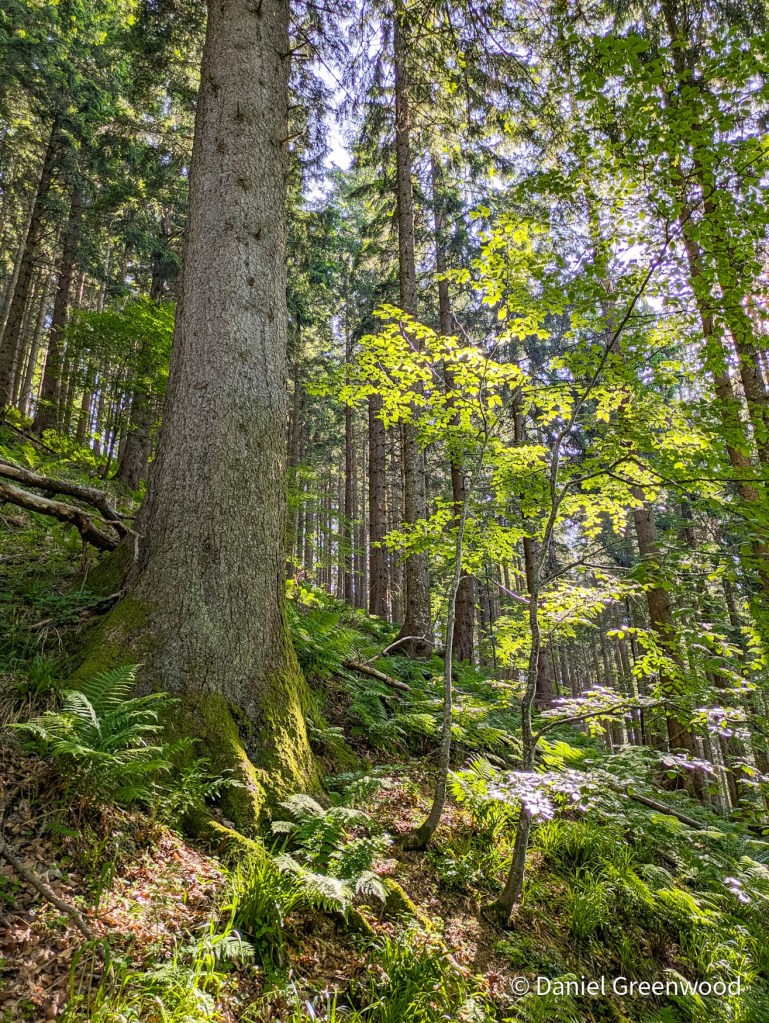
The shade was welcome, but it was very steep and winding.

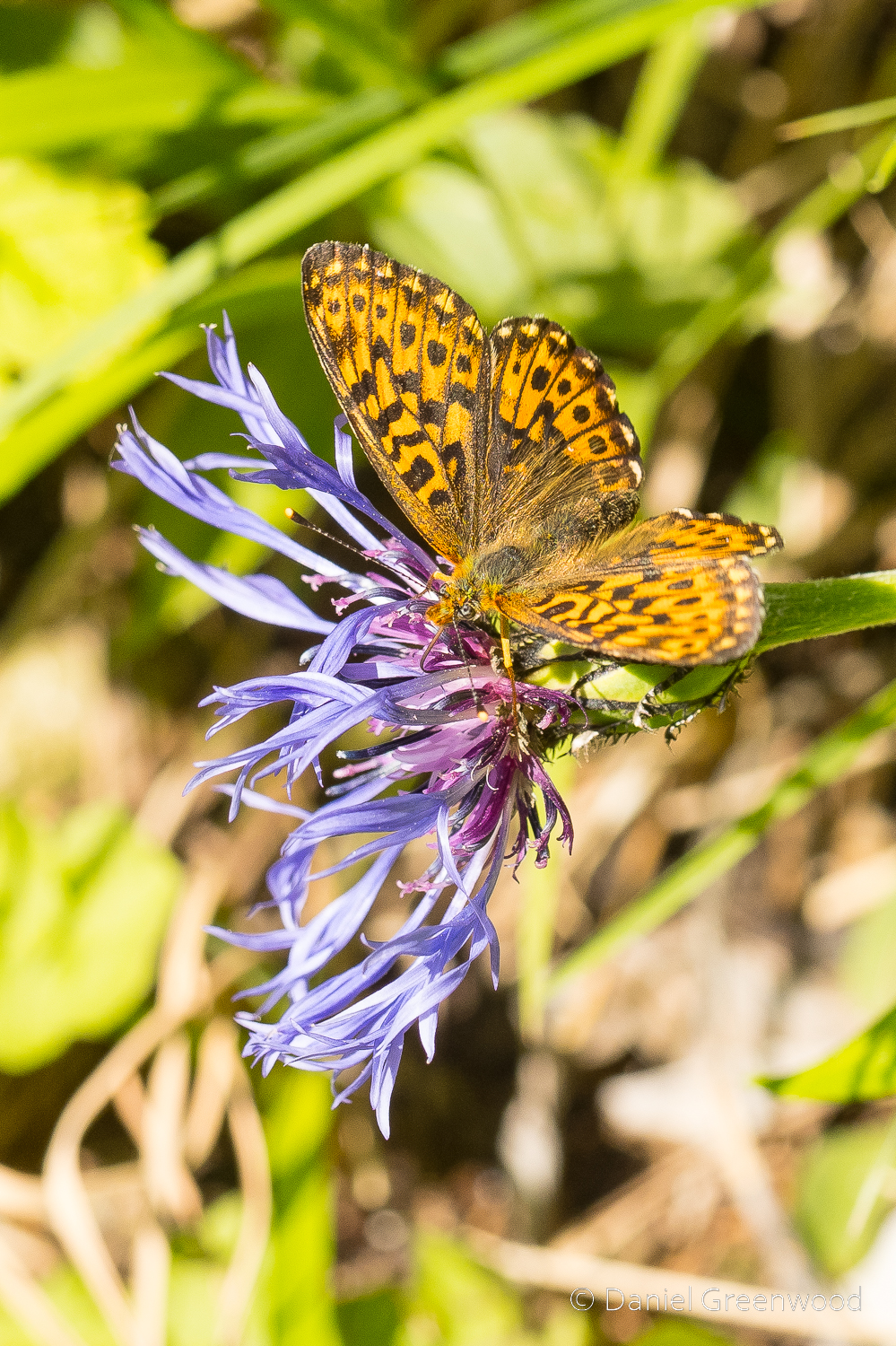
This is probably another pearl-bordered frit, feeding on a plant I actually have in my garden here but that grows wild in the mountains – perennial cornflower.

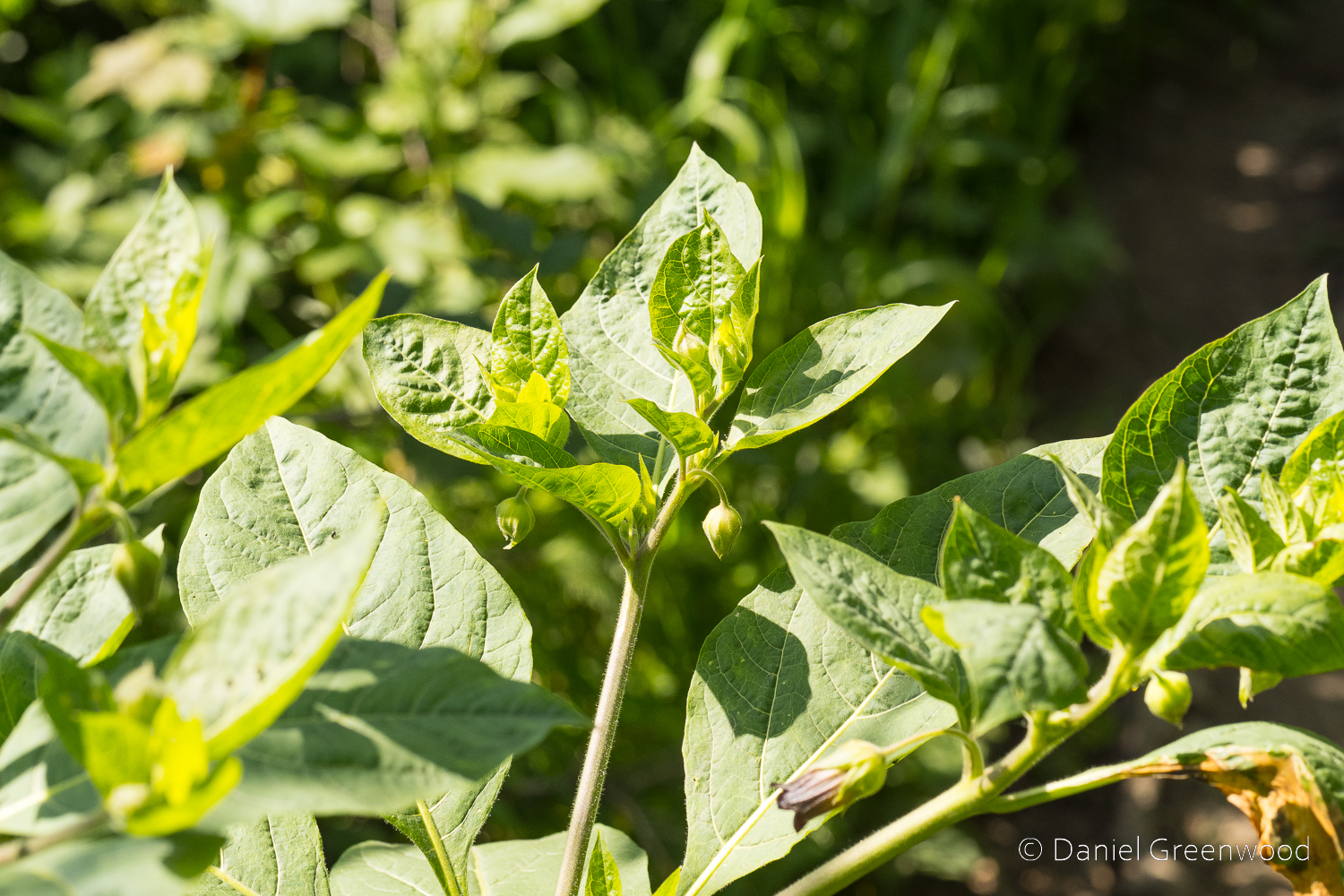
Don’t worry you can’t get poisoned through your screen. This is deadly nightshade, also known as henbane, growing in the woods below Schafberg.

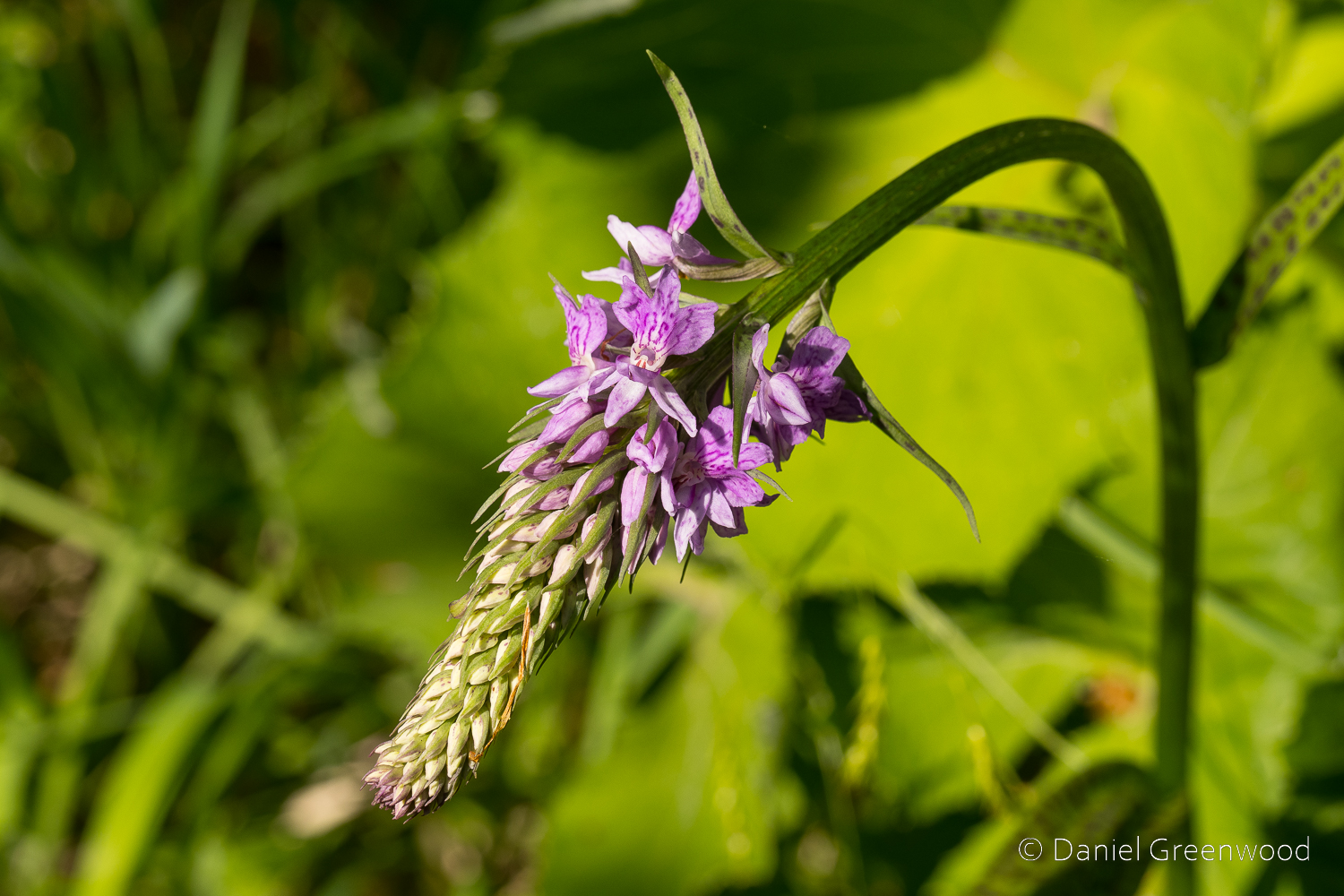
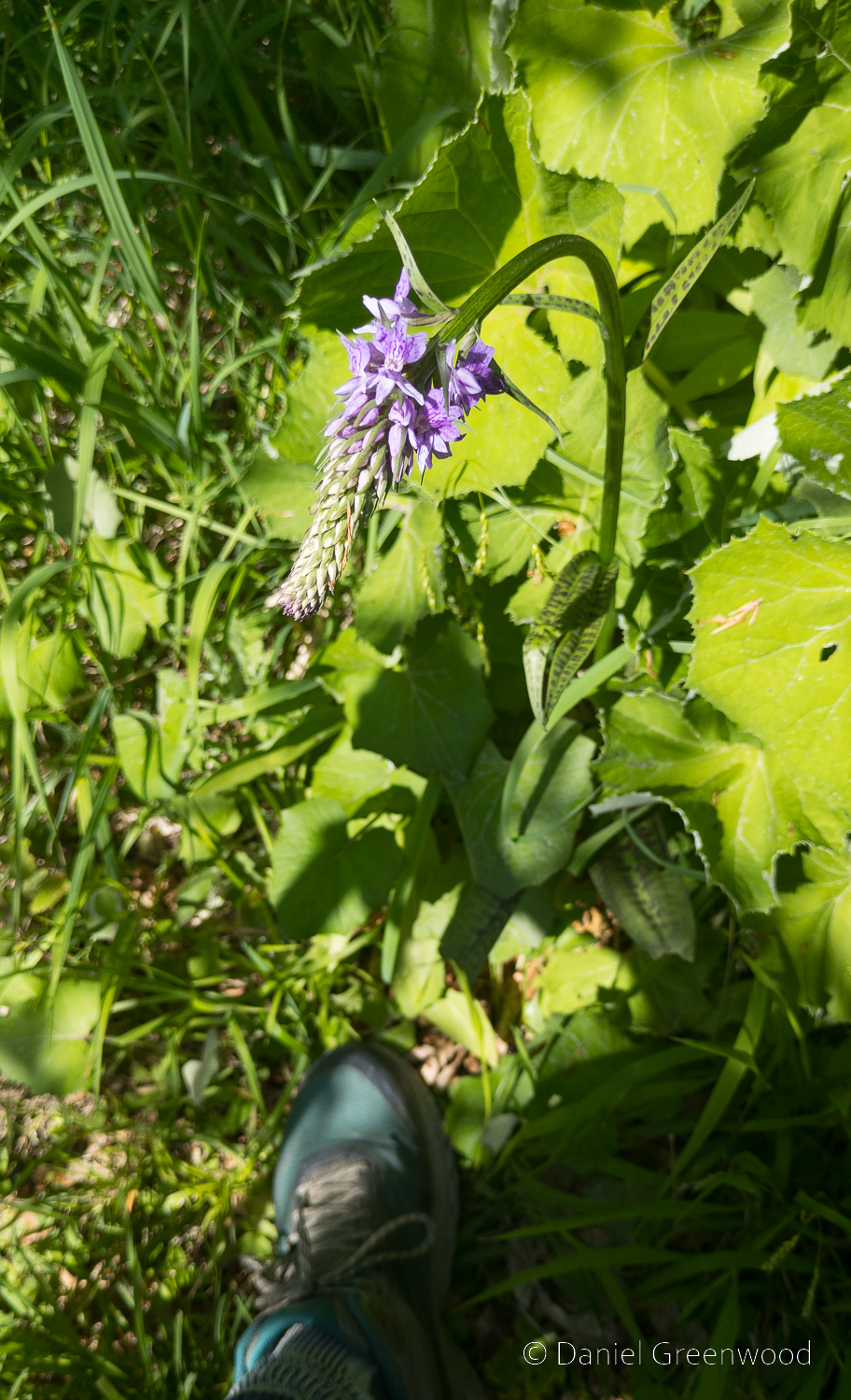
Now, this is the biggest orchid I’ve ever seen. My foot in the image on the right should show just how tall this is – knee-height. Does anyone know what on earth is happening here – is it some kind of hybrid?

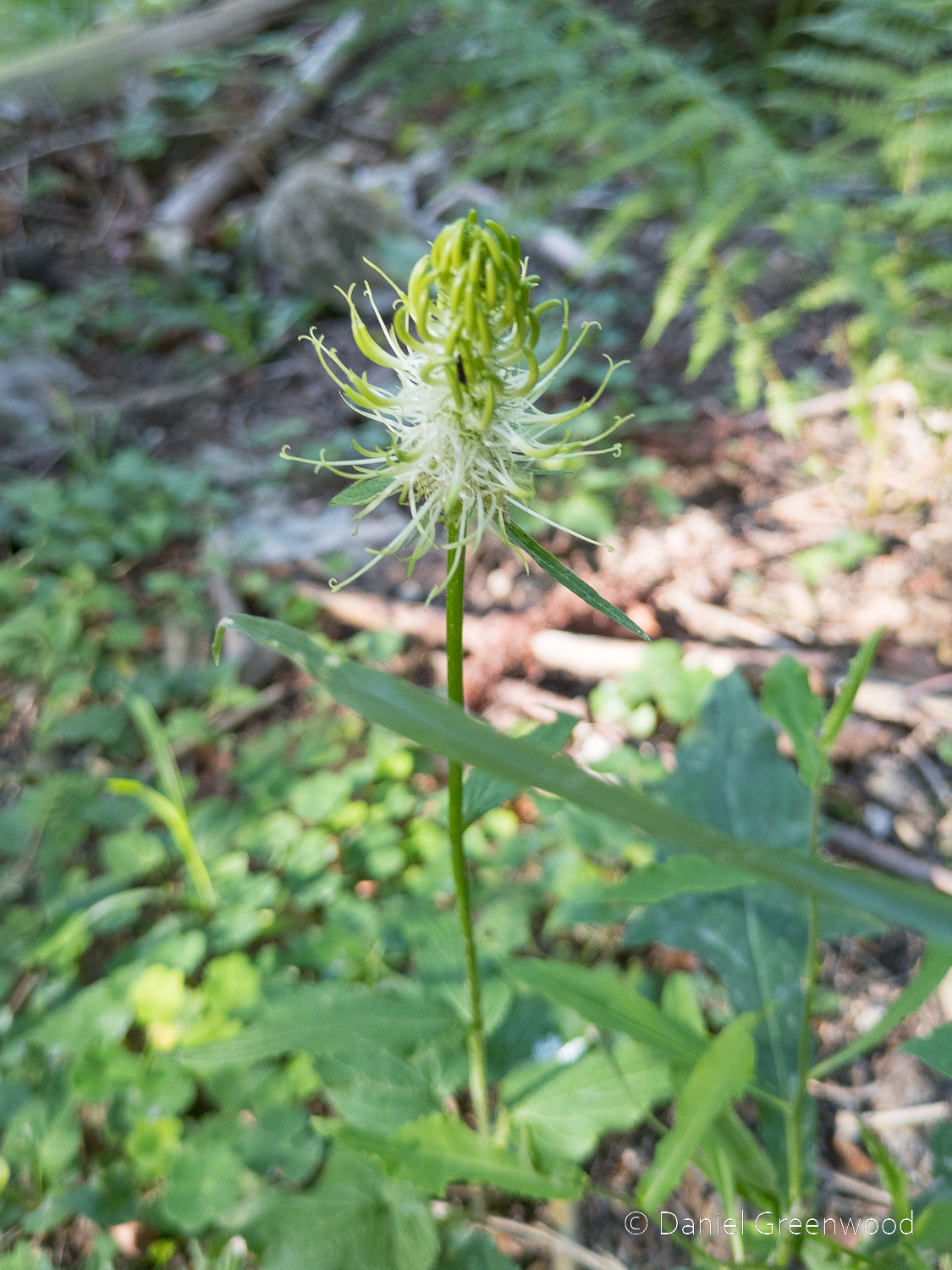
This is an out-of-focus phone pic but it’s a species I don’t see often – spiked rampion.

On a fallen tree across the track I found a nice collection of wolf’s milk slime mould. I was too tired to pop them.

We arrived in the village of Winkl and soon we were among hay meadows.

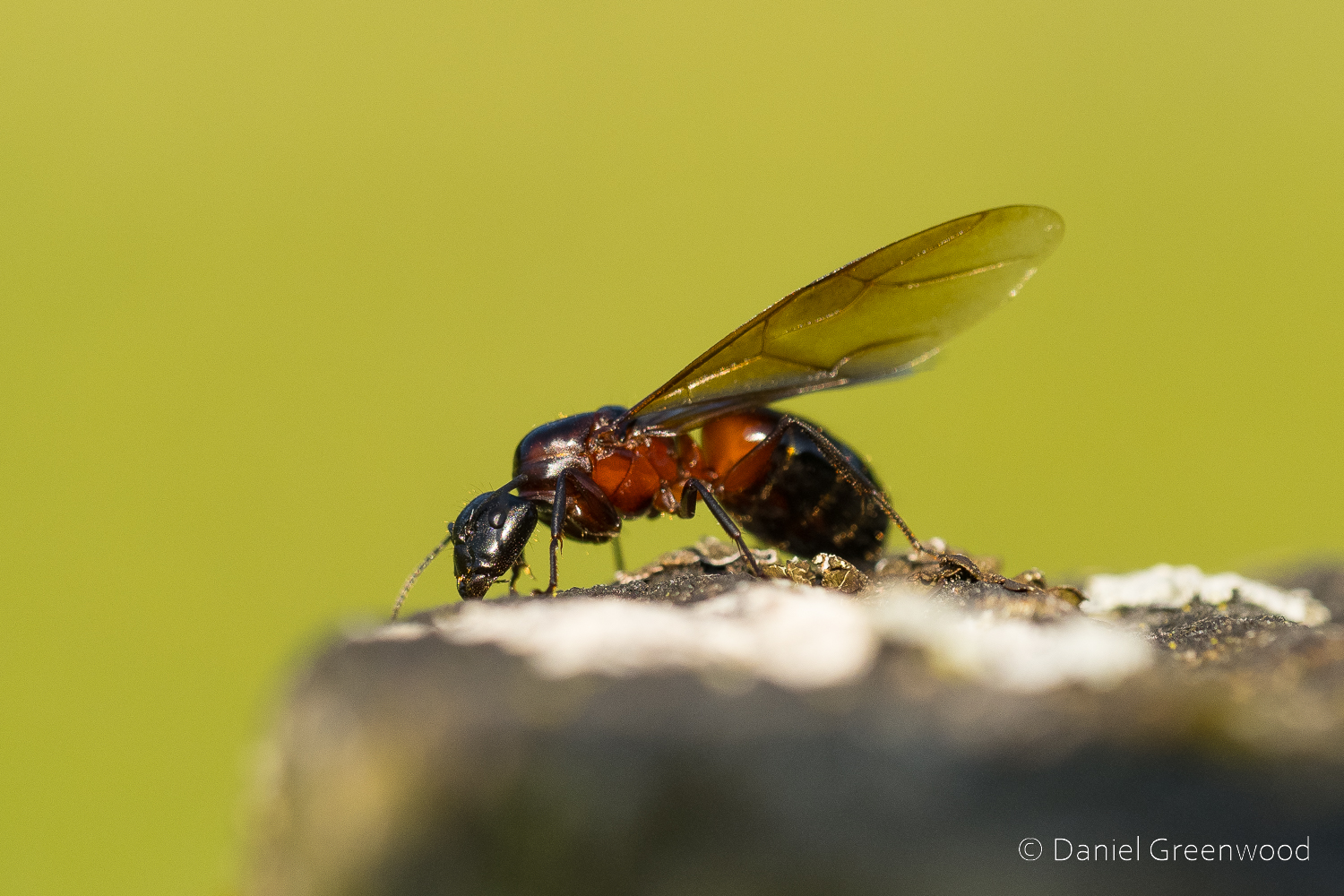
This brown-black carpenter ant was poised on a fencepost, perfect for a pic. There were a couple higher up on Schafberg, so it must have been one of their ‘flying-ant days’ as we say in England.

Another species that I only see when in Europe is this buck’s-beard, growing at the roadside.

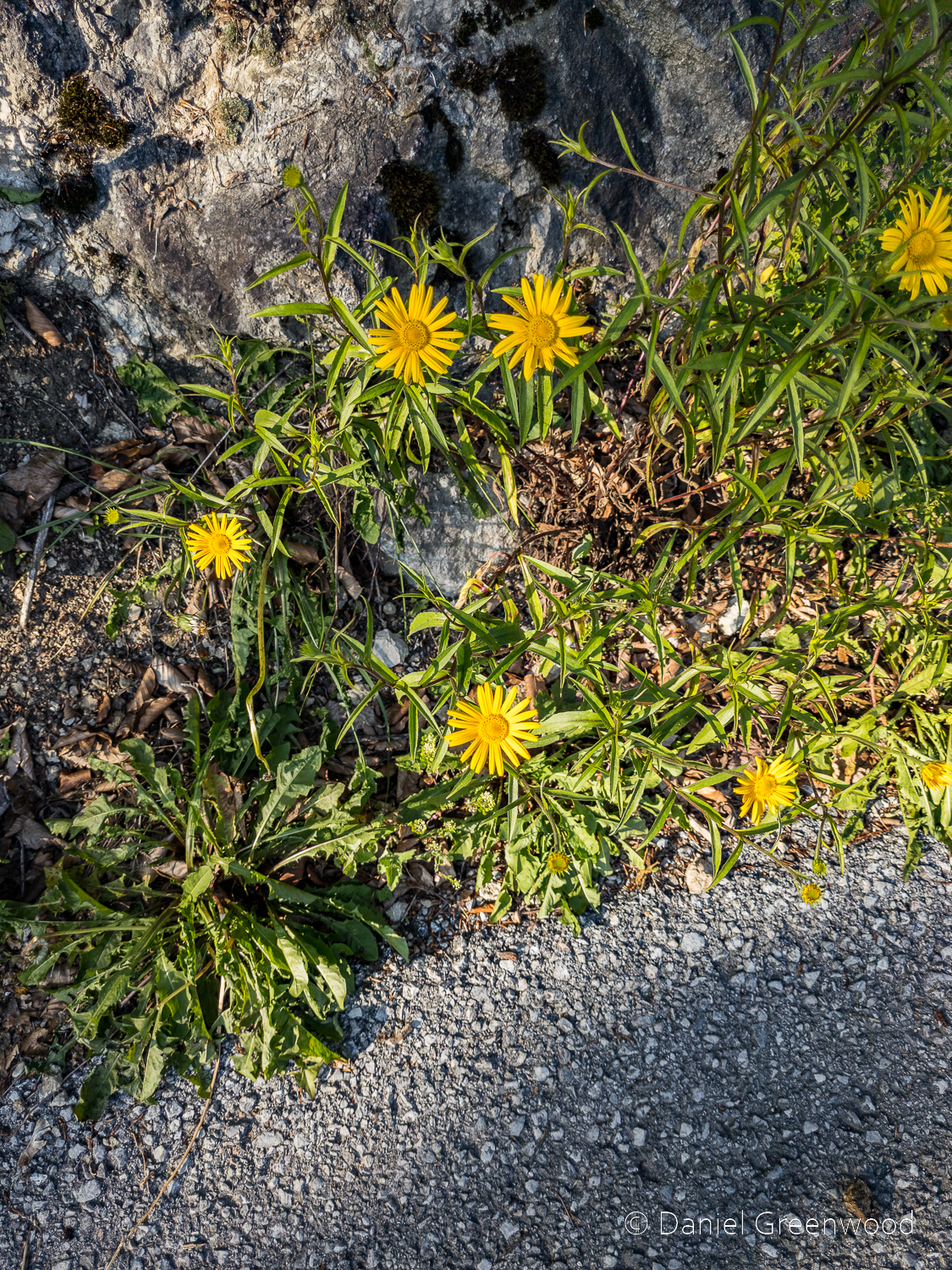
Having descended to the shore of Wolfgangsee, there were these lovely willow-leaved yellow oxeyes growing at the edge of the path.

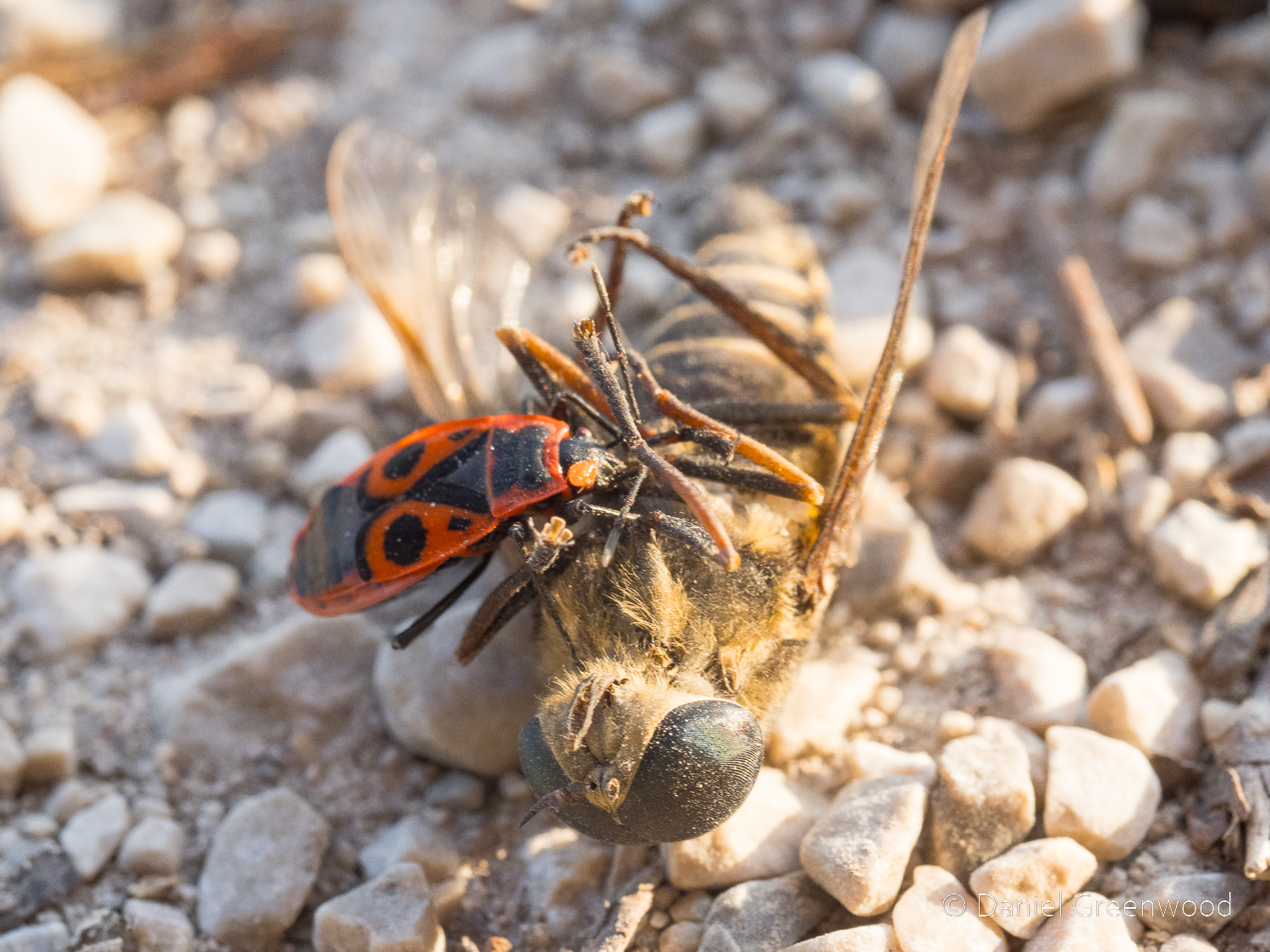
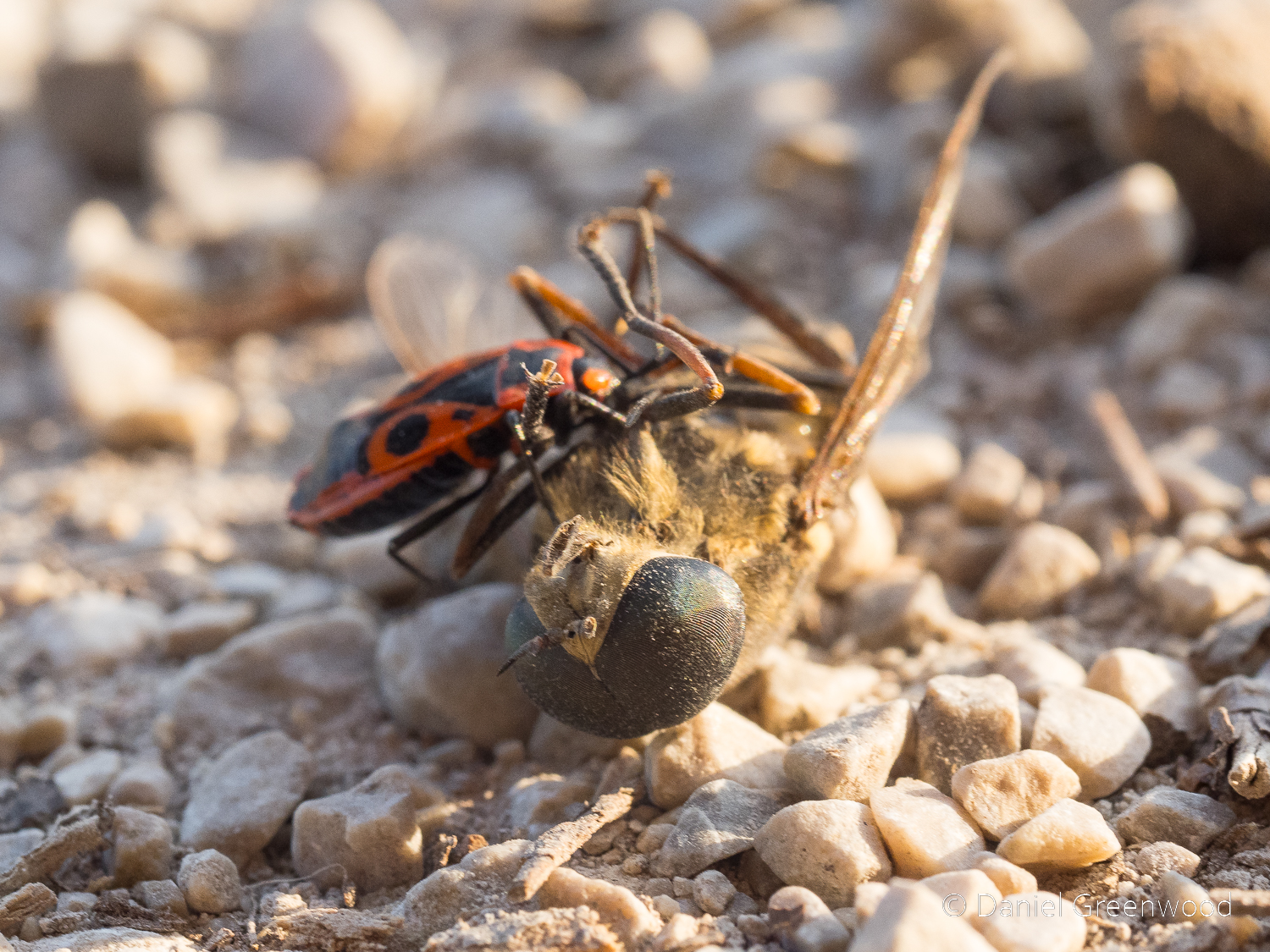
To end, I was quite tired by this point and wondered what on earth was happening. This is a mix of phone pics and mirrorless camera pics, of the scene of a dead horsefly being eaten by a cinnamon bug. If you look more closely you can see a red mite on the head of the bug, so the mite is the winner!

Thanks for reading.
Macro | Austrian Alps | Support my work

Austrian Alps: wildflowers on Zwölferhorn

Zwölferhorn (1522m), Salzkammergut, Austria, June 2025

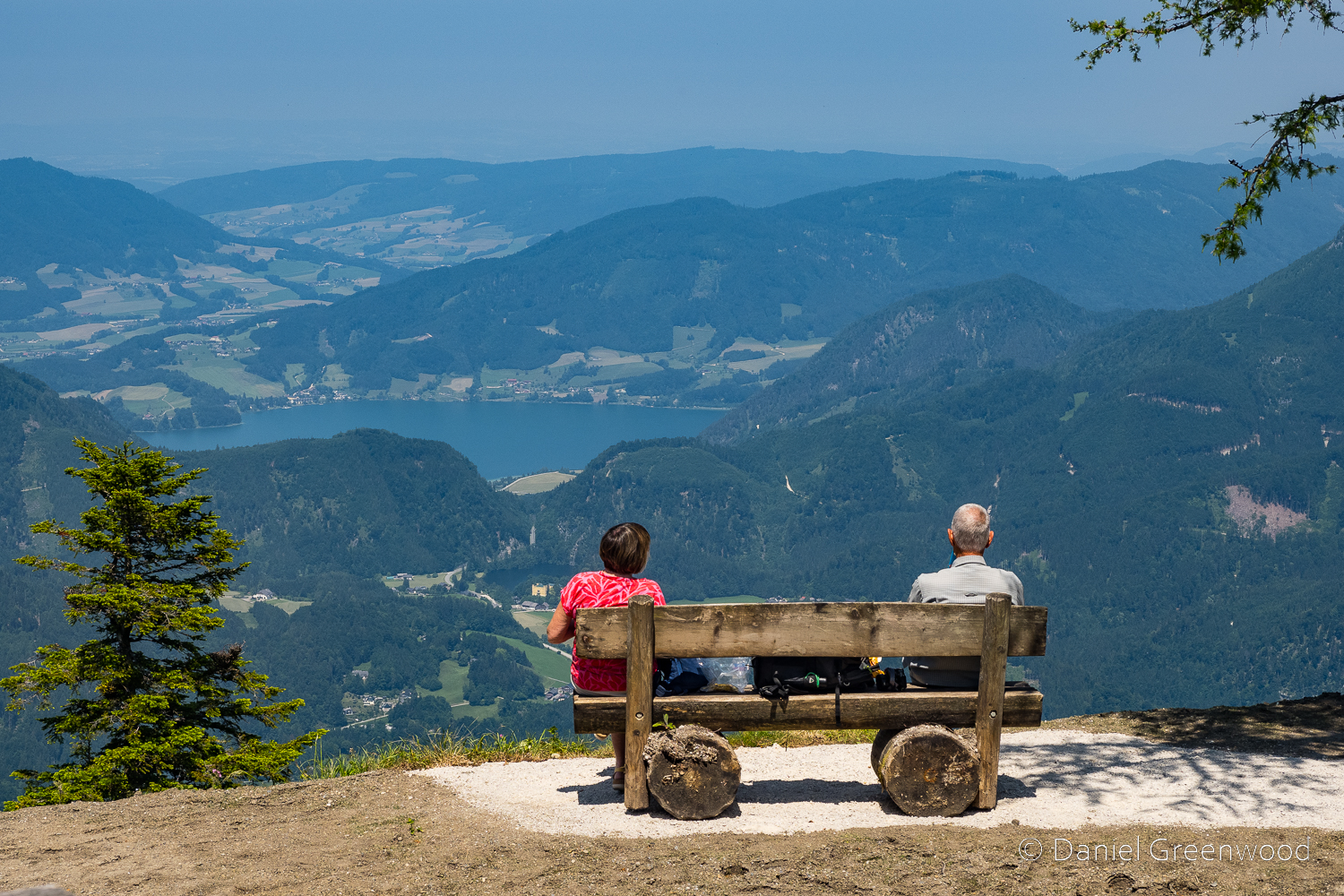
In mid-June my wife and I visited the Austrian Alps for the second year in a row. We took the cable car from the village of St. Gilgen (featured in the opening scenes of The Sound of Music) to the 1500m heights of Zwölferhorn, so named because according to shepherds down the years the sun sits atop the peak at 12noon (zwölf) everyday.

The views from the top are magnificent, as you would expect from the Austrian Alps, though a bit hazy on this hot day in the Salzkammergut.

Part of the allure of this place in spring-early summer is the wildflowers high in the mountains.

To the south and west the mountains seem to run forever. South-east of here is the famous Hallstatt and the Dachstein Massif, which I will include some long-range images of in an Austrian Alps post to follow.

A view into Salzkammergut

These mountains have been managed in the same way for many hundreds of years – though there were probably fewer trees in the past – which has led to a rich diversity of flowers and their dependent invertebrates. We saw an abundance of both when visiting this time.

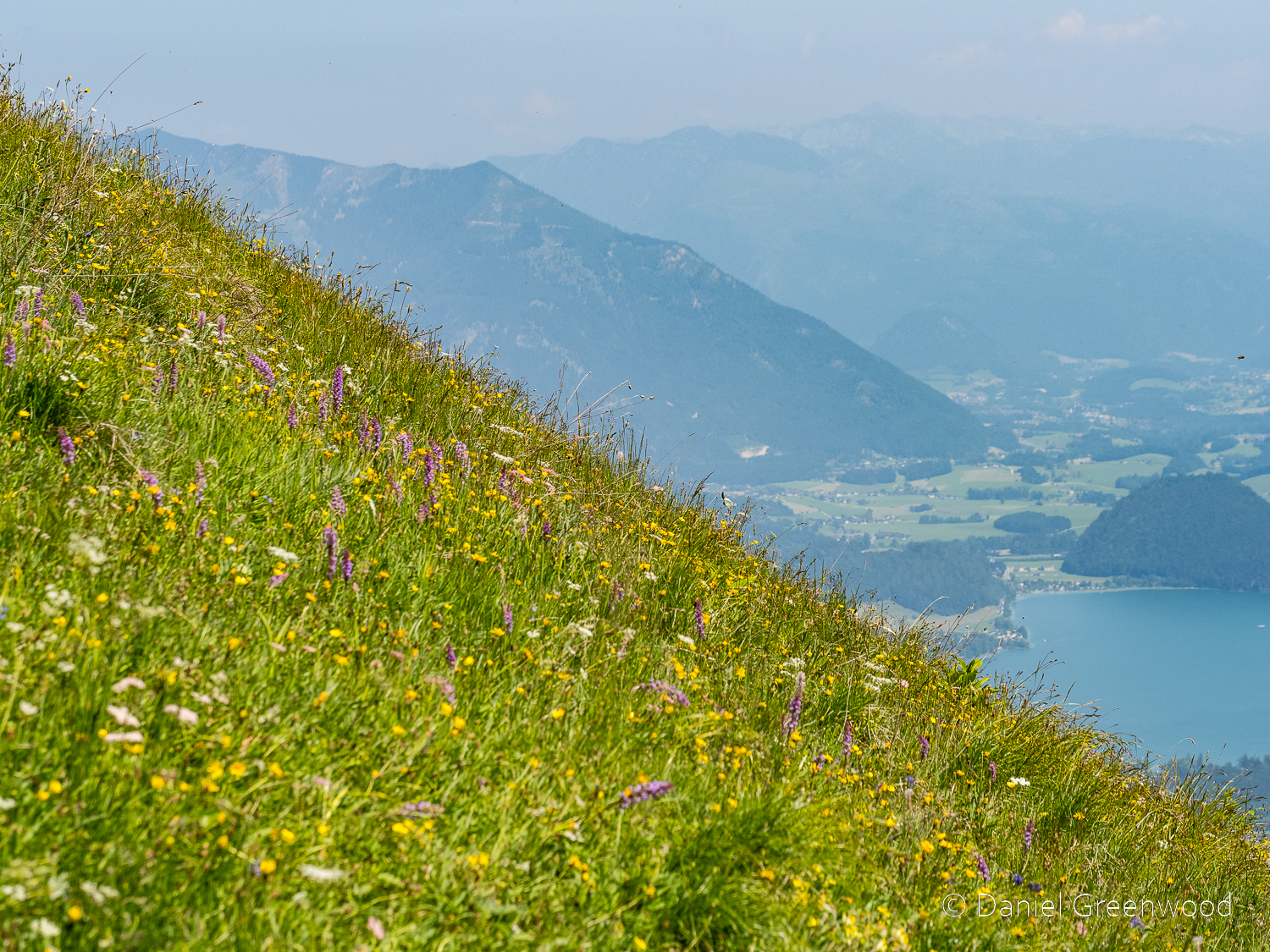
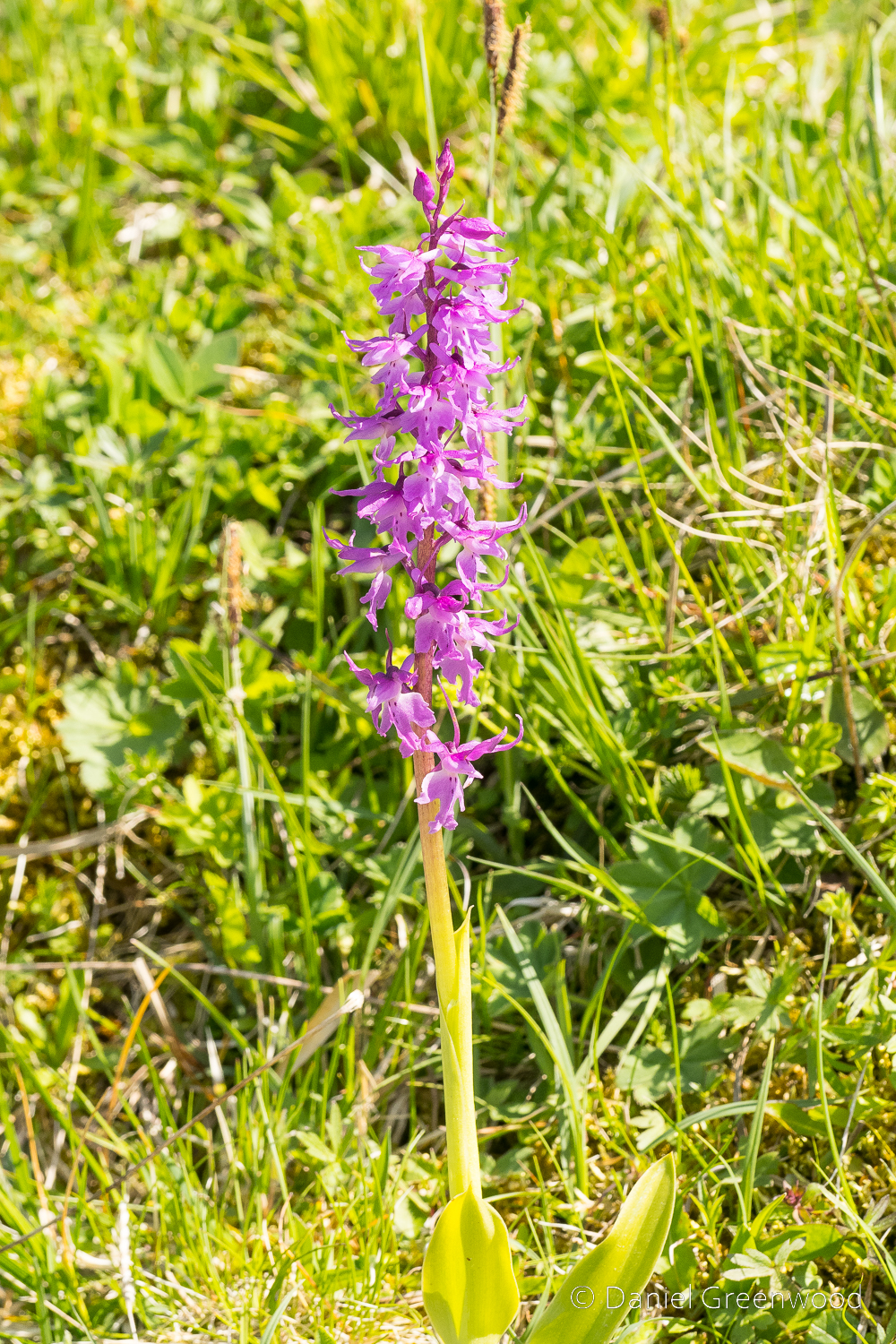
The sloping meadows were ‘littered’ with early purple orchids (Orchis mascula). We kept to the paths at all times for both safety as they were steep, and so as not to damage the grasslands. Having a camera in these places doesn’t give me a divine right to trample stuff!

Some of the orchids up close. Early-purple was the only species we saw.

This is hoary plantain (Plantago media) which gave a nice focal point to the alpine meadows.

I was intrigued by this daisy (Asters) as there were signs for arnica in the area. On iNaturalist it’s been identified as willow-leaved yellow oxeye.

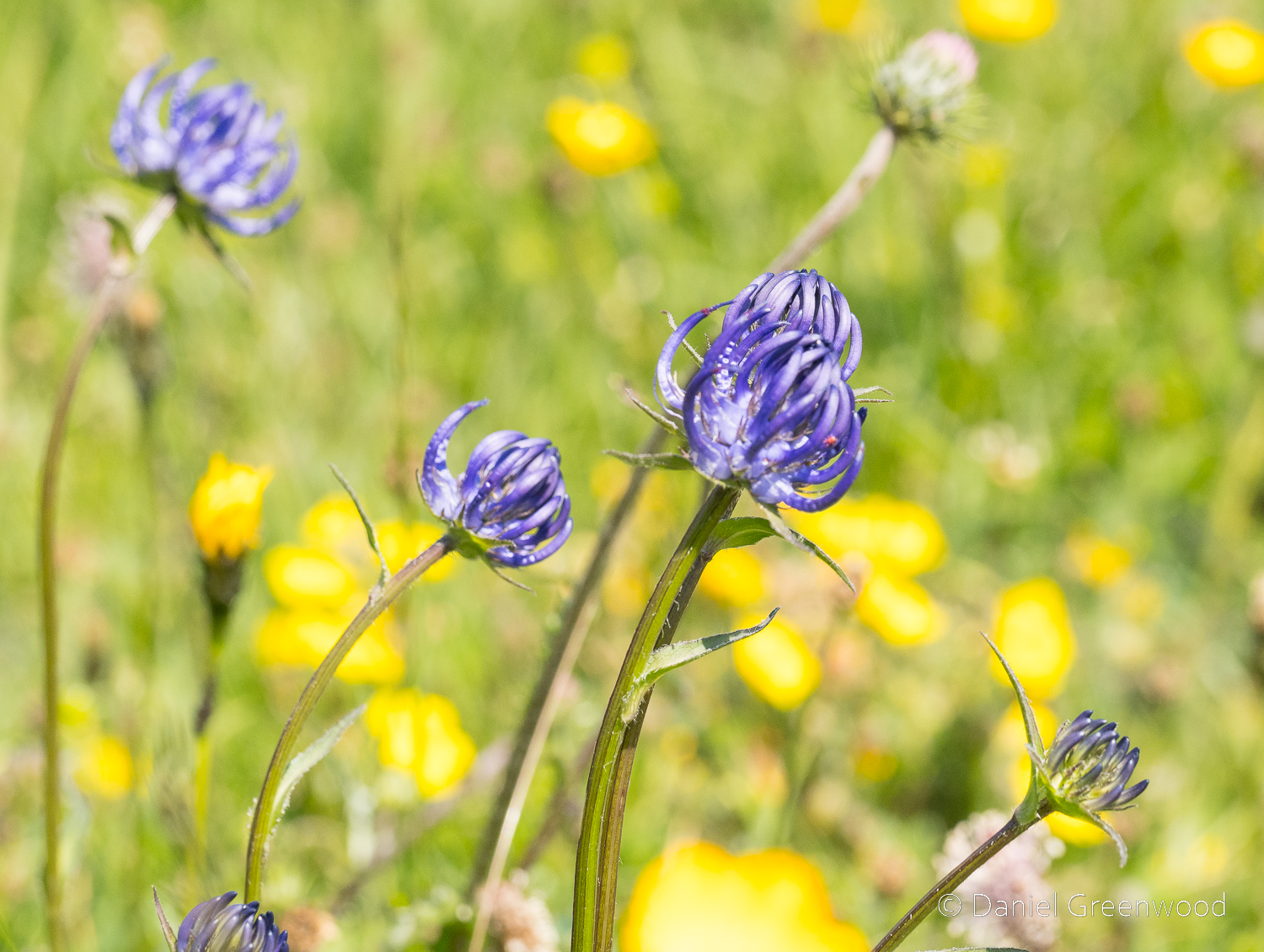
This came out a bit out of focus in the wind – it’s the ‘Sussex flower’ of the chalk Downs, round-headed rampion.

This is a new species for me, the slender Scotch burnet moth! Apparently they are native to Britain and much of Europe, and managing to nectar at the same time as mating, impressive.

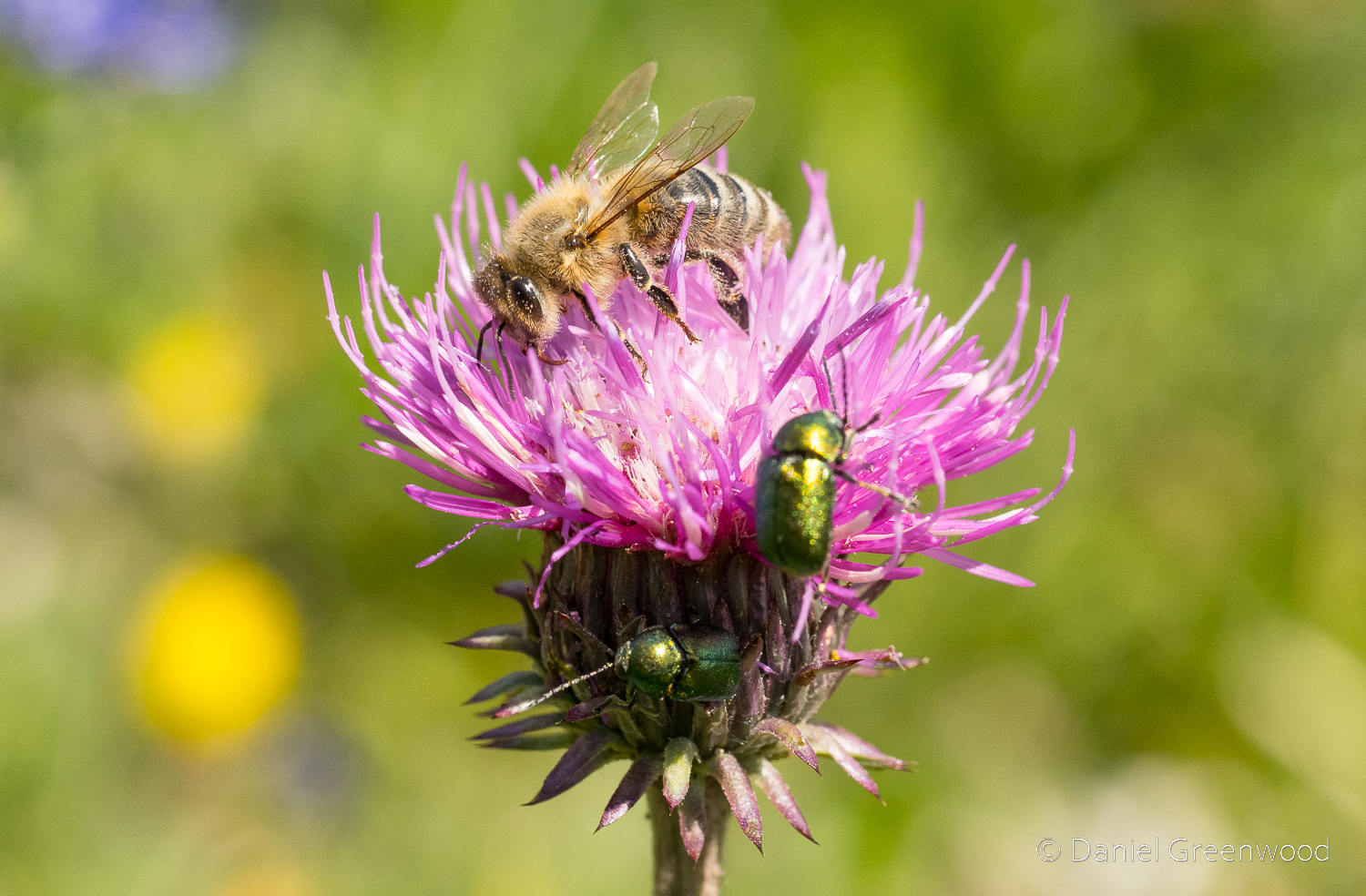
This photo made me laugh (I’ll explain). I was trying to get the honey bee and the green metallic beetle on the top in focus at the same time, so much so that I didn’t even see the second beetle lower down on the flower, which is actually in focus. This is knapweed, but I’m not sure if it’s a montane species or a variant to the common one.

While this is not a well-focused pic, it does enough to show you what is probably a duke of burgundy butterfly. In the UK it’s recovering but very rare.

The number of butterflies, day-flying moths, bees and hoverflies up here was a sight to behold. It was impossible to photograph anywhere near a reasonable percentage of all the things with wings. There were tens of fast-flying hummingbird hawkmoths on the wing, but getting photos of them would have resulted in falling down off the mountain. Also, we heard a cuckoo up here, which is quite late in the season for them.

The most common butterfly was the small tortoiseshell, another one I know from home. Insert obligatory remark about how it’s not so common anymore! Isn’t it gorgeous?

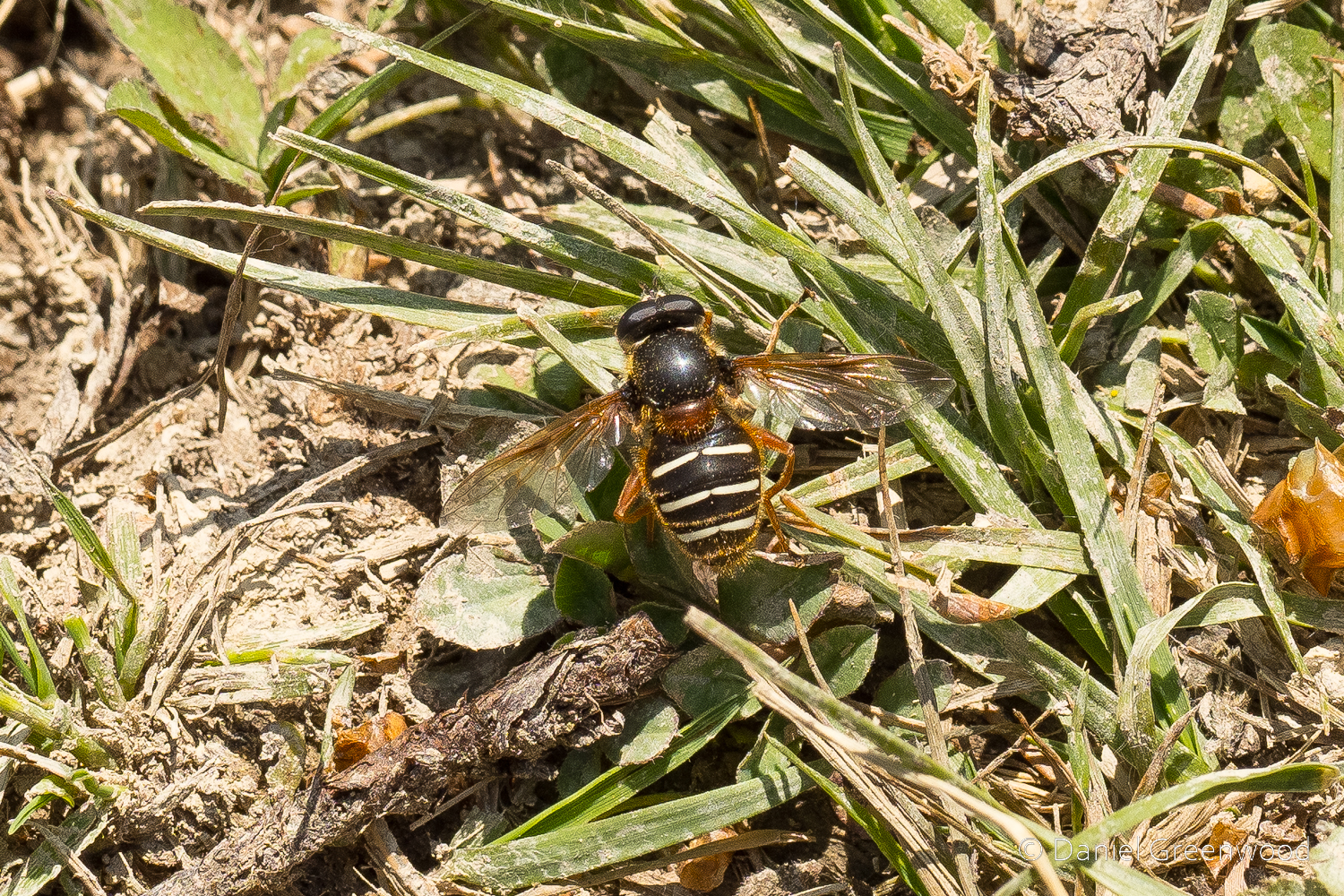
And to finish, there’s nothing more enjoyable in life than the sight of an unusual hoverfly. This was a new species for me, named on iNaturalist as the white-barred peat hoverfly. That would have been my second guess after Robocop hoverfly.

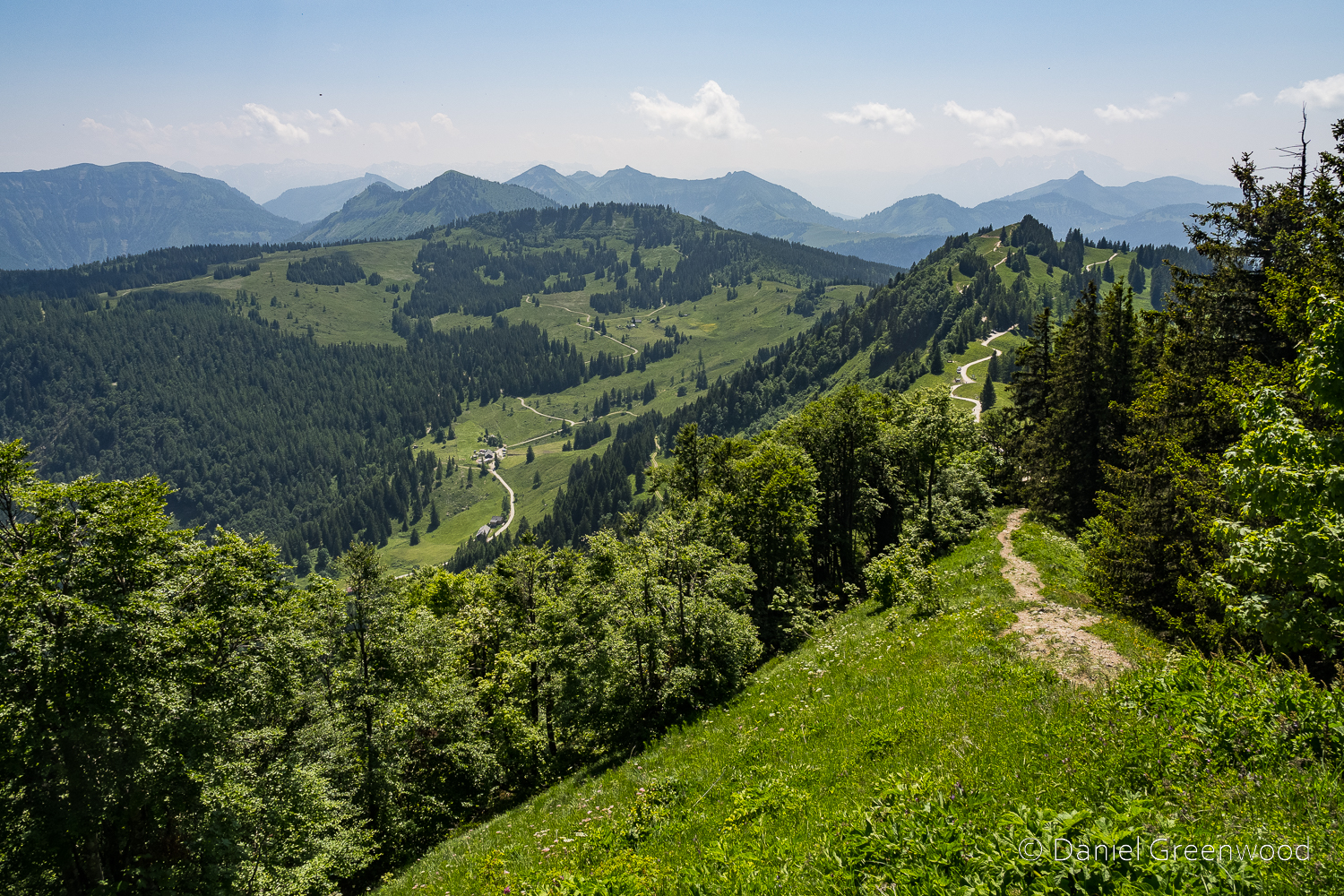
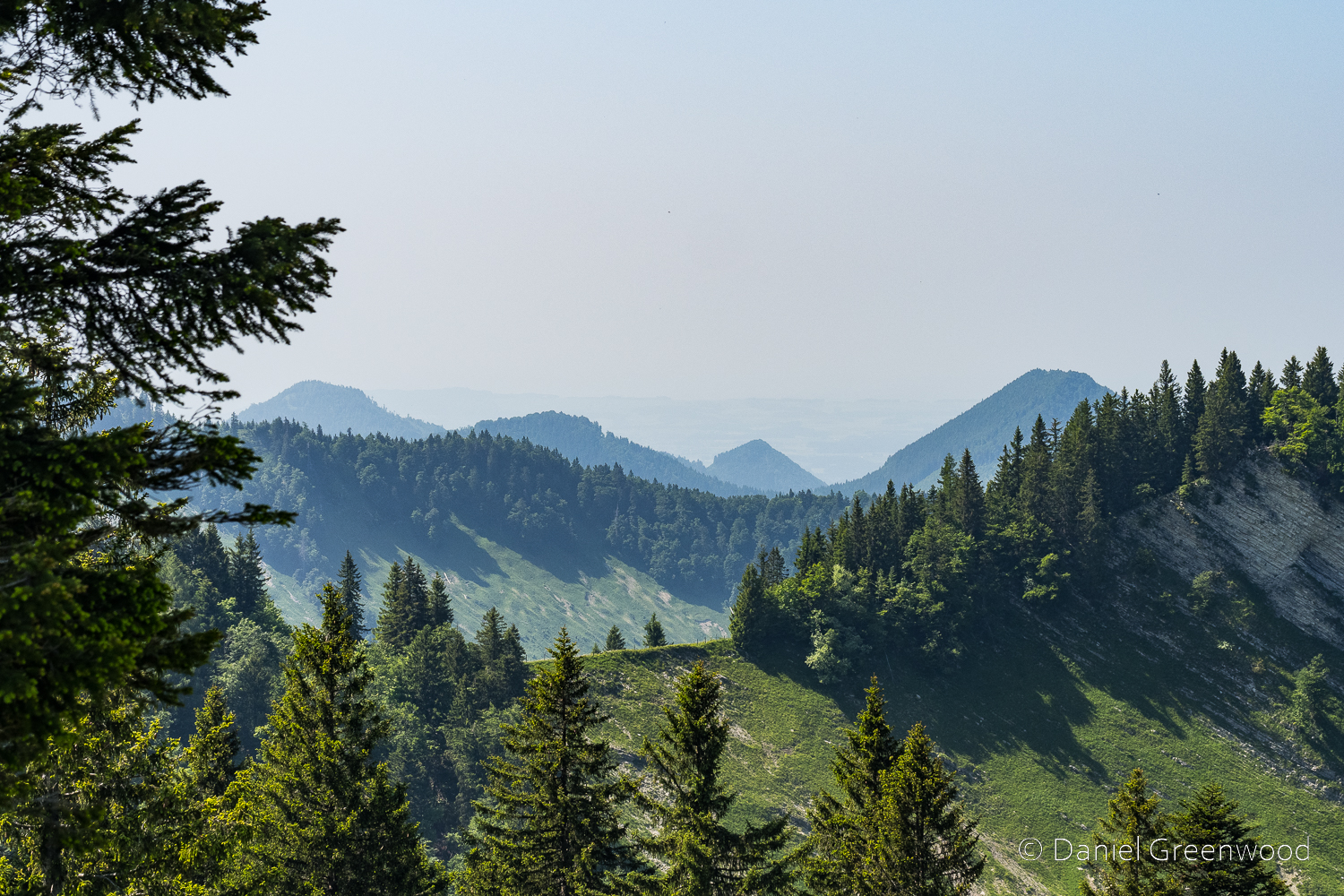
Here are some landscape images to see out this post of a wonderful walk and afternoon in the Austrian Alps. All taken with a macro lens!

Thanks for reading, Grüß Gott!

Macro | Support my work

The ash tree’s survival

I noticed some good news about ash trees recently and wanted to share my experience of a difficult decade for the European ash (Fraxinus excelsior, referred to here as ‘ash’), as well as some of the photos I’ve taken of this iconic tree. Working through this post, I’ve realised just how many images I’ve compiled down the years. I’ve also realised just how much I care about this tree as a species, and how painful it is to see it effectively being erased from the landscape by disease.

Ash is one of the first tree species that I really began to notice and tried to understand ecologically and culturally. When I started to take notice of wild trees, I saw that ash was everywhere in south London, seeding in railway sidings, parks, gardens, and woods. I’ve cut them down (not particularly big ones), planted them, pollarded them, photographed them and breathed their oxygen (obviously most people in the UK have!).

What do ash trees mean to people?

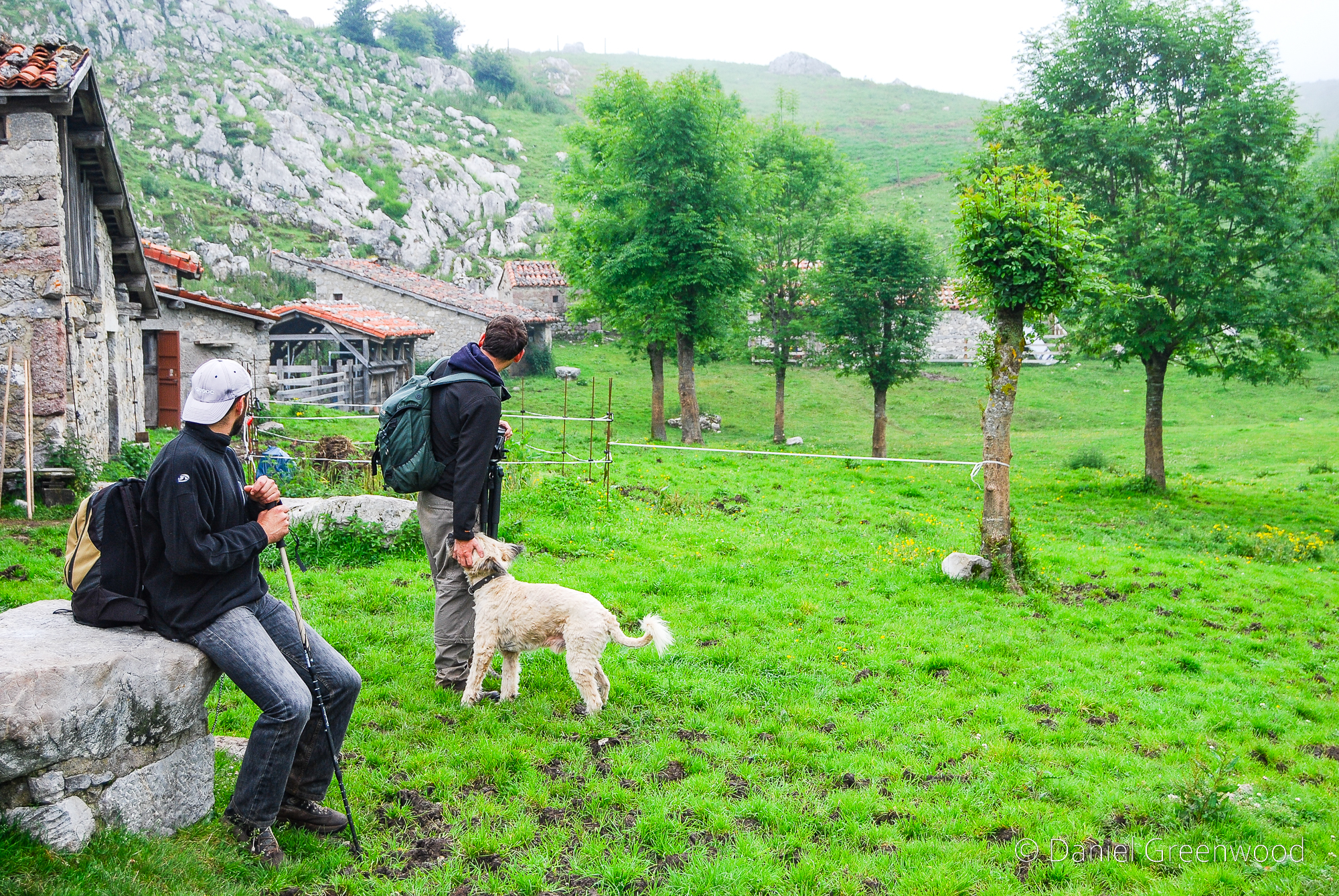
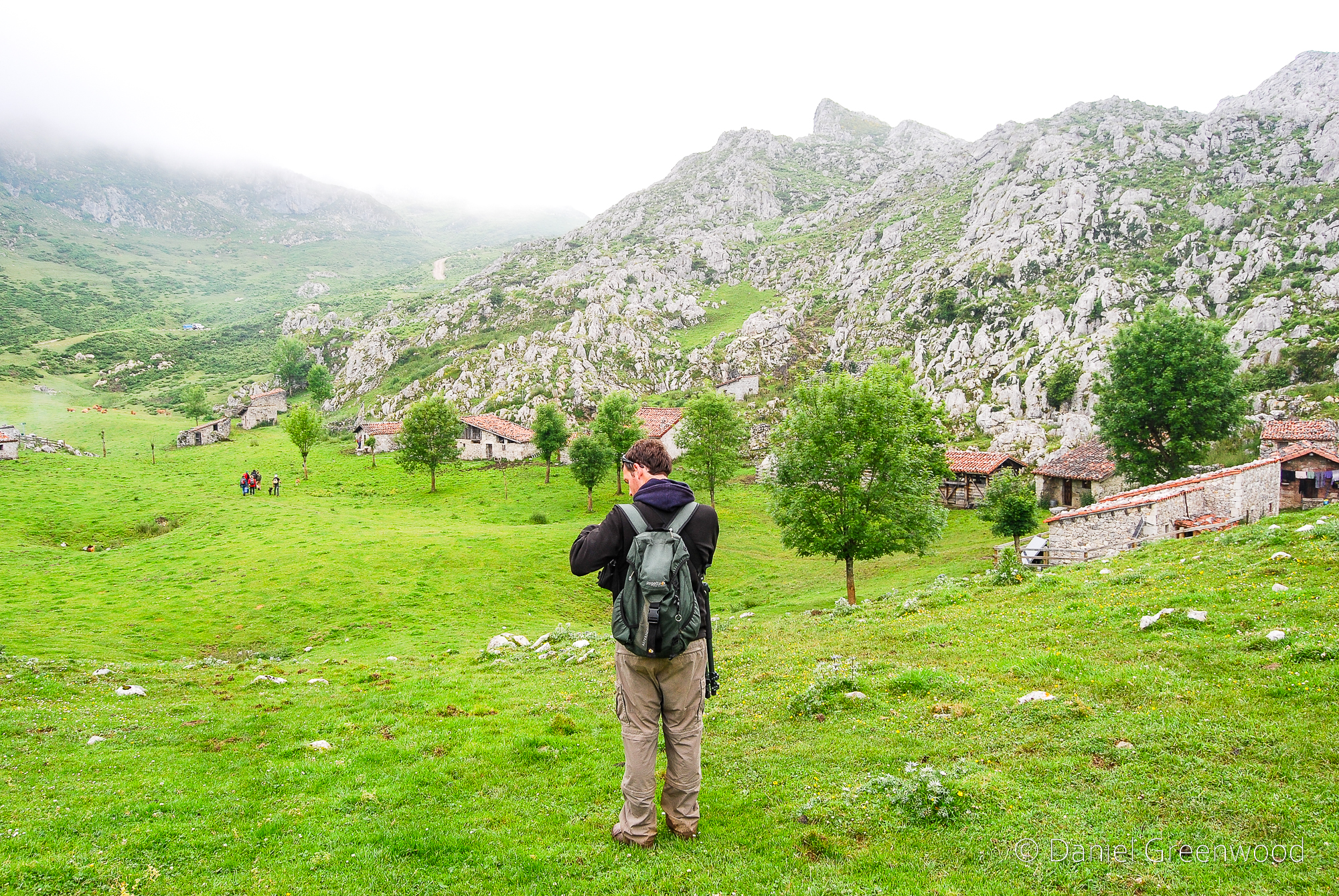
Pollarded (or shredded?) ash trees outside shepherd’s huts in Asturias, Spain in June 2011

I’d like to start overseas, as ash dieback is Europe-wide problem.

This week it was 14 years since I visited Los Picos de Europe (The Peaks of Europe National Park) in Asturias, Northern Spain as a volunteer.

The photo above came up in my ‘memories’ and it was only then that I remembered the ash trees. This was a remote village high in the mountains where people were making cheese (they didn’t want the name of the village to be shared online). The ash trees here are pollards, with the branches cut back to make a single stick of a trunk. It’s probably severe enough to be considered ‘shredding’, which Oliver Rackham wrote about.

Lollipop ash trees growing close to the old shepherd’s huts in a remote part of the Picos de Europa, June 2011

The reason this is done is to provide food for sheep – the fresh green growth of new ash leaves, which they love.

A massive pollarded ash tree next to a restored hay barn in Wensleydale, Yorkshire in 2018

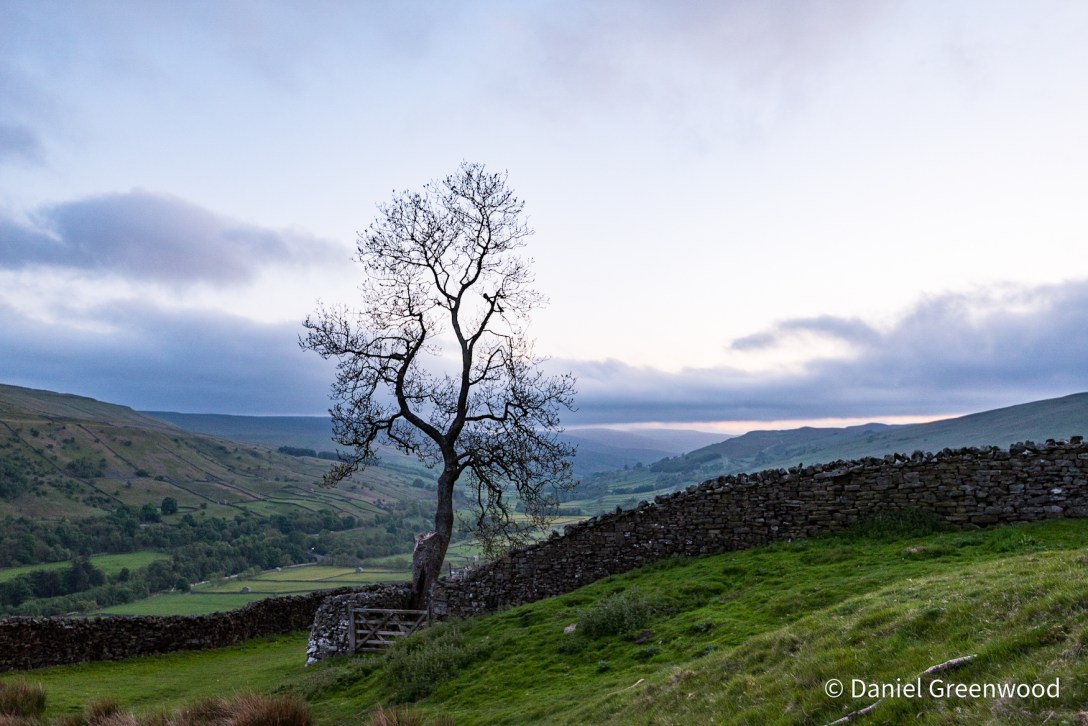
Interestingly, it’s similar in the Yorkshire Dales, where ash trees are abundant (see above and header image) and so are sheep. During one holiday in the Dales, I remember seeing a sheep climbing up a wall in order to nibble the leaves of an ash. What is also interesting to me, is that this is the same model of livestock grazing which spread from the Middle East, across Europe and into Britain thousands of years ago. It doesn’t sound dissimilar to the spread of ash dieback.

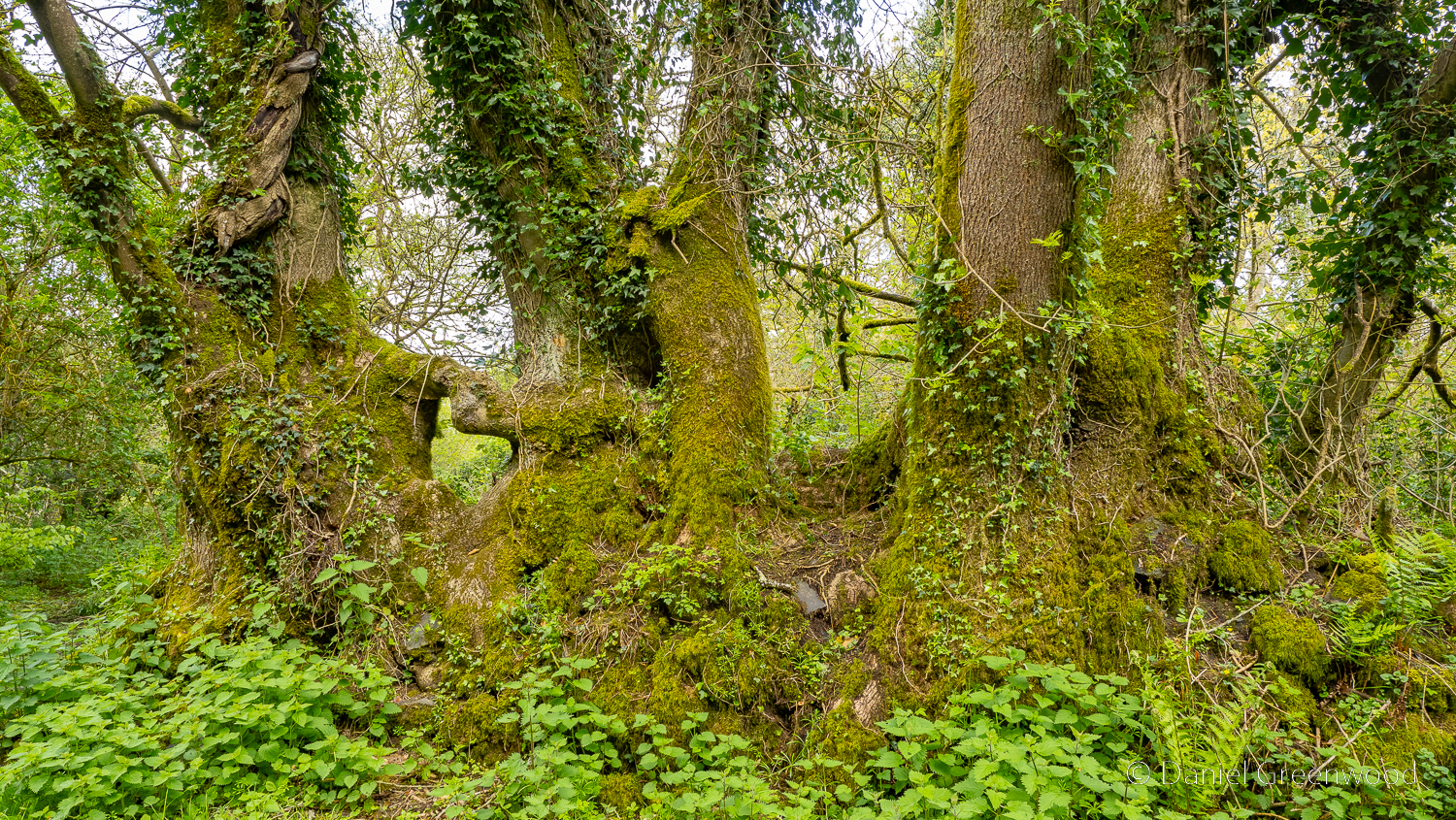
A typically large ash stool in a former hedgeline or boundary, coppiced or laid for many years (near Reeth in the Yorkshire Dales, 2019)

It’s not uncommon to see very large ash stools (old trees that have been regularly felled for timber) in boundary lines in places like Yorkshire, Sussex and Kent. I’m sure their coppicing was probably to provide ample feed to sheep, as in Northern Spain, above.

Dartmoor, Devon in 2023

This mammoth ash in Dartmoor National Park in Devon is possibly the biggest I’ve ever seen.

What do ash trees mean to wildlife?

A diseased ash tree with a large number of King Alfred’s Cakes fungi growing on the main trunk in Sussex in 2023

The fungus King Alfred’s Cakes has benefited in the short-term from an explosion in dead ash wood to colonise. The longer-term picture for fungi and lichen is not so good. Ash has a number of lichens that depend on it in places like the Lake District (my knowledge doesn’t extend very far here) which needs living trees.

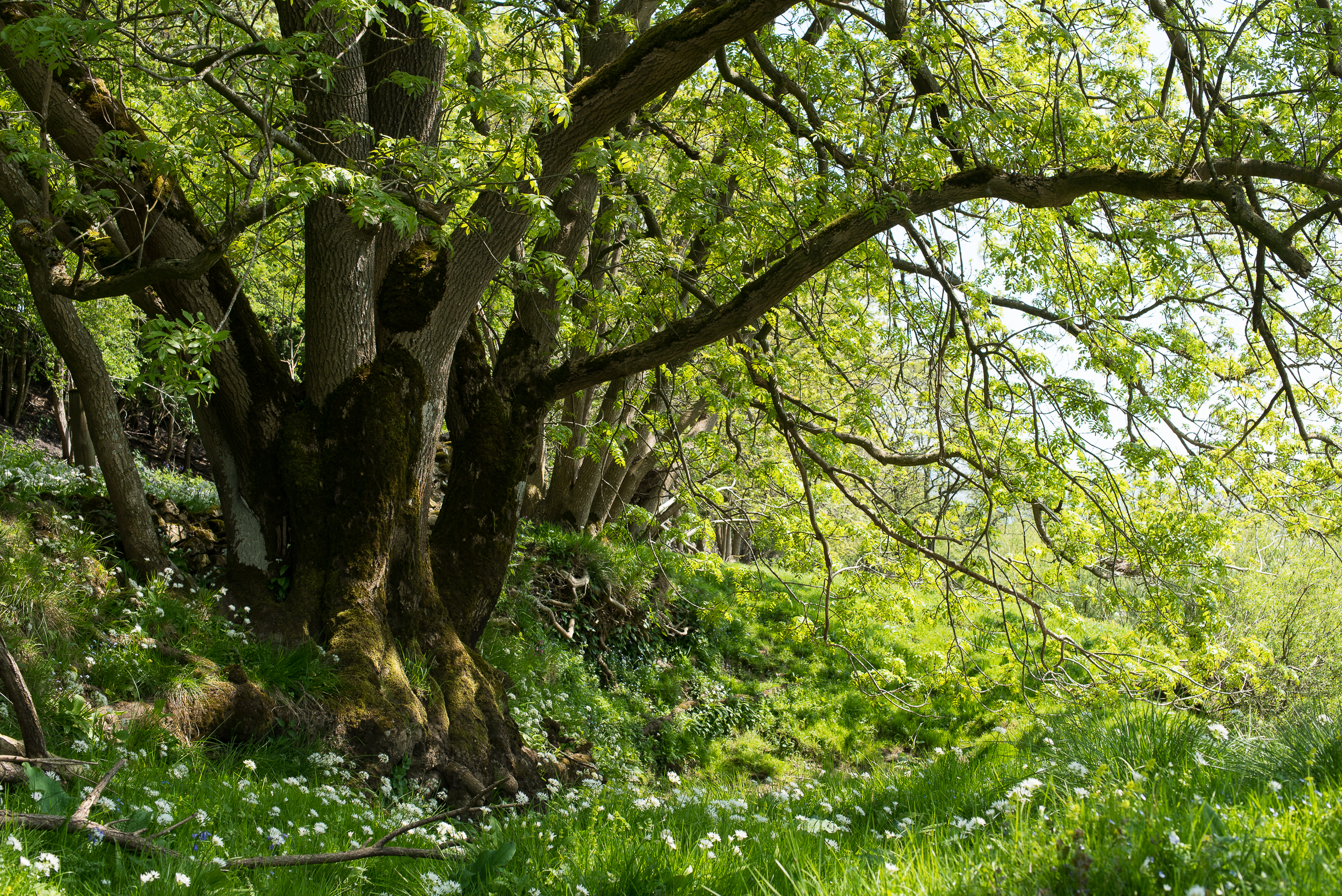
A mossy ash surrounded by wild garlic in Wensleydale, Yorkshire in May 2018

Ash benefits ancient woodland flowers that arrive early in spring because the leaves are compound (they have leaflets, not broad leaves) and allow light into the woodland floor. Species like wood anemone and wild garlic do particularly well in their dappled early spring light.

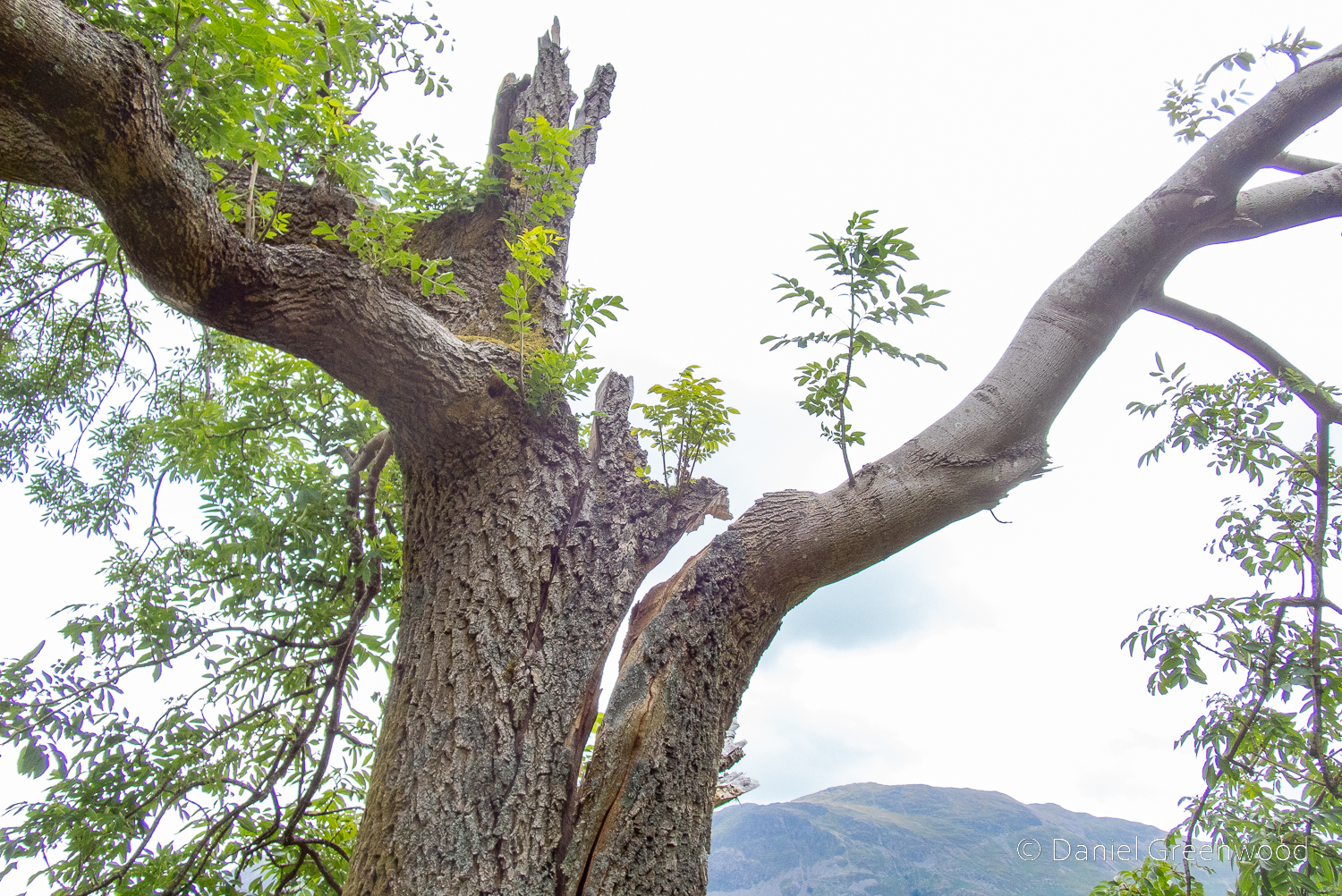
Magnificent veteran ash tree with Ullswater behind it in the Lake District. The top trunk of the tree has collapsed on some farm equipment in the background (2023)

I’ve encountered several ash down the years that have been for the chop on reasonable safety grounds in London, but then have been saved by the fact bats are living in them.

Bats can live under loose bark, in woodpecker holes (which are often found in older ash) and in large crevices. This magnificent ash was near Ullswater in the Lake District and had suffered what the tree officers would deem a catastrophic failure, but the woodland ecologists would be licking their lips at!

The Timeline

2012: when ash dieback arrived in Britain

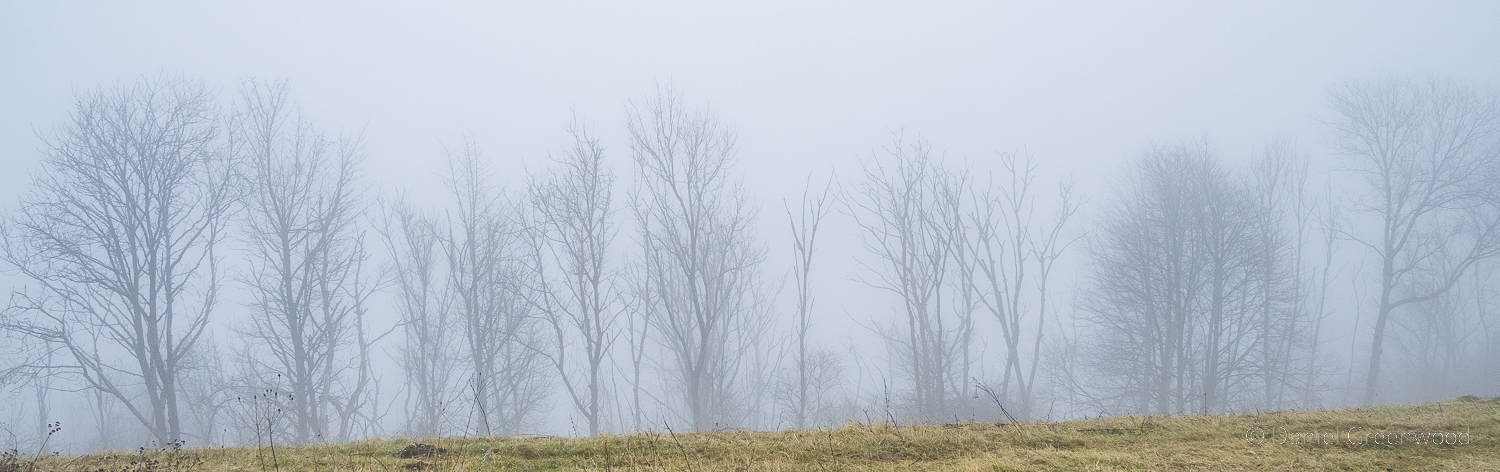
A range of leafless ash trees alongside the South Downs Way near Ditchling in November 2024

One afternoon in the autumn of 2012 I was finishing my working day in the woods when I noticed the dying-back of an ash sapling. The stem had lesions and the leaves were drooping. It was my first year as a community woodland officer and ash tree seedlings were so numerous we actually had to pull them up in certain places. They were the epitome of a sometimes invasive British plant.

It was the first time I had seen a European ash tree (Fraxinus excelsior) infected with ash dieback disease, known scientifically as Hymenoscyphus fraxineus.

The first time I saw and photographed ash dieback disease in Sydenham Hill Wood, autumn 2012

At the time we needed to report every new sighting to the Forestry Commission (as it was then), to help map the spread of this devastating disease. It spread so quickly that reporting became redundant, as were widespread protection measures. I remember someone remarking that asking people to clean their boots would be about as effective as asking the birds to clean their feet.

2017: ash dieback decimates the South Downs

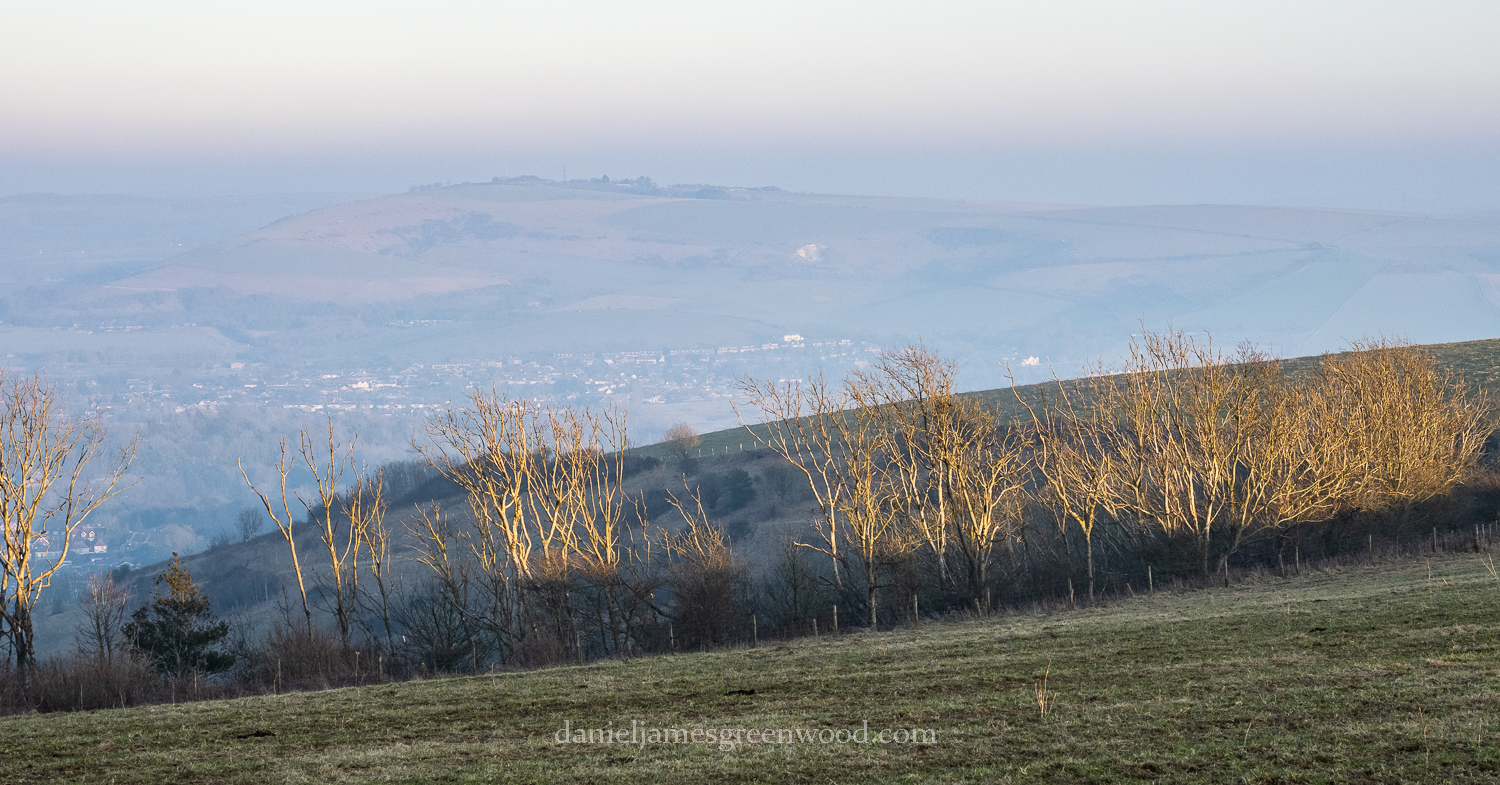
Leafless diseased ash trees above Steyning, seen from the South Downs Way in February 2023

It was only really when I moved to Sussex to work in the South Downs National Park that the real impact dawned on me.

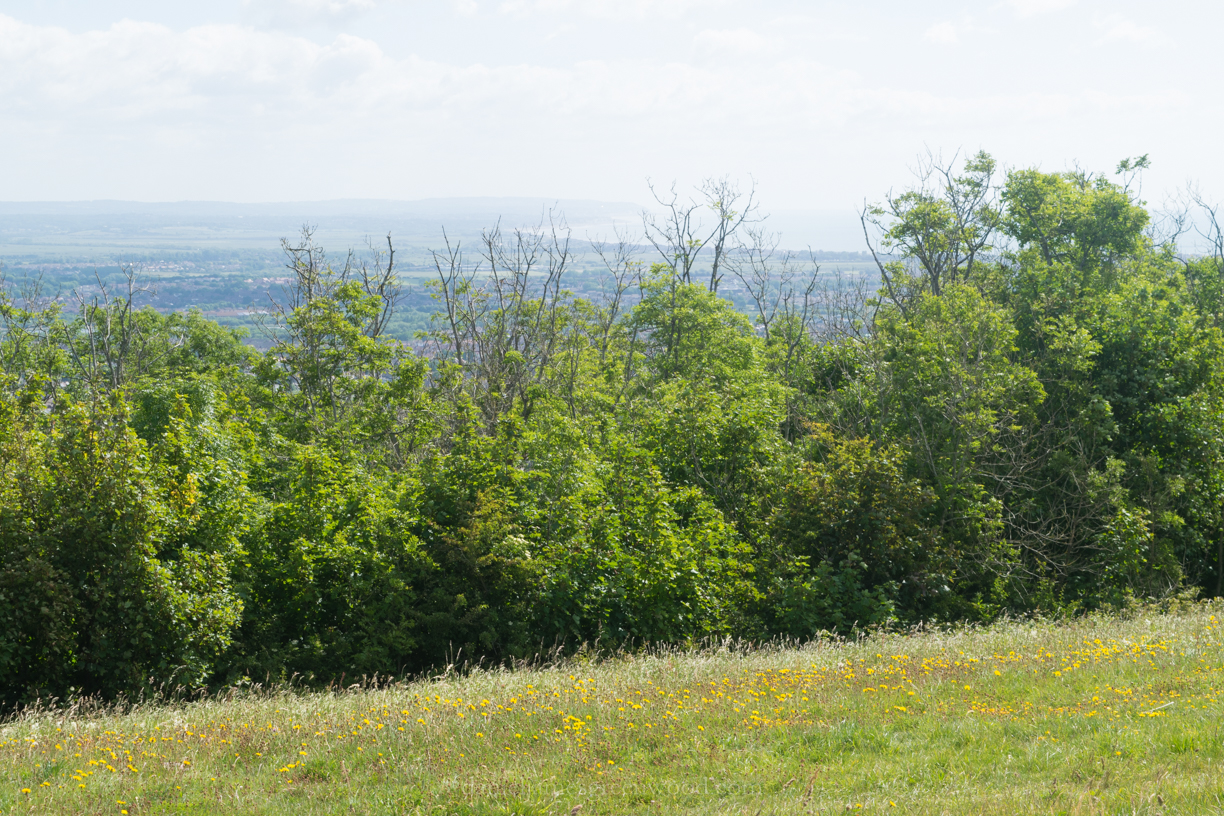
Eastbourne appearing beyond infected ash trees in June 2017

During a walk with the South Downs Eastern Area Ranger team, I was taken aback by the way declining ash trees were opening up views of the coastal town of Eastbourne. It has continued to progress since then.

A young ash tree experiencing ash dieback from the top-down on the South Downs, May 2019

Groves of once green ash woodlands and verdant hedgerow trees were dying en masse. In the past few years trees along highways have been felled due to the threat to public safety from these brittle, dead trees overhanging roads, paths and properties.

The main concern is how the decay enters the heartwood (as above) and causes structural failure even within living trees, meaning the ash are more likely to fall unexpectedly. I spoke to a council tree officer who said that there have been a number of fatalities of tree workers due to ash trees. It’s tragic.

A diseased ash tree that had fallen across a footpath in the South Downs, logged and cleared in February 2023

But how did ash dieback get to Britain? Fungi spread through spores, tiny particles that ‘seed’ in appropriate places and then grow into a living fungus that produces fruiting bodies. The fruiting bodies (mushrooms, to most people) then produce the spores. The ash dieback fungus is native to Asia, but there’s no way it could get to Europe alone. People helped it, accidentally, to arrive in Europe over 30 years ago. In Britain, it may have been helped by the process of growing UK saplings in Dutch hot houses, alongside infected ash saplings, and bringing them back to the UK.

2024: signs of resistance

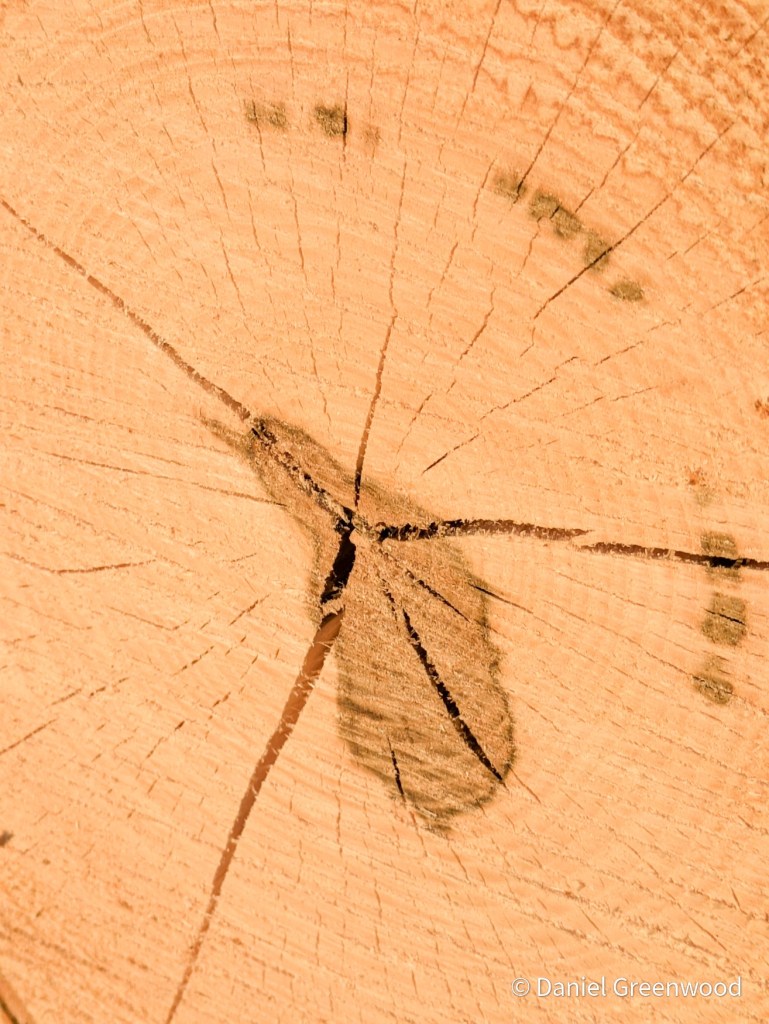
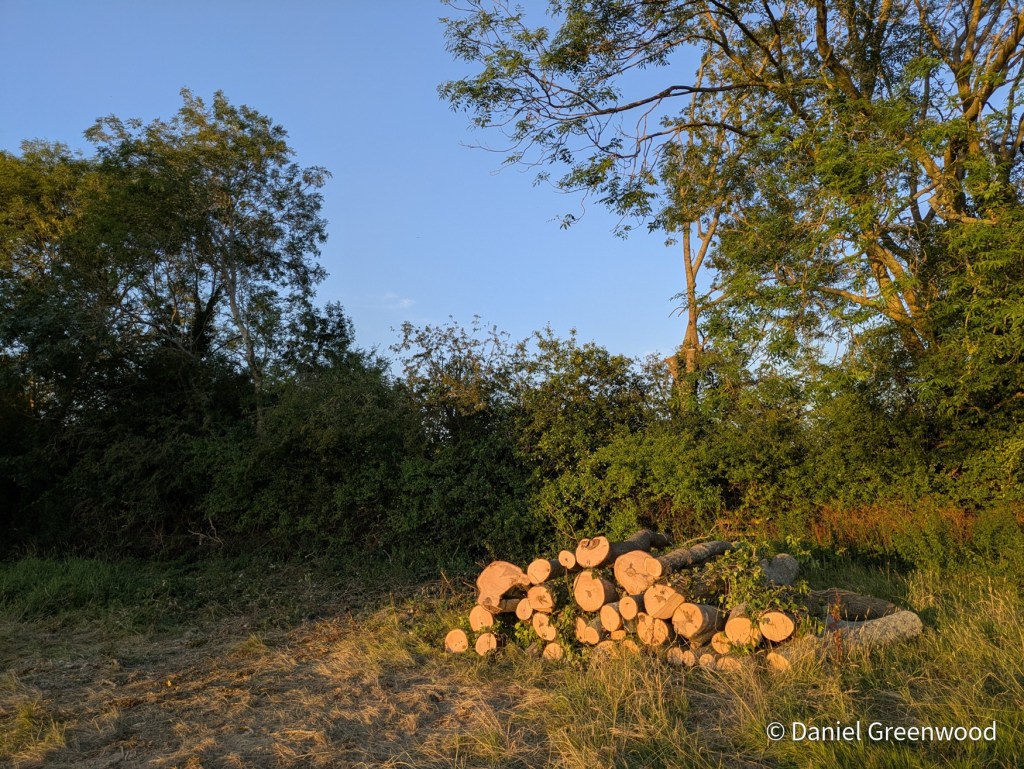
This phone pic was taken in July 2025 when my local green space had been subject to ash removal. The logs show the scars of the disease (see previous) but the scene is not one of disaster. There are healthy ash trees on either side that are surviving and, indeed, thriving considering what they are up against.

That is something The Living Ash Project have been logging(!) – trees showing mild symptoms and overcoming the dieback.

This rather optimistic article highlights more of the positive steps, and advanced scientific interventions being made to save ash trees.

Ash trees in isolated areas, away from ash woodlands, may be in a much better position (literally) to survive the disease epidemic because they are not overwhelmed by spores from ash leaf litter found in thick leaf litter.

A turning point for ash trees?

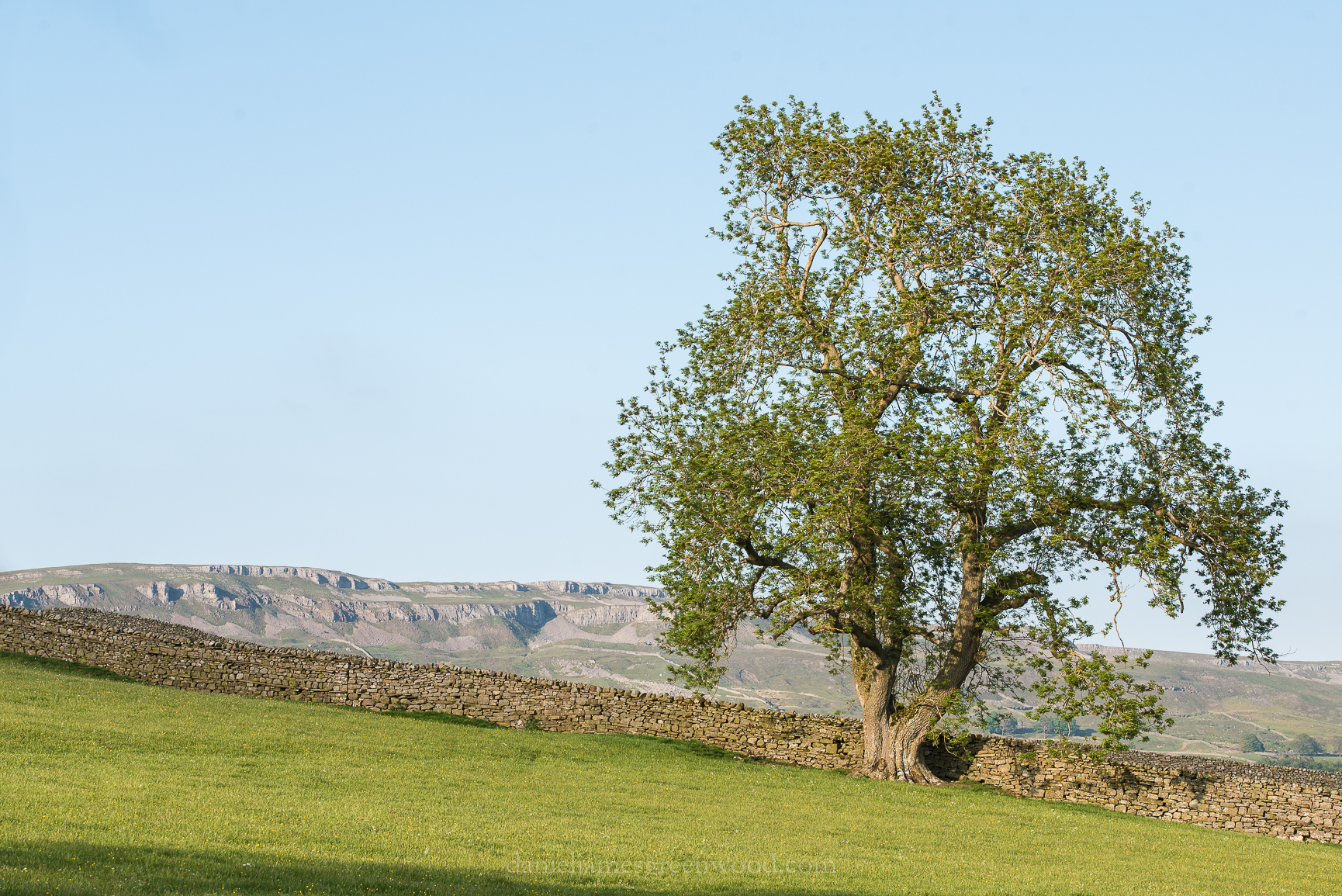
A mature ash tree in Wensleydale, Yorkshire in May 2018

The news for ash trees in 2025 is much more promising.

An article in The Guardian reports that ash trees in Britain are showing signs of evolving genetic strains of ash that will not succumb to the fungus. This means ash trees could return to the landscape in due course, though not in the same way.

In the south-east of England where I live the disease is said to have peaked.

Other research has shown that some isolated ash trees are surviving. I can vouch for this – there’s an ash tree in my mum’s garden (c.15 years old) in London that I’ve trimmed back once before. It is flourishing, so much so that the neighbours are asking for it to be cut down again. Welcome to London.

Large ash in the Howgill Fells, Yorkshire Dales (close to Cumbria) in 2019

There is also a plea on the back of the latest research for woodlands to be allowed to regenerate on their own. Many people will be keen to point out the role of ‘rewilding’ in helping this process. In many cases it’s just a matter of leaving woodlands in certain places to do their thing, probably behind some fencing.

Here’s hoping that ash trees can be saved across Europe and wild trees are given the space to do their thing. In the end they may outlive us.

Thanks for reading.
Ash trees | Fungi | Support my work

Aphids watch out! 👽

I’m posting garden macro photos from the 17th and 30th May. I have some really interesting photos from the 31st but that is probably more than one post in itself.

There are a couple of intriguing species I encountered in my garden between mid-late May, one of the very best times to look for our tiny invertebrate friends in this part of the world.

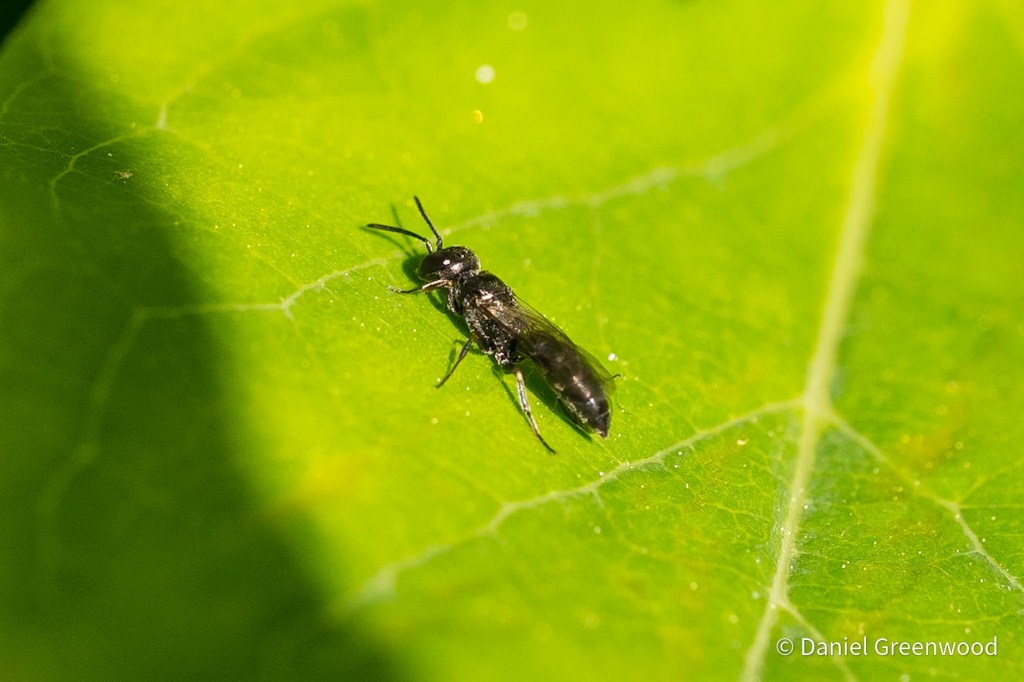
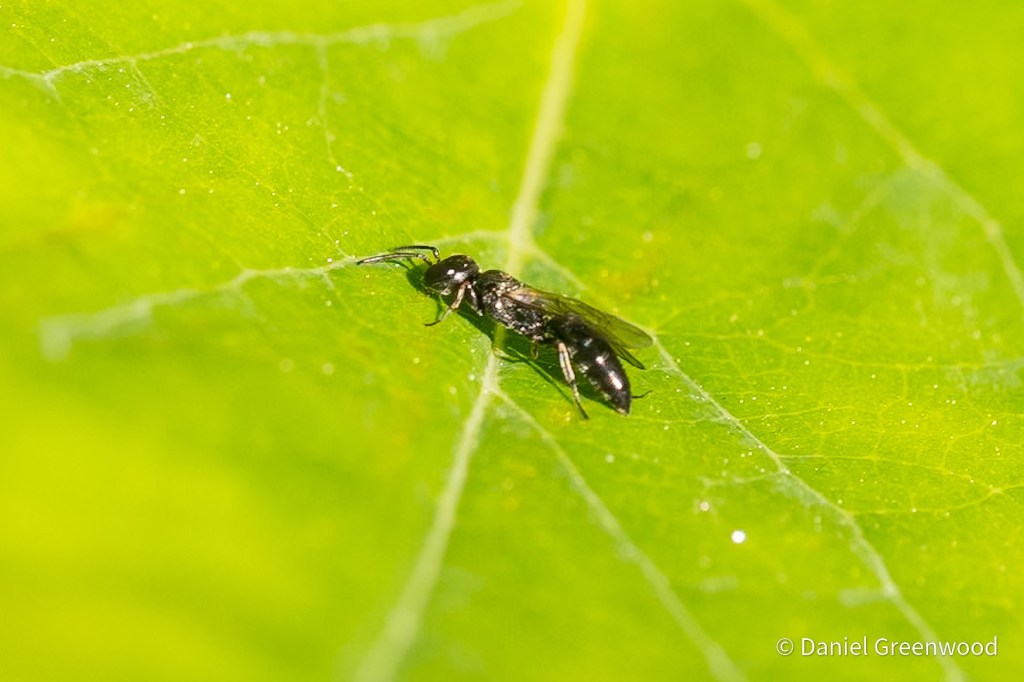
These are by no means great images (I would need extension tubes to increase the magnification) but the species may be an interesting type of wasp. It might be an aphid wasp, which is a group of wasps I haven’t heard of or seen before (there are thousands, even in the nature-depleted UK).

I’ve posted about aphids this year, and have noticed just how good a year they’re having. I listened to this episode of the Food Programme last week on the subject of potatoes, and didn’t realise aphids could trouble potato farmers. Perhaps they need to start gardening for aphid wasps!

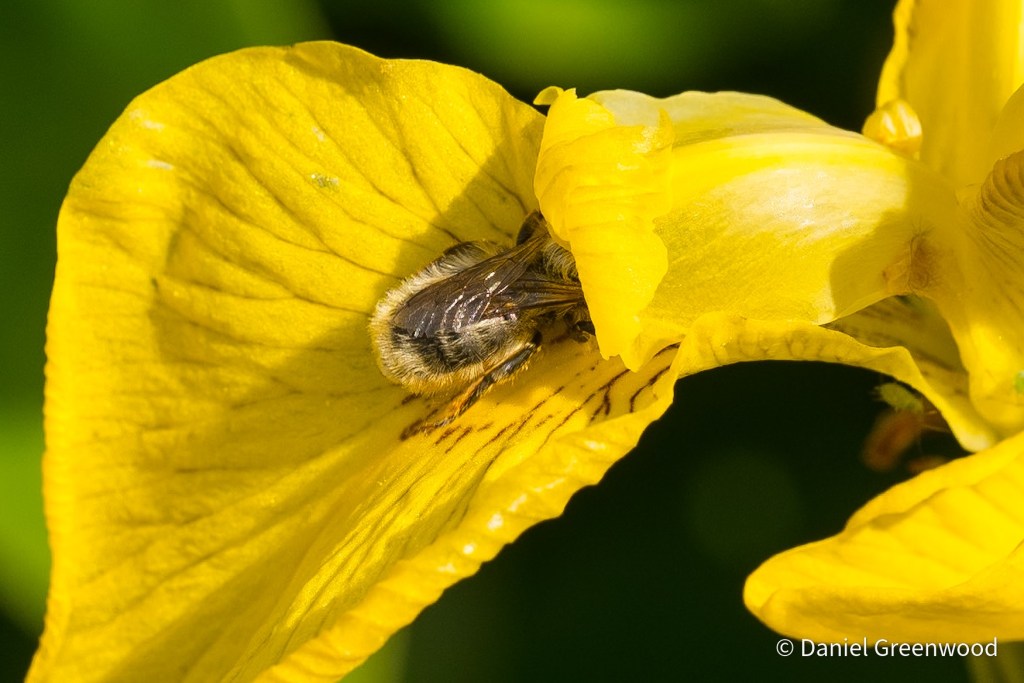
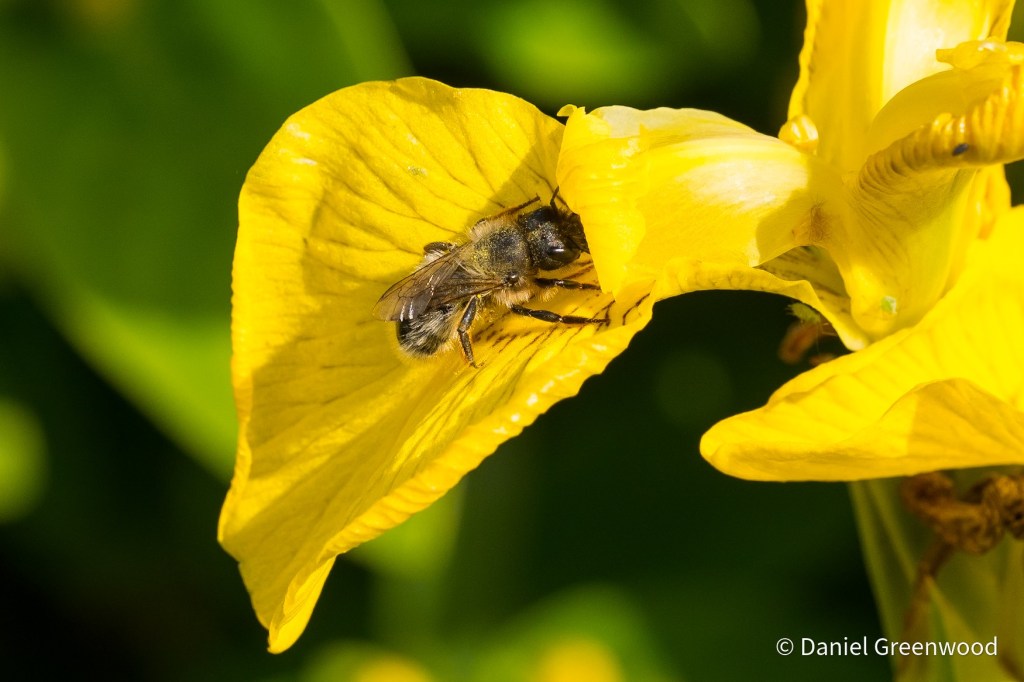
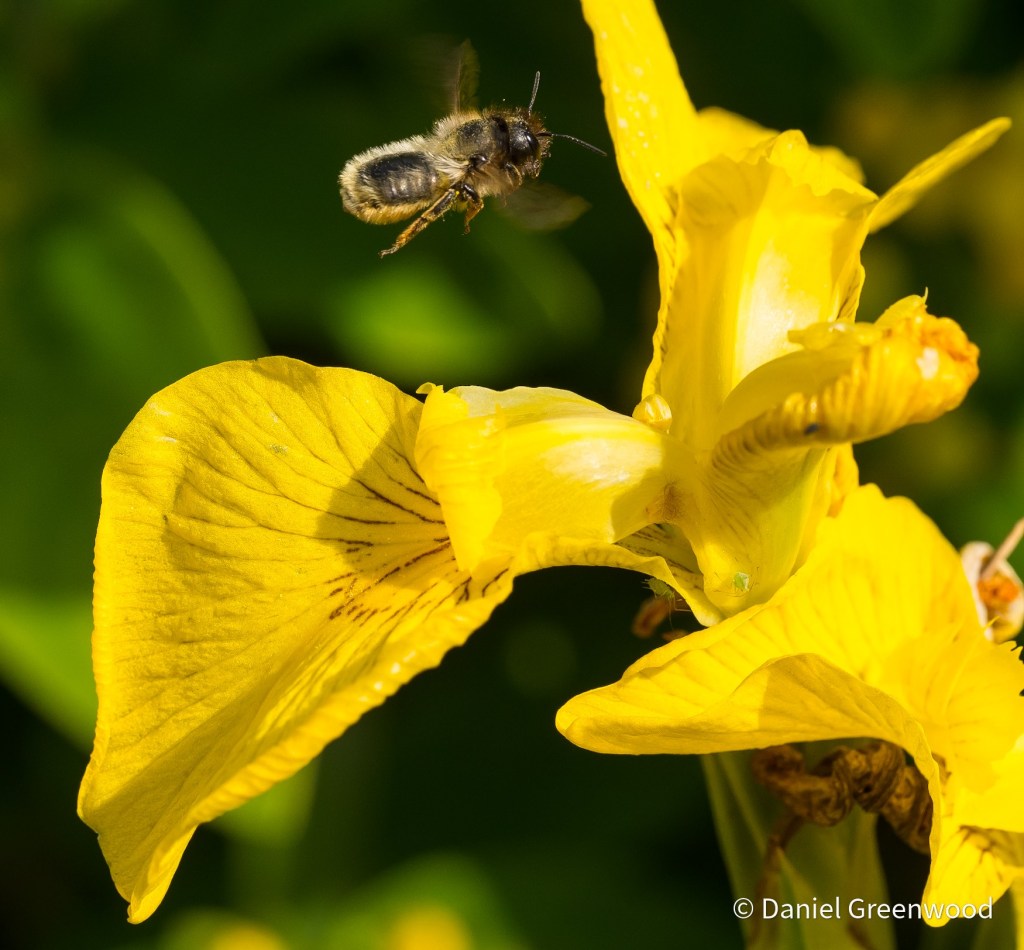
We have a tiny pond which supports frogs and is planted with native aquatic plants. One of those plants is flag iris, which the bigger bees love. I enjoy seeing the bees climb through the yellow petals to nectar on the stamens. This bee is probably in the megachile group, perhaps one of the leafcutter species. Someone on iNaturalist suggests it’s a mason bee, so I’m not sure.

I like how leafcutters are in their own world. They often appear after the red mason bees and hairy-footed flower bees have gone, but they seem like they’ve always been there, so focused are they on their leafcutting tasks.

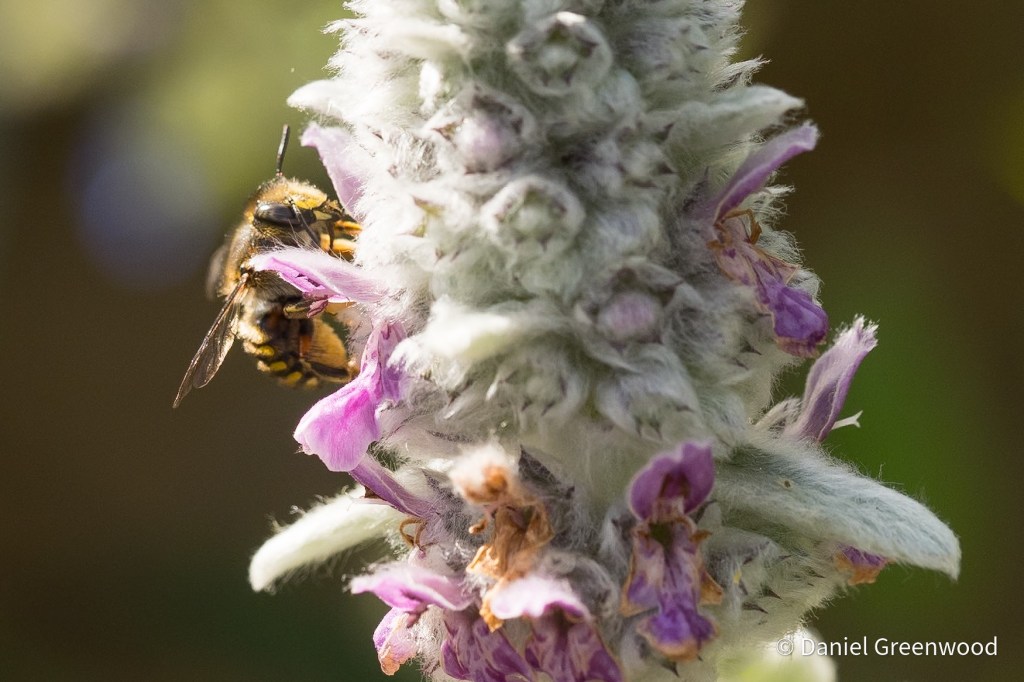
Another welcome sight in the bee world (it’s so much more than honeybees!) are the wool carder bees. I planted this stachys (or lambs ears) for the WCBs in 2020, and they immediately arrived.

Regular readers of this blog may recognise this species from previous posts, who just couldn’t keep out of this week’s post. I used to look like this. These may be an orange-vented mason bee.

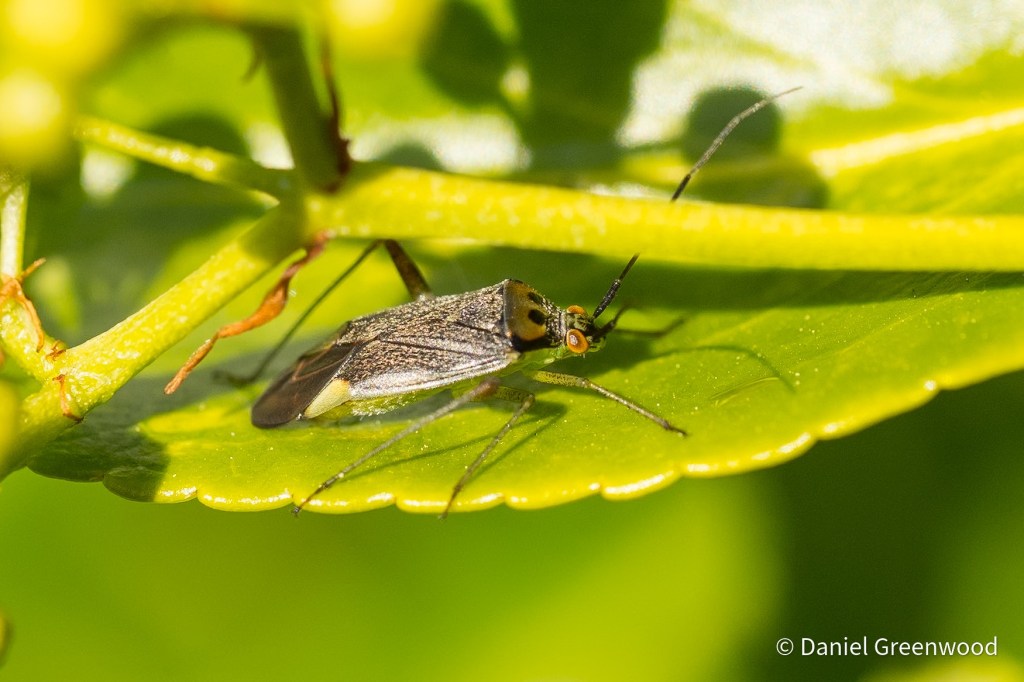
This capsid or mirid bug was chilling in the hedge, as they often do.

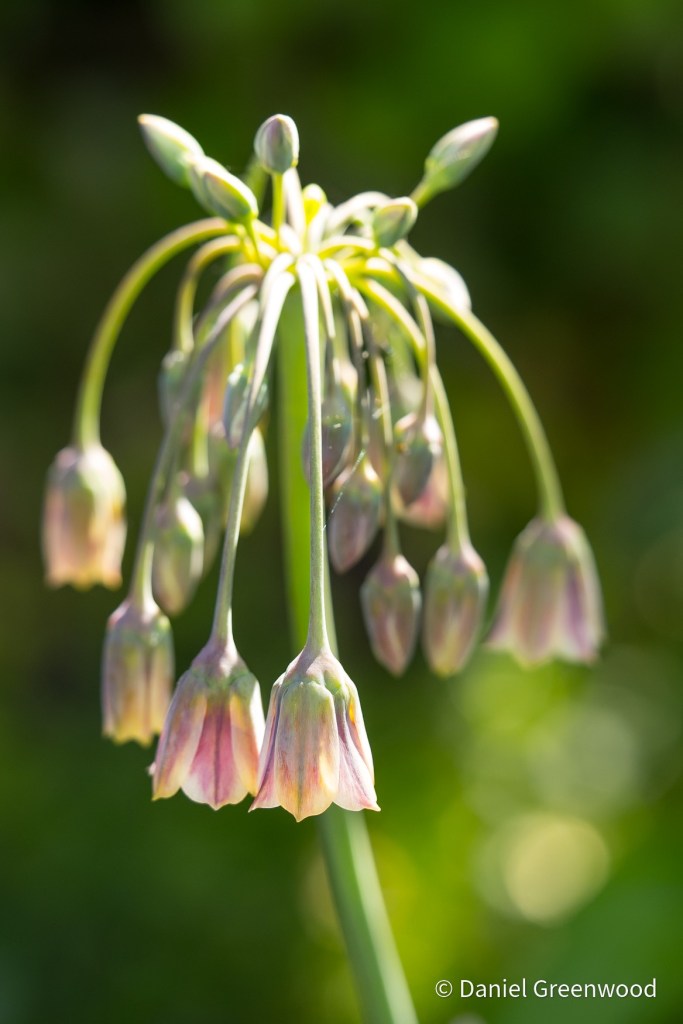
And finally, those trusty honey lilies were looking their best in the evening light, as their flowering period drew to a close.

Next week we’ll see out May with some pretty epic wasp vs. spider scenes and miniscule bees.

Thanks for reading.
Macro

Postcard from the Alps 🏞️

No normal blog post this week as I’ve been away in the Austrian Alps, and am behind on my macro processing.

I did manage to take some macro photos high above the treeline, and saw lots of species of insects in the time we were up there. Will look forward to sharing those in the weeks ahead.

These are phone pics taken in raw file format, and then processed via my phone. The quality is really impressive to me.

Thanks for reading.
Mason bees closing doors

Around 9th May 2025 the red mason bees were working to seal their little chambers shut, as can be seen below.

2024 was a better year for these solitary bees in my garden, with far fewer in 2025. Their numbers will naturally rise and fall over the years. They’re important pollinators, especially in agriculture, so helping them has a wider societal impact for people who desire it.

In the first of the hotter spells each year I begin to notice these small bees. They’re usually sunning themselves on the edges of ceramic pots, wooden sleepers or fences. I am fairly sure this is a blue mason bee. They are quite skittish but do often return to the same perch if they can see that you’re not an immediate threat.

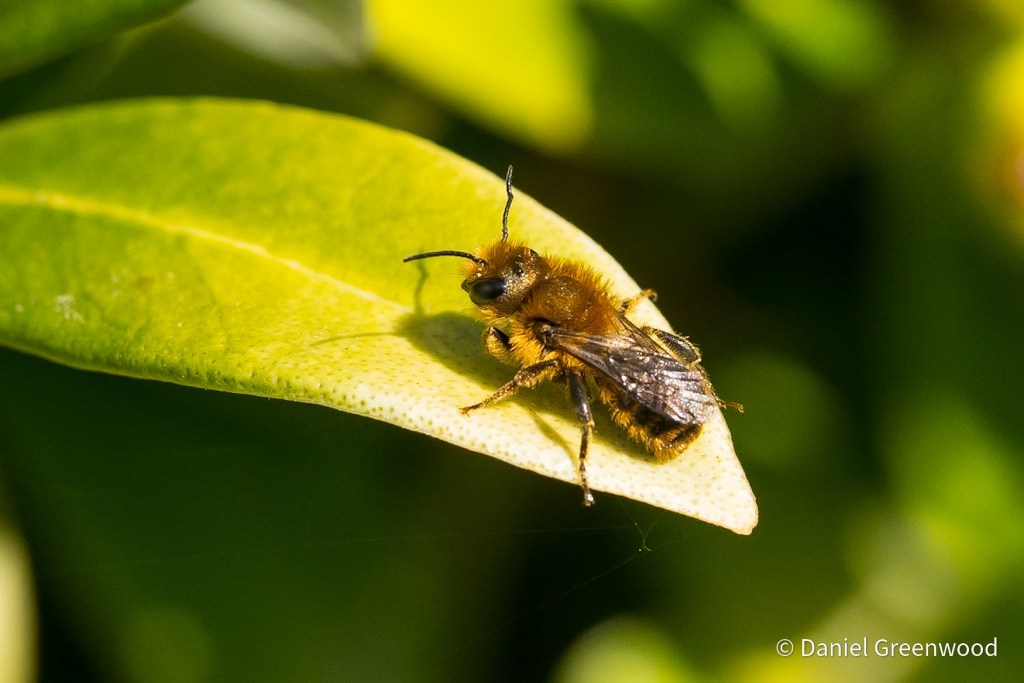
Elsewhere in the order hymenoptera (bees, wasps and ants) I saw this unusual-looking winged-insect hiding in the leaf shade. I’ve had to edit this a bit to bring the shadows out, but it’s a species of sawfly. It seems to have two antennae in the shadow, but for the life of me I can only see one!

I noticed the first swollen-thighed beetle of the year perched on the burgeoning fennel leaves.

In taking a few pics of this honeysuckle I noticed that there appear to be little sticky nibs on the flowers. I’m wondering if this is to trap pollen when bees visit, or potentially to snare invertebrates in the carnivorous sense. I can’t find anything online about that, but I now know just how invasive it is in North America.

And finally, the trusty Stachys was close to flowering by the 9th May. It looks very cosy and comfy here, ready for the wool carder bees. What I didn’t know about this plant (known as woolly hedgenettle) is that it’s native to Armenia, Iran and Turkey. I bet it has some very cool insects feeding on it there.

Thanks for reading.
Macro | Support my work

Oaks leaves like little fires

I’m still dining out on mid-April at the moment, it’s such a lovely time of year.

The broom (Cytisus scoparius) we planted several years ago has bloomed magnificently this year. It’s been a treat to both smell, and to see it attract a whole range of pollinators.

Dandelions have been all over social media recently with the recipes for ‘dandelion honey’. I am reliably informed that it’s jam or syrup rather than honey because you’re not a bee. It’s good that people are becoming more aware of dandelions which are incredibly important for pollinators.

We’ve expanded our berry bed in the garden to include an extra redcurrant, blueberry and gooseberry. Above are the lovely flowers of redcurrant.

My little laid hazel hedge is coming along nicely. These fresh red stems are a welcome sign.

As part of the hedge I’ve planted a couple of oaks that have been in pots in our garden for a number of years. One of the oaks is from my grandmother-in-law’s garden near Epping Forest, the other grown from an acorn from Dulwich Wood. I love the redness of the leaves when they first appear, whether or not these are tannins I would need to check the science.

Elsewhere the sycamore is now leafing. Soon these will be sticky with aphid honeydew. The sparrows and blue tits will be hoovering the aphids up to feed their nestlings.

Speaking of those little devils, our swift box has been moved-into after 3 years of waiting for something to happen. Of course it would be best if swifts were there, but sparrows are also red-listed and their habitat is being lost as people are forcing them out of the eaves. Much of that is probably unintentional, but it’s still something we need to look at.

In the invertebrate world, the droneflies have calmed down a bit and are willing to pose for their macro close-up. This is probably a tapered dronefly (Eristalis pertinax).

This is my first decent set of images of a solitary bee this year. It’s probably one of the mining bees (Andrena) but I don’t have an ID yet.

Another solitary bee species had found its way into our living room. I took a few photos before letting the little bee back out into the world.

Thanks for reading.
Macro