Oaks of London: The Honor Oaks

OTH oaks-5

This post is part of my oaks of London project

For the past five years I have been searching hedge lines, woods, parks and boundaries for the undulating mass of an old oak. This search has not taken place in the English countryside, instead the border of the London boroughs of Southwark and Lewisham. The southern towns of Southwark were once the parish of Camberwell and its boundary with Lewisham still supports centuries-old oak trees that were the previous markers between old Camberwell and Lewisham. Along with the Dulwich Woods and One Tree Hill, these trees are the strongest ties to the much diminished Great North Wood.


map-01377-750
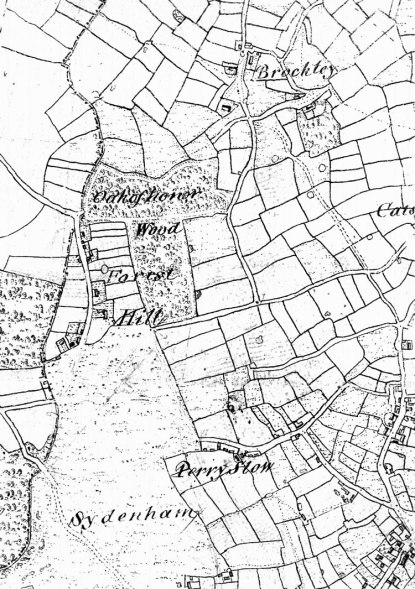
One Tree Hill (centre left) when it was ancient woodland in 1799

The Great North Wood

The Great North Wood was a landscape of woods and commons that stretched from Selhurst to Deptford. It was worked over centuries for its timber and underwood (sessile oak, hornbeam and hazel, mainly) for ship building, tannin extraction and charcoal burning. Its origins are in the wildwoods that spread after the end of the last glacial period 10-12,000 years ago at the start of the Holocene. The oaks remain where other species have disappeared as they are tough, long-living (sometimes 800 years in open land) and are of great use to our species. The Forestry Commission approximates that London’s trees are worth £43billion in their environmental and amenity value. Oaks are some of the most important. Their carbon storage capabilities should be remembered by those controlling planting regimes in cities today.

5360366289_d78b913930_b

This old image (likely early 1900s) shows what One Tree Hill’s western slopes were like. The earlier map, dated 1799, shows that One Tree Hill was an isolated ancient woodland. It once connected with the Dulwich Woods which skirt the left hand side of that image, and spread even further before humans began managing the woods. That could have been thousands of years ago, however. The Dulwich Woods are very likely several thousand years old.  There is no woodland at all but plenty of shrubs, likely including gorse and hawthorn. The landscape swelling into Lewisham shows much of south London’s old landscape was farmland. The boundaries of the farms were marked by old oaks.

OTH pollards-4

Pollarding

One of the first mistakes made by those (myself included, of course) looking for old trees in the landscape is to head for woodland first. The oldest trees are usually living in isolation in what has longest been open land. The great Oliver Rackham told us that ‘ancient woods are not the place to look for ancient trees’. The best trick is really to get an old map, compare it with a current one and see if there are any clear boundaries where trees may have been planted or perhaps wild trees maintained as standards. Sometimes the old maps show trees dotted along the edges. The image above is a pollarded English oak (Quercus robur) at the entrance to One Tree Hill on Honor Oak Park. The tree is actually in the grounds of the Honor Oak Allotments and a line of similarly old oaks can be found running up alongside it.

OTH pollards-5

This oak, one down from the previous, has clearly been pollarded (c.1900s) and is now swamped by other trees. Logic says that pollarding it again and removing some of the surrounding growth would allow the trees to re-balance and go on living indefinitely, but experimental pollarding taking place in Epping Forest suggests otherwise. Lapsed beech pollards are known to die when pollarded again. These oaks may be so unused to management that pollarding them will kill them off. We may have to accept that these landmarks of the Great North Wood have a limited time left.

OTH oaks-1

The Oak(s) of Honor

One Tree Hill is a good case study for remnant Great North Wood sites as it was open land until the mid-20th century but was woodland on the north-western slopes up until the 1840s. Today it is returning to woodland having been largely managed through non-intervention, bar access works and hedge planting, by the Friends of One Tree Hill and Southwark Council.

OTH oaks-2

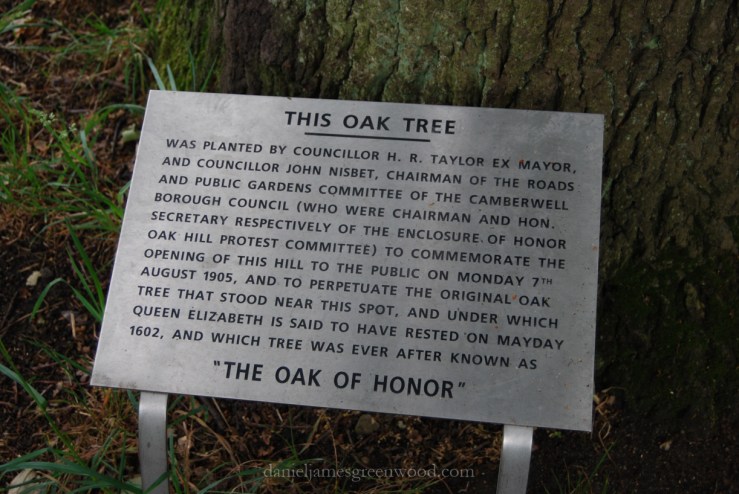
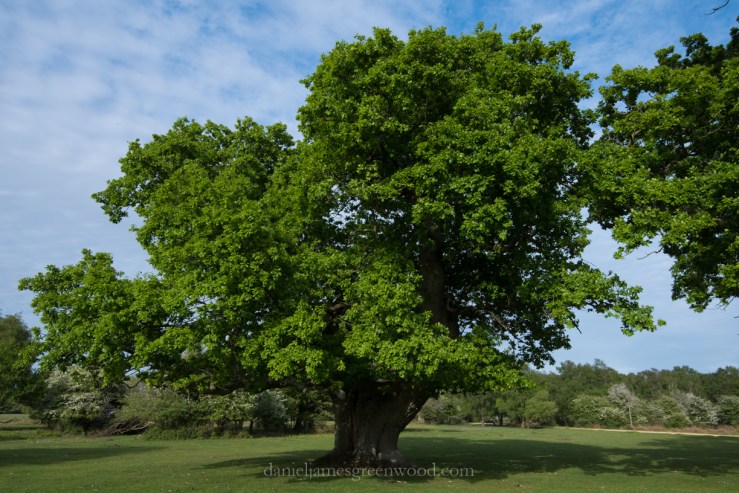
One Tree Hill gets its name from the single English oak (pictured) which was replanted in 1905 when the hill was reopened to the public after a battle to save it from becoming a golf course. 15,000 people conducted a mass trespass on 10th October 1897 to challenge the Honor Oak & Forest Hill golf club’s attempts to fence and enclose the hill.

1239142979_e33df99e5b_b

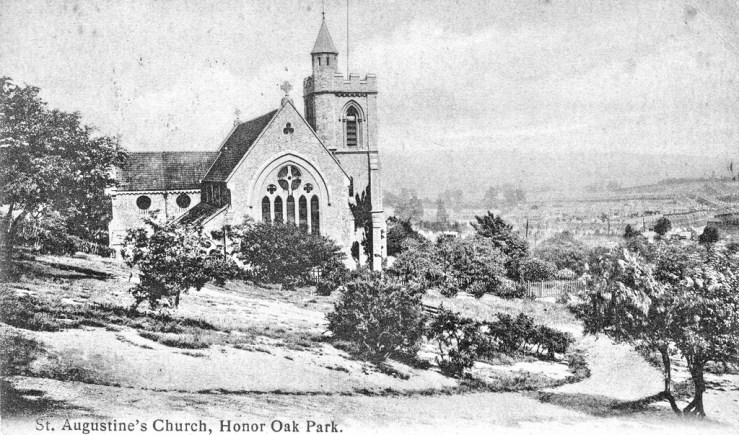
The previous Oak of Honor was thought to be much older and was a boundary tree for the old vice-counties of Kent and Surrey. It was also the edge of the Honour of Gloucester’s land. The idea is that in 1602 Queen Elizabeth sat under the tree and was thus honoured thereafter. Today the Oak of Honor is the most obvious tree to seek but by no means the oldest. I love that it has so influenced local place names. An old black and white photograph of the former oak (the church building can just be seen in the top right) gives the sense that the oak was not so old, perhaps only a few hundred years before it perished. This tree was destroyed by lightning in 1888.

4445212937_157026c2d7_b

To the right is the oak of Honor when it was only a decade old. The open landscape of early 20th century Honor Oak/Forest Hill is filling up with housing. The tree cover on the hill was largely hawthorn scrub, as can be seen behind the caged oak.

Wildlife

It’s worth remembering that though we are fixated by neat and tidy trees in urban areas, often for safety reasons, that oaks provide habitat for a great number of species. The Oak of Honor in September 2015 held many knopper galls, the protective case for a gall wasp (Andrus quercuscalicis), and oak apple galls.

OTH oaks-1-3

The top of One Tree Hill is an excellent spot to find butterflies in spring and summer because it is open and sunny. This speckled wood (Parage aegaria), one of the contemporary Great North Wood’s most common butterflies, was enjoying some September sunshine on the great tree’s leaves.

OTH nut-1

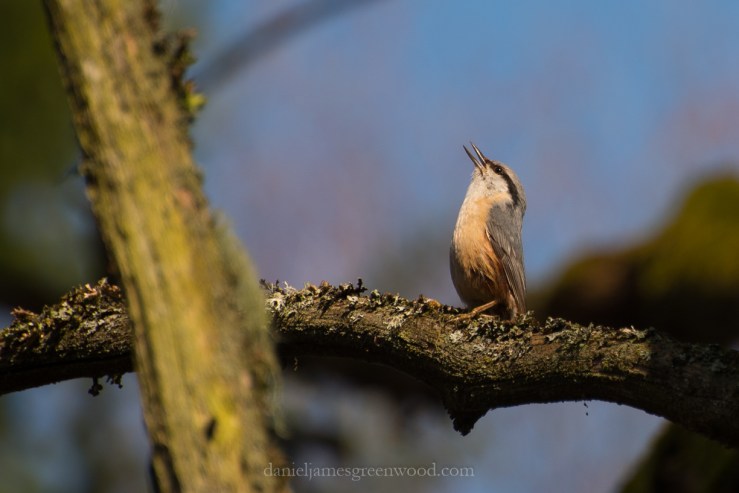
The winter months provide ample opportunity to find nuthatch (Sitta europaea) which is often tied to oaks because of the invertebrates it forages from the bark and the old woodpecker holes it nests in. It makes a neat mud ring around woodpecker holes to make the entrance smaller and more protective for its young.

OTH PH-1

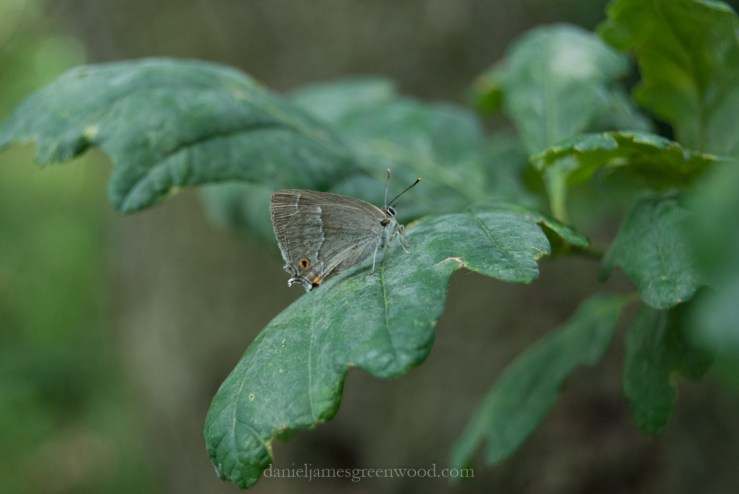
The purple hairstreak was the first ecological record at One Tree Hill when it was mentioned for the first time in the 1766 publication The Aurelian by Moses Harris. This overlooked butterfly was ‘commonly taken in plenty in Oak-of-Honour Wood, near Peckham, Surry.’ It’s one of the insects promoted by conservation groups in the Great North Wood, a good indicator of long-term woodland cover, especially at nearby Sydenham Hill and Dulwich Woods. The purple hairstreak is only usually seen by those straining to look up at the canopy or those lucky enough to stumble across one when it’s down and dazed on the path.

OTH oaks-3

Secret oaks

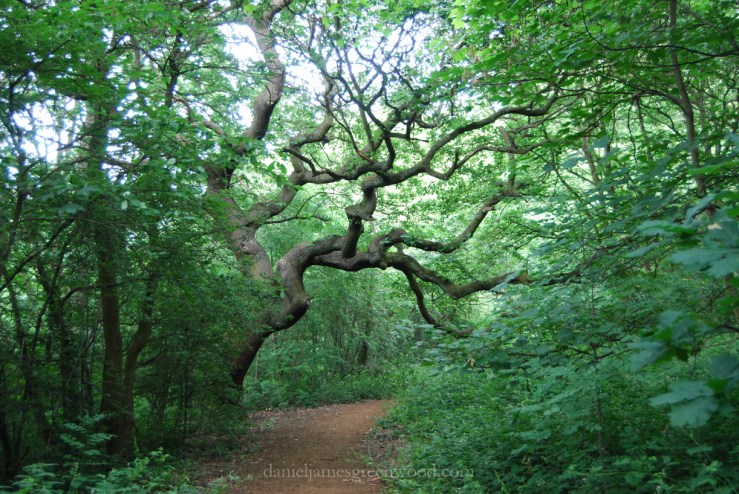
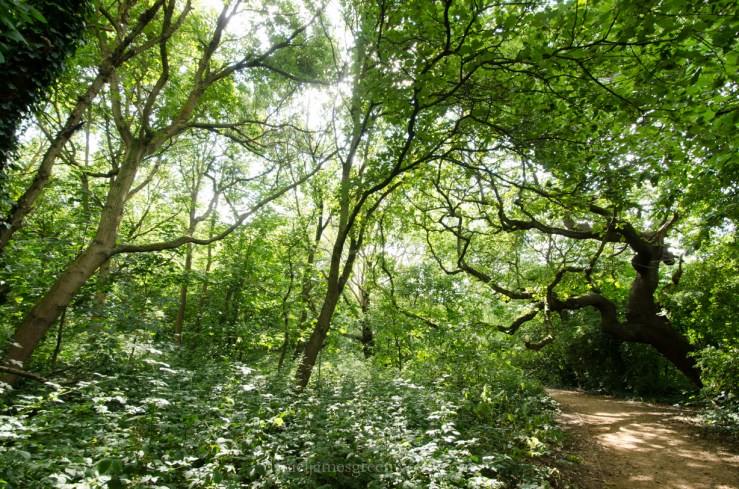
The oldest of One Tree Hill’s oaks is likely to be this lapsed pollard (whereby a tree is cut higher up – coppice is cut at the base – to prevent grazing animals eating regrowth) growing on the path that runs adjacent to Brenchley Gardens. I’ve seen a photograph somewhere of the tree isolated in open land, with Peckham’s farms rolling down to what is now Peckham Common.

OTH pollards-1 The tree, seen here on the right of the photograph (its lean exaggerated by the distortion of my 10-24mm wide angle lens) is competing with the seedlings that have likely fallen or been stashed by grey squirrels (Sciurus carolinensis) and members of the corvid family, especially jays (Garrulous glandarius). You could suggest that the new woods of One Tree Hill are products of its old boundary oaks, where the dominant species is oak. Recent research has uncovered how important crows are in establishing new oak woods across the northern hemisphere.

OTH oaks-1-4

One of the lower limbs is rotting nicely and providing habitat for slime moulds and small mushrooms, whether this is a bonnet (Mycena) or a parachute (Marasmius), I couldn’t tell you. The life that old oaks can support adds to the tree’s immense amenity and ecological value. Oaks typify the anthropomorphic but no less accurate notion of trees being ‘accommodating’ to many species.

Next door to One Tree Hill and its allotments is Camberwell New Cemetery, a more authentic remnant of Honor Oak’s open landscape of the past 200 years. One boundary, otherwise planted with Lombardy poplar (Populus nigra ‘Italica’), has two old English oaks. One has been hollowed out, possibly after being struck by lightning or affected by human damage. It’s an example of trees as habitat, something which people are generally uncomfortable with at first, especially with fungi as they think the tree is dying. In August 2015 the hollowed oak had the fruiting body of what I think was chicken-of-the-woods (Laetiporus sulphurous). Oak supports many insects and also fungus. The oldest oaks you are likely to find will be dependent to some degree on mycorrhizal relationships with fungi. Fungi can also help the oaks by removing bits of deadwood that may otherwise add extra weight to the tree as it ages. Some species are necrophratic and will eventually kill a tree because they ‘take more than they give’.

OTH sheep

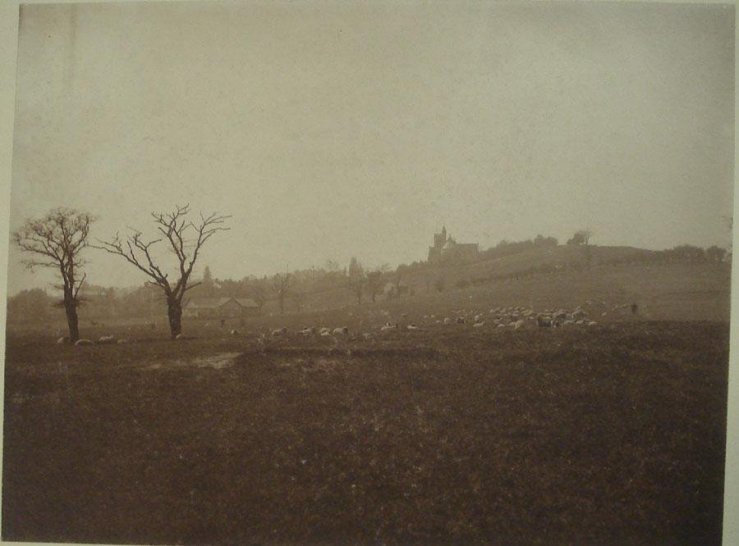
On first thought I was suspicious that the two oaks seen here might be the same two on the allotment-cemetery boundary. This is a photo from the 1920s that shows Camberwell New Cemetery and the Honor Oak Recreation Ground as open land being grazed by a flock of sheep. Evidently the sheep were used to keep the grass short for golf, or maybe also as a way to support a local farmer. The golf club house can be seen in the distance. The building on the hill in the distance is St. Augustine’s Church (1872-3). These two trees are too far away to be the same as those above, they are probably instead some of the black lines that can be seen in the distance. Note also the absence of any tree cover on One Tree Hill beneath and to the right of the church. Between the mid-1800s and this point, there ancient woodland had been well and truly grubbed out, possibly even some old boundary trees going as well. Today, this would be unacceptable.

1239140483_779d98bd92_b

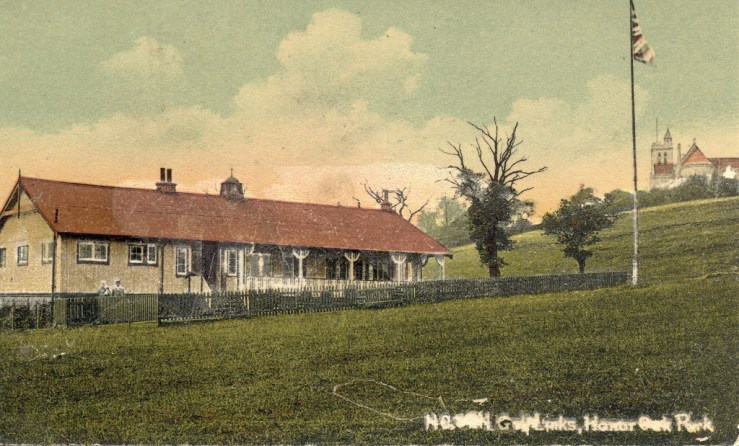
Instead, I think this image of the old golf club house exhibits the line of oaks. These oaks look to be dying back, possibly because of the impact of building the club house where the trees’ roots were. The distance between St. Augustine’s and the line of trees is one parcel closer than the previous image (Steve Grindlay).


Photography: The New Forest, May 2016

New Forest 20-5-2016 blog-21

This is part of my Woodlands project

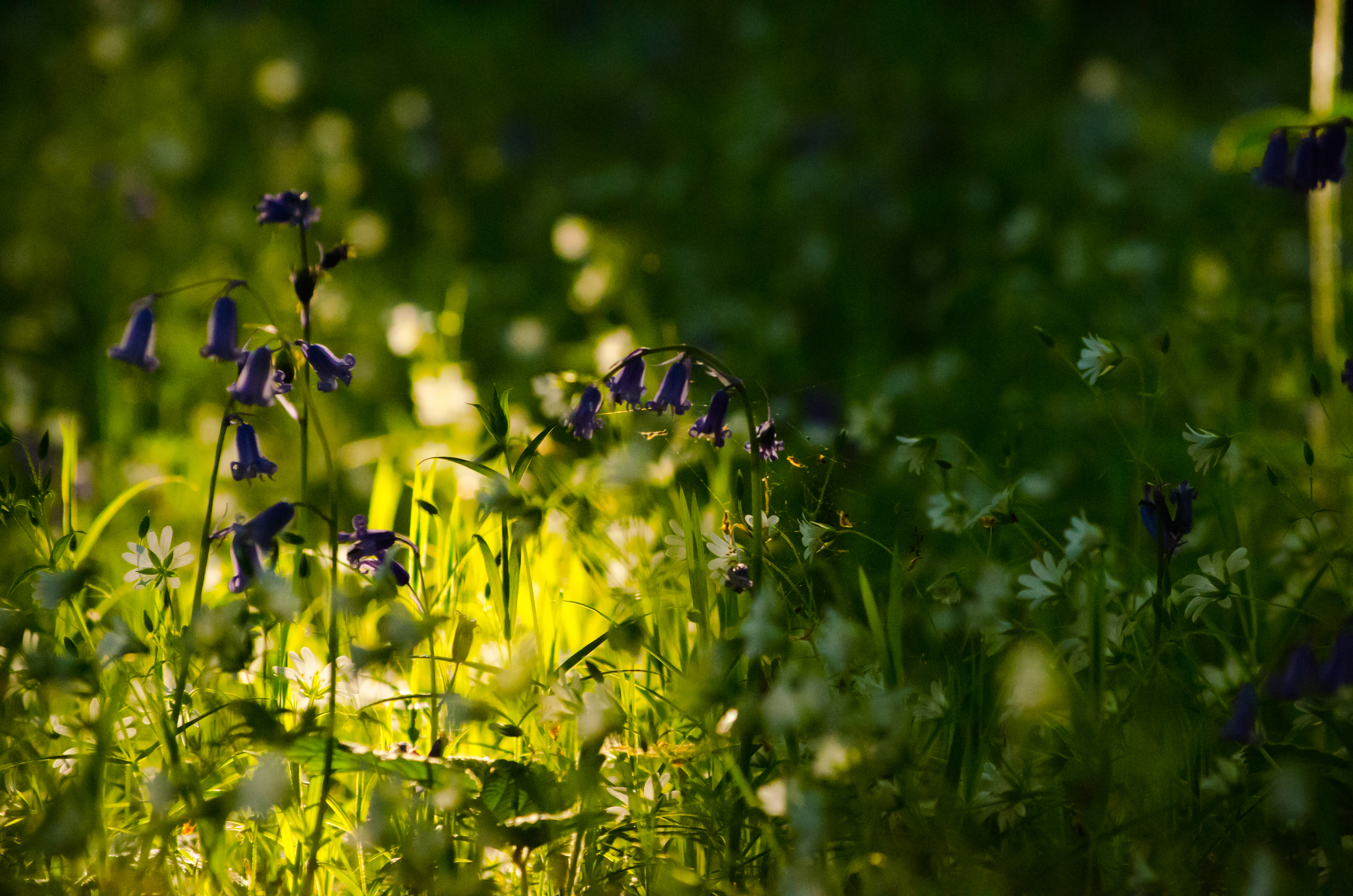
English bluebells (Hyacinthoides non-scripta) growing in the open, grassy woodlands of Roydon Woods National Nature Reserve, managed by Hampshire & Isle of Wight Wildlife Trust. Bluebells grow freely away from tree cover and can often indicate the site of former ancient woodland in areas of open land.

New Forest 20-5-2016 blog-29

An English boundary oak (Quercus robur) There are an inordinate number of ancient and veteran trees in the New Forest. The New Forest is of European importance for this reason, amongst others. It is a treasure trove of old trees and landscape features.

New Forest 20-5-2016 blog-28

The New Forest is significant also because of its roaming herbivores, in this image one of the many New Forest ponies can be seen grazing under the boughs of another boundary oak.

New Forest 20-5-2016 blog-17

There are also a number of notable beech trees, this one contained an intuitive birder, not a species native to this area.

New Forest 20-5-2016 blog-22

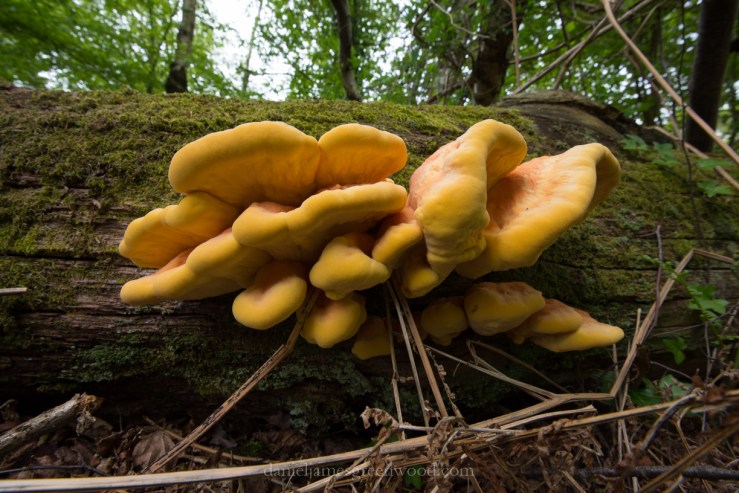
May to June is a good time to spot Chicken of the woods (Laetiporus sulphureus). This specimen was unmissable, it was massive, something like 40-50cm in length across the log.

New Forest 20-5-2016 blog-1

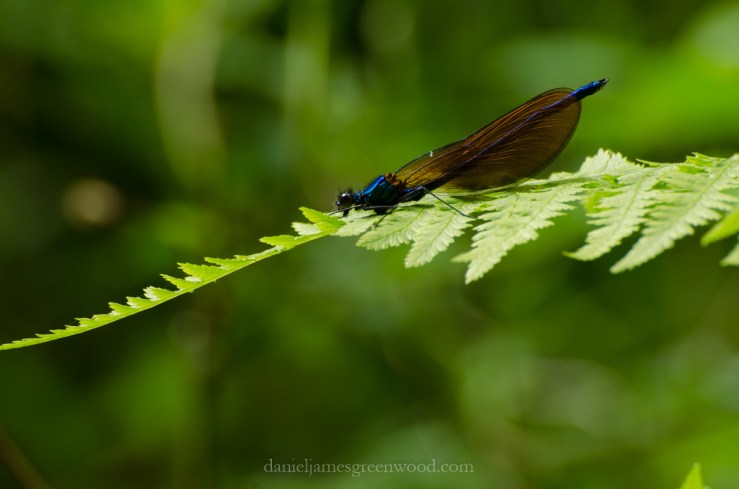
The breaks of sun in Roydon Woods gave warmth and light to invertebrates on the edges of the paths. This beautiful demoiselle (Calopteryx virgo) was resting on plants growing in a ditch.

New Forest 20-5-2016 blog-7

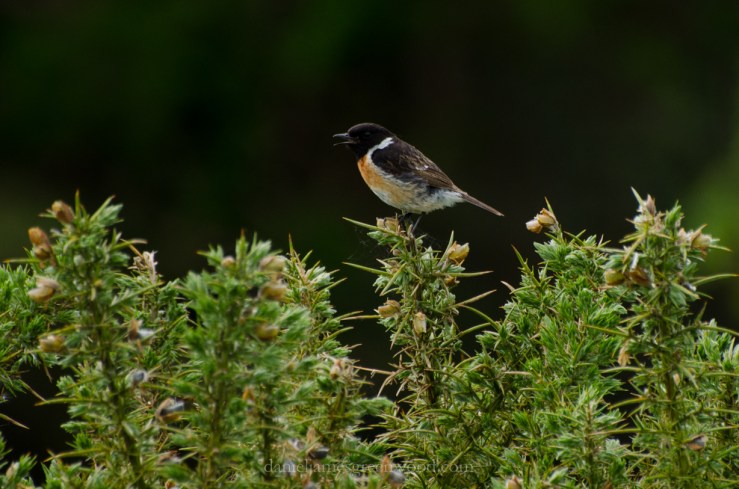
But the New Forest is in fact more heathland than woodland. There were a good number of stonechat (Saxicola torquatus) singing atop gorse bushes out on the heath.

New Forest 20-5-2016 blog-9

It was a joy and a pleasure to hear cuckoo (Cuculus canorus) singing in the distance. It was an even more pleasing feeling to see this male shoot past us. Spring, it is the most precious time of year.

Białowieża, Europe’s mythical forest

Bialowieza-1-17

Introduction

In March 2016 I visited Białowieża National Park in Podlasia, north-east Poland. I must give thanks to Karolina Leszczynska-Gogol, Grzegorz Gogol and Izabela Sondej, without whom the trip would not have been possible. Białowieża is somewhere I have wanted to visit for several years after reading about it and hearing from friends (especially Poles) who had been there. It is described as Europe’s last remnant of primeval woodland (12-10,000 years old), a slight exaggeration recycled on social media and subsequently in news items. The Czech Republic has numerous stands of ‘virgin’ forest or woodland though not on the scale of Białowieża, which is probably the largest remaining tract of ancient European woodland due to the 5,000 hectare strict reserve which is said never to have been logged. But it is not the largest woodland in Europe, that accolade belongs to the Bavarian and Bohemian Forest complex on the border with the Czech Republic and Germany. We went to Białowieża at a time when the Polish government were rubber-stamping plans to increase forestry activity in the National Park and outlying woods, resulting in much opposition from environmentalists in the west and large demonstrations in Poland. The premise for increasing logging is to combat the spread of spruce bark beetle (Ips typographus) which is currently impacting on Norway spruce trees (Picea abies) in the National Park. Those opposed to the plans argue that this is a natural process and that the beetle is a key species, a ‘forest engineer’. I agree, having seen the same impact in the Bavarian Forest National Park where some intervention does take place. I would argue that the impact of 20th century forestry practice has led to a proliferation of Norway spruce where there should be a more ‘natural’ balance of other species. However, keen not to criticise without having visited, we went there with an open mind.

Bialowieza-2

The history of Białowieża

Białowieża National Park has key designations to protect its natural heritage. It is a UNESCO World Heritage Site and Biosphere Reserve. The National Park was established in 1921 to offer protection to the herds of wild bison (Bison bisonus). Today Białowieża National Park is crucial because it has much of its original large fauna which can help ‘manage’ the landscape without any need for human intervention, i.e. logging. One theory of virgin woodland, established by Franz Vera in 1996, is that the dominant idea of endless trees covering northern Europe before humans arrived (we’ve been in Europe for over 40,000 years) is a myth. In fact wind blew holes in the wildwood and these glades were kept open by large grazing animals like elk, bison, deer and aurochs, meaning that the landscape was more like savannah or wood pasture – grassland dotted with trees. Vera argued that it was the human-enforced reduction and extinction of many of these large herbivores that led to the more dense woodland of the recent imagination. It also meant the larger clearings became towns and villages, settlements which were once established next to woodland (this is what ‘ley’ or ‘hurst’ means at the end of English place names). In Białowieża human intervention is evident in the landscape and has been for over 600 years.

Bialowieza-1-2

Białowieża was ‘discovered’ by King Jagiełło before the Battle of Grunwald and established as his own hunting estate in 1410. He is said to have been awe-struck by Białowieża’s vast woodland and herds of bison. He later built a white tower to mark his hunting lodge. ‘White tower’ is what the area’s name translates to in English. The establishment of a proto-nature reserve in the early 15th century is a crack in the image of Białowieża as an untouched wilderness, however much the notion is recycled by us dewy-eyed environmentalists in the UK, distraught at the inexorable loss of our own ancient woods (‘at least we have countries like Poland’). Wilderness is also a misleading term, coined by John Muir at the advent of the American National Park system. That wilderness had been home to Native Americans for millennia, who also happen to be humans. Native Americans are responsible for the domestication of many crop species, including maize, which form large sectors of the global agricultural economy, the arch nemesis of wilderness.

Bialowieza-1-4

Just outside Białowieża village at the site of Stara Białowieża, where King Jagiełło built his now lost white tower and established his hunting forest, is a trail of 200-500 year old pedunculate oaks (Quercus robur). Several of them are designated as protected monuments, fitted with red and white Polish emblems. These oaks reflect the reign of previous Polish Kings and the ancient boundary with the Kingdom of Lithuania. Many of these monarchs conducted hunts in Białowieża. In English, ‘forest’ means a place where forest law was enacted, largely related to the keeping and hunting of deer and the outlawing of poaching. In England today forests are areas of land managed for their timber almost exclusively. On the continent, ‘forest’ is used to describe almost all areas of woodland, also because, in places like Germany, France, Poland, the Czech Republic and Romania, woodland areas are often much larger than fragmented English woods. In Białowieża it feels natural to call it a forest, it is too big to be a ‘wood’. But what did people hunt?

Bialowieza-2-2

In the 1400s King Jagiełło shared the forest with wolf (Canis lupis), lynx (Lynx lynx), European brown bear (Ursus arctos), aurochs (Bos primigenius), European elk, also called moose, (Elces elces), beaver (Castor fiber) and bison. Today only the auroch and bear are extinct in Białowieża, with the auroch’s final living animals dying out in Poland in 1627. The other species remain, several of them doing very well. Most of the brown bear populations in Europe are in mountainous areas that are not easily messed with by us, but the scale of Białowieża National Park (10,000 hectares) suggests a reintroduction could work. An attempt has been made in the past 100 years but the bears were hunted to extinction again. At least in other parts of Europe bears are now thought to be increasing as some countries urbanise and rural areas become depopulated. Romania is a case in point. They are also coming close to cities.

Bialowieza-3

Bison once roamed much of Europe, they were even present in the woods of southern England. The bison found today in North America descend from the same roaming animals that crossed the Bering Strait between Russia and Alaska before it flooded some 8-10,000 years ago. Bison were hunted to extinction in the wild by the successive impacts of the First World War (1914-18) and the Second World War (1939-45). They were saved from total extinction by a Polish breeding programme in 1929 that led to the bison being released again into Białowieża in 1952. The bison are now numbered in their hundreds and we were lucky enough to encounter two very warm days which seemed to attract the bison out into the fields to graze. The bison pictured above is a wild animal, photographed with a telephoto lens. It is clear that bison are coming in close contact to people and are even being fed by them. Bison are dangerous animals and should not be disrespected or approached. Unfortunately one local man operating on a little too much wódka had to be pulled away because he got too close.

Bialowieza-1-5

The human landscape

The melding of Polish and Russian Orthodox culture is clear in Białowieża. At the entrance to the village we were greeted by a simple crucifix alongside that of the Russian Orthodox church. During the Napleonic War, dramatised in Leo Tolstory’s War & Peace, Napoleon’s armies allied with the Poles to defeat the Russians, but defeat for the French in 1812 meant that Białowieża came under Russian control. The Polish Kingdom was created but there were rebellions from the Poles when Orthodox Christianity and the Russian language was enforced. In response to the uprisings Podlasia was annexed by the Russian Empire and the Polish Kingdom was dully dissolved. The Polish language was outlawed and Catholic churches were destroyed or taken over by the Orthodox church.

Bialowieza-1-6

Like King Jagiełło, the Russian aristocracy also fell for the wild woods and bison. Another Royal hunting estate was established though the Russians did not merely protect the bison but breed them so there would be enough for everyone to kill when taking part in hunts. Białowieża was now a forest in the truest sense, a landscape where wild animals were corralled and bred to be hunted by the rich. A private railway was established a few miles outside of the village which today is a restaurant where you can sample dishes of bison, boar, deer or duck. In 1915 the German army took control of Białowieża. They began to build small gauge forest railways and managed the woods aggressively, such is the impact of war. In 1917 the Russian Revolution meant the end of Czarist Russia and yet more instability for the people and wildlife of Białowieża. During the Second World War the Nazis occupied Białowieża, losing it again to the Russians. In 1947 the forest was split between Soviet-controlled Poland and Belarus. Poland finally became independent in 1989.

Bialowieza-1

Though Białowieża is famous for its trees, one of the highlights for wildlife has to be the village itself. The Narewka, a tributary of the much larger Narew, runs through an area of marshland and reedbed in the centre of the village. This was a wonderful place to spend a few hours after the darkness of the forest, especially the more heavily managed areas of Norway spruce.

Bialowieza-1-7

I was visiting with my friend and mondo-birder Peter Beckenham. Many of Pete’s favourite places are in the North Kent Marshes so he felt at home here. In Białowieża he showed me great grey shrike (Lanius excubitor) and snipe (Gallinago gallinago). At first I thought the snipe’s ‘drumming’ song was Pete’s phone ringing. It was a magical sound. I like to think I showed him myriad woodpecker species, like a Czar with a vast woodpecker estate.

Bialowieza-2-3

There were several snipe marking their aerial territories over the marshland, while one, as can be seen above, stopped to rest on the top of a telephone pole.

Bialowieza-1-8

The village itself developed from the clearance of the naturally wooded landscape. It is known as the Białowieża glade, a clearing that in its pomp was 1367ha in size but between 1953 and 1989 decline by nearly half. Woodland is gradually retaking areas of arable land which are no longer farmed. The farms and fields were some of the most interesting places to visit, not least the open air folk museum (above) which was teeming with toads (Bufo bufo).

Bialowieza-1-9

There were signs everywhere of abandoned cottages, though neighboured by new developments of what appeared to be second homes for the Polish nouveau-riche. Tourism is evidently changing Białowieża’s village, and from an ecological point of view it could be for the better, but it could also be for the worse. North-east Poland’s traditional, old fashioned agriculture is key to the richness of its wildlife and habitats. If these practices are completely lost in favour of more intense agriculture as promoted by the European Union’s agricultural board (though conversely not by EU-wide measures like Natura 2000’s Birds and Habitats Directives) then many species which are stable and increasing in this part of Europe will become threatened as the traditionally-maintained habitats decline. Coupled with the threat of increased logging in Białowieża a worrying trend is apparent. Also, if local people can’t work the land in a traditional way and only the wealthy can afford to live there this will also contribute to habitat loss.

Bialowieza-1-10

Nature protection

The allure of Białowieża for many is the 5,000ha strict reserve and believe me it is strict. This area of unmanaged, ‘untouched’ woodland is presented as the only remnant of Europe’s wildwood. Wildwood is a mythical forest landscape that thrived after the last glacial period came to an end 10-12,000 year ago, at the same time that bison were walking from Russia into North America. Glaciers covered much of the northern hemisphere until the climate warmed and the conditions became favourable for a greater diversity of tree species. First birch and pine, then hazel, oak and ash covered the UK and northern Europe. There are many misconceptions about the finitude of this landscape – I agree that it was unlikely to be trees coast-to-coast, as Franz Vera argued. There is little to no known remnant of wildwood in Europe and many of its species lost. As Oliver Rackham argues in Woodlands, our sentimentality regarding trees and woods has warped our sense of what is natural for trees, or even what the word ‘natural’ means. Our impact on the climate through the burning of fossil fuels and the unprecedented release of nitrogen dioxide, carbon dioxide and other pollutants that alters the chemistry of the soil, poisons us and a wealth of other species, means that there is no corner or square of this earth that is ‘untouched’ by us.
Bialowieza-1-11

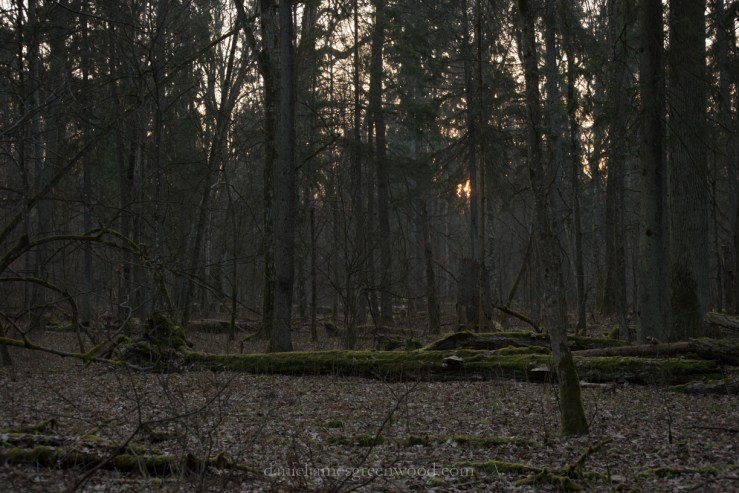
We visited the reserve at dawn. You can only enter with a guide having paid the entry fee or on scientific business, if you enter without one you can be fined. Wardens cycle around the main paths seeking to check permits at all times. This officiousness – our pass was checked three times – gave a sense of pressure to our visit but did not take anything away from the strict reserve’s grandeur.

Bialowieza-1-12

The strict reserve manages itself ecologically – though there were plenty of signs of chainsaws cutting fallen trees across paths, so ‘truly wild nature’ had not escaped Health & Safety. Trees naturally succumb, fall and decay. Some remain standing to become habitat for fungi, plants and other invertebrates. One of the main attractions for Pete and I was the number of woodpeckers that could be encountered here. By the end of the trip we had seen 8 species.

Bialowieza-1-13

One woodpecker that can be seen fairly commonly in east European spruce forest, if you give it the time and attention, is the three-toed woodpecker (Picoides tridactylus). It feeds on the larvae of the spruce bark beetle, the subject of much press attention in Europe currently. The three-toed woodpecker makes its way around the trunk of a dead spruce tree, pecking away at the bark to find its food. Evidently the deadwood created by the bark beetle is of great importance, rather than being the threat outlined by the Polish government. But is the threat economic or ecological?

Bialowieza-1-15

Another woodpecker which I have rarely spent any time with is the lesser spotted woodpecker (Dendrocopos minor). In England this bird is undergoing a speedy decline, having disappeared from its historical range and now confined to strongholds, including the New Forest. Its decline in the UK is not completely understood. In Białowieża we had the opportunity to spend a good half an hour with this bird alongside the Narewka as it picked its way around the tree. Before reaching the river we had seen the Syrian woodpecker (Dendrocopos syriacus), identifiable from the great spotted woodpecker (Dendrocopos major) by a break in the black bar that connects its cheek from its nape!

Bialowieza-1-16

Fungi is a friend of the woodpeckers in that it softens up trees for excavation. Fungi performs a vital role in woods, in breaking down dead trees, controlling the number of certain species and in creating soil and stable nutrients for other life to prosper from. It also helps trees by weakening and quickening the removal of deadwood that otherwise adds weight to a tree, inhibiting its growth.

Bialowieza-1-18

Outside the strict reserve this hoof fungus (Fomes fomentarius) evidenced the role fungi has in offering direct nourishment to wildlife. I pray that this was bitten into by an elk but it was most likely a horse.

Bialowieza-1-17

I’ve written before about beavers in Europe. In Białowieża’s strict reserve they are another ‘forest engineer’. You can even find them in Warsaw, a lesson for us in the UK as we get to grips with these returning beasties. The flooded woodland you can see here has been opened up and the river Orłówka broken out and slowed by beavers. This has a massive effect on the number of species found in wetland habitats. The smaller pools of water create breeding space for fish and many aquatic invertebrates, as well as for amphibians. The rerouting and channelling of European rivers – especially by communist or Stalinist agricultural schemes – was one of the most destructive environmental practices to have occurred in the continent’s history.

Bialowieza-1-19

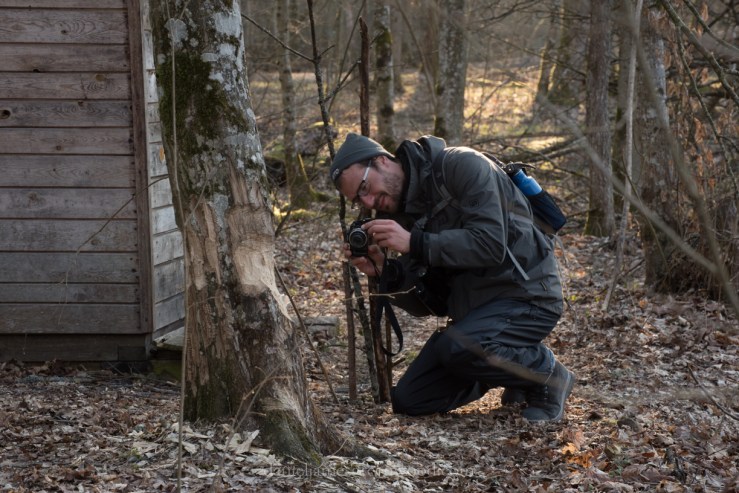
This is a multi-stemmed hazel tree which had been ‘felled’ by beavers. I love how similar this is to the hazel stools coppiced by volunteers in much smaller English woods. So it’s ok if beavers do it, but not us? I’m not so sure.
Bialowieza-1-20

Pete was also impressed by the beaver’s work. They are able to sharpen their felling teeth with bottom front teeth that act as a kind of sharpening stone. They are evidence of the fact that sometimes cutting down trees can be a good thing.

Bialowieza-1-21

The bark beetle battle

Tree felling is not always the right thing to do. Walking in Białowieża there were clear signs of spruce trees dying off from the impacts of the bark beetle. Trees with red dots or crosses with numbers marked in red spray paint indicated that they were to be felled.

Bialowieza-1-22

The bark beetles do damage to trees when present in large infestations because they bore through the cambium of the tree. The bark is the protective layer for the cambium as well as the phloem and the xylum. Water travels through the xylum and sugars and other minerals pass through the phloem. These are the two most important cell membranes in a tree’s ability to feed and grow. There are many species of bark beetle, the above image is an ash tree and so I don’t profess to know if it’s the spruce bark beetle, it probably isn’t seeing as the spruce bark beetle family only feed on spruce or pine.

Bialowieza-1-23

As mentioned earlier, deadwood is an intrinsic part of a woodland ecosystem. It provides habitat for thousands of species of invertebrate and fungus. Many managed forests completely lack any deadwood because it has been removed for sale or simply tidied up. Also the key plantation trees of spruce, pine and larch produce very view large branches, unlike oak or ash, and so there is little to even fall anyway. Recent research suggests that the removal of deadwood from woodland environments has contributed to climate change. This is because wood continues to hold carbon as deadwood. The tidying up of woods is one of the key ways to reduce its biodiversity, I hate to see it.

Bialowieza-1-29

In the Bavarian Forest, on the border with the Czech Republic, the spruce bark beetle has also hit the woodlands hard. One of the possible reasons for this increase is the intensive forestry of the early 20th century, when Germany was at the forefront of two world wars. In wartime, woods suffer greatly. In the UK, the Forestry Commission was created in 1919 in response to the depleted supply of wood caused by the First World War. In Britain this meant a loss of ancient woodland, an irreplaceable habitat. In Germany war meant more spruce and pine, laying the groundwork for the outbreak of the bark beetle in recent decades. Before the Bavarian Forest’s intensive forestry work in the 1900s, the woods were made up of silver fir (Abies alba), beech (Fagus sylvatica), ash and a greater diversity of species. When the balance in stable ecosystems is disrupted some species can become invasive. Similarly, the outbreaks of Dutch elm disease in the early Holocene (12,000 years ago to present) were likely caused by our species opening up woods and allowing the elm bark beetle (Scolytus scolytus) greater range of travel to infect more elms with the fungal disease. Manmade climate change is also identified as a cause of the dying off of spruce due to drier soils, another reason why no landscape can be described as ‘untouched’ by us.

Bialowieza-1-24

On our final day in Białowieża we came across the first signs of intervention from foresters. A nature reserve sitting between the road to Hajnówka and the bison show reserve had large areas of mature dead spruce that had been felled. Was this in response to the bark beetle, or was it a safety measure? We didn’t know for sure but it seemed beetle-related.

Bialowieza-1-25

Earlier in the day, before being stopped by the very suspicious Polish border guards warning us not to try and escape to Belarus(!), we encountered a man gathering timber with his tractor. I snapped this picture of him, mainly because I am interested in how woods are managed in Europe and who they are managed by. He didn’t see me take that photo but when he saw me taking the photo below, having driven past us, he began shouting at us in Polish to go away. My general feedback has been that European foresters don’t like being photographed.

Bialowieza-2-4

This is what he had been so worried about. We met a Polish birder around the corner and I asked why he had been so angry. ‘Perhaps he is stealing,’ he said. I wasn’t convinced of that. It could be that Greenpeace Poland’s visits to Białowieża to count the number of felled trees, along with their typically ambitious protests being undertaken in Warsaw, has caused anxiety and tension among forestry workers, many of whom will be doing only what they do normally. I sympathise with them.
Bialowieza-1-26

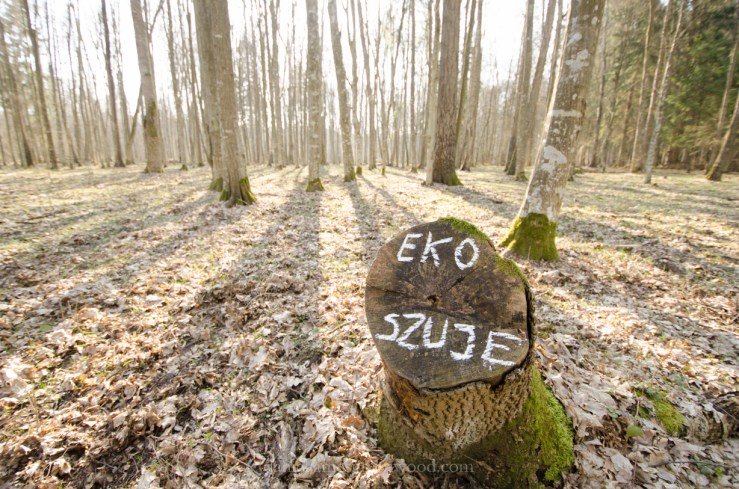
In another area we noticed that wherever there was a felled tree, the words ‘eko szuje’ or ‘eko kornik’ had been daubed on the stump. We were unsure what it meant, but ‘eko kornik’ probably means ‘reserve of the bark beetle’. I would welcome any translations from readers! This seemed like an urban protest. But why are the Polish government so keen to fell spruce? Why do they care so much about the tree? It’s not threatened in Europe, in the Bavarian and Bohemian Forest’s case its presence is too great and it inhibits species diversity and only small areas of infected trees are being managed to reduce the beetle. In my opinion, having seen how much use the tree is for construction and carpentry in Romania, the Czech Republic, Poland and Germany, the answer is surely commercial. Patrick Barkham has written a very informative account of the issue, he takes it further: ‘They [those opposed to the plans] say the beetle is a handy alibi for commerce. Before Szyszko [the environment minister] (a forestry teacher) was elected, he spoke of the wasted commercial potential of unlogged wood. Only 57% of the proposed harvest refers to disease-ridden spruce – its rotten wood is worthless. Loggers want to get their hands on valuable, large old trees. One forest district has already almost felled an allowance of trees which was supposed to last until 2021 and so the government will permit it to increase its annual take from 6,000 cubic metres to 53,000 cubic metres. Other districts are likely to follow suit.’

Bialowieza-1-27

If the opposition view is right and the Polish government is attempting to log old growth forest (400-10,000 years old) the EU, as Barkham points out, should stop them: ‘As Britain heads towards the EU referendum, virtually every conservationist argues that we need to stay in Europe because of its environmental protections, including the habitats directive and its Natura 2000 sites, of which Białowieża is one. Białowieża is the big test for that argument. The EU must intervene, cajole and penalise the Polish government until its vandalism is stopped. If the EU can’t save Białowieża, its environmental protections aren’t worth the – sustainably sourced – paper they are written on.’
Bialowieza-1-28

Doing the right thing for Białowieża

I’m uneasy about the ‘save our woods’ rhetoric that is so common now on English-speaking social media. The ‘crying wolf’ of many campaigners has led to scepticism for things that really are important. Evidently there are serious problems in Białowieża. The main crux of the argument to protect it is that it’s ‘pristine’, ‘untouched’ and a wilderness. I don’t agree that it is. Białowieża’s woods and trees have been exploited and its fauna messed with by people for over 600 years and likely further back. If Białowieża is to be saved from these ecologically illiterate measures of clear felling deadwood, the argument should not be based on mysticism. Campaigns to save woods and landscapes should be built on a clear case that people can understand, not on a fairy tale that will later be picked apart through the bureaucratic process. I don’t think Greenpeace Poland are doing this but those of us English-speakers trying to raise awareness about Białowieża should focus on reason rather than emotion first of all. There is a reasonable case not to increase logging in Białowieża, so why not focus on that? If you really do love the idea of Białowieża and want it to be protected the best thing you can do is visit, to spend your money there, invest in the eco-tourism infrastructure and show the Polish government that its value is far greater as a nature reserve than as one to be infringed upon by exploitative forestry. The battle for Białowieża will rumble on as it has for centuries.

 

Essay: The threat to English ancient woodlands is a challenge to our collective sense of place

Blean Woods RSPB just outside Canterbury in Kent

I live in an area of London that was once covered by a stretch of woodlands, commons, meadows and wood pasture that was called the Great North Wood. It was not the continuous wildwood which some argue had covered parts of England totally after the melting of the ice 10,000 years ago, before humans began to cut the trees down. It was known as the Great North Wood because it sat north of Croydon, a large market town fringed by chalk downlands which are not so hospitable to the kind of woodlands dominating the land to the north on London clay, namely hornbeam and sessile oak. On London’s open downlands livestock grazed and rabbits were bred for their fur and flesh. The wild but manipulated landscape of the Great North Wood would have stretched all the way north to the Thames at Deptford (where timber could be exported on ships or turned into ships), cutting off at Penge (Celt for ‘the end of the wood’) and slithering down a little like the continent of South America to Selhurst. Many of the placenames in the locality echo the woodland past, the history of its woodspeople, or the woodsman (which Ben Law neatly points out means ‘wood hand’ rather than excluding women). This can be seen most clearly by Norwood, derived from the name of the landscape itself, as well as Brockley which could describe a human settlement where badgers were notable. The ending of ‘ley’ generally means a clearing or settlement next to woodland. Honor Oak is a pointer to the Oak of Arnon Wood, a slab of probable millennia-old woodland which is now embellished by the Local Nature Reserve One Tree Hill, where the Oak of Honor stands in the form of an English oak replanted some 100 years ago after the site was saved as a public open space by dissenting locals in 1896. The lack of a ‘u’ shows that this is of the old English spelling for honour, the language taken to the Americas by settlers some centuries ago and now seeming somewhat alien or incorrect.

The Great North Wood was not merely one of endless woodlands or of wildwood, it was a landscape that humans were a part of and dependent on for their livelihoods. Some of the woodlands which remain today such as One Tree Hill and Sydenham Hill Wood, have shown that they were at times more open, that larger trees stood singularly with commoners grazing their livestock on the grasses and herbaceous plants underneath the shade of trees like elm, oak, hornbeam and ash. This before the advent of the enclosures when commoners had their rights removed through an Act of Parliament, a series of events which define the landscape of my hometown to this day. As recently as the 1950’s one of the Great North Wood’s most unaffected remainders, Dulwich Wood, was grassier and more open whereas today it is darkened by holly and an array of other trees such as hornbeam, ash, hazel and rowan. Still, the ancient remnants of the Great North Wood hold colonies of wood anemone, dog violets, wild garlic and other plants which indicate continuous woodland for at least 400 years.

Wood anemone indicates 400 years of continuous woodland

One of the main ways that people would have earned a living was by inhabiting the woodlands. Charcoal burning was one of the most common sights and vocations in the Great North Wood. They were known as the colliers, their presence indicated by Collier’s Wood in Wandsworth, beyond the western fringes of the catchment. Hornbeam was ‘coppiced’ on a cycle of 10 or so years, the trees cut at about 20-30cm, a vigorous regrowth the next year created multiple stems and thus an eventual greater crop to be burned and sold to blacksmiths and those needing intense heat to fire their craft. Other trees coppiced were hazel and ash, with hazel especially important for its usages for fencing and walking sticks. Sessile oaks were allowed to grow tall and true for their timber and the tannin residing in the bark. But coppicing is not necessarily as destructive or exploitative as it may sound, as when coppicing was more common – before the advent of coal and the increase in imports of cheaper fossil fuels from abroad – the Great North Wood’s coppices were home to populations of nightingales and nightjars, not least at Penge Common (now covering the famous Crystal Palace Park and the town of Anerley) where locals were said to visit at night to listen to the nightingale song, and there is some anecdotal evidence that the nocturnal music fuelled an increased birth rate. Coppicing allowed light into woods, enriching the herb layer of these woodlands, giving life to wildflowers such as dog violet which then supported the silver washed and dark green fritillary butterflies, as well as beloved primroses, now diminishing from the English landscape as ancient woodlands and hedgerows have been grubbed out and poisoned over time, feverishly in the latter part of the twentieth century.

A renewed interest in coppicing has given a new sense of purpose to our woodlands

This brings me to the issue of woodlands and biodiversity offsetting, a scheme mooted by the Department for Environment Food and Rural Affairs (Defra) as a way to mitigate losses to wildlife from development. In recent times the former Transport Secretary Justine Greening advocated the ‘transplanting’ of ancient woodlands which are in the way of the proposed High Speed Rail 2 line intended to travel from London to Birmingham and then north to Manchester and Leeds in a final ‘Y’ section. More recently Environment Secretary Owen Paterson has confirmed his liking for proposals to clear ancient woodlands and plant 100 trees for every ancient tree that is lost. Both of these proposals fall flat after only a little research or, dare I say it, consideration. As Oliver Rackham puts it in his totemic ‘Woodlands’, ancient woodlands are not the place to look for ancient trees. Paterson is mistaken. What he is looking for might be something like Penge Common, or one of the other commons now gone from the Great North Wood. It is now only really in wood pasture or ancient hedge lines that you can find ancient trees. In ancient woodlands it is the landscape and ecosystem which is ancient. Paterson sells himself as a man in-tune with nature and the countryside, posing by fence posts and boasting of keeping badgers as childhood pets. His rhetoric suggests he is out of his depth.

Ancient woodlands are not the place to look for ancient trees.

Today ancient trees are loved, most in estates or arboretums where they are prized for their age and ‘wisdom’. In ancient woods, such is the diversity of life, many trees succumb to fungal infection, because fungi is another aspect of an ancient woodland. The life of fungi is in the soil, the mycelium, to be exact. The mycelium is, in some ways, the life force of woodland, passing nutrients back and forth between trees and soil, a little like the information superhighway I am using to publish this article. Fungi is as vital to human existence as trees, often described as ‘the third force’ after animal and plant life. So too are certain species of wildflower, insect, mammal and bird depend on ancient woodland ecosystems. We are talking about an environment that takes many hundreds of years to develop. This is why HS2 Limited’s desire to dig up the ancient woodlands (33 ancient woodlands are directly affected according to the Woodland Trust) and transplant them elsewhere is the thinking of people who should not be entrusted to decide on infrastructure projects that endanger ancient woods or natural landscapes. ‘Moving’ a woodland would not mean a big family moving from a big house to another. It would be the same as a city removing its hospitals and replacing them elsewhere without foundations or power to run the building and its infrastructure. The real point is that ancient woodlands, biodiversity, nature, these are hindrances to short-term economic gain, and in many ways, to this government’s ideological assault on the environmental sector. Biodiversity offsetting, on this level, is something those of us who love trees, woodlands and nature cannot accept or allow to occur.

One Tree Hill’s Golden Jubilee beacon attracted 600 people in 2012

But what does this have to do with the Great North Wood, or of woodlands that were not necessarily valued for their biodiversity and wildlife but instead for their produce? The failure of biodiversity offsetting is its inability to recognise the need that human beings have for woodlands int he environmental sense, the importance of access to green and ‘natural’ spaces. It fails to see the importance of place, let alone wildlife or biodiversity. Worst of all it is a signifier of our failure, not just that of politicians, to see that woodlands present an opportunity for a more simple and healthier existence than the one presented to many in England today. In Ben Law’s ‘The Woodland Way’, he outlines just how far the English have moved away from their ‘forest dweller’ existence, an era that would have dated back to the Great North Wood. Woodlands offer us sanctuary, food, the resources for infrastructure, a place for real learning – wood carving, coppicing, construction, food growing, fencing, tool use – and countless creative industries. Many people express the sense of belonging offered by time spent in woodlands. The woodland sell-off plans panned (but possibly remodeled to fit biodiversity offsetting) caused outrage in the UK and led to a 500,000 strong petition being delivered to the Prime Minister David Cameron. This was a worrying time – we learned then that this government do not hold the best interest of our woodlands at heart – but the public were able to send a unified message. The sell-off was not acceptable.

Biodiversity offsetting fails to acknowledge the importance of place

The Great North Wood is a case in point for people standing up for their woodlands in the shape of One Tree Hill, saved from enclosure by ‘the great agitation’, as it is known locally, when thousands rioted to protect it from enclosure. And then there is Sydenham Hill Wood, saved twice by local people, London Wildlife Trust and the Horniman Museum from plans for it to be developed for housing. I wonder how the battles would have gone if biodiversity offsetting was in place in those, both very different, times. Our woodlands are only safe when they are loved, ‘used’ and valued by local people. Sadly, it would appear that our woodlands are not merely under threat from invasive species and disease, but also from the short-termism, bravado and lack of thought from authority figures like Paterson. Though some woodlands have been around for more than 1000 years, even in a place like urban south London their national fate is at the whim of individuals looking only as far as 12 months into the future. But that is only the case if people do not speak out and challenge the ecological illiteracy of ancient woodland offsetting. Consider that the next time you walk through a wood in spring, when its wildflowers, birds and insects are flourishing around you. That place is only safe because you and the community value its sense of place.

After Oaken Wood, ‘biodiversity’ has come to mean very little

An ancient woodland in Wiltshire, England (by D. Greenwood)

“The very considerable need for both crushed rock aggregates and dimension stone, together with the eventual biodiversity improvements, and the ongoing socioeconomic benefits, would clearly outweigh the loss of the ancient woodland and the other adverse effects of the development in this case.” – Eric Pickles, July 2013

When Eric Pickles described ‘the eventual biodiversity improvements’ in destroying Oaken Wood in Kent, an ancient woodland sat conveniently on a bed of limestone and next to a commercial aggregates mine, it may have been the final call for a phrase that has come to mean so little. By this I mean ‘biodiversity’, a phrase that attempts to describe the diversity of non-human life. It’s now a word sucked into planning regulation and the corporate tongue that blankets all meaning – it is impossible to put into one word or describe the immense variety of wild animals, plants, fungi and other living organisms that make their home on planet earth today. In the case of Oaken Wood it is a saddening instance, where a kind of Orwellian newspeak is being used to make people feel better about the largest loss of ancient woodland in England in decades, and purely for economic, short term benefits. Note also the phrase ‘the ongoing socio-economic benefits’, hinting that the government’s stance on the environment is improving the economy and getting people ‘back into work’ where they belong.

In the case of Eric Pickle’s ecology lesson, he should note that an ancient woodland takes 400 years to mature and establish, for the soil conditions to be right for the species of plants, lichen and fungi (yes, wildflowers and mushrooms, not just trees) that will make it a unique and stable ecology for the insects that will pollinate it and act as food for the bats and birds that give ancient woods their star turns and top predators. We can only hope that in 400 years no one will have heard of Eric Pickles but sadly people might have no idea that an oak woodland once grew in that part of Maidstone, nor might they enjoy Pickles’ ‘biodiversity improvements’, which sounds like a London landscaping company. There will be no benefit to wildlife in comparison to how things are now, just disruption, local extinction, desecration and, for the species of birds and migratory insects that might manage to return on the wing after the aggregates gurus have had their way with the landscape, pollution.

It is perhaps now time to point out that if woodlands and other wild places are not treated with their ecological and natural importance in mind that there will be wider and wider declines in species depending on ancient woodlands, meaning that in 400 years there will not be the diversity of wild creatures to even enjoy a renewed woodland. In short, biological life will be far less diverse. Unfortunately this horrendous government do not understand the impacts of their decisions. Just like Justine Greening thinks the 50 ancient woodlands that HS2 Ltd have in their sights could be ‘moved’, Eric Pickles thinks a woodland can be put back where it was, like a rug pulled up from the floor, swept under and replaced. The characters mentioned here are not fit to make these decisions, just like Owen Paterson’s failure to listen to the people and the science over both a badger cull and bee pesticides make him ethically unsuitable for his post as Environment Secretary.

If we can’t use ‘biodiversity’, what can we say? I always go for ‘wildlife’, it’s not perfect, but it indicates the living creatures which do not have a voice, which haven’t been domesticated like dogs or cats and refers even to urban ‘horrors’ like the brown rat or ring necked parakeet. It also rouses our sense of the wild, of freedom from human strictures and civilisation, of the world that we came from and that underpins all our activities, for which we depend on for nourishment, energy, mental and physical well being. It also uses that vital word – ‘life’ – which ‘biodiversity’ fails to point to at all. The loss of a wild place means a lot of death and, in Oaken Wood’s case, purely for human greed. Isn’t that what society was developed to put an end to? Biodiversity is a scientist’s term and for all the incredible scientists out there more often than not many fail to describe things simply or to capture people’s interest and passion for nature. Smartphones wouldn’t be as popular if they were marketed by the geniuses who developed them.

I remember listening to a park keeper talking about doing things for ‘the biodiversity’, to attract ‘the biodiversity’. I have no doubt this phrase had filtered down from talking to bureaucrats in the council, the same language drenched all over planning documents and used in this sense to mask the fact the speaker didn’t know or really care about how the land was being managed to benefit the environment. It’s also used by politicians to appease conservation charities, to make them feel they’re being listened to. It’s the new ‘green’. When people hinge their argument or point on the word ‘biodiversity’ is it possible it could be to hide the fact they don’t know or care about what they’re saying? Perhaps not always but at times it is resoundingly true. All we can do is be clear when arguing the case for preserving and enhancing our natural heritage both for wildlife but also ourselves and those yet to be conceived who deserve and need to see, experience and live alongside wildlife. For those trying to champion the diversity of natural organisms, our language has been compromised and used against the very thing it’s intended to support.

In search of Mayo’s native woodlands

First published on the Earthlines Review

Co. Mayo, Eire, April 2013

Saturday

Last night we arrived to watch the mountain burn. The flames licked up from behind the plantation at the end of the field, capturing the tinder of last year’s heather. I thought of how dry that wood was, how it would go up in an instant. The farmer ghosted down the lane, no knowledge of who could have set fire to the mountain, or why. He always strikes me as part wild, so accustomed to the lay of this land that he has partly-merged with its bogginess, its giant boulders and streams, in the way I am accustomed to the wildness of streetlamps and new woodlands, how they impact me. Seeing an Xbox and satellite TV in his house a few years back diluted that idea. This isn’t the first time the mountain’s been set on fire, five years ago it happened. Waking up this morning it’s as if last night was a dream brought on by the exhaustion of a long and early journey from London, across the Irish Sea from Holyhead and then from Dublin. At the foot of the Ox Mountains this morning I see no sign of fire, no people, no animals. It must have been much further away than we thought it was. The bracken lies dead and dry, concealing crevices between rocks. How quickly this could burst into flame. The ground is dry at the foot of the mountain, the sphagnum mosses and reindeer lichens spreading as I climb with the wind. A herd of feral goats watch me from the top, filing away, perhaps in disappointment that I’ve blocked their path. Turning to look to the west I see Nephin in silhouette where the valley of farms and gorse-covered bog ends. I head south-east and up into the Ox Mountains.

Trees are sparse, only a hawthorn or a mountain ash in 100 metres, bedraggled and gnawed by the animals that graze between the rocks. The heather is growing again, and where there is some dampness a cladonia cup-lichen pouts its miniature red lips on pale blue stems. I search along the south-facing banks for wildflowers and find dog violet and wood sorrel. Being a woodlander at heart, it draws me back home and to the question of origins – did woodlands once grow on the Ox Mountains? They must have. Looking around me, I am not convinced. But early or common dog violets do grow in ancient woodland in south London, and wood sorrel, too. One of my holiday reads is Oliver Rackham’s Woodlands. I will be tearing into it on my return back to the cottage.

A small bird is calling, barely audible above a wind that’s gained momentum as I’ve gained height. Two giant boulders sit like mountain fauna and all I see above and between them is sky. The ground is boggy, covered by the papery yellow grasses and red mosses. A goat path is indented through it all. I take it, stepping up into the goat hoof clefts and up between the two boulder gods. Though unseeing, they will have presided over a valley wrought by famine in the 1840s, worn only by the deep breaths of time. Last night they will have been coloured by fire, unmoved. To be rock is to be asleep.

The rocks are beneath me now, a plane of damp dead grasses and moss pervades. The wind is stronger, still. How strange that even on a tree-less moor of a mountain the movement between rock and mound can feel like entering somewhere new. I sit on the rocky deity’s scalp.  Down below, the plantation is crossed by bare larch trees, and in the distance the blue promise of Sligo Bay. Further west, in the realm of the imagination: America. But I’m hungry, and the basic desire for food always wins out over beauty.

I wander across and down, away from the sheer drop. At least the fall would be into a mattress of bog. A raven calls out, kronk, kronk, kronk, but so bare is the mountain the call could be a thing of the distant past, or my imagination. I grab onto heather forgetting that the soft ground will give and I nearly tumble bearing yet-blooming flowers, but a goat print saves me and I land on my backside. Gradually the song of a robin replaces the mountain wind, the images of sheep return to life and the mountain looms again, forgetful, triumphant.

ireland-april-2013-lo-res-109

Easter Sunday

It’s evening, the weather is warmer here than in England but when the wind blows it cuts through you. I have been reading Rackham’s Woodlands. In the period between 1350 and 1500 woodland cover expanded in the United Kingdom in the wake of the Black Death. England’s population declined by 1/3 and so too did global warming[1].  Why? Less trees were being felled and burned. The woodland came back and captured the carbon. I wonder when that will happen again. Today we visited my grandfather at his nursing home in Kiltimagh, it’s an old estate with pollarded horse chestnut and beech trees. On the hillside wind turbines have been built. They do not look a scar or a slight on the land. But granddad never leaves the house to see these things, most of the people there drift in and out of sleep and eating, the radio playing in the background. It was Aerosmith when we arrived. He used to live in Ballindine, crossing the motorway to the shop, forgetting how many times he’d been. He always asks me when I’m going to get a haircut. I feel a little apprehensive about visiting the home but when I get there I enjoy it, the people are friendly even if some aren’t in their right mind and there’s a welcome warmth about the long faces, slow gestures and blazing radiators.

After a day spent in the car I decide to visit the mountain again. I’ve never been to the top. Me and my dad nearly got up there a few years ago but we didn’t feel the desire to. I take to the path again, passing the sheep in the field, the caravan shot to pieces, a lace curtain blowing through the hole where the window once was. I climb up the track again and feel no desire to reach the summit. I turn into a small cove where a stream runs down and the path becomes sphagnum moss, soft, white and red. I sit on a boulder and look up at the sky and the mountain. But for the stream there is no sound at all. All my thoughts come in and out again. Having had my fill of silence I return back down. On the way I see Nephin traversed by the sun setting behind clouds, the trees silhouetted on a hill before it. I can’t help but think of those who used to live on this mountain and in this valley who were shackled and degraded by famine. How did they view this overbearing rock and heathland, the sight of Nephin and sunsets like these? Surely they couldn’t have had the energy or mind to even think about it. It would not have mattered. I was reading a book called The Great Famine last night. When one ship carrying food and aid from England arrived in Ireland during the famine, three went the other way. At times I feel torn between my heritage, between my anger for the cruelty wrought by the British and the suffering inflicted upon the Irish. I do not feel completely one or the other.

On the way back down I have a sudden desire to remain, to sit against a rock and enjoy the fresh Atlantic air. I remember hearing a cuckoo a decade ago, but it hasn’t returned yet. After my breather I continue into the valley and meet the farmer on the track. I ask him if cuckoos still come here. He doesn’t understand me. I sometimes forget that my accent isn’t clear to everyone. He eventually realises what I mean and points to the plantations growing on either side, comfortable with the knowledge that they come often.

‘But it’ll be too cold for them here now,’ he says.

Ireland 2013 blog 2020-2
Mountain ash, Ox Mountains

Easter Monday

From Woodlands, page 206: ‘Ancient woods are not the place to look for ancient trees. Indeed, the presence of ancient trees, unless they are boundary pollards, indicates that the wood is not ancient, but has grown up around freestanding trees (in-filled savannah).’  There are no ancient trees at the foot of the Ox Mountains, there are barely even trees. I still have hope of finding something.

Tuesday

We aren’t visiting granddad today. We drive to Westport to see what they have in the bookshop there. On the river a grey heron is mobbed by black headed and common gulls. They stand on the wall having their pictures taken by everyone, including me and my family. We drive to Achill Island for the day, the sun beating down but the cold wind still lingers. It’s snowing in London. The views from Achill are astounding, rock pipits merge with the winter grasses and silver boulders as they feed at the cliff’s edge. Spring is still not with us, the leaves are not on the trees, no swallows nest in the barn and no cuckoo calls from the wood. The bogs on Achill are strewn with rhododendrons, thriving on the acid soils, clearly admired by the locals for their unusual pinks and purples when in flower. I bought The Story of Ireland by Neil Hegarty. This quote from Oliver Cromwell stuck with me:

‘For to what purpose was it to plow or sow, where there was little or no Prospect of reaping? – To improve where the Tenant had no Property? This universal Neglect of Husbandry covered the Face of the Kingdoms with thickets of Woods and Briars; and with those Vast extended Boggs, which are not natural but only the Excrescences and Scabs of the Body, occasioned by Uncleanliness and Sloth.’ (page 136).

It’s what I love about Ireland, the bogs, the boulders, the ‘Excrescences’, the 1970s Opel car rusting in the ditch. In Mayo the Irish are not erasing their visual history, the ghost towns of the 1990s are still standing and the eerie cottages of the times gone by are still decaying at the roadside. In England we are obsessed with tidiness.

Today has again been spent in the car, imprisoned. I haven’t been able to contend with the landscape other than through the camera. It’s evening and the sky is broad and blue. The children are playing in the fields, traversing the margins and fence lines. Now I feel the need to see the mountain’s top, I want to know what’s on the other side. I make it to where I stopped the other day, no need of silence or thought, I continue up through the goat clefts, driving shin-first through midge clouds. A wren is singing up above me as I dip in to the path as it bends around an alcove home to boulders that have become dislodged and crashed down over time to sit in the vegetation, cool. I pass back out and the track becomes more steep, the heather creeping across. Now I can see another fire in the south, the smoke blowing to the west across the glassy Roosky lake. The field lines are clear from up here, the margins deep and defined. I turn and clamber to the top. The zenith opens out with a gust of a cold, cold wind. I put my hood up and watch as a meadow pipit raises aloft, calling, a single peep, escaping on deep undulations. So that was the little bird I’d heard the other day. The top of this mountain is peat bog, the feral goats see me and disappear over a peat bank. There are lines where the peat has been removed in the past, a practice which is now criticised by environmentalists because so much carbon has been stored in the bogs. To the Irish who cut out this peat it was just a local and available fuel, it was not an evil act. A trough in the heather is full with water reflecting the sky. The wind ripples the surface. Frogspawn sits in large clumps in one corner. It’s only the second lot I’ve seen this year, here and on Exmoor. I decide to head back down the mountain

A meadow pipit appears and clings to a sprig of heather. I watch it through my binoculars as it looks from side to side, its speckled breast twisting. I pass the winding path again and overshoot, taking the wrong goat path this time. I spot an unusually verdant green peeking from behind a boulder. And here we have it, lesser celandine, wild strawberry. Woodland indicator species hiding behind a rock. So, could it be, did the Ox Mountains once have ragged woods rather than heather? How long ago? I think of how I came to find these plants, by following a goat path. There will be no woodland as long as the goats roam these moors. A man is standing on rock down below covering his eyes, looking around in a fashion not far from the meadow pipit’s.

‘Have you seen a sheep and a lamb passing up these ways?’ he asks.

I haven’t. I see the smoke plumes again. ‘Who is setting fire to the mountain?’ I ask.

‘Just cats,’ he says.

Ireland 2013 blog 2020-3

Wednesday

I walk up to the top of the mountain again but with my family this time. I want them to see this view. I see how much good the walk does them, out of the car, not worrying about granddad, if he has enough clothes, if he remembers us, if he’s happy.

Thursday

Stepping off the main road we tread carefully over the rocky steps to Lough Conn, the water lapping against the rocks as it flows under Pontoon Bridge. On the opposite bank the gorse is flowering at every opportunity. North of Foxford it’s bright orange, the dry weather and warm sun has lit fires across the Ox Mountains, this morning the sun shone through the smoke and lit everything brown. It’s not arson this time. In the nursing home they mentioned it on the radio. This place feels like the whole world, the only place. In Pontoon the cars passing at 50mph on the road are not regular enough to dominate the soundscape. I listen – no birds. To the left is a pile of rocks and boulders, leading to a shoreline of reeds, grasses and willow. Beyond the water’s edge is woodland, rising into a lip that looks out over the lough. To me, from here, that is an ancient wood. I look through my binoculars and I’m sure I can see oak buds against the blue sky, growing amidst the straggly birch trees.

How can I get there without drowning? It’s a family holiday and my parents are with me, so dad suggests climbing across the boulders to the left. When we were on holiday in West Cork in the 1990s he would go fishing off rocks our mum deemed dangerous. My sister and I would sit at the window waiting for him to appear on the lane, unsure if the ocean, a shark, a giant squid might have captured him from us. He risked it, and so I’ll do it. The water isn’t deep immediately below the boulders but a cold soaking isn’t on the cards when I’ve got my camera with me. I clamber up onto a big boulder, leading with my feet, stepping onto smaller, and sometimes shifting rocks. I bring my right arm round and the sleeve of my coat unclips my lens cap – and off it goes, somersaulting into the brown water. I can’t help but think of Leonardo di Caprio disappearing into the sea at the end of Titanic. This feels like one of those times when things go a bit wrong. I slip down onto my backside and try to drag the cap towards me with my boot. The lens cap begins to sink. I fish again and drag deeper, I pull my boot away and it’s there, I snatch at it and zip it away.

I climb across the final few rocks until the water has receded and a sandy shore is under foot. This route is rarely taken, it’s blocked by crouched willows and twigs that are so dry they snap as I move. Further along the shore is a stone hut with an iron roof. It looks old, really old, but renovated. The ground is sandy, boggy, midges and mozzies frolic in their respective mobs. Cutting across the marshy path towards the trees I get my first view of it – the green of an Irish rainforest. Everything is vibrant with moss, the tongues of ferns and decrepit trunks of birch and oak trees. At last, I’ve discovered one of Mayo’s ancient woodlands. A chiffchaff is singing from over the bank of collapsed oak and rock, the first of spring. There’s a slender path through the moss, leading to the lip I’d seen from the other side of the water. I wave to my family and call across. It’s ancient! It’s like entering into a new kingdom, a homecoming, a piece of land that hasn’t been twisted and torn by the plough. But there are signs: the stone hut on the shore has a back window (open casement) with a bar running through it, inside it’s dark and wet like a medieval prison.

A swing has been tied to an oak and some clothes are hanging up like the sails of a ship moored in this wood. I feel as if I’m trespassing, like in Frances Horovitz’s poem ‘Winter Woods’: ‘we have encroached – /this is not yet our land.’ There are signs of people yet I’m alone. A flock of long-tailed tits pass overhead, one holds the body of an insect and its sprawled limbs in its mouth – spring is beginning to move now – I wonder if that’s for a baby bird. I take one last glance at the mosses, a script lichen etched into hazel bark, the wood sorrel and ferns and head towards the water. A path through some heather leads up and out to the main road. I needn’t have scrambled after all.

More from Ireland

Somewhere between the woods and the water

Image 2

First published on Caught by the River

The River Avon, Bristol, June 2013

I walk along the floating harbour in search of the woodlands I know are further downstream of the Avon, high above the city of Bristol. The harbour is a story of new developments in a variety of different colours and states. One sign by a small park warns of its private nature – no sunbathing, no dogs. Another building is skeletal, multi-storey car park-esque. It always makes me laugh how the images of what a development will look like become less a promise and more a threat when they’re in this half state – it will be finished. Together, these buildings are gently grotesque. The death of England’s once great ports is a boon to the property development industry. Just like in Liverpool and Manchester, old buildings which once provided lifelong employment and were a focus of global trade have become bars, shops, restaurants, apartments and offices, transient spots for the aspirational middle classes and upward to work, frolic and recover. But that’s not the whole story. There’s a revolt against the tidying, the ornamental planting, the exclusivity and boredom. At the water’s edge is red valerian, a Mediterranean flower that has escaped into walls and pavements across England and grows here in the cracks between the stone where daisies also blush pink. Together these plants are the punks of the gentrified waterside, the Pussy Riot of the floating harbour. I clench my fist and salute these wildflowers.

Image

The Avon bends north and in the distance I see the mighty Clifton suspension bridge bursting from the wooded limestone cliffs. But I’m getting lost on my map in trying to locate the path to Leigh Woods, confused by the A370’s spaghetti junction. I cross a footbridge and then a few roads and find the river itself, a prehistoric mud swamp that’s brown in its entirety. Gulls are making prints, lesser black backs, herring and common gulls, they rule this city totally. When I opened the door to the room where we’re staying I looked out of the window and met the fierce eye of a gull. I cross a bridge plastered with posters protesting against plans for buses to pass through. Gulls below see me and act a little tentative – I wonder if they get any trouble from people up here, in this well hidden spot, maybe kids with air rifles. Parkland opens up, the suspension bridge now clear, I aim for the trees. The Avon and I both flow in the same direction. The wheel of a trolley reaches from beneath the mud, as does a traffic cone and a road sign, fragments of a world of transport now mired. I pass underneath the bridge and its black strip across the sky catches in my vision through the leaves of the trees. Up ahead comes a left turning and the entrance into Leigh Woods.

Clifton suspension bridge CBTR

The path appears carved from the gorge. The banks are denuded of trees, covered in hartstongue fern, panting as they soak up the light. The path is steep and wild, riddled with chunks of the limestone that defines this landscape. The slopes become more wooded as I climb, hazels grow amidst single ash trees, with a good number of wych elm and some oak. A chiffchaff sings somewhere, as does a blackbird, a song thrush pipes its beginnings. A month ago there would have been much more, but the breeding season is beginning to take its toll on the songbirds, they are growing quiet. That said, a moment of rest and silence brings more songs: the aborted music of a coal tit, a robin squeezing its thin medley out through the thicketed scrub of young trees. A trio of East European students pass me where I sit, a young woman speaking pointedly. They don’t notice me, so involved in their conversation. The Poles I know all speak in their native tongue with such passion, you’d think their world was at stake.

Image 3

I happen upon a settlement that the interpretation board renders some 2300 years old. The banks were perfect for the defence of the river. I walk along the ridge lit by red campion and struggle to imagine the scene. Farther over on the other side I find the first common spotted orchids of my summer, taking them by the throats with the tips of my thumb and finger.

Back amongst trees, the wind blows through and I notice the rumble of the city, the searing sound of cars around the River Avon. I wonder how the hunter gatherers would have lived in dense woods like these. People today are enlivened and stressed by the proximity of others, as well as their distance. The woodland peoples, before they began exploiting the clearings at the edges will undoubtedly have been driven by a fear of wolves and bears, creatures that were made extinct in England. I ask two ladies and their dog in passing if they know how to get back onto the riverside and they shrug, they don’t know: ‘I think you just have to find a slope and go for it.’

I head on down a side track and the limestone rocks return, cutting out a steep, rugged path into the wooded hillside. At the end there’s some light, colours move across the gap. I’ve found the edge. The view opens out and the murmurings of vertigo appear with the river, the road and the gorge. It is a bizarre and beautiful sight. An oak is dead and beheaded above me on the precipice, how frightening for the woodlander who had to cut that off. Slick ferns grown from its mossy trunk like attempts at wings and feathers. The track isn’t at an end here and so I sense an exit. On the way down it crumbles under foot and so I’m thankful for the fistfuls of hawthorn wood that I can hold as I descend. And as I do I think of the settlers rushing to defend their land from an invasion on the Avon, flying down to the river with spears, arrows and other weaponry to hand. You see, I only have a camera and binoculars. I live in the age of observation.

© Daniel James Greenwood 2013

Nightingale singing at Blean Woods, Kent, Monday 6th May 2013

First time I’ve heard this iconic and declining bird. Listen for the machine gun fire of drips and drops. Also the ‘whee-whee-wheeee’ wheezy call. There are a few warblers in the background which might confuse things.

The habitat you can see is coppiced birch trees with a few maturing sessile oaks in the background. Birch trees can be cut right down to the base on a cycle of between 7-12 years or so and they will grow back vigorously. This creates the dense vegetation that the naturally elusive – to the eyes – nightingale depends on to breed. Blean also holds one of England’s few colonies of heath fritillary butterfly which will benefit from the sunlight reaped by coppicing.

Essay: In south London, a place reclaimed by weeds

Dartford Crossing

As featured in The Earthlines Review:

Crystal Palace, London, March 2013

It’s 6:30 am. We’re strolling along the Crystal Palace ridge, a chunk of wild land made up of all kinds of plants, a few notorious for their invasive, disruptive nature. Bramble and nettle are frost-encrusted, brightened as the ice turns to dew in the occasional spillage of sunlight that greets us from the south. When it does appear we bathe in it like a gift from the gods, droning as maybe druids would. The willow catkins are clean through now, many dew-laden, droplets elongating as gravity weighs. Last spring we listened to the call of a lesser whitethroat as it dinked in and out of these willows, its common cousin, the whitethroat, performed mating rituals in a bower of buddleia, diving into the cover of bramble at the farthest tip of the palace’s former standing, now marked by a solitary white bracket. Buddleia grows on the ridge in large sprigs, still harbouring last year’s brown cones of flowers that will be purple in a few months. Elder leaves escape their buds a little early in this still wintry weather, green sleeves unfurled but perhaps thinking the better of it. The mutilated stalks of Japanese knotweed are the only signs of intervention but for discarded beer cans and a few muddy desire lines. The scene is punctuated by crows sat idly in birch and sycamore trees that have grown in the cracks of the palace’s old stairways, immortalised in stone. These walkways, presided over by headless statues and sphinxes, are now engulfed by green and yellow lichens. As for the living, we aren’t the only people visiting: dog walkers, joggers, cyclists, commuters all make their passes before us. A dog with a stick in its mouth accosts us out of curiosity as we regard a song thrush singing in an ash tree, the dog turning its head and smacking fellow birdwatcher Lisa on the back of her leg. It seemed to hurt.

The view below is of open parkland where crows and black headed gulls saunter, pulling worms from the always waterlogged ground. Every so often the crows leave their perches in the palace’s trees, returning a few minutes later with large morsels of white bread in their bills. It’s almost impossible to see if a bird returns to its perch, such is their uniform blackness. This is the highest point in south London, higher still is the television mast that reaches upwards into the sky. Last year we watched a peregrine falcon using the mast’s very top as a perch, a pair of sparrowhawks coasted from even higher. The memory brings vertiginous feelings. The view is south to the North Downs, the Dartford Crossing to the east, visible in the orange morning sky. Chimneys and flues are blowing white smoke up into the air, beyond the Crystal Palace athletics stadium, a site that without the development of the Olympic Stadium in east London would be England’s national athletics arena. Unbeknownst to most, a long distance marathon has taken place here for millennia. Migrant birds have historically chosen the Crystal Palace ridge as a spot to drop in on, with swallow, redstart, willow warbler, chiffchaff, blackcap, whitethroat and wheatear having been recorded in recent years.

Long tailed tit

The Crystal Palace’s relocation to Penge from its original siting at Hyde Park was completed in 1854 and caused a global stir, attracting visitors from all over. The Crystal Palace High Level railway was built to serve the palace, a trainline which has now been reclaimed by nature in the form of Sydenham Hill Wood, Brenchley Gardens and the Horniman Nature Trail. The Crystal Palace burnt down in 1936 and the trainline was closed in 1954, leaving a footprint of paths interrupted by housing estates at the ghosts of Lordship Lane and Upper Sydenham stations. Train tunnels were built underneath roads and excavated through the ancient Dulwich and Penge woodlands, now home to bats like the brown long-eared. Go back a few hundred years and Crystal Palace would be entirely different, even further than its enclosure as Penge Place in the early 1800s, and its original incarnation as Penge Common. Penge translates from the Gaelic as ‘the end of the wood’, a wood that was known as The Great North Wood, a landscape of commons and coppices that stretched from Deptford to Selhurst. It was deemed ‘North’ because it was the great wood north of Croydon, a thriving market town. Locals from the surrounds would make trips here to Penge Common to listen to nightingales, a bird that has disappeared from the area, and is suffering similarly staggering declines nationally.

Perhaps there is some irony in the fact that Crystal Palace fills me with a sense of nostalgia, for the Arcadian past of Penge and the Great North Wood. It’s an emotion that the Victorians made their own as a visit to nearby Dulwich Upper Wood and Sydenham Hill Wood proves. The Victorian villas built along the Sydenham Hill ridge are now gone, their footprints straddled by regenerating hornbeam, oak and new woodlands of sycamore and ash sprouting from the basements, as well as the invasive laurel and rhododendron planted in their gardens. At Sydenham Hill Wood a small folly remains, a remnant of the Sydenham Hoo and a feature of its vast ornamental garden. There’s a picture on the Internet that shows this very garden, with a small shrubby evergreen which now stands as a mature cedar of Lebanon. I share Victorian nostalgia instead for a world that much of their development denuded. The Crystal Palace brought unprecedented change to the Great North Wood. But then there are records from the time of the Crystal Palace High Level railway suggesting that in the immediate aftermath of the development birdlife still thrived. Bullfinch, tree pipit, wryneck, spotted flycatcher and wood warbler were all known to nest in the area, and some locals will point to the fact that bullfinch and spotted flycatcher only stopped breeding in the area in the late twentieth century following a national trend. In the grounds of the palace tree pipit and hawfinch were breeding birds, the latter thought to have bred in Sydenham Hill and Dulwich Woods until the 1980s. What concerns me about the run off from the Crystal Palace’s legacy is how the ridge will be treated in the next 100 years.

Stadium and tree (2)

There is a masterplan to redevelop Crystal Palace Park and bring the ridge into the same aesthetic bracket as the lake and waterfall features that remain from Joseph Paxton’s pleasure gardens down at the bottom end of the park. In previous decades there were proposals for a casino and other grandiose leisure complexes which have disappeared from the agenda due to public opposition and lack of funds. Some of the park, registered as Metropolitan Open Land, is being earmarked for the development of apartments, a decision upheld by the High Court in June 2012, to the grave disappointment of the Open Spaces Society, the Crystal Palace Community Association and London Wildlife Trust. What makes the Crystal Palace ridge unique is the lesson it can teach us about our design, about what truly lasts. The Crystal Palace was a grand and ambitious venture but like the villas painted across the Sydenham Hill ridge a mile away, it was too grand to last. Looking here at giant stone stairwells with pioneer woodland trees like birch and sycamore escaping from the cracks, headless statues reawakened by the figure of a perching crow, and the only remnant of the palace’s outer shell sitting alone on the wildflower-enveloped ridge, the feeling is not one of defeat. Over on the grass banks of Crystal Palace Parade where buses terminate and begin journeys to places like Elephant and Castle and Blackheath, a line of plane trees was planted to signify the footprint of the old palace. The masterplan includes proposals to plant a new tree palace along the ridge and to landscape it. If this is handled without due care and consideration, it could lead to the loss of good, wild habitat home to breeding song thrush, dunnock, blackcap, chiffchaff and whitethroat amongst all the other wild plants and creatures thriving in a space where wildlife has been allowed to thrive without much intervention. The palace has grown back in its own way, in the birch and sycamore palace escaping from the cracks in the steps, yet to reach the old palace’s heights. In truth, I wonder why we are so desperate to master the land, to make a statement of it. There is more pleasure in observing the movements of wild birds each spring, in listening to their songs, than in attempting to control them. I hope there comes a point where we can step back and allow the land to recover from our past mistakes. For us birdwatchers it will be a case of watching, listening and waiting.

Essay: Why do people hate ivy?

Ivy leaf

I remember when I first became interested in woodland. Through my lack of knowledge and understanding I thought ivy was a tree-killing force that scaled a trunk like a cancer and had no other purpose. I looked at the fat stalks of ivy growing on a poplar in a nearby park and thought it might be an idea to cut them. In my local area there are people who go around doing just that.

The fact is that ivy is fantastic for wildlife. When ivy grows up the front of a house and sparrows are nearby they’ll use it. Blackcaps, one of my favourite songbirds, nest in it. Entire bat colonies can roost in it. Hoverflies, bees, butterflies, they all use it for different means, be it a leaf to perch on or flowers to drink nectar from. Walking in Crystal Palace Park recently I was passed by a man remarking to his friend about a line of trees with ivy growing up them:

‘Look at those trees,’ he said, his companion turning to look. ‘The ivy grows up them and just kills them off. I’m thinking of writing a letter.’

This is one of the biggest misunderstandings about ivy – it is not merely some dark demon from a tree-hating underworld, it flowers, too. In fact, the main reason it is even anywhere near a tree is because a songbird or woodpigeon has sat in the tree and evacuated its seed. It produces food eaten by a good number of birds and attracts insects that birds can feed to their babies. Beautiful and exciting birds like firecrests target it for food and shelter in winter when they pass through parts of the British Isles.

A tree brought down in a wood will give life to wildflowers and wake some that have lain dormant in the soil

Ivy does add extra weight to a tree and, in some cases, can weigh a tree down making it more liable to windblow during a storm. But the issue isn’t with the ivy it’s with us, Homo sapiens. In woodlands, it is completely natural for a tree to fall down, it’s good. The new light that will hit the woodland floor will improve the structural diversity, particularly in British woodlands that, since the Second World War, have gone largely unmanaged and have become overgrown as our economy has grown to rely more and more on imported materials.

A tree brought down in a wood will give life to wildflowers and wake some that have lain dormant in the soil, unable to flower because of the previous tree’s leaf shade. In the street, however, a fallen tree could mean death, damages and lawsuits. For all our love of woodlands and forests, perhaps the sight of new woodland is something that kindles a deep fear inside us, as if the open land is being overtaken, changing at a pace and in a manner that we’re uncomfortable with. Personally I find woodland reclaiming old developments and ‘wastelands’ as something to feel good about. It tells me the world can function without our intervention and can recover. Nature can make even the most barren place into a leafy oasis given time.

The chap I overheard in Crystal Palace later remarked on a c.200-year-old horse chestnut standing tall and true, though surrounded by ground dwelling ivy. If he had seen a horse chestnut wounded by blight, a disease spreading through global trade, might he have turned his ire on Environment Minister Owen Paterson for not tightening restrictions on imports? In the case of the healthy, happy horse chestnut, does it not suggest that what we love (or this man at least) is the splendour of individual trees, their maturity, their completeness. The common understanding of nature’s life cycle is a single sapling to a mature tree, without any notion of the stuff that might happen in between, the decay and lost limbs, all part of the picture. After a recent trip to the decidedly untidy West of Ireland, I read this quote from Oliver Cromwell on the state of the Irish landscape in Neil Hegarty’s The Story of Ireland:

‘For to what purpose was it to plow or sow, where there was little or no Prospect of reaping? – To improve where the Tenant had no Property? This universal Neglect of Husbandry covered the Face of the Kingdoms with thickets of Woods and Briars; and with those Vast extended Boggs, which are not natural but only the Excrescences and Scabs of the Body, occasioned by Uncleanliness and Sloth.’ (Page 136).

Cromwell couldn’t have been more wrong, though his rhetoric is plainly political. Those Irish ‘Boggs’ are one of the planet’s many ways of storing carbon dioxide emitted by the felling of woodlands (which thanks to the English has occurred in Scotland and Ireland through centuries of invasion and land grab) and is something we as a species are scrambling to mimic. Today we look at those bogs with a greater understanding, if not thanks. In County Mayo some are being turned into reserves, home to merlin, otter and grouse. But the main thing here has been capitalised by Cromwell’s old English: Neglect.

People get angry and feel they’re being forgotten when their grass isn’t cut by the council, when the neighbour hasn’t trimmed the hedge on their side, when the ivy suffocating those trees hasn’t been cut. Often these are measures to boost bee numbers and reinstate lost habitat for birds and bats. In England, if we are to help bees, birds and butterflies, we need to address our obsession with tidiness. In the natural world it does not equal good hygiene or ‘Cleanliness’, an untidy garden means more birds, more bees and more butterflies.

In Cromwell’s case it was the language of war, a debasing of another country and culture, rather than a comment on wildlife gardening. I don’t think it’s far off, mind you. If we are to overcome our uneasiness about ivy and trees we’ll need to loosen our grip, leave the mower in the shed one year and look at the benefits of the plant, the good it does for wildlife in these most ecologically trying of times. I like to think my original, misguided concern for trees came from a good place and has developed into something more reasonable having taken time to consider the bigger picture of the natural world.