#FungiFriday: a week of cake and jelly

OLYMPUS DIGITAL CAMERA

Fungi Friday 5th March 2020

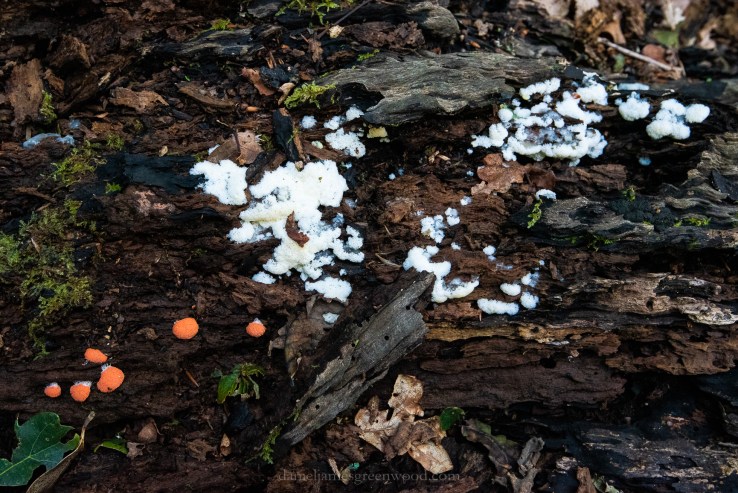
A couple of weeks ago I was inspecting a bird table in my garden and spotted a moss growing from its ‘roof’. This bird table has been, literally, around the houses and has probably gathered many organisms along the way. Looking more closely I found some jelly fungi.

OLYMPUS DIGITAL CAMERA

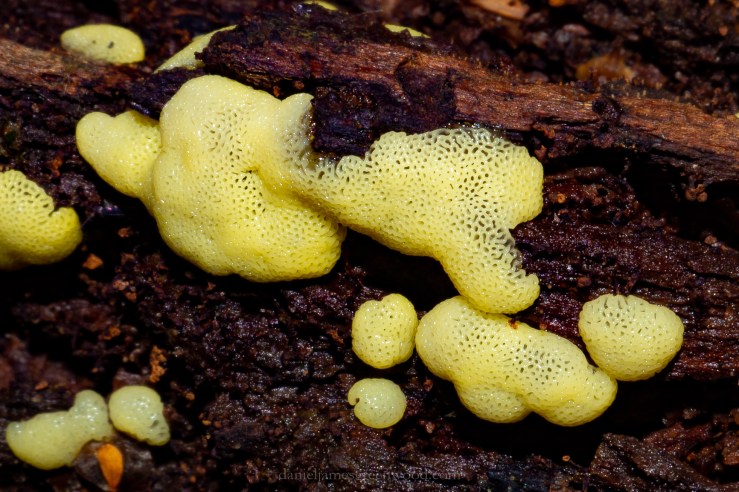
The weather has been showing signs of spring, with queen bumblebees on the wing and what I am sure was a male hairy-footed flower bee travelling through the gardens. On Monday I was in the garden briefly and had a closer look at the bird table. On the edge I found a nice cluster of what I think are lemon disco (yes, great name!).

OLYMPUS DIGITAL CAMERA

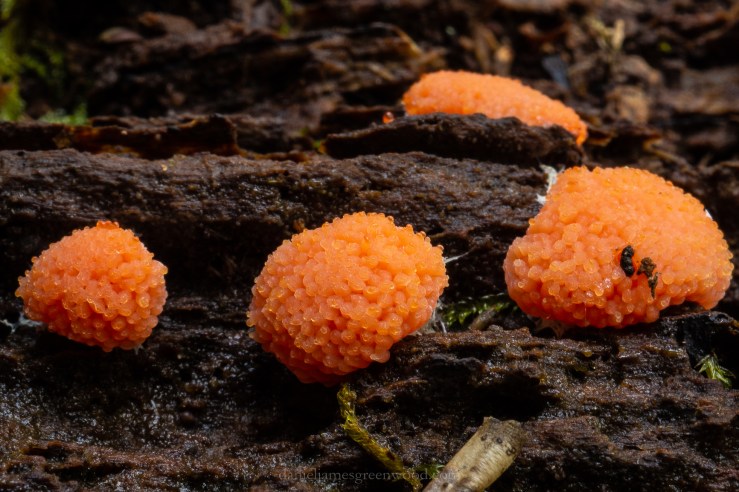
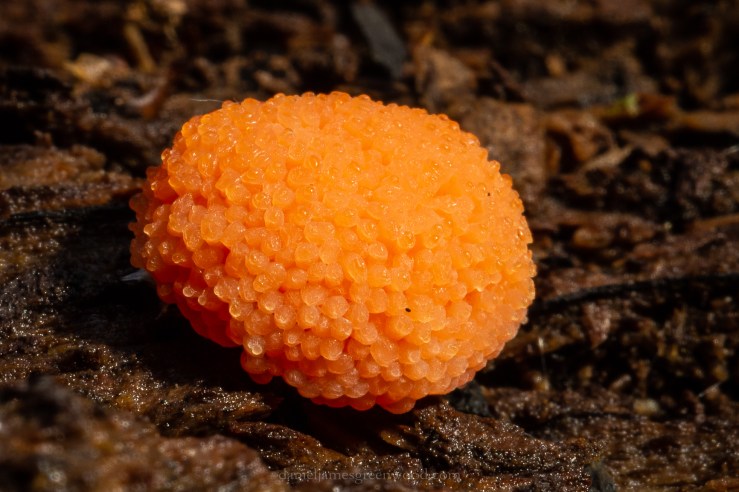
During a brief trip to The National Trust’s Nymans in the Sussex Weald this weird species was on the decaying heartwood of an old cherry tree. It’s a slime mould known as false puffball. If you press it with your finger it bursts, a bit like other Lycoperdonย slime moulds such as wolf’s milk (search for it).

Chesworth_29-2-2020_LR_lo-res-11

Elsewhere, the state of Sussex’s rivers shows how high the rainfall has been so far this year. But the lichenised-fungi are benefitting.

Chesworth_29-2-2020_LR_lo-res-08

Along this stretch of the river Arun, these beard lichens were profuse. One hawthorn was so covered with them it seemed like there would be no room for leaves in a couple of weeks!

Chesworth_29-2-2020_LR_lo-res-17

Lichens were doing well in other places too. This knotty old fencing rail was making a home for these cup lichens (Cladonia). Lots of countryside fence posts are home to these lichens.

Chesworth_29-2-2020_LR_lo-res-06

Not far away from the gushing Arun was a veteran ash tree with lots of King Alfred’s cakes growing from the damaged bark. In this image you can see the folds of the cambium where the tree is trying to protect itself from fungi and other invading organisms. This fungus will have a boom from the amount of dead ash trees caused by the evil fungus behind ash dieback disease.

hqdefault

To people outside the UK or without a grasp of English history, this name is quite meaningless. It is based on the tale of King Alfred who was exiled in the Somerset Levels during the Viking invasion of Winchester. Alfred failed to keep an eye on a woman’s loaves of bread that were on the fire and they burned. It is said that she had no idea he was the King, so far removed was his from his throne. Don’t worry, he eventually came back and pushed the Danes away a bit.

In the real world this fungus is said to be a host species for hundreds of invertebrates. It’s also used as a kindling and many people who know of it do so for that reason.

Let’s hope for milder temperatures and less rain and see if some more photogenic fungi pop up!

Thanks for reading.

More fungi

#FungiFriday: it’s raining, it’s sporing

OLYMPUS DIGITAL CAMERA
The South Downs

Fungi Friday 28th February 2020

A fungal perspective on February would probably say that it was ok if you live on a fence post. The poor people who have had their lives ruined by flooding in Britain probably wish they too live on stilts. And so February saw itself out with yet more heavy rain and flooding. But it also carried the early signs of spring.

OLYMPUS DIGITAL CAMERA

The closest thing I got to a true fungus (whatevs that is) was this turkeytail fanning out from a fence post. It’s a reminder that to a fungus, a fence post is just a dead tree that we have put somewhere away from the woodland it was once growing in. There are also a smattering of crustose lichens in the background.

OLYMPUS DIGITAL CAMERA

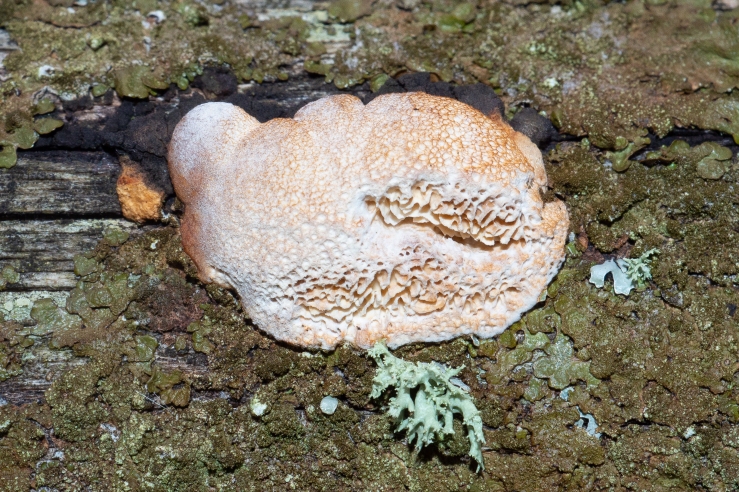
The best chance of finding something fungal to photograph was on some raised timber somewhere. I found this very marshmallow-like polypore bulging from a crevice in a fencing rail. You know times are hard when it comes to this. Behold the pores developing underneath as the specimen expands.

OLYMPUS DIGITAL CAMERA

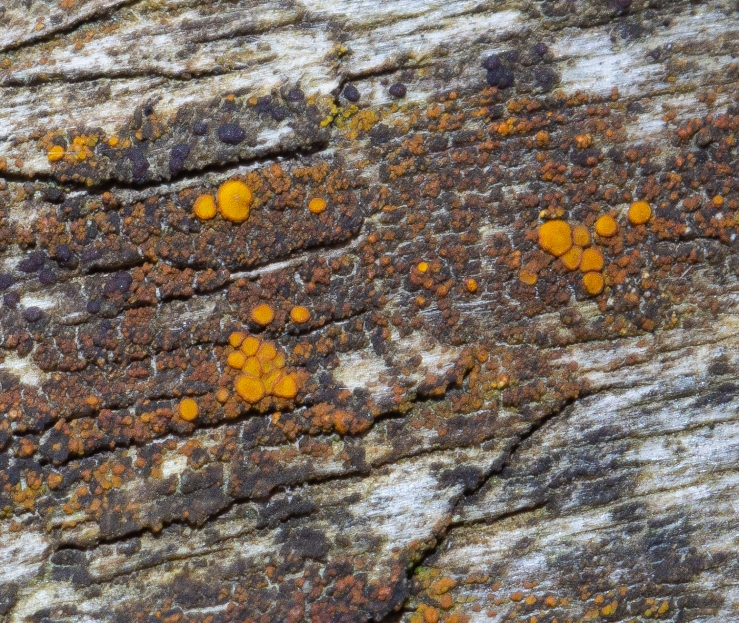
As you can imagine, the 100%-fungi fungi ran out quickly. This lichen stood out to me a bit like the archetypal graffiti you see alongside railway lines. I went to a secondary school with a rich mix of graffiti artists (I know that this is not a universally held description) and this reminded me of that.

OLYMPUS DIGITAL CAMERA

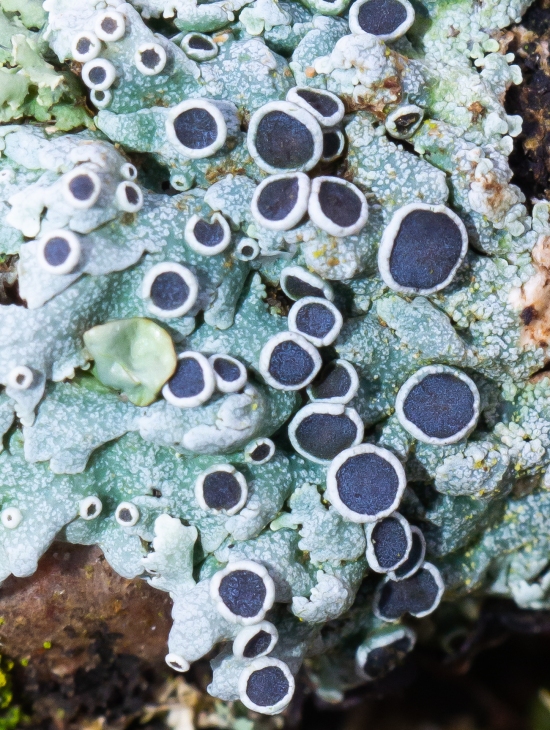
This is a heavy crop so the photo isn’t winning any awards, but the lichen’s orange fruiting cups are really cool. I read this week that these cups are ascomycetes in fungal terms, better known as ‘cup fungi’. Their biological name as a structure on the lichen is ‘apothecia’. The ascomycetes are the largest group of fungi in the world and are also known as ‘spore-shooters’ (but don’t confuse them with puffballs like I once did). Normal mushrooms are basidiomycetes and produce their spores in the basidia which are usually present inside the gills we all know and eat.

OLYMPUS DIGITAL CAMERA

This is a pic from last week (is that allowed?) where you can see the apothecia of the lichen. The spores are released from these navy-blue discs and shot out into the air.

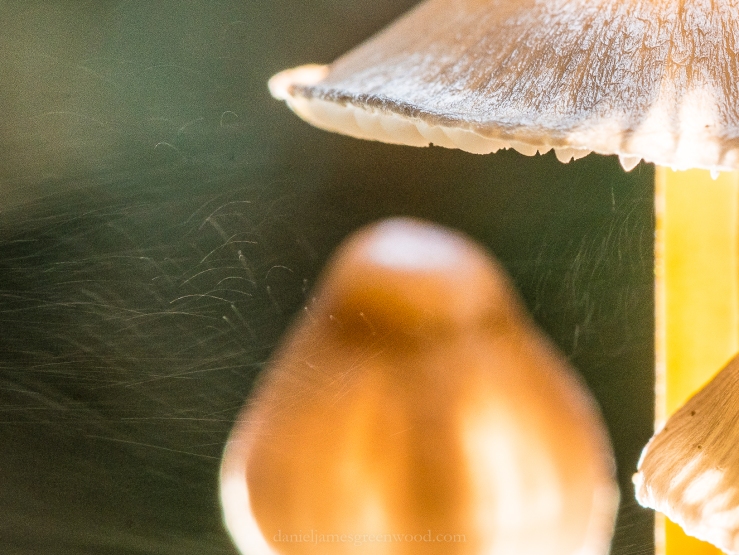
Bonnet spores - Octoberr-2018 djg-1

Just to illustrate, above you can see spores being released from a bonnet mushroom. This was taken with a high-resolution camera and lens, with some additional lighting. I didn’t know this had been captured until I looked at the photo later on my computer.

OLYMPUS DIGITAL CAMERA

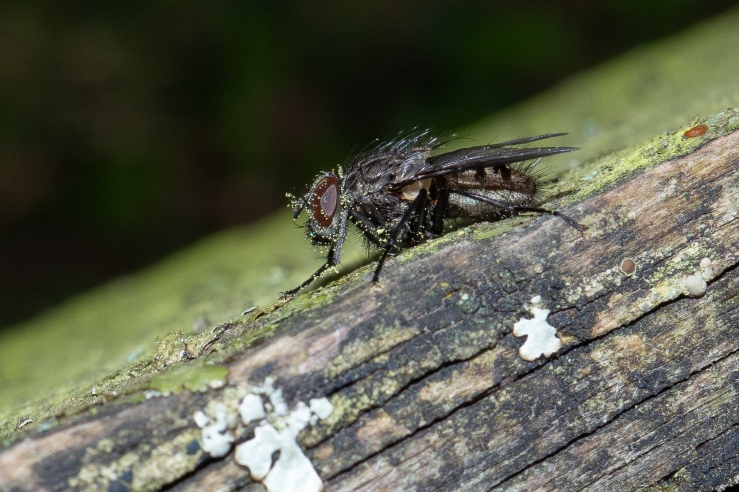
Back to this week and there are signs of winter coming to an end and the return of some mushrooms. This fly has what I guess might be goat willow pollen on it, meaning that they’re flowering and spring, it cometh.

OLYMPUS DIGITAL CAMERA

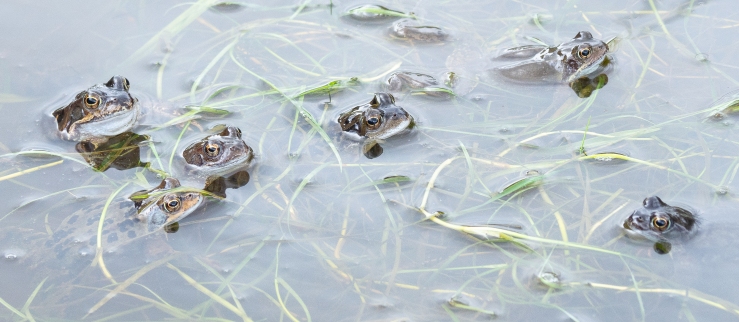
The truest sign of winter going back to where it came from is these froggy peeps, about a week later than 2019. More from them in a bit, if I find the time. Rebbit. Soon enough they’ll be sheltering under toadstools in the woods, where they belong.

Thanks for reading.

More fungi

#FungiFriday: a shedload of shrooms

IMG_20200202_153118125

Fungi Friday: 7th February 2020

Welcome to my weekly #FungiFriday post! Every Friday I aim to post my latest photos and learning from the Kingdom of Fungi (where I live). You can see my Fungi Friday archive here.

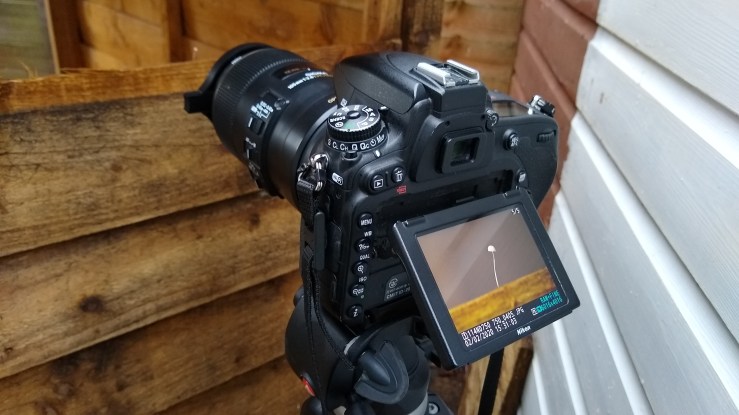
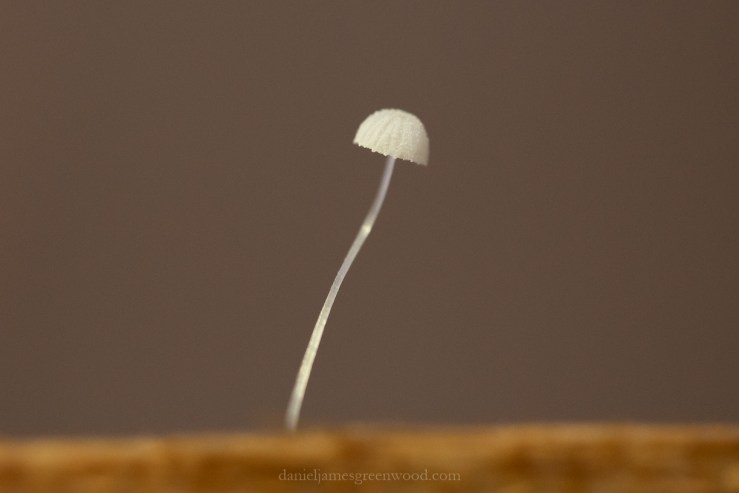
Last Sunday I was taking apart an old shed. Plenty of wildlife had made a home in the shed, including lots of large spiders, woodlice and springtails. Pulling the panels away, I was amazed to find this very small mushroom sitting there on a wooden panel.

shedshroom - 2-2-2020 blog-2

This is a species that I’ve posted about on a previous Fungi Friday but instead when it appears in the fissures of tree bark. This shroom shows the ability for fungi to get into any appropriate micro-habitat if the spores can reach them. This shed was very damp and moulds were already building in places. I was simply speeding up a process that fungi and other recyclers had started.

IMG_20200202_153123730

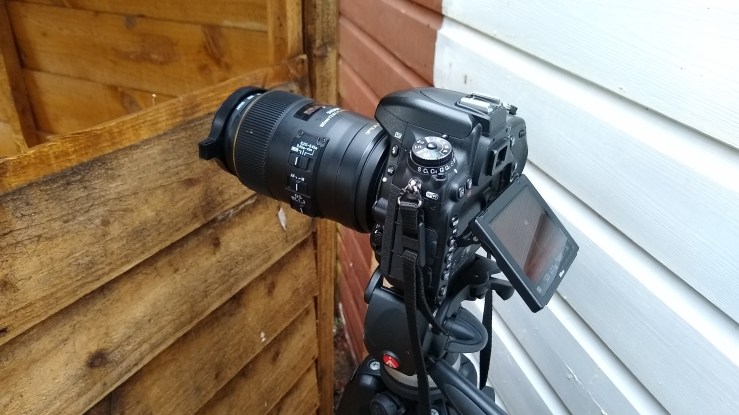
If you look at the image above you can see the scale of the mushroom. It’s miniscule! To photograph it I used a macro lens and a macro adaptor to get even closer.

Rother lichens - 5-2-2020 blog-2

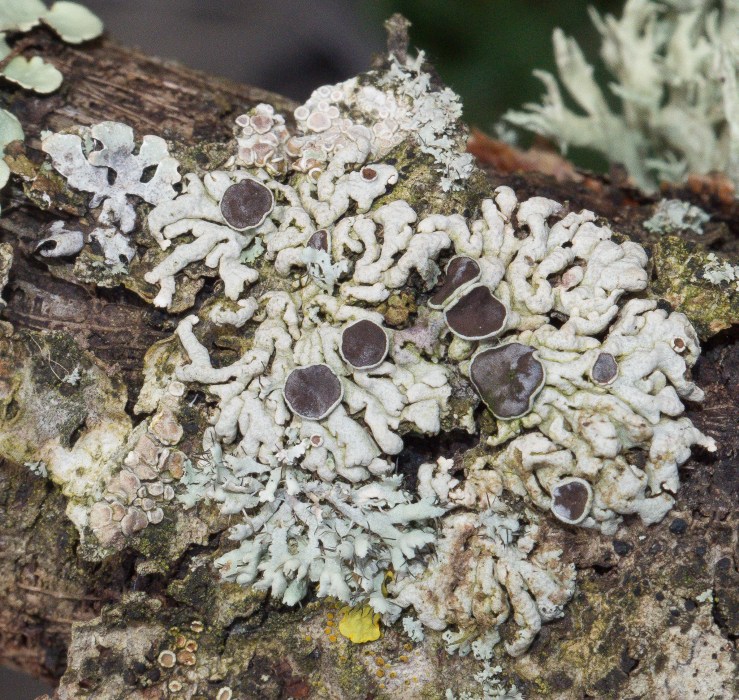
Meanwhile at the river Rother in West Sussex, my poplar branch patch was drying out due to lack of rain and some unseasonably warm sun. It gave the cyanobacteria and algae the chance they need to turn some of that light into sugar and feed the fungus that puts a roof over (under?) their heads.

Rother lichens - 5-2-2020 blog-5

The common yellow lichenย Xanthoria parietinaย continued undimmed. Life goes on. There’s a storm coming…

More fungi

Extreme Macro Photos Unveil the Hidden World of Fungi in the Forest

The History of European Forest Exploitation

#FungiFriday: not just lichen it, lovin’ it!

Rother - 28-1-2020 AL (14)

Fungi Friday: 31st January 2020

Anyone who works full time and is trying to keep weekly photographic habits alive will know the challenge that is January. Lunch breaks (if they continue after Bre*it) are the saving grace. This week I got out a couple of times and rescued my pseudo-Fungi Friday. Why pseudo? Because lichens are a mixture of organisms fused together through the evolutionary benefits of their respective differences. As Britain enters the transition phase of leaving the European Union, what better example can you find for the prosperity of working closely together. Algae, cyanobacteria, fungi, together they become so much more than the sum of their parts. Together they created the first soils from seemingly indestructible rocks.

Rother - 29-1-2019 blog-4

The beautiful diversity of life is what makes our world unique, it’s also what makes it live. As we continue to wreck biodiverse landscapes and our ways of farming, building and emitting eradicates species on a scale only seen five times previously in the 4billion years Earth has been a thing, we can’t forget that. Thankfully, lots of people haven’t. Lots of them will be tomorrow’s policymakers and, living with the anxiety of the planet’s poor health, will bring much-needed change.

This attempt to photograph fungi all year round is a silly mission but it has challenged me. In trying to find something to photograph, it’s taken me to read more on the diversity of fungal life that exists in the absence of typical mushrooms. One week I may have to post a photo of the black mould a former landlord is blaming me for. It has also taught me that most of my photography is in fact built around dead stuff. This doesn’t half make you look odd in the real world.

Rother - 29-1-2020 (1)

Just like the march of unsustainable consumer-based economies, we should be mindful of the spread ofย Xanthoria parietina, a pollution-tolerant species seen here in bright yellow making its way across the lichen community.

Rother - 28-1-2020 AL (18)

Lichens are good indicators of air quality, due to their intolerance of nitrogen dioxide and sulphur dioxide. These chemicals are produced through emissions from pollution caused by car engines and from farming chemicals respectively. My studio this week is an abandoned poplar plantation along the river Rother in West Sussex surrounded by arable farming. If you look at the uppermost branches in the image above, you can see the spread ofย Xanthoriaย in the golden glow it creates.

Rother - 28-1-2020 AL (11)

Here it is once more, spreading across more species of lichen on a fallen poplar.

Rother - 29-1-2020 (13)

Lichen has saved my photographic January. Whether you use your phone or anything else, I know I’m not the only one.

I’m not just lichen it, I’m lovin’ it!

Fungal decisions can affect climate

Ash trees recovering from ash dieback in Norfolk

More fungi

The South Downs: the otherworldly nature of Kingley Vale

Kingley Vale - 27-10-2019 blog-7

Kingley Vale, South Downs, West Sussex, October 2019

We enter the ashy woods of Kingley Vale, one of the most spellbinding places in the South Downs. Mushrooms are everywhere at the feet of yew, ash and oak trees as the season enters its peak.

Kingley Vale - 27-10-2019 blog-1

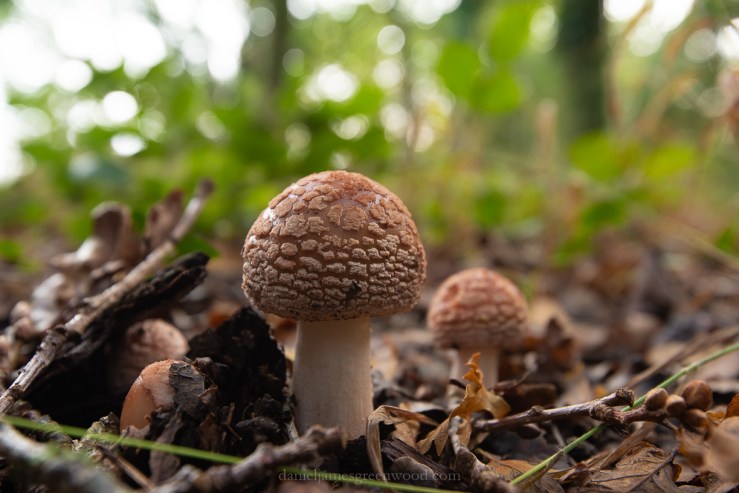
The light is weak so we kneel down next to the mushrooms to look more closely. We find blushers, ceps, deceivers and many brown species that are very difficult to identify.

Kingley Vale - 27-10-2019 blog-3

Archetypal mushrooms grow with black gills and caps that glow purple. Their collars hang loose like pastry over the edges of a tin.

Kingley Vale - 27-10-2019 blog-6

Kingley Vale is famed for its ancient yew trees, particularly one area that is heavily visited, the roots of the trees beginning to show above ground from the impacts of footfall eroding the ground around them. They feel like one of the most still and unmoving of tree species, owing to their hardness and strength. Their living tissue is some of the strongest in the plant kingdom and their heartwood is not at all needed for them to remain upright. Their roots can go on producing new trees even when those above ground have died, like the Borrowdale yews in the Lake District.

Kingley Vale - 27-10-2019 blog-8

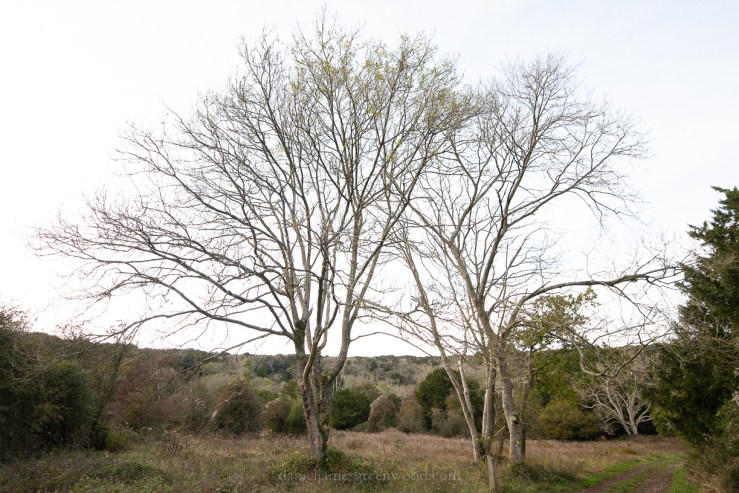
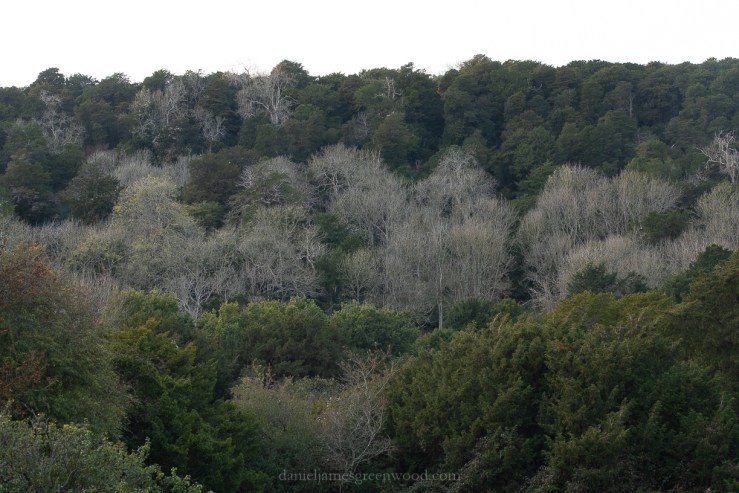
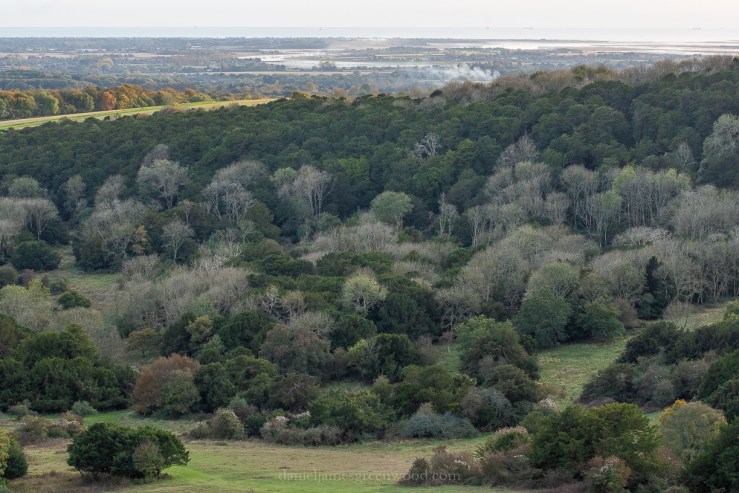
Out from under the yews chalk grassland spreads to the foot of the ridge where yew and ash woods cover the hills. Many of the ash trees are succumbing to ash dieback disease, in a landscape where they are content. It is a tragedy but then it is our own fault for unchecked trade of wood products, combined with the eventual spread of fungal spores.

Kingley Vale - 27-10-2019 blog-9

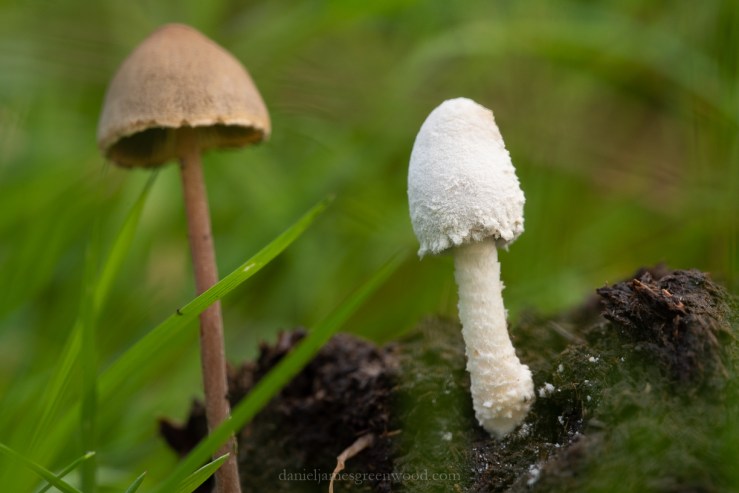
In the chalk grasslands we find a cowpat with mushrooms popping from the poo. One of them is snowy inkcap, a species I have never seen before, with its powdery cap and stem. It looks like something you might find in a snow globe.

Kingley Vale - 27-10-2019 blog-16

Climbing up onto the ridge the sun slips away in the west, casting a final glow across the chalky bowl of Kingley Vale.

Kingley Vale - 27-10-2019 blog-12

The grunting of a male deer echoes in the yew woods broken by the white stags of bare bone ash branches. Knowing some of these trees may be dead lends them a ghoulishness. Their brushheads are fading into history. Many will not be here in years to come.

Kingley Vale - 27-10-2019 blog-33

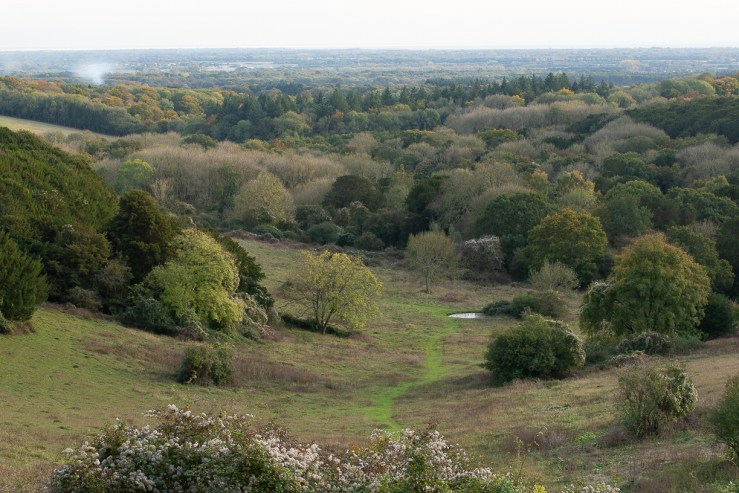
The sun glimmers in Chichester Harbour and the sea. A plume of smoke spirals into the evening sky.

Kingley Vale - 27-10-2019 blog-37

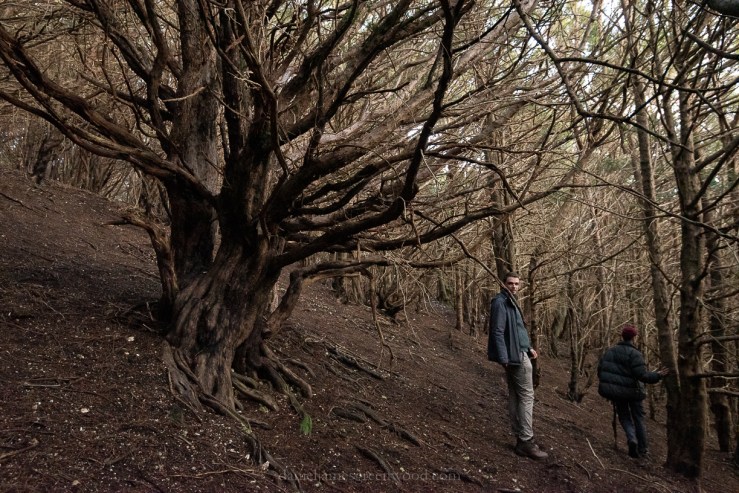
In the dense and dark yew woods on the slope we hear the strange, tropical bubbling of a tawny owl. Here yews reach out into the light at the edges like multi-limbed bodies sucked into a vortex. The yews have clarified the soil, no other plant can compete. Combined with the tawny’s song, the experience is otherwordly.

Kingley Vale - 27-10-2019 blog-42

At dusk rooks flock in a sea of black over a field-edge wood. Their cawing grows louder and closer as they envelop the sky above our heads, drawing in jackdaws, drifting back beyond the tops of the trees. On the darkening hilltops deer graze like slow-footed, four-legged people. We are left with so many questions.

Explore my Wood-Wide-Web

The Sussex Weald: Riders of the mushroom storm

Owlbeech - 18-10-2019 lo-res-28

St. Leonard’s Forest, West Sussex, October 2019

After a night of stormy weather, the high winds blew through the woods and really I probably shouldn’t have been there. But October is such a special time in the woodland year that any time spent there is to be cherished.

Owlbeech - 18-10-2019 lo-res-3

I walked for three or so hours in the Forest and found lots of species, masses of small brown and grey mushrooms in the leaf litter that don’t make great photos. My first find was a lovely species known as twig parachute.

Owlbeech - 18-10-2019 lo-res-4

Staying in macro mode these miniscule bonnets were were growing from a bed of moss on the buttress of a tree.

Owlbeech - 18-10-2019 lo-res-6

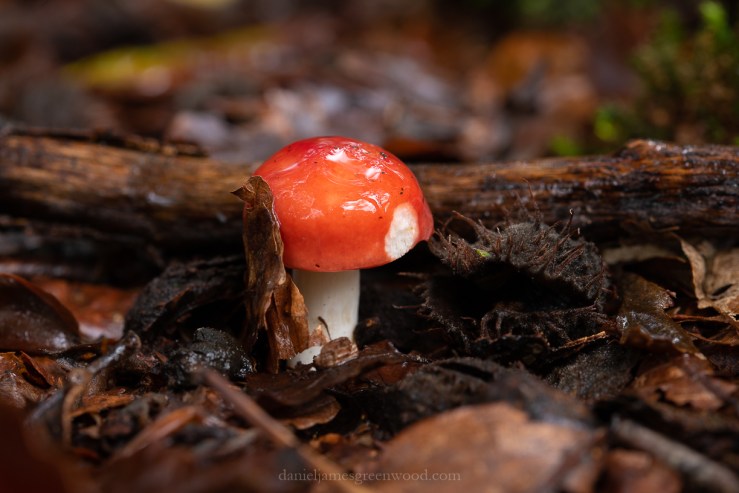
There is a small clearing I’ve recently found, well hidden from paths but obviously the secret space for other visitors as well. Here a thick humus of leaf litter and, in particular, beech nuts were creating good fruiting ground for mushrooms. This little brittlegill (I always prefer their Latin name of Russula, indicative of their redness) was one of those to benefit.

Owlbeech - 18-10-2019 lo-res-5

A beech tree has dropped a large limb and deadwood fungi have begun to colonise it. This is a splitgill and only really comes to life after prolonged rain. It’s a process of re-hydration. They’re tricky to photograph but always look nice with some bokeh (the baubles of light) in the background.

Owlbeech - 18-10-2019 lo-res-8

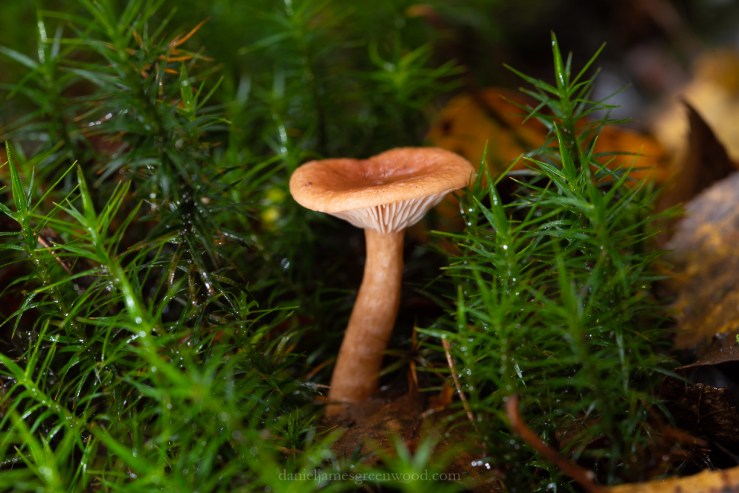
In the mosses growing in the dark and wet corners under holly trees, species like what-I-think-is curry milkcap were fruiting. This species is said to have a curry-like taste.

Owlbeech - 18-10-2019 lo-res-14

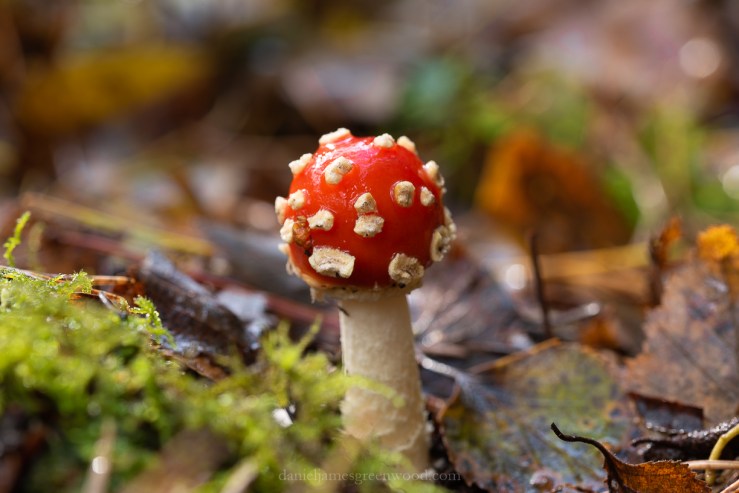
St. Leonard’s Forest sits on the edge of sandy heathland soils and Wealden clay. Passing into the heathy areas which make it a ‘Forest’ (forests were open landscapes used for hunting by the aristocracy, and don’t denote woodland alone) fly agaric suddenly arrived. These shrooms are thought to have given Father Christmas his red and white outfit and provided the hallucinatory impact that gave visions of reindeer flying. I’ll write something about that one day but still, these should be treated as deadly poisonous.

Owlbeech - 18-10-2019 lo-res-39

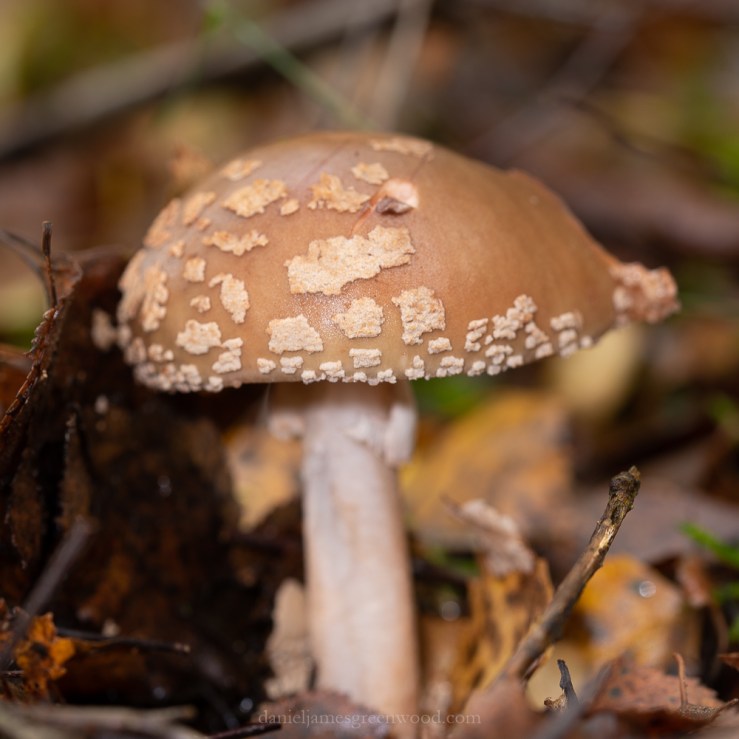
While we’re on deadly shrooms, this relative of fly agaric is panther cap. It’s definitely poisonous and is more photogenic when it’s in its bulbous stage. Again it’s common on sandy heathland soils.

Owlbeech - 18-10-2019 lo-res-25

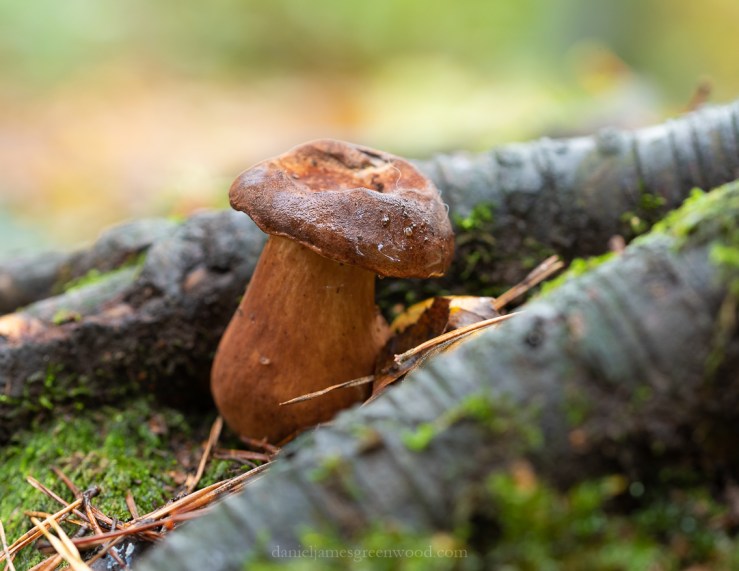
There is some constant pleasure about seeing boletes. Perhaps it’s because the cep/penny bun/porcini is the tastiest. This bolete scares me. Can you see the smiley face and squiggle of hair on the cap?

Owlbeech - 18-10-2019 lo-res-20

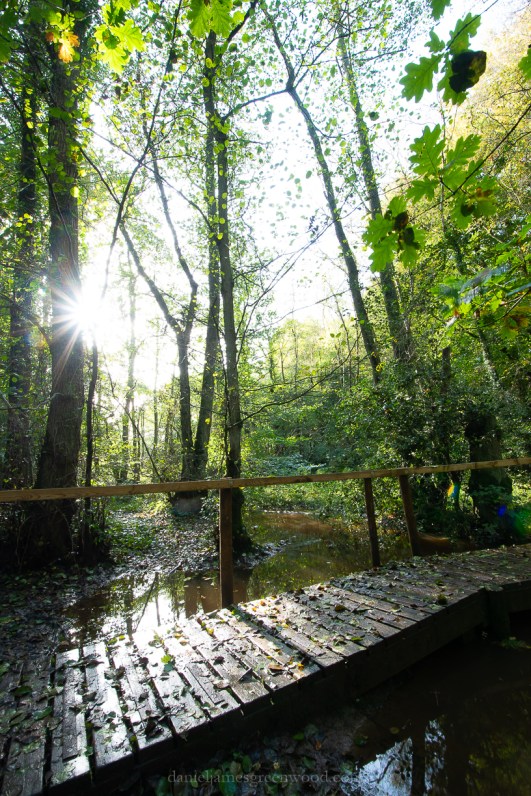
Days of cloud were broken up by the storm and it was a relief to see some sunshine. This footbridge runs over a gill that cuts between the clay woods and the heathland on that travels further east into St. Leonard’s Forest and the wider Weald. The gill was as full as I’d seen it because of torrential downpours.

Owlbeech - 18-10-2019 lo-res-51

On my way back home I found a gang of clustered bonnets on a trunk that crossed a path. It had been chainsawed in half so people can still walk through. It’s the perfect height and position for photos.

Owlbeech - 18-10-2019 lo-res-45

Owlbeech - 18-10-2019 lo-res-38

The sun broke through the trees and lit the bonnets where they had squeezed their way out from behind the bark. To me they look a little bit like they’re hiding from something beyond the wood they cower behind.

Read more:

The Sussex Weald

My Wood-Wide-Web


The Sussex Weald: a mushroom cloud rests over West Sussex

Ebernoe - 11-10-2019 djg-3

Ebernoe Common, Sussex Weald, October 2019

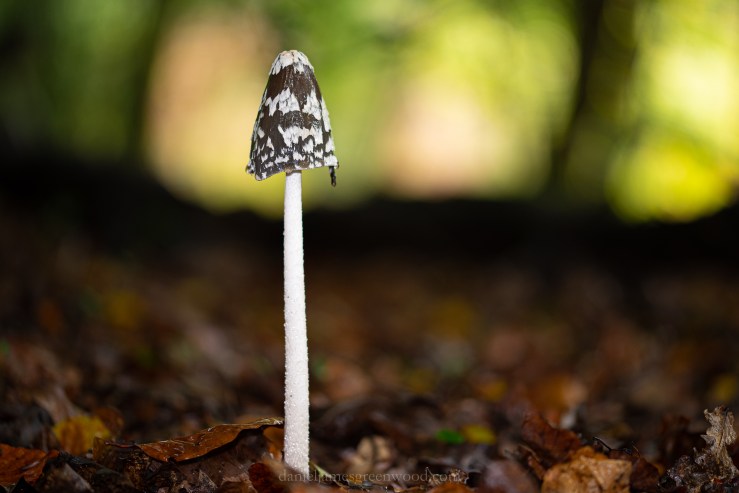
Last week I spent a drizzly and dark afternoon at Ebernoe Common, a National Nature Reserve managed by Sussex Wildlife Trust. It was raining not only water but mushrooms. The first signs of the good times came in the shape of a magpie inkcap. This is something I’ve only seen three times, twice at Ebernoe and once on the North Downs.

Ebernoe - 11-10-2019 djg-1

The word magpie relates to the English phrased ‘pied’ which means black and white. This species goes into the delicious state of deliquesce (an inky kind of melting), just like its relative the shaggy inkcap. Unlike the shaggy inkcap, though, it’s toxic so don’t eat it. The thing I like about this image is the glow of green in the background gradually turning to yellow as autumn progresses. Beech usually provides this kind of backdrop.

Ebernoe - 11-10-2019 djg-4

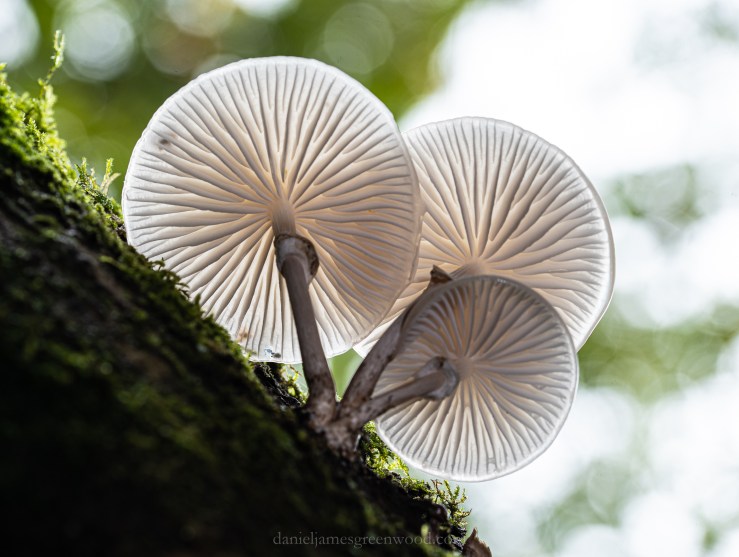
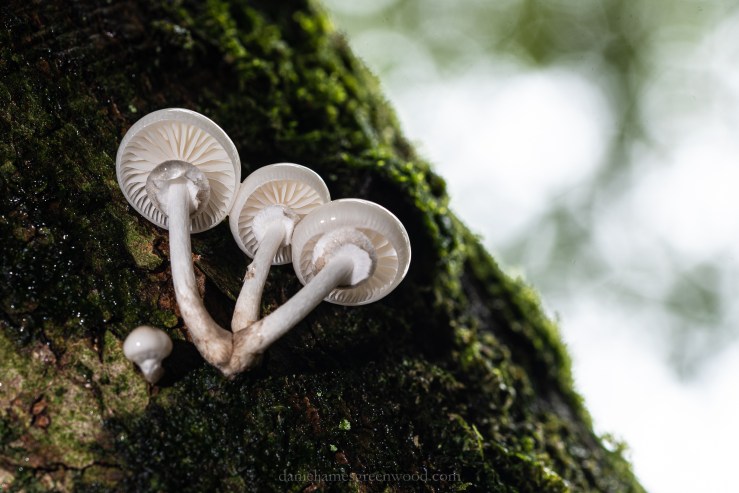
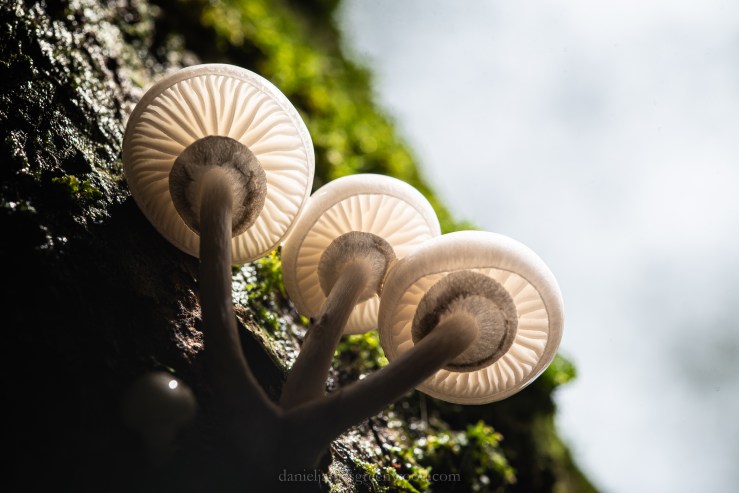
Porcelain fungus is a reliable species. It fruits in the same place, often en masse, each year. It is a beautiful species but the beauty, like so many things, lies underneath.

Ebernoe - 11-10-2019 djg-7

The gloopy glimmer of the cap is photogenic but the gills of porcelain fungus are stunning.

Ebernoe - 11-10-2019 djg-13

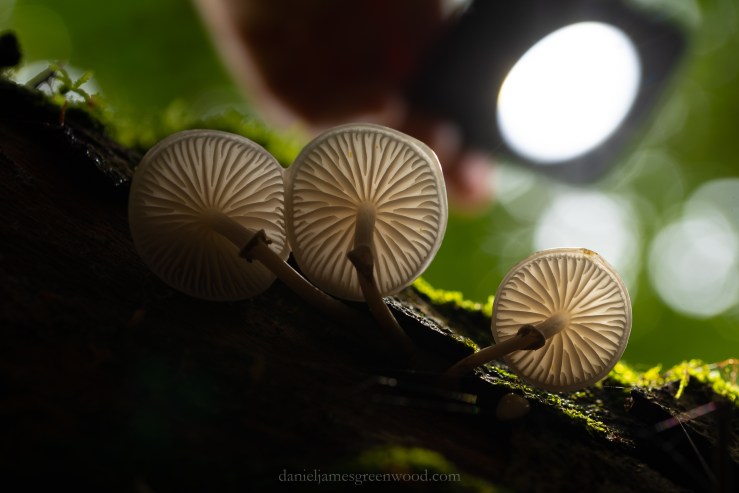
I use a small LED light to illuminate mushrooms in this way. I can’t tell you how much more character this can offer to photos. Actually I can: a lot more.

Ebernoe - 11-10-2019 djg-21

Here you can see my roving light (yes, I meant this!) mixing it with some delicious bokeh in the background. Leaves and branches create lovely bokeh because of the break of light in the gaps.

Ebernoe - 11-10-2019 djg-20

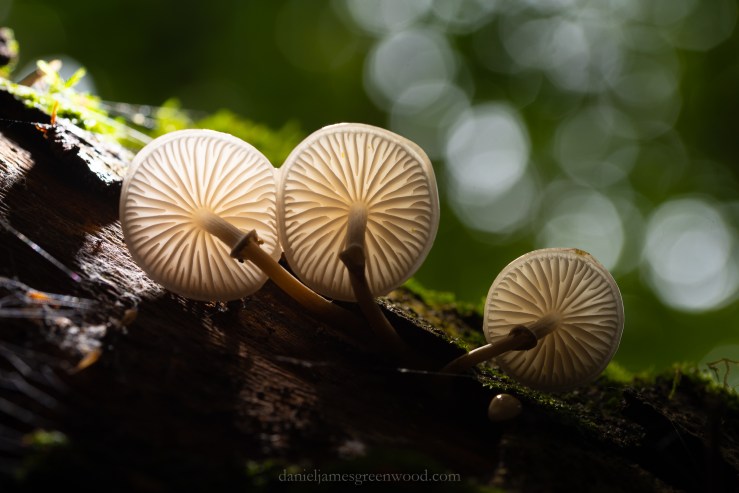
Here is one of ‘the finished images’. I like that the light circles can imitate the caps of mushrooms in photos and offer a deeper layer of resonance and reflection. Who knew.

Ebernoe - 11-10-2019 djg-38

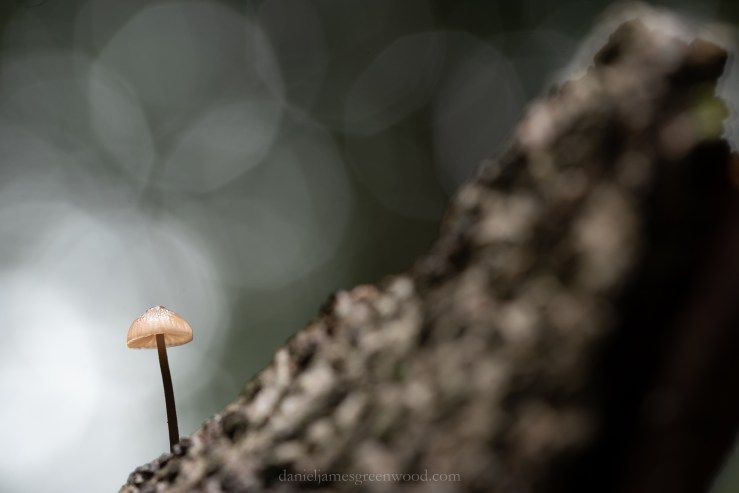
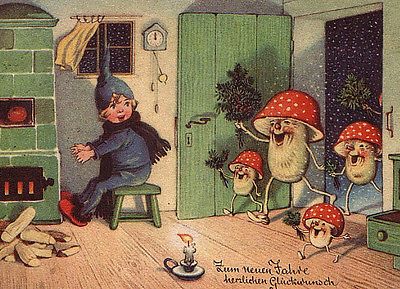
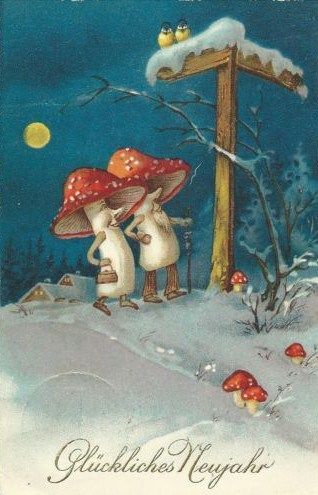
In photography, macro is where the fun happens. There are so many amazing things happening at our feet that our eyes are incapable of seeing without the help of magnification. If you want to have a go at macro, don’t hesitate. Just do it. I call this one ‘Climb every mountain’. The piece of deadwood does have the appearance of a peak in this light. The mushroom is like a protagonist, playing on a theme of mushrooms as individuals or sentient beings throughout human history:

16a9e28079e352a3d6d8ff664898b820-christmas-themes-christmas-cards

5d58176f8caa8c1e9faf25e0ab9f6bc8-picture-postcards-mushrooms

This seems to be particularly prevalent in German culture and Christmas or New Year celebrations. Christmas has evolved from Pagan traditions (Paganism was once considered any religion which was non-Christian) and the place nature has in the human imagination is pretty clear here.

Ebernoe - 11-10-2019 djg-16

Back to life, back to reality. Honey fungus is enjoying its first boom phase and seems to be having a good year.

Ebernoe - 11-10-2019 djg-18

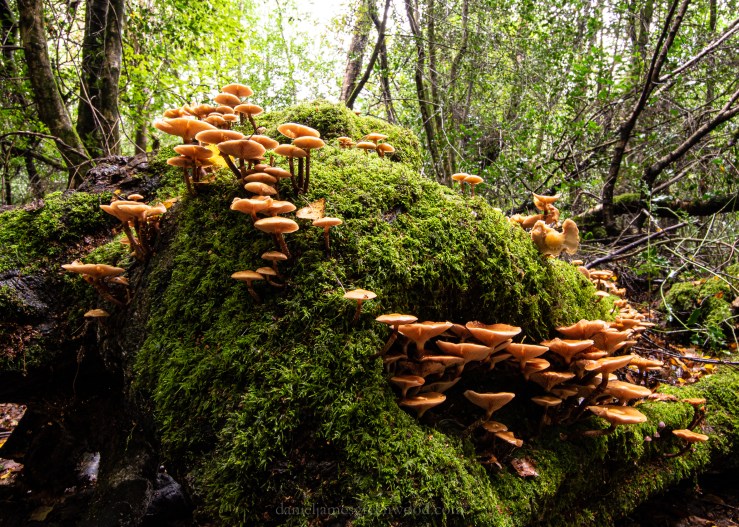
There is a dead veteran beech tree at Ebernoe Common which is basically where all the mushrooms live. This wide angle image shows just how many larger species were making a home within the tree. Here you can see giant polypore (bottom left), honey fungus in the middle and Ganoderma brackets everywhere. This is a stunning tree and of the highest ecological importance because of all the species, not just fungi, it supports. All of these species are contributing to the tree’s decay and recycling into organic matter (soil).

Ebernoe - 11-10-2019 djg-9

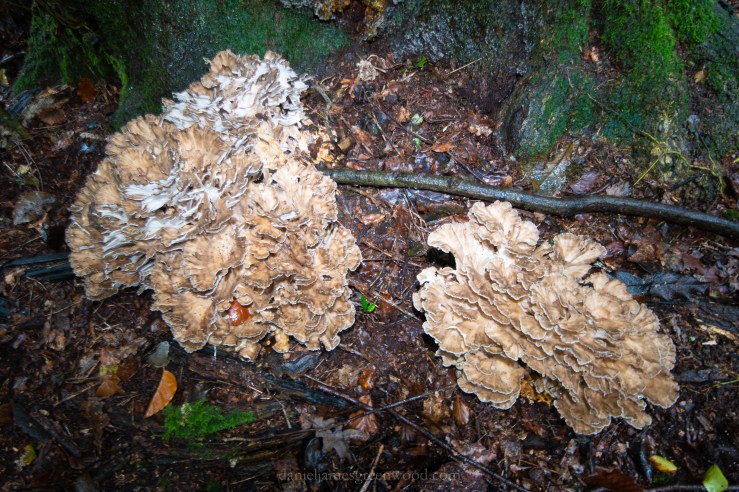
Not far away was a patch of hen-of-the-woods, an aggressive root-rotter (harsh). It’s said to smell like mice (more harsh).

Ebernoe - 11-10-2019 djg-42

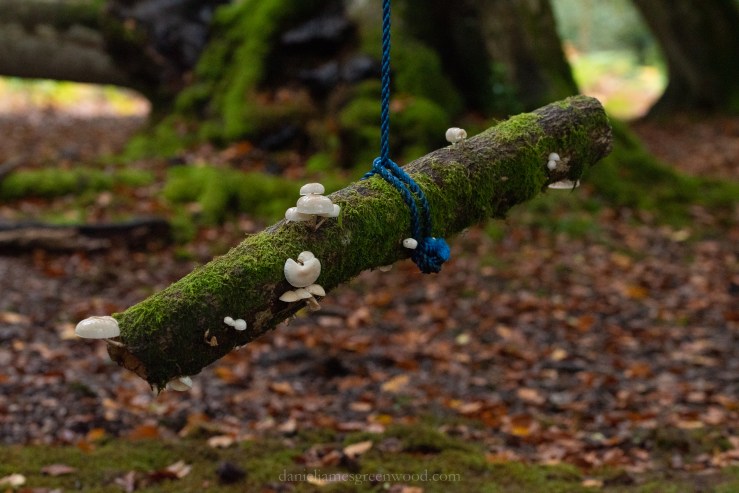
You can imagine how I thought someone was playing a trick when I passed this. A swing made from a beech log that was covered in porcelain fungus. It was embarrassingly hard to photograph well. Thankfully only the mushrooms were looking and they haven’t evolved to use Twitter yet.

Ebernoe - 11-10-2019 djg-47

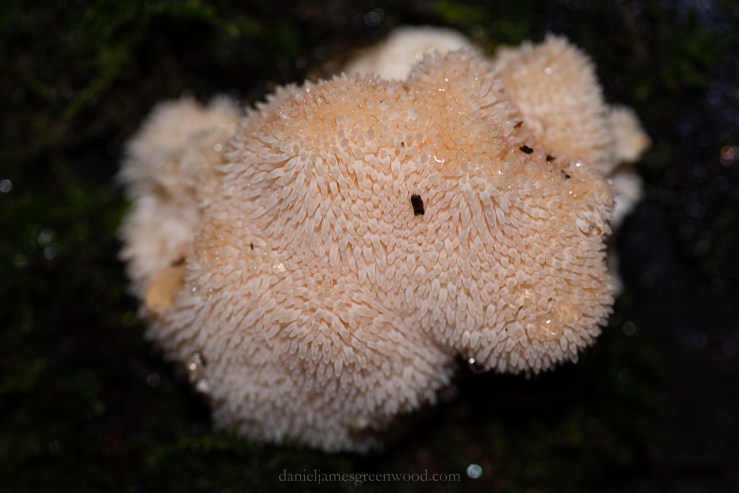
On my way out I spotted this slurp of fungus low on a log by the path.

Ebernoe - 11-10-2019 djg-50

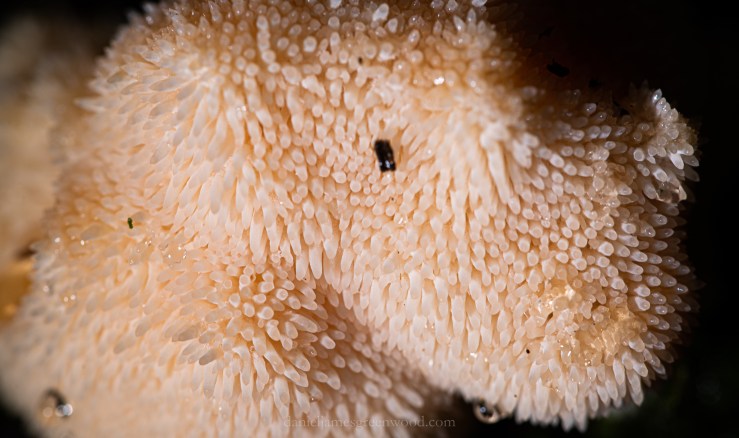
Looking closely with the macro lens it has the appearance of something you might find in a coral reef. Then that’s the beauty of woodland, it has a depth to it that you have to dive in to experience for yourself.

Thanks for reading.


Read more:

The Sussex Weald

My Wood-Wide-Web


September ‘shrooms in the misty hills of Strathyre Forest

Scotland - September 2019 djg lo-res-21

Strathyre Forest, Loch Lomond and the Trossachs National Park, Scotland, September 2019

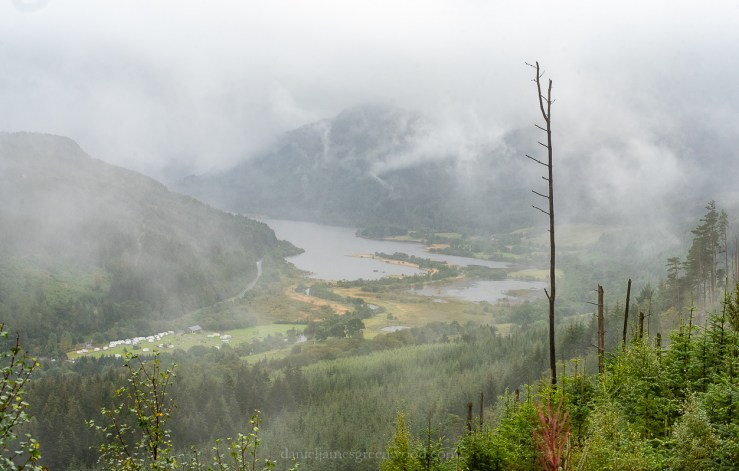
I’m in Strathyre Forest, a Forestry Scotland plantation in the Loch Lomond and the Trossachs National Park. The view of Loch Lubnaig comes and goes as the mist travels between the hills with the cars, lorries and motorbikes along the road down below. I’m sitting on a lump of rock, surrounded by the dead trunks of spruce trees, their successors rising below at their rotting toes. Around old spruce stumps felled by foresters, heather grows and flowers. Birch saplings and rosebay willowherb enjoy this pause in the blanket of monolithic trees.

Looking up for a moment, I’m given a shock by the sudden appearance of the loch and the surrounding hills. The mist has cleared and the shape of the loch’s marshy edges, fringed by the Lego shapes of a caravan park, where the river winds its way in, has appeared. A single spruce stands broken and dead, a mast of decay over Strathyre. A bird flies up, gradually picking a spot to perch on. It sits on the top branch and calls out.

Scotland - September 2019 djg lo-res-13

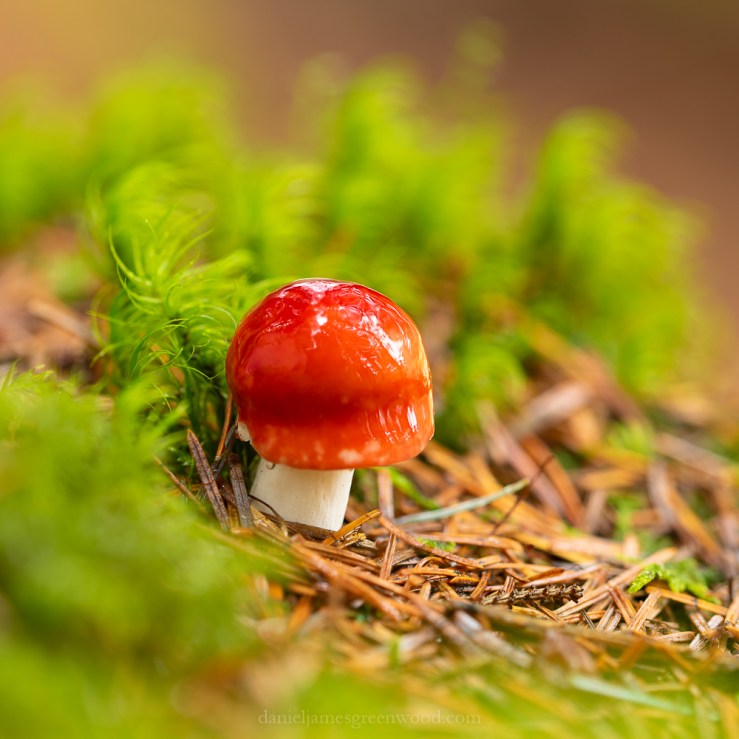
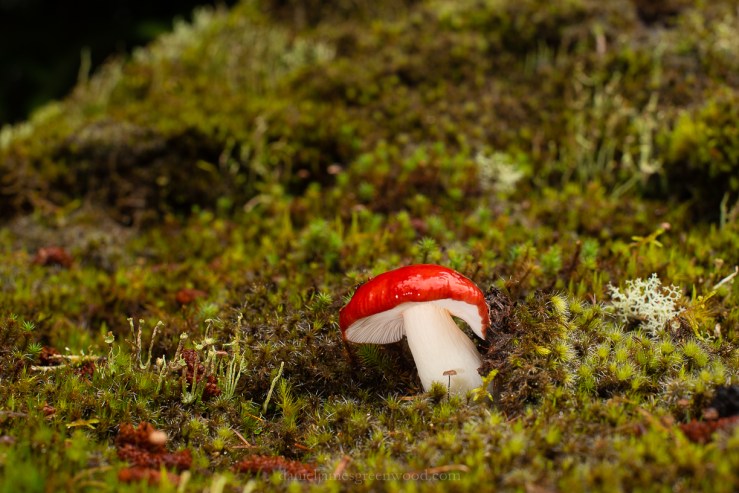
On the slow and drizzly ascent up to this point, I’ve spent most time on ground level photographing mushrooms. Under the dark monoculture of spruce red russulas are fruiting in profusion. I take photos using the camera’s timer so need to be really still so as not to disturb the camera, otherwise the picture will blur.

Scotland - September 2019 djg lo-res-15

The details are very fine and sometimes the focus is on a very small thing. This means stillness for me.

Scotland - September 2019 djg lo-res-27

My stillness meant birds flocking nearby came very close: goldcrests in their tens, with one within reach of my hand, then a young robin in a half-youth, half-adult plumage.

Scotland - September 2019 djg lo-res-19

It flew right at me and swooped away to land on a branch. It followed me back out onto the track and, perhaps, led me to a the biggest Boletus edulis I have seen. ‘Stick with me,’ I said, ‘and you’ll see mushrooms.’ I didn’t see the robin again after that.

Scotland - September 2019 djg lo-res-24

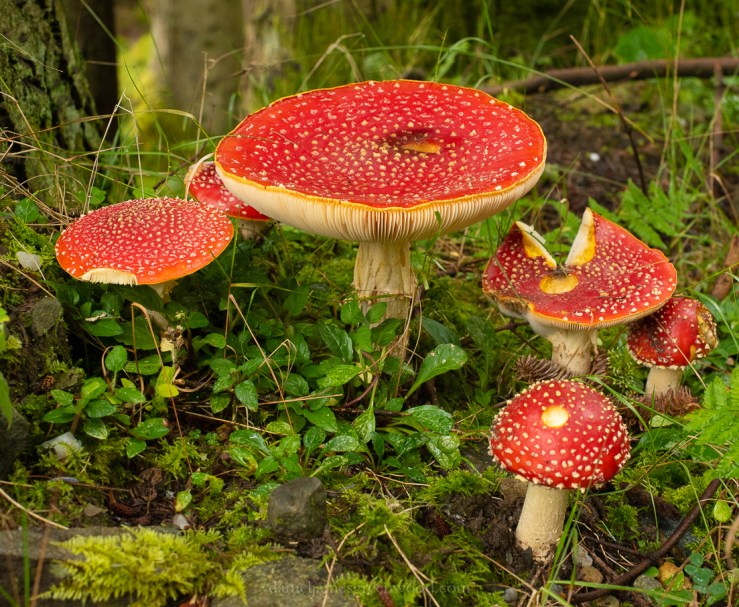
Away from the dark stands of plantations mosses, lichens and smaller mushrooms flourished at the buttresses of huge spruce and pine trees. One of the largest fly agarics I have ever seen opened like an upturned umbrella amidst its little brothers and sisters. There was light and life here that the close stocking together of trees does not allow.

Scotland - September 2019 djg lo-res-5

There I found lots of small mushrooms like deceivers, webcaps and plenty of others like milkcaps and lots of boletes sodden by days of rain. They reflect the attitude of a woman I heard in the pub last night as she discussed the wet forecast over the coming days. She would still be going out and enjoying her holiday. ‘It’s just water,’ she said.

Explore my Wood Wide Web

The Sussex Weald: Something is right with the world (and it’s mushrooms)

Ebernoe Common, Sussex Weald, August 2019

Looking out of the window at work one morning, a colleague agreed with me:

If there are no mushrooms after this rain, then something is very wrong with the world.

Fast forward a few hours and there is something ok about the world.

Stepping out onto the track and into the woods there was a clear indicator of a mushroom party with lots ofย Boletus-like species typical of the season. This time, I was invited. All too often looking for mushrooms can be like arriving at a party the morning after when everyone is discarded like shells around the living room and slime coats the walls.

There was still slime on the walls on this pleasant summer’s evening at Sussex Wildlife Trust’s magnificent Ebernoe Common. It’s part of the Low Weald, an area or ancient woodland that is very much intact and once connected Canterbury with the New Forest. The slime here was the real deal, with beautiful splodges of slime mould spreading across fallen oak trunks.

Further inspection with my trusty macro lens showed the intricate beauty of this slime mould. Trouble is I don’t have the field guide yet so I’m stuck for an identification. But really does it matter? I’m not a scientist in the traditional sense and it’s their beauty I cherish most. Scientists, while we’re here, don’t even know where to put slime mould in their taxonomic kingdoms. That sounds like one hell of a euphemism.

This walk was a blitz of about 3 miles with eyes scanning the woodland floor alongside the path. By pure fluke I found this small mushroom, not dissimilar to something like a funeral bell, popping out of the soil. It is surrounded by the most beautiful palmate leaves of star mosses. The wonders of macro photography allow this world to be glimpsed and indeed shared. Macro photography is an art (not necessarily in this case) as fine as landscape photography.

I also had my larger DSLR slung round my neck with a wide angle lens. The golden hour is not quite so golden in an August wood, but it’s still worth appreciating. Notice the growth of lichens and algae on the north-facing side of this beech here for 10 points.

Ebernoe - 15-8-2019 djg-17

One of the recent additions to my mushroom portraiture war-chest is an LED light. It’s a pretty fun way to add a new layer of interest to photos, especially of mushrooms. I also have a mini tripod for it so it is a bit like a pet android that wanders the woodland floor for me illuminating fungi. This shroom was growing down between two big boughs of a fallen beech tree. It was land of the mosquito and I made substantial donations to their bloodthirsty cause. This does look rather angelic if I may say so.

A trio of bonnets were evidence of the recent rain. Up they spring before collapsing not long after.

Ebernoe - 15-8-2019 djg-32

Have you ever noticed just how long bluebell seed casings linger after spring? It’s a good way to identify an ancient woodland out of season. This flower was present on the edge of the woodland where a field opens out. The sun poured in and lit the tulip-like papers of the bluebell.

Ebernoe - 15-8-2019 djg-29

My dad said he read my last post and had to look up what ‘bokeh’ is. It’s the circles or light in this image above that are caused by isolated areas of light. They are most pronounced when you have a wide aperture, so f1.4 on my brightest lens but usually f5.6 on most SLR lenses. It creates a beautiful blurred effect. Of course, I couldn’t resist it here. Looking at this image being photographed in the moment, what you can’t see is the twinkling of the light as the leaves moved in the breeze and the sun slid down. It took the breath far more than the image ever will.

Thanks for reading.

Explore my Wealden archive

Explore my wood-wide-web

Summer rain must mean mushrooms in Epping Forest

Epping - 17-8-2019 djg-15

Epping Forest, Essex, August 2019

Unlike most, I’ve welcomed the wet weather of recent weeks in southern England. In August, this means mushrooms. Hopefully not only an early burst in August but a good autumn clutch. ‘The coming of the fungi’ in autumn is an event in nature’s calendar that I would put in the same bracket as the first migrant willow warbler, swallow or swift, or the first butterfly. Autumn is a time of plenty. When mushrooms arrive en masse, we are witnessing a spectacle many millions of years old.

Epping - 17-8-2019 djg-6

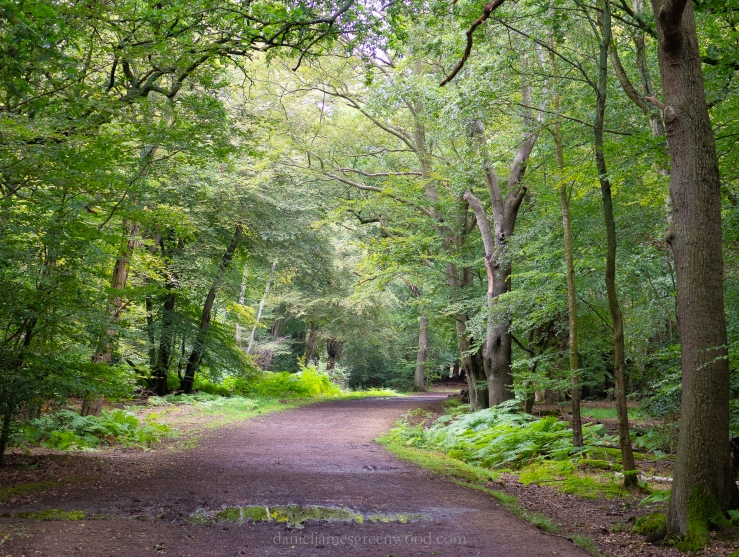
A weekend visit to family in Essex meant a chance to visit the famous Epping Forest. This woodland is very close to London and is owned by the City of London Corporation (other sites outside London in Surrey and Hertfordshire also belong to them. I think they do a very good job). The Forest shows the scars of this proximity to one of the world’s biggest cities, namely the M25. It was interesting talking to family recently who grew up locally and their reminiscences of putting ‘stop the M25’ posters up in their windows. Epping Forest is also prey to nature writers (guilty as charged, but not published) framing their own ego against this ancient wooded landscape. The Forest and its mycelia feature in Robert Macfarlane’s recent award-winning book Underland, a book from a writer I love reading and admire greatly. However, I must to admit to disappointment in the lighting of a fire in that book. Even more so when I saw a tent and a fire in the Forest when I visited. The two obviously are not linked, but having been an urban woodland warden where fires were lit both in ignorance and violence, it is hugely galling (no pun intended). Leave no trace people, seriously.
Epping - 17-8-2019 djg-2

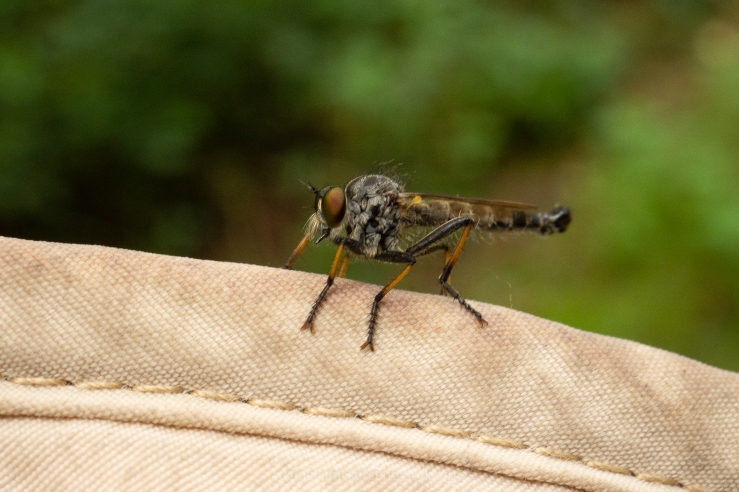
I mentally (and verbally) built up my visit to Epping Forest due to the rain throughout the week. The mushroom boom in my eyes (let’s call it that) was spilling out from every path and Epping Forest’s many visitors were tripping up over them. The early signs upon entering were not good. The ground was battered by recent rain and the sloping nature of the landscape had meant the soil was scarified by the heavy downpours. Mushrooms, washed away. The first wildlife encounter of any note was the above robberfly which I noticed out of the corner of my eye on the brim of my (it needs to go in the wash) sunhat. These predatory flies (not of humans) have had a good summer and I’ve seen more than I ever have before this year. #LifeGoals.
Epping - 17-8-2019 djg-3

It was only getting near to Ambresbury Banks (Aims-bury) that the mushrooms were in any way ‘common’. A slug-munched Boletus edulis or cep lay prone at the trackside. Then, half eaten, I found this:
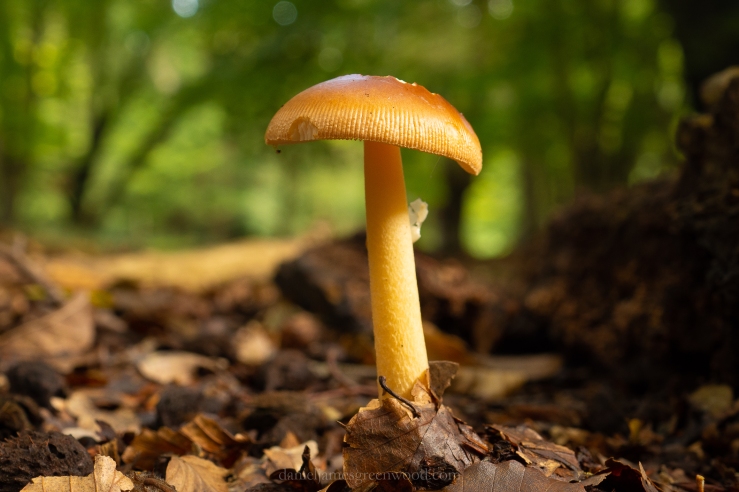
Epping - 17-8-2019 djg-7

Moving my little camera around to the right angle, you would never know the cap on the other side was almost completely gone. This is a tawny grisette (Amanita fulva). This was probably the least photogenic specimen I’ve ever found, but with the green flow of woodland behind and a bit of bokeh, anyone can look good.

Epping - 17-8-2019 djg-16

Cheered by the sight of a half-eaten mushroom I checked out the swampy dog-poo realm alongside a path. There I spied these beautiful white parachutes (Marasmius) in wet soil amongst bramble twigs. My books are telling me they are Marasmiellus candidus AND Delicatula integrella. A woman passing by on her Saturday jog asked what I was looking at. She said how much she loved spending time in the Forest and that she was moving away soon. She said how important is was for her to see the seasons changing and how different the trees were in different parts of the Forest.
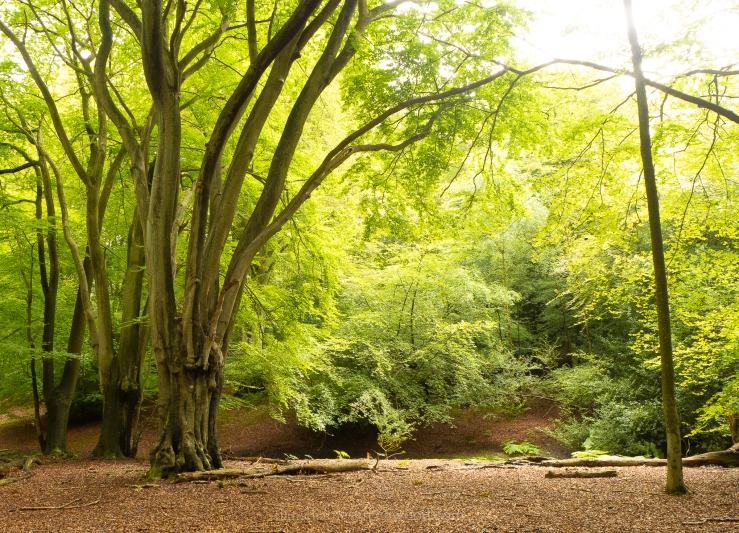
Epping - 17-8-2019 djg-4

She’s not wrong. The bizarre pollard areas near Ambresbury Banks are unique. Their pollarding stopped as a local practice some 150 years ago due to a wrangle of Acts of Parliament – who could lop what and where. They are of significance to the whole of Europe (ecosystems are European-wide, people). In some areas holly dominates and things get a lot darker.
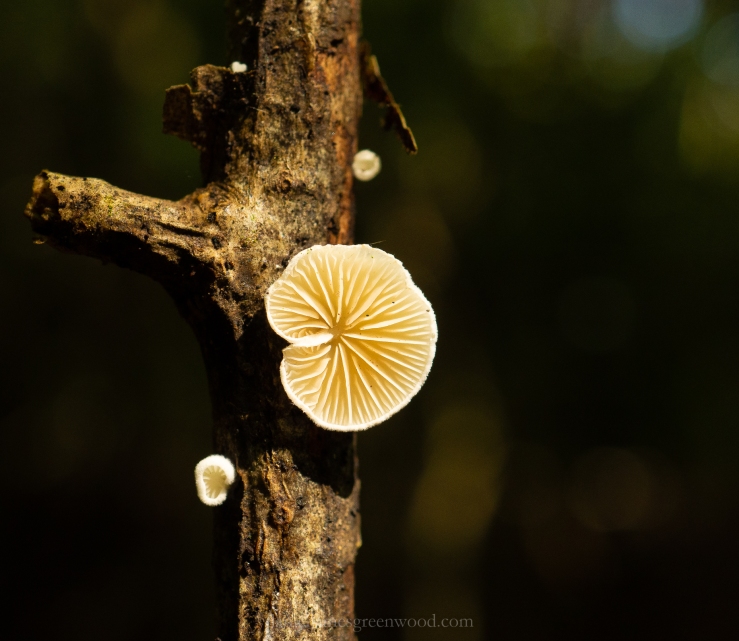
Epping - 17-8-2019 djg-39

In one of the those areas I found an oysterling (Crepidotus) on a twig and found a nice tree to perch it in for its close-up. The gills look like flames to me and not of the campfire kind. See the darkness of high canopy beech and holly understorey? Creepy. A deer was hiding away here.
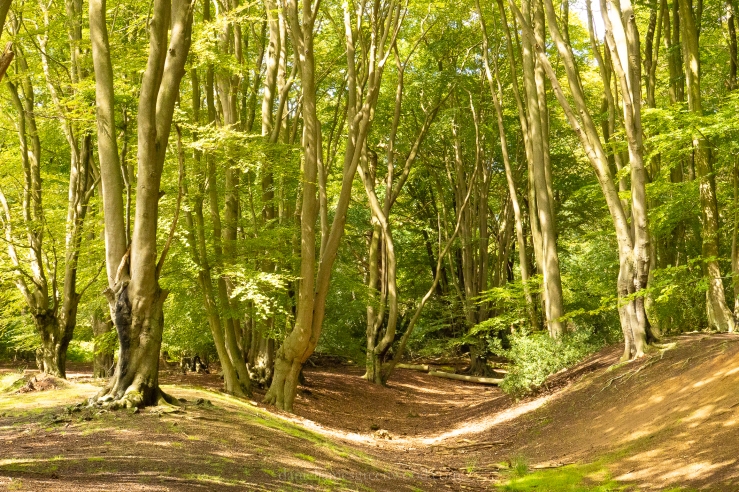
Epping - 17-8-2019 djg-19

Ambresbury Banks is always worth visiting. This is an ancient earthwork or Iron Age Hillfort, which was likely created by the pre-Roman (-AD43) inhabitants of Britain. Legend has it that Boudicca battled the Romans here in AD61 but people say that about so many hills in London, trust no one. Also for anyone espousing ‘Indigenous British’ as a phrase about themselves as a pedestal for their polticial views, those Britons who built Ambresbury Banks were probably the last group of people who could say that. It is now populated by ancient beech pollards which have no view on Brexit, other than that it may remove their Natura 2000 protections as a site of European Significance. But then again we may not have food and medicine by 1st November.
Epping - 17-8-2019 djg-22

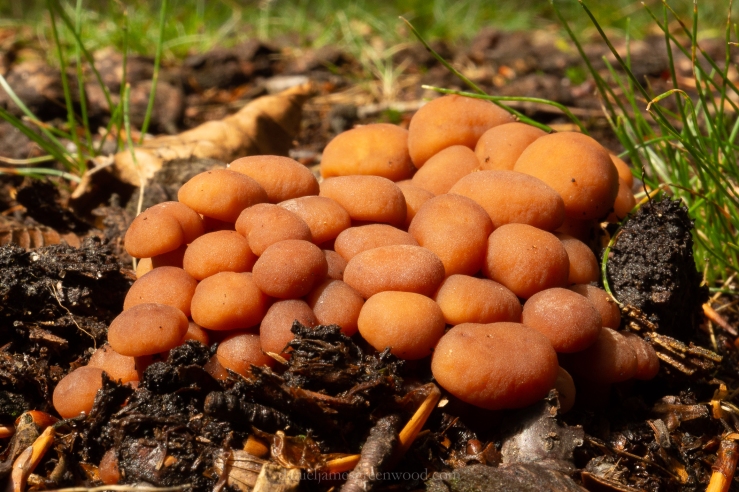
In all fungal seriousness there were actually a pleasant number of ‘shrooms around this Iron Age propaganda ditch. Spindle shank (Collybia fusipes) was bubbling up nicely at the roots of beech trees, likely nibbling away at their wood under the soil. Bridges of beech are likely to be built across those ancient earthworks in the decades that come, if you get my drift(wood).
Epping - 17-8-2019 djg-23

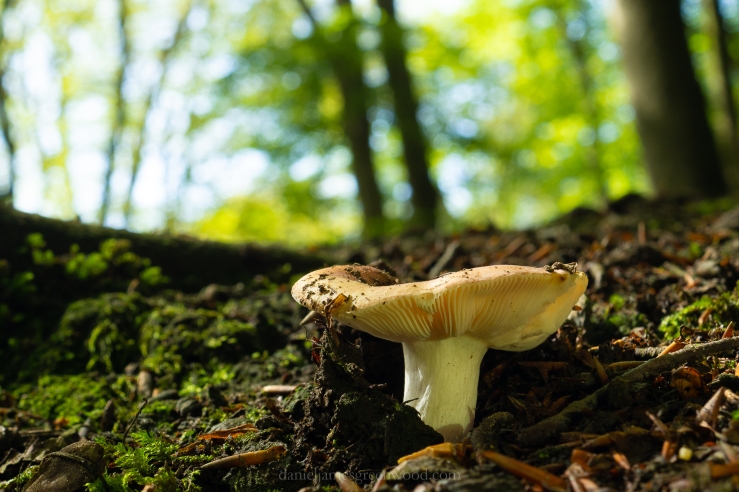
For photography brittlegills (Russula) are one of the most annoying. I have seen grey squirrels pull them from the soil and chew their gills down like some turbo corn-on-the-cob eating contest. Slugs also love them. Thankfully for you I found this Russula largely un-squirreled with some pleasant bokeh to be had in the world above. I lit the gills with my phone torch.
Epping - 17-8-2019 djg-37

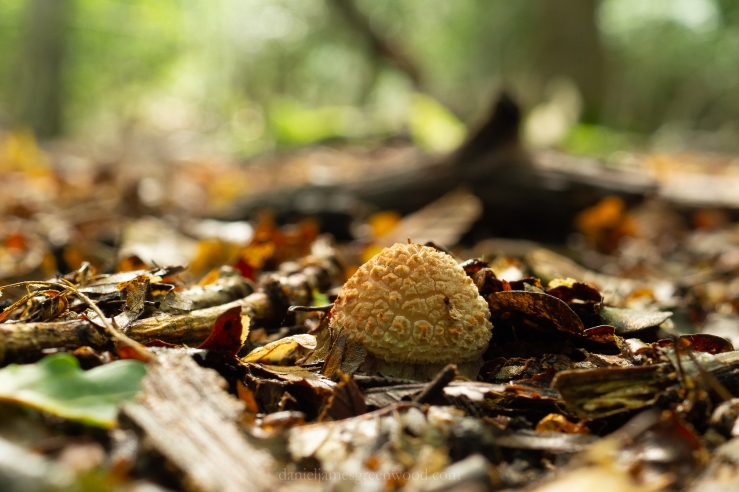
Another sign that autumn is not actually here yet was the state of the Amanita mushrooms. Two years ago I found many, many of these beauties near Connaught Water in the holly woods (nope, not that Hollywood) and they were in the same state. If I’ve learned one thing from mushrooms it’s:

You can’t hurry poisonous fungi

There is no basis of fact in that. Not that it matters nowadays. Fake ‘shrooms.

Epping - 17-8-2019 djg-25

When you see so many Amanitas pretending to be beech nuts, you know autumn is tickling your toes. Winter is snoring.

Epping - 17-8-2019 djg-30

This cheery chap was reaching out from under a ghastly bit of deadwood to say good afternoon. I’m not sure of the species and it will require a bit of rifling through the field guides to get a general idea. Answers on a postcard in the comments box please.

Epping - 17-8-2019 djg-28

A beautiful morning in Epping Forest but what did fungi teach me? If you just walked in and found everything you ever wanted in fungi terms there would be no fun and you wouldn’t learn anything. Also, appreciate every chance you have to spend time in these special places and try not to make a campfire. Next up: Autumn.

Thanks for reading.

Explore my wood-wide-web