Fungi 🍄: keeping up with the polypores

This week I stumbled across two of the more charismatic polypores you can find at this time of year. Polypores are bracket fungi that grow like shelves, usually from a tree trunk but sometimes also at the base or from a branch.
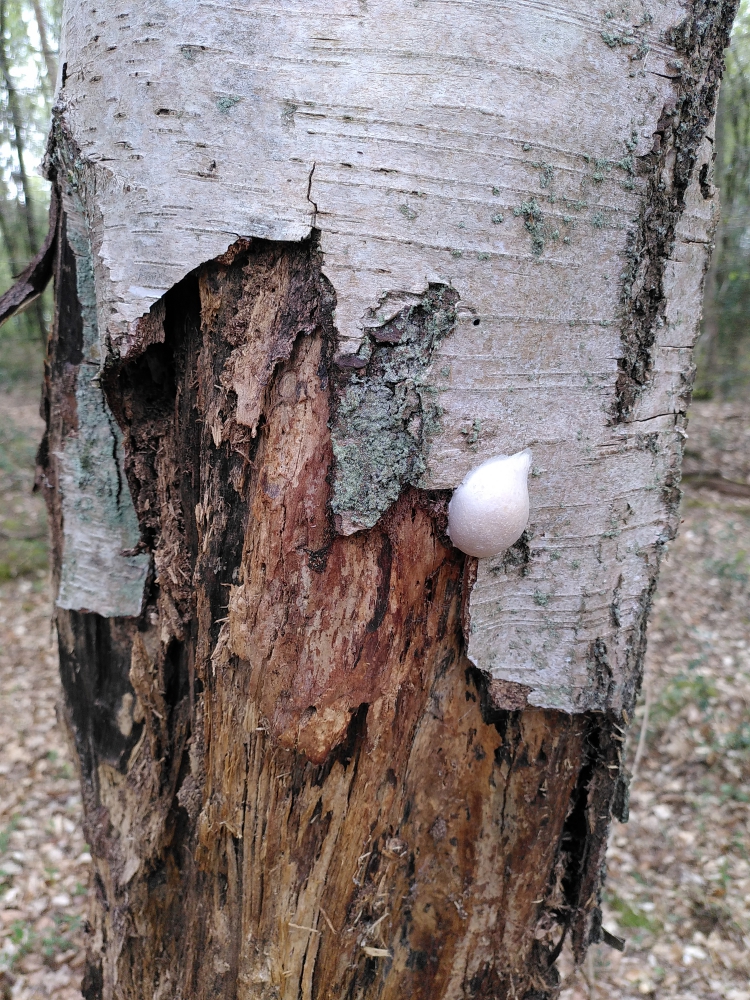
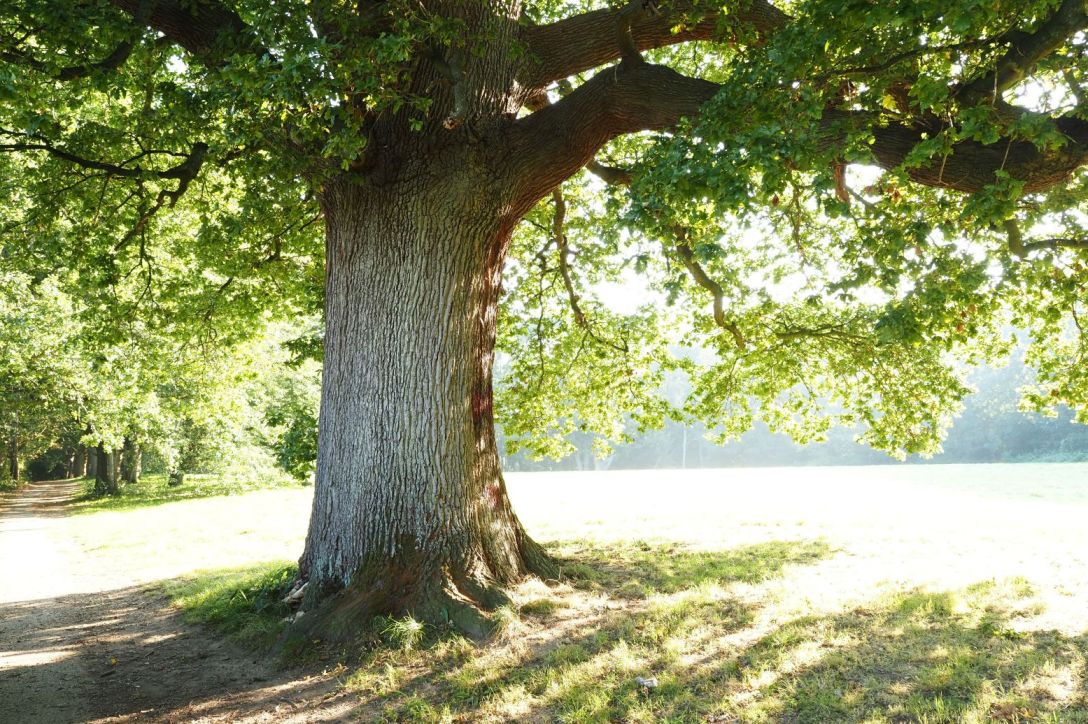
On a morning walk I went to check on the progress of a polypore I’d spotted several months ago (pictured above in late June 2021!), growing at the base of a large oak tree.
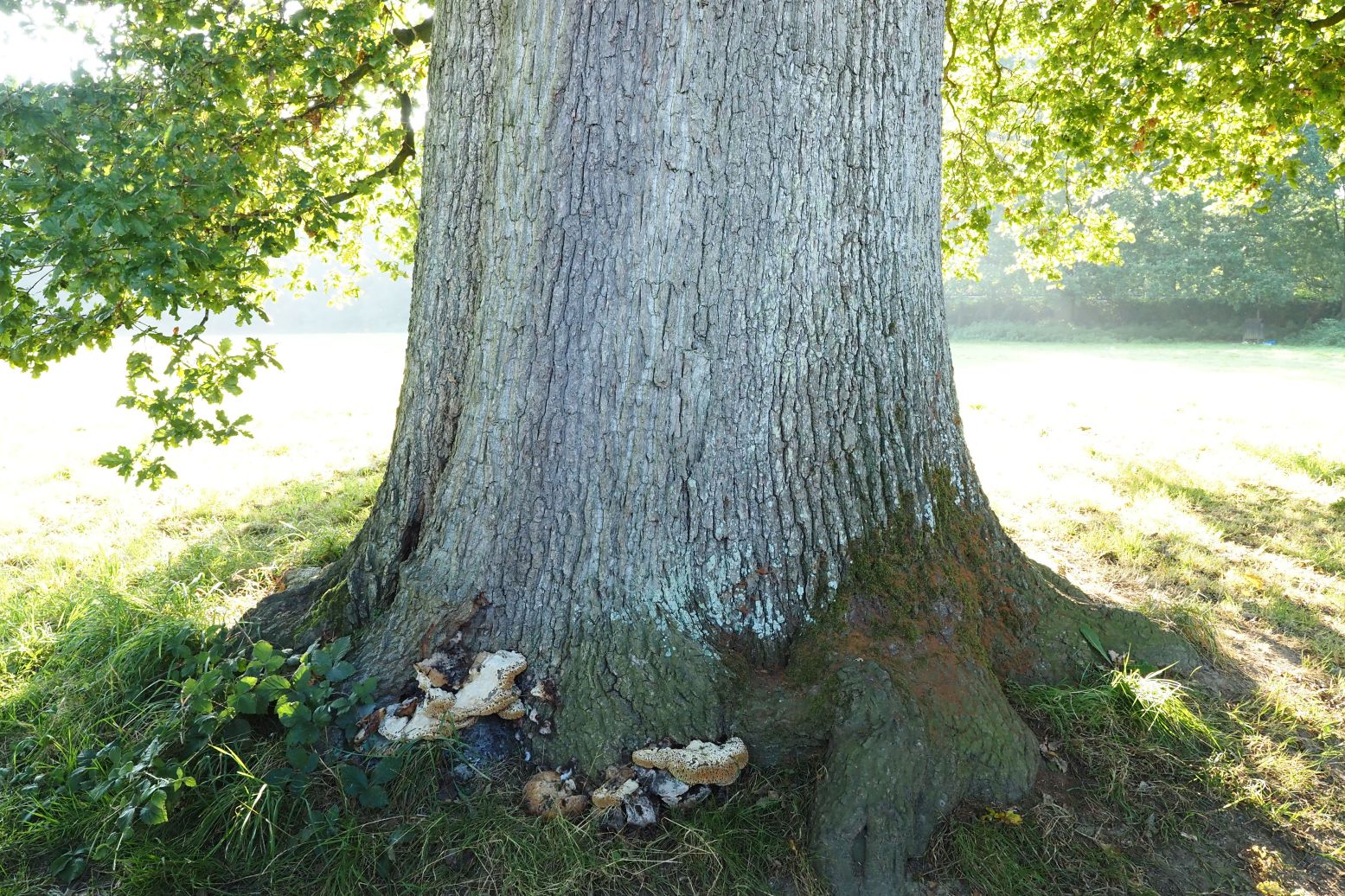
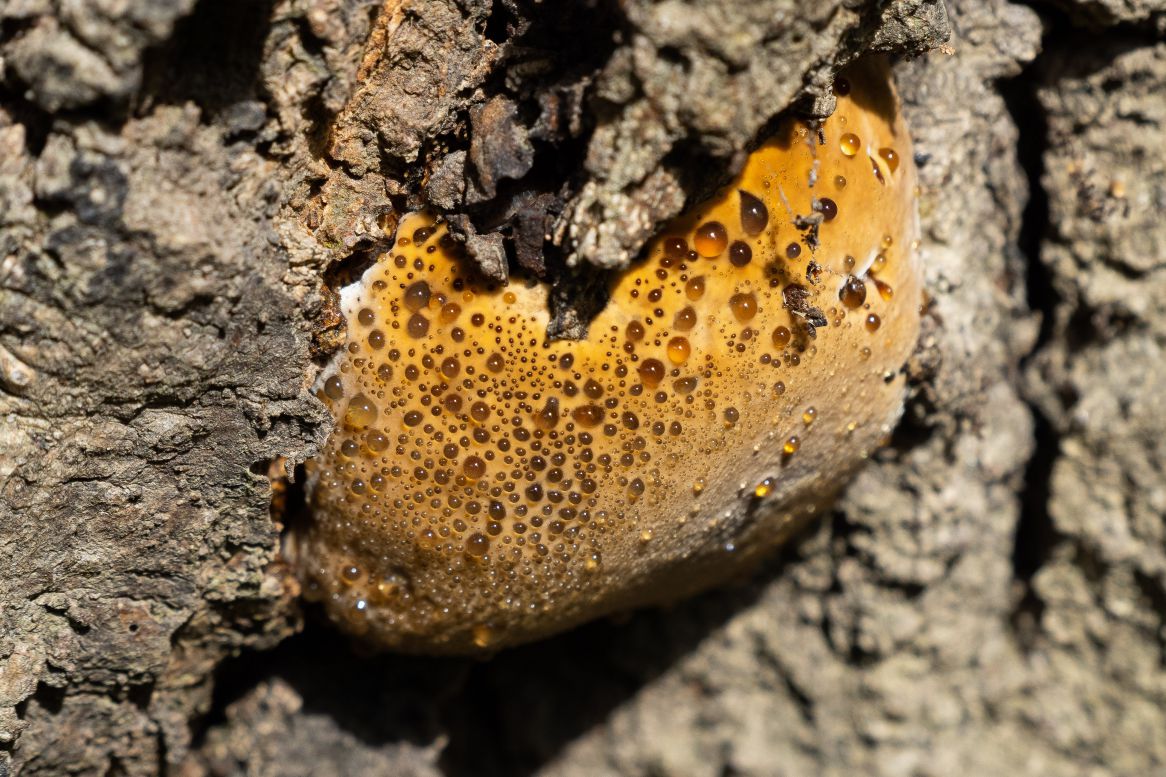
Oak bracket is one I posted about almost exactly a year ago during a visit to Suffolk. It also goes by the name of weeping conk, with a scientific name of Pseudoinonotus dryadeus. It’s a parasitic species, which means that this tree may be suffering some internal, ‘mechanical’ trouble. I hope not because it’s one of the largest in the area and is right next to a path. This makes it much higher up the chopping order if public health might be deemed to be at risk. I will never forget being taught that trees weren’t a hazard until we showed up.

This is a very attractive fungus, if you like a dough that drips caramel. It grows at a fairly critical part of the tree, where it meets the ground. It’s crucial because the tension of the roots holding the trunk upright.

Look into those hundreds of caramel eyes and tell me this is not one of the most beautiful fungi out there.

Later that evening I cycled out to the countryside on what was the end of a September heatwave. The landscape was very dry and smelly. I could smell the manure from my house two miles away in the daytime. That evening I became acquainted with the stench up close – muck spreading in the fields. It was absolutely rank, undoubtedly made far worse by the heat and lack of rain.

My route took me past the 800-year-old Sun Oak. Like the large oak I saw earlier that morning, this tree was also home to a charismatic polypore fungus.

This red button is a beefsteak fungus, Fistulina hepatica. It may also have been a red button – do not press the red button. Unless you want to continue watching this programme (BBC joke).
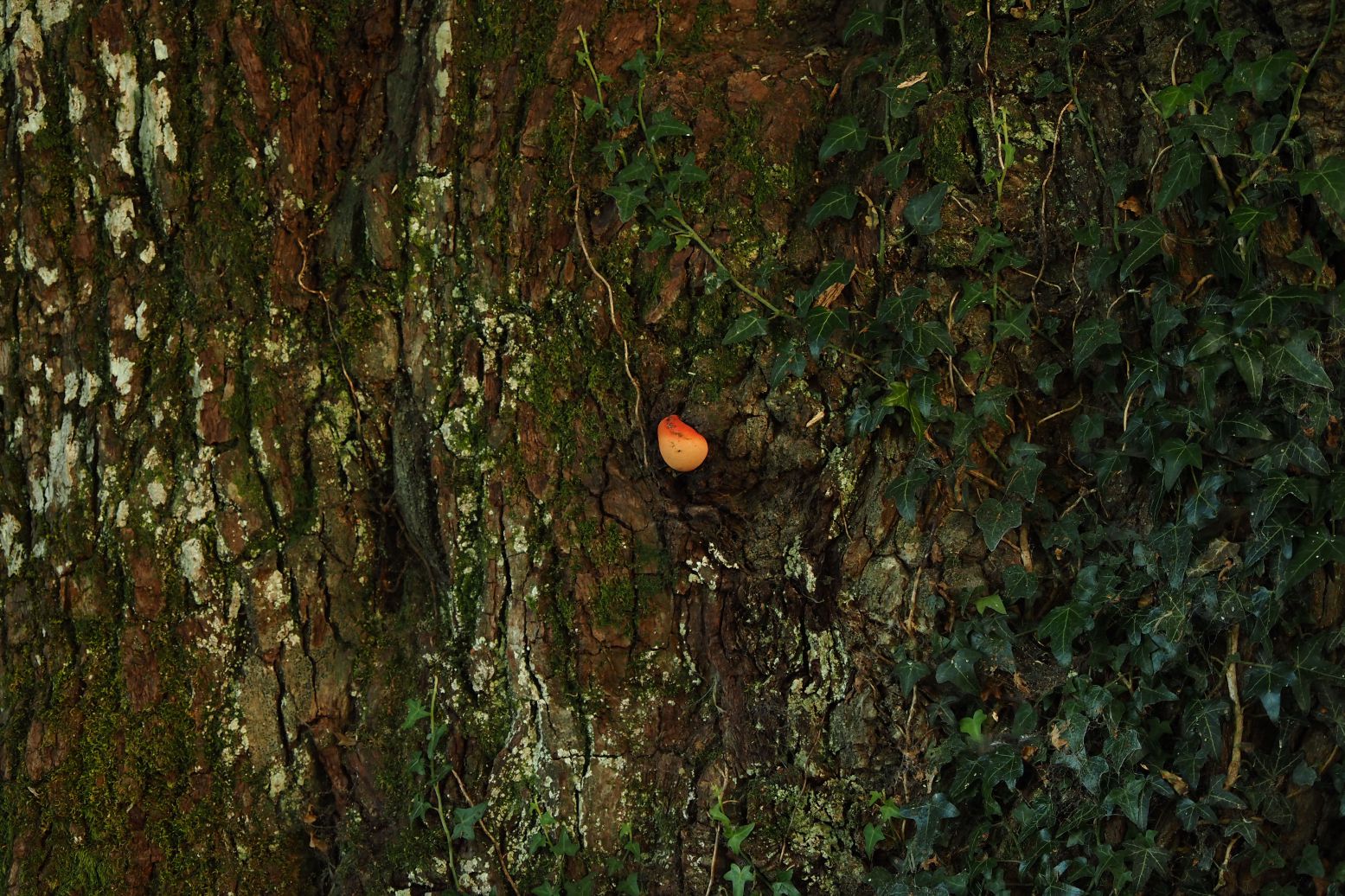
Oh go on then.

In reality this fungus will grow out to form something that looks like a human bodily organ (hepatica). It’s often on oak or sweet chestnut, especially more mature trees. It’s another parasitic species but it’s said to grow too slowly to ever cause the tree structural problems. We should remember that these fungi have been growing with their hosts for potentially millions of years. It’s the impact we have had on their habitats that have made the trouble. Check yourself before you wreck everything else.
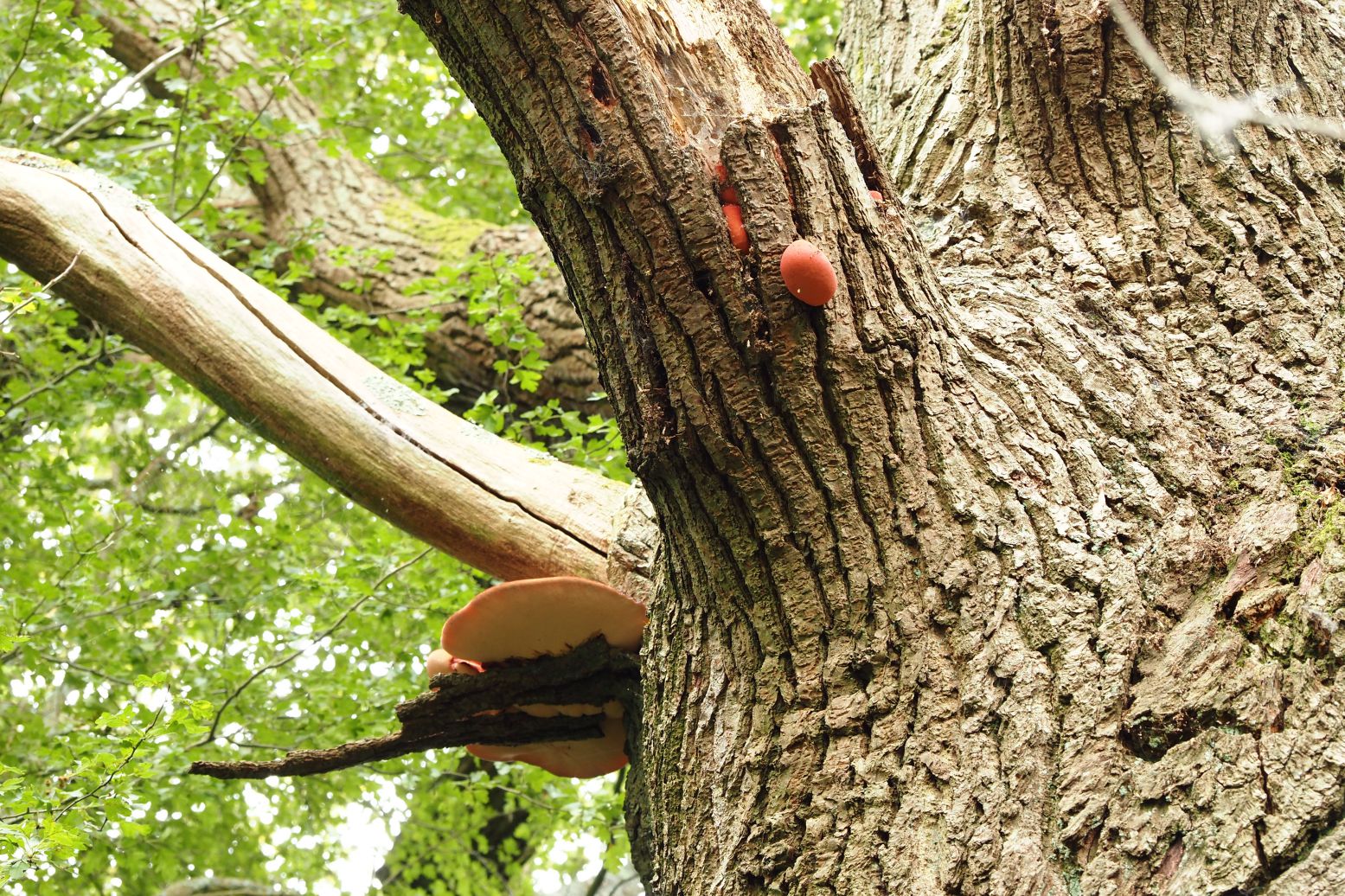
Here’s a recent example that cost me several milligrams in blood as the mosquitos were hanging out under this tree waiting for me to arrive. Beefsteak indeed.

Thanks for reading.

More mushrooms

The Sussex Weald: between the seasons

St. Leonard’s Forest, West Sussex, August 2021

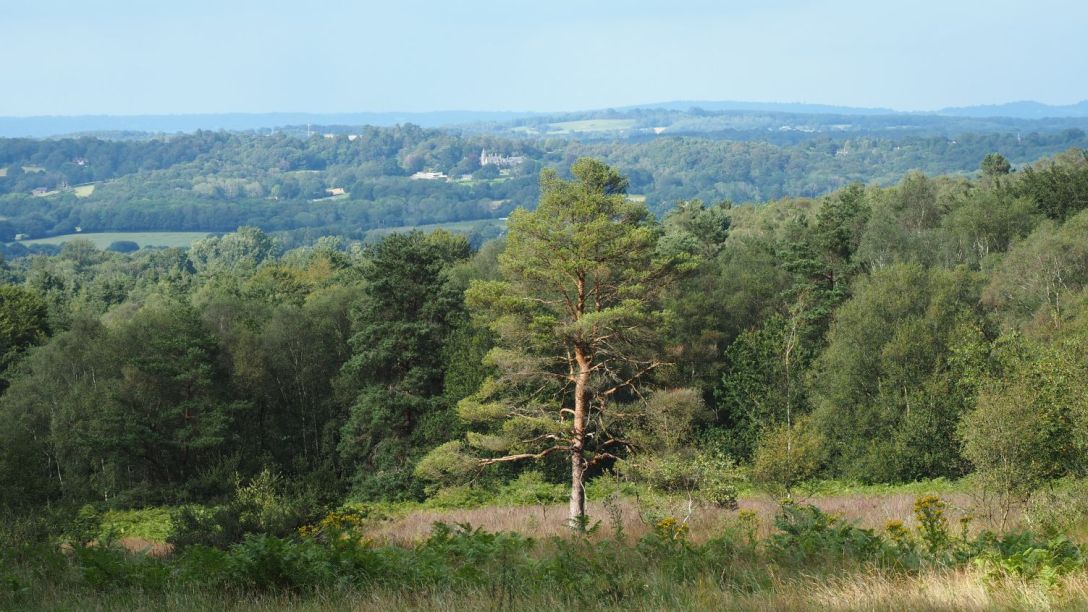
Mid-August: the woods sit between seasons. Leaves are not yet turning, the soil is dry and the leaf litter brittle. Even so, mushrooms are pushing through. I turn off the hard track to cross over the ghyll that cuts through the woodland, one of many dammed further down for the ancient iron industries that hammered this landscape several centuries ago.

Today no such industry exists but the streams still flow. In fact, from this area of the High Weald, some of Sussex’s great rivers rise and head off on their respective journeys: the Arun, the Adur and the Ouse.

Sitting on the bank, I notice fungi on fallen wood but also in the soil. They are terracotta hedgehogs, mushrooms with spikes where the gills or pores are found on other species. They’re a delicious edible mushroom.

When the iron industries were at full pelt here some 400-500 years ago, there was immigration of skilled workers from France. They brought knowledge unavailable to iron workers here in Sussex, with some tensions developing with the local workforce. On 21st January 1556, ‘Peter’ a French collier was ‘cruelly murdered’ (Weir-Wilson, 2021: p.45).

I wonder if those French men and women picked hedgehogs here, a species that’s treated as a delicacy in France. The Belgian father of a friend of mine messaged me on social media when I posted a photo of these mushrooms:

‘Pied de mouton,’ he said. ‘Clean then blanch them for 2min. Drain and keep. Fry 2 shallots and 1 garlic in butter (or oil). Butter tastes better.’

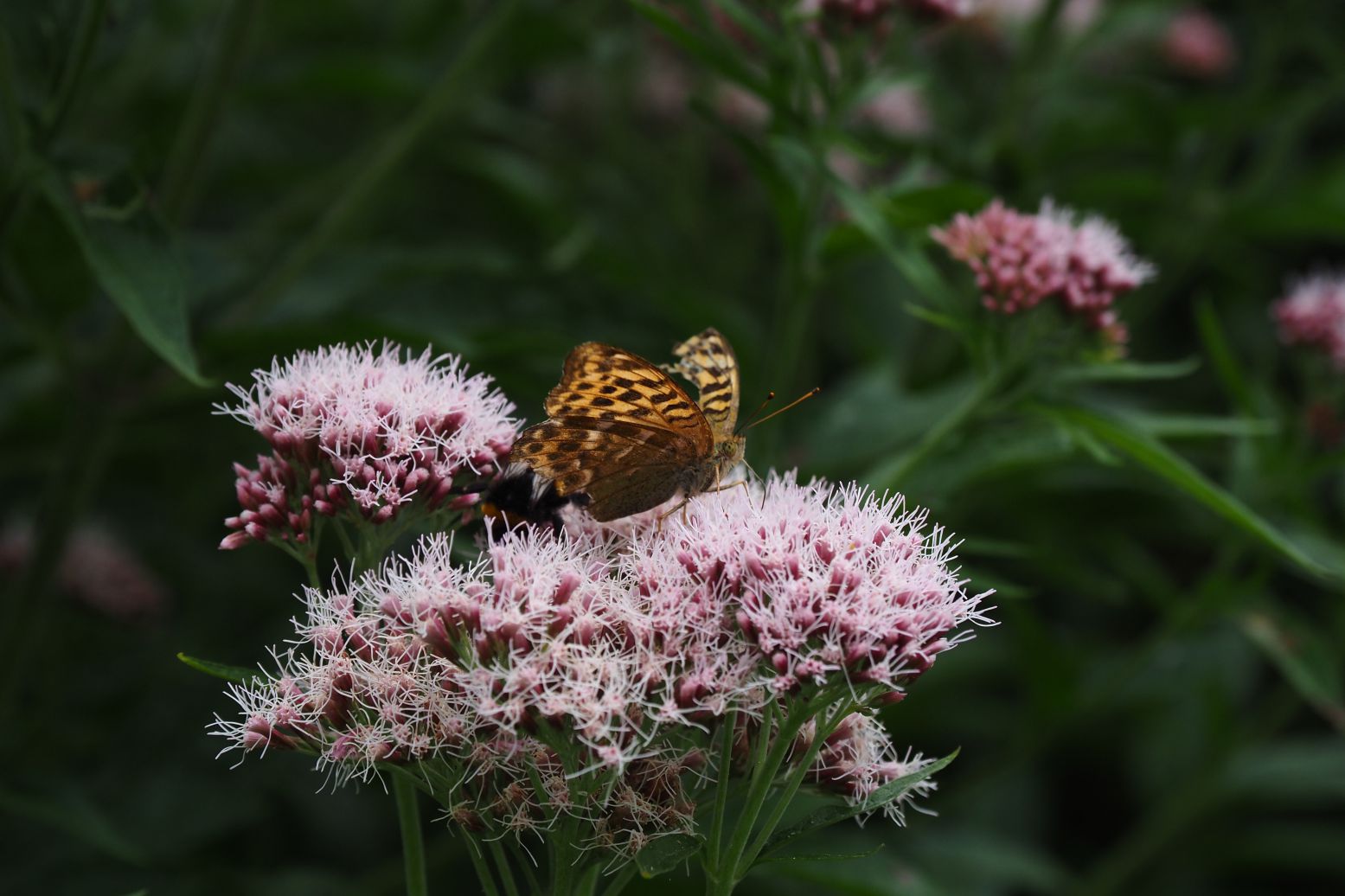
Deeper into the woodland there are the first signs of heather beginning to flower. The birdsong has dwindled but the edges of the rides burst with flowers that are covered in insects. A broken and battered fritillary butterfly nectars on hemp agrimony flowers as if for the first time. I watch to see if a butterfly with so many pecks taken from its wings can even fly, but it does, high into the overcast sky.

Further along the ride hogweed has built a great white canopy. The droneflies – a honeybee mimic – drink nectar in their tens, fizzing as they switch from one umbel to another. That’s when I notice the long, drooping antennae of a longhorn beetle, doing the very same thing. I can’t take my eyes from it, as it clambers over the small inflorescences.

After walking along the endless forestry road, I slip back into the woodland to an area of birchy bog and broken beeches. It’s quiet and still in here. Unlike the final bursts of summer flowers on the open forest rides, autumn can be found among the birch trees.

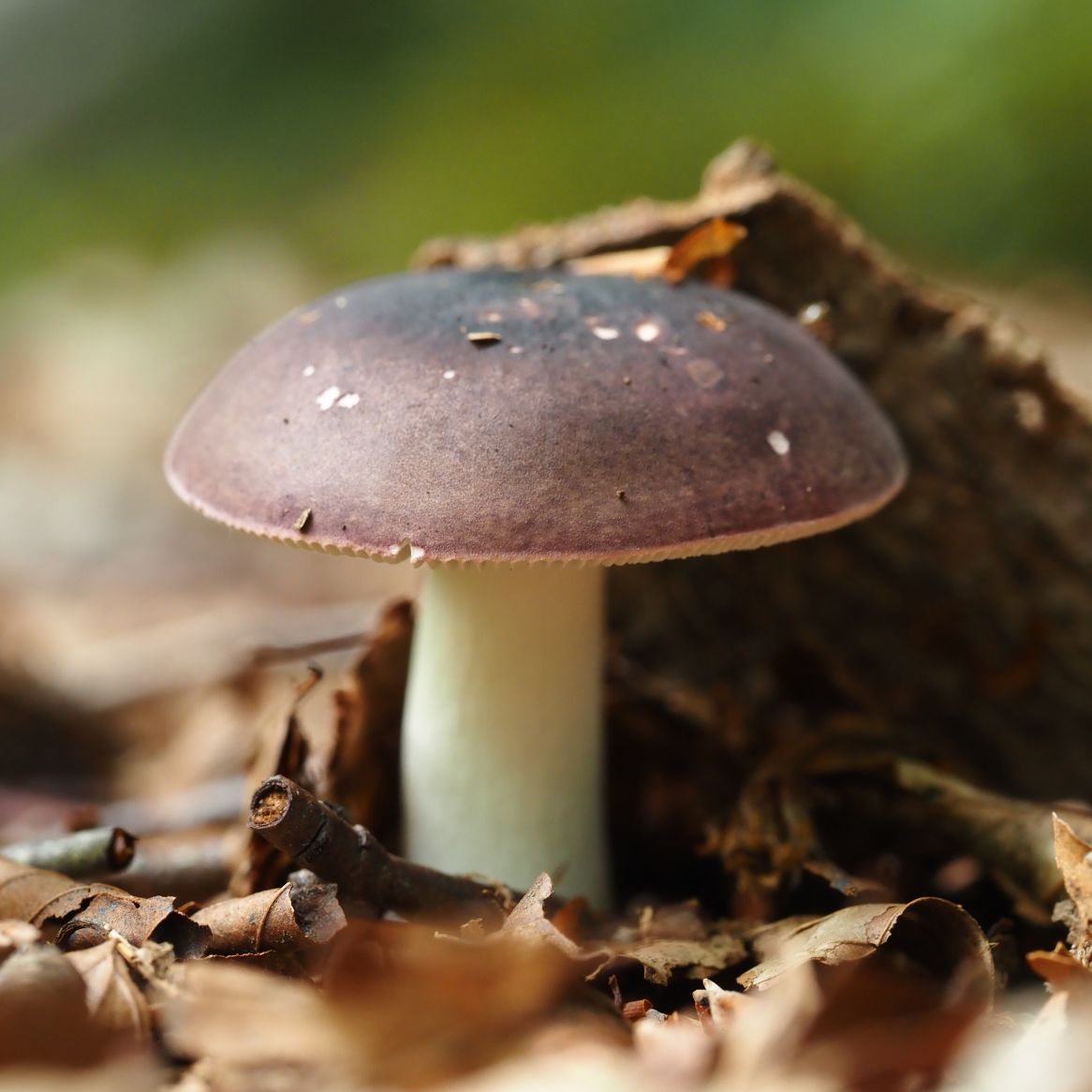
First there is a bolete with its pores and cap that has begun to turn upwards, growing from a stump. There’s a Leccinum or birch bolete of some sort standing tall (for its kind) in the soil. There are Russulas yellow, red, green and purple. These hard to identify fungi are a mental bridge between summer and autumn. They are also a welcome meal for squirrels and whatever can get there first.

It’s a reminder that the seasons are not concrete. There is give and take, building blocks can come tumbling down. Seasonal signs come with species appearing, some that pass like ships in the night.

The Sussex Weald

Fungi 🍄: September deathcaps

This week I’ve been researching an article about deadly mushrooms. That post will appear here at some point but I felt like I needed to fit in some quality time with fungi in real life, especially as we have technically entered autumn. I visited somewhere in the Sussex Low Weald which is one of the most reliable fungi reserves I know.

In reality I found almost nothing, but for one of the most deadly mushrooms in the business: the deathcap (Amanita phalloides).

I found these two deathcaps growing close together underneath a beech tree. There was something so very strange about this, seeing as I’d spent the previous day reading about them, and only the second time I’ve encountered the species. Both sightings were in September. The bite taken out of one of the mushrooms is a good pointer to the fact that other animals can eat this fungus and not die. Unlike many people who have sadly passed away after mistaking this fungus for something edible.

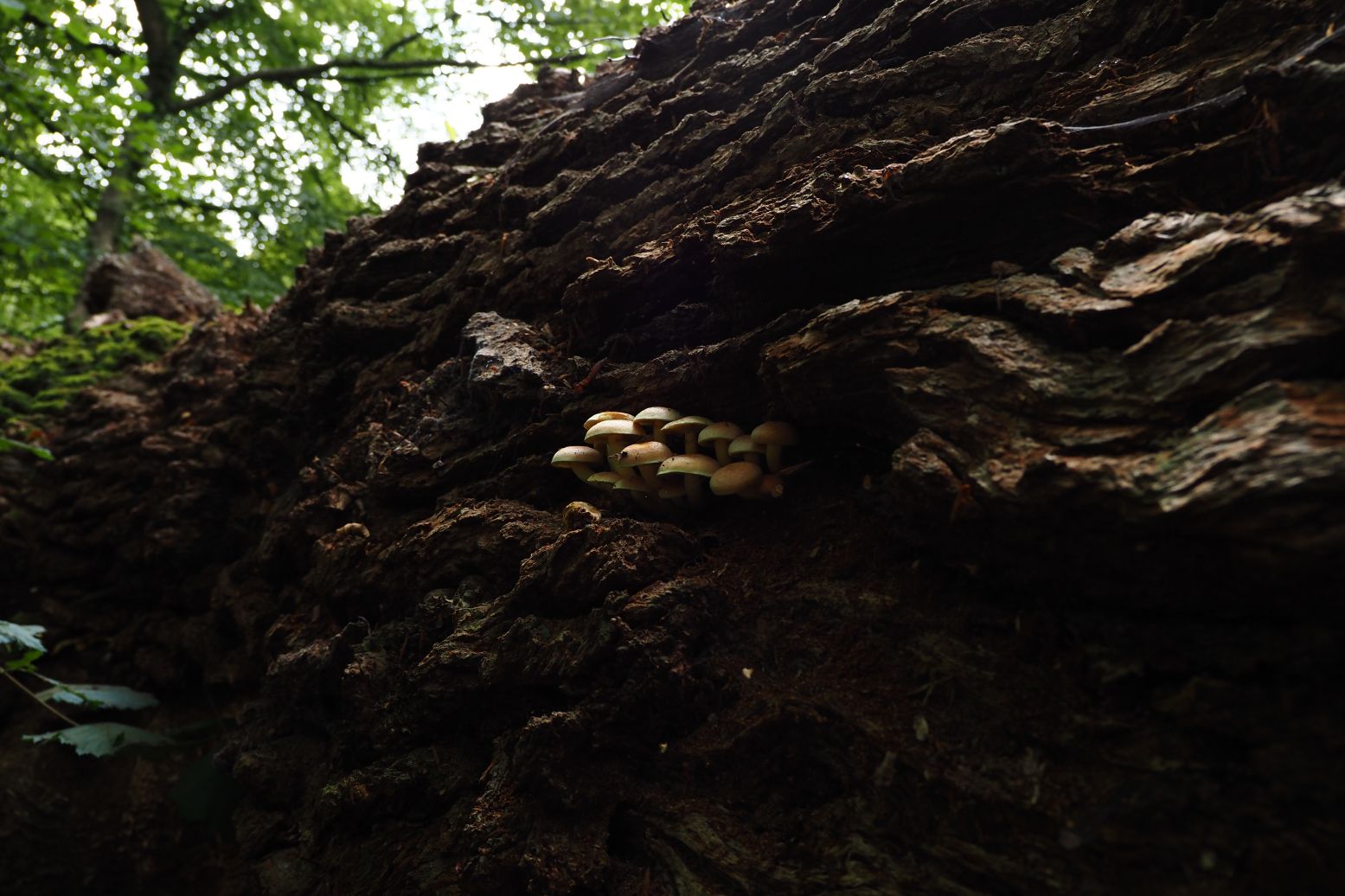
To find mushrooms to photograph in these dry periods, one of the best bets is to seek out large deadwood, particularly wood in shade. Sulphur tuft was the other mushroom I found, another toxic species. Seriously, what is that all about! Back off, nature.

In truth, sulphur tuft is one of the most photogenic species you can find. At this time of year when there is less rain it looks fantastic. It’s also supposed to be bioluminescent, glow-in-the-dark:

Barisandi, CC BY-SA 4.0 https://creativecommons.org/licenses/by-sa/4.0, via Wikimedia Commons

If you’re interested in that, this excellent podcast episode of The Mushroom Hour is a must listen. I learned that it could be the case that many more species of fungi were once bioluminescent. Over time, they have lost it.

Lichens are, fundamentally, ascomycote fungi. This means that they are much happier in wet weather. I was looking around an old oak stump when I found this beautiful heart-shaped Usnea lichen.

It’s nice to end on a fungus that won’t kill you.

Thanks for reading. Don’t eat poisonous mushrooms.
More mushrooms

Fungi 🍄: summer shrooms in Ashdown Forest

I was lucky enough to have a couple of hours to spend in Ashdown Forest last week. The light was beautiful and the views expansive across this famous part of the Sussex Weald. For those who don’t know, Ashdown Forest was the inspiration for A.A. Milne’s Winnie the Pooh. I very nearly titled this blog ‘Winnie the shroom bear’.

The mushroom situation at the moment in Sussex is one of a twilight late summer boom, with not really enough rain recently to feed the fungi and maintain the fruiting window. However, where there is shade there is moisture and therefore there is hope.

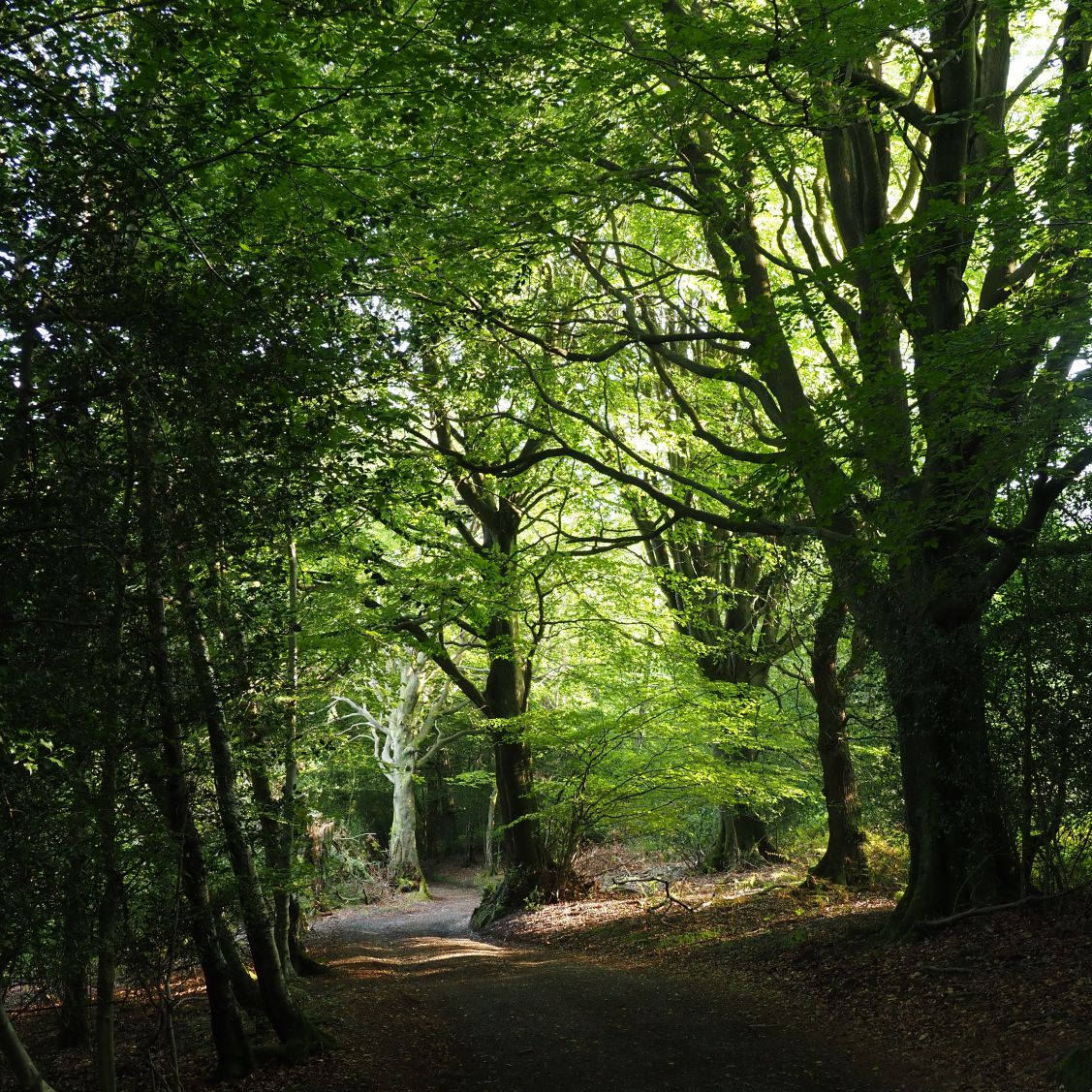
I followed a path into the woodland, away from Ashdown Forest’s famous heathlands. The ground did look quite dry, so I wasn’t expecting to find too much growing from the soil.

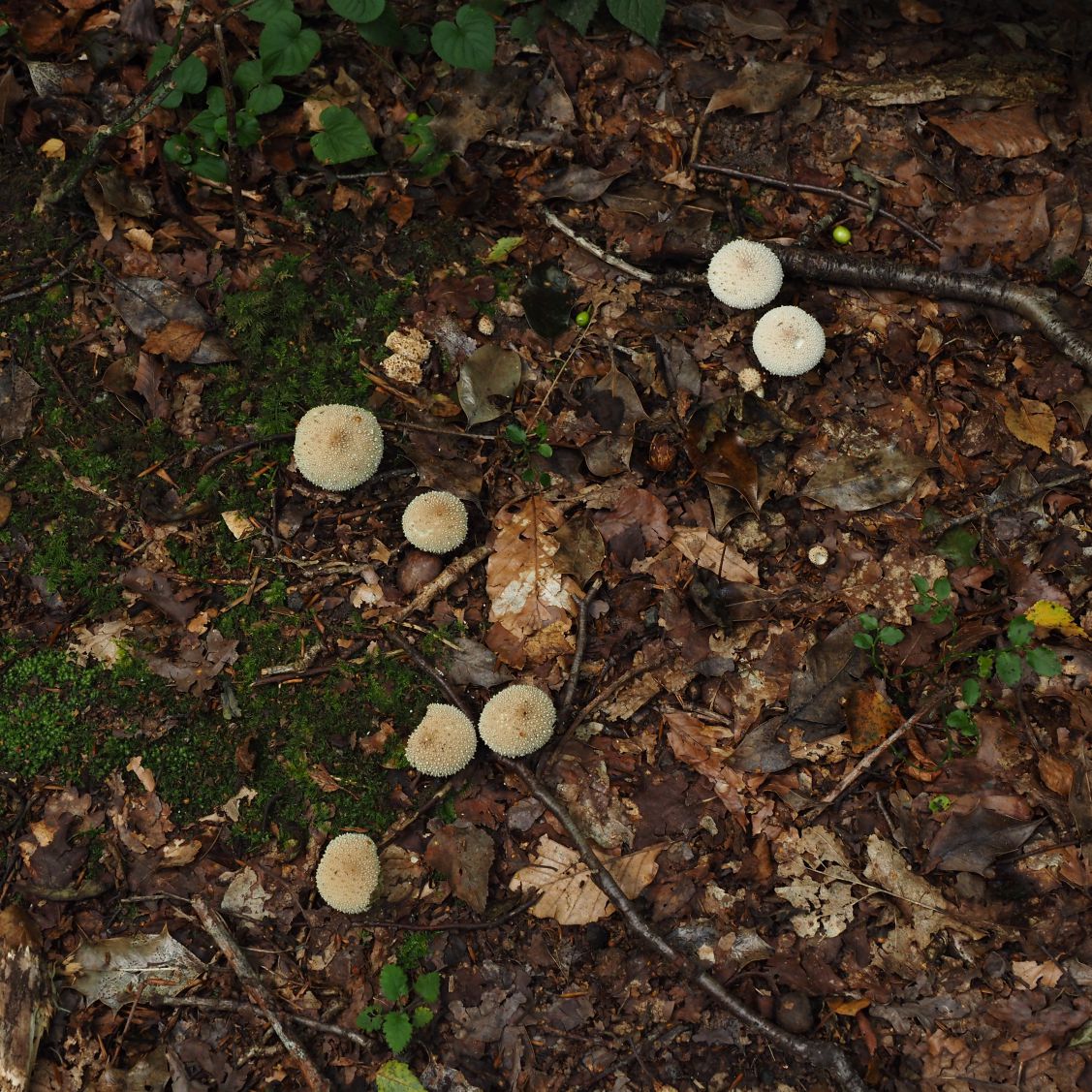
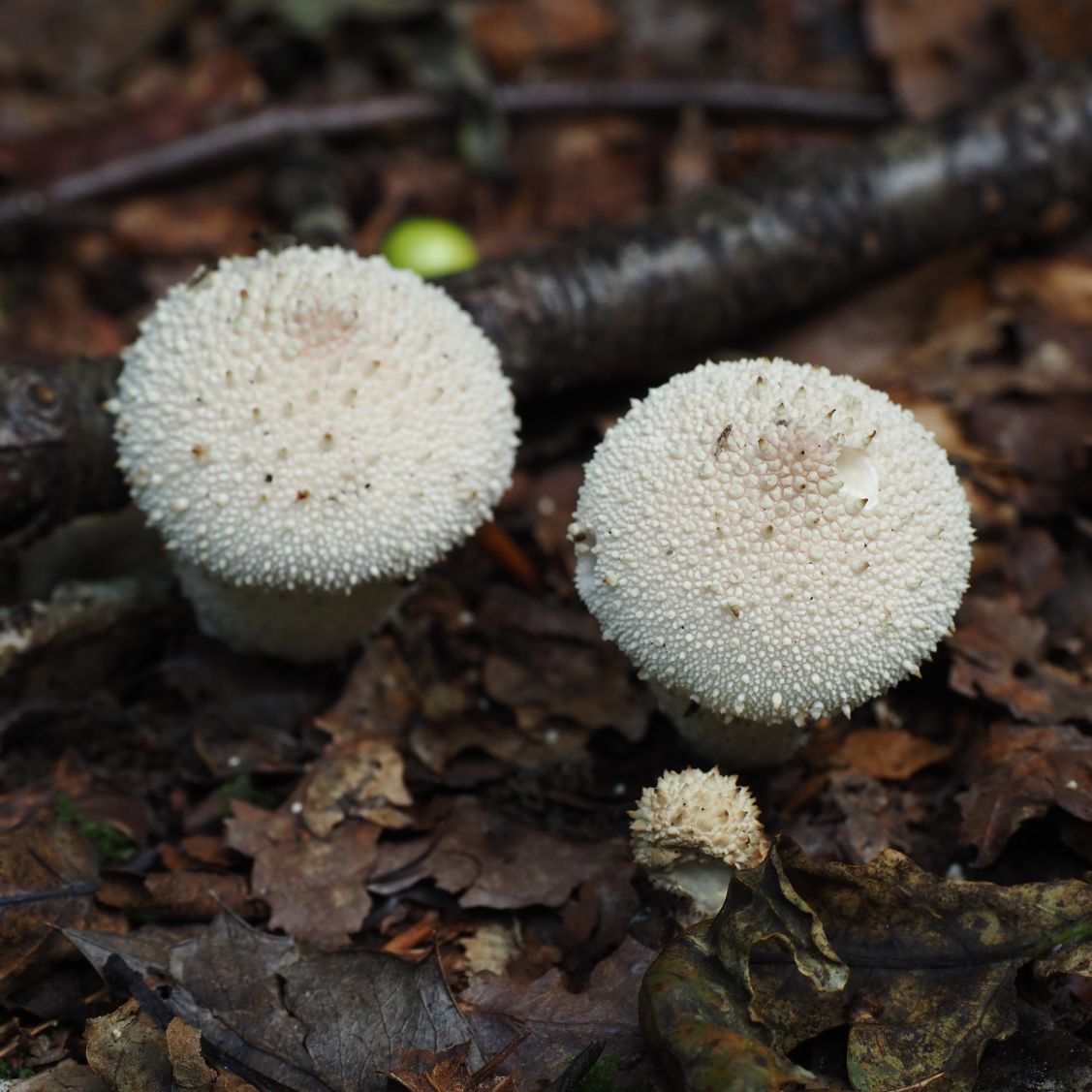
My first sighting was, in fact, in the soil. In the shade at the edge of the path I found a group of common puffballs.

This is an edible species, and though two looked in fairly good condition, I wasn’t looking to forage for food.

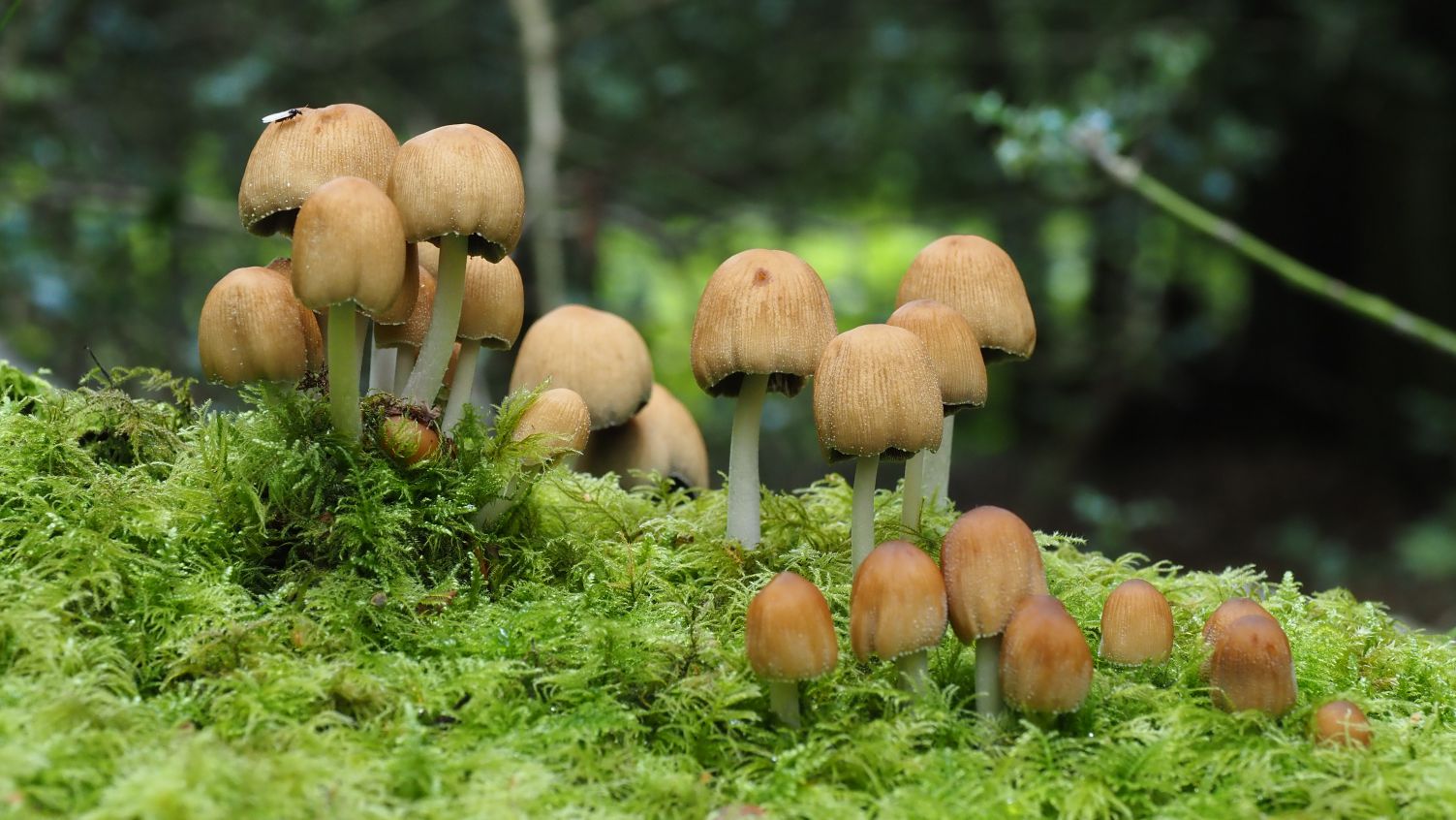
On the opposite side of the path a piece of wood was covered in feather moss. The moss was home to a gathering of glistening inkcap mushrooms. They were in wonderful condition, with varying stages of growth in the bright green bed of bryophytes.

Under a beech tree I noticed some large fallen wood sitting in heavy shade. This is always a good place to find fungi because there will be high levels of moisture and damp throughout the year. Especially under beech which casts heavy shade through its leafing phase.

My guess for this species would be stump puffball which grows in large numbers on decaying wood. From a distance they looked like fairy inkcap, but were of course much larger when looking properly. As I knelt down to take these photos, the sunlight broke through on occasion and then faded away. It was a fateful fungi photo.

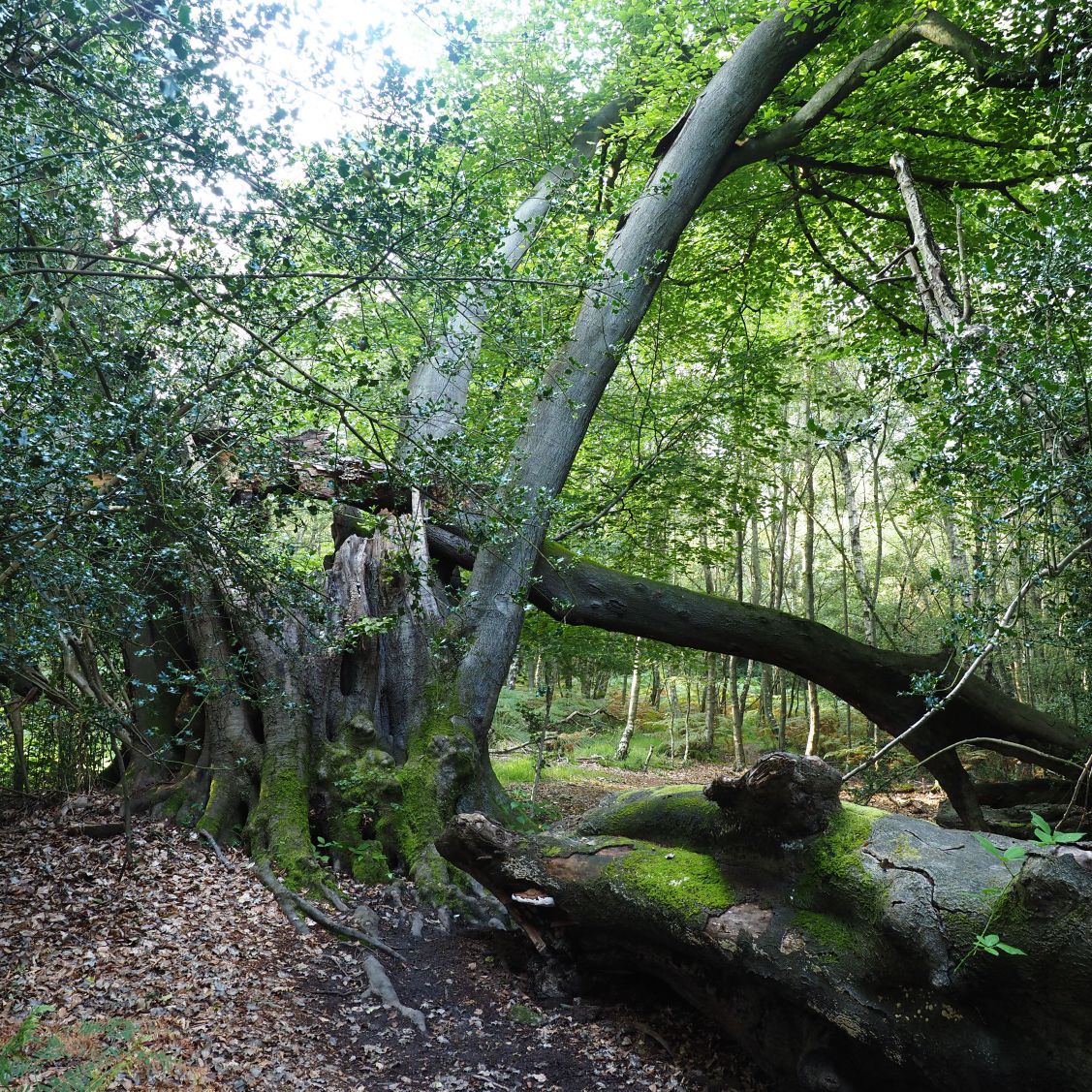
Off of the path, as I considered whether there was enough time to take things a bit deeper into the woodland, I found an incredible beech tree. This looked like an old beech pollard (regularly cut high) or perhaps a coppice (regularly cut to the stump for regrowth). It had lost a huge limb which lay in front of it, providing a home for a Ganoderma bracket fungus, as so many beech trees both standing and fallen do.

I don’t know Ashdown Forest at all well. It feels to me quite an elusive place. This short walk allowed me to experience more of its quiet allure. I hadn’t expected to see so many unusual beech trees, which would probably qualify as veteran with the discerning experts out there.

This is another wonderful beech tree which has experienced damage to its trunk. The image above shows the tree’s own ‘aerial’ roots feeding of its own decaying wood. No doubt fungi has its role here in helping the tree roots to feed on itself by softening up the wood with its own decay processes.

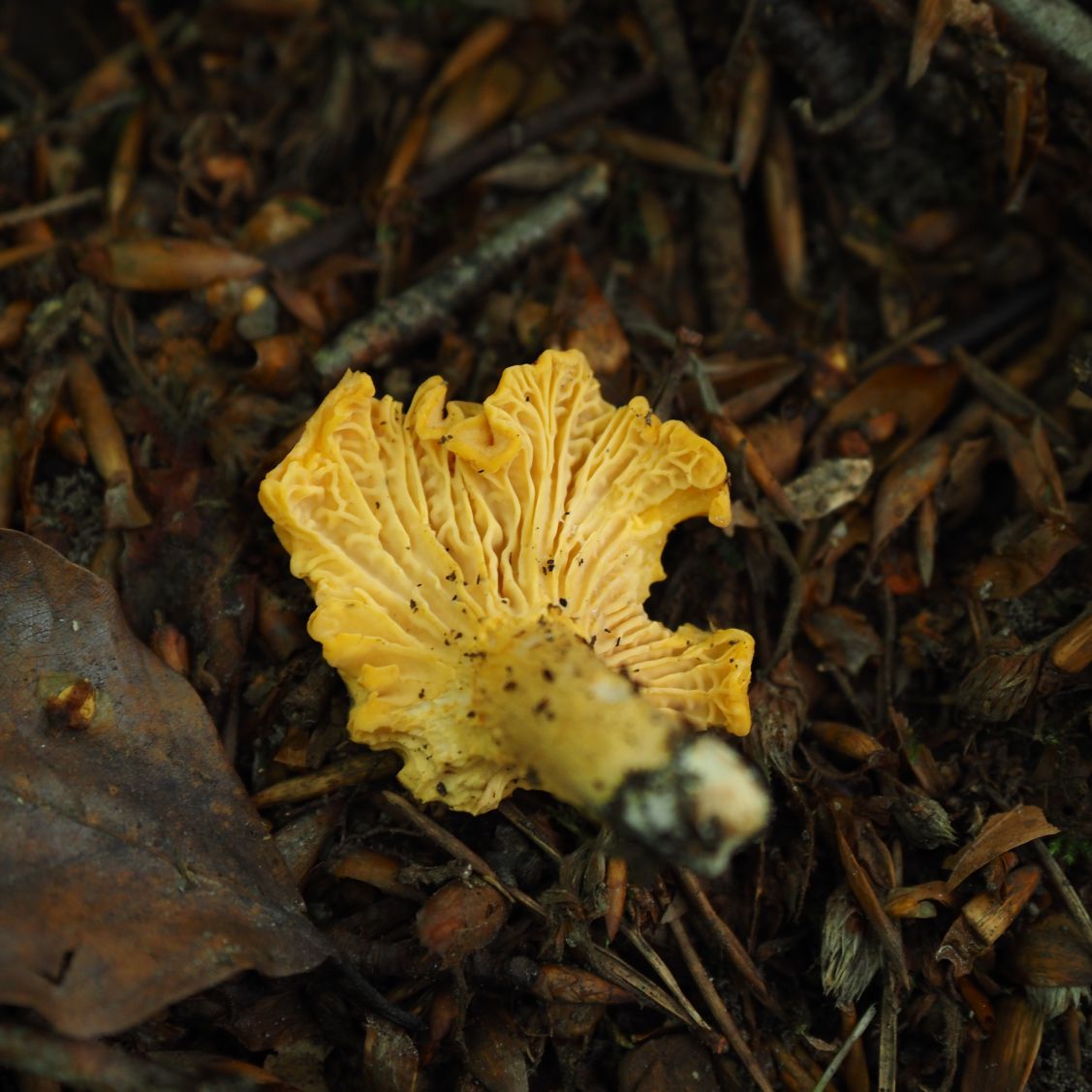
My hour was up and I had to head back to the car park. On the return leg I noticed some very small yellow mushrooms on the bank built up along the footpath. It clicked that they were probably chantarelles. I looked at the gills of one that had fallen loose and could confirm they were. There is a beech leaf in the left of the image above which provides scale – they really were tiny.

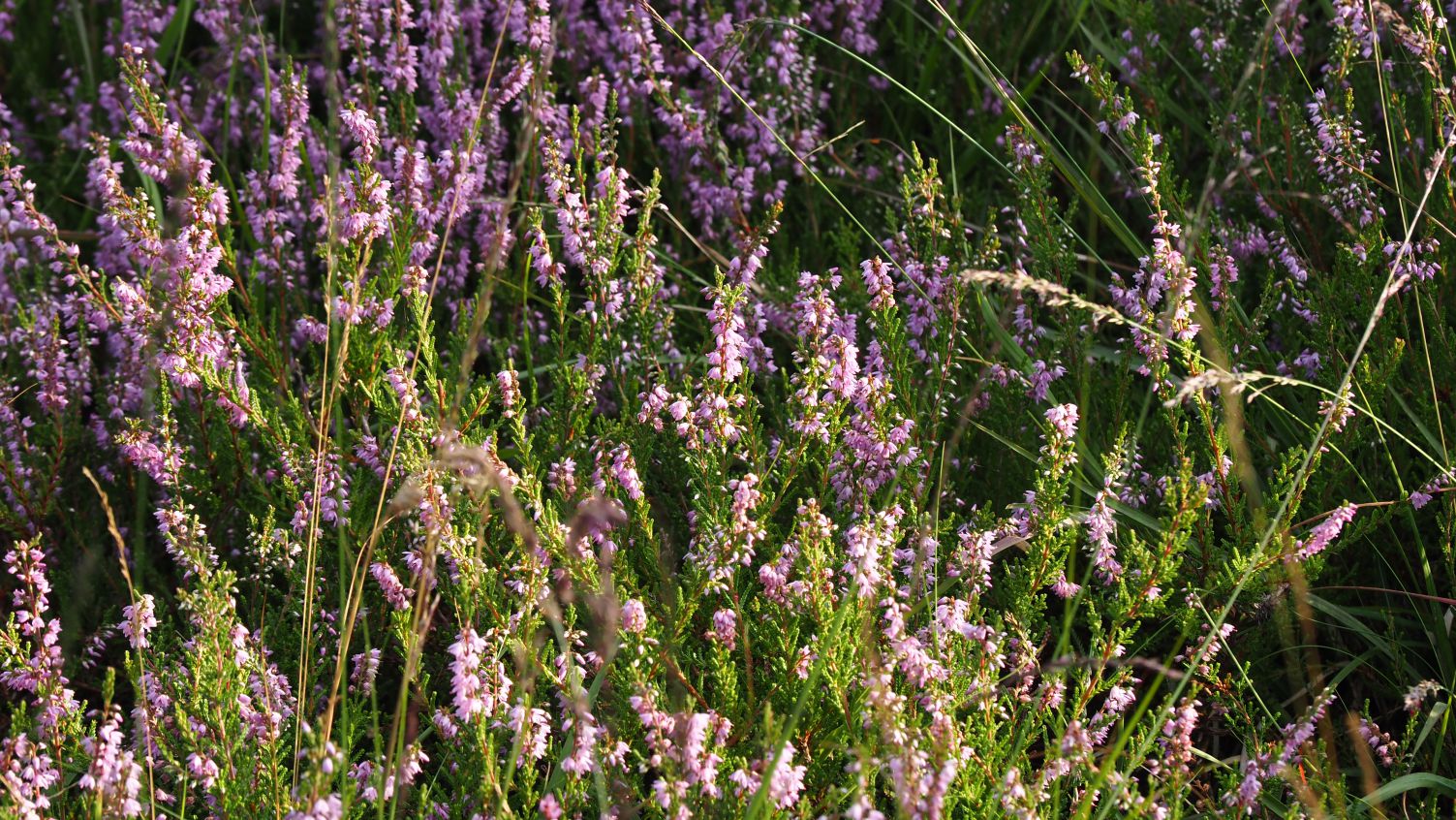
On the way out I noticed the heather was flowering, one of the final acts of summer. It’s always good when there are shrooms on show to support this darkening shift in seasons. The days are getting shorter, the leaves will soon be on the turn and the mushrooms will be arriving.

Thanks for reading.

More mushrooms

Fungi 🍄: amazing woodland unicycles!

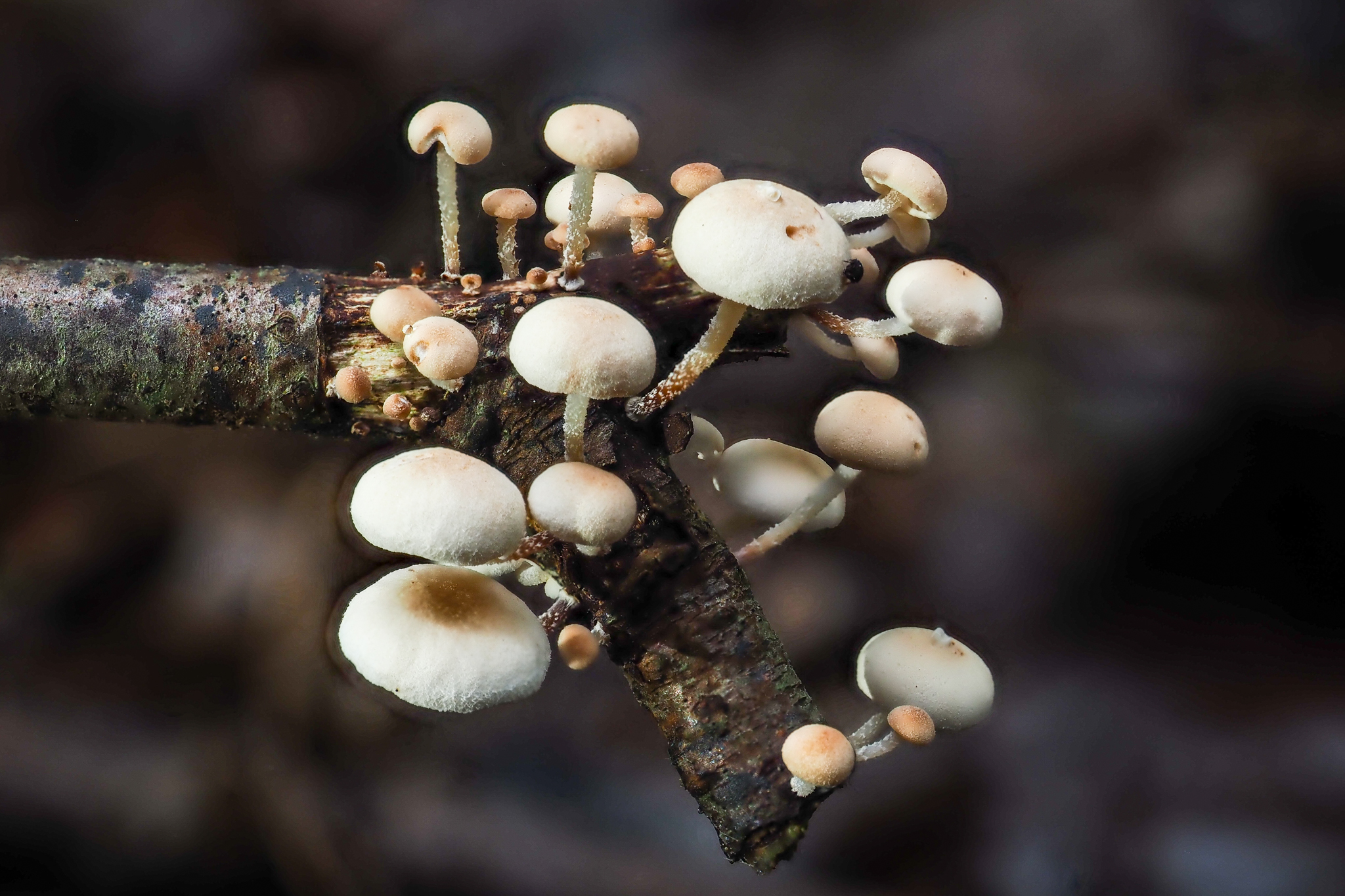
A few weeks ago I visited a local woodland with high hopes for a summer burst of mushrooms. A couple of years ago in July this woodland was showing up some great soil-based mushrooms, species like blusher (Amanita rubescens) and the brittlestems (Russula). Though I didn’t find that this time, there were huge numbers of one species – twig parachute (Marasmiellus ramealis).

The image above is one taken with my camera’s in-built focus stacking, as illustrated below. It takes several images at different focus points and blends them to provide an image which is completely in focus (I don’t know why the halo-effect is happening, for info). With this cluster of mushrooms it’s able to tell the whole story.

When I posted this pic on social media, a couple of people came back with their own descriptions: Julian Hoffman called them “amazing woodland unicycles”, which has to be my favourite. In respect to my aunt who may be reading this, she got there first with “bicycle wheels”.

The set-up needed to get this image is a camera like an Olympus E-M5 which has in-built focus stacking, a small tripod-like thing, some extra lighting and a remote shutter release. You also obviously need a mushroom. The remote trigger allows you to take a photo at very slow shutter speeds which are susceptible to blurring if there is movement. That’s the beauty of fungi and other stationary subjects, you don’t need a huge full-frame camera with exceptional low-light ability. You can just use slow shutter speeds instead.

Though it is of course not fungi, this was another focus-stacking subject on that walk in the woods. Alongside a footpath, on a piece of wood being used as edging, I found this dog vomit slime mould (Fuligo septica)… yes that’s its common name. It was in the process of covering the surface of the wood and extracting nutrients and minerals along the way. Look at the networks of slime as they build across the wood.

And here is another of the VIP behind the scenes phone photos. It’s nice to put the image in context. A vari-angle screen is also incredibly helpful in these situations. If you want any advice on this kind of fungal or slime mould photography, do post a question in the comments and I’ll happily let you know what works for me.

By the way, I was using a 30mm macro lens (60mm outside of Micro Four Thirds camera/lens config). You can actually see the settings if you look at the screen.

Thanks for reading.

More mushrooms

Fungi 🍄: nipping to The Mens

Last week I dropped in on a favourite Sussex Wildlife Trust woodland. It’s a place I only ever visit when travelling to or from work. It’s a place with a funny name, The Mens. It’s even funnier when I tell others I’m going to The Mens after work. The name is said to derive from the word ‘common’, a place where local people would have had foraging and grazing rights in centuries past. It’s now a significant ancient woodland in the Sussex Low Weald, holding National Nature Reserve status. It’s special because of its naturally occuring beech and holly, though I’m no expert on its specifics. It is a uniquely beautiful woodland. It is highly sensitive, and when I go I do my best to treat it with a high level of respect and care.

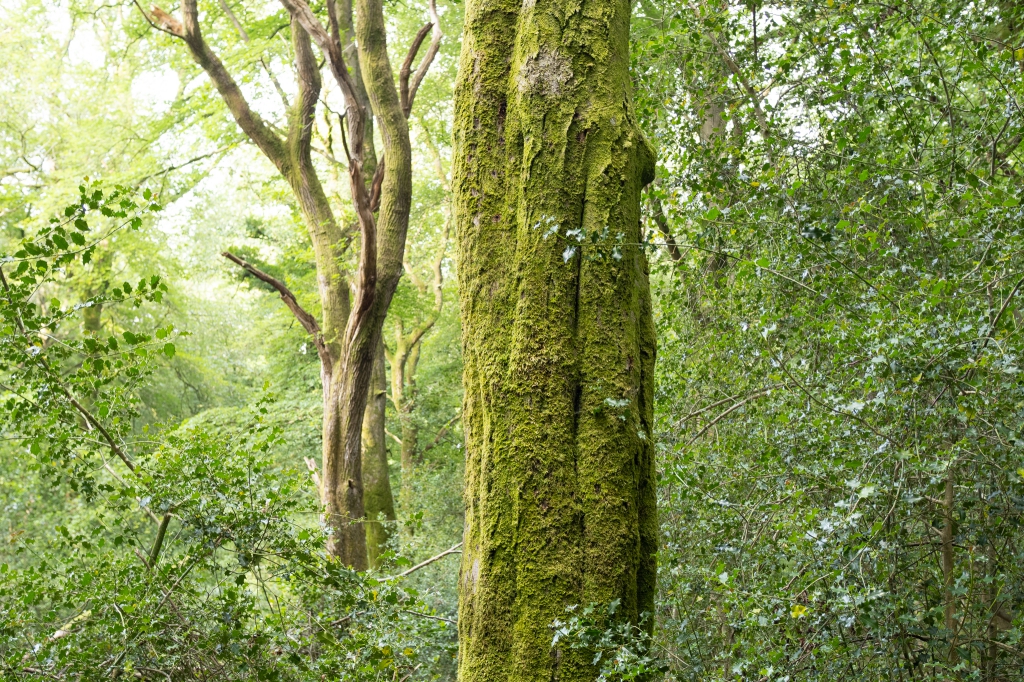
It’s one of the few places in SE/central southern England outside of the New Forest, that I have visited, where moss and algae cover tree trunks. Above is the typical assemblage of mature beech, oak and a surrounding sea of holly.

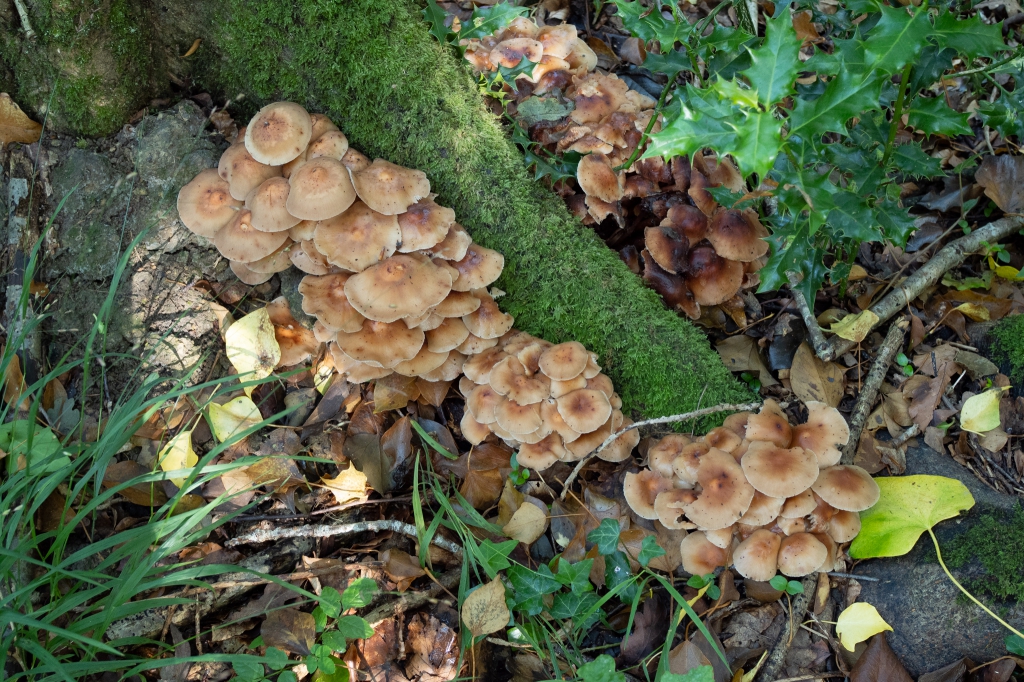
You can see indicators of how many mushrooms are likely to be in fruit when you first enter a reserve. I saw the above within the first few paces. It’s is a mushroom called spindleshank Gymnopilus fusipes (to my knowledge, happy to be corrected), which grows around the buttresses of oak trees. In a separate recent walk, it was the most common fungus I saw, and so is enjoying a key fruiting period.

In terms of tree health, I wouldn’t say it was a ‘good’ sign because there is some decay going on and it is defined as a parasitic species. In a woodland like this, it is normal and part of the life of the woodland. It helps to disconnect ourselves from our normal notions of life and death when in woodlands, it doesn’t play out in the same way there. Dead and decaying trees are crucial to a woodland’s life and longevity.

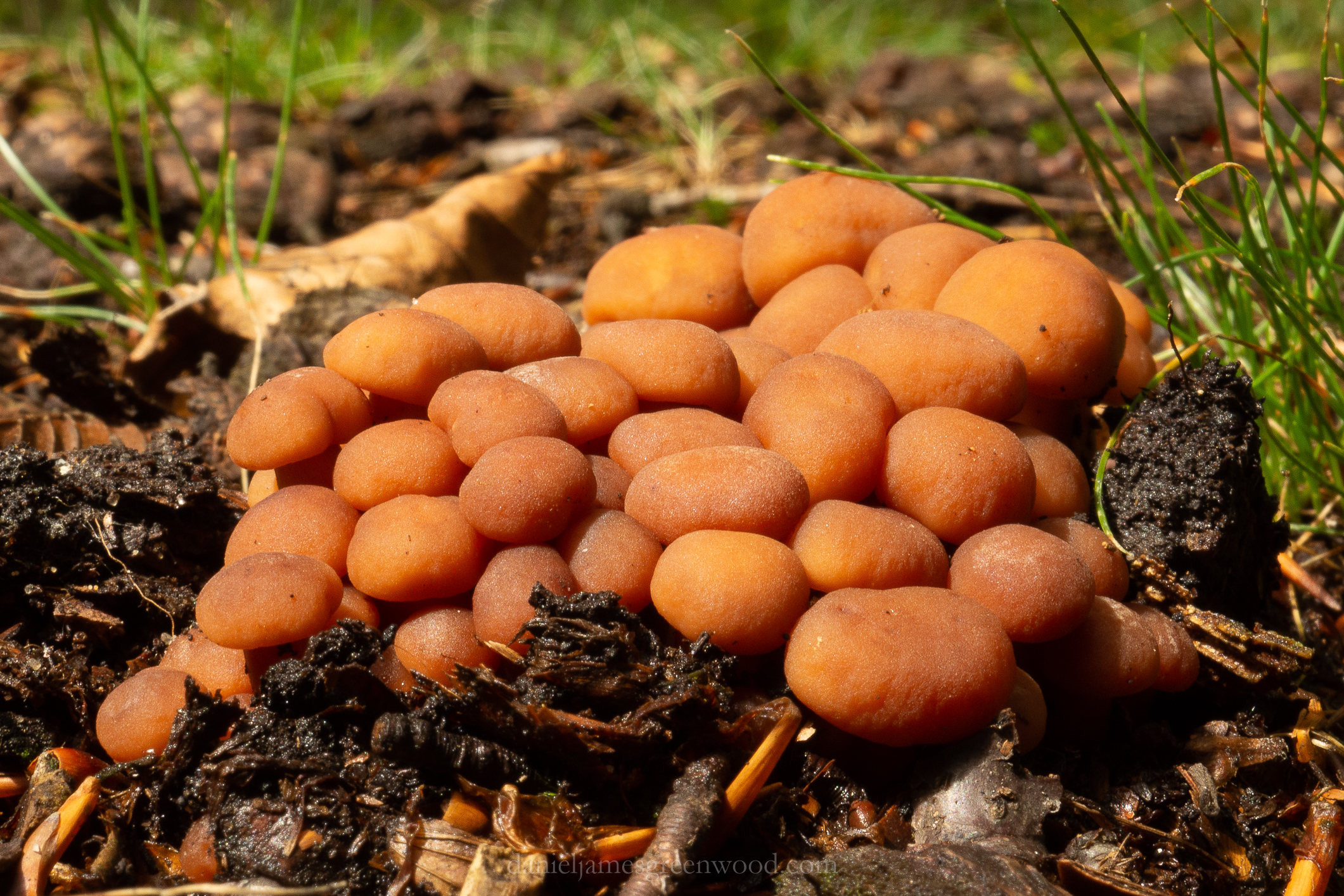
Spindleshank is often first seen like the group below, bursting on the scene. It is probably attached to a root or piece of wood under the soil.

This was the only fruiting mushroom I found during the short walk but there was a large abundance of slime moulds growing on fallen wood and some standing trees.

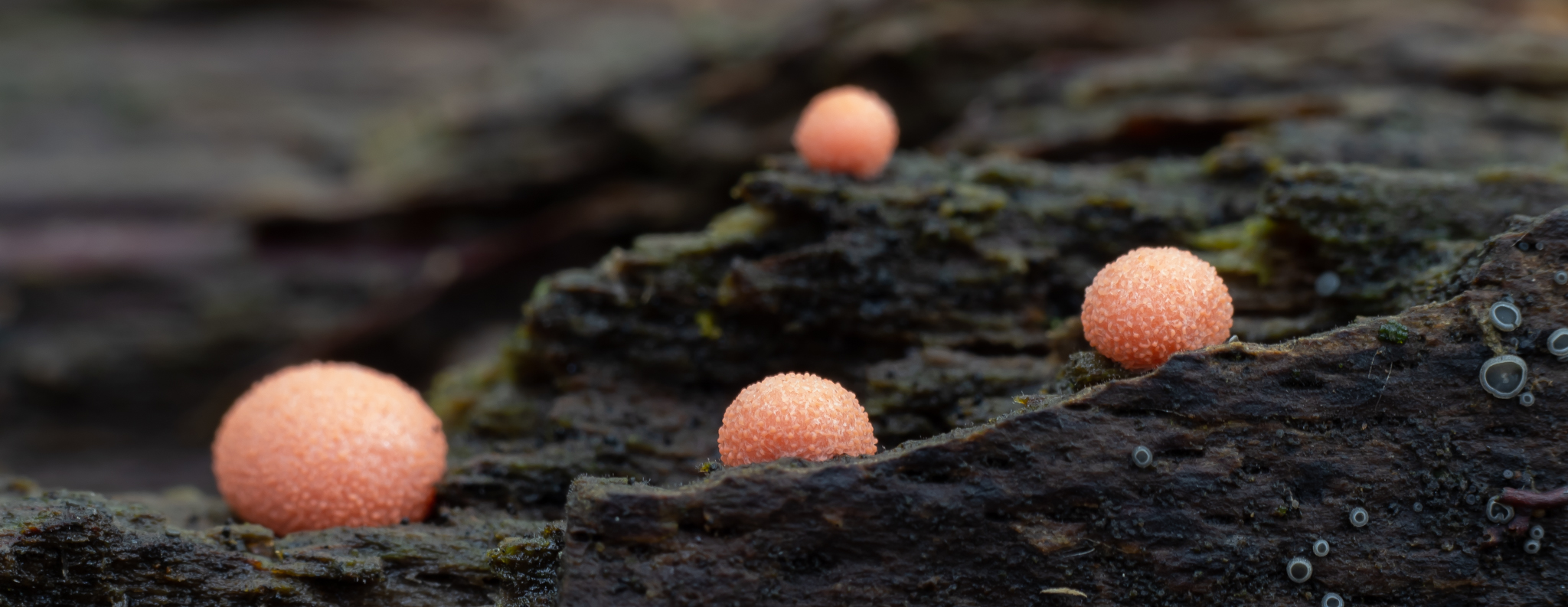
These orangey-pink blobs are a slime mould known as wolf’s milk Lycogala epidendrum. It’s famous because you can pop it and it emits a gunk of the same colour. It’s quite cool.

You will find it on decaying wood that has been in situ for several years, often in shady and damp conditions.

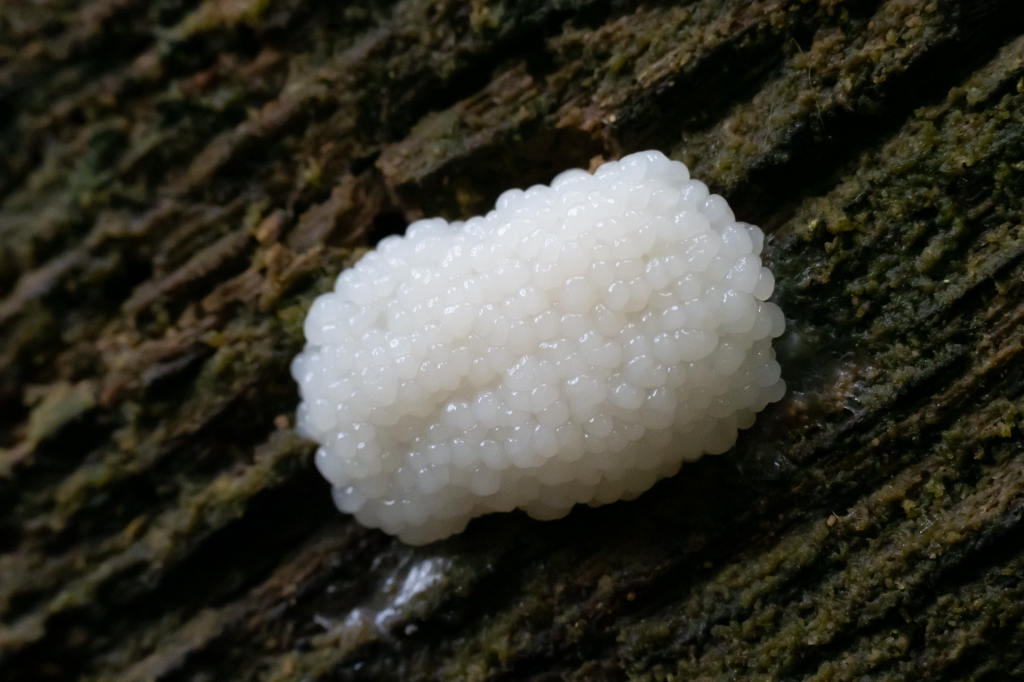
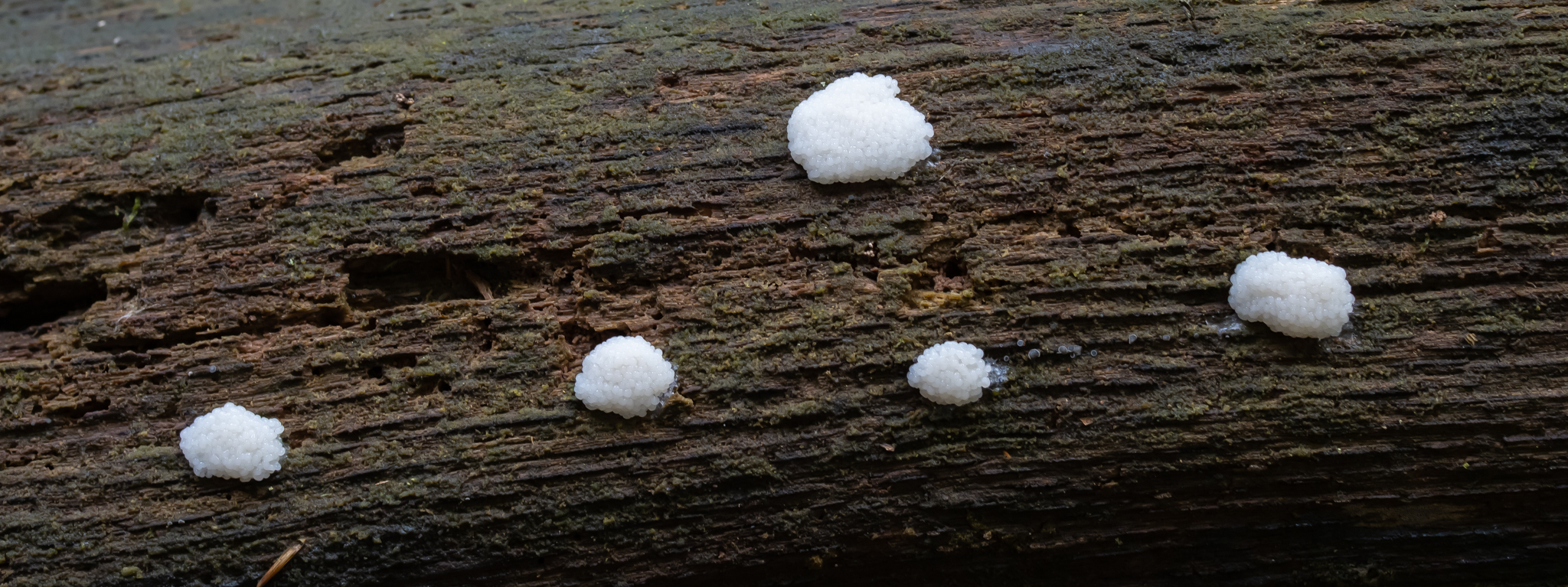
This species looks a bit like slug eggs. As with most slime mould I find, I’m not sure of the species.

We have had a very wet time of it in southern England, which should be cause for celebration, really. This same species was making the most of the conditions.

Behind the scenes on the slime mould shoot

My camera is capable of doing in-camera focus stacking. This means it can take several images at different focus depths and merge them together to make an image with everything in focus. This is a dream come true for macro photography, especially when the subject is so tiny.

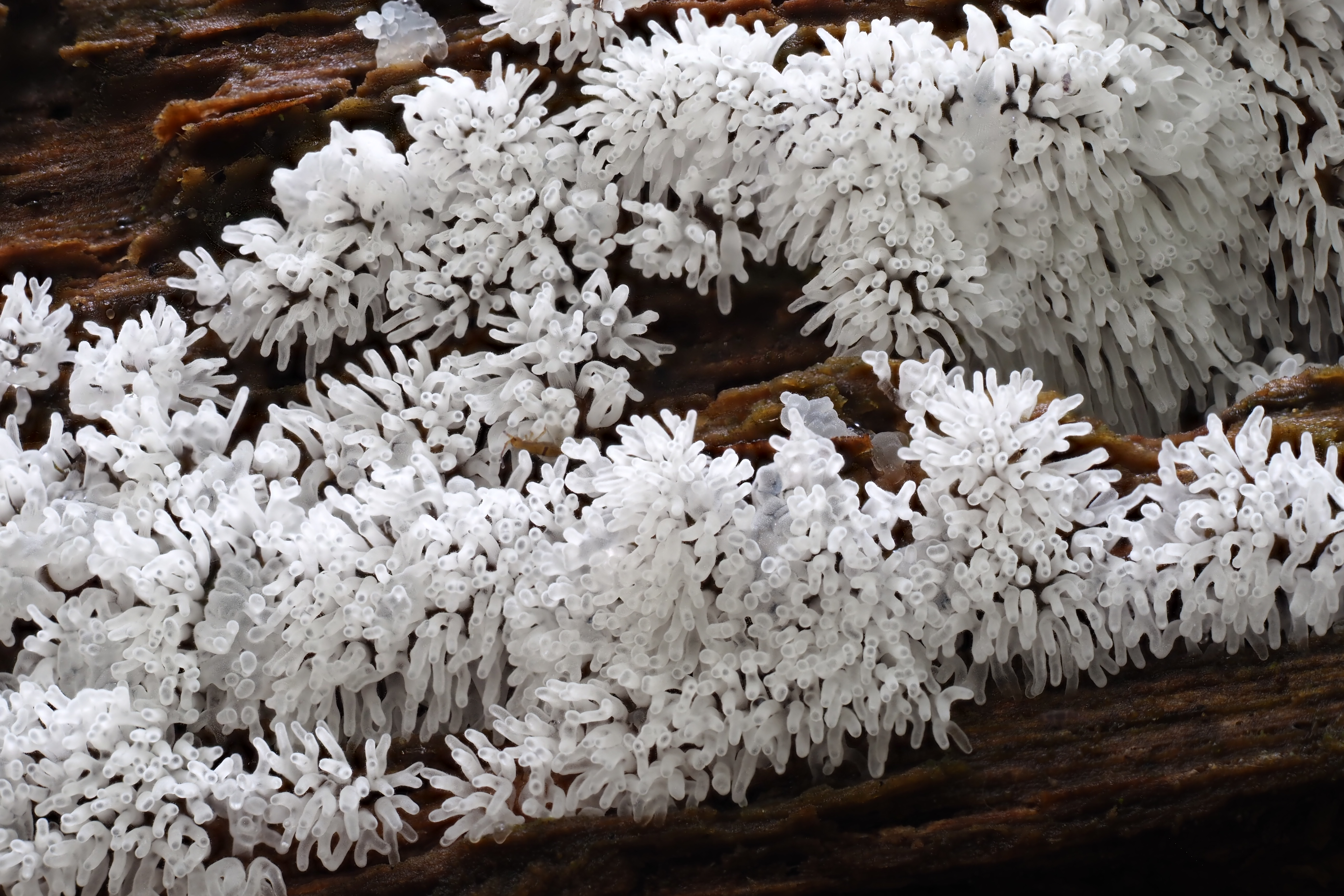
This is a species of coral slime mould. I have seen so much of this in the past few days spent walking in oak woodlands in West Sussex. It’s clearly striking while the woodland is wet.

And so is this little slug.

Thanks for reading.
More mushrooms

Recent posts

November 2025: beware of pity

I’ve had a burst of American visitors in recent days (to my blog, not my house). So thanks for visiting, y’all, and sorry about the year you’ve had. You may have noticed I’ve slipped to monthly posts on here. Between April and October I posted blogs every Monday without pause, which is a tricky task…

Fungi 🍄: spring inkcaps

Last week I went to visit a woodland that was for sale. I wasn’t buying and the woodland was quickly snapped up anyway. I hope it went to someone who will care for its wonderful ancient woodland wildlife, and that the badger sett within it will go undisturbed. Leaving this beautiful snippet of the Sussex Weald, I found some mushrooms growing in an area of grassland alongside more woodland.

Common inkcap

We have been inundated with rain in the past 10 days, after a very dry April in southern England. Things are leafing and flowering later than last year, and there have been no spring mushrooms from what I have seen. These were mushrooms that were so plain I really wasn’t sure what they were. I took some photos and posted them on iNaturalist.

They are common inkcaps. I’m not sure how I’ve missed this species before, as this was my first known sighting of them. That wasn’t the final grassland inkcap I was to see in that week.

I have a small garden which is ‘managed’ for wildlife and gentle recreation. We’re currently in the midst of #NoMowMay, an initiative in the UK to let any grasslands grow so flowers can thrive, and all the life that comes with that. It’s not just about flowers, though. I was pleased to see (and nearly step on) a tiny inkcap in the lawn.

This is a golden haired inkcap, quite easily confused with pleated inkcap, I would say. The most obvious difference is the size, with the former much smaller.

After all the rain we’ve had, quenching the woods’ thirst, I’m hopeful of some more shrooms appearing in the next week or so. Fingers crossed!

Thanks for reading.
More mushrooms

Fungi 🍄: witches’ broom

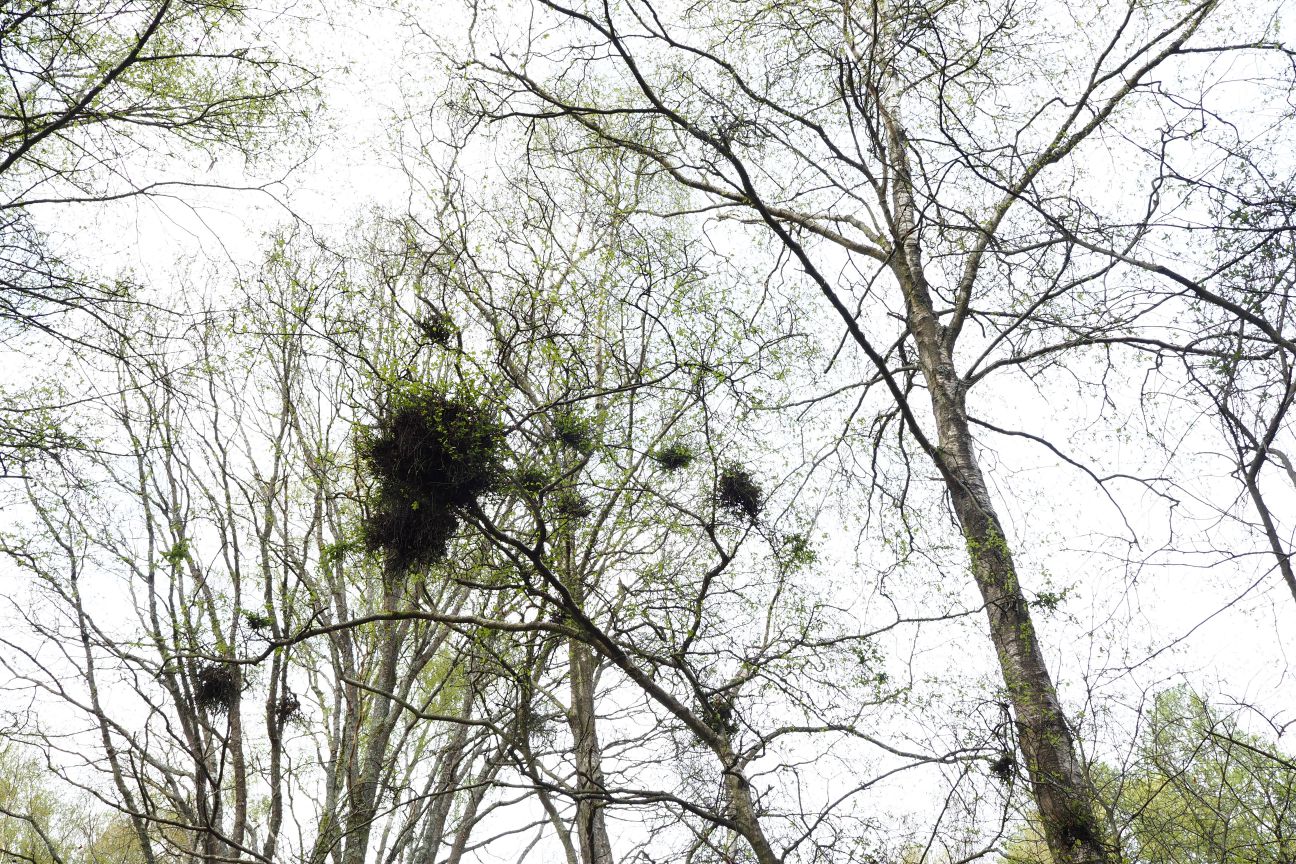
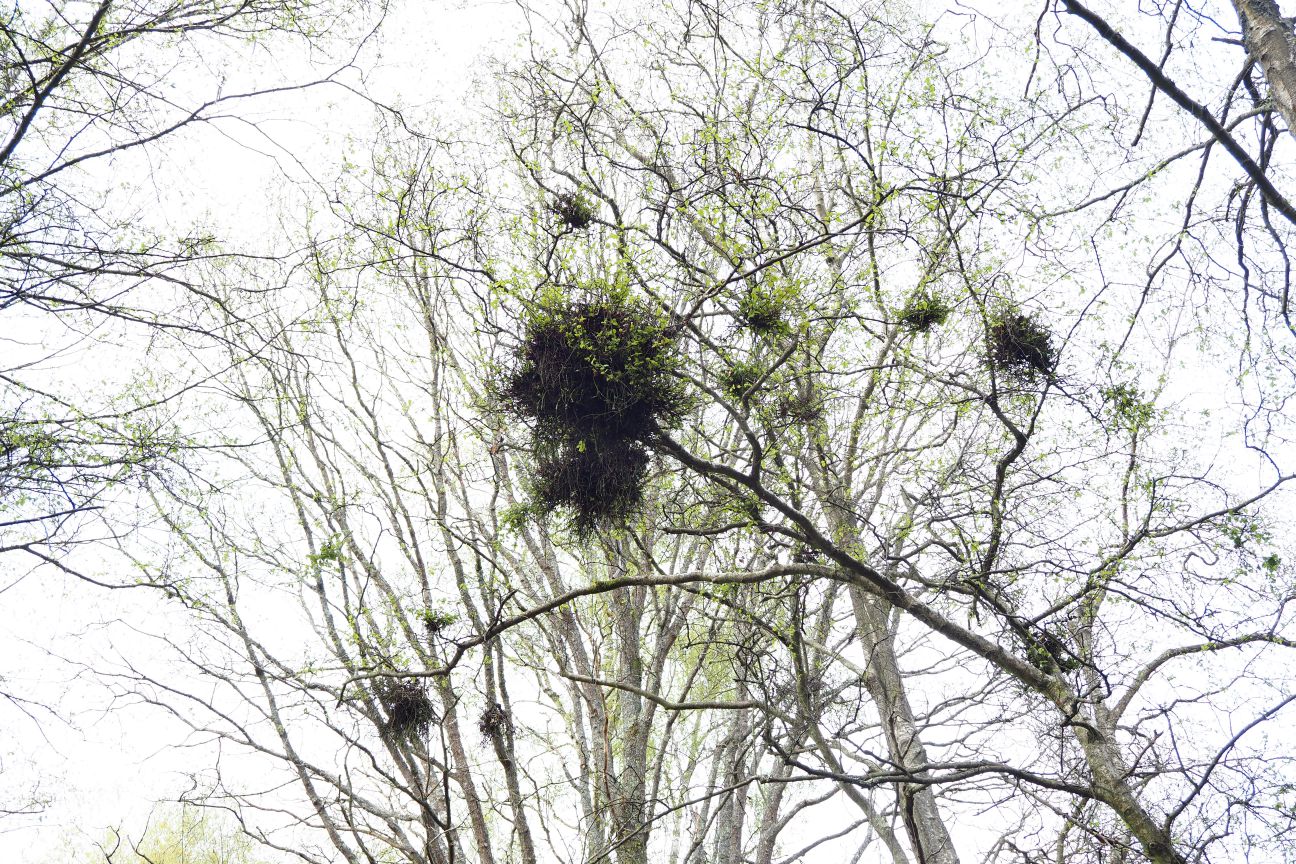
A deformity in the branches of a birch tree

For a long time I’ve noticed an explosion of twigs among the canopies of birch trees but never taken the time to find out what it was. Recently I read that this unusual grow pattern, if that’s what it was, could be caused by fungi. Last week I was out walking in a woodland not far from home when I saw a fine example of this strange occurence.

You can see how this could simply be confused with mistletoe, a similarly bushy growth high up in the tree. But mistletoe is caused by the sticky seeds of the plant becoming attached to a branch. The ‘deformity’ in birch trees looks all the more unusual. I took some photos and had a look online when I got back. When I submitted the record to iNaturalist for some help, I got the result of a fungus with the scientific name of Taphrina betulina. ‘Betulina’ relates to birch in Latin, Betula pendula.

A sunburst lichen with the ascomycete fungi visible in the form of the fruiting cups

This fungus is an ascomycete, related to cup fungi and the fungal fruiting bodies found in lichens. Unfortunately I couldn’t get close enough at this point to ever see those details on the witches’ broom.

It could easily be confused with random birds nests, and you have to wonder if they may actually form decent nesting habitat for some species, probably woodpigeons more than anything else. One thing I notice about the cultural significance of the species is its name – another reference to witches. It must be that anything which looked unusual in nature was referred to as the work of ‘a witch’.

Yellow brain fungus

In the fungal lexicon (is that a thing?) there are a host of jelly fungi which go by the name of witches’ butter. It may be in the case of witches broom that the cluster of twigs looked like the flying broom of a witch, as per the old folktale. That or Harry Potter, anyway.

Thanks for reading.

More mushrooms

Fungi 🍄: are there *really* mushrooms on Mars?

It’s been such a dry spring that I’m starting to wonder if there are any on this planet! They’re probably not on Mars but it’s a nice idea. Here’s more info on that story.

While I have your attention, allow me to explain some changes to the way this blog works. I am moving from the fixed days of #FungiFriday or Macro Monday. If you’re a regular reader you may have noticed that already. Now I’m making a monthly podcast, I need more flexibility with posting, and I actually sometimes have more to post about on both macro and fungi than just once a week. Also deadlines of Thursday and Sunday are not ideal!

Back to life. After a barren period (no morels for me), I did manage to find a couple of species on a long walk the other day, hiding away in the shade of a country lane. Get ready for phone pics.

This is turkeytail, one of the most common fungi you can find, distributed across the world. It is sometimes used to make tea and extracts are used for their anti-cancer properties.

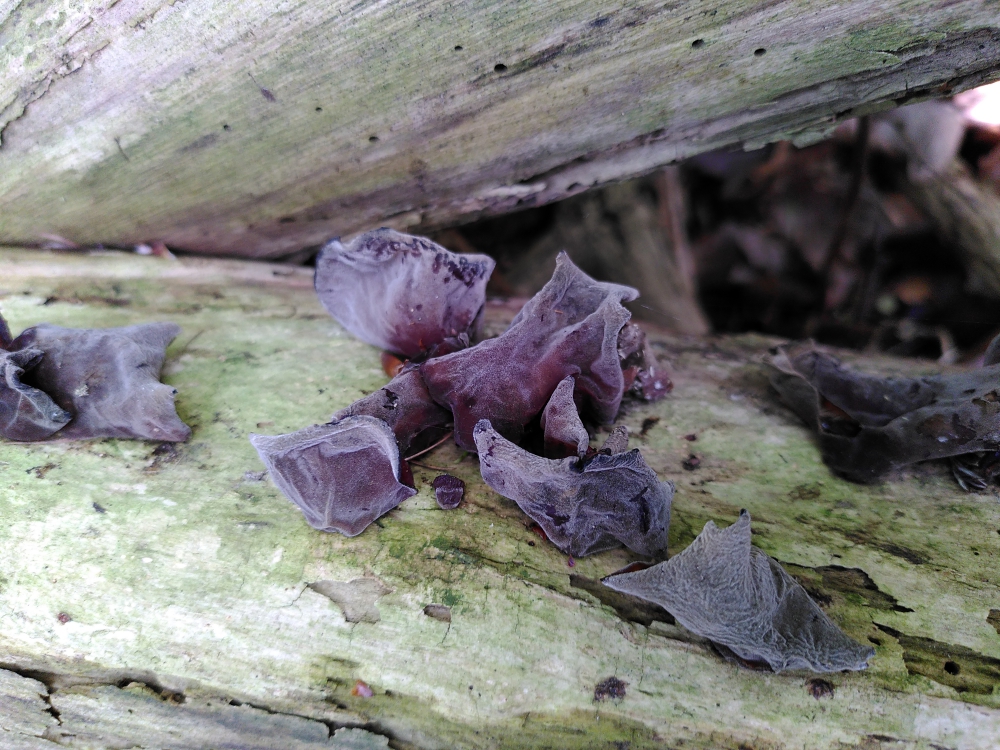
Dehydrated jelly ear, sometimes known as ‘wood ear’

In Sussex we have recently had rain after a very dry April indeed. If this is climate crisis related, it means that the British tradition of April showers could be confined to the past. Once again, wildlife can point to wider issues in the environment which we are often oblivious to.

In that not-quite-fungi-but-probably-animal category are the slime moulds, of which I found one on the same walk.

This is a great advert for fungi and slime mould because it’s so blatant. It’s a species you see cropping up on social media time and again, with many people intrigued by its presence, often on deadwood. It’s false puffball, a slime mould. Looking at iNaturalist, April seems to be its peak month.

In other news, I’m giving a fungi talk online on Tuesday 18th May at 19:00 (London, UK time) for Bell House, a charity that supports people with dyslexia. There is a suggested donation of £5 towards their work. You can see the full details and how to book here.

Thanks for reading.
More mushrooms

#FungiFriday: scarlet elf cup

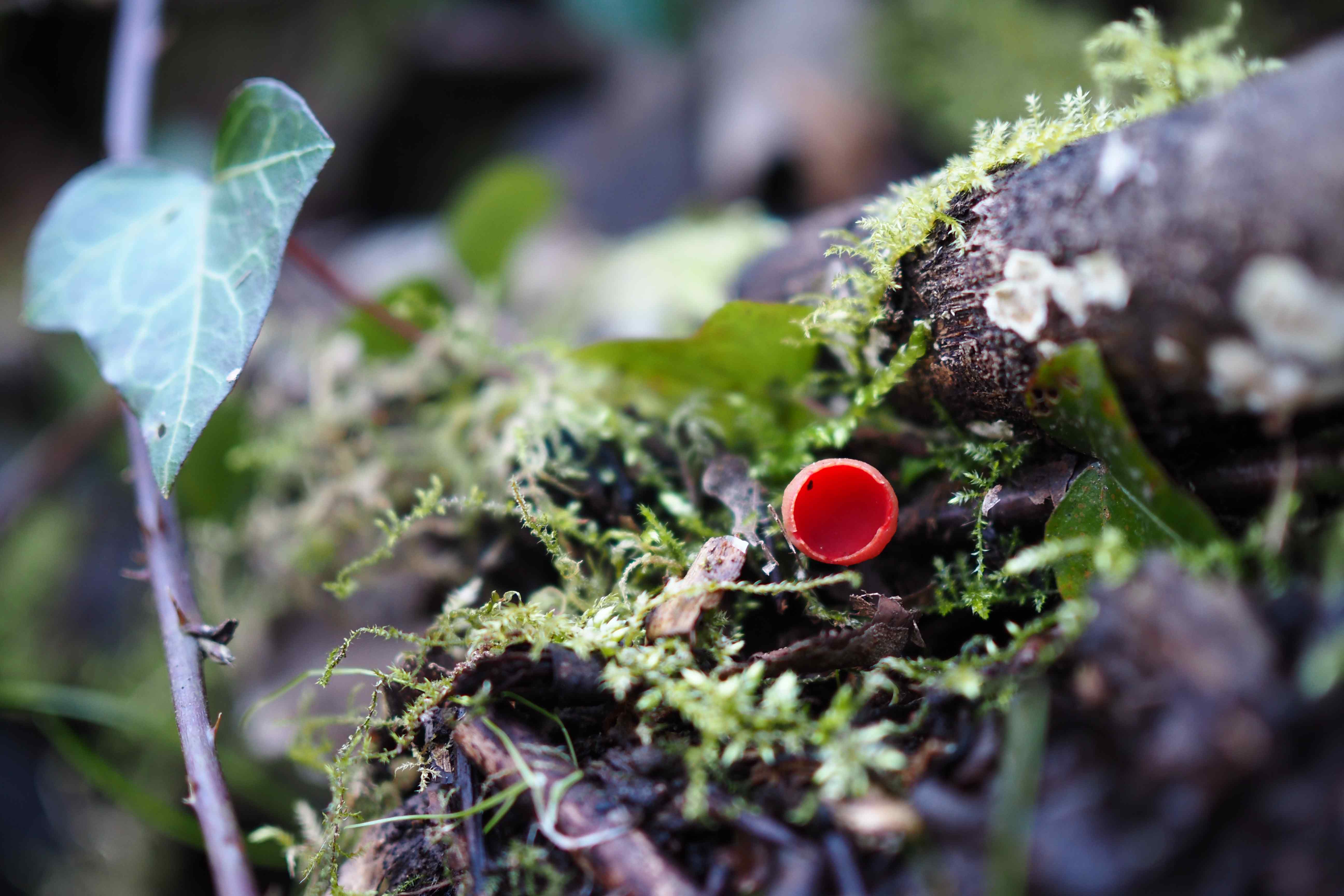
On social media in recent weeks one of the dominant fungi photographed has been a bright red cup fungus. This species is one of the most visually stunning, standing out like an elf’s sore thumb in a winter wood. I’m talking about scarlet elf cup.

I visited an area of woodland I have featured many times here, but a place I haven’t been to this year. I don’t know why, it’s close to home but usually requires a car journey because it’s awkwardly difficult to walk to. It’s a mixed ancient woodland with a stream running through it and heathland on its upper slopes.

In the UK heathland is a sandy habitat dominated by heather and pine. In terms, dry lowland heath is rarer than rainforest.

This woodland is managed with the support of volunteers. I don’t know the people who do the good work there but they clearly spend a good amount of time building what I know as dead hedges. These are barriers or piles of cuttings, branches, twigs and sometimes logs. They are there mainly to protect sensitive areas of soil where ancient woodland plants grow. It’s to keep people on the paths, which is best for the health of a woodland overall. These dead hedges also happen to be excellent habitat for wildlife like fungi.

From my experience in the woods and by looking at other people’s photos, I would say scarlet elf cups are happiest in damp, shaded areas. I would even say they are so keen on dampness that alongside streams and rivers is usually a good place to find them. This was a bit of a way from a stream but it ticked all the other boxes. You can see here that it’s growing from a small stick.

This is a nice example of this gorgeous fungus (not something you hear often enough). They grow on something similar to a stem but are a different set of fungi to the usual stipe-based mushrooms. Cup fungi are ‘ascomycetes’ (ask-oh-my-seets) and are spore shooters. ‘Basidiomycetes’ are spore droppers, most of them being the gilled mushroom types.

This area probably had hundreds of scarlet elf cups growing in this long stretch of dead hedge. It will be good habitat for lots of other species as well, including invertebrates and sometimes they’re big enough for small birds like wrens to nest in. The specimen above was snug as a shroom in a trug.

From what I know it’s an edible species, but I wasn’t about to clean out all these fungi from their wild habitat. I had mushrooms in my fridge that were a couple of days close to their best!

Thanks for reading.

More mushrooms

Summer-autumn 2025: unveiling the sun

Here’s my seasonal update of stuff you don’t need to know about, but then welcome to the Internet. What I’m writing Soon I will be self-publishing my third poetry collection, Fool’s Wood. It’s seven years since my last one and this collection has taken longer because of LIFE. There will be a booklet and also…

Salisbury’s oak timbers

Here’s another entry in my slow-blogging Oak Timbers series. You can view my galleries and posts archive here. I visited Salisbury in Wiltshire (south-west England) for the first time in 2023 and was really charmed by the place. If you’re interested in this kind of thing, Salisbury is the place for you. Here’s a gallery…

Podcast: September fungi walk 🍄

I’m getting into more of a routine of recording and editing audio, so here is the latest episode of Unlocking Landscapes. Listen on Podbean or via the usual platforms. Also via YouTube: https://youtu.be/y1K9Pqx68to?si=B-Fdhf3sdDH35Z8w Following on from July’s rather optimistic fungi walk, I popped back to the same area of ancient Wealden woodland to see if…