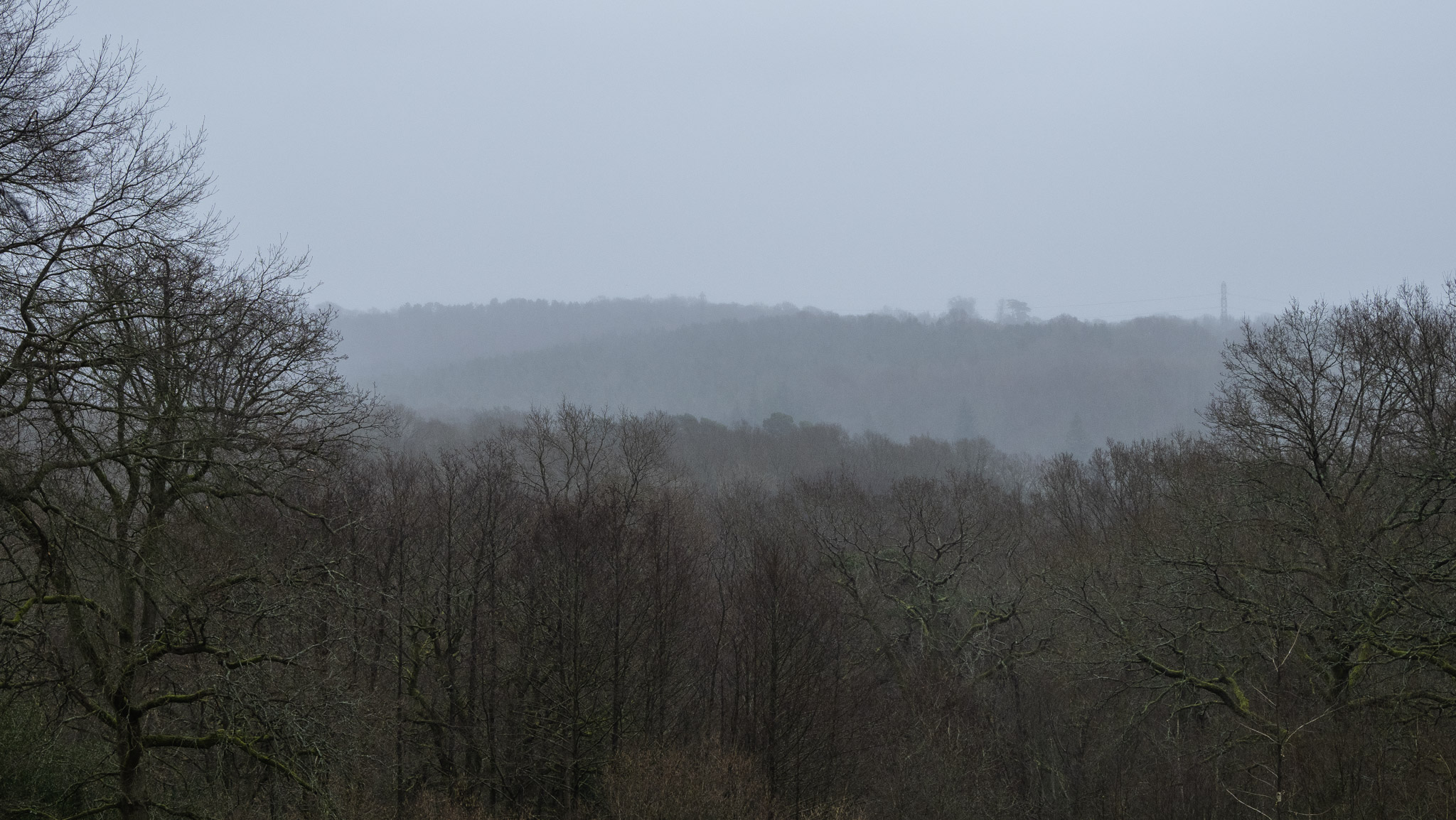
Last week I went for a walk in rather grey and glowery weather. It was in hope of seeing some earlier spring signs but was more a reminder that winter persists.
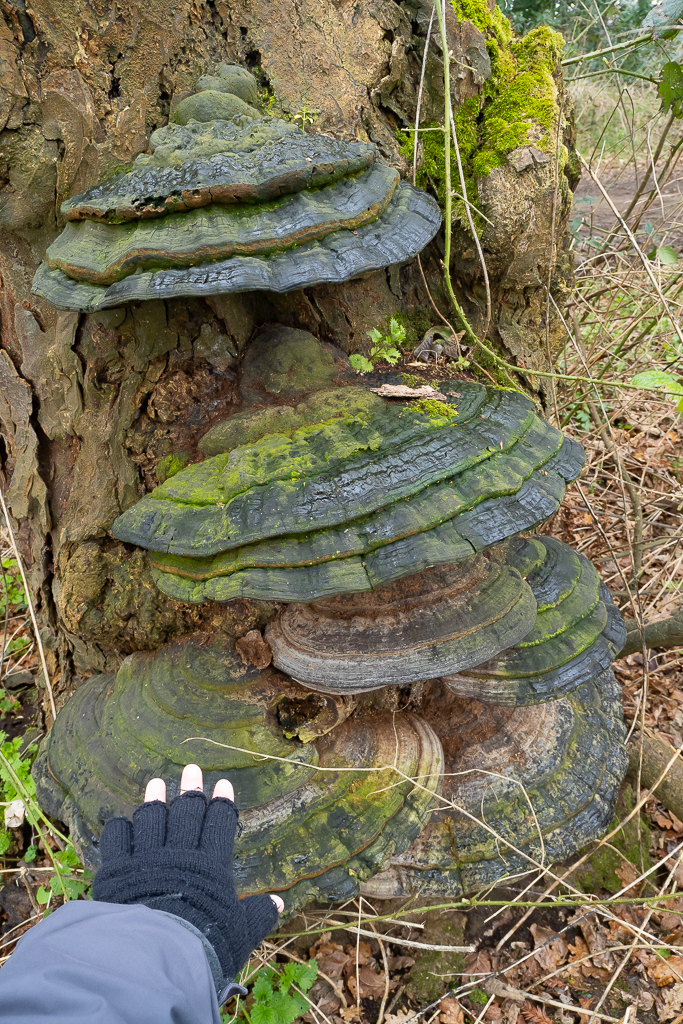
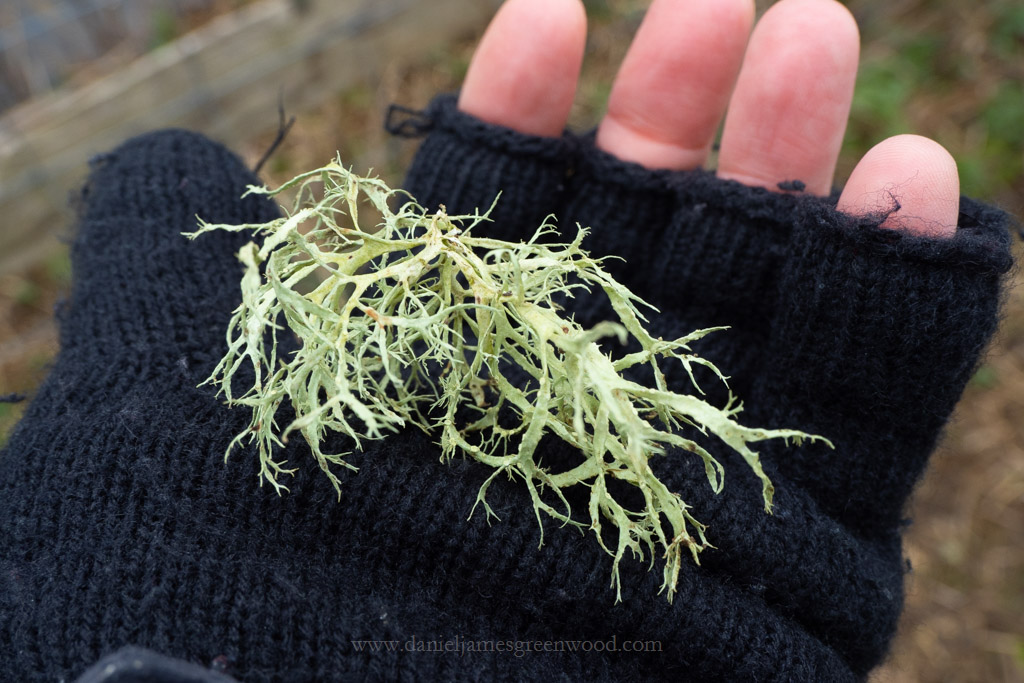
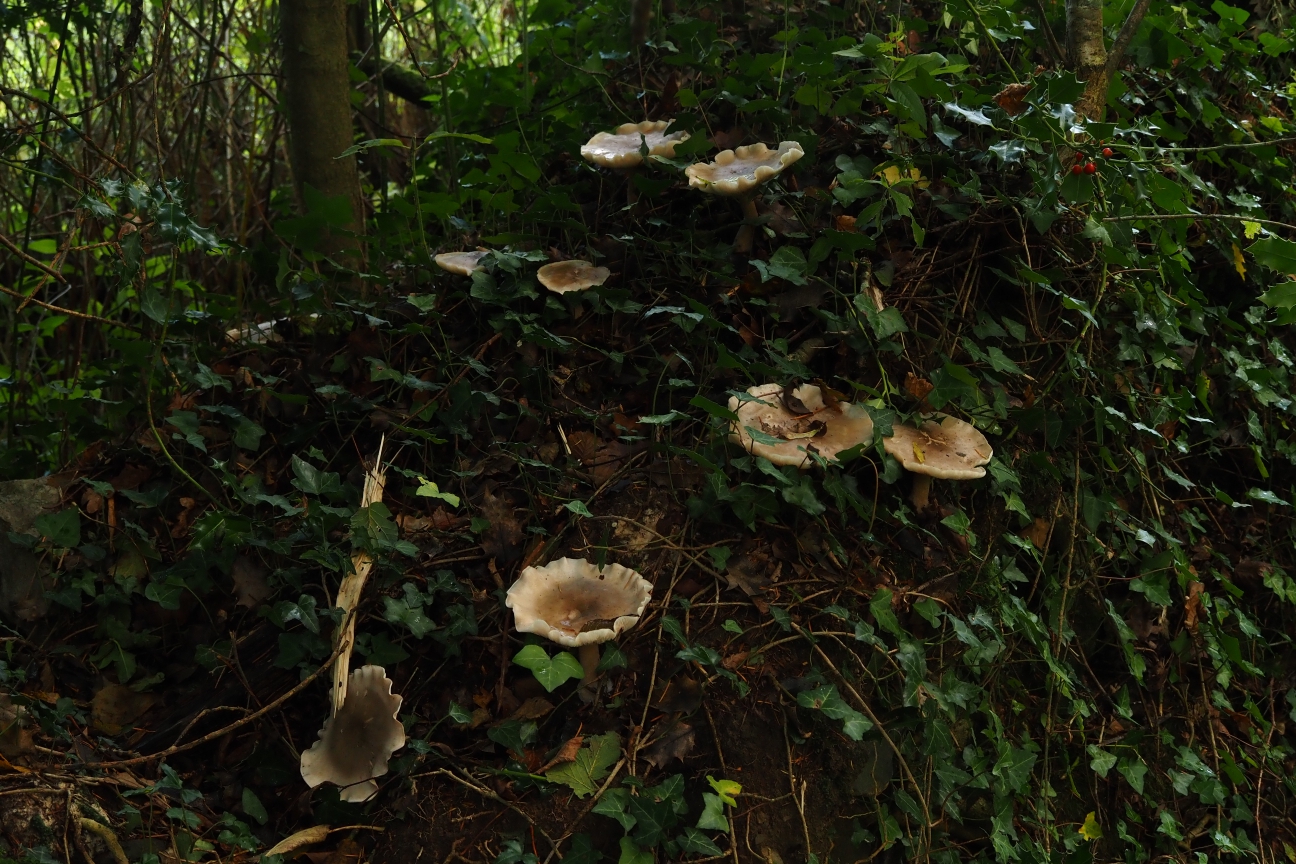
I found a small collection of glistening inkcaps, along with one of my favourite large brackets. Those are pictured here with my hand for scale.
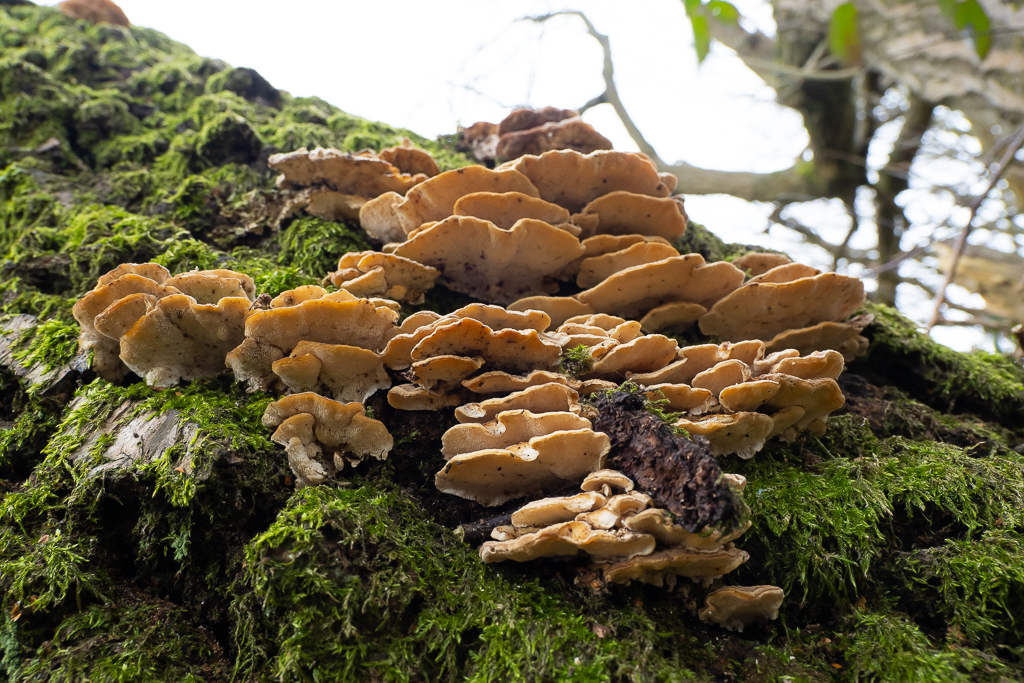
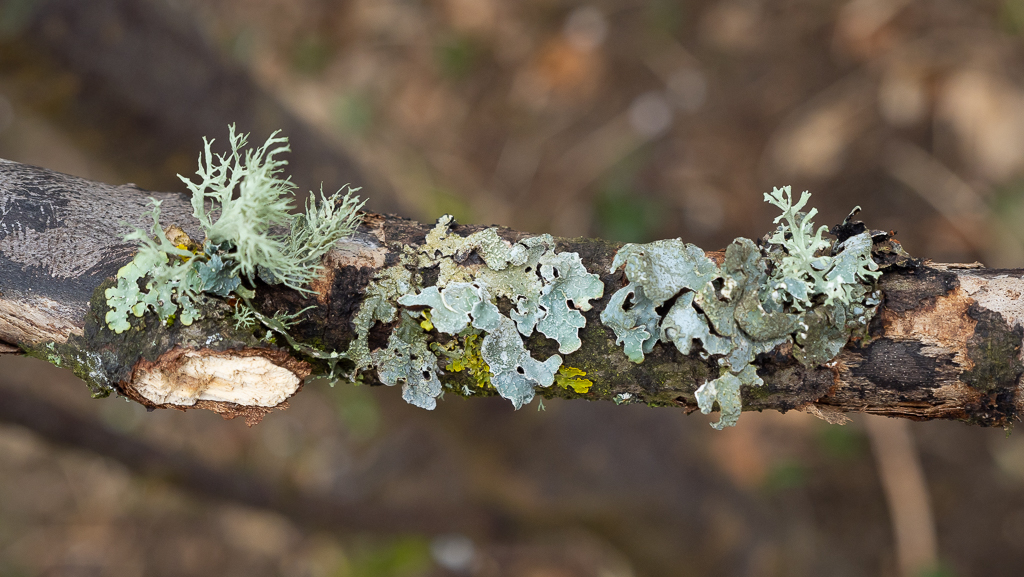
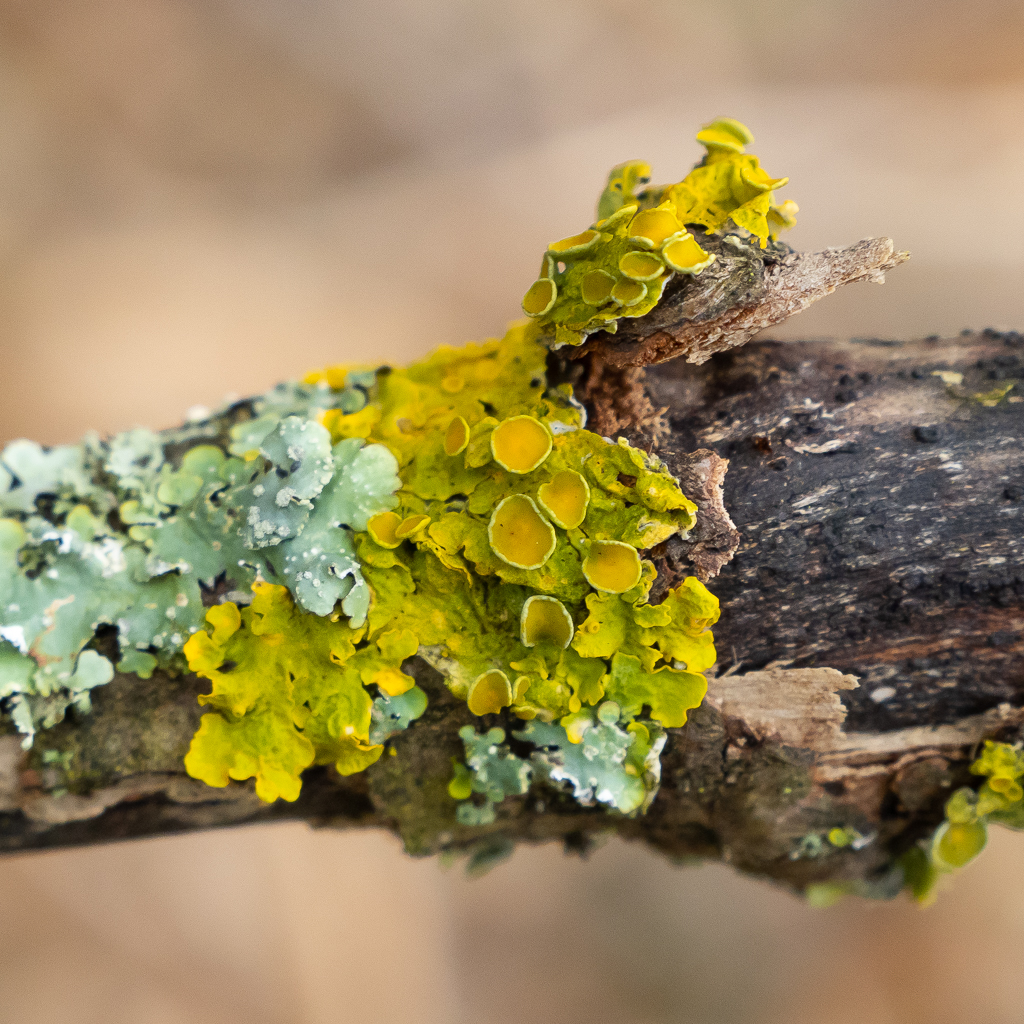
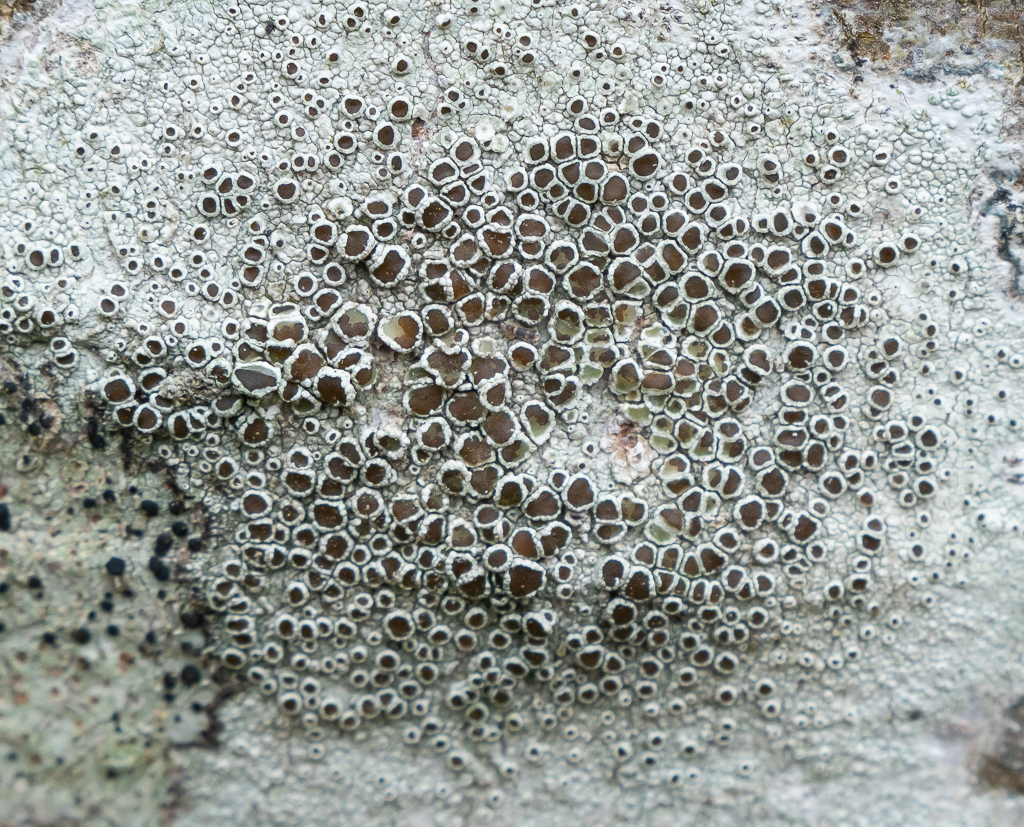
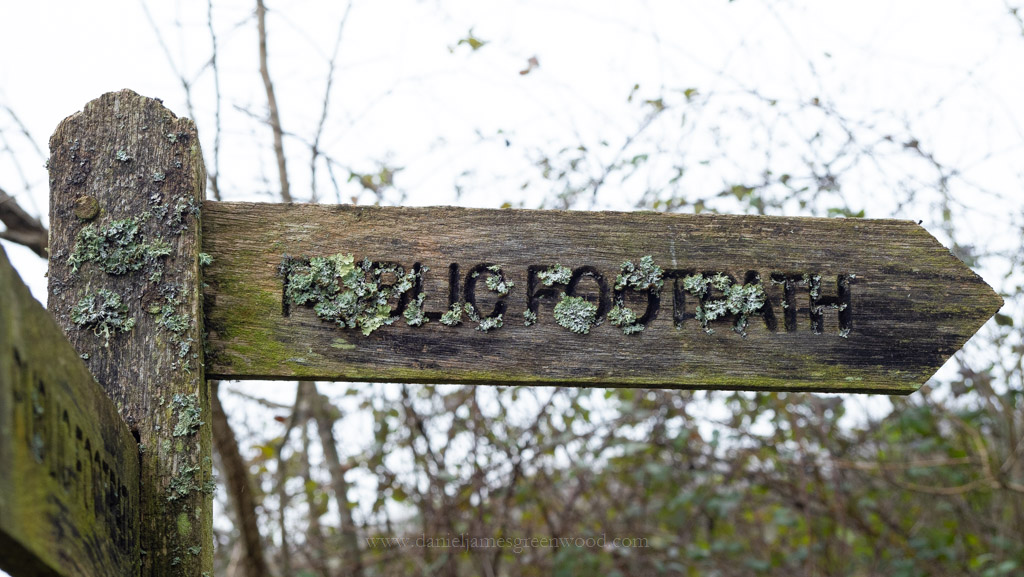
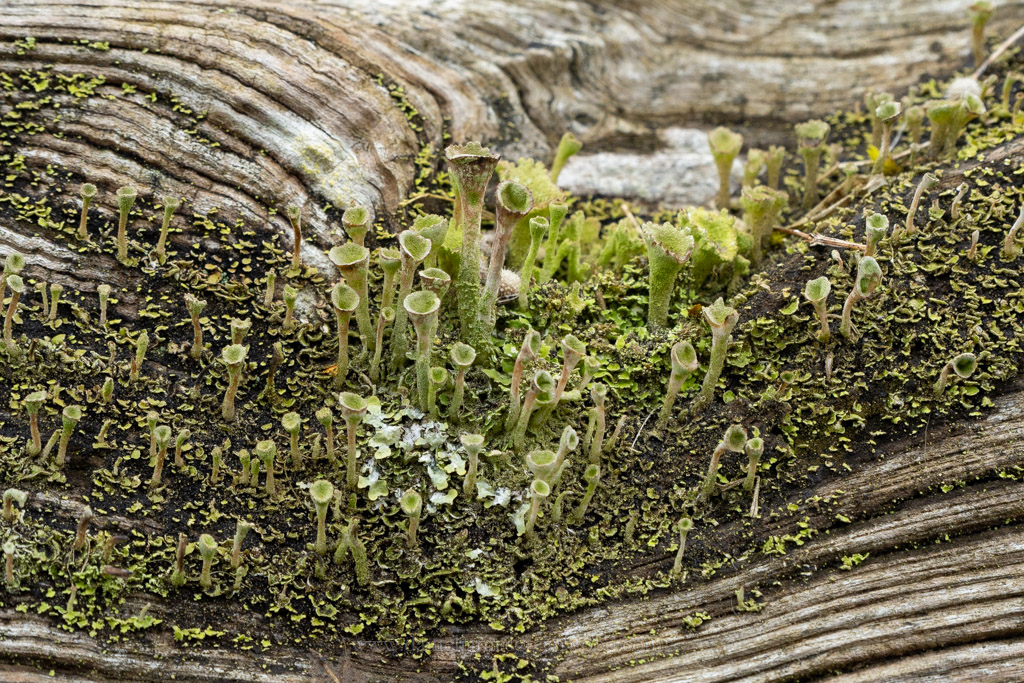
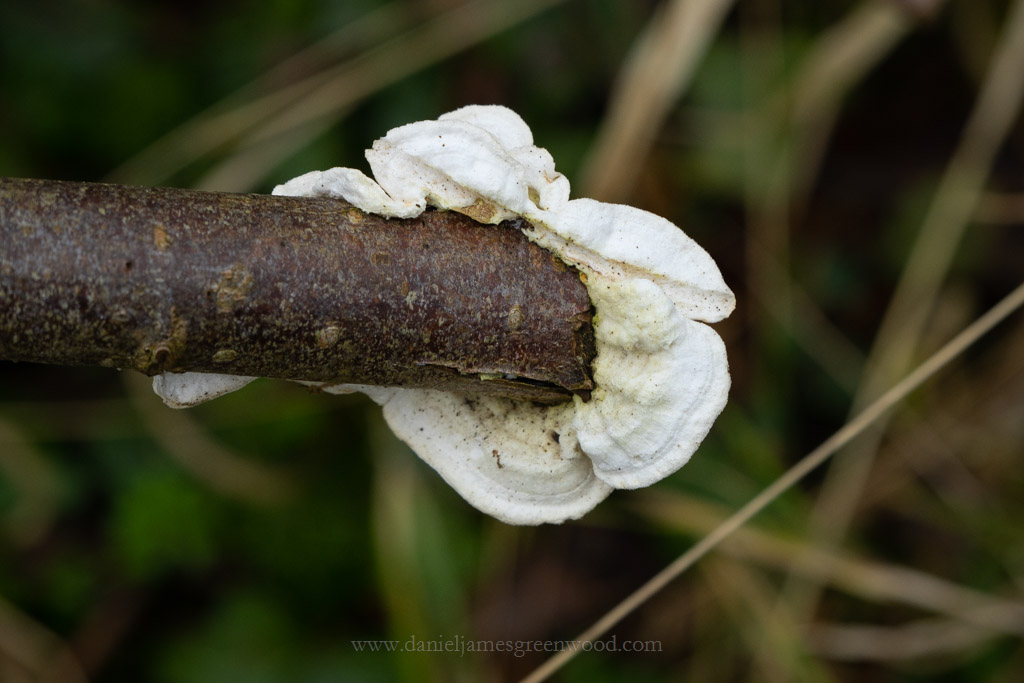
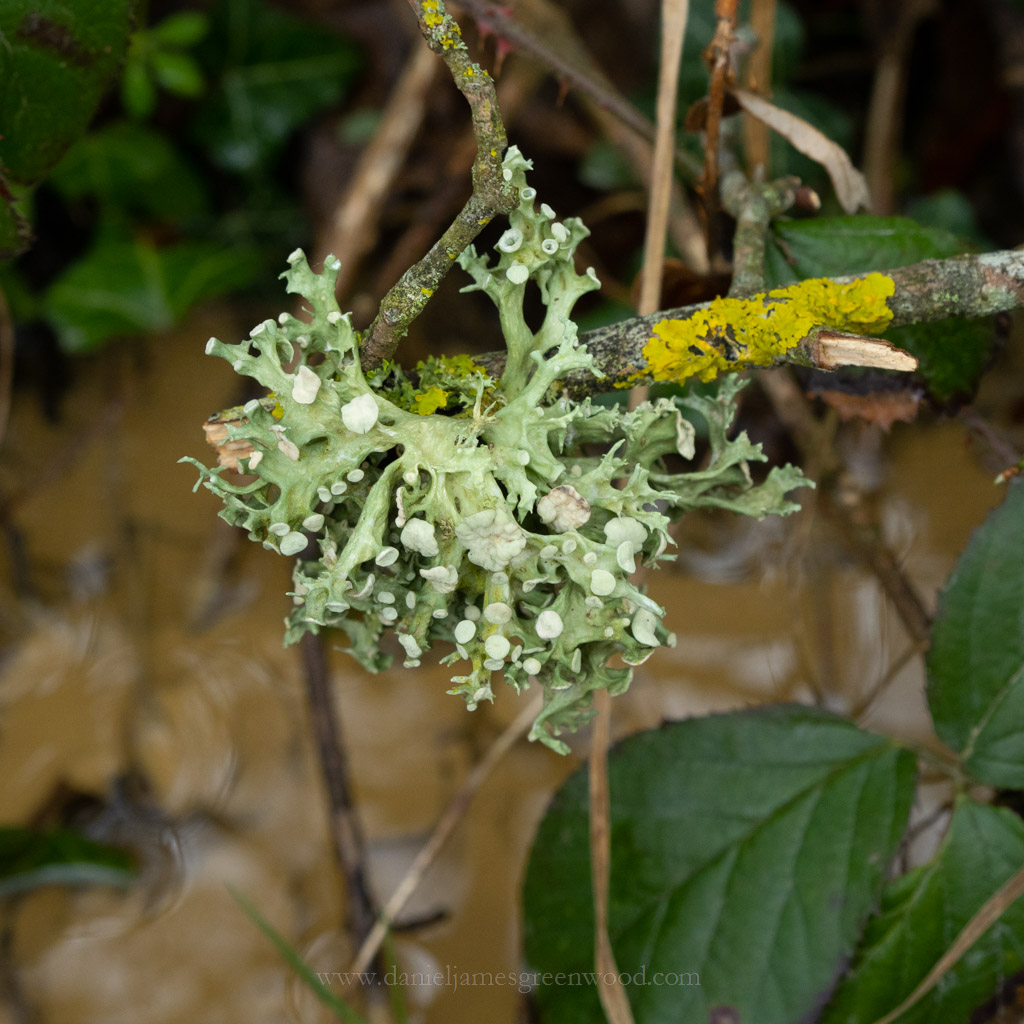
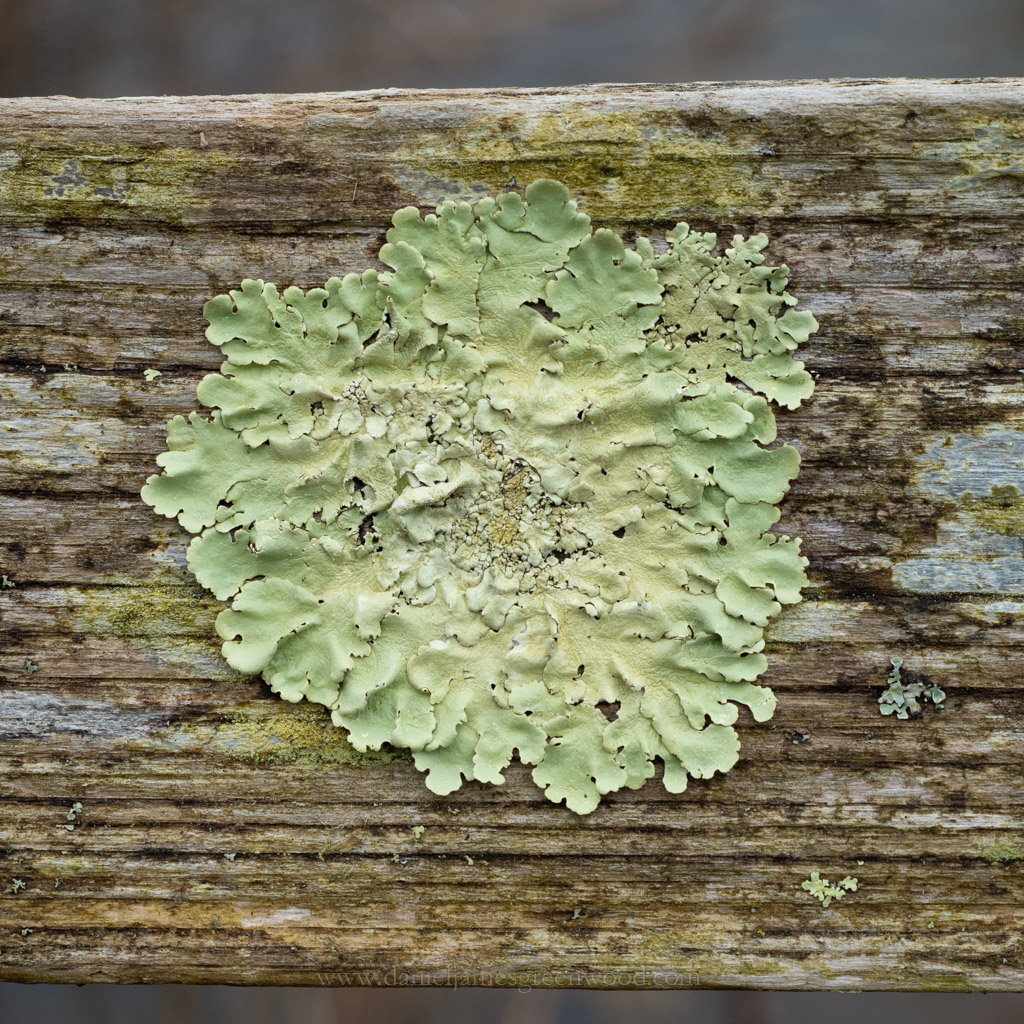
Otherwise there were some small polypores (probably turkey tail) and a few lichens that had been enriched by recent rain.
Life is rather full-on at the moment so I’m not finding the time or energy to write something longer or more detailed. It’s also a mental thing, just don’t have a lot to say. Photography will be the focus in posts for a little while.
This was the week when fungi made a comeback in the form of windblown sticks.
I used to do post-storm checks in an oak woodland. It was a really enjoyable task, which may come as a surprise to hear. One benefit of all the damage to trees was seeing what previously was only seen by birds and squirrels in the canopy. By this I mean lichens and other fungi attached to windblown wood.
From my experience, one of the big ‘losers’ in stormy weather in SE England is the beech tree (Fagus sylvatica). Beech is a ‘poor compartmentaliser’, meaning it isn’t particularly good at preventing fungal decay or rot from spreading to other parts of its anatomy. Oak is better evolved to deal with this.
This was a thought I had on Friday (18th February) as the winds whipped up around outside. I thought of all the beech trees in the Sussex Weald and Downs, exposed on their respective ridges, and how vulnerable they can be.
On Sunday, a visit to the National Trust’s Nymans (so woke, bro) revealed a beech to have suffered. Nymans sits on an exposed ridge, with fantastic views across the Weald (to the Ouse viaduct) and the South Downs. One path was closed and in the distance a beech tree had fallen across it. Taking a detour round and looking at the damage, there was clear evidence that it wasn’t just the storm that was to blame – fungal decay had softened the tree up.
At some point earlier in the tree’s life, decay had entered the tree’s core, leaving it open to this kind of collapse. I’ve posted about something similar previously:
It’s a natural part of life on earth but causes problems for more controlled environments where people want to walk under trees and where they perform vital services as ‘green infrastructure’ among the grey. People who work in insurance will be very busy for the next few weeks assessing the damage that the storm, combined with fungal decay in trees, has caused.A windblown magnolia tree – spot the mushroom in the background
Also at Nymans, a magnolia tree (which I mistook for an ash until I checked the buds) had succumbed. The roots had snapped and the tree had fallen across a path.
As you can see from this photo, the fungal decay was dominant in the tree’s core. This is probably about 30-40% of the tree’s inner wood close to the roots. The decay had spread to the roots, which is probably what caused them to fail. Tension, which holds the tree up, is lost when the roots give way and thus the tree falls.
This is where the treasure is found. When the branches that were once high up meet the ground, interesting lichens and fungi can be seen for the first time.
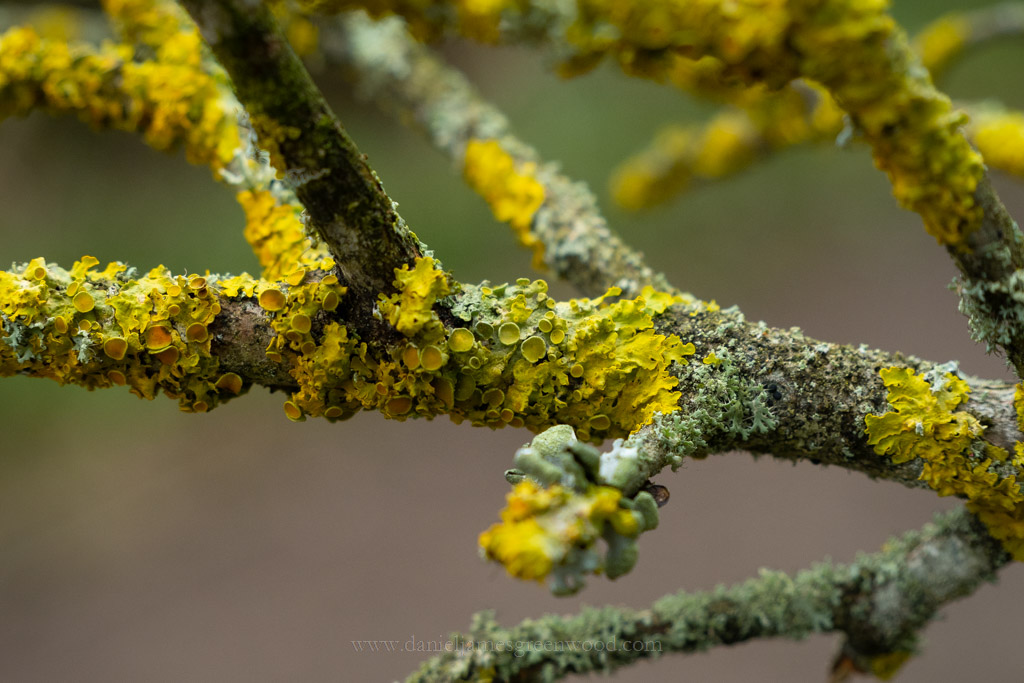
At Nymans there were plenty of little sticks with beautiful lichens on show (you may be able to tell these are phone pics). You can look at #StickOfTheDay or #StickOfTheWeek on Twitter if you want to see more of these.
My best find of this kind was a piece of decaying oak wood that I spotted the night before. I saw in the dark this glowing thing under a hedge, underneath an oak tree I knew was in decline. I picked them up and stored them away to be photographed the following day.
This was a stunning collection of foliose (leafy) lichens and a species of Trametes fungus, likely to be turkey tail. It perfectly illustrates the importance of decaying wood in trees, whereby the ‘dying’ wood becomes a source of nutrition and, indeed, a home for the fungi and lichens. Deadwood (saproxylic) insects will be inside the wood helping to break the wood down further. It’s what woodlands across Europe are losing due to the ‘coniferisation’ of plantations and the lack of space to allow woodlands to do their thing. Storms included.
The photo above took off when I posted it on Twitter. So much so that it made its way into the strange world of Weed/Marijuana-Gaming Twitter. Sorry to disappoint those in that netherworld, but I hadn’t even considered that someone might “smoke it” until I saw those replies.
On YouTube I follow Simon Baxter, a photographer who has recently begun to do something most YT photographers don’t do – he has focused on ecology and wildlife in the landscape he photographs. I enjoy watching some YT photographers but my unofficial inner-ecologist tells me that many spend too little time learning to understand the landscapes they photograph professionally, with little interest in the biological life that depends on those landscapes.
Simon has posted recent videos celebrating the role of fungi in woodland ecosystems, an oak one in Yorkshire from what I can work out. He has spoken about his passion for the book by Peter Wohlleben about the connectivity of trees, which is underpinned by fungi.
Peter Wohlleben seems to have taken a lot of the credit for this scientific discovery purely because he wrote a book about it (one which I really enjoyed as well), when that credit really belongs to Suzanne Simard. The phrase was used for the first time in the publication of Simard’s pioneering research in Nature.
Fungal mycelium (the web that connects mushrooms with trees)
Finding the Mother Tree
Simard has recently published Finding the Mother Tree an arboreal-memoir about how she worked to research the relationships and dependencies between fungi and plants in old growth woodlands that were being logged in epic fashion by the regional forestry services. It is a helpful real-world account of some of the things illuminated by Richard Powers in The Understory. There is some suggestion one of the main characters in The Understory is in fact based on Simard.
Finding the Mother Tree is an absolutely stonking read which describes the battles, bordering on persecution, that she faced for challenging the patriarchal systems that dominated woodland management and theory of the time. She is up against men in positions of power who did not want her to do her research and did everything they could to undermine her. It should not be that men now receive all the air-time or credit for the work that Simard did herself.
Simard doesn’t claim to be the first person to learn of these vital interconnections, however. She quotes Indigenous people in America who had stated this to be a fact long ago. It’s what makes her book so enjoyable – it is an exercise in truth-telling:
Bruce ‘Subiyay’ Miller of the Skokomish Nation, whose people live on the eastern Olympic Peninsula of Washington State, had told a story about the symbiotic nature and diversity of the forest, mentioning that under its floor ‘there is an intricate and vast system of roots and fungi that keeps the forest strong.’
Suzanne Simard, Finding the Mother Tree: p.283
It reminds me of a story from an ecologist I met in Romania. In spring, frogs were found by scientists to be travelling down to networks of ponds via melt-water streams in Bulgarian mountain areas. This was hailed scientifically as new research. However, local people had known about this and disclosed it as fact for decades before this research had been completed. Local knowledge is often an untapped resource in conservation.
A special book
I read Finding the Mother Tree while sitting in the waiting room of a hospital, reading chapters about Simard’s breast cancer diagnosis and treatment. Her messages cut through more deeply and, dare I say, gave some comfort in knowing that sometimes people go through these awful ordeals and survive them. People sometimes even prosper in their wake.
Simard’s book is something special, for its ecological deep truth and knowledge, and for her willingness to share her own vulnerability as a woman, a mother, a partner and a scientist. The ecological/environmental/conservation movements are still undermined by the same patriarchal forces of Simard’s early years as a scientist.
The logging industries in Canada, to name but one nation, still log ancient, irreplaceable forests in times of climate and biodiversity crisis. Simard’s book must be read by more people to understand both the ecosystems we need to celebrate and conserve but also to understand what holds back the good work that needs to be done.
In England we suffer with a condition that affects many people: mycophobia, a fear of fungi.
If you ask anyone about wild mushrooms, you’re likely to receive a response highlighting the fear of being poisoned. Cultivated mushrooms are a staple of the ‘British diet’ but people have very little knowledge about ones you can eat from the wild, perhaps because it doesn’t seem worth the risk.
Another thing most of us lack is an understanding of where we can forage if we are allowed to. It’s no surprise, the situation is complicated and in general foraging wild mushrooms is frowned upon, regardless of arguments for or against.
It’s important to debunk some myths around the edibility of fungi:
Just because another animal eats a certain fungus, it does not mean it’s ok for a human to eat. Deathcaps can be consumed by other animals, whereas the result for us would be extreme
You can’t get sick from looking at, sniffing, listening to or even tasting a mushroom (on your tongue), but only from ingesting a part of a toxic mushroom. All in all, if you’re not an expert it’s just not worth a taste-test of a mushroom that could cause you serious illness
Some species which are edible still cause sickness in people, and not in a way that is predictable for some people
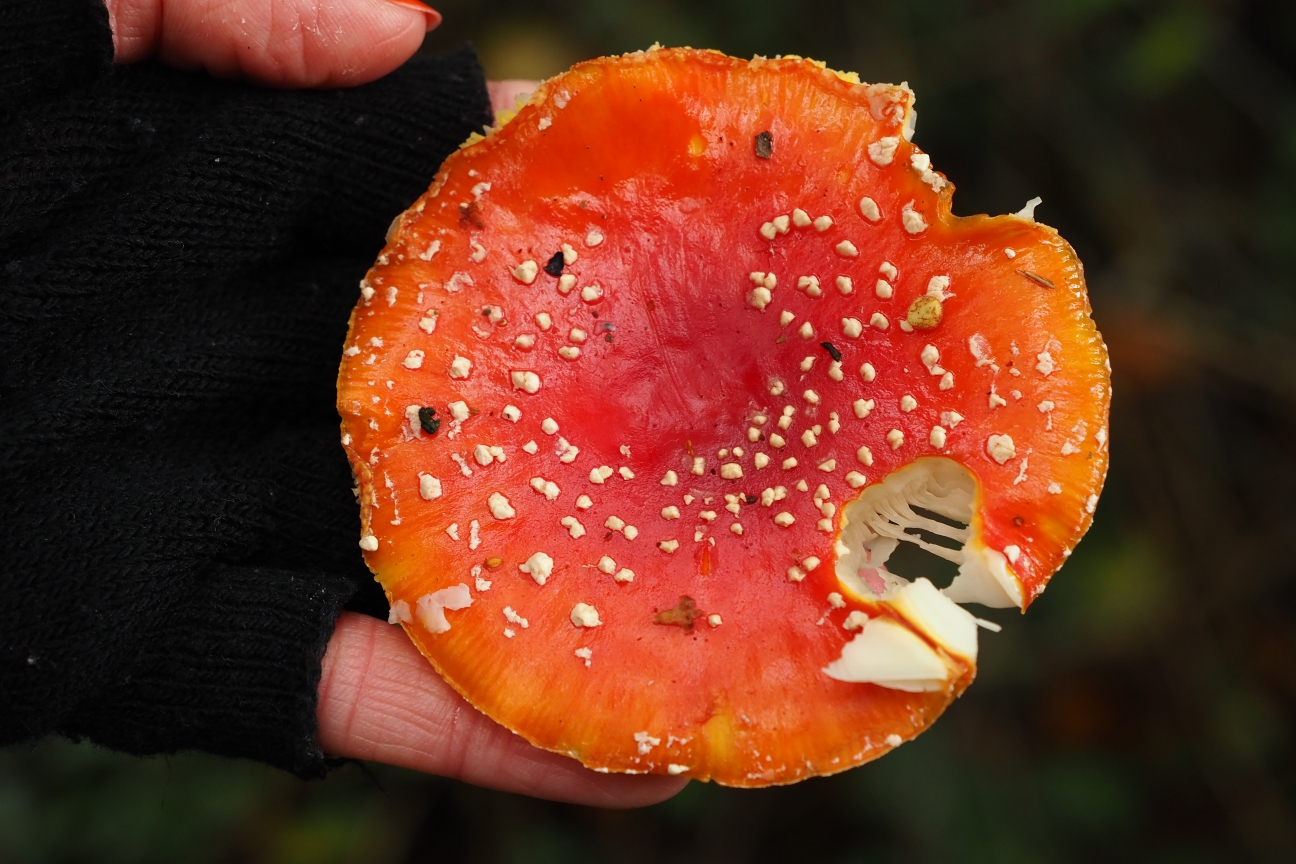
Fly agaric
Meet the Amanita Family
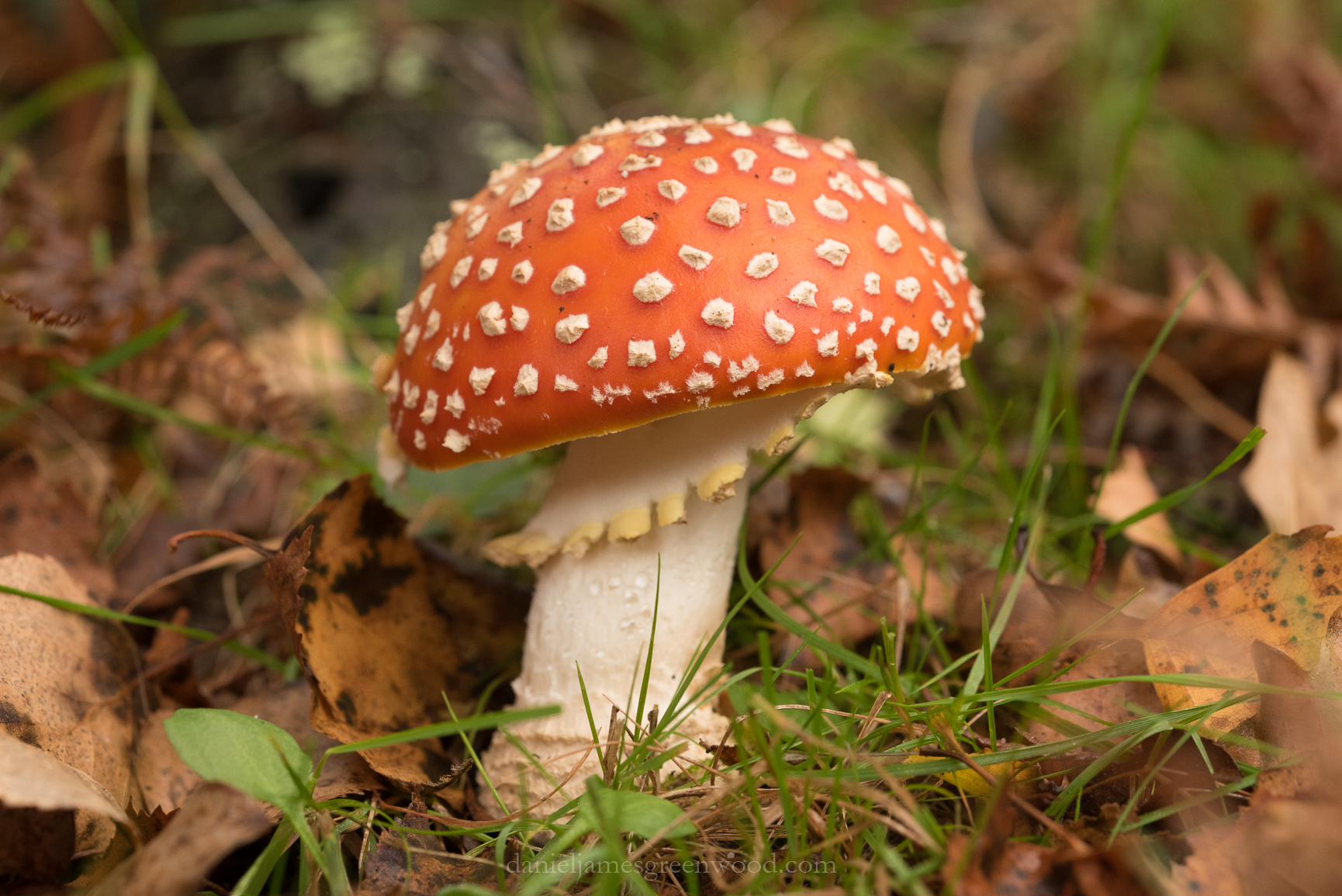
The most toxic mushrooms in the UK are found in the Amanita family, home to famous species such as the red and white fly agaric. They have some extremely sinister names: deathcap and destroying angel, for example. The deathcap is common in the UK, especially under beech trees. There are other similar species like the false deathcap, however, but the similarity is not so close.
The destroying angel gets its name from the fact it’s pure white but deadly poisonous. This is where a lot of problems lie. People confuse the destroying angel for white edible species like horse or field mushrooms.
One of the more common cases of confusion appears to be people from countries in Asia who are new to places like Europe or North America, foraging mushrooms that look identical to destroying angel but accidentally ingesting the toxic variety. Tragically, this has happened in recent months after Afghan refugees ate deathcap mushrooms in Poland after being evacuated from Afghanistan. There is no reason why they would have thought the mushrooms would not be the same as the ones they ate at home. Knowledge is privilege.
Other toxic Amanitas are the panthercap and, to a lesser degree, fly agaric. Confusingly there are some in the family which are edibles, including the blusher and Caeser’s mushroom (the latter named for its favour among Roman leaders). Remember: no one without relevant expertise should ever consider trying to eat an Amanita mushroom.
Magpie inkcap
Mycophobia
The fear whipped up around these species is, unsurprisingly, exploited in the British tabloid press, with the following being printed in one major English newspaper:
“Foragers are being warned about an alarming abundance of Britain’s most poisonous variety of mushroom this autumn.”
There’s mycophobia rearing its head once again, you could argue. Anyone who knows what the deathcap’s features are is unlikely to ever mistake it for something edible. It’s about taking care and time and having the right knowledge.
That said, the impacts of the deathcap on the human body are very unpleasant. Though someone can eat the mushroom and not feel any effects for 12 hours or more, it will slowly be degrading the liver on the quiet and other vital organs, resulting in eventual death if not treated.
One toxic mushroom that is very common is sulphur tuft. Sulphur tuft grows in woods, parks, gardens and even the street. It’s known to cause mild to severe illness in people.
There are other deadly species which are very common, including such as funeral bell(!) and brown roll-rim. Brown roll-rim can even be found in urban areas, with the first ones I ever saw were in urban south-east London in an old tree-pit next to a main road.
Funeral bell
It’s also important to know that species which are edible to some like chicken of the woods may cause mild sickness in other people.
Honey fungus
The same goes for honey fungus, which is edible but can make people sick, especially after eating a certain amount of it.
This shouldn’t be seen as a guide to avoiding poisonous mushrooms so please don’t treat it that way, nor is it support for a mycophobic view of the outdoors. Always do your research and understand that you need to develop your knowledge over time. My interest here is the role fungi play in our lives, especially the debilitating fear factor – the mycophobia.
I’m in the middle of reading an excellent book called The Way Through the Woods by Long Litt Woon. It’s about rebuilding her life after the sudden death of her husband, in part by becoming an official mushroom identifier in her native Norway.
This wonderful book has also taught me about my own case of mycophilia (a love of fungi):
The mycophile endeavours to minimise the risk by adopting an extremely cautious approach to mushroom picking – ‘defensive mushrooming’ – and by continually increasing their knowledge.
p.99: The Way Through the Woods – Long Litt Woon
I love this definition. I am extremely cautious about eating mushrooms (actually quite cautious about most things I eat) and look to add knowledge slowly and surely. ‘Defensive mushrooming’ is a role I am happy to undertake.
Now, I’m not much of a forager, for all manner of boring reasons that probably need a blog of their own. But over the years, after finally recovering from a devastating encounter with a tub of M&S cream of mushroom soup, I have learned to enjoy eating mushrooms.
The majority of fungi that I consume are in the form of mycoproteins in products like Quorn and other ‘plant-based’ (LOL) sausages and meat replacement things. If you thought science was slow to identify that fungi are not plants – officially in 1969 – then wait until you see what supermarkets are up to. I’m also partial to shiitake mushrooms which I use in broth or soups with pearl barley, garlic and ginger.
Finding chantarelles
Back in November I headed out to a place where an edible mushroom, the winter chanterelle (Craterellus tubaeformis), fruits in big numbers. I wanted to gather a small amount to try in a pasta dish. Previously my partner bought me some dehydrated horn-of-plenty from Spain, my only experience of eating from this family of delicious fungi. I didn’t use them in the right way and so probably wasted them, to be honest. I needed to put that right.
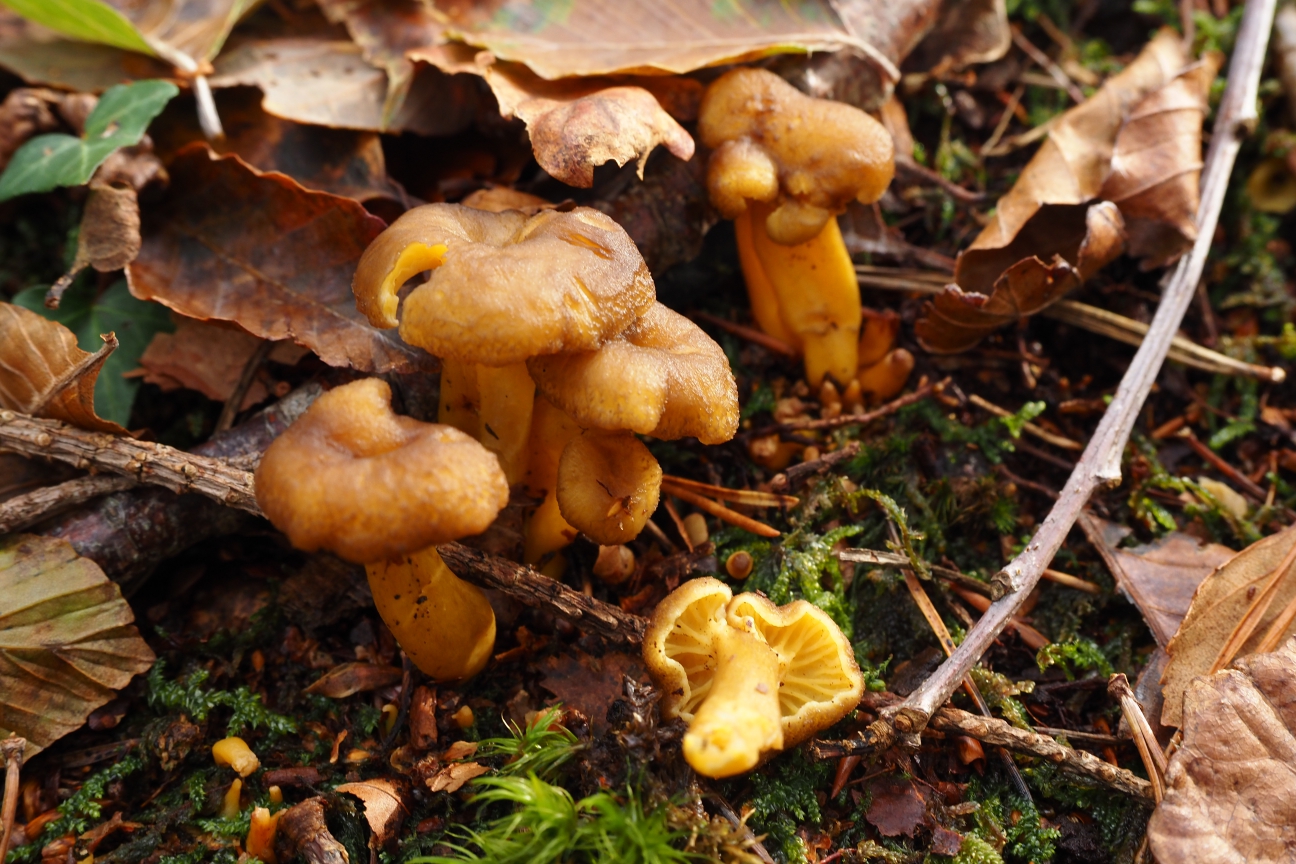
I had seen and identified winter chanterelles in the past, in the same wider woodland area. They’re easy to ID because of their yellow stipe, the time that they appear, and their ‘false gills’. One of the chanterelles had kindly confirmed its spore print, as can be seen above on the caps of a couple of nearby shrooms.
Here are those beautifully networked ‘gills’ and the strong yellow stipe (commonly known as a stem, of course) which help to identify the mushroom.
We gathered a small number of mature mushrooms and took them home in a plastic box.
Cooking chantarelles
At home I washed the mushrooms (the white spikes are from some hedgehog mushrooms) in a colander. There were some nematodes and other bits of soil so you do need to be careful to clean them. The nematodes were placed outside in my garden somewhere suitable for them. You are probably completely put off eating wild mushrooms after that sentence…
Then I laid the mushrooms all out – hedgehog mushrooms on the right hand side – and you can see they’ve been cleaned up.
I then fried some onions in butter and garlic. Or maybe it was olive oil, I can’t remember!
I chopped the chantarelles in half down their centre and added them to the softened onions and garlic in the pan.
The pasta of choice here was gnocchi (is it officially pasta?) which is part potato, part wheat. It’s really easy to cook. I think I boiled it first but you don’t always need to do so. We consumed it like this. I can confirm it was really delicious and that the chanterelles had a lot of flavour.
Things to remember
I would suggest to anyone reading this who wants to go and find wild mushrooms to eat, to consider the following:
Are you able to correctly identify the mushroom you want to consume?
Is the mushroom definitely edible?
Do you have permission to pick mushrooms in the relevant location?
Is the location uncontaminated and therefore safe to consume things that have grown there?
Happy New Year! Another pandemic year in the bag (yay) and a chance to look at some of my fungal highlights of the year that was.
I do appreciate that this post title does sound like I’m updating people on how my infection is going. That’s not the case.
My first fungi post was during England’s winter lockdown when we had to all stay at home again. Options for fungi photography were not great so I delved into my own wood-wide web. The post was about a favourite subject of mine, lichens on Dartmoor in SW England:
Being privileged enough to work from home during the winter lockdown, I spent a lot of time at a computer. Behind me was a yukka plant that had spent the summer months outside. I was amazed (and a bit disturbed) to see that mushrooms were fruiting over my shoulder!
I gave two lockdown Zoom talks about fungi in 2021, one for London Wildlife Trust (video didn’t materialise) and one for Bell House, a learning charity based in SE London:
In July I found some very nice mushrooms and tried a bit of camera focus-stacking:
At the crossing of October and November I was lucky enough to spend a couple of nights in Dartmoor National Park. It was dripping with mushrooms, a really special experience:
Your Christmas gift from me is the final part of my 2021 Dartmoor mushroom trilogy, following on from parts one and two.
I hope you can have a nice Christmas and holiday. Solidarity with anyone alone or grieving at this time. Here’s to happier times.
This post is all phone pics so there is a bit of a drop in resolution and quality, but that’s not all that matters in photography. The finds here were based on a walk from the edge of Dartmoor National Park into one of the nearby towns, outside the boundary. I found some lovely species, some of which I hadn’t seen for some time.
The walk began from our hotel, passing through a slither of ancient woodland that had been planted up with sweet chestnut perhaps over a century ago. I was delighted to find one of the first hen of the woods (Grifola frondosa) that I’d seen for several years. Also – how chivalrous am I!
I used to see this regularly on oak in London, but this time the species was growing on sweet chestnut. Sweet chestnut is in the same family as oak (Fagaceae), so this must happen fairly commonly in continental Europe where sweet chestnut is a native woodland species (post-Ice Age).
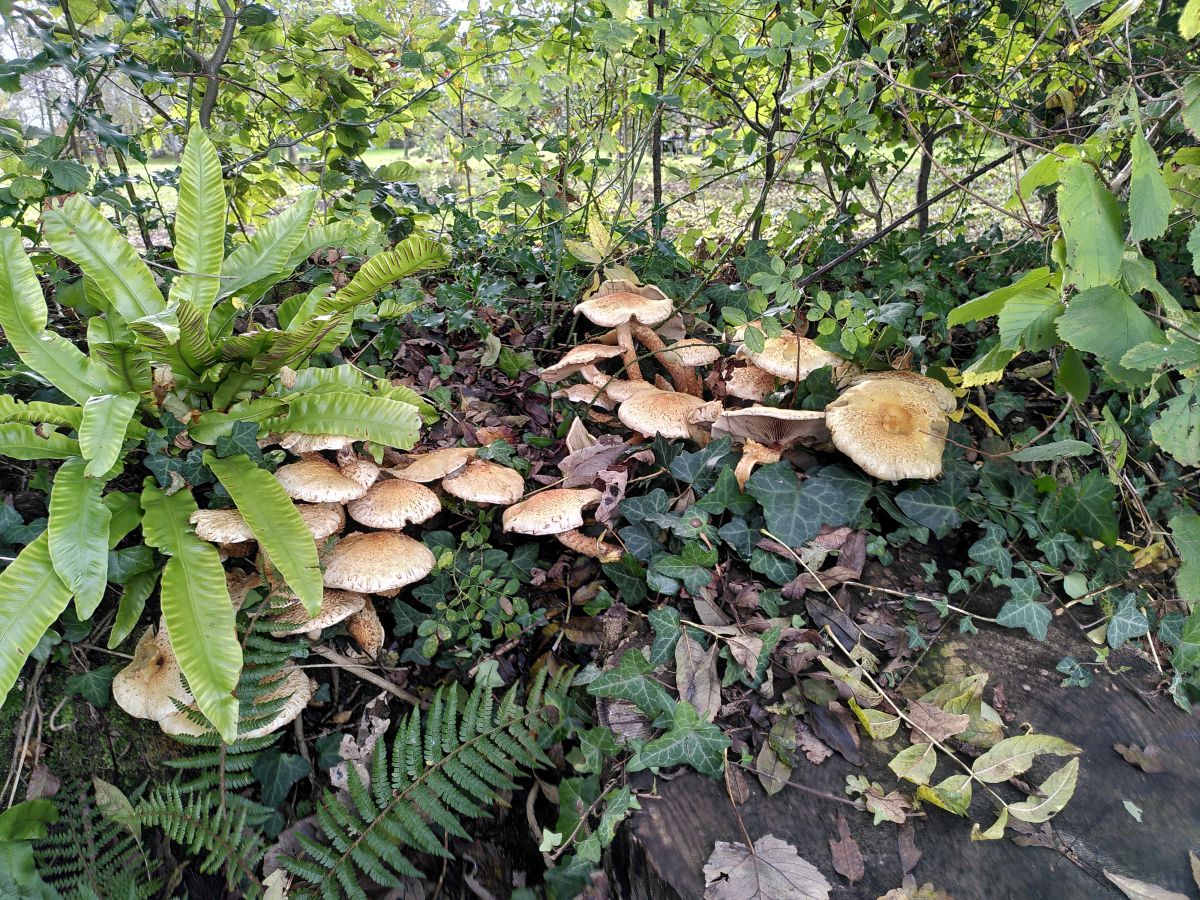
A nice large spread of mushrooms on an old stump in a hedgeline were this group of scalycaps. I expect these are probably golden scalycap (Pholiota aurivella).
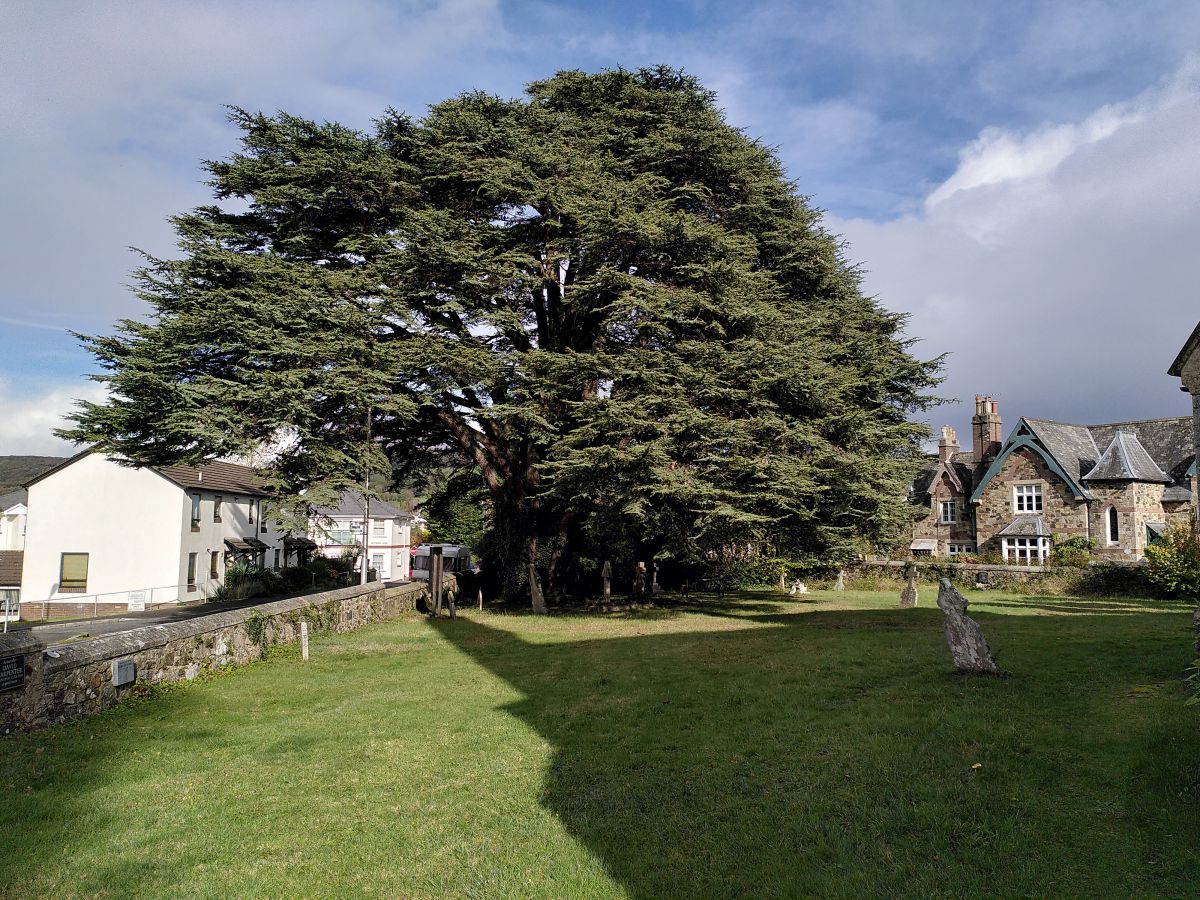
Cemeteries are excellent places for wildlife, sometimes for rare species of plants, invertebrates and fungi. This small churchyard is no exception to that. The main reason for this is that the grasslands are cut regularly and kept open, being in a state of grassland for hundreds of years or more.
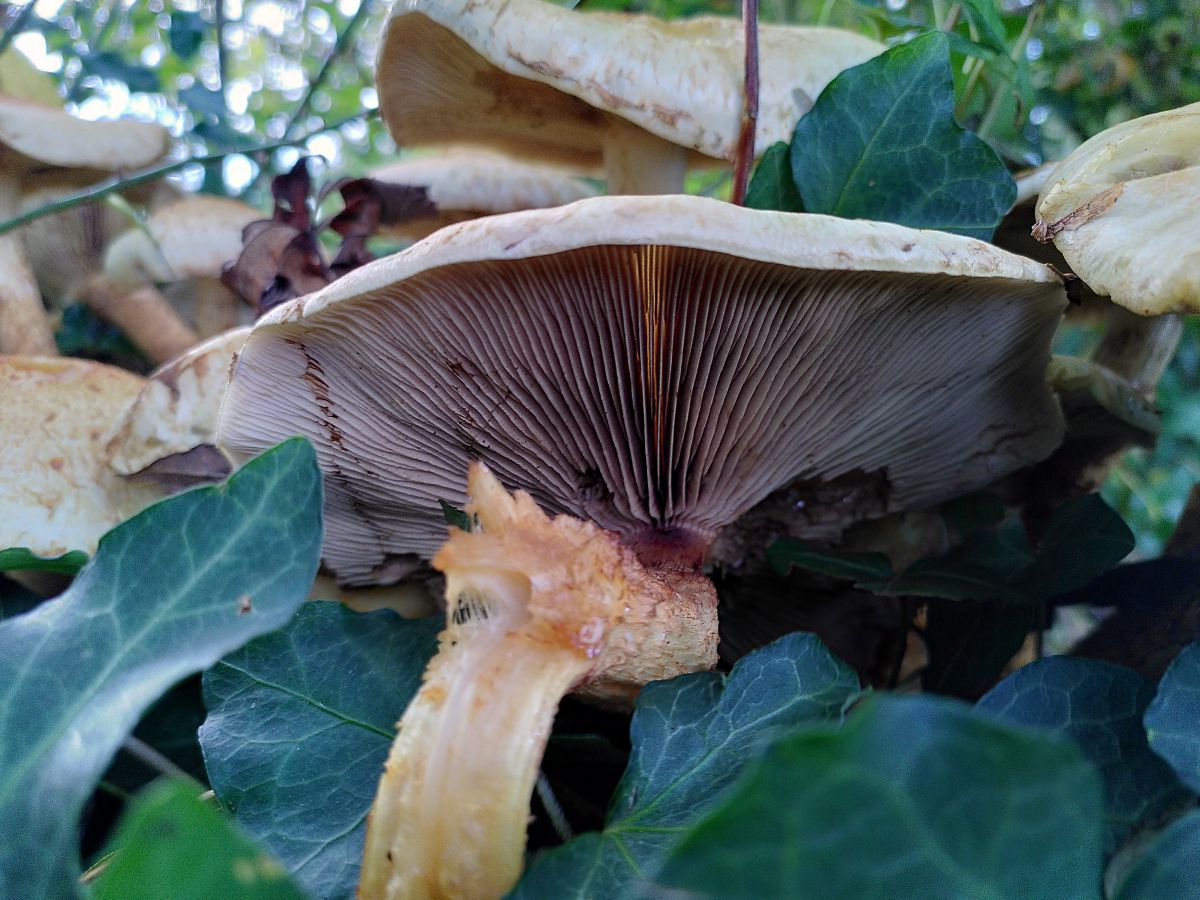
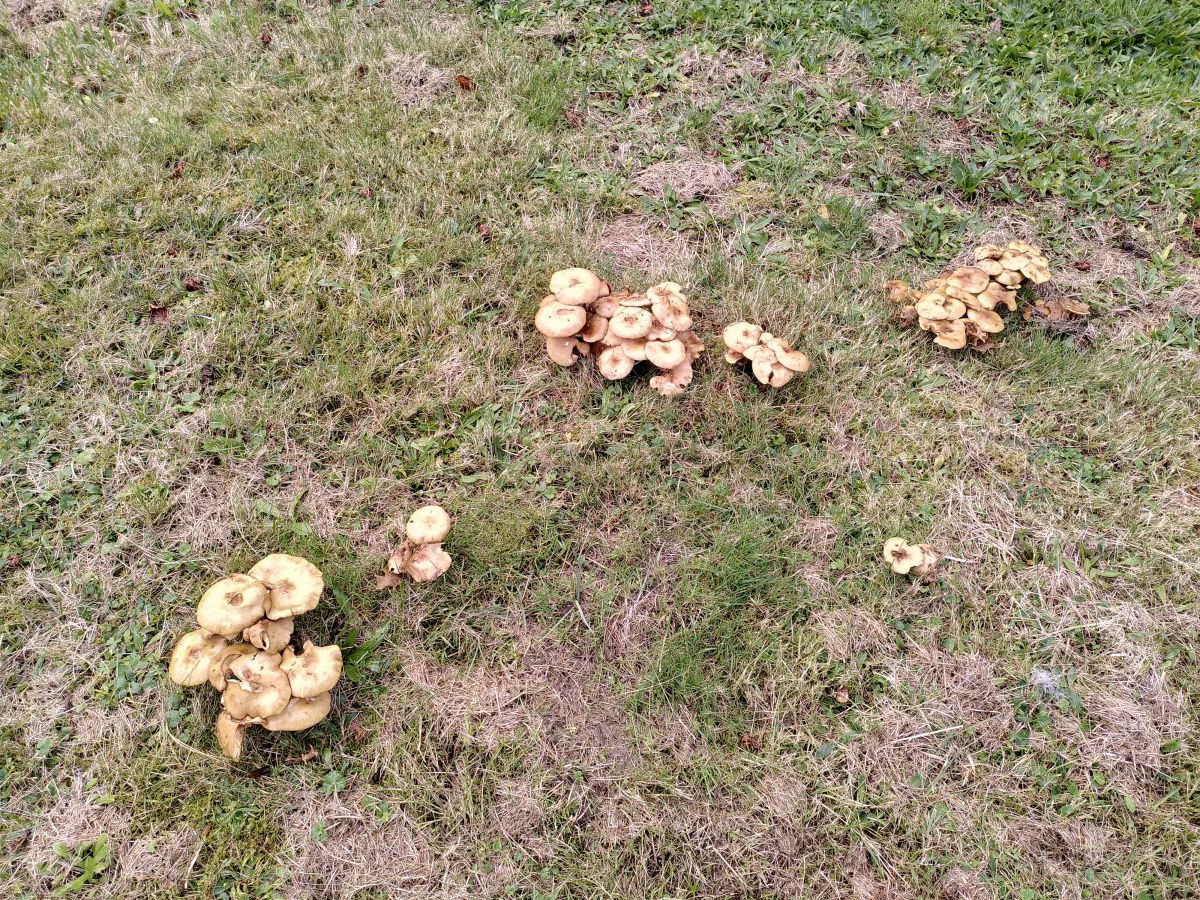
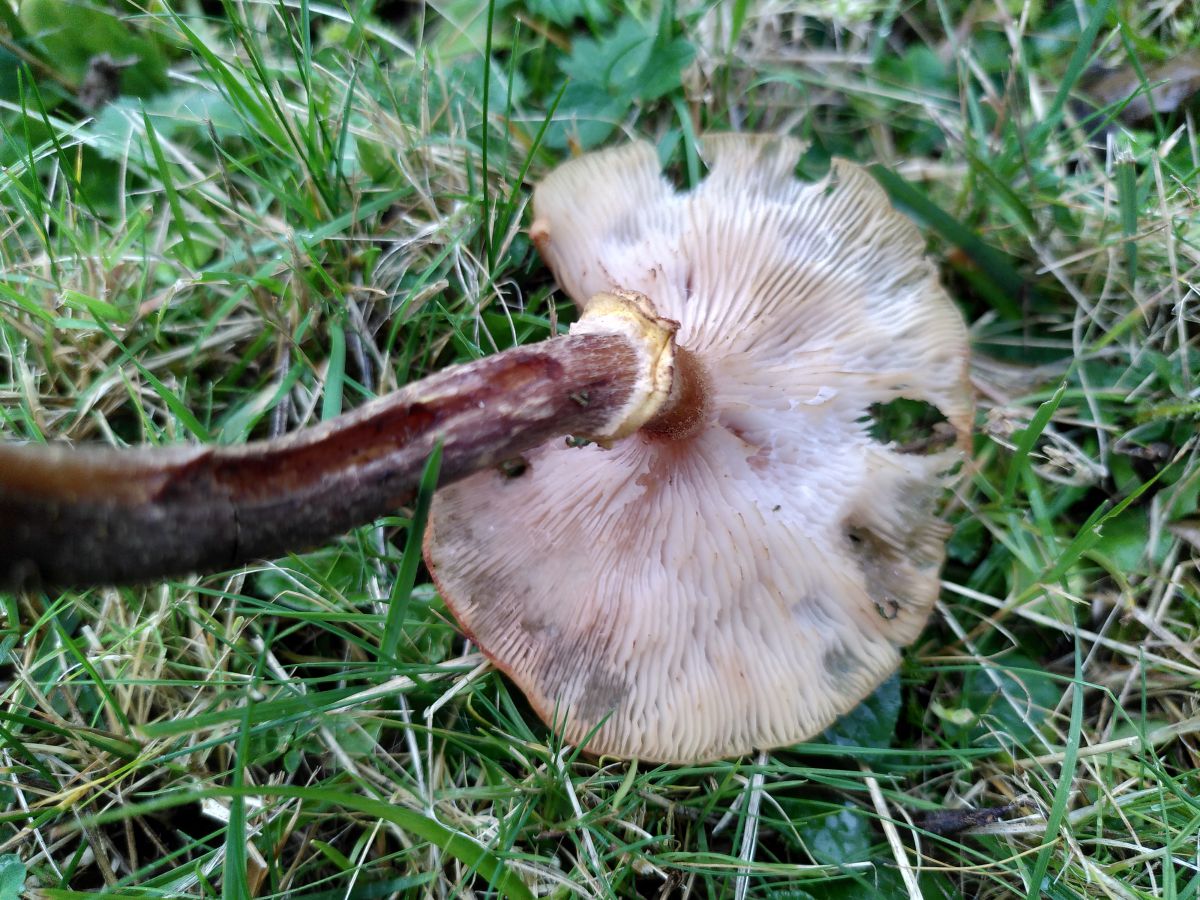
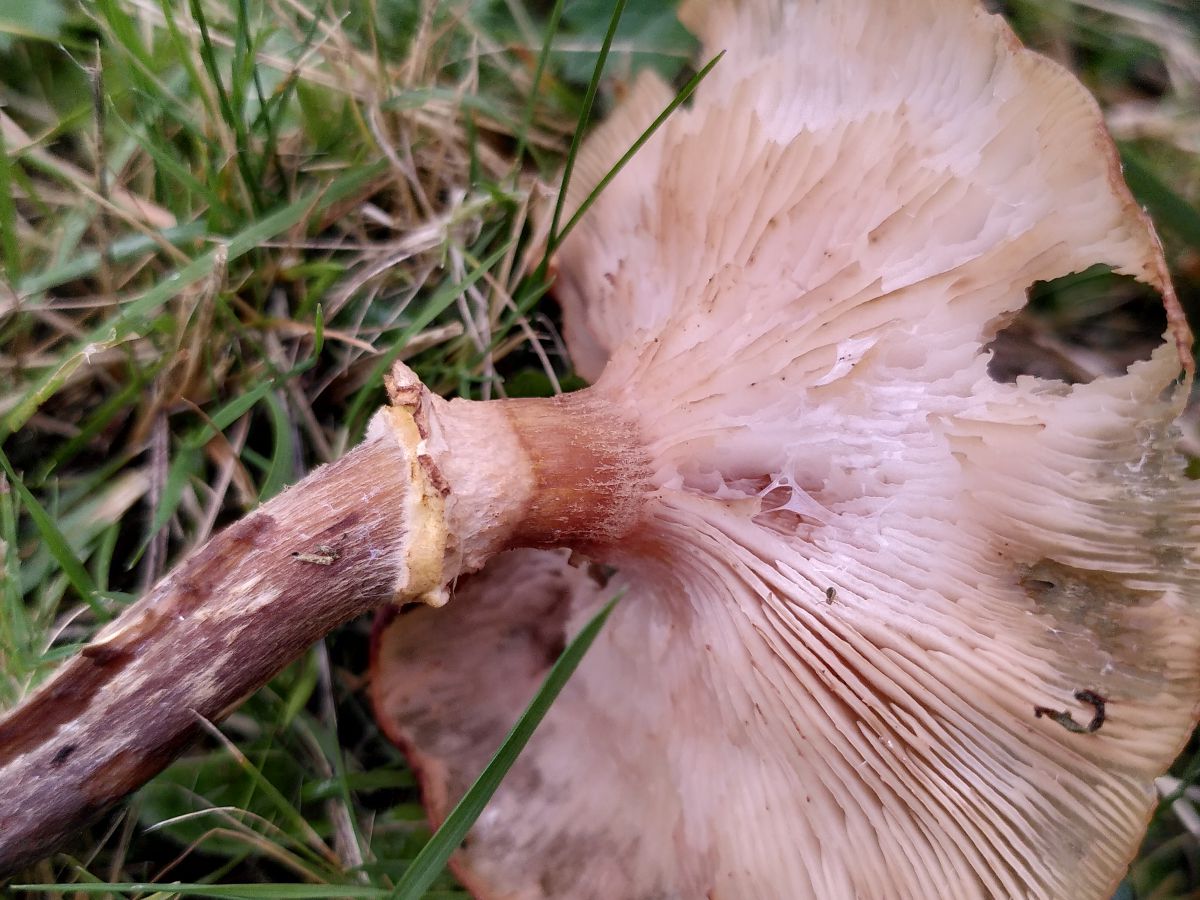
Honey fungus (Armillaria) has had quite a late start to the year in southern England. I have found it in this particular churchyard before. I think this cluster were growing where the roots of a tree once were.
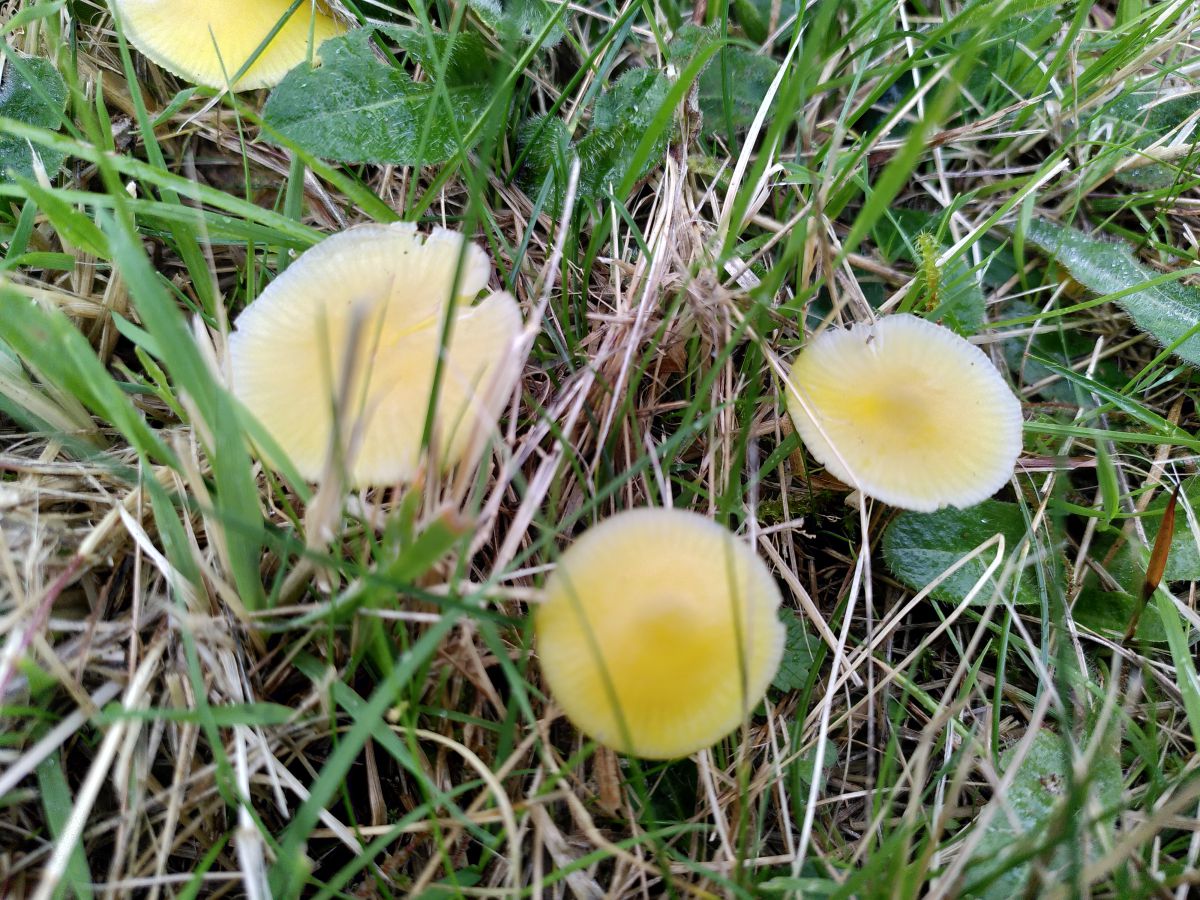
Churchyards are good places to find waxcaps, a family of mushrooms that are mainly found in ancient, unimproved grasslands. This means the grasslands haven’t been ploughed up or fertilised, hence why sacred sites like churchyards are good for them. I found a gathering of small yellow waxcaps which have been identified on iNaturalist as butter waxcap (Hygrocybe ceracea). I love the gills of waxcaps, and the phone camera does do them some justice.
At first thought this very small mushroom was a waxcap but it probably isn’t. One suggestion is that it may be a type of funnel.
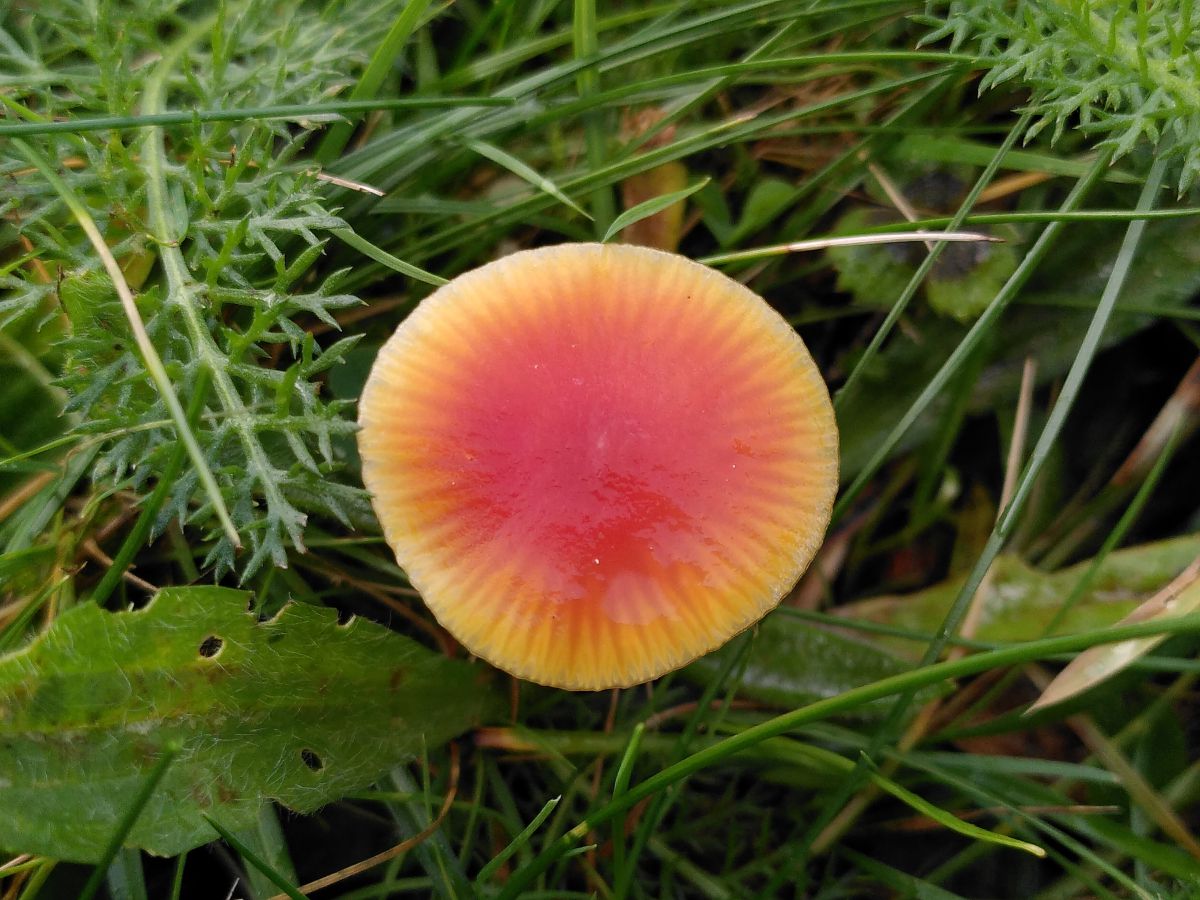
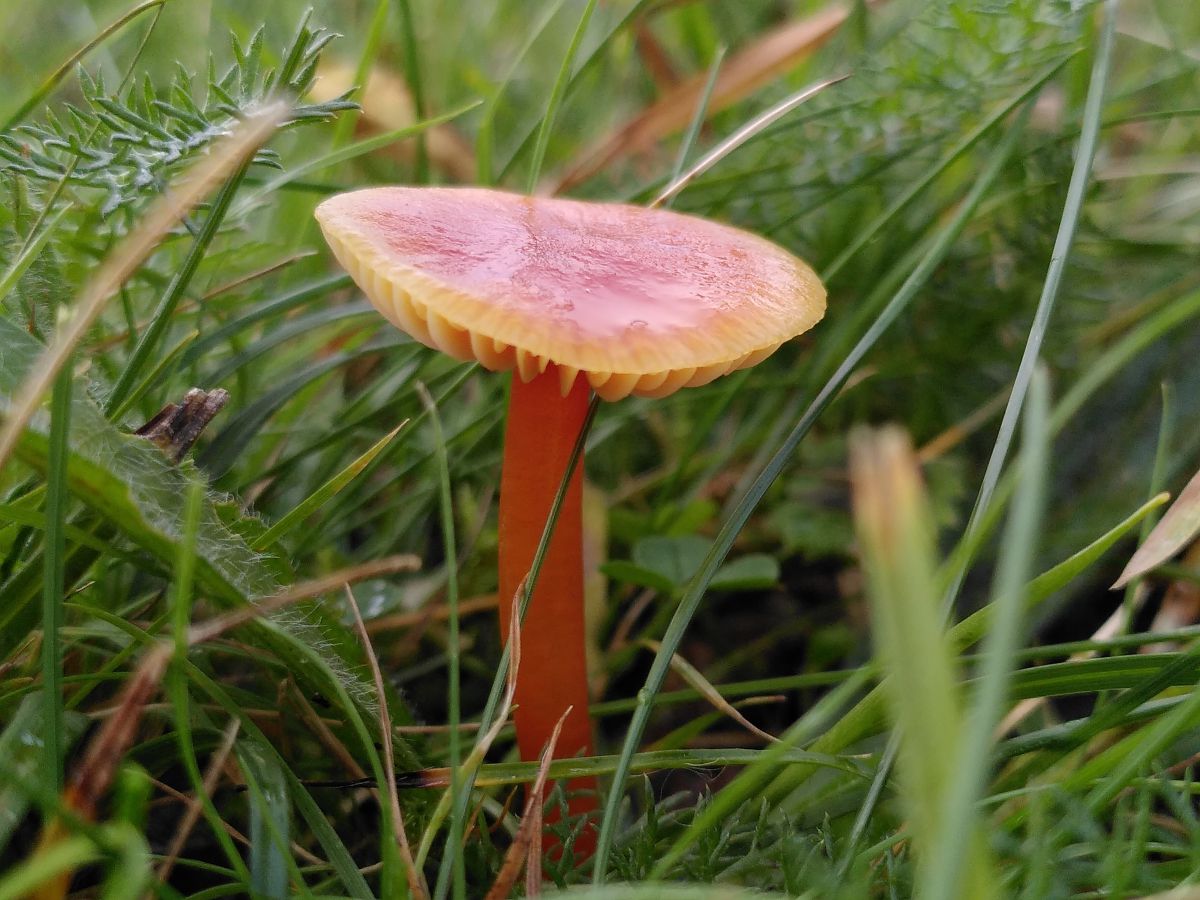
As witnessed elsewhere on Dartmoor the day before, I found a couple of blackening waxcaps (Hygrocybe conica). This nicely illustrates the shift from a Wine Gum yellow to the blackening stipe.
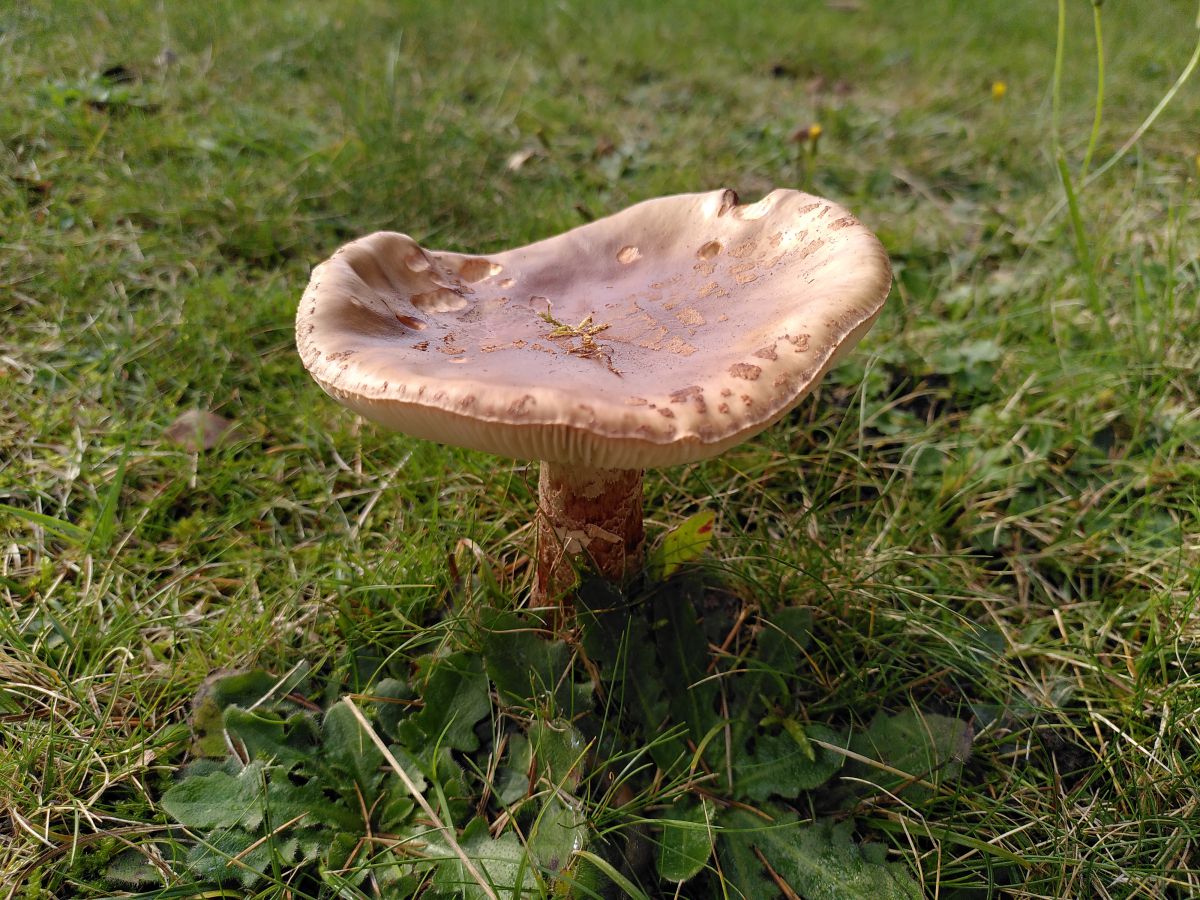
Closer to the large cedar seen in the wider image of the churchyard, there were several blushers (Amanita rubescens) dotted around the grasslands.
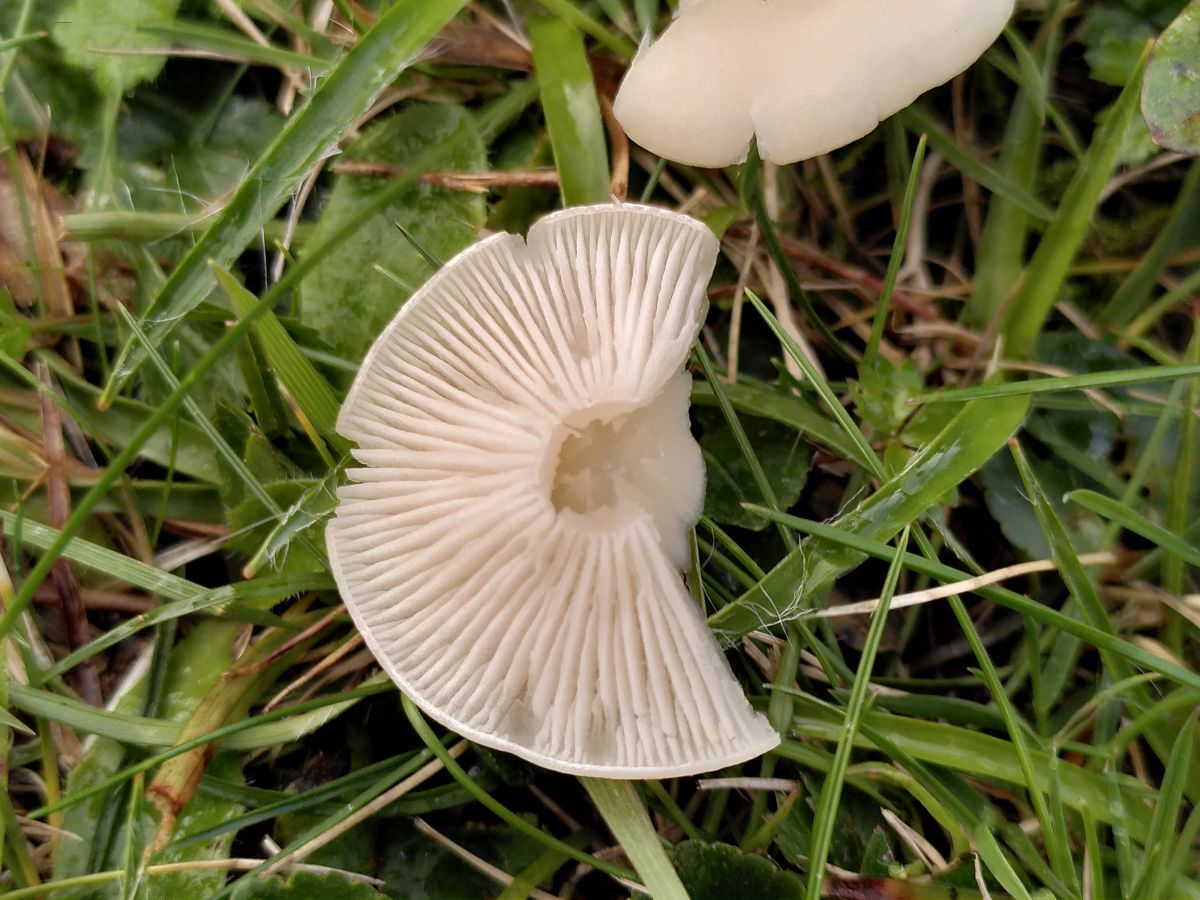
Perhaps the most beautiful find, and one I’ve never knowingly discovered before was bitter waxcap (Hygrocybe mucronella). If the gills of the butter waxcap were beautiful, the combination of pale yellow and orange backdrop are something else. The gills radiating towards the stipe from the edge of the cap also look to me like flames.
Thanks for reading. Extra points if you read all three posts!
Following on from part one of my recent trip to Dartmoor National Park in south-west England, it’s now time for part two. You can read part one here.
This was another day chock-full with mushrooms. It began well with a nice indicator of mushroom season when we found a gathering of clouded funnel on a roadside verge. This is a fairly common mushroom that can usually be identified by its size and the clouded tops. My boot is here for scale, obviously.
You can see how happy fungi are in the wet and wild landscape of Dartmoor by the presence of moisture loving organisms like these cladonia cup lichens. You can read some of my lichen posts here.
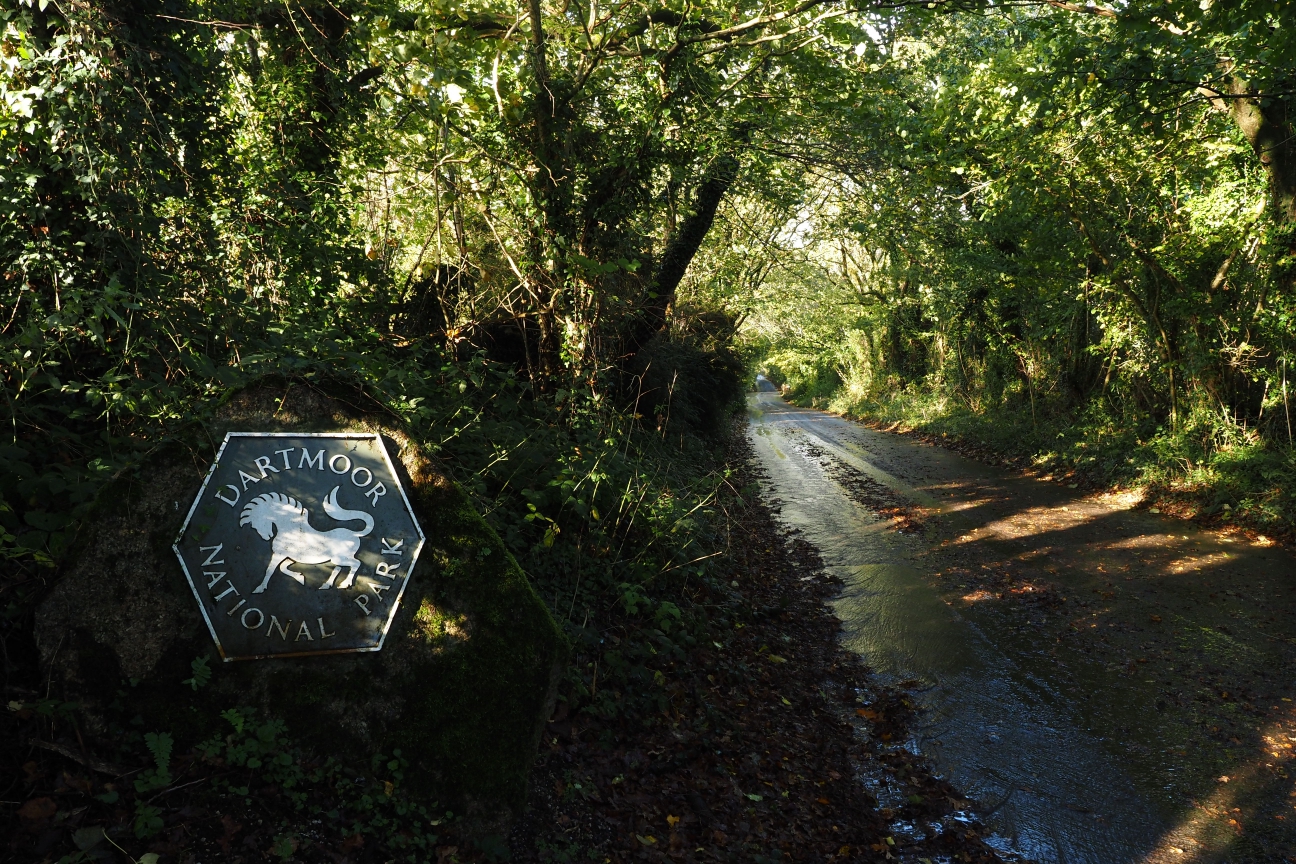
We were just on the edge of the National Park. Dartmoor’s logo is based on the famous Dartmoor pony, a semi-wild(?) species that has been running amok on the moor for thousands of years.
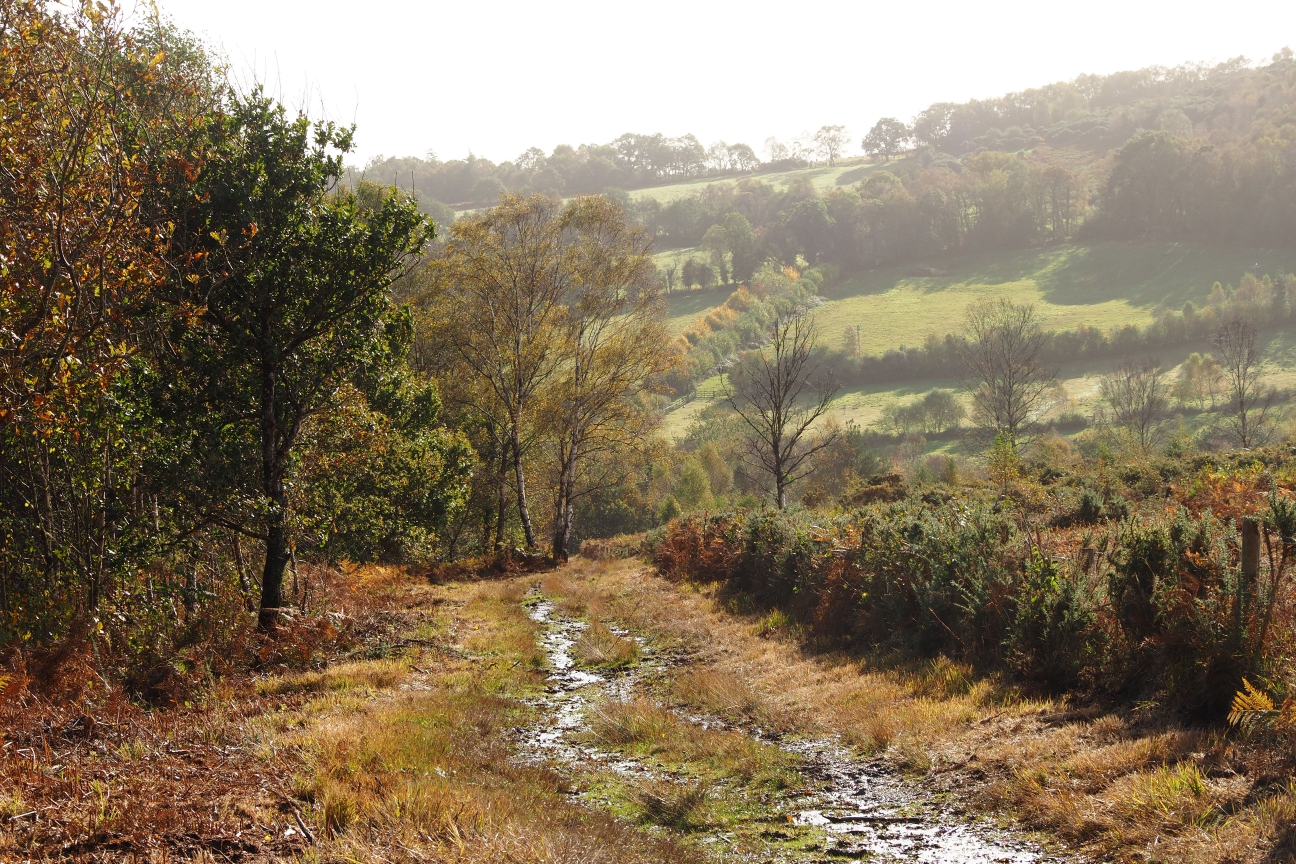
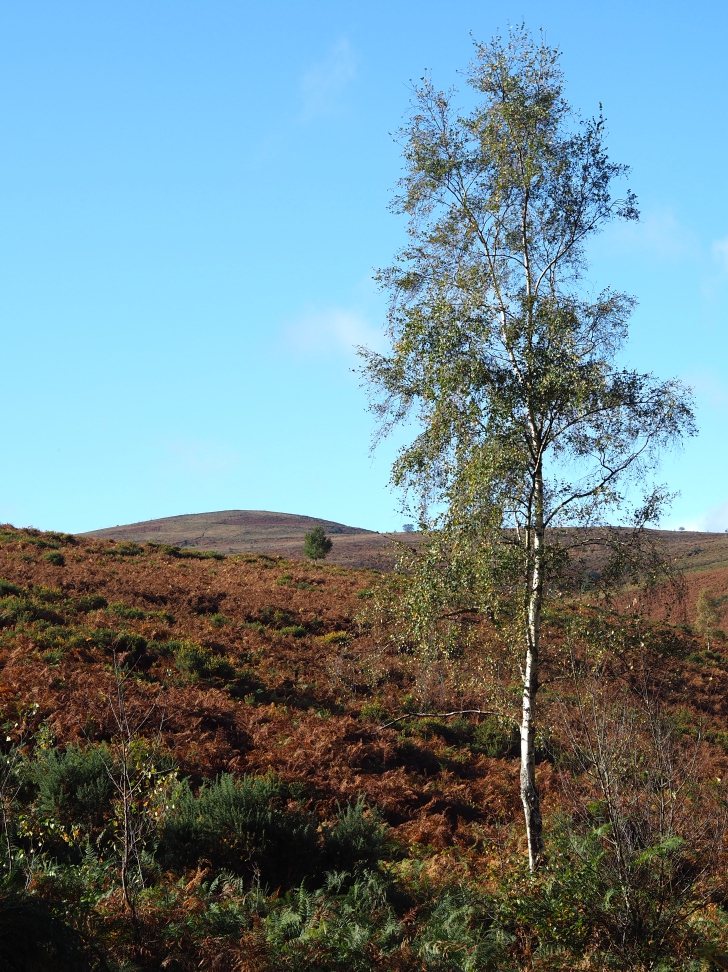
Dartmoor on an autumn morning. The silver birch with yellow leaves is one of the highlights of autumn, especially when the light catches the leaves.
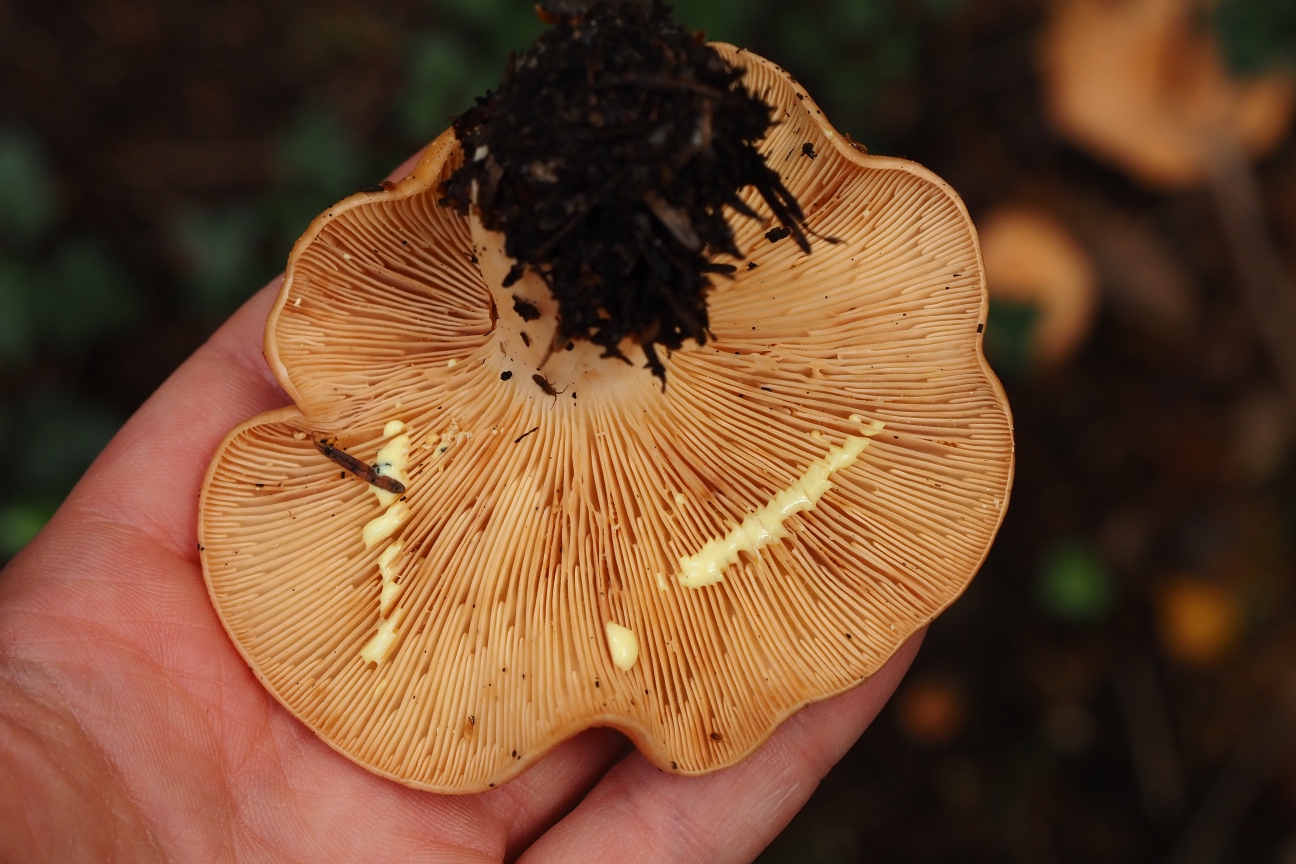
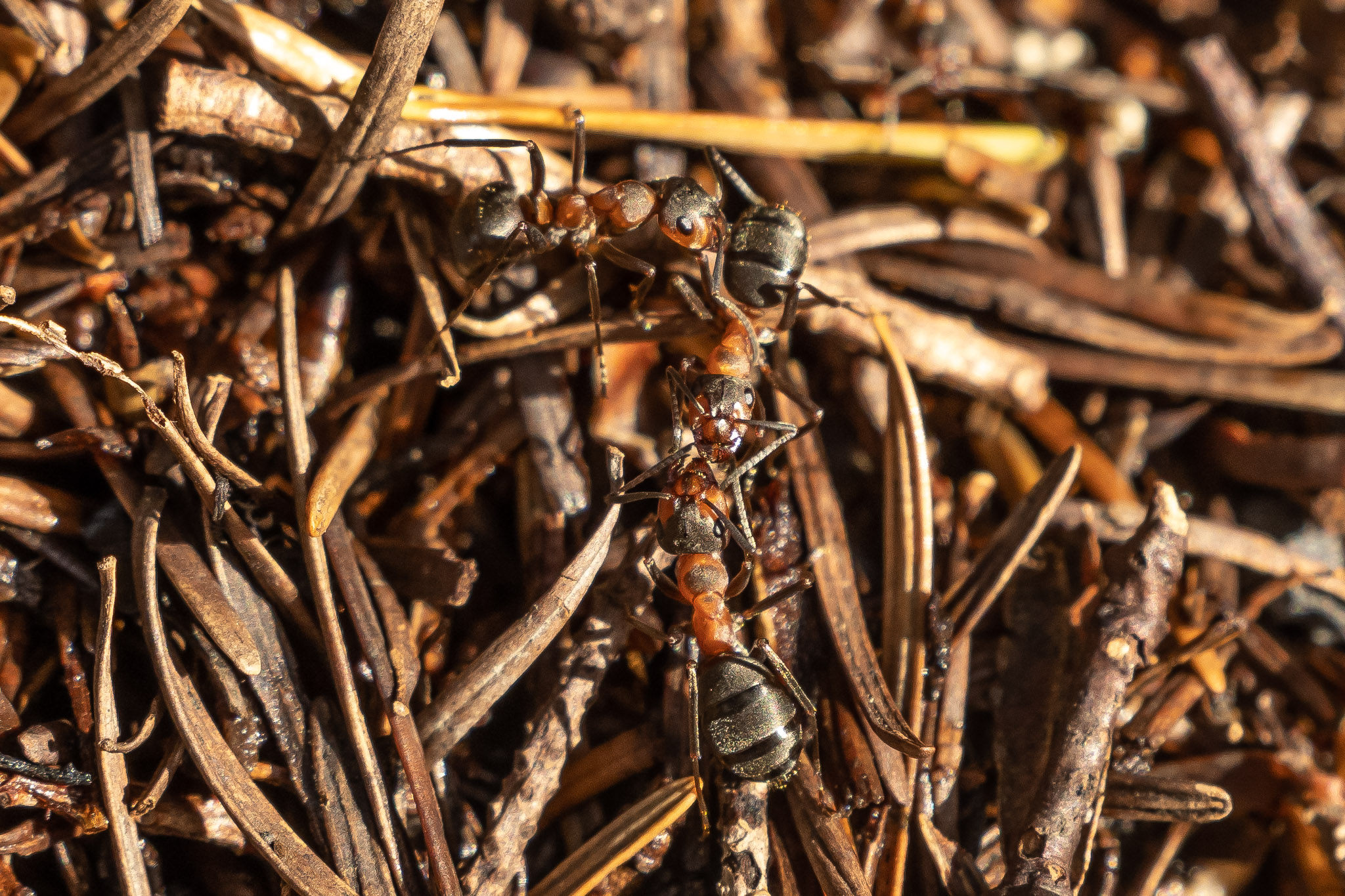
On top of a wood ant’s nest there were two mushrooms that looked interesting. I could tell that they were milkcaps from the unusual caps and the concentric circles. Turning one of them over I cut the gills with my fingernail and, sure enough, the gills produced milk. I don’t know what the species is.
The ants were still active, with quite a lot of interaction going on. I wonder what role fungi play in the structure of certain ant hills. Ants have been found to cultivate fungi gardens inside their nests, and there must be other ways that ants mix with the fungal kingdom.
This walk was on the edge of the moorland, passing down into a wooded river valley known as the East Dartmoor Woods and Heaths.
The woodlands that made up some of the best parts of the walk are known as Atlantic Rainforest. Their main tree species are oak and hazel. I’m not sure if ash was more prominent before ash dieback came into effect. This type of woodland is very uncommon with a lot of it being lost down the centuries. It is a special habitat for its plants, lichens, fungi and other wildlife. It’s very mossy and ferny.
It did not disappoint. This blackening waxcap was growing in moss on a woodbank. It is a stunning fungus when in this condition and in this light. I always associate waxcaps with grassland so often forget they can also be found in the woods.
Close by were these white spindles (I think), another sign to me of an ecologically rich and diverse woodland.
The autumn rains had the river swelled and running fast. You can see the brown of the peat-inflected water.
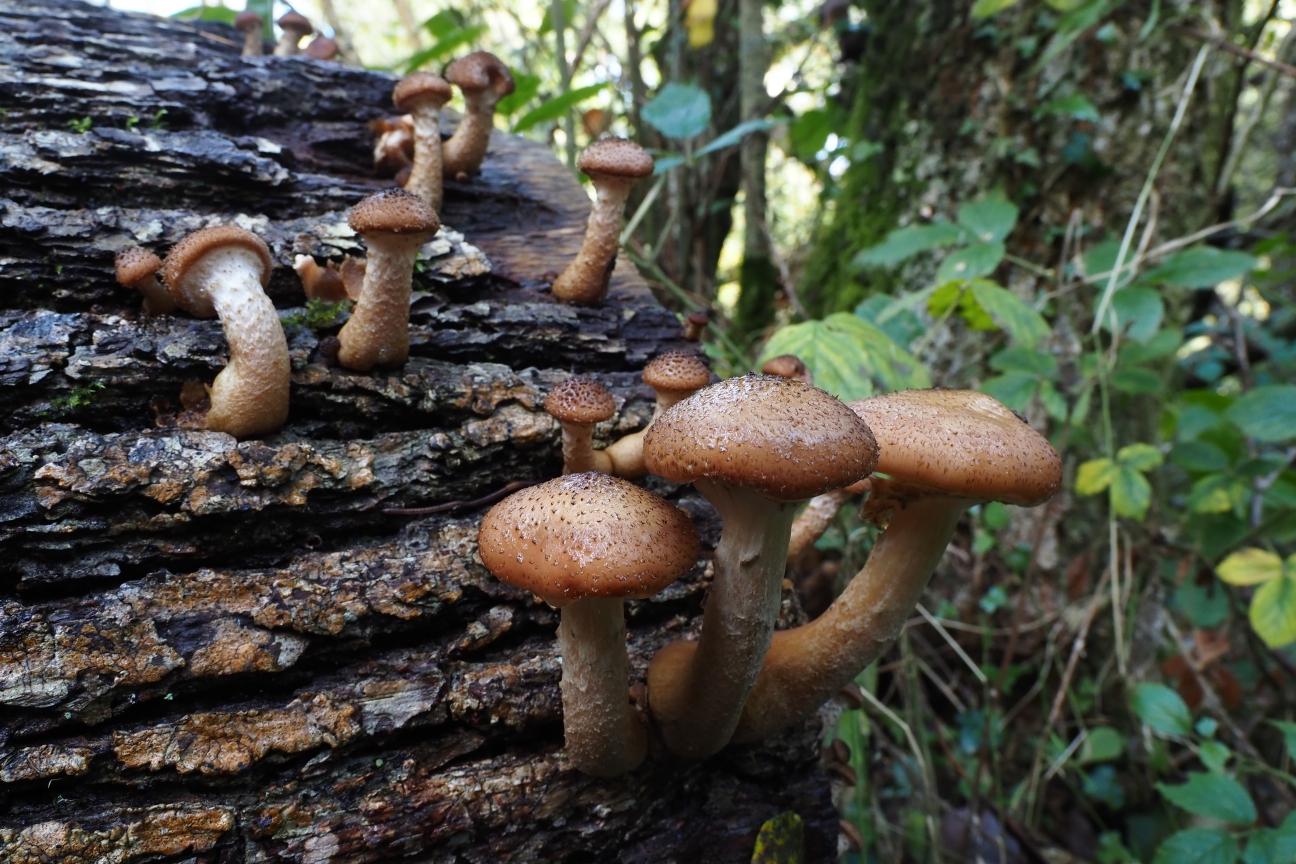
There is someone who has commented several times on this blog asking how or when to find honey fungus. If you’re reading this now, honey fungus is fruiting en masse at the moment. They are very photogenic indeed in the early stages, like the cartoony image of what a mushroom should be.
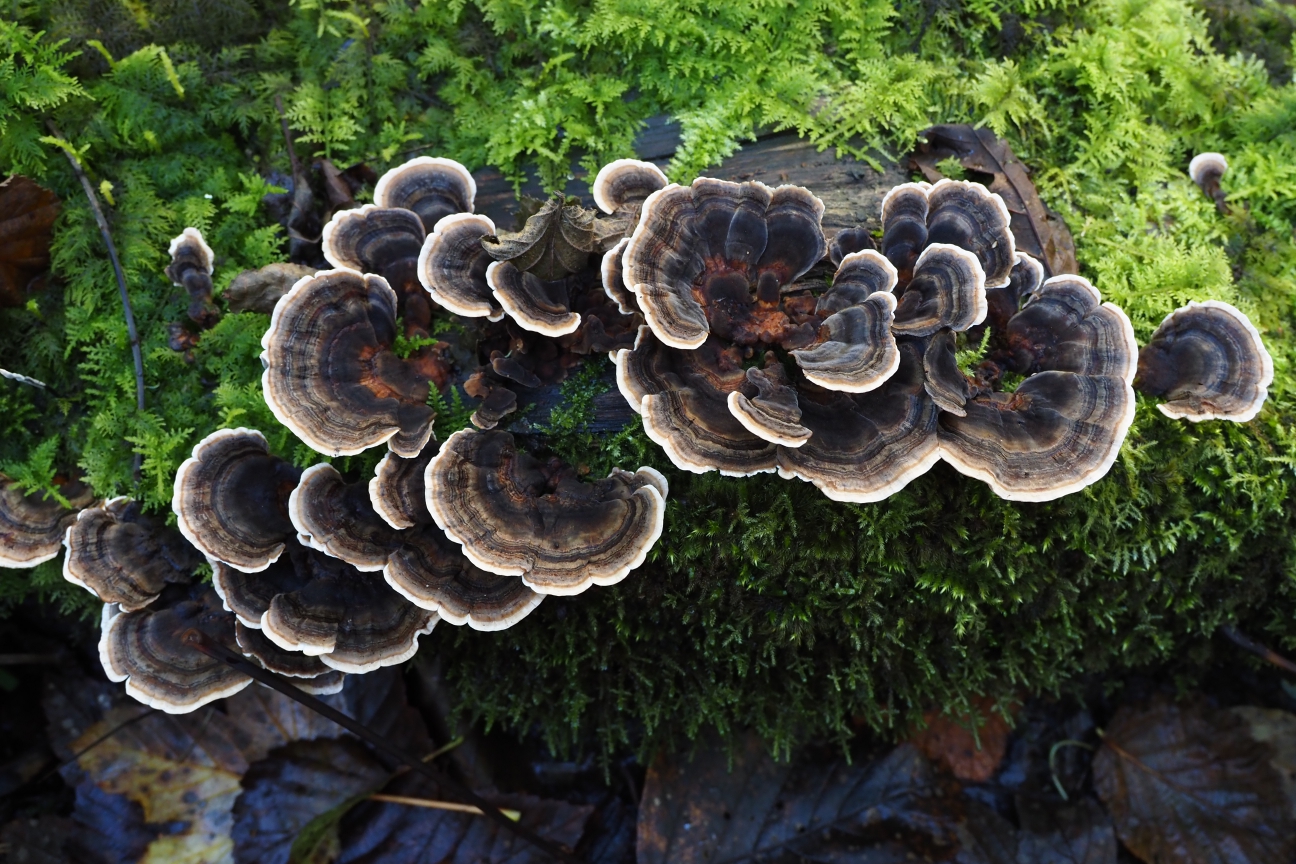
This fanned cluster of bracket fungi is probably turkeytail. These types of fungi can be found all year round but they look their best, like other mushrooms, in the October-November period.
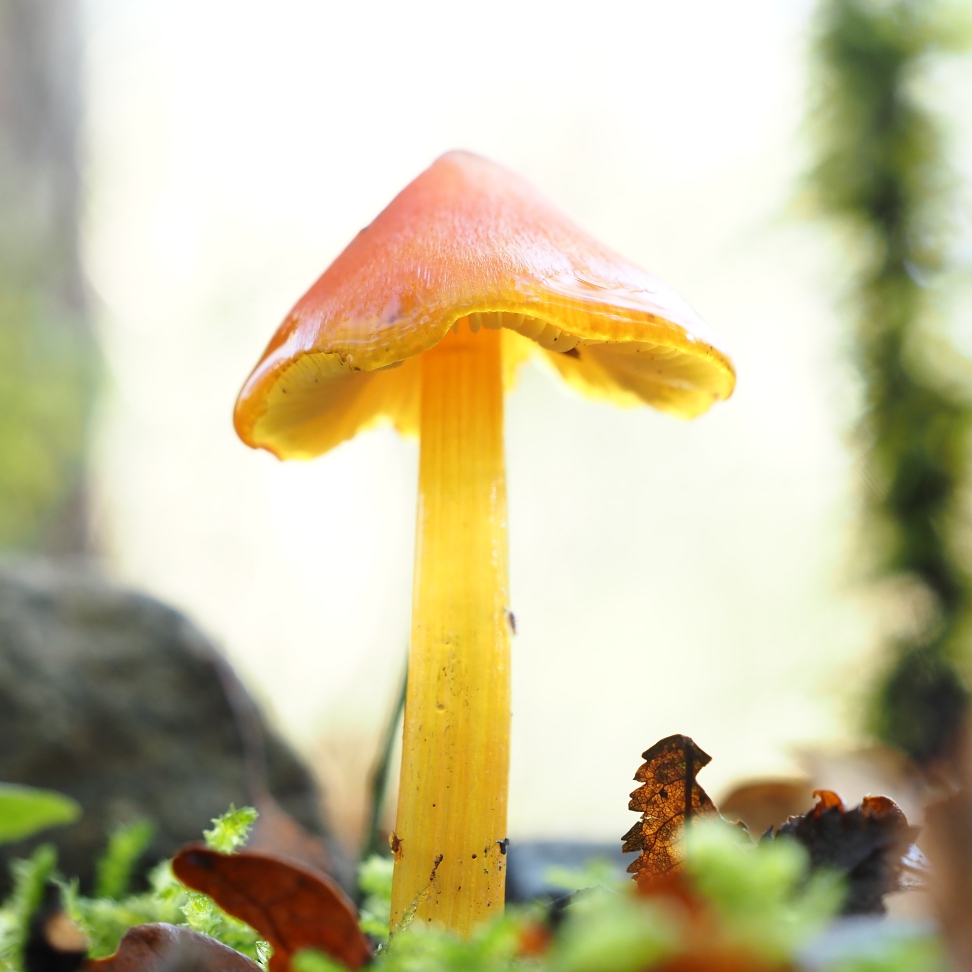
I can’t claim to have found these lovely bonnets growing from some moss on a tree. I’m not sure of the species.
Here’s a snapshot of this beautiful woodland with an understory of bracken, and a tiny bit of hazel.
I’m not entirely sure but I think this is purple jellydisc. There is an organism on the birch leaf next to them which may be a fungus but could also be a slime mould.
On this walk we encountered one of the most beautiful mushrooms I’ve ever seen. This rainbow-coloured mushroom is a bitter beech bolete. It took the breath away. This was a phone pic as my camera wasn’t that happy about how dark it was. Well done Fairphone!
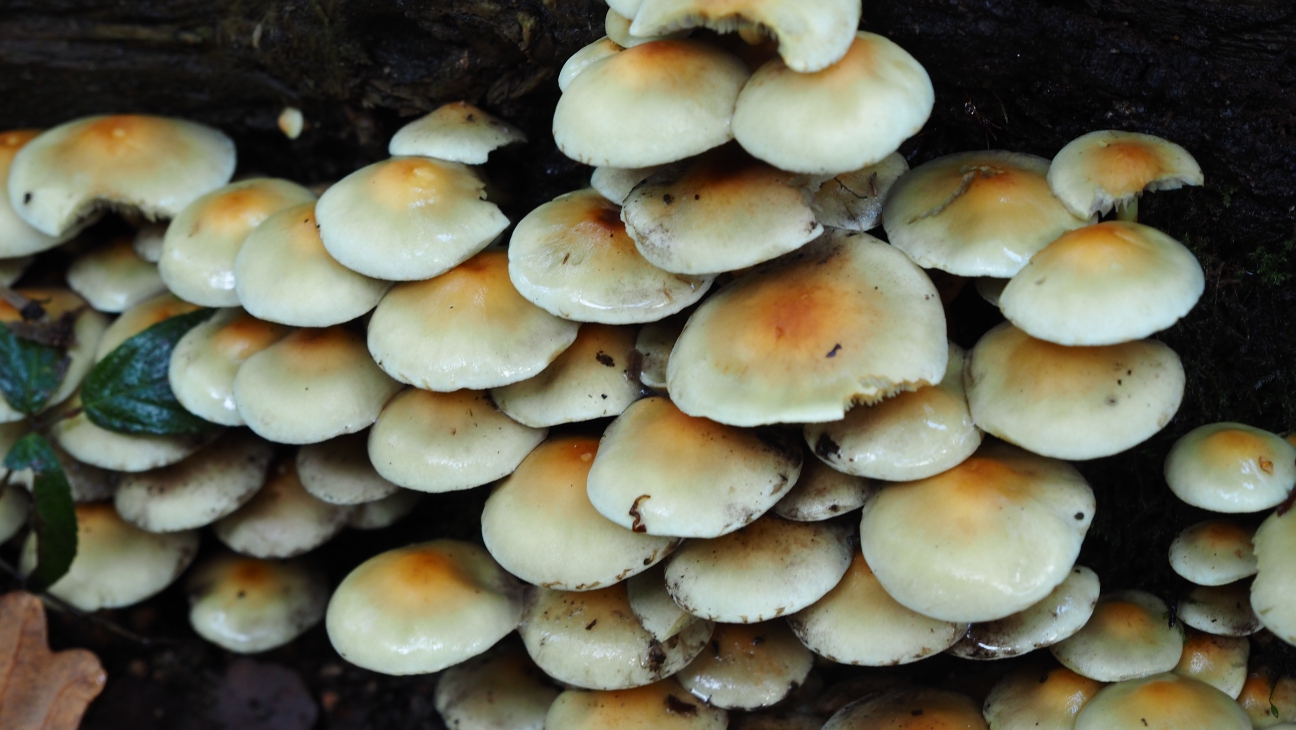
As mentioned in the first part of this blog trilogy, sulphur tuft is a very common mushroom. This was a nice spread. I haven’t spent any time looking to identify the other tufts, but I’m pretty sure this is sulphur.
The broadleaved rainforest was replaced on the other side of the river by coniferous plantation. The Woodland Trust owns this woodland and there was clear evidence of shifting it to its more species-rich habitat of broadleaved woodland. The walk followed part of the Dartmoor Way.
This bolete was helpful in leading us on the way along the track. Yet another bolete or relative growing from a mossy bank.
When I see a mushroom like this, I usually say to myself ‘macrolepiota‘, and leave it at that. It looks like a parasol relative of some kind.
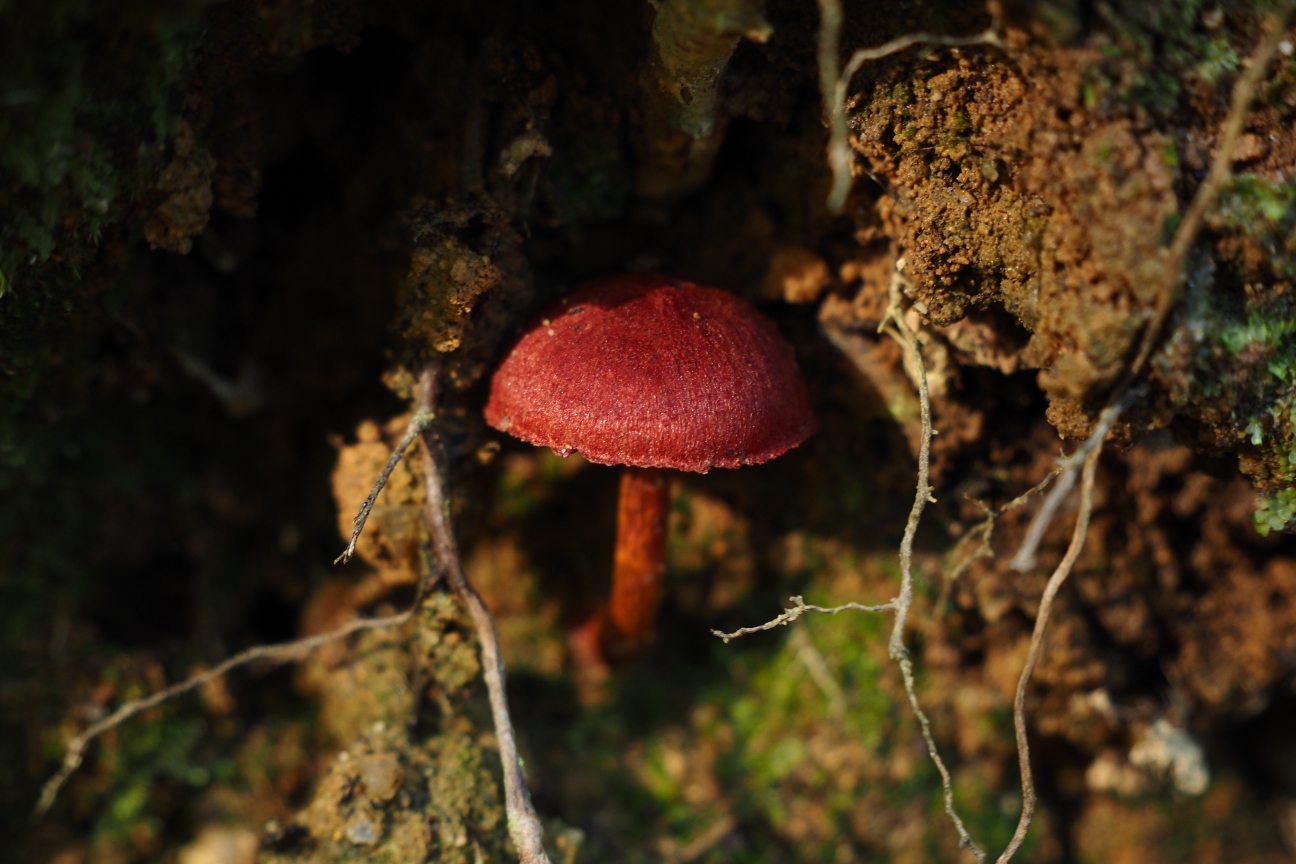
This gorgeous little red mushroom was growing from the exposed soil of the trackway. This isn’t a mushroom I can remember seeing before.
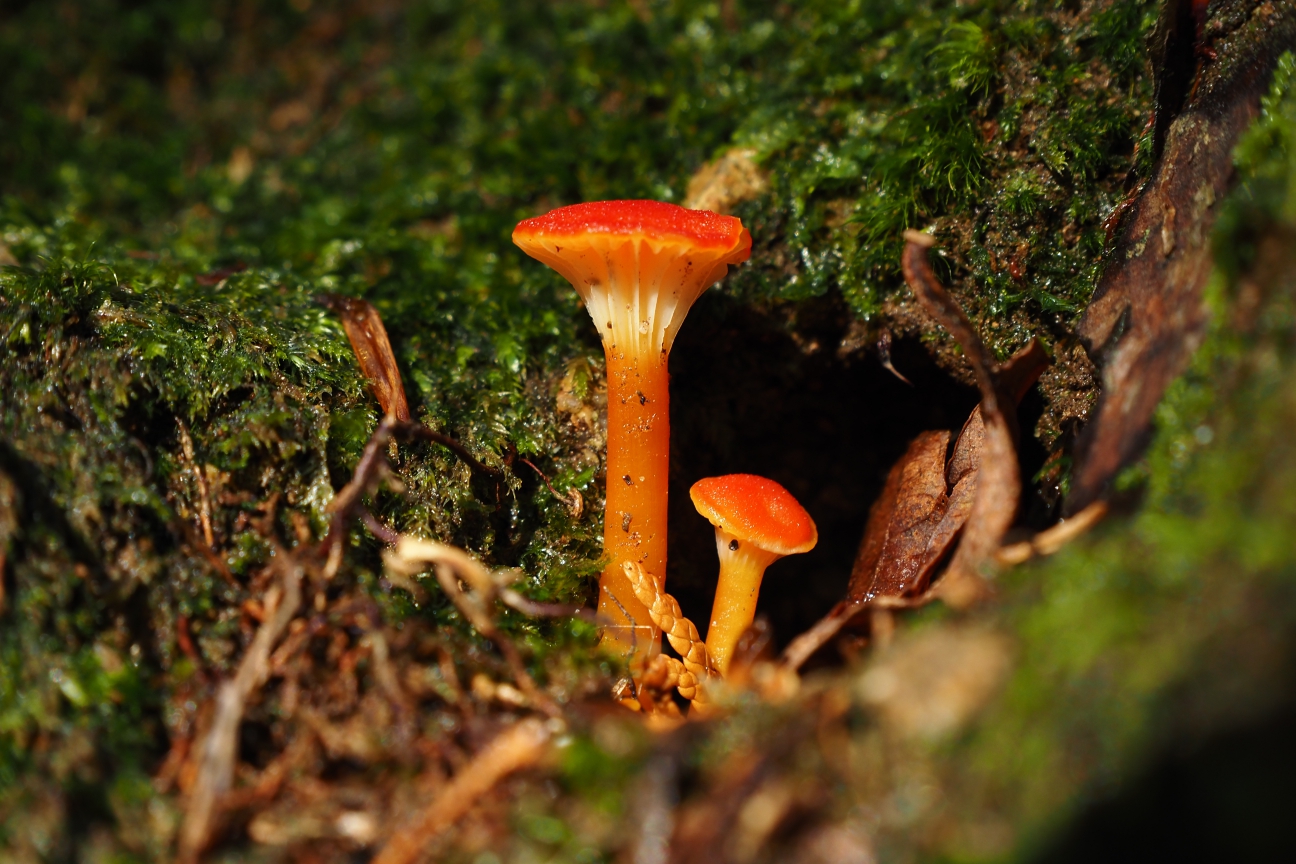
Now here is one I have managed to identify. These tiny red-orange mushrooms were growing from the same habitat as the unknown species before. These beauties are goblet waxcaps, looking like they’re standing on the threshhold.
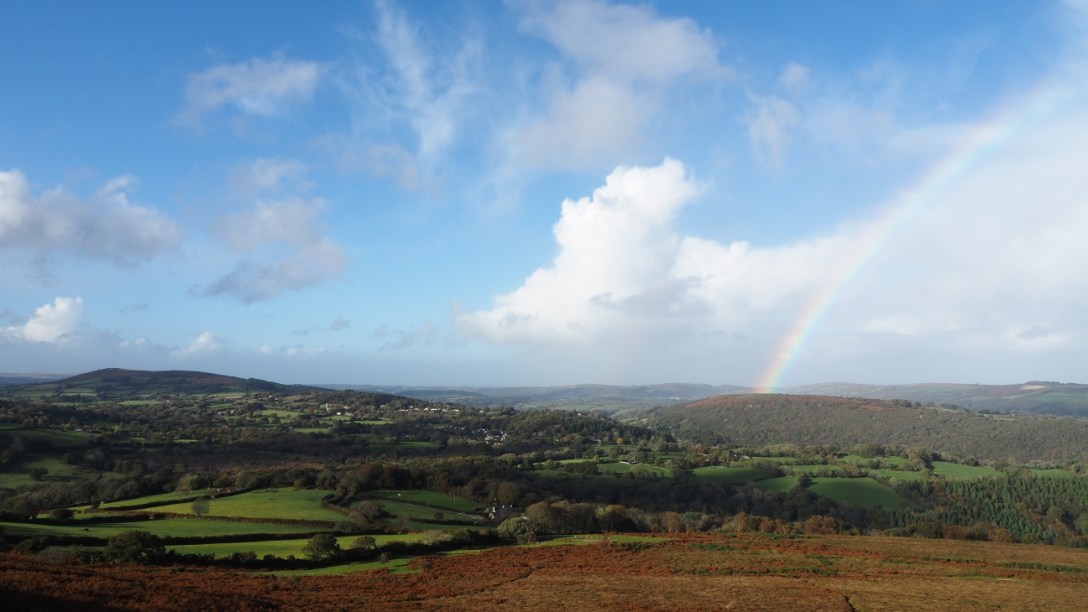
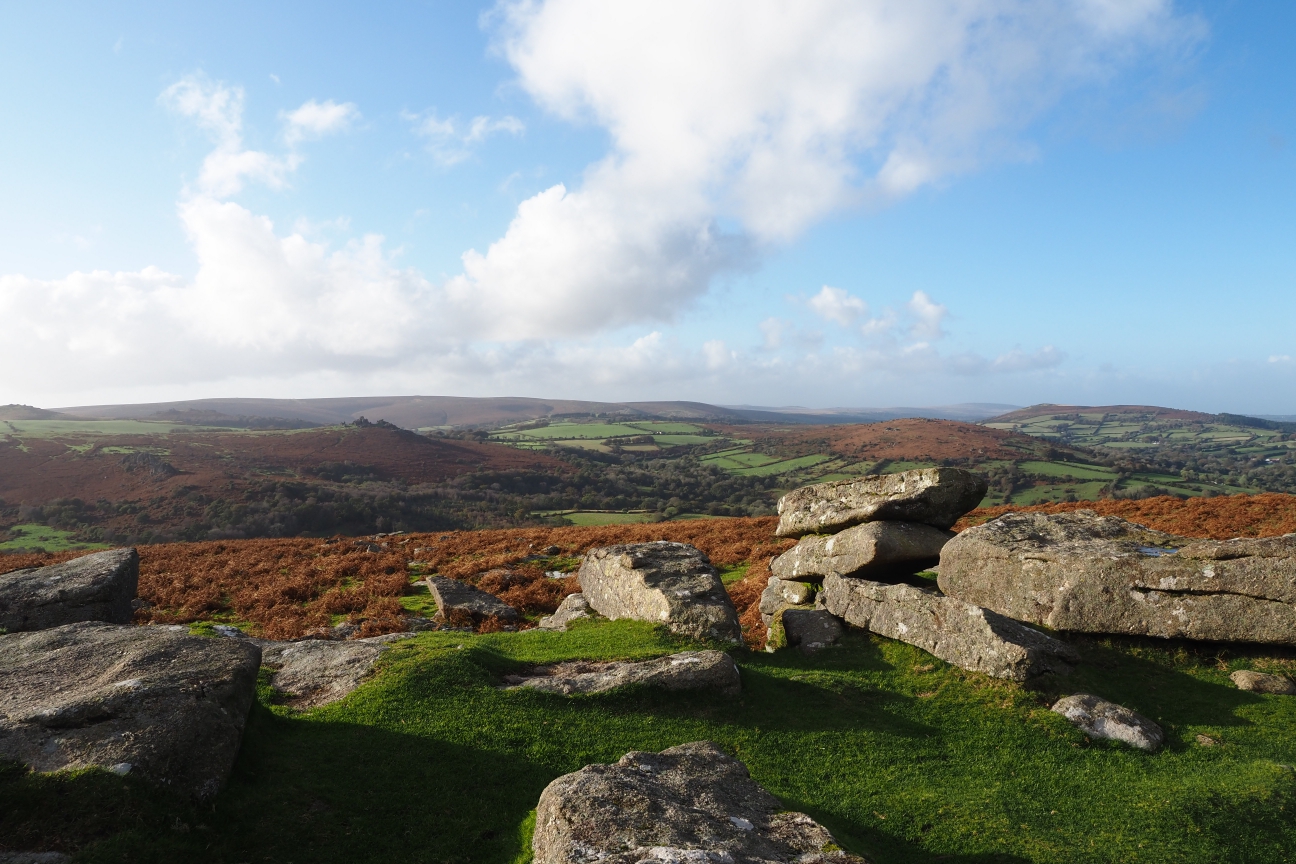
The walk left the woods behind and broke out onto Dartmoor proper with its famous granite tors and expansive views.
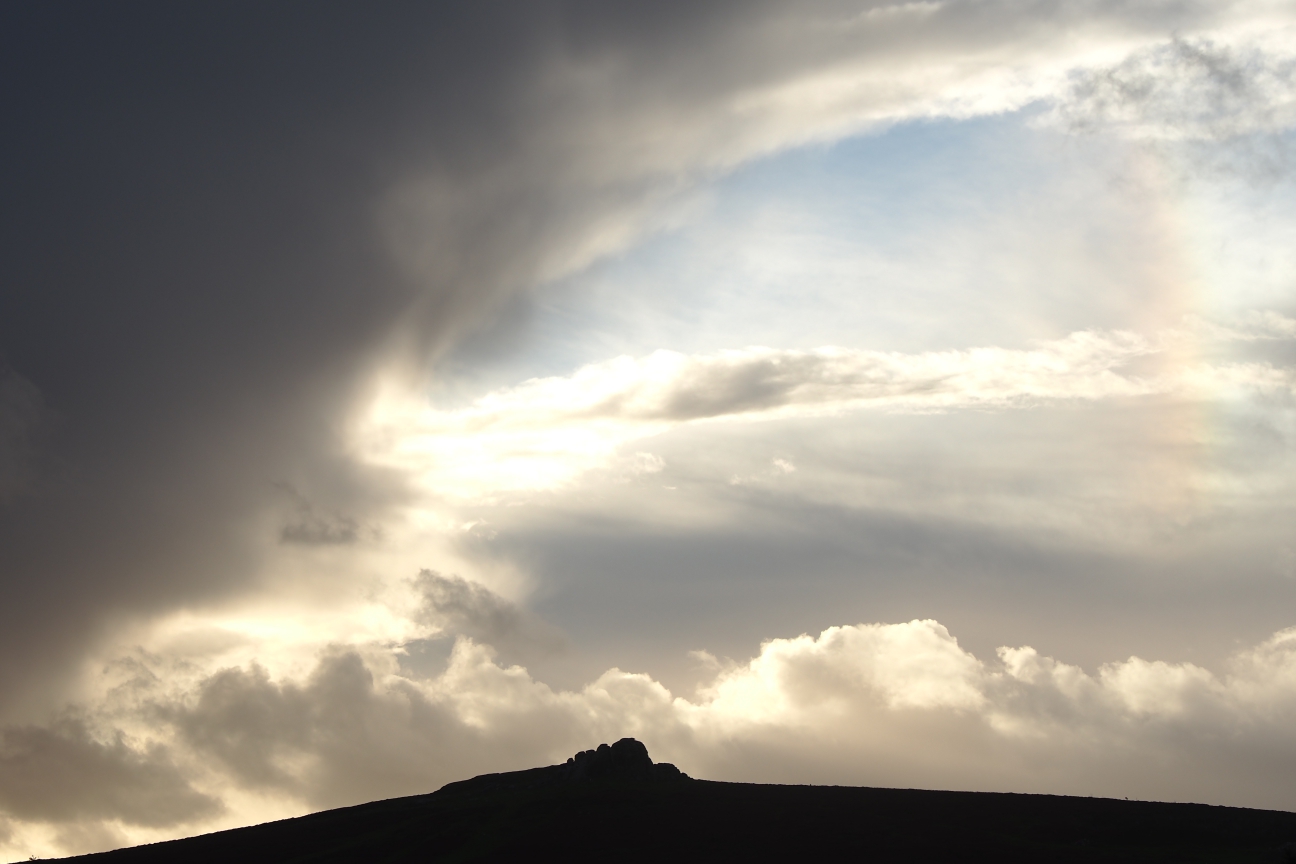
Haytor Rocks silhouetted against the wild skies often seen over Dartmoor.
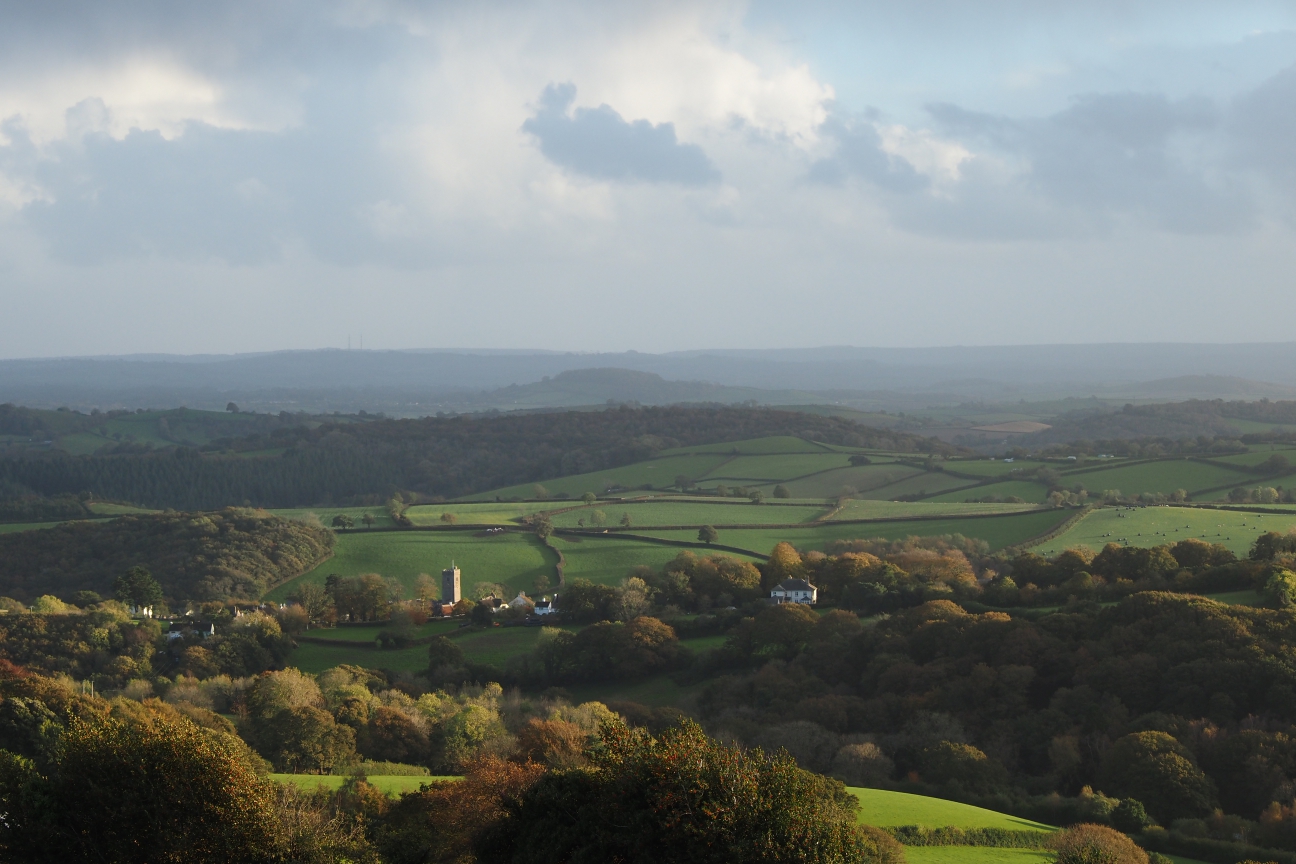
Though the woods had been left behind, there was one final surprise as we descended through the farmland and hedgerows towards the National Park’s edge.
A tractor had been through to cut the hedges and road verges. In the process it had pulled up this stinkhorn mushroom. It wasn’t something you could miss. That was probably enough mushrooms for one day.
I’ve had a burst of American visitors in recent days (to my blog, not my house). So thanks for visiting, y’all, and sorry about the year you’ve had. You may have noticed I’ve slipped to monthly posts on here. Between April and October I posted blogs every Monday without pause, which is a tricky task…
At the end of October I spent three days in Dartmoor National Park (on Dartmoor). I saw so many mushrooms there that I have enough for a post to cover each day. It’s a relief to have some images and sightings to share after a barren period. The mushroom season has arrived very slowly but Devon never disappoints in the fungi department come autumn. I need to say thanks to my partner Rosie who found a lot of the things shown here, exercising her squirrel gene.
As is usual for me, the fungi search was part of walks rather than seeking out food for the pot. The photos were taken with an Olympus E-M5 MIII with a 12-45mm lens and no additional equipment.
For more info about each species just click through the hyperlink of the scientific name in brackets. As ever I’m happy to be corrected if I have a species ID wrong, hence why I use iNaturalist.
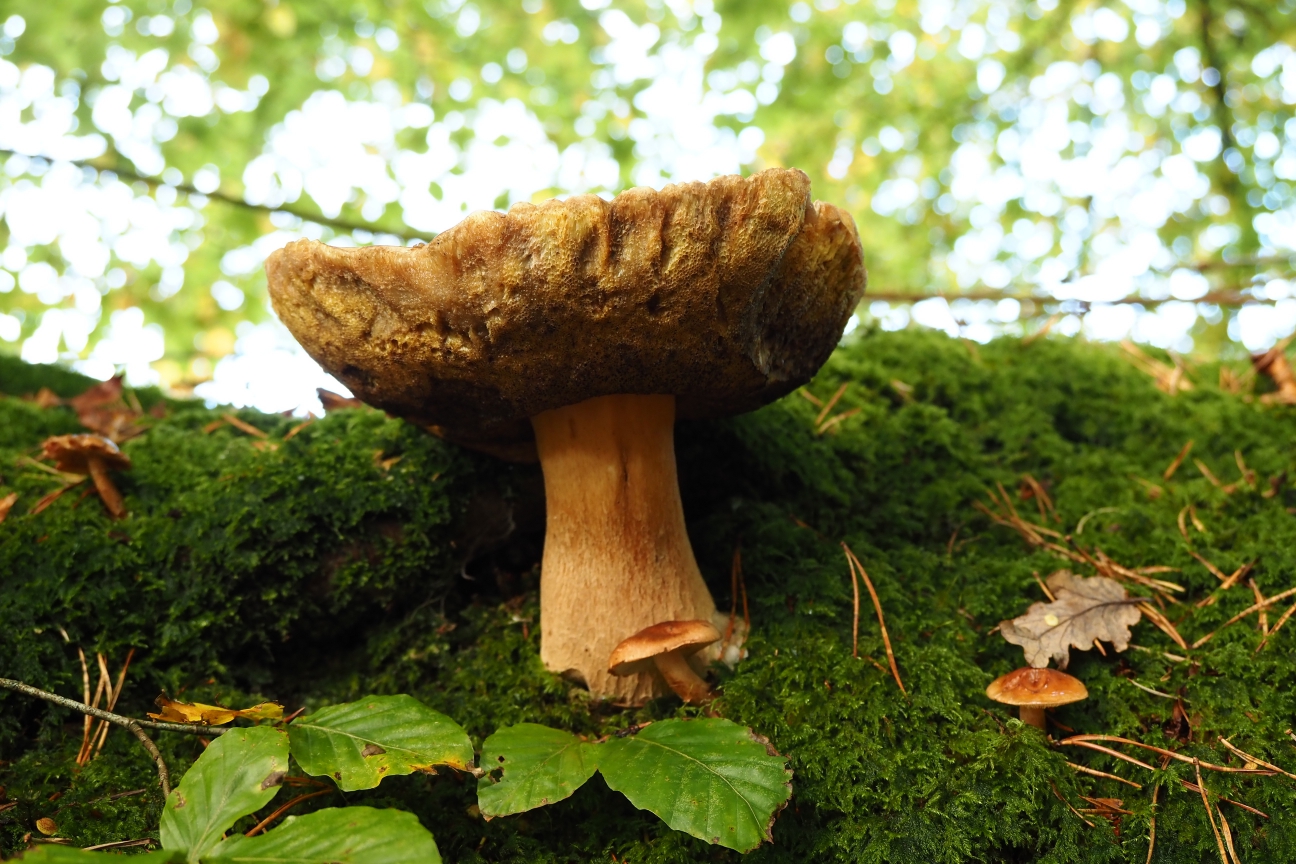
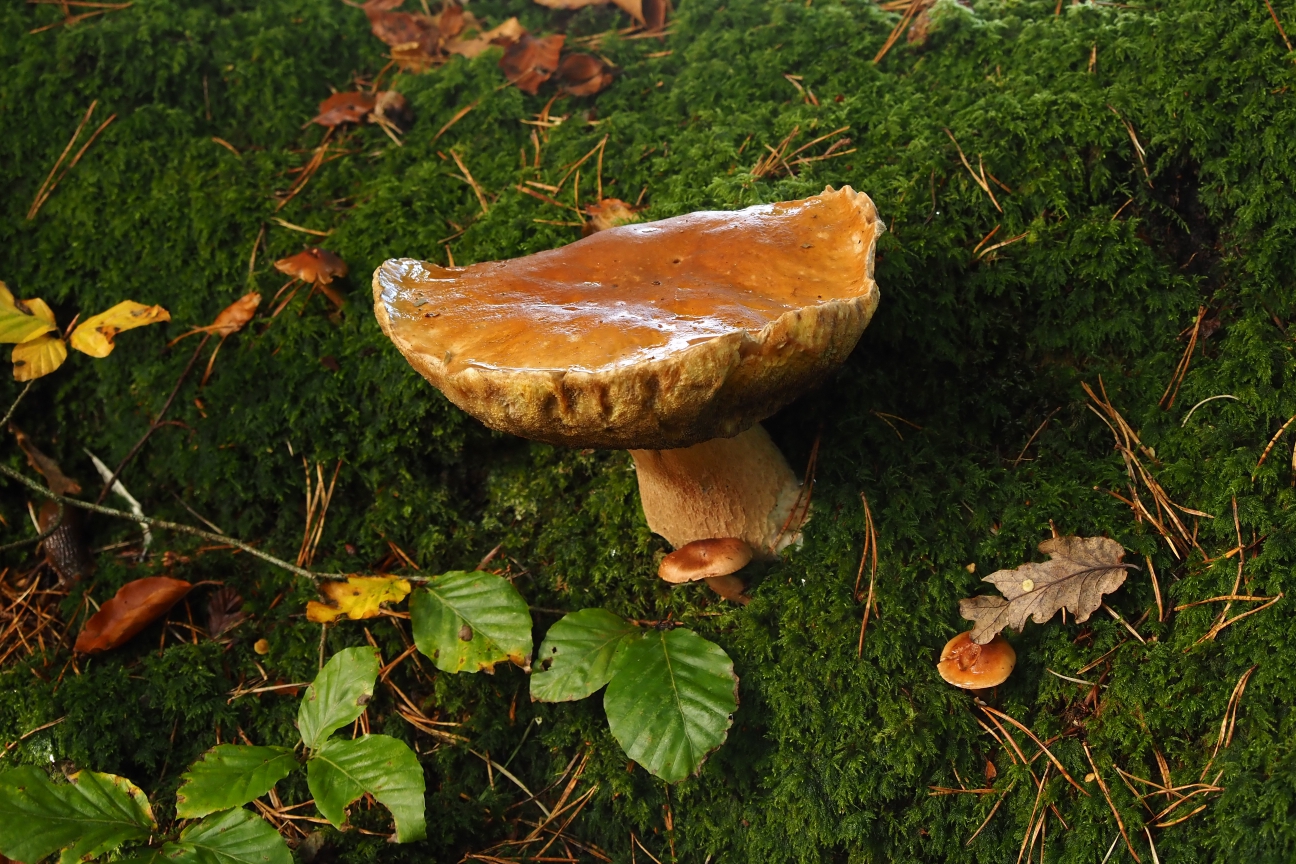
The first sign of peak mushroom season was a greenway with mossy hedgebanks and some smatterings of woodland. I’ve seen ceps (Boletus edulis) growing from mossy banks in Dartmoor before, also in Sussex, and it seems to be a favourable spot for them. I wonder if it’s part of their ectomycorhizal relationship with trees growing in those banks.
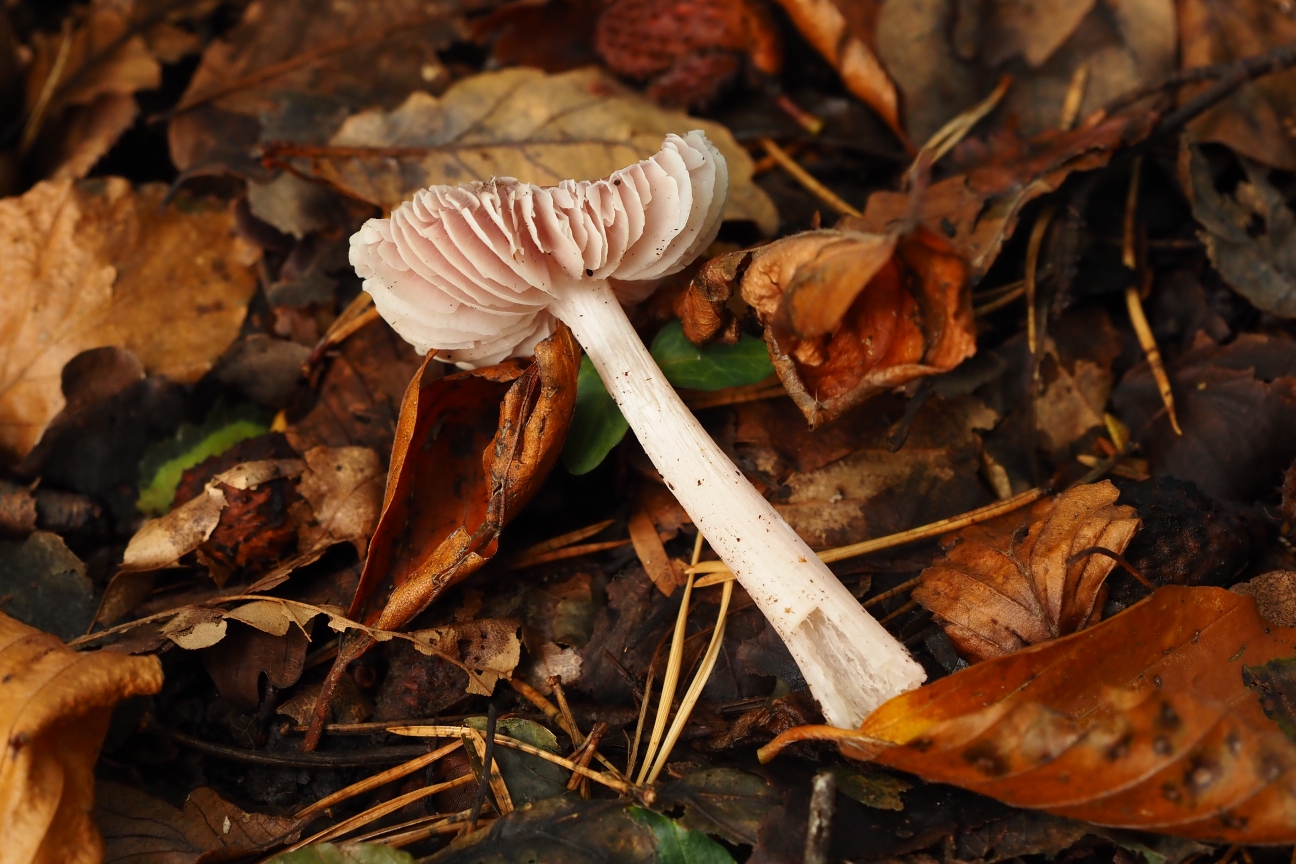
Close by in the leaf litter was a trio of pink mushrooms that I haven’t identified yet.
Here’s a nice collection that we found on the ground.
Dartmoor is a very birchy landscape in places which inevitably makes it a good place to find fly agaric (Amanita muscaria). I was listening to an episode of the Mushroom Hour podcast after this trip (as in, journey) which included quite a lot of discussion about fly agaric’s cultural place in mycophobic cultures such as Britain. Have a listen for yourself here.
The fly agarics we discovered were all well beyond their best, which I think is really around September before the October rain and first leaf fall. They are clearly edible for some animals.
A scene from the wooded edge of Dartmoor’s eastern side. There are some fine woods around this part which will feature in the next post.
This was one of the nicer finds, what is probably golden scalycap (Pholiota arivella). It was a large spread at the base of a tree, where this group of mushrooms can often be found.
I’m not sure what species these leathery-brown mushrooms are but they were very attractive with that white trim to the cap.
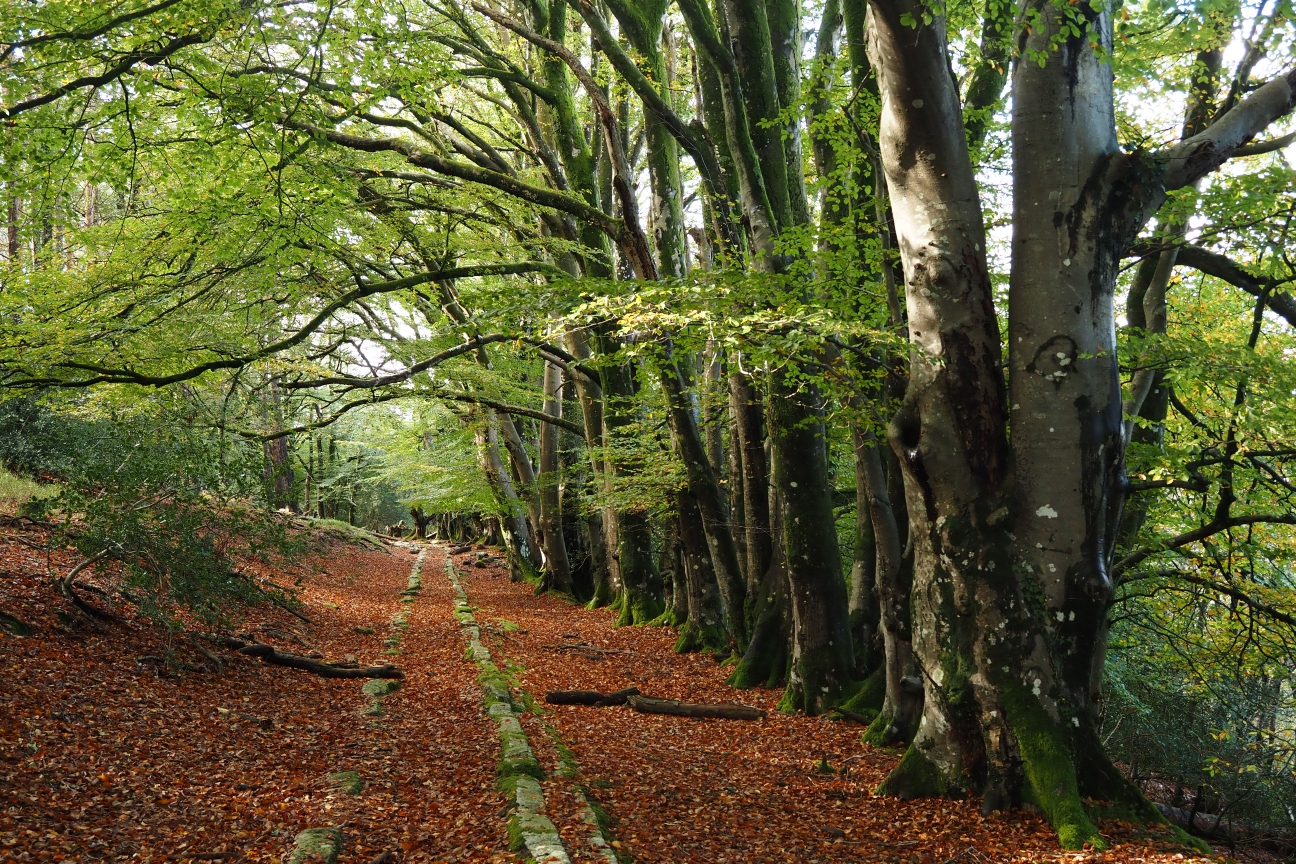
The walk encompassed part of the Templer Way, an old tramway used to transport granite quarried from nearby Haytor Rocks. You can read more about the Templer Way here. Stone from this area was used in the construction of a version of London Bridge and part of the British Museum. As seen above, beech is quite a common embankment planting on Dartmoor, presumably by the Victorians, and perhaps even at the same time that the Templer Way was being constructed.
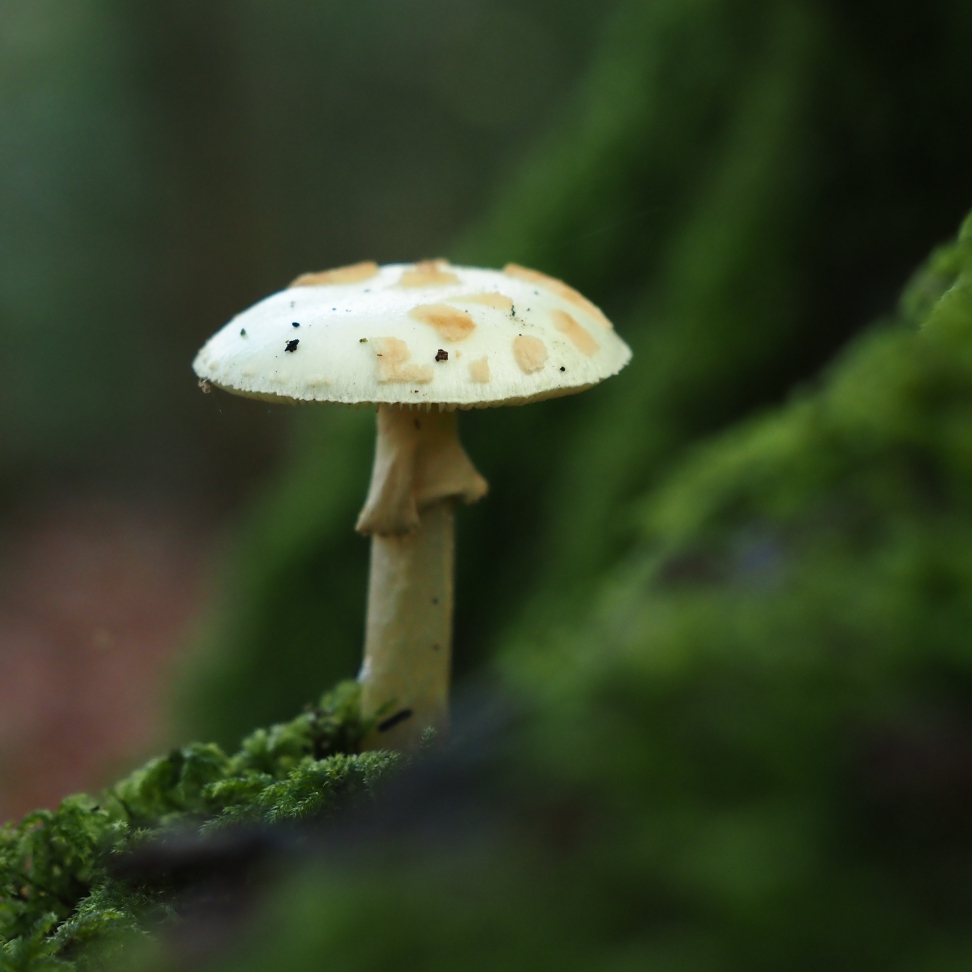
On the mossy bank (see a theme developing here) this false deathcap (Amanita citrina) had popped up. It can be distinguished from a deathcap by the remnants of the veil on the cap which make it look a little like a white fly agaric.
One species I haven’t seen much this year is porcelain fungus. There was one single fruiting body during this walk. This is a species almost always found on beech (Fagus sylvatica), even broken off bits of beech lying around can produce fruiting bodies.
On a large chunk of fallen beech wood this bracket fungus had grown. I’m not sure of the species. I’ve posted on iNaturalist to hopefully get an ID at some point.
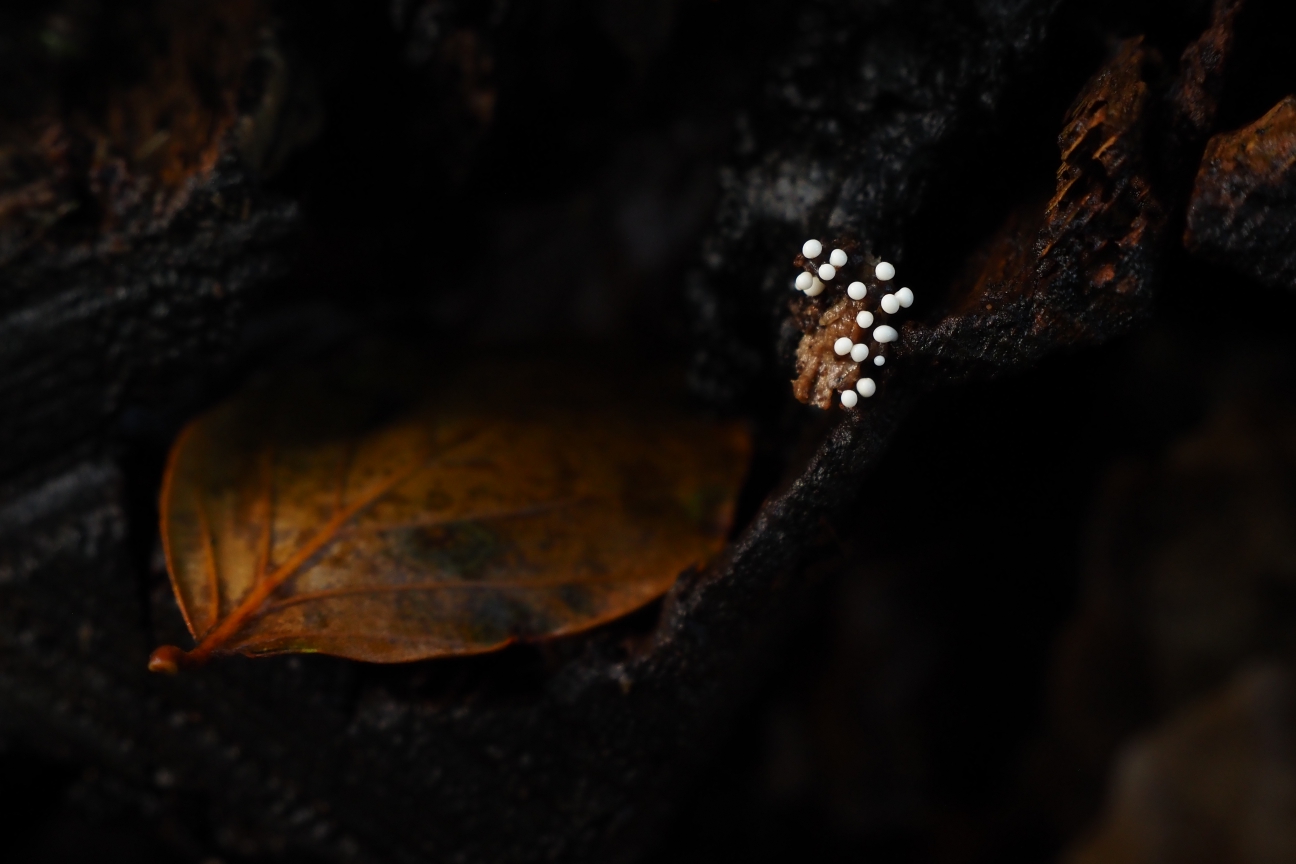
In the same beechy area there was some slime mould growing on some of the more wet fallen wood.
Here you can see the beech leaf for scale against the very small slime mould. I do like this composition and the colour of the leaf.
One funny thing was finding this stagshorn fungus (Calocera viscosa) growing from a gap in a bench. I was quite disturbed recently to find it’s scalled stagshorn rather than staghorn, as I had known it for such a long time.
I love how this fungus looks like a little animated fire burning.
A distance away from the previous location I found the largest community of chantarelles I’ve stumbled upon. I’m not entirely sure if they’re two different species but some of them looked to me to be trumpet chantarelles (Craterellus tubeiformis). Again, nothing was picked and everything seen here had already been upturned.
I couldn’t resist a photo of these very photogenic glistening inkcaps (Coprinellus micaceus). The sheer dominance of moss on Dartmoor shows how wet the landscape is here.
Rosie managed to find a more complete fly agaric, but still with plenty of chewing done already.
There are many, many mushrooms I see that I’m not able to name. This will go down in that category, possibly forever.
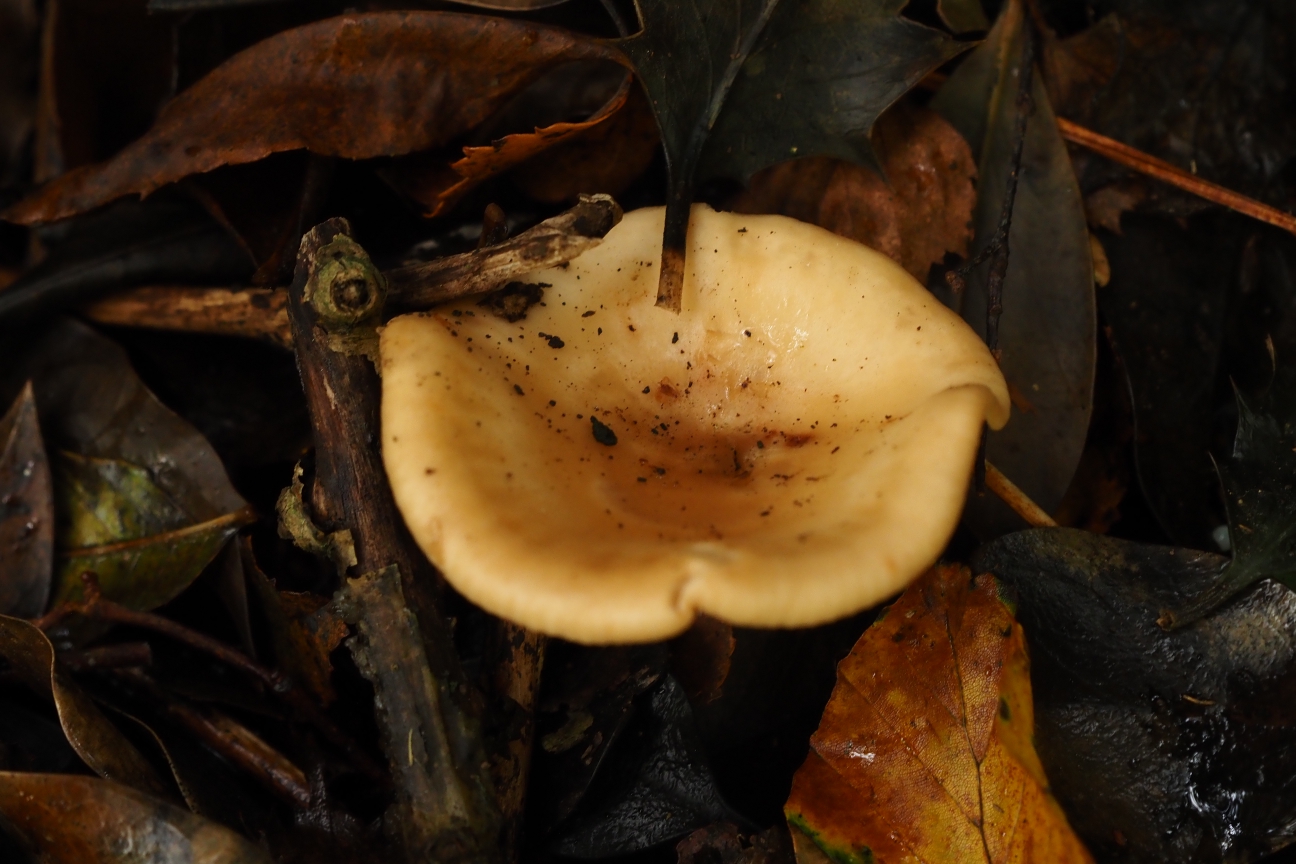
After hiding from an unexpected, torrential downpour we hid under some holly trees where these mushrooms were growing. I think they’re a species of funnel (Clitocybe) but I don’t know.
Sulphur tuft (Hypholoma fasciculare) was at almost every location where other mushrooms were fruiting. It is possibly the most common fungus I encounter, especially in woodland. This was a lovely scene and no surprise that this mushroom was making a home there.
The weather really turned after this point when we reached the moor proper. You can see from the image above how unsettled the weather often is on Dartmoor. Haytor rocks can be seen to the right of the image.
The final mushrooms of the walk were found along the green lanes near the edge of the National Park boundary.
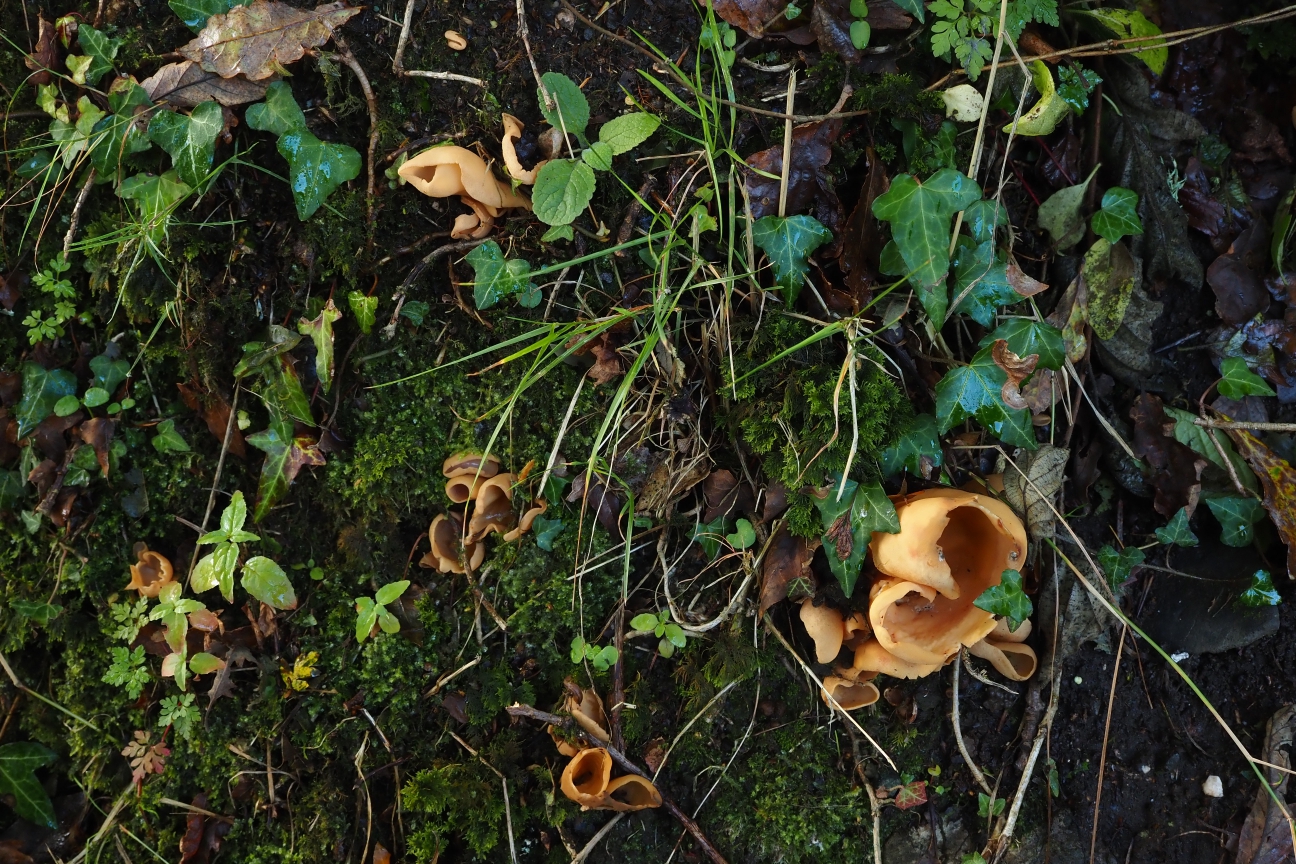
I’ve been meaning to write about the diversity of trees and plants in Dartmoor hedgebanks for years, but I hadn’t really considered their fungi. Above is an ascomycete fungus, a cup fungus. It’s probably hare’s ear (Otidea onotica).
This absolute bruiser of a mushroom is probably a pestle puffball (Lycoperdon excipuliforme). Usually it grows vertically from the soil but in this case was protruding at an exactly horizontal angle from the hedgebank.
As darkness fell, there was one final opportunity to see the mushrooms before night fell. This was the evening of the clocks going back one hour. The mushrooms above are clouded funnel, a common and fairly easy to identify fungus that grows in a group. It gets its common English name from the cloudy shading on their caps.
Thanks for reading. Stay tuned for episode two of ‘3 days on Dartmoor’.
Here’s my seasonal update of stuff you don’t need to know about, but then welcome to the Internet. What I’m writing Soon I will be self-publishing my third poetry collection, Fool’s Wood. It’s seven years since my last one and this collection has taken longer because of LIFE. There will be a booklet and also…
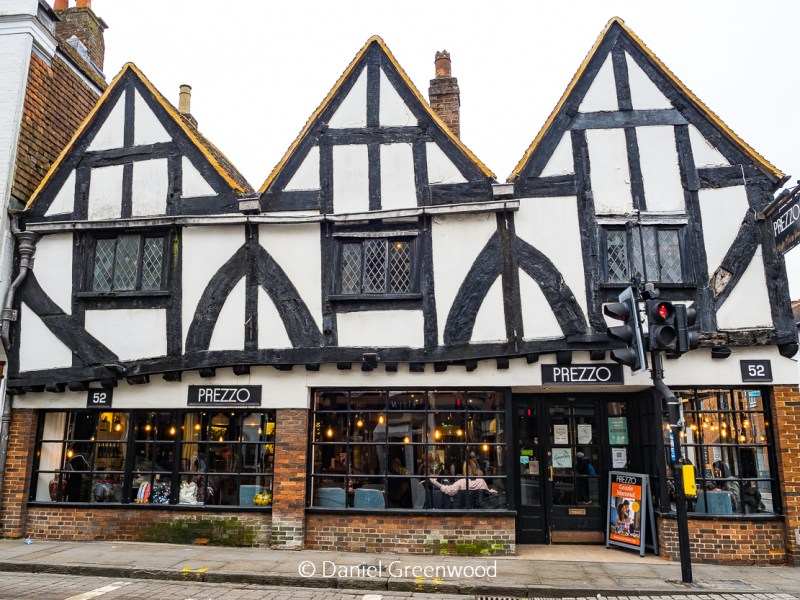
Here’s another entry in my slow-blogging Oak Timbers series. You can view my galleries and posts archive here. I visited Salisbury in Wiltshire (south-west England) for the first time in 2023 and was really charmed by the place. If you’re interested in this kind of thing, Salisbury is the place for you. Here’s a gallery…
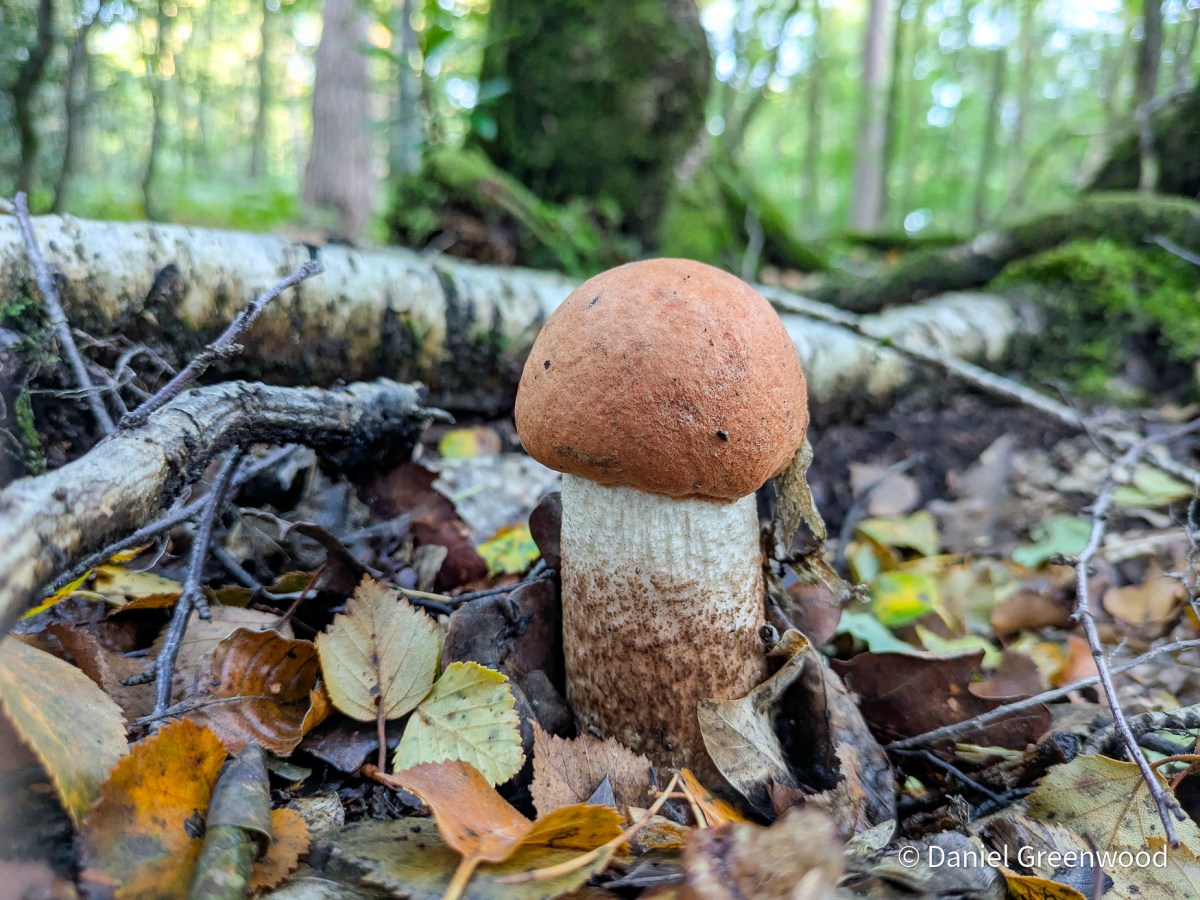
I’m getting into more of a routine of recording and editing audio, so here is the latest episode of Unlocking Landscapes. Listen on Podbean or via the usual platforms. Also via YouTube: https://youtu.be/y1K9Pqx68to?si=B-Fdhf3sdDH35Z8w Following on from July’s rather optimistic fungi walk, I popped back to the same area of ancient Wealden woodland to see if…








.jpg)













































 Unlocking Landscapes