#FungiFriday: September shrooms in Scotland, part three โ€“ Lochnagar

Cairngorms - September 2018 djg-34

Fungi Friday 1st May 2020

For another week the Covid-19 pandemic is keeping me away from the woods and therefore the shrooms. This fungal breaking news desk has run out of scoops, so itโ€™s more like a sports channel airing classic re-runs.

I had been intending to post about some fantastic fungal hiking experiences (sounds weird) from a 2018 visit to Scotland but work and life stopped me. I do hope anyone reading this is doing well and that youโ€™re following the guidance.

Cairngorms - September 2018 djg-4

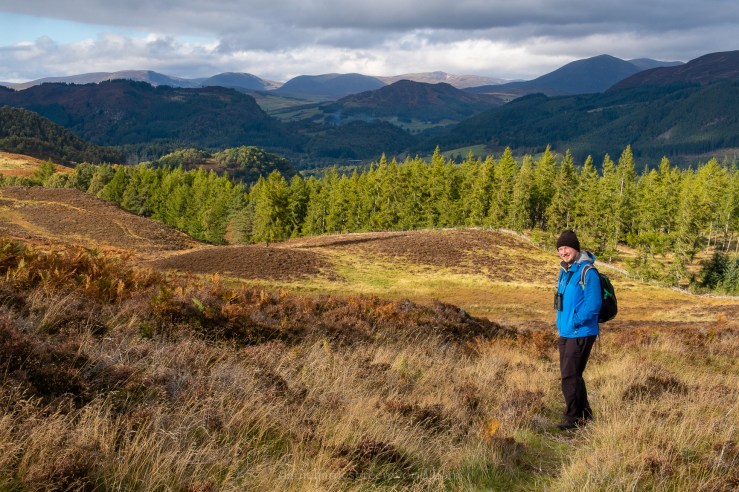
These posts remind me of my uncle Joe Reilly who passed away in November. Joe was a Glaswegian by birth who, along with my aunt Marg, introduced me to some of the most beautiful places the UK has to offer in Perthshire, among so many other gifts. I would visit Marg and Joe in Perthshire as often as I could, often in autumn when going to meet my hiking companion Eddie (seen here) for a jaunt in the Cairngorms.

Joe fell for fungi like I did in recent years and I will always miss his WhatsApp messages with mushrooms he had found on Perthshire walks. We miss his thirst for life terribly but carry it on just as he did.

Last week I was sharing fungi found on a hike to the top of Ben Vrackie in Perthshire.

This week my final Scotland post makes me feel like a bit of a cheat. The post is built around an incredible hike led by the rangers of the Balmoral Estate in the Cairngorms National Park with only one serious mushroom to be found. But it was one special shroom, and probably one you want to eat if you haven’t already. I will soften that blow with some dodgy phone pic shrooms.

IMG_20180920_082927299

I was visiting the Cairngorms for a Europarc Conference and there was very little time to get out on foot in the mountains and hills. Most of my photos looked like this one above, a phone pic taken while being ferried around in a minibus.

IMG_20180918_120728899_HDR

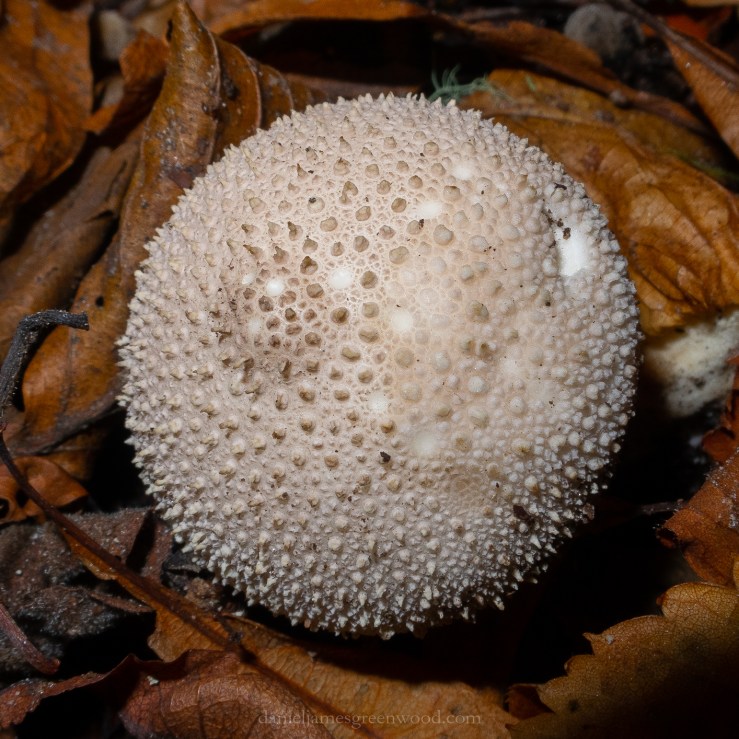
I was staying in Aviemore and there were a pleasing selection of shrooms found right next to the pavement in the verges. This is a giant puffball in its early stages, part brain part, well, bottom.

IMG_20180918_121133071_HDR

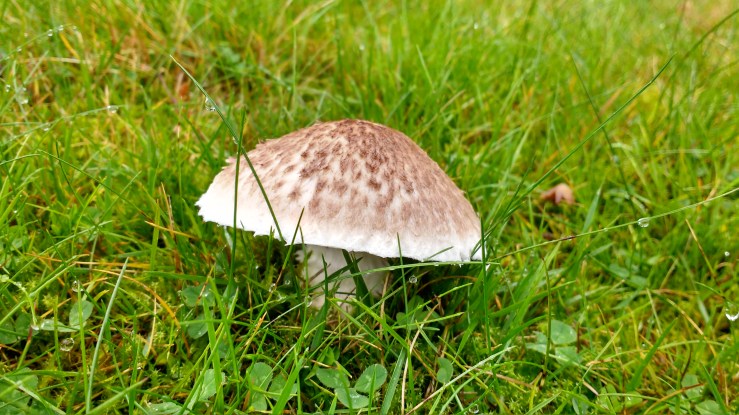
I’m not entirely sure what this species is, I thought it might be in the Macrolepiota/Lepiota family (where parasols are found) but can’t find a candidate just now.

IMG_20180919_180948746_HDR

This is almost certainly brown rollrim, a deadly poisonous fungus. It’s growing out of ballast, which is no surprise as I’ve seen it growing next to pavements in south London.

IMG_20180918_121355902

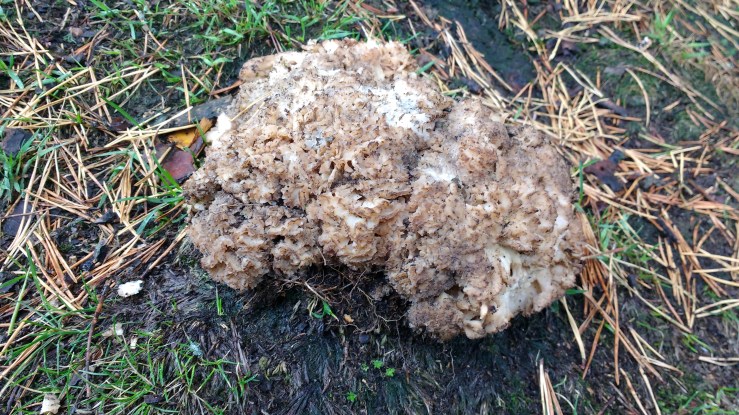
And behold, a very well trampled cauliflower fungus.

IMG_20180918_190309993

Winner of the truly worst phone pic was this fly agaric which was absolutely belting it out from underneath a hedge in a residential area.

Cairngorms - September 2018 djg-17

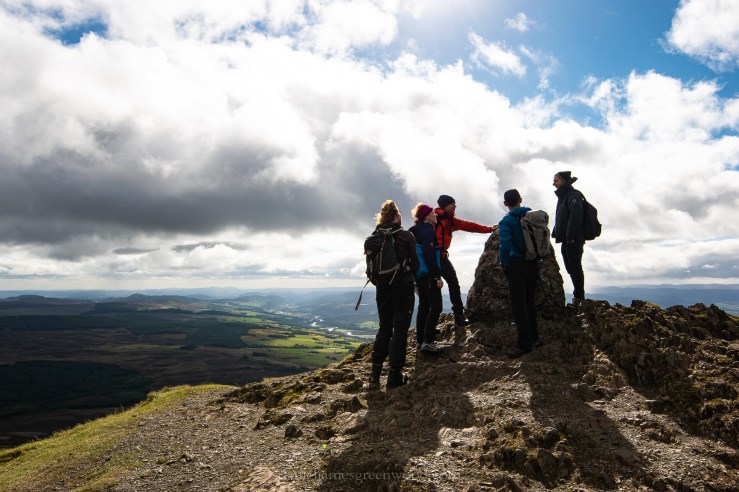
As mentioned at the start of this blog, I was lucky enough to go on a hike to Lochnagar on the Balmoral Estate, led by a very nice ranger and a professional guide, who was also very nice. There were National Park staff from all across Europe. I spoke to one ranger from Iceland who would be spending her winter driving around the vast areas of her Park undertaking works to signage and all manner of other things. She was the real deal. Our National Parks are tiny in comparison to many in Europe, though the Cairngorms is the closest we probably get to some of Europe’s most rugged wildness. The Balmoral Estate is not a good example of that because of the intensive management to support grouse shooting. Apparently the Queen still drives around the Estate in her Land Rover.

Cairngorms - September 2018 djg-18

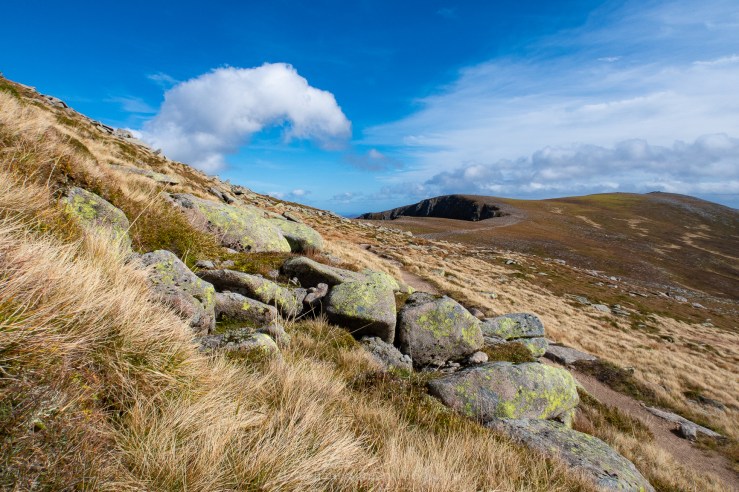
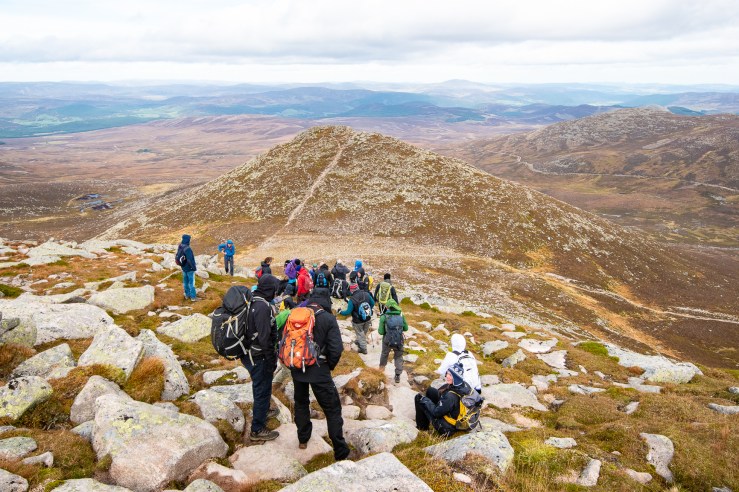
There were extreme winds at the time of the walk and we didn’t make it to the peak of Lochnagar. It was too dangerous. Though you’re unlikely to find much fungal diversity at these altitudes (1000m+) there was a familiar neon lichen on the boulders. This is Rhizocarpon geographicum.

Cairngorms - September 2018 djg-26

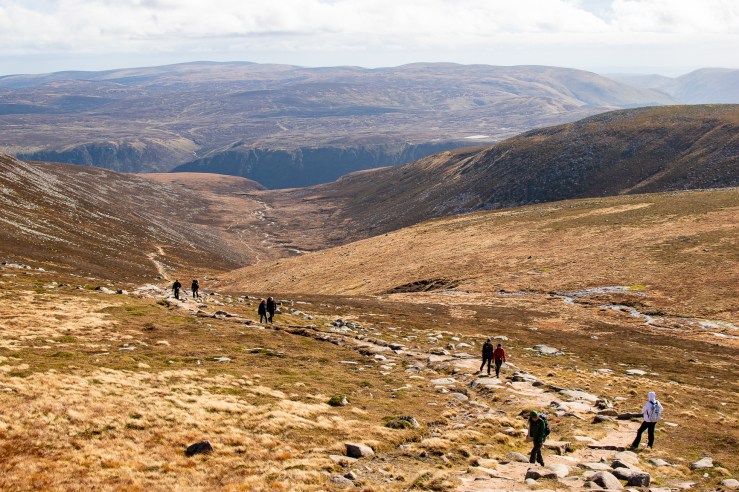
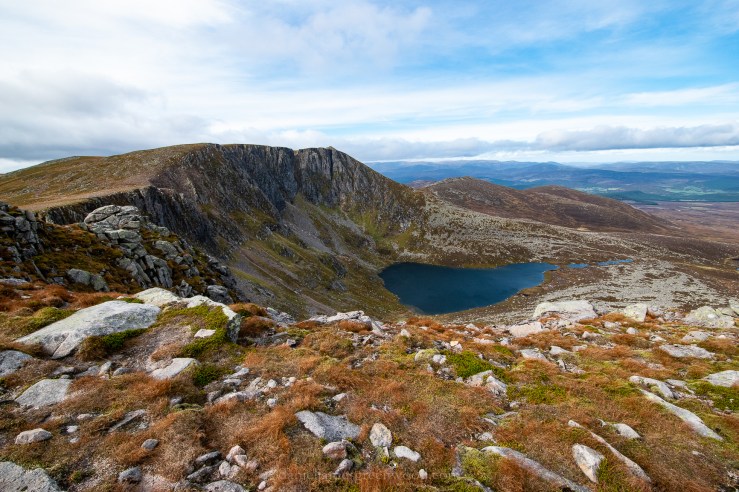
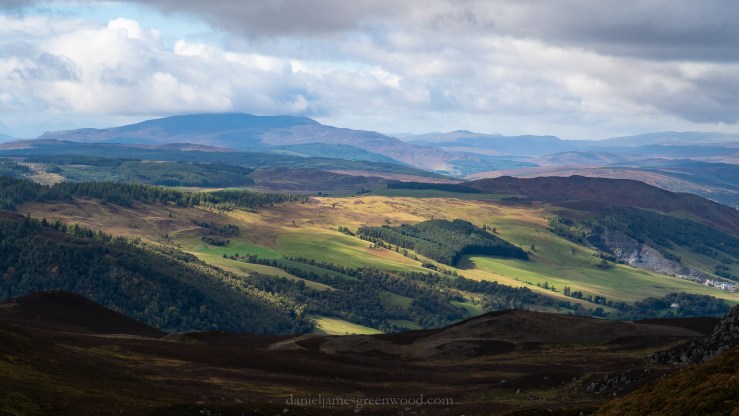
It took a real effort to actually hold my camera in place and take this photo. It was incredibly windy. This is Lochnagar. The peak can be seen in about the middle distance where a small cairn stands.

Cairngorms - September 2018 djg-32

At this point we were all told to put our cameras away because the winds were going to hit hard. They did, it was incredible.

Cairngorms - September 2018 djg-1

You’re probably wondering – where are the shrooms? But let it be a lesson to you, finding fungi can be really hard. Sometimes it’s all there at the side of the pavement, but at other times you will see nothing.

Cairngorms - September 2018 djg-3

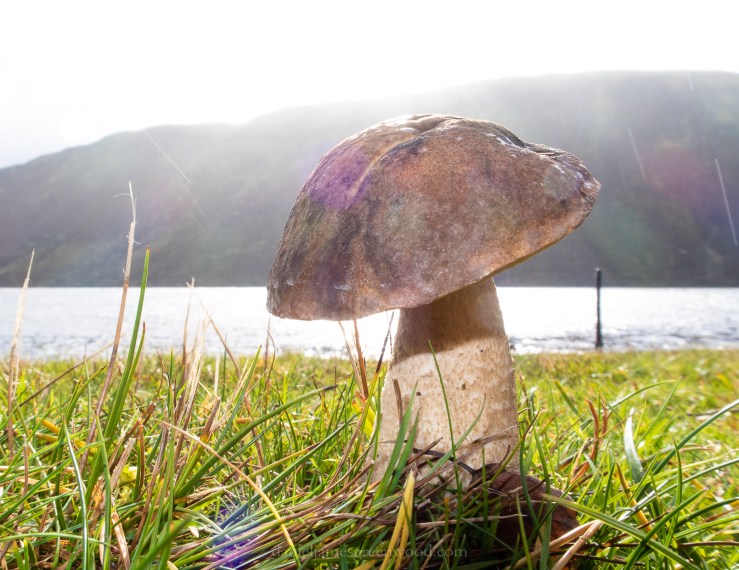
At the point where our minibus was parked I could not believe what I saw. This is a cep, otherwise known as porcini or pennybun. Its Latin name is Boletus edulis. It is the most prized edible mushroom. This was the most perfect specimen I have ever come across. In the background is Loch Muick, with the classic Scottish rain, sun and wind falling in the background. I can still get a tingle of the joy of finding this mushroom, against that background, in such a stunning location.

Thanks for reading.

More mushrooms


#FungiFriday: September shrooms in Scotland, part two – Ben Vrackie

Perthshire - September 2018 djg-47

#FungiFriday 25th April 2020

For another week the Covid-19 pandemic is keeping me away from the woods and therefore the shrooms. This fungal breaking news desk has run out of scoops, so it’s more like a sports channel airing classic re-runs.

I had been intending to post about some fantastic fungal hiking experiences (sounds weird) from a 2018 visit to Scotland but work and life stopped me. I have three hikes to share with you which should get you through the next three weeks of lockdown. I do hope anyone reading this is doing well and that youโ€™re following the guidance.

Perthshire - September 2018 djg-38

These posts remind me of my uncle Joe Reilly who passed away in November. Joe was a Glaswegian by birth who, along with my aunt Marg, introduced me to some of the most beautiful places the UK has to offer in Perthshire, among so many other gifts. I would visit Marg and Joe in Perthshire as often as I could, often in autumn when going to meet my hiking companion Eddie (seen here) for a jaunt in the Cairngorms.

Joe fell for fungi like I did in recent years and I will always miss his WhatsApp messages with mushrooms he had found on Perthshire walks. We miss his thirst for life terribly but carry it on just as he did.

Last week I was sharing fungi found on a walk around Clunie Wood in Pitlochry.

This week Iโ€™m reminiscing about a hike from Pitlochry up to the summit of Ben Vrackie accompanied by my friend Eddie. Below the tree line, a pleasing range of fungi were found.

Perthshire - September 2018 djg-26

The walk leaves the town of Pitlochry and heads up through suburbs. This manicured field had a rowan so heavy with berries it looked like it was falling over. I have never seen so many on one tree.

BenVrackie_Sept2018-1

The day was warm and while I waited for Eddie to change out of his underlayers behind a tree I scoped out some shrooms in the first piece of woodland we encountered. I’m not sure what this species is. I found them pre-plucked at the side of the path.

BenVrackie_Sept2018-2

Further up through the woodland this common puffball was sitting among the leaf litter. This has to be one of the most common woodland mushrooms to find in the UK. This is always a good sign of what is to come on a longer walk. Puffballs can be an indicator of a good amount of fungi on the ground.

Perthshire - September 2018 djg-28

The woodland broke into something more open as the moorland and hills approached, with large birch trees growing along the edge of the path. A tree stump held this gathering of yellow staghorn. I asked Eddie if he would help to add something to this pic! Probably one of my fave fungi photos.

Perthshire - September 2018 djg-33

As we ascended towards the winding set of steps that take you to the top of Ben Vrackie, we saw two golden eagles floating above another hill nearby. This was only the second time I’d seen golden eagles in the UK. They are massive!

Perthshire - September 2018 djg-34

The fungi in these areas thins out to small species connected to the habitat and the odd common species which is particularly good at spreading its spores and growing in a range of habitats (stuff like sulphur tuft on dead wood). For those who don’t know, this is heather moorland. Short on trees so not the richest place for fungi. Then again I haven’t spent enough time looking.

Perthshire - September 2018 djg-52

This is a popular walk from Pitlochry. Lots of people were coming and going from the 841m summit of Ben Vrackie. Here is Eddie trying to get some soul signal from the gods. He failed.

BenVrackie_Sept2018-3

The views north into the Cairngorms were beguiling. Landscape photographers would have appreciated the range of weather available and the clouds which gave extra character to the views. While we sat up here eating lunch, a man and his two sons reached the top. He told them a story of when he had climbed a hill with ยฃ200 cash in his pocket. He knew it was a bad idea and half way up the money slipped out of his pocket and away into the landscape. He salvaged ยฃ20. His boys told him it had indeed been a bad idea.

BenVrackie_Sept2018-5

Rain following the River Garry through the valley from Blair Atholl. This photo has been enhanced to bring out the distant peaks and rainfall.

BenVrackie_Sept2018-6

Rain arriving in the hills.

BenVrackie_Sept2018-9

Descending back down through the tree line, we took the same path back. It’s interesting how you see things so differently when you walk a single route in another direction. Here was a very large birch polypore, also known as razorstrop fungus. It is a natural controller of birch trees and is possibly one of the easiest species to find.

Perthshire - September 2018 djg-96

On the way back we found what I think is a birch bolete. It was reaching out from the path edge and had already been nibbled on by slugs. A real treat to find something like this.

BenVrackie_Sept2018-10

It was a pleasant surprise was to find a chantarelle, one of the most sought-after edible fungi. This one had already been plucked (I think).

BenVrackie_Sept2018-11

I’m really not sure what species these shrooms are, but they were a nice find.

BenVrackie_Sept2018-12

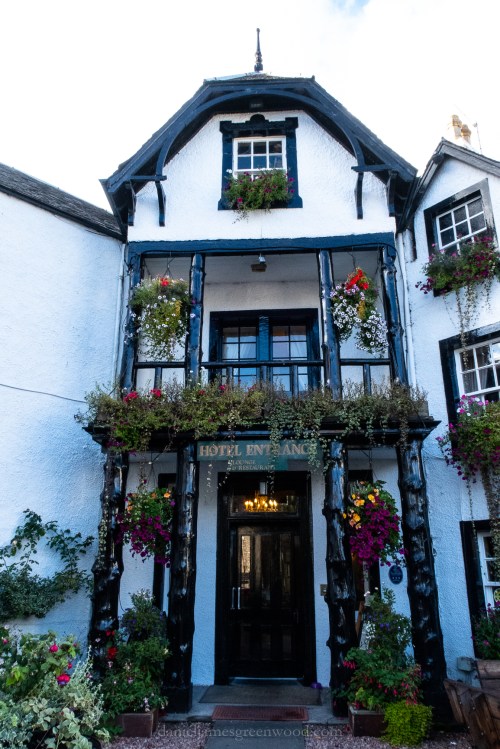
On the way back we visited this beautiful pub, the Moulin Hotel, with conifer beams holding up a balcony. It dates from the 17th century.

BenVrackie_Sept2018-13

The rain was coming and going throughout the afternoon. It reminded me why Scotland is so good for fungi. There is a high level of rainfall, large areas of woodland and acidic soils which seem so good for mushrooms.

Next week it’s fungal royalty in the Cairngorms.

Thanks for reading.

More mushrooms


#FungiFriday: September shrooms in Scotland, part one: Pitlochry

Perthshire - September 2018 djg-25
Ben Vrackie as seen from Clunie Wood

Fungi Friday 17th April 2020 via September 2018

For another week the Covid-19 pandemic is keeping me away from the woods and therefore the shrooms. To be honest though, my town is so deserted at the moment that I am kind of hoping some shrooms start popping up soon in the paving. Especially considering there is rain coming today.

I had been intending to post about some fantastic fungal hiking experiences (sounds weird) from a 2018 visit to Scotland but work and life stopped me. I have three hikes to share with you which should get you through the next three weeks of lockdown. I do hope anyone reading this is doing well and that you’re following the guidance.

These posts remind me of my uncle Joe Reilly who passed away in November. Joe was a Glaswegian by birth who, along with my aunt Marg, introduced me to some of the most beautiful places the UK has to offer in Perthshire, among so many other gifts. I would visit Marg and Joe in Perthshire as often as I could, often in autumn when going to meet my hiking companion Eddie (seen here) for a jaunt in the Cairngorms. Joe fell for fungi like I did in recent years and I will always miss his WhatsApp messages with mushrooms he had found on Perthshire walks. We miss his thirst for life terribly but carry it on just as he did.

This week I’m reminiscing about a great walk in the wooded hills of Pitlochry.

Perthshire - September 2018 djg-14

The walk was on a Friday afternoon from the door of our guesthouse in Pitlochry but can also be done from Pitlochry railway station. It’s a stunning place, close to the southern border of the Cairngorms National Park. My friend Eddie lives in Glasgow and his journey was a wee bit quicker than mine from Sussex. Above you can see Eddie not at all incongruous in the landscape All these pics are taken with the amazing Canon Powershot G7X MII in RAW format and processed in Adobe Lightroom.

Perthshire - September 2018 djg-1

Scotland has deliciously wet and humid woodlands which in some parts constitute what is affectionately known as ‘Celtic Rainforest’. This is my habitat, the milder temperatures and shadier conditions far better suit my Celtic biology (which is not actually something that exists in Science).

Perthshire_Sept2018-1

Perthshire_Sept2018-2

These birch trees were host to large hoof fungus brackets and many foliose lichens. These are commonly found on the acidic soils of heather moorland that covers so much of the Scottish Highlands.

These dead standing trees are a vital source of biodiversity in woodlands. They are the thing we have lost but are slowly, very slowly, returning to the landscape thanks to sensitive management.

Perthshire - September 2018 djg-4

In Clunie Wood I found my first ever jelly babies. These are a bizarre species that do look like the sweets. They were growing in large numbers under shade in a wet area alongside the path.

Perthshire - September 2018 djg-21

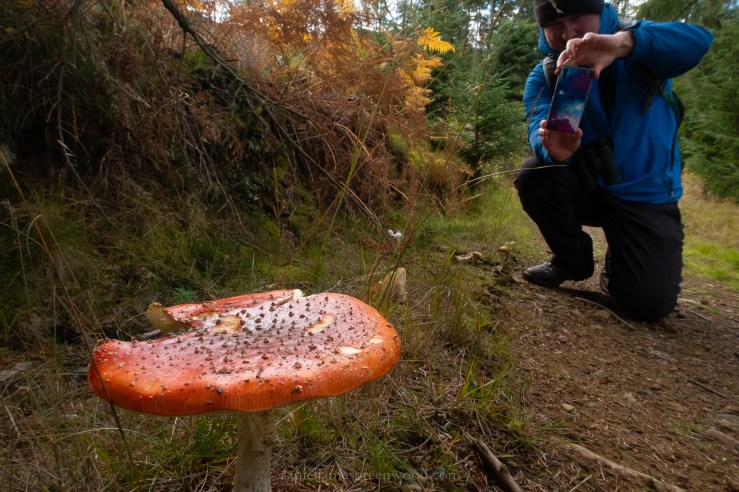
At the edge of a plantation we found a huge fly agaric.

Here is Eddie getting a pic which gives a sense of scale. September seems a good month for fly agaric in the Highlands of Scotland.

Perthshire - September 2018 djg-24

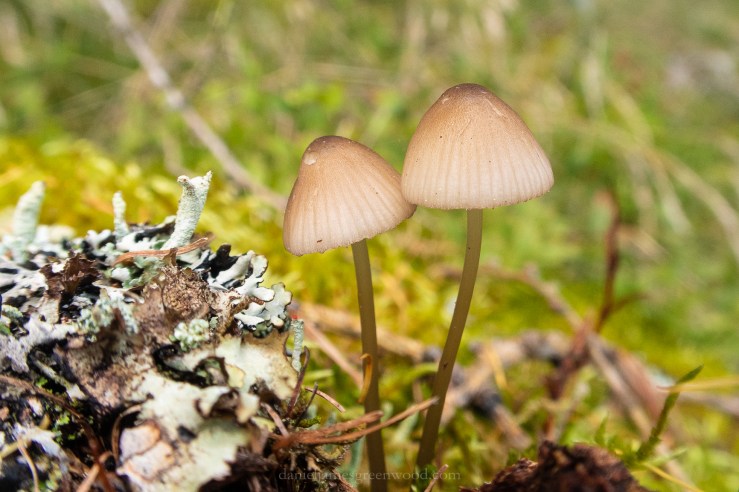
The conditions were perfect for fungi and these beautiful bonnet mushrooms were alongside lichens on a tree stump.

Perthshire - September 2018 djg-5

This quite hilarious clump of mushrooms (they were growing from one small stump… had to be there) are probably a type of honey fungus described in Latin as Oystoyae.

Perthshire - September 2018 djg-2

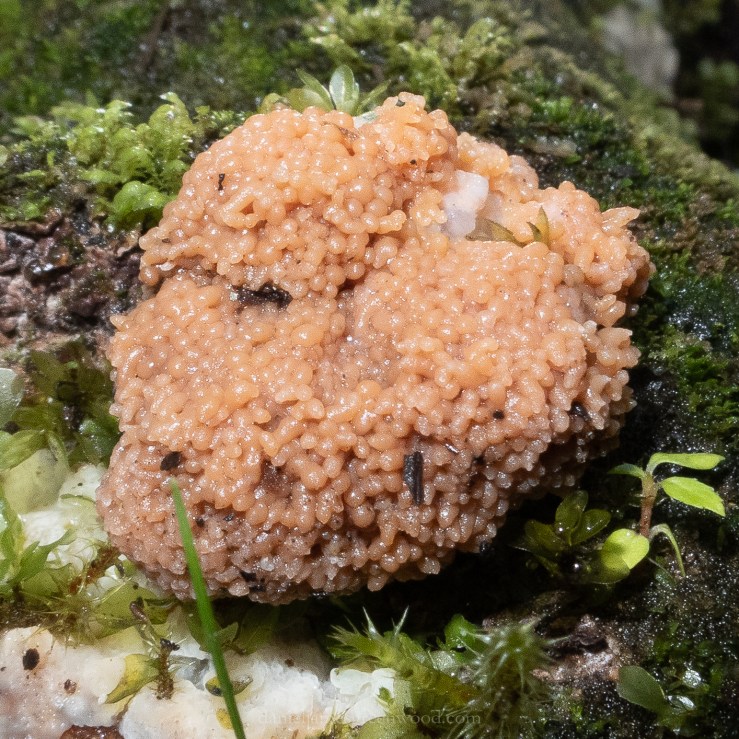
This cheeky slime mould was another sign of the exceptional conditions with the mixture of broadleaf woodland and conifer plantation providing lots of moisture.

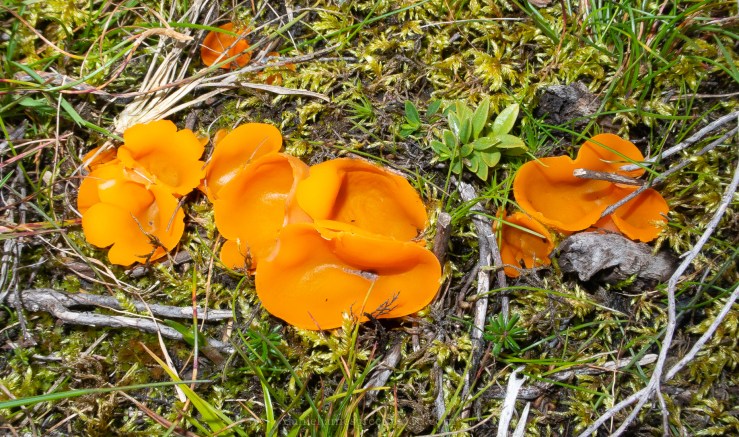
I always think orange peel fungus is some kind of plastic pollution. Having worked in urban nature conservation it reminds me of litter picks pulling old bits of traffic cone out of the soil!

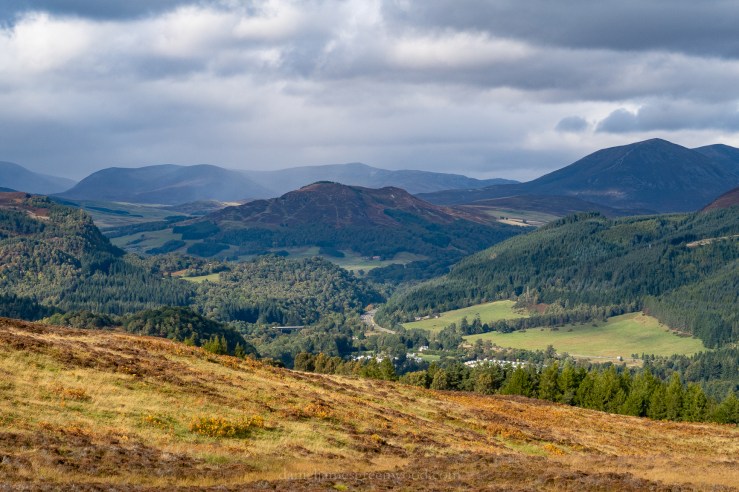
At the edge of the woodland the beautiful heather moorland appears and views expand into the Grampian Mountains of the Cairngorms National Park.

Thanks for reading and keep dreaming!

More mushrooms

#FungiFriday: a special day in the New Forest

New Forest - 23-10-17 -1 djg (59)

#FungiFriday 10th April 2020 (via October 2017)

With another week of social distancing and time spent indoors, I am once again recalling a classic mushroom experience. Sorry to disappoint both of my readers, but this does not involve the ingestion of hallucingenic fungi. If I said that on Instagram I would lose probably all my followers. Don’t tar me with the liberty cap brush!

This week I am recalling one of the great days out I’ve had in search of mushrooms to photograph, hot on the heels of last week’s look back at 2019’s highlight. This time I invite you to the New Forest, virtually, and the moment I snapped what I think is the most perfect mushroom scene I have witnessed.

New Forest - 23-10-17 -1 djg (4)

It was October 2017 and I’d travelled from London by train to Brockenhurst to do a long circular walk from the station, taking in some beautiful ancient woodland, plantation and bits of heath. The New Forest is a National Park in Hampshire, southern England. It is home some of the most intact stretches of semi-natural woodland in Europe. Semi-natural woodland equals mushrooms.

New Forest - 23-10-17 -1 djg (10)

On arrival the signs were good because the dead wood held smaller shrooms in nice condition, such as this probable bonnet. That’s a mushroom name I wish existed.

New Forest - 23-10-17 -1 djg (17)

The richer areas of woodland were under beech. You can see that the leaves had already fallen, what can be a bit of a pain for photographing shrooms because they’re all hidden, basically.

New Forest - 23-10-17 -1 djg (18)

This mushroom seems to dissolve into the background glow of the newly fallen beech leaves.

New Forest - 23-10-17 -1 djg (23)

Looking for fungi, it’s difficult to ignore the mushroom of the insect world otherwise known as a dor beetle.

New Forest - 23-10-17 -1 djg (38)

One of the pains of photographing fungi is how much time you have to spend down in the dirt. Upon leaving the first area of woodland on this circular walk, a gang of bonnet mushrooms were poking their heads out from a fence post at head height. This is the kind of thing you see in peak mushroom season.

New Forest - 23-10-17 -1 djg (43)

The walk left entered more grassy and open woodland at the edge of the heath. This is a good place to find fungi. This Leccinum or birch bolete was pushing the boat out. Half the shroom had already been eaten on the other side by slugs!

New Forest - 23-10-17 -1 djg (52)

The walk followed on to the edge of Beaulieu Heath. The richest parts of the New Forest are those which don’t suffer from over-grazing. This tawny grisette was in a grassy area of heathland interspersed with oak and birch trees. It should have been an indicator of peak mushroom. It was.

New Forest - 23-10-17 -1 djg (57)

A metre or so away from the footpath this fly agaric was unmissable. I crouched down in front of it to find the best way to get a photo. A family came out of a cottage across the way and stopped to see what I was doing. ‘Oooh, a magic mushroom!’ they said. I didn’t get into discussing how in fact it is a mushroom that has hallucinogenic tendencies and is consumed for tribal purposes in northern Scandinavia. It should also be considered poisonous as standard.

IMG_20171024_092411_982

Here is the VIP behind the scenes view. A perfect end to a classic mushroom photography experience. Here’s to more special mushroom days in autumn 2020. The way things are going it will probably be another mushroom reminiscence therapy next week.

Thanks for reading. Stay away from each other. Both of you.

More mushrooms


#FungiFriday: looking back on a mushroom classic

Ebernoe - 8-11-2019 blog-75

Fungi Friday 3rd April 2020 (or Friday 9th November 2019)

I can’t get out to anywhere that has mushrooms to photograph and we’re also experiencing something of a dry spell in Sussex. That means that this week I’m posting about my fungal highlight of autumn 2019, which took place on Friday 9th November. Consider this a bit of a sporting or cinematic classics TV show, until we’re allowed to venture further and any spring rain arrives. The inconsistent nature of mushroom fruiting bodies means I may have to wheel this out again to keep it going every week.

Ebernoe - 8-11-2019 blog-91

It was mid-November with autumn at its peak. The colours of the beech trees were at their most explosive. In the woodlands of the Sussex Weald, there were millions of mushrooms. They seemed to be under every footstep and fruiting from every fallen tree.

Ebernoe - 8-11-2019 blog-10

It was clear it was peak mushroom time. The bonnets were out en masse and many leaves were still on the trees. I have come to think that fungi hunting is so much easier before the leaves fall. The leaf litter created by oak and beech is very hefty.

Ebernoe - 8-11-2019 blog-88

I would also consider using hazel as an indicator. When those leaves start to yellow and fall, you know it’s going to be more difficult. Winter is on its way.

Ebernoe - 8-11-2019 blog-39

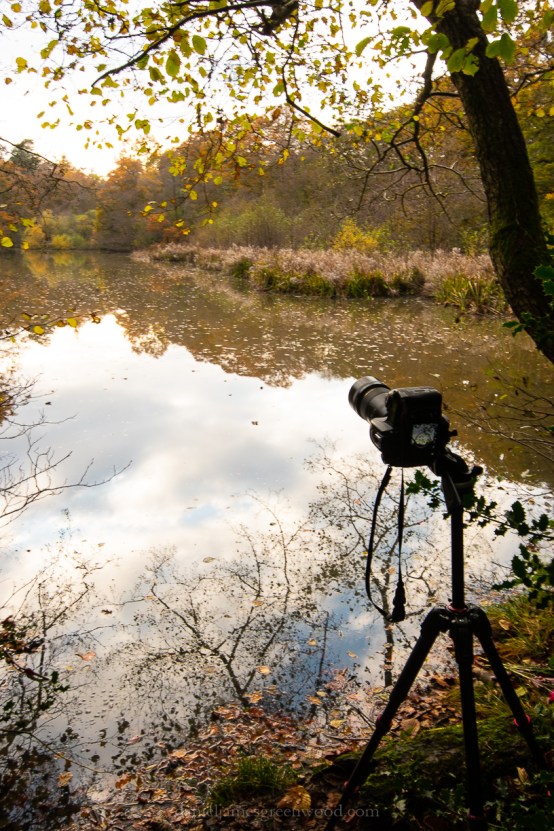
Bonnets are some of the best fungi to photograph because they’re often elevated on the limbs of fallen trees, meaning you don’t have to scrabble around on the ground. It’s also a very nice height for a tripod. A tripod gives you the steadiness to use slow shutter speeds which makes it so much easier to take pics in a dark woodland in autumn. Also, mushrooms don’t move!

Ebernoe - 8-11-2019 blog-14

What I am looking for in general is a mushroom that can be isolated. A macro lens gives a very shallow depth of field, which means that the focus is thin and the background easily blurs. This kind of thing is perfect. I don’t focus stack images (a complex process of threading images together which have different stages of focus) but this would look really good with every aspect in focus.

Ebernoe - 8-11-2019 blog-48

This is also what’s so nice about elevated fungi. You can play around and get some nice bokeh (the circles in the background). This is created by daylight flooding through the leaves – can you see the wash of green? I used a small LED light to light the gills of the bonnets. They look almost like paper or plastic to me. The idea also occurred to me that the white bokeh circles look like the mushrooms, too.

Ebernoe - 8-11-2019 blog-27

These are probably more bonnets. Again, taking a photo of the gills underneath can create a really beautiful effect. I could have pulled the bit of dead wood off to reveal the other mushroom but I fundamentally disagree with damaging habitats for the sake of a photo.

Ebernoe - 8-11-2019 blog-18

A species I learned last year was buttercap (or at least I think I have). This is said to be a common species. I like the fairytale shape of the stipe as it bulges at the base.

Ebernoe - 8-11-2019 blog-1

The woodland was entering peak autumn colour. These beech leaves still held traces of their chlorophyll.

Ebernoe - 8-11-2019 blog-62

It was a beautiful day to be in the woods. I can’t tell you how much a woodland stream adds to the overall experience!

Ebernoe - 8-11-2019 blog-79

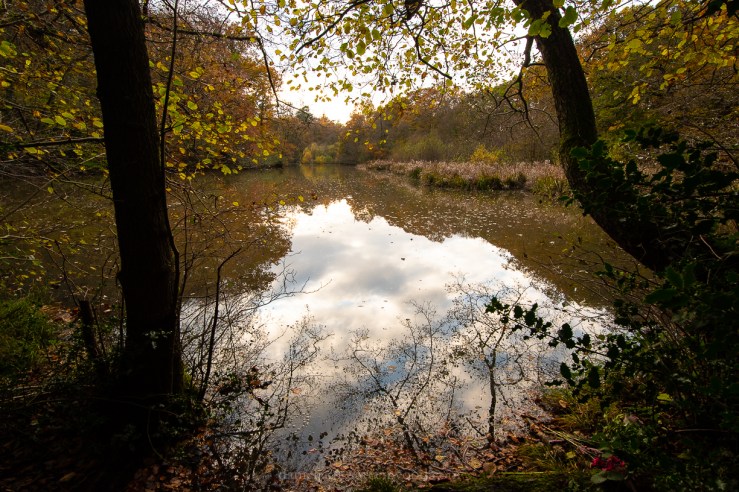
With what is approaching a lake, you’re spoiled rotten.

Ebernoe - 8-11-2019 blog-21

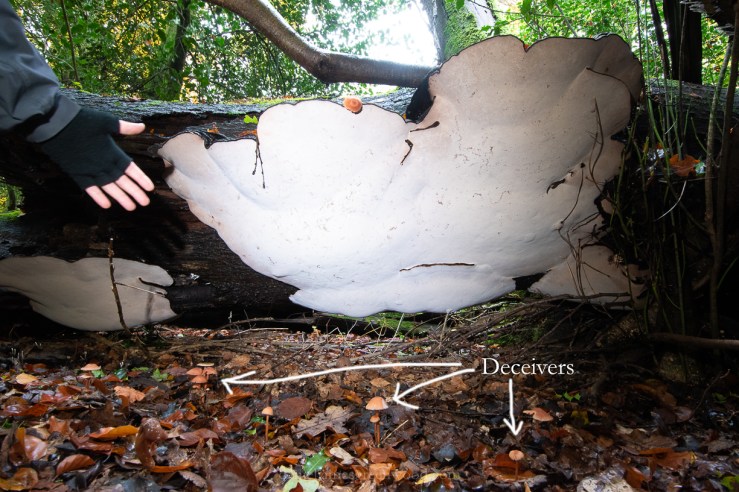
Back to the shrooms. I found probably the biggest fungus I have ever seen, though you could argue it is several fruiting bodies fused together. I even added some in-photo text to help explain the situation to you. Very advanced. This is a bracket fungus that looks more like a ray. It’s probably artist’s bracket, a Ganoderma species. Below it you can see some smaller mushrooms, these are all deceivers. They were just about covering the entire area here. It was almost impossible not to step on one. By the way don’t worry that’s my hand not a mushroom burglar’s.

Ebernoe - 8-11-2019 blog-77

All in all this was my peak mushroom experience in autumn 2019.

Thanks for reading.
More mushrooms


#FungiFriday: it’s a mushroom lockdown

Warnham - 20-10-2019 lo-res-30

Fungi Friday 27th March 2020

It’s estimated that 25% of people on Earth are now under some social restriction due to the Covid-19 pandemic. While the non-human organisms are probably enjoying this hiatus, it’s certainly harder to continually produce these finger-on-the-pulse-docu-drama Fungi Friday posts. This week I confess I have no fungi photos worth sharing. I even sat in the garden just now for half an hour trying to get extreme macro images of a mouldy orange. No word of a lie. Look:

Orange_mould_27-3-2020_lo-res-5

So the only sensible thing to do is admit defeat – I have no mushroom images to show you from this incredibly sunny and dry week in Sussex. But this blog has only been running since Christmas and so this is a chance for me to spend some of those Fungi Fridays I’d been storing in the mushroom bank.

Warnham - 20-10-2019 lo-res-31

In early November I took a walk one Sunday around a nature reserve close to where I live. It’s a mixture of wetland, wet woodland and plantation. I featured some pics from it last week before the powers that be sent us packing. I found a very unusual looking mushroom growing along the path edges in patches of woodchip. This was a new species for me and apparently too for our great nation.

I struggled with some serious mushroom envy at times last year due to lots of images of a blue mushroom that every mycologist and her dog had found. I felt a bit better about it after meeting its cousin, the redlead roundhead, for the first time. This beautiful red shroom is a naturalised species which originates in New Zealand. As the Covid-19 pandemic shows us, things can spread easily around the world if their manner of reproduction is microscopic, airborne and supported by intercontinental human travel. Tree diseases, I’m talkin’ to you!

Warnham - 20-10-2019 lo-res-36

I was trying out a new zoom lens on my little mirrorless camera and these funeral bell mushrooms enjoyed their opportunity to show off their poisonousness. Their name should tell you what eating them does. They are very similar to sheathed woodtuft and anyone looking to eat fungi should be very careful when trying to decipher between these two species. I’m just going to flat out discourage that!

Warnham - 20-10-2019 lo-res-28

The path edge was also rich in puffballs. The birch log at the side of the photo is path edging, what is sometimes known as a fungi super-highway. These puffballs are quite weird looking but they’re in their prime. I think they probably common puffballs but they could also be pestle puffball, which I believe is a bit larger than this really. 10 points if you can identify which small mammal has nibbled into the hazelnut in the bottom right.

Warnham - 20-10-2019 lo-res-23

In another coniferous patch I found this expanse of common funnel mushrooms. I spent several years working in a woodland that housed trooping and clouded funnels in the same areas pretty much every year. But the above was a species I’d only seen once before. Also using a zoom lens made it a lot easier to express the scale of their spread, compared with the narrow depth of field a macro lens provides.

Warnham - 20-10-2019 lo-res-22

Next week I’m planning to recap my peak autumn 2019 mushroom experience which I never got round to posting last year. I promise no more mouldy fruit unless it’s aesthetically worth it.

Wishing you well, thanks for reading.

More mushrooms


#FungiFriday: the gifts of spring

Warnham_19-3-2020_lo-res-04

Fungi Friday 20th March 2020

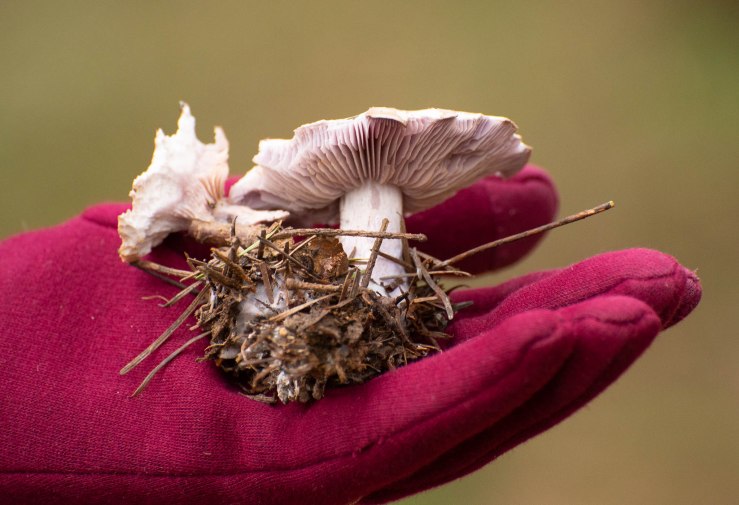
Happy Spring Equinox! Yesterday was a special day, the first proper mushrooms of 2020 made an appearance in Sussex, to me at least. Problem was I completely missed this mushroom, blewit! Wood blewit, that is (sorry). Thankfully it was pointed out to me and I had a glove model on hand (lol) to show it off.

Warnham_19-3-2020_lo-res-08

This has been an incredibly difficult week for people and it’s hard not to talk about it here. Heading out to see which birds are now singing or which mushrooms might be fruiting is a massive tonic to the social frenzy which is hitting pretty much everywhere at the moment. This week I heard my first singing chiffchaff of the year, a rubberstamp of ecological spring. This female great tit may soon become a mum.

Chesworth_17-3-2020_lo-res-6

We have to look to nature now as spring arrives. It puts you back in your place and gives a picture of the longer term. The wild life will go on. But we should also consider that the problems we are now facing are linked to our awful devastation of the natural world, the abuse of its wildlife and ecosystems. Seriously people, we have to consider what we are doing to wildlife and their habitats first hand and also by our consumption of unsustainable products like beef from Brazil or chocolate from companies with poor ethical standards. I really hope that people can find a love of nature now that makes us slow down, consume less and see that our impact has to change forever before nature changes us more abruptly. After this, there can be no going back.

Warnham_19-3-2020_lo-res-03

As I say quite often on this website, I’m not a forager of edible plants and mushrooms, though I know a fair number that I could eat. By that I mean plants and mushrooms, not actual foragers. I have never lived in a place where the foraging of anything beyond blackberries is sustainable. Some foragers must have been banking on this moment of temporarily empty supermarket shelves. Though our numbers are too great and nature’s larder probably too diminished to sustain our diets now. Shame that the toilet roll you find in the woods ain’t ripe yet.

Warnham_19-3-2020_lo-res-01

Most of the fungi I saw yesterday was not edible, either because of its species or just generally because something else had already eaten it. The Coronavirus situation should remind us that there are millions of other species with lifestyles that are far more sustainable than ours, and we are vulnerable to pandemics, especially as we force our way ever deeper into untouched ecosystems that have been intact for millions of years or disturb people who have lived in harmony with those landscapes for a long time. The fungus above is probably shaggy bracket or Inonotus hispidus, one you usually find in bits on the floor having dropped off from higher up. I learned this species conducting tree health surveys with tree inspectors.

Warnham_19-3-2020_lo-res-09

A common mushroom popping up now is glistening inkcap. The ‘record shot’ above is enough to show you how few mushrooms I’ve seen recently. The standards should get better as winter diminishes in the rearview mirror.

Warnham_19-3-2020_lo-res-10

Some fungi need a bit more before they’re ready to go on stage. Here we have a splitgill fungus, which I covered a few weeks ago. Still this snowy white shroomster was a pleasant sight against the blackened rings of this log.

Garden_18-3-2020_lo-res-4

I am getting mentally ready to spend a lot of time in my garden this spring. I am very privileged to have a garden and, having eventually got to this point, I will never take it for granted. During one of this week’s WFH lunch breaks, I found this miniscule fungus frowing on the remains of a magnolia leaf. I wasn’t even looking for it, I saw it later when editing the RAW file on the computer.

Garden_18-3-2020_lo-res-1

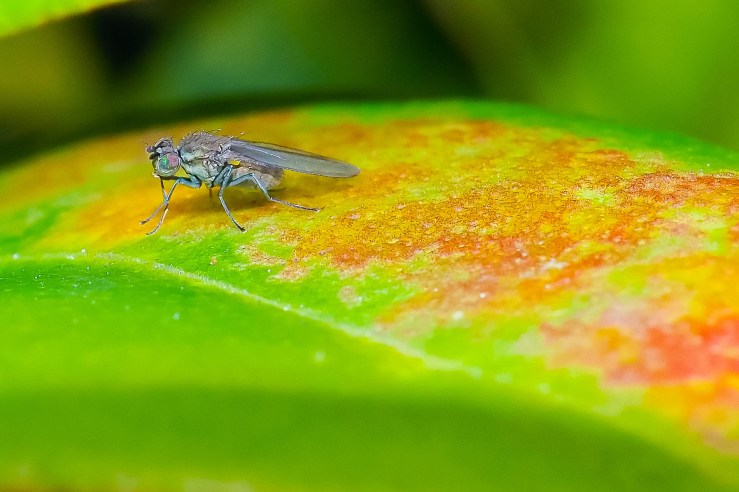
This very tiny fly was resting on a patch of fungus in the pigment of this leaf. I’d like to learn more about these types of fungi but one of the more recognisable ones is that which grows on bilberry (blaeberry, blueberry) leaves.

Warnham_19-3-2020_lo-res-11

I owe lichens for getting this #FungiFriday blog close to completing its third month. Let’s hope that Fungi Friday can help us adapt to the life changes we are all experiencing just now. I plan to do a virtual Fungi Friday guided walk if we’re still allowed out, in a couple of weeks. Stay tuned for that, but most of all stay tuned to the season rather than your news app on your smartphone. It will help you when you need it.

More mushrooms

#FungiFriday: a weird week for mushrooms

Warnhqm_8-3-2020_LRCC-01

Fungi Friday 13th March 2020

No self-respecting person goes out looking for mushrooms in March. The mushrooms come to you. Or in this case (above), the bracket mushrooms will hover over your head and attempt to abduct you ala UFOs visiting nocturnal fields in the southern states of the USA. I’m unsure of what this bracket fungus is but it is probably the funniest. I actually ‘laughed out loud’. It’s growing from a poplar in a wetland reserve in the Sussex Weald. If you look closely enough it also looks like a grumpy frog.

Warnhqm_8-3-2020_LRCC-16

This great spotted woodpecker was looking for his lunch nearby. Thankfully his attempt to fool me into thinking he was a bracket fungus didn’t work. It got more weird:

Fungi_Friday_13-3-2020_lo-res-1

Alongside what is known in Sussex as a ‘gill’, a stream rushing through woodland, I found this horror. Now I’m unsure whether this is the jellied remains of an old bracket fungus or simply the remains of a jelly fungus. It could also be something far worse. I prodded it with a twig and it jiggled, so I would go with it being a jelly fungus. It was delicious. Kidding, it wasn’t. As in, I didn’t eat it.

Fungi_Friday_13-3-2020_lo-res-3

The only fungal wow moment of the past week has been this encounter with splitgill fungus growing from a pine tree. This was a plantation of thousands of pine trees with very little variety in structure, tree species or ground flora. Keep an eye out for my next Sussex Weald post on that. These mushrooms stood out like many sore thumbs.

Warnhqm_8-3-2020_LRCC-13

The lichenised fungi also provided a rather artistic sight. I think this is a species of poplar. It has crustose lichens growing around the trunk. In a tweet the British Lichen Society pointed out that this is evidence that trees grow outward rather than upward. Why is this? It’s because trees are constantly putting on new layers of wood internally, behind the bark. These layers of tissue form the static mass of the tree. It is in effect a kind of waste product but it gives the tree some structure.

Warnhqm_8-3-2020_LRCC-02

Take this stunning dead oak which was also seen on the same day as the lichens. The bark is falling away from the tree as it decays (thanks to fungi in part) and the layers of wood internally are exposed.

Warnhqm_8-3-2020_LRCC-12

All that, from the fact that lichens look a bit like bird poos delivered at high velocity from the leftfield.

Thanks for reading!

More fungi

#FungiFriday: a week of cake and jelly

OLYMPUS DIGITAL CAMERA

Fungi Friday 5th March 2020

A couple of weeks ago I was inspecting a bird table in my garden and spotted a moss growing from its ‘roof’. This bird table has been, literally, around the houses and has probably gathered many organisms along the way. Looking more closely I found some jelly fungi.

OLYMPUS DIGITAL CAMERA

The weather has been showing signs of spring, with queen bumblebees on the wing and what I am sure was a male hairy-footed flower bee travelling through the gardens. On Monday I was in the garden briefly and had a closer look at the bird table. On the edge I found a nice cluster of what I think are lemon disco (yes, great name!).

OLYMPUS DIGITAL CAMERA

During a brief trip to The National Trust’s Nymans in the Sussex Weald this weird species was on the decaying heartwood of an old cherry tree. It’s a slime mould known as false puffball. If you press it with your finger it bursts, a bit like other Lycoperdonย slime moulds such as wolf’s milk (search for it).

Chesworth_29-2-2020_LR_lo-res-11

Elsewhere, the state of Sussex’s rivers shows how high the rainfall has been so far this year. But the lichenised-fungi are benefitting.

Chesworth_29-2-2020_LR_lo-res-08

Along this stretch of the river Arun, these beard lichens were profuse. One hawthorn was so covered with them it seemed like there would be no room for leaves in a couple of weeks!

Chesworth_29-2-2020_LR_lo-res-17

Lichens were doing well in other places too. This knotty old fencing rail was making a home for these cup lichens (Cladonia). Lots of countryside fence posts are home to these lichens.

Chesworth_29-2-2020_LR_lo-res-06

Not far away from the gushing Arun was a veteran ash tree with lots of King Alfred’s cakes growing from the damaged bark. In this image you can see the folds of the cambium where the tree is trying to protect itself from fungi and other invading organisms. This fungus will have a boom from the amount of dead ash trees caused by the evil fungus behind ash dieback disease.

hqdefault

To people outside the UK or without a grasp of English history, this name is quite meaningless. It is based on the tale of King Alfred who was exiled in the Somerset Levels during the Viking invasion of Winchester. Alfred failed to keep an eye on a woman’s loaves of bread that were on the fire and they burned. It is said that she had no idea he was the King, so far removed was his from his throne. Don’t worry, he eventually came back and pushed the Danes away a bit.

In the real world this fungus is said to be a host species for hundreds of invertebrates. It’s also used as a kindling and many people who know of it do so for that reason.

Let’s hope for milder temperatures and less rain and see if some more photogenic fungi pop up!

Thanks for reading.

More fungi

#FungiFriday: it’s raining, it’s sporing

OLYMPUS DIGITAL CAMERA
The South Downs

Fungi Friday 28th February 2020

A fungal perspective on February would probably say that it was ok if you live on a fence post. The poor people who have had their lives ruined by flooding in Britain probably wish they too live on stilts. And so February saw itself out with yet more heavy rain and flooding. But it also carried the early signs of spring.

OLYMPUS DIGITAL CAMERA

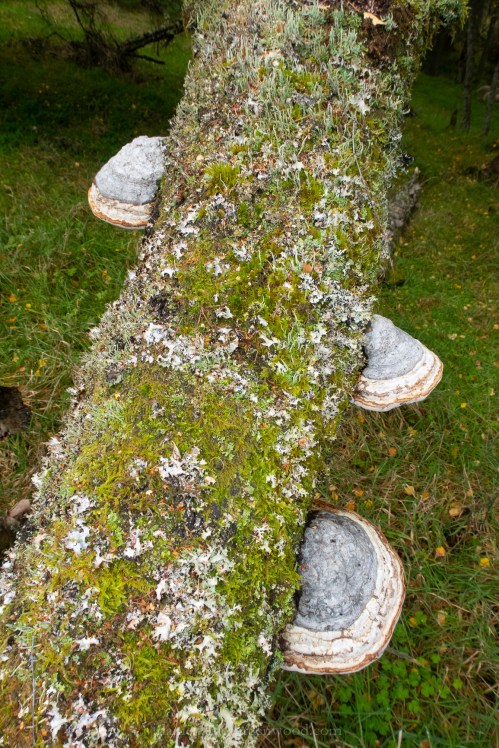
The closest thing I got to a true fungus (whatevs that is) was this turkeytail fanning out from a fence post. It’s a reminder that to a fungus, a fence post is just a dead tree that we have put somewhere away from the woodland it was once growing in. There are also a smattering of crustose lichens in the background.

OLYMPUS DIGITAL CAMERA

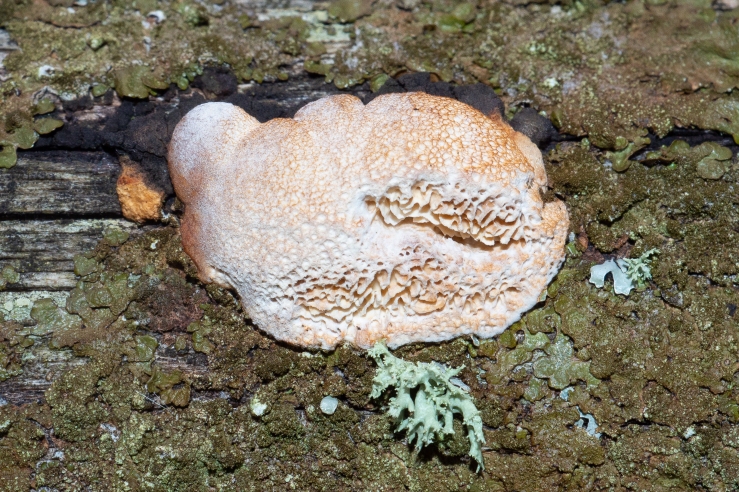
The best chance of finding something fungal to photograph was on some raised timber somewhere. I found this very marshmallow-like polypore bulging from a crevice in a fencing rail. You know times are hard when it comes to this. Behold the pores developing underneath as the specimen expands.

OLYMPUS DIGITAL CAMERA

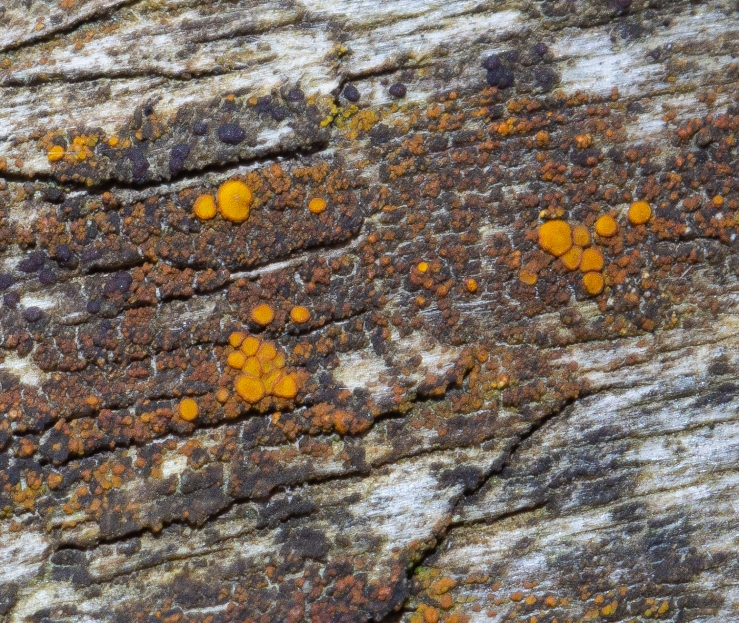
As you can imagine, the 100%-fungi fungi ran out quickly. This lichen stood out to me a bit like the archetypal graffiti you see alongside railway lines. I went to a secondary school with a rich mix of graffiti artists (I know that this is not a universally held description) and this reminded me of that.

OLYMPUS DIGITAL CAMERA

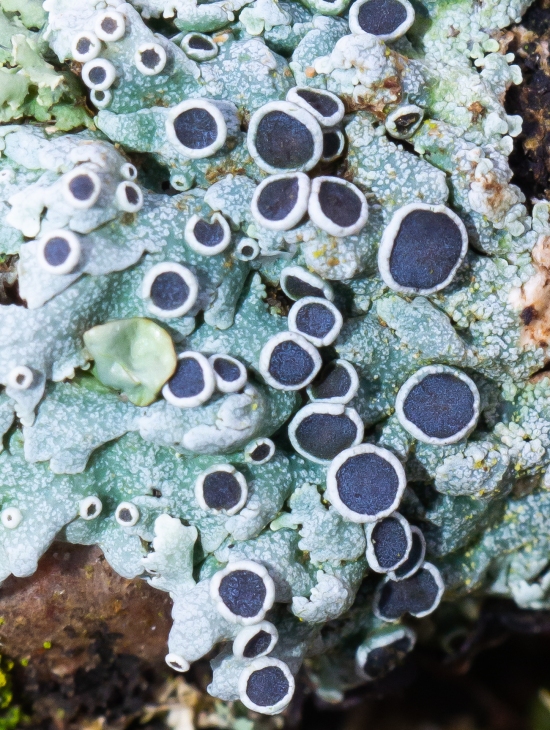
This is a heavy crop so the photo isn’t winning any awards, but the lichen’s orange fruiting cups are really cool. I read this week that these cups are ascomycetes in fungal terms, better known as ‘cup fungi’. Their biological name as a structure on the lichen is ‘apothecia’. The ascomycetes are the largest group of fungi in the world and are also known as ‘spore-shooters’ (but don’t confuse them with puffballs like I once did). Normal mushrooms are basidiomycetes and produce their spores in the basidia which are usually present inside the gills we all know and eat.

OLYMPUS DIGITAL CAMERA

This is a pic from last week (is that allowed?) where you can see the apothecia of the lichen. The spores are released from these navy-blue discs and shot out into the air.

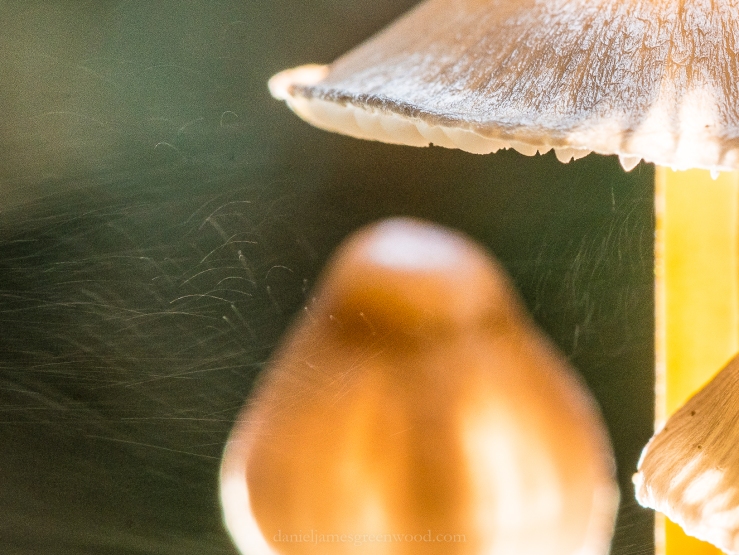
Bonnet spores - Octoberr-2018 djg-1

Just to illustrate, above you can see spores being released from a bonnet mushroom. This was taken with a high-resolution camera and lens, with some additional lighting. I didn’t know this had been captured until I looked at the photo later on my computer.

OLYMPUS DIGITAL CAMERA

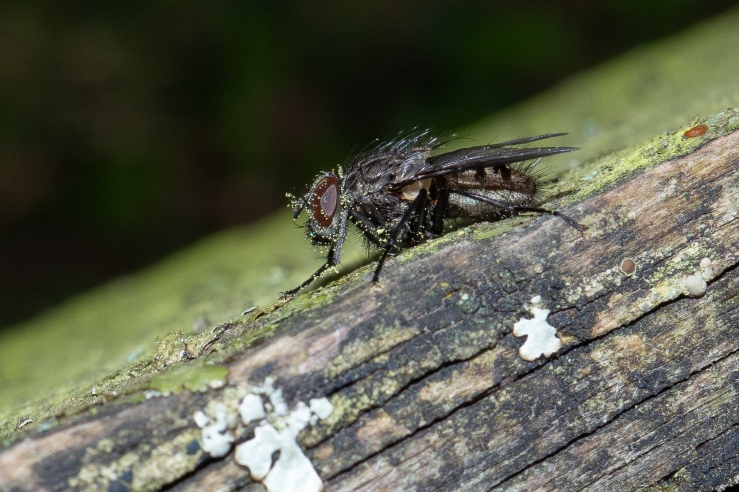
Back to this week and there are signs of winter coming to an end and the return of some mushrooms. This fly has what I guess might be goat willow pollen on it, meaning that they’re flowering and spring, it cometh.

OLYMPUS DIGITAL CAMERA

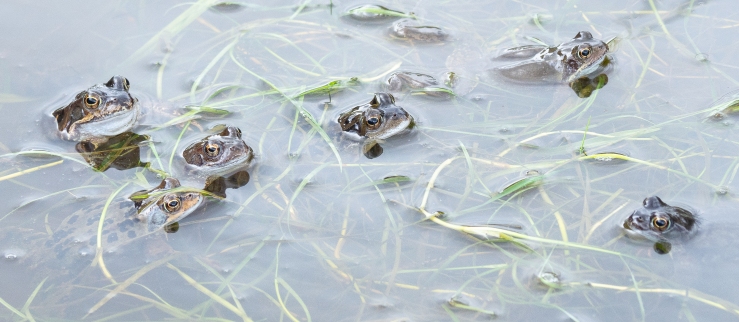
The truest sign of winter going back to where it came from is these froggy peeps, about a week later than 2019. More from them in a bit, if I find the time. Rebbit. Soon enough they’ll be sheltering under toadstools in the woods, where they belong.

Thanks for reading.
More fungi