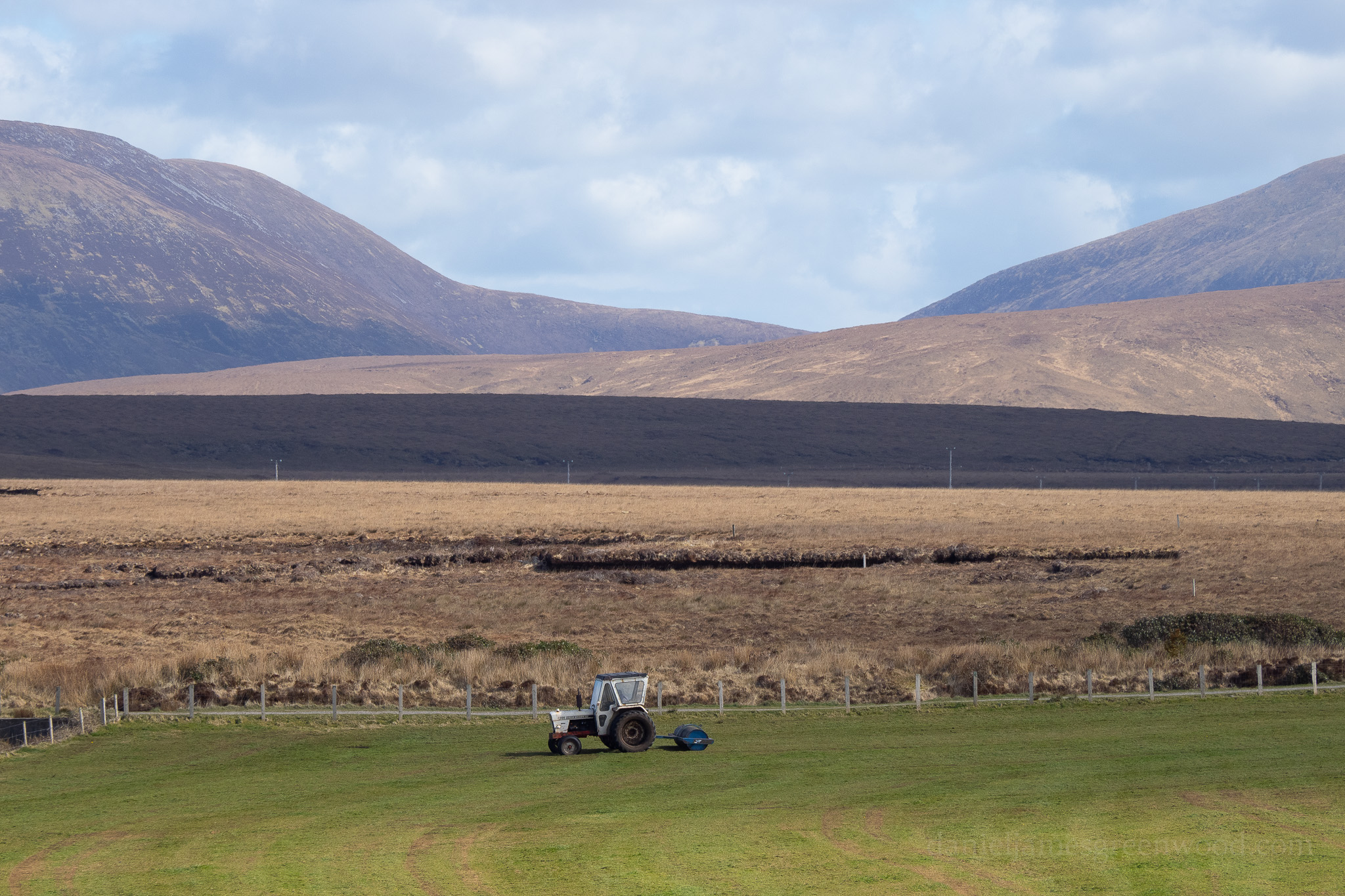
Postcards from Western Ireland, September 2025 ๐Ÿ‡ฎ๐Ÿ‡ช

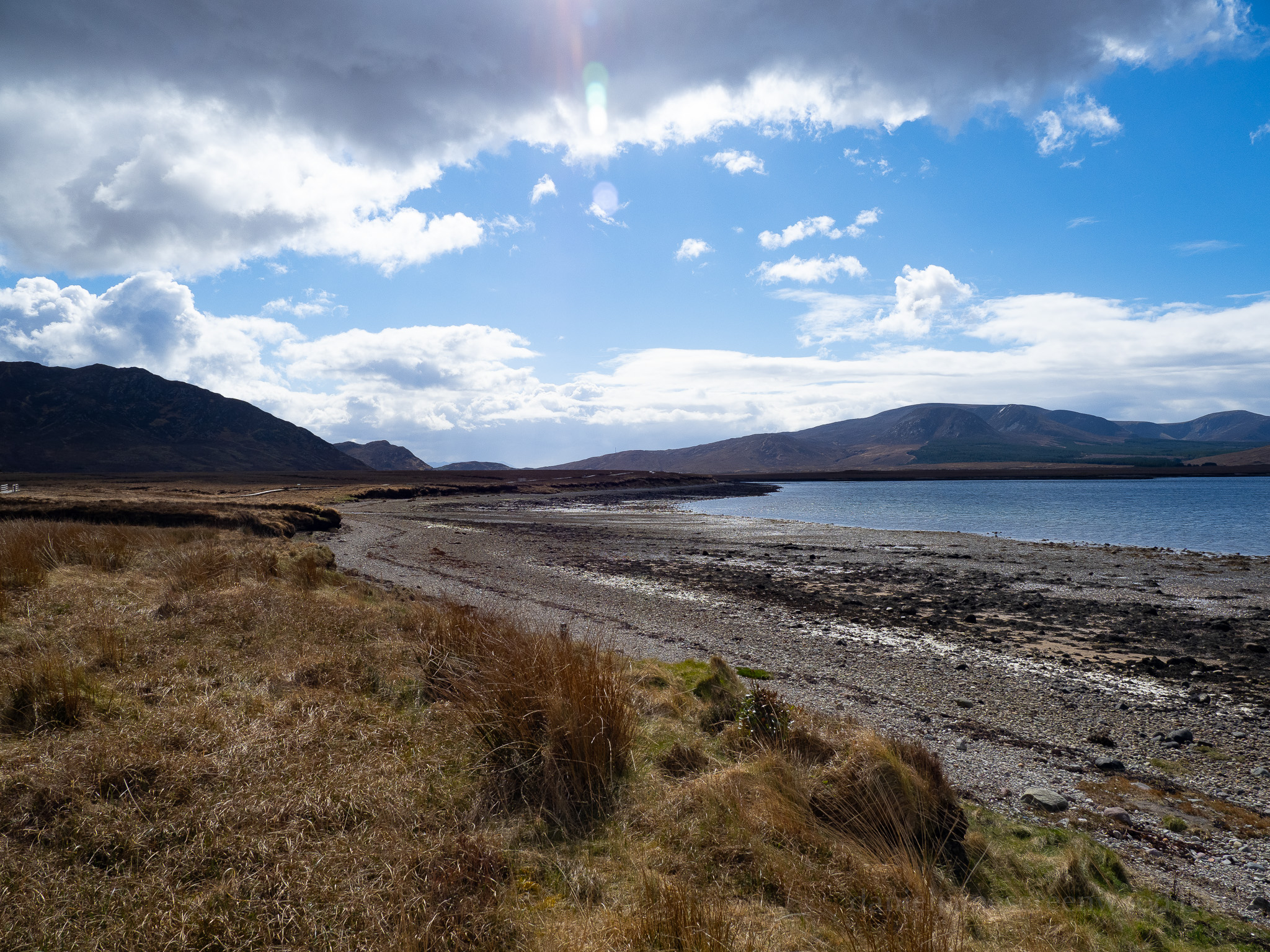
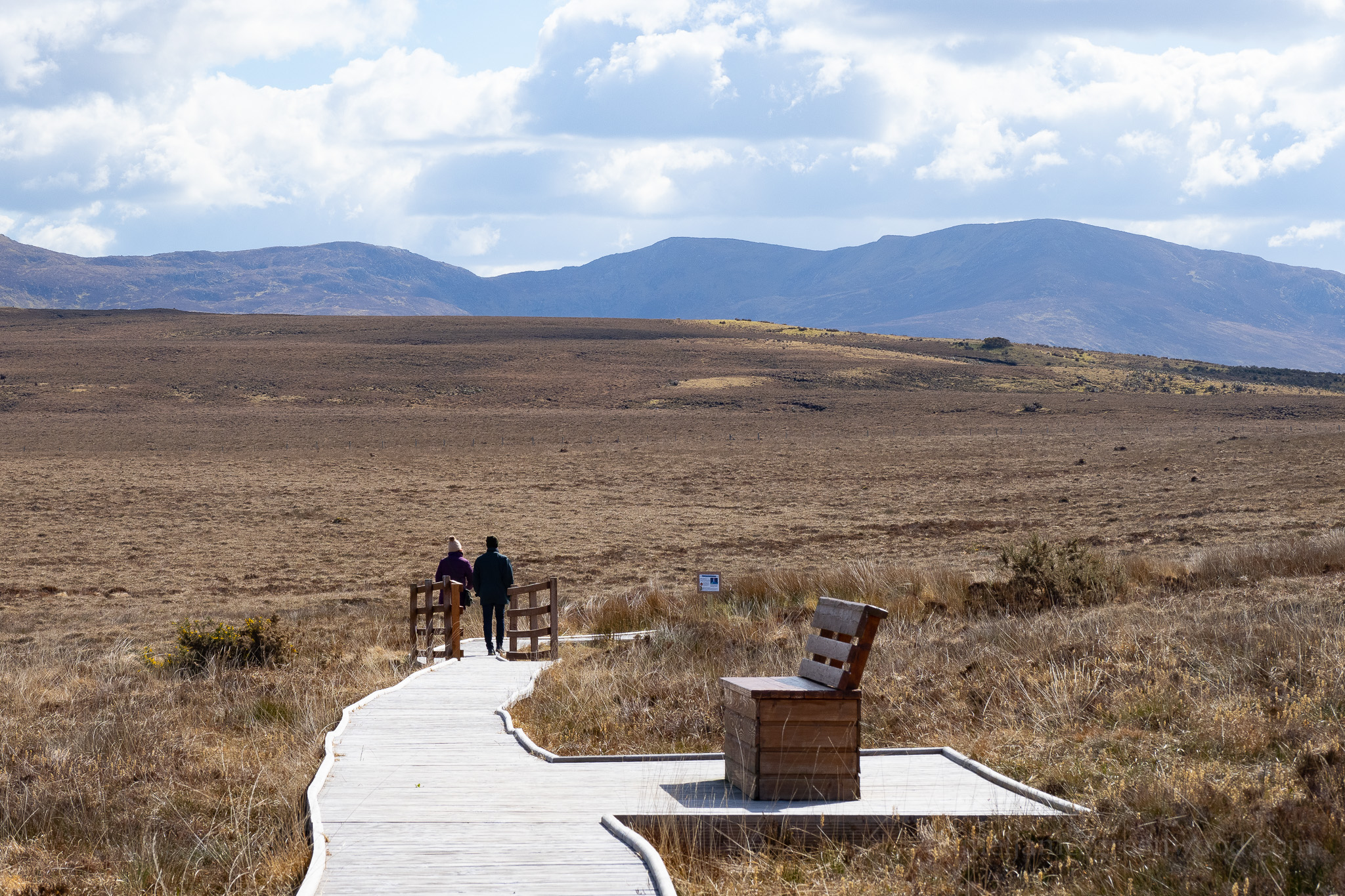
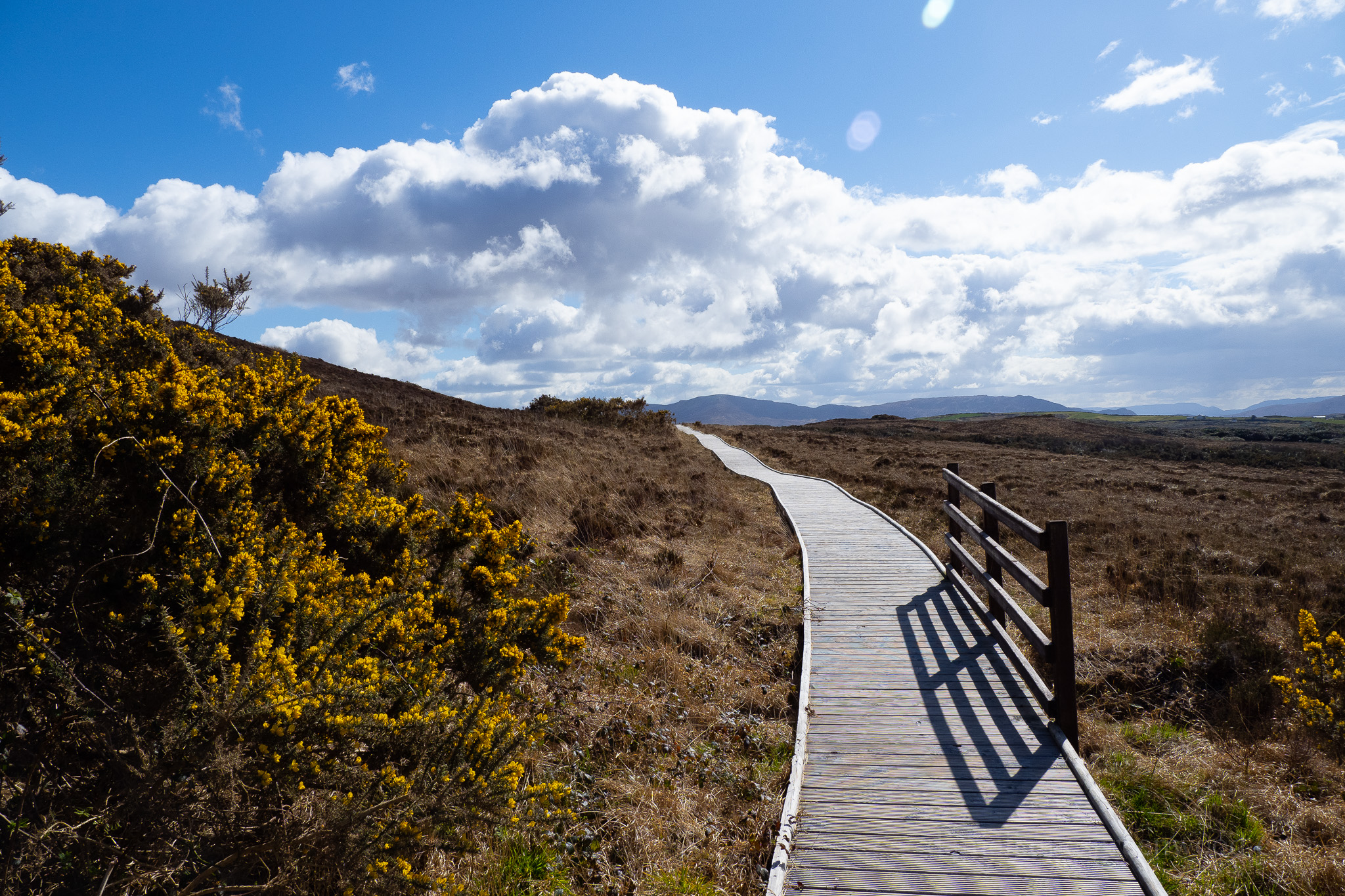
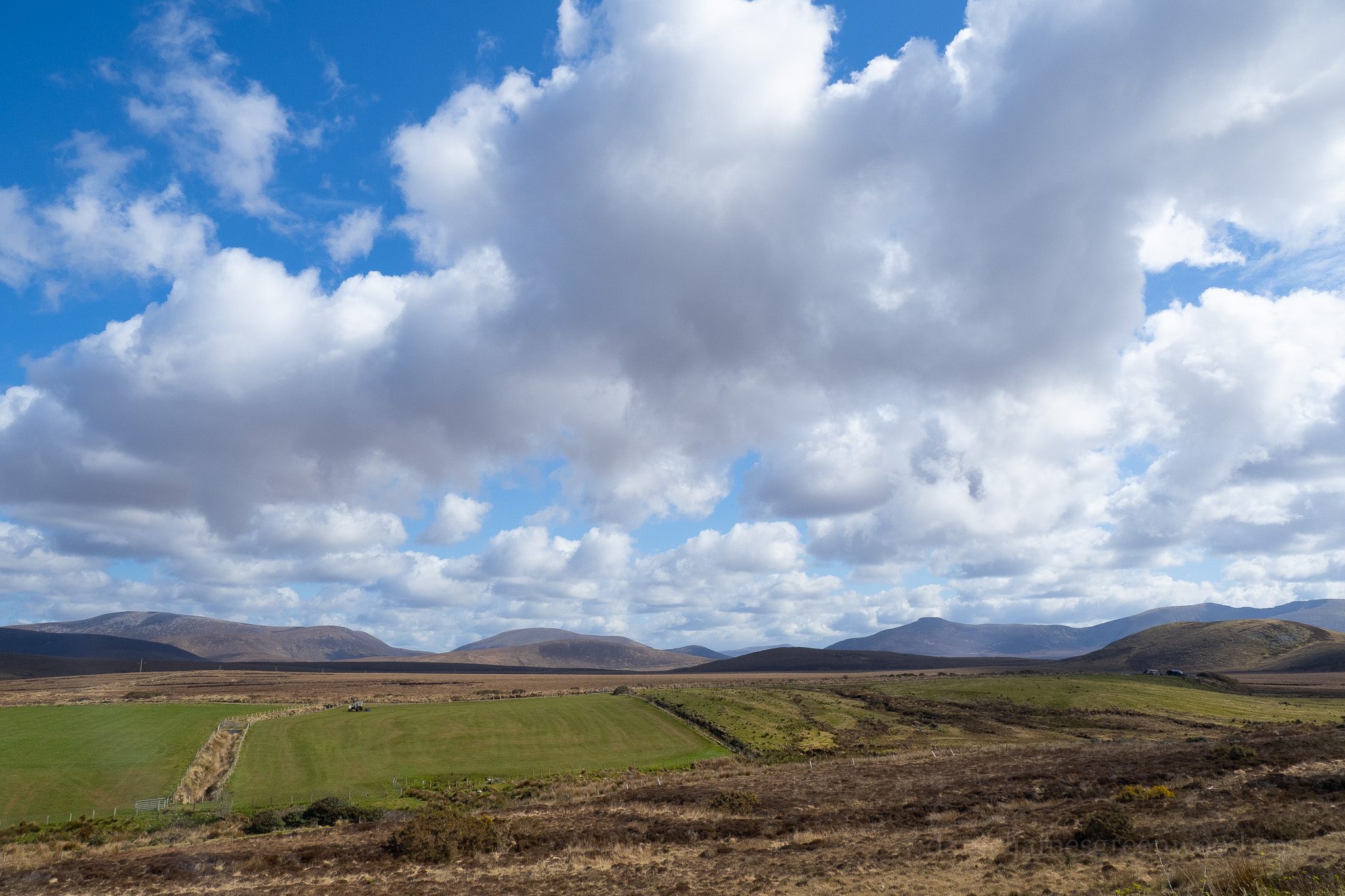
I’m back from my annual visit to the west of Ireland. I managed a couple of day trips to forage for photos, which will crystallise later this year into dedicated posts, all being well.

Like many people I enjoy the Blind Boy Podcast, none more so when I have the headspace to take in all that gets said in an episode. I listened to this hilarious one with Chris O’Dowd, including a couple of brilliant stories about rural island. Avoid if you don’t like swearing ๐Ÿ˜ฌ

I also absolutely tore through A Star Called Henry by Roddy Doyle (1999) while away. If you need any evidence that fiction can be a great way to learn about history, this novel is it.

All the pics here are taken on my Pixel 7a (which Google tried to get me to promote FOR FREE). It’s an exceptionally good camera I think.

Ballina is a place I like to visit, built around the mighty River Moy. You may recognise this scene because Joe Biden gave a speech from the church steps.

There’s an excellent bookshop in Ballina called Pangur Ban which you must visit and support if you’re in town.

I liked this sign and admired the blue tiles. Almost Everton blue, you might say. I don’t eat seafood though, can’t cope with it.

Nearby at Killala Bay I had a lovely walk along the shore. There were sandwich terns, rock pipits, oystercatchers, and curlews here (and the wind, always.) These are the beaches I love – wild and smelling of the sea. There will be a dedicated macro blog for my finds here.

Now then, the bard of Mayo Seรกn Lysaght has released his latest book – Unveiling the Sun. It’s a collection of more than two decades worth of short writings, describing walks and nature observations in the Nephin Beg area near Westport. I recorded a podcast with Seรกn exactly 3 years ago which you can listen to here (or by searching ‘Walking to Lough Conn with Seรกn Lysaght’ on any podcast platform).

I’ve read the first chapter (January) of Seรกn’s new book and I am enjoying the insight into a part of Mayo I don’t know so well but love to visit.

And just like that, here we are in the Nephin Beg mountains of Wild Nephin National Park. There’s a fantastic cafรฉ here which is open in the spring and summer, closing at some point in the early autumn. I probably have a macro blog for here as well.
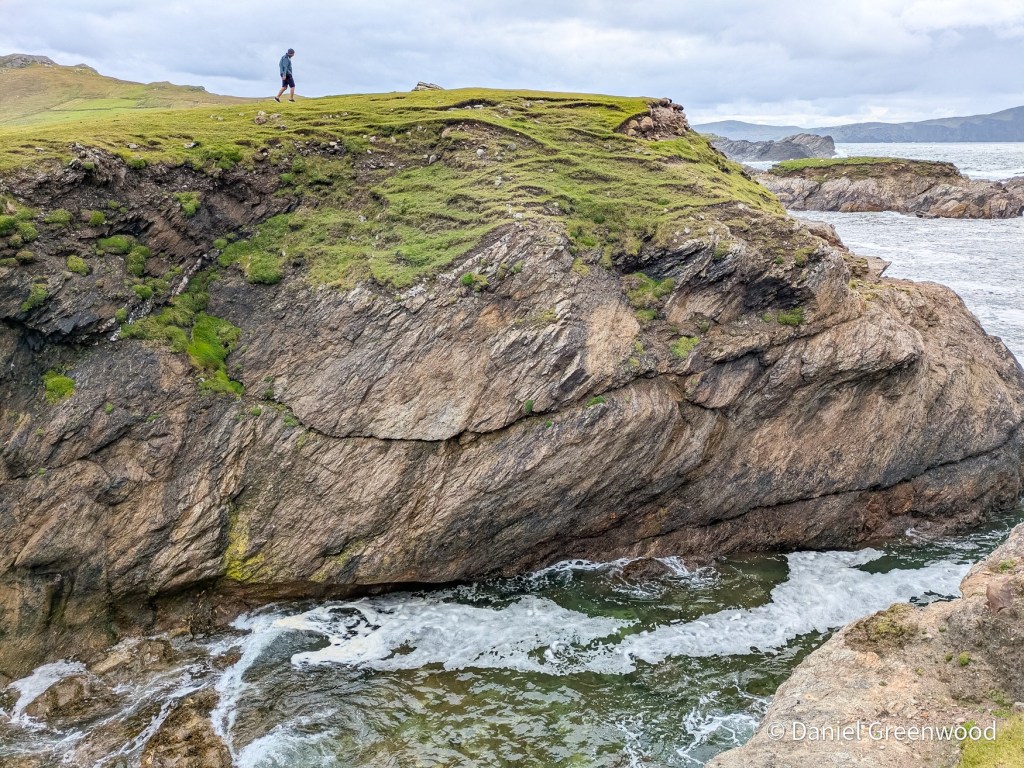
From Ballycroy I continued on to Achill Island, one of the most westerly points of Europe, and the Wild Atlantic Way (more a car touring route than a footpath). I tried some isolated rock and surf photos with my macro lens which I’ll share later on. I posted about Achill a few years ago.

On the drive around the island I passed this beautiful cottage with a thatched roof clinging on. I hope they’re able to repair it, which is evidently a longer term plan. Thatch is very expensive to maintain in England but I reckon there’s some local knowledge still lingering here on Achill. It’s facing the Atlantic Ocean so it has quite a lot to cope with!
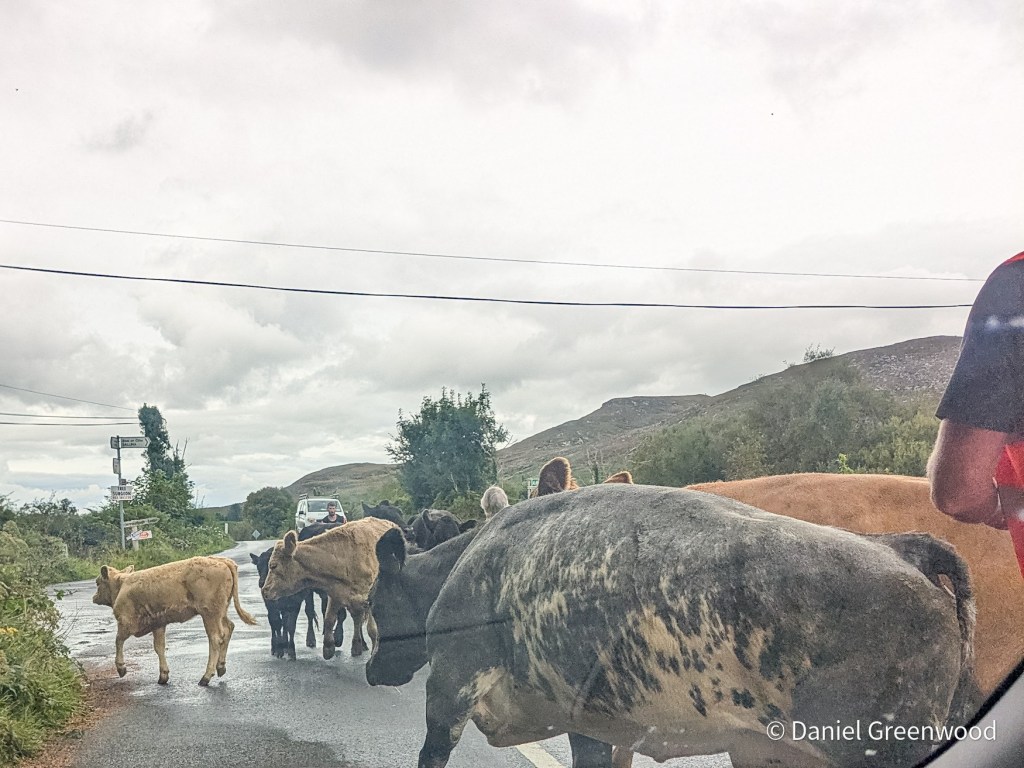
Back on home territory near the Ox Mountains I was forced to park up to allow these cattle to cross the road. I am sure that cattle have begun to replace sheep in this part of Mayo in recent years.
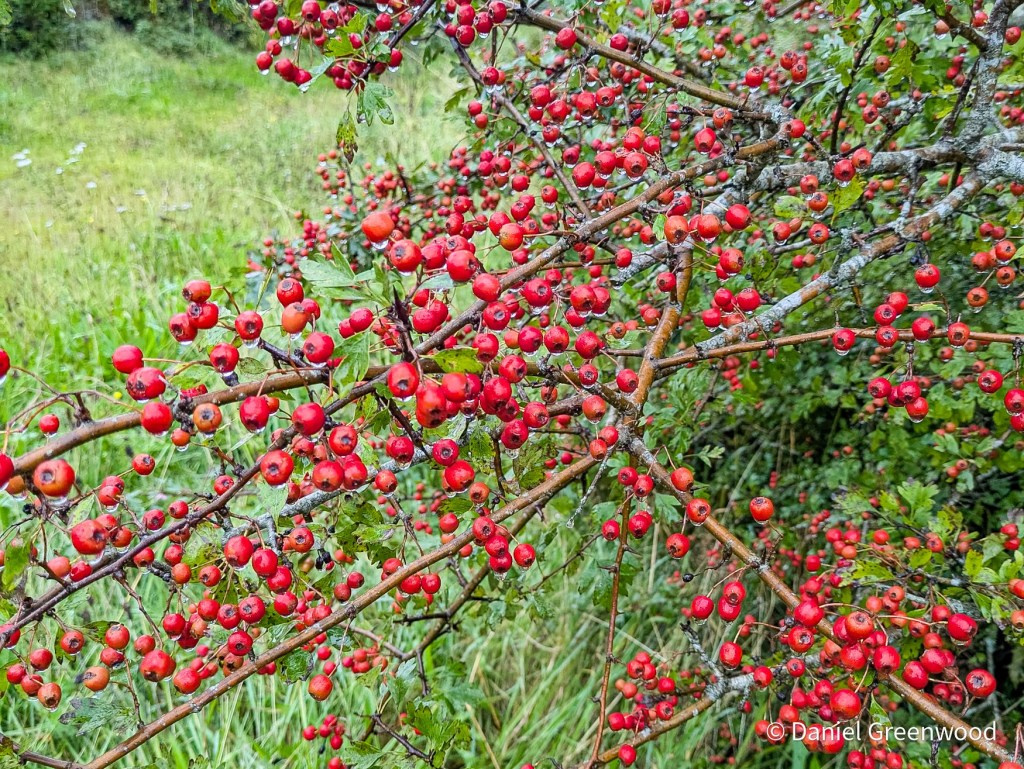
The number of hawthorn berries was amazing. This has been a bountiful year for wild fruit.

The bramble has had a very good year as well, creeping through doors opened by winter storms.

I saw quite a lot of red admirals around.

My aunt sent me a photo recently of a green-veined white where she lives in Mayo, and I saw plenty myself. In Sussex there have been lots of large whites this year, but in Ireland the green-veined were by far the more common pierid.

On the evening before I came home, I went out for a walk along the mountain path and found these huge moth caterpillars. They are buff-tips, the ones that look like broken twigs when they are adult moths. It was a highlight of the trip actually, watching these massive caterpillars munching on willow leaves.

Thanks for reading.
Ireland

Dublin: ‘I float down the Liffey’ ๐Ÿ‡ฎ๐Ÿ‡ช

The River Liffey, Dublin, March 2024

2025 will be a year of catching up on last year’s photos. 2024 was a really busy year of travel and life events after the fallow pandemic years (2020-22).

I was in Dublin in March 2023 for – you guessed it – my stag weekend. It was more a spiritual visit, made by ferry, rather than an idiots’ weekend away. This post wouldn’t have been possible without my best man Liam’s work in booking the boat tour, the only one on the river.

For the visit I took my Olympus TG-6 Tough compact camera, but didn’t take photos as raw files so these are edited jpegs, which is obviously a crime against photography. The images from the water are taken through glass, so they have degraded even more (you probably won’t notice). The light was nice though, and image quality isn’t everything.

The title of this blog is a pointer to a lyric in the Radiohead song How to disappear completely.

Passing the Liffey is carved into my memories of Dublin having travelled so many times on the ferry, across and along the river in the car after disembarking. It’s also where my parents bought me my first Everton shirt in 1995.

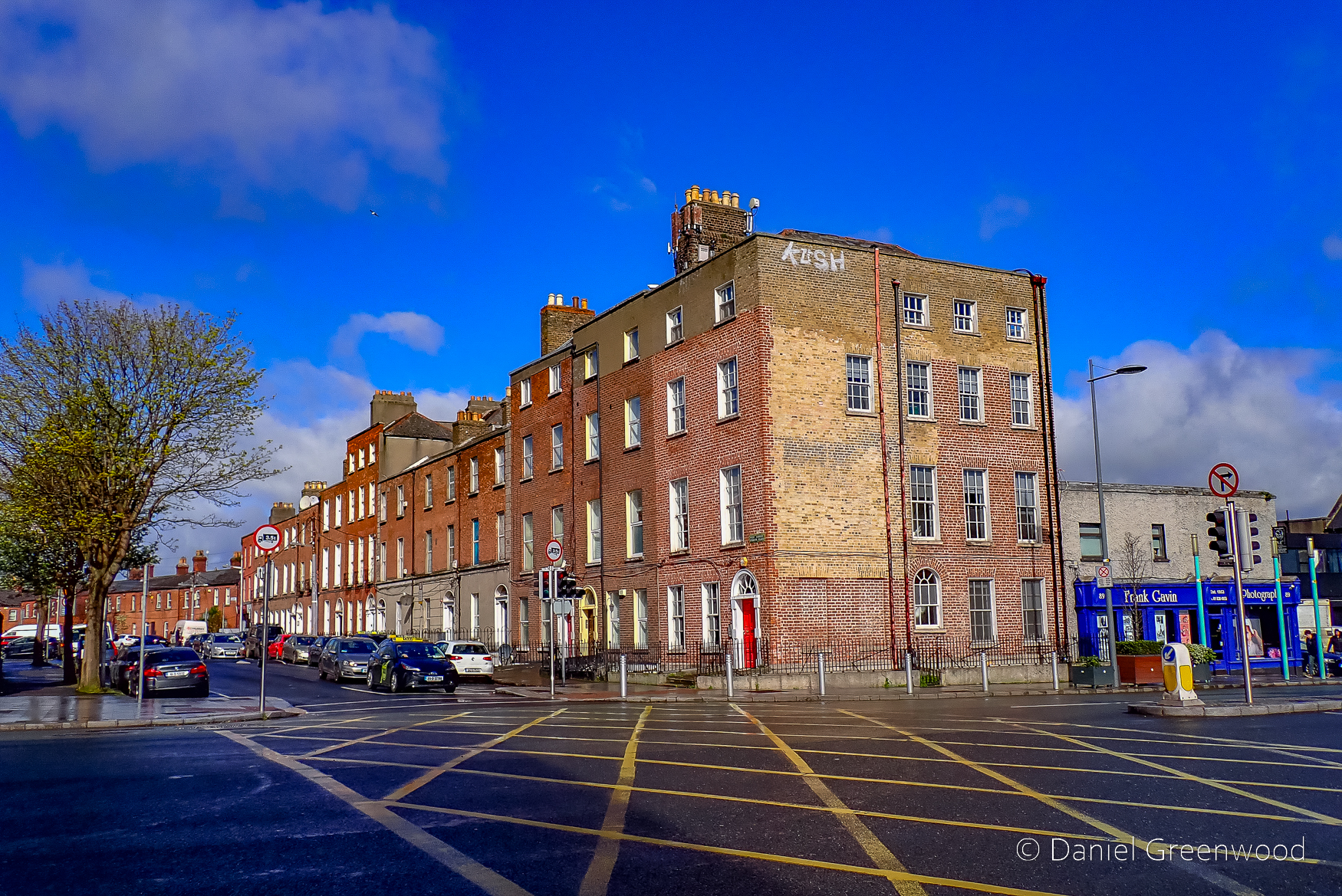
We were staying on the north side of the Liffey, the older part of Dublin.

Who doesn’t like some unofficial street sculpture – if it’s fly-tipping that’s obviously different. Now for a handbrake turn:

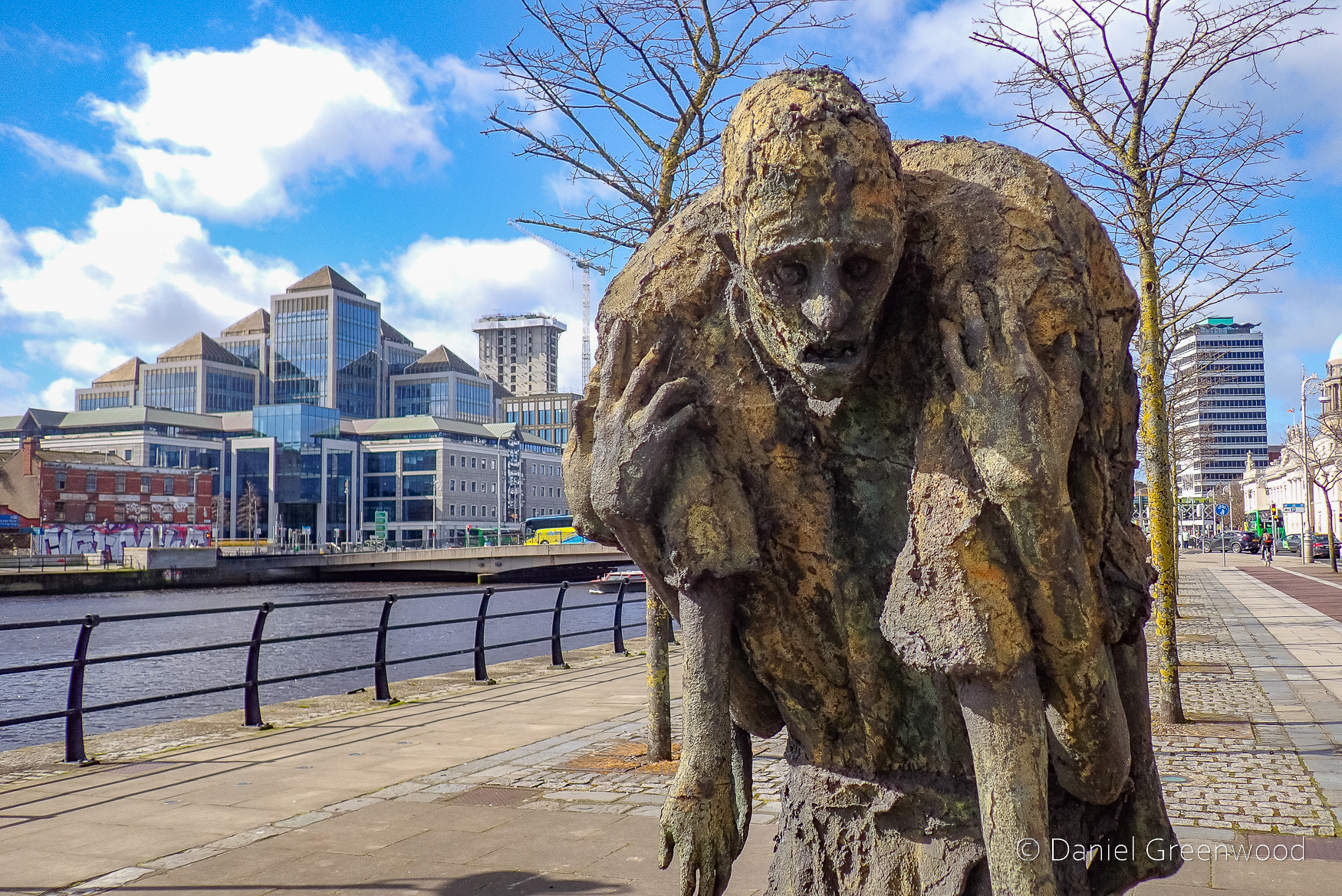
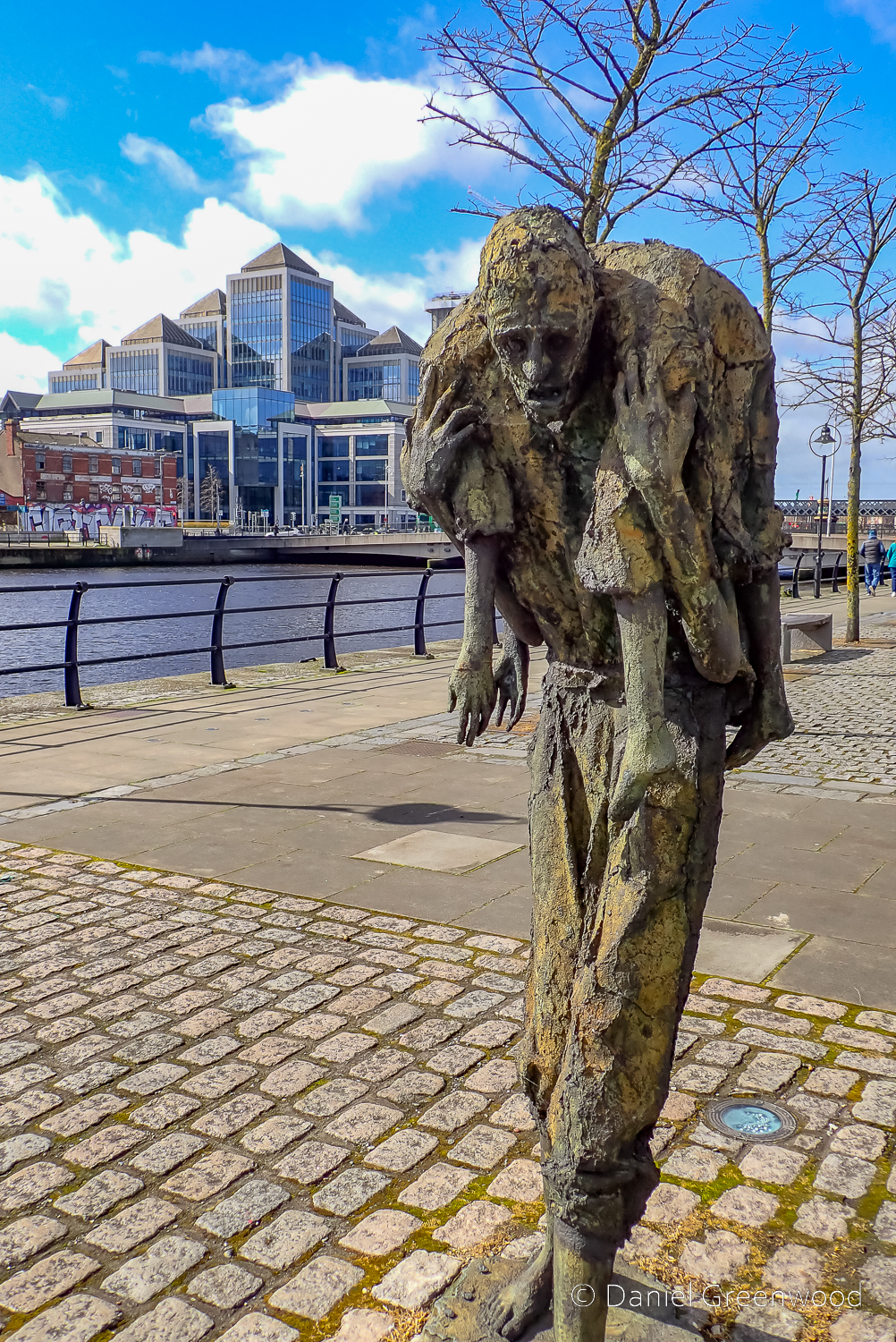
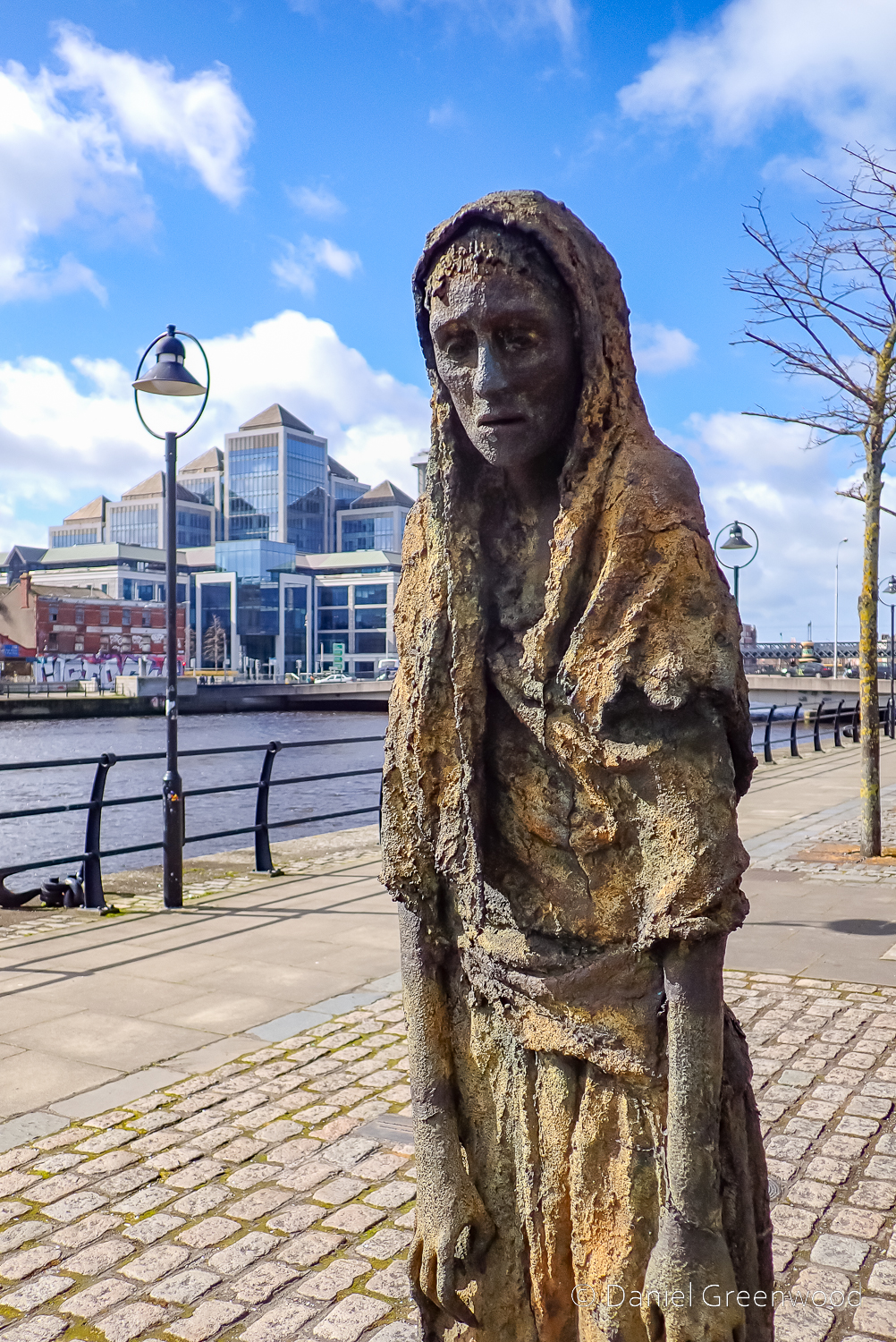
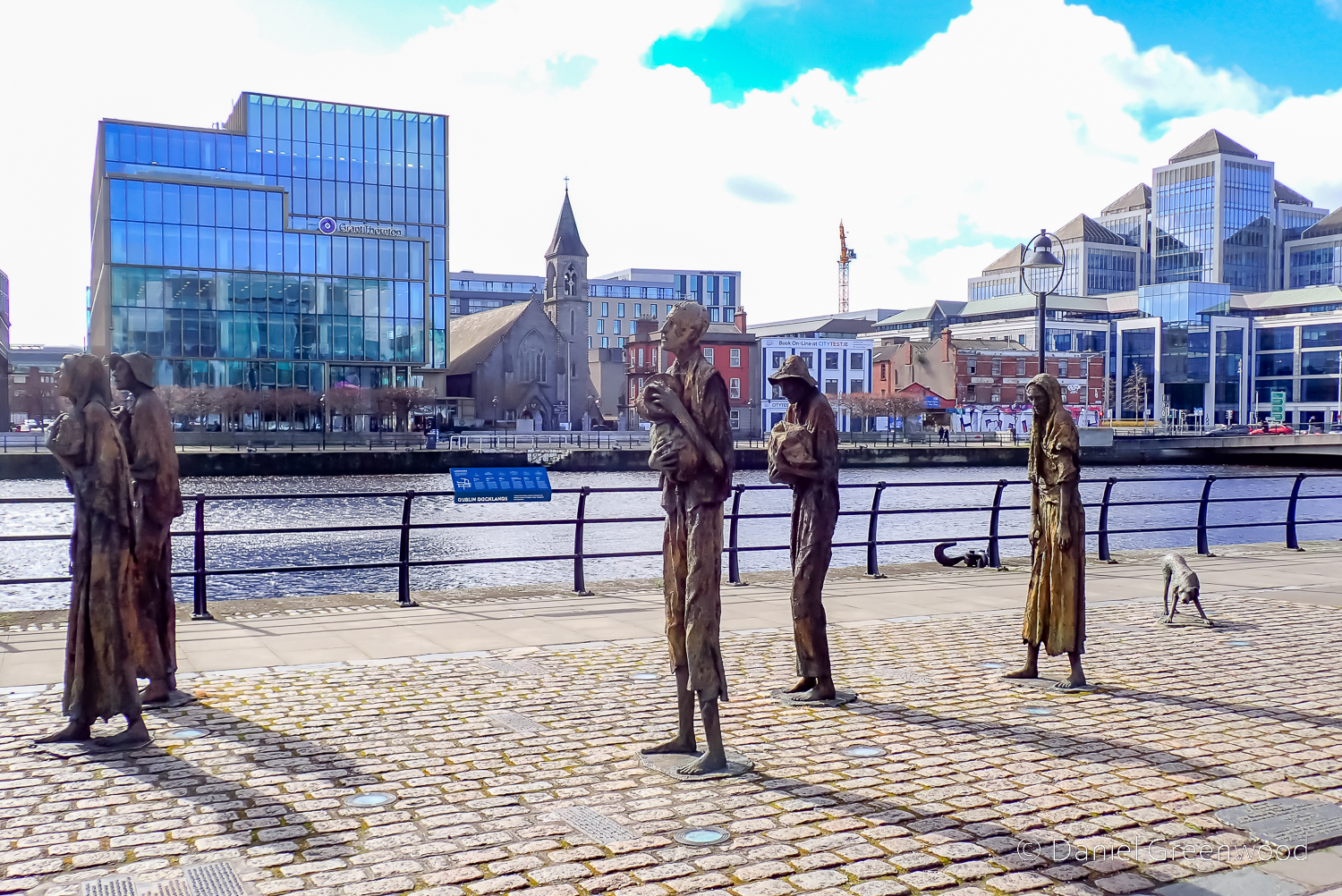
The Famine Sculptures are one of the most striking installations along the Liffey. They act to remind us of the millions of people forced to emigrate or leave their homes during the Great Famine (1845-49). It is a shocking event in British and Irish history and too few people in Britain are educated about it.

I don’t mean that from a place of “victimhood”, as one true British patriot put it to me once. It’s just that I’ve come to appreciate that the understanding of Irish history is very poor in Britain. Irish history is British history, too. There is so much more we could have learned in school about the role of the British Empire and how it explains the country we find ourselves in today.

On a lighter note, this Saturday Night Live sketch with Paul Mescal poking fun at those of us with ‘Irish ancestry’ is very funny:

From a personal perspective the famine drove my Mayo ancestors to attempt new lives in North America. The statues here are in place alongside where one of the “famine ships”, the “Jeanie Johnston” departed for New York:

The original Jeanie Johnston carried 2,500 Irish emigrants across 16 journeys to North America during the Famine.

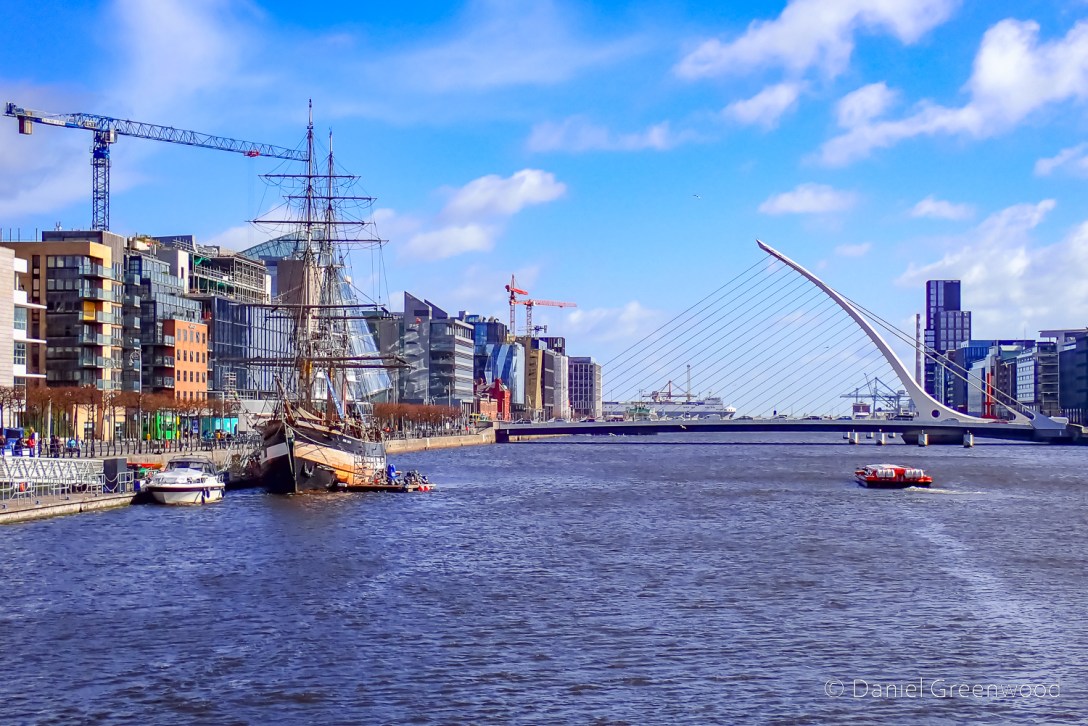
You can see the Jeanie Johnston moored in the left-hand side of the image below right.

This is the Harp or Samuel Beckett Bridge, looking out towards the Irish Sea. The harp is a significant symbol in Irish national identity. During a walking tour we learned that the Irish government had to get permission from Guinness to use the harp as its national emblem, and with restrictions on how it could be employed.

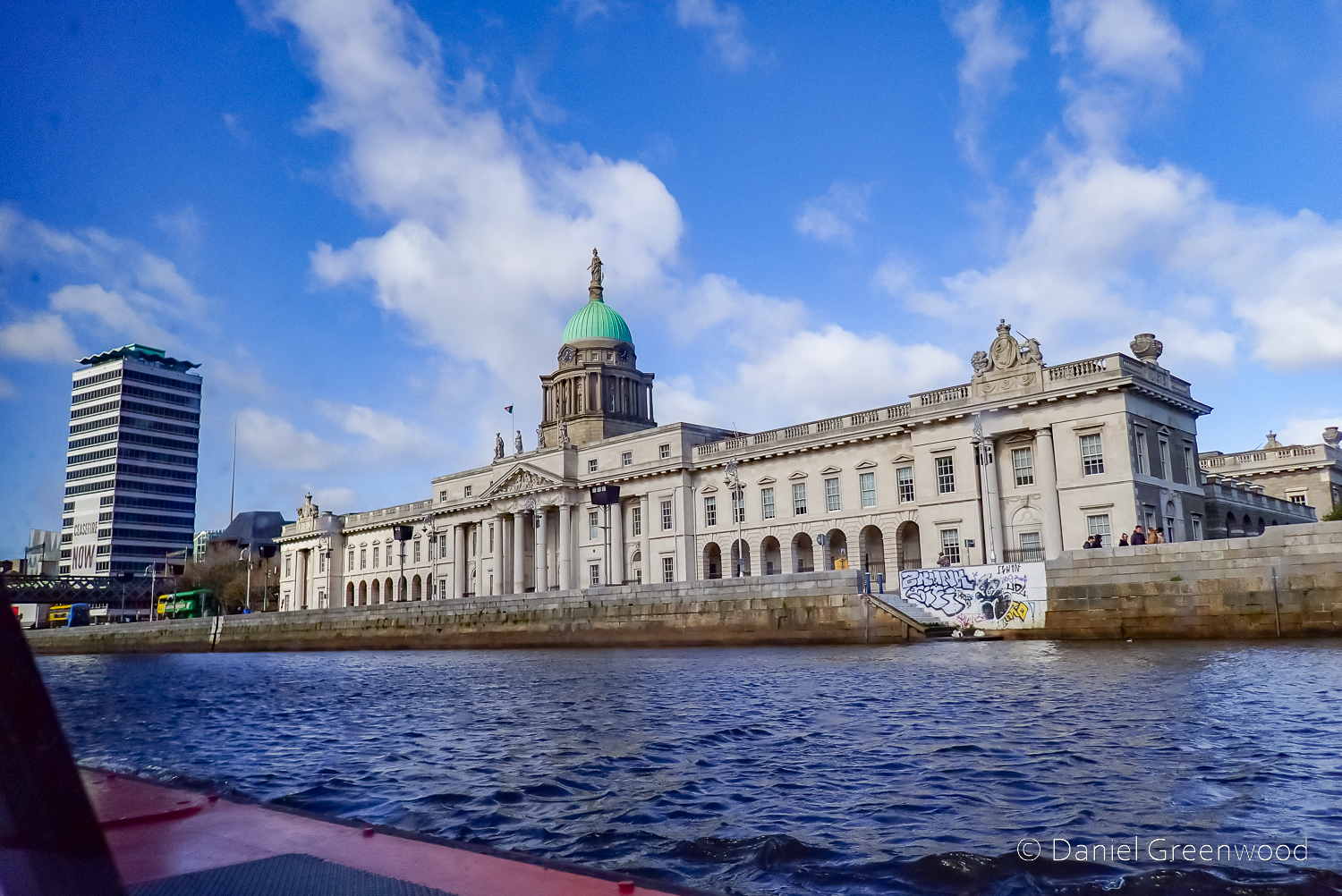
Custom House dominates part of the north bank of the Liffey. It was burnt down in 1921 as the Irish Republican Army attempted to destroy tax records in a raid.

This building once managed the movement of goods up the Liffey into Ireland.

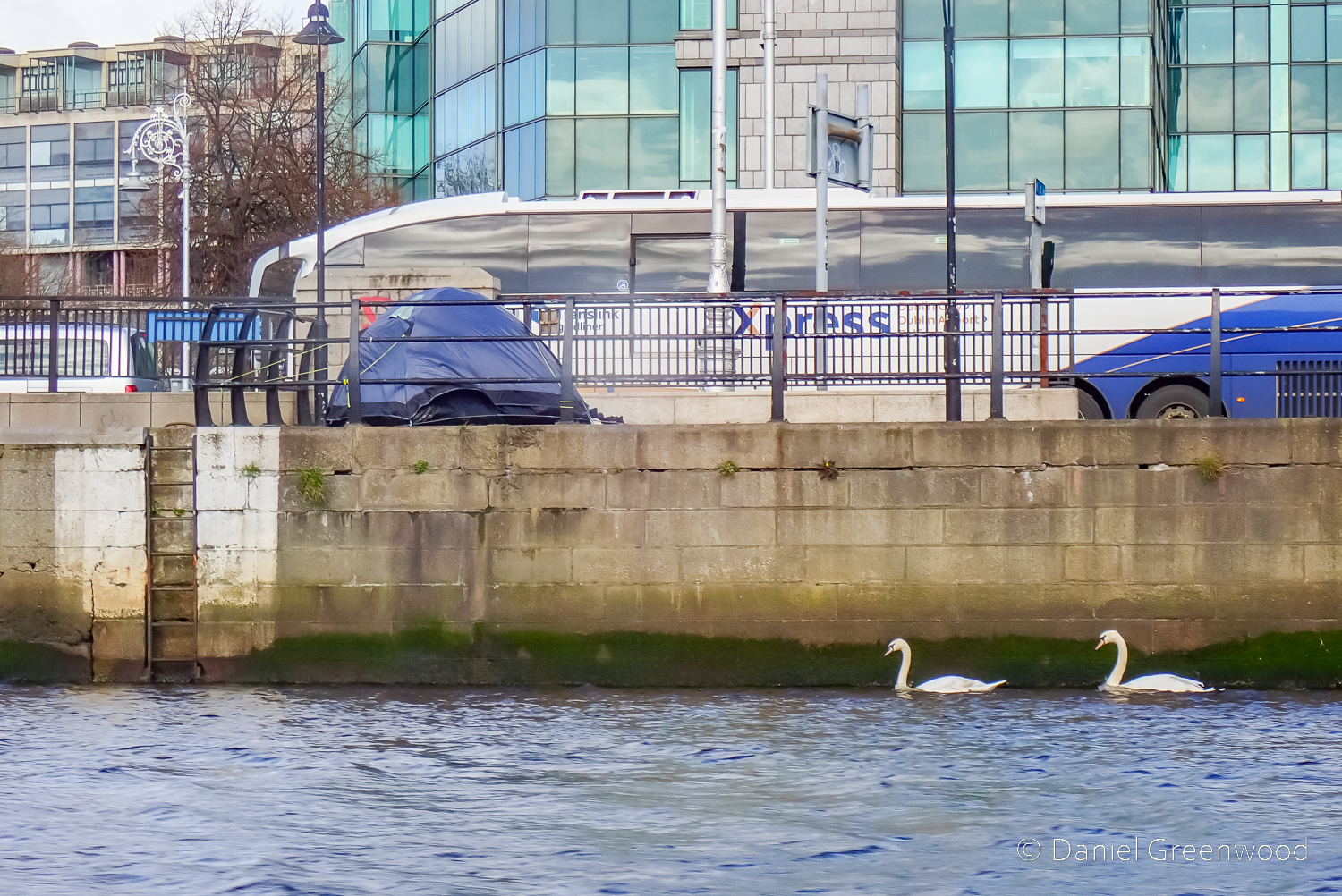
And here it is from street level. The tent on the left is where a person was rough sleeping. We were told that the river was once significantly wider than it is now.

Two swans in the river on the other side – taken a good half an hour later, don’t worry.

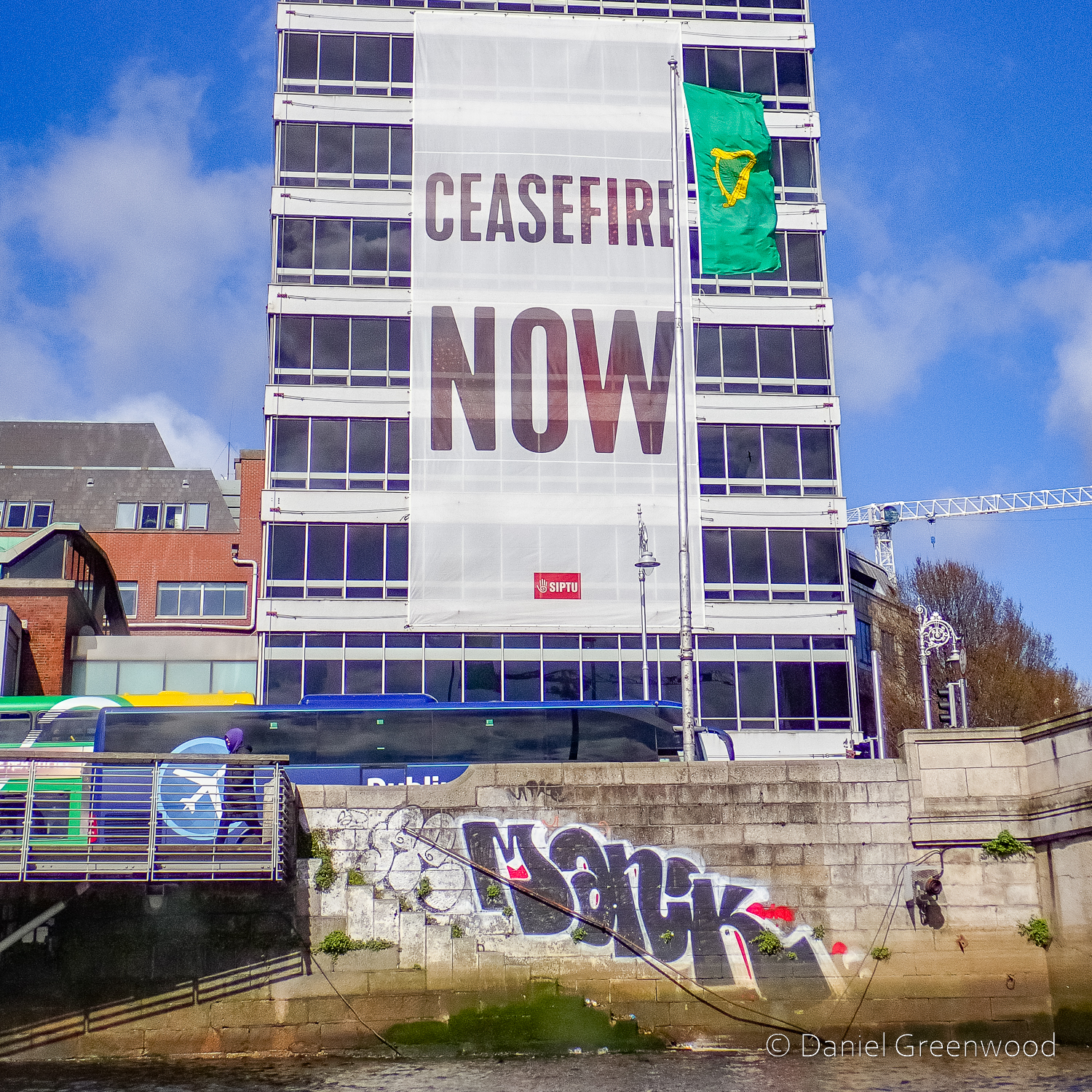
At first this tower looked disused but I’m not sure if it is. The banner’s related to the Israel-Hamas war in Gaza (at least 2023-present day). Ireland is outspoken on the need for a ceasefire, a two-state solution and for an end to the Israeli military’s occupation of Gaza and the West Bank. The banner seems to have the name of SIPTU – a trade union – branded on it. For the those who aren’t aware, the Palestinian cause is one of the most significant humanitarian and political issues for ‘the left’ in Britain and Ireland, probably more so than Russia’s invasion of Ukraine.

This barrel of a building is the Convention Centre, opened to the public in 2010.

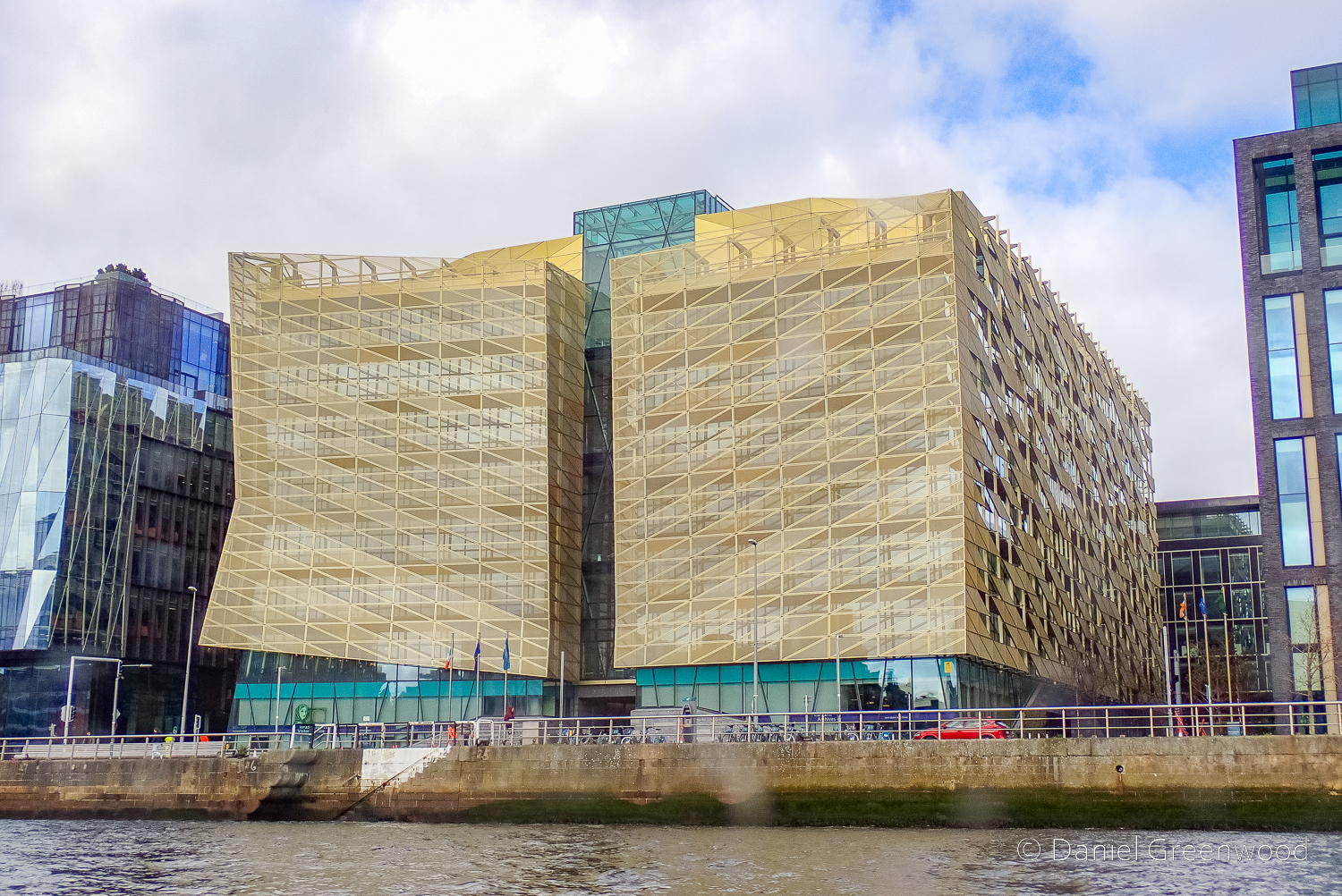
This is the Dockland Campus of the Central Bank of Ireland. The design on the side is supposed to give the impression of leaves rustling (or something) but it didn’t see that when we passed it.

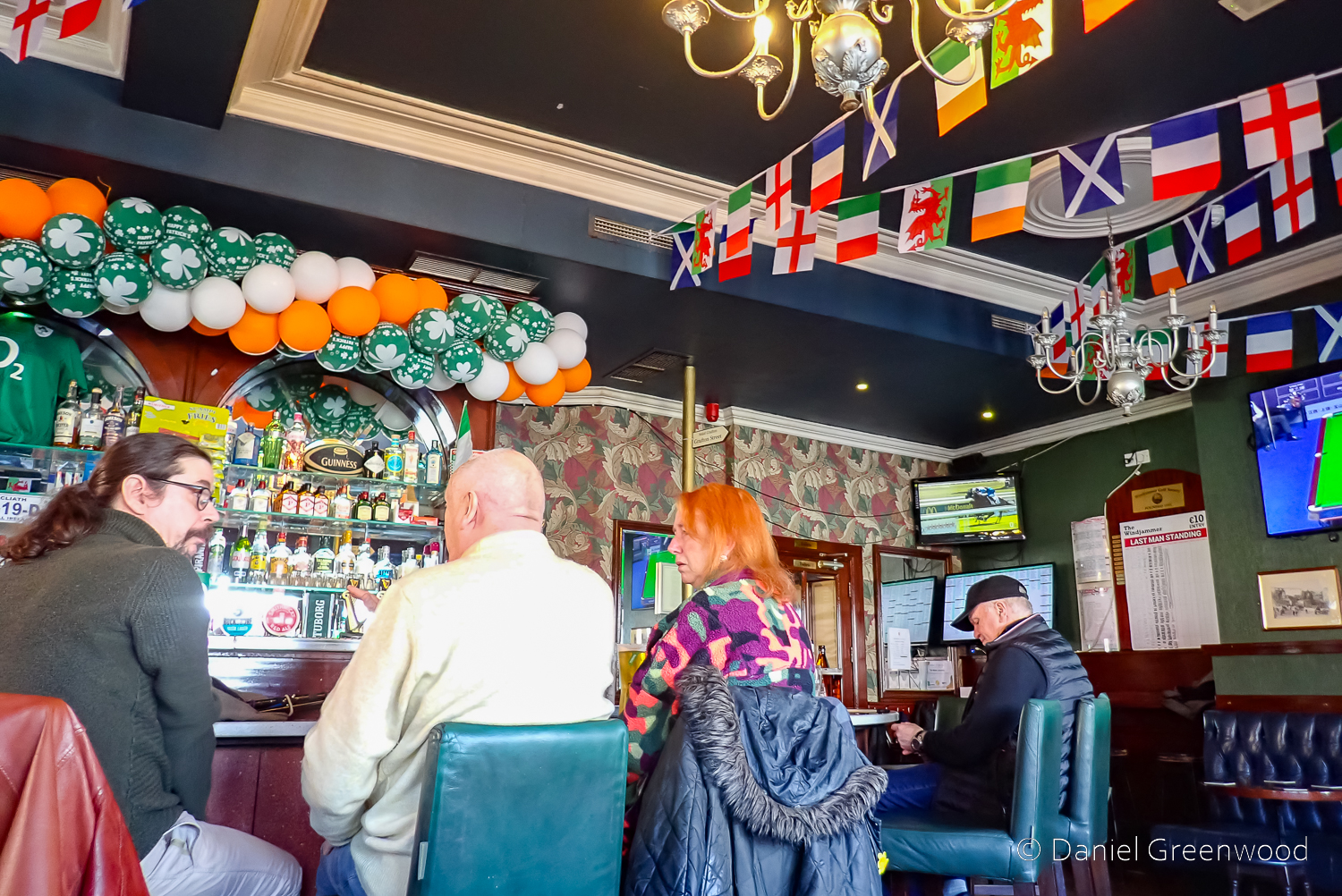
Here are some chilled out Saturday drinkers on the south side of the river.

I’ve got a post to come with images from the ferry leaving Dublin in August 2024, featuring seals, gulls and some interesting old buildings.

Thanks for reading.
Unlocking Landscapes podcast: walking to Lough Conn with Seรกn Lysaght

In September 2022 I had the privilege of walking through the woods of Enniscoe House in Co. Mayo, Ireland, to the shore of Lough Conn with Seรกn Lysaght. Seรกn is a poet and author who has taught me a great deal (through his books and poems) about the nature, landscape and heritage of County Mayo.

We cover a lot of ground and experience all the weathers, with Seรกn reading one of his poems at the close of the episode. It ends in dramatic fashion, with the rain sweeping in off Lough Conn and making further recording impossible.

This is fundamentally a conversation about woods and trees. We encounter a lot of different species which spur conversations about all kinds of things. We also discuss invasive species, bogs, Irish attitudes to nature conservation, and fit in a bit of wildflower identification on the shores of Lough Conn.

You can listen here:

You can see more of Seรกn’s work here and see the outline of the episode below. I hope you enjoy!

Recorded on 7th September 2022 at Enniscoe House and Lough Conn

  • Woodpeckers arriving in Ireland
  • Identify wych elmโ€™s bristly leaves
  • Elm trees in Mayo
  • 2022 a good year for beech mast
  • How vital ivy can be in woodlands
  • Ivy is not a parasite
  • Beech trees in Ireland, a planted tree of demesnes
  • โ€˜The Big Houseโ€™ landscape and differences with England
  • Definitions of rainforest
  • Tutsan and hypericums
  • Personal memories of chiffchaff in Kerry, other warblers
  • Moving from eradication to control with rhododendron
  • Coniferous plantations in Mayo
  • The appearance of โ€˜bog scrubโ€™
  • Wild Nephin – Seรกnโ€™s 2020 book about National Park formerly known as Ballycroy
  • New Leaf – Seรกnโ€™s latest poetry book
  • Wild Nephin
  • Ballina bookshop: Pangur Bรกn 
  • Lough Conn and views of Nephin
  • Flowers found on the shores of Lough Conn
  • Bog myrtleโ€™s use as bath oil and its folklore in Ireland
  • How wildlife is faring in Nephinโ€™s conifer plantation
  • Future management of lodgepole pine and sitka spruce
  • Mayoโ€™s dry summer of 2022
  • Irish views of natural landscapes
  • The role of bogs in preventing climate breakdown
  • Bogs as โ€˜wastelandsโ€™
  • Cutting turf in peatlands – sustainable practices versus mechanised extraction
  • Herons crossing Lough Conn
  • Seรกnโ€™s hopes of seeing a newly-introduced sea eagle on Lough Conn
  • Reintroduction of sea eagles, progress in Kerry, West Cork and Co. Clare, and the Shannon

Links:

Achill Island and the lure of the Atlantic ๐Ÿ‡ฎ๐Ÿ‡ช

In April 2023 I visited Achill Island in County Mayo for the first time in 10 years.

I have happy memories of a visit to Achill in March 2013 with my parents. Returning with my mum in April after the passing of my dad in 2021, we followed the same route as a decade ago, stopping at Cloughmore to see the Atlanticโ€™s wild waves crashing against the rocks. It brought back strong memories of that last visit a decade earlier, and thoughts of dad heading out onto similar rock formations to fish, further south in Cork during 1990s summer holidays.

In the surrounding sheep-cropped grasslands pipits, likely the rock variety, skipped and flew between boulders. A man cast a drone along the coastal edge before packing his kit (and three generations of his family) into the car and went off again.

I walked around looking for lichens to add to my iNaturalist map and picked off two small pieces of quartz that came away with ease.

The power of the waves, the overwhelming sound of the sea โ€“ the hiss and crash โ€“ and the sheer beauty of the view north along the coastline silenced me. See for yourself.

If you were to head directly west from here by sea, you would arrive in Newfoundland or Labrador in eastern Canada. My relatives made similar journeys, some of them never came home but instead built lives of their own in New York City. Some were of Irish heritage and were born in America, but returned to Ireland.

I recently read Brooklyn by Colm Toibin. I’ve been on an Irish fiction streak, in some ways to try and understand the experiences of my Irish relatives, who made the same crossings and who also built lives in Brooklyn before the book’s setting of 1950. Other than Toibin I’ve read most of the Donal Ryan novels, where migration is again a key theme.

Two of my relatives who went to America are my long-lost great-grandmother Eva Sugrue (right), and her sister Eileen (left). My family have confirmed Eileen was married in the same Brooklyn courthouse that progressed one of the many cases against ex-President Donald Trump, which is nice. No one in my family today, or even my grandmother, knew Eva (her mother) or Eileen. That mystery trickles down, and it was only through the diligence and commitment of my family’s desire to find out more that the photos above ever came to light.

On our way off of Achill we stopped at a craft shop. I wanted to buy some proper knitwear (oh yes) and a few gifts for home. We got talking to a woman called Kathleen who was running the shop. She had lived in London, Littlehampton, and Winchester, the latter when her husband was working on the creation of the M3 cutting through the South Downs at Twyford. They had lived in a caravan park while the work was being undertaken, a community of Irish families cropping up with all the workers there to do the job.

In talking we covered all the major issues: English nationalism, Brexit, Trump, Putin. She had a way of saying, โ€˜I donโ€™t care either way, butโ€ฆโ€™. We also discussed the ‘shock’ of living in rural West Sussex compared to most other places, how beautiful the South Downs were.

Kathleen was readying herself for the influx of American tourists expected in line with a visit from US President Joe Biden, ‘a Mayo man’, as the whole world now knows. She asked if we would be staying around for Bidenโ€™s visit, but we were already planning to leave for Dublin before his arrival. The payment machine didnโ€™t work as the signal was so poor, and she felt embarrassed that sheโ€™d have to ask the Americans to pay in cash.

Achill has a long history of people coming and going as Biden’s family did, though particularly to England, as the video above shows.

A beautiful place, a difficult history.

Thanks for reading.
Ireland

Bogshrooms, and a life lived wild and free ๐Ÿ„๐Ÿ

Mayo, Ireland, April 2023

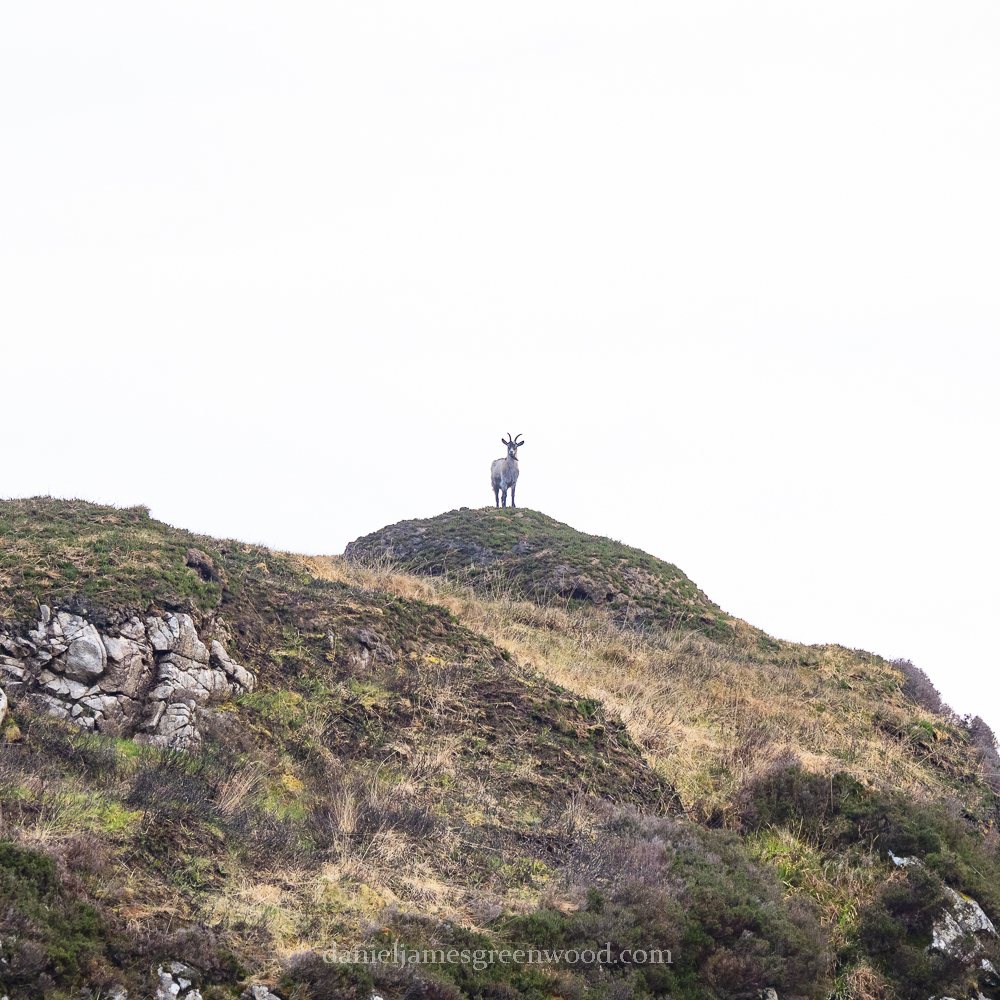
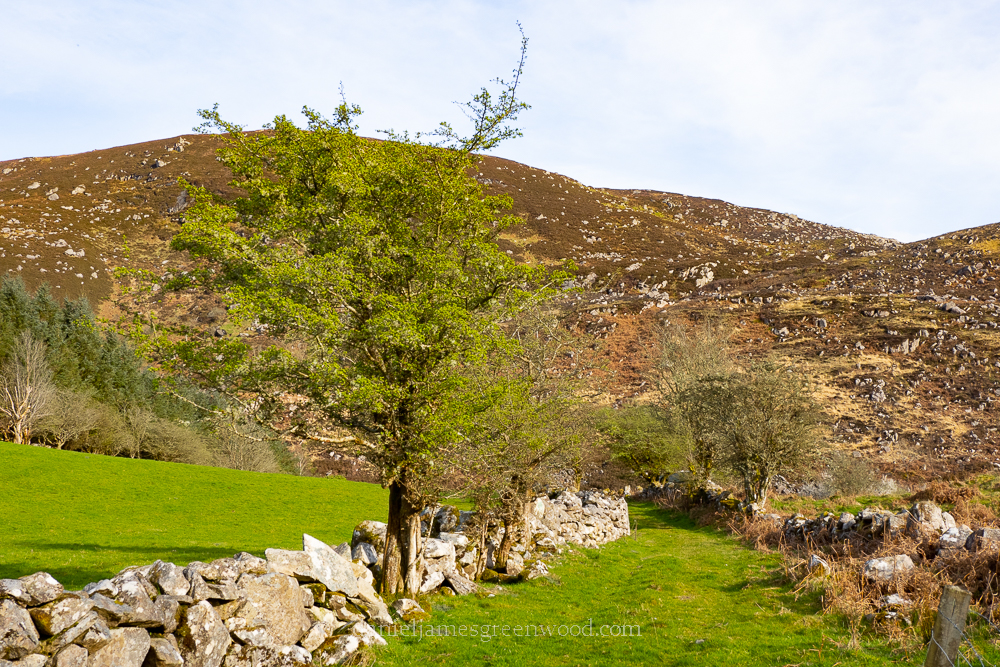
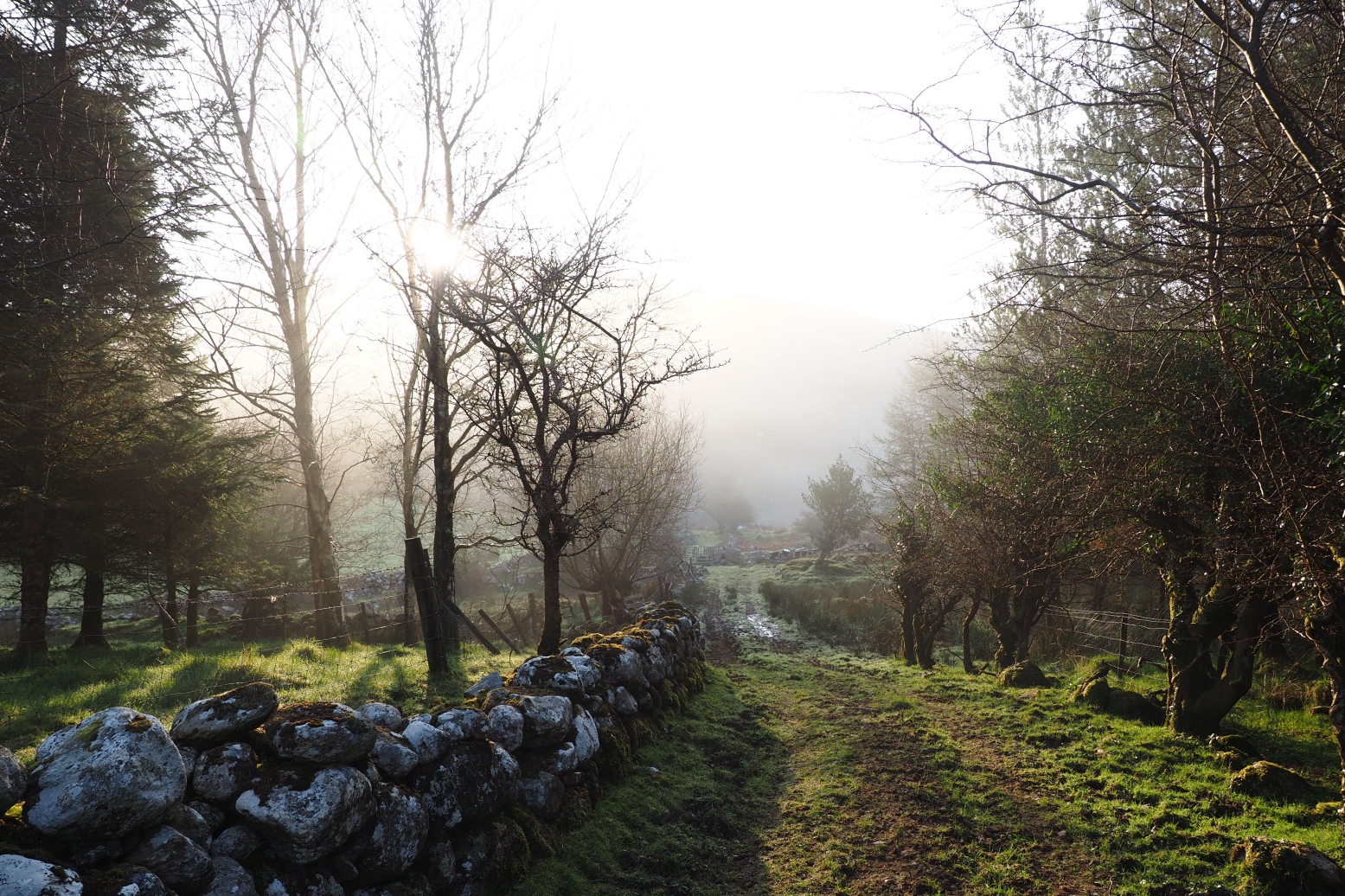
I went for an evening walk down the old trackway to the foot of the mountain. The track was flooded, meaning that without wellies I had to find tussocks and rocks to move further. Where the track turned, I noticed a ram of some kind grazing up ahead. After a time, I realised it was a goat, most likely a wild goat from the flock that roams the mountain. I had never seen one so close before and began to feel some concern for it. Why was it down here in the floodplain rather than up there out of reach among the boulders and bogs?

Its bleating was weak, distressed. I felt anxiety rising, that I needed to act. I looked at my phone about guidance for finding a wild animal of this size, but it was stuff I already knew and I realised I wasnโ€™t acting rationally. I walked forward, a little fearful that the goat may show aggression, so when it turned to look at me, I backed away and waited.

The goat lowered itself to a sitting position, bleating in a way that suggested distress, weakness. Its voice was breaking, fading. It tried to stand but its legs gave way. It lay with its head on the ground, bleating again. I hadnโ€™t moved, realising what was happening. Its stomach stopped moving. I approached it where it lay, its ears and lips were trembling. Then, stillness. Its eye remained open, and did not move. It had passed away.

A life lived wild on the mountain had ended at its foot, in a very short space of time. There was very little visible suffering, though some fear as it realised it was losing its ability to graze and trot.

I continued on and headed up the mountain. Seeing the death of the wild goat made me want to press on, a gentle reminder that all life has its limits. To the west, Nephin appeared in the distance, Lough Conn as silvery as ever at its foot. In the south-west Croagh Patrick could be see behind a rank of wind turbines. As I reached a curve in the path, where a cleft had been carved into the hillside, a small group of wild goats appeared on the hilltop. We watched eachother for a while, before they headed off out of sight.

I reached the top for the first time since 2017. A broken flock of sheep circled me against the horizon of rocky outcrops, mountains and distant loughs.ย Being up there will always remind me of the times me and my Dad made it up, always out of breath and red-faced.

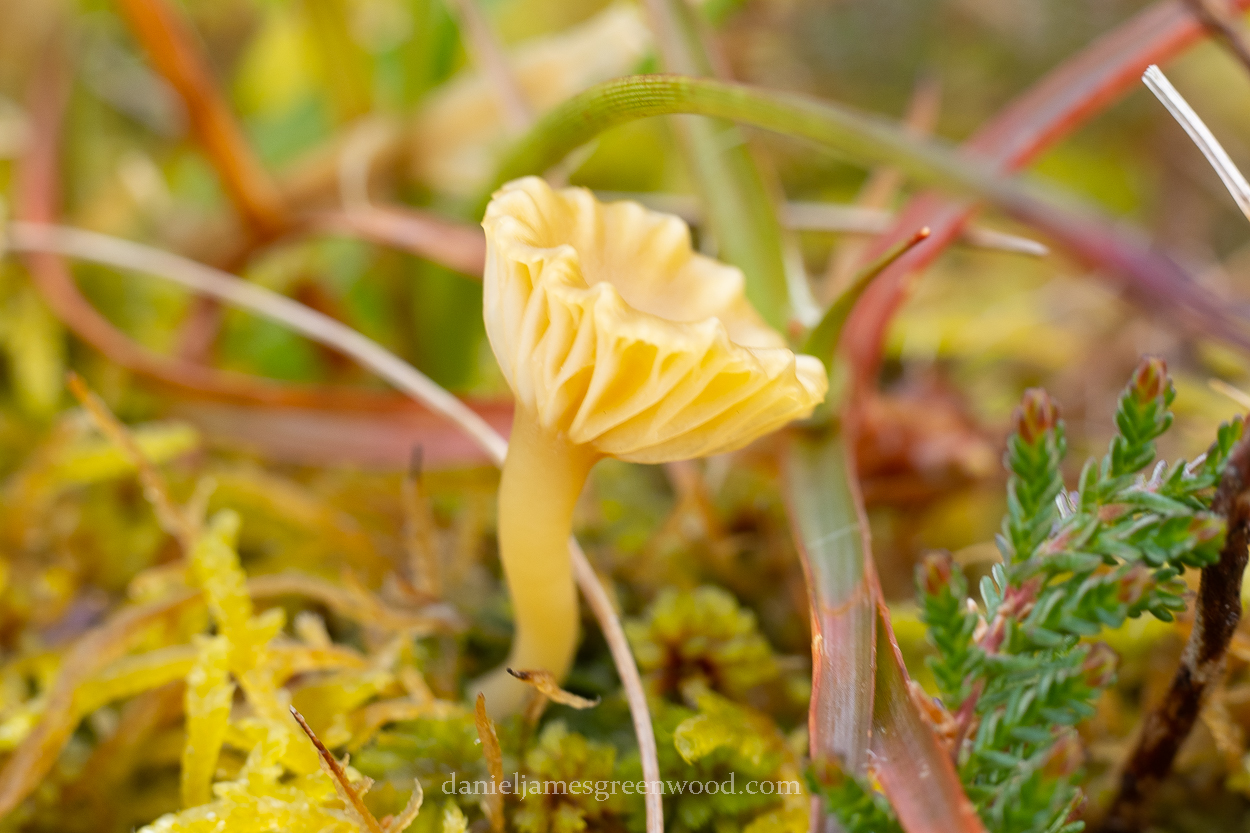
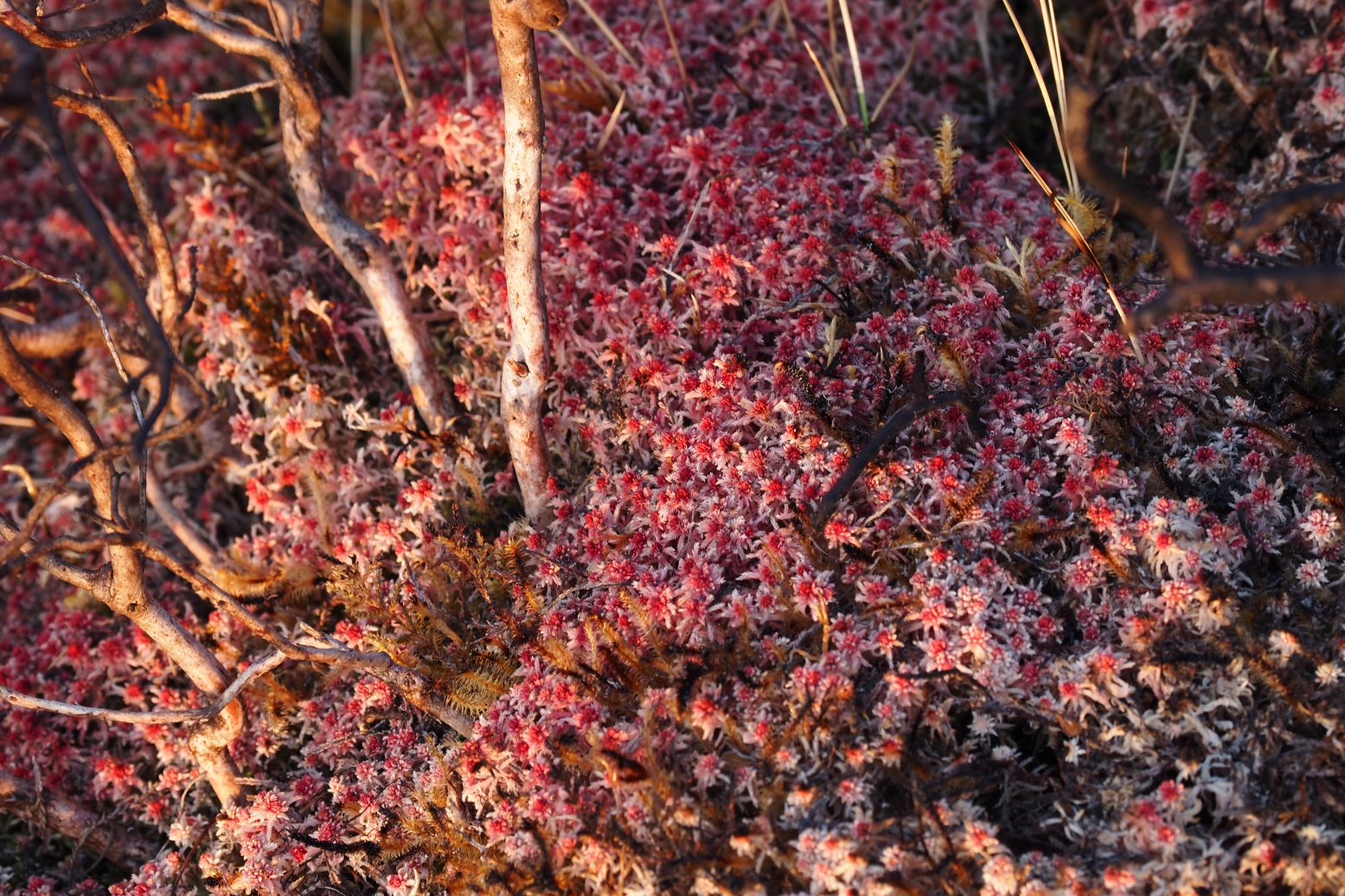
Surrounded by bogs and scars of turf cutting, I looked down to try find an unusual species of some kind that I might not see elsewhere, due to the remoteness of the place. Down in a small bit of bog, with sphagnum and other mosses, a group of golden mushrooms were growing.

I had a second camera with me that had a macro lens attached for ease. I took some photos, unsure of the species. Its gills were not unlike a waxcap (hygrocybe) but I knew so little about boglife that I was happy simply to find some shrooms.

Iโ€™m still waiting on feedback on iNaturalist, so this remains a mystery. Unless someone reading this knows and can add some information in the comments?

I headed back down the mountain and along the track. There the wild goat rested. I hadn’t imagined its death, and it wasn’t trying to fool me. I went back to the cottage unnerved, reminding myself of a life lived wild and free in the Ox Mountains.

Thanks for reading.

Fungi | Ireland

Unlocking Landscapes podcast: Walking with ravens in the Ox Mountains ๐Ÿ‡ฎ๐Ÿ‡ช

It’s January 2023 and my podcast, Unlocking Landscapes, is 2 years old! Thanks to everyone who has contributed and supported so far.

I do this podcast at my own cost so if you want to support it (it costs a basic ยฃ100 annually to host my Podbean account) you can ‘buy me a coffee/camomile’ here: https://ko-fi.com/djgwild

I haven’t posted for a while, mainly for professional and technical reasons. The biggest issue is that I needed to upgrade my ailing desktop PC, which I have now done. It’s in much better shape now, so no more IT excuses but hopefully more podcasts.

You can listen via YouTube here:

Or via the Podbean stream here:

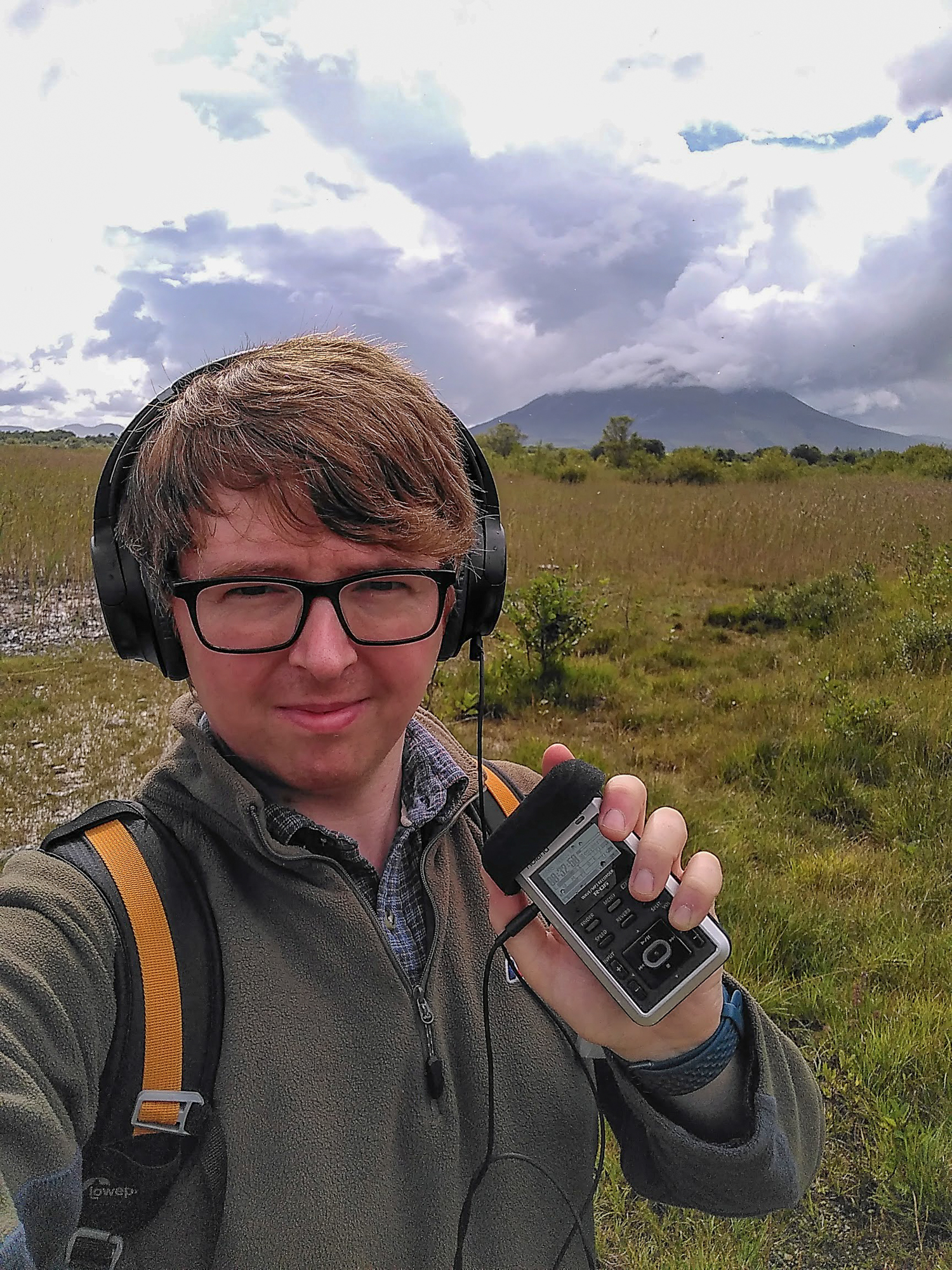
In September I spent a week in Mayo in Ireland and recorded two podcasts. One is an early evening walk in the Ox Mountains, encountering rickety gates and performing ravens. The second one (still to come) is a walk with Seรกn Lysaght, which I can’t wait to share with you. I’ve been a big fan of Seรกn’s writing for over a decade, so it was a massive honour to spend an afternoon walking with him. More on that one soon!

In the Ox Mountains I go for a walk, describing the surrounding landscape, capturing two ravens (acoustically) as they fly close by from where the breed in the hills. I also talk a bit about issues with cottages which aren’t connected to mains water, amongst many other things.

Here are the reference points:

Thanks for listening!

Unlocking Landscapes podcast:

The homefires burn in the mountains of Mayo ๐Ÿ‡ฎ๐Ÿ‡ช

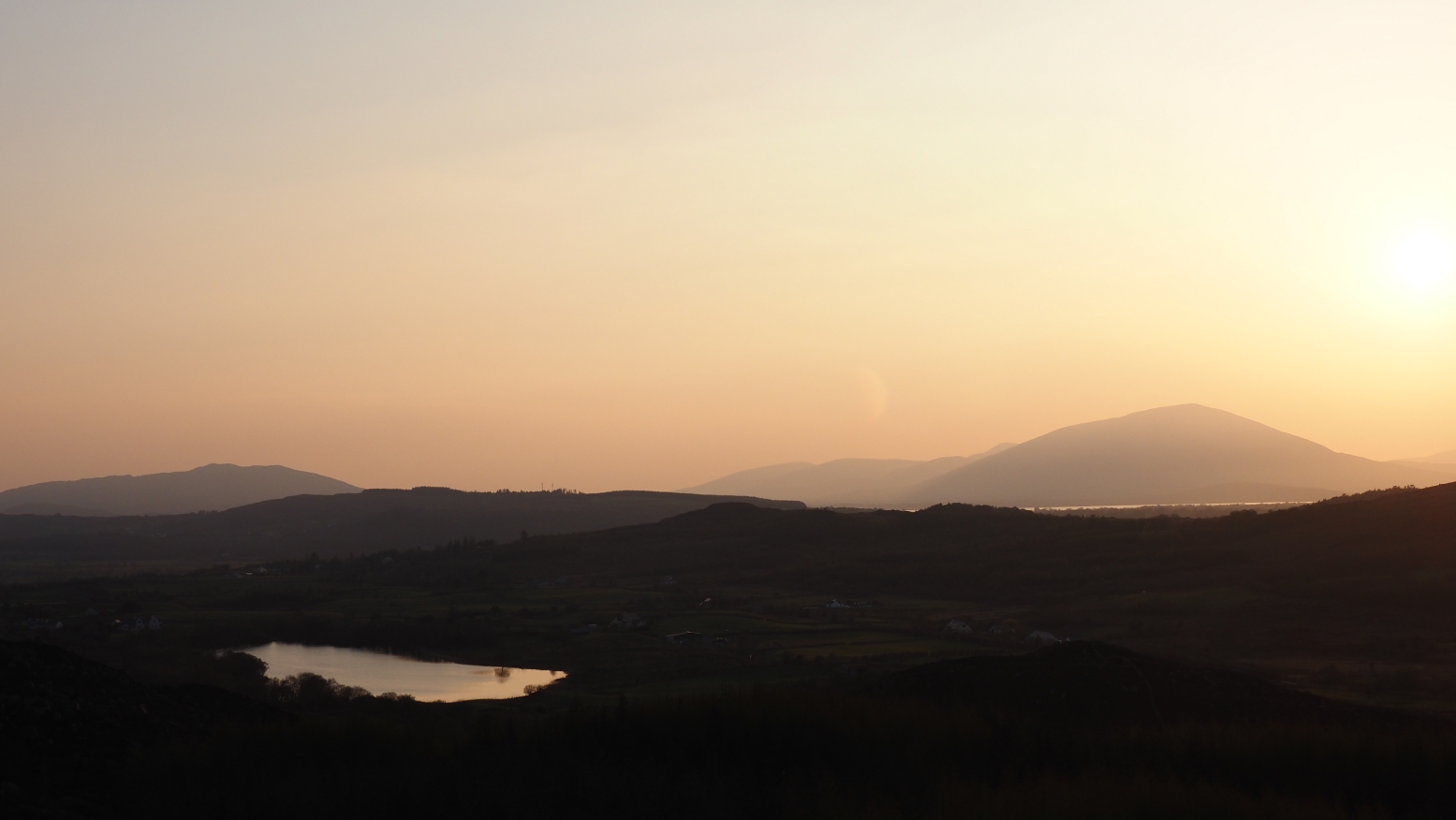
Here are some landscape images from a March visit to Mayo which I’ve been posting a bit of recently. This landscape fascinates me in many ways: the cultural history (of which my family has links), the ecology and geology.

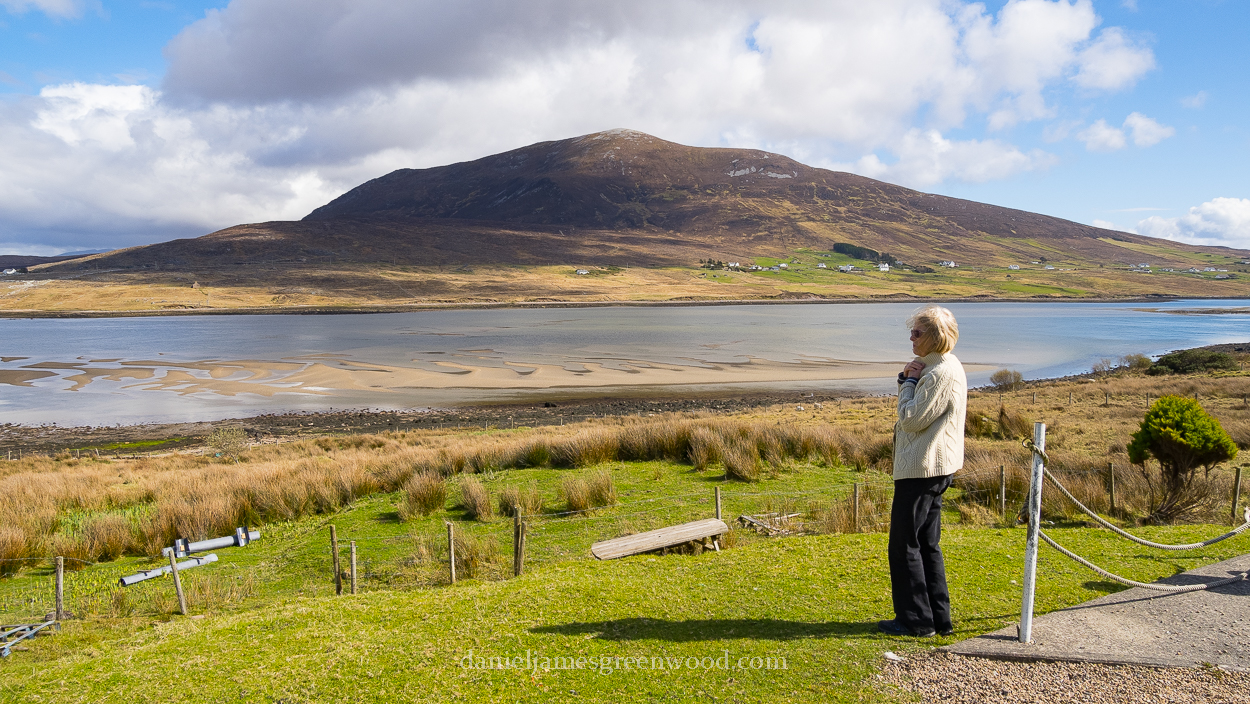
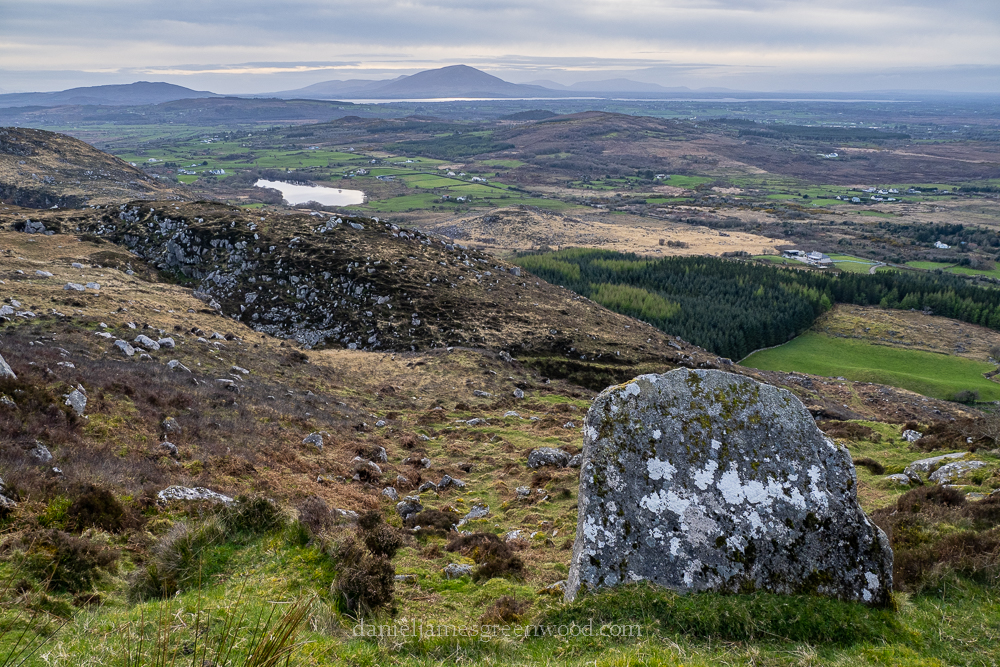
My family’s cottage is located near a mountain range that would probably be classified as hills in the UK, but their Irish name translates as Wintry Mountain (Slieve Gamph). The English version is the Ox Mountains. It was said that people once lived in these hills – granite, heather and peat bog – in simple stone cottages until the famine. I haven’t managed to locate anything resembling a disused cottage there as yet, but the wider landscape is littered with megalithic tombs, stone circles and other significant archaeology.

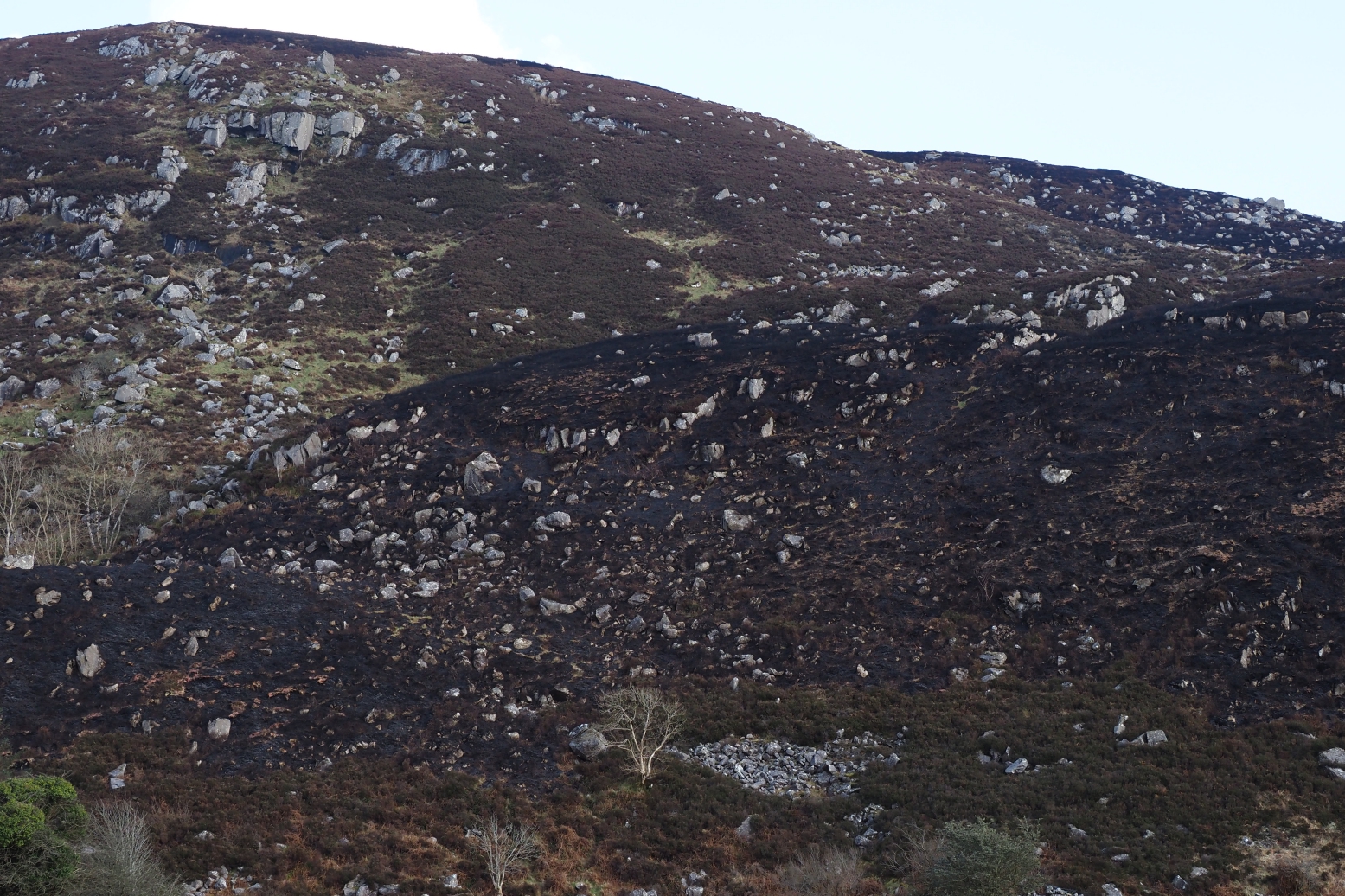
We arrived in Mayo to find the mountain burnt across a mile or more. This beautiful landscape with its rare plants, bog habitats, feral goats and moorland nesting birds, was decimated. We asked local people – who started it? One man said it could have been a farmer who just wanted a bit more grass, another woman said it was someone just “lighting a match”. Whoever it was, the authorities are not happy and it made plenty of news out this way. It was also an issue in Wicklow and Kerry.

The mountains had not been completely charred by the fire, with plenty of plants having survived, though it had spread to areas I had never seen affected before. Our local neighbour said she had never seen so many fires as in recent years. Climate change is no doubt making these moorlands and their mountains of bracken more vulnerable to wildfires (or otherwise) but the issue still remains one of misguided land management, as well as pure arson.

Having worked in the management of publicly accessible green spaces I can tell you there is a minority everywhere who want to just burn stuff for the fun of it.

In 2013 I wrote a piece about visiting Mayo while my grandfather was in a nursing home. He passed away 2 years later from dementia. Back then we arrived to fires burning close to the cottage, like something from a movie. I remember a radio report saying there were gorse fires simply caused by direct sunlight and dry weather. You can read that here.

Thanks for reading.
More from Ireland

Pulling up roots and planting “whitethorn” ๐Ÿ‡ฎ๐Ÿ‡ช

On a recent trip to Ireland, my Mum and I spent some time at a garden centre trying to find hedging plants. Having been poisoned by cherry laurel once, and having professionally removed a lot of it, that was not on the agenda. Instead, I was looking along the lines of a good old conservation hedge mixture, with an eye on the local ecosystem.

Northern Mayo is dominated by species like birch, hawthorn, rowan and willow. At the garden centre I was impressed by the beds of saplings where bundles of hawthorn or beech were available for the cost of 1 Euro a whip.

What interested me was that hawthorn wasn’t actually available whereas ‘whitethorn’ was. Don’t be confused for too long, as this is the same species: Crataegus monogyna. The woman who ran the garden centre didn’t understand me quite a lot of the time and then thought we were American. That’s a new one! Either way, we bought 10 whitethorn and 4 potted hollies (Ilex aquifolium) for two separate areas of hedging. Again, these are two species native to the landscape they were being plopped into. This is not an ethno-nationalist statement, it’s considering what will take in the soil, hydrology and what will benefit local wildlife most.

How I plant a hedge

I have been planting native mixed hedges since 2011, usually on public land like parks or nature reserves. I don’t go in much for extra things like plastic weed matting or anything like that.

The hawthorns were going into an area that had just been cleared of bramble, nettle and hogweed by my uncle. We’re fairly sure this area might have been used to grow potatoes by previous residents.

I began by breaking up the ground with a mattock, using both sides of the head to break the soil and to axe through the roots of nettle, bramble and hogweed. When I use a mattock I don’t wear gloves as it gives better grip. The mattock should be directed between the feet so as not to take a chunk out of your shin.

I laid the whips out (with help from my Mum) and planned to put 5 to a metre, but it ended up being about every 12 inches. I’m not fussed on doing this perfectly, the main thing is they survive. When the roots are in and covered by soil I press with my hands, not feet, as sealing the ground can block the space for gases and water to move through, potentially reducing oxygen to the plants.

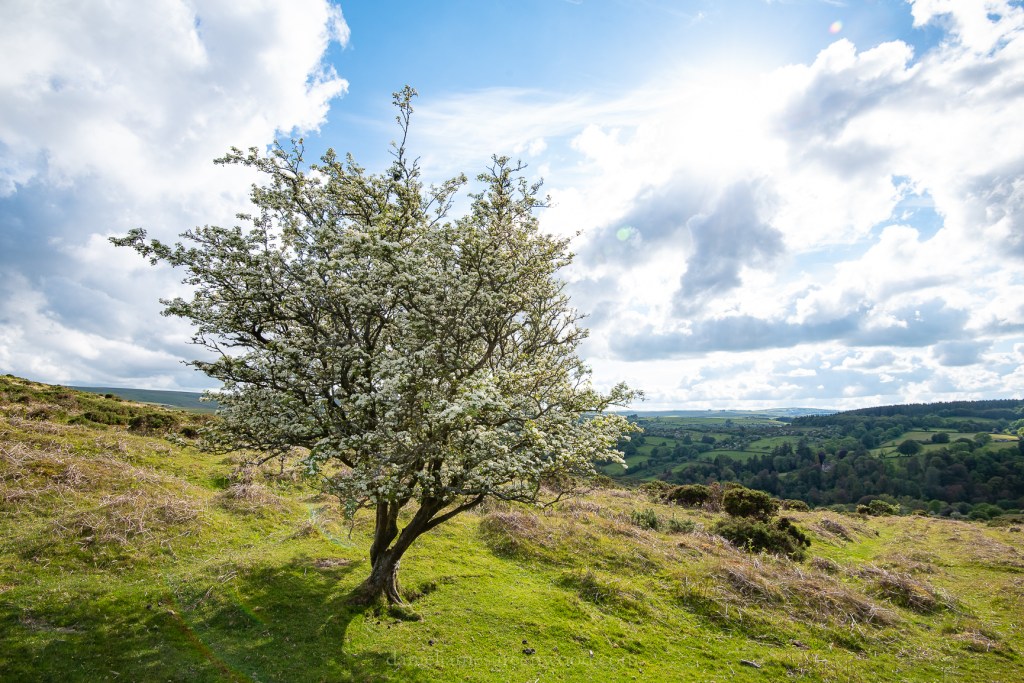
Hawthorn blossom on Dartmoor

Hawthorn in Irish folklore

Whitethorn, as they call it in Mayo, is a significant tree in Irish culture. This article by Marion McGarry tells you a lot about hawthorn’s place in Irish culture. Unfortunately it is seen as, well, unfortunate.

Then again, if it’s bad luck to cut them down it must be a really good idea to plant so many of them!

Thanks for reading.
Ireland

A trip to Wild Nephin National Park ๐Ÿ‡ฎ๐Ÿ‡ช

In March I visited Wild Nephin National Park at the Atlantic edge of Ireland, in Co. Mayo. I thought it was called Ballycroy National Park, but the name seems to have been updated.

The mountains here are the Nephin Beg range. There’s a great visitor centre here and a brilliant cafe run by a very friendly couple. I’d seen these mountains from afar for years but this was my first time in the National Park.

The National Park itself is said to be home to golden eagles, which I hadn’t realised were present in Ireland. It’s also where one of Europe’s largest blanket bogs resides, a special type in this region known as Atlantic blanket bog. Great name!

If you want to read more about this landscape I would recommend Sean Lysaght’s book Wild Nephin. Copies are available in the cafe also. I really recommend it, also Sean’s poems.

I’ve tried to work out the names of the mountains but may have some of them wrong. I’d welcome corrections in the comments and will amend.

Here are some images I took during our visit to Ballycroy:

Nephin mountain
Scree and stream bed on Nephin
Mountain I don’t know the name of with cottage for scale
Croagh Patrick, possibly the most famous mountain in Ireland
Mulranny view towards mountains
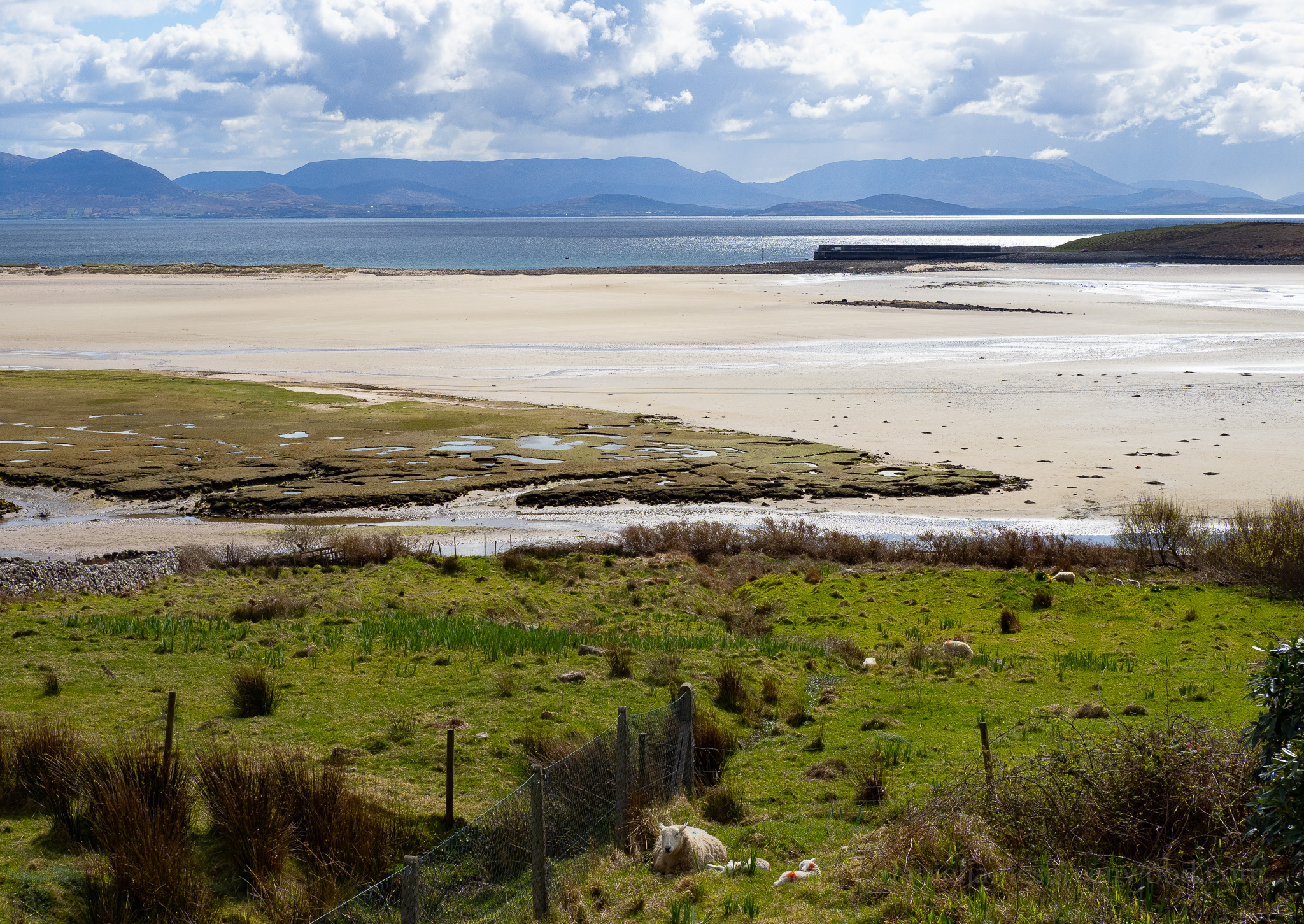
Sheep with lambs
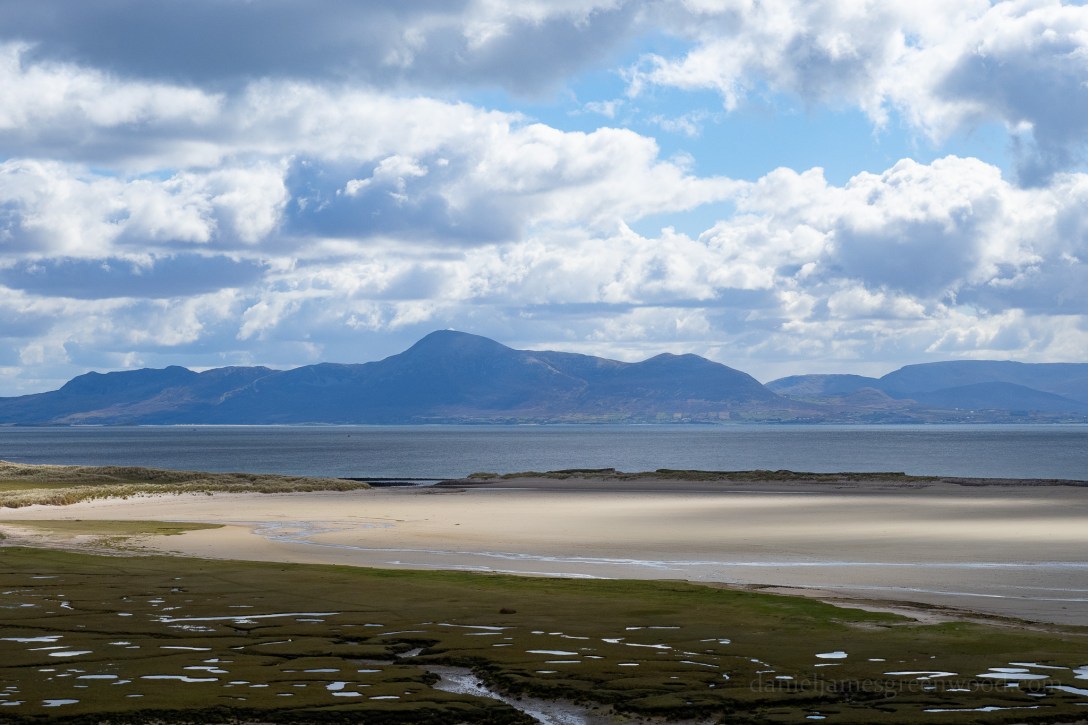
View of Croagh Patrick from Mulranny, across Clew Bay
Cleggan Mountain Trail (boardwalk just visible on the left) and view towards Achill
Cnoc Leitreach (Owenduff Hill) I think!
The Ballycroy visitor centre boardwalk loop
Sunny day in Ballycroy
Gorse in flower
Inishbiggle mountain (I think)
Views towards Nephin Beg mountain range
Local farming in Ballycroy
Abandoned farmstead near Ballycroy. Note the succession of rushes, grasses and gorse onto the green of the ‘improved’ grassland.

Thanks for reading.