As someone who works from home 9-5, I have to break up my days and get exercise through one or two short walks a day in the daylight hours. I often pass through a cemetery on one of those walks. Last week I noticed a double gravestone which was acting as a green wall. It was absolutely dripping in moss. I tweeted about it:
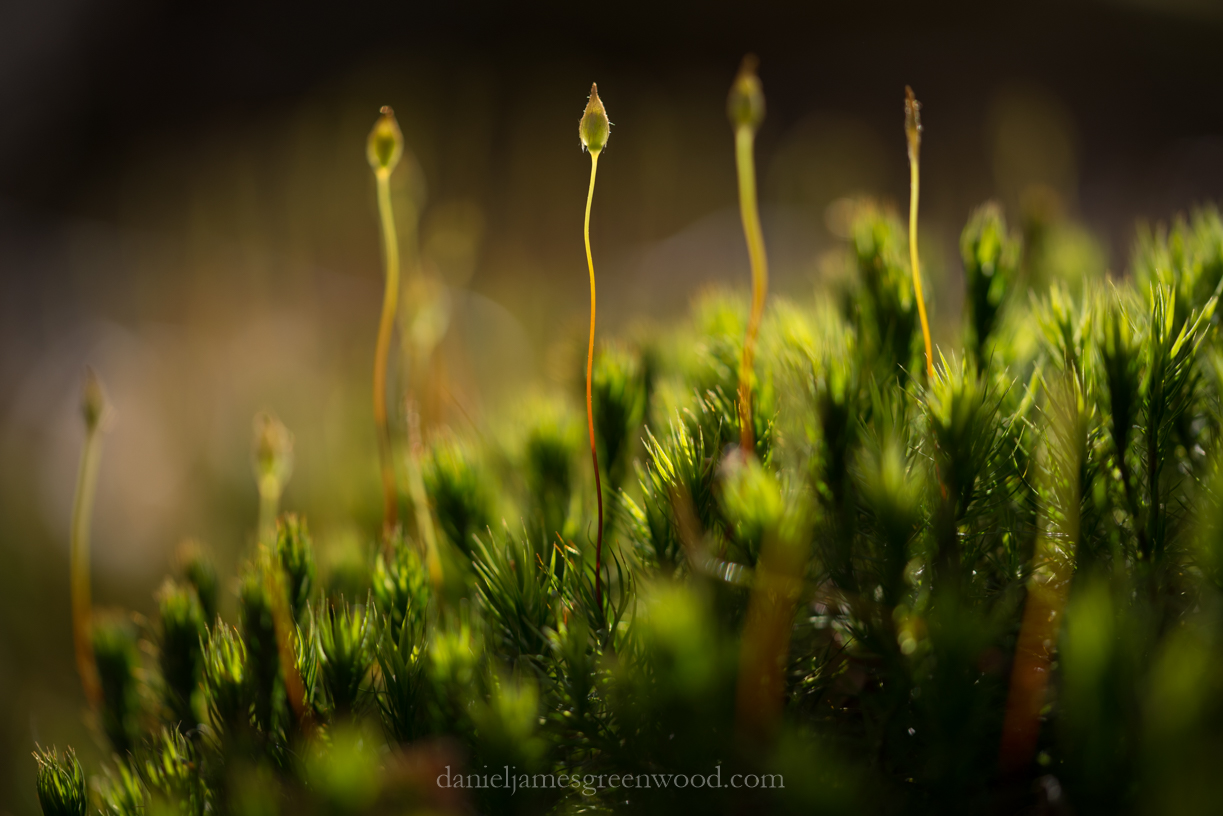
The best moss images I’ve managed to take have been in the New Forest National Park. This is juniper haircap moss, which I caught just as the evening sun was slipping away:
I liked the mossy cemetery scene so much, and even though I stepped in dog poo at the time, the next morning I headed back. This was the photo I had in mind:
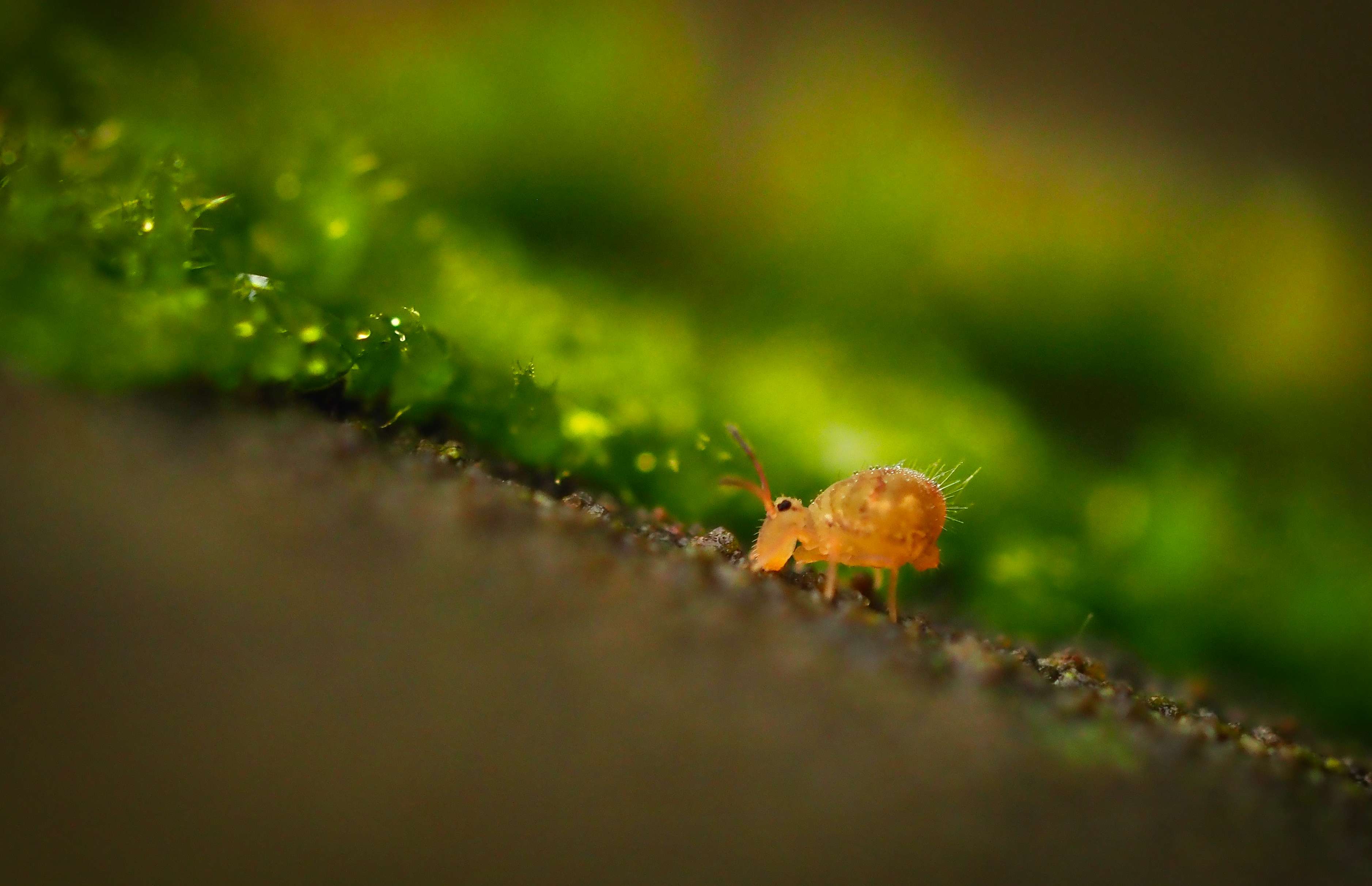
I had about fifteen minutes and this was the best I could do at the time. I really need a tripod and more time to get this right. Nevertheless, when I looked closer at the stone itself, I noticed a herd of miniscule invertebrates:
I recognised them as globular springtails. This is possibly my first attempt so hopefully I can get a clearer image in future. There’s a helpful guide to them here. Springtails are found in huge numbers in soils and are a key part of soil biodiversity. Apparently they also enjoy graveyards.
I think what the springtails are particularly interested in here are lichens. Thankfully, I am also interested in lichens and we’re about to move into that season. I was so enamoured with the springtails that I went back at lunchtime. It appeared then that the springies were actually grazing the lichens.
This is not over. (Technically for this week it is, but you know what I mean). Hopefully more springtails next week.
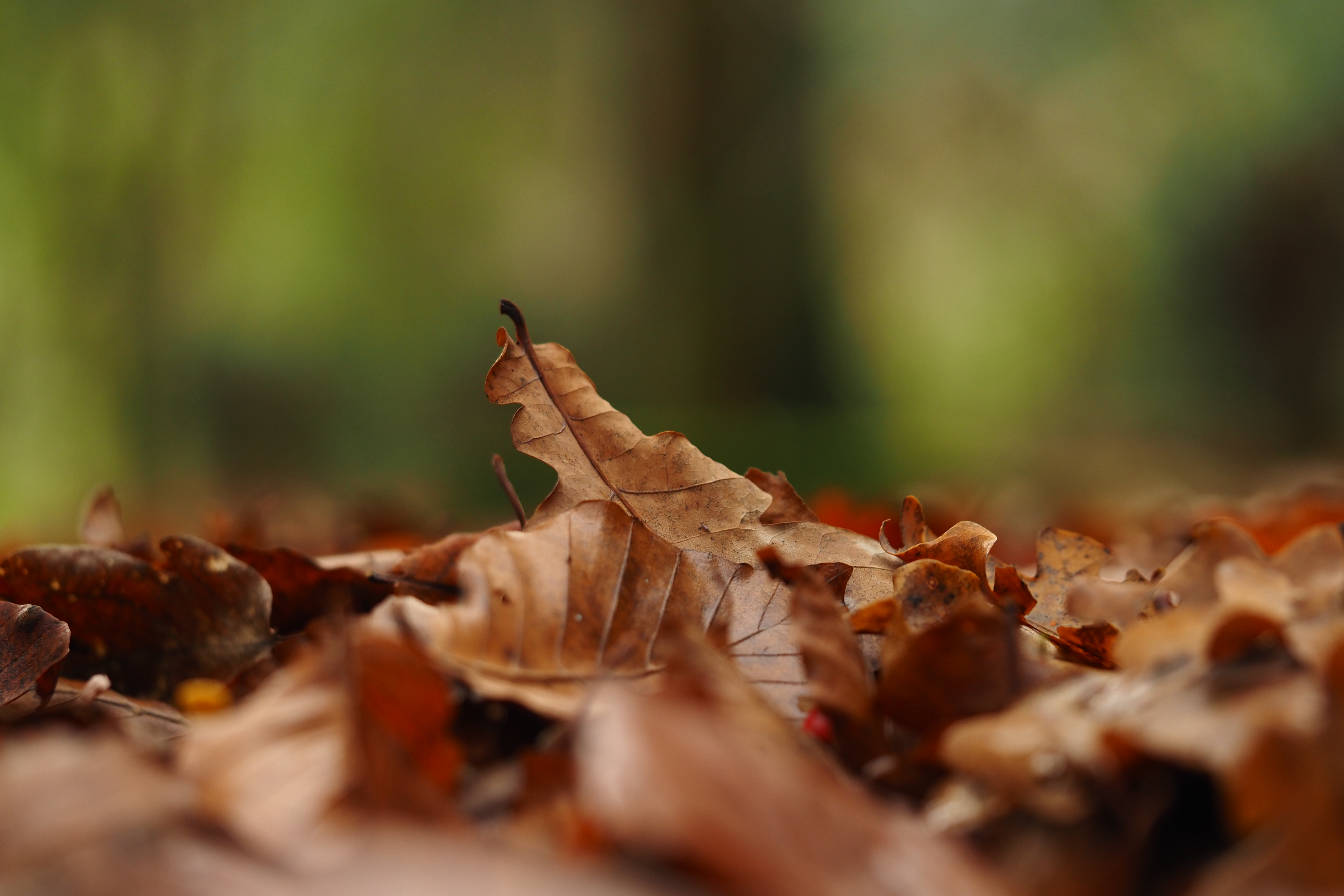
I did say this blog would make the odd appearance, outside of insect season. Here we go again! I’ve spent some decent stints in the woods recently. It always surprises me how much there is to see at a very small scale in woodlands at this time of year. That’s even before the frost, snow or ice has come into play. In southern England it looks like snow could be coming.
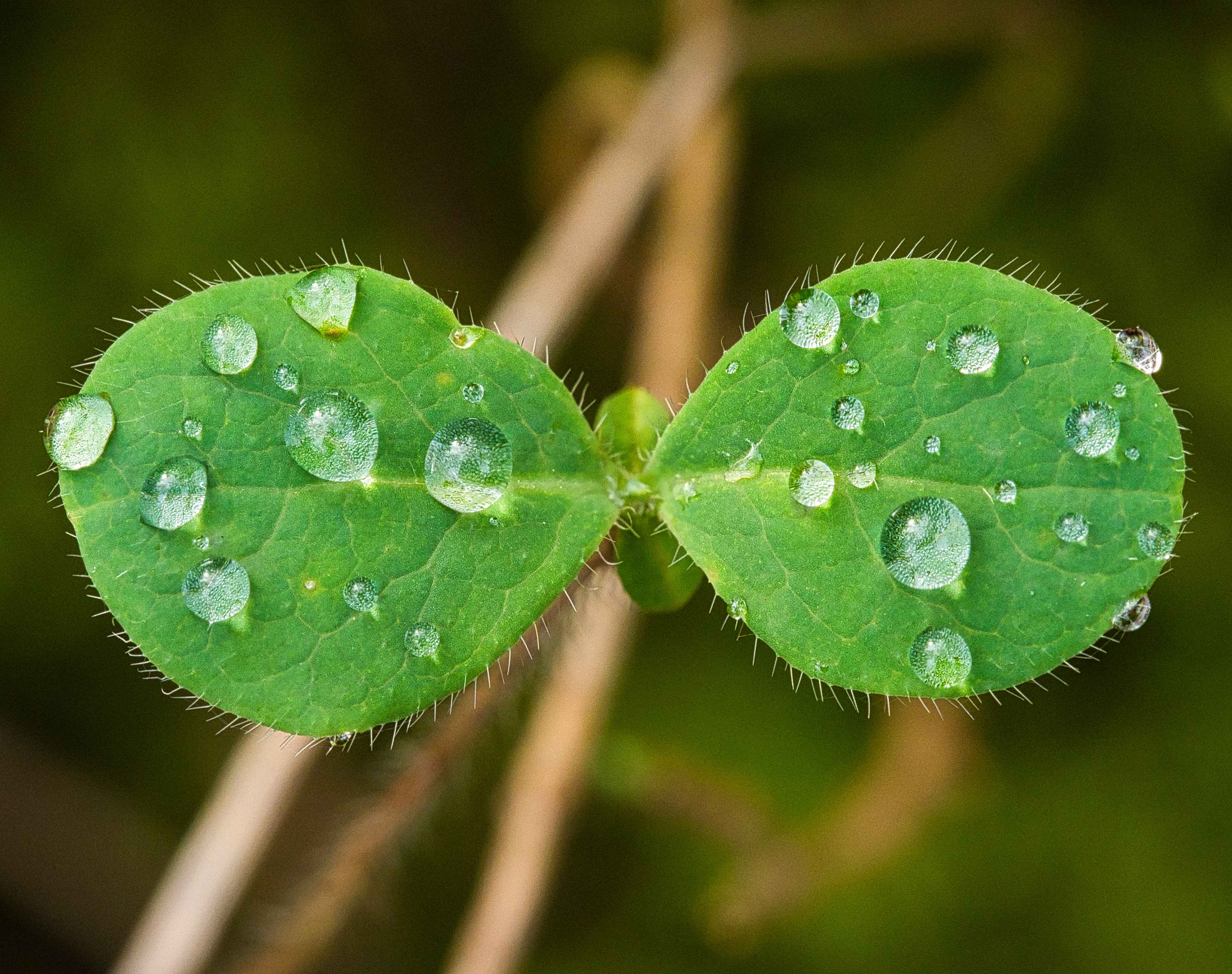
I was looking for fungi on both occasions but with less of a sense of expectation. It’s a better way to be, you’re more relaxed and open to finding new things. Though most plants have shed their leaves by December, there are many which are evergreen. Some plants look especially nice when there has been a bit of rain, with honeysuckle being one of them. This is a time of year when YouTube photographers will be posting videos about droplets.
Honeysuckle is a plant renowned for its scent, which is beautiful. I have fond memories of walking home from the train station at night in south London with the whiff of honeysuckle flowers coming from a local nature reserve. The leaves are tough, what you might expect from an evergreen plant. The cells are not allowing much movement of water molecules, or even gases, which means the water droplets sit on top. I may be wrong about that.
Oak leaves are not evergreen, but they are very tough. A fallen oak leaf is a great platform to find water droplets.
I think quite a lot about how weird some of the things I photograph are. I wouldn’t change that. Most of the well known photographers have massive tripods and are looking for the perfect light in some amazing landscape. Generally I am down in the leaf litter looking for the smaller things. It’s an incredible place to be.
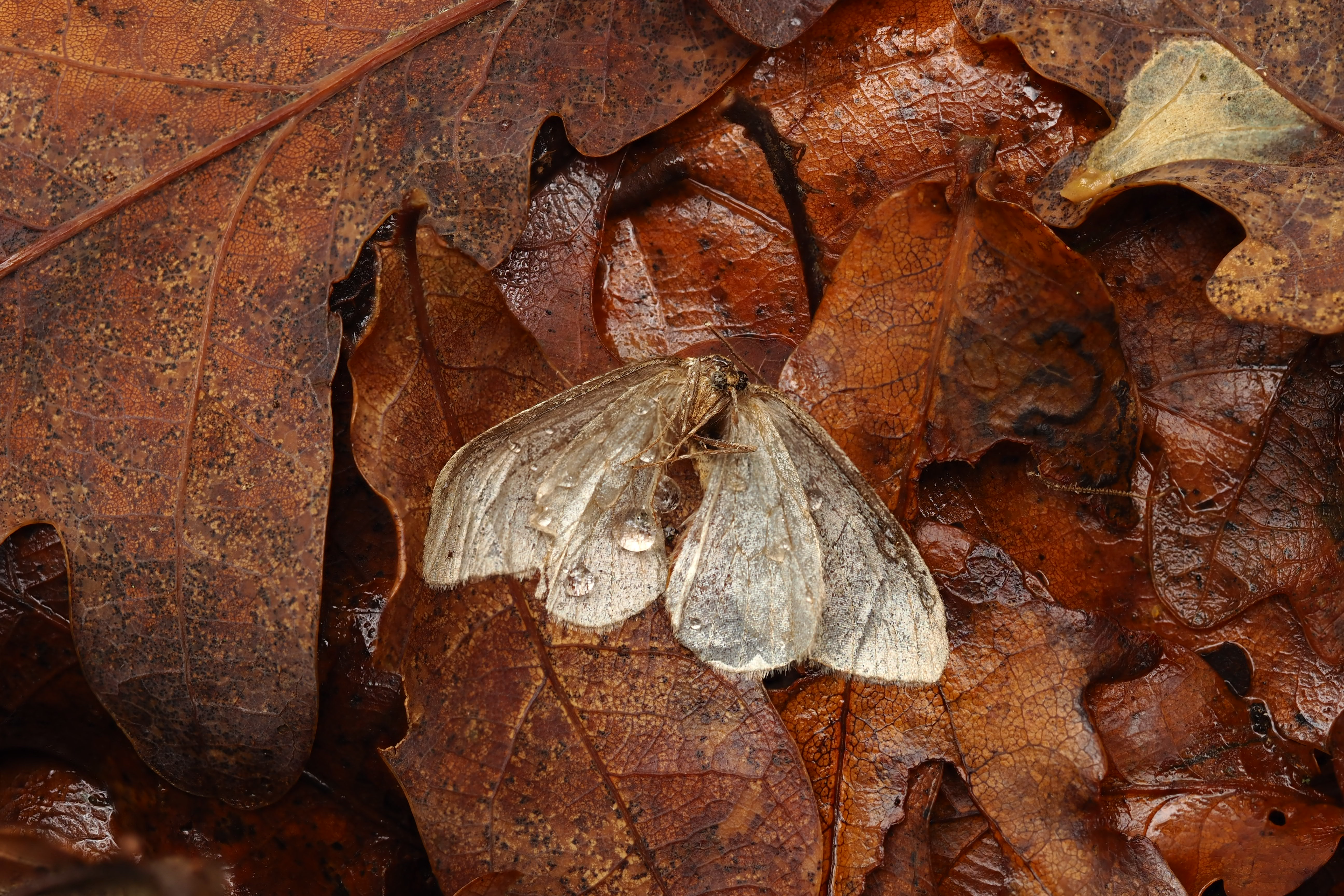
You do find some very unusual things. I spotted this moth, species unknown to me, which had been predated perhaps, or had succumbed to the cold. It looked just like a leaf with an water droplet resting in its underwing. Leaf litter is such an important part of woodland, with the soil being the most important part of all. It’s where much of the magic happens. A UN report has warned about the need to protect soils without delay.
Soils are formed in woodland by decaying organic matter which is recycled by fungi, bacteria and invertebrates. Inside a fallen tree I found these slime moulds, another recycler and consumer of organic matter. I think these are a species of Trichia.
Naturally, last week I summed up this spring and summer of invertebrate life in my garden, thinking it was all over. I was sitting outside one lunchtime, enjoying the kind of sun that doesn’t burn my very pale skin for once. I had seen something flying around that didn’t quite look like a fly and was too small for a bumblebee.
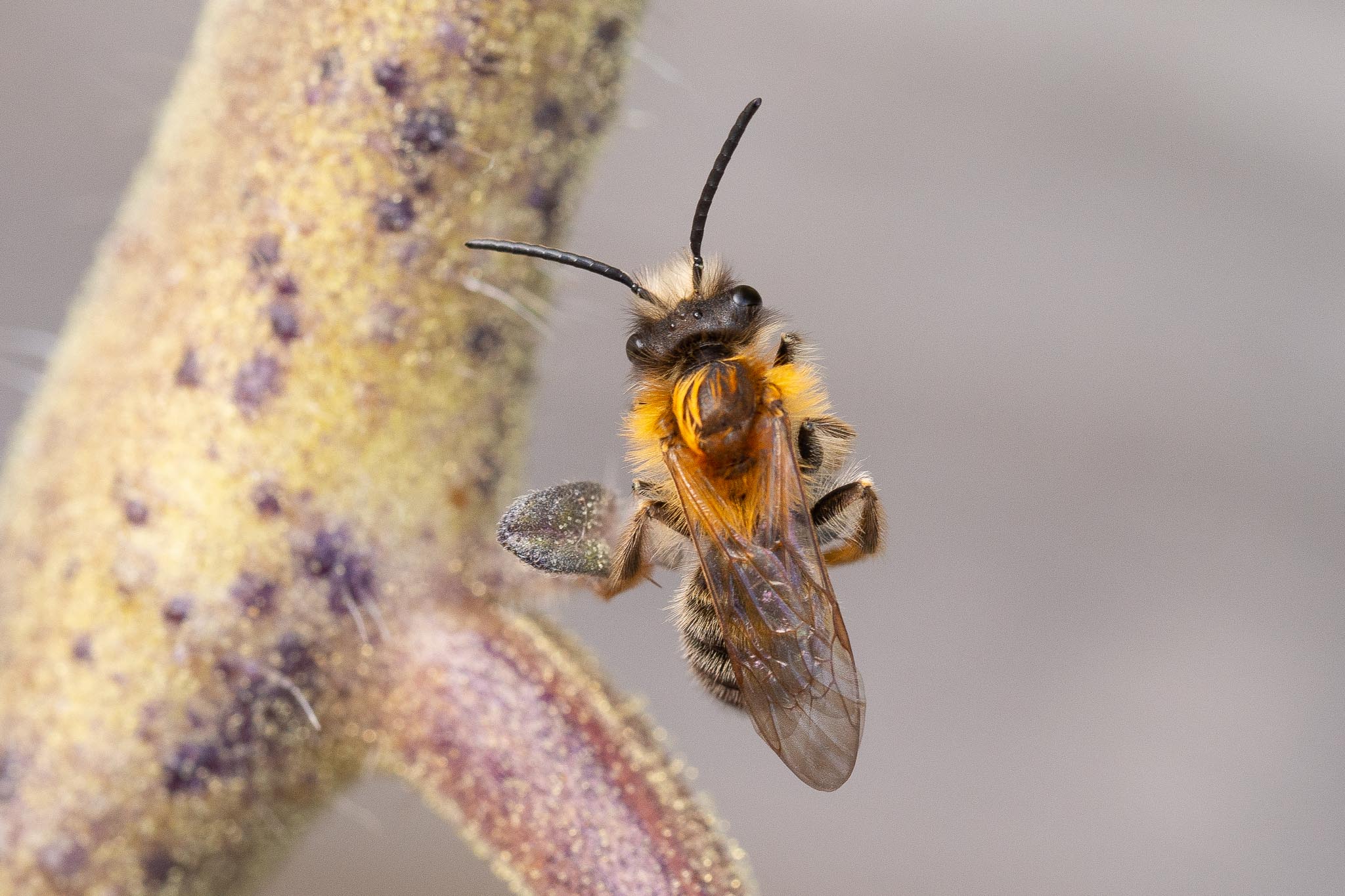
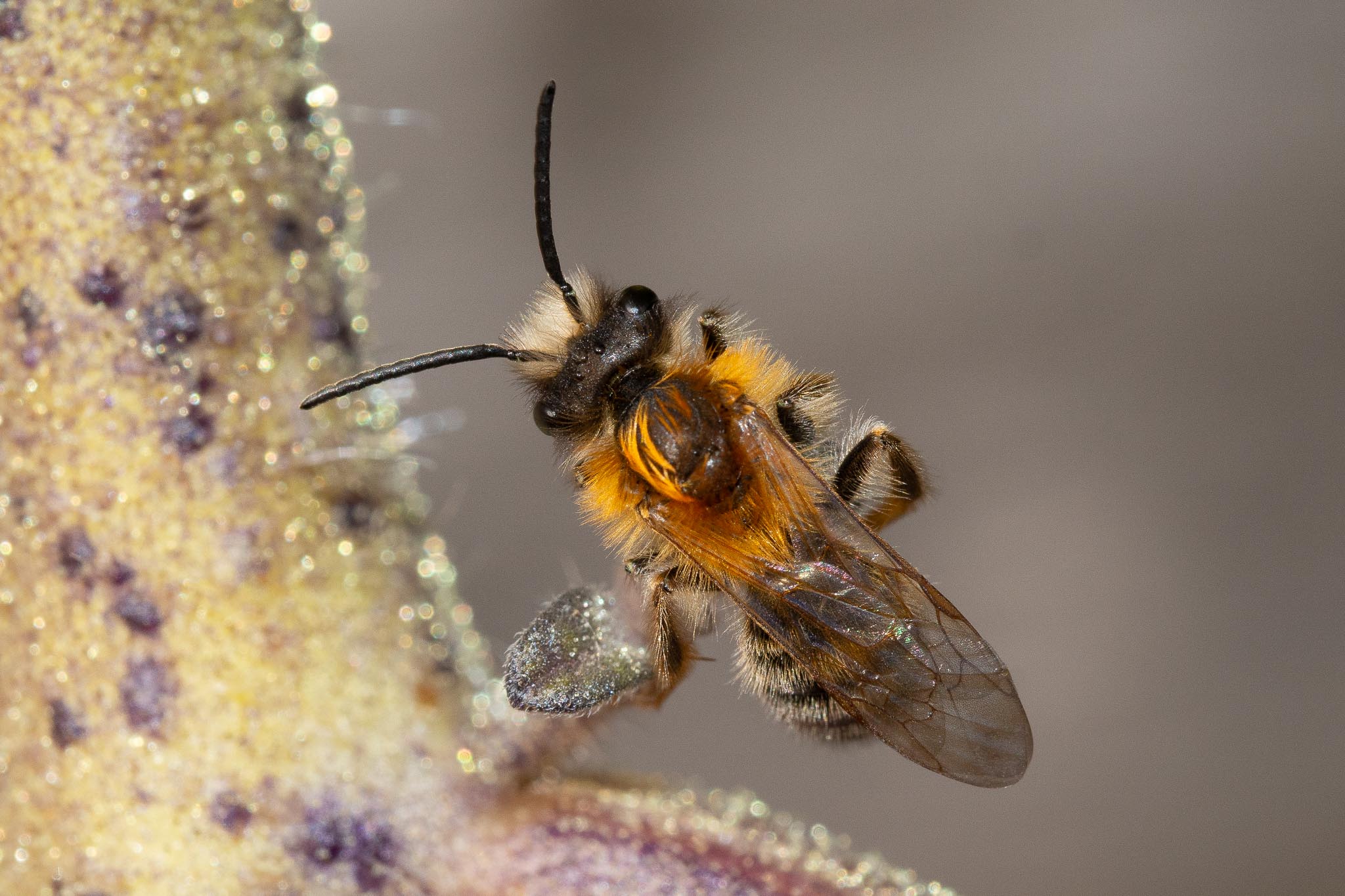
I didn’t pay too much attention to it and went to check on my tomatoes. It was there that I noticed a small bee holding on to a short leaflet of one of the tomato plants. I was really surprised, it looked like a solitary bee. Almost all of their flight seasons have come to an end.
I have a couple of insect books but in October I can’t bring myself to leaf through them. But in this case I had to. I couldn’t work out what the species was. It didn’t really match most of the species, except for one group: the colletes. They have a common name of ‘plasterer bees’ and their most famous species is the ivy bee, which I haven’t ever encountered. The bee above was in Peckham in south-east London at a special wildlife garden managed by London Wildlife Trust. It’s feeding on tansy.
It was lovely to see this bee and for it to pose so obligingly. If you know what it is please let me know!
Autumn is here and the invertebrate season is coming to an end. Temperatures are dipping below 14 degrees and heavy rain is coming. It’s goodbye to our minibeast friends, those tiny ecosystem engineers, for another six months.
It was six months ago that I began this blog, just as the UK was locking down into the Covid-19 pandemic, which has sadly claimed so many lives. Ironically, we are now waiting on the Government to limit our movements once more, as the virus comes back at pace, and cold and flu season arrives.
To our wild neighbours, Covid-19 is not a thing, though it is thought to have originated from the exploitation of wild animals, amid patterns of increasing harm to wildlife habitats. I think writing this weekly blog has helped me greatly to focus on the fact that human life is not the only thing and our troubles do not define everything.
Nature is a powerful thing that even in the smallest lifeform expresses something wild and free. Nature is not an emotional force but it gives hope.
My small urban garden in West Sussex has been the focus of this blog. I am privileged to have a garden and value greatly how it enriches my life. Many people do not share this same privilege, not even hav I’ve recorded at least 62 species of invertebrate: 16 species of bee, 8 wasps, 1 ant, 9 butterflies, 3 moths, 7 flies, 3 bugs, 5 beetles, 4 spiders, 3 damsel/dragonflies and 3 other types of insect. Of course, there are so many more that I’ve missed and those I am unable to identify.
I thought I would wrap up this insect, spider and other invertebrate season by listing some of the highlights below. I’ll be spending the autumn and winter using what I’ve learned to make the garden even more accommodating for wildlife in 2021.
Thanks to everyone for your time in reading these blogs, and for your contributions in comments or elsewhere. Though I will try and post some Macro Mondays through the autumn and winter period it won’t be every week. I wish you well through the months ahead!
“Like 25% of all humans, I am now confined to a new way of living. Work from home if you can and exercise in your garden if you have one. It’s not military arrest, yet. So like many others who are promoting our #NaturalHealthService online I’m starting a weekly Macro Monday blog series.”
“This may be news to some people, but we owe our way of life to solitary wasps. Bees, which are crucial to food production, evolved from them about 130million years ago and their heritage is far more ancient. Everyone hates on the common social wasp Vespula vulgaris, but the are many thousands of species that you slander when you say ‘I hate wasps’. As Chris Packham once put it, when asked what is the point of wasps, ‘what is the point of you’!”
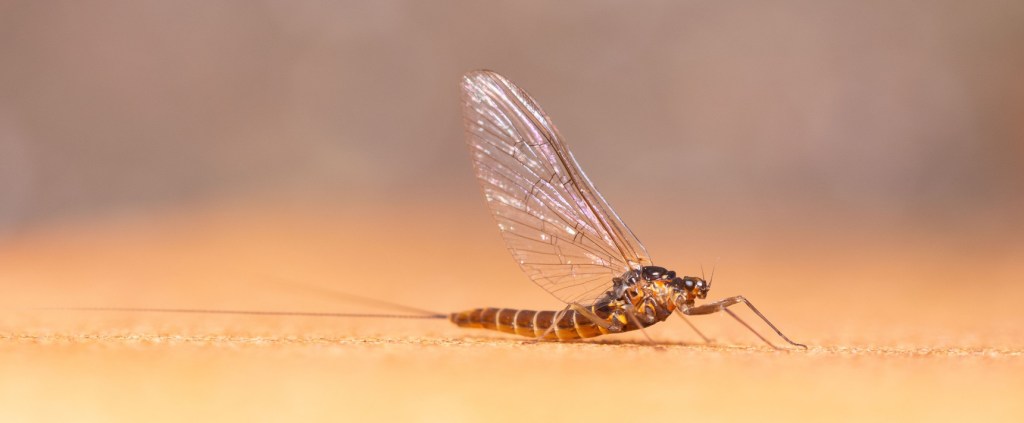
“The biggest surprise in the garden this week was spotted early one morning before I started work. On the side of a hexagonal flower pot I noticed some unusual wing shapes. I realised it was an insect and nipped inside to get my camera. It was in the shade and temperatures were only just rising. It was a mayfly, one of 51 species in the UK. I know very little about this group of insects other than that they appear en-masse over rivers and that they only live for one day. How did it get to my garden? The River Arun is ten minutes walk away but it was a real joy to think it had used my garden to shelter for half its short life.”
“With the physical distancing measures still in place, it’s not possible to do any meaningful macro work away from home. I have been on my official walk from home with a macro lens but it’s not the time. Despite this, the one thing I am reminded of again and again is, with macro I get my best results in my garden. It’s a small patch in a network of open gardens in an urban location, but it gives me the chance to focus on small areas.”
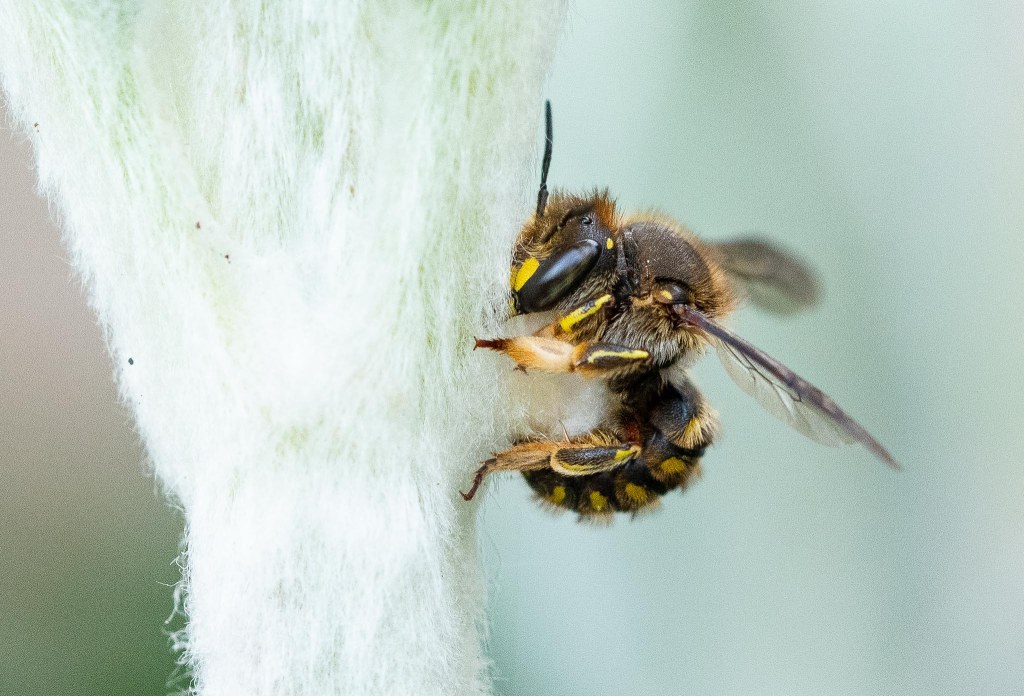
‘A couple of weeks ago I noticed a new species visiting the lambs’ ears in my garden. After work I had gone into the garden to morph into a normal human again. The sun had moved to the point where shade was covering the flowerbeds but still an insect was busy and behaving in an unusual way.’
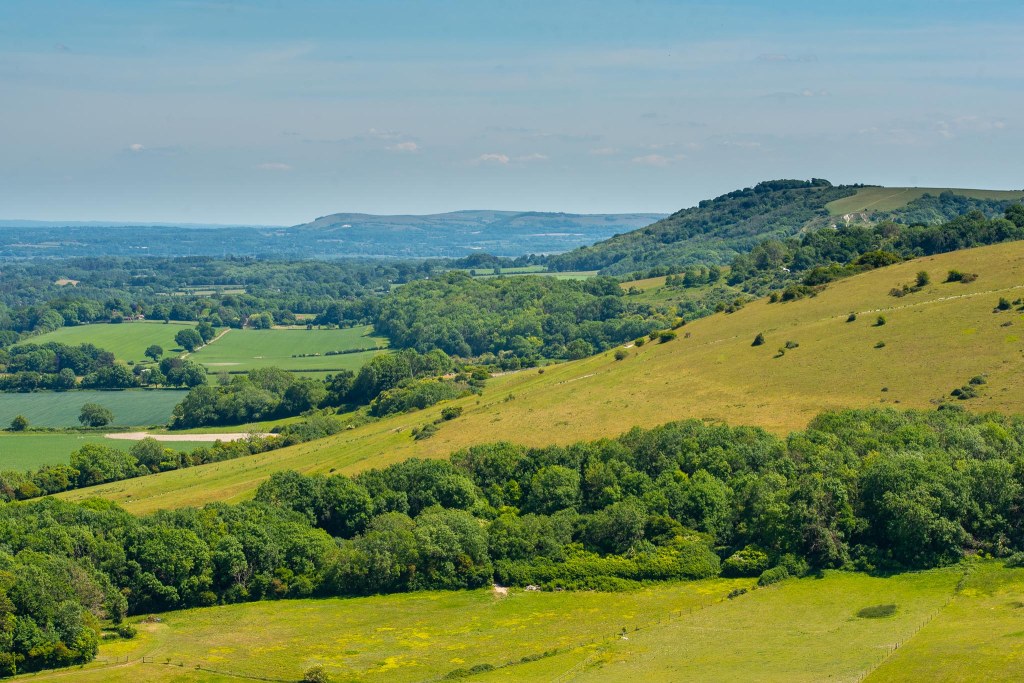
‘Ok, I know what you’re thinking: you have a nice garden. You’re too kind, but it’s not mine. This is the South Downs National Park. I visited the South Downs for the first time in three months with one aim in mind: macro.’
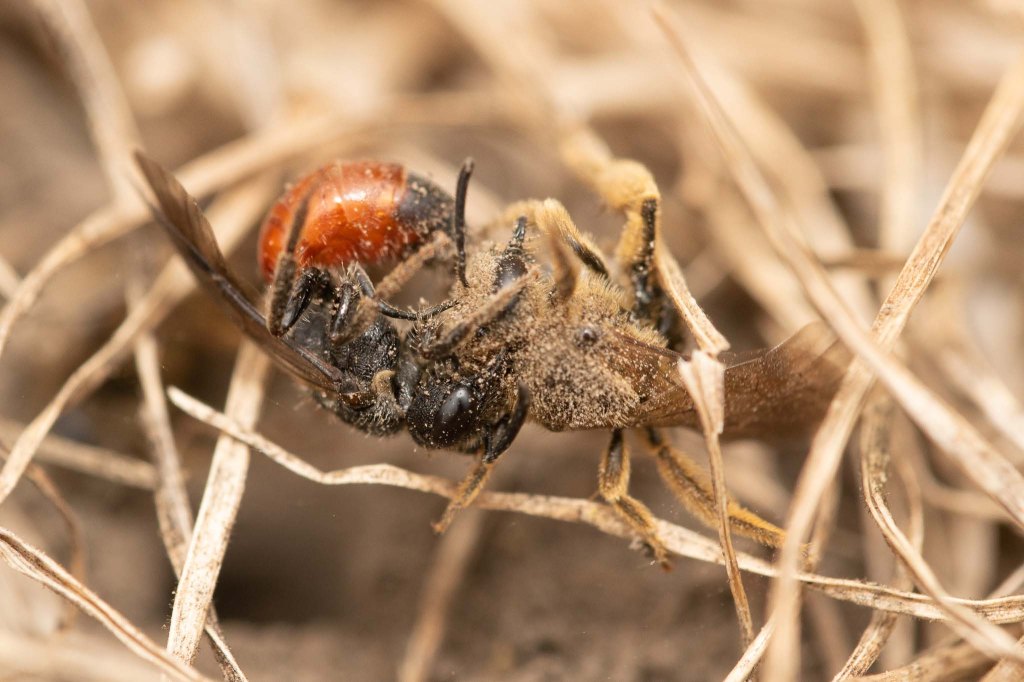
‘I had gone back to work somewhat shocked by the smash and grab episode. I did feel sadness for the mining bees and the killing field which had appeared in my garden. But that’s a human response to an issue that doesn’t exist. We should feel much greater sadness or anger for a wider loss of habitat than we should say a magpie or jay raiding a nest. You have to remember the bigger picture.’
‘I had noticed a bit of activity and glanced over to see a slender insect flying around the flowers. It was the equivalent of a video buffering over a poor quality internet connection. When it landed on one of the flowers I recognised it instantly as an ichneumon wasp. I ran inside to get my camera and managed to get some good photos: in focus, well lit and sharp enough.’
Thanks for reading, for your comments, likes and support. I hope these posts have helped someone else to become interested in bees, wasps, spiders and other local wildlife. They need us!
The insect world is winding down, it’s true, but September can be a great month to see invertebrates. This is especially true for spiders in gardens (and in your house!). At the beginning of the month I visited Suffolk Coast and Heaths Area of Outstanding Natural Beauty. This blog focuses on two locations, firstly the National Trust’s Sutton Hoo, near Ipswich.
Sutton Hoo is famous for its Anglo-Saxon ship burials which, on the eve of the Second World War in 1939, threw up one of the most incredible archaological finds in British history. An entire ship was found to have been buried, with much of the discovery based on the chemical shadow of what was once there. An amazing haul of items was discovered with the boat, thought to be that of King Rædwald of East Anglia, a pre-Christian Anglo-Saxon king who died in approximately 625 AD.
The boat he was buried in was probably hauled up here from the river Deben, where the boats are moored, by Anglo-Saxon warriors and buried under a mound of earth.
The National Trust have an exhibition centre which displays mainly replicas of some of the 3000 things found in the mounds. Museum collections are great for macro because they’re well lit and isolated by the darker backgrounds. This was a replica of one of the items found.
This gold pendant dates from the 4th-5th century AD, so 1600-1700 years ago.
Outside, I didn’t have macro in mind. I was carrying my micro four thirds camera and lenses which are so light they can be carried anywhere. Walking around the estate I noticed a feather on the ground, and that an insect was resting on it. I couldn’t believe it when I looked closer.
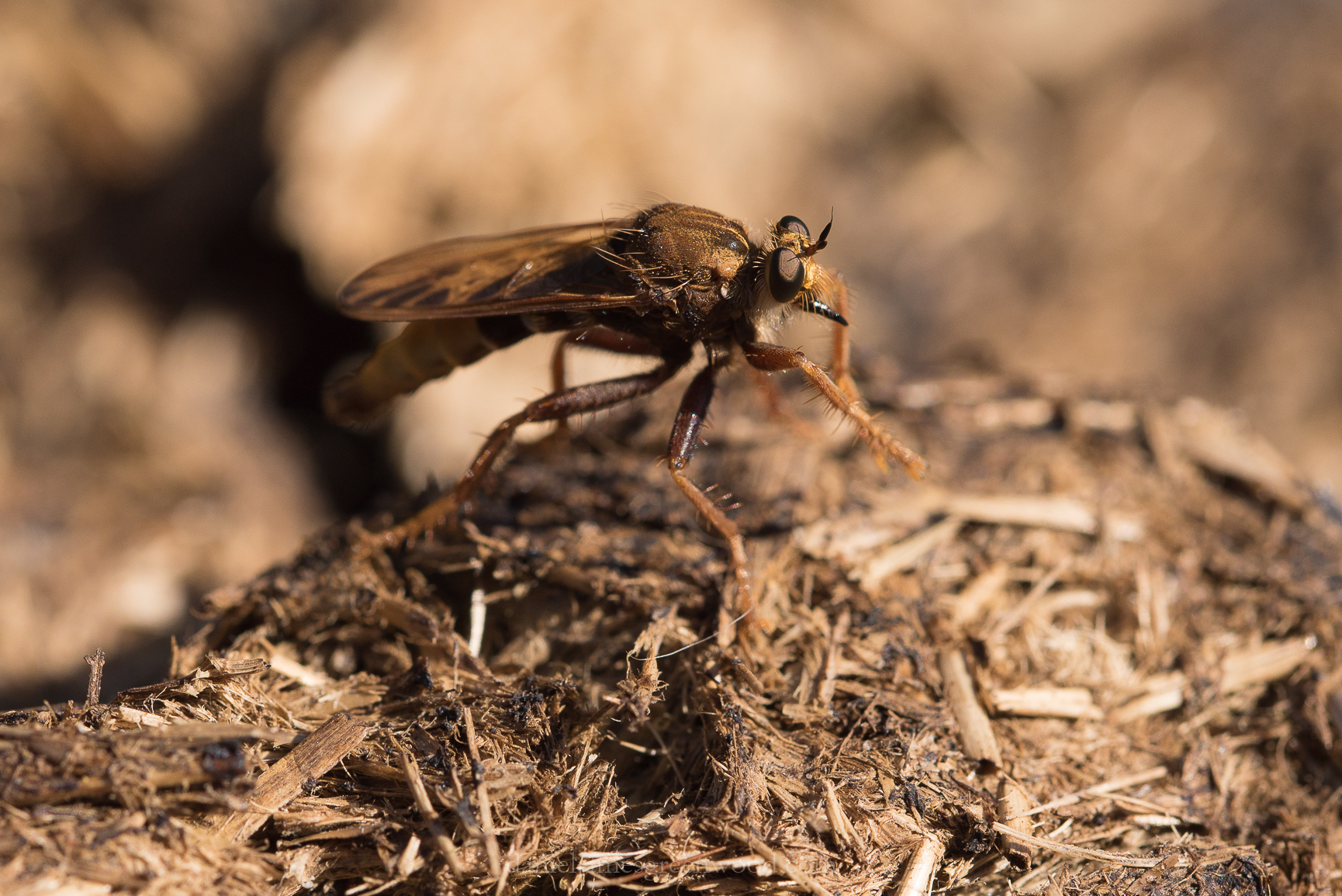
It was a robberfly, with prey in its spear-like mouth parts. Note here how I cropped to include the beautiful fronds of the feather.
The robberfly wasn’t bothered about me. When I got really close, I could see it had an ichenumon wasp as prey! Heathlands are exceptional landscapes for insect diversity, so there was always a thought in the back of my mind that something like this could crop up. This blog could not be posted without some reference to wasps.
This is an image which I hope I haven’t laboured, but it’s just an incredible thing to find resting on such a beautiful macro subject in its own right – a feather. You do see this kind of image again and again on Instagram, where I’m sure people are feeding prey to robberflies in order to get a photo in a studio. That’s not my style.
Walking around the burial mounds of Sutton Hoo, we found lots of red and orange caterpillars on the move. I’m not sure of the species! ID welcome in the comments please.
We then moved on to the Suffolk coast, which is just down the road from the Sutton Hoo estate (great job by the way, National Trust). In the long grass of one of the dunes this very similar black and orange moth was holding tight to a blade of grass.
He’s a pretty rad looking dude up close.
Coastal landscapes are something of a foreign language to me in ecological terms. A visit to the coast is far more an emotional or spiritual experience (I don’t swim), a reminder of childhood, or our vulnerability when faced with the vastness of the sea. A line was drawn in the sand.
I managed my first marine macro photo! This tiny crab was pointed out to me by my companian who was spending her time seeking out stones and other small things on the shoreline. Taking photos of tiny animals under moving water is a challenge I probably won’t have to take up again any time soon.
Thanks for reading.
Photos taken with Olympus OM-D EM10 MIII with 60mm f2.8 macro lens and 45mm f1.8 lens
Wishing you a happy Bank Holiday Monday if you’re actually able to have one because you’re either English, Welsh, Northern Irish or not having to work through it.
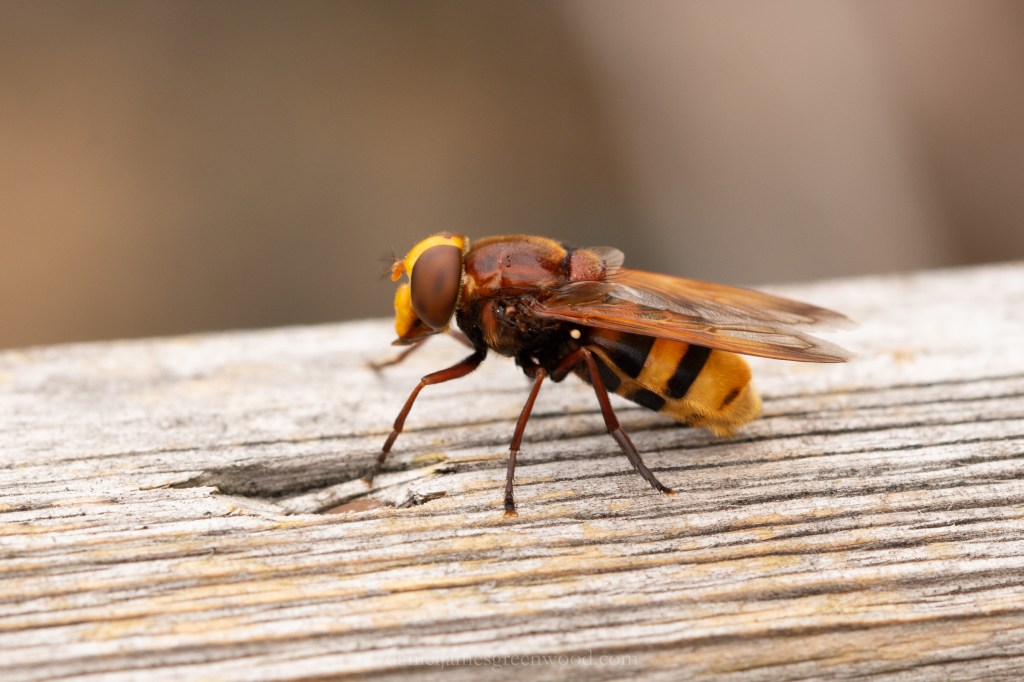
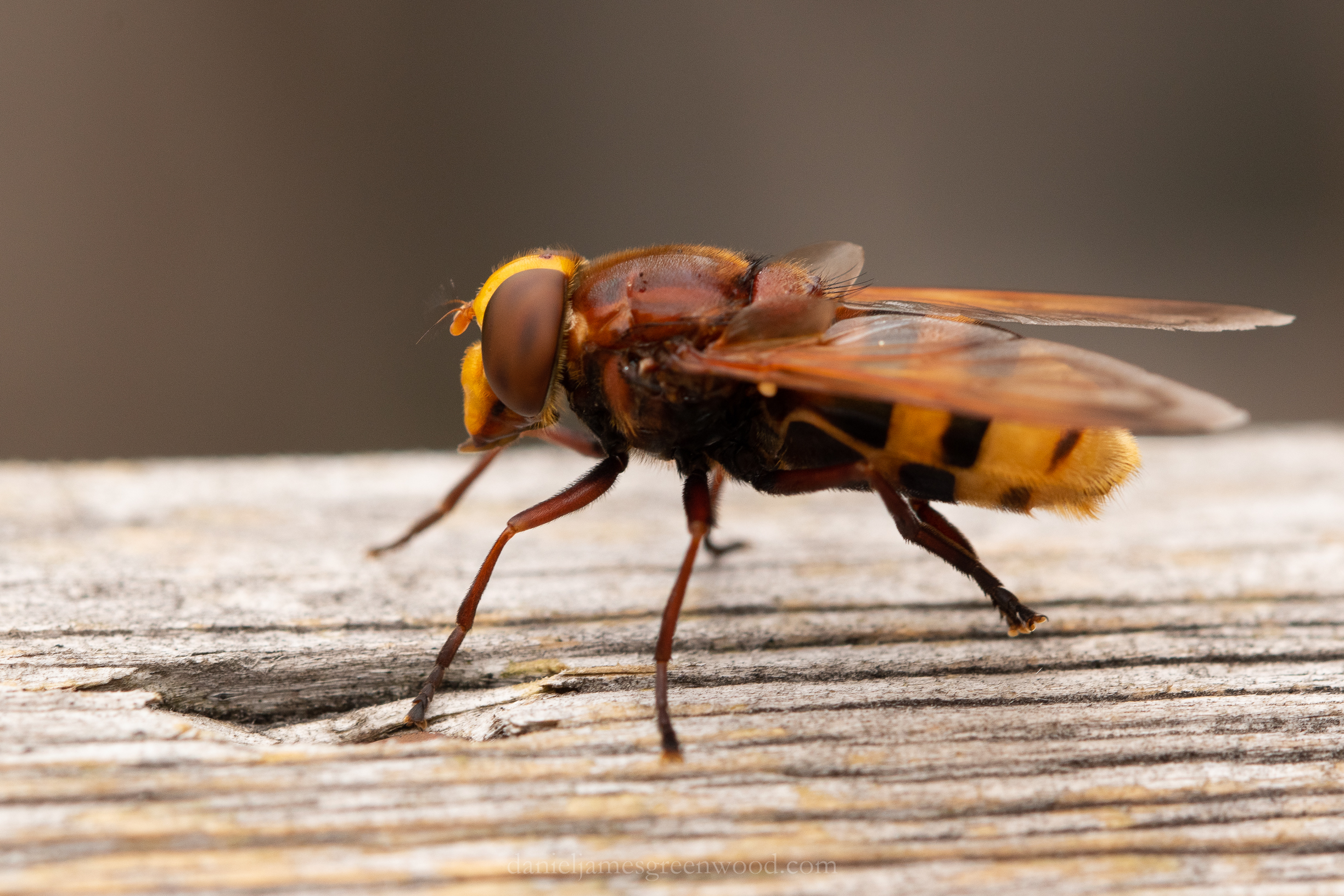
Back in the garden, after last week’s infidelity, it’s quietening down big time. I feel that autumn has come early in my garden. However, I was delighted to be visited by what we all at first thought was a hornet (come on, admit it) but turned out to be a hoverfly.
This is a hornet-mimic hoverfly with the scientific name Volucella zonaria. There’s a helpful guide to them here. These flies lay their eggs in the nests of social wasps, with their patterning probably helping them to fool wasps into thinking they’re also related.
This kind of mimicry is fairly common across the insect world, with all kinds of flies and beetles that mimic the yellow and black patterning of stinging insects like wasps and hornets. There’s even a hornet-mimic robberfly which is quite rare and found on heathlands like Thursley Common.
My parents once again have the ability to lure interesting insects into my garden when they visit, which end up headlining the Macro Monday stage on this blog. The main thing here is that this is a stunning insect with a fascinating ecology which I can only tell you a little bit about.
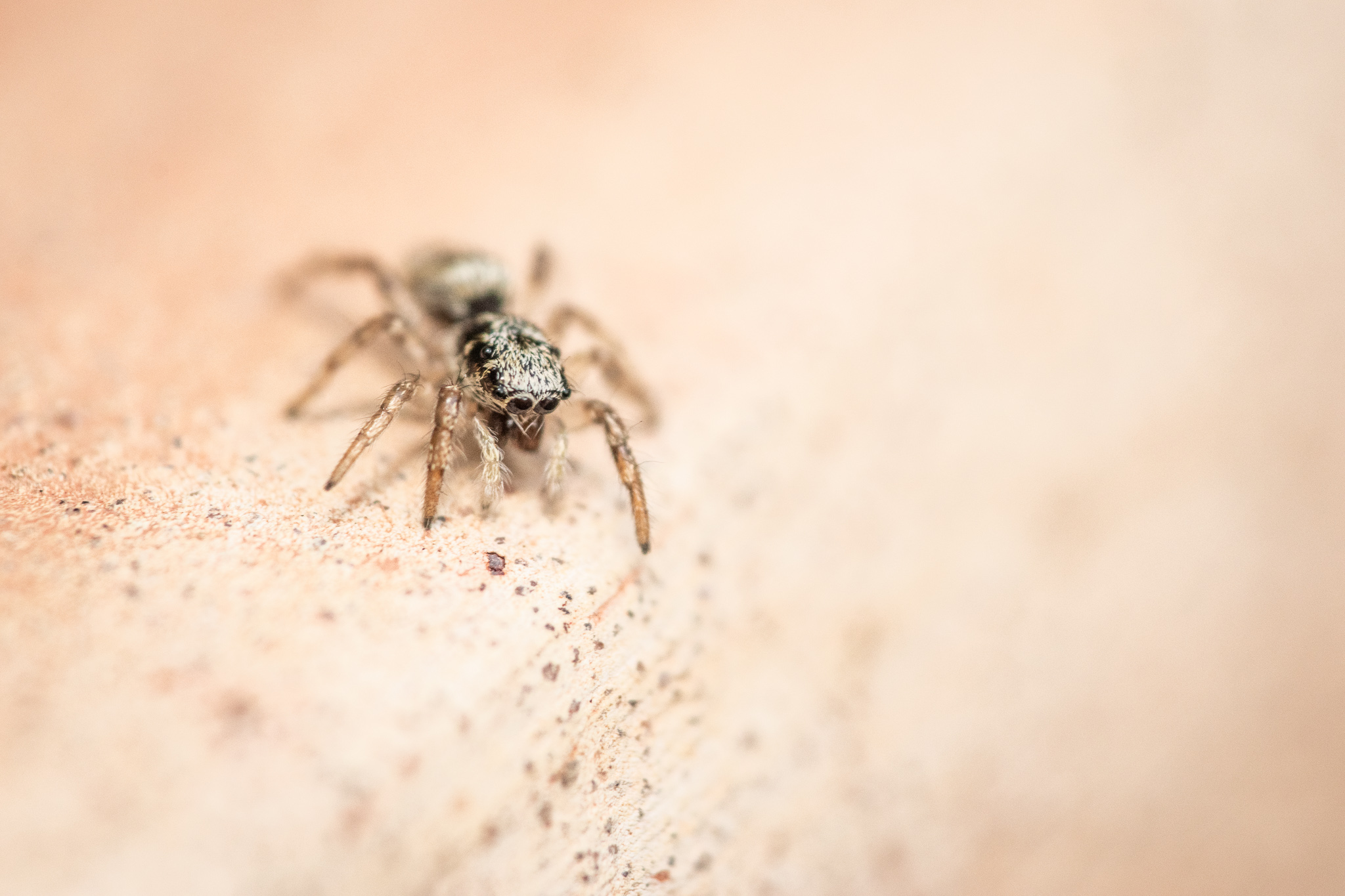
One arthropod that I spend more time with is my zebra jumping spider neighbour. This spider popped up during a garden lunchbreak. I’ve featured what could be the same spider several times this year. They are fiendishly difficult to get in focus and are much smaller than you might realise. I took about 100 out of focus pics of this spider before I got an injury time winner.
The spider was basking on the rim of a seed tray. It was only later that I saw the reflection in the plastic. It wasn’t a wet day, in fact it was quite sunny and warm. I was relieved to get at least one photo of this beautiful animal in focus to share here.
I’m away next week so may miss out on a post, but hopefully I will have something to share. I always have a macro lens with me wherever I go! Only a little one, mind you.
Since the end of the heatwave my garden has been hammered by rain and wind. That is not what you need to write a weekly blog about taking macro photos. So I went to my local woodland and put the hard graft in to see what I could find.
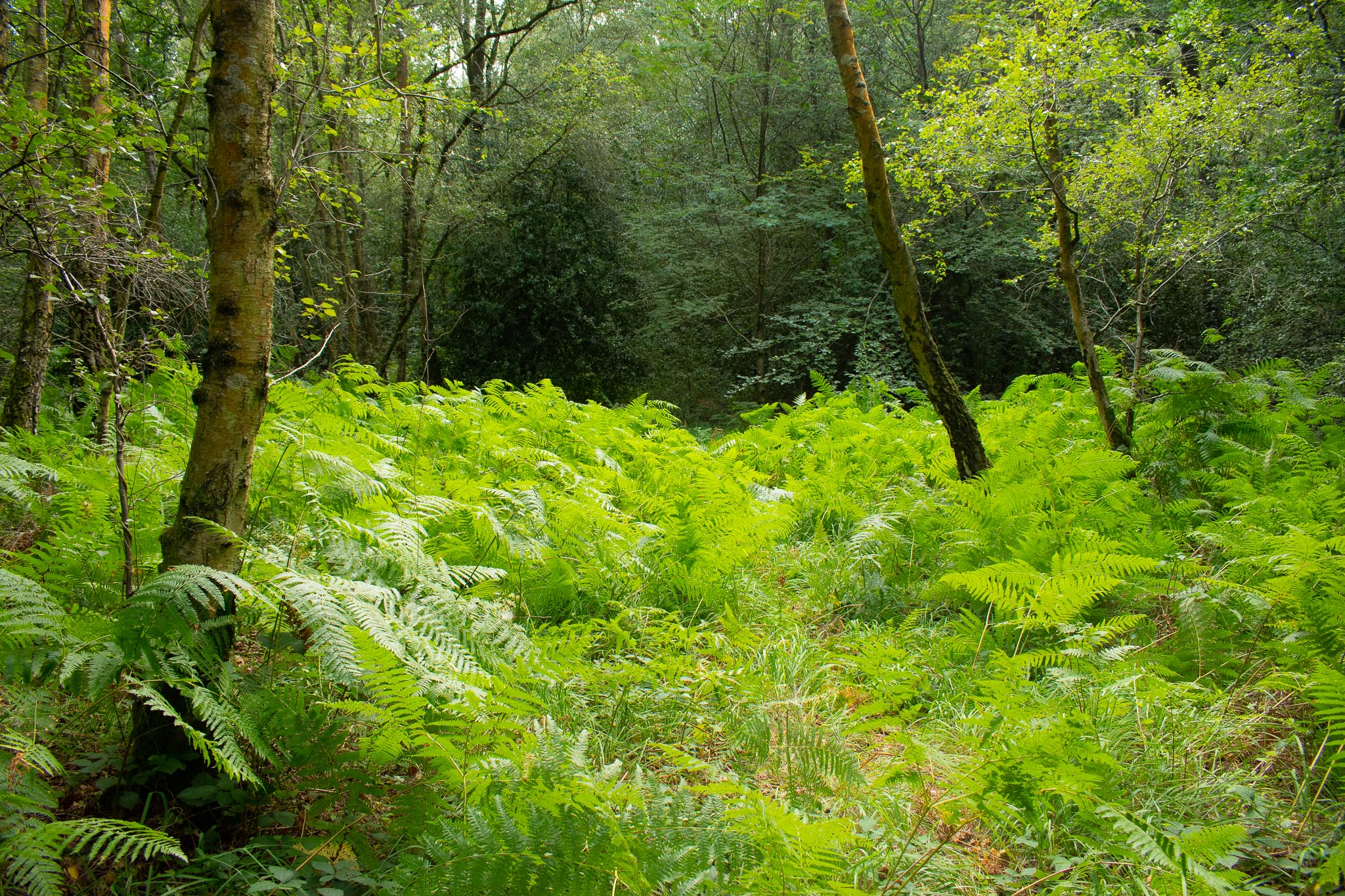
Bracken and birch glade
The place I visited is an area of oak woodland in the Sussex Weald. It was very windy, not the safest place to be in those conditions. I sought out a spot where I usually find fungi – of which there was nothing – and spent some time looking on the bark of trees and under leaves.
I carefully turned over oak leaves and my first find was this quite unusual flying insect. I’ve looked through my book and can’t find it in there. My instinct says it’s a lacewing relative. If you know, please comment below.
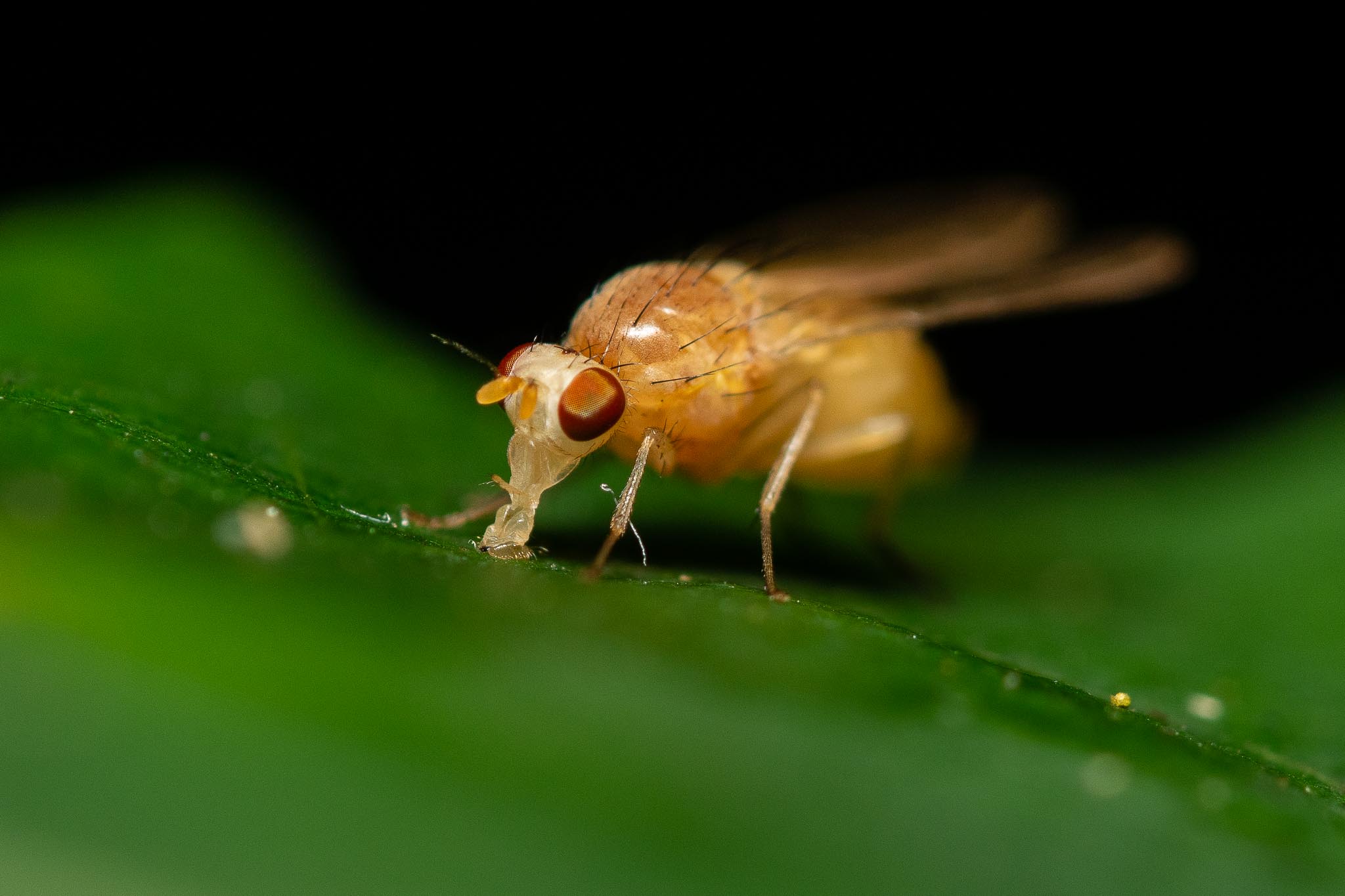
This capsule-shaped fly was hoovering up something tasty from the surface of an oak leaf. Soon I was to be haunted by similar mouthparts, on a very different kind of fly.
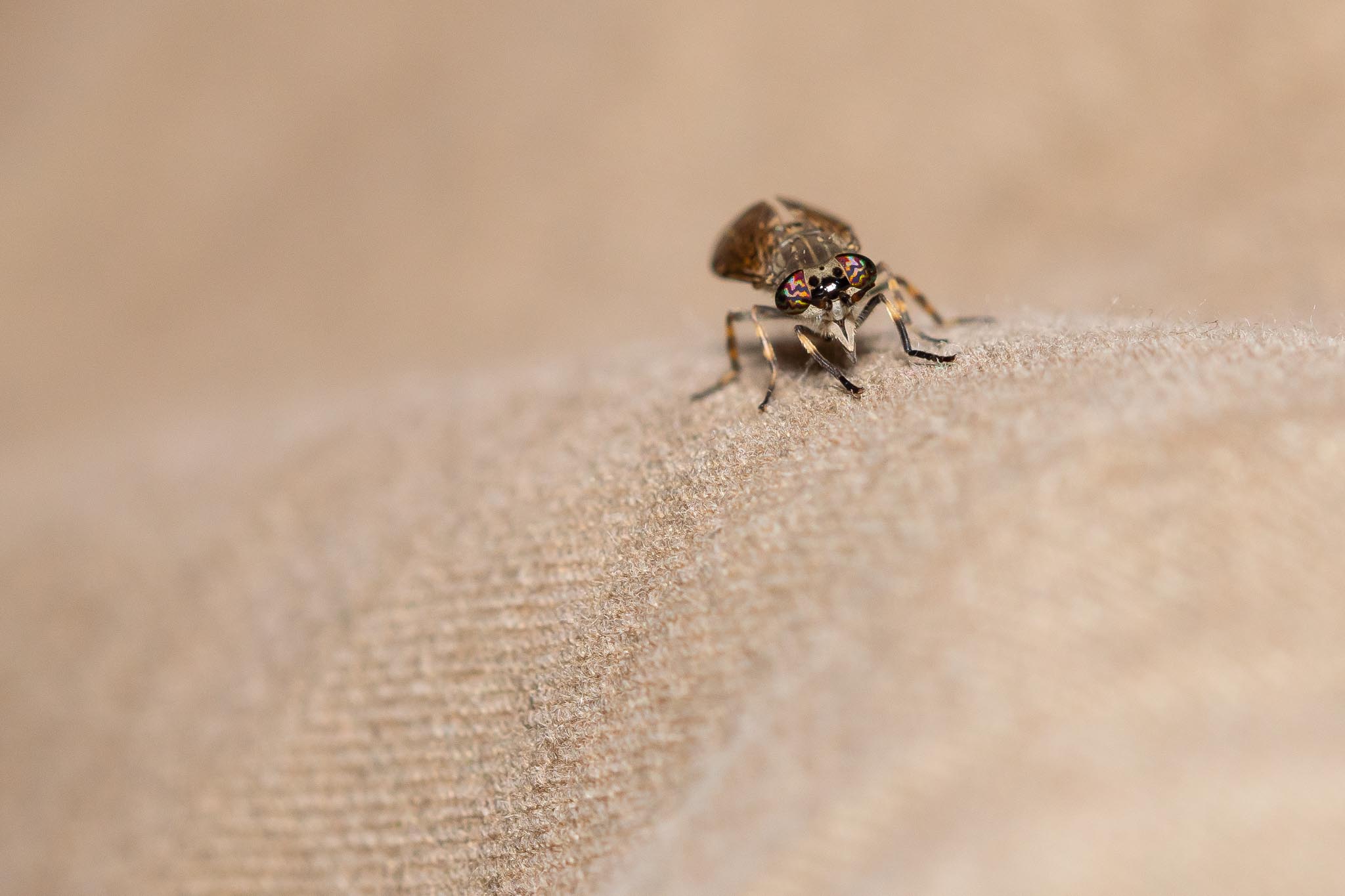
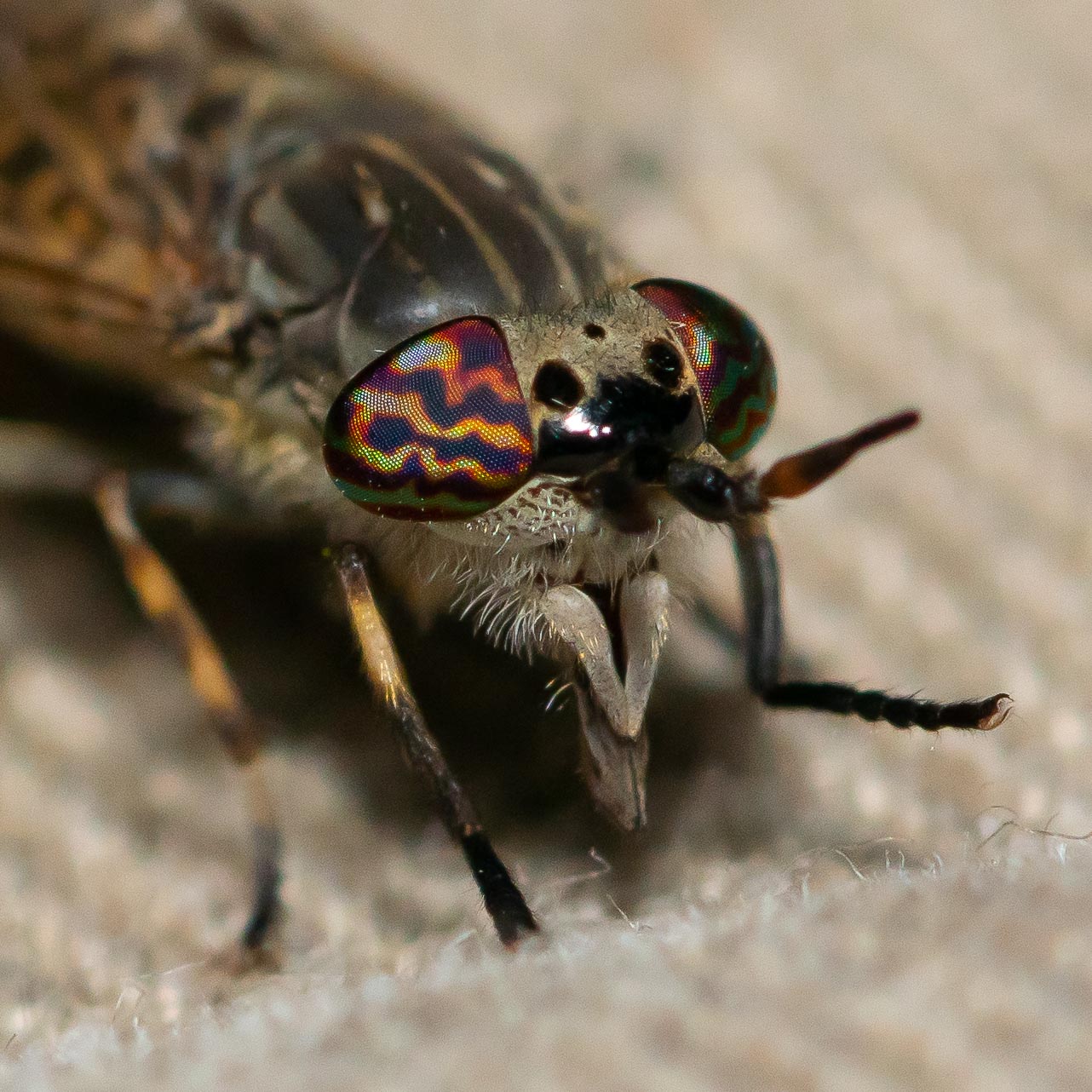
I don’t wear shorts in the woods I wear TROUSERS. This is why. In shady areas of woodland which are protected from wind and sun, biting insects lurk. With horseflies, sometimes you don’t know they’re there. I spotted this beautiful insect on my trouser leg by chance. This weird, nervous adrenaline begins to pump when I encounter one of these insects.
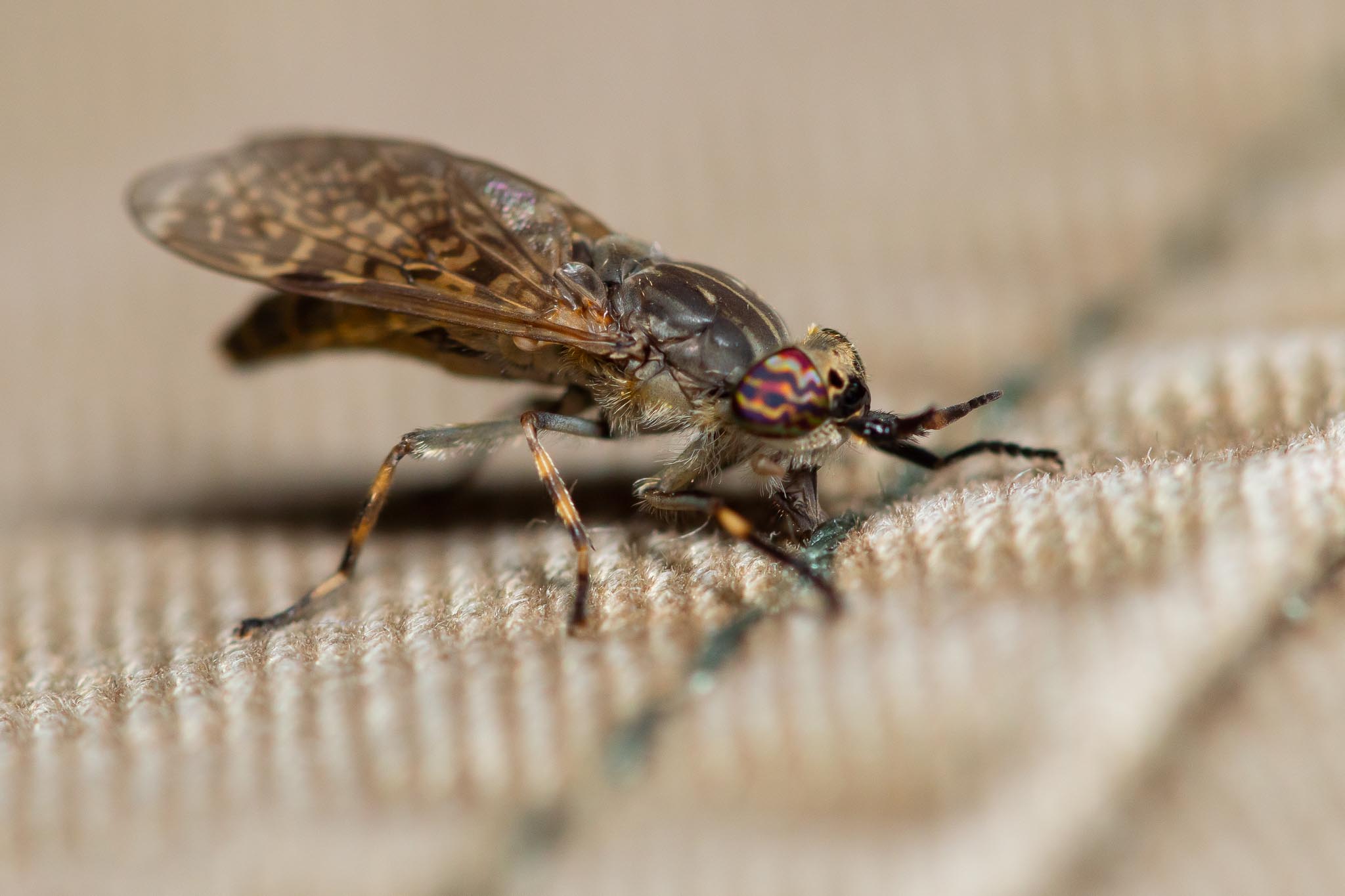
Horseflies have a nasty bite and there is something unsettling about their predatory focus on you. I was desperate to get a photo because of how beautiful and mesmeric their eyes are. I managed to lure the horsefly but keep the trousers away from my skin far enough to stop the bite. Above you can see how intelligent it is. It’s trying to bite through the seam in the trouser lining.
Unlucky for the horsefly, it didn’t manage to break through. After a while, it became so ‘annoyed’ that it started aiming for my face so I just left! The thing I always forget is that horseflies follow you and don’t give up easily. I did have the images I was hoping for, though.
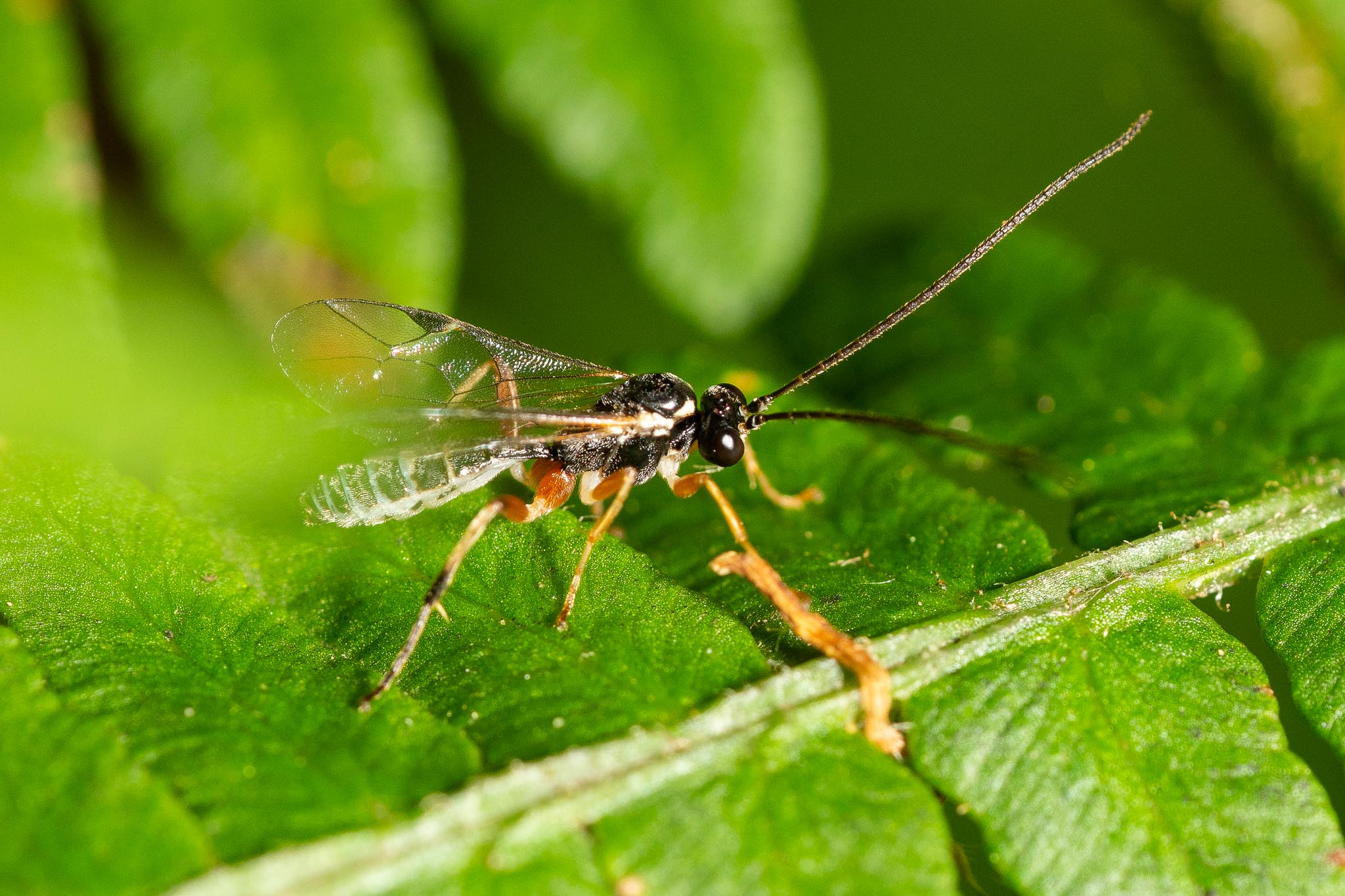
I haven’t mentioned wasps this week. But there are just so many species out there that it’s almost inevitable one will turn up. This is probably one of over 2000 species of ichneumon wasp that we have in the UK, which you can read more about here. Those long antennae are an indicator, for my untrained eye.
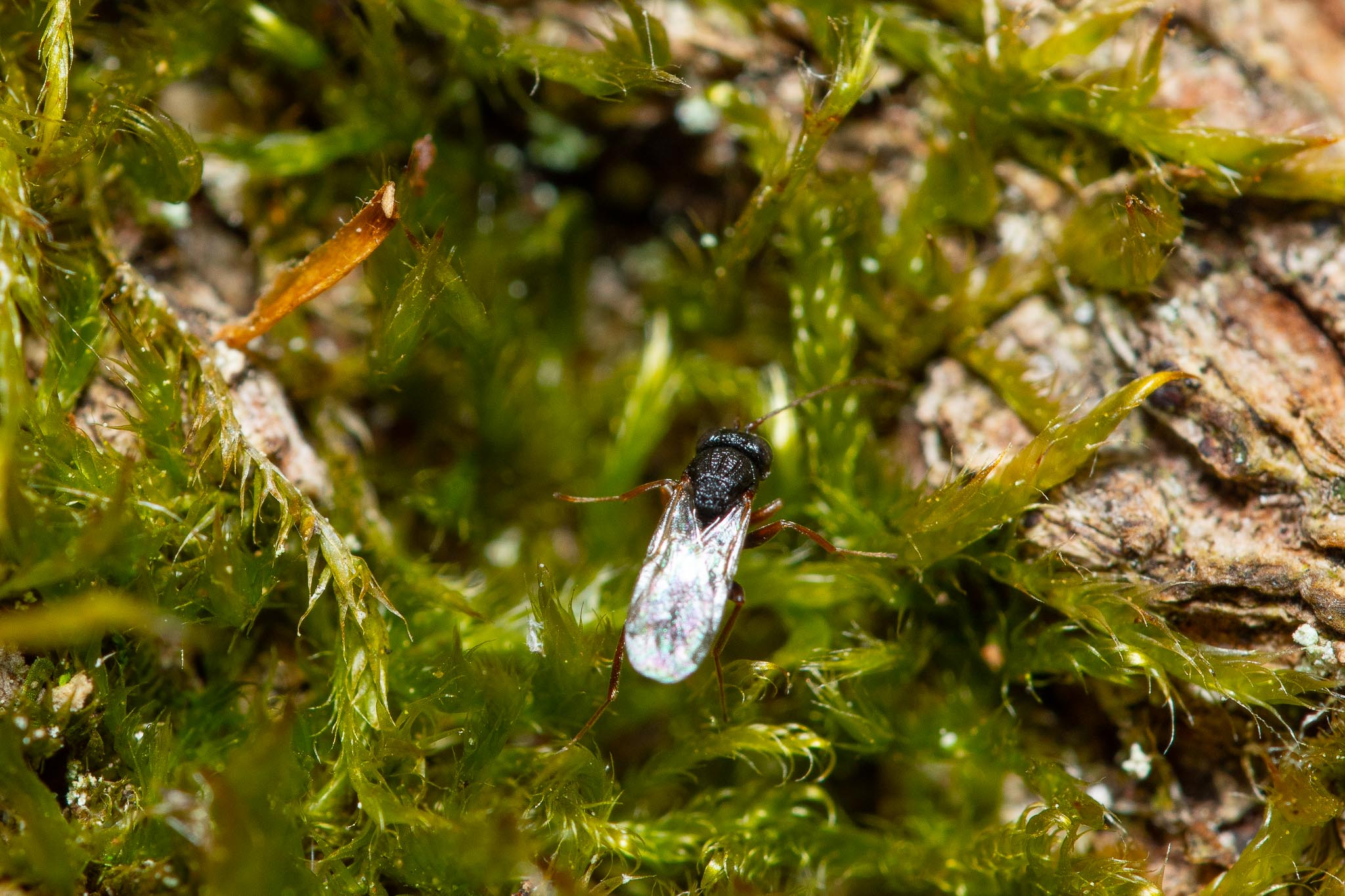
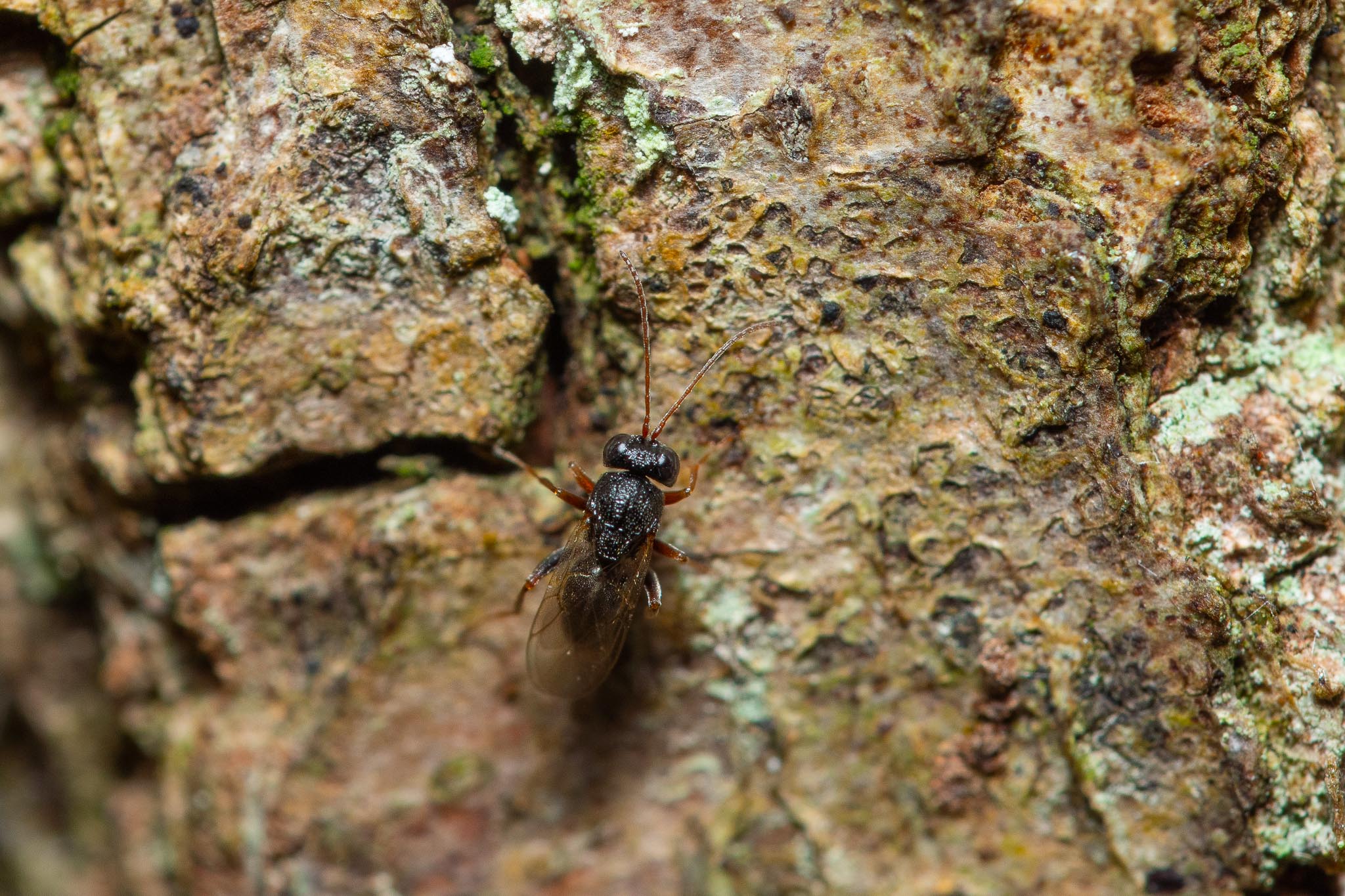
That wasn’t the last wasp I saw. I was checking out the trunk of an oak tree, having just watched Thomas Shahan’s latest video where he did the same (I’ll embed it at the bottom of the post, it’s worth watching). I saw a black fly-like insect about the size of a moss frond running up the trunk. It was really hard to photograph but I got some pics in focus.
I could see that it was a gall wasp, the first one I have ever managed to photograph. We should be thankful to these wasps because without them we would never have produced the major written works our own species has managed to produce so beautifully.
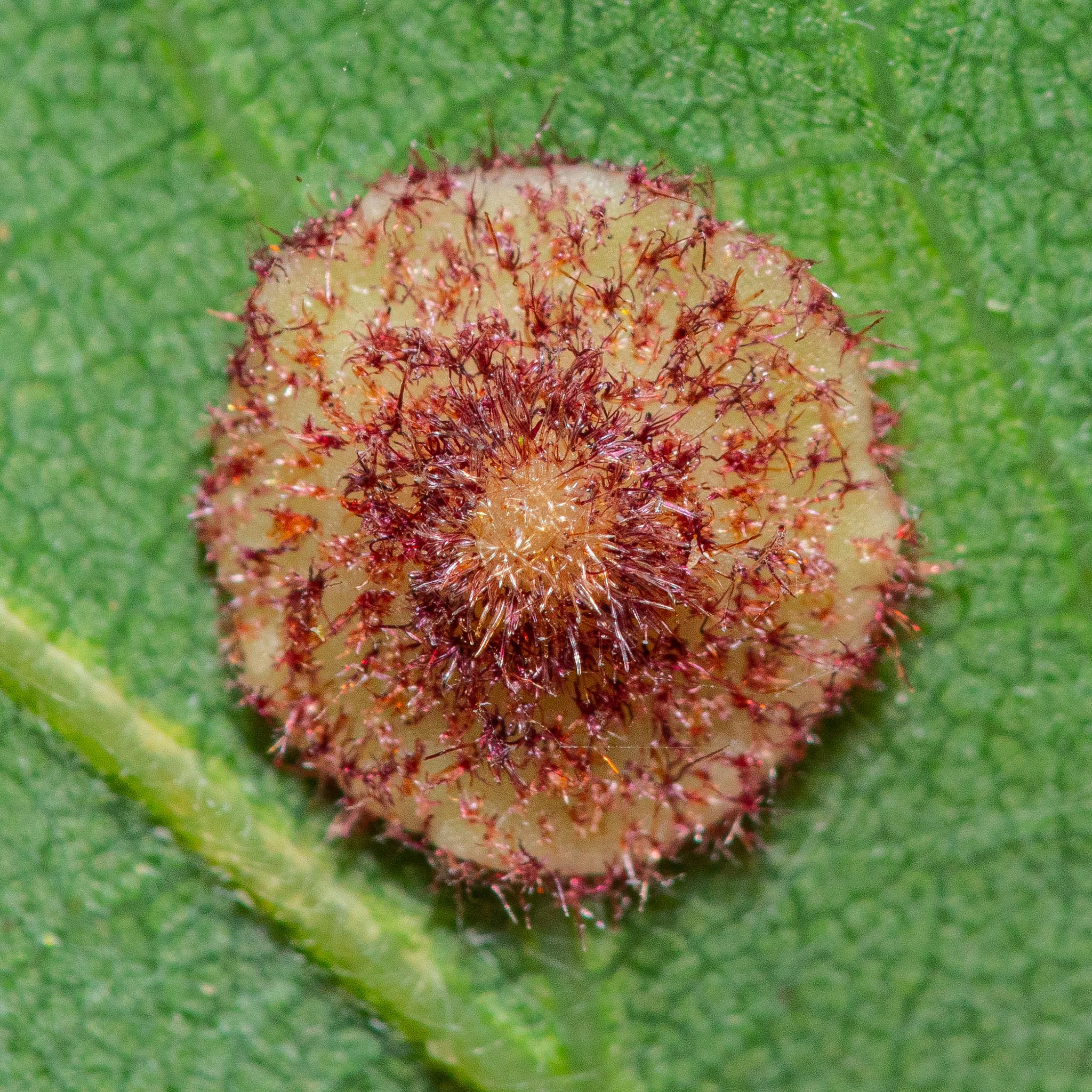
What am I on about? These are galls, a growth which forms on oak leaves. Within the protective casing you see above is the egg or developing larva of a gall wasp. In the autumn the casings will fall away and the insect will hatch out in the spring. Galls come in many shapes and sizes. Some oak galls are used to create ink, and have been used across the world in producing texts and other works for thousands of years.
Oak apple galls are the most famous (not pictured here). The galls are used to produce the inks that penned the American Declaration of Independence and the Magna Carta, among so many other important texts. Another thing to thank wasps for!
*Warning*: as you may have guessed, this post contains spiders. Some people may find some of these photos unpleasant, but it may help you to learn to overcome your fear. I am not a spider-psychologist so this is not professional advice, as ever.
Well, what a week that was. Very high nightime temperatures and unbearable heat through the day. I barely spent any time outdoors, let alone in the garden. I really struggle in temperatures over 30 degrees. Most of the images this week come from the post-heatwave days towards the end of the week.
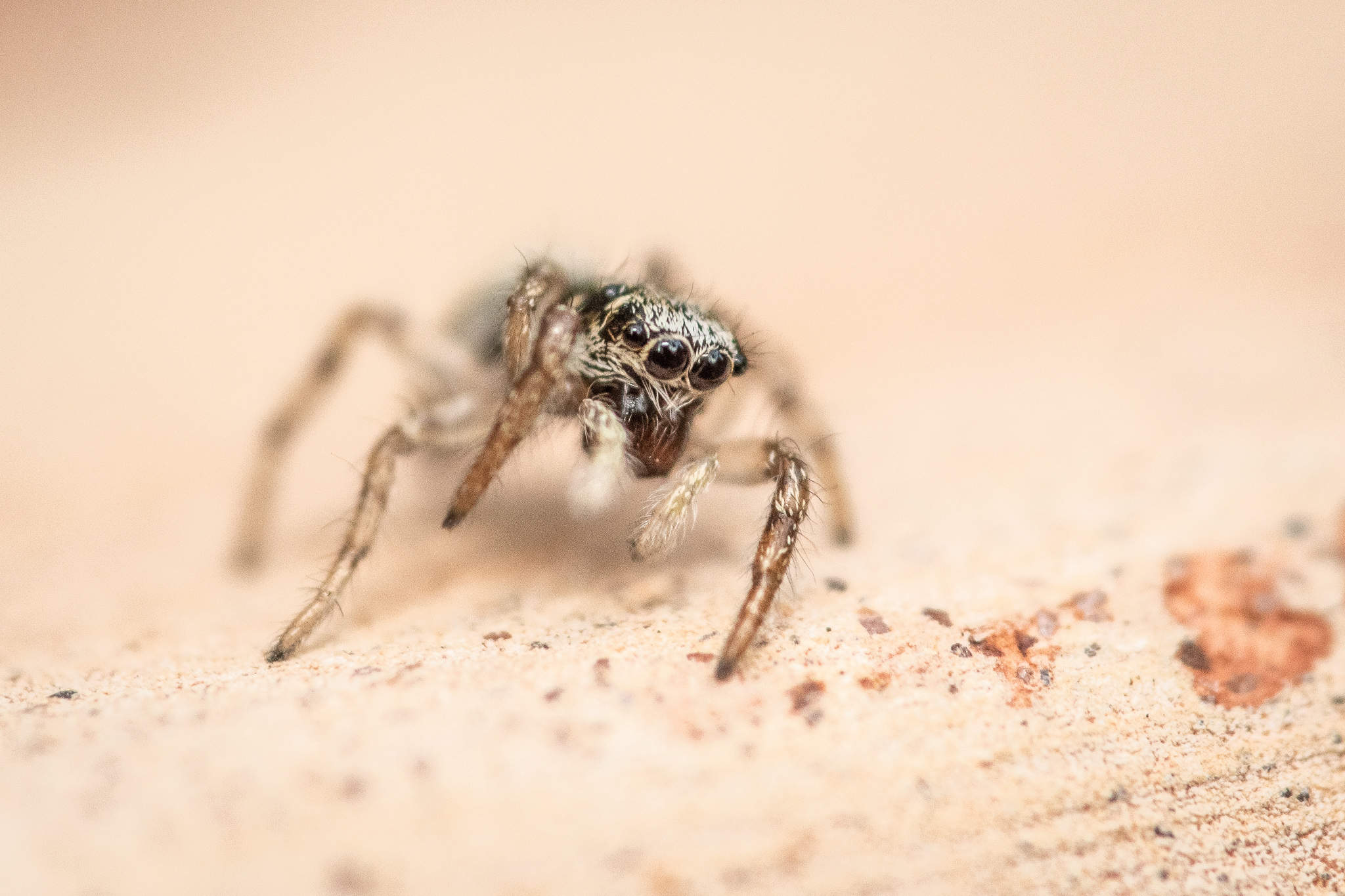
One evening, after the heat had largely dipped, I noticed some odd behaviour from a zebra jumping spider.
It was hanging from the leaf of a climbing rose we have growing from a terracotta pot on the front of our house.
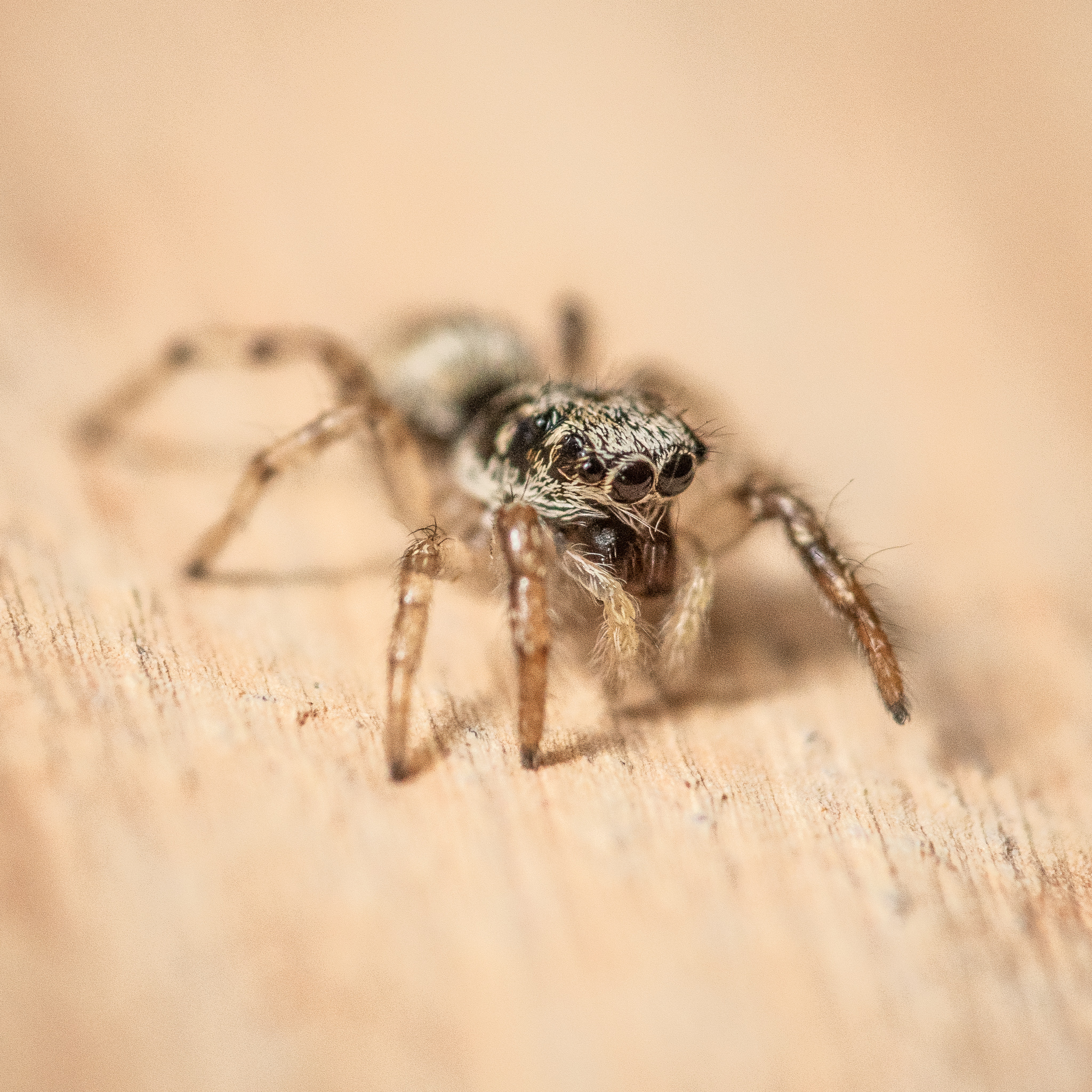
I noticed there was another, smaller, zebra jumping spider (ZJS) lower down on the pot. I think this was some kind of territorial or even courting behaviour. Eventually the ZJS made it down to the terracotta.
It was running around on the edge of the pot, looking for the smaller ZJS. It was a total nightmare to get in focus.
There was also some time to clean its legs while it tried to find out what the other ZJS was up to.
I’ve seen these lovely spiders all throughout the spring, but much less so in the summer. It was nice to see them again.
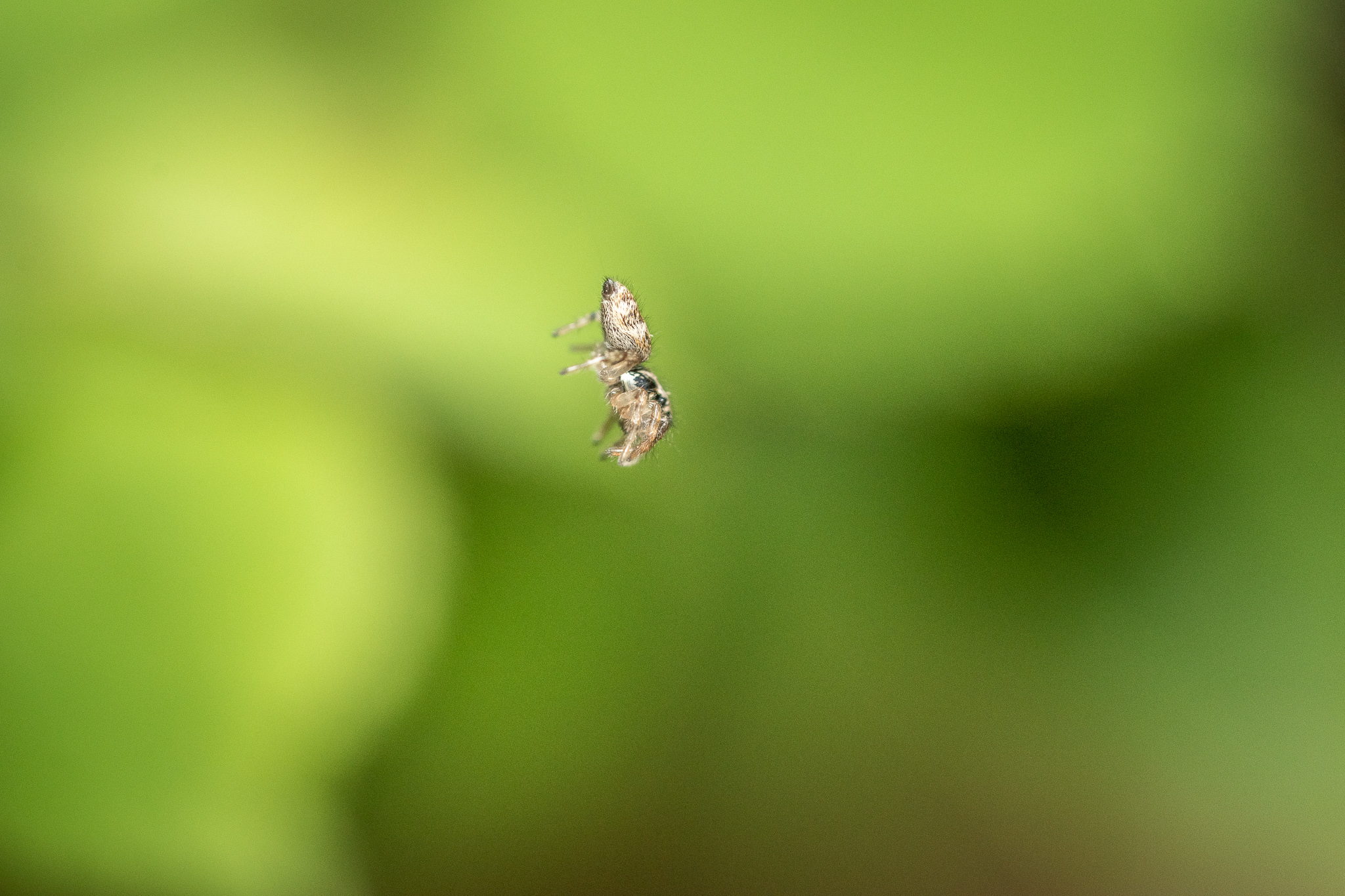
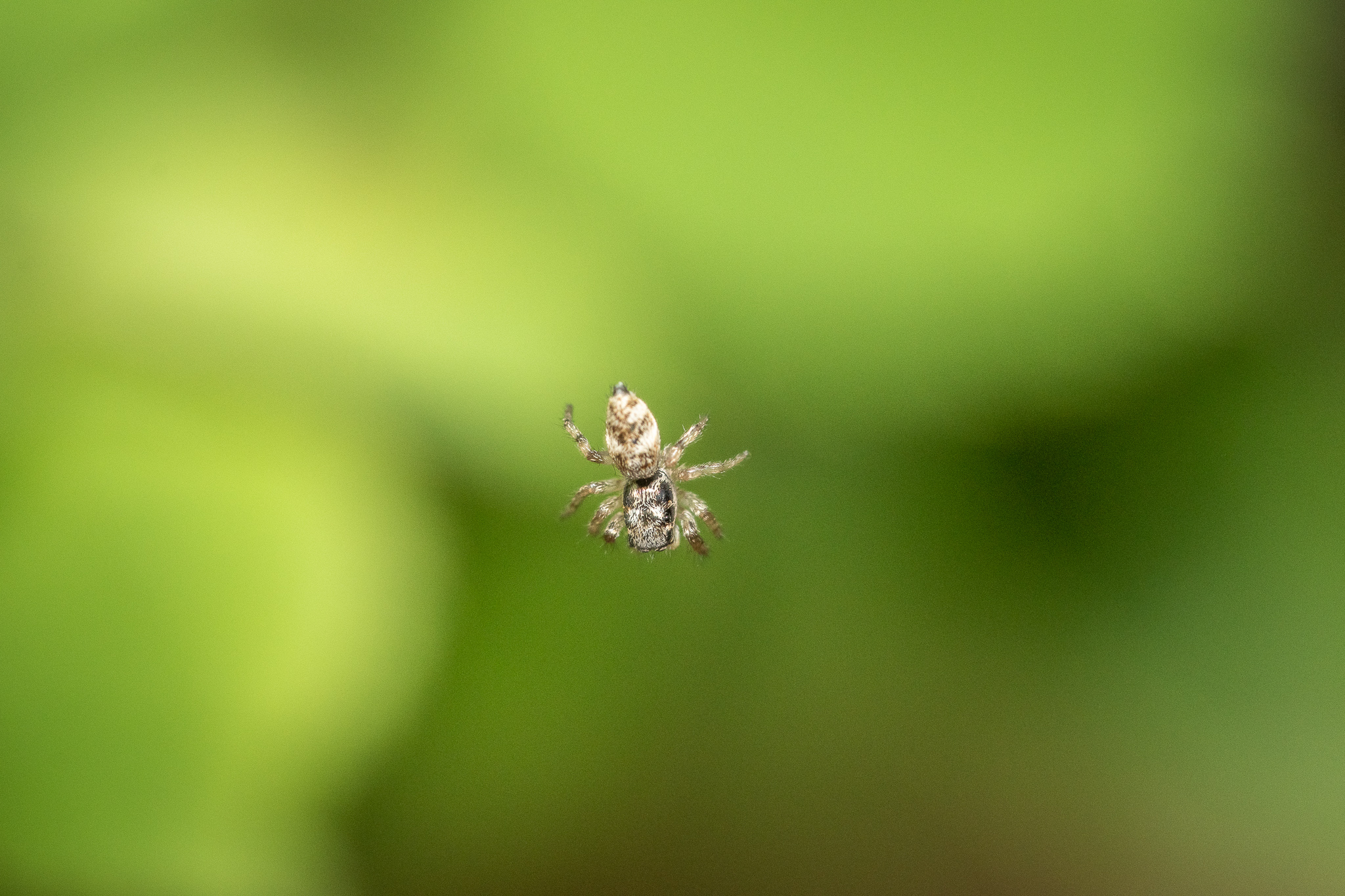
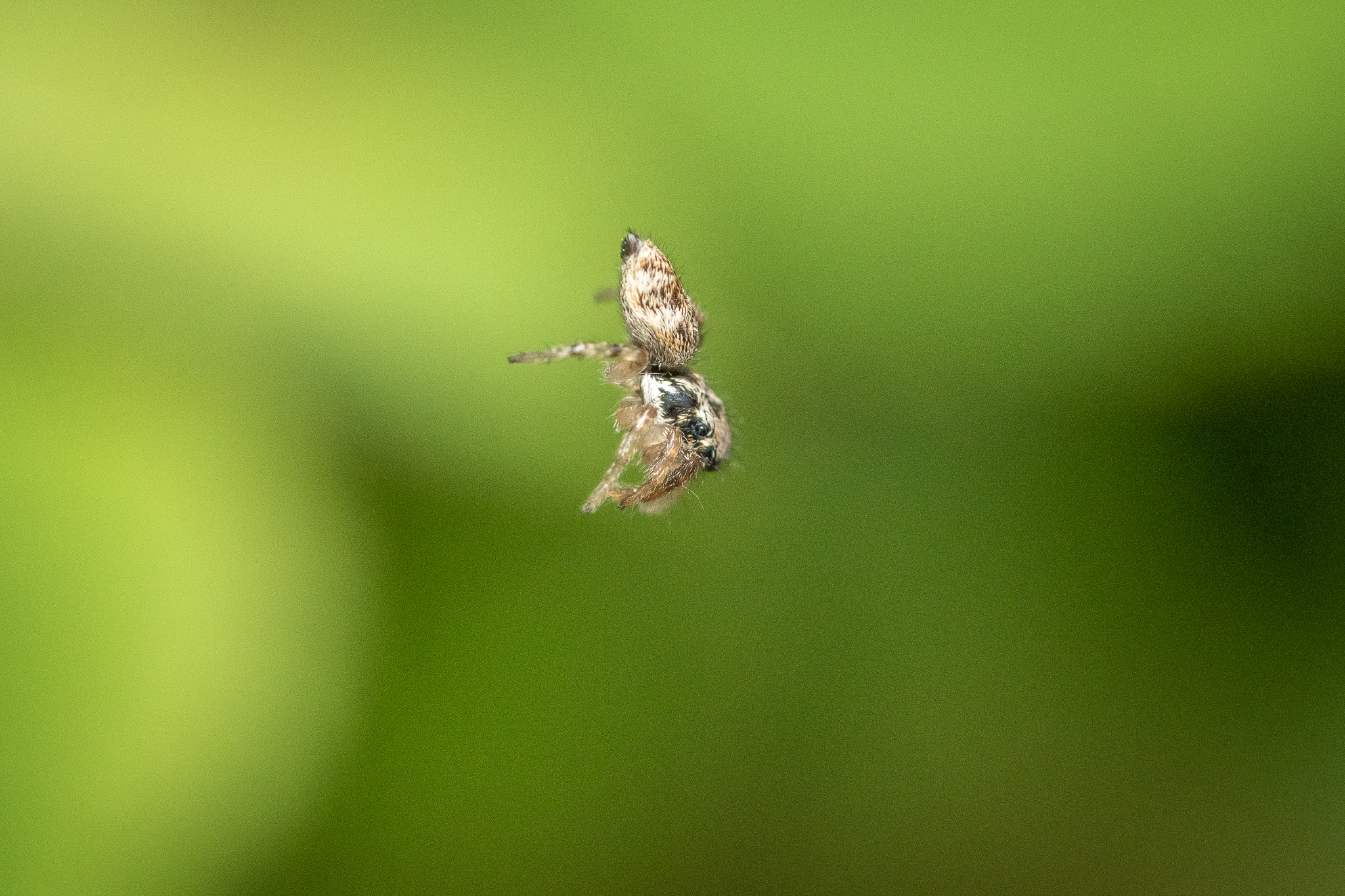
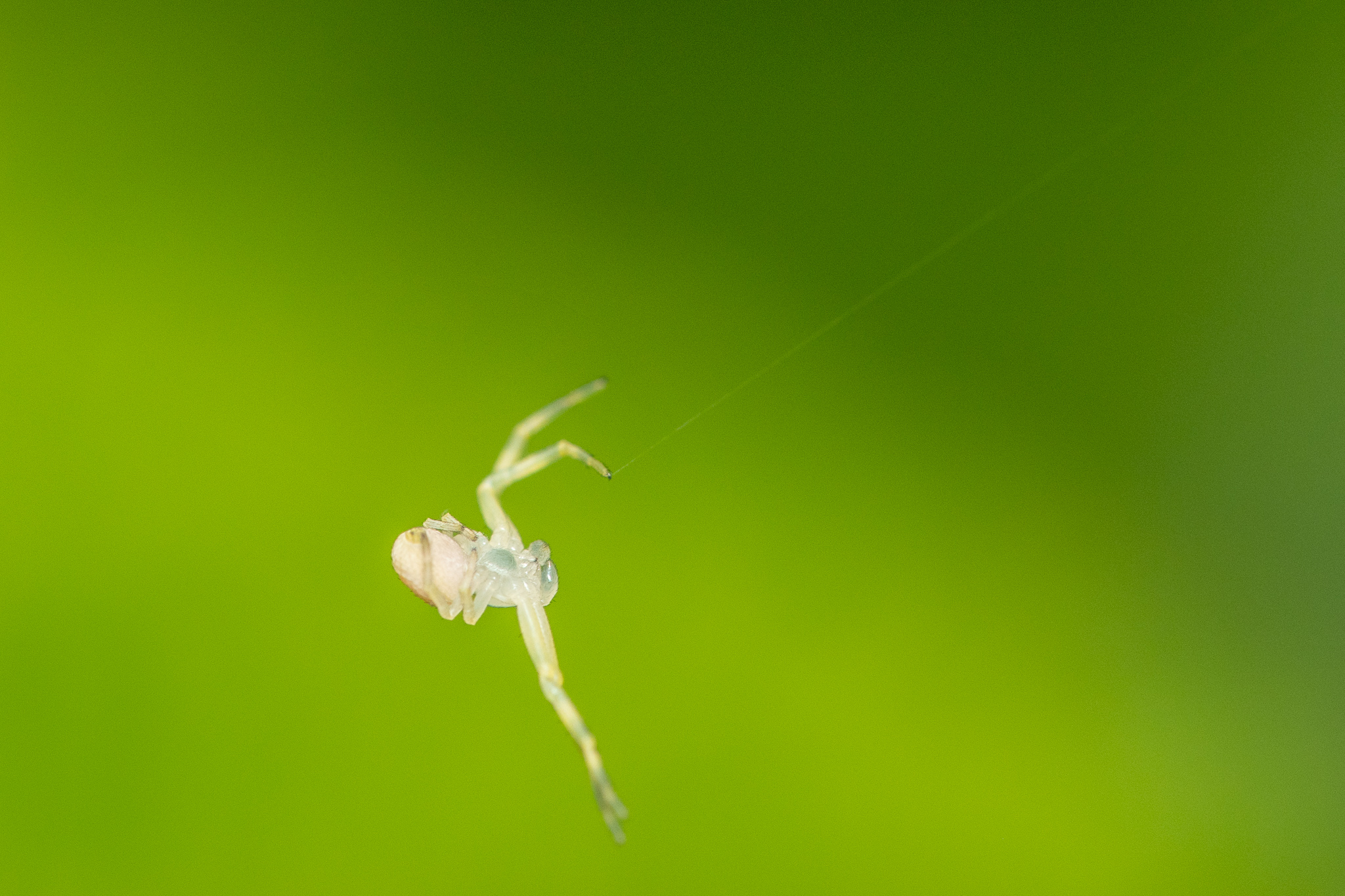
I also noticed this crab spider floating in midair on its silk. There is something quite weird about this image I think. The limbs look a bit like human or robot arms. This was a pure fluke of hoping it got into focus, even then you can’t really see the spider properly.
I’ve noticed far fewer insects in my garden, probably because the plants we have are largely over. I need to get some late-summer to autumn flowering species like stonecrop to keep things rocking and rolling. I had a look through the hedge while having an afternoon break after the storm took the heat away. I noticed this spider tucked away down in a bunch of leaves in the hedge. The silk is there to help catch prey but also it will react to movement, triggering the spider to attack.
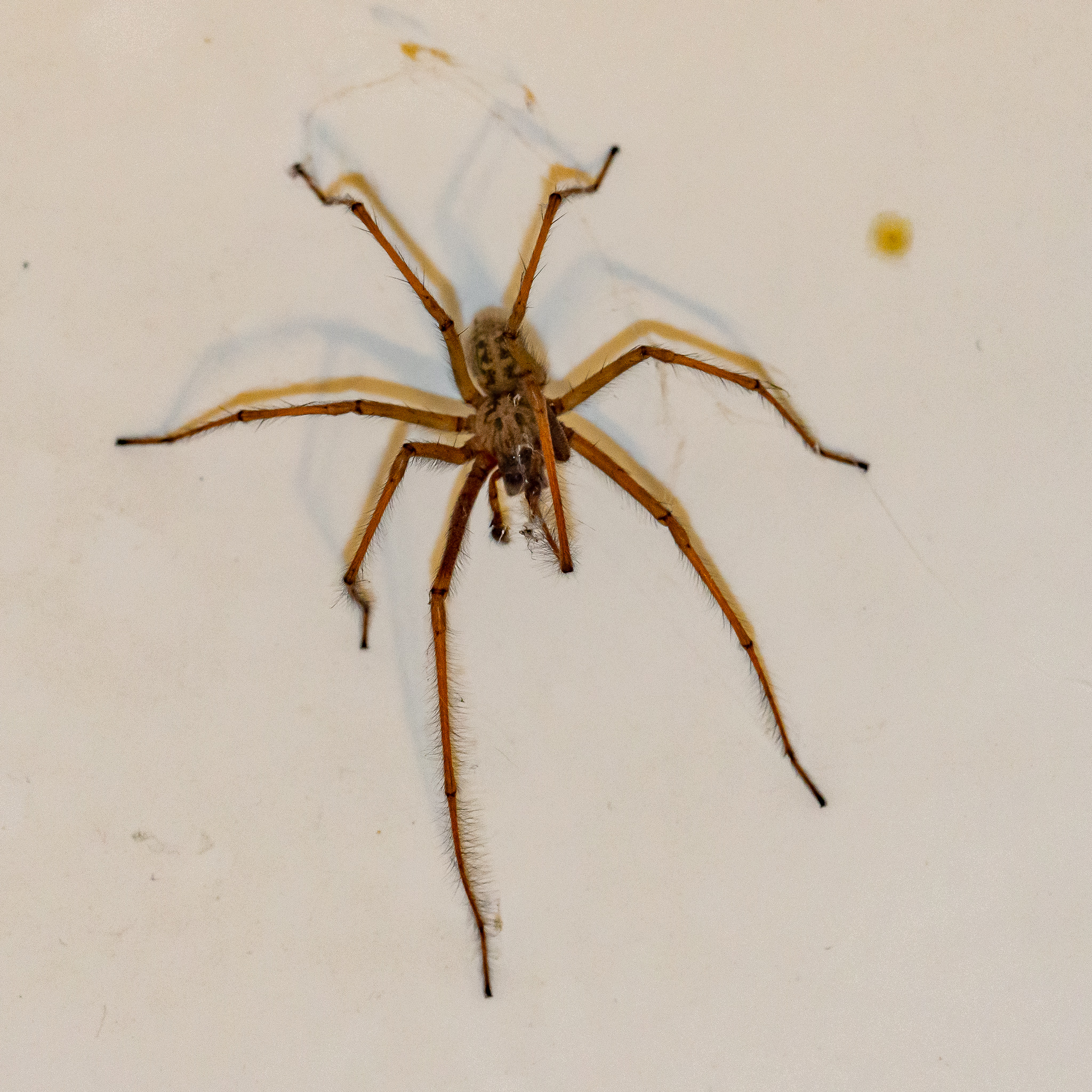
I visited my family home for the first time in 6 months last weekend, a really special experience after such a long time away. My parents are avid readers of this (perhaps that should say, the readers) blog and my mum pointed out to me that there was a big spider in the bath that I might want to include here! YES MUM!
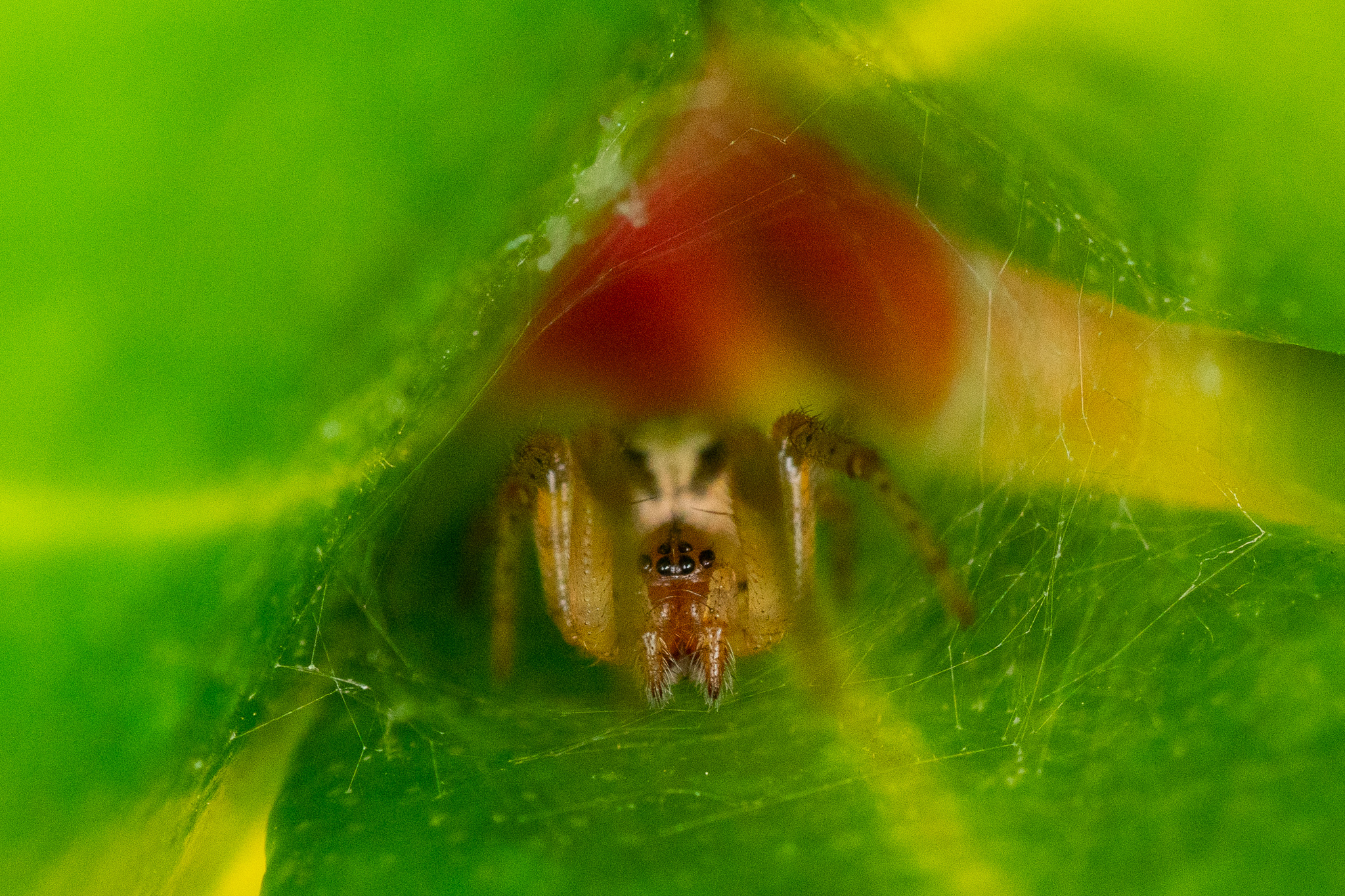
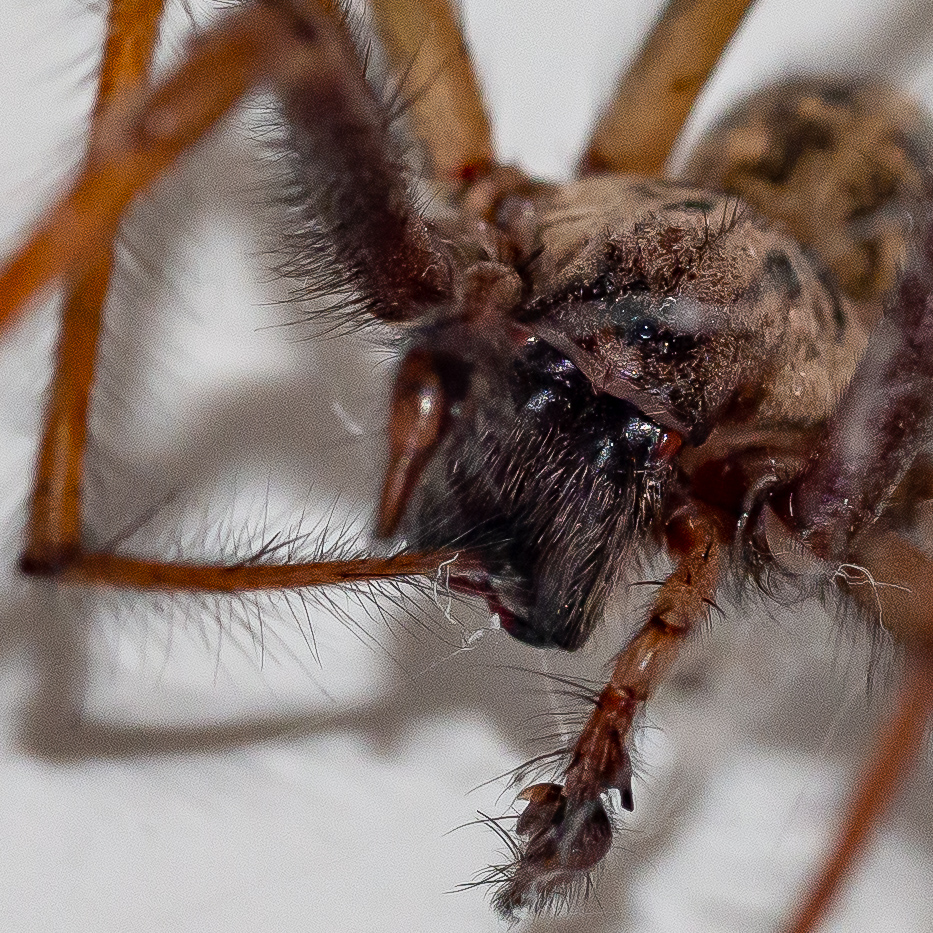
Now there have been several times this week when I’ve noticed out of the corner of my eye a shadow moving across the floor. This is something a lot of people are very unhappy about! But it’s the time of year when giant house spiders are becoming more evident. They are fiersome looking things yet they are harmless. They are more afraid of you than you are of it. They have every right to be afraid, because people will likely try and kill them when they see them, out of misplaced fear.
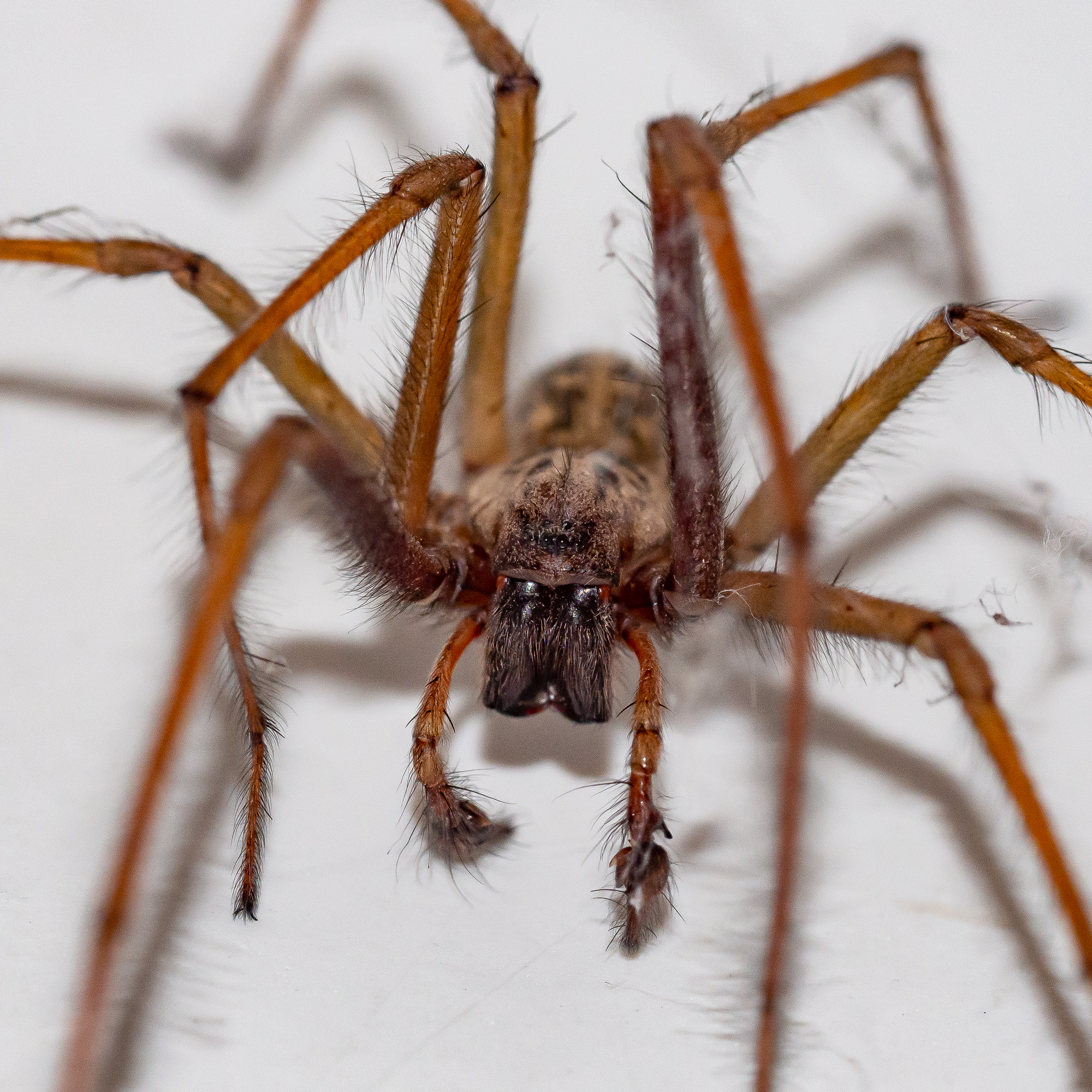
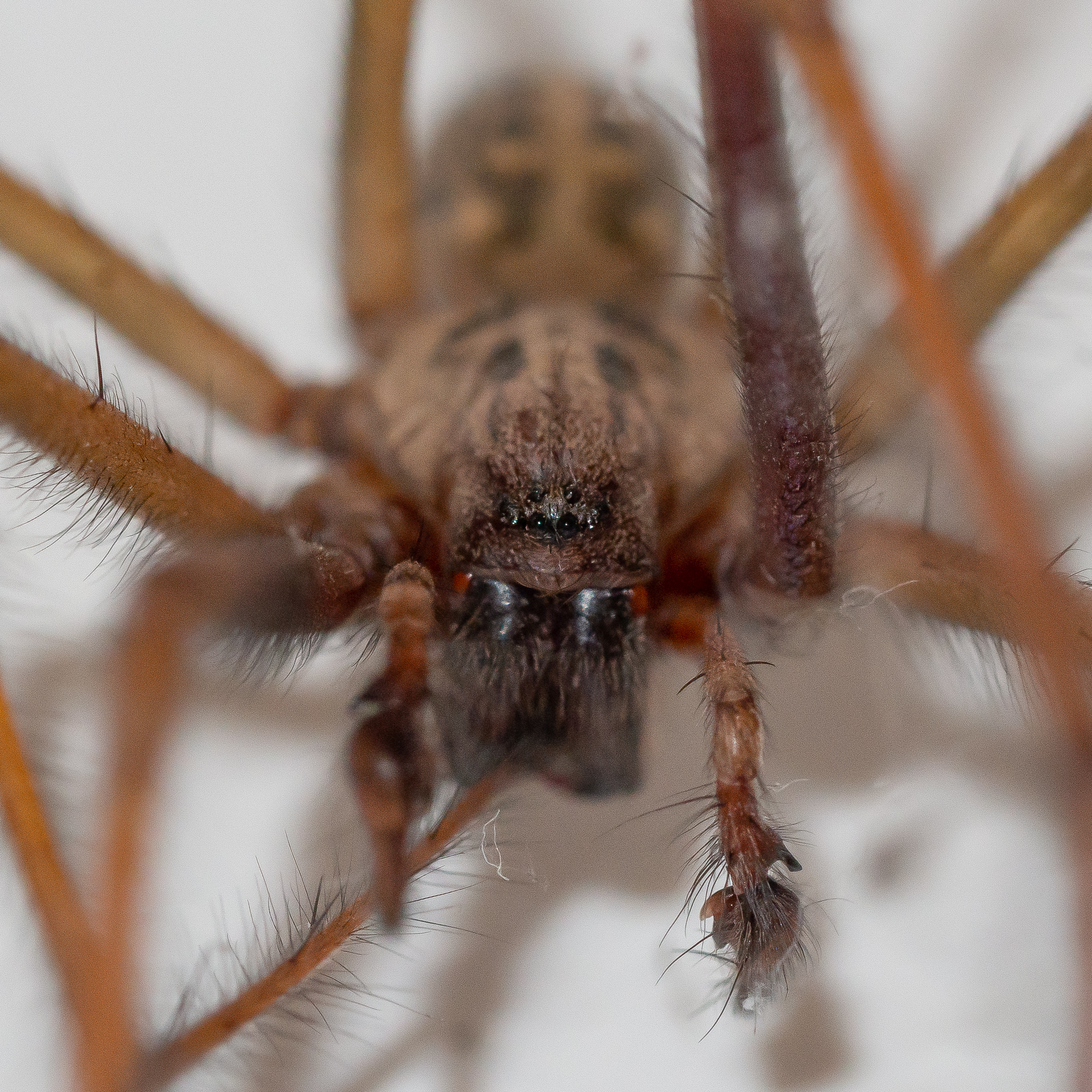
That said, they are a bit scary to look at and those mandibles are massive. I had my small mirrorless camera with me and a macro lens. The images are quite harsh and grainy because the light was so dank and the flash is a pop-up one without a diffuser.
The spider didn’t actually mind me at all. It was trying to remove some spider silk from its legs by running them through its mandibles.
Far from wanting to harm this animal, I am pleased that we can have such close encounters with big insects like these. If you let them go about their business, there’s no problem. No spider in Britain is venomous. This is not Australia!
Thanks for reading.
Photos taken with Nikon D5600 with Sigma 105mm f2.8 macro lens and SB-700 flash. Giant house spider photos taken with Olympus EM-10 MIII with 60mm f2.8 macro lens.
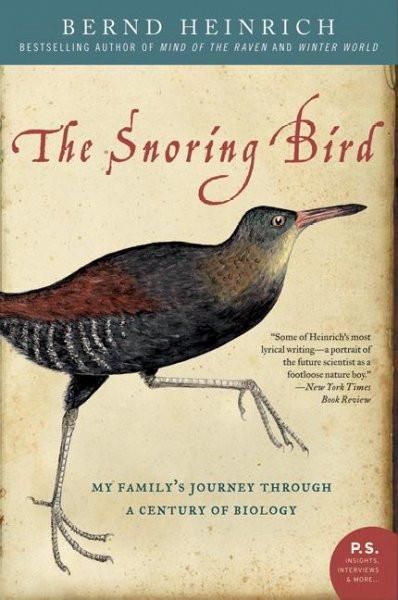
A couple of years ago my friend recommended a book called The Snoring Bird by Bernd Heinrich. The book is a memoir about Heinrich’s relationship with his father, Gerd, an entomologist who collected ichneumon wasps but who was never fully accepted by the scientific or academic community. Bernd tells the story of his father’s escape from the Red Army in 1945 and how he buries his collection of ichenumonids so they aren’t destroyed. Gerd travelled around the world collecting specimens.
In Britain we have poorer biodiversity than even our closest continental neighbours because of physical separation from the European landmass, intensifying land management practices, the impact of successive ice ages and, furthermore, the fact our climate is not tropical. But even then, we still have over 2000 species, which you can’t say for other fauna like birds or butterflies.
Reading The Snoring Bird consolidated a personal fascination with wasps, one which has not really travelled beyond blogposts, photos and seeking them out where I can. I’m not a collector of anything other than images.
Ichneumons have what we perceive as an unpleasant ecology. Females use their needle-like ovipositor to ‘inject’ their eggs into the burrows of insects, into crevices in wood or, most appallingly to our species, caterpillars or the larvae of bees. The eggs hatch inside the live caterpillar and eat it. It’s probably where the inspiration for the Alien films came from. To balance things out, insects inspired the creation of Pokemon.
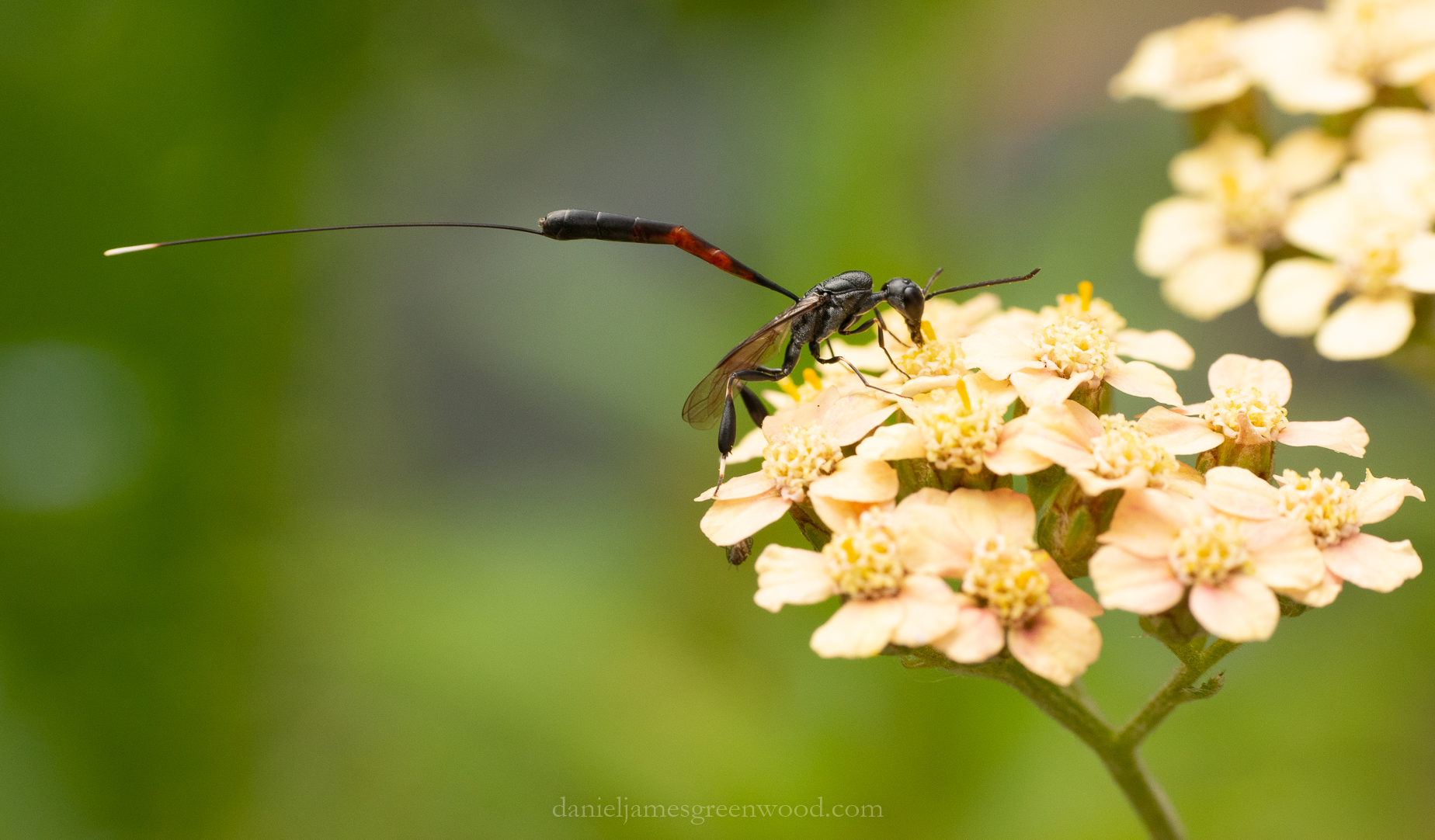
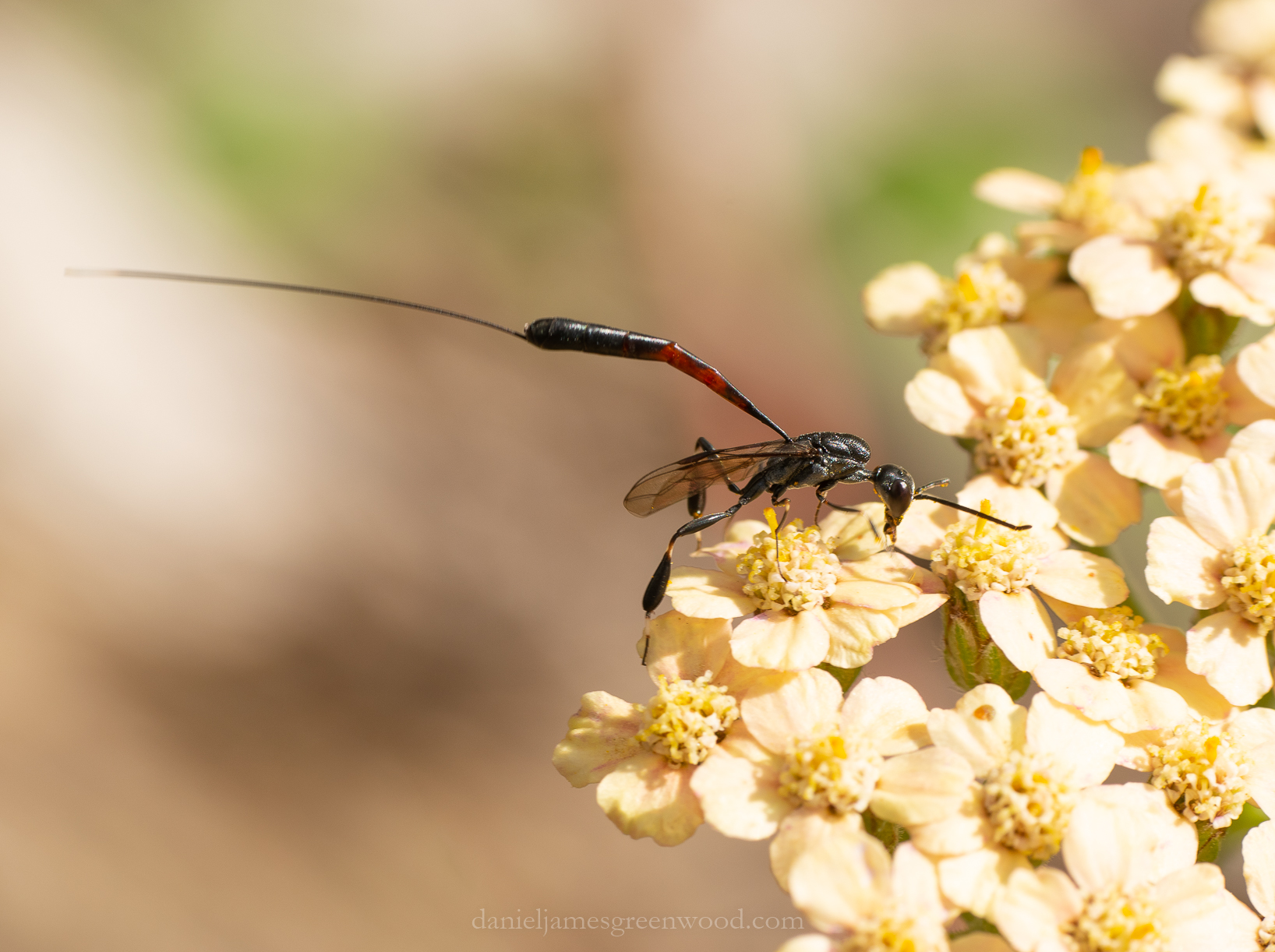
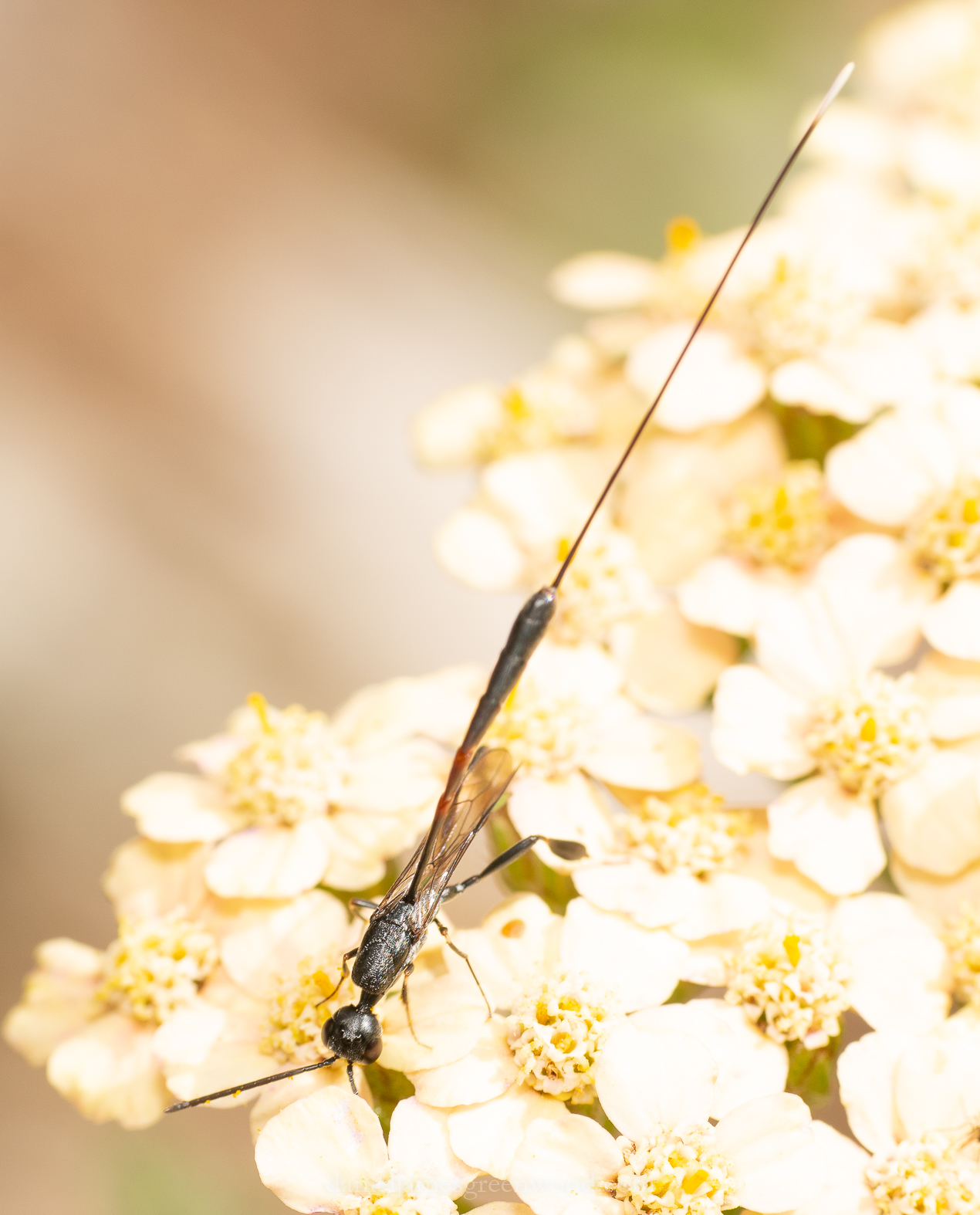
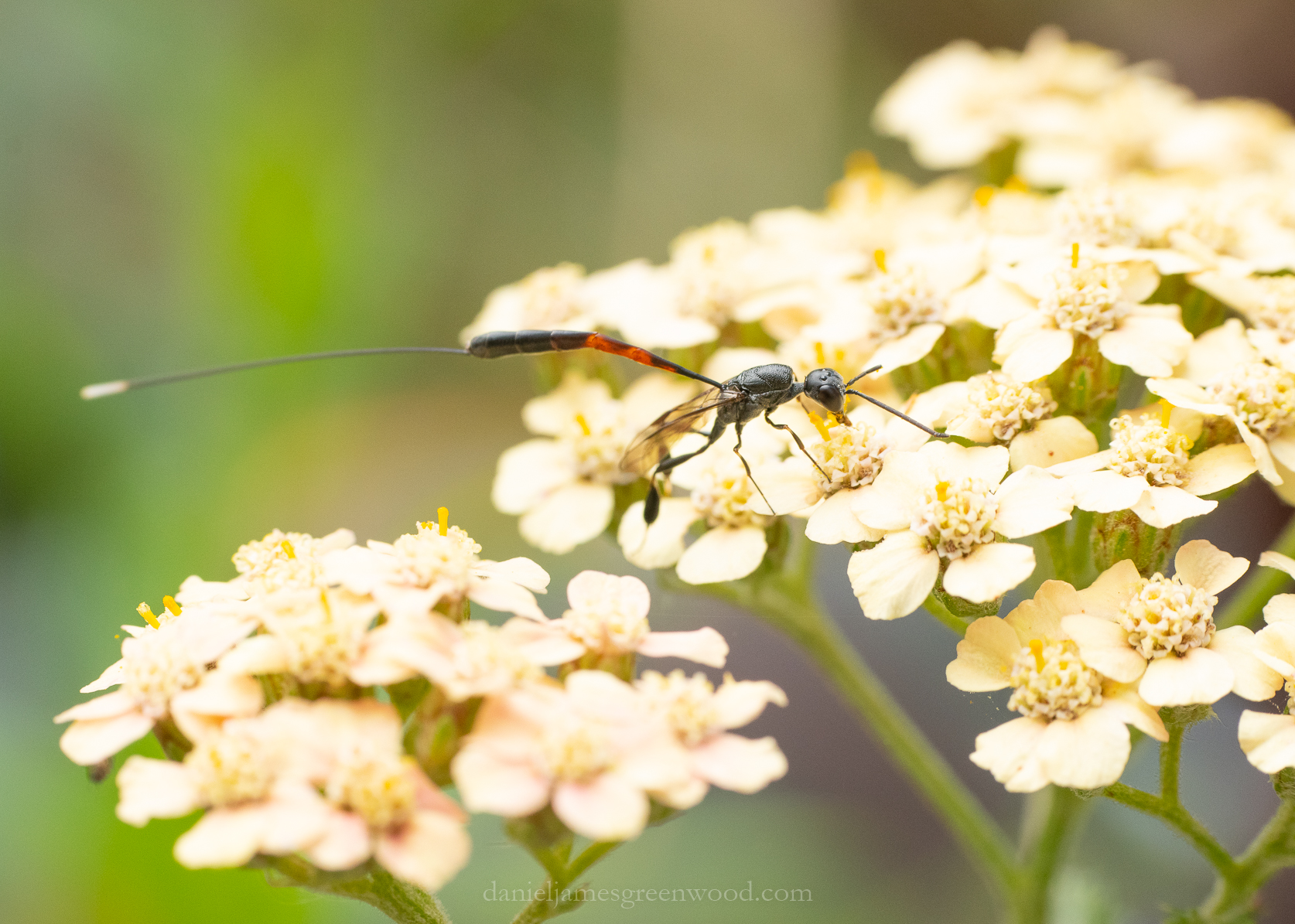
Last week I was sitting in my garden catching up with visiting family. I looked to my right at a pot of ornamental yarrow flowers (Achillea). I had noticed a bit of activity and glanced over to see a slender insect flying around the flowers. It was the equivalent of a video buffering over a poor quality internet connection. When it landed on one of the flowers I recognised it instantly as an ichneumon wasp. I ran inside to get my camera and managed to get some good photos: in focus, well lit and sharp enough.
I have always wanted to see this species. Its scientific name is Gasteruption jaculator. To find it in my garden was a real surprise and one of the highlights of my time seeking wildlife.
Why might it have visited? We actively garden for wildlife, insects particularly, and there is a log store that this kind of species will seek out. A couple of months ago I saw a similar species hovering around the logs, but I couldn’t get my camera quick enough and it moved on.
There are people whose first reaction to seeing this insect may be to kill it because of its ecology. That, to me, says everything about our misunderstanding of nature. A natural history lesson will tell us that without solitary wasps such as these we would have no social bees, a community of insects which prop up our dependencies on pollination of both crops and other flowering plants (including trees). Social bees evolved from solitaries wasps. The ichneumon’s ecological relationship with bees is one millions of years old, one small part of a web of life that has given human societies licence to develop through an abundance of food.
However, this is an insect which has affected the way some of the science’s key thinkers have framed their own mortality. Darwin doubted that any benevolent God could have created animals which behaved in this way. Not sure about you, but I often think that about Donald Trump or Boris Johnson.
A few years ago I encountered a cousin of the ichneumon that visited me in my garden. It has a far shorter ovipositor and its scientific name is Gasteruption assectator. I was walking on the North Downs when I found the insect nectaring on hogweed flowers. A woman passed me and asked what I had found. I said I’d found the insect that made Darwin doubt God. She looked away with a knowing smile:
Summer came back last week. The annual breach of 30 degrees celsius took place, with more forecast for the month ahead. The warm weather meant there was a lot of activity in my garden, with opportunities to find wildlife lasting until dark.
The hedge has seemed less active in recent weeks, whereas in early June I could sit in front of it and find too many insects to photograph. But this week I found this tiny sawfly, or at least I think that’s what it is.
It’s a relative of the bees, wasps and ants (Hymenoptera). I know this because of its eyes, both the compound side set and the ocelli on the top of the head. The antennae are long and wavy like an ichneumon wasp’s. I didn’t quite manage to get it perfectly in focus but I think the composition came out quite nicely.
I’ve noticed a number of amber-coloured beetles around the outside of my house and the garden. I also found one in the raspberry patch. I think it’s a hawthorn leaf beetle. It was nowhere near a hawthorn.
The other week I disturbed something in my garden that flew up from the grass and away into a small tree a few gardens away. It looked a bit like a flying fish. Picking raspberries one evening, under the only trees we have – small sycamore, rowan and a larger magnolia all crammed in – I noticed that this cricket was trying to remain hidden among the long grass. It’s a dark bush cricket.
One of the most important parts of managing my small garden for wildlife has been to allow the grass to grow long for a time. I’ve also found frogs at the back in a cooler, shadier area where the grass has grown. If you can leave some of your lawn to grow between May and mid-July, I would really recommend it. I only mowed mine this week, mainly because the rye grass is setting seed and my old sleepy cat seems to be allergic. Also, it’s the right time of year in the world of meadow management.
I’m starting to see more nymphs appearing, and I don’t mean the fairies. That’s another story. This is probably the nymph of a dock bug. Again, it’s in the raspberry patch, which is where this blog ends with a flourish.
As I mentioned earlier, the warmer days have meant that insects have been active longer. When we were out picking the day’s raspberries, I noticed an insect pollinating the raspberries at speed. I couldn’t get a proper look or get a decent pic.
Given some time, I saw that the insect, a type of wasp, was going to the same flowers in a cycle around the patch of raspberries. It didn’t mind me getting closer as time went on and the night drew in.
My first thought was actually quite extreme – Asian hornet! But this wasn’t an invasive non-native, “killer hornet”. It was a species of wasp. With more time to observe it I could see its red eyes and red striping to its body. It’s a red wasp. I love those eyes! Let’s also not forget that these wasps here are pollinating raspberries that my family and friends will later eat. Wasps are pollinators more than they are pests, the tide needs to turn on that damaging myth before our insect populations are harmed any further.
I know this blog is pretty much a wasp fanzine week after week, but these animals are so amazing. I had never expected to see this species in my garden. But it highlights the joy of this entire project. Each species seen here this week, bar the dock bug, is a new species for the garden list. Many of the species I’ve seen I will never be able to identify, but that feeling of newness and discovery is precious to me.
Next week: more wasps.
Thanks for reading.
Photos taken with a Nikon D5600, Sigma 105mm f2.8, Raynox 250 adaptor and Nikon SB-700 flashgun with diffuser.
















 Bracken and birch glade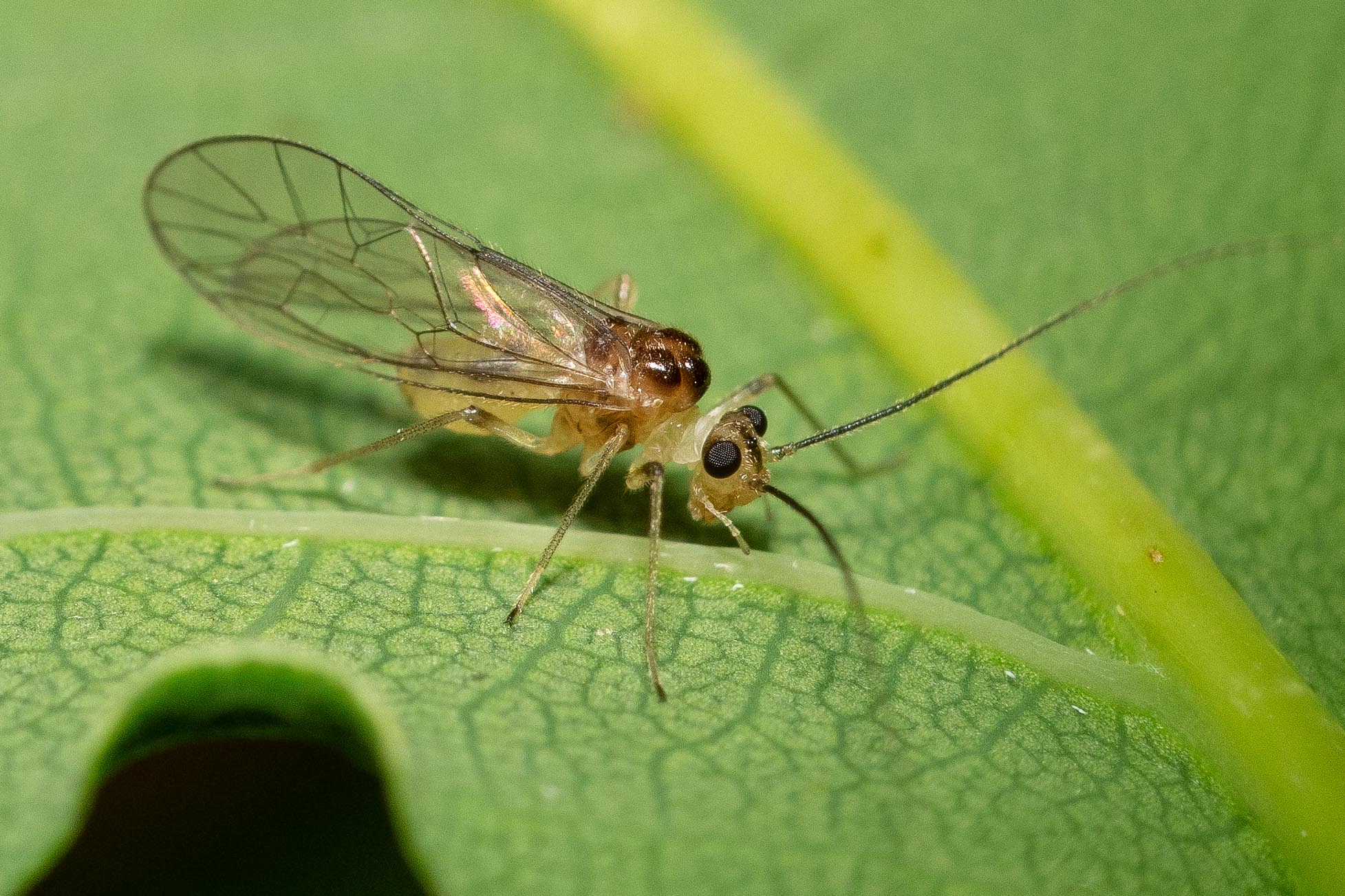



 Unlocking Landscapes