In June, my wife called me out to the garden because she’d found something in the gooseberry. Pretty standard.
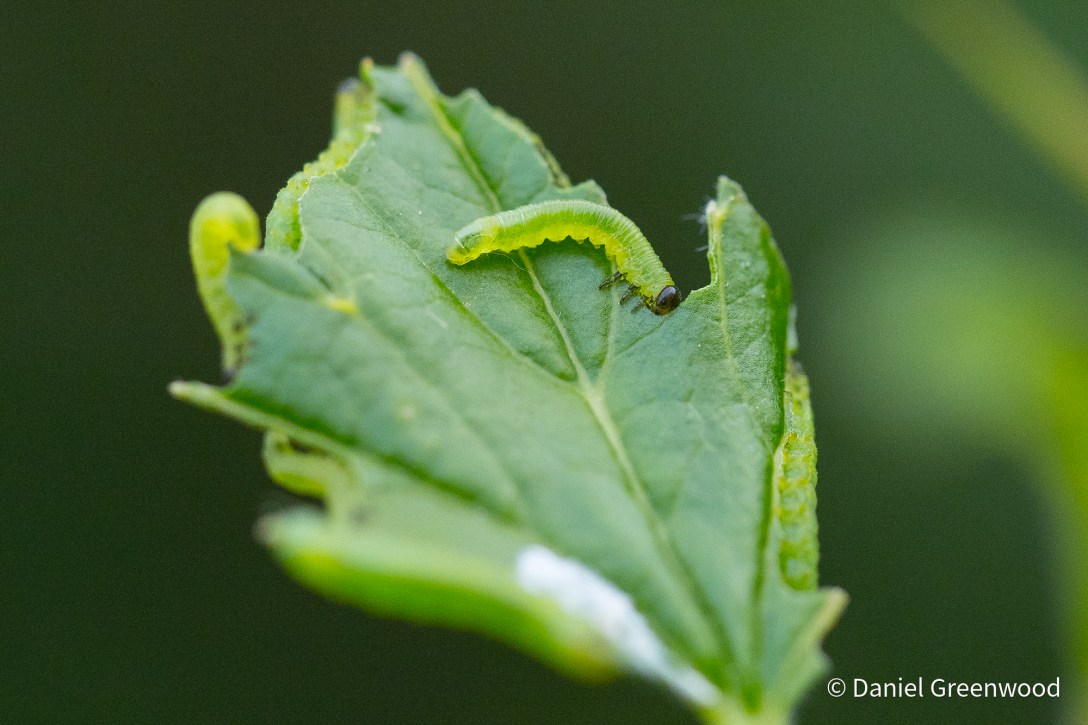
She has an amazing ability to find things and is especially good at foraging. In this instance she’d found caterpillars munching through the gooseberry leaves.
There was a sense of both amazement at what we were witnessing and fear for the health of the shrub. We don’t survive on gooseberries and the birds almost always get to them first, but you don’t really want your shrub to die. Then again it hasn’t exactly been a raging success, to be honest.
Personally, I always think English gardening culture fails to accept death and decay into the mix, and the important role that plays. Gardens should feed local wildlife, not just be a killing zone for visitors deemed unwelcome.
One summer does not a garden make!
With the help of iNaturalist I understand these to be small gooseberry sawflies (Pristiphora appendiculata). Sawflies are relatives of bees and wasps that are common in gardens and elsewhere.
I do love this view of the sawfly caterpillar nibbling its way through the leaf. When we looked at them on the gooseberry new caterpillars would appear as your eyes adjusted.
In the days that followed I noticed house sparrows hanging from the surrounding raspberries and picking at the gooseberry. That’s a very good meal, especially for fledglings.
Some days later I spotted a new visitor to the gooseberry. I was confident this was a sawfly (not knowing anything about their lifecycle) but unsure if this was one of the caterpillars emerged as an adult insect. I’m not sure, but it’s likely to be an adult small gooseberry sawfly.
As for the gooseberry bush, it looks ‘touch and go’ as football physios say. It’s part of the game of life.
I’ve posted before about the so-called ‘zombie fungus‘, but that wasn’t in my own garden!
There are a few fungal concepts that have become mainstream in recent years, namely the wood-wide web and ‘zombie’ fungi. The latter has become popularised because of The Last of Us, a programme I haven’t watched and can’t say anymore about. The most famous parasitic fungus that can control its host is cordyceps.
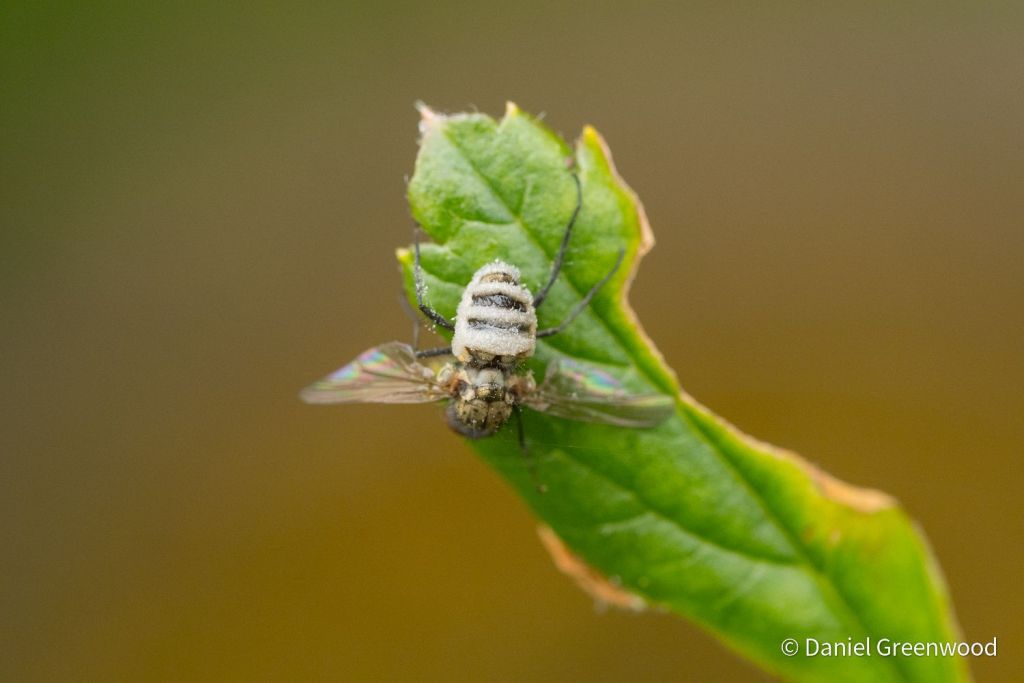
My wife actually found this (not cordyceps) when she was inspecting the gooseberry bush, which was steadily being eaten by sawfly larvae. I’ll post about them next.
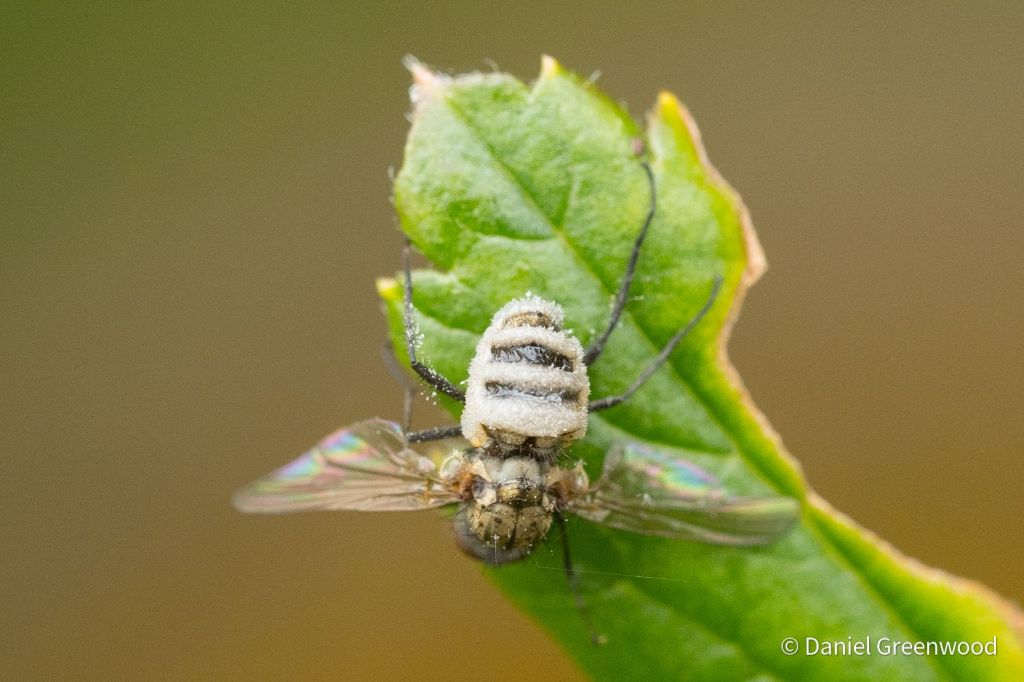
What is this exactly? It’s a fly that has been parasitised by a fungus called Entomophthora. It basically is able to control the movement of the fly by making it move to a prominent position for its final moments, or at least I think that’s what’s happening.
The prominent position then allows the fungus to spread its spores on the wind or from a more beneficial height to reach its next host, however that occurs.
It’s not quite as gory as cordyceps, where a fungal fruiting body rises from the body of its host. It is altogether more macabre and sad-looking, though. Cordyceps can be very colourful.
In reality it is just an example of the immense biological diversity out there, the interactions between two kingdoms – animals and fungi.
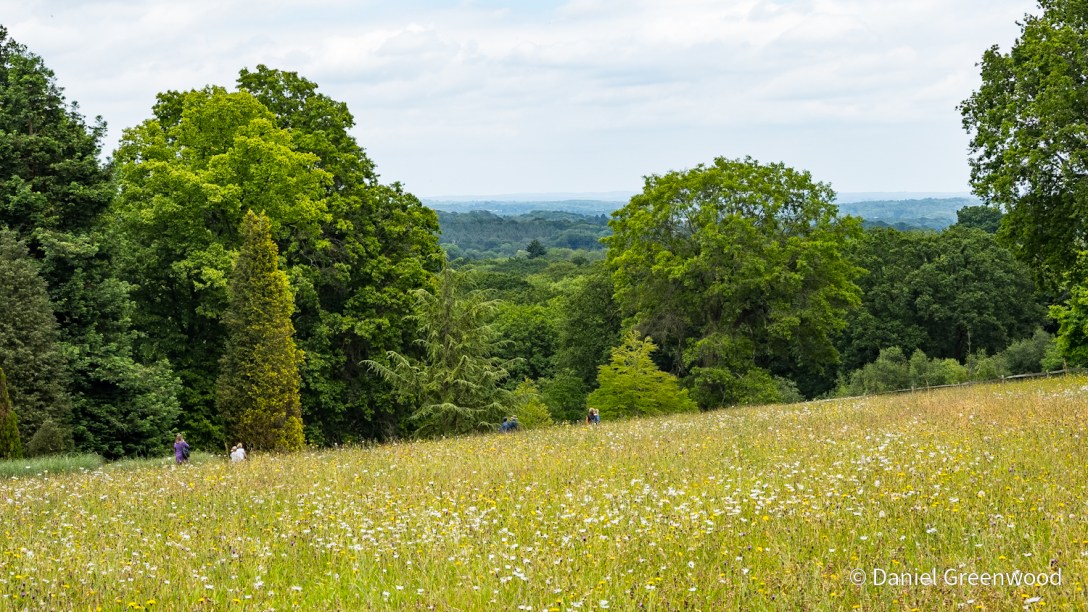
Nymans is a National Trust garden in the western edge of the High Weald. There are great views across Mid Sussex towards the South Downs. This visit was just for a general walk, but it quickly dawned on me that it could be a chance for some macro.
I had my Olympus 12-45mm lens with me which can work really well as a macro lens. Bingo!
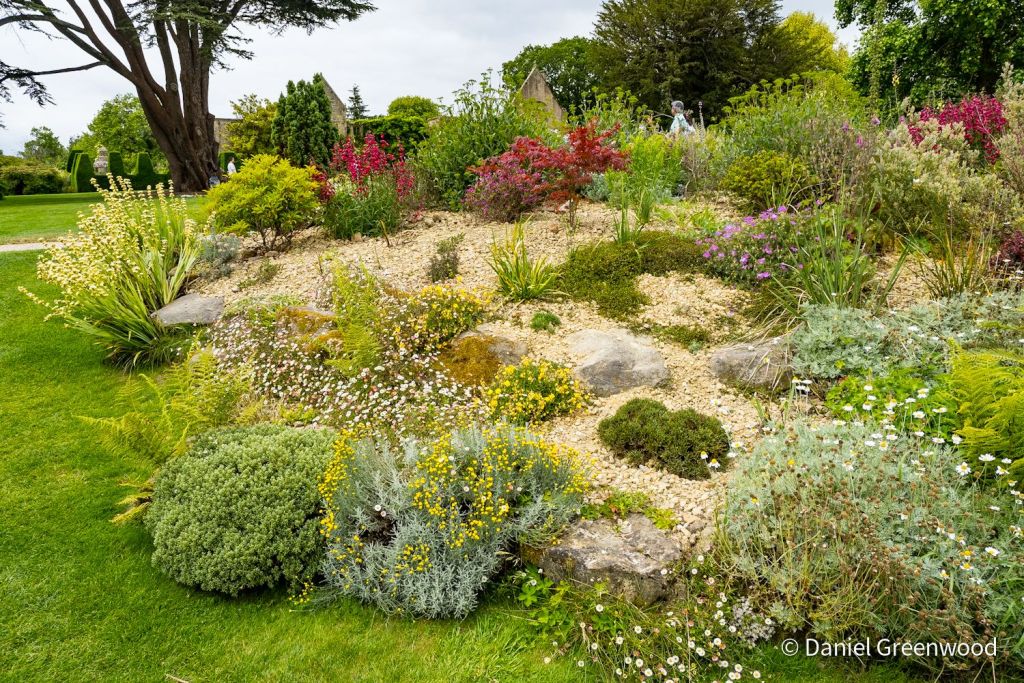
Nymans has a lovely array of rock gardens and extravagant flowering borders.
The common spotted orchids were peaking, as you can see, the flowers turning to seed.
I realised this visit could be interesting for macro when we spotted this caterpillar munching on a knapweed leaf. It’s the larva of a sawfly, rather than a moth or butterfly.
Elsewhere on the knapweed was this small robberfly. I love seeing this striking group of flies, they make great subjects. They also strike, in the predatory sense.
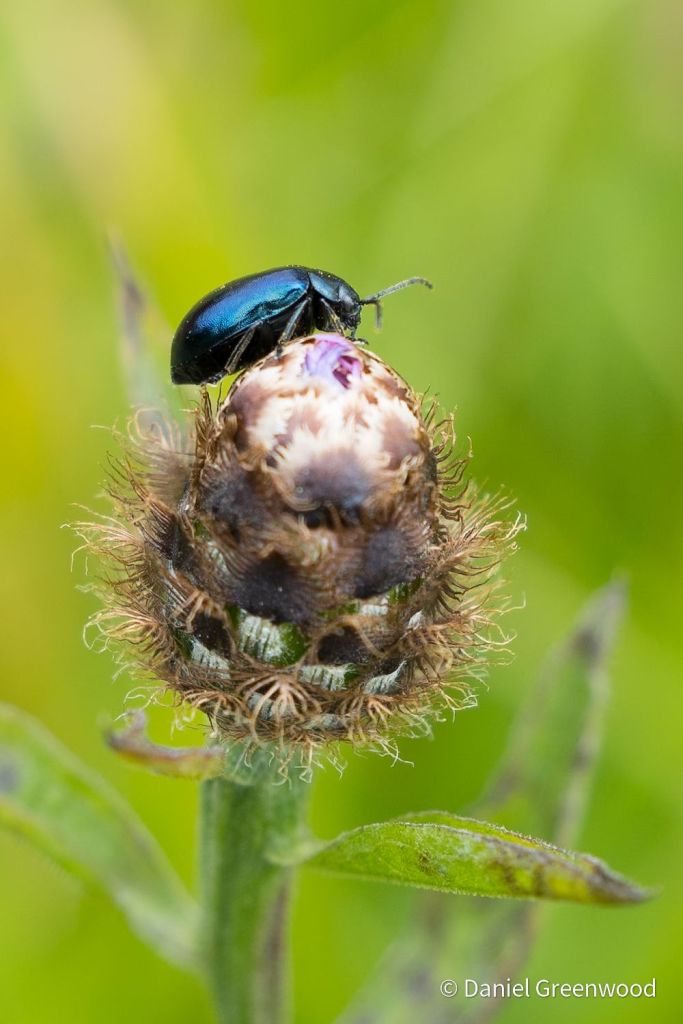
I’ve seen loads of alder leaf beetles since moving to Sussex but I usually see them in towns. It’s always nice to see one in a meadow.
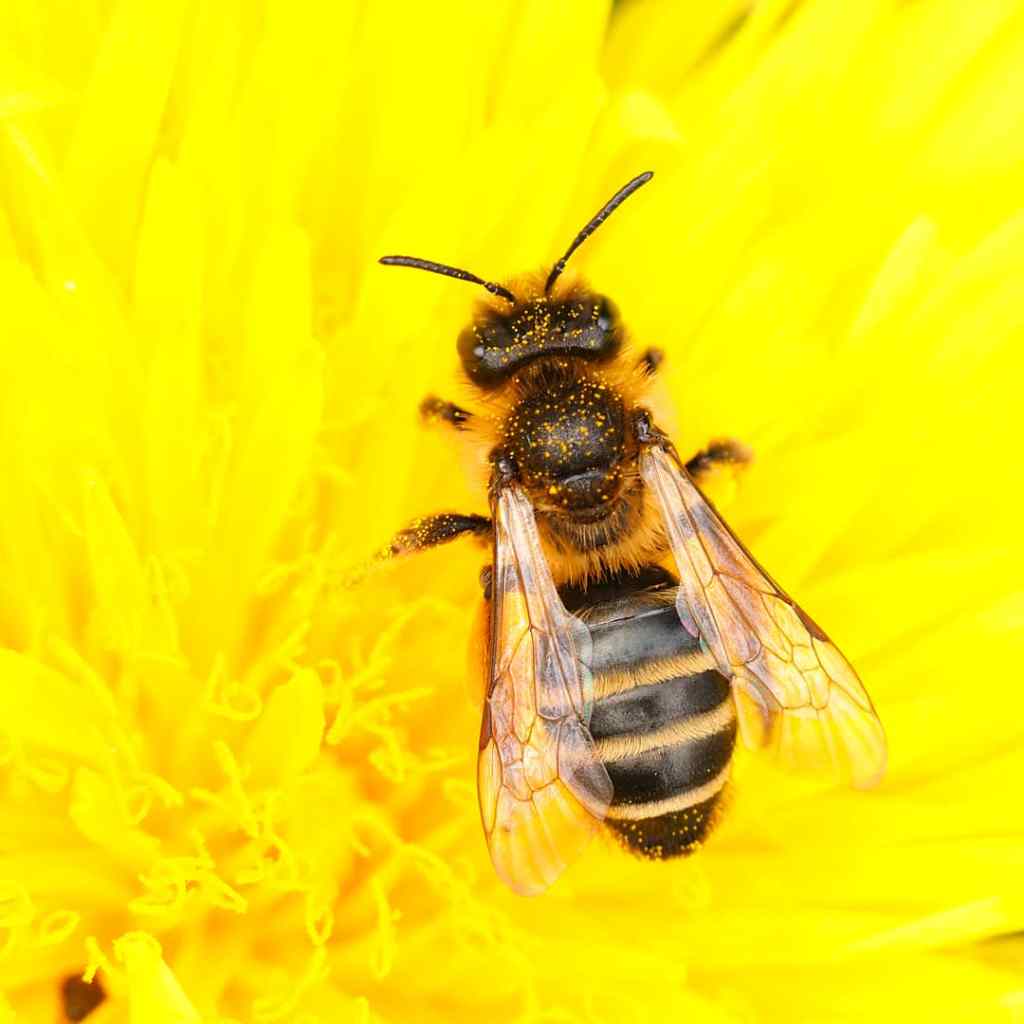
There were a number of small bees around. I think this is one of the bronze furrow bees.
In the head of a meadow cranesbill was this rather dozy little solitary bee. I pulled the petal to the side, as you can see here, to see if it had been caught by a spider. It hadn’t, it was just still.
Nymans has rose gardens, where I found this solitary bee trying to make sense of the maze of petals. Life, eh?
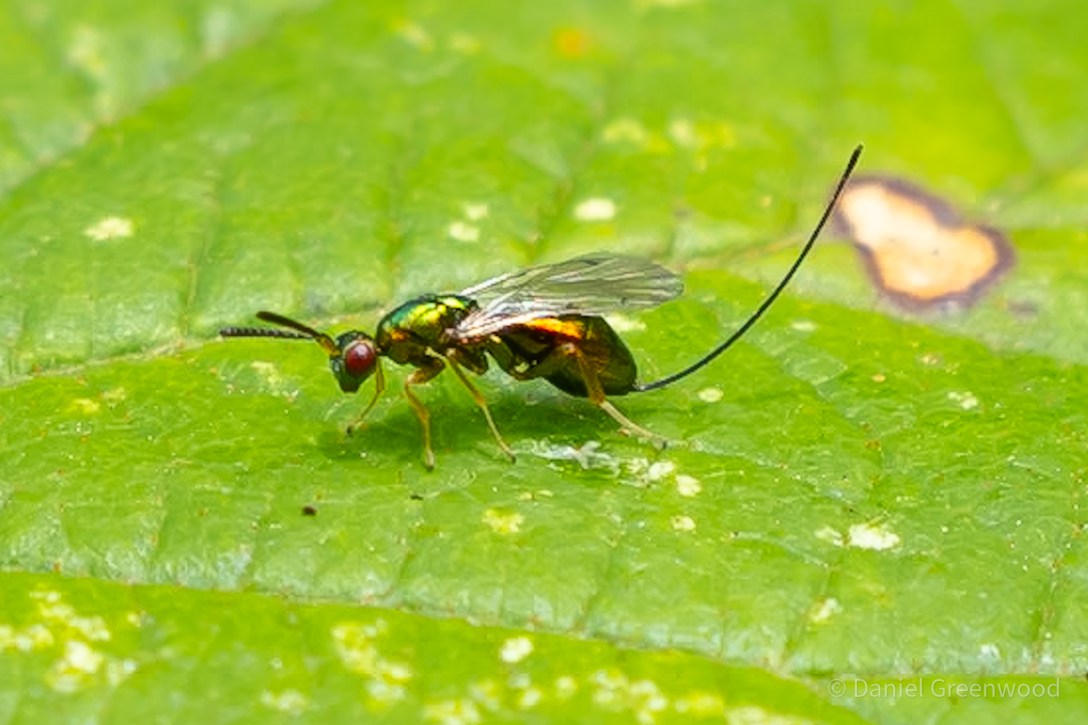
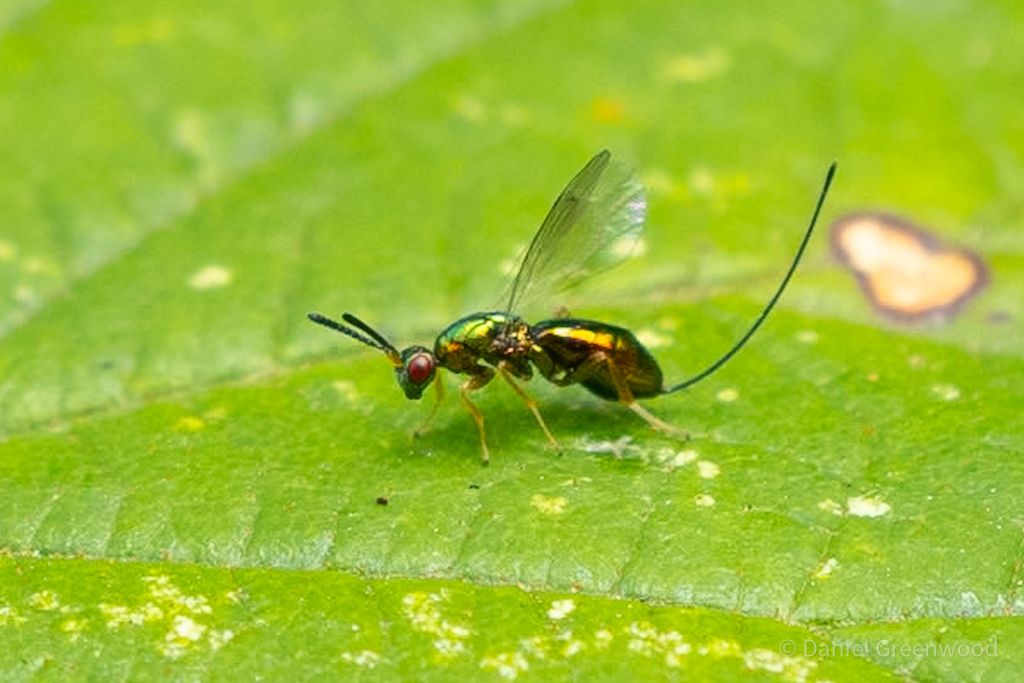
I was out for a walk the other day and found myself in among some brambles. I stopped to look at the leaves and noticed some miniscule insects flitting around. One was perched on a leaf, its long tail extending up in a crescent.
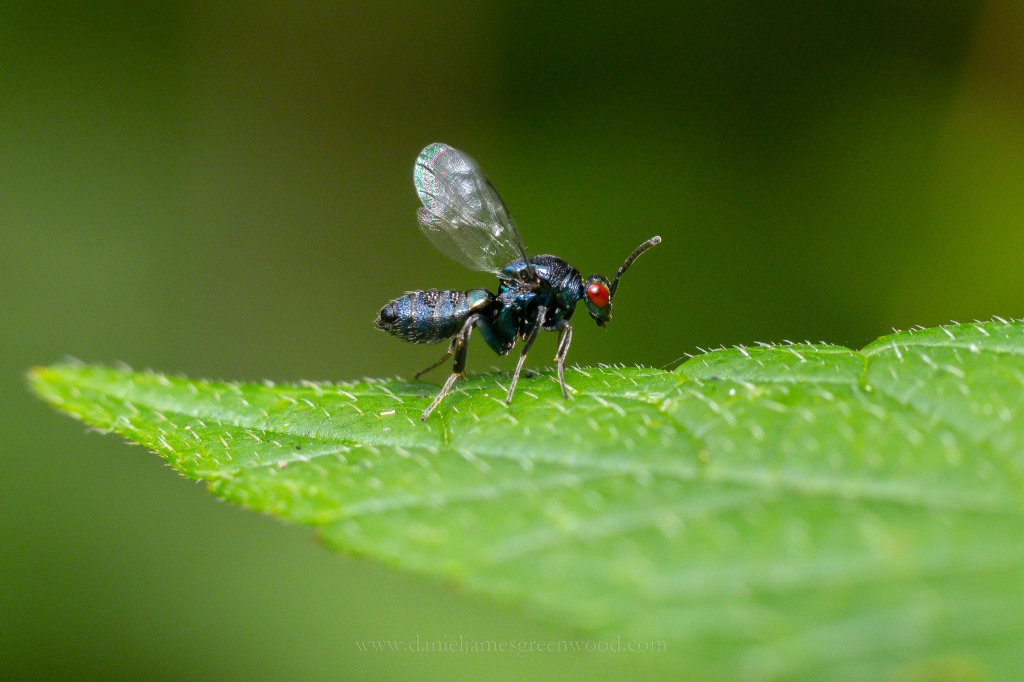
My first thought was that it was one of the Chalcid wasps which I posted about 3 years ago. This wasp has a weird significance for me. In 2021 I scheduled that post before my father (a great supporter of this blog over the years) was admitted to hospital.
A Chalcid wasp photographed in 2021
I was knocked out of that crisis zone for a couple of seconds by notifications about a blog I’d written, cued up and forgotten about. Those tiny wasps seemed so insignificant and irrelevant then, but here they still are, doing their thing as they have done for millions of years.
According to iNaturalist this is a species in the Torymidae family. Well, in an election week, that wasn’t what I was expecting. I now work in a politically restricted job, and wish to be as clear as Michael Gove that this is not a campaign ad for those true blue heroes of our great nation.
The wasps are parasites, so make of that what you will. I didn’t name them!
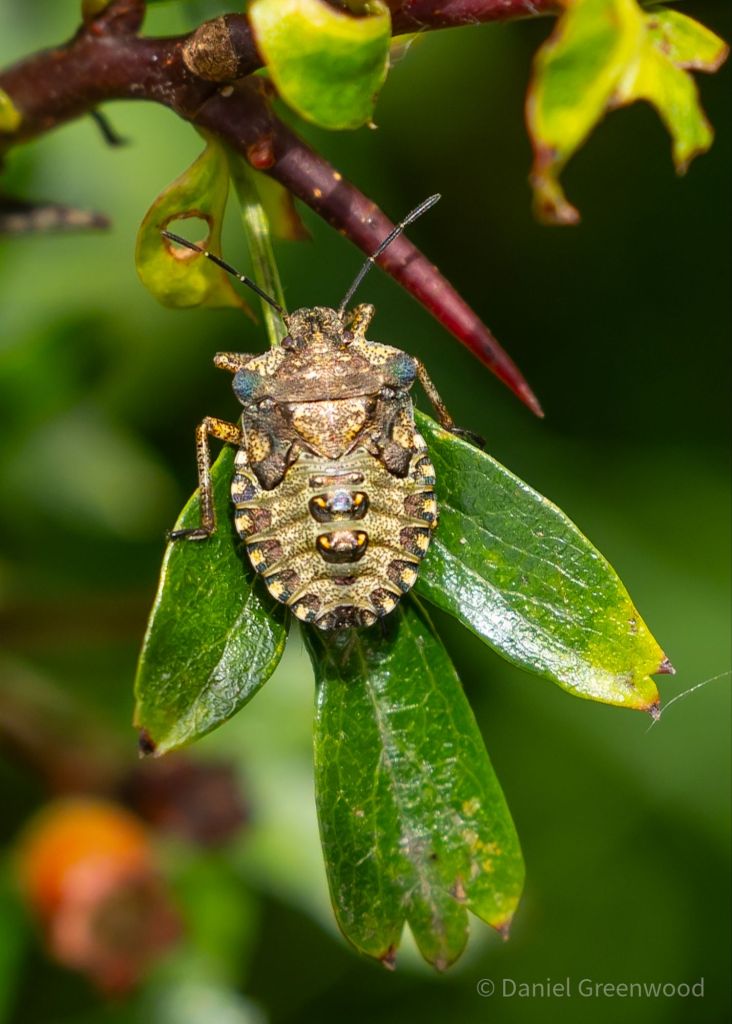
Elsewhere I found a few shield bugs sunbathing. These are forest bug nymphs.
And this longhorn beetle, a family of insects I love to see. They’re always quite busy in my experience, heading off in every direction.
Here we are, week three of #30DaysMacro as part of #30DaysWild. This week, things took a fungal turn after thunderstorms burst onto the scene.
Day 15/30: a bumblebee feeding on purple loosestrife in a car park in West Sussex. I took two photos all day on the 15th, and this was one of them!
Day 16/30: another day where photo opps were scarce, but I saw this little solitary bee (maybe a Colletes?) on the oxeye daisies in my garden. These daisies have been a massive boost to invert life in my garden this year.
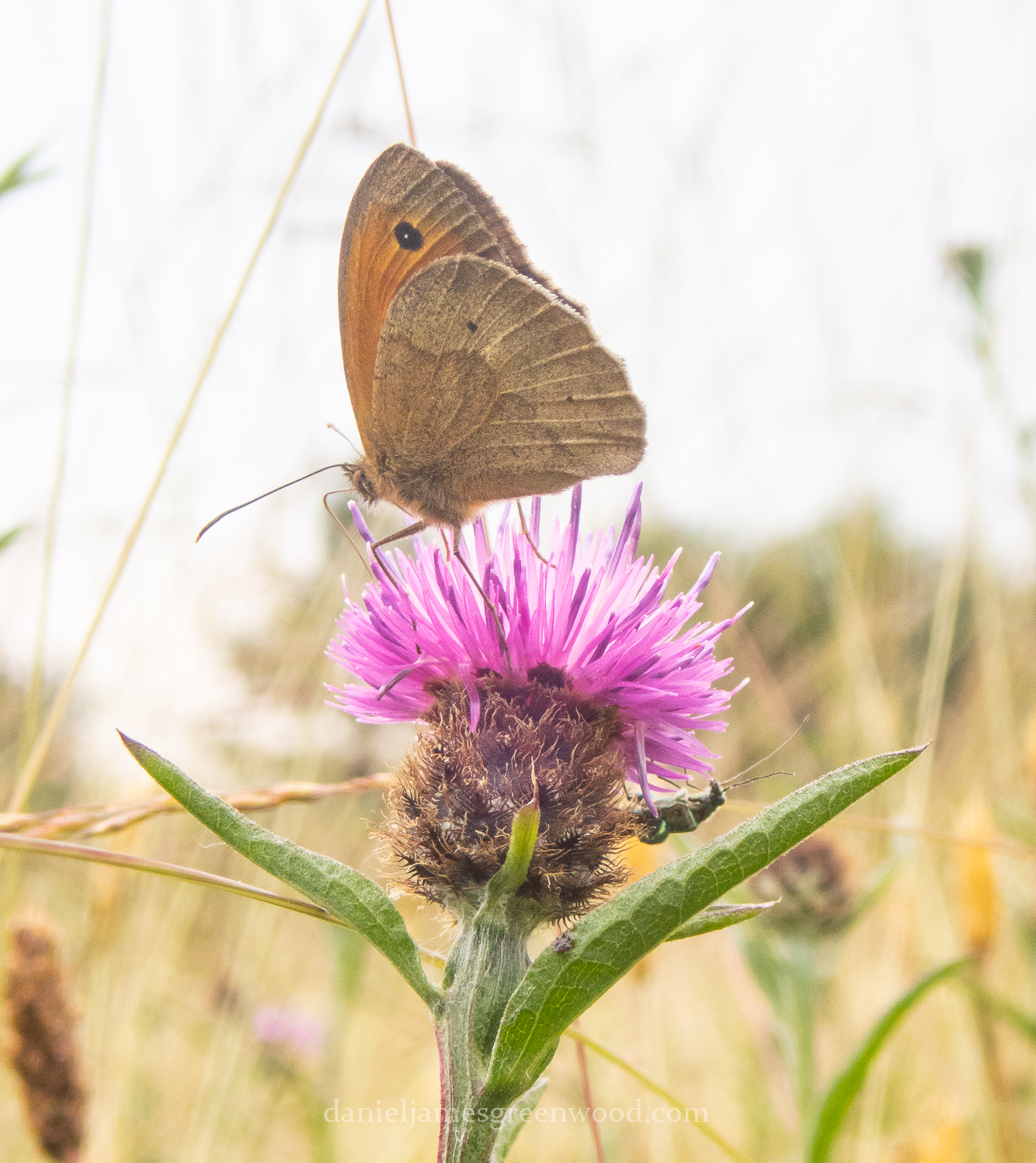
Day 17/30: this photo made me laugh – a meadow brown butterfly on common knapweed in a Wealden meadow in West Sussex. I didn’t notice the green swollen-thighed beetle hanging out below until I put the photo through Lightroom!
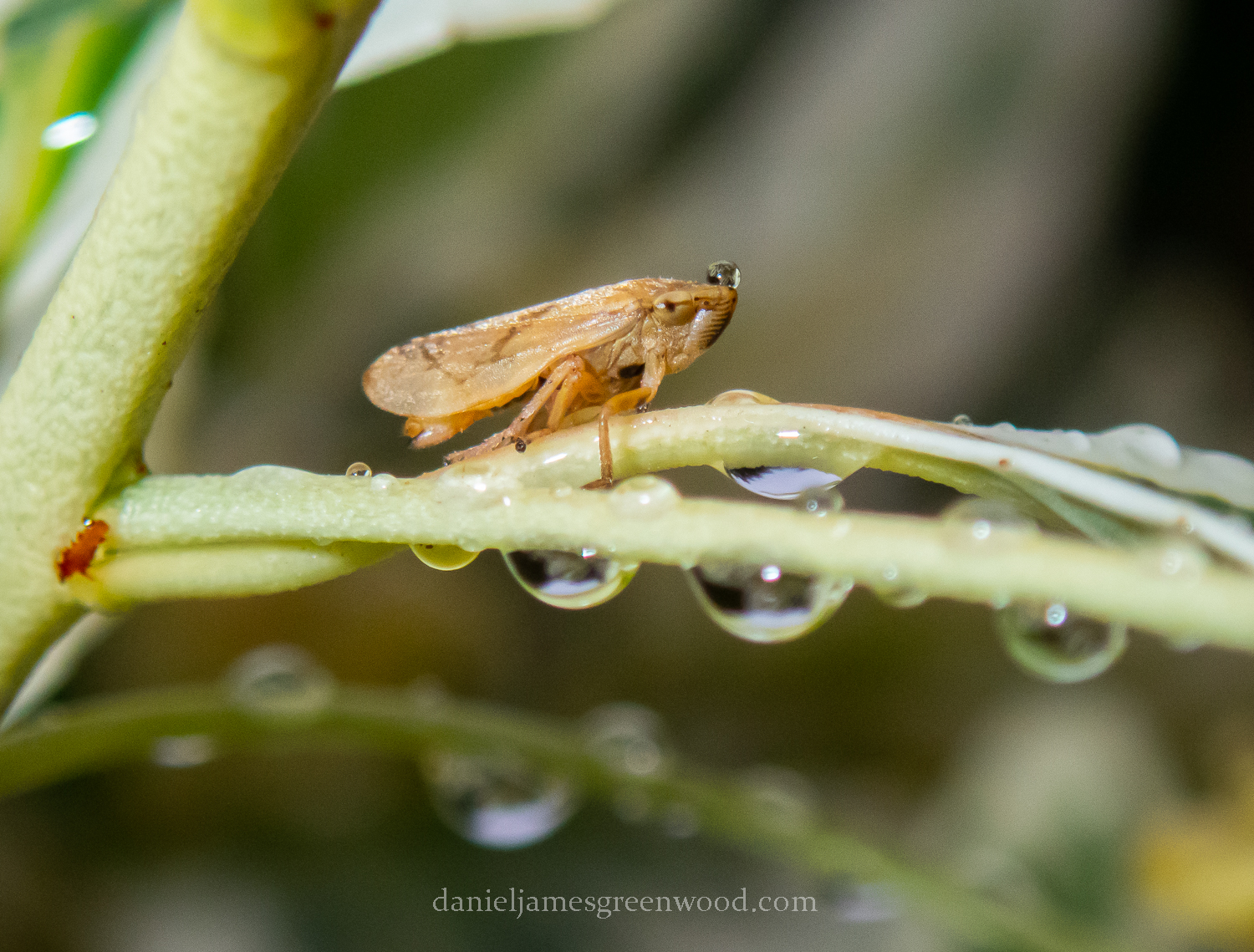
Day 18/30: storms have been the only source of rain recently, and they have been incredibly powerful. After some of that rain, I went looking for some life in the garden and found a common planthopper with a little droplet on their head. I see this as pushing the camera (Olympus Tough TG-6 compact) to the extreme due to lack of light and small size of the subject, and the results are great (though cropped and edited in Lightroom).
Day 19/30: on a lunchtime walk to stretch my legs I found this ashy mining bee foraging from one of the umbellifers that grow alongside my local river.
Day 20/30: things took a turn for the fungal on the 20th, as the rain gave a much-needed drink to the thirsty lichens in my local churchyard.
Day 21/30: the first of the summer/early autumn mushrooms, spindleshank, growing in the place where I learned what they are at Sydenham Hill Wood.
I got to spend the afternoon wandering around the Adur valley recently. The River Adur runs through West Sussex where it reaches the sea at Shoreham. There are wonderful views of the South Downs, especially from the area I was wandering around.
Truleigh Hill on the South Downs, seen from the Adur valley
This landscape fascinates me because it was once a much wider and wilder estuary. The town of Steyning had its own port, but the river’s margins and the marsh has become farmland. Looking at the maps you can see Rye Farm, with Rye potentially from the West Saxon word for ‘island’, just as it once would have been when surrounded by water or wetlands.
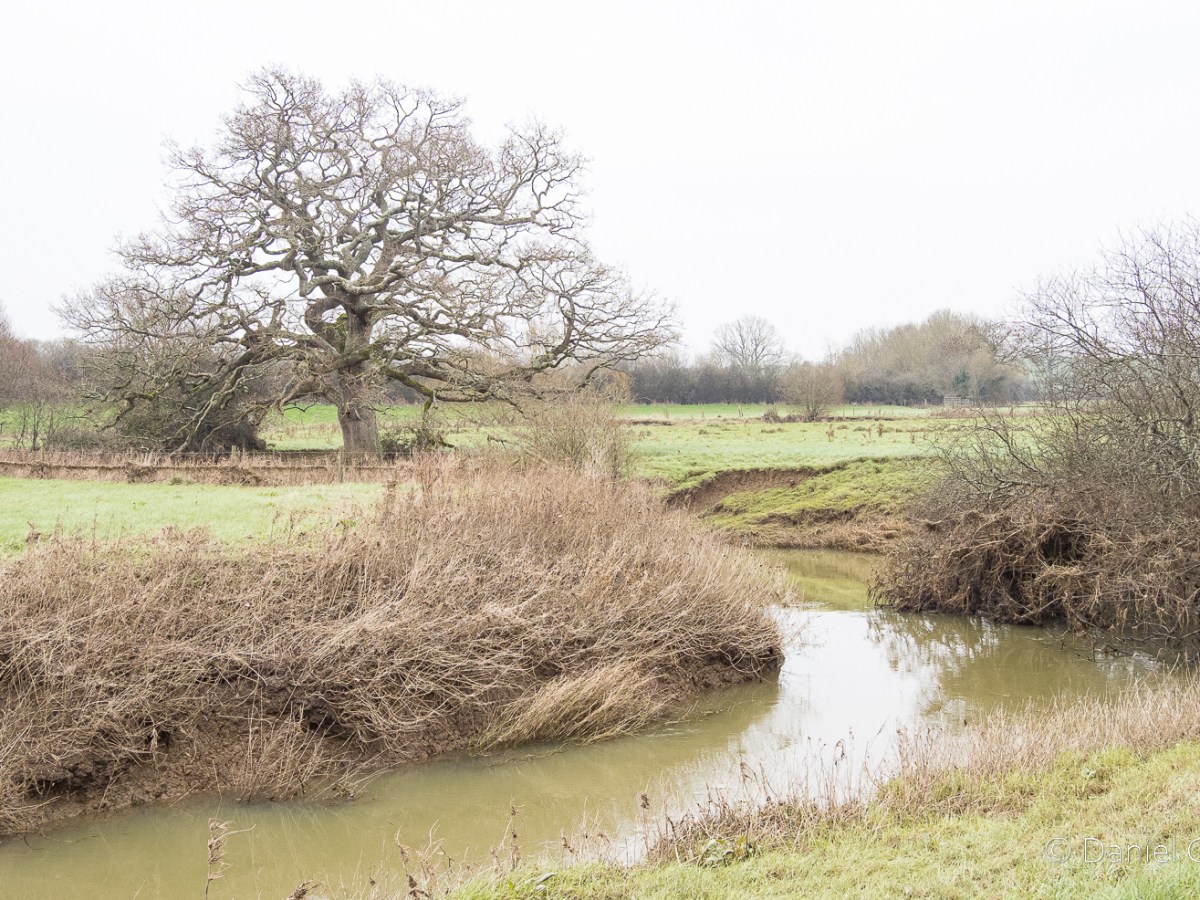
The River Adur
It was the end of a very rainy period and the insect life was out in force. There were hundreds of bumblebees on tufted vetch in the damp margins and probably thousands of newly emerged grasshoppers.
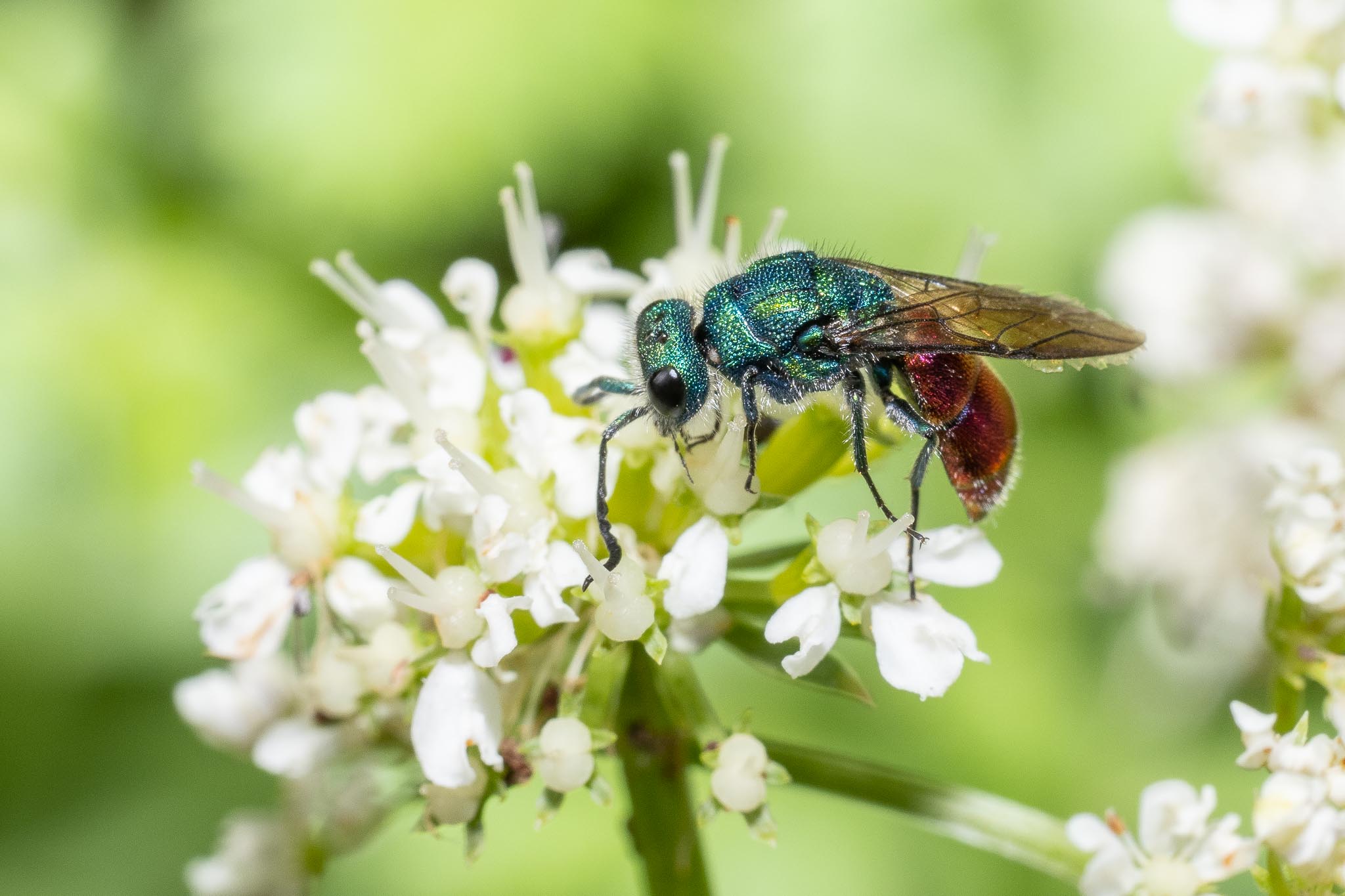
I wasn’t alone on this walk and so couldn’t linger too long. But along one of the lanes I found some umbellifers. On one flowerhead there was the unmistakable green and red of a ruby-tailed wasp!
They are stunning insects – with metallic blue-green thorax and a ruby-red abdomen.
The wasp was feeding on hogweed, a popular plant with pollinators.
This is a better view of the ruby abdomen.
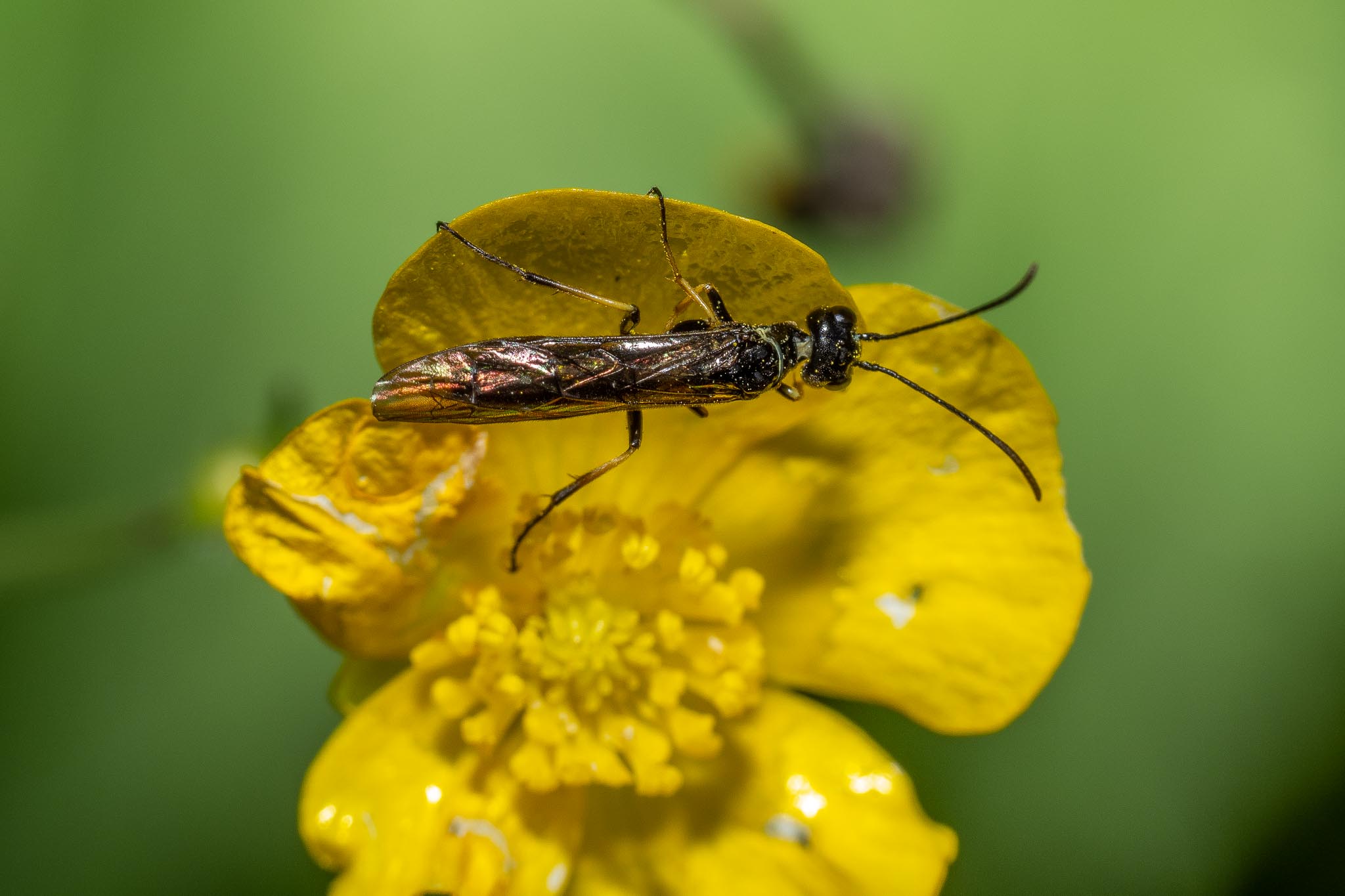
There were just so many insects out and about, it was a joy but also a massive distraction. Buttercups are often the favoured haunt of sawflies – the earliest relative of wasps. This is a species in a group of rather elongated sawflies.
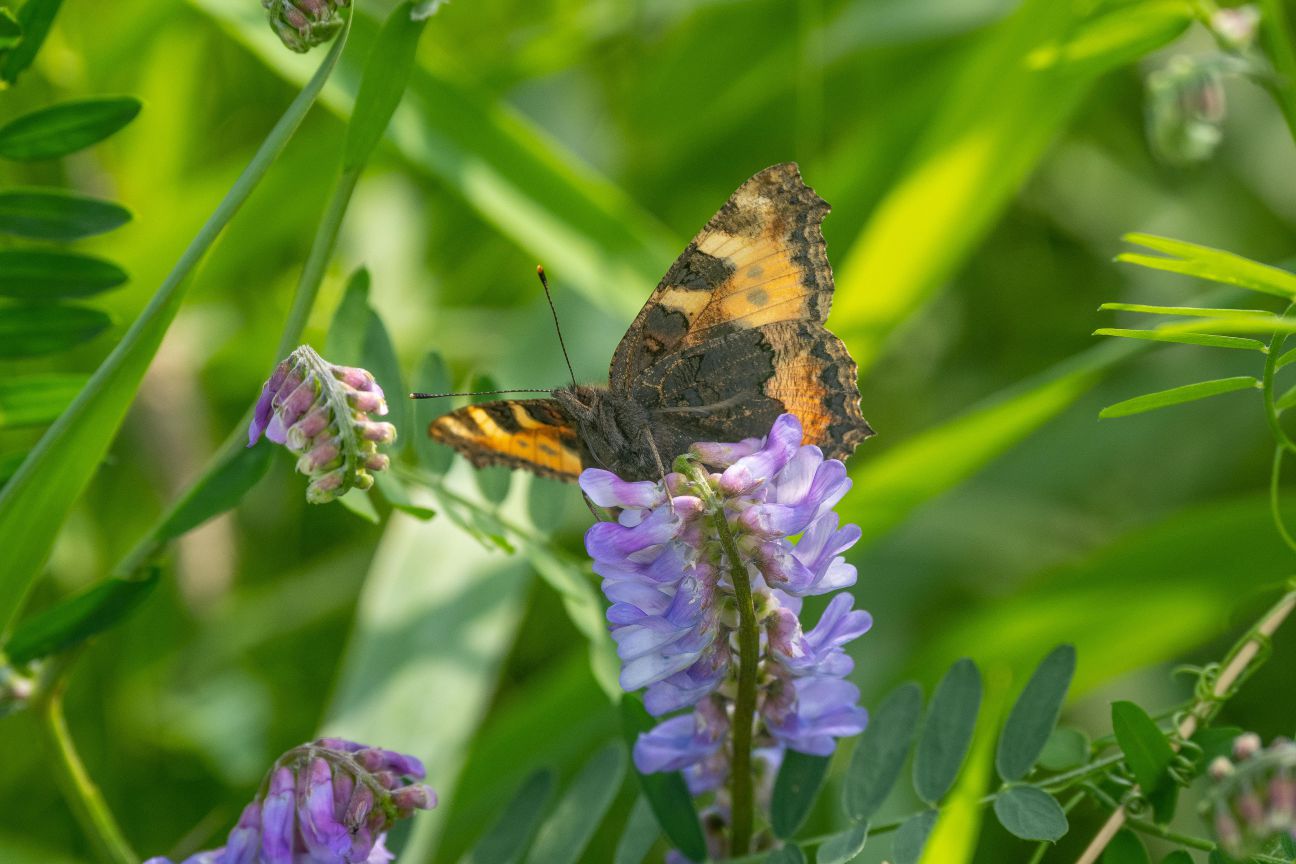
Tufted vetch was growing in the flowery margins where the bumblebees were in great number. There were also large numbers of small tortoiseshell butterflies.
On a fence near the river a blue damselfly was eating some kind of bug. It was so focused on chewing its prey that I could get very close indeed.
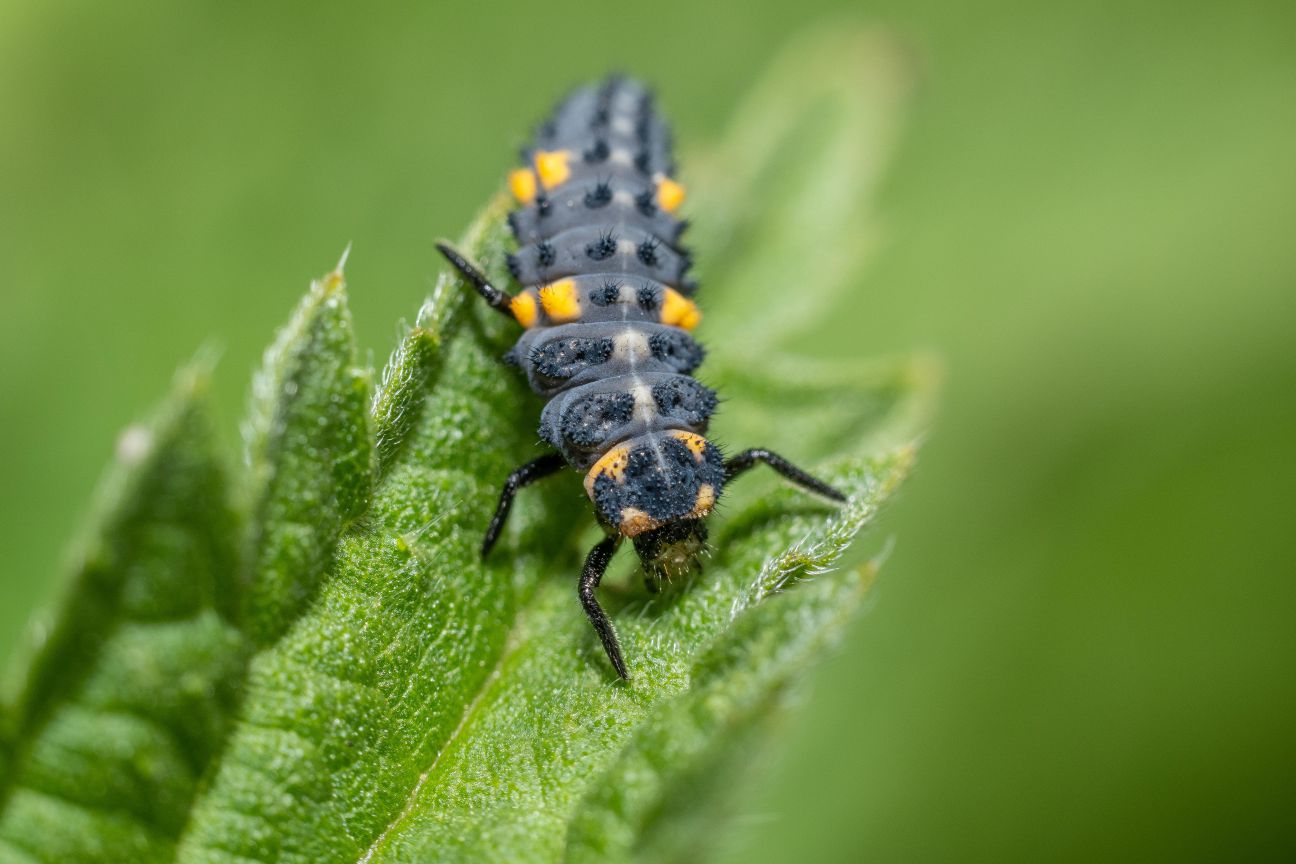
The number of ladybird larvae was also great, with many either on the hunt for aphids or setting themselves up for their metamorphosis.
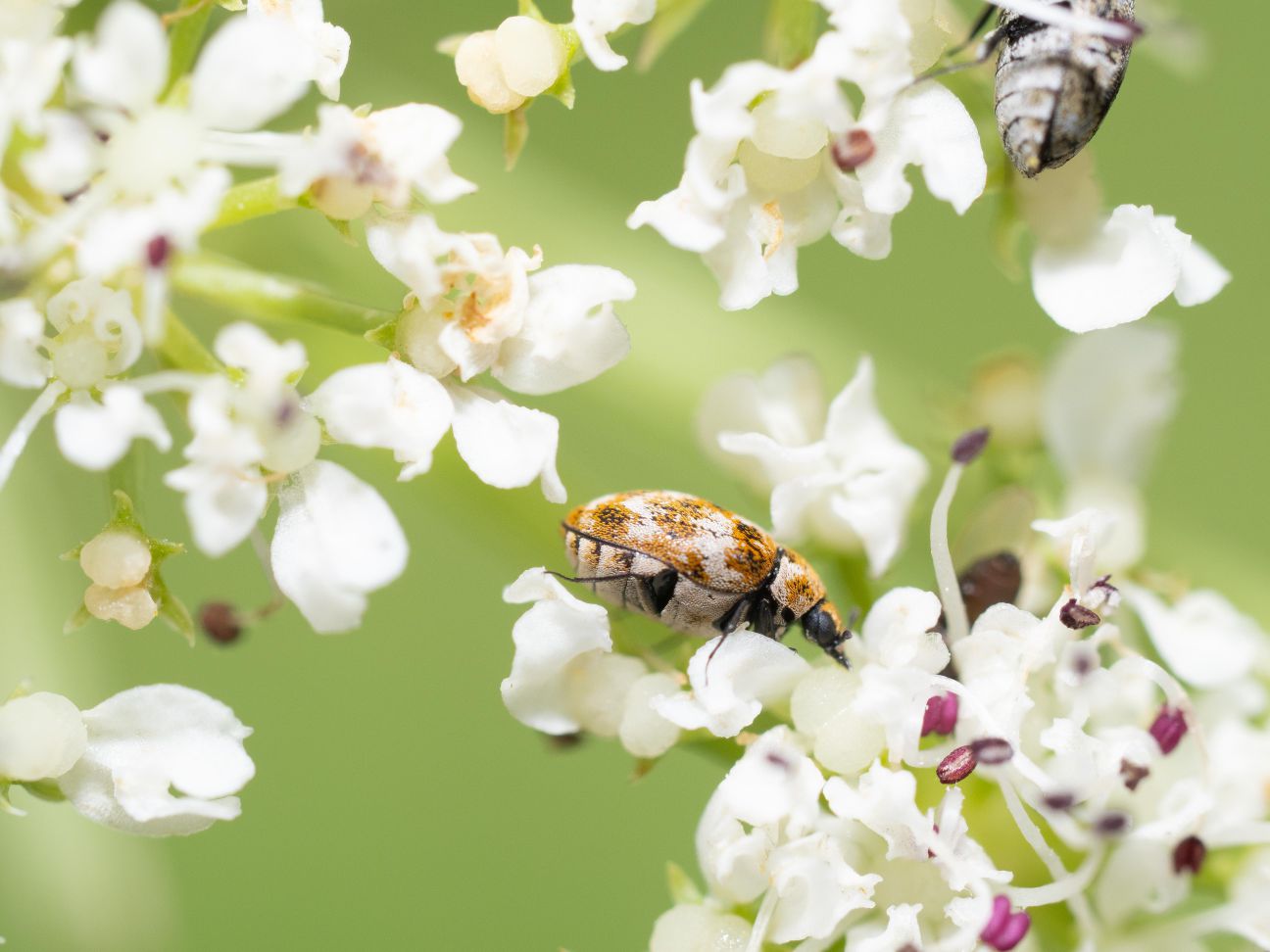
Elsewhere on hogweed I found these carpet beetles. They are very, very small and can’t seem to tear themselves away from the nectar.
The Adur Valley with Chanctonbury Ring in the distance on the South Downs
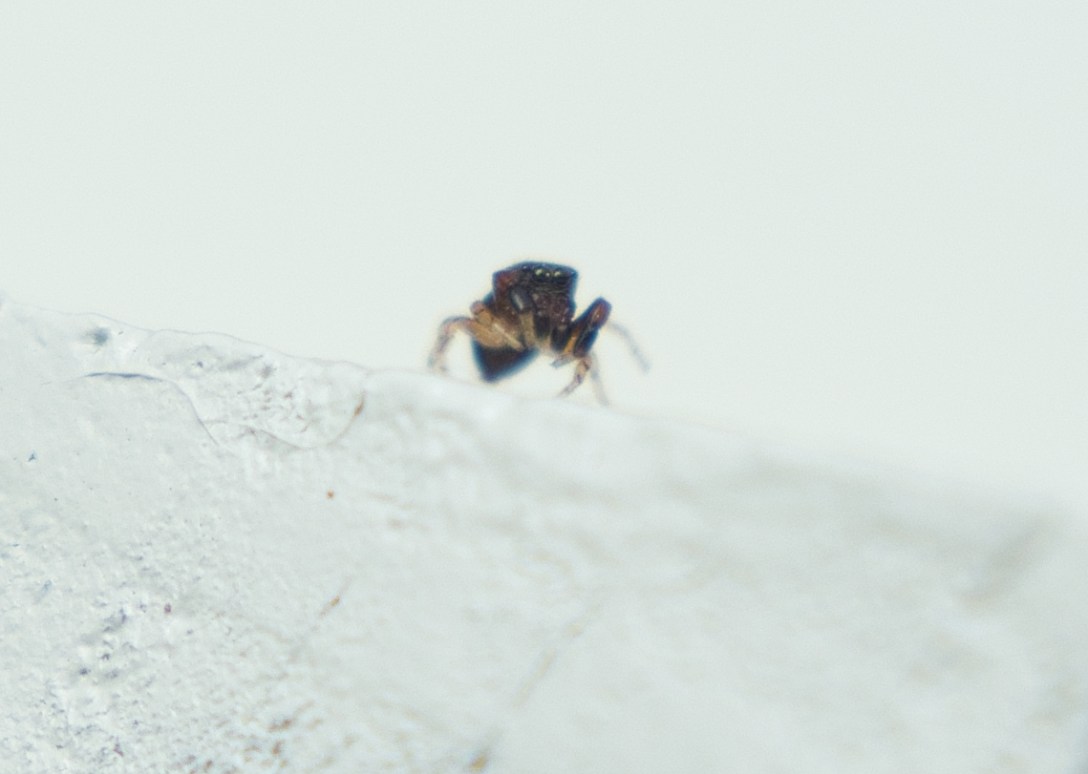
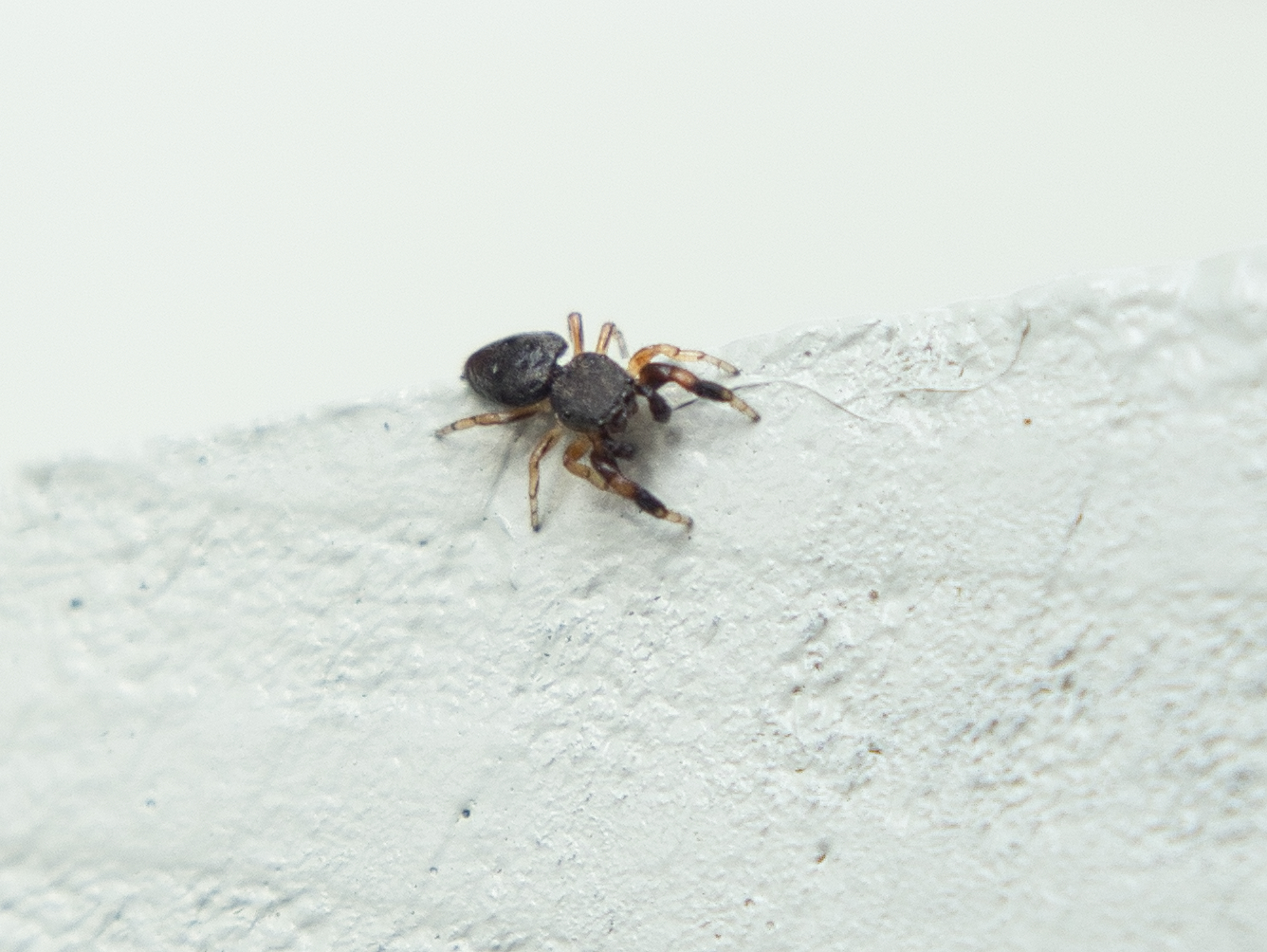
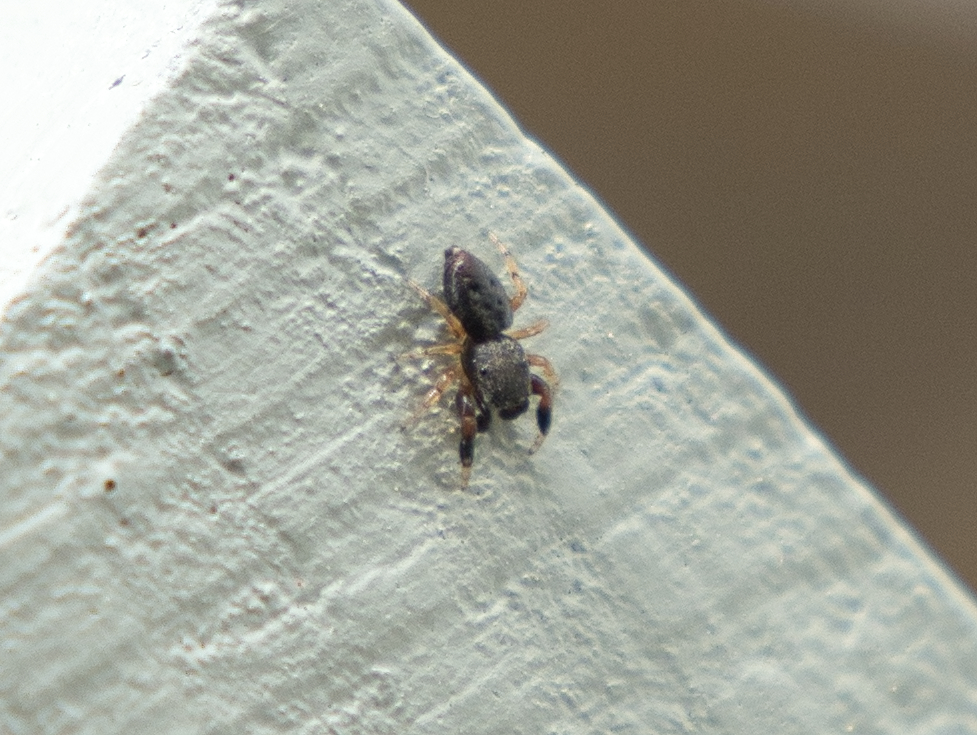
I came back from a walk the other day and, customarily, went straight to wash my hands. Looking in the mirror, I noticed something small dangling from my hair. Having just been on a walk my nature senses were fine-tuned and I realised it was an invertebrate. Looking more closely and removing it from my hair with care, I realised it was, one – alive, and two – a jumping spider.
I looked at this tiny spider as it rested on my hand and thought, ‘it’s the same species’. I had my camera with me but perhaps not the best lens, i.e. not a macro, but one with some close-focusing capabilities. I took the spider outdoors, anxious that it might jump and never get outside again. I took photos with what I had. Without a macro lens I had to crop the images heavily in post-processing.
Looking at the photos, I am confident it is the same species again, Ballus chalybeius, the oak jumping spider. That confidence is boosted even more by this purchase, which arrived in the post the other day:
I have no idea where this particular spider came from – possibly from any of the oak trees I walked under? The book above states that the species is one of the only ones found only in trees and bushes. Its common name is oak jumping spider, which means I may have picked it up during my walk as there are no oaks anywhere near my house or along the street. It could also means it’s more common than is understood. That’s the beauty of community science!
One of the things I love about the insect season in England is the diversity. We are surrounded with doom messaging around wildlife in the UK – it really is too much – but that’s what you get if you only look for birds. The invertebrate world is far richer, more complex and fundamental.
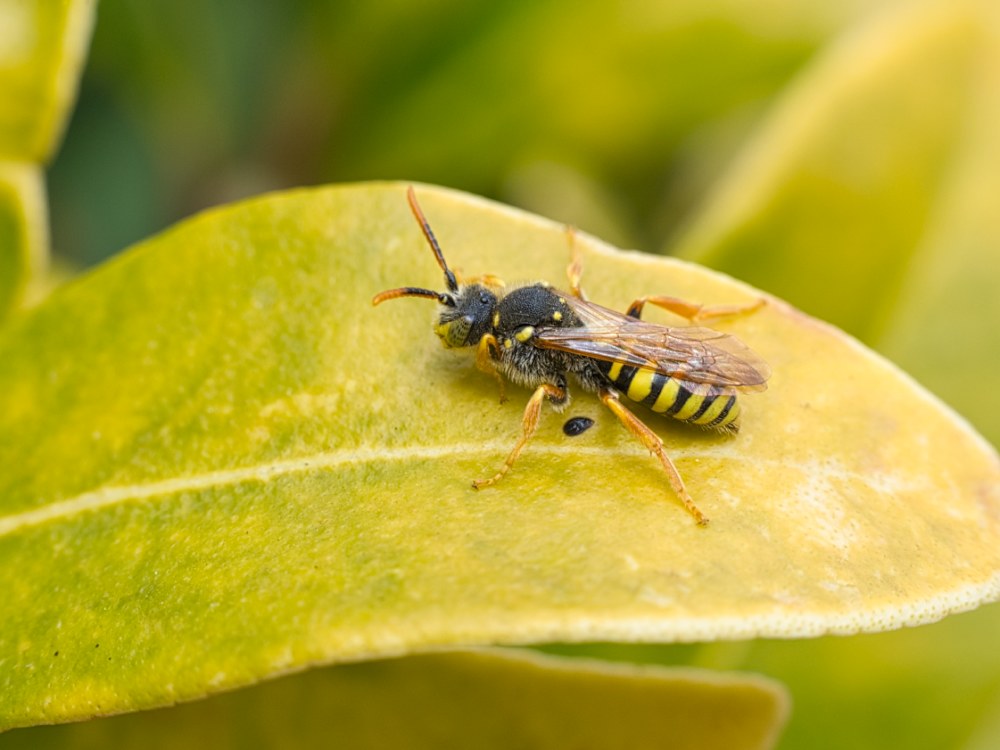
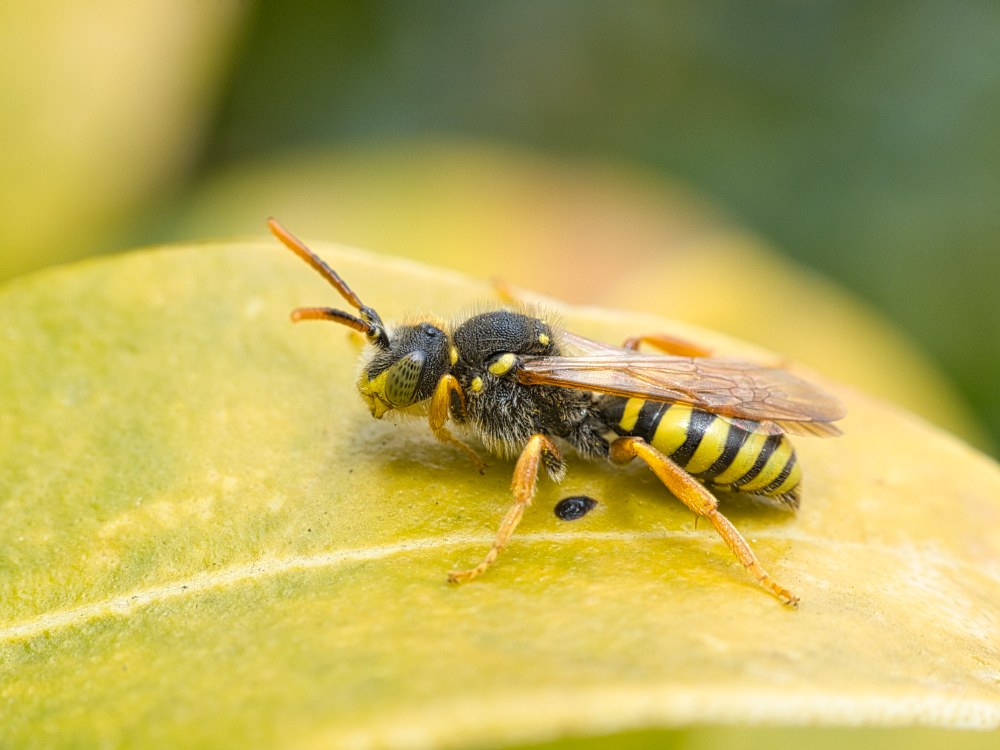
In April and May the first of the nomad bees make their appearances. I spend a lot of time making a fool of myself trying to keep up with these solitary bees. They are extremely beautiful and very cool-looking. Twice in April I witnessed nomad bees in my garden and on both occasions they passed me by.
One afternoon while #WorkingFromHome I went downstairs for a break. I noticed an insect on the inside of the windowpane. It was a nomad bee! I couldn’t believe my luck. I grabbed my camera and attempted to get some photos of this now very slow bee (it was a cool, wet and grey day). I got some average images and then decided it was time to get this bee back into the wild. I ushered it onto my hand and found that it didn’t want to leave my skin. It gave me a great opportunity to take some better images. I’m not sure of the species, they are difficult to separate.
I had another bee-break but this time in my garden and on a better day. There was so much happening in the hedge I didn’t know where to look. I saw three nomad bees flying around and resting but never long enough for me to get a decent pic.
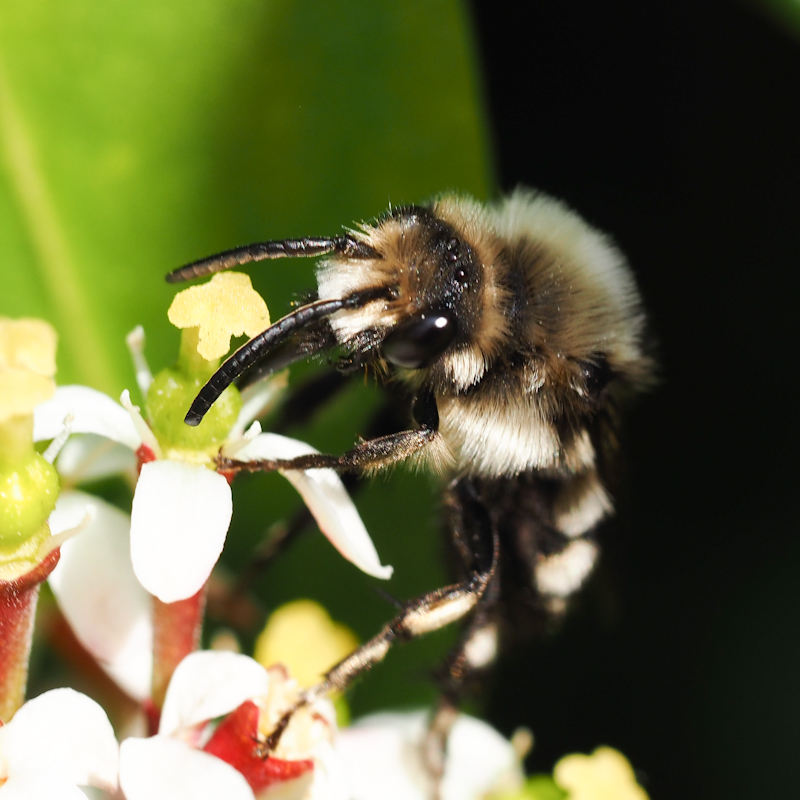
The sun dipped in momentarily and the cooler air forced the nomad bee to remain on this leaf. I got as close as possible. When I submitted the photo to iNaturalist someone suggested it was Gooden’s nomad bee. That’s… Goodenough for me. Now do people see why iNaturalist is so much more preferable to iRecord? You get help with your identifications, not just thanks but no thanks from our man in the shires.
What do nomad bees do? They’re parasites of solitary bees, with some species laying their eggs in the sites of others. Their eggs hatch and the larvae consumes the eggs of the host, before eating its food stash. Not nice in human terms (because we’re all so lovely) but definitely something that has been occurring for many millions of years.
I’ve had a burst of American visitors in recent days (to my blog, not my house). So thanks for visiting, y’all, and sorry about the year you’ve had. You may have noticed I’ve slipped to monthly posts on here. Between April and October I posted blogs every Monday without pause, which is a tricky task…
In recent months I’ve become somewhat addicted to iNaturalist. It’s a website or app which collects species records but has AI which can identify a species from a photograph. It can be used by anyone and even has an auxiliary app called Seek which can scan plants, animals, fungi and other animals and identify in real time. It’s the way ecological monitoring is going. Nature conservation is dominated by too small a cohort of people and needs to find ways to open its doors to more people. I will never forget hearing of a lifelong species recorder who wouldn’t provide their sightings to science, and that they would rather be buried with them than share them.
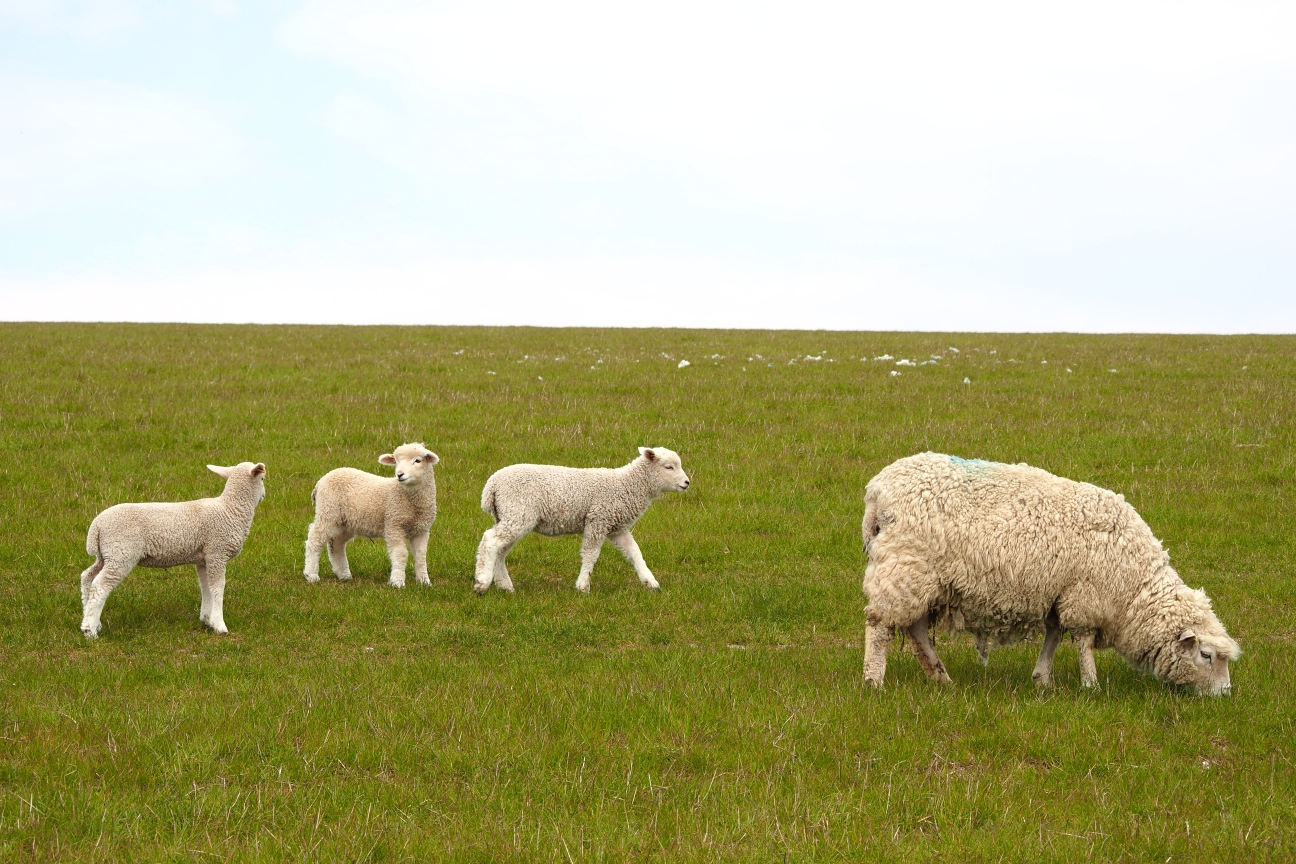
It’s lamby time
Onto more inclusive ways of thinking, over this bank holiday weekend it’s the City Nature Challenge (CNC) where people the world over submit species records to iNaturalist and into the project. As of 10pm on Sunday 2nd May there have been 631,418 sightings submitted. Amazing!
I went to a part of the South Downs that was just about included in the Brighton CNC catchment. I used my zoom lens rather than a dedicated macro because I was doing general ‘work’ with creatures great and small. I used an Olympus 12-45mm lens which can still do macro to a degree (in normal camera terms it’s 24-90mm because I was using a Micro Four Thirds camera, which has a cropped sensor). It worked like a dream.
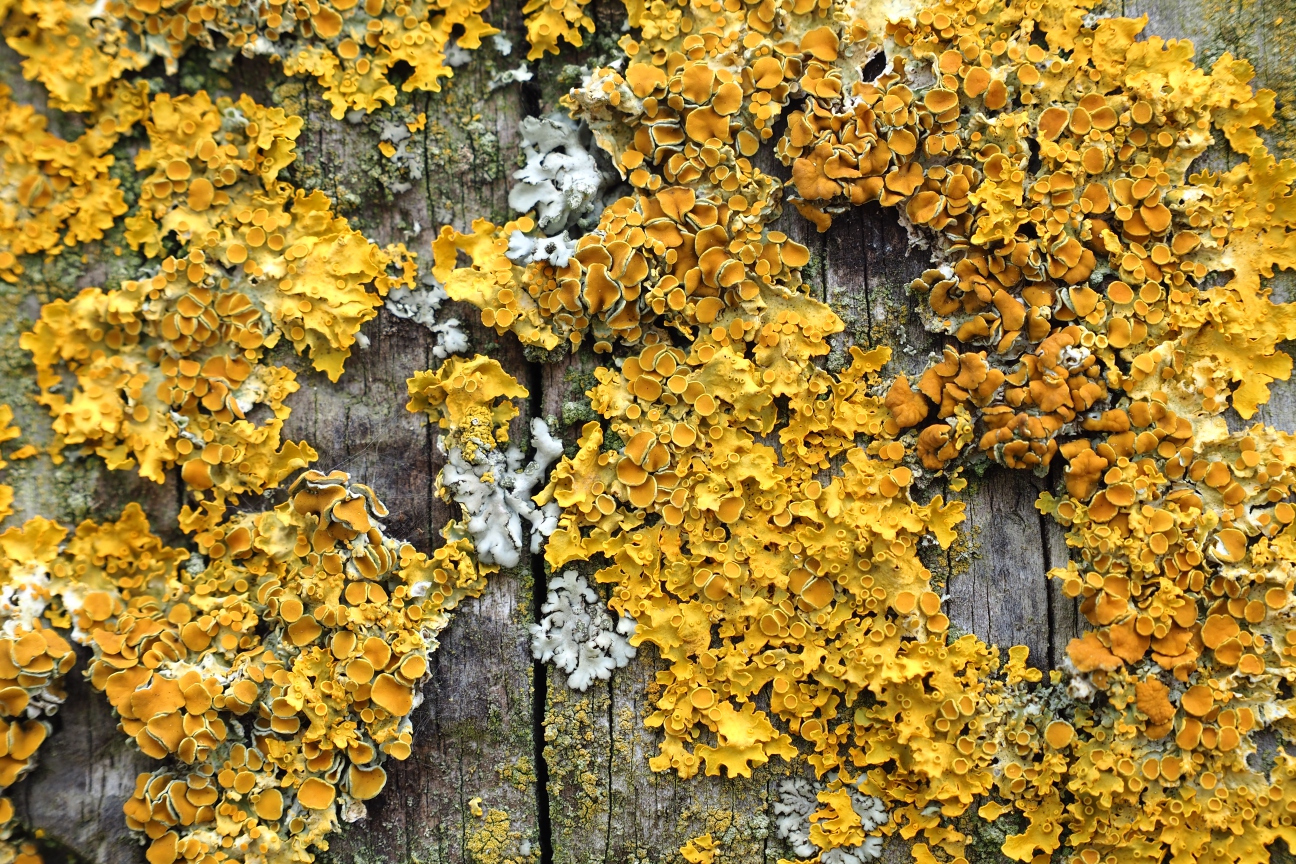
Xanthoria parietina, a sunburst lichen
I photographed each species once, rather than everything, which would never work – can you imagine? I’d still be there now. I really noticed how, even though I probably recorded about 100 species on the South Downs Way, it was dominated by a small number of species. Ground ivy was very common, as was hogweed, white deadnettle and nettles.
Another Xanthoria sunburst lichen
The most dominant species were nitrogen-loving, just like this golden shield lichen above which is able to deal with fertiliser and other agricultural pollutants. I wonder how different things might have been before the Second World War’s agricultural boom. The Downs is known to have lost a vast area of chalk grassland in the 20th century, one of the rarest and richest habitats in Britain.
Two ravens (centre) and a red kite
I will save you all the generic images of flower-less plants. I did manage to capture record shots of ravens mobbing a red kite, of which there were several. I love ravens, they are such intelligent and characterful birds. They are also not quite common enough to feel as familiar as crows or jackdaws.
A heath snail
One of my favourite encounters was with this heath snail which was curled up (so to speak) in the flower head of a dandelion or hawkbit. I instantly saw this and started talking to myself dangerously loudly about what a nice image it was. I hope you agree!
Hawthorntrees with the ArunValley in the background
I inspected some old hawthorns that were dotted on the edges of the grasslands. I’ve heard they’re good places in the South Downs to find lichens. Though I found nothing outrageous, there were some beautiful species growing on the branches.
These are possibly the beard lichen Ramalina farinacea. iNaturalist has a weird name of farinose cartilage lichen. Farinose seems to mean mealy or floury. That’s a new one for me.
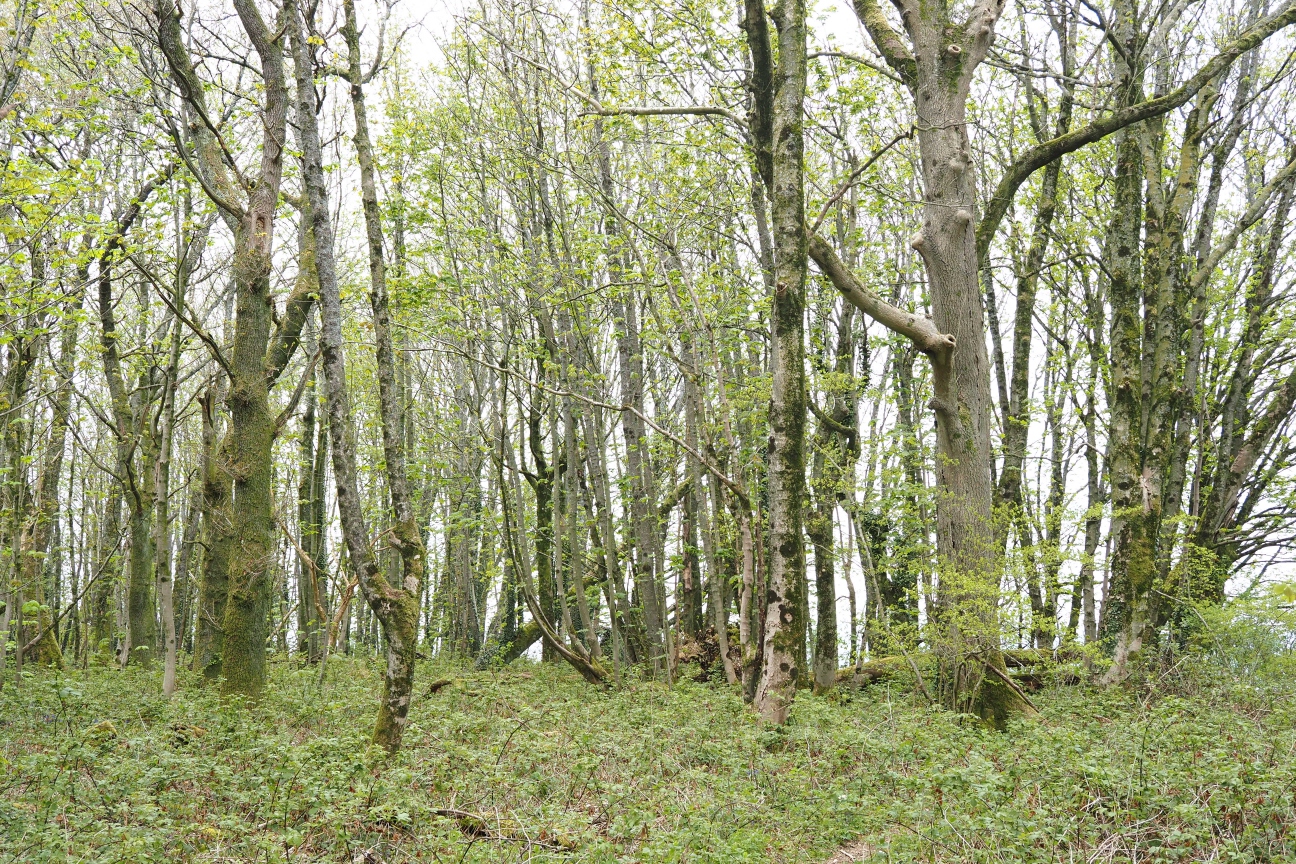
A small parcel of woodland atop the Downs
On this section of the South Downs Way there is a sudden square of woodland which the path cuts through. I had always thought this was perhaps planted or some recent woodland that had grown up on fallow land. But I found something that makes me think very differently about it.
Town hall clock
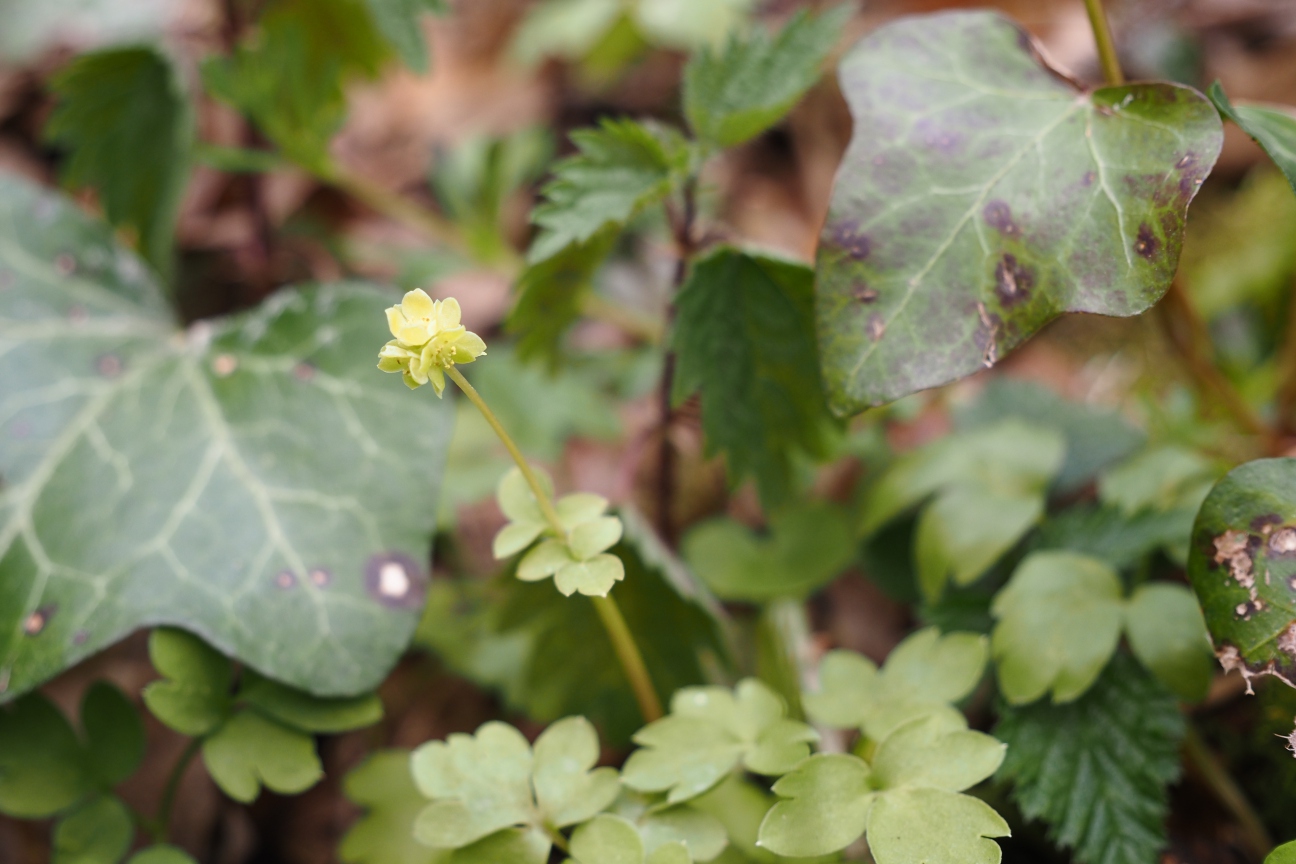
This is the first time I’ve seen town hall clock or moschatel. I was amazed to find it. It’s an ancient woodland indicator, which suggests that the woodland is far older than I had realised.
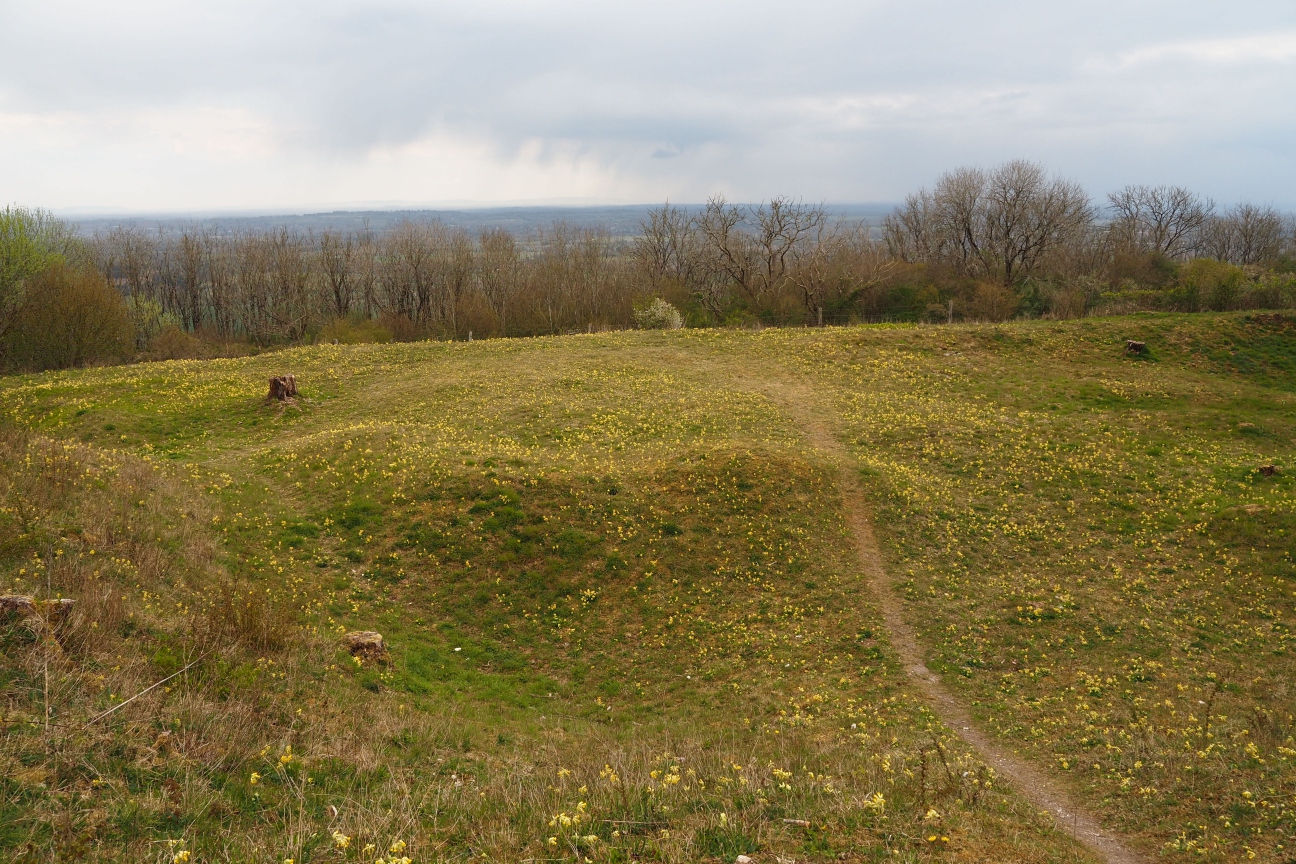
Cowslips flowering en masse
It was nice to witness the typical downland spread of cowslips. Last year we got locked down before this began, and now I’m just getting back here at the point that they’re peaking.
The view towards Amberley
The weather started behaving like something you’d expect in the Yorkshire Dales which cut my species recording short, bar a few desperate snaps in the cold and wet march back to the start.
I managed to capture this footage of a hunting kestrel, hardly macro, but worth sharing.
In this post: garden bees, extension tubes and woodland lichens
The ‘Stay at Home’ message has ended in England but I’ve learned my lessons in this pandemic year. Macro is a time-consuming activity and the less time spent travelling means more time spent honing the skill and having a good time!
One person whose photos and work ethic I really admire is Penny Metal. Penny’s work is focused on a small park in Peckham, south-east London. She photographs species I would never have imagined possible in Inner London, where green space is a rarity.
The lesson for me here is: keep it local, have faith and you never know what you might achieve. From one of Penny’s accounts last week I saw a mourning bee and a comment that they were abundant.
Now, I’ve only ever seen this bee in rural Surrey near to Box Hill (for those who don’t know, Box Hill is probably the closest SE England will get to a mountain and is a hugely popular place). It seems Penny was capturing a trend – mourning bees were perhaps having a good spring.
And then, on one afternoon last week I encountered this bee in my garden. Mourning bees are parasitic on hairy-footed flower bees, a species my garden is very popular with. I was delighted to witness it feeding on the shrub I can never recall the name of.
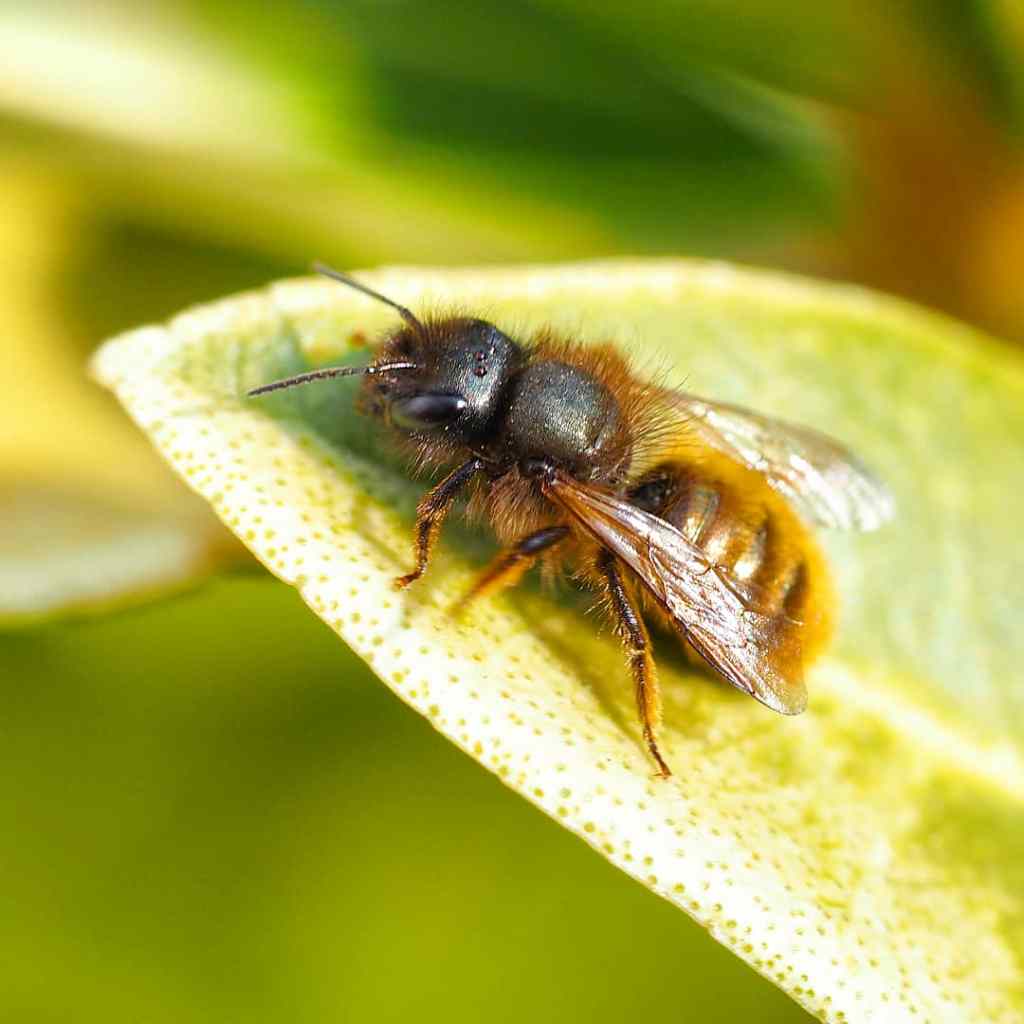
That afternoon felt like a watershed moment. Though we have gone from 24 degrees Celsius one week to sub-zero the next, the spring bees are now on the scene. The above is a red mason bee (Osmia rufa), the first I’ve seen this year.
There were more bees, most of whom were not willing to be featured on this blog. To which I would say: whatevs.
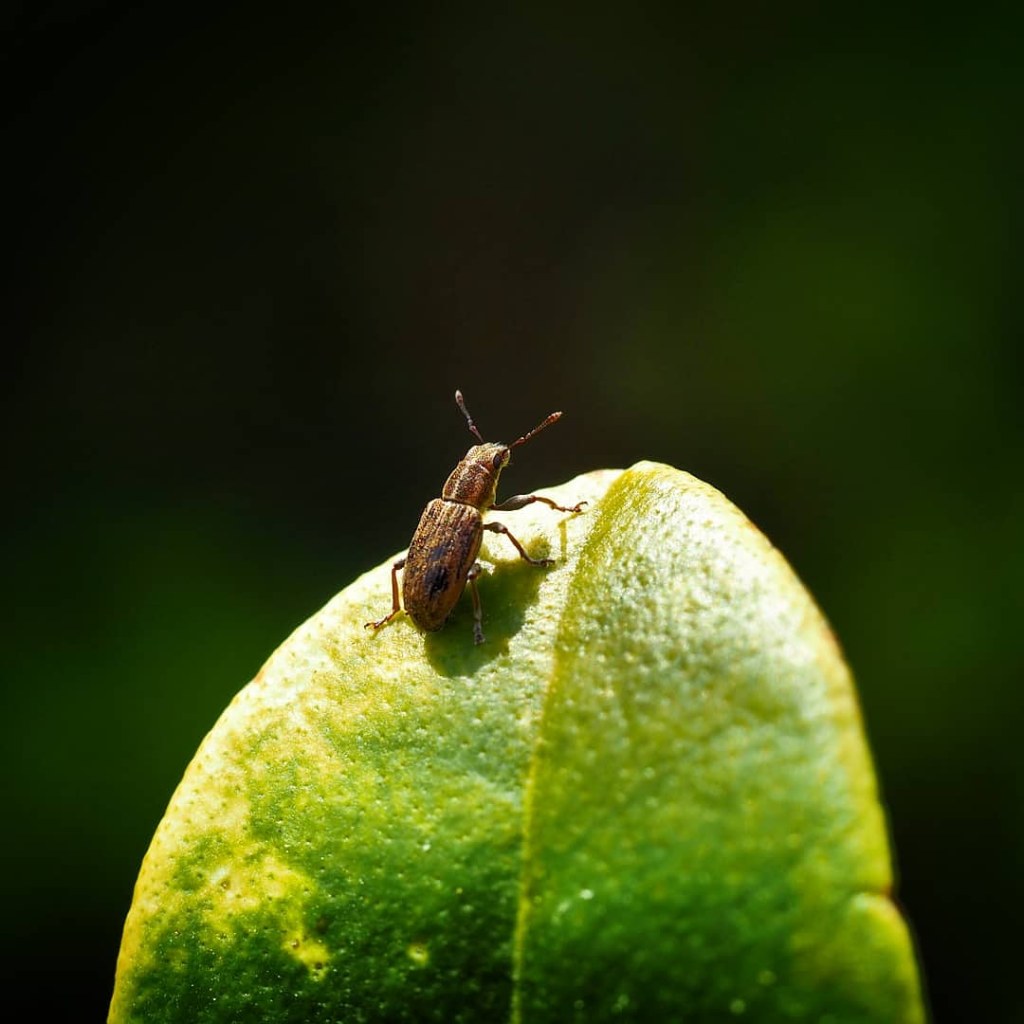
This weevil seemed to think it was having a Lion King moment. I’m here for it.
And this yellow dung-fly. It may spend its days cavorting on cow pats, but if you’re willing to pose for a pic for me like this, I don’t care what you get up to.
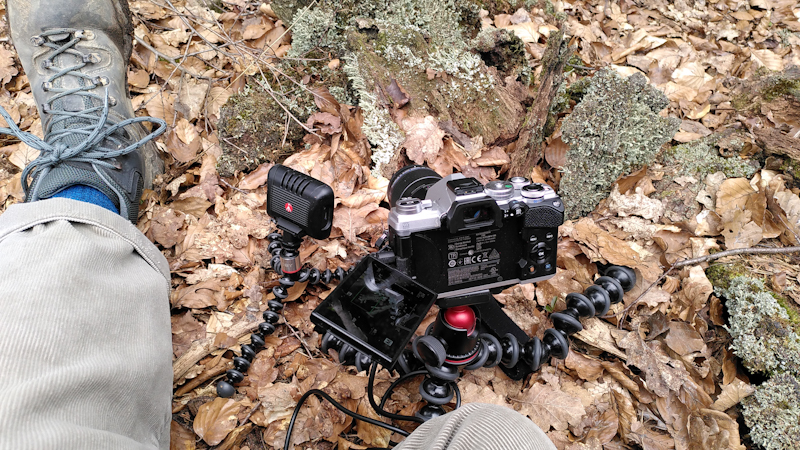
Away from my garden hedge, I’ve finally bought some decent extension tubes. This is to give better magnification for my macro lens and peer even further into the wild world.
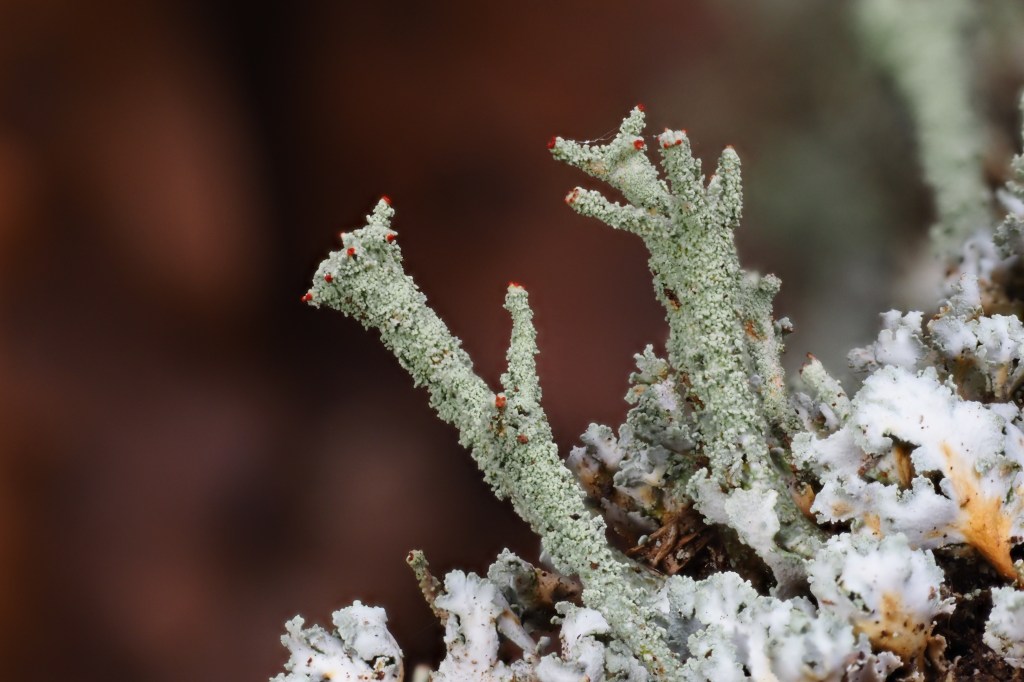
Needless to say, it’s not easy. The woods are not great at the moment, after hot and then very cold weather, the wildlife is a bit baffled. In my local Narnia I tested my new kit out on these Cladonia cup lichens. A nice person on iNaturalist identified this as Cladonia polydactyla. The red tips were so small they could not be seen without a macro lens and the extension tubes. Hopefully it’s a decent start to years of the greatest lichen images the world has ever known.

























 Unlocking Landscapes