
Tag: Photography
Photography: The Carpathians, Romania

The Cheek Mountains, Transylvania

Photography: The Bavarian Alps

For John Corr of Mayo, Eire

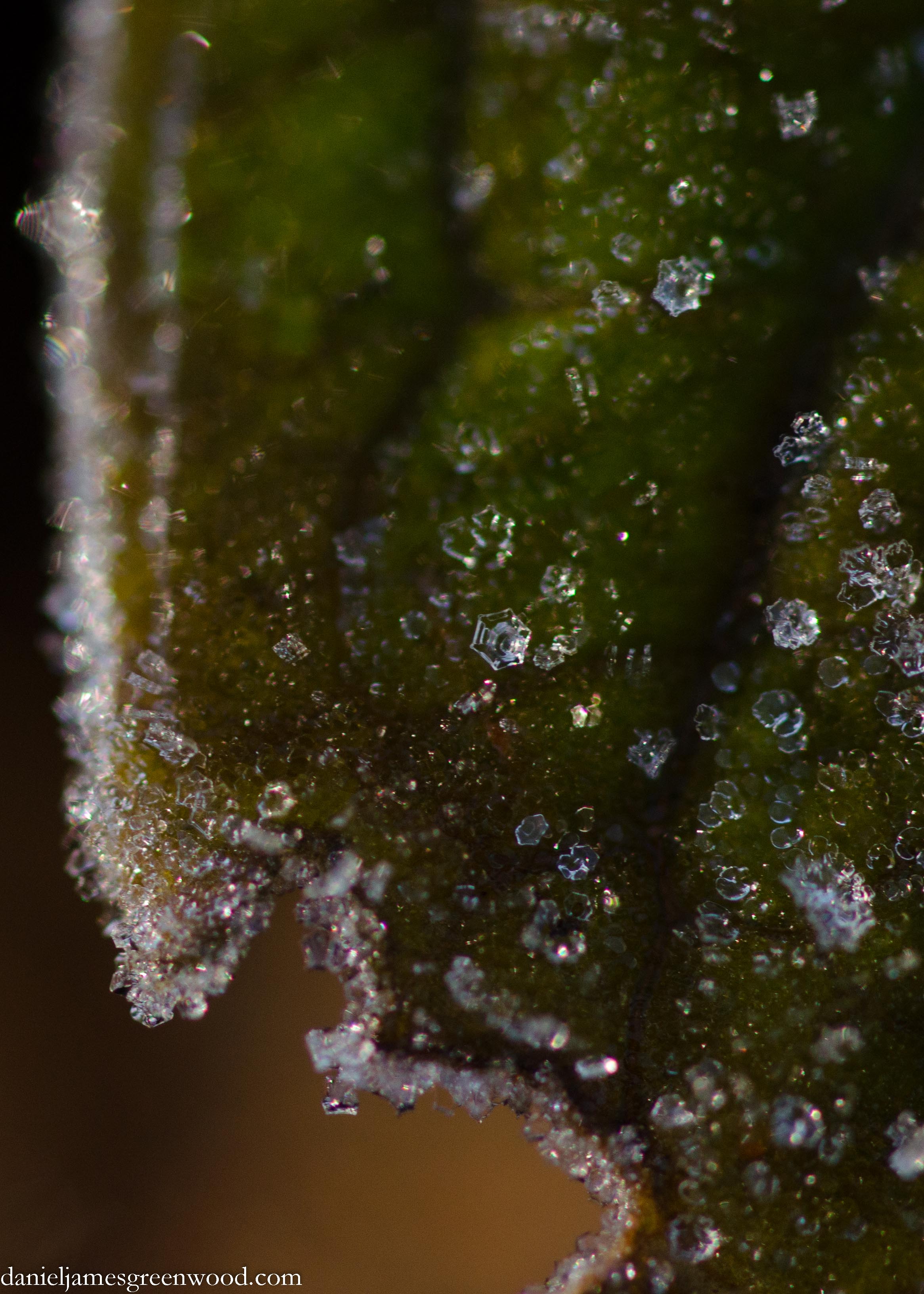
Photography: Frosted bramble leaf
London winter birds

Long-tailed tit, Aegithalos caudatus at One Tree Hill Local Nature Reserve

Ring-necked parakeet, Psittacula krameri at Camberwell Old Cemetery

Magpie, Pica pica perched at Camberwell Old Cemetery
Essay: John Keats and how nature makes us feel so small
John Keats (1795-1821) died aged 25 thinking himself a failed poet. Today he is revered as a great. I mine his poems for evocations of nature, the nightingales, the bees ‘bustling down in the bluebells’, and his recurring musk rose. For these moments, from a wet and gloomy winter, I find great pleasure in peering back 200 years to Keats’s descriptions of a London that had not yet swallowed Hampstead entirely, or my borough, the 800-year-old parish of Lewisham. In Keats’ Ode to a Nightingale, he describes much of what makes birdsong a cure for human pains, the continuity of wildlife and nature gives us a place in the world, for we are not the first to hear a blackbird, song thrush or nightingale sing, nor will we be the last:
Thou was not born for death, immortal Bird!
No hungry generations tread thee down;
The voice I hear this passing night was heard
In ancient days by emperor and clown (p. 220[i])
Birds do not discriminate against any audience, their songs can be heard by any person who happens to be passing, be it the song of a robin singing at midnight in central London or a nightingale firing in the morning from a blackthorn hedge in a Dorset field. And perhaps real nature conservation has this at its heart, though often unsaid from a fear of sounding eccentric or elitist. Nature is vital to humanity in many ways, humanity is inseparable from nature, but in dealing with dissonance and social discord brought about by contemporary austerity and financial inequality, its inclusiveness is what makes it most relevant to us living in the 21st century. The song of the blackbird can be heard by anyone who might happen to hear it, more so if conservation is supported by communities and authorities.

On a recent visit to Dumfries and Galloway in south-western Scotland I brought Andrew Motion’s hefty biography of Keats with me. It appears more and more that it is not so much Keats’ poems I like the most, but the many aspects of his story, which poetry seems such a big part of. He lived a very short and full life, his published poems barracked by what we might today equate with critics or journalists of the propagandist right’s ilk. And many people thought that he had died from the heavy blows of his critics. Motion points to his wildly ambitious walking tour of Scotland and Ireland, arguing that it was the conditions a weary and exhausted Keats experienced on the Isle of Mull that began his descent into critical illness. Keats had embarked on a mission to collect experiences to influence his writing, and he was astounded by Scotland’s sublime mountains and wild landscapes. He ‘forgot himself’ and found that nature took away all resentment he might have for other people, or his critics, at that time:
The space, the magnitude of mountains and waterfalls are well imagined before one sees them; but this countenance or intellectual tone must surpass every imagination and defy any remembrance. I shall learn poetry here and shall henceforth write more than ever, for the abstract endeavour of being able to add a mite to that mass of beauty which is harvested from these grand materials, by the finest spirits, and put into ethereal existence for the relish of one’s own fellows. […] these scenes make man appear little. I never forgot my stature so completely – I live in the eye, and my imagination, surpassed, is at rest. (p. 269)
Keats has been knocked down by nature’s visual power and, eventually, by its impacts on his body. He cracks open the heart of the genre of nature writing. Surely the whole point of casting nature as the central theme in anything is so that ‘these scenes make man appear little.’ In the face of the sublime image of Scottish mountains, human problems are made to feel minute. It’s the same feeling people experience today in British woods, on those same Scottish mountains and by the sea. Surely if Keats were alive today his thoughts might have turned to conservation of larger landscape areas – in the same way that his biographer, Andrew Motion, once Poet Laureate, now works for the Campaign to Protect Rural England, defending National Parks from a development lobby which seems to hold sway with government. National Parks are an idea created by John Muir, the Scottish adventurer who helped to found Yosemite National Park with his grand and flawed ideas of wilderness. In Scotland, protected landscape areas such as the Trossachs National Park, Cairngorms National Park and Galloway Forest Park are key to preserving the impact of those places on the human mind, at the same time protecting their prehistoric ecosystems and wildlife. A National Park or protected landscape area is an admission or celebration of the fact that nature can show us how small we really are. For John Keats and visitors to mountains today, if underestimated or not treated with respect these landscapes and their conditions can kill.
[i] The Complete Poems of John Keats, Wordsworth Poetry Library, 2001
© Daniel James Greenwood 2014
The emptied mast
 Coulsdon, London, November 2014
In Devilsden Wood we tiptoe around fallen beech logs, slipping at times on beech leaves and clay, and the emptied mast. The nuts will have been eaten by hungry jays and squirrels. Over the past few weeks I’ve crouched down around these logs photographing their fungi: beech jellydisc with its almost caucasian flesh, purple jellydisc creeping out by the week from wisps of moss. Most startling for a layman like me was the glaring eye of dog stinkhorn, named after its canine stench. Lodged in a piece of black deadwood it had the appearance of a fox or wolf skull looking up at me. The long, finger-like stems that it had produced had collapsed, orange tips like finger nails. As Julian Hoffman has written recently, referring to the poet Rilke, we are surrounded by a world that beckons us to perceive it, to engage with it, to look and to touch. To me the fingers of the stinkhorn could be pointers to something worth seeing. Today only the jellydiscs remain, as well as a brown mushroom that reflects the white break of cloud between the trees above in its glossy cap. My friend Philip is searching for something behind me and as I look up the sharp dark shape of a sparrowhawk slices between us in silence. If we were little woodland birds we would not have seen a thing.
© Daniel James Greenwood 2014
A thousand years

Farthing Downs, London, November 2014
Blue smoke plumes from the dreary Downs, the crack of piled ash trees cuts through the distant wash of the M25, and now the noise of chainsaws. This work is good fun. How many people panic at the sound of this machine, waking to find that their favourite tree is gone from the frame of their bedroom window. In the town I am always suspicious when their itch carries. But this is the restoration of the chalky meadows swallowed by the incoming of woods. We as a species have been trying to halt the loss of woods but at the same time deny new ones for thousands of years. This is a thousand-year-old view, the only change the exchange of machines for the pop of axes on heartwood.
Against a view of near leafless beech, a green woodpecker rises from the anthills, its flight reminiscent of a puppet tugged at intervals as it passes. Robins sing, gulls create the aura of the Sussex coast, and rain specks add a pinch of cool. In the now flattened meadows fungi can be found: a parrot waxcap plucked and left, yellow gills that ripple like flames around its stem. Puffballs are scattered across the path, little footballs deflated and unwanted. I press my toe into one, flattened and leathery grey, its brown spores puffing out like effluent. I definitely take them with me.
 Unlocking Landscapes