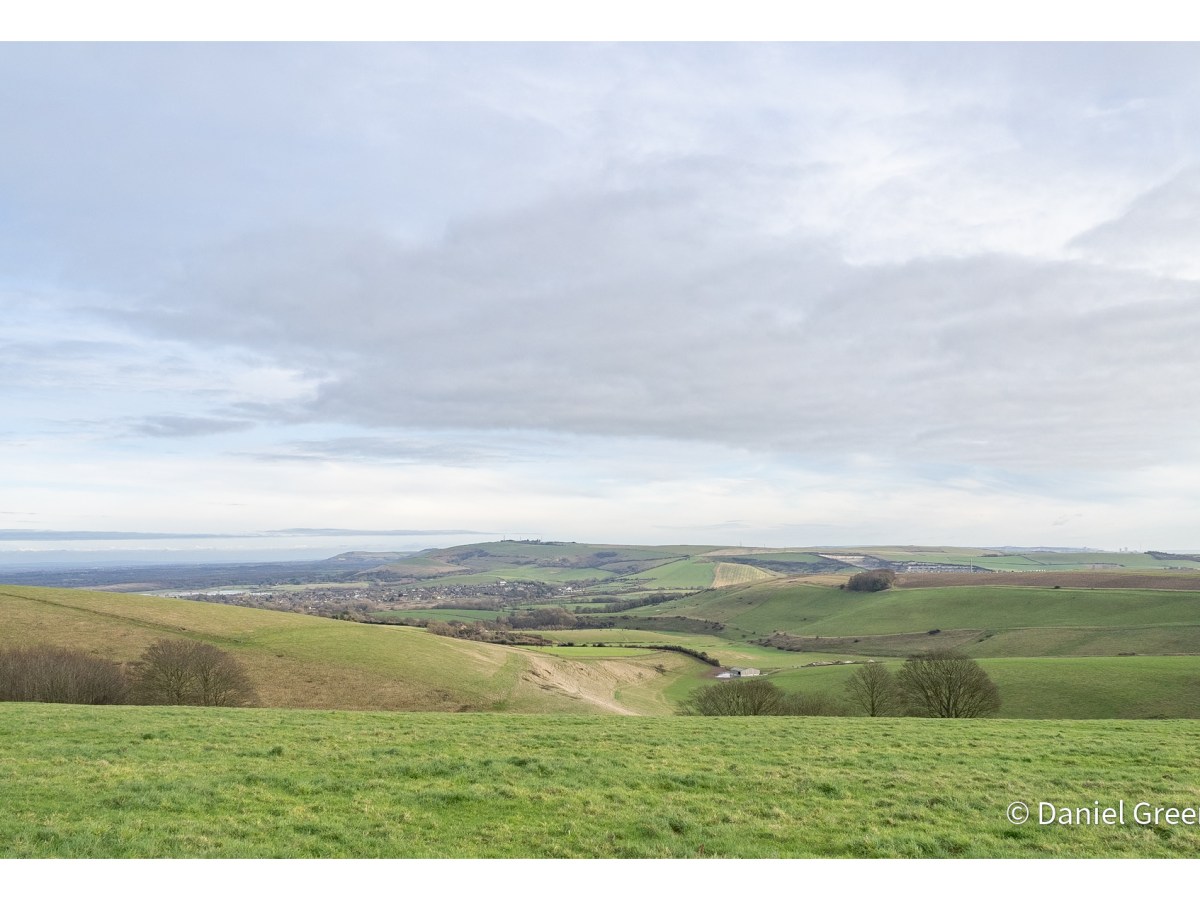
I’ve been visiting Brighton since I was a child on family holidays and it holds a special place in my photographic life as well. The sea at Brighton and Hove’s beaches are some of the places where I began to take landscape (seascape!) photos, using a Nikon F film camera.
I was in the New Forest National Park camping for a couple of nights in August. The rainy July in southern England gave me great hope of finding some nice shrooms in what is one of England’s mushroom wonderlands. It didn’t disappoint!
Bolete bonanza
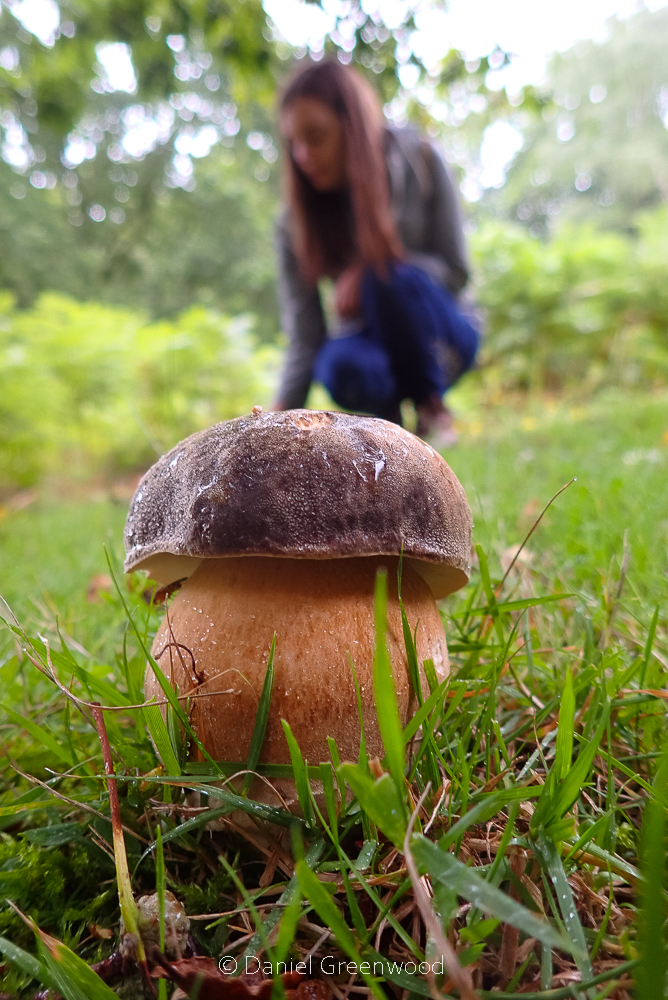
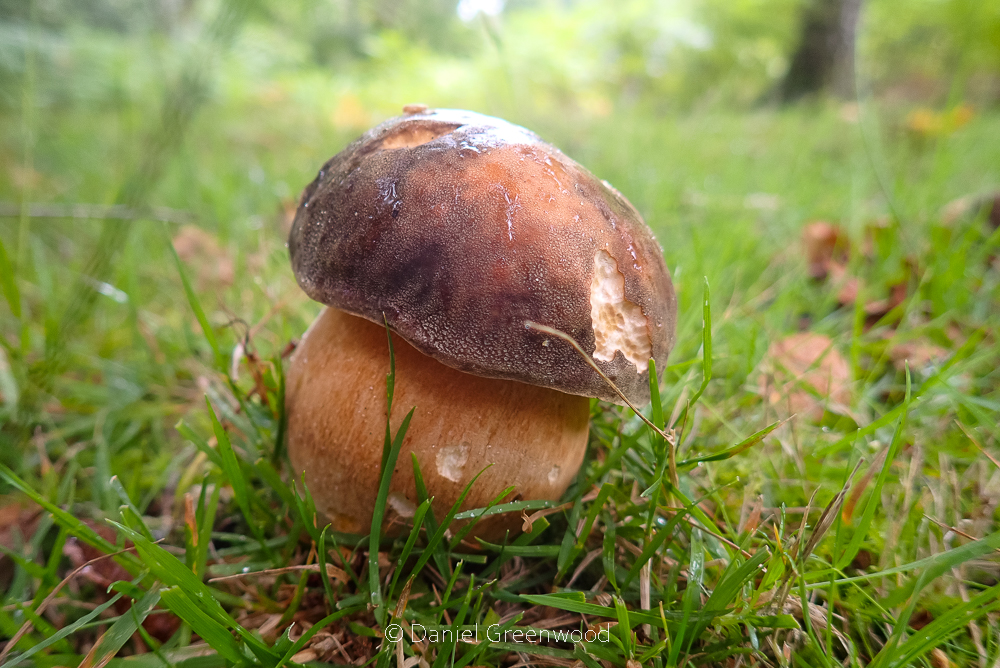
I was so happy to find these boletes, one having already been uprooted. They were the perfect shape and just an absolute joy to see. I have been told these are ceps, but I’m not entirely sure if they’re not another species. I’m unclear on the variety among cep-like boletes, and if the colouring isn’t indicative of another species.
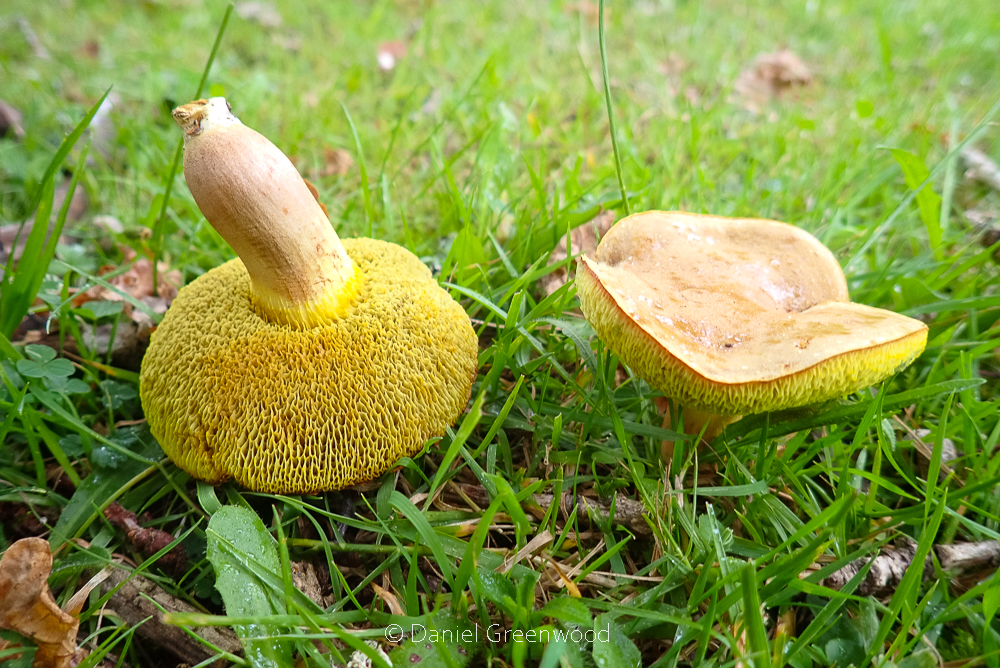
These lovely yellow-pored boletes are in the genus Xerocomus.
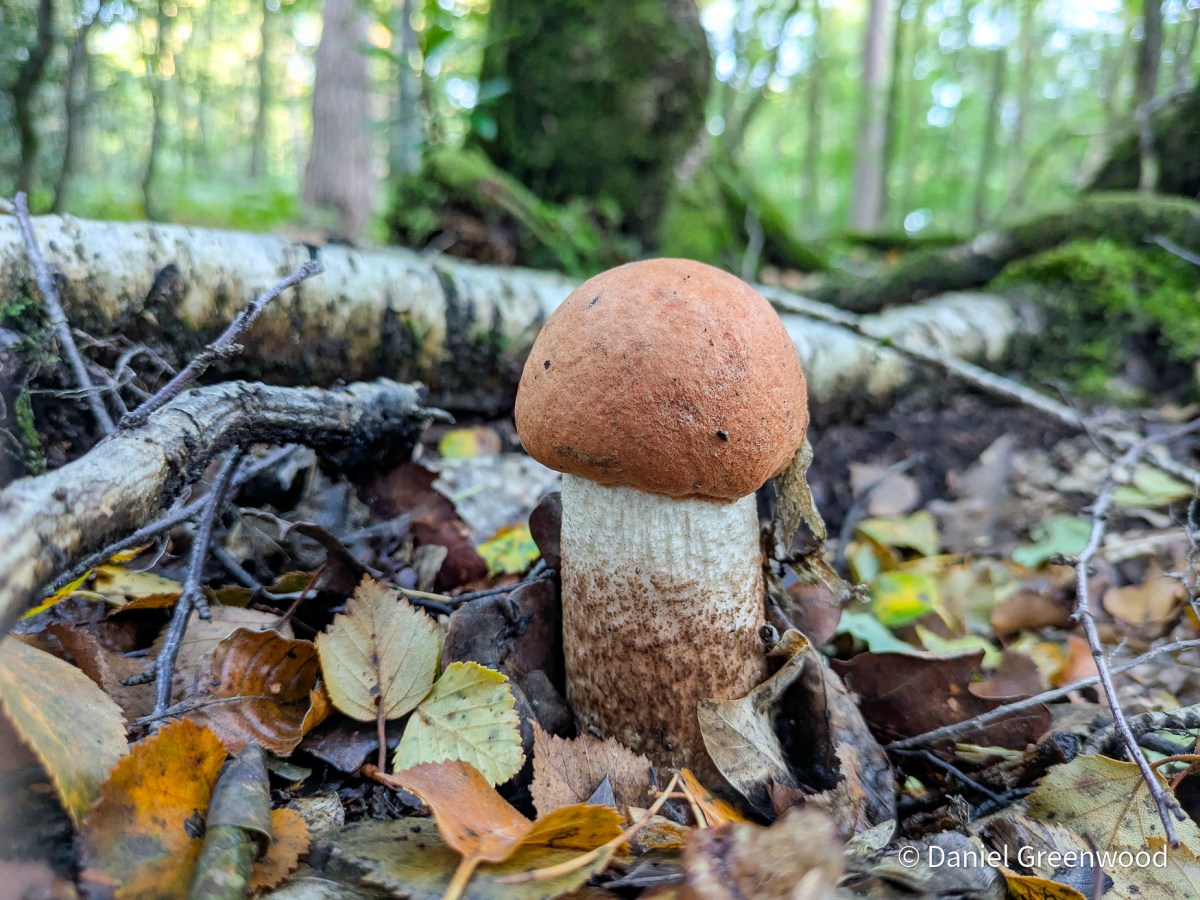
About half a mile or less away we found this beauty sitting alone among the grass and leaf litter. It’s an orange bolete. It doesn’t appear to have a distinct association with one species of tree, but this area was common in oak and birch.
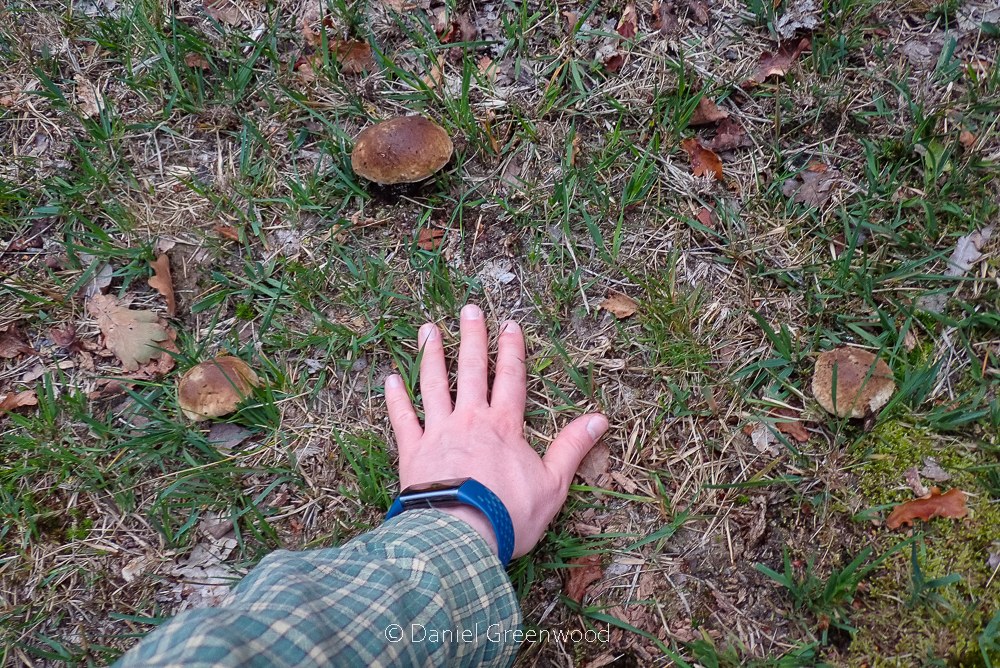
Much later that day, on the return stretch, we found this well-camouflaged group of what I am sure are ceps due to their colouring and other diagnostic features.
You can see the distinctive webbing on the stipe here, and the pennybun cap is all you need really:
As the evening drew in, I found this orange bolete that may have been picked by a deer (there was a herd in the area).
Webcaps
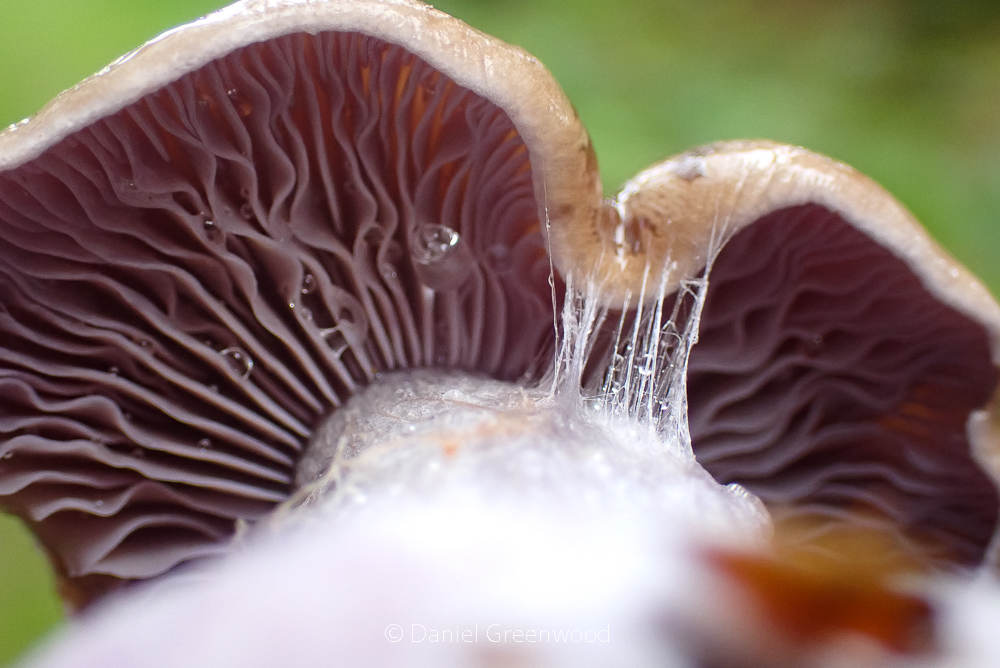
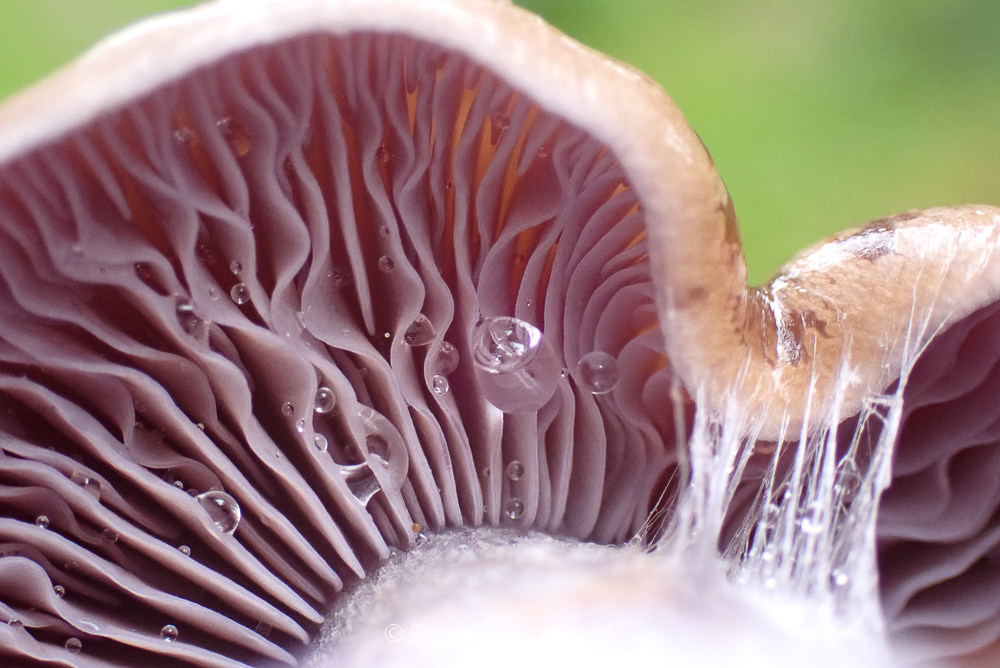
Earlier in the day, while passing between two plantations on a grassy ride, I noticed this uprooted mushroom on the ground. Two bites had been taken from it, probably by deer or a small mammal. The remnants of the veil between the cap and stipe, covering the gills, gave me the thought that this was a webcap. The gills were very beautiful, embellished by the water droplets.
iNaturalist has come back with an ID of webcap subsect ‘Purpurascentes‘. I can’t find any other info on the subgroup distinction.
Rustgills
Rustgills are a group I’m not particularly familiar with. Having developed my fungi knowledge in isolated city woodlands, I didn’t really see rustgills until I moved to Sussex and spent time in larger areas of woodland. This patch was unavoidable. No wonder there is a species known as the spectacular rustgill.
Rustgills are in the genus Gymnophilus. They’re confusable with scalycaps (Stropharia) due to shape and colour.
Chantarelles
And finally some golden chantarelles, already nibbled by slugs and uprooted, probably by deer (as I have said 1000 times in this post!).
The New Forest has a “no pick” policy and there are concerns about illegal, commercial-scale picking for posh restaurants, just FYI. All of these mushrooms had already been “naturally” uprooted(probably by deer).
This walk will be a good way to learn about the common species of fungi in woodlands, their ecology and cultural significance. Though we won’t be picking mushrooms to eat, there will be some guidance around edibility generally as a safety guide. This is a great site for fungi with a lot of the ‘big-hitters’ and other unusual species to be found.
Welcome to the second week of my #30DaysWild macro photo challenge which I call #30DaysMacro. All photos here are taken with an Olympus TG-6 Tough compact camera and cropped/tweaked in Lightroom.
This week was another hot and dry one, and possibly showed a bit more of an increase in insect numbers after a worryingly scant spring. These photos were taken in London and West Sussex, and both areas are in desperate need of rain.
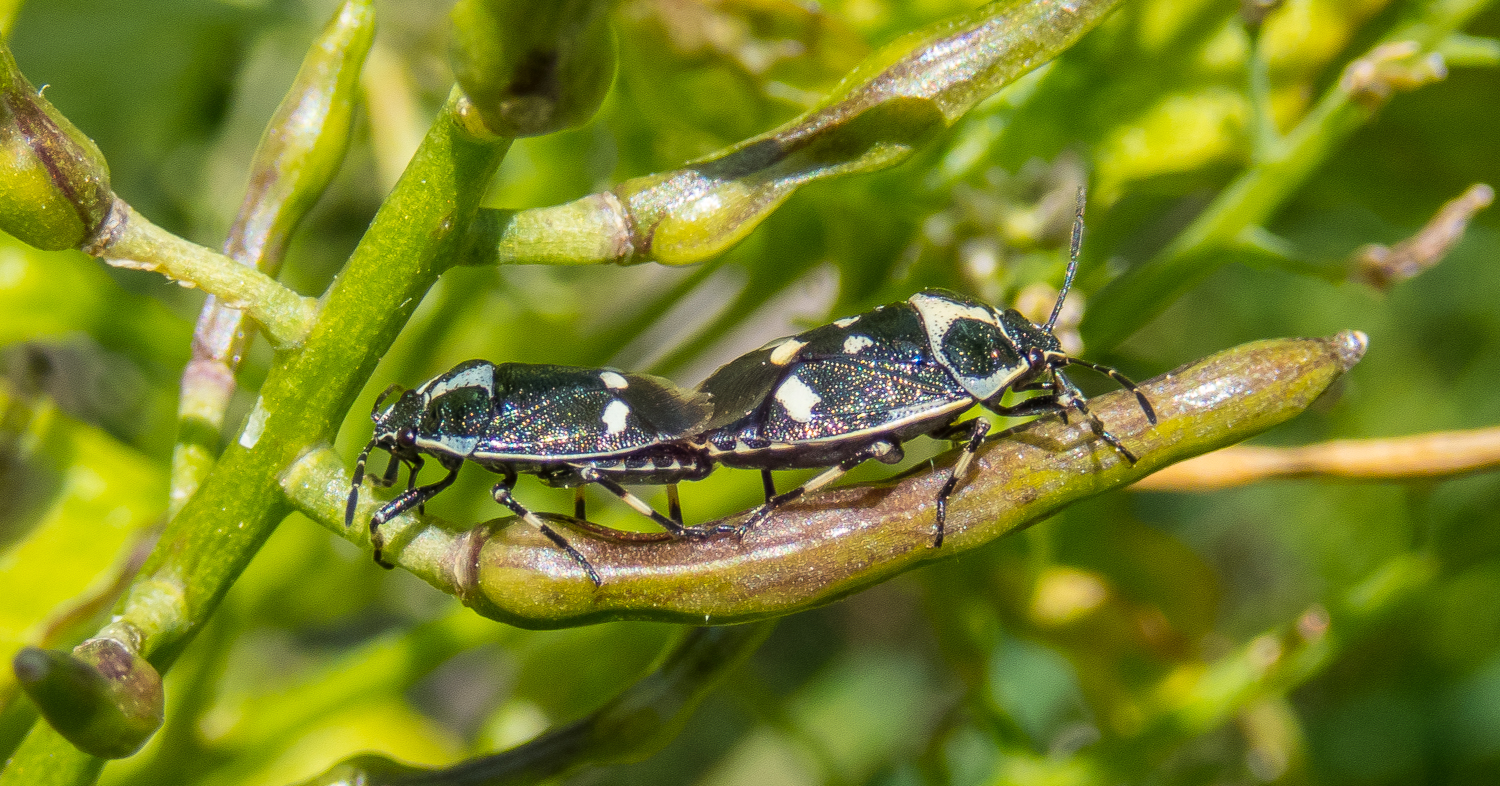
Day 8/30: shield bugs (known as stinkbugs in North America) are some of the most charismatic insects out there and easiest to see. These two cabbage bugs were mating in what I reckon is a plant in the cabbage family, in south-east London. I think this is my first sighting of them.
Day 9/30: this photo is part of an experience that will benefit from a dedicated post. This is a red-belted clearwing moth laying eggs in a diseased or cankered apple tree in a residential road in West Sussex. It’s only one of maybe three clearwings I’ve ever encountered and you can see that it’s a really extravagant, day-flying species. Maybe I could be swayed by moths after all. Scroll down for another part of this story.
Day 10/30: a click beetle takes flight from a flowering climber in my small hedge. This click beetle is one that I think is common as I’ve seen one very similar on several occasions. Probably need to upload it to iNaturalist to identify it.
Day 11/30: a tangled web for this poor red admiral in West Sussex. I was surprised to see one so still in the hedge but on closer inspection it has been caught by a spider.
Day 12/30: the emerging larvae of the clearwing can be seen here, pressing out of the apple tree’s bark, just like in certain sci-fi movies. The plot twist here is the arrival of an ichneumon seeking out red-belted clearwing larvae. The ichneumon’s epic ovipositor will be used to lay eggs in the unsuspecting larvae and parasitise the host. You can read more a blog post I wrote about that here.
Day 13/30: a busy day working from home (yes there is such a thing) left me pressed for time, but I managed to snap one of the common hoverflies in my garden. I don’t go out for long in the hottest parts of the day so I am usually reliant on the early mornings or evenings for macro encounters.
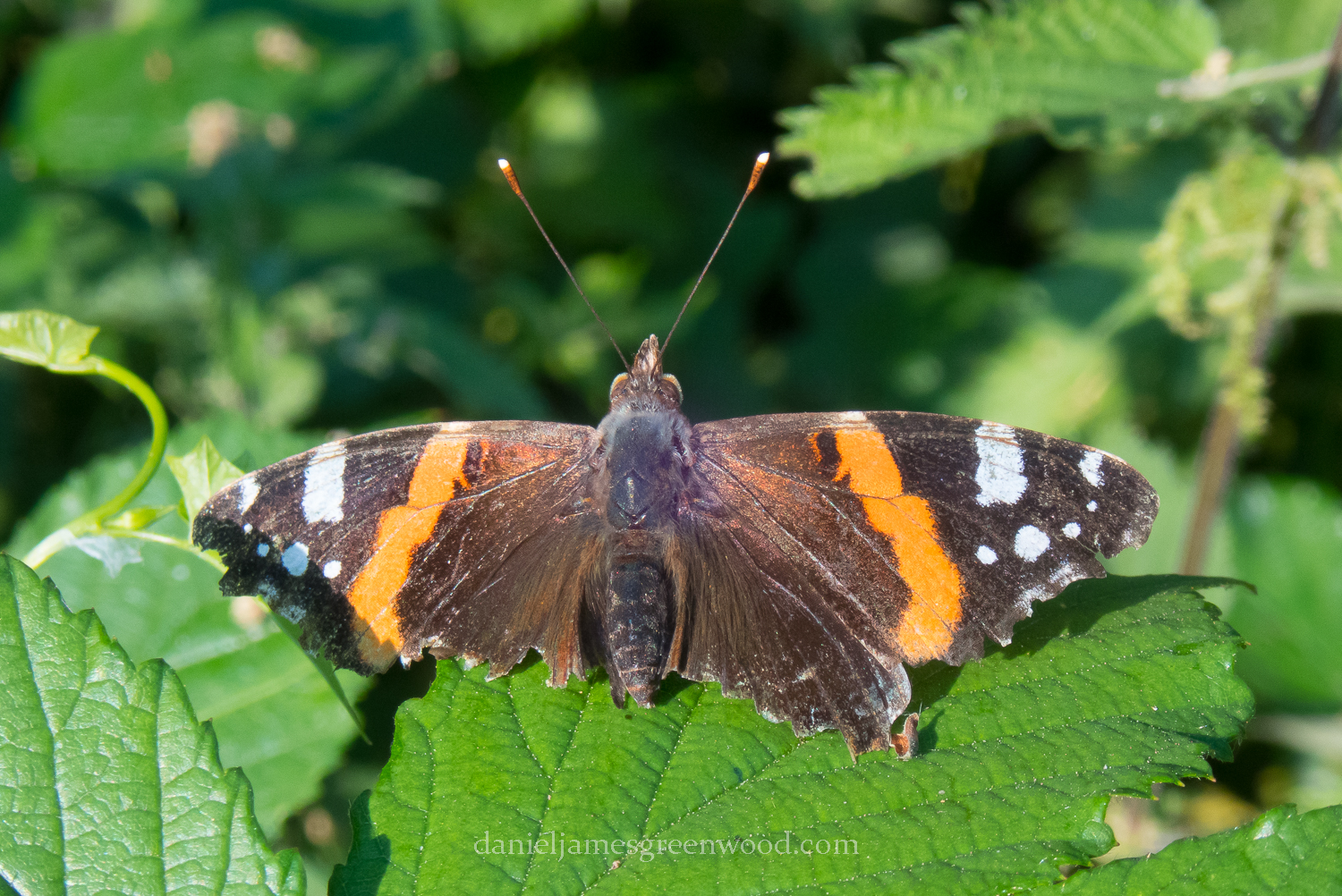
Day 14/30: a difficult week for red admirals, with this much-pecked butterfly enjoying(?) some evening rays. You have to make do with what you have in this life.
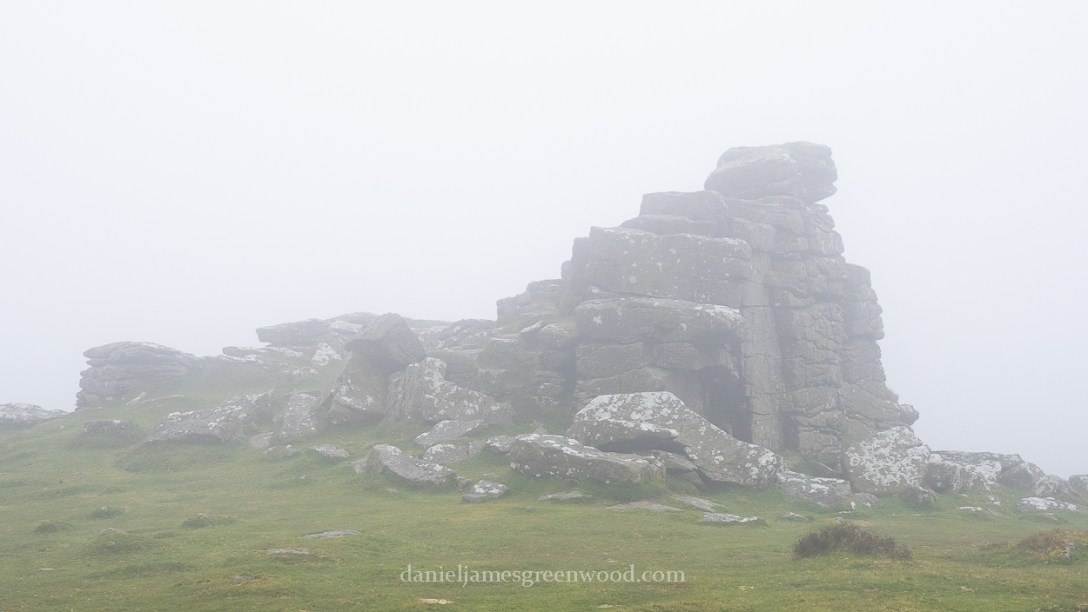
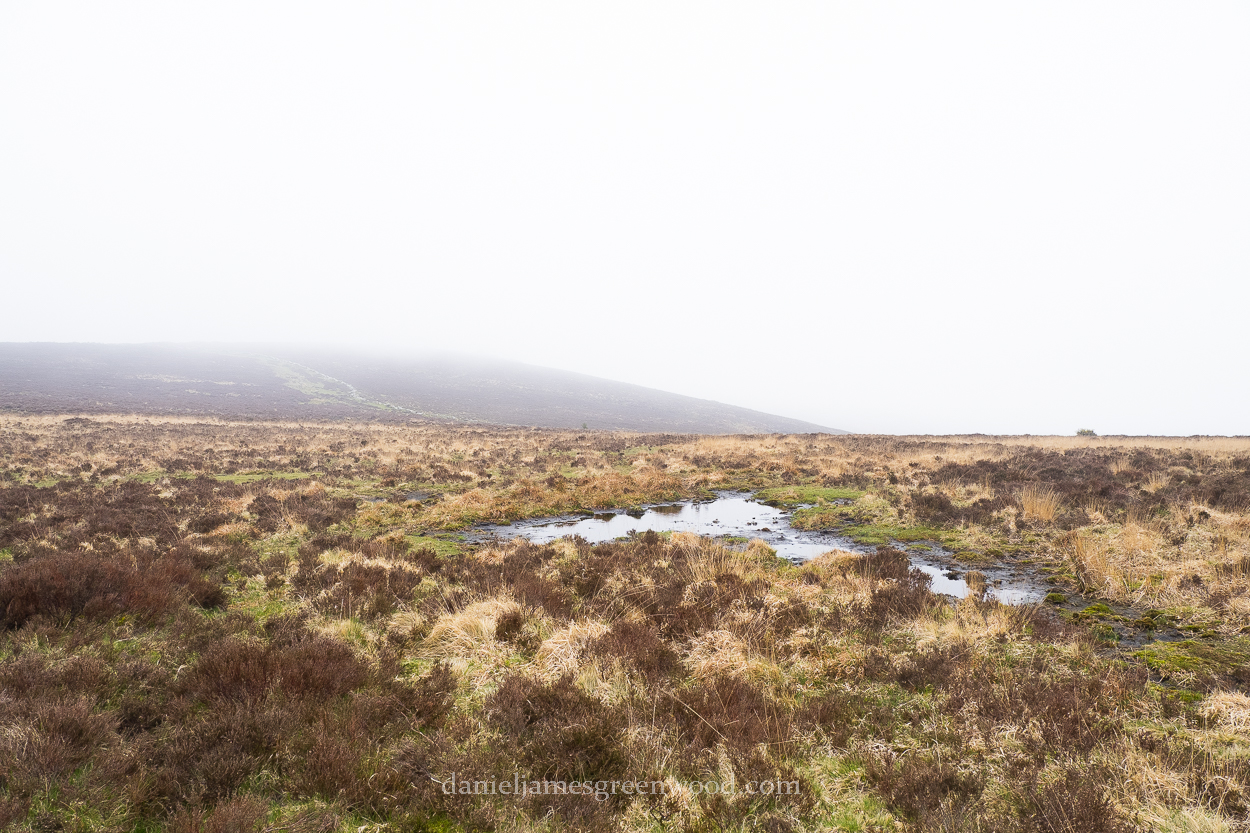
It was a misty morning high on Dartmoor. We began walking from Bennett’s Cross, passing Birch Tor and heading through wintry heather moorland. The white tails of wheatears burst across the paths as we disturbed them. Their journeys here are some of the longest undertaken by any migratory animal on the planet.
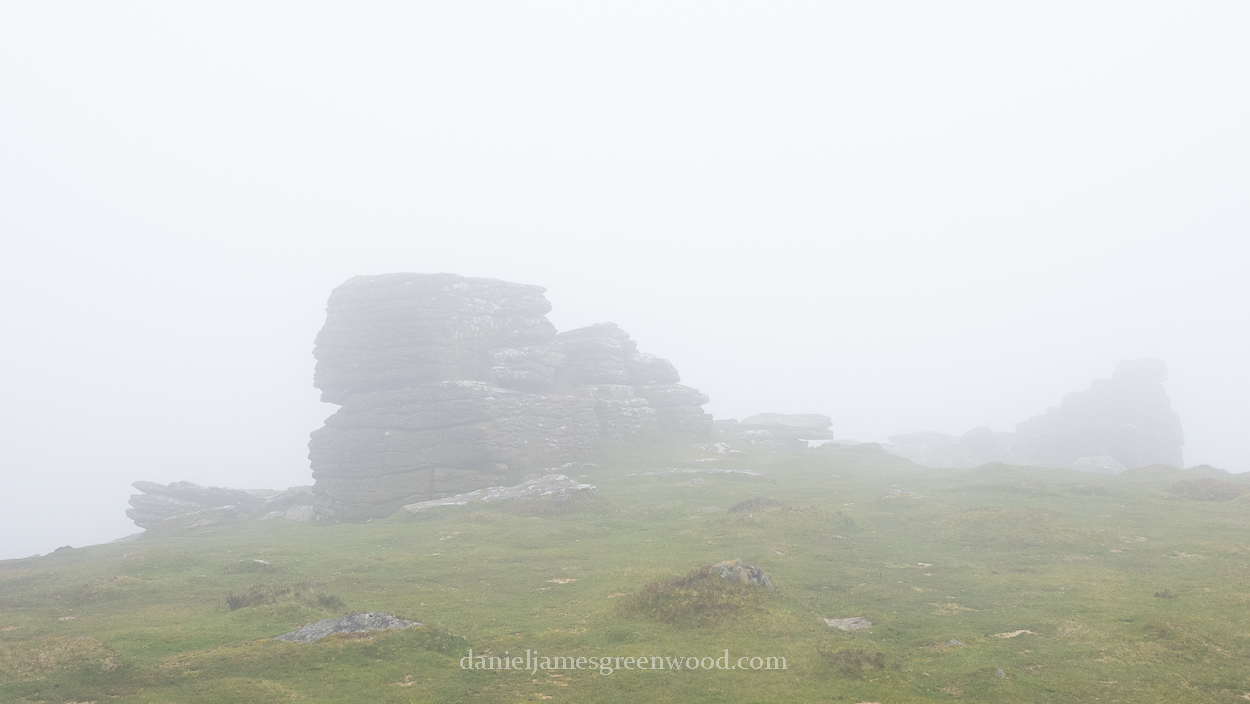
After a short plateau in the moor we crossed a quiet road and ascended Hookney Tor. Here the mist came in from the north, sucking up the wider moor, and the long stone wall that framed views in that direction. We switched east to pick up the unsigned Two Moors Way and walked between the rocky eruptions of Hookney Tor.
As we continued down on the Two Moors Way, a grey bird cut across the edge of the visible moor, some 25ft ahead, before the land was hidden by the mist. It was a male cuckoo, another African bird looking for a mate to breed in this harsh terrain.
The cuckoo slid away into the mist and we headed south for our prize – the 3000 year old settlement of Grimspound.
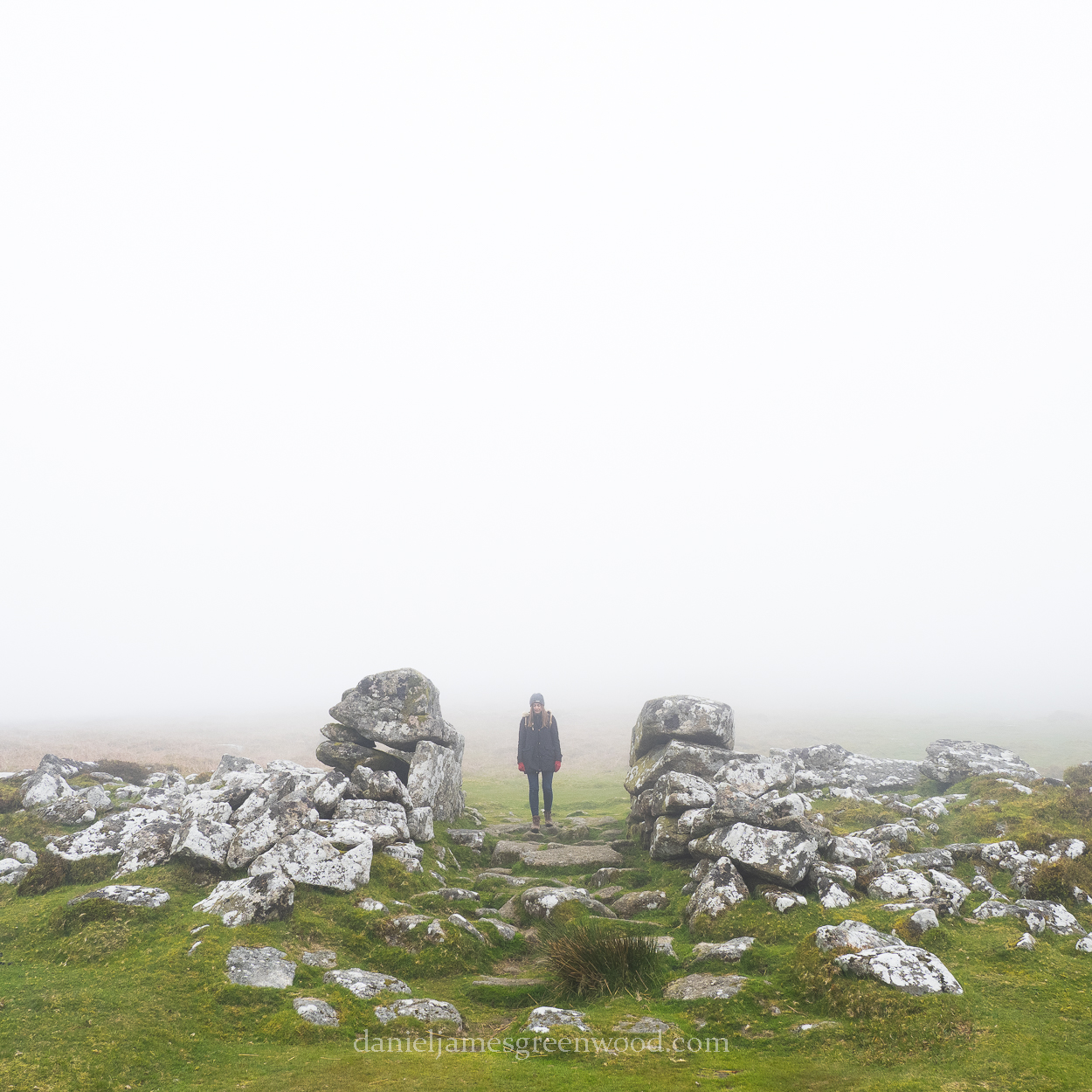
Approaching, only the collapsed stones of the outer enclosure were visible, painted white by the crust lichens that thrive on Dartmoor stone. In the distance we could hear the voices of other visitors to this ancient place. A family were visiting, posing for photos inside one of the small enclosures that had been rebuilt.
Entering into the ring of fallen stones, the smaller huts came into view. This wall will have been intended to protect the inhabitants and their livestock from wild animals like wolves (now long extinct) and any attacks from other people.
Tuesday 10th January 2023 was one of those awful January days in London. It rained a lot, was windy, and there was no direct sunlight to bask in.
Add to this the fact that the night before a fireball enjoyed a spectacular demise in the night sky, and was easy to view across much of the UK. At the time – 20:00 GMT – I was outside, in the dark, being distracted by the massive moon and a neighbour saying she didn’t want to run me over. Somehow, I missed the fireball and lived to hear about it on the radio the next morning.
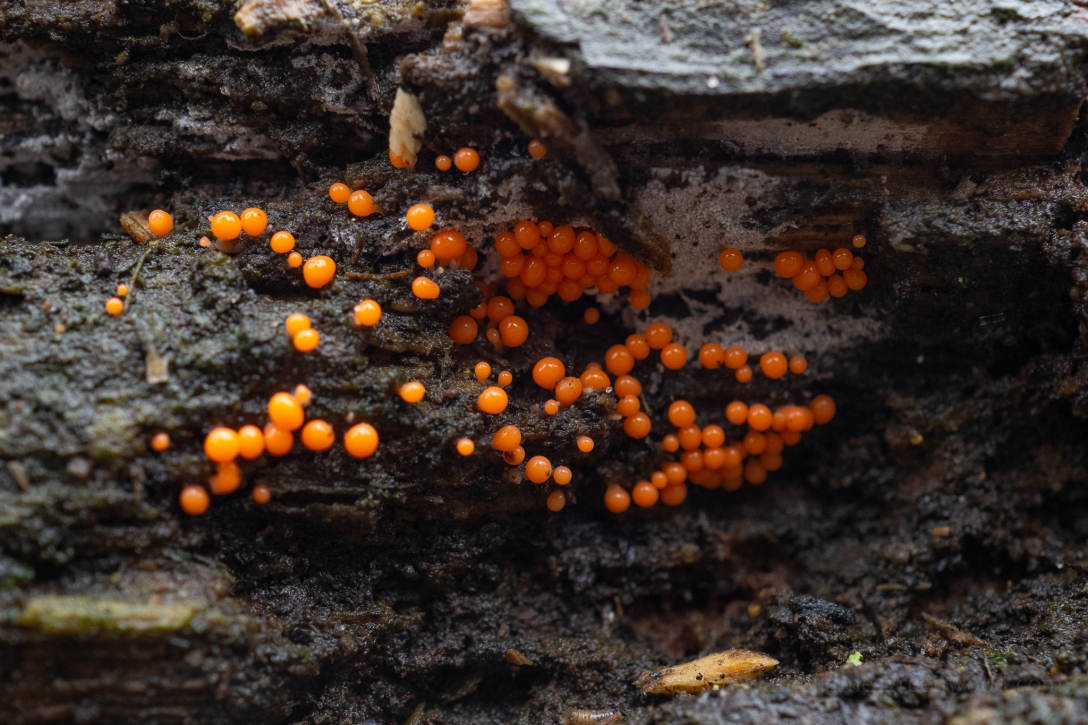
Anyway, back down to Earth. Though the woods can be ghastly at this time of year, I find them to be a decent shout for slime moulds. Not to be proven wrong, I was proved right by the sight of little (read: tiny) orange beans at the path edge on an old oak log.
These little droplets of tangerine dream are commonly known by slime people as salmon eggs. It is amazing how these declining fish can fight their way up through places where there are no rivers, to lay their eggs in a bit of wood.
You know that was a joke, yes?
Slime moulds thrive in damp, dark places, usually in decaying wood that has been saturated by winter rainfall.
Elsewhere, the smaller polypores of turkeytail and the like were ‘showing nicely’ as the birders say, though rarely of a turkey’s tail around here.
A chilly afternoon in the Weald of West Sussex on one of those days in early January when you remember their names again. “Moonday” 9th January 2023 was appropriate seeing as the famous old block of cheese was up in the sky that night, howling back down to us. A wolf moon, indeed.
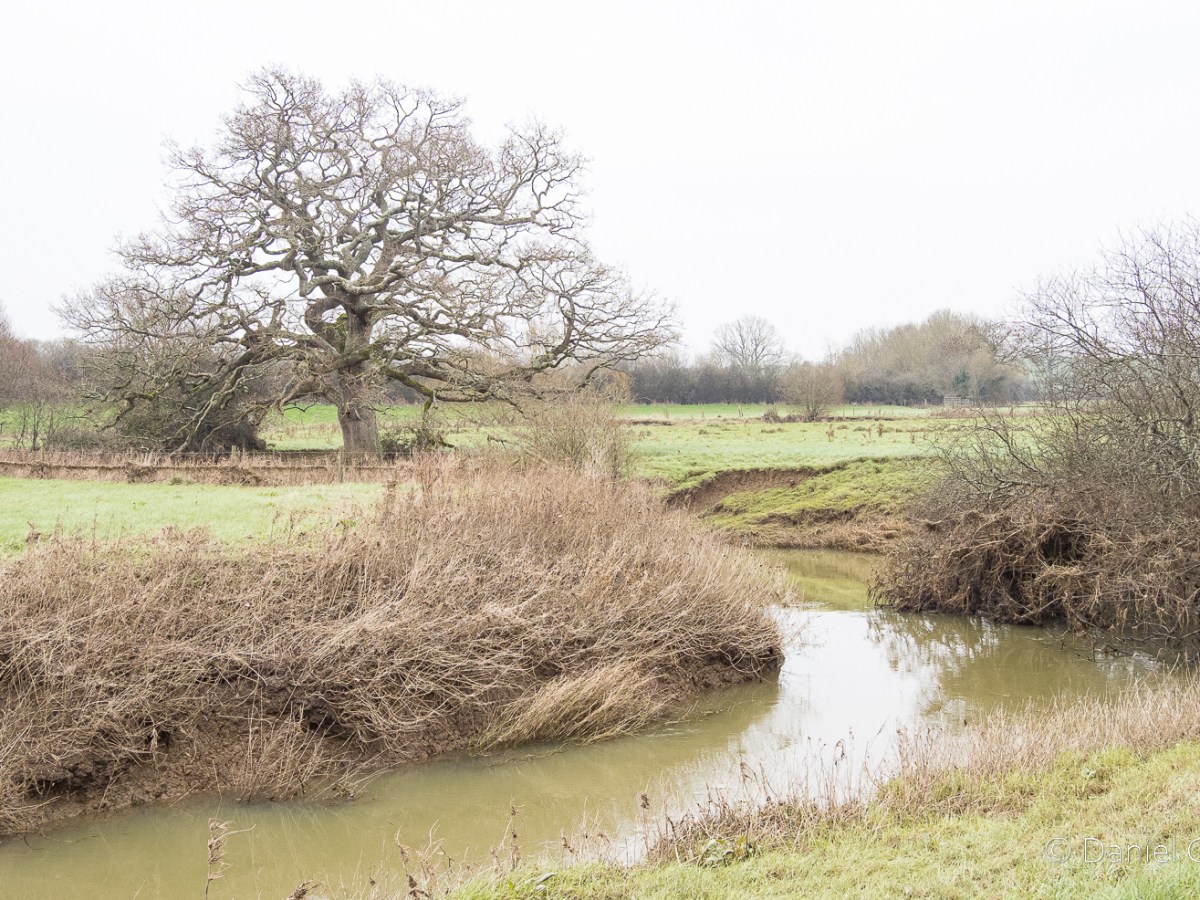
Moons are easier to come by than ‘shrooms, the main focus of my walk around a wet woodland reserve where the river ran free of its banks, merging among poplars like something from prehistory (i.e. no Internet).
A boardwalk cuts the edge of the wetlands where I usually expect to find velvet shank mushrooms. Along with scarlet elf cup, this is one of the winter gems of the fungal kingdom in Northern Europe. In truth, I didn’t find any that I could photograph without having to (theoretically) enter into a wetsuit or small boat.
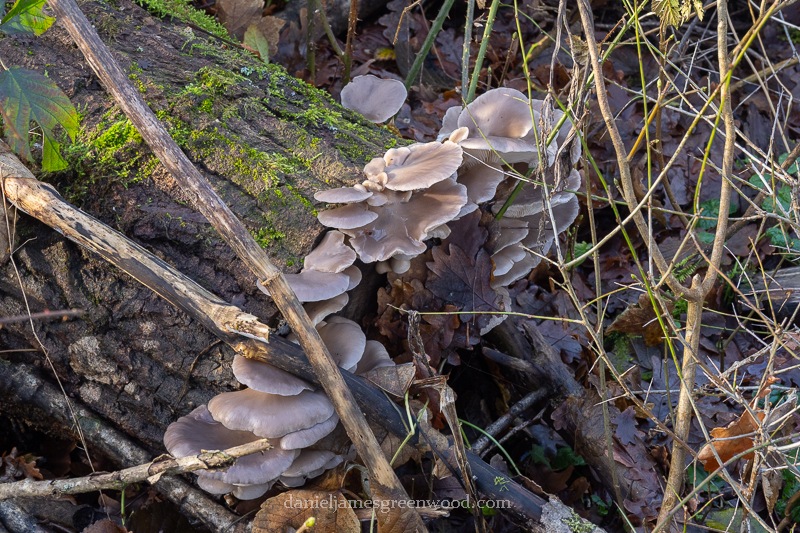
Instead it was a coastal species that proved easiest to snap, if only in name. One of my favourite Twitter accounts and reader of this blog recently posted some oyster mushroom photos. Another timeline glimpse made me think – this is a seasonal trend, and I should keep an eye out in real life.
They’re a beautiful fungus with dark, purple-grey tops and pale, almost white gills underneath. They’re edible, but I was just there for the pics. You can buy them in the shops or grow them yourself at home. Another friend/regular reader even has them growing in her garden from timber sleepers. Well jel.
One of my favourite actual, single funguses lives here. I’m pretty sure it’s a willow bracket, growing from the bottom of a branch like a hat plucked off someone’s head below/a UFO/some kind of weird leather cushion from the Victorian period.
It makes me laugh every single time. A reminder: if some part of nature isn’t humouring you, “you’re not doing it right”.
I’ve had a burst of American visitors in recent days (to my blog, not my house). So thanks for visiting, y’all, and sorry about the year you’ve had. You may have noticed I’ve slipped to monthly posts on here. Between April and October I posted blogs every Monday without pause, which is a tricky task…
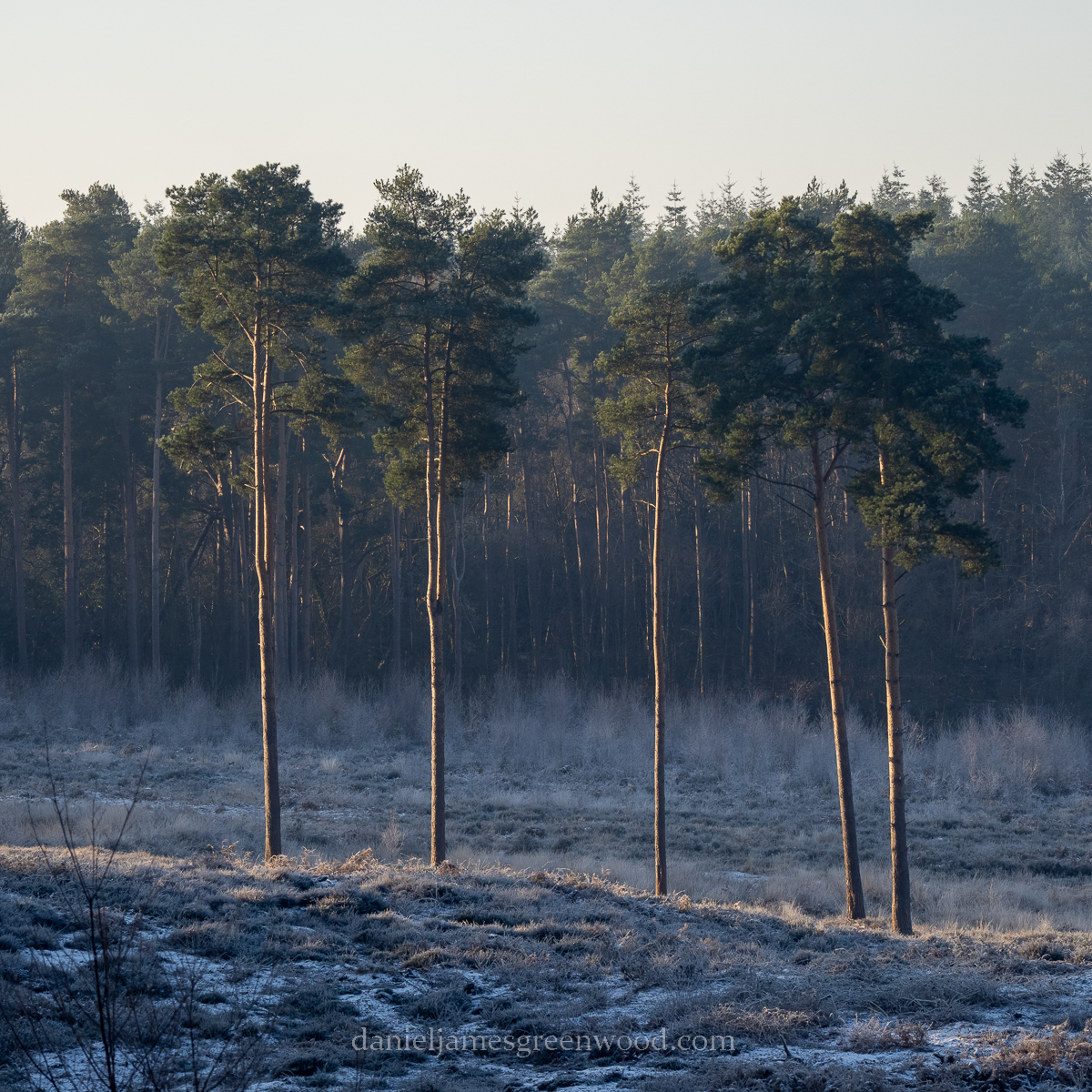
Pulborough Brooks, West Sussex, Friday 16th December 2022
I arrived at Pulborough Brooks as the sun began to rise over Wiggonholt, the heath on the hill.
There are five pine trees that stand together in the open heath, I always seek them out in this light.
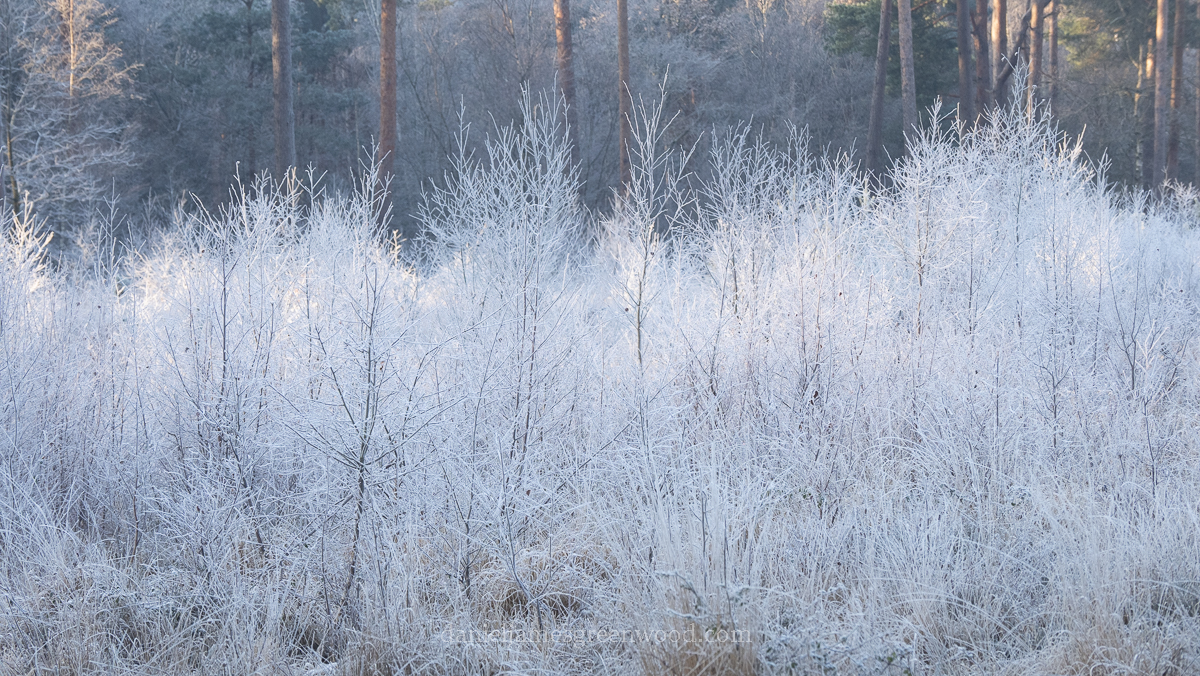
Frost encrusted everything where the sun was yet to reach. Young birches were thick with hoar frost, the yellow leaves of oaks held an edge of ice flakes.
There was little to hear, so much so that even a goldcrest moving through brambles made a sound.
Further round the hill the Highland Cattle were grazing among the frozen bracken. They looked so at home in their Viking get-up, heavy coats whitened by the temperatures. At 8am it was -5.
Out onto the reserve a winter landscape opened out: rock-hard fields with a herd of deer making a break for it; frozen ponds and lakes without ducks and wading birds; and in the distance the South Downs almost hidden by a rising mist.
Here’s my seasonal update of stuff you don’t need to know about, but then welcome to the Internet. What I’m writing Soon I will be self-publishing my third poetry collection, Fool’s Wood. It’s seven years since my last one and this collection has taken longer because of LIFE. There will be a booklet and also…
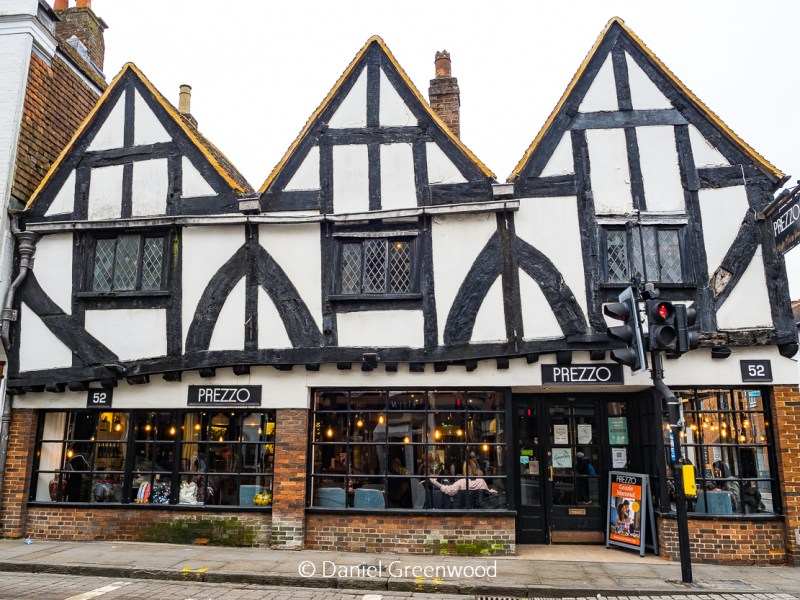
Here’s another entry in my slow-blogging Oak Timbers series. You can view my galleries and posts archive here. I visited Salisbury in Wiltshire (south-west England) for the first time in 2023 and was really charmed by the place. If you’re interested in this kind of thing, Salisbury is the place for you. Here’s a gallery…
I’m getting into more of a routine of recording and editing audio, so here is the latest episode of Unlocking Landscapes. Listen on Podbean or via the usual platforms. Also via YouTube: https://youtu.be/y1K9Pqx68to?si=B-Fdhf3sdDH35Z8w Following on from July’s rather optimistic fungi walk, I popped back to the same area of ancient Wealden woodland to see if…
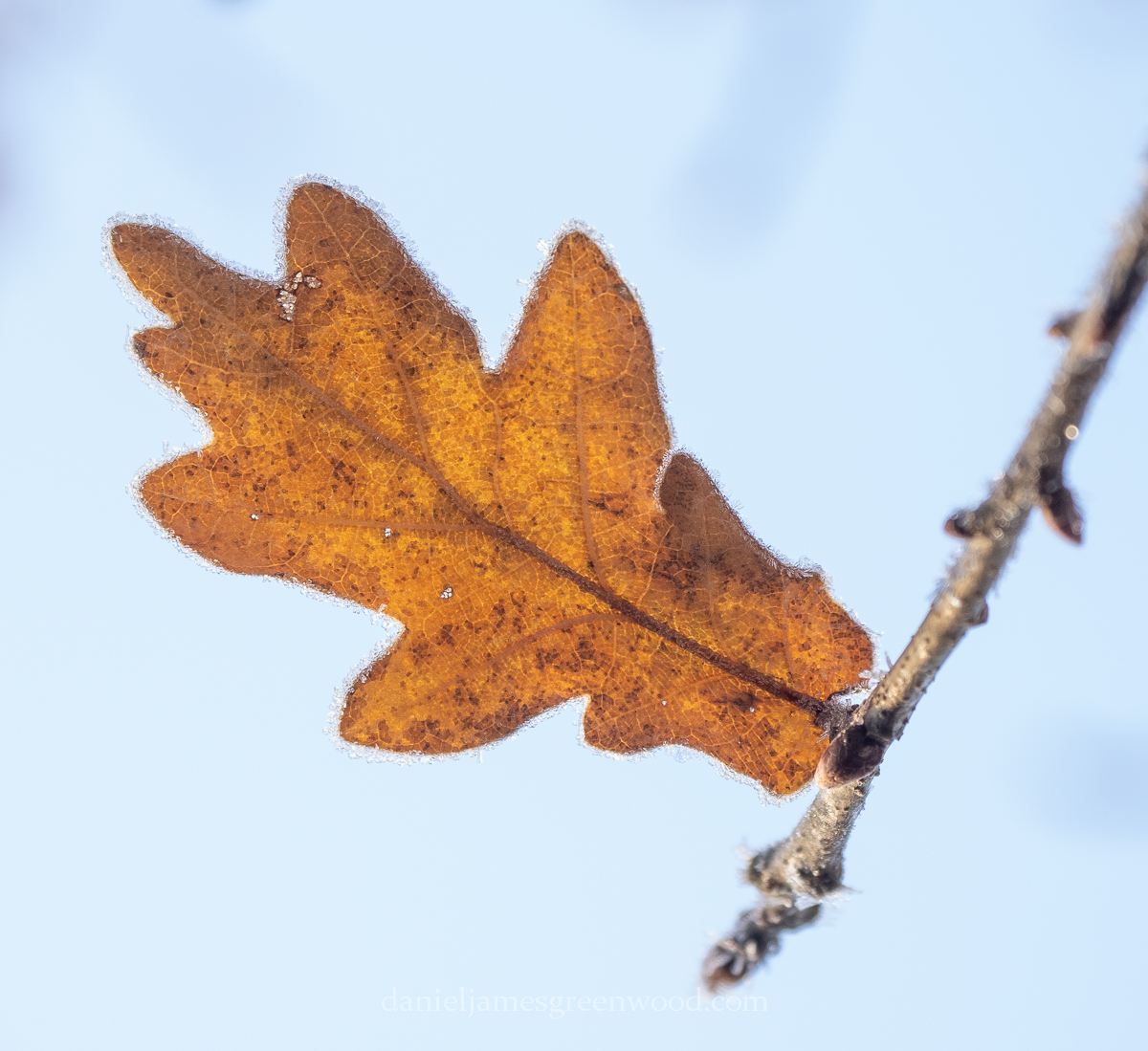
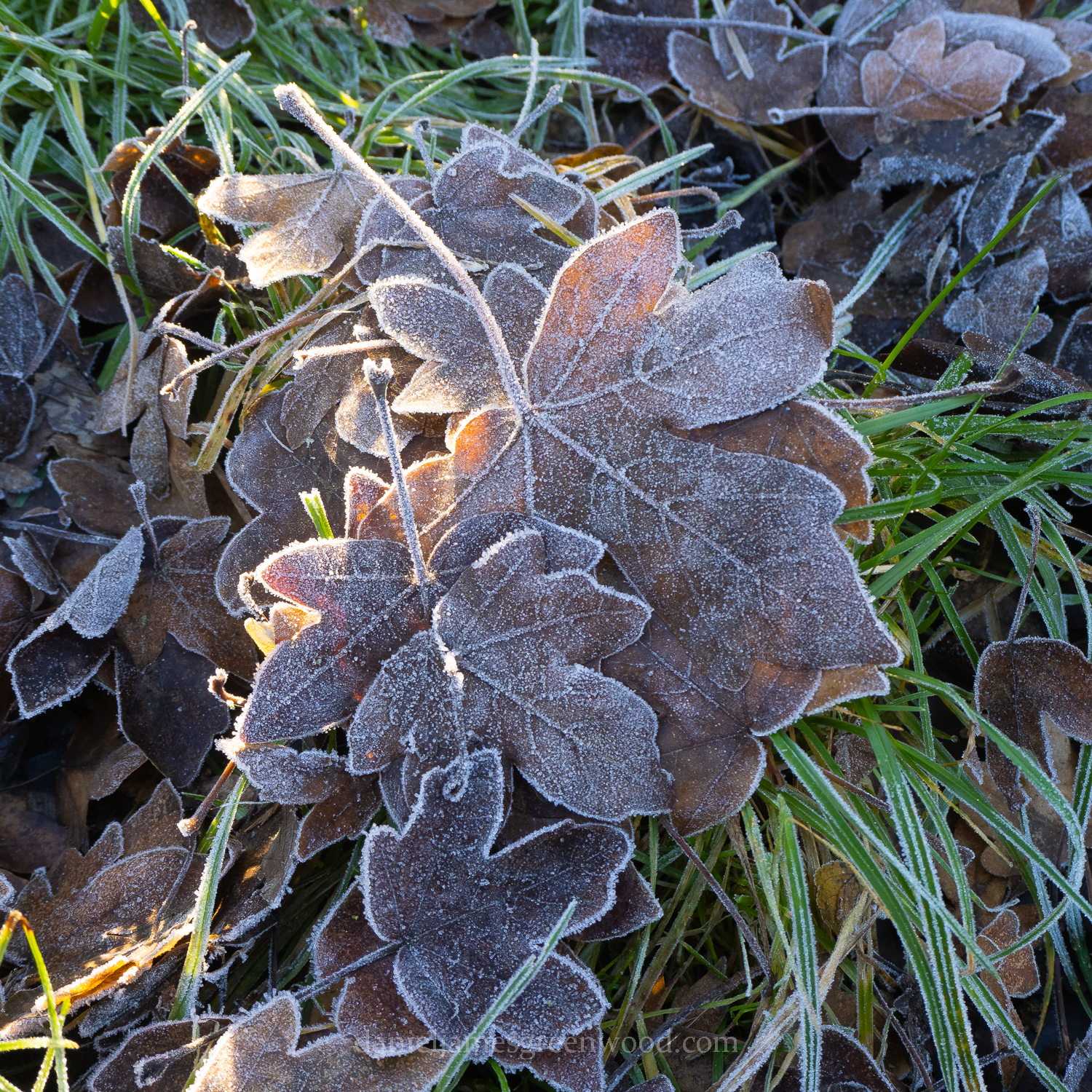
One of my favourite things to photograph in winter is a frost-encrusted leaf. Where the frost remains long enough it allows for us non-early risers to enjoy some at lunchtime (to look at, rather than eat).
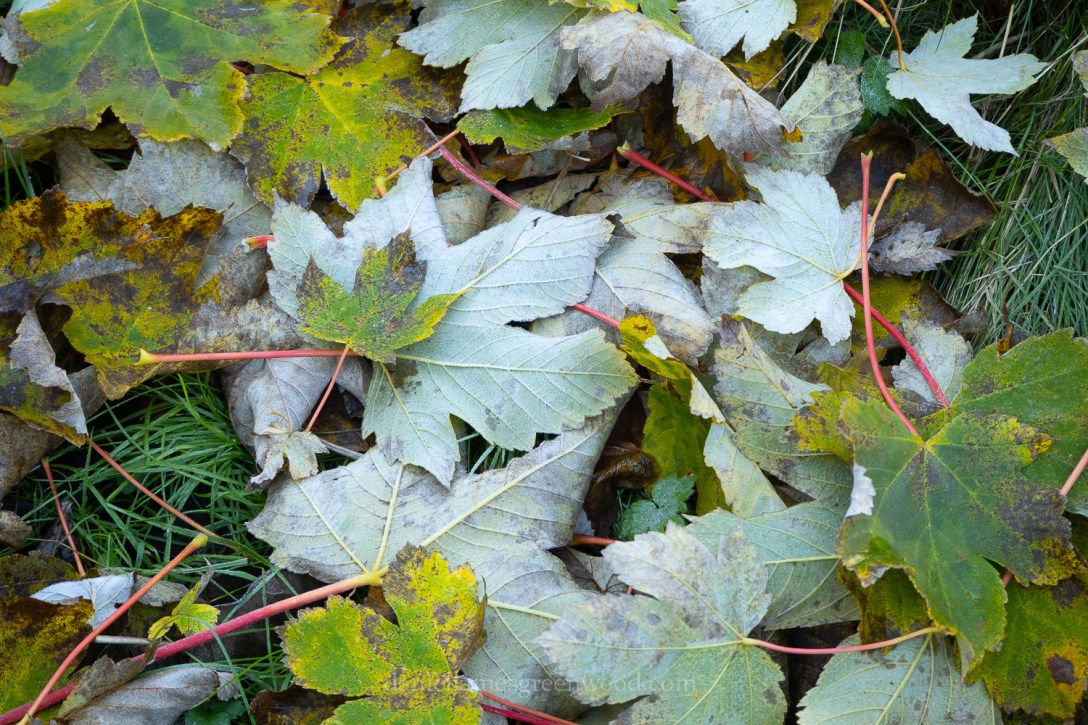
On the morning of Thursday 8th December I could hear sycamore leaves falling in the garden. There was a thick frost, the trigger for these leaves to let go.
At a nearby nature reserve I found this yellow hawthorn leaf, a colour hawthorn isn’t really known for. It’s one of the most underrated trees, despite its prevalence, and ecological and cultural value in England.
The image doesn’t do the real thing justice but even lichens get frosty sometimes. This is a little cluster of oak moss lichen that had fallen from a tree.
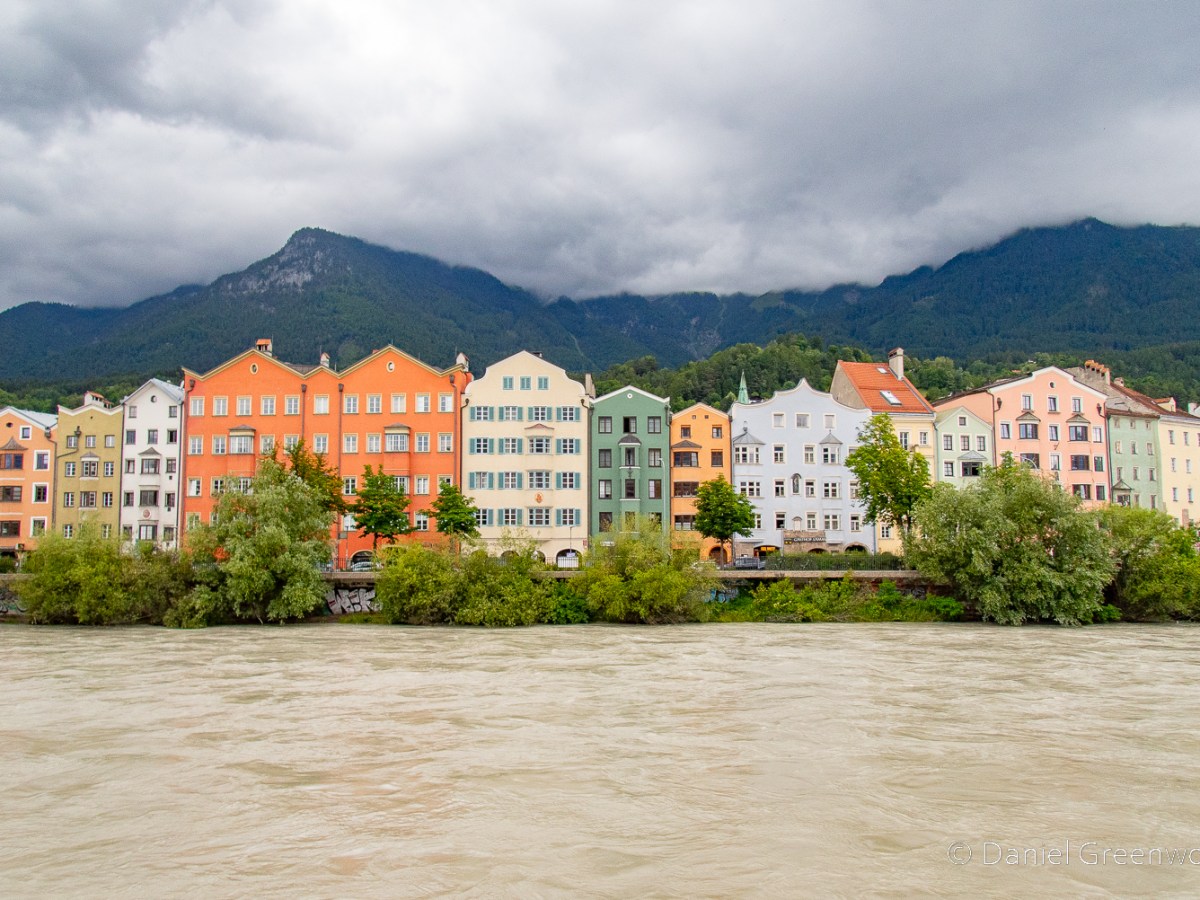
Innsbruck, Tyrol, Austria, June 2025 This is a longer post of the images I captured during a recent visit to Innsbruck in the Austrian Alps. We travelled to Innsbruck on a sleeper train from Amsterdam. It’s such a great experience and is significantly lower in carbon emissions compared with flying. If you consider the fact…
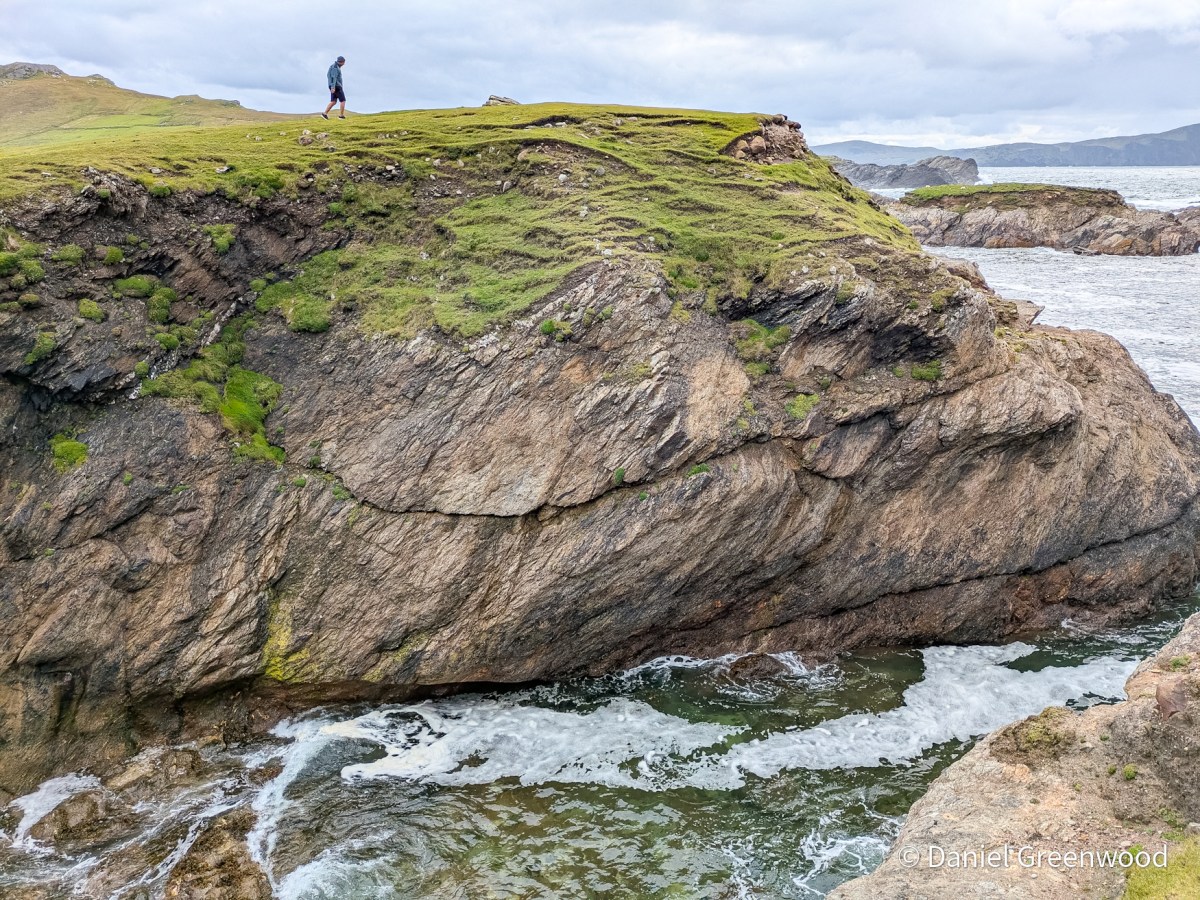
I’m back from my annual visit to the west of Ireland. I managed a couple of day trips to forage for photos, which will crystallise later this year into dedicated posts, all being well. Like many people I enjoy the Blind Boy Podcast, none more so when I have the headspace to take in all…
This is the first of a series of posts I’ve been working on covering national relationships with mushrooms. It’s just a bit of fun, but there’s definitely some interesting stuff to share.
A new blog post series of single images, maybe, to counteract the decline of Twitter and the TikTok-isation of Instagram?
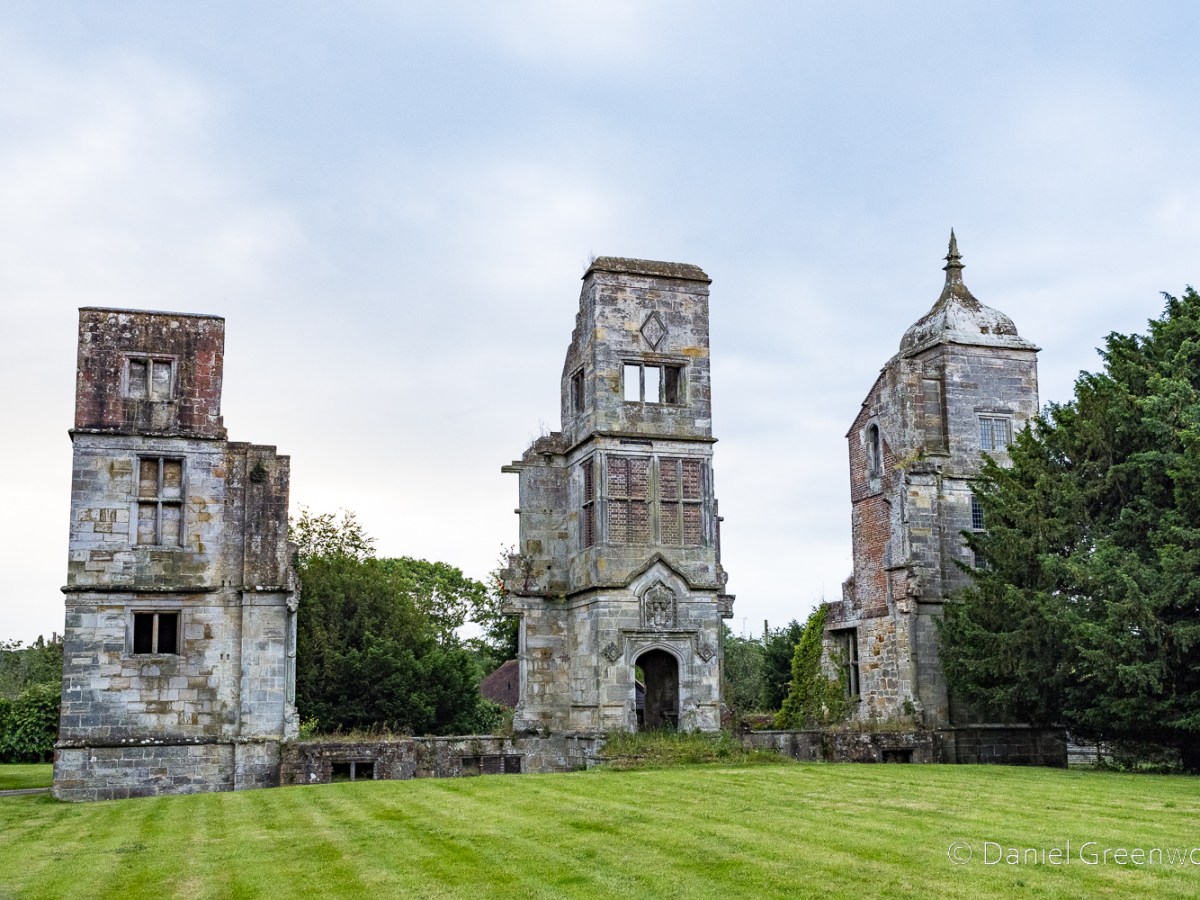
This image was taken at Cowdray Park near Midhurst on Monday 14th November. It was a stunning autumn evening, with trees in shades of gold, yellow and orange all the way to the sumptuous Downs.

























 Unlocking Landscapes