Fungi walk at Bramshott Common – 21st Oct 2023

I’m pleased to be leading a fungi walk with the Heathlands Reunited team in the South Downs National Park this October:

Date/time: Saturday 21st October 2023, 11am

Location: Bramshott Common, Hampshire (near Haslemere)

Bramshott is in Hampshire, close to the border with Surrey and not far from West Sussex.

You can book a ticket (£3 admin charge) via Eventbrite.

I posted about Bramshott Common last year:

Basketful of Boletes

Earpick fungus in Hampshire

This walk will be a good way to learn about the common species of fungi in woodlands, their ecology and cultural significance. Though we won’t be picking mushrooms to eat, there will be some guidance around edibility generally as a safety guide. This is a great site for fungi with a lot of the ‘big-hitters’ and other unusual species to be found.

Thanks for reading.

Fungi

Fungi: Bedgebury Pinetum – one of the best places for fungi in England? 🌲

Bedgebury Pinetum, Kent, September 2023

Disclaimer: this blog is now riding high in the search engines under the tag ‘Kent Fungi’ (not sure why, to be honest). On the back of this Forestry England contacted me to ask for me to point out to any readers that foraging is an offence, or more specifically:

Bedgebury Pinetum is protected by Forestry Commission bylaws that prohibit the damage or removal of any plant on site.’

While this is a photography and mycology post and not a foraging blog, it’s important that if you do go looking for fungi at Bedgebury that you don’t get caught out. Regardless of the fact that fungi are not plants, I think that byelaw must include fungi for some taxonomically archaic reason. I’ve written about this wider issue here. Thanks.

I visited Bedgebury Pinetum in Kent for the first time in early September 2023. It was impressive to see a noticeboard highlighting the Pinetum as one of ‘the best places for fungi in the country’!

Here’s the proof:

It has 12,000 specimen trees and a ‘world-leading collection of conifers’

Tell you what, though – they were not wrong about the dragonflies. The most impressive sight of the visit was dragonflies swarming on the margins of a field of, erm, monkey puzzles! Here’s the video:

It was dry and rather hot so I don’t think the Pinetum was at its best in the funga stakes, compared with the dragons.

As usual, I wasn’t there to forage, just to photograph. I don’t think Forestry England are fans of foraging on their sites. One of the first sightings of the visit was that common species in this part of the world – sulphur tuft.

I haven’t seen brick or conifer tuft yet, to my knowledge, so was wondering if this landscape where conifers were so dominant might change that. Looking at the gills and the caps, I don’t think I’m there yet.

Here’s the nice early stages of a bracket, which I haven’t identified yet. Might be a mazegill.

Tawny grisette is a lovely early Amanita. There were a couple at Bedgebury.

I have cobbled these together, even though they’re in different stages. I think they’re in the Clitocybe group, and are very likely funnels. The habitat and seasons are right, and the features look right (gills). It seems that there has been a taxonomic shake-up with this group, but it’s beyond this blogpost (and author!) to go into detail on that. Please comment if you have any suggestions.

It’s easy enough to plop these mushrooms into the ‘dungi’ category, and am confident that they’re mottlegills (Panaeolus). I’m half suspicous that the pale-capped shroom is a yellow fieldcap, rather than a saturated older fruiting body, just hanging out in the dung.

I haven’t done much work on trying to identify these yet, but they look like a group I am not familiar with. They were growing under an unusual type of turkey oak, but I don’t think there will be a mycelial connection there. Then again, what do I know.

So was it one of the best places to see fungi in England? I have no idea, but it will definitely be a good place to visit in the autumn months. Bear in mind the car parking fee is about £14, and I don’t know about public transport links in the area.

Thanks for reading.

This is a version of a previously-published post on my fungi blog.

Fungi

You may also be interested in:

Mushroom, mushroom burning bright 🍄

…in the forest on a warm July afternoon.

It’s been a very busy summer so far for me of working and commuting. I had a free afternoon and so headed to my local dreamspace, but with no mushrooms on the mind – literally or figuratively.

Red admiral (phone pic)

The number of butterflies was remarkable, perhaps the sense of doom about 2023’s poor invertebrate spring had dampened my expectations too much. There were red admirals, skippers, whites of course, and even a white admiral on the sandy track. White admiral is something I don’t see that often, mainly because I lived in London for so long. Then again, it is cropping up in SE London now, which is interesting.

I was enjoying the sense of a butterfly summer, when I nearly spilled my invisible coffee at the sight of a deep red mushroom on the edge of the track.

Mushrooms, so abrupt, unapologetic. They know how welcome they are, even if you don’t realise it yourself at the time.

This was one of the summery, colourful boletes that can be found at this time of year. It’s probably a neoboletus, but my iNaturalist record is without community input and I haven’t had the time to do any research myself. So it remains an unknown jewel.

A few paces away was a more common and typical summer shroom, what I would guess is a blusher.

This short walk on the edge of the High Weald was notable for its green-ness, surely close to peaking as August nears.

We’re lucky over here that we aren’t experiencing the mega burns and record high temperatures of Greece, Italy and Arizona. You have to wonder how some of our fungi will cope with the drought and the impact on our woods. No doubt fungi will outlive humans in the long, long run (they can survive and thrive in nuclear reactors) but the heat can’t be good for the health of our woods which may struggle to adapt to pace and intensity of change.

When are we going to see serious action on climate, rather than flip-flopping by both major political parties? The kind of urgency we saw in crisis-managing COVID-19? Am I destined to see meaningful environmental policy remain as a marginal ideal in my lifetime?

No doubt fungi will rise into conservation thinking beyond the obsession with bringing back questionable, extinct species. But will that be too late as the heat rises and the woods burn?

Fungi, ever-resilient, have been found to benefit from burning in Australia, but of course that is just a handful of species.

It would be foolish no to follow one of the key messages fungi can teach us: don’t forget the present, you never know what might pop up.

Thanks for reading.

Fungi

Is this England’s national mushroom? 🍄

No nationalism was expounded in the making of this blogpost.

On a recent visit to the National Trust’s Nymans Gardens I spotted some big, cream-coloured things in the lawns near the car park. No, these were not scones or cream cakes, or even pasties discarded by visitors. It clicked almost immediately for me that these might be St. George’s mushroom – and guess what? I found them on 23rd April, St. George’s Day!

That is definitely the most enthusiasm I have offered for this national day. If it were to be made a holiday, then we can talk.

Spring can be a time of shrooms, as the frosts end and the temperatures rise. We’ve had quite a lot of rain this spring in SE England and so some mushrooms will fruit in response. St. George’s mushroom is one of those springshrooms.

Like many people in the UK my sense of personal identity is not straightforward, and I don’t celebrate St. George’s Day. I have strong Irish roots and as a Londoner of 50% Scouse parentage I feel an affinity with a more regional, culturally complex identity, rather than one of red and white, chest-thumping ‘Englishness’, whatever that is.

It makes me wonder though – is this England’s unofficial national mushroom?

A simple online search shows up no such award, which is probably a good thing. Surely that accolade should go to honey fungus!

You may not be surprised to find that its common name changes depending on its location. In Germany the mushroom fruits in May and is known as Maipilz. That means ‘May mushroom’. In fairness to Maipilz, that’s only 8 days later.

St. George’s mushroom is also edible. I didn’t pick or eat this one, and it’s not on my radar to do so anytime soon. The above seems to have been nibbled free in actual fact. Also, I wouldn’t encourage people to forage from National Trust properties generally because I don’t want to get banned.

The cap turns brown over time making it look like a barbecued chicken piece

St. George’s mushroom appears to enjoy garden lawns, so if you’re lucky you may have one popping up outside your front/garden door. As ever, you should be cautious about eating wild white mushrooms as there are several toxic species which can be confused for edible ones.

Thanks for reading.

Fungi | Sussex Weald

The deep blue sea comes inland 🌊

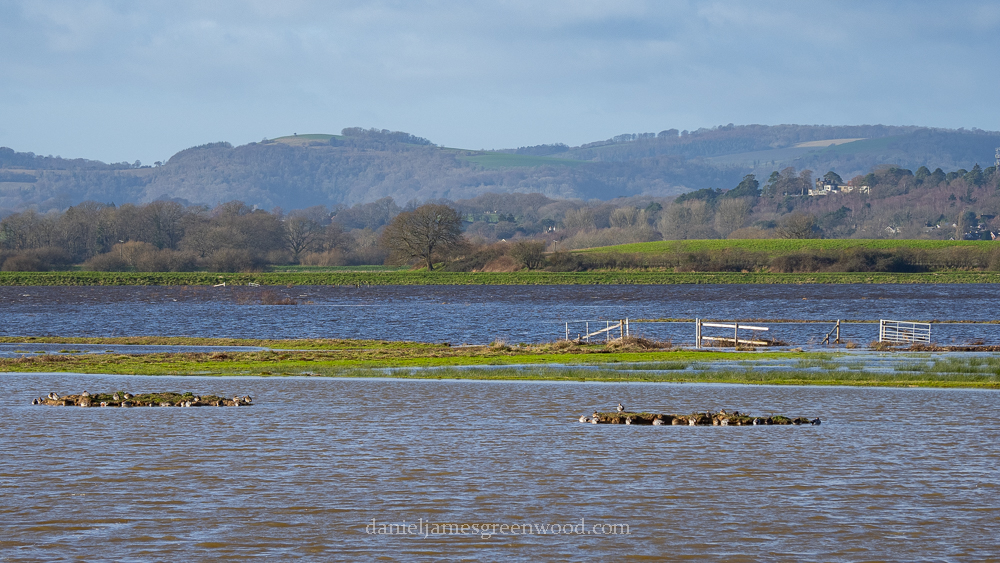
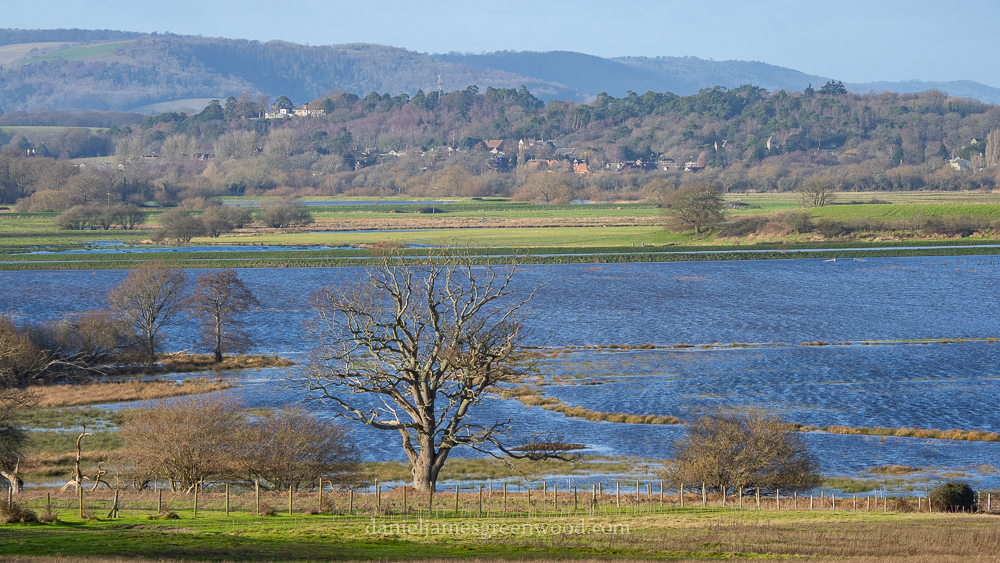
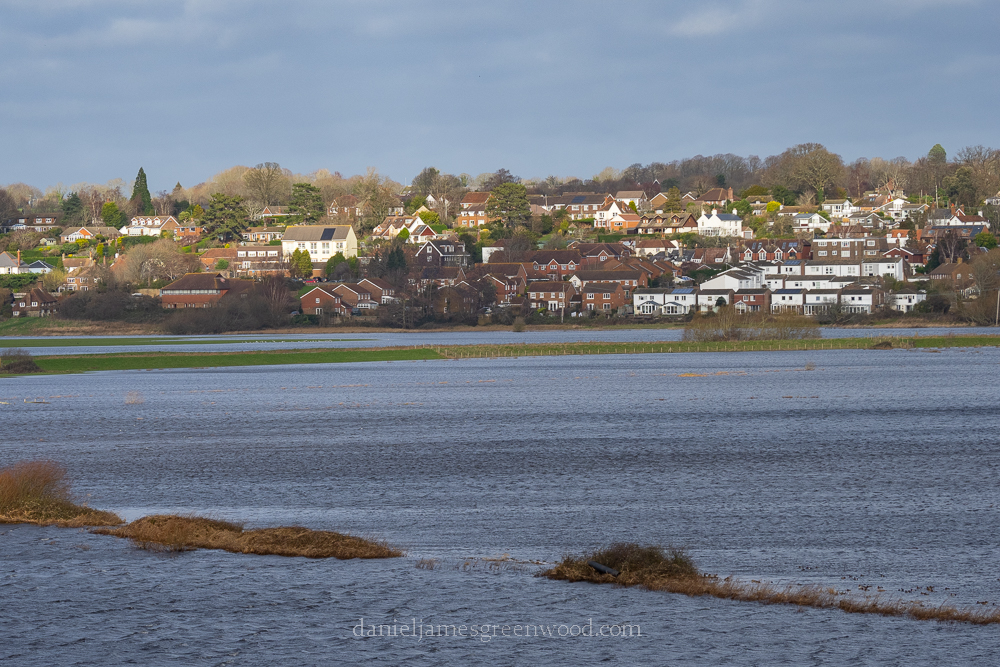
Pulborough Brooks, West Sussex, January 2023

A lot of rain has fallen in Britain in January. One way I like to gauge just how much, is to visit the wetlands around Pulborough and Amberley in West Sussex.

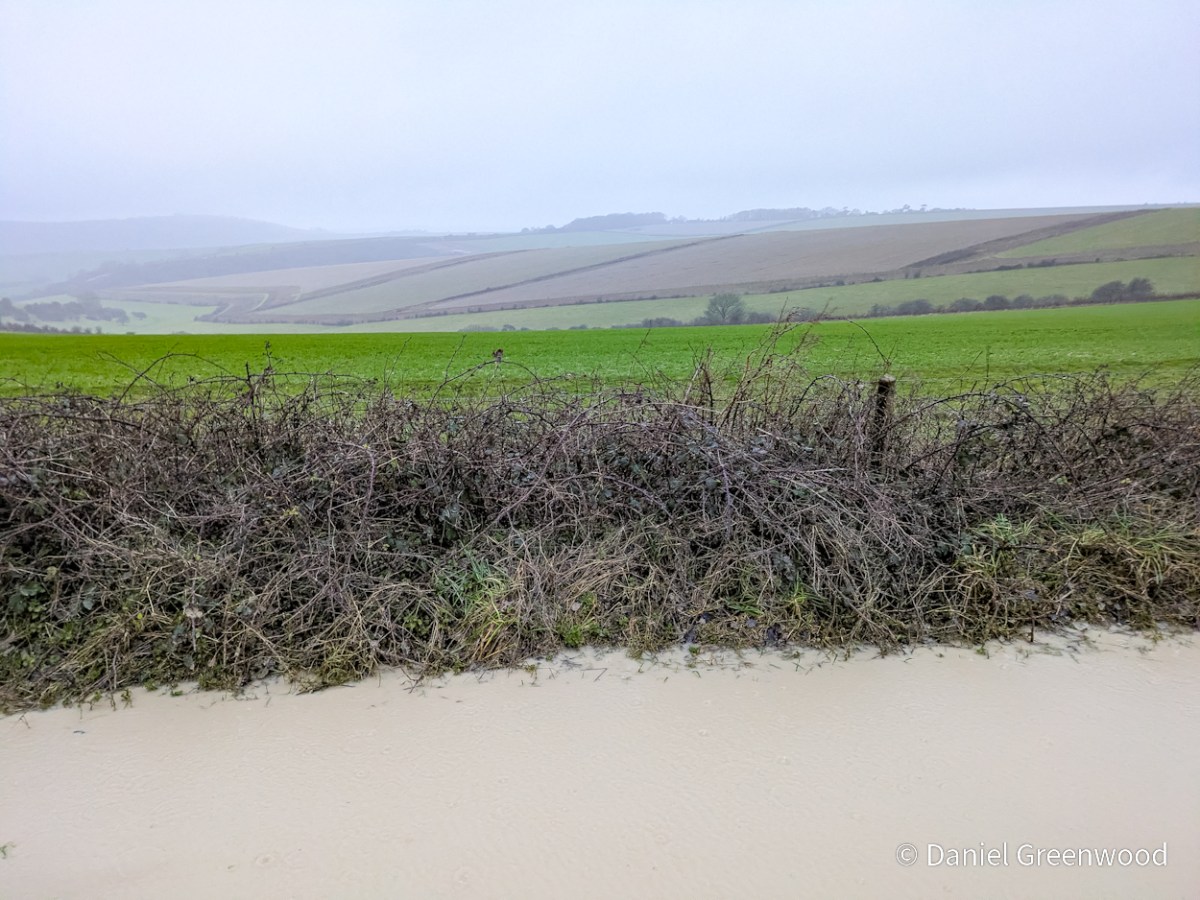
In the winter months, roads are routinely closed as the Arun breaks its banks, doing what it used to without much issue. On the morning of Friday 13th January, the green fields of the Arun valley were a deep, oceanic blue.

It’s rare in England that you get to see nature’s raw, awesome power. When you do, it’s not always a good thing. Seeing water flooding the landscape as it should, where it won’t destroy homes, is easier to enjoy.

Towards Pulborough, the flooded fields were speckled with hundreds of ducks: mallard, shoveler, widgeon. The buildings of Pulborough town looked ready to slip down into the deep blue sea.

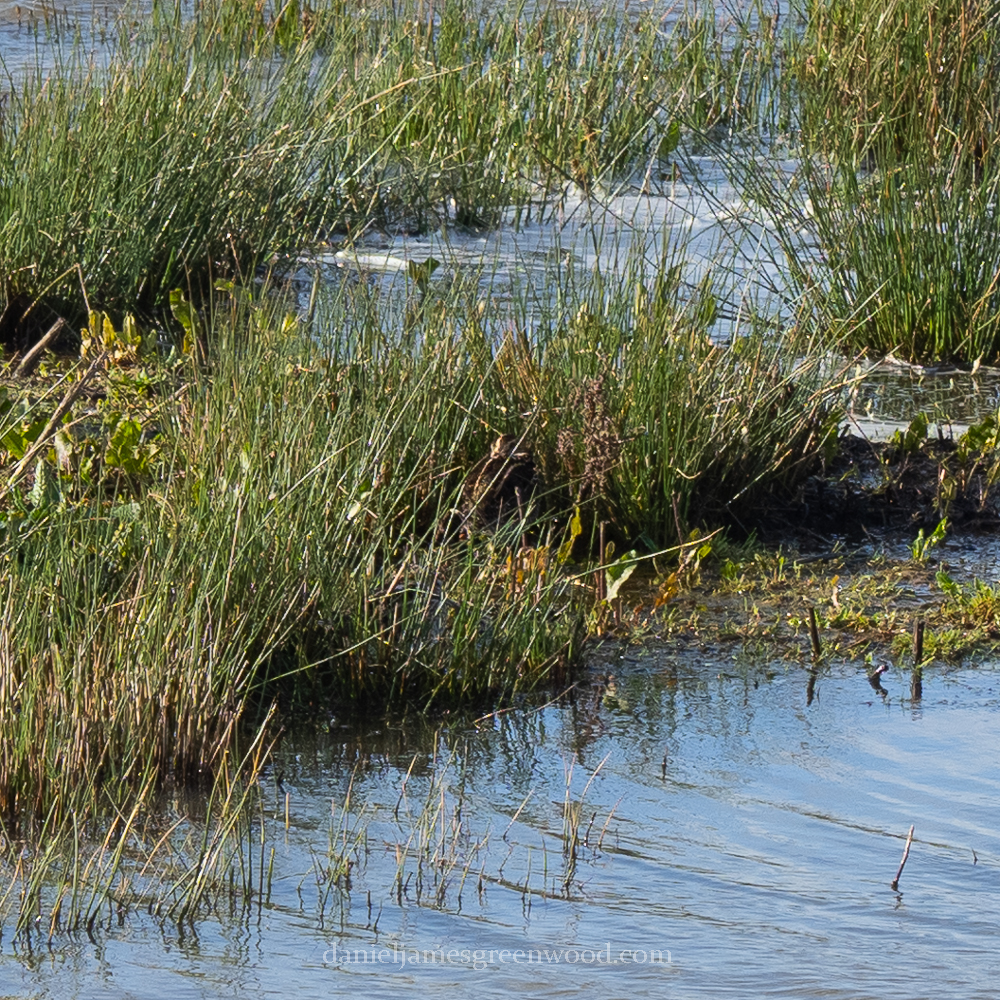
On the human-made islands lapwings contended with ducks for a spot on the bank. Elsewhere I overheard a man point out a snipe tucked away between rushes – ‘you can see it with the naked eye,’ he said.

Sure enough, there it was but 25ft away inside the fenced wetland. I wonder what it must have made of its small, safe spot, out there among the winter floodwaters.

Thanks for reading.

Sussex Weald

Winter oyster mushrooms 🍄

A chilly afternoon in the Weald of West Sussex on one of those days in early January when you remember their names again. “Moonday” 9th January 2023 was appropriate seeing as the famous old block of cheese was up in the sky that night, howling back down to us. A wolf moon, indeed.

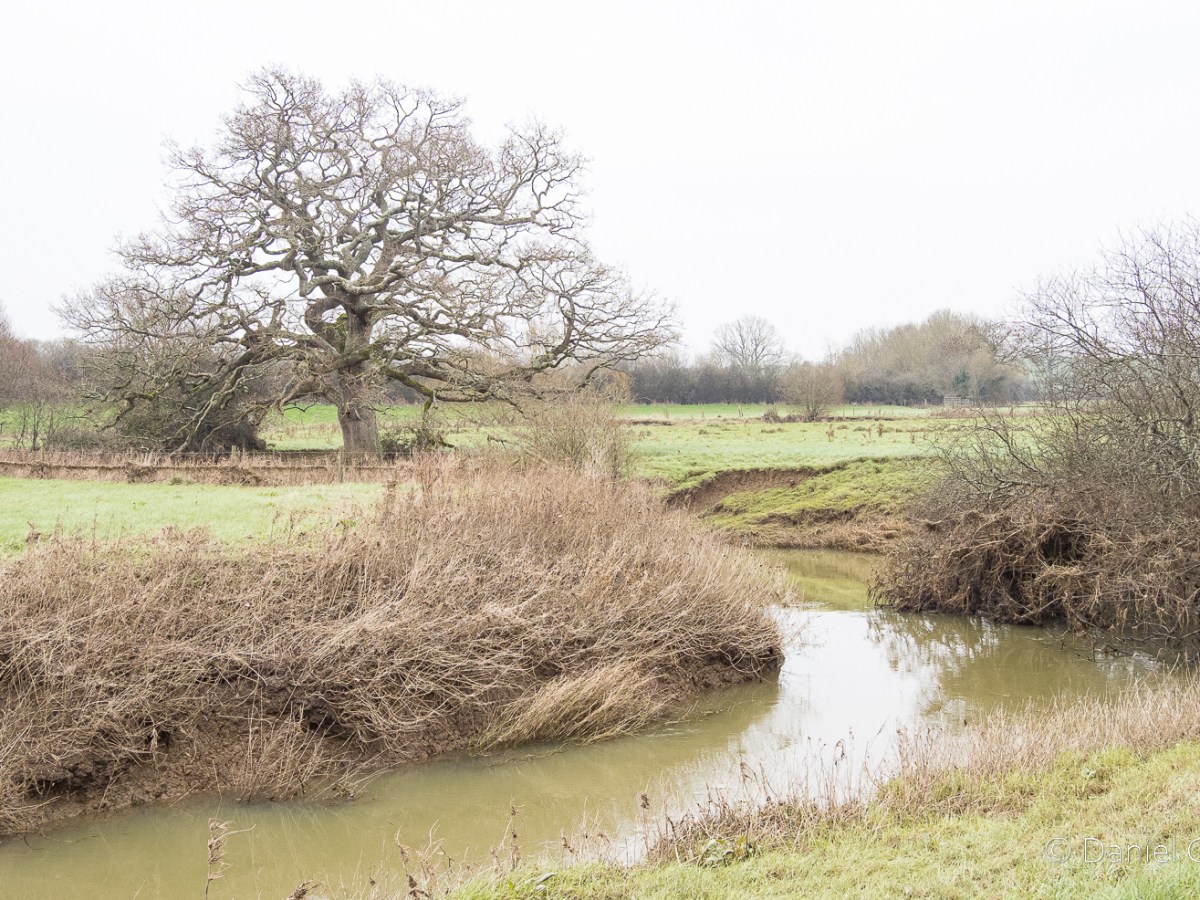
Moons are easier to come by than ‘shrooms, the main focus of my walk around a wet woodland reserve where the river ran free of its banks, merging among poplars like something from prehistory (i.e. no Internet).

A boardwalk cuts the edge of the wetlands where I usually expect to find velvet shank mushrooms. Along with scarlet elf cup, this is one of the winter gems of the fungal kingdom in Northern Europe. In truth, I didn’t find any that I could photograph without having to (theoretically) enter into a wetsuit or small boat.

Instead it was a coastal species that proved easiest to snap, if only in name. One of my favourite Twitter accounts and reader of this blog recently posted some oyster mushroom photos. Another timeline glimpse made me think – this is a seasonal trend, and I should keep an eye out in real life.

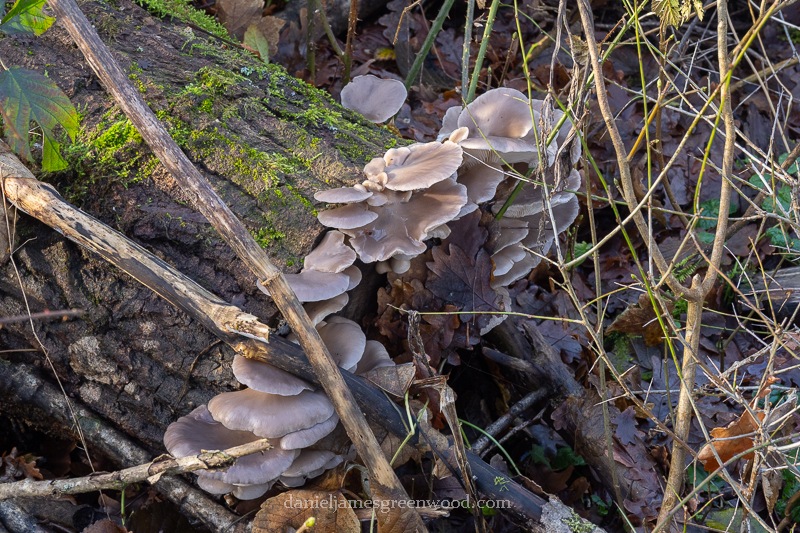
They’re a beautiful fungus with dark, purple-grey tops and pale, almost white gills underneath. They’re edible, but I was just there for the pics. You can buy them in the shops or grow them yourself at home. Another friend/regular reader even has them growing in her garden from timber sleepers. Well jel.

One of my favourite actual, single funguses lives here. I’m pretty sure it’s a willow bracket, growing from the bottom of a branch like a hat plucked off someone’s head below/a UFO/some kind of weird leather cushion from the Victorian period.

It makes me laugh every single time. A reminder: if some part of nature isn’t humouring you, “you’re not doing it right”.

Thanks for reading.

Fungi | Sussex Weald

Recent posts

November 2025: beware of pity

I’ve had a burst of American visitors in recent days (to my blog, not my house). So thanks for visiting, y’all, and sorry about the year you’ve had. You may have noticed I’ve slipped to monthly posts on here. Between April and October I posted blogs every Monday without pause, which is a tricky task…

Summer-autumn 2025: unveiling the sun

Here’s my seasonal update of stuff you don’t need to know about, but then welcome to the Internet. What I’m writing Soon I will be self-publishing my third poetry collection, Fool’s Wood. It’s seven years since my last one and this collection has taken longer because of LIFE. There will be a booklet and also…

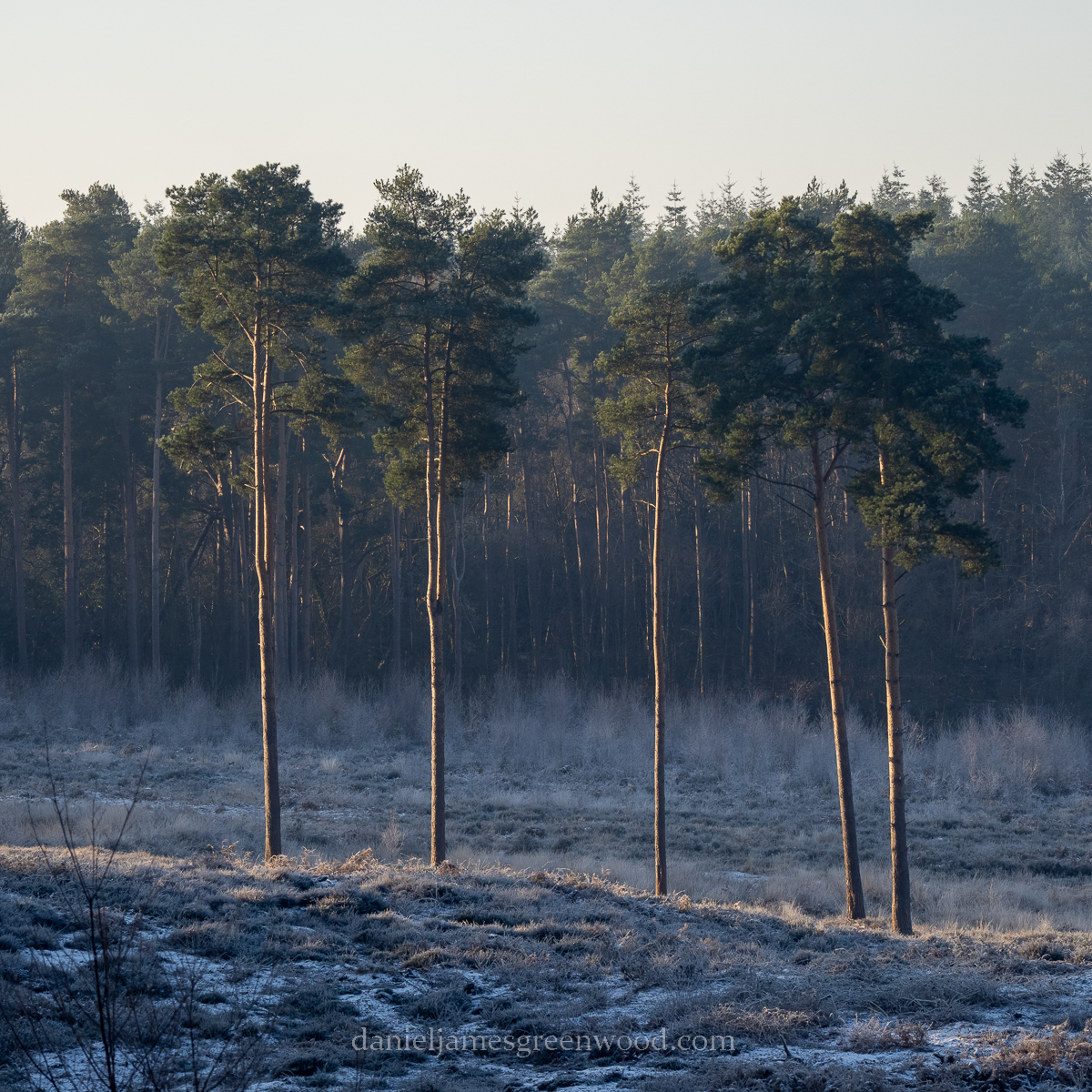
Five pines at Pulborough 🌲

Pulborough Brooks, West Sussex, Friday 16th December 2022

I arrived at Pulborough Brooks as the sun began to rise over Wiggonholt, the heath on the hill.

There are five pine trees that stand together in the open heath, I always seek them out in this light.

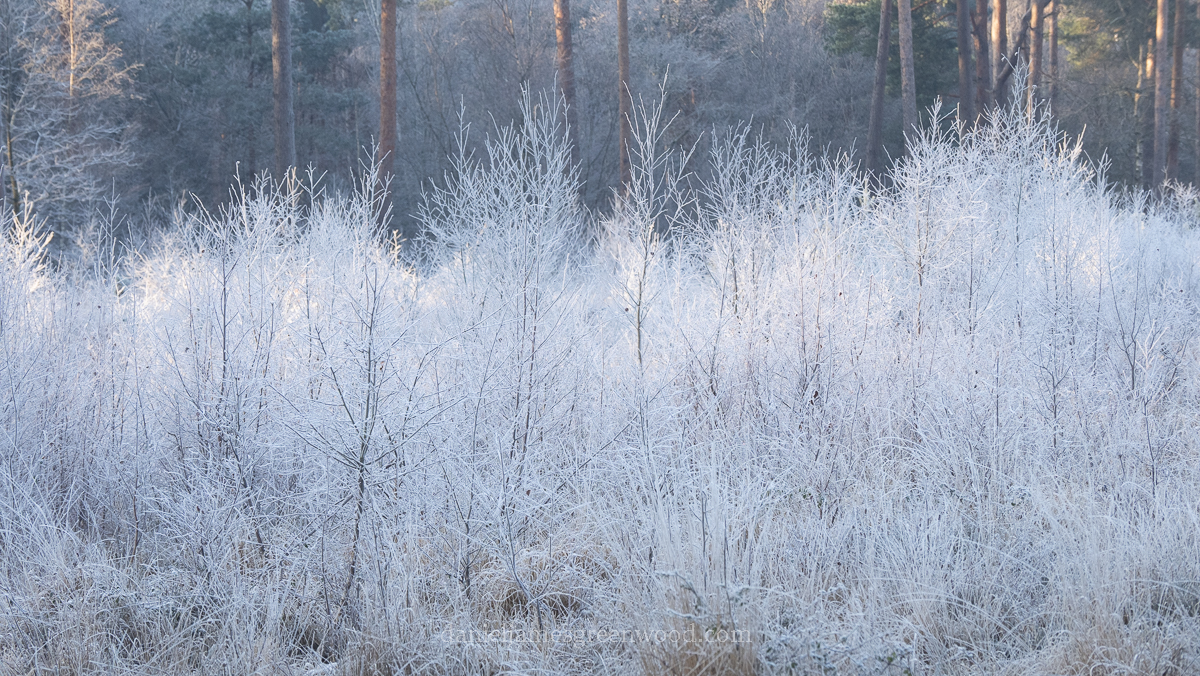
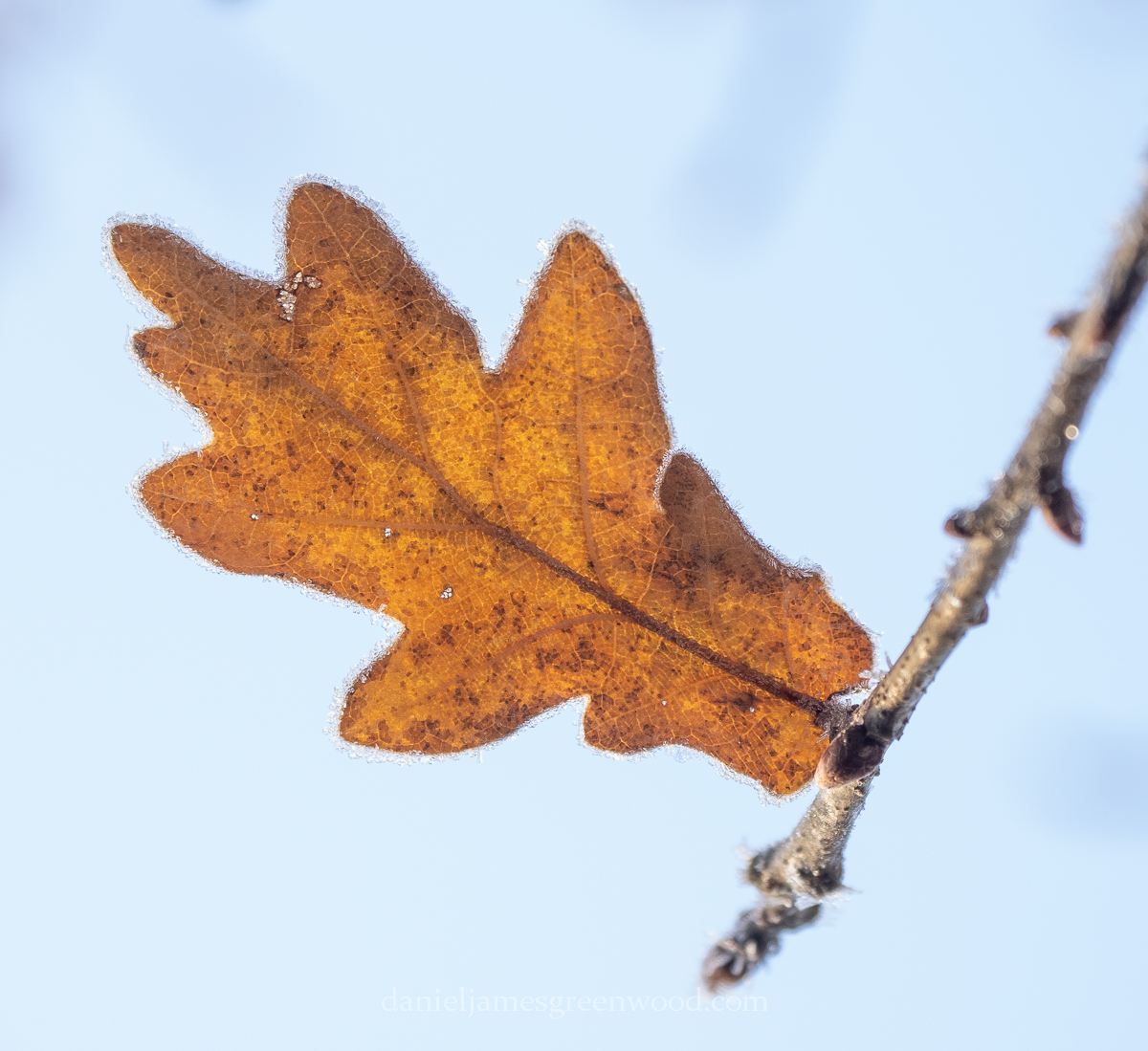
Frost encrusted everything where the sun was yet to reach. Young birches were thick with hoar frost, the yellow leaves of oaks held an edge of ice flakes.

There was little to hear, so much so that even a goldcrest moving through brambles made a sound.

Further round the hill the Highland Cattle were grazing among the frozen bracken. They looked so at home in their Viking get-up, heavy coats whitened by the temperatures. At 8am it was -5.

Out onto the reserve a winter landscape opened out: rock-hard fields with a herd of deer making a break for it; frozen ponds and lakes without ducks and wading birds; and in the distance the South Downs almost hidden by a rising mist.

Thanks for reading.

Sussex Weald | Photography

Recent posts:

Salisbury’s oak timbers

Here’s another entry in my slow-blogging Oak Timbers series. You can view my galleries and posts archive here. I visited Salisbury in Wiltshire (south-west England) for the first time in 2023 and was really charmed by the place. If you’re interested in this kind of thing, Salisbury is the place for you. Here’s a gallery…

Podcast: September fungi walk 🍄

I’m getting into more of a routine of recording and editing audio, so here is the latest episode of Unlocking Landscapes. Listen on Podbean or via the usual platforms. Also via YouTube: https://youtu.be/y1K9Pqx68to?si=B-Fdhf3sdDH35Z8w Following on from July’s rather optimistic fungi walk, I popped back to the same area of ancient Wealden woodland to see if…

Austrian Alps: Innsbruck by sleeper train

Innsbruck, Tyrol, Austria, June 2025 This is a longer post of the images I captured during a recent visit to Innsbruck in the Austrian Alps. We travelled to Innsbruck on a sleeper train from Amsterdam. It’s such a great experience and is significantly lower in carbon emissions compared with flying. If you consider the fact…

December leaves 🍂

One of my favourite things to photograph in winter is a frost-encrusted leaf. Where the frost remains long enough it allows for us non-early risers to enjoy some at lunchtime (to look at, rather than eat).

On the morning of Thursday 8th December I could hear sycamore leaves falling in the garden. There was a thick frost, the trigger for these leaves to let go.

At a nearby nature reserve I found this yellow hawthorn leaf, a colour hawthorn isn’t really known for. It’s one of the most underrated trees, despite its prevalence, and ecological and cultural value in England.

The image doesn’t do the real thing justice but even lichens get frosty sometimes. This is a little cluster of oak moss lichen that had fallen from a tree.

Thanks for reading.

Sussex Weald

Latest from the Blog

Postcards from Western Ireland, September 2025 🇮🇪

I’m back from my annual visit to the west of Ireland. I managed a couple of day trips to forage for photos, which will crystallise later this year into dedicated posts, all being well. Like many people I enjoy the Blind Boy Podcast, none more so when I have the headspace to take in all…

Mushrooms in England

This is the first of a series of posts I’ve been working on covering national relationships with mushrooms. It’s just a bit of fun, but there’s definitely some interesting stuff to share.

Late summer timbers at the Weald & Downland Museum

In August I made my annual visit to the Weald and Downland Living Museum in the South Downs. You can see my timber-framed building photo gallery here. This is the first view you encounter inside the museum grounds after you pay your entry fee. Amazing to think the medieval hall house is from Cray in…

Splitgill fungus, another weird one! 🍄

I encountered splitgill fungus again at the end of October. It’s a very attractive species due to its interesting ‘split gills’. But it also has a fascinating biological story. I considered outlandish titles for this blog post, including ‘the fungus that has 20,000 sexes and sometimes lives in humans’. After researching a bit more, that 20,000+ figure was so common it looked like clickbait. I have standards, people.

Visually splitgill fungus is known for its vein-like gills, as seen in some of the images here. Otherwise it’s known for its potentially serious impact on the lungs if you’re ever incredibly unlucky enough to have it make a home in, well, you. As Covid-19 has reminded us, despite our attempts to lord it all over nature, we are a habitat in ourselves, with fungal spores also being present in our bodies as they are pretty much everywhere in the environment.

The splitgill apparently has 28,000 sexes, which may not be as remarkable as us simple humans think. I don’t have the space to go into sex in fungi on this blog, it’s complicated, but it’s also not the same as it is for humans.

The splitgill is also perhaps the most widespread fungus in the world.

It’s a species I most often find on deadwood, usually on fallen beech trees in Sussex. It’s particularly visible in the winter months.

One of the best articles online about the splitgill mushroom is this one, from February 2000! I was a teenager just encountering chat rooms then via my parents’ 56k dial-up modem. Coincidentally, the author of this blog, Tom Volk, passed away in recent weeks. He obviously has contributed a great deal to people’s enjoyment and understanding of the fungal kingdom.

As mentioned earlier, splitgill fungus is also known for some extreme medical issues in isolated cases. Not that you should worry about it:

This is a very interesting YouTube video on the Learn Your Land channel. It lays out all the information about the fungus affecting people medically, and some examples, in a much more interesting way than I can here. Do have a look if you want to know more.

Thanks for reading.

Further reading: Fungi | Sussex Weald

Latest from the Blog

Going to Battle (the village)

Not that kind of battle, but instead to the village in East Sussex. Battle the village is the site of one of the major battles of the Norman Conquest of England of 1066, when the Normans invaded Britain and defeated the Anglo-Saxons. It’s a period in history that absolutely fascinates me. The land ownership brought…

Books: Reading the First World War

It’s been more than 20 years since I studied First World War fiction in sixth form college. It remains some of my favourite reading and has dominated my book consumption of late, so here’s a run-through of my adventures in this very challenging area of literature and history. My family and the First World War…

White saddle: one of the weird ones🍄

On 24th October 2022 I spent the morning taking photos of fungi in the Sussex Weald, and was treated to one of the final flourishes of the season. There had been heavy rainfall in recent days and the beech leaf fall had begun, meaning that the mushrooms were beginning to disappear. This often marks the end of the main mushroom glut in autumn, from my experience.

To fast forward to the end, just as I was on my way out of the woods and putting my camera away, I noticed what looked like discarded tissue in a ditch at the edge of the track.

I soon realised that these were white saddles (Helvella crispa).

This is a very unusual looking fungus and isn’t the typical gilled mushroom despite their appearance of having a stipe and something resembling a cap. They’re actually ascomycete fungi, so spore-shooters, rather than the often gilled basidiomycetes.

Here’s an update on the status of the violet webcap which I blogged about again in 2022. It won’t thank me.

The sun shifted into the line of this false deathcap (Amanita citrina – about to become several different species!) and made a very nice autumn scene.

Brittlegills are some of the most photogenic little mushrooms, largely due to their clean stipe and gills, and fruit gum-like caps. I’m not sure of this species but I like it.

A Medusa-like group of honey fungus (the most feared fungus in the world).

A younger patch of fruiting bodies, where you can see the lovely honey colour.

I’ve not encountered much stagshorn this year, perhaps only during this walk, which seems unusual.

A puffball at the point of puff.

Elsewhere in the weird fungus stakes is this scalycap growing out of a hole in a beech tree. It was as large and intrusive as it looks here.

Thanks for reading.

Further reading: Fungi | Sussex Weald

Latest from the Blog

The ash tree’s survival

I noticed some good news about ash trees recently and wanted to share my experience of a difficult decade for the European ash (Fraxinus excelsior, referred to here as ‘ash’), as well as some of the photos I’ve taken of this iconic tree.

Podcast: summer fungi walk

Earlier this week I went for a short walk around part of the Sussex Weald to see if any mushrooms had popped up.