This week Iโve been researching an article about deadly mushrooms. That post will appear here at some point but I felt like I needed to fit in some quality time with fungi in real life, especially as we have technically entered autumn. I visited somewhere in the Sussex Low Weald which is one of the most reliable fungi reserves I know.
In reality I found almost nothing, but for one of the most deadly mushrooms in the business: the deathcap (Amanita phalloides).
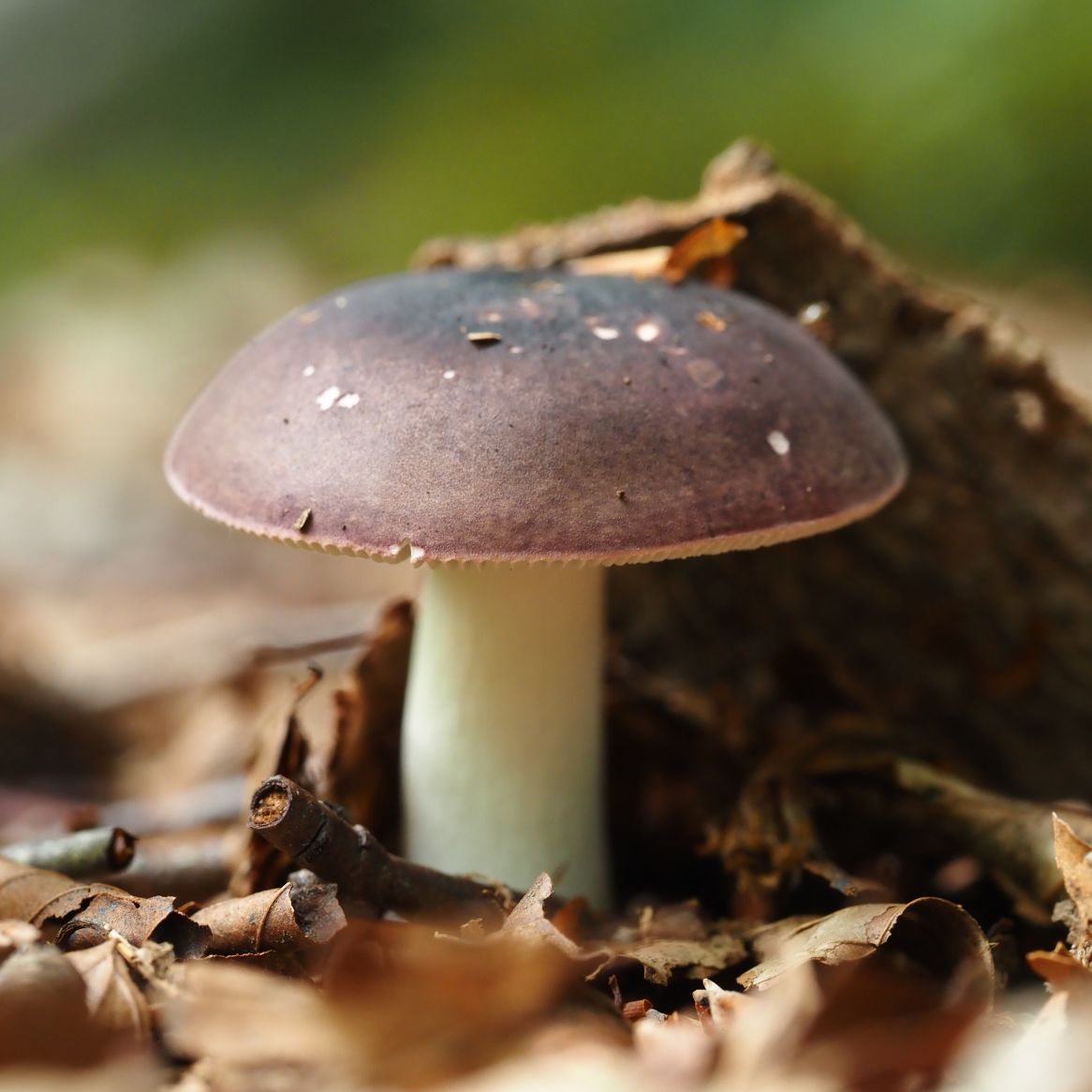
I found these two deathcaps growing close together underneath a beech tree. There was something so very strange about this, seeing as I’d spent the previous day reading about them, and only the second time I’ve encountered the species. Both sightings were in September. The bite taken out of one of the mushrooms is a good pointer to the fact that other animals can eat this fungus and not die. Unlike many people who have sadly passed away after mistaking this fungus for something edible.
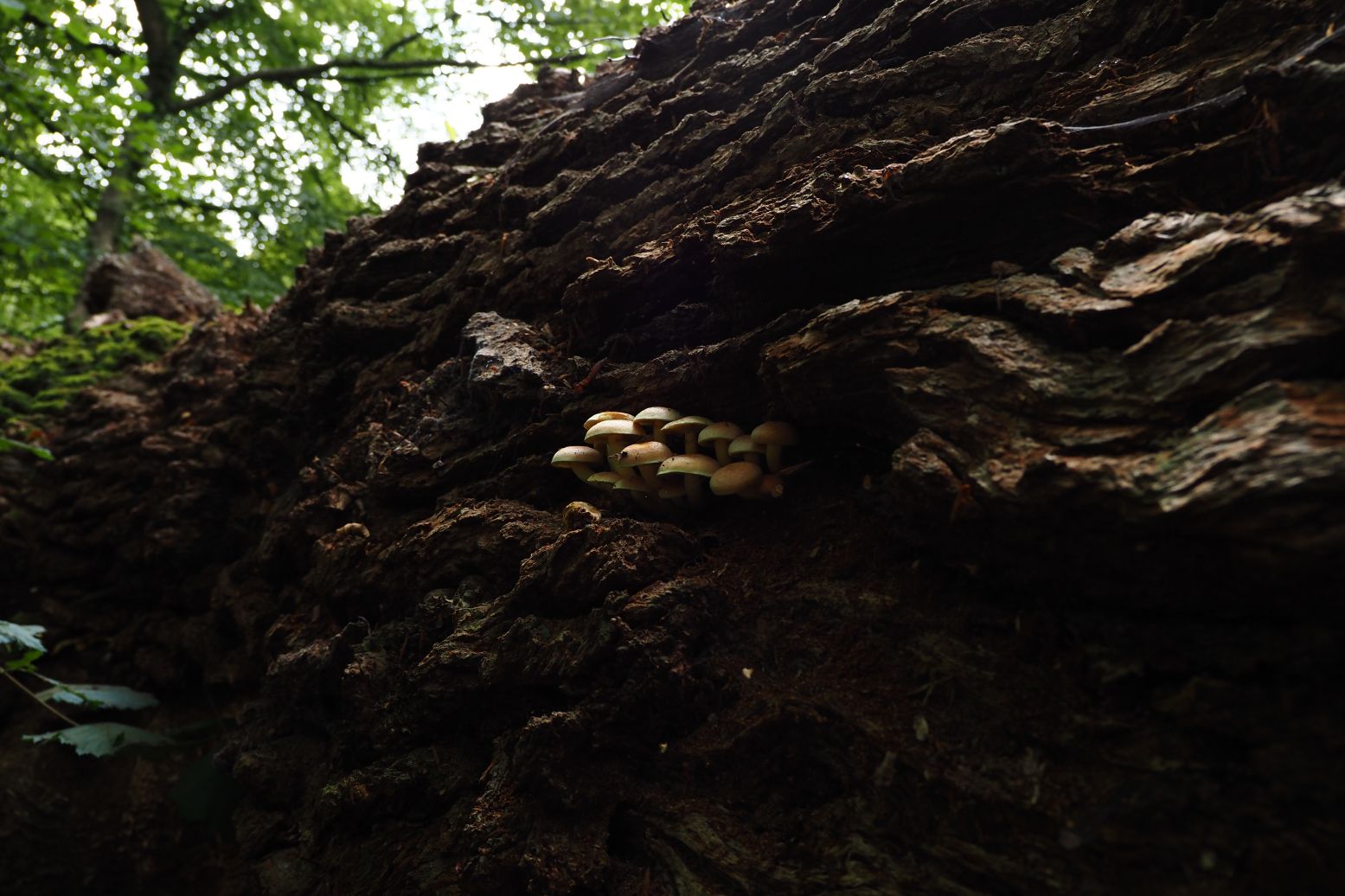
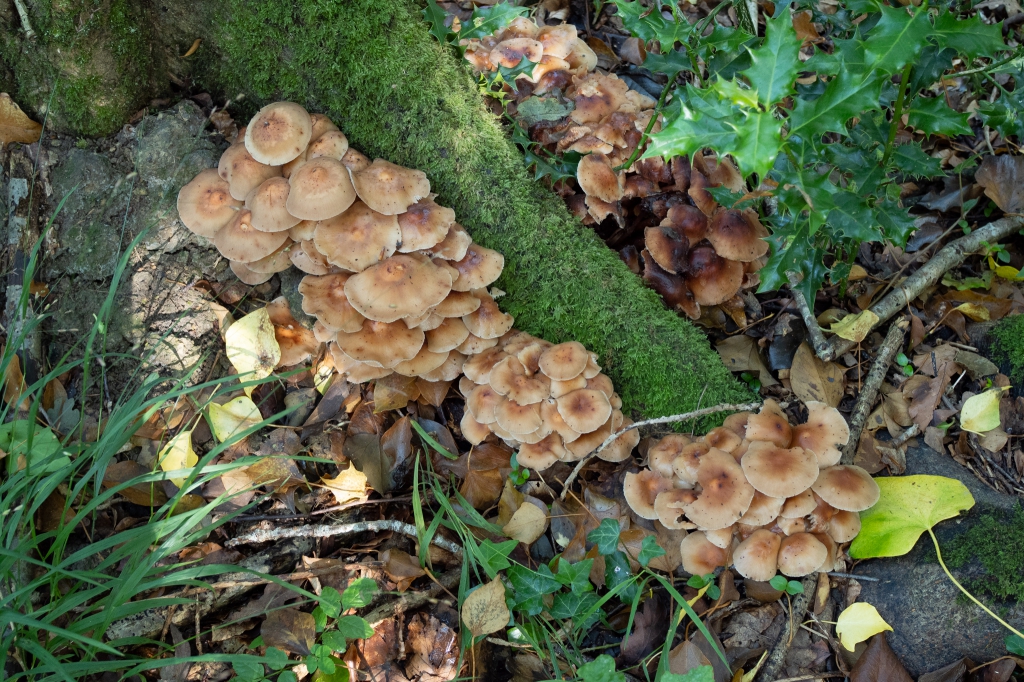
To find mushrooms to photograph in these dry periods, one of the best bets is to seek out large deadwood, particularly wood in shade. Sulphur tuft was the other mushroom I found, another toxic species. Seriously, what is that all about! Back off, nature.
In truth, sulphur tuft is one of the most photogenic species you can find. At this time of year when there is less rain it looks fantastic. It’s also supposed to be bioluminescent, glow-in-the-dark:
If you’re interested in that, this excellent podcast episode of The Mushroom Hour is a must listen. I learned that it could be the case that many more species of fungi were once bioluminescent. Over time, they have lost it.
Lichens are, fundamentally, ascomycote fungi. This means that they are much happier in wet weather. I was looking around an old oak stump when I found this beautiful heart-shaped Usnea lichen.
It’s nice to end on a fungus that won’t kill you.
Thanks for reading. Don’t eat poisonous mushrooms.
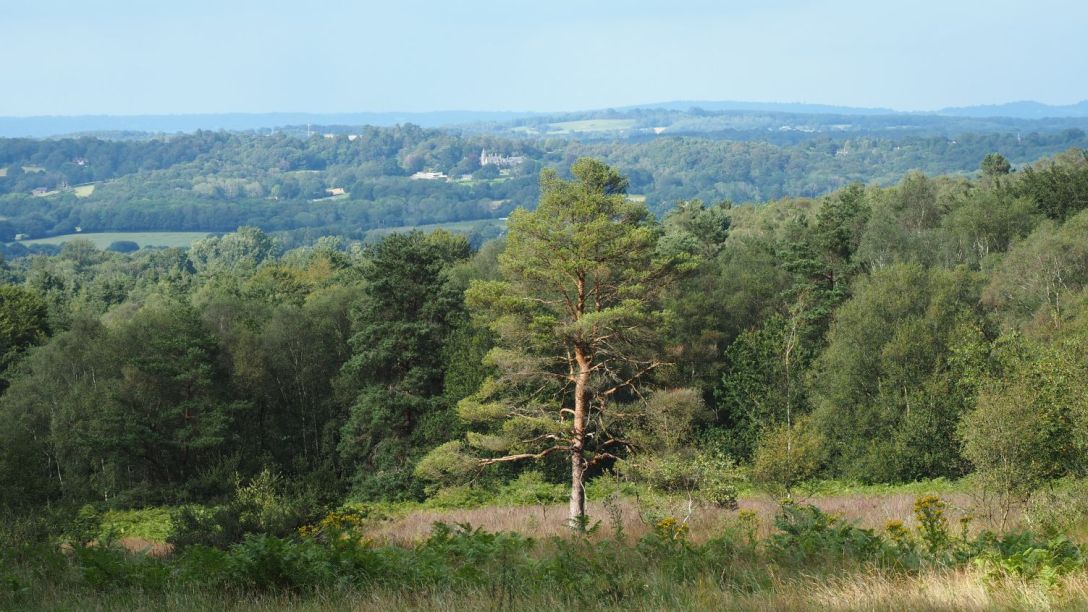
I was lucky enough to have a couple of hours to spend in Ashdown Forest last week. The light was beautiful and the views expansive across this famous part of the Sussex Weald. For those who don’t know, Ashdown Forest was the inspiration for A.A. Milne’s Winnie the Pooh. I very nearly titled this blog ‘Winnie the shroom bear’.
The mushroom situation at the moment in Sussex is one of a twilight late summer boom, with not really enough rain recently to feed the fungi and maintain the fruiting window. However, where there is shade there is moisture and therefore there is hope.
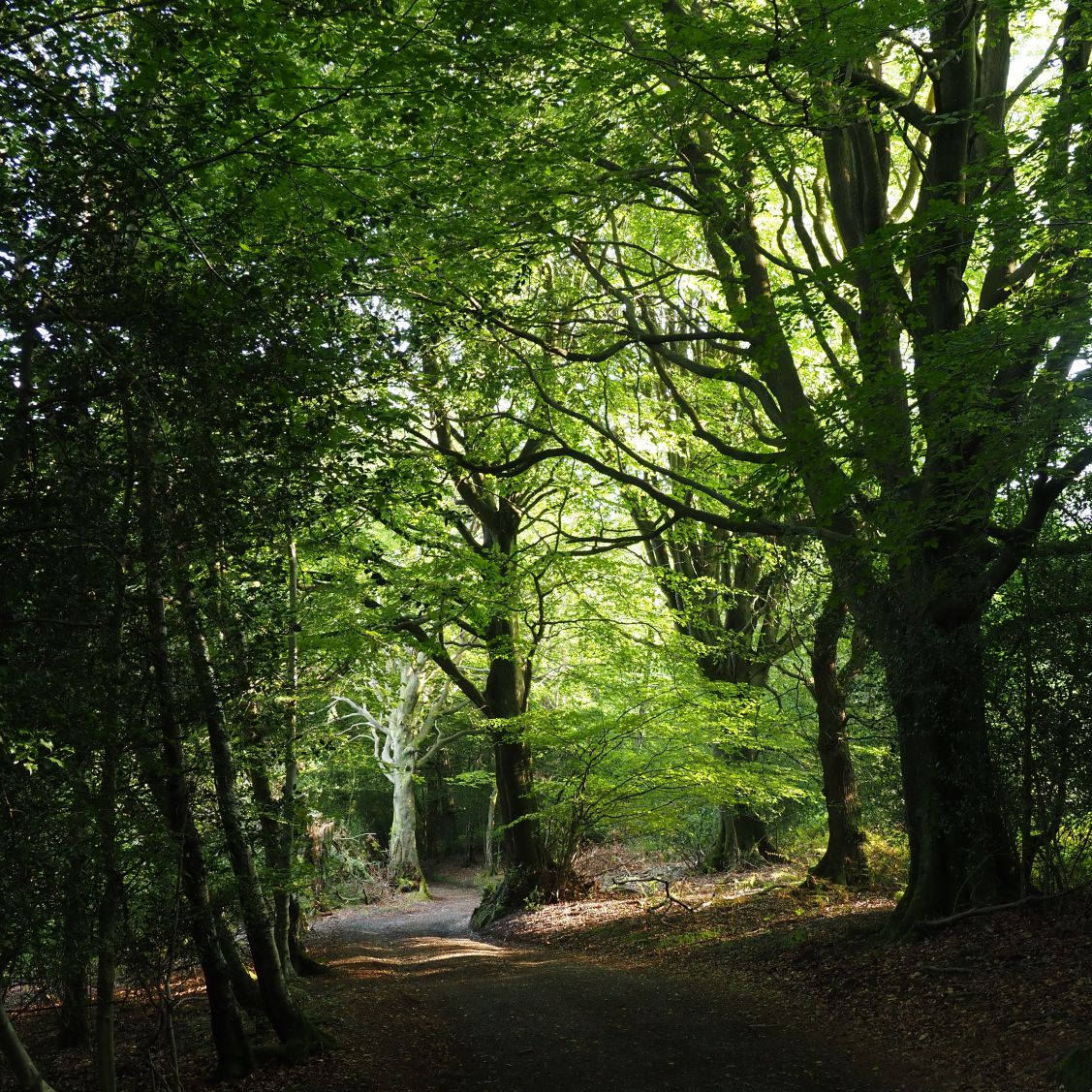
I followed a path into the woodland, away from Ashdown Forestโs famous heathlands. The ground did look quite dry, so I wasnโt expecting to find too much growing from the soil.
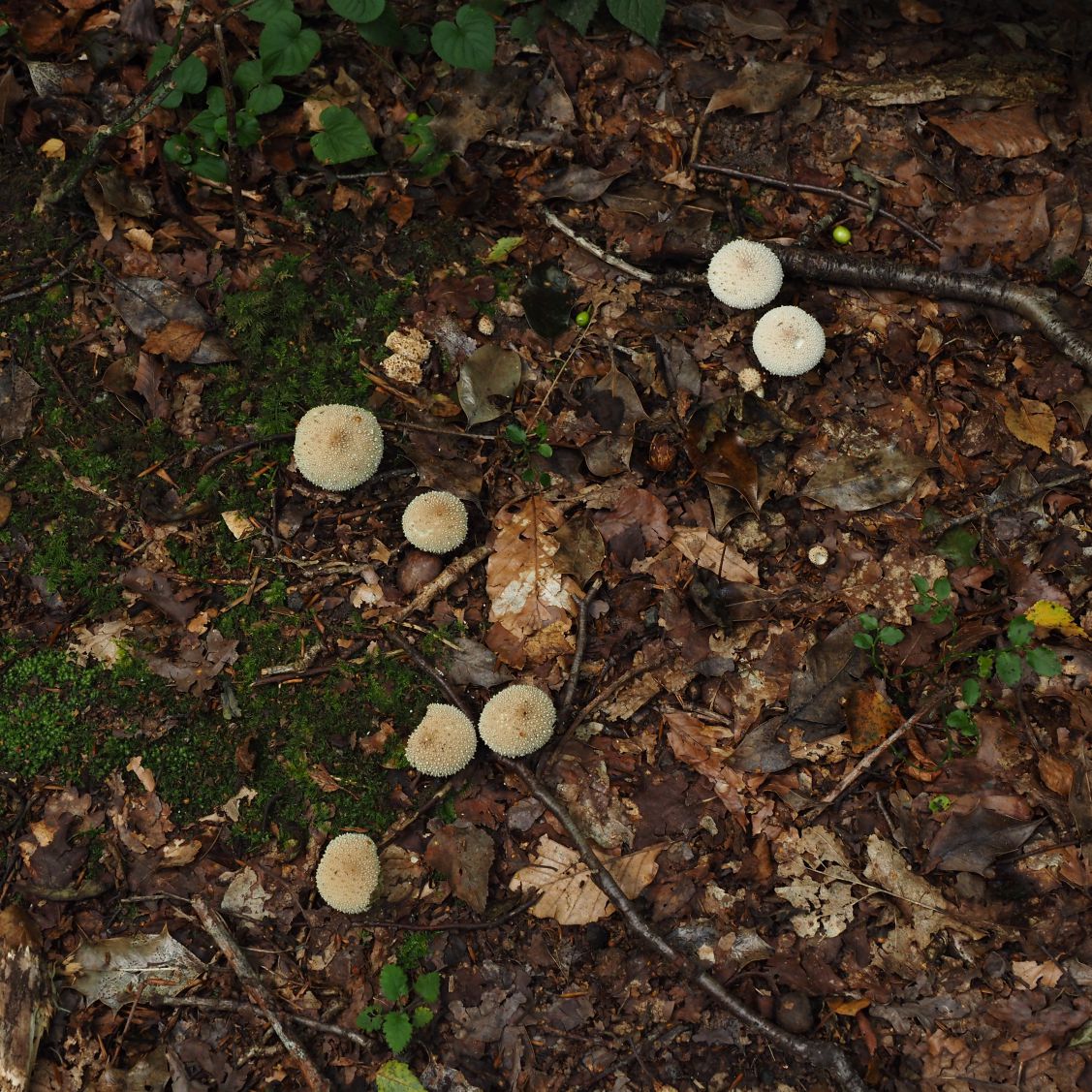
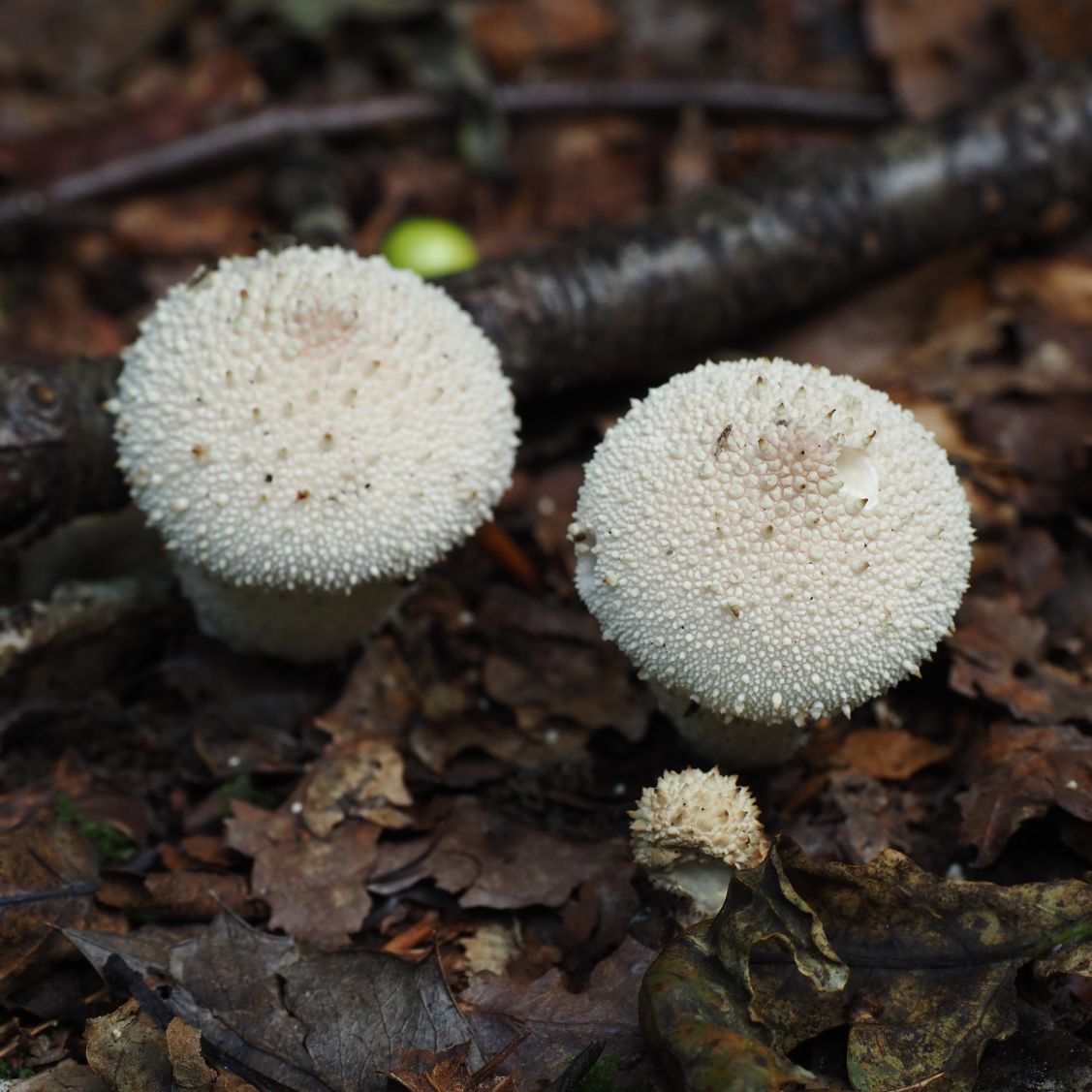
My first sighting was, in fact, in the soil. In the shade at the edge of the path I found a group of common puffballs.
This is an edible species, and though two looked in fairly good condition, I wasn’t looking to forage for food.
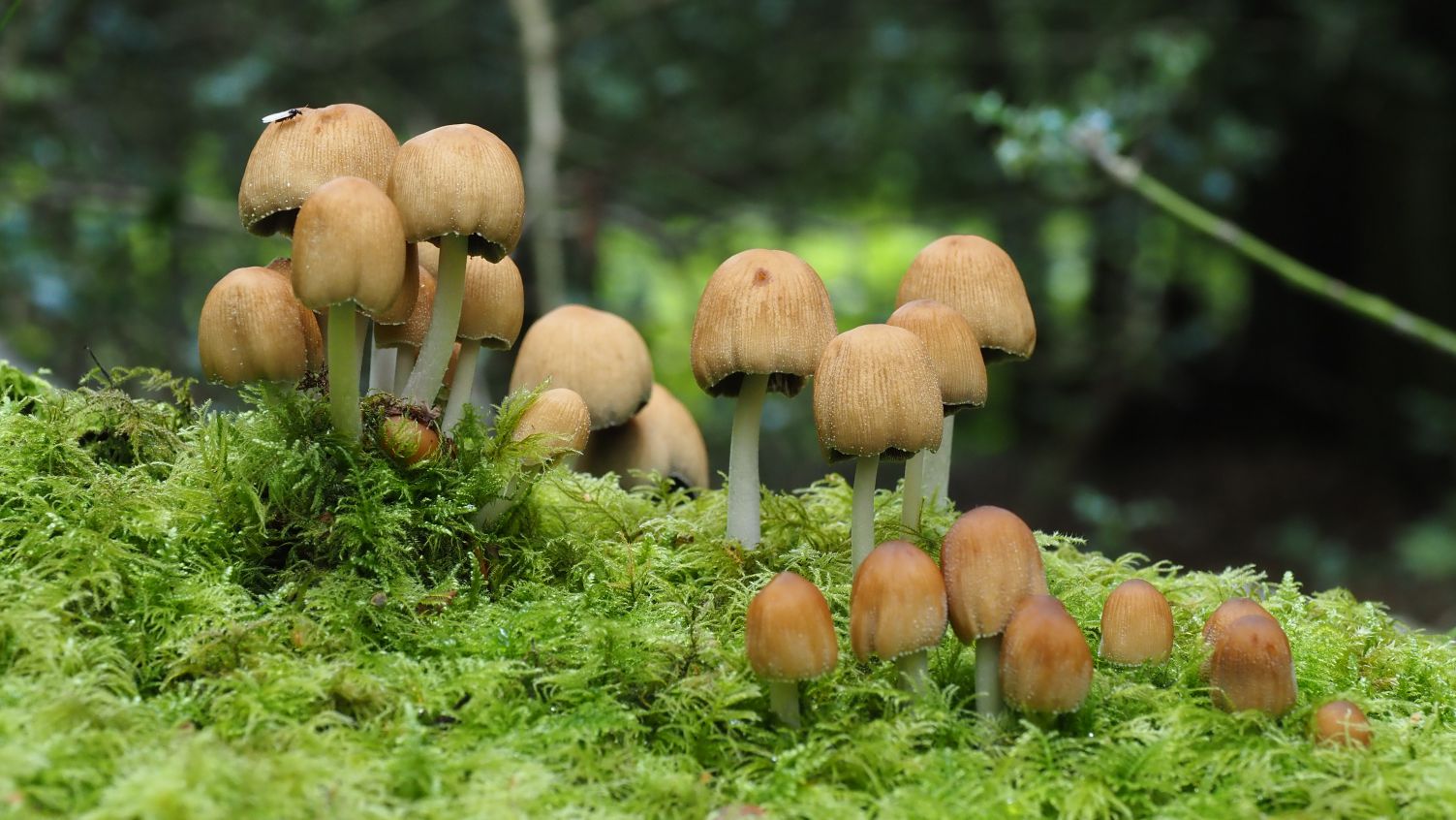
On the opposite side of the path a piece of wood was covered in feather moss. The moss was home to a gathering of glistening inkcap mushrooms. They were in wonderful condition, with varying stages of growth in the bright green bed of bryophytes.
Under a beech tree I noticed some large fallen wood sitting in heavy shade. This is always a good place to find fungi because there will be high levels of moisture and damp throughout the year. Especially under beech which casts heavy shade through its leafing phase.
My guess for this species would be stump puffball which grows in large numbers on decaying wood. From a distance they looked like fairy inkcap, but were of course much larger when looking properly. As I knelt down to take these photos, the sunlight broke through on occasion and then faded away. It was a fateful fungi photo.
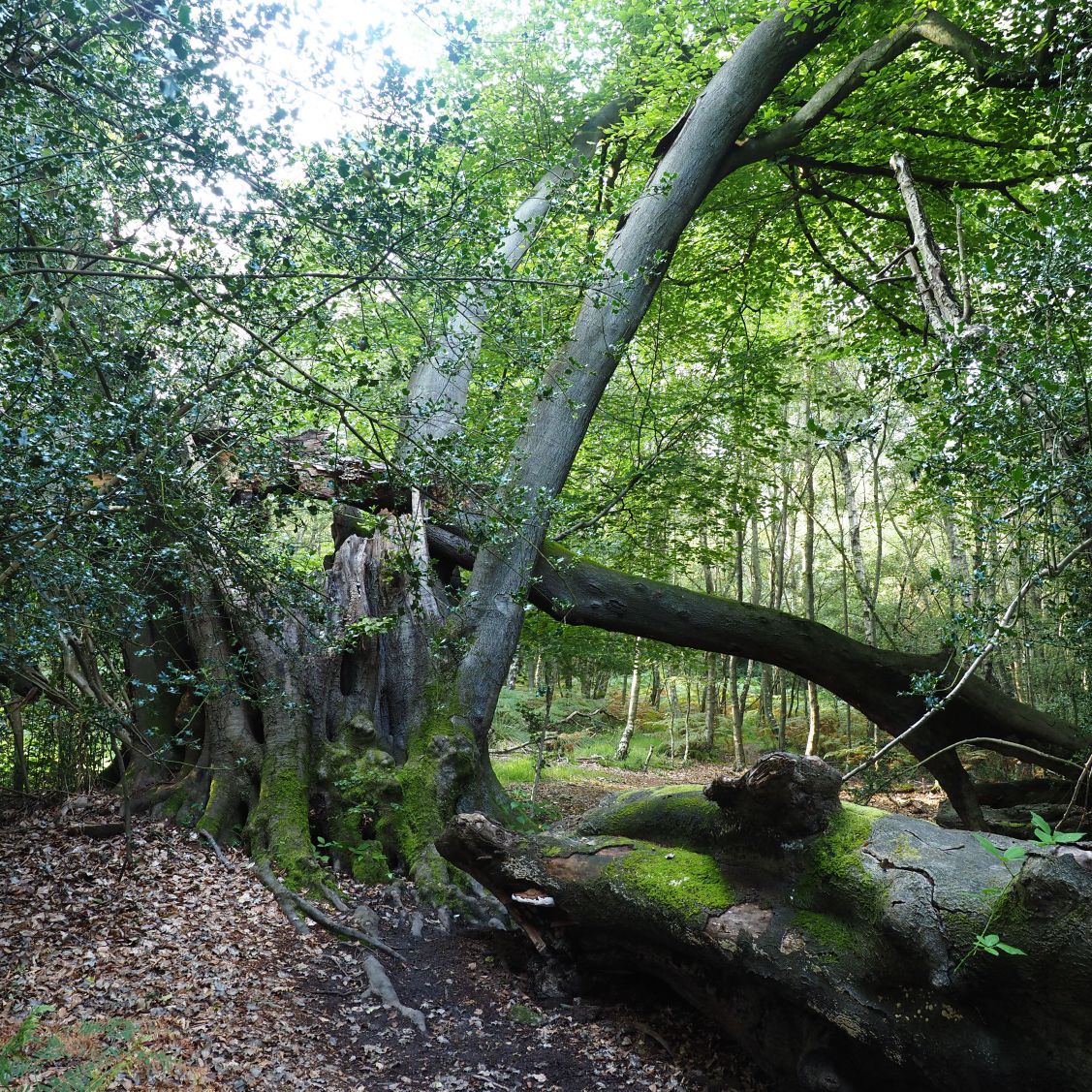
Off of the path, as I considered whether there was enough time to take things a bit deeper into the woodland, I found an incredible beech tree. This looked like an old beech pollard (regularly cut high) or perhaps a coppice (regularly cut to the stump for regrowth). It had lost a huge limb which lay in front of it, providing a home for a Ganoderma bracket fungus, as so many beech trees both standing and fallen do.
I donโt know Ashdown Forest at all well. It feels to me quite an elusive place. This short walk allowed me to experience more of its quiet allure. I hadnโt expected to see so many unusual beech trees, which would probably qualify as veteran with the discerning experts out there.
This is another wonderful beech tree which has experienced damage to its trunk. The image above shows the treeโs own โaerialโ roots feeding of its own decaying wood. No doubt fungi has its role here in helping the tree roots to feed on itself by softening up the wood with its own decay processes.
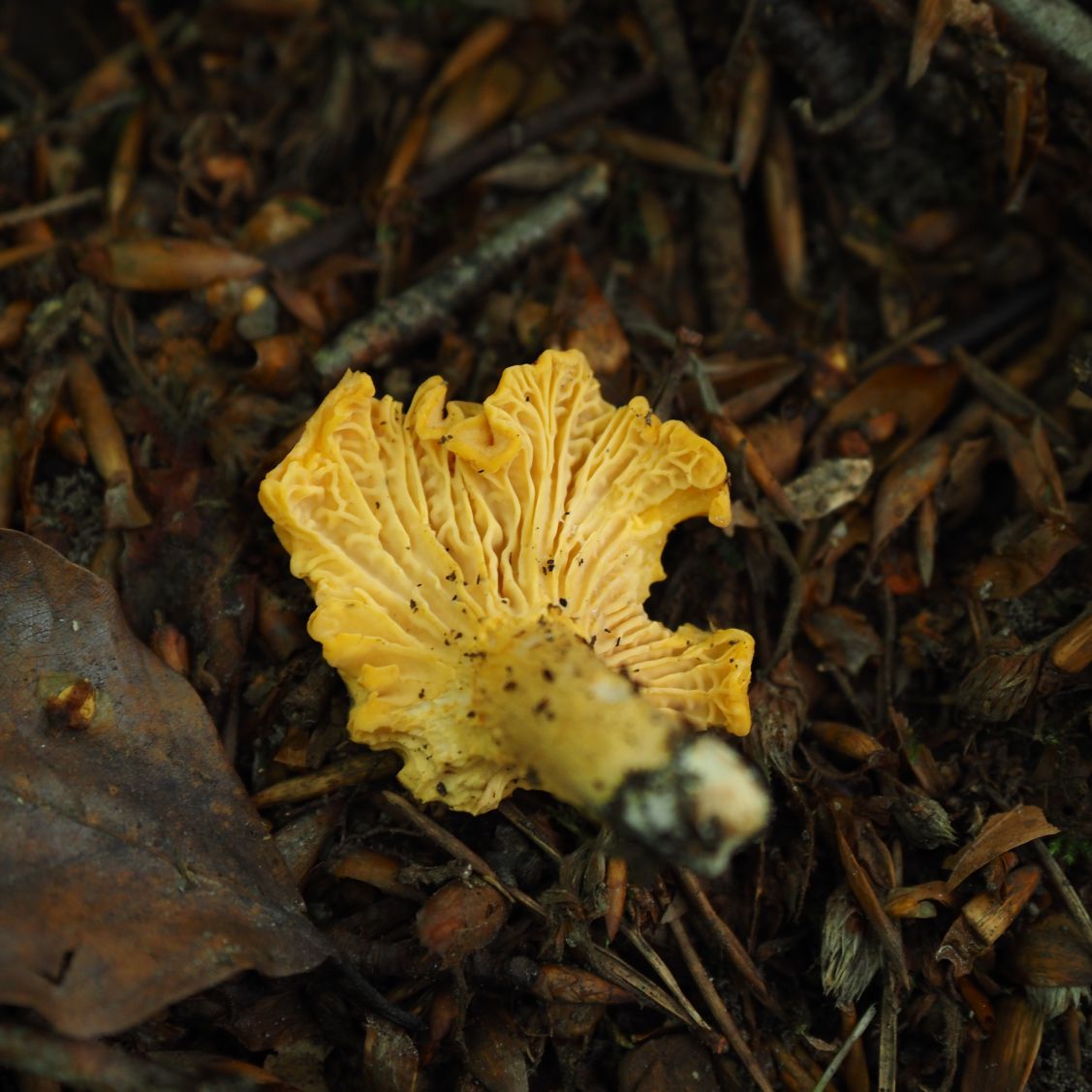
My hour was up and I had to head back to the car park. On the return leg I noticed some very small yellow mushrooms on the bank built up along the footpath. It clicked that they were probably chantarelles. I looked at the gills of one that had fallen loose and could confirm they were. There is a beech leaf in the left of the image above which provides scale โ they really were tiny.
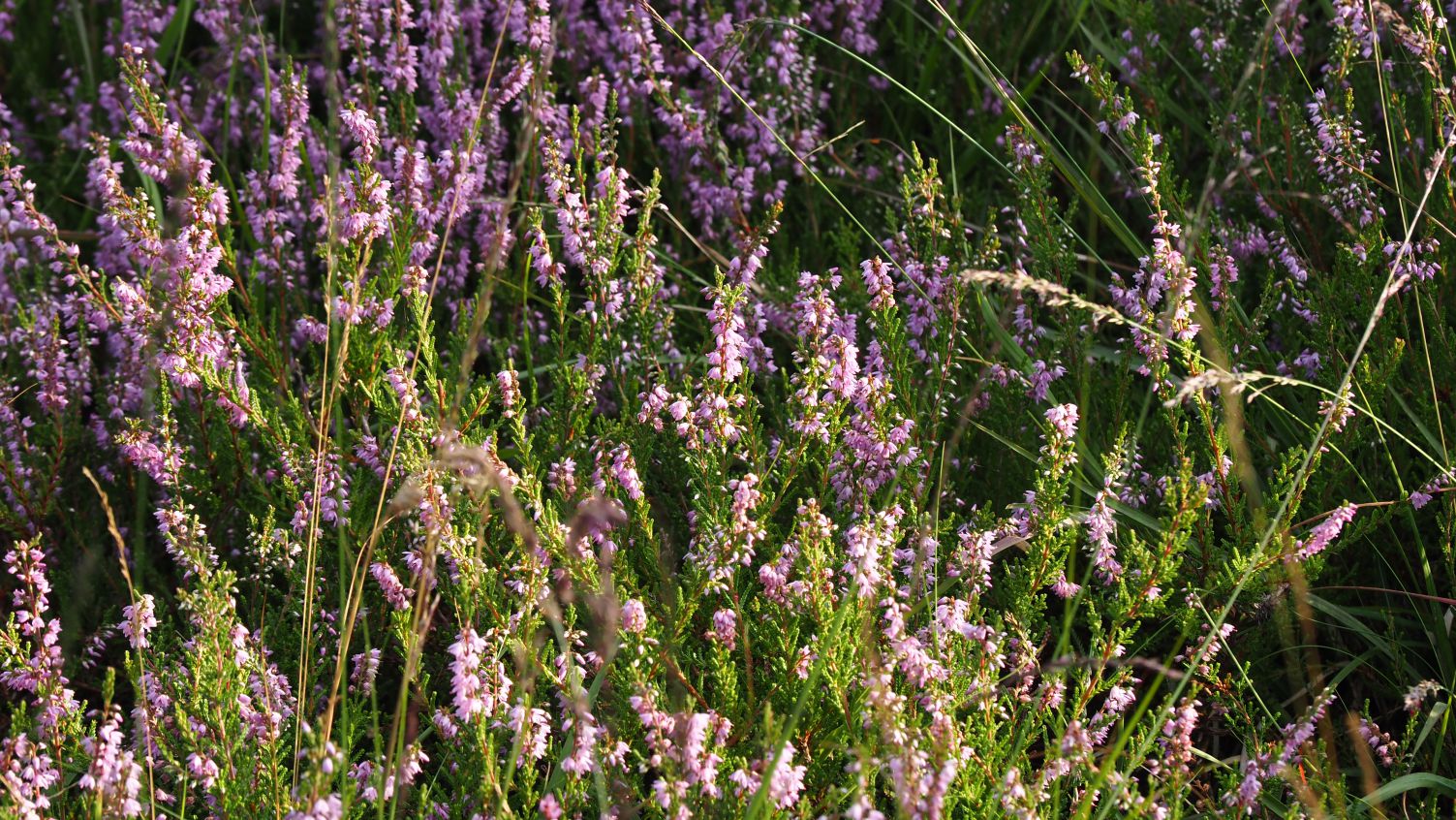
On the way out I noticed the heather was flowering, one of the final acts of summer. Itโs always good when there are shrooms on show to support this darkening shift in seasons. The days are getting shorter, the leaves will soon be on the turn and the mushrooms will be arriving.
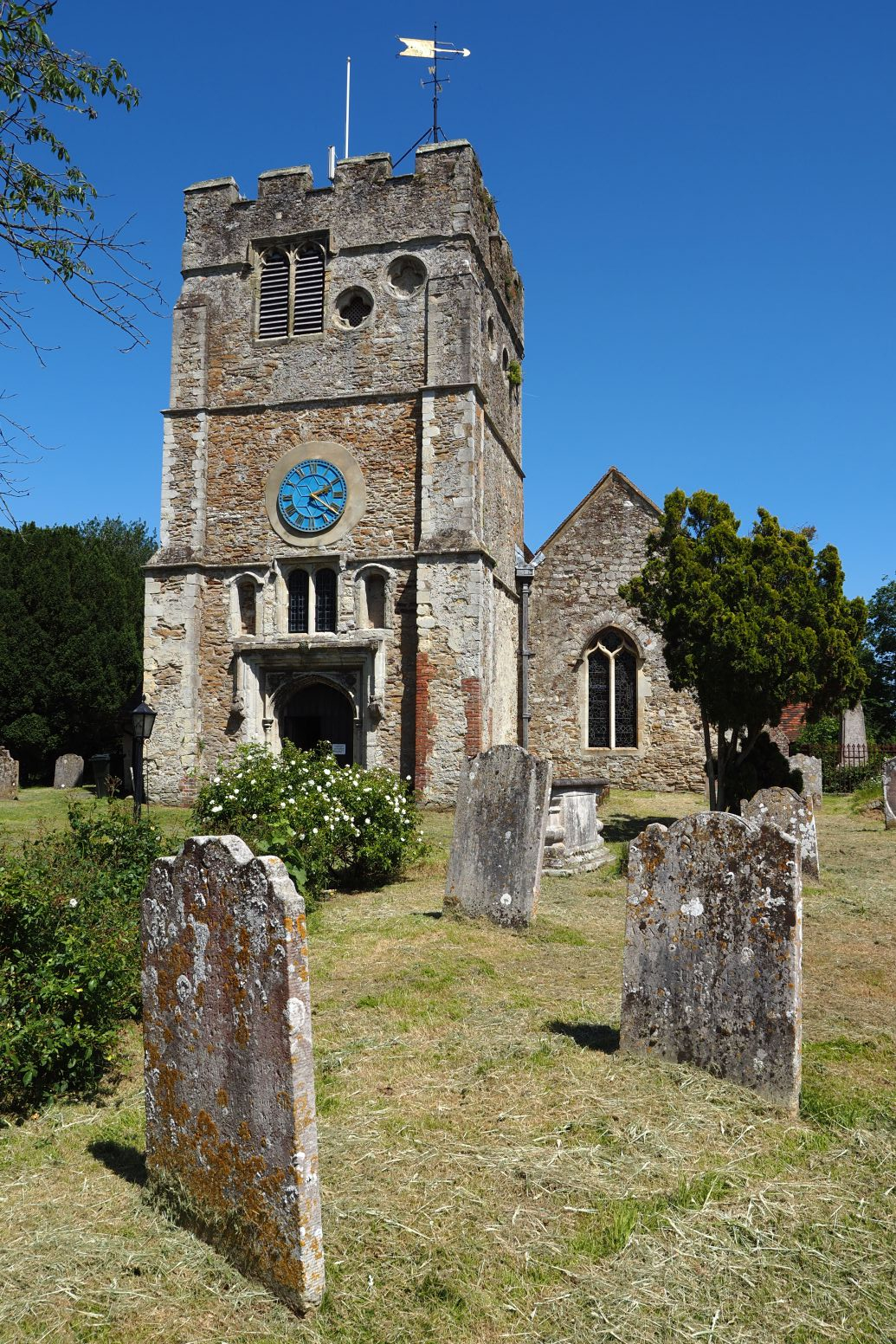
On several occasions I’ve had the pleasure of visiting the village of Appledore on the Kent side of the Kent/Sussex border. It’s where the Weald, a core subject area for this blog, moves between the two counties. A lot of what’s featured here is in the realm of Romney Marsh because of the connecting history of the landscape, at the south-eastern edge of the Weald. You can see a great interactive timeline of the history of Romney Marsh here.
The Church of St Peter and St Paul, Appledore, Kent
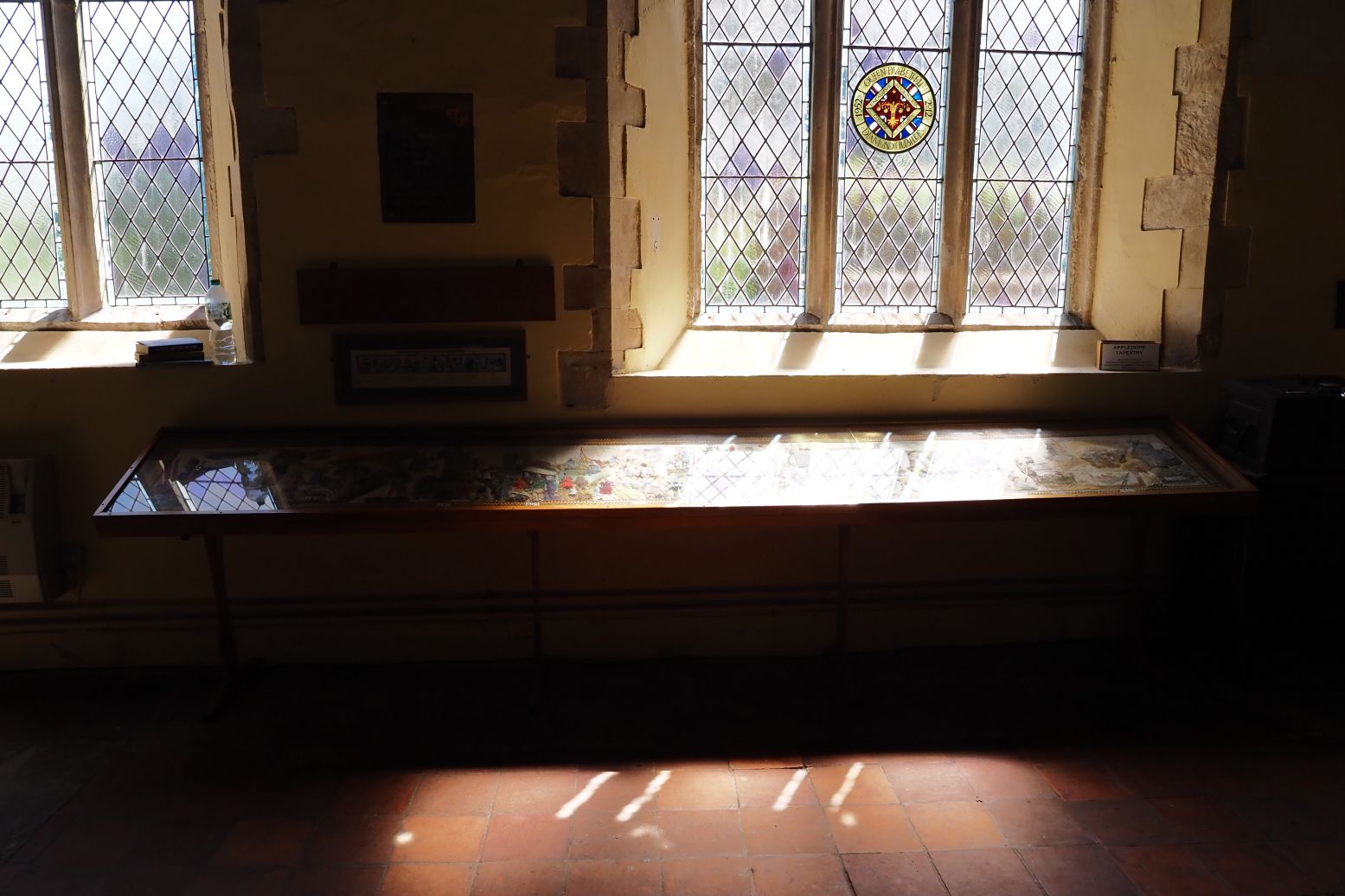
Churches are some of the most important cultural and historic places in England today. I personally find them very peaceful and welcome places to drop into, or shelter, often when out on a walk somewhere. The village of Appledore has a church steeped in history: The Church of St. Peter and St. Paul. Inside, there is a tapestry which was completed in 1988 to celebrate the church’s 800th birthday.
I don’t know much about tapestries beyond the obvious Bayeux Tapestry most English children studied at school, depicting the Norman Conquest of England in 1066. But this tapestry is a great achievement and contains beautiful details, documenting the incredible history of this part of what is now called England.
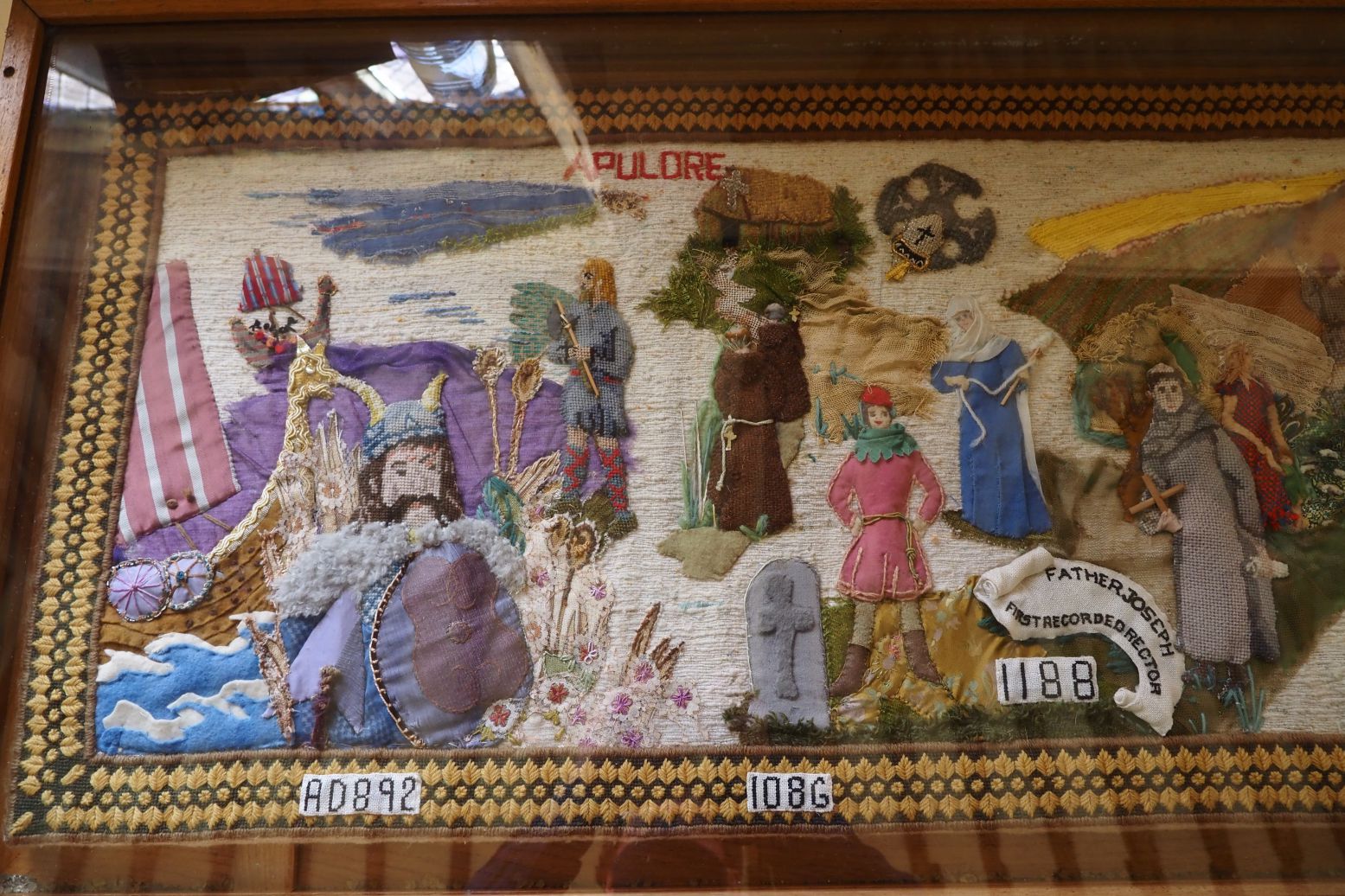
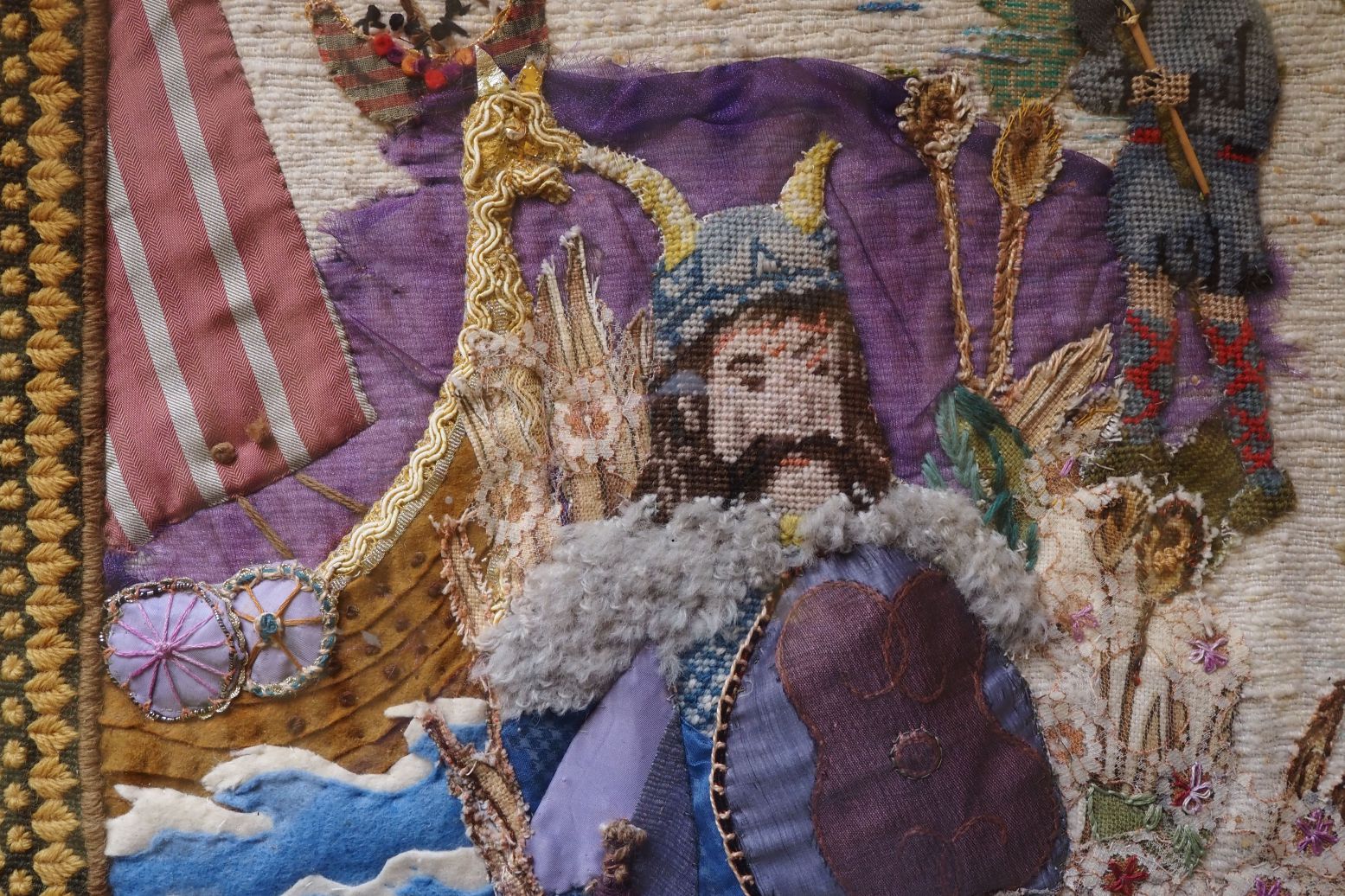
The tapestry begins with trouble for the local Anglo-Saxons, when 5000 vikings arrived from Denmark in the year 892 via the River Rother (the eastern Rother, rather than the West Sussex/East Hampshire Rother).
Scandinavian raiders had first dropped into England at Lindisfarne, Northumberland in 793, when they sacked the monasteries, killed the monks and took their valuables. At this point Appledore was known as Apuldre, meaning ‘apple tree’ in Old English. The Vikings would have definitely been interested in the apple trees. Here we can also see depictions of 1086 when the Domesday Book was completed after the Norman Conquest of 1066.
This is a little bit what I looked like after lockdown hairdresser restrictions were in place for several months, minus the beard. The detail is excellent, with the use of different materials to bring the scene to life, not least the viking man’s fleece.
To the left is an Anglo-Saxon man (with stereotypical, but not necessarily accurate, golden hair) watching as the vikings appeared, with axe in hand. Next to the old name for ‘Apuldre’ you can see what must have been the original church, a wooden building of Anglo-Saxon origin. Many Anglo-Saxon churches were destroyed and rebuilt in stone by the Norman invaders.
1188 shows us the first recorded rector, Father Joseph. The landscape behind appears to show a farmed landscape with reeds being cut from the wetlands of Romney Marsh. The English Knight may indicate the King Henry III leading an army to France.
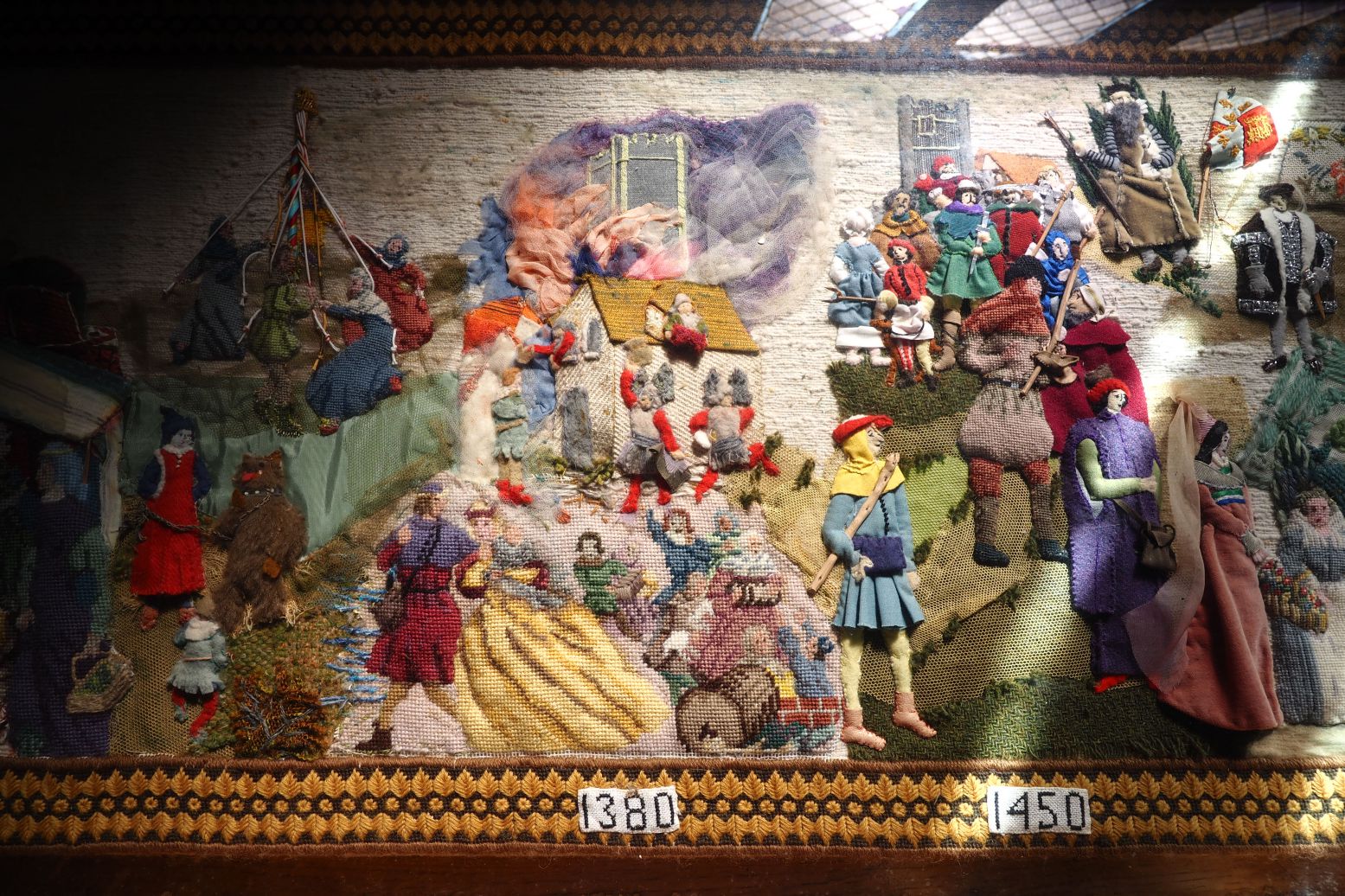
1380 highlights the burning of the church by French soldiers. I can’t find any other information on this other than it being described as a ‘raid’. There is long-running beef between England and France, with this part of Kent/Sussex vulnerable because it was so close to the Channel. In the top right you can see Henry VIII (1491-1547) hanging out.
Let’s take a look at those flames in greater detail. I think it’s likely the colours in the tapestry have been dimmed by its positioning next to the window, which makes the fire seem less severe.
In 1450 we see a group of people partaking in what I am guessing is Jack Cade’s Rebellion. This was a similar uprising to that of the Peasant’s Revolt in 1380:
Leading an army of men from south-eastern England, the rebellion’s namesake and leader Jack Cade marched on London in order to force the government to reform the administration and remove from power the “traitors” deemed responsible for bad governance. It was the largest popular uprising to take place in England during the 15th century.
Kaufman, Alexander L. (2009). The Historical Literature of the Jack Cade Rebellion. Burlington: Ashgate, p. 1. via Wikipedia
Here we see the detail of a bear being kept for baiting or entertainment. The expression on the girl’s face and her hands in pockets show a level of disdain for the poor bear. I like the detail in the chain, despite what it’s depicting.
I don’t know if Shakespeare (1564-1616), top left across from Elizabeth, visited Appledore but his work and legacy stands over the time. I’m not sure who is getting happily married in 1650.
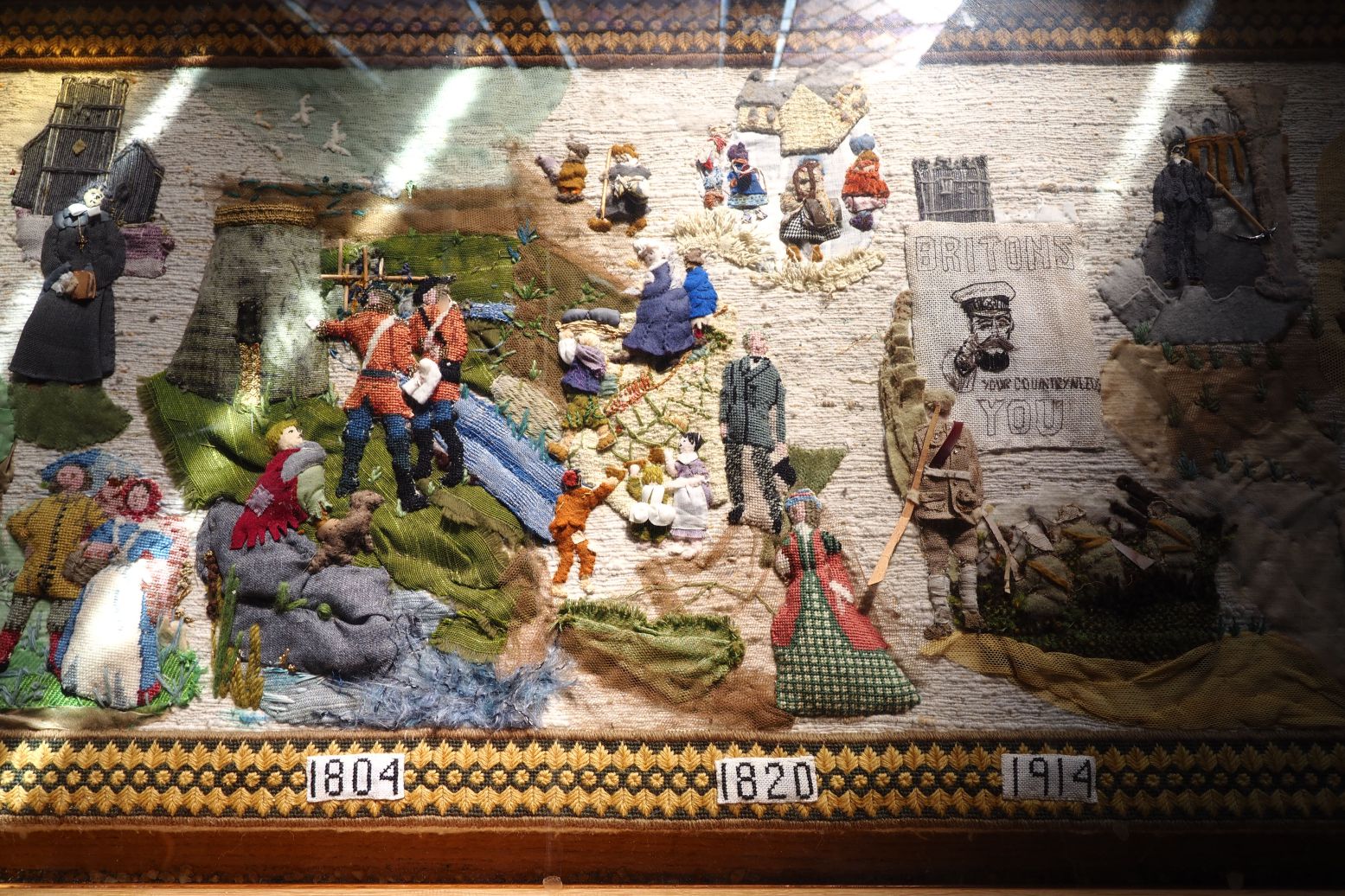
In 1804 we can see the development of the Royal Military Canal in Romney Marsh, which began on the 30th October at Seabrook, Kent. It was built to slow any invasion from Napoleon’s Army, which was a big worry at that time. You can now walk 28 miles of the Military Canal.
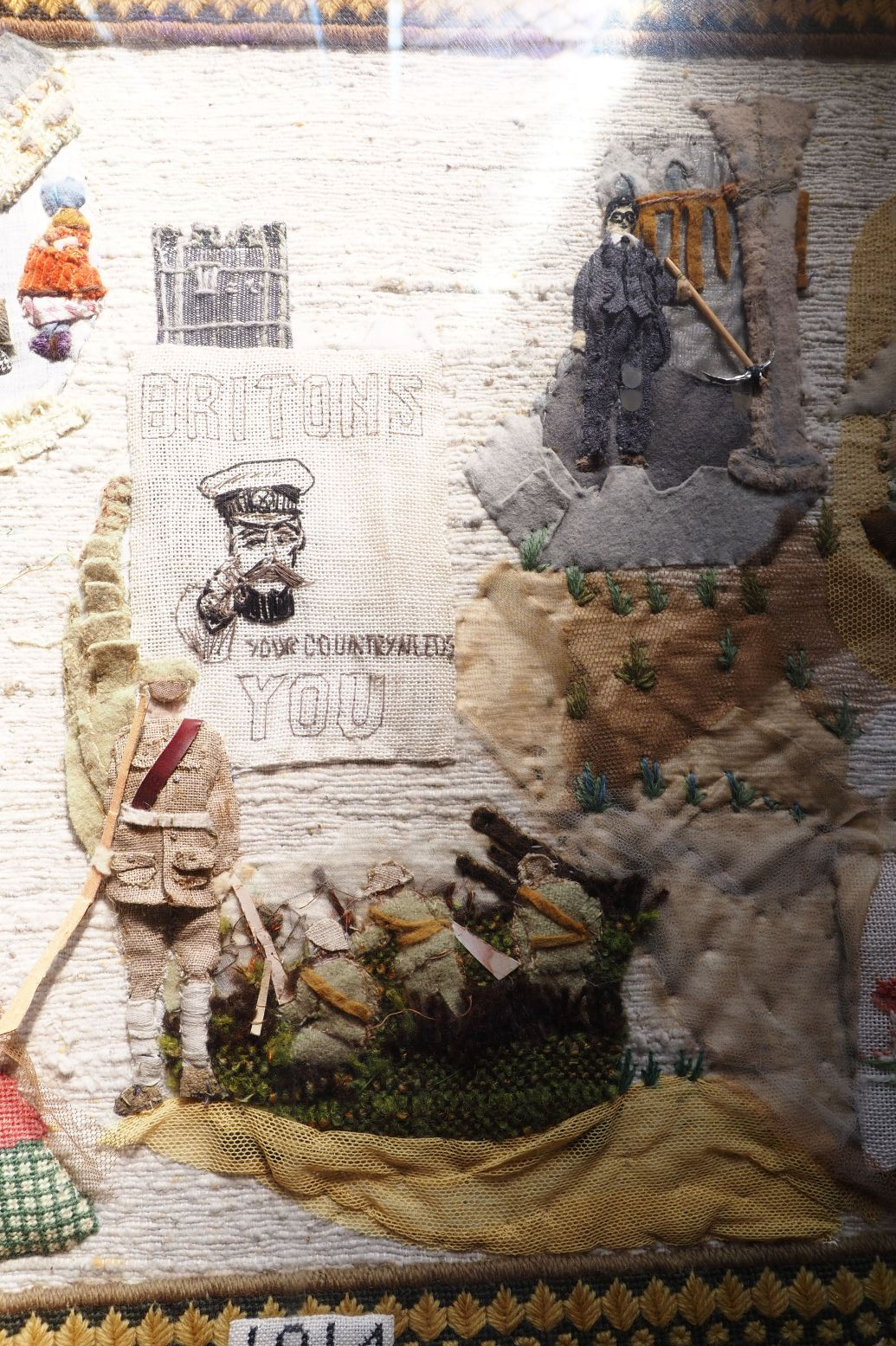
In 1914 we see the call-up for the First World War (1914-18), which was not a long journey for anyone living in coastal Kent or Sussex. I’m struggling to work out the chap with the pick-axe in the top right, however. I can appreciate it’s an industrial image, with what may look like a viaduct in the background.
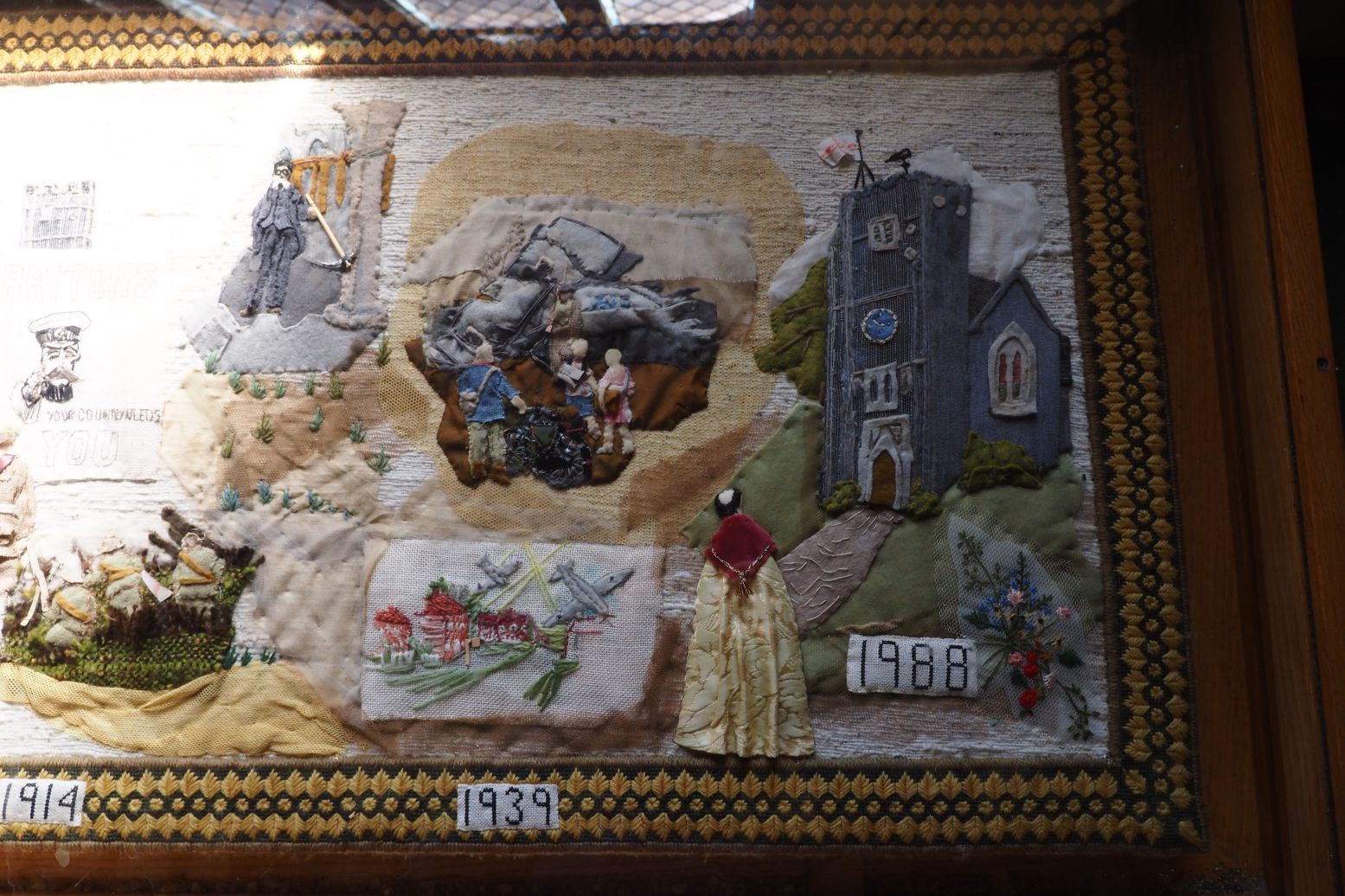
This detail could confuse you as it looks a bit like the church collapsed. In actual fact it’s a German military plane that has been shot down in the Second World War (1939-45).
In 1988 the tapestry was completed, with the vicar of the time standing at the end of the path admiring the building and all it has been through.
You can buy a leaflet which describes the tapestry in detail, but obviously I bought it and then lost it!
If this wonderful tapestry has taught me anything, it’s that peace between England and France has not always been there. England has always been a very sought-after place. Its cultures have always been diverse, rather than the mono-ethnic notions trumpeted today by ultra-nationalists.
I may come back to update this post when I get new information and will note any edits.
Last week I dropped in on a favourite Sussex Wildlife Trust woodland. It’s a place I only ever visit when travelling to or from work. It’s a place with a funny name, The Mens. It’s even funnier when I tell others I’m going to The Mens after work. The name is said to derive from the word ‘common’, a place where local people would have had foraging and grazing rights in centuries past. It’s now a significant ancient woodland in the Sussex Low Weald, holding National Nature Reserve status. It’s special because of its naturally occuring beech and holly, though I’m no expert on its specifics. It is a uniquely beautiful woodland. It is highly sensitive, and when I go I do my best to treat it with a high level of respect and care.
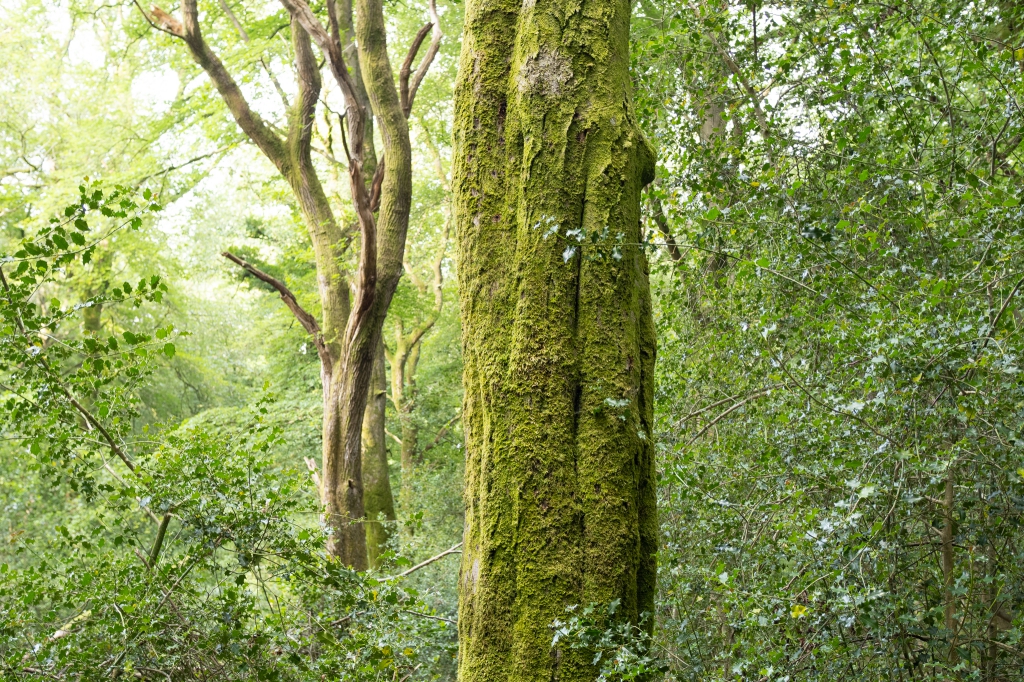
It’s one of the few places in SE/central southern England outside of the New Forest, that I have visited, where moss and algae cover tree trunks. Above is the typical assemblage of mature beech, oak and a surrounding sea of holly.
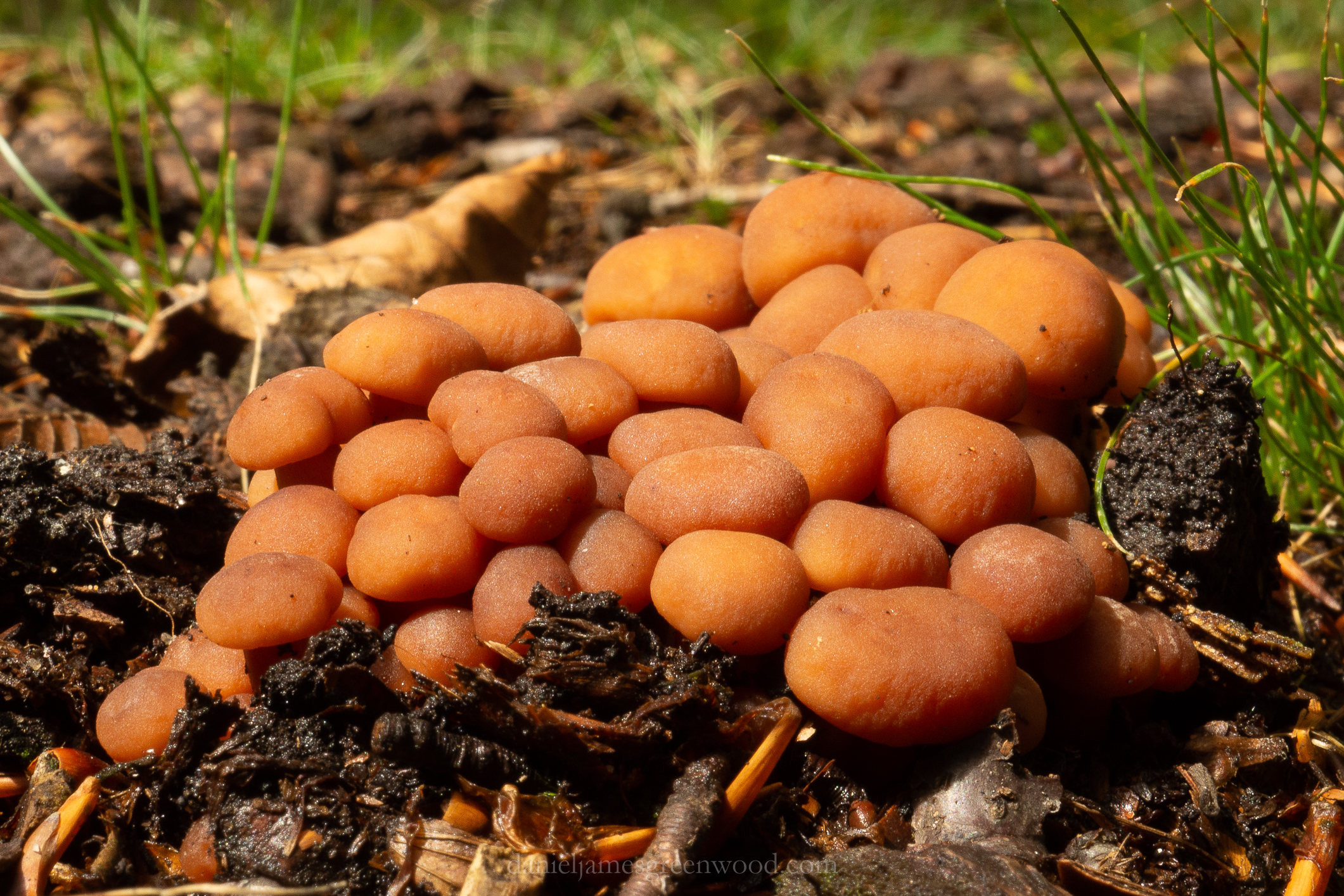
You can see indicators of how many mushrooms are likely to be in fruit when you first enter a reserve. I saw the above within the first few paces. It’s is a mushroom called spindleshankGymnopilus fusipes (to my knowledge, happy to be corrected), which grows around the buttresses of oak trees. In a separate recent walk, it was the most common fungus I saw, and so is enjoying a key fruiting period.
In terms of tree health, I wouldn’t say it was a ‘good’ sign because there is some decay going on and it is defined as a parasitic species. In a woodland like this, it is normal and part of the life of the woodland. It helps to disconnect ourselves from our normal notions of life and death when in woodlands, it doesn’t play out in the same way there. Dead and decaying trees are crucial to a woodland’s life and longevity.
Spindleshank is often first seen like the group below, bursting on the scene. It is probably attached to a root or piece of wood under the soil.
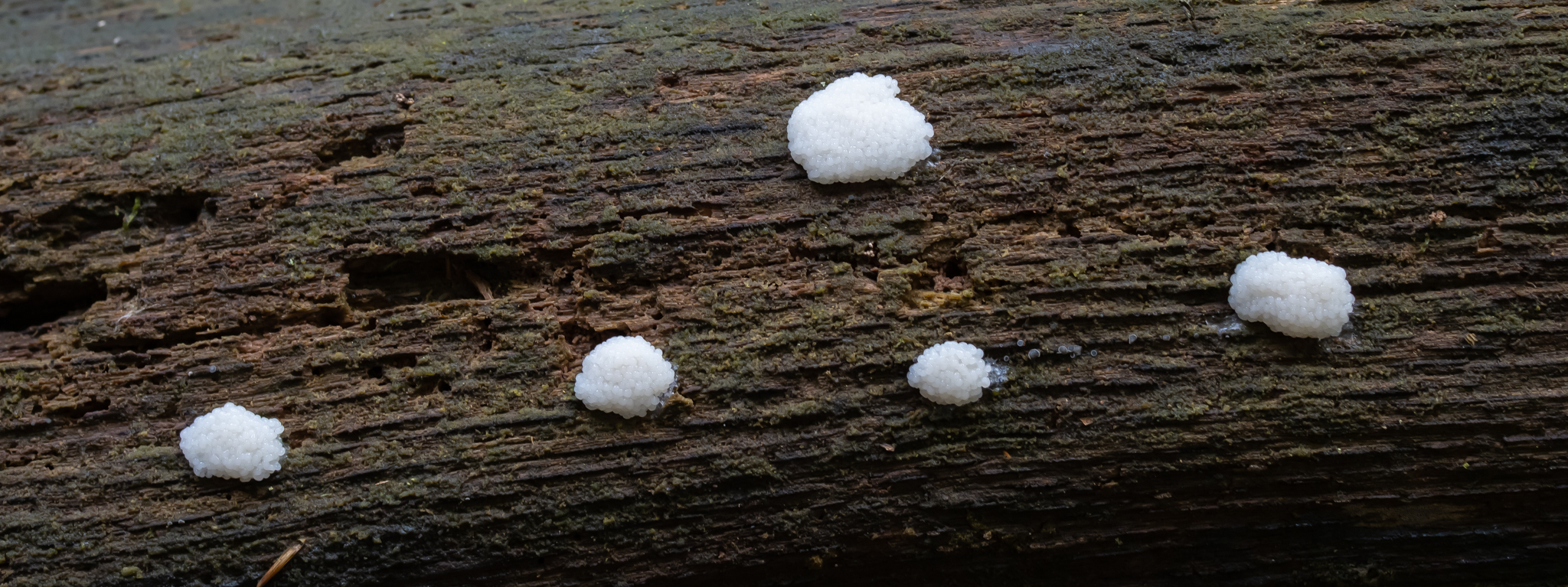
This was the only fruiting mushroom I found during the short walk but there was a large abundance of slime moulds growing on fallen wood and some standing trees.
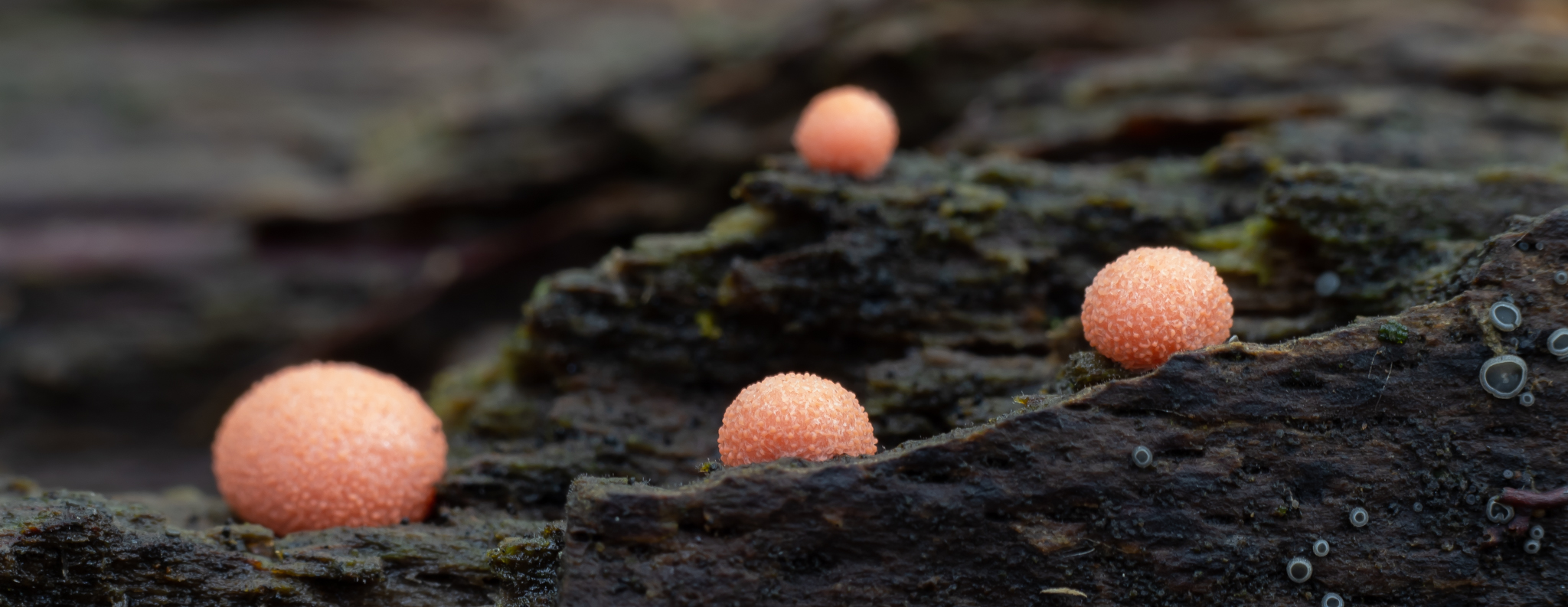
These orangey-pink blobs are a slime mould known as wolf’s milk Lycogala epidendrum. It’s famous because you can pop it and it emits a gunk of the same colour. It’s quite cool.
You will find it on decaying wood that has been in situ for several years, often in shady and damp conditions.
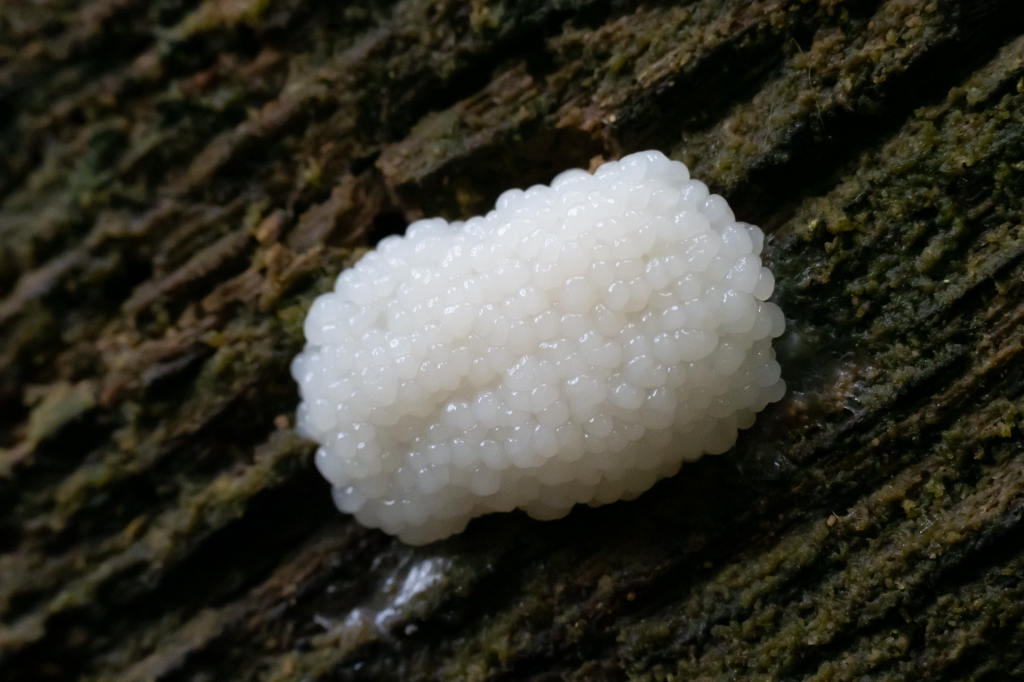
This species looks a bit like slug eggs. As with most slime mould I find, I’m not sure of the species.
We have had a very wet time of it in southern England, which should be cause for celebration, really. This same species was making the most of the conditions.
Behind the scenes on the slime mould shoot
My camera is capable of doing in-camera focus stacking. This means it can take several images at different focus depths and merge them together to make an image with everything in focus. This is a dream come true for macro photography, especially when the subject is so tiny.
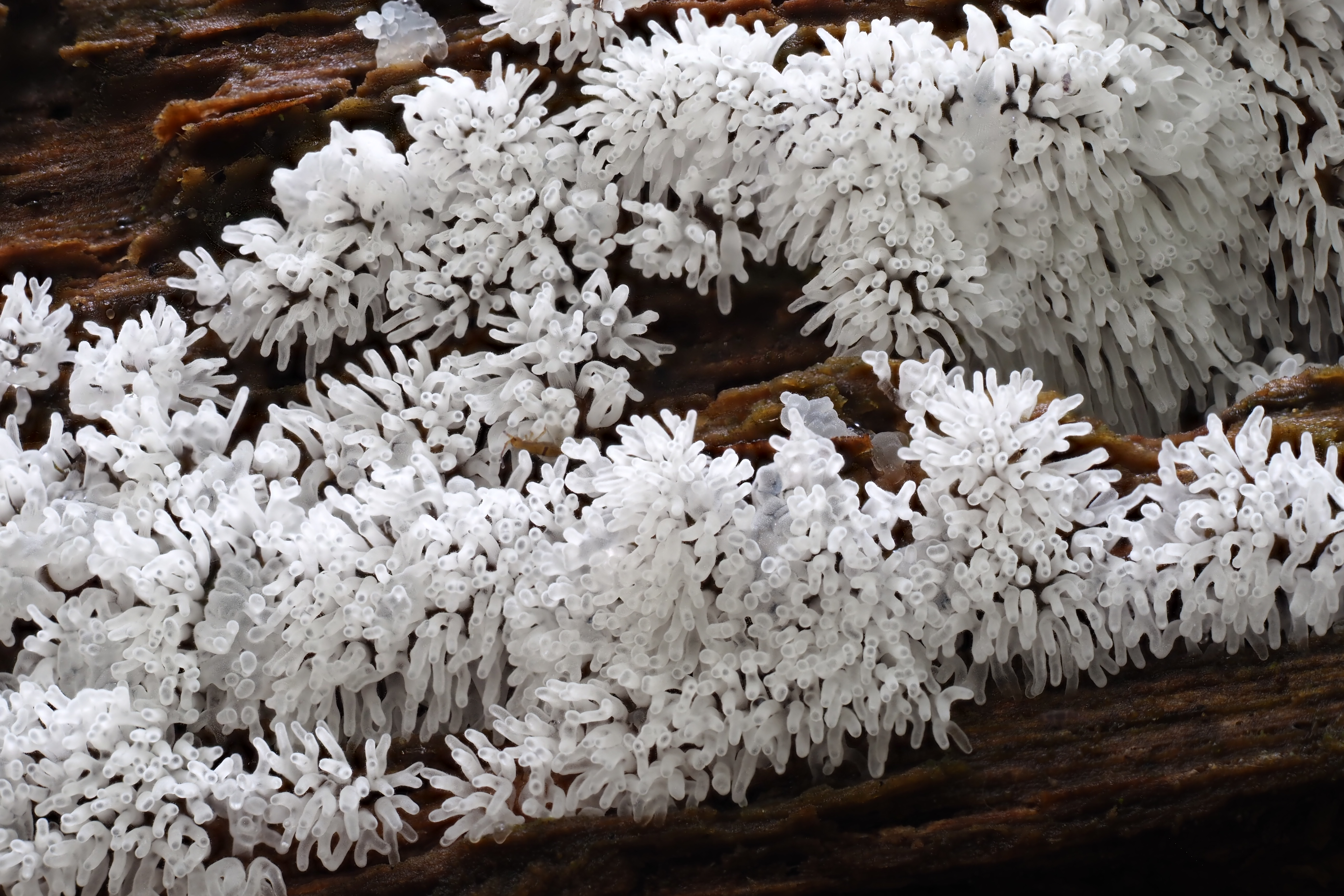
This is a species of coral slime mould. I have seen so much of this in the past few days spent walking in oak woodlands in West Sussex. It’s clearly striking while the woodland is wet.
On the last day of May I set off on a walk into the High Weald not far from where I live. It was spring at its height, with warm weather more like the summer months to come. I waited until the late afternoon to head out for a couple of reasons. Firstly, I don’t love walking in the heat, secondly, the light is better for photography when the sun’s glare has softened.
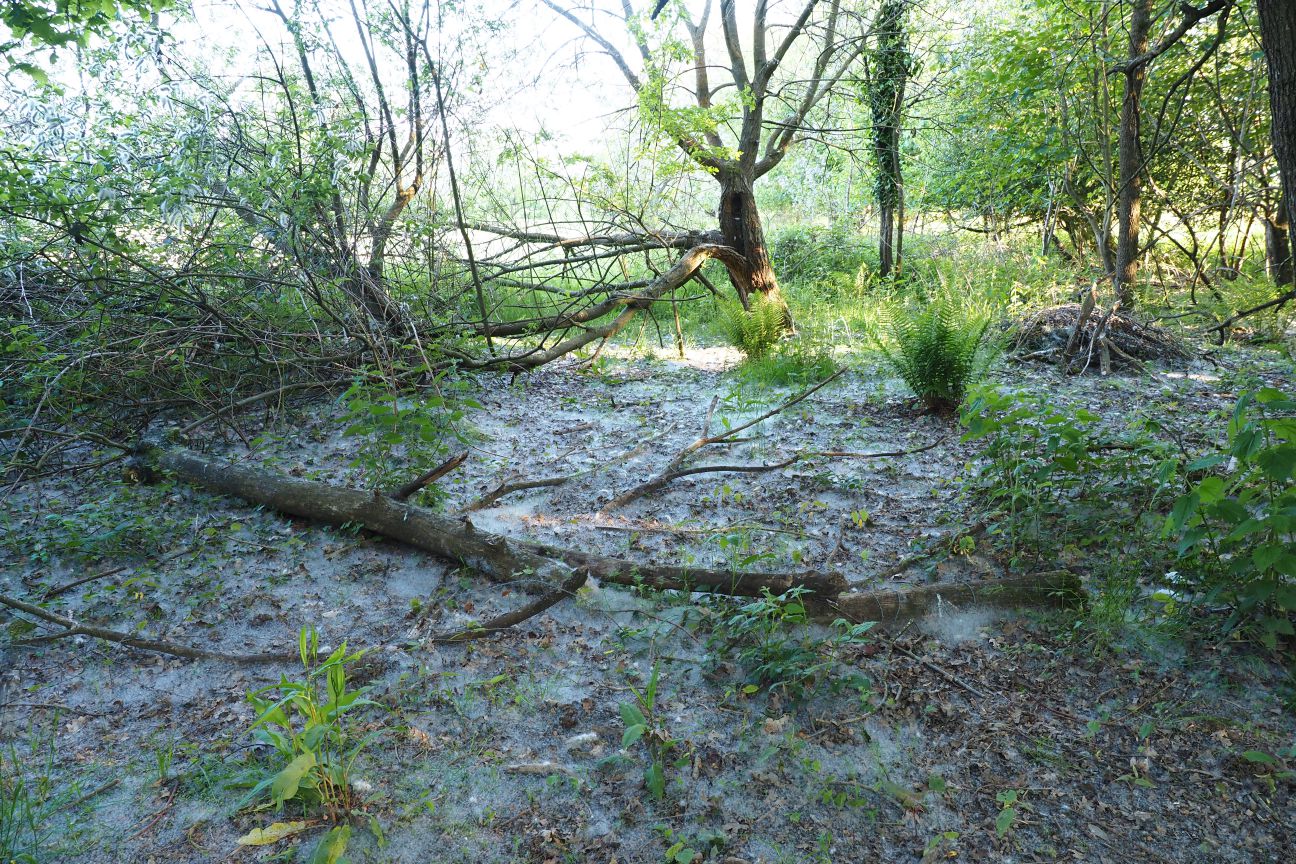
The willows had begun to release their seeds, the ground covered in a coat of white fluff. This seed dispersal is what makes willow so effective. The catkins are pollinated by bees, flies and other insects, which then produce the seeds. The same effect comes from poplars, which are willow relatives.
Hawthorn peaks around the end of May and I always look for insects on its nectar-rich flowers. I didn’t have a macro lens at the time but with my zoom found this large sawfly nectaring. Sawflies are relatives of bees and wasps, though sawflies actually came first. Their reputation is usually defined by the behaviour of the larvae of a species which can eat roses. You can of course say the same about many other species, moths for example.
The High Weald is home to a lot of Scots pine, where it succeeds the once open heathland. I have always been confused by the ‘native range’ of pine, whether it is naturally occurring in places like the Weald. It was planted for forestry, especially on the heaths, though it is not being harvest in the same way here anymore. Pines are gymnosperms which came before the flowering plants (angiosperms). They evolved over 300 million years ago, whereas angiosperms ‘arrived’ 130million years ago.
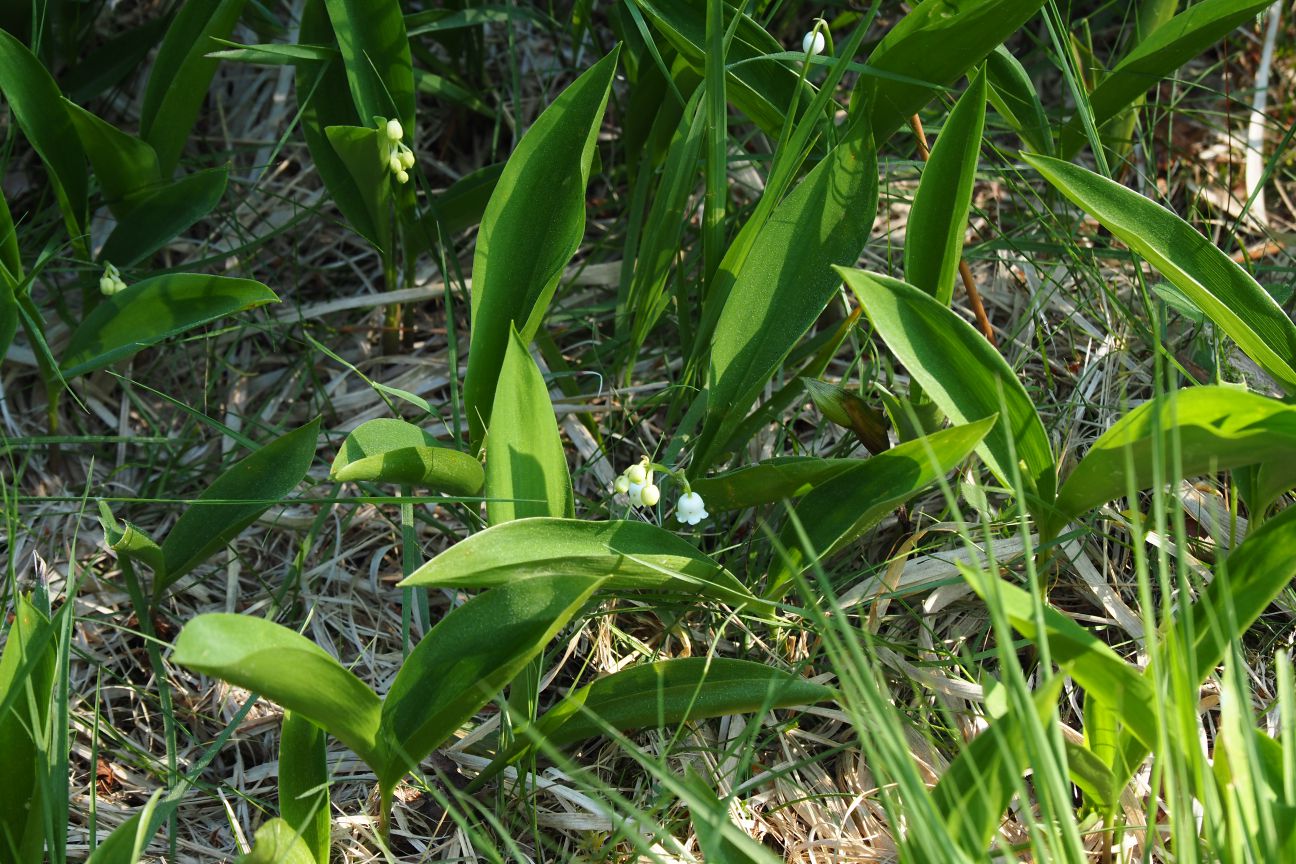
A flowering plant I was hoping to find on this walk was lily of the valley. Last year I found this beautiful plant in the very same spot. Someone who works on this site told me that it may be evidence of earlier human settlement because it was once cultivated for perceived medical purposes. That would require a blog in itself!
Having spent several years working, walking and hanging around in woodlands, you become accustomed to hearing certain birds and learn about their behaviour. One call I’m unlikely to forget is that of the great spotted woodpecker nestling. I was walking along a track, mostly minding my own business, when I heard the piping of the little woodpunks. There didn’t seem to be many suitable trees around, but the birds were definitely there.
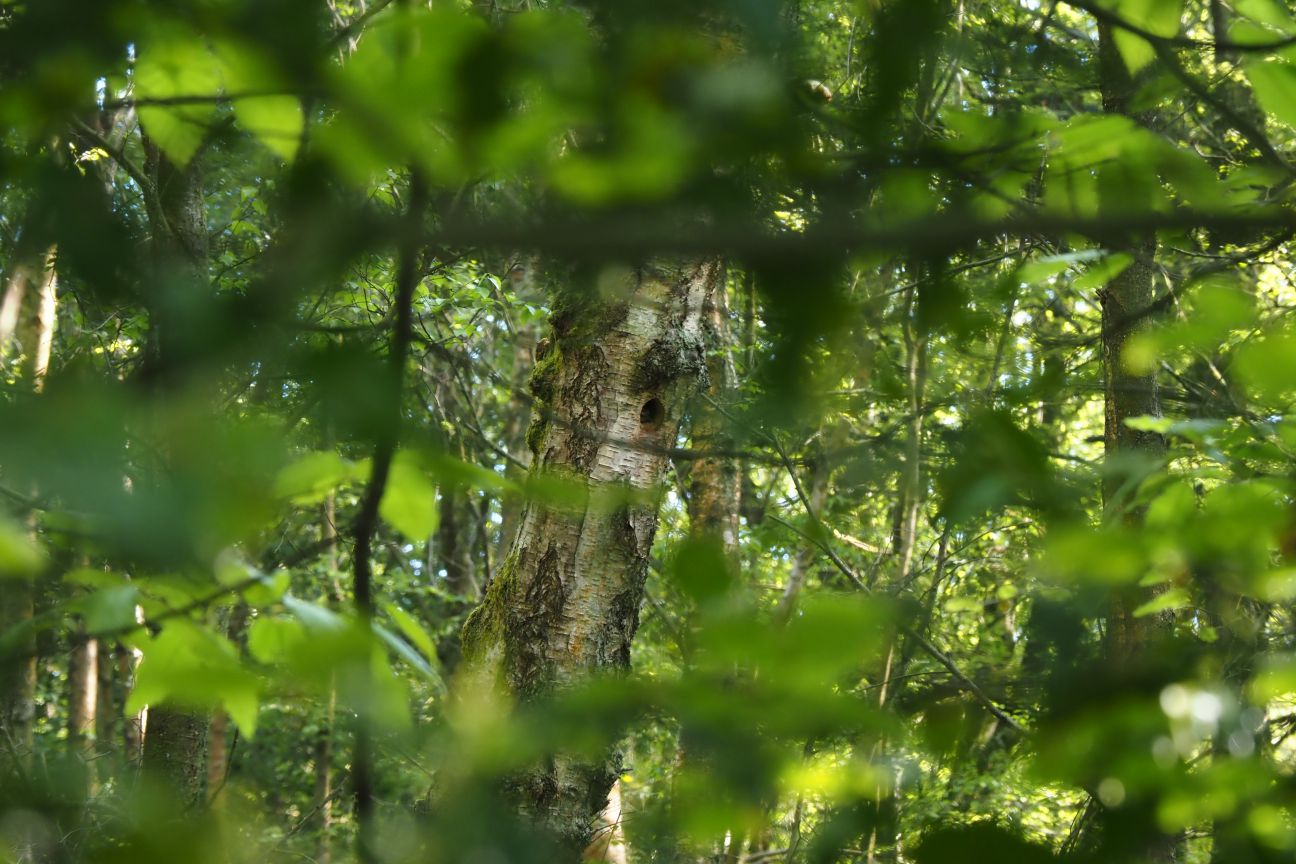
Continuing down the path I saw that a hole had been made in this standing dead birch tree. I could hear a nestling but also another woodpecker nearby, outside of a nest. I used the foliage seen here to hide for a while – still on a footpath – and see what would happen.
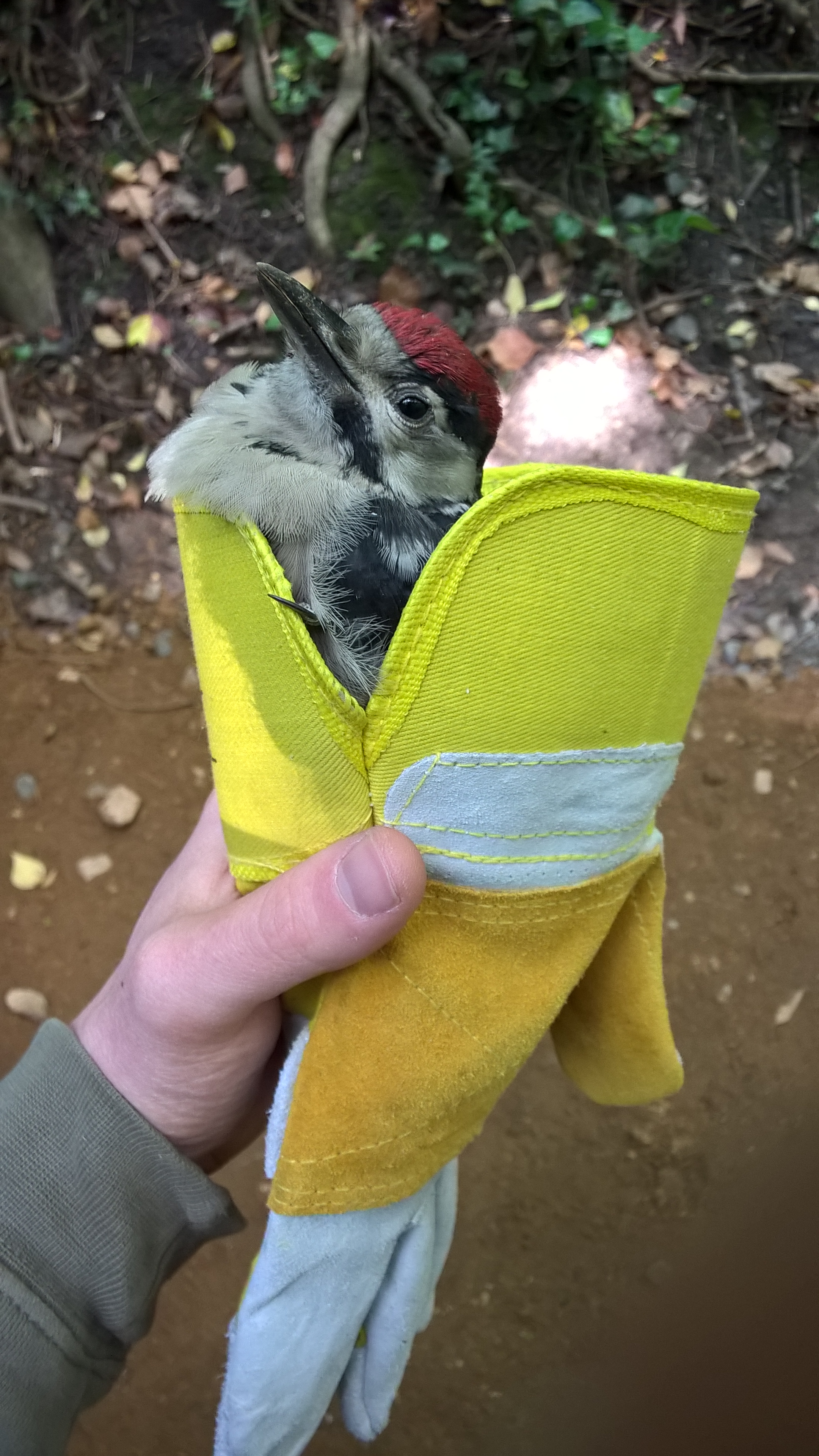
The nestling soon popped its little head out of the tree hole, calling for its next meal. They are beautiful little birds. I did once have the chance to see one up close after it fell out of a nest:
They are beautiful, reptile-like birds. I once said to a colleague who was also a herpetologist that they look reptilian.
He scolded me: ‘they are reptilian!’
The Wealden woodpunk did get its dinner after a while. A parent bird returned to pass food between bills. It was such an incredible thing to witness and all the more special because I had not expected to see it that day. It was also interesting to see the role of fungi in this breeding opportunity. The birch tree had been softened internally (if not actually ‘killed’) by birch polypore, a type of bracket fungus. I received several other examples from people in London of great spotted woodpeckers breeding in standing dead birch trees. It should be a lesson to people managing woodlands or birchy landscapes such as heathland – this is an important tree species in the wider ecosystem.
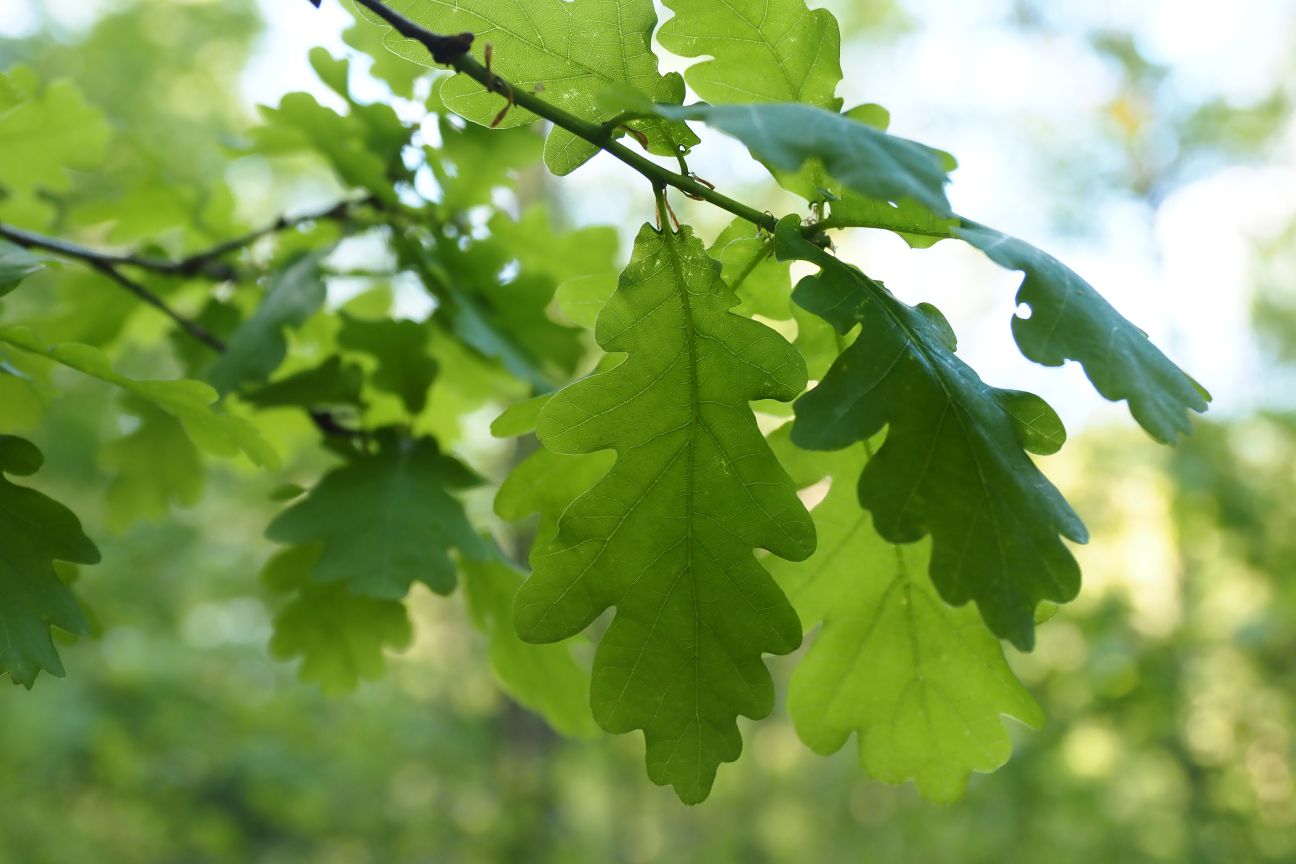
The first oak leaves were out in that lovely fresh green, which will soon turn more leathery and a deeper shade.
New holly leaves were appearing also, like little flames or woodpecker crests in the shade.
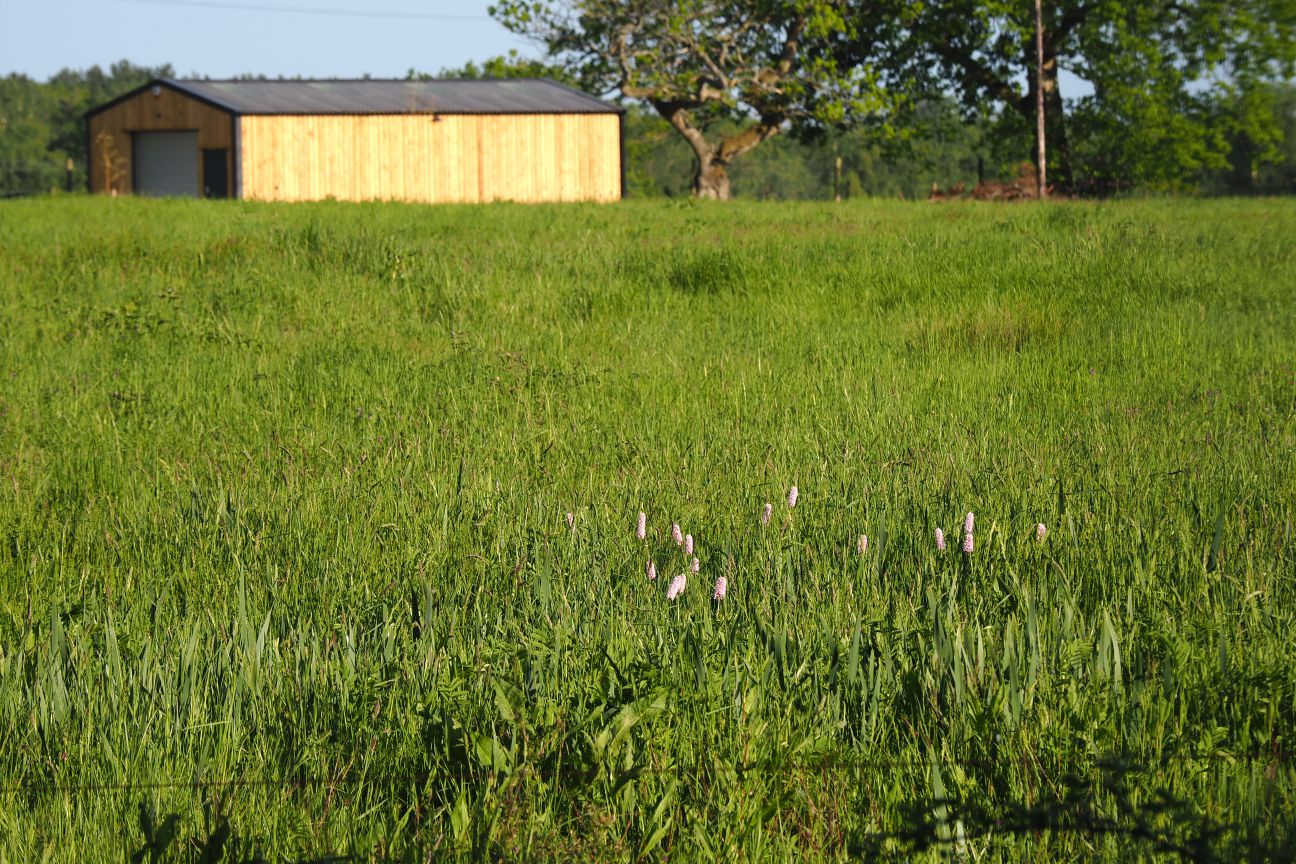
On the return home from the woods, I noticed these large spikes of orchids in a field. A new farm building had been built in the background. At the edge of this field, alongside the footpath I was on, the landowner had tried to plant leyland cypress and laurel, probably the worst things to plant in this landscape, next to rhododendron (which was nearby anyway). It seemed so mean-spirited to block the view of this expanse and its rare flowers for people passing by. Do people know how privileged they are to own land like this in England?
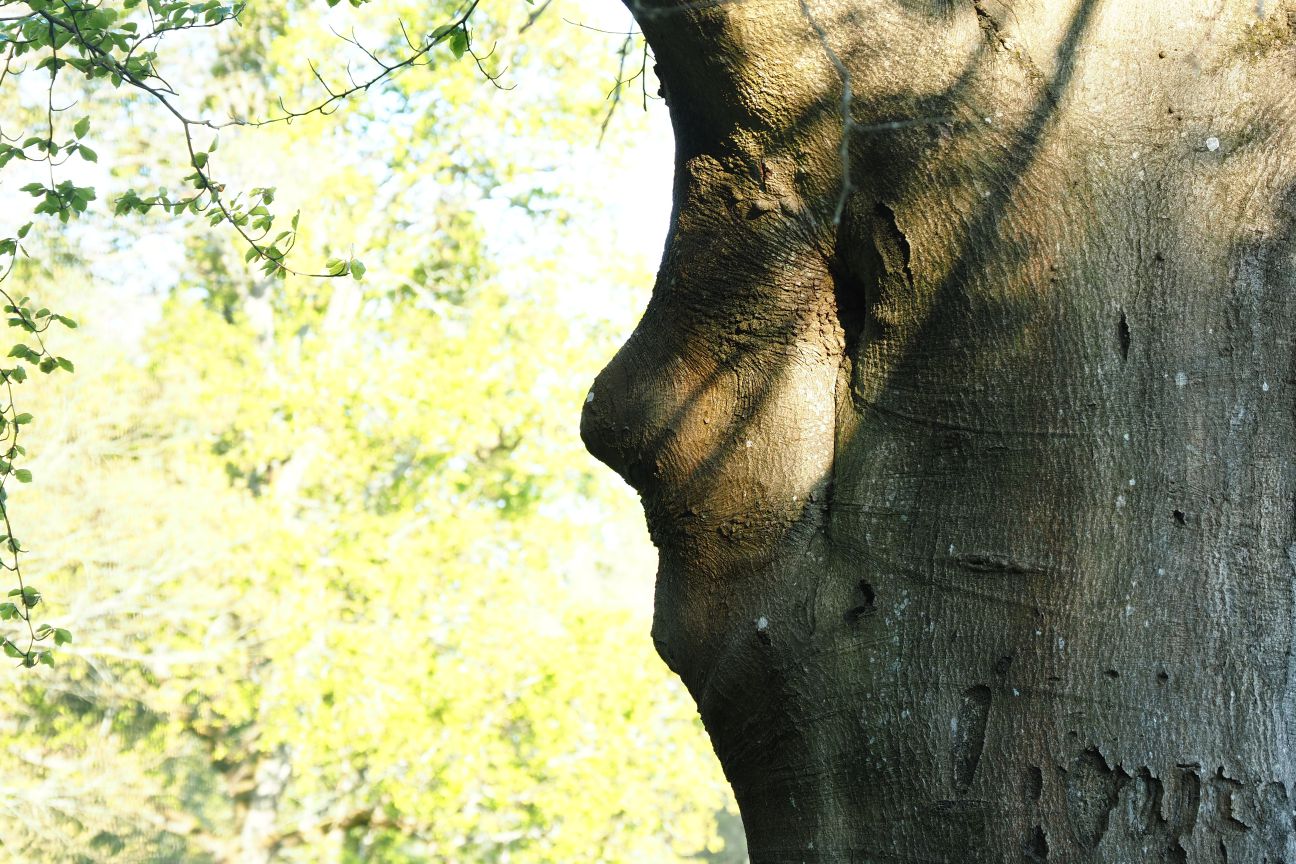
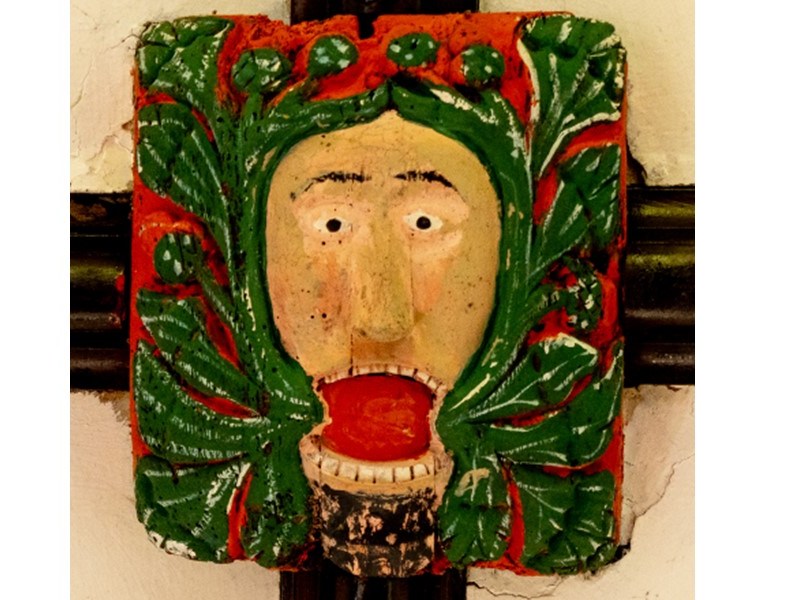
I know this beech tree agreed with me (yes, it’s been a long year). Or at least that’s what its facial expression seemed to suggest.
I’ve had a burst of American visitors in recent days (to my blog, not my house). So thanks for visiting, y’all, and sorry about the year you’ve had. You may have noticed I’ve slipped to monthly posts on here. Between April and October I posted blogs every Monday without pause, which is a tricky taskโฆ
Here’s my seasonal update of stuff you don’t need to know about, but then welcome to the Internet. What Iโm writing Soon I will be self-publishing my third poetry collection, Foolโs Wood. It’s seven years since my last one and this collection has taken longer because of LIFE. There will be a booklet and alsoโฆ
Here’s another entry in my slow-blogging Oak Timbers series. You can view my galleries and posts archive here. I visited Salisbury in Wiltshire (south-west England) for the first time in 2023 and was really charmed by the place. If you’re interested in this kind of thing, Salisbury is the place for you. Here’s a galleryโฆ
Last week I went to visit a woodland that was for sale. I wasn’t buying and the woodland was quickly snapped up anyway. I hope it went to someone who will care for its wonderful ancient woodland wildlife, and that the badger sett within it will go undisturbed. Leaving this beautiful snippet of the Sussex Weald, I found some mushrooms growing in an area of grassland alongside more woodland.
Common inkcap
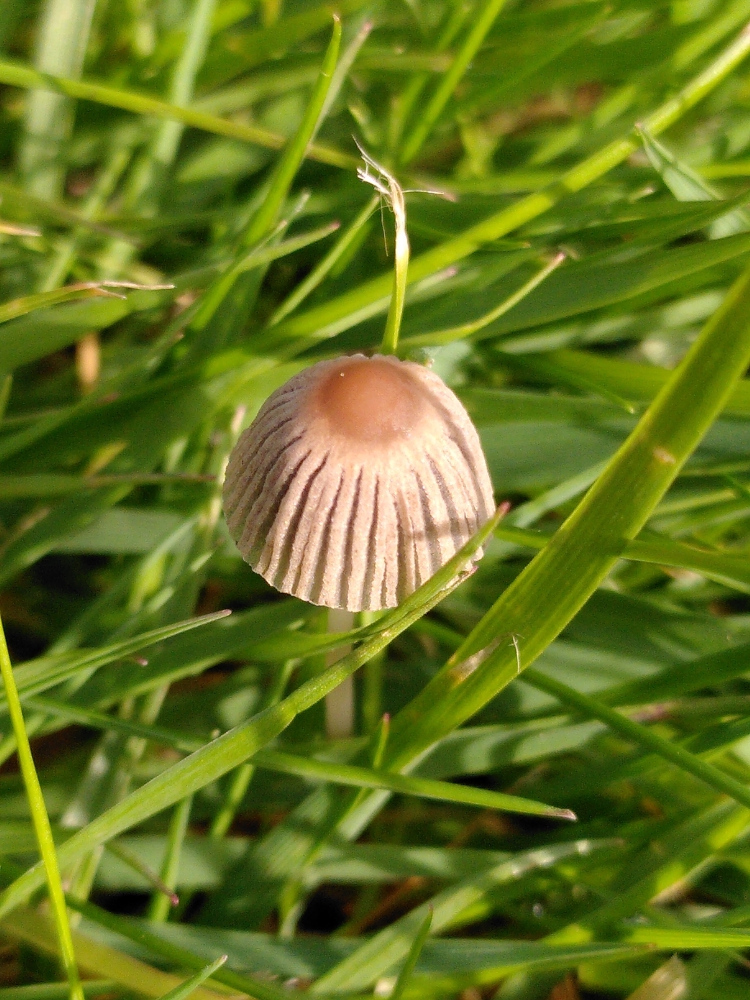
We have been inundated with rain in the past 10 days, after a very dry April in southern England. Things are leafing and flowering later than last year, and there have been no spring mushrooms from what I have seen. These were mushrooms that were so plain I really wasn’t sure what they were. I took some photos and posted them on iNaturalist.
They are common inkcaps. I’m not sure how I’ve missed this species before, as this was my first known sighting of them. That wasn’t the final grassland inkcap I was to see in that week.
I have a small garden which is ‘managed’ for wildlife and gentle recreation. We’re currently in the midst of #NoMowMay, an initiative in the UK to let any grasslands grow so flowers can thrive, and all the life that comes with that. It’s not just about flowers, though. I was pleased to see (and nearly step on) a tiny inkcap in the lawn.
This is a golden haired inkcap, quite easily confused with pleated inkcap, I would say. The most obvious difference is the size, with the former much smaller.
After all the rain we’ve had, quenching the woods’ thirst, I’m hopeful of some more shrooms appearing in the next week or so. Fingers crossed!
One of the things I love about the insect season in England is the diversity. We are surrounded with doom messaging around wildlife in the UK – it really is too much – but that’s what you get if you only look for birds. The invertebrate world is far richer, more complex and fundamental.
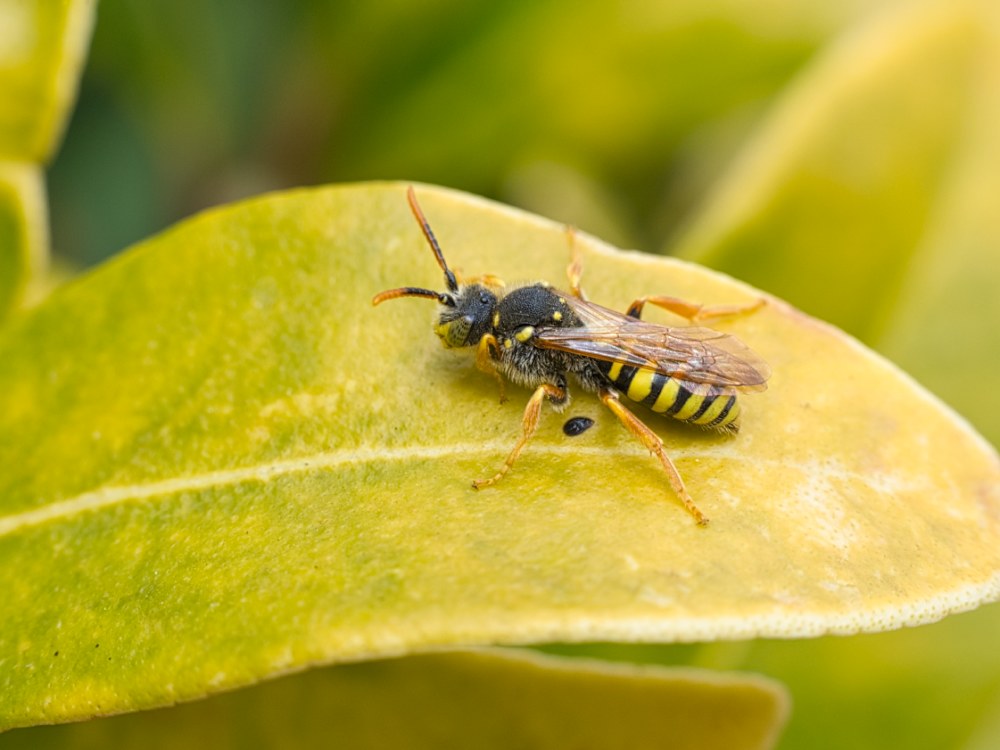
In April and May the first of the nomad bees make their appearances. I spend a lot of time making a fool of myself trying to keep up with these solitary bees. They are extremely beautiful and very cool-looking. Twice in April I witnessed nomad bees in my garden and on both occasions they passed me by.
One afternoon while #WorkingFromHome I went downstairs for a break. I noticed an insect on the inside of the windowpane. It was a nomad bee! I couldn’t believe my luck. I grabbed my camera and attempted to get some photos of this now very slow bee (it was a cool, wet and grey day). I got some average images and then decided it was time to get this bee back into the wild. I ushered it onto my hand and found that it didn’t want to leave my skin. It gave me a great opportunity to take some better images. I’m not sure of the species, they are difficult to separate.
I had another bee-break but this time in my garden and on a better day. There was so much happening in the hedge I didn’t know where to look. I saw three nomad bees flying around and resting but never long enough for me to get a decent pic.
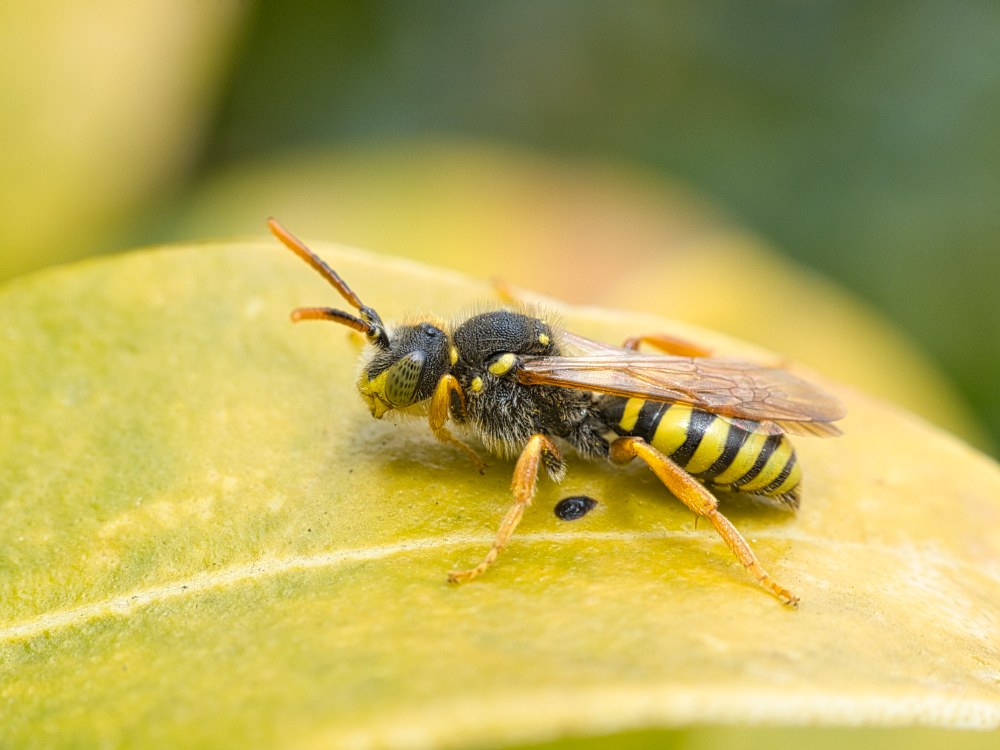
The sun dipped in momentarily and the cooler air forced the nomad bee to remain on this leaf. I got as close as possible. When I submitted the photo to iNaturalist someone suggested it was Gooden’s nomad bee. That’s… Goodenough for me. Now do people see why iNaturalist is so much more preferable to iRecord? You get help with your identifications, not just thanks but no thanks from our man in the shires.
What do nomad bees do? They’re parasites of solitary bees, with some species laying their eggs in the sites of others. Their eggs hatch and the larvae consumes the eggs of the host, before eating its food stash. Not nice in human terms (because we’re all so lovely) but definitely something that has been occurring for many millions of years.
I’m getting into more of a routine of recording and editing audio, so here is the latest episode of Unlocking Landscapes. Listen on Podbean or via the usual platforms. Also via YouTube: https://youtu.be/y1K9Pqx68to?si=B-Fdhf3sdDH35Z8w Following on from July’s rather optimistic fungi walk, I popped back to the same area of ancient Wealden woodland to see ifโฆ
Innsbruck, Tyrol, Austria, June 2025 This is a longer post of the images I captured during a recent visit to Innsbruck in the Austrian Alps. We travelled to Innsbruck on a sleeper train from Amsterdam. It’s such a great experience and is significantly lower in carbon emissions compared with flying. If you consider the factโฆ
I’m back from my annual visit to the west of Ireland. I managed a couple of day trips to forage for photos, which will crystallise later this year into dedicated posts, all being well. Like many people I enjoy the Blind Boy Podcast, none more so when I have the headspace to take in allโฆ
It was a quick lunchtime visit to the household recycling centre, the kind of thing that is exciting enough in a year of lockdowns.
Having been waved in and asked to mask-up, I got out of the car and began searching the options to recycle some fabric. A workman was collecting materials and asked me to make it easier for him and drop it straight into his dumpy bag. It made it easier for me, too.
It was a warm and cloudy afternoon with the sun breaking through. The air held that acrid whiff of landfill, like sickening vinegar.
Returning to the car, I was distracted by something. The one-way system that takes you through the recycling centre was edged by wrought iron fencing. Beyond that an old, overgrown hedge with brambles, hawthorn and perhaps willow, marked by a large oak tree. This area sits on Weald Clay, which I’ve learned was once known geologically as Oak Tree Clay, so common is the species in this landscape.
A bird was singing from somewhere along the hedgeline, mixing in with other bird calls and sounds. Typical late April in southern England, with the new arrivals from Europe and Africa breaking out in song after unthinkably dangerous and long journeys north. After resting, you would sing, too.
The song was being thrown around, I couldn’t pin it down. Then I heard the rapid, reverb-laden drip-drip-drip-drip-drip.
Nightingale.
I had heard this song a few times before in Sussex, with their stronghold at Knepp or else at Woodsmill in Henfield. In 2017 I’d honed my understanding of their incredible song while on a conservation study tour of the Oostvaardersplassen in the Netherlands. Hearing this bird in little olde England is something else.
The song was unmistakable. I took out my phone and recorded a short clip. Just 20 seconds.
I had to drive along to the next bay to dispose of some cables and empty tins of emulsion. I wanted to tell the men working on there what they could hear if they listened, and ask if they already knew. They might have known. I asked one worker a question about solvents and he replied with eastern European-accented English. Nightingales are not so rare in that part of the world, perhaps he knew their song from his childhood.
It’s why I love John Keats’s poem so much (below), because he knew how important birdsong was to all people. Not just landowners who know how to welcome nightingales, those who can afford holidays to hear them, or those as privileged as me to live in this beautiful place. By that I mean Sussex, not the tip.
Thou was not born for death, immortal Bird!
No hungry generations tread thee down;
The voice I hear this passing night was heard
In ancient days by emperor and clown
This bird had flown all the way from Africa in a time of globalised trauma, when they are disappearing from our island as a species. We are all connected, we just need reminding sometimes.
The final day of February. The seasons are exchanging but only in light. The first blackthorn flowers are breaking buds at the roadside. Two cyclists float past:
โDo you really want Louis back?โ one of the women says to another.
They swerve away from two horse riders, one dismounted: โAt least I know when to get off now. Thereโ no point pushing him if heโs so nervous.โ
The light is golden, low. Birds are singing at spring levels, minus the continental recruits like blackcap, chiffchaff and willow warbler.
The ancient pond was frozen last week but now the water shimmers black and blue with broken reflections of the dark branches against the clear sky.
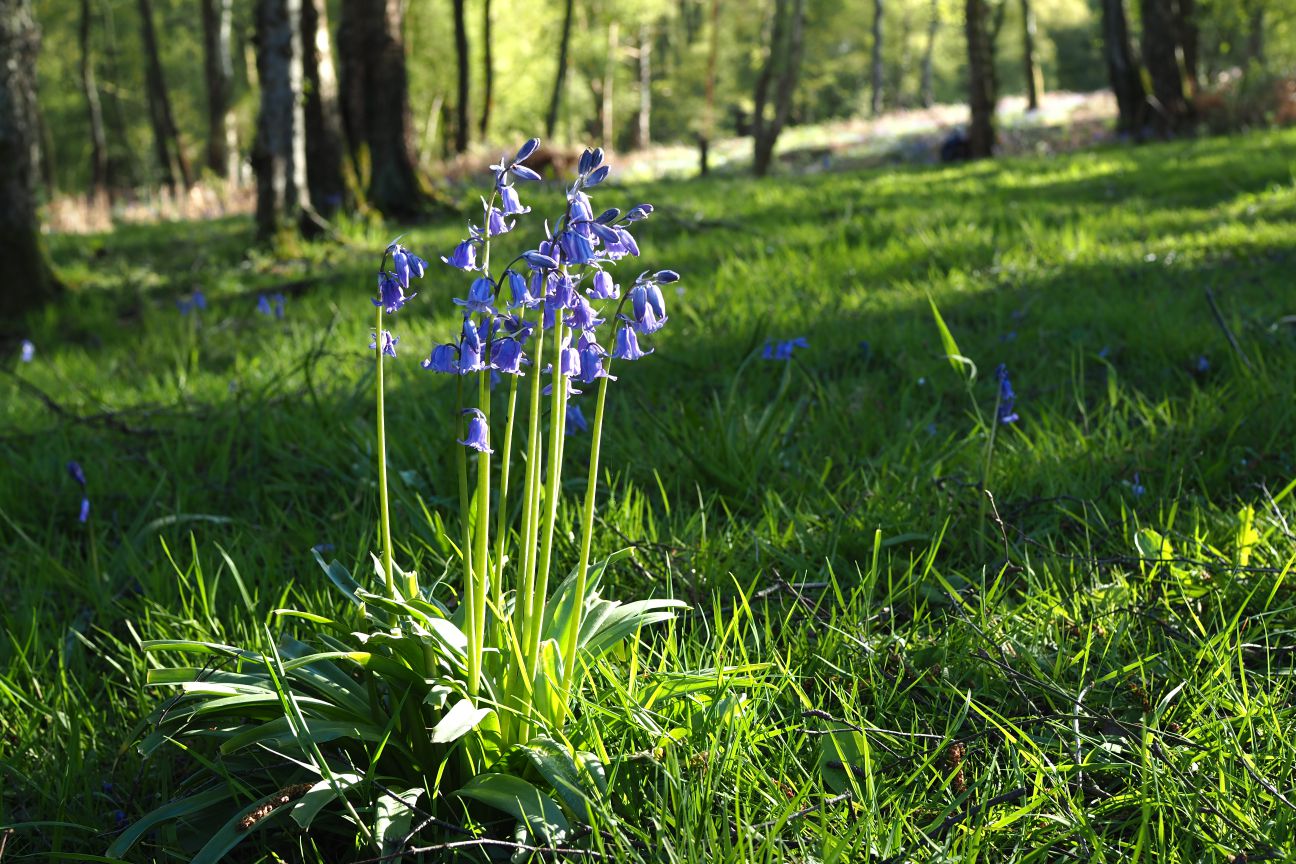
At the old roadโs margins bluebells are leafing in patches. Beyond the shrubby edges the field opens out, home to a massive pine tree. Looking at the 19th century map of this landscape, the pine is there. It must be ancient but how old may not be discoverable.
Two jackdaws fly away from its branches, perhaps having found a suitable nest hole.
Winter is still here in the treetops at the field edge, where fieldfares chuckle, moving in small flocks deeper into the open field. Soon they will make their way north to warming breeding grounds. They feel like a treat, I donโt see or hear them that often.
A breeze rustle the oak leaves on the ground, building into a hush in the leaves of redwoods high above.
At the end of the lane stands an ancient oak tree, the Sun Oak. It probably marks an ancient boundary. A couple of weeks ago I was stood here admiring the tree and a man commented in passing:
โAmazing, isnโt it? The farmer says itโs in the Domesday Book.โ
I had always thought it was 800 years old. A refence to it in 1086 would mean it was already of significant size then. Could it really be over 1000 years old?
That puts it in the Saxon Age, a time so long ago it seems inconceivable. But thatโs what makes these trees so special. They are living things that have, in their ecological existence, witness and processed so much time.
This tree, the Sun Oak, is of course on the 19th century map, too.
In the surrounding trees and woodland redwings are flocking, feeding and singing. Itโs hard to describe the sound โ like some distant chattering, a school playground carried on the wind perhaps. Whatever it is, itโs a sign of their need to gather. Along with the fieldfares, they will all soon be on their way and with them another season under the belt of the Sun Oak.
On social media in recent weeks one of the dominant fungi photographed has been a bright red cup fungus. This species is one of the most visually stunning, standing out like an elf’s sore thumb in a winter wood. I’m talking about scarlet elf cup.
I visited an area of woodland I have featured many times here, but a place I haven’t been to this year. I don’t know why, it’s close to home but usually requires a car journey because it’s awkwardly difficult to walk to. It’s a mixed ancient woodland with a stream running through it and heathland on its upper slopes.
In the UK heathland is a sandy habitat dominated by heather and pine. In terms, dry lowland heath is rarer than rainforest.
This woodland is managed with the support of volunteers. I don’t know the people who do the good work there but they clearly spend a good amount of time building what I know as dead hedges. These are barriers or piles of cuttings, branches, twigs and sometimes logs. They are there mainly to protect sensitive areas of soil where ancient woodland plants grow. It’s to keep people on the paths, which is best for the health of a woodland overall. These dead hedges also happen to be excellent habitat for wildlife like fungi.
From my experience in the woods and by looking at other people’s photos, I would say scarlet elf cups are happiest in damp, shaded areas. I would even say they are so keen on dampness that alongside streams and rivers is usually a good place to find them. This was a bit of a way from a stream but it ticked all the other boxes. You can see here that it’s growing from a small stick.
This is a nice example of this gorgeous fungus (not something you hear often enough). They grow on something similar to a stem but are a different set of fungi to the usual stipe-based mushrooms. Cup fungi are ‘ascomycetes’ (ask-oh-my-seets) and are spore shooters. ‘Basidiomycetes’ are spore droppers, most of them being the gilled mushroom types.
This area probably had hundreds of scarlet elf cups growing in this long stretch of dead hedge. It will be good habitat for lots of other species as well, including invertebrates and sometimes they’re big enough for small birds like wrens to nest in. The specimen above was snug as a shroom in a trug.
From what I know it’s an edible species, but I wasn’t about to clean out all these fungi from their wild habitat. I had mushrooms in my fridge that were a couple of days close to their best!
This is the first of a series of posts I’ve been working on covering national relationships with mushrooms. It’s just a bit of fun, but there’s definitely some interesting stuff to share.
In August I made my annual visit to the Weald and Downland Living Museum in the South Downs. You can see my timber-framed building photo gallery here. This is the first view you encounter inside the museum grounds after you pay your entry fee. Amazing to think the medieval hall house is from Cray inโฆ