I was out and about in the Cuckmere Valley in May and had the chance to learn a little bit about some of the species found there. Here’s a small selection of images, a blend of phone pics and some from my camera.
Once again I was treated to the sight of early spider orchids, a plant I blogged about only recently. This was a big surprise, having spent a lot of time looking for them elsewhere. This is a nationally rare plant and I won’t be giving away its location. I did get the chance to learn that the flower mimics the scent of the buffish mining bee. The male bee is lured in and attempts to mate with the flower, thereby pollinating it. In the photo above you can see the pollen grains that have been helpfully, accidentally, applied by the visiting bee.
The mining bees live in the nearest exposed areas of chalk where they drill their burrows. It’s a short commute to their deceptive orchid neighbours.
The blackthorn hedges were holding populations of moth caterpillars that cover the branches in webs of silk. This is the kind of thing that pops up in local newspapers as some kind of wild clickbait. The moth is known as the lackey in English. What the significance of that name (or any of the number of weird moth names) is unclear to me.
We found this proto-Mesolithic (Stone Age) scene, with a discarded King Alfred’s cakes fungus. The fungus had probably been used to maintain the fire of one or more disposable barbecues. The stones were littered across the scorched earth like the throwaways of some prehistoric stone mason.
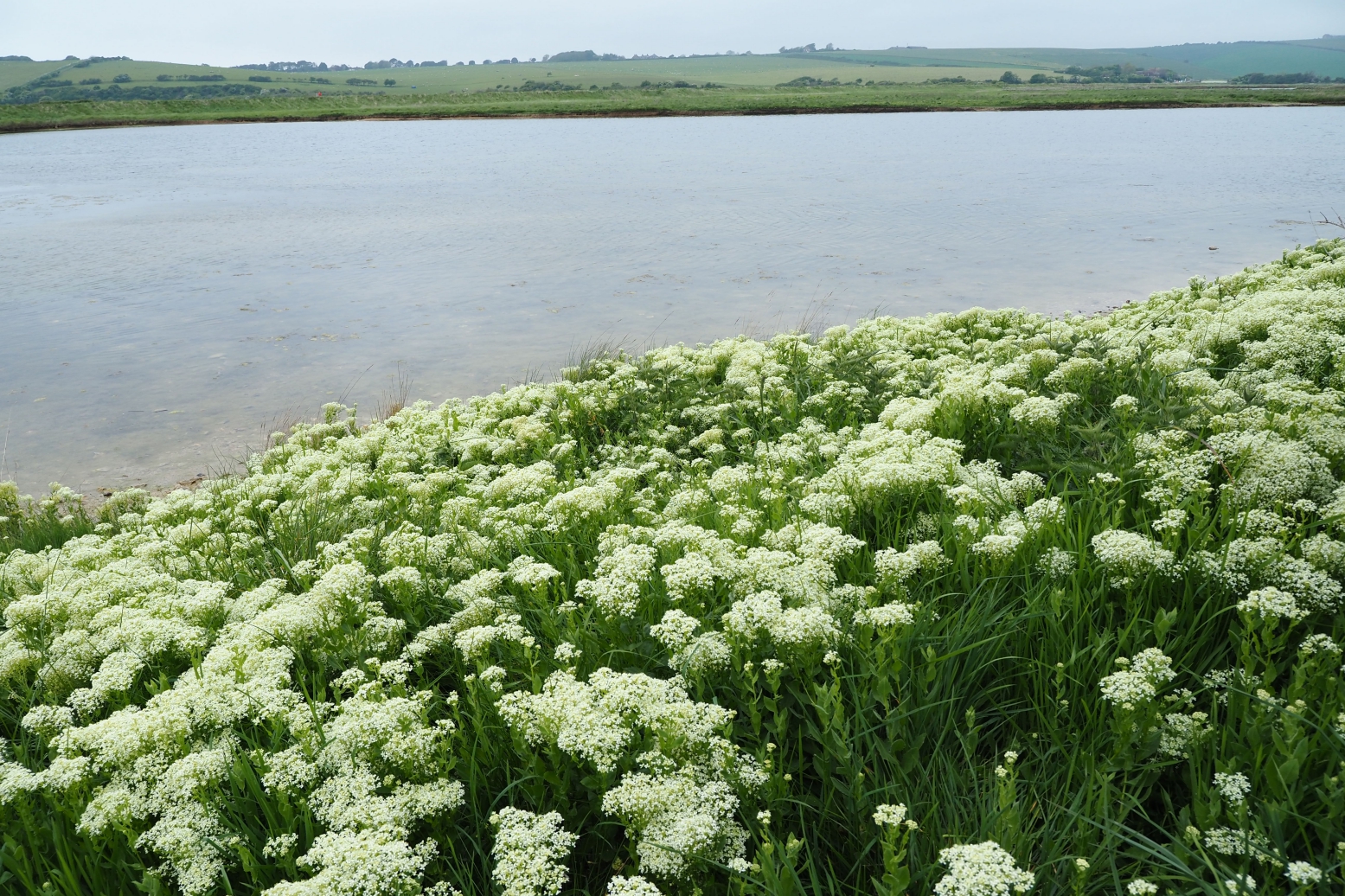
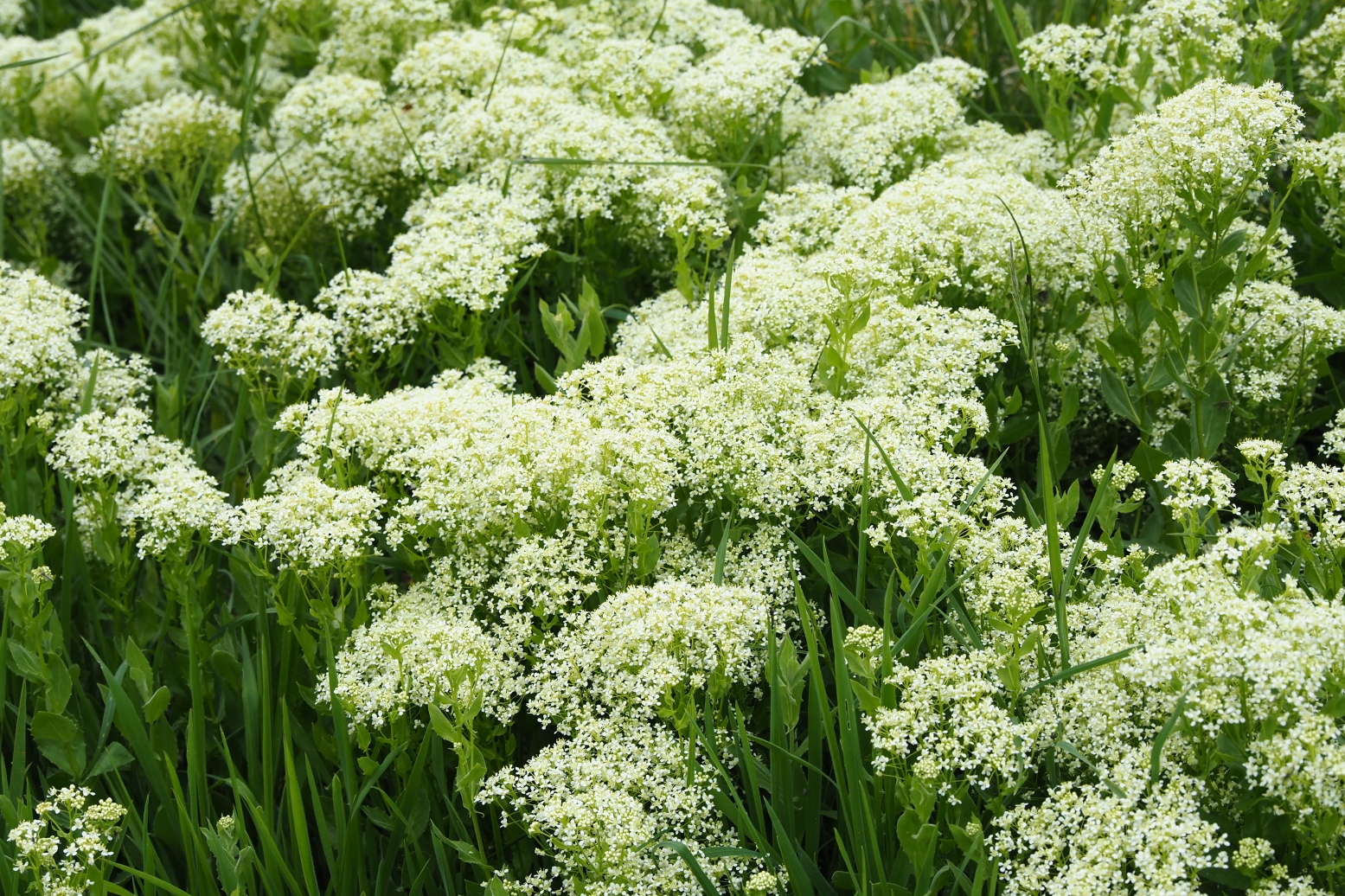
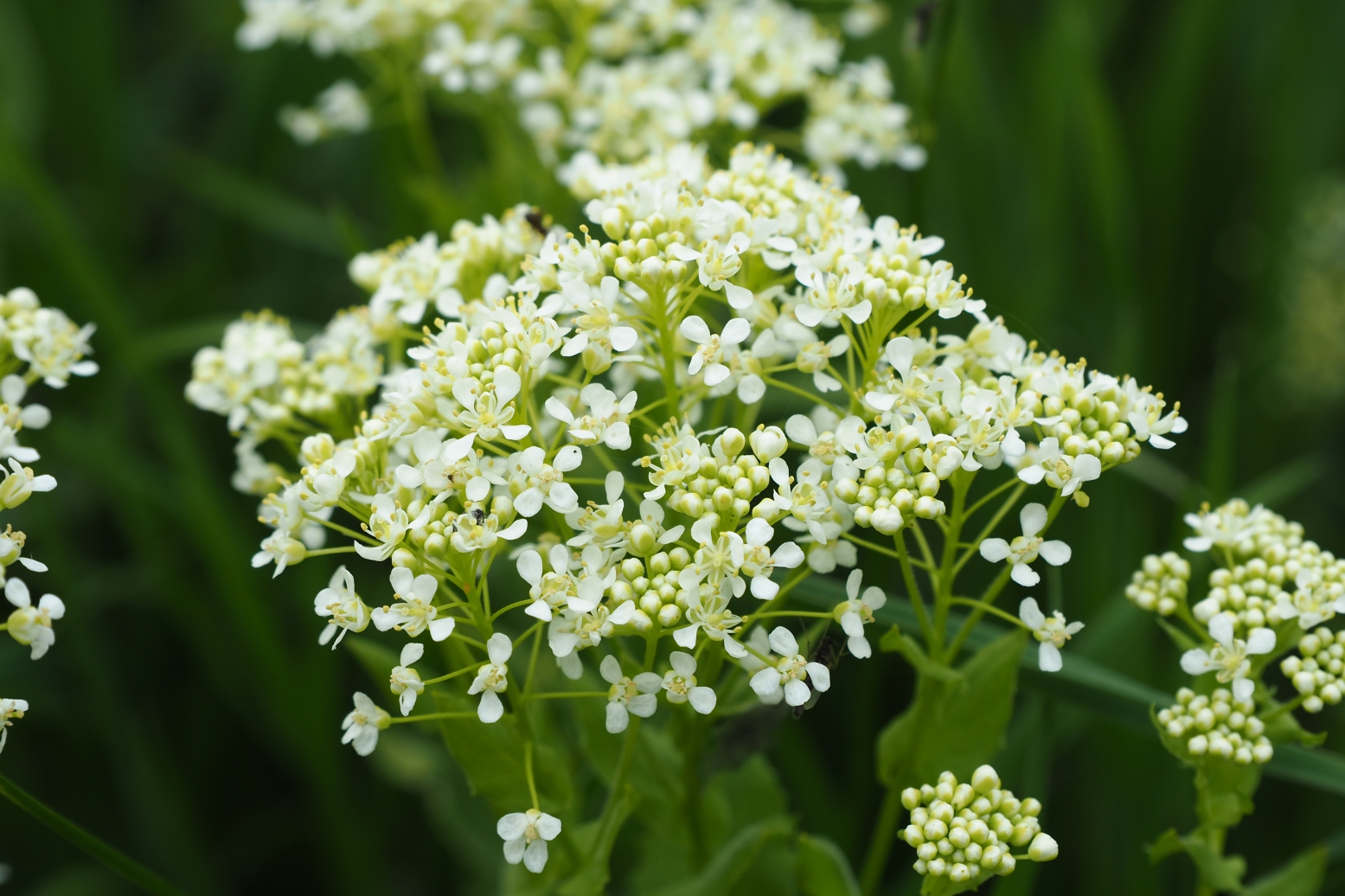
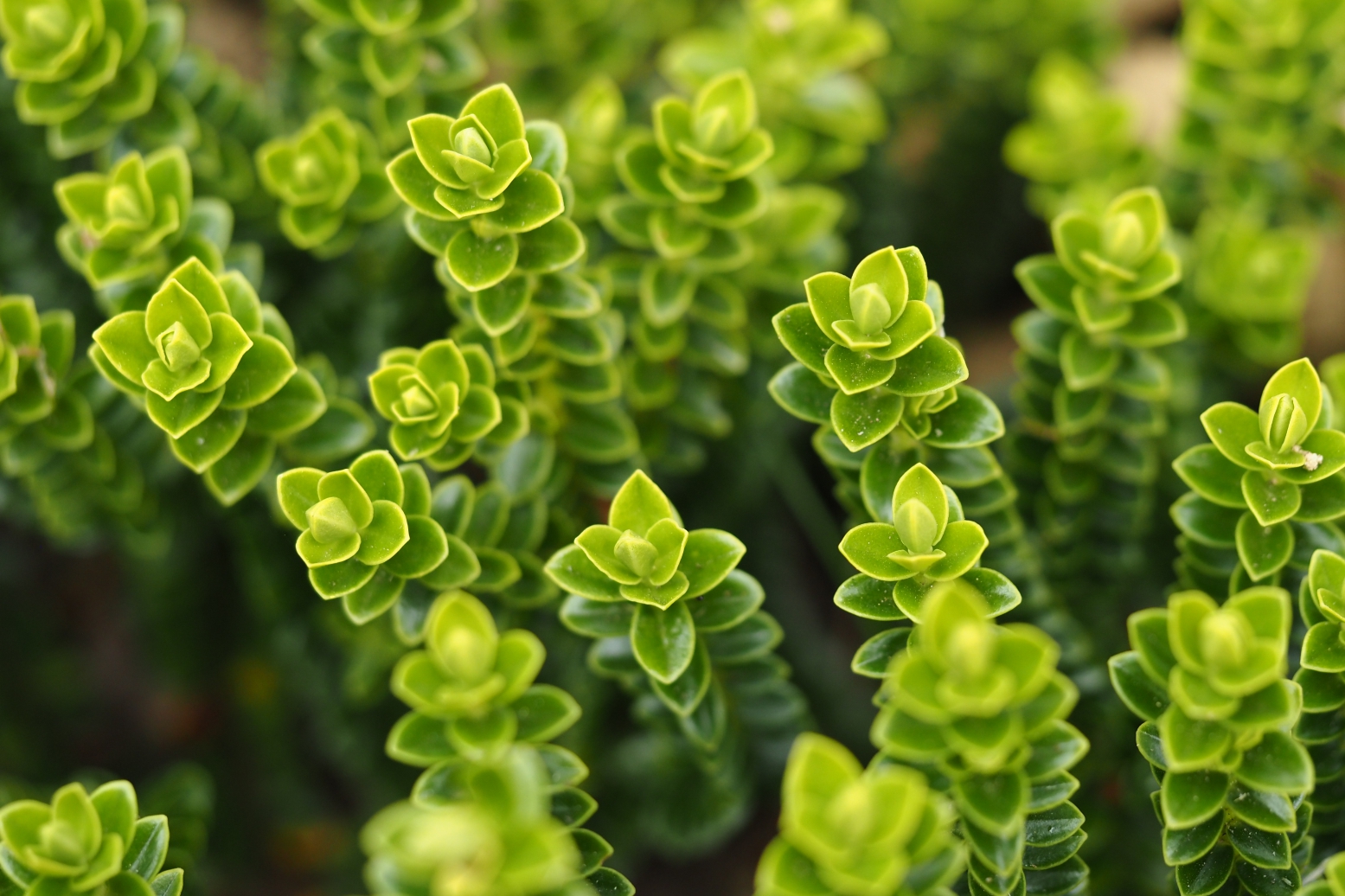
On the banks of the Cuckmere’s static meanders are ranks of hoary cress. At first I thought they looked like a type of sedum but in fact they’re in the cabbage family. This is an introduced species.
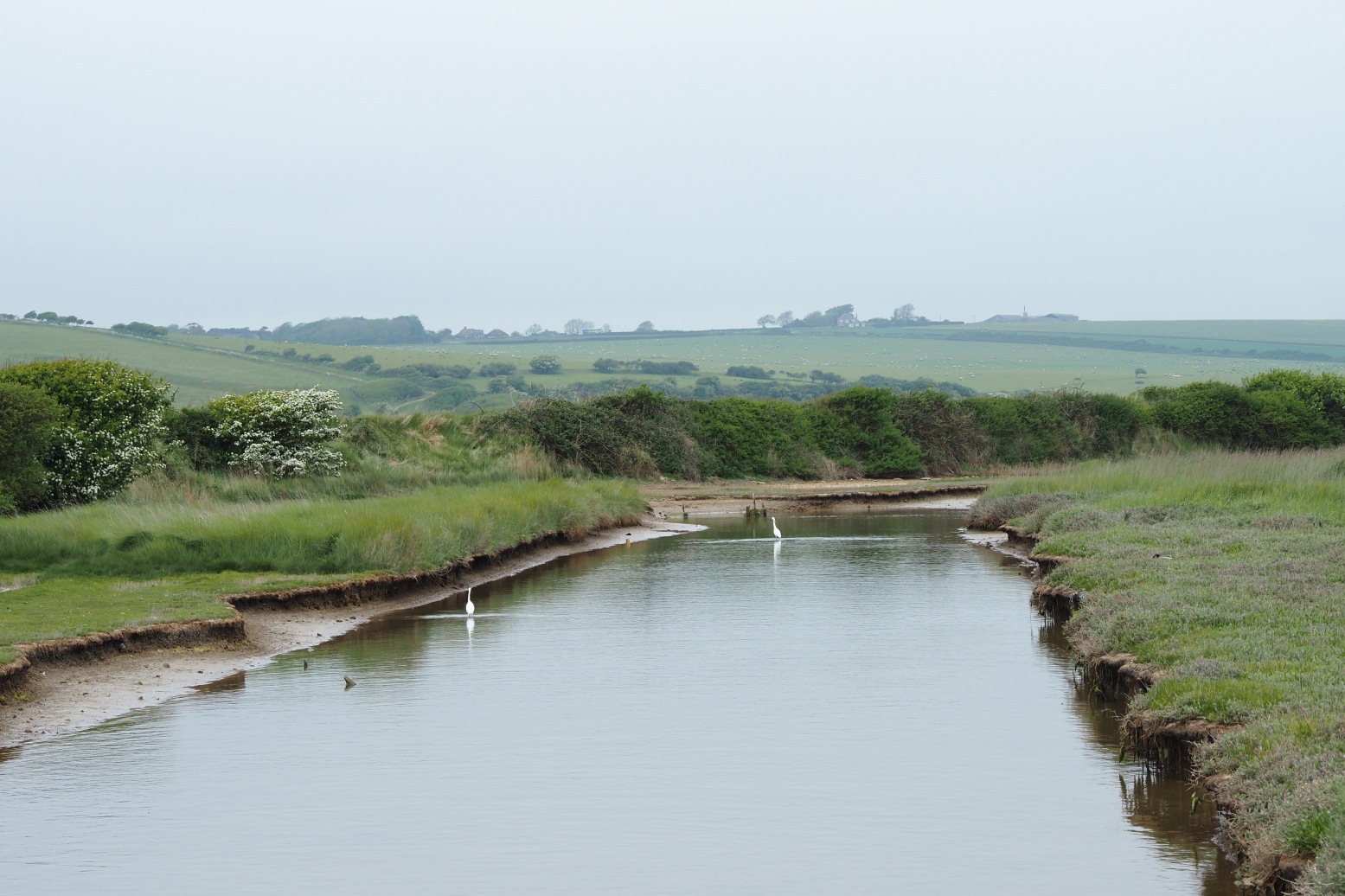
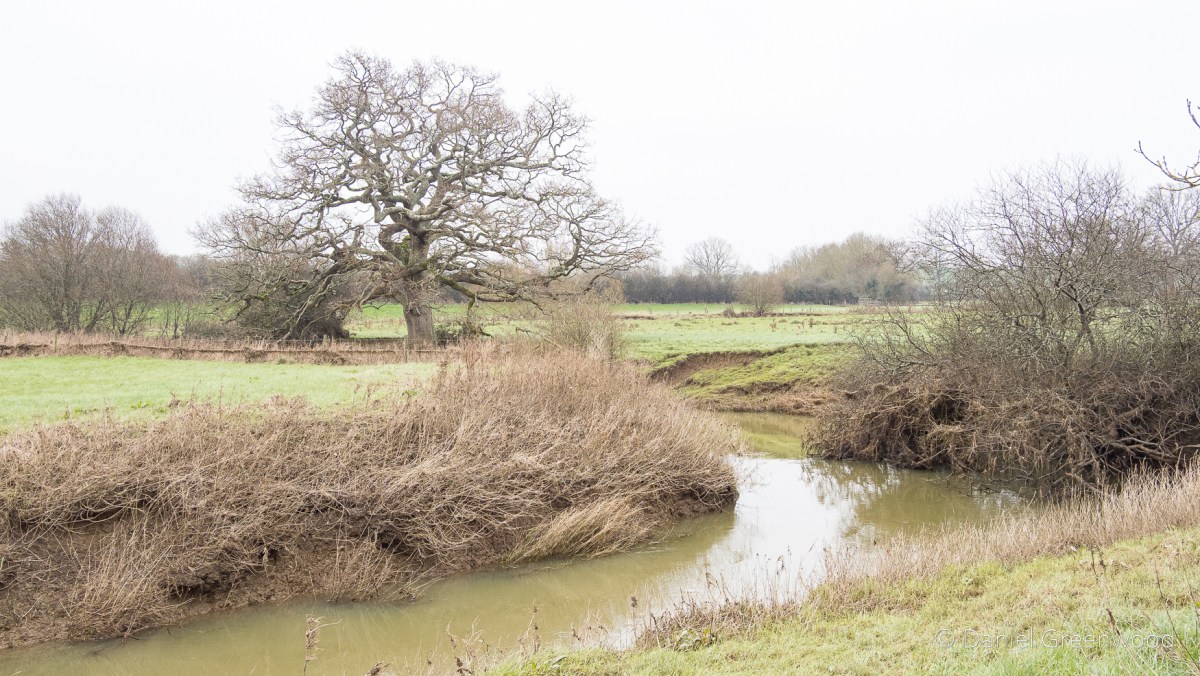
A view back up the Cuckmere meanders, at very low levels for the time of year. Two little egrets can be seen here.
Thanks for reading.
More macro (my tags/categories seem to be broken at the moment – will try and fix them!)
My partner and I made a couple of visits to Nyman’s in West Sussex recently to drown our sorrows after the death of our lovely rescue cat. We drowned those sorrows in flowers. Nymans is one of the jewels in the Sussex Weald, with amazing views across woodlands towards the South Downs.
I usually photograph less formal landscapes than National Trust gardens, but perhaps I am too particular sometimes. The stark colours against the grey backdrop of the day (literally) make for really pleasing images. All the pics here are ‘straight out the camera’ and I haven’t edited them. Olympus cameras produce beautiful jpeg files which my experience with Nikon equipment has never matched.
I’ve had a burst of American visitors in recent days (to my blog, not my house). So thanks for visiting, y’all, and sorry about the year you’ve had. You may have noticed I’ve slipped to monthly posts on here. Between April and October I posted blogs every Monday without pause, which is a tricky task…
Here’s my seasonal update of stuff you don’t need to know about, but then welcome to the Internet. What I’m writing Soon I will be self-publishing my third poetry collection, Fool’s Wood. It’s seven years since my last one and this collection has taken longer because of LIFE. There will be a booklet and also…
On a recent trip to Ireland, my Mum and I spent some time at a garden centre trying to find hedging plants. Having been poisoned by cherry laurel once, and having professionally removed a lot of it, that was not on the agenda. Instead, I was looking along the lines of a good old conservation hedge mixture, with an eye on the local ecosystem.
Northern Mayo is dominated by species like birch, hawthorn, rowan and willow. At the garden centre I was impressed by the beds of saplings where bundles of hawthorn or beech were available for the cost of 1 Euro a whip.
What interested me was that hawthorn wasn’t actually available whereas ‘whitethorn’ was. Don’t be confused for too long, as this is the same species: Crataegus monogyna. The woman who ran the garden centre didn’t understand me quite a lot of the time and then thought we were American. That’s a new one! Either way, we bought 10 whitethorn and 4 potted hollies (Ilex aquifolium) for two separate areas of hedging. Again, these are two species native to the landscape they were being plopped into. This is not an ethno-nationalist statement, it’s considering what will take in the soil, hydrology and what will benefit local wildlife most.
How I plant a hedge
I have been planting native mixed hedges since 2011, usually on public land like parks or nature reserves. I don’t go in much for extra things like plastic weed matting or anything like that.
The hawthorns were going into an area that had just been cleared of bramble, nettle and hogweed by my uncle. We’re fairly sure this area might have been used to grow potatoes by previous residents.
I began by breaking up the ground with a mattock, using both sides of the head to break the soil and to axe through the roots of nettle, bramble and hogweed. When I use a mattock I don’t wear gloves as it gives better grip. The mattock should be directed between the feet so as not to take a chunk out of your shin.
I laid the whips out (with help from my Mum) and planned to put 5 to a metre, but it ended up being about every 12 inches. I’m not fussed on doing this perfectly, the main thing is they survive. When the roots are in and covered by soil I press with my hands, not feet, as sealing the ground can block the space for gases and water to move through, potentially reducing oxygen to the plants.
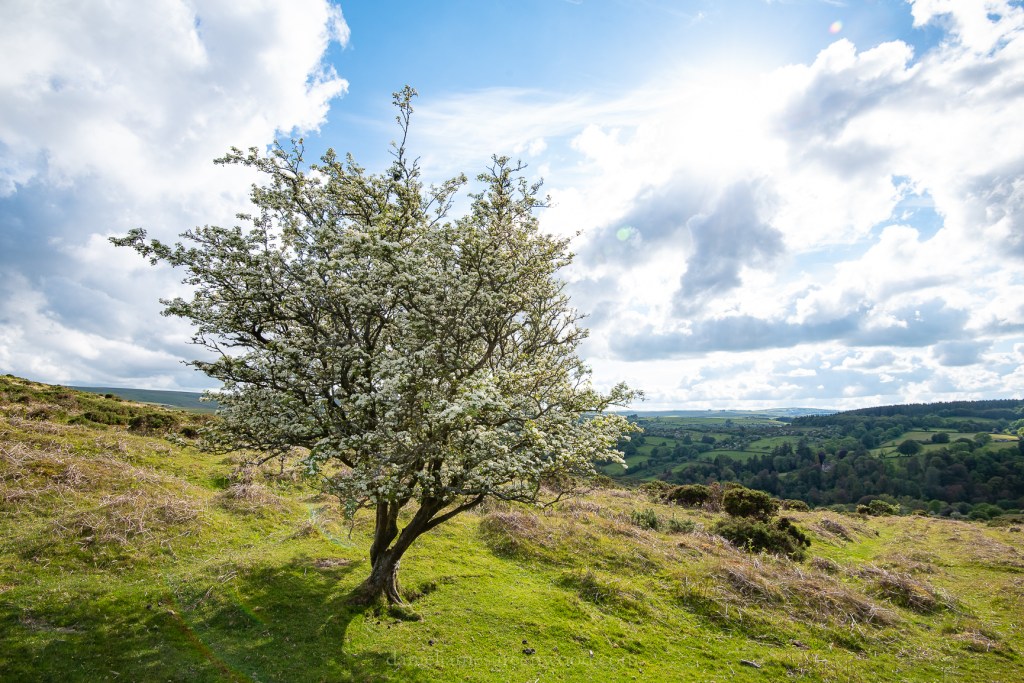
Hawthorn blossomon Dartmoor
Hawthorn in Irish folklore
Whitethorn, as they call it in Mayo, is a significant tree in Irish culture. This article by Marion McGarry tells you a lot about hawthorn’s place in Irish culture. Unfortunately it is seen as, well, unfortunate.
Then again, if it’s bad luck to cut them down it must be a really good idea to plant so many of them!
Chalk grassland is an incredible habitat. It’s extremely rich in plants and animals, with high cultural value from the historical assosciations with human activity over at least 8000 years. In the UK it defines the downlands of Sussex, Hampshire, Dorset and Wessex. Sounds like an episode of The Last Kingdom. Thankfully I was spared the sword (this time).
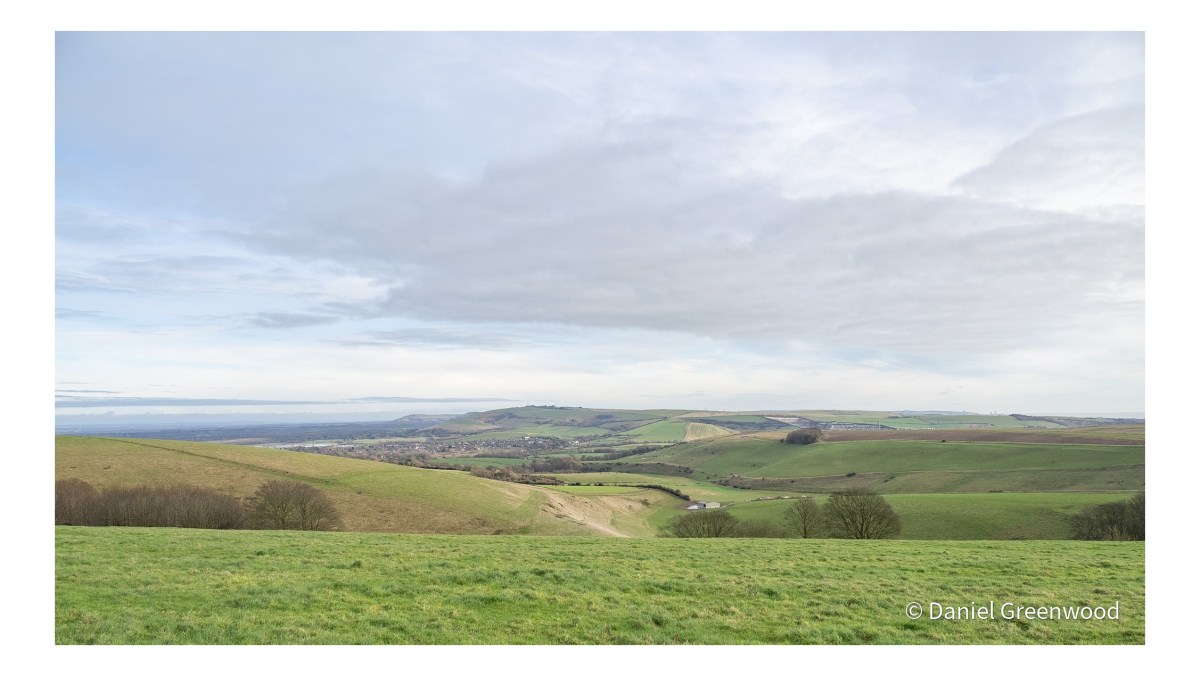
In early May I was fortunate enough to visit a chalk grassland site near Brighton with two people who knew the landscape extremely well. I had been invited to visit this area to help find early spider orchids 3 years ago but the pandemic got in the way of travelling there.
A landscape raked by stone, bone and iron
I visited on a sunny day in what was a very dry spring indeed (I hate how dry winter 2021/spring 2022 have been). We had heard of hundreds of orchids in recent weeks at the site but only found 3. It was baffling. Perhaps we were just too late and the dry conditions had brought an end to their season earlier than expected.
These orchids get their names from the fact their flower looks like a spider. You may be familiar with the names of bee, fly, man, lady, lizard and monkey orchids also.
They are truly beautiful.
During the survey a woman came over to talk about orchids. Her knowledge was incredible, with known locations across Kent and Sussex. She travelled by train from her home in north London.
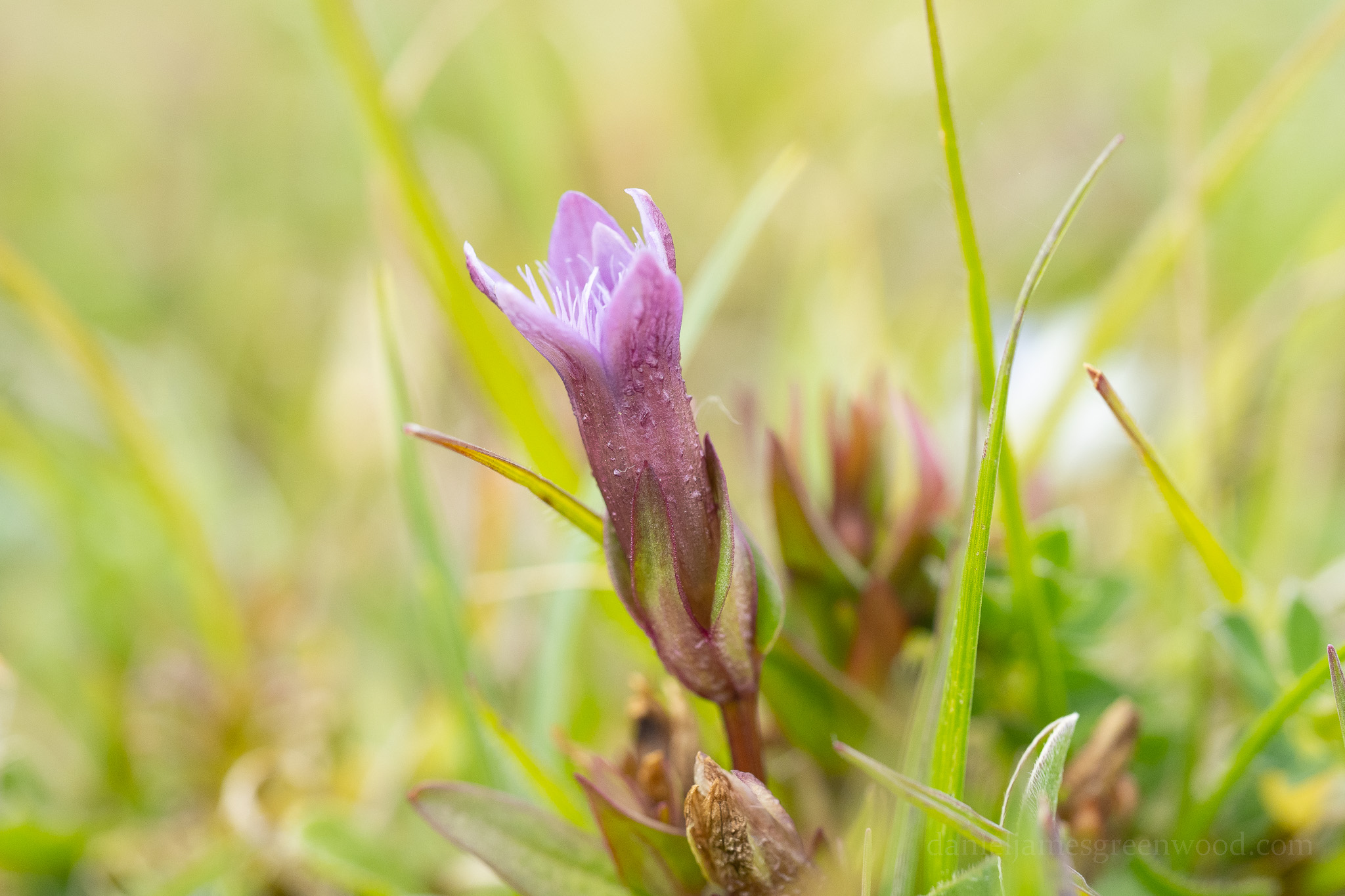
She showed us a gentian, a type she said was only found at this location in the UK.
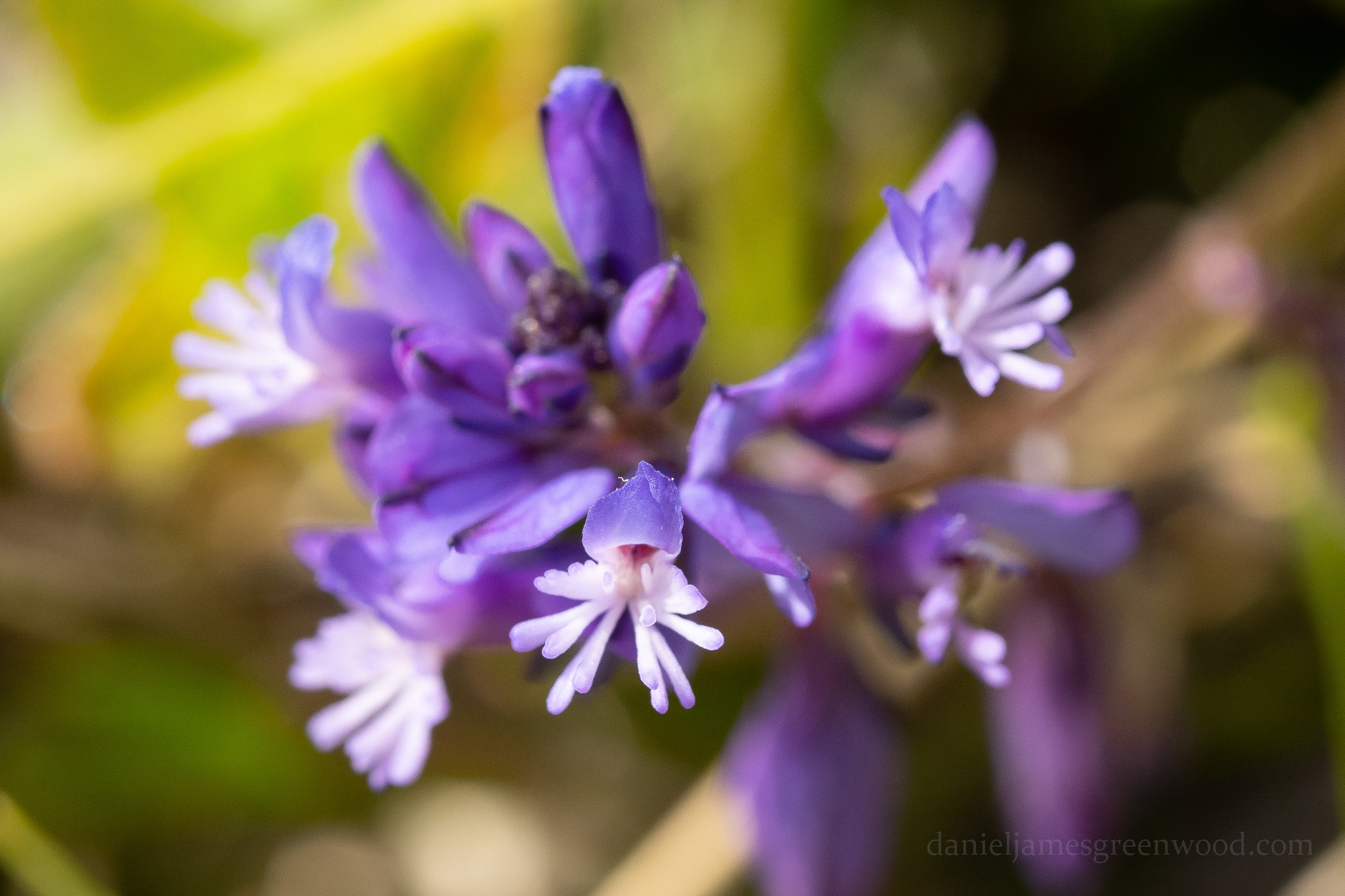
Perhaps the most abundant plant was milkwort, appearing in white, pink and blue.
This is some kind of daisy (probably hawkbit) with petals that look like hands shielding something.
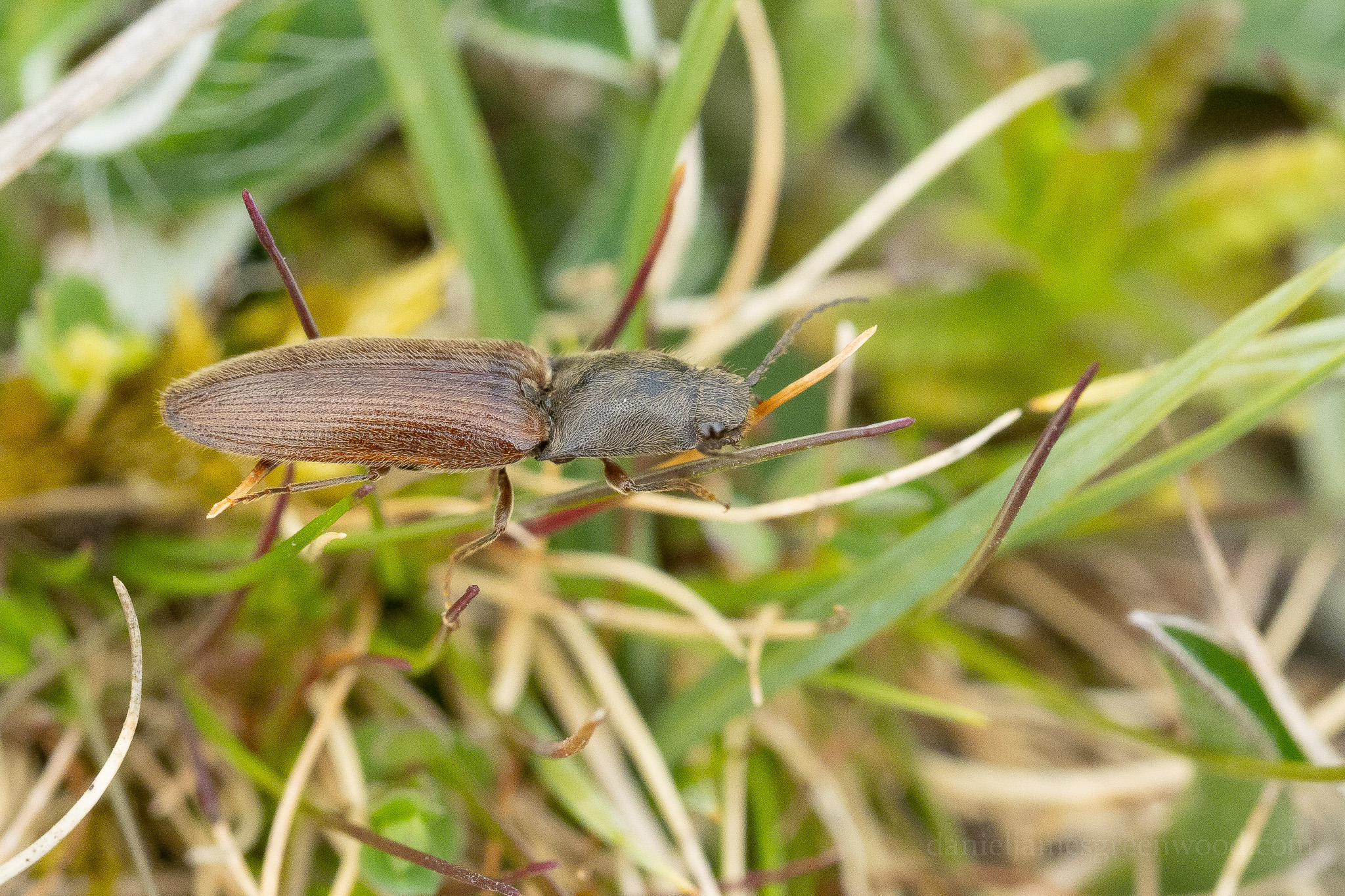
There were a fair number of small beetles in the grasslands, including this click beetle (I think).
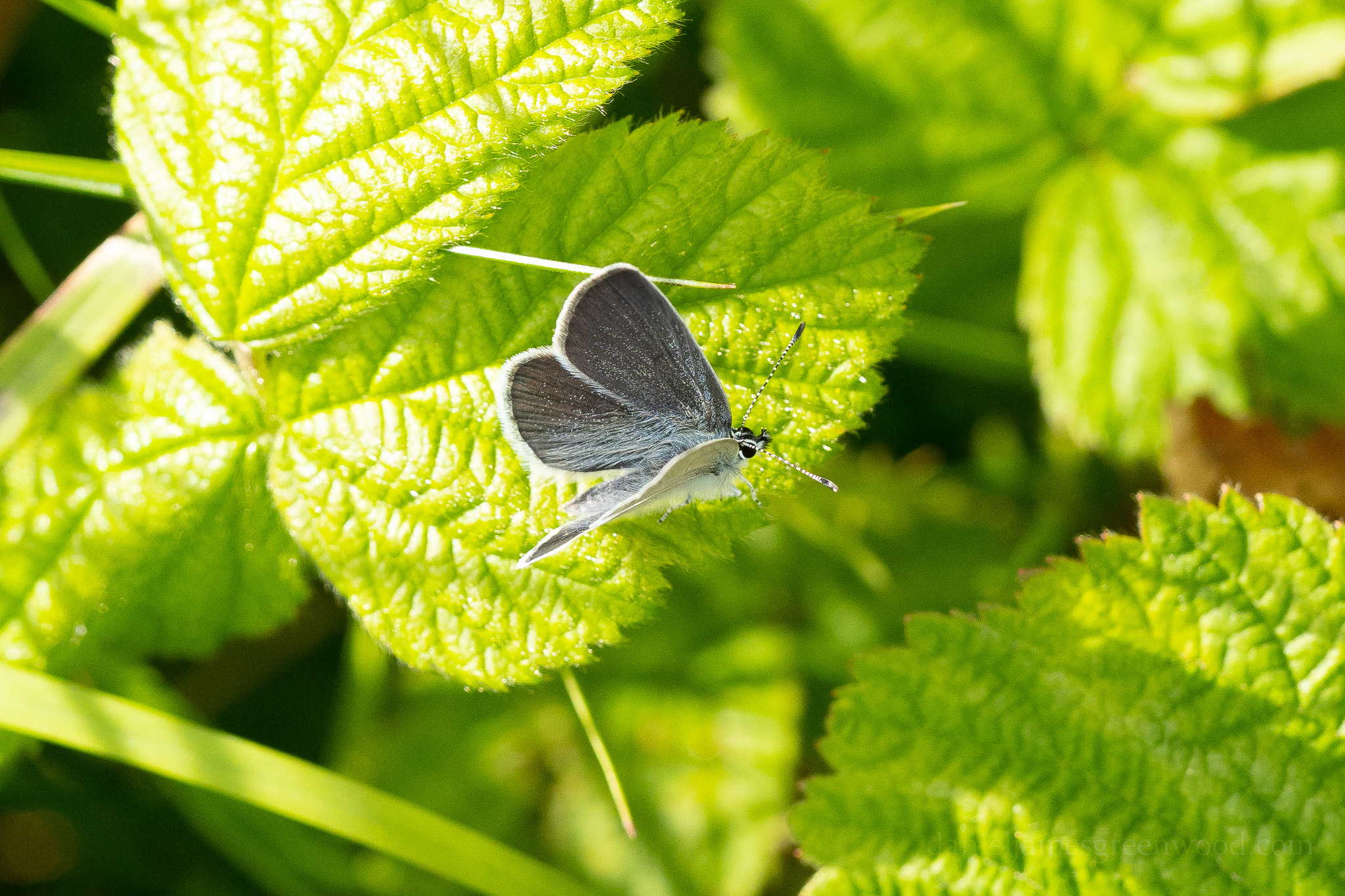
A nice surprise was finding a small blue, one of the rarest butterflies in the UK. This is a very small blue, though most of them in Britain are small anyway. They’re pretty much tied to chalk grasslands from what I know.
Thanks for reading my 600th blog post! Prepare yourself, there’s a lot to take in here.
I’ve been interested in the history of Chernobyl for several years, mainly after learning about the ecological experiment created from the complete abandonment of the area.
If you have the chance to watch the TV drama Chernobyl, do it. It is one of the best TV dramas I’ve ever seen.
A recent documentary covering the story of the nuclear accident Chernobyl: The Lost Tapes and the resulting clean up, is also worth watching. A warning of course that both are graphic and disturbing in their own ways.
The Chernobyl nuclear disaster of 1986
Recently I have read Chernobyl: History of a Tragedy by Serhii Plokhy. It’s a very sobering account of all that happened in 1986 and how it all came to be. It’s so grim I can’t read it for too long without needing a couple of days off.
I’ve been reading it during Russia’s second attempt to commit genocide in Ukraine (April 2022), after Putin’s ragtag army’s failed attempt to take Kyiv and exact regime change. Russia are doing terrible things in Ukraine and the people responsible must be held accountable. I hope I live to see Putin brought to justice.
When are you going to get on to the fungi – you might ask? I promise you, we will get there eventually, and it will be worth it.
It was found recently that the Russian military had been doing some pretty stupid things in the Chernobyl exclusion zone, beyond the illegal attacks against Ukrainians. Perhaps the most stupid things took place in ‘the Red Forest’, and area of extremely high radiation.
Soldiers are thought to have dug trenches in this mind-bendingly radioactive landscape as part of their special radioactive military operation. The Russian military were seeking to invade via Belarus in the north and eventually control Kyiv. Famously, they failed spectacularly, committing war crimes in Bucha, Irpin and other areas before having to retreat.
It was the case at the time around the disaster that the Soviet Union denied the full impact of the accident. In reality many thousands of people will have been contaminated by the radiation from the damaged reactor, but according to the official toll only 31 people have died. It may even be that the soldiers invading Chernobyl did not know that it was dangerous. It beggars belief.
Though those soldiers will not have fared well with the radiation, it was discovered that a species of fungus does not just do well with the radiation, it is thriving inside the nuclear reactor at Chernobyl. Thriving. Inside. I know…
Radiotrophic fungi
Cladosporium sphaerospermum is that fungus. It’s usually found growing on the leaves of citrus trees, but as a radiotrophic species it appears to find favour in environments like the Chernobyl nuclear reactor. Scientists are looking to use its ability to protect from the ill-effects of radiation to protect people in certain environments in space.
The unusual thing about the fungi found in the reactor was that they were not exisiting in spite of the radiation, but because of it. It does go to show that if there is a nuclear holocaust, some fungi will survive and contribute to the world that follows. That world probably wouldn’t have many humans in it.
Far more problematic for us humans is the fact that the Chernobyl nuclear disaster released extremely dangerous levels of caesium-137 into the atmosphere. This of course directly affected ecosystems across Europe where the radiation spread. Fungi absorb their sources of nutrition from their surroundings, making them likely to absorb radiation also. This website has taken the incredible steps of listing which mushrooms are more likely to become radioactive, compared with those which aren’t.
What this all effectively means is that any lingering radiation in the environment will remain in the ecosystem because fungi will absorb it. I don’t have the information but do wonder if there are some mushrooms which may never be eaten again within a certain range of the Chernobyl exclusion zone.
This article points to a very striking impact of the radiation in woodlands in the exclusion zone. Basically, higher levels of radiation are causing a build up of leaf litter and woody debris, because fungi are inhibited and unable to perform their core ecosystem function of recycling. This means there are higher chances of fires breaking out and redistributing radioactive material.
I bet you wish you never read this post.
Thanks for reading anyway. Solidarity with Ukraine 🇺🇦
One of the most beautiful sights in English nature is a Low Weald bluebell woodland. The shimmer of blue in the evening sun pocked by the white stars of wood anemones. These are my favourite evenings of the year, the promise of spring but still delivering on all you had hoped to see in the darker months. Summer just can’t match this.
This square of woodland in the Sussex Low Weald was not officially open access, but we kept to the paths and no bluebells were harmed in the making of these images. There is a lot of conversation about access to the countryside at the moment in England, and how power and privilege resonates in the landscape. These are important conversations and the issues are complex.
It was my first visit to this woodland, much like another picturesque bluebell wood a little further north that has now been completely closed to public visitors. A look at the maps shows how a larger landscape of natural woodland had been chomped up by farmers to become fields, leaving this section completely isolated. That will have occurred over the past few hundred years.
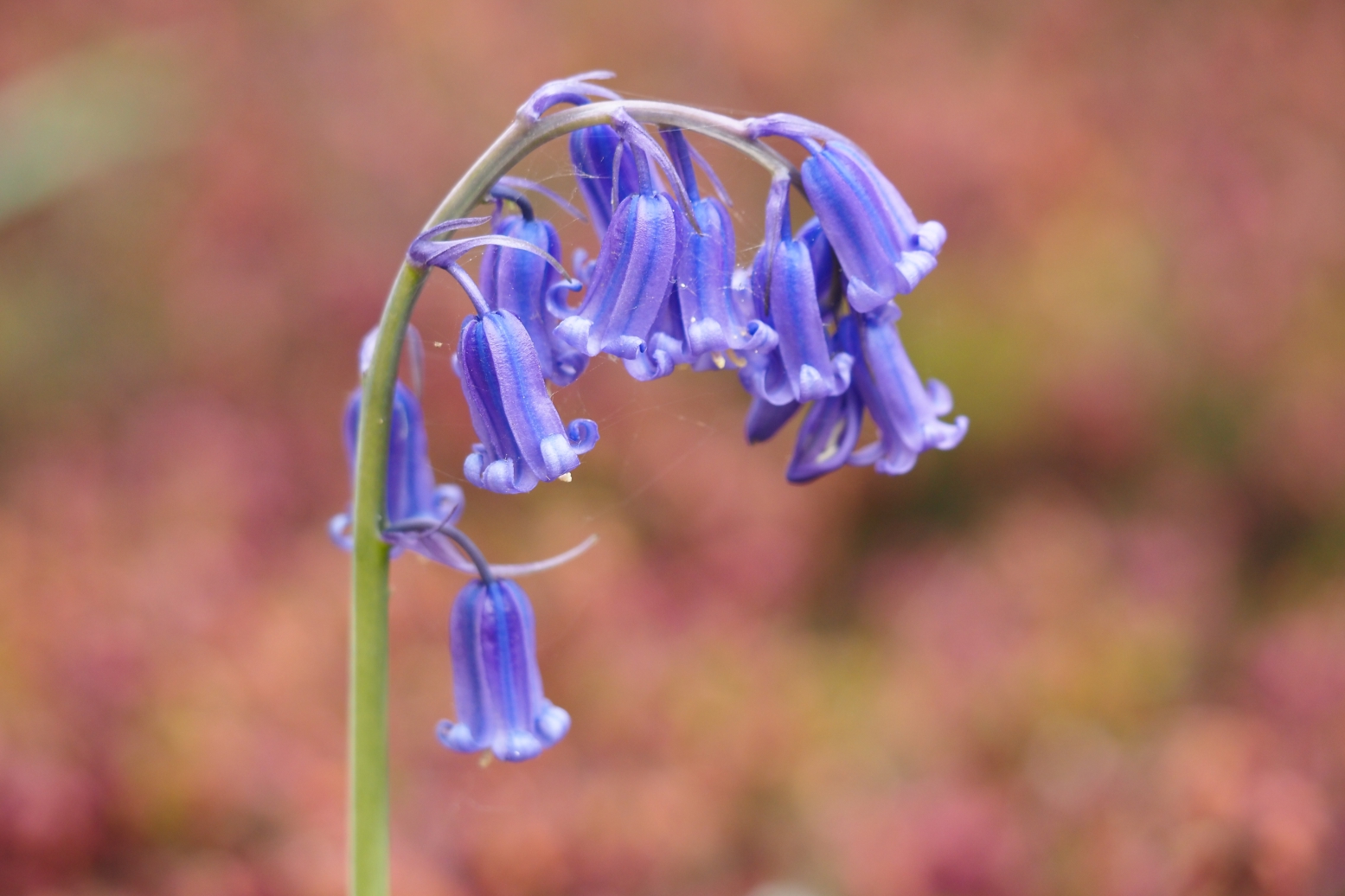
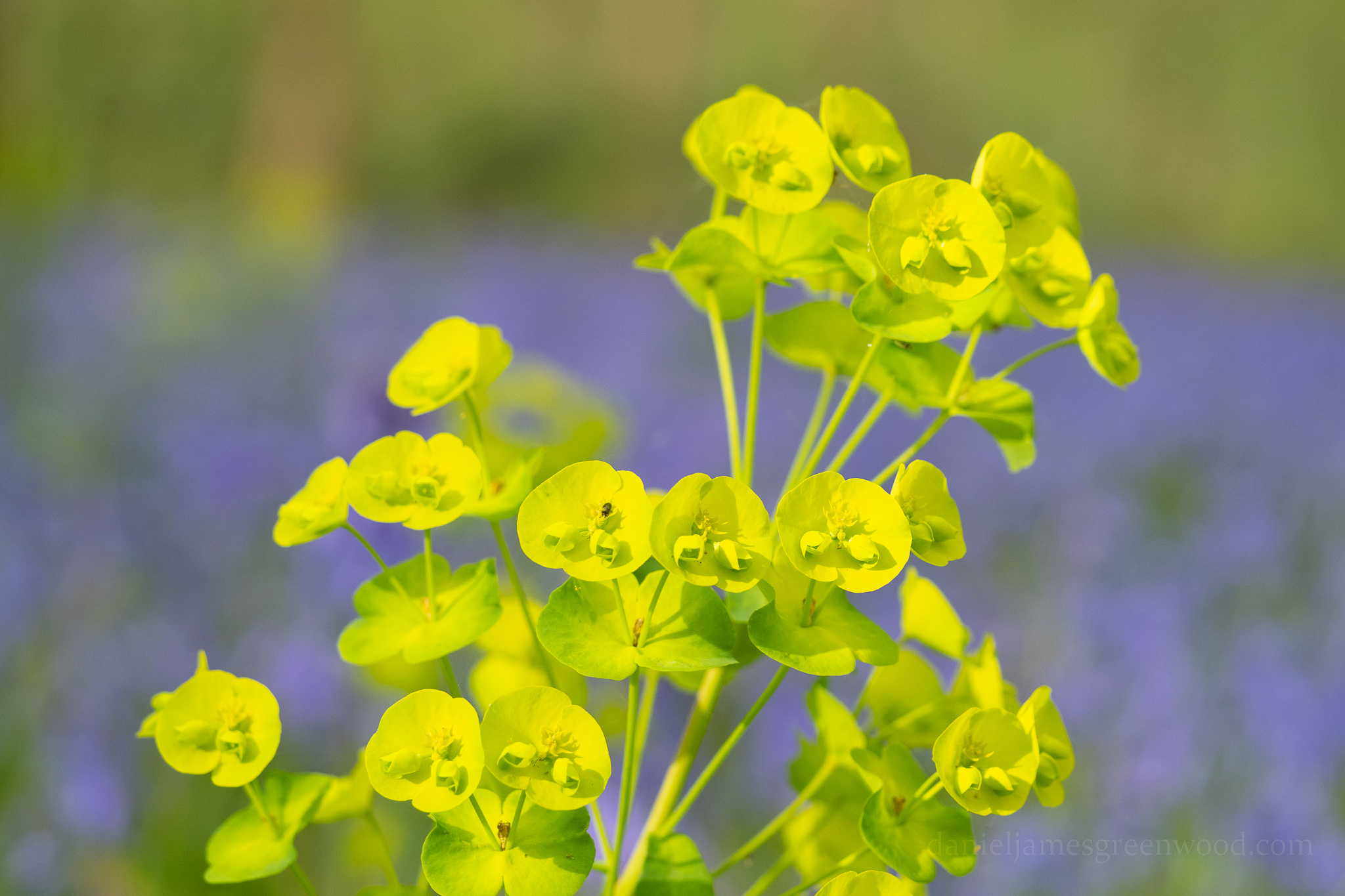
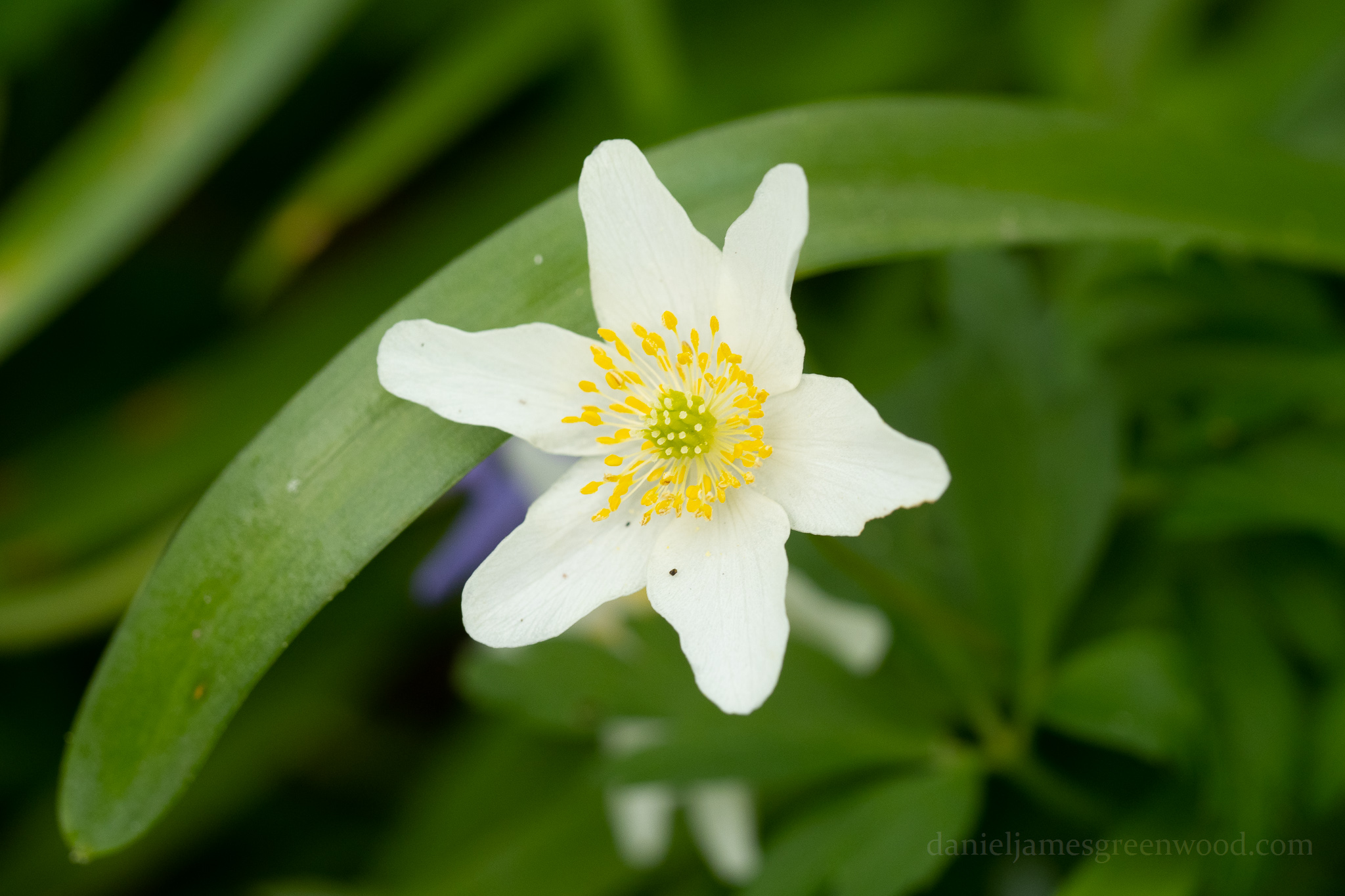
However, it had all the key indicators of ancient woodland, as seen here: English bluebell, wood anemones, greater stitchwort, dog’s mercury, wood spurge, and all under a shrub layer of hazel and high canopy of oak.
This kind of habitat is very much human-made, with centuries of coppicing hazel and felling of oak standards. That doesn’t stop it from being good for wildlife, coppice woodland is one of the richer landscapes in the UK.
Back in London and a chance to see what my Mum and Dad’s garden had to show for itself on the first day of May. This is when we really start to get into the pollinator season, which peaks in July. The weather was perfect for macro with no harsh light.
I noticed how the dandelions in their pre-flowering phase also look like lions. Their name actually means tooth of the lion from the French “dent-de-lion”, which is one of the great common plant names in my view. Also a reminder of how the English language takes from so many others (did you know English also contains ‘Viking’ words like sky, eggs, and happy?!) The leaves look like teeth but the flowers look like lion’s manes. I’d love to learn more about the history of the name in England.
The ladybirds were quite active. We may be looking at the invasive harlequin here.
I saw this micro-moth on a few occasions, if they are the same species. Their behaviour was similar and their patterning is also.
It’s always nice to see a bee-fly, unless you’re their prey. They can’t have much longer left of their season.
My Dad spent ages trying to control the Spanish bluebells that were running rampant. They are a difficult species to remove. That said they are attractive both for photos and some pollinators like mason bees.
My final image was of a hoverfly I see quite a lot that holds its wings in to its body, making it difficult to observe its markings. I think this one looks like a metallic robot from a 1980s sci-fi movie.
In March I visited Wild Nephin National Park at the Atlantic edge of Ireland, in Co. Mayo. I thought it was called Ballycroy National Park, but the name seems to have been updated.
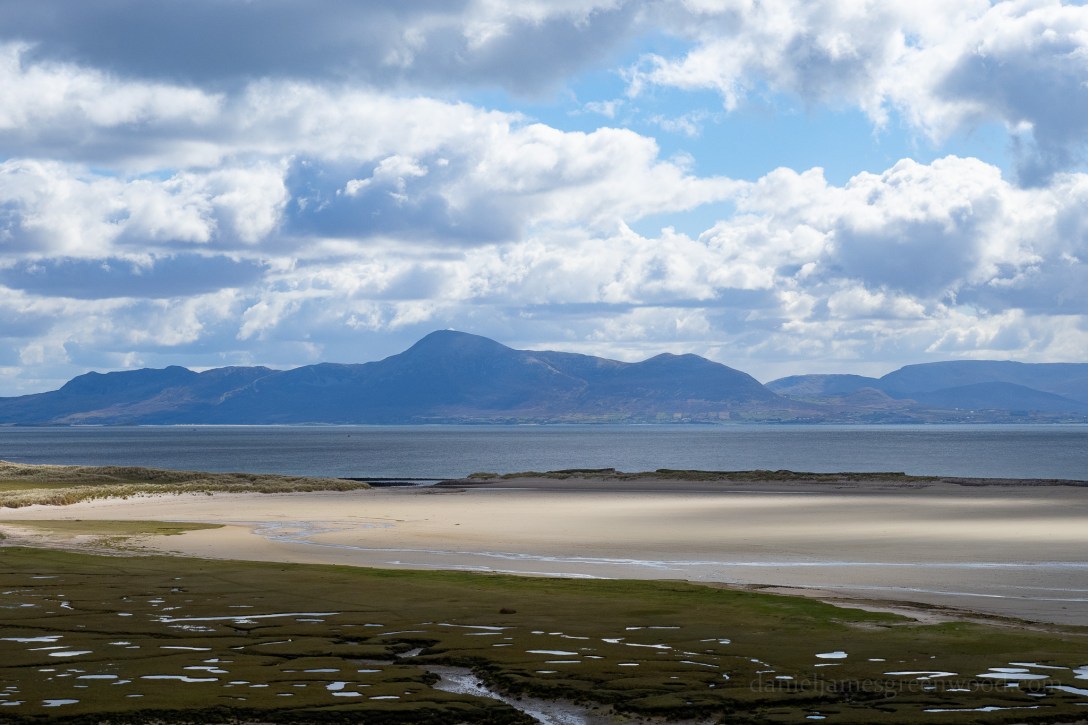
The mountains here are the Nephin Beg range. There’s a great visitor centre here and a brilliant cafe run by a very friendly couple. I’d seen these mountains from afar for years but this was my first time in the National Park.
The National Park itself is said to be home to golden eagles, which I hadn’t realised were present in Ireland. It’s also where one of Europe’s largest blanket bogs resides, a special type in this region known as Atlantic blanket bog. Great name!
If you want to read more about this landscape I would recommend Sean Lysaght’s book Wild Nephin. Copies are available in the cafe also. I really recommend it, also Sean’s poems.
I’ve tried to work out the names of the mountains but may have some of them wrong. I’d welcome corrections in the comments and will amend.
Here are some images I took during our visit to Ballycroy:
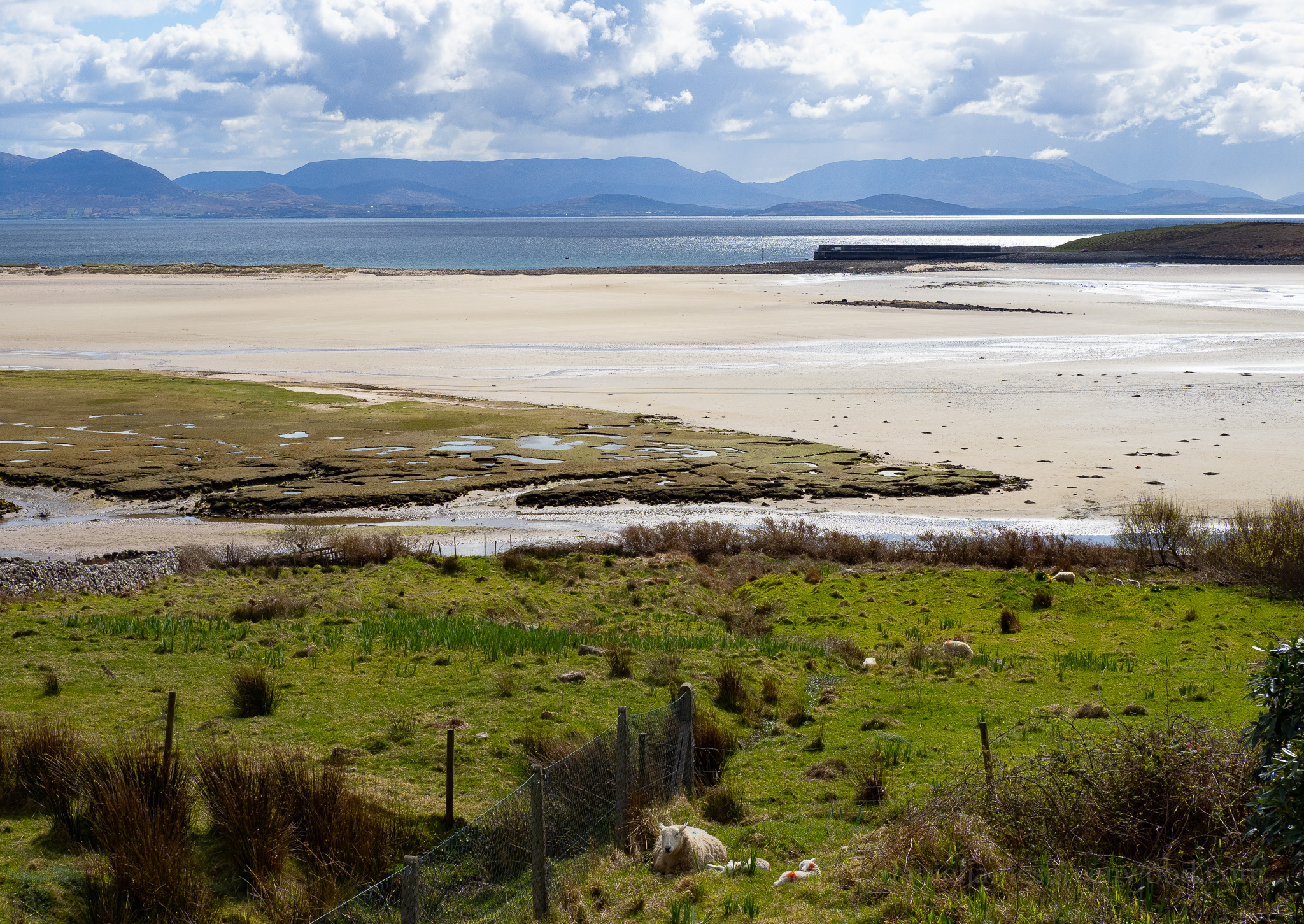
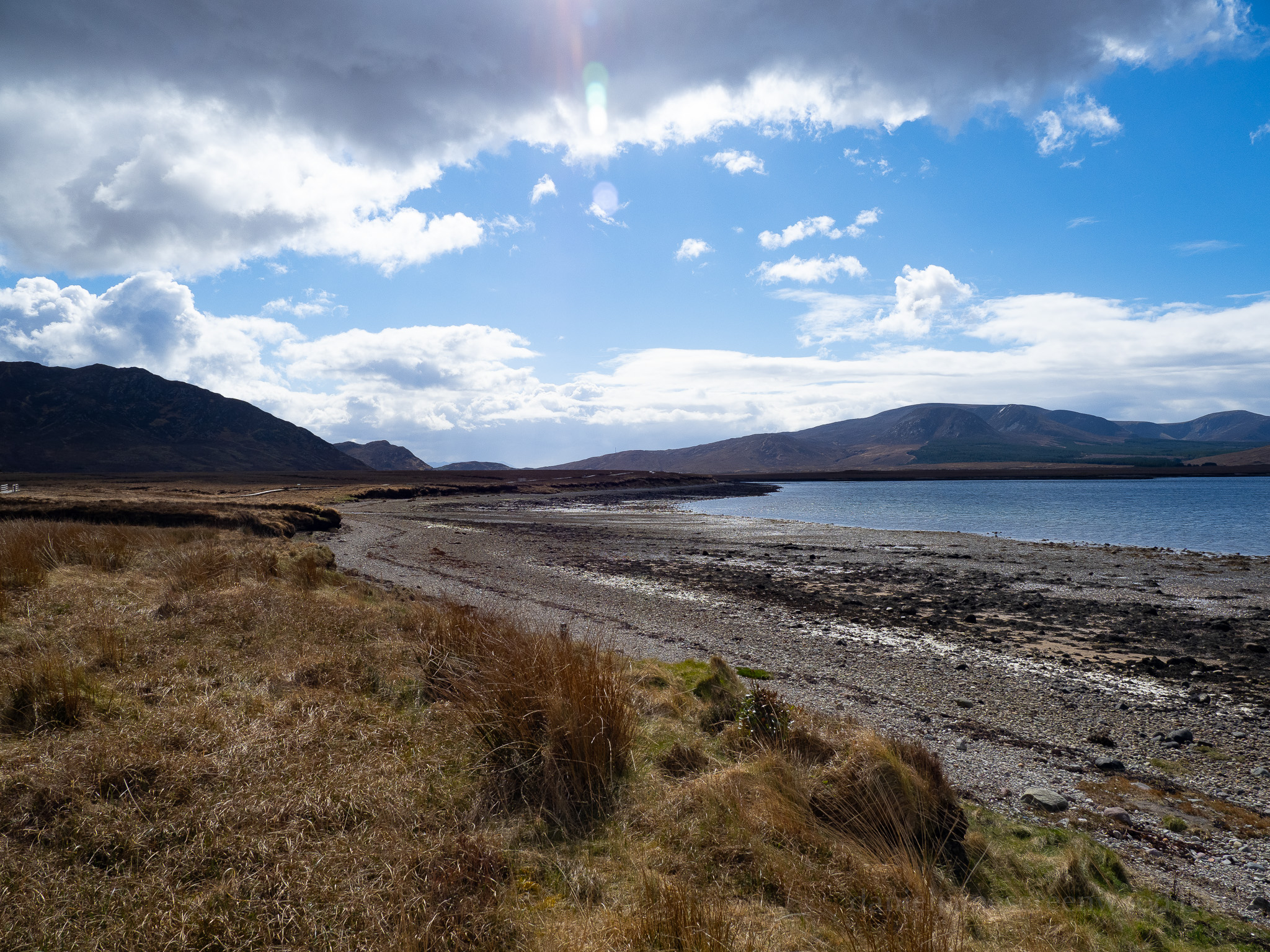
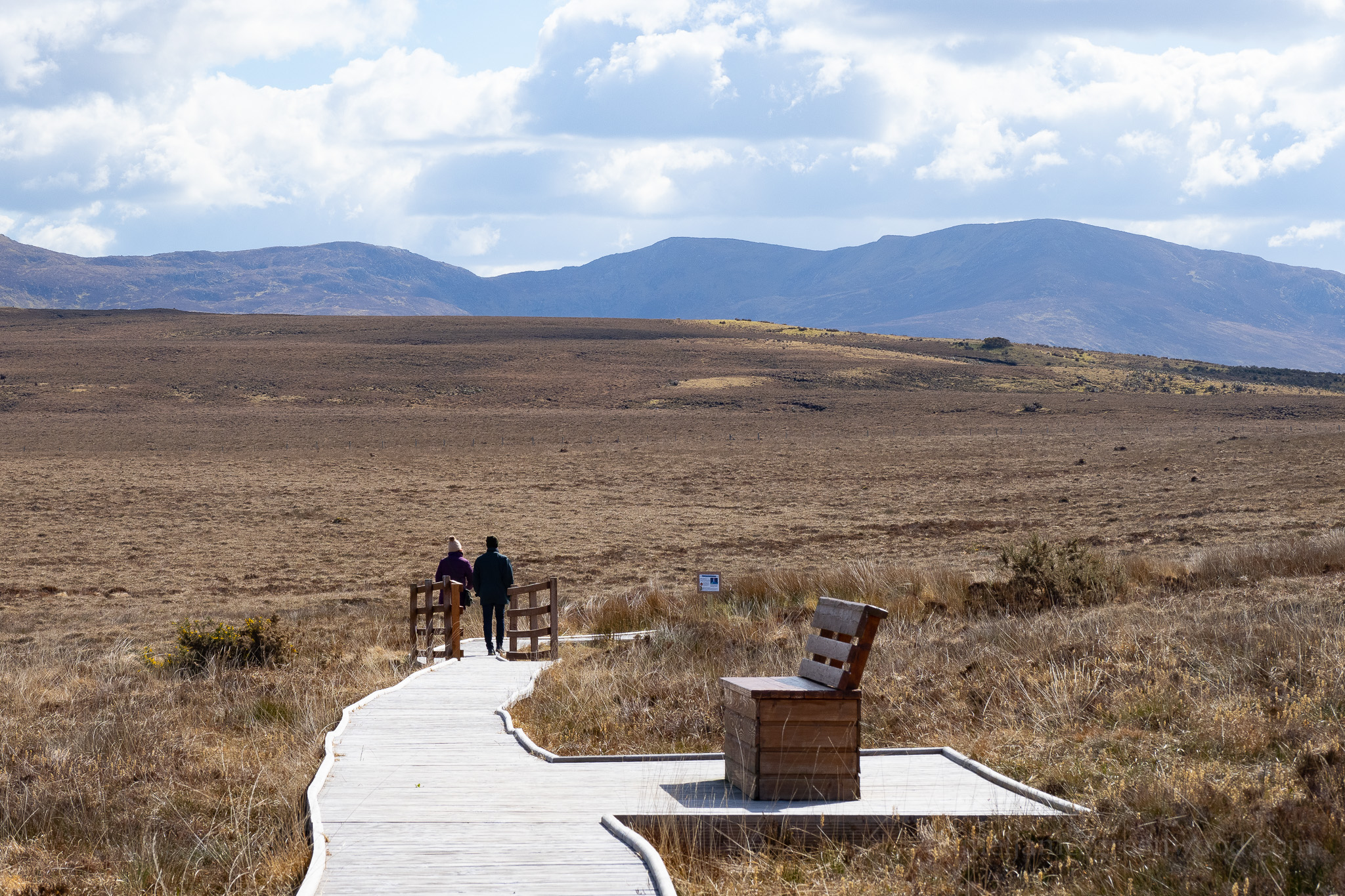
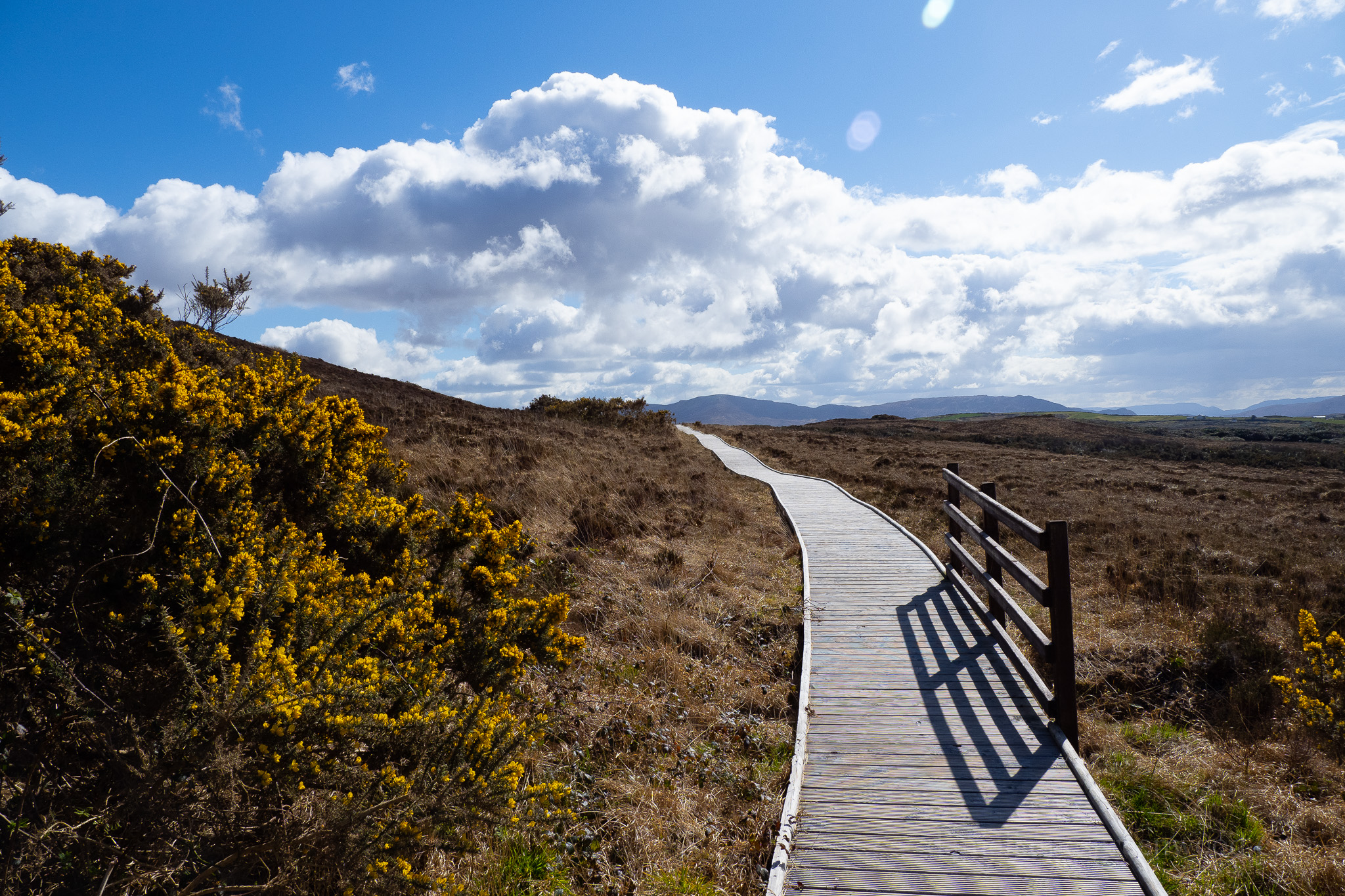
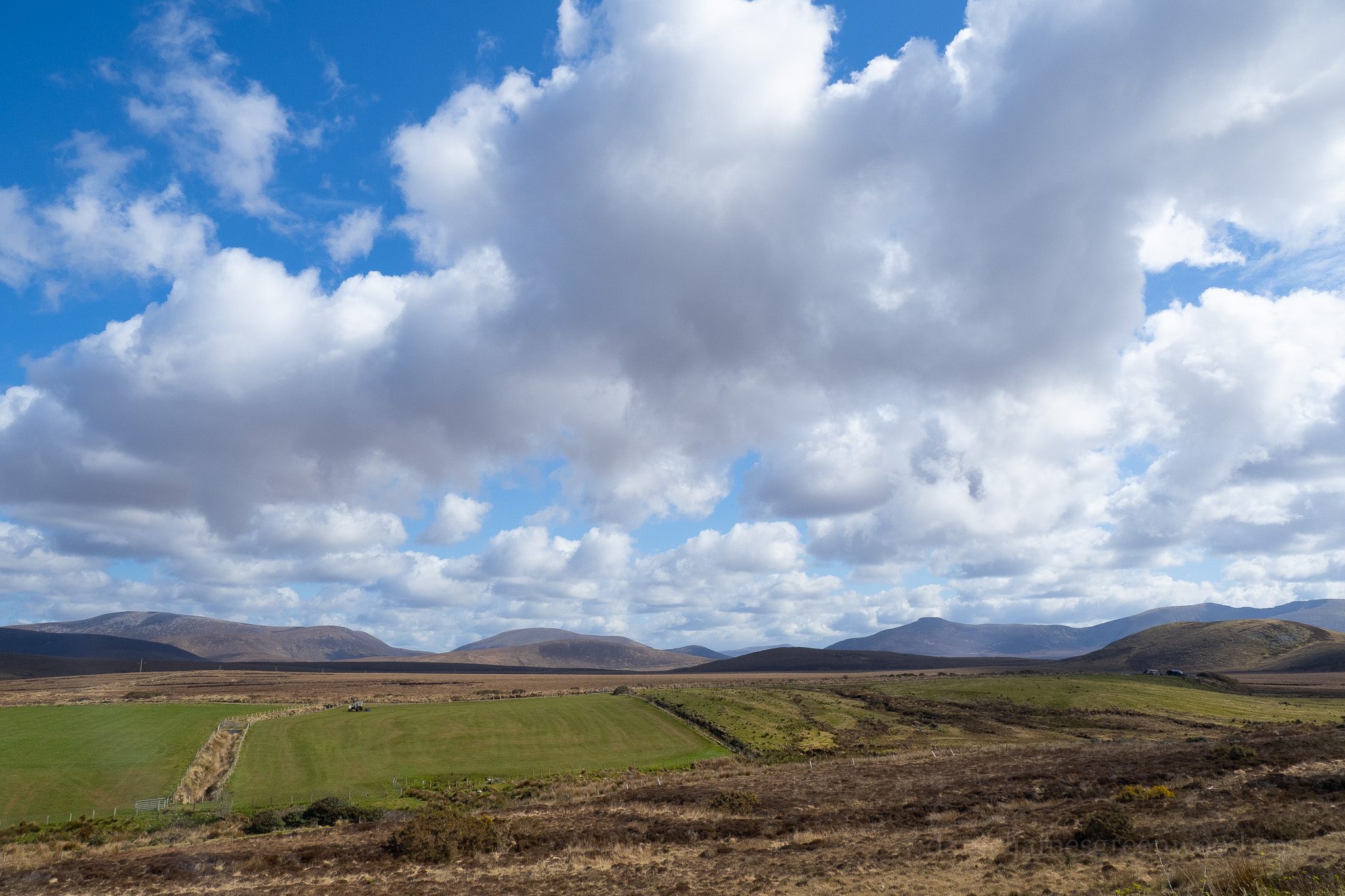
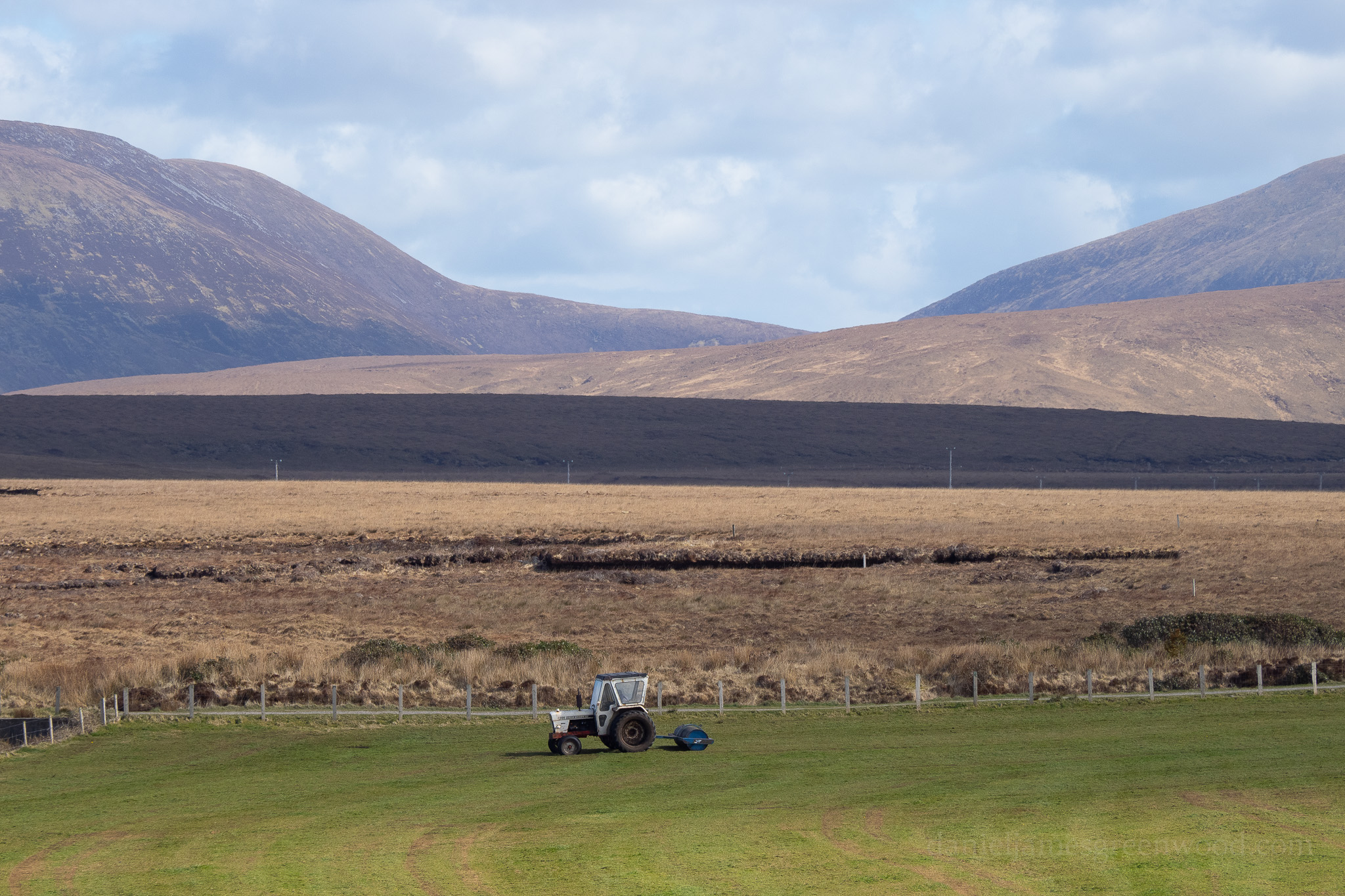
Nephin mountainScree and stream bed on NephinMountain I don’t know the name of with cottage for scaleCroagh Patrick, possibly the most famous mountain in IrelandMulranny view towards mountainsSheep with lambsView of Croagh Patrick from Mulranny, across Clew BayCleggan Mountain Trail (boardwalk just visible on the left) and view towards AchillCnoc Leitreach (Owenduff Hill) I think!The Ballycroy visitor centre boardwalk loopSunny day in BallycroyGorse in flowerInishbiggle mountain (I think)Views towards Nephin Beg mountain rangeLocal farming in BallycroyAbandoned farmstead near Ballycroy. Note the succession of rushes, grasses and gorse onto the green of the ‘improved’ grassland.
I spent Good Friday with my Mum in London and managed to sneak in 5 minutes of macro photography in her garden. It was a warm but fairly overcast afternoon, which is pretty perfect for macro. This is because the light is softer, creating less contrast in images, and not so hot that insects are hyperactive.
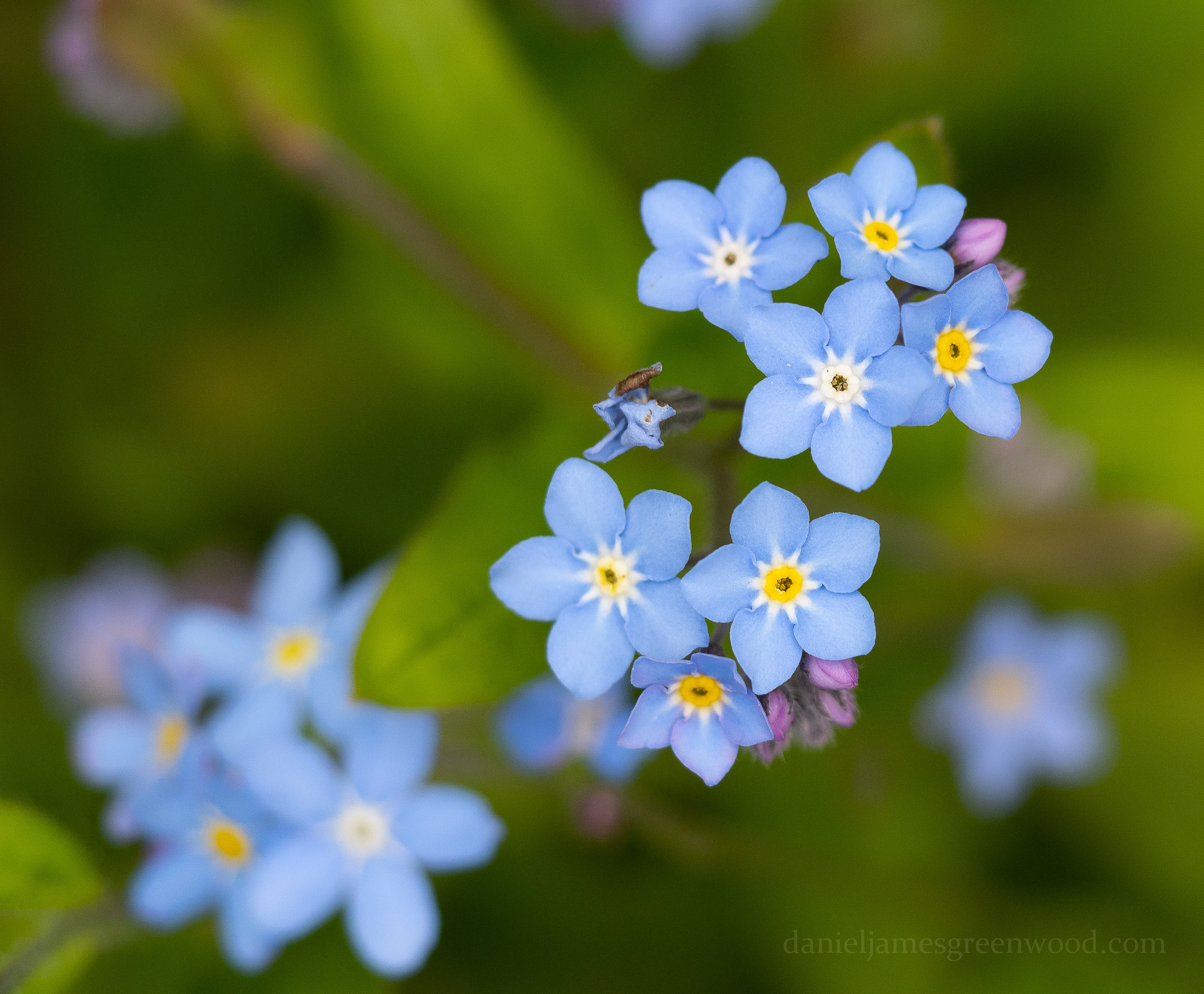
Every spring my Mum and Dad’s garden explodes with self-seeded forget-me-nots, lesser celandines and garlic mustard. The forget-me-nots are truly stunning flowers.
Up close and under a macro lens they are even better. I didn’t get a photo of their full spread, but this tweet completely sums up how I feel about them:
I think it’s a good idea to normalise calling certain things ‘wildflowers’ rather than ‘weeds’.
Years ago my Dad used an old enamel sink to make a pond. We put some marsh marigold in which has proven very content indeed in that small basin. It’s a good nectar source for bees in particular.
One of my Dad’s favourite plants in the garden was the smokebush which grows outside the kitchen window. The colours are incredible when in full swing, but the plant is no less beautiful when it comes into leaf. One of the last proper conversations with my Dad was when I told him I had cut this back (it was getting quite big) and he thanked me for it. I can’t tell you how significant that is now.
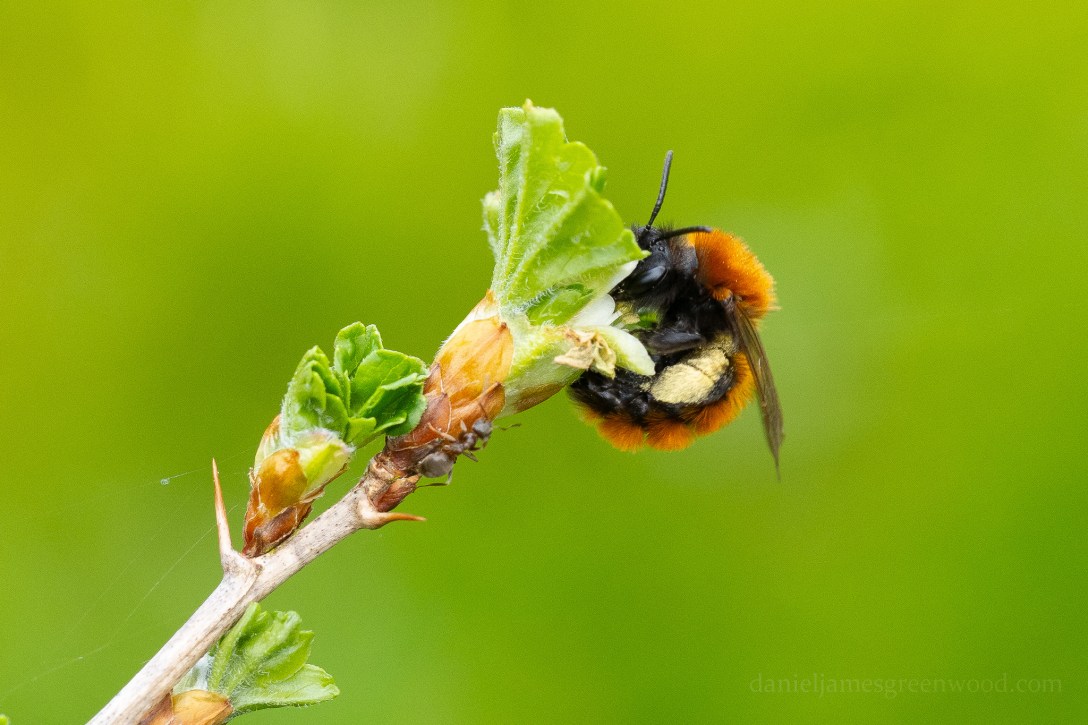
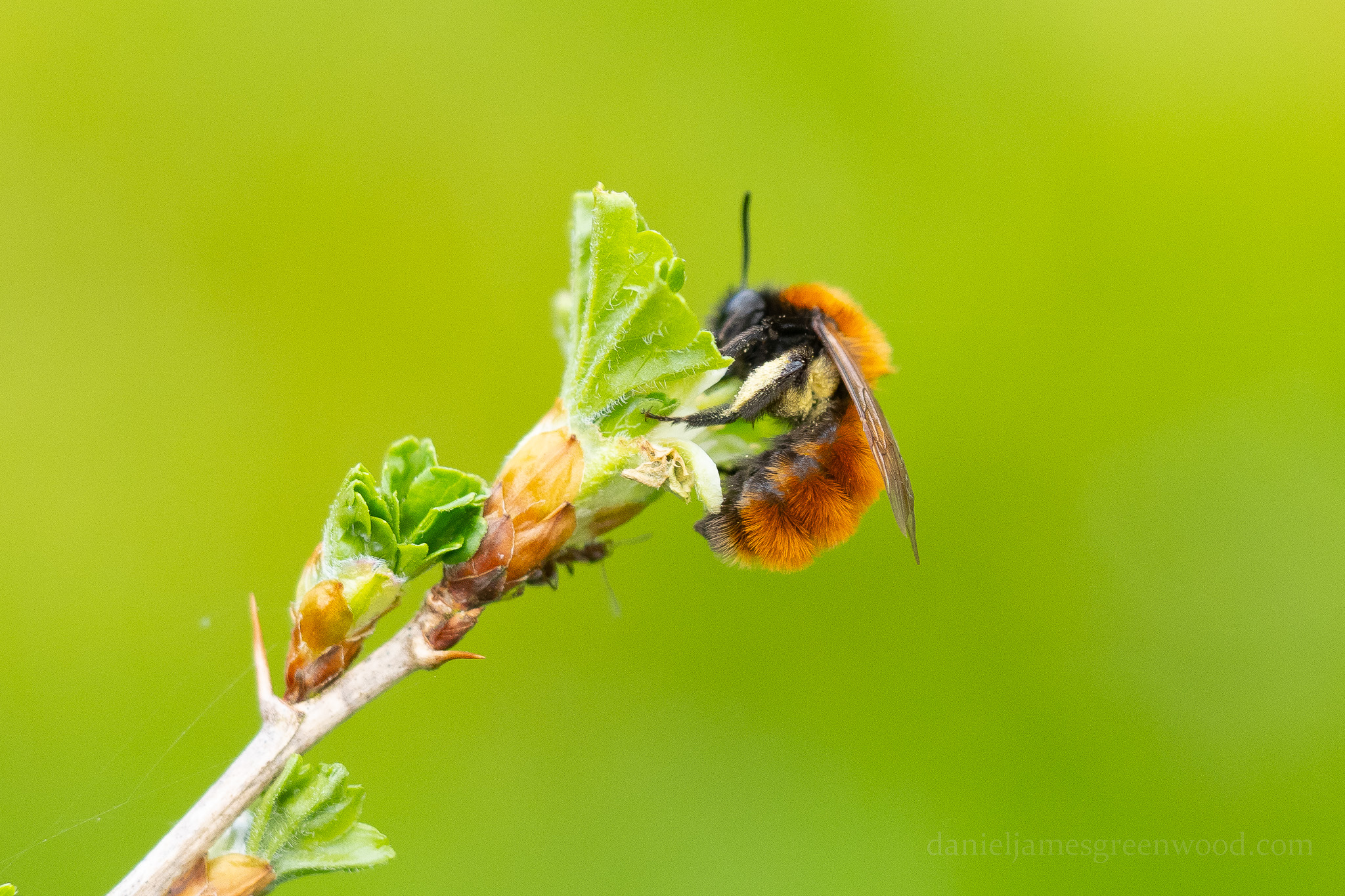
I noticed a familiar bee whizzing around the gooseberry bush – another of my Dad’s favourites, which he would pick fruit from and put into desserts, but also curse the woodpigeons who sometimes ate all the crop in one go! This little red bee is a tawny mining bee, one of the early solitary bee species that we get in southern England. Here you can see it pollinating the gooseberry flowers, that highly valuable ecosystem service you may have heard about. Also note the ant approaching!
The ant is clearly approaching the bee, which in turn is shifting ready to fly. You can just about make out the ant’s mandibles opening in a threatening manner.
The ant has done its job and the tawny mining bee has fled the scene. I can only guess that the ant sees the bee as a threat to any aphid farming operations which are taking place on the plant, or happening nearby. The mining bee is no threat to the ant or the aphids. It only wants nectar and pollen.
I didn’t know that I had captured this scene – it is out of focus after all! But it is a reminder if you spend even a few minutes looking you will find some drama going on out there.
Grief is you
Realising you have their
Mannerisms, gestures
That you are the legacy
It’s the unsustainable pressure
It’s punching the mattress
Repeatedly
At 3:15 on a Tuesday afternoon
It’s the throwing away
Of old medicines
And foods you thought
They might actually eat
Grief is the guilt
All the things I did wrong
Didn’t even consider
Could have done differently
Could have said
Should never have said
Would have said
If I’d known
Grief is the coalescing
Of all the deaths
Into one long chain
Of relentless mourning
It’s living through every
Funeral you’ve ever been to
At the next one
It’s Mozart on a sunny
January morning
Foxes darting between
Headstones
Green parakeets shrieking
Across snow-threatening skies
Grief is love
Apparently
It’s all the things
It’s just a bit
Meh
It’s people so nervous
About upsetting someone
That they never say anything
And just make them feel more
Alone with it
It’s people saying the wrong thing
And making them feel
Even more alone with it
It’s something the Prime Minister
Denies when it suits him
It’s also Mariupol
Bucha and Irpin
It’s my black cat
Wrapped in towels
Under sedation
It’s the hardest decision
Grief is unrestrained
It’s 4 months wait
For bereavement counselling
With a volunteer
Calling from a witheld number
It’s a fracture that isn’t ever
Going to heal itself
It’s the making
And the absolute breaking
Of many millions of people
Each year
It’s the death of you
And the terror in the heart
After what I’ve now seen
And will never un-see
What I’ve now felt
And will never un-feel
It’s the fact that you
Are also dying
Of the very same thing
Because why not
It’s the incurable
The untreatable
The unbelievable
And the unbeatable
It’s the emptiness
Of the place
Where they used to spend
So much of their time
Where they sat
Stood and lay down
A pair of shoes left
Just beside the door
The shaver under the sink
The cap on the hook
The fishing rods
In the garage
The fingerprint
On the Rolling Stones CD
That is now digitised
In FLAC
It’s her old shirts
That seem to hold
Her perfume
15 years later
Grief is unbelievable
Weather
It’s the grey and leaden
Nurses whose names
You never remembered
But faces and information
Never ever forgotten
It’s memories that attack
Like arrows from the best medieval archers
Over a fortress that really
Wasn’t going to last very long
If I’m honest
It’s the return of things
You thought were extinct
The thylacine
And the great auk


































 Unlocking Landscapes