I’ve been slow to post week two of my June 2022 macro challenge, mainly due to offline and online duties. But don’t worry, the photos are still being taken and I’m on track to get it all done!
Day 8/30: some heavy rain in West Sussex brought some of the more ephemeral mushrooms out into the open air. These mower’s mushrooms (also known also brown mottlegill) appeared for a day or so after a downpour on my unmown lawn. It has been so hot and dry that the lawn has barely even grown anyway to be honest!
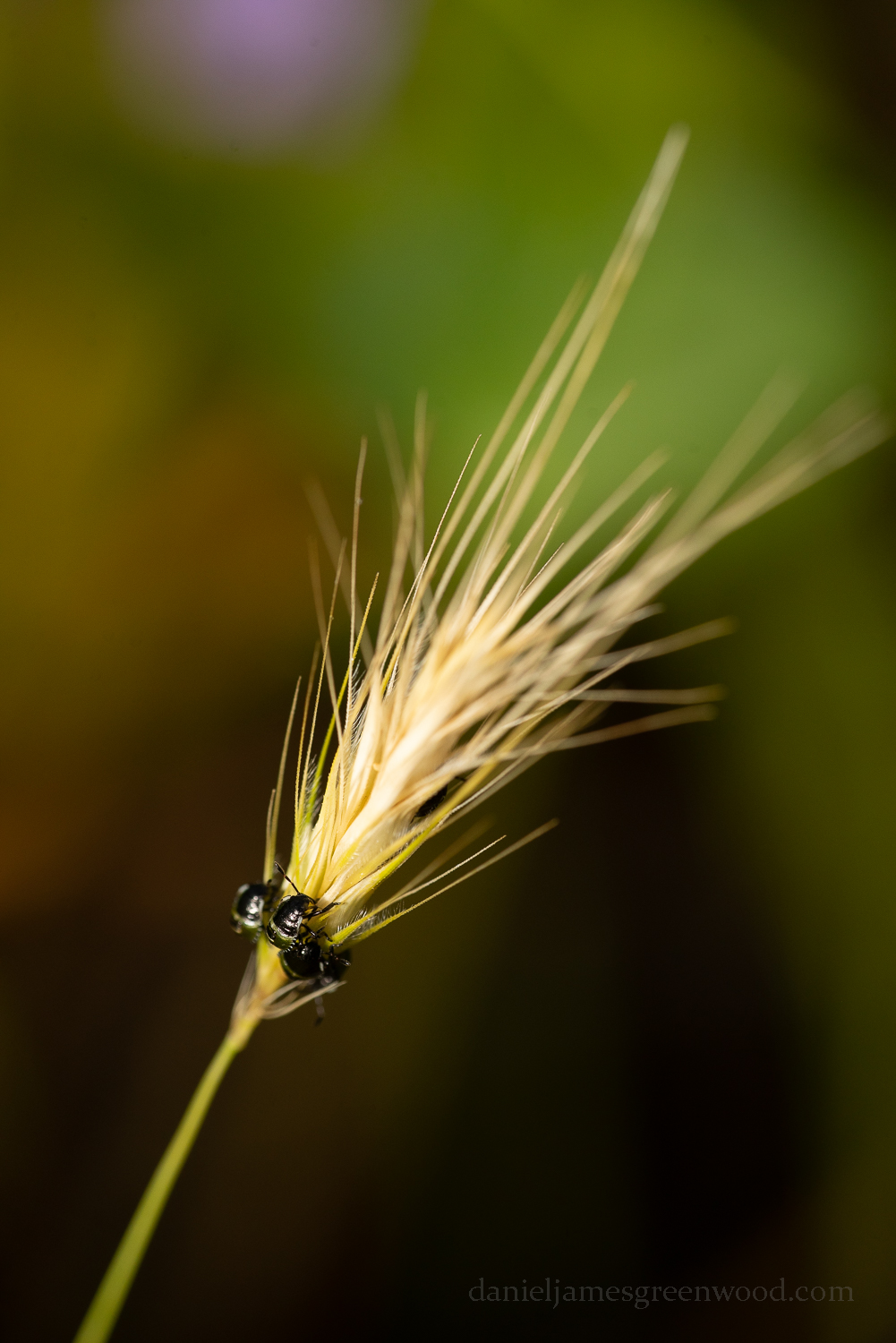
Day 9/30: I spent a good few hours walking around a local woodland expecting miracles (“assumption is a curse” as an old school friend used to say). Instead I just remembered how difficult woodland invertebrate macro can be. It was only until I got out onto the heathland, where the sun hit the woodland edge, that I saw more interesting things. This pic above isn’t perfect, it’s a bit shaky I think, but I do love the story. Ants and aphids have mutualistic relationships which allow the ants to harvest honeydew and the aphids to be protected from predators and also disease. The ants can remove diseased aphids to stop outbreaks. Amazing!
Day 10/30: This was one of those days when I was out and about doing other things but had a camera with a lens with me that did macro. This is a lesser stag beetle clinging to the corner of a brick wall.
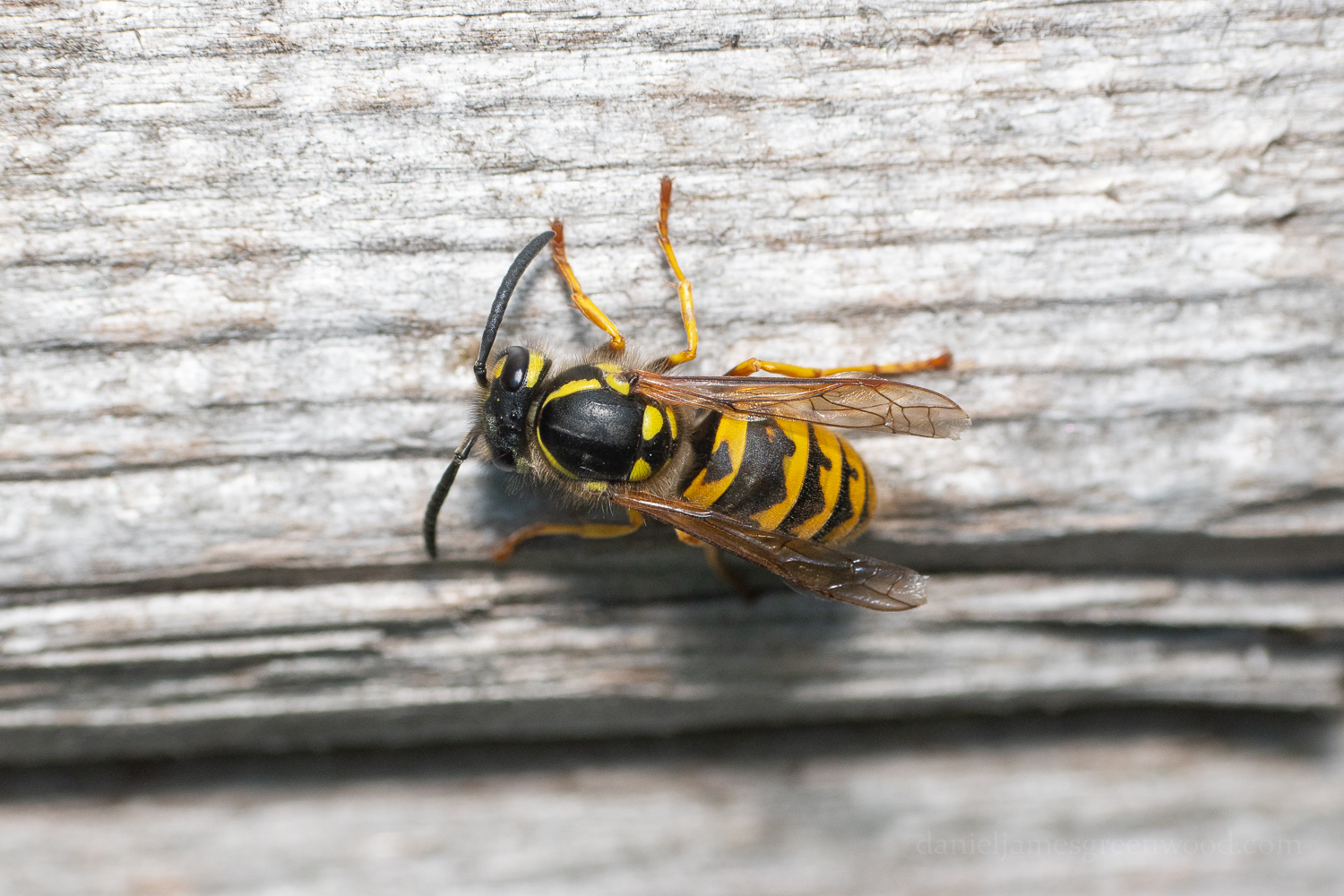
Day 11/30: I only managed to venture out into my garden as night was falling. I found an absolutely miniscule wasp of some kind, as well as a typical yellowjacket harvesting wood shavings from the fence. The bug is probably a mirid or plant bug growing into an adult.
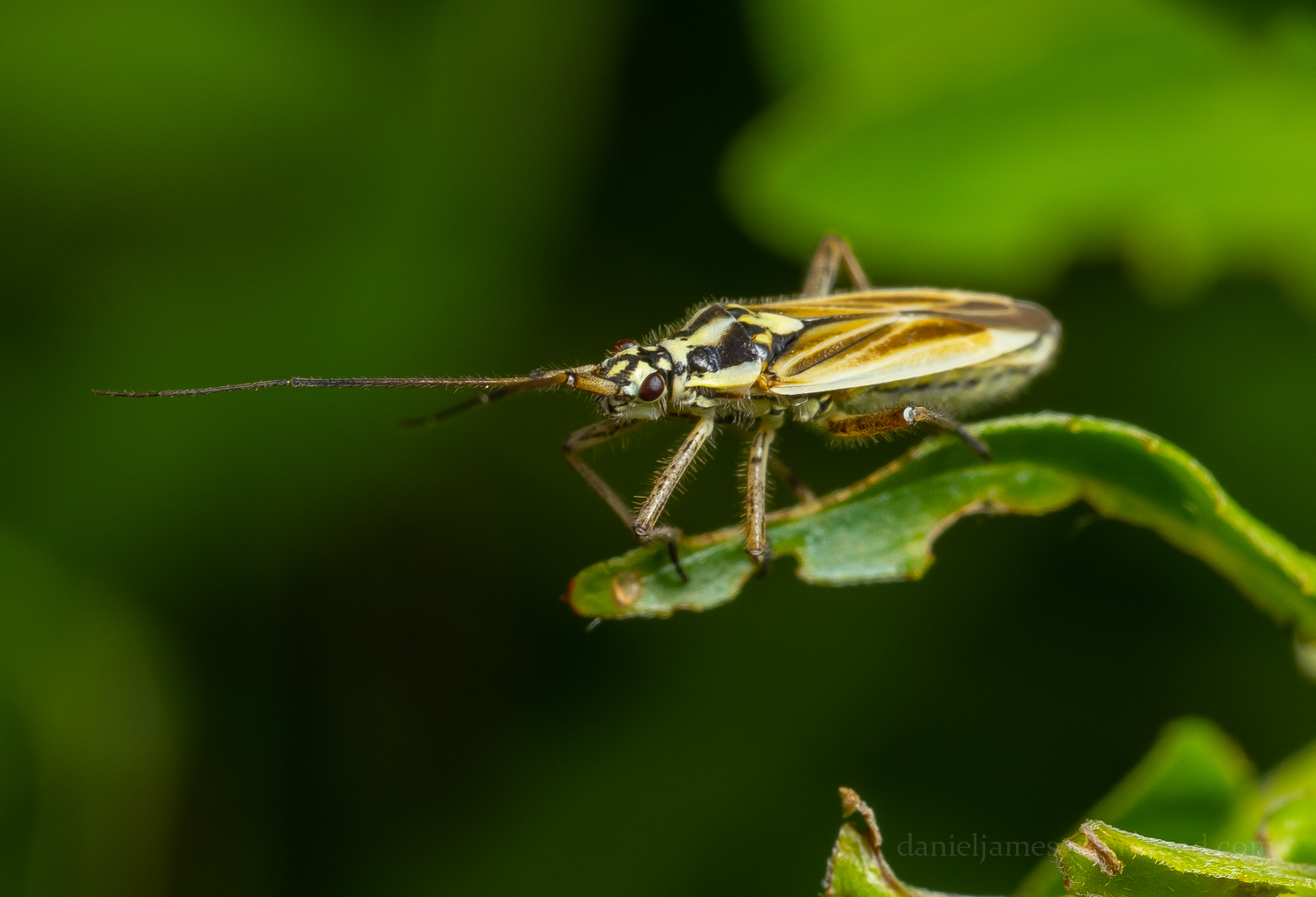
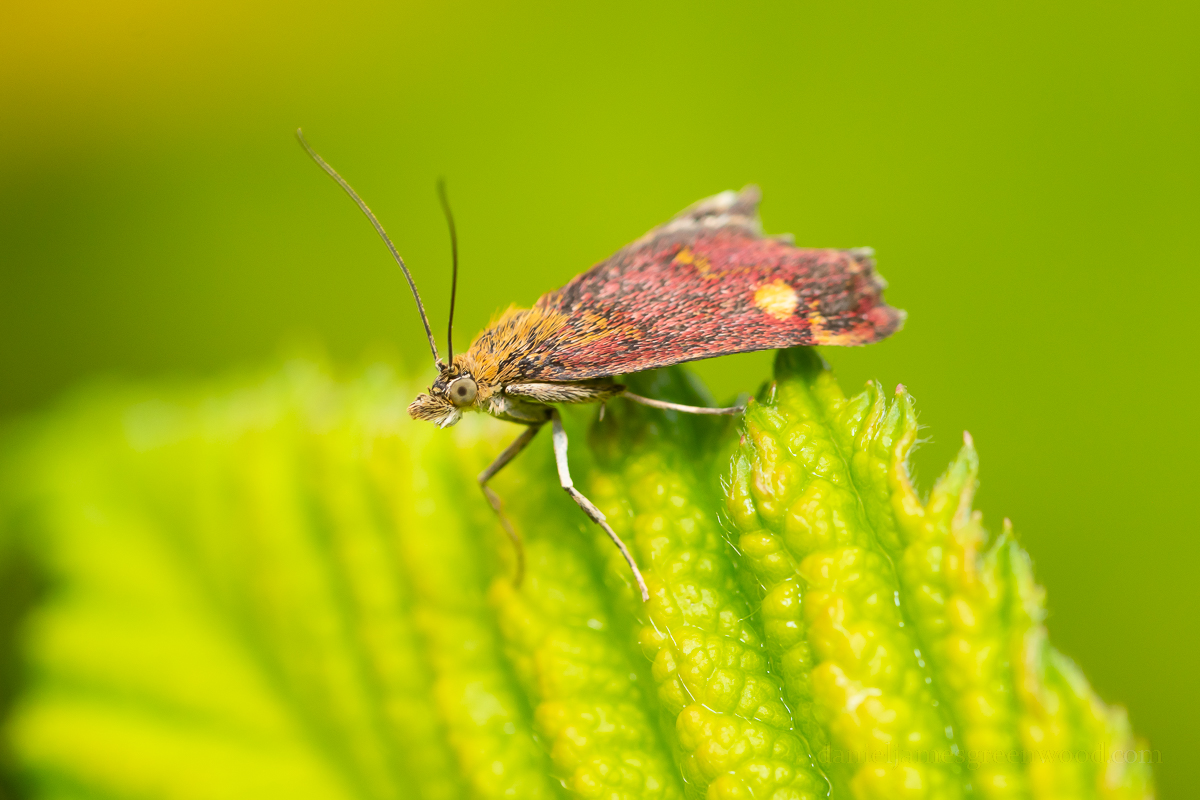
Day 12/30: in my garden again and I found this quite beautiful mirid bug.
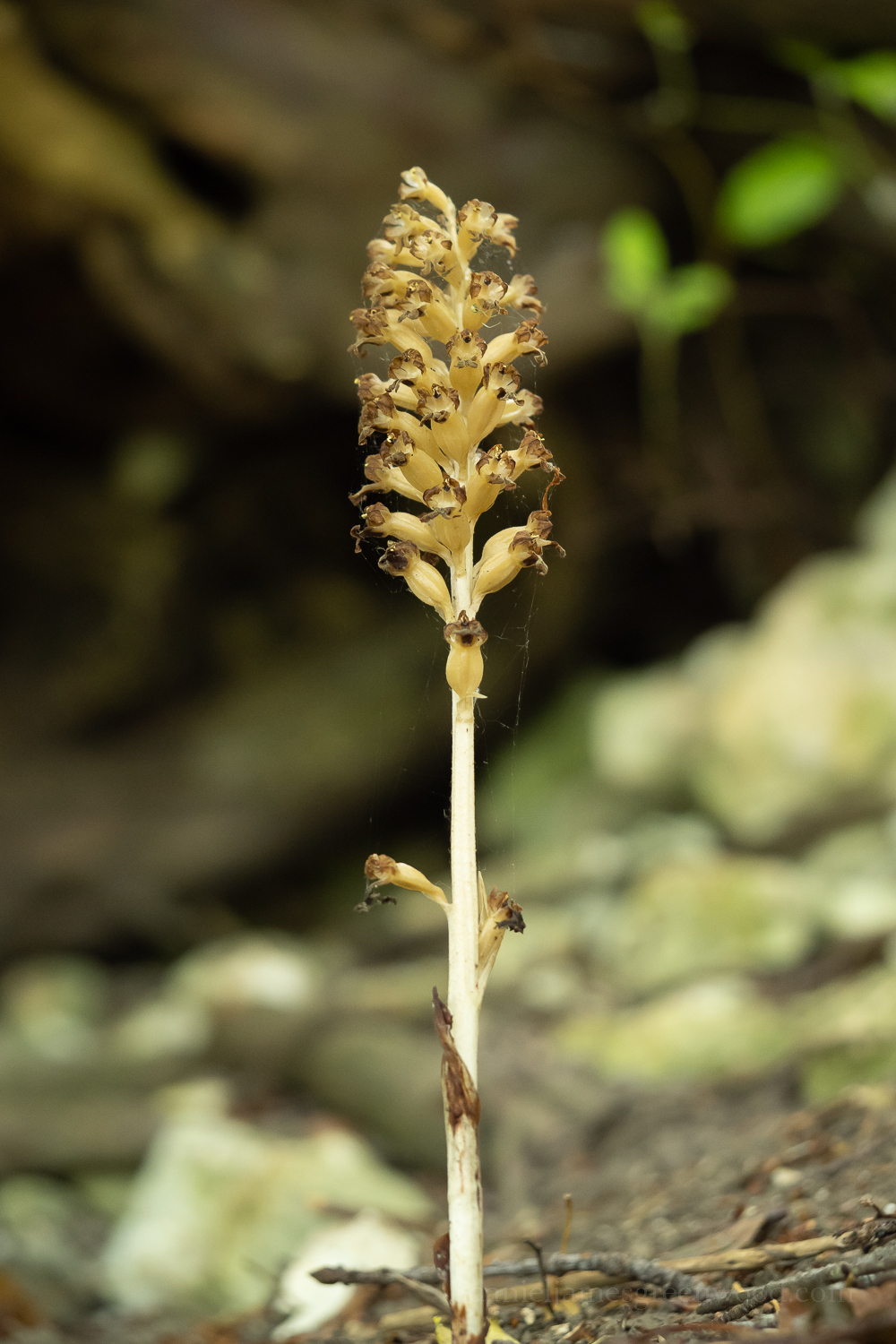
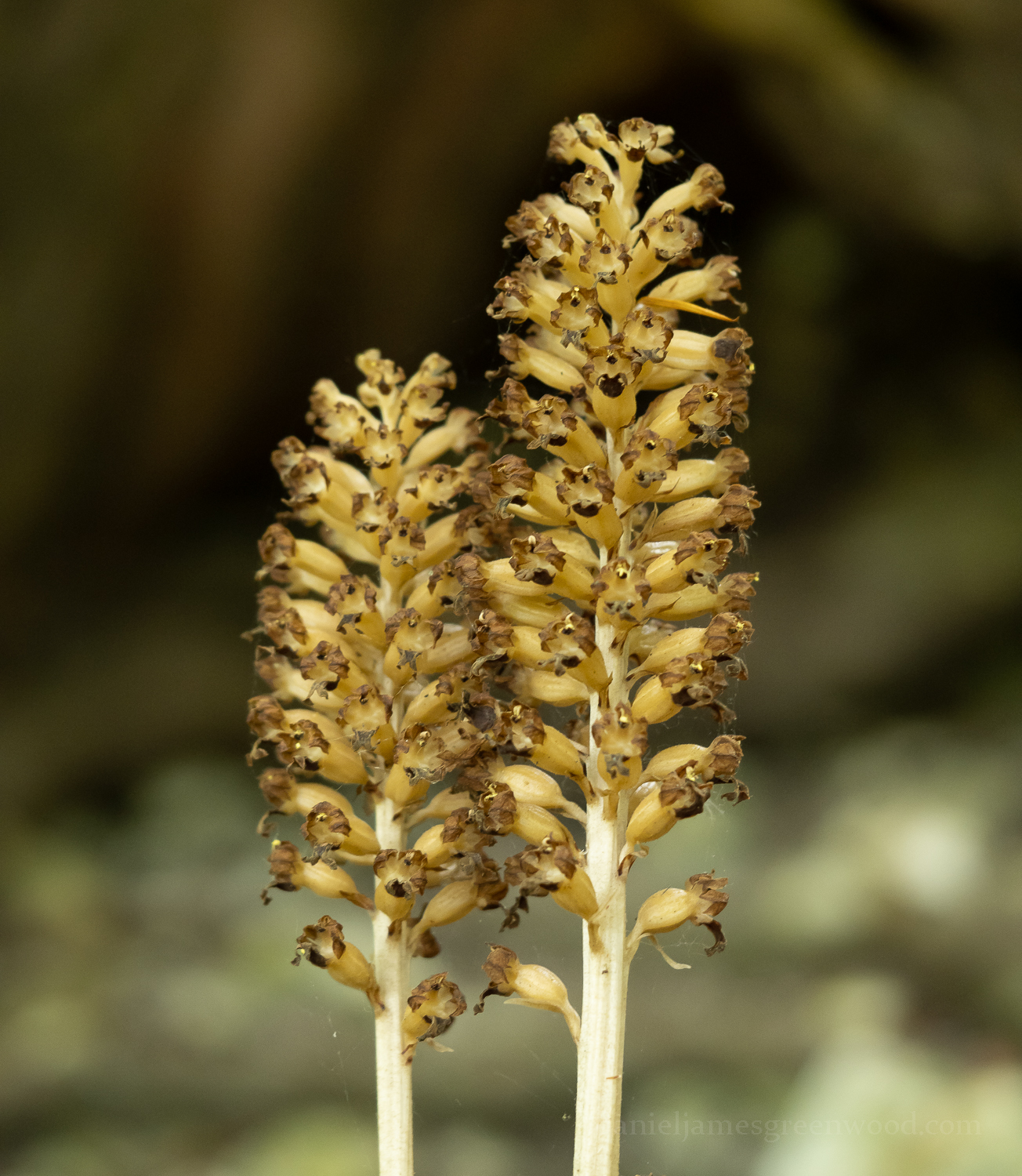
Day 13/30: venturing out for a long-distance walk in the Surrey Hills, I was amazed to find bird’s nest orchids growing under some yew trees on chalk. I have never seen this orchid before and wasn’t ever expecting to see it. The delights of hiking or rambling over longer distances, especially in June.
Day 14/30: back in the garden with the mirid bugs. This was a very small, perhaps juvenile of some kind, pottering about on a very hairy hazel leaf in my garden.
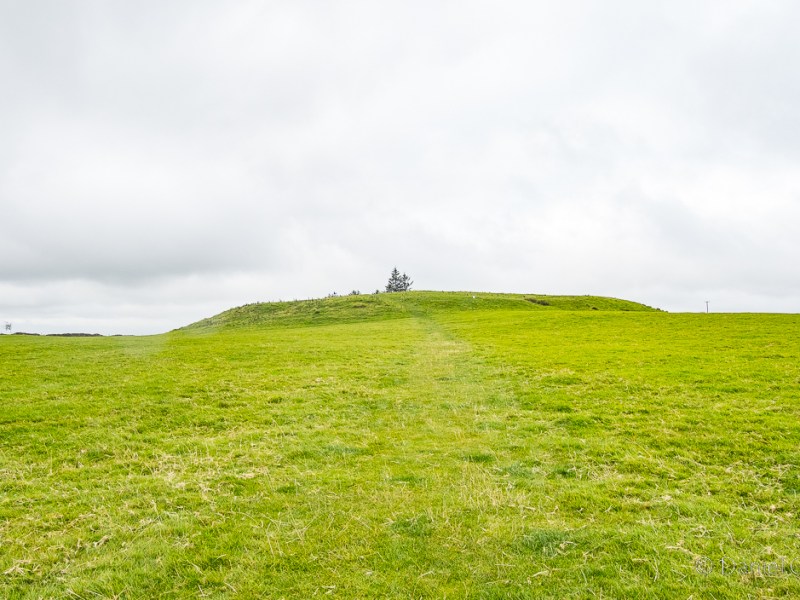
Rathcroghan, Roscommon, Ireland, September 2024 This short post shows some of the images I snaffled from a pit stop at the ancient Celtic landscape of Rathcroghan, while travelling from Mayo to Dublin. Apologies if I mangle any of the Irish mythology, it is not a subject I’m at all familiar with. Rathcroghan is one of…
Amberley to Washington, West Sussex, 4th June 2024 The photos in this post are a mix of Olympus EM-1 MIII mirrorless camera images using a 12-100mm (24-200mm full-frame) lens, with a few phone pics for detail. The photos have been cropped, marked and enhanced in places using Adobe Lightroom. I do not purposefully use Generative…
Every June the Wildlife Trusts run a campaign called 30 Days Wild. The aim is to encourage people to notice nature at this special time of year and do one thing each day that connects you with the wild world around you. Last year I did #30DaysMacro, taking and posting one macro wildlife photo each day in June on Twitter. This year, I thought I’d have another go.
I’m going to break the posts up into one each week. It’s actually a lot of work so blogs will be confined to this for now. Here goes!
Day 1/30: zebra jumping spider
My first encounter was with this zebra jumping spider in my garden. I got a bit lucky as it held this position and faced the camera for a good few seconds. They’re usually quite, er, jumpy! I also found some other nice subjects, though, including a mint moth (which seems very common in my garden) and a beautiful greenbottle fly.
Day 2/30: wasp beetle
In the garden again. Really pleased to find a wasp beetle in the hedge just resting on a leaf. They’re another one of those wasp-faking insects, using those terrifying colour patterns to warn any predators. I also found this ichneumon wasp (I think). That is a fairly lethal looking ovipositor protruding at the rear.
Day 3/30: snail vortex
June has been quite wet and grey so far, which is helpful for macro in some ways but not all. The snails get a lot of motivation from the wet hedges and shrubs. This caterpillar was hiding away in the aromatic chambers of a rose flower.
Day 4/30: bumblebee-mimicry
In the garden I spotted this bumblebee-mimic hoverfly on the fence. I’d seen them a couple of days ago duelling over territory, but they were too energised then to get a photo. This one was nice and chilled. It’s nice seeing all those yellow pollen grains, though I’m not sure which flower produced them. The caterpillar here may be the one that was taking shelter the previous day.
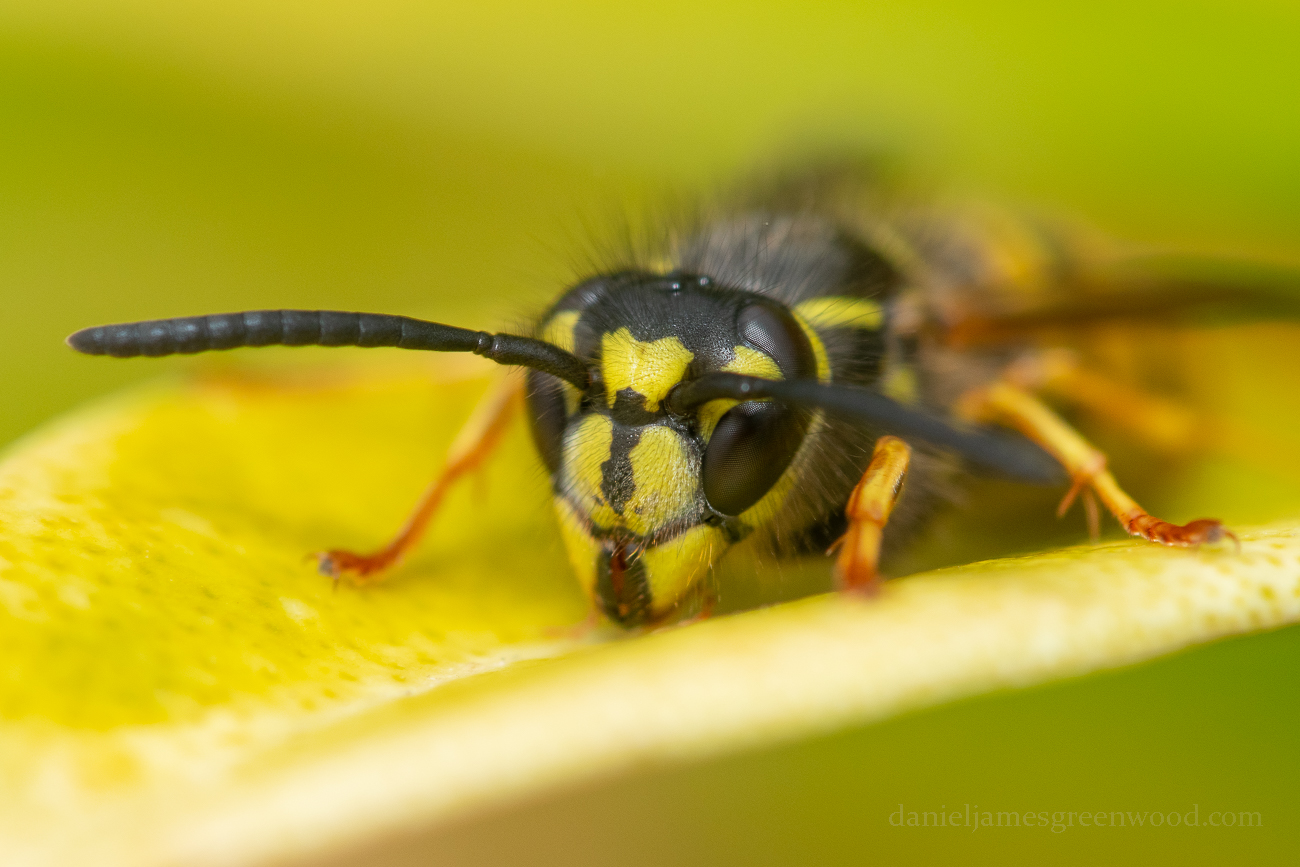
Day 5/30: wasp cleaning antennae
Guess where? Garden again! Another cloudy day but quite warm so the insects were out and about. I got quite close to this wasp which was giving its antennae a good clean.
Day 6/30: bee phone pic
Due to work commitments/time constraints I couldn’t spend any time in my garden with dedicated macro equipment. I was walking down a main road in town and saw a nice siding of thistles in front of a housing development. Lo and behold, there was my macro photo. A white or buff-tailed bumblebee was nectaring on that lovely pink bloom.
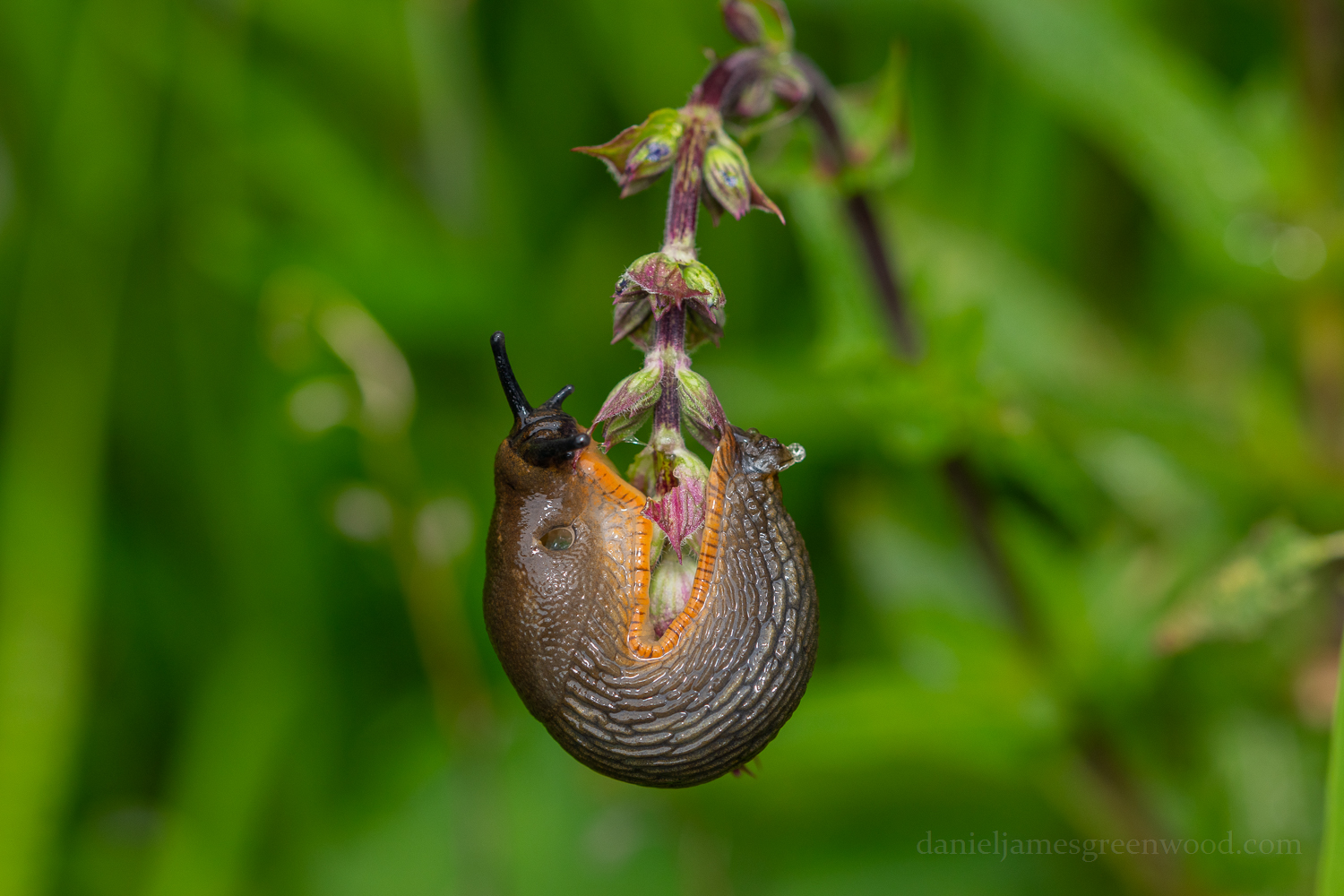
Day 7/30: the slug ate my salvia!
A day of rain, as evidenced by the raindrops around the hoverfly. Also more motivation for the slugs and snails (who have my backing) to teach me not to plant certain things in the flower bed. The slug here was doing a rather acrobatic job of eating the salvia I planted out recently. There’s also a very soggy bumblebee, and some kind of lacewing or hoverfly larva.
Last August I recorded a podcast with Dr. Beth Nicholls about bees. The podcast was recorded at Bedelands Local Nature Reserve in the West Sussex Weald. You can listen to that entertaining jaunt (your thoughts and mine) through bees here.
I only had a couple of hours to record with Beth and spent the time afterwards seeing what was living there. There was a lot of wasp-faking going on, that’s for sure. It’s taken me nearly a year to actually find the time to look through the images and process some of them.
Bedelands is a Local Nature Reserve (a local authority designation for green spaces of ecological and public significance on land which is in public ownership or similar) in Burgess Hill. It’s a mixture of Wealden woods of oak and hornbean, some wetlands, and Wealden grasslands. The grasslands seemed to be quite rich to me in both invertebrates and flora. A lovely space.
This is a very cool hoverfly that can be found over quite a large international range. It’s one of the more obvious wasp-mimic hoverflies. Its scientific name is Chrysotoxum bicinctum. Absolute wasp-faker.
A more common hoverfly is one with a great common name (among others) – the footballer! It’s another wasp-mimic species. The football name comes from the stripes along the thorax (below the eyes above) which look like Newcastle, Grimsby or Juventus style kit colours.
In the moth world, I found this small grey-brown species that appeared much like a grass head. It was reaching over an oak leaf and wasn’t bothered about my lens getting super close. This appears to be one of the grass veneer moths. Moth knowledge is not strong in this one.
The scales of moths are quite incredible up close, like little roof tiles or pieces of paper.
Here’s a closer look.
Moving into the non-insect, invert world, August is a month of arachnids. This is a European harvestman, a harmless thing. They use their legs to do their ‘seeing’.
The desiccated seed cases of a flowering rush was the hiding place of one of the ground crab spiders.
I have been seeing this in my garden, but they seem to be quite common elsewhere and in places like grasslands.
Perhaps the most exciting and dramatic sighting was this wasp spider, of which there were a couple around. They’re recent arrivals in the British wildlife community, and another addition to the wasp-mimic gang.
The underbelly of the wasp spider doesn’t do justice to its name. From this angle you can see just where it gets its name from.
I’ve had a burst of American visitors in recent days (to my blog, not my house). So thanks for visiting, y’all, and sorry about the year you’ve had. You may have noticed I’ve slipped to monthly posts on here. Between April and October I posted blogs every Monday without pause, which is a tricky task…
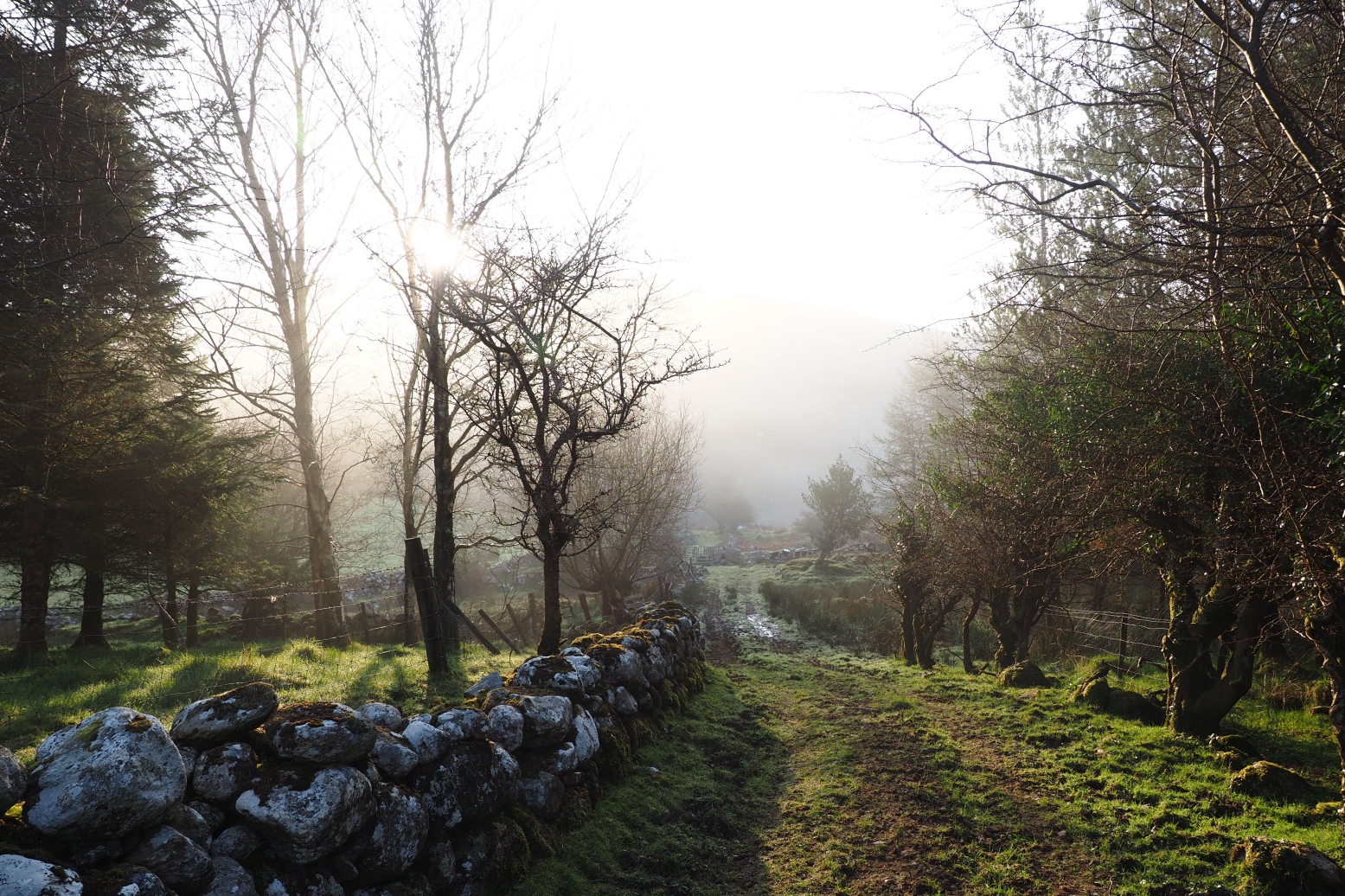
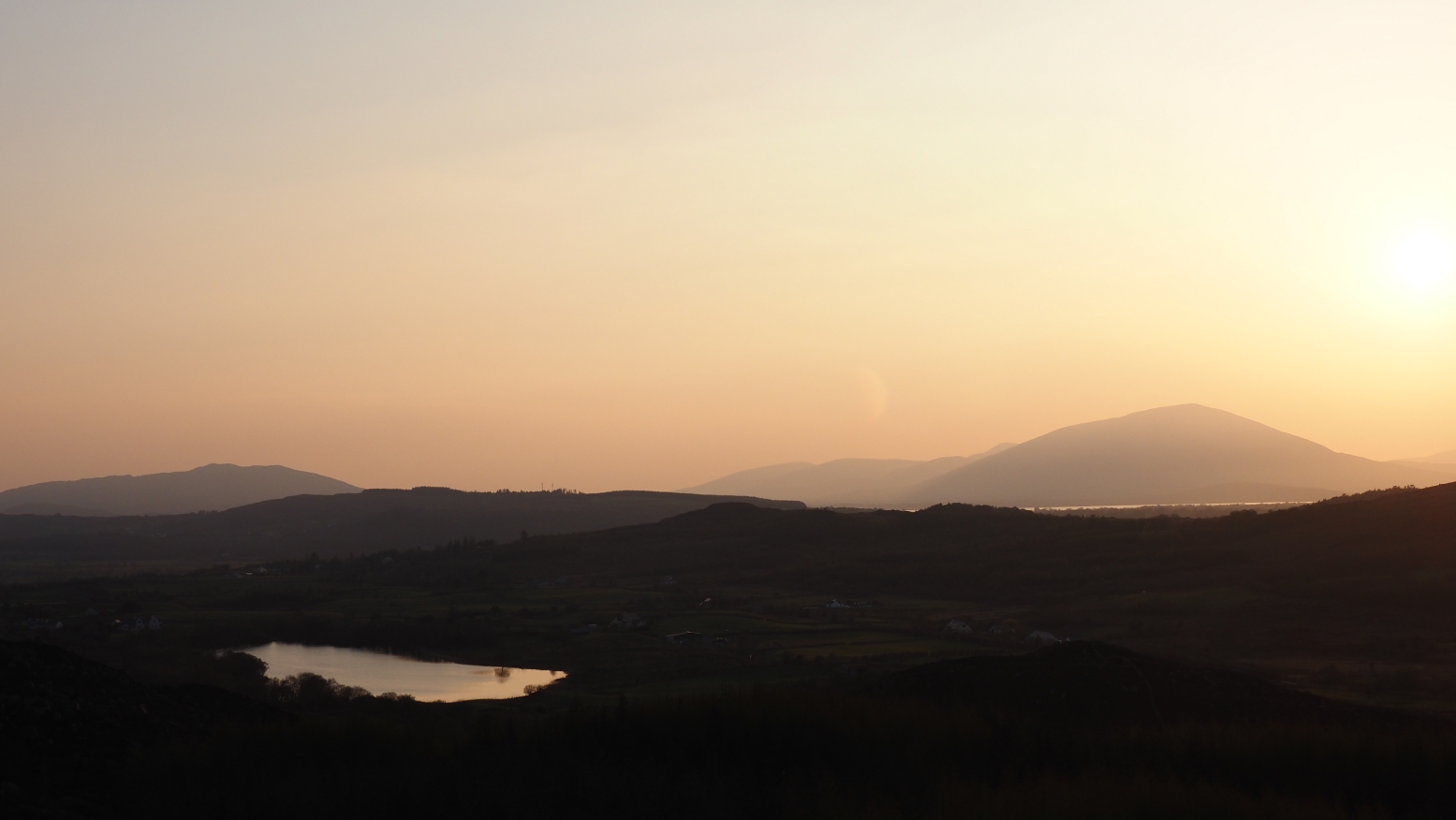
Here are some landscape images from a March visit to Mayo which I’ve been posting a bit of recently. This landscape fascinates me in many ways: the cultural history (of which my family has links), the ecology and geology.
My family’s cottage is located near a mountain range that would probably be classified as hills in the UK, but their Irish name translates as Wintry Mountain (Slieve Gamph). The English version is the Ox Mountains. It was said that people once lived in these hills – granite, heather and peat bog – in simple stone cottages until the famine. I haven’t managed to locate anything resembling a disused cottage there as yet, but the wider landscape is littered with megalithic tombs, stone circles and other significant archaeology.
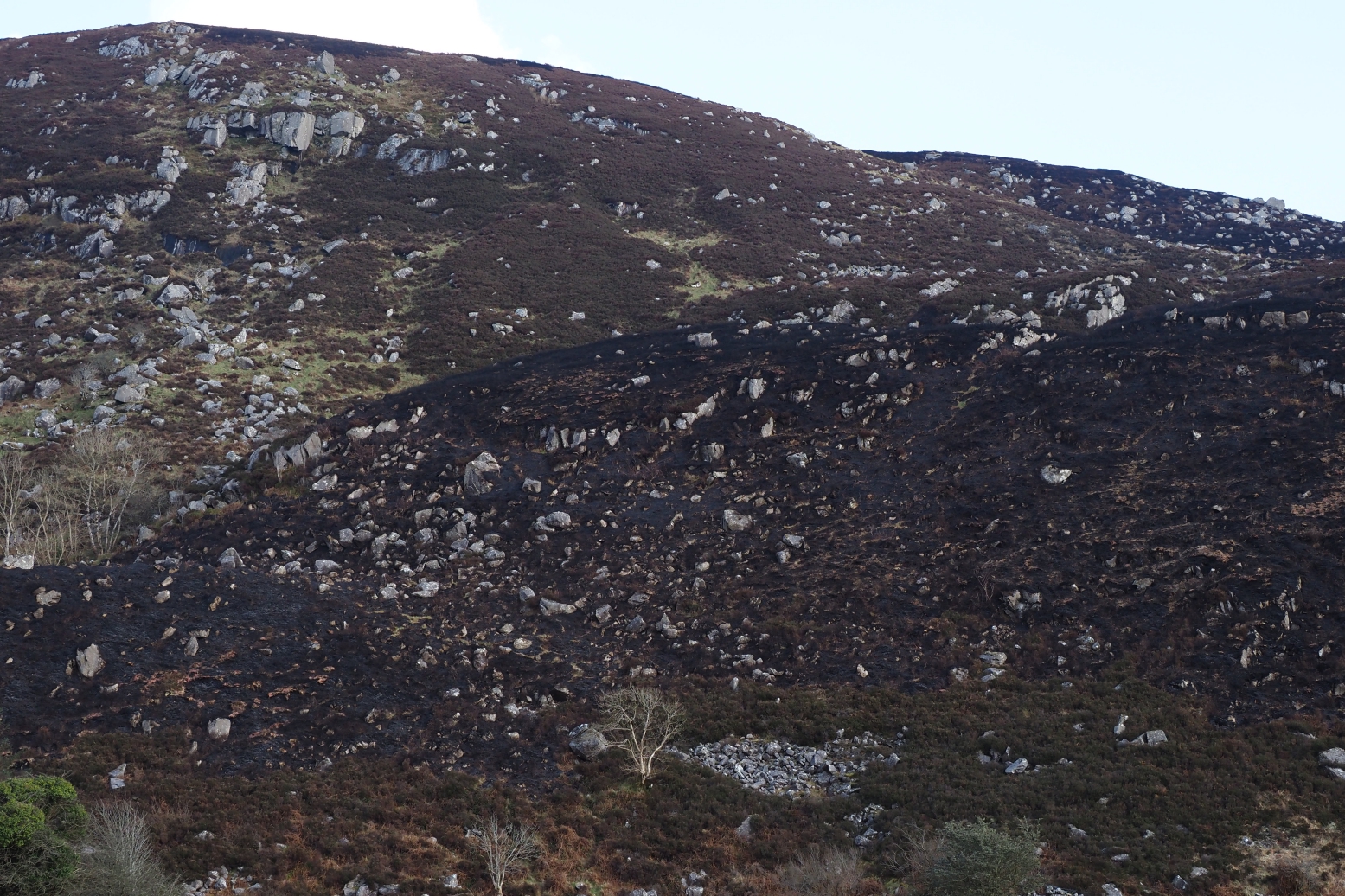
We arrived in Mayo to find the mountain burnt across a mile or more. This beautiful landscape with its rare plants, bog habitats, feral goats and moorland nesting birds, was decimated. We asked local people – who started it? One man said it could have been a farmer who just wanted a bit more grass, another woman said it was someone just “lighting a match”. Whoever it was, the authorities are not happy and it made plenty of news out this way. It was also an issue in Wicklow and Kerry.
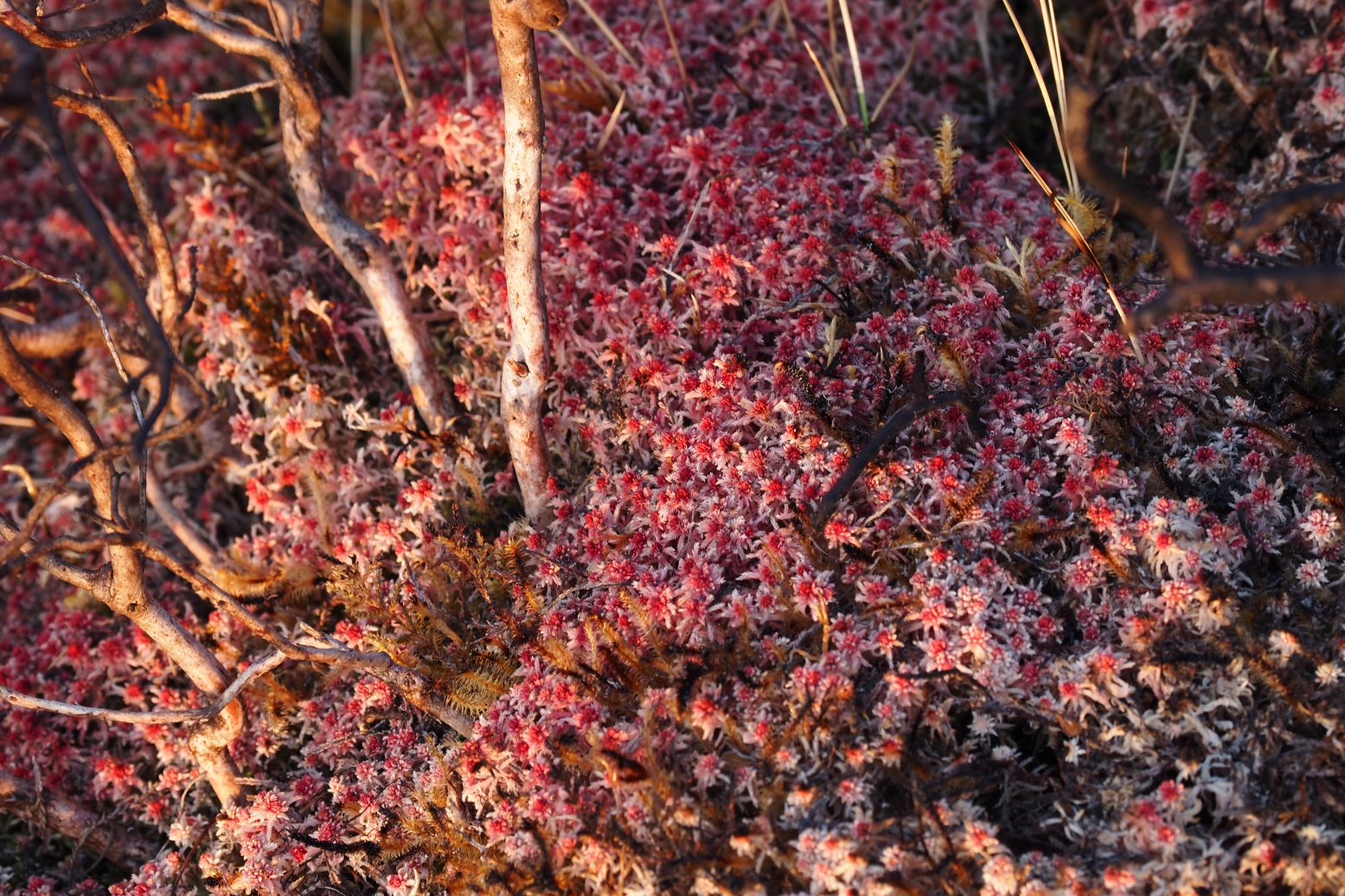
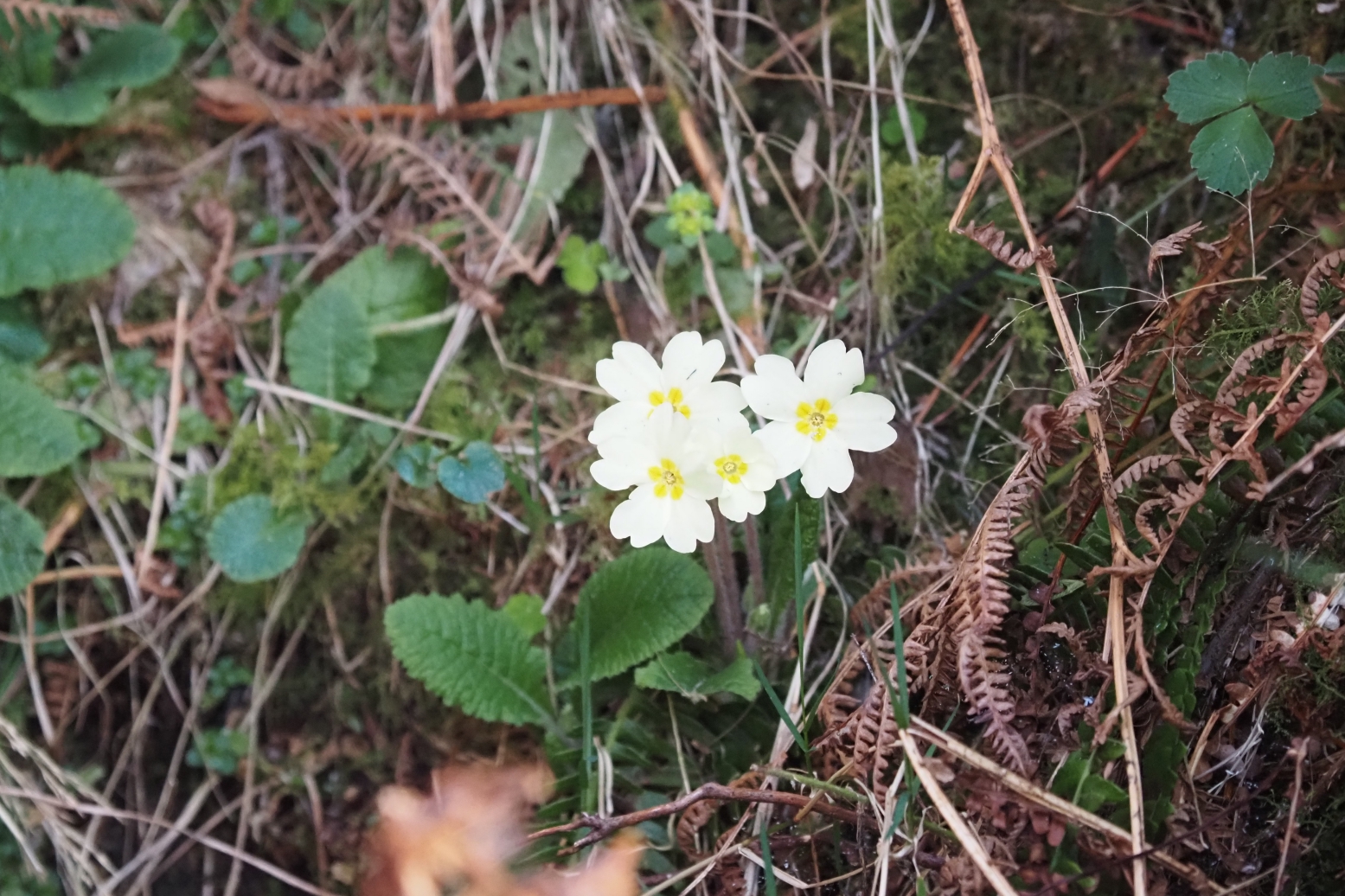
Sphagnum moss burnt red by the heatWild primroseGolden saxifrage
The mountains had not been completely charred by the fire, with plenty of plants having survived, though it had spread to areas I had never seen affected before. Our local neighbour said she had never seen so many fires as in recent years. Climate change is no doubt making these moorlands and their mountains of bracken more vulnerable to wildfires (or otherwise) but the issue still remains one of misguided land management, as well as pure arson.
Having worked in the management of publicly accessible green spaces I can tell you there is a minority everywhere who want to just burn stuff for the fun of it.
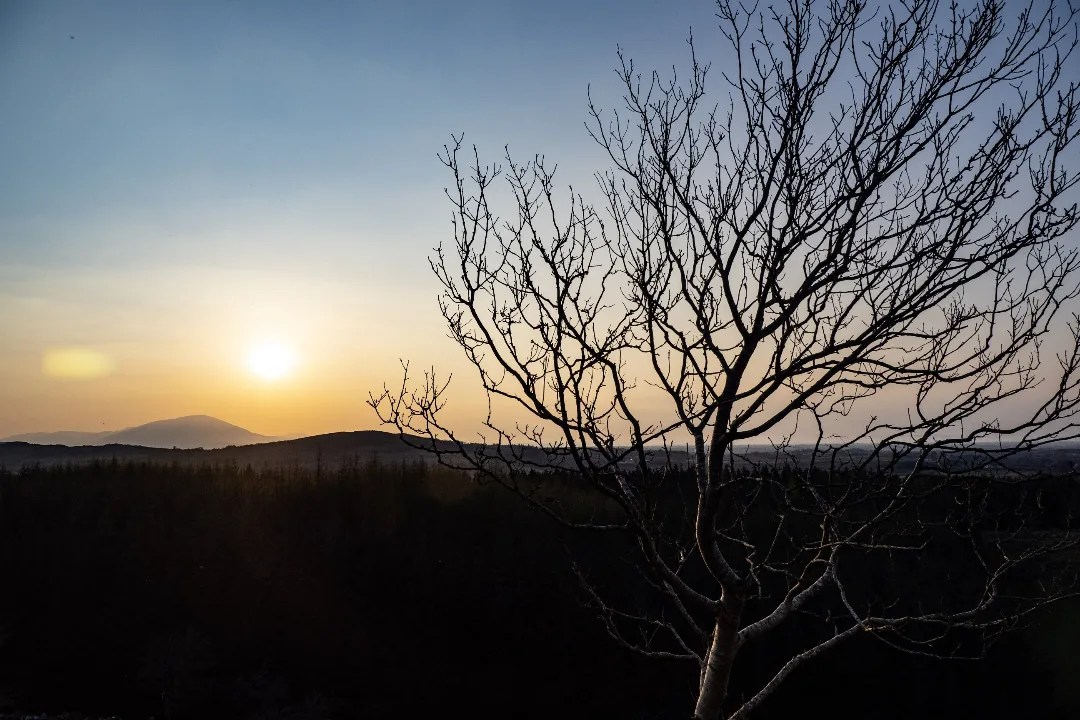
Nephin
In 2013 I wrote a piece about visiting Mayo while my grandfather was in a nursing home. He passed away 2 years later from dementia. Back then we arrived to fires burning close to the cottage, like something from a movie. I remember a radio report saying there were gorse fires simply caused by direct sunlight and dry weather. You can read that here.
I was out and about in the Cuckmere Valley in May and had the chance to learn a little bit about some of the species found there. Here’s a small selection of images, a blend of phone pics and some from my camera.
Once again I was treated to the sight of early spider orchids, a plant I blogged about only recently. This was a big surprise, having spent a lot of time looking for them elsewhere. This is a nationally rare plant and I won’t be giving away its location. I did get the chance to learn that the flower mimics the scent of the buffish mining bee. The male bee is lured in and attempts to mate with the flower, thereby pollinating it. In the photo above you can see the pollen grains that have been helpfully, accidentally, applied by the visiting bee.
The mining bees live in the nearest exposed areas of chalk where they drill their burrows. It’s a short commute to their deceptive orchid neighbours.
The blackthorn hedges were holding populations of moth caterpillars that cover the branches in webs of silk. This is the kind of thing that pops up in local newspapers as some kind of wild clickbait. The moth is known as the lackey in English. What the significance of that name (or any of the number of weird moth names) is unclear to me.
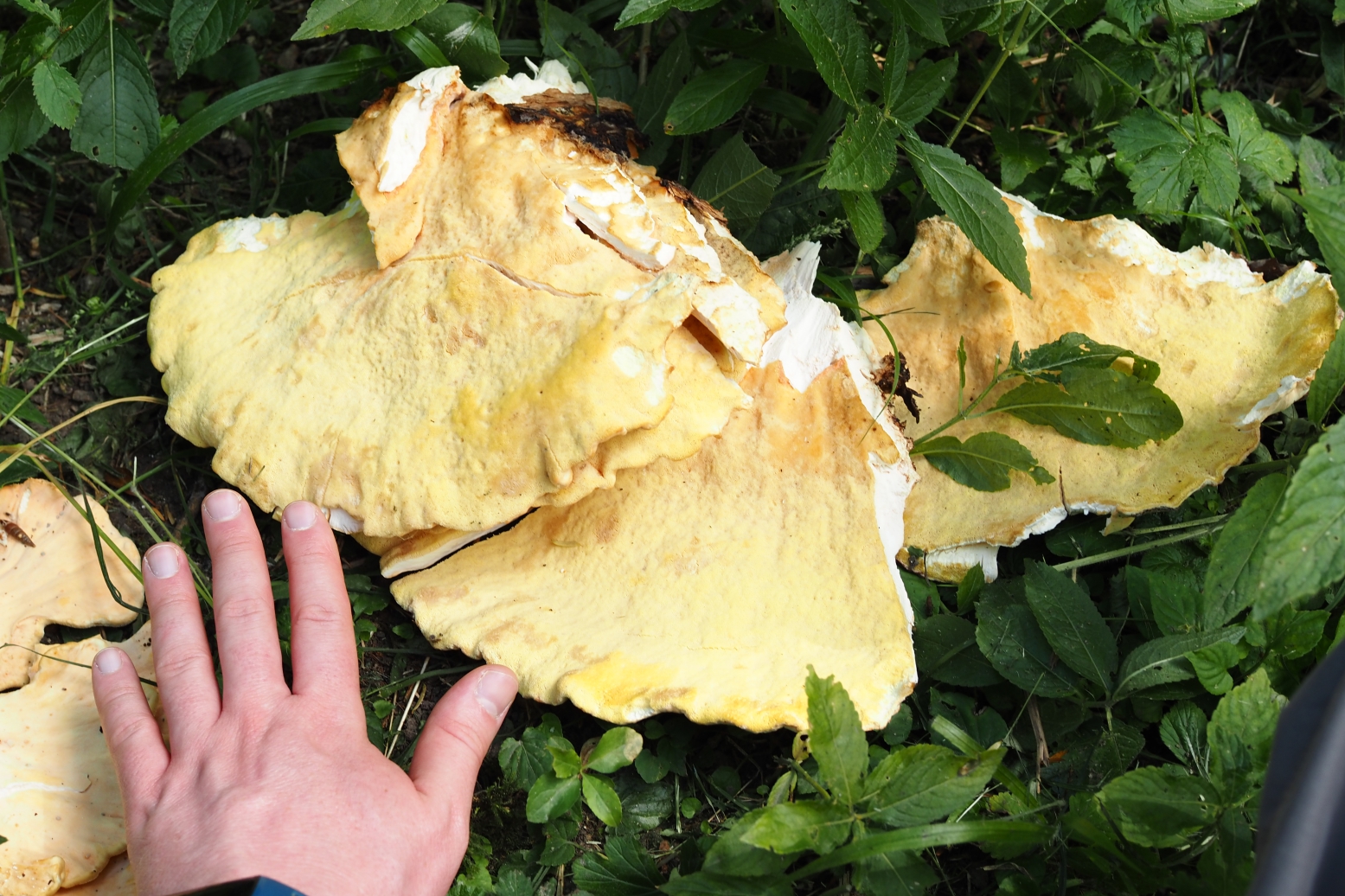
We found this proto-Mesolithic (Stone Age) scene, with a discarded King Alfred’s cakes fungus. The fungus had probably been used to maintain the fire of one or more disposable barbecues. The stones were littered across the scorched earth like the throwaways of some prehistoric stone mason.
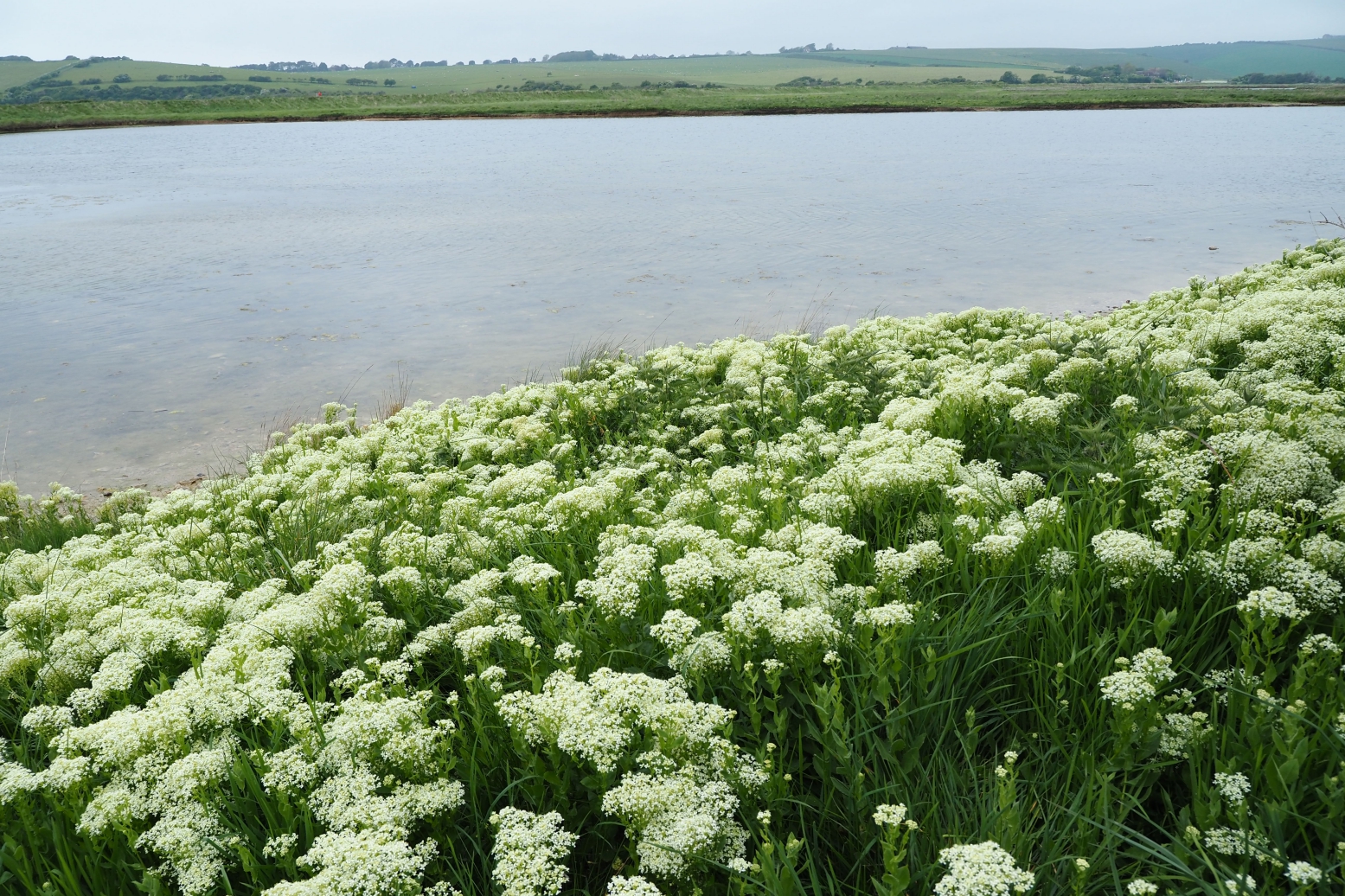
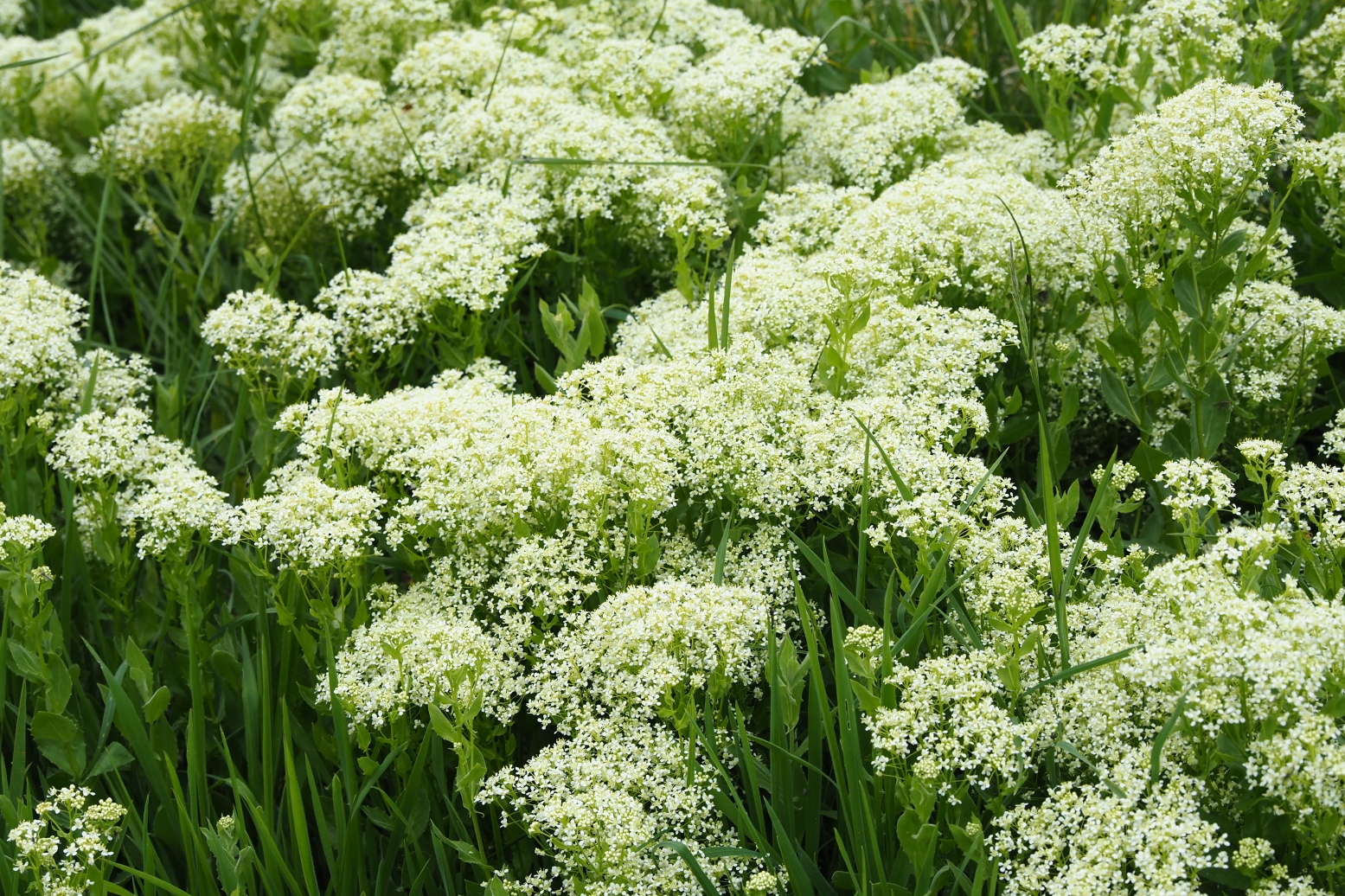
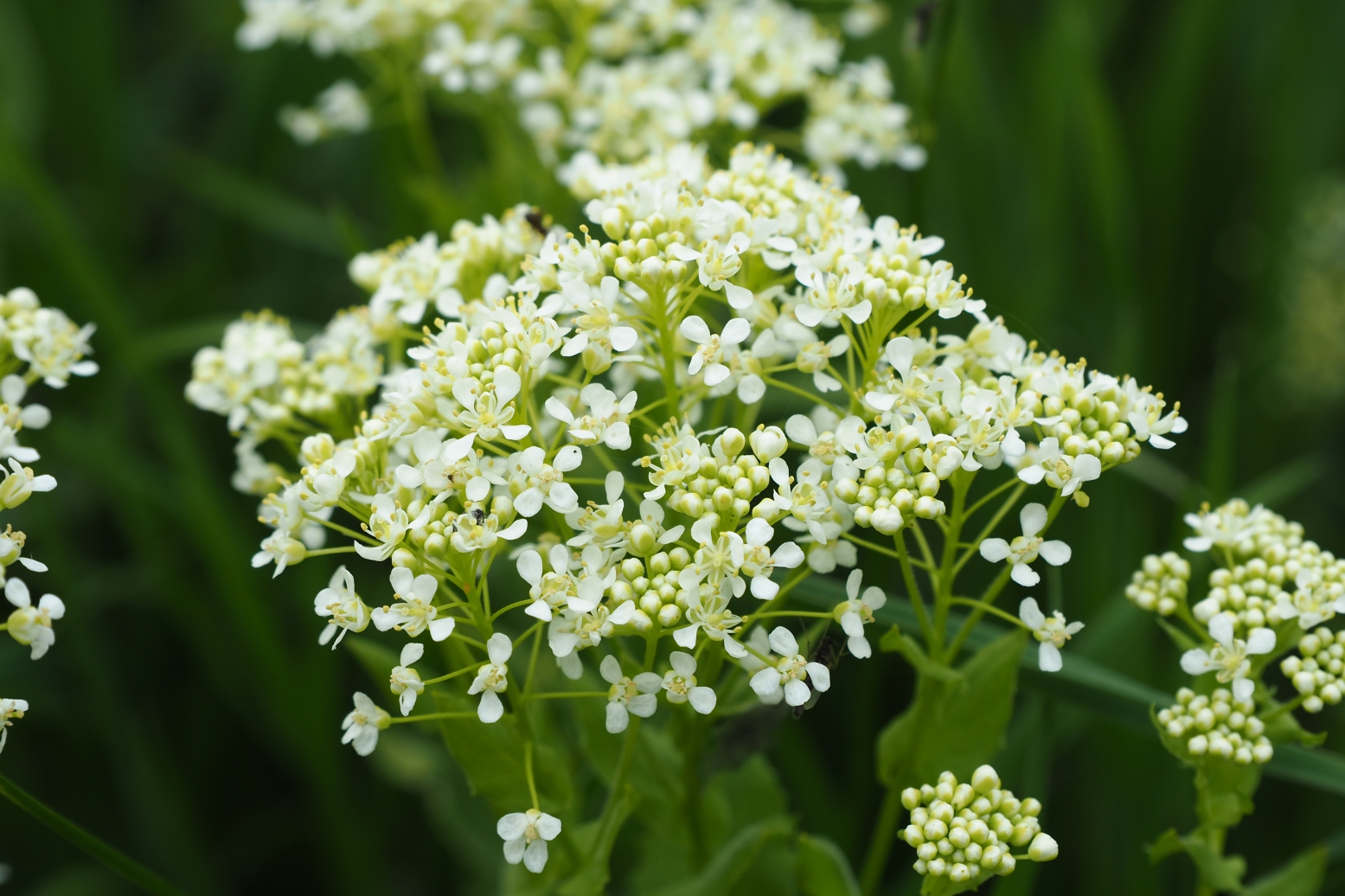
On the banks of the Cuckmere’s static meanders are ranks of hoary cress. At first I thought they looked like a type of sedum but in fact they’re in the cabbage family. This is an introduced species.
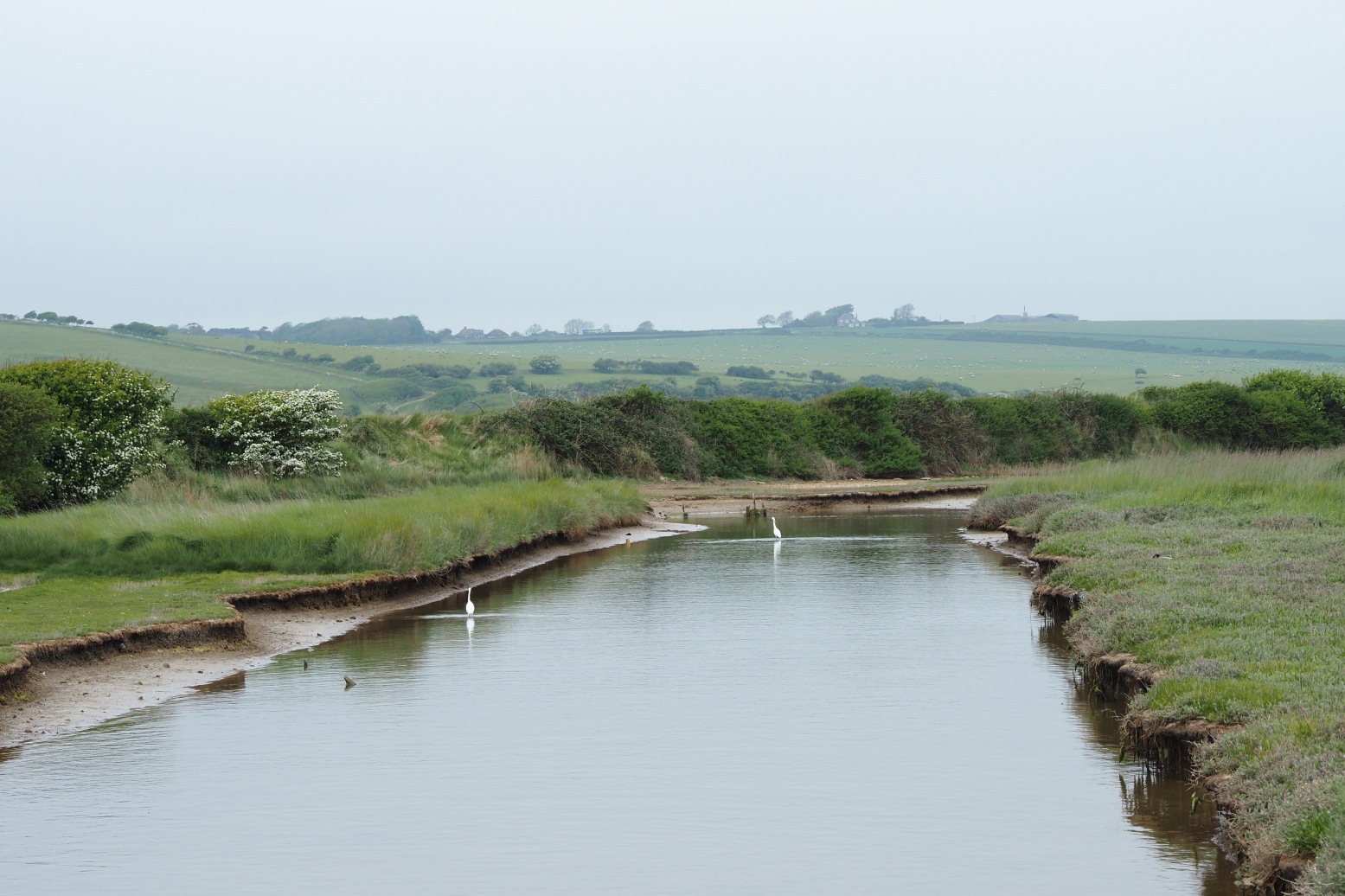
A view back up the Cuckmere meanders, at very low levels for the time of year. Two little egrets can be seen here.
Thanks for reading.
More macro (my tags/categories seem to be broken at the moment – will try and fix them!)
My partner and I made a couple of visits to Nyman’s in West Sussex recently to drown our sorrows after the death of our lovely rescue cat. We drowned those sorrows in flowers. Nymans is one of the jewels in the Sussex Weald, with amazing views across woodlands towards the South Downs.
I usually photograph less formal landscapes than National Trust gardens, but perhaps I am too particular sometimes. The stark colours against the grey backdrop of the day (literally) make for really pleasing images. All the pics here are ‘straight out the camera’ and I haven’t edited them. Olympus cameras produce beautiful jpeg files which my experience with Nikon equipment has never matched.
Here’s my seasonal update of stuff you don’t need to know about, but then welcome to the Internet. What I’m writing Soon I will be self-publishing my third poetry collection, Fool’s Wood. It’s seven years since my last one and this collection has taken longer because of LIFE. There will be a booklet and also…
Here’s another entry in my slow-blogging Oak Timbers series. You can view my galleries and posts archive here. I visited Salisbury in Wiltshire (south-west England) for the first time in 2023 and was really charmed by the place. If you’re interested in this kind of thing, Salisbury is the place for you. Here’s a gallery…
I’m getting into more of a routine of recording and editing audio, so here is the latest episode of Unlocking Landscapes. Listen on Podbean or via the usual platforms. Also via YouTube: https://youtu.be/y1K9Pqx68to?si=B-Fdhf3sdDH35Z8w Following on from July’s rather optimistic fungi walk, I popped back to the same area of ancient Wealden woodland to see if…
Innsbruck, Tyrol, Austria, June 2025 This is a longer post of the images I captured during a recent visit to Innsbruck in the Austrian Alps. We travelled to Innsbruck on a sleeper train from Amsterdam. It’s such a great experience and is significantly lower in carbon emissions compared with flying. If you consider the fact…
I’m back from my annual visit to the west of Ireland. I managed a couple of day trips to forage for photos, which will crystallise later this year into dedicated posts, all being well. Like many people I enjoy the Blind Boy Podcast, none more so when I have the headspace to take in all…
This is the first of a series of posts I’ve been working on covering national relationships with mushrooms. It’s just a bit of fun, but there’s definitely some interesting stuff to share.
In August I made my annual visit to the Weald and Downland Living Museum in the South Downs. You can see my timber-framed building photo gallery here. This is the first view you encounter inside the museum grounds after you pay your entry fee. Amazing to think the medieval hall house is from Cray in…
On a recent trip to Ireland, my Mum and I spent some time at a garden centre trying to find hedging plants. Having been poisoned by cherry laurel once, and having professionally removed a lot of it, that was not on the agenda. Instead, I was looking along the lines of a good old conservation hedge mixture, with an eye on the local ecosystem.
Northern Mayo is dominated by species like birch, hawthorn, rowan and willow. At the garden centre I was impressed by the beds of saplings where bundles of hawthorn or beech were available for the cost of 1 Euro a whip.
What interested me was that hawthorn wasn’t actually available whereas ‘whitethorn’ was. Don’t be confused for too long, as this is the same species: Crataegus monogyna. The woman who ran the garden centre didn’t understand me quite a lot of the time and then thought we were American. That’s a new one! Either way, we bought 10 whitethorn and 4 potted hollies (Ilex aquifolium) for two separate areas of hedging. Again, these are two species native to the landscape they were being plopped into. This is not an ethno-nationalist statement, it’s considering what will take in the soil, hydrology and what will benefit local wildlife most.
How I plant a hedge
I have been planting native mixed hedges since 2011, usually on public land like parks or nature reserves. I don’t go in much for extra things like plastic weed matting or anything like that.
The hawthorns were going into an area that had just been cleared of bramble, nettle and hogweed by my uncle. We’re fairly sure this area might have been used to grow potatoes by previous residents.
I began by breaking up the ground with a mattock, using both sides of the head to break the soil and to axe through the roots of nettle, bramble and hogweed. When I use a mattock I don’t wear gloves as it gives better grip. The mattock should be directed between the feet so as not to take a chunk out of your shin.
I laid the whips out (with help from my Mum) and planned to put 5 to a metre, but it ended up being about every 12 inches. I’m not fussed on doing this perfectly, the main thing is they survive. When the roots are in and covered by soil I press with my hands, not feet, as sealing the ground can block the space for gases and water to move through, potentially reducing oxygen to the plants.
Hawthorn blossomon Dartmoor
Hawthorn in Irish folklore
Whitethorn, as they call it in Mayo, is a significant tree in Irish culture. This article by Marion McGarry tells you a lot about hawthorn’s place in Irish culture. Unfortunately it is seen as, well, unfortunate.
Then again, if it’s bad luck to cut them down it must be a really good idea to plant so many of them!
Chalk grassland is an incredible habitat. It’s extremely rich in plants and animals, with high cultural value from the historical assosciations with human activity over at least 8000 years. In the UK it defines the downlands of Sussex, Hampshire, Dorset and Wessex. Sounds like an episode of The Last Kingdom. Thankfully I was spared the sword (this time).
In early May I was fortunate enough to visit a chalk grassland site near Brighton with two people who knew the landscape extremely well. I had been invited to visit this area to help find early spider orchids 3 years ago but the pandemic got in the way of travelling there.
A landscape raked by stone, bone and iron
I visited on a sunny day in what was a very dry spring indeed (I hate how dry winter 2021/spring 2022 have been). We had heard of hundreds of orchids in recent weeks at the site but only found 3. It was baffling. Perhaps we were just too late and the dry conditions had brought an end to their season earlier than expected.
These orchids get their names from the fact their flower looks like a spider. You may be familiar with the names of bee, fly, man, lady, lizard and monkey orchids also.
They are truly beautiful.
During the survey a woman came over to talk about orchids. Her knowledge was incredible, with known locations across Kent and Sussex. She travelled by train from her home in north London.
She showed us a gentian, a type she said was only found at this location in the UK.
Perhaps the most abundant plant was milkwort, appearing in white, pink and blue.
This is some kind of daisy (probably hawkbit) with petals that look like hands shielding something.
There were a fair number of small beetles in the grasslands, including this click beetle (I think).
A nice surprise was finding a small blue, one of the rarest butterflies in the UK. This is a very small blue, though most of them in Britain are small anyway. They’re pretty much tied to chalk grasslands from what I know.
Thanks for reading my 600th blog post! Prepare yourself, there’s a lot to take in here.
I’ve been interested in the history of Chernobyl for several years, mainly after learning about the ecological experiment created from the complete abandonment of the area.
If you have the chance to watch the TV drama Chernobyl, do it. It is one of the best TV dramas I’ve ever seen.
A recent documentary covering the story of the nuclear accident Chernobyl: The Lost Tapes and the resulting clean up, is also worth watching. A warning of course that both are graphic and disturbing in their own ways.
The Chernobyl nuclear disaster of 1986
Recently I have read Chernobyl: History of a Tragedy by Serhii Plokhy. It’s a very sobering account of all that happened in 1986 and how it all came to be. It’s so grim I can’t read it for too long without needing a couple of days off.
I’ve been reading it during Russia’s second attempt to commit genocide in Ukraine (April 2022), after Putin’s ragtag army’s failed attempt to take Kyiv and exact regime change. Russia are doing terrible things in Ukraine and the people responsible must be held accountable. I hope I live to see Putin brought to justice.
When are you going to get on to the fungi – you might ask? I promise you, we will get there eventually, and it will be worth it.
It was found recently that the Russian military had been doing some pretty stupid things in the Chernobyl exclusion zone, beyond the illegal attacks against Ukrainians. Perhaps the most stupid things took place in ‘the Red Forest’, and area of extremely high radiation.
Soldiers are thought to have dug trenches in this mind-bendingly radioactive landscape as part of their special radioactive military operation. The Russian military were seeking to invade via Belarus in the north and eventually control Kyiv. Famously, they failed spectacularly, committing war crimes in Bucha, Irpin and other areas before having to retreat.
It was the case at the time around the disaster that the Soviet Union denied the full impact of the accident. In reality many thousands of people will have been contaminated by the radiation from the damaged reactor, but according to the official toll only 31 people have died. It may even be that the soldiers invading Chernobyl did not know that it was dangerous. It beggars belief.
Though those soldiers will not have fared well with the radiation, it was discovered that a species of fungus does not just do well with the radiation, it is thriving inside the nuclear reactor at Chernobyl. Thriving. Inside. I know…
Radiotrophic fungi
Cladosporium sphaerospermum is that fungus. It’s usually found growing on the leaves of citrus trees, but as a radiotrophic species it appears to find favour in environments like the Chernobyl nuclear reactor. Scientists are looking to use its ability to protect from the ill-effects of radiation to protect people in certain environments in space.
The unusual thing about the fungi found in the reactor was that they were not exisiting in spite of the radiation, but because of it. It does go to show that if there is a nuclear holocaust, some fungi will survive and contribute to the world that follows. That world probably wouldn’t have many humans in it.
Far more problematic for us humans is the fact that the Chernobyl nuclear disaster released extremely dangerous levels of caesium-137 into the atmosphere. This of course directly affected ecosystems across Europe where the radiation spread. Fungi absorb their sources of nutrition from their surroundings, making them likely to absorb radiation also. This website has taken the incredible steps of listing which mushrooms are more likely to become radioactive, compared with those which aren’t.
What this all effectively means is that any lingering radiation in the environment will remain in the ecosystem because fungi will absorb it. I don’t have the information but do wonder if there are some mushrooms which may never be eaten again within a certain range of the Chernobyl exclusion zone.
This article points to a very striking impact of the radiation in woodlands in the exclusion zone. Basically, higher levels of radiation are causing a build up of leaf litter and woody debris, because fungi are inhibited and unable to perform their core ecosystem function of recycling. This means there are higher chances of fires breaking out and redistributing radioactive material.
I bet you wish you never read this post.
Thanks for reading anyway. Solidarity with Ukraine 🇺🇦
One of the most beautiful sights in English nature is a Low Weald bluebell woodland. The shimmer of blue in the evening sun pocked by the white stars of wood anemones. These are my favourite evenings of the year, the promise of spring but still delivering on all you had hoped to see in the darker months. Summer just can’t match this.
This square of woodland in the Sussex Low Weald was not officially open access, but we kept to the paths and no bluebells were harmed in the making of these images. There is a lot of conversation about access to the countryside at the moment in England, and how power and privilege resonates in the landscape. These are important conversations and the issues are complex.
It was my first visit to this woodland, much like another picturesque bluebell wood a little further north that has now been completely closed to public visitors. A look at the maps shows how a larger landscape of natural woodland had been chomped up by farmers to become fields, leaving this section completely isolated. That will have occurred over the past few hundred years.
However, it had all the key indicators of ancient woodland, as seen here: English bluebell, wood anemones, greater stitchwort, dog’s mercury, wood spurge, and all under a shrub layer of hazel and high canopy of oak.
This kind of habitat is very much human-made, with centuries of coppicing hazel and felling of oak standards. That doesn’t stop it from being good for wildlife, coppice woodland is one of the richer landscapes in the UK.