Macro Monday: is a vine weevil really so evil?

OLYMPUS DIGITAL CAMERA
Common flower bug on a raspberry sepal

Macro Monday 29th June 2020

So lockdown is over – why bother sitting in the garden when we’ve all been given the green light to take ourselves and our Sainsbury’s bags for life (not) to the Dorset coast. All 500,000 of us. I’ll tell you why not, because I mostly stayed alert in my living room watching the garden get burnt to a crisp by plus-30 degree heat, and blown hither and thither by gusting winds. In my magnified eyes, this is not the time for macro photography.

OLYMPUS DIGITAL CAMERA

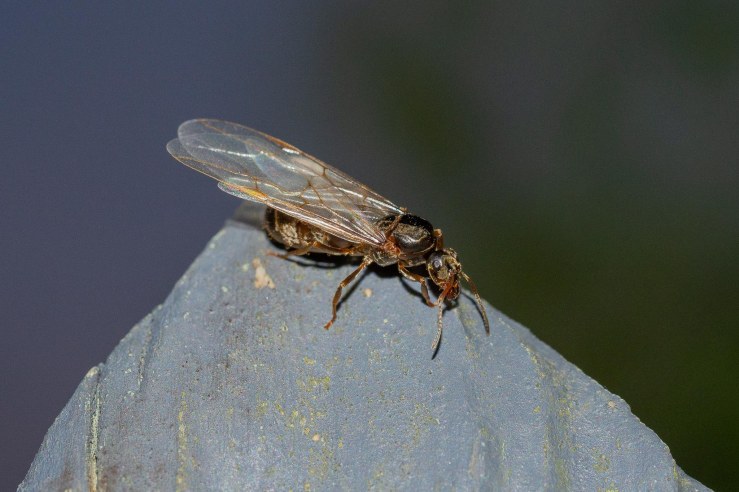
Last week I didn’t notice the level of social media OUTRAGE around the fact that flying ants were on the wing again. I love these moments in the year, unapologetic expressions of ecological processes starring wildlife. When once we might have seen megafauna heading off on mass migrations (wild horses, etc.) now we just get flying ants in June. This ant, with its shameless expression of wing-ability, was spending the evening on the gate.

Peckham toad-1

A judge of how much our wildlife has been reduced is that there are no toads to hoover up the offerings from the Hymenopteran (bees, wasps and ants) gods. The photo above was taken on one of those evenings in Peckham in south-east London circa 2015. It’s probably London Wildlife Trust‘s most-used toad pic. Might just retire.

OLYMPUS DIGITAL CAMERA

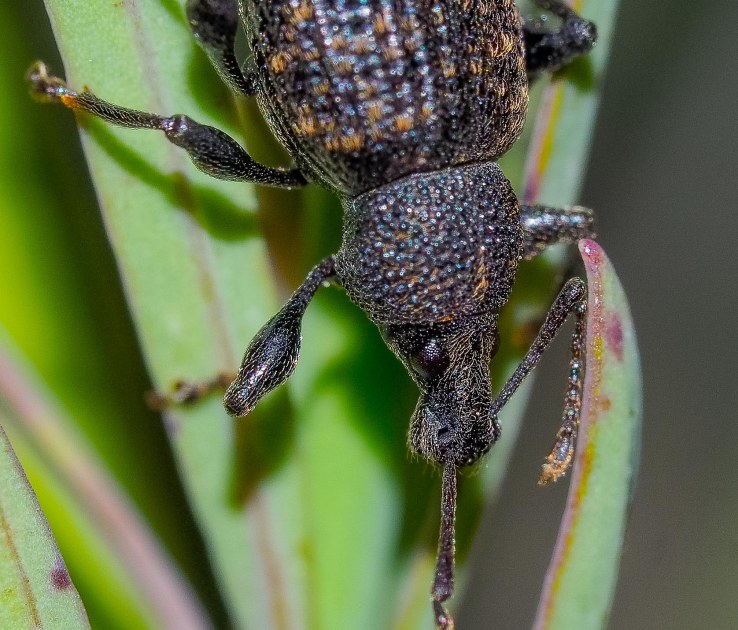
After watering the plants of an evening I found this vine weevil roosting in a weed (purple loosestrife) for the night. Two things ‘gardeners hate’. Personally, I’m not bothered. My attitude towards invasive species is taking on an apocalyptic framing – if they can deal with, even prosper in, the world we are cultivating, fair play mate.

OLYMPUS DIGITAL CAMERA

Vine weevils are so despised because as larvae they eat the roots of plants. How very dare they! I was actually like so pleased because this was the first weevil for my garden list. Is it still a lockdown list, or is it a ‘great thawing’ list. We may never know.

OLYMPUS DIGITAL CAMERA

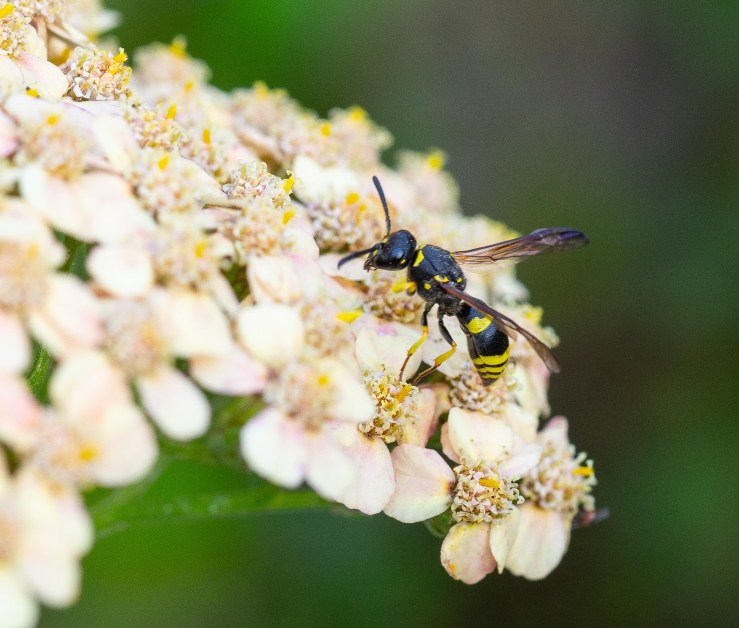
This brief flirtation with the evening garden (sounds like Danielle Steele) provided some new species for my garden list. The most excitement(!) came from this solitary wasp, a species of ‘tube wasp’ (nothing to do with Transport for London) which was visiting an ornamental yarrow. I papped a pic in hope and it just about worked out. It could be this species.

OLYMPUS DIGITAL CAMERA

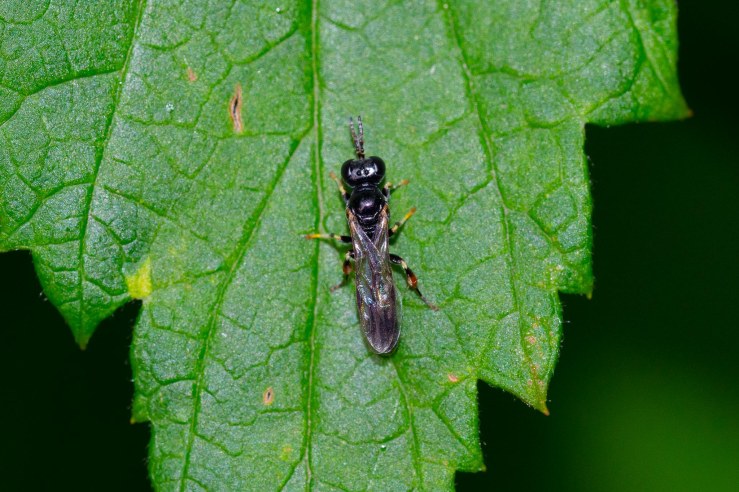
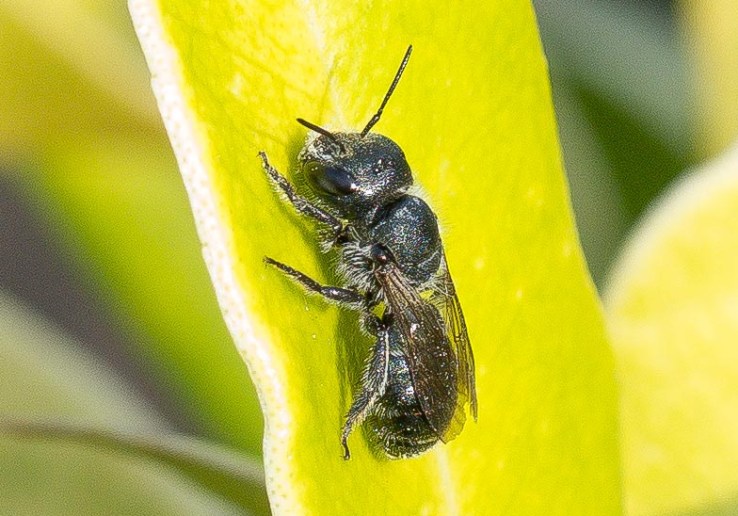
In the category of ‘non-portfolio images’ was this very small black wasp. This is probably a species in the Crossocerus group.

OLYMPUS DIGITAL CAMERA

You can see where they get the common name of ‘square-headed wasps’. Plenty of those to be found on Twitter if you click any trending item. Kidding guys, your opinion on #countryfile really mattered yesterday!

OLYMPUS DIGITAL CAMERA

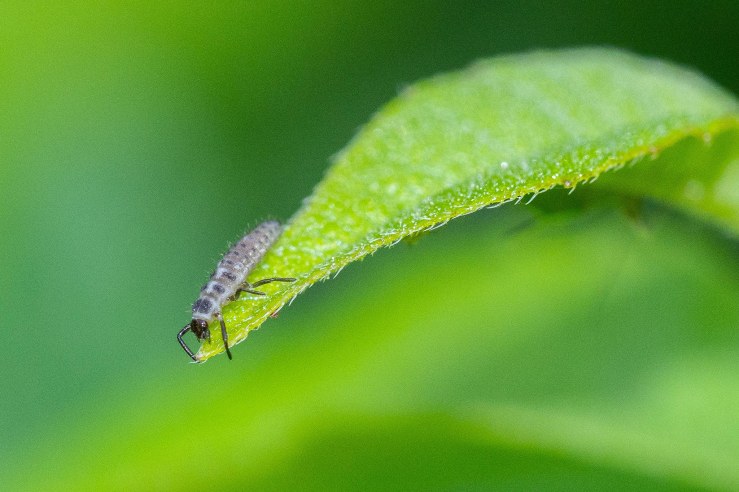
This is the larva of a lacewing, which are sometimes found collecting ‘trash packets’ as the Americans might say, of bits and bobs they find on their travels across soil and shrub. I know what you’re thinking: Ernest Hemingway. Think again.

Lime Ave - 14-5-2019 djg-23

Here’s one from 2019 in the garden I used to manage (the estate agents were not happy). Aren’t we all like this little lacewing larva, collecting our bits and bobs on life’s journey. No plastic or fossil fuels required in this case, though.

Thanks for reading.
More macro

#FungiFriday: the most feared fungus in the world

new-forest-october-2016-lo-res-157

Fungi Friday 26th June 2020

For some reason I decided to write a weekly Fungi Friday blog in 2020. It might have been the worst possible year to attempt this. It’s true that fungi peaks in the autumn but some of the more gentle, milder and wetter months of the year can give fungi an earlier chance. Not so in 2020, as this blog has complained for the past few weeks, it’s been very dry in southern England.

A recent storm didn’t reach Sussex but did pass through London and seems to have given fungi there a boost.

I could blame a global pandemic for the difficulty in finding fungi this spring and summer, but the dryness has been the main problem.

There are only so many dry (literally) blogs you can write about the lack of the thing you want to write about. This week I thought it would be a chance to cover a species that is one of the best known in the world and actually forms the largest organism on Earth. It’s also ‘feared/hated by gardeners’. I seem to use that phrase a lot in this line of unpaid work. What’s the species? It’s honey fungus.

IMG_20200617_133552535_HDR
The mycelium of honey fungus

Every time I take a photo of these ‘boot laces’, I always intend to file it somewhere easy to find. That never happens so above is a low-res phone pic of a honey fungus mycelium (the fungal network of hyphae, a root-like structure that forms the living, physical structure of the organism). This can often be found underneath the bark of a tree that has fallen down or that has died due to the impact of honey fungus. These ‘boot laces’ are also what represent the largest life form on Earth. That’s a humongous fungus, some 2384 acres in size.

IMG_20191126_121101117_HDR
An Armillaria oystayae specimen is the biggest organism in the world (not this one)

That species isย Armillaria oystayae but it’s not the case of a mushroom or toadstool over 2000 acres in size – can you imagine how much that would stink when it began to decay? Because that is only the apple on the tree, whereas the mycelium is the living and breathing fungus itself. The fungi above had moved in on a tree that had been harmed by development, with likely damage to the roots, making the tree vulnerable. No one described the developers as pests in that instance. One suggestion was for the tree to be felled just because the fungus was present. That’s a terrible idea.

OLYMPUS DIGITAL CAMERA
Fresh fruiting bodies of honey fungus on an ash stump

Honey fungus is renowned for its parasitic potential.ย Armillaria oystayaeย is a ‘pest’ for foresters. I would argue that honey fungus, and other species like it, is simply living in a nature-depleted world where ‘naturally-occuring’ species diversity has been destroyed by industrial monocultures in farming and forestry, and development that does not take account of the landscape it is replacing. They are also just trying to survive and taking advantage of niches which are presented to them.

Czechia 2017 lo-res djg-52
A plantation cleared on a hillside in Czechia – soil will be lost to erosion as the roots of the trees die and tension is lost

If fungi have been on Earth for 1billion years, they have evolved in a much more species-rich biosphere, rather than one we dominate now, which, in the case of Western Europe, is suffering from a loss of ancient semi-natural woodland and the associated habitat mosaics and species. In this case I mean there are fewer trees and less dead and decaying wood, the latter of which is a vital ingredient in a functioning and biodiverse ecosystem. Honey fungus, just like us humans, needs food and somewhere to live. It just so happens that honey fungi eat where they live and what they live on. Sometimes they also kill it. Sound familiar? Just ask Planet Earth.

New Forest October 2016 lo-res-36
Honey fungus on the raised rootplate of a fallen tree

The most common species of honey fungus that occurs in Britain is Armillaria mellea. In actual fact it’s an indicator of ancient woodland, which means that people can’t use xenophobic language around ‘alien invasion’ to explain why it could be a problem. An ancient woodland indicator is used to show us that it is over 400 years old in Britain and Europe. In my view, this is just another species which highlights our own ignorance – we think we can control nature and that anything which doesn’t stick to the script must be destroyed or is a pest. Covid-19 is teaching us in a tragic fashion that we were wrong about that.

It’s true that honey fungus has parasitic tendencies and therefore can kill trees through a process of starving it of nutrients, rather than the supportive biological process of providing the tree with things it can’t get (a mycorrhizal relationship). But as a tree inspection professional once said, trees are not a safety issue until we show up.

New Forest October 2016 lo-res-159
Young fruiting bodies of honey fungus in the ancient woodland landscape of the New Forest

One thing that appears to work in honey fungus’s favour is its edibility. However, from what I know it’s only something that can be eaten in moderation and it does cause stomach upsets in some people. It’s definitely not a way of ‘getting rid of it’ from your garden, because the mycelium is there as well. And no one defeated an apple tree by eating all its fruit.

IMG_20191126_121108750_HDR

What can you do if you find it at the bottom of a tree? The only advice I have is not to panic and do something that causes more damage. The next step is to learn to love fungi and appreciate that trees die too, and fungi is there to help create space for more life. Beyond the loss of a much-loved tree, the main problem is our own rigid views of how the landscape lives and dies.

Thanks for reading.
More mushrooms

Macro Monday: bees bring life to a dying lawn

OLYMPUS DIGITAL CAMERA

Macro Monday 22nd June 2020

There has been a dry patch on my lawn that has really suffered this year. I’m not into lawns and am not of the generation that gets angry about an unmown garden. I let it rock and roll. This patch has been dying back to expose the soil underneath, a dry grey substrate. The lack of rain this spring has meant that it’s suffering. But recently I’ve begun to look at it in a different way.

OLYMPUS DIGITAL CAMERA

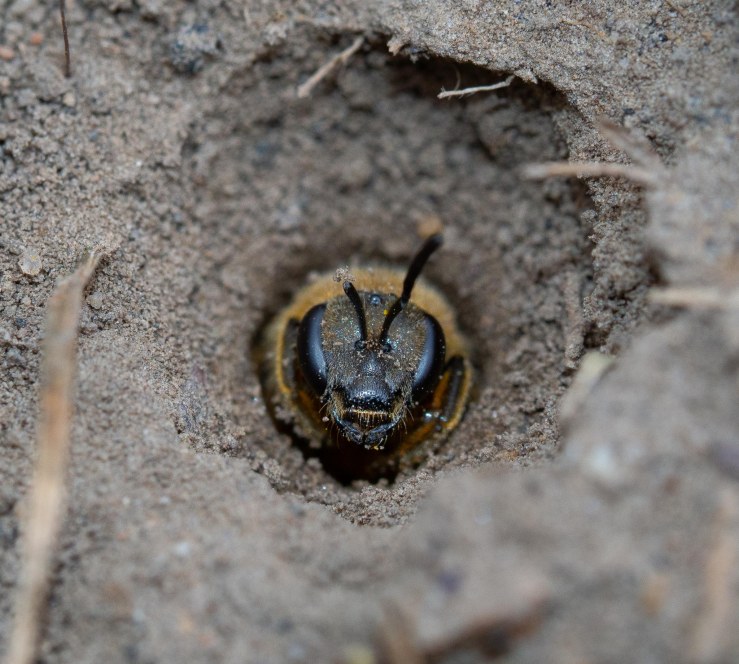
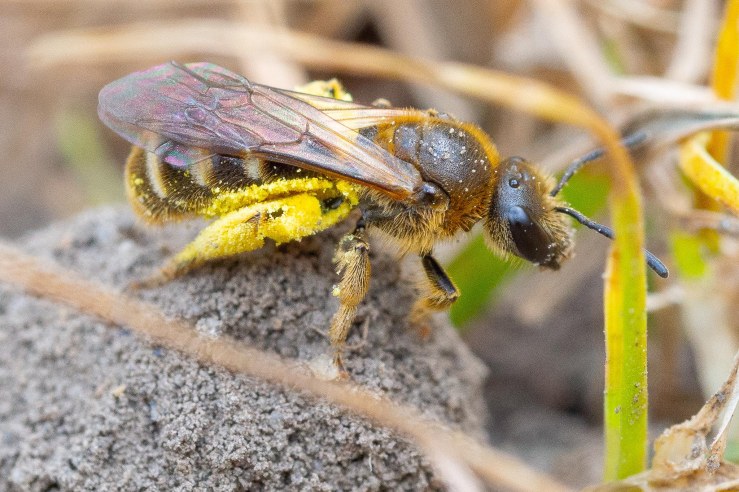
I noticed that there were some small burrows appearing in the exposed areas of soil. On closer inspection there were about 10-20 very small insects flying around the area. Some were going in and out of the nesting holes. They were mining bees!

OLYMPUS DIGITAL CAMERA

I waited around for a while. The weather was moving between hot sun and cloud, meaning the bees were busy but then would slow down and disappear into the burrows. Some were waiting to appear. I think they are yellow-legged mining bees due to their appearance and their nesting behaviour, but I’m not sure. The bee above was doing some DIY, cutting through a dead grass stem that was blocking its front door.

OLYMPUS DIGITAL CAMERA

The bees seem to gather pollen from trees or flowers which make their legs even more yellow. According to the book there is a second brood in mid-June, which would explain why I’ve only noticed them appearing now – in mid-June.

OLYMPUS DIGITAL CAMERA

I won’t be trying to water that area of the lawn anymore. It’s a reminder to me that it provides an element of a garden’s habitat mosaic. In the small space we have, I don’t think there would be anywhere else suitable for these lovely insects.

OLYMPUS DIGITAL CAMERA

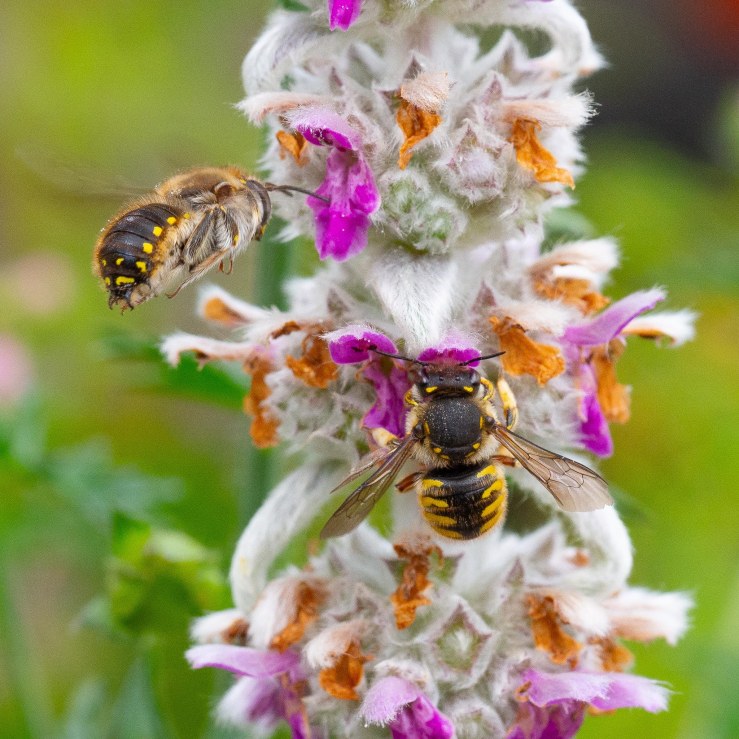
While I was sat waiting for the chance to get photos of the yellow-legged mining bees, I was right next to the lamb’s ears. This plant has delivered the goods this year and I would encourage anyone who wants to support wild bees, especially solitary species, to plant it out.

OLYMPUS DIGITAL CAMERA

I counted five wool carder bees, which is a record so far in my garden. Two of them were mating at one point, as seen above.

OLYMPUS DIGITAL CAMERA

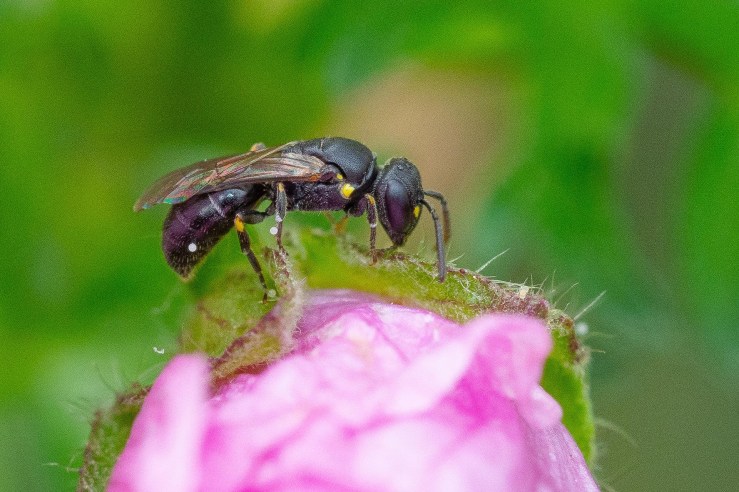
Nearby there were a couple of yellow-faced bees. You can attempt an identification from the markings on the bees, but I haven’t got round to that yet.

OLYMPUS DIGITAL CAMERA

The breaks from the sun and cool breeze did slow the bees down at times, which is very helpful.

OLYMPUS DIGITAL CAMERA

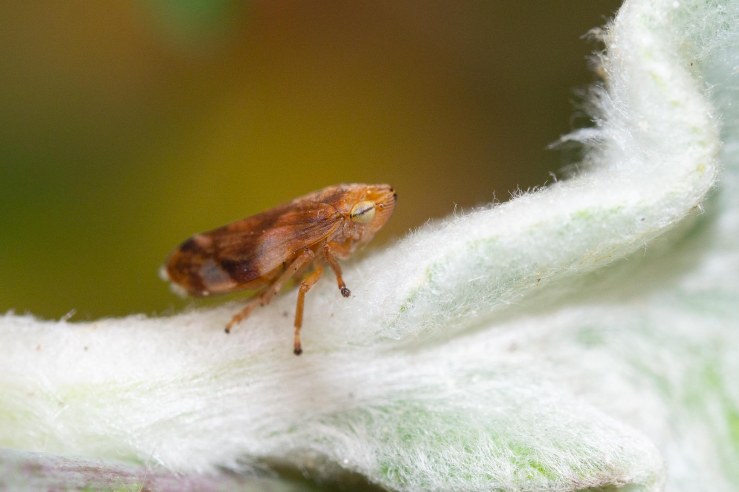
Earlier in the week, during a rather wet and unsettled day, I took a potential ‘portfolio image’. I’d noticed a leafhopper roosting in a grasshead outside my front door. Later I noticed it was still there. I pulled the grass down towards me and sat on the ground. The bug was so relaxed it posed for this photo. I am really pleased with it and shows how garden macro really is the best. It took a matter of a couple of minutes before I was back inside again!

Thanks for reading.

More macro

#FungiFriday: is it even a mushroom?

OLYMPUS DIGITAL CAMERA

Fungi Friday 19th June 2020

I headed to the woods again this week to see how the Amanita from last week’s post was faring. There had been almost no rain again until that point. The woodland floor was crunchy and dry. It never feels good seeing a woodland like that.

OLYMPUS DIGITAL CAMERA

I was surprised to see that the mushroom hadn’t advanced. It was still encased in its bone-dry veil. I had a closer look to see if it even was a mushroom and found that it was actually attached to the soil through fungal roots. It was a learning point – I thought that even without water a mushroom can advance. Evidently it’s very difficult and sometimes they can’t.

OLYMPUS DIGITAL CAMERA

It’s worth saying that fungal fruiting bodies (usually ‘mushrooms’) are 90% water. The photo above shows a woodland stream (‘gill’ in the Weald). It has been an exceptionally dry spring.

OLYMPUS DIGITAL CAMERA

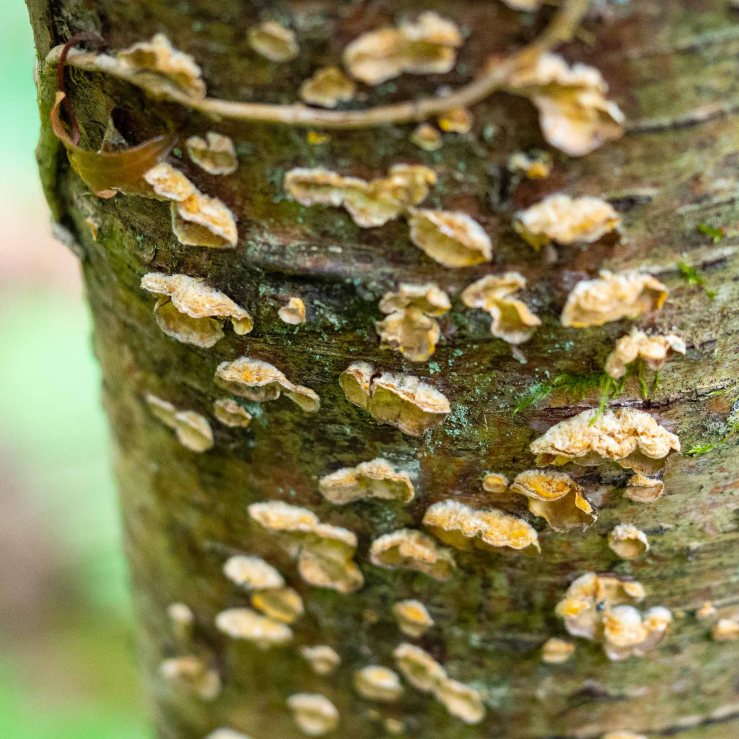
A good indicator of how much potential there is to find fungi can be seen in bracket or polypores on trees. This is probably hairy curtain crust which is looking as sorry as you’ll find it.

OLYMPUS DIGITAL CAMERA

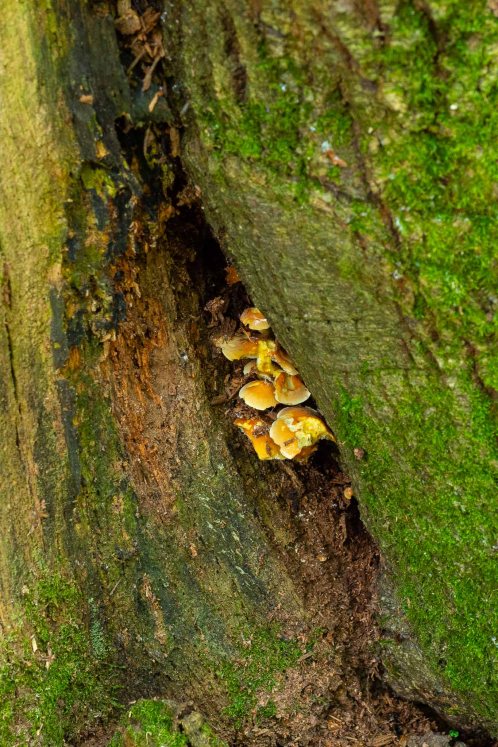
Despite the super-dry conditions I did find more fungi. It was one of the most common species in the UK – sulphur tuft.

OLYMPUS DIGITAL CAMERA

These are places where fungi can fruit in these conditions. The inside of a decaying oak tree stays cool and damp, especially with holly surrounding to create shade and thus cool.

OLYMPUS DIGITAL CAMERA

You can see how hungry the local slugs are. To humans this is a poisonous species, so don’t be a slug. Even though these had been heavily munched, it’s nice to see a shroom. Rain has come in the past 24 hours, so it will be interesting to see how things might change in the next few days.

Thanks for reading.

More mushrooms


The Sussex Weald: the dawn chorus

Dawn-8-5-2020-lo-res-12

St. Leonardโ€™s Forest, West Sussex, May 2020

Itโ€™s the blue hour and already birdsong rises from the woods: an unbreakable wall of blackbird and song thrush. The thrush pierces through with repetition as the blackbirds pause. Chiffchaff, robin, wren, the cascading song of a willow warbler.

Straight away, the hoot of a tawny owl in the echoing micro-valleys of gills flowing through the woods. Over time new owl sound-posts arise in distant corners of the landscape.

Dawn-8-5-2020-lo-res-13

5am comes. In the birchy patches roe deer crash away through old bracken. Their sheer weight can be heard. A roe barks a warning โ€“ we have been seen.

The owlsโ€™ calls grow with the onset of dawn. The darkness still sits in the beech, oak and birch woodland. Pine, forever green, holds it that bit longer.

A sound from far away, slipping over the owl and deeper into the Weald. The cuckoo, master messenger of spring. We heard him here last year and wonder if he is the same bird back from the Congolese rainforest where he spent the winter. Whoever he is his life has been richer than any humanโ€™s could ever be. And the female cuckoo, she too will be hidden away somewhere in silence, listening.

We meet the crescendo of the dawn chorus now. Owls hooting on the crest of song thrush and blackbird. Cuckoo rising over everything. Crows begin the first administrative duties of the day, checking outposts of their web and marking party lines. The owls will not be lost on them.

Dawn-8-5-2020-lo-res-06

Down a sunken track enclosed by holly, we notice the shapes of bats hawking. Itโ€™s the path we need to take. On approach they disappear, as if they were never there. The mosquitoes landing on our foreheads are glad weโ€™ve moved them on. Iโ€™d love to tell them, the bats will be back.

The Sussex Weald

Macro Monday: a National Park in a flower bed

OLYMPUS DIGITAL CAMERA

Macro Monday 15th June 2020

Each week, this blog is defined by the weather the week has thrown out. The headline photo of a wool carder bee sheltering under a leaf defines it pretty well. It’s been grey, sometimes wet, and very windy. That has meant more than anything that I’ve been focusing again on the garden. No trips to local National Parks this week.

OLYMPUS DIGITAL CAMERA

One of the regular lessons I learn from macro photography is that travel is not necessarily helpful. It’s knowing your location. Macro makes a National Park of a flower bed in terms of micro-locations to visit. A beetle is a bison, a bee is a beaver, if you see what I mean. In a raised bed where raspberries are growing prolifically one leaf has fallen and is housing these eggs. I’m not sure what they are, perhaps a shield bug.

OLYMPUS DIGITAL CAMERA

I’ve started to notice more ladybird-related activity (serious stuff). In the same raised bed as the previous image, this ladybird larvae was looking for trouble.

OLYMPUS DIGITAL CAMERA

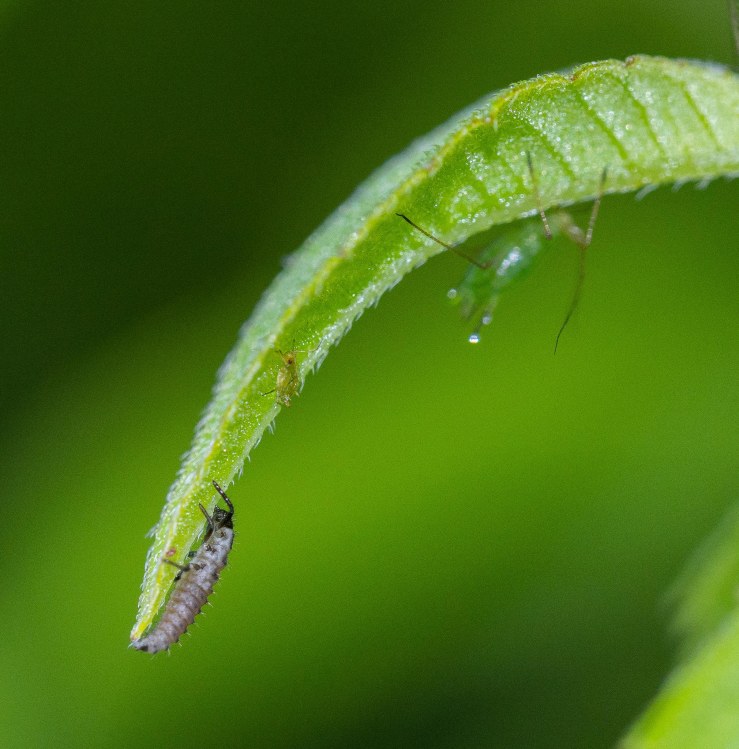
I didn’t quite get a good enough photo of the moment the larvae began to bother the aphids it was hunting, but you can see it here in close proximity. Ladybird larvae predate aphids, one reason why ‘gardeners’ (that highly opinionated tribe) like them, because aphids can damage plants. These larvae also can give a human quite the nip. When the larvae approached the larger aphid it began to do this aggressive waving of its legs. It seemed to work, the aphid didn’t get anywhere and went to hang out at the tip of the leaf as above.

OLYMPUS DIGITAL CAMERA

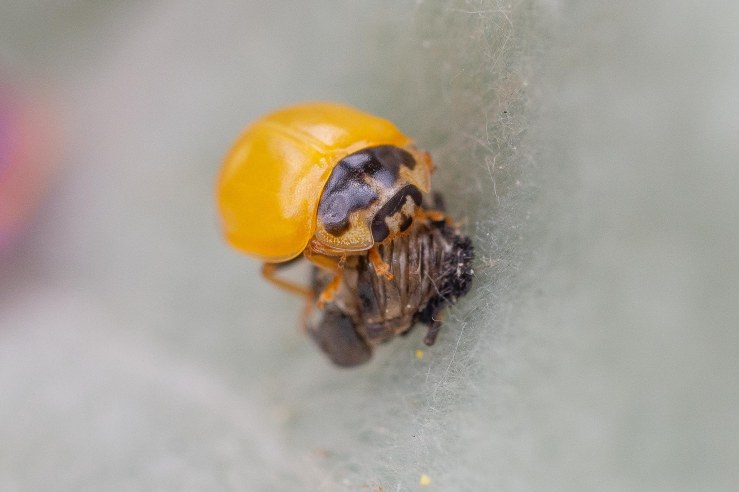
I found the next stage of that larva’s development. This ladybird has just exited its pre-adult stage. It had taken about a week or more, which is a lot longer than I thought that would take.

OLYMPUS DIGITAL CAMERA

The cooler, greyer weather is brilliant for macro because it slows insectlife down and creates much softer lighting. Direct sunlight can make images unmanageable. This lacewing-like insect looked to be dining out on some kind of egg or larval stage on a leaf in the hedge. I enjoy the little herd of aphids in the bottom corner.

OLYMPUS DIGITAL CAMERA

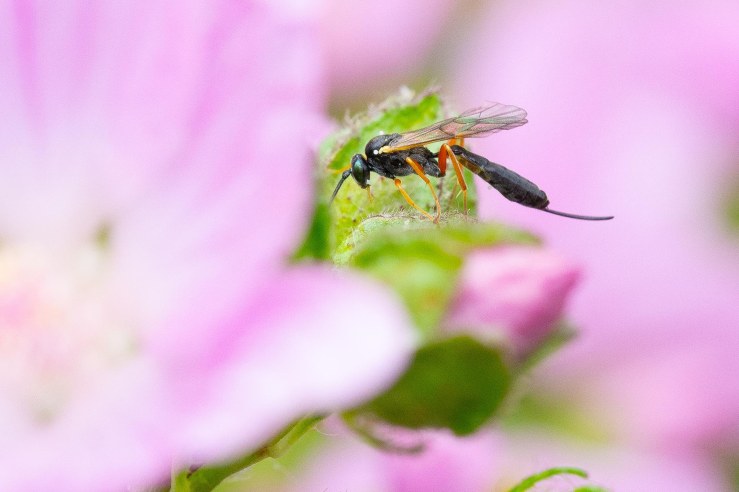
In the same hedge I noticed the movement of a small, wasp-like insect. To many people you may think that means yellow and black. I doesn’t but it’s quite difficult to describe. I got lucky with this picture, the autofocus (which is not the best way to take macro, manual focus is better) zapped right on the eyes just before it flew away. I actually thought at first that this was a gall-wasp, the kind that makes galls grow on oak trees and other plants. But I think it’s probably an ichneumon wasp, one of over 2000 species found in the UK. I say this on account of its long antennae.

OLYMPUS DIGITAL CAMERA

Yellow-faced bees are tough to photograph, as the above illustrates- it’s not in focus! But it was only later that I noticed something else. At the gap in the flower heads (this is a yarrow from the garden centre) a spider is waiting. I know this because after the bee had flown I saw the spider come out, prey-less.

OLYMPUS DIGITAL CAMERA

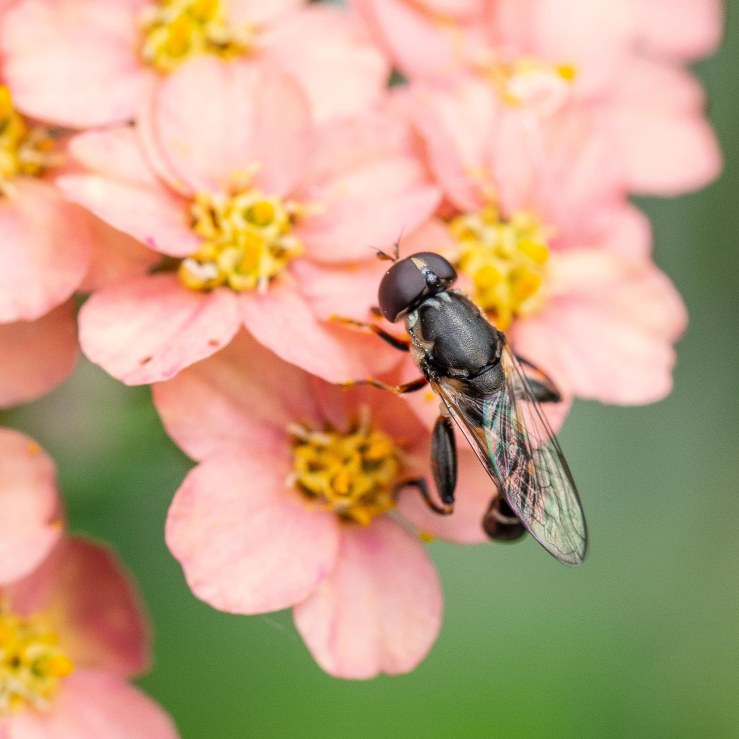
On the same flower this rather agile looking hoverfly was seeking a nectar-based lunch.

OLYMPUS DIGITAL CAMERA

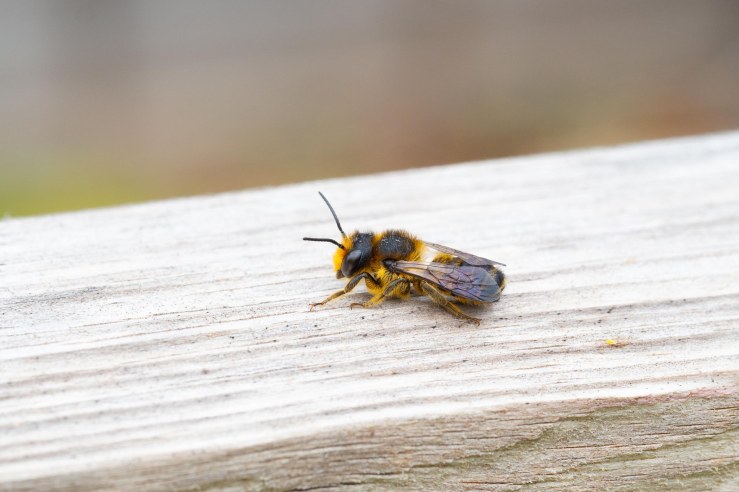
The cool, grey days are a good time to look for insects on wooden surfaces. I remember reading a blogpost a couple of years ago all about fenceposts in rural areas for macro. The idea is that when it’s cold, and especially windy, it can be a great place to find insects that are too cold to move. I wish I could say the same for this solitary bee, which only let me get this close after about 15 minutes of muttering to myself while running up and down the garden.

OLYMPUS DIGITAL CAMERA

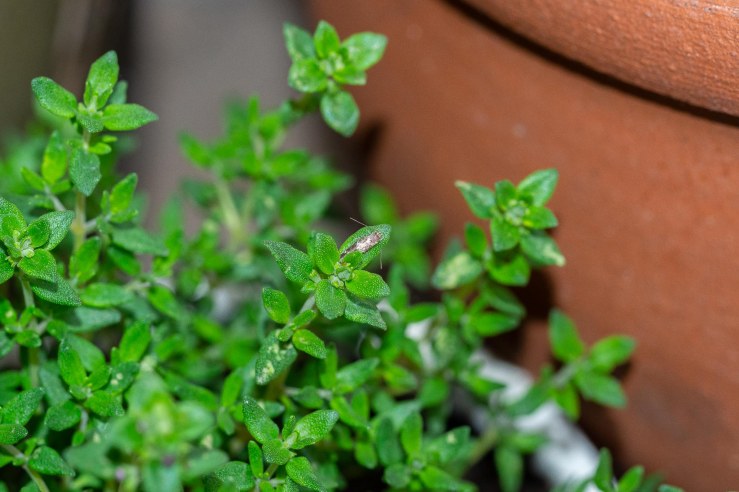
I’ve bought another thyme plant after seeing how popular it’s been with local pollinators. I was heading in for the evening when out of the corner of my eye I noticed a moth roosting on a leaf like a little bed.

OLYMPUS DIGITAL CAMERA

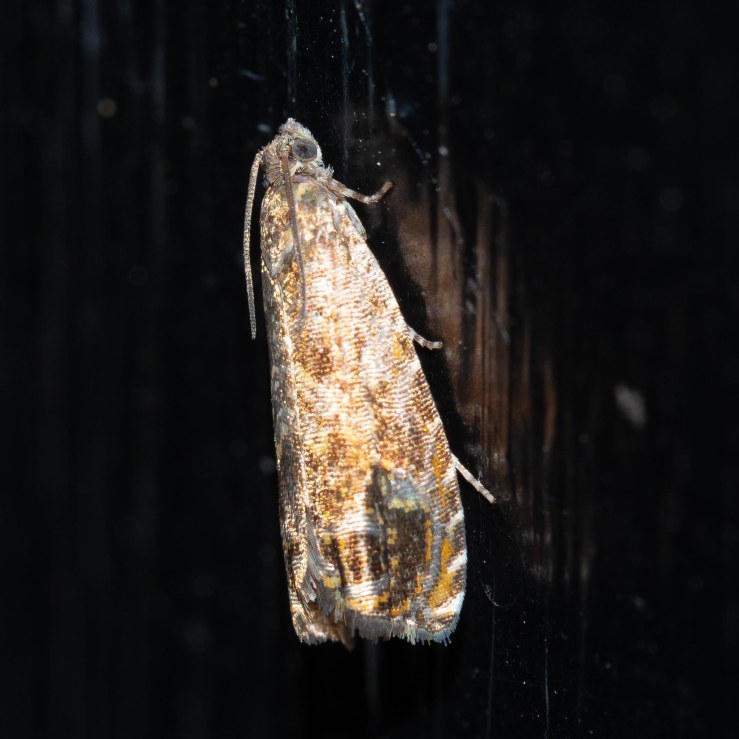
This is a micro-moth and, like so many species snapped in my garden, I don’t know which kind. I do have a micro-moth field guide but I can’t say it sees too much action.

OLYMPUS DIGITAL CAMERA

It’s important to remember that it’s not all about insect life, though. Cleavers, goose grass, sticky willy, whatever you strange English people call it, it has beautiful flowers. This plant is in the gardener’s ‘weed’ category (not marijuana, though it does have medicinal properties). The flowers are miniscule, and only by using something to magnify your vision can you really appreciate how beautiful they are.

Thanks for reading.

More macro

#FungiFriday: first of the summer shrooms

OLYMPUS DIGITAL CAMERA

Fungi Friday 12th June 2020

At last, this week some rain arrived. I headed to my local woodland to see if any mushrooms had taken the bait. I went there with a slender hope of seeing anything because it has been so dry this spring.

OLYMPUS DIGITAL CAMERA
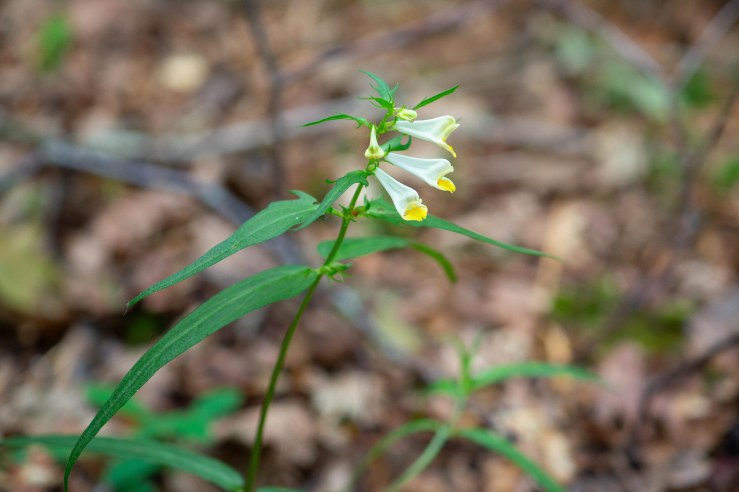
Common cow wheat

It was pleasing to see special woodland plants such as common cow wheat, another of those species which is not actually so common anymore.

OLYMPUS DIGITAL CAMERA
Juniper haircap moss

The bryophytes also looked more lush and watered after a day of rain in the past week.

OLYMPUS DIGITAL CAMERA

This stunning drinker moth caterpillar was chilling (literally) on a boardwalk. I moved my fellow redhead to safety before it got squished by evening strollers.

OLYMPUS DIGITAL CAMERA

My special summer patch was free of fungi, it may be another month before anything comes up there.

OLYMPUS DIGITAL CAMERA
The mycelium of green elfcup

Just like last week, green elfcup was evident in those beautiful blue-green stains on bits of fallen wood.

OLYMPUS DIGITAL CAMERA

I was quite startled to spot this growing out of the buttress of a tree. I think this might be rooting shank, a species which is often found at this time of year. It’s a signal of summer.

OLYMPUS DIGITAL CAMERA

The slugs are obviously hungry at the moment because much of the fungus had already been eaten. The slime trails below are the smoking gun.

OLYMPUS DIGITAL CAMERA

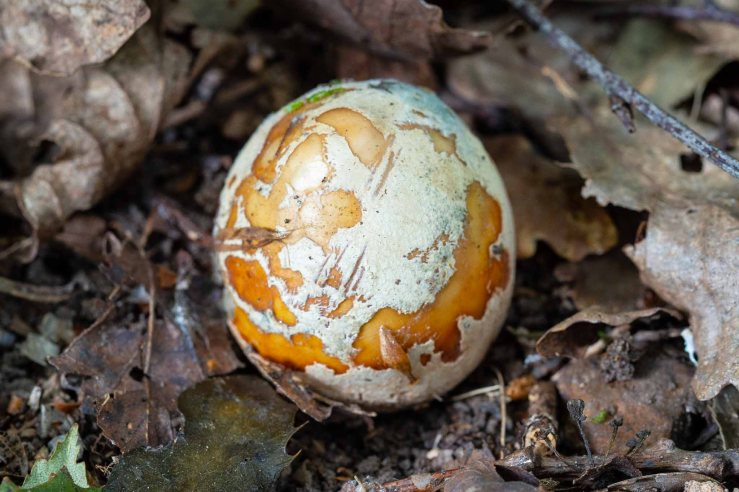
Nearby I saw what I thought was an old tennis ball. Upon closer inspection it was in fact a mushroom making its way up into the world.

OLYMPUS DIGITAL CAMERA

This is almost certainly a member of the Amanita family, home to fly agaric and the death cap. It could be tawny grisette. You can see it is appearing from a veil. There is the typical Amanita patchiness to the remnants of the veil. I did wonder if this might even be Caeser’s mushroom. I will try and check back in a few days if it can last that long.

Thanks for reading.

More mushrooms


Macro Monday: back to chalk

OLYMPUS DIGITAL CAMERA

Macro Monday 7th May 2020

I was on lockdown leave last week (the holiday you booked last year but aren’t able to go on, not that I’m complaining). One morning I was reading a book on the sofa – Horizons by Barry Lopez, which I haved really enjoyed – and I heard what sounded like very a noisy daddy longlegs entering the room. I looked up and a damselfly was resting on the wall. I ran to get my little camera and took some photos.

OLYMPUS DIGITAL CAMERA

It was a female azure damselfly, the second damselfly I’ve recorded in my garden this year. I helped it onto the tip of my finger and took it over to the window. It flew away and landed on the curtains. The light was beautiful and soft, helped by the curtains. In the end it slipped off into the sunny garden.

OLYMPUS DIGITAL CAMERA

Out there some hyper-goth-punk has taken residence in the raspberry patch. Really I think it’s a vapourer moth. This one will be worth watching. I’ll keep you posted. It’s a nightmare to photograph.

OLYMPUS DIGITAL CAMERA

The cranesbills are flowering now in my garden and they’re a good place to find spiders. They’re a bad place to find spiders if you’re an aphid.

OLYMPUS DIGITAL CAMERA

I’m not sure what kind of spider this is (there is a new book coming out in September that I’m waiting for) but I would guess it was a crab spider. Please let me know if you do.

OLYMPUS DIGITAL CAMERA

Spiders do make you realise how much of a nightmare they would be to sit next to on the bus.

SD - 1-6-2020-lo-res-32

Ok, I know what you’re thinking: you have a nice garden. You’re too kind, but it’s not mine. This is the South Downs National Park. I visited the South Downs for the first time in three months with one aim in mind: macro.

SD - 1-6-2020-lo-res-49

At one point this year I didn’t think I’d have the chance to visit the chalk downs. I was prepared for that, because I think the health of the wider populace is more important than getting to look at some flowers in a field, or a wood, whether or not they’re on my dad’s farm in Northumberland. Needless to say I drove the 30 minutes to the South Downs to check my eyesight. I believe I acted reasonably.

SD - 1-6-2020-lo-res-47

Turns out my eyesight is good but not this good. To really get close to this chalk milkwort I need a macro lens. Lucky for me, I had one! The flowers of this very small plant look to me a bit like spiders, too.

SD - 1-6-2020-lo-res-33

This rock rose was growing in amongst some of the drier grasslands, starved of decent rain for a long while. May was the sunniest on record. We need rain, so bad.

SD - 1-6-2020-lo-res-38

It was a windy day up on the Downs and butterflies were having a tricky time of it. To be honest, I can’t remember it not being windy on the Downs…

SD - 1-6-2020-lo-res-35

I’m fairly certain this is a brown argus, which I hit the deck to get closer to. It was having a wild thyme. I also saw brimstone, common blue and small heath.

SD - 1-6-2020-lo-res-02

On the lane I picked up this cinnabar moth, a species which is lives on ragwort. They develop from the iconic orange and black caterpillars that you can find on a-plant-so-hated-someone-made-a-website-to-defend-it. In macro terms of keeping beautiful insects distracted long enough to have their picture taken, ragwort has been good to me. I’m a fan.

SD - 1-6-2020-lo-res-22

You may know that chalk formed about 65 million years ago from the shells of molloscs in an ocean. That ocean is gone but I found a tiny piece of chalk in one of the dusty, dry exposed areas of the grasslands. I think the black spots may be the early development of a lichen. I thought it was so beautiful as an object, like a piece of cave art, its canvas so many millions of years in the making.

SD - 1-6-2020-lo-res-09

This photo was taken with my macro lens. It was lovely to see a skylark again.

Thanks for reading.

More macro


#FungiFriday: the silence of the shrooms

SLF - 31-5-2020-lo-res-2

Fungi Friday 5th June 2020

This blog has now entered into its sixth month and the real-time fungi action hasn’t really happened, as this one will illustrate. Last week I went for an optimistic jaunt to my local ancient woodland/plantation/heathland to see if anything had popped up. I was astonished, not that there was very little to see, but at how dry the woodland was.

SLF - 31-5-2020-lo-res-1

It should come as no surprise that I only found one fruiting body, growing out of a bit of deadwood, which would already have some moisture inside the decaying wood. My footsteps were so loud as I walked across the leaf litter. But then we have just had the sunniest May and one of the driest springs on record. Across the south of England warnings have been in place about the high risk of fire. Very disappointingly but not surprisingly, fires are ravaging heathlands as I type. At least some of these are because of visitor impact, either arson or things like disposable barbecues.

I went for a second mushroom hike – that’s how dedicated I am to this series – and found that an area of more wet oak woodland also had almost nothing appearing. I found so little that I didn’t even get my camera out and instead just used my average phone camera. Sign of the times. The best I could muster was the porcelain fungus above, growing from a beech log that had rolled into the dried out gill. Last winter I saw that stream overflowing.

It would be wrong to say that there is no fungi, because fungi is the life we do not see. This stick, looking a bit like a blue whale or a squid, is made green by green elf cup. This is the work of the mycelium, the true living part of the fungus.

OLYMPUS DIGITAL CAMERA

In autumn small green fruiting bodies will appear as above. This was taken in October 2019.

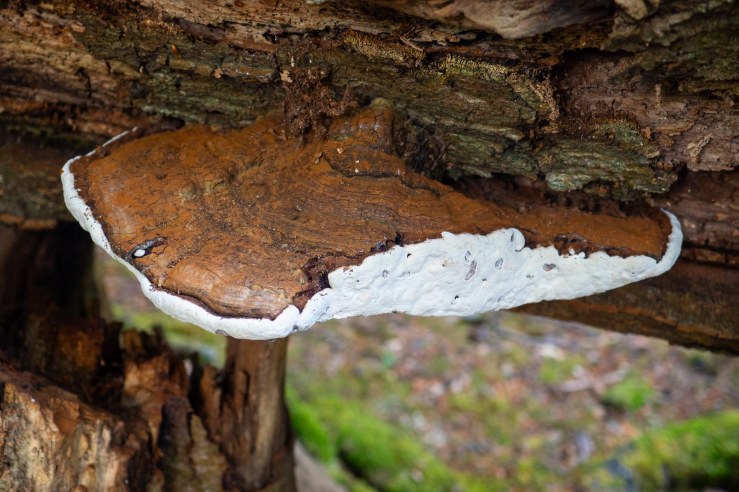
If you need them, you can always rely on a bracket fungus in the dry season. This is artist’s or southern bracket, what most people will generally call by its Latin name Ganoderma.

I found these blushing brackets (I think) on the path, they were crisp and dry. This species begins pale, blushing red and then turning to black.

This is an area of woodland that is quite good for fungi, compared to the wider condition of the wood. It suffers from a huge amount of trampling. Please see what I’m about to say as objective comments on the physical state of this place, I am not attacking the land managers. Last autumn much of the holly in this area was cut and left. The aim was almost certainly to allow more light in to replenish the woodland floor. The brash, as it’s called, now covers where most of the fruiting bodies appear, and the holly will not break down soon enough for those fruiting bodies to appear again in perhaps the next five years.

In a previous job we would undertake thinning of holly and dead hedging to protect areas from trampling. The majority of pubicly accessible woodlands in southern England have fairly high levels of footfall, dog walking and the nitrogen enrichment that comes from dog waste. I mention this because I worked in a woodland which was only 20 acres in size but which had 100,000+ visitors annually, with probably around 50,000 dog visits. Holly was absolutely key to protecting soils from erosion and the creation of news paths, and protecting birds and other wildlife from disturbance.

Removing holly on this scale can result in the opening of areas to unintended impact where it could infact have the reverse effect desired. More light will come in to replenish the woodland floor, but more feet will come too and the soil will suffer, along with everything that needs it. Basically everything. I write this absolutely knowing that I provide some of those footsteps, but they are kept to desirelines and I do not have a dog that I allow to run free in these areas. Dog walkers will tell me that children have the same impact.

SLF - 26-7-19 - djg-12
The blusher, found in this area in July 2019

The holly creates a microclimate which in hot dry periods such as this, means that soil retains moisture and fungal fruiting bodies can do their thing, a thing that is a key part of the reason a woodland is there in the first place: reproduce, break down organic matter, feed the trees that need them, and recycle organic matter into new soils.

SLF - 26-7-19 - djg-16
Grey spotted amanita, July 2019

I wonder, do woodland managers ever think about fungi through anything beyond leaving dead trees to stand and logs to rot down on the ground? Does anyone consider the need for microclimates within woodland to ensure a mosaic of micro-habitats? Again, this is not an attack, just observations and pointers from my own experience.

SLF - 26-7-19 - djg-13
An oysterling on a birch branch in this area, July 2019

When I began in woodland management (the account of one of my first days is the post visitors seem to read in their droves to on this website) I did not consider fungi as I do now. Seeing as fungi has such a crucial role to play in our woodlands, sooner or later we need to ensure that in dry spells such as these there are safeguards, like holly, to support fungi.

Thanks for reading.
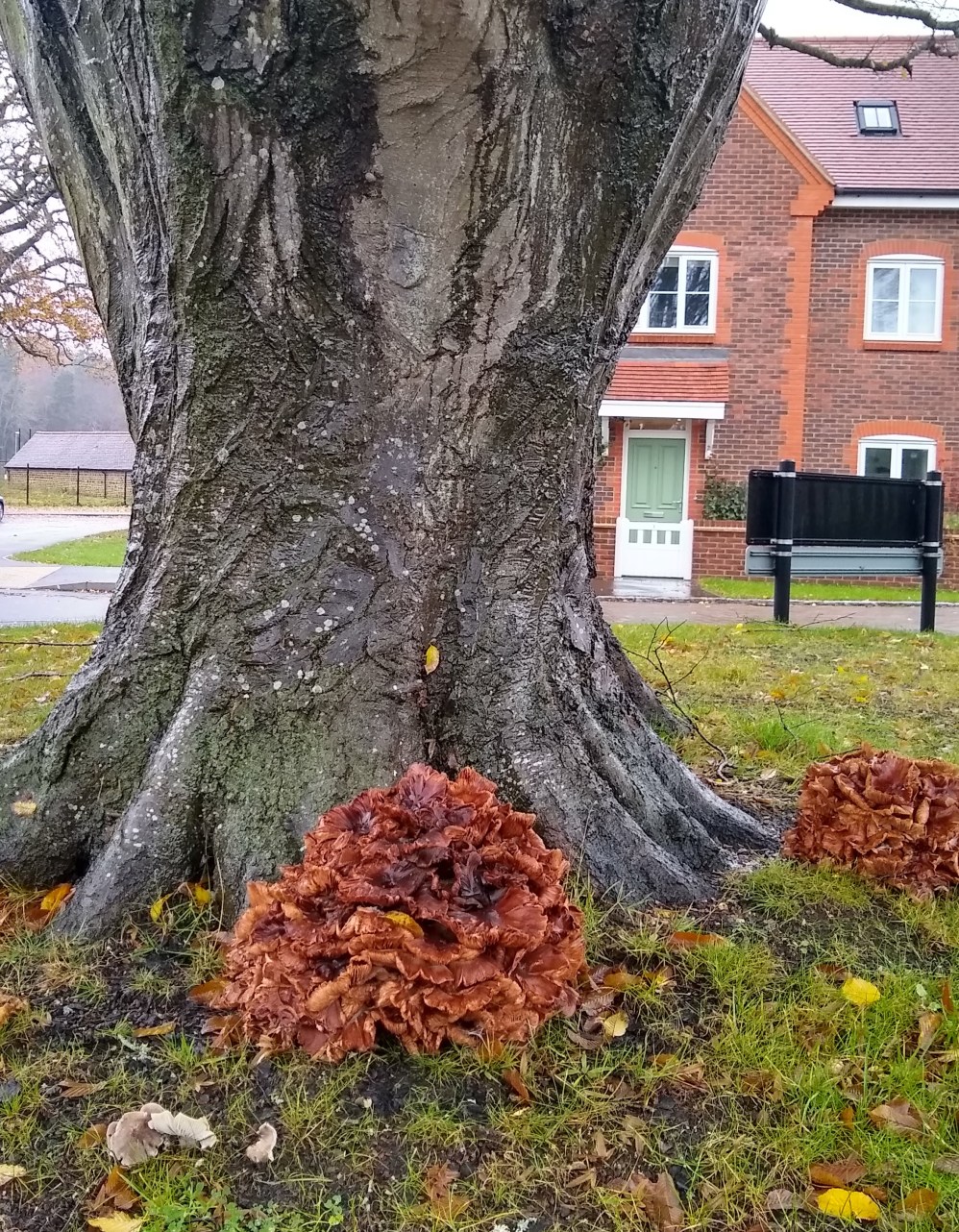
More mushrooms

Macro Monday: the wool carder bee

GDN - 26-5-2020-lo-res-19

Macro Monday 1st June 2020

A couple of weeks ago I noticed a new species visiting the lambs’ ears in my garden. After work I had gone into the garden to morph into a normal human again. The sun had moved to the point where shade was covering the flowerbeds but still an insect was busy and behaving in an unusual way.

GDN - 27-5-2020-lo-res-04

The insect was bumblebee-like and was visiting the hairy stems of the flower. It was a wool carder bee, a solitary bee that looks quite a bit like the common carder bumblebee (which I featured two weeks ago). My camera was inside and the bee came and went, without ever returning.

GDN - 26-5-2020-lo-res-05

Then, one evening last week I also went out into a shadier garden to try and forget about the existence of email, and this time I had my camera with me. The bee was coming and going again, making return visits. It was gathering up hairs from the stem of the plant and gathering them into small beardy bundles.

GDN - 26-5-2020-lo-res-06

When it flew up to head off with its cuttings, it would hover around and look right at me. It looked like it had a little white beard.

GDN - 27-5-2020-lo-res-01

I think you can see here where the hairs have been removed from the plant.

GDN - 27-5-2020-lo-res-15

I bought this plant last year and have had to wait a year for it to flower. It has the beautiful pink flowers that can easily be confused for an orchid if you don’t know the difference. It’s actually in the dead-nettle family, where plants like spearmint reside. I’ve been looking forward to it flowering throughout this period of staying at home. I think it should flower through the summer and there are plenty of flowerheads to keep it (and this blog) going.

Thanks for reading.

More macro