I’m pleased to say that I’ve created a new home for my mushrooming fungi content – www.FungiFriday.co.uk
I’ll still be posting about fungi from time to time on here, but I felt it would be interesting to explore a fungi-only site, such is the breadth, depth and diversity to that area of nature. There is also massive interest in fungi nowadays.
I do have a lot of fungi posts that don’t make it onto here because they seem to species-focused and fungi is just such a massive area. Sometimes just dipping your toe in doesn’t feel like enough.
I don’t post photos on Twitter anymore because it has gone downhill so much. So I needed a new home for my stream of mushroom content!
It’s not a science website or one I would ever describe as being ‘expert’. Instead it’s a feed of fungi photos, events and info, with a bias towards southern England and the UK (with a bit of continental Europe). We’ll see how it goes over the first year. I’m inviting some fungi friends to contribute posts too which will be nice.
It’s been a very busy summer so far for me of working and commuting. I had a free afternoon and so headed to my local dreamspace, but with no mushrooms on the mind – literally or figuratively.
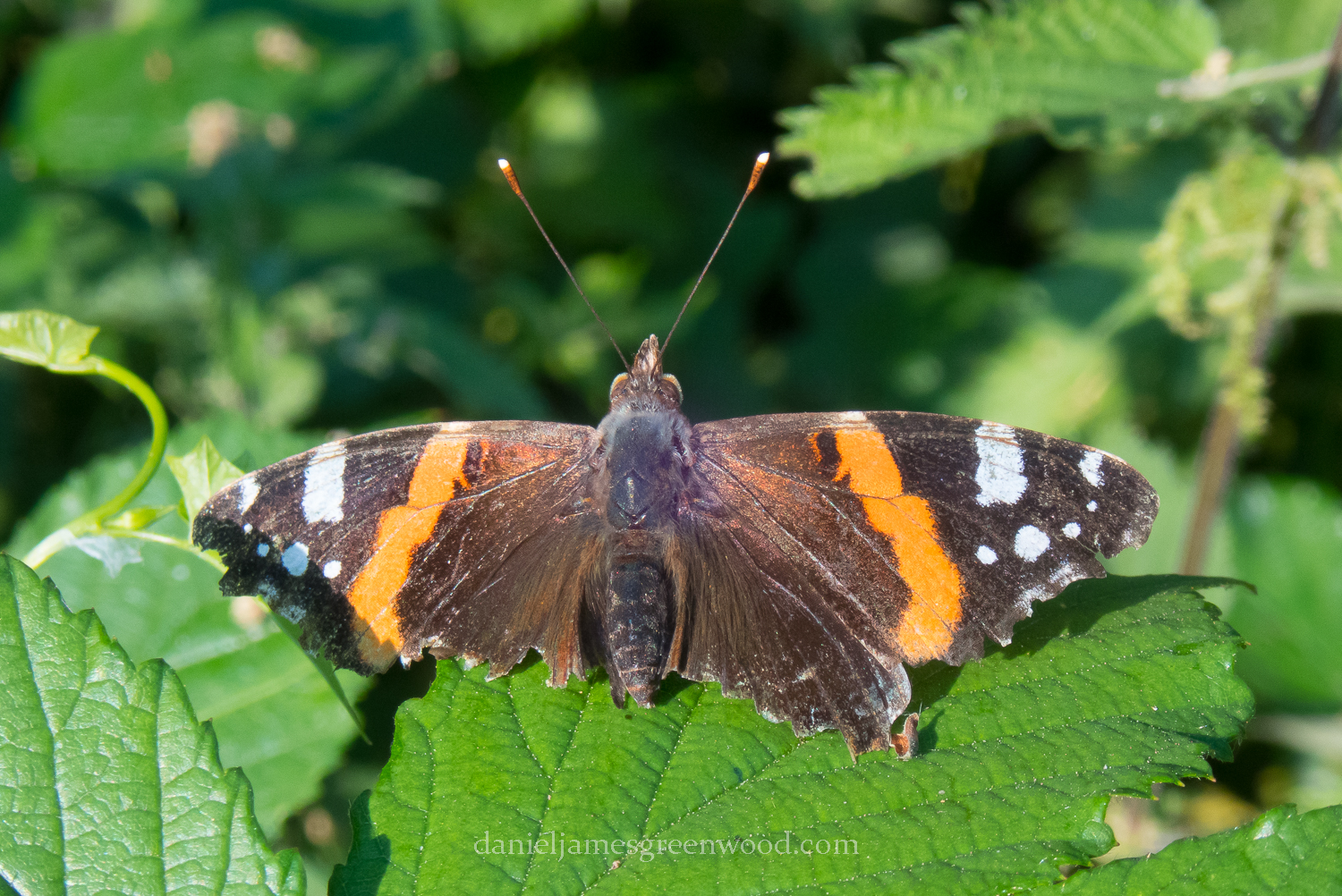
Red admiral (phone pic)
The number of butterflies was remarkable, perhaps the sense of doom about 2023’s poor invertebrate spring had dampened my expectations too much. There were red admirals, skippers, whites of course, and even a white admiral on the sandy track. White admiral is something I don’t see that often, mainly because I lived in London for so long. Then again, it is cropping up in SE London now, which is interesting.
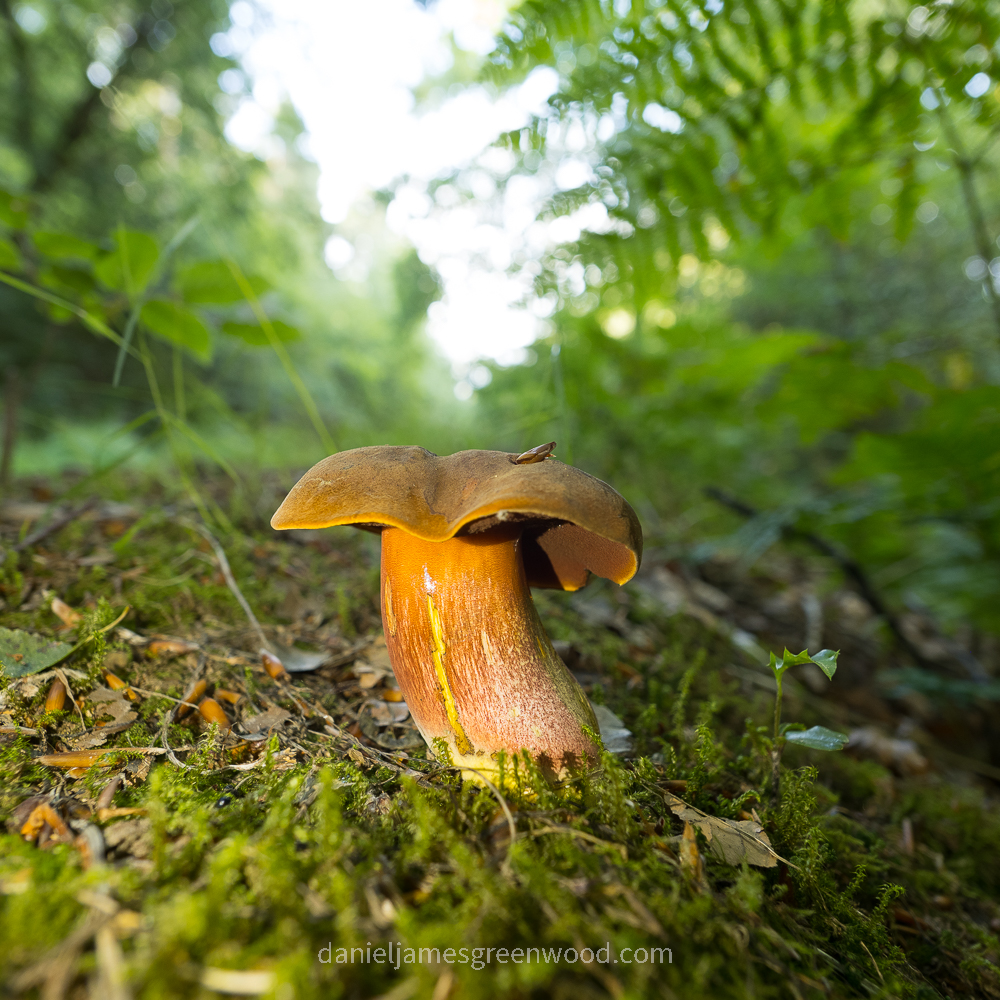
I was enjoying the sense of a butterfly summer, when I nearly spilled my invisible coffee at the sight of a deep red mushroom on the edge of the track.
Mushrooms, so abrupt, unapologetic. They know how welcome they are, even if you don’t realise it yourself at the time.
This was one of the summery, colourful boletes that can be found at this time of year. It’s probably a neoboletus, but my iNaturalist record is without community input and I haven’t had the time to do any research myself. So it remains an unknown jewel.
A few paces away was a more common and typical summer shroom, what I would guess is a blusher.
This short walk on the edge of the High Weald was notable for its green-ness, surely close to peaking as August nears.
We’re lucky over here that we aren’t experiencing the mega burns and record high temperatures of Greece, Italy and Arizona. You have to wonder how some of our fungi will cope with the drought and the impact on our woods. No doubt fungi will outlive humans in the long, long run (they can survive and thrive in nuclear reactors) but the heat can’t be good for the health of our woods which may struggle to adapt to pace and intensity of change.
When are we going to see serious action on climate, rather than flip-flopping by both major political parties? The kind of urgency we saw in crisis-managing COVID-19? Am I destined to see meaningful environmental policy remain as a marginal ideal in my lifetime?
No doubt fungi will rise into conservation thinking beyond the obsession with bringing back questionable, extinct species. But will that be too late as the heat rises and the woods burn?
Fungi, ever-resilient, have been found to benefit from burning in Australia, but of course that is just a handful of species.
It would be foolish no to follow one of the key messages fungi can teach us: don’t forget the present, you never know what might pop up.
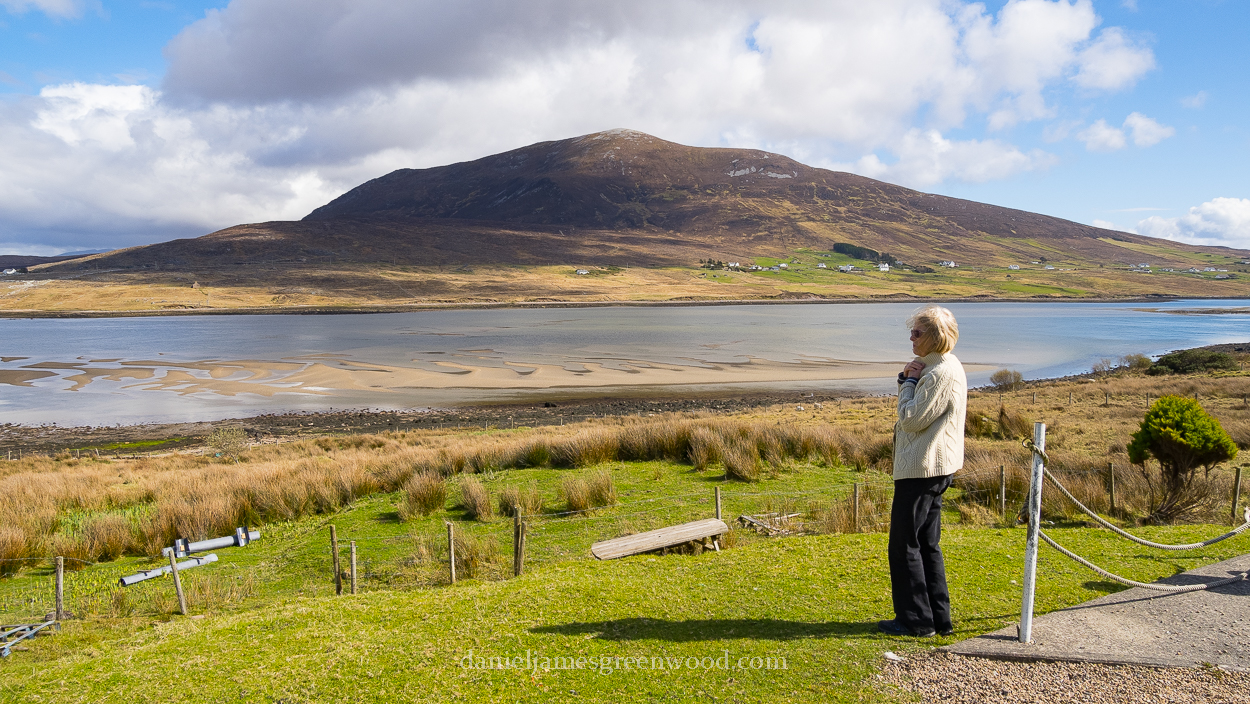
In April 2023 I visited Achill Island in County Mayo for the first time in 10 years.
I have happy memories of a visit to Achill in March 2013 with my parents. Returning with my mum in April after the passing of my dad in 2021, we followed the same route as a decade ago, stopping at Cloughmore to see the Atlantic’s wild waves crashing against the rocks. It brought back strong memories of that last visit a decade earlier, and thoughts of dad heading out onto similar rock formations to fish, further south in Cork during 1990s summer holidays.
In the surrounding sheep-cropped grasslands pipits, likely the rock variety, skipped and flew between boulders. A man cast a drone along the coastal edge before packing his kit (and three generations of his family) into the car and went off again.
I walked around looking for lichens to add to my iNaturalist map and picked off two small pieces of quartz that came away with ease.
The power of the waves, the overwhelming sound of the sea – the hiss and crash – and the sheer beauty of the view north along the coastline silenced me. See for yourself.
If you were to head directly west from here by sea, you would arrive in Newfoundland or Labrador in eastern Canada. My relatives made similar journeys, some of them never came home but instead built lives of their own in New York City. Some were of Irish heritage and were born in America, but returned to Ireland.
I recently read Brooklyn by Colm Toibin. I’ve been on an Irish fiction streak, in some ways to try and understand the experiences of my Irish relatives, who made the same crossings and who also built lives in Brooklyn before the book’s setting of 1950. Other than Toibin I’ve read most of the Donal Ryan novels, where migration is again a key theme.
Eileen, my great-great auntEva, my long-lost great grandmother
Two of my relatives who went to America are my long-lost great-grandmother Eva Sugrue (right), and her sister Eileen (left). My family have confirmed Eileen was married in the same Brooklyn courthouse that progressed one of the many cases against ex-President Donald Trump, which is nice. No one in my family today, or even my grandmother, knew Eva (her mother) or Eileen. That mystery trickles down, and it was only through the diligence and commitment of my family’s desire to find out more that the photos above ever came to light.
On our way off of Achill we stopped at a craft shop. I wanted to buy some proper knitwear (oh yes) and a few gifts for home. We got talking to a woman called Kathleen who was running the shop. She had lived in London, Littlehampton, and Winchester, the latter when her husband was working on the creation of the M3 cutting through the South Downs at Twyford. They had lived in a caravan park while the work was being undertaken, a community of Irish families cropping up with all the workers there to do the job.
In talking we covered all the major issues: English nationalism, Brexit, Trump, Putin. She had a way of saying, ‘I don’t care either way, but…’. We also discussed the ‘shock’ of living in rural West Sussex compared to most other places, how beautiful the South Downs were.
Kathleen was readying herself for the influx of American tourists expected in line with a visit from US President Joe Biden, ‘a Mayo man’, as the whole world now knows. She asked if we would be staying around for Biden’s visit, but we were already planning to leave for Dublin before his arrival. The payment machine didn’t work as the signal was so poor, and she felt embarrassed that she’d have to ask the Americans to pay in cash.
Achill has a long history of people coming and going as Biden’s family did, though particularly to England, as the video above shows.
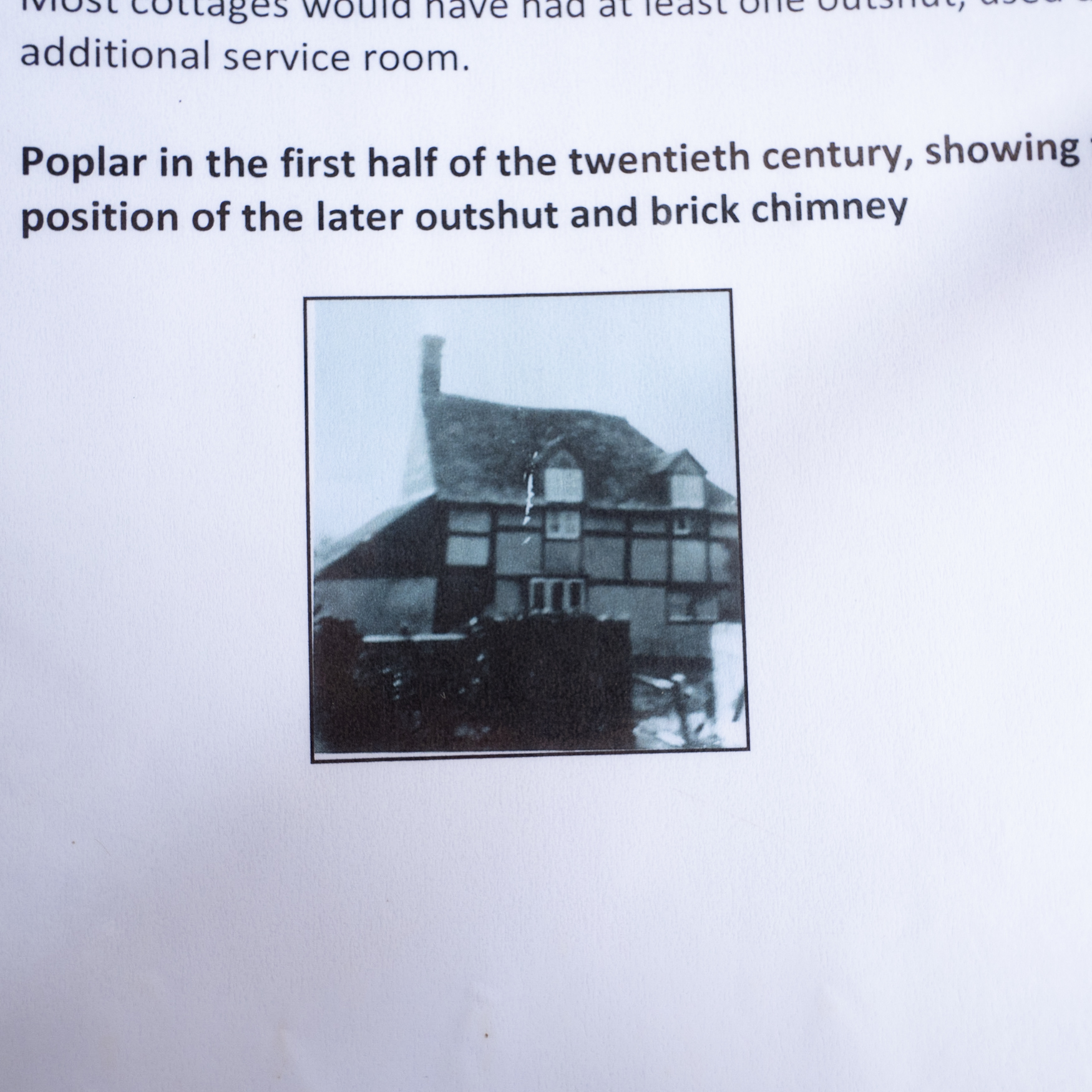
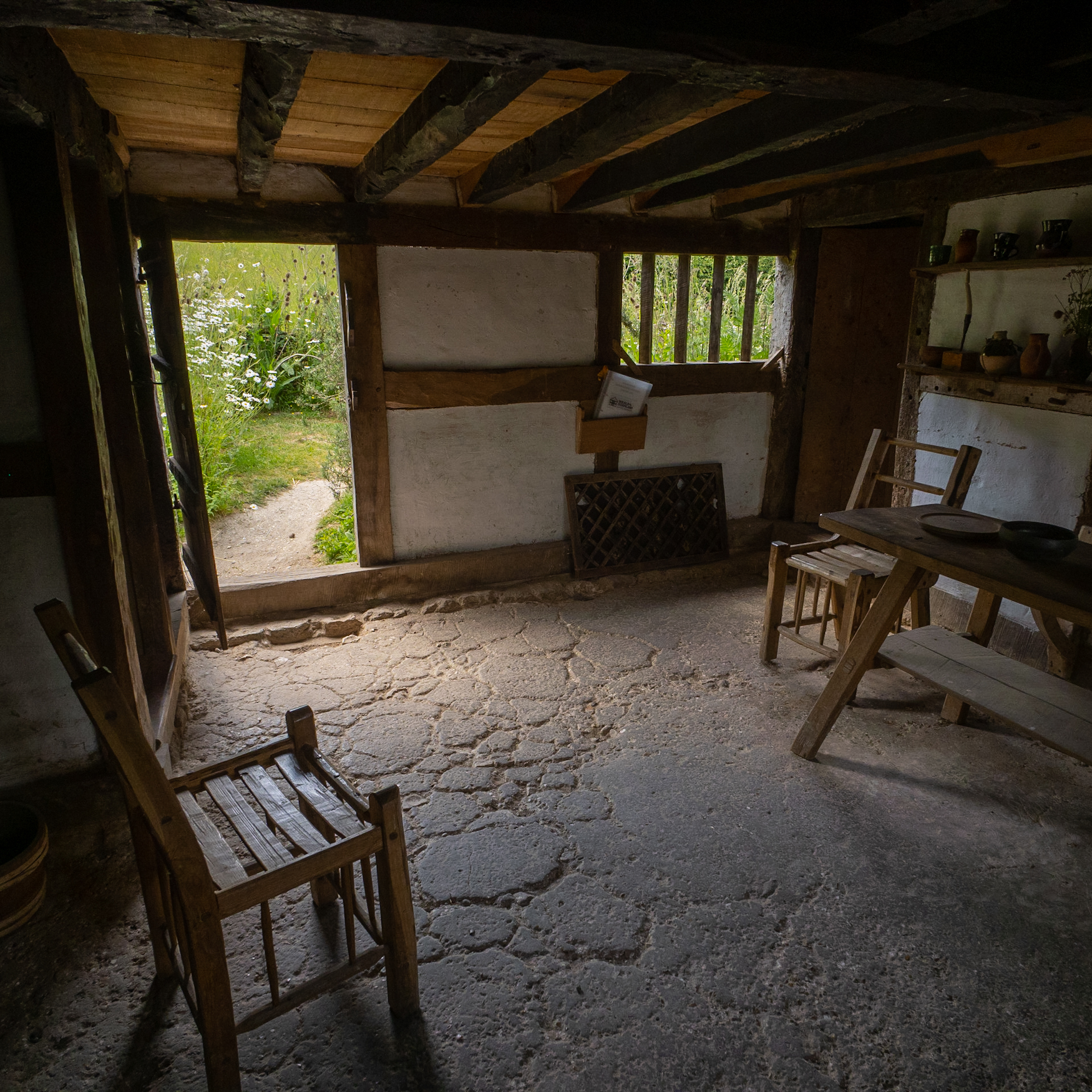
In June I spent some time at the Weald & Downland Living Museum in Singleton, West Sussex. I was trying out a new wide-angle lens and in the perfect place to do so. I focused on Poplar Cottage, one of the most attractive ‘installations’ at the museum. Below are some images and also the italicised text which is written in the cottage’s binder, and therefore copyright Weald & Downland Living Museum.
Poplar Cottage was originally built on a small plot of common land on the edge of Washington Common in West Sussex. It is a building of a distinctive type with a hipped roof at one end and a gabled roof at the other. The gabled end originally contained a smoke bay.
Washington is a village at the foot of the South Downs in West Sussex, near Chanctonbury Ring. Its name relates to “Wassa’s people” rather than a place renowned for cleaning.
This cottage type is associated with ‘wasteland’ or ‘wayside’ encroachment onto common land. The earliest occupants of the cottage are likely to have been husbandmen or rural craftsmen. Husbandmen were socially inferior to yeomen but superior to labourers.
Many cottagers engaged in small-scale craft activities, like making wooden hoops for barrels or spars for thatching, or indeed shoe-making. We have evidence to suggest that a shoe-maker may have lived here in the 17th century.
It was a bright, humid morning as we set out for Helvellyn. On the winding track towards Red Tarn, we met a man, perhaps in his 70s, who was completing a ‘recovery run’ by trekking deep into the hills. I laboured behind him, kind of in awe, as he split off from the main trail, having extolled on us the dynamism of the landscape, its rich industrial past. He loved it, he said, before disappearing into the valley, off the track.
The trail was busy, with a variety of northern accents carried on the wind below the peak of Catstye Cam. Best of all perhaps was the Geordie-lilt of a group of women working their way up the hill. The Lakes are the northerner’s South Downs, their Sunday playground. Unlike these folks from the north-east, I have to admit I found the humidity stifling.
We rounded the hill and met the steep-sided bowl of Helvellyn, Red Tarn glimmering at its base. Here we encountered one of the strange tiers of mountain or hillwalking, where new ranges appear, delivering you from previous zones within the landscape. Your psychological experience can be altered completely. I have vivid memories of walks in mountains in the past 10 years when these changes took place, whole new valleys appearing from beyond the horizon. It makes it all worth it.
My companion, Pete, spied ravens and lesser black-backed gulls. He’s a ‘top birder’ and professional conservationist of serious skill and knowledge. Having not spent much time with him in recent years due to the pandemic and the birth of his first son, I had forgotten just how much he has taught me over the years, and how being in his company sharpens your own senses.
‘Clever,’ Pete said of the lesser black-backed gull. ‘Going where the food is’, as in any leftovers from the large groups of walkers high on the summit.
In the distance we saw perhaps 50-100 people on a group walk cutting up a desireline on the hillside, in order to meet the famous Striding Edge from down by Red Tarn. On other days we saw families traipsing up from Glenridding as they sought highlines across the ridge towards Striding Edge.
We opted for the ‘gentler’, shorter route of Swirral Edge. We had to wait for some time as others scrambled down the sharp, jutting slabs of rock, often on their backsides! I was glad to be ascending, only looking into the rocks rather than down into sheer drops. When I did turn to look over my shoulder, the view contained the sublime vista of Ullswater.
Reaching the summit was like accepting an invitation to a special alpine (maybe not quite ‘alpine’ in official terms) community. Two dogs tried to eat my lunch (of course). Those ravens we had seen earlier toed the edge of the escarpment, one hopping sideways along with the wind. We sat there and took it all in.
After a break, we made our way north along the ridge passing up and down over several small hills, with Thirlmere in the west. Down into the valley we had first climbed from, we could see the grey structure of a dam, something the recovery runner had identified to us as being related to the Greenside Mine. One of the dams in the area burst in the 1800s, causing huge damage downstream.
We encountered the unusual sight of two men hiking together in different Manchester football shirts – one in the deep red of United, the other, a hint of a grin on his face, in the baby blue of City. Rivalries die in these hills.
At Sticks Cross we turned east and found ourselves in a far wilder and more ecologically rich valley. The path edged the slopes of Sticks Gill, flowing down towards Glenridding. Here we had entered the margins of National Trust land, where the hills were touched by heather and bog.
The yellow of bog asphodel was smattered among the heather.
In small boggy patches the red rackets of round-leaved sundew could be found among sphagnum moss. Here we were haunted by a small fritillary butterfly that never waited long enough for a photo or closer viewing. Bees flew in numbers unseen near Helvellyn.
This rich landscape began to break away as the scars of the mining industry, once of global significance but now over 60 years in the past, appeared. The lunar expanse was testament to the long history of lead mining in this area, explored as far back as perhaps Queen Elizabeth I, according to the information boards in the youth hostel.
Taking paths cut through the spoil and rubble, there came a wonderful zigzag of crouched woodland. Juniper trees, some potentially of veteran status, covered the steep hillside as it fell away to the epicentre of the mining industry, now marked by the youth hostel and other accommodation. Some of these houses had been newly renovated with estate agent signs noted some as sold. As we sat in the YHA after this walk, a man came in asking for more information about who had bought the houses. It reminded me just how invested people are in this place, the YHA included, which I was only visiting for the first time.
High on that juniper ridge, aspens and pines grew, while foxgloves dropped their socks towards seed as their season closed. Pete had said how he wanted to see an emperor moth and he got lucky when he found a large green caterpillar moving among ballast at the path edge. We confirmed it via a combo of iNaturalist and messaging my mother-in-law!
In the end it was a walk of around 8 miles, but it felt like much more due to the climbs. All worth it – the rewards were immense. Dear Lake District National Park – I’m sold.
I’ve been trying to keep my macro photos rolling in the absence of June’s one pic each day. It’s a bit like keeping your lawn growing after No Mow May.
Actually, no, it’s harder because you have to be proactive.
By far the best encounter with the macro world this past week was a patch of hogweed along a footpath by the local river. A cyclist went past me as I was taking these photos – even though it was a footpath – and glared at me as if I was doing something truly evil or dangerous to the public.
I have a bike, too, so if that exercised the cycling community, we’re all friends here on djg.com…
Hogweed is a weird plant, in that it’s part of a family that both kills, but also provides edible plant matter. Its sap is photocorrosive (not as bad as its big brother, giant hogweed) but its flowers are very, very good for pollinators. It can also be a bit invasive because it burgeons in places where nitrogen levels are artificially high (probably dog urine here…) therefore most of England.
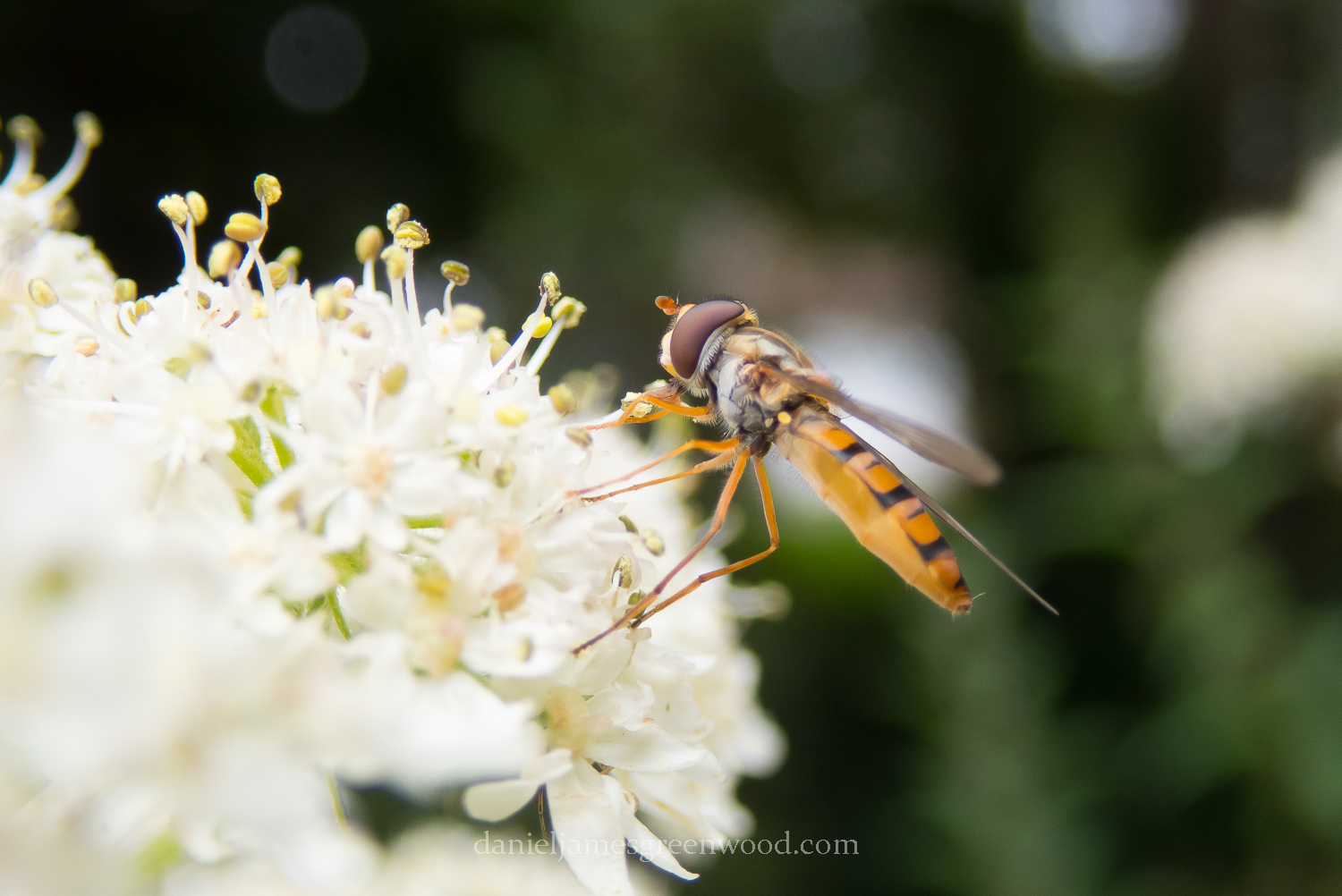
A marmalade hoverfly feeding on the hogweed stamens
A soldier beetle also drinking from the carrot fountain
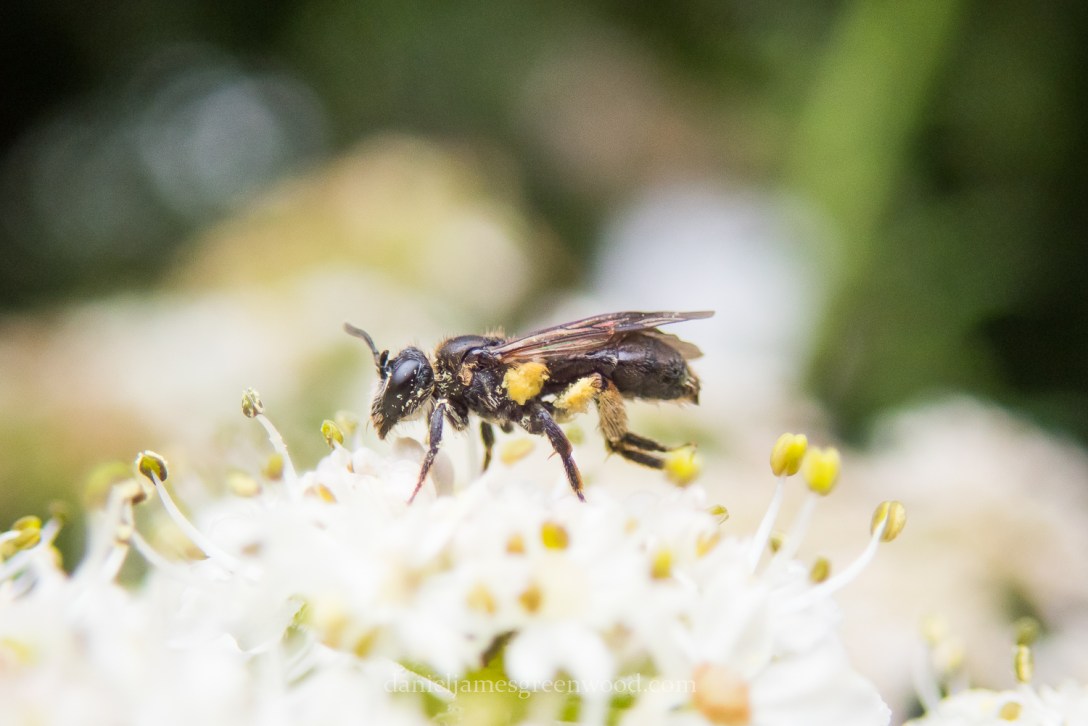
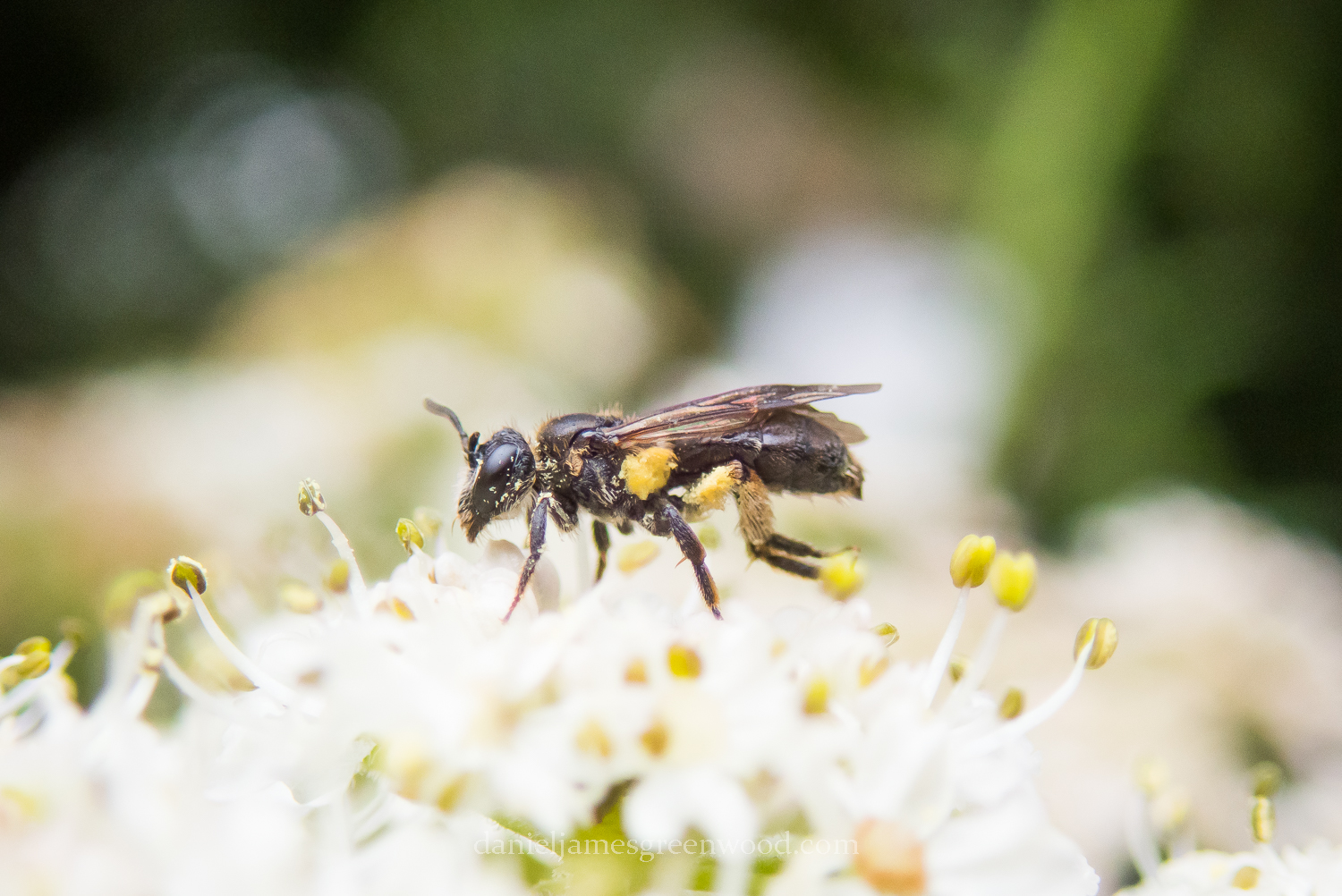
I would say this was maybe an ashy mining bee, but a little faded and low on the ‘ashy’ body hair
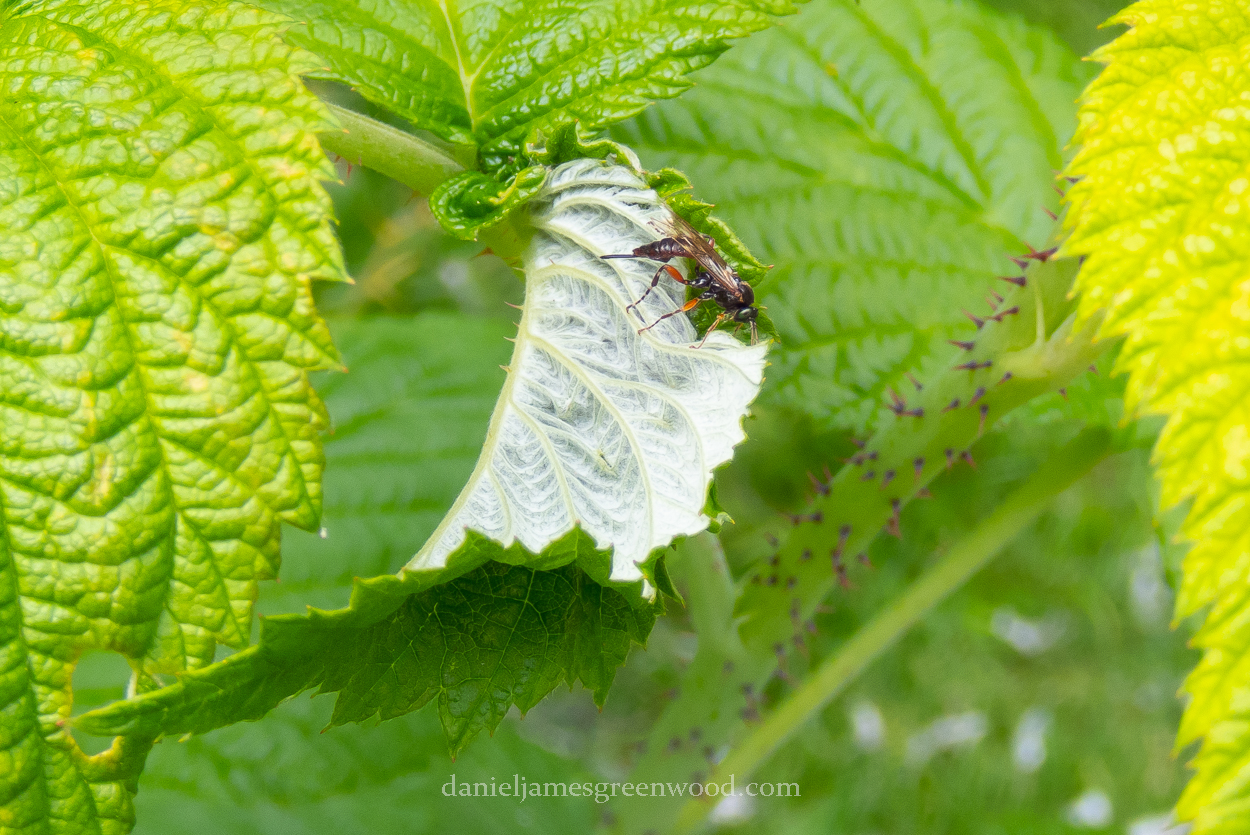
Earlier this week I noticed an ichneumon wasp exploring the raspberry patch in my garden. It was pausing to use its ovipositor on the curled up leaf – presumably the work of some other organism creating a sort of cocoon. I love them!
Here we are, another June slipping away and with it another #30DaysWild. Thankfully the humidity has dissipated this week and it’s been more comfortable to spend time outside (for me).
The final week of another June #30DaysMacro challenge, here we go:
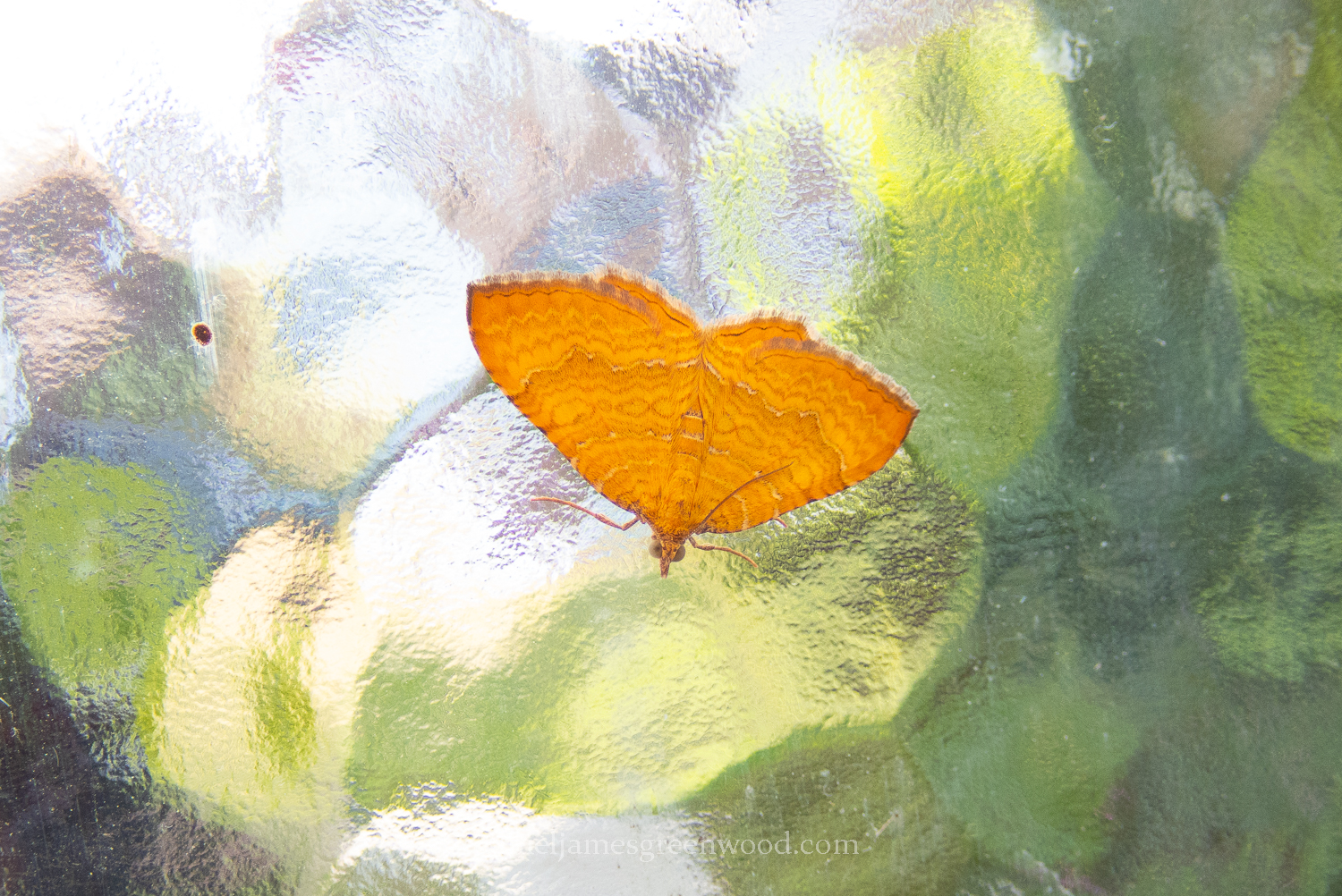
Day 22/30: leaving my mum’s house in SE London I noticed this yellow shell moth on the frosted glass. iNaturalist helped me with the identification.
Day 23/30: the zebra jumping spiders have been absent for me this spring but I am noticing them now. This little charmer was in the garden hedge.
Day 24/30: there have been a new range of bees arriving in my garden as the spring plants shift to summer flowers. The birds-foot trefoil has attracted leafcutter bees like the one above. They have an unusual flight, almost like a kind of hover.
Day 25/30: this was a day of weekend working and several hours travelling, so I had to make do with taking photos in my garden at dusk. I used the built-in flash in the Olympus TG-6 and wasn’t enamoured with the results, mainly because the flash isn’t softened by a diffuser. This mirid bug is out of focus but I enjoy its colours.
Day 26/30: the insect populations seem to be greater now that summer has arrived. Going out of the house first thing has been a good chance to see the range of hoverflies and other bees. This hover was doing that odd leg cleaning ritual and I managed to catch it with ‘legs akimbo’!
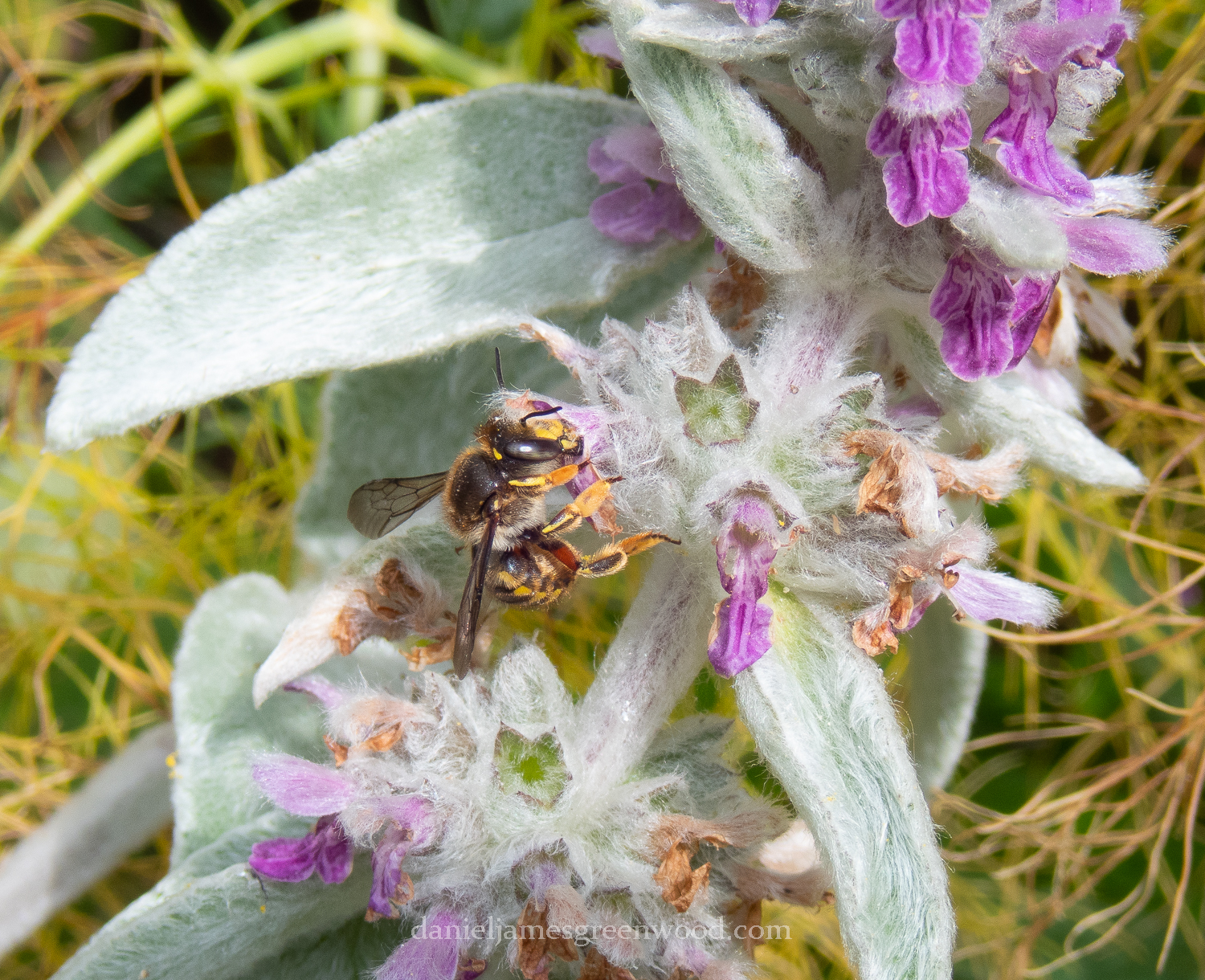
Day 27/30: at last a good show from the wool carder bees. I’ve written about these wonderful bees before – if you want to attract them get yourself some lamb’s ear (not literally), also sold as ‘stachys’.
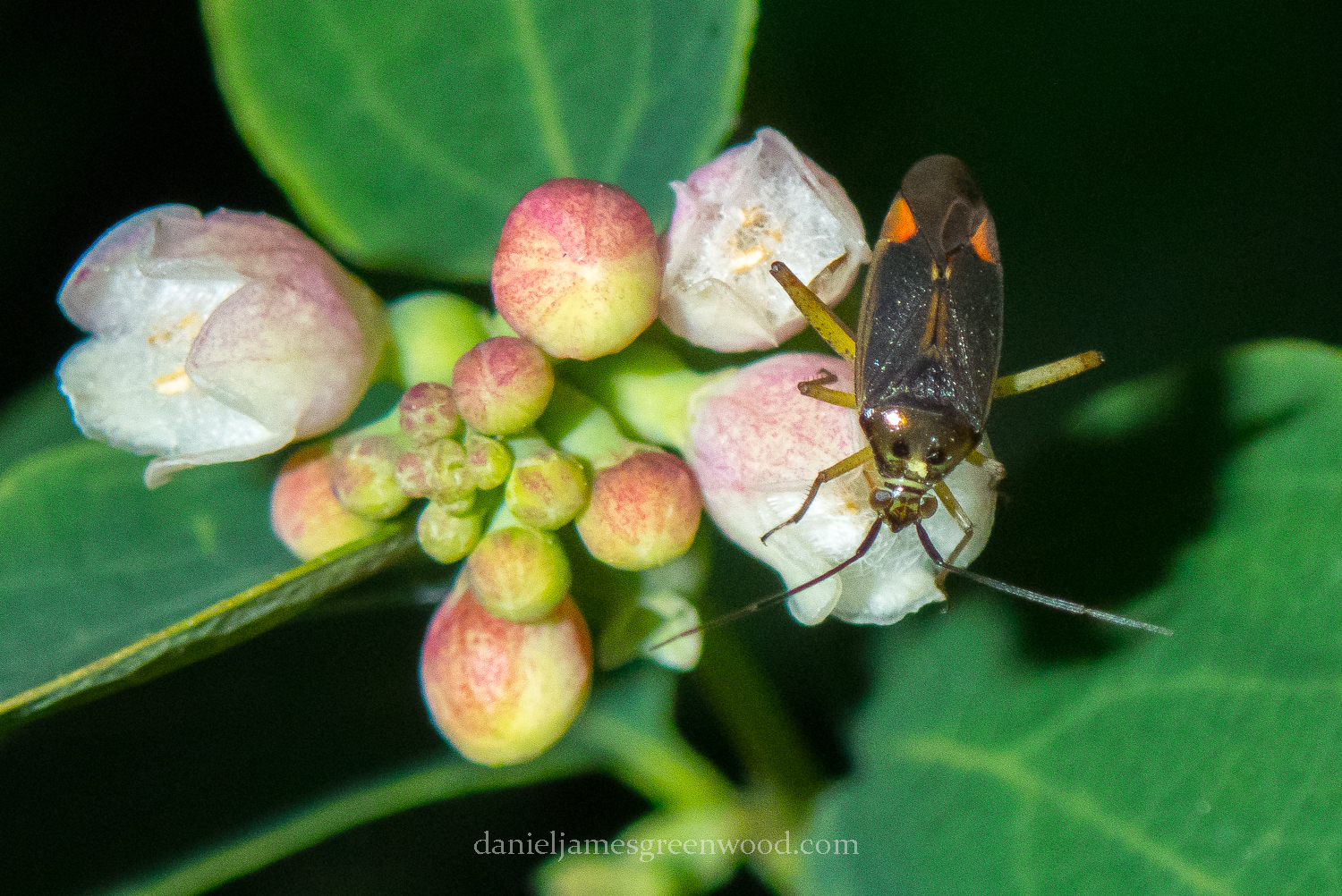
Day 28/30: an evening foray in my mum’s garden late into the evening, in cooler weather. I spotted this mirid bug climbing over the flowers of a snowberry.
Day 29/30: in SE London I found this grasshopper nibbling away on a grass blade. It was far smaller than the photo suggests. The grass was blowing in the breeze which made the focus a bit difficult to pin down, so it’s not the sharpest picture here.
Day 30/30: and so to the final day, one of the few rainy days in June. I was out on the South Downs for a walk and found this pyramidal orchid growing in a laneside verge. A beautiful plant of chalk grassland reaching its peak.
Here we are, week three of #30DaysMacro as part of #30DaysWild. This week, things took a fungal turn after thunderstorms burst onto the scene.
Day 15/30: a bumblebee feeding on purple loosestrife in a car park in West Sussex. I took two photos all day on the 15th, and this was one of them!
Day 16/30: another day where photo opps were scarce, but I saw this little solitary bee (maybe a Colletes?) on the oxeye daisies in my garden. These daisies have been a massive boost to invert life in my garden this year.
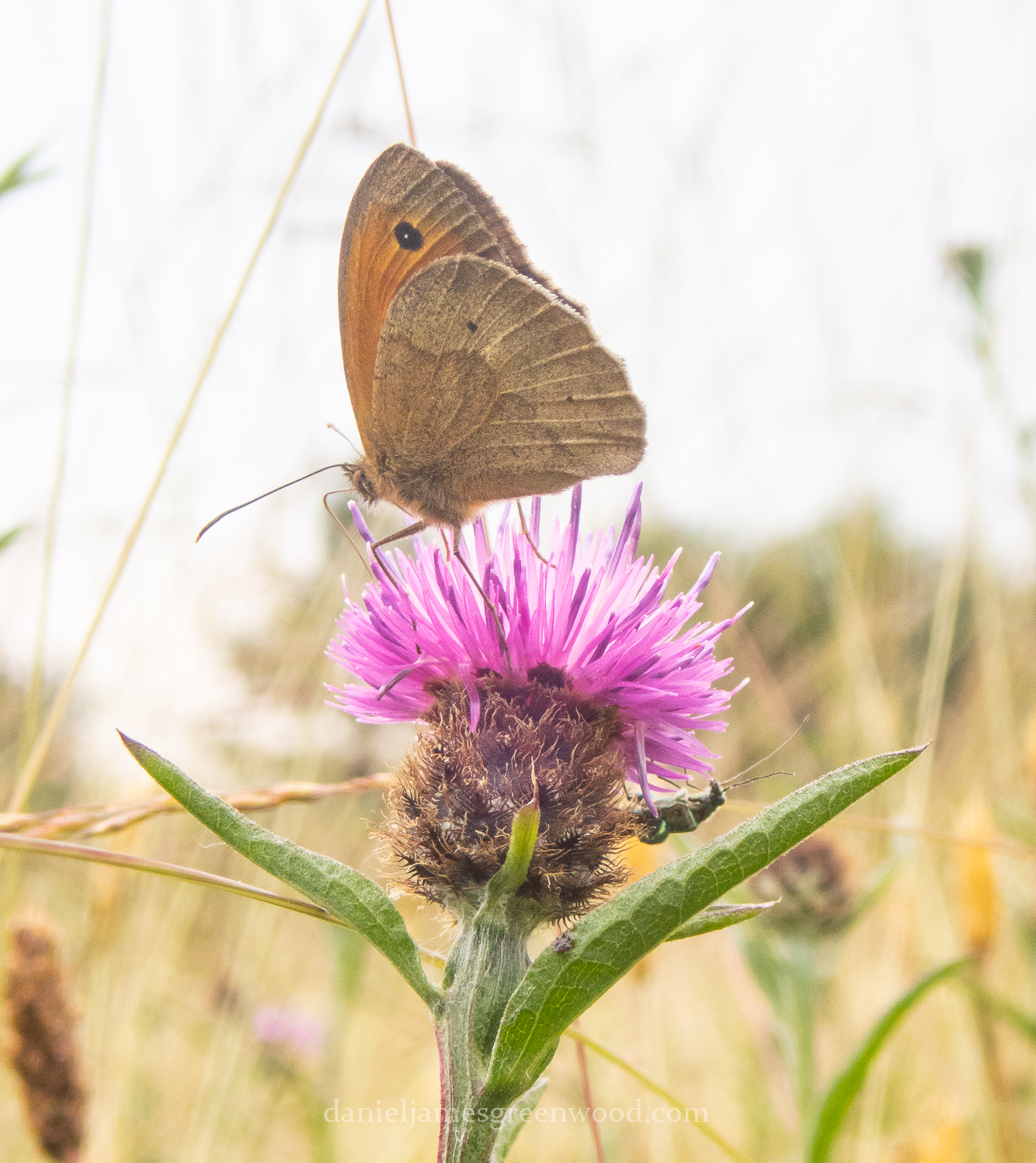
Day 17/30: this photo made me laugh – a meadow brown butterfly on common knapweed in a Wealden meadow in West Sussex. I didn’t notice the green swollen-thighed beetle hanging out below until I put the photo through Lightroom!
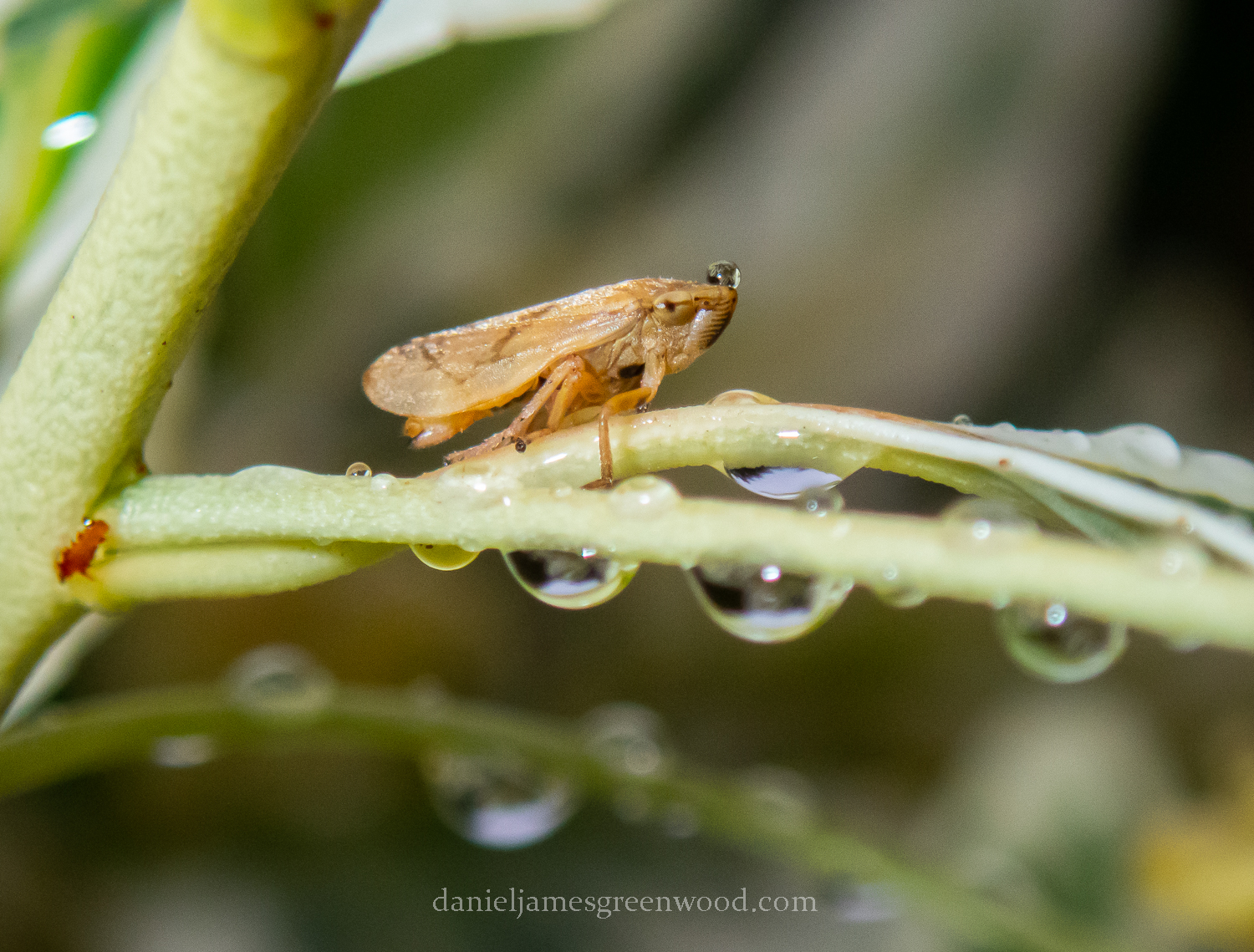
Day 18/30: storms have been the only source of rain recently, and they have been incredibly powerful. After some of that rain, I went looking for some life in the garden and found a common planthopper with a little droplet on their head. I see this as pushing the camera (Olympus Tough TG-6 compact) to the extreme due to lack of light and small size of the subject, and the results are great (though cropped and edited in Lightroom).
Day 19/30: on a lunchtime walk to stretch my legs I found this ashy mining bee foraging from one of the umbellifers that grow alongside my local river.
Day 20/30: things took a turn for the fungal on the 20th, as the rain gave a much-needed drink to the thirsty lichens in my local churchyard.
Day 21/30: the first of the summer/early autumn mushrooms, spindleshank, growing in the place where I learned what they are at Sydenham Hill Wood.
Welcome to the second week of my #30DaysWild macro photo challenge which I call #30DaysMacro. All photos here are taken with an Olympus TG-6 Tough compact camera and cropped/tweaked in Lightroom.
This week was another hot and dry one, and possibly showed a bit more of an increase in insect numbers after a worryingly scant spring. These photos were taken in London and West Sussex, and both areas are in desperate need of rain.
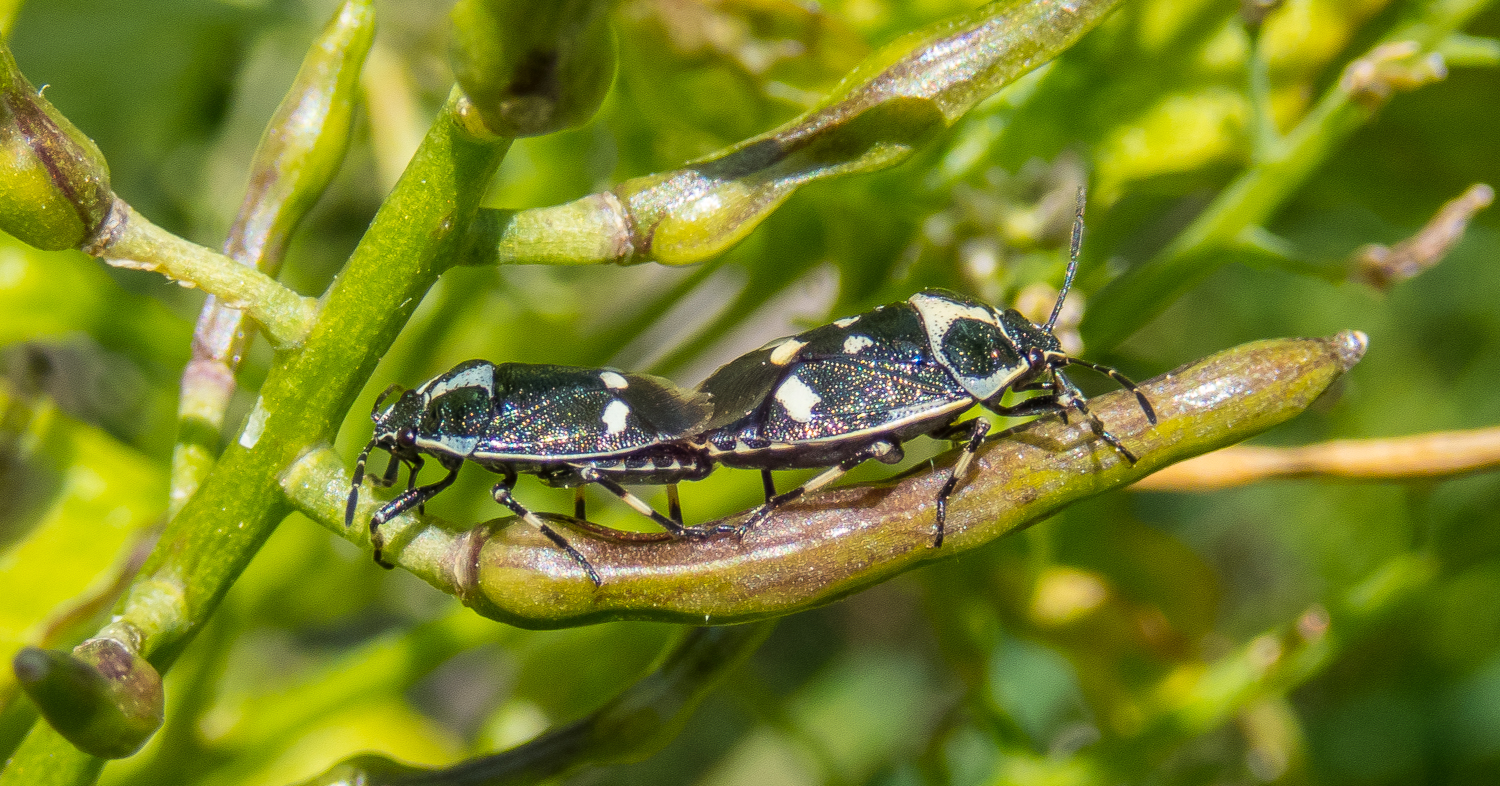
Day 8/30: shield bugs (known as stinkbugs in North America) are some of the most charismatic insects out there and easiest to see. These two cabbage bugs were mating in what I reckon is a plant in the cabbage family, in south-east London. I think this is my first sighting of them.
Day 9/30: this photo is part of an experience that will benefit from a dedicated post. This is a red-belted clearwing moth laying eggs in a diseased or cankered apple tree in a residential road in West Sussex. It’s only one of maybe three clearwings I’ve ever encountered and you can see that it’s a really extravagant, day-flying species. Maybe I could be swayed by moths after all. Scroll down for another part of this story.
Day 10/30: a click beetle takes flight from a flowering climber in my small hedge. This click beetle is one that I think is common as I’ve seen one very similar on several occasions. Probably need to upload it to iNaturalist to identify it.
Day 11/30: a tangled web for this poor red admiral in West Sussex. I was surprised to see one so still in the hedge but on closer inspection it has been caught by a spider.
Day 12/30: the emerging larvae of the clearwing can be seen here, pressing out of the apple tree’s bark, just like in certain sci-fi movies. The plot twist here is the arrival of an ichneumon seeking out red-belted clearwing larvae. The ichneumon’s epic ovipositor will be used to lay eggs in the unsuspecting larvae and parasitise the host. You can read more a blog post I wrote about that here.
Day 13/30: a busy day working from home (yes there is such a thing) left me pressed for time, but I managed to snap one of the common hoverflies in my garden. I don’t go out for long in the hottest parts of the day so I am usually reliant on the early mornings or evenings for macro encounters.
Day 14/30: a difficult week for red admirals, with this much-pecked butterfly enjoying(?) some evening rays. You have to make do with what you have in this life.
Happy #30DaysWild! As per the last couple of years I’ll be taking a macro photo – an image greater than 1:1 lifesize magnification – every day in June. I call it #30DaysMacro.
This is one of the best times to look for invertebrate life, and is a nice motivation to get outside, and to share your experiences with others.
The difference for me this year is that I’ll try to take each photo exclusively from a compact camera or my phone. I recently traded in some equipment that was gathering dust and got an Olympus TG-6 Tough compact camera. It’s waterproof, can withstanding being crushed somewhat, but more importantly it has the best macro capabilities available in a compact camera. It will be interesting to see what I can get from it.
Another #30DaysMacro – let’s go! on y va! vamos!
Day 1/30: I had actually forgotten it was June (been busy) and wasn’t thinking of #30DaysWild until after I took this phone pic. The spider was on the rear windscreen wiper of my car in the supermarket car park. It’s one of the running crab spiders.
Day 2/30: a bumblebee with full pollen sacks gathering nectar from the deep flowerheads of yellow flag iris in my small pond.
Day 3/30: a swollen-thighed beetle ‘enters the ring’, the nectar station of an oxeye daisy. I planted these last year and they’ve only flowered in the past few weeks. The small insects on the edges are carpet beetles. They’re there all the time.
Day 4/30: I found this beautiful red cardinal beetle in my family’s garden in SE London, as it rested in the shade of a hazel bush.
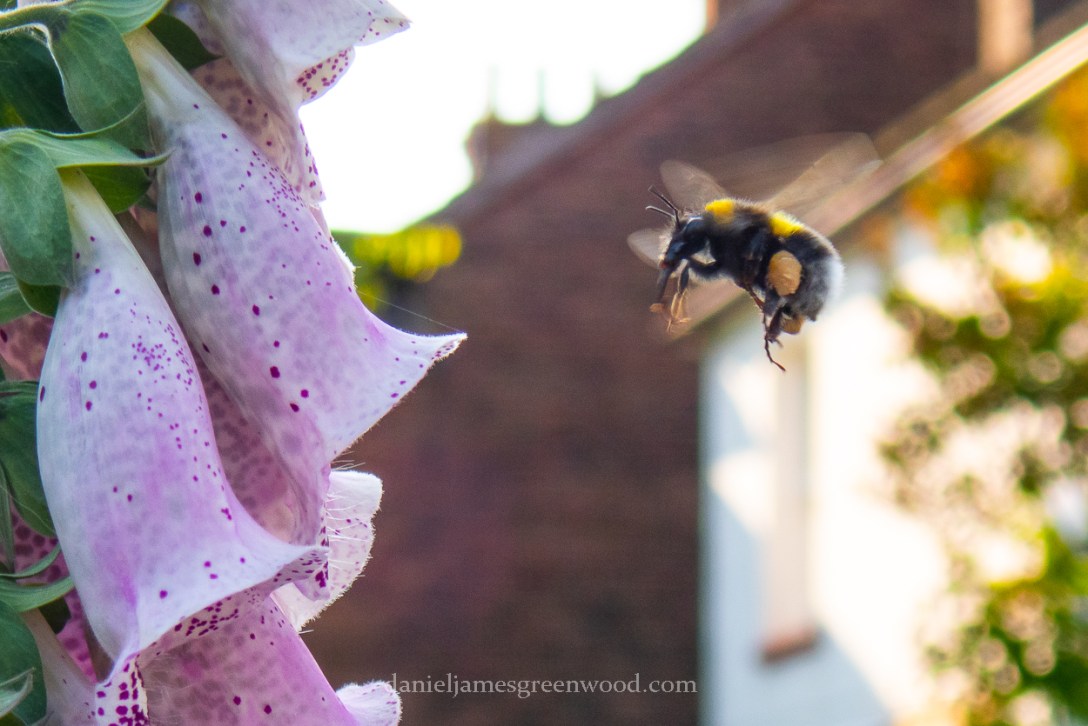
Day 5/30: I was lurking around the borders of my garden where the foxgloves grow, waiting for bumblebees to emerge from the flowers. Luckily this bumblebee chose to hover for a while so my camera could lock on and get the in-flight pics. Impressive for such a little camera!
Day 6/30: in the centre of my town there’s a brick wall that is covered in trailing bellflower. At this time of year it catches the sun wonderfully. I took this photo along the main road and was stopped by a woman who said she often tried to get a similar photo on her way home. Trailing bellflower is native to south-eastern Europe and likes rocky places, brightening dull civic spaces.
Day 7/30: a tortrix micro-moth in Peckham, SE London. I really like the holes in the leaves that surround the moth, and its bluey scales.






















 Unlocking Landscapes