Giant polypore and more in the New Forest 🐎

There are certain species of fungi that are relevant to particular professions. Some medical experts may be aware of certain species of fungi that cause lung problems, or cheese growers may want a particular mould to improve their cheeses, for example. In the tree management world, there are several that keep people awake at night. One of those is giant polypore. Just like Jeff Goldblum witnessing a sublimly terrifying, carnivorous dinosaur appearing before him in Jurassic Park, a tree officer may look at giant polypore growing at the base of a tree and whisper the words, “Meripulus”. That’s its scientific name.

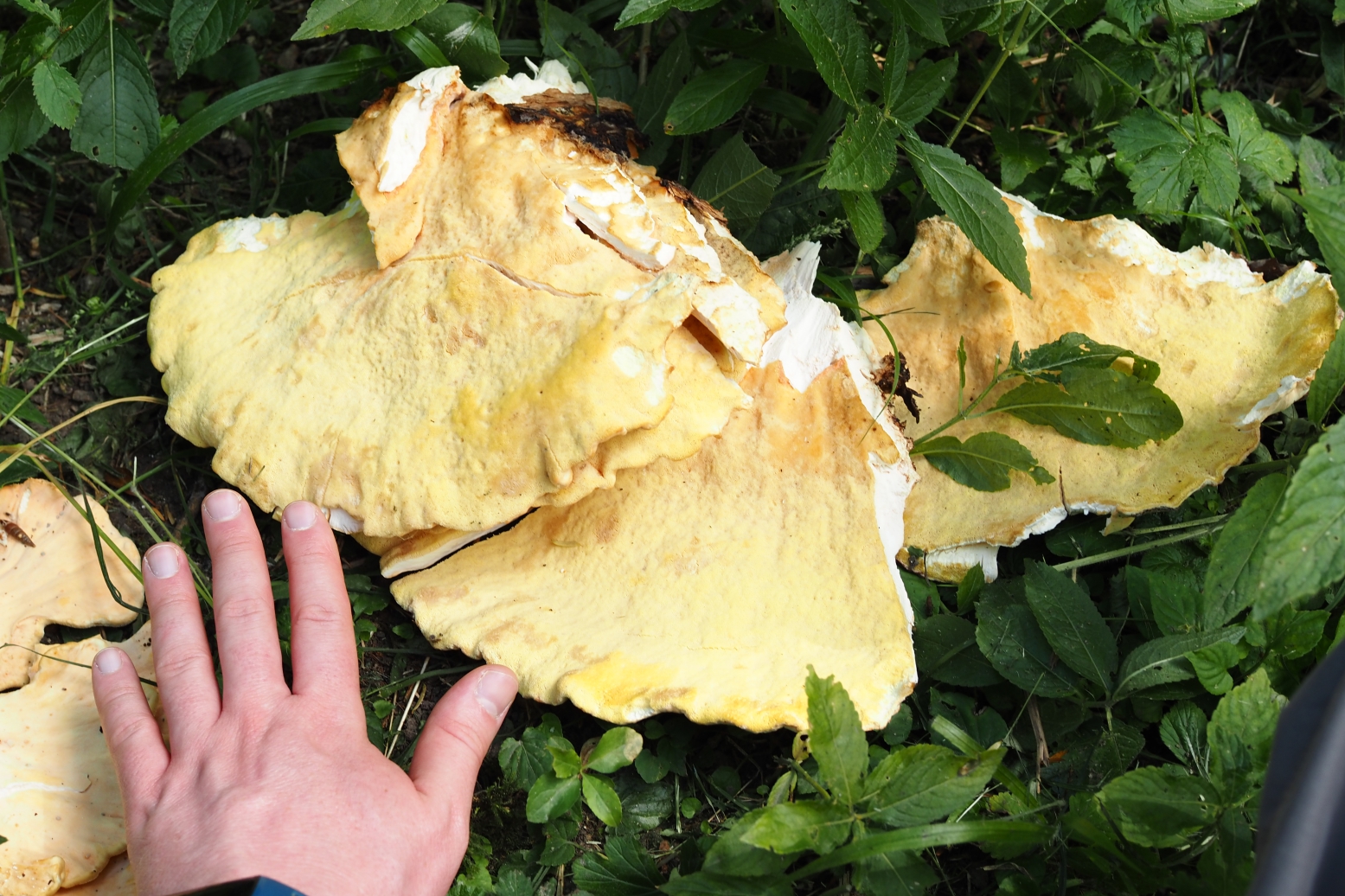
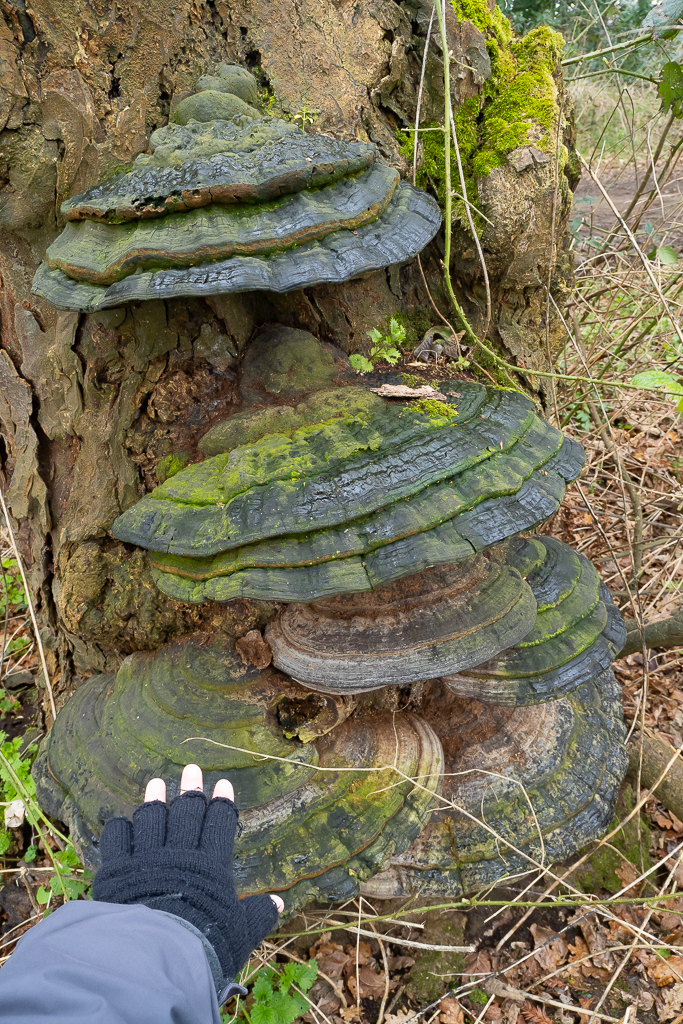
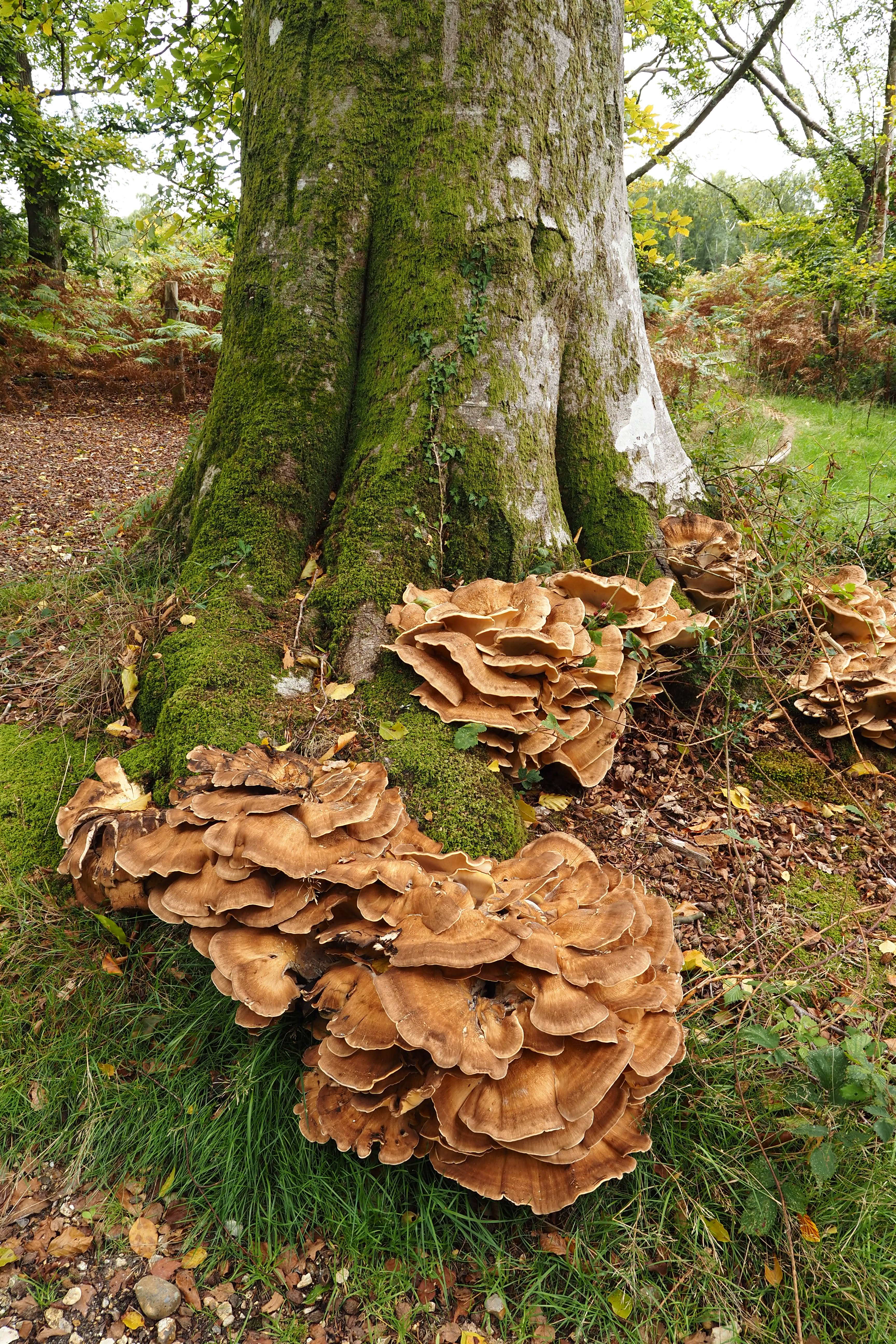
During a recent ramble in the New Forest, I was blown away by the sight of a large number of fruiting bodies of giant polypore (also known as black-staining polypore, but perhaps in America) alongside a footpath. Now, I’d seen giant polypore along this path before, where a number of beech trees grow, but I had never seen anything of this size and scale.

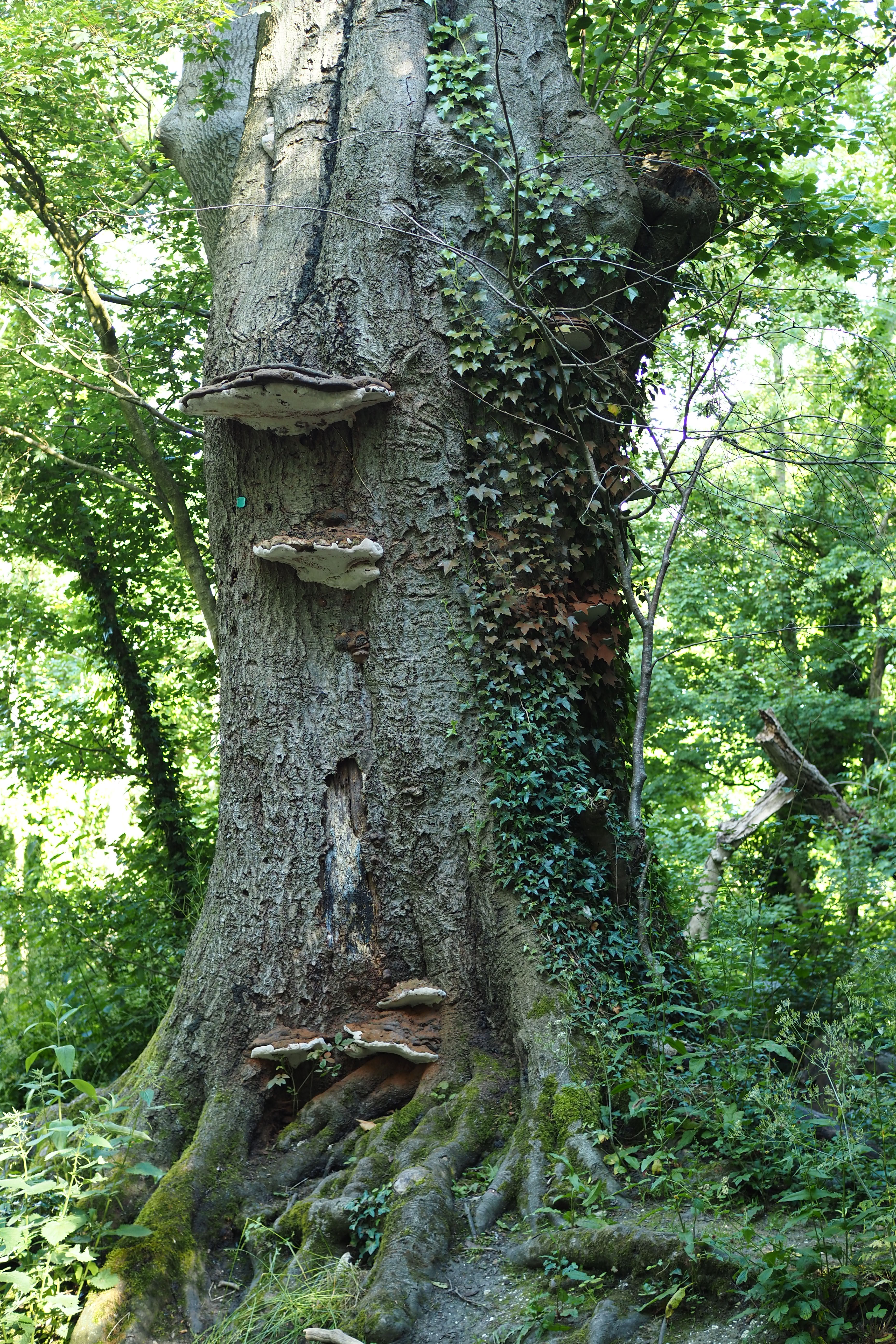
The image above reflects the spread of the fungus in the soil, or else along the roots of the tree. This is a fungus that decays roots, and from what I know it is a case of managed decline for the tree. Of course, we should remember that this is perfectly natural and it’s something that has been occurring for millions of years in woodlands. It’s a key process of renewal upon which biodiverse ecosystems depend.
I don’t know for sure who owns this small parcel of the New Forest, but I think it may be the Wildlife Trust. The great thing about having conservation charities as landowners is that they will make sensitive decisions around tree management more often than others, whilst always considering public safety. I say this as a Wildlife Trust employee with a woodland focus currently, and previously for a longer period!

This tree will go down at some point in the next few years, I would guess, either by natural course or by being reduced by the landowner, which is highly possible if there is resource available. Retaining standing deadwood is always preferable but not always possible.

But that is just one species, so let’s look at what else I found on this 9 mile wander in one of Europe’s most important woodland landscapes.

My first sighting of porcelain fungus usually takes place as early as June, but in 2022 it was late September. That to me is evidence of how dry it’s been this summer, with the hottest temperatutes on record in the UK. There should be more to come from this very photogenic species in the weeks ahead.

In south-east London’s oak woodlands it is proving a bumper year for beefsteak fungus (Fistulina hepatica). 75% of mature oak trees in one woodland had beefsteak in some form on the trunk. In the New Forest I found this wonderful example of the fungus, in what was the ideal state for eating. It looks so much like actual meat, it is very disturbing. This was growing on a large oak stump at the edge of a path.

This image doesn’t demonstrate spindle shank (Gymnopus fusipes) that well but they are fruiting in large numbers on oak at the moment. This is a root-rotter on a smaller scale to giant polypore, and it has a very potent aroma. It’s not unpleasant at all but is quite dominant if you know the smell.

I’ve written about boletes recently but this remnant cep (Boletus edulis) really confused me for a while. My guess here is that one of the nearby ponies or perhaps pigs munched the top off what would have been a sizeable mushroom. I identified it by the webbing of sorts on the rounded stipe. I didn’t see any others on the day. The livestock must eat quite a few of the mushrooms actually.
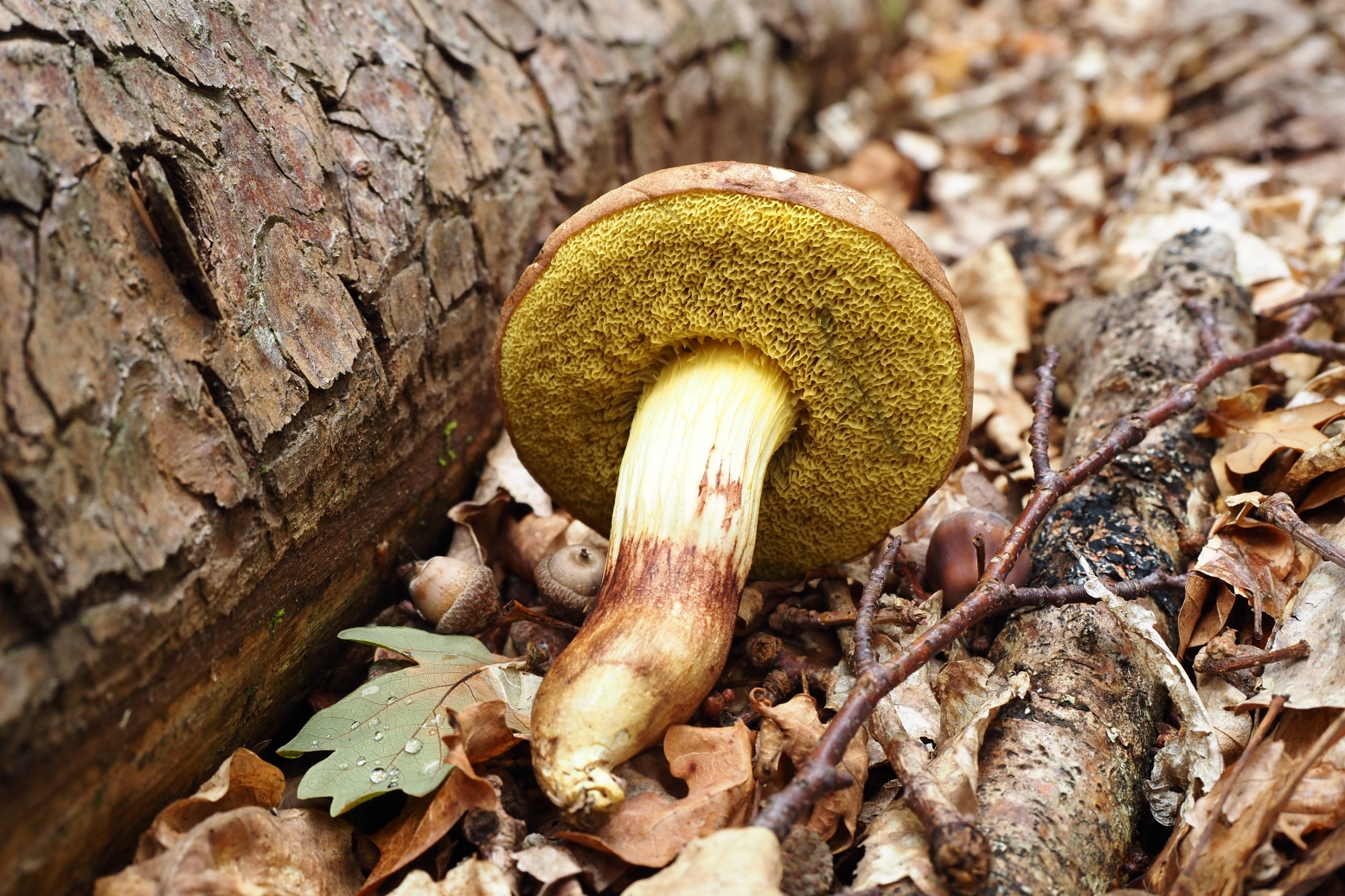
Elsewhere in bolete world I found a beautiful smaller species with very strong yellow pores. Here you can see that boletes and their relatives don’t have typical gills but instead pores. My guess here would be suede bolete, one of the Xerocomus species which is often found in this part of the season.

Here’s a closer look at those lovely pores. I tested them with my fingernail and they didn’t bruise blue, which you may be able to see in the top left of the photo.

Towards the end of the walk, my final find was this typical Agaricus-looking field mushroom that had been uprooted, probably by one of the cattle grazing the lawns. I am a bit indifferent to these grassland species and am wary in general of white mushrooms due to some toxic species like destroying angel, not that it would be found in the open normally.

In general, and following up on my long walk in the Forest in April, or comparing to September 2020, the landscape still looks very dry indeed. That will no doubt have slowed any mushroom fruiting. I’m hoping to return in October or November for the peak period to see how things are.

Thanks for reading.

Further reading: Fungi | The New Forest

Enjoyed what you saw here? If so, please support my work: https://ko-fi.com/djgwild

  • Along the South Downs from Washington to Bramber

    Along the South Downs from Washington to Bramber

    This is a long post with a lot of South Downs history in it. There’s history here you can touch that dates back over 1000 years.… Continue reading Along the South Downs from Washington to Bramber →
  • Fool’s Wood – my third poetry collection

    Fool’s Wood – my third poetry collection

    Fool’s Wood is my third collection after I am living with the animals (2014), and Sumptuous beasts (2018).… Continue reading Fool’s Wood – my third poetry collection →

  • November 2025: beware of pity

    November 2025: beware of pity

    I’ve had a burst of American visitors in recent days (to my blog, not my house). So thanks for visiting, y’all, and sorry about the year you’ve had. You may have noticed I’ve slipped to monthly posts on here. Between April and October I posted blogs every Monday without pause, which is a tricky task……

Cep-tember: reflections on foraging in England 🍄

In the early weeks of September, the first autumn mushroom boom hit. This was after a number of stormy downpours finally gave up some of the long-held rain to the land below, where us humans are most of the time.

I visited a local Sussex woodland in the second week of the month and was astonished by the change the rain had brought about. I have never seen so many blusher mushrooms (Amanita), which were honestly as common as muck, as the English saying goes. It’s also the start of the Russula season, with the first explosion of the brittle-gilled, uniformly white mushrooms. They are spectacularly beautiful to look at before the squirrels, deer, or slugs get to them, as they should.

Blusher mushroom

I was on my way out of the woodland when I was stopped in my tracks by the sight of a perfect mushroom. It was perfect in appearance and is thought of as perfect for its culinary quality. At the edge of the shady path, under the branches of a young holly tree, was a cep (Boletus edulis).

Recently I’ve read a book about mushrooms and foraging that really got me thinking. It challenged my perceptions of whether we have it wrong about mushroom foraging in this country in terms of tone, and whether everything I thought I knew about what a woodland’s state would mean for its fungi.

More on that in a bit. You may have guessed that I picked this mushroom, took it home and ate it. I lived to tell the tale and it was indeed very tasty.

In recent weeks there have been Instagram posts showcasing hundreds of ceps in France and Russia and it’s made me realise something. One of the best times to pick edible mushrooms is in August and September before leaf fall and when there is still drier weather to be had. Wet weather also allows detritivores like slugs to feast on mushrooms.

Cep (Boletus edulis) also known as penny bun or porcini

Ceps in particular seem to be more likely to be free of decay and of insect encroachment into the stipe in drier months, which forms the core of the mushroom’s edibility.

For the past ten years I have remained fairly sniffy about mushroom foraging and only really ever eat wild mushrooms as a one off to see what they’re like. Part of this comes from working as a woodland warden for 6 years in an ecologically sensitive but hugely popular nature reserve. In my view and experience, I still don’t think foraging is sustainable in small city woodlands where the impact of footfall can degrade a habitat’s viability. There is also the fundamental fact that access to certain places has its controls, which are legal requirements in some cases. It’s also a sad reflection of the state of the English landscape which is said to be one of the most nature-depleted in the world.

Reading The Mushroom at the End of the World by Anna Lowenhaupt Tsing made me appreciate just how nature-depleted we are in the UK, and how this is a cultural as well as ecological issue. I’ve written before about mushrooms in the Slavic world. Mushrooms seem like such a rare thing now that their picking is treated in numerous places as an offence, and this still with no solid evidence that picking mushrooms reduces an ecosystem’s viability or biodiversity. It does seem to come down more to commercial ‘theft’ than anything else, which you can understand if ‘organised’ groups are technically asset-stripping public lands. Mushrooms like ceps have a market value, something Tsing covers in greater detail.

As mentioned earlier, in small urban woodlands I think large-scale foraging could be harmful in that it can introduce lots of feet to healthy areas of woodland soil and seal it up, blocking the vital movements of gases like oxygen and CO2, fungal and invertebrate life, resulting in tree death. Soil is, after all, a living thing. It’s another reminder that woodlands with high visitor numbers do need to be managed for their long-term health.

Bradfield Woods

But disturbance of a different variety may not be so bad. It may even help to promote mushroom dispersal. Tsing’s book shows that disturbed landscapes seem somehow ‘better’ for matsutake in America, with landscapes damaged to a degree by industry actually being reawakened to different communities of fungal life. We are of course talking about wooded landscapes of much greater scale than most that are found in the UK. That’s a key element to consider.

Two years ago I visited Bradfield Woods, a managed coppice-with-standards woodland in Suffolk that also happens to be a National Nature Reserve. It was absolutely chock-full with boletes and many other species of fungi, including stinkhorns! Bradfield Woods is coppiced regularly for its hazel wood and its mature oaks are felled for timber (hazel = coppice, oak = standards). It was one of the most fungally-rich woodlands I have ever visited in central or southern England, again this was early September.

The management by the Wildlife Trust at Bradfield Woods is sensitive and sustainable, unlike most plantations where an entire woodland is effectively created from scratch (or from an ancient woodland, similar to how rainforest turns over to palm oil monoculture) and managed aggressively with large machinery that damages the topsoil. Then again, Bradfield Woods is not needing to produce toilet paper and other goodies for 60million people. It’s important to remember that that’s why plantations are managed as they are, for products we all depend on in our daily lives. This is probably an issue of globalisation.

The Mushroom at the End of the World has a lot to say about globalisation, focusing on the matsutske mushroom, one of the most economically important species in the world. Tsing covers the (human) immigrant communities in Oregan, USA and how their livelihoods depend on picking. It reminded me that the anti-foraging arguments in a lot of the UK media are along xenophobic lines, which Tsing does cover in regard to white supremacy in the United States. One English video lingers in my mind, of East Asian women picking mushrooms in a London park and being accosted by a local volunteer who is also filming them. Without pretending to be an expert or to define an entire region of diverse peoples, picking mushrooms appears to be a perfectly normal activity in East Asian countries.

Tawny grisette

There is also the interchangeability of the phrases ‘gang of foragers’ with ‘gangs of foreigners’, which I very embarrasingly said by accident in challenging the very concept at a guided walk once. This kind of language is far more easily accessed in certain British newspapers, which are hostile to immigration and refugees more generally and seek material to boost their propaganda. As you may have seen, a lot of people continue to express racist or xenophobic views in 2022, and sometimes people don’t realise how those ideas can surface in the most unlikely of places – a love of the nature deemed to be ‘ours’ and under ‘our protection’. These are issues and messages here that need to be considered carefully.

Perhaps the fears about foraging harm wildlife because our disconnection from these places has contributed to ecological decline. Perhaps it’s also that we need to accept our failure of stewardship – have we done enough to champion the positive use of our woods and their wildlife or have we not broached the topic meaningfully enough out of fear?

The last few days has shown that UK conservation charities have had enough of the Government’s total failure to secure environmental protections, at a time when access to nature and a rich ecological environment is crucial to societal wellbeing.

If sustainable foraging can allow people to connect more deeply with suitable green spaces, and to understand their ecology and improve their management, surely that has to be a good thing?

Thanks for reading.

More mushrooms

Enjoyed what you saw here? If so, please support my work: https://ko-fi.com/djgwild

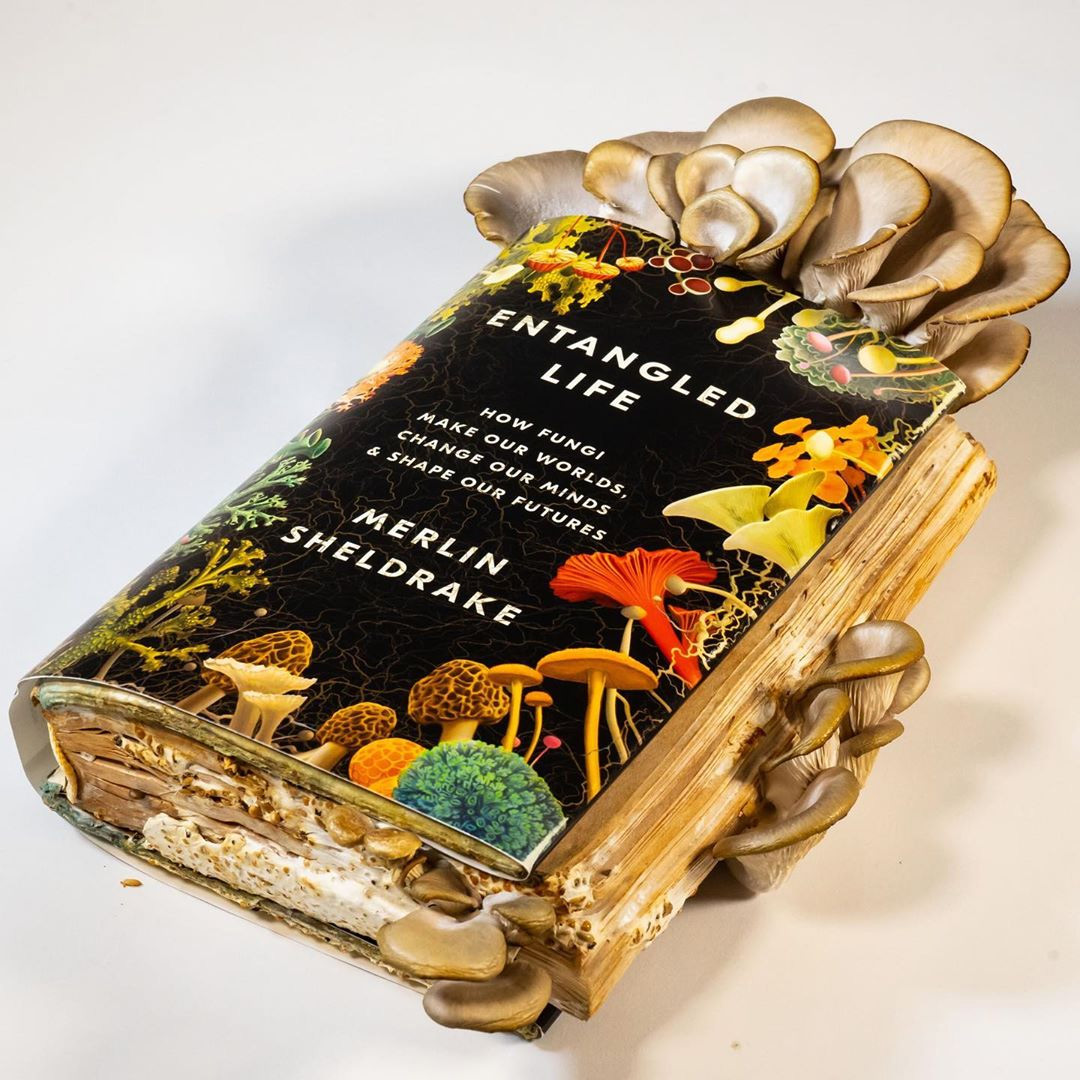
Entangled Life: the book fungi have been waiting for 🍄

Merlin Sheldrake’s Entangled Life has been sitting on my bookshelf for well over a year. It might even be two years. It almost certainly has fungal spores on it, probably mould.

I knew it was going to be an excellent book that contains huge amounts of fascinating info about the fungal kingdom because I’d read the first 50 pages. Alas, I couldn’t find the mental space to take it all in. The reviews have also been almost universally positive, from a broad cross section of readers. This includes people new to the study of fungi and those who are more experienced.

Recently I have had a bit more of that required mental space, after a year of being swamped. I’ve now read the book and It. Does. Not. Disappoint. You get the impression that Sheldrake could write books for the rest of his days focusing on one of the themes chaptered each time, such is the depth of each subject.

It’s the kind of book fungi have been waiting for to tell their stories, as the meme below so totes hilariously illustrates:

I read it with the sense that Sheldrake was using his extensive knowledge and research into fungi to campaign for a better appreciation before it is too late. That said, there isn’t the overarching doom narrative of a lot of nature conservation messaging, more a sense of awe regarding how little we know and have the potential to uncover. This is a book about hope and new possibilities, while understanding some of our planet’s oldest secrets.

It becomes clear halfway through the book that fungi are not an add-on to plants, they are the reason that we even have those bright green things as they are today. It’s a point I often labour at public events and to people not yet convinced by the importance of wilder, species-rich landscapes – without fungi we would not exist.

Suzanne Simard is namechecked as the founder of the ‘Wood Wide Web’, showing that plants actually behave far more communally and that fungi are the lifeblood of the mineral and resource exchange that builds the world we have evolved in. Sheldrake also features several other female academics, a welcome move in a community dominated by middle-class, white male perspectives and privileges. Simard’s book, Finding the Mother Tree is an absolute must-read and is included as a hugely important character in this narrative.

🍄

The more I read about fungi, especially in Sheldrake’s writing, it just makes me think how little we know about anything. We spend a lot of time warring with one another during such short windows of life, we should be using that time to learn more about the incredible world we live in. For example, fungi were only given their own kingdom in 1969, previously just lumped in with plants or as flora. Now there are calls to speak of flora, fauna and funga. Cowafunga, dudes!

Perhaps because most fungi are almost all out of sight (endophytes live within the tissue of plants, rather than producing charismatic fruiting bodies like fly agaric, above ground). Endophytes thus remain forever out of mind. In this sense, our innate human biases (sight) are restricting our ability to conserve vital biodiversity in the form of fungal diversity in soils and other ecosystems. There is evidence about how more charismatic wildlife receive the majority of conservation funding.

Some of the facts on display in Entagled Life will blow you away. Consider that lichens may not be what we think they are, and that some fungi used to ‘lichenise’ but no longer do. The relationships between plants, fungi, algae and bacteria are not necessarily fundamental but more opportunistic. Tree species that are more ‘promiscuous’ are more likely to have found greater dominance over larger areas because they can link up with fungi as they go. The connections trees have with fungi have shaped the landscapes of today.

Further to this, fungi are so biologically complex that it may not be possible to truly name them scientifically as distinct species!

Fungi are able to break down rocks, as they will have done hundreds of millions of years ago to create the first soils and thus stable ecosystems for us humans to evolve in.

Then there are the theories that humans developed complex languages through the brain development spurred on by the ingestion of psylocibin (the hallucinogenic chemical found in some fungi) and other ‘magic’ mushrooms. That remains unproven, as Sheldrake responsibly underlines. But the idea is brilliant and makes life seem so random.

I also was unaware that LSD is derived from the fungus ergot, and ergot infection of people back in mediaeval times may be the reason they ‘danced for days’. Now certain Berlin 24-hour nightclubs make more sense, though they’re way past my bedtime.


Fungamentally this is a book that everyone, from fungi enthusiast to someone just looking to know a little bit more, can get a lot from. It’s written in a very lucid and engaging way, though bear in mind it does take a scientific and methodical approach to its subjects. After the glut of recent nature writing where man-encounters-divine-nature-for-the-first-time, usually in search of one species, that may be just what the mycologist ordered. That said, do species even exist? You have to wonder what Sheldrake will do next with the information he has to share.

Thanks for reading.

More mushrooms


Latest from the Blog

November 2025: beware of pity

I’ve had a burst of American visitors in recent days (to my blog, not my house). So thanks for visiting, y’all, and sorry about the year you’ve had. You may have noticed I’ve slipped to monthly posts on here. Between April and October I posted blogs every Monday without pause, which is a tricky task…

Dulwich Park fungi walk in October

Hi everyone,

I’m pleased to announce that I’m leading a fungi walk in Dulwich Park (SE London) on Sunday 23rd October 2022:

The meeting point is near the cafe at 11am. The walk will last around 90 minutes. The walk is free to attend and is funded by the Dulwich Society.

It’s been such a dry spring and summer but hopefully the stock of old trees and sensitive management that takes place in parts of the park will mean a decent array of fungi can be found. If not, there are always plenty of strange anecdotes about fungi to share.

We’re likely to find common species like inkcaps (above), jelly ear, turkeytail, Ganoderma brackets and brittlestems.

While it’s not a culinary or foraging walk, I can share general information regarding edibility of some common species.

This will be the first walk I’m leading as a freelance guided walks leader (having led walks since 2012). You can find more information about that on my new bookings page.

Thanks for reading.

The cheeseburger fungus 🍔

It has been a torrid spring and summer for street trees in southern England. We are breaking all the records for extreme heat and also enduring drought conditions. Street trees have it tough, not only because of the lack of rain but because it can be hard enough for them to access water anyway.

That was hammered home with a tweet I saw recently of someone who had replaced the verge outside their house (not their verge) with plastic grass. The verge was also home to a tree, which will have probably suffocated due to lack of air through the soil and only being able to access water underground.

That said, it has been known for tree roots to seek out water over long distances. Some trees will cross underneath roads to quench their thirst. This becomes increasingly more understandable when you learn that a tree’s roots often extend twice the distance of their height in length under the soil.

Weakened trees on city streets almost always end up with wounds that they struggle to heal, leaving openings for fungi to invade. It is perfectly normal and natural for fungi to grow on trees, and many of them are beneficial. They can help to remove excess dead wood and also act collaboratively with a tree’s roots to trade nutrients.

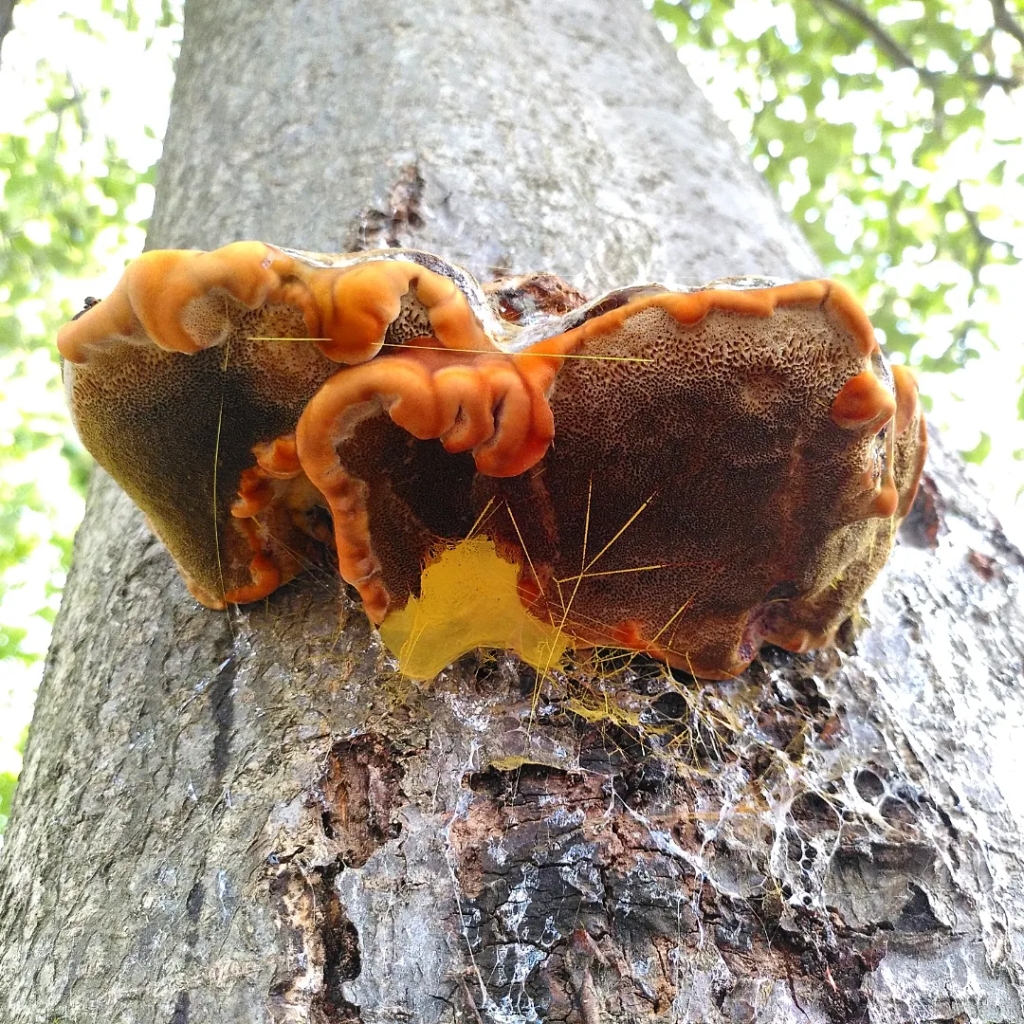
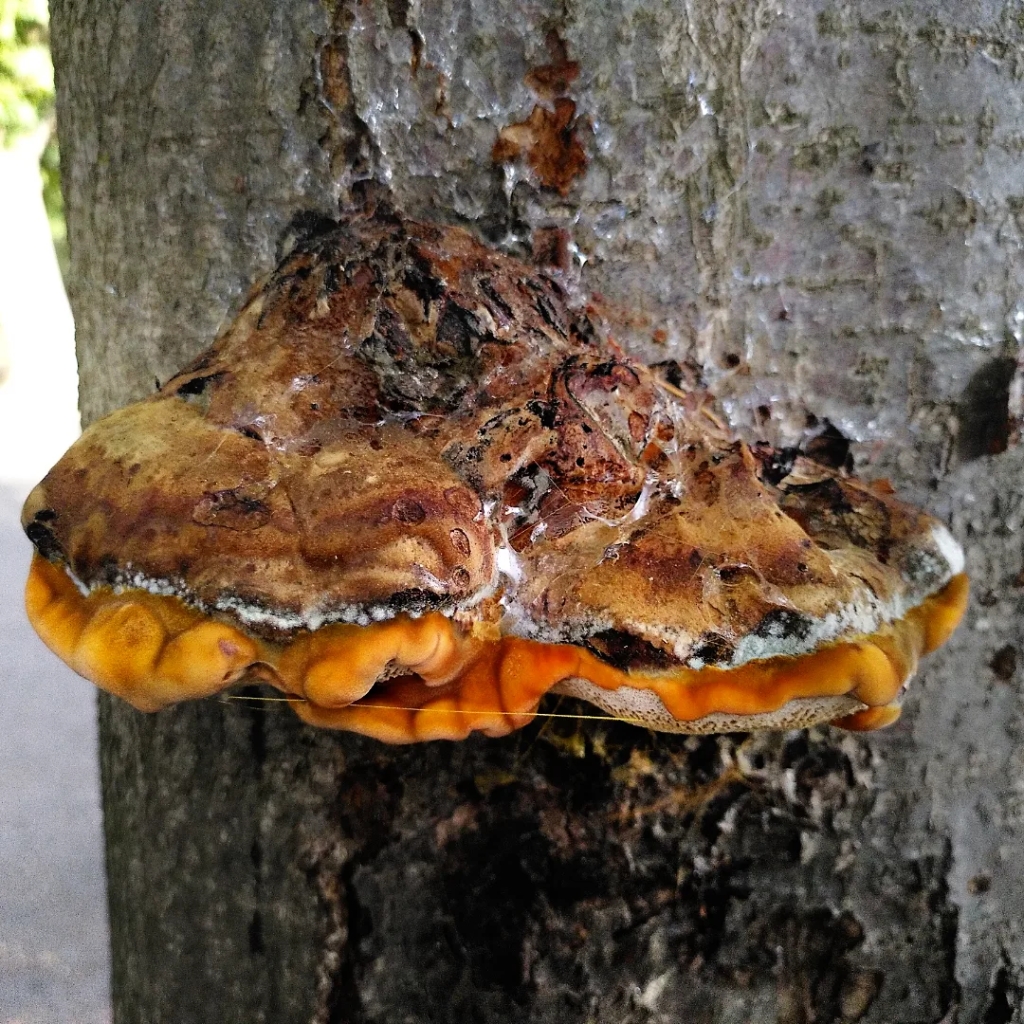
Some fungi will cause a tree to fail mechanically or biologically. Some will just look like a massive vegan cheeseburger attached to a tree.

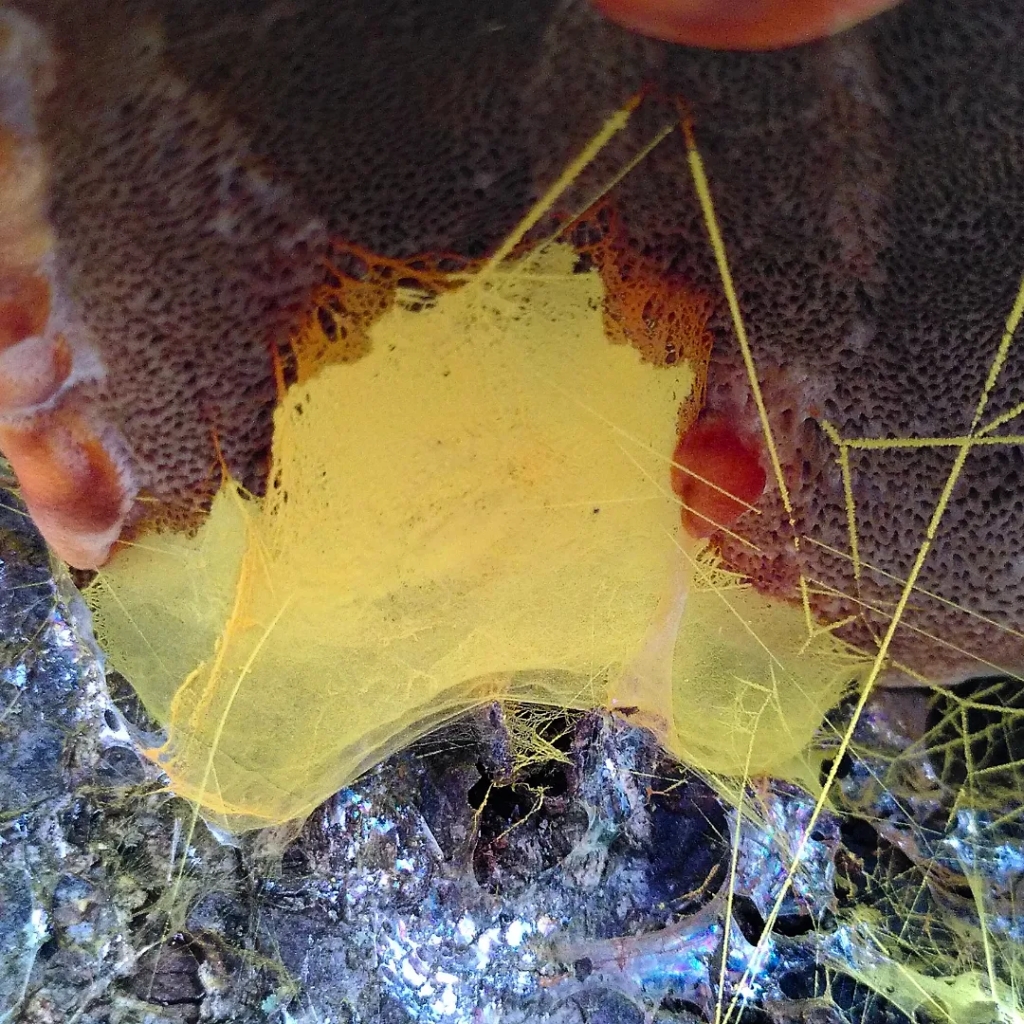
I encountered this bracket fungus on a street tree in south London recently and was amazed by the yellow spider silk and webbing. This is the product of the yellow spores the fungus evidently produces, so miniscule that they attach to the sticky silk and turn it fast-food cheese yellow.

The spider that made this web must really be confused by this situation. Perhaps it’s happy with the random redecoration that’s occurred. I wouldn’t mind, it’s actually the colour of my bedroom wall!

I am fairly certain this is Inonotus hispidus or shaggy bracket. It’s a surprise to see it at eye level, whereas it’s usually very high in a tree. You may have seen it as a black fungus sitting at the bottom of a tree trunk. By that point it has finished fruiting and has fallen from its perch. It’s usually on ash but on this occasion was on a whitebeam (Sorbus). If you go walking in an ash woodland at this time of year do take a moment to crane your neck and see if you can spot one up there in its shaggy glory before it comes crashing down to earth.

Thanks for reading.

More mushrooms

Latest from the Blog

Summer-autumn 2025: unveiling the sun

Here’s my seasonal update of stuff you don’t need to know about, but then welcome to the Internet. What I’m writing Soon I will be self-publishing my third poetry collection, Fool’s Wood. It’s seven years since my last one and this collection has taken longer because of LIFE. There will be a booklet and also…

Salisbury’s oak timbers

Here’s another entry in my slow-blogging Oak Timbers series. You can view my galleries and posts archive here. I visited Salisbury in Wiltshire (south-west England) for the first time in 2023 and was really charmed by the place. If you’re interested in this kind of thing, Salisbury is the place for you. Here’s a gallery…

Podcast: September fungi walk 🍄

I’m getting into more of a routine of recording and editing audio, so here is the latest episode of Unlocking Landscapes. Listen on Podbean or via the usual platforms. Also via YouTube: https://youtu.be/y1K9Pqx68to?si=B-Fdhf3sdDH35Z8w Following on from July’s rather optimistic fungi walk, I popped back to the same area of ancient Wealden woodland to see if…

The fungus capable of mind-control 🍄

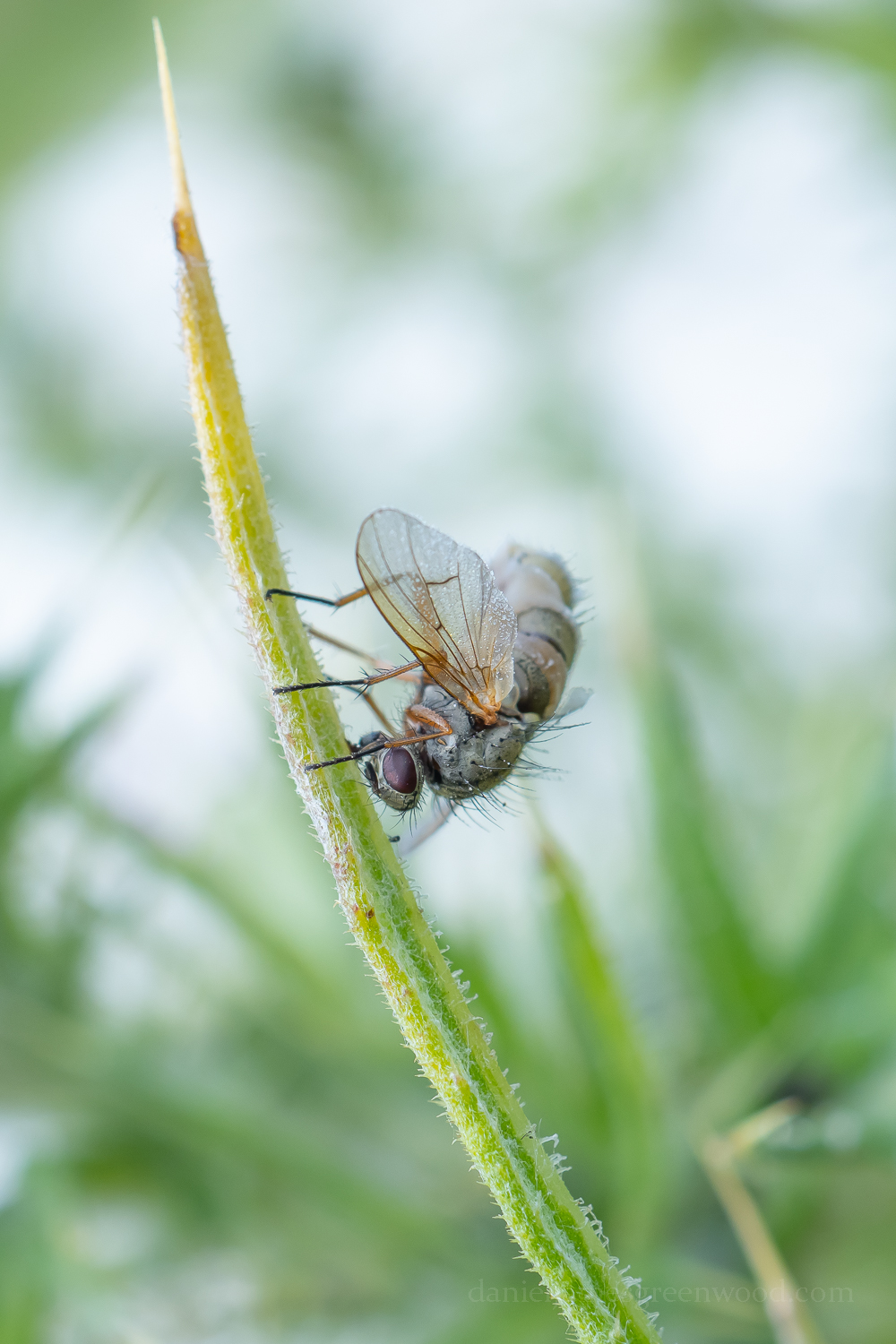
In June I was down on the Sussex coast at the mouth of the river Cuckmere. During a bioblitz event I was supporting I discovered something I never expected to see. At the foot of either the first or seventh of the Seven Sisters cliffs, the fenceline and surrounding grasslands were alive with invertebrates. One large thistle plant was covered in all kinds of insects. I felt especially drawn to a beautiful orange and black ichneumon wasp clambering over the spiny leaves. But there was something else that caught my eye.

The fly as found

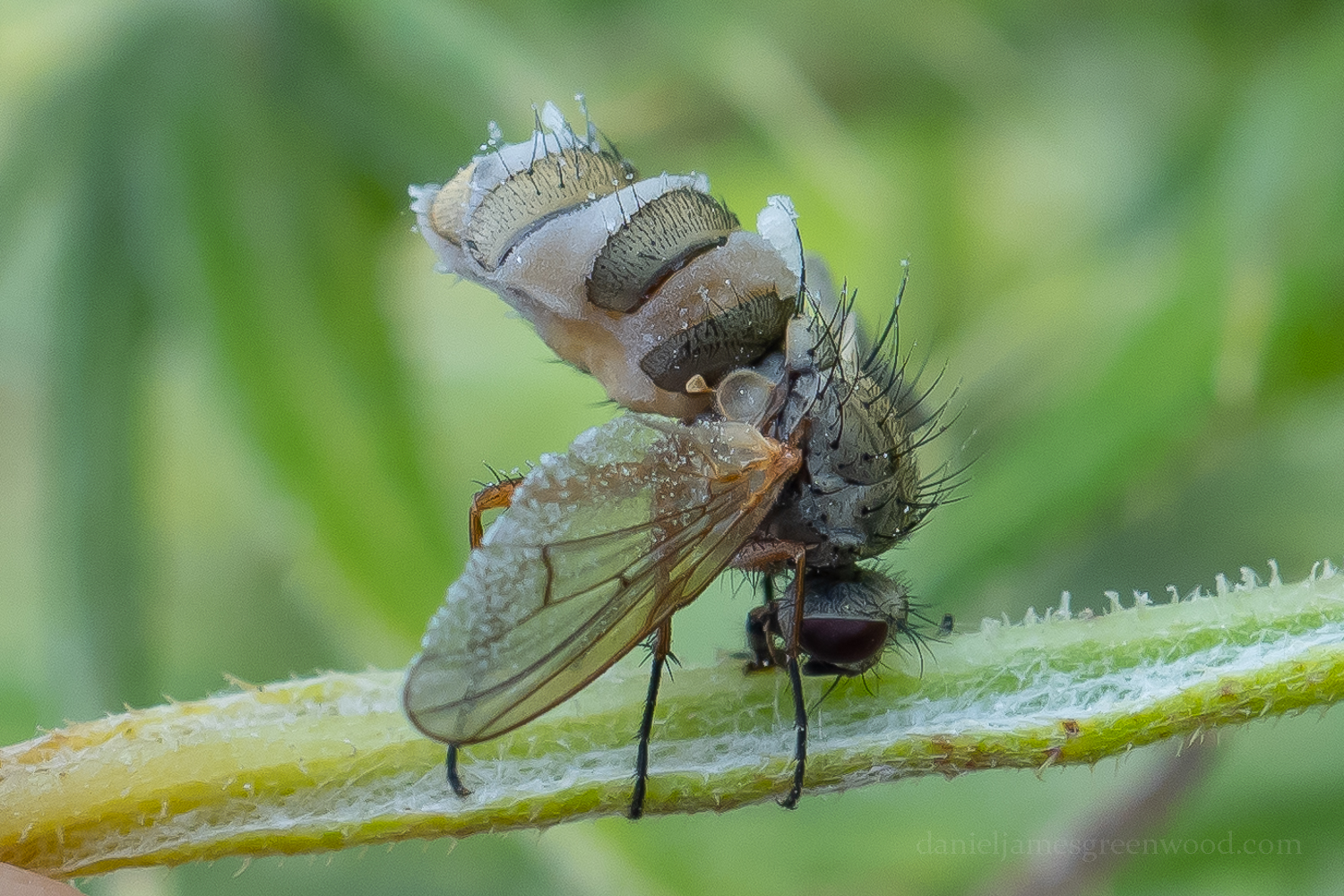
I noticed a dead fly in a quite unnatural position, a bit like an upside down koala. It was clamped onto one of the spines in a way that reminded me of the famous victims of the parasitic ‘zombie fungus’ cordyceps. Luckily I had my macro lens with me and could get a close-up of the fly.

The fly after I had bent the spine tip of the plant over

The body looked an unusual shade for this species and, looking closer, you could see it was kind of mouldy. I showed everyone I could, taking away the images and several questions I needed to answer for myself!

That afternoon I put the photos on Twitter and had a quick reply from Lukas Large, a known fungi expert in the UK. He said it was a species of entomophthora, a group of fungi that kill flies, just as this one had done. It does much more than that beforehand, however.

Somehow, the fungus enters a final stage of mummification where it ‘gains control’ of the fly’s brain and therefore control over its functions. The fungus is then able to make the fly move to a high position in order to disperse its spores from the dead fly. That is mind blowing in more ways than one.

Thanks for reading.

Latest from the Blog

Austrian Alps: Innsbruck by sleeper train

Innsbruck, Tyrol, Austria, June 2025 This is a longer post of the images I captured during a recent visit to Innsbruck in the Austrian Alps. We travelled to Innsbruck on a sleeper train from Amsterdam. It’s such a great experience and is significantly lower in carbon emissions compared with flying. If you consider the fact…

Postcards from Western Ireland, September 2025 🇮🇪

I’m back from my annual visit to the west of Ireland. I managed a couple of day trips to forage for photos, which will crystallise later this year into dedicated posts, all being well. Like many people I enjoy the Blind Boy Podcast, none more so when I have the headspace to take in all…

Mushrooms in England

This is the first of a series of posts I’ve been working on covering national relationships with mushrooms. It’s just a bit of fun, but there’s definitely some interesting stuff to share.

The orchids in need of fungi 🍄

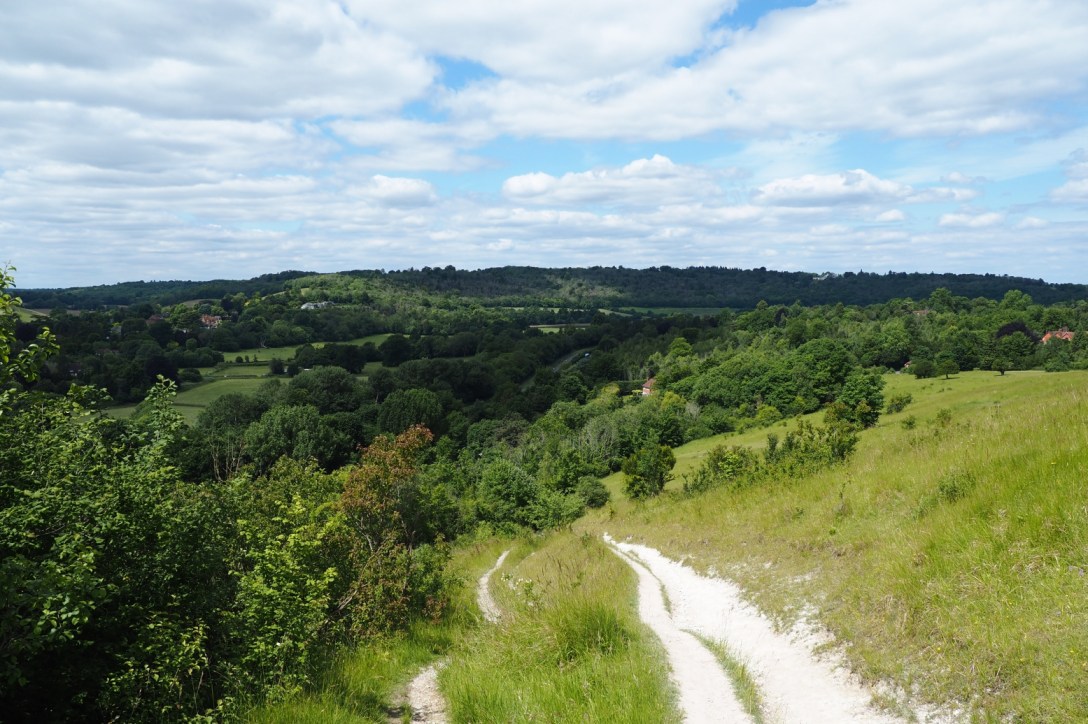
In June I did a long walk in the Surrey Hills around the famous Box Hill. The North Downs are absolutely fantastic walking country, being so easily accessible from London via public transport, and having some of the UK’s rarest wildlife, along with dramatic hilly landscapes and views.

The human (as well as the natural) history of the North Downs is incredible, with much of the North Downs Way coalescing with the Pilgrims Way.

Early on in this walk, I happened upon an area of yew trees and spotted some chicken of the woods growing. It’s always a nice thing to see.

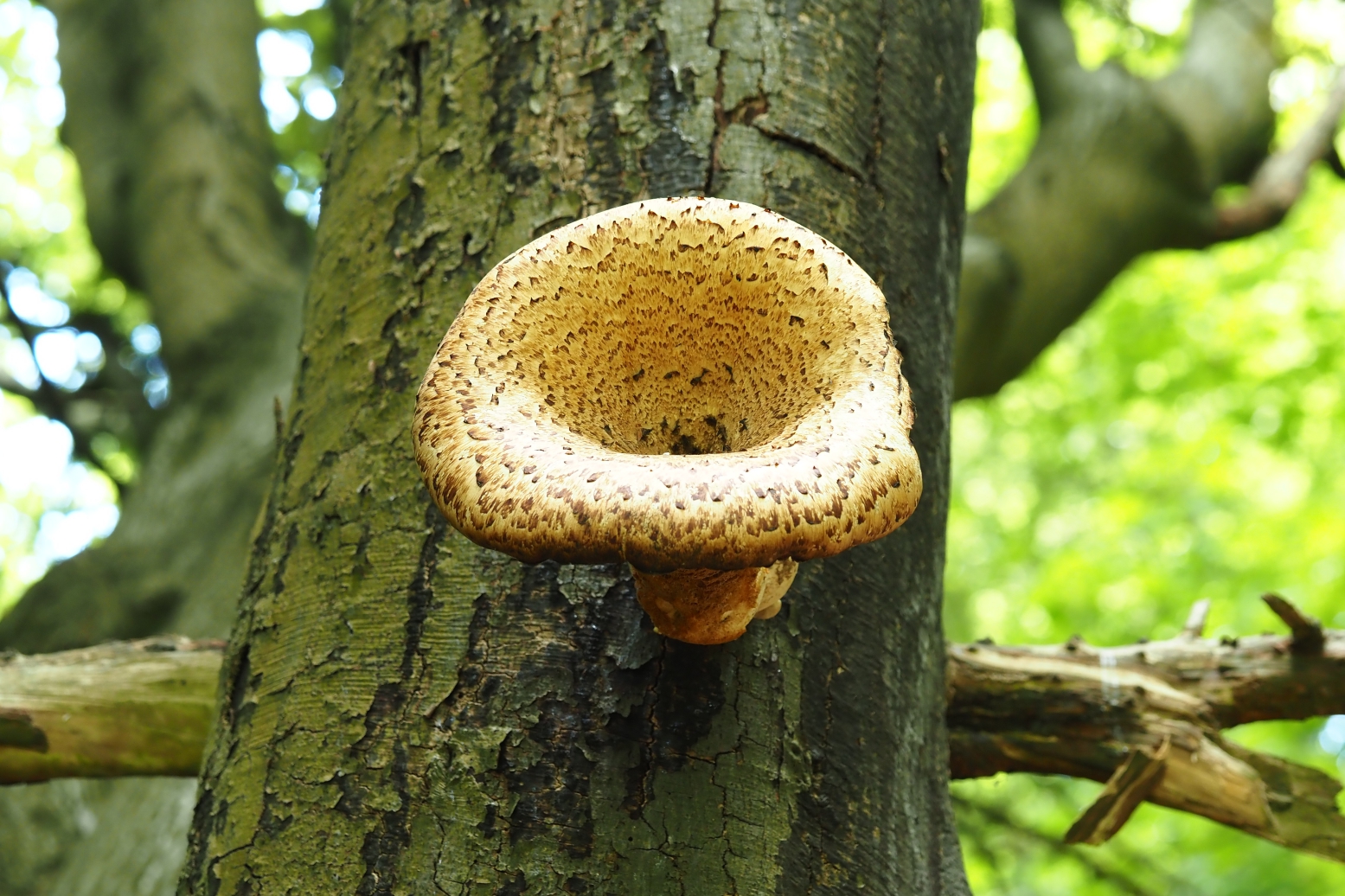
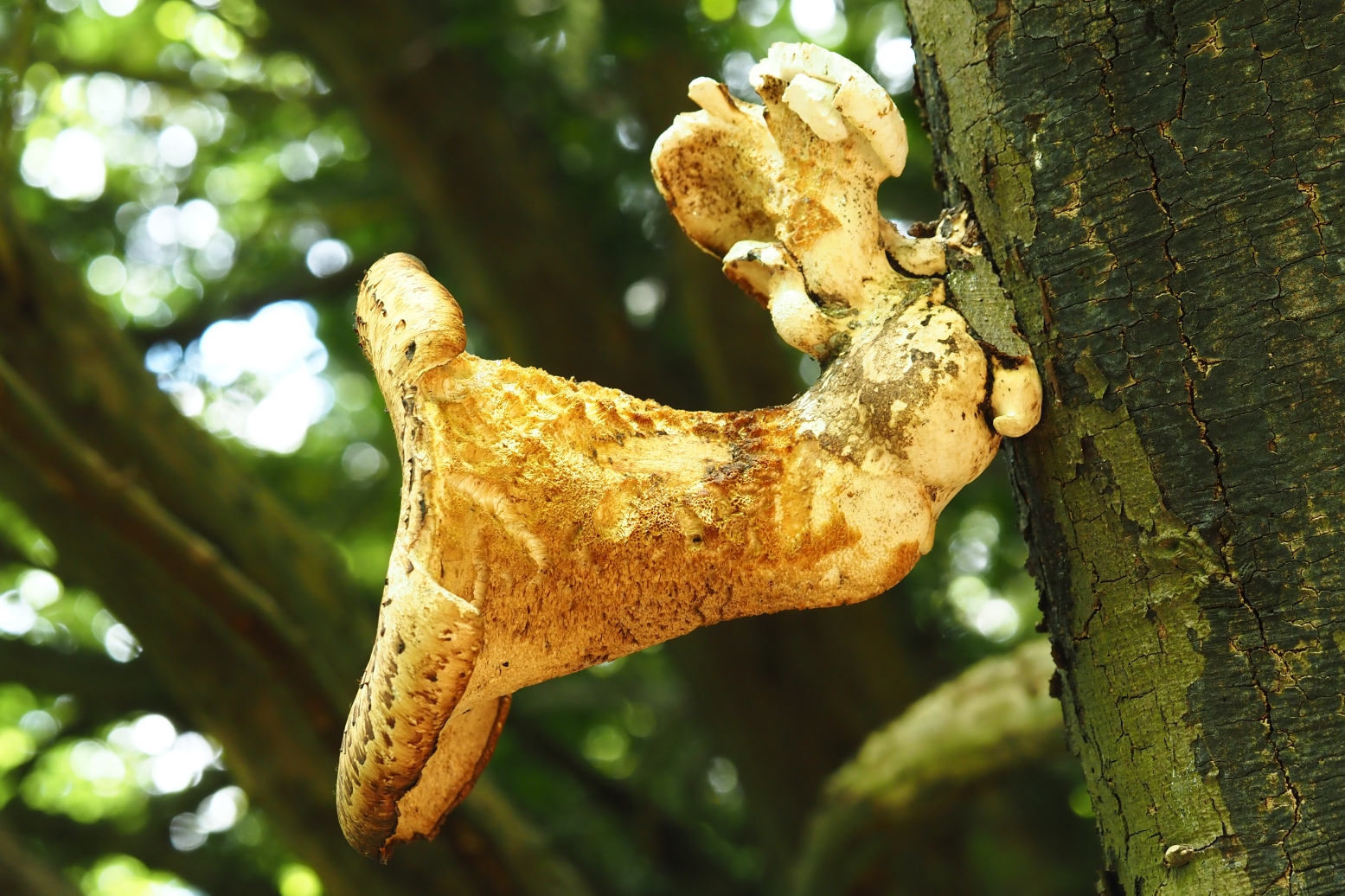
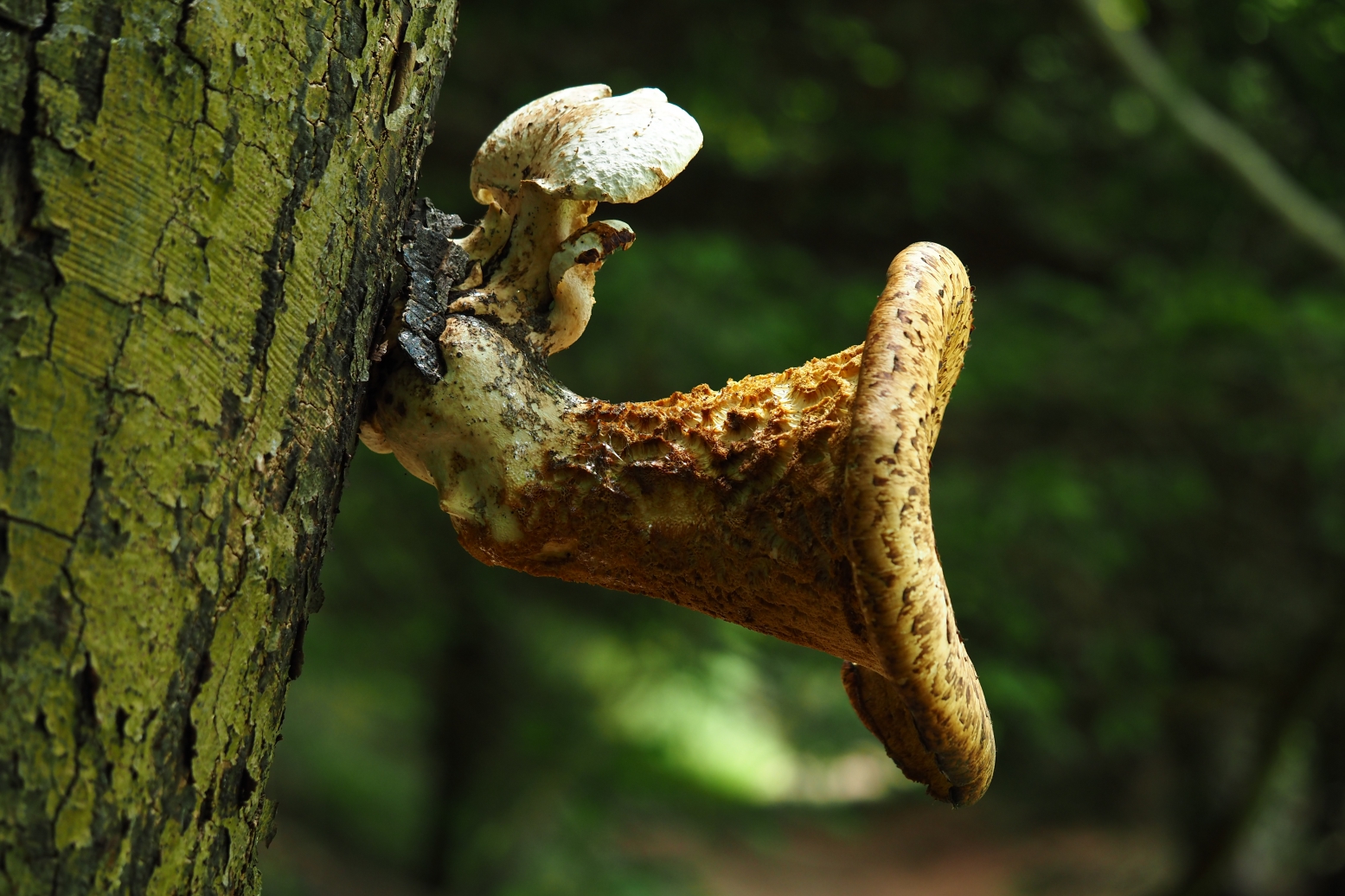
Lured in by the sight of the fungus, I then found a massive dryad’s saddle growing like a gramophone from a beech tree. This is a fairly common larger fungus to find in June. It’s a summer woodland species.

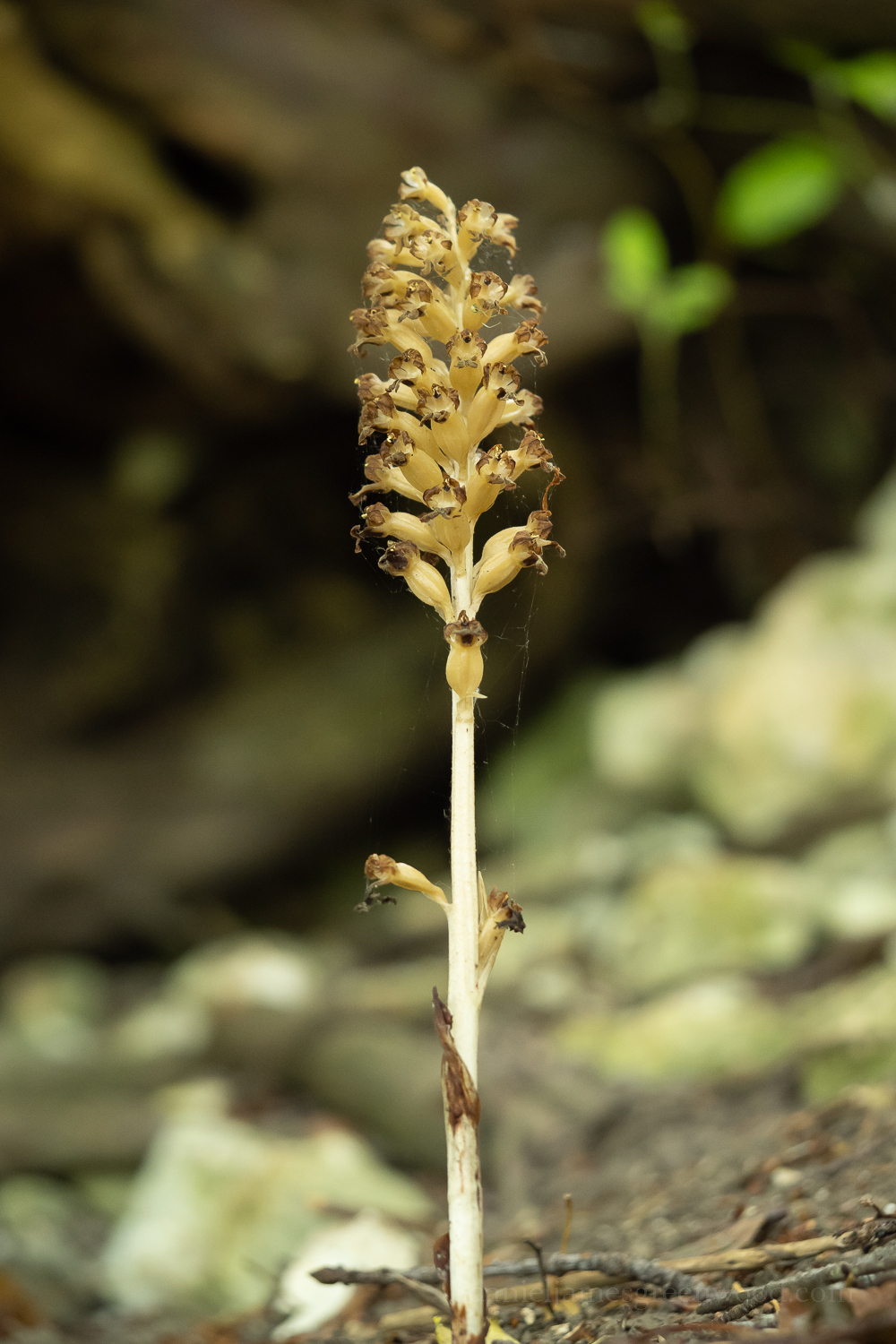
Having moved round to look at the ridiculous gramophone fungus, I spotted what looked like dead growths of a wildflower or maybe a garden plant that had been dumped. After a minute or so I realised it was in fact a type of orchid: bird’s nest.

This isn’t a species I had ever seen before. It certainly wasn’t at its ‘best’, even though it lacks the colourfulness of other species nearby like common spotted or pyramidal orchids. There’s a really good reason for that.

It has a dependency on fungi. Its lack of cholorophyll is because it receives its food from fungi in the soil, which is also in relation to the roots of trees. The orchids were growing under yew but with beech in close proximity. It’s just another reminder of the role that fungi play in maintaining diverse ecosystems.

Away from the orchids, June is a good time to find chicken of the woods. We’ve had a very hot and dry spring/summer in southern England, and along the trail I noticed that a lot of the chicken had collapsed in brittleness. It’s not even worth looking for mushrooms growing in the soil, it’s just so dry. Fungi once again, or lack of, will show you that we are living through hotter and drier summers in southern England.

The North Downs, like its southerly sisters, the South Downs, are a chalky landscape. There are lots of beech trees in this type of soil. This means the very large Ganoderma bracket fungus is a pretty common sight on the many beech trees that are found here.

Thanks for reading.

More mushrooms

Latest from the Blog

Late summer timbers at the Weald & Downland Museum

In August I made my annual visit to the Weald and Downland Living Museum in the South Downs. You can see my timber-framed building photo gallery here. This is the first view you encounter inside the museum grounds after you pay your entry fee. Amazing to think the medieval hall house is from Cray in…

Going to Battle (the village)

Not that kind of battle, but instead to the village in East Sussex. Battle the village is the site of one of the major battles of the Norman Conquest of England of 1066, when the Normans invaded Britain and defeated the Anglo-Saxons. It’s a period in history that absolutely fascinates me. The land ownership brought…

The fungus thriving in the Chernobyl nuclear reactor 🍄

chernobyl_04710018_28813436425829
The Chernobyl nuclear power station: IAEA Imagebank / CC BY-SA (https://creativecommons.org/licenses/by-sa/2.0)

Thanks for reading my 600th blog post! Prepare yourself, there’s a lot to take in here.

I’ve been interested in the history of Chernobyl for several years, mainly after learning about the ecological experiment created from the complete abandonment of the area.

If you have the chance to watch the TV drama Chernobyl, do it. It is one of the best TV dramas I’ve ever seen.

A recent documentary covering the story of the nuclear accident Chernobyl: The Lost Tapes and the resulting clean up, is also worth watching. A warning of course that both are graphic and disturbing in their own ways.

The Chernobyl nuclear disaster of 1986

Recently I have read Chernobyl: History of a Tragedy by Serhii Plokhy. It’s a very sobering account of all that happened in 1986 and how it all came to be. It’s so grim I can’t read it for too long without needing a couple of days off.

I’ve been reading it during Russia’s second attempt to commit genocide in Ukraine (April 2022), after Putin’s ragtag army’s failed attempt to take Kyiv and exact regime change. Russia are doing terrible things in Ukraine and the people responsible must be held accountable. I hope I live to see Putin brought to justice.

When are you going to get on to the fungi – you might ask? I promise you, we will get there eventually, and it will be worth it.

The Red Forest by Jorge Franganillo from Barcelona, Spain, CC BY 2.0 https://creativecommons.org/licenses/by/2.0, via Wikimedia Commons

The Red Forest army

It was found recently that the Russian military had been doing some pretty stupid things in the Chernobyl exclusion zone, beyond the illegal attacks against Ukrainians. Perhaps the most stupid things took place in ‘the Red Forest’, and area of extremely high radiation.

Soldiers are thought to have dug trenches in this mind-bendingly radioactive landscape as part of their special radioactive military operation. The Russian military were seeking to invade via Belarus in the north and eventually control Kyiv. Famously, they failed spectacularly, committing war crimes in Bucha, Irpin and other areas before having to retreat.

It was the case at the time around the disaster that the Soviet Union denied the full impact of the accident. In reality many thousands of people will have been contaminated by the radiation from the damaged reactor, but according to the official toll only 31 people have died. It may even be that the soldiers invading Chernobyl did not know that it was dangerous. It beggars belief.

Though those soldiers will not have fared well with the radiation, it was discovered that a species of fungus does not just do well with the radiation, it is thriving inside the nuclear reactor at Chernobyl. Thriving. Inside. I know…

Radiotrophic fungi

Cladosporium sphaerospermum is that fungus. It’s usually found growing on the leaves of citrus trees, but as a radiotrophic species it appears to find favour in environments like the Chernobyl nuclear reactor. Scientists are looking to use its ability to protect from the ill-effects of radiation to protect people in certain environments in space.

The unusual thing about the fungi found in the reactor was that they were not exisiting in spite of the radiation, but because of it. It does go to show that if there is a nuclear holocaust, some fungi will survive and contribute to the world that follows. That world probably wouldn’t have many humans in it.

It’s a problematic fungus for us humans in medical terms, causing a condition known as cryptococcosis.

Pripyat, Ukraine by Omar David Sandoval Sida, CC BY-SA 4.0 https://creativecommons.org/licenses/by-sa/4.0, via Wikimedia Commons

Radioactive fungi: caesium-137

Far more problematic for us humans is the fact that the Chernobyl nuclear disaster released extremely dangerous levels of caesium-137 into the atmosphere. This of course directly affected ecosystems across Europe where the radiation spread. Fungi absorb their sources of nutrition from their surroundings, making them likely to absorb radiation also. This website has taken the incredible steps of listing which mushrooms are more likely to become radioactive, compared with those which aren’t.

What this all effectively means is that any lingering radiation in the environment will remain in the ecosystem because fungi will absorb it. I don’t have the information but do wonder if there are some mushrooms which may never be eaten again within a certain range of the Chernobyl exclusion zone.

This article points to a very striking impact of the radiation in woodlands in the exclusion zone. Basically, higher levels of radiation are causing a build up of leaf litter and woody debris, because fungi are inhibited and unable to perform their core ecosystem function of recycling. This means there are higher chances of fires breaking out and redistributing radioactive material.

I bet you wish you never read this post.

Thanks for reading anyway. Solidarity with Ukraine 🇺🇦

More mushrooms

Tree lungwort lichen in western Ireland 🍄

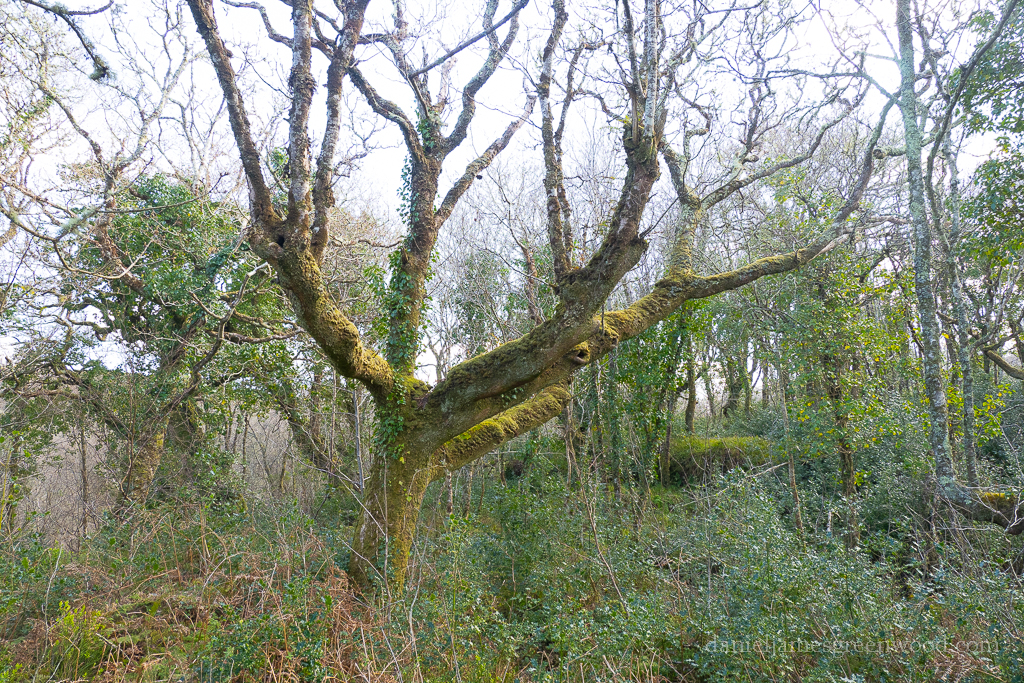
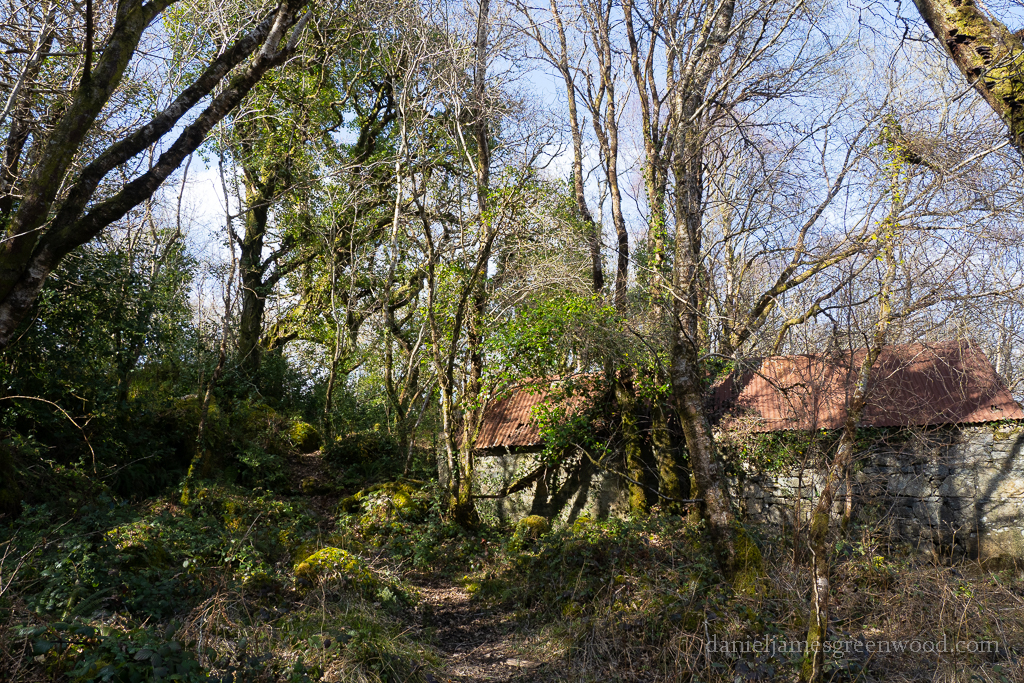
Since 2013 I have been visiting a small area of ‘Celtic rainforest’ I know in Co. Mayo in Western Ireland. It’s hard to find much ecologically significant woodland in Mayo, a place of vast peat bogs, wetlands and where the woodlands are largely low diversity plantations of spruce and larch. Nine years ago I found one woodland on the map and asked my parents if they wouldn’t mind dropping me off there. In March 2022 I had about 30 minutes to check in on this real gem of an oak woodland.

I don’t want to give the name of the woodland openly because it is incredibly sensitive and is already experiencing the impacts of anti-social behaviour (fires, litter, human waste… not that you would head straight there to mess it up!) but if you want to know the details you can contact me via email for info (unlockinglandscapes@gmail.com). It’s one of the special Western Atlantic oak woodlands which the western edges of Scotland, England, Wales and Ireland are known for. This woodland is rich in ancient woodland plantlife and is also good for fungi, as you might expect due to the long-term stability of ancient woodland species communities.

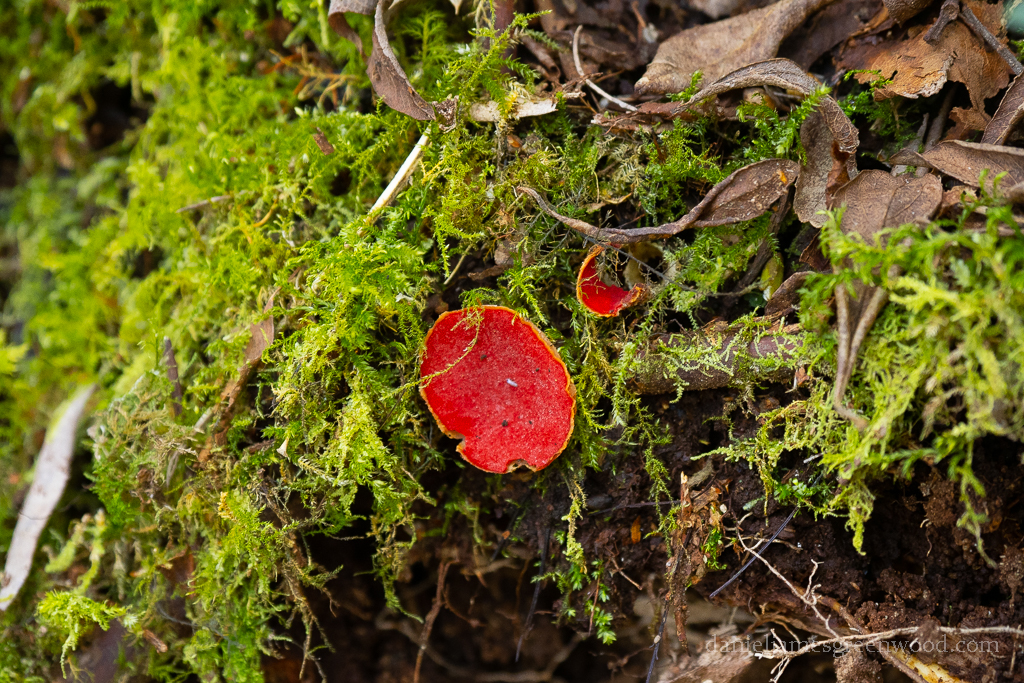
Upon entering I spotted the little red traffic light of a scarlet elf cup in among the moss. This is a species which thrives in damp and shady woodlands near water.

The woodland here is close to a large lough so it is never short on moisture.

I was astonished to find this naturally-occuring terrarium on the woodland floor. Someone had chucked a jar here and the mosses and other plantlife had colonised it.

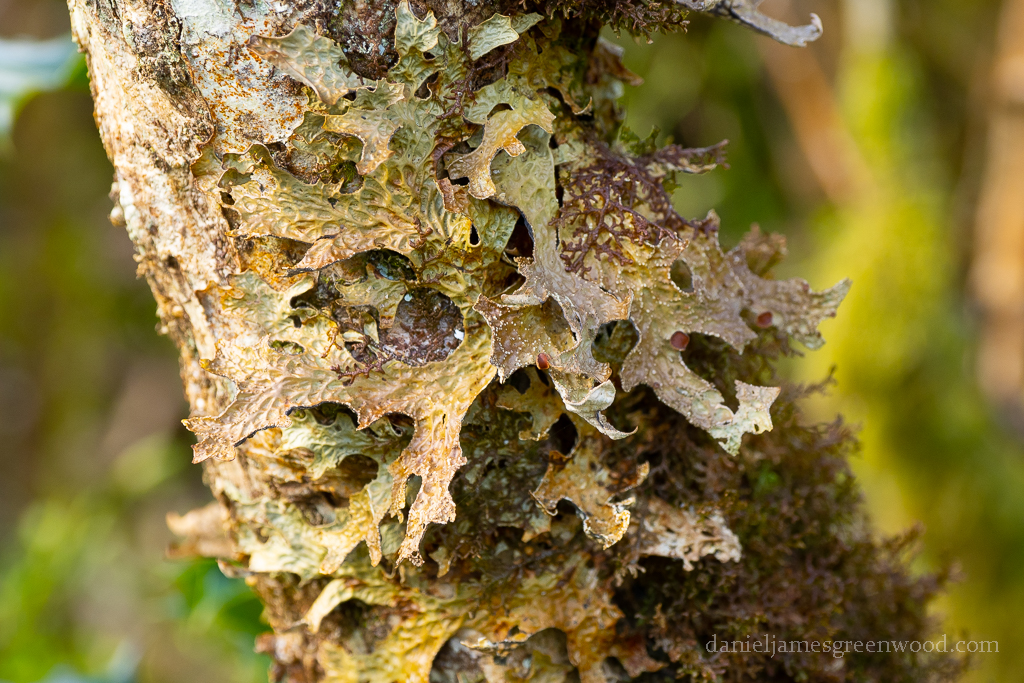
Anyway, I was here to check for an uncommon lichen in the UK & Ireland – tree lungwort, Lobaria pulmonaria. It’s a massive lichen that can be found in these ‘Celtic rainforest‘ habitats. The Woodland Trust say it’s an incredibly rare habitat.

After a few minutes of searching where I had found it back in 2017, I saw this. It is a seriously impressive species.

I was so pleased to find the tree lungwort again. It’s unlike similar organisms we find in the UK. It makes far more of its fungal elements than other lichens through its size and spread. Remember: in lichens, fungi provide the physical structure and fruiting mechanism (usually a cup-style spore shooter), while the cyanobacteria or algae are able to photosynthesise and harvest energy from the sunlight.

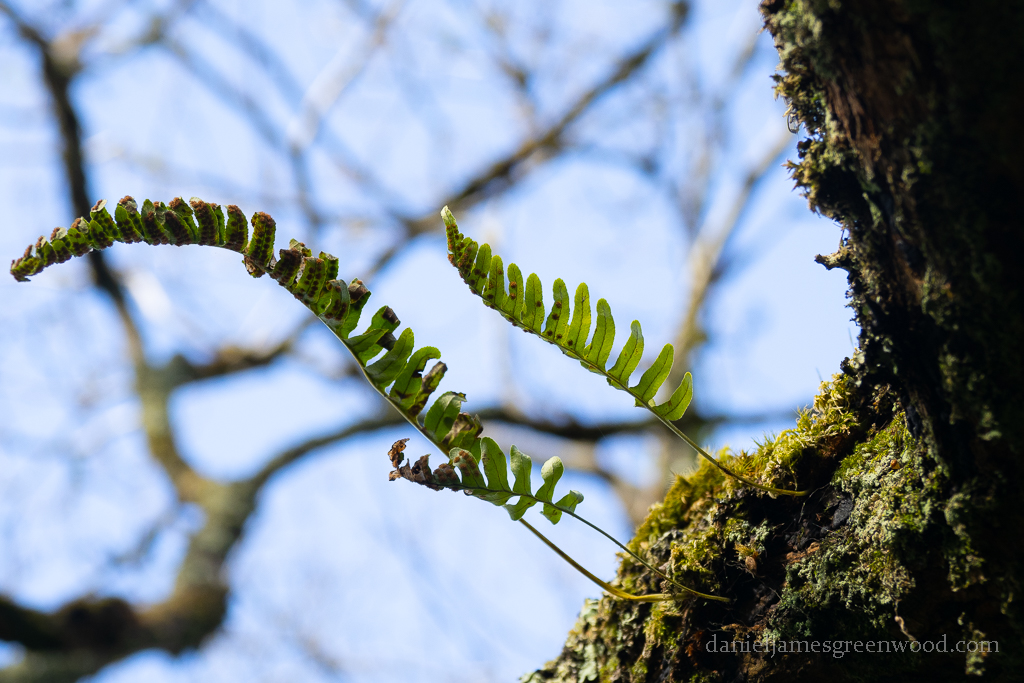
The oak trees in Celtic rainforest provide habitat for plants as well as lichen. There are often modest ivy vines trailing the trunk, as well as other epiphytes such as ferns and mosses:

Another thing I noticed was oaks leafing on the 31st March. This may be the earliest I have ever seen oak come into leaf, but the race between ash and oak is certainly a contest. The old saying of “If the oak before the ash, then we’ll only have a splash, if the ash before the oak, then we’ll surely have a soak” doesn’t quite play out from my experience. The very warm March we’ve experienced in the British Isles has possibly more of a role to play in this than traditional benign weather or climate patterns might.

One thing I learned from observing the other communities of tree lungwort were that the lichen seemed to prefer younger trees. I didn’t observe any on more mature specimens of oak. There didn’t appear to be a lot of oak regenaration but then again there was no danger of overgrazing due to the quite isolated nature of the woodland, its lough-side location and livestock being nowhere near.

Another lichen I observed was one of the pixie cup lichens in the Cladonia group but I couldn’t tell you the exact species.

There were many candidates for #StickOfTheWeek, so much so that there wasn’t even much of a stick to look at!

Thanks for reading

Further fungi

Fungi 🍄: March smatterings

Last week I went for a walk in rather grey and glowery weather. It was in hope of seeing some earlier spring signs but was more a reminder that winter persists.

I found a small collection of glistening inkcaps, along with one of my favourite large brackets. Those are pictured here with my hand for scale.

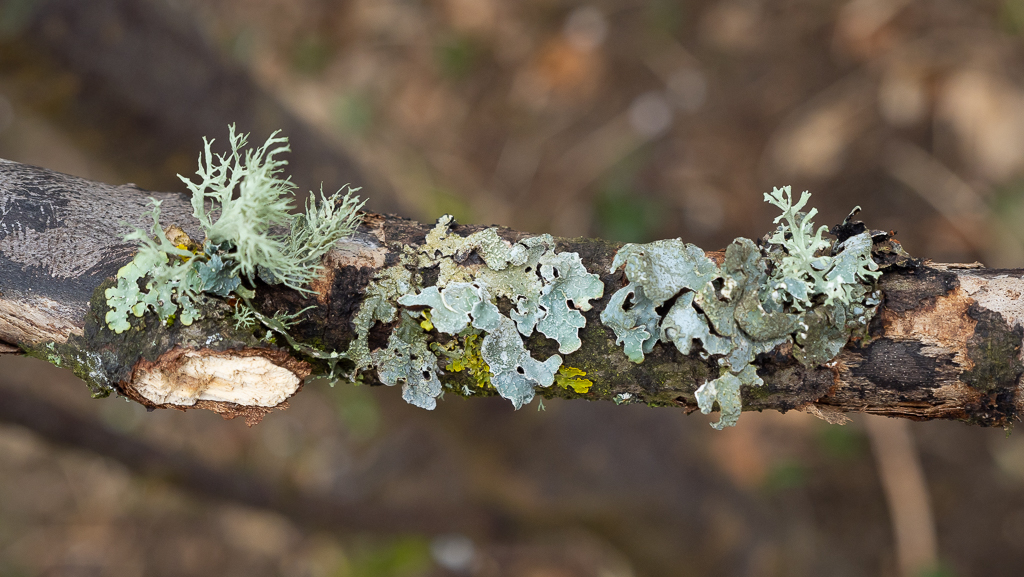
Otherwise there were some small polypores (probably turkey tail) and a few lichens that had been enriched by recent rain.

Life is rather full-on at the moment so I’m not finding the time or energy to write something longer or more detailed. It’s also a mental thing, just don’t have a lot to say. Photography will be the focus in posts for a little while.

Thanks for reading.

Solidarity with the people of Ukraine 🇺🇦

More mushrooms