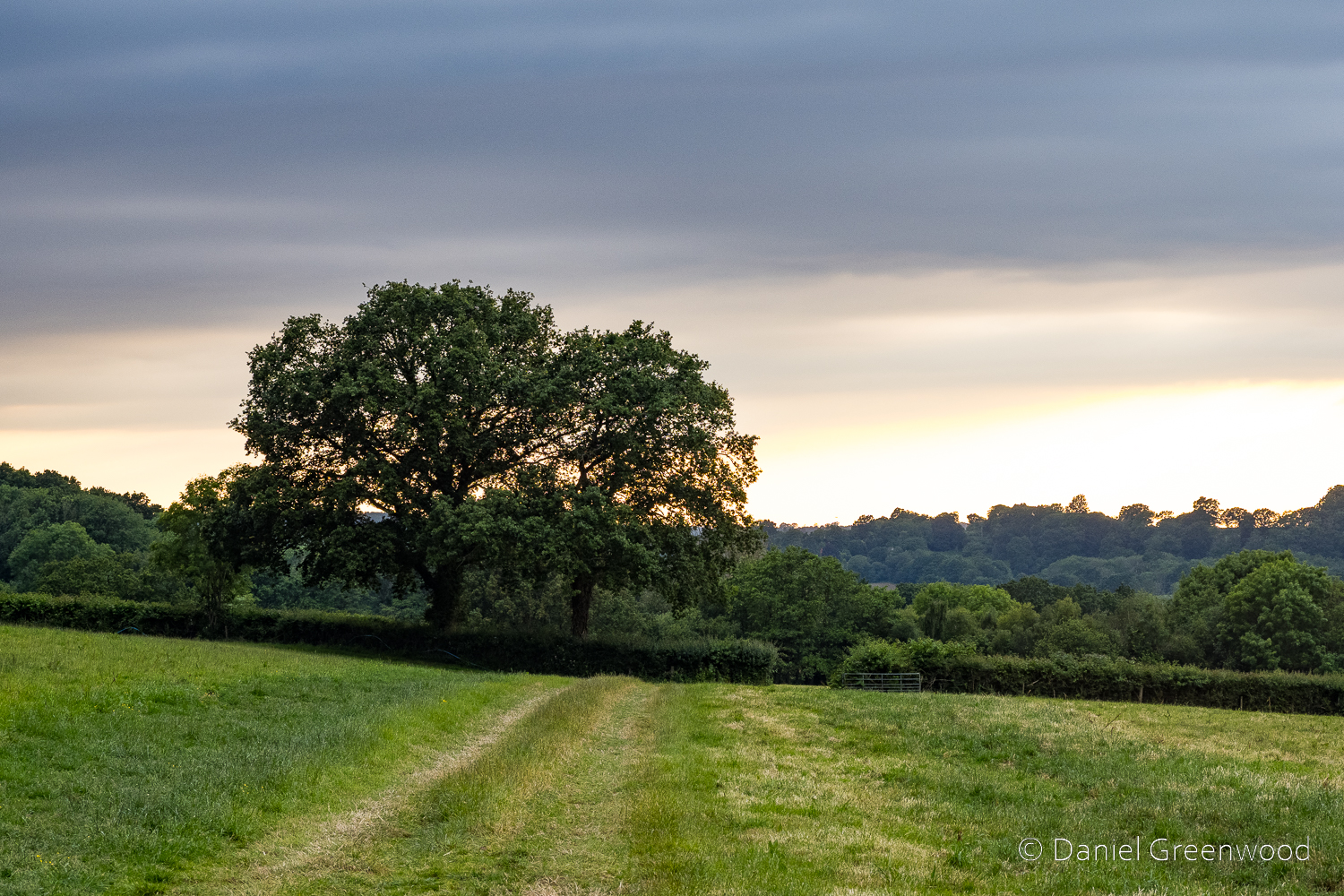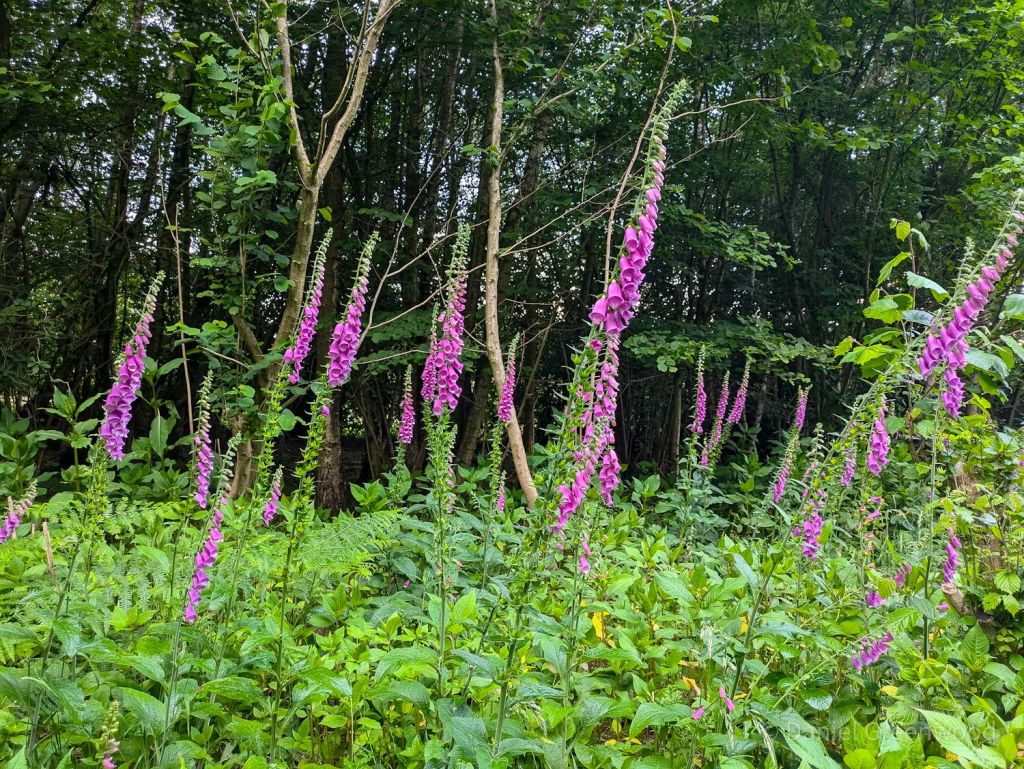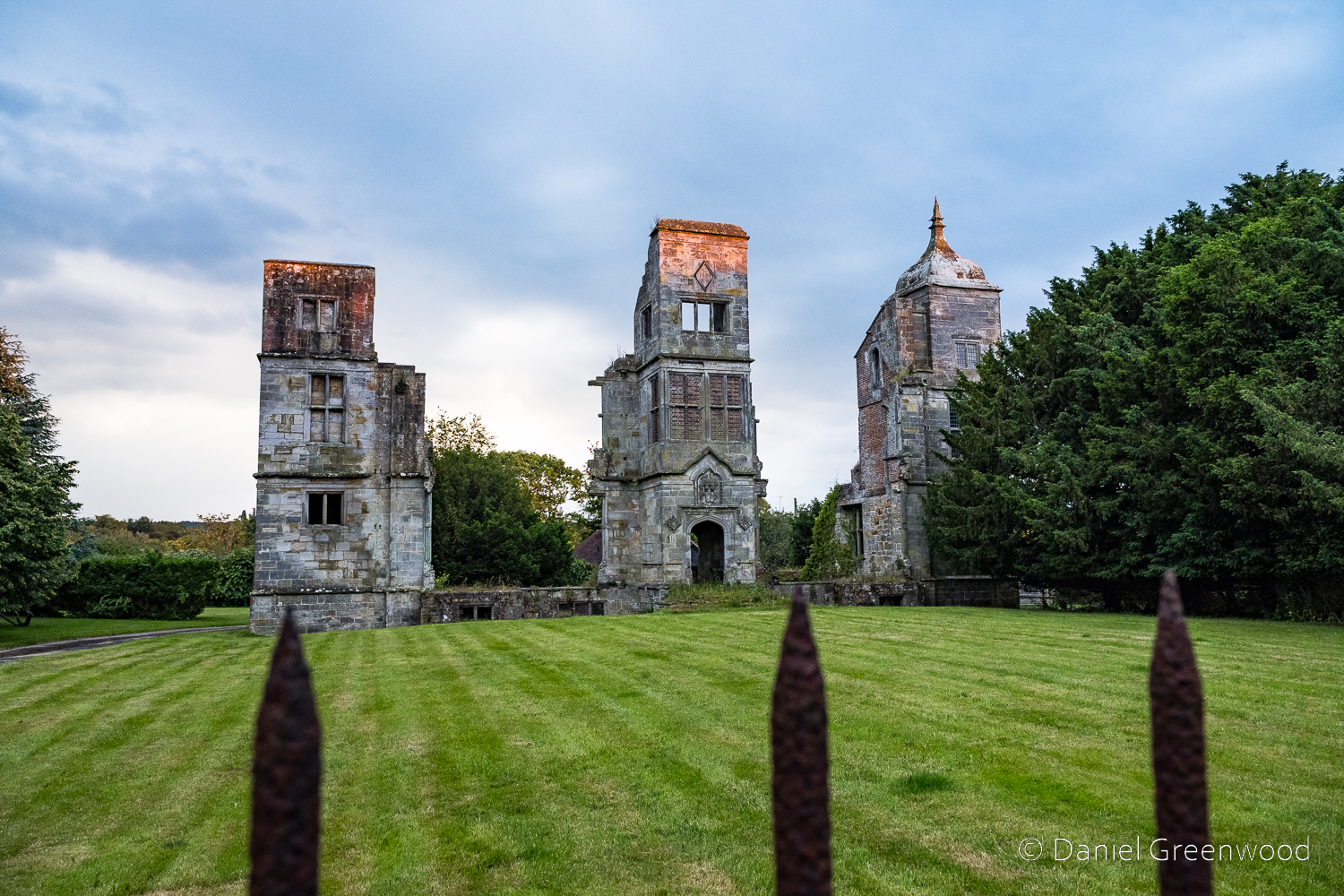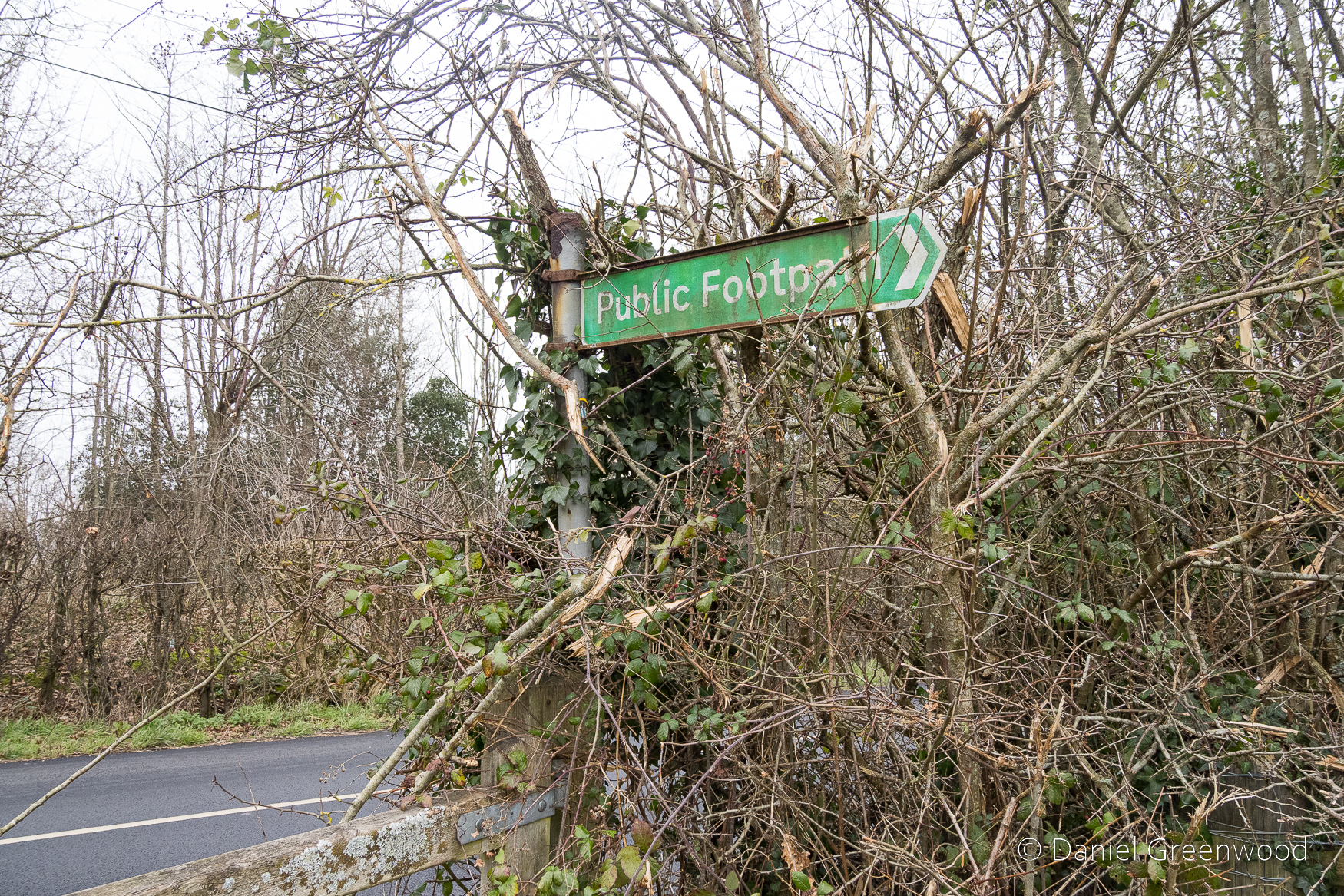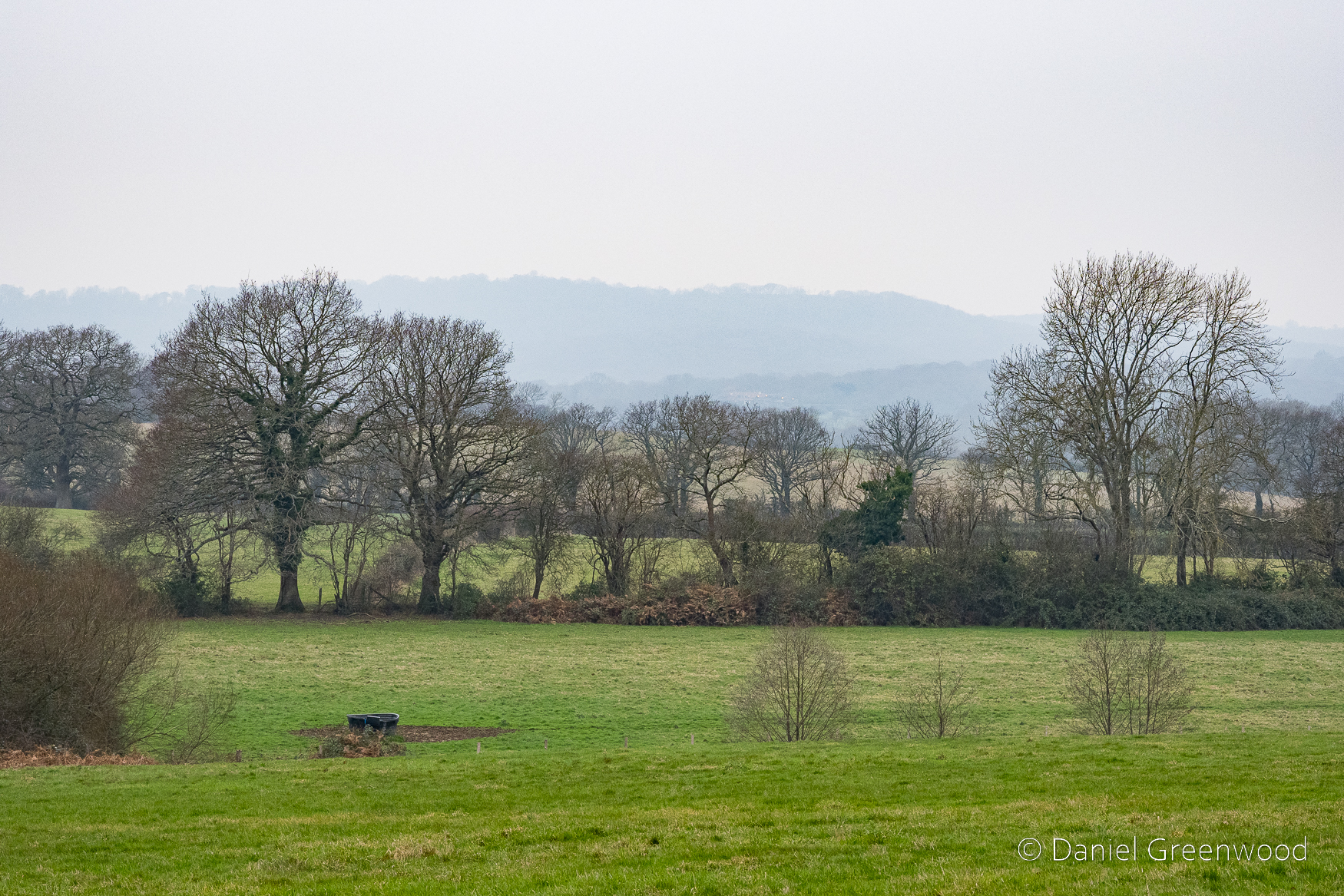
Arun valley oaks around Billingshurst

Billingshurst and the Wey-and-Arun Canal, West Sussex, January 2024

Pre-ramble

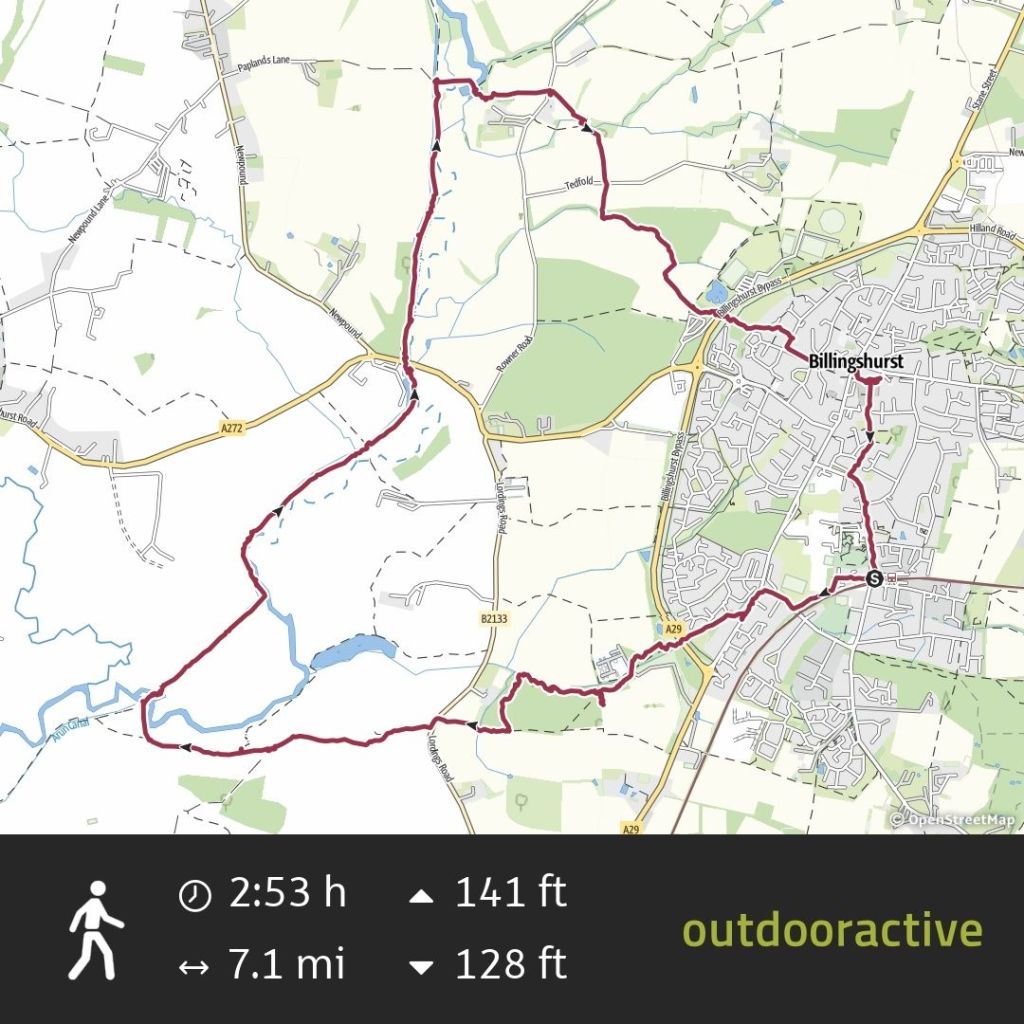
This long post (2500 words) is based on the Billingshurst walking route available in the Ordnance Survey guide to walks in West Sussex and the South Downs.

The difference in my route is that I went by train not by car. It’s always better by train if you can do that. I also took a longer route to the south via Parbrook.

Billingshurst is a growing ‘village’ on the from Victoria to Bognor Regis or Chichester.

The name Billingshurst means a wooded hill of the Billa’s people who were perhaps an extended family rather than a large tribe.

Billingshurst Local History Society

For this post I’ve relied on Geoffrey Lawes’ Billingshurst Heritage (2017) for historical references, which I borrowed from my local West Sussex library.

I wouldn’t do the walk after high levels of rain in winter because the Arun is prone to flooding in epic fashion and could make some of the walk impassable, particularly beyond the bridge.

This would be a good one to do in the spring when it’s a bit drier and the birds and woodland flowers are coming to life again.

There are some quite dangerous crossings here, so care needs to be taken when you meet the A29 twice, and another country lane that has poor visibility about a quarter of the way in.

Parbrook

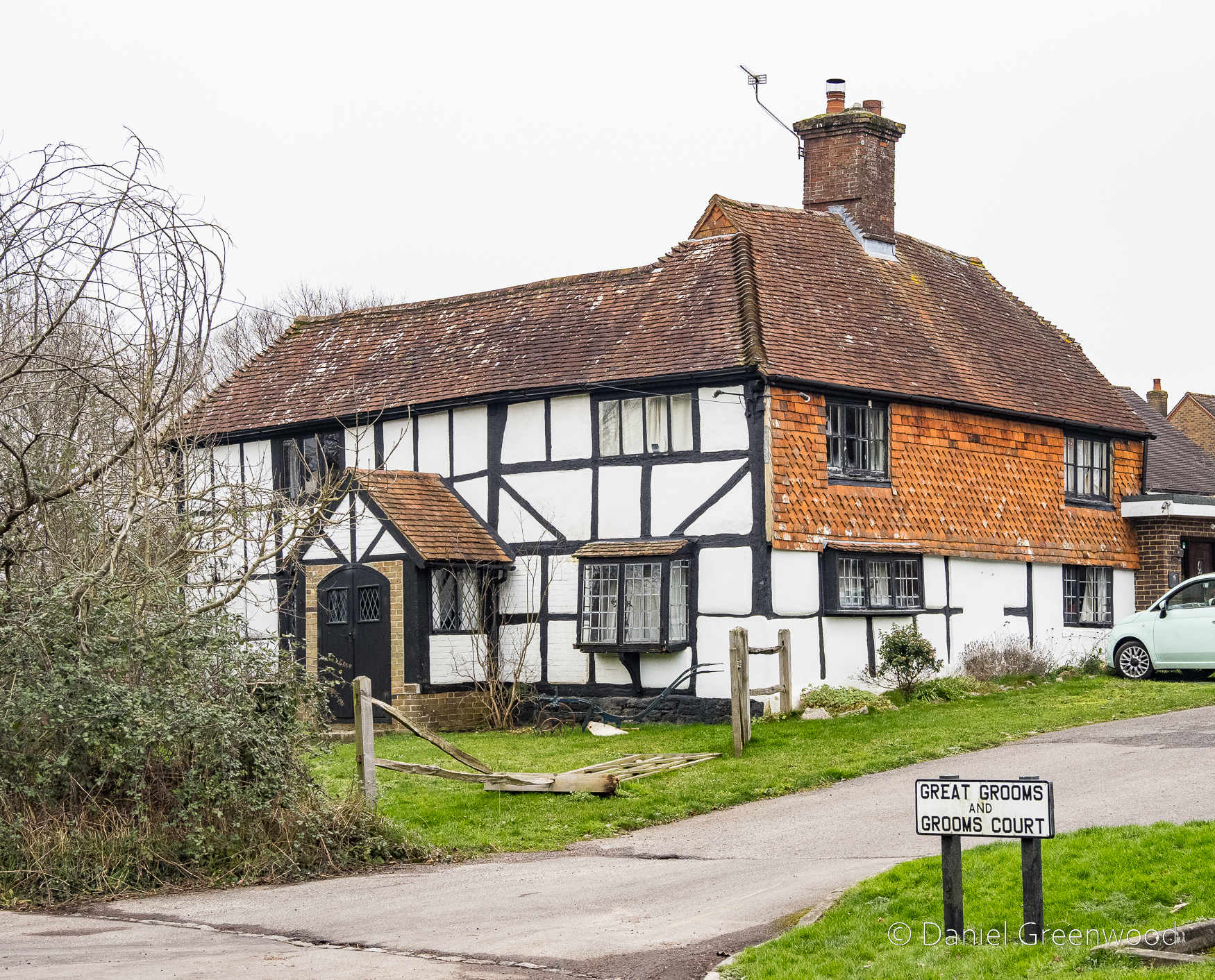
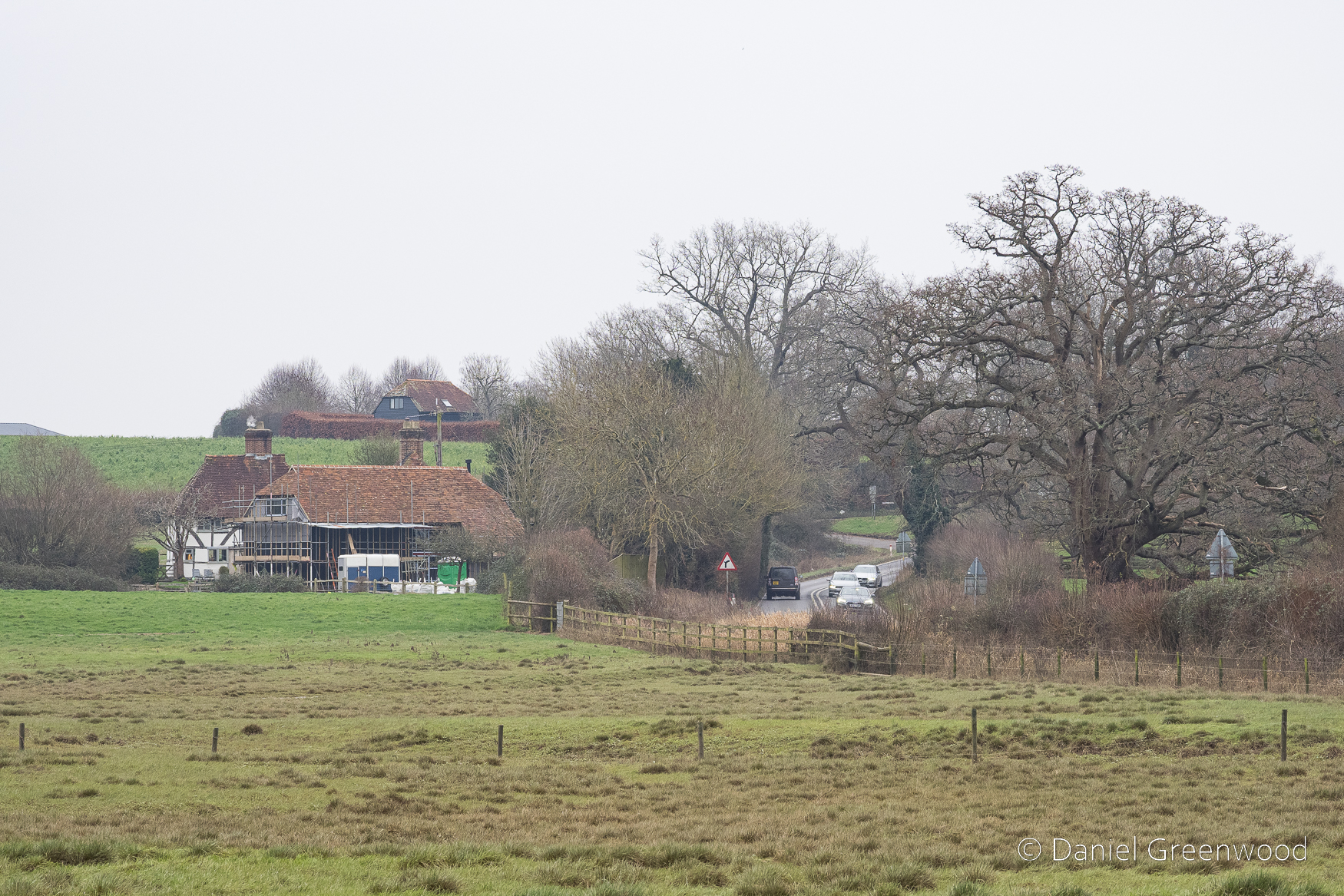
After leaving Billingshurst station you pass through a new housing development to the west of the village, and then the village of Parbrook, which was once separate. There’s an impressive timber-framed building here called Great Grooms, which dates to the 1500s. It’s on the Historic English register as the Jennie Wren Restaurant, as it was recently known.

In Billingshurst’s Heritage there’s an insight into the life of people here around the time of the First World War. Doris Garton describes her childhood in a ‘small, primitive cottage’ in Parbrook, and her father’s life after he returned from the war:

In the 1920s my father did contract to local farms at Parbrook. He would set off at 6:30am with his tools and hay knife strapped on his bicycle. According to the seasons he did hay cutting and tying, harvesting and threshing, thatching and land work, draining, ditching, ploughing with a horse, hedge-cutting and layering of hedges. He was also sometimes hired as a water diviner, using a hazel twig.

Billinghurst’s Heritage: Geoffrey Lawes, 2017: p. 255

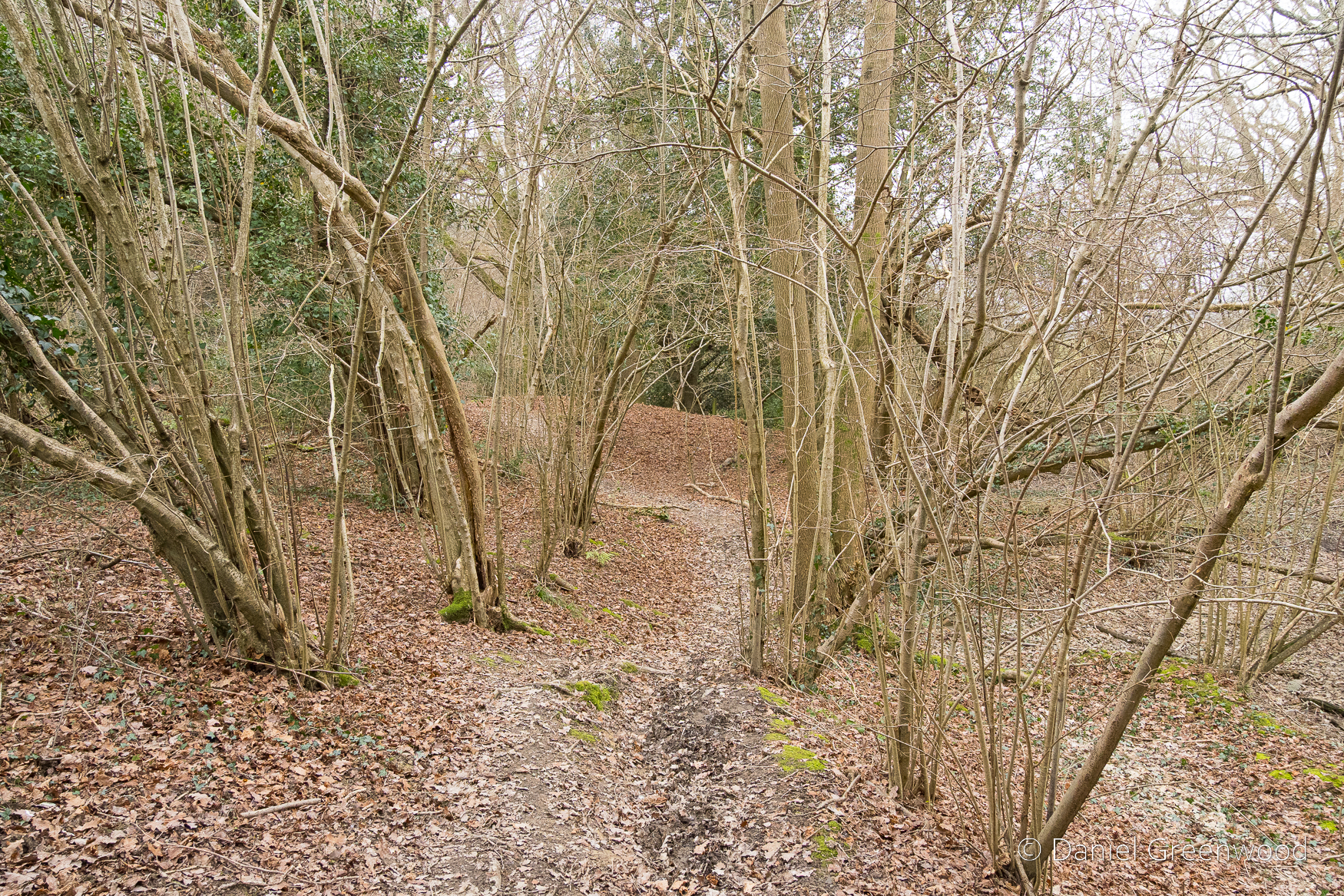
The walk gets serious quite quickly as you cross the A29, which is a diversion from the straight line of Stane Street, a Roman Road that provided a route from London to Chichester. Crossing the A29 gives the immediate reward of this – the sort of place where Doris’s father would have plied his trades in the 1920s:

Ancient woodland

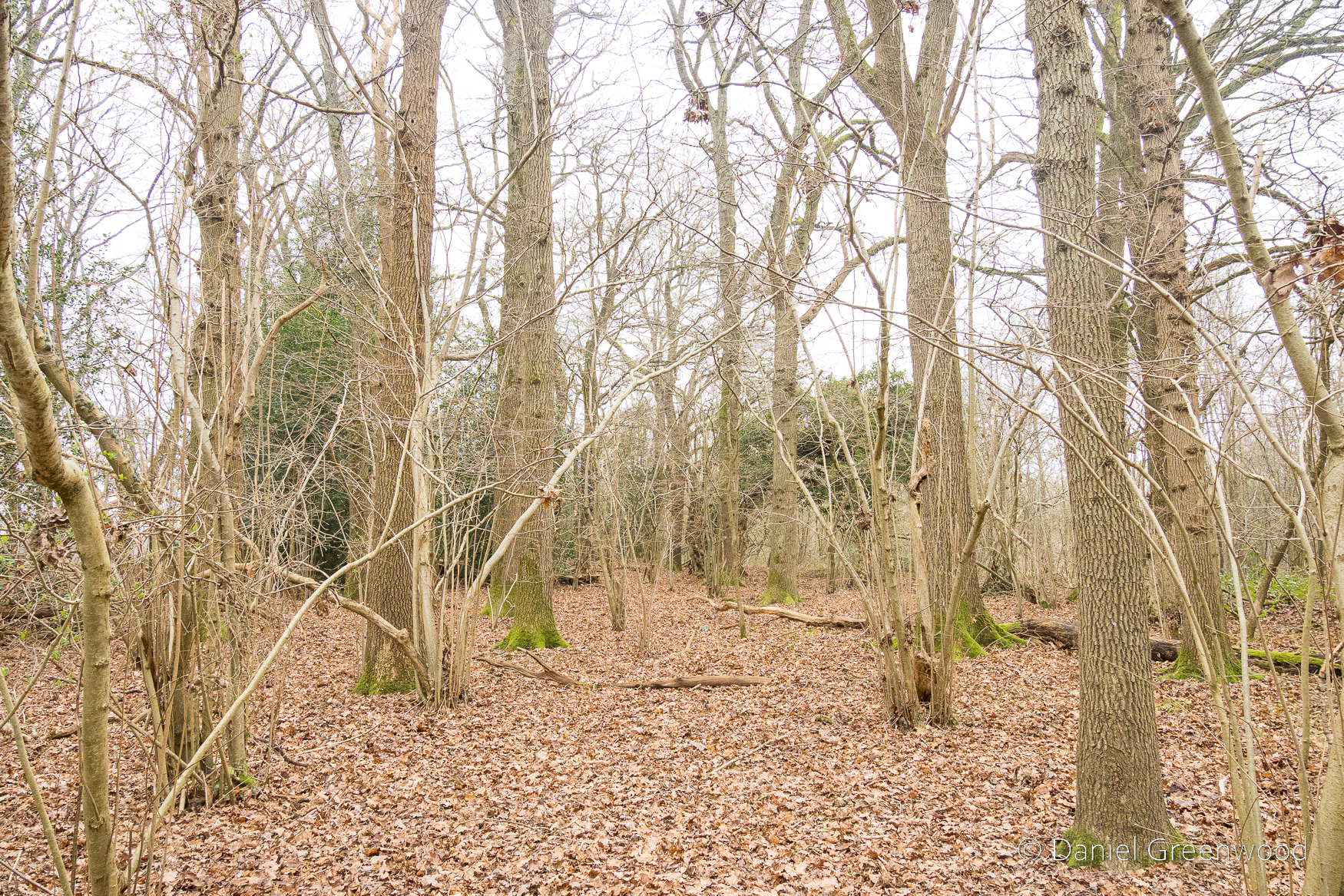
As you probably already know, ancient woodland is a sensitive habitat, so be careful not to trample wildflowers like bluebell and wood anemone in the spring (it’s hard!), and not to disturb ground-nesting birds (March-July). I noticed some bluebells were peeking from the leaf litter, which seems to be fairly normal for January in the last decade.

It was here that I spoke to a local woman about the walk I was doing and what the best route was. I’m always looking for tips.

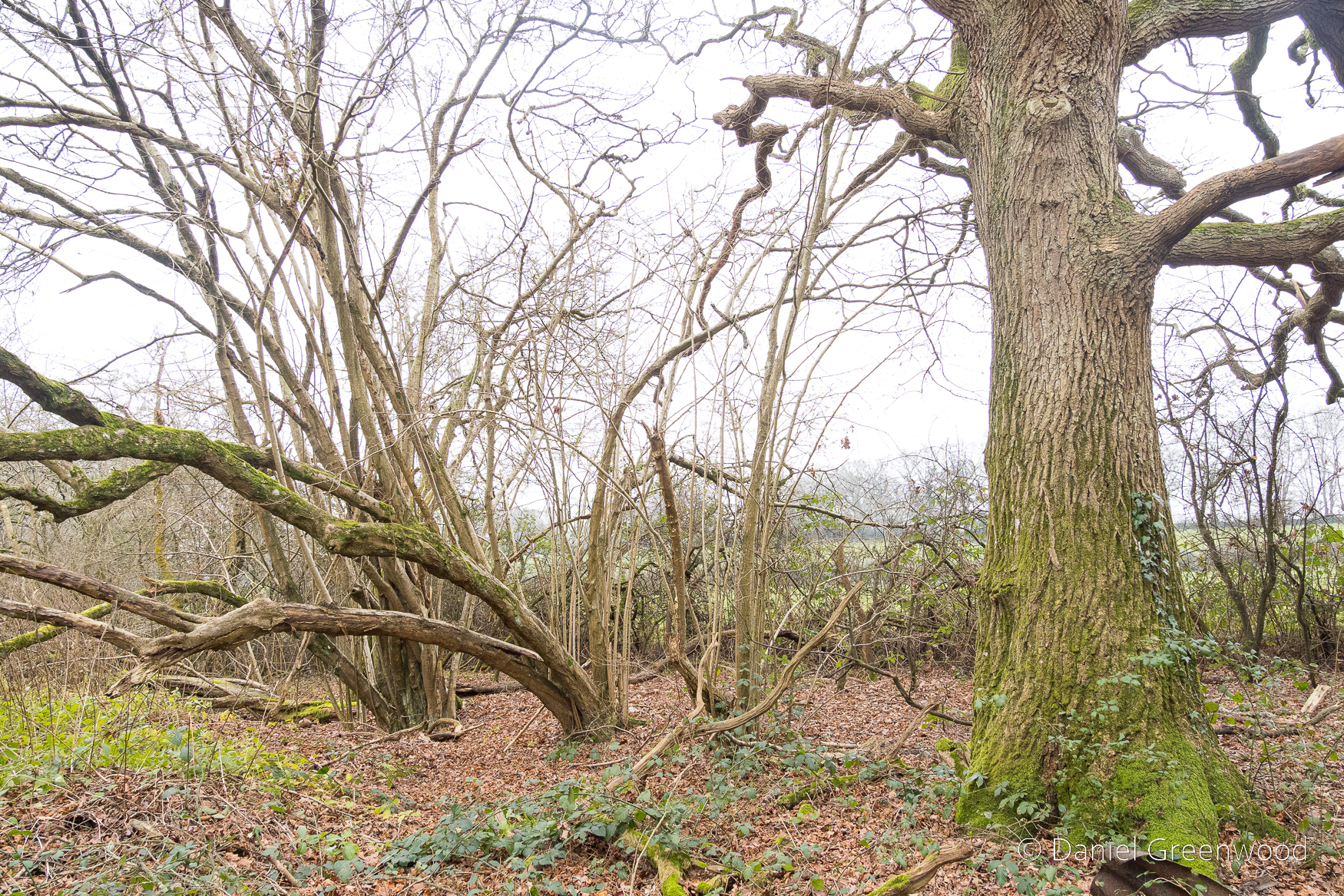
The woods are surrounded by open farmland. The make-up here is typical managed ancient woodland of old – hazel understory with mature oak trees (otherwise known as ‘coppice with standards’). Mr. Garton’s bread and butter.

Holly is another element of this prehistoric mix. This isn’t meant to sound patronising but I think that sometimes too much holly can be removed from woodlands by well-meaning people who want to reduce shade for flowers to thrive. I understanding the motivation, but holly’s powers are subtle.

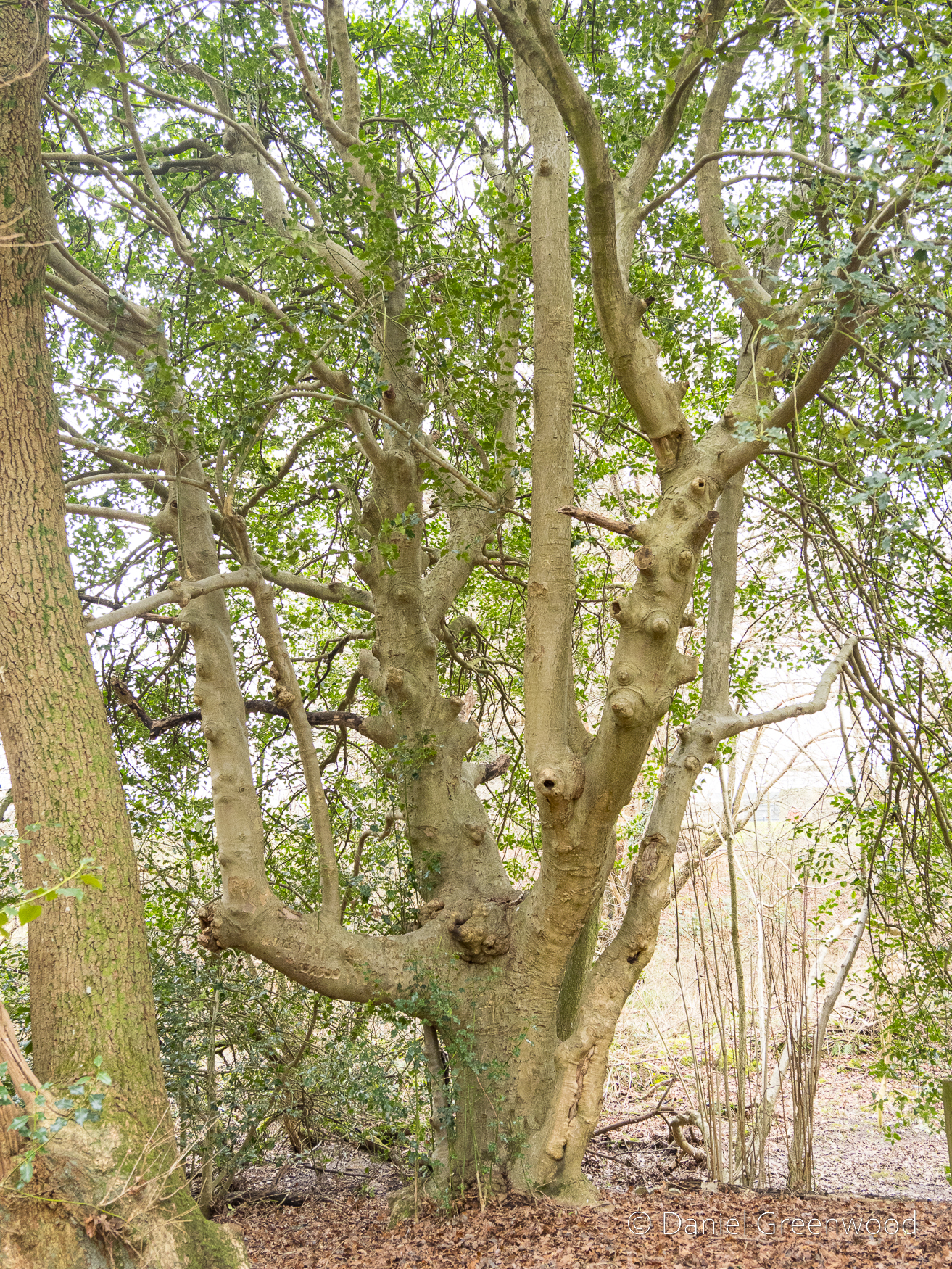
Speaking of which, this magnificent holly was growing on one of the wood banks. I think it’s one of the largest I’ve ever encountered, probably around 200-300 years old, but I’m not sure.

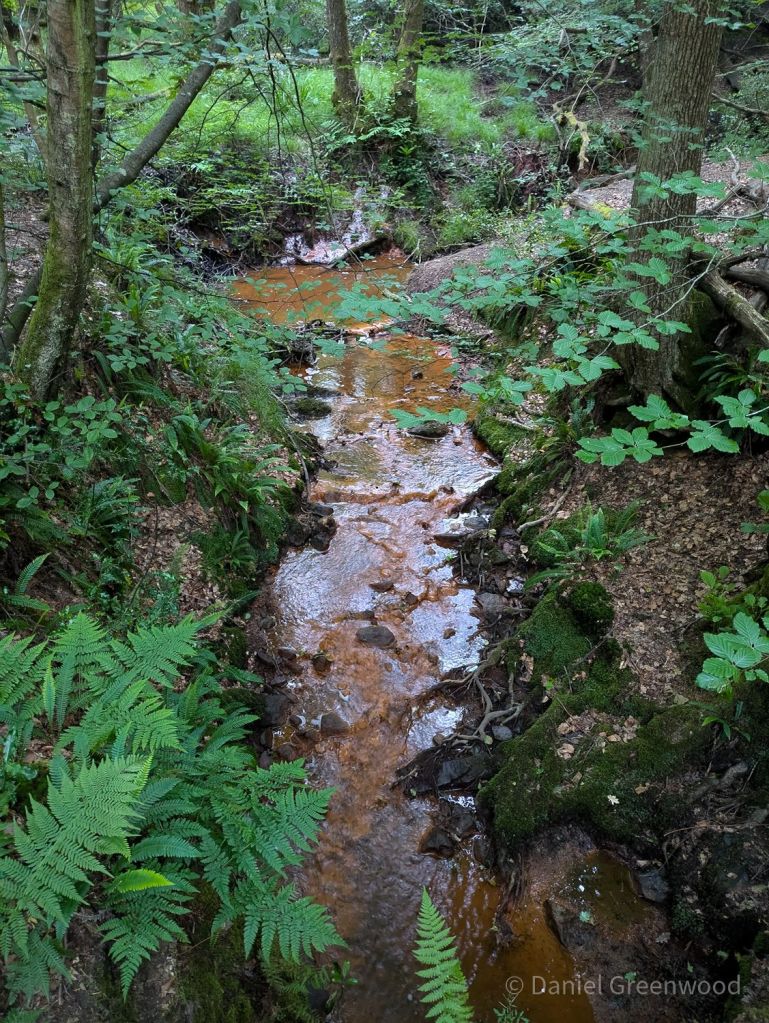
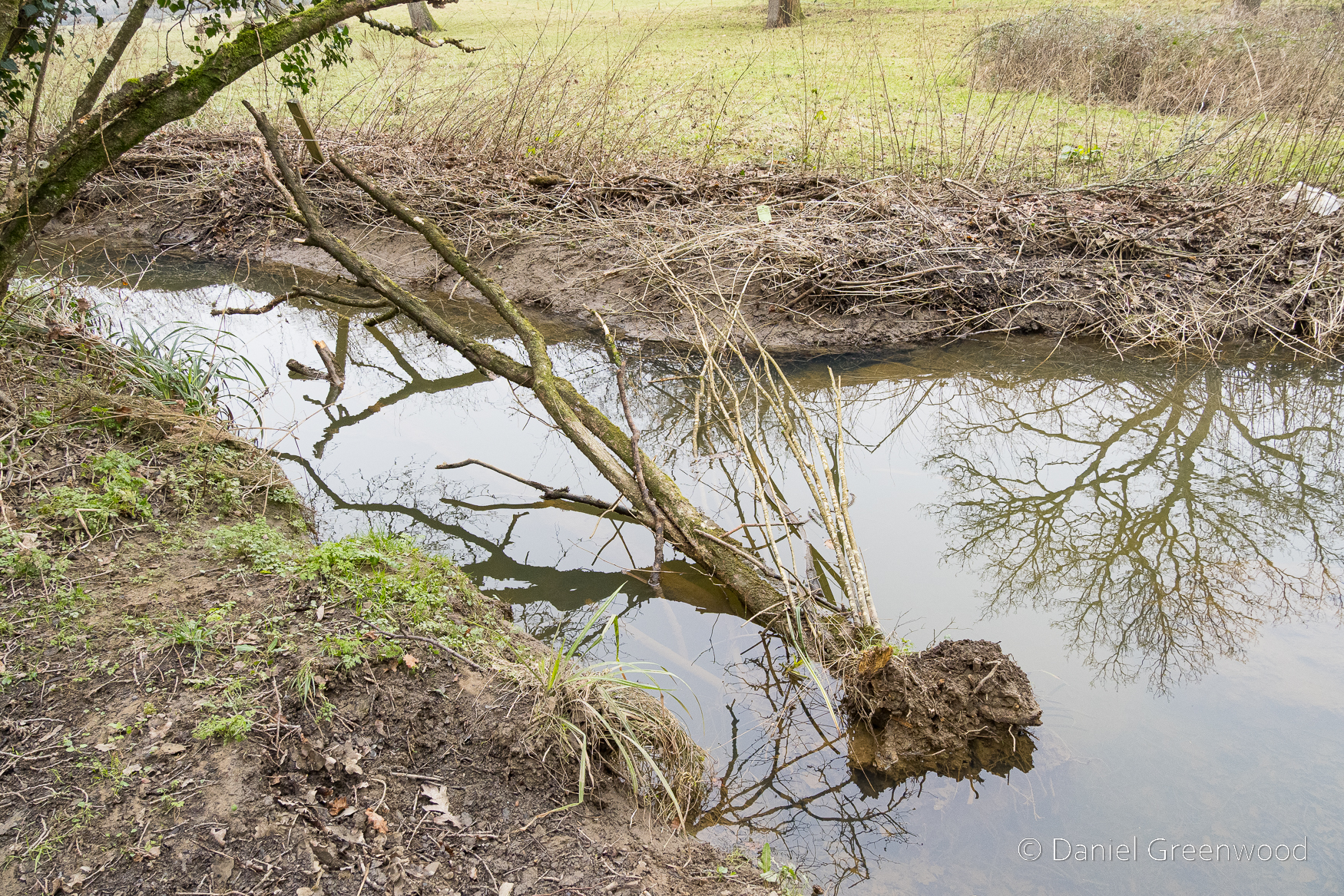
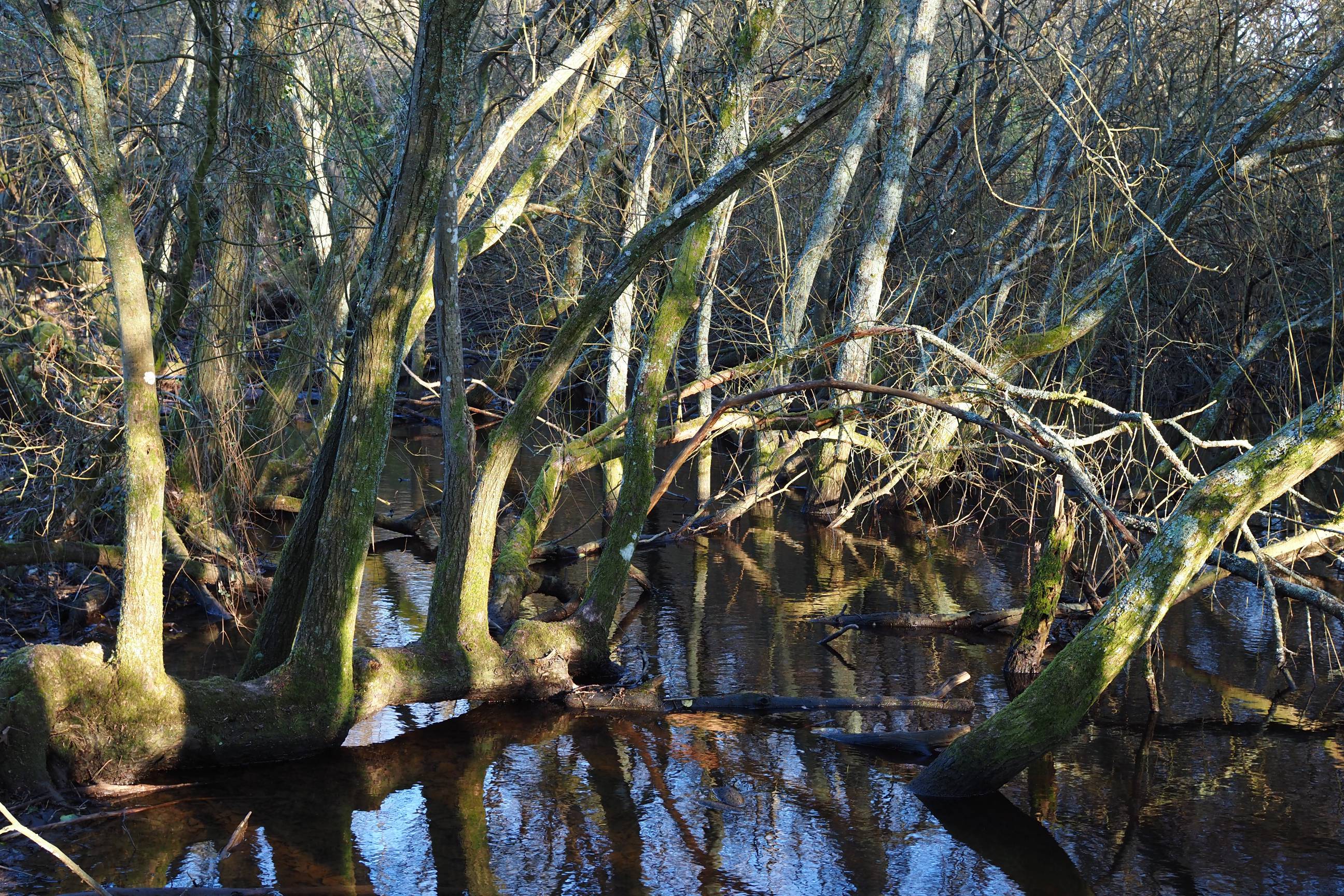
I got a bit lost here and ended up following a desire-line (an informal path) along the edge of this stream, as you can see on the map above. The erosion of the bank (possibly by people and pets entering it) may have contributed to this hazel losing its footing and falling in. It does look quite dead.

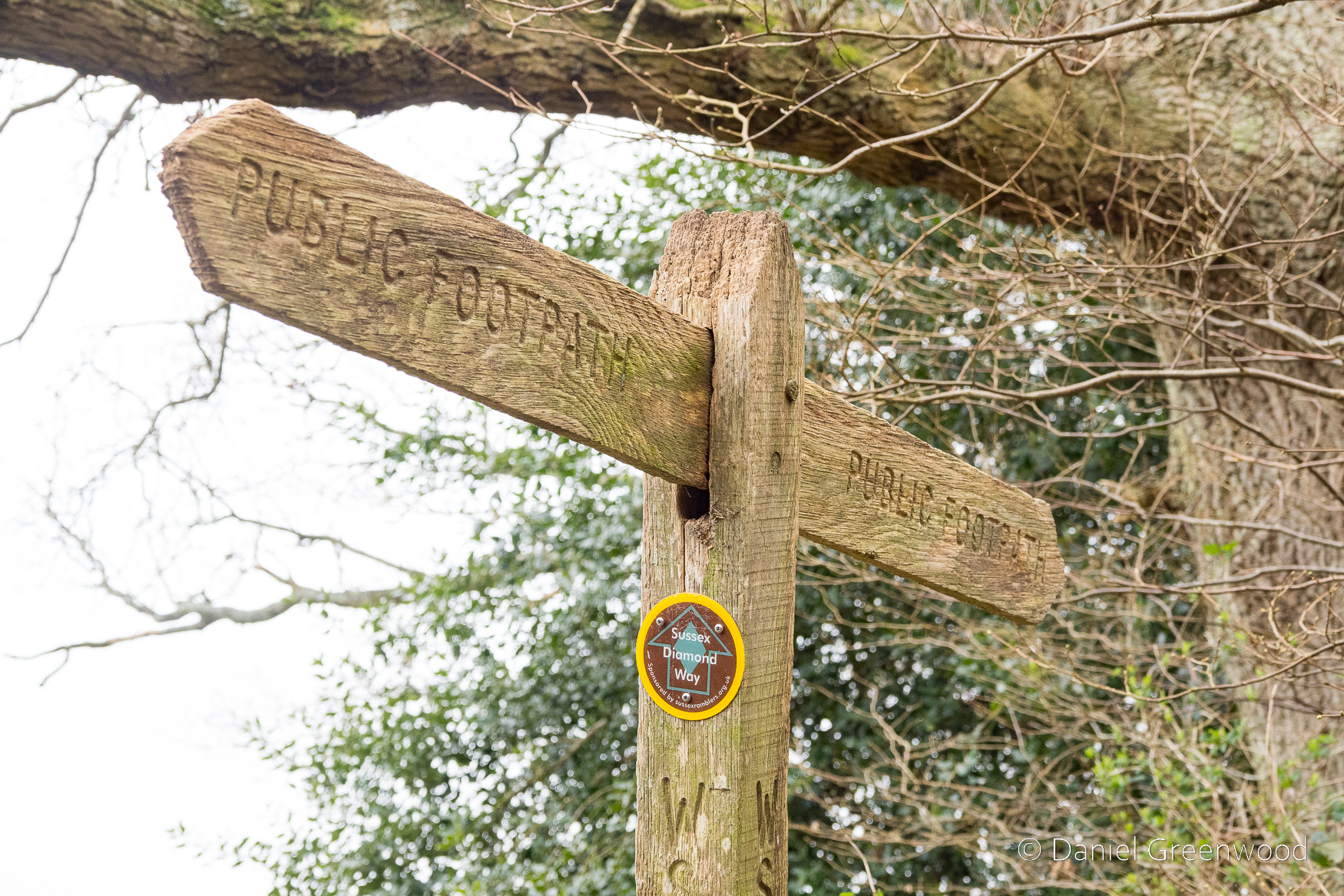
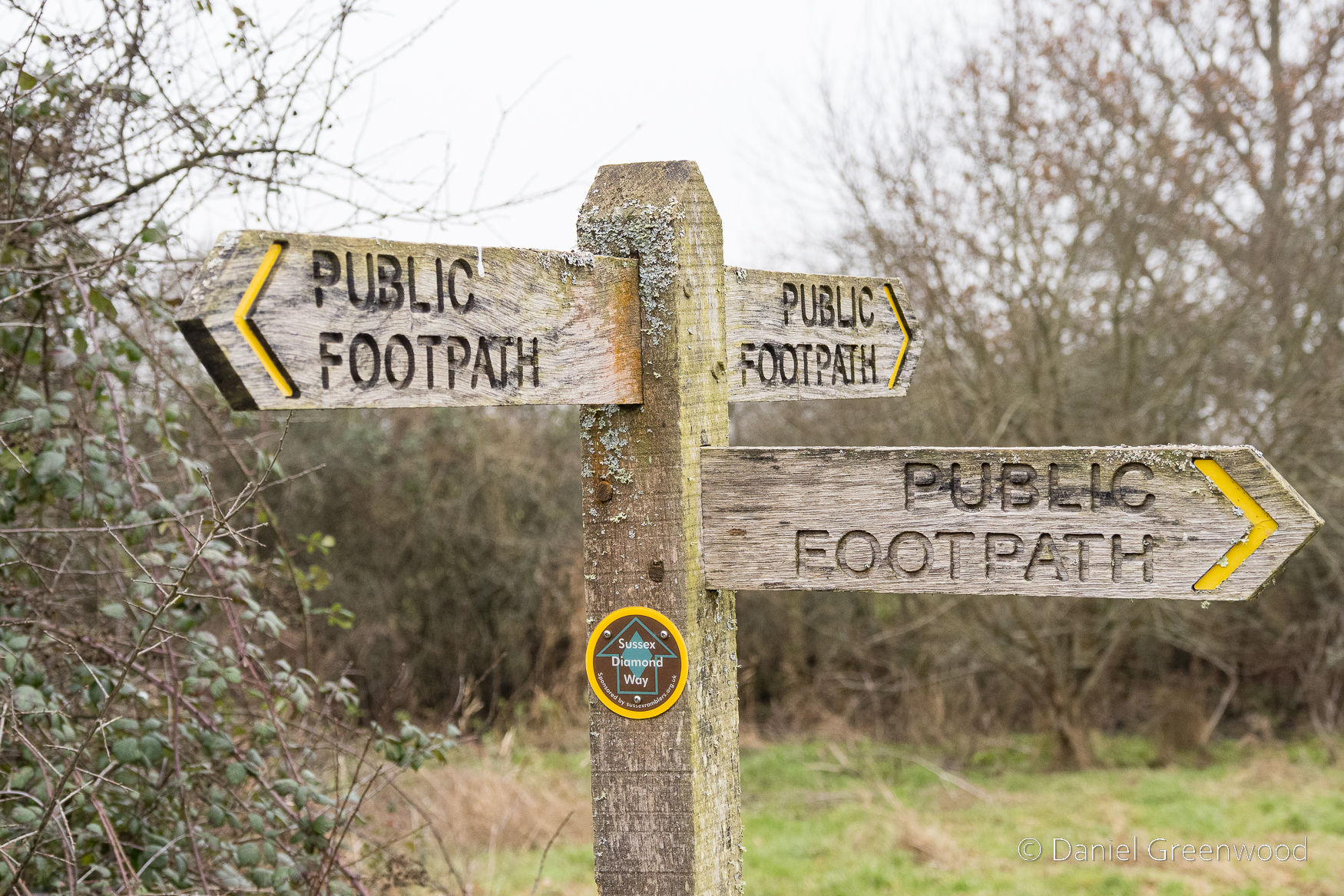
This was my first time on the Sussex Diamond Way!

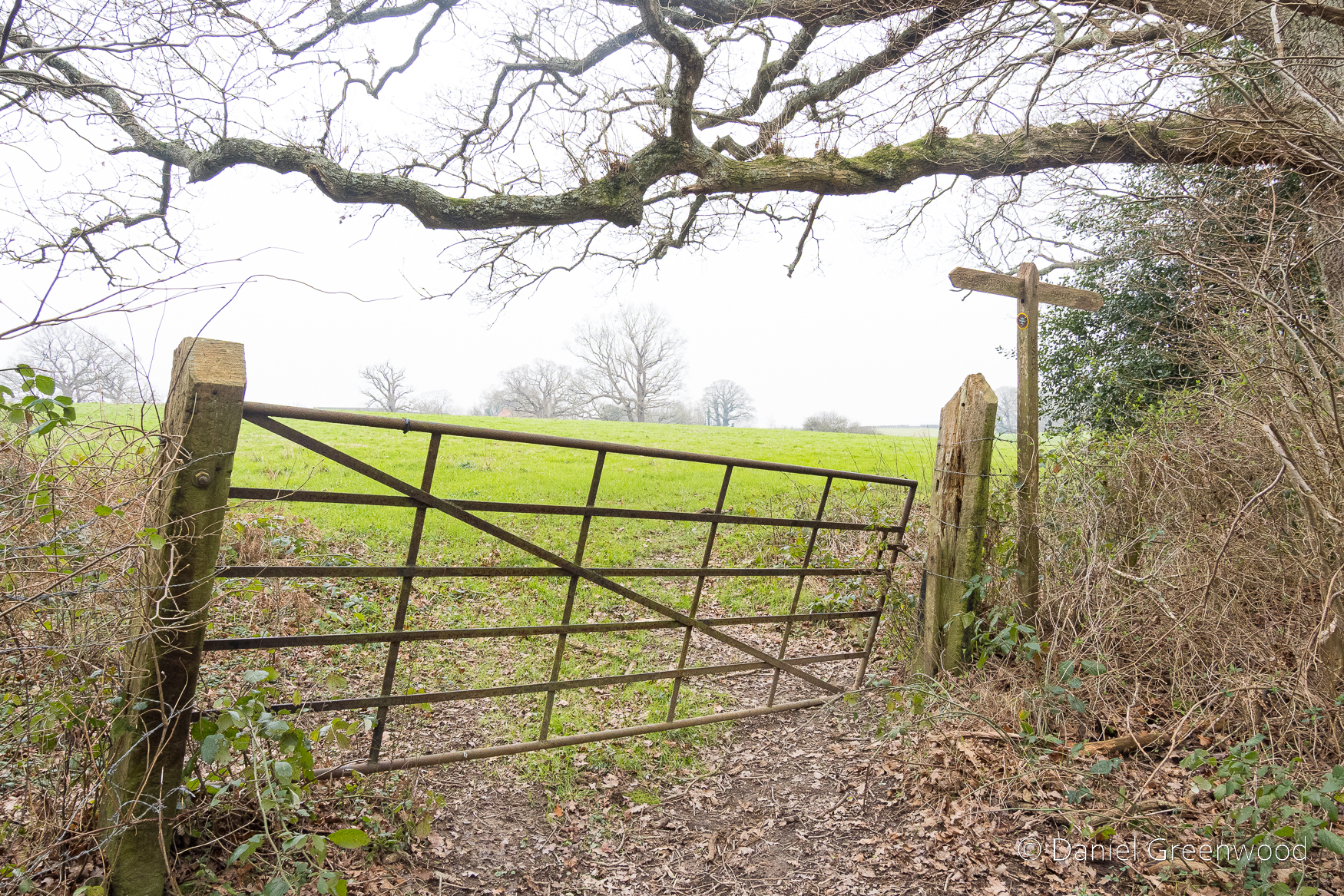
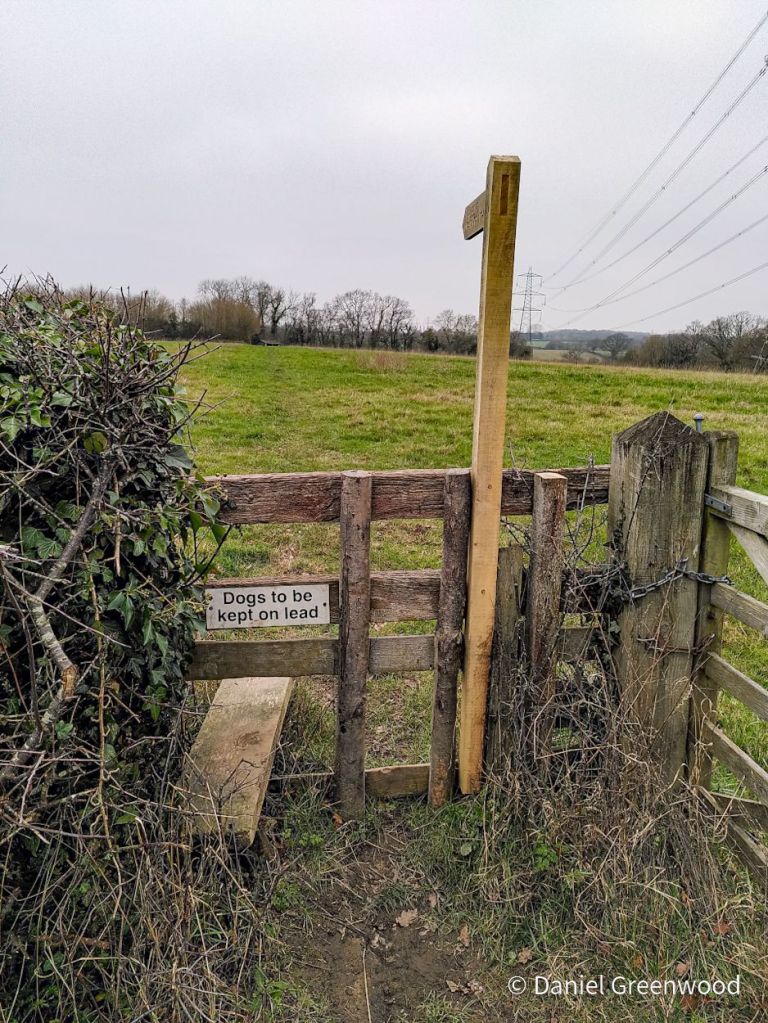
Having found the path again, I passed through this lopsided gate into the field.

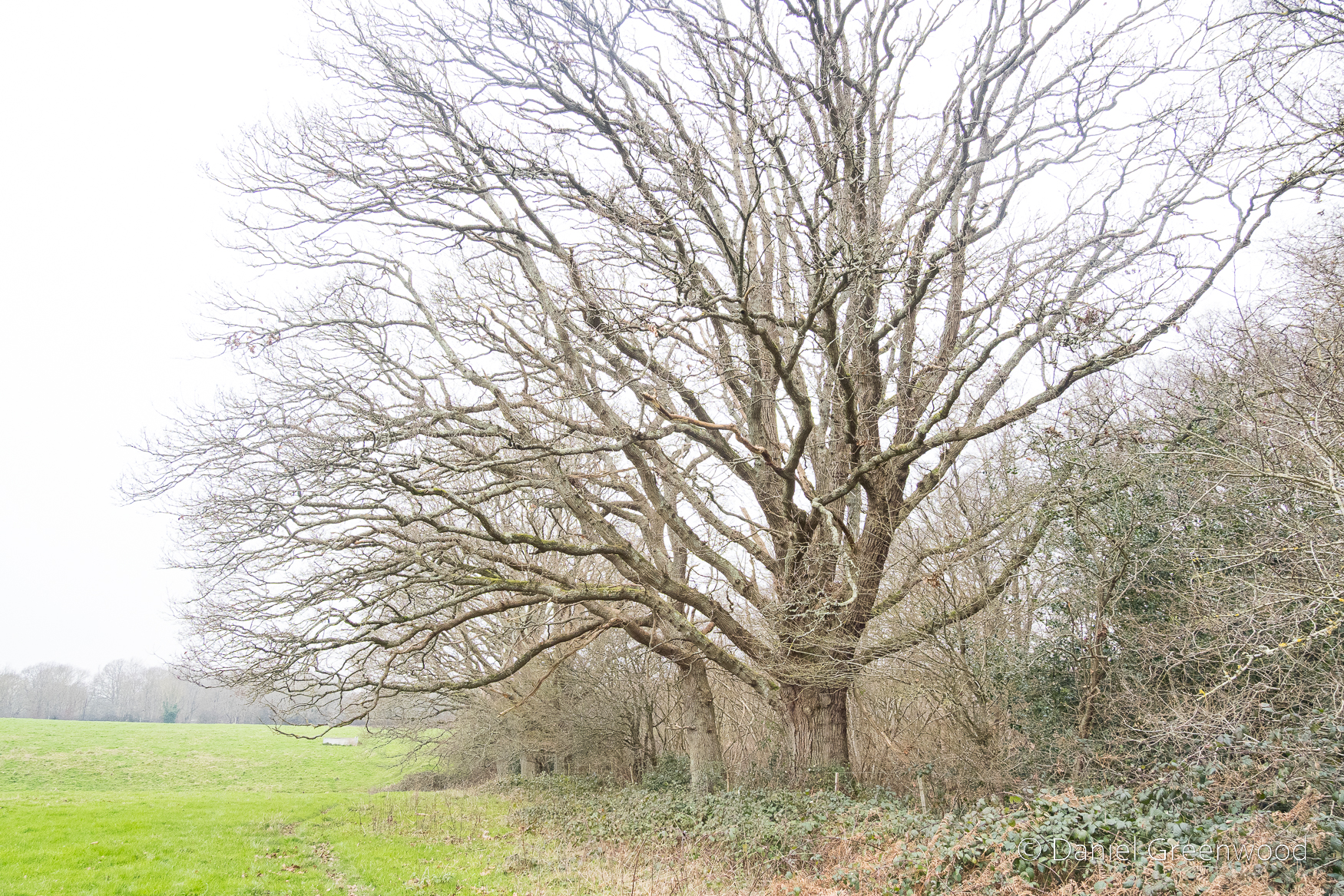
There were some lovely large oaks along the boundary of field and woodland.

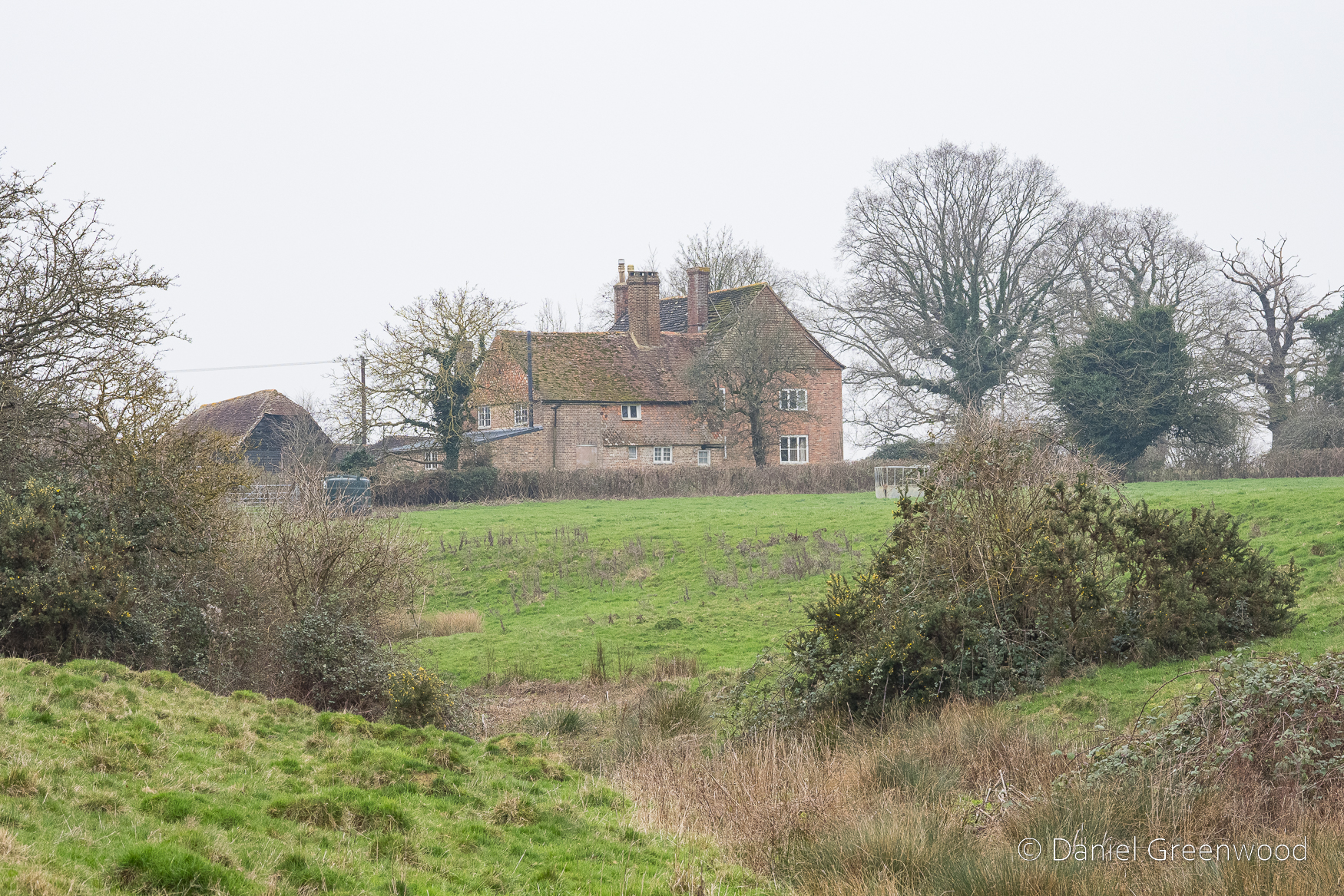
This is The Lordings, a Grade II-listed farmhouse dating to the 1600s (Historic England listing). With its uneven development and attached Sussex barn on the left-hand side, I had wondered how old it was. The windows of the house are in different places and rather small, which did suggest old age. The ditch in the image is part of a stream and pond. The landscape was lovely here, formed by the movement of water over time, which makes me think that’s a natural spring-fed watercourse. Little Lordings Wood sits nearby, and once upon a time woodland will have covered this entire area. ‘Lordings’ appears throughout this walk but I can’t find any more information about the significance of the name.

Now came one of the most dangerous crossings I’ve encountered during my 15 years of rambling (with my legs). The gate opens right out onto a road where the speed limit is 60mph, and you have no way of seeing what’s coming round the corner, or it seeing you. Having a hi-vis is useful in this kind of situation. Reader, I made it.

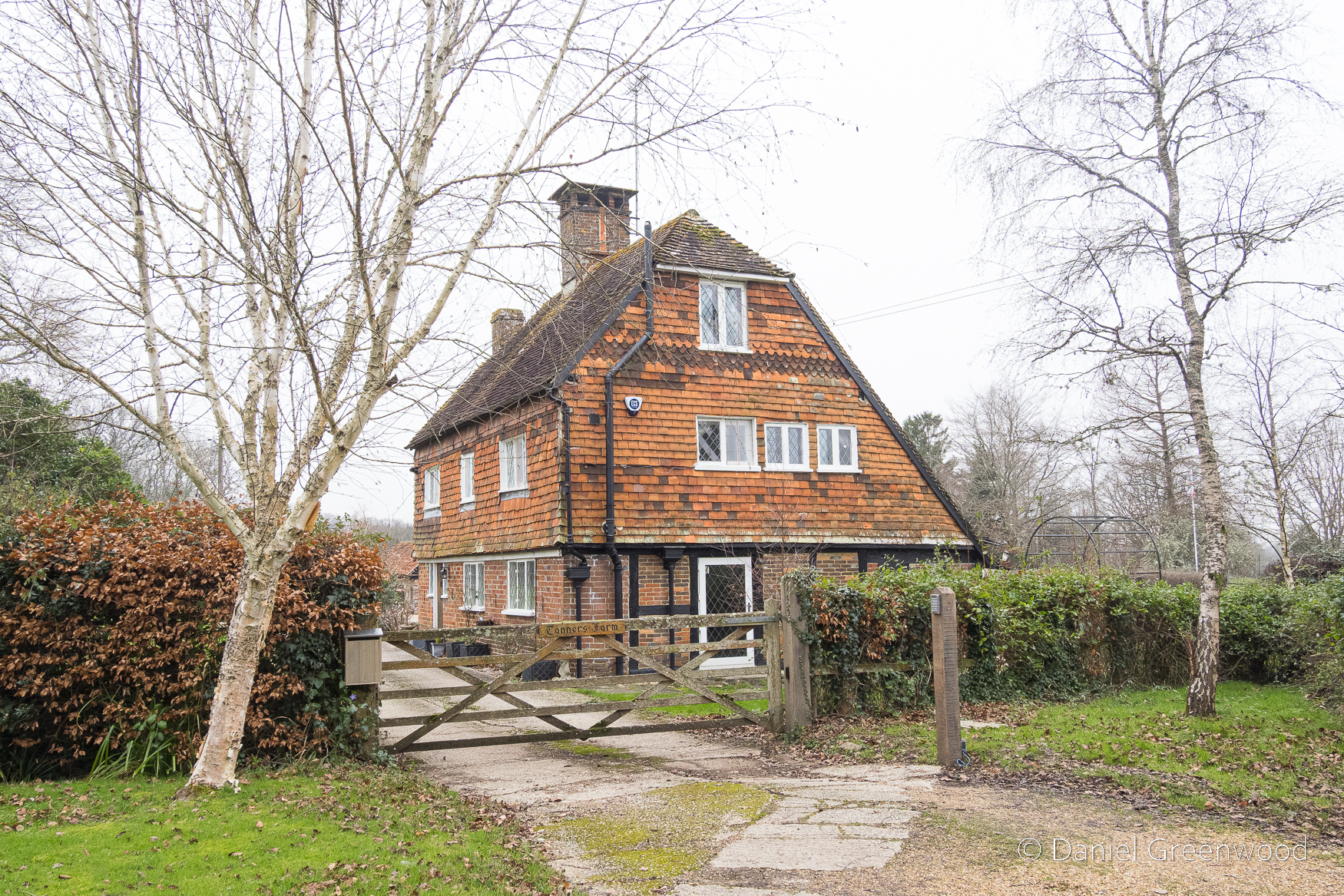
There are a number of old farm houses dotted around this walk. This is Tanners Farm, which ties in nicely with the oaks. Tanning is the job of removing moisture from animal hides in the process of producing leather. Soaking the hides in with oak bark releases the tannins from the bark and helps to waterproof the resulting leather.

It had the feel of an ancient agricultural landscape, with oak a core part of its progress over time.

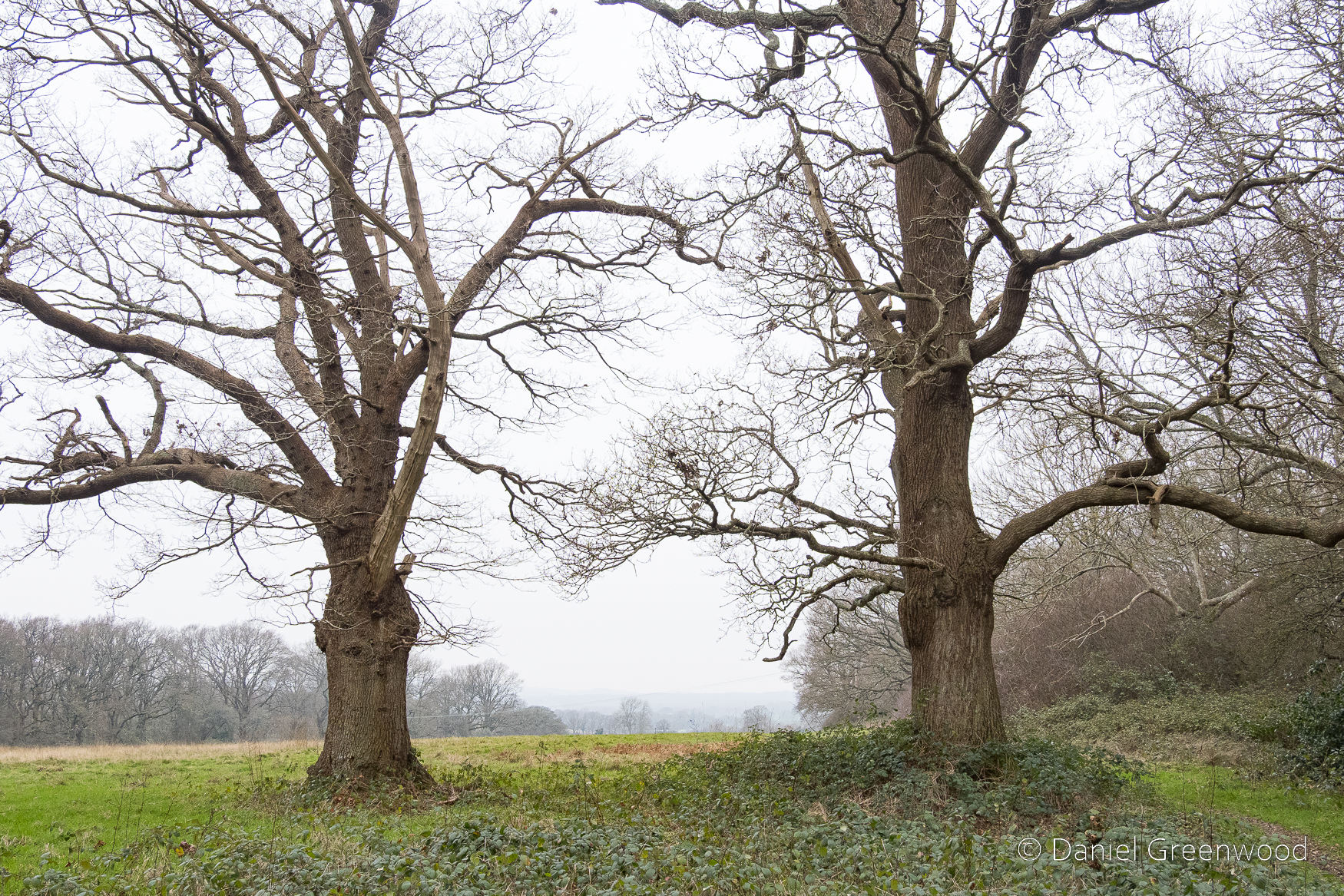
The Tanners Farm section, passing beyond two large oaks, provides the best views of the entire walk. It was misty when I was there, so the views of the Downs weren’t complete. The drama is still felt, and is a reminder that one of the nicest things about walking in the Low Weald are the views of that majestic chalk whaleback.

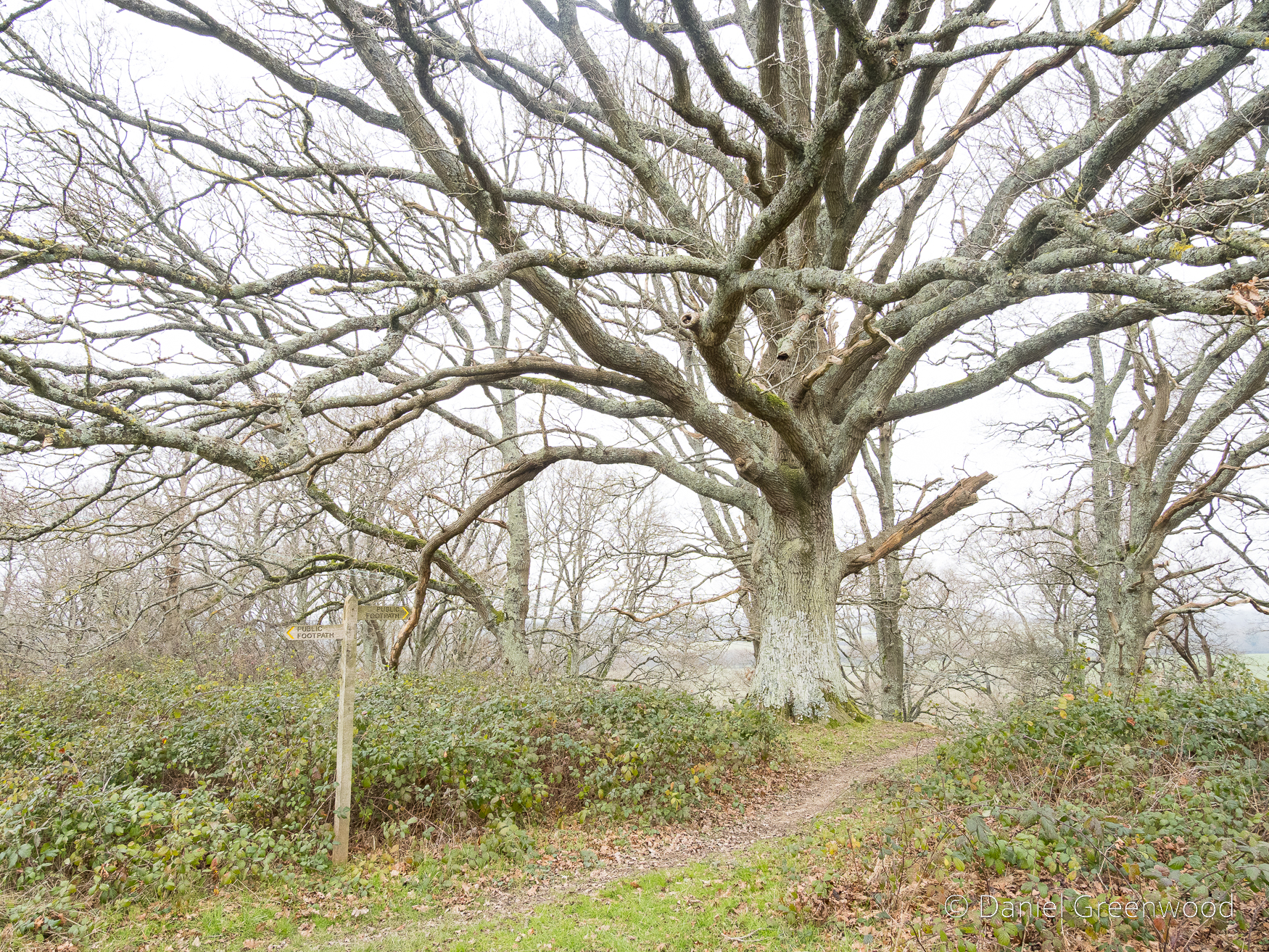
This enticing path into oak woodland was not to be taken on this occasion.

The misty view south, with the Downs not quite making it into the scene. Another one for a spring or summer day.

So much choice. It was time to leave the Sussex Diamond Way and join the Wey-South Path.

The Wey & Arun Canal

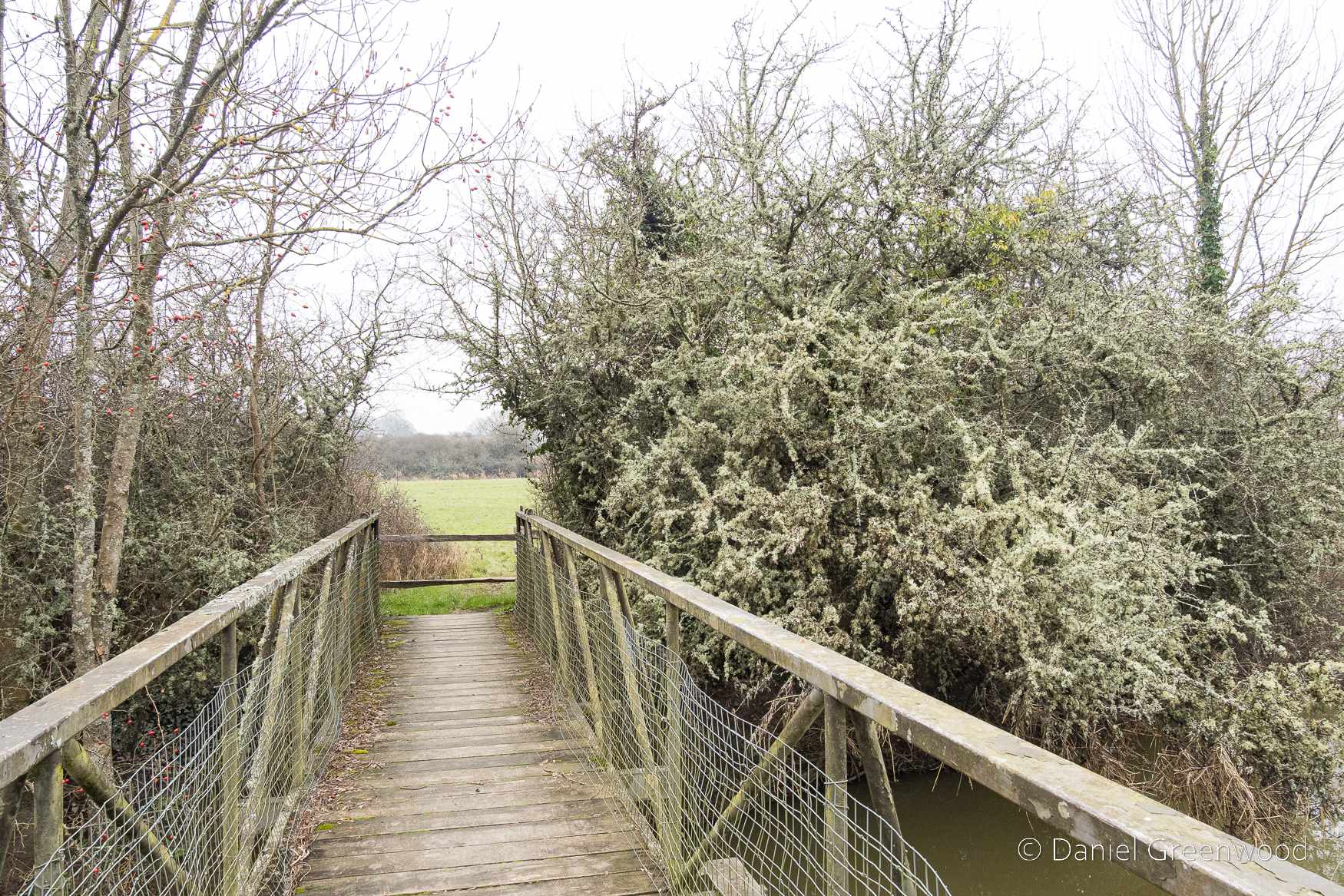
January is too early for blackthorn, though that is changing with the march of climate change. This froth of white is actually lichen hanging over the Wey & Arun Canal.

The canal was constructed after plans were brought to Parliament all the way back in 1641 to ‘link the upper reaches of the River Wey to those of the Arun by a canal between Cranleigh and Dunsfold’:

[I]n 1785 The Arun Navigation Act was passed and the section between Pallingham and Newbridge opened two years later.

Billinghurst’s Heritage: Geoffrey Lawes, 2017, p.174

The canal began to transfer goods in 1816 when the Wey & Arun Junction Canal opened. So it took the best part of 200 years for the canal to be built (sounds like HS2). The Industrial Revolution of the 1790s changed the world in that time, but the impacts only really began to be felt a couple of decades after the 1820s when the canal was in full operation. It closed in 1888 – two centuries of planning, sixty years of action.

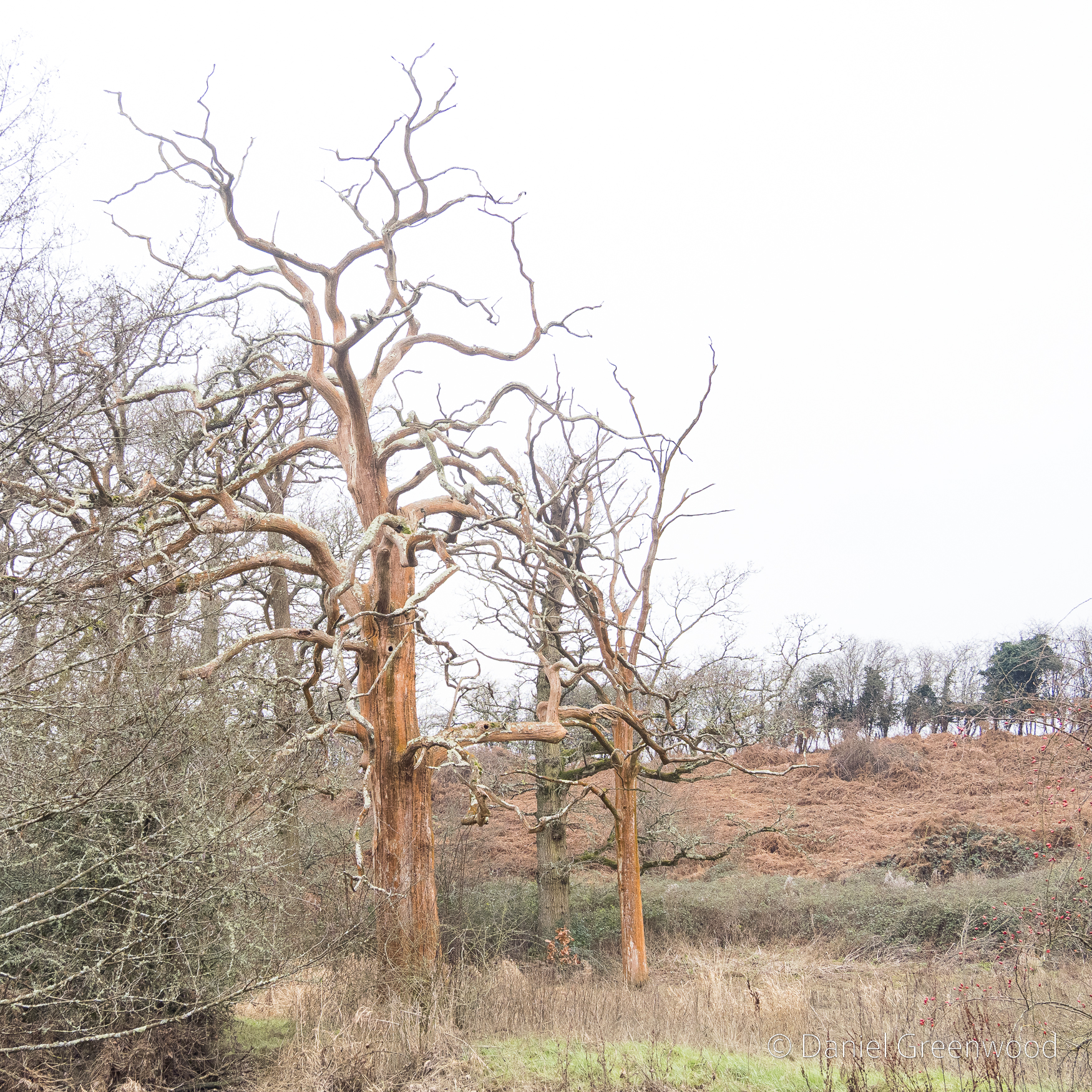
I passed these dead oak trees covered in an orange algae (I presume). I expect oak would have been one of the resources transported up and down the canal. The oak woodlands around Billingshurst, which covered a far greater area then, would have been felled, debarked and planked, their produce taken upstream to the Thames’ shipyards, or south to the Solent in Hampshire where international trade could have taken place. My understanding of the specifics is limited, so I’m generalising a bit, but Lawes States that most trade ‘was from London, mainly coal and groceries, porter beer and pottery’ (Lawes, p. 176). Lawes also confirms that the canal gave access to Littlehampton, Portsmouth, Chichester and Arundel via other water-links that could connect with the Wey & Arun Canal.

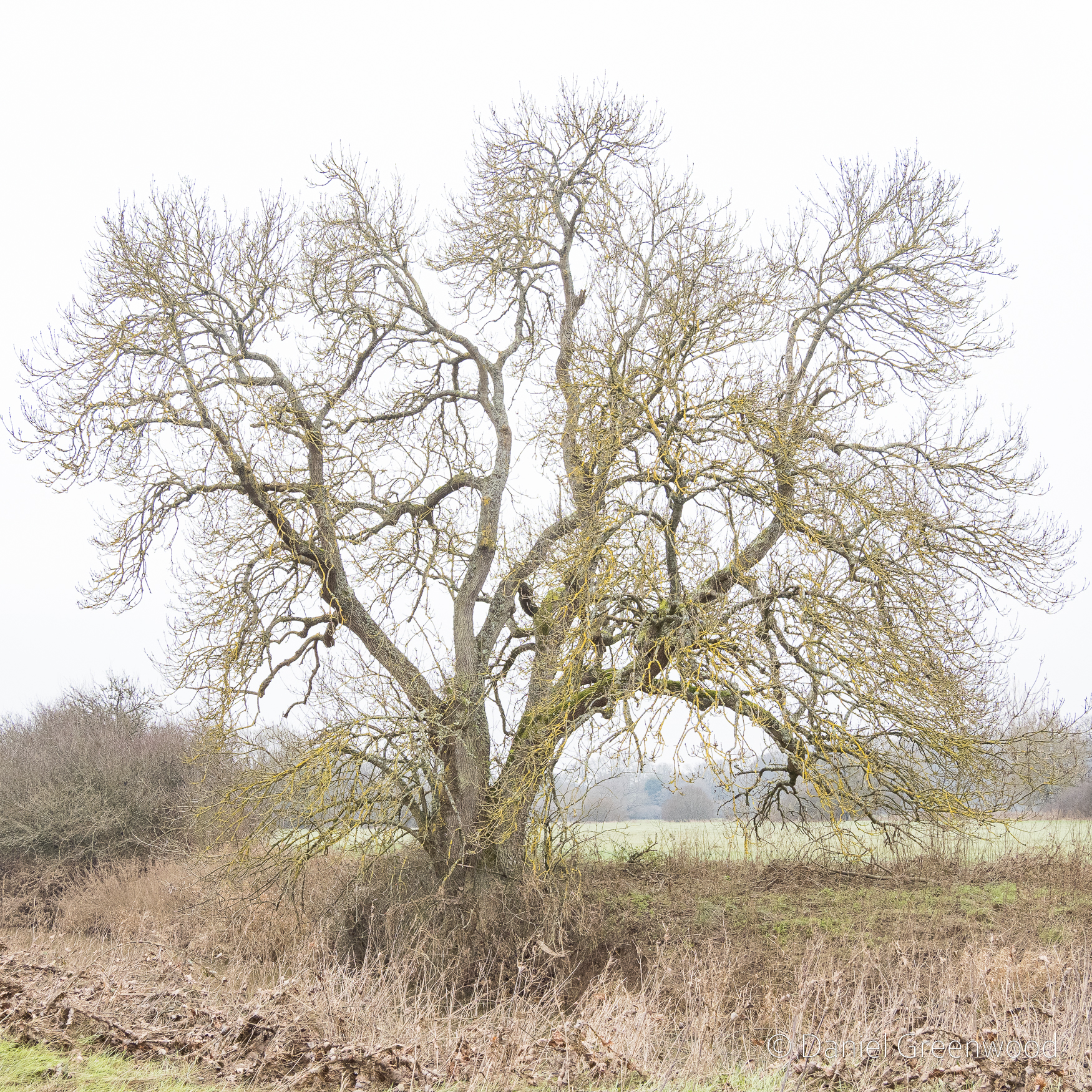
Ash trees would have been useful also, particularly for tool handles. One way to identify a distant ash tree in wet winter weather is the yellow glow on the outermost branches. These are xanthoria or sunburst lichens which of course thrive in wet weather. I would say this was a significant ash tree, and possibly had been pollarded, due to the branching taking place so low down on the trunk.

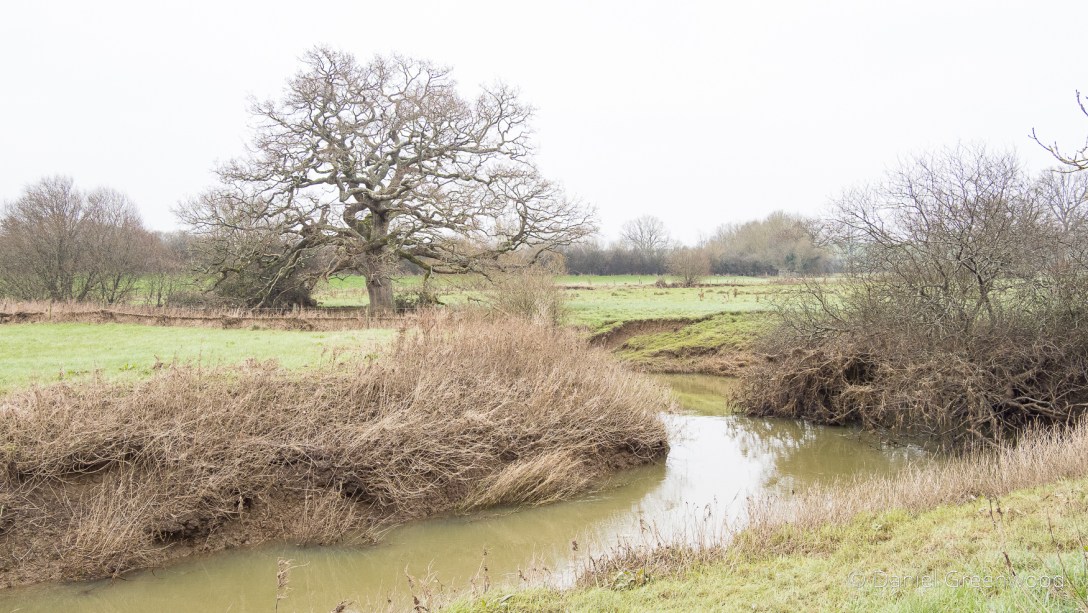
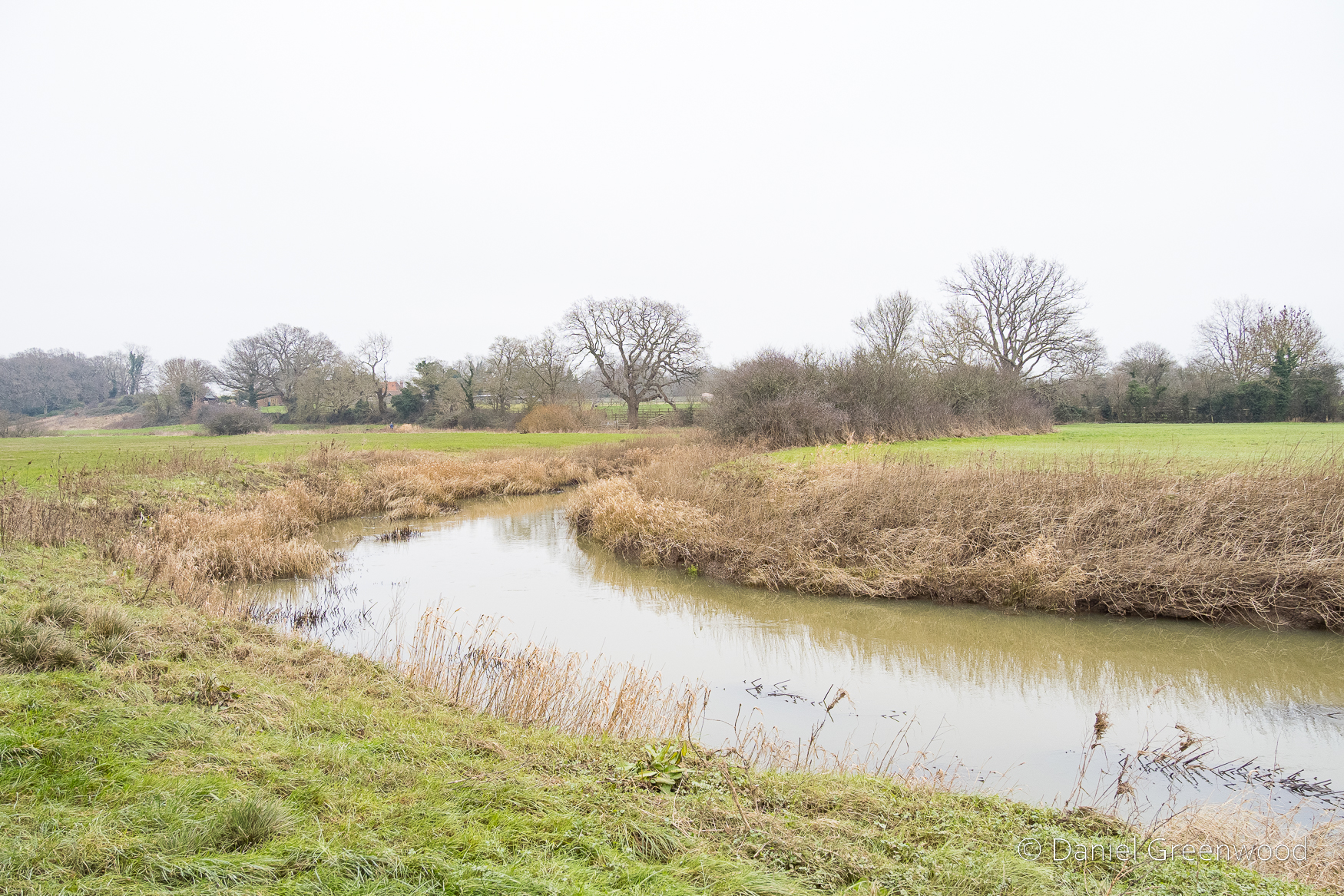
The Arun mocks the canal with its swooping bends as it takes its wild course through the outskirts of Billingshurst. The walk along this stretch was a sloshy trudge for a good while (wellies are advisable). It would be nicer in spring or summer, as all good walking guides will tell you.

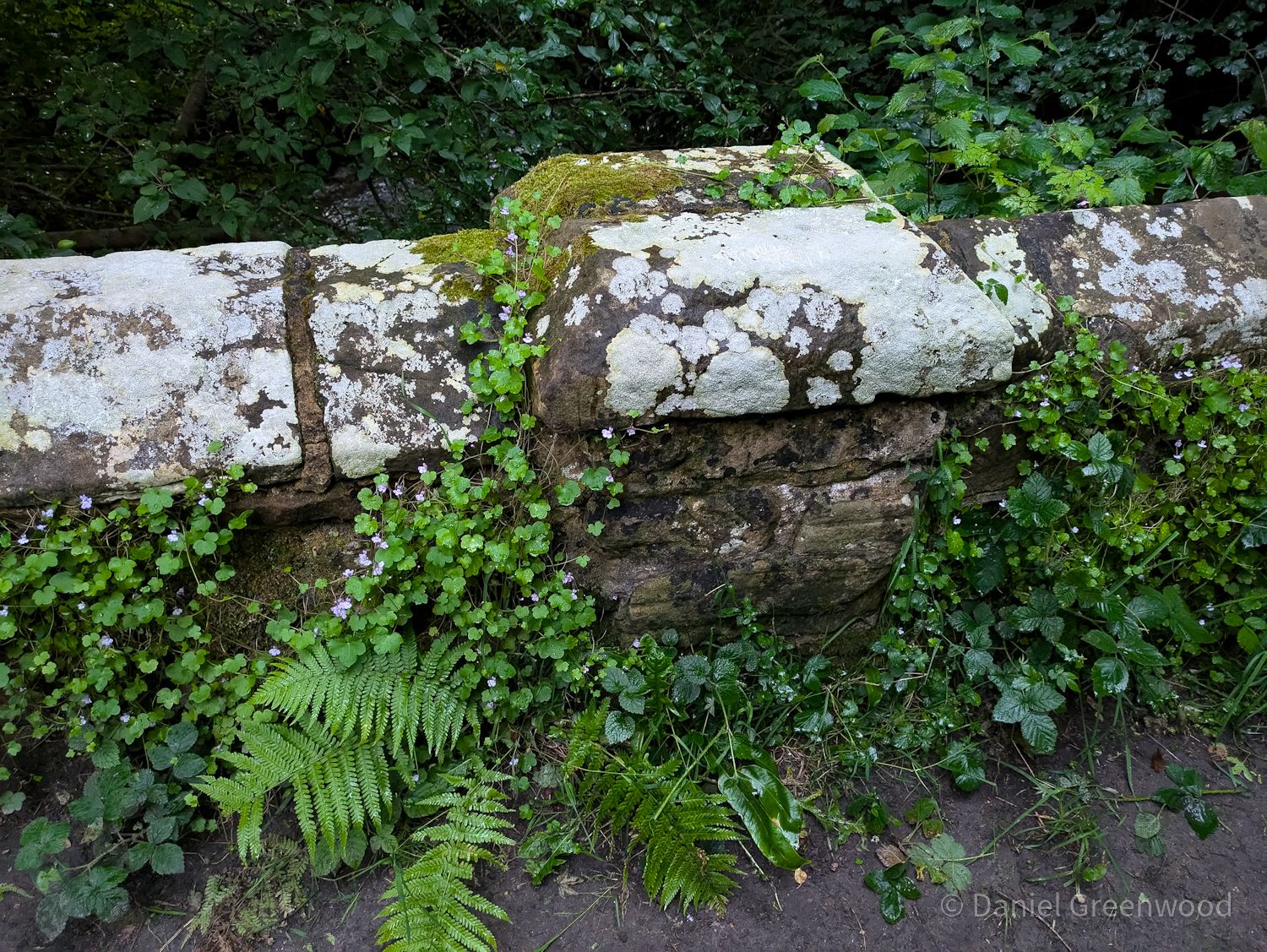
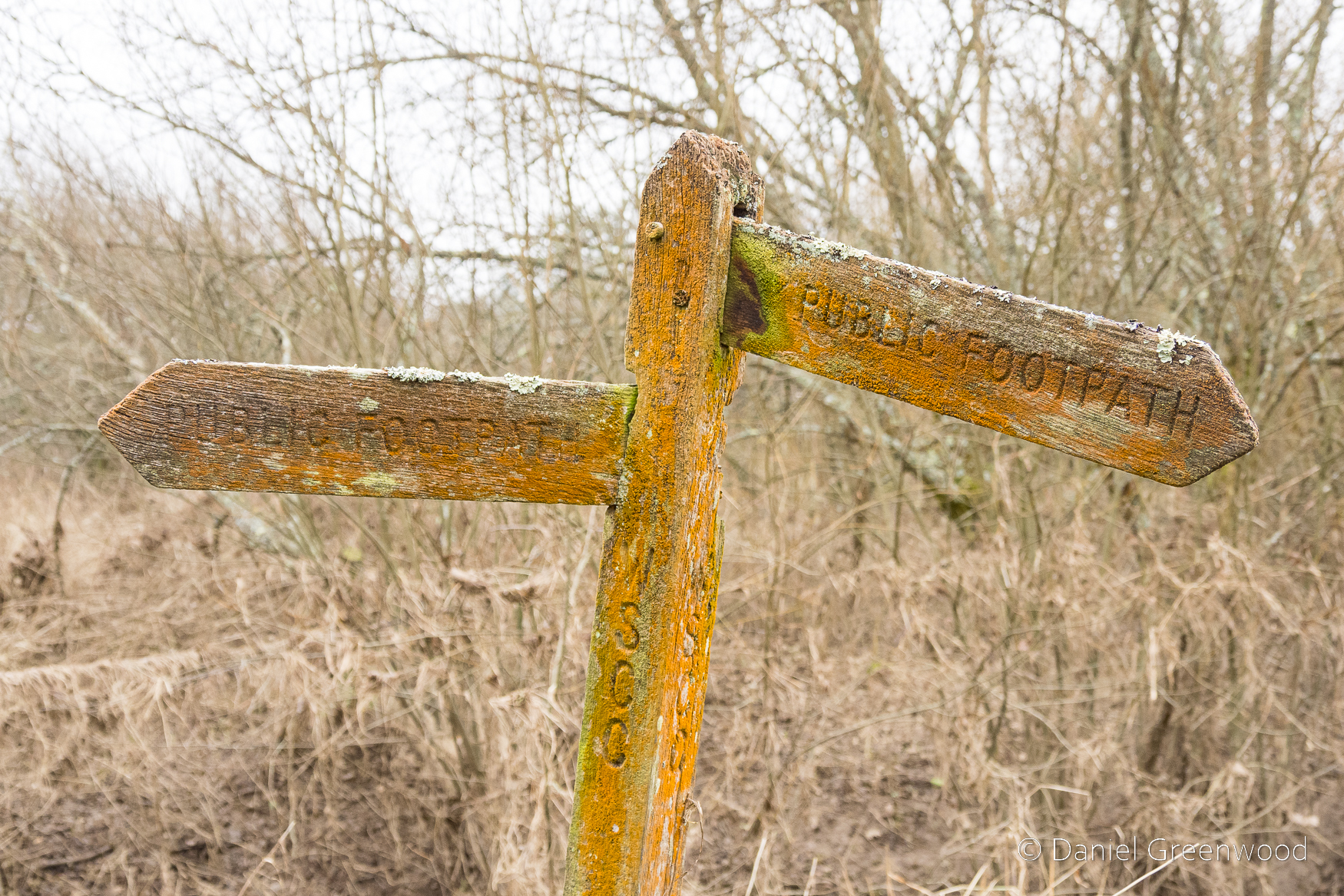
The damp atmosphere around the river and canal meant the fingerposts have become home to algae, moss and lichen.

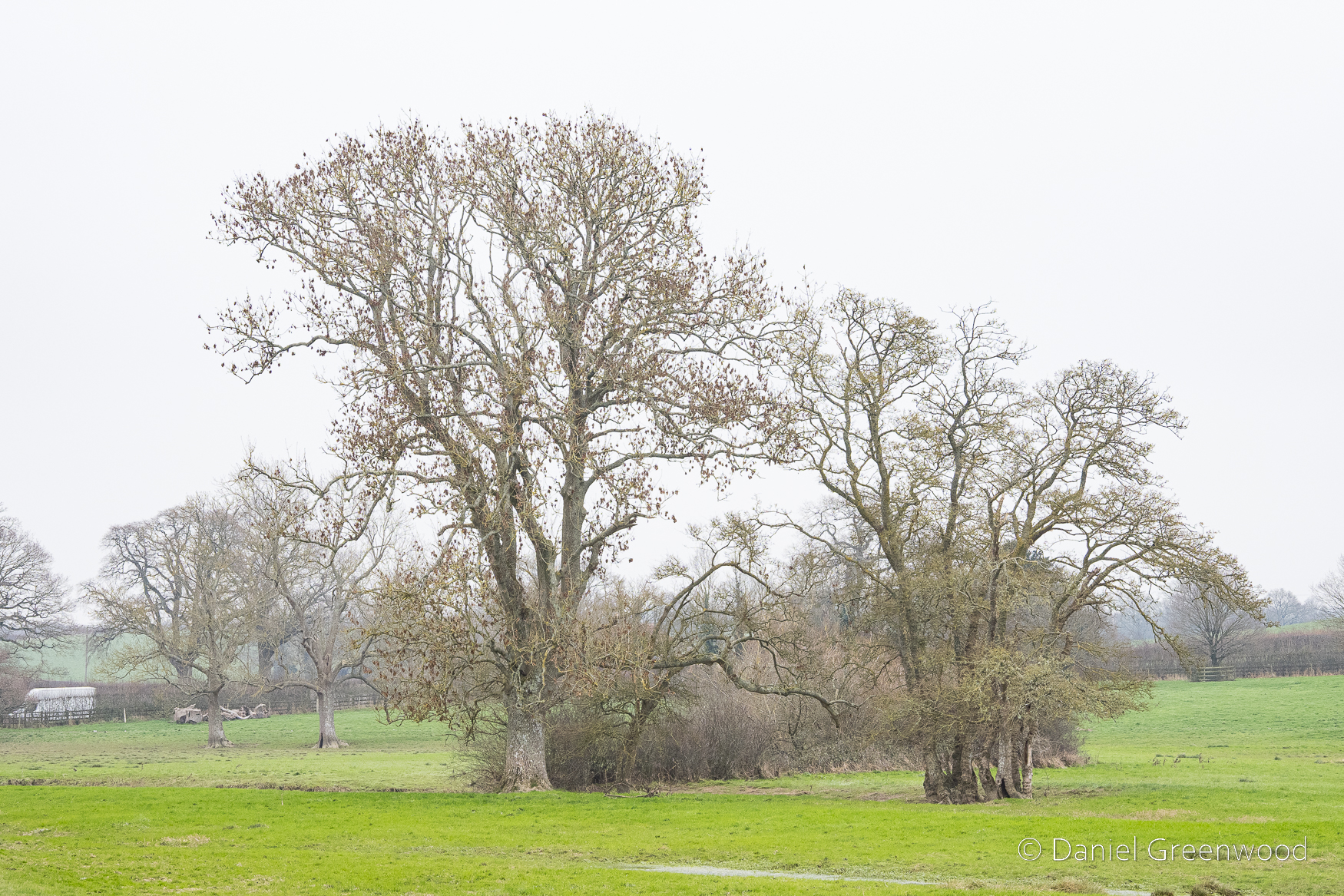
This is a large ash tree with what looks like an old hedgeline queueing behind it. To the right-hand side is what seems to be an alder, a tree that thrives in wet conditions. You can see a vehicle passing on the far left-hand side of the screen. The view of this field completely underwater during twilight is one of the more memorable scenes I can recall from travelling to Midhurst on the A272 over the years.

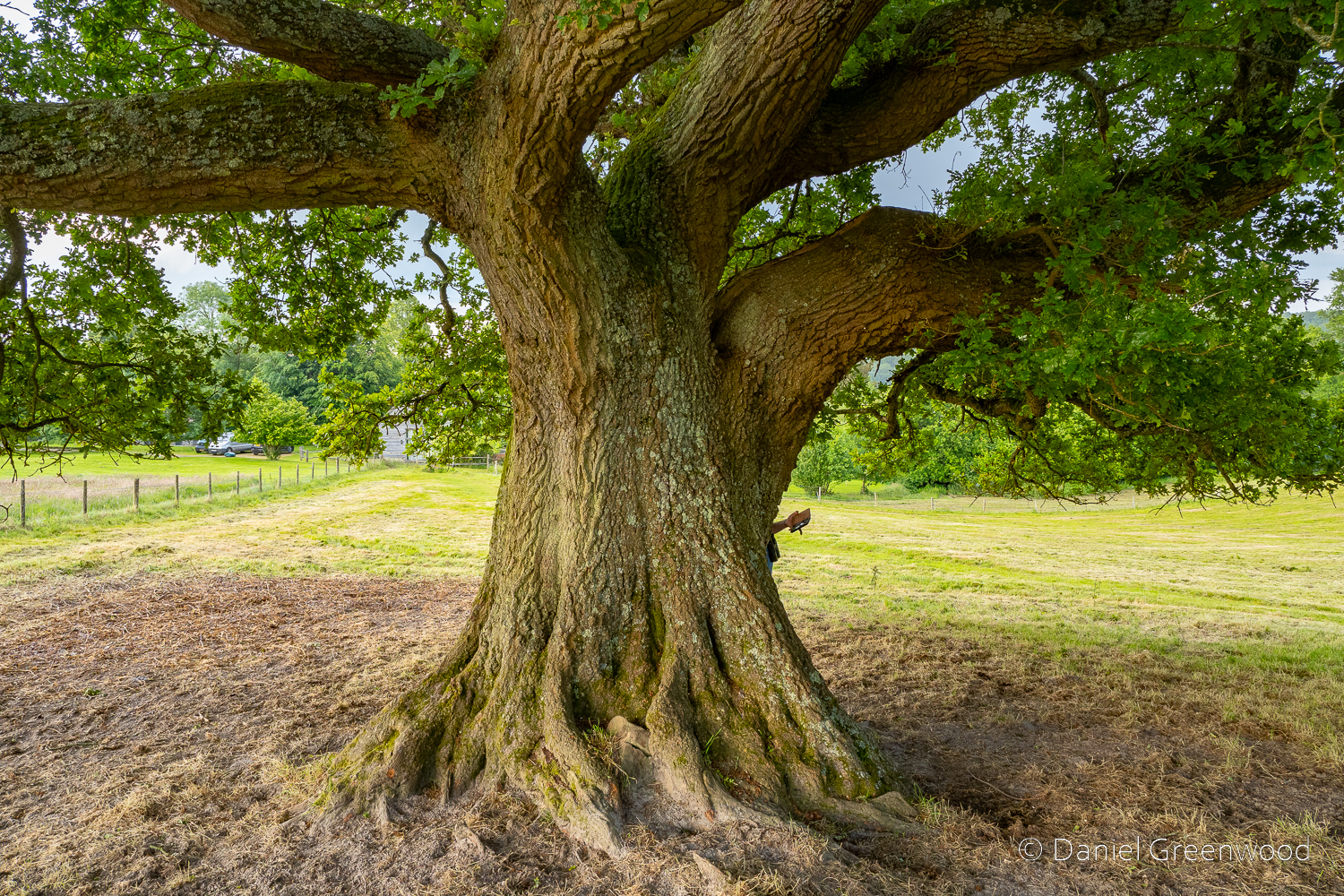
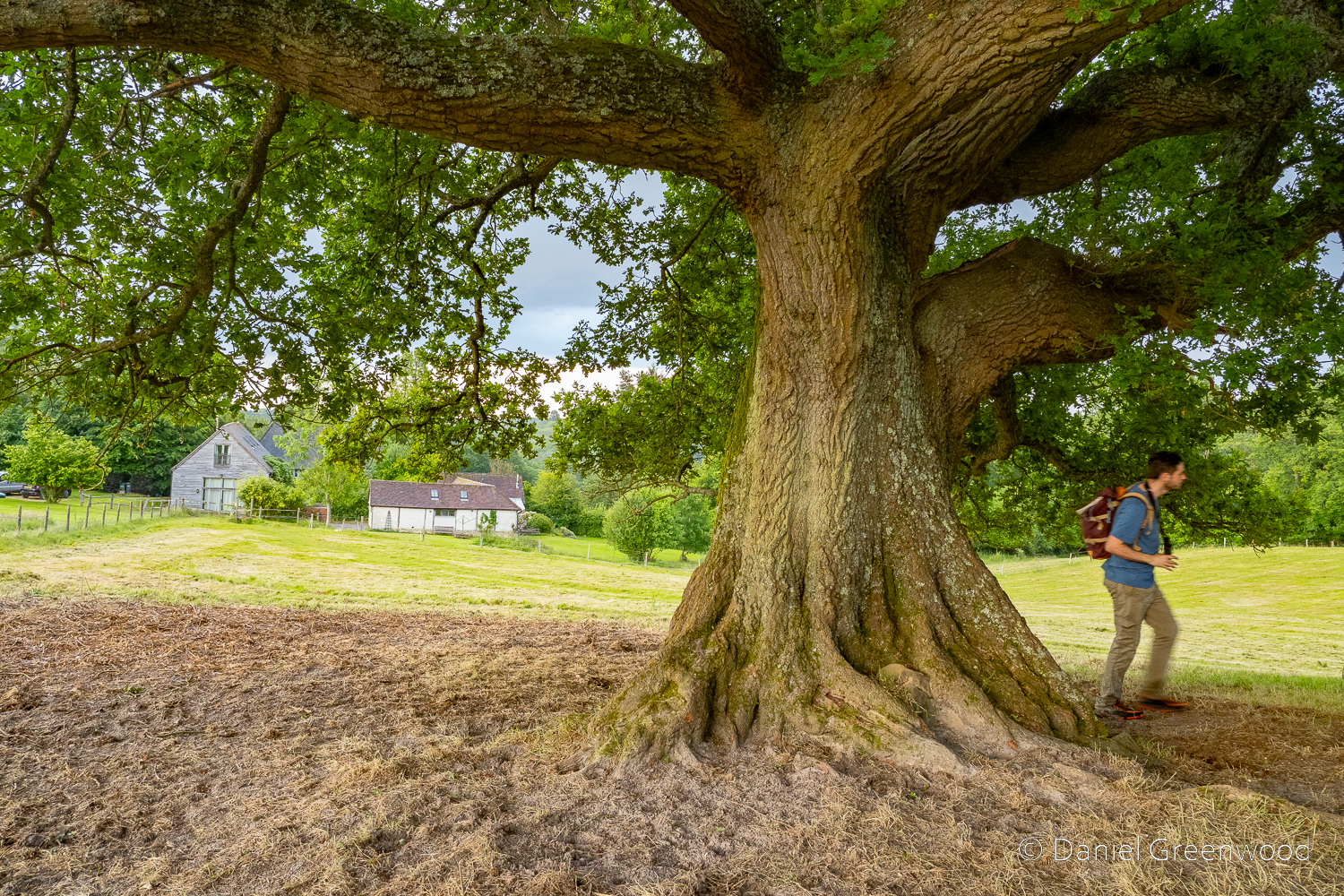
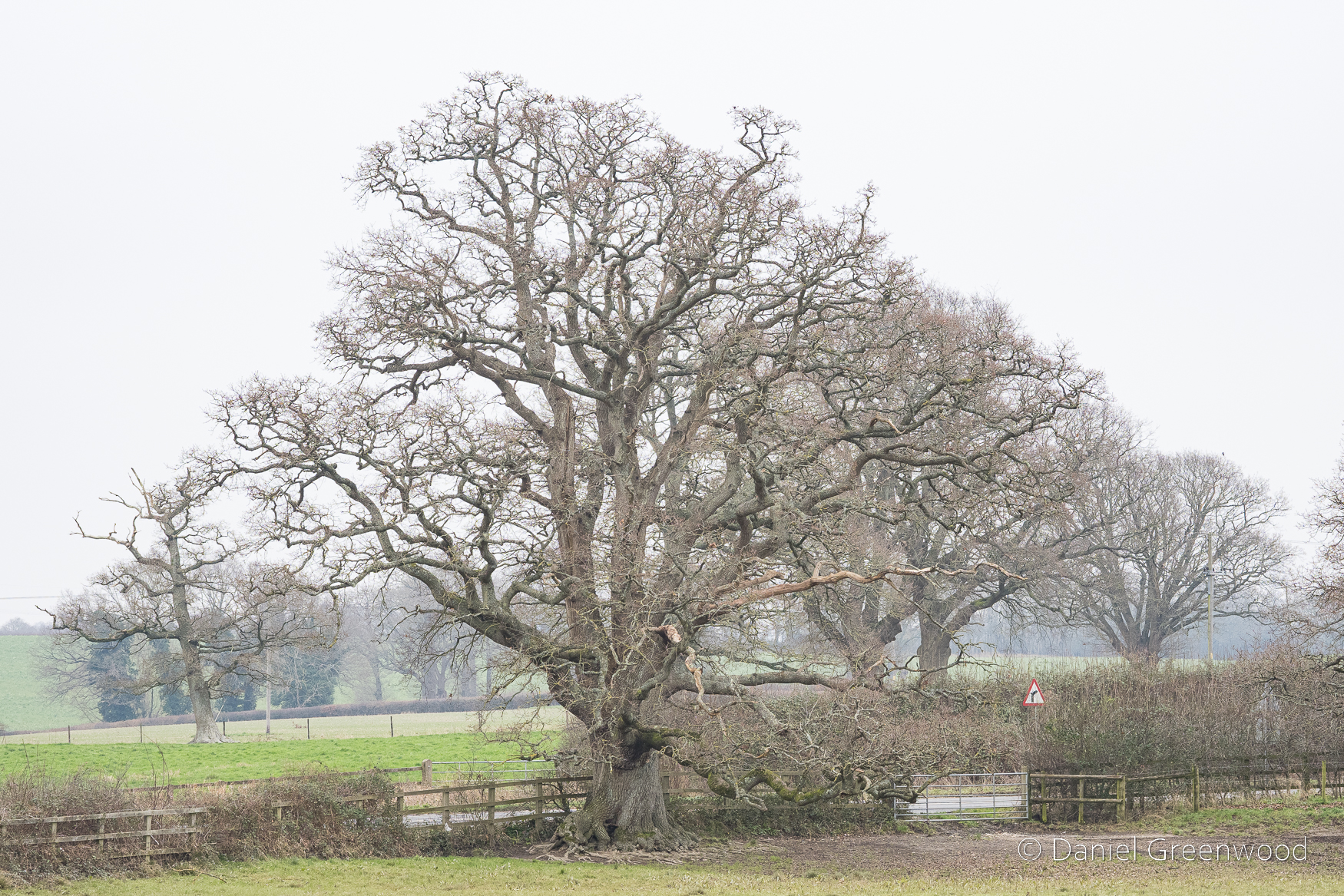
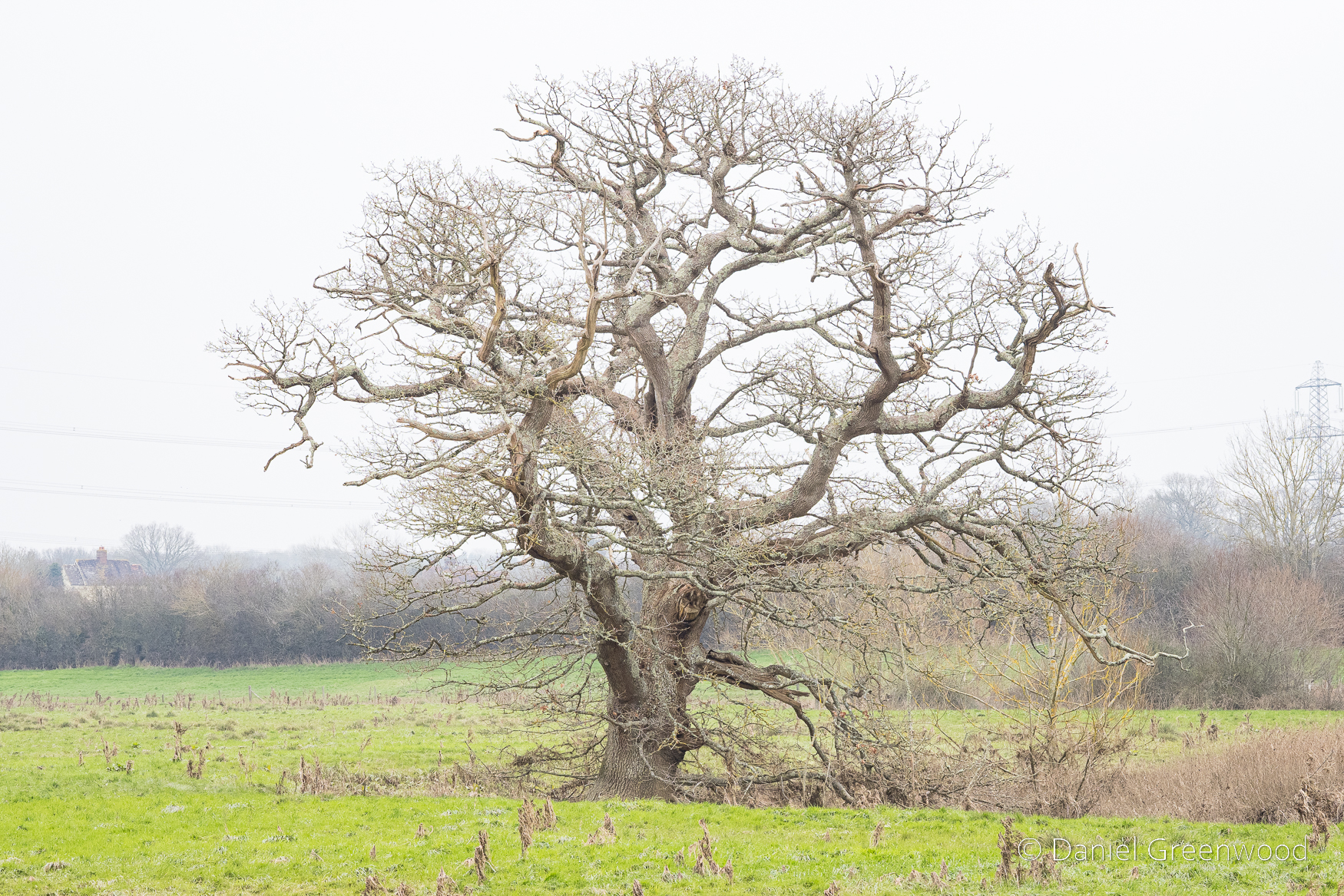
I passed this massive oak (it looks smaller in this image than it is in real life) several days a week between 2018 and 2022. The mud underneath is from the cattle standing there to shelter from the rain. The oak is probably around 400 years old, making this stretch of the Wey-South Path around Billingshurst a land of giants.

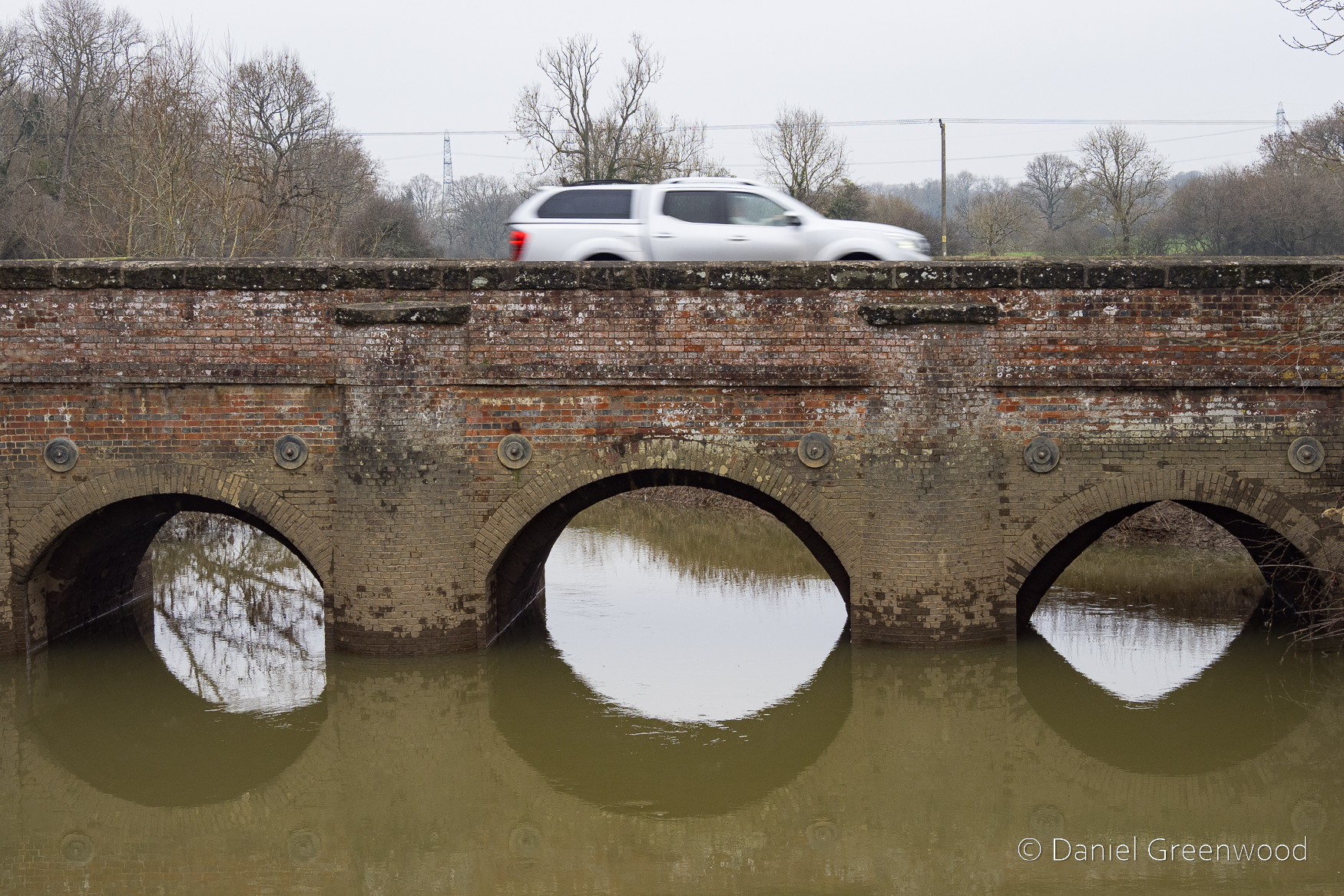
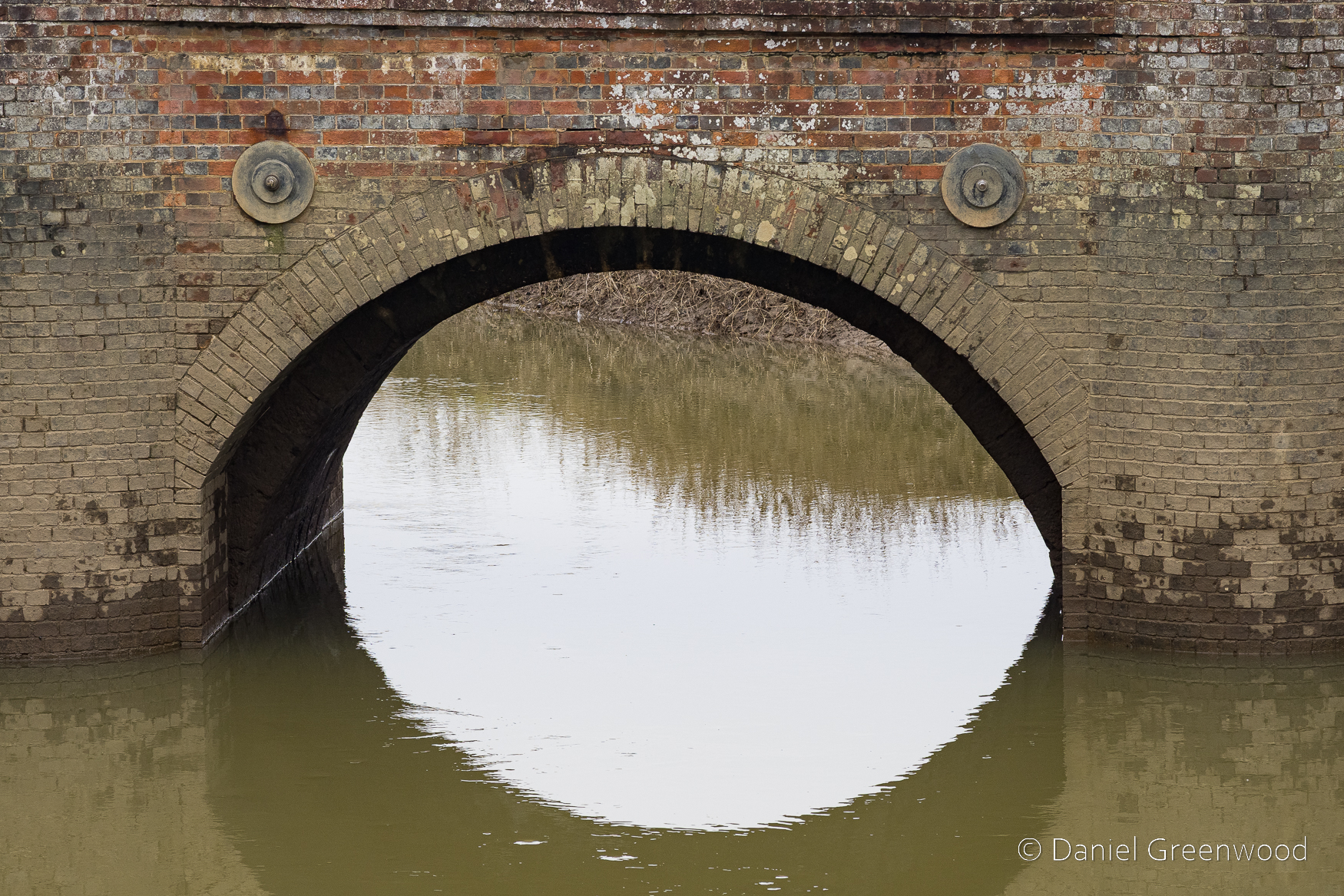
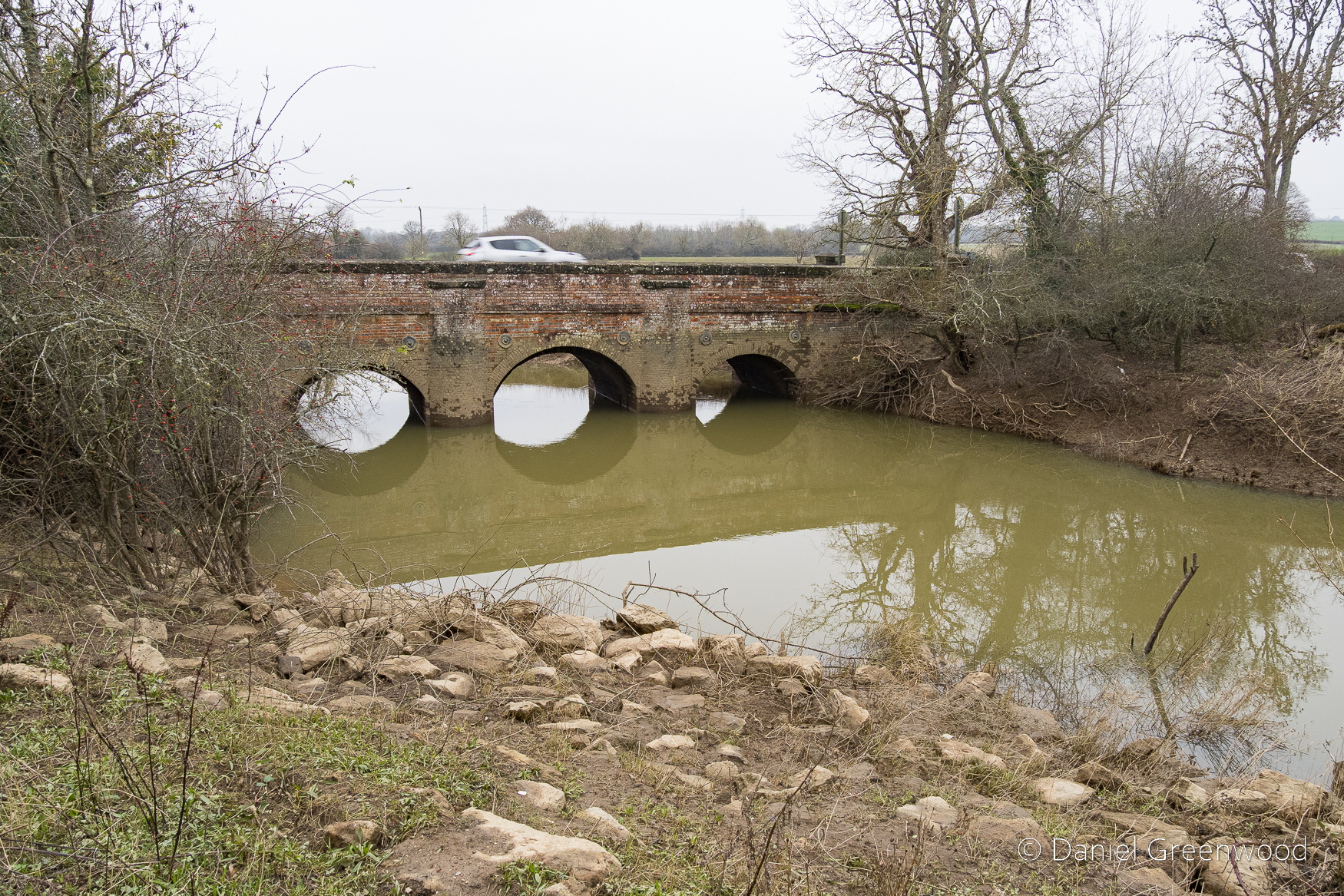
New Bridge only allows one car at a time, but I’d never seen the three frogs under the bridge until I did this walk.

This frog looked particularly surprised to see me.

In Billinghurst’s Heritage there’s a passage from a canal tourist in 1869 – J. B. Dashwood. He travelled along the Wey & Arun Canal one spring or summer from the Thames to the Solent. There’s a description of what our man J. B. saw with his travelling partner somewhere along this stretch. Quoted below.

At a little before 7 o’clock we reached Newbridge where our boat lay quietly at her moorings, wet with the morning bath of dew…[at the first lock] we watched the lock-keeper’s wife and two pretty daughters making butter in the early morning. Though flat the meadows on either side presented such a lovely English picture with cattle dotted about, …the larks sang aloft sending forth their melodious morning song and the banks of the Canal clothed with wild flowers of every hue and colour that we enjoyed this part of our journey almost as much as any.

Lawes, 2017, p.175

I wonder if these are the water meadows being described. While searching online for more information about New Bridge I discovered plans for housing affecting the area you can see in this image on the left-hand side (northern side) of the road. There’s a beautiful timber-framed house and barn called Hole Cottage (Historic England listing), dating to the 1500s. It wouldn’t be affected directly by the housing, the arable fields out of view towards the ‘village’ would be.

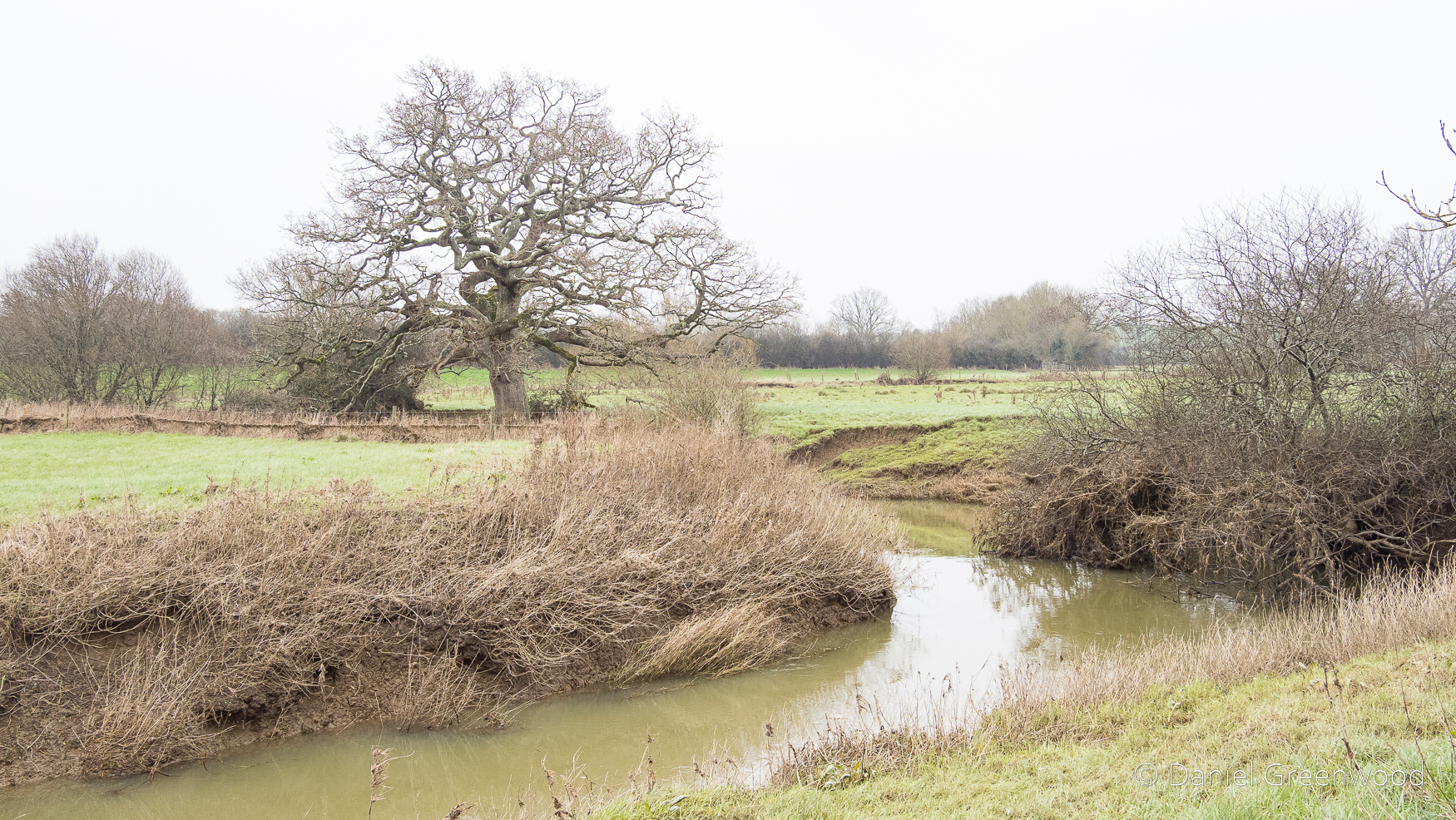
The proposal is called Newbridge Park (there’s a consultation online which closed in January). This area would become a country park, which is wise. Driving along the A272, the sight of the Arun flooding these meadows is a sight to behold. No one would seriously suggest building along this floodplain (would they?), particularly with the sort of winter deluges we’re getting now in this part of England. This is a rather old oak, perhaps 200 years, sitting at one of the bends in the Arun, which is just below the ground level.

This is that sumptuous bend in the Arun, a river which I have now learned was previously known as Tarrente or Trisanton which means ‘trespasser’ (Lawes, p.174). The river does trespass widely here, or is it the other way around? We have trespassed far into the floodplain of this great river. This is another view into the area which the developers propose would become a country park. But how long would that hold for, and who would fund the management of a park here?

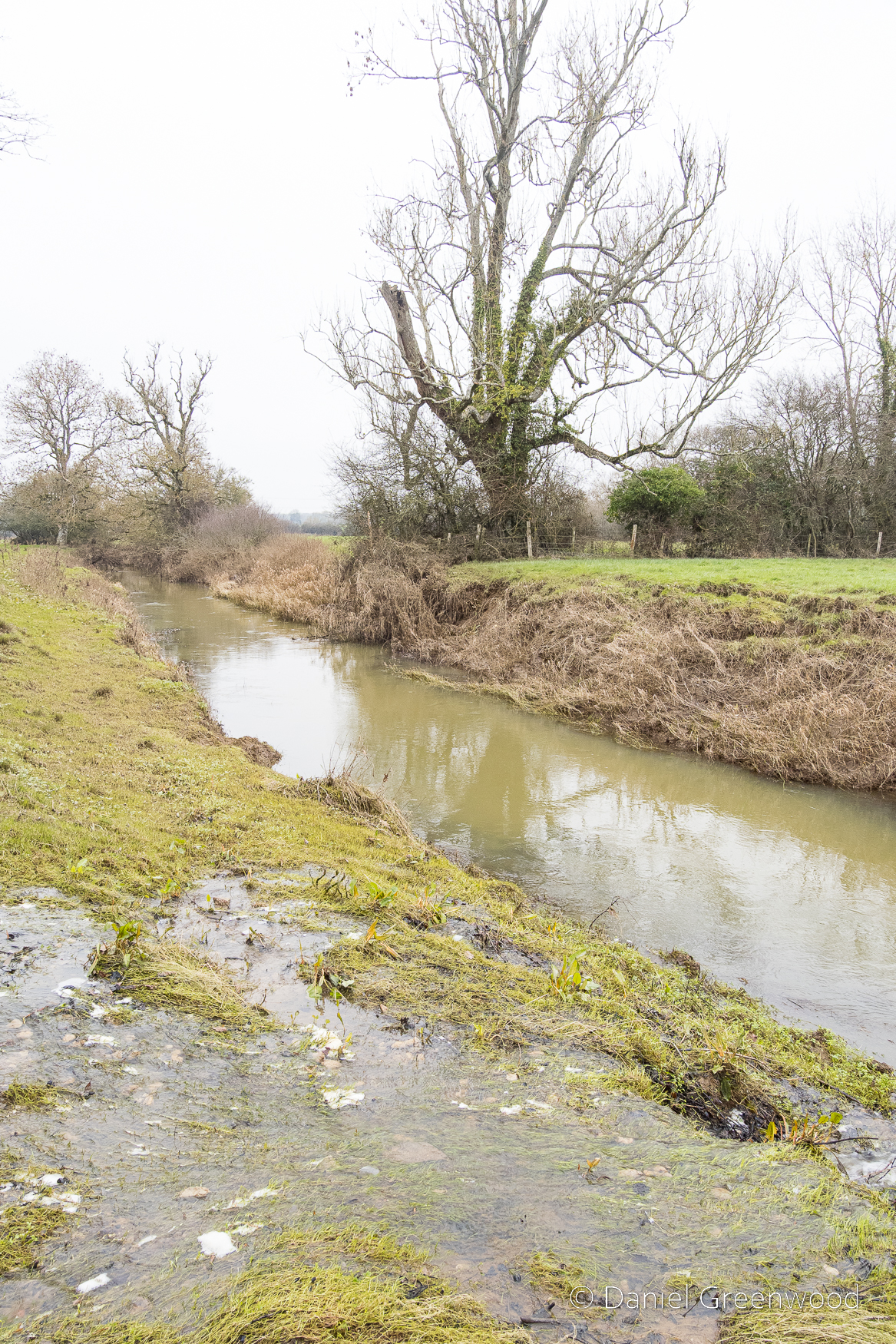
There was a winterbourne (I am guessing) flowing over the banks and into the canal. Growing up in Lewisham in south London, it’s so nice to see water moving of its own accord in the landscape (with respect to the work to restore the rivers in that particular borough.)

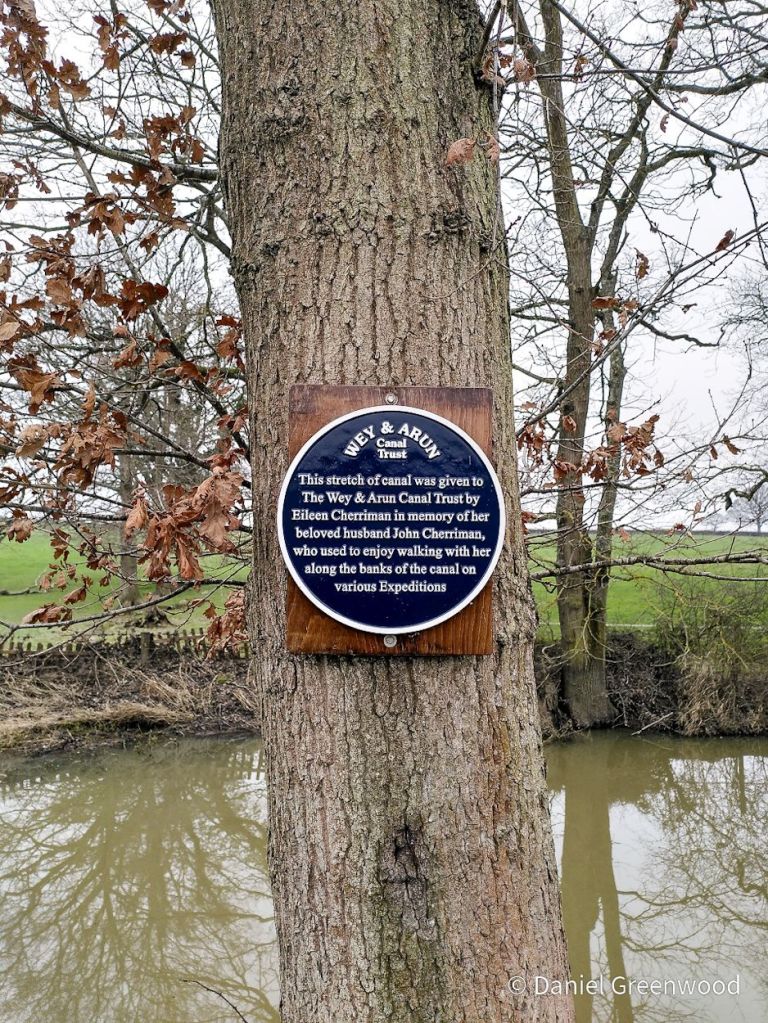
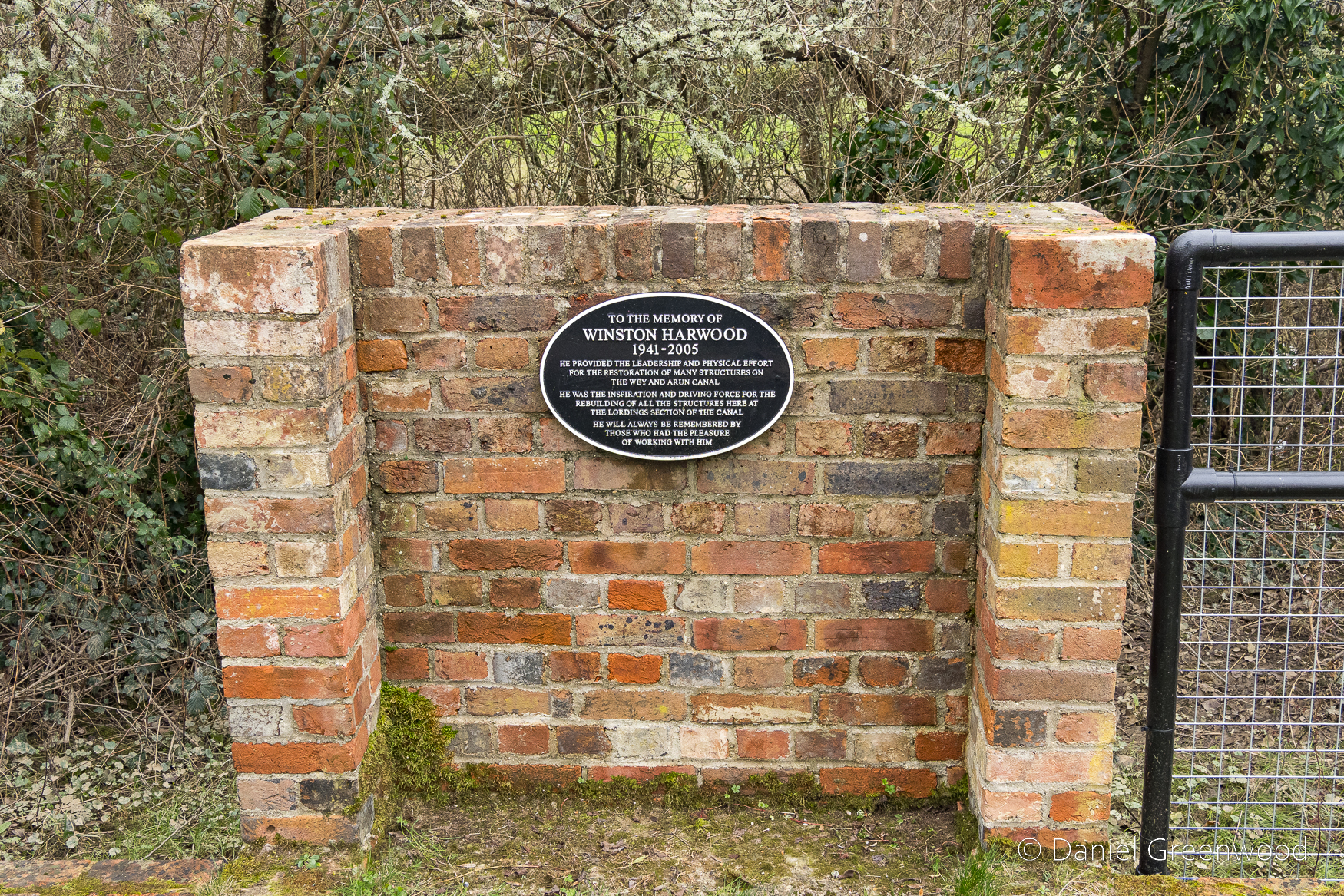
Let’s appreciate the generosity of Eileen Cherriman here, who donated a stretch of the canal in memory of her husband John.

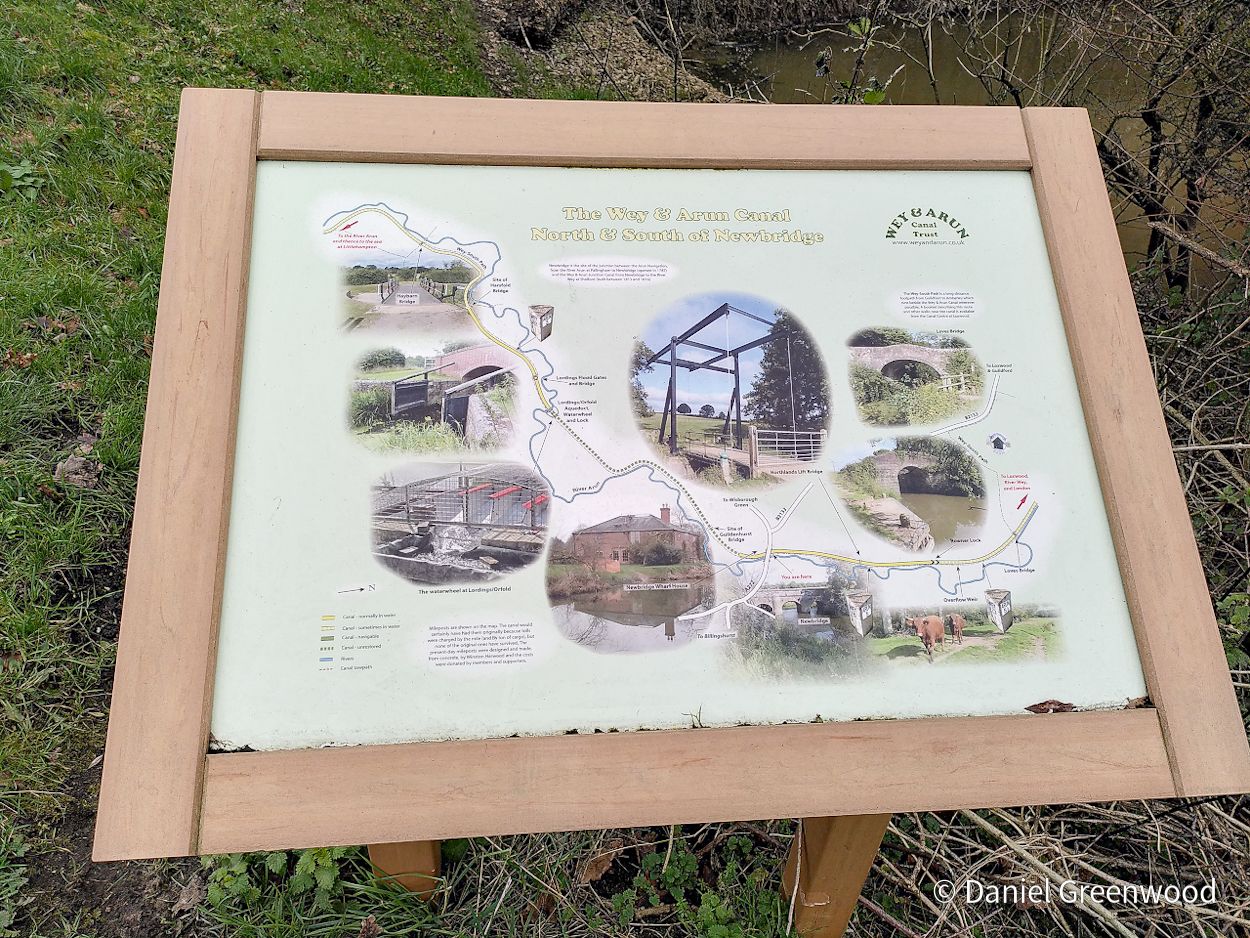
I do enjoy bringing interpretation boards to a wider audience.

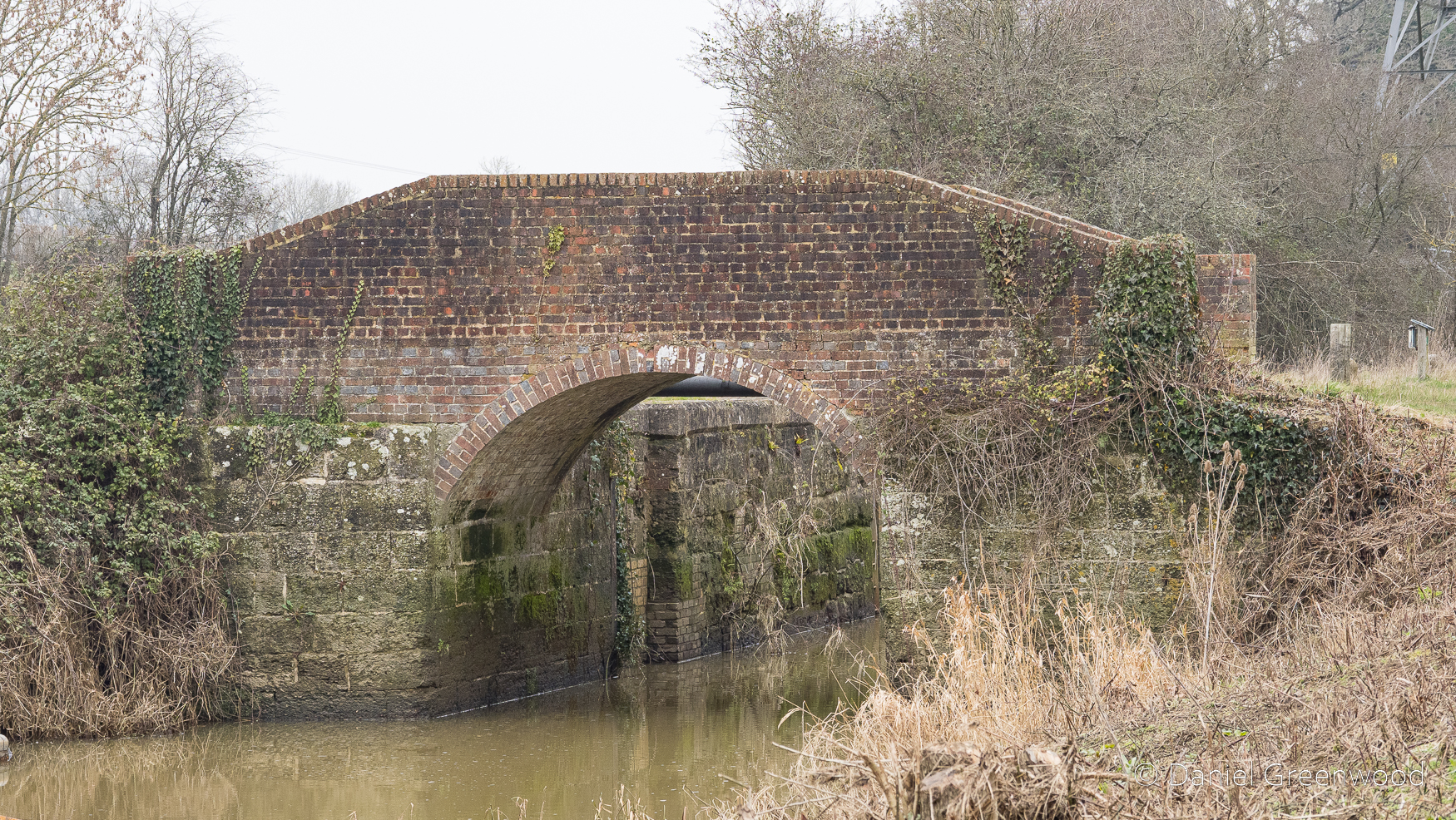
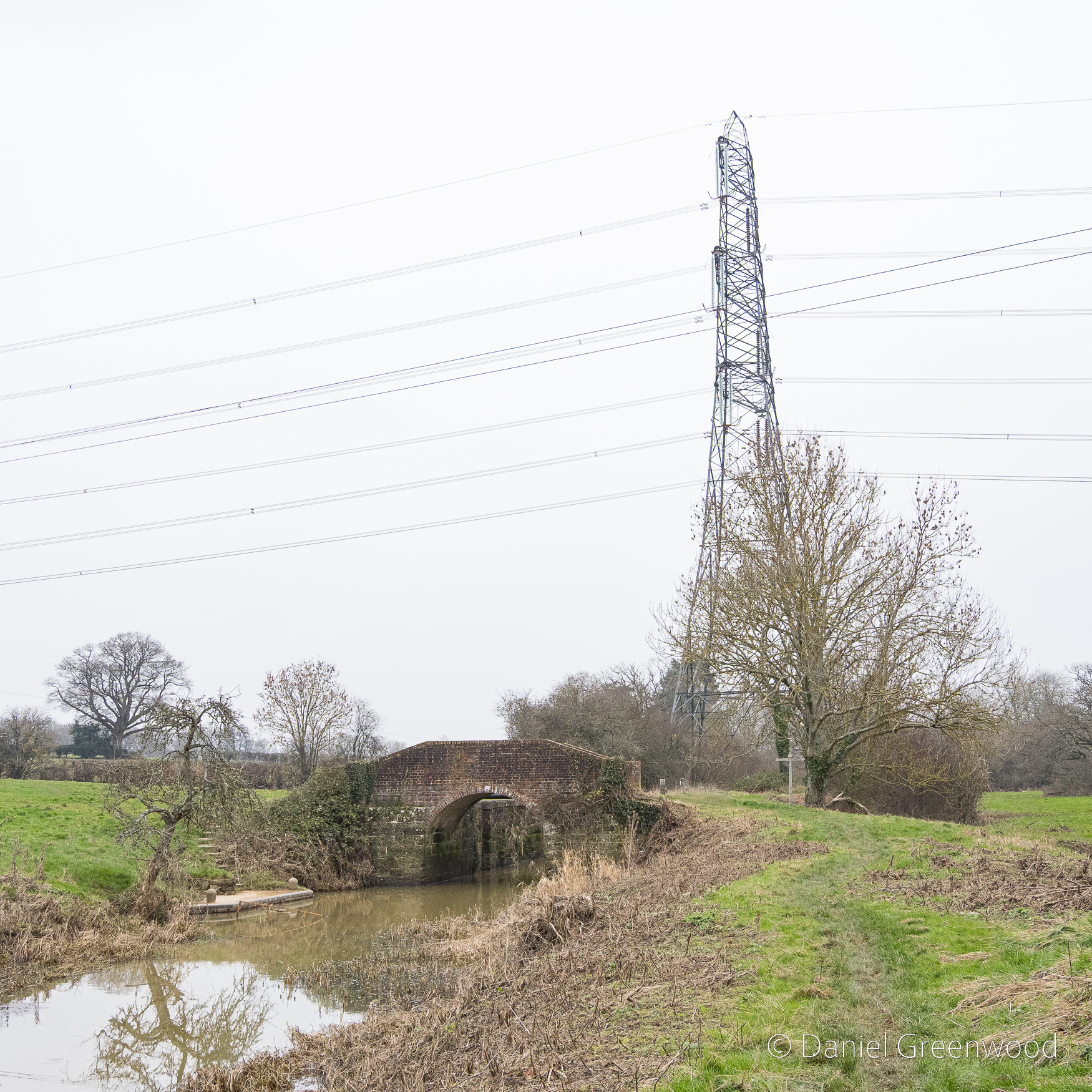
Further down the canal is another bridge at Rowner Lock.

This was restored by the Wey & Arun Canal Trust.

Returning to Billingshurst

It was time to turn away from the watercourses and back towards civilisation.

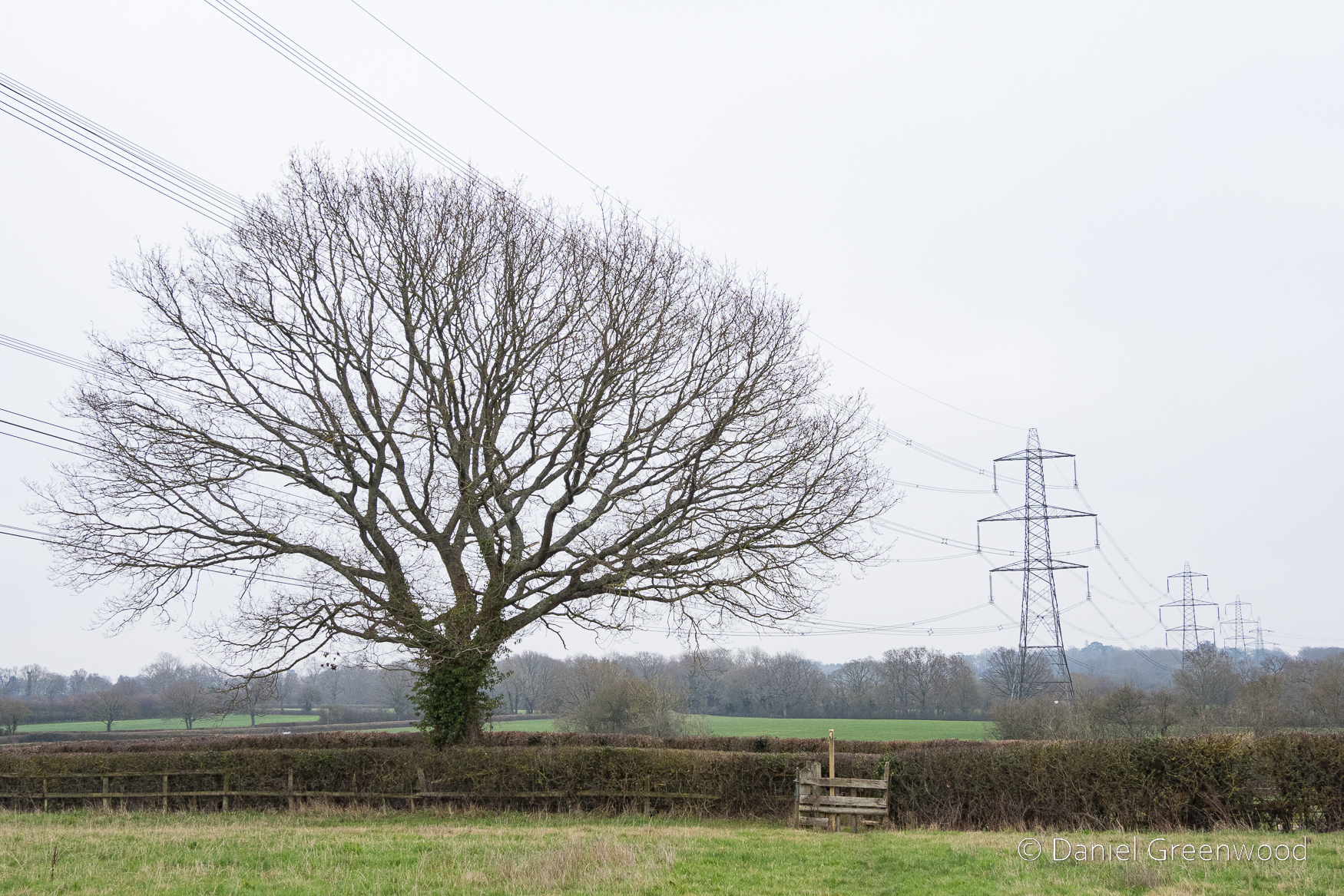
The walk turns east as it returns towards Billingshurst through farmland walked by electricity pylons.

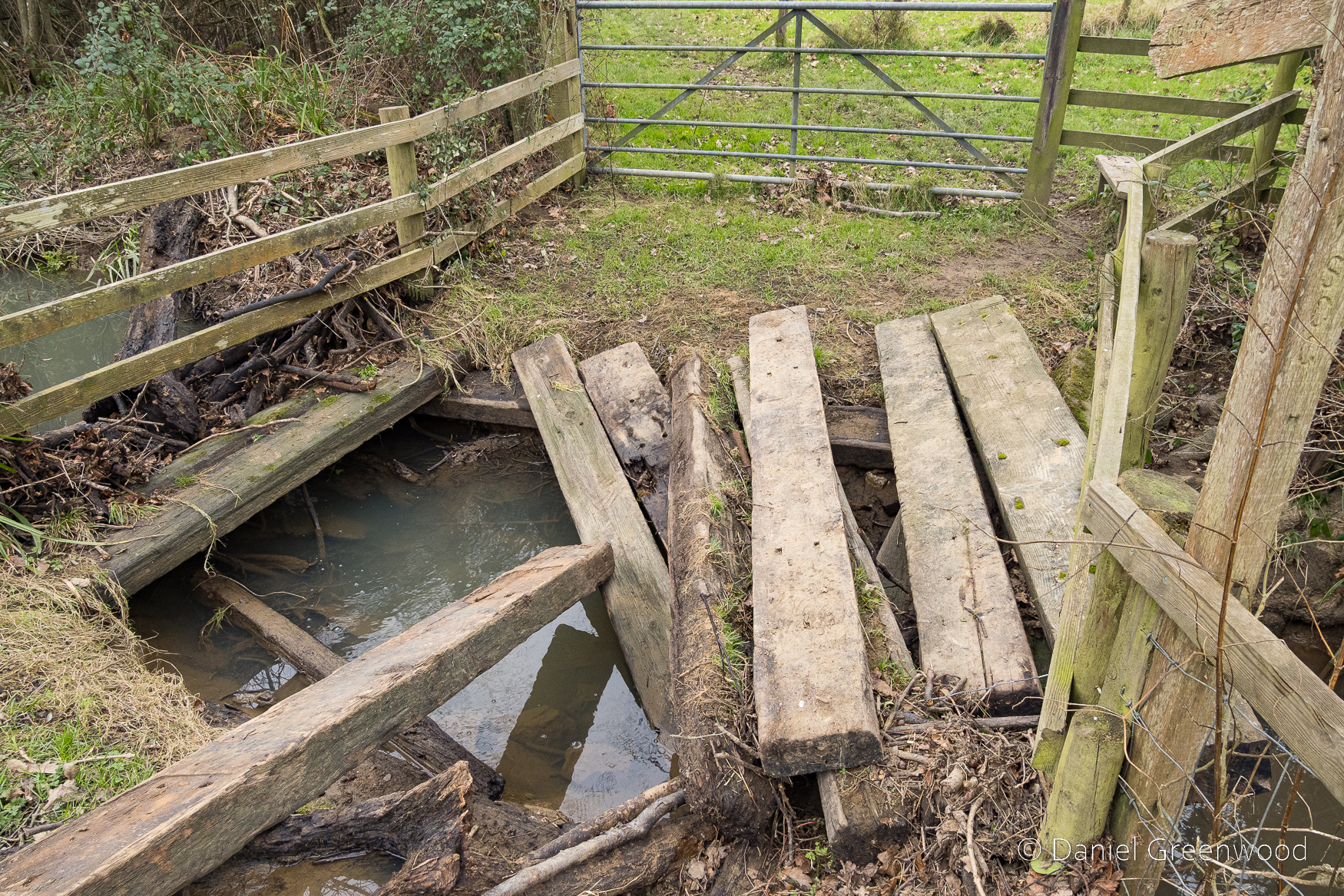
One of the footbridges on the way back was in a state of devastation, probably due to the impact of flooding. I presume this wasn’t vandalism, but from my experience you just can’t be sure sometimes.

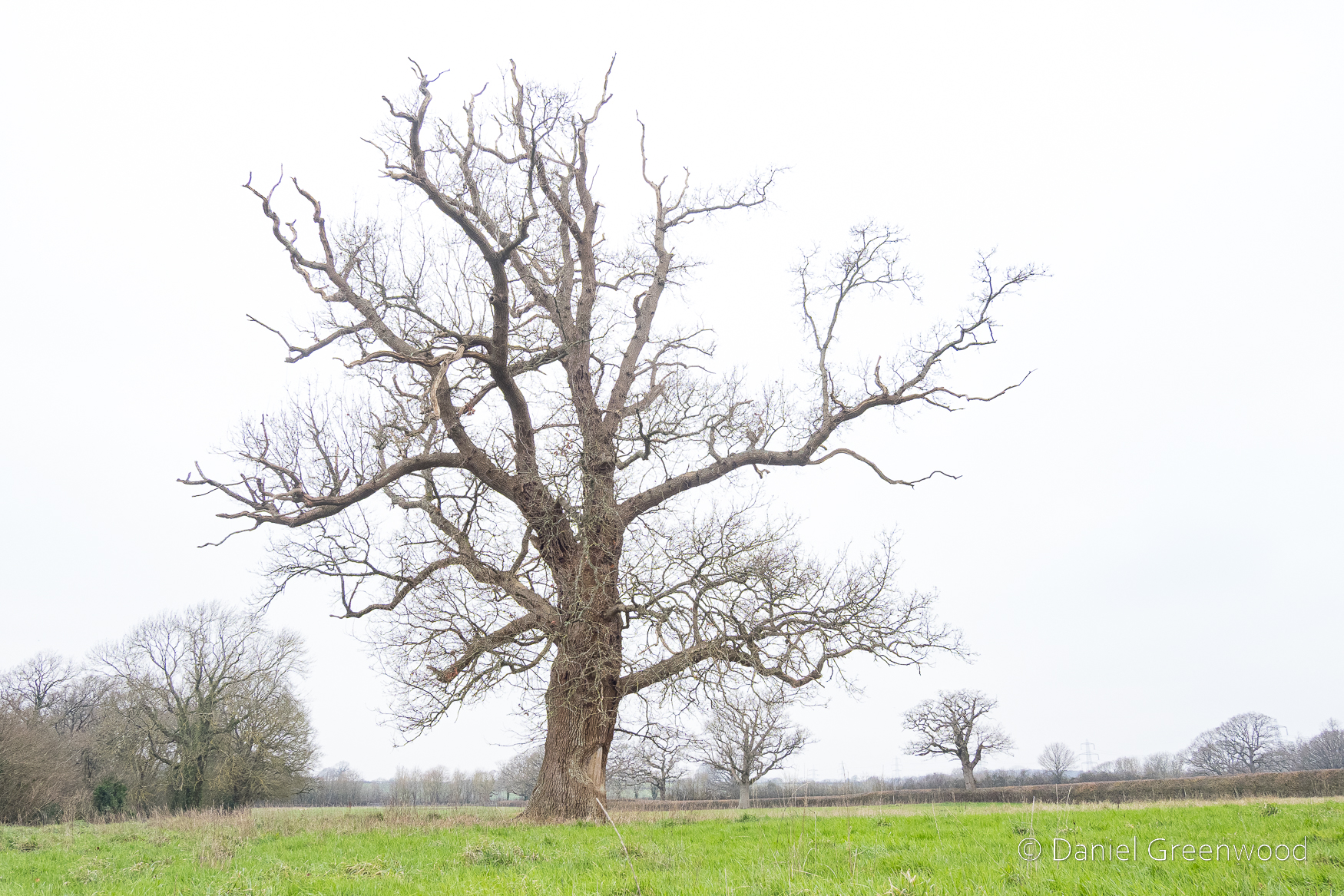
A rather sickly oak in a process of retrenchment as the upper branches die away. You can see more oaks dotted around beyond the hedgerow.

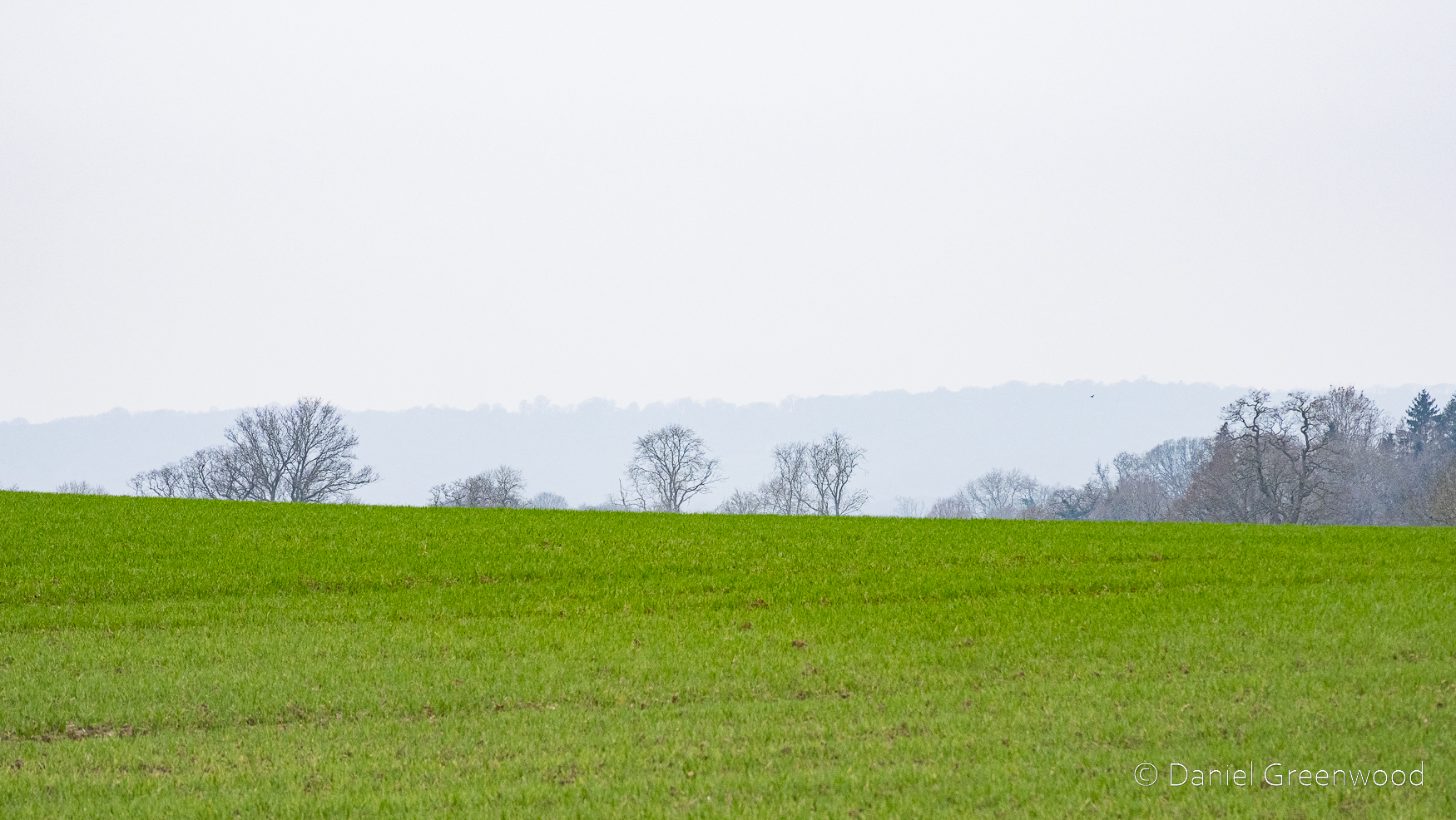
Looking north-east into the Weald, with the mist spoiling most of the fun.

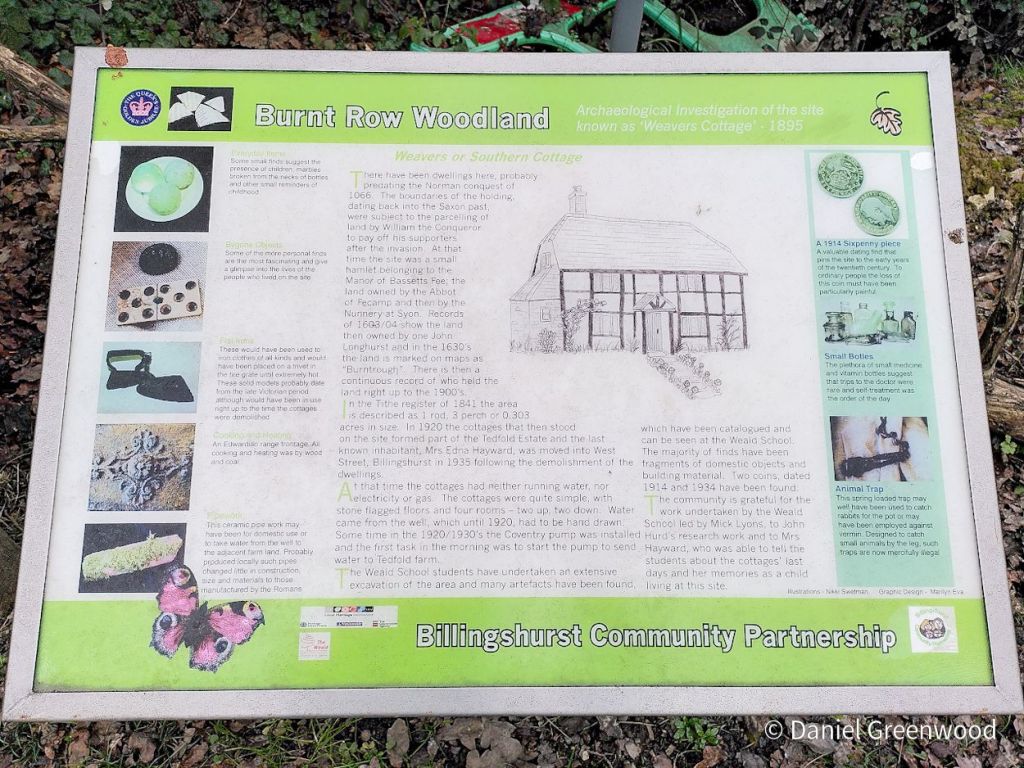
There are some interesting boards near the A29 crossing as you enter back into Billingshurst. I’m sorry that this timber-framer didn’t make it. This settlement seems to be very old, possibly prior to the Norman Conquest of 1066. Local school children have found lots of treasure at Burnt Row in their research into the site.

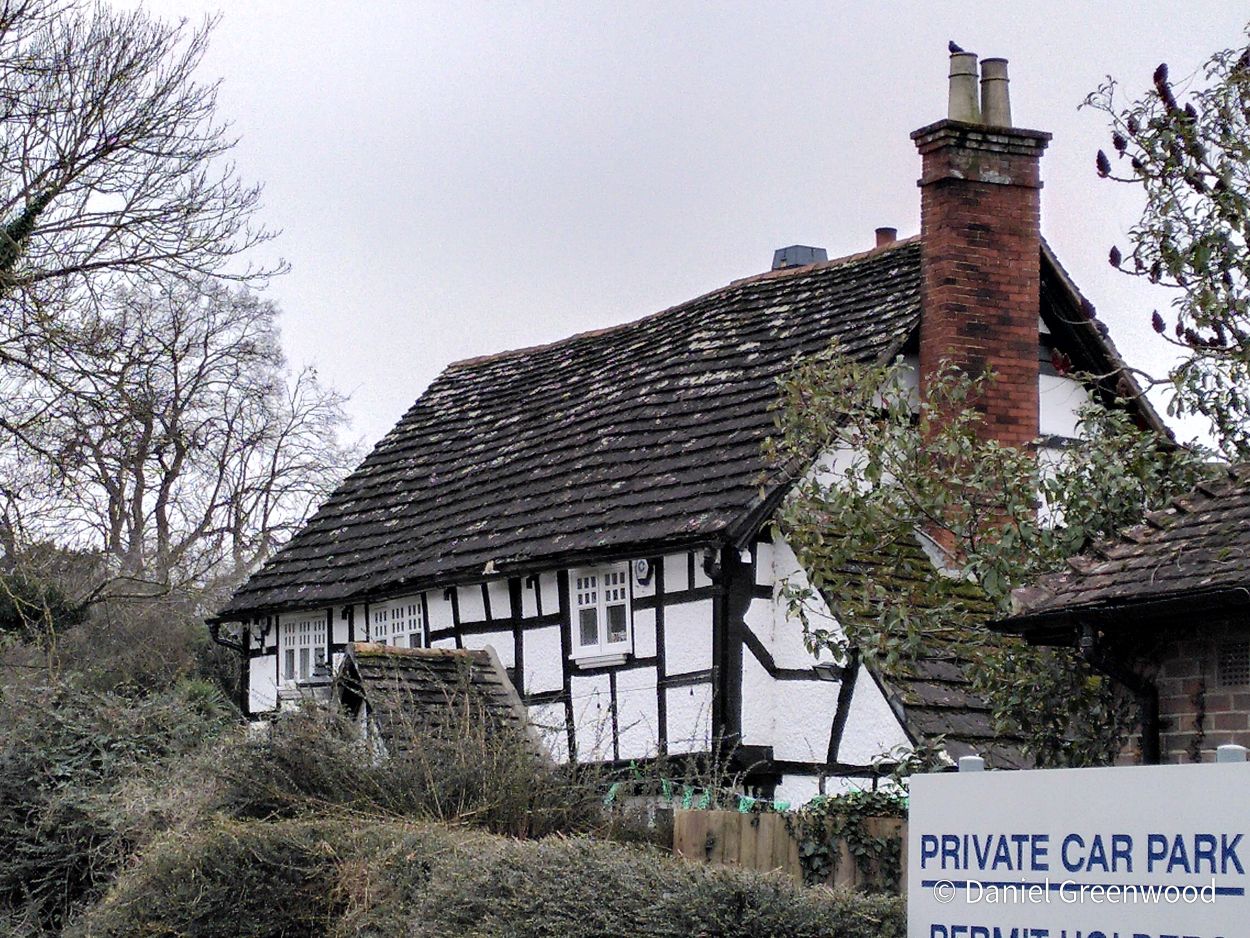
Entering back into Billingshurst I enjoyed the sight of this interesting timber-framer. A couple of local lads were causing a bit of bother here and couldn’t understand what I was doing.

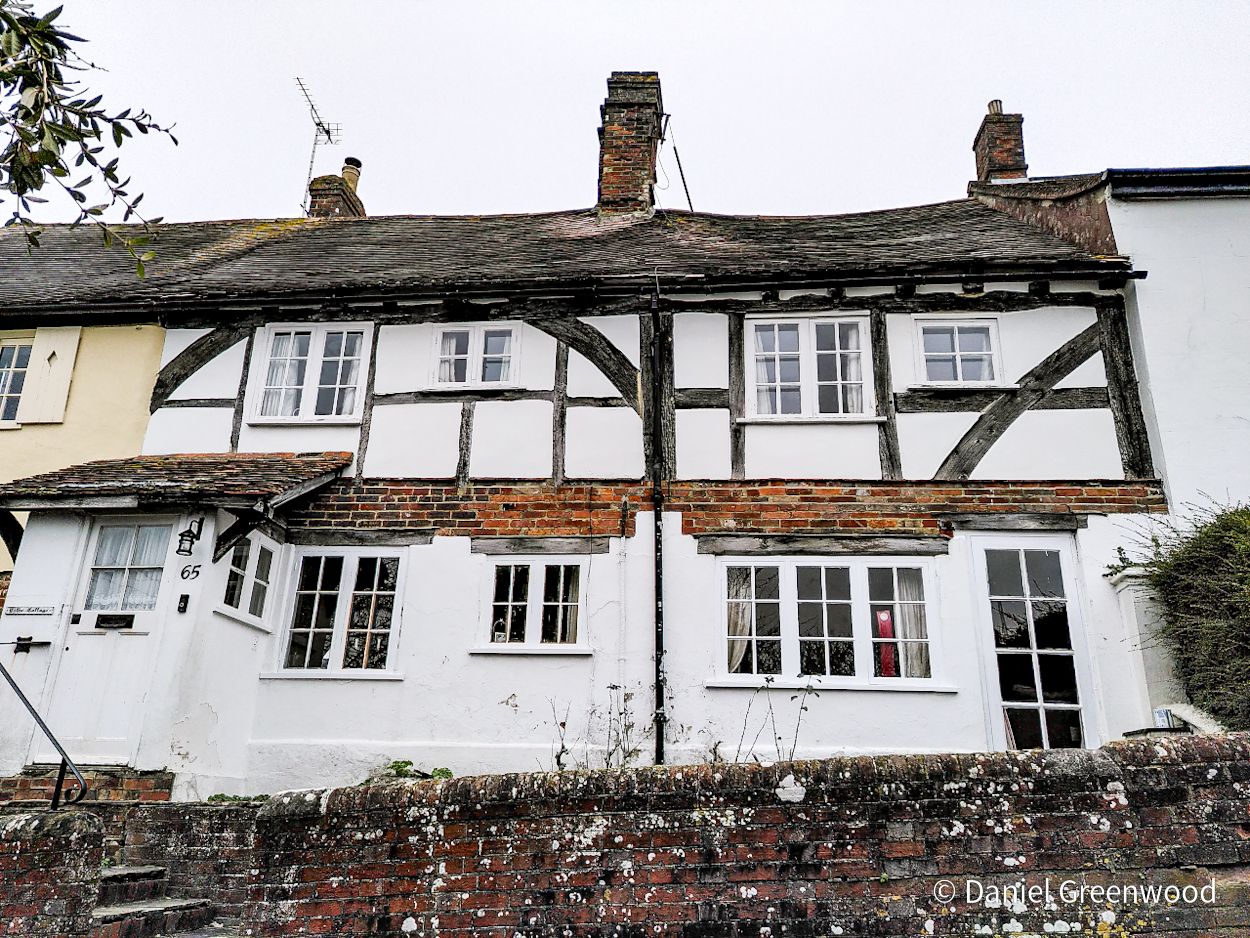
I haven’t featured the church in this post though it is important and has a prominent position in the village. The Causeway is a row of houses, many of them old and timber-framed, with one potential dating back to the 1200s (Historic England listing). If you needed any evidence that Billingshurst and its surrounding countryside is an oaken land, this should be it.

Thanks for reading.
The Sussex Weald

Sicilian honey lilies

May has been a very productive month for macro photos for me, especially in my garden. These photos were taken on 8th May 2025 in that town garden in West Sussex.

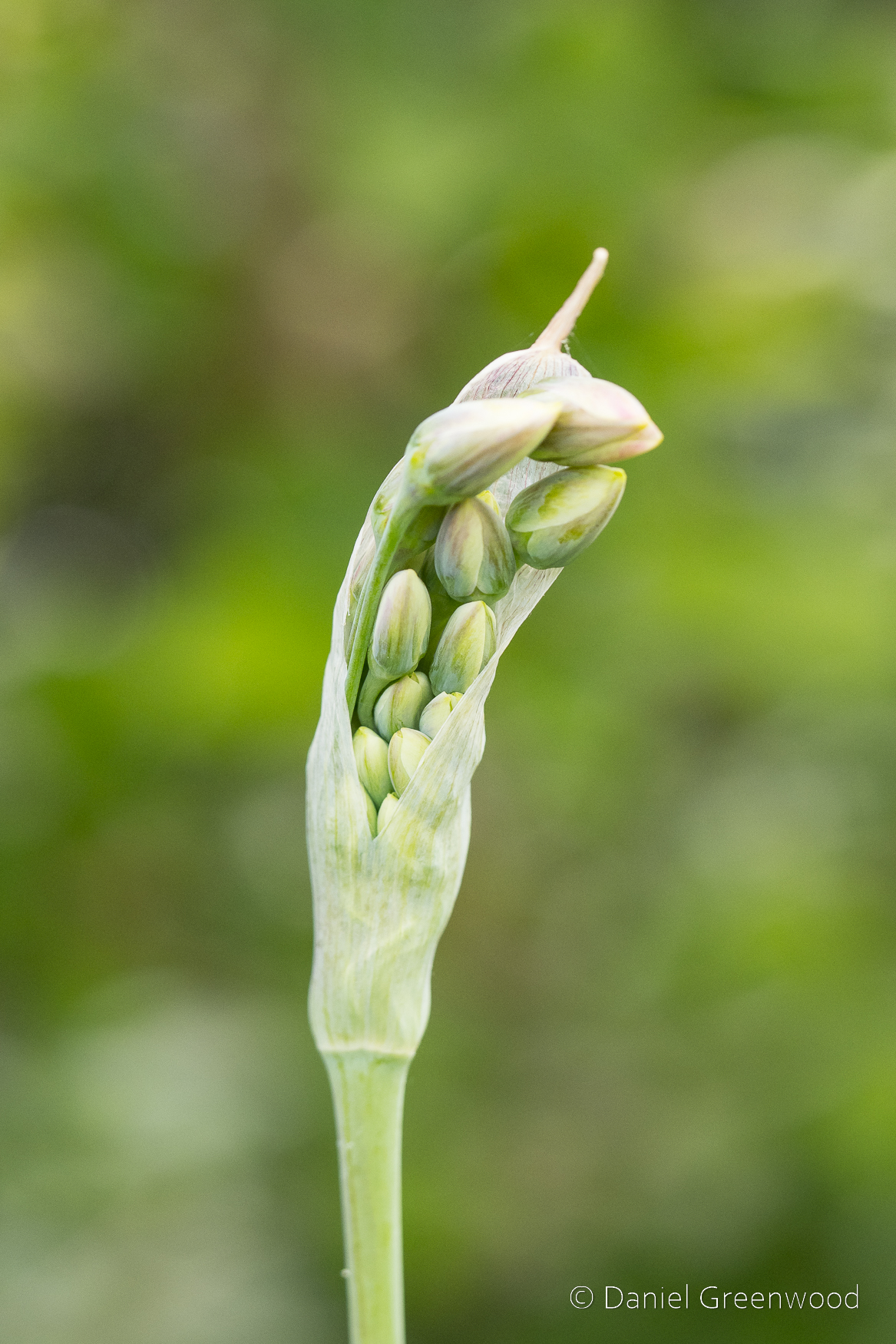
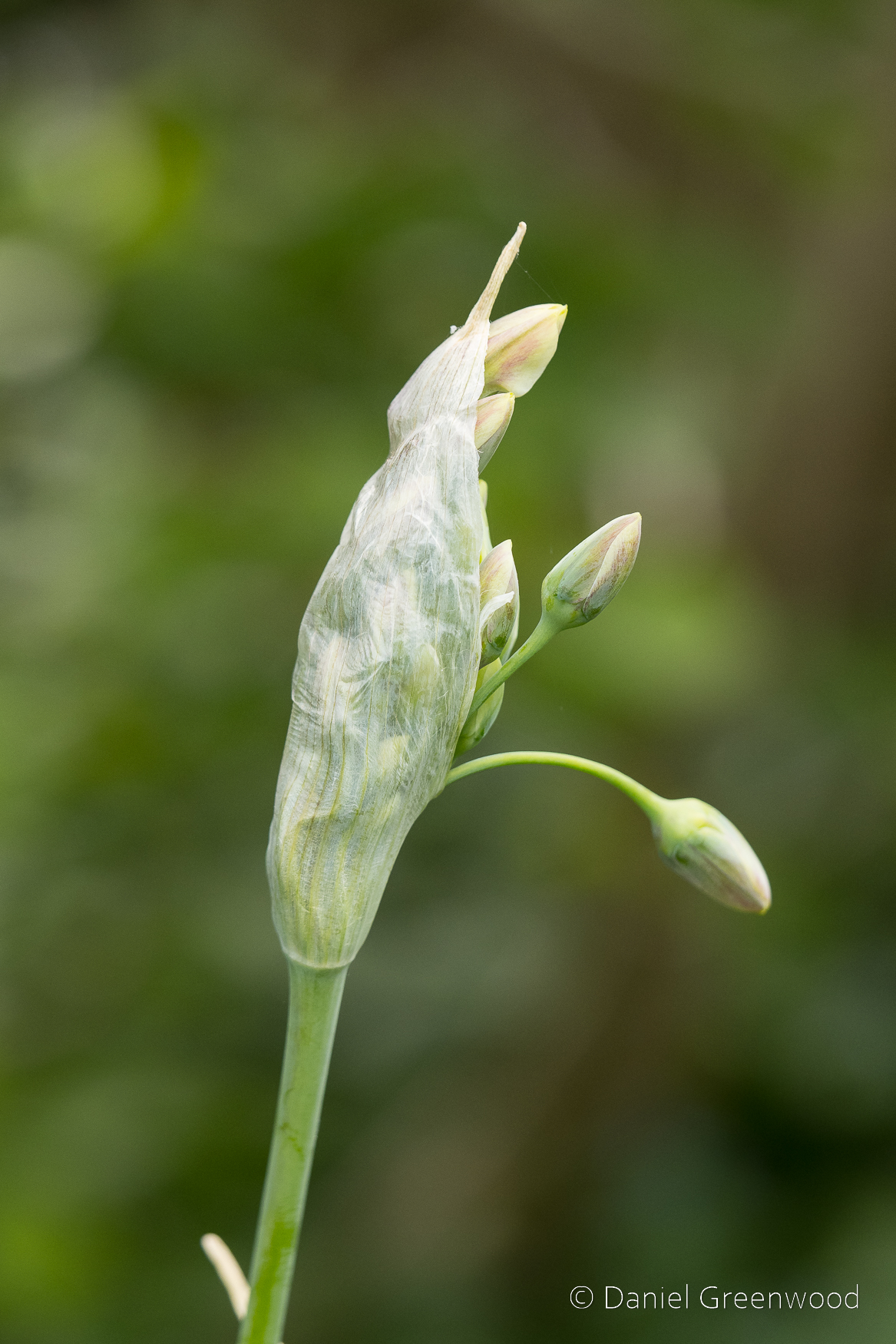
We have a flowerbed for growing berries that is also home to these unusual alliums (honey garlic or Sicilian honey lily). On the 8th May they were just beginning to unseal themselves, releasing the flower heads. I have bee-heavy photos of this plant to share of the following days, and this spring has made me realise just how attractive this allium is for bees. The bumblebees can’t get enough! Stay tuned.

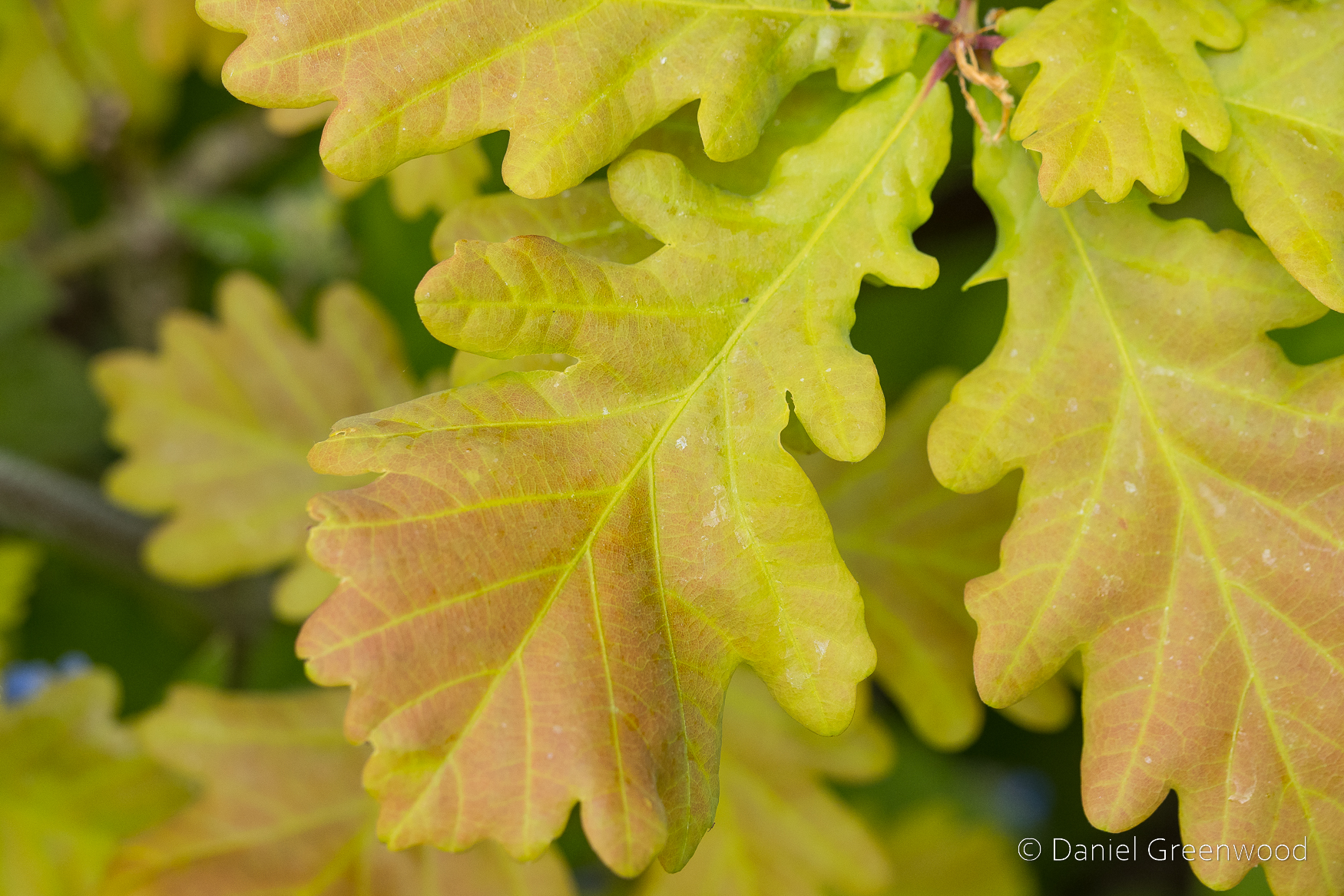
The oaks were in full-leaf by this point, this sapling somewhere between the red, yellow and green.

I don’t know what this invertebrate is or was, but I’ve seen it over the years attached to the stems of broom (which had such a good year in 2025). I am guessing it’s a species of moth that has pupated into an adult moth, and that this is the chrysalis. #NoMothExpert.

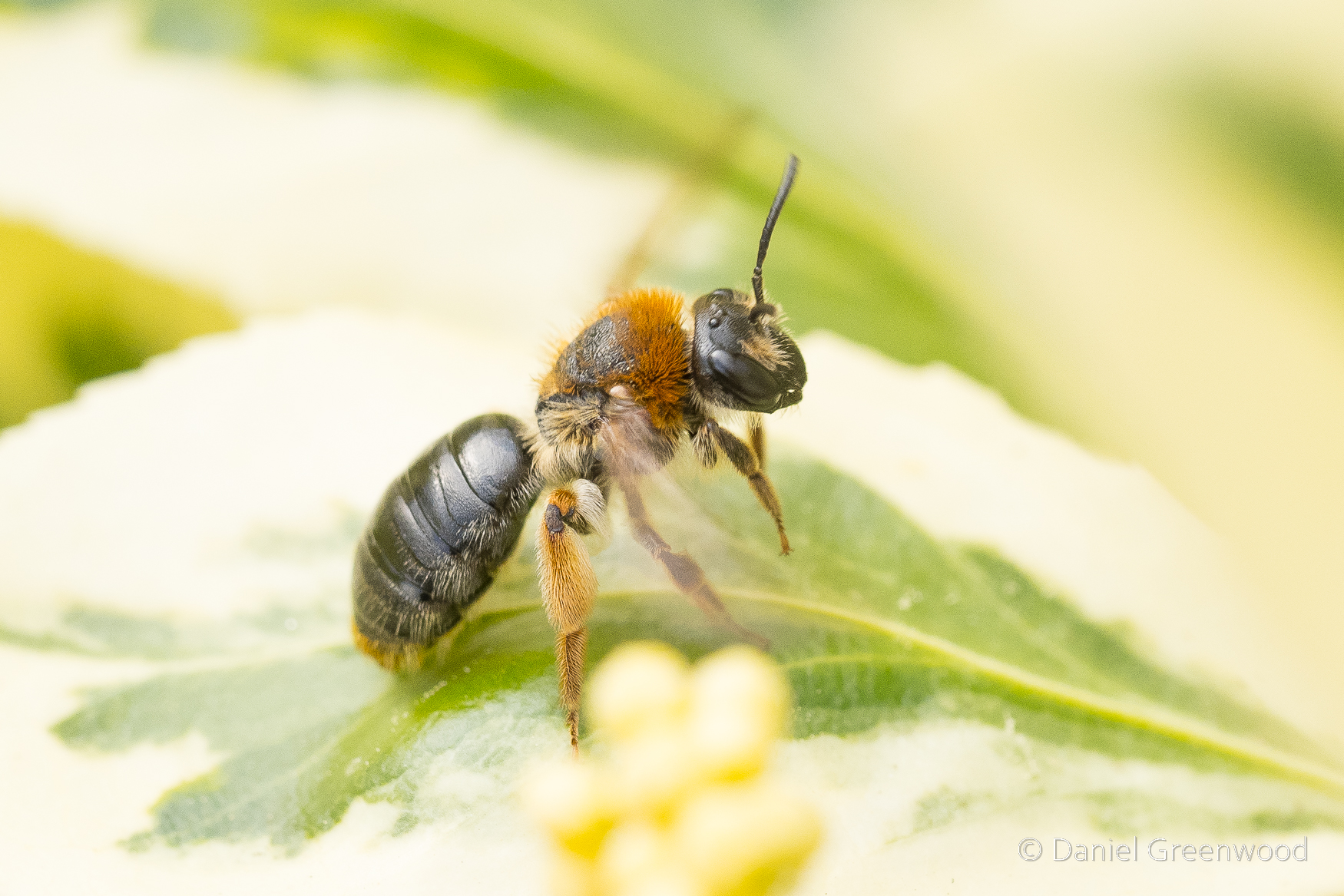
I think this may actually be the same early mining bee I posted about last week! Not sure.

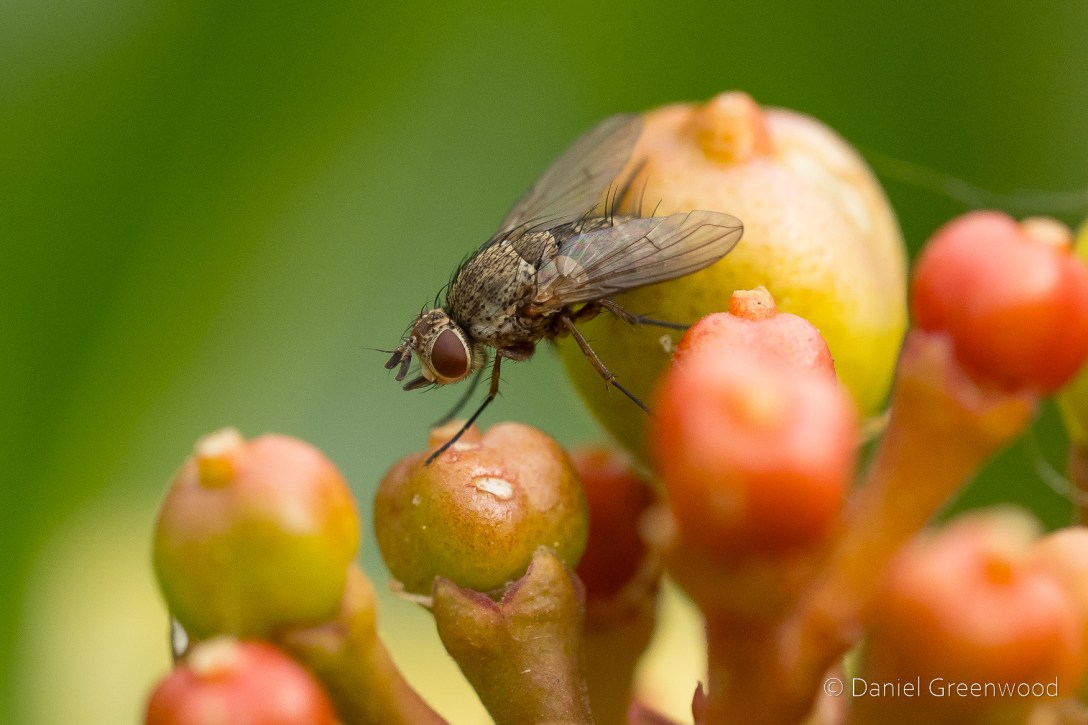
I really like this photo of a fly (no ID yet). I wonder if that’s some kind of sugary solution on the berries. I enjoy the fly’s awkward splaying between fruit. Why not?

The light was working against me here as our friend was on the underside of a leaf. This is one of the Issus planthoppers. It doesn’t look like it, but the head is in focus.

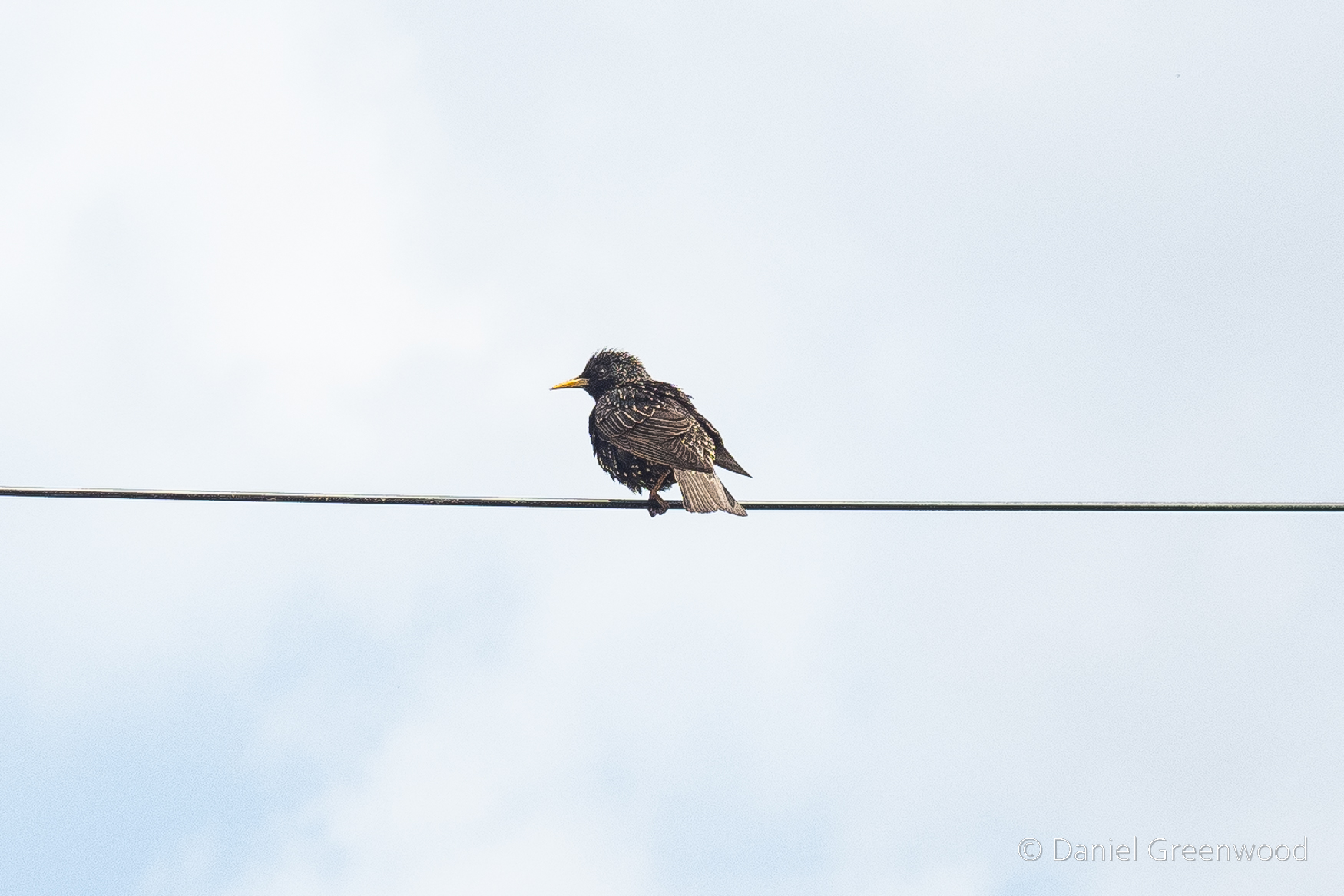
And finally, the starlings were still feeding the nestlings at this point, quite an tiring time for them. They are one of my favourite birds, but are in serious decline (51% between 1995 and 2016) due to habitat loss and historic use of pesticides. You can help them by not using things like Roundup (glyphosate), by putting out fresh water for them to drink/bathe in, and potentially putting up a nestbox if you can.

Thanks for reading.
Macro | Support my work

Oak timbers: Palace Street, Canterbury

Follow @OakTimbers on Instagram

Buckle up, there’s a lot of timber coming! This post concludes the series of posts (literally) showcasing Canterbury’s timber framed buildings. Of course there are many more for you to see and explore if you ever visit.

Palace Street must be one of Canterbury’s most interesting historic parts of the city itself. Some of the buildings on this small road are hundreds and hundreds and hundreds of years old.

Number 8 (above) is approximately 800 years old! So the oaks it’s built with were growing at least 1000 years ago in Anglo-Saxon woodlands (pre-Norman invasion of 1066). There’s more detailed information and images on this site.

I overheard the man pictured here giving a guided city tour. He pointed out that the sun emblem was how people once showed their house to be insured – the original Sun Insurance company logo, now the RSA group.

Buildings insurance was created in London after the great fire of 1666 when the city of was devastated. You can imagine that a lot of timber-framers were lost then, part of the problem really.

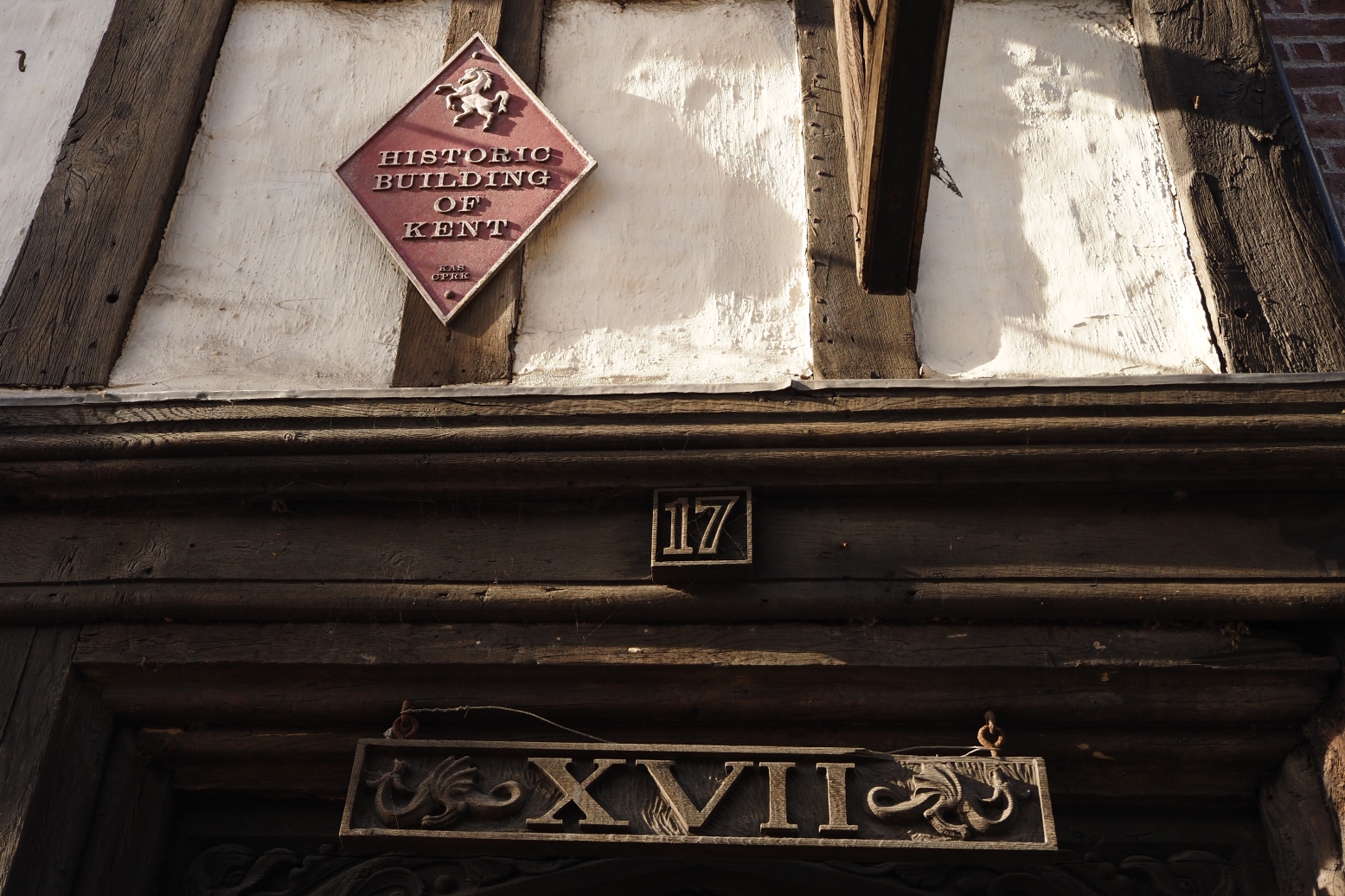
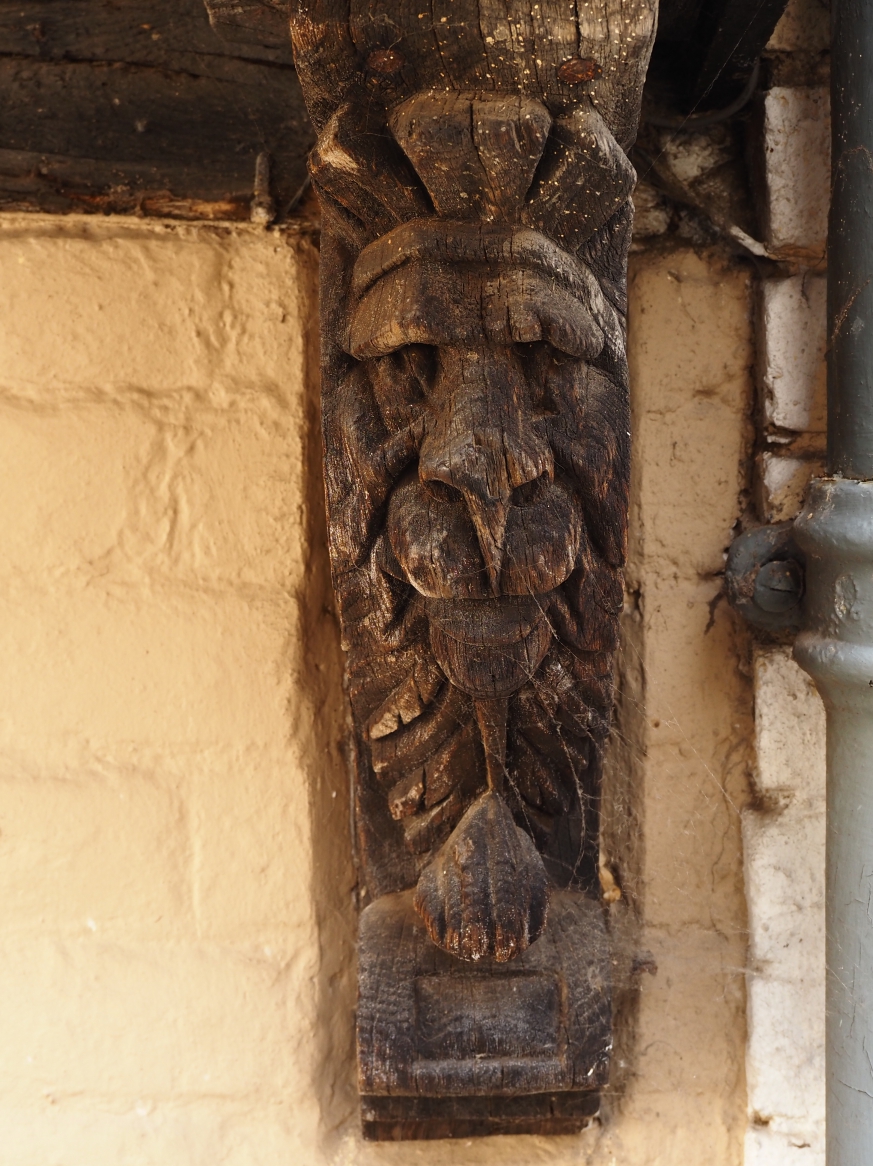
That demon carving is actually really weird. I believe they were used to ward off bad luck. Life will have been incredibly hard in the 1200-1800s so you’d do what you could, I suppose. Then again, this website quotes dates much later than the building itself. The plaque belongs to the Historic Buildings of Kent CPRE group.


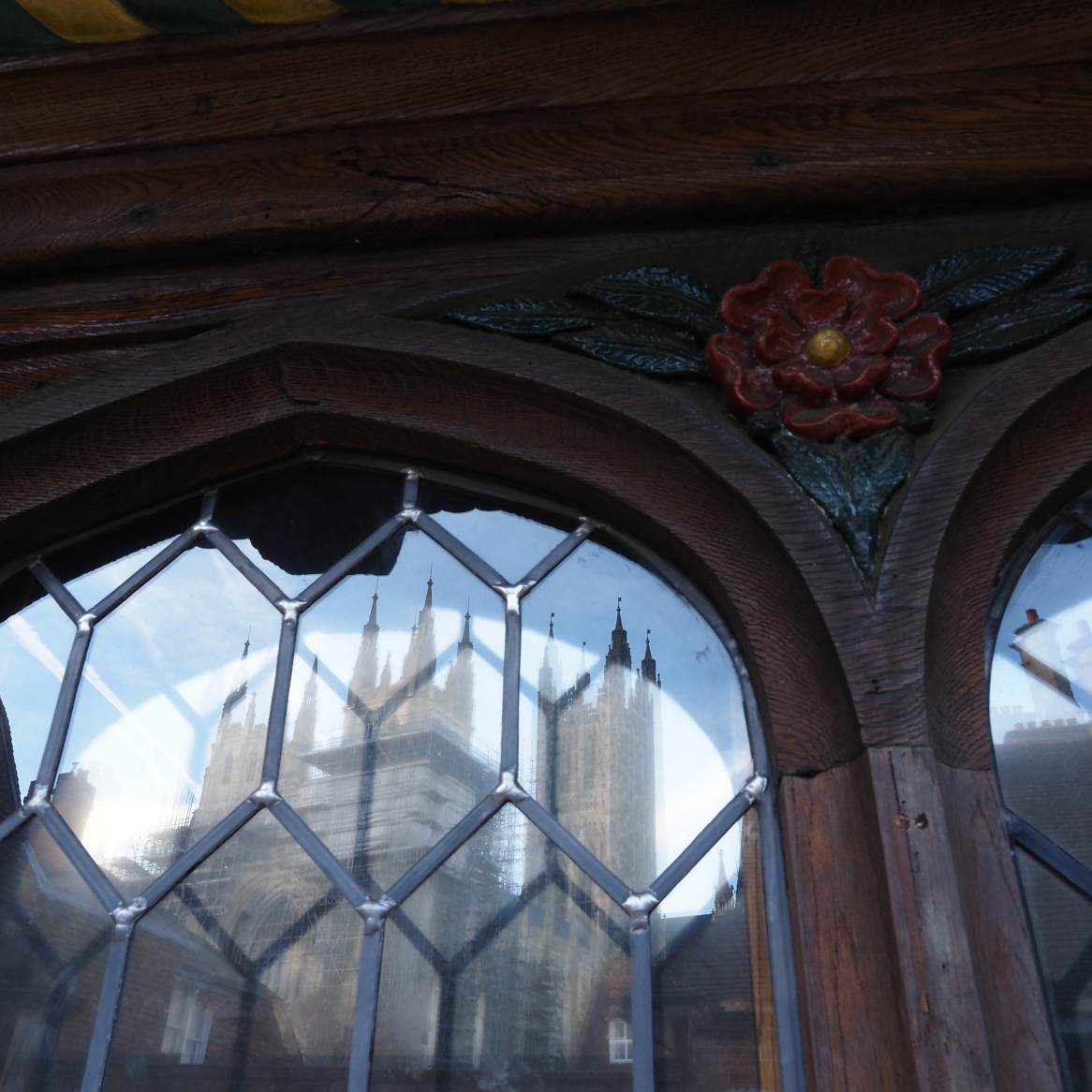
In the windows of the house you can see the cathedral’s reflection. A little further down the road was Conquest House, another Historic Buidling of Kent:

Peering in through the windows it was possible to see a plan of the interior. Check it out below:

Looking further into the room there was a rather old fresco (I think) above the open fireplace. The red signs on the wood below reads: “Please do not touch the painting. It was drawn circa 1625 and is very fragile”.

I wasn’t the only person peering through the glass to try and learn more about this intriguing building.

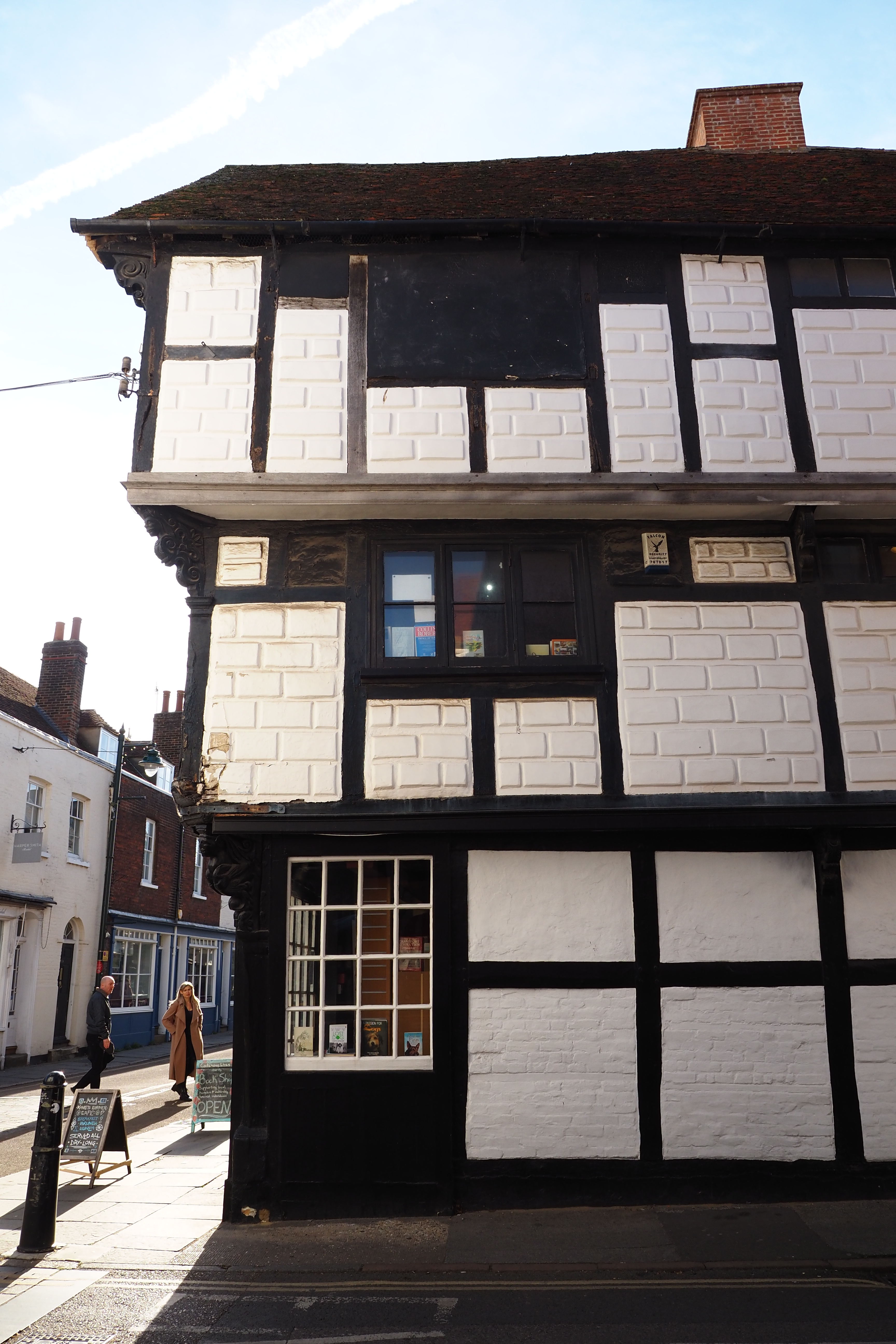
Down at the bottom of the street, but in no way at the bottom of the pile, is the The Catching Lives Bookshop. It’s famous for its crooked doorway.

Charles Dickens visited Canterbury and is quoted (in the doorway) as describing the house as follows: ”..A VERY OLD HOUSE BULGING over the road…leaning forward, trying to see who was passing on the narrow pavement below…” (1849)

Built in around 1615, the dodgy doorway is said to have been caused when a chimney was altered.

The bookshop is run by volunteers and sales go to homelessness charity Catching Lives.

Thanks for reading.
Follow @OakTimbers on Instagram

Tree lungwort lichen in western Ireland 🍄

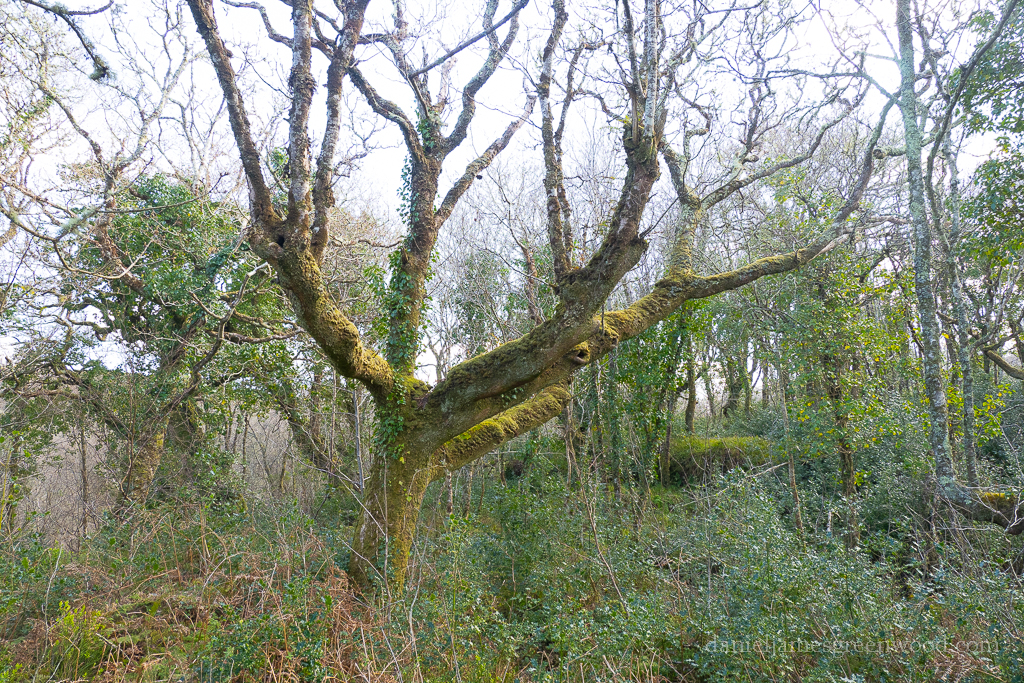
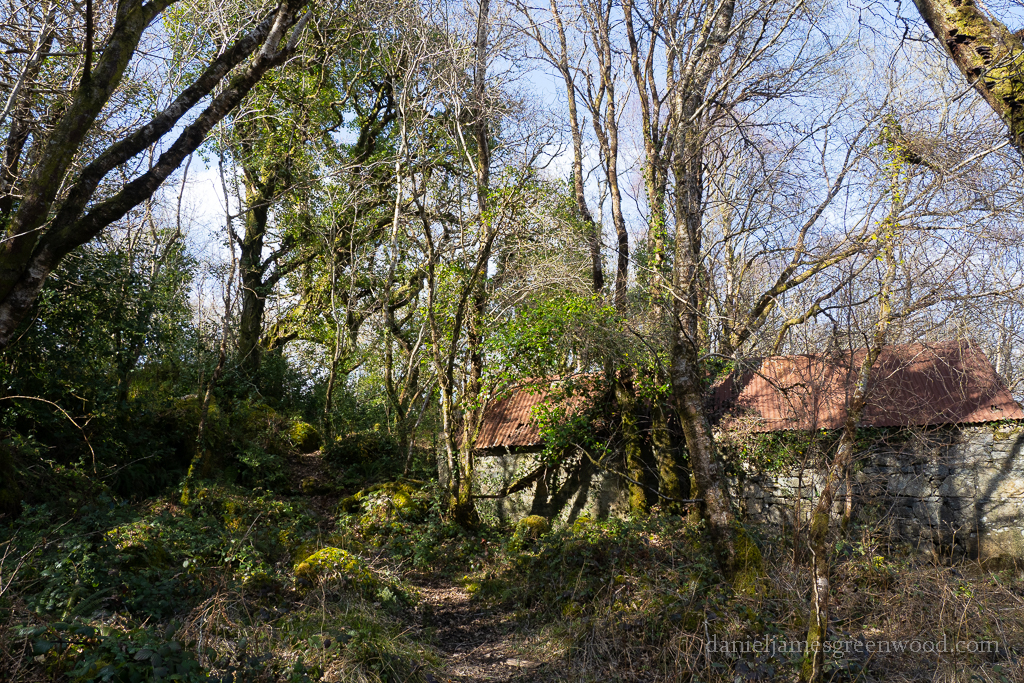
Since 2013 I have been visiting a small area of ‘Celtic rainforest’ I know in Co. Mayo in Western Ireland. It’s hard to find much ecologically significant woodland in Mayo, a place of vast peat bogs, wetlands and where the woodlands are largely low diversity plantations of spruce and larch. Nine years ago I found one woodland on the map and asked my parents if they wouldn’t mind dropping me off there. In March 2022 I had about 30 minutes to check in on this real gem of an oak woodland.

I don’t want to give the name of the woodland openly because it is incredibly sensitive and is already experiencing the impacts of anti-social behaviour (fires, litter, human waste… not that you would head straight there to mess it up!) but if you want to know the details you can contact me via email for info (unlockinglandscapes@gmail.com). It’s one of the special Western Atlantic oak woodlands which the western edges of Scotland, England, Wales and Ireland are known for. This woodland is rich in ancient woodland plantlife and is also good for fungi, as you might expect due to the long-term stability of ancient woodland species communities.

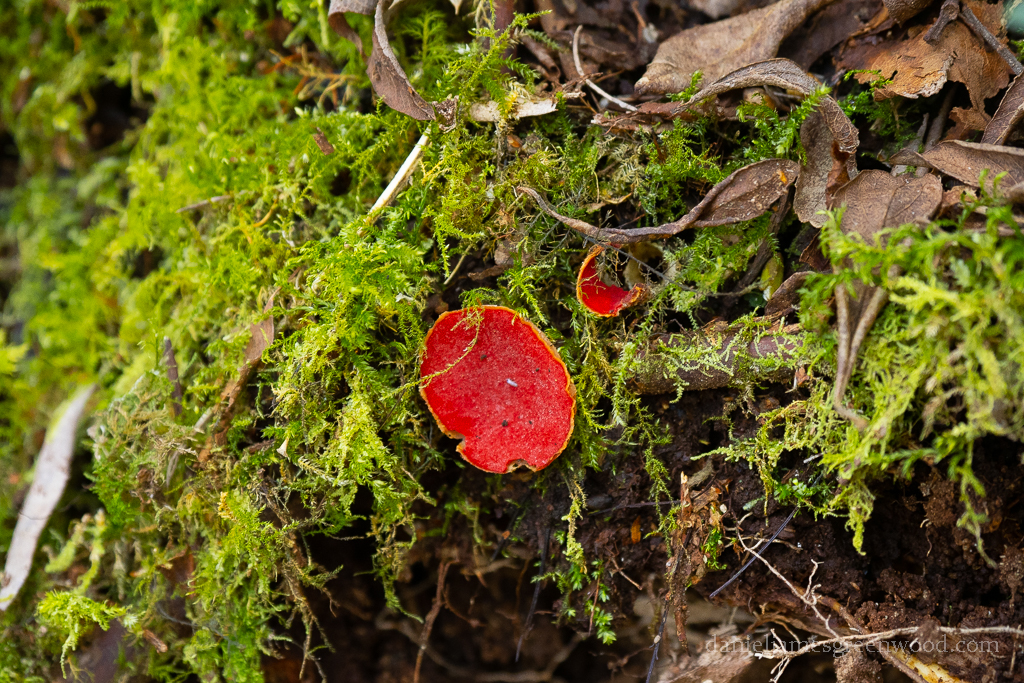
Upon entering I spotted the little red traffic light of a scarlet elf cup in among the moss. This is a species which thrives in damp and shady woodlands near water.

The woodland here is close to a large lough so it is never short on moisture.

I was astonished to find this naturally-occuring terrarium on the woodland floor. Someone had chucked a jar here and the mosses and other plantlife had colonised it.

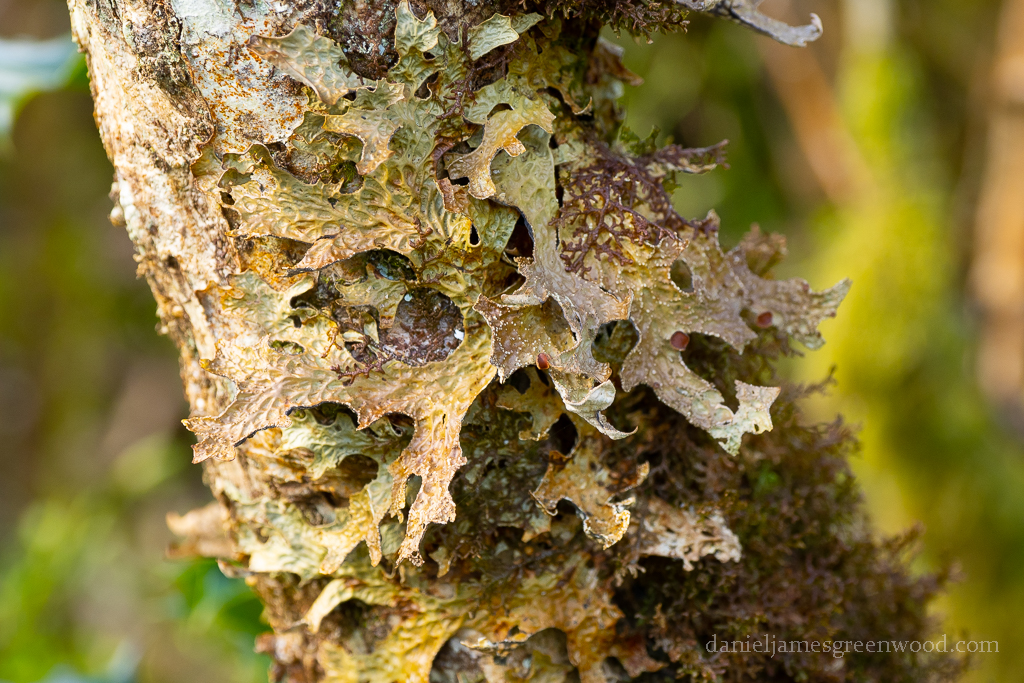
Anyway, I was here to check for an uncommon lichen in the UK & Ireland – tree lungwort, Lobaria pulmonaria. It’s a massive lichen that can be found in these ‘Celtic rainforest‘ habitats. The Woodland Trust say it’s an incredibly rare habitat.

After a few minutes of searching where I had found it back in 2017, I saw this. It is a seriously impressive species.

I was so pleased to find the tree lungwort again. It’s unlike similar organisms we find in the UK. It makes far more of its fungal elements than other lichens through its size and spread. Remember: in lichens, fungi provide the physical structure and fruiting mechanism (usually a cup-style spore shooter), while the cyanobacteria or algae are able to photosynthesise and harvest energy from the sunlight.

The oak trees in Celtic rainforest provide habitat for plants as well as lichen. There are often modest ivy vines trailing the trunk, as well as other epiphytes such as ferns and mosses:

Another thing I noticed was oaks leafing on the 31st March. This may be the earliest I have ever seen oak come into leaf, but the race between ash and oak is certainly a contest. The old saying of “If the oak before the ash, then we’ll only have a splash, if the ash before the oak, then we’ll surely have a soak” doesn’t quite play out from my experience. The very warm March we’ve experienced in the British Isles has possibly more of a role to play in this than traditional benign weather or climate patterns might.

One thing I learned from observing the other communities of tree lungwort were that the lichen seemed to prefer younger trees. I didn’t observe any on more mature specimens of oak. There didn’t appear to be a lot of oak regenaration but then again there was no danger of overgrazing due to the quite isolated nature of the woodland, its lough-side location and livestock being nowhere near.

Another lichen I observed was one of the pixie cup lichens in the Cladonia group but I couldn’t tell you the exact species.

There were many candidates for #StickOfTheWeek, so much so that there wasn’t even much of a stick to look at!

Thanks for reading

Further fungi

Oak timbers: All Saints Lane, Canterbury

Follow @OakTimbers on Instagram

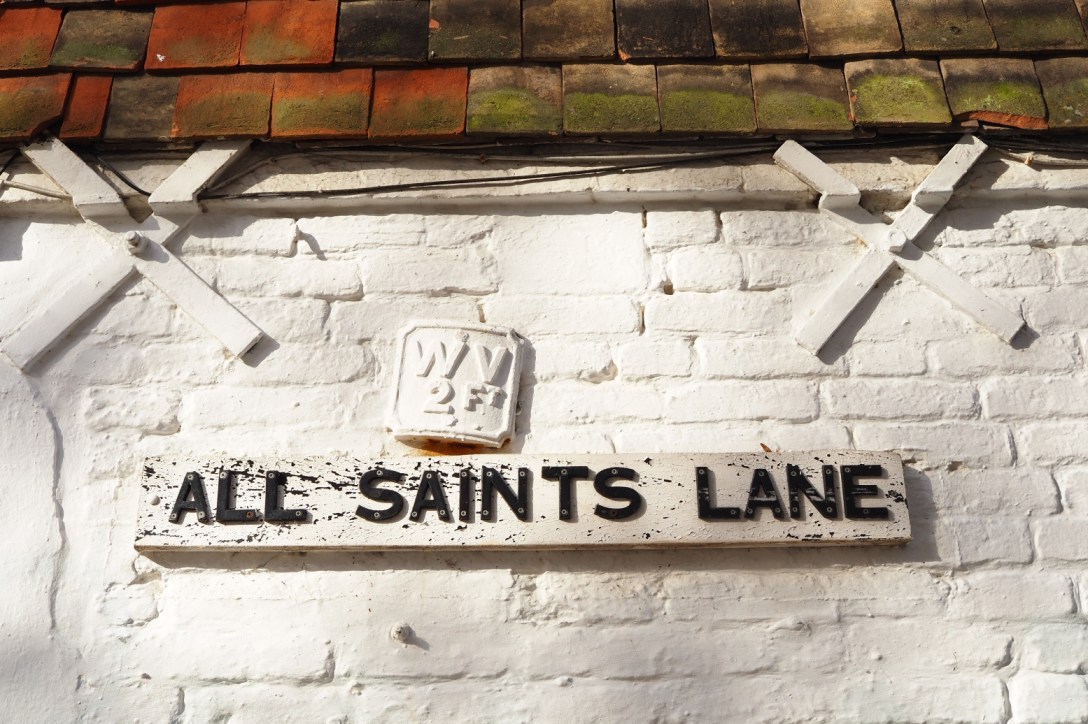
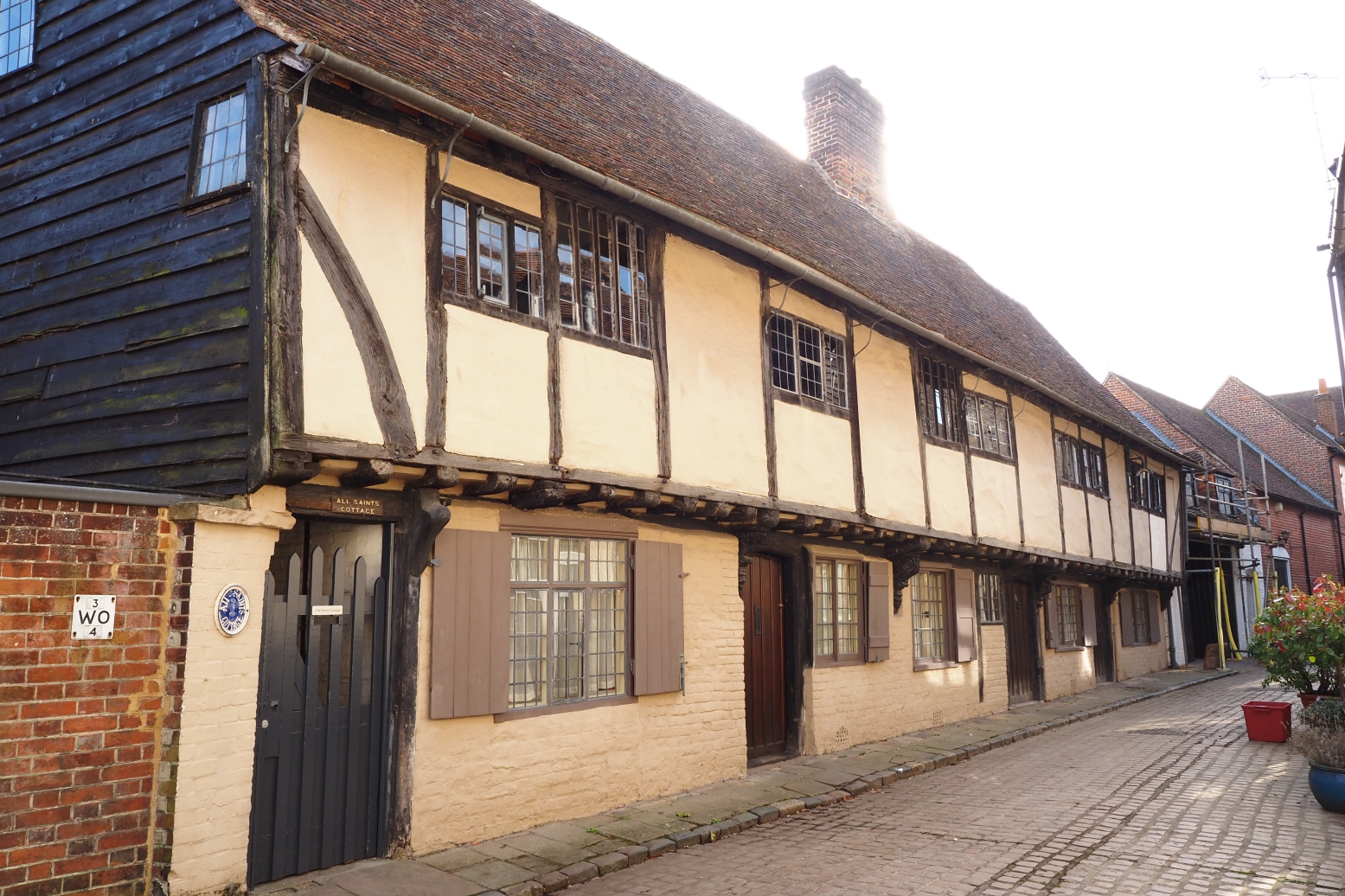
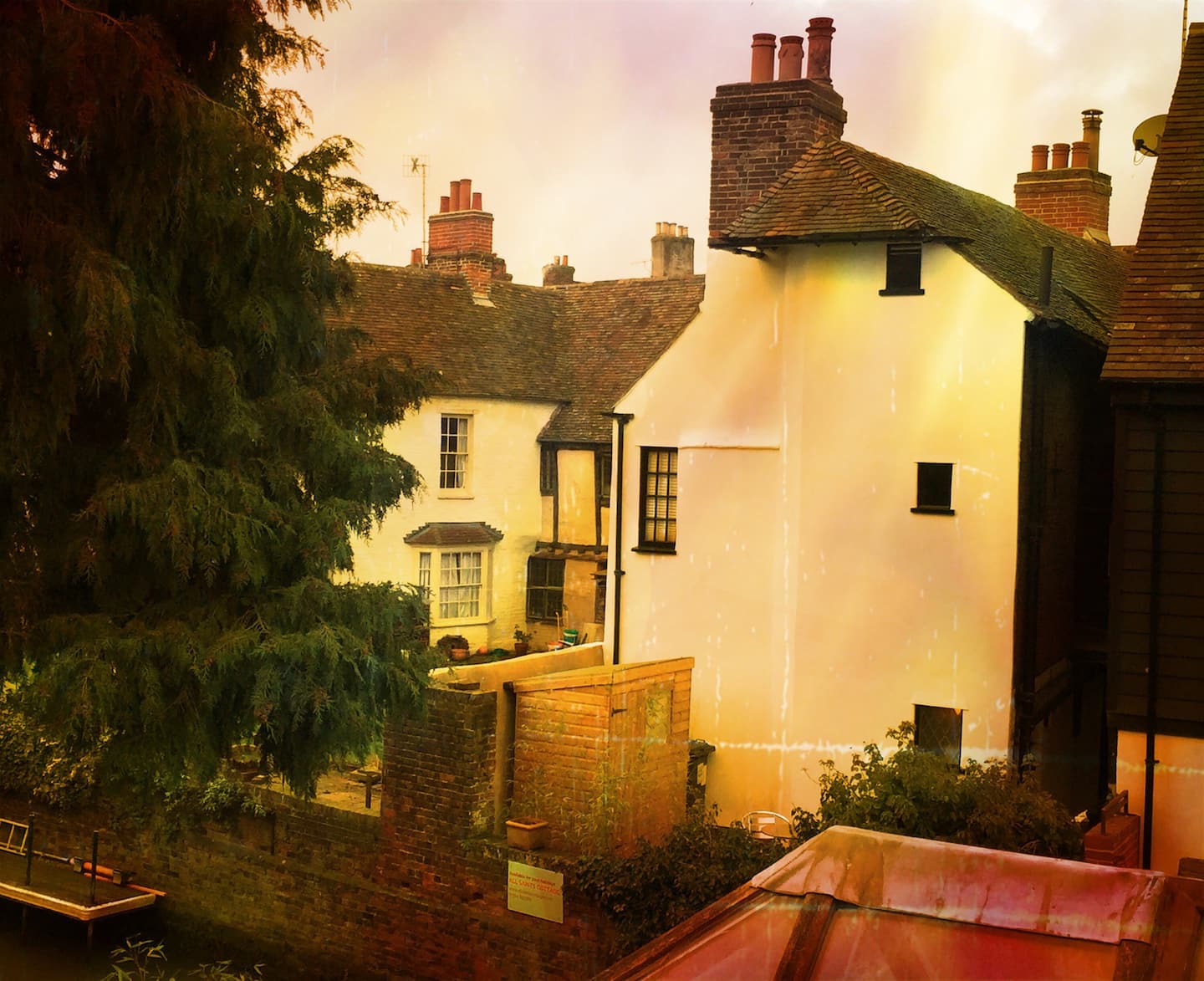
All Saints Lane is a residential cul-de-sac (apologies to anyone living there who saw me peering in) which has one incredible stretch of timber framing. Turns out you can rent one of the cottages and they have their own website. Possibly the least information you’ll find on any website, however.

All Saints Cottage is dated to the 1500s and is described on the Historic England website as an “L-shaped timber-framed range.” According to this TripAdvisor review, it “was a pilgrims’ rest associated with Eastbridge Hospital. It later became cottages. At one time, a school of dancing operated on its upper level, which comprises one, very long room.”

I hope those dancers didn’t bang their heads too often on those low-hanging oak beams! Looking at these these buildings from the outside, it’s the squiffy-ness that can give a sense of their age. This is not a technical term, but if it’s neat and tidy it’s probably from the 1900s.

I think a lot of people consider all doors in England to look like this. They don’t.

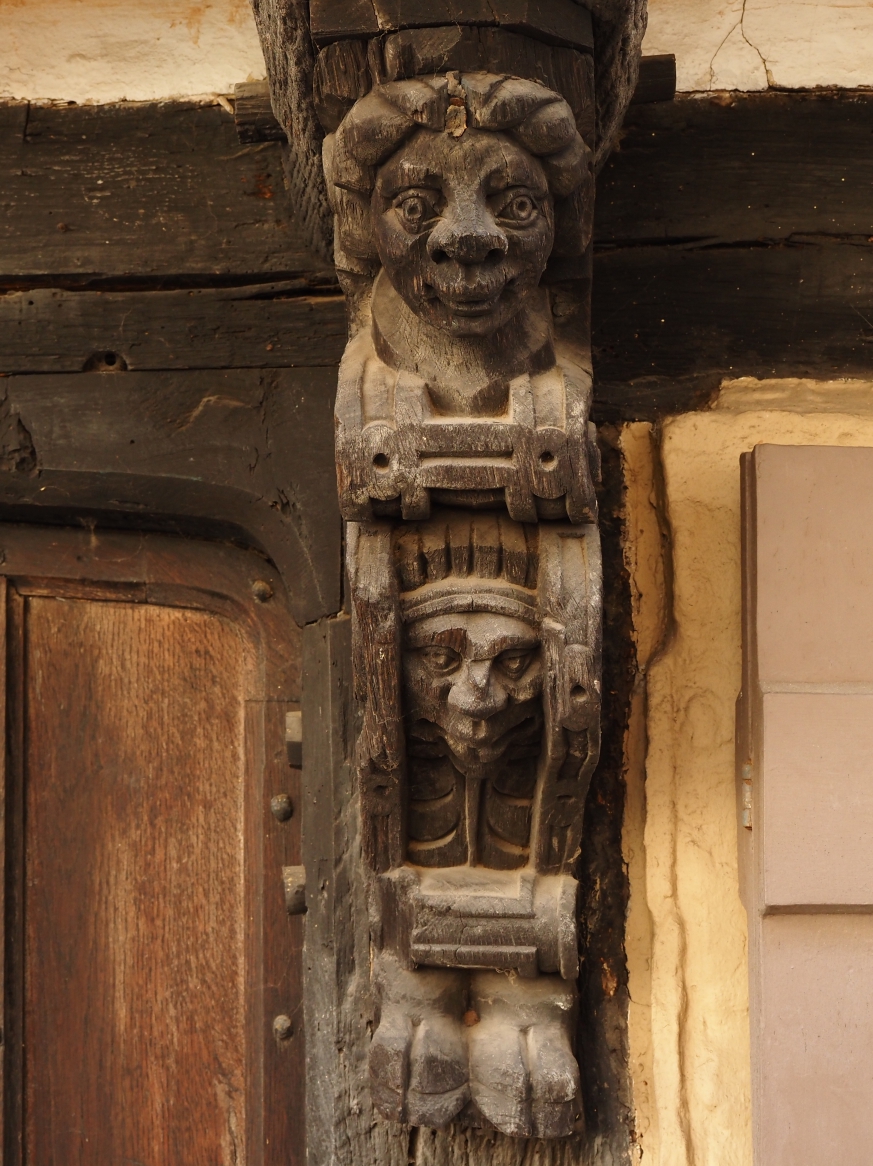
These are the other demons I mentioned in a previous post. The one on the left hand side has hoofs, the one on the right seems to be a lion with a mane. It seems the hoofs are indicative of a demonic or devilish nature.

In this photo from the AirBnB page you can see how it’s been swallowed up by a side extension. Poor timbers.

If you’re not staying for the night, All Saints Lane is a dead-end, so your only option is to head back out onto St. Peter’s Street.

Follow @OakTimbers on Instagram

Oak timbers: St. Peter’s Street, Canterbury

Follow @OakTimbers on Instagram

A really good guide for buildings in Canterbury can be found here.

I recently visited the English city of Canterbury, encountering many, many timber-framed buildings. I photographed so many that I drafted one post and found it was far too long and complex for this blog. So I have broken it up to focus on a couple at a time.

St. Peter’s Street on a busy Saturday morning. You can see the diversity of building types which show how old the townscape is. Right in the distance the tower of Westgate can be glimpsed, dating to the late 1300s, it’s the largest surviving city gate in England. That is obviously a building I didn’t manage to photograph!

On St. Peter’s Street you can see number 13, a building that houses a charity shop and a barbers. It’s got lots of signs of renovation with a few old elements standing out. The building dates to around the 1600s.

Note the beautiful carvings of the wooden ‘barge boards’ in the gables.

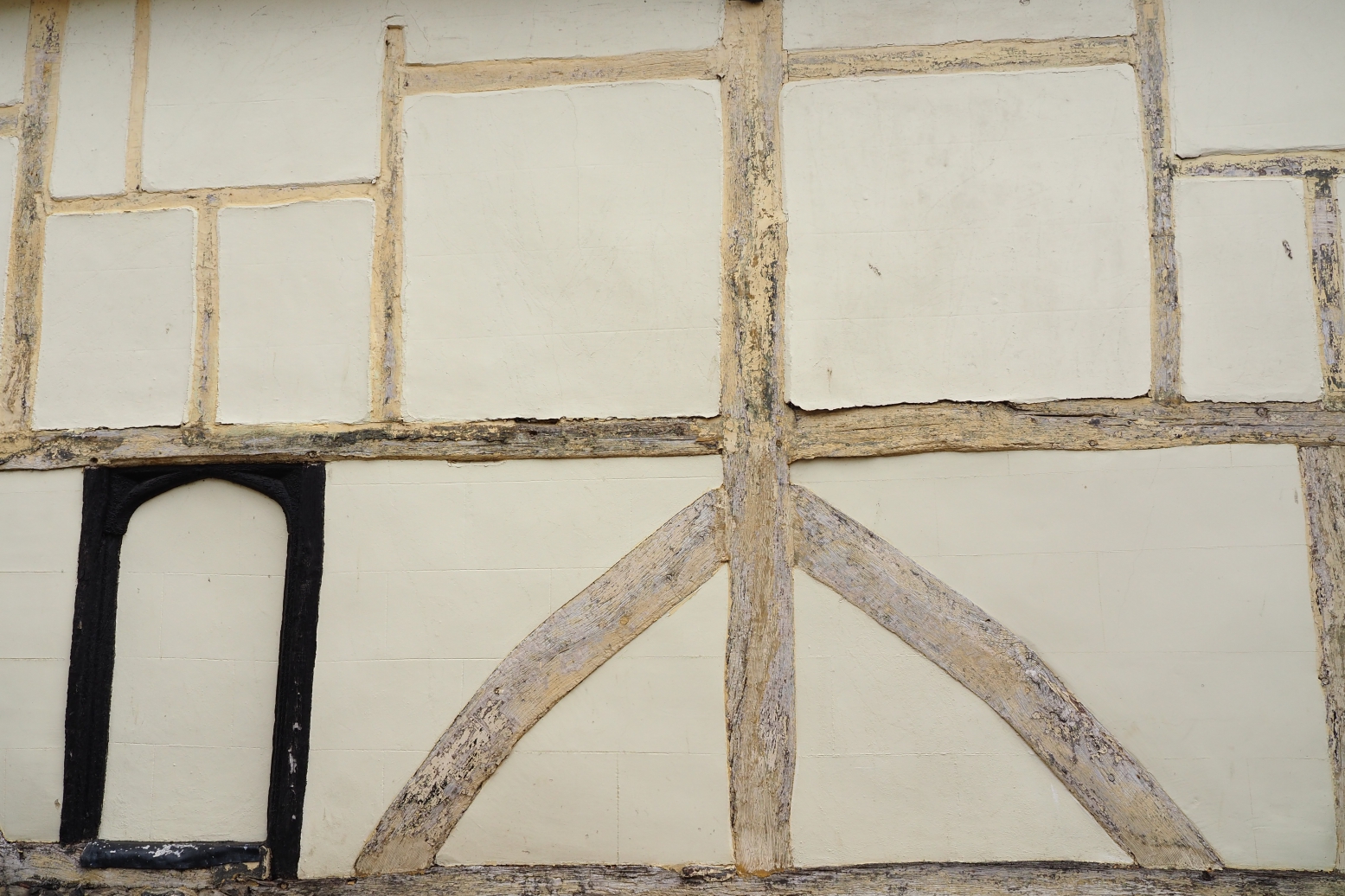
At the side you can see an old entrance way outlined in black. It’s a very small door.

These demons are designed to protect the building’s inhabitants from, well, demons I suppose. More of them to come in a later post. You can see where smaller, older windows have been filled in between them.

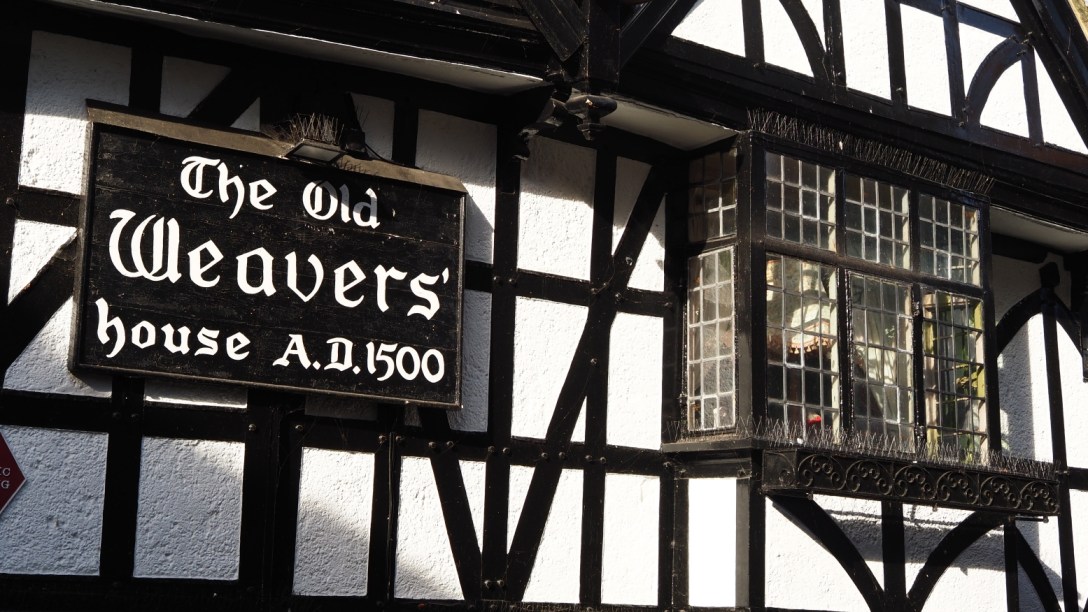
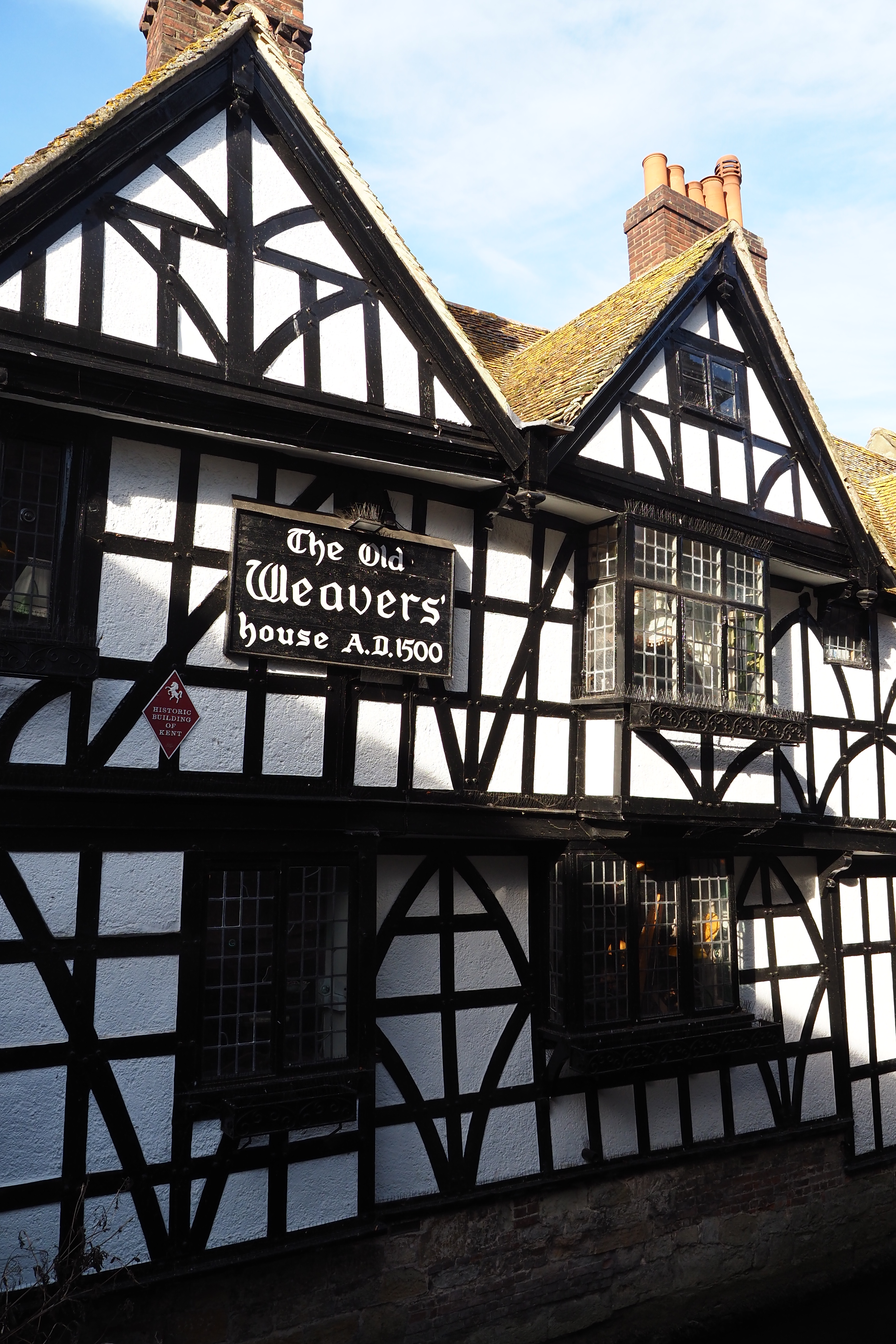
The Old Weavers’ house A.D. 1500. This is a well-photographed spot as it’s clearly visible from the bridge over the Great Stour where the boat tour company wait for business.

Here you can see the river. It has the feel of something out of Bruges, situated along a waterbody in this way. Interestingly it is thought to have been built to house weavers fleeing religious persecution in Flanders (i.e. Belgium)!

This is an possibly early 20th Century image of the building with a better view of the river, technically.

Thanks for reading.
More timbers

Follow @OakTimbers on Instagram

Early spring at Petworth Park

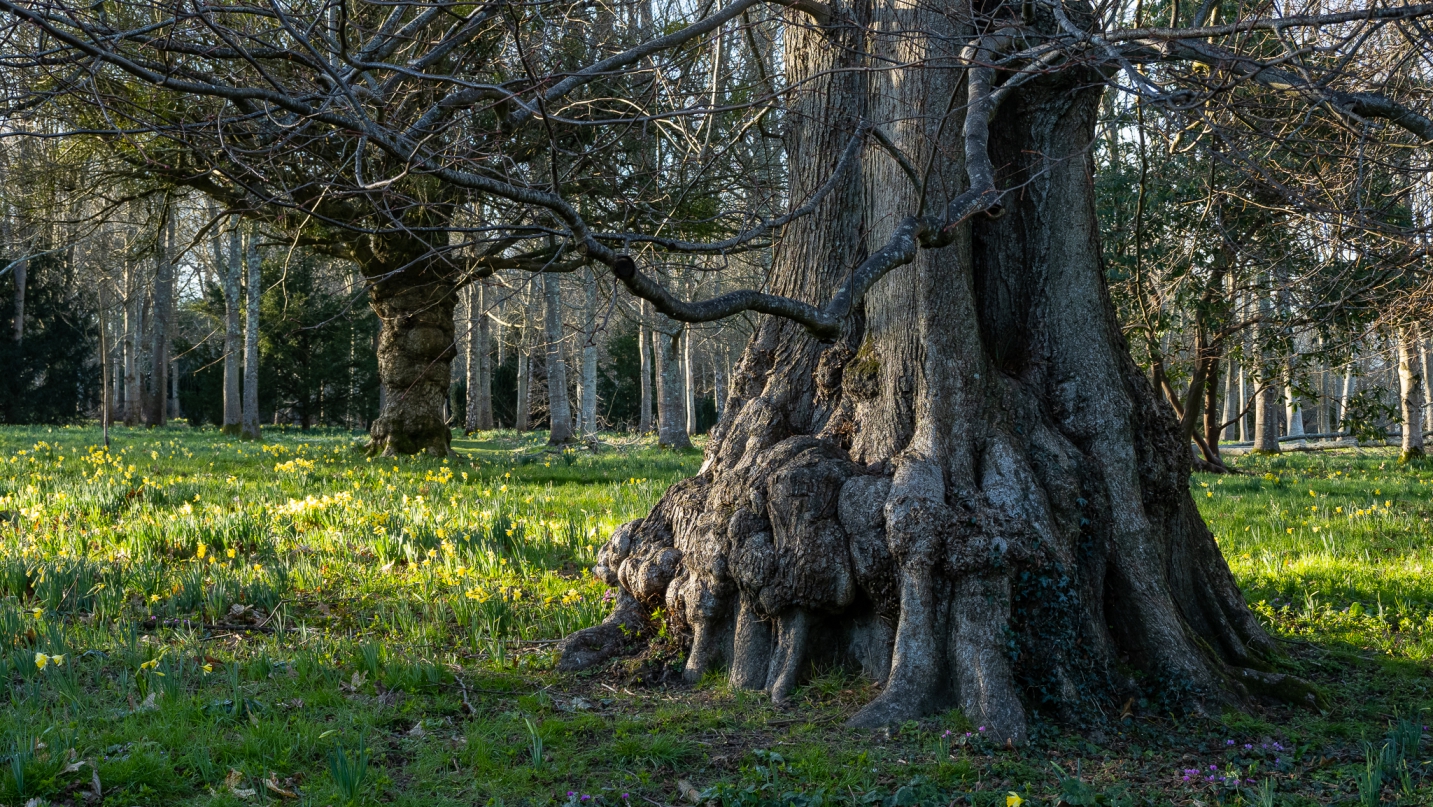
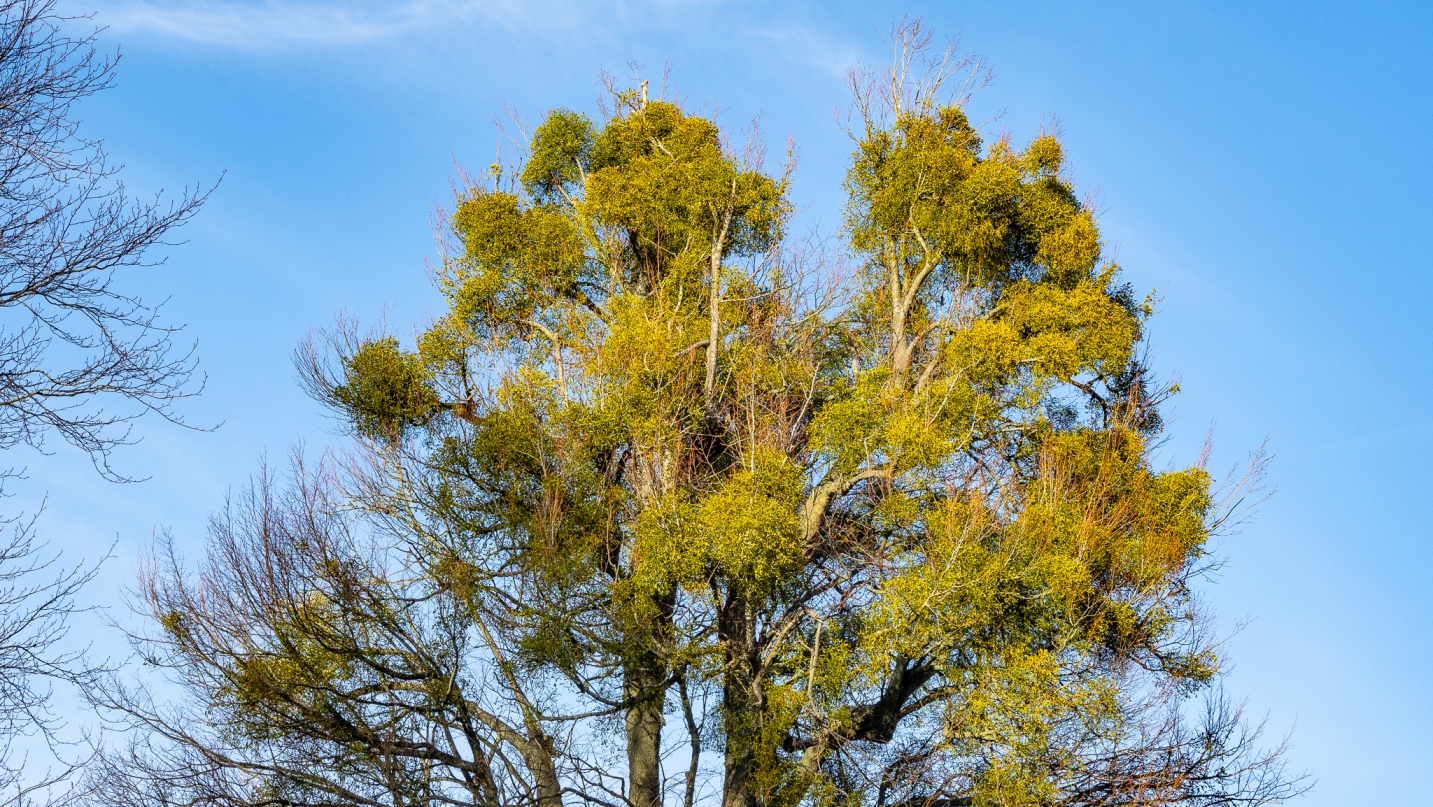
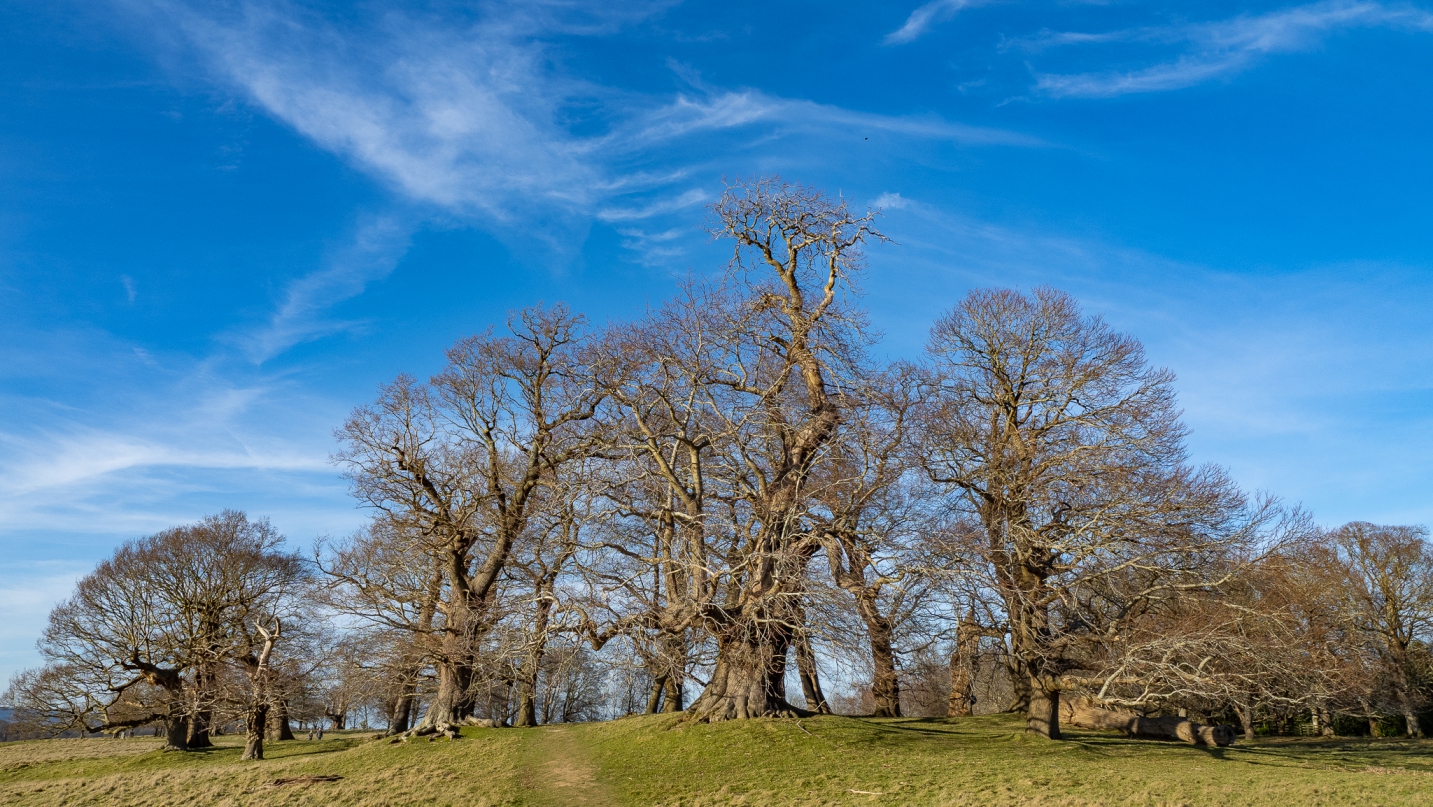
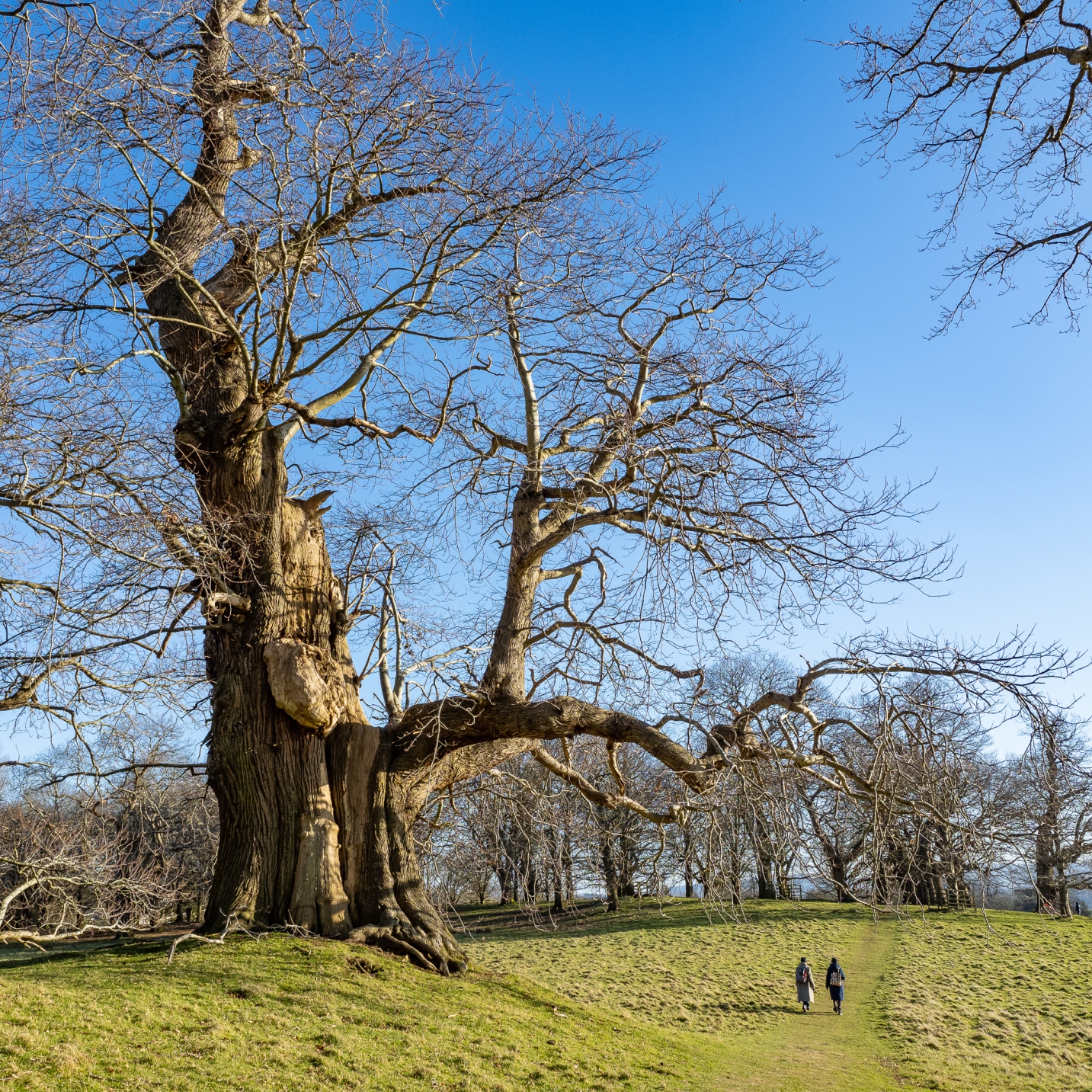
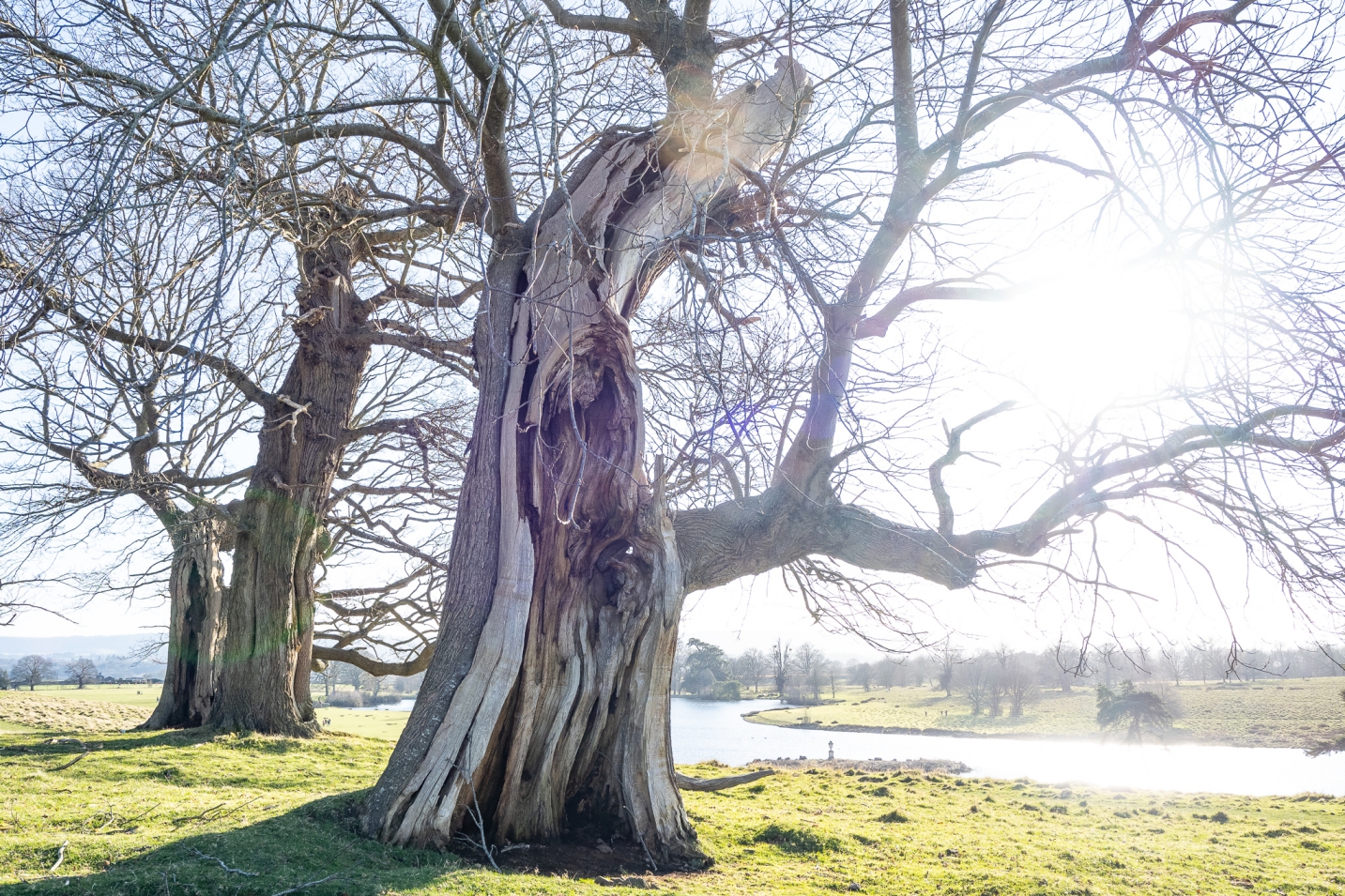
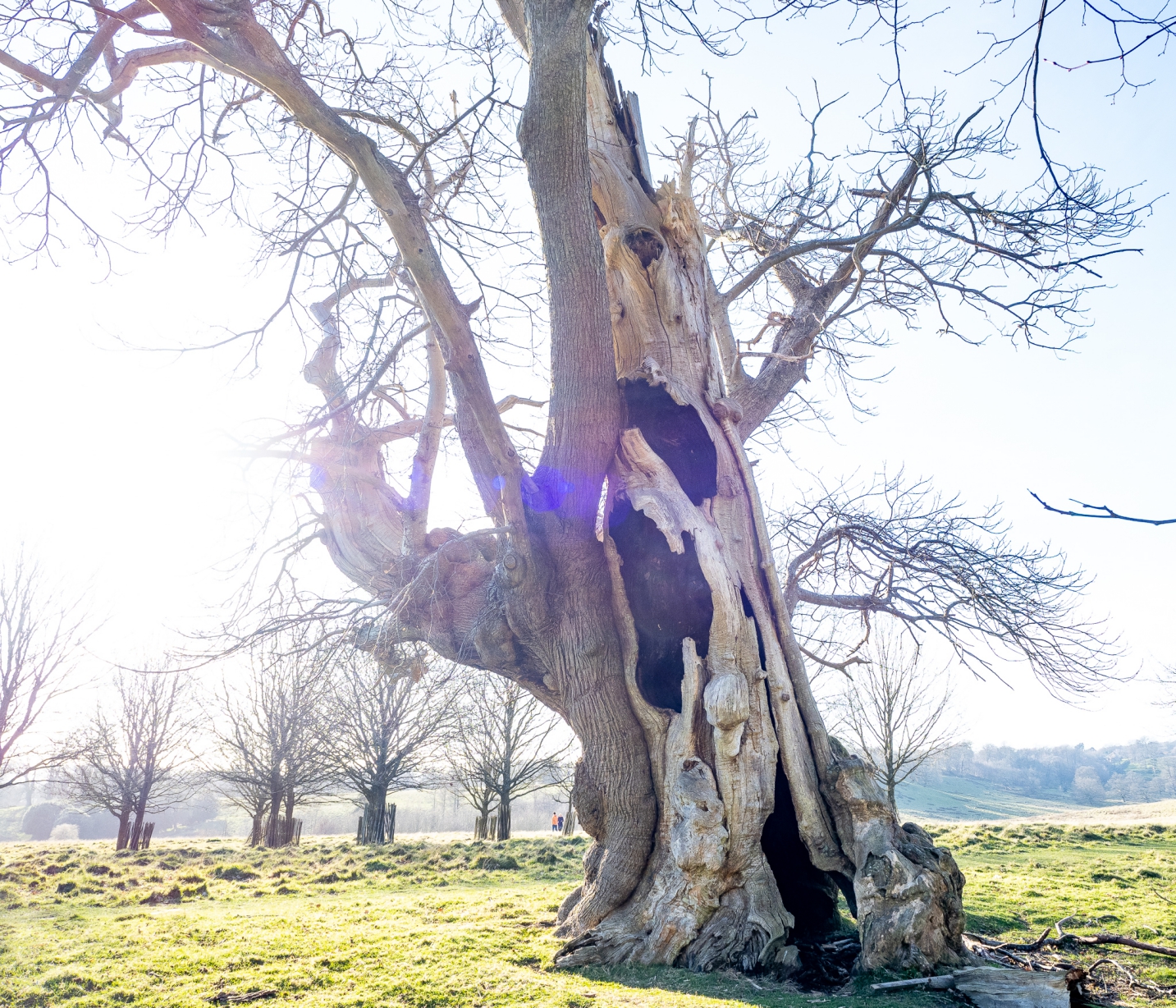
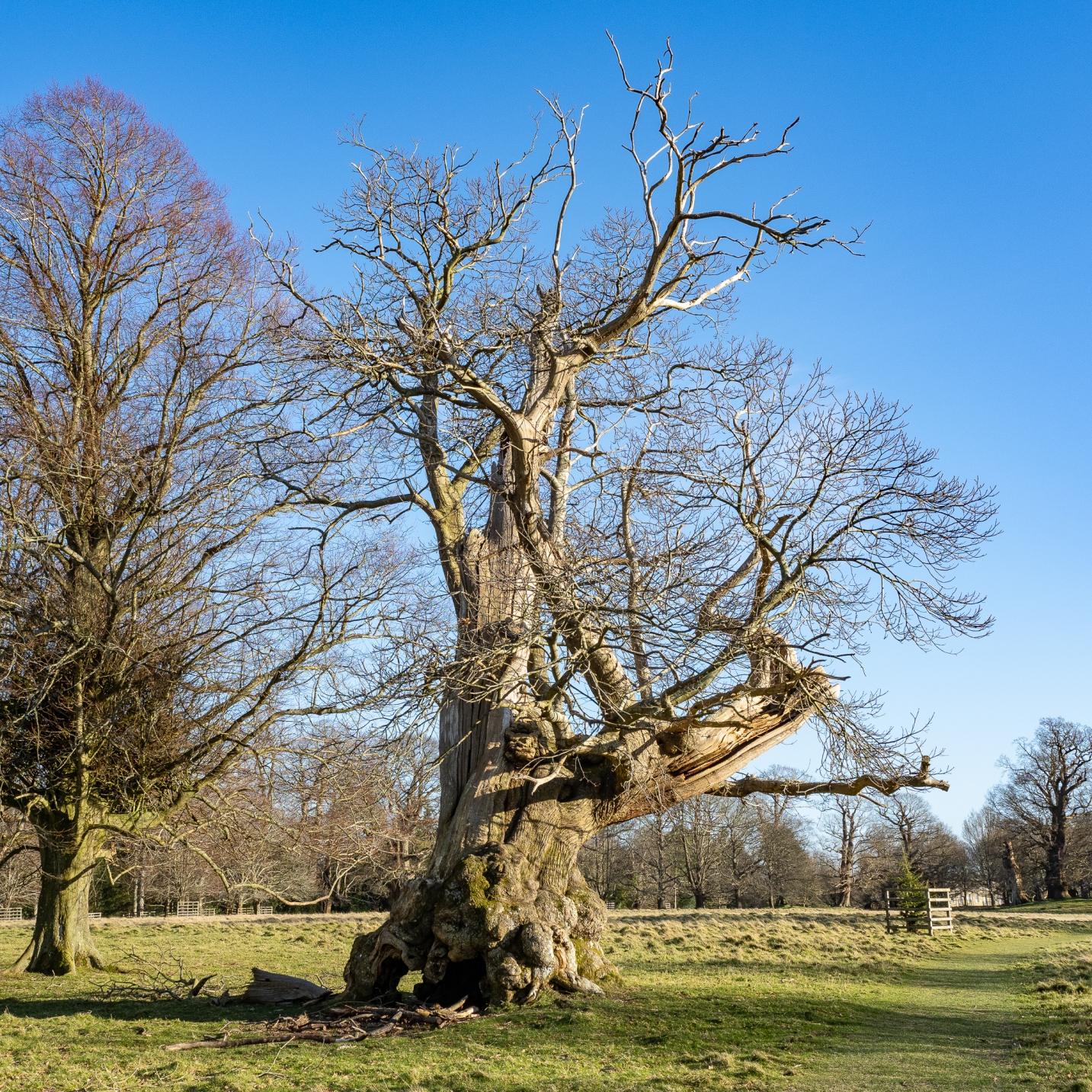
A series of photos from a sunny late winter/early spring afternoon in Petworth Park. Though it’s located in the South Downs National Park, it’s a Wealden landscape of huge ancient oak and sweet chestnut trees. The views of the South Downs from Petworth are heavenly.

The oaks and chestnuts seen here are very old. The wider landscape contains some of the oldest oaks in Britain.

Photos taken with an Olympus E-M5 MIII + 12-45mm f4 lens, lightly enhanced in Adobe Lightroom.

Solidarity with the people of Ukraine 🇺🇦

Thanks for reading.
The Sussex Weald

Fungi 🍄: keeping up with the polypores

This week I stumbled across two of the more charismatic polypores you can find at this time of year. Polypores are bracket fungi that grow like shelves, usually from a tree trunk but sometimes also at the base or from a branch.

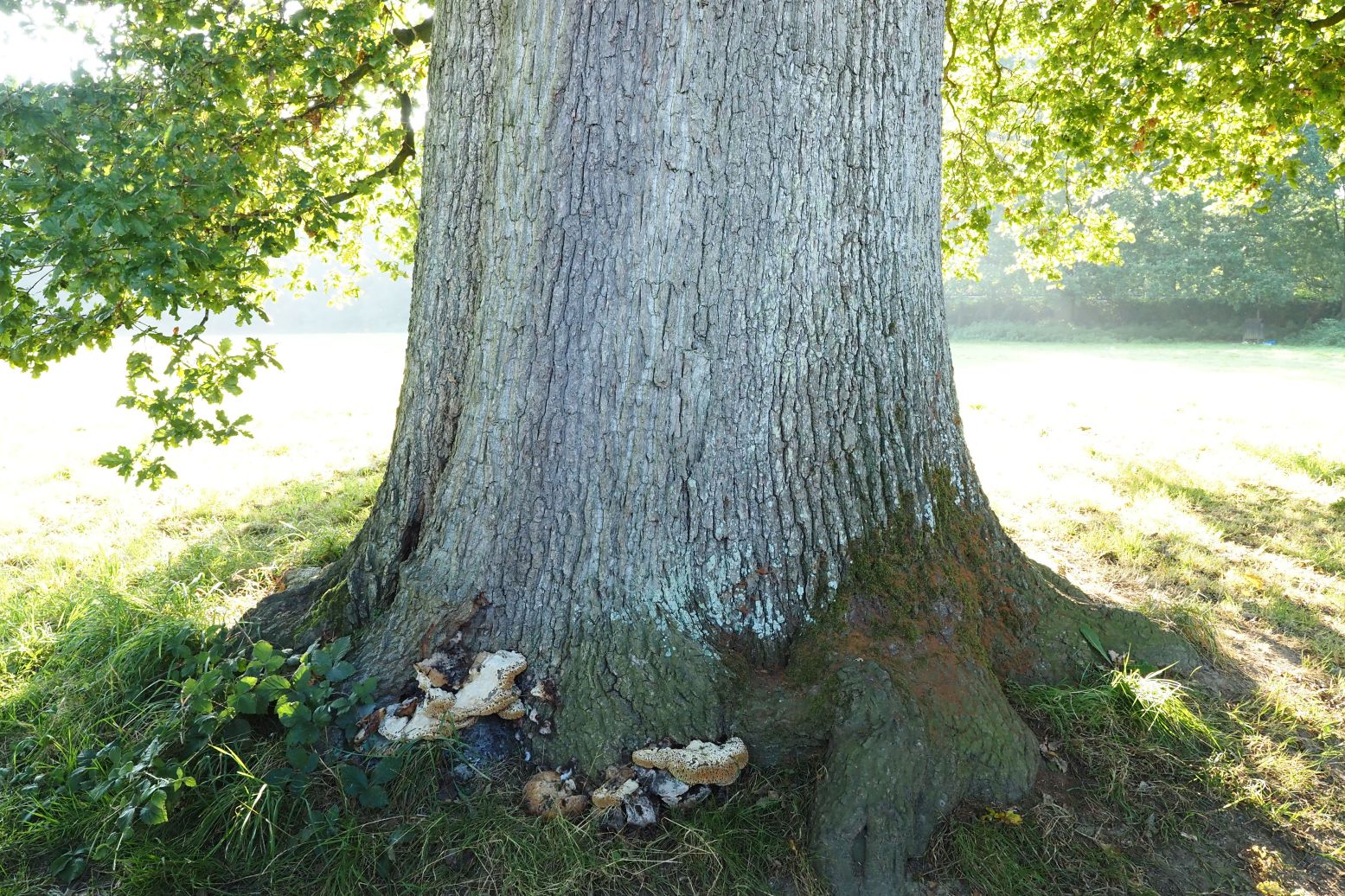
On a morning walk I went to check on the progress of a polypore I’d spotted several months ago (pictured above in late June 2021!), growing at the base of a large oak tree.

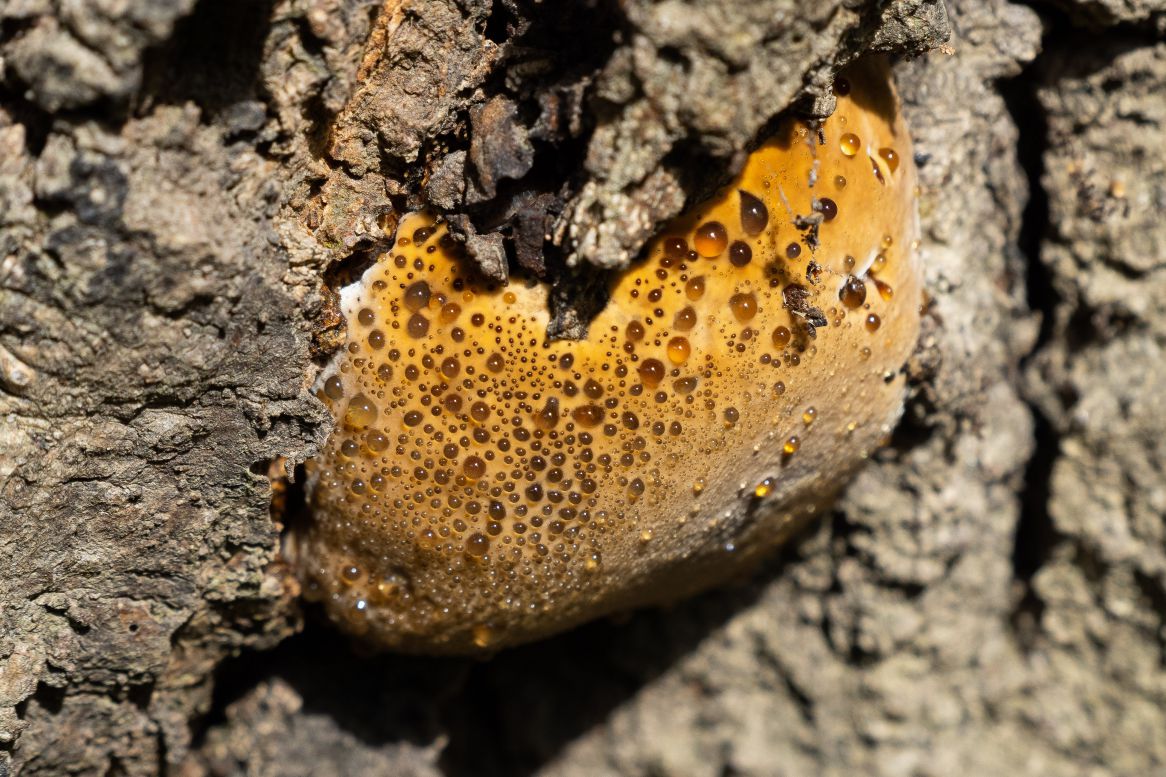
Oak bracket is one I posted about almost exactly a year ago during a visit to Suffolk. It also goes by the name of weeping conk, with a scientific name of Pseudoinonotus dryadeus. It’s a parasitic species, which means that this tree may be suffering some internal, ‘mechanical’ trouble. I hope not because it’s one of the largest in the area and is right next to a path. This makes it much higher up the chopping order if public health might be deemed to be at risk. I will never forget being taught that trees weren’t a hazard until we showed up.

This is a very attractive fungus, if you like a dough that drips caramel. It grows at a fairly critical part of the tree, where it meets the ground. It’s crucial because the tension of the roots holding the trunk upright.

Look into those hundreds of caramel eyes and tell me this is not one of the most beautiful fungi out there.

Later that evening I cycled out to the countryside on what was the end of a September heatwave. The landscape was very dry and smelly. I could smell the manure from my house two miles away in the daytime. That evening I became acquainted with the stench up close – muck spreading in the fields. It was absolutely rank, undoubtedly made far worse by the heat and lack of rain.

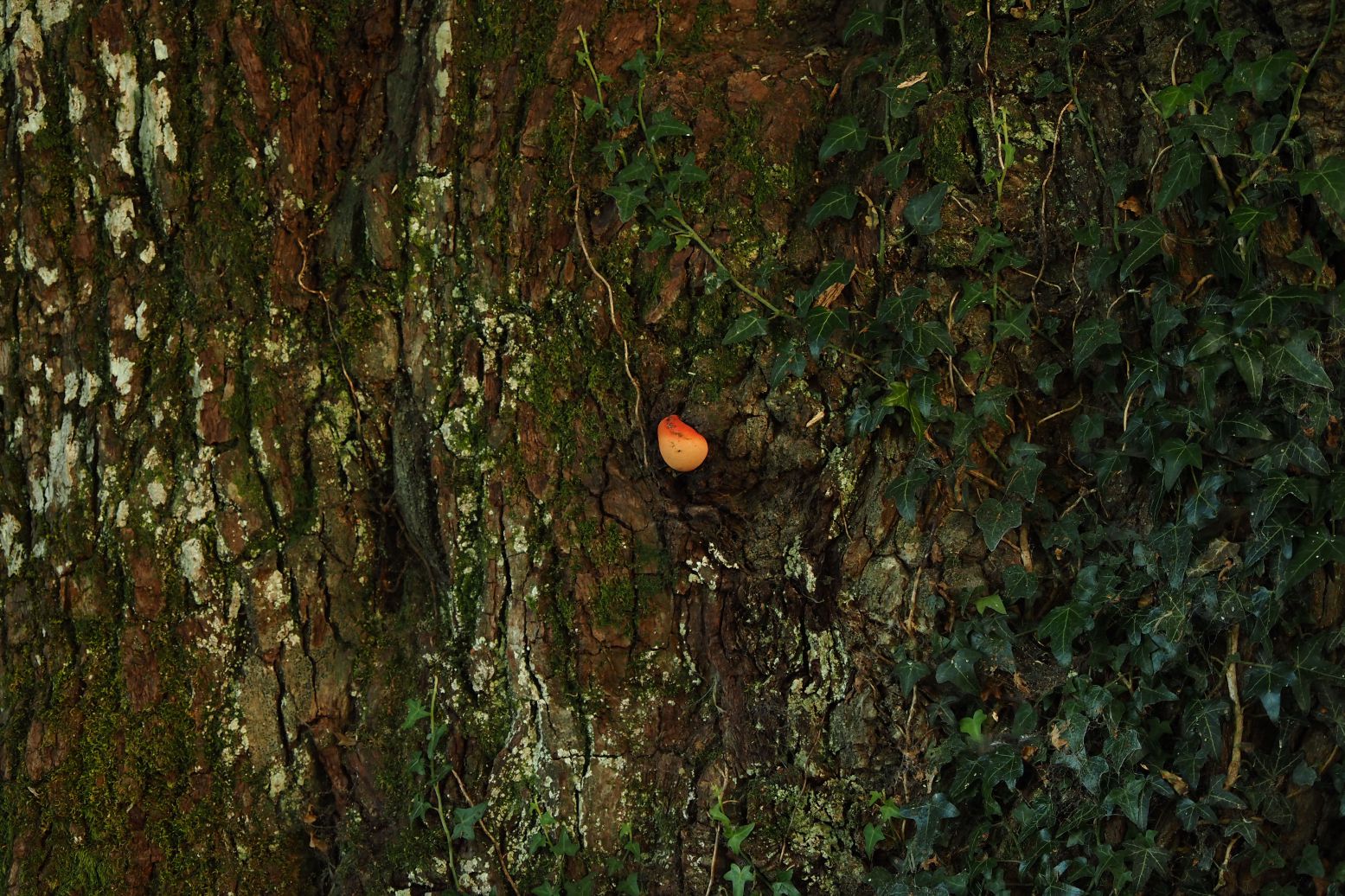
My route took me past the 800-year-old Sun Oak. Like the large oak I saw earlier that morning, this tree was also home to a charismatic polypore fungus.

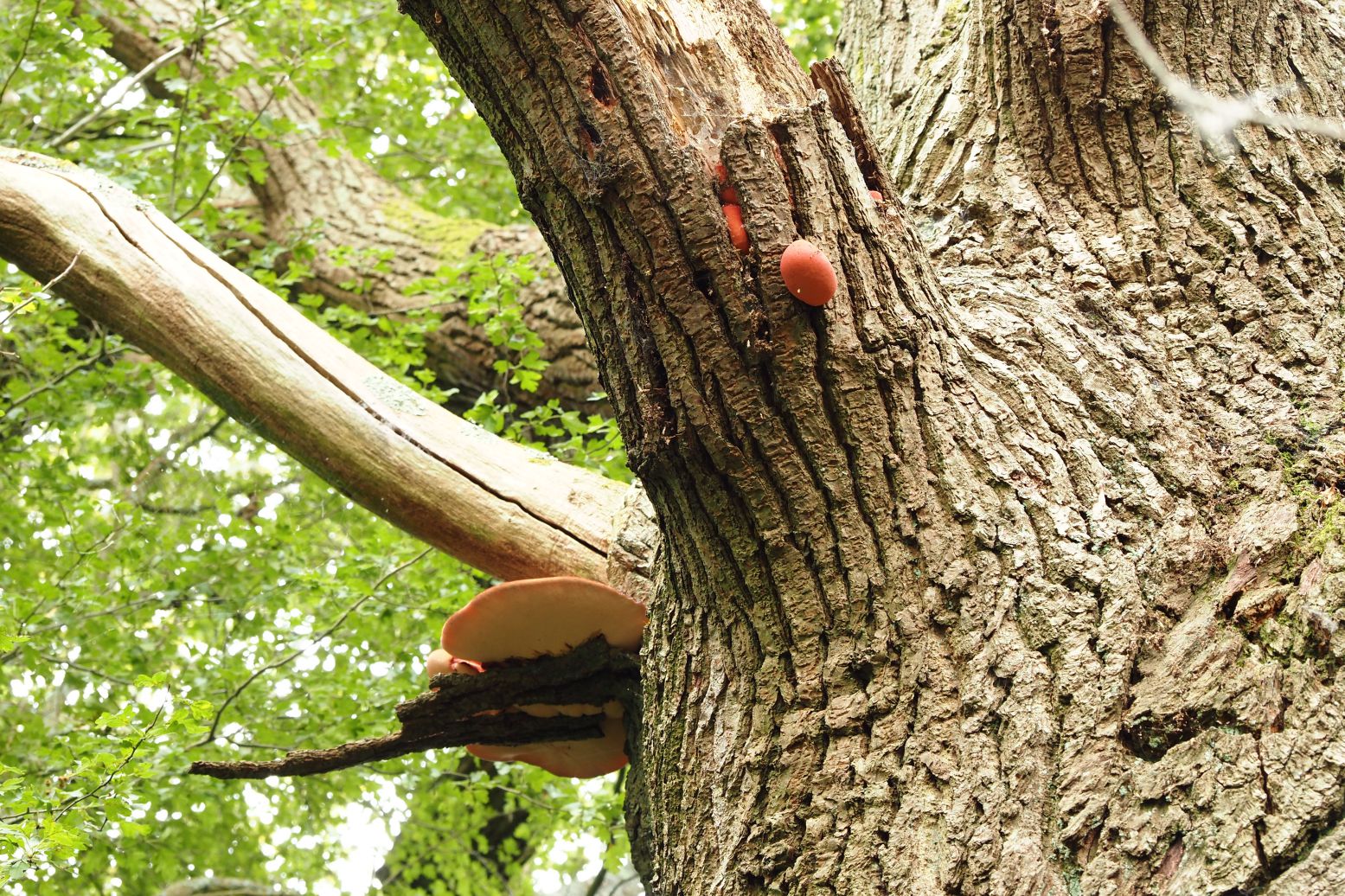
This red button is a beefsteak fungus, Fistulina hepatica. It may also have been a red button – do not press the red button. Unless you want to continue watching this programme (BBC joke).

Oh go on then.

In reality this fungus will grow out to form something that looks like a human bodily organ (hepatica). It’s often on oak or sweet chestnut, especially more mature trees. It’s another parasitic species but it’s said to grow too slowly to ever cause the tree structural problems. We should remember that these fungi have been growing with their hosts for potentially millions of years. It’s the impact we have had on their habitats that have made the trouble. Check yourself before you wreck everything else.

Here’s a recent example that cost me several milligrams in blood as the mosquitos were hanging out under this tree waiting for me to arrive. Beefsteak indeed.

Thanks for reading.
More mushrooms

The Sussex Weald: the Saxon oak

The West Sussex Weald, February 2021

The final day of February. The seasons are exchanging but only in light. The first blackthorn flowers are breaking buds at the roadside. Two cyclists float past:

‘Do you really want Louis back?’ one of the women says to another.

They swerve away from two horse riders, one dismounted: ‘At least I know when to get off now. There’ no point pushing him if he’s so nervous.’

The light is golden, low. Birds are singing at spring levels, minus the continental recruits like blackcap, chiffchaff and willow warbler.

The ancient pond was frozen last week but now the water shimmers black and blue with broken reflections of the dark branches against the clear sky.

At the old road’s margins bluebells are leafing in patches. Beyond the shrubby edges the field opens out, home to a massive pine tree. Looking at the 19th century map of this landscape, the pine is there. It must be ancient but how old may not be discoverable.

Two jackdaws fly away from its branches, perhaps having found a suitable nest hole.

Winter is still here in the treetops at the field edge, where fieldfares chuckle, moving in small flocks deeper into the open field. Soon they will make their way north to warming breeding grounds. They feel like a treat, I don’t see or hear them that often.

A breeze rustle the oak leaves on the ground, building into a hush in the leaves of redwoods high above.

At the end of the lane stands an ancient oak tree, the Sun Oak. It probably marks an ancient boundary. A couple of weeks ago I was stood here admiring the tree and a man commented in passing:

‘Amazing, isn’t it? The farmer says it’s in the Domesday Book.’

I had always thought it was 800 years old. A refence to it in 1086 would mean it was already of significant size then. Could it really be over 1000 years old?

That puts it in the Saxon Age, a time so long ago it seems inconceivable. But that’s what makes these trees so special. They are living things that have, in their ecological existence, witness and processed so much time.

This tree, the Sun Oak, is of course on the 19th century map, too.

In the surrounding trees and woodland redwings are flocking, feeding and singing. It’s hard to describe the sound – like some distant chattering, a school playground carried on the wind perhaps. Whatever it is, it’s a sign of their need to gather. Along with the fieldfares, they will all soon be on their way and with them another season under the belt of the Sun Oak.
The Sussex Weald

The Sussex Weald: to fall is not to fail

St. Leonard’s Forest, West Sussex, October 2020

A jay swoops through the trees in silence, landing on an oak branch, an acorn held in its bill. A friend and I have a running gag. Wherever we see a jay we send a text or voice recording to eachother:
‘Jay.’

It originates from a trip to the White Carpathians mountains in Czechia one September. The bird we saw again and again was the jay. Always travelling around with or for acorns. As is now commonly known now, jays scatter-hoard thousands of acorns every year. They have helped pioneer Europe’s great oak woodlands along with squirrels and other smaller caching mammals.
Here in the Sussex Weald I find a fallen acorn split down its centre. The tannin red catches my eye. The shell is cracked because the acorn is shooting, seeking soil to establish itself in.

I’m tracing an old ditch or woodbank looking for fungi to photograph. There is an almost comical halt to the woodland where the heathland and its diminishing ranks of pine begin and the broadleaf oaks end. Marking that edge is an astonishing beech tree. Let me explain.

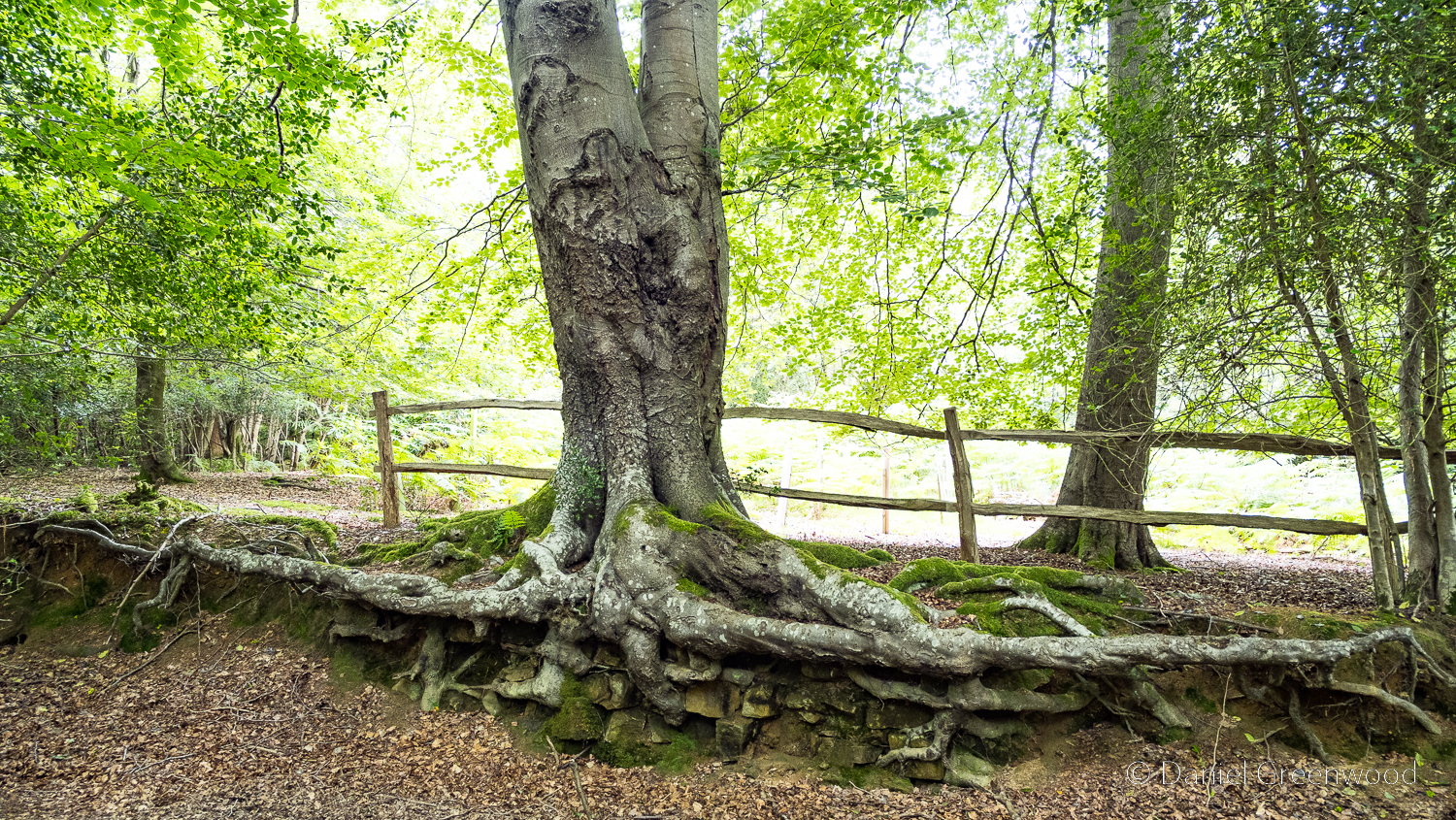
Part of the tree’s root plate has lifted. The lignified roots have become hardened like a drystone wall. They have developed into a lattice-work of branches, their function forever entangled by their appearance above ground.

The tree must have fallen about fifty years ago. But it has not died. Where the old trunk hit the other bank of the ditch it has made a sharp turn towards the sky to grow anew. Trees can teach us that to fall is rarely to fail.

The Sussex Weald