Dublin: ‘I float down the Liffey’ ๐Ÿ‡ฎ๐Ÿ‡ช

The River Liffey, Dublin, March 2024

2025 will be a year of catching up on last year’s photos. 2024 was a really busy year of travel and life events after the fallow pandemic years (2020-22).

I was in Dublin in March 2023 for – you guessed it – my stag weekend. It was more a spiritual visit, made by ferry, rather than an idiots’ weekend away. This post wouldn’t have been possible without my best man Liam’s work in booking the boat tour, the only one on the river.

For the visit I took my Olympus TG-6 Tough compact camera, but didn’t take photos as raw files so these are edited jpegs, which is obviously a crime against photography. The images from the water are taken through glass, so they have degraded even more (you probably won’t notice). The light was nice though, and image quality isn’t everything.

The title of this blog is a pointer to a lyric in the Radiohead song How to disappear completely.

Passing the Liffey is carved into my memories of Dublin having travelled so many times on the ferry, across and along the river in the car after disembarking. It’s also where my parents bought me my first Everton shirt in 1995.
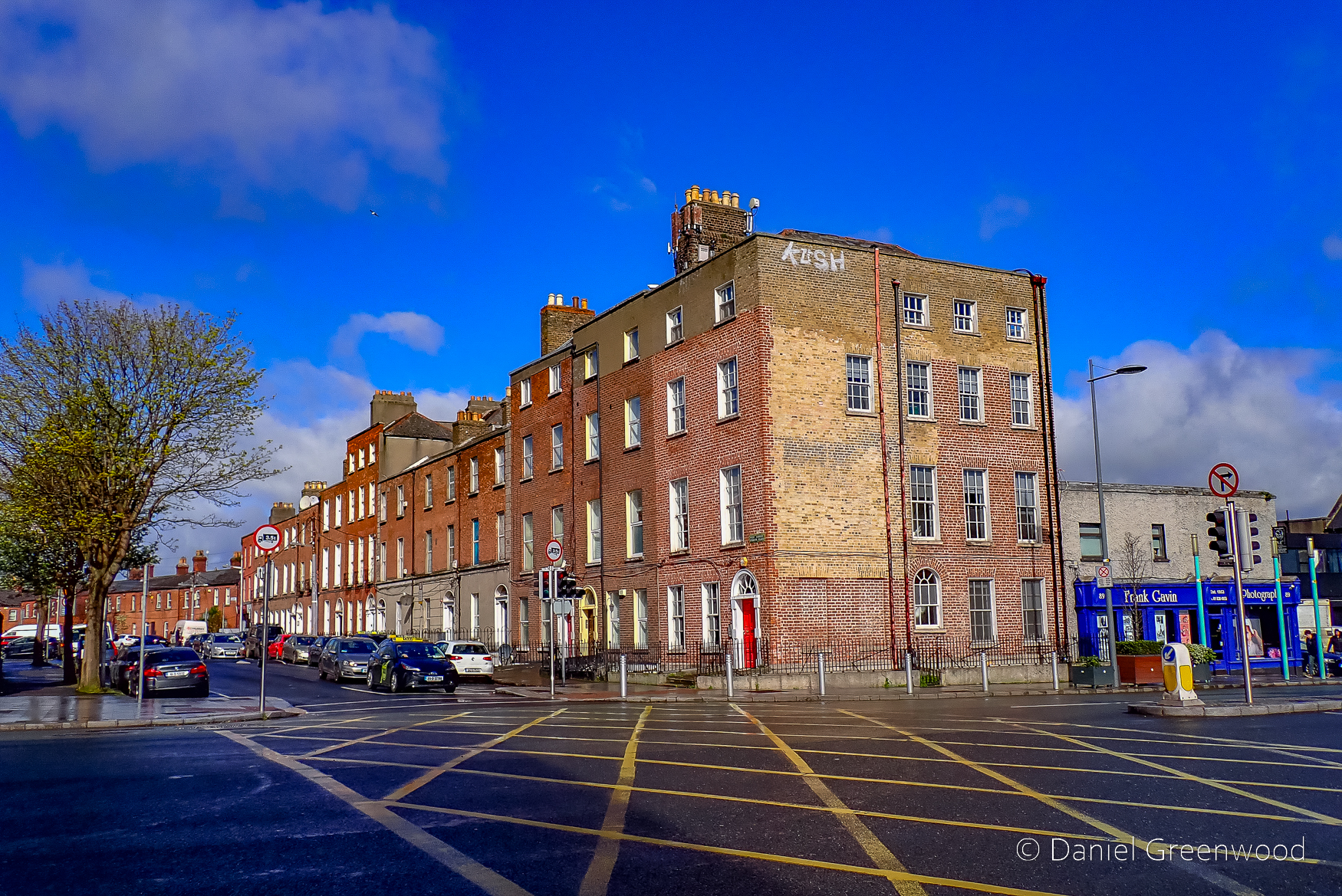
We were staying on the north side of the Liffey, the older part of Dublin.

Who doesn’t like some unofficial street sculpture – if it’s fly-tipping that’s obviously different. Now for a handbrake turn:
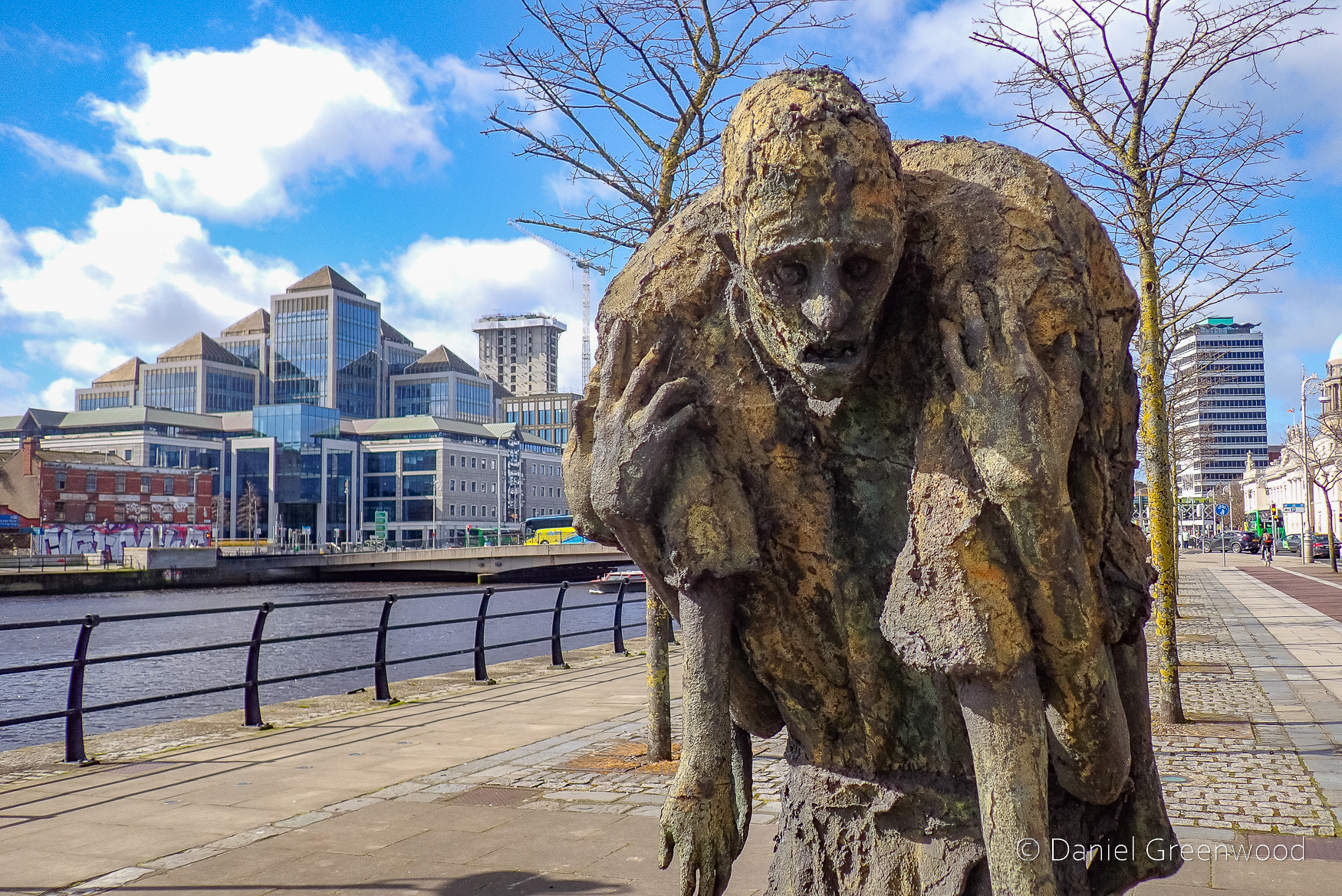
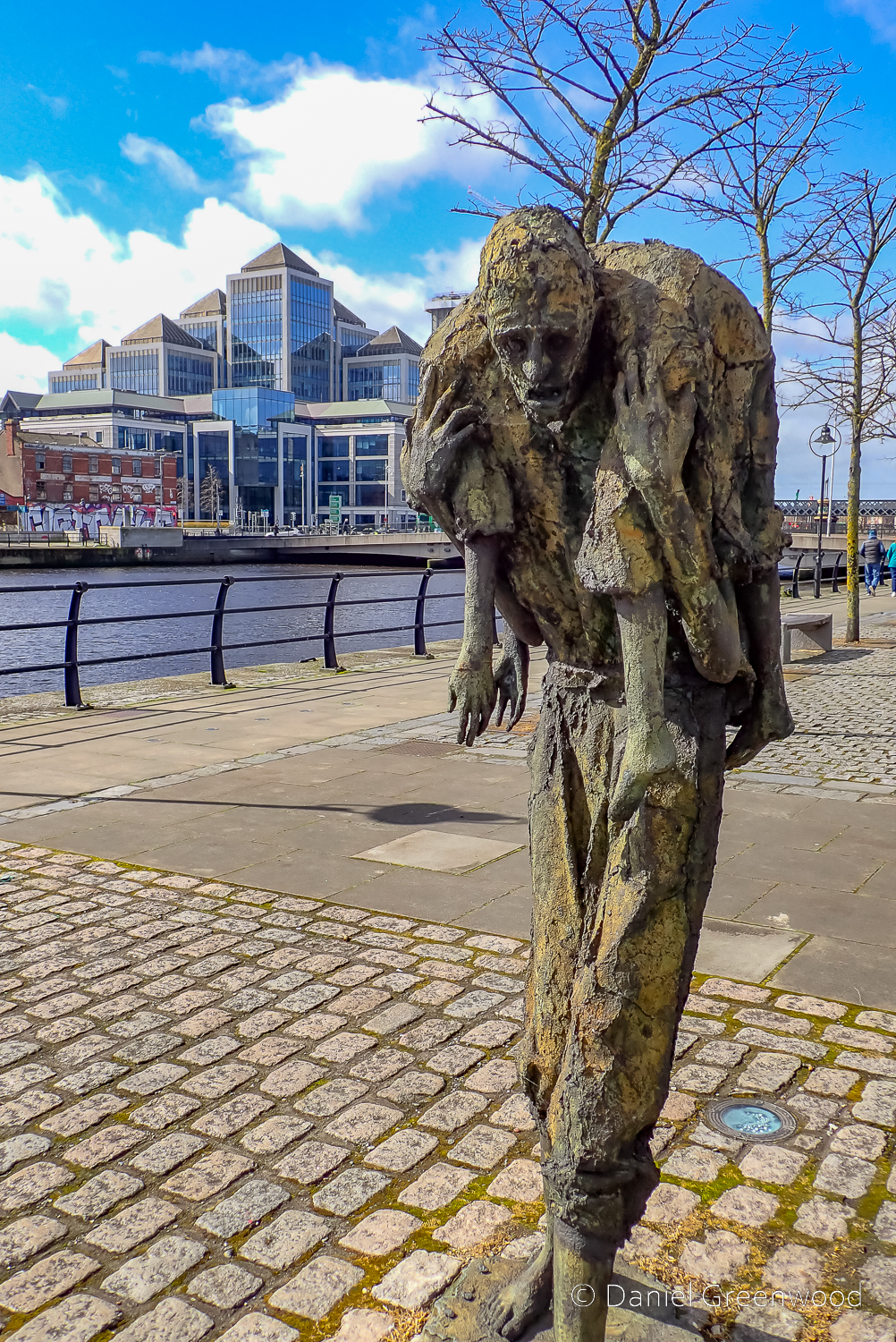
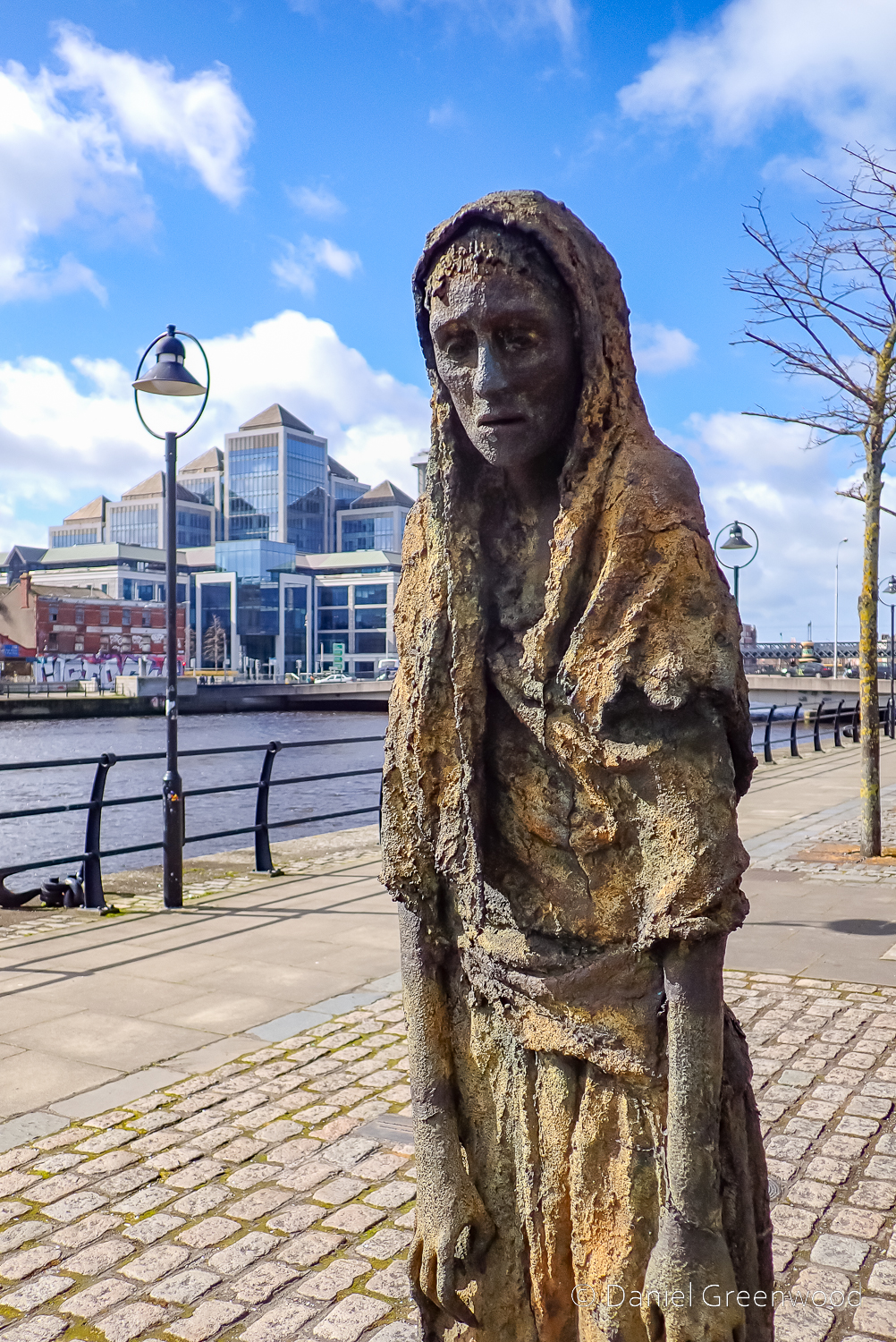
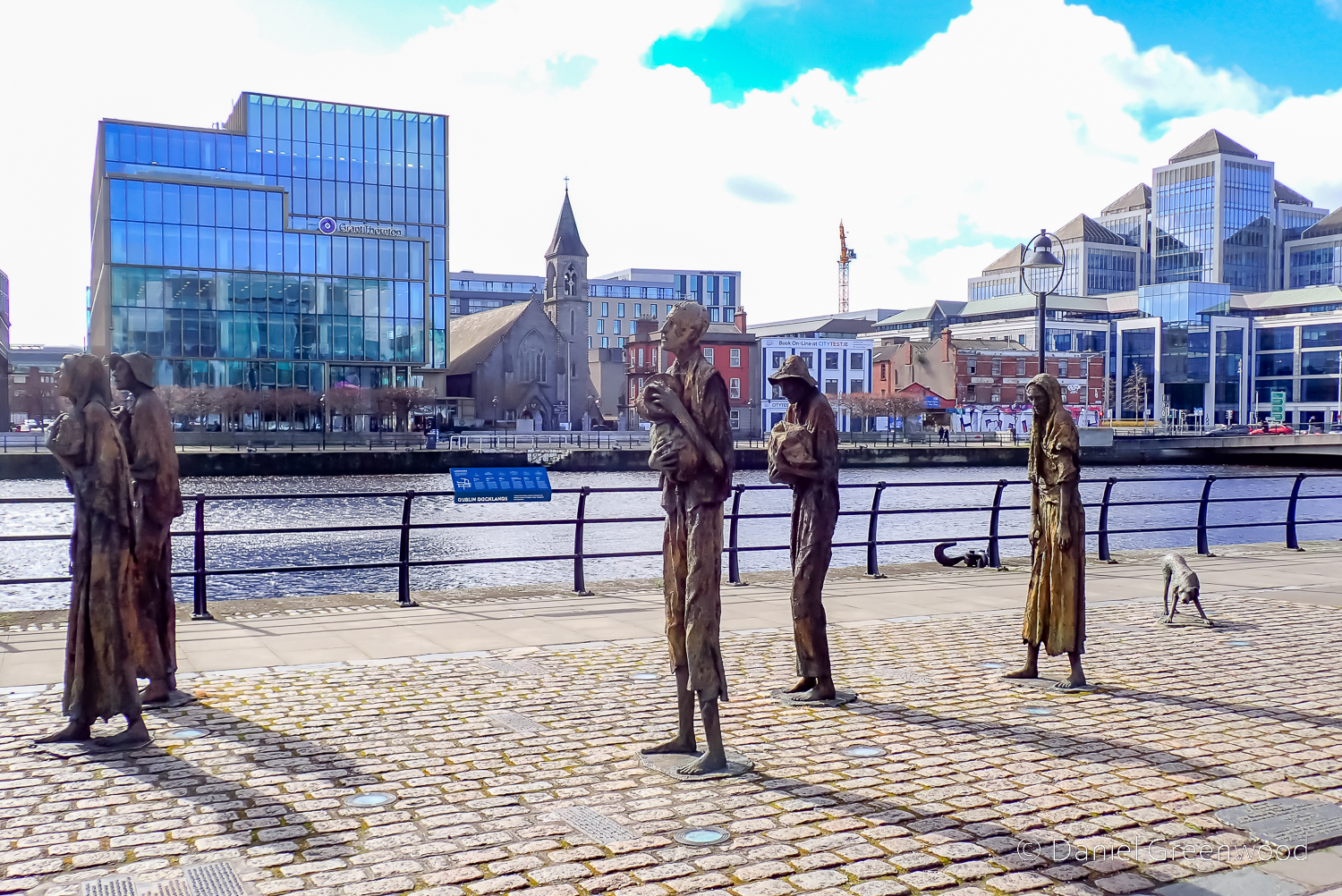
The Famine Sculptures are one of the most striking installations along the Liffey. They act to remind us of the millions of people forced to emigrate or leave their homes during the Great Famine (1845-49). It is a shocking event in British and Irish history and too few people in Britain are educated about it.

I don’t mean that from a place of “victimhood”, as one true British patriot put it to me once. It’s just that I’ve come to appreciate that the understanding of Irish history is very poor in Britain. Irish history is British history, too. There is so much more we could have learned in school about the role of the British Empire and how it explains the country we find ourselves in today.

On a lighter note, this Saturday Night Live sketch with Paul Mescal poking fun at those of us with ‘Irish ancestry’ is very funny:

From a personal perspective the famine drove my Mayo ancestors to attempt new lives in North America. The statues here are in place alongside where one of the “famine ships”, the “Jeanie Johnston” departed for New York:

The original Jeanie Johnston carried 2,500 Irish emigrants across 16 journeys to North America during the Famine.

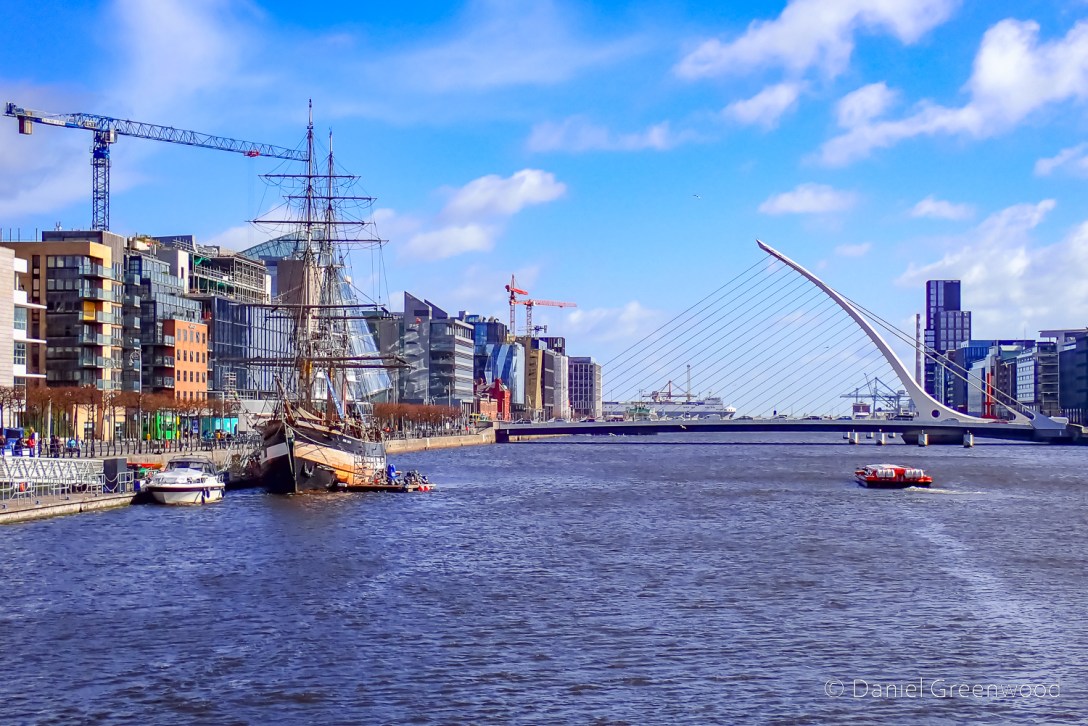
You can see the Jeanie Johnston moored in the left-hand side of the image below right.

This is the Harp or Samuel Beckett Bridge, looking out towards the Irish Sea. The harp is a significant symbol in Irish national identity. During a walking tour we learned that the Irish government had to get permission from Guinness to use the harp as its national emblem, and with restrictions on how it could be employed.

Custom House dominates part of the north bank of the Liffey. It was burnt down in 1921 as the Irish Republican Army attempted to destroy tax records in a raid.
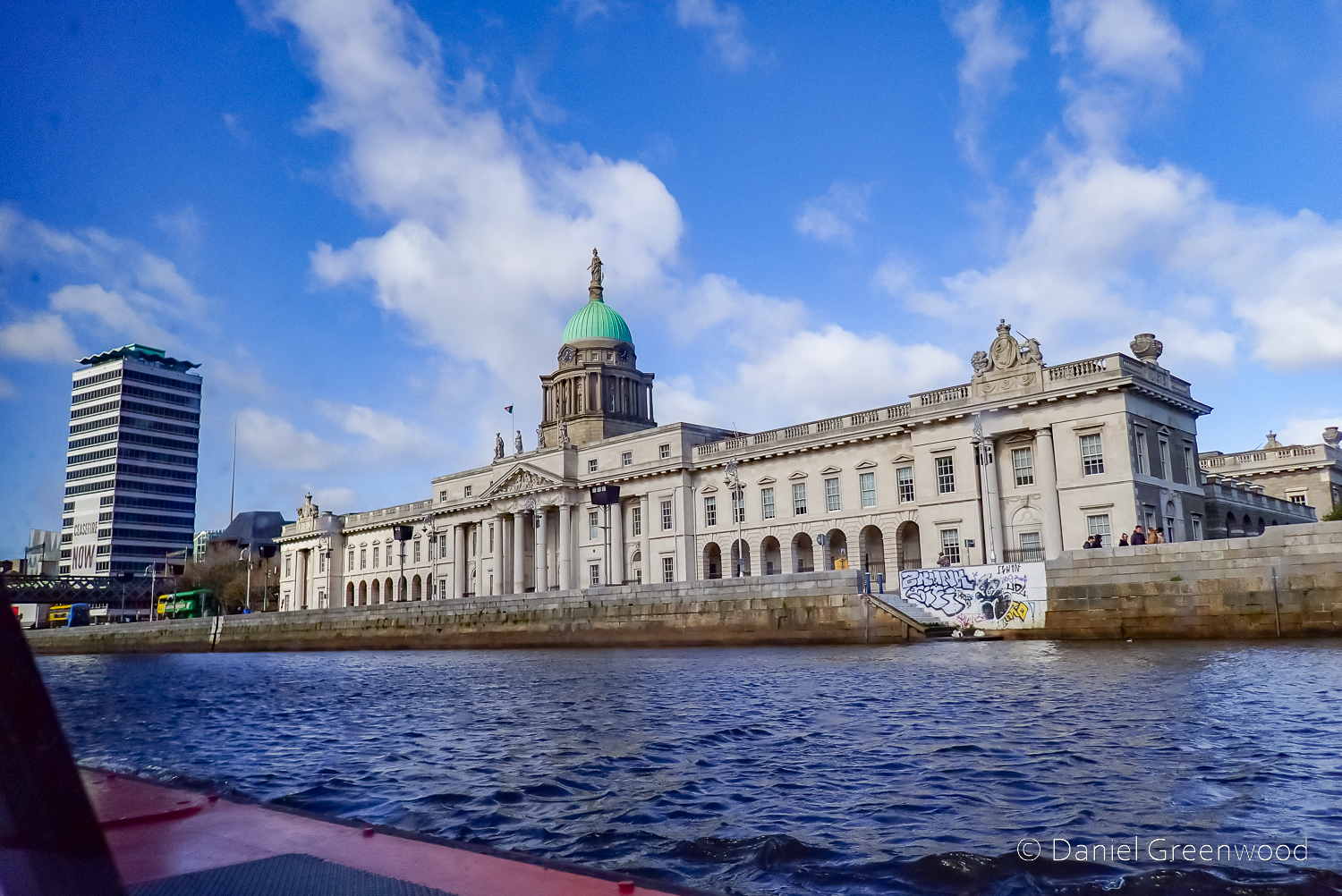
This building once managed the movement of goods up the Liffey into Ireland.

And here it is from street level. The tent on the left is where a person was rough sleeping. We were told that the river was once significantly wider than it is now.
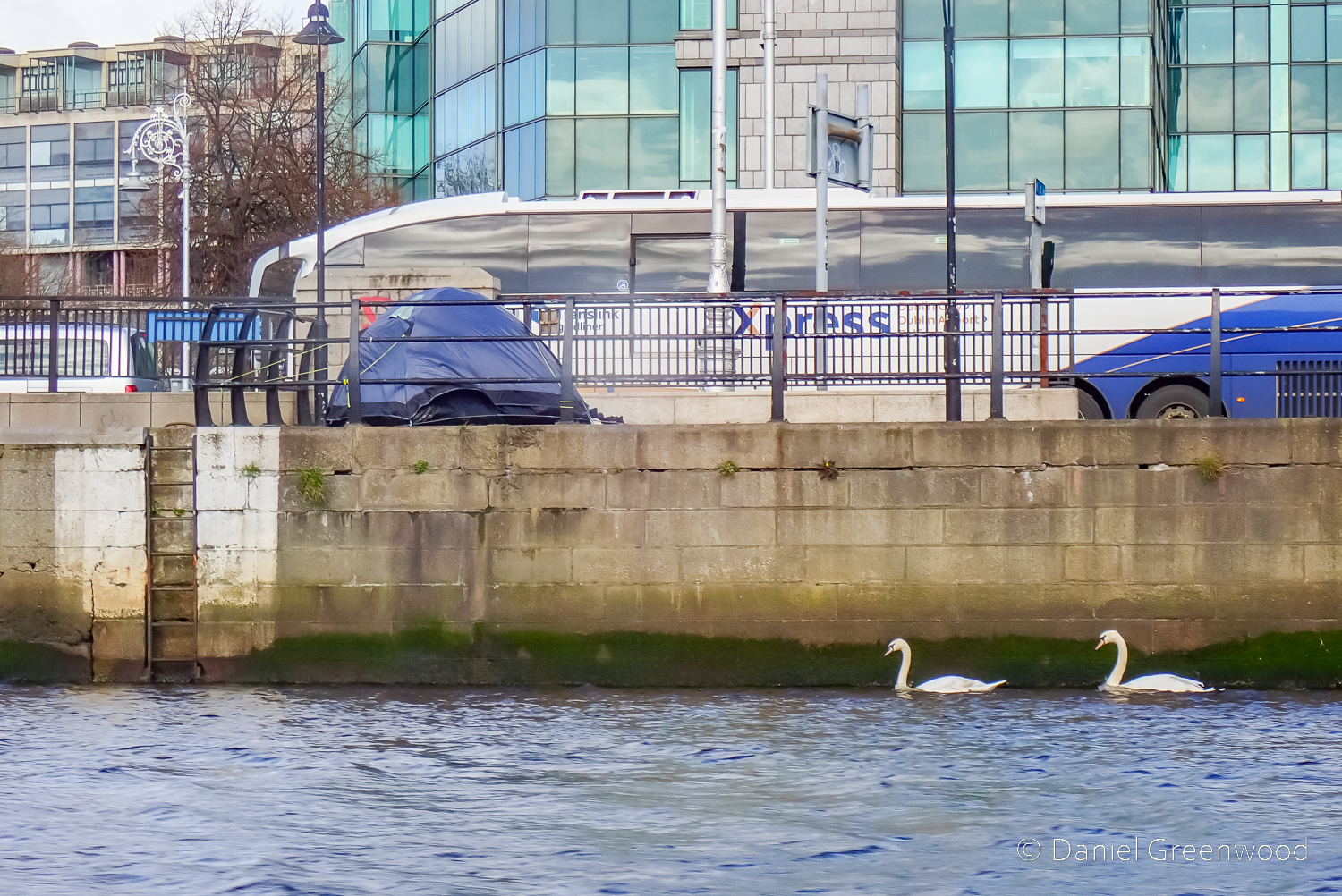
Two swans in the river on the other side – taken a good half an hour later, don’t worry.
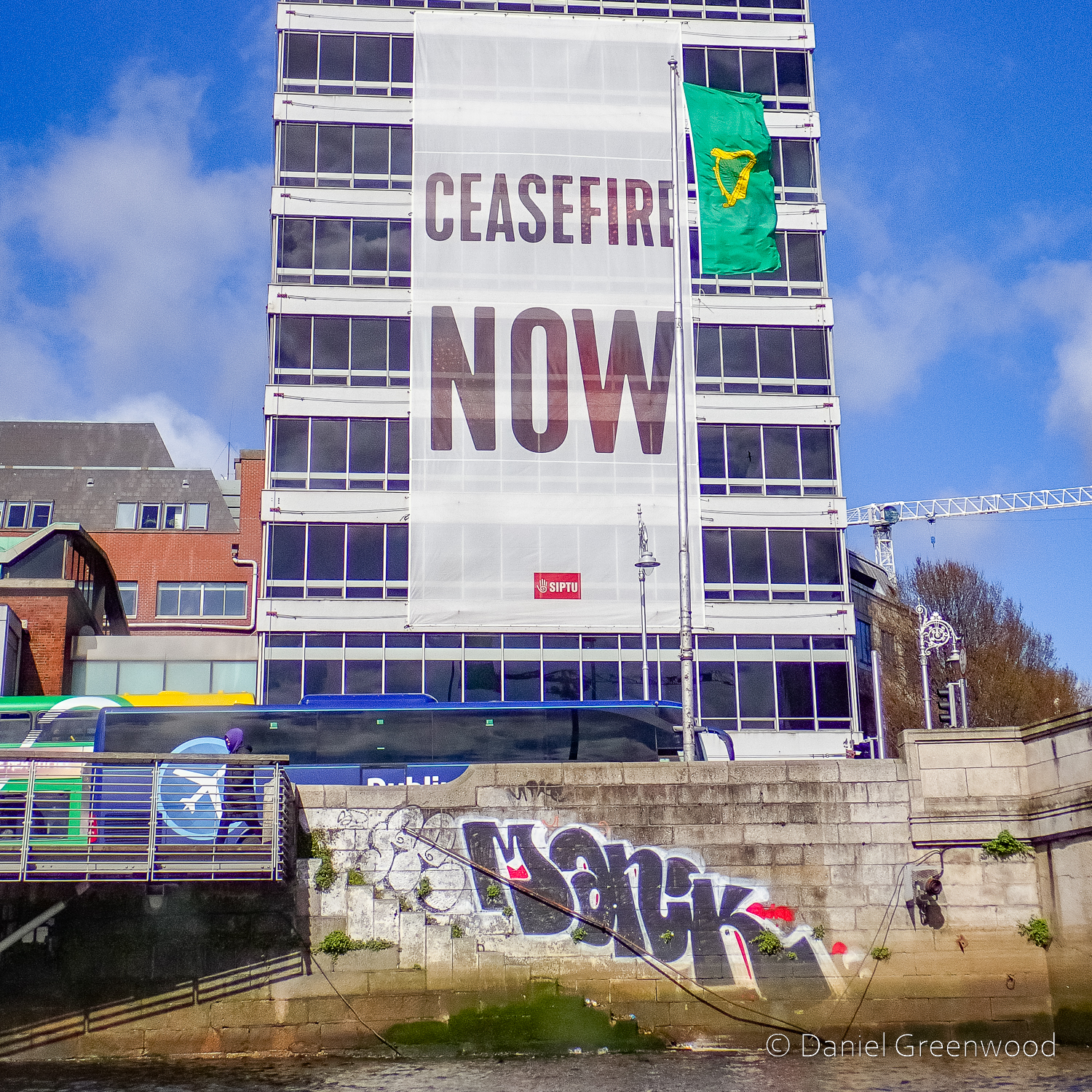
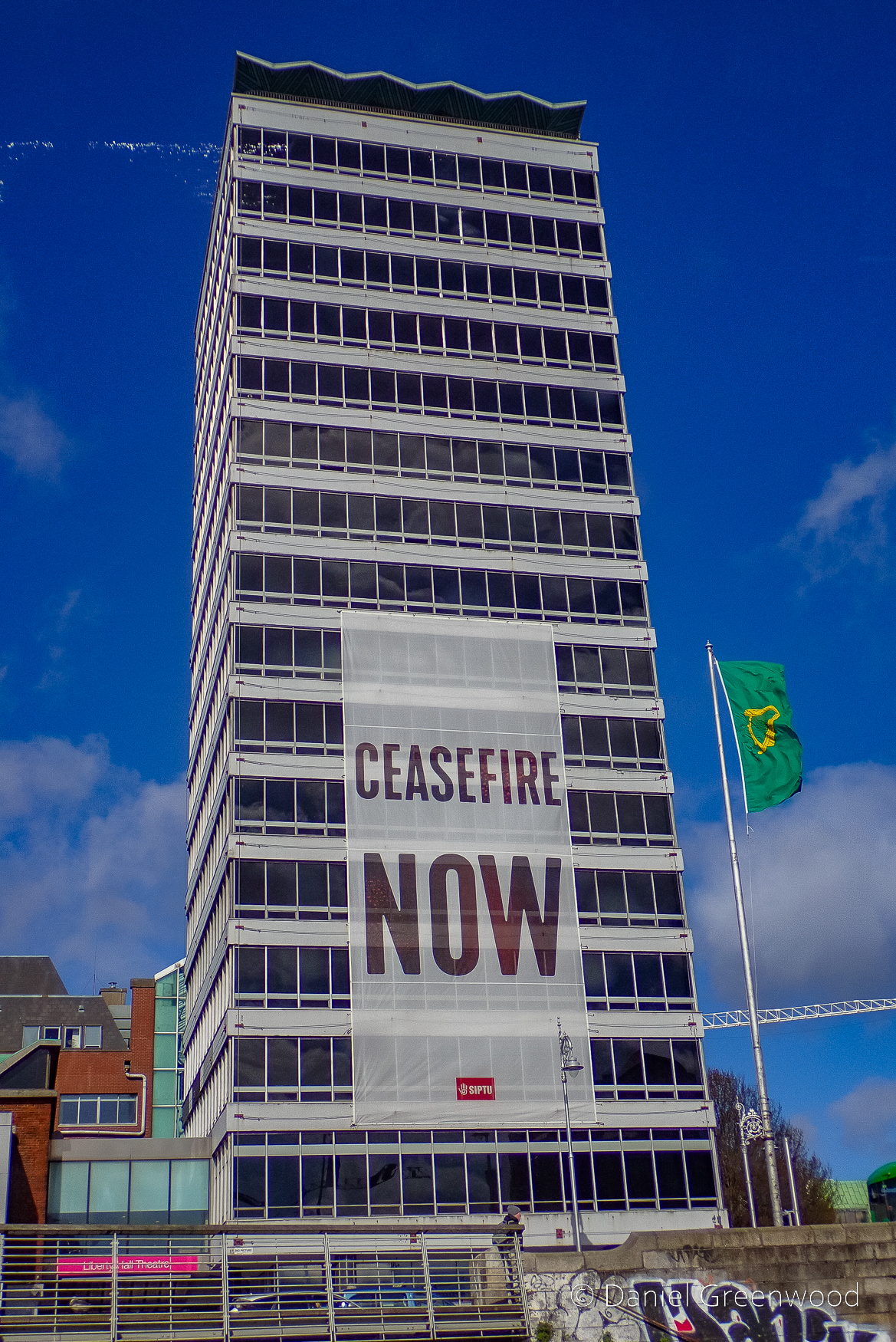
At first this tower looked disused but I’m not sure if it is. The banner’s related to the Israel-Hamas war in Gaza (at least 2023-present day). Ireland is outspoken on the need for a ceasefire, a two-state solution and for an end to the Israeli military’s occupation of Gaza and the West Bank. The banner seems to have the name of SIPTU – a trade union – branded on it. For the those who aren’t aware, the Palestinian cause is one of the most significant humanitarian and political issues for ‘the left’ in Britain and Ireland, probably more so than Russia’s invasion of Ukraine.

This barrel of a building is the Convention Centre, opened to the public in 2010.
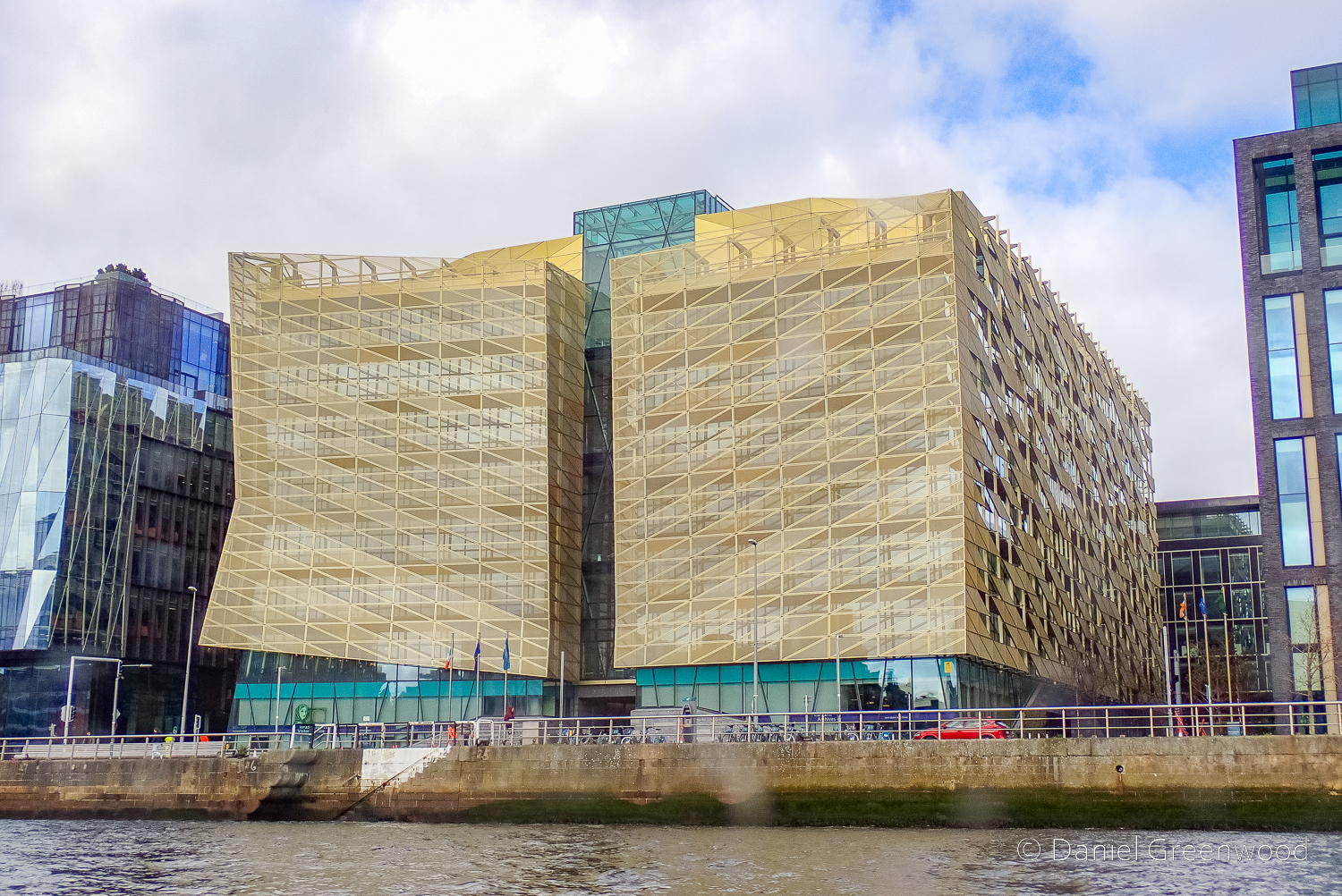
This is the Dockland Campus of the Central Bank of Ireland. The design on the side is supposed to give the impression of leaves rustling (or something) but it didn’t see that when we passed it.
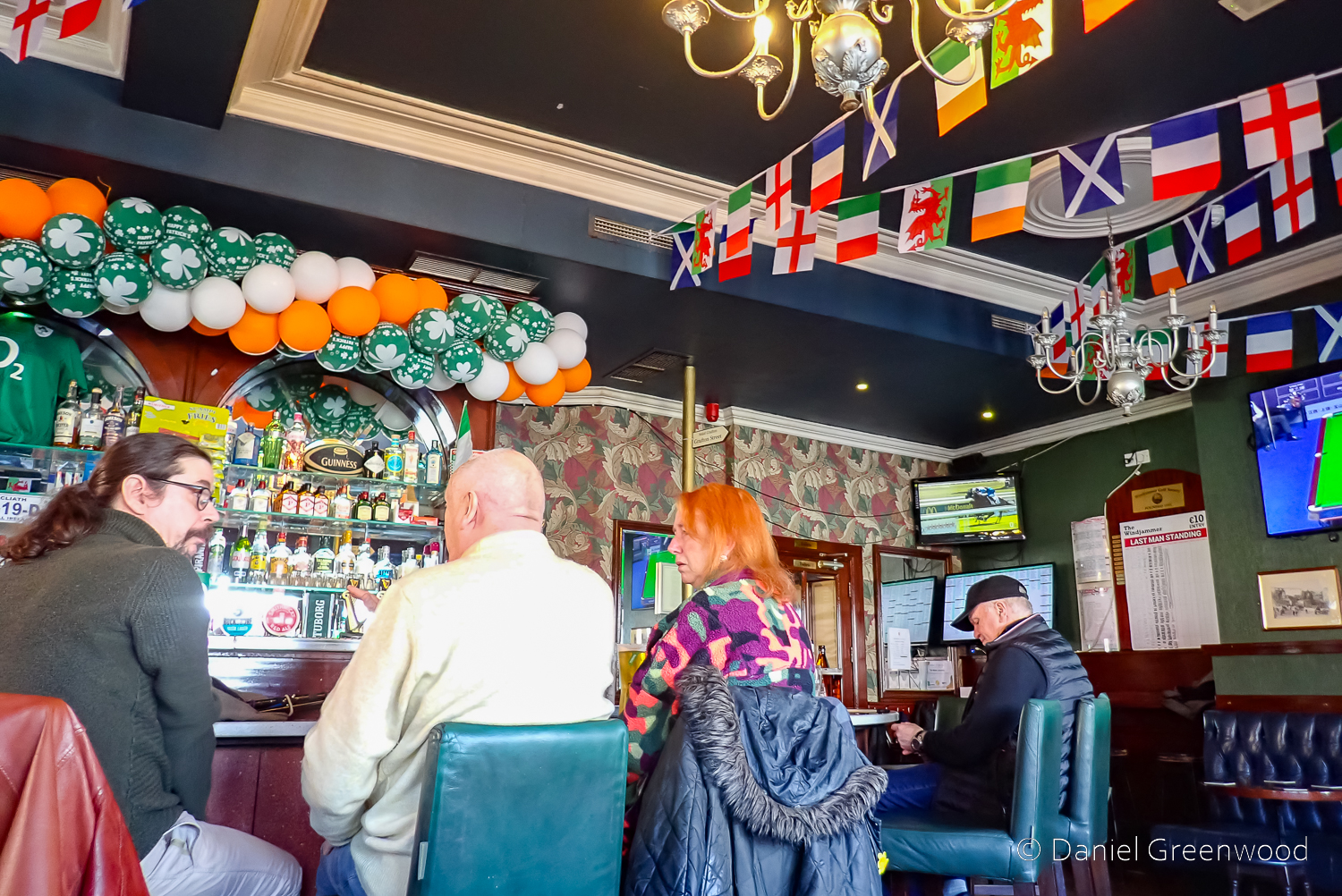
Here are some chilled out Saturday drinkers on the south side of the river.

I’ve got a post to come with images from the ferry leaving Dublin in August 2024, featuring seals, gulls and some interesting old buildings.

Thanks for reading.

My 2024 in photography

Another year completed and lessons learned. Creatively I have found a balance with my equipment and the actual process of photography. I’m into my 6th year of working with Micro Four Thirds cameras and lenses, giving more space to enjoy the process of gathering photos – walking – because the equipment is light.

Cameras used include Olympus EM-5 Mark III, Oly EM-1 Mark III, Olympus TG-6 Tough compact camera, and Pixel 7a phone camera.

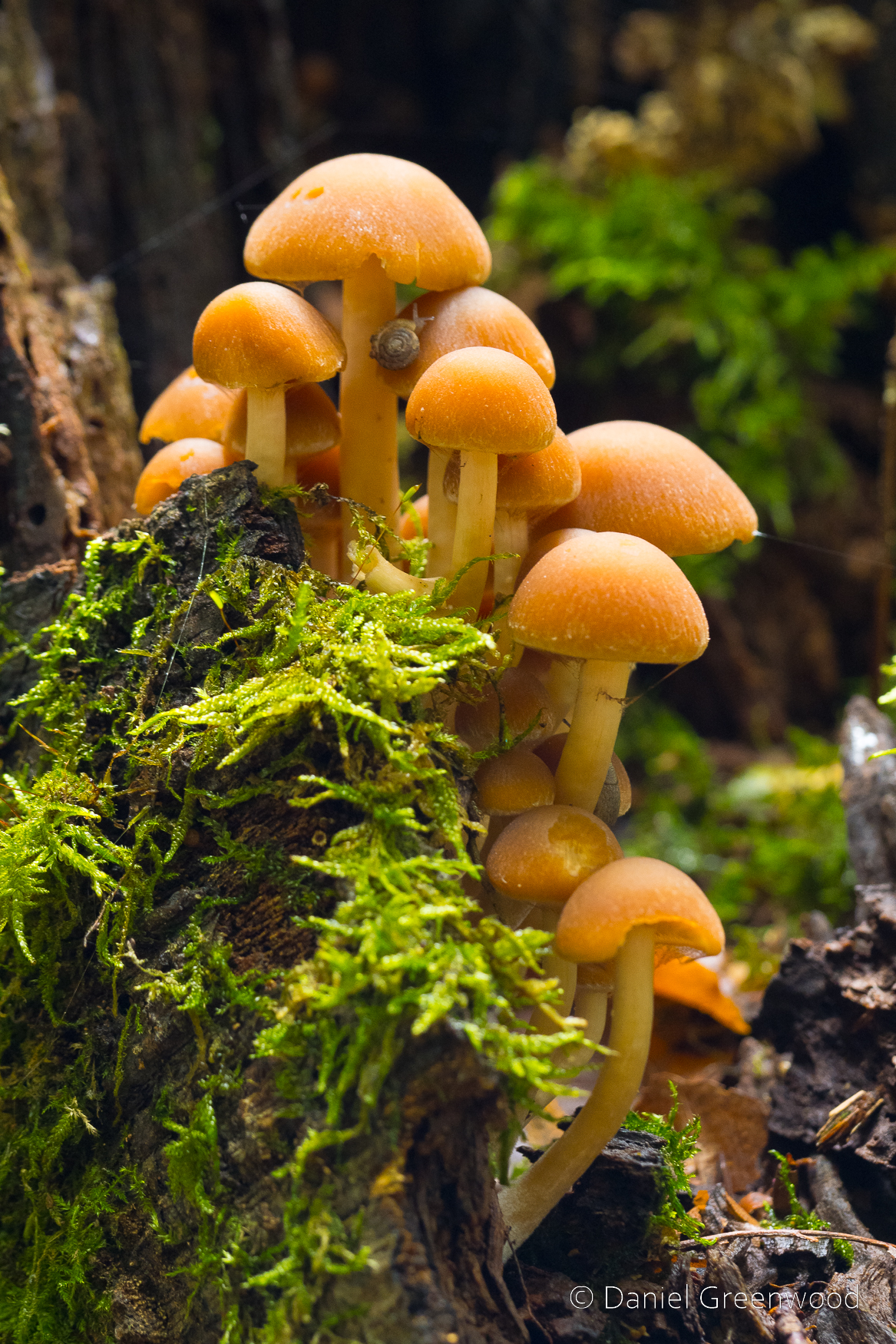
These photos should show the range of things I like to take pics of – not just mushrooms! ๐Ÿ˜‚

With the privileges available to me – health, location, resources, freedom of expression – here are my photographic highlights of 2024:

January

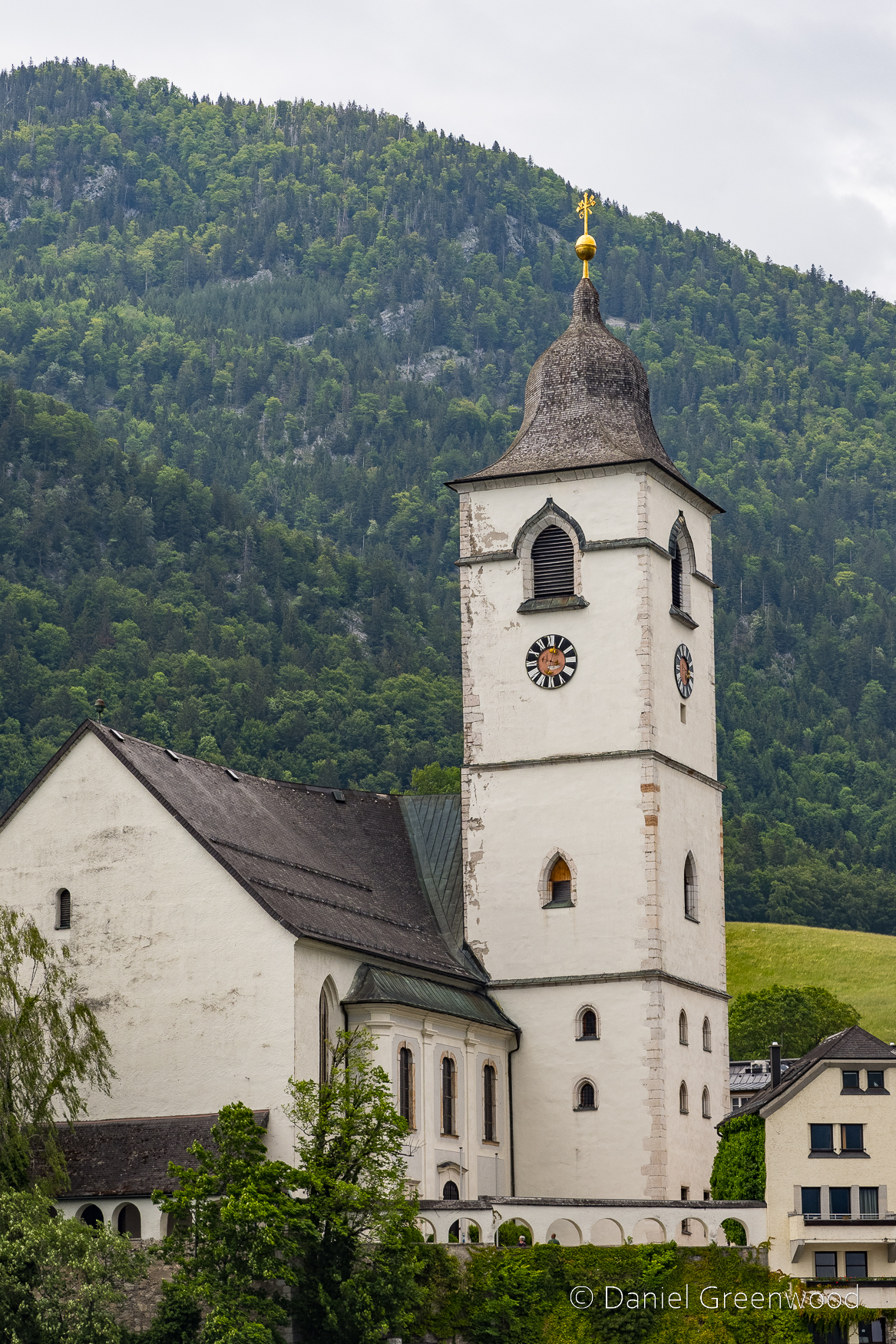
I did a couple of long walks in Sussex at the beginning of the year, exploring some new locations around the South Downs. I visited St. Botolphs church for the first time, one of Sussex’s special ones among thousands of already significant churches. Last year I set up a gallery for my fledging church photographs project which can be viewed here.

February

This felt like the moment of the light returning after the dark winter months. The Downs at Amberley are my gateway to the South Downs, and walking here is always worth the gentle climb.

March

In March I visited Dublin for a weekend and took in the sights along the great river Liffey.

For a friend’s birthday we spent the weekend in York, which gave me a chance to take some compact camera pics of a few of the oak timber framed buildings. I’ve added a gallery for my ‘Oak Timbers’ project here.

April

I got married in April so there wasn’t time for much beyond the odd local walk. I was trying out my new Pixel 7a, bought because of its value and reported image quality. The camera is spectacular, I just wish it wasn’t a G**gle product. I blogged about it here.

May

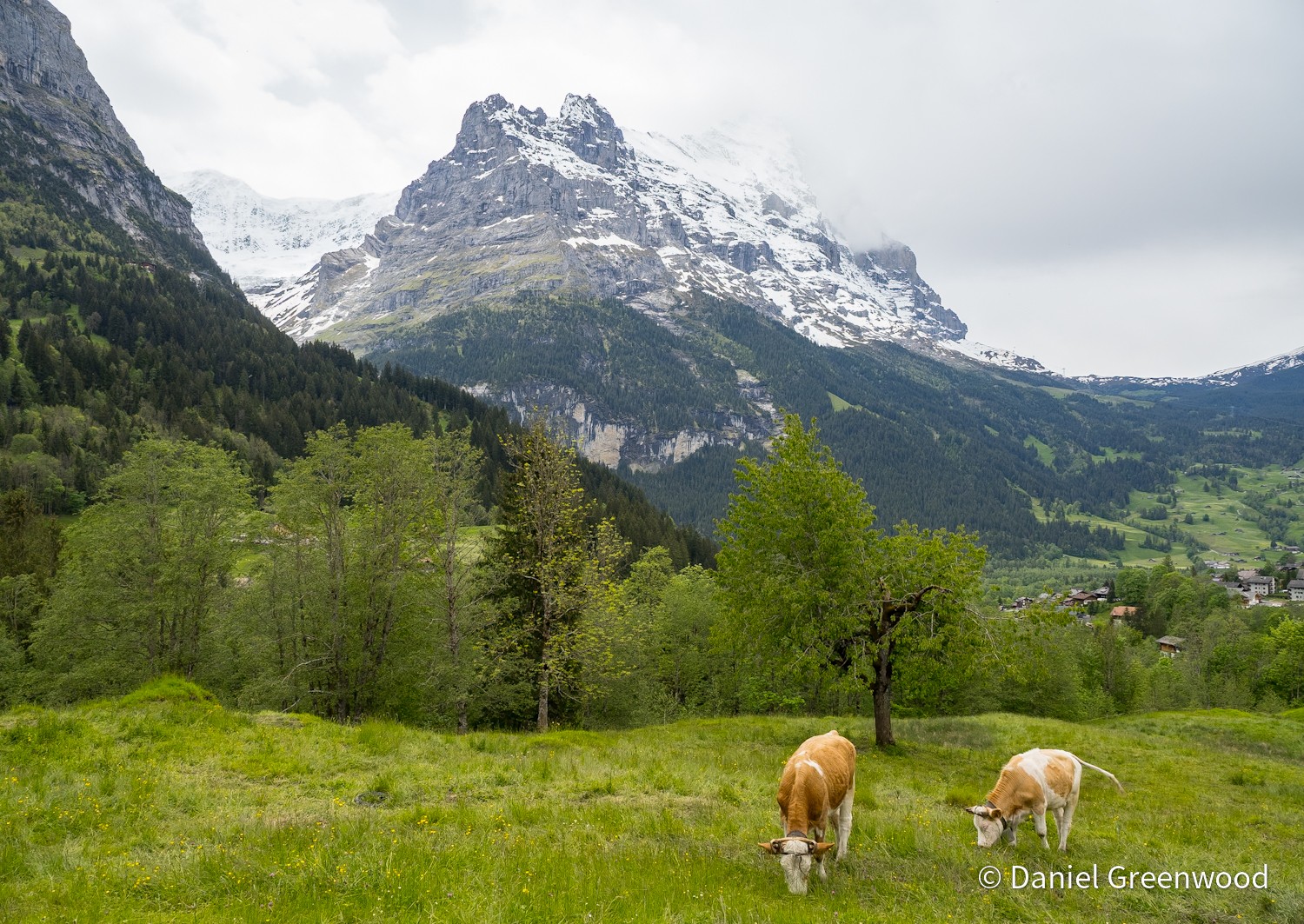
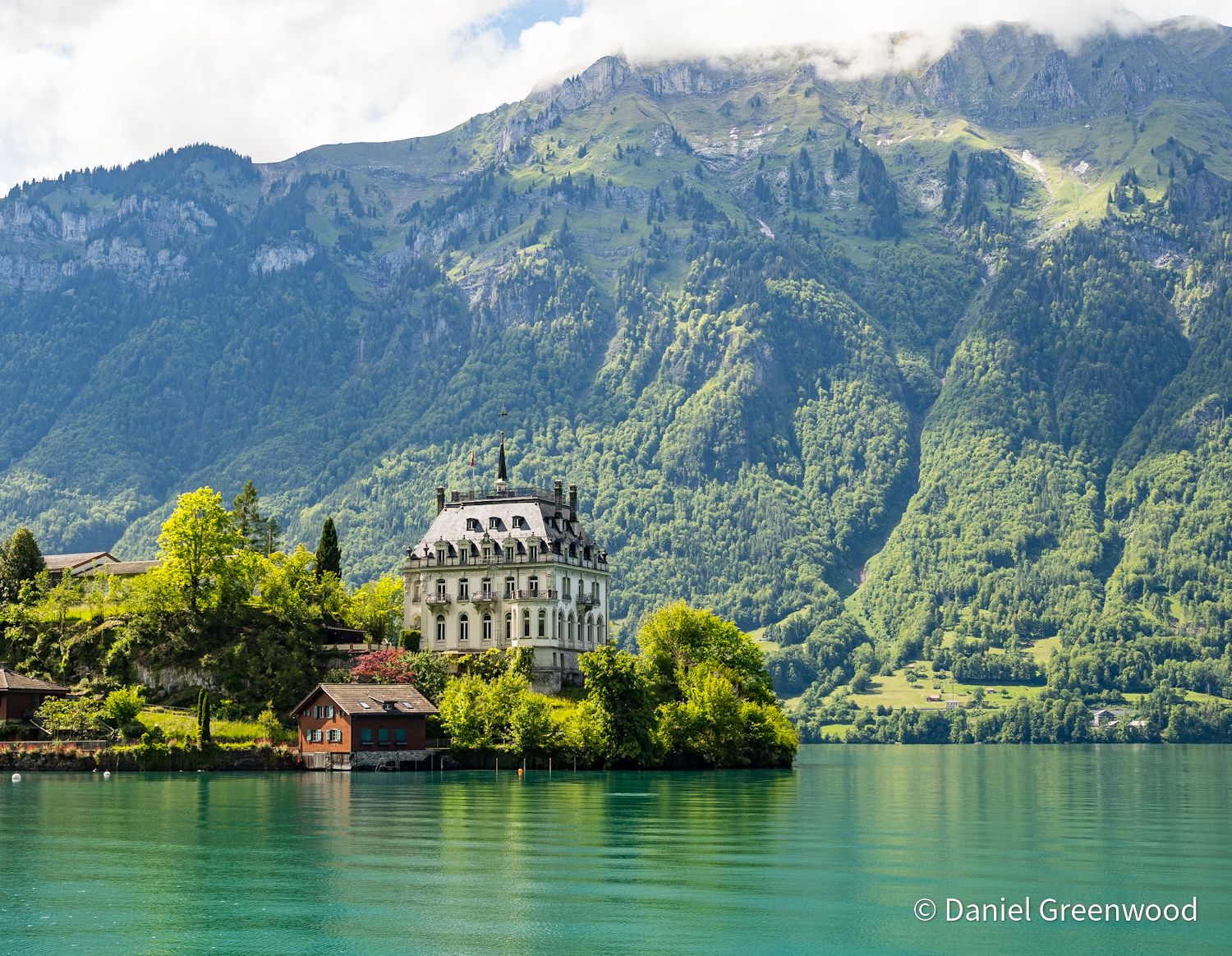
Ah, memories. In May we went on our honeymoon to Austria and Switzerland, all by train. You may be sick of reading about that! I am definitely not sick of blogging about it though!

This was one of those one-off photos experiences. Thankfully the weather held and we saw the mountains in much of their glory.

June

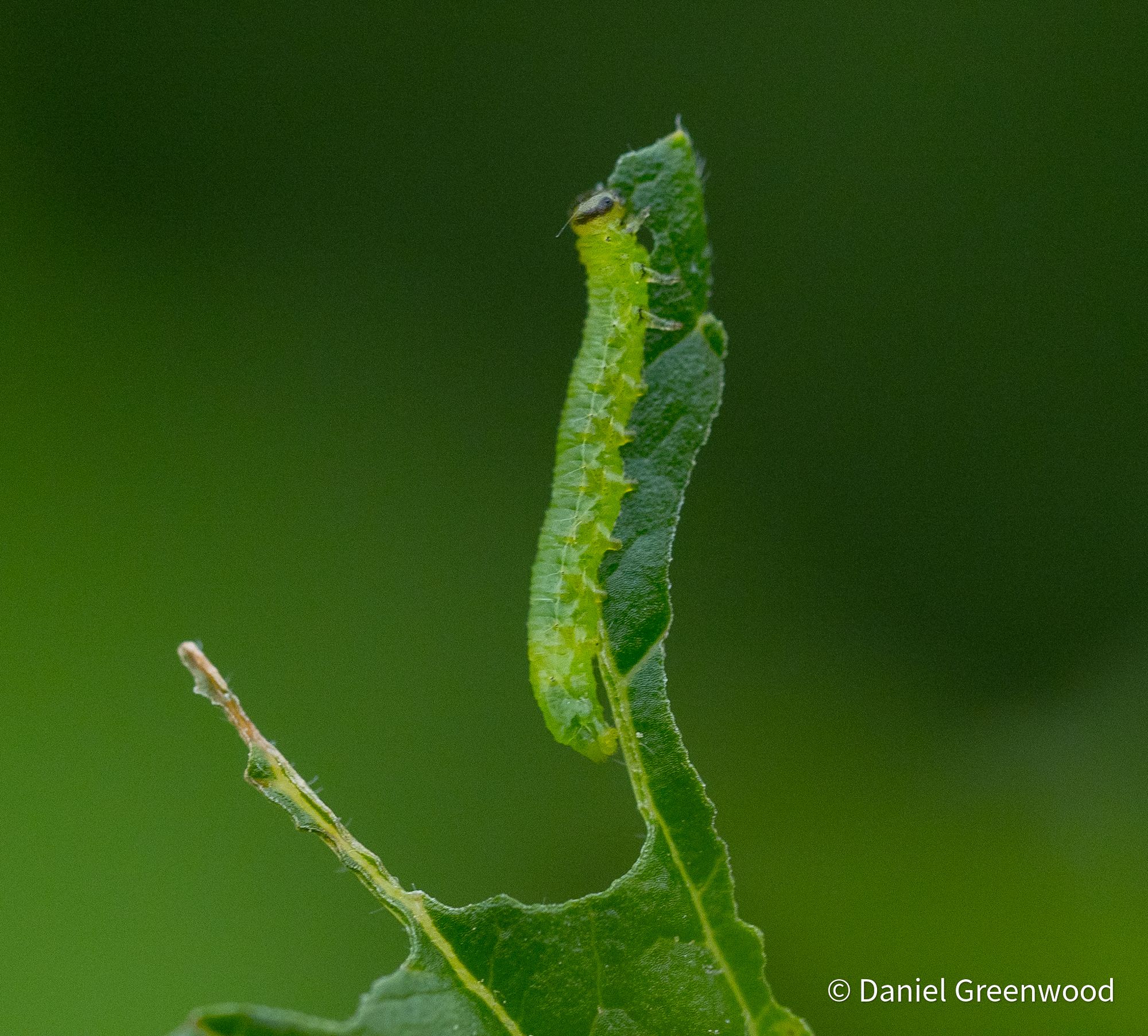
A bit of a lost month for photography because I started (yet another) new job and had to settle into a new routine. The highlight was probably these sawfly larvae which ate through some of the leaves on my gooseberry. Blog here.

July

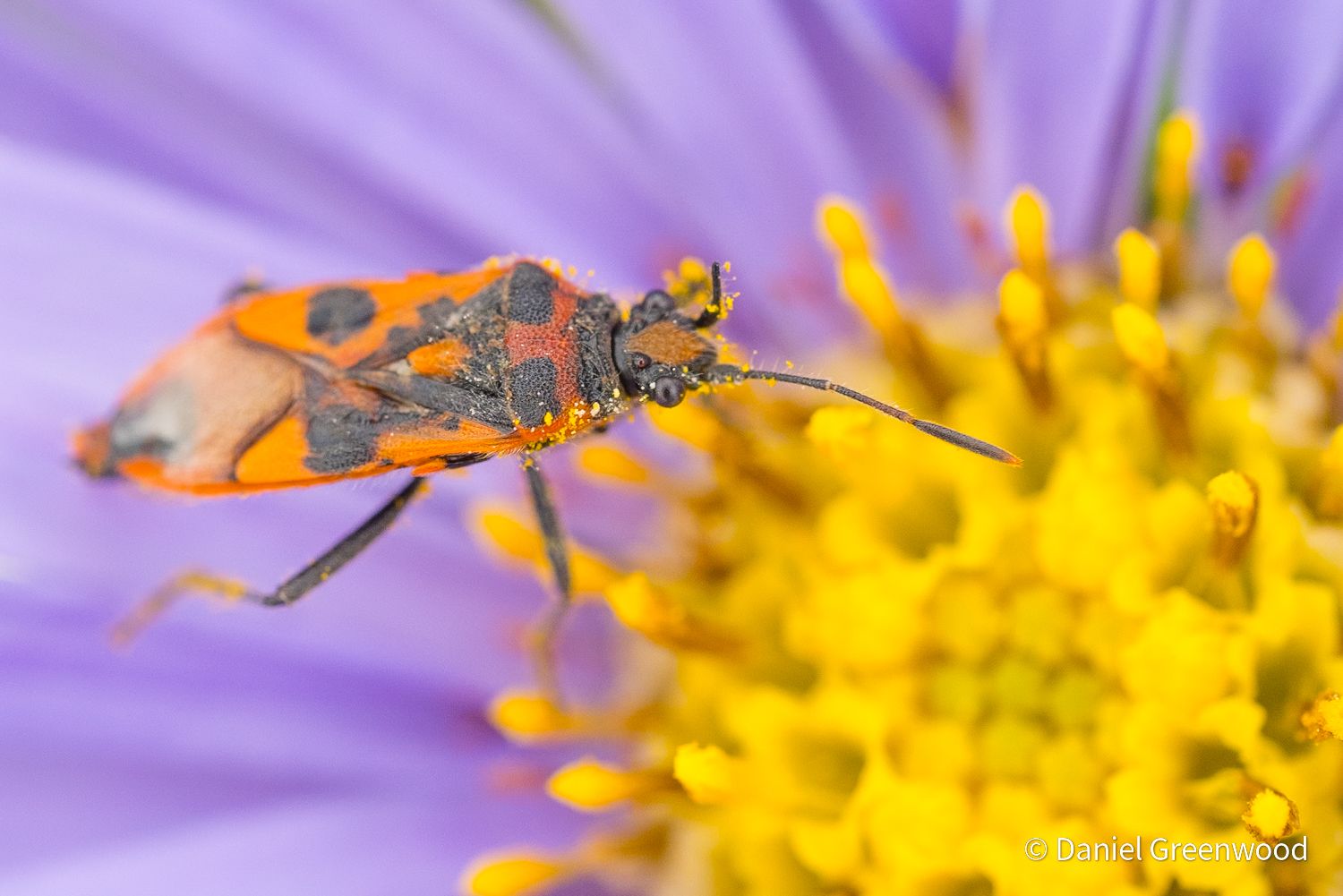
“July, July, it never seemed so strange”, as the Decemberists sang. I caught Covid and didn’t really get back to normal for 3 months afterwards (Vitamin D is very important, people). My macro work was reduced by the evil contagion but I did find some nice bugs near home to share.

August

I managed to pap some pretty fine inverts in August, with this beautiful ichneumon wasp seen in my garden. I’ve not got anywhere near enough out of my Olympus EM-1 Mark iii and 60mm macro, but this showed just how good Micro Four Thirds cameras are for macro.

Another strongpoint for M43 cameras is that they can ‘stack’ images internally, something now copied by the big hitters. This is a composite of about 10 photos the camera has laced together to ensure the depth of field covers a deeper focus range. It means more of the, rather gruesome, subject can be seen in detail.

September

In September I made my first ever visit to the iconic sea stacks at Downpatrick Head on the North Mayo Coast in Ireland. Mayo has an international dark skies designation so I was able to mess around with the Milky Way. But for the astro photo I haven’t processed these images yet so here are a couple of phone photos.

October

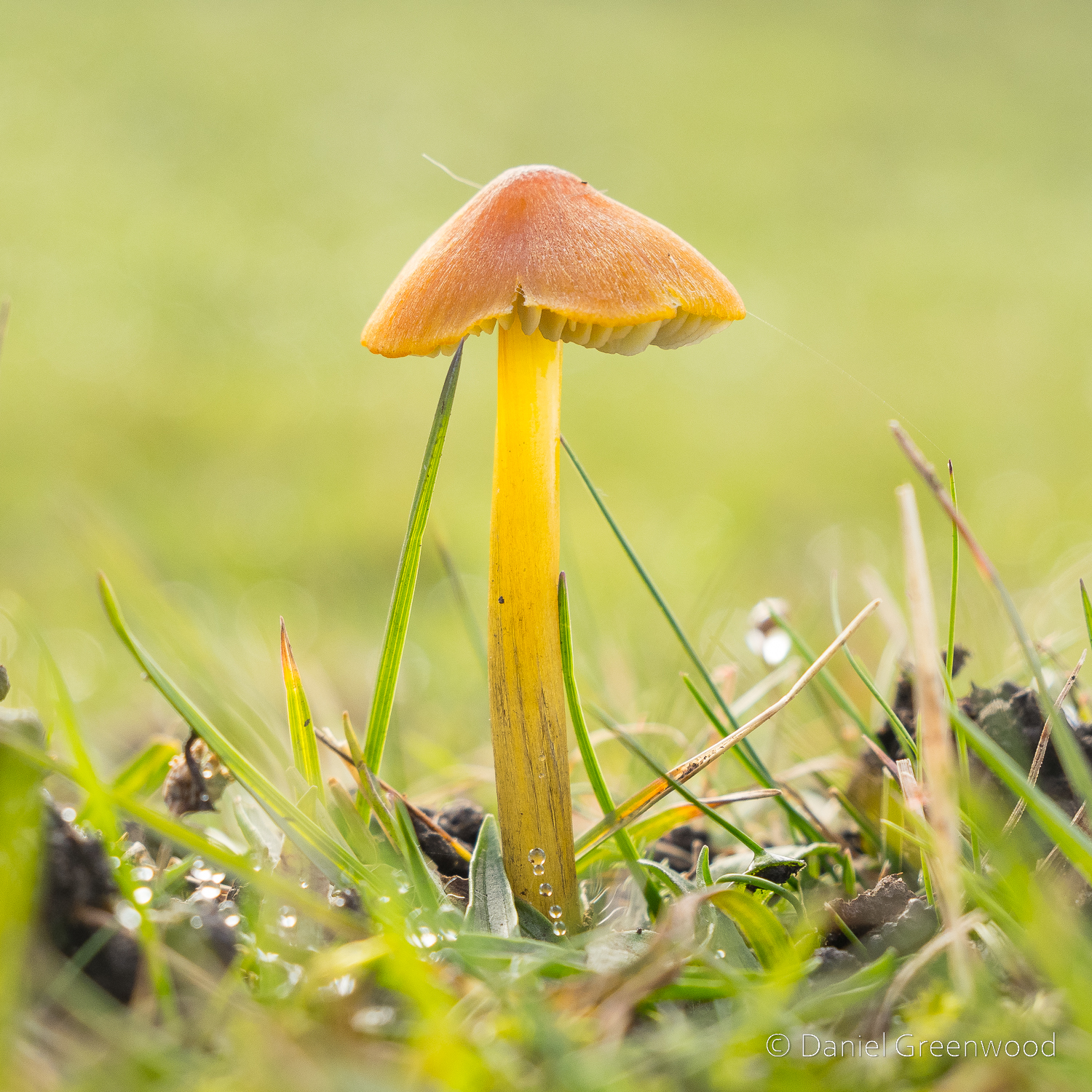
As I have lamented on my Fungi Friday blog, 2024 was not the best mushroom season. But there are always things to find out there. I found this knocked over fly agaric, which was in perfect condition, ready for its portrait.

November

Autumn is a time for Dartmoor for me and my wife, and despite colds we managed some walks onto the moors in the National Park. We found an amazing array of waxcaps, like the crimsons above, which you can see in full on Fungi Friday.

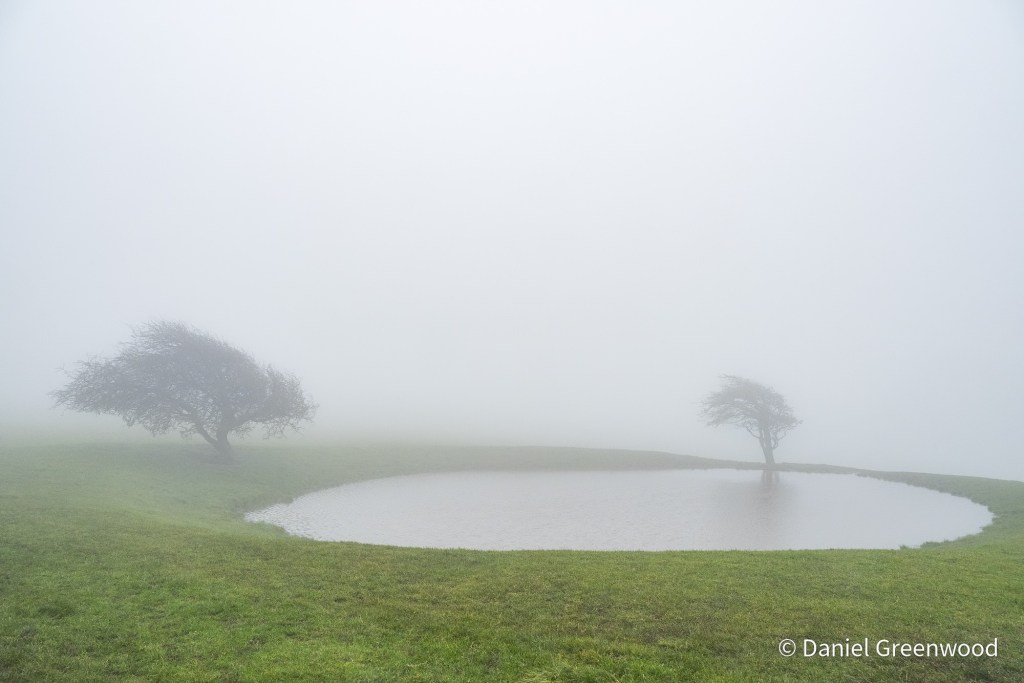
On the last day of November I hiked with my South Downs amigo from Ditchling into the mist. This is the much-photographed Ditchling dew pond, shrouded in mist.

December

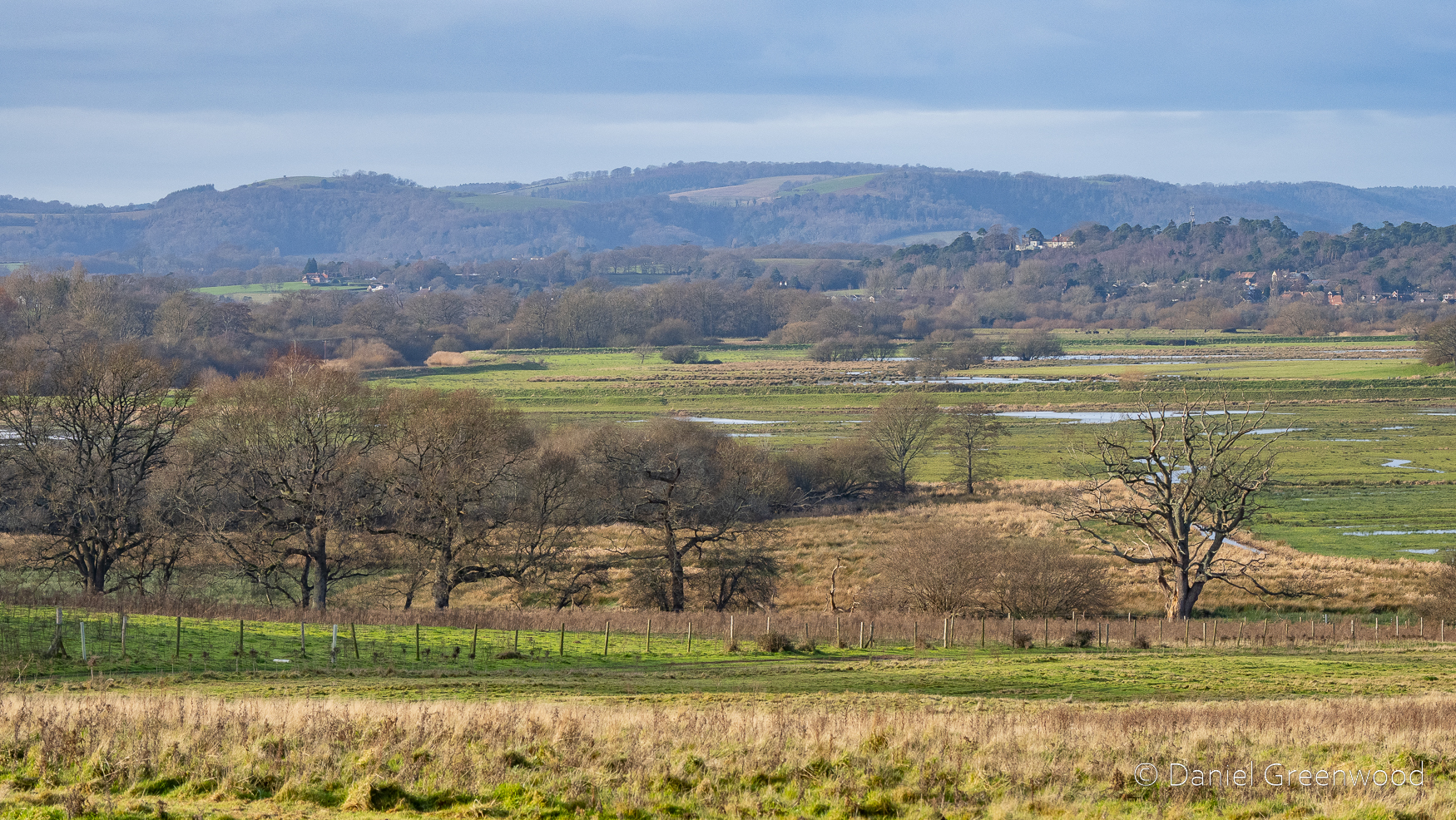
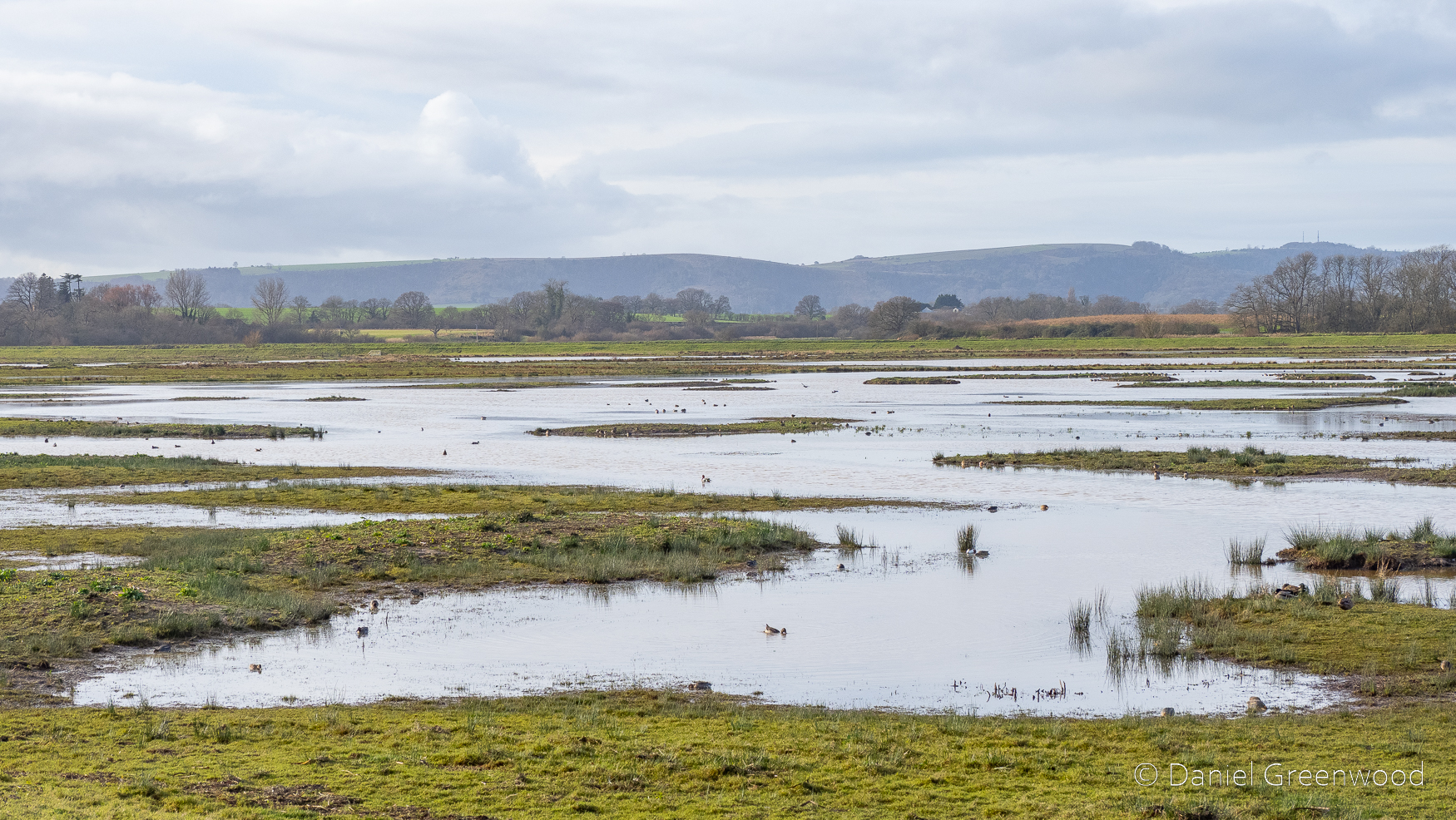
The weather in December was very grey and damp, and all the Christmas demands gave me only one meaningful walk – to Pulborough Brooks in West Sussex.

Thanks for all your support in 2024 and wishing you peace and happiness in 2025.

Macro: Grisedale robberfly ๐Ÿž๏ธ

I spent a couple of days in the Lake District in July and was indeed blown away by those mighty hills, and the rain.

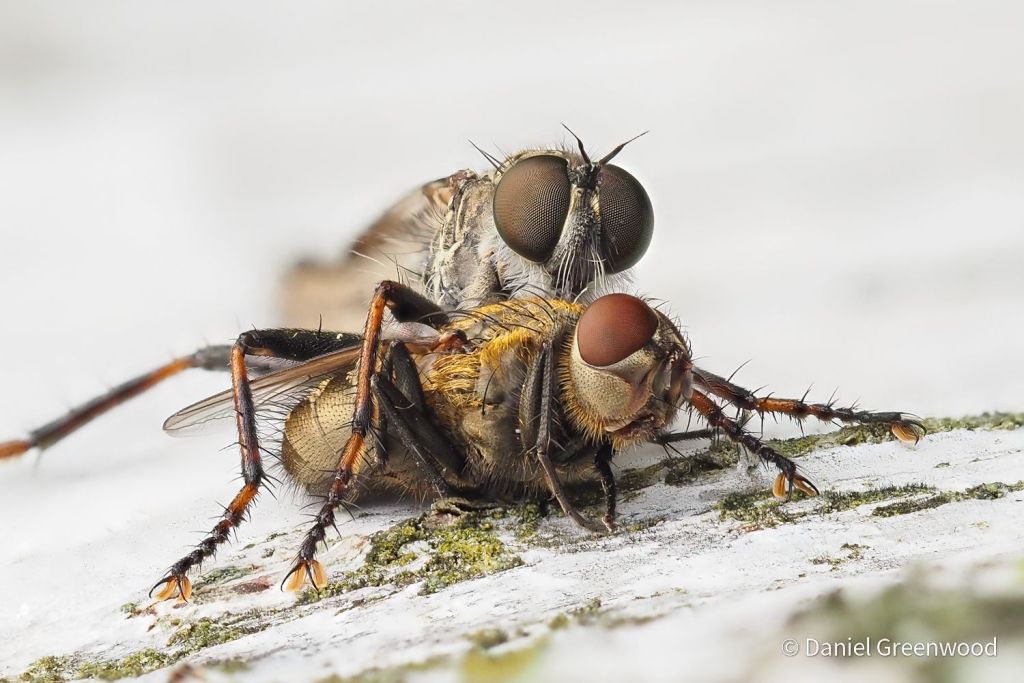
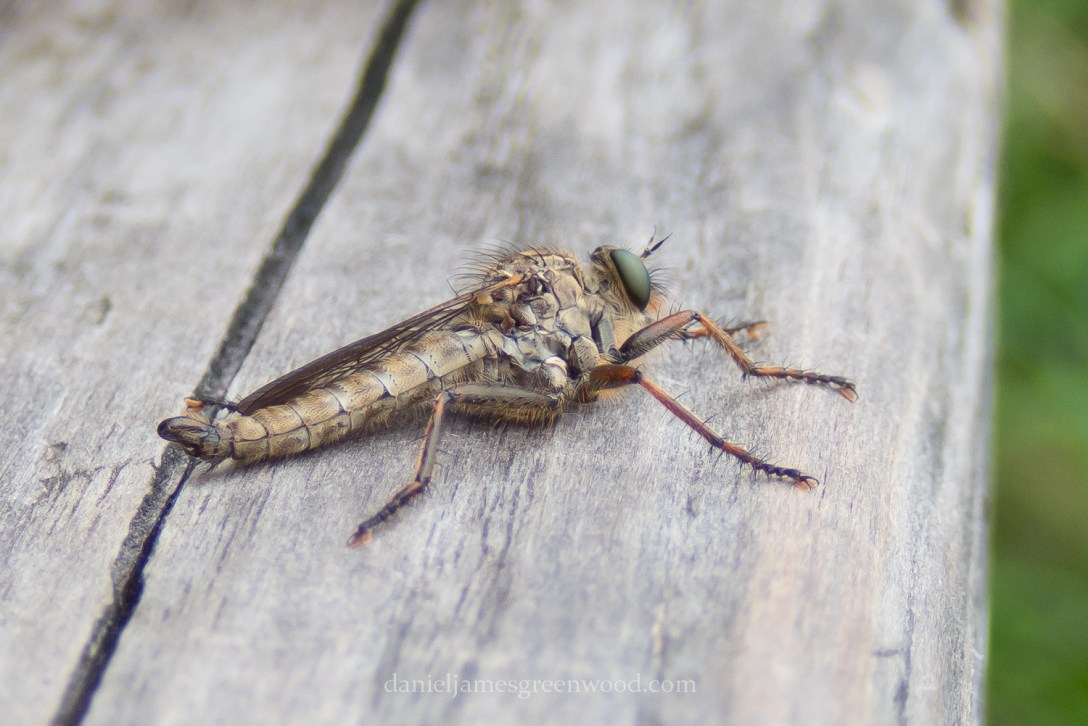
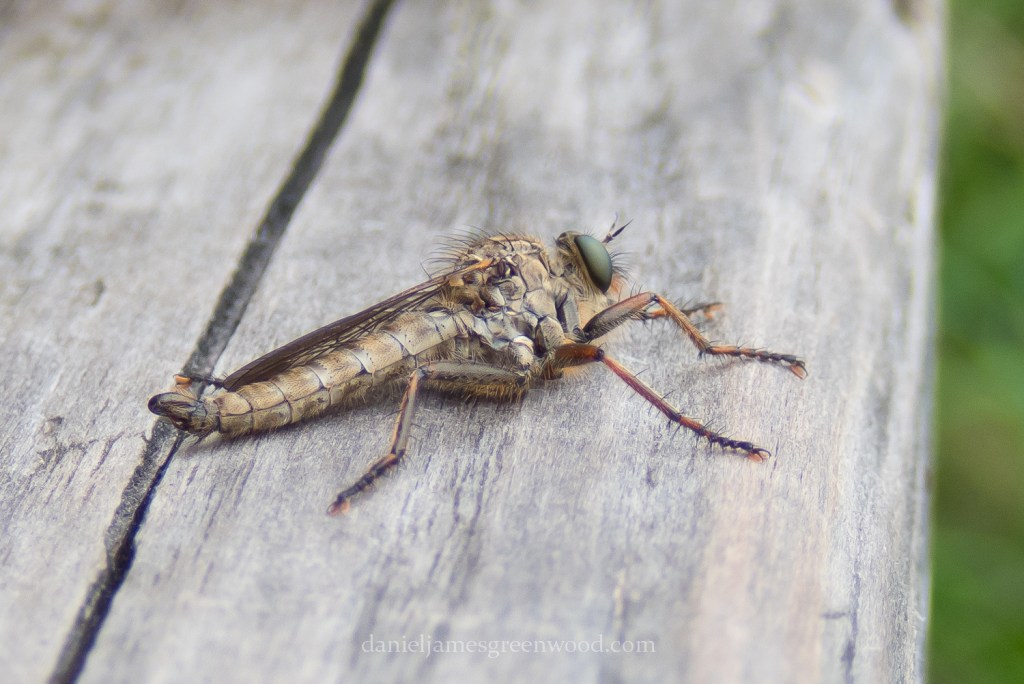
This very short post is one of lamentation, in truth, seeing as I managed to scare away an interesting insect waiting for its free portraits.


On a walk that crossed through Grisedale (a stunning valley), I passed a gate alongside a lane. I spotted the lingering shape of large insect on the gate’s top rail.


I was so happy to see this, but didn’t contain my excitement enough. Approaching what turned out to be a robberfly, I spooked it and it flew far, far away. It had been so chilled and the lighting was perfect, so I could have got some really nice pics.

Robberflies are predatory flies and are some of the most photogenic insects you can find in the UK. They are also not hugely common which gives them an air of respectability and intrigue.

I told my friend that this had effectively ruined the walk, and nothing could salvage it now.

This was wrong though because Ullswater (above) was just a mile away and we got on a boat which felt like something from Jurassic Park minus the dinosaur threat. But the pain of disturbing that robberfly was real, one must contain oneself next time.

Thanks for reading.
Macro

Hogweed heaven๐Ÿ’ฎ

West Sussex, July 2023

I’ve been trying to keep my macro photos rolling in the absence of June’s one pic each day. It’s a bit like keeping your lawn growing after No Mow May.

Actually, no, it’s harder because you have to be proactive.

By far the best encounter with the macro world this past week was a patch of hogweed along a footpath by the local river. A cyclist went past me as I was taking these photos – even though it was a footpath – and glared at me as if I was doing something truly evil or dangerous to the public.

I have a bike, too, so if that exercised the cycling community, we’re all friends here on djg.com…

Hogweed is a weird plant, in that it’s part of a family that both kills, but also provides edible plant matter. Its sap is photocorrosive (not as bad as its big brother, giant hogweed) but its flowers are very, very good for pollinators. It can also be a bit invasive because it burgeons in places where nitrogen levels are artificially high (probably dog urine here…) therefore most of England.

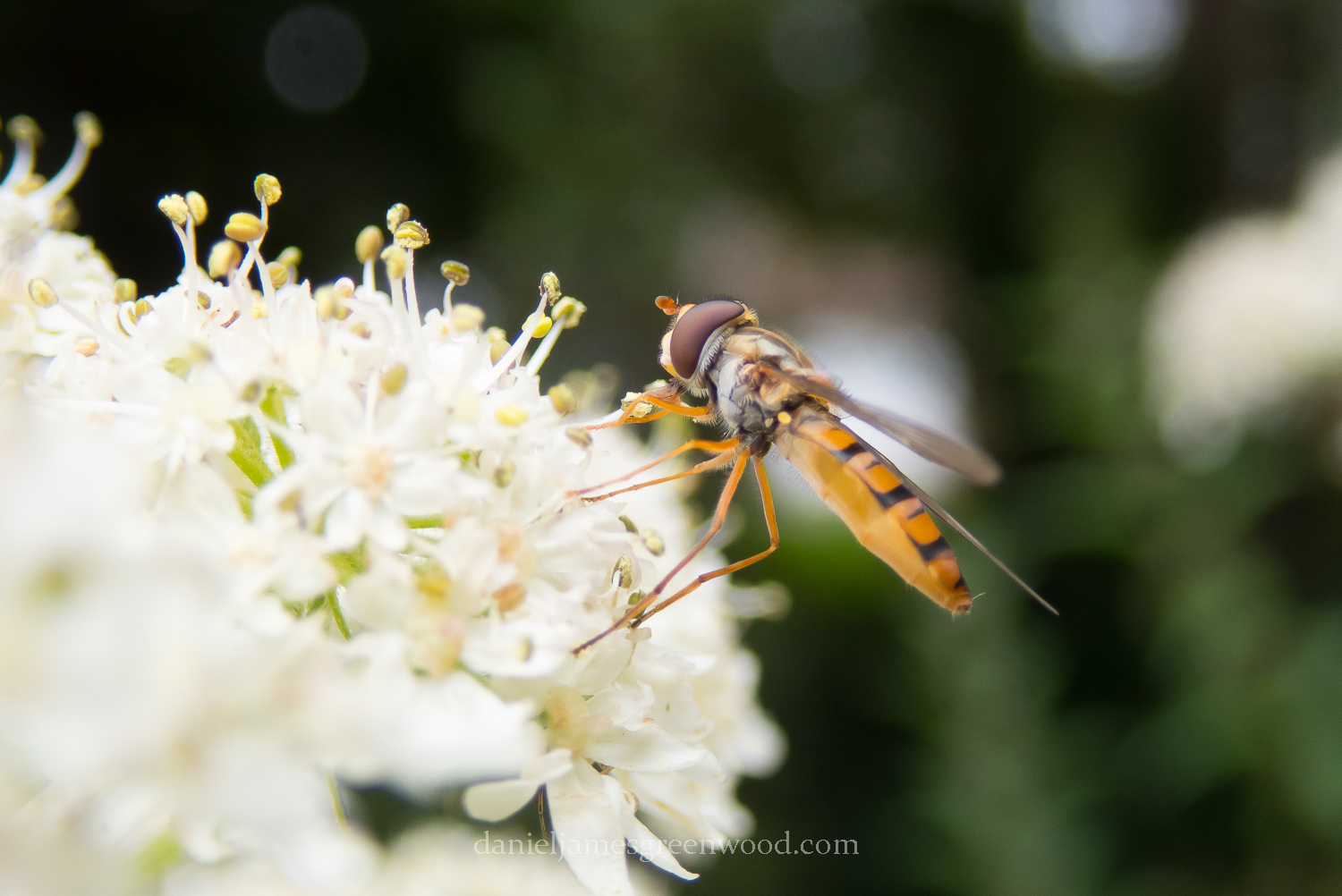
A marmalade hoverfly feeding on the hogweed stamens

A soldier beetle also drinking from the carrot fountain

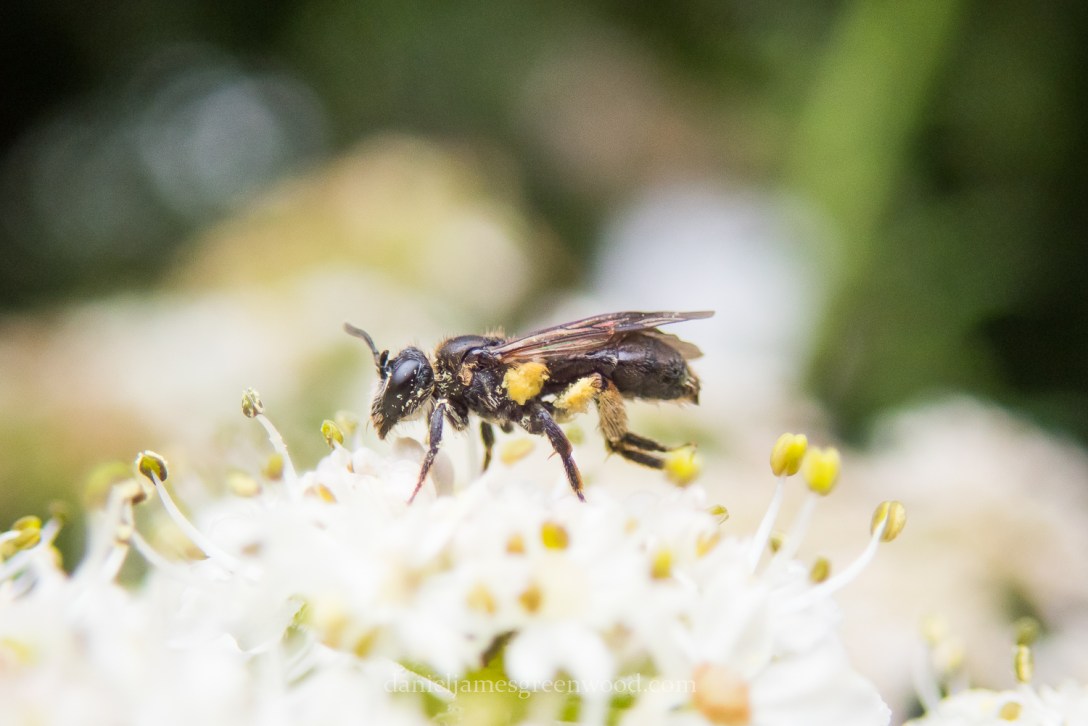
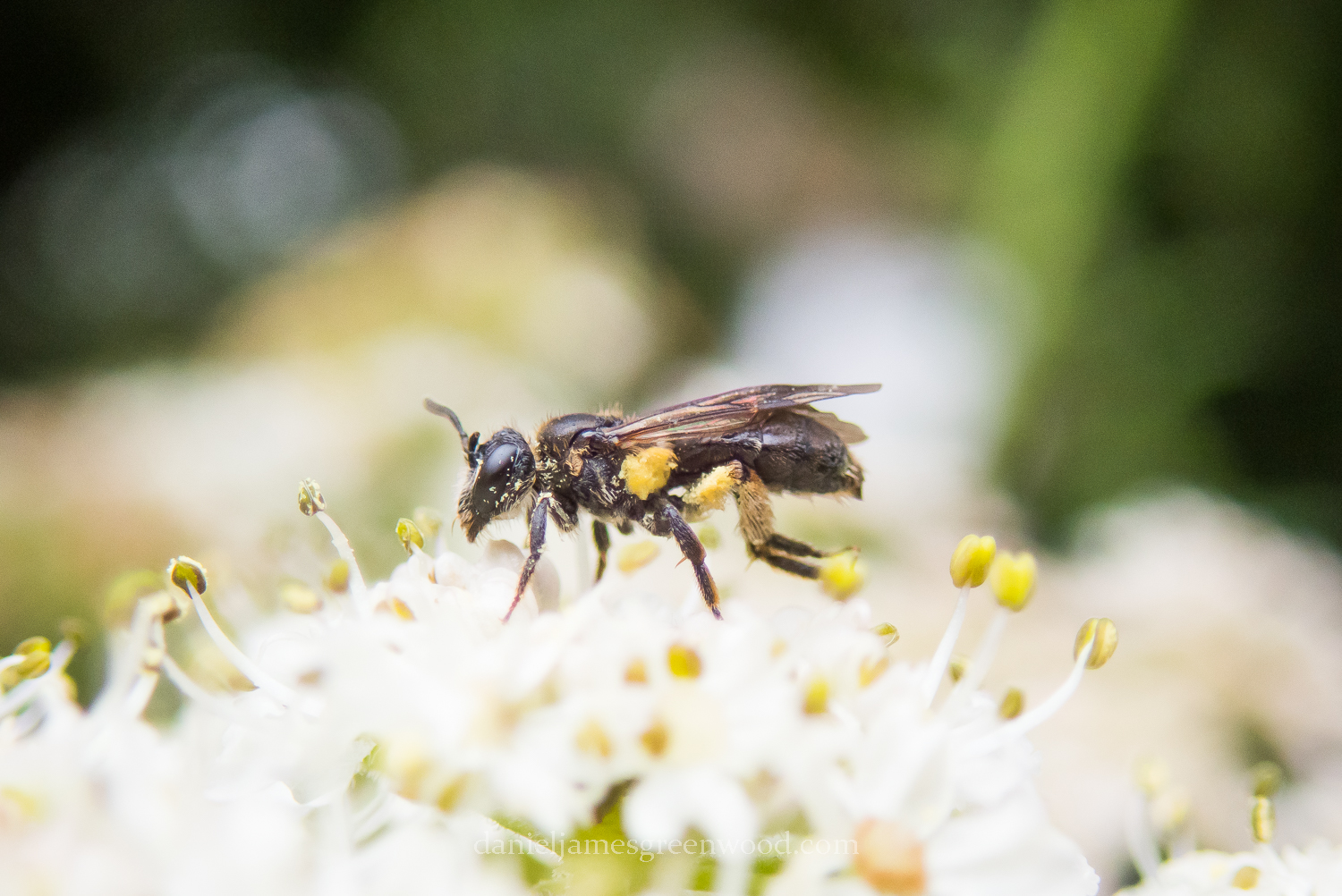
I would say this was maybe an ashy mining bee, but a little faded and low on the ‘ashy’ body hair

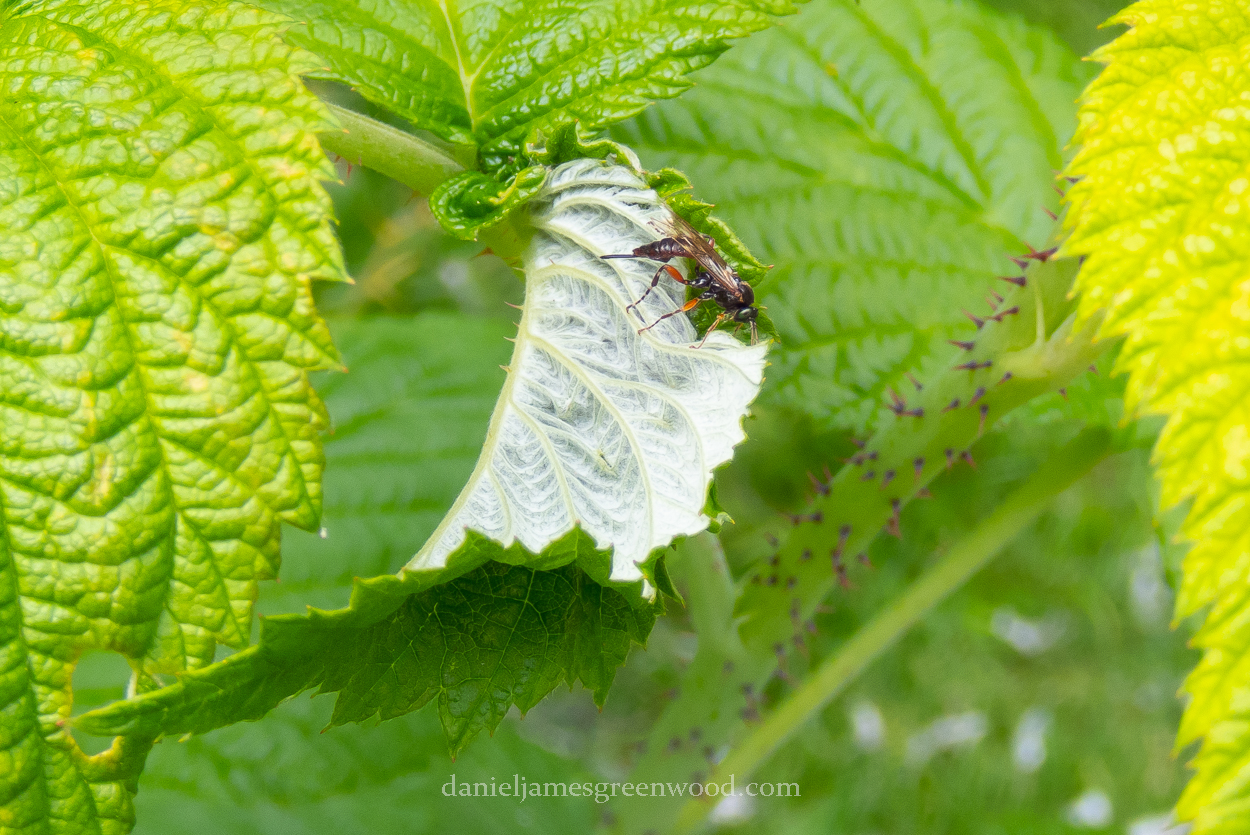
Earlier this week I noticed an ichneumon wasp exploring the raspberry patch in my garden. It was pausing to use its ovipositor on the curled up leaf – presumably the work of some other organism creating a sort of cocoon. I love them!

Thanks for reading

Macro | Ichneumon wasps

#30DaysMacro 2023: final week!

Here we are, another June slipping away and with it another #30DaysWild. Thankfully the humidity has dissipated this week and it’s been more comfortable to spend time outside (for me).

The final week of another June #30DaysMacro challenge, here we go:

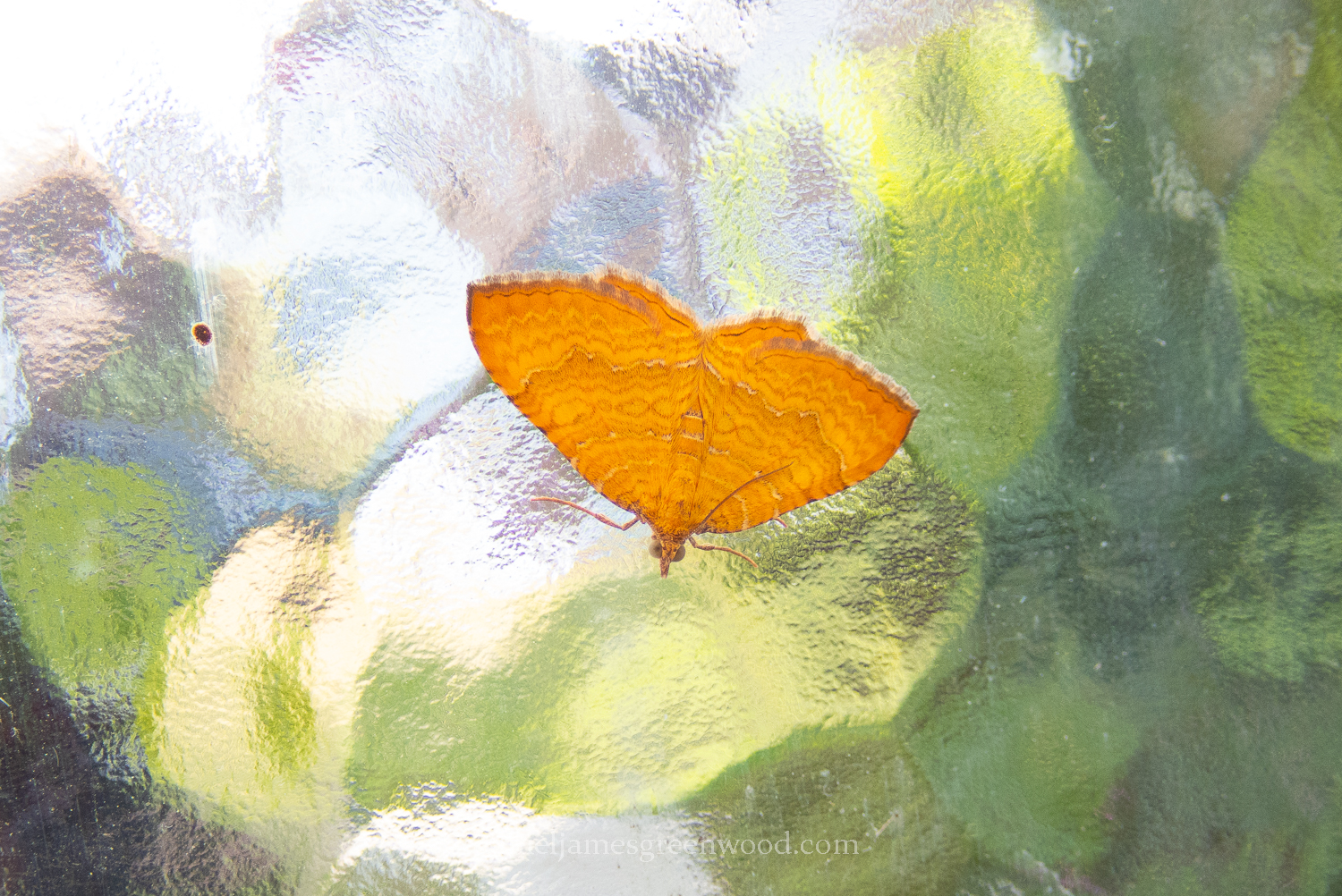
Day 22/30: leaving my mum’s house in SE London I noticed this yellow shell moth on the frosted glass. iNaturalist helped me with the identification.

Day 23/30: the zebra jumping spiders have been absent for me this spring but I am noticing them now. This little charmer was in the garden hedge.

Day 24/30: there have been a new range of bees arriving in my garden as the spring plants shift to summer flowers. The birds-foot trefoil has attracted leafcutter bees like the one above. They have an unusual flight, almost like a kind of hover.

Day 25/30: this was a day of weekend working and several hours travelling, so I had to make do with taking photos in my garden at dusk. I used the built-in flash in the Olympus TG-6 and wasn’t enamoured with the results, mainly because the flash isn’t softened by a diffuser. This mirid bug is out of focus but I enjoy its colours.

Day 26/30: the insect populations seem to be greater now that summer has arrived. Going out of the house first thing has been a good chance to see the range of hoverflies and other bees. This hover was doing that odd leg cleaning ritual and I managed to catch it with ‘legs akimbo’!

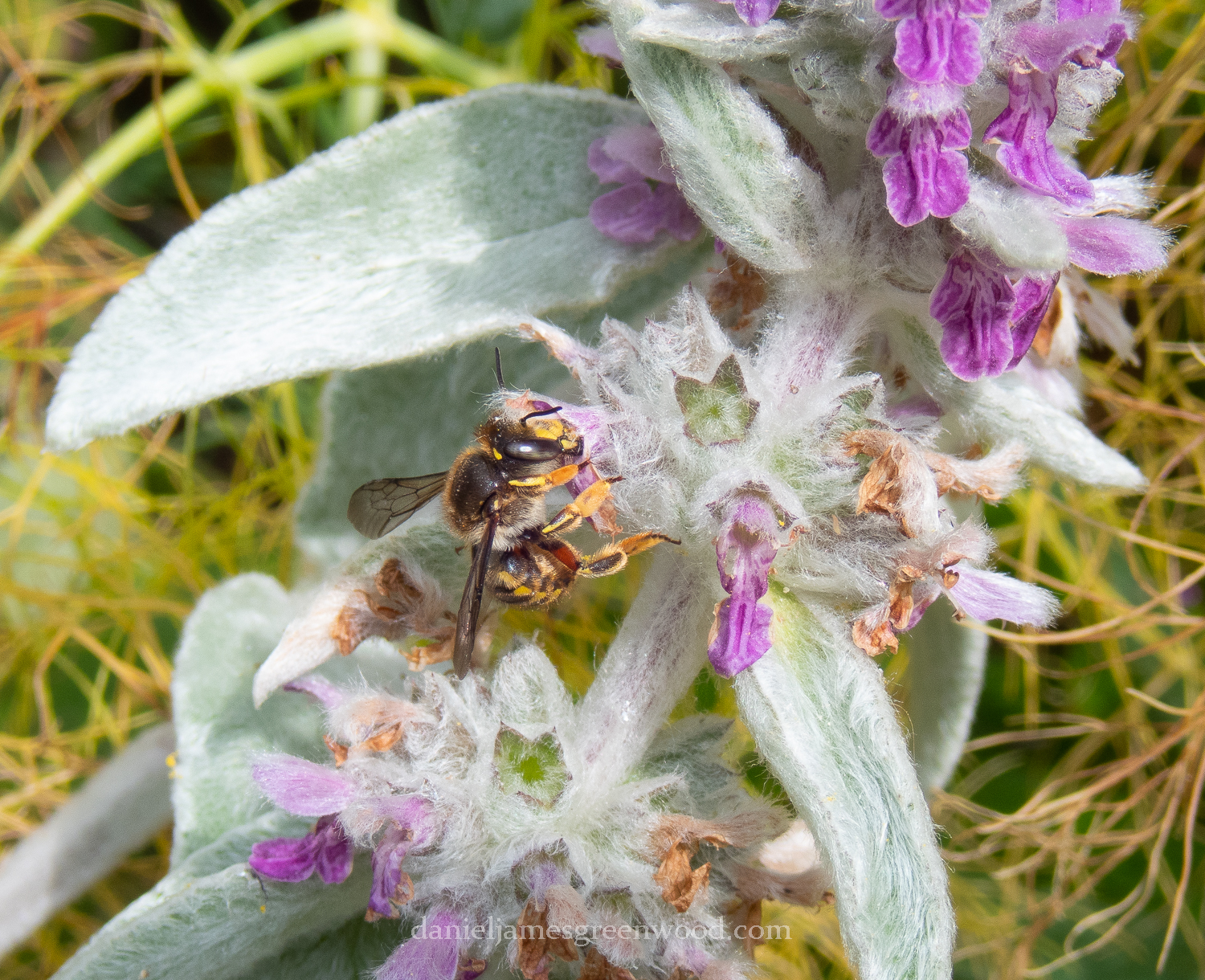
Day 27/30: at last a good show from the wool carder bees. I’ve written about these wonderful bees before – if you want to attract them get yourself some lamb’s ear (not literally), also sold as ‘stachys’.

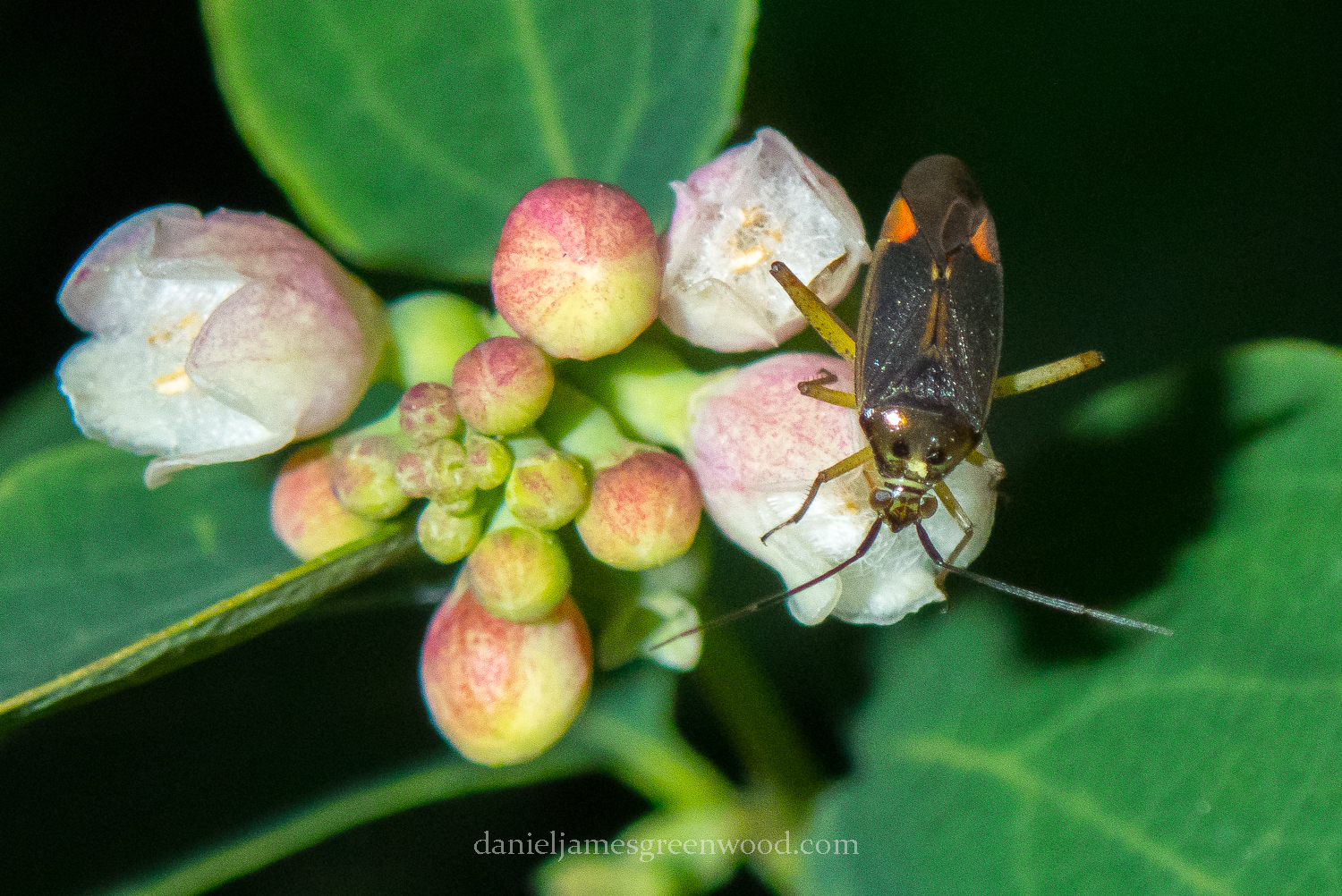
Day 28/30: an evening foray in my mum’s garden late into the evening, in cooler weather. I spotted this mirid bug climbing over the flowers of a snowberry.

Day 29/30: in SE London I found this grasshopper nibbling away on a grass blade. It was far smaller than the photo suggests. The grass was blowing in the breeze which made the focus a bit difficult to pin down, so it’s not the sharpest picture here.

Day 30/30: and so to the final day, one of the few rainy days in June. I was out on the South Downs for a walk and found this pyramidal orchid growing in a laneside verge. A beautiful plant of chalk grassland reaching its peak.

Thanks for reading!

Macro

#30DaysMacro 2023: week three

Here we are, week three of #30DaysMacro as part of #30DaysWild. This week, things took a fungal turn after thunderstorms burst onto the scene.

Day 15/30: a bumblebee feeding on purple loosestrife in a car park in West Sussex. I took two photos all day on the 15th, and this was one of them!

Day 16/30: another day where photo opps were scarce, but I saw this little solitary bee (maybe a Colletes?) on the oxeye daisies in my garden. These daisies have been a massive boost to invert life in my garden this year.

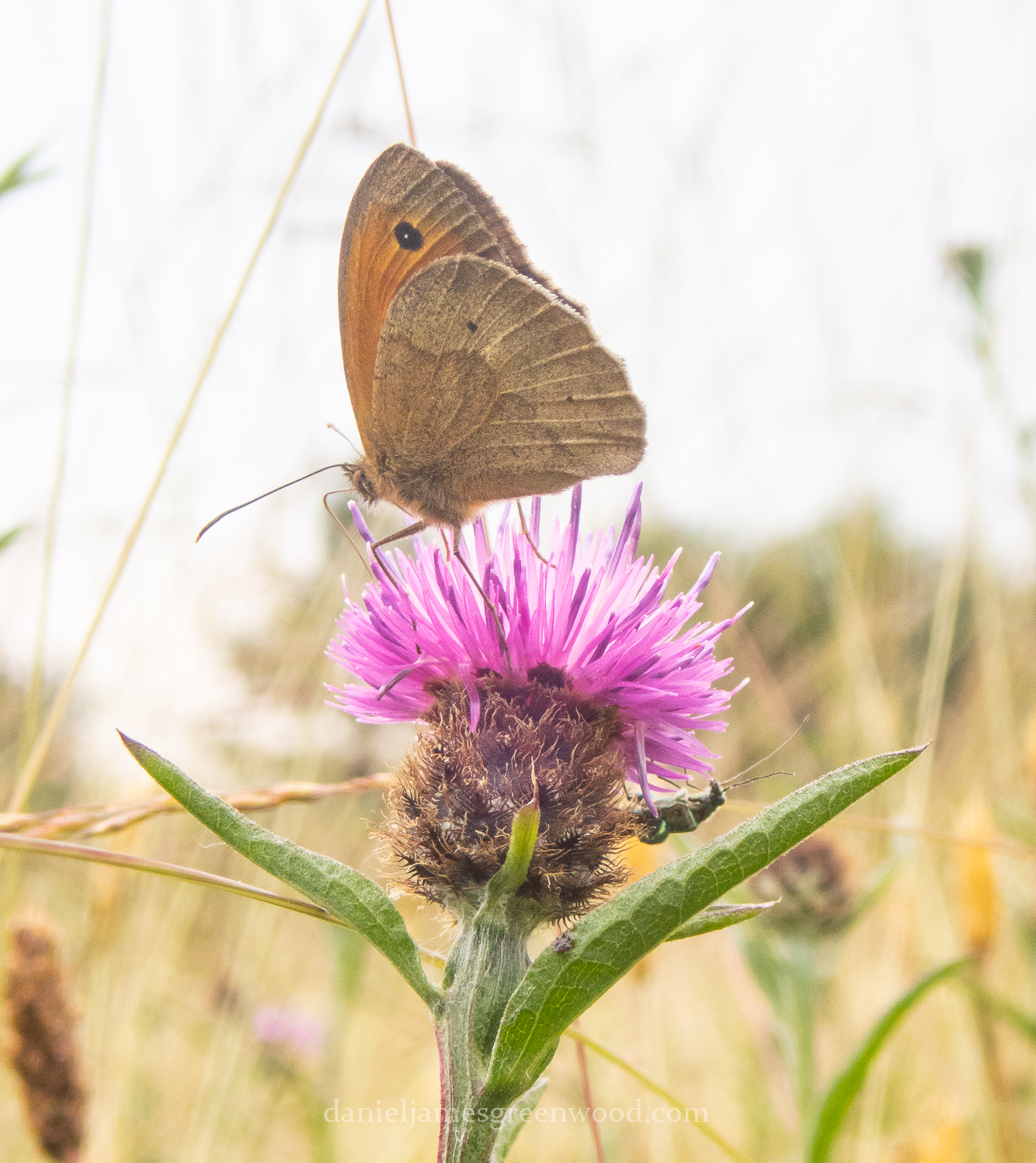
Day 17/30: this photo made me laugh – a meadow brown butterfly on common knapweed in a Wealden meadow in West Sussex. I didn’t notice the green swollen-thighed beetle hanging out below until I put the photo through Lightroom!

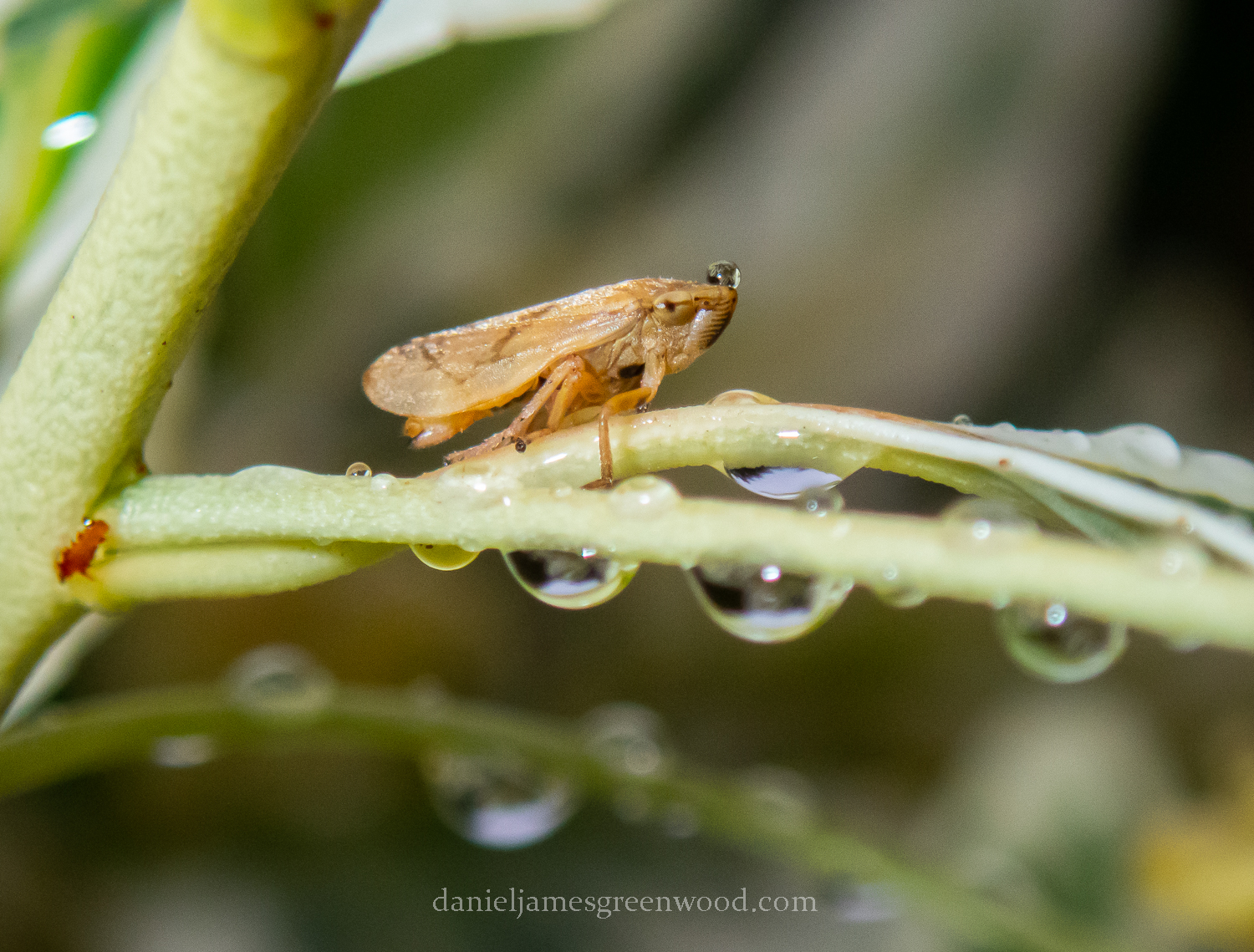
Day 18/30: storms have been the only source of rain recently, and they have been incredibly powerful. After some of that rain, I went looking for some life in the garden and found a common planthopper with a little droplet on their head. I see this as pushing the camera (Olympus Tough TG-6 compact) to the extreme due to lack of light and small size of the subject, and the results are great (though cropped and edited in Lightroom).

Day 19/30: on a lunchtime walk to stretch my legs I found this ashy mining bee foraging from one of the umbellifers that grow alongside my local river.

Day 20/30: things took a turn for the fungal on the 20th, as the rain gave a much-needed drink to the thirsty lichens in my local churchyard.

Day 21/30: the first of the summer/early autumn mushrooms, spindleshank, growing in the place where I learned what they are at Sydenham Hill Wood.

Thanks for reading!

Macro

#30DaysMacro 2023: week two

Welcome to the second week of my #30DaysWild macro photo challenge which I call #30DaysMacro. All photos here are taken with an Olympus TG-6 Tough compact camera and cropped/tweaked in Lightroom.

This week was another hot and dry one, and possibly showed a bit more of an increase in insect numbers after a worryingly scant spring. These photos were taken in London and West Sussex, and both areas are in desperate need of rain.

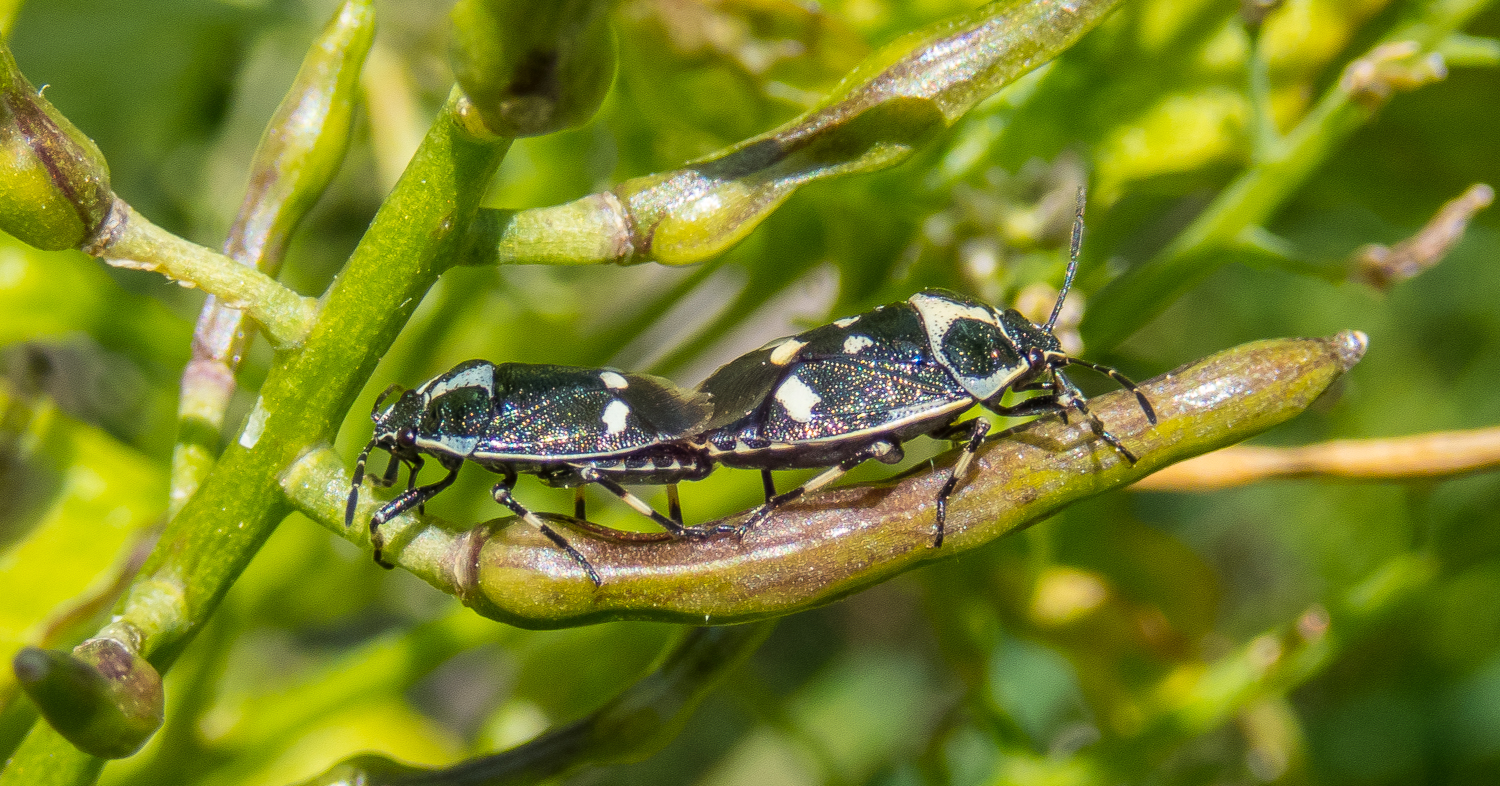
Day 8/30: shield bugs (known as stinkbugs in North America) are some of the most charismatic insects out there and easiest to see. These two cabbage bugs were mating in what I reckon is a plant in the cabbage family, in south-east London. I think this is my first sighting of them.

Day 9/30: this photo is part of an experience that will benefit from a dedicated post. This is a red-belted clearwing moth laying eggs in a diseased or cankered apple tree in a residential road in West Sussex. It’s only one of maybe three clearwings I’ve ever encountered and you can see that it’s a really extravagant, day-flying species. Maybe I could be swayed by moths after all. Scroll down for another part of this story.

Day 10/30: a click beetle takes flight from a flowering climber in my small hedge. This click beetle is one that I think is common as I’ve seen one very similar on several occasions. Probably need to upload it to iNaturalist to identify it.

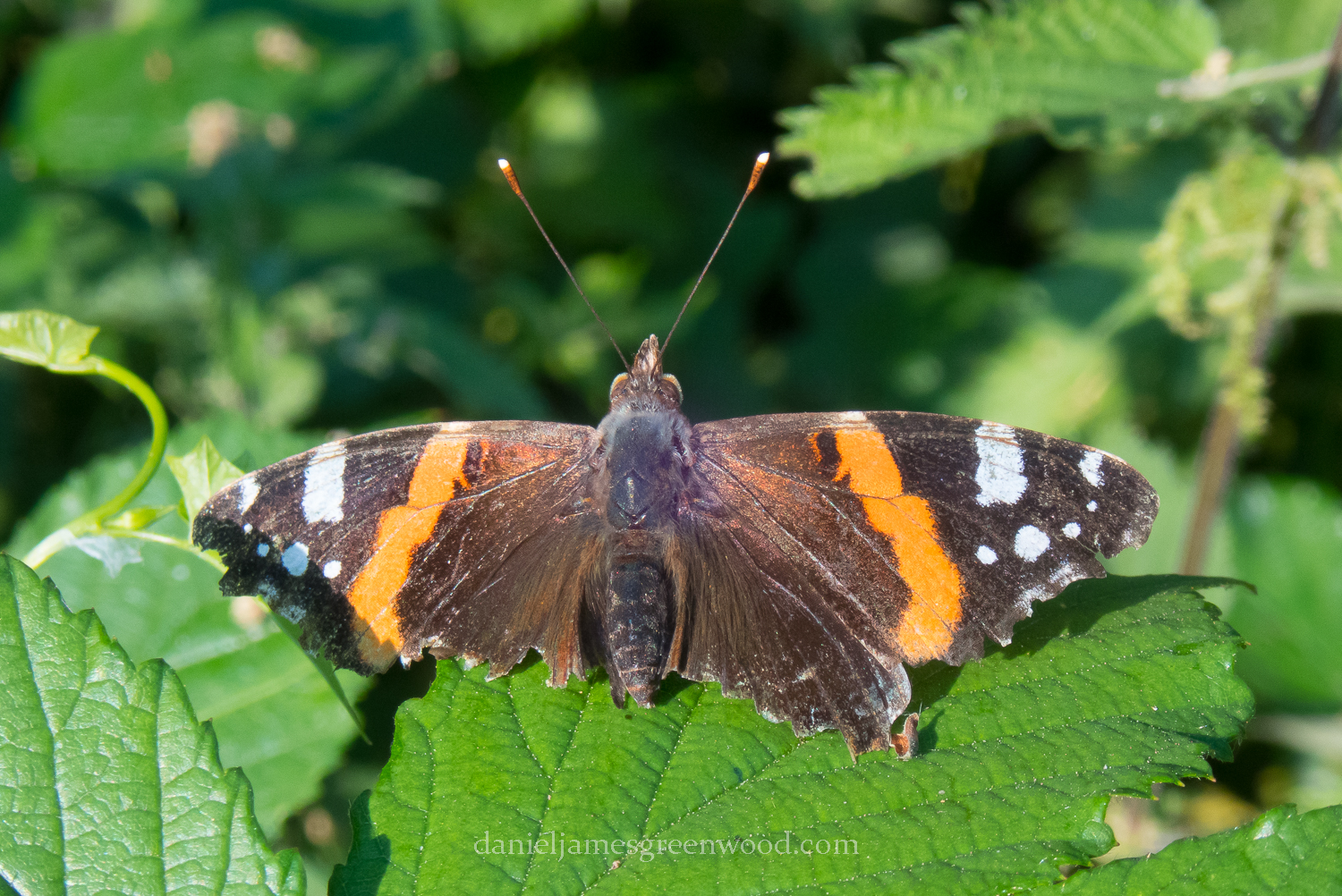
Day 11/30: a tangled web for this poor red admiral in West Sussex. I was surprised to see one so still in the hedge but on closer inspection it has been caught by a spider.

Day 12/30: the emerging larvae of the clearwing can be seen here, pressing out of the apple tree’s bark, just like in certain sci-fi movies. The plot twist here is the arrival of an ichneumon seeking out red-belted clearwing larvae. The ichneumon’s epic ovipositor will be used to lay eggs in the unsuspecting larvae and parasitise the host. You can read more a blog post I wrote about that here.

Day 13/30: a busy day working from home (yes there is such a thing) left me pressed for time, but I managed to snap one of the common hoverflies in my garden. I don’t go out for long in the hottest parts of the day so I am usually reliant on the early mornings or evenings for macro encounters.

Day 14/30: a difficult week for red admirals, with this much-pecked butterfly enjoying(?) some evening rays. You have to make do with what you have in this life.

Thanks for reading.
Macro

#30DaysMacro 2023: week one

Happy #30DaysWild! As per the last couple of years I’ll be taking a macro photo – an image greater than 1:1 lifesize magnification – every day in June. I call it #30DaysMacro.

This is one of the best times to look for invertebrate life, and is a nice motivation to get outside, and to share your experiences with others.

The difference for me this year is that I’ll try to take each photo exclusively from a compact camera or my phone. I recently traded in some equipment that was gathering dust and got an Olympus TG-6 Tough compact camera. It’s waterproof, can withstanding being crushed somewhat, but more importantly it has the best macro capabilities available in a compact camera. It will be interesting to see what I can get from it.

Another #30DaysMacro – let’s go! on y va! vamos!

Day 1/30: I had actually forgotten it was June (been busy) and wasn’t thinking of #30DaysWild until after I took this phone pic. The spider was on the rear windscreen wiper of my car in the supermarket car park. It’s one of the running crab spiders.

Day 2/30: a bumblebee with full pollen sacks gathering nectar from the deep flowerheads of yellow flag iris in my small pond.

Day 3/30: a swollen-thighed beetle ‘enters the ring’, the nectar station of an oxeye daisy. I planted these last year and they’ve only flowered in the past few weeks. The small insects on the edges are carpet beetles. They’re there all the time.

Day 4/30: I found this beautiful red cardinal beetle in my family’s garden in SE London, as it rested in the shade of a hazel bush.

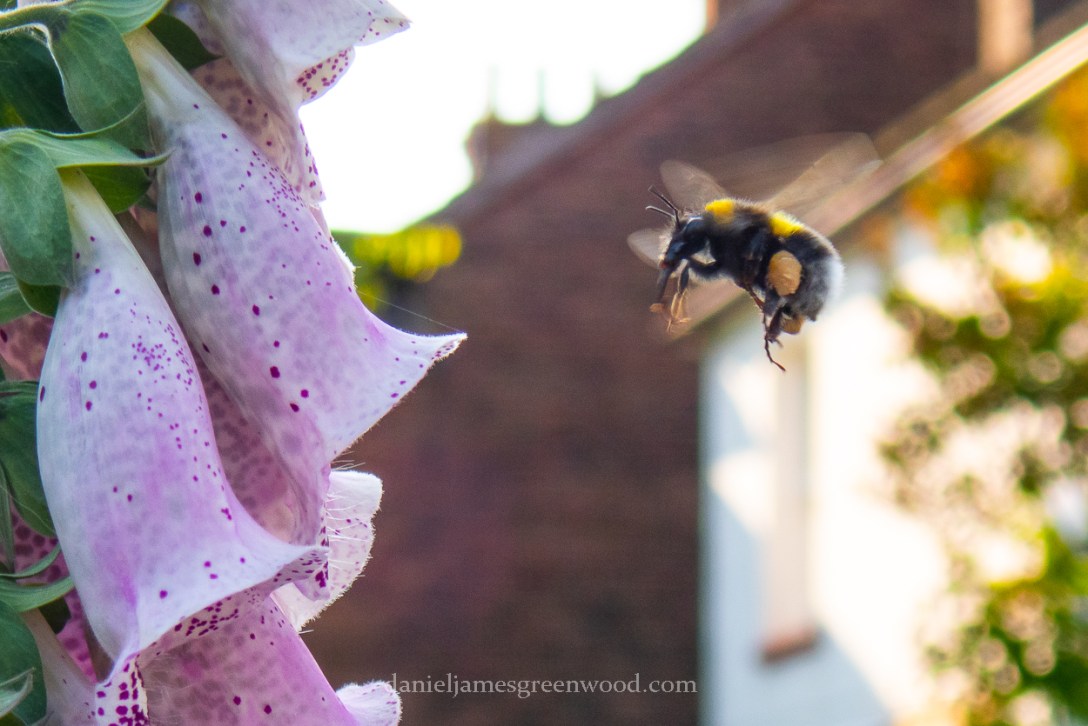
Day 5/30: I was lurking around the borders of my garden where the foxgloves grow, waiting for bumblebees to emerge from the flowers. Luckily this bumblebee chose to hover for a while so my camera could lock on and get the in-flight pics. Impressive for such a little camera!

Day 6/30: in the centre of my town there’s a brick wall that is covered in trailing bellflower. At this time of year it catches the sun wonderfully. I took this photo along the main road and was stopped by a woman who said she often tried to get a similar photo on her way home. Trailing bellflower is native to south-eastern Europe and likes rocky places, brightening dull civic spaces.

Day 7/30: a tortrix micro-moth in Peckham, SE London. I really like the holes in the leaves that surround the moth, and its bluey scales.

Thanks for reading, see you next week!

Macro