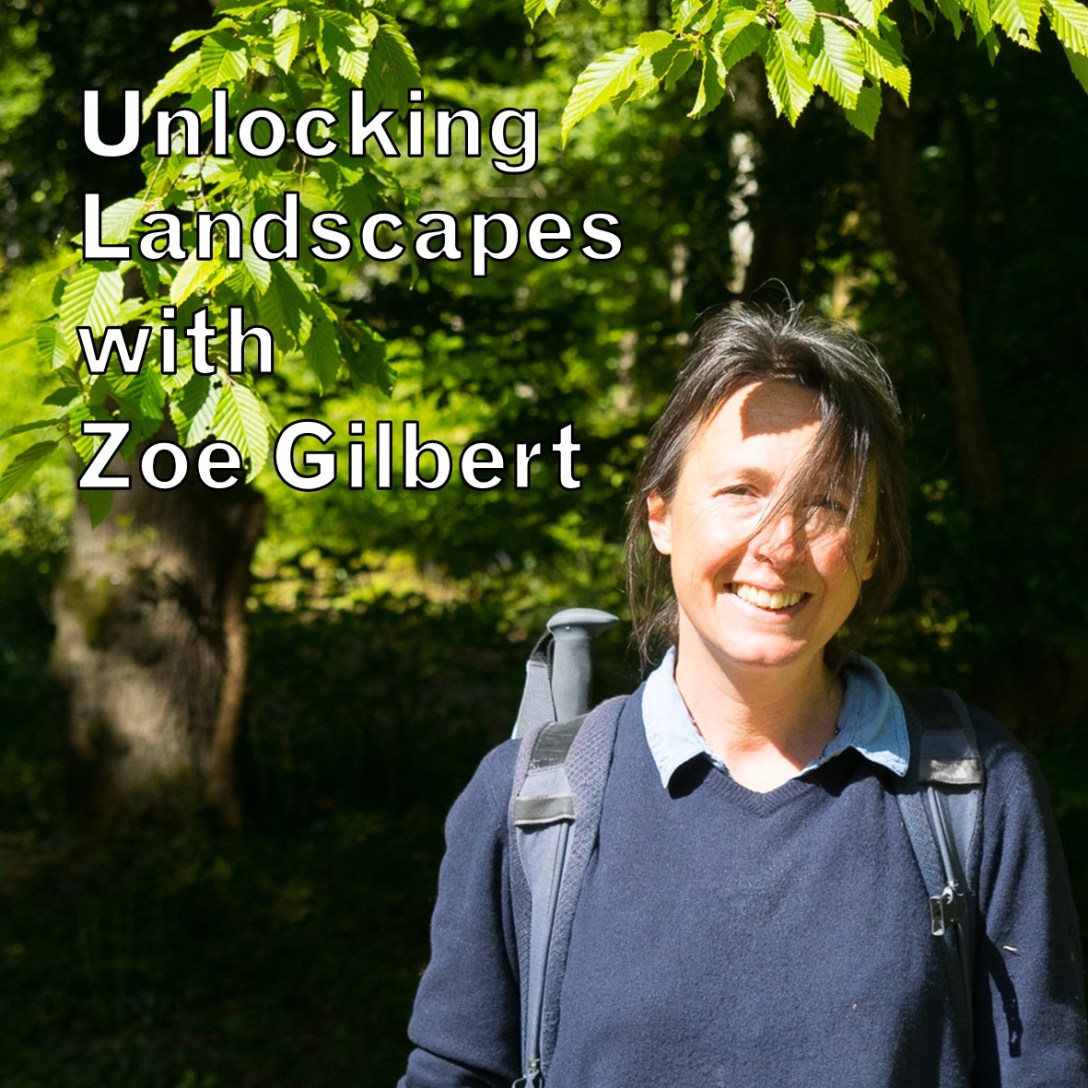
Unlocking Landscapes is back! In May 2022 I met with author Zoe Gilbert in Ham Street Woods National Nature Reserve on the Kent/Sussex border. Zoe is an award winning writer and she sounds very much at home in the woods. It was a real pleasure to spend the day with her and I’m very grateful for her time.
Listen here:
In March 2022 Zoe published her latest book, Mischief Acts (you can buy it here). The book is inspired by an historic wooded landscape in south London known as the Great North Wood. It’s been covered in a couple of other podcasts for Unlocking Landscape so please see the links below. I love the book and as a consumer of books and someone who knows parts of the landscape she has focused on, I can say for sure that I think she has nailed it!
In this episode we cover a lot of ground:
What inspires Zoe to visit woods and write fiction
Public access to woodlands in the pandemic
The complications around public perceptions of woodlands
Mischief in the woods and National Parks
‘Pics or it didn’t happen’: The importance not being observed all the time (social media)
Contiguousness of woodland
Bison being reintroduced to English woods
The future of woodlands
Prioritising the conservation of woodlands in a time of extremes
In the early weeks of September, the first autumn mushroom boom hit. This was after a number of stormy downpours finally gave up some of the long-held rain to the land below, where us humans are most of the time.
I visited a local Sussex woodland in the second week of the month and was astonished by the change the rain had brought about. I have never seen so many blusher mushrooms (Amanita), which were honestly as common as muck, as the English saying goes. It’s also the start of the Russula season, with the first explosion of the brittle-gilled, uniformly white mushrooms. They are spectacularly beautiful to look at before the squirrels, deer, or slugs get to them, as they should.
Blusher mushroom
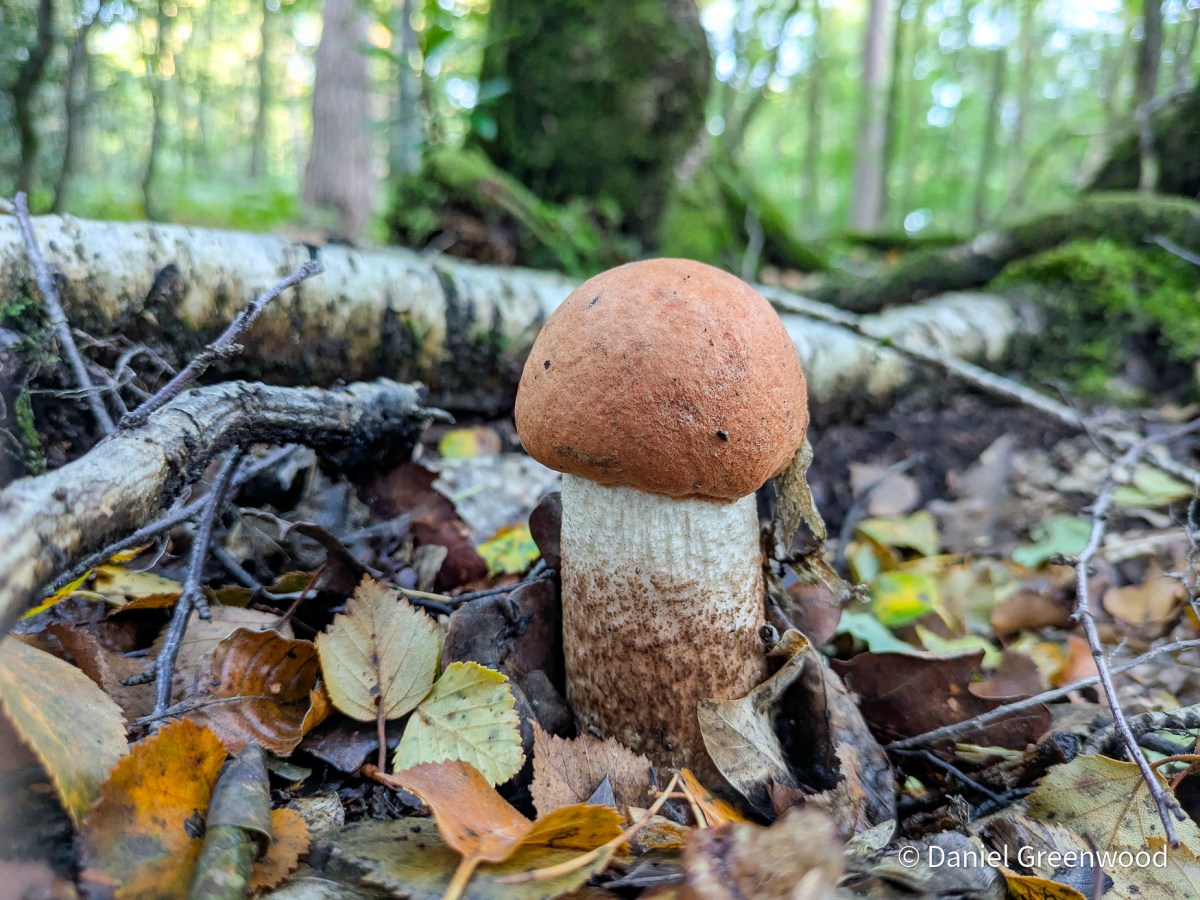
I was on my way out of the woodland when I was stopped in my tracks by the sight of a perfect mushroom. It was perfect in appearance and is thought of as perfect for its culinary quality. At the edge of the shady path, under the branches of a young holly tree, was a cep (Boletus edulis).
Recently I’ve read a book about mushrooms and foraging that really got me thinking. It challenged my perceptions of whether we have it wrong about mushroom foraging in this country in terms of tone, and whether everything I thought I knew about what a woodland’s state would mean for its fungi.
More on that in a bit. You may have guessed that I picked this mushroom, took it home and ate it. I lived to tell the tale and it was indeed very tasty.
In recent weeks there have been Instagram posts showcasing hundreds of ceps in France and Russia and it’s made me realise something. One of the best times to pick edible mushrooms is in August and September before leaf fall and when there is still drier weather to be had. Wet weather also allows detritivores like slugs to feast on mushrooms.
Cep (Boletus edulis)also known as penny bun or porcini
Ceps in particular seem to be more likely to be free of decay and of insect encroachment into the stipe in drier months, which forms the core of the mushroom’s edibility.
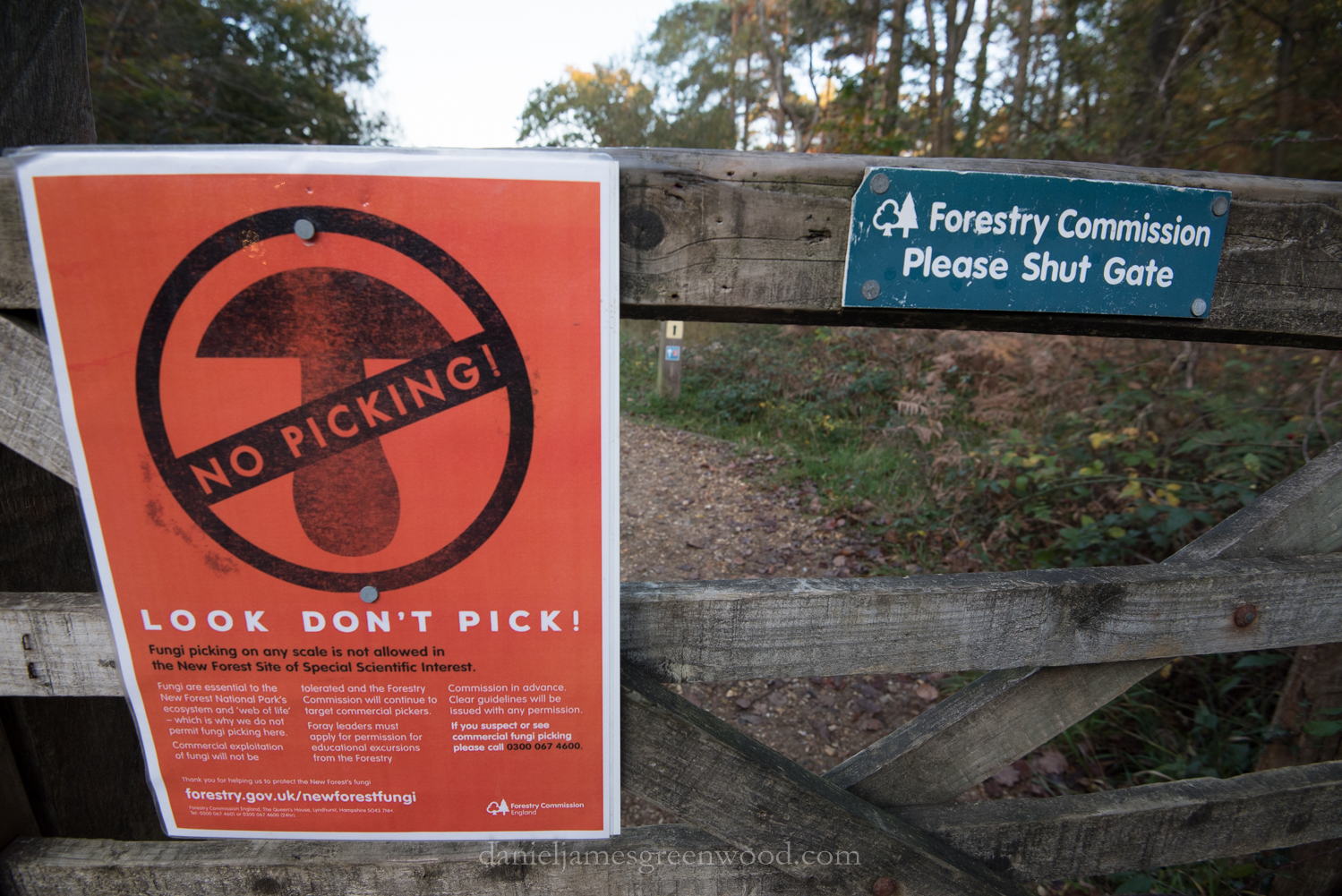
For the past ten years I have remained fairly sniffy about mushroom foraging and only really ever eat wild mushrooms as a one off to see what they’re like. Part of this comes from working as a woodland warden for 6 years in an ecologically sensitive but hugely popular nature reserve. In my view and experience, I still don’t think foraging is sustainable in small city woodlands where the impact of footfall can degrade a habitat’s viability. There is also the fundamental fact that access to certain places has its controls, which are legal requirements in some cases. It’s also a sad reflection of the state of the English landscape which is said to be one of the most nature-depleted in the world.
Reading The Mushroom at the End of the World by Anna Lowenhaupt Tsing made me appreciate just how nature-depleted we are in the UK, and how this is a cultural as well as ecological issue. I’ve written before about mushrooms in the Slavic world. Mushrooms seem like such a rare thing now that their picking is treated in numerous places as an offence, and this still with no solid evidence that picking mushrooms reduces an ecosystem’s viability or biodiversity. It does seem to come down more to commercial ‘theft’ than anything else, which you can understand if ‘organised’ groups are technically asset-stripping public lands. Mushrooms like ceps have a market value, something Tsing covers in greater detail.
As mentioned earlier, in small urban woodlands I think large-scale foraging could be harmful in that it can introduce lots of feet to healthy areas of woodland soil and seal it up, blocking the vital movements of gases like oxygen and CO2, fungal and invertebrate life, resulting in tree death. Soil is, after all, a living thing. It’s another reminder that woodlands with high visitor numbers do need to be managed for their long-term health.
Bradfield Woods
But disturbance of a different variety may not be so bad. It may even help to promote mushroom dispersal. Tsing’s book shows that disturbed landscapes seem somehow ‘better’ for matsutake in America, with landscapes damaged to a degree by industry actually being reawakened to different communities of fungal life. We are of course talking about wooded landscapes of much greater scale than most that are found in the UK. That’s a key element to consider.
Two years ago I visited Bradfield Woods, a managed coppice-with-standards woodland in Suffolk that also happens to be a National Nature Reserve. It was absolutely chock-full with boletes and many other species of fungi, including stinkhorns! Bradfield Woods is coppiced regularly for its hazel wood and its mature oaks are felled for timber (hazel = coppice, oak = standards). It was one of the most fungally-rich woodlands I have ever visited in central or southern England, again this was early September.
The management by the Wildlife Trust at Bradfield Woods is sensitive and sustainable, unlike most plantations where an entire woodland is effectively created from scratch (or from an ancient woodland, similar to how rainforest turns over to palm oil monoculture) and managed aggressively with large machinery that damages the topsoil. Then again, Bradfield Woods is not needing to produce toilet paper and other goodies for 60million people. It’s important to remember that that’s why plantations are managed as they are, for products we all depend on in our daily lives. This is probably an issue of globalisation.
The Mushroom at the End of the World has a lot to say about globalisation, focusing on the matsutske mushroom, one of the most economically important species in the world. Tsing covers the (human) immigrant communities in Oregan, USA and how their livelihoods depend on picking. It reminded me that the anti-foraging arguments in a lot of the UK media are along xenophobic lines, which Tsing does cover in regard to white supremacy in the United States. One English video lingers in my mind, of East Asian women picking mushrooms in a London park and being accosted by a local volunteer who is also filming them. Without pretending to be an expert or to define an entire region of diverse peoples, picking mushrooms appears to be a perfectly normal activity in East Asian countries.
Tawny grisette
There is also the interchangeability of the phrases ‘gang of foragers’ with ‘gangs of foreigners’, which I very embarrasingly said by accident in challenging the very concept at a guided walk once. This kind of language is far more easily accessed in certain British newspapers, which are hostile to immigration and refugees more generally and seek material to boost their propaganda. As you may have seen, a lot of people continue to express racist or xenophobic views in 2022, and sometimes people don’t realise how those ideas can surface in the most unlikely of places – a love of the nature deemed to be ‘ours’ and under ‘our protection’. These are issues and messages here that need to be considered carefully.
Perhaps the fears about foraging harm wildlife because our disconnection from these places has contributed to ecological decline. Perhaps it’s also that we need to accept our failure of stewardship – have we done enough to champion the positive use of our woods and their wildlife or have we not broached the topic meaningfully enough out of fear?
If sustainable foraging can allow people to connect more deeply with suitable green spaces, and to understand their ecology and improve their management, surely that has to be a good thing?
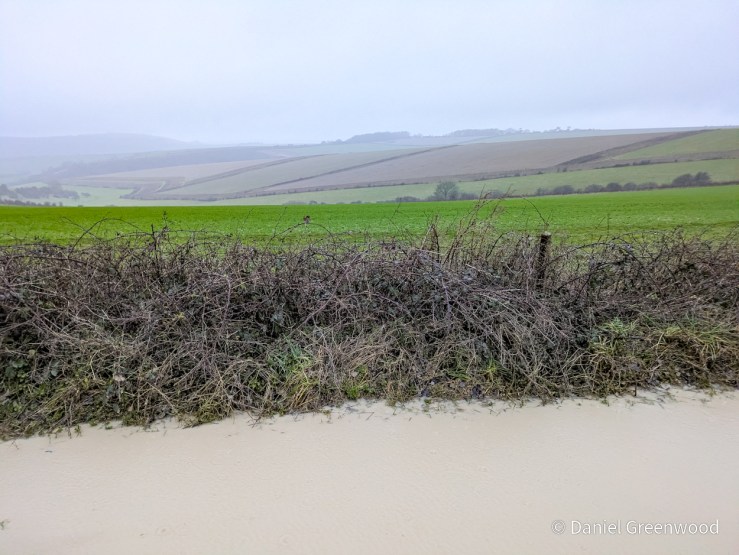
A couple of weeks ago I spent some time in the Arun valley, my local access point to the South Downs. At last some rain came and we watched it shift across the Downs, all the way over to the Greensand Hills in Surrey.
I remember looking at this view in April 2021 after a year of lockdowns and computer screens. I honestly did not believe it was real. Perhaps it was the veil of mist, or perhaps I had developed some mental or neurological disorder from so much time stuck at home.
The Arun valley around Amberley is a crossing point (or perhaps washing point) of the Weald and Downs – where the river that rises in the High Weald’s most westerly point cuts a course through the chalk hills. It has wetlands of international significance in Amberley Wildbrooks and nearby Pulborough Brooks.
Arun at North Stoke, page 71 Book about the Highways and Byways of Co. Sussex, England
Like the nearby Adur, probably better known to people because it passes through the very fashionable Knepp Estate, it used to be a much wilder and freer river.
Along the Arun is the village of Bury, likely to originally have been a defensive point preventing easy Viking access from the coast, up the Arun and towards London, a key trading point (obviously). I recently read a book about Anglo-Saxon England that included some information about King Alfred’s development of ‘boroughs’. These were defensive outposts alongside rivers designed to protect from Viking invasion, which happened so regularly and to great effect in Alfred’s time.
The churchspire of Buryvillage can be seen among the trees on the banks of the Arun (2020)
The boroughs were an effective means of defence, for a time at least. I can think of so many placenames that include a borough of somekind: Pulborough, Bury (Lancashire, too), Borough (on the banks of the Thames) and Middlesbrough being the first that come to mind.
The Arun valley at Amberley is a place I first visited through working in the South Downs National Park. My relationship to it is about to change as my time with the National Park comes to an end, but that mixture of professional connection and personal fondness has always been an uneasy one.
It’s the place you can get a train to, which is rare in the South Downs, and enjoy some of the most accessible downland walking. There are views to the North Downs and then south to the coast. The Amberley Downs have glow worms, junipers, barn owls, ravens and rare butterflies like the duke of bergundy. It’s also home to vast monocultures of ‘improved’ grassland that were once rich in communities of now rare plants.
A lone hawthorn on the Downs with the Arun snaking away in the background (2019). Much of its floodplain has become grazing land
The South Downs was first floated as a National Park contender in 1929 but the devastation to its chalk grasslands from the need to plough it up for crops in the Second World War left it a poor relation to the seemingly untouchable Lake District, Yorkshire Dales and Peak District. It only got full ratification as one of the final acts of the outgoing Labour Government in 2010. The Conservatives who followed have begun to cut National Park budgets through flat cash settlements, despite the effect this might have on such a strongly conservative social make-up (‘the shires’ or ‘blue wall’).
The pre-war Downs were sold as one reason to fight for Britain’s sovereignty from Nazi Invasion in the Second World War. How ironic that they ended up being denuded by the very same need to survive. Once the Downs would have been roamed by shepherds grazing large expanses of chalk downland. Today the South Downs feels in some places like an outdoor factory of intensive agriculture, with miles and miles of fences. It is not a wild place in the way that people imagine American National Parks, which in themselves were not necessarily ‘wildernesses’ either due to prior Native American presence. But it is still an incredible place to witness England’s wildlife and geology,
Your Britain – fight for it now (Imperial War Museum/Frank Newbould 1942) – this is not geographically accurate, with the landscape being a splicing together of different parts of the Downs for artistic effect
In Rebirding, a sort of bird conservation polemic, Benedict Macdonald questions the designation of the South Downs as a National Park because of its rolling hills and chalk grasslands, having read this on the website. Ironically the South Downs is one of the most wooded in its tracts of the ancient Low Weald, and home to internationally significant wetlands like those along the Arun at Pulborough. Chalk grassland is also one of the rarest habitats in Europe. It is an astonishing range of habitats, with the dry lowland heath now very rare after the Victorian and 20th-century devastation of the ‘wastes’.
The whole 100 miles of the South Downs, from Eastbourne in East Sussex, to Winchester in Hampshire, has been in my thoughts most days for the past 4 years. The Arun valley now becomes for me that gateway that exists for so many people who don’t have to consider a National Park in its entirety, a psychological doorway into somewhere freer, better and more ‘wild’.
Looking east along the Downs from Chantry Hill, June 2020
Last August I recorded a podcast with Dr. Beth Nicholls about bees. The podcast was recorded at Bedelands Local Nature Reserve in the West Sussex Weald. You can listen to that entertaining jaunt (your thoughts and mine) through bees here.
I only had a couple of hours to record with Beth and spent the time afterwards seeing what was living there. There was a lot of wasp-faking going on, that’s for sure. It’s taken me nearly a year to actually find the time to look through the images and process some of them.
Bedelands is a Local Nature Reserve (a local authority designation for green spaces of ecological and public significance on land which is in public ownership or similar) in Burgess Hill. It’s a mixture of Wealden woods of oak and hornbean, some wetlands, and Wealden grasslands. The grasslands seemed to be quite rich to me in both invertebrates and flora. A lovely space.
This is a very cool hoverfly that can be found over quite a large international range. It’s one of the more obvious wasp-mimic hoverflies. Its scientific name is Chrysotoxum bicinctum. Absolute wasp-faker.
A more common hoverfly is one with a great common name (among others) – the footballer! It’s another wasp-mimic species. The football name comes from the stripes along the thorax (below the eyes above) which look like Newcastle, Grimsby or Juventus style kit colours.
In the moth world, I found this small grey-brown species that appeared much like a grass head. It was reaching over an oak leaf and wasn’t bothered about my lens getting super close. This appears to be one of the grass veneer moths. Moth knowledge is not strong in this one.
The scales of moths are quite incredible up close, like little roof tiles or pieces of paper.
Here’s a closer look.
Moving into the non-insect, invert world, August is a month of arachnids. This is a European harvestman, a harmless thing. They use their legs to do their ‘seeing’.
The desiccated seed cases of a flowering rush was the hiding place of one of the ground crab spiders.
I have been seeing this in my garden, but they seem to be quite common elsewhere and in places like grasslands.
Perhaps the most exciting and dramatic sighting was this wasp spider, of which there were a couple around. They’re recent arrivals in the British wildlife community, and another addition to the wasp-mimic gang.
The underbelly of the wasp spider doesn’t do justice to its name. From this angle you can see just where it gets its name from.
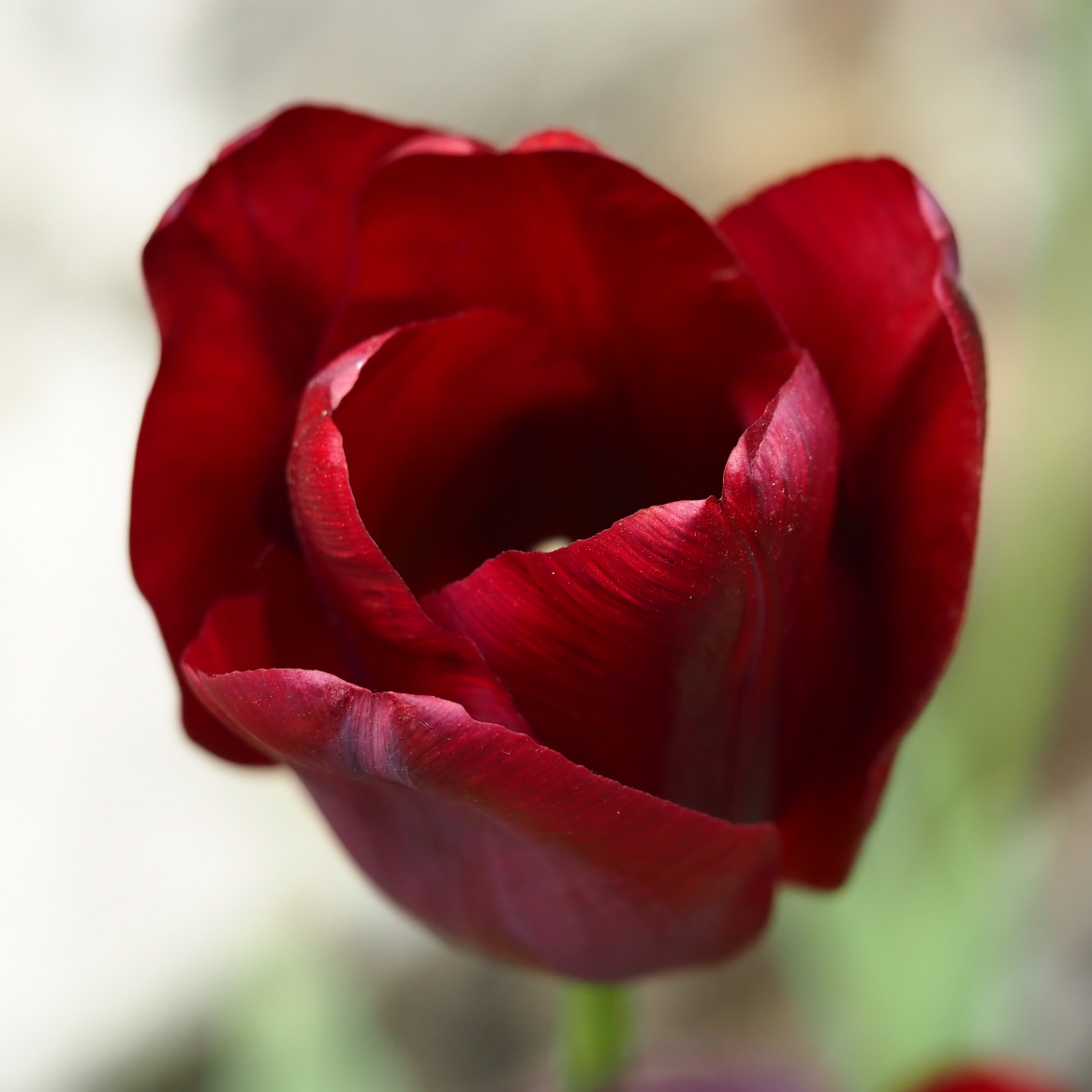
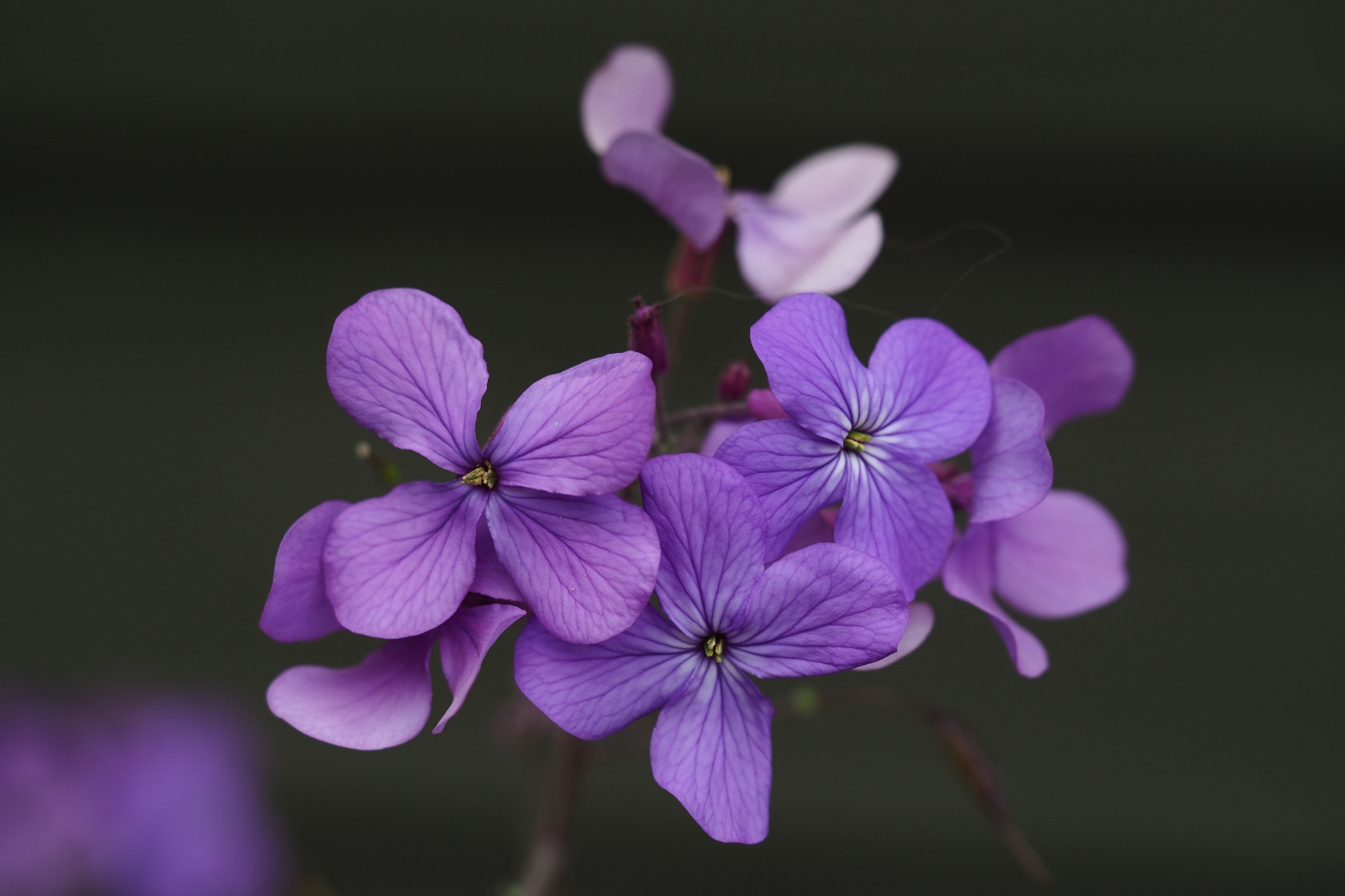
My partner and I made a couple of visits to Nyman’s in West Sussex recently to drown our sorrows after the death of our lovely rescue cat. We drowned those sorrows in flowers. Nymans is one of the jewels in the Sussex Weald, with amazing views across woodlands towards the South Downs.
I usually photograph less formal landscapes than National Trust gardens, but perhaps I am too particular sometimes. The stark colours against the grey backdrop of the day (literally) make for really pleasing images. All the pics here are ‘straight out the camera’ and I haven’t edited them. Olympus cameras produce beautiful jpeg files which my experience with Nikon equipment has never matched.
I’ve had a burst of American visitors in recent days (to my blog, not my house). So thanks for visiting, y’all, and sorry about the year you’ve had. You may have noticed I’ve slipped to monthly posts on here. Between April and October I posted blogs every Monday without pause, which is a tricky task…
Here’s my seasonal update of stuff you don’t need to know about, but then welcome to the Internet. What I’m writing Soon I will be self-publishing my third poetry collection, Fool’s Wood. It’s seven years since my last one and this collection has taken longer because of LIFE. There will be a booklet and also…
Here’s another entry in my slow-blogging Oak Timbers series. You can view my galleries and posts archive here. I visited Salisbury in Wiltshire (south-west England) for the first time in 2023 and was really charmed by the place. If you’re interested in this kind of thing, Salisbury is the place for you. Here’s a gallery…
I’m getting into more of a routine of recording and editing audio, so here is the latest episode of Unlocking Landscapes. Listen on Podbean or via the usual platforms. Also via YouTube: https://youtu.be/y1K9Pqx68to?si=B-Fdhf3sdDH35Z8w Following on from July’s rather optimistic fungi walk, I popped back to the same area of ancient Wealden woodland to see if…
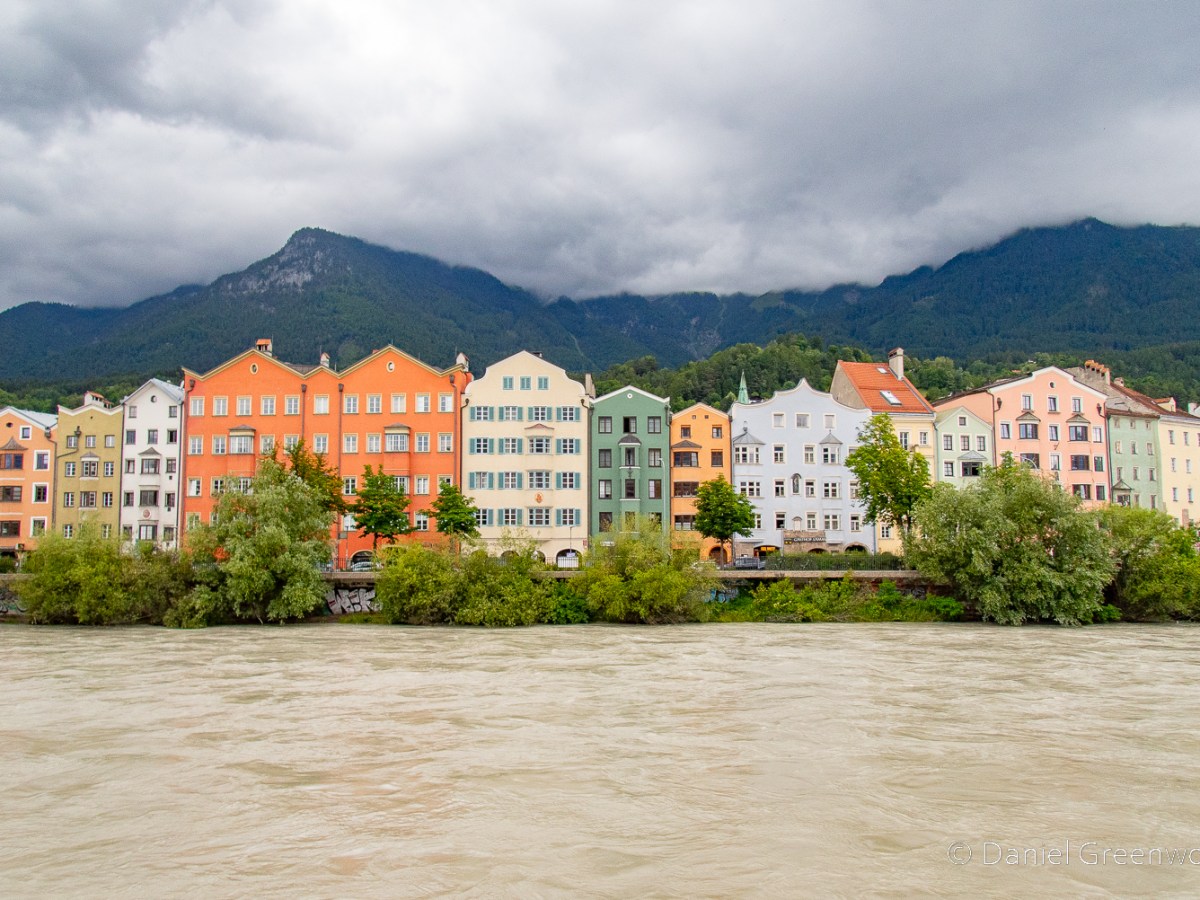
Innsbruck, Tyrol, Austria, June 2025 This is a longer post of the images I captured during a recent visit to Innsbruck in the Austrian Alps. We travelled to Innsbruck on a sleeper train from Amsterdam. It’s such a great experience and is significantly lower in carbon emissions compared with flying. If you consider the fact…
One of the most beautiful sights in English nature is a Low Weald bluebell woodland. The shimmer of blue in the evening sun pocked by the white stars of wood anemones. These are my favourite evenings of the year, the promise of spring but still delivering on all you had hoped to see in the darker months. Summer just can’t match this.
This square of woodland in the Sussex Low Weald was not officially open access, but we kept to the paths and no bluebells were harmed in the making of these images. There is a lot of conversation about access to the countryside at the moment in England, and how power and privilege resonates in the landscape. These are important conversations and the issues are complex.
It was my first visit to this woodland, much like another picturesque bluebell wood a little further north that has now been completely closed to public visitors. A look at the maps shows how a larger landscape of natural woodland had been chomped up by farmers to become fields, leaving this section completely isolated. That will have occurred over the past few hundred years.
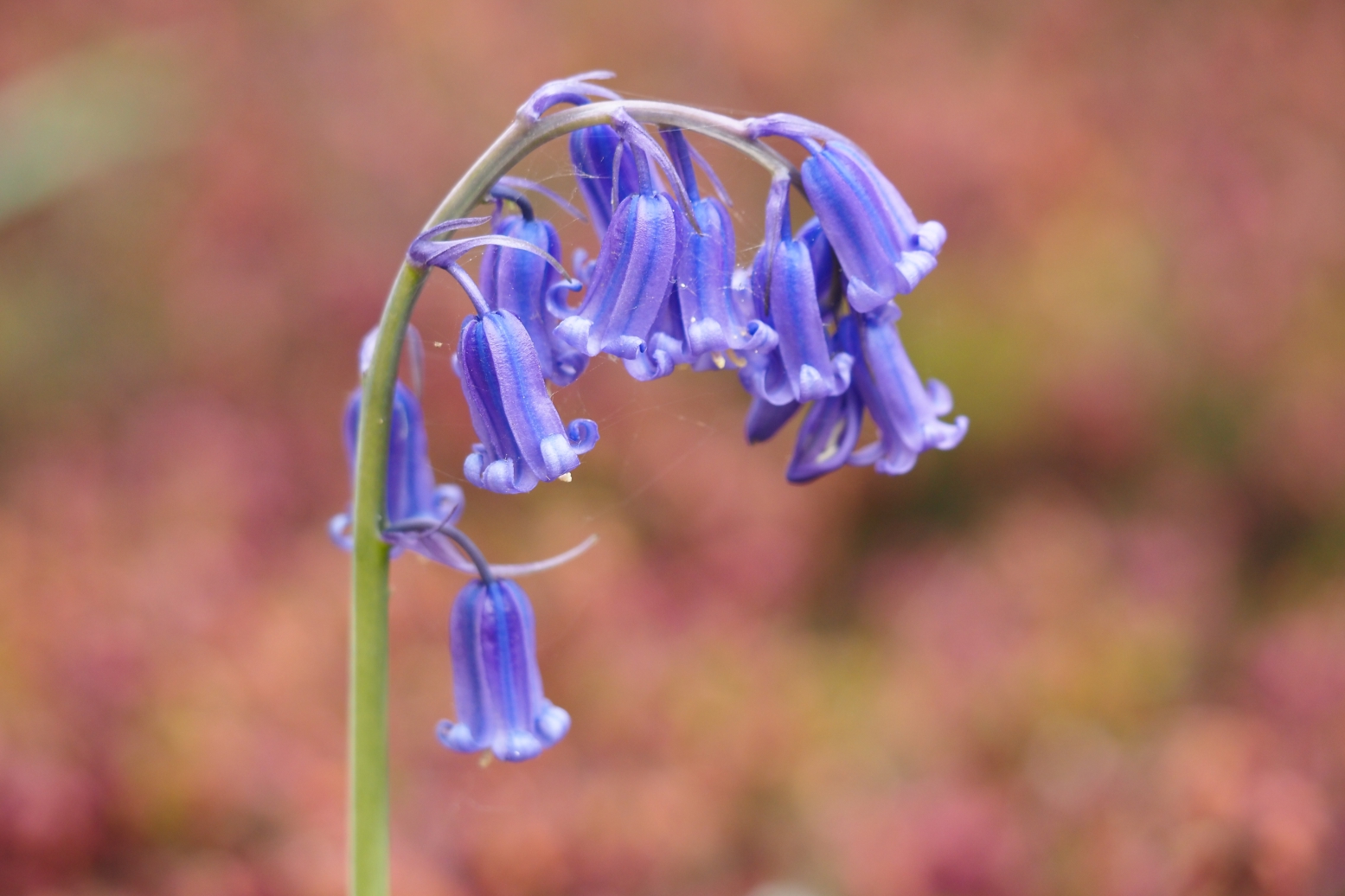
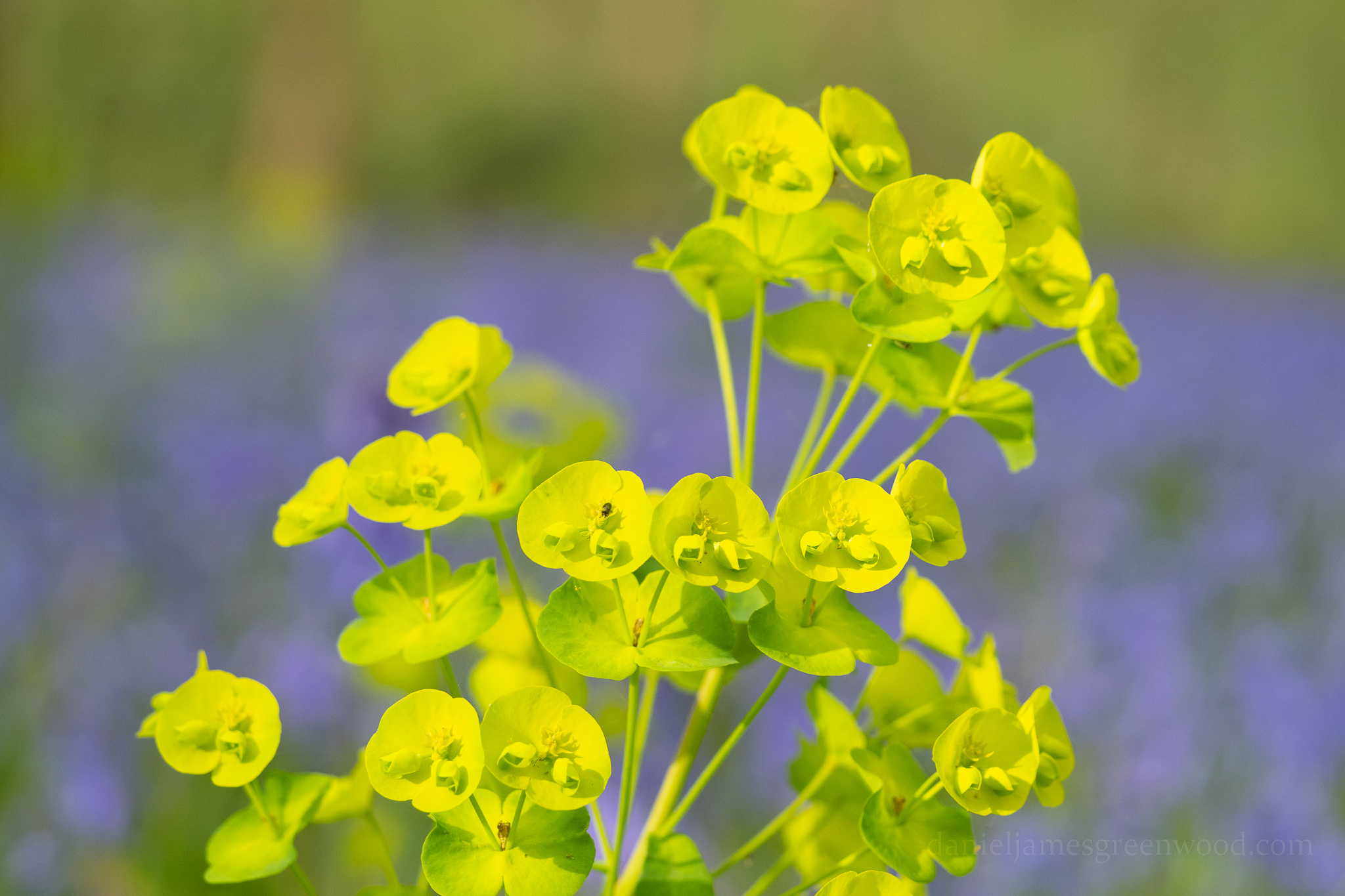
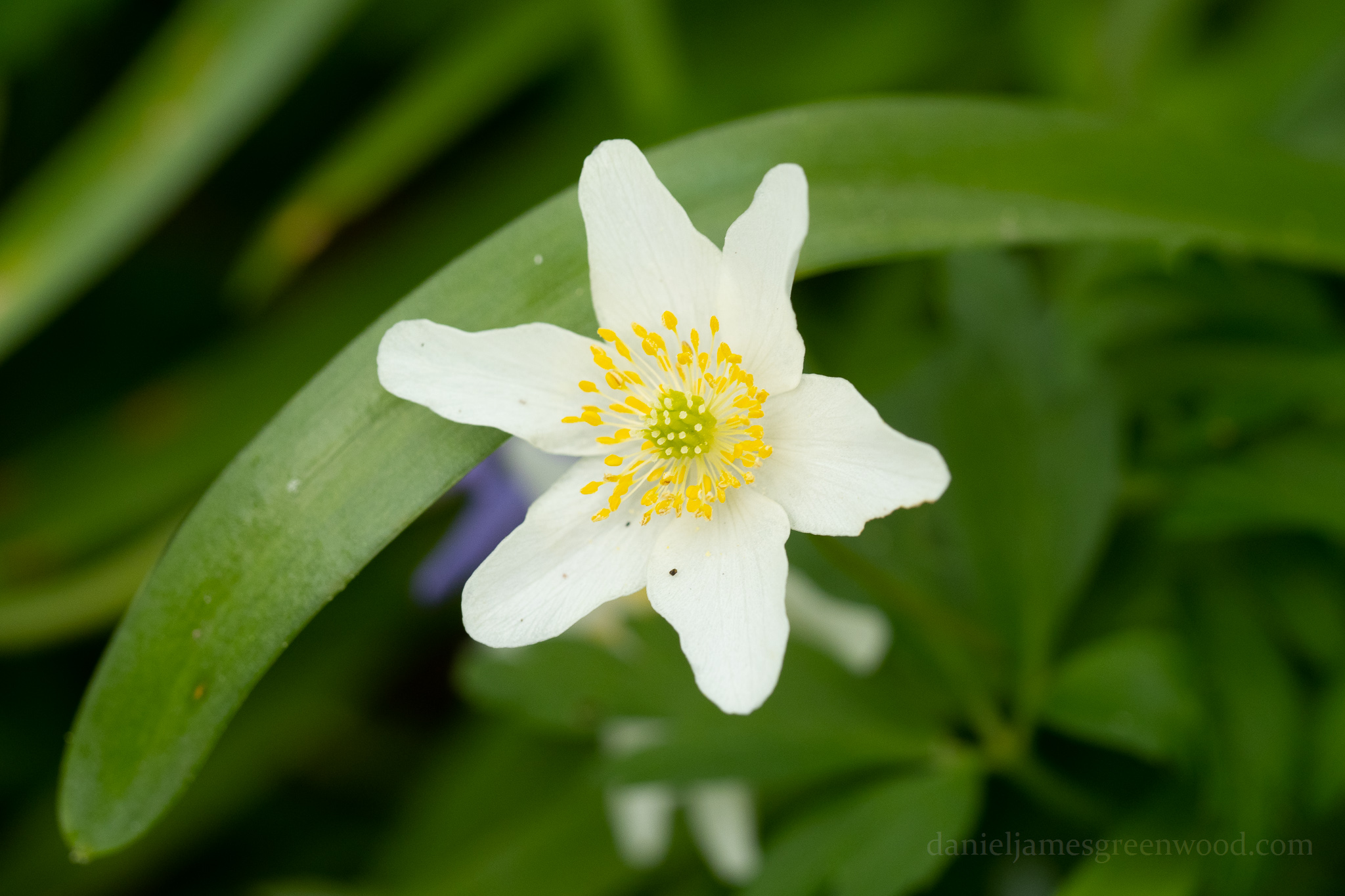
However, it had all the key indicators of ancient woodland, as seen here: English bluebell, wood anemones, greater stitchwort, dog’s mercury, wood spurge, and all under a shrub layer of hazel and high canopy of oak.
This kind of habitat is very much human-made, with centuries of coppicing hazel and felling of oak standards. That doesn’t stop it from being good for wildlife, coppice woodland is one of the richer landscapes in the UK.
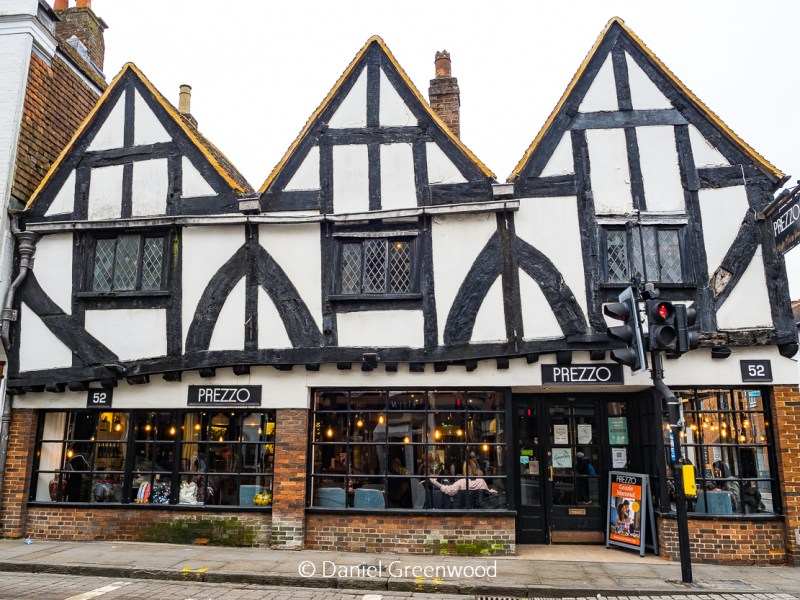
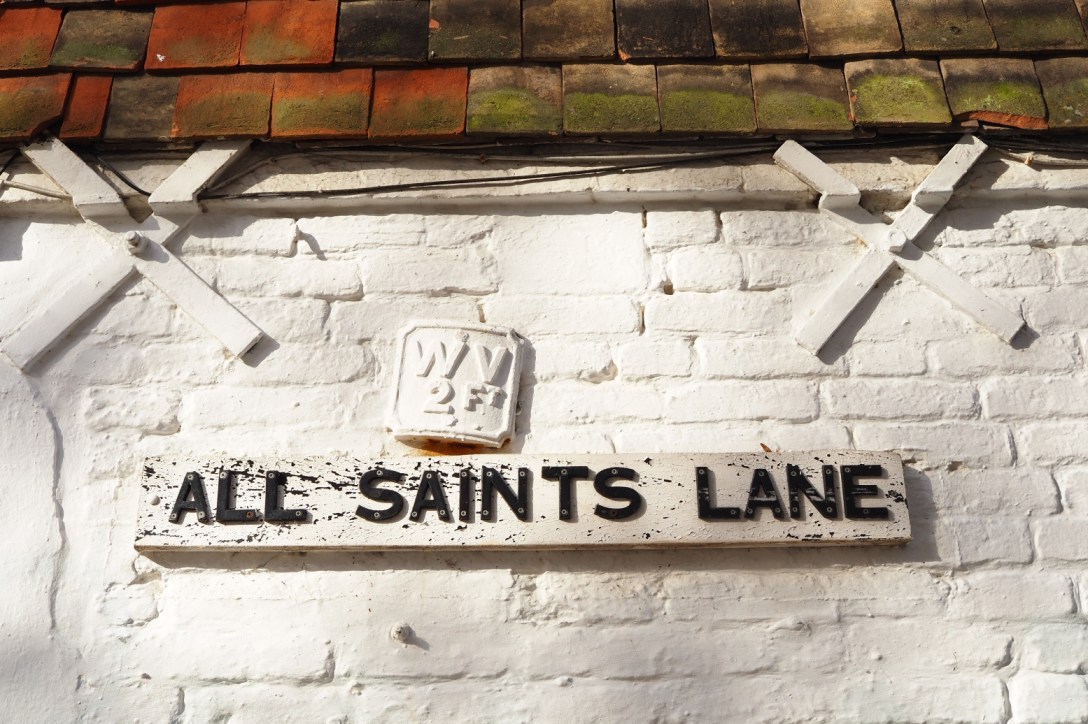
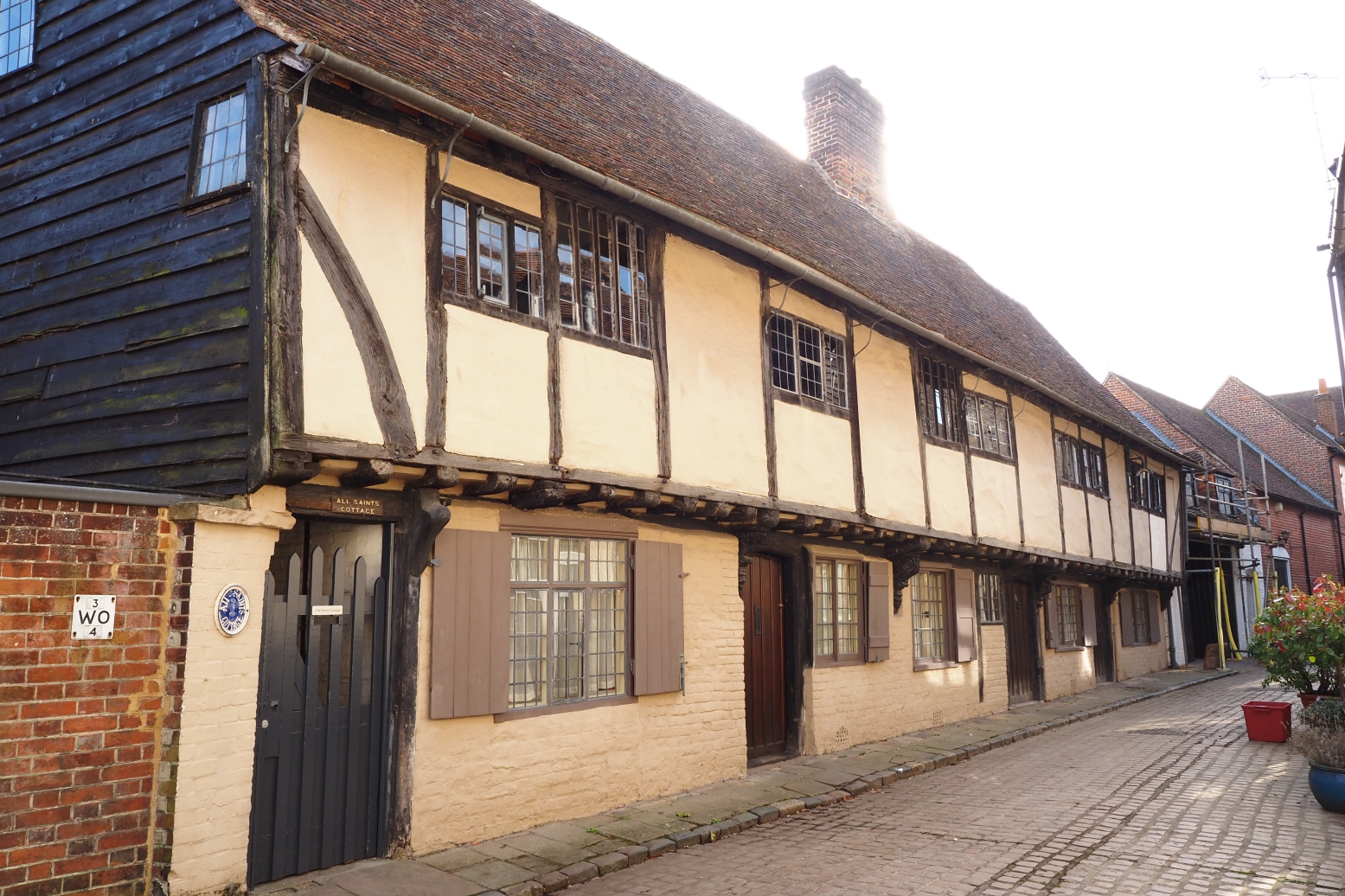
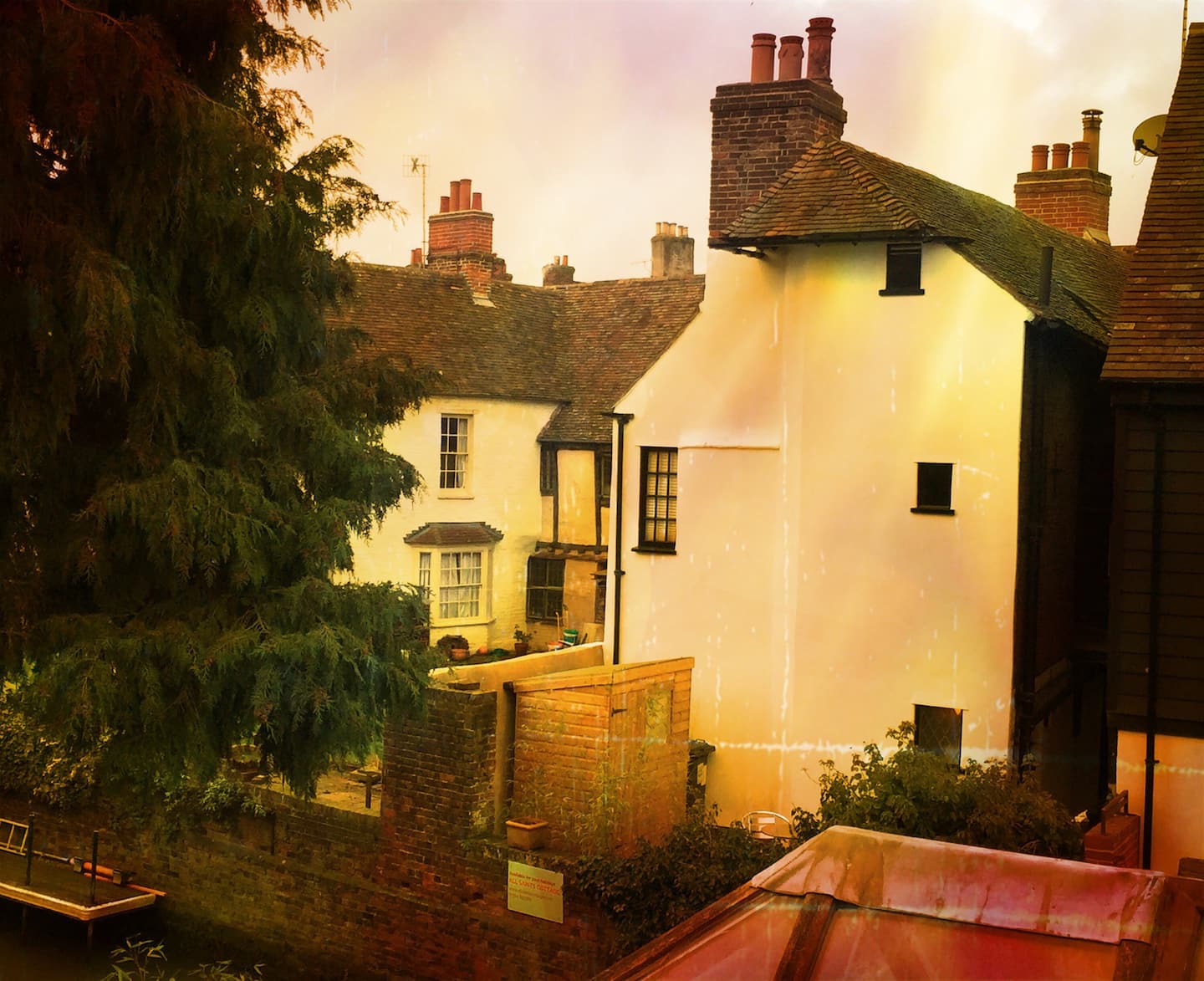
All Saints Lane is a residential cul-de-sac (apologies to anyone living there who saw me peering in) which has one incredible stretch of timber framing. Turns out you can rent one of the cottages and they have their own website. Possibly the least information you’ll find on any website, however.
All Saints Cottage is dated to the 1500s and is described on the Historic England website as an “L-shaped timber-framed range.” According to this TripAdvisor review, it “was a pilgrims’ rest associated with Eastbridge Hospital. It later became cottages. At one time, a school of dancing operated on its upper level, which comprises one, very long room.”
I hope those dancers didn’t bang their heads too often on those low-hanging oak beams! Looking at these these buildings from the outside, it’s the squiffy-ness that can give a sense of their age. This is not a technical term, but if it’s neat and tidy it’s probably from the 1900s.
I think a lot of people consider all doors in England to look like this. They don’t.
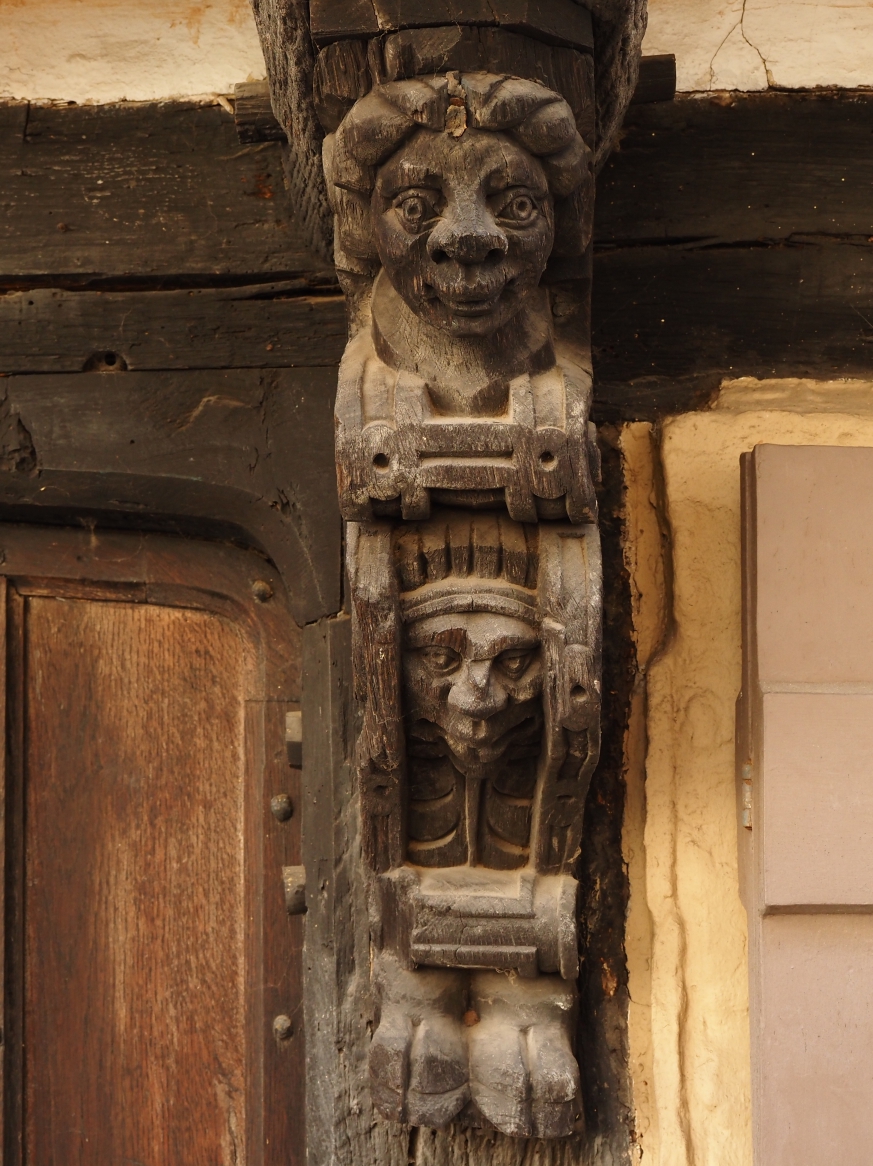
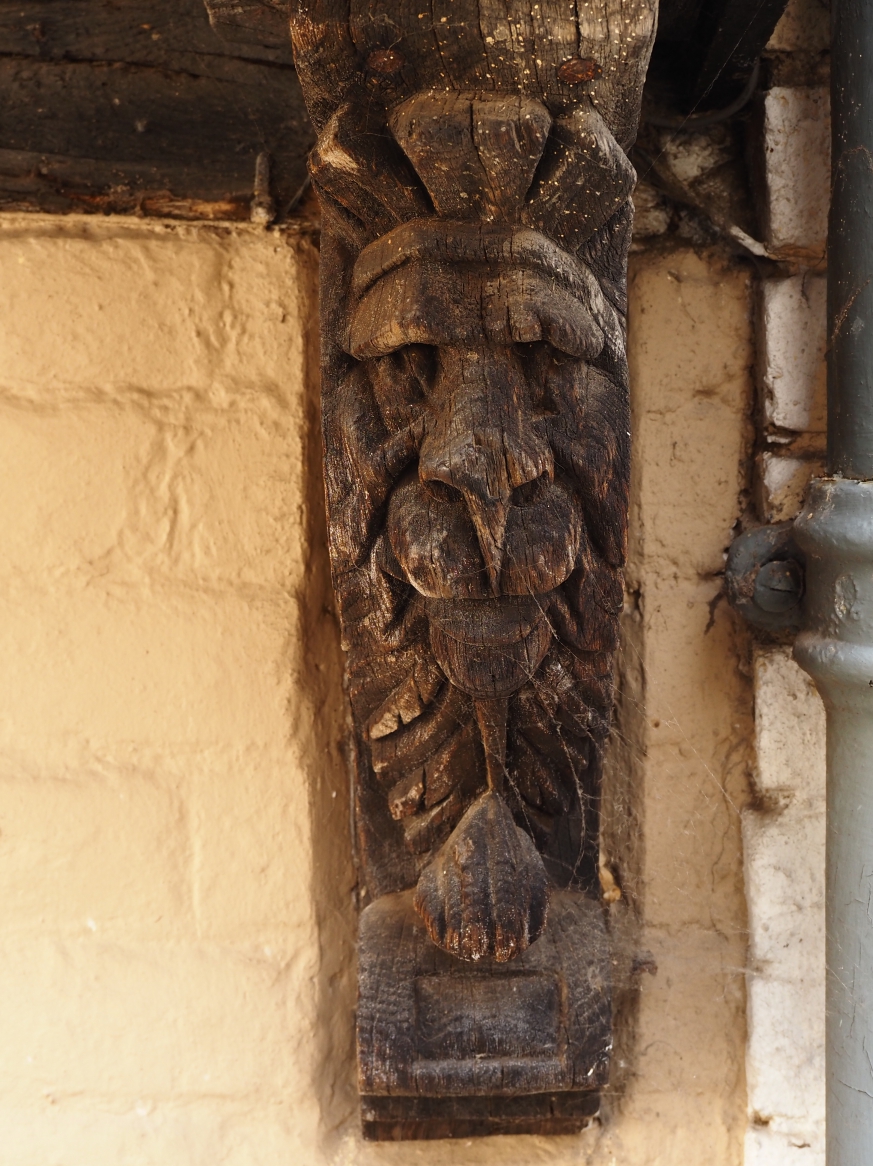
These are the other demons I mentioned in a previous post. The one on the left hand side has hoofs, the one on the right seems to be a lion with a mane. It seems the hoofs are indicative of a demonic or devilish nature.
In this photo from the AirBnB page you can see how it’s been swallowed up by a side extension. Poor timbers.
If you’re not staying for the night, All Saints Lane is a dead-end, so your only option is to head back out onto St. Peter’s Street.
Last week I went for a walk in rather grey and glowery weather. It was in hope of seeing some earlier spring signs but was more a reminder that winter persists.
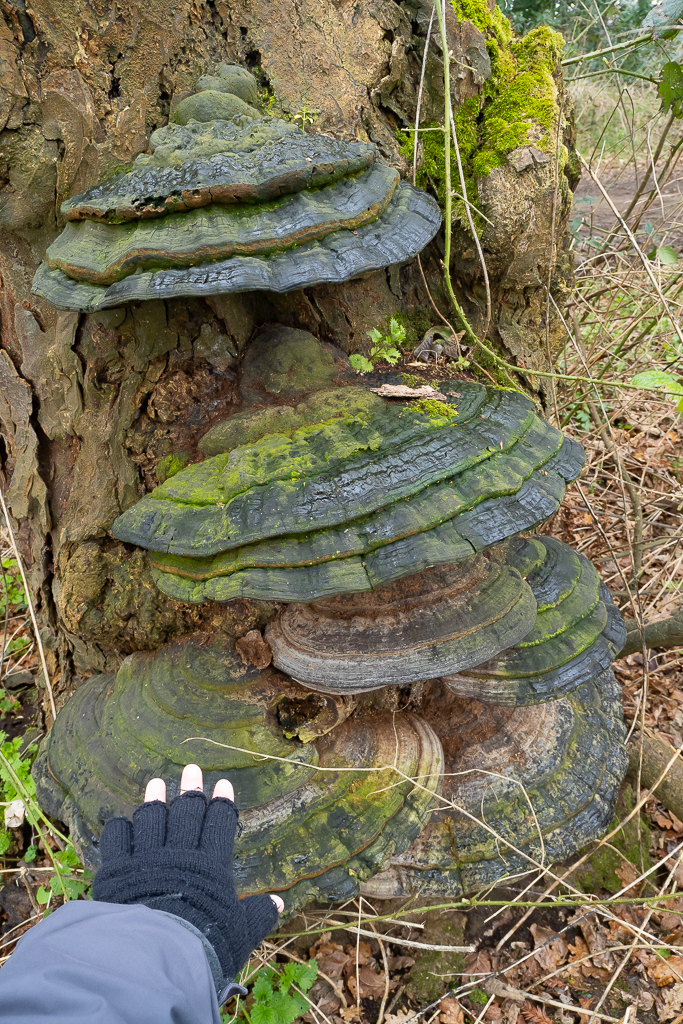
I found a small collection of glistening inkcaps, along with one of my favourite large brackets. Those are pictured here with my hand for scale.
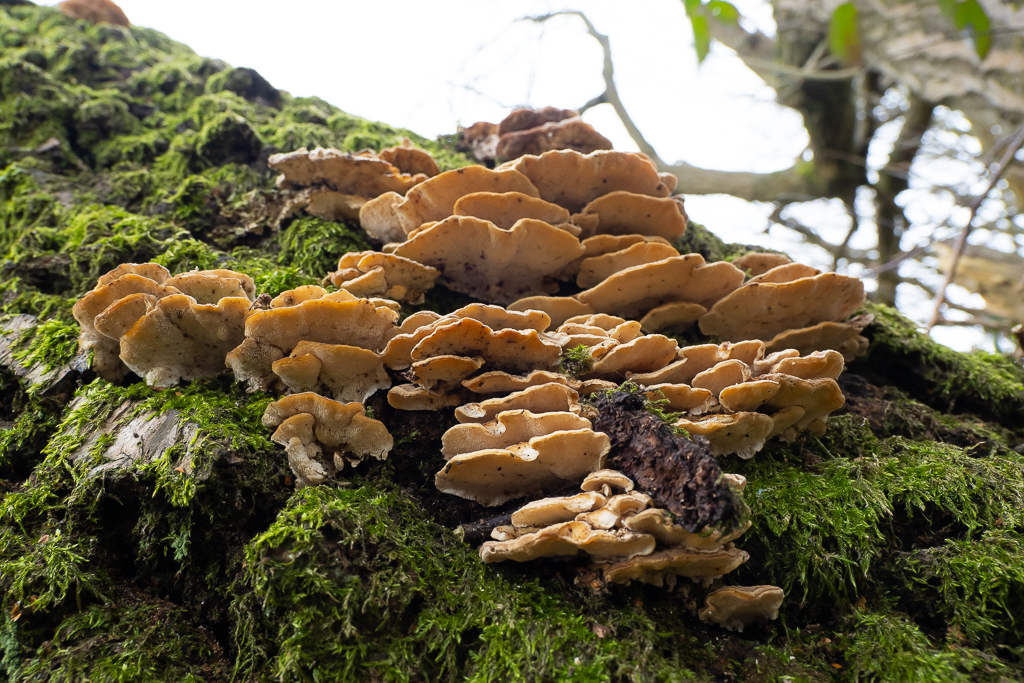
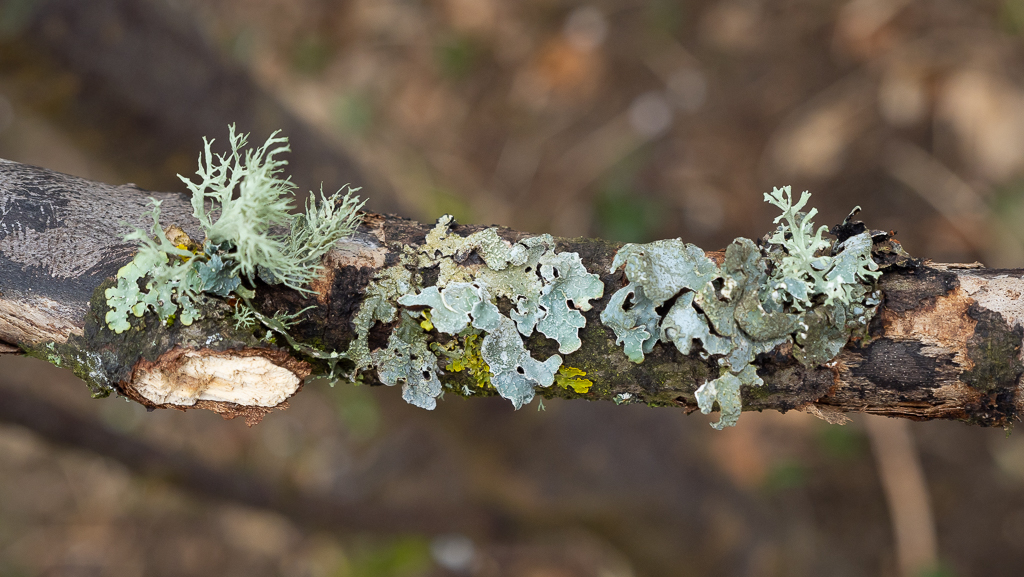
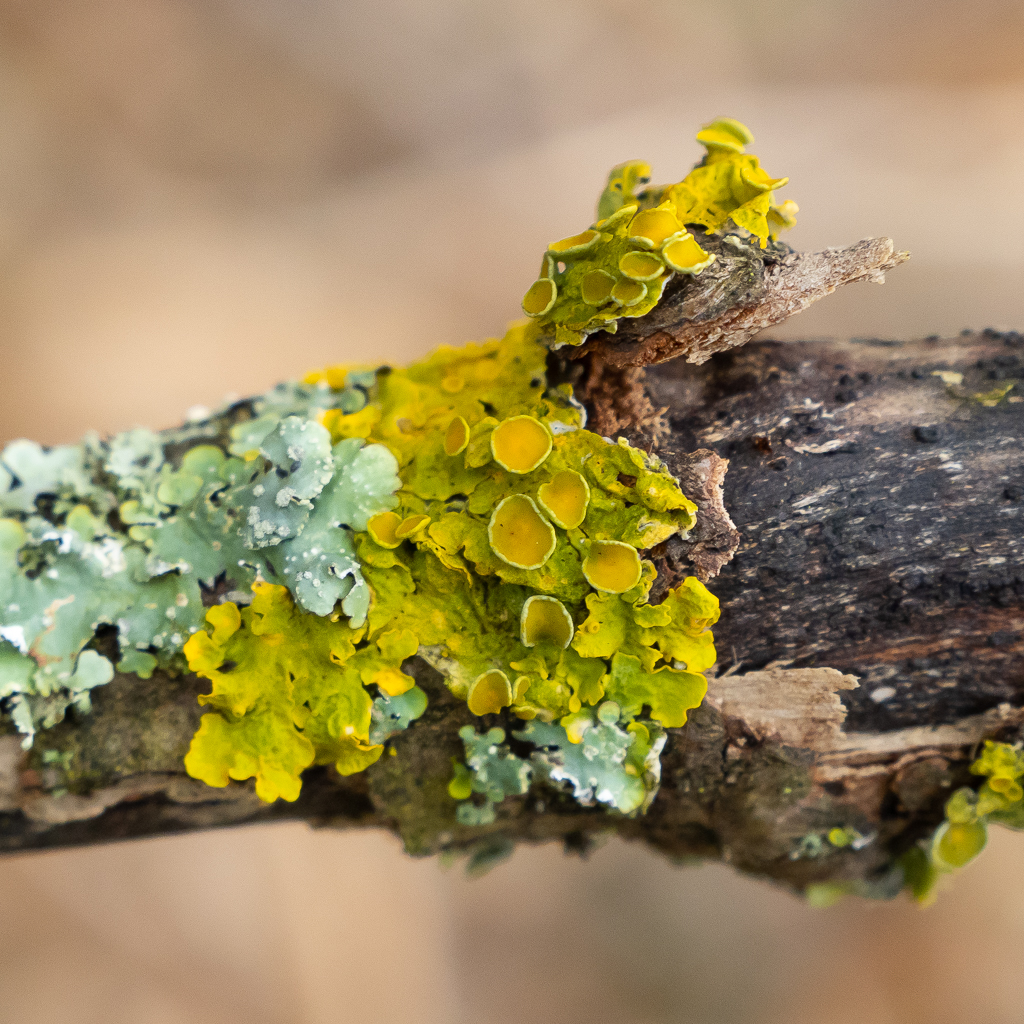
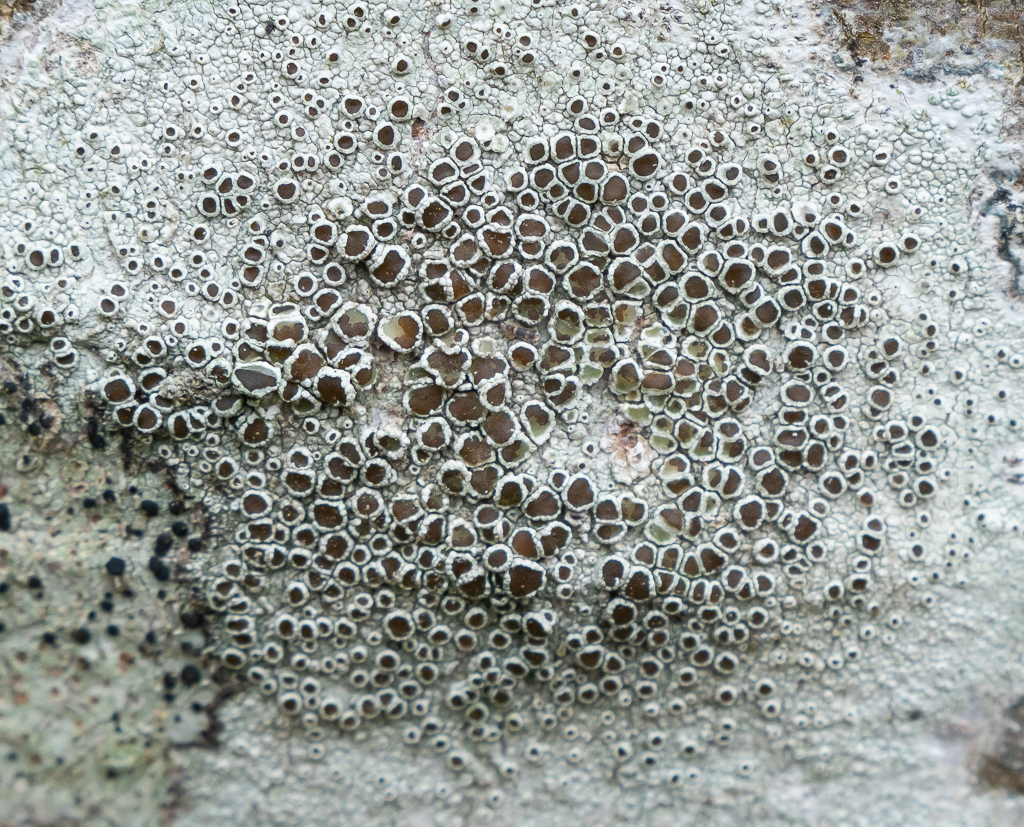
Otherwise there were some small polypores (probably turkey tail) and a few lichens that had been enriched by recent rain.
Life is rather full-on at the moment so I’m not finding the time or energy to write something longer or more detailed. It’s also a mental thing, just don’t have a lot to say. Photography will be the focus in posts for a little while.
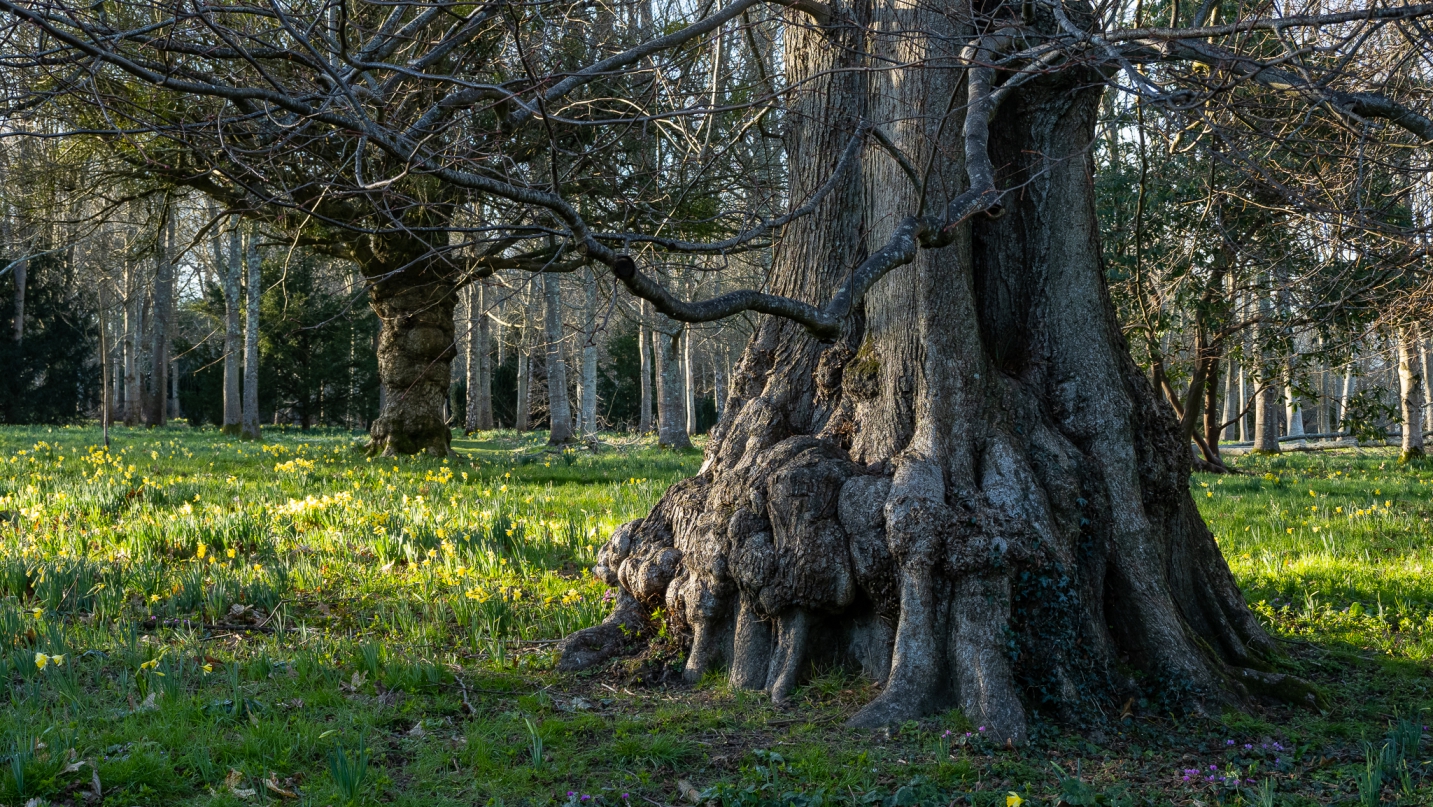
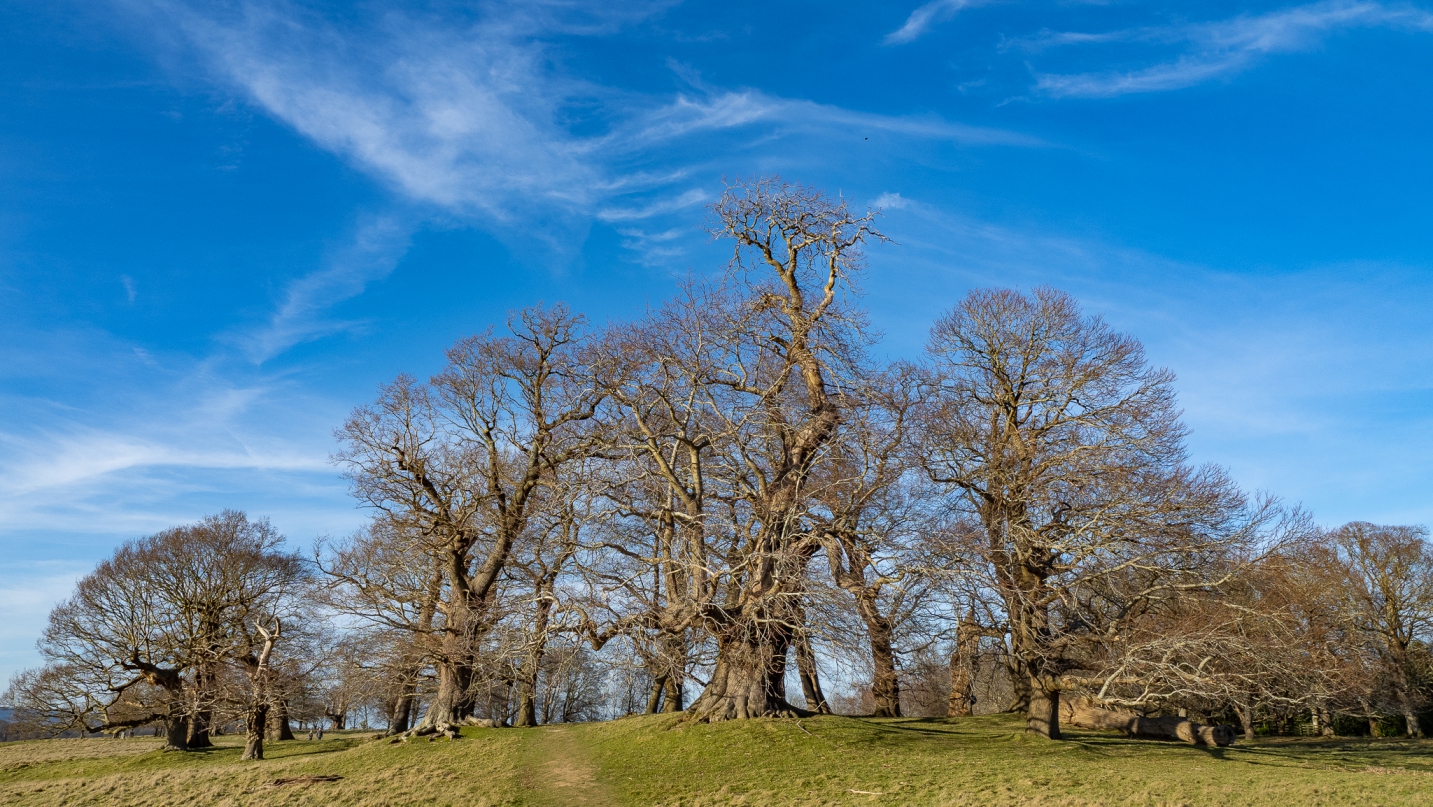
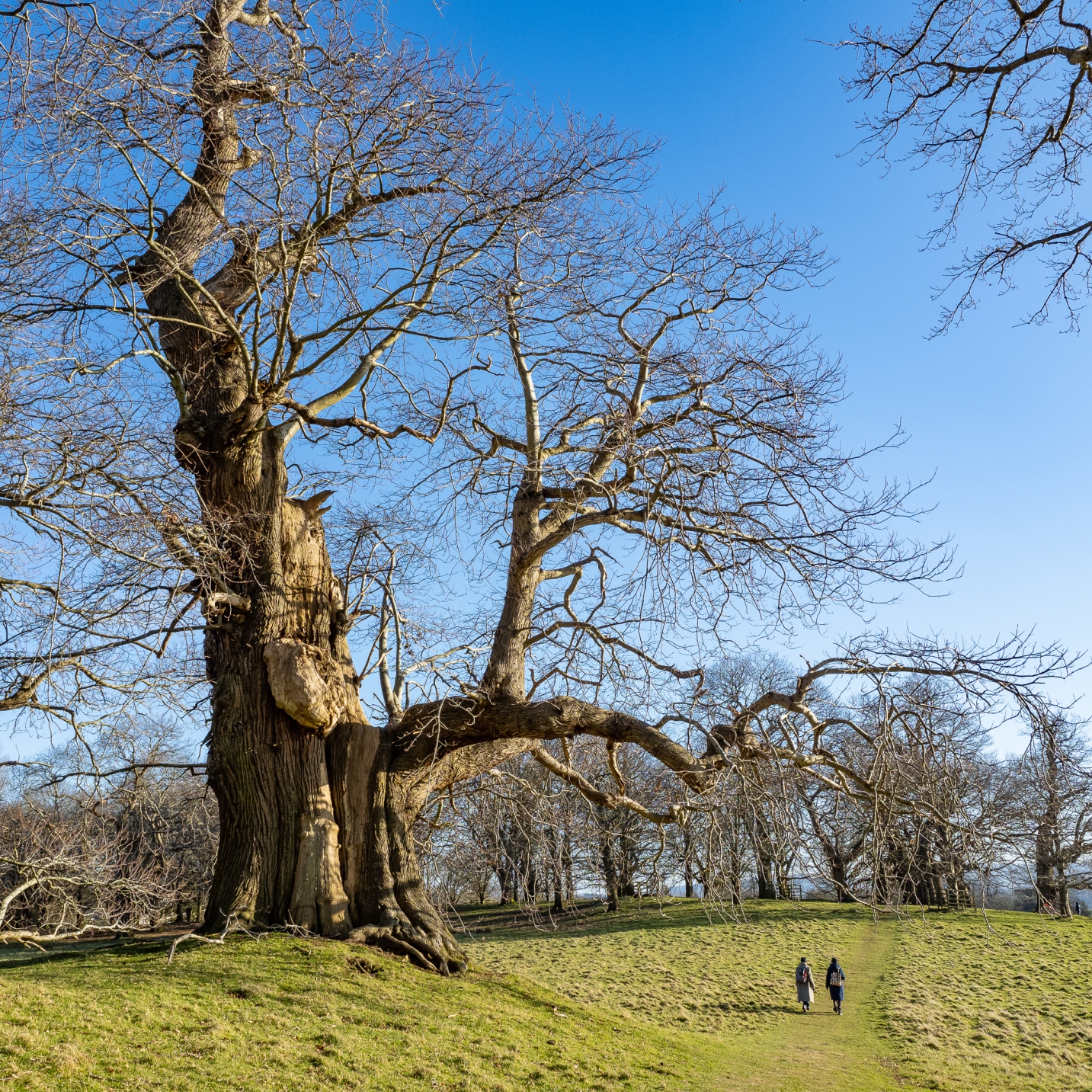
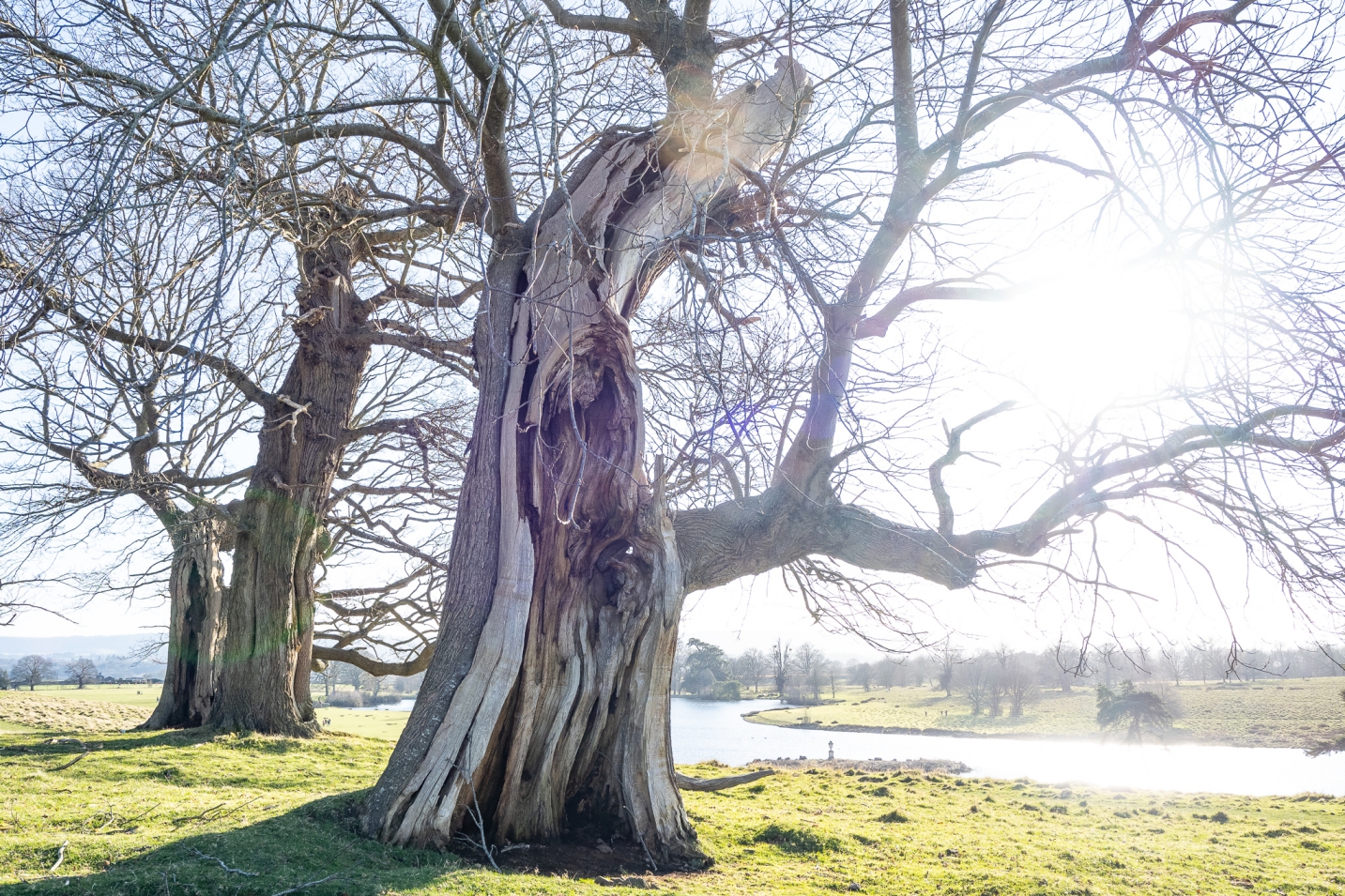
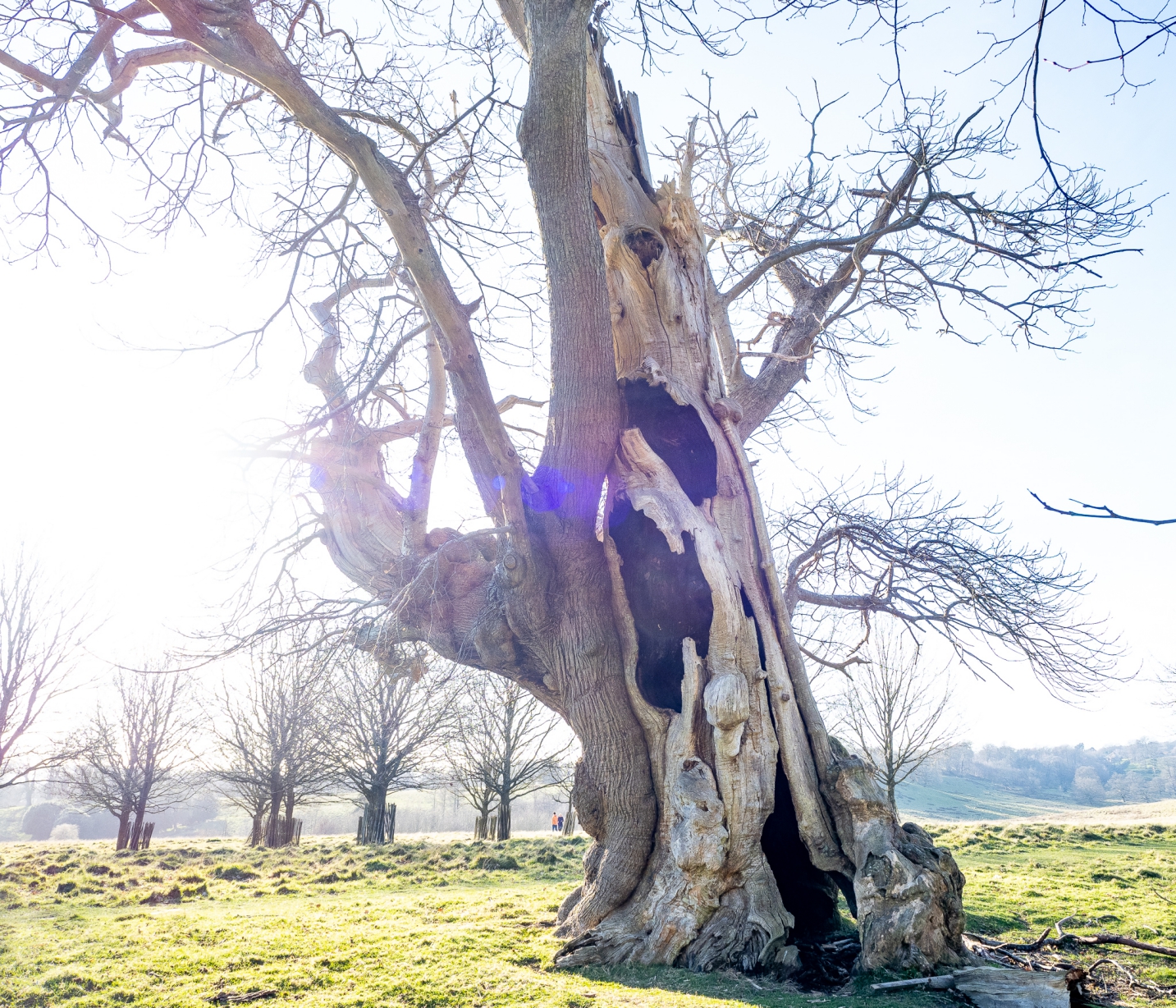
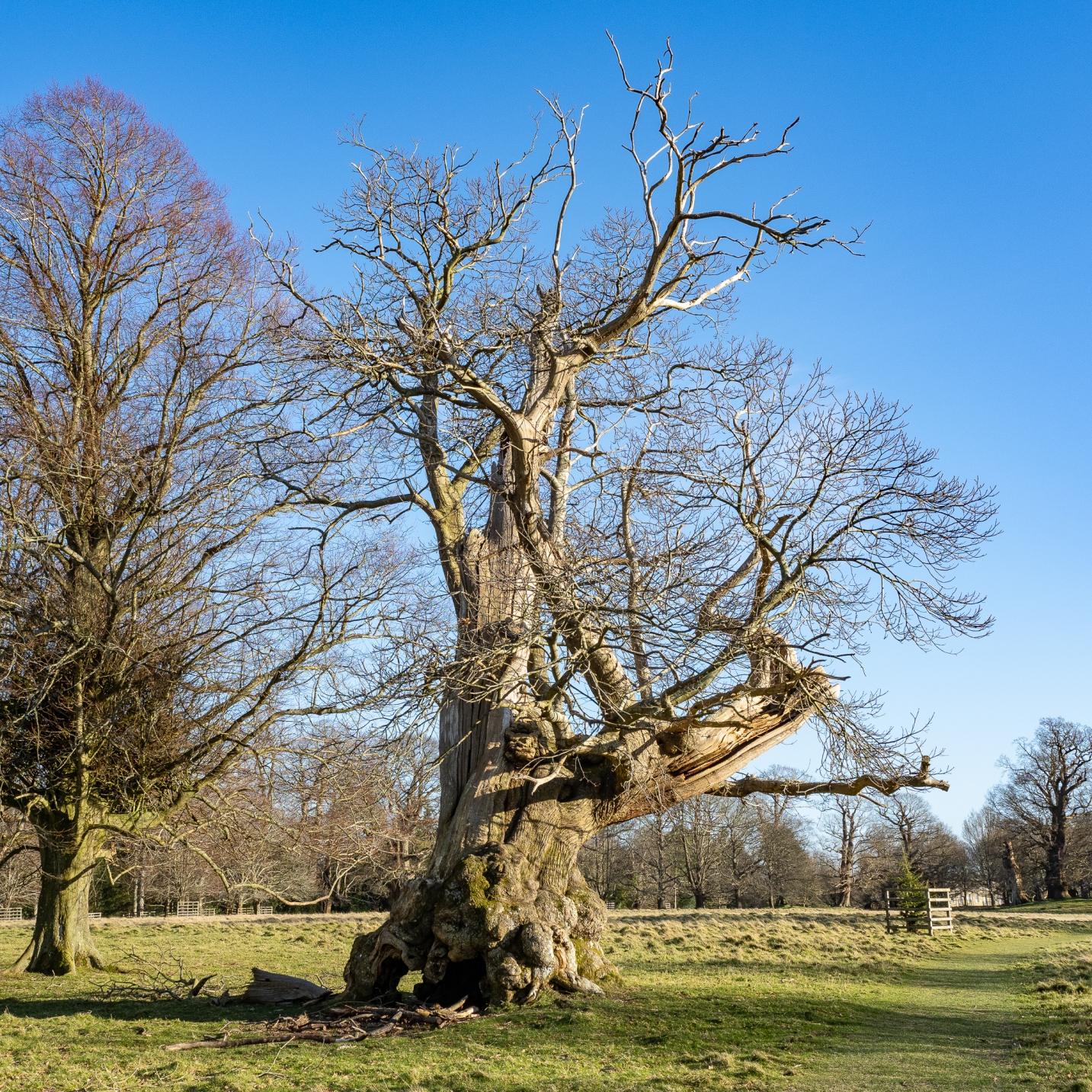
A series of photos from a sunny late winter/early spring afternoon in Petworth Park. Though it’s located in the South Downs National Park, it’s a Wealden landscape of huge ancient oak and sweet chestnut trees. The views of the South Downs from Petworth are heavenly.
The oaks and chestnuts seen here are very old. The wider landscape contains some of the oldest oaks in Britain.
Photos taken with an Olympus E-M5 MIII + 12-45mm f4 lens, lightly enhanced in Adobe Lightroom.
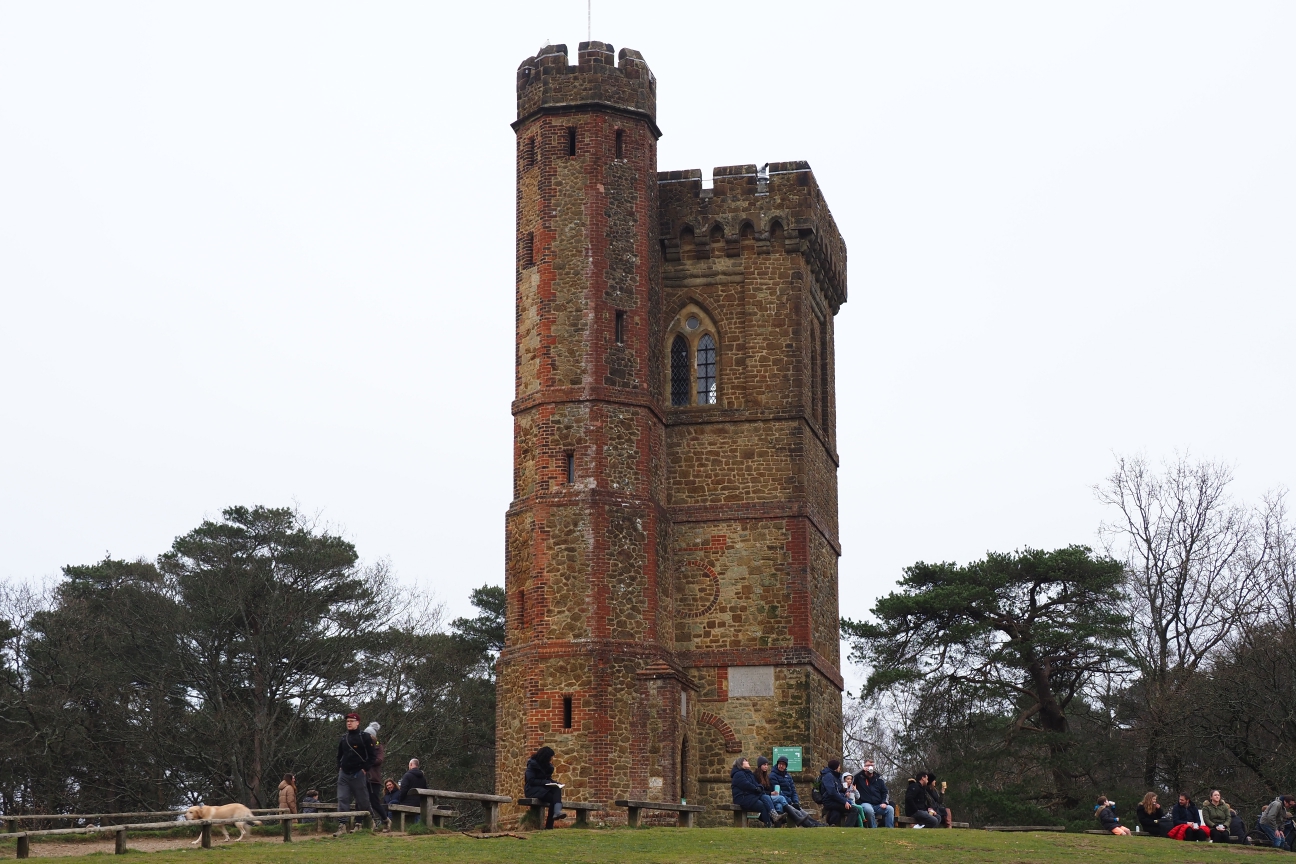
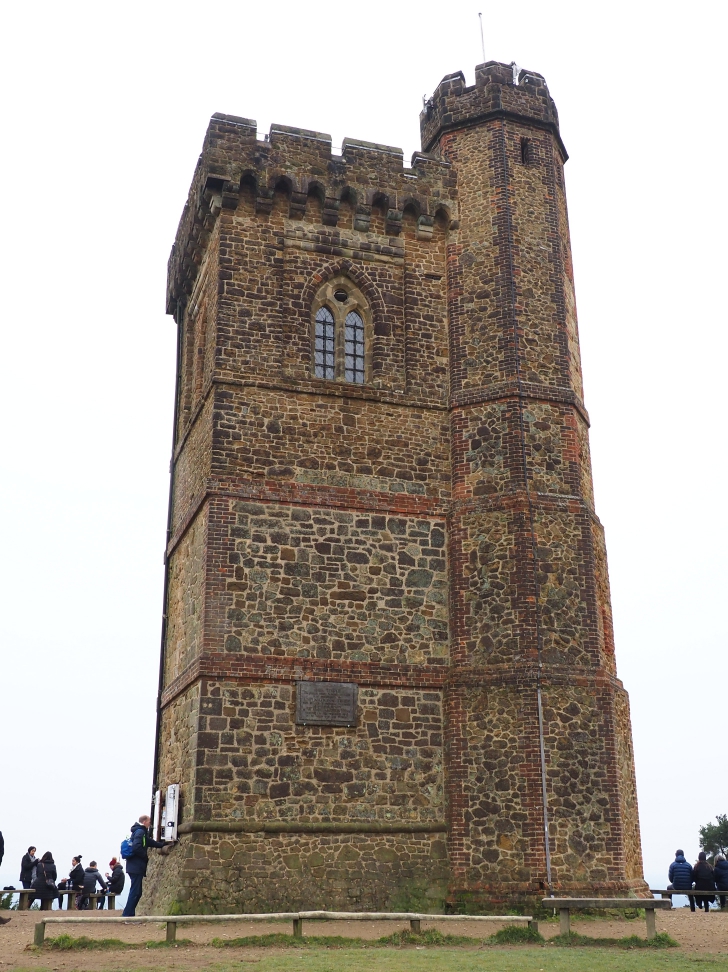
When you talk about the highest point in south-east England, I wonder what people living far away must think. We’re not talking great peaks here, but instead a stone tower on a modest 313m-high hill. And this tower of course sells tea.
I’m referring here to Leith Hill, a hilltop managed by the National Trust. Leith Hill has stood out to me over the past two years, most tantalisingly during lockdowns when I could see it from the furthest I could legally walk from my house in the most extreme lockdown times.
The tower is built from sandstone that was probably quarried nearby. This stone, if it is said material, is often a sign locally of wealth and status, when local materials indicated as much. This part of the world is geologically rich, with the landscape having so many stories to tell about the Earth and deep time.
“This tower together with 5 acres of land was presented to The National Trust for places of historic interest or natural beauty by W.T(?) MacAndrew Esq. of Reigate on 5th October 1923 to be held for the public”
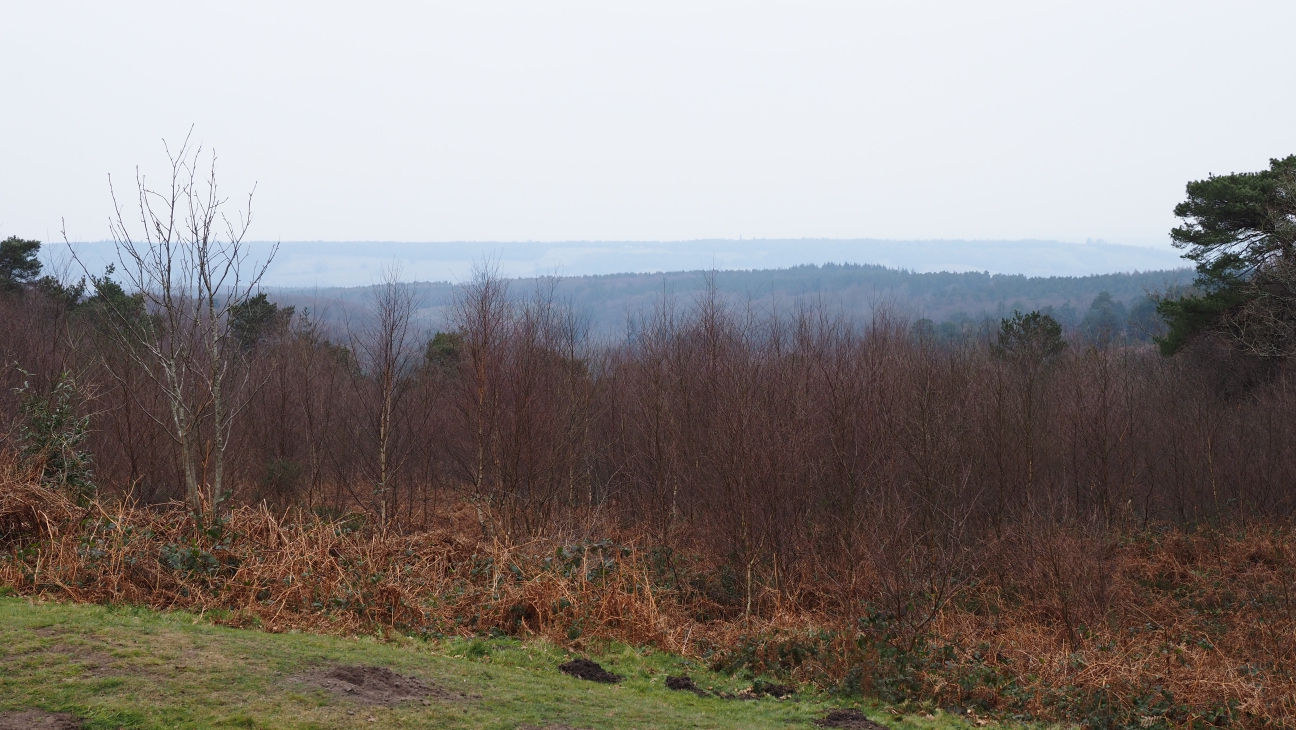
Leith Hill sits on the Greensand, distinct from the Weald Clay to the south and the chalk of the North Downs seen here in the distance looking north towards London.
Leith Hill seen from the SussexWeald (looking north) in May 2020 when England was under strict lockdown
Throughout the lockdowns I would see this distant hill from where I lived in Sussex. Though I hadn’t seen them for several months, I knew that my family were locked down on the other side in London. It was a strange comfort. My dad would sometimes send a photo of the North Downs that he could see far in the distance on clear days. Even when kept apart the landscape seemed to connect us.
When visiting Leith Hill and looking to the south, there were misty views of the Surrey and Sussex Weald. Millions of years ago this would not have been visible, with everything instead being covered by a dome of chalk that connected as far as NW France. This is the land bridge that megafauna like wolves, bears and mammoths would have used to enter what we now call Britain. Don’t tell the Priti Patel.
The chalk was eroded over millions of years and exposed the Weald Clay, which soon was covered by wildwood. That woodland lingers today in more formal oak, hornbeam and hazel woods that are now managed as coppices or nature reserves. Beyond the picnicking couple (above) you can see Leith Hill Place, originally built in 1600.
There is a unique pine tree up on the hill, a survivor from some of the first trees to arrive in this landscape after the last glacial period some 14,000 years ago. Though there was probably a more Anglicised pine species, the Scots pine is the only UK variety remaining. It thrives in this heathy landscape of the Greensand Hills.



































 Unlocking Landscapes
