The Sussex Weald: Pulborrrough Brooks 🥶

I spent a frosty olde morning at the foot of the South Downs where the Sussex Weald dissolves into the wetlands of the Arun Valley. I’m no early riser, so these experiences of frosty landscapes are to be treasured.

Everything was iced over.

Last year’s daisy heads were encrusted with ice, lit by the sun as it broke over the tree line.

Wiggonholt Common resides next to Pulborough Brooks the RSPB reserve. It’s a heathland nature reserve home to nightjar, woodlark and other uncommon birds. The views you can get of the heathland and its smattering of pines give it a look of real vulnerability. That’s about right though, as heathland in England is a rare habitat now.

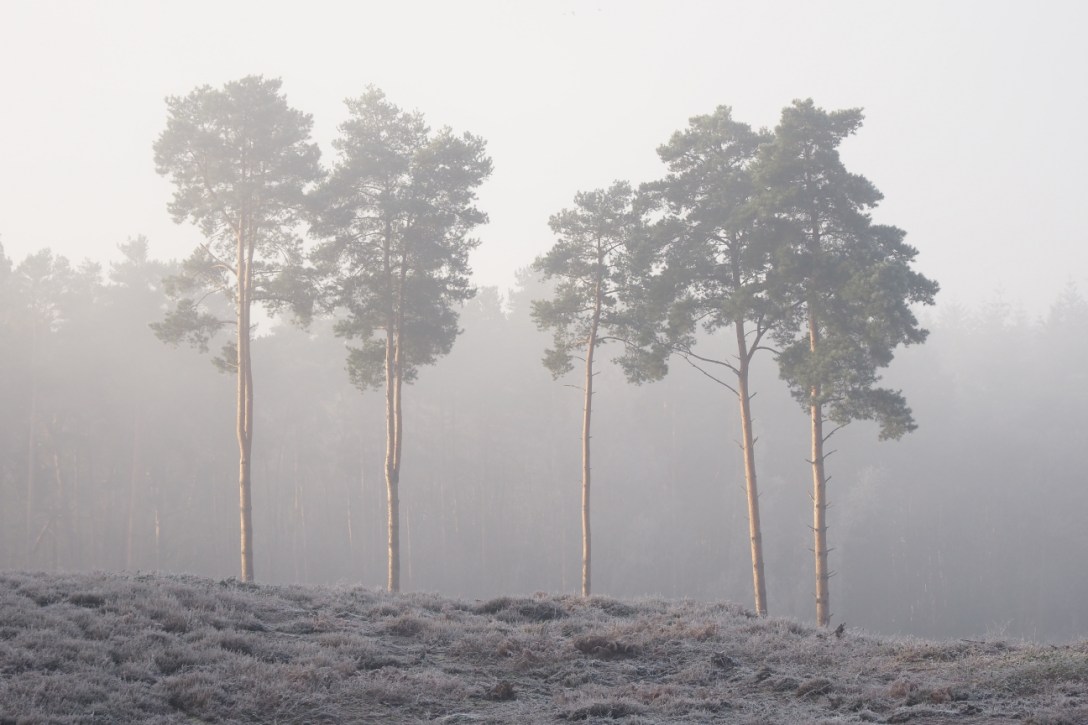
The sun just began to break through the trees and light the trunks of these five pines.

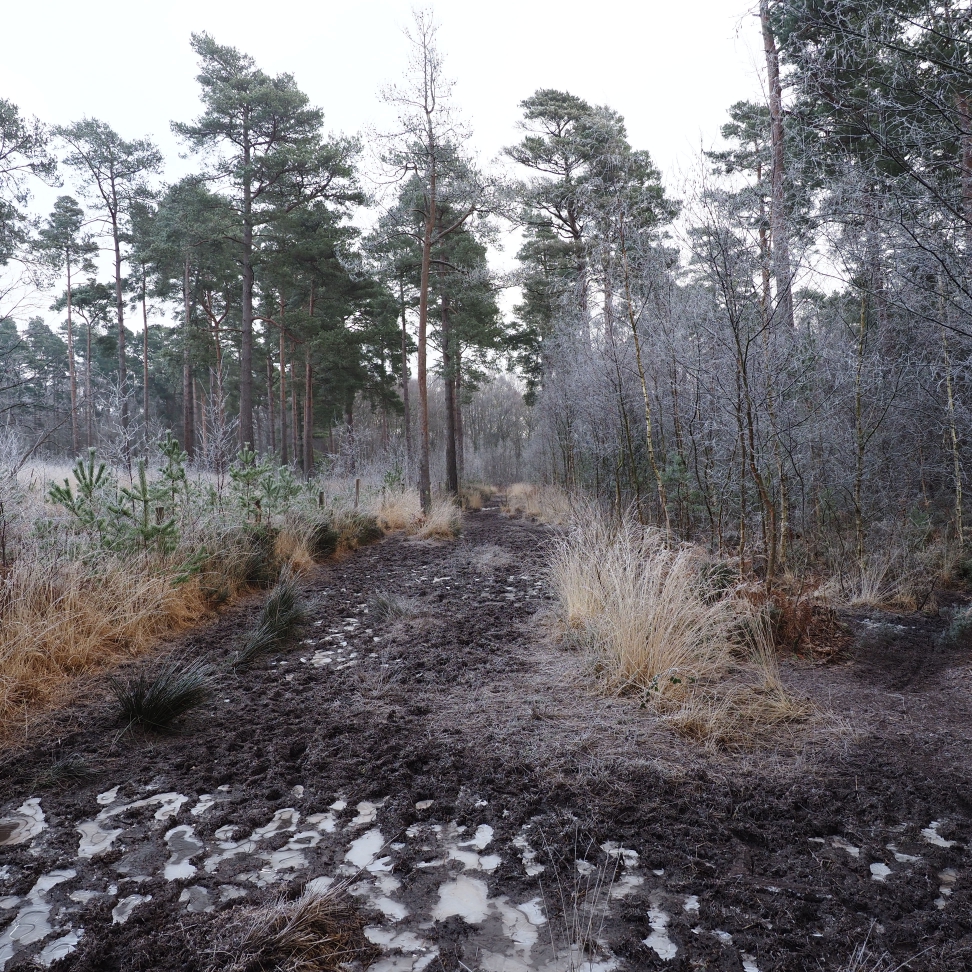
Over on the other side of the common, the sun hadn’t arrived yet. The muddy paths were frozen still and the hoar frost decorated the birch trees growing at the heathland edge.

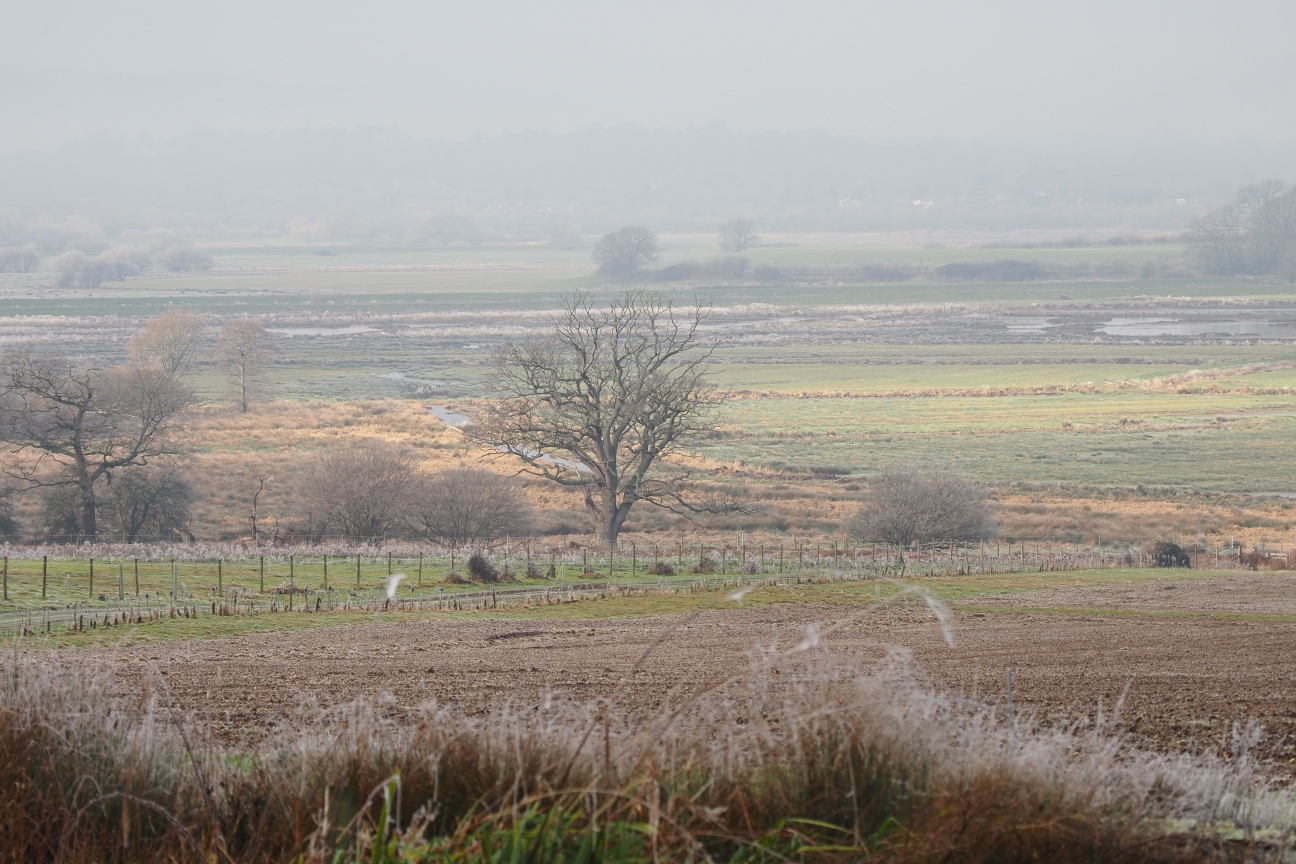
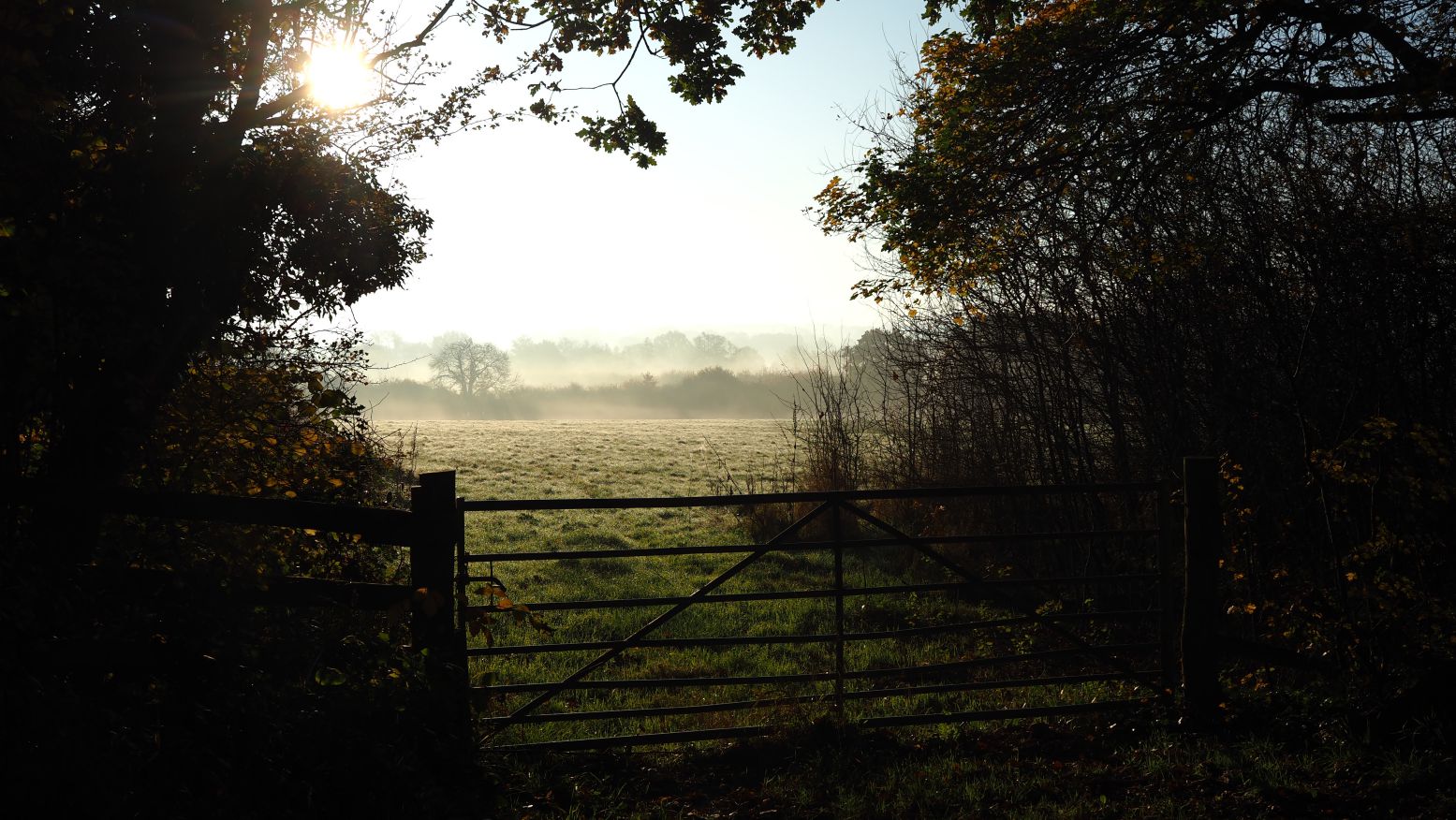
In the reserve proper, a single oak can be seen at the edge of the farmland where the Arun’s wetlands begin.

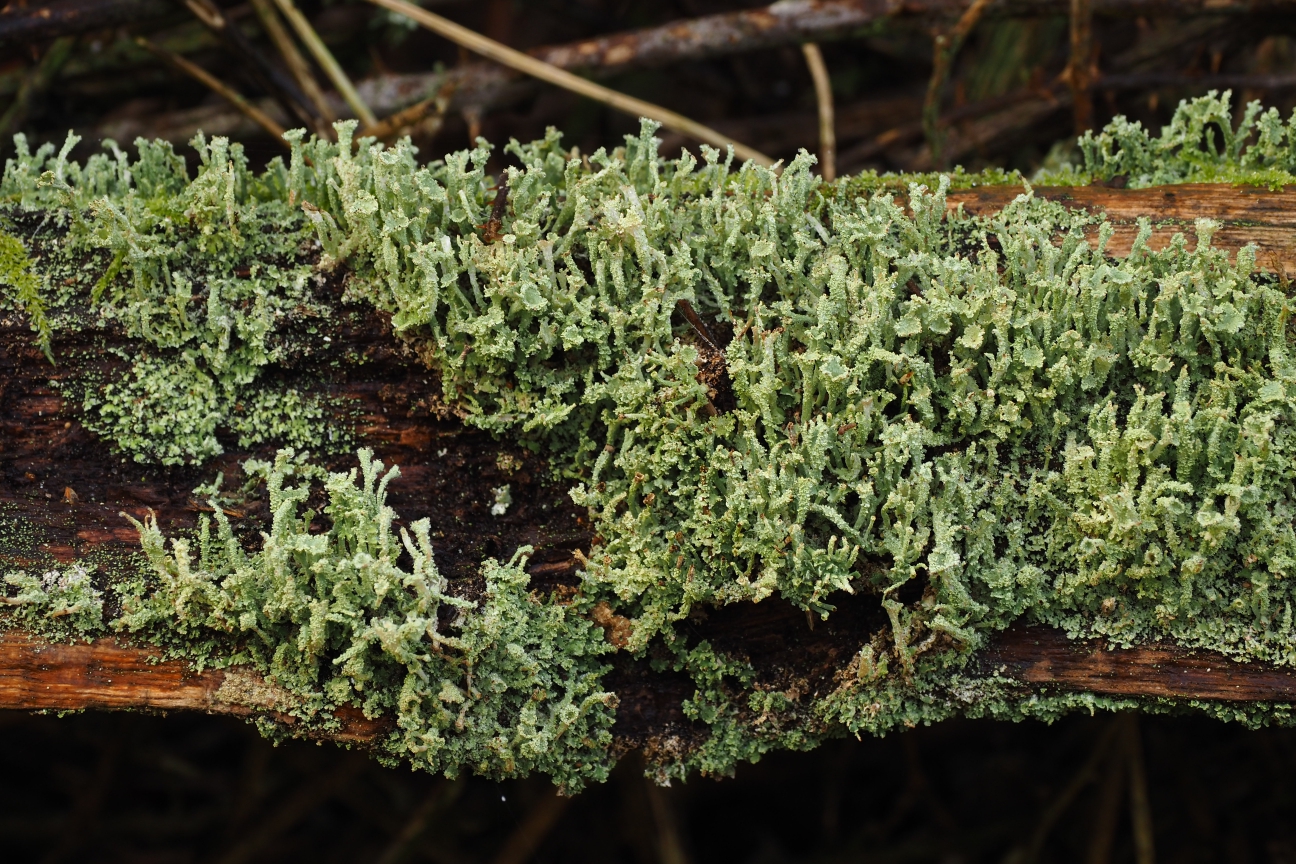
Pulborough is a good place to see communities of lichens like cladonia where they splash out across the green timber fencing. No chemicals are in the timber which means the lichens and other fungi proliferate.

The upturned chandeliers of hogweed flowerheads.

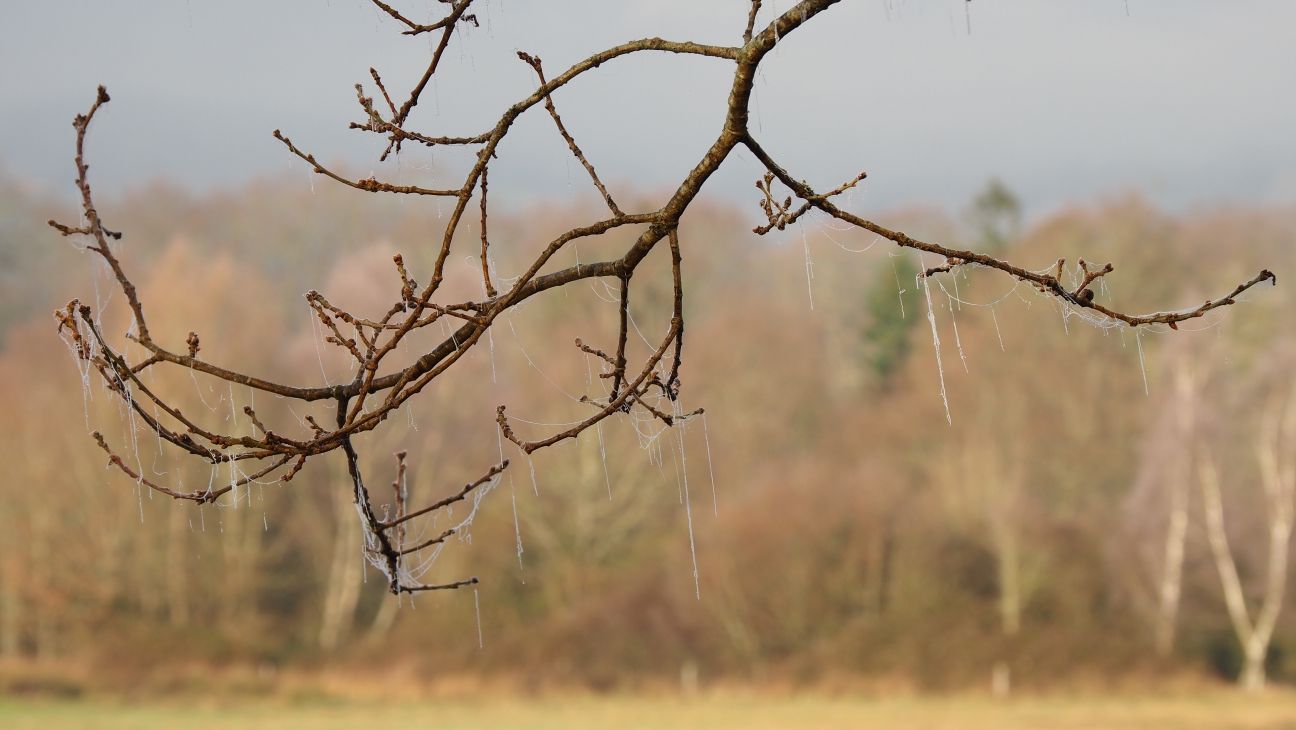
Spider silk hung from the twigs of the trees like silly string.

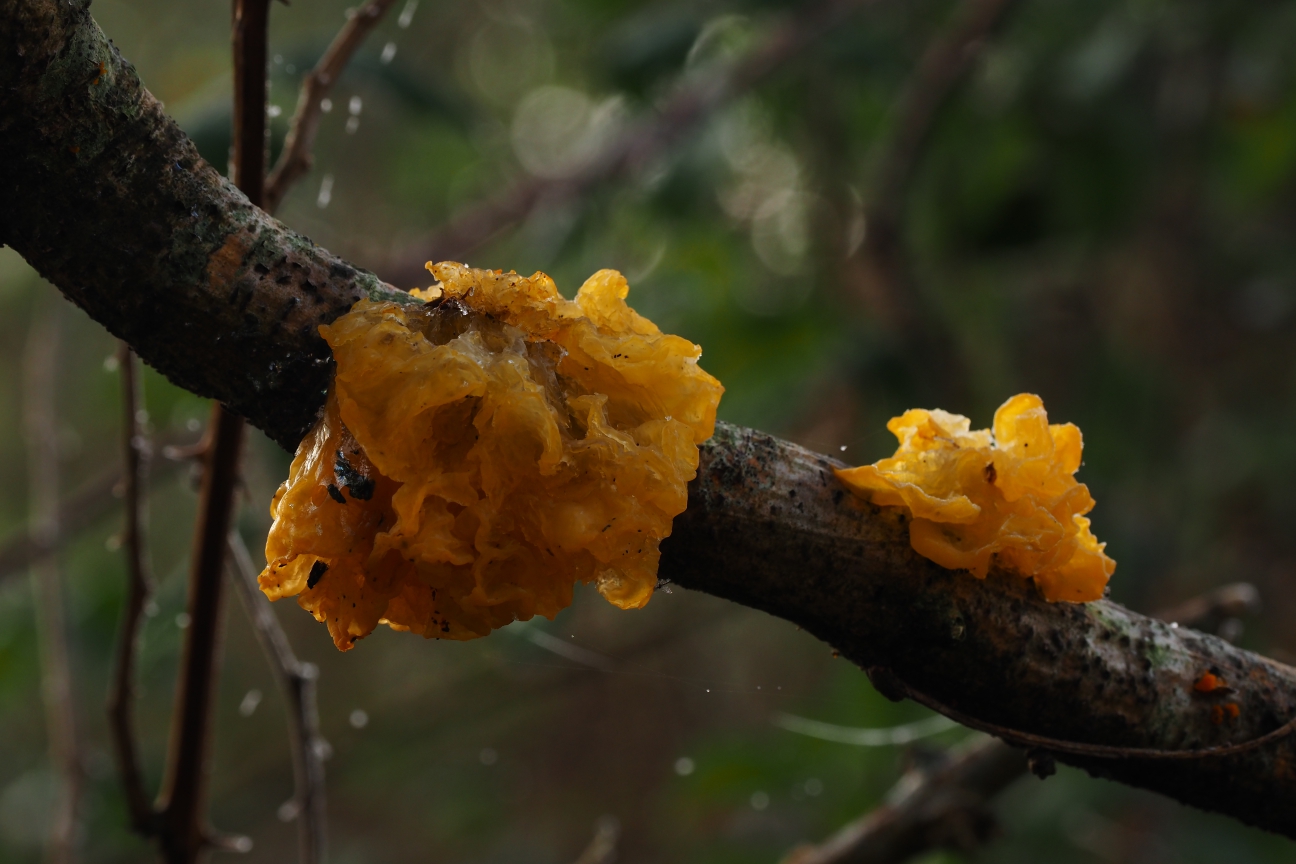
Yellow brain or witches butter, a fungus, looked like a proper tree-bogey.

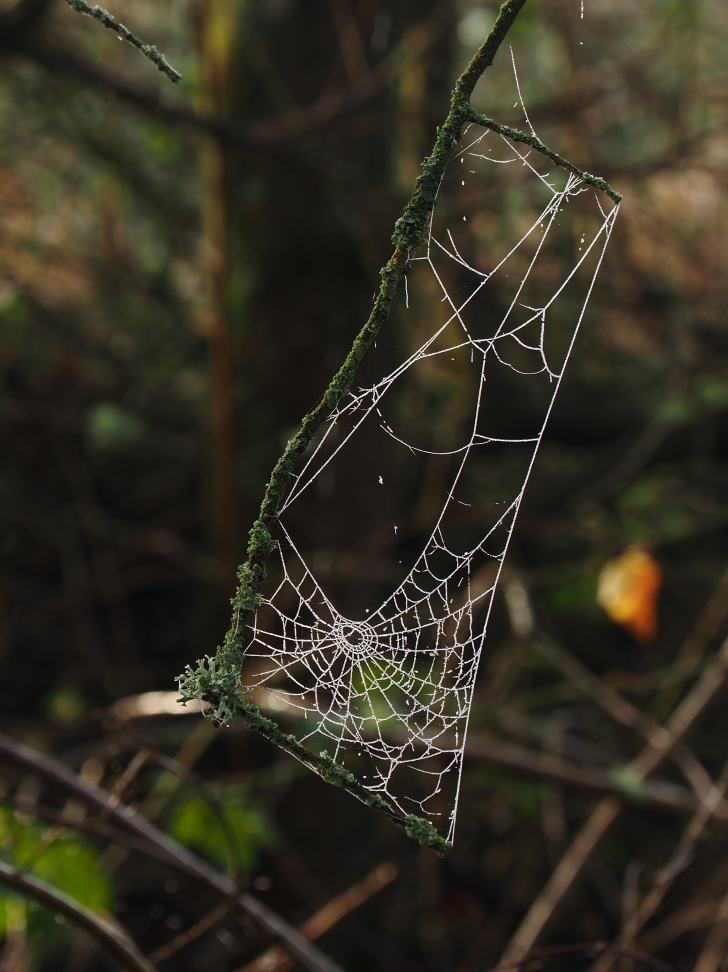
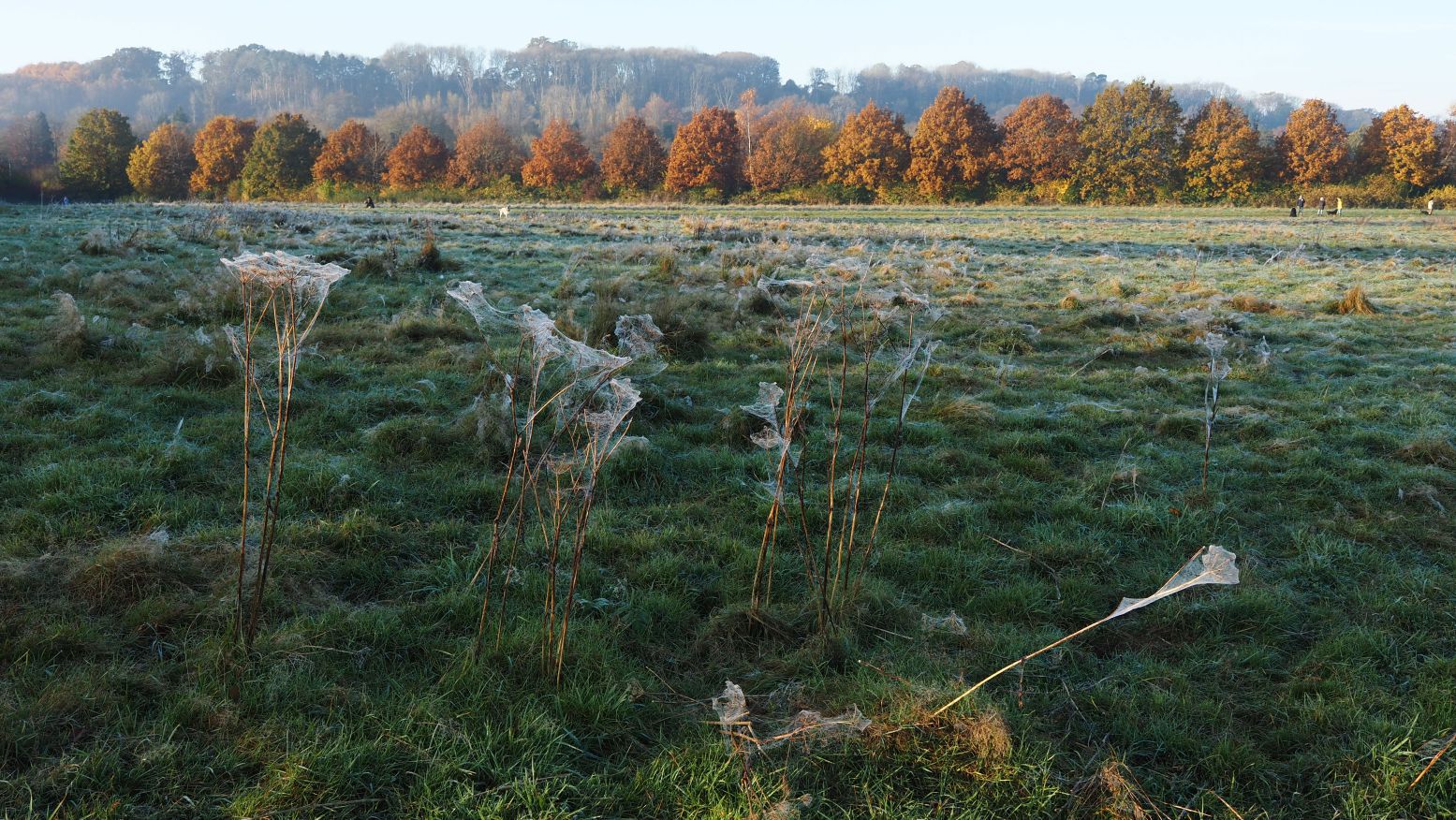
The spiders webs that remained were laced with frost, as this L-shaped twig displayed so well.

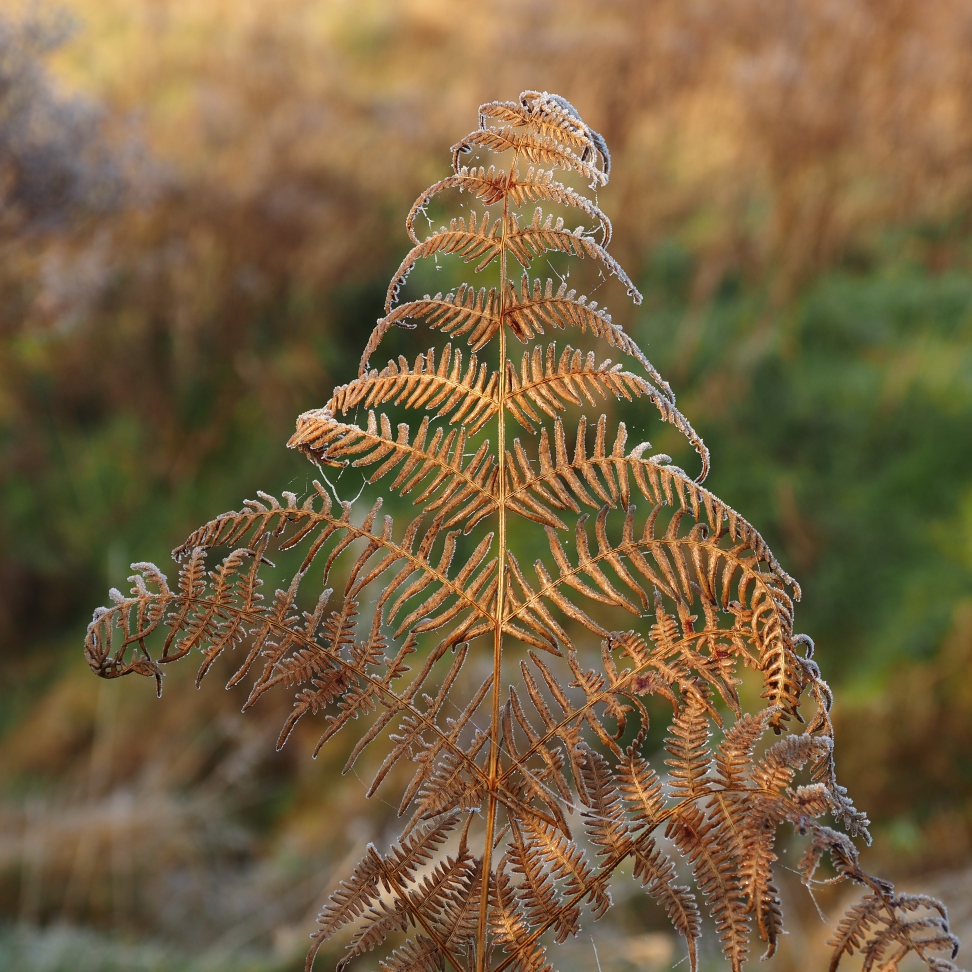
Bracken looking somewhat birdlike, like the back of a golden eagle as it surveys the landscape. Or just some bracken.

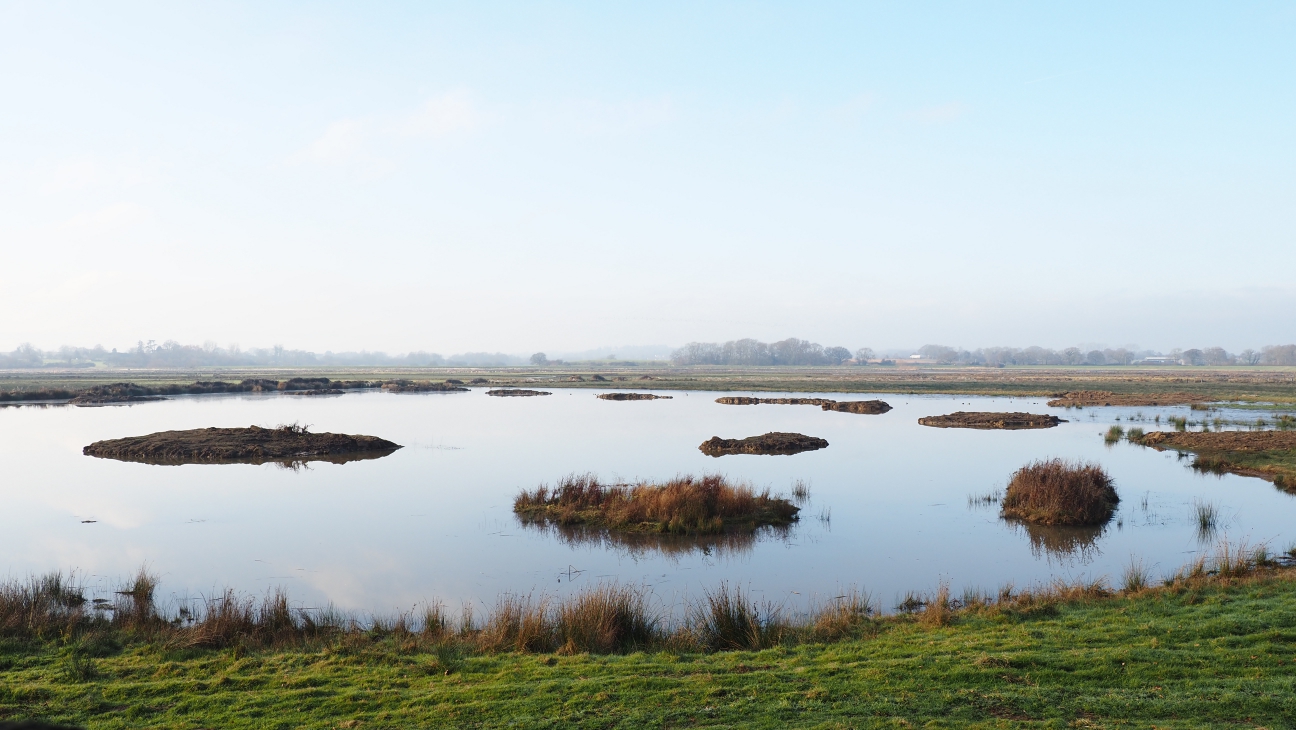
The lagoons were glassily calm, marked by the winter calls of waders like redshank. I’m not very good with wading birds, I’m better in the woods. In the distance you will see the South Downs on a clearer day. The mist still sat there to hide them from lowland eyes, with temperatures as low as at least -3.

On my way in a couple had stood for minutes staring through binoculars at a song thrush on the path. I was waiting for them to look away so I could nip by, but it went on for so long I started to wonder if they were statues paid for by Swarovski. Their song thrush was enjoying a moment in the sun as I made my way back up to the exit. A worthy perch for this mighty songster.

Thanks for reading

The Sussex Weald

Macro 📷: the glowing bracken

One morning recently, I spent a couple of hours wandering around my local tract of the Sussex Weald. The bracken and beech were glowing as the sun edged its way up through trees. The sun had blown the world wide open. After a personal self-imposed Omicron lockdown to protect a significant event, it felt like the sun had ripped up that anxious feeling of being locked away. Life was in full flow:

Sun rising, melting the frost and ice in the woods. Winter bird flocks – blue tit, nuthatch, siskin, lesser redpoll. Great spotted woodpecker hammering to mark out its territory. The chirp of a skylark passing over the canopy, perhaps on migration, maybe heading to the South Downs. The hollow sound of the M23 and aeroplanes connected to nearby Gatwick. The strategic calls of crows. A jay screeching. Gunshots pop beyond the woods.

The light in January and February appears at a fairly sociable hour, and after frost the landscape glistens even more. At this time I seek out beech leaves, with their patchworks of fading cells and arrowing veins.

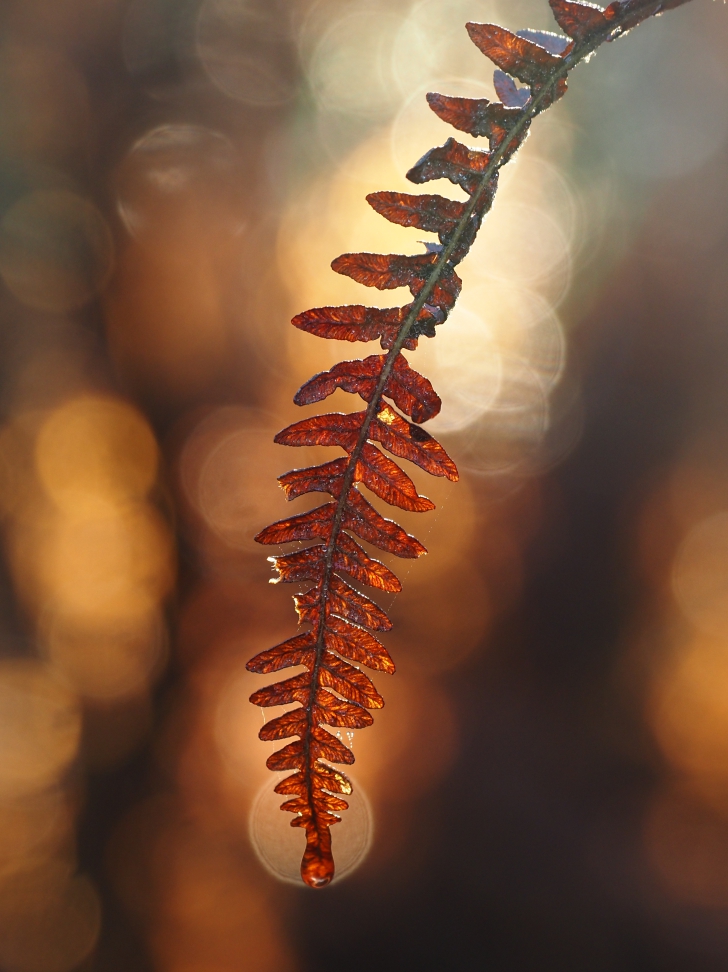
I was using my 12-100mm f4 zoom lens, with more a mind for landscapes, when I spotted this bracken frond dangling down with a droplet of water at its tip. The sun was creeping up through the pines in the distance. The melting frost in its path upon reaching the bracken providing the lush bokeh circles that bed the image down.

I read recently that the photons of sunlight that touch our skin take 200,000 years to travel from the sun itself. That’s around the time that our ancient Homo sapiens ancestors were evolving. So often we can barely see weeks or months ahead when the world we live in is so ancient in its making, it can feel impossible to comprehend. Taking the time to stop and think about it makes life so much richer.

Thanks for reading.

More macro

Unlocking Landscapes podcast: looking for cuckoos in the Sussex Weald

Hi everyone! After a bit of a break from podcasting, it’s great to release a new episode of Unlocking Landscapes. This has taken a while to edit but it’s a really relaxing one I think. So much so that I actually fell asleep when listening to one of the drafts a few months ago.

In May 2021 I walked 8 miles into the Sussex Weald to see if I could hear a cuckoo. The weather was fine and there were loads of birds out, many of them in full song. This is an episode best listened to through headphones so you can hear the birdsong, the wind through the trees and the buzzing of bees in the woodland landscape of the High Weald. It’s an immersive episode with a guided walk feel, focusing on listening to the surrounding landscape.

Birds identified here include:

  • Goldcrest
  • Chiffchaff
  • Blackcap
  • Willow warbler
  • Garden warbler
  • Blackbird
  • Crow
  • Buzzard
  • Blue tit
  • Coal tit
  • Great tit

Please support this podcast by ‘buying me a coffee’ on Ko-fi: https://ko-fi.com/djgwild

Thanks for listening and I hope you enjoy the episode.

Relevant podcasts: octopus beech tree in the Sussex Weald

Unlocking Landscapes archive

Unlocking Landscapes Podbean page

Oak timbers: St. Mary’s Churchyard, Horsham

24-26, The Causeway, Horsham, West Sussex

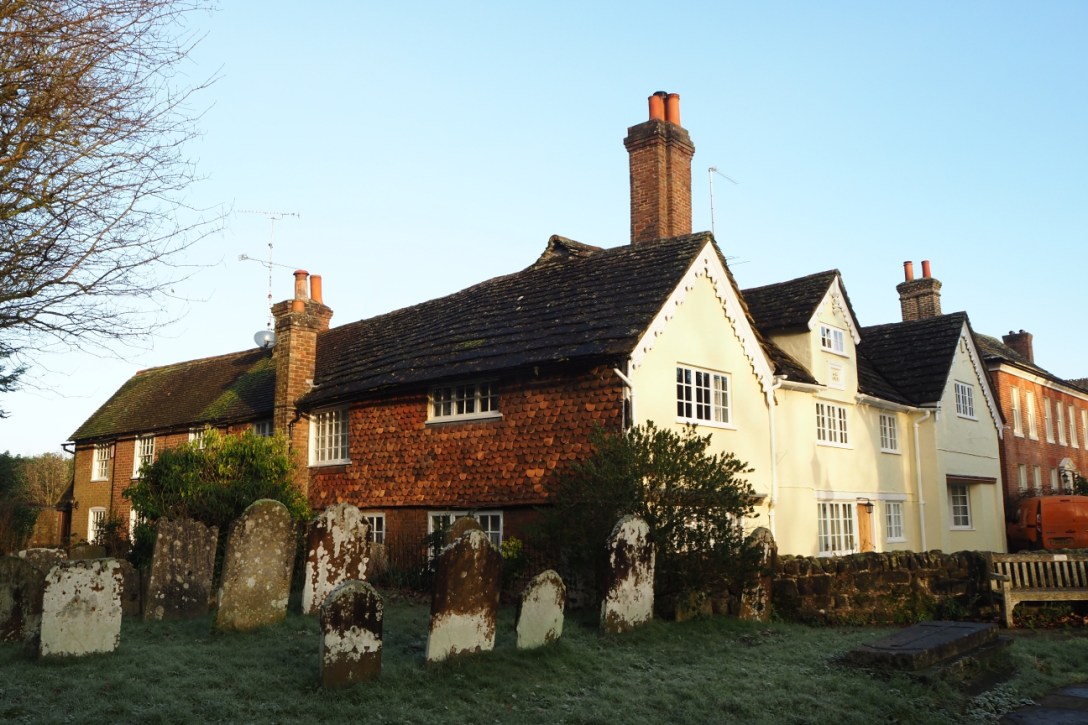
This post is a bit misleading (hello, Prime Minister) as it’s about a house at the edge of St. Mary’s Churchyard in Horsham, West Sussex. Apologies if you’ve navigated here expecting something more numinous. Here a beautiful old house resides. The problem is it’s name is not exactly blogpost title worthy, and I can’t think of anything snappy. It’s at the end of the famous Causeway, a road that’s renowned for its colourful timber-framed and weather-boarded buildings.

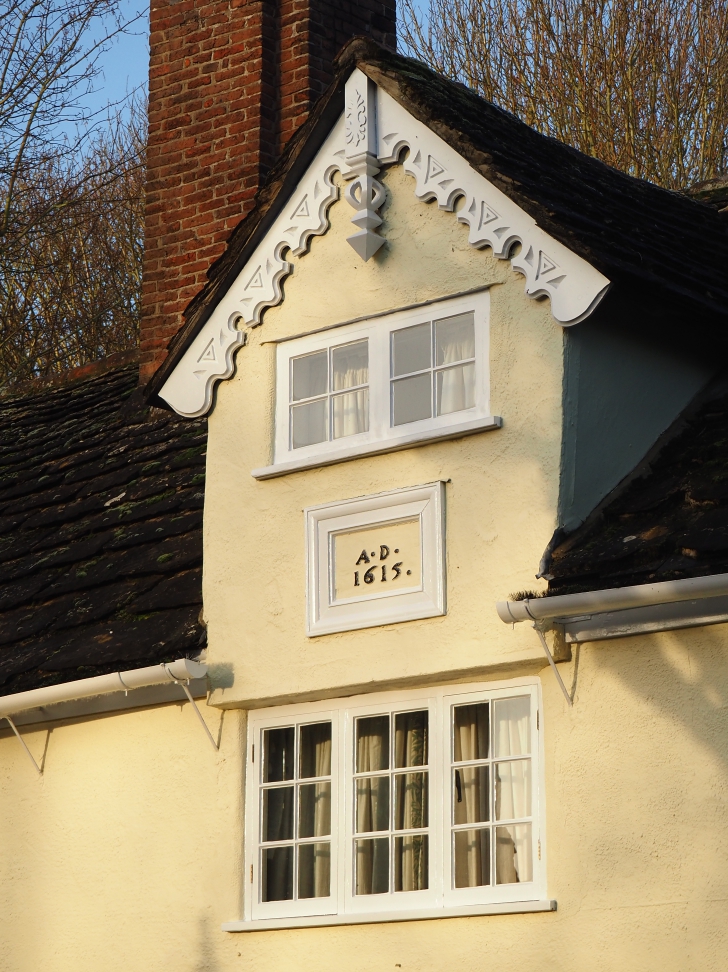
The house is simply called 24-26. It’s dated to 1615 and has since been broken into three properties and extended along the churchyard’s edge. The trees to the right hand side are lime trees that form an avenue along the Causeway, illustrated below at a younger stage:

The Causeway, Horsham, page 112 Book about the Highways and Byways of Co. Sussex, England (via Wikimedia Commons)

There’s no doubt it will have been built with oak timbers from the oak woods of the Sussex Weald nearby, likely from the extensive, pre-modern range of St. Leonard’s Forest.

It is currently covered by hanging tiles and plastering on the street-facing side, meaning no typical black timber frontage can be seen from the outside.

Here’s the Historic England official listing.

Thanks for reading.

Daniel

My fungal year 2021 🍄

Happy New Year! Another pandemic year in the bag (yay) and a chance to look at some of my fungal highlights of the year that was.

I do appreciate that this post title does sound like I’m updating people on how my infection is going. That’s not the case.

My first fungi post was during England’s winter lockdown when we had to all stay at home again. Options for fungi photography were not great so I delved into my own wood-wide web. The post was about a favourite subject of mine, lichens on Dartmoor in SW England:

January 2021 also turned out to have a little mushroom boom:

Dark times continued through February 2021, but some brightly coloured jelly fungus provided a light in the dark:

Being privileged enough to work from home during the winter lockdown, I spent a lot of time at a computer. Behind me was a yukka plant that had spent the summer months outside. I was amazed (and a bit disturbed) to see that mushrooms were fruiting over my shoulder!

As winter drew to a close one fungus stood out in the woods:

A dry spring until April came with heavy rain. I finally worked out what common inkcaps were:

I gave two lockdown Zoom talks about fungi in 2021, one for London Wildlife Trust (video didn’t materialise) and one for Bell House, a learning charity based in SE London:

In July I found some very nice mushrooms and tried a bit of camera focus-stacking:

One of the few trips I managed to Sussex’s more remote ancient woodlands was in July:

A quick whip round an area of Ashdown Forest in August revealed some early signs of autumn:

I notice perhaps more deathcaps than I’d seen before when out and about in September:

A slow start to the autumn fungi season was dominated by these purple mushrooms in October:

One of my highlights of the year was encountering the stunning violet webcap:

At the crossing of October and November I was lucky enough to spend a couple of nights in Dartmoor National Park. It was dripping with mushrooms, a really special experience:

Thanks for reading and for your support in a challenging year for all.

Daniel

Previous ‘my fungal years’:

The Sussex Weald: spiders in the mist

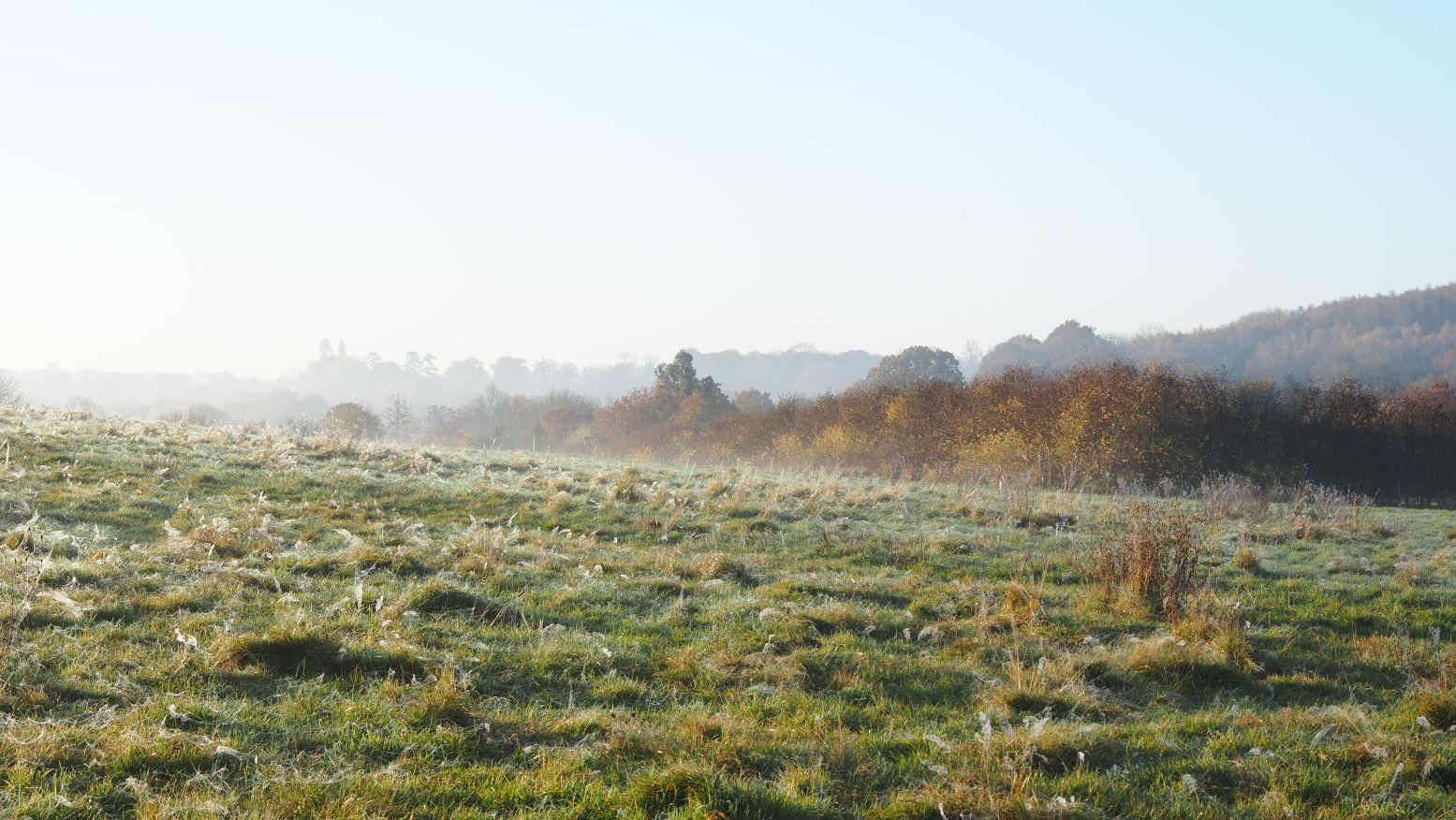
I first noticed the mist as I walked down the road where the landscape slopes gently towards the river. The hill in the distance was softened by a white veil of mist.

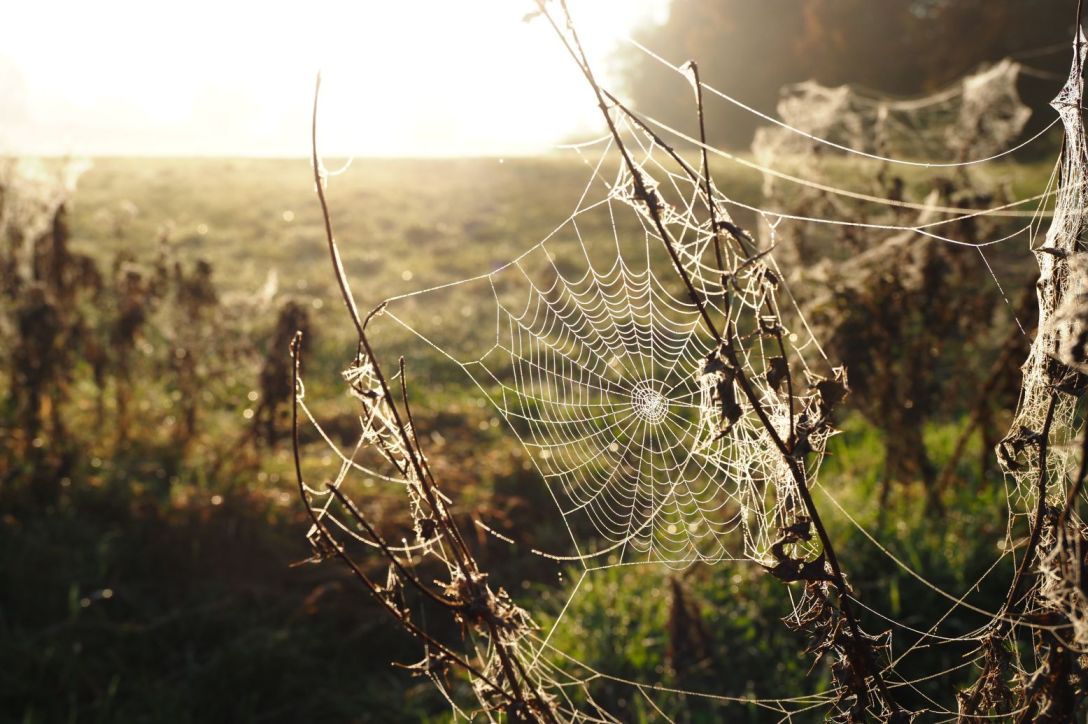
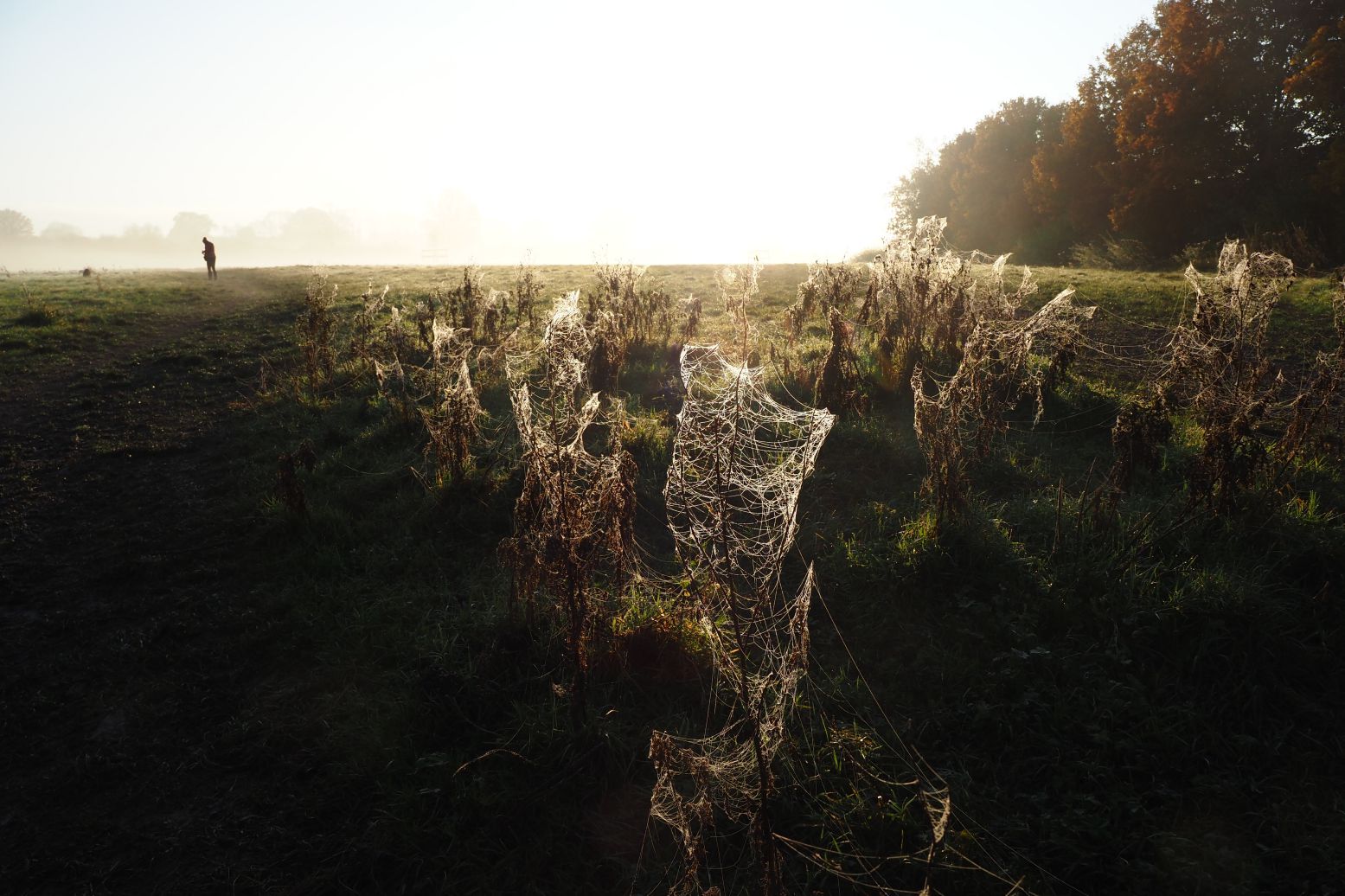
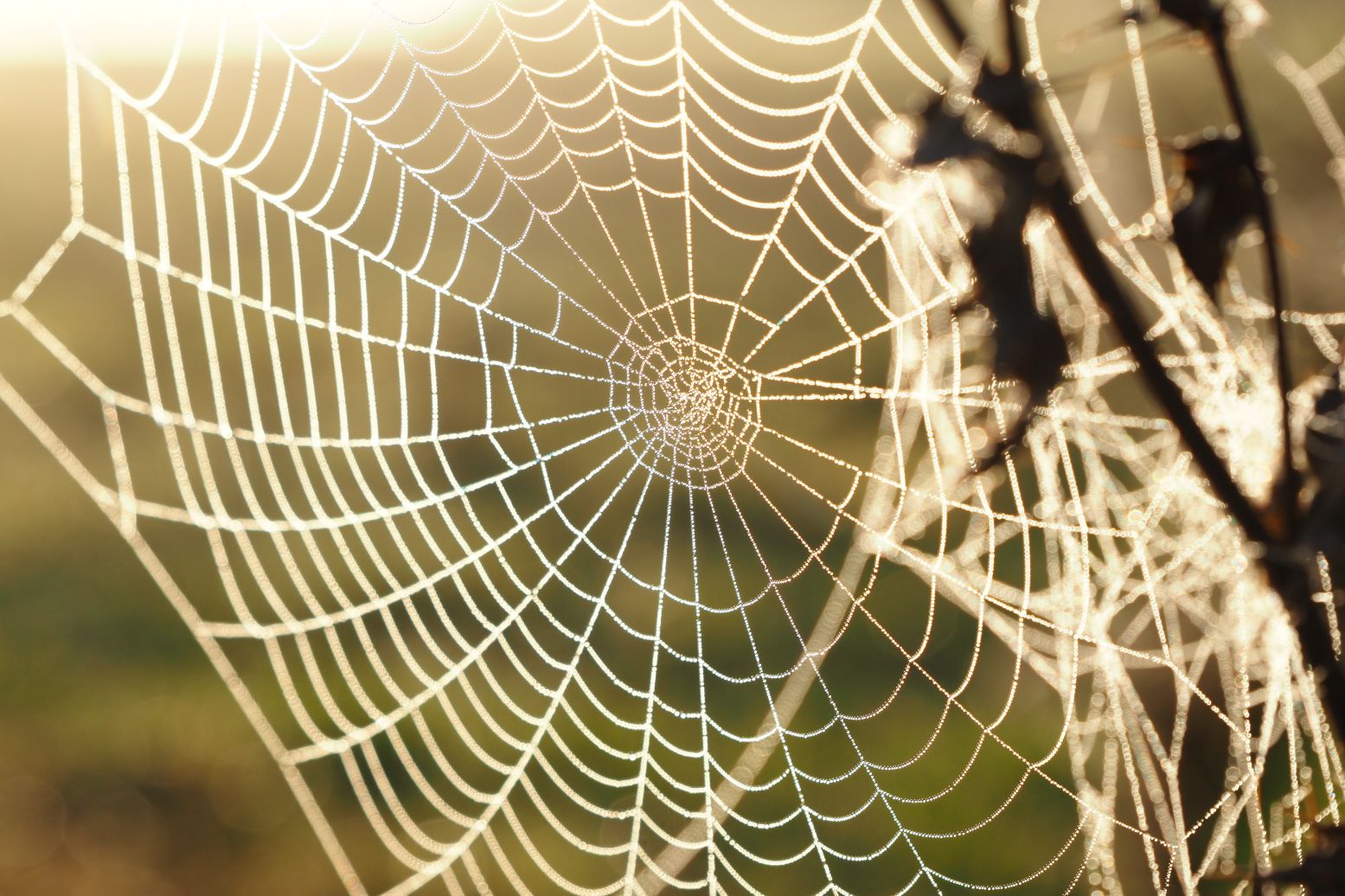
Turning off into the first field, the sight was astounding. The sun flooding through the grassland, illuminating the dewdrops in the desiccated seedheads and stems of last summer’s growth.

I hadn’t intended to walk through there but it was impossible not to. We forget this can still be a time of spiders.

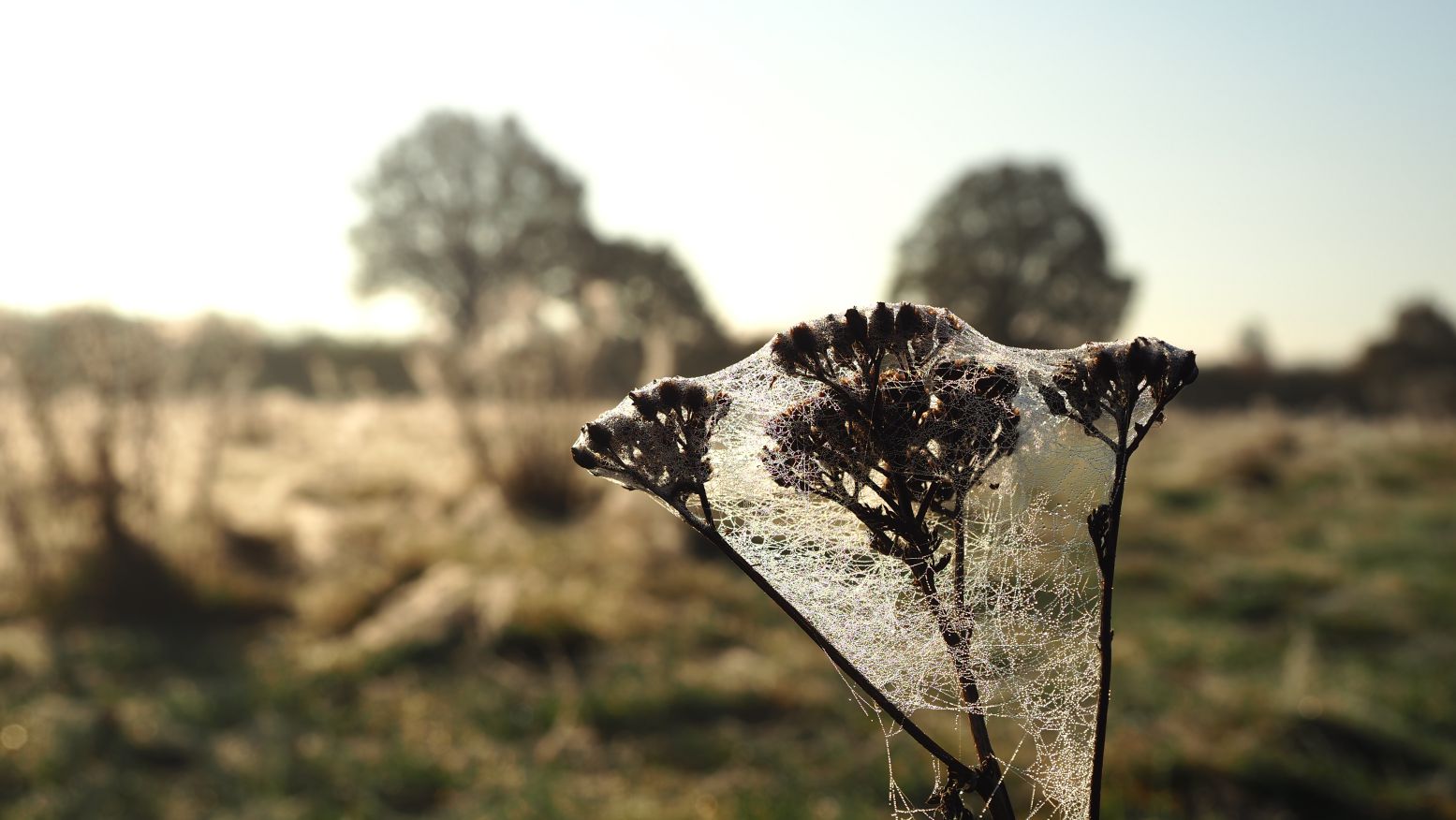
As the sun moved up in the sky the light shifted up the hill and so I followed it. Ragwort is bright yellow in summer but its dark winter stems had been silvered by the dewy spiders webs.

At this point a dog ran up to me while I knelt down to take photos of the webs.

“Daniel!” It was a man shouting in my direction. “Daniel!”

The dog turned away from me and ran towards the man.

“Is your dog called Daniel?” I asked.

“Oh, yes!” He said.

“Well, that’s my name, so that’s very confusing.”

Looking back away from the sun, the oak trees were aglow as they turned their final shade of the season: orange and brown.

The mist was being chased uphill and into spaces behind the higher and larger hedges. I followed it.

The distant woods and tree-lined hedges were silhouetted as the mist burned away in the sun.

In one cold corner the vapour hung around like smoke against the scrub that had kept the land in shade.

In one final field, edged by the yellow of field maple leaves, the mist remained. There was a dog that barked at me until called by its owner: “it’s because he’s afraid of you more than anything else,” she said.

“I’m used to it,” I called back.

Thanks for reading.

The Sussex Weald

Fungi 🍄: amethyst deceiver

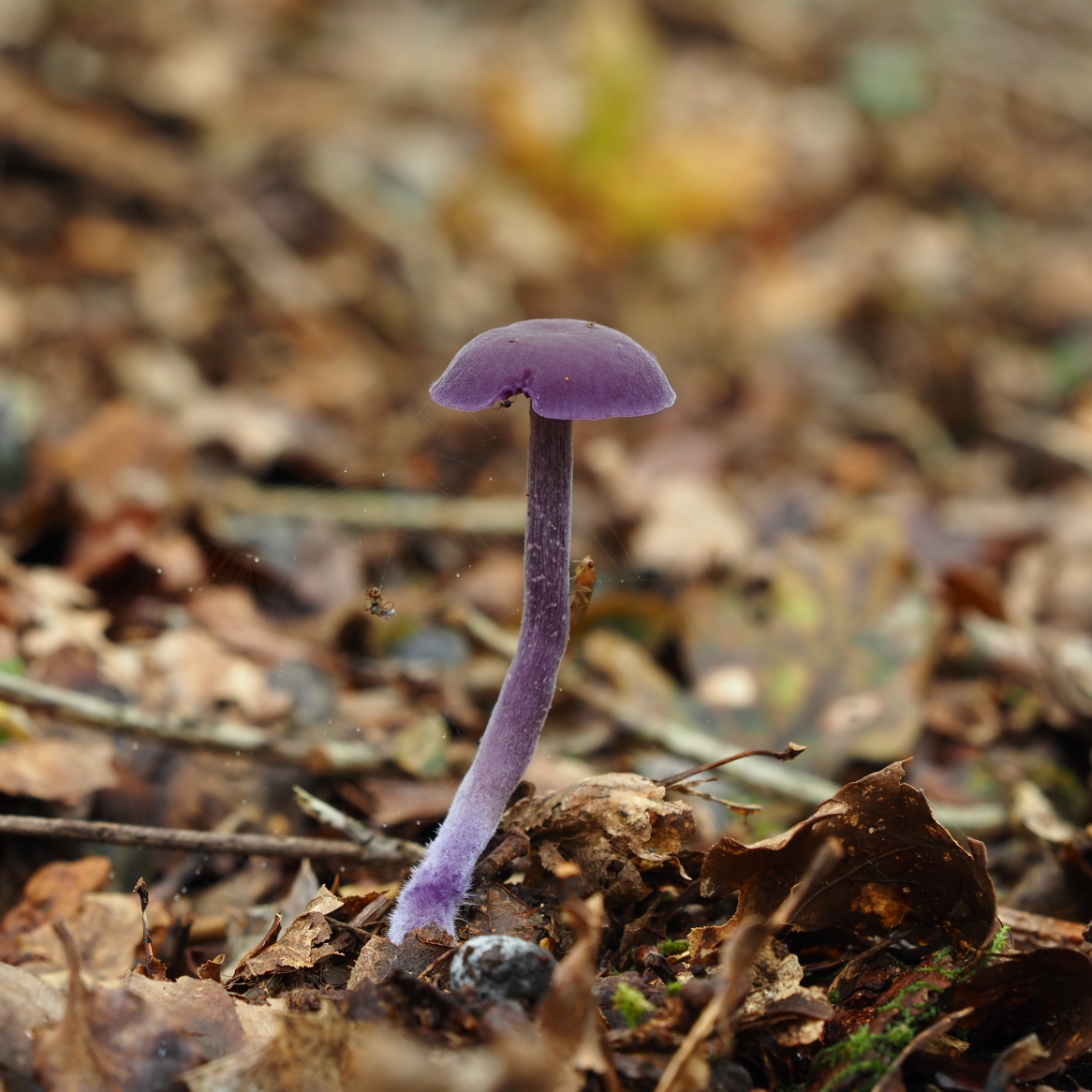
The day after last week’s post, I headed back out to another local woodland to check up on the fungal situation. Building on the violet webcap theme, I was this time lured down an amethyst deceiver rabbit-hole. Thankfully, I was able to return from it.

I saw a tweet recently from the editor of the Inkcap Journal about how she could never find these mushrooms. The question was whether they are as bright as people say, or if that was deceptive. They are, of course, deceptive by name but also in their appearance.

I was scanning the path edges along a usual mushroom route I take through this woodland when I spotted a very small, dark mushroom under the birch and holly. It was almost black in the shade but on closer inspection it was one of perhaps 100 amethyst deceivers in the local leaf litter.

As I slowed down upon finding the mushroom, I began to see more and more. They were everywhere. I was careful not to step or kneel on them. I took some photos of them in varying states.

Herein lies this family’s deception – they are often confusing because they can look so different in anything but colour. Perhaps their name also derives from the fact they are hard to see.

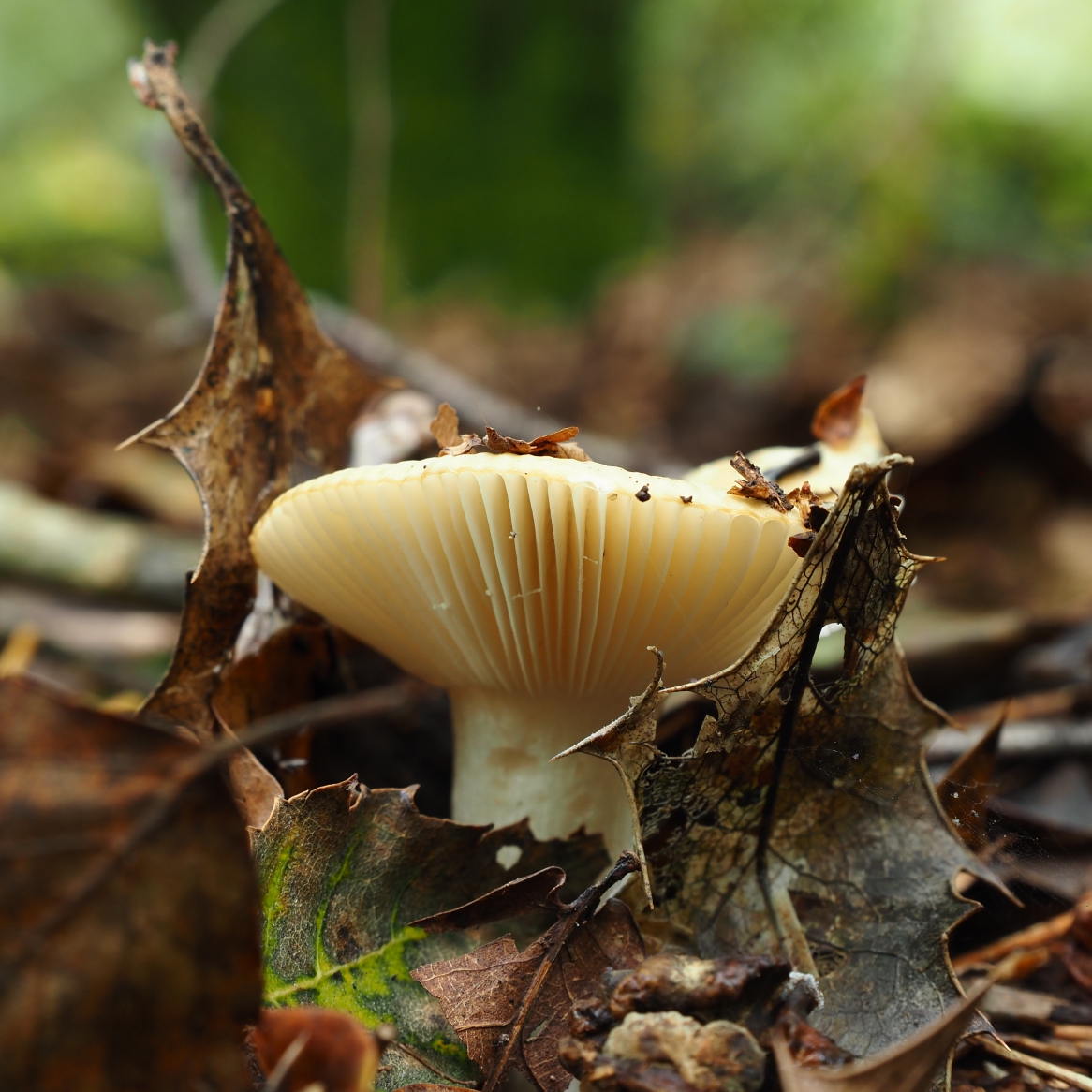
These blogposts can also be deceptive. Though I have found things to photograph, we are nowhere near a mushroom peak. Things are not in full flow. The Sussex Weald’s woods look dry still, with heavy rain not yet enough to provide the water for full-on fruiting across the board. In other words, the mushrooms remain small and sparse, but there if you look. This brittlegill was exploding onto the scene like the shark from Jaws.

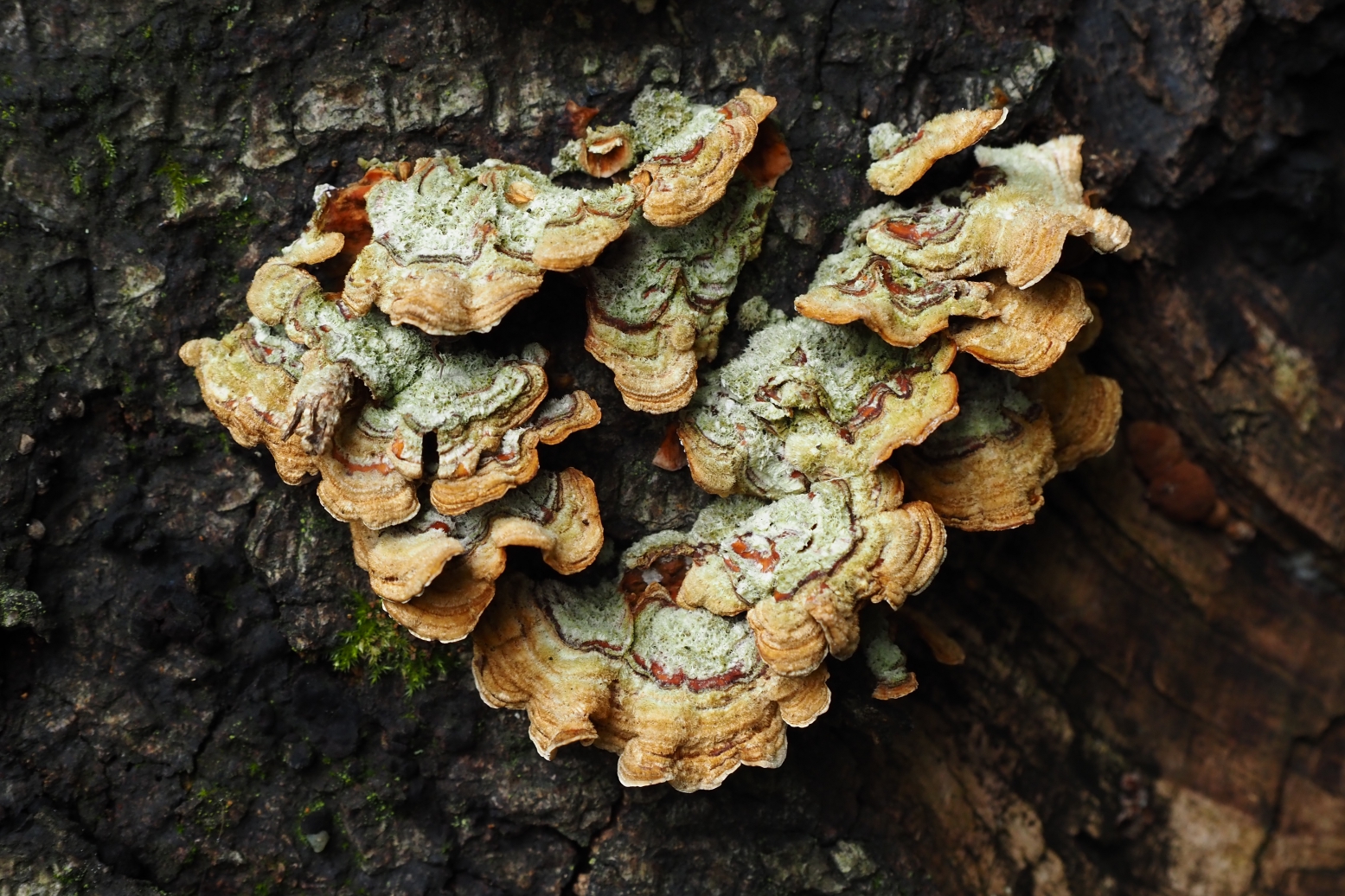
Something that can always be relied upon is a hard-wearing polypore. This fan of small brackets is the sort of thing you can find all year round.

This yellow stagshorn was climbing every mountain.

There were more of the typical mushrooms, but mostly in the shaded areas under holly or lower vegetation. This crew of bonnets were growing in their hundreds.

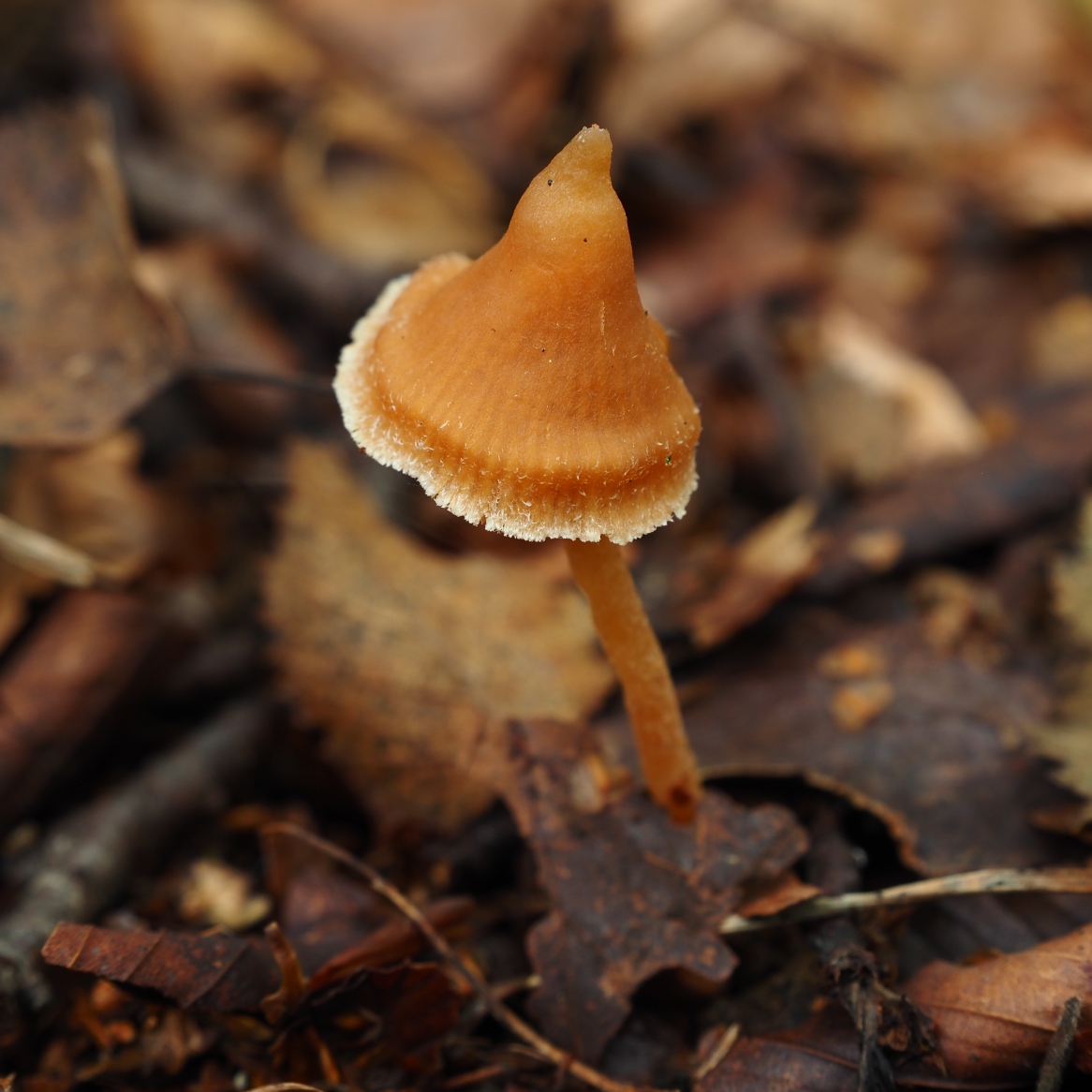
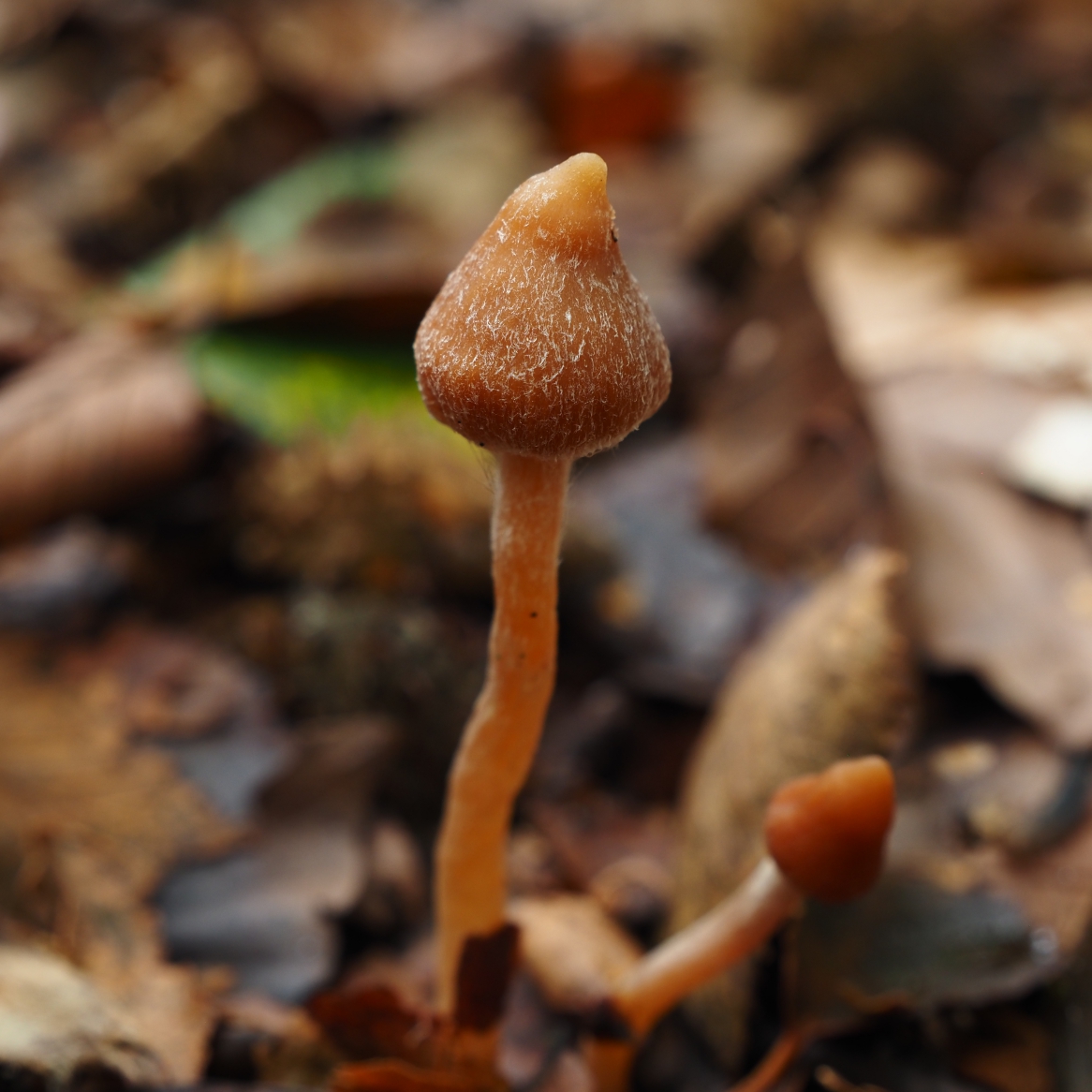
On the woodland floor I spotted some very small mushrooms with conical hats. These tips look a bit like the famous magic Psilocybe mushrooms. After a bit of research I decided that they are in fact peaked webcap.

You can forgive me for seeing their similarity for liberty cap, the magic mushroom. In this photo you can see a small amount of the webbing which gives this huge family of mushrooms its general name.

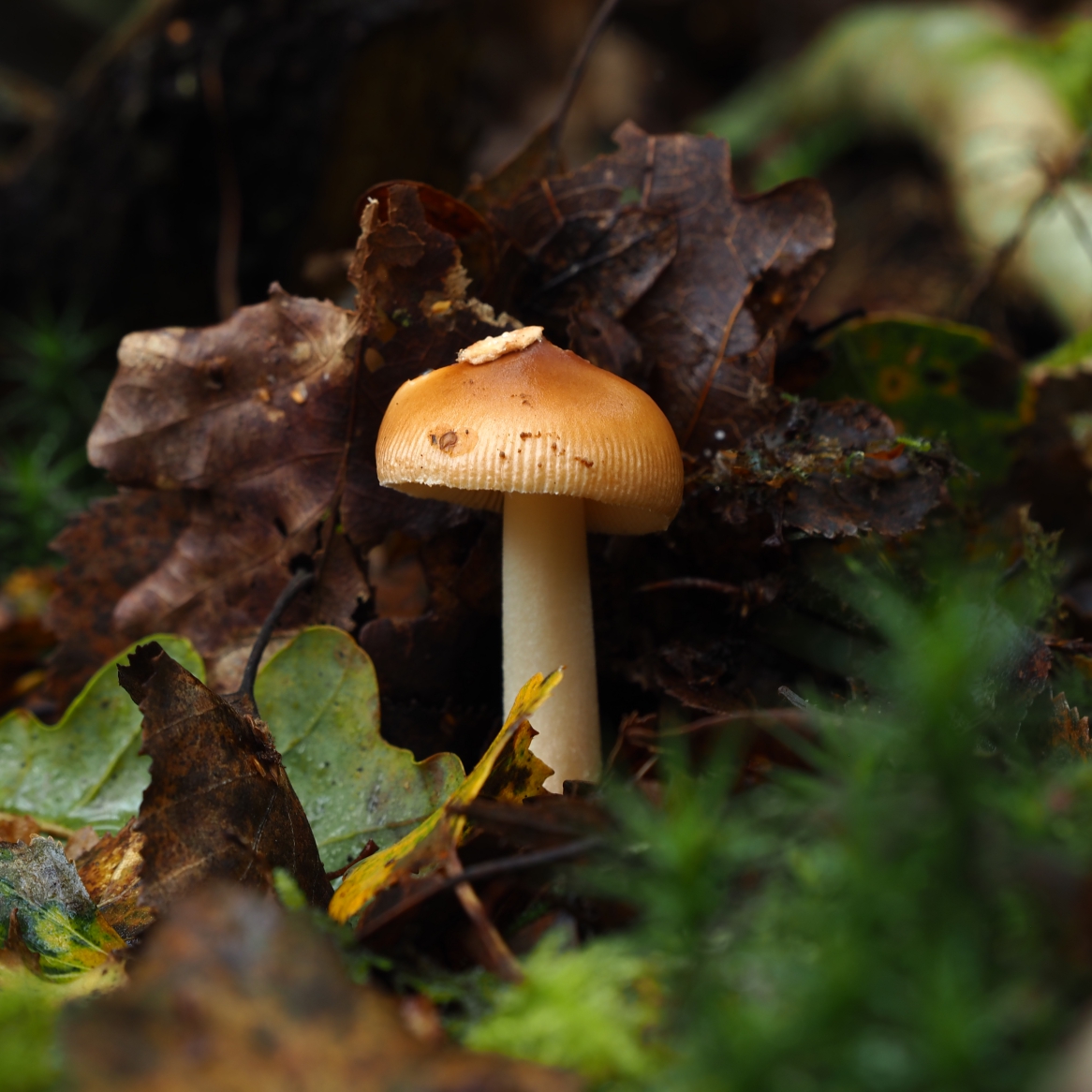
Some of the more summery mushrooms were there to be found. This included the undisputed king of looking-like-they-just-burst-through-the-door, tawny grisette.

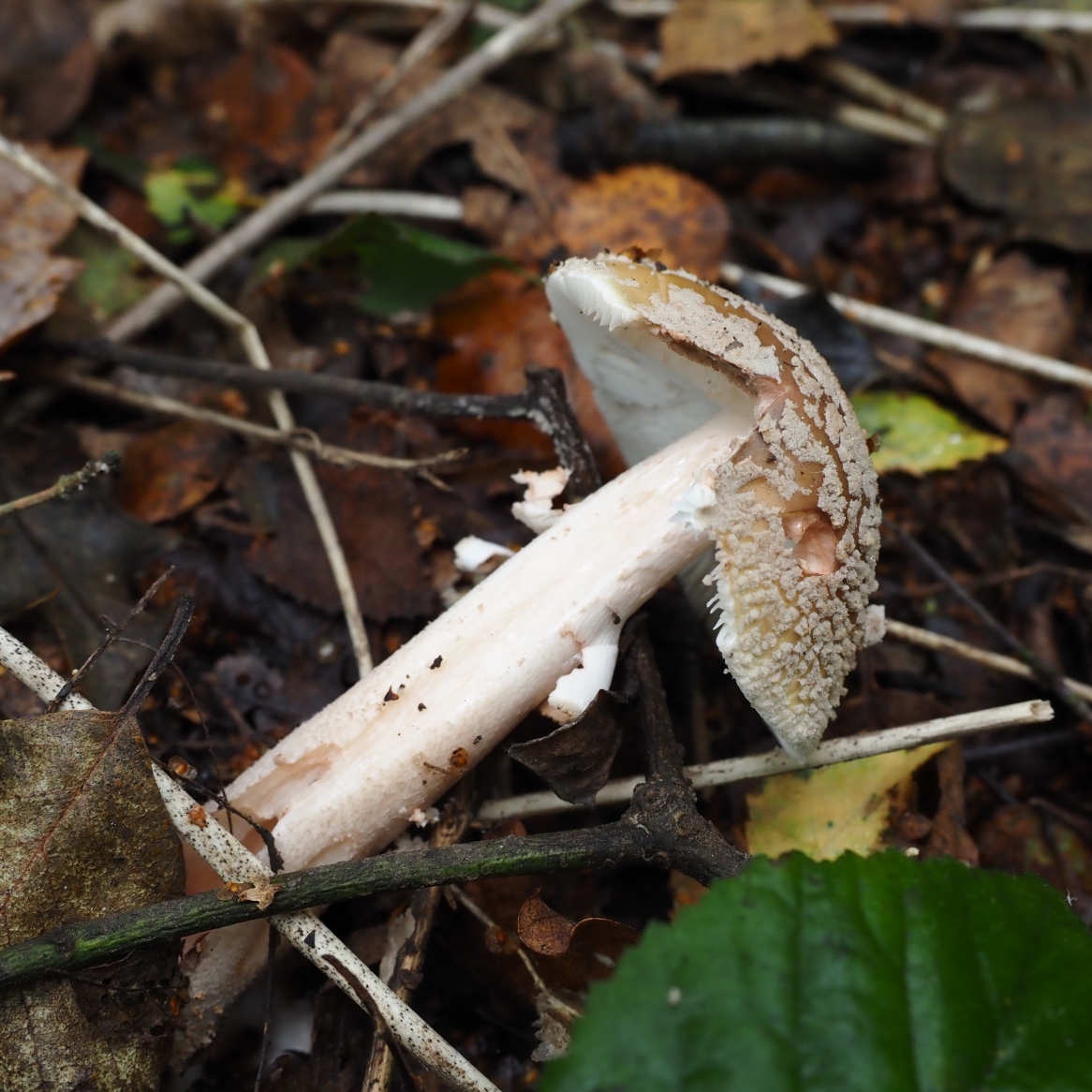
Another amanita to be found was this blusher, I think. It is quite difficult sometimes to tell the difference between a couple of relatives in this group, including the panther cap and grey-spotted amanitas.

The pinkish-hue and appearance of the stipe was enough to suggest to me that it’s a blusher, rather than a grey-spotted amanita.

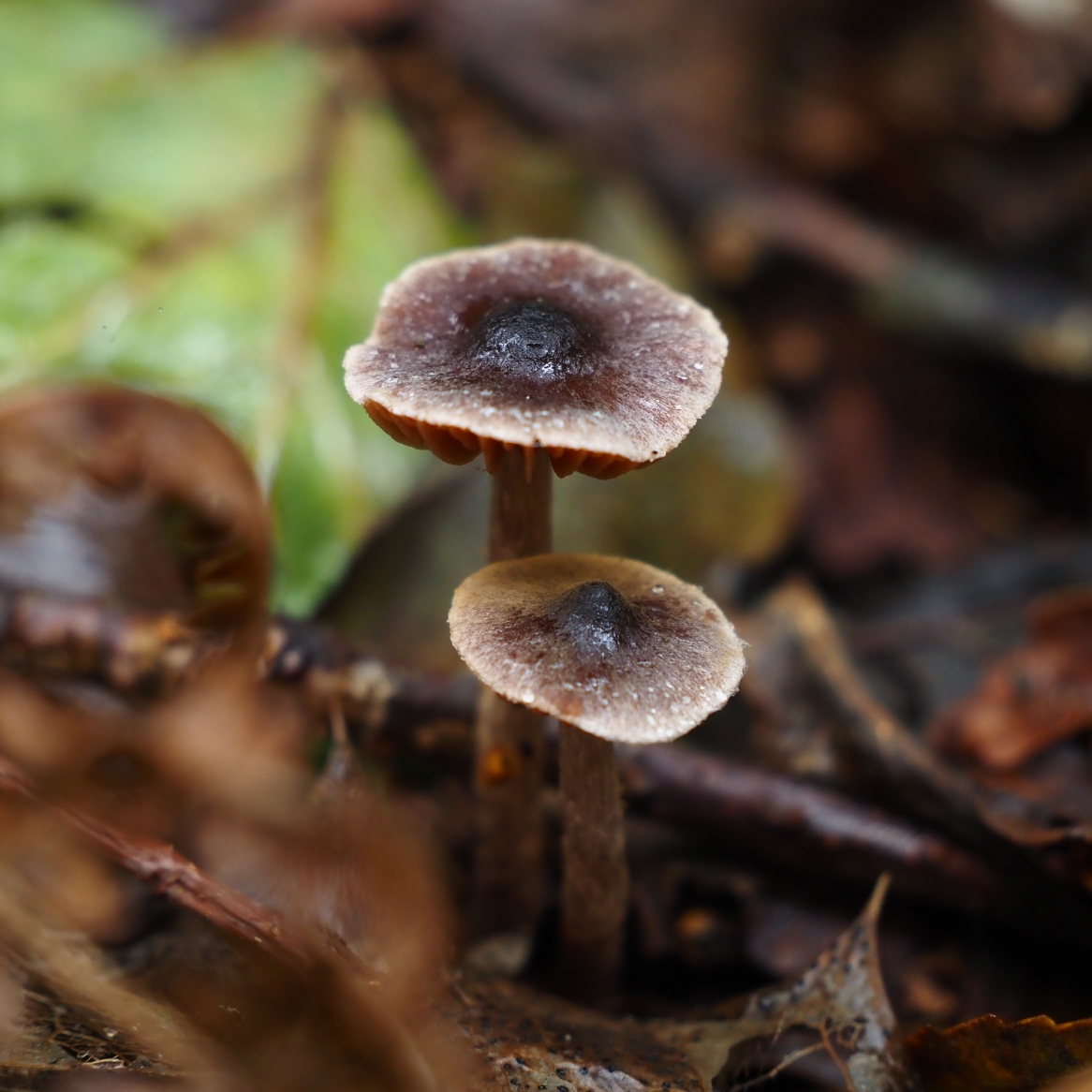
I like the felty-caps of these two friends down among the old holly leaves and sticks.

Before making my way back home I happened upon another gathering of bonnets, again under holly in very shady woodland. It’s where the moisture is and therefore where the magic happens.

If you can, make some time to get out there and find yourself some mushrooms. You won’t regret it.

Thanks for reading.

More mushrooms

Unlocking Landscapes podcast: Being a Bee Doctor with Dr. Beth Nicholls

After a month off this summer, Unlocking Landscapes is back and this time it’s outside, with a guest!

In August I met up with Dr. Beth Nicholls at Bedelands Local Nature Reserve in West Sussex. Beth is a researcher on the subject of pollinating insects, with a key focus on bees. She works at the University of Sussex.

Listen here:


We talk about:

  • what inspired Beth to become a “bee doctor”
  • the hairiness of bees (but not wasps)
  • educating people about the importance of all pollinators
  • issues around honeybees (and Asian hornets) in the UK
  • why wasps are important, how bee-washing is employed by the corporate world
  • and the need to change how pesticides are used in the UK

Thanks for tuning in and I hope you enjoy the episode.

Links:

Beth on Twitter: https://twitter.com/BethBees

Beth’s research at the University of Sussex (SE England): https://www.sussex.ac.uk/research/labs/nicholls-lab/research

Fungi 🍄: keeping up with the polypores

This week I stumbled across two of the more charismatic polypores you can find at this time of year. Polypores are bracket fungi that grow like shelves, usually from a tree trunk but sometimes also at the base or from a branch.

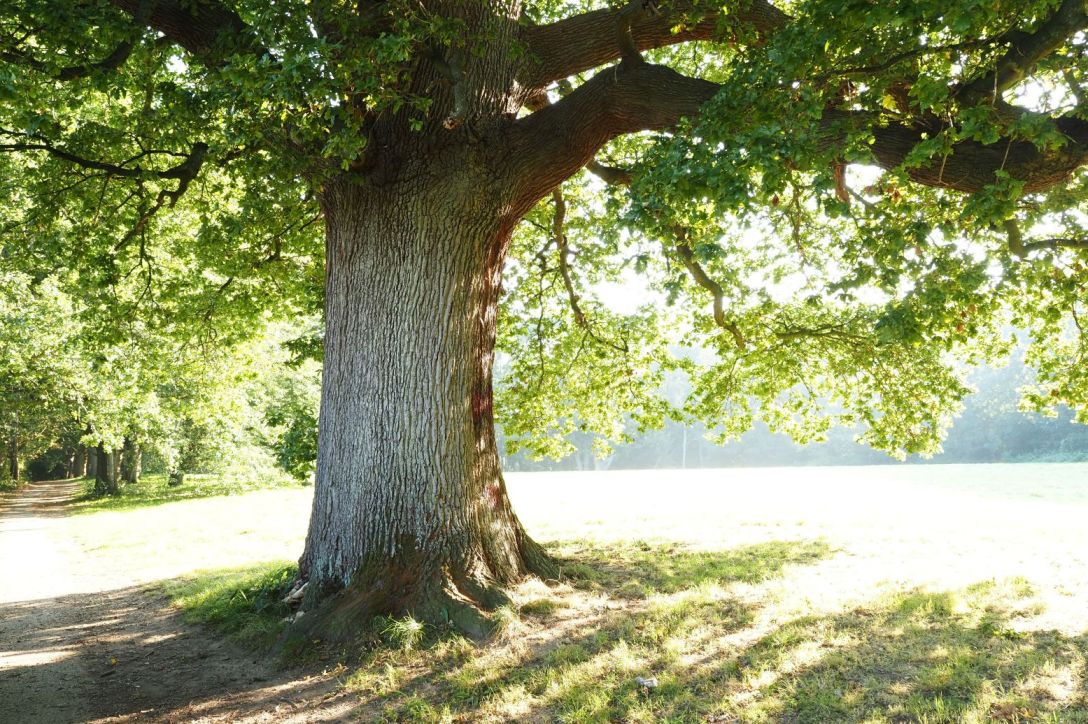
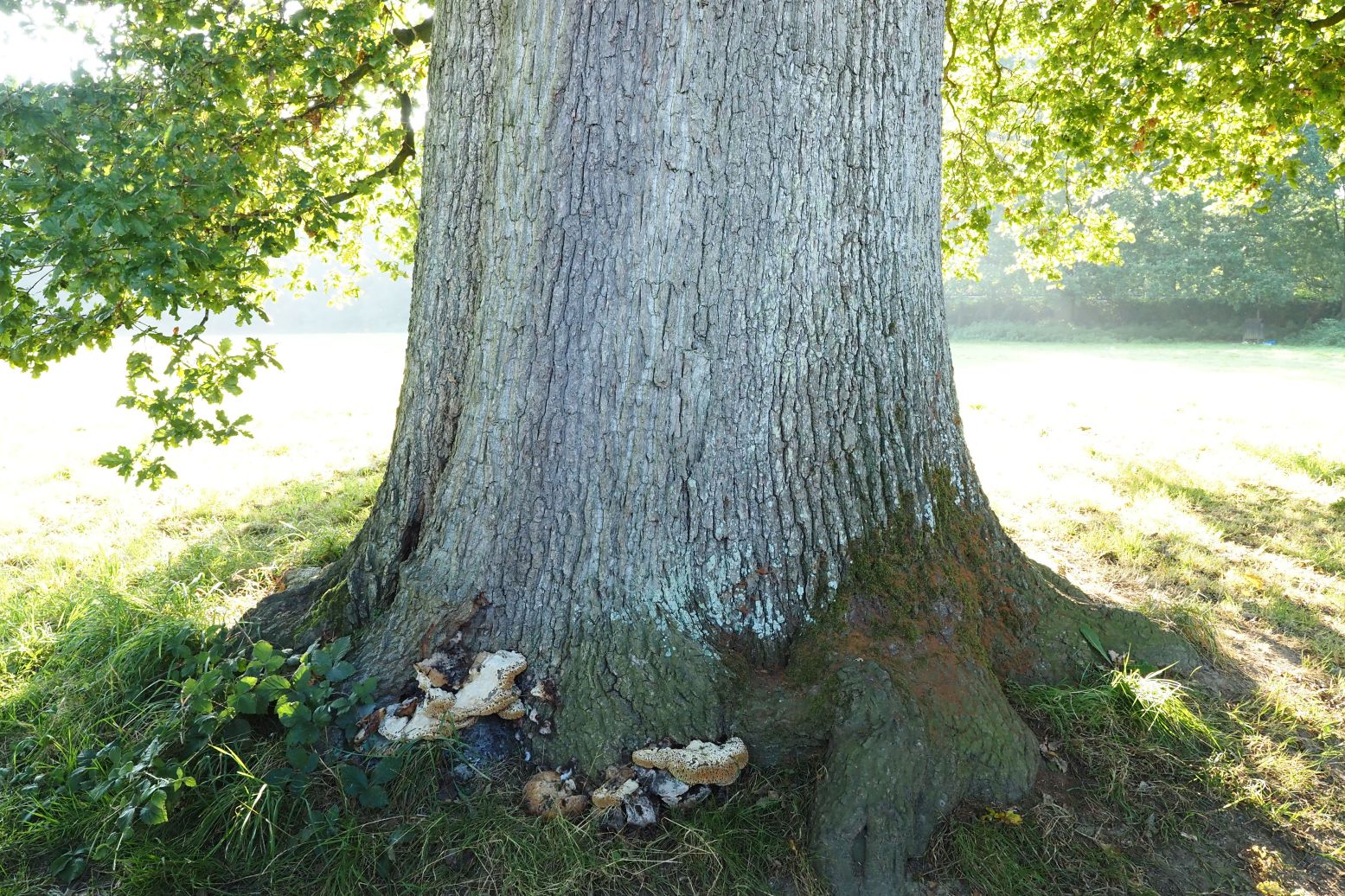
On a morning walk I went to check on the progress of a polypore I’d spotted several months ago (pictured above in late June 2021!), growing at the base of a large oak tree.

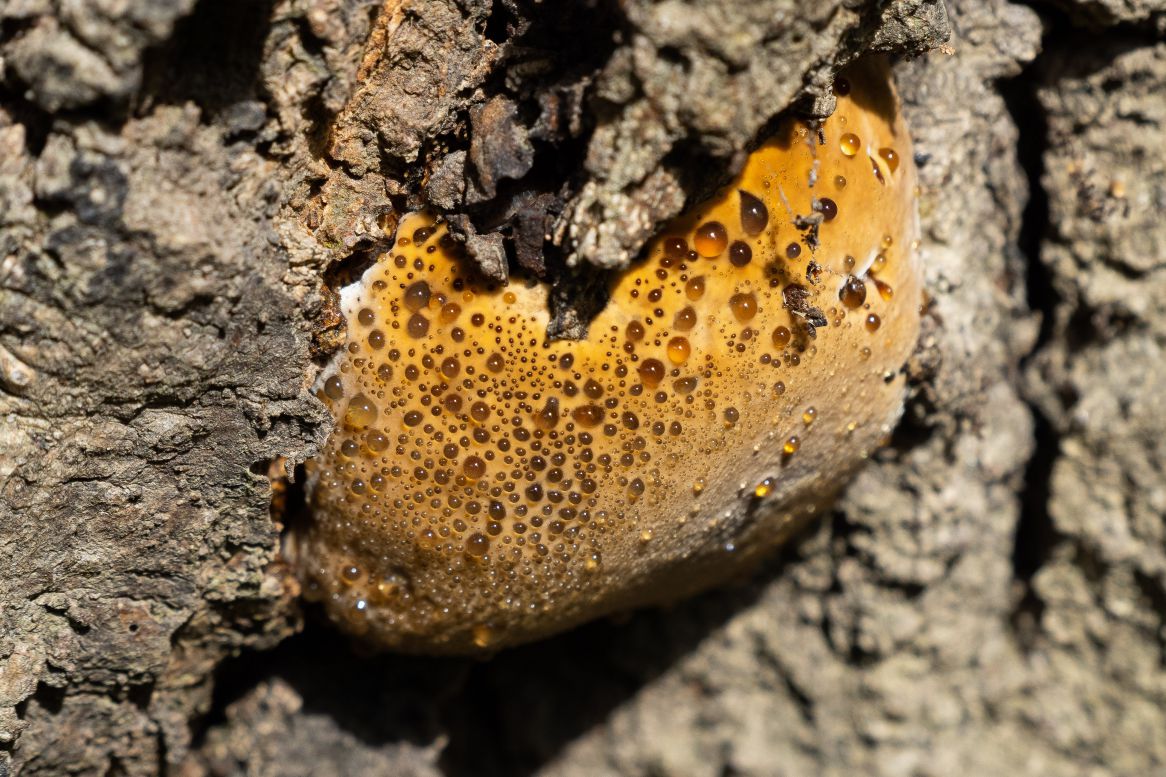
Oak bracket is one I posted about almost exactly a year ago during a visit to Suffolk. It also goes by the name of weeping conk, with a scientific name of Pseudoinonotus dryadeus. It’s a parasitic species, which means that this tree may be suffering some internal, ‘mechanical’ trouble. I hope not because it’s one of the largest in the area and is right next to a path. This makes it much higher up the chopping order if public health might be deemed to be at risk. I will never forget being taught that trees weren’t a hazard until we showed up.

This is a very attractive fungus, if you like a dough that drips caramel. It grows at a fairly critical part of the tree, where it meets the ground. It’s crucial because the tension of the roots holding the trunk upright.

Look into those hundreds of caramel eyes and tell me this is not one of the most beautiful fungi out there.

Later that evening I cycled out to the countryside on what was the end of a September heatwave. The landscape was very dry and smelly. I could smell the manure from my house two miles away in the daytime. That evening I became acquainted with the stench up close – muck spreading in the fields. It was absolutely rank, undoubtedly made far worse by the heat and lack of rain.

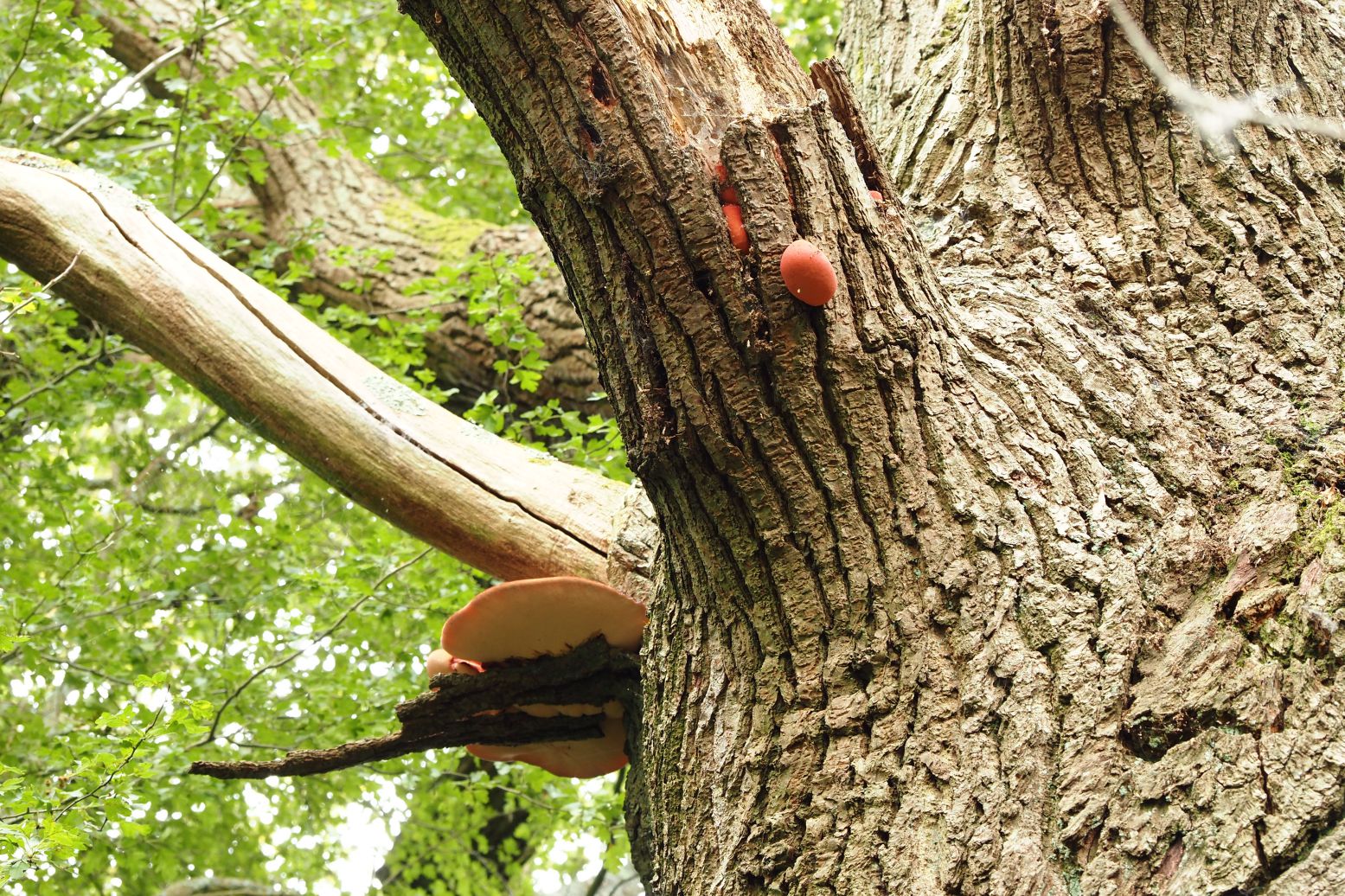
My route took me past the 800-year-old Sun Oak. Like the large oak I saw earlier that morning, this tree was also home to a charismatic polypore fungus.

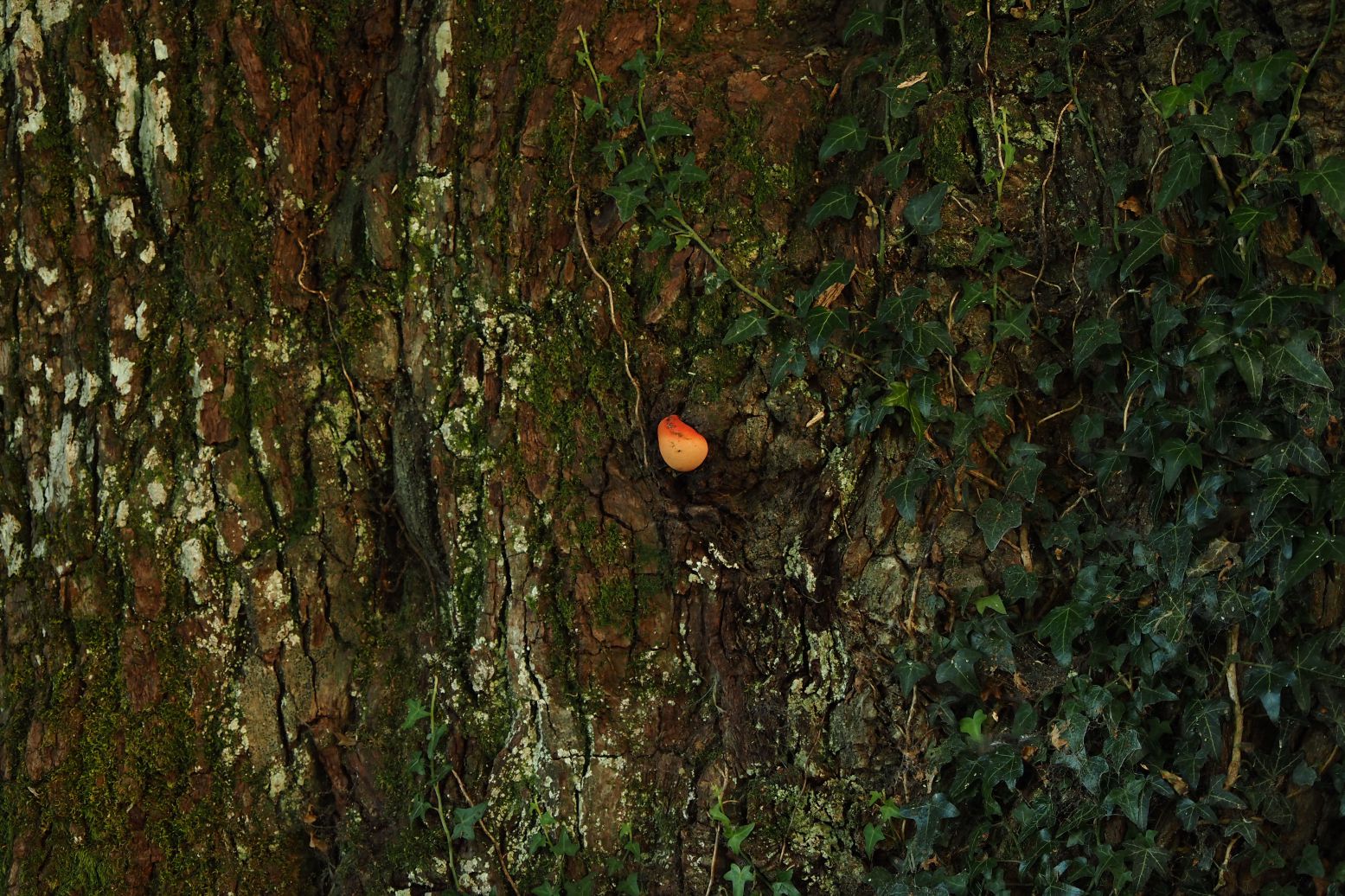
This red button is a beefsteak fungus, Fistulina hepatica. It may also have been a red button – do not press the red button. Unless you want to continue watching this programme (BBC joke).

Oh go on then.

In reality this fungus will grow out to form something that looks like a human bodily organ (hepatica). It’s often on oak or sweet chestnut, especially more mature trees. It’s another parasitic species but it’s said to grow too slowly to ever cause the tree structural problems. We should remember that these fungi have been growing with their hosts for potentially millions of years. It’s the impact we have had on their habitats that have made the trouble. Check yourself before you wreck everything else.

Here’s a recent example that cost me several milligrams in blood as the mosquitos were hanging out under this tree waiting for me to arrive. Beefsteak indeed.

Thanks for reading.

More mushrooms

The Sussex Weald: between the seasons

St. Leonard’s Forest, West Sussex, August 2021

Mid-August: the woods sit between seasons. Leaves are not yet turning, the soil is dry and the leaf litter brittle. Even so, mushrooms are pushing through. I turn off the hard track to cross over the ghyll that cuts through the woodland, one of many dammed further down for the ancient iron industries that hammered this landscape several centuries ago.

Today no such industry exists but the streams still flow. In fact, from this area of the High Weald, some of Sussex’s great rivers rise and head off on their respective journeys: the Arun, the Adur and the Ouse.

Sitting on the bank, I notice fungi on fallen wood but also in the soil. They are terracotta hedgehogs, mushrooms with spikes where the gills or pores are found on other species. They’re a delicious edible mushroom.

When the iron industries were at full pelt here some 400-500 years ago, there was immigration of skilled workers from France. They brought knowledge unavailable to iron workers here in Sussex, with some tensions developing with the local workforce. On 21st January 1556, ‘Peter’ a French collier was ‘cruelly murdered’ (Weir-Wilson, 2021: p.45).

I wonder if those French men and women picked hedgehogs here, a species that’s treated as a delicacy in France. The Belgian father of a friend of mine messaged me on social media when I posted a photo of these mushrooms:

‘Pied de mouton,’ he said. ‘Clean then blanch them for 2min. Drain and keep. Fry 2 shallots and 1 garlic in butter (or oil). Butter tastes better.’

Deeper into the woodland there are the first signs of heather beginning to flower. The birdsong has dwindled but the edges of the rides burst with flowers that are covered in insects. A broken and battered fritillary butterfly nectars on hemp agrimony flowers as if for the first time. I watch to see if a butterfly with so many pecks taken from its wings can even fly, but it does, high into the overcast sky.

Further along the ride hogweed has built a great white canopy. The droneflies – a honeybee mimic – drink nectar in their tens, fizzing as they switch from one umbel to another. That’s when I notice the long, drooping antennae of a longhorn beetle, doing the very same thing. I can’t take my eyes from it, as it clambers over the small inflorescences.
After walking along the endless forestry road, I slip back into the woodland to an area of birchy bog and broken beeches. It’s quiet and still in here. Unlike the final bursts of summer flowers on the open forest rides, autumn can be found among the birch trees.

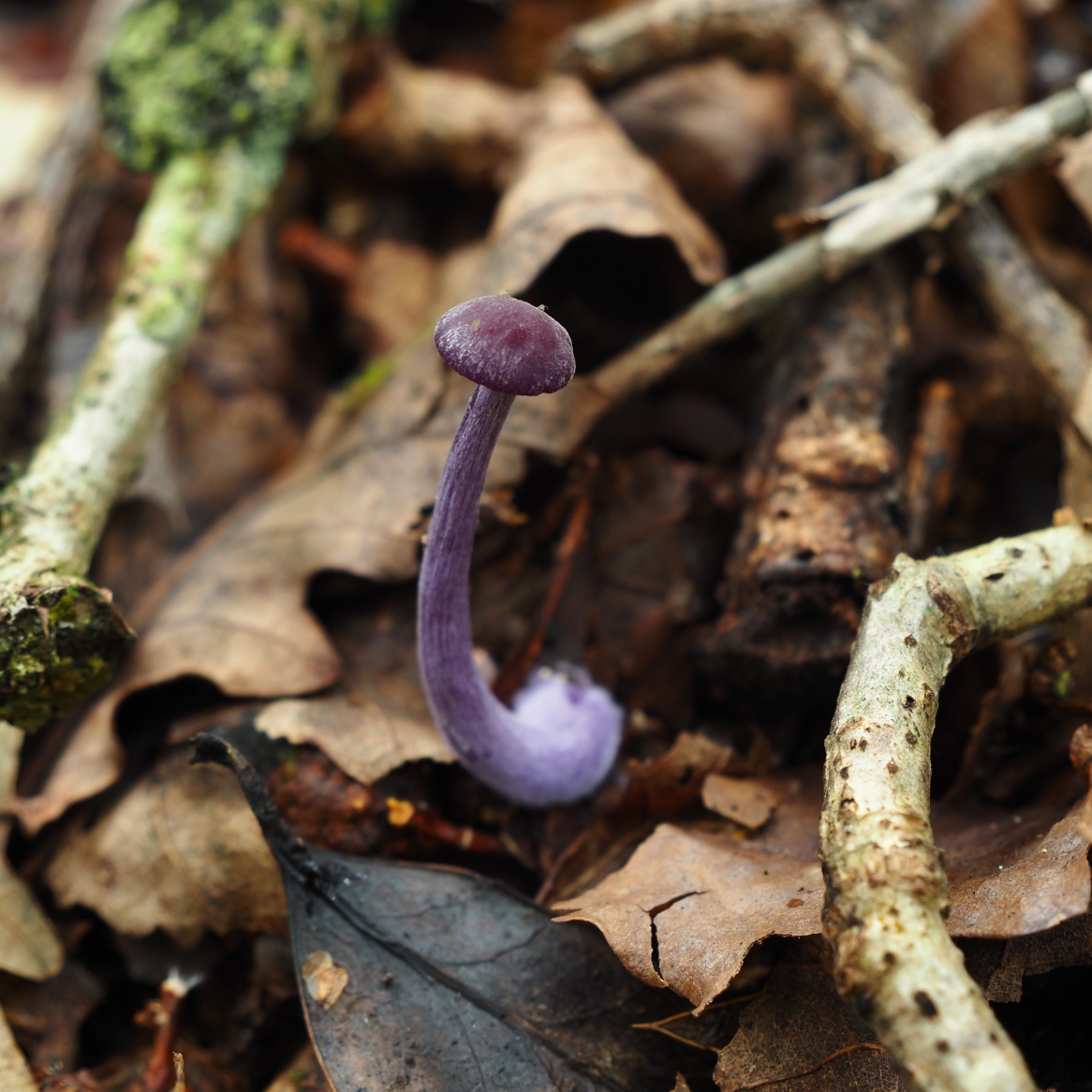
First there is a bolete with its pores and cap that has begun to turn upwards, growing from a stump. There’s a Leccinum or birch bolete of some sort standing tall (for its kind) in the soil. There are Russulas yellow, red, green and purple. These hard to identify fungi are a mental bridge between summer and autumn. They are also a welcome meal for squirrels and whatever can get there first.

It’s a reminder that the seasons are not concrete. There is give and take, building blocks can come tumbling down. Seasonal signs come with species appearing, some that pass like ships in the night.

The Sussex Weald