The other morning I was heading downstairs to do the annual Big Garden Birdwatch. This annual event is one I’ve been partaking in since 2011 when my interest in birdwatching got real.
I opened the curtains as I do each day (obviously?) and saw a lovely sunny winter’s morning out there. The street was filled with sunshine and, down by the tyre of a parked car, I noticed a small grey bird basking in the sun.
Sparrow, I thought.
As the seconds passed I thought of how usually there are more of them together, usually they make noise. Their markings are different, too.
A dunnock, then, I thought.
But then it flew up onto a wall and I picked up my binoculars. It was neither of those birds.
The other day I had been visiting a churchyard in the Sussex Weald when I noticed another sparrow-like bird perched in an unusual place – on the corner of one of the lower roofs. When travelling in France, Germany, Spain and Czechia, I had become used to seeing a little bird in this spot. It was then that I realised what the bird in the churchyard and, subsequently, the street was.
This is bird very close to a robin in appearance but they are rare in Britain. In winter they spend time here if pushed across to Plague/Brexit Island by extreme cold weather. On the continent, robins are more scarce, a role-reversal of sorts and they spend more of their time in woodlands, rather than gardens or parks in towns. This is thought to be because robins established themselves in Britain before black redstarts could get a foothold after the end of the last glacial period some 14,000 years ago. I can’t back that theory up here unfortunately.
A male black redstart in Mikulov, Czechia
In Czechia the name for black redstart is a beautiful one: rehek domácí. They are known as ‘little chimney men’, as my friend translated it, because they appear covered in soot and they spend their time on chimneys. I don’t think we have bird names in the English language that can match that.
The ‘start’ refers to the tail of the bird, an old English word in the way that ‘shank’ means leg (rather than its more grisly modern meaning). Its tail is indeed red.
In England we suffer with a condition that affects many people: mycophobia, a fear of fungi.
If you ask anyone about wild mushrooms, you’re likely to receive a response highlighting the fear of being poisoned. Cultivated mushrooms are a staple of the ‘British diet’ but people have very little knowledge about ones you can eat from the wild, perhaps because it doesn’t seem worth the risk.
Another thing most of us lack is an understanding of where we can forage if we are allowed to. It’s no surprise, the situation is complicated and in general foraging wild mushrooms is frowned upon, regardless of arguments for or against.
It’s important to debunk some myths around the edibility of fungi:
Just because another animal eats a certain fungus, it does not mean it’s ok for a human to eat. Deathcaps can be consumed by other animals, whereas the result for us would be extreme
You can’t get sick from looking at, sniffing, listening to or even tasting a mushroom (on your tongue), but only from ingesting a part of a toxic mushroom. All in all, if you’re not an expert it’s just not worth a taste-test of a mushroom that could cause you serious illness
Some species which are edible still cause sickness in people, and not in a way that is predictable for some people
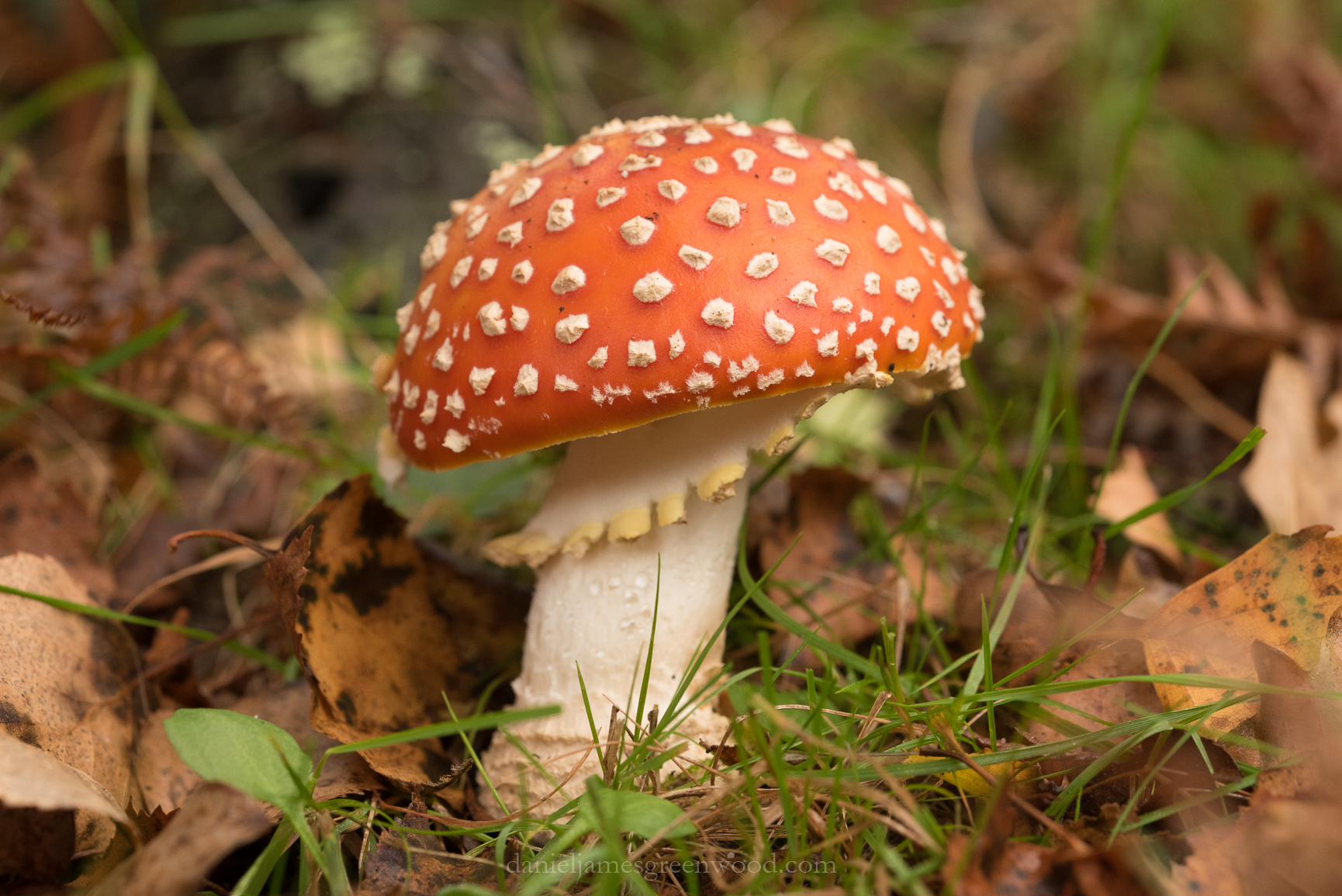
Fly agaric
Meet the Amanita Family
The most toxic mushrooms in the UK are found in the Amanita family, home to famous species such as the red and white fly agaric. They have some extremely sinister names: deathcap and destroying angel, for example. The deathcap is common in the UK, especially under beech trees. There are other similar species like the false deathcap, however, but the similarity is not so close.
The destroying angel gets its name from the fact it’s pure white but deadly poisonous. This is where a lot of problems lie. People confuse the destroying angel for white edible species like horse or field mushrooms.
One of the more common cases of confusion appears to be people from countries in Asia who are new to places like Europe or North America, foraging mushrooms that look identical to destroying angel but accidentally ingesting the toxic variety. Tragically, this has happened in recent months after Afghan refugees ate deathcap mushrooms in Poland after being evacuated from Afghanistan. There is no reason why they would have thought the mushrooms would not be the same as the ones they ate at home. Knowledge is privilege.
Other toxic Amanitas are the panthercap and, to a lesser degree, fly agaric. Confusingly there are some in the family which are edibles, including the blusher and Caeser’s mushroom (the latter named for its favour among Roman leaders). Remember: no one without relevant expertise should ever consider trying to eat an Amanita mushroom.
Magpie inkcap
Mycophobia
The fear whipped up around these species is, unsurprisingly, exploited in the British tabloid press, with the following being printed in one major English newspaper:
“Foragers are being warned about an alarming abundance of Britain’s most poisonous variety of mushroom this autumn.”
There’s mycophobia rearing its head once again, you could argue. Anyone who knows what the deathcap’s features are is unlikely to ever mistake it for something edible. It’s about taking care and time and having the right knowledge.
That said, the impacts of the deathcap on the human body are very unpleasant. Though someone can eat the mushroom and not feel any effects for 12 hours or more, it will slowly be degrading the liver on the quiet and other vital organs, resulting in eventual death if not treated.
One toxic mushroom that is very common is sulphur tuft. Sulphur tuft grows in woods, parks, gardens and even the street. It’s known to cause mild to severe illness in people.
There are other deadly species which are very common, including such as funeral bell(!) and brown roll-rim. Brown roll-rim can even be found in urban areas, with the first ones I ever saw were in urban south-east London in an old tree-pit next to a main road.
Funeral bell
It’s also important to know that species which are edible to some like chicken of the woods may cause mild sickness in other people.
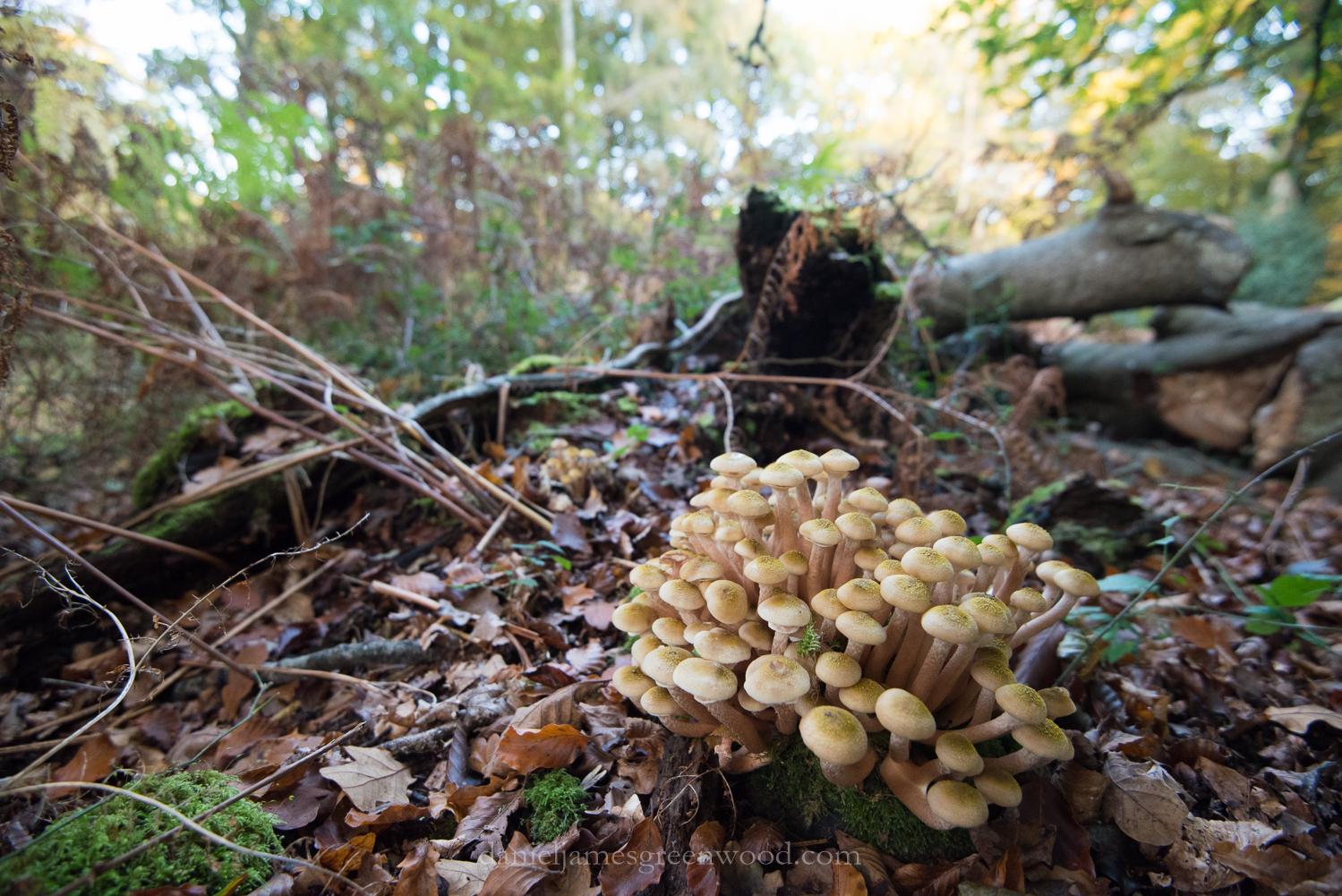
Honey fungus
The same goes for honey fungus, which is edible but can make people sick, especially after eating a certain amount of it.
This shouldn’t be seen as a guide to avoiding poisonous mushrooms so please don’t treat it that way, nor is it support for a mycophobic view of the outdoors. Always do your research and understand that you need to develop your knowledge over time. My interest here is the role fungi play in our lives, especially the debilitating fear factor – the mycophobia.
I spent a frosty olde morning at the foot of the South Downs where the Sussex Weald dissolves into the wetlands of the Arun Valley. I’m no early riser, so these experiences of frosty landscapes are to be treasured.
Everything was iced over.
Last year’s daisy heads were encrusted with ice, lit by the sun as it broke over the tree line.
Wiggonholt Common resides next to Pulborough Brooks the RSPB reserve. It’s a heathland nature reserve home to nightjar, woodlark and other uncommon birds. The views you can get of the heathland and its smattering of pines give it a look of real vulnerability. That’s about right though, as heathland in England is a rare habitat now.
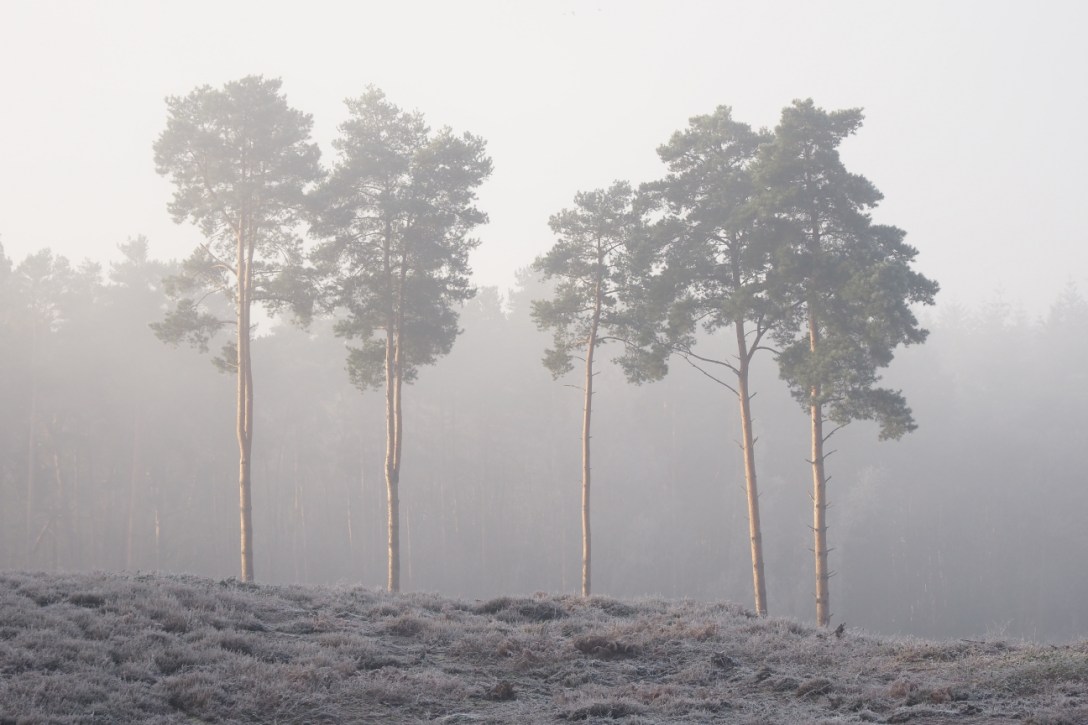
The sun just began to break through the trees and light the trunks of these five pines.
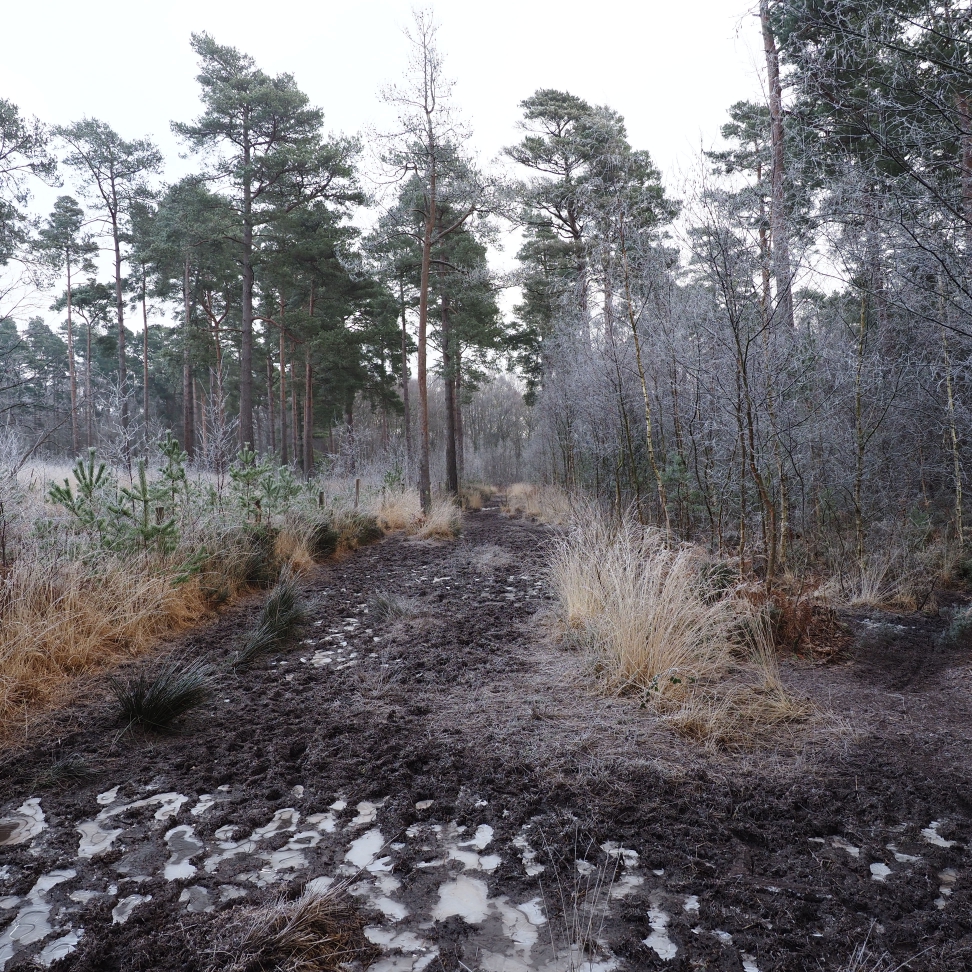
Over on the other side of the common, the sun hadn’t arrived yet. The muddy paths were frozen still and the hoar frost decorated the birch trees growing at the heathland edge.
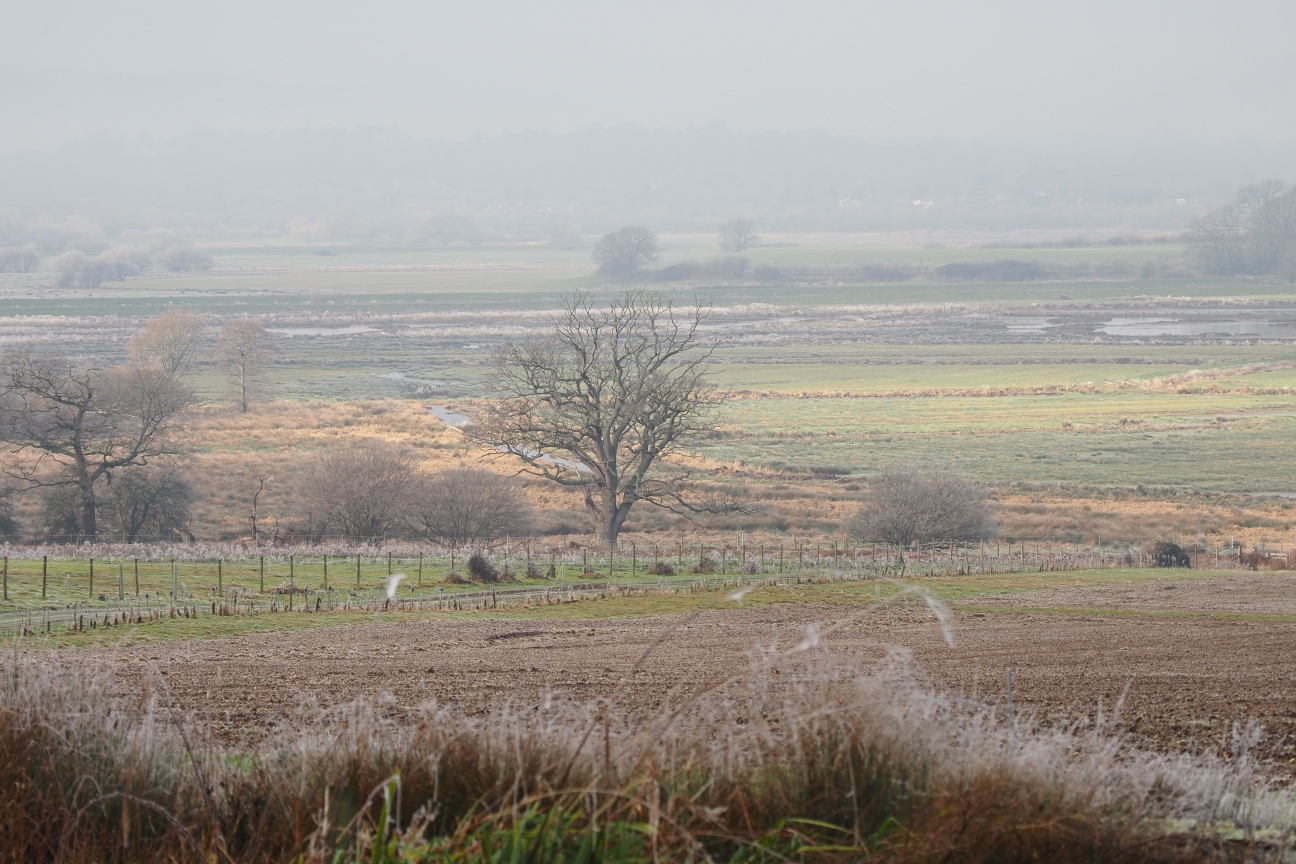
In the reserve proper, a single oak can be seen at the edge of the farmland where the Arun’s wetlands begin.
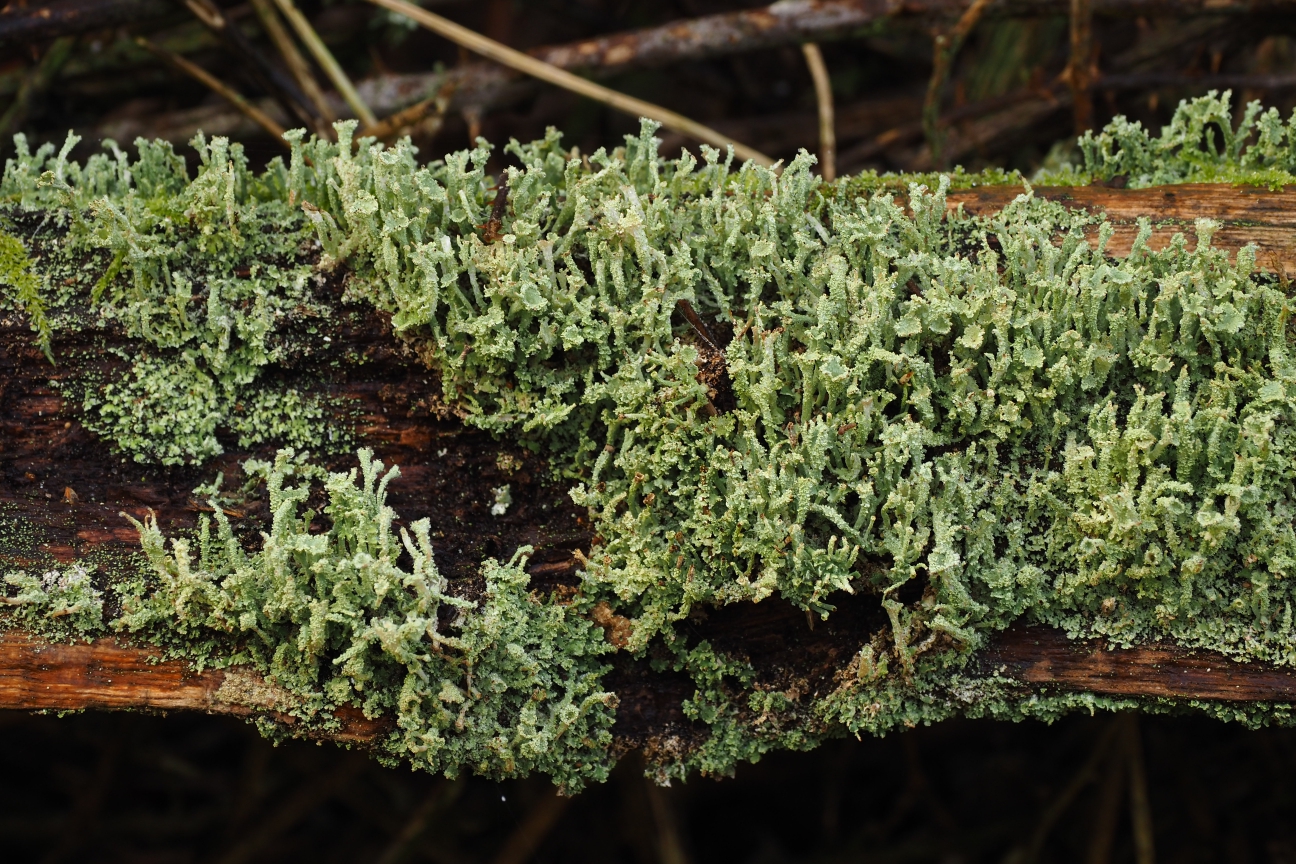
Pulborough is a good place to see communities of lichens like cladonia where they splash out across the green timber fencing. No chemicals are in the timber which means the lichens and other fungi proliferate.
The upturned chandeliers of hogweed flowerheads.
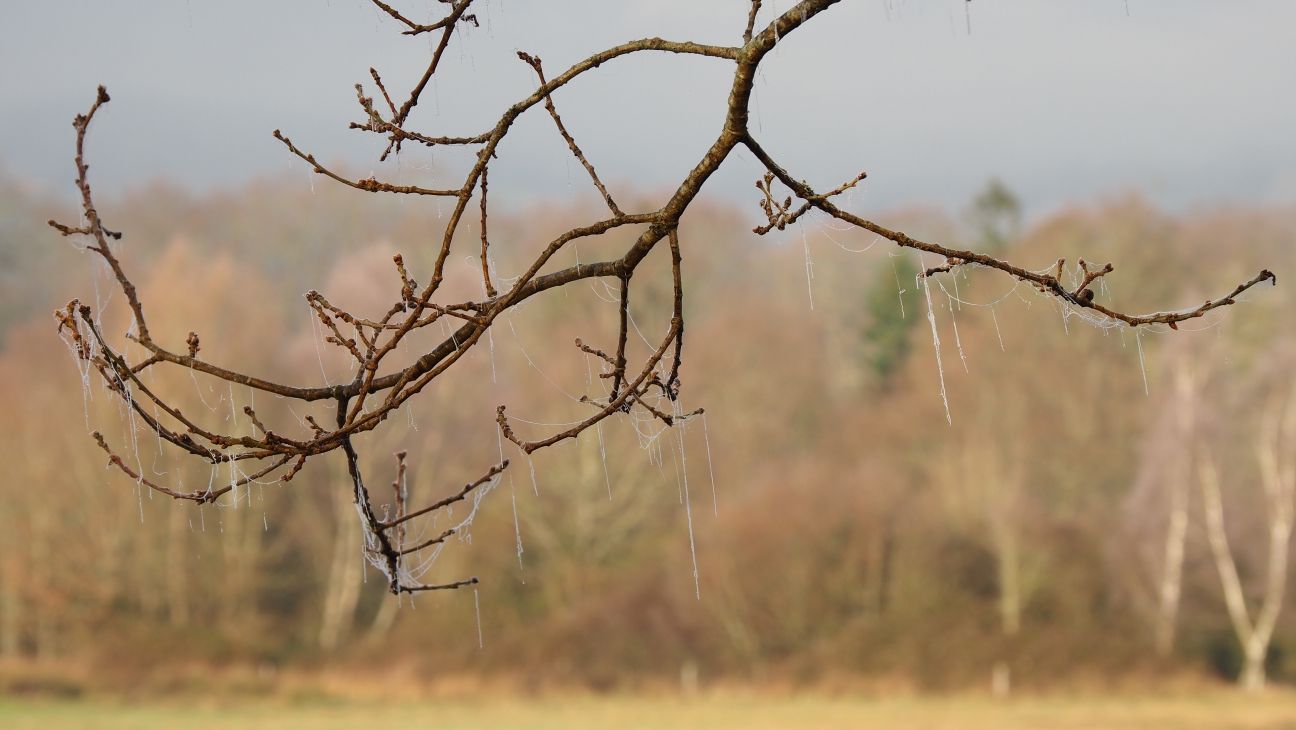
Spider silk hung from the twigs of the trees like silly string.
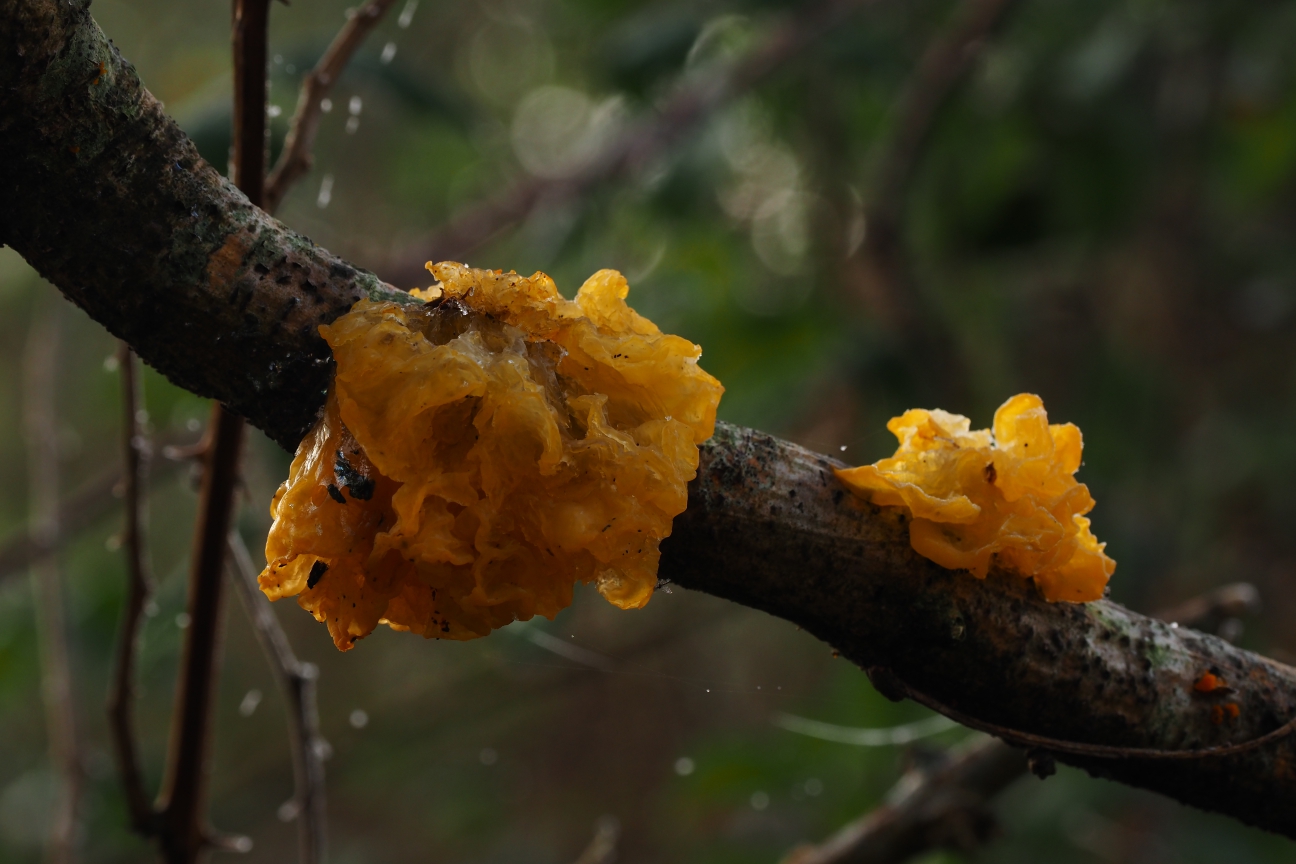
Yellow brain or witches butter, a fungus, looked like a proper tree-bogey.
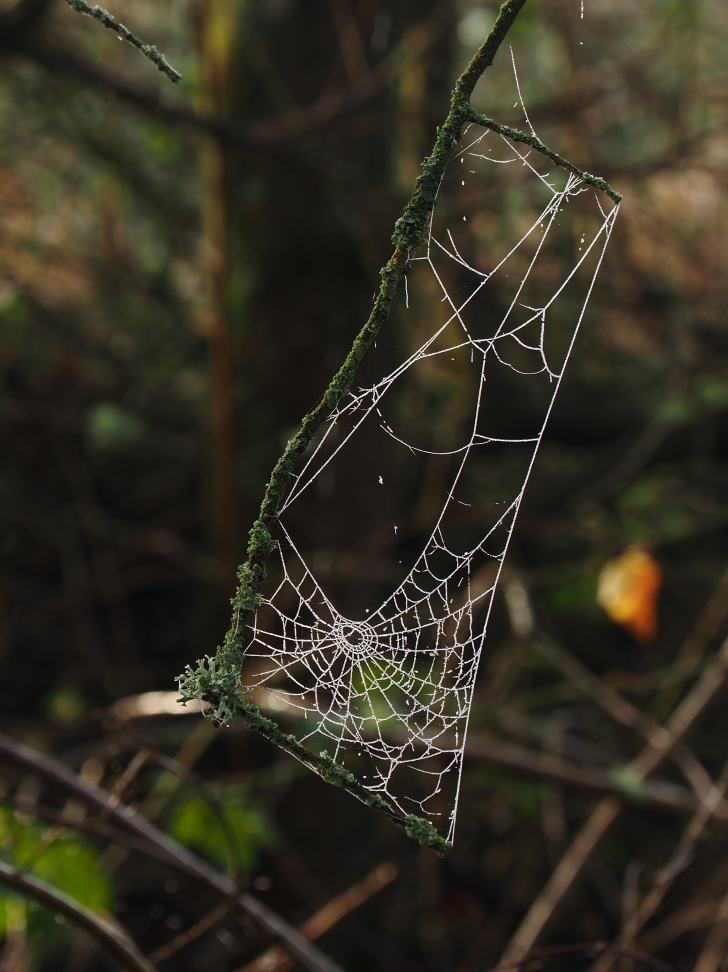
The spiders webs that remained were laced with frost, as this L-shaped twig displayed so well.
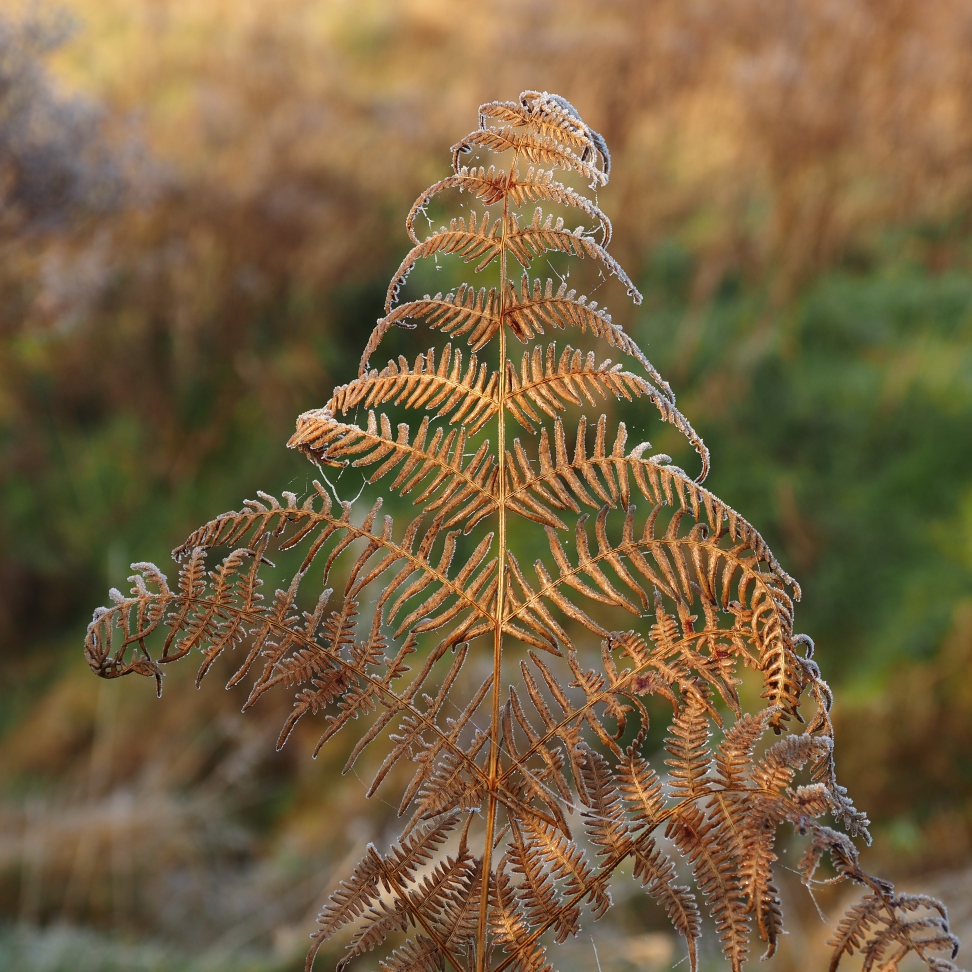
Bracken looking somewhat birdlike, like the back of a golden eagle as it surveys the landscape. Or just some bracken.
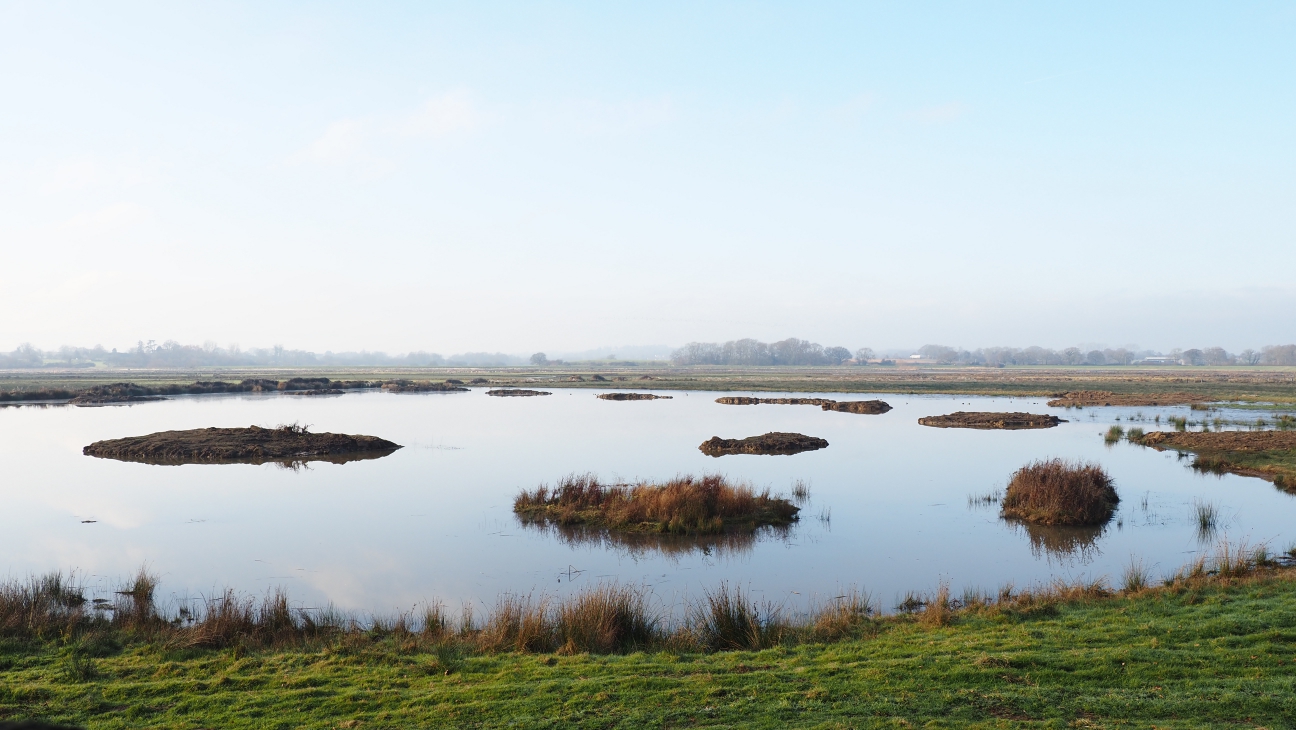
The lagoons were glassily calm, marked by the winter calls of waders like redshank. I’m not very good with wading birds, I’m better in the woods. In the distance you will see the South Downs on a clearer day. The mist still sat there to hide them from lowland eyes, with temperatures as low as at least -3.
On my way in a couple had stood for minutes staring through binoculars at a song thrush on the path. I was waiting for them to look away so I could nip by, but it went on for so long I started to wonder if they were statues paid for by Swarovski. Their song thrush was enjoying a moment in the sun as I made my way back up to the exit. A worthy perch for this mighty songster.
One morning recently, I spent a couple of hours wandering around my local tract of the Sussex Weald. The bracken and beech were glowing as the sun edged its way up through trees. The sun had blown the world wide open. After a personal self-imposed Omicron lockdown to protect a significant event, it felt like the sun had ripped up that anxious feeling of being locked away. Life was in full flow:
Sun rising, melting the frost and ice in the woods. Winter bird flocks – blue tit, nuthatch, siskin, lesser redpoll. Great spotted woodpecker hammering to mark out its territory. The chirp of a skylark passing over the canopy, perhaps on migration, maybe heading to the South Downs.The hollow sound of the M23 and aeroplanes connected to nearby Gatwick. The strategic calls of crows. A jay screeching. Gunshots pop beyond the woods.
The light in January and February appears at a fairly sociable hour, and after frost the landscape glistens even more. At this time I seek out beech leaves, with their patchworks of fading cells and arrowing veins.
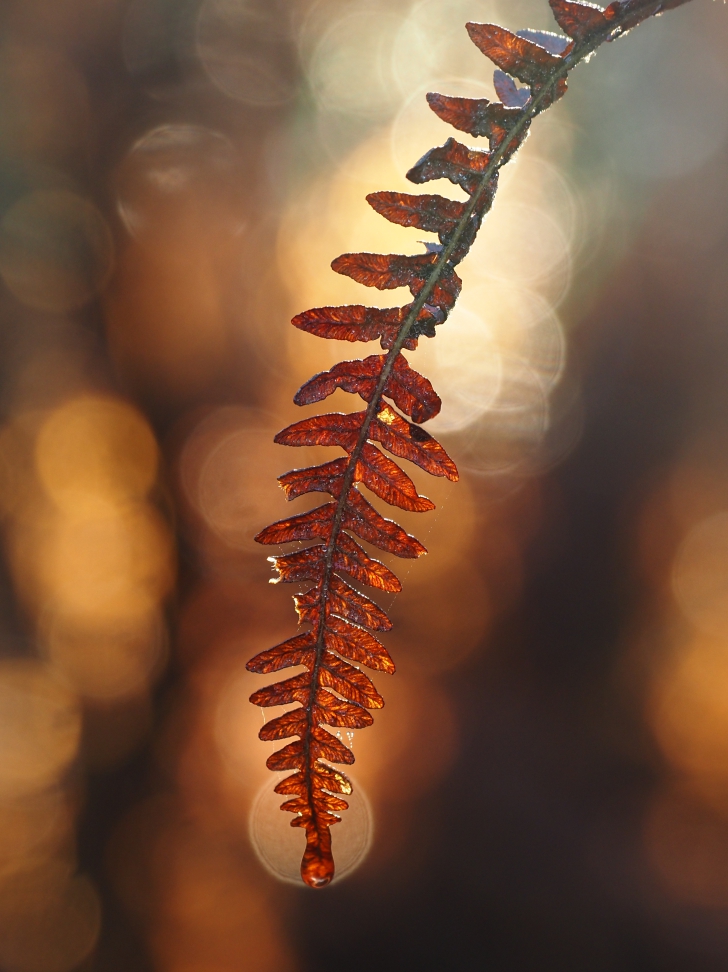
I was using my 12-100mm f4 zoom lens, with more a mind for landscapes, when I spotted this bracken frond dangling down with a droplet of water at its tip. The sun was creeping up through the pines in the distance. The melting frost in its path upon reaching the bracken providing the lush bokeh circles that bed the image down.
I read recently that the photons of sunlight that touch our skin take 200,000 years to travel from the sun itself. That’s around the time that our ancient Homo sapiens ancestors were evolving. So often we can barely see weeks or months ahead when the world we live in is so ancient in its making, it can feel impossible to comprehend. Taking the time to stop and think about it makes life so much richer.
I’m in the middle of reading an excellent book called The Way Through the Woods by Long Litt Woon. It’s about rebuilding her life after the sudden death of her husband, in part by becoming an official mushroom identifier in her native Norway.
This wonderful book has also taught me about my own case of mycophilia (a love of fungi):
The mycophile endeavours to minimise the risk by adopting an extremely cautious approach to mushroom picking – ‘defensive mushrooming’ – and by continually increasing their knowledge.
p.99: The Way Through the Woods – Long Litt Woon
I love this definition. I am extremely cautious about eating mushrooms (actually quite cautious about most things I eat) and look to add knowledge slowly and surely. ‘Defensive mushrooming’ is a role I am happy to undertake.
Now, I’m not much of a forager, for all manner of boring reasons that probably need a blog of their own. But over the years, after finally recovering from a devastating encounter with a tub of M&S cream of mushroom soup, I have learned to enjoy eating mushrooms.
The majority of fungi that I consume are in the form of mycoproteins in products like Quorn and other ‘plant-based’ (LOL) sausages and meat replacement things. If you thought science was slow to identify that fungi are not plants – officially in 1969 – then wait until you see what supermarkets are up to. I’m also partial to shiitake mushrooms which I use in broth or soups with pearl barley, garlic and ginger.
Finding chantarelles
Back in November I headed out to a place where an edible mushroom, the winter chanterelle (Craterellus tubaeformis), fruits in big numbers. I wanted to gather a small amount to try in a pasta dish. Previously my partner bought me some dehydrated horn-of-plenty from Spain, my only experience of eating from this family of delicious fungi. I didn’t use them in the right way and so probably wasted them, to be honest. I needed to put that right.
I had seen and identified winter chanterelles in the past, in the same wider woodland area. They’re easy to ID because of their yellow stipe, the time that they appear, and their ‘false gills’. One of the chanterelles had kindly confirmed its spore print, as can be seen above on the caps of a couple of nearby shrooms.
Here are those beautifully networked ‘gills’ and the strong yellow stipe (commonly known as a stem, of course) which help to identify the mushroom.
We gathered a small number of mature mushrooms and took them home in a plastic box.
Cooking chantarelles
At home I washed the mushrooms (the white spikes are from some hedgehog mushrooms) in a colander. There were some nematodes and other bits of soil so you do need to be careful to clean them. The nematodes were placed outside in my garden somewhere suitable for them. You are probably completely put off eating wild mushrooms after that sentence…
Then I laid the mushrooms all out – hedgehog mushrooms on the right hand side – and you can see they’ve been cleaned up.
I then fried some onions in butter and garlic. Or maybe it was olive oil, I can’t remember!
I chopped the chantarelles in half down their centre and added them to the softened onions and garlic in the pan.
The pasta of choice here was gnocchi (is it officially pasta?) which is part potato, part wheat. It’s really easy to cook. I think I boiled it first but you don’t always need to do so. We consumed it like this. I can confirm it was really delicious and that the chanterelles had a lot of flavour.
Things to remember
I would suggest to anyone reading this who wants to go and find wild mushrooms to eat, to consider the following:
Are you able to correctly identify the mushroom you want to consume?
Is the mushroom definitely edible?
Do you have permission to pick mushrooms in the relevant location?
Is the location uncontaminated and therefore safe to consume things that have grown there?
On the evening of Wednesday 19th January at about 21:00, I spent some time photographing the winter night sky. I was in my West Sussex garden, where there is a surprisingly good clarity of starlight despite the nearby town and railways, etc.
A few nights before when it was a bit cloudier I spent the time just looking through binoculars at the stars. As someone new to stargazing, I was amazed by the gains made from looking through glass. In among the cloud were hundreds of tiny stars where nothing appeared to the eye. This will sound quite dim to more seasoned observers, but the difference made was a joy.
One little cluster I had my eyes on was the Pleiades. This appears to the naked eye like a dusting of light, to the east of Orion. Looking through binoculars gives much greater clarity. On Wednesday night I used my camera to get some images, later cropped and edited a bit in Lightroom.
The Pleiades, from West Sussex, approx. 21:30, 19-1-2022 (Olympus E-M5 MIII + 45mm f1.8 lens(cropped)
The Pleiades is made up of seven larger stars, giving it another name of the ‘Seven Sisters’. That’s the third time that name is used, to my knowledge, in place-naming alongside the Seven Sisters cliffs near Eastbourne in Sussex, and the main road in north-east London. The Seven Sisters road is named after elm trees which are no longer there.
The above photo by Carlos Budassi is obviously not as good as my attempts (JOKE). It does, however, help to illustrate this star cluster beautifully. I’m not sure of the camera, lens, settings or editing required to produce this image but it is of astonishing quality. Also, how good of Carlos to share this image with Wikimedia Commons so people can use it. Thank you, Carlos.
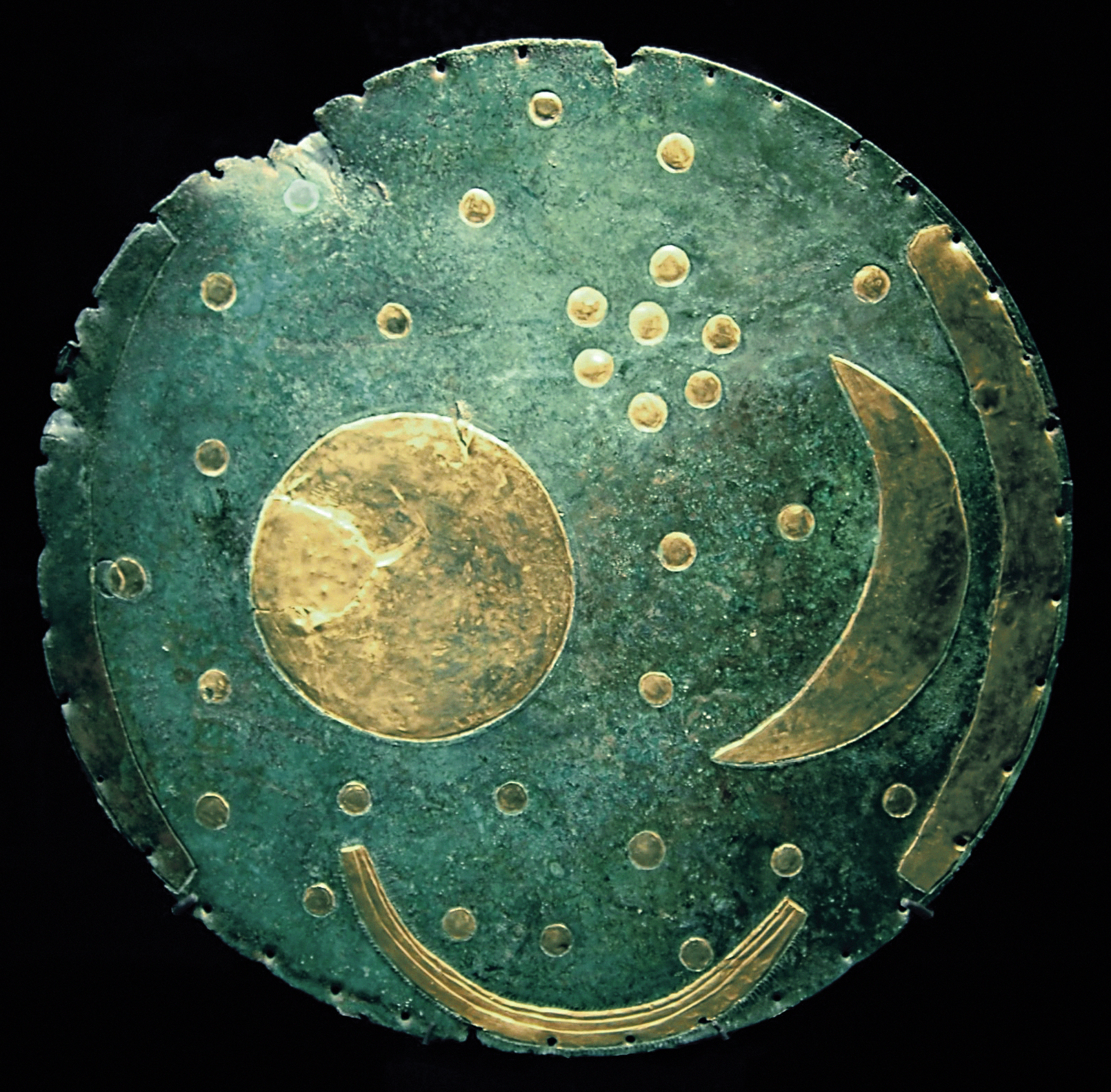
The first known depiction of the Pleiades comes from the Bronze Age as seen in the image above. Wikipedia titles the image: “The Nebra sky disk, dated circa 1600 BC. The cluster of dots in the upper right portion of the disk is believed to be the Pleiades.” Indeed, there are seven of them.
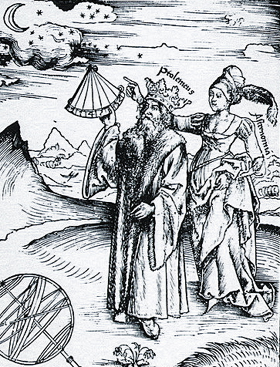
Ptolemy, Public domain, via Wikimedia Commons
The name ‘Pleiades’ is said to come from the Ancient Greek and is related to sea-faring rather than the Seven Sisters.
I’ve had a burst of American visitors in recent days (to my blog, not my house). So thanks for visiting, y’all, and sorry about the year you’ve had. You may have noticed I’ve slipped to monthly posts on here. Between April and October I posted blogs every Monday without pause, which is a tricky task…
Hi everyone! After a bit of a break from podcasting, it’s great to release a new episode of Unlocking Landscapes. This has taken a while to edit but it’s a really relaxing one I think. So much so that I actually fell asleep when listening to one of the drafts a few months ago.
In May 2021 I walked 8 miles into the Sussex Weald to see if I could hear a cuckoo. The weather was fine and there were loads of birds out, many of them in full song. This is an episode best listened to through headphones so you can hear the birdsong, the wind through the trees and the buzzing of bees in the woodland landscape of the High Weald. It’s an immersive episode with a guided walk feel, focusing on listening to the surrounding landscape.
I am a big fan of Russian film and literature. Nature, wildlife and the landscape is often at the forefront of this great field of art. It’s the beating heart of the films of Andrei Tarkovsky, the poems of Anna Akhmatova and the short stories of Anton Chekhov. The vastness of Russia’s landscapes is central to much of the art to have come out of that amazing and poorly understood country (especially in the UK & US).
In Chekhov’s short stories there are simple, beautiful descriptions of nature. Chekhov travelled widely as a doctor, treating people across Siberia. It’s where he also found time to write his short stores, and much of that work was inspired by his encounters with ‘ordinary people’. The first place that I ever heard of hoar frost, was in one of his short stories.
Living in cities for most of my life where the heat-island effect quickly melted frost and ice, I didn’t really have the chance to see this until moving out to Sussex.
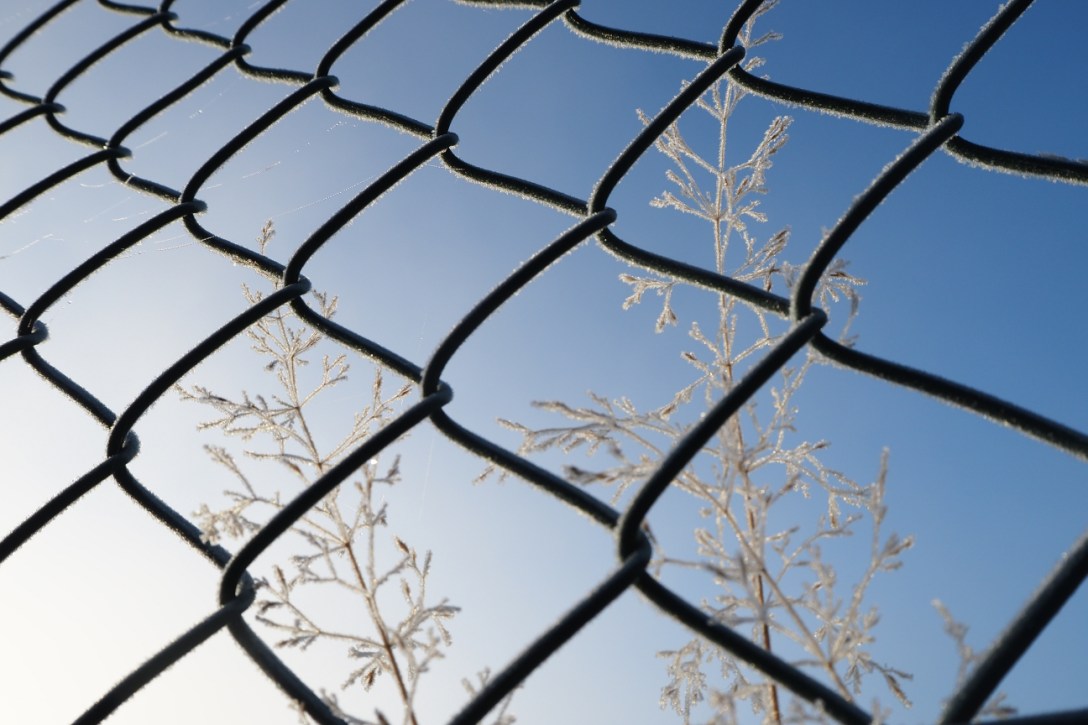
Ground frost forms when the air is still and cold, usually on clear winter nights. Water vapour in the air condenses on solid surfaces, and as the surface temperature drops below 0°C, ice crystals form.
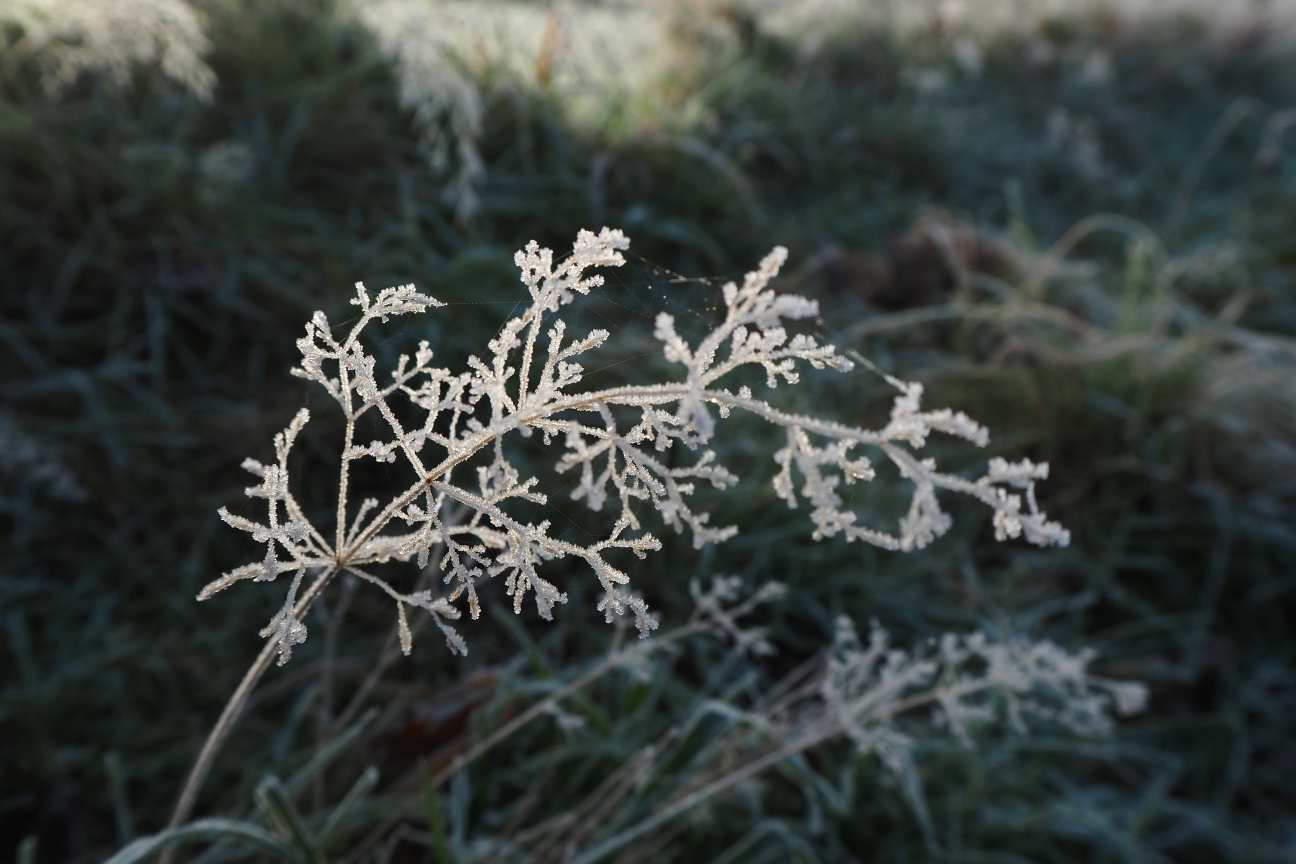
The other day on a morning walk before starting work, I saw something close to it. The night before had been clear and full of stars. In the morning I was walking near the river Arun when I began to notice the heavily-frosted grass heads of bent, on the edge of a tennis court where the strimmer can’t reach.
Frost will always remind me of my dad telling us as children that if you put your hand down the sides of the bed Jack Frost would get you (I wrote about this almost exactly a year ago). The cold down there felt so real. Dad got this story from his childhood, when he and his siblings would wake up in their house in Liverpool to find frost inside the windows. My grandmother would greet them all and say that Jack Frost had been to visit. Apparently they absolutely loved that he’d dropped by in the night!
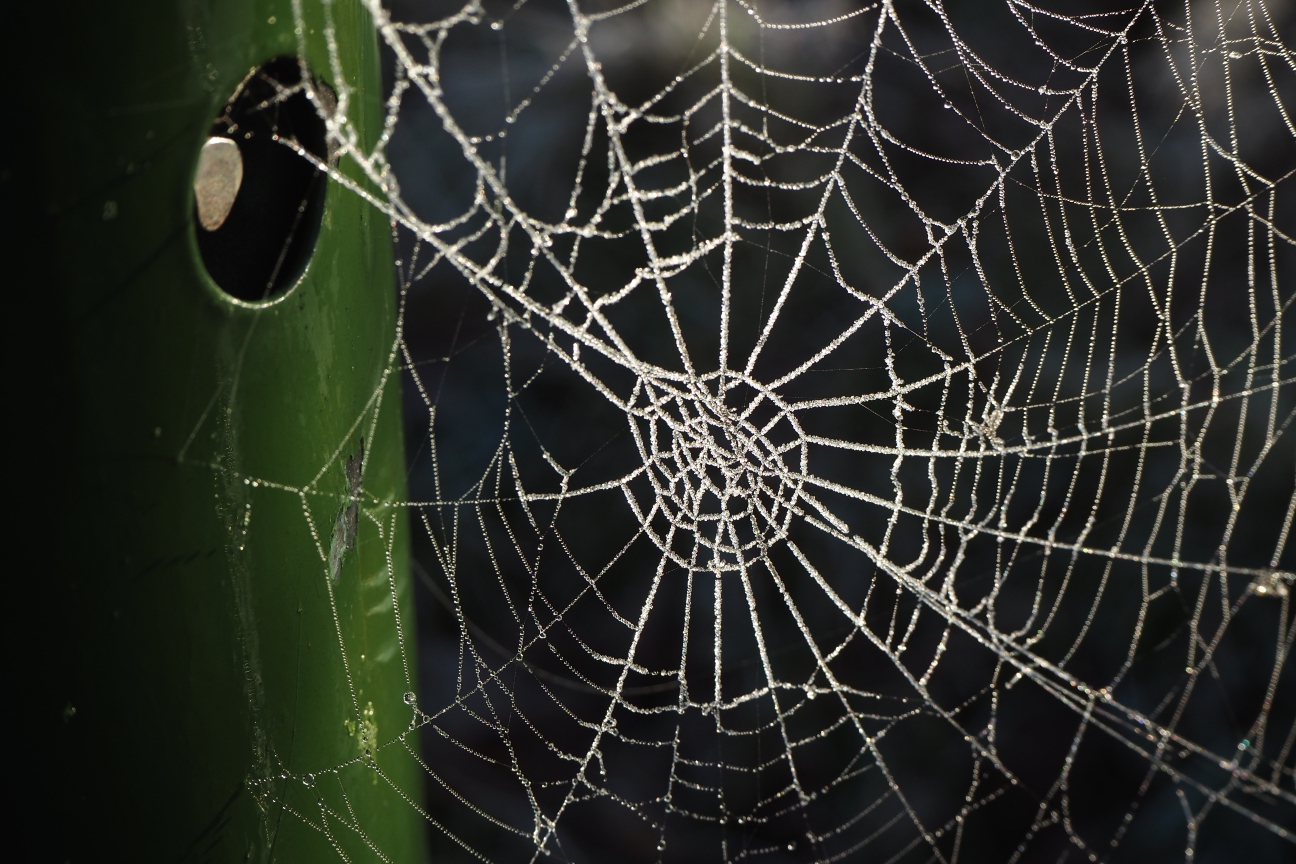
I didn’t have a macro lens with me on this walk, but I pushed my camera’s capabilities to that point. Looking closely at a frosted web which was beginning to lose its frostiness, I noticed a non-biting midge that had become trapped probably days before. The beads of the melted frost were trapped in its hairy antennae and around its limbs. It would look spectacular in extreme close up, but without that equipment at the time, a view of the ‘unfortunate’ insect’s final resting space will suffice.
These long, cold nights are a good chance to spend some time exploring the night sky. In mid-January we’ve had a number of gloriously sunny days and clear nights. After one of the dreariest Decembers on record in the UK, with only an averaged total of 27 hours of directsunlight, it is very welcome.
The clear nights have given me so much to photograph: starry skies followed by frosty, foggy mornings with beautiful light.
Tonight (14th January) I spent a bit of time in my garden with my full-frame DSLR and a 50mm lens with an f1.4 aperture. That’s a very bright lens, meaning it collects a high level of light which is very good for astrophotography. My garden is packed in among several others, so when one neighbour a couple of doors down pops out, they usually see me as a man standing there in the dark. It can be quite awkward when you say things like, “I’m trying to get a photo of Uranus”.
I couldn’t even manage that. Here’s what I did get:
Orion is my go-to constellation. I find it easy to identify and does help to anchor my eyes in the night sky.
Hoping the diagram above makes sense to you. Orion’s belt is the most obvious part of the constellation. Don’t mess with Orion!
My 50mm lens is bright but it doesn’t reach very far. That said I did crop part of the image to capture part of the Orion nebula (‘Gt. Neb.’ in the image above).
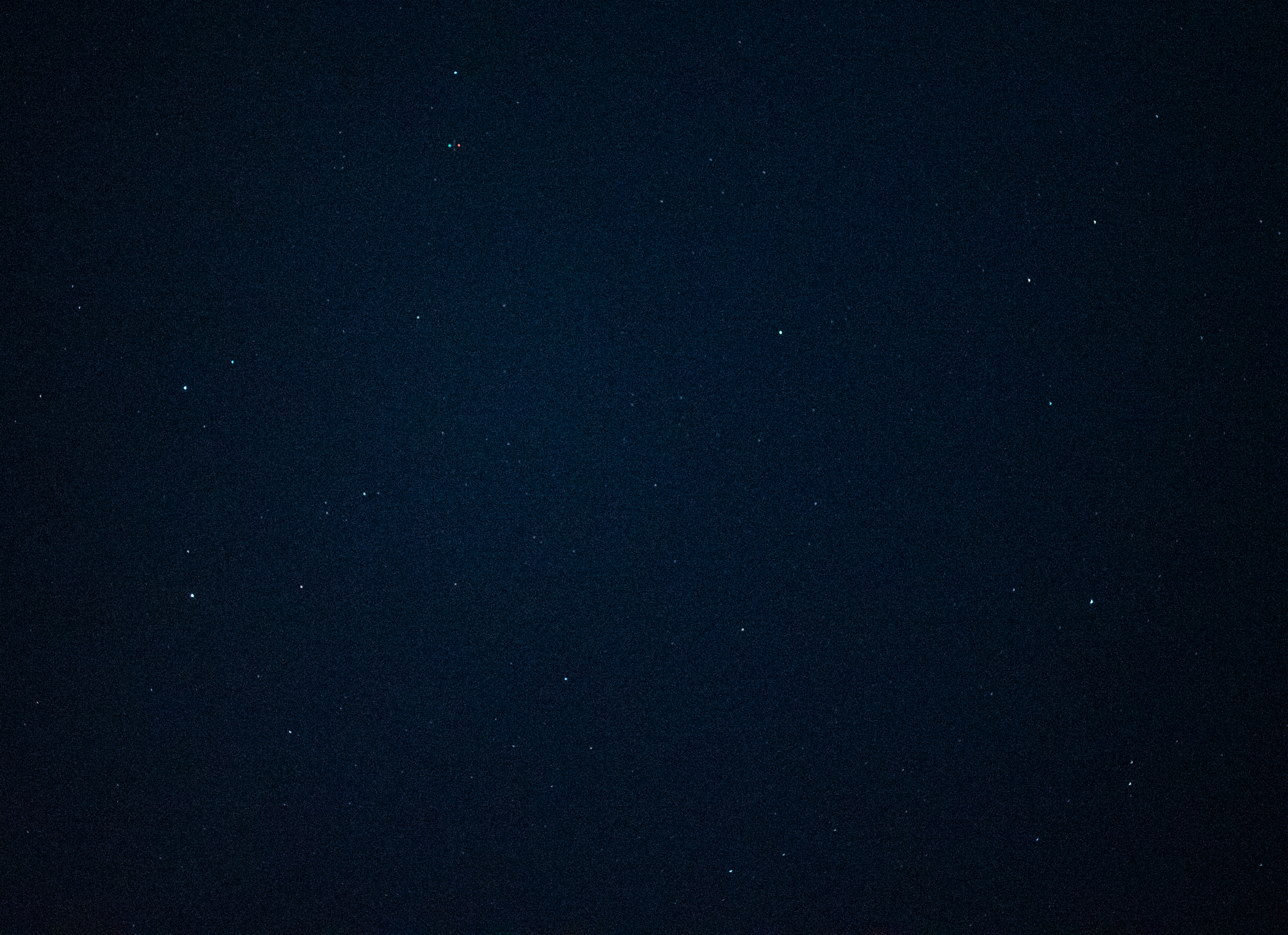
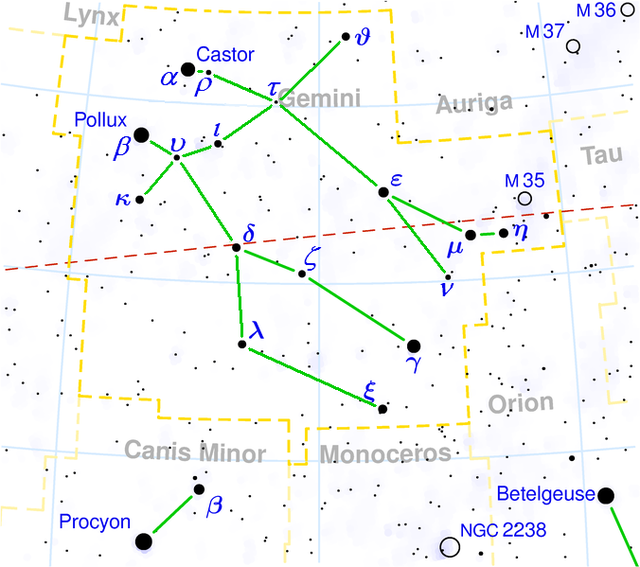
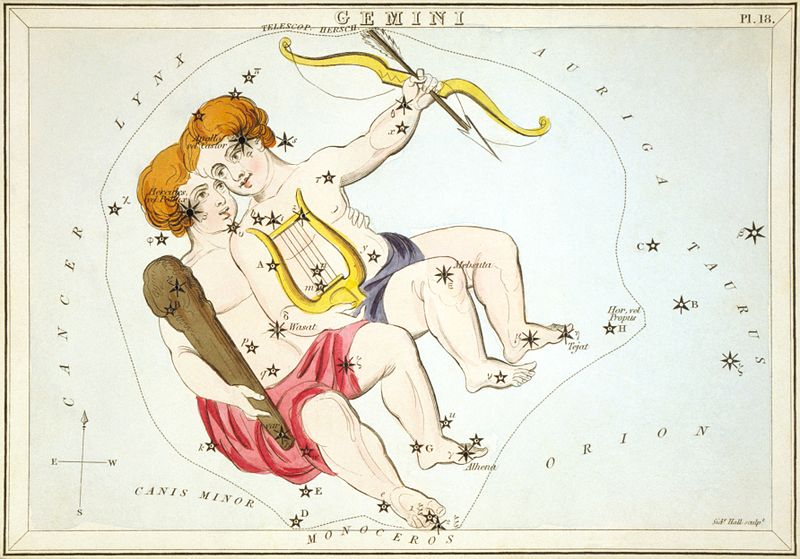
This is one of two new constellations for me that I photographed: Gemini. It’s probably not that easy to make out but it covers the whole of the image. I think also that I tilted the camera to much which makes the two anchoring stars on the left hand side (Pollux and Castor) out of sync with the diagrams. Come on, it was dark out there!
Sidney Hall, Public domain, via Wikimedia Commons (restored by Adam Cuerden)
Gemini is Latin for ‘twins’, representing Greek mythological figures Castor and Pollux.
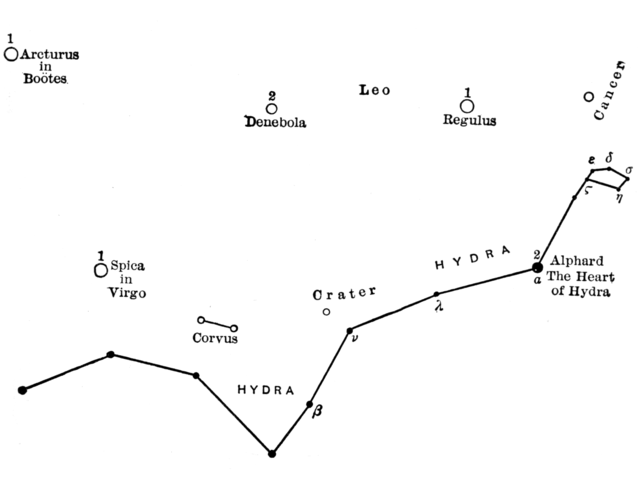
The second of the two new constellations for me was the head of Hydra, which can be seen as the clearest collection of stars here.
Sidney Hall, Public domain, via Wikimedia Commons (restored by Adam Cuerden)
I was amazed to read that Hydra is the largest constellation in the night sky. It’s not surprising when you later see the diagram and how huge it is.
Here’s my seasonal update of stuff you don’t need to know about, but then welcome to the Internet. What I’m writing Soon I will be self-publishing my third poetry collection, Fool’s Wood. It’s seven years since my last one and this collection has taken longer because of LIFE. There will be a booklet and also…
Here’s another entry in my slow-blogging Oak Timbers series. You can view my galleries and posts archive here. I visited Salisbury in Wiltshire (south-west England) for the first time in 2023 and was really charmed by the place. If you’re interested in this kind of thing, Salisbury is the place for you. Here’s a gallery…
I’m getting into more of a routine of recording and editing audio, so here is the latest episode of Unlocking Landscapes. Listen on Podbean or via the usual platforms. Also via YouTube: https://youtu.be/y1K9Pqx68to?si=B-Fdhf3sdDH35Z8w Following on from July’s rather optimistic fungi walk, I popped back to the same area of ancient Wealden woodland to see if…
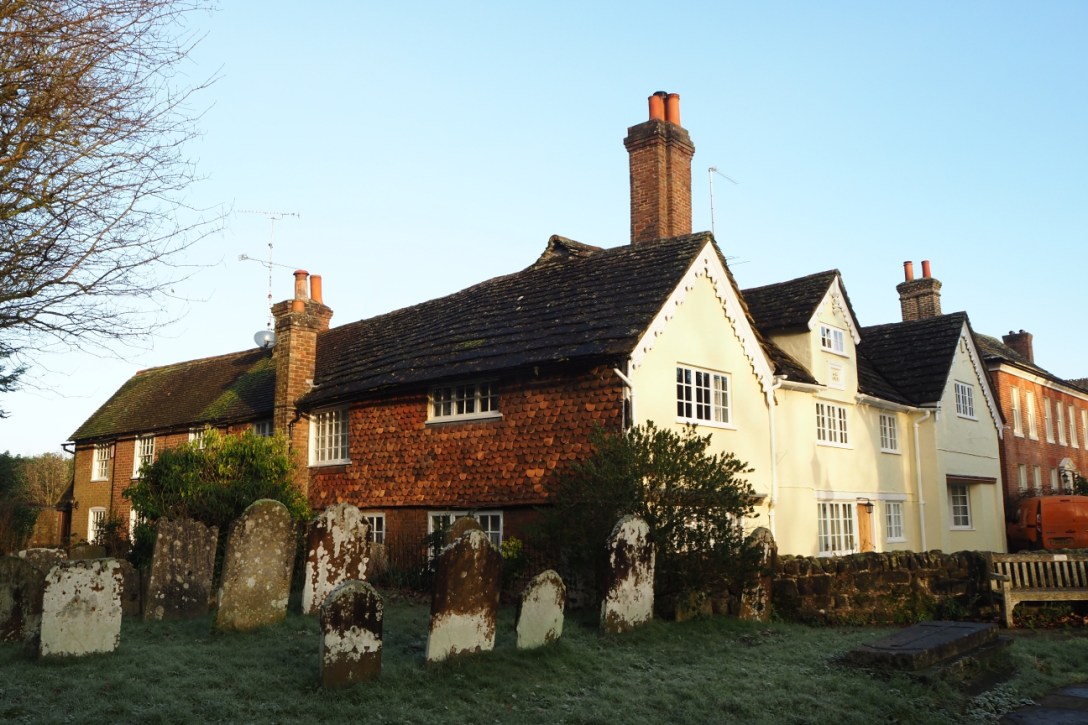
This post is a bit misleading (hello, Prime Minister) as it’s about a house at the edge of St. Mary’s Churchyard in Horsham, West Sussex. Apologies if you’ve navigated here expecting something more numinous. Here a beautiful old house resides. The problem is it’s name is not exactly blogpost title worthy, and I can’t think of anything snappy. It’s at the end of the famous Causeway, a road that’s renowned for its colourful timber-framed and weather-boarded buildings.
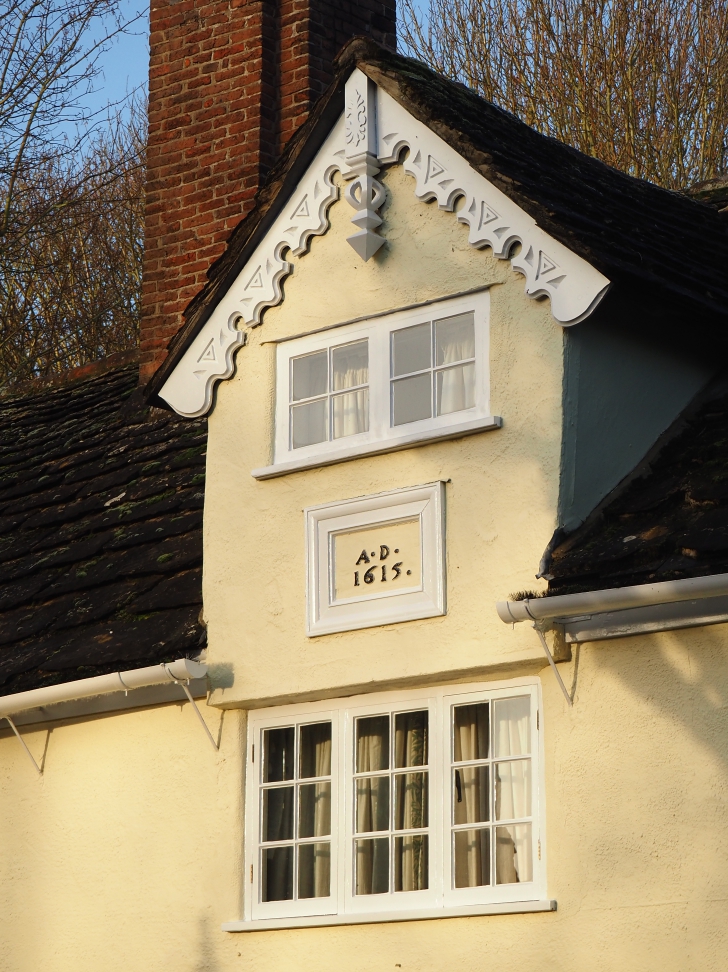
The house is simply called 24-26. It’s dated to 1615 and has since been broken into three properties and extended along the churchyard’s edge. The trees to the right hand side are lime trees that form an avenue along the Causeway, illustrated below at a younger stage:
The Causeway, Horsham, page 112 Book about the Highways and Byways of Co. Sussex, England(via Wikimedia Commons)
There’s no doubt it will have been built with oak timbers from the oak woods of the Sussex Weald nearby, likely from the extensive, pre-modern range of St. Leonard’s Forest.
It is currently covered by hanging tiles and plastering on the street-facing side, meaning no typical black timber frontage can be seen from the outside.


.jpg)




















 Unlocking Landscapes
