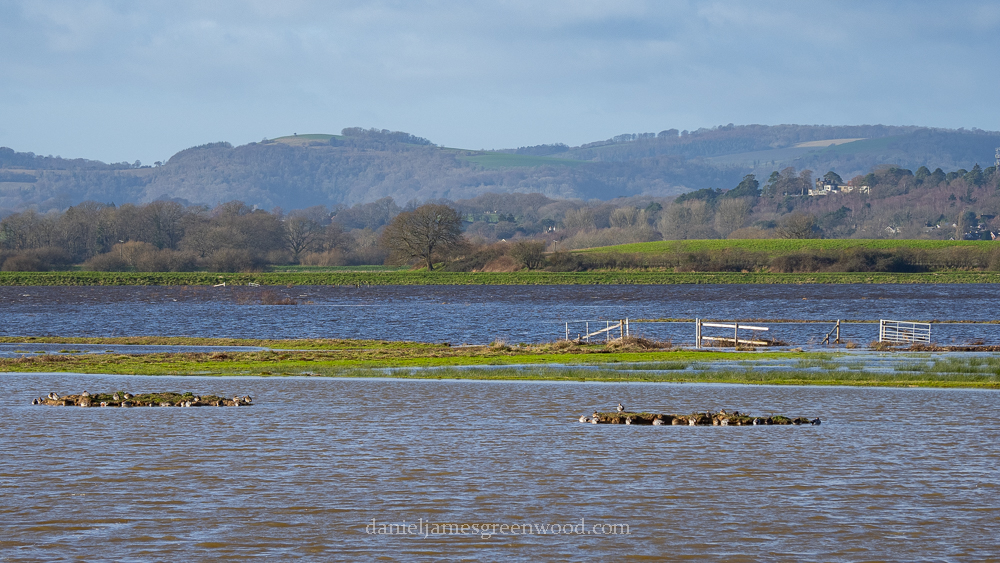
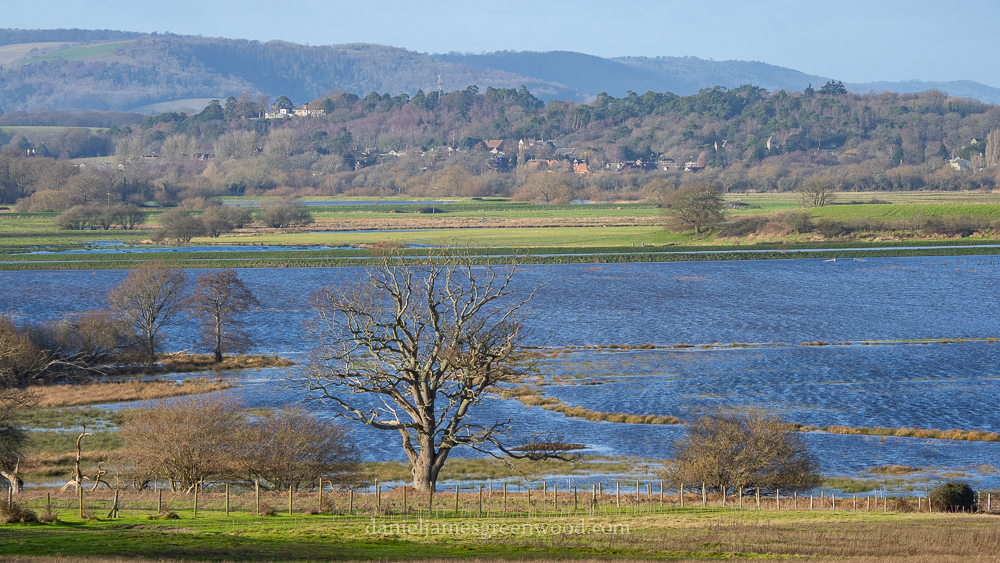
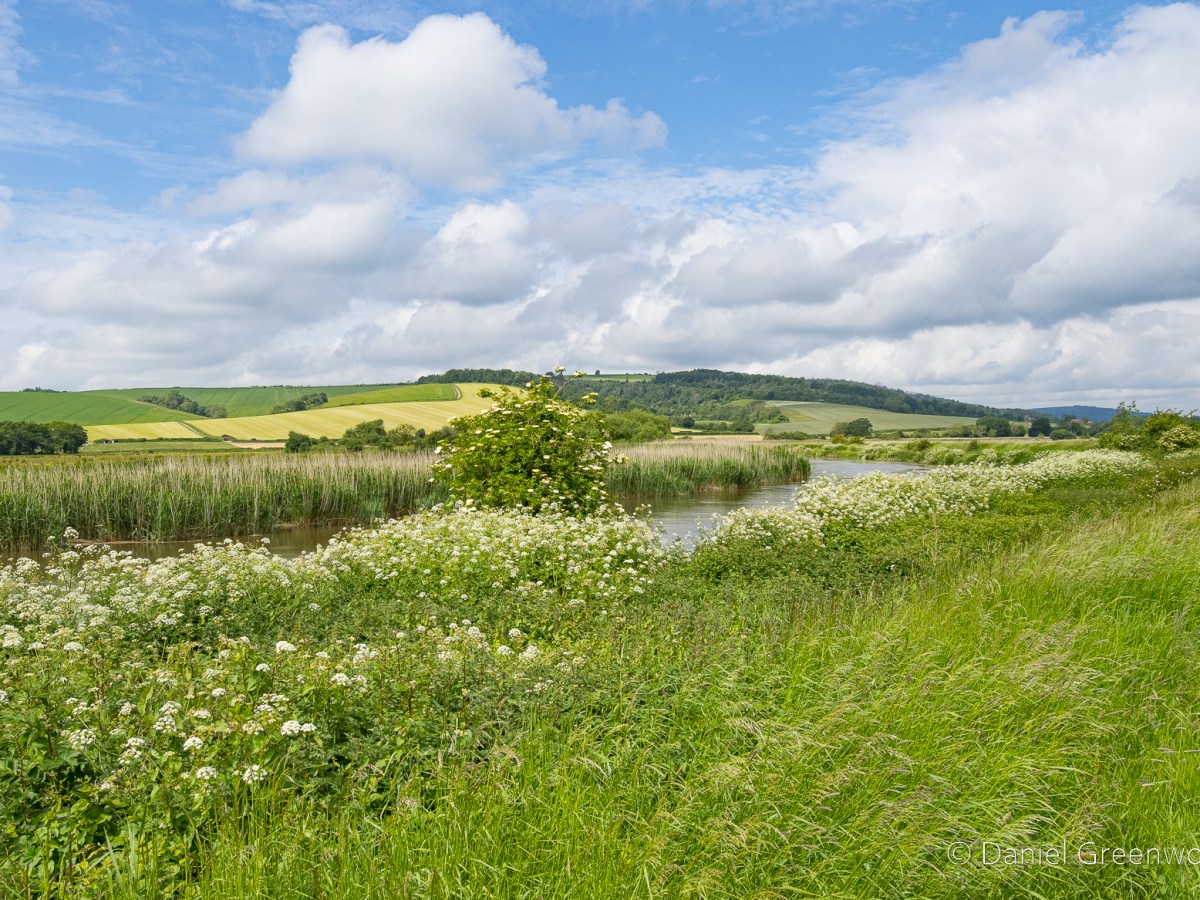
A lot of rain has fallen in Britain in January. One way I like to gauge just how much, is to visit the wetlands around Pulborough and Amberley in West Sussex.
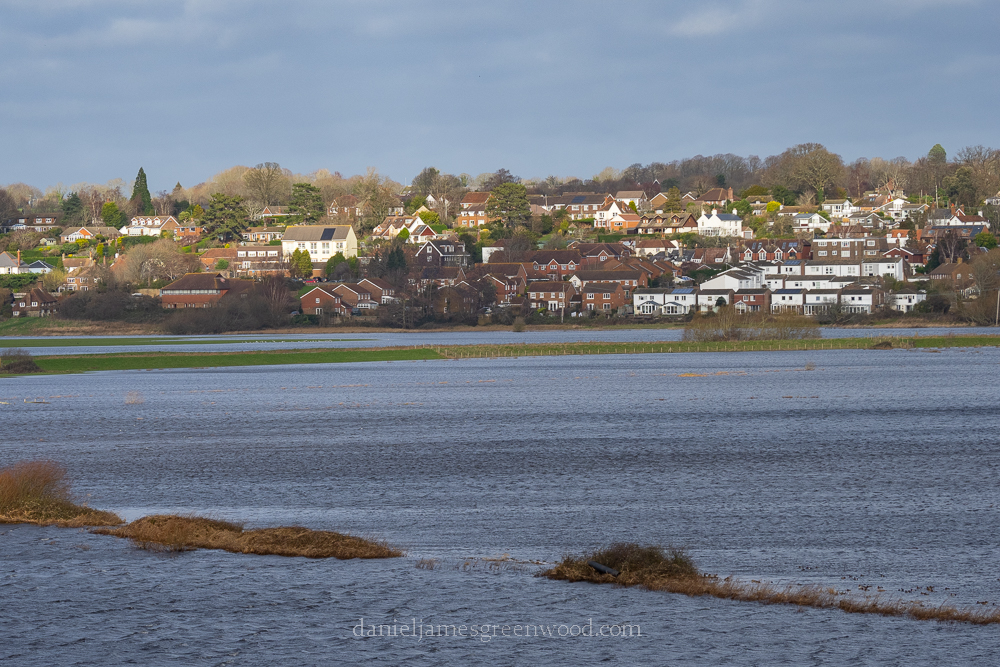
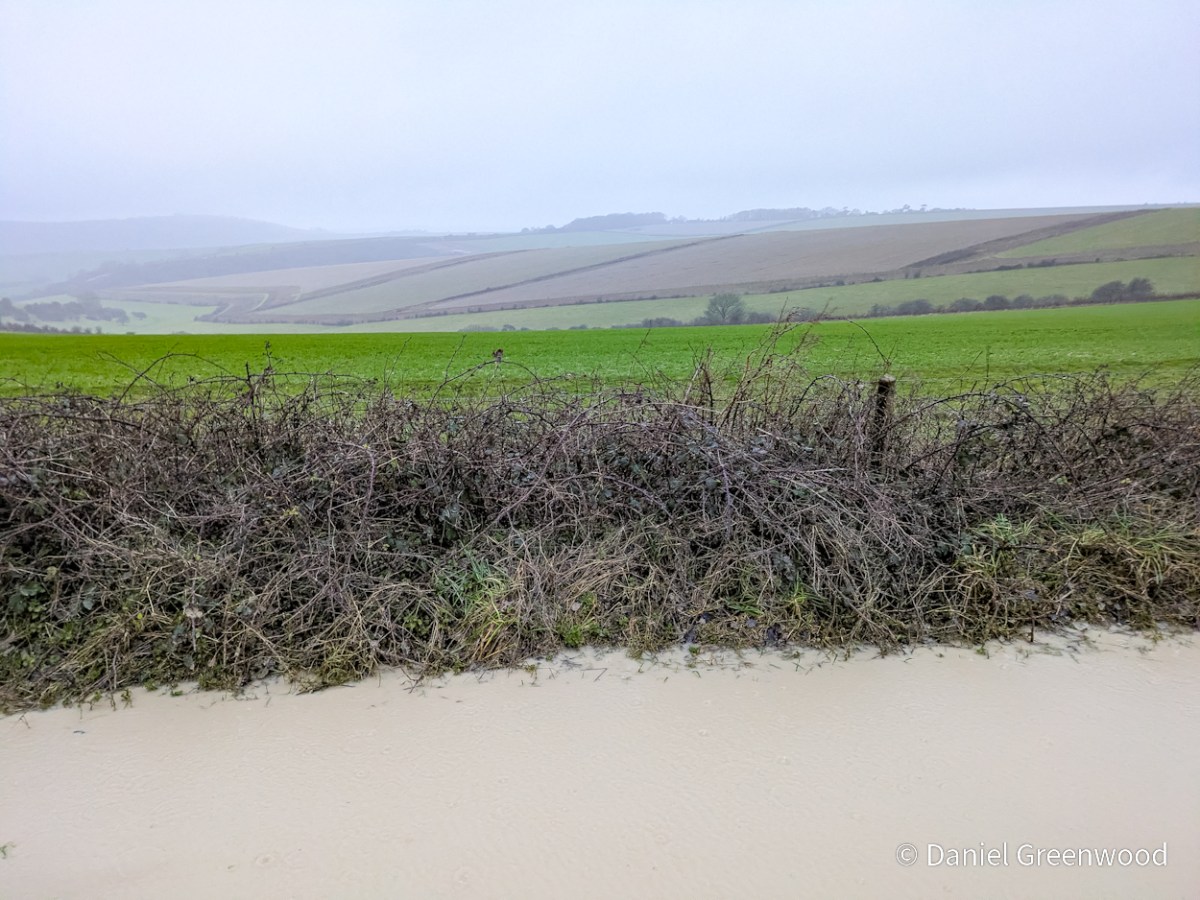
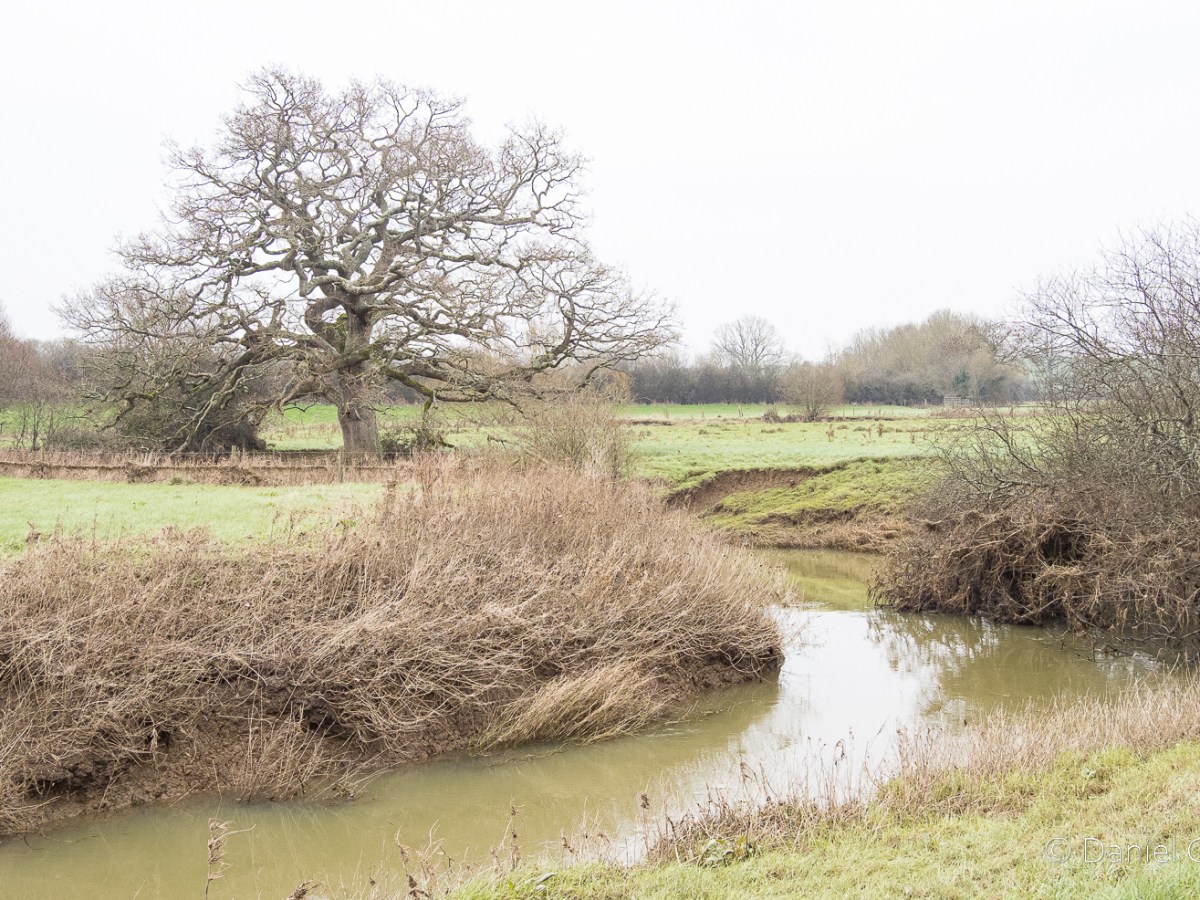
In the winter months, roads are routinely closed as the Arun breaks its banks, doing what it used to without much issue. On the morning of Friday 13th January, the green fields of the Arun valley were a deep, oceanic blue.
It’s rare in England that you get to see nature’s raw, awesome power. When you do, it’s not always a good thing. Seeing water flooding the landscape as it should, where it won’t destroy homes, is easier to enjoy.
Towards Pulborough, the flooded fields were speckled with hundreds of ducks: mallard, shoveler, widgeon. The buildings of Pulborough town looked ready to slip down into the deep blue sea.
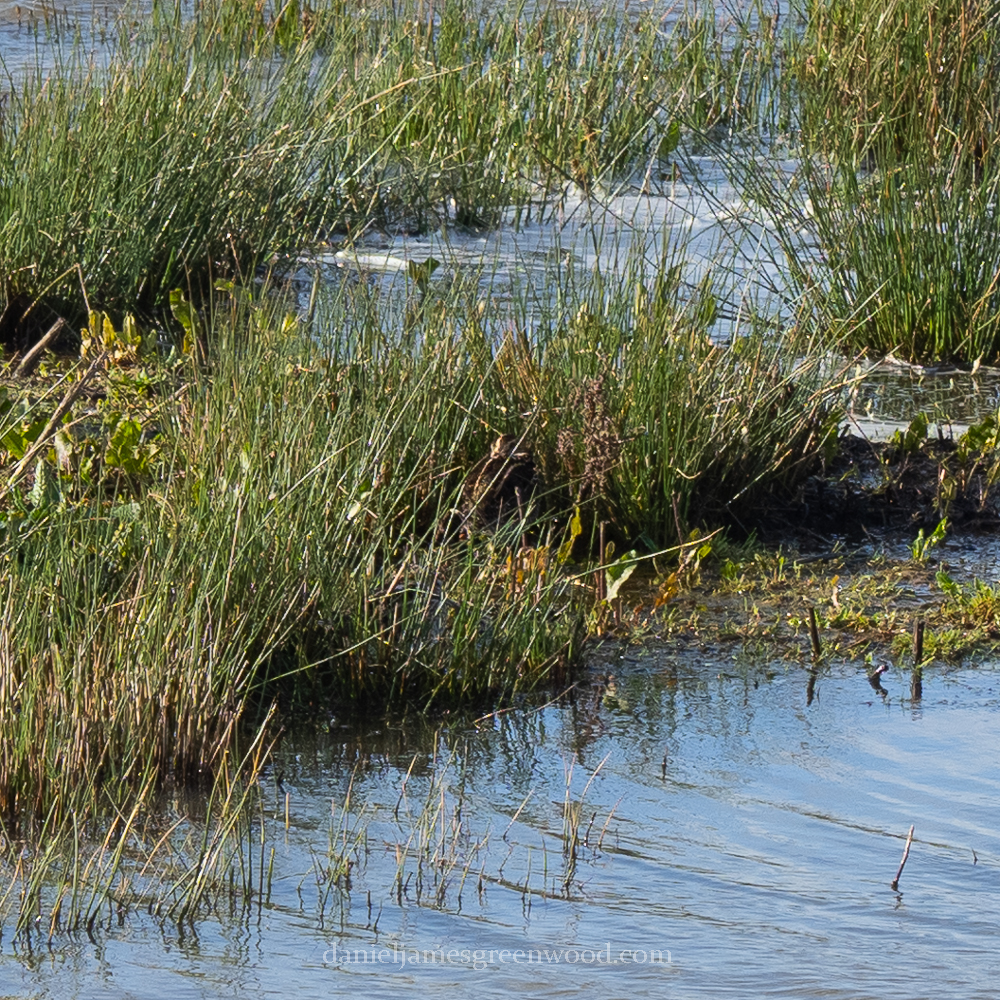
On the human-made islands lapwings contended with ducks for a spot on the bank. Elsewhere I overheard a man point out a snipe tucked away between rushes – ‘you can see it with the naked eye,’ he said.
Sure enough, there it was but 25ft away inside the fenced wetland. I wonder what it must have made of its small, safe spot, out there among the winter floodwaters.
Tuesday 10th January 2023 was one of those awful January days in London. It rained a lot, was windy, and there was no direct sunlight to bask in.
Add to this the fact that the night before a fireball enjoyed a spectacular demise in the night sky, and was easy to view across much of the UK. At the time – 20:00 GMT – I was outside, in the dark, being distracted by the massive moon and a neighbour saying she didn’t want to run me over. Somehow, I missed the fireball and lived to hear about it on the radio the next morning.
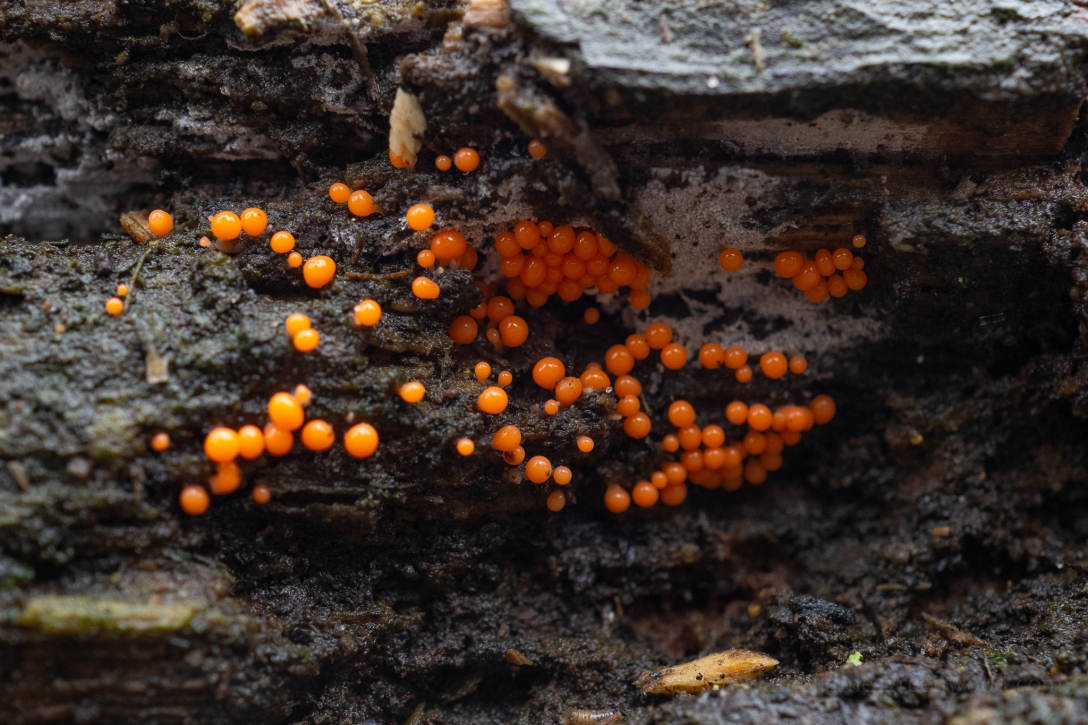
Anyway, back down to Earth. Though the woods can be ghastly at this time of year, I find them to be a decent shout for slime moulds. Not to be proven wrong, I was proved right by the sight of little (read: tiny) orange beans at the path edge on an old oak log.
These little droplets of tangerine dream are commonly known by slime people as salmon eggs. It is amazing how these declining fish can fight their way up through places where there are no rivers, to lay their eggs in a bit of wood.
You know that was a joke, yes?
Slime moulds thrive in damp, dark places, usually in decaying wood that has been saturated by winter rainfall.
Elsewhere, the smaller polypores of turkeytail and the like were ‘showing nicely’ as the birders say, though rarely of a turkey’s tail around here.
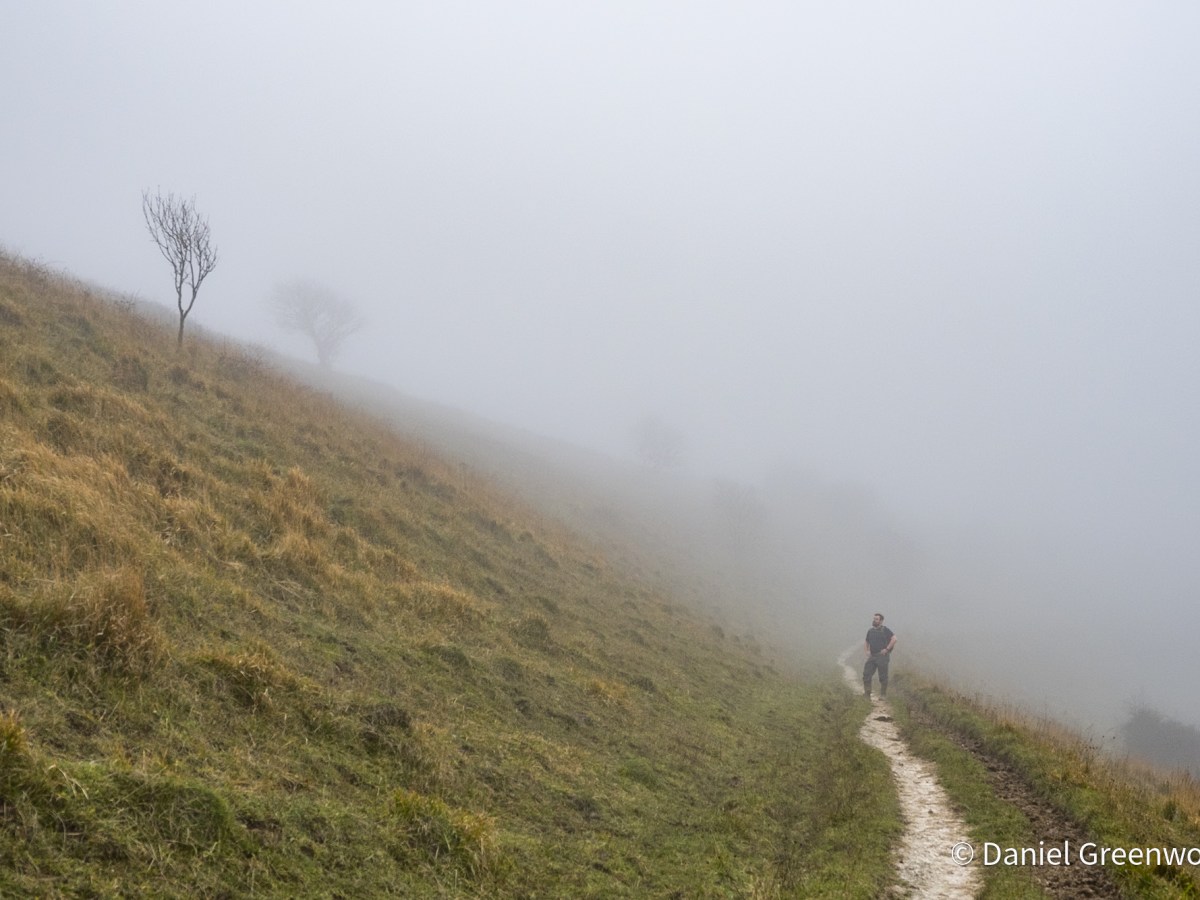
Ditchling, East Sussex, November 2024 This post describes a very foggy walk from the village of Ditchling in East Sussex, up onto Ditchling Beacon and the South Downs Way, and then back down to Ditchling via Westmeston. Thanks to my walking amigo Jonathan who navigated the mist, stiles and flooded valley paths with aplomb. I…
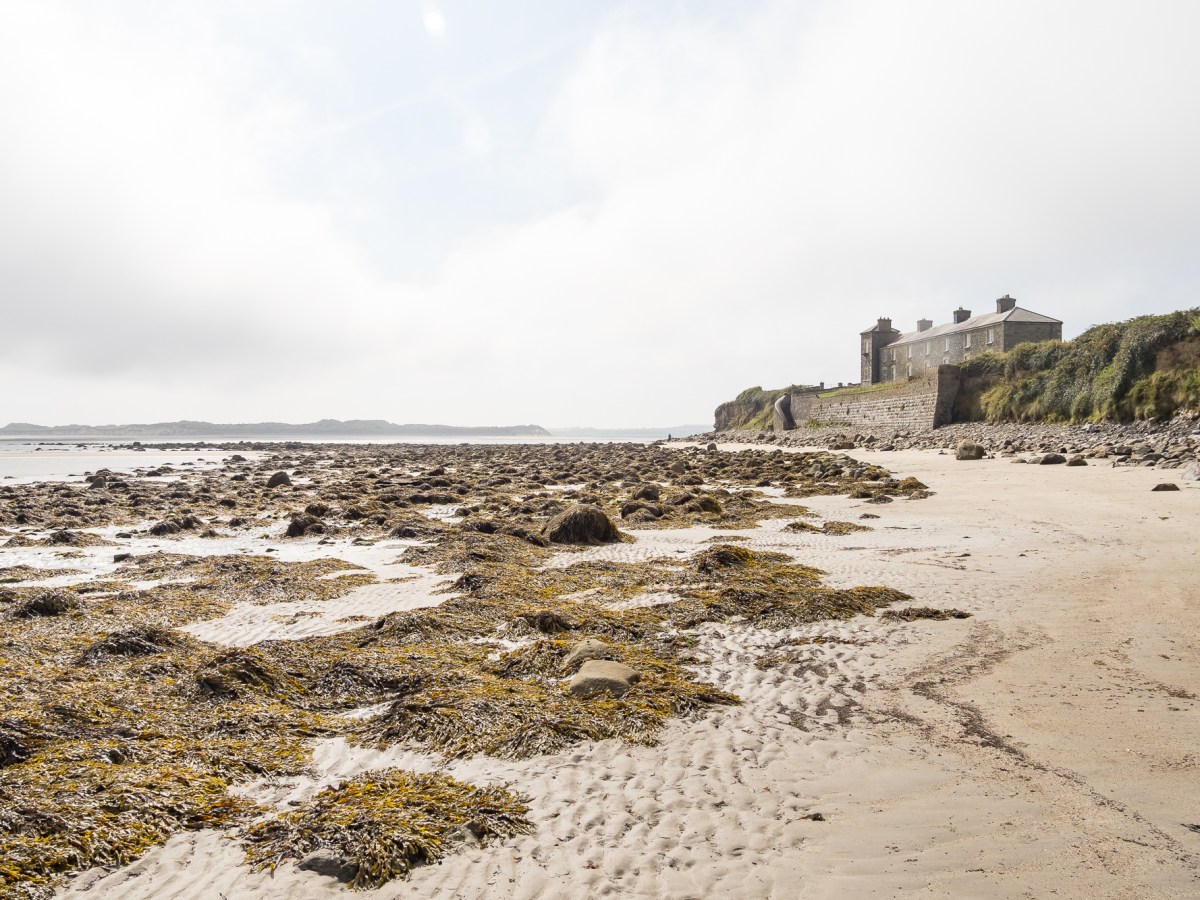
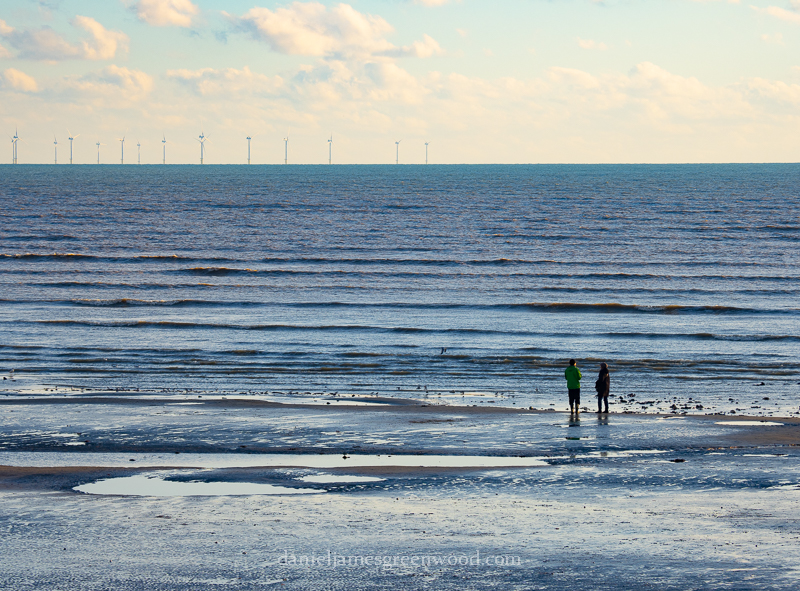
A new year walk on a very busy stretch of the West Sussex coastline. Proof, if you needed it, that I can do watery blogs.
Now, I am a total novice when it comes to marine ecosystems. I know mostly where the sea is and that the moon has convinced it to sway back and forth. It’s also made of water, among other things.
When it comes to crabs, however, nah.
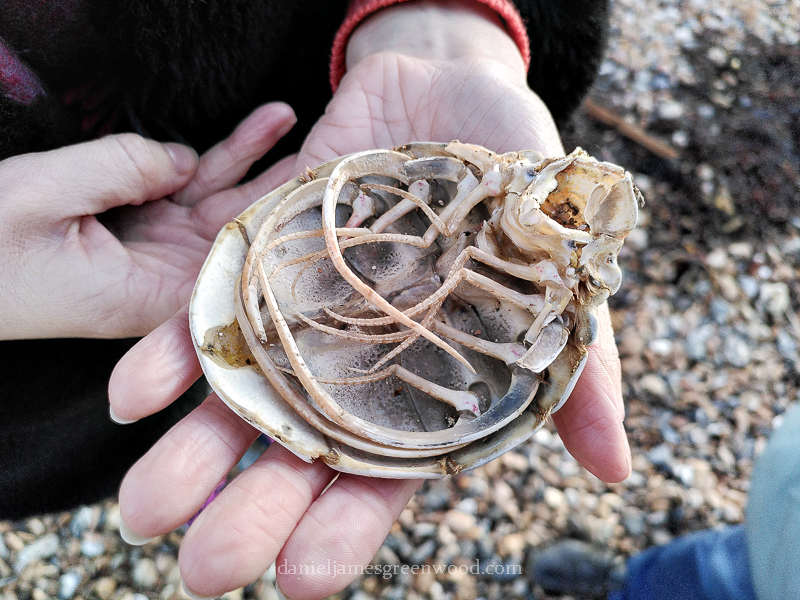
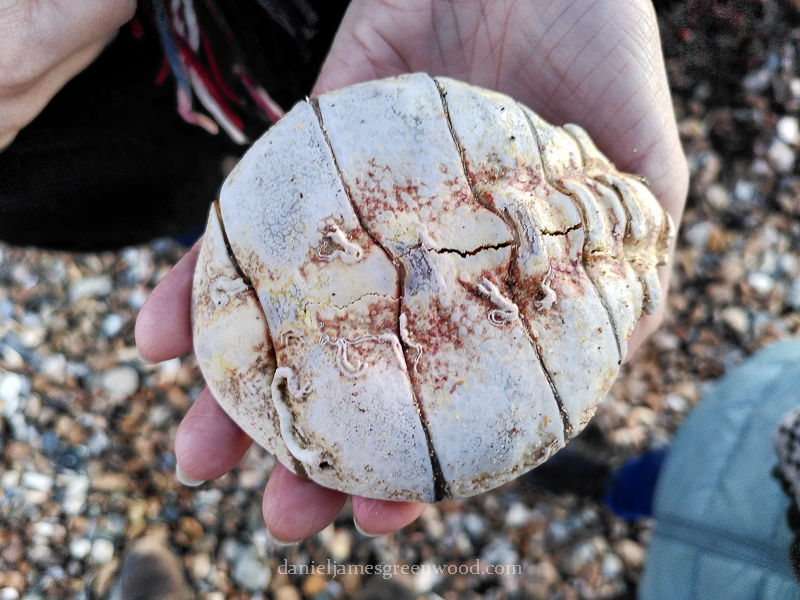
My partner is a beach scourerer, snapping into squirrel-of-the-shore the moment she steps foot on a beach. She found this bizarre-looking shell/casing/wild packaging. I took a pic and then popped it onto iNaturalist. No dice.
I asked ‘marine ppl’ on Twitter. It appears this kind of person is particularly active on a Monday evening! Many replies later it turned out that it was a likely reproductive pouch of a female spiny spider crab. Thanks to everyone who helped.
Can any marine ppl help with identifying this please? On West Sussex coast. Many thanks 🦀🦑🦪🦈 pic.twitter.com/xRtXczcEZG
Interestingly, a couple of other people had posted the exact same thing on the Worthing coastline in recent days. It shows the power of social media for community science and ecological learning, not just the misinformation, hate and division it seems famous for.
Sometimes iNaturalist doesn’t get the job done, often because the photos are technically inadequate. The very active ‘nature communities’ on Twitter can reach many people with helpful info, and very quickly. I find that with identification it’s a matter of several avenues of knowledge and information. In the same way that there is no one winning wildlife field guide, and definitely not for fungi.
On another note, I was kicking myself after forgetting to try and find Mercury and Venus slipping away with the Sun out at sea. Then again, a band of cloud on the horizon may have blocked any views. Maybe another time.
A chilly afternoon in the Weald of West Sussex on one of those days in early January when you remember their names again. “Moonday” 9th January 2023 was appropriate seeing as the famous old block of cheese was up in the sky that night, howling back down to us. A wolf moon, indeed.
Moons are easier to come by than ‘shrooms, the main focus of my walk around a wet woodland reserve where the river ran free of its banks, merging among poplars like something from prehistory (i.e. no Internet).
A boardwalk cuts the edge of the wetlands where I usually expect to find velvet shank mushrooms. Along with scarlet elf cup, this is one of the winter gems of the fungal kingdom in Northern Europe. In truth, I didn’t find any that I could photograph without having to (theoretically) enter into a wetsuit or small boat.
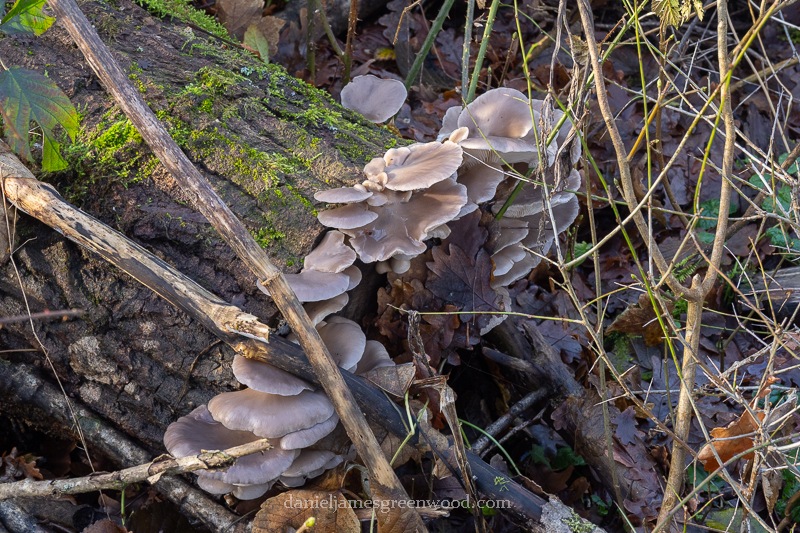
Instead it was a coastal species that proved easiest to snap, if only in name. One of my favourite Twitter accounts and reader of this blog recently posted some oyster mushroom photos. Another timeline glimpse made me think – this is a seasonal trend, and I should keep an eye out in real life.
They’re a beautiful fungus with dark, purple-grey tops and pale, almost white gills underneath. They’re edible, but I was just there for the pics. You can buy them in the shops or grow them yourself at home. Another friend/regular reader even has them growing in her garden from timber sleepers. Well jel.
One of my favourite actual, single funguses lives here. I’m pretty sure it’s a willow bracket, growing from the bottom of a branch like a hat plucked off someone’s head below/a UFO/some kind of weird leather cushion from the Victorian period.
It makes me laugh every single time. A reminder: if some part of nature isn’t humouring you, “you’re not doing it right”.
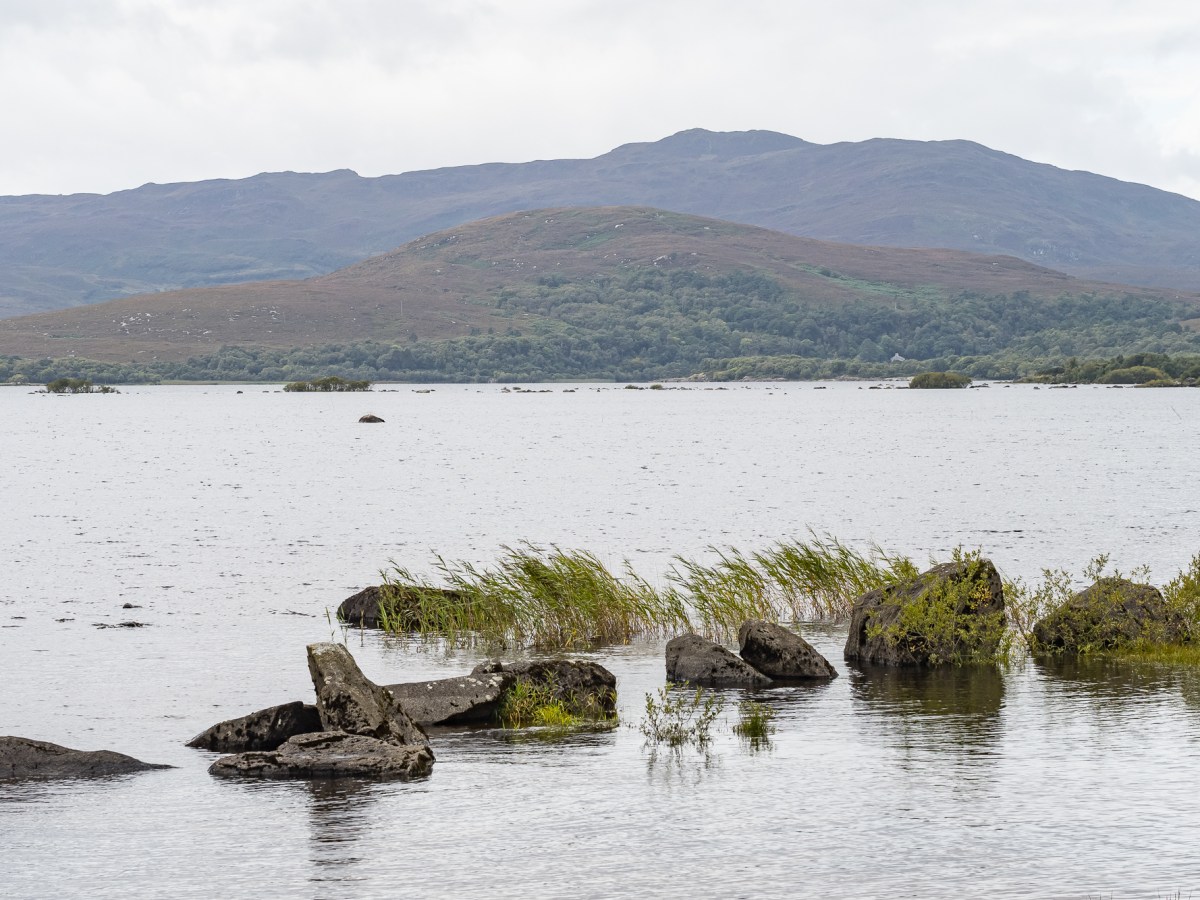
Rathcroghan, Roscommon, Ireland, September 2024 This short post shows some of the images I snaffled from a pit stop at the ancient Celtic landscape of Rathcroghan, while travelling from Mayo to Dublin. Apologies if I mangle any of the Irish mythology, it is not a subject I’m at all familiar with. Rathcroghan is one of…
It’s January 2023 and my podcast, Unlocking Landscapes, is 2 years old! Thanks to everyone who has contributed and supported so far.
I do this podcast at my own cost so if you want to support it (it costs a basic £100 annually to host my Podbean account) you can ‘buy me a coffee/camomile’ here: https://ko-fi.com/djgwild
I haven’t posted for a while, mainly for professional and technical reasons. The biggest issue is that I needed to upgrade my ailing desktop PC, which I have now done. It’s in much better shape now, so no more IT excuses but hopefully more podcasts.
You can listen via YouTube here:
Or via the Podbean stream here:
In September I spent a week in Mayo in Ireland and recorded two podcasts. One is an early evening walk in the Ox Mountains, encountering rickety gates and performing ravens. The second one (still to come) is a walk with Seán Lysaght, which I can’t wait to share with you. I’ve been a big fan of Seán’s writing for over a decade, so it was a massive honour to spend an afternoon walking with him. More on that one soon!
In the Ox Mountains I go for a walk, describing the surrounding landscape, capturing two ravens (acoustically) as they fly close by from where the breed in the hills. I also talk a bit about issues with cottages which aren’t connected to mains water, amongst many other things.
An article popped up recently highlighting the chance to see several planets in the sky at once. On the evening of the 29th December 2022, I took out my camera and tripod to see what was happening out there in the garden. Turns out, there was quite a lot going on!
I had actually spent the late afternoon admiring the half moon, with Jupiter in close attendance (below). I was down by the river Arun in the town of Arundel, the sun creating a gentle, pastel-coloured twilight.
Later on in my garden, I ticked off a couple of other planets with the help of my camera, binoculars and the phone app Stellarium. This app has helped me to learn loads, though I struggle to remember it all, of course.
Just visible over an extension of a neighbouring house was Saturn (above, top right), ringless to my eye and the camera’s lens. I had managed to get a rough image of it in the past with rings just about visible.
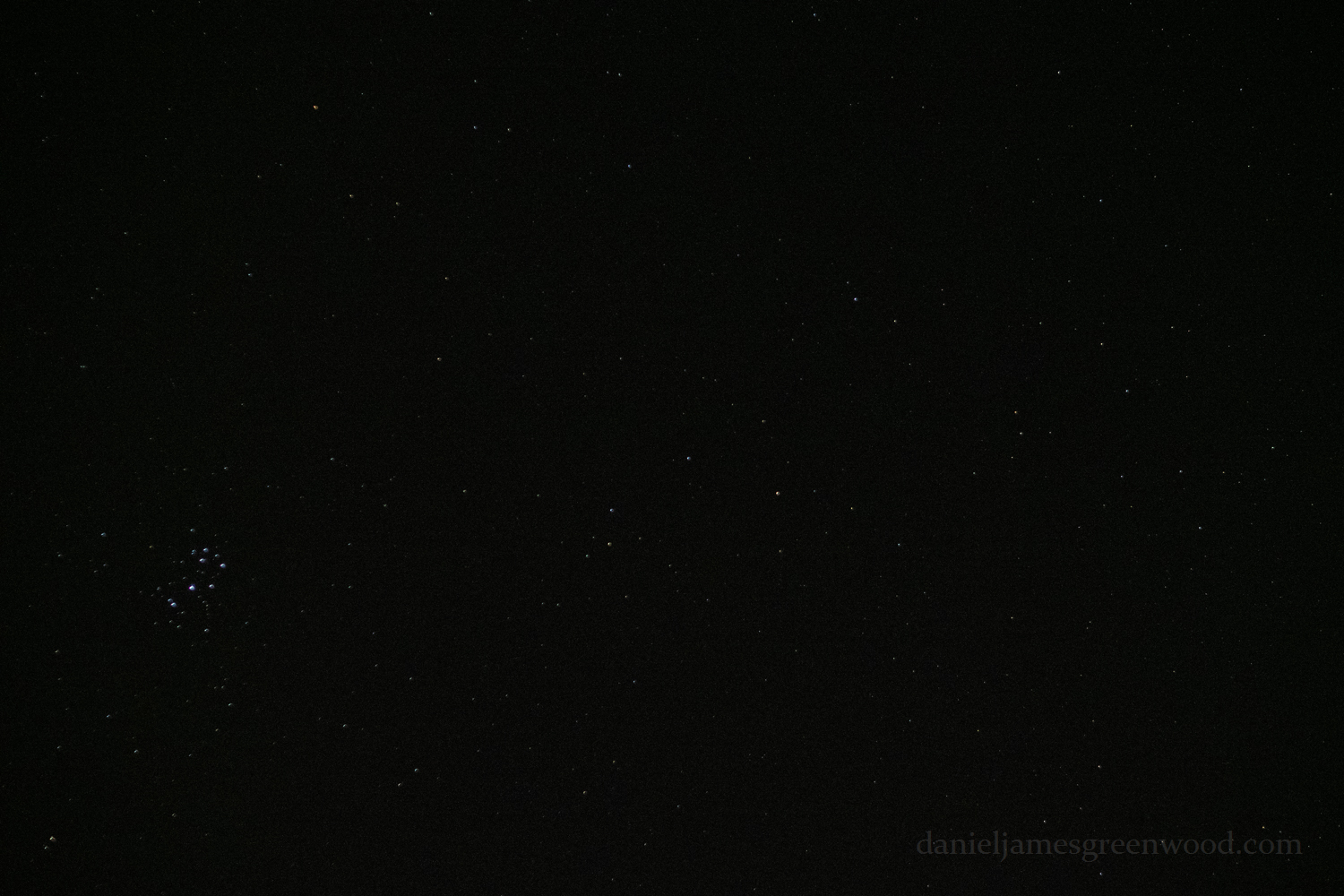
Mars was prominent in the sky, hanging out in the eardrum of Taurus, earwax coloured, too. I used the nearby Pleiades to attempt to find Uranus, something much more difficult to see because of a lack of colour definition or prominence in the night sky.
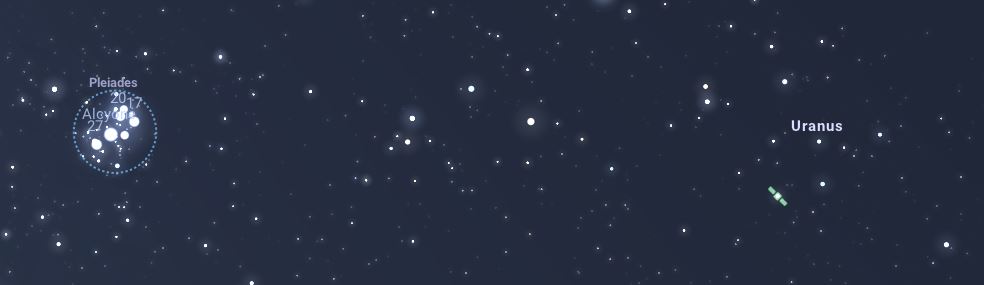
Compare with image below to identify Uranus (best to click/expand)
Screenshot from Stellarium, showing the Pleiades on the left, the ^ roof of three stars, and then Uranus
Using the pitched rooftop shape of a trio of stars (Tau Arietis, Zeta Arietis, and Botein) I found a wonky cross shape. In the middle of the cross was Uranus, indistinguishable in colour from those close by. This is a first for me, which is always a lovely thing.
Far more visually dramatic was the sudden burst of a meteor in Taurus, shooting upwards to the south-east. A little researched revealed this to be one of the Quadrantids, a meteor shower that peaked on the 3rd January 2023 in the Northern Hemisphere.
Amberley to Washington, West Sussex, 4th June 2024 The photos in this post are a mix of Olympus EM-1 MIII mirrorless camera images using a 12-100mm (24-200mm full-frame) lens, with a few phone pics for detail. The photos have been cropped, marked and enhanced in places using Adobe Lightroom. I do not purposefully use Generative…
Pulborough Brooks, West Sussex, Friday 16th December 2022
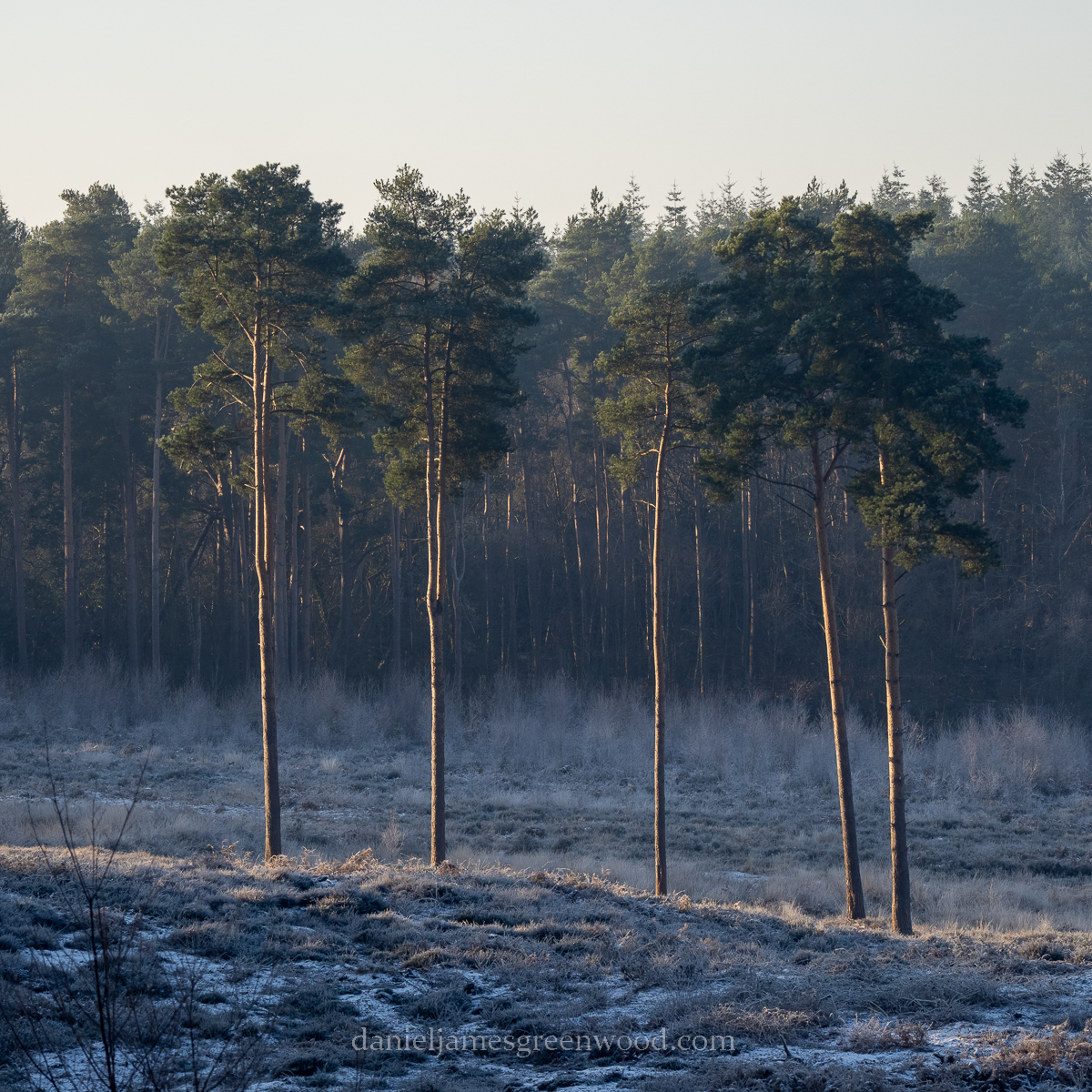
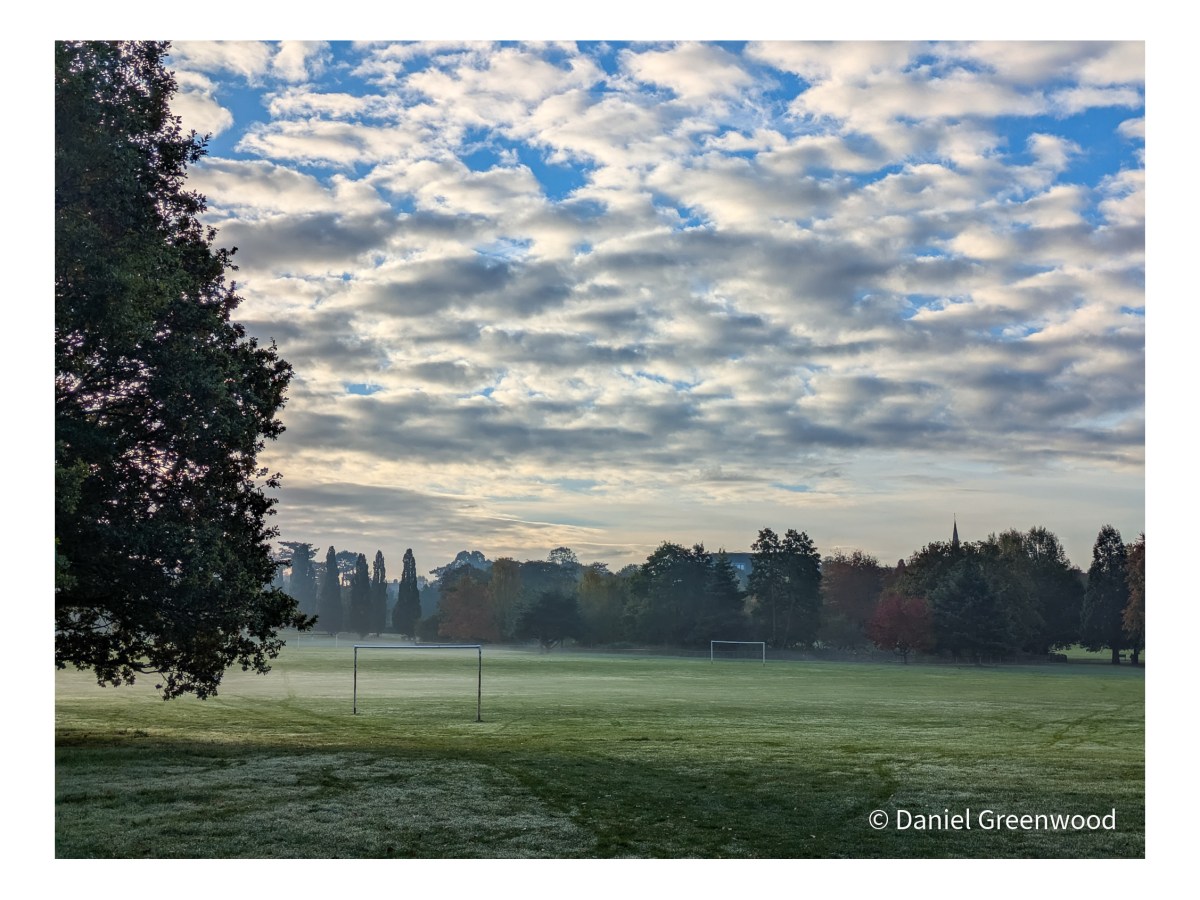
I arrived at Pulborough Brooks as the sun began to rise over Wiggonholt, the heath on the hill.
There are five pine trees that stand together in the open heath, I always seek them out in this light.
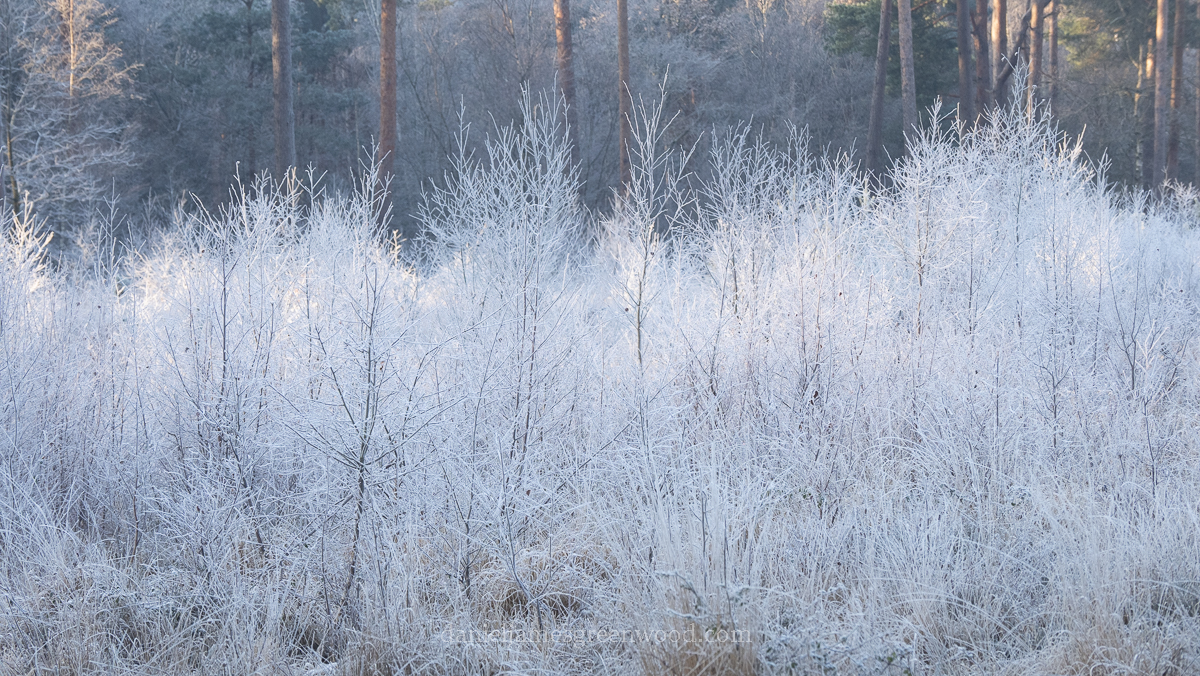
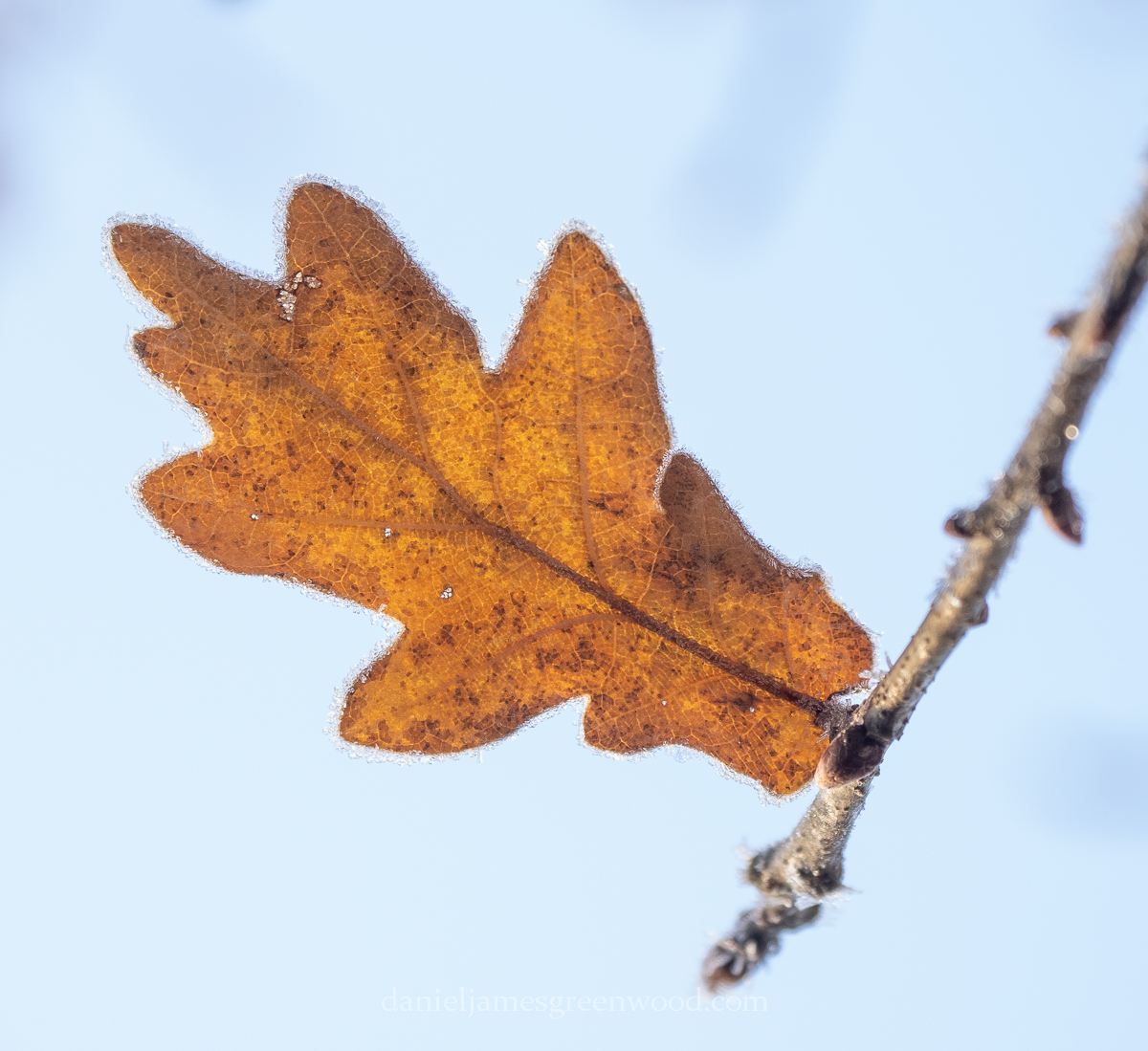
Frost encrusted everything where the sun was yet to reach. Young birches were thick with hoar frost, the yellow leaves of oaks held an edge of ice flakes.
There was little to hear, so much so that even a goldcrest moving through brambles made a sound.
Further round the hill the Highland Cattle were grazing among the frozen bracken. They looked so at home in their Viking get-up, heavy coats whitened by the temperatures. At 8am it was -5.
Out onto the reserve a winter landscape opened out: rock-hard fields with a herd of deer making a break for it; frozen ponds and lakes without ducks and wading birds; and in the distance the South Downs almost hidden by a rising mist.
On a recent visit to Streatham Common in SE London, I was taken aback by the number of December mushrooms.
In SE England we’ve switched from -5 one day, to 12C a few days later. The seasons seem to be collapsing around us, and then reviving themselves. It feels like the only reliability we may have in nature is the amount of light. At this point the Earth isn’t moving off on a different course anytime soon.
Billionaires with ideas need not reply.
Looking through the Common’s oak woodlands I was quite taken by a standing dead oak tree. It was such an unusual shape and it was hard to tell if it was still alive. It wasn’t, in the conventional sense.
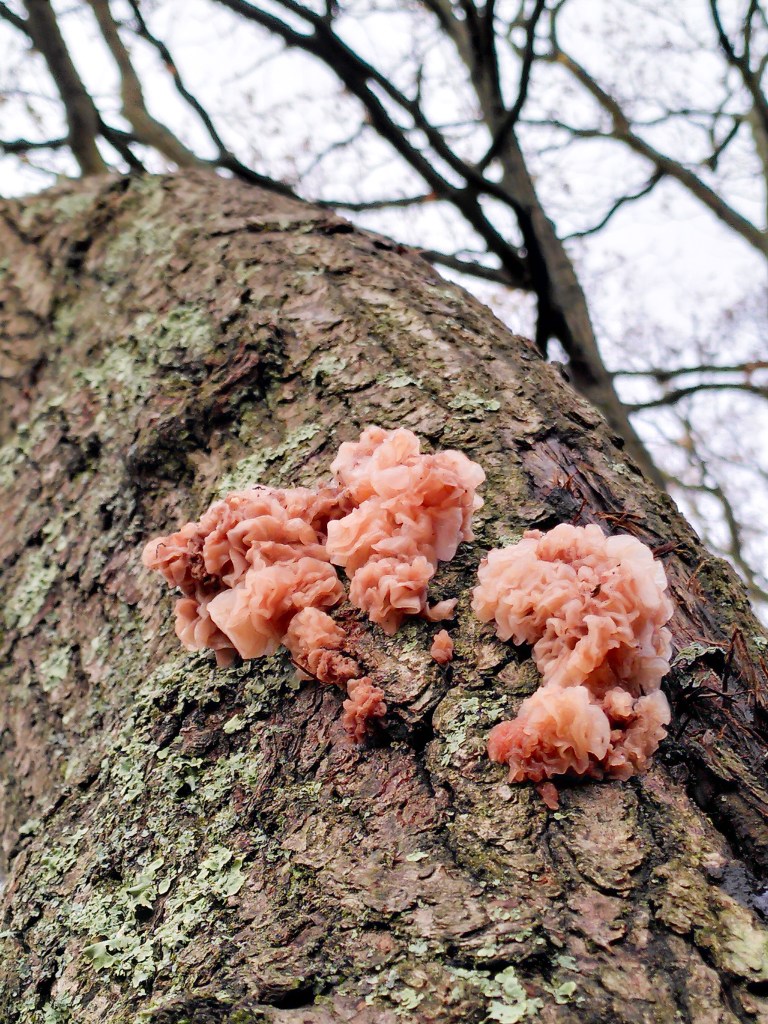
Moving around the tree I noticed the frills of what looked to me to be a brain fungus and what iNaturalist has confirmed as Phaeotremella frondosa. It’s what keeps me looking again and again for this strange stuff. It is always a surprise, and so varied and diverse that each week can provide you with something different.
And with that, I would like to say thank you to everyone who has read and/or commented on my blogs this year. I really appreciate the support and interest.
My website’s traffic boomed this autumn as some of my fungi posts appear to have made it into search engines and held prominent positions. That isn’t massively important to me, but it is quite funny to watch readers increase almost in sync with mushrooms in the woods.
Writing and posting photos on here is a massive anchor for me. If I could do this everyday, I would. I will try my best to keep it going strong in 2023.
Thanks, as ever, for reading. Wishing everyone a peaceful and restful Christmas and New Year.
As seen on Sunday 11th December, my final guided walk of 2022 for London Wildlife Trust.
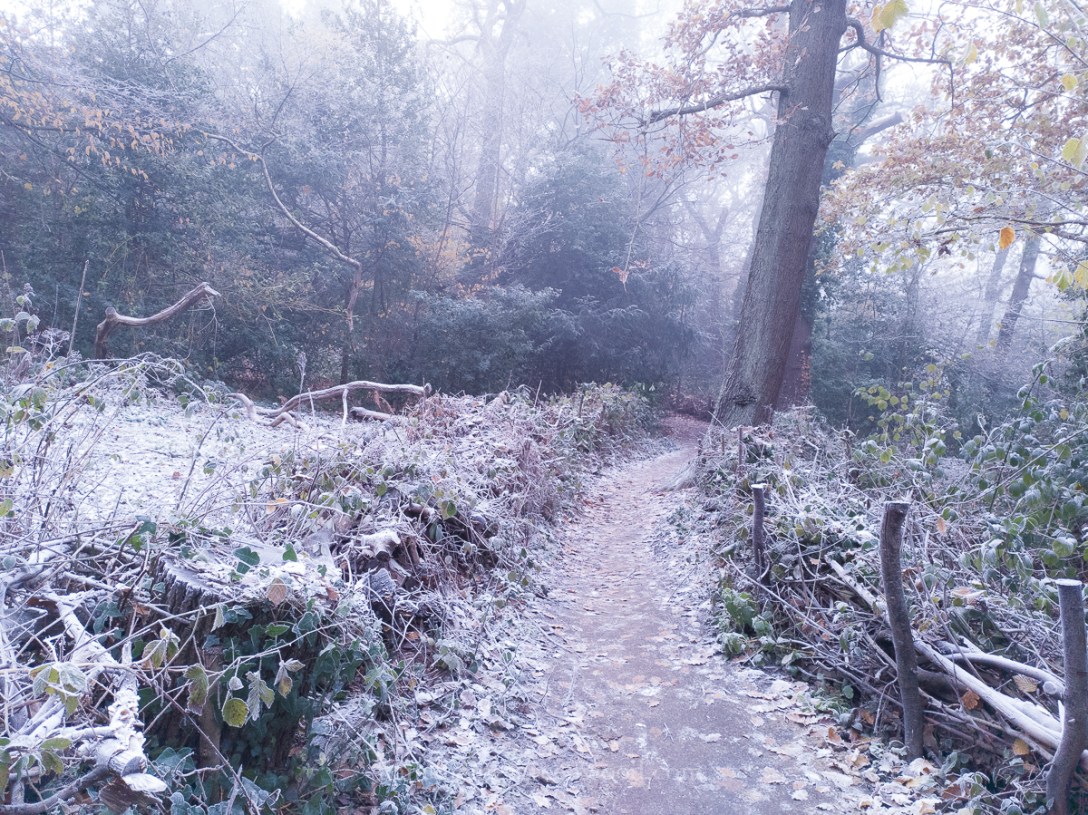
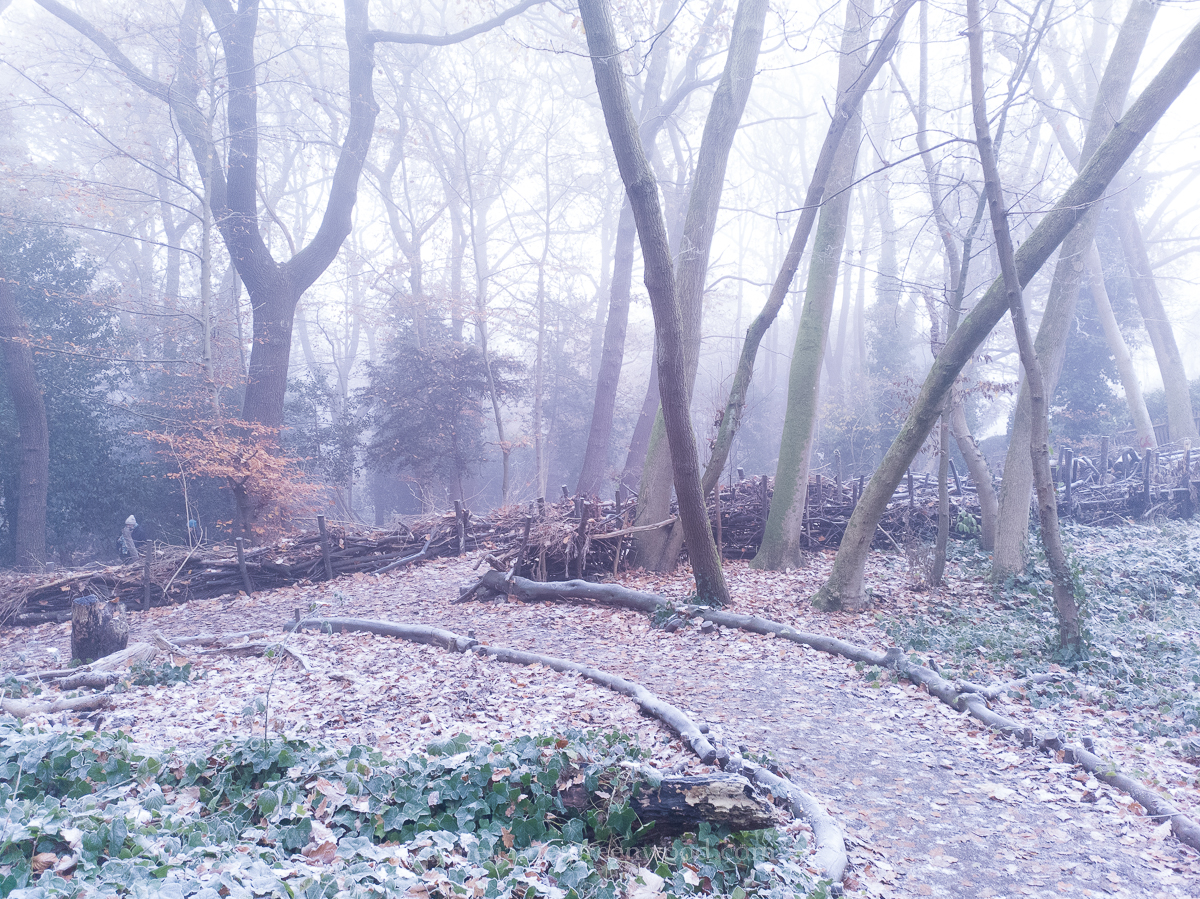
London woke to freezing fog with hoar frost in places, as temperatures stayed well below zero. These are difficult days to get out of bed, but the rewards of a foggy, frosty oak woodland are too good to miss.
In the woods the fog broke in places, shifting north, making for very tricky birdwatching conditions. We were treated to the tapping of a great spotted woodpecker searching for food in dead branches. Flocks of long-tailed tit hurried through holly and ivy.
One attendee wanted to see redwing for their annual list, which came eventually in an energetic flock high in an oak, then low by a small pond where the guelder rose berries still remained.
I was fascinated by the perspective of a couple who joined us. They were astonished to find ring-necked parakeets in their garden, a bird they had seen growing up in, and one found all across, India. London’s woods don’t sound the same without their shrieking nowadays, whatever the view is on that.
There were a few mushrooms still to be seen, mainly sulphur tuft, the allseeing fungus (it’s just so common), and turkeytail.
Unfortuntaly we didn’t manage to find firecrest or anything as outrageous as lesser redpoll, but it was still a lovely walk.
The photos shared here are taken on my Fairphone in RAW format, then processed in Lightroom. It’s pretty impressive what you can do now with phone cameras.
I was travelling into East Hampshire for work in August and realised it would probably be one of my last chances to photograph a cottage I had passed several times.
Arnside Cottage is, as you can see, situated at the road side, in the village of Clanfield in East Hampshire. Technically it has been adapted on several occasions over the centuries, as most timber framed buildings have.
From what I know, the square timbers so closely boxed together show it is likely not one of the oldest of its kind out there. That said, Historic England have dated its origins to the 1500s. You can see that the gaps in between aren’t wattle and daub, but look like flint built in, much like the garden wall. The flints will have come from mines in the nearby South Downs.
The mixed locations of windows is quite entertaining, and the thatch is always nice to see. I’m glad I made one final stop-off to take its picture.
I’ve had a burst of American visitors in recent days (to my blog, not my house). So thanks for visiting, y’all, and sorry about the year you’ve had. You may have noticed I’ve slipped to monthly posts on here. Between April and October I posted blogs every Monday without pause, which is a tricky task…
Here’s my seasonal update of stuff you don’t need to know about, but then welcome to the Internet. What I’m writing Soon I will be self-publishing my third poetry collection, Fool’s Wood. It’s seven years since my last one and this collection has taken longer because of LIFE. There will be a booklet and also…