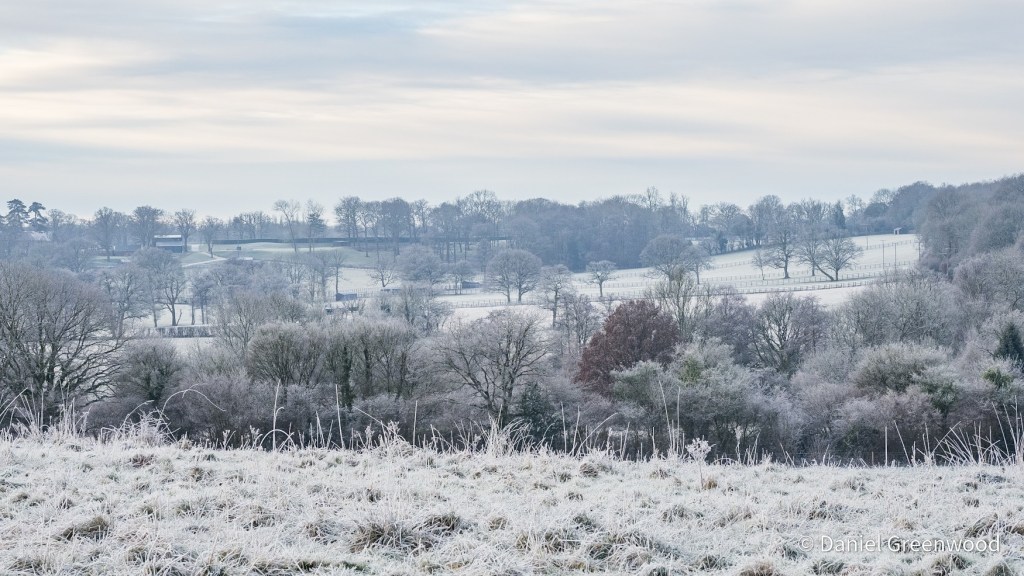
One of the nice things about not living in a city is that you get to see hoar frost. I know this because I’ve spent most of my life in cities where the ‘heat island effect’ usually won’t allow for hoar frost to really develop during daylight hours.
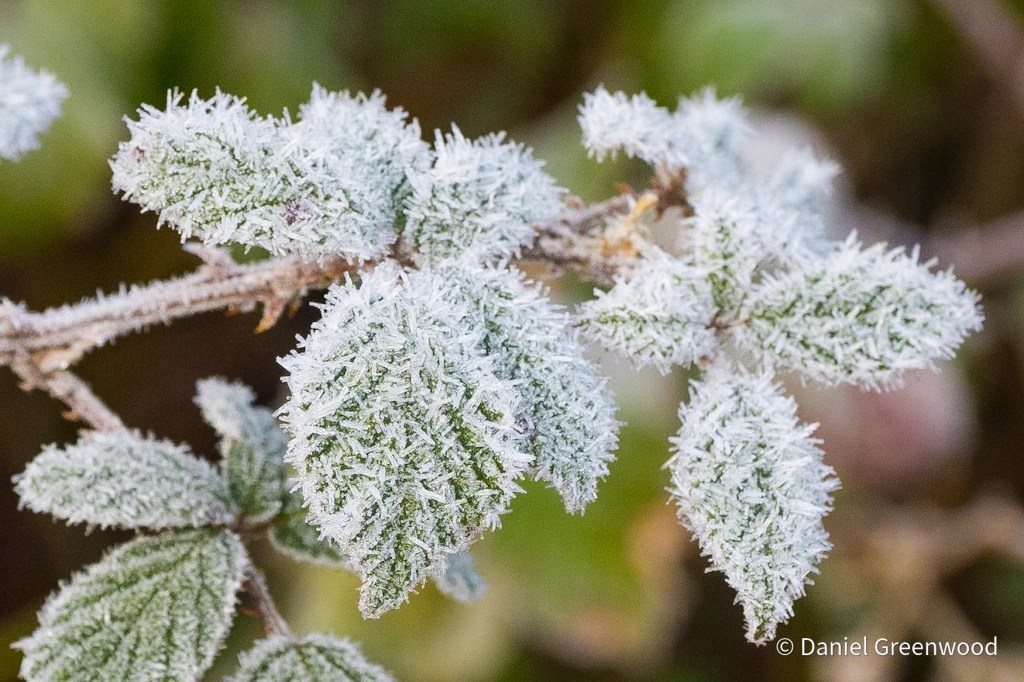
Bramble leaves make it through the winter, providing a good platform for these frost spikes.
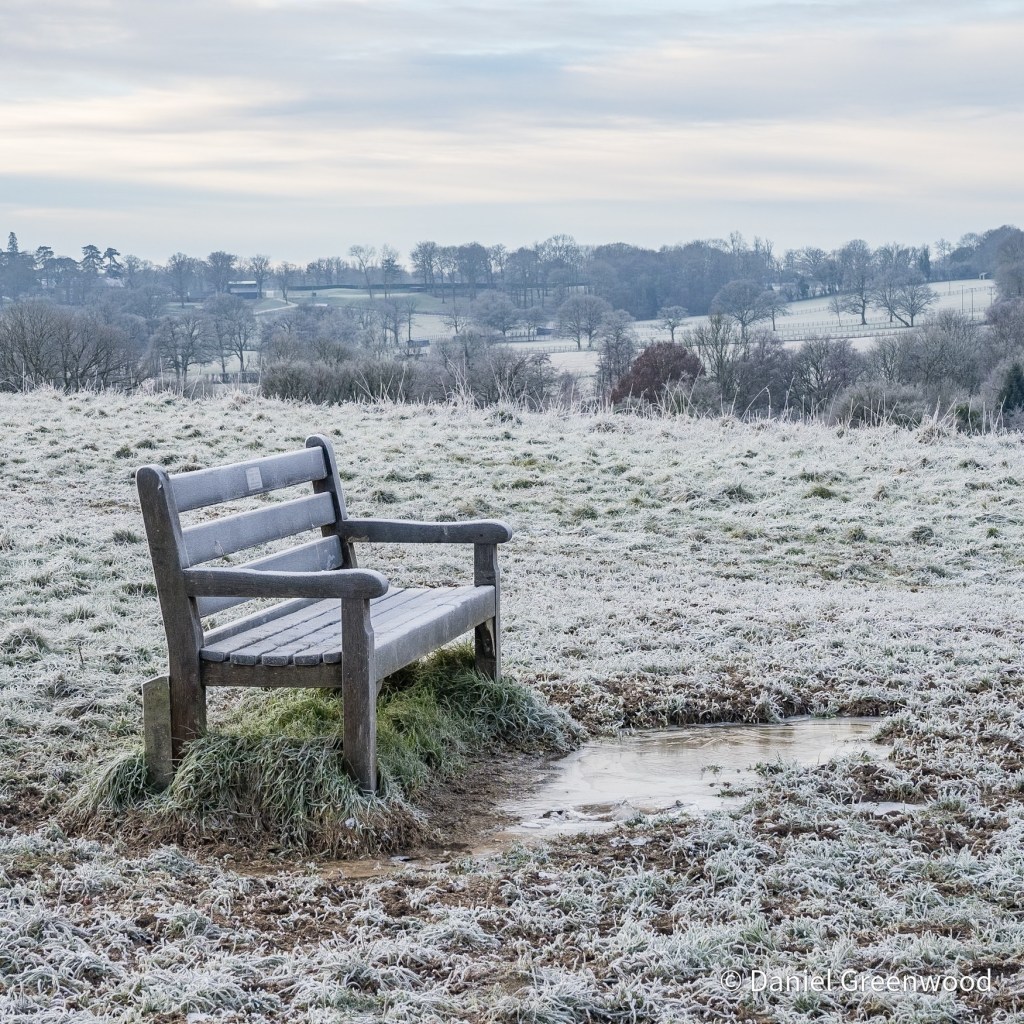
This thick frost covers the trees and hedges, everything vegetative really, in a thin veil of icing. The puddles become milky ice clouds.
After a very dark, grey and damp December, these blue skies and frosty landscapes have been welcome relief.
Not a great time to sit on a bench though.
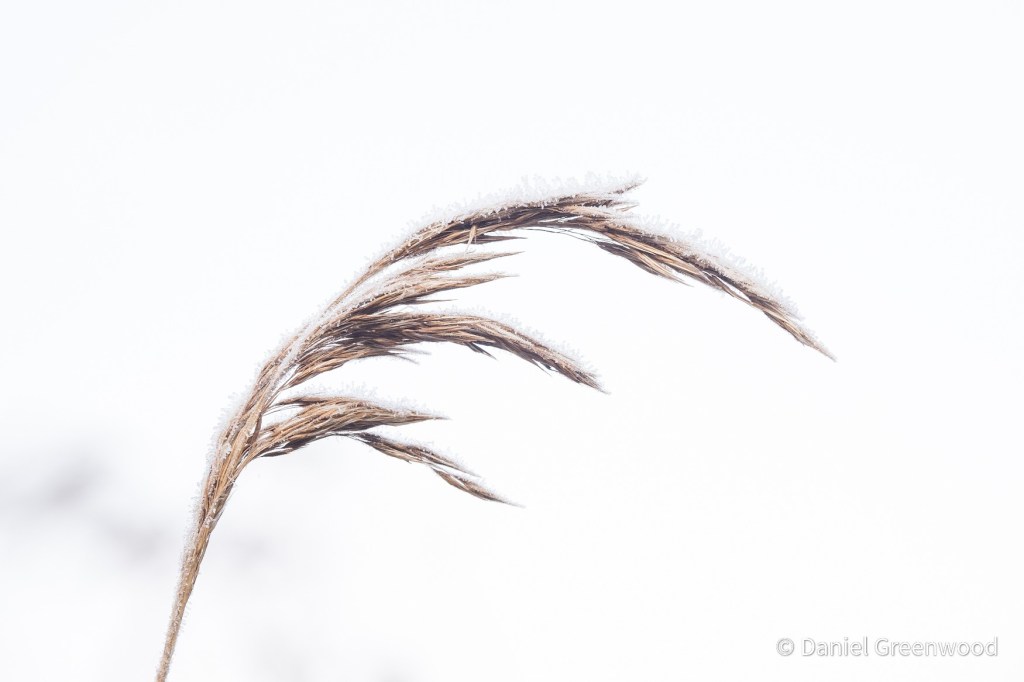
This is a reed with a coating of frost.
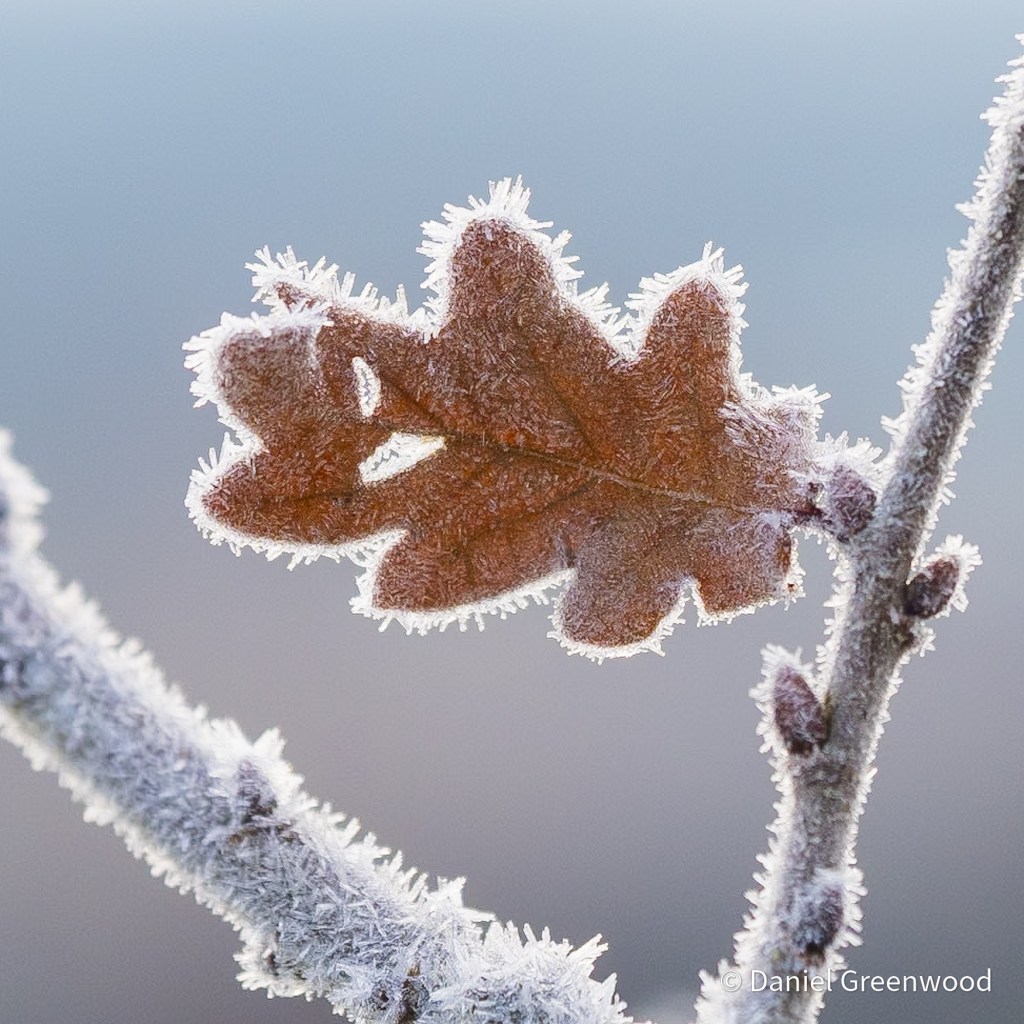
Remarkably this oak tree still holds its leaves, which is unusual outside of cities in January. I have known deciduous oaks to hold leaves into January in London.
I always seek them out in this weather, especially with a little bit of backlighting. This is quite a heavy crop so the sharpness is lessened a bit. You probably don’t care.
That distant landscape is actually an equestrian estate. It is chewed to within an inch of its life, hence the black sticks of trees, compared to the rough grassland where I stood to take the photo.
2025 will be a year of catching up on last year’s photos. 2024 was a really busy year of travel and life events after the fallow pandemic years (2020-22).
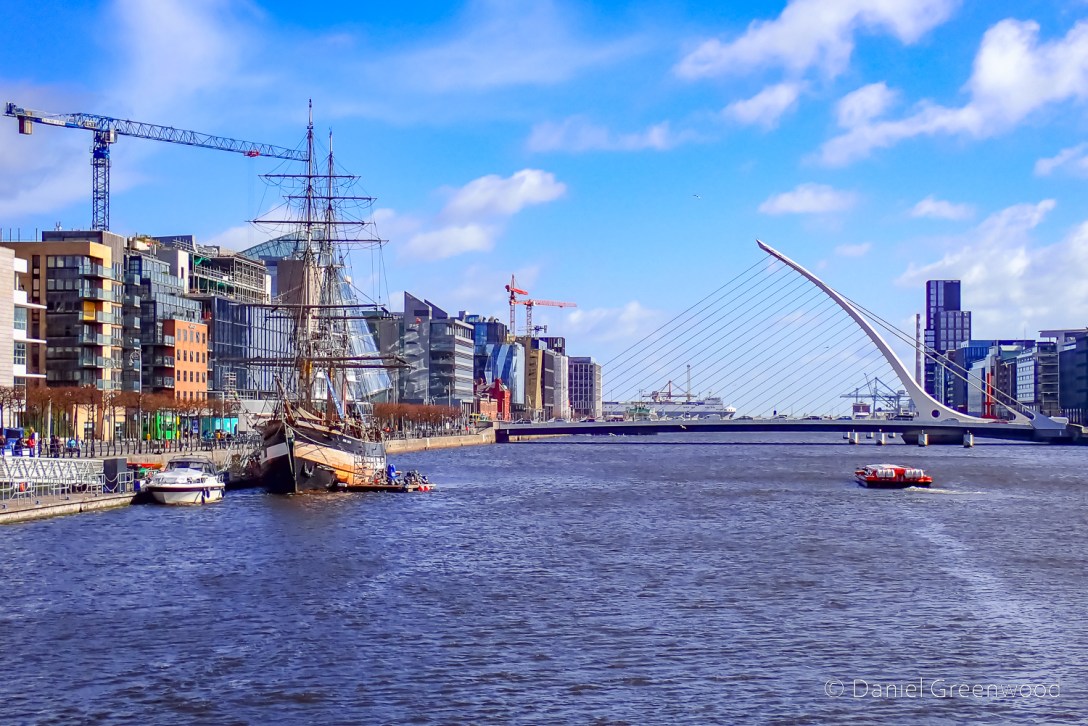
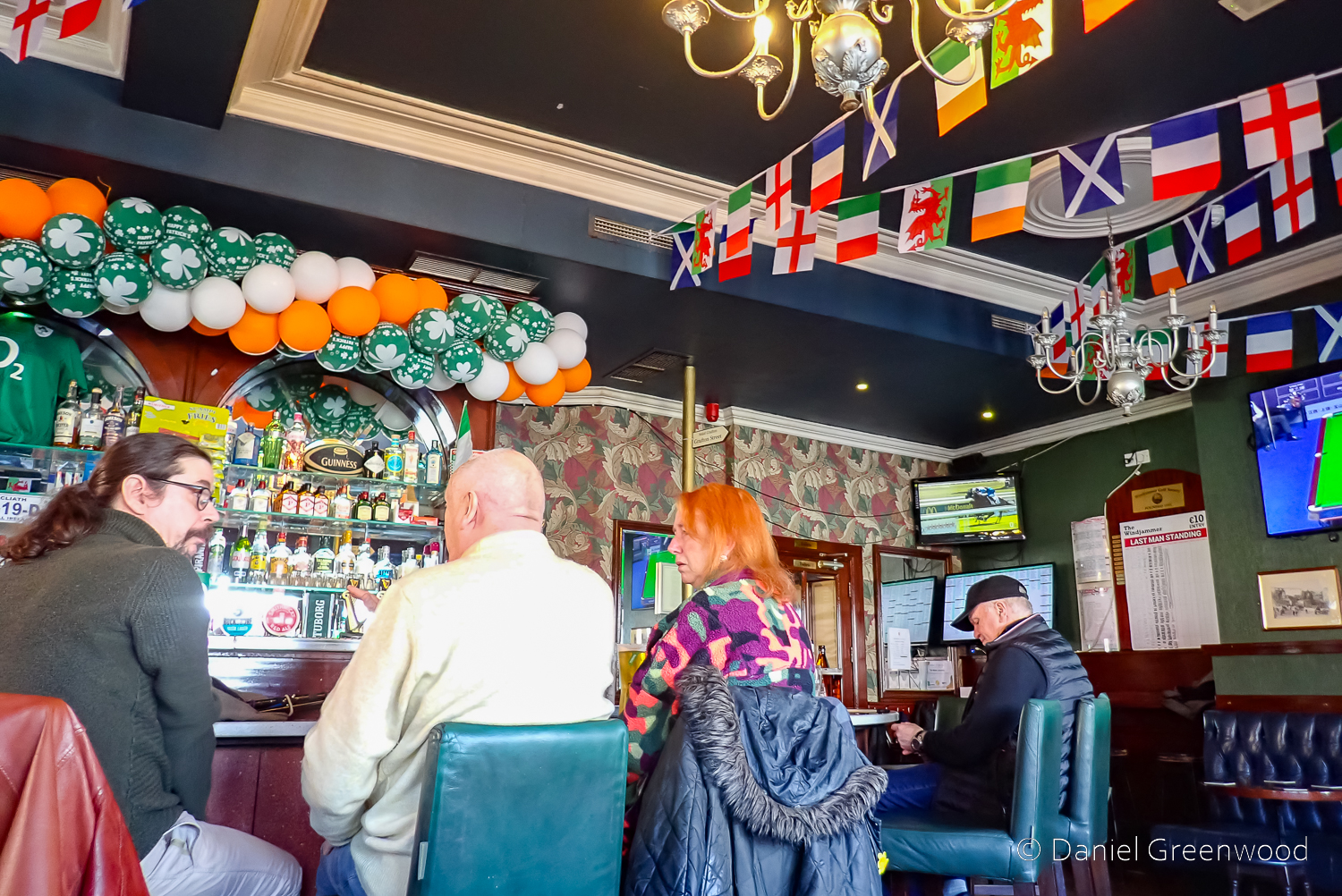
I was in Dublin in March 2023 for – you guessed it – my stag weekend. It was more a spiritual visit, made by ferry, rather than an idiots’ weekend away. This post wouldn’t have been possible without my best man Liam’s work in booking the boat tour, the only one on the river.
For the visit I took my Olympus TG-6 Tough compact camera, but didn’t take photos as raw files so these are edited jpegs, which is obviously a crime against photography. The images from the water are taken through glass, so they have degraded even more (you probably won’t notice). The light was nice though, and image quality isn’t everything.
Passing the Liffey is carved into my memories of Dublin having travelled so many times on the ferry, across and along the river in the car after disembarking. It’s also where my parents bought me my first Everton shirt in 1995.
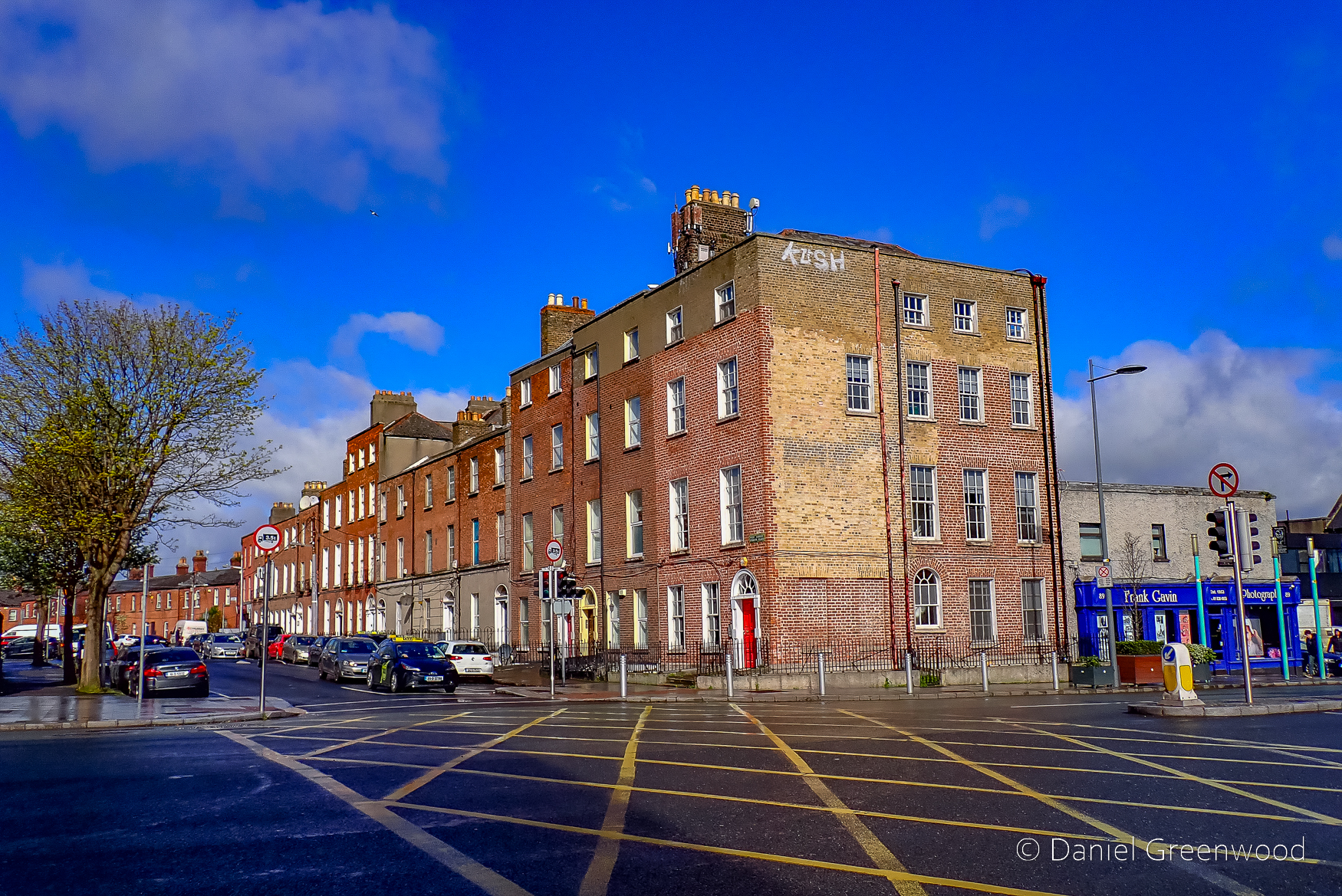
We were staying on the north side of the Liffey, the older part of Dublin.
Who doesn’t like some unofficial street sculpture – if it’s fly-tipping that’s obviously different. Now for a handbrake turn:
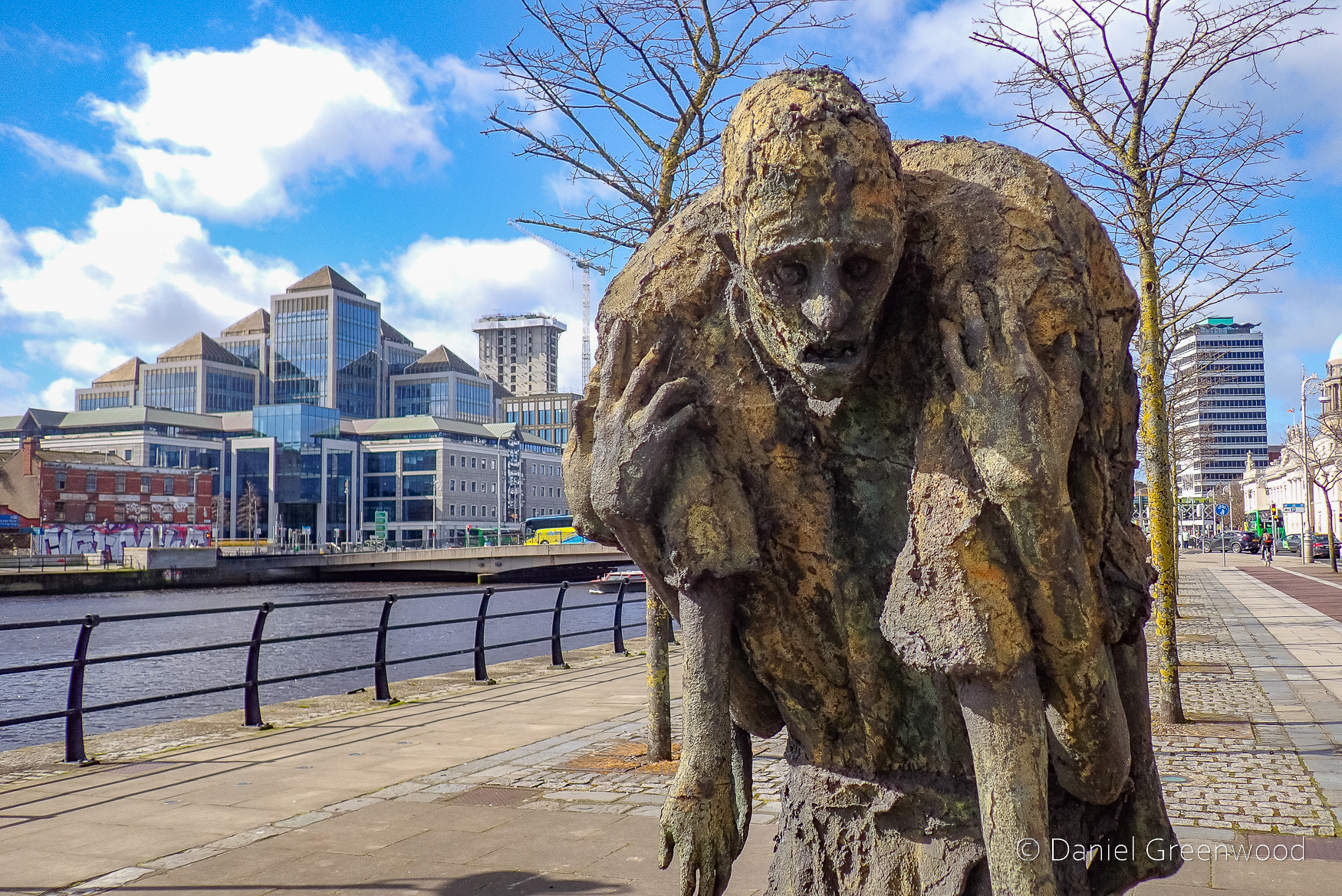
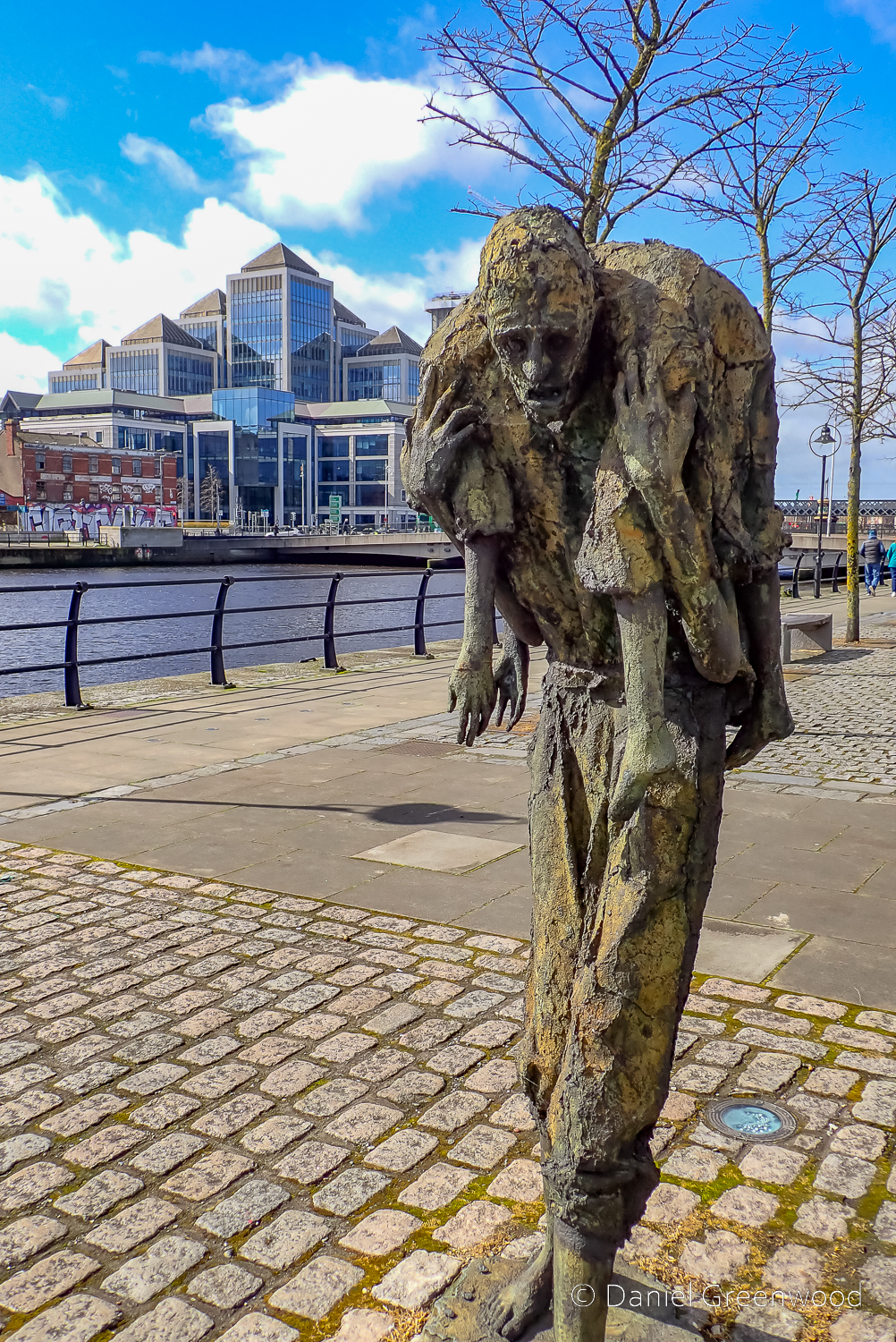
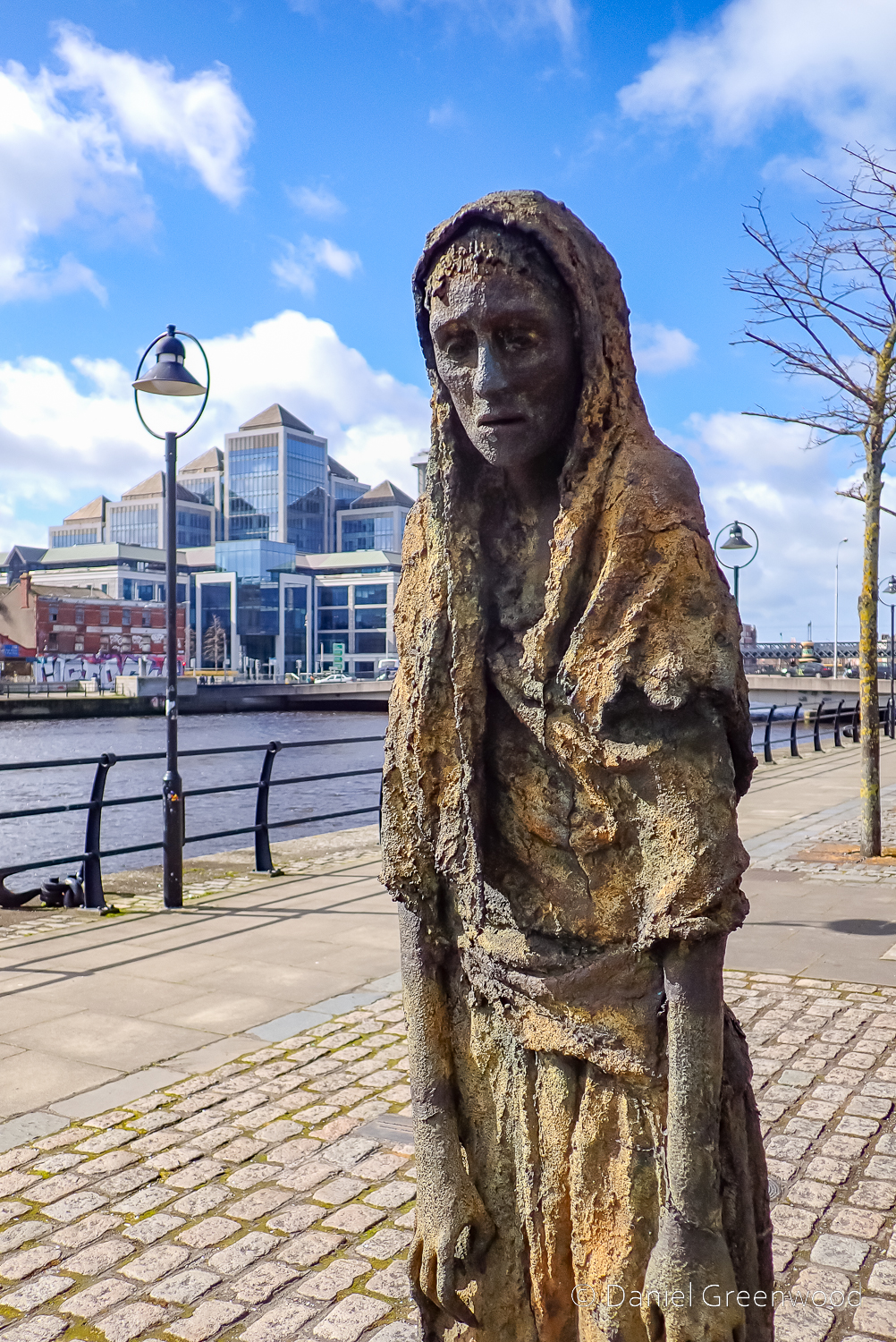
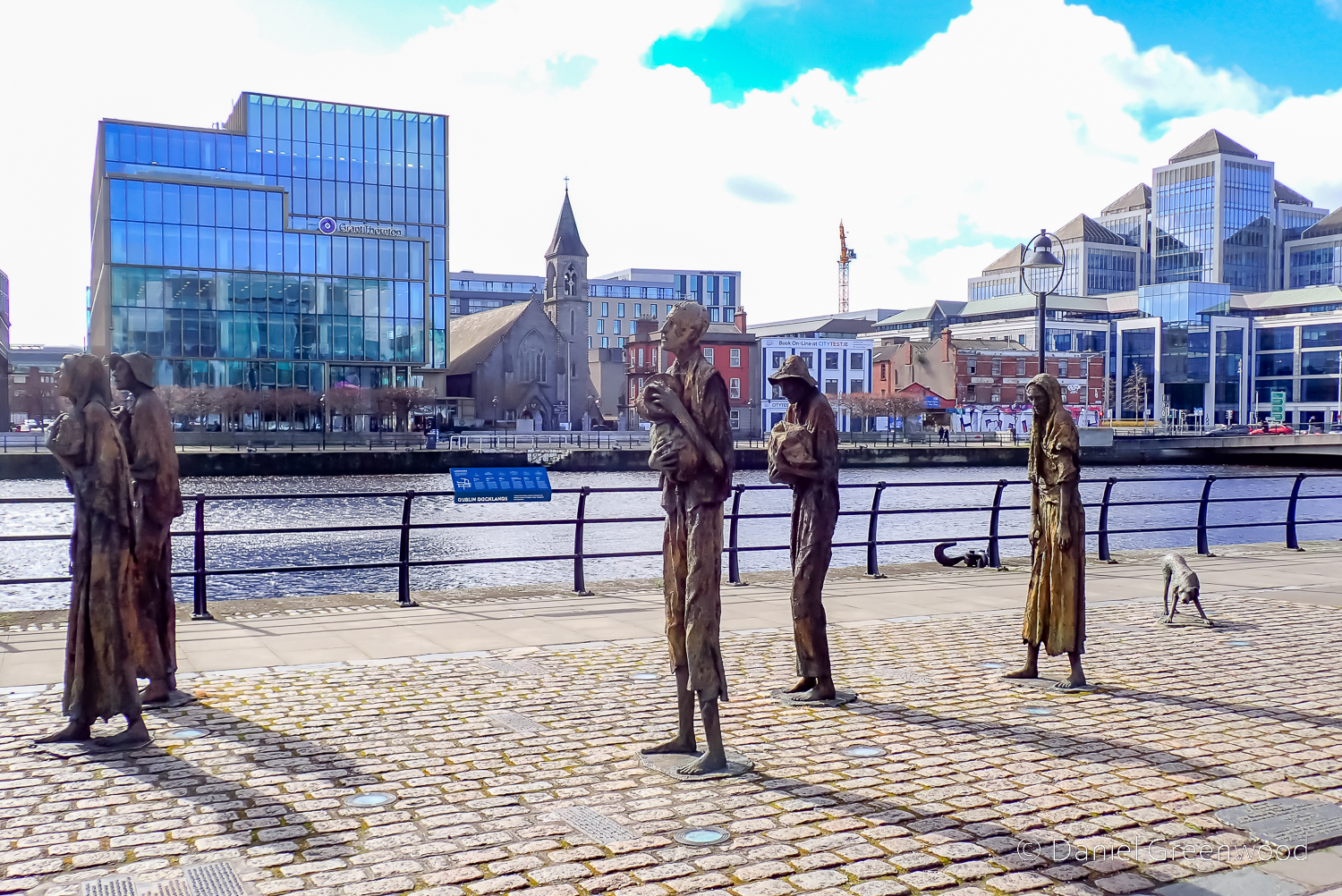
The Famine Sculptures are one of the most striking installations along the Liffey. They act to remind us of the millions of people forced to emigrate or leave their homes during the Great Famine (1845-49). It is a shocking event in British and Irish history and too few people in Britain are educated about it.
I don’t mean that from a place of “victimhood”, as one true British patriot put it to me once. It’s just that I’ve come to appreciate that the understanding of Irish history is very poor in Britain. Irish history is British history, too. There is so much more we could have learned in school about the role of the British Empire and how it explains the country we find ourselves in today.
On a lighter note, this Saturday Night Live sketch with Paul Mescal poking fun at those of us with ‘Irish ancestry’ is very funny:
From a personal perspective the famine drove my Mayo ancestors to attempt new lives in North America. The statues here are in place alongside where one of the “famine ships”, the “Jeanie Johnston” departed for New York:
The original Jeanie Johnston carried 2,500 Irish emigrants across 16 journeys to North America during the Famine.
You can see the Jeanie Johnston moored in the left-hand side of the image below right.
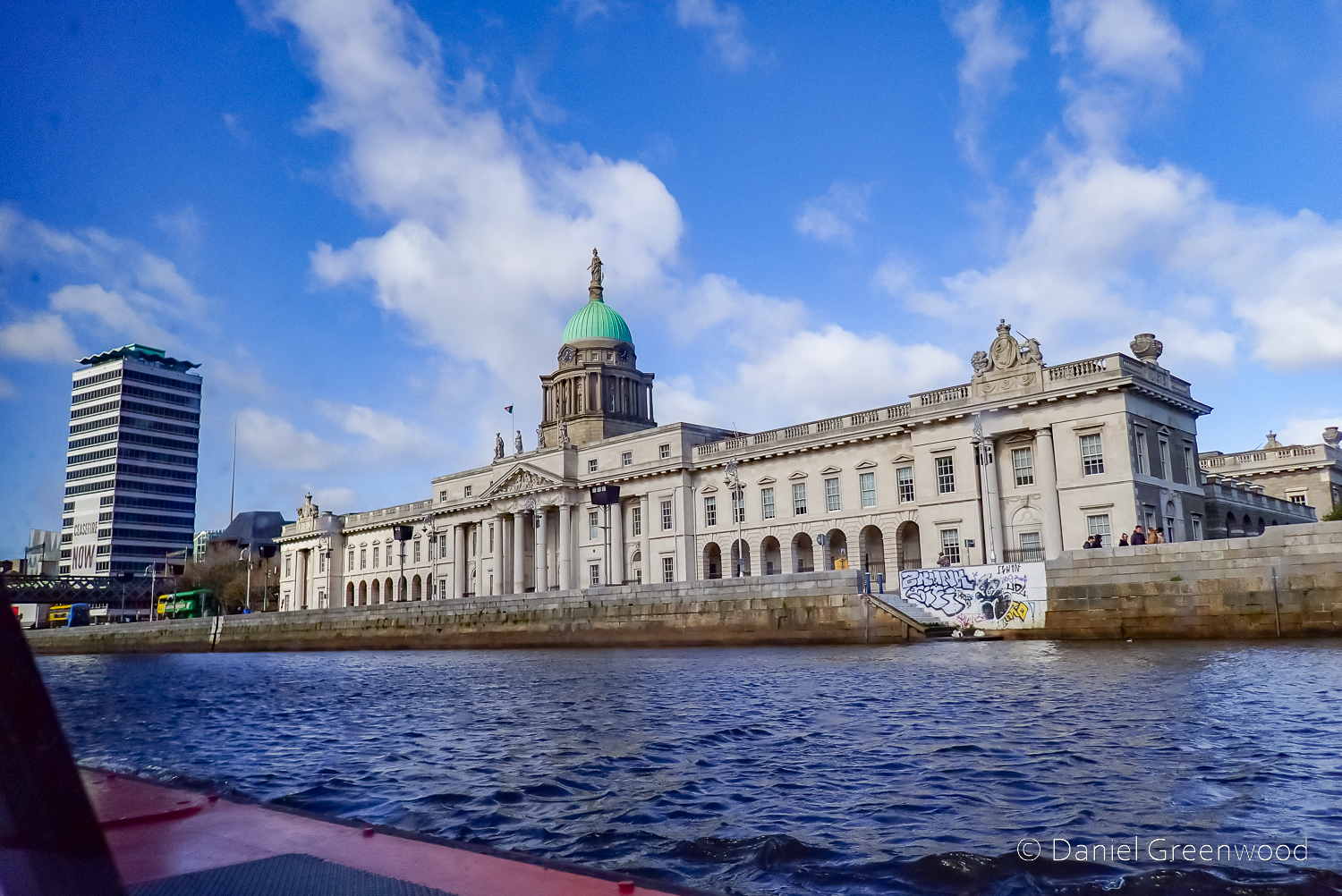
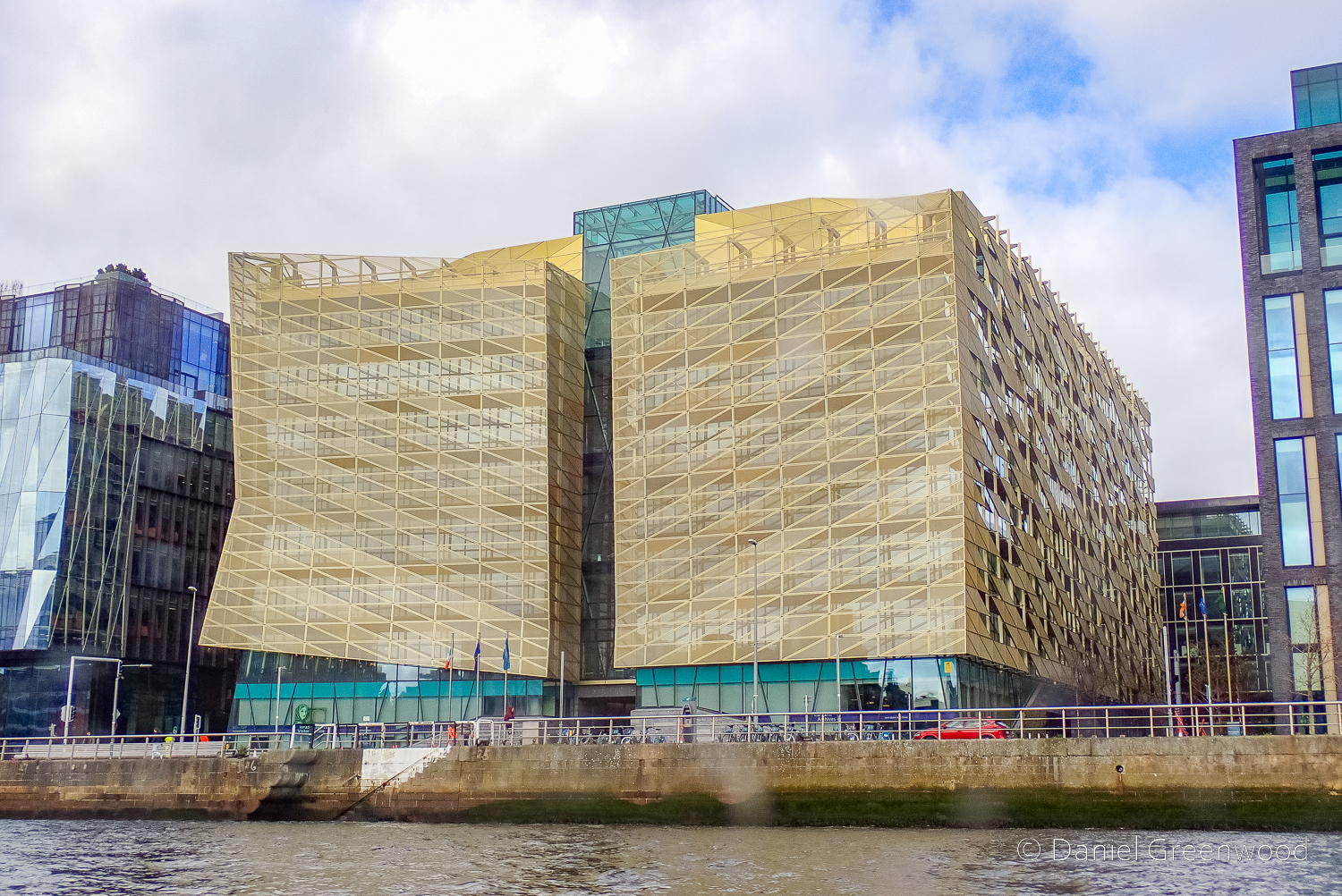
Custom House dominates part of the north bank of the Liffey. It was burnt down in 1921 as the Irish Republican Army attempted to destroy tax records in a raid.
This building once managed the movement of goods up the Liffey into Ireland.
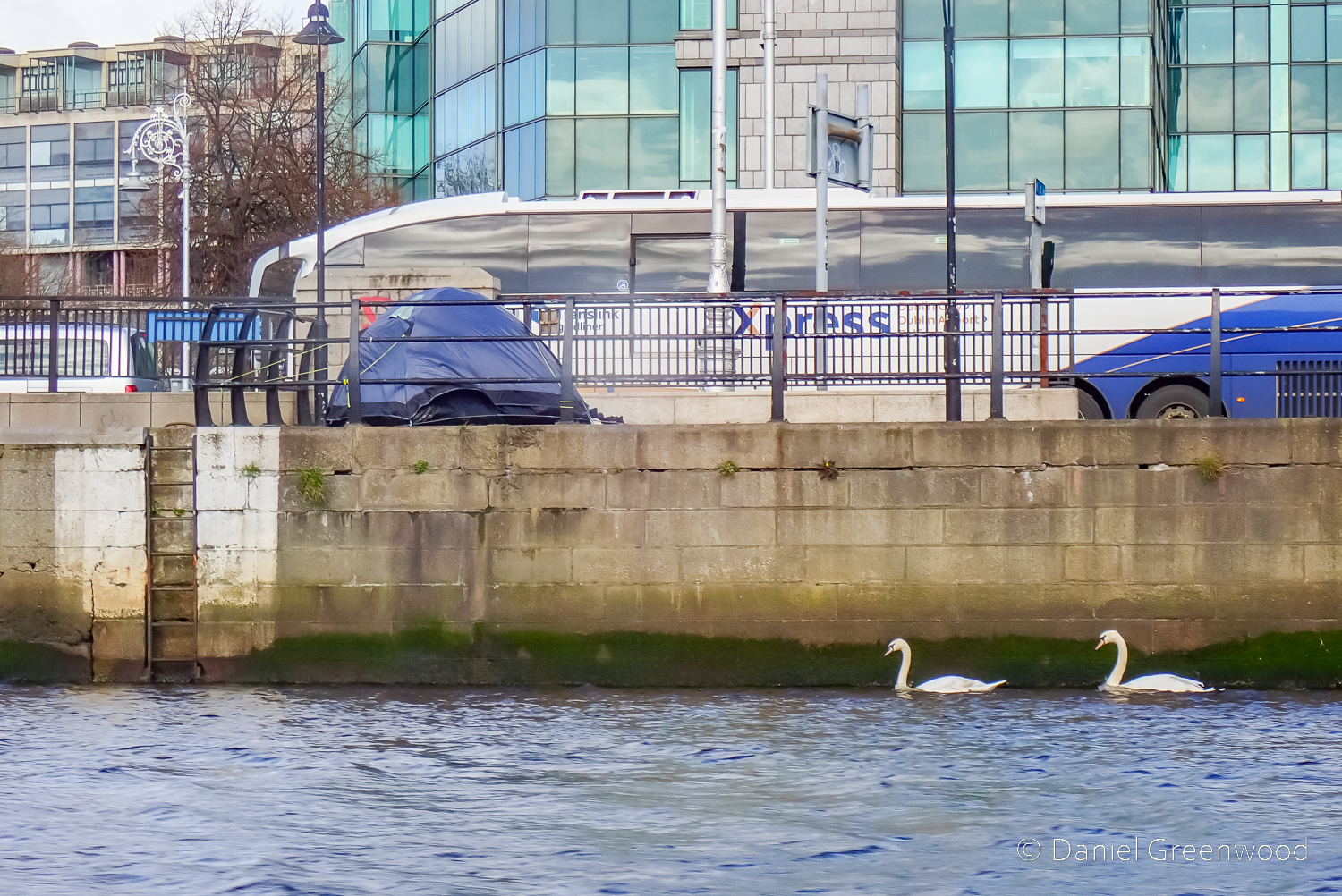
And here it is from street level. The tent on the left is where a person was rough sleeping. We were told that the river was once significantly wider than it is now.
Two swans in the river on the other side – taken a good half an hour later, don’t worry.
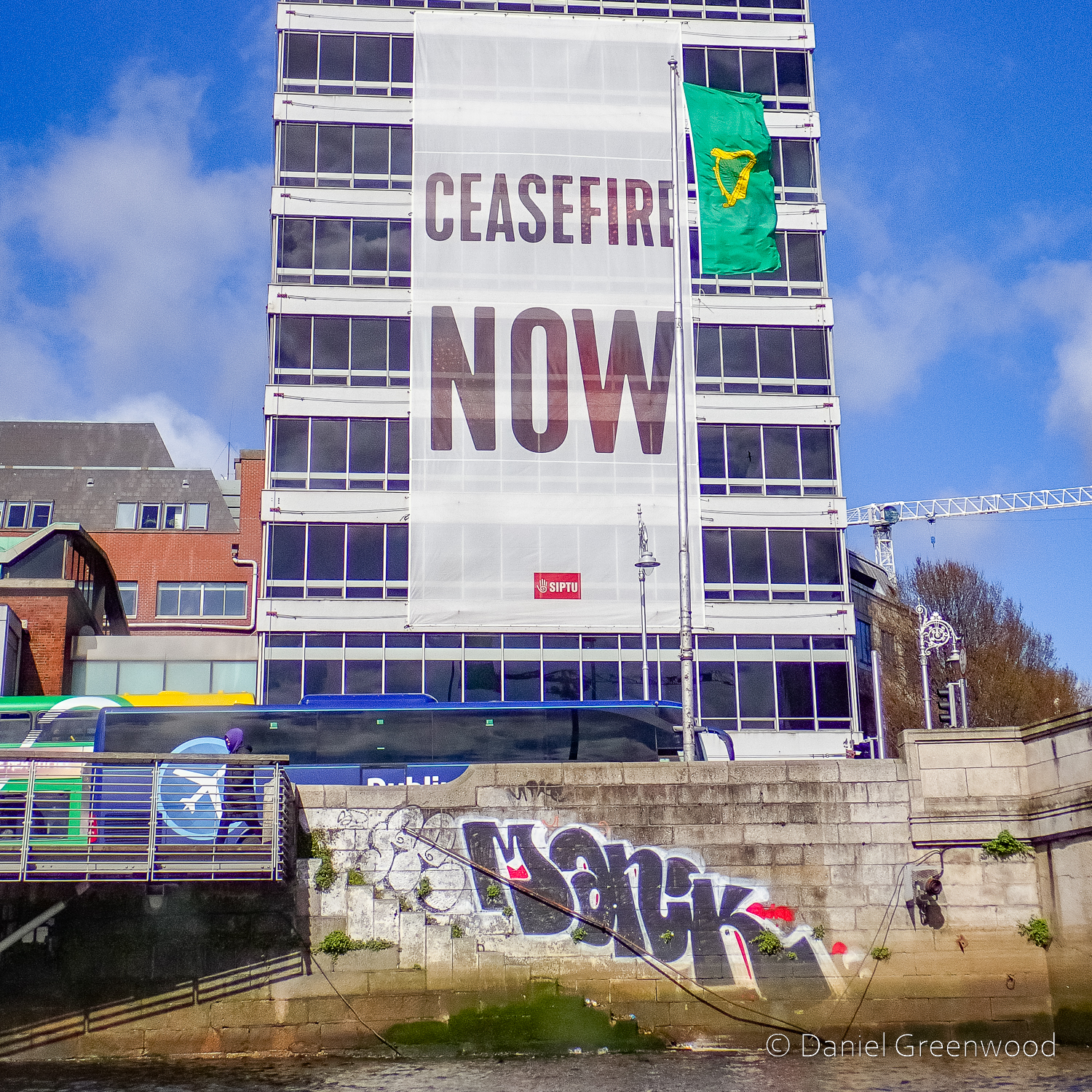
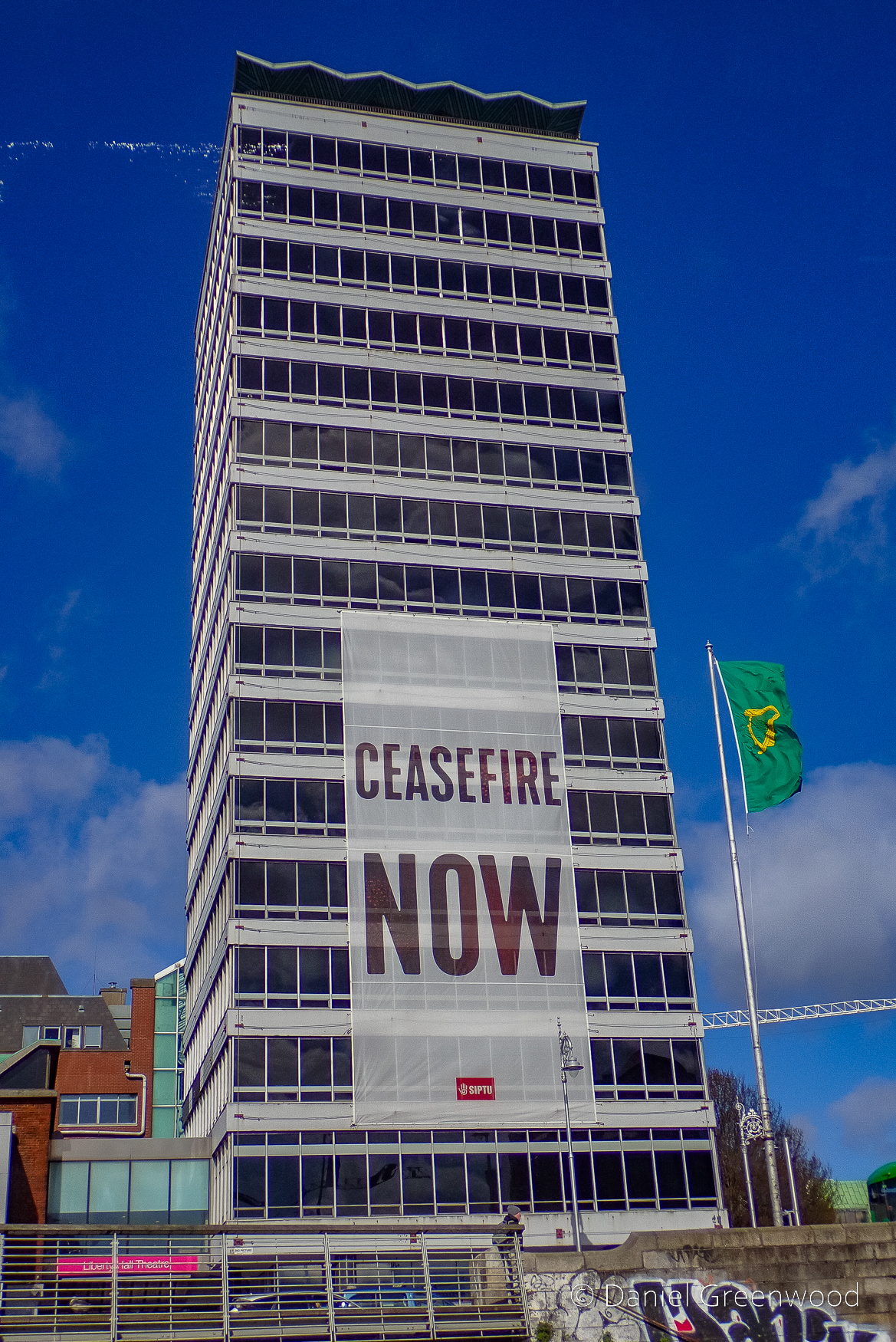
At first this tower looked disused but I’m not sure if it is. The banner’s related to the Israel-Hamas war in Gaza (at least 2023-present day). Ireland is outspoken on the need for a ceasefire, a two-state solution and for an end to the Israeli military’s occupation of Gaza and the West Bank. The banner seems to have the name of SIPTU – a trade union – branded on it. For the those who aren’t aware, the Palestinian cause is one of the most significant humanitarian and political issues for ‘the left’ in Britain and Ireland, probably more so than Russia’s invasion of Ukraine.
Another year completed and lessons learned. Creatively I have found a balance with my equipment and the actual process of photography. I’m into my 6th year of working with Micro Four Thirds cameras and lenses, giving more space to enjoy the process of gathering photos – walking – because the equipment is light.
Cameras used include Olympus EM-5 Mark III, Oly EM-1 Mark III, Olympus TG-6 Tough compact camera, and Pixel 7a phone camera.
These photos should show the range of things I like to take pics of – not just mushrooms! 😂
With the privileges available to me – health, location, resources, freedom of expression – here are my photographic highlights of 2024:
January
I did a couple of long walks in Sussex at the beginning of the year, exploring some new locations around the South Downs. I visited St. Botolphs church for the first time, one of Sussex’s special ones among thousands of already significant churches. Last year I set up a gallery for my fledging church photographs project which can be viewed here.
February
This felt like the moment of the light returning after the dark winter months. The Downs at Amberley are my gateway to the South Downs, and walking here is always worth the gentle climb.
March
In March I visited Dublin for a weekend and took in the sights along the great river Liffey.
For a friend’s birthday we spent the weekend in York, which gave me a chance to take some compact camera pics of a few of the oak timber framed buildings. I’ve added a gallery for my ‘Oak Timbers’ project here.
April
I got married in April so there wasn’t time for much beyond the odd local walk. I was trying out my new Pixel 7a, bought because of its value and reported image quality. The camera is spectacular, I just wish it wasn’t a G**gle product. I blogged about it here.
May
Ah, memories. In May we went on our honeymoon to Austria and Switzerland, all by train. You may be sick of reading about that! I am definitely not sick of blogging about it though!
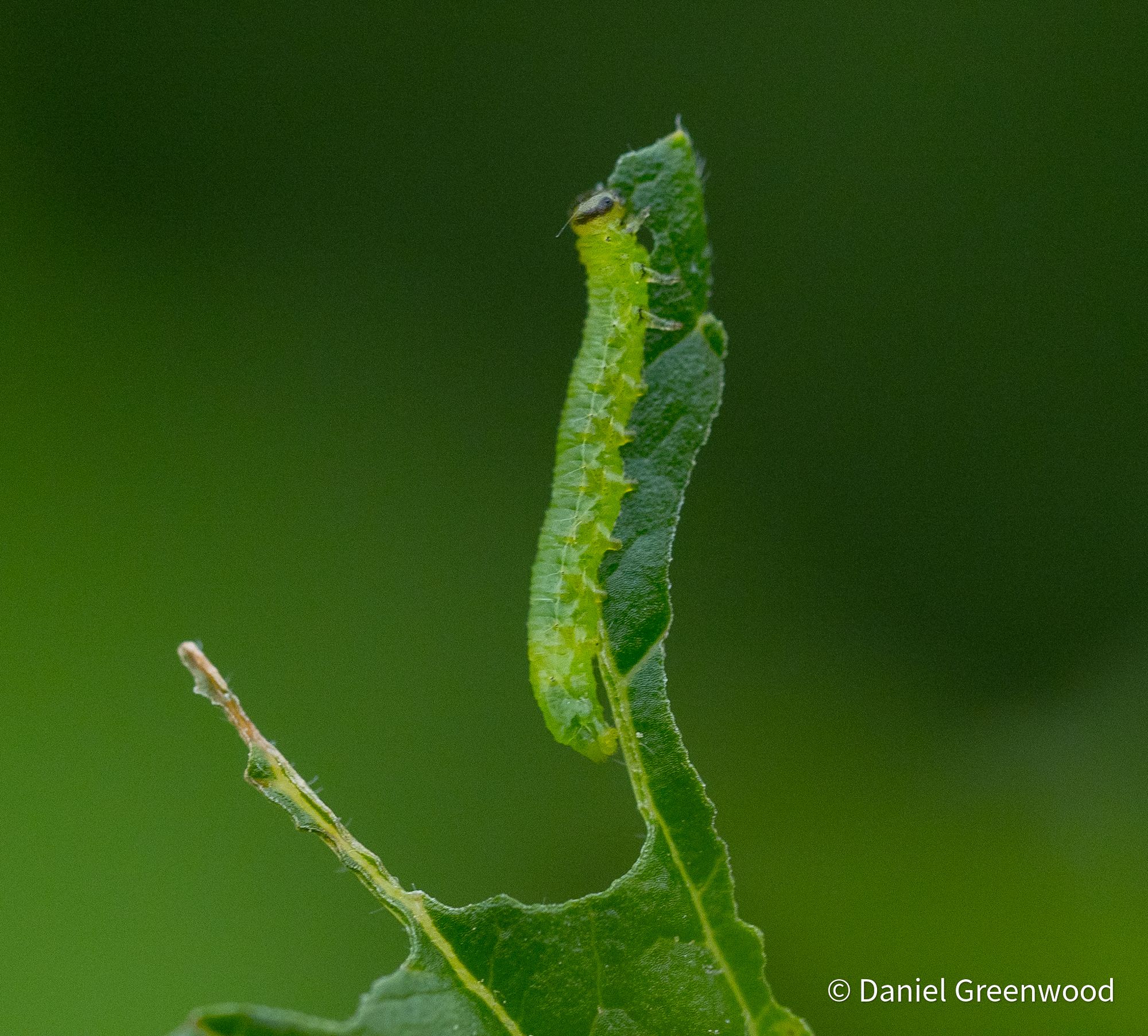
A bit of a lost month for photography because I started (yet another) new job and had to settle into a new routine. The highlight was probably these sawfly larvae which ate through some of the leaves on my gooseberry. Blog here.
July
“July, July, it never seemed so strange”, as the Decemberists sang. I caught Covid and didn’t really get back to normal for 3 months afterwards (Vitamin D is very important, people). My macro work was reduced by the evil contagion but I did find some nice bugs near home to share.
August
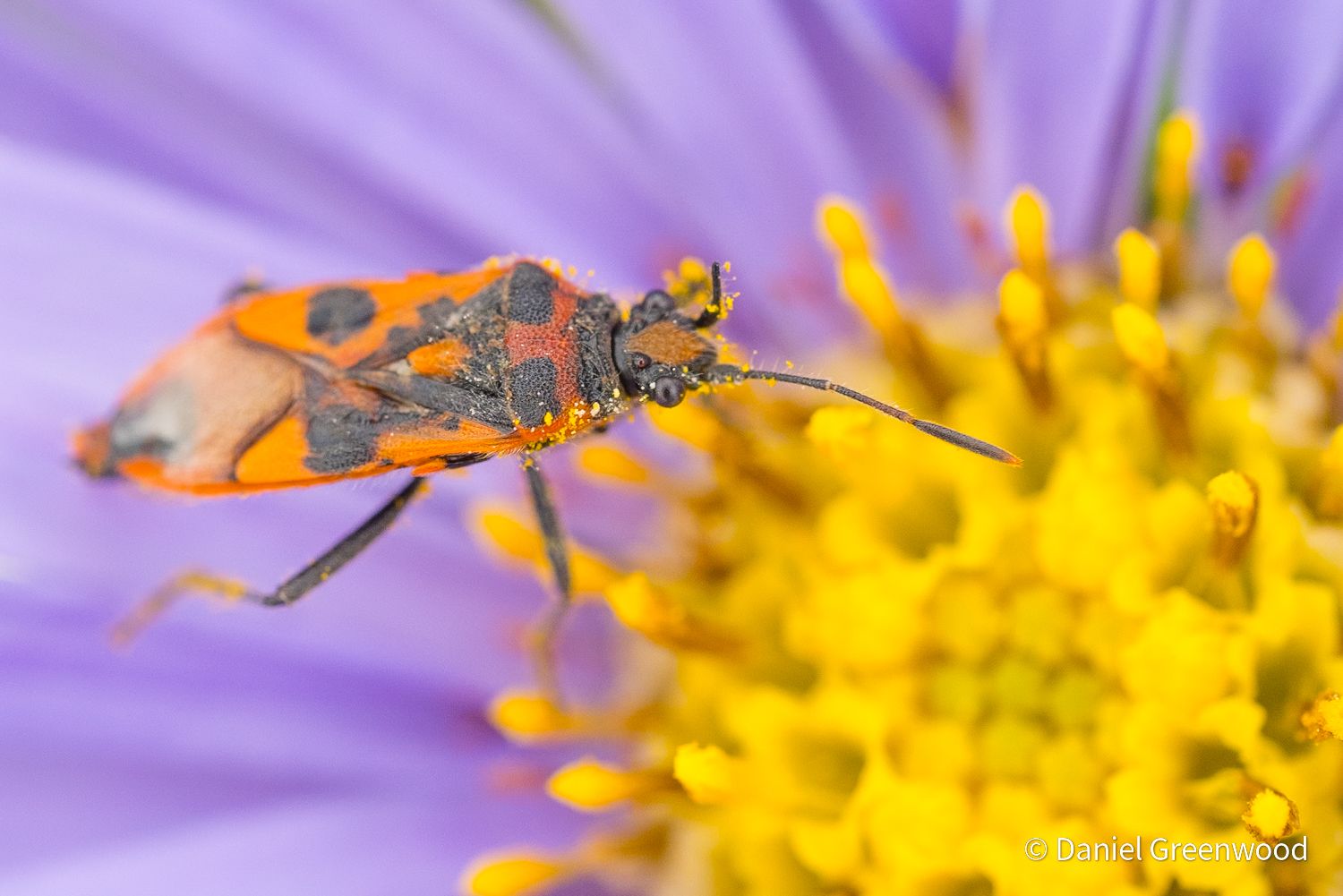
I managed to pap some pretty fine inverts in August, with this beautiful ichneumon wasp seen in my garden. I’ve not got anywhere near enough out of my Olympus EM-1 Mark iii and 60mm macro, but this showed just how good Micro Four Thirds cameras are for macro.
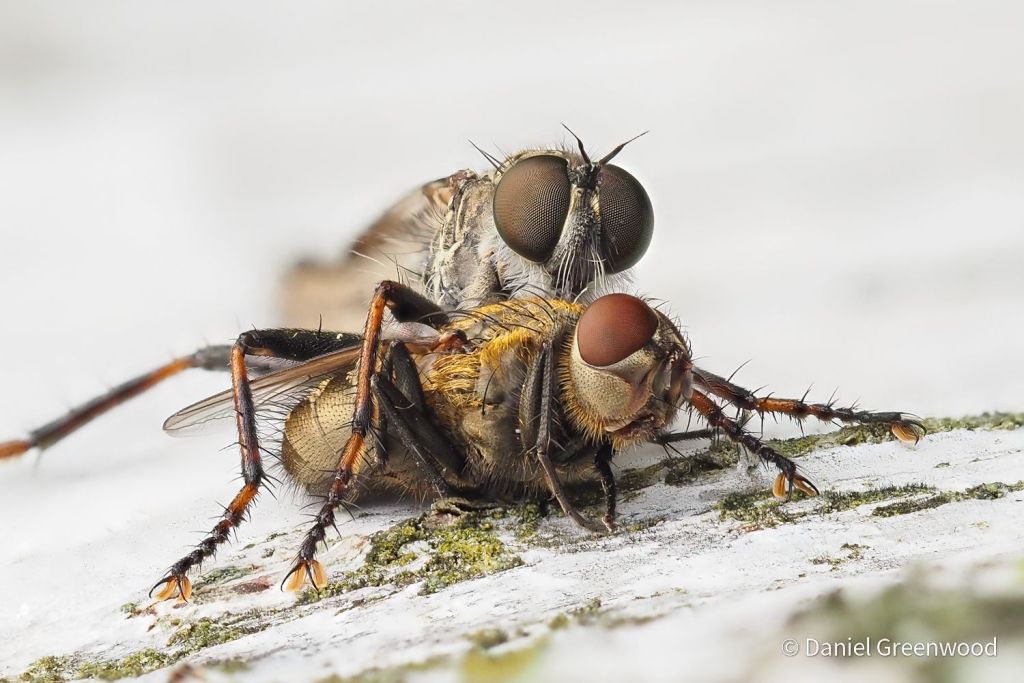
Another strongpoint for M43 cameras is that they can ‘stack’ images internally, something now copied by the big hitters. This is a composite of about 10 photos the camera has laced together to ensure the depth of field covers a deeper focus range. It means more of the, rather gruesome, subject can be seen in detail.
September
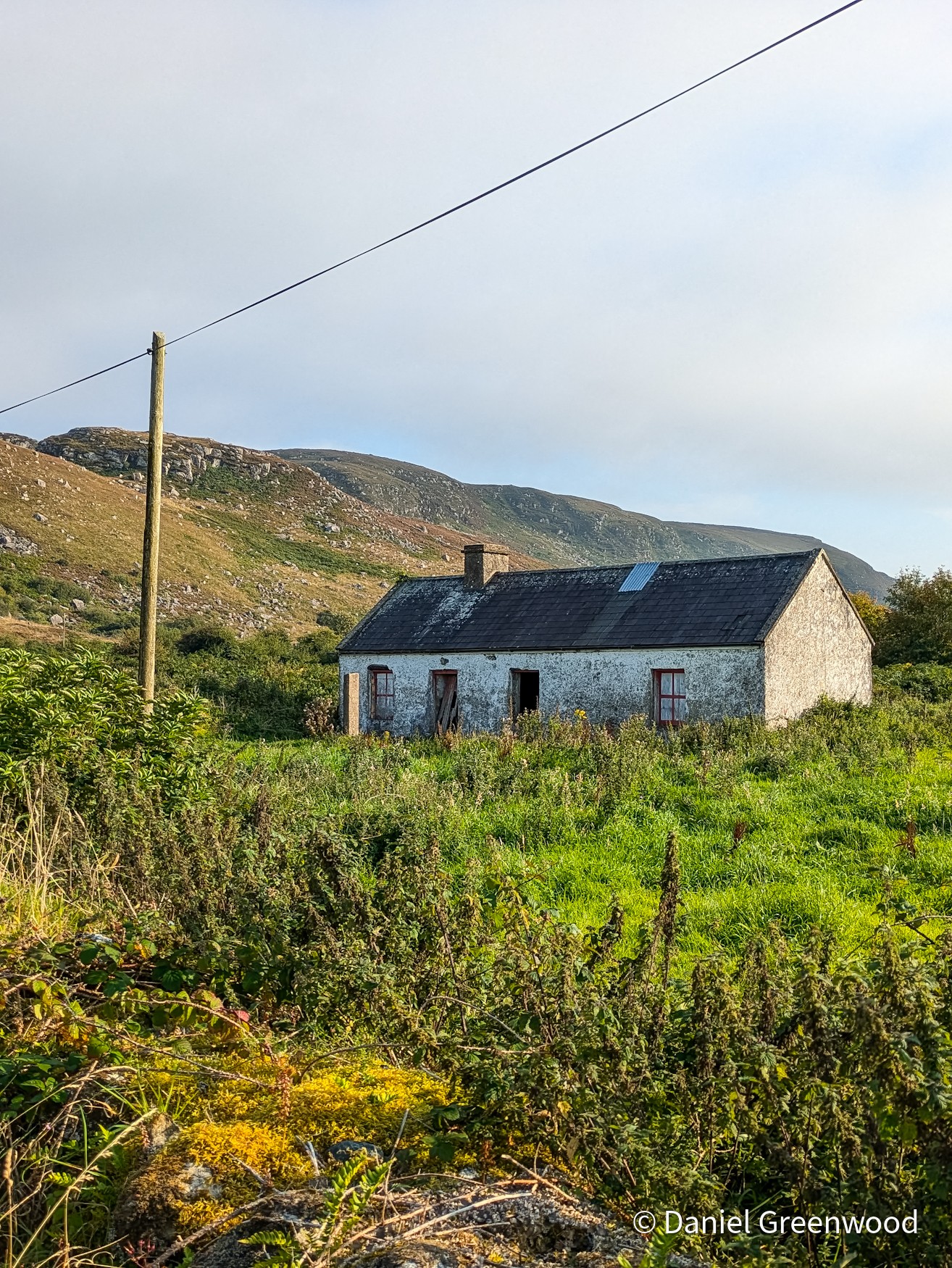
In September I made my first ever visit to the iconic sea stacks at Downpatrick Head on the North Mayo Coast in Ireland. Mayo has an international dark skies designation so I was able to mess around with the Milky Way. But for the astro photo I haven’t processed these images yet so here are a couple of phone photos.
October
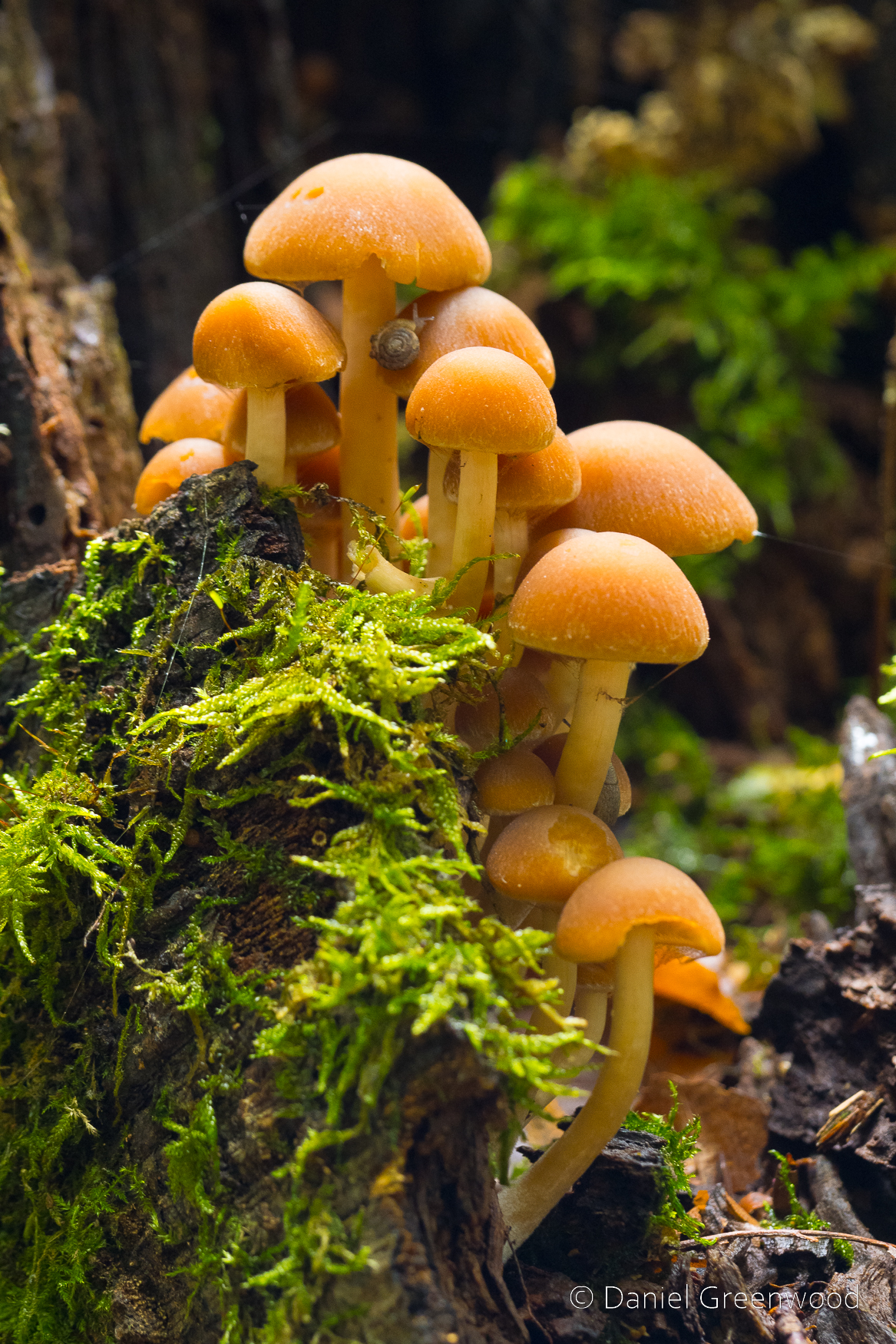
As I have lamented on my Fungi Friday blog, 2024 was not the best mushroom season. But there are always things to find out there. I found this knocked over fly agaric, which was in perfect condition, ready for its portrait.
November
Autumn is a time for Dartmoor for me and my wife, and despite colds we managed some walks onto the moors in the National Park. We found an amazing array of waxcaps, like the crimsons above, which you can see in full on Fungi Friday.
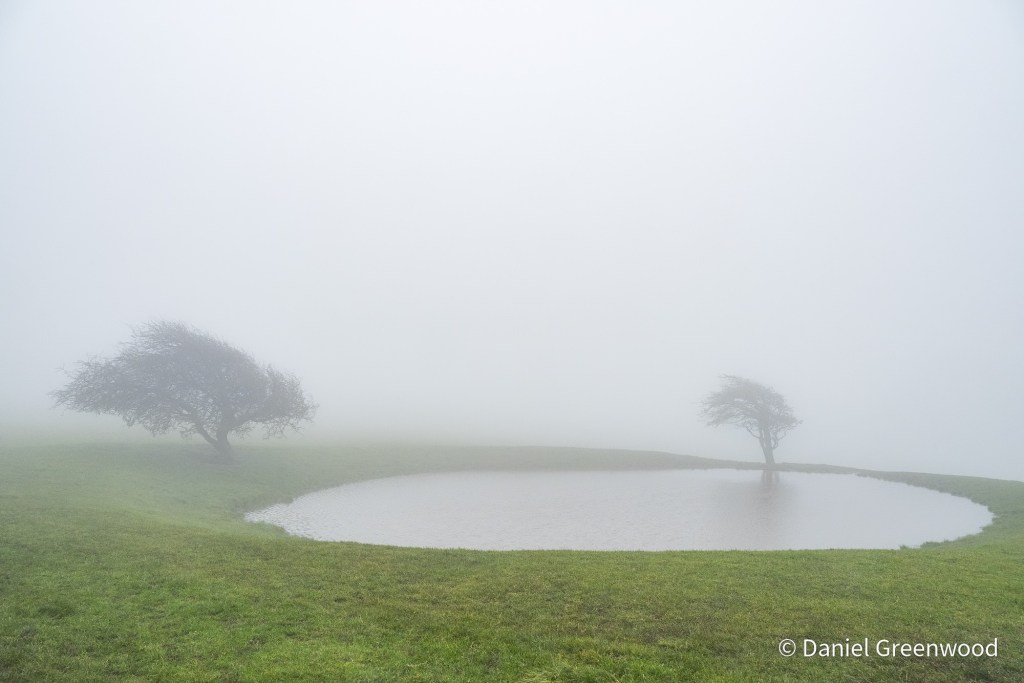
On the last day of November I hiked with my South Downs amigo from Ditchling into the mist. This is the much-photographed Ditchling dew pond, shrouded in mist.
December
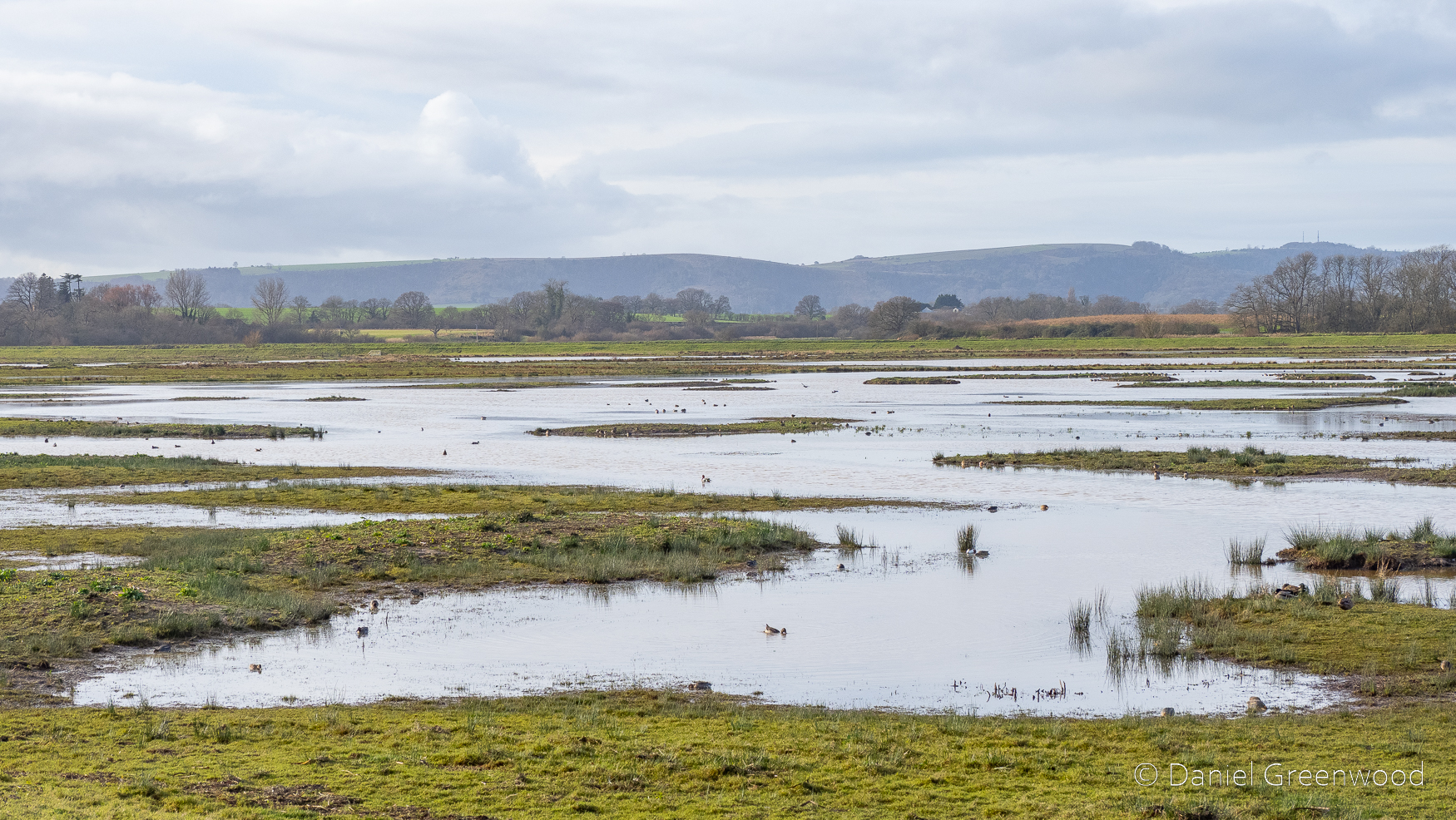
The weather in December was very grey and damp, and all the Christmas demands gave me only one meaningful walk – to Pulborough Brooks in West Sussex.
Thanks for all your support in 2024 and wishing you peace and happiness in 2025.
Continuing my series of posts about the landscape of the Jungfrau mountains in Switzerland, here is a look at some of the woodland plants seen above Grindelwald.
Just to say: picking or trampling on wildflowers is not advised, and may be illegal in some locations. The meadows shown here form part of people’s livelihoods as well as being sensitive habitats. Woodlands are extremely sensitive to our footsteps so stick to designated paths where you can. Check the regulations around foraging before you go and show respect for people and wild plants, animals and fungi when you visit. There’s a lot of livestock around, usually behind fences, but they’re so noisy you can’t miss them.
The photos here are a mix of mirrorless camera and phone. The plants photos are mainly taken with my Pixel 7a, the landscape photos with my Olympus EM1 Mark III. All have been lightly processed.
The walk
The walk was a fairly short one in length, mainly due to the altitude and general tiredness from travelling. It would be a good one if you’re visiting from Interlaken on a day when it’s not worth going higher or it’s too early in the season.
The walk is about 2.5 miles and can be done more quickly if you’re not taking photos of plants!
All the high trails, including the Eiger Trail, were closed when we visited. Climate change may be making rockfall more common and therefore the higher trails are more dangerous.
It’s possible you can do this walk and see absolutely no one, but for a farmer or two, after you pass the toboggan run.
We took the Pfinstegg cable car up to the Berghaus restaurant, had some chips, and walked down to the village, past the toboggan run.
What you can’t hear is the sound of middle-class Americans talking about their Adriatic travel plans.
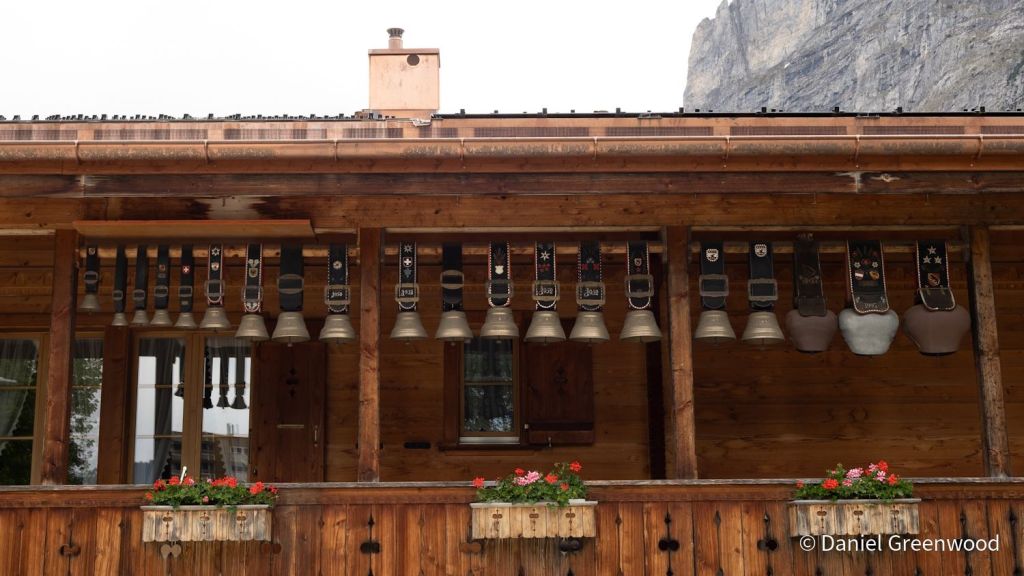
One image I wanted to share was this exhibition of alpine heritage. Here you can see the array of bells used in the Jungfrau for cattle management. The sound of the cowbells is one of the signifiers that you are in the Swiss Alps. Of course the same can be said for many mountain regions, but each one has its cultural differences. That’s a different blog entirely!
Alpine flowers (1300m)
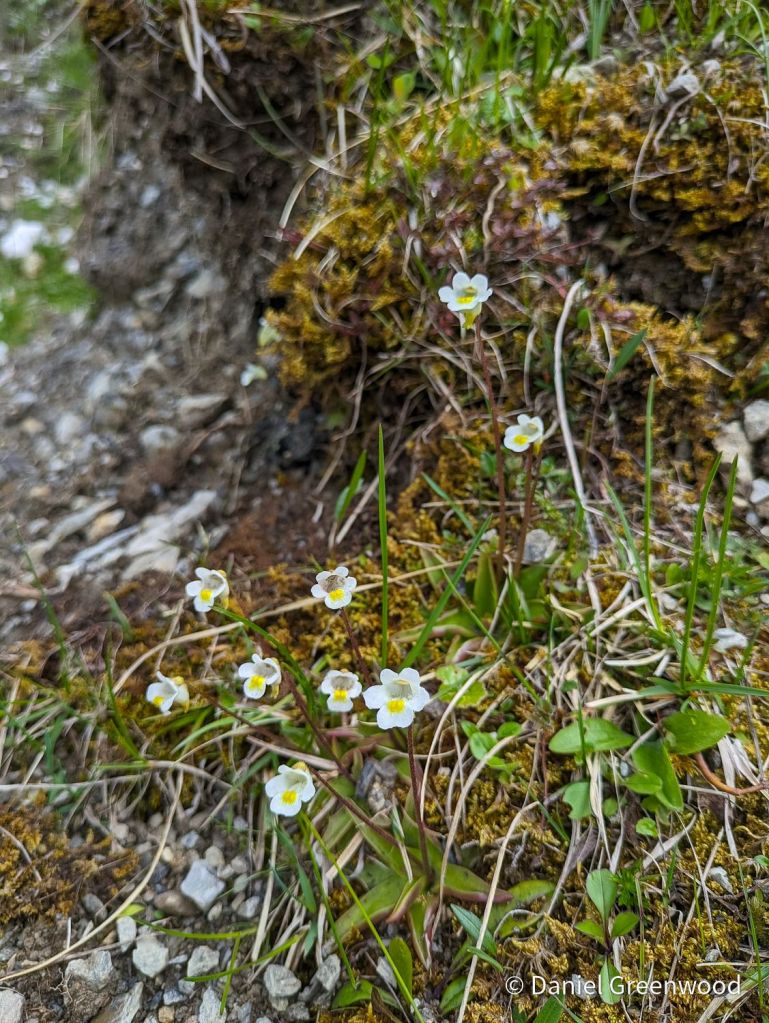
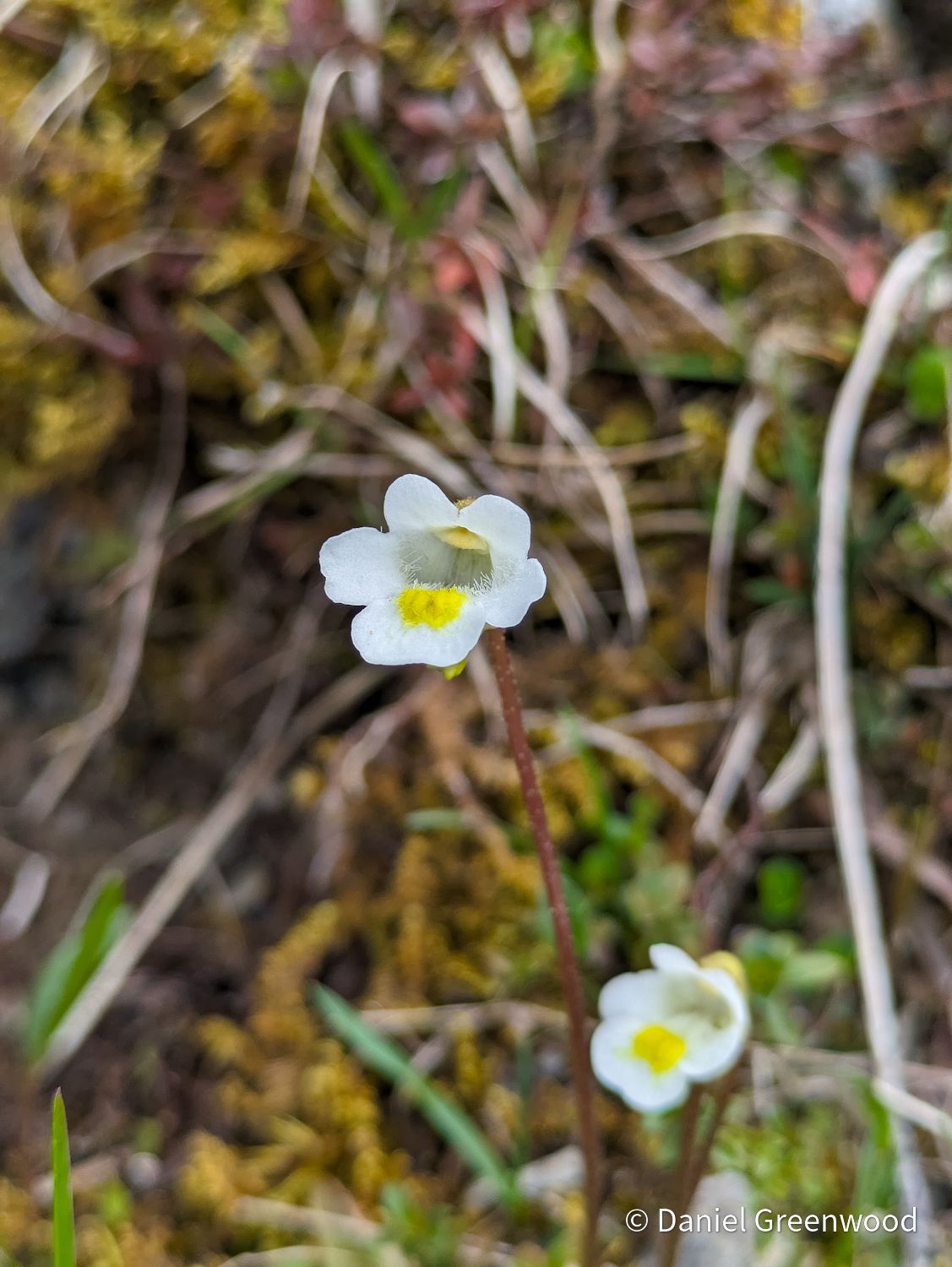
One of the more common sightings in the alpine zone was alpine butterwort, (Pinguicula alpina).
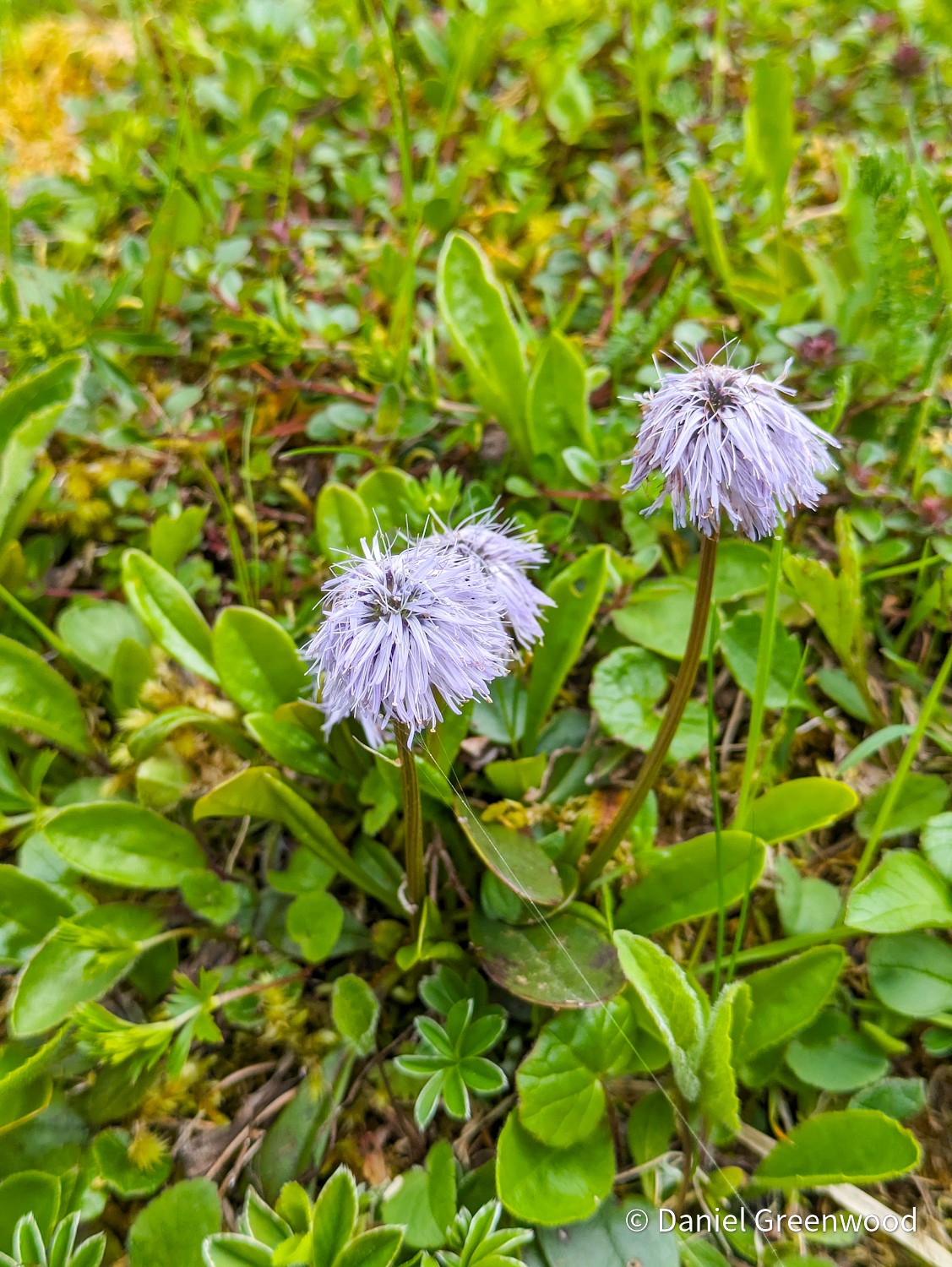
A regular of this habitat was leafless stemmed globularia (Globularia nudicaulis). They look like little lilac mops.
At this point the views of Grindelwald began to be swallowed by the spring woodlands.
In the woods
As you can imagine, the water was crashing down as the snow melted. A lot of work is going into observing the changes in the glaciers in the Swiss Alps, which is happening at an alarming rate here.
You can get views of the Lower Grindelwald Glacier from this walk (though this was taken lower down). This glacier shrunk by over a mile between 1973 and 2015.
I love a new violet species that’s easier to identify than ours at home. This is twoflower violet (Viola biflora) and was only seen in the woods at the edge of lanes.
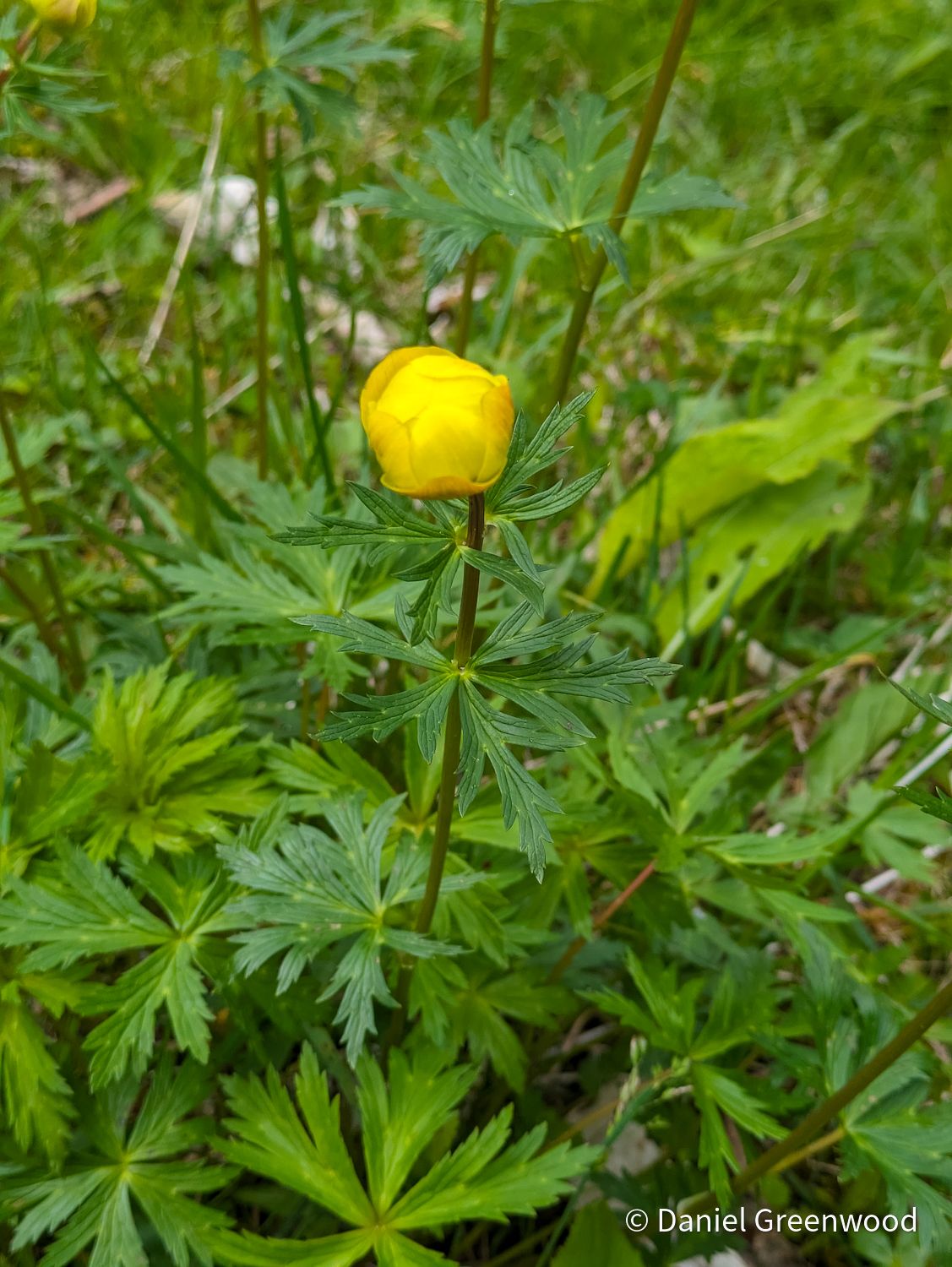
It’s always nice to find globeflower (Trollius europaeus), a species of buttercup.
This was a new species for me – may lily (Maianthemum bifolum). It looks more similar to something like black bryony or bindweed to the untrained eye (this one).
This cranefly was resting on the leaves of yellow archangel, a woodland plant we seem to be losing in the UK.
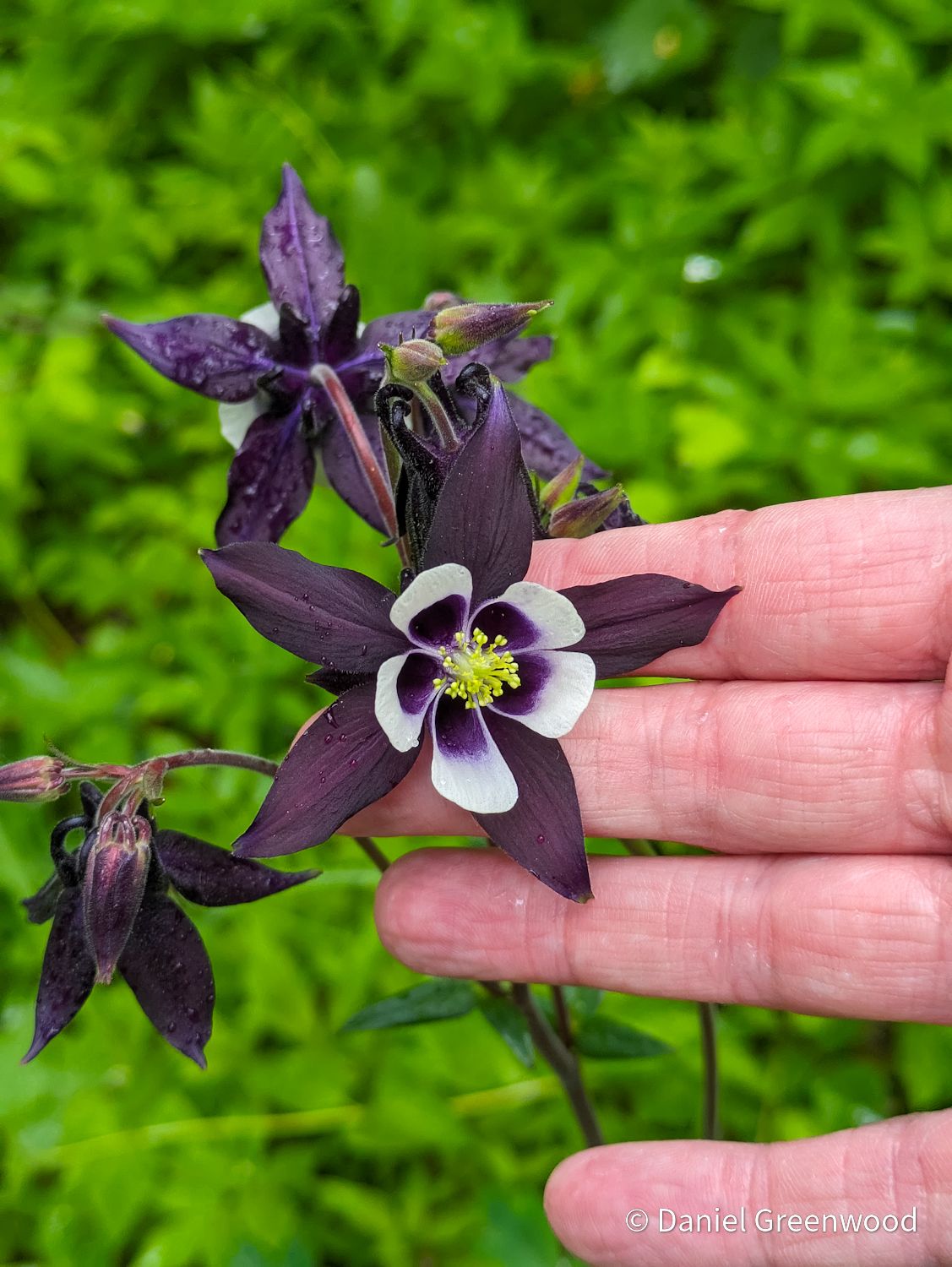
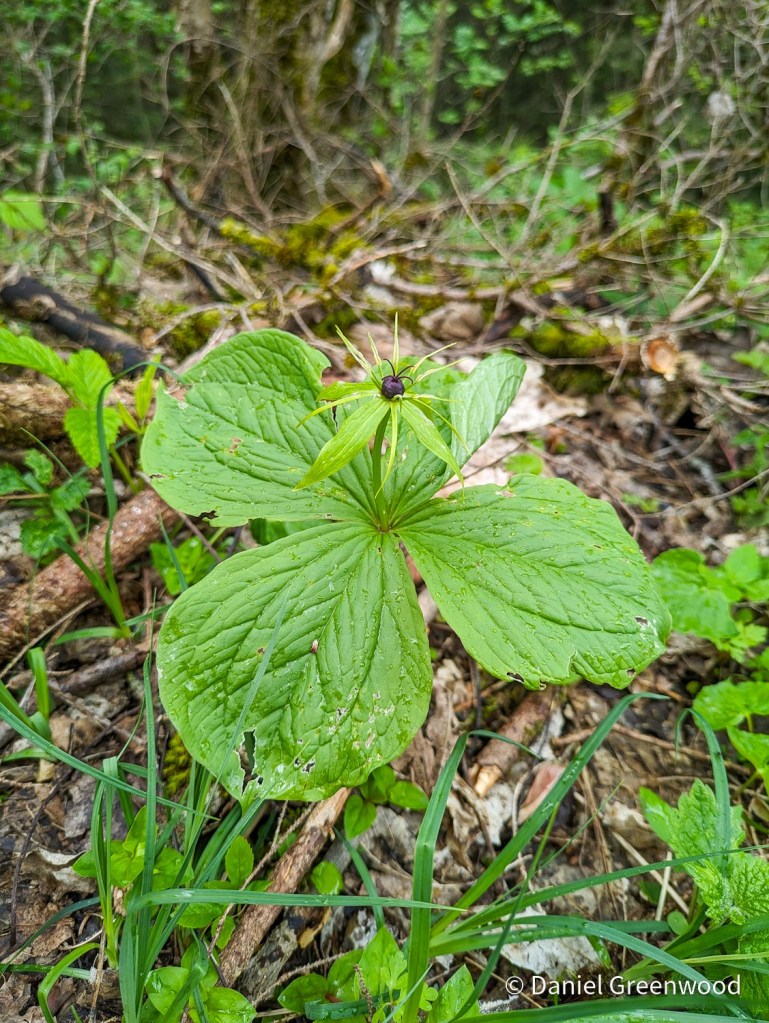
It’s always a joy to encounter herb paris (Paris quadrifolia). I think the columbine (Aquilegia vulgaris) seen here is probably a garden escape, though it is an ancient woodland plant as well, so I may be wrong. I hope it’s the wild one!
There was more herb paris, but only in the woods.
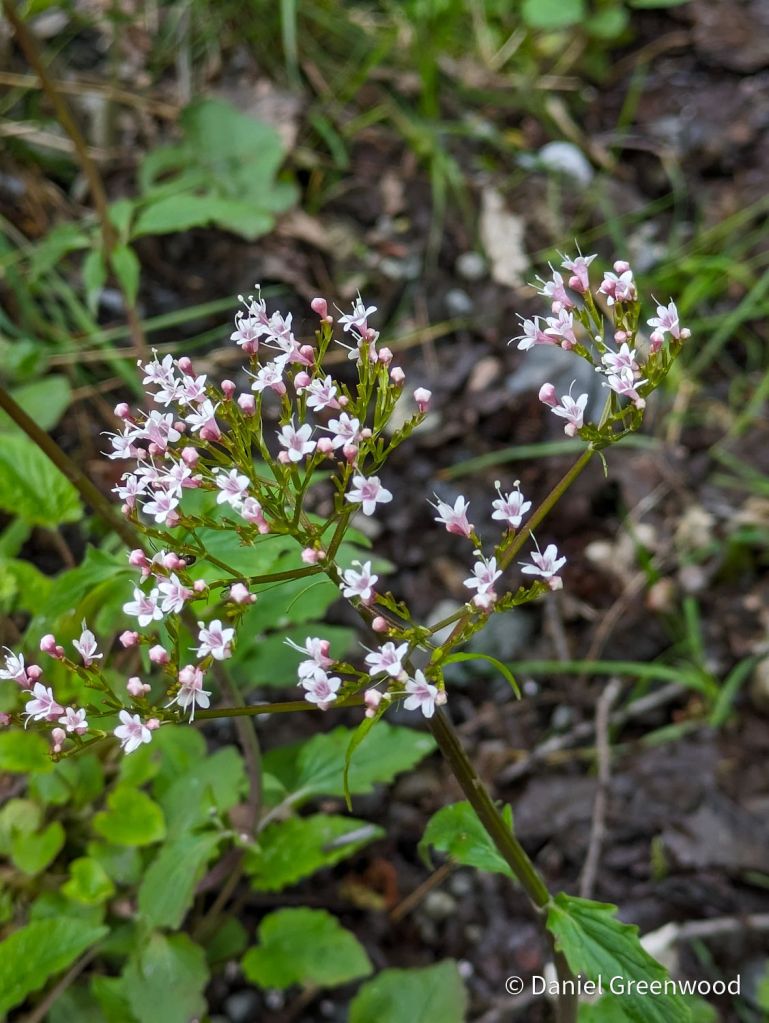
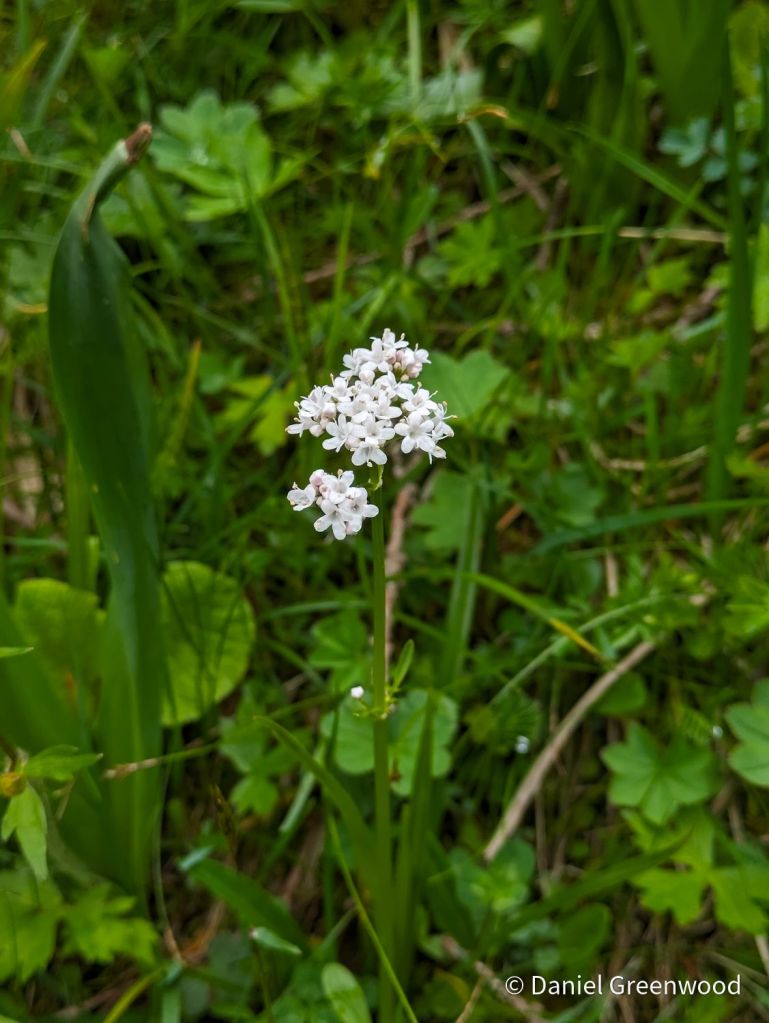
There were a couple of valerians. This one is three-leaved valerian (Valeriana tripteris). It was growing in wet areas.
Now, there weren’t a lot of orchids out at the time as it was probably too early in the season. But this is bird-nest orchid (Neottia nidus-avis), which I’ve only really seen in the chalky woods of the North Downs in England.
This is fly honeysuckle (Lonicera xylosteum), a strangely shrubby honeysuckle compared with the climber we have in the UK. It’s been introduced to Britain but I’ve never bumped into it.
Hillside meadows
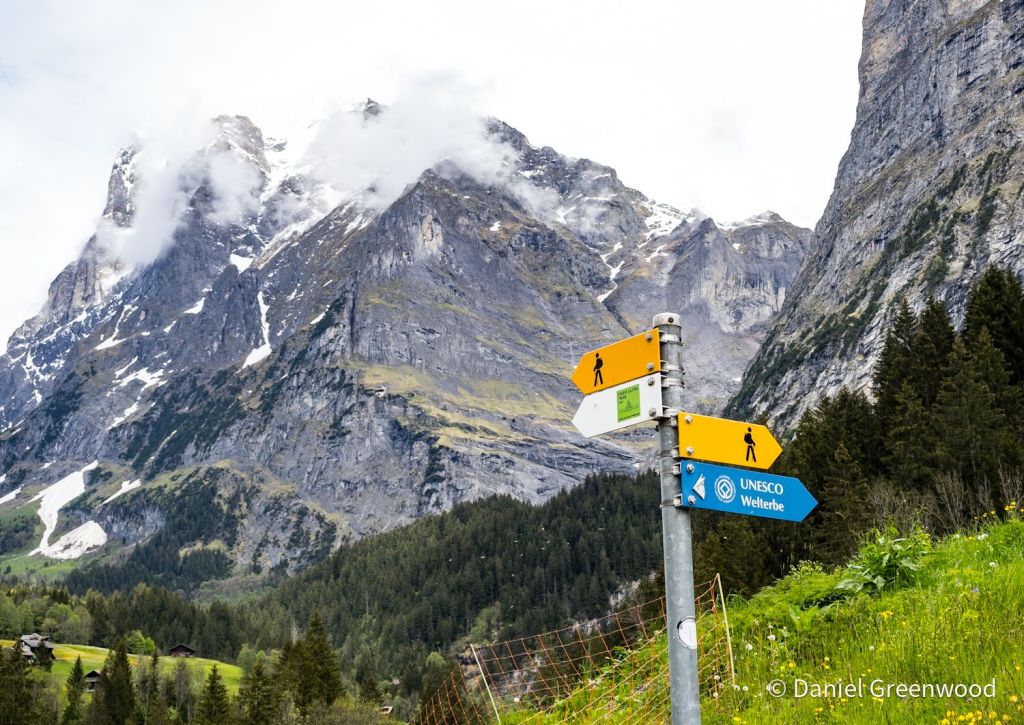
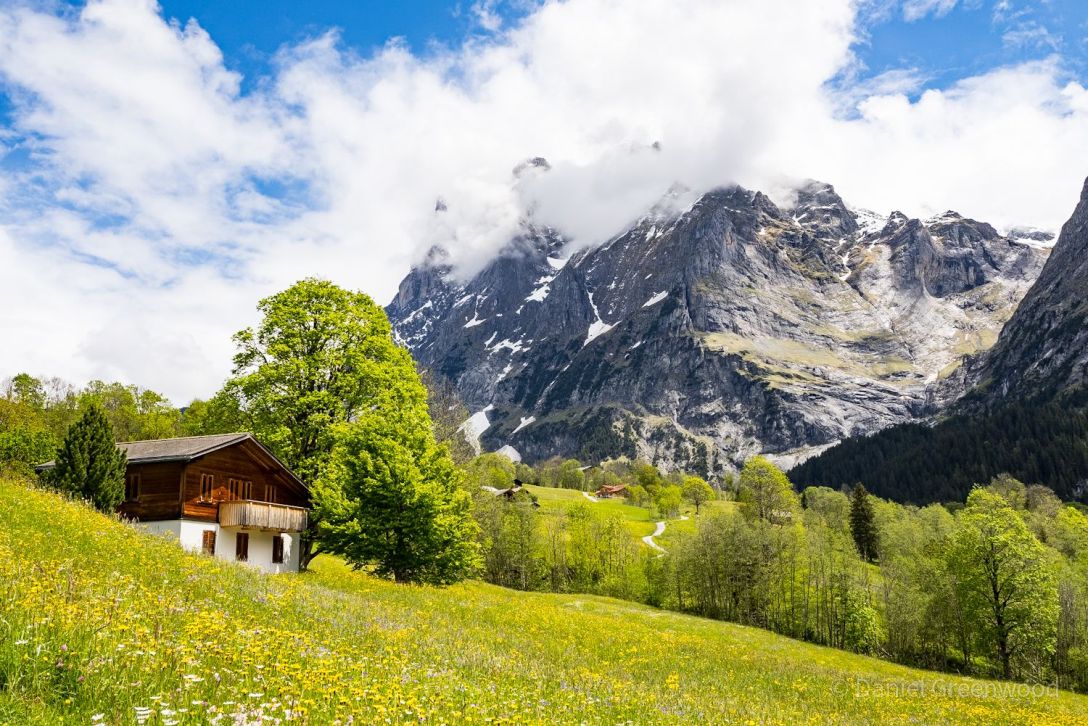
Let’s just take in the views of the Wetterhorn for a bit…
I’d like to be out walking in World Heritage landscapes every week, but alas, it will just have to be once or twice in life.
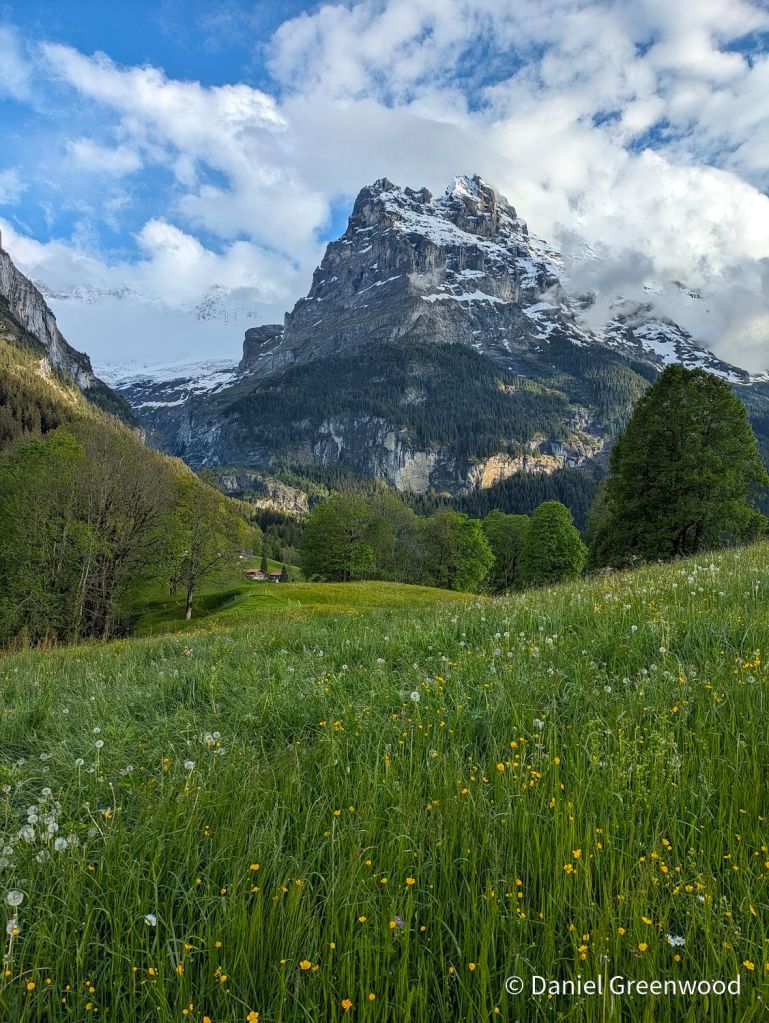
Looking south-west towards the Eiger.
Mountain sainfoin (Onobrychis montana) was one of the most eye-catching plants, growing at the edges of the lane if I remember rightly.
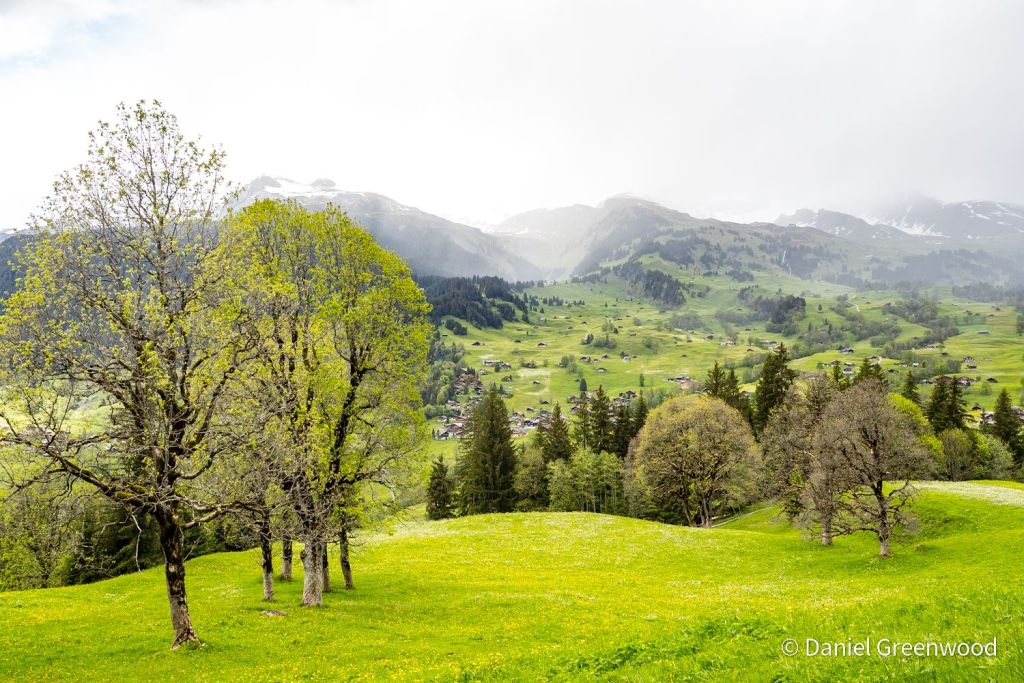
The spring really glows in this image, despite the misty conditions. The sycamores are coming into leaf.
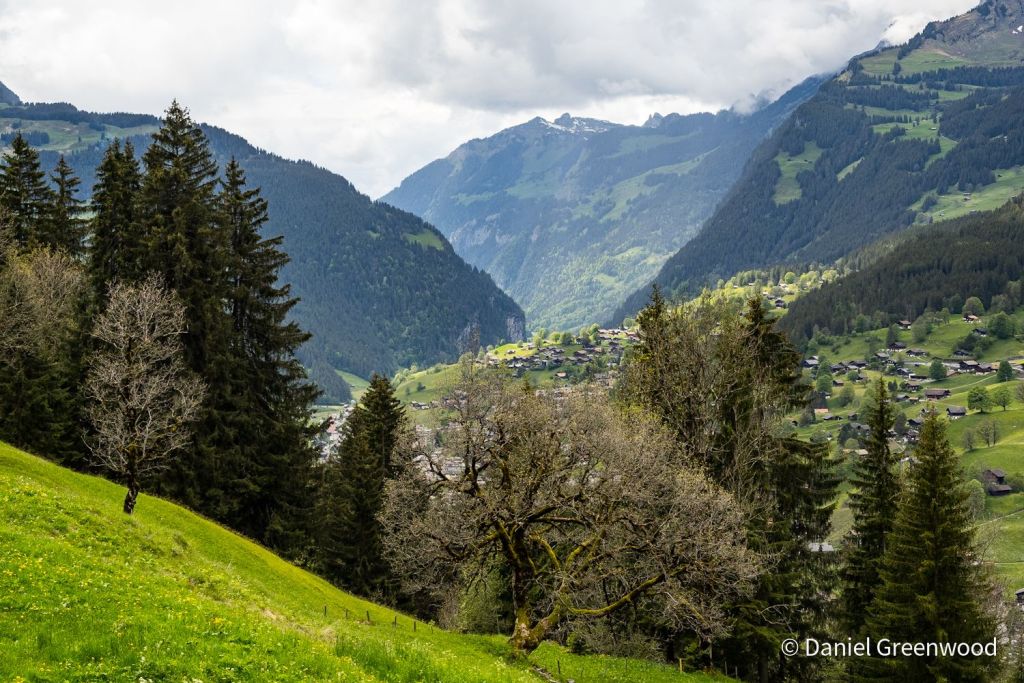
This is a view down the valley where the train returns to Interlaken.
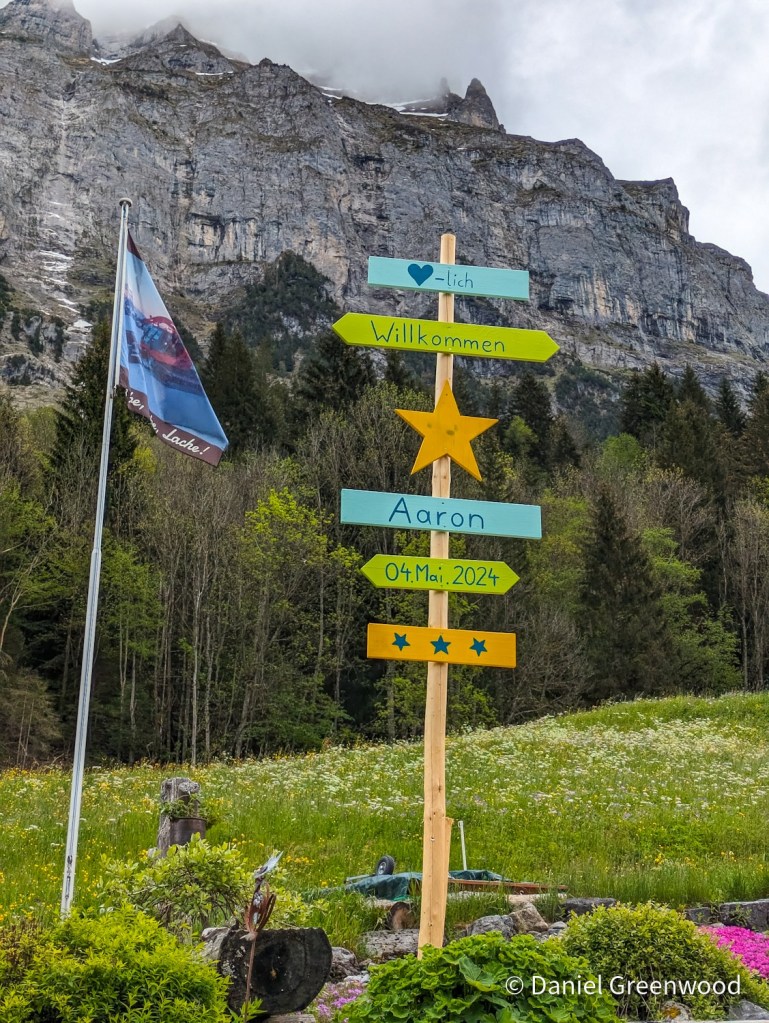
This is something I’d never seen before – a totemic welcome for Aaron who was born on 4th May 2024. Perhaps this is a tradition in this part of Switzerland?
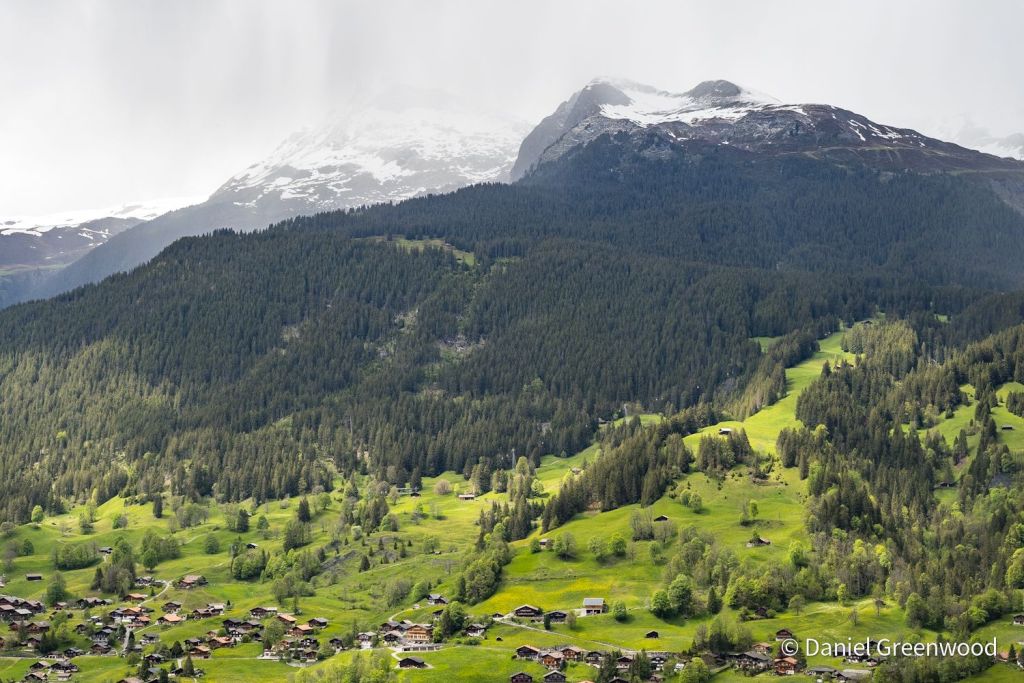
The views across towards Grindelwald First come into view as space opens up on the woods. You can see all of the chalets that dot the meadows.
I was intrigued by these rustic chalets that were more indicative of a rural way of life, compared with the guesthouses in the valley. It looked lived-in or at least used by people who made use of wood products. What a lovely place to be able to escape to in the summer. Of course communities would have developed from these single dwellings across the Alps.
This image looks north towards the other side of the valley. The yellow hue in the meadows is either kidney vetch or birds-foot trefoil.
The lovely spiralling shell of a snail roosting in a tree.
These umbellifer-rich meadows were a joy to behold.
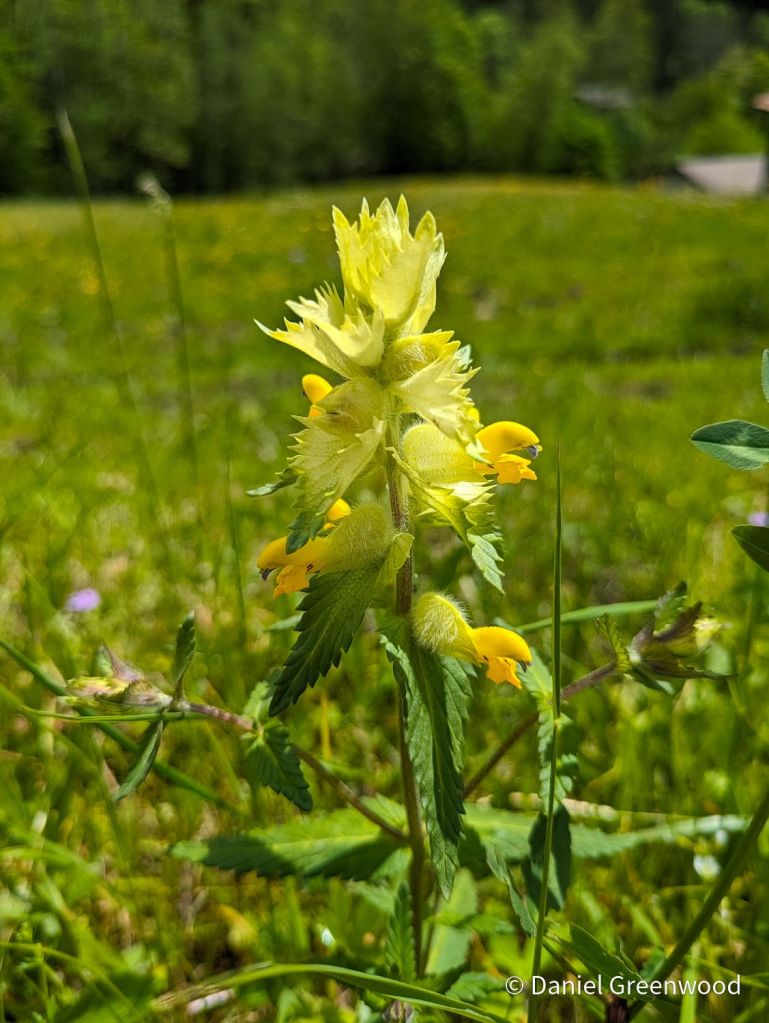
The lower we got (c.1000m) the more abundant yellow rattle become. This is probably Rhianthus serotinus.
This is the Black Lütschine, one of the rivers that flows into Lake Brienz. It was very powerful. Its source is the Lower Grindelward Glacier, pictured earlier in this post.
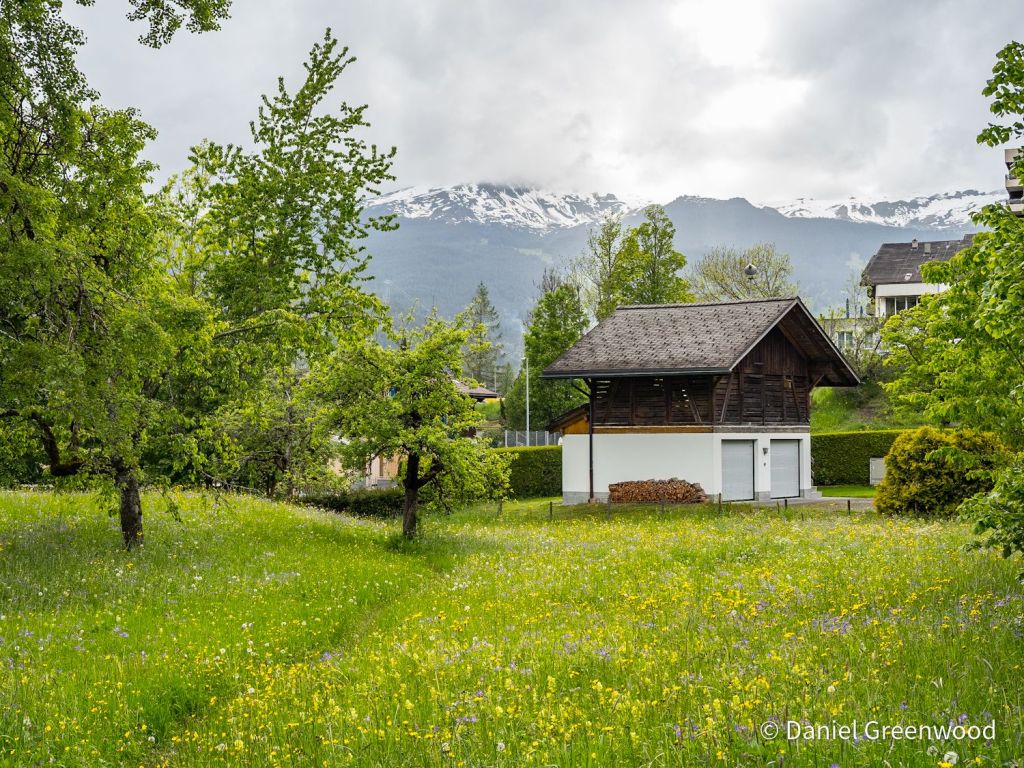
The meadows around people’s houses – this looks like an orchard – were in fine condition.
Thanks for reading.
I write these blogs in my spare time because I want to raise awareness about the beauty and diversity of our landscapes. If you enjoy reading themyou can support my blog here.
Carrying on from the magnificent meadows of Grindelwald post, this post covers some of the alpine plants my wife and I saw on our honeymoon hike around Männlichen in May 2024.
The view from Männlichen
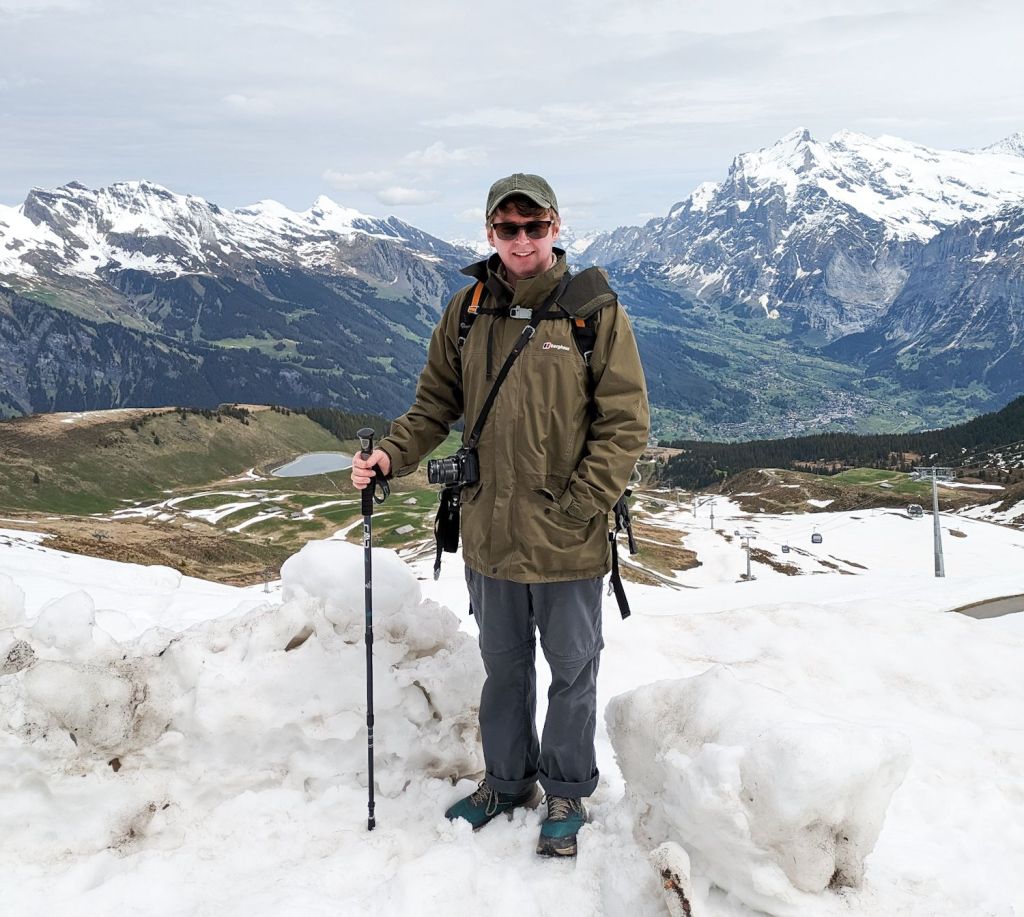
It was rather wintry atop the peaks of the Jungfrau with snow still covering grasslands above the treeline.
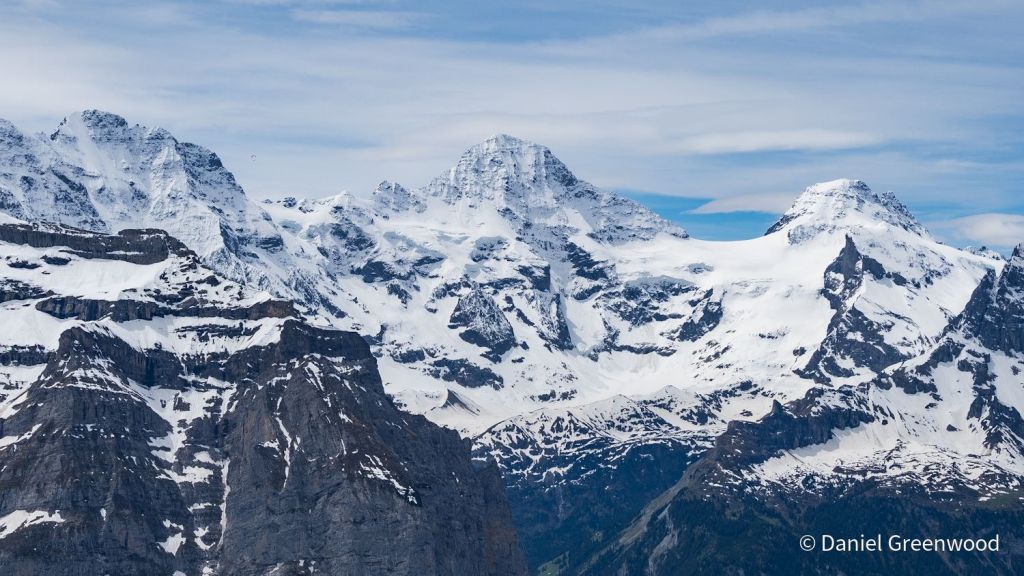
The Jungfrau peaksleft to right: the Eiger, Jungfrau and Mönch
The Peaks of the Jungfrau
Männlichen is accessible via gondola from the Grindelwald Terminal station. The Grindelwald stations can be confusing so do look into it to ensure you don’t get off at the wrong station, wherever you’re going.
View into the Lauterbrunnen Valley from Männlichen
When you reach the gondola station you alight at 2220m. Here you get fantastic views of the major peaks of the Jungfrau – Eiger (Ogre, 3970m), Jungfrau (Young Girl, 4105m), and Mönch (Monk, 4107m).
As it was still snowy and we were only kitted out for ice-free hillwalking, we walked down to the middle gondola station on the road.
Along the way we saw a lot of nice wildflowers, most of which we hadn’t seen before.
Wildflowers near Männlichen (2200-1800m)
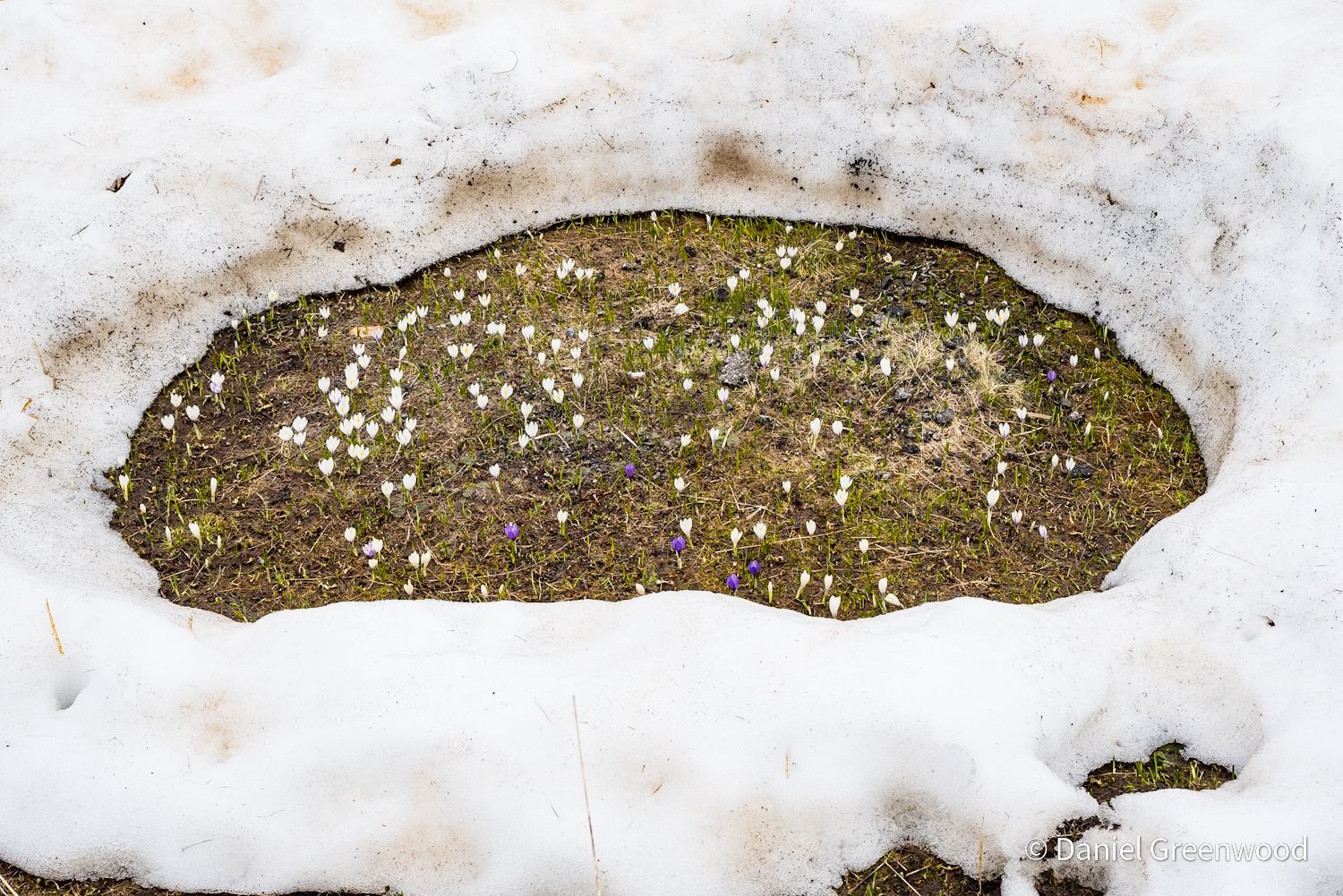
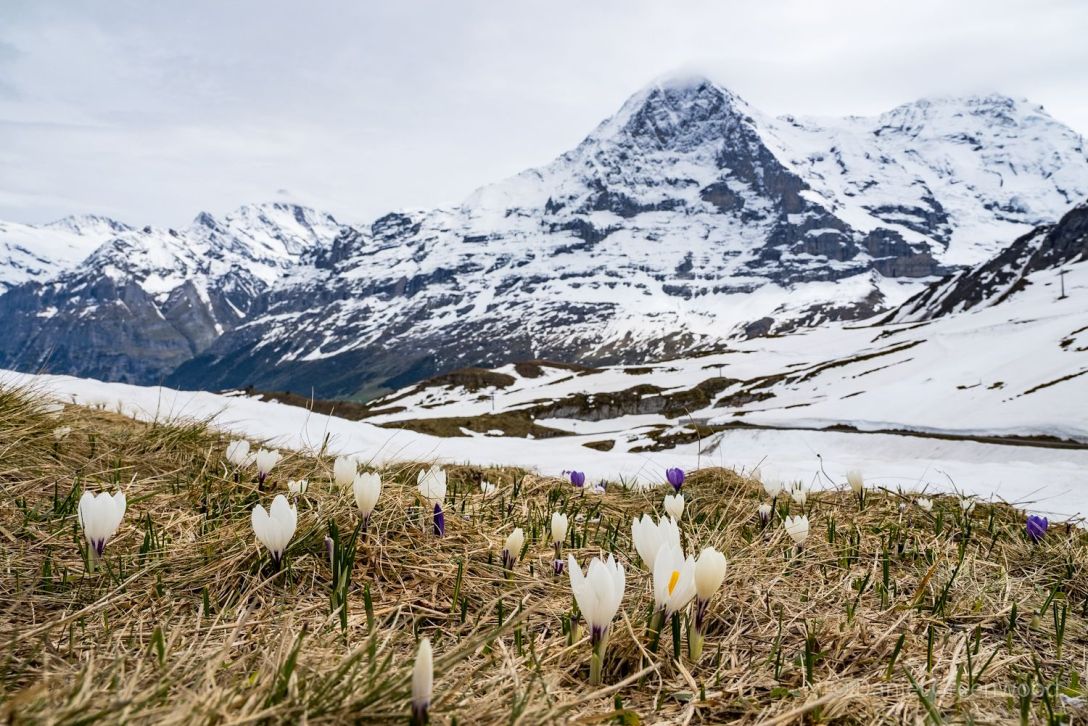
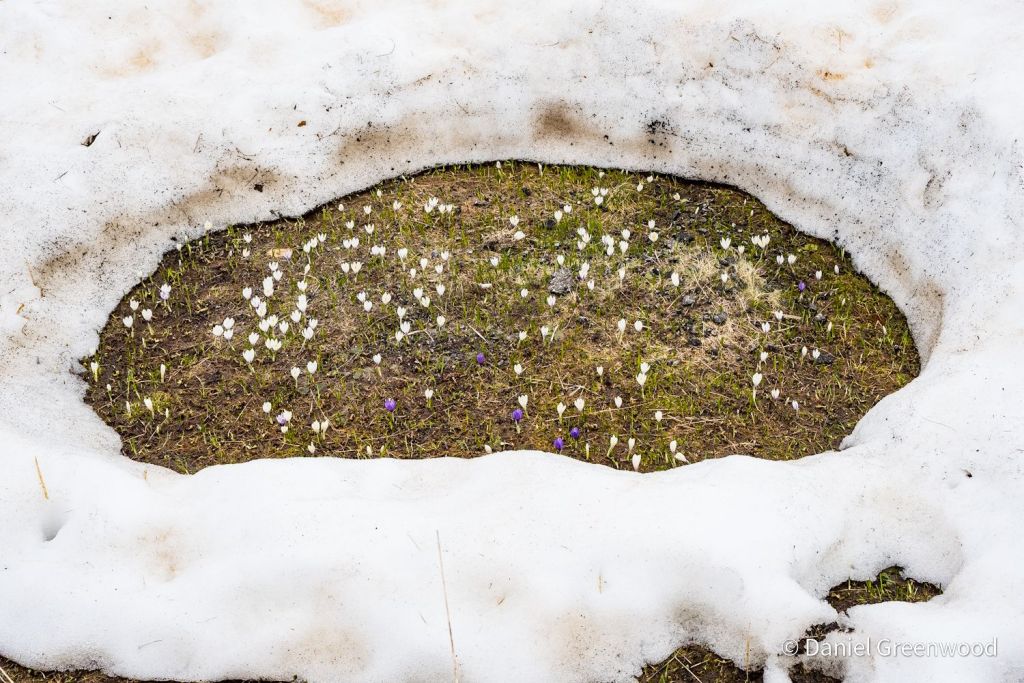
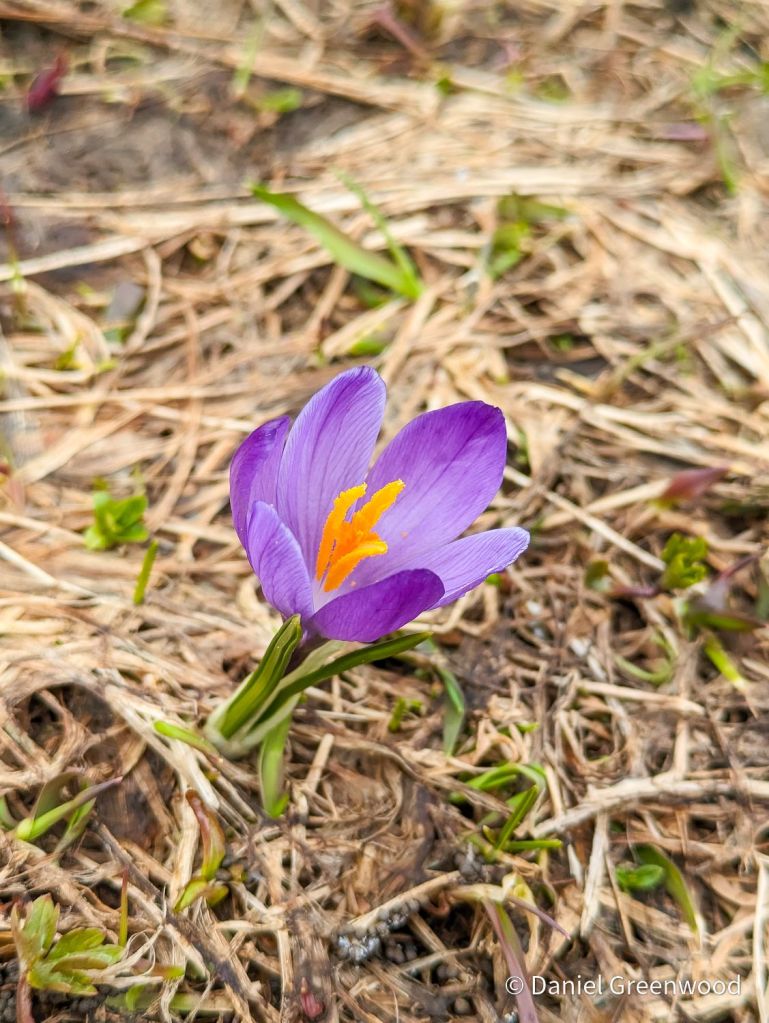
The most dominant flower was a species of crocus that was appearing from under the snow.
This shows that rather nicely.
White crocus (Crocus vernus), and a purple variety:
Meadow saffron always come to mind.
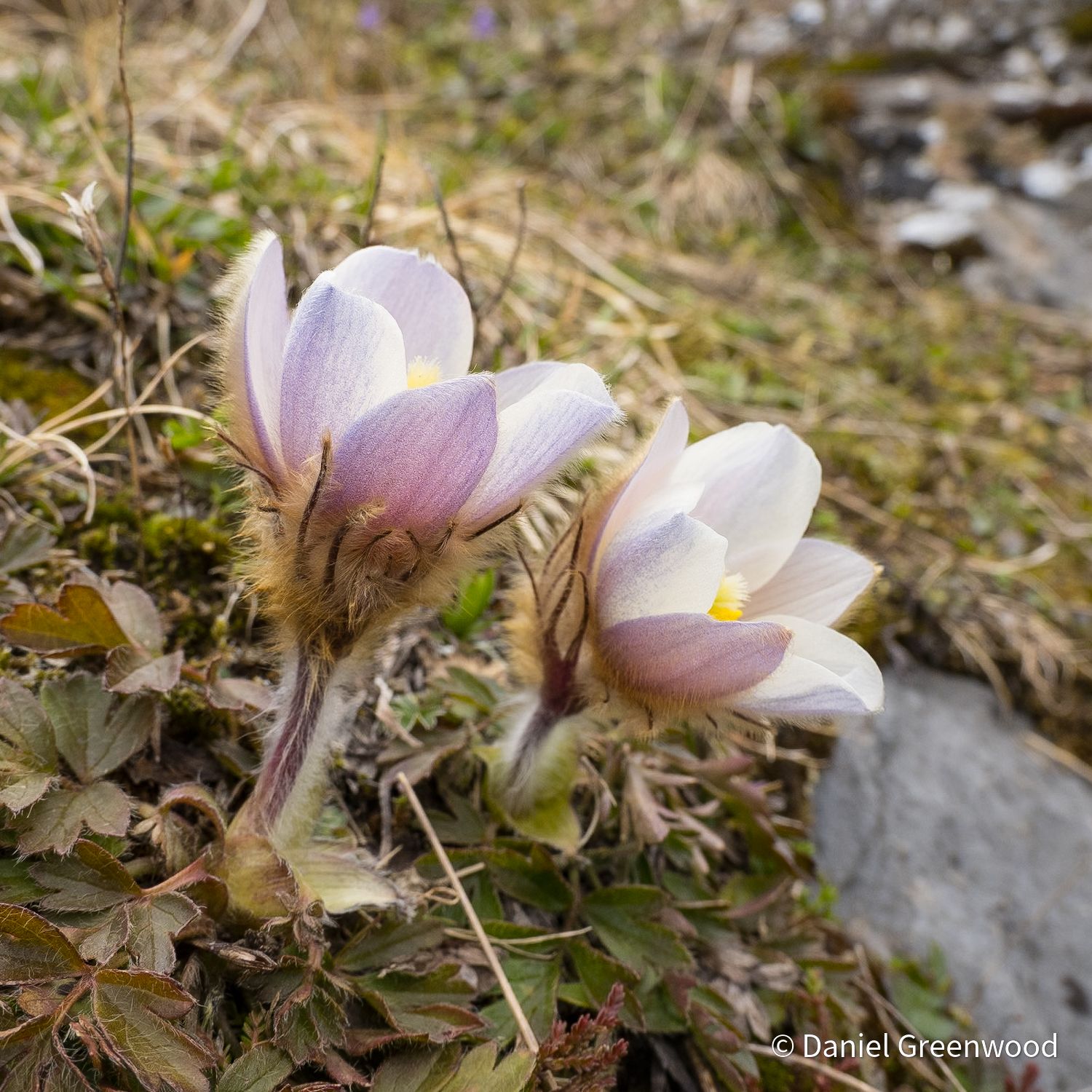
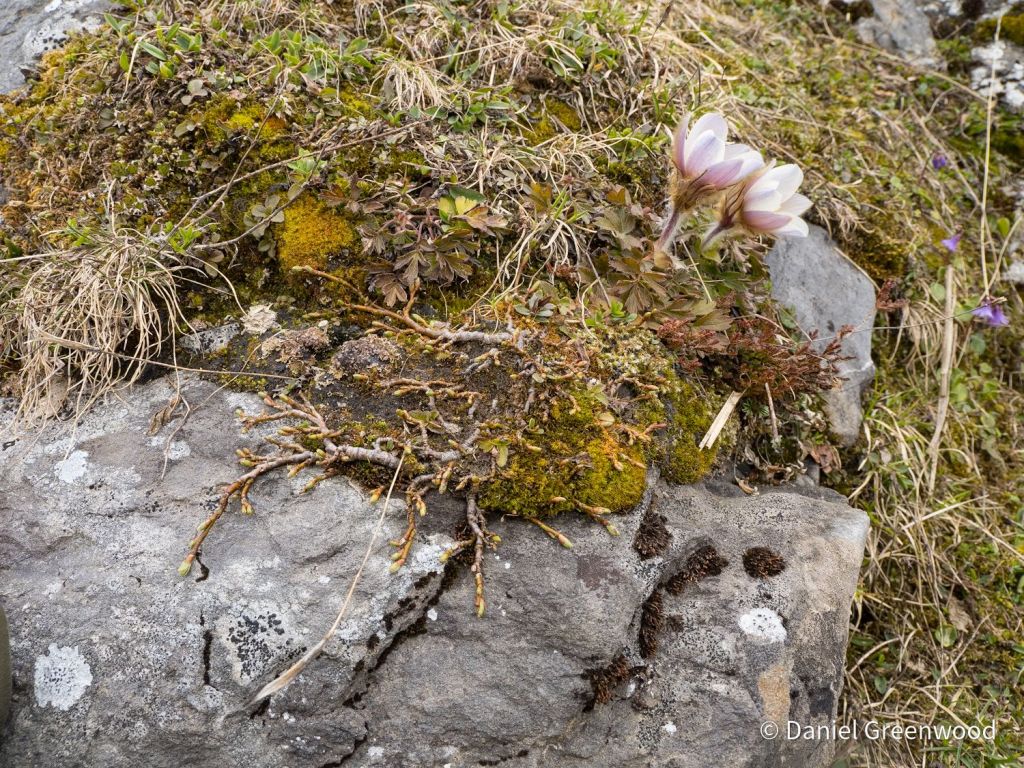
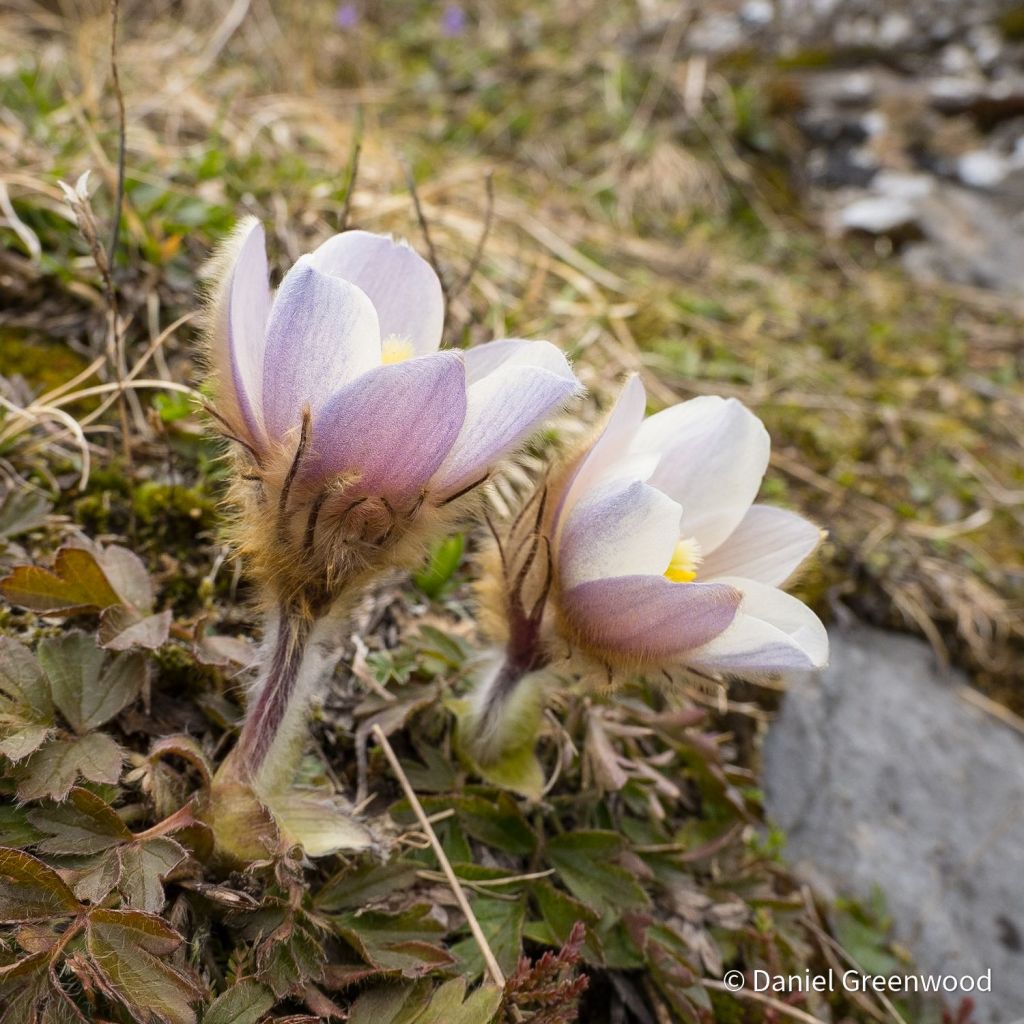
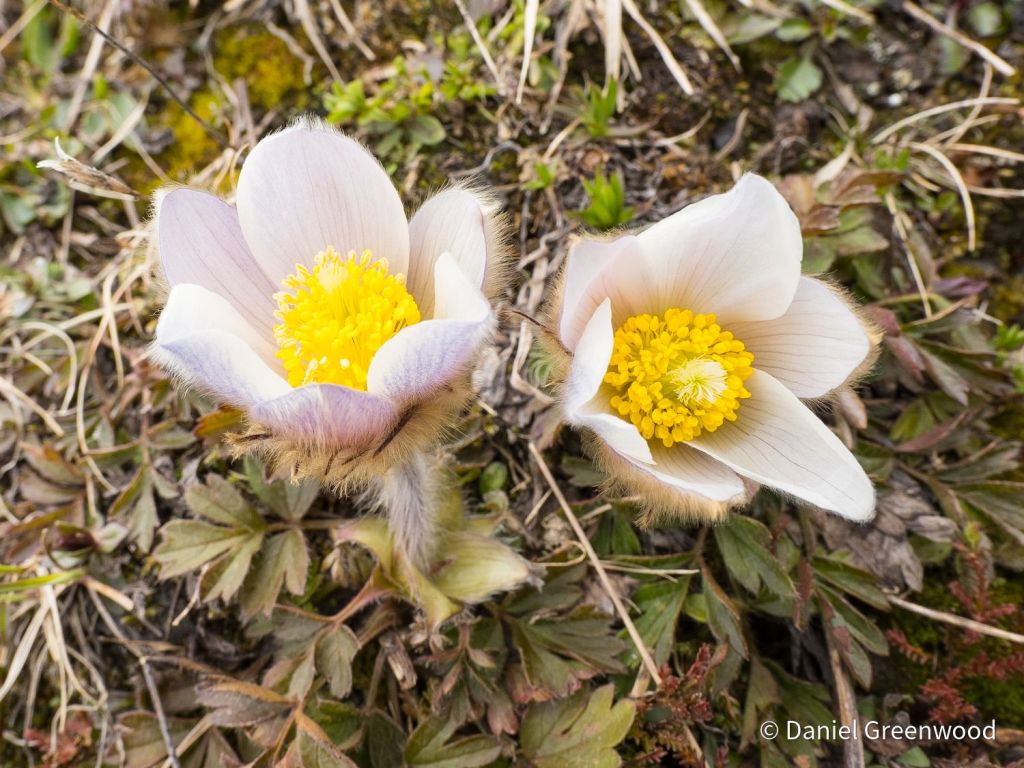
A nice surprise was this spring pasqueflower (Pulsatilla vernalis) close to the top where the first rocks were appearing from the snow.
They are rather hairy.
Pasqueflower is found on chalk and limestone grassland in England, though I’ve never seen it. The Cotswolds is a stronghold.
It’s almost as hairy as a bat, or a tarantula.
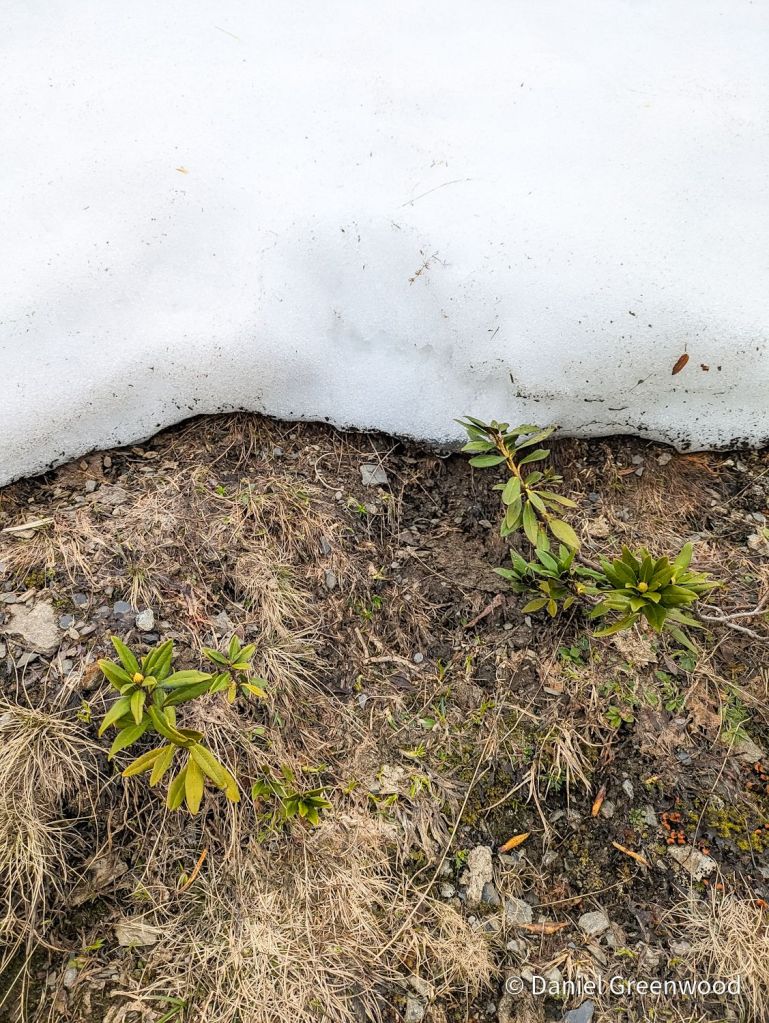
Appearing from the snow was another new plant for me – rusty-leaved alpenrose (Rhododendron ferrugineum).
I’ve never seen any species of rhododendron in their natural habitat. I’m used to seeing the ornamental versions either in gardens or when they escape and cause harm in other habitats.
Snowbell (Soldanella alpina) is a plant I’ve seen in the Bavarian Alps but I’m not there often, so this is a nice thing to see.
The flowers are very ornate, though most flowers are! They look like paper lampshades.
Purple mountain saxifrage (Saxifraga oppositifolia), not well represented in these pics, and probably quite early in its growth.
This is probably mountain everlasting (Antennaria dioica).
Now this has a great name – sweetflower rockjasmine (Androsace chamaejasme). Sounds like a James Taylor song.
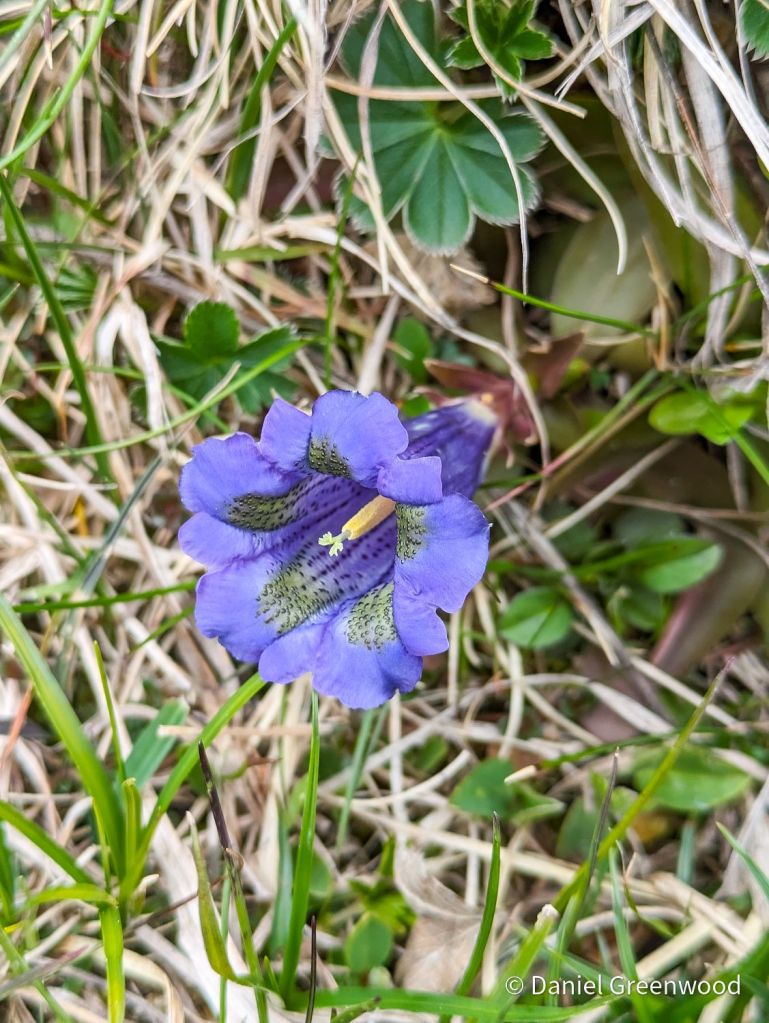
One of the joys of the Alps for us was seeing the range of gentians. They are a stunning blue colour, the kind of vibrancy that only wildlife can muster naturally. This is probably trumpet gentian (Gentiana acaulis).
Birds-eye primrose is a species I’ve only ever seen in the Yorkshire Dales before, near Malham Tarn. The slopes down from Männlichen did have a moorland feel to them, like the Dales does.
Colts foot is one of the first spring flowers and these were very high up. Hardy daisies indeed.
Bright little lion’s manes, though not purely alpine in their habitat preferences.
This is probably cow berry (Vaccinium vitis-idae), a relative of bilberry.
I’m fairly sure this is bilberry.
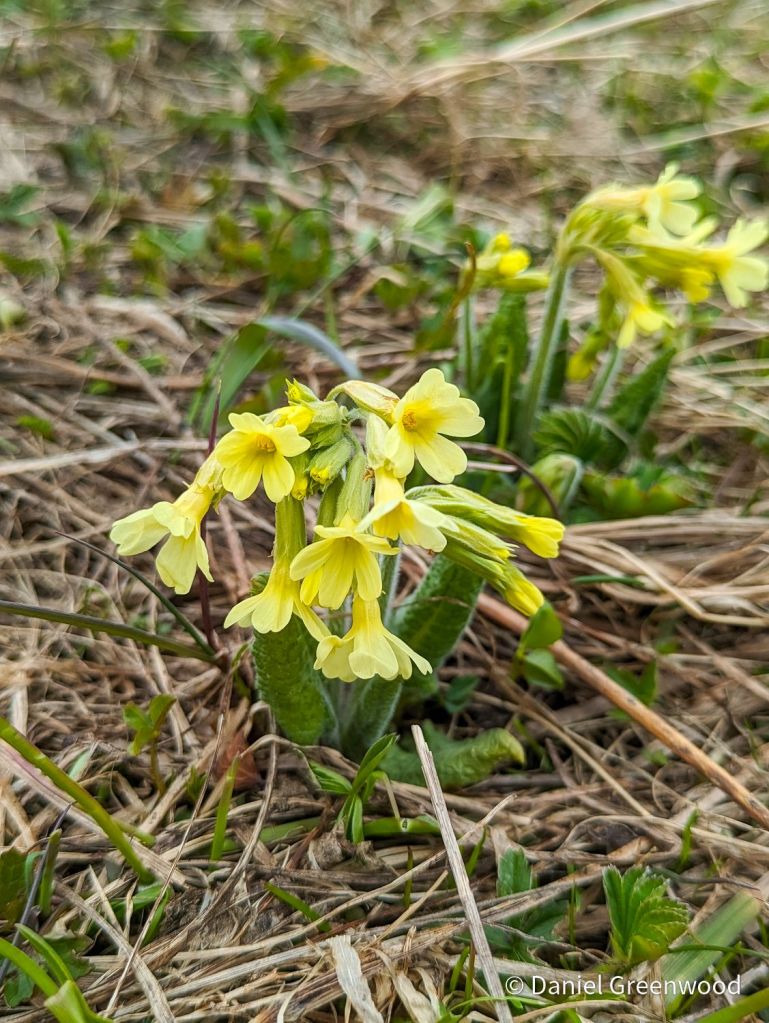
Oxlips are no longer common in England, and I can only ever remember seeing them in Germany or Czechia in spring.
I think these may be oxlips, but their abundance has thrown me. This was near to the middle gondola station on the way down.
Jostling for prominence.
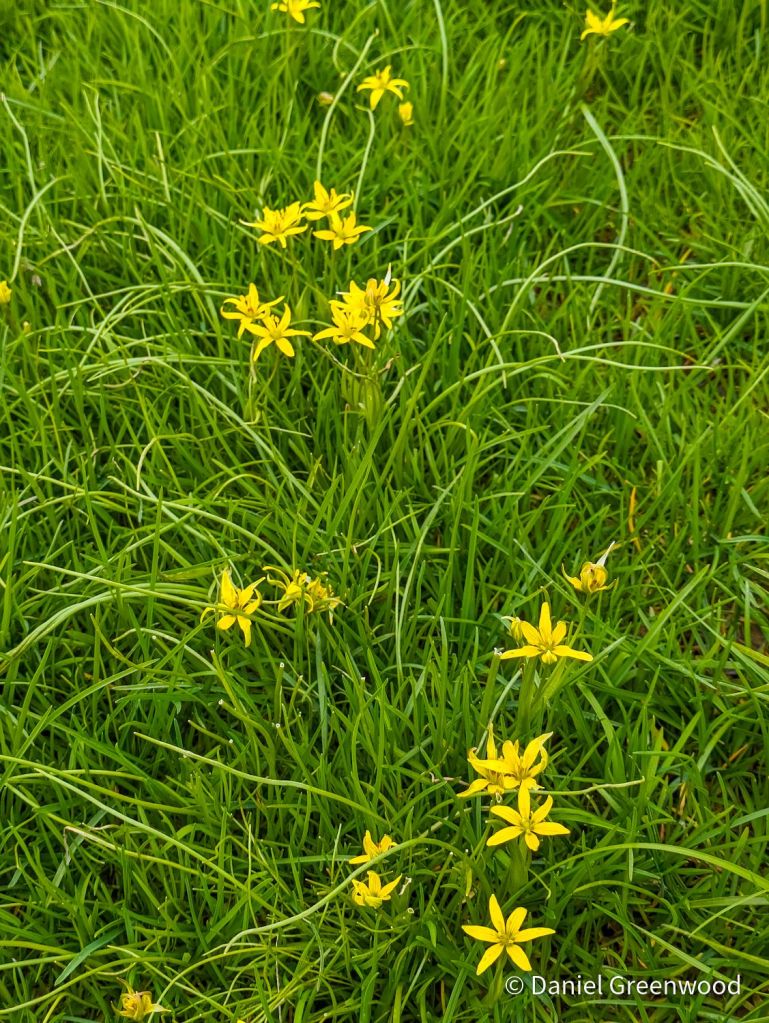
Nearby to them was this lovely plant, yellow star of Bethlehem. If only peace could come to that part of the world today.
Next I’ll be covering more woodland finds around Grindelwald, and later in the mountains around Lake Brienz. Then it will be what everyone seems to navigate to this website for – sycamore content.
Thanks for reading.
I write these blogs in my spare time because I want to raise awareness about the beauty and diversity of our landscapes. If you enjoy reading them you can support my blog here.
In May 2024 my wife and I went on our interrail honeymoon to the Jungfrau region of the Swiss Alps. I am finally ready to post my photos from the trip, starting with some macro photos. I’ve popped in some short videos here to give a bit more texture and sound to bring things to life.
My cat whispering wife
It was an incredible trip, all done by rail there and back. The nostalgia is already with me.
In addition, I’m aiming to post about the spring alpine flowers and the amazing sycamore wood pasture. Hopefully one each week. I posted about the smattering of fungi back in May on Fungi Friday.
On the trip I took only one lens with me, one capable of pretty much any photography between 12-45mm (equivalent to 24-90mm in full frame cameras). That includes excellent close up capabilities. I also had a pocket compact camera and my phone.
The meadows were in full bloom, days from being cut for hay to feed the alpine cattle through the winter months.
Breathtaking alpine meadows
Oxeye daisies with the Wetterhorn (I think) in the background. This pic is taken with my Olympus TG-6 compact.
It was nice to see the variations in the grassland species in the different locations. At about 1200m up these meadows were packed with umbellifers. They make up the wash of white here. This meadow must have been impacted by the snowmelt as it nourishes the foothills in spring.
The typical mix around Grindelwald was one of red clover, scabious, oxeye daisy and hawkbits.
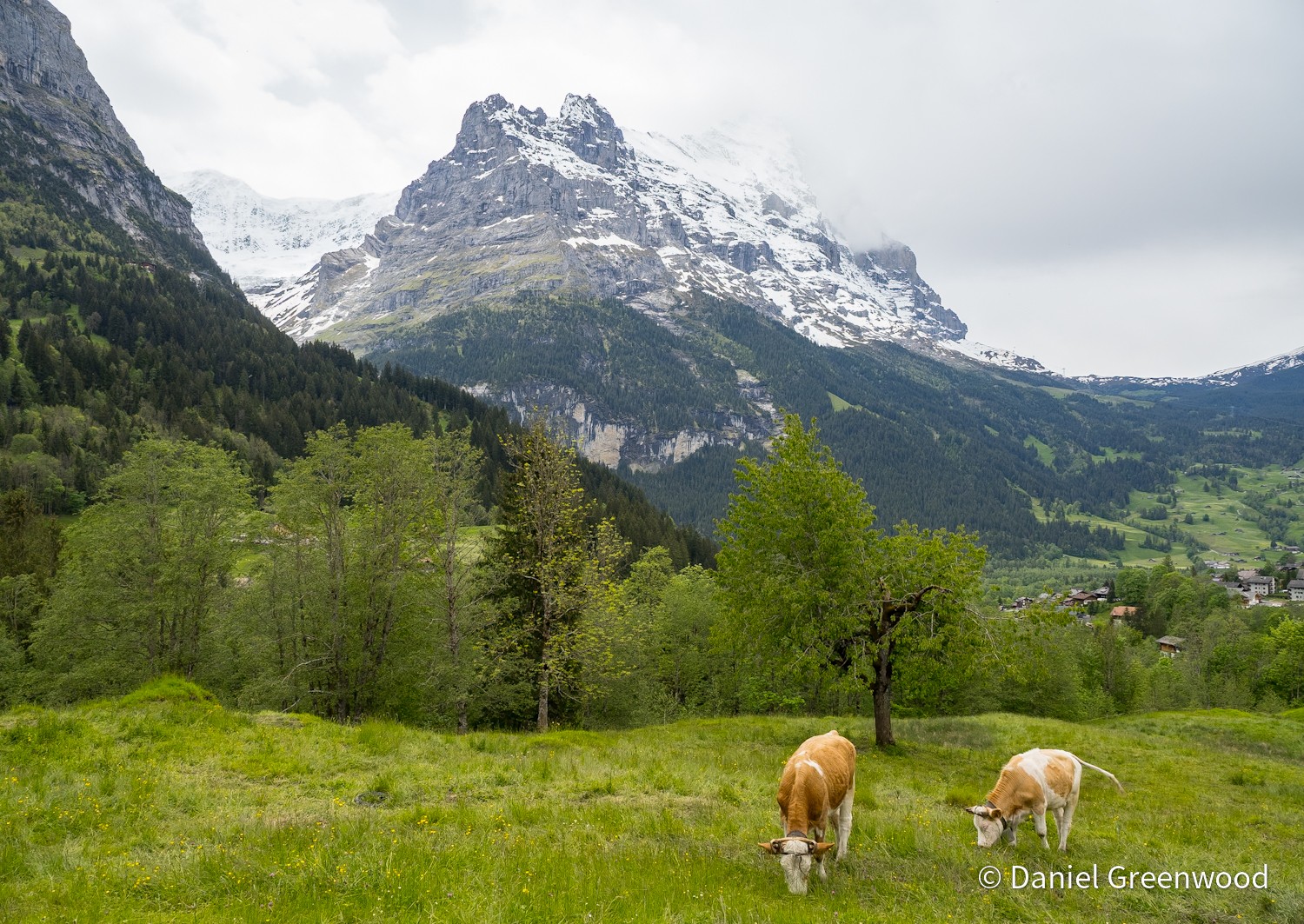
The Eiger looms over chalet homes and rich hay meadows. You can see the allure of Switzerland. High living standards and abundant nature.
It is a breathtaking place, as this beautiful phone pic suggests (as in the phone’s capabilities!). This meadow was one that lacked the diversity of others, with the dandelions being evidence of nutrient enrichment, which encourages more vigorous plants at the expense of others. The most diverse meadows will have lower levels of nutrients in the soil.
The Grindelwald meadows were at a height of around 1000m. They were peaking and very loud at times. Just listen to this:
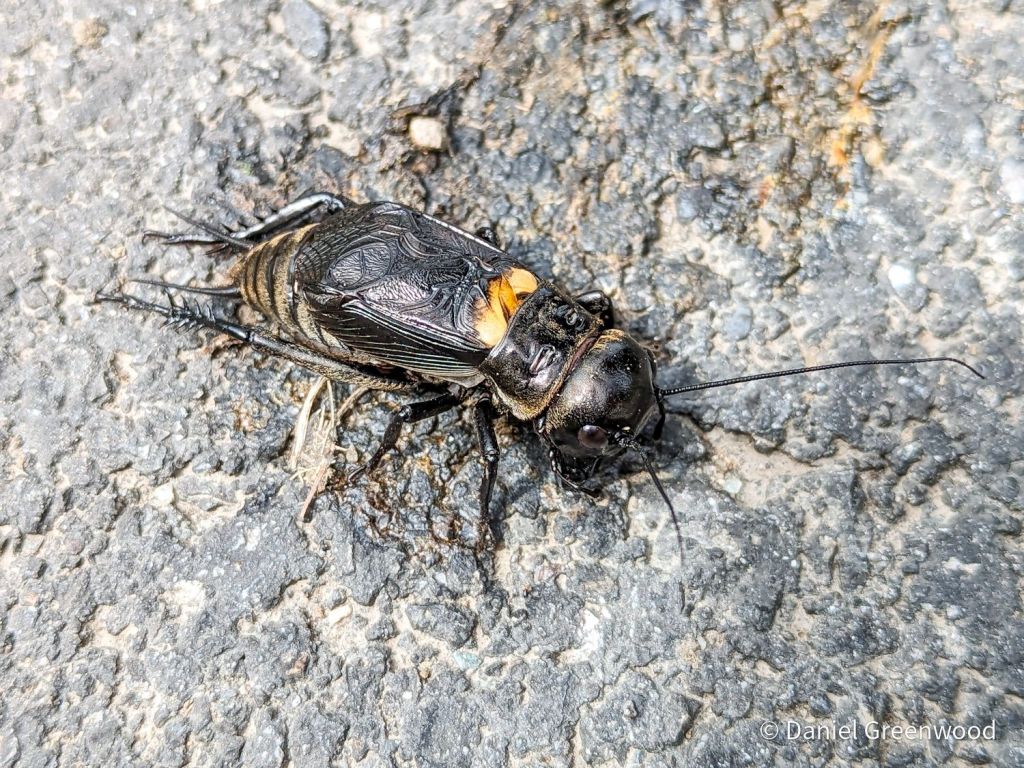
It was a chorus of crickets, not something that we get in England much anymore. The management of these meadows follows a largely medieval practice of haymaking, though it is now mechanised:
This is probably a family cutting and collecting the hay. This photo was taken from a cable car heading up to Männlichen.
Now onto the invertebrates that lived in the meadows.
Bush crickets
The sound in the meadows was made by the European field cricket, a species that has received support via conservation projects close to me in West Sussex. According to the iNaturalist page it’s flightless, so when it becomes locally extinct it struggles to repopulate lost ground. In the UK it has suffered from the decline in heathland, its favoured habitat. The cricket above was travelling across a lane to reach another meadow. There were a number of them squashed by vehicles. It’s unavoidable.
Moths and butterflies
During a walk in the valley woods at the foot of the mountain this green-veined white butterfly (I think) was on the wing. The main butterfly we saw was the swallowtail, but they were too fast, restless and far away for my lens to reach.
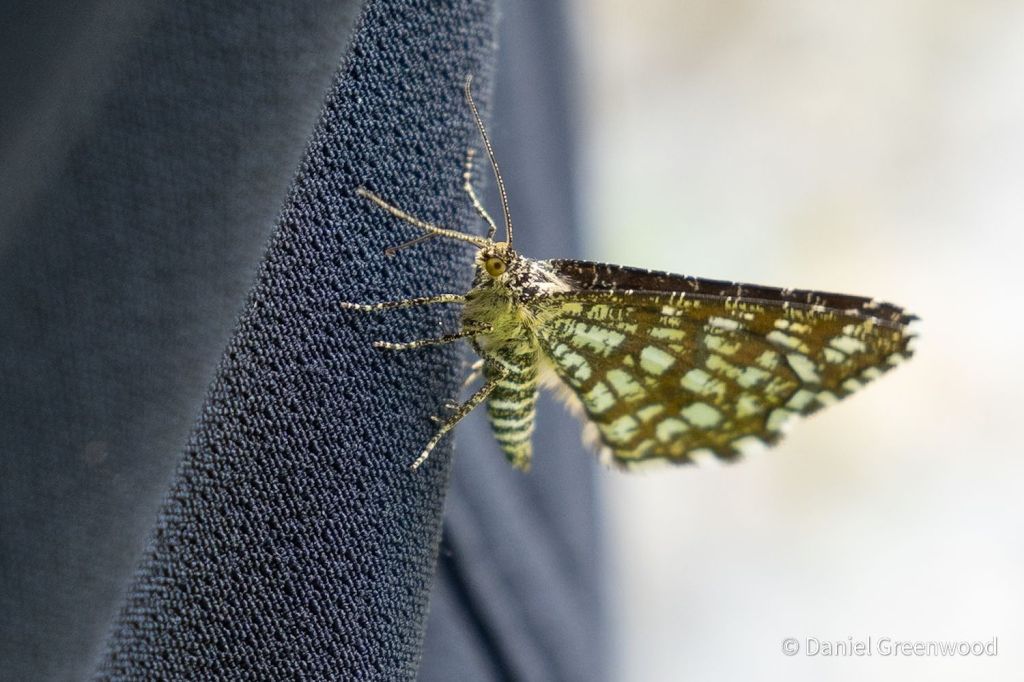
In stark contrast, this latticed heath moth alighted on my actual lens before being coaxed onto my trousers:
This is a species we also have in southern England.
Wasps and sawflies
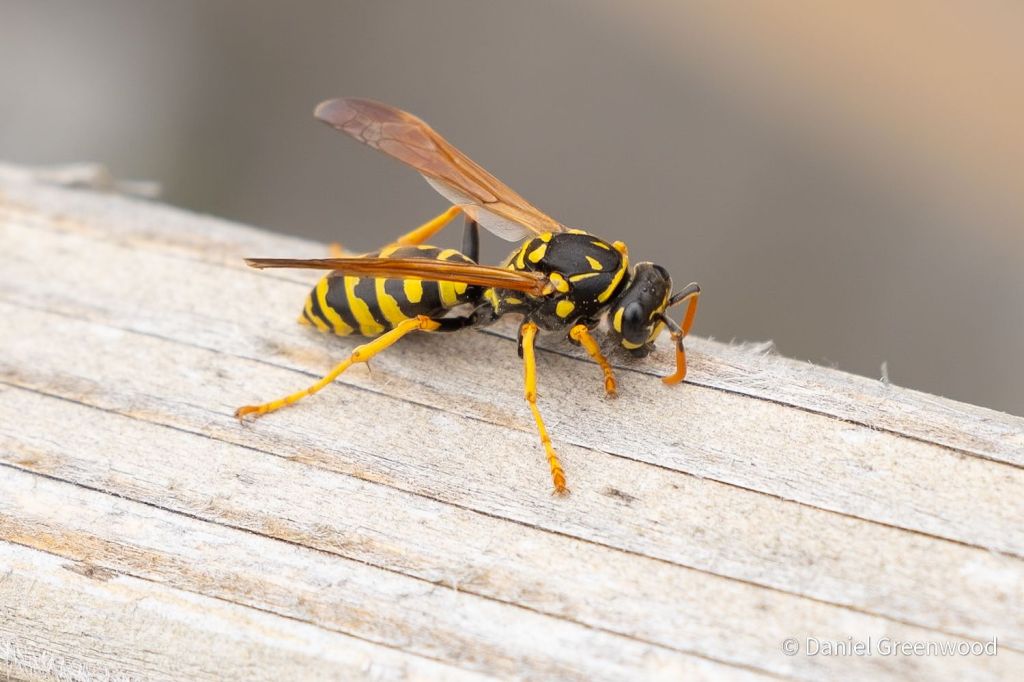
One insect you don’t see in the UK, as far as I know, is the European paper wasp.
They have a lovely orange hue to their antennae, feet and wings. I’ve seen them before in Czechia making nests in residential post boxes. Here you can see one gathering wood shavings for nest building.
Meadow cranesbill was another common flower in the – you guessed it – meadows. I noticed that one area we passed when returning to our accommodation had a number of cranesbills that held sawflies in their flowerheads. The iNaturalist sawfly oracles have decided this is Tenthredo koehleri.
Beetles
Beetles are not my strong point, unless they are from Liverpool. This is a species of click beetle from what I know, visiting an oxeye daisy flower.
Spiders
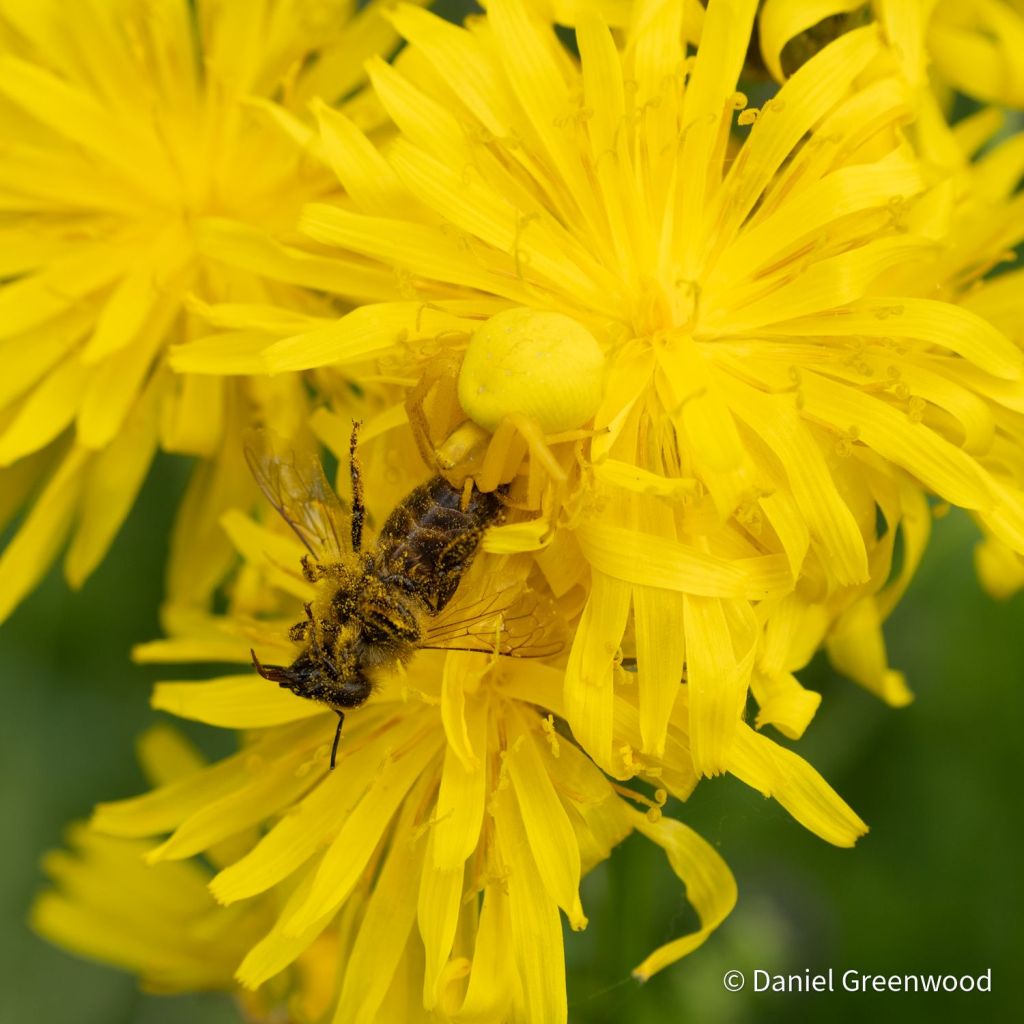
Now, I did mention those beardy daisies the hawkbits, earlier. I’m not up on my ID with these plants, but I did spot a crab spider which had joined in their colouring and caught a honeybee (I think) in one of the flowerheads. This was a statk example of how they can change their complexion to camouflage themselves in certain plants.
That’s all I really managed in the macro photos stakes. There’s much more to come from the Swiss Alps though.
Thanks for reading.
I write these blogs in my spare time because I want to raise awareness about the beauty and diversity of our landscapes. If you enjoy reading themyou can support my blog here.
A break from my blitz of my usual summer macro posts for something a bit more, monumental.
I’ve been using a dedicated macro lens since 2014, so this year marks my 10 year anniversary.
Now, no one cares about this, and I only just remembered, but it gives me an excuse to share 10 of my favourite invertebrate macro images. I’m not including fungi in this, they are a different game entirely for me.
In no particular order:
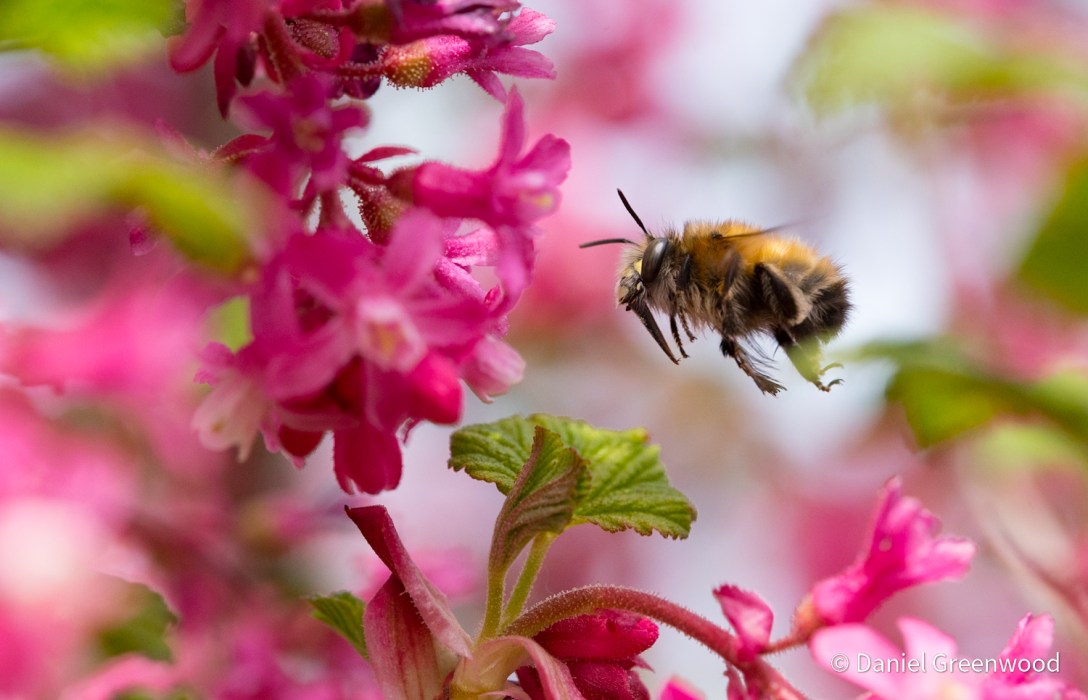
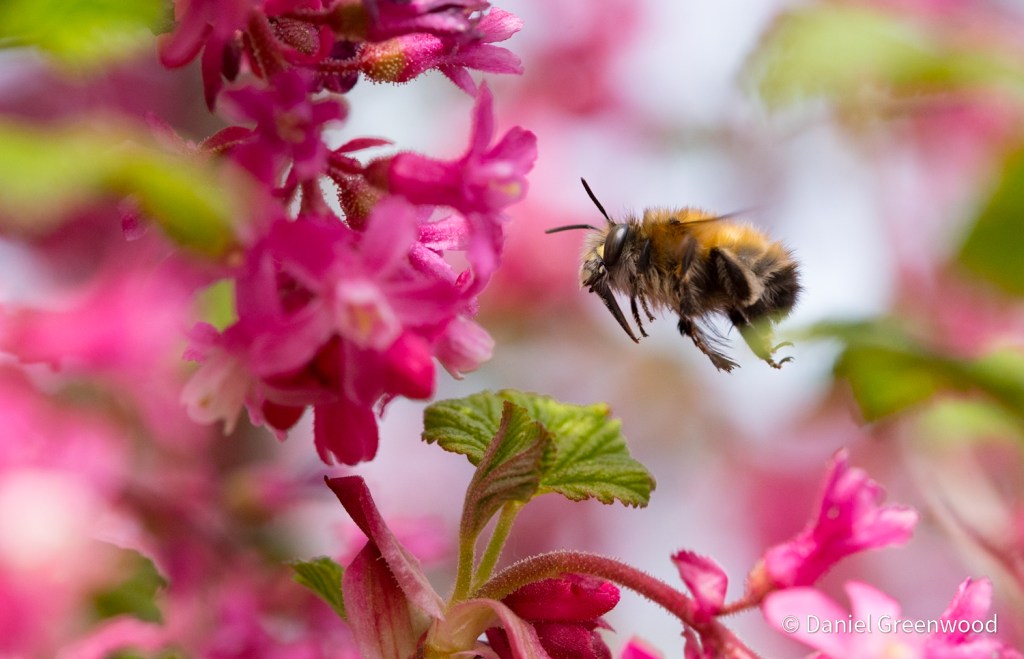
Hairy-footed flower bee in Peckham, London (April 2018)
Nikon D750 + Sigma 105mm macro lens
This picture was taken while I worked for London Wildlife Trust at the Centre for Wildlife Gardening in SE London. I knew that hairy-footed flower bees were keen on flowering currant. I got down at a good angle and managed to capture the bee just as it visited the flower. I love the pink of the flowers and the isolated shape of the bee.
Chalcid wasp, West Sussex (August 2021)
Olympus EM-5 Mark III + 60mm macro lens
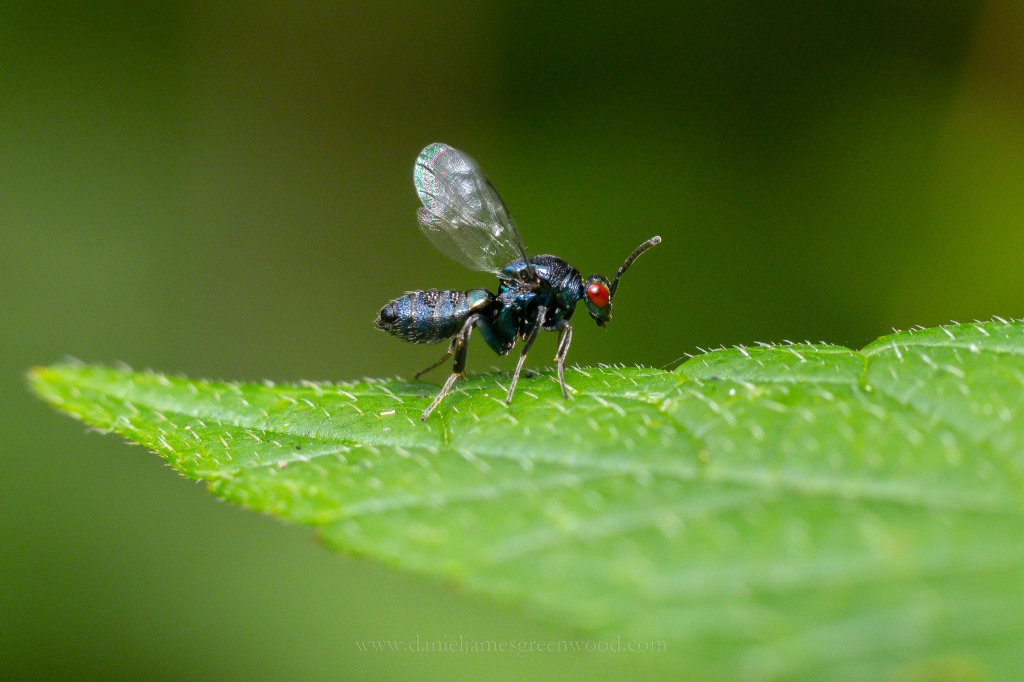
Wasps fascinate me, none more so than the parasitic species which are numbered in the thousands. This little wasp is a chalcid wasp which I saw one grey summer’s afternoon. You can read the post about it here.
Ant harvesting honeydew, my garden in West Sussex (June 2021)
Nikon D5600 + Sigma 105mm macro lens
Ants farm aphids for their honeydew and it’s something I’d always wanted to get a decent photo of. Right by my garden door this garden ant was gathering the honeydew from a group of aphids. I took a number of photos and cropped this one down. I like the glow of the globule and the warm background colours.
Fencepost jumping spider, my garden in West Sussex (June 2021)
Nikon D5600 + Sigma 105mm macro lens
Spiders are an unknown quantity for me but the lockdowns helped me to learn more about this in my house and garden. I was taking some photos after work one night when his large and rather pink jumping spider emerged from my fence. It was such a joy to have it wait so patiently for its close up. See blog here.
Silver-studded blue, South Moravia, Czechia (August 2016)
Nikon D750 + Sigma 105mm macro lens
I have to thank my friend Karel for inspiring me to take the plunge and buy a macro lens. So Czechia, where I first met him, forms a place in my macro story. When visiting there in 2016 my friend Pete and I were introduced to a meadow by Zuzka, our host. The meadow was alive with butterflies and wildflowers. We found hundreds of silver-studded blues, many of them roosting on cooler August days. This is a memory as much as a favourite macro photo. See the blog here.
Javelin wasp, my garden in West Sussex (August 2020)
Nikon D5600 + Sigma 105mm macro lens
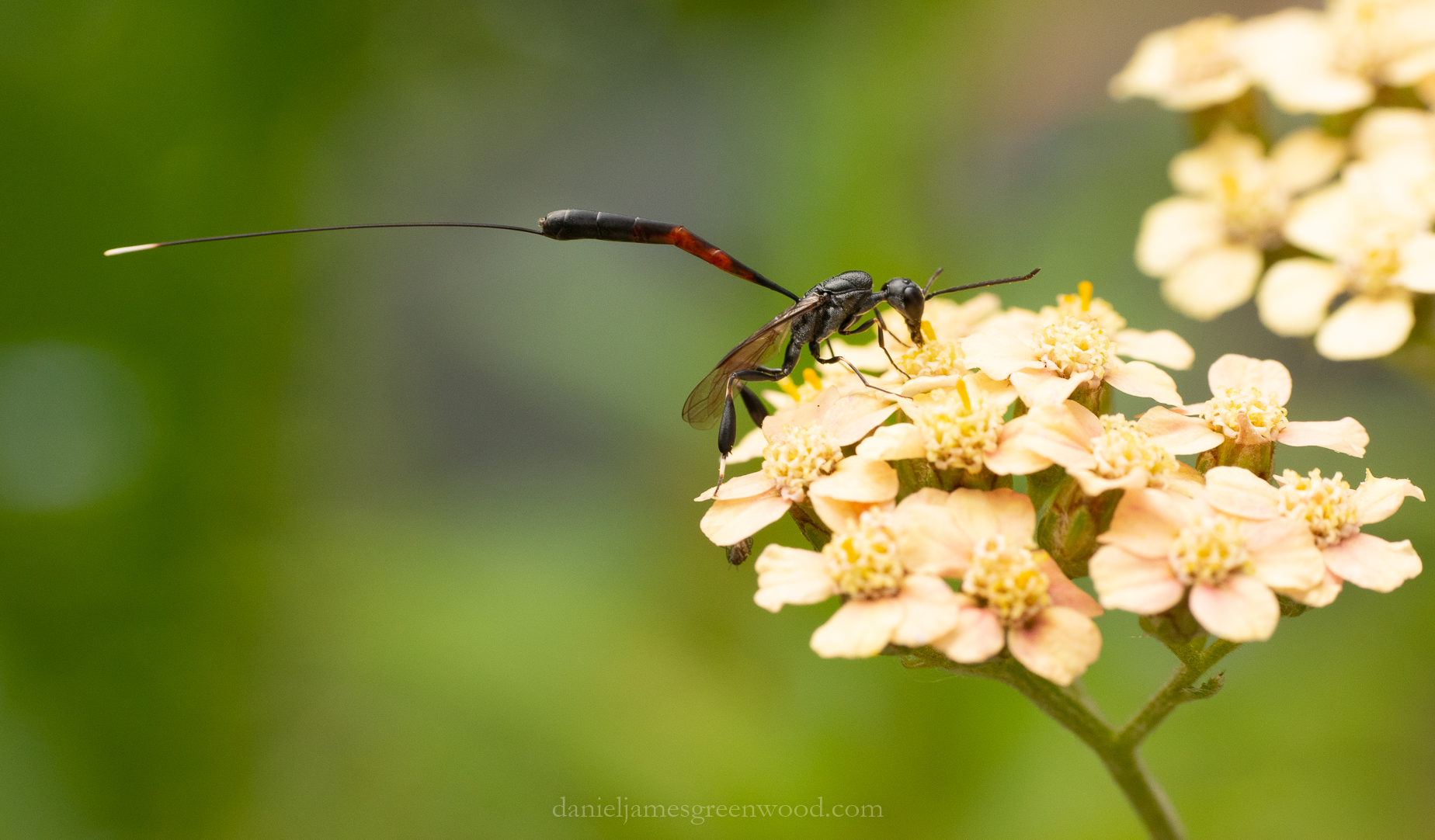
I will always remember this photo because my dad was with me, visiting from London for the day in those strict Covid times. Along with my mum (hello), my neighbours were also there to see this stunning ichneumon – the javelin wasp. It was a rare social moment, and one of the last times I managed to enjoy nature in the company of my dad before he passed away the following year. See the blog here.
Planthopper, my garden in West Sussex (June 2020)
Olympus EM10 MIII + 60mm macro lens
In June 2020 I was taking a macro photo every day. It was a rainy afternoon when I realised I needed to pull a macro pic out of the bag. I opened the garden door and found a grass head a few steps away. Inside it I found this planthopper roosting, so took a few pics and went straight back inside!
Tawny mining bee, my parents’ garden gate in London (April 2017)
Nikon D750 + Sigma 105mm macro lens
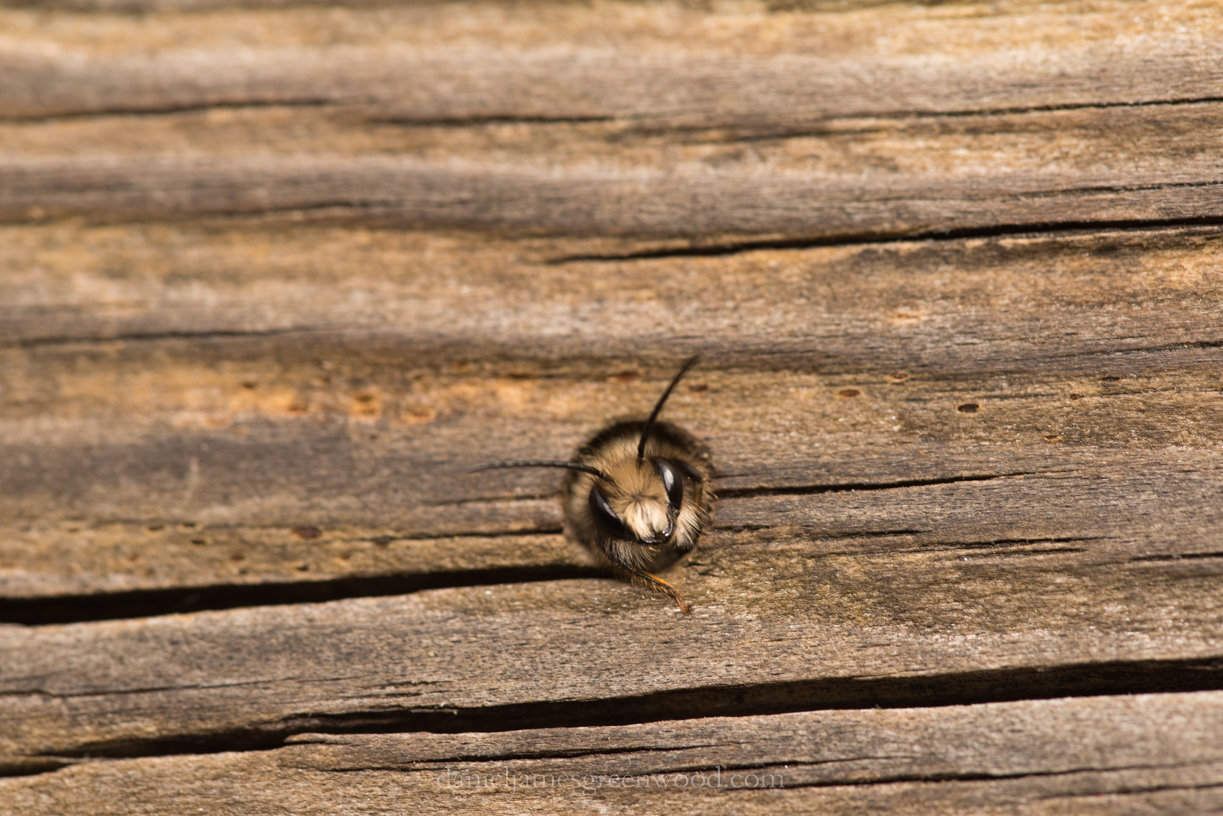
I was staying with my parents during the Easter weekend and keen to explore the macro world in their garden. I noticed some little holes drilled into the garden gate, which had been in place for maybe 50 years. I noticed a bee heading in and out and waited on the step for the bee to emerge. Bingo! This lovely male tawny mining bee popped his head out to say hello.
Plant bug, Coulsdon, Surrey (July 2017)
Nikon D750 + Sigma 105mm macro lens
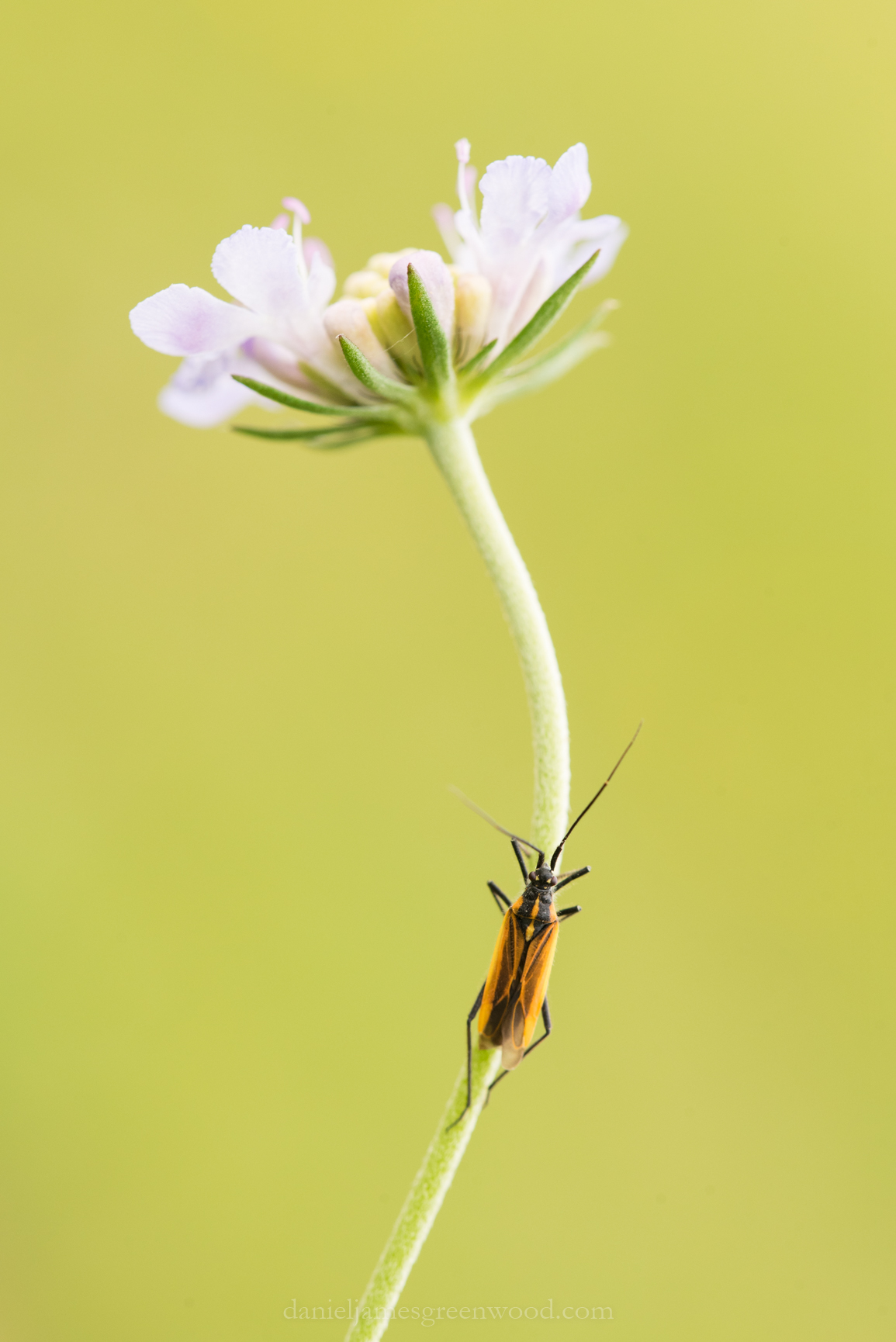
Farthing Downs on the Surrey/London border is where I would spend hours at a time honing my macro skills (basically the art of positioning and then finding subjects, nothing too technical). You could lie on the grass paths and not see anyone for hours. It was also the first place I took my new lens in 2014 (Sigma 105mm) to try it out. One summer’s day I found this plant bug climbing to the top of a scabious flower. It is one of my most accomplished pics and shows full-frame cameras at their most powerful, with beautiful colours and detail. See the blog here.
Paper wasp, South Moravia, Czechia (August 2016)
Nikon D750 + Sigma 105mm macro lens
Another one from my visit to Czechia in 2016. It was a great time for insects and with a more gentle heat than the months preceding. This was my first time seeing a paper wasp. I love these social wasps, which we don’t have in Britain, and I love the way it’s in a bed of wild carrot.
Here’s to another decade in macro.
Thanks for reading and for the support on here. I really appreciate it.
I write these blogs in my spare time because I want to raise awareness about the beauty and diversity of our landscapes. If you enjoy reading them you can support my blog here.
I recently upgraded my phone from a Fairphone 3+ to a G**gle Pixel 7a. The Fairphone dream is dead for me. I bought the Fairphone 3+ looking for a sustainable option that would last a long time and be invested in. Instead two new models were soon released and the 3+ was effectively archived.
The Fairphone 4 and 5 are just too big and expensive, but the company have pushed sustainability and human rights up the agenda. Surely people shouldn’t be getting a new phone every year. I would argue it’s irresponsible due to the sensitive materials required and the shady employment practices across the production line.
I don’t think I would be interested in smartphones if they didn’t have cameras. Phones are thought to have killed off much of the entry-level camera market, especially when they are so good now and storage and sharing has become digital.
Back in 2002 I took Media Studies A-Level and we were taught about ‘convergence’, the coming together of all manner of tech into single devices. Photography has been a key part of that process. Radios, TVs, typewriters, even people’s jobs have disappeared into phones. This has been predicted for a long time.
So can anyone who considers themselves a photographer (always sounds very serious and self-important, doesn’t it) ignore phone photography? I don’t think so. Especially because Instagram has become the prime mechanism for professional photographers to promote their work.
Also, I’m writing this blog post on my phone!
Anyway, here are some of the first images I captured on the evil Pixel 7a. The camera is exceptional.
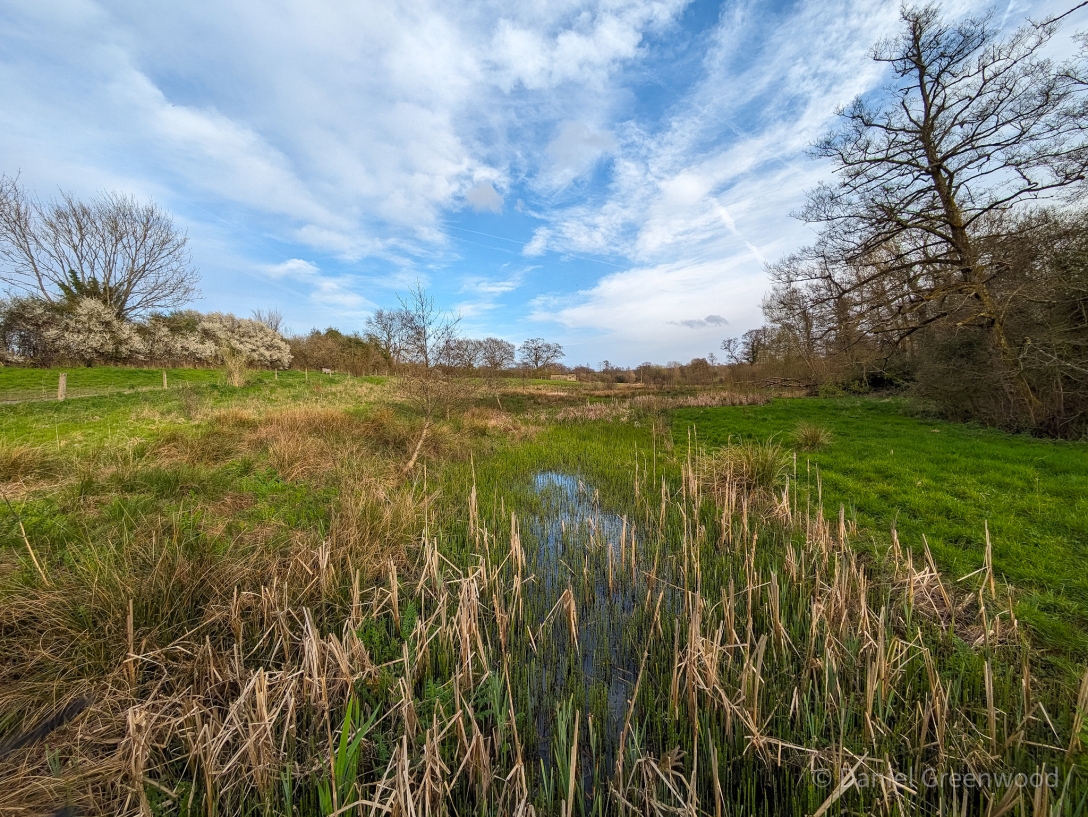
One thing that recent camera phones are doing so well is controlling glare. The sky here would be ‘blown out’ or over-exposed in normal images taken on a camera. AI is working here, I expect, to effectively take two images – one exposing for the foreground, a second for the sky. It can look quite over-edited, but for random snaps it’s really helpful.
Another interesting change with newer phone cameras is the inclusion of a wide angle lens. This lens type is probably one of the most controversial in the world of photography, because they’re rarely needed, heavy, expensive and often have extreme barrel distortion on either side of the image. Ever been at the far end of a photo taken with a wide angle lens? You probably looked quite warped!
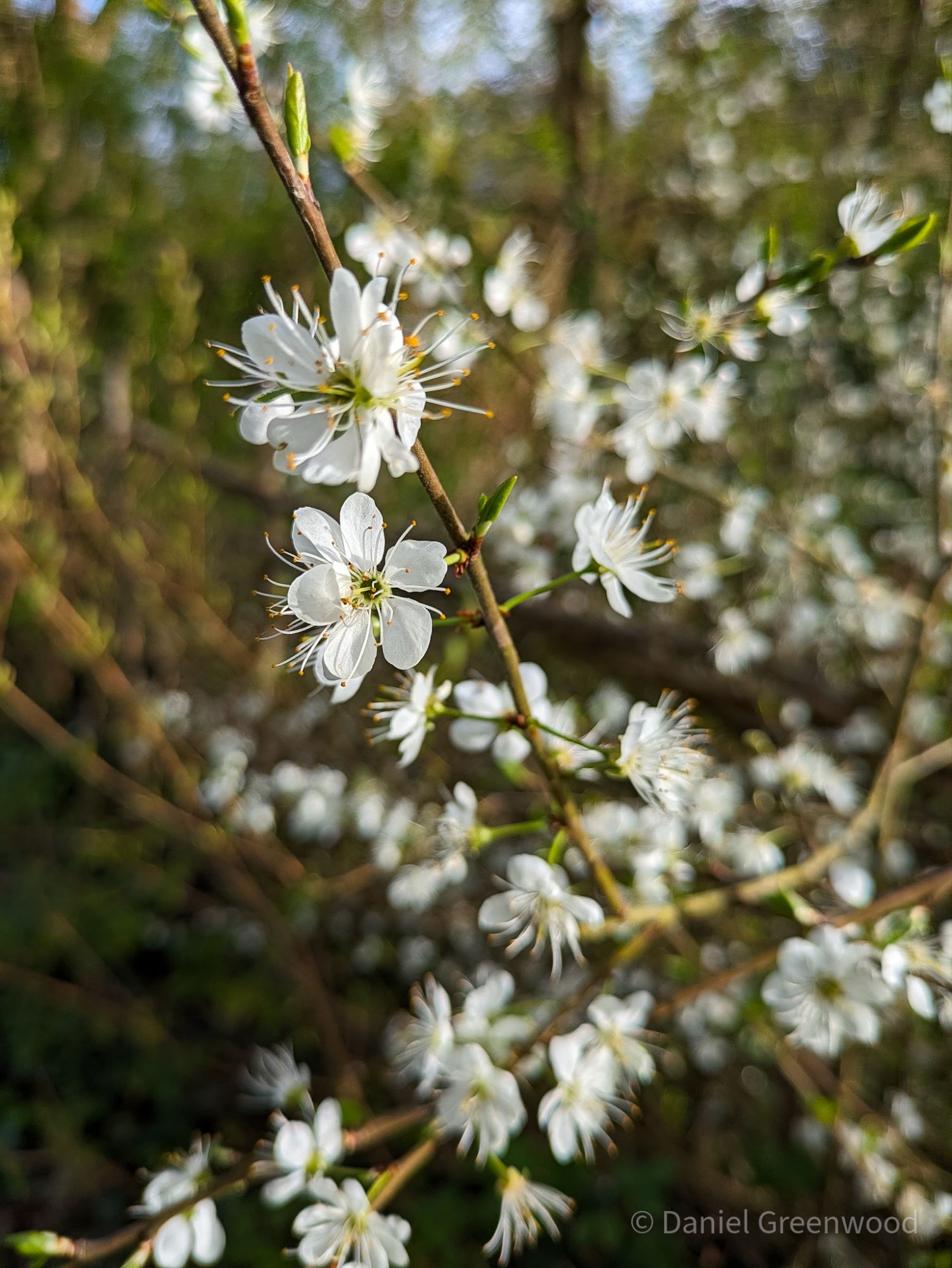
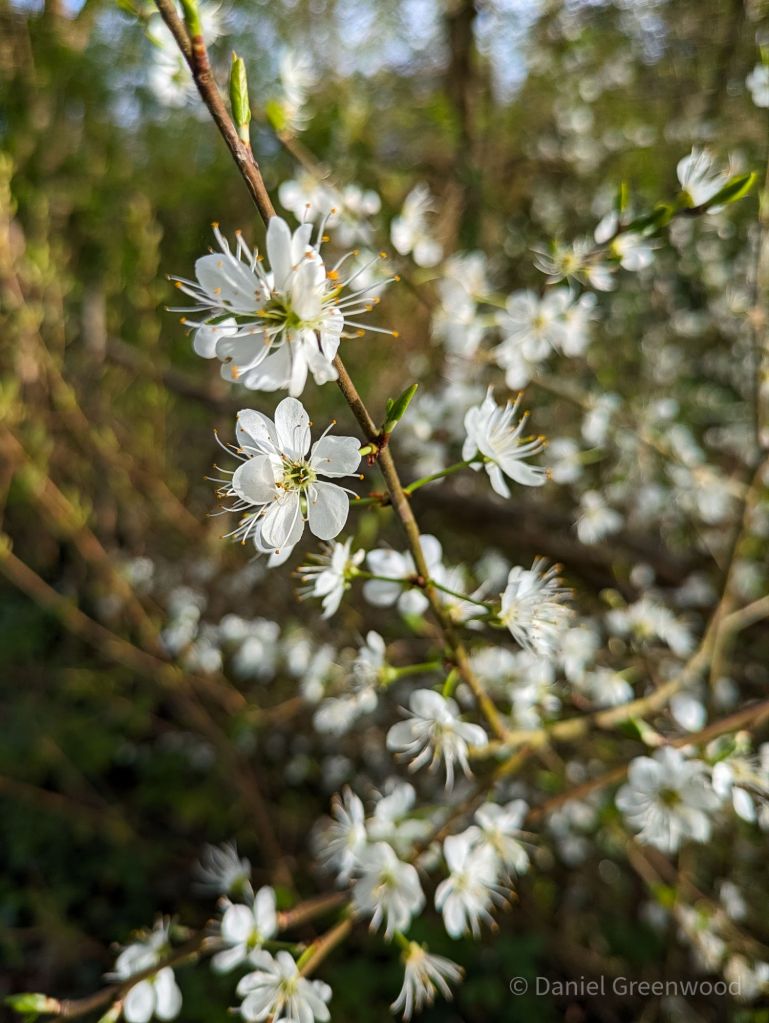
One thing that impresses with the Pixel 7a is the autofocus. These blackthorn flowers were blowing in the wind and yet the detail is so good.
Lichens are a great thing to photograph because they stand still and can be very attractive subjects. I was considering stretching my budget for a Pixel 8 Pro because it had a macro function. Reviews of the 7a said that it can focus closely, and that is true, to a degree. Also it sounded like the AI in that phone maybe does too much.
One potential block on macro potential is that the phone seems to do auto noise reduction. That can make these weirdly impressionist details were the AI is trying to hide graininess from a high ISO. I’ve noticed it a couple of times and it’s not ideal. The detail and focus is otherwise really good. This is not what the tech people call ‘flagship’ or top of the range.
All in all, I am amazed by what this camera can do. It is so much better than the Fairphone 3+, which shows how quickly cameras are developing in phones.
Would this phone make me sell my standalone camera? No way. Lenses and sensors of mirrorless, standalone cameras can’t be matched by phones currently. It just provides a great option for capturing nice images on the go. It’s going to be especially good for fungi.
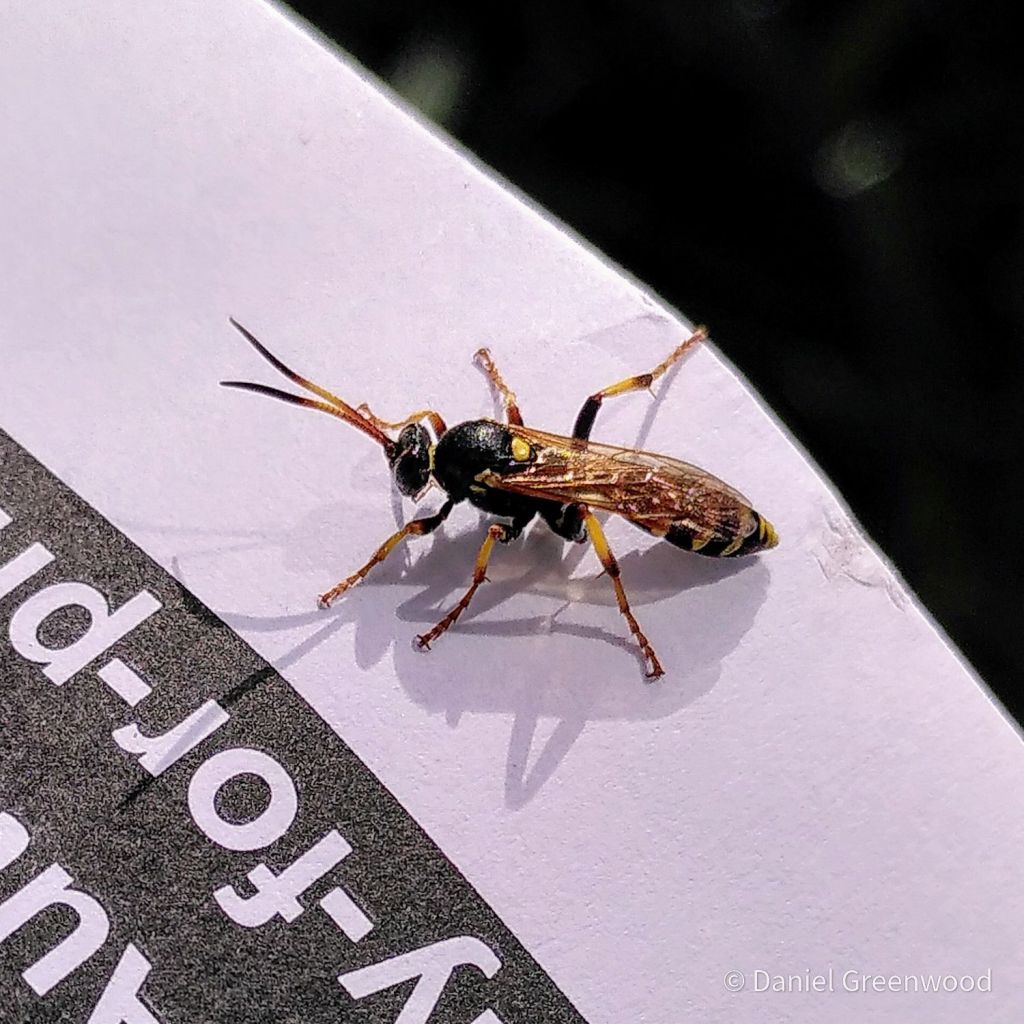
You know it’s spring when the bees and things start getting trapped indoors again. I visited my mum on Easter Sunday and her kitchen (which has lots of windows) turned into a veritable insect survey trap. Not just the ‘horrible flies’ she pointed out, but this lovely ichneumon wasp which I rescued with a glass and a local elections envelope.
You can probably tell that these are phone pics, I haven’t quite got into proper macro lens work yet this year, but soon! I love the orange-yellow-black fade of the antennae, which is probably where the name ‘xanthoria’ comes from in the scientific name.
Xanthoria is a genus of lichens which are commonly known as sunburst lichens. In Latin it means golden yellow, which is perfect.
And here’s the proof – Xanthoria parietina, a pollution-tolerant lichen that grows everywhere.
Here’s the best image I captured while waiting for the sun to disappear over the Downs recently. To the right hand side of the image (north) you can see the Arun flooding the area known as Amberley Wildbrooks. It was surprisingly mild up there but as the sun slid away the cool air arrived with the moon. Red kites floated overhead and trains echoed through the valley on their way to Arundel. A beautiful evening in a special place.