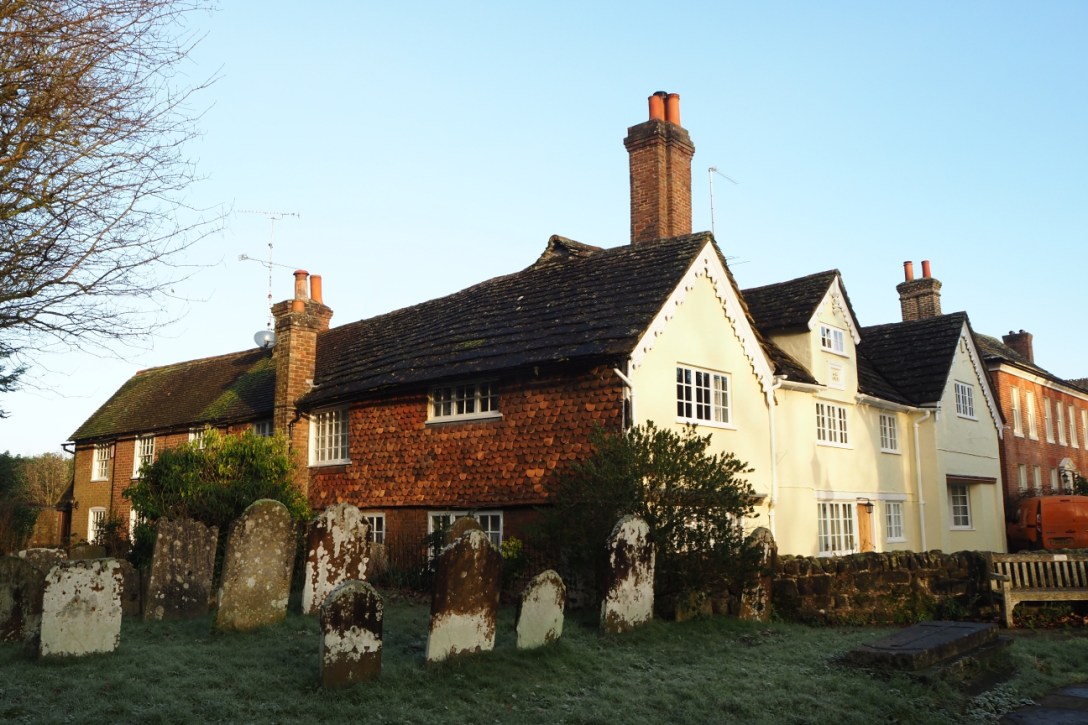
This post is a bit misleading (hello, Prime Minister) as it’s about a house at the edge of St. Mary’s Churchyard in Horsham, West Sussex. Apologies if you’ve navigated here expecting something more numinous. Here a beautiful old house resides. The problem is it’s name is not exactly blogpost title worthy, and I can’t think of anything snappy. It’s at the end of the famous Causeway, a road that’s renowned for its colourful timber-framed and weather-boarded buildings.
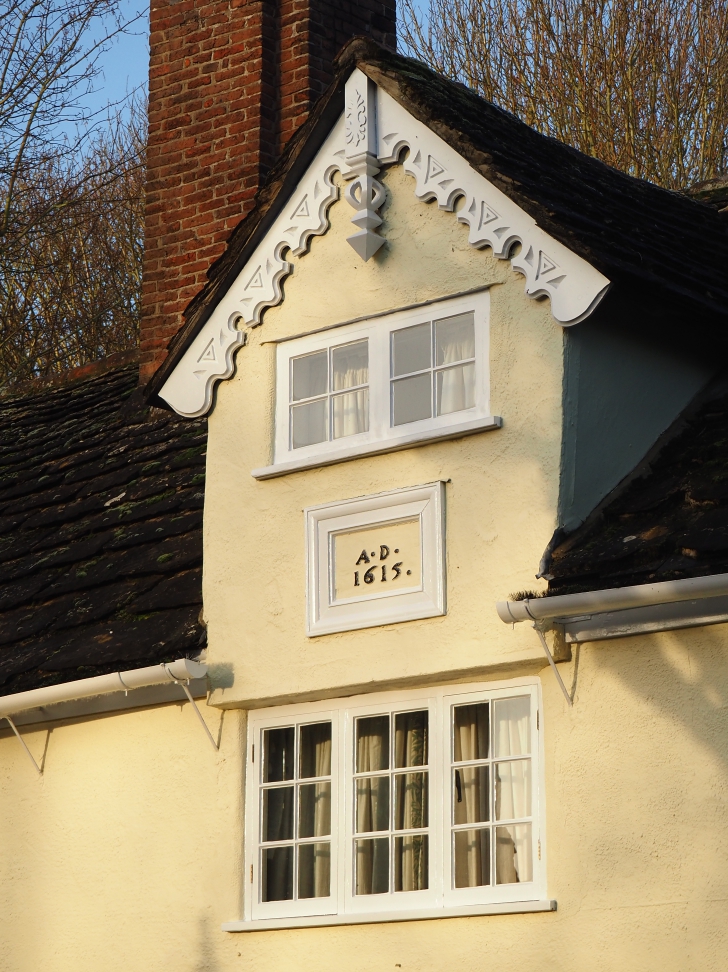
The house is simply called 24-26. It’s dated to 1615 and has since been broken into three properties and extended along the churchyard’s edge. The trees to the right hand side are lime trees that form an avenue along the Causeway, illustrated below at a younger stage:
The Causeway, Horsham, page 112 Book about the Highways and Byways of Co. Sussex, England(via Wikimedia Commons)
There’s no doubt it will have been built with oak timbers from the oak woods of the Sussex Weald nearby, likely from the extensive, pre-modern range of St. Leonard’s Forest.
It is currently covered by hanging tiles and plastering on the street-facing side, meaning no typical black timber frontage can be seen from the outside.
Hi everyone. This year I’m starting a new blog series alongside my regular macro, fungi and Sussex Weald posts.
This series focuses on the use of oak trees in the construction of old buildings in England, mainly in Sussex where I live.
I’ve also launched a Ko-fi page if you want to support my work through a donation of some kind. Thank you to everyone has been so generous. The main aim of this is to help cover the £200 annual costs of hosting this website and also my podcasting platform.
Oak as a tree species is a key area of research, creativity and learning for me. This comes from the general love we nurture towards oak trees in England, but more from my time working in an oak woodland and the subsequent understanding I gained from teaching myself about the cultural and ecological significance of the species around the world.
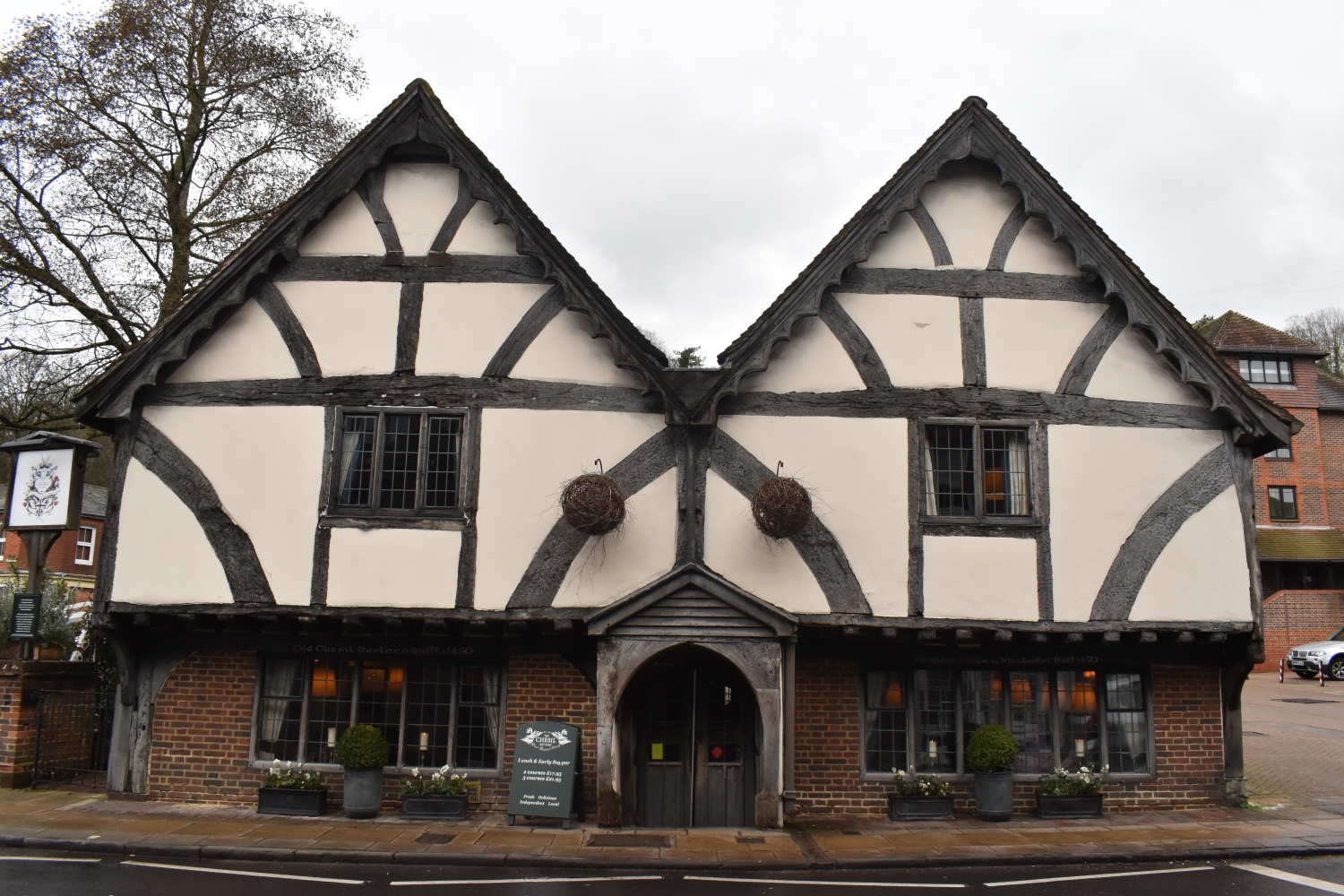
The Chesil Rectory, Winchester, England
Oak trees were once a key resource in Britain and Europe, in the production of timber for construction and the other uses of the materials that arise from an oak tree. Here I mean bark used for the leather tanning industry.
Timber-framed cottages have become sought after by some of the wealthiest in society, when once they were the main timber used by some of the poorest in European society. The aim here is to draw a link between the landscape and human civilisation, not to promote expensive properties for estate agents in SE England!
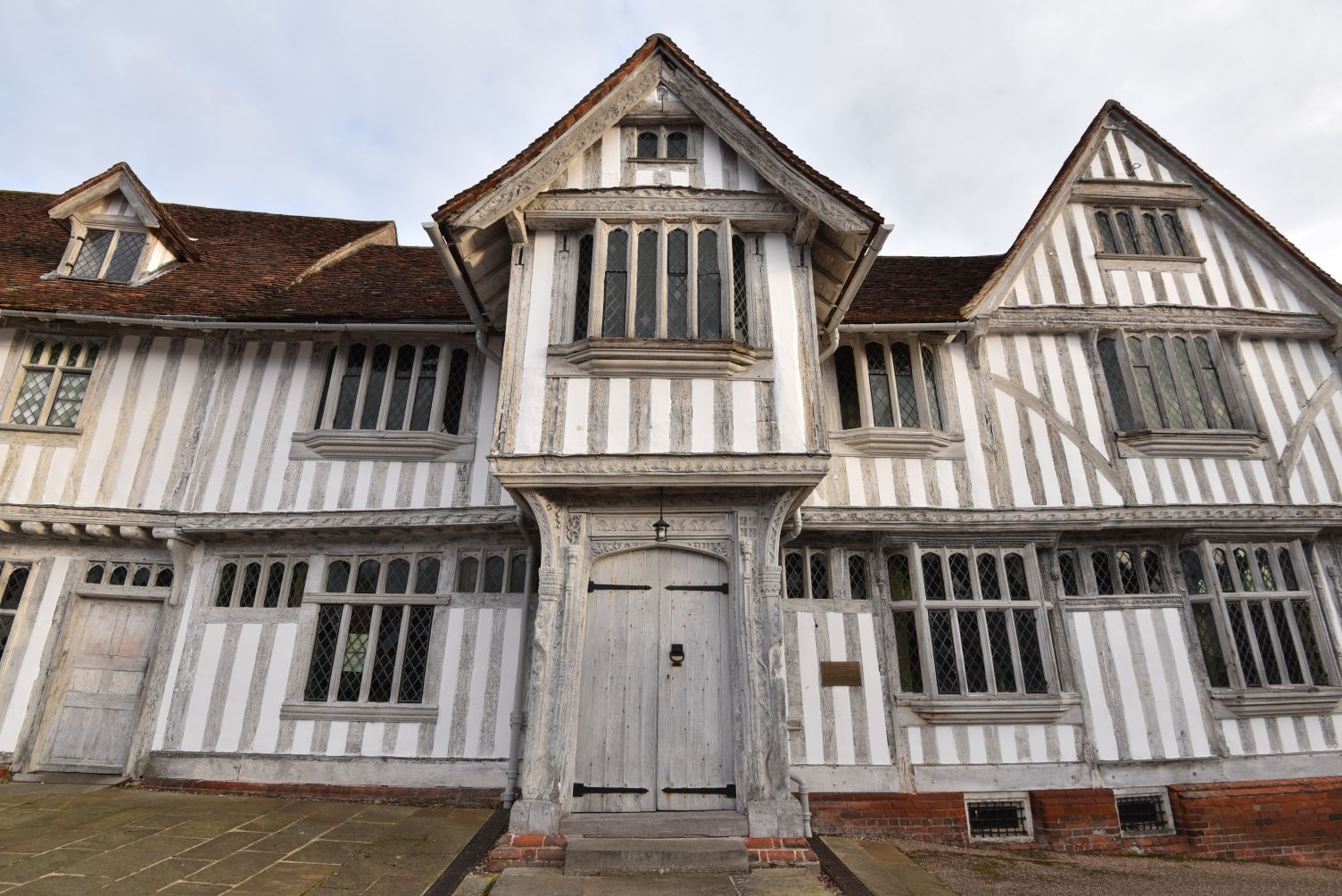
The Lavenham Guildhall in Suffolk, eastern England
With this photographic research project I want to document these buildings but also to tell their stories.
The first post will be arriving this month. I would really appreciate comments, information and suggestions around these subjects as the point here is for me to learn but also to share any knowledge and nice images.
Wishing you all the best and I look forward to sharing the images and research with you.
Your Christmas gift from me is the final part of my 2021 Dartmoor mushroom trilogy, following on from parts one and two.
I hope you can have a nice Christmas and holiday. Solidarity with anyone alone or grieving at this time. Here’s to happier times.
This post is all phone pics so there is a bit of a drop in resolution and quality, but that’s not all that matters in photography. The finds here were based on a walk from the edge of Dartmoor National Park into one of the nearby towns, outside the boundary. I found some lovely species, some of which I hadn’t seen for some time.
The walk began from our hotel, passing through a slither of ancient woodland that had been planted up with sweet chestnut perhaps over a century ago. I was delighted to find one of the first hen of the woods (Grifola frondosa) that I’d seen for several years. Also – how chivalrous am I!
I used to see this regularly on oak in London, but this time the species was growing on sweet chestnut. Sweet chestnut is in the same family as oak (Fagaceae), so this must happen fairly commonly in continental Europe where sweet chestnut is a native woodland species (post-Ice Age).
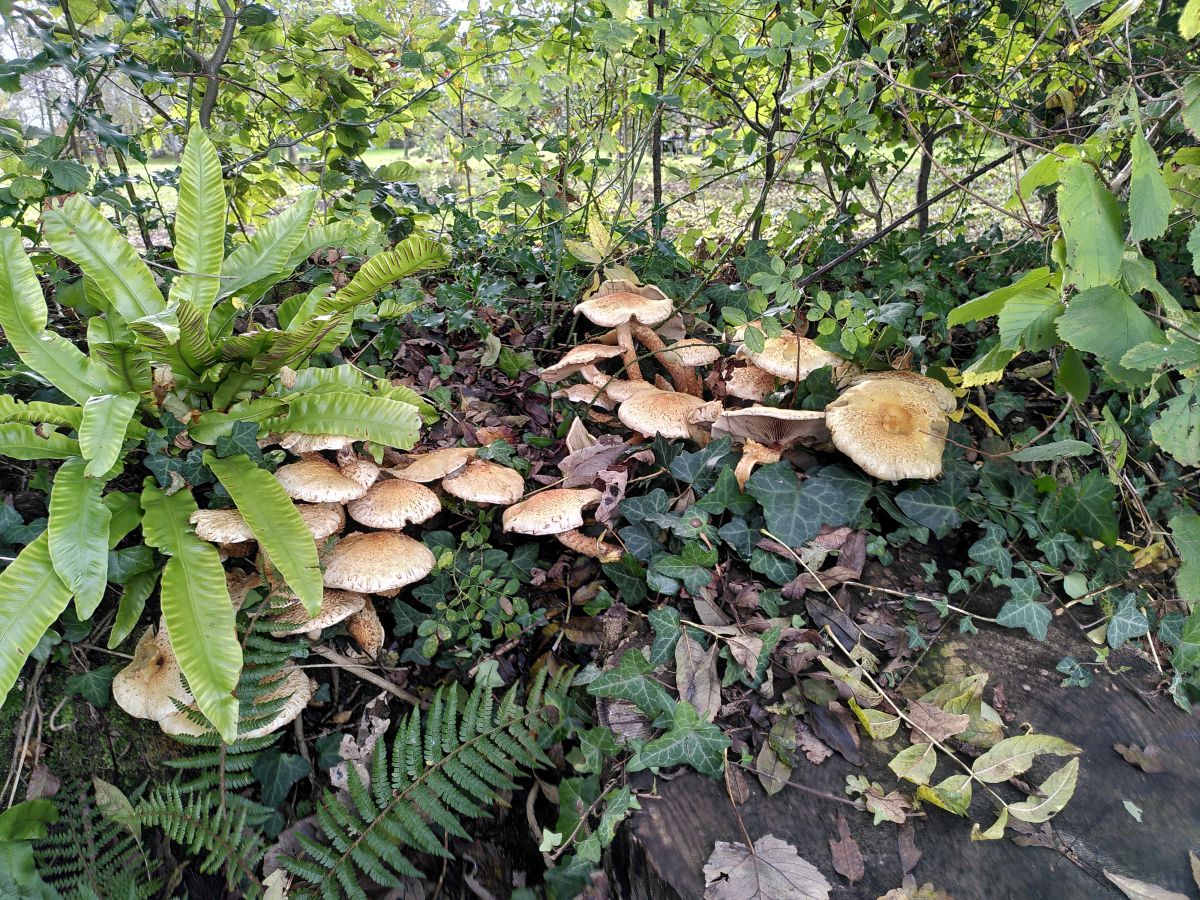
A nice large spread of mushrooms on an old stump in a hedgeline were this group of scalycaps. I expect these are probably golden scalycap (Pholiota aurivella).
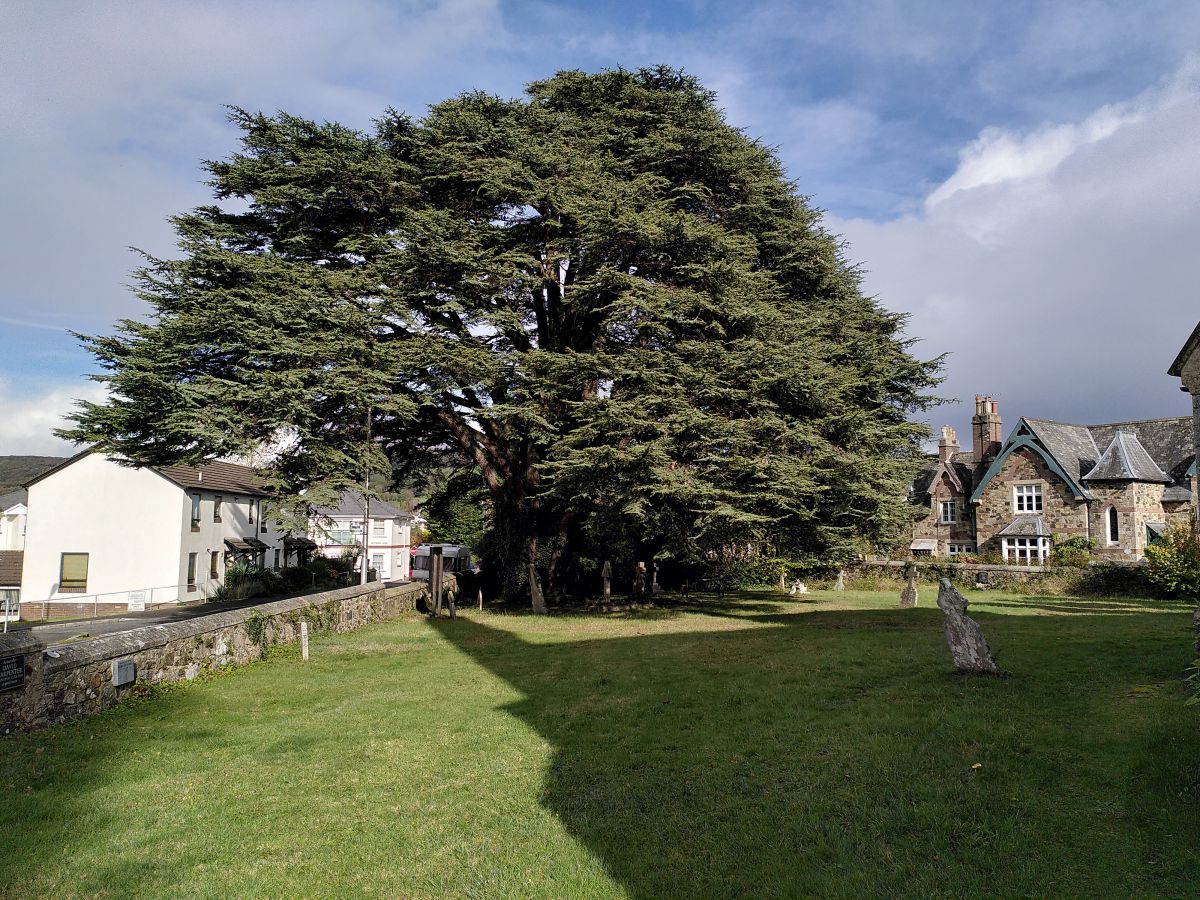
Cemeteries are excellent places for wildlife, sometimes for rare species of plants, invertebrates and fungi. This small churchyard is no exception to that. The main reason for this is that the grasslands are cut regularly and kept open, being in a state of grassland for hundreds of years or more.
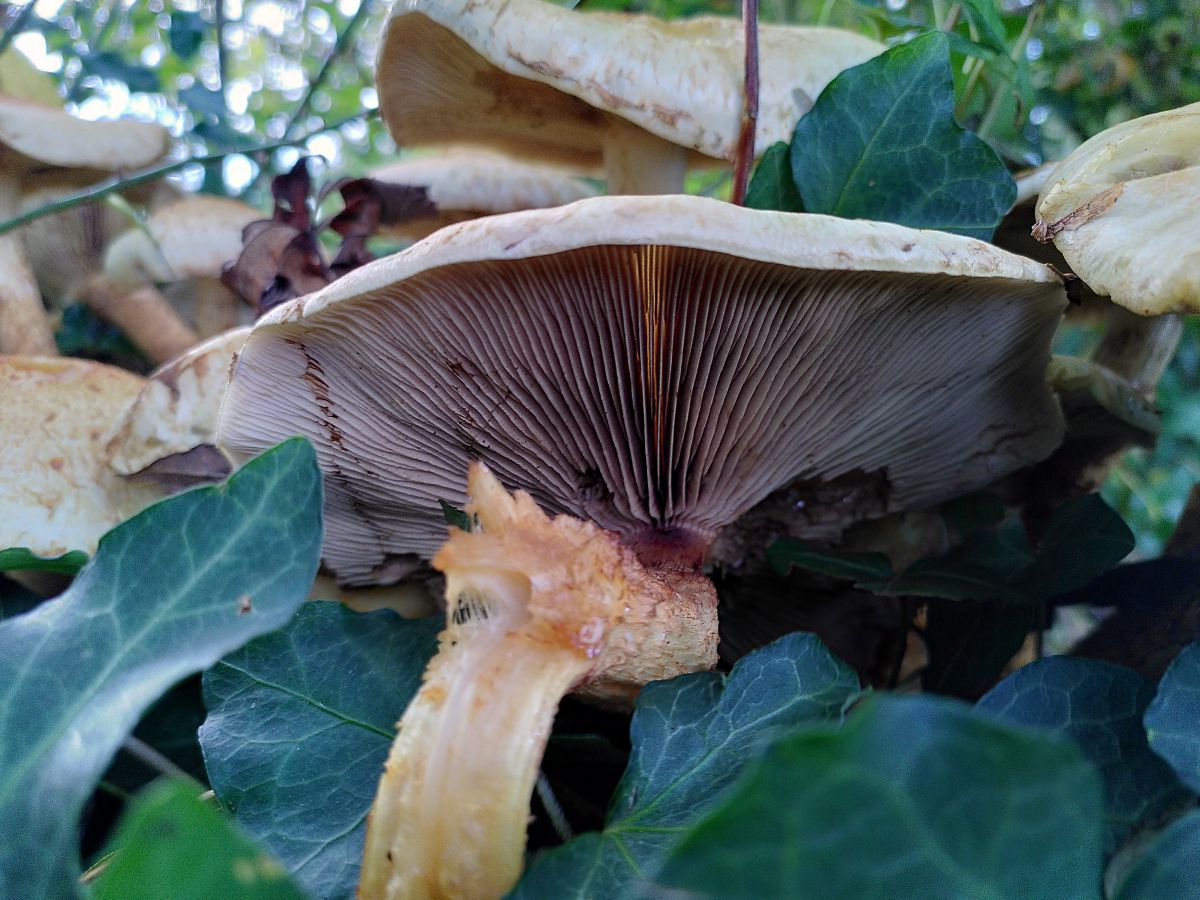
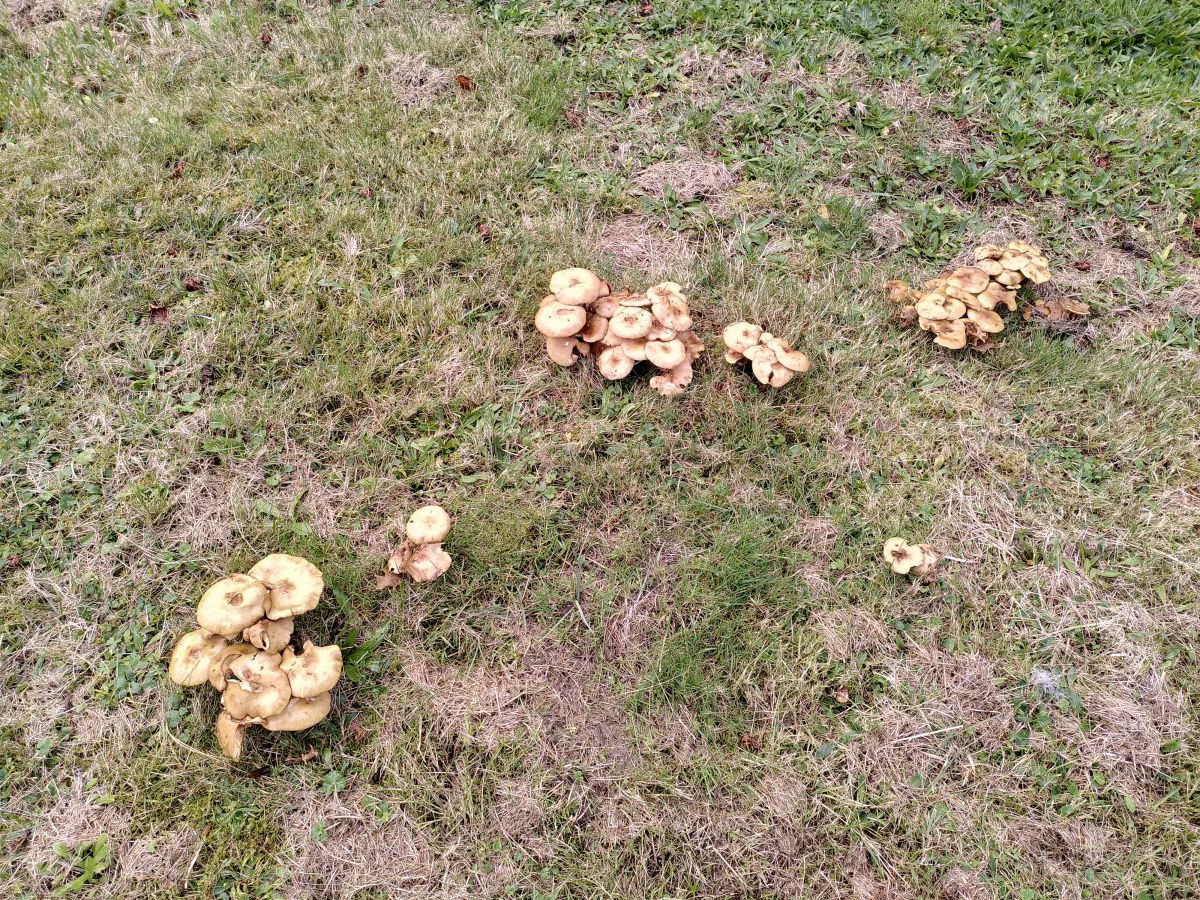
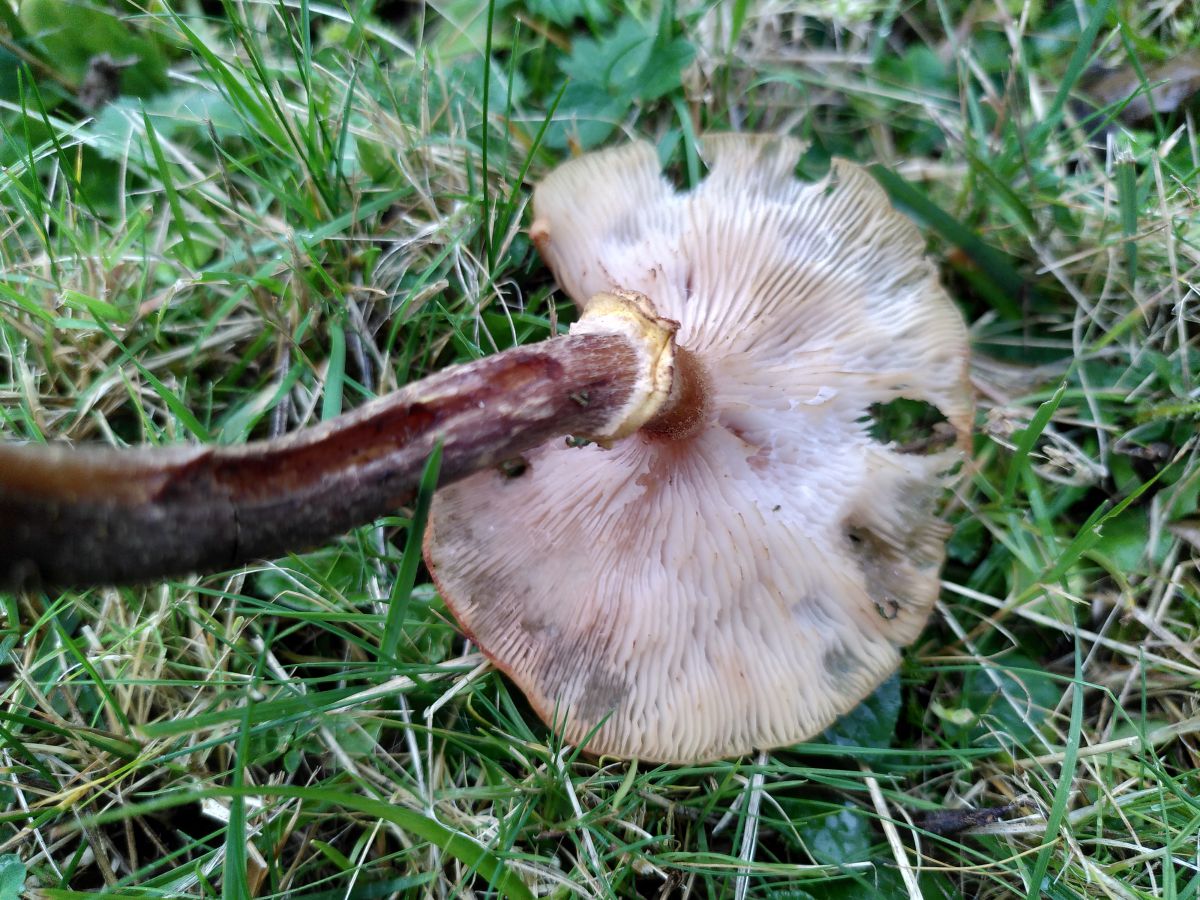
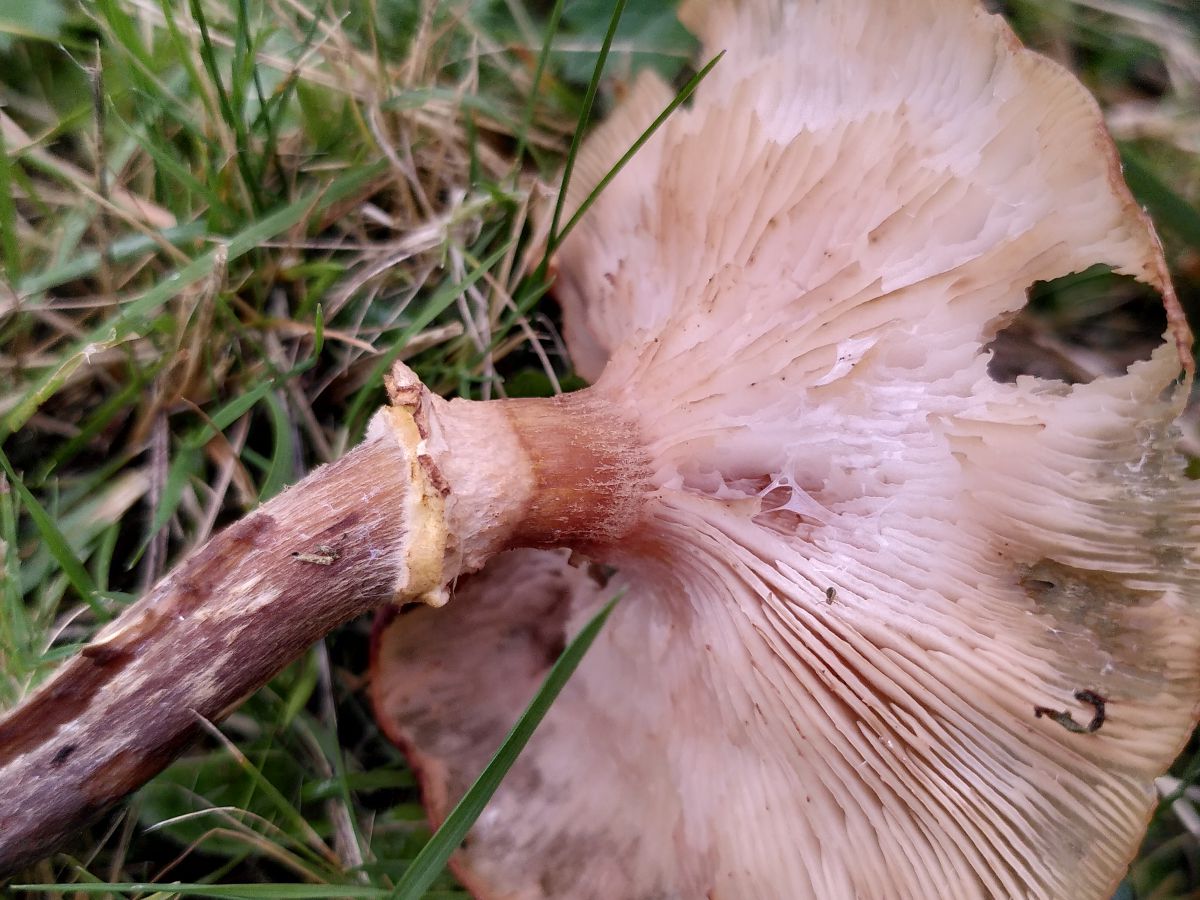
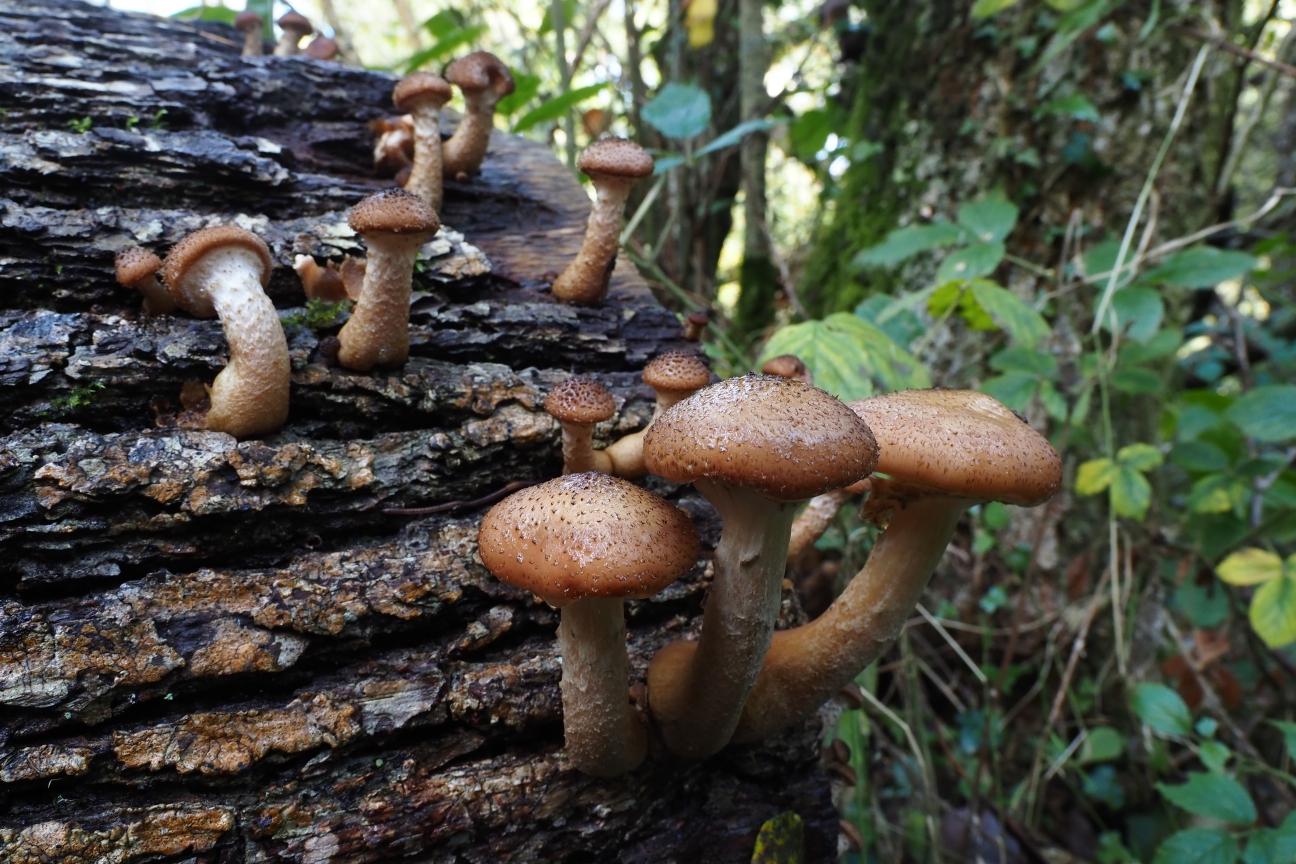
Honey fungus (Armillaria) has had quite a late start to the year in southern England. I have found it in this particular churchyard before. I think this cluster were growing where the roots of a tree once were.
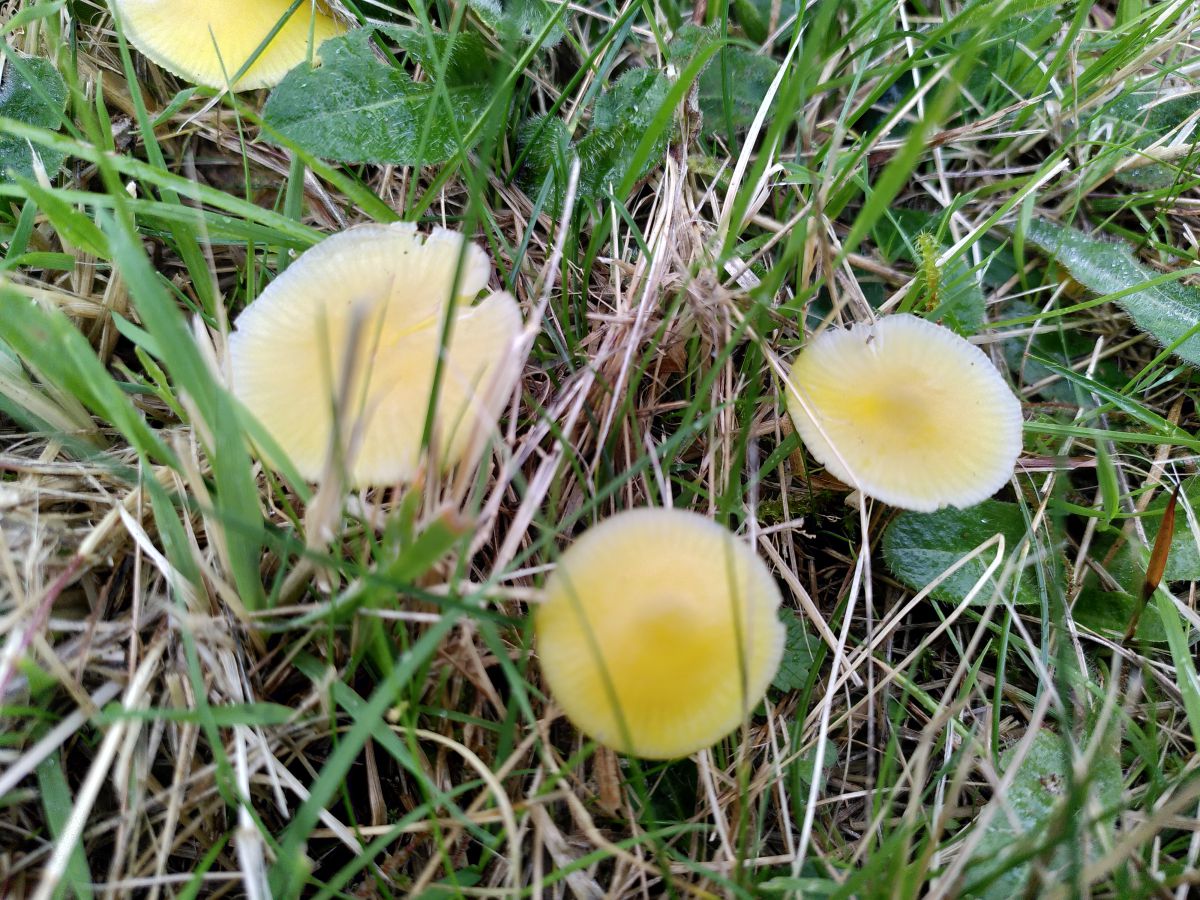
Churchyards are good places to find waxcaps, a family of mushrooms that are mainly found in ancient, unimproved grasslands. This means the grasslands haven’t been ploughed up or fertilised, hence why sacred sites like churchyards are good for them. I found a gathering of small yellow waxcaps which have been identified on iNaturalist as butter waxcap (Hygrocybe ceracea). I love the gills of waxcaps, and the phone camera does do them some justice.
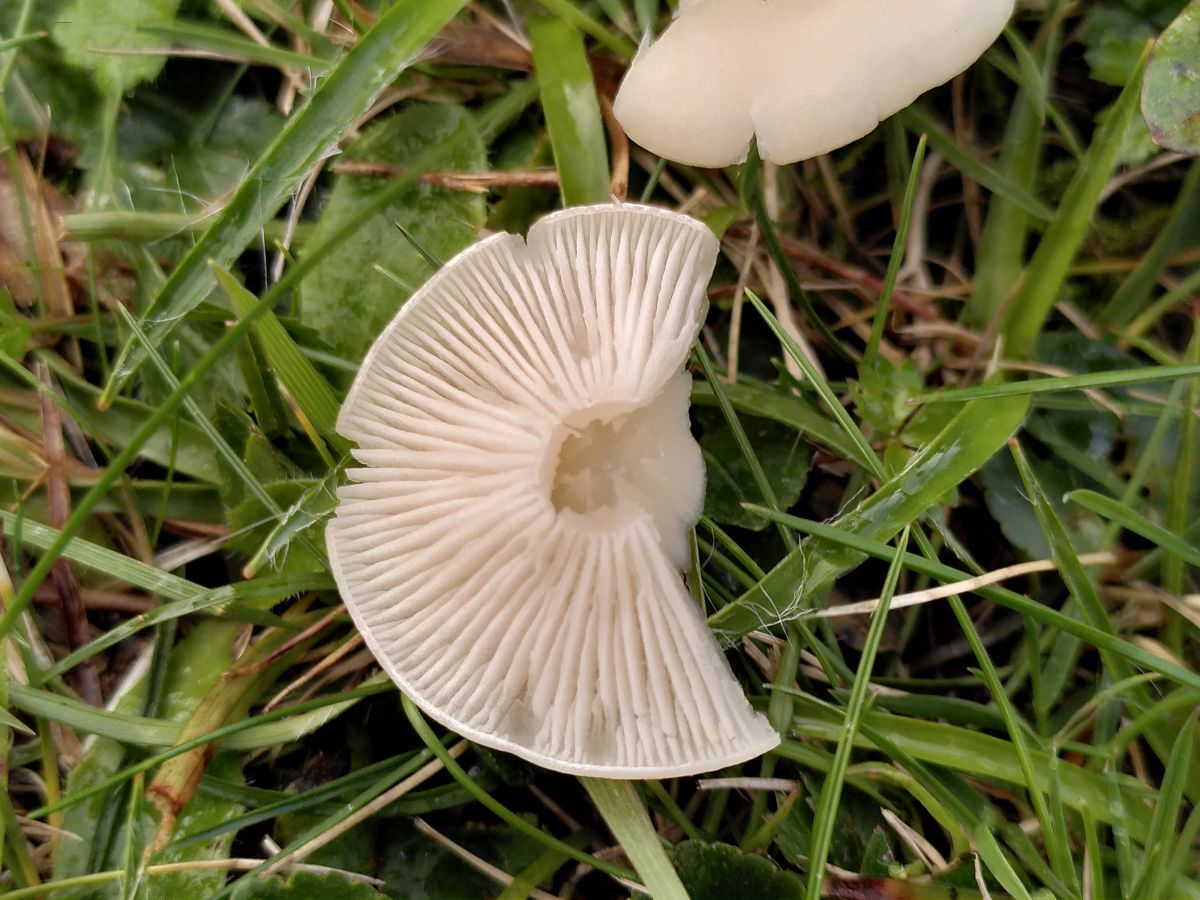
At first thought this very small mushroom was a waxcap but it probably isn’t. One suggestion is that it may be a type of funnel.
As witnessed elsewhere on Dartmoor the day before, I found a couple of blackening waxcaps (Hygrocybe conica). This nicely illustrates the shift from a Wine Gum yellow to the blackening stipe.
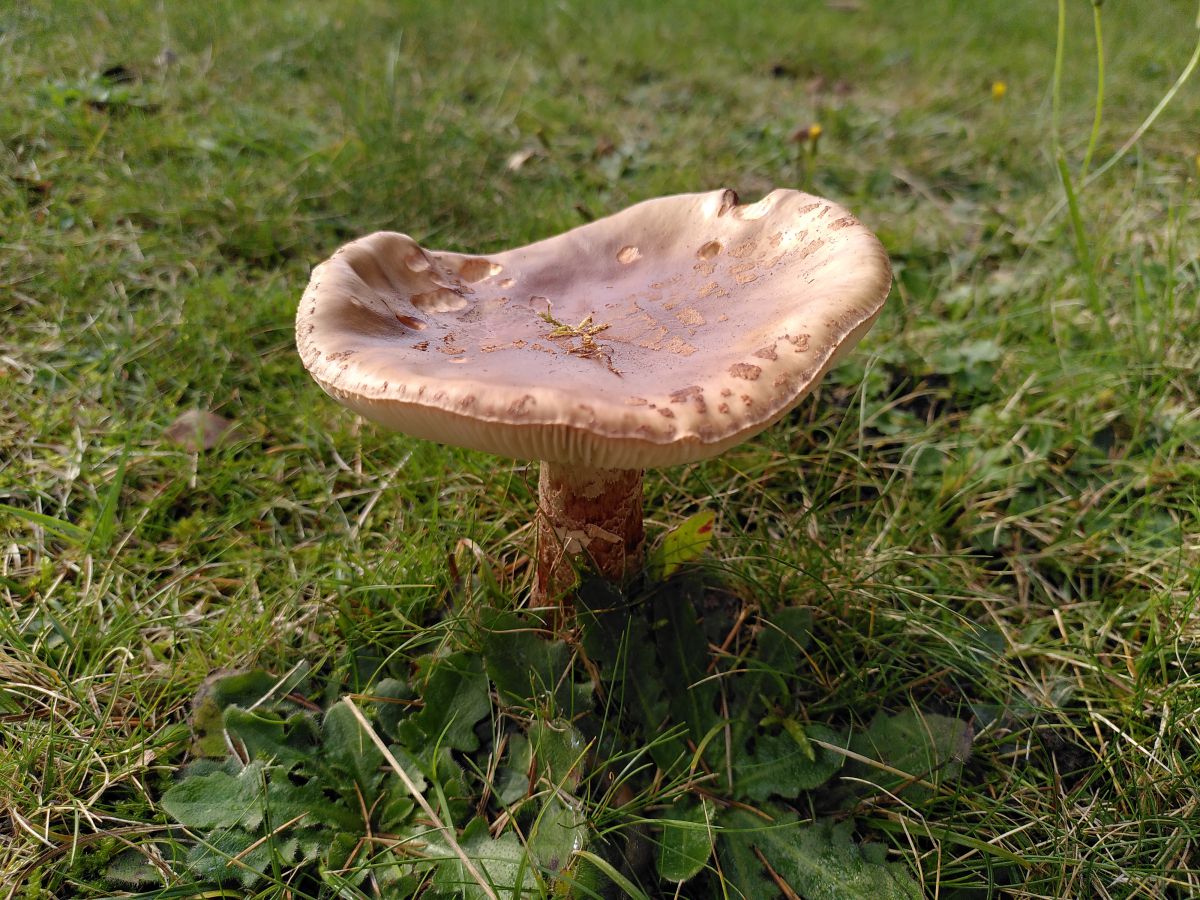
Closer to the large cedar seen in the wider image of the churchyard, there were several blushers (Amanita rubescens) dotted around the grasslands.
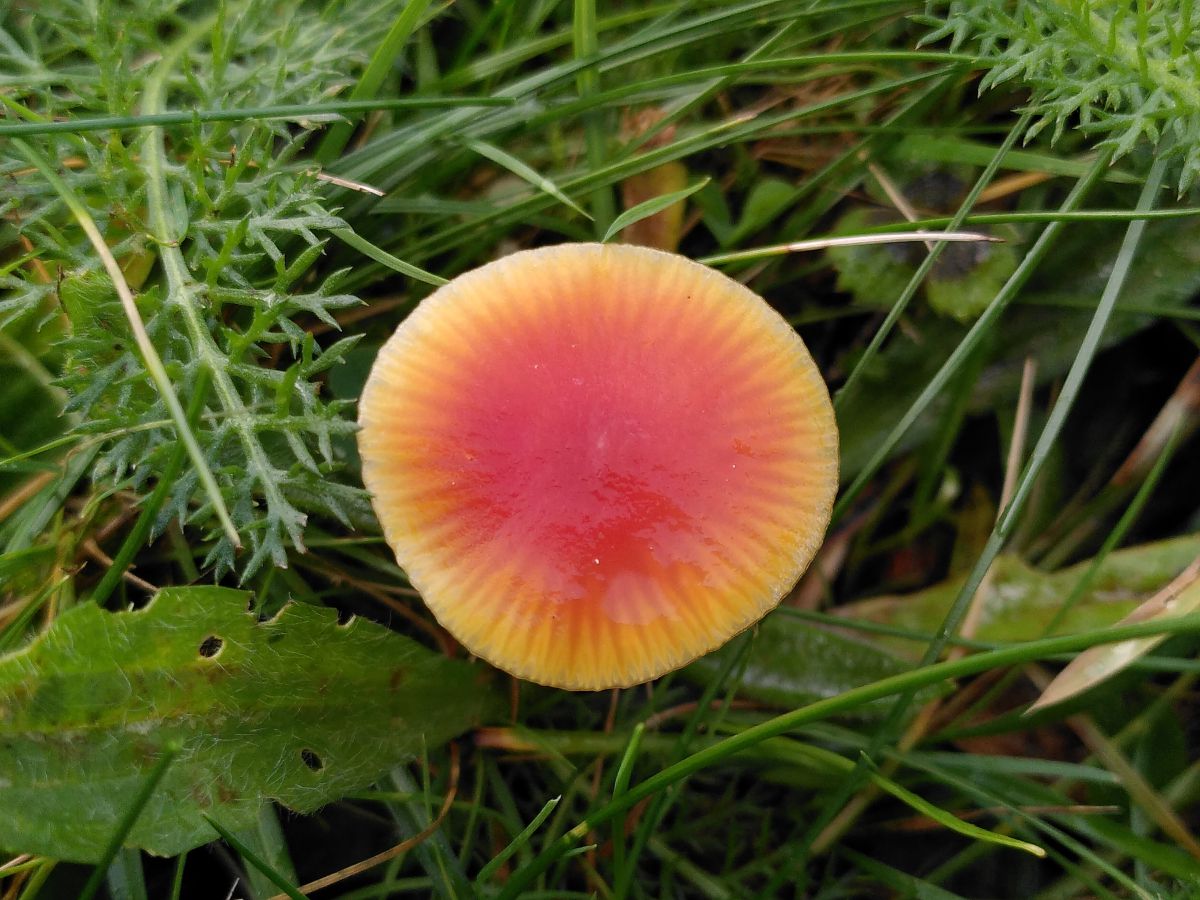
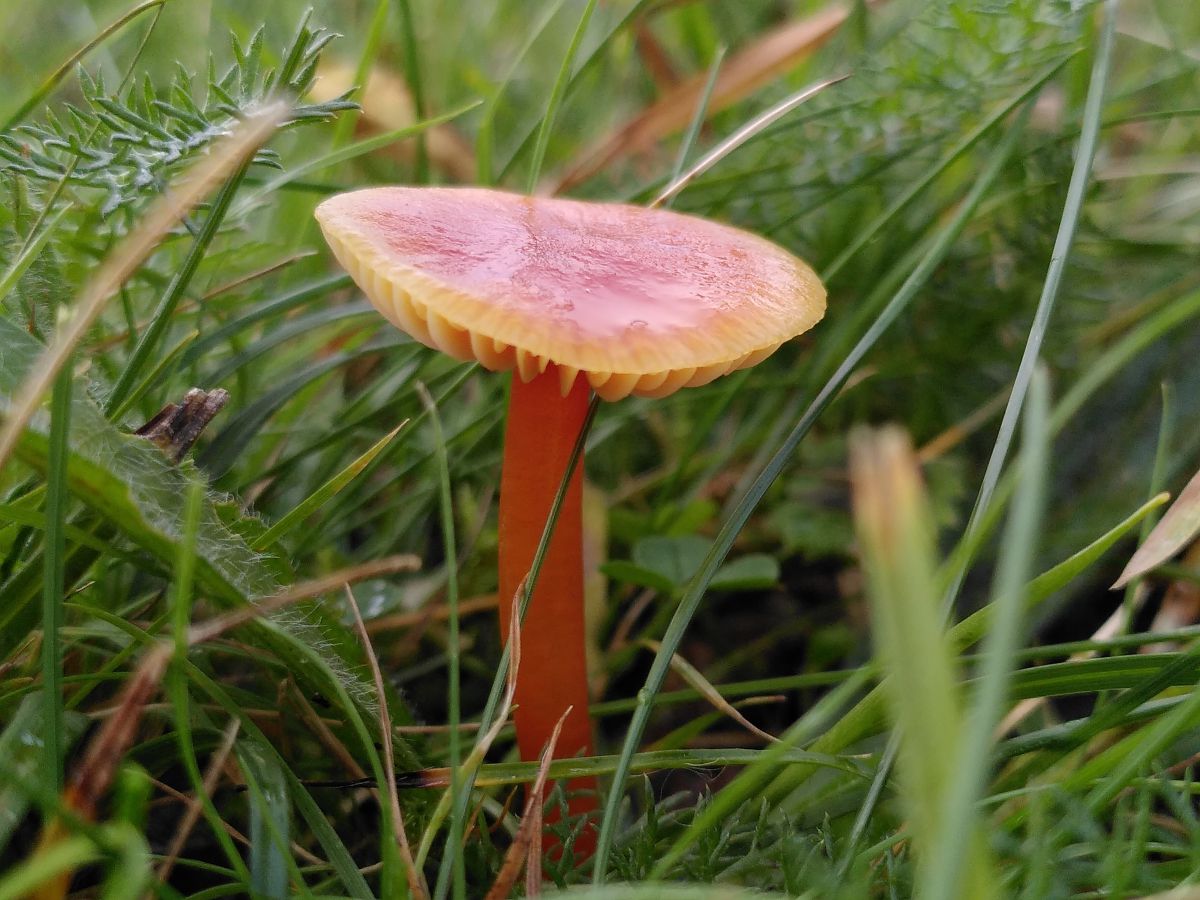
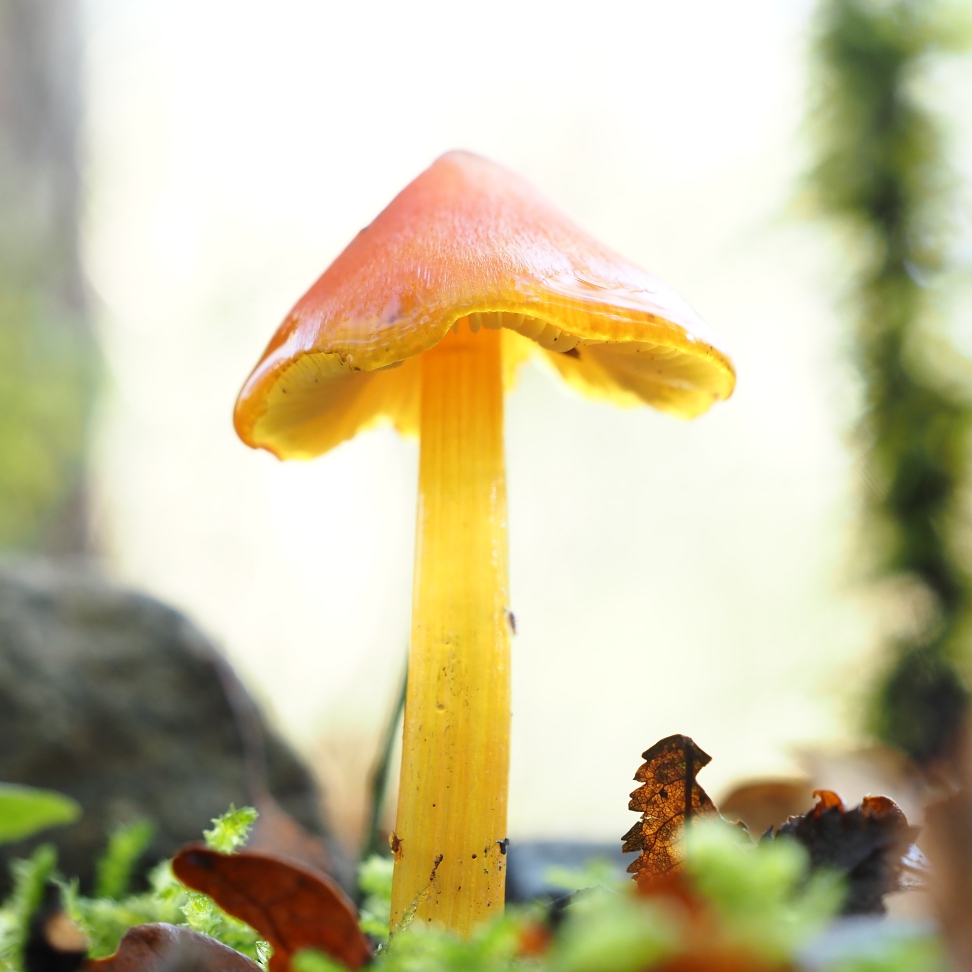
Perhaps the most beautiful find, and one I’ve never knowingly discovered before was bitter waxcap (Hygrocybe mucronella). If the gills of the butter waxcap were beautiful, the combination of pale yellow and orange backdrop are something else. The gills radiating towards the stipe from the edge of the cap also look to me like flames.
Thanks for reading. Extra points if you read all three posts!
Following on from part one of my recent trip to Dartmoor National Park in south-west England, it’s now time for part two. You can read part one here.
This was another day chock-full with mushrooms. It began well with a nice indicator of mushroom season when we found a gathering of clouded funnel on a roadside verge. This is a fairly common mushroom that can usually be identified by its size and the clouded tops. My boot is here for scale, obviously.
You can see how happy fungi are in the wet and wild landscape of Dartmoor by the presence of moisture loving organisms like these cladonia cup lichens. You can read some of my lichen posts here.
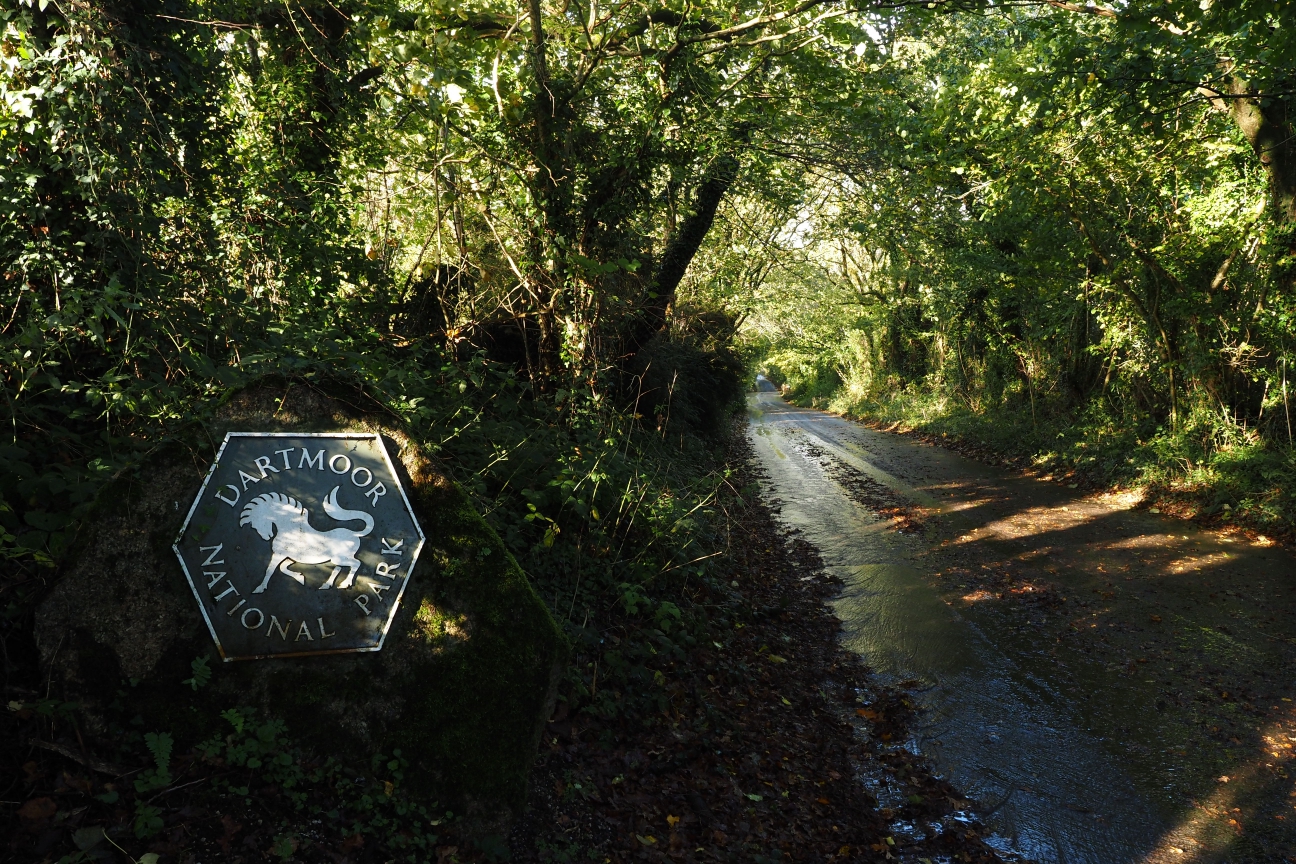
We were just on the edge of the National Park. Dartmoor’s logo is based on the famous Dartmoor pony, a semi-wild(?) species that has been running amok on the moor for thousands of years.
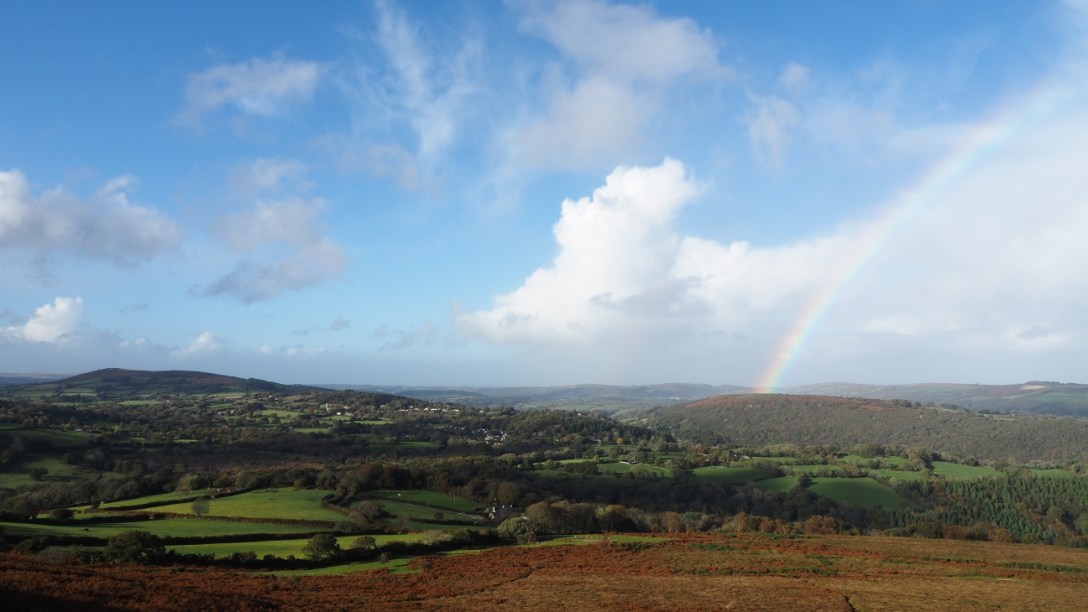
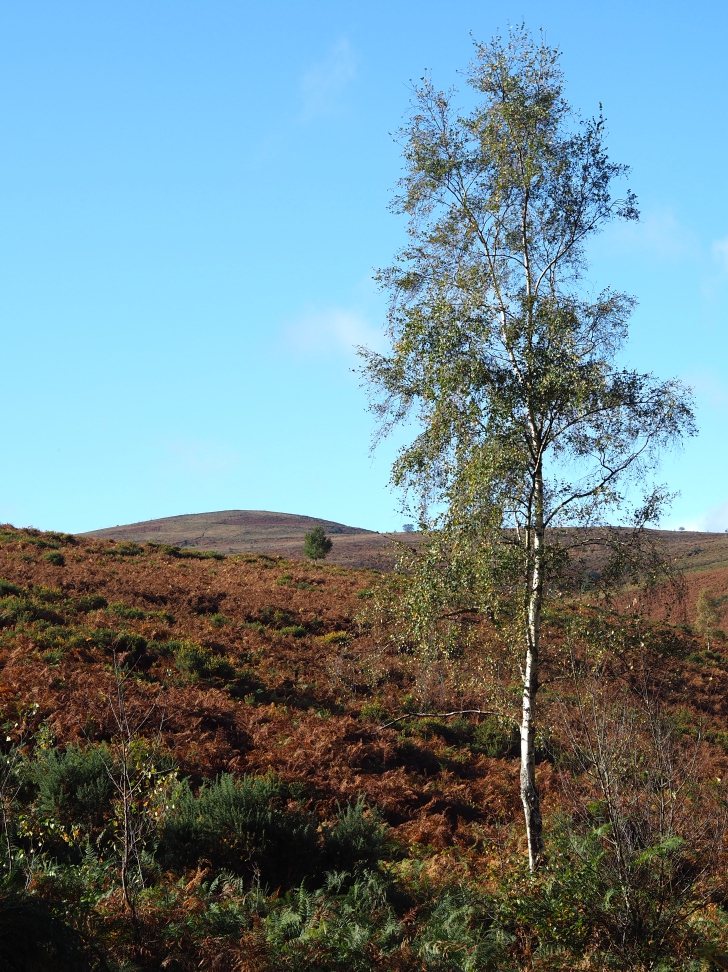
Dartmoor on an autumn morning. The silver birch with yellow leaves is one of the highlights of autumn, especially when the light catches the leaves.
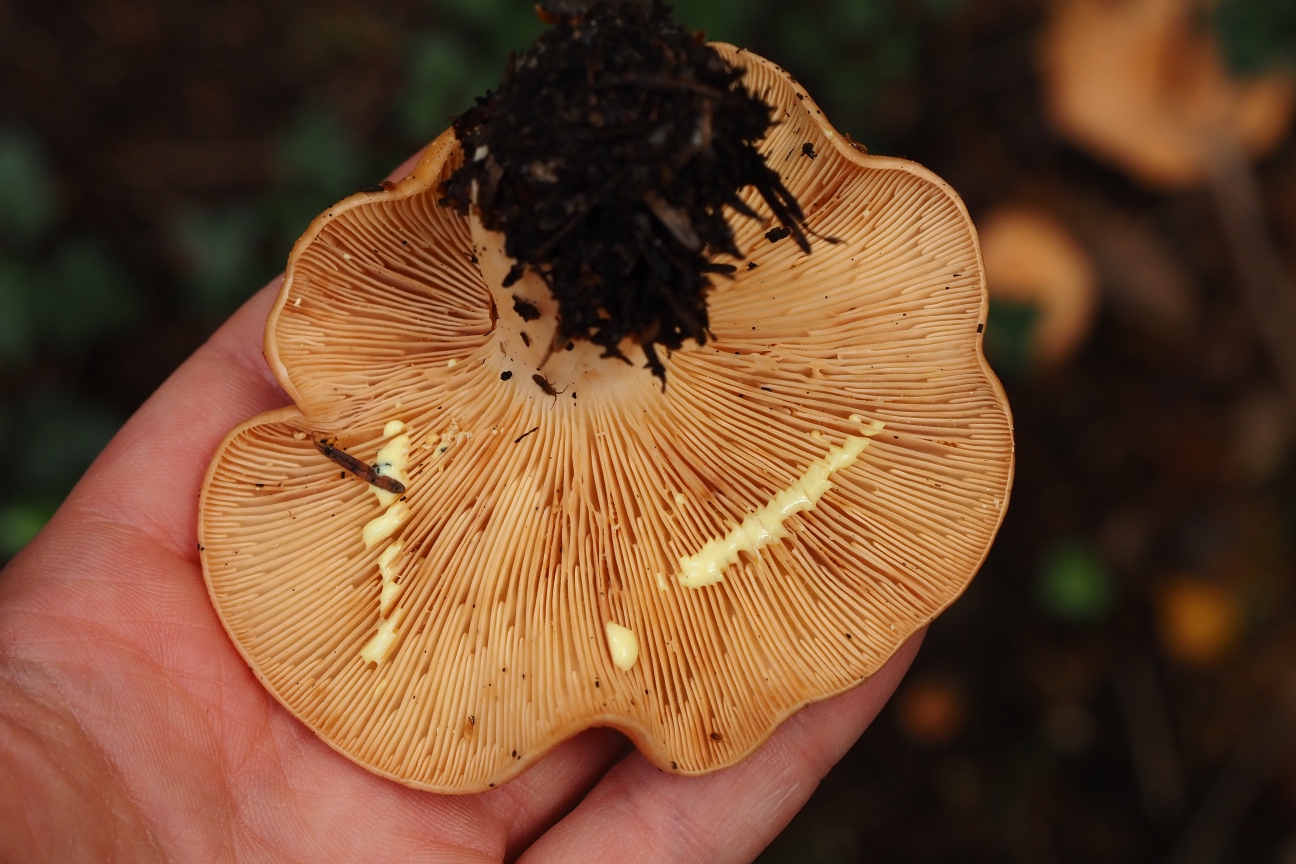
On top of a wood ant’s nest there were two mushrooms that looked interesting. I could tell that they were milkcaps from the unusual caps and the concentric circles. Turning one of them over I cut the gills with my fingernail and, sure enough, the gills produced milk. I don’t know what the species is.
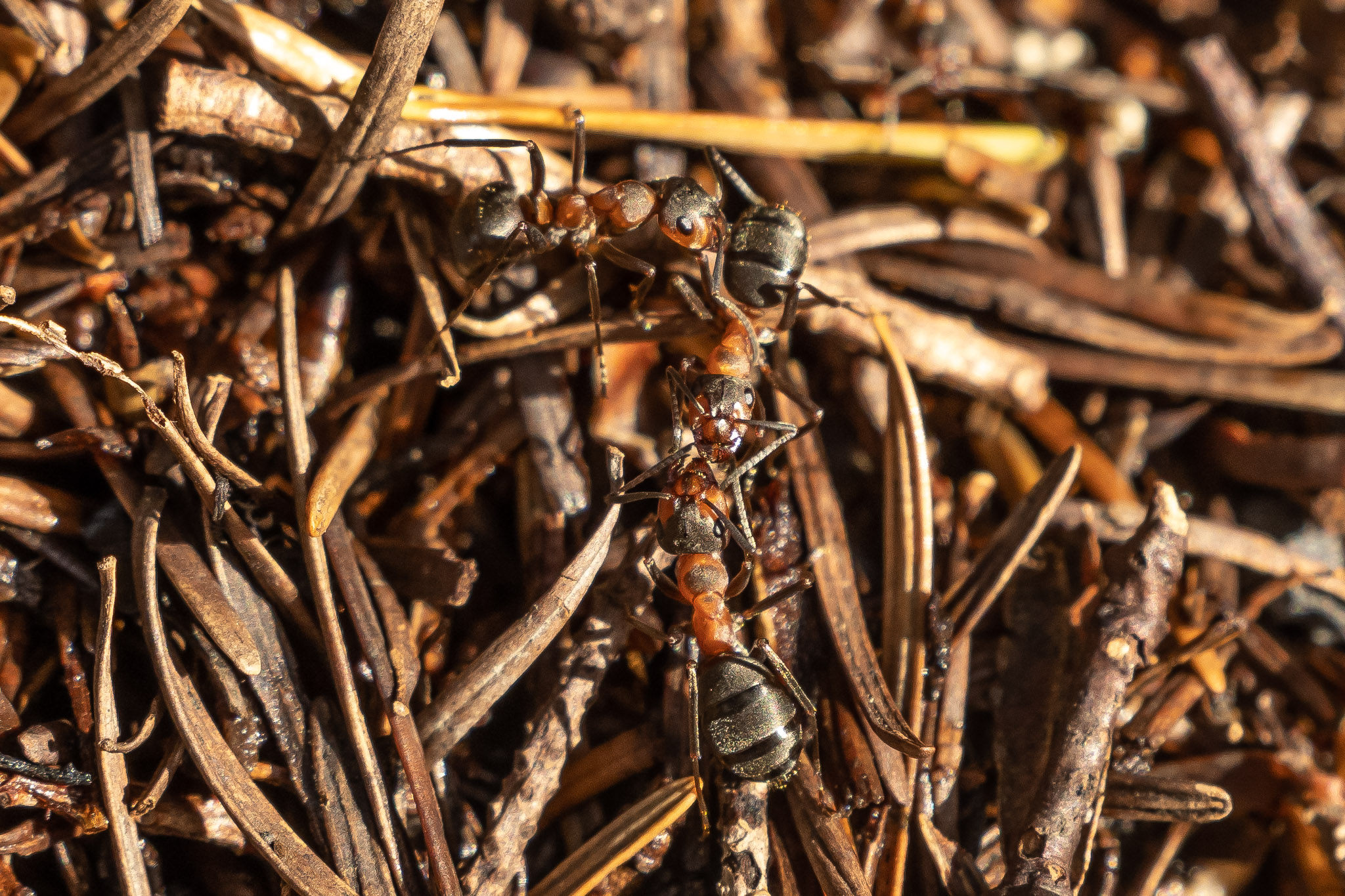
The ants were still active, with quite a lot of interaction going on. I wonder what role fungi play in the structure of certain ant hills. Ants have been found to cultivate fungi gardens inside their nests, and there must be other ways that ants mix with the fungal kingdom.
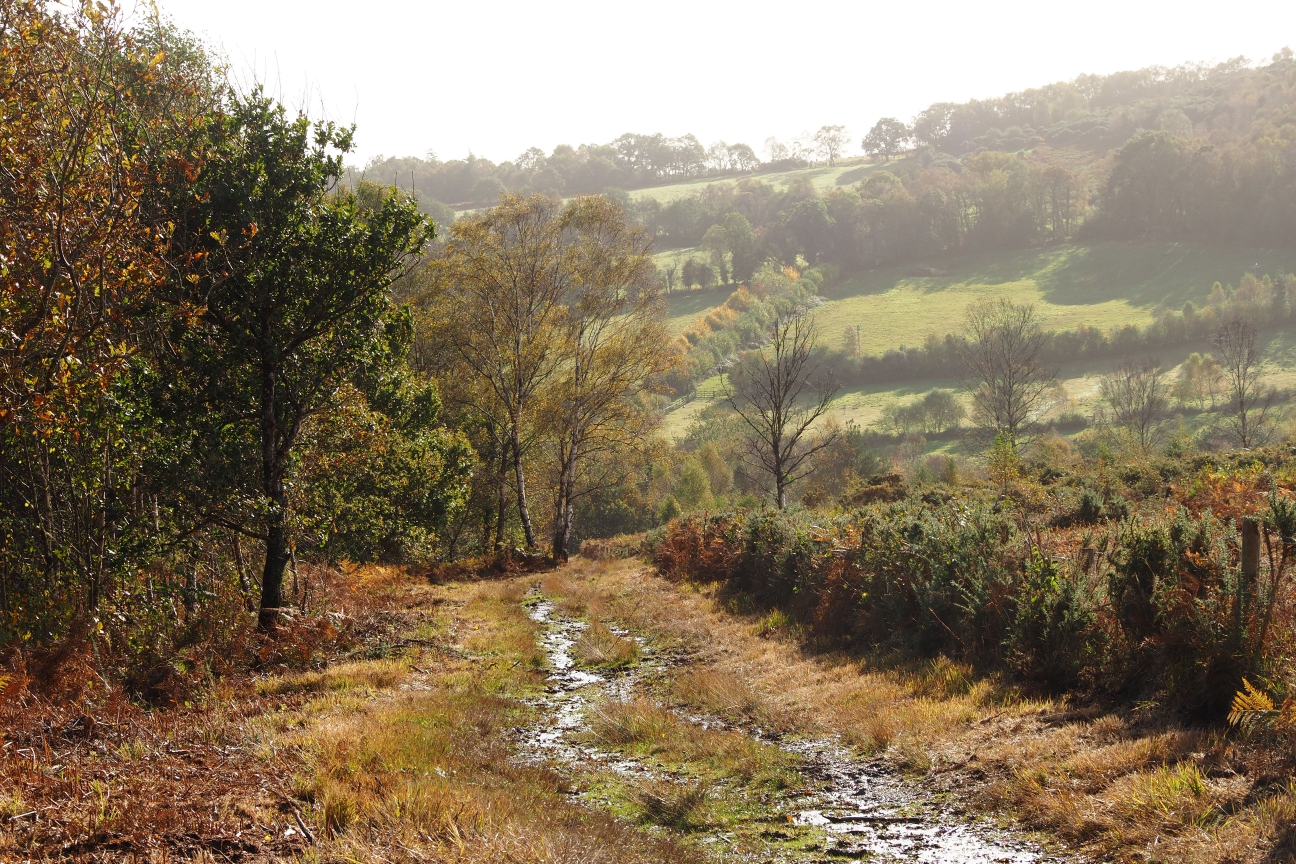
This walk was on the edge of the moorland, passing down into a wooded river valley known as the East Dartmoor Woods and Heaths.
The woodlands that made up some of the best parts of the walk are known as Atlantic Rainforest. Their main tree species are oak and hazel. I’m not sure if ash was more prominent before ash dieback came into effect. This type of woodland is very uncommon with a lot of it being lost down the centuries. It is a special habitat for its plants, lichens, fungi and other wildlife. It’s very mossy and ferny.
It did not disappoint. This blackening waxcap was growing in moss on a woodbank. It is a stunning fungus when in this condition and in this light. I always associate waxcaps with grassland so often forget they can also be found in the woods.
Close by were these white spindles (I think), another sign to me of an ecologically rich and diverse woodland.
The autumn rains had the river swelled and running fast. You can see the brown of the peat-inflected water.
There is someone who has commented several times on this blog asking how or when to find honey fungus. If you’re reading this now, honey fungus is fruiting en masse at the moment. They are very photogenic indeed in the early stages, like the cartoony image of what a mushroom should be.
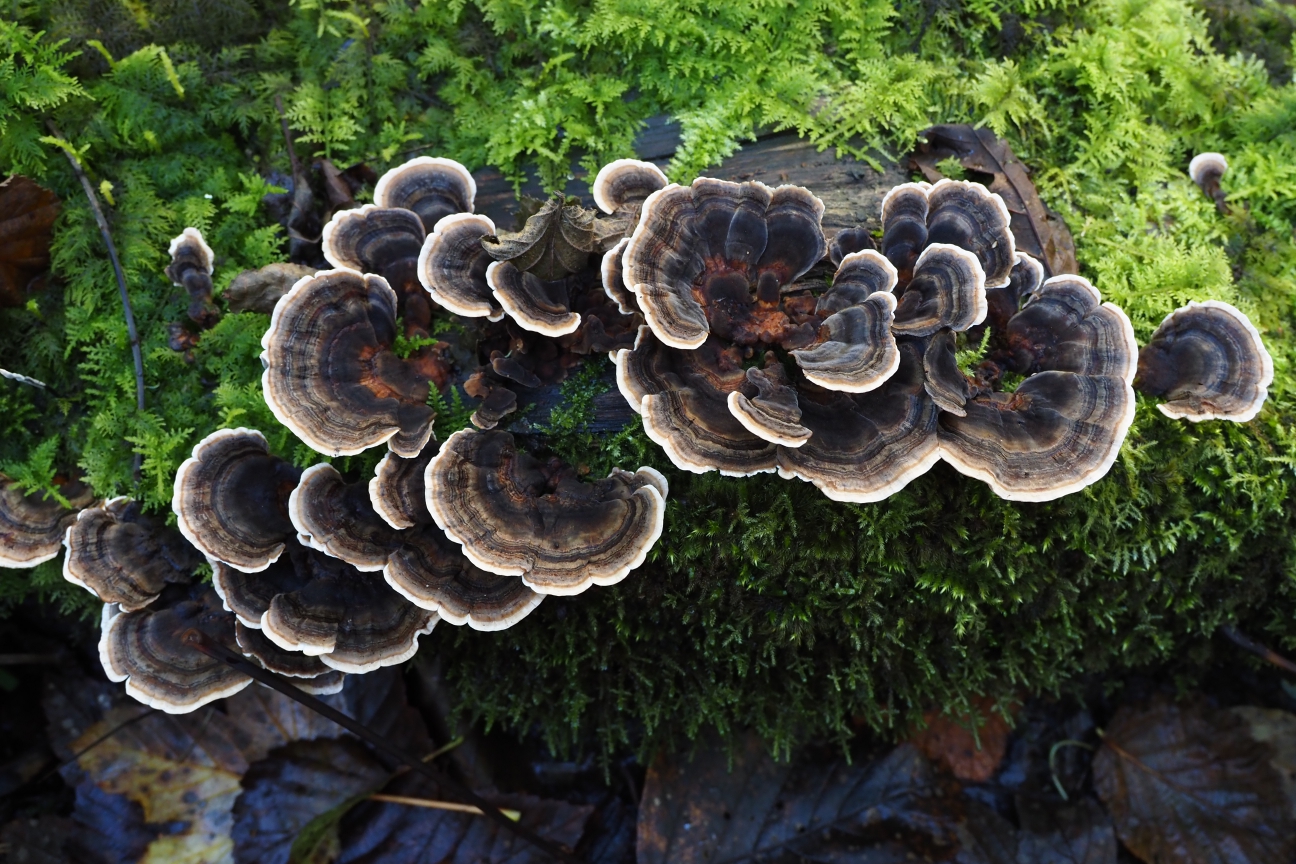
This fanned cluster of bracket fungi is probably turkeytail. These types of fungi can be found all year round but they look their best, like other mushrooms, in the October-November period.
I can’t claim to have found these lovely bonnets growing from some moss on a tree. I’m not sure of the species.
Here’s a snapshot of this beautiful woodland with an understory of bracken, and a tiny bit of hazel.
I’m not entirely sure but I think this is purple jellydisc. There is an organism on the birch leaf next to them which may be a fungus but could also be a slime mould.
On this walk we encountered one of the most beautiful mushrooms I’ve ever seen. This rainbow-coloured mushroom is a bitter beech bolete. It took the breath away. This was a phone pic as my camera wasn’t that happy about how dark it was. Well done Fairphone!
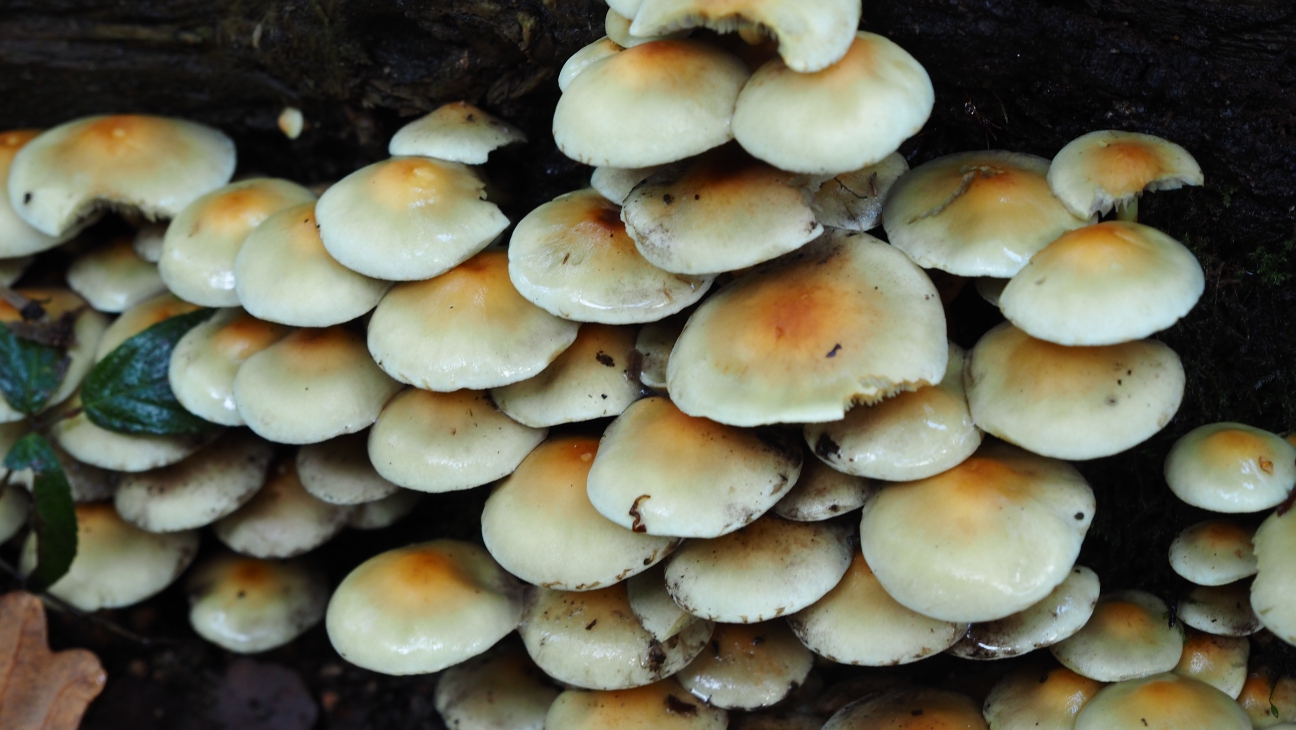
As mentioned in the first part of this blog trilogy, sulphur tuft is a very common mushroom. This was a nice spread. I haven’t spent any time looking to identify the other tufts, but I’m pretty sure this is sulphur.
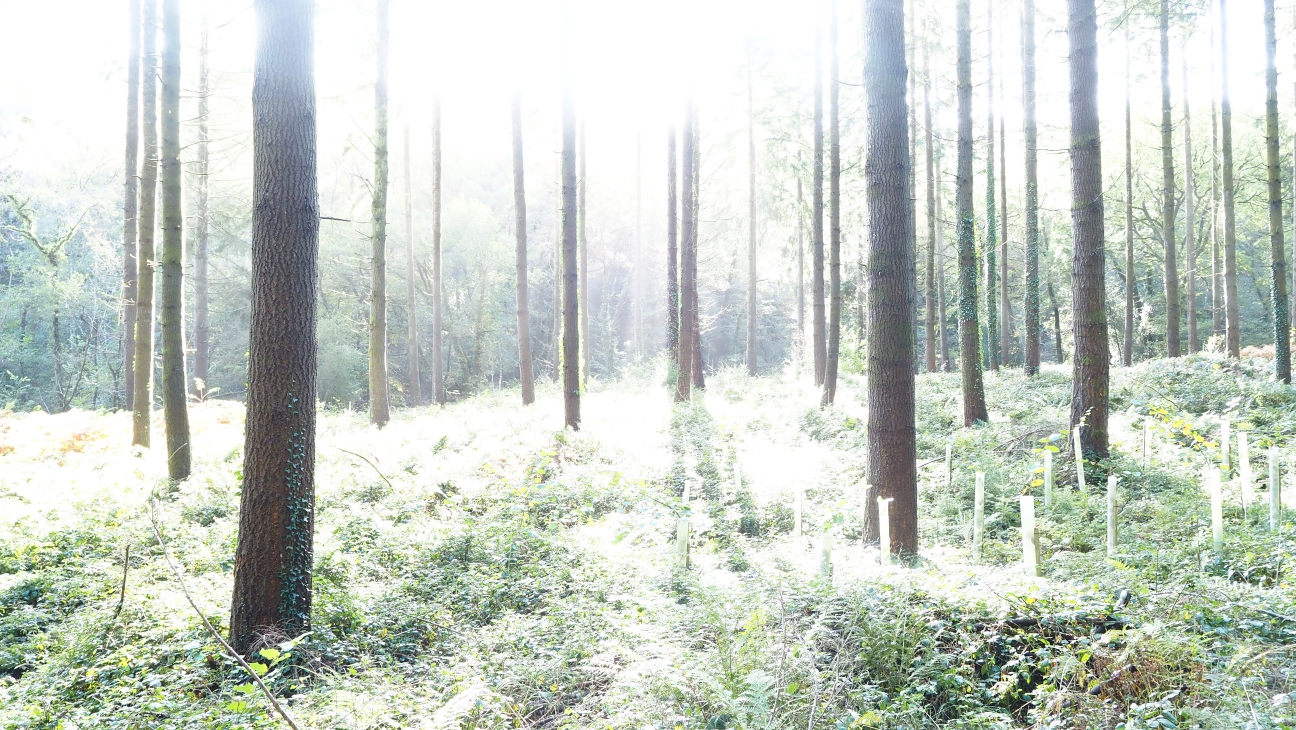
The broadleaved rainforest was replaced on the other side of the river by coniferous plantation. The Woodland Trust owns this woodland and there was clear evidence of shifting it to its more species-rich habitat of broadleaved woodland. The walk followed part of the Dartmoor Way.
This bolete was helpful in leading us on the way along the track. Yet another bolete or relative growing from a mossy bank.
When I see a mushroom like this, I usually say to myself ‘macrolepiota‘, and leave it at that. It looks like a parasol relative of some kind.
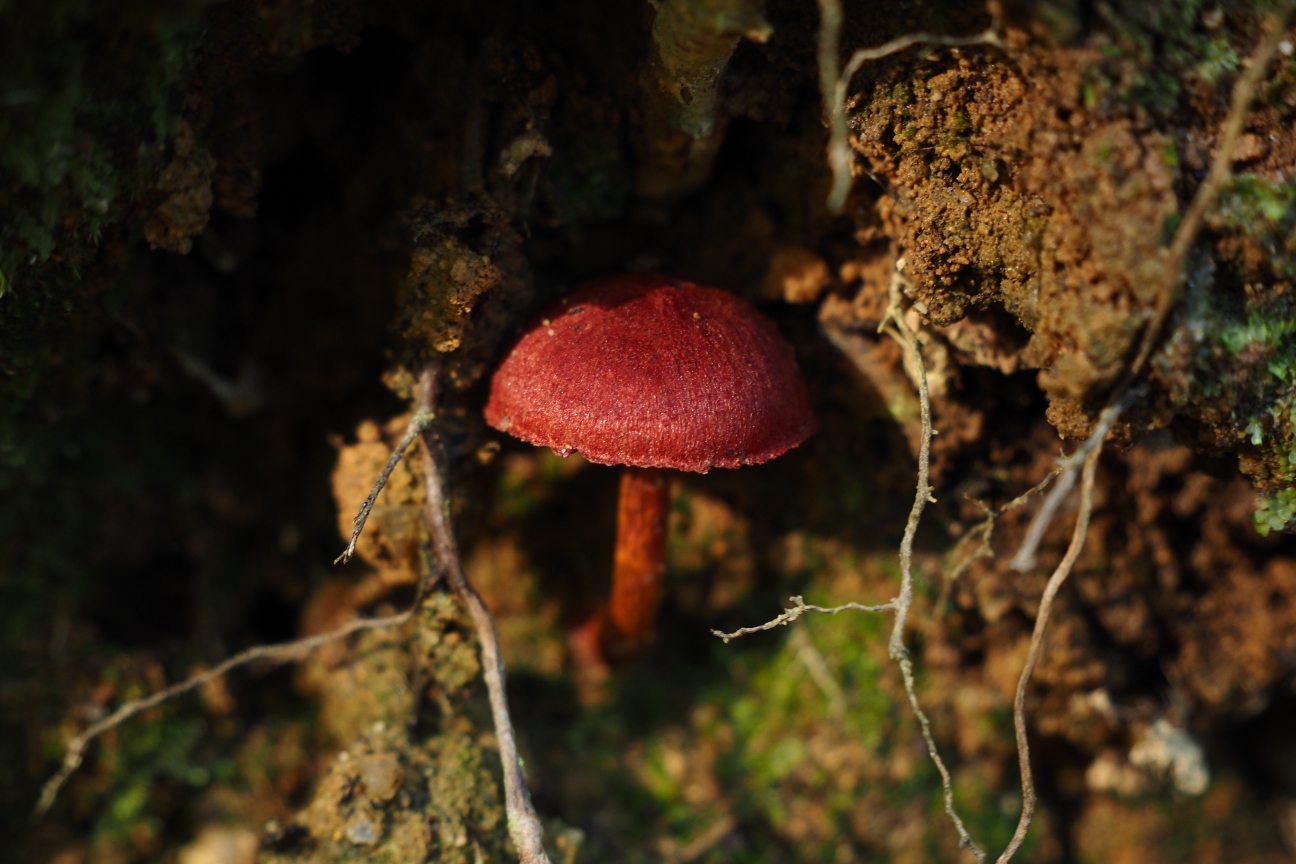
This gorgeous little red mushroom was growing from the exposed soil of the trackway. This isn’t a mushroom I can remember seeing before.
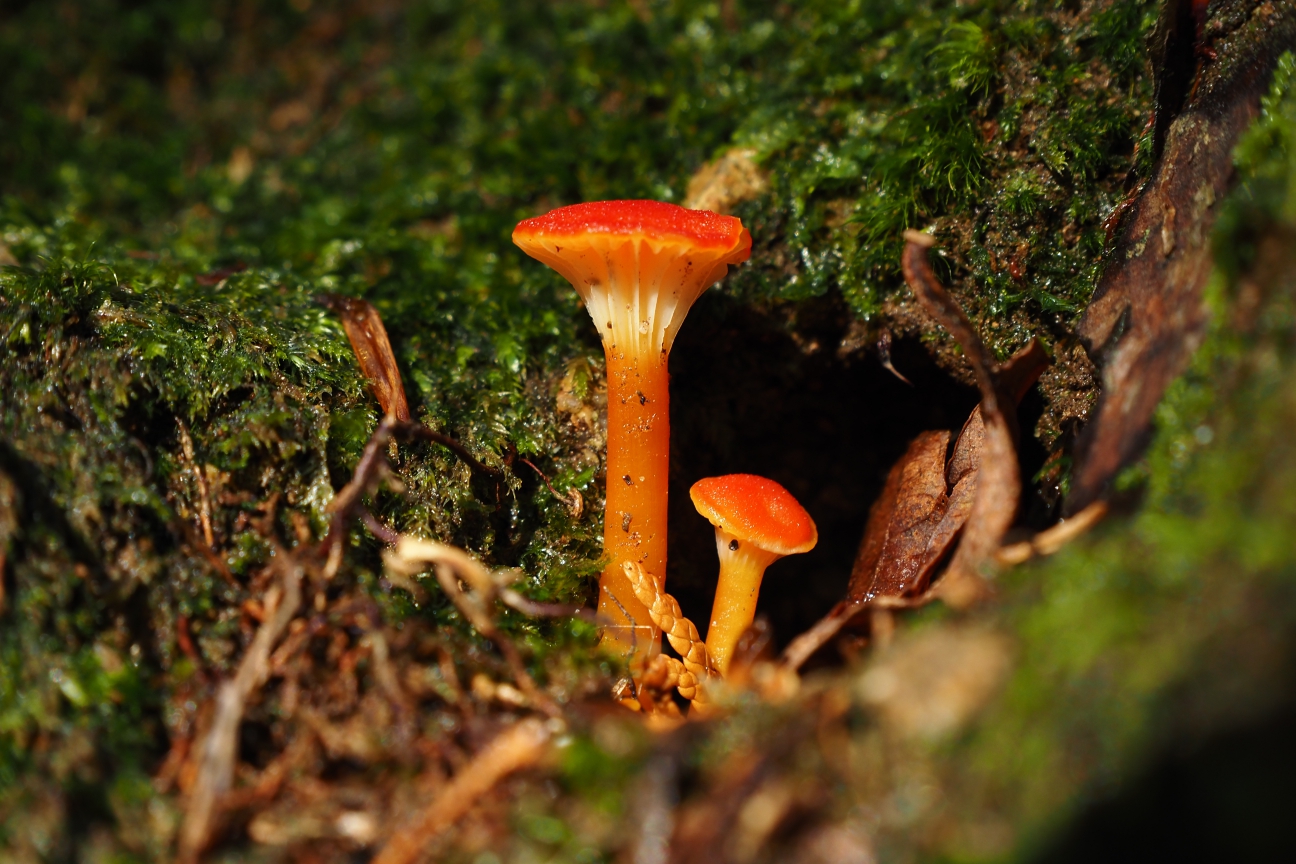
Now here is one I have managed to identify. These tiny red-orange mushrooms were growing from the same habitat as the unknown species before. These beauties are goblet waxcaps, looking like they’re standing on the threshhold.
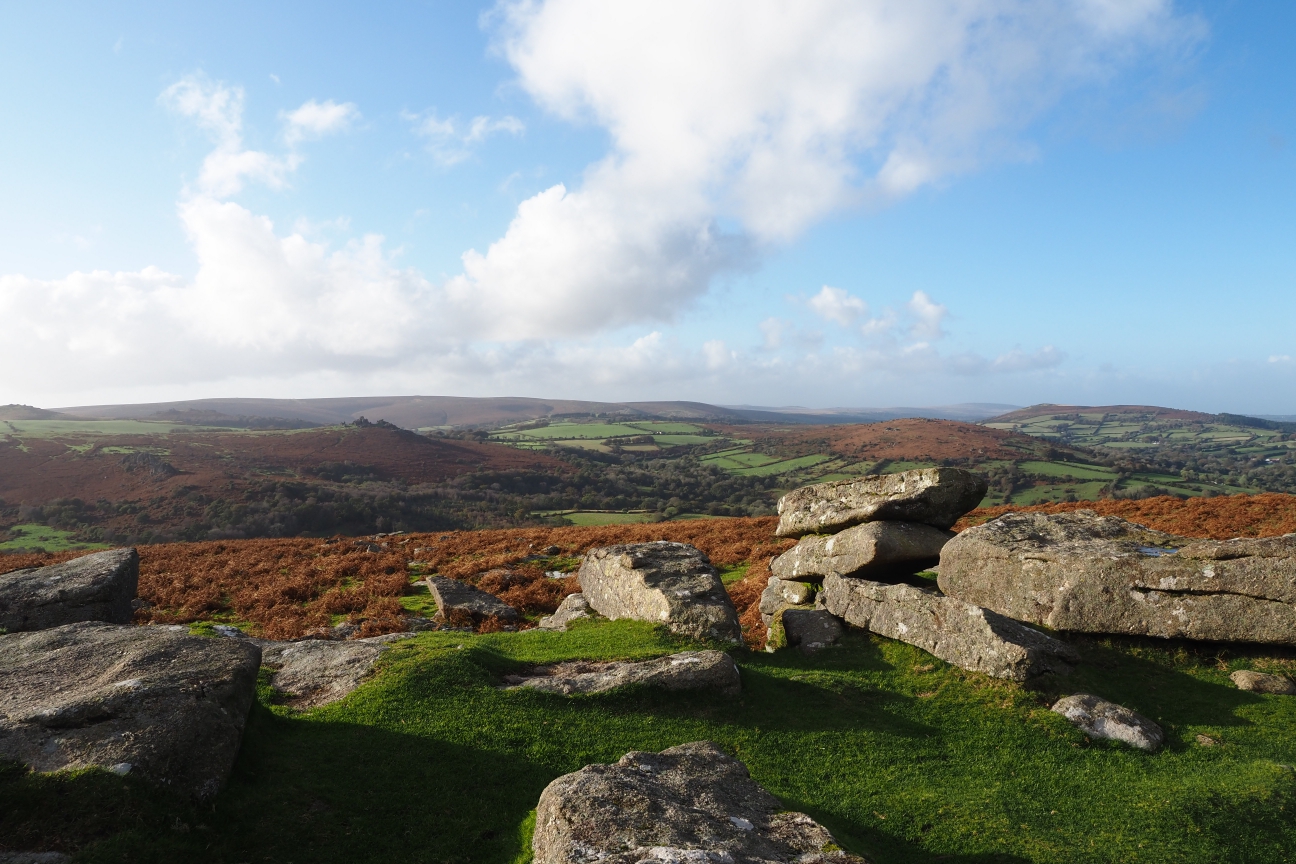
The walk left the woods behind and broke out onto Dartmoor proper with its famous granite tors and expansive views.
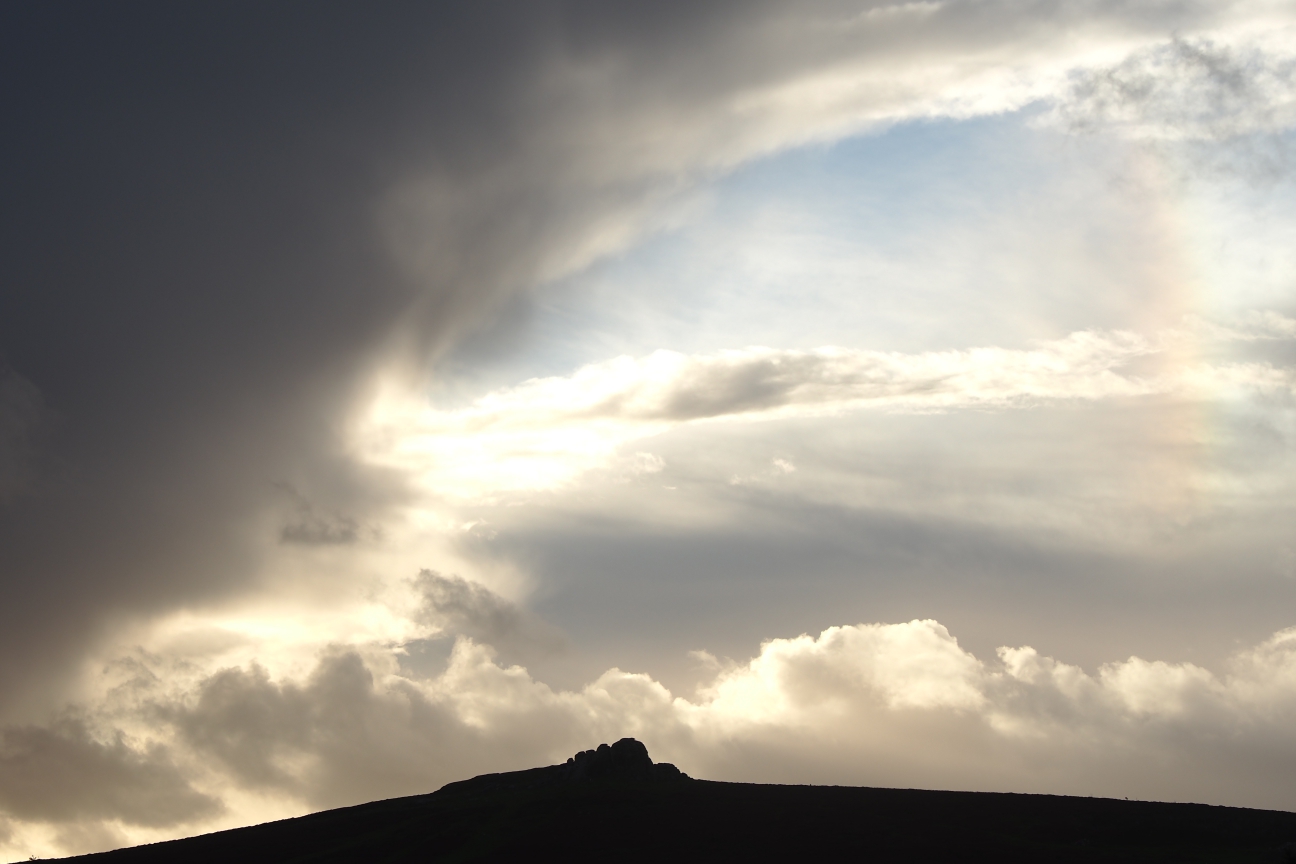
Haytor Rocks silhouetted against the wild skies often seen over Dartmoor.
Though the woods had been left behind, there was one final surprise as we descended through the farmland and hedgerows towards the National Park’s edge.
A tractor had been through to cut the hedges and road verges. In the process it had pulled up this stinkhorn mushroom. It wasn’t something you could miss. That was probably enough mushrooms for one day.
At the end of October I spent three days in Dartmoor National Park (on Dartmoor). I saw so many mushrooms there that I have enough for a post to cover each day. It’s a relief to have some images and sightings to share after a barren period. The mushroom season has arrived very slowly but Devon never disappoints in the fungi department come autumn. I need to say thanks to my partner Rosie who found a lot of the things shown here, exercising her squirrel gene.
As is usual for me, the fungi search was part of walks rather than seeking out food for the pot. The photos were taken with an Olympus E-M5 MIII with a 12-45mm lens and no additional equipment.
For more info about each species just click through the hyperlink of the scientific name in brackets. As ever I’m happy to be corrected if I have a species ID wrong, hence why I use iNaturalist.
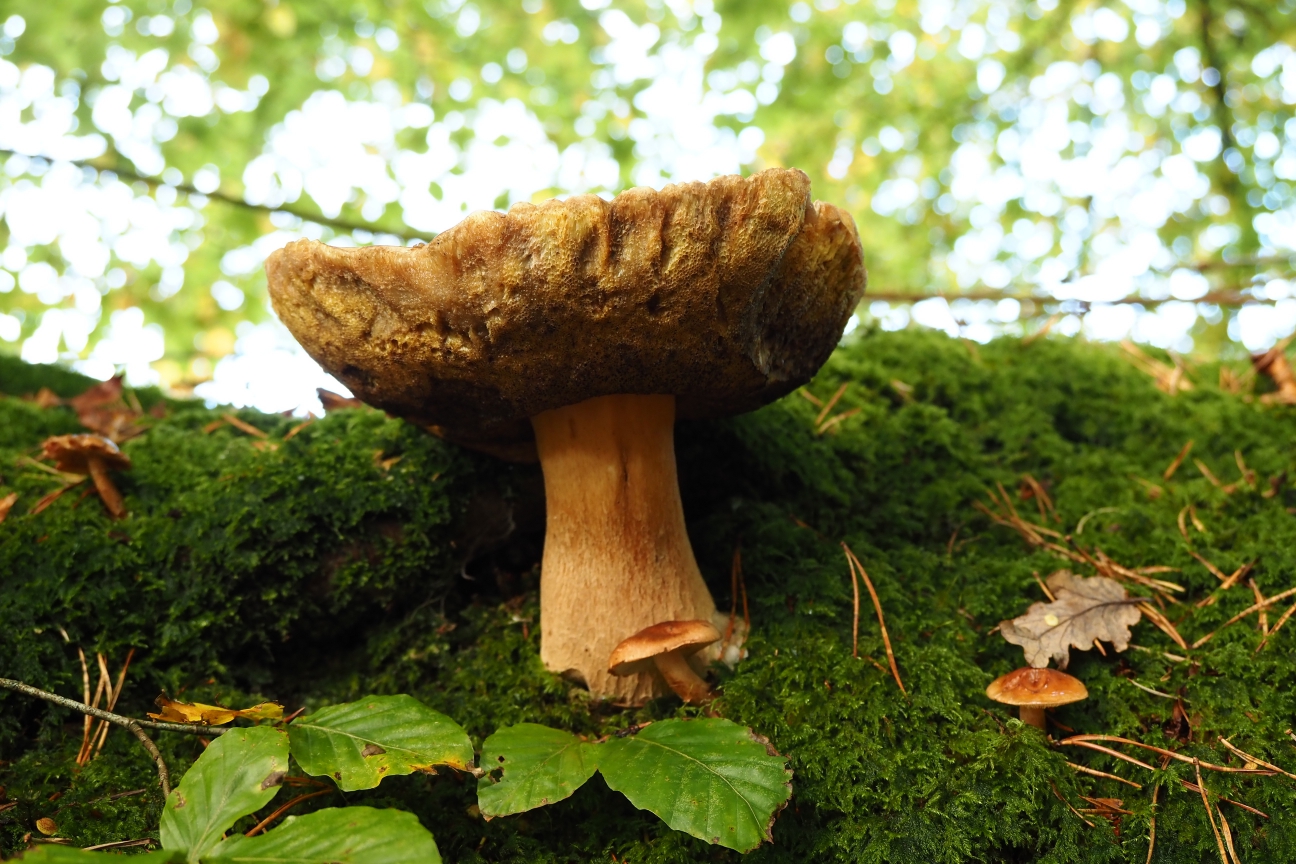
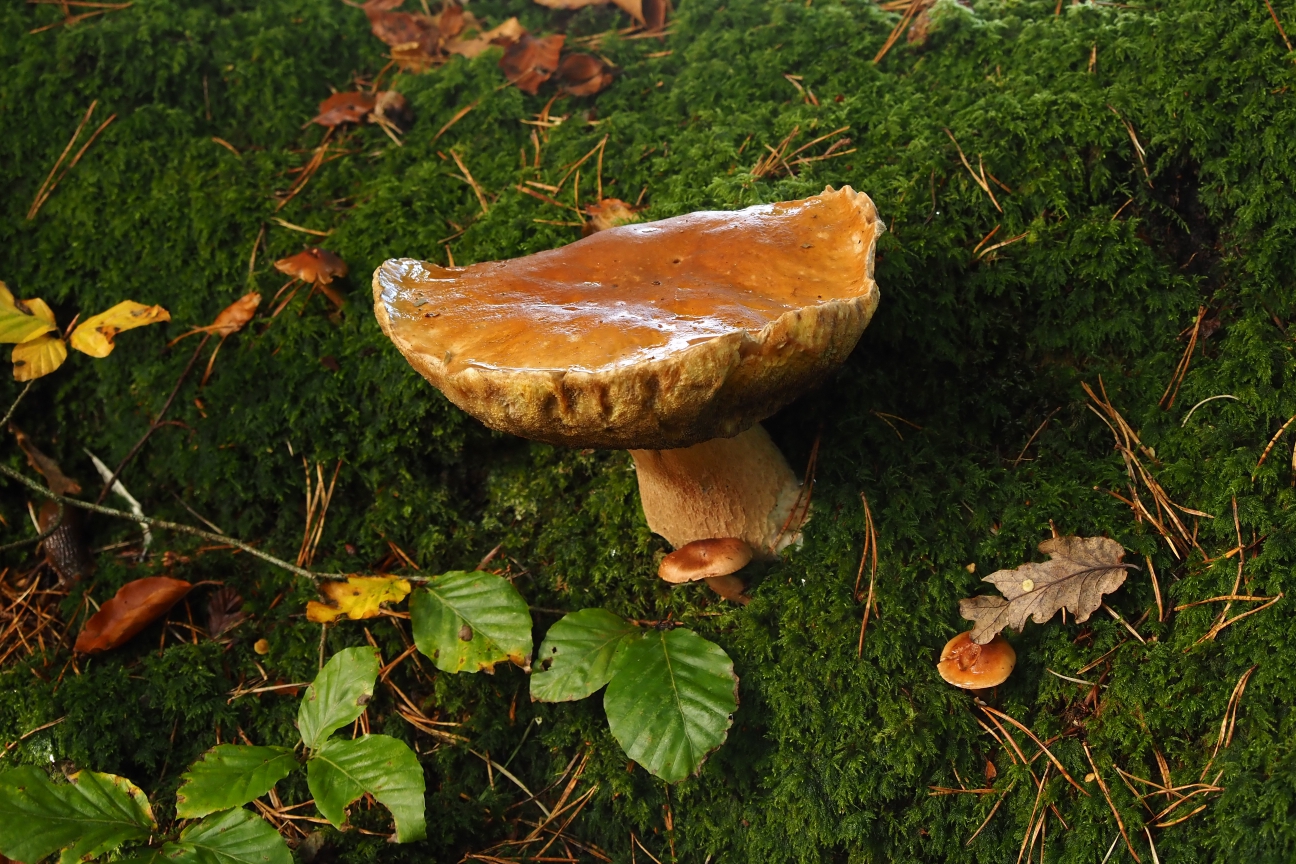
The first sign of peak mushroom season was a greenway with mossy hedgebanks and some smatterings of woodland. I’ve seen ceps (Boletus edulis) growing from mossy banks in Dartmoor before, also in Sussex, and it seems to be a favourable spot for them. I wonder if it’s part of their ectomycorhizal relationship with trees growing in those banks.
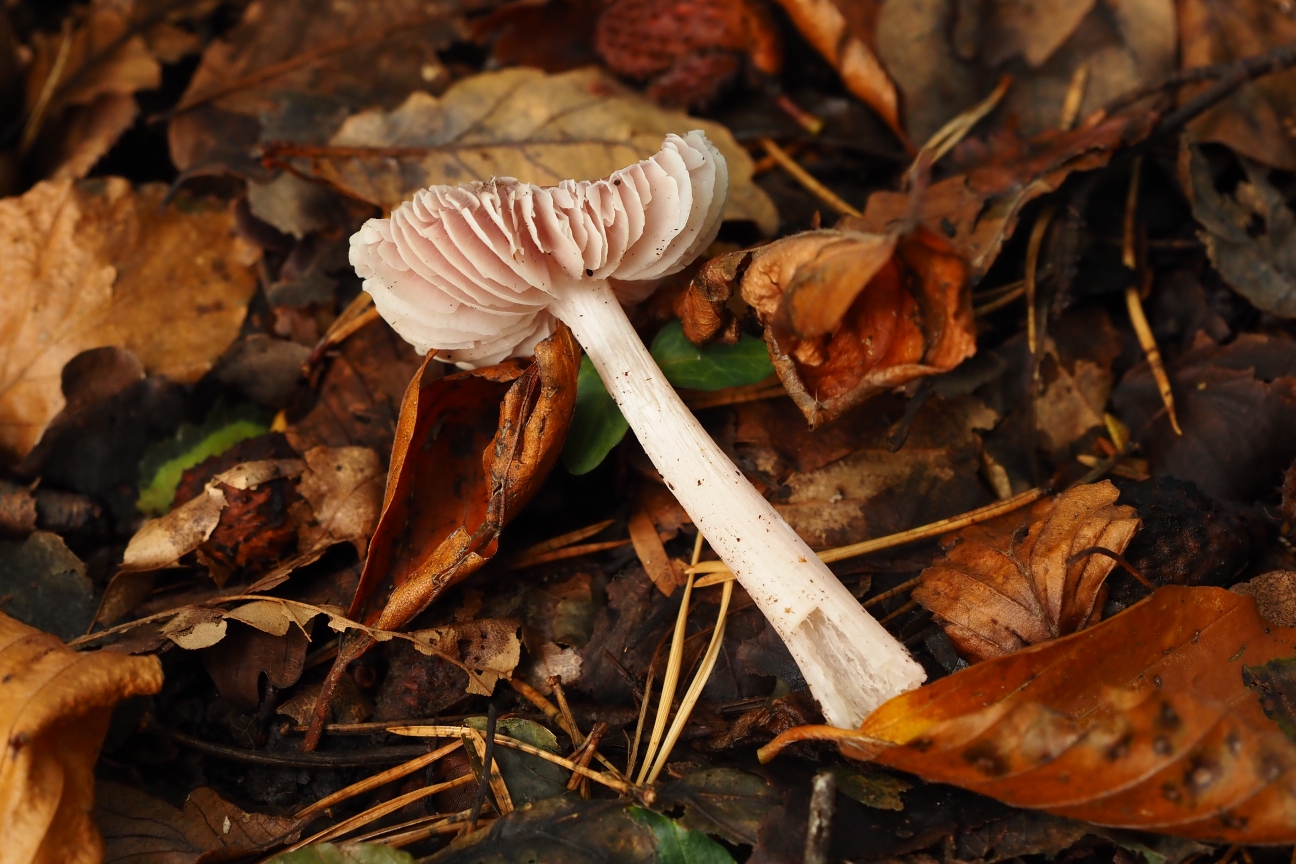
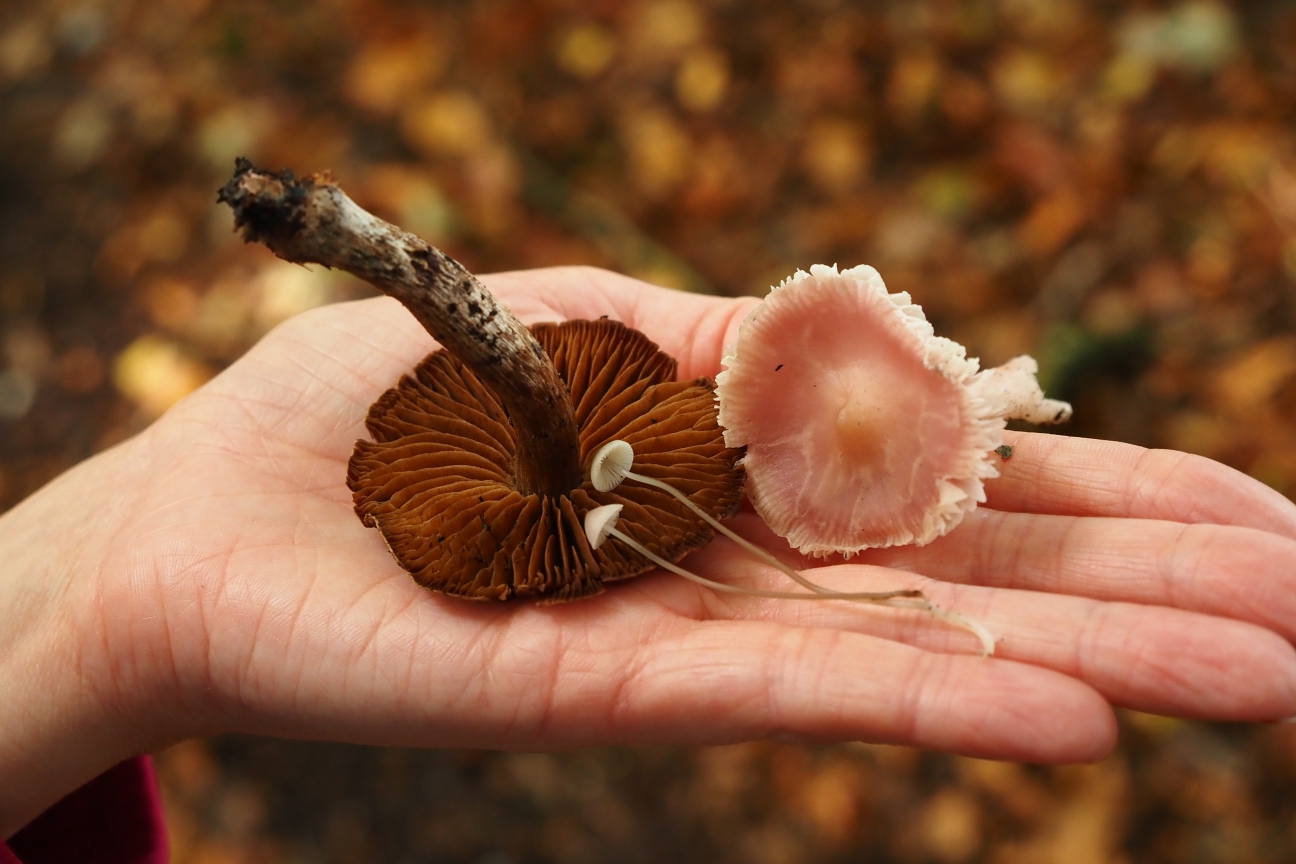
Close by in the leaf litter was a trio of pink mushrooms that I haven’t identified yet.
Here’s a nice collection that we found on the ground.
Dartmoor is a very birchy landscape in places which inevitably makes it a good place to find fly agaric (Amanita muscaria). I was listening to an episode of the Mushroom Hour podcast after this trip (as in, journey) which included quite a lot of discussion about fly agaric’s cultural place in mycophobic cultures such as Britain. Have a listen for yourself here.
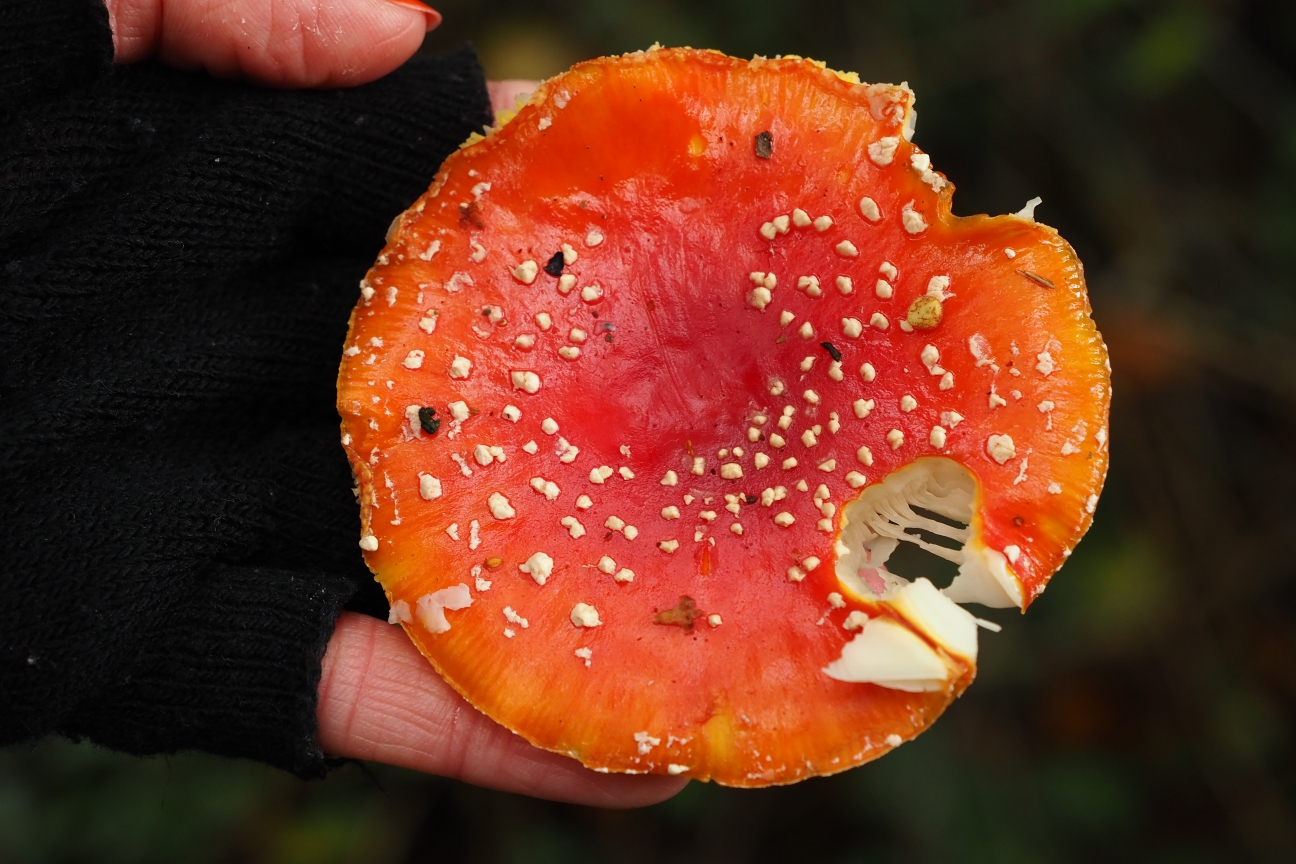
The fly agarics we discovered were all well beyond their best, which I think is really around September before the October rain and first leaf fall. They are clearly edible for some animals.
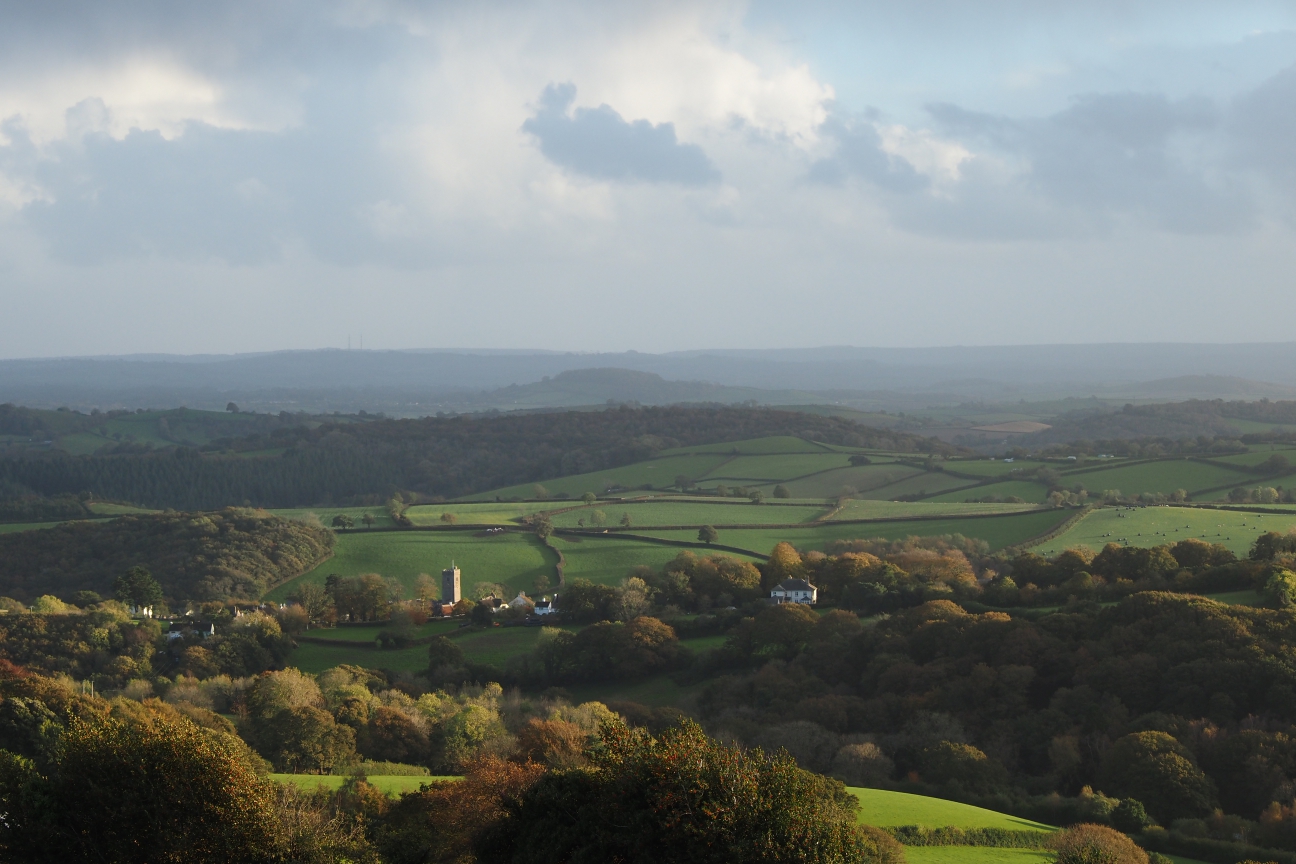
A scene from the wooded edge of Dartmoor’s eastern side. There are some fine woods around this part which will feature in the next post.
This was one of the nicer finds, what is probably golden scalycap (Pholiota arivella). It was a large spread at the base of a tree, where this group of mushrooms can often be found.
I’m not sure what species these leathery-brown mushrooms are but they were very attractive with that white trim to the cap.
The walk encompassed part of the Templer Way, an old tramway used to transport granite quarried from nearby Haytor Rocks. You can read more about the Templer Way here. Stone from this area was used in the construction of a version of London Bridge and part of the British Museum. As seen above, beech is quite a common embankment planting on Dartmoor, presumably by the Victorians, and perhaps even at the same time that the Templer Way was being constructed.
On the mossy bank (see a theme developing here) this false deathcap (Amanita citrina) had popped up. It can be distinguished from a deathcap by the remnants of the veil on the cap which make it look a little like a white fly agaric.
One species I haven’t seen much this year is porcelain fungus. There was one single fruiting body during this walk. This is a species almost always found on beech (Fagus sylvatica), even broken off bits of beech lying around can produce fruiting bodies.
On a large chunk of fallen beech wood this bracket fungus had grown. I’m not sure of the species. I’ve posted on iNaturalist to hopefully get an ID at some point.
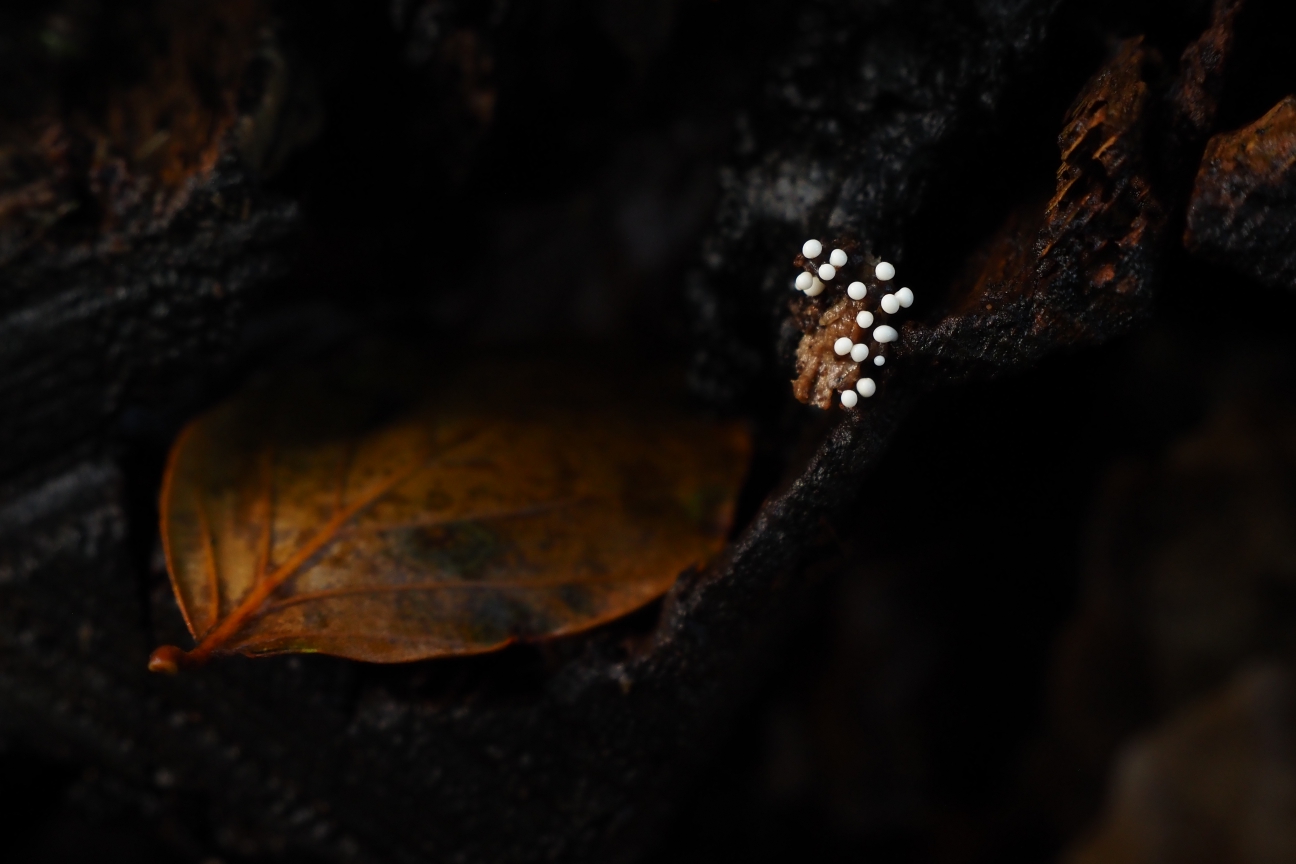
In the same beechy area there was some slime mould growing on some of the more wet fallen wood.
Here you can see the beech leaf for scale against the very small slime mould. I do like this composition and the colour of the leaf.
One funny thing was finding this stagshorn fungus (Calocera viscosa) growing from a gap in a bench. I was quite disturbed recently to find it’s scalled stagshorn rather than staghorn, as I had known it for such a long time.
I love how this fungus looks like a little animated fire burning.
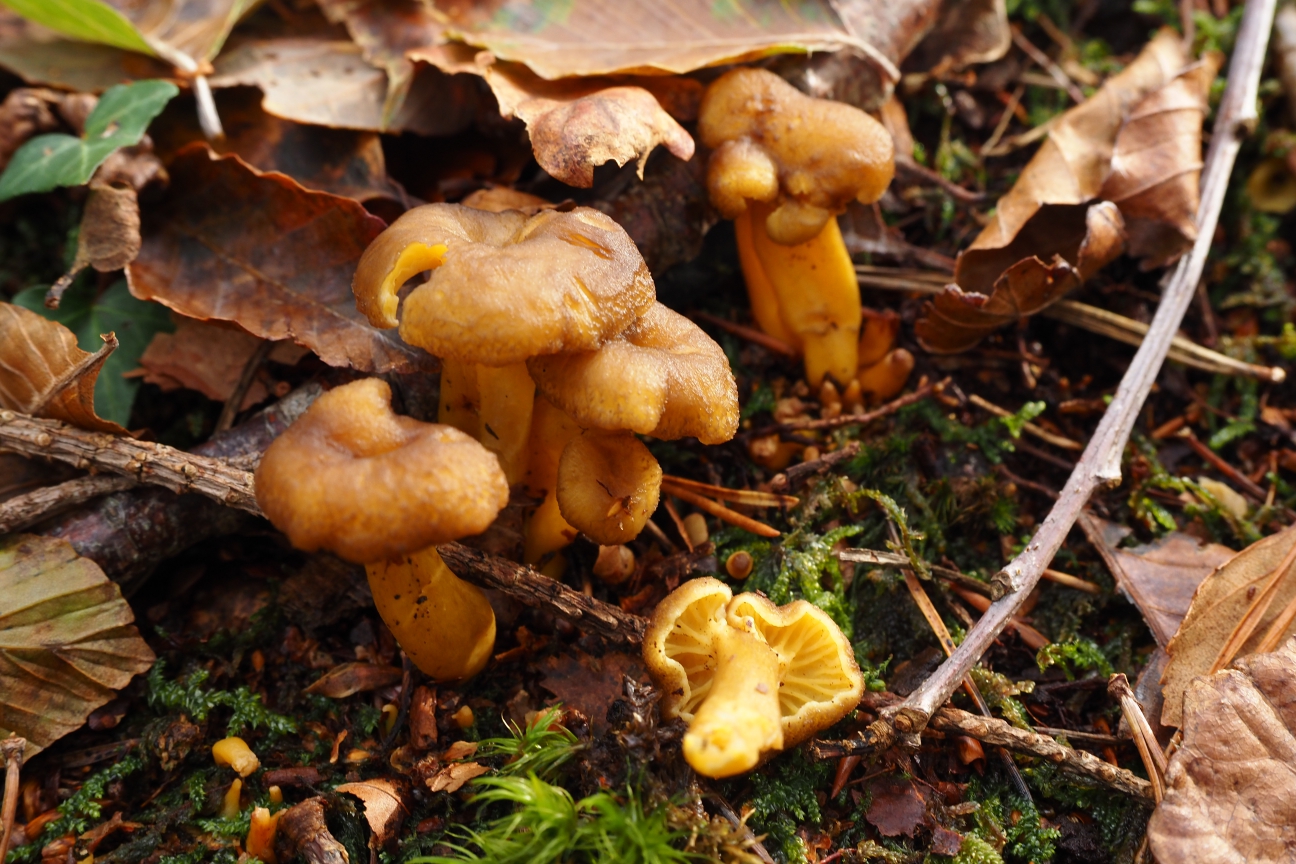
A distance away from the previous location I found the largest community of chantarelles I’ve stumbled upon. I’m not entirely sure if they’re two different species but some of them looked to me to be trumpet chantarelles (Craterellus tubeiformis). Again, nothing was picked and everything seen here had already been upturned.
I couldn’t resist a photo of these very photogenic glistening inkcaps (Coprinellus micaceus). The sheer dominance of moss on Dartmoor shows how wet the landscape is here.
Rosie managed to find a more complete fly agaric, but still with plenty of chewing done already.
There are many, many mushrooms I see that I’m not able to name. This will go down in that category, possibly forever.
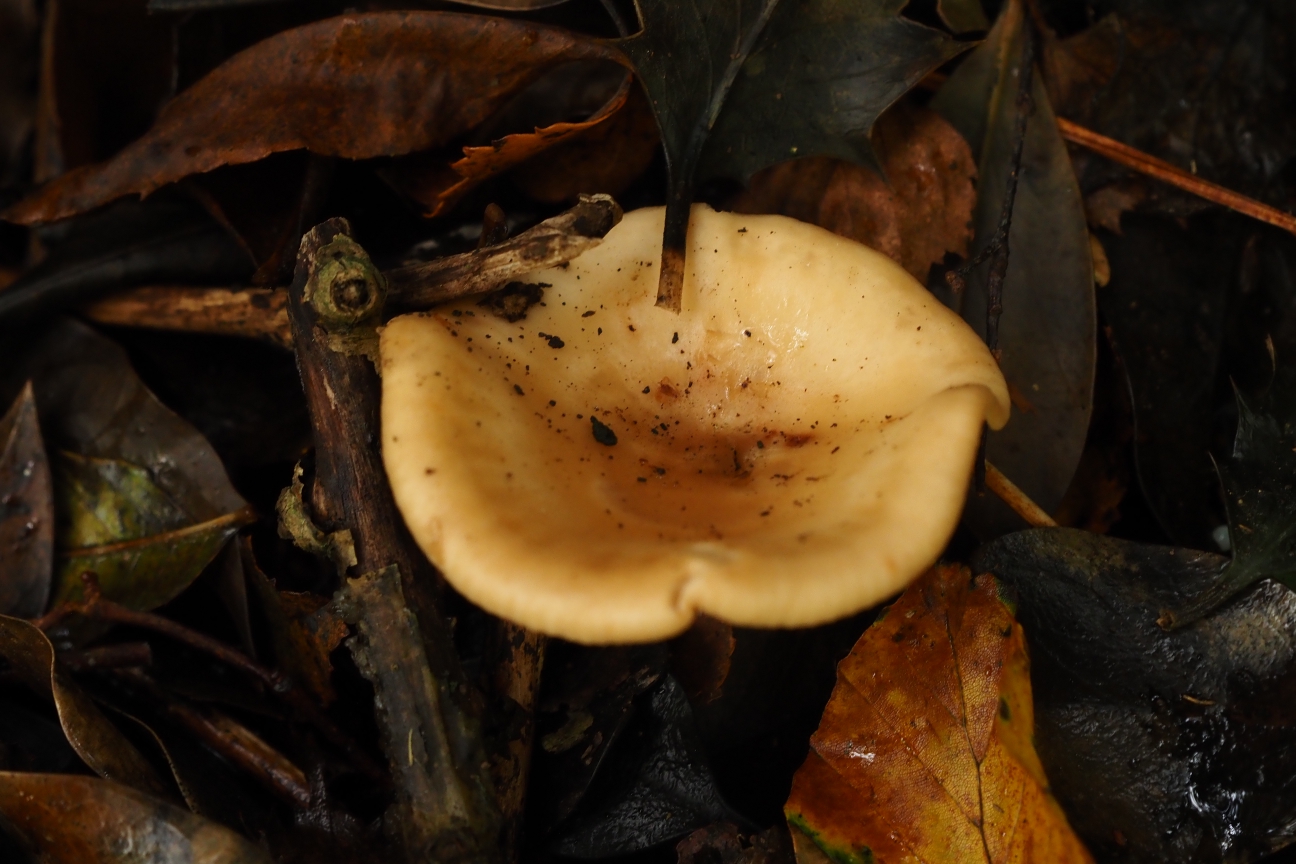
After hiding from an unexpected, torrential downpour we hid under some holly trees where these mushrooms were growing. I think they’re a species of funnel (Clitocybe) but I don’t know.
Sulphur tuft (Hypholoma fasciculare) was at almost every location where other mushrooms were fruiting. It is possibly the most common fungus I encounter, especially in woodland. This was a lovely scene and no surprise that this mushroom was making a home there.
The weather really turned after this point when we reached the moor proper. You can see from the image above how unsettled the weather often is on Dartmoor. Haytor rocks can be seen to the right of the image.
The final mushrooms of the walk were found along the green lanes near the edge of the National Park boundary.
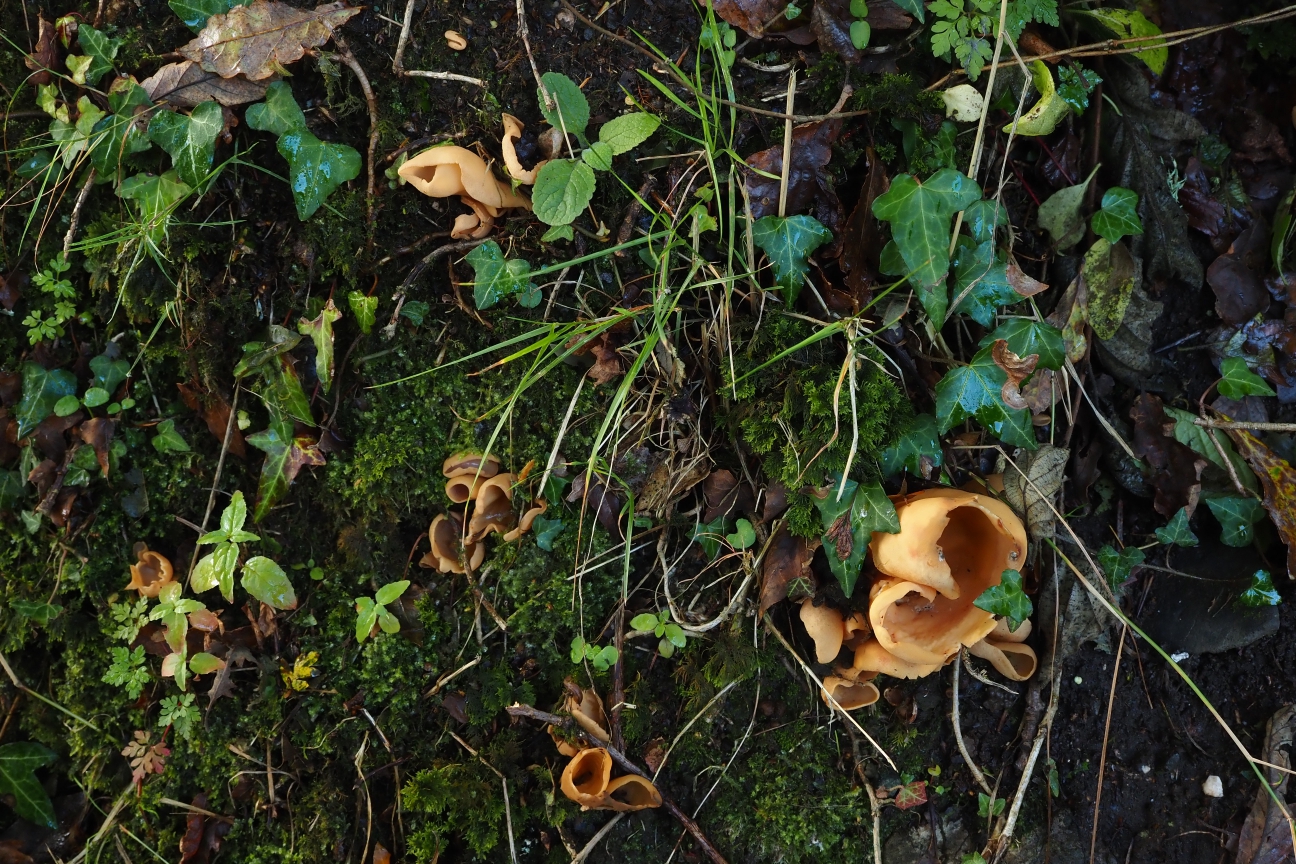
I’ve been meaning to write about the diversity of trees and plants in Dartmoor hedgebanks for years, but I hadn’t really considered their fungi. Above is an ascomycete fungus, a cup fungus. It’s probably hare’s ear (Otidea onotica).
This absolute bruiser of a mushroom is probably a pestle puffball (Lycoperdon excipuliforme). Usually it grows vertically from the soil but in this case was protruding at an exactly horizontal angle from the hedgebank.
As darkness fell, there was one final opportunity to see the mushrooms before night fell. This was the evening of the clocks going back one hour. The mushrooms above are clouded funnel, a common and fairly easy to identify fungus that grows in a group. It gets its common English name from the cloudy shading on their caps.
Thanks for reading. Stay tuned for episode two of ‘3 days on Dartmoor’.
I’ve had a burst of American visitors in recent days (to my blog, not my house). So thanks for visiting, y’all, and sorry about the year you’ve had. You may have noticed I’ve slipped to monthly posts on here. Between April and October I posted blogs every Monday without pause, which is a tricky task…
This week I stumbled across two of the more charismatic polypores you can find at this time of year. Polypores are bracket fungi that grow like shelves, usually from a tree trunk but sometimes also at the base or from a branch.
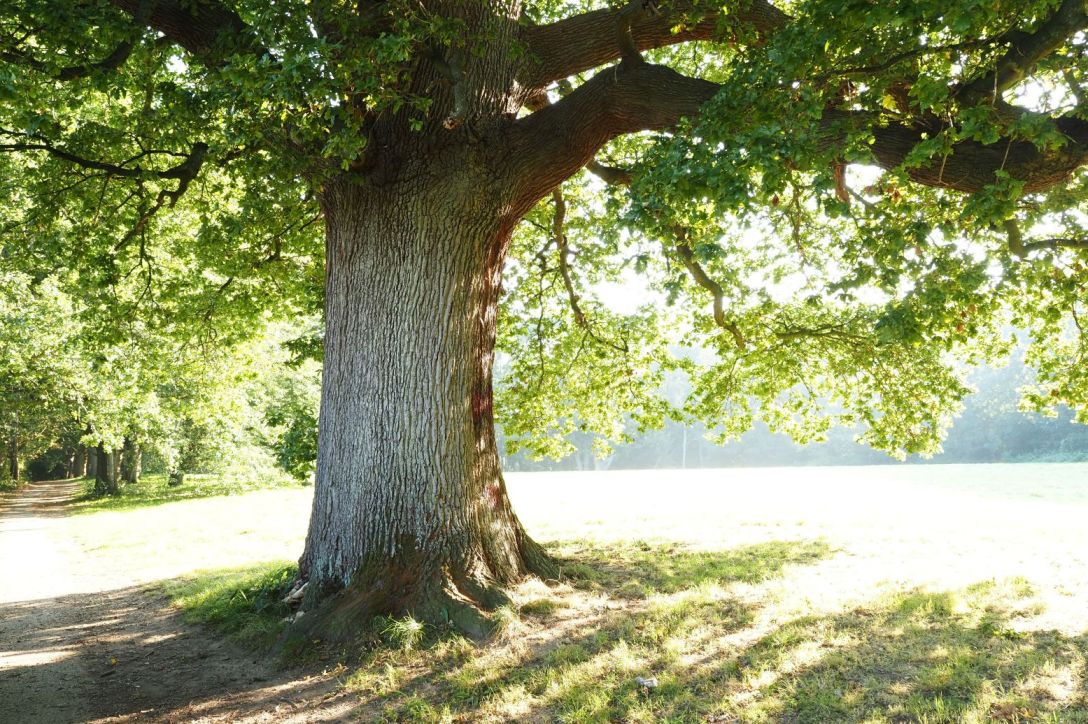
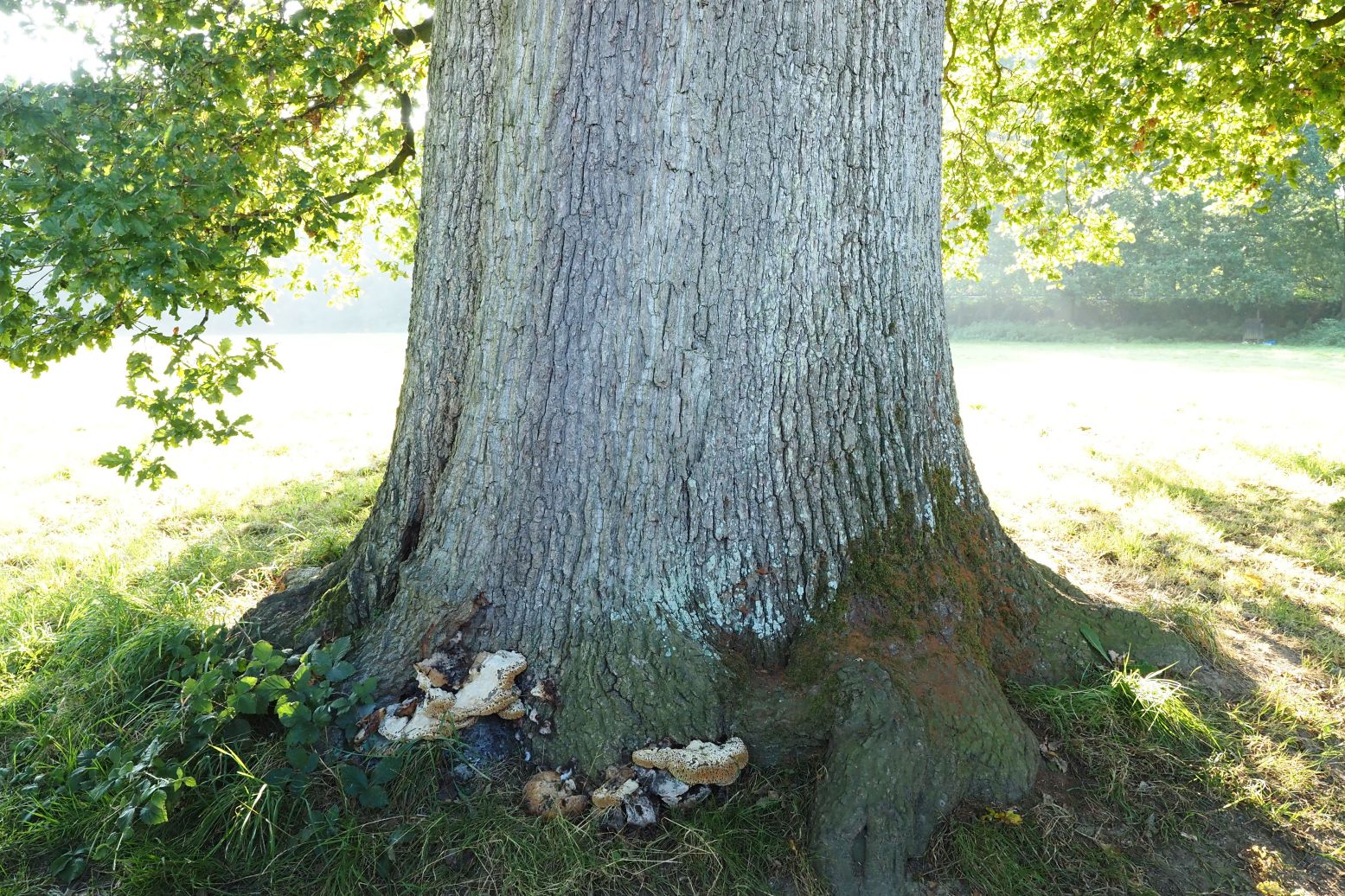
On a morning walk I went to check on the progress of a polypore I’d spotted several months ago (pictured above in late June 2021!), growing at the base of a large oak tree.
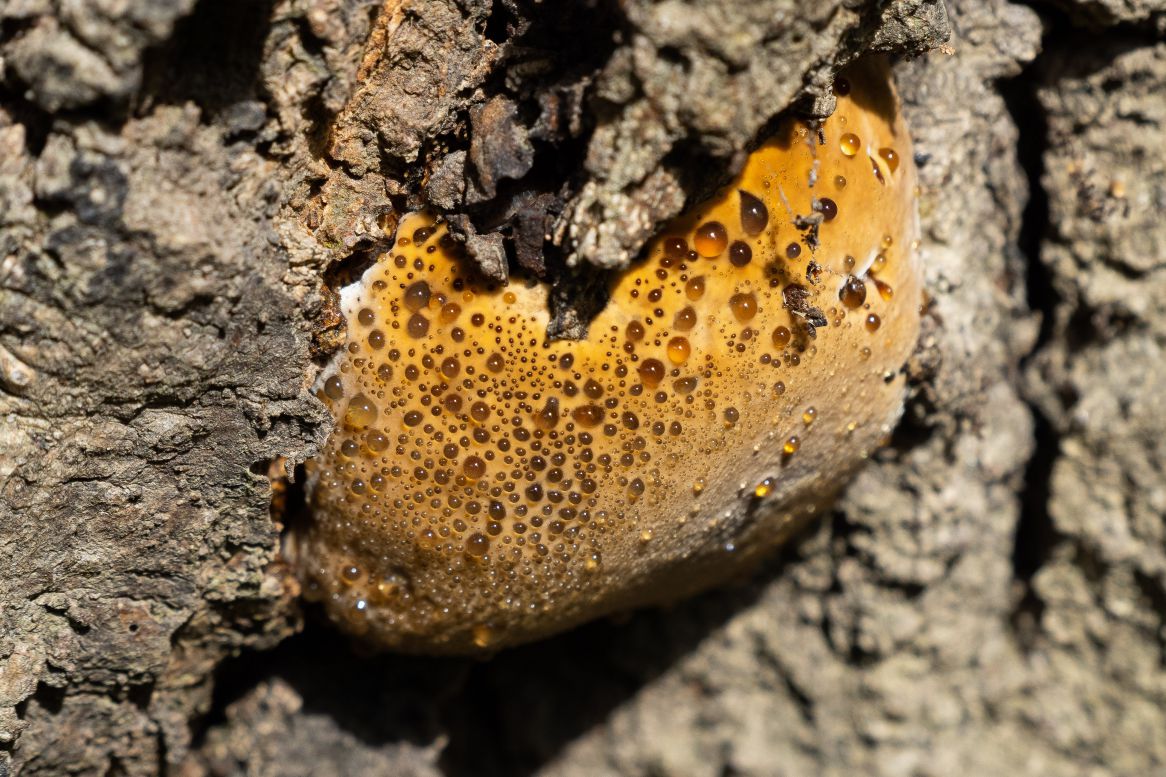
Oak bracket is one I posted about almost exactly a year ago during a visit to Suffolk. It also goes by the name of weeping conk, with a scientific name of Pseudoinonotus dryadeus. It’s a parasitic species, which means that this tree may be suffering some internal, ‘mechanical’ trouble. I hope not because it’s one of the largest in the area and is right next to a path. This makes it much higher up the chopping order if public health might be deemed to be at risk. I will never forget being taught that trees weren’t a hazard until we showed up.
This is a very attractive fungus, if you like a dough that drips caramel. It grows at a fairly critical part of the tree, where it meets the ground. It’s crucial because the tension of the roots holding the trunk upright.
Look into those hundreds of caramel eyes and tell me this is not one of the most beautiful fungi out there.
Later that evening I cycled out to the countryside on what was the end of a September heatwave. The landscape was very dry and smelly. I could smell the manure from my house two miles away in the daytime. That evening I became acquainted with the stench up close – muck spreading in the fields. It was absolutely rank, undoubtedly made far worse by the heat and lack of rain.
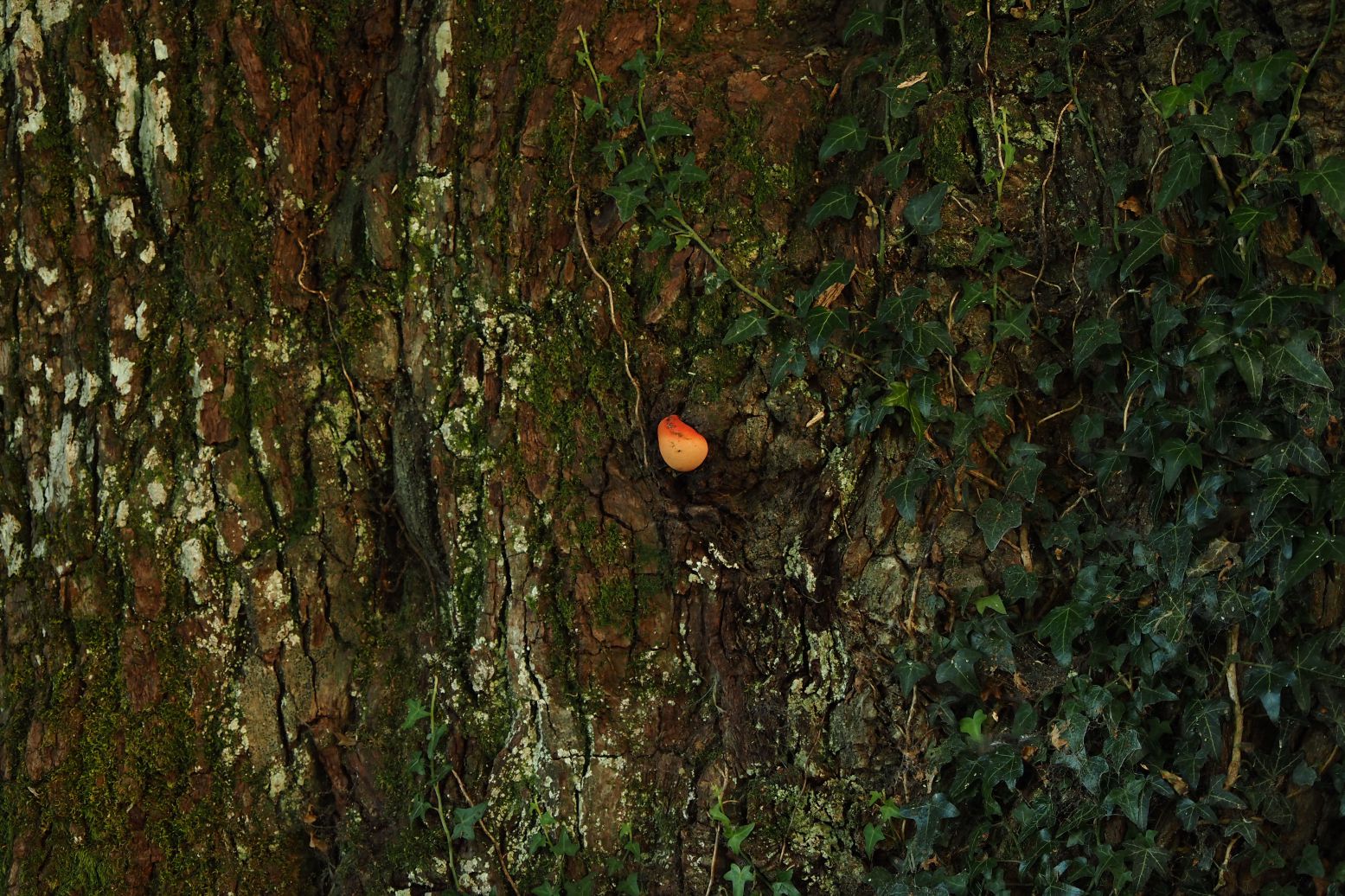
My route took me past the 800-year-old Sun Oak. Like the large oak I saw earlier that morning, this tree was also home to a charismatic polypore fungus.
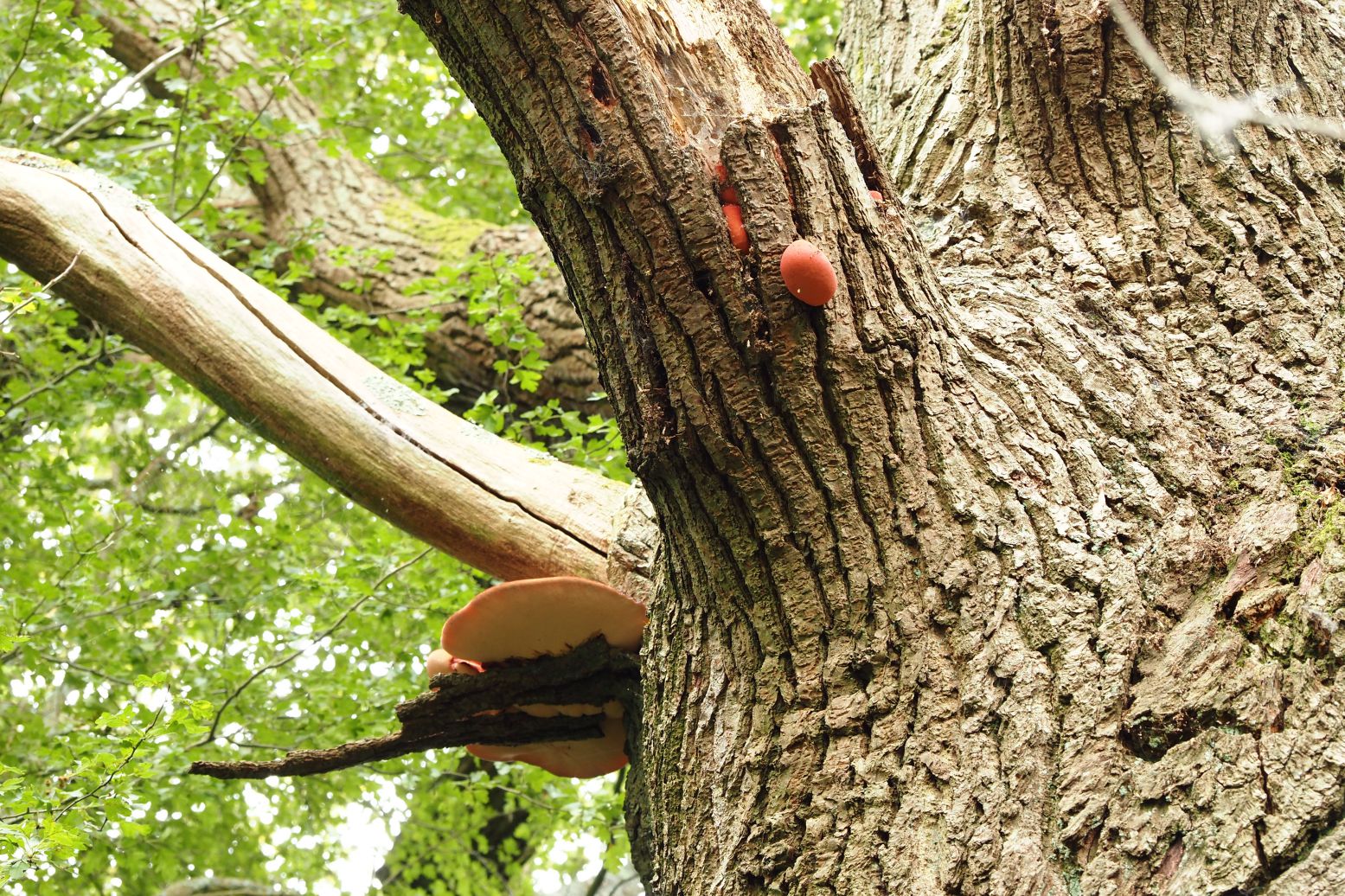
This red button is a beefsteak fungus, Fistulina hepatica. It may also have been a red button – do not press the red button. Unless you want to continue watching this programme (BBC joke).
Oh go on then.
In reality this fungus will grow out to form something that looks like a human bodily organ (hepatica). It’s often on oak or sweet chestnut, especially more mature trees. It’s another parasitic species but it’s said to grow too slowly to ever cause the tree structural problems. We should remember that these fungi have been growing with their hosts for potentially millions of years. It’s the impact we have had on their habitats that have made the trouble. Check yourself before you wreck everything else.
Here’s a recent example that cost me several milligrams in blood as the mosquitos were hanging out under this tree waiting for me to arrive. Beefsteak indeed.
On several occasions I’ve had the pleasure of visiting the village of Appledore on the Kent side of the Kent/Sussex border. It’s where the Weald, a core subject area for this blog, moves between the two counties. A lot of what’s featured here is in the realm of Romney Marsh because of the connecting history of the landscape, at the south-eastern edge of the Weald. You can see a great interactive timeline of the history of Romney Marsh here.
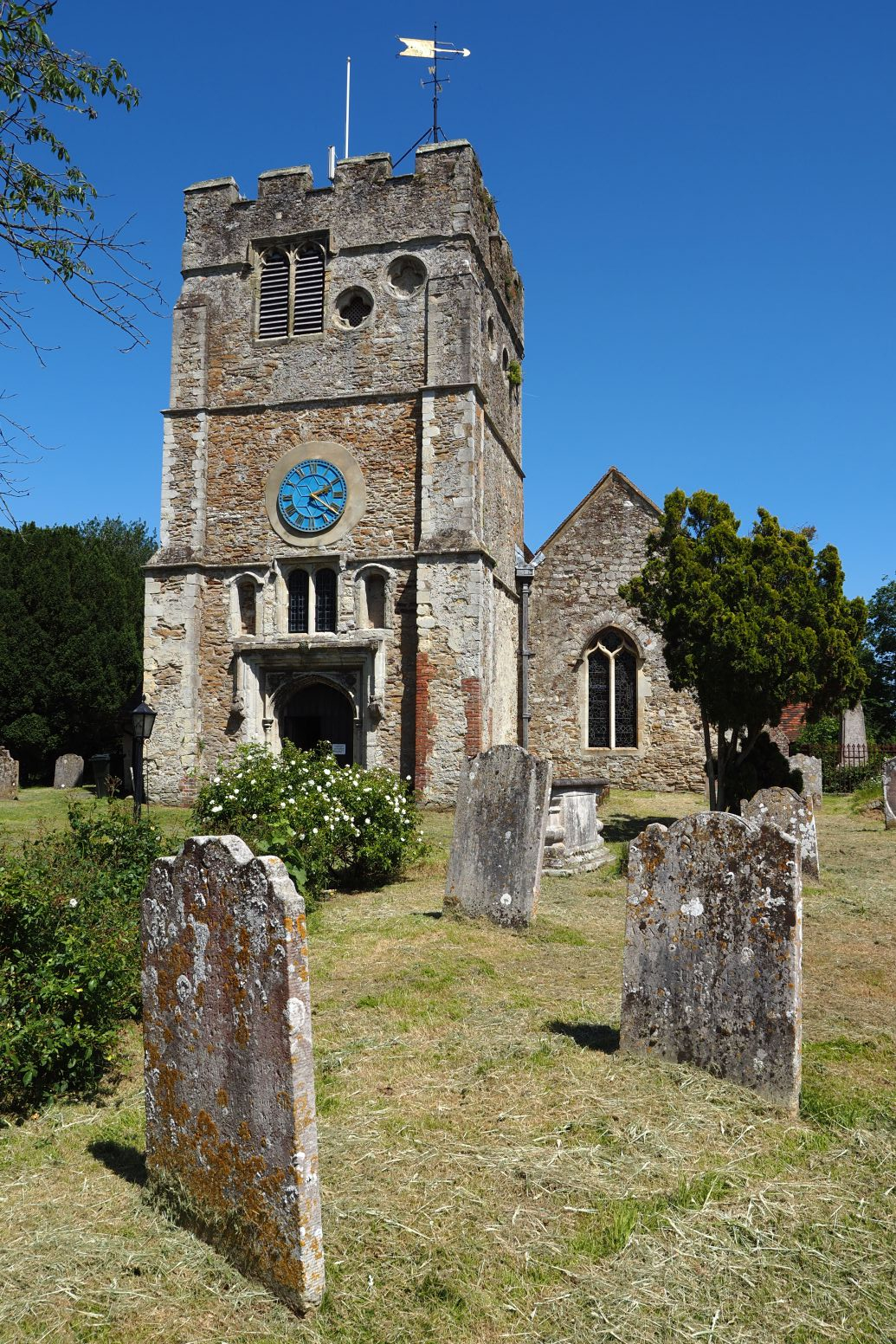
The Church of St Peter and St Paul, Appledore, Kent
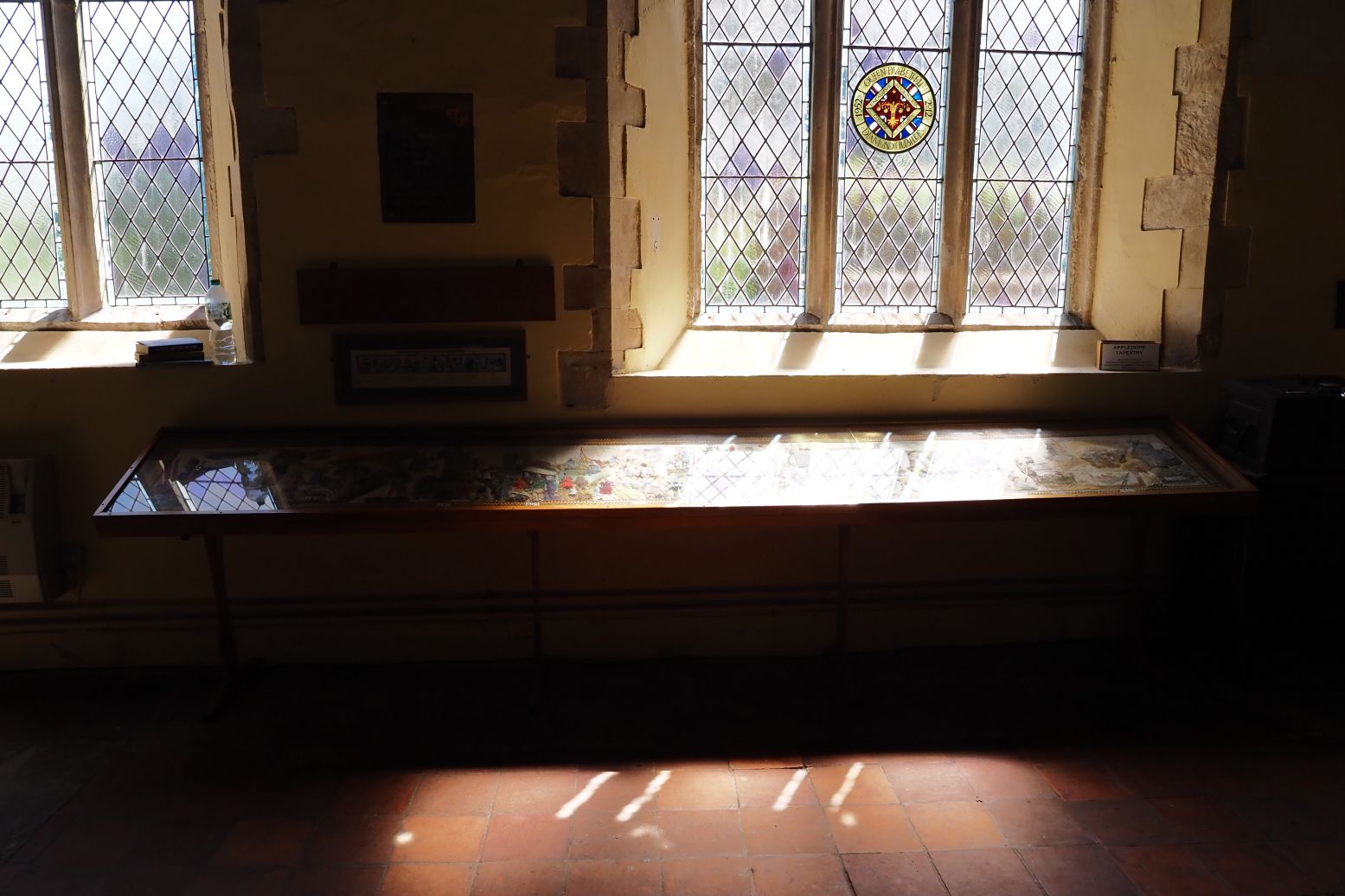
Churches are some of the most important cultural and historic places in England today. I personally find them very peaceful and welcome places to drop into, or shelter, often when out on a walk somewhere. The village of Appledore has a church steeped in history: The Church of St. Peter and St. Paul. Inside, there is a tapestry which was completed in 1988 to celebrate the church’s 800th birthday.
I don’t know much about tapestries beyond the obvious Bayeux Tapestry most English children studied at school, depicting the Norman Conquest of England in 1066. But this tapestry is a great achievement and contains beautiful details, documenting the incredible history of this part of what is now called England.
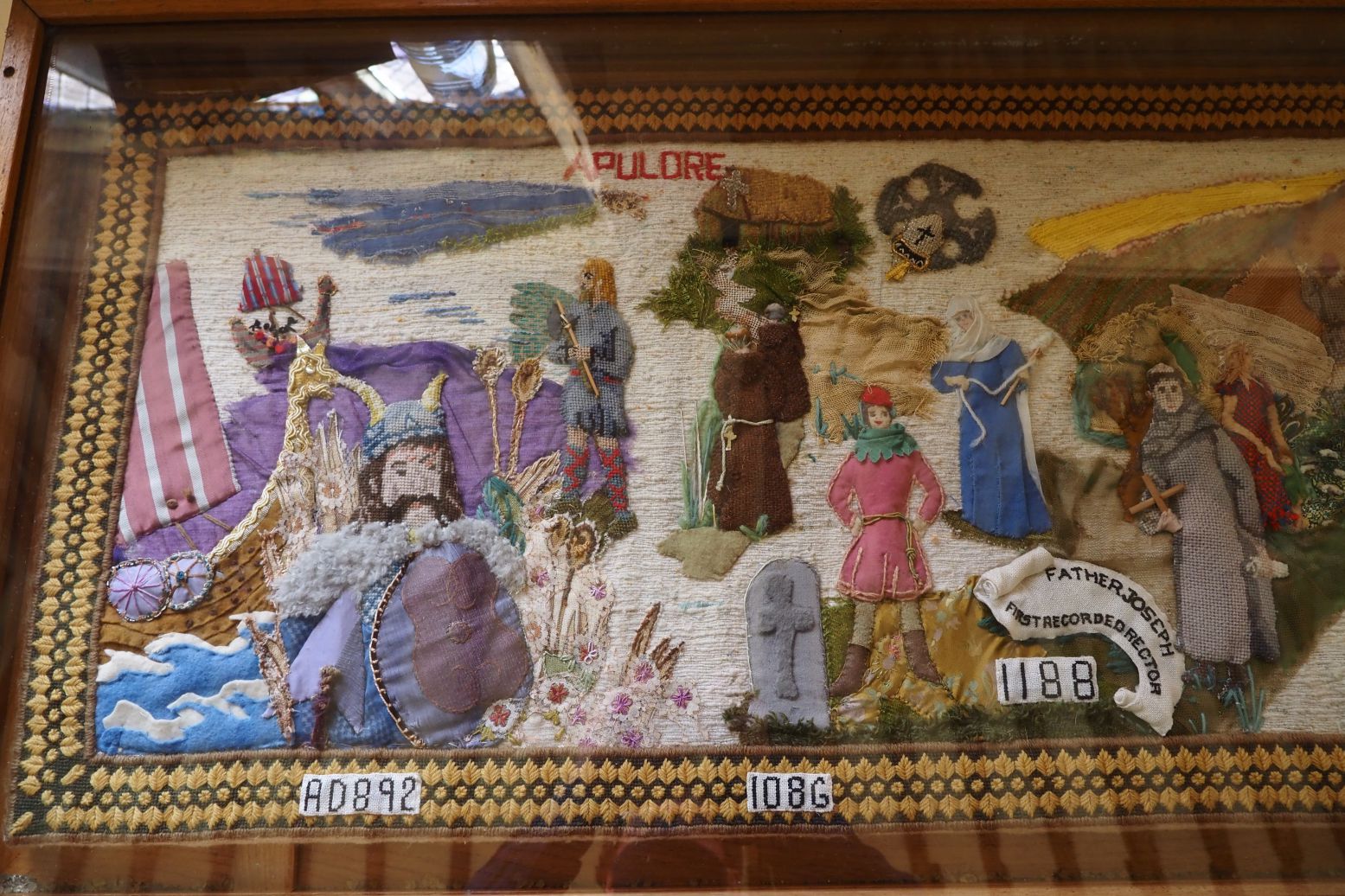
The tapestry begins with trouble for the local Anglo-Saxons, when 5000 vikings arrived from Denmark in the year 892 via the River Rother (the eastern Rother, rather than the West Sussex/East Hampshire Rother).
Scandinavian raiders had first dropped into England at Lindisfarne, Northumberland in 793, when they sacked the monasteries, killed the monks and took their valuables. At this point Appledore was known as Apuldre, meaning ‘apple tree’ in Old English. The Vikings would have definitely been interested in the apple trees. Here we can also see depictions of 1086 when the Domesday Book was completed after the Norman Conquest of 1066.
This is a little bit what I looked like after lockdown hairdresser restrictions were in place for several months, minus the beard. The detail is excellent, with the use of different materials to bring the scene to life, not least the viking man’s fleece.
To the left is an Anglo-Saxon man (with stereotypical, but not necessarily accurate, golden hair) watching as the vikings appeared, with axe in hand. Next to the old name for ‘Apuldre’ you can see what must have been the original church, a wooden building of Anglo-Saxon origin. Many Anglo-Saxon churches were destroyed and rebuilt in stone by the Norman invaders.
1188 shows us the first recorded rector, Father Joseph. The landscape behind appears to show a farmed landscape with reeds being cut from the wetlands of Romney Marsh. The English Knight may indicate the King Henry III leading an army to France.
1380 highlights the burning of the church by French soldiers. I can’t find any other information on this other than it being described as a ‘raid’. There is long-running beef between England and France, with this part of Kent/Sussex vulnerable because it was so close to the Channel. In the top right you can see Henry VIII (1491-1547) hanging out.
Let’s take a look at those flames in greater detail. I think it’s likely the colours in the tapestry have been dimmed by its positioning next to the window, which makes the fire seem less severe.
In 1450 we see a group of people partaking in what I am guessing is Jack Cade’s Rebellion. This was a similar uprising to that of the Peasant’s Revolt in 1380:
Leading an army of men from south-eastern England, the rebellion’s namesake and leader Jack Cade marched on London in order to force the government to reform the administration and remove from power the “traitors” deemed responsible for bad governance. It was the largest popular uprising to take place in England during the 15th century.
Kaufman, Alexander L. (2009). The Historical Literature of the Jack Cade Rebellion. Burlington: Ashgate, p. 1. via Wikipedia
Here we see the detail of a bear being kept for baiting or entertainment. The expression on the girl’s face and her hands in pockets show a level of disdain for the poor bear. I like the detail in the chain, despite what it’s depicting.
I don’t know if Shakespeare (1564-1616), top left across from Elizabeth, visited Appledore but his work and legacy stands over the time. I’m not sure who is getting happily married in 1650.
In 1804 we can see the development of the Royal Military Canal in Romney Marsh, which began on the 30th October at Seabrook, Kent. It was built to slow any invasion from Napoleon’s Army, which was a big worry at that time. You can now walk 28 miles of the Military Canal.
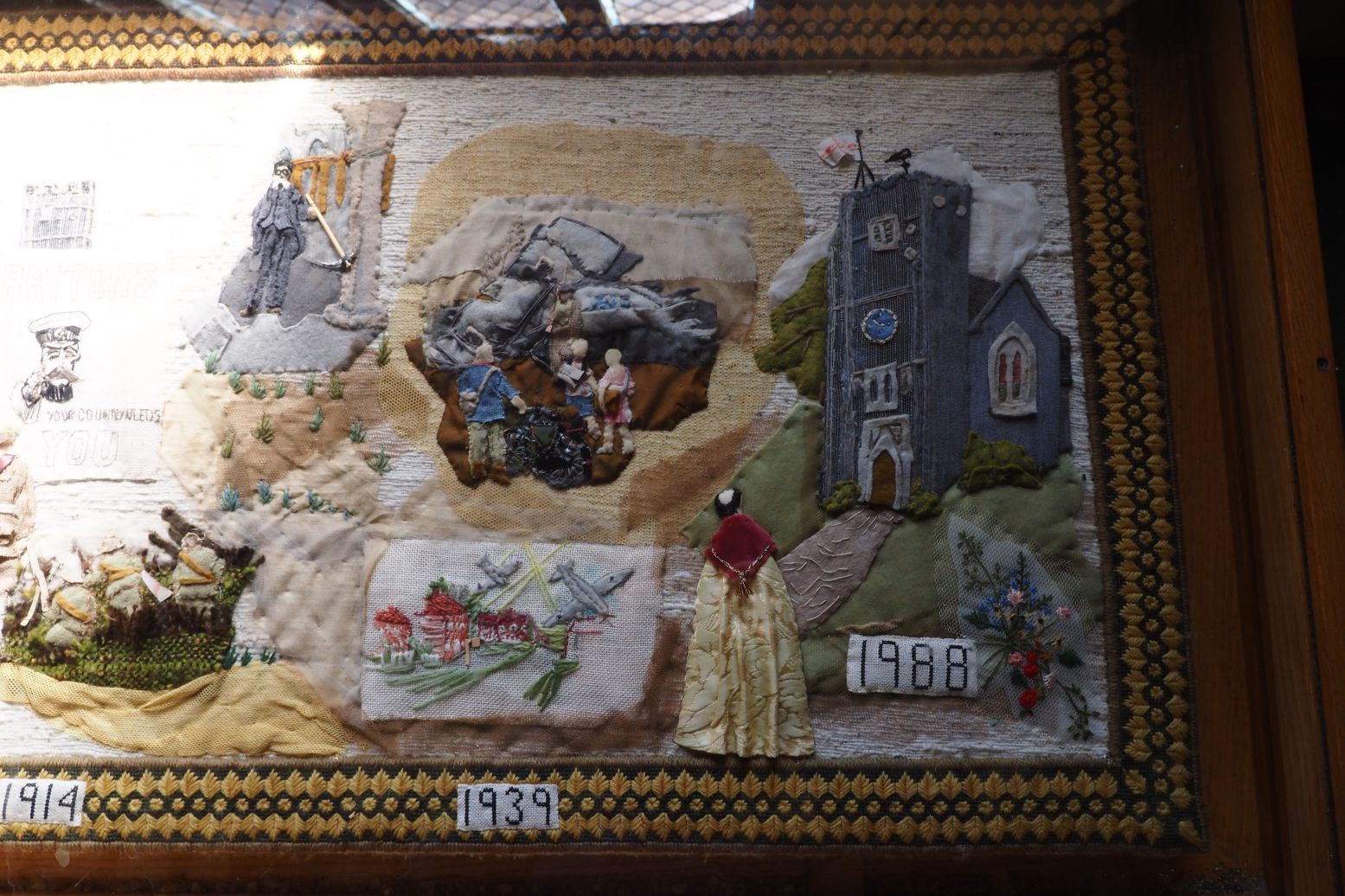
In 1914 we see the call-up for the First World War (1914-18), which was not a long journey for anyone living in coastal Kent or Sussex. I’m struggling to work out the chap with the pick-axe in the top right, however. I can appreciate it’s an industrial image, with what may look like a viaduct in the background.
This detail could confuse you as it looks a bit like the church collapsed. In actual fact it’s a German military plane that has been shot down in the Second World War (1939-45).
In 1988 the tapestry was completed, with the vicar of the time standing at the end of the path admiring the building and all it has been through.
You can buy a leaflet which describes the tapestry in detail, but obviously I bought it and then lost it!
If this wonderful tapestry has taught me anything, it’s that peace between England and France has not always been there. England has always been a very sought-after place. Its cultures have always been diverse, rather than the mono-ethnic notions trumpeted today by ultra-nationalists.
I may come back to update this post when I get new information and will note any edits.
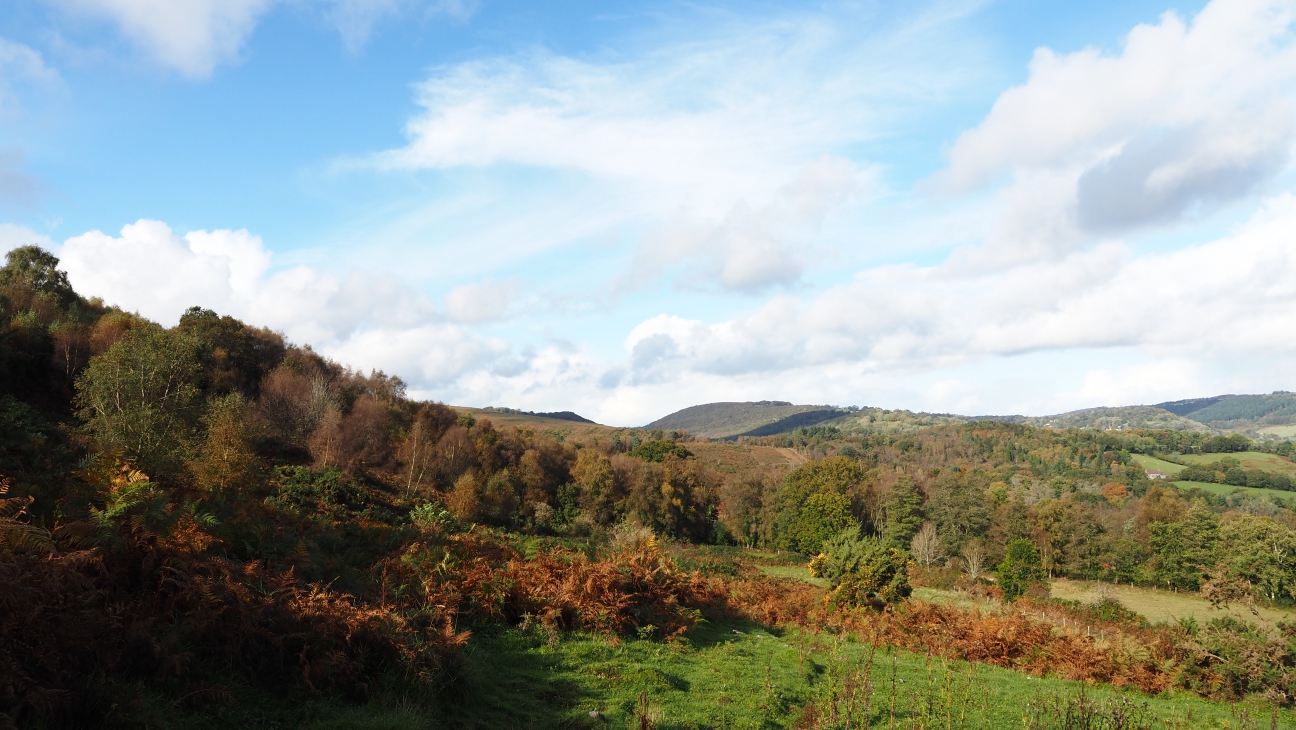
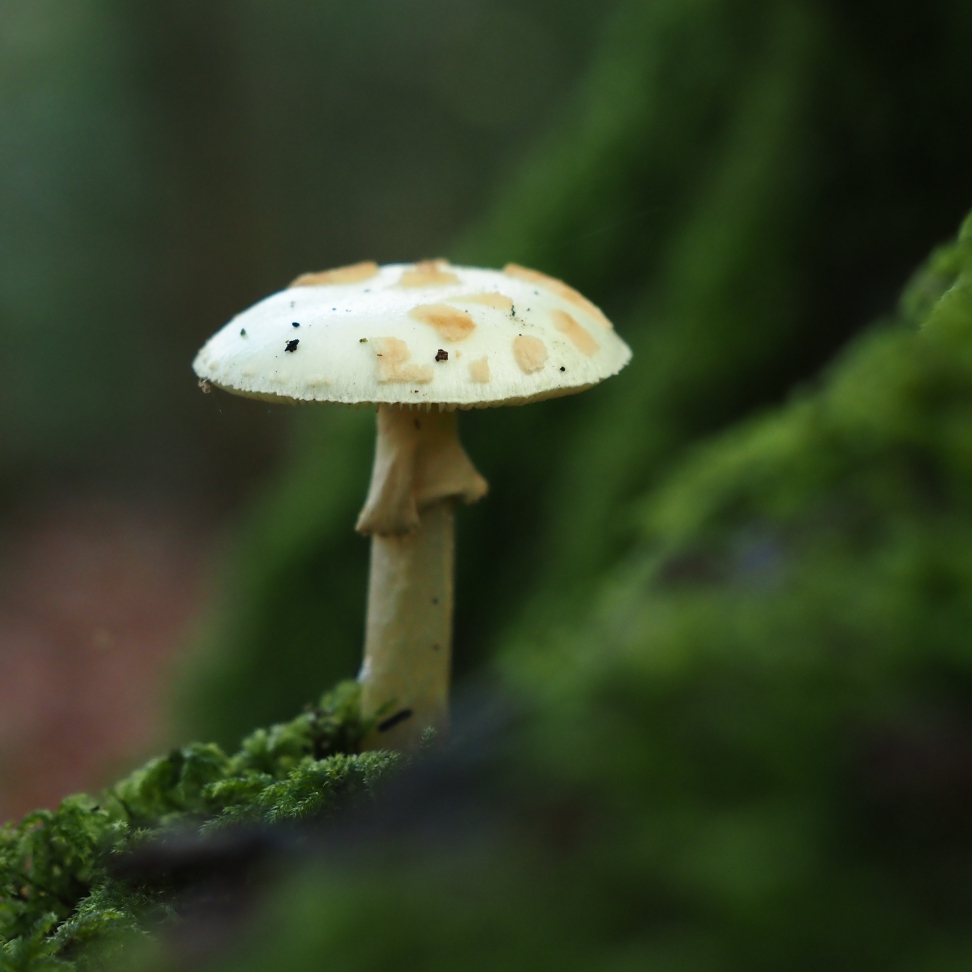
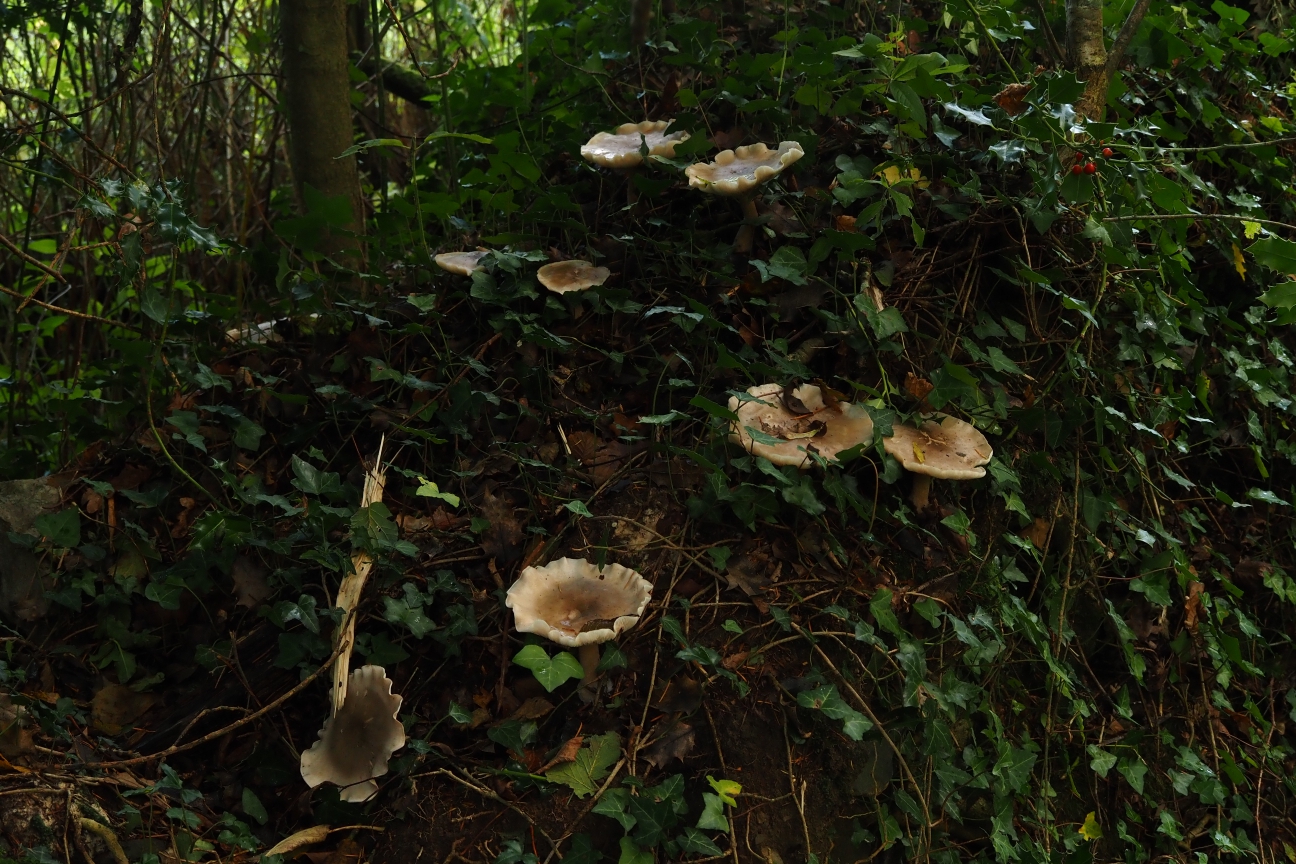
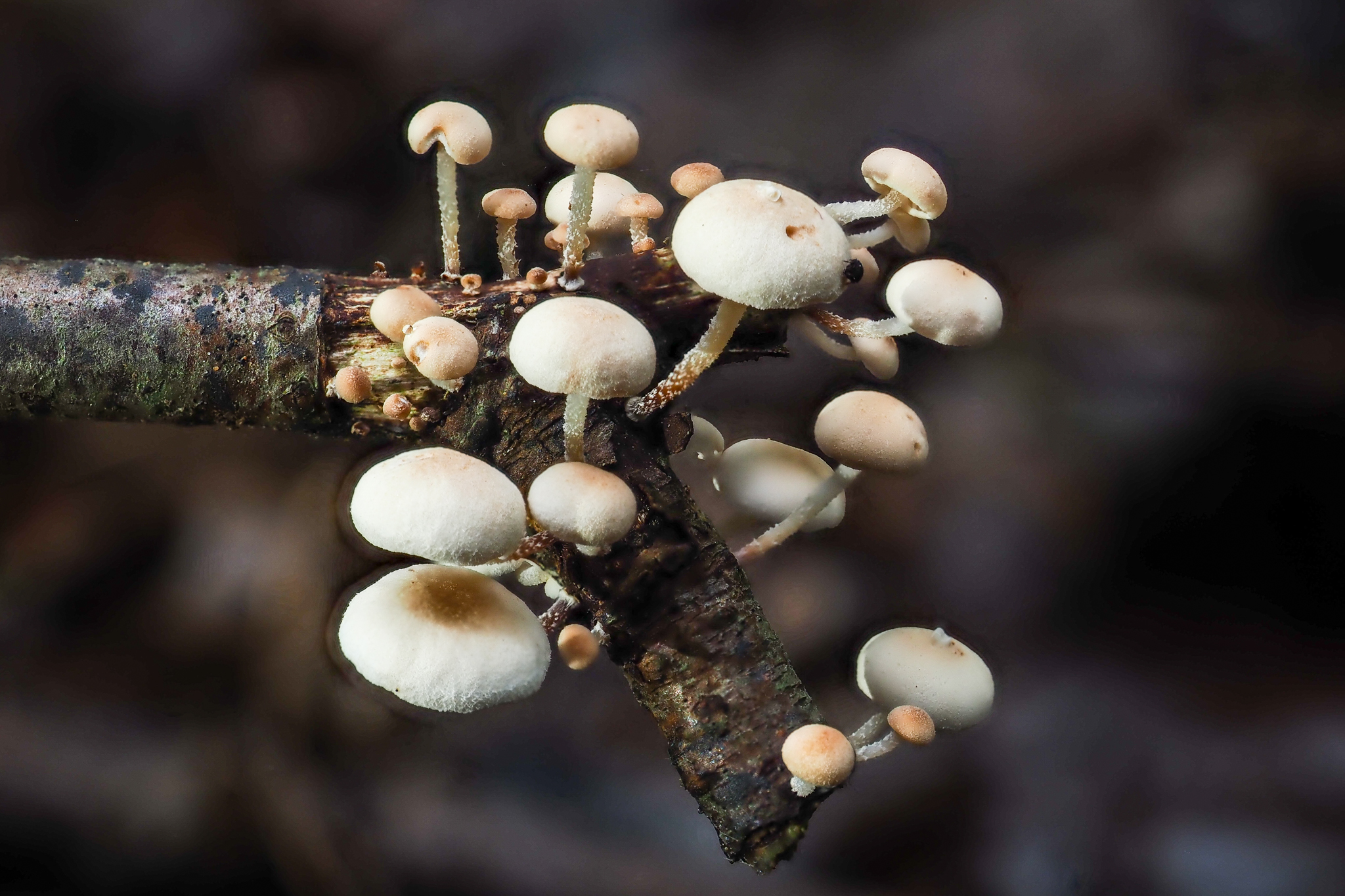
A few weeks ago I visited a local woodland with high hopes for a summer burst of mushrooms. A couple of years ago in July this woodland was showing up some great soil-based mushrooms, species like blusher (Amanita rubescens) and the brittlestems (Russula). Though I didn’t find that this time, there were huge numbers of one species – twig parachute (Marasmiellus ramealis).
The image above is one taken with my camera’s in-built focus stacking, as illustrated below. It takes several images at different focus points and blends them to provide an image which is completely in focus (I don’t know why the halo-effect is happening, for info). With this cluster of mushrooms it’s able to tell the whole story.
When I posted this pic on social media, a couple of people came back with their own descriptions: Julian Hoffman called them “amazing woodland unicycles”, which has to be my favourite. In respect to my aunt who may be reading this, she got there first with “bicycle wheels”.
The set-up needed to get this image is a camera like an Olympus E-M5 which has in-built focus stacking, a small tripod-like thing, some extra lighting and a remote shutter release. You also obviously need a mushroom. The remote trigger allows you to take a photo at very slow shutter speeds which are susceptible to blurring if there is movement. That’s the beauty of fungi and other stationary subjects, you don’t need a huge full-frame camera with exceptional low-light ability. You can just use slow shutter speeds instead.
Though it is of course not fungi, this was another focus-stacking subject on that walk in the woods. Alongside a footpath, on a piece of wood being used as edging, I found this dog vomit slime mould (Fuligo septica)… yes that’s its common name. It was in the process of covering the surface of the wood and extracting nutrients and minerals along the way. Look at the networks of slime as they build across the wood.
And here is another of the VIP behind the scenes phone photos. It’s nice to put the image in context. A vari-angle screen is also incredibly helpful in these situations. If you want any advice on this kind of fungal or slime mould photography, do post a question in the comments and I’ll happily let you know what works for me.
By the way, I was using a 30mm macro lens (60mm outside of Micro Four Thirds camera/lens config). You can actually see the settings if you look at the screen.
Just a note that throughout June I’m posting a macro photo each day for the Wildlife Trusts’ #30DaysWild campaign, which you can keep up with here!
There has been a clear shift in the invertebrate world and it’s resulted in a lot of macro photos for me. So much so that I can’t fit them all in one post and will need to post more than once a week!
After early May’s heavy downpours, warmer weather arrived towards the end of the month and with that the insects, spiders and other arthropods. Summer feels closer now, with June being that tipping point between cooler spring weather and the hot mess of July.
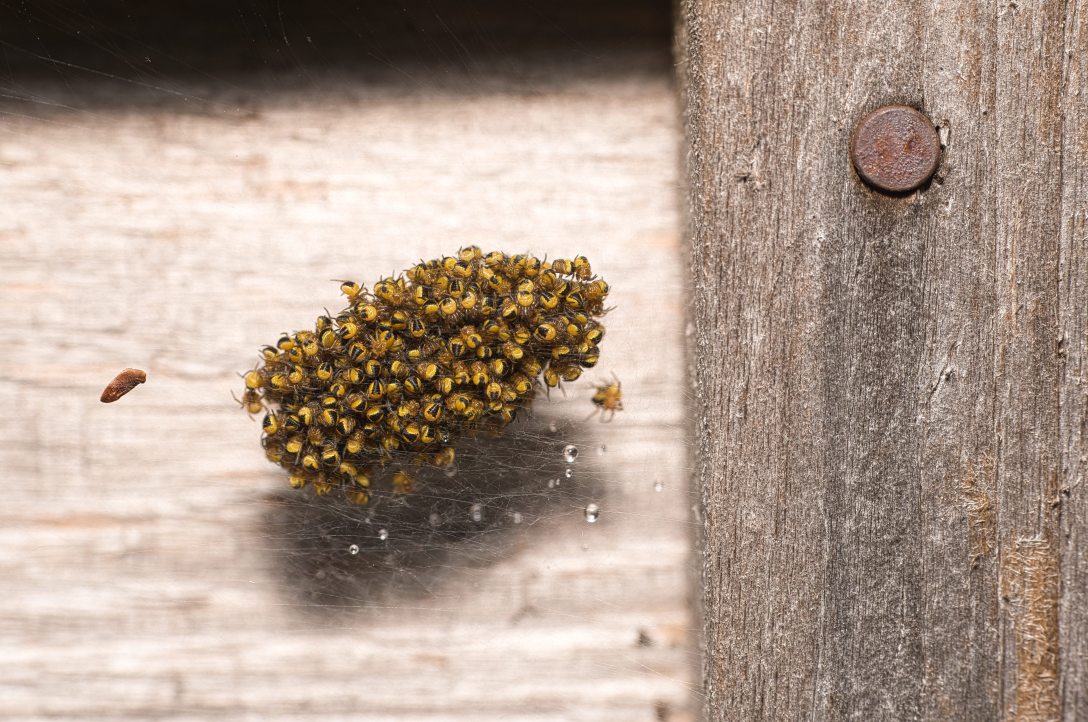
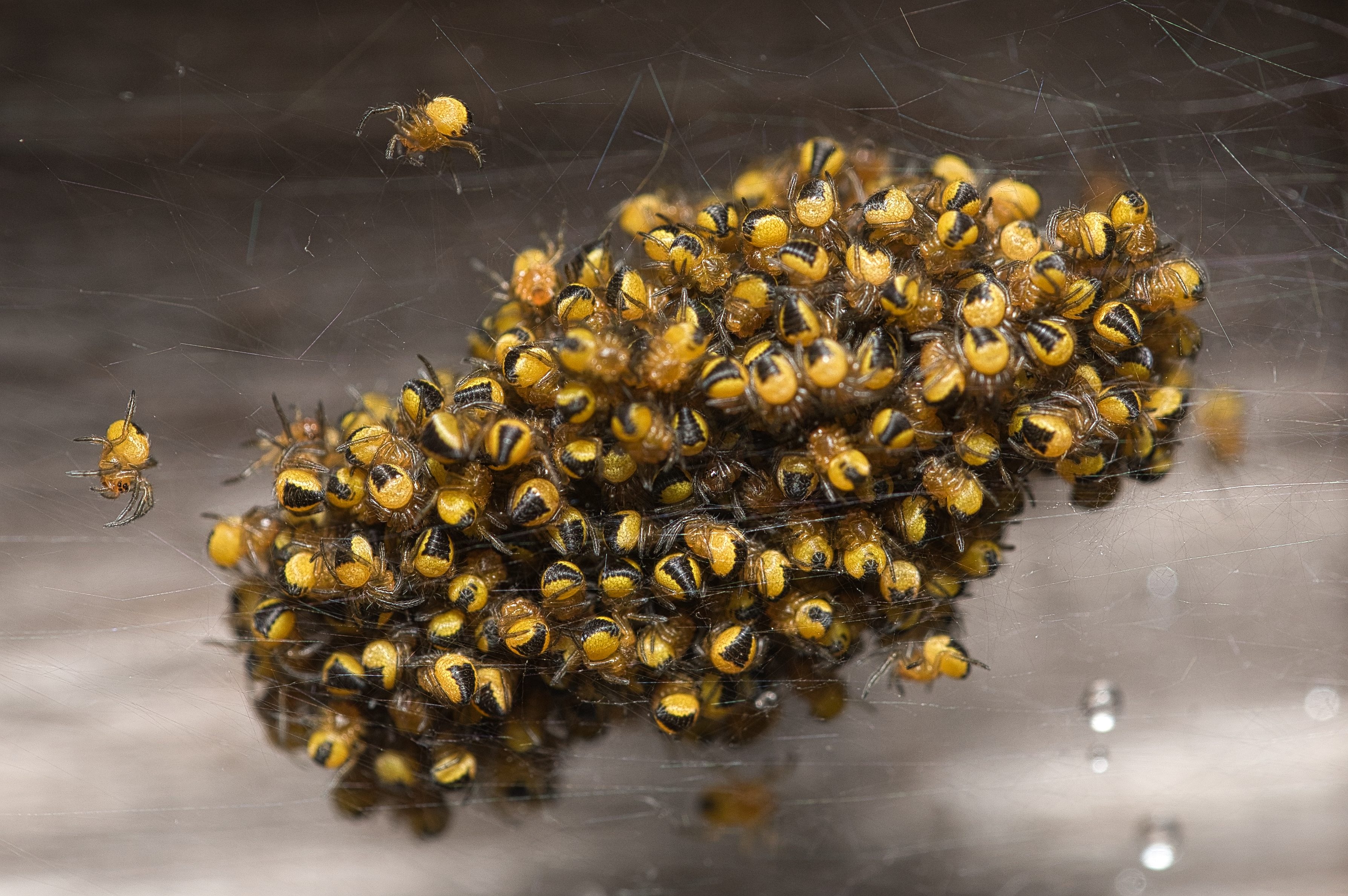
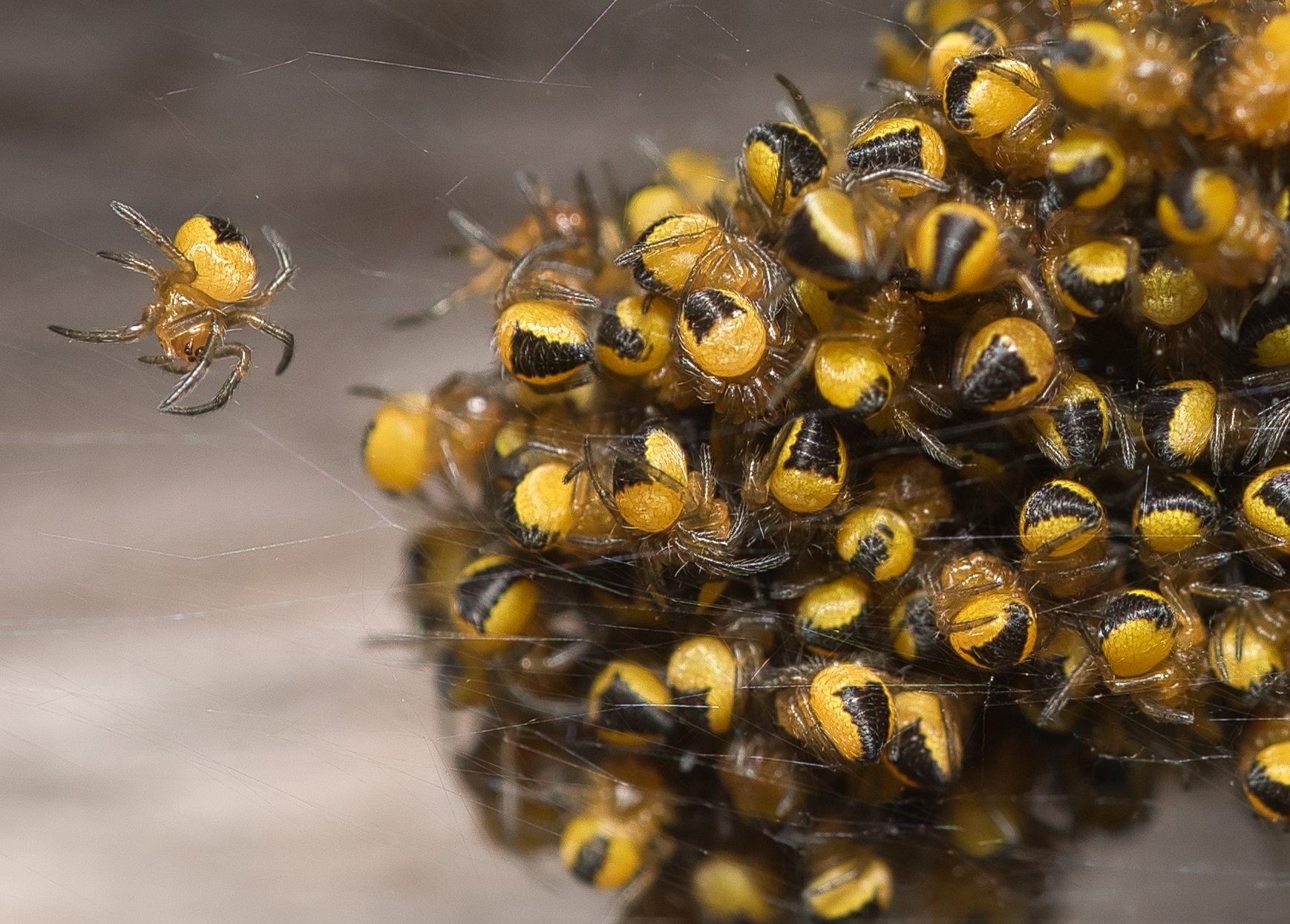
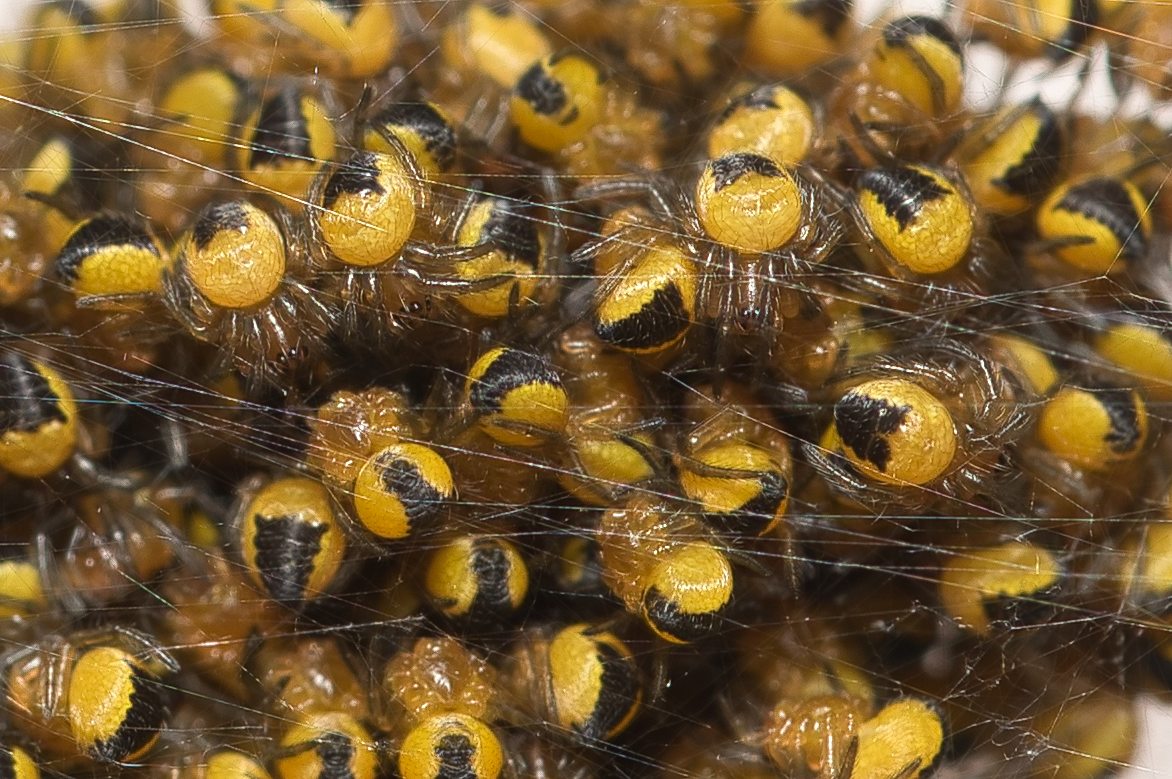
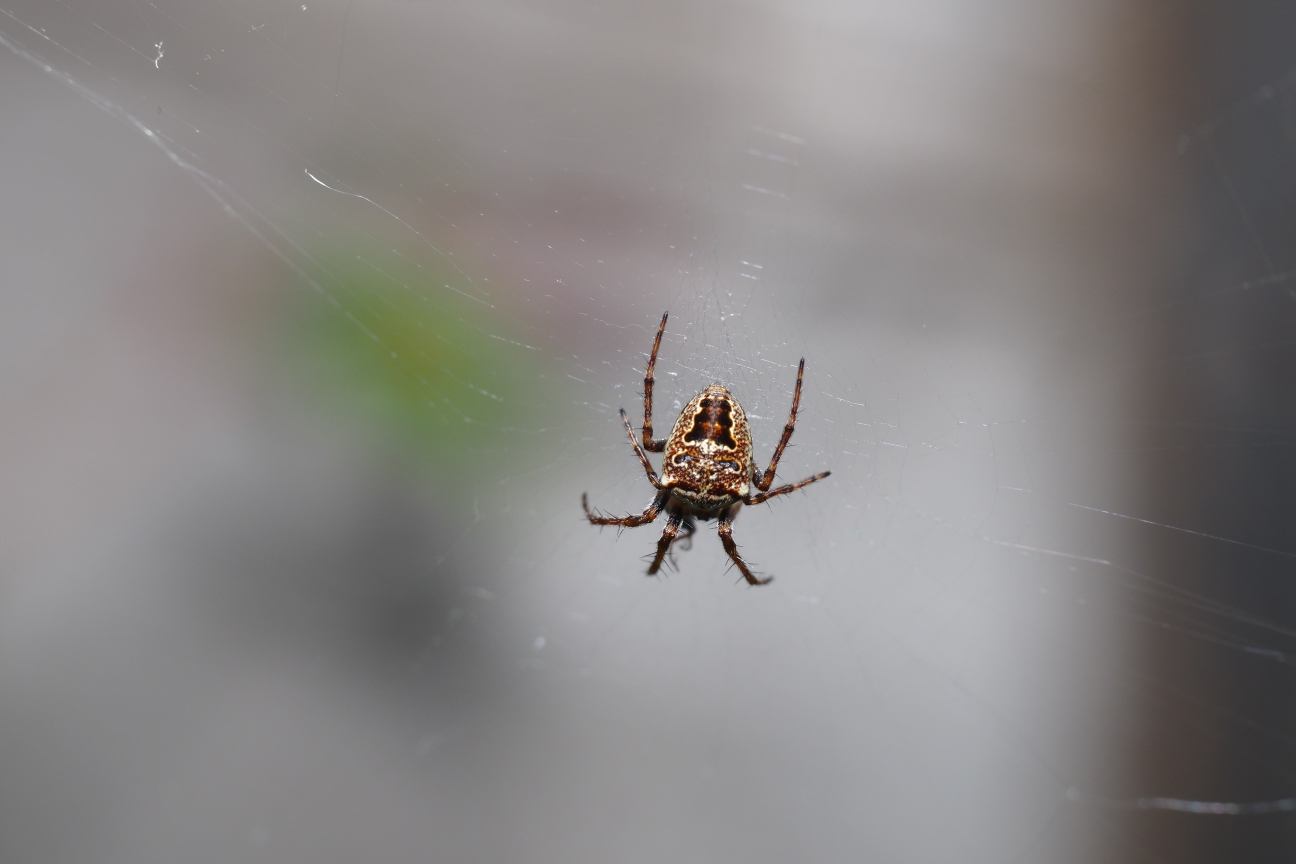
One day last week I noticed a small clutter of, well, things on the garden fence. From a distance they looked like a smudge. At closer viewing they were tiny spiders all bundled together. This will be quite disconcerting to some people perhaps, including a friend of mine who I hide social media posts from because of his arachnophobia. I don’t have that problem luckily and I’m fascinated by spiders.
I had no idea what the spiders were until I submitted the record to iNaturalist and then waited for a suggestion. I leafed through my new spider book and landed on a page with the same image as the one that heads this post. They are garden spider spiderlings! The scientific name is Araneus diadematus.
It is pretty amazing that they will develop to be such large spiders, holding their places in webs over the summer months. Imagine the biomass of flies and other insects this clutch will manage to consume over the months ahead. Then again, many of them will be taken as prey themselves by birds and other insects. Don’t forget there are such things as spider-hunting wasps.
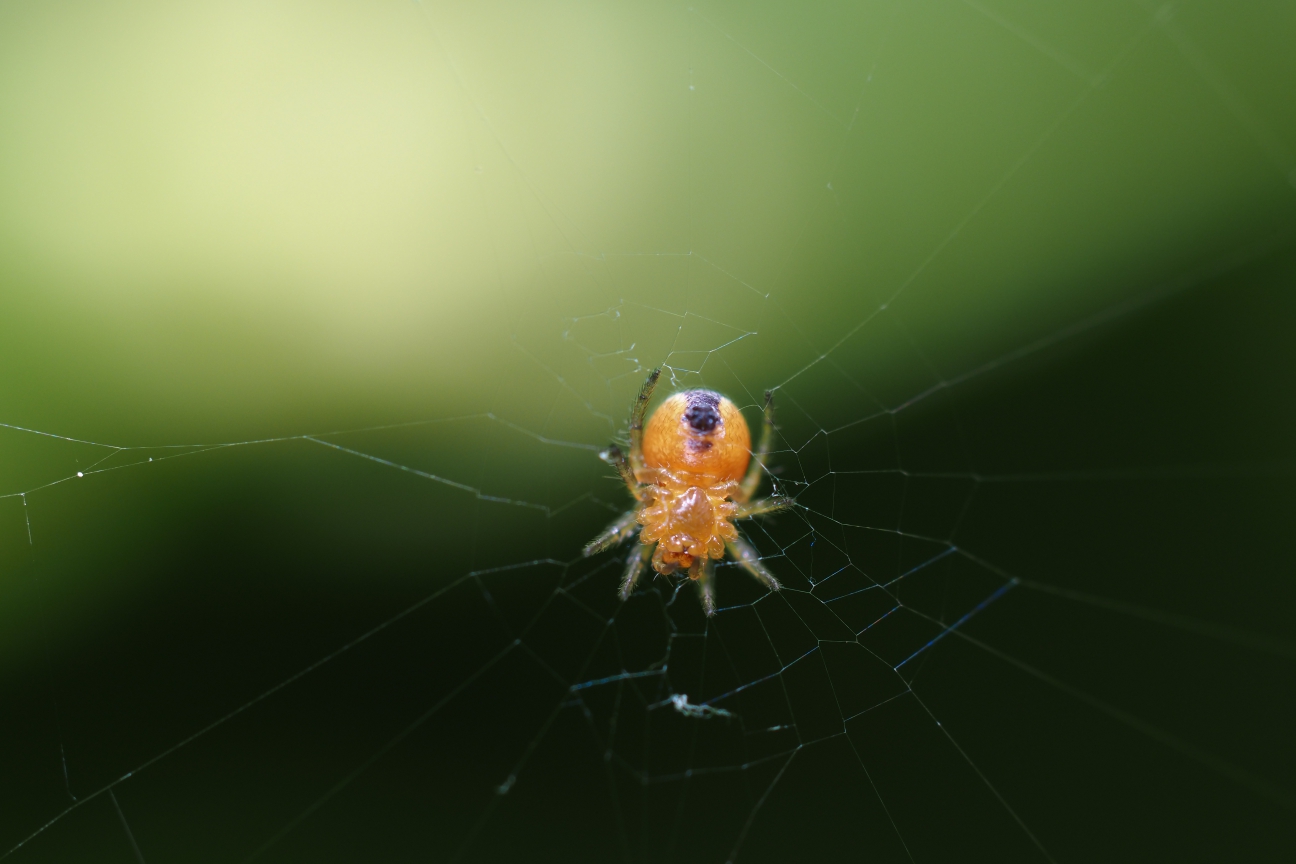
Here is one of those spiderlings (I am guessing) having set up its own web on the other side of the garden (approx. 3-4 metres).
And here was one of the adults garden spiders. I don’t know enough about the ecology of this species to say if this could be the parent or one which appeared earlier in the spring. One thing is assured – they will be getting much bigger and by August you won’t be able to miss them.
Here’s my seasonal update of stuff you don’t need to know about, but then welcome to the Internet. What I’m writing Soon I will be self-publishing my third poetry collection, Fool’s Wood. It’s seven years since my last one and this collection has taken longer because of LIFE. There will be a booklet and also…
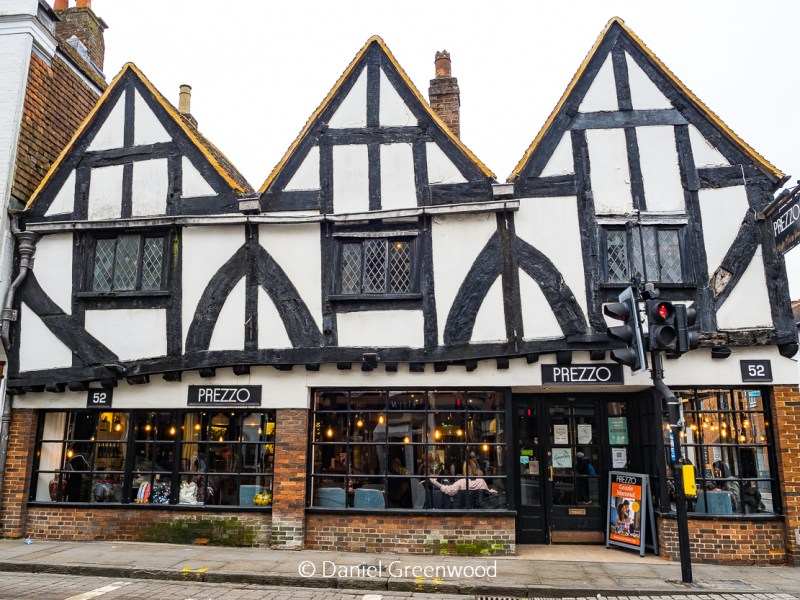
Here’s another entry in my slow-blogging Oak Timbers series. You can view my galleries and posts archive here. I visited Salisbury in Wiltshire (south-west England) for the first time in 2023 and was really charmed by the place. If you’re interested in this kind of thing, Salisbury is the place for you. Here’s a gallery…
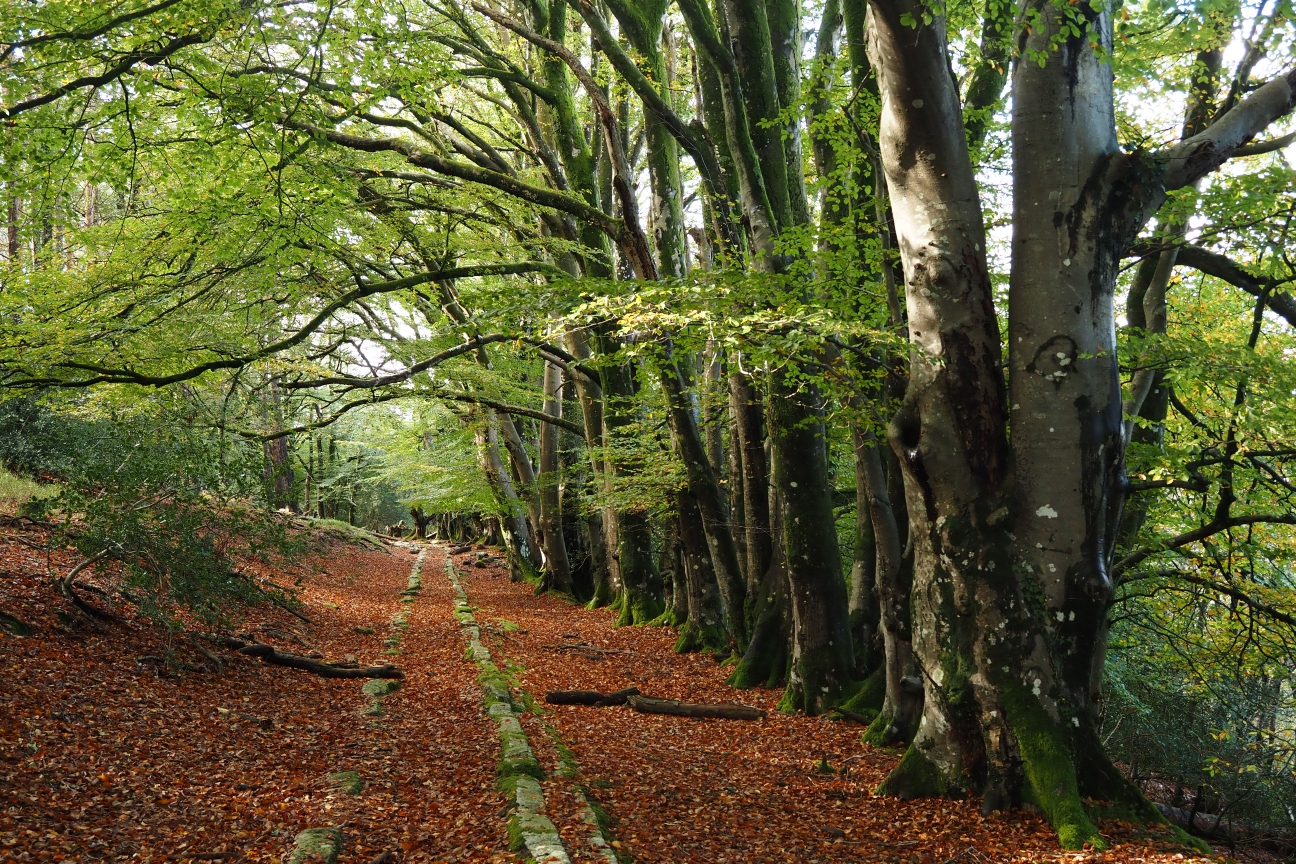
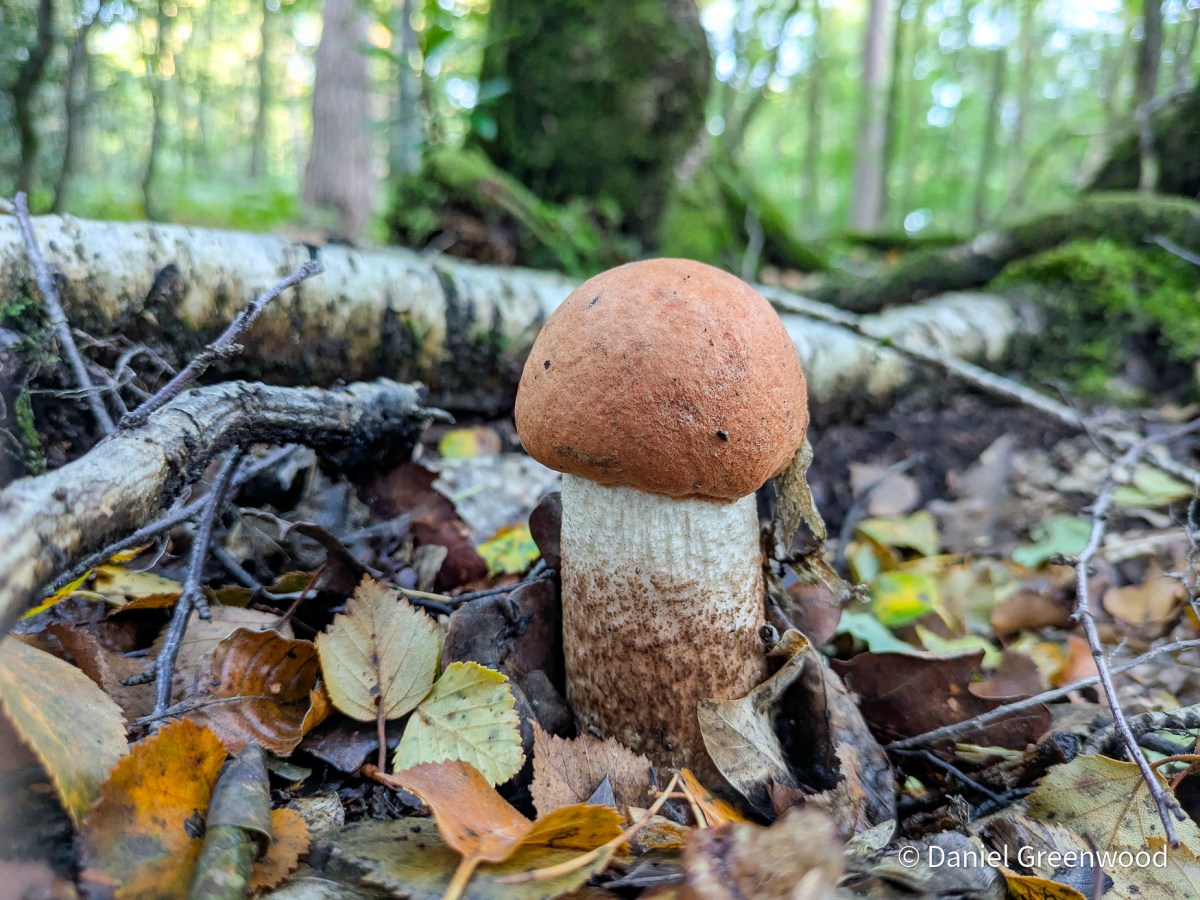
I’m getting into more of a routine of recording and editing audio, so here is the latest episode of Unlocking Landscapes. Listen on Podbean or via the usual platforms. Also via YouTube: https://youtu.be/y1K9Pqx68to?si=B-Fdhf3sdDH35Z8w Following on from July’s rather optimistic fungi walk, I popped back to the same area of ancient Wealden woodland to see if…
Howgill Fells, Yorkshire Dales National Park, October 2019
At the beginning of October, my friend Eddie Chapman and I walked ten miles into the Howgill Fells in the Cumbrian reaches of the Yorkshire Dales National Park. You can view and download the walk on ViewRanger here.
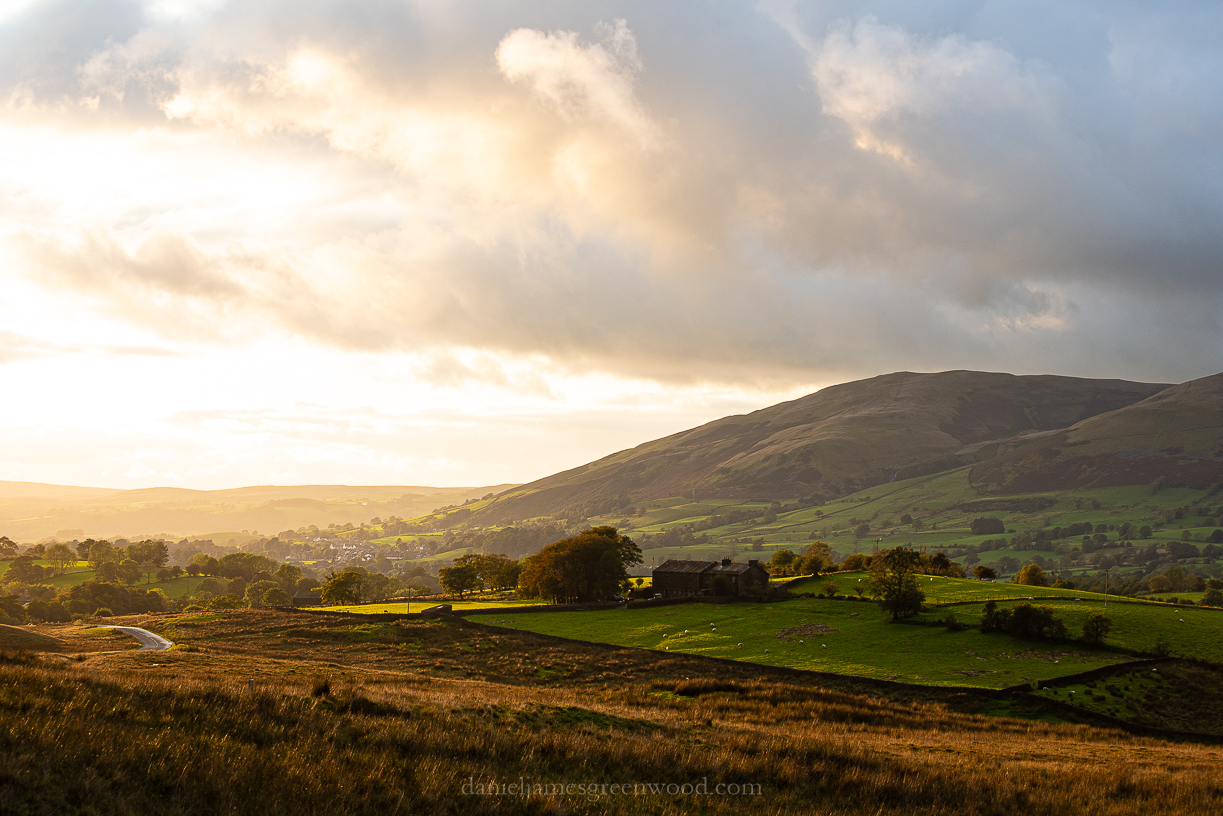
The evening before the walk we passed the Howgills during the golden hour. A day of heavy rain dried up and the sun cast its glaze across the folds of the fells.
Cloud hung over the Calf, the highest peak in the area and was to remain for the next day.
The stone barns are one of the Yorkshire Dale’s most iconic features. Swaledale seems to have the greatest compliment of these beautiful structures.
The walk began from Sedbergh, the largest settlement in the Yorkshire Dales National Park. The day was sunny and surprisingly warm.
The cloud still lingered over the highest points but the fields glowed in the morning sun.
Looking east towards Garsdale, the Yorkshire Dales are always more wooded than I remember.
As we made our way up into the hills through a steady ascent, the clouds settled in overhead.
Here Eddie could still make out a small family group of stonechat in some bracken.
Climbing higher onto Arant Haw the mist locked down, a strange and claustrophobic experience.
Up and over our first peak, the mist began to clear only when we headed towards the Calf, the highest point of the Howgills.
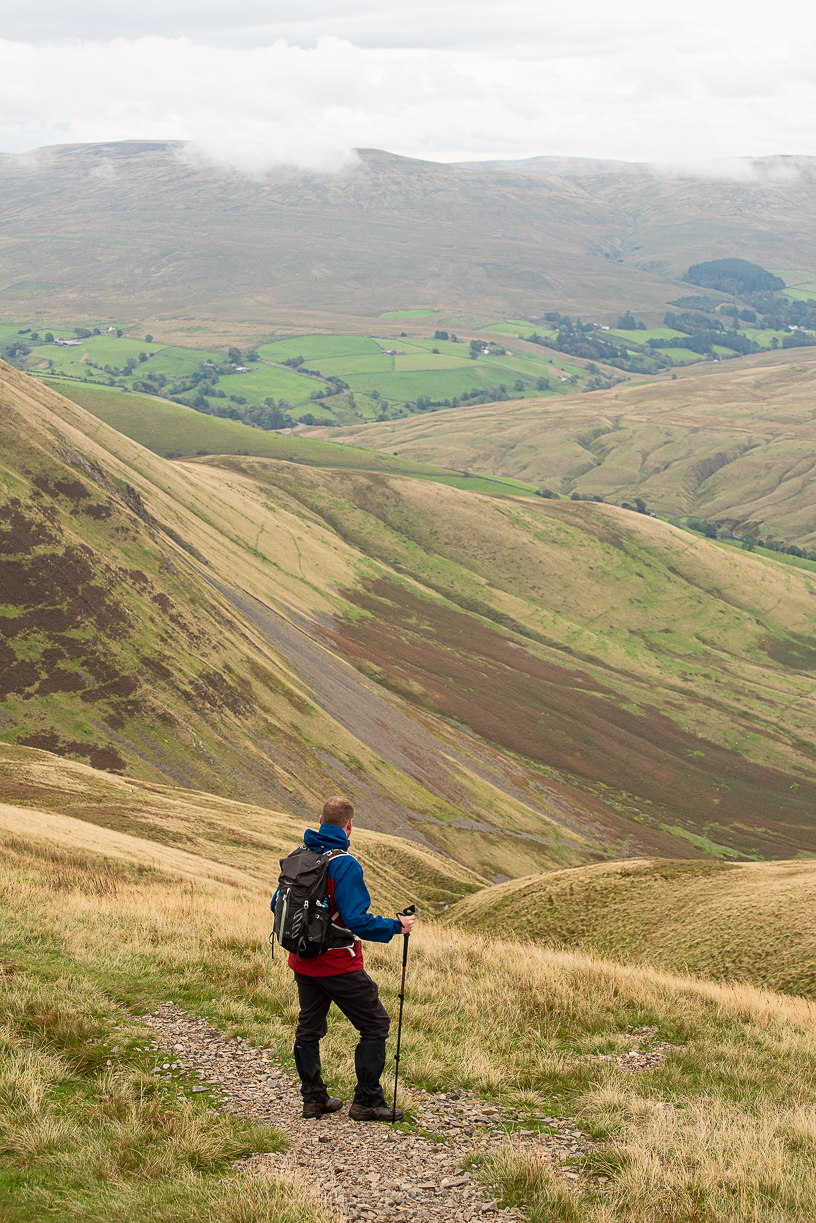
It was a great relief to have the folds of the fells reappearing from the cloud.
Anyone who has travelled between Glasgow and Manchester will have passed the Howgills. At this junction in the fells the motorway can be heard in the distance and the small specks of vehicles passing. Above you can see what looks like the remains of an old sheep pen.
The clouds lifted and the fells appeared. The creases speak of millenia-old waterways.
Greater views began to appear, with Ribblesdale appearing in the distance in the shape of Whernside, one of the three peaks famed for the 30-mile day hike challenge.
Atop the Calf, Eddie is happy to be out of the clouds for once.
This sheep felt like it was being watched.
The light began to dip as we headed deeper into the folding Howgills.
Our target was Cautley Spout, the waterfall that would lead us down into the valley for a return to Sedbergh along the river Rawthey.
The waterfall thunders down into the valley from Cautley Crag.
The waterfall is a safehaven for trees, unlike the wider hillsides which are either unsuitable due to the boggy nature of the moorland or because of sheep grazing. Rowan, ash, holly and elm were all growing in the gully.
The limestone surrounding the falls is covered by map lichens glowing neon.
This area holds evidence of an Iron Age settlement. It isn’t surprising. There is protection, the river provides food and once woodland will have been more prevalent providing fuel. This landscape was potentially a site of spiritual significance. The allure is undeniable.

































































 Unlocking Landscapes
