From Brockenhurst to Lyndhurst in the New Forest 👣

In April I walked from Brockenhurst to Lyndhurst and back in the space of two days. This post focuses on the first day walking from Brockenhurst railway station.

I’ve created a route of the walk here.

These are probably the New Forest’s biggest towns, with Brockenhurst being bigger than Bournemouth until the advent of the railways in the mid to late-1800s.

I’ve walked many times in the New Forest. It’s an exceptional place for ancient trees, birds and for fungi. But visiting it this time it felt like it was suffering from an absence of rain, it looked thirsty. In many of the more open landscapes it looked bare and over-grazed. On these two warm and sunny days I didn’t see a single butterfly! These are just my own observations and may not be accurate.
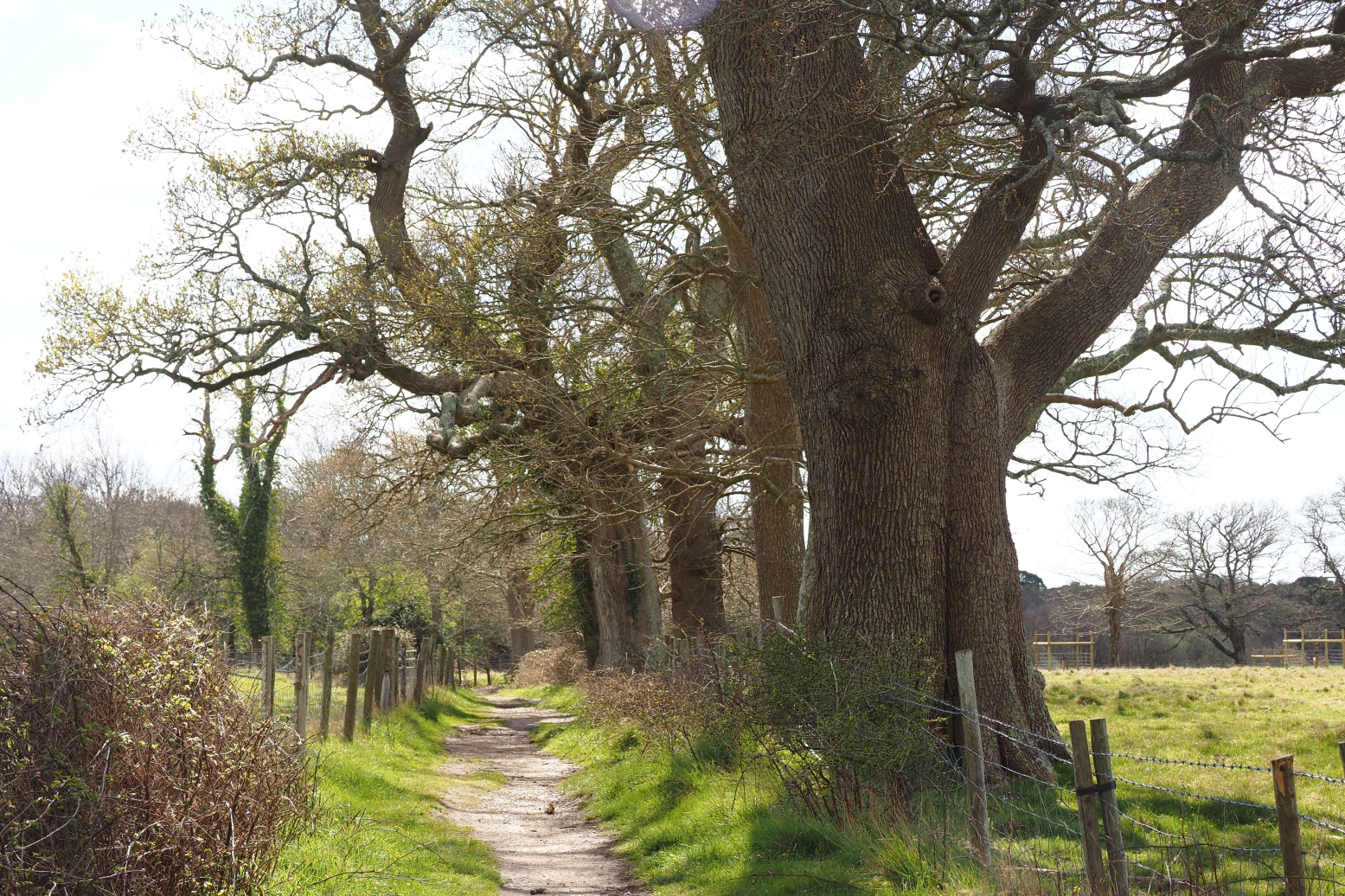
A trackway that leads into Roydon Woods from nearby Brockenhurst opens the door to the walk.

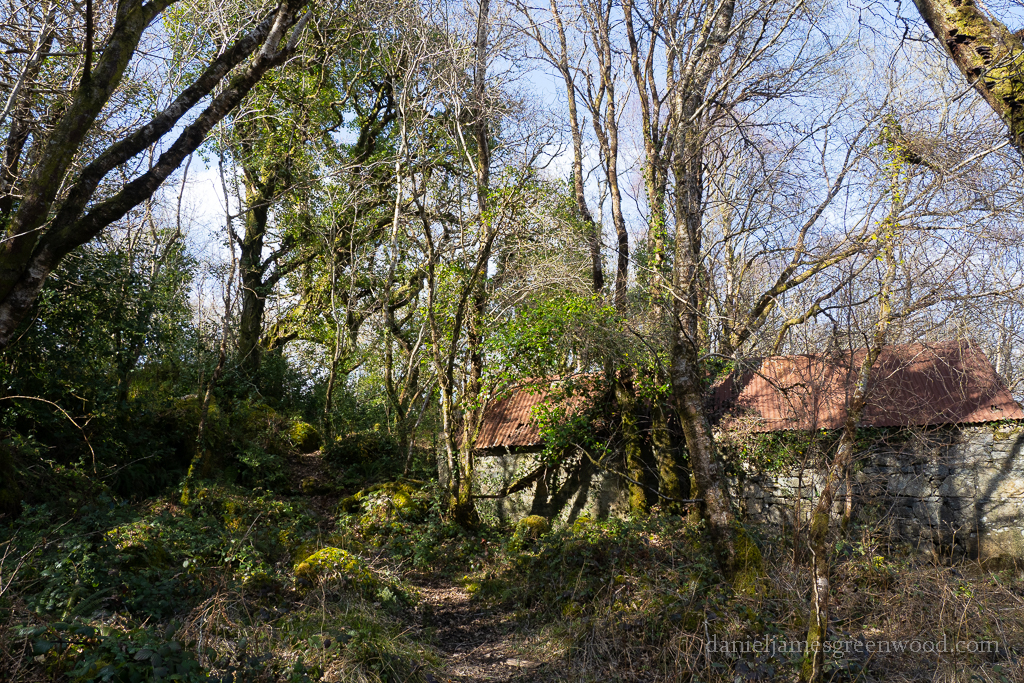
A disused barn with oak planks
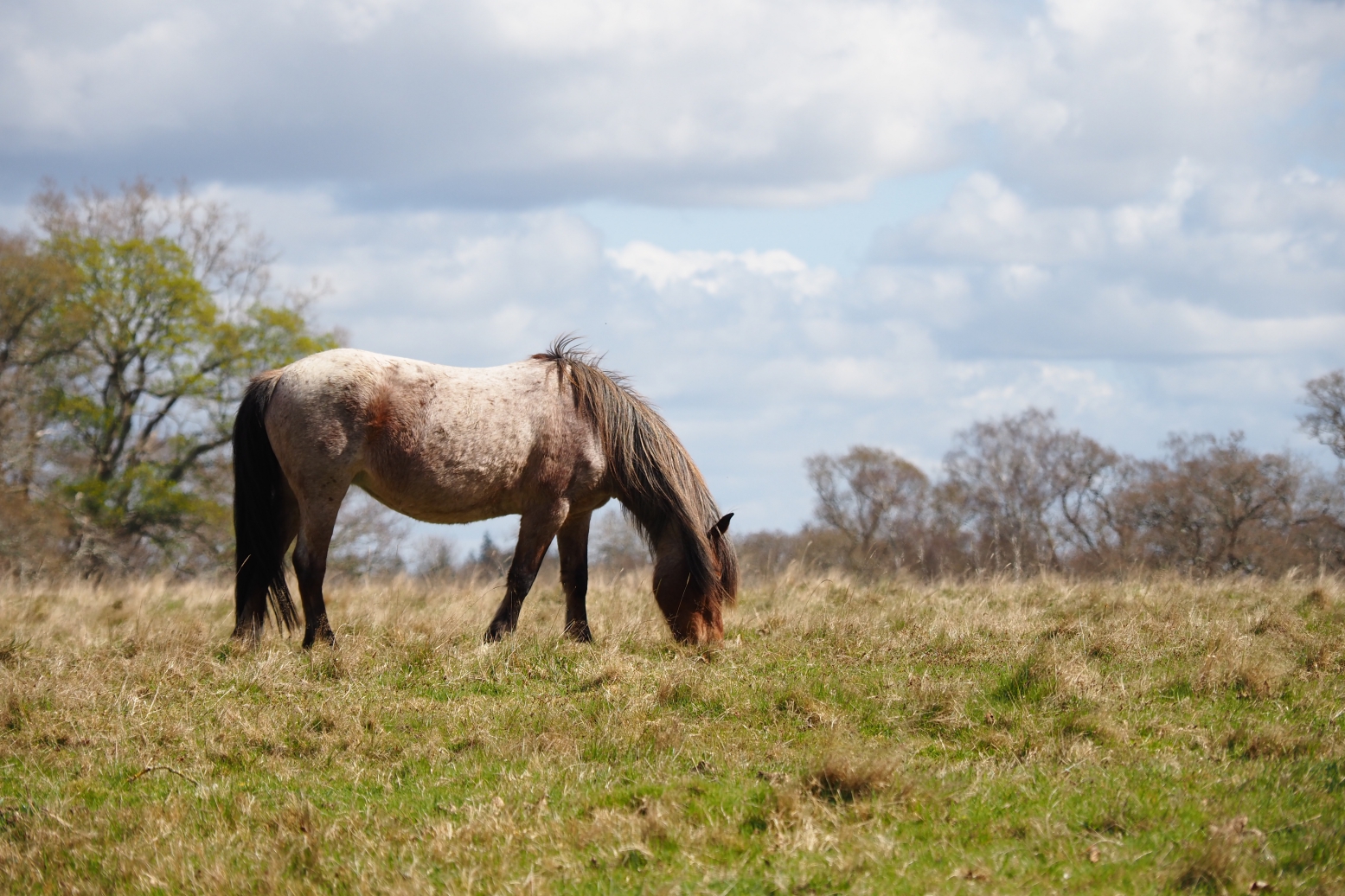
A New Forest pony grazing

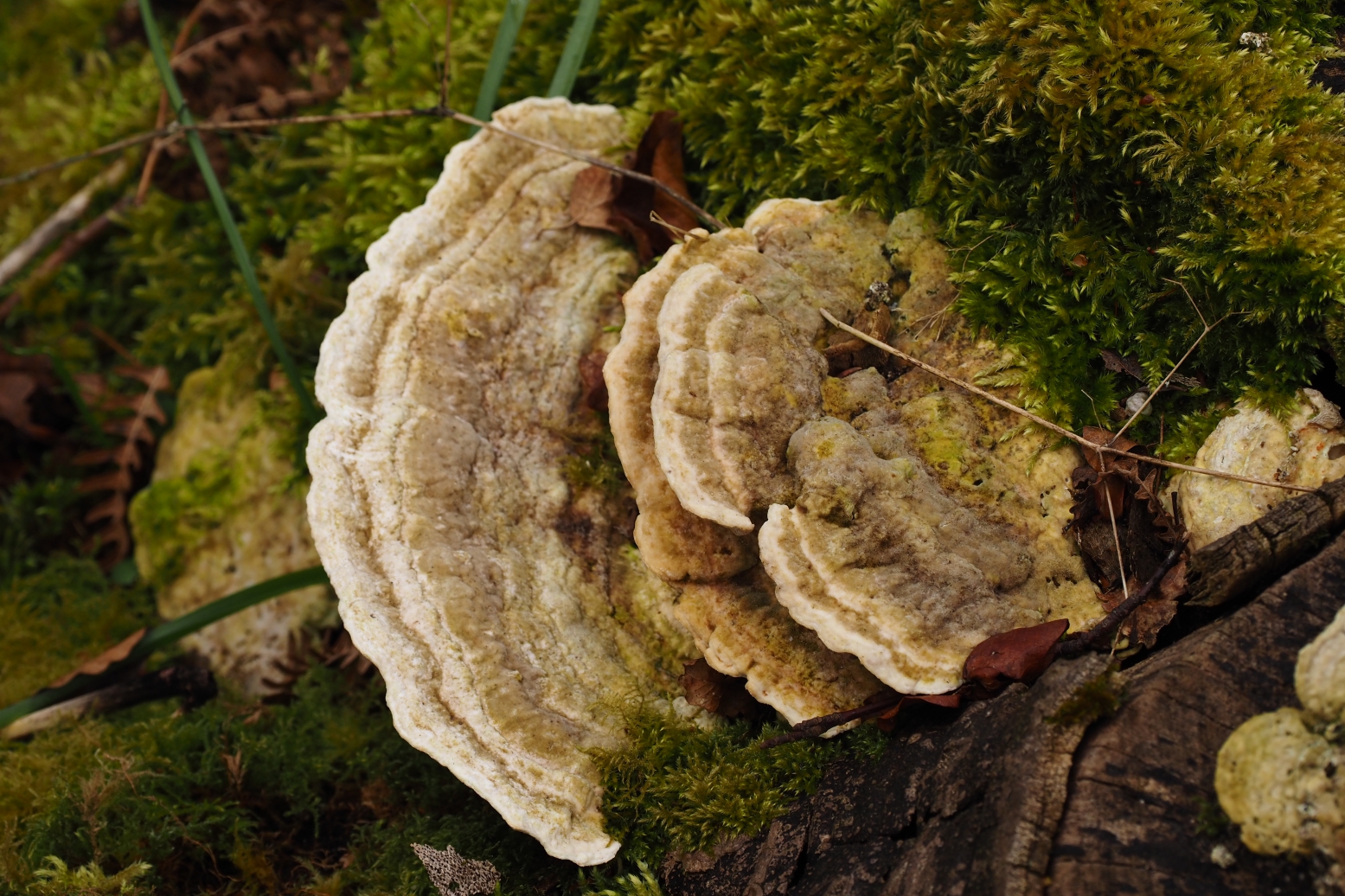
I found very little fungi. The whole Forest appeared to be exceptionally dry for the time of year. This is probably lumpy bracket.
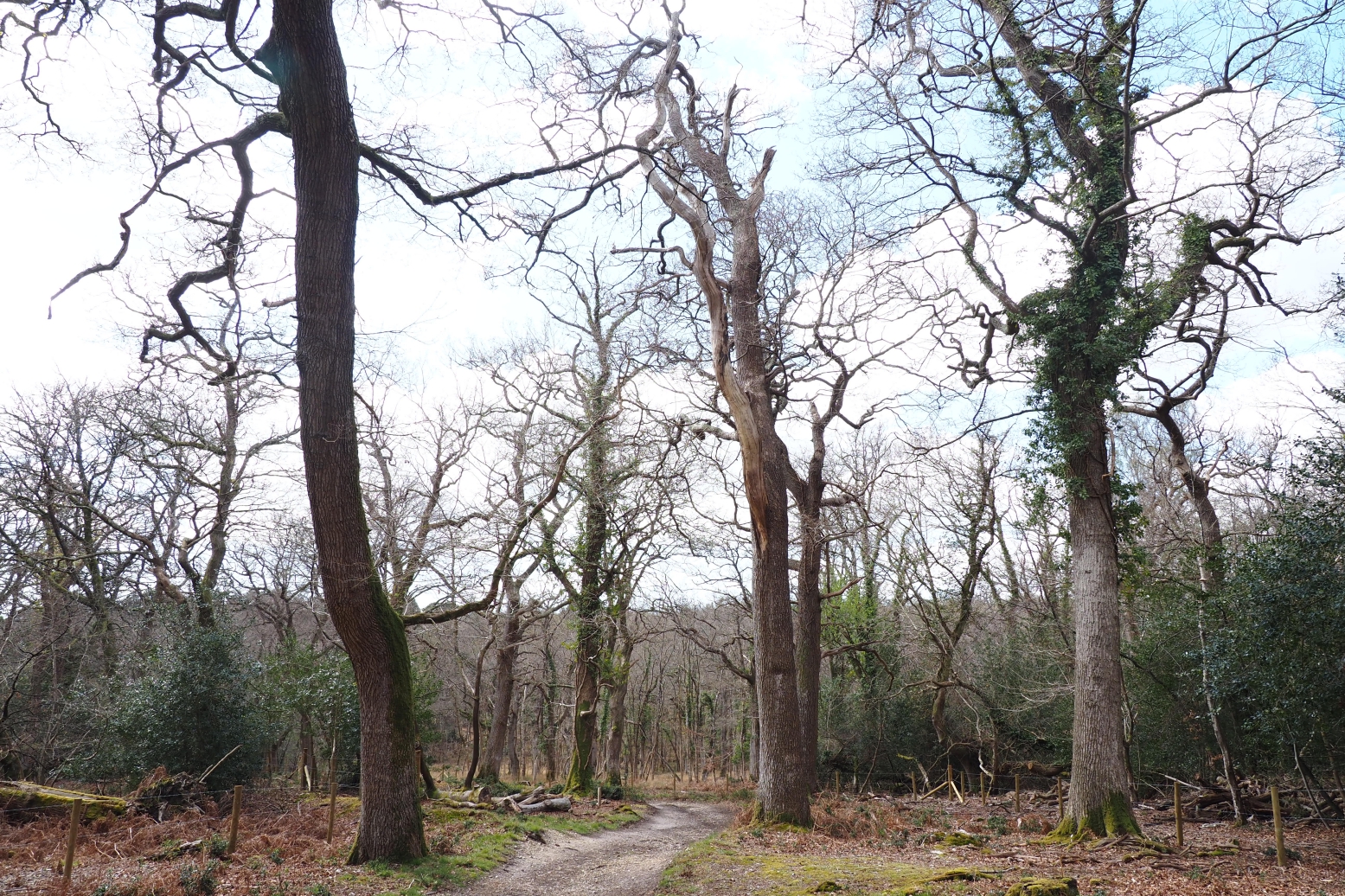
The trackway through Roydon Woods, now fenced on all sides since I last visited in 2019.
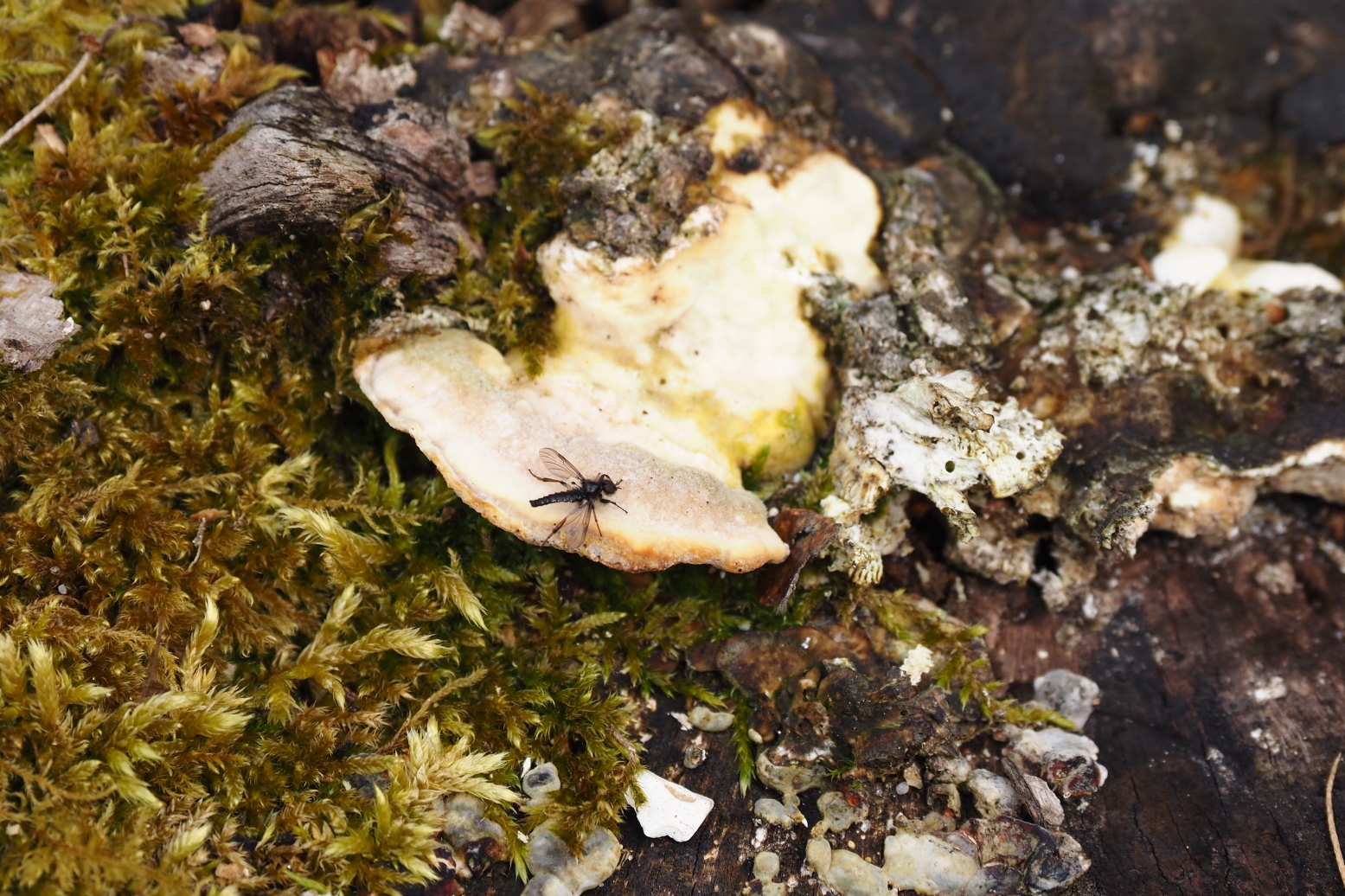
There were a few of these flies basking in the sun. I think they are St, Mark’s flies or similar.
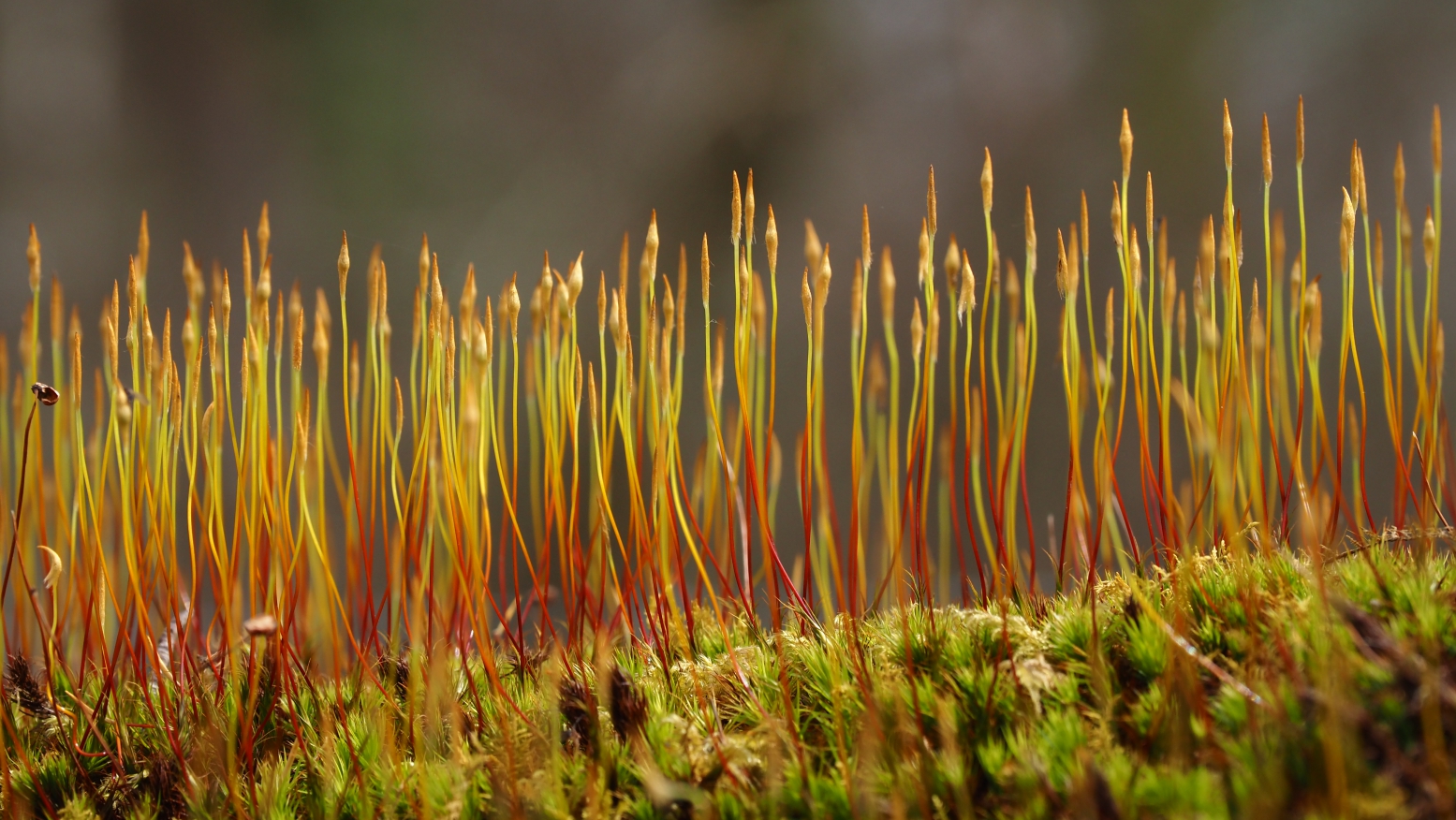
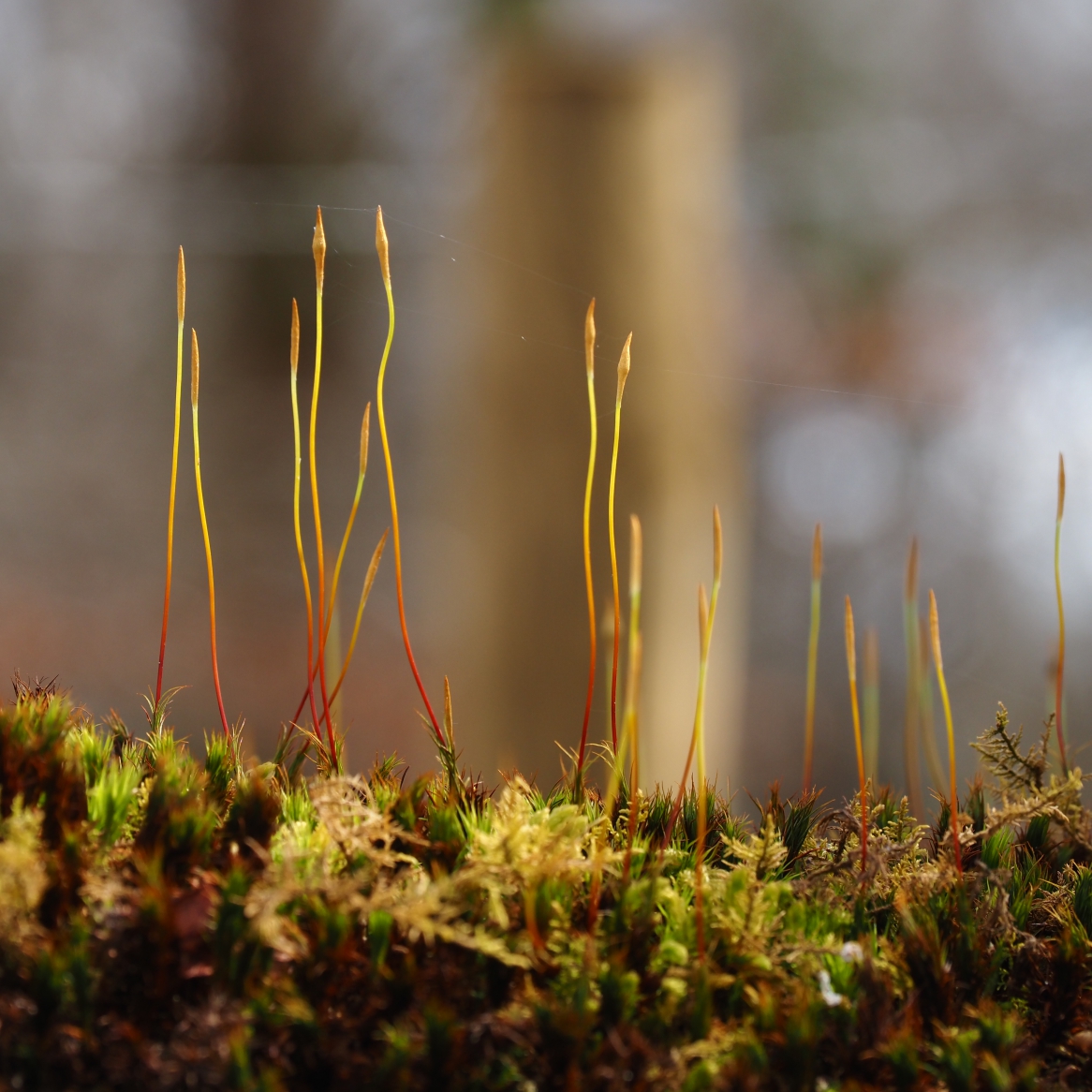
The sporophytes of juniper hair cap moss growing on a wood bank.

There is something quite muscular about this dead standing oak, no doubt full of life on the inside.

The arrival of birch leaves is one of my favourite sights each spring.
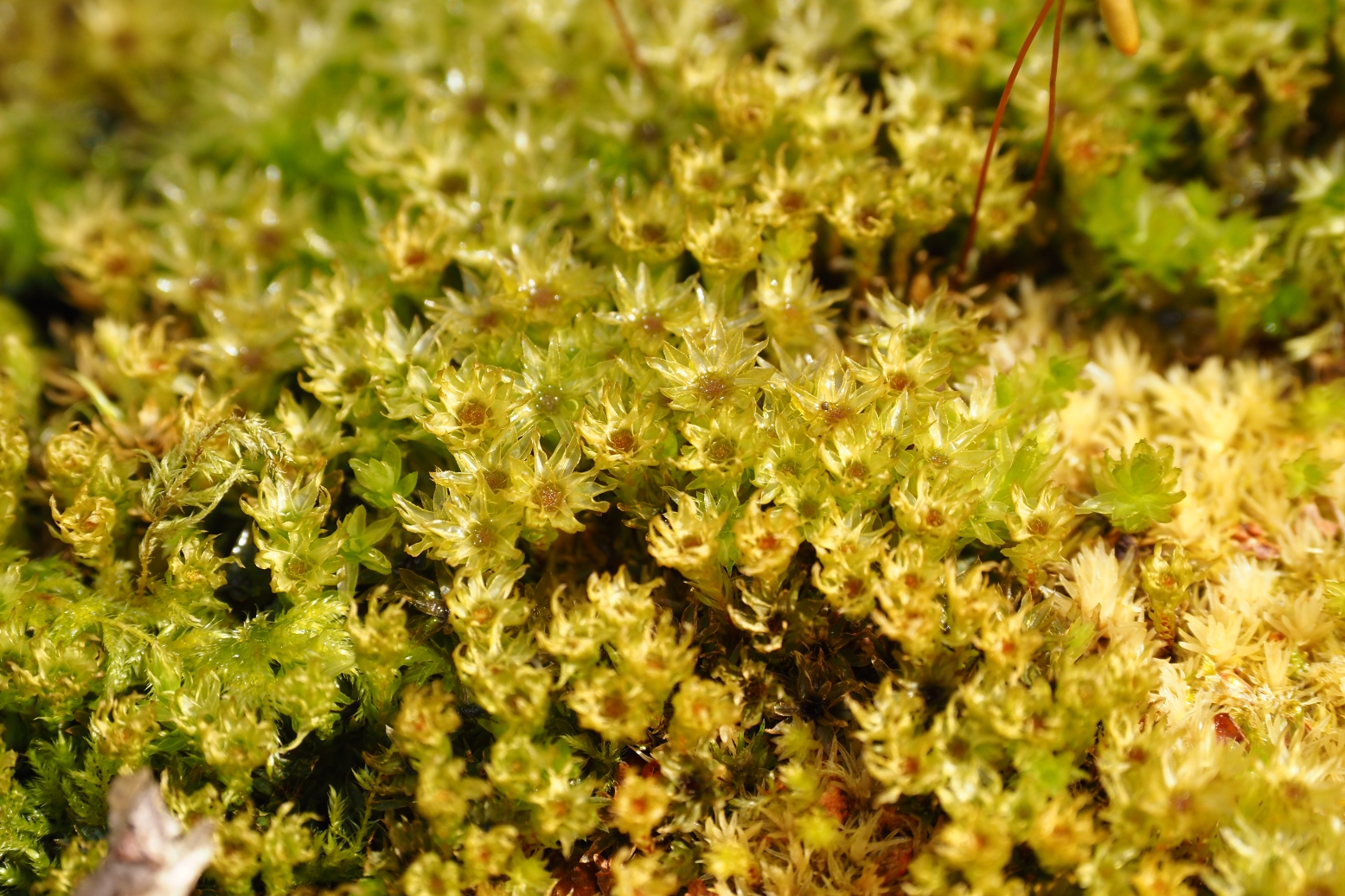
A close up of moss photosynthesising

I had no idea that this bracken stalk had a little insect sat atop it. That often happens with macro images.

Greater stitchwort flower

Walking along the track a bird on a stump caught my eye. I realised it was a nuthatch and managed to catch a photo of it before it flew to cover. They are usually high in the treetops. This silent bird may have been gathering food for nestlings.

The Lymington River
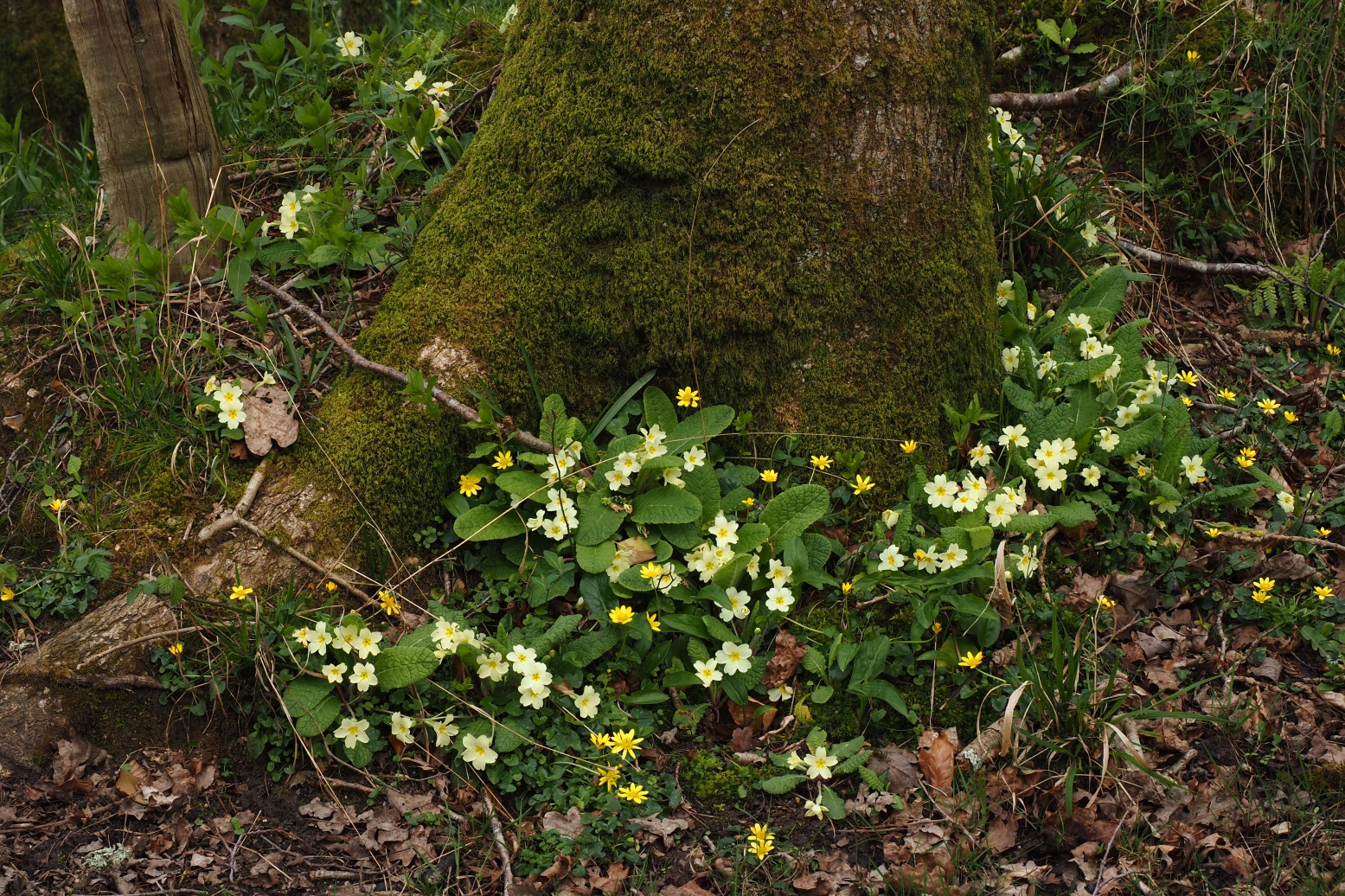
Primroses and celandines gathering around the mossy buttresses of an oak
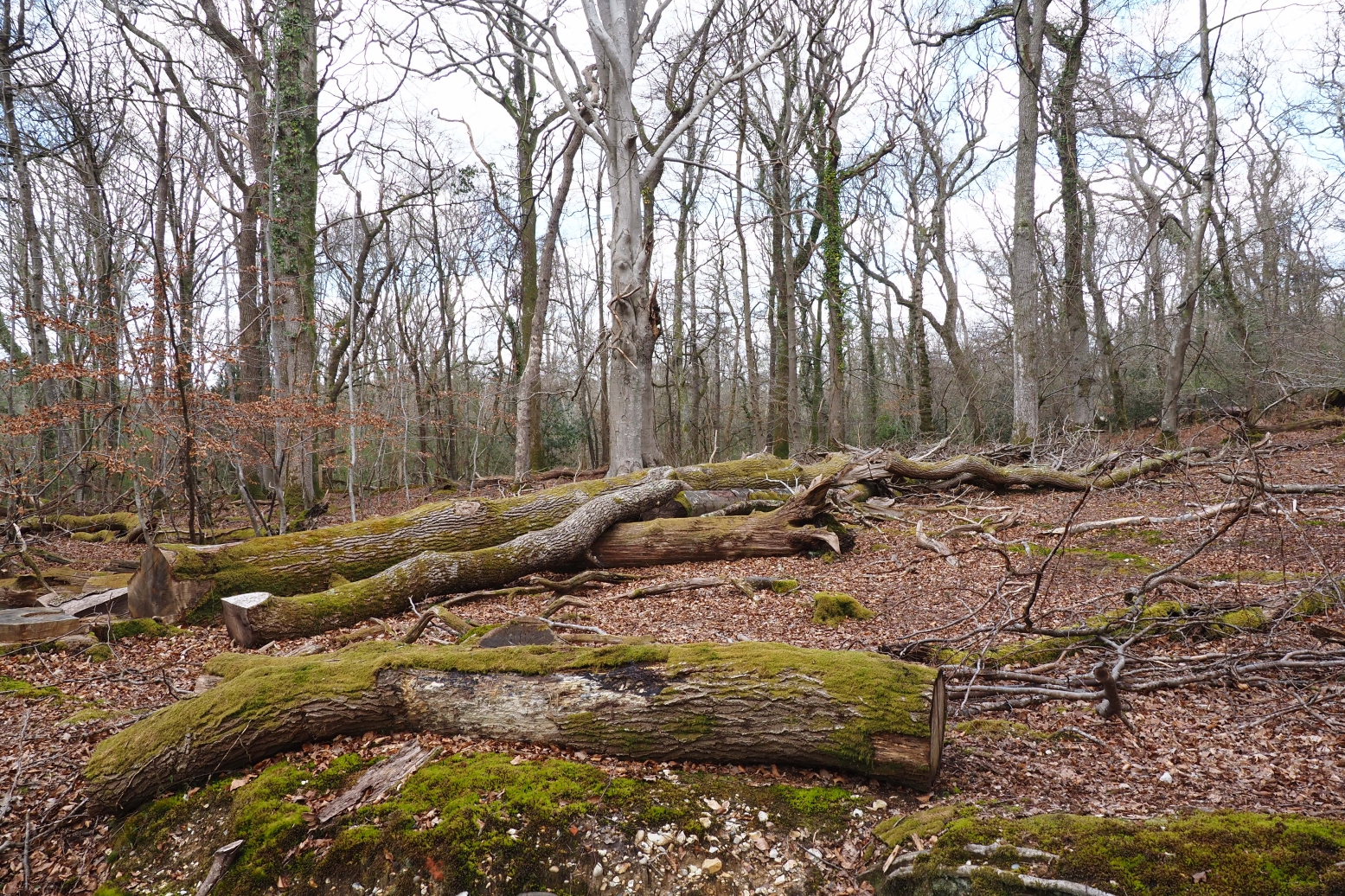
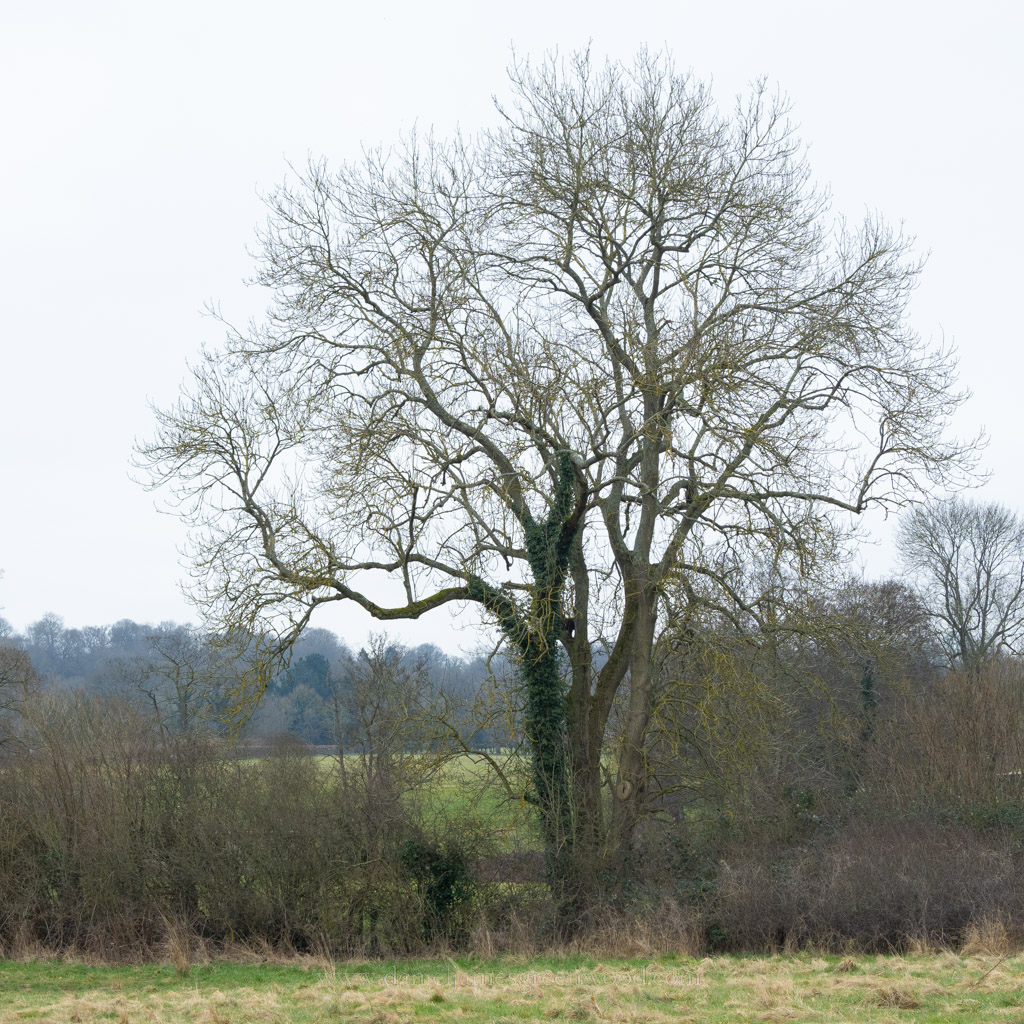
Ash dieback has changed the look and feel of parts of the older woodlands around Brockenhurst. The woodland is more open and clearly depleted. Ash trunks lie as if storm ravaged. This is good conservation woodland management for fungi and deadwood invertebrates.

Wood anemones at their peak, surrounded by dogs mercury, another plant of ancient woodland

A triple decker of Ganoderma bracket fungus on the remains of a beech tree
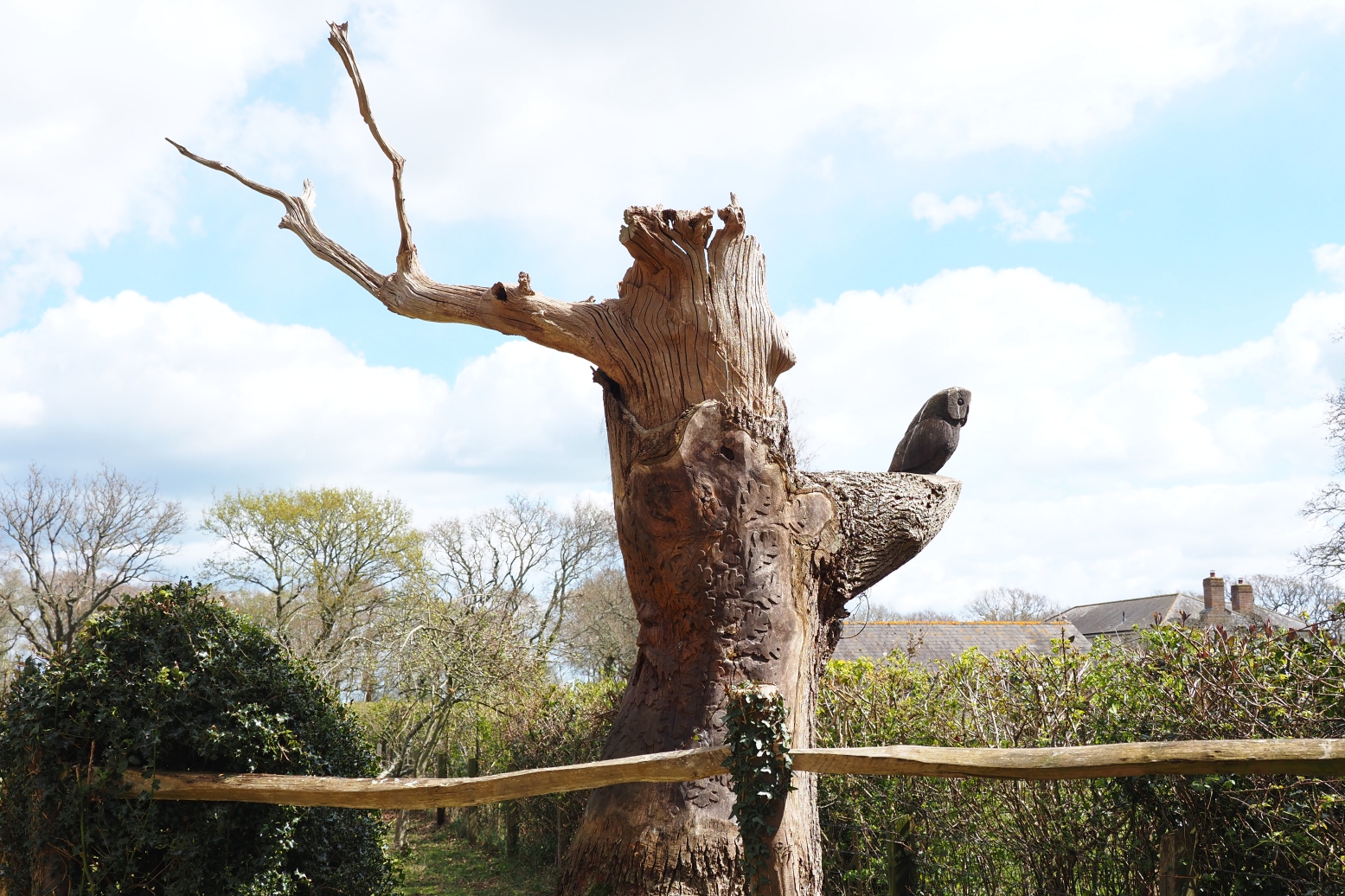
Carvings of an owl and oak leaves made in this dead tree

Arriving on Beaulieu Heath I was baffled by the sights of what looked like chalk downland in the distance. Looking at the map it appeared to be the Isle of Wight!

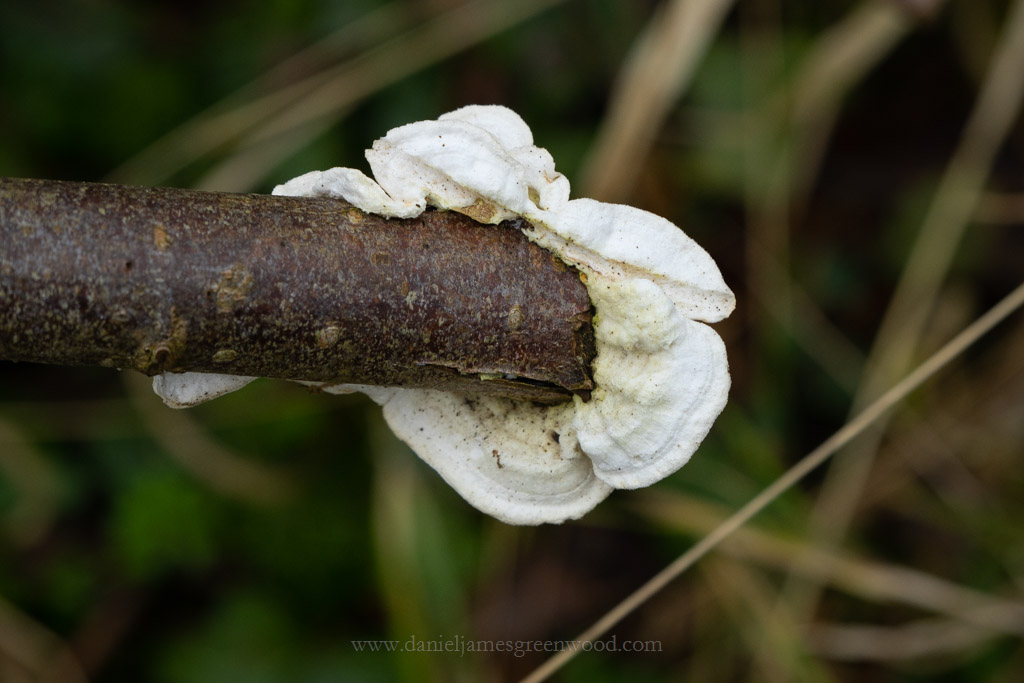
One of the few fungi I found, a small bracket on a fallen branch
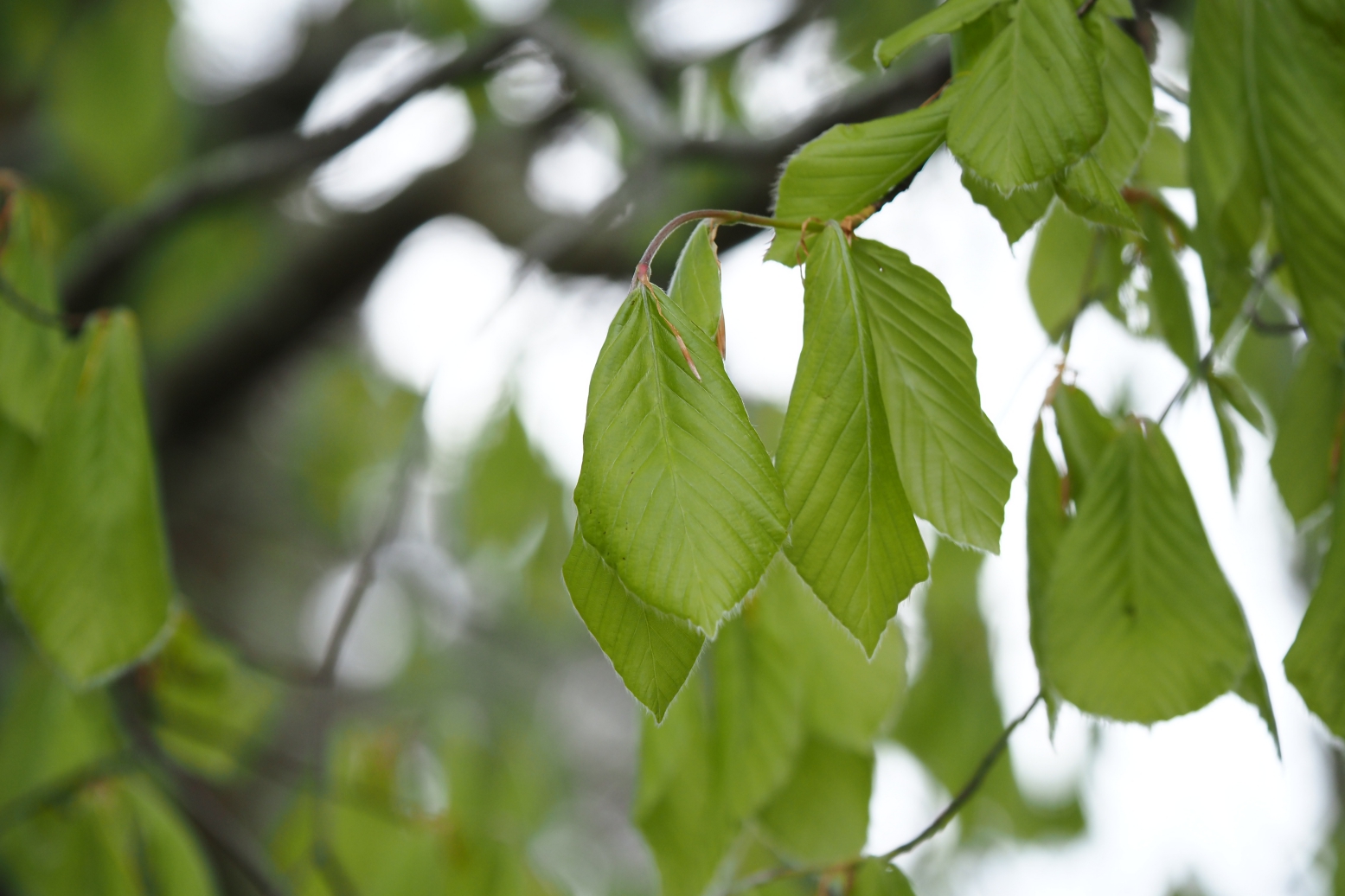
The first beech leaves: they can be eaten (not sure if they affect people with allergies) and also used to make gin. They are soft at first but like their oak relatives will soon toughen up.
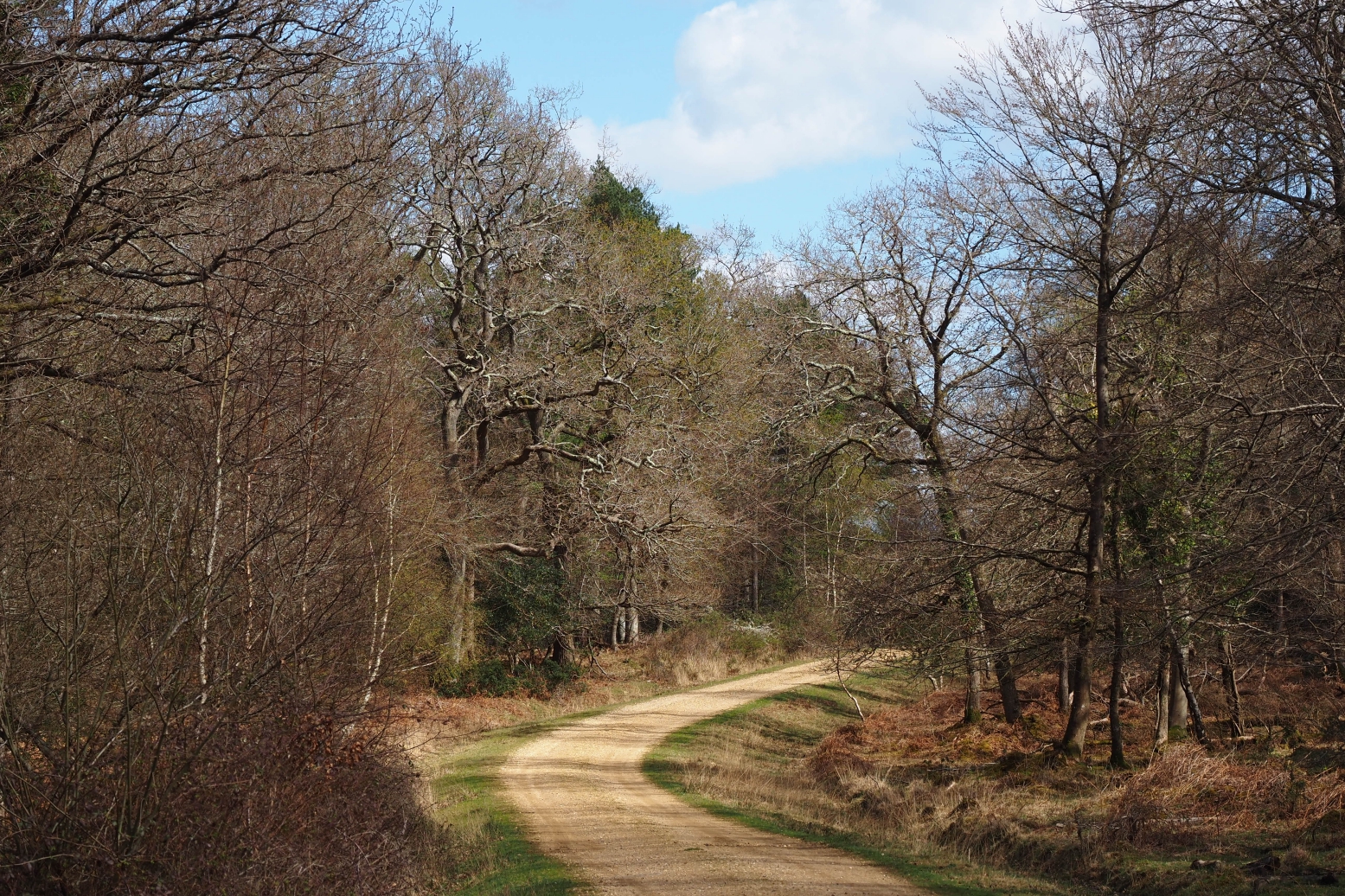
A winding forestry trail where the landscape becomes less diverse and the understory generally thins out. This is more of a plantation landscape.
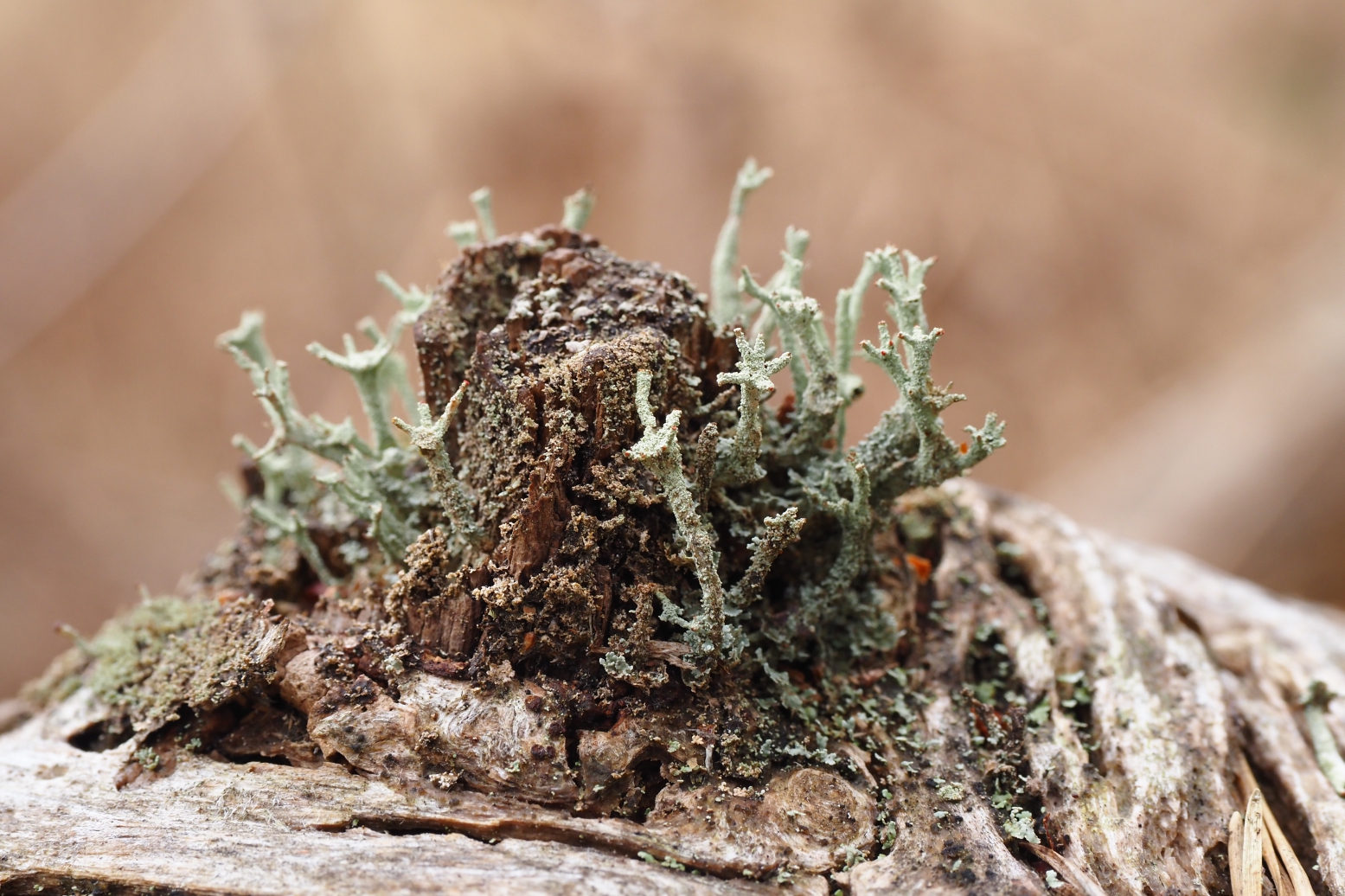
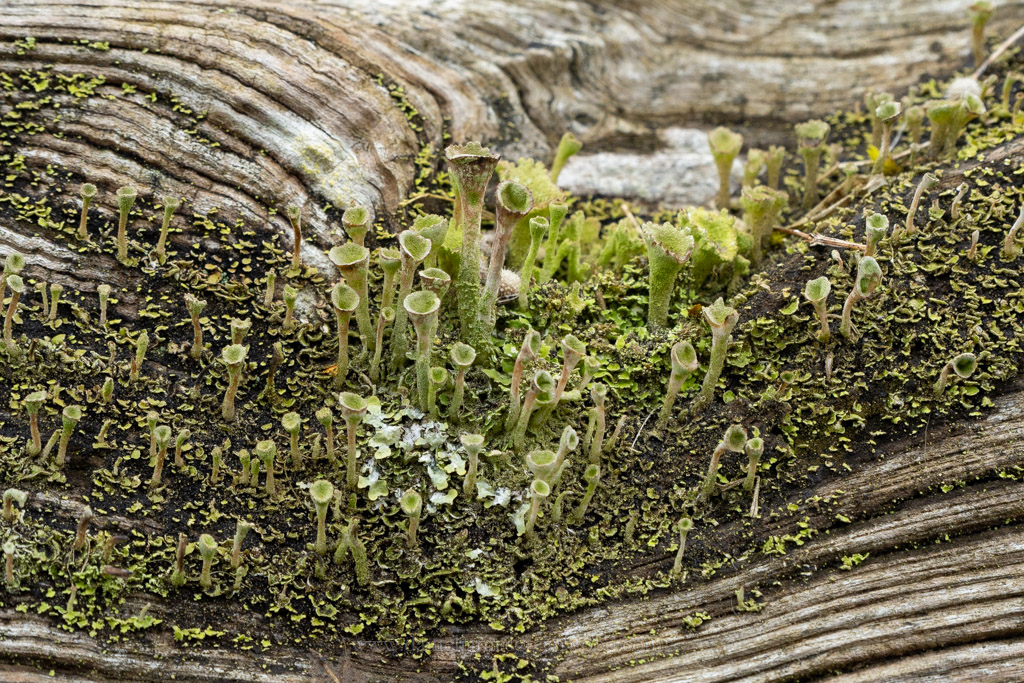
Cladionia lichens on a piece of old pine wood

Can you see the crab spider here? I was astonished. It had matched the red and green of the wood spurge it was hiding in. Crab spiders are known to be able to mimic colours of plants around them. This seemed so specific, as the spurge will not keep the reddish colour for long.
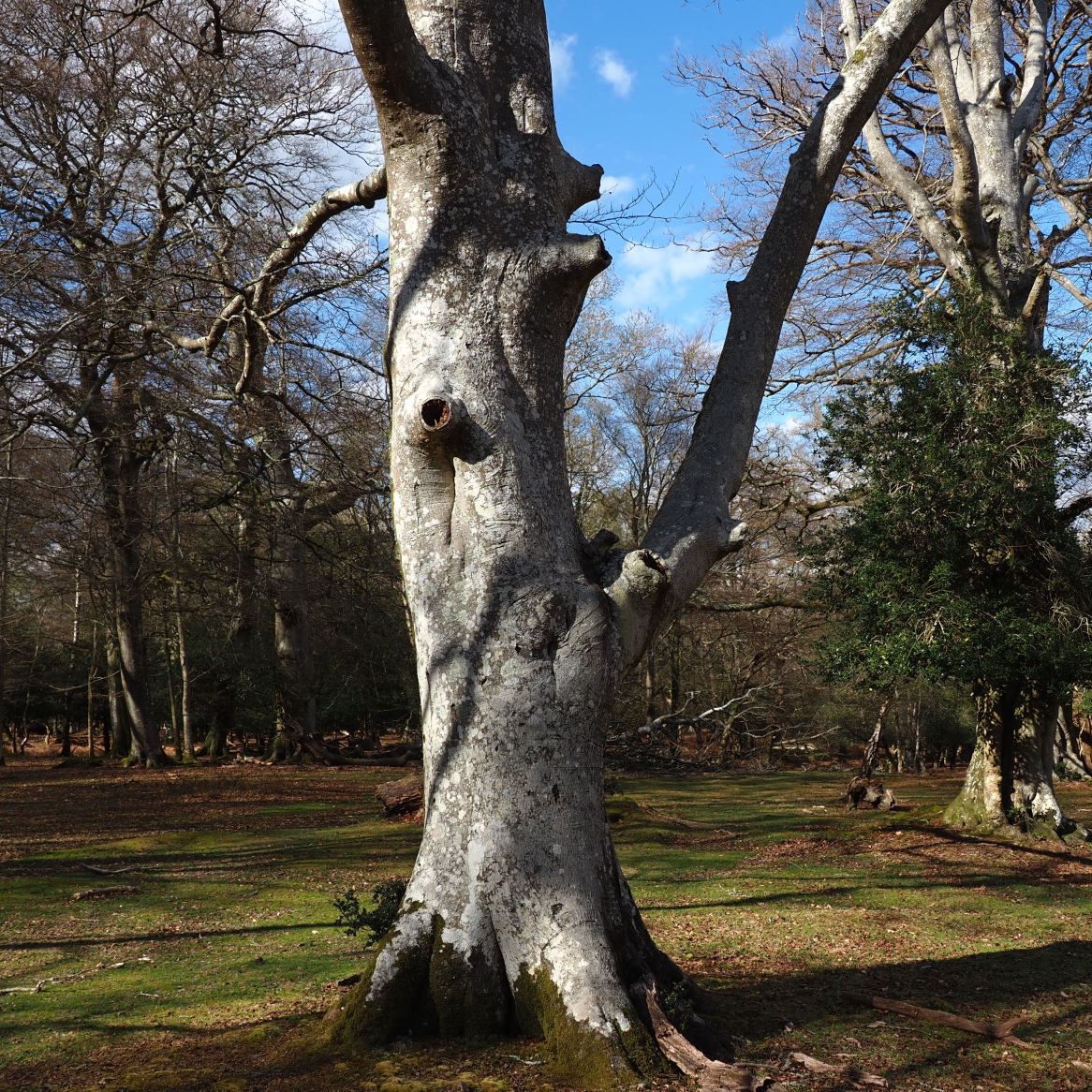
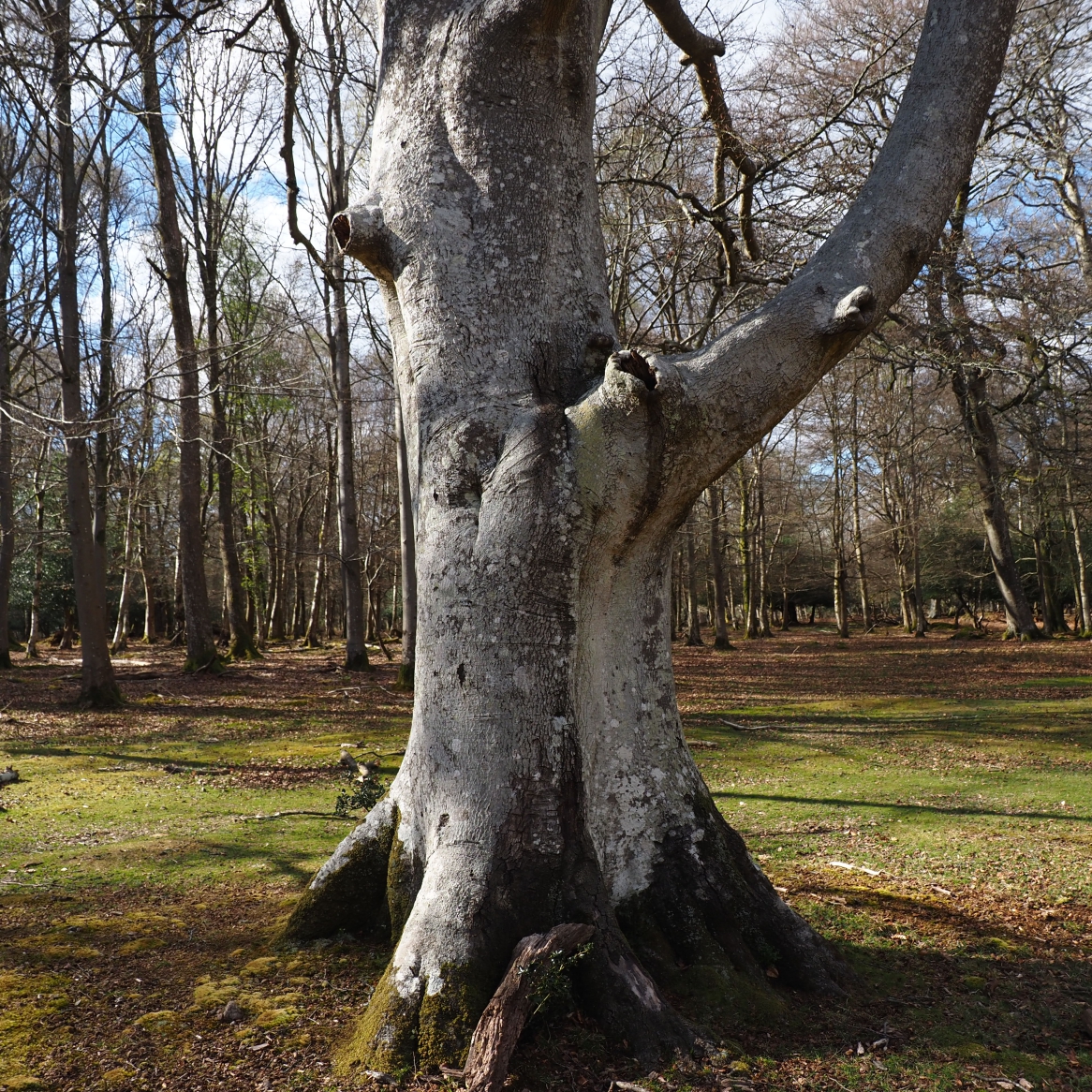
One of my favourite beech trees, encrusted in white lichens

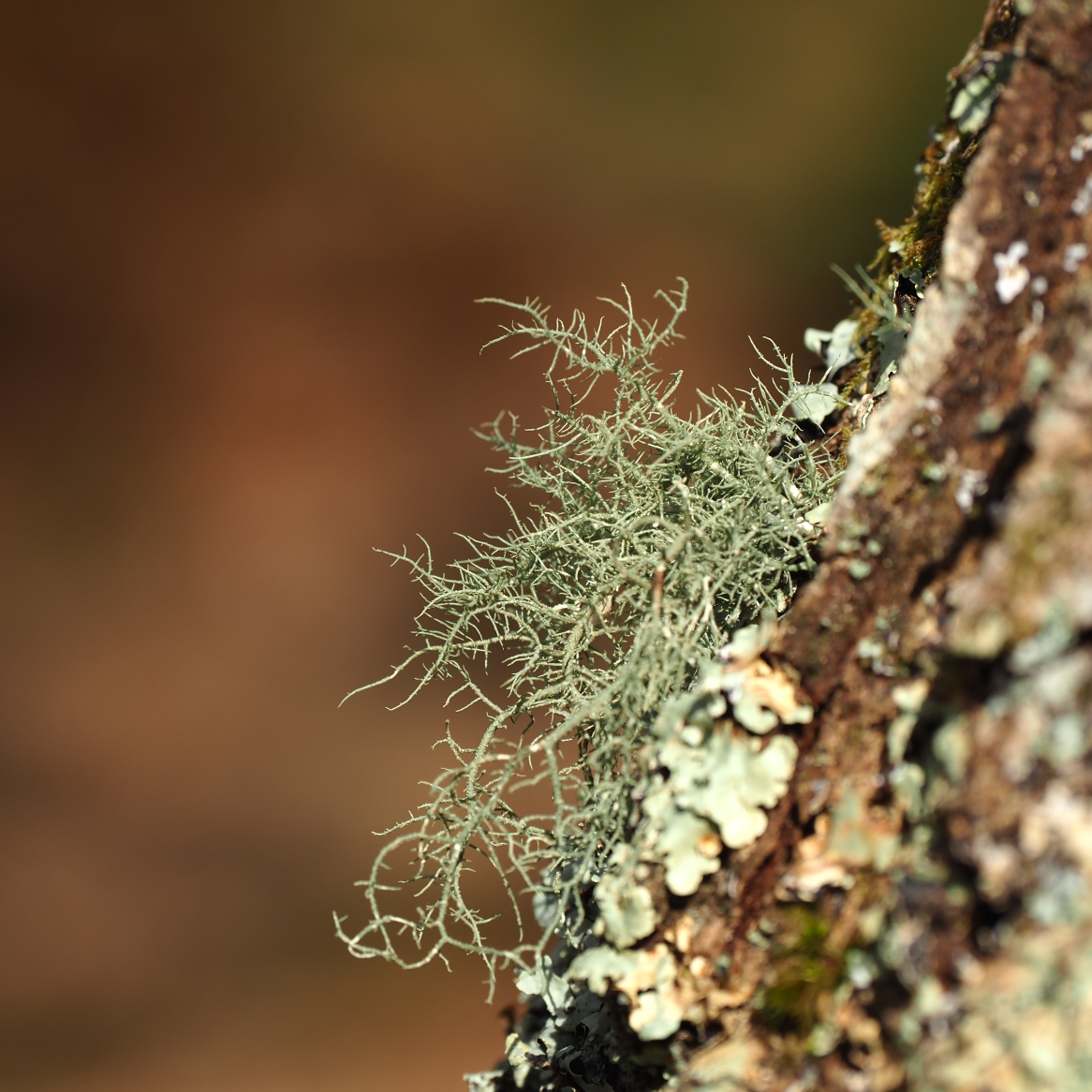
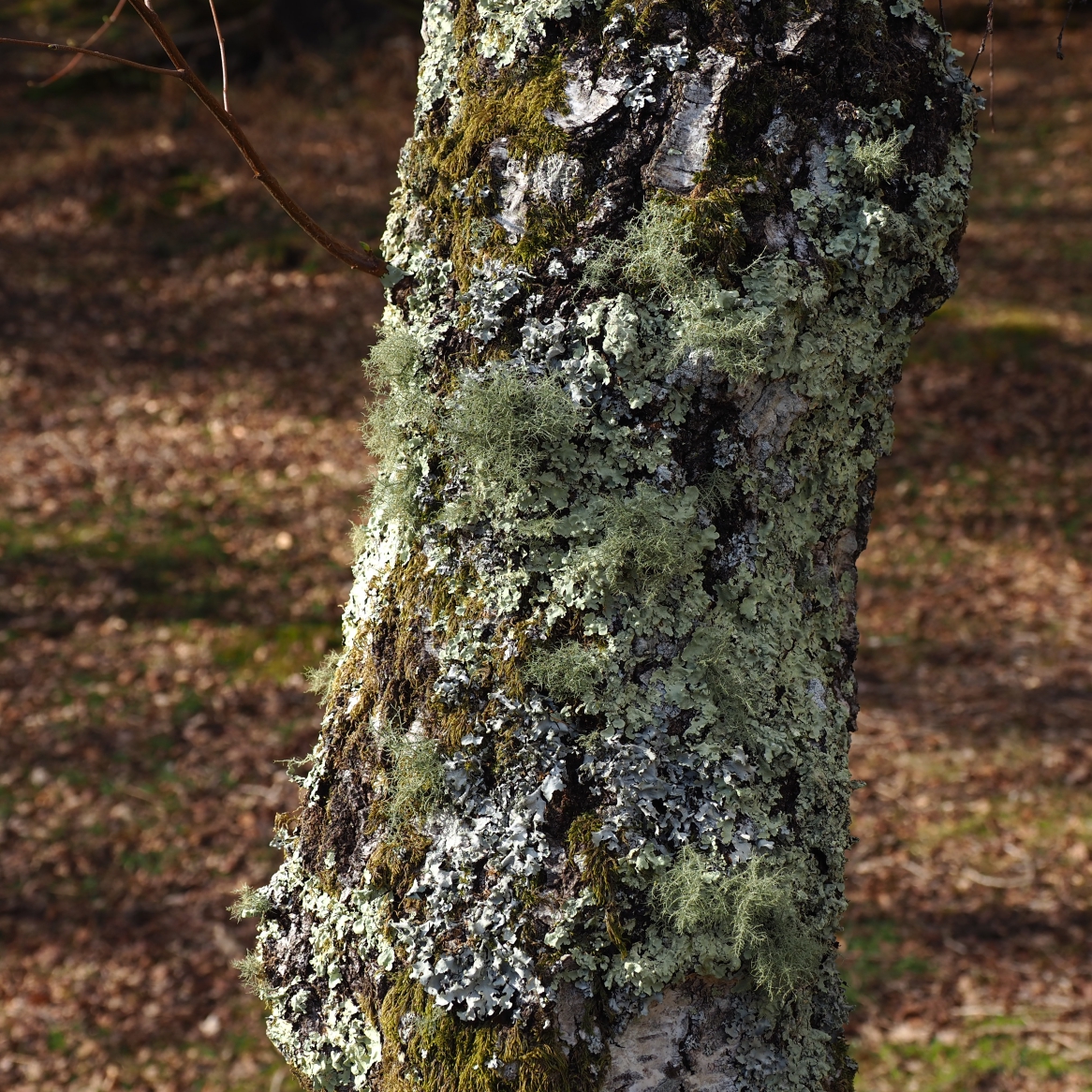
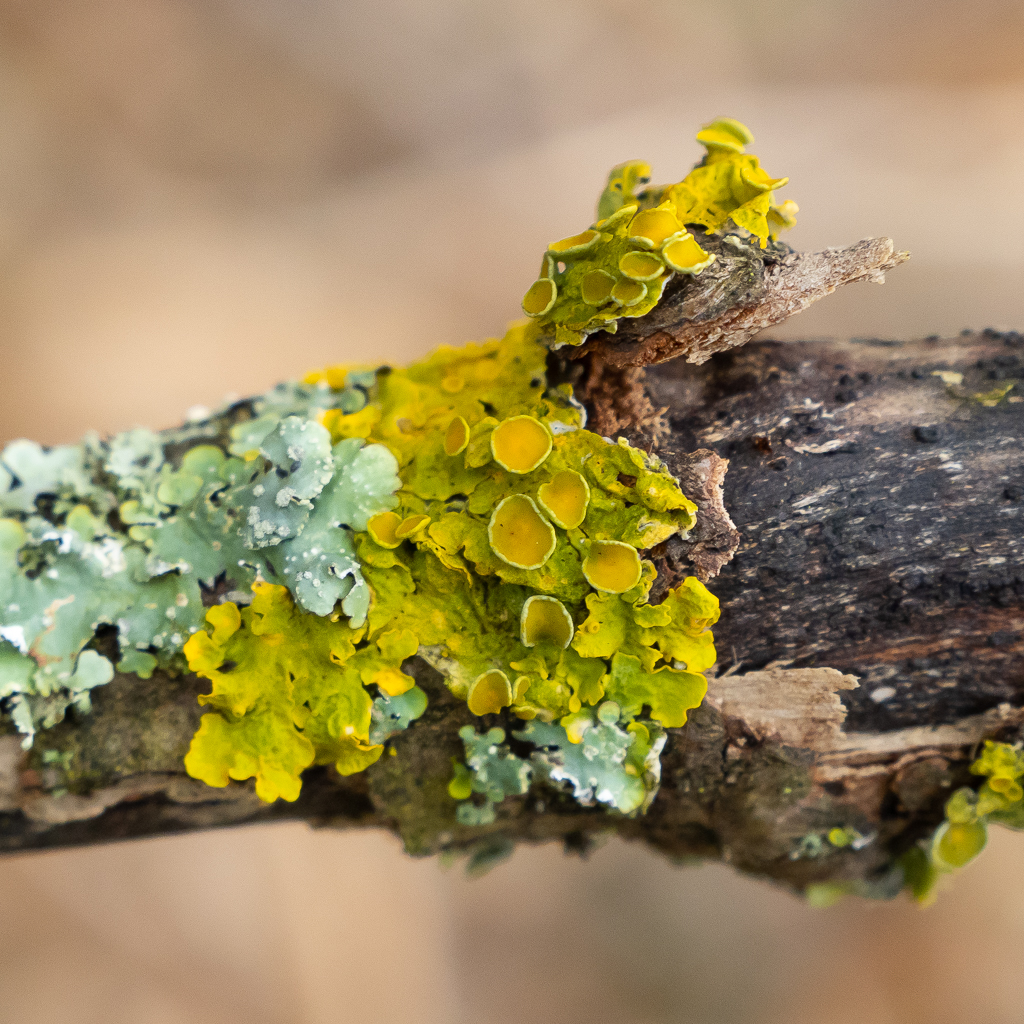
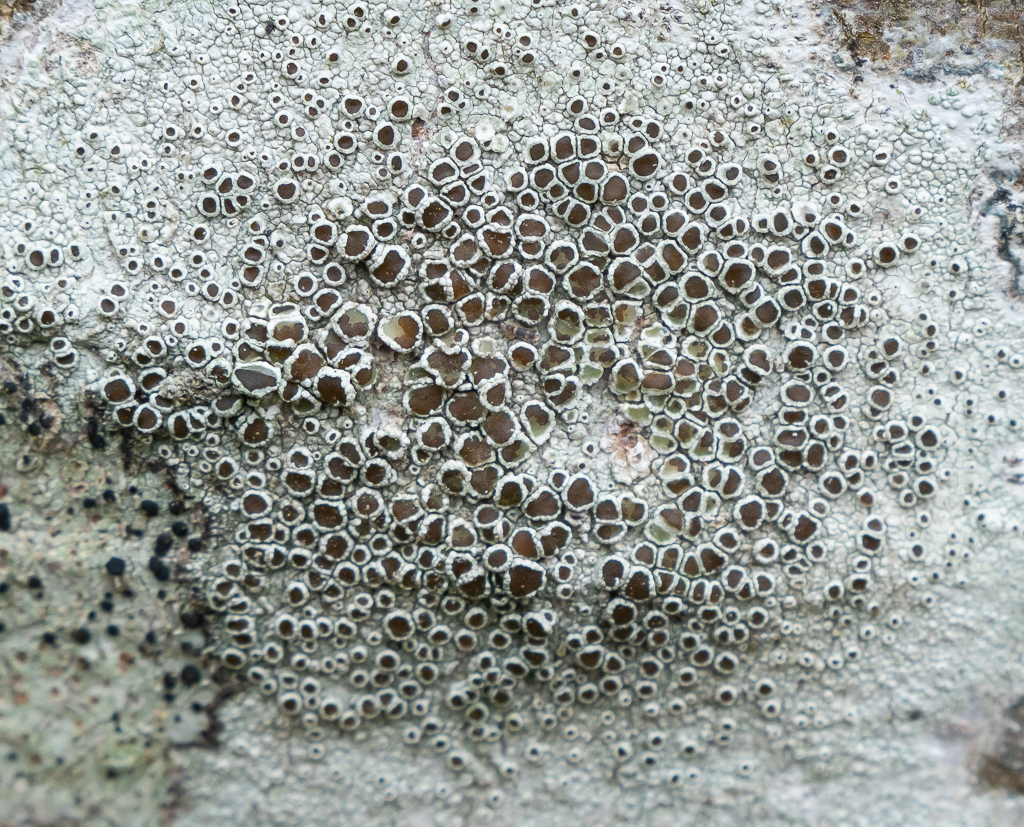
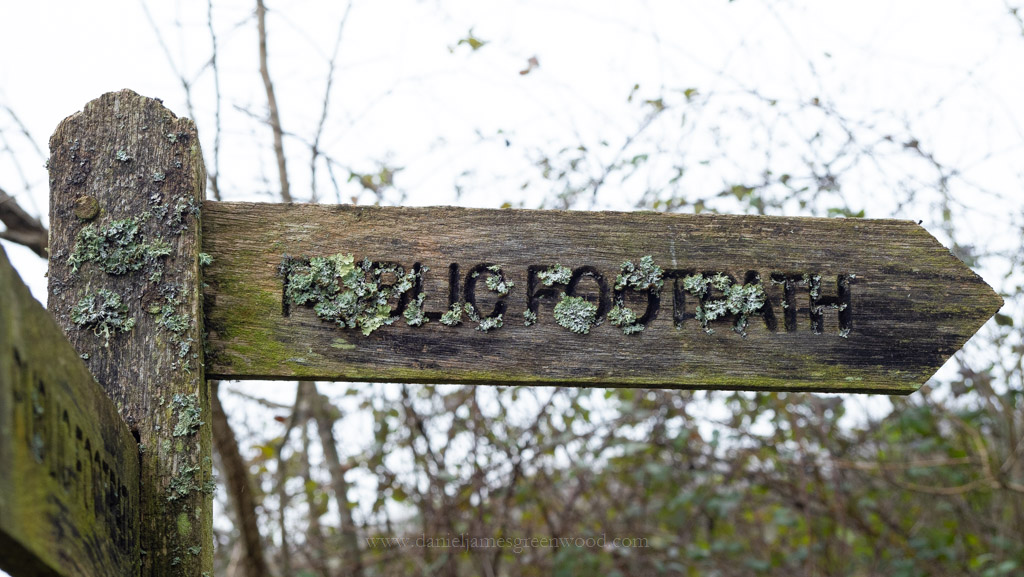
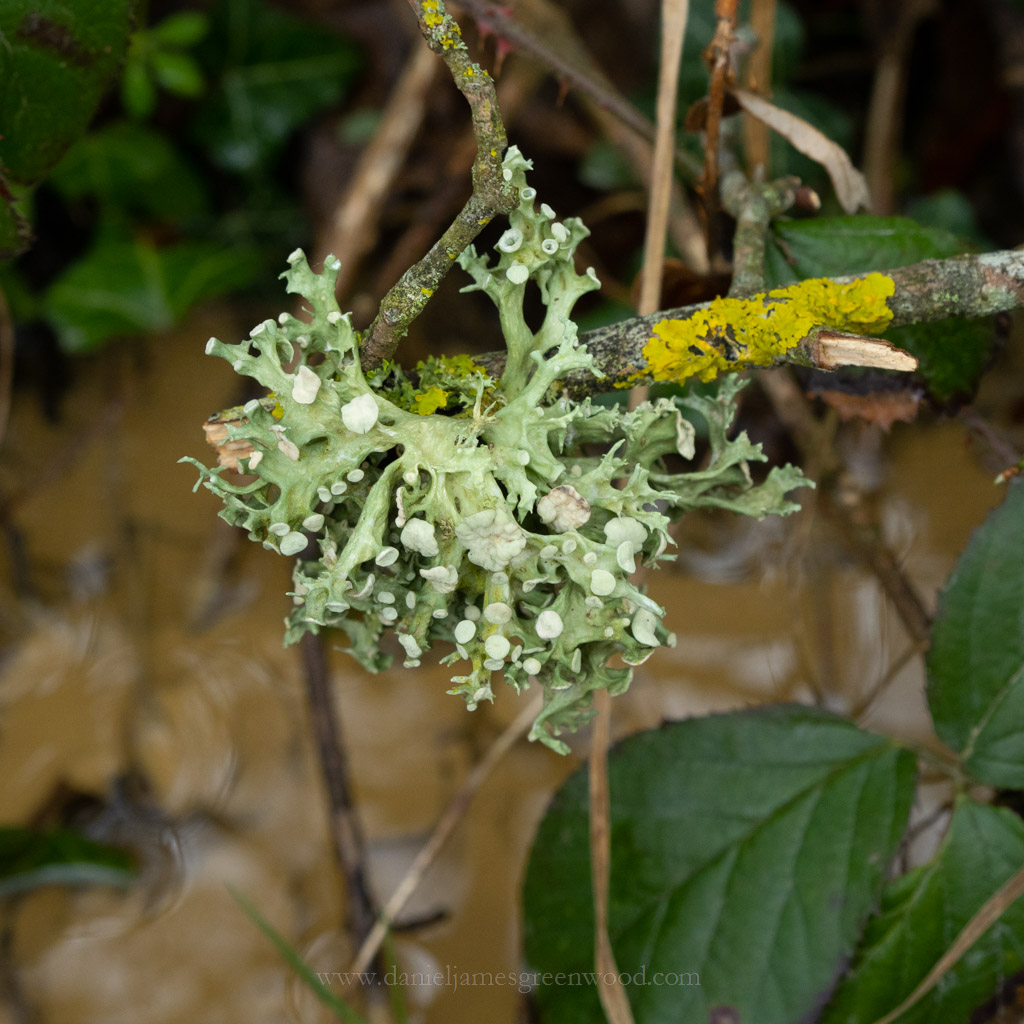
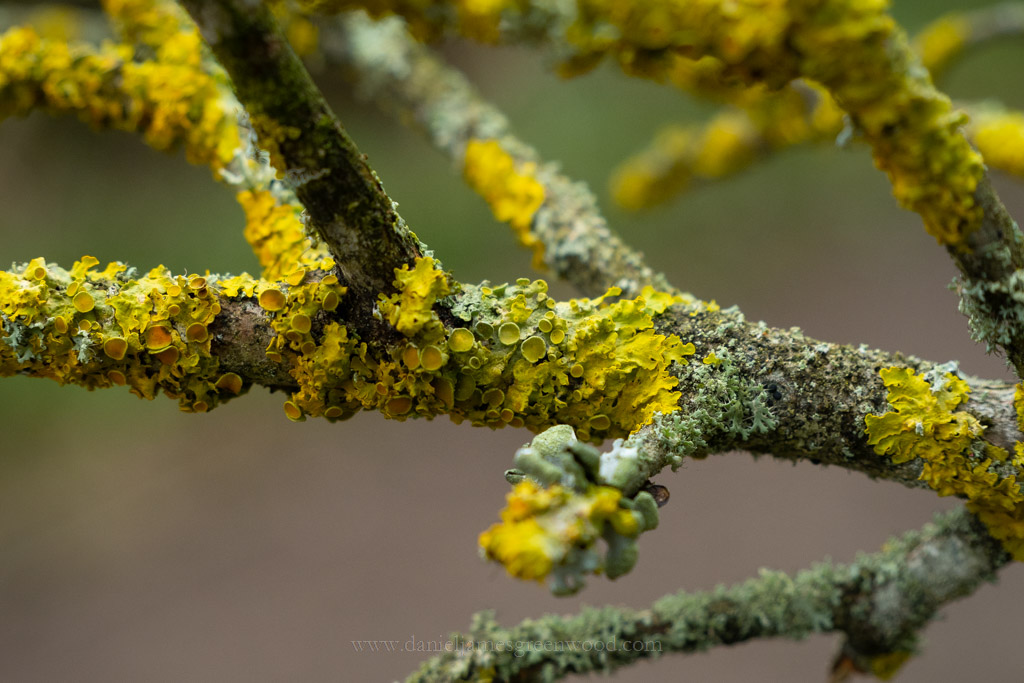
A selection of images showing the lichen communities that can be found in some parts of the Forest.

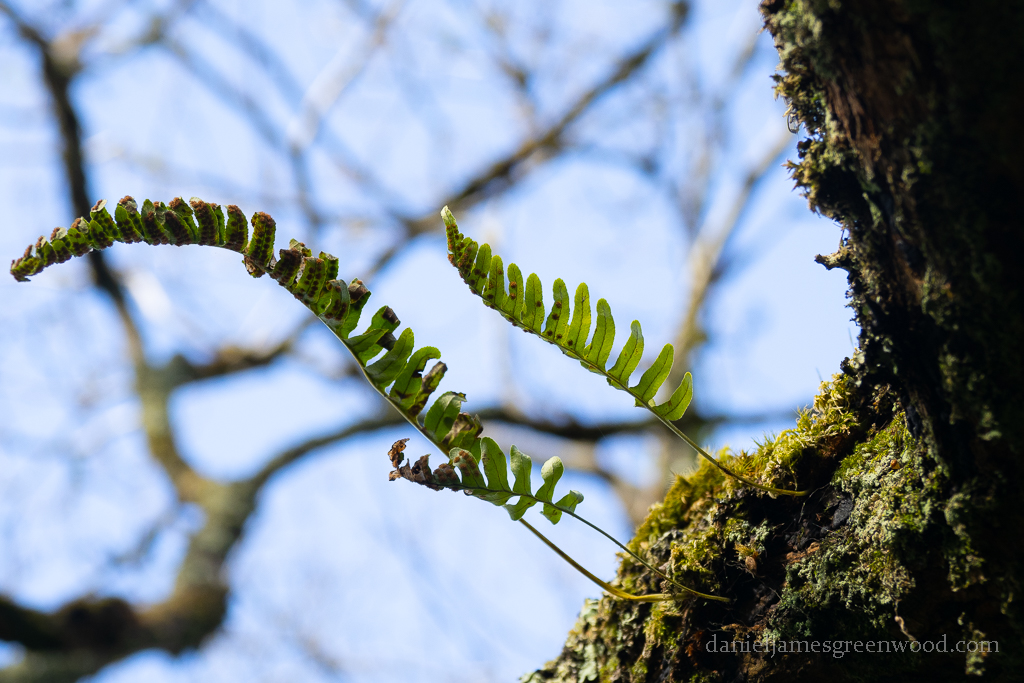
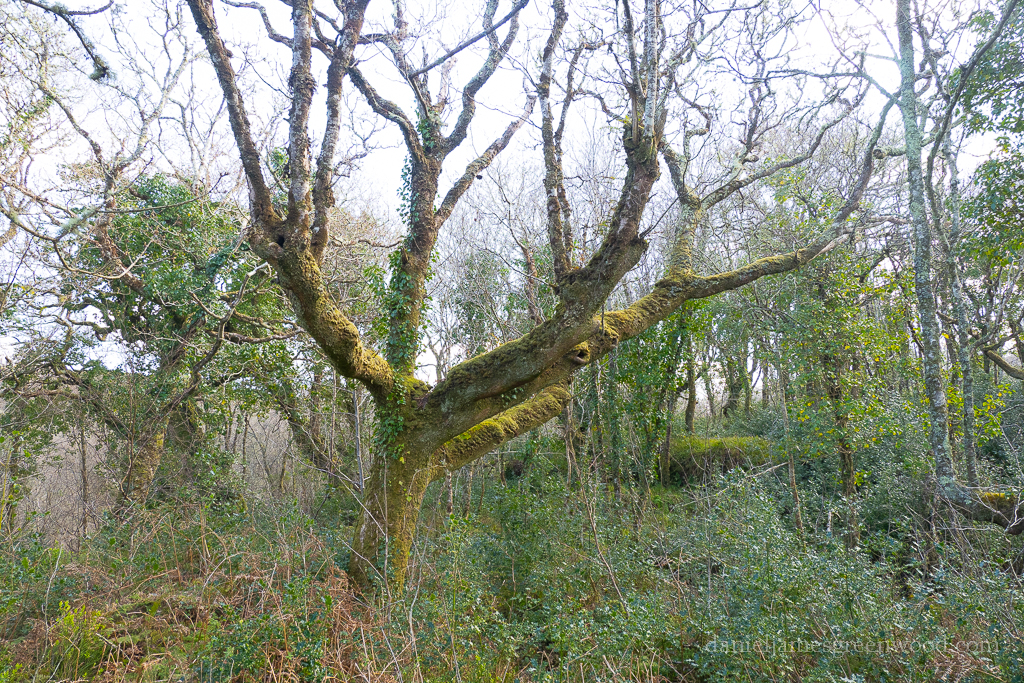
Ferns acting as epiphytes on this heavily leaning oak tree

To finish, before arriving in Lyndhurst, a selection of beech trees and one with a massive Ganoderma bracket.

Thanks for reading.
More from the New Forest

The Jurassic Coast 🦖

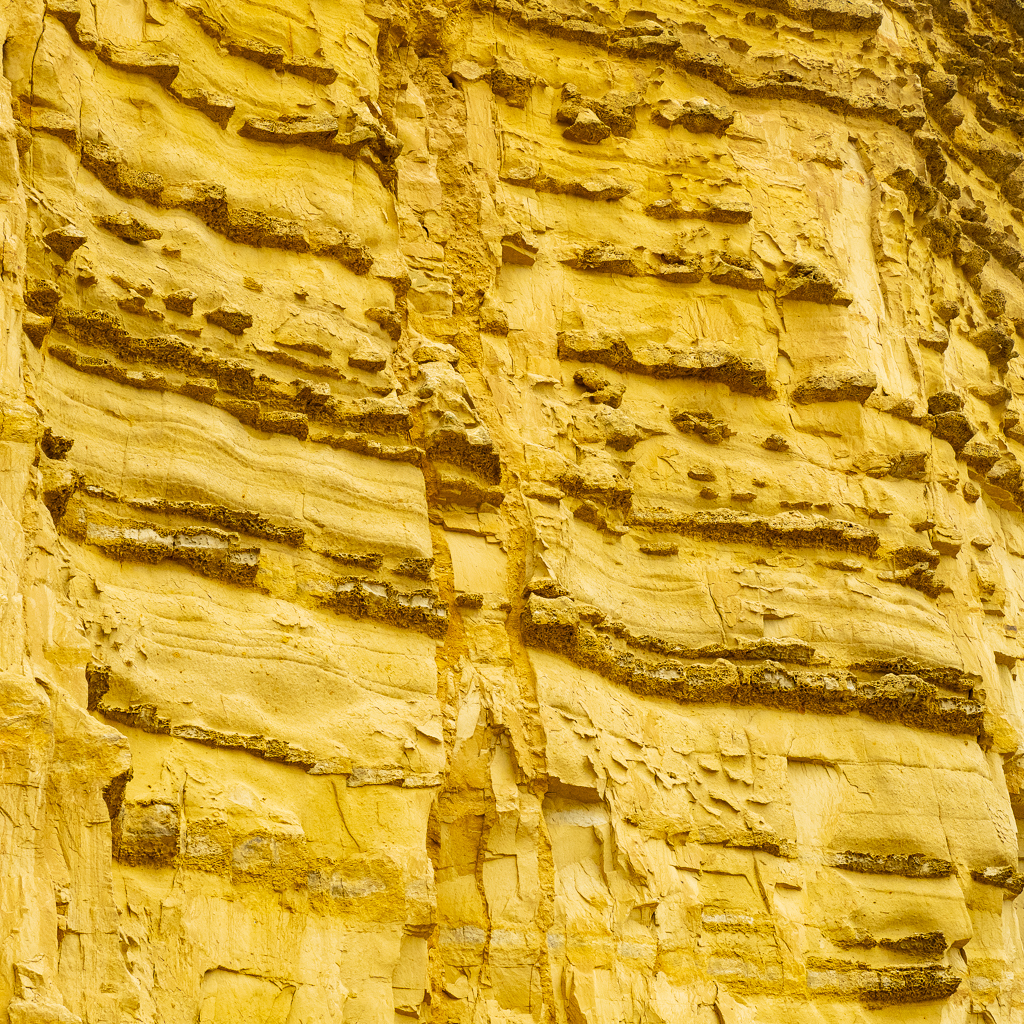
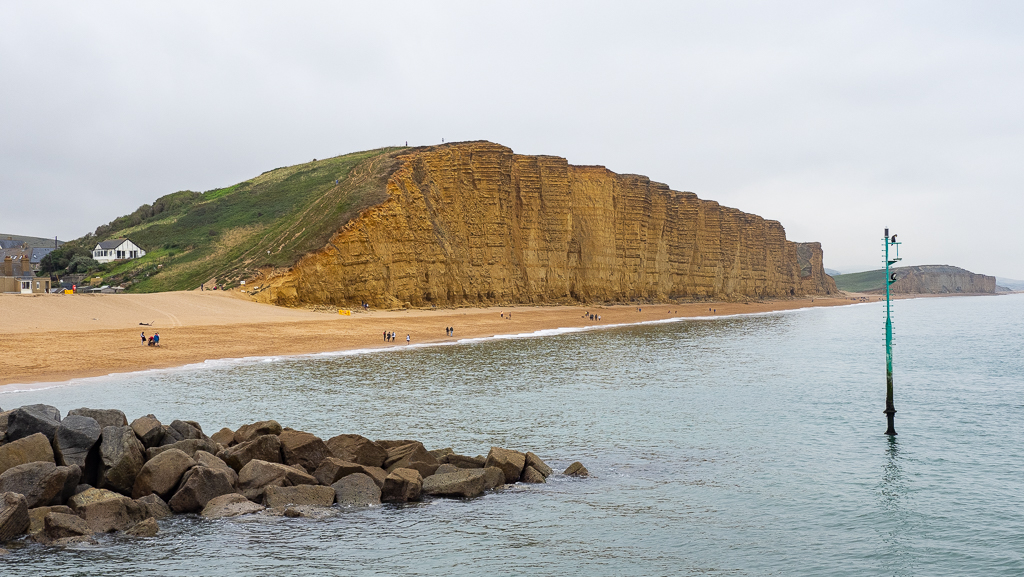
Some images I’ve been meaning to post for a while from a visit to the Jurassic Coast in Dorset in September 2021. Some of the colouring in the images has come out a bit extreme and though not completely true to life or consistent across the pics it does give some of them more oomph!

The Jurassic Coast is one of the most significant places for fossils in the UK, and a site of many landslips – with one taking place not long after I was there. I remember looking at the area which did collapse and thinking how different it looked to other areas. I first visited this area in 2011, which was the year I launched this website, and my experiences in Dorset inspired me to set it up.

A glimpse of Mayo’s dark skies 🌌

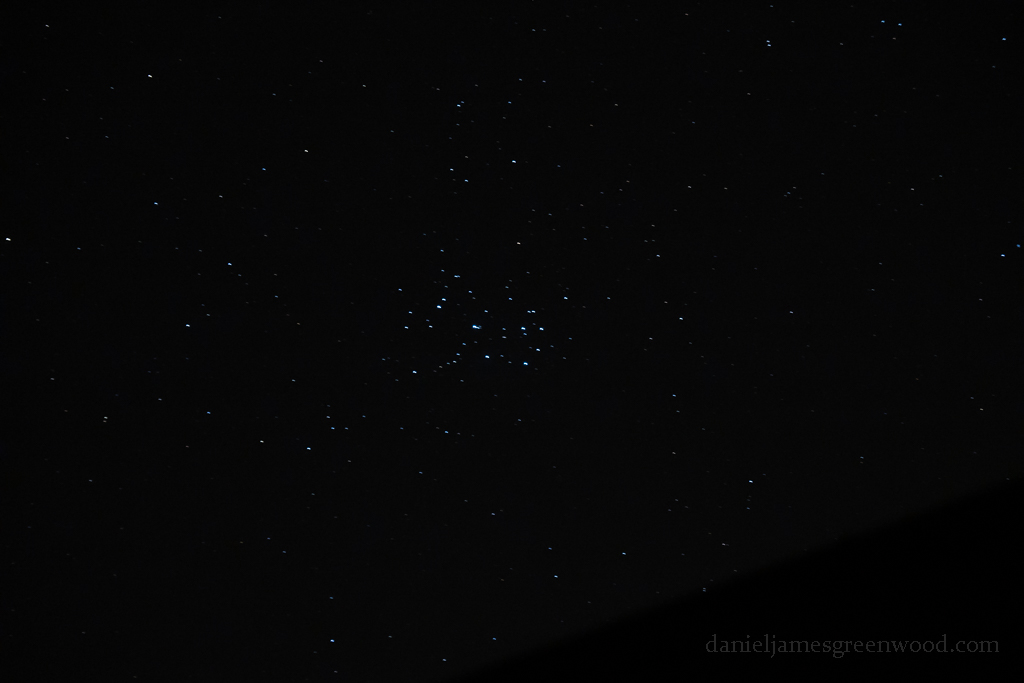
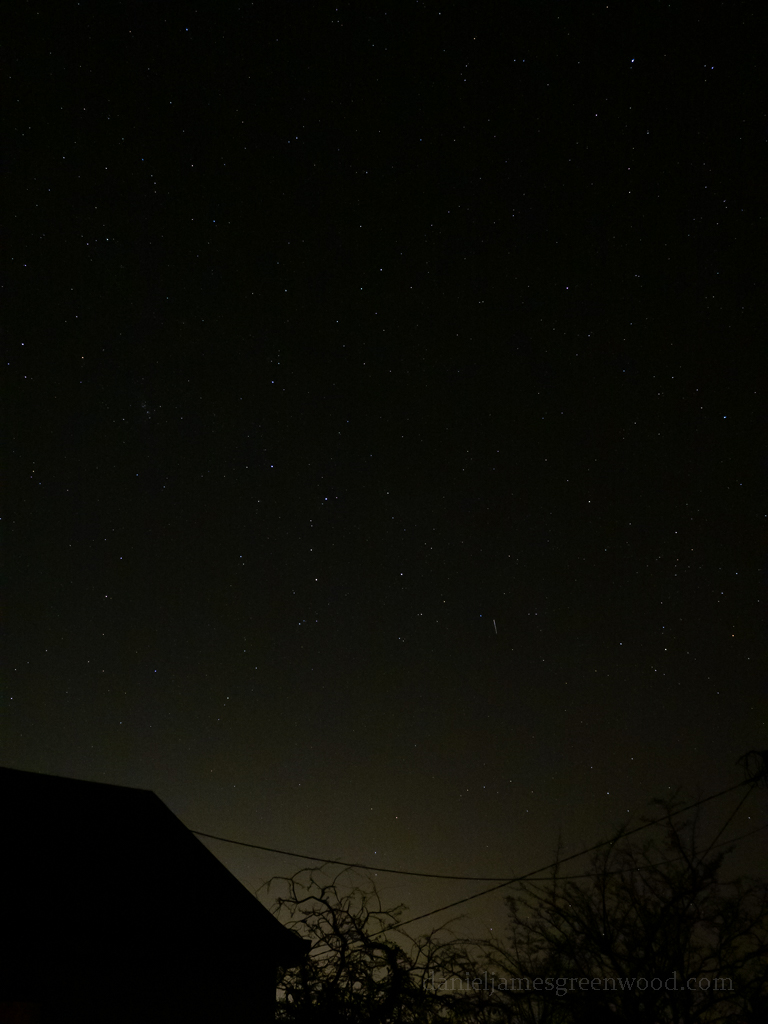
Mayo is Ireland’s only dark sky park, internationally recognised for its low levels of light pollution. Basically it’s super starry. Here are a few images from the front door (the only door) of my family’s cottage in northern Mayo.

Tree lungwort lichen in western Ireland 🍄

Since 2013 I have been visiting a small area of ‘Celtic rainforest’ I know in Co. Mayo in Western Ireland. It’s hard to find much ecologically significant woodland in Mayo, a place of vast peat bogs, wetlands and where the woodlands are largely low diversity plantations of spruce and larch. Nine years ago I found one woodland on the map and asked my parents if they wouldn’t mind dropping me off there. In March 2022 I had about 30 minutes to check in on this real gem of an oak woodland.

I don’t want to give the name of the woodland openly because it is incredibly sensitive and is already experiencing the impacts of anti-social behaviour (fires, litter, human waste… not that you would head straight there to mess it up!) but if you want to know the details you can contact me via email for info (unlockinglandscapes@gmail.com). It’s one of the special Western Atlantic oak woodlands which the western edges of Scotland, England, Wales and Ireland are known for. This woodland is rich in ancient woodland plantlife and is also good for fungi, as you might expect due to the long-term stability of ancient woodland species communities.

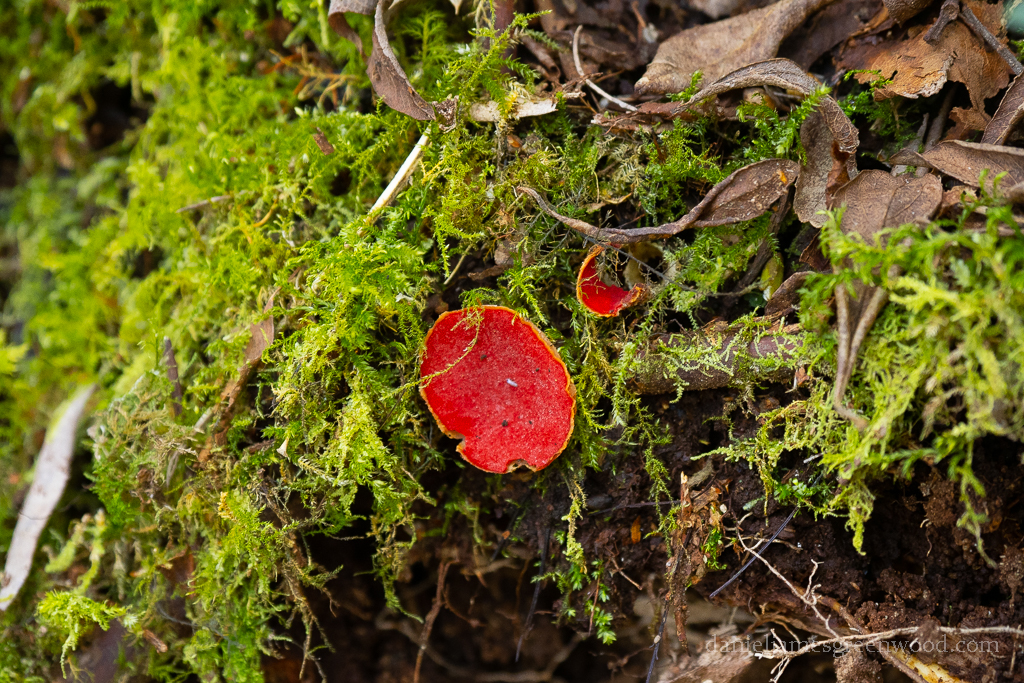
Upon entering I spotted the little red traffic light of a scarlet elf cup in among the moss. This is a species which thrives in damp and shady woodlands near water.

The woodland here is close to a large lough so it is never short on moisture.

I was astonished to find this naturally-occuring terrarium on the woodland floor. Someone had chucked a jar here and the mosses and other plantlife had colonised it.

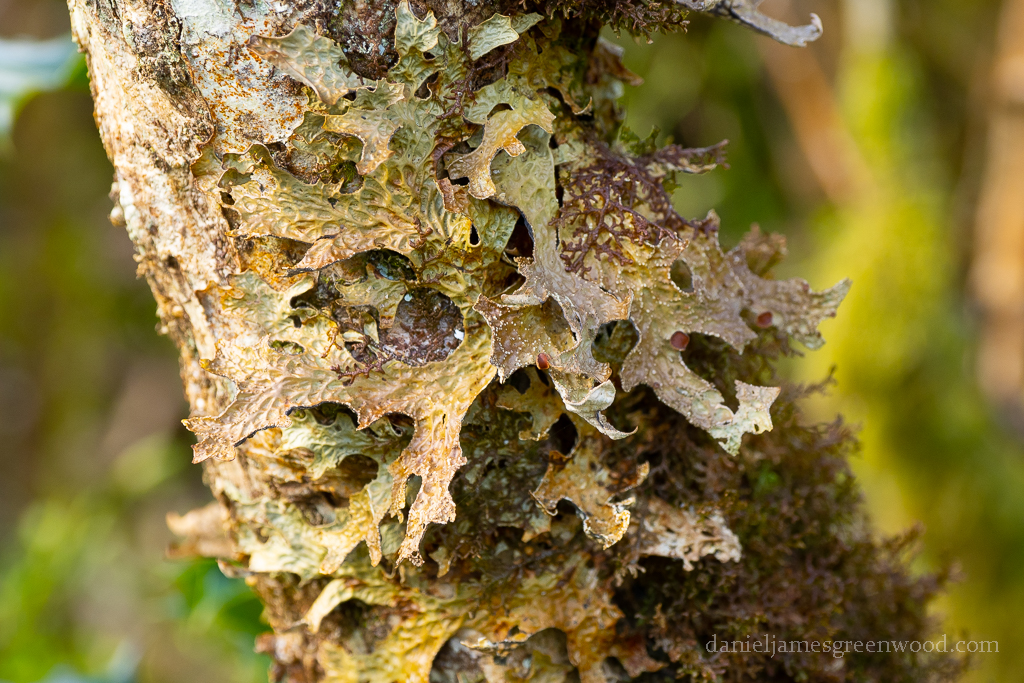
Anyway, I was here to check for an uncommon lichen in the UK & Ireland – tree lungwort, Lobaria pulmonaria. It’s a massive lichen that can be found in these ‘Celtic rainforest‘ habitats. The Woodland Trust say it’s an incredibly rare habitat.

After a few minutes of searching where I had found it back in 2017, I saw this. It is a seriously impressive species.

I was so pleased to find the tree lungwort again. It’s unlike similar organisms we find in the UK. It makes far more of its fungal elements than other lichens through its size and spread. Remember: in lichens, fungi provide the physical structure and fruiting mechanism (usually a cup-style spore shooter), while the cyanobacteria or algae are able to photosynthesise and harvest energy from the sunlight.

The oak trees in Celtic rainforest provide habitat for plants as well as lichen. There are often modest ivy vines trailing the trunk, as well as other epiphytes such as ferns and mosses:

Another thing I noticed was oaks leafing on the 31st March. This may be the earliest I have ever seen oak come into leaf, but the race between ash and oak is certainly a contest. The old saying of “If the oak before the ash, then we’ll only have a splash, if the ash before the oak, then we’ll surely have a soak” doesn’t quite play out from my experience. The very warm March we’ve experienced in the British Isles has possibly more of a role to play in this than traditional benign weather or climate patterns might.

One thing I learned from observing the other communities of tree lungwort were that the lichen seemed to prefer younger trees. I didn’t observe any on more mature specimens of oak. There didn’t appear to be a lot of oak regenaration but then again there was no danger of overgrazing due to the quite isolated nature of the woodland, its lough-side location and livestock being nowhere near.

Another lichen I observed was one of the pixie cup lichens in the Cladonia group but I couldn’t tell you the exact species.

There were many candidates for #StickOfTheWeek, so much so that there wasn’t even much of a stick to look at!

Thanks for reading

Further fungi

A postcard from Mayo 🇮🇪

A rowan tree framed with Nephin in the distance

Hello! No blogs from me this week as I’m away in Ireland for the first time in 5 years. Plenty of posts to come after time spent walking in nearby mountains, planting hedges, visiting a National Park, seeking out a rare lichen, and enjoying mind-bending dark skies most nights from the front door.

Thanks for reading.
Solidarity with the people of Ukraine 🇺🇦

Daniel

Oak timbers: All Saints Lane, Canterbury

Follow @OakTimbers on Instagram

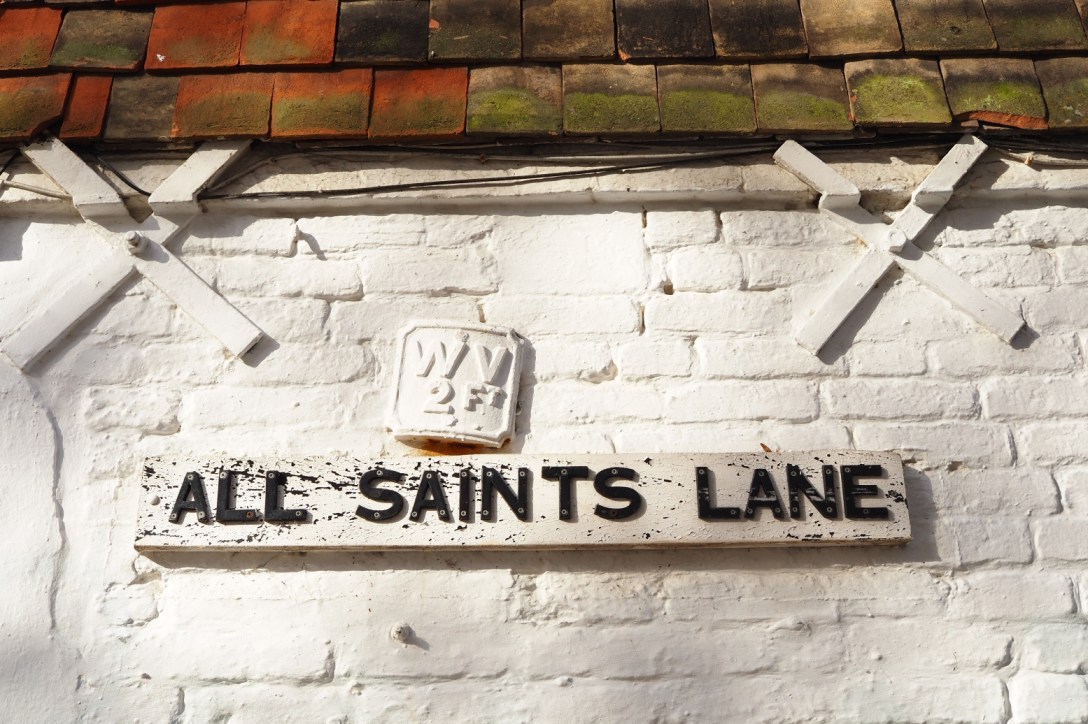
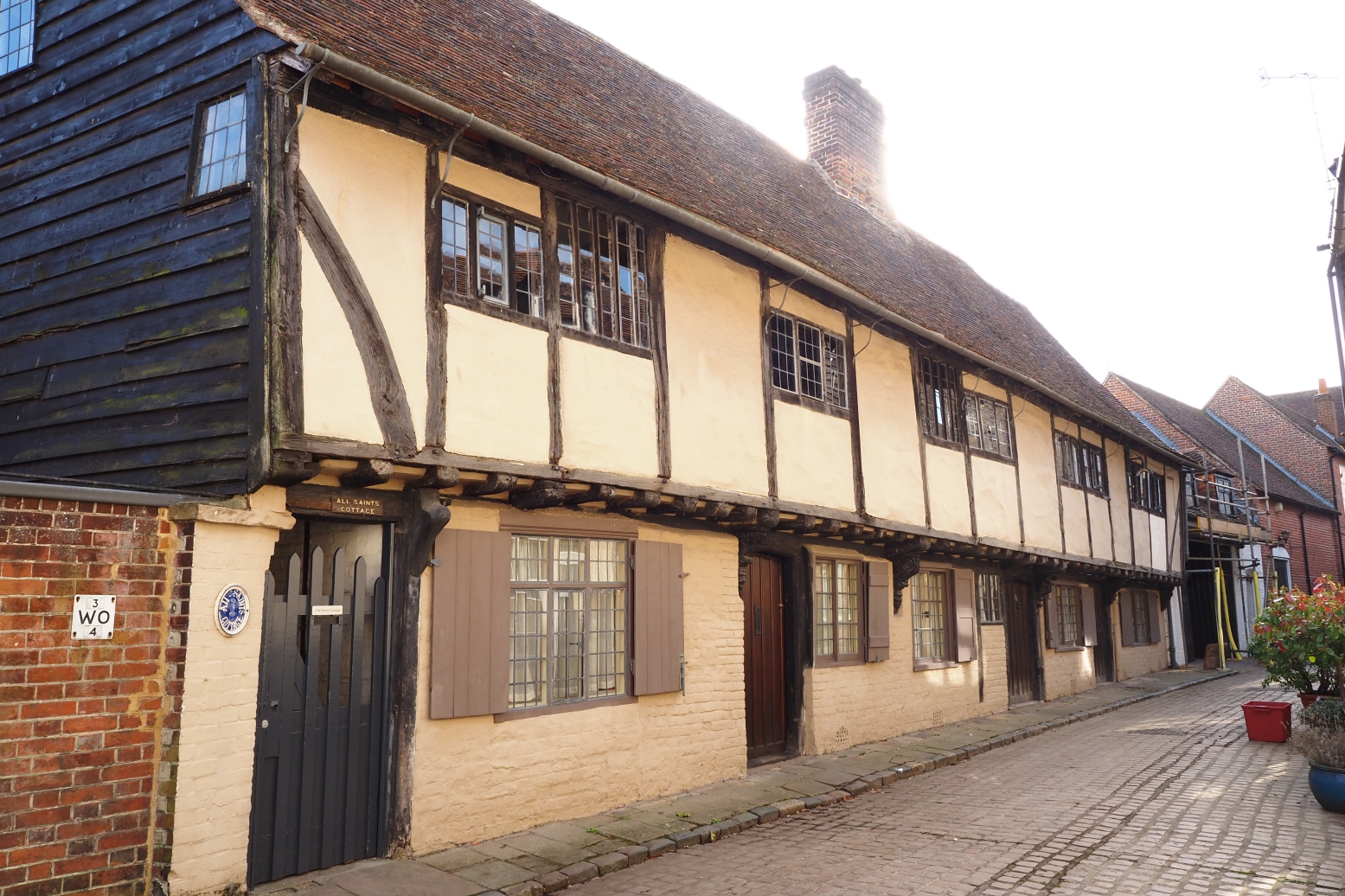
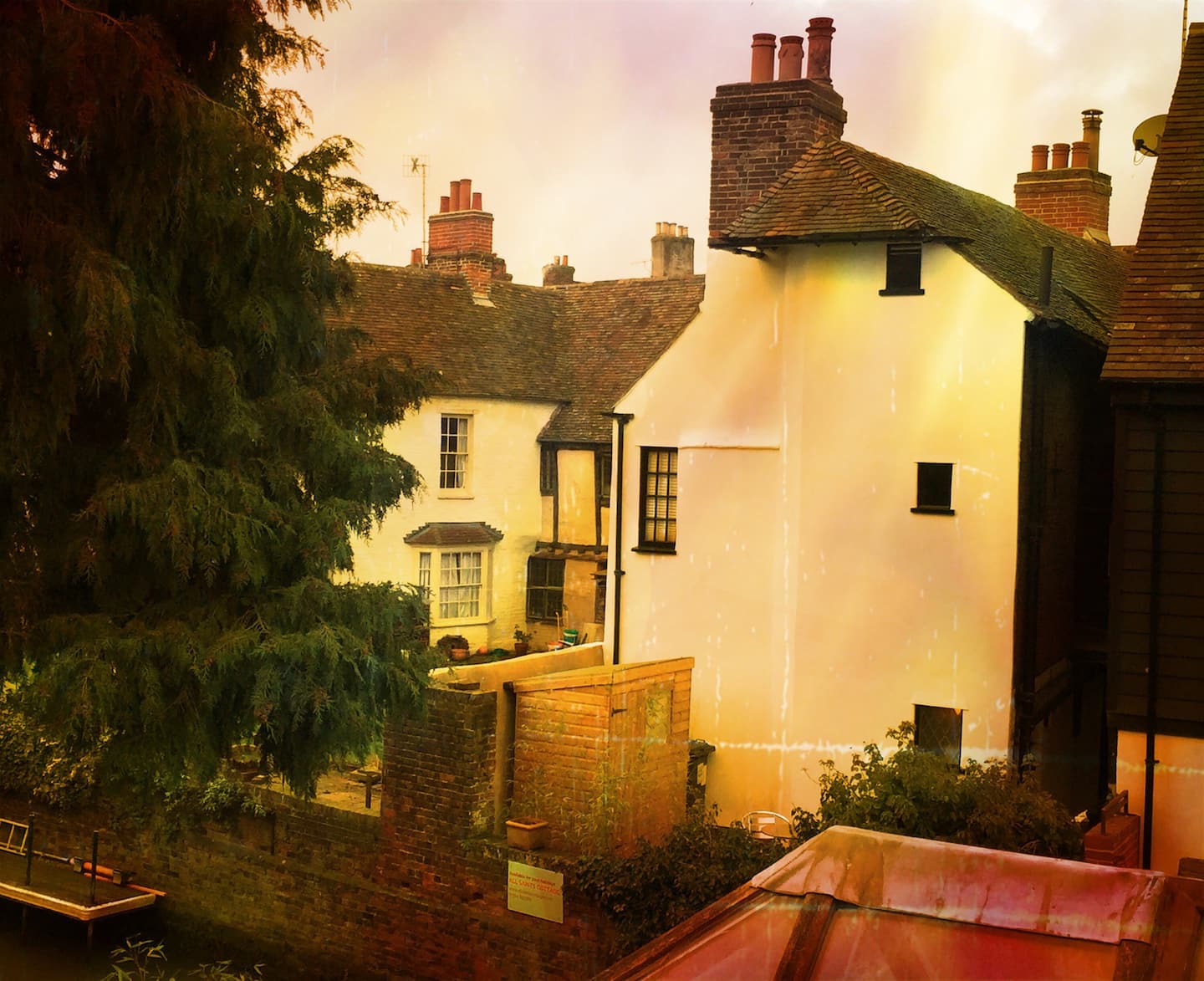
All Saints Lane is a residential cul-de-sac (apologies to anyone living there who saw me peering in) which has one incredible stretch of timber framing. Turns out you can rent one of the cottages and they have their own website. Possibly the least information you’ll find on any website, however.

All Saints Cottage is dated to the 1500s and is described on the Historic England website as an “L-shaped timber-framed range.” According to this TripAdvisor review, it “was a pilgrims’ rest associated with Eastbridge Hospital. It later became cottages. At one time, a school of dancing operated on its upper level, which comprises one, very long room.”

I hope those dancers didn’t bang their heads too often on those low-hanging oak beams! Looking at these these buildings from the outside, it’s the squiffy-ness that can give a sense of their age. This is not a technical term, but if it’s neat and tidy it’s probably from the 1900s.

I think a lot of people consider all doors in England to look like this. They don’t.

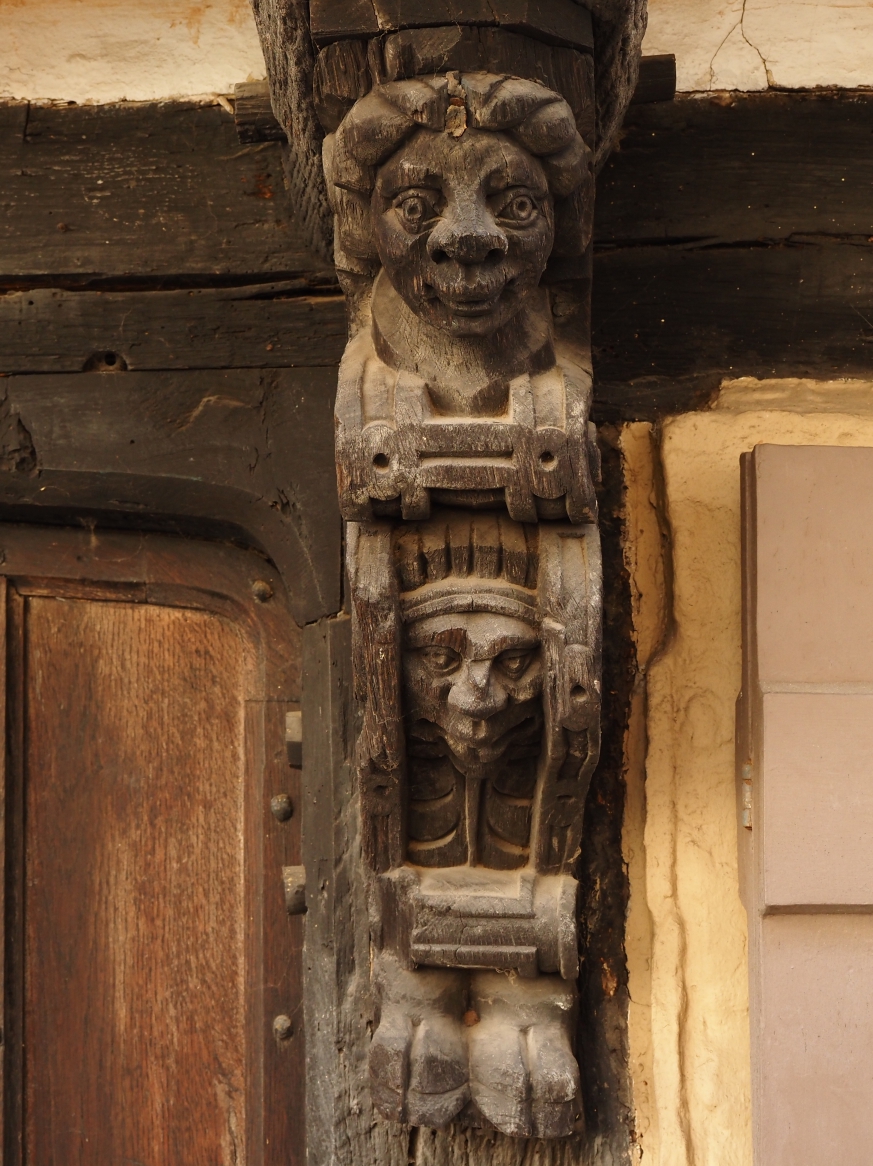
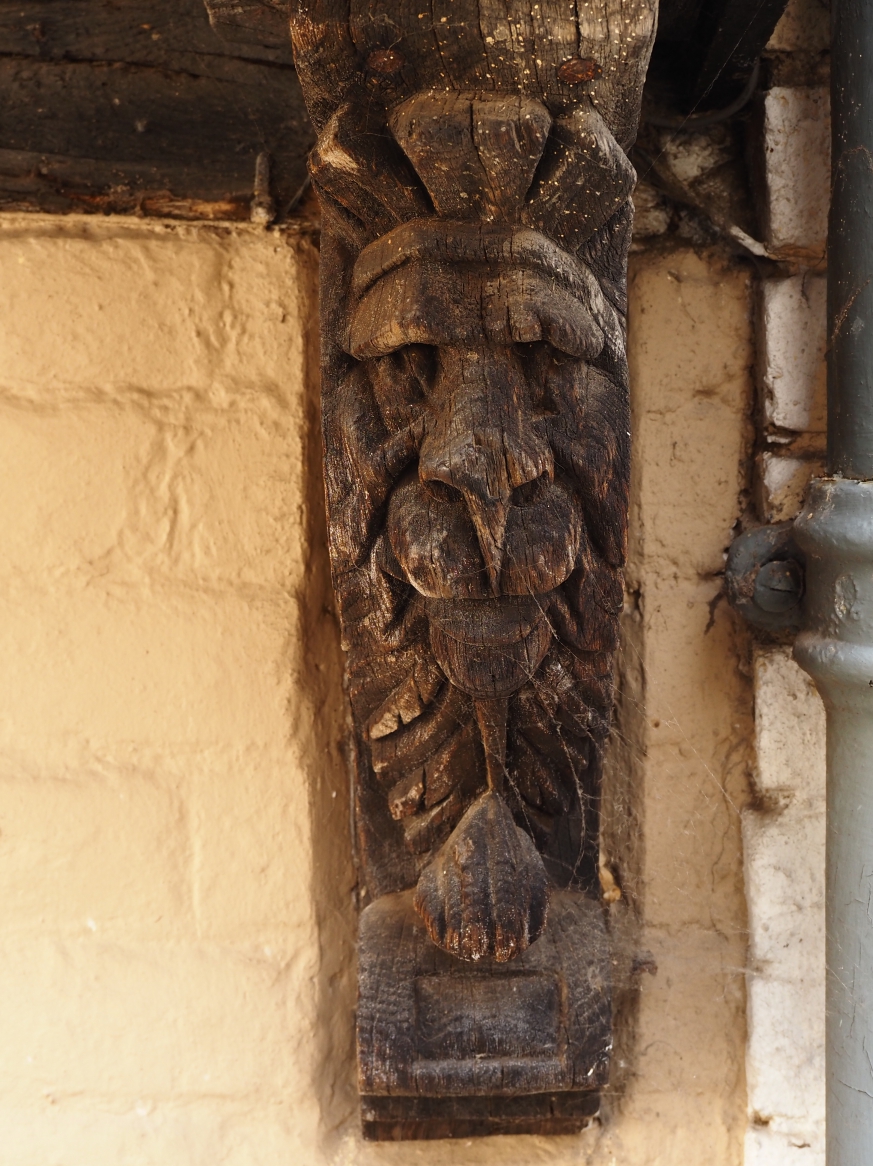
These are the other demons I mentioned in a previous post. The one on the left hand side has hoofs, the one on the right seems to be a lion with a mane. It seems the hoofs are indicative of a demonic or devilish nature.

In this photo from the AirBnB page you can see how it’s been swallowed up by a side extension. Poor timbers.

If you’re not staying for the night, All Saints Lane is a dead-end, so your only option is to head back out onto St. Peter’s Street.

Follow @OakTimbers on Instagram

Oak timbers: St. Peter’s Street, Canterbury

Follow @OakTimbers on Instagram

A really good guide for buildings in Canterbury can be found here.

I recently visited the English city of Canterbury, encountering many, many timber-framed buildings. I photographed so many that I drafted one post and found it was far too long and complex for this blog. So I have broken it up to focus on a couple at a time.

St. Peter’s Street on a busy Saturday morning. You can see the diversity of building types which show how old the townscape is. Right in the distance the tower of Westgate can be glimpsed, dating to the late 1300s, it’s the largest surviving city gate in England. That is obviously a building I didn’t manage to photograph!

On St. Peter’s Street you can see number 13, a building that houses a charity shop and a barbers. It’s got lots of signs of renovation with a few old elements standing out. The building dates to around the 1600s.

Note the beautiful carvings of the wooden ‘barge boards’ in the gables.

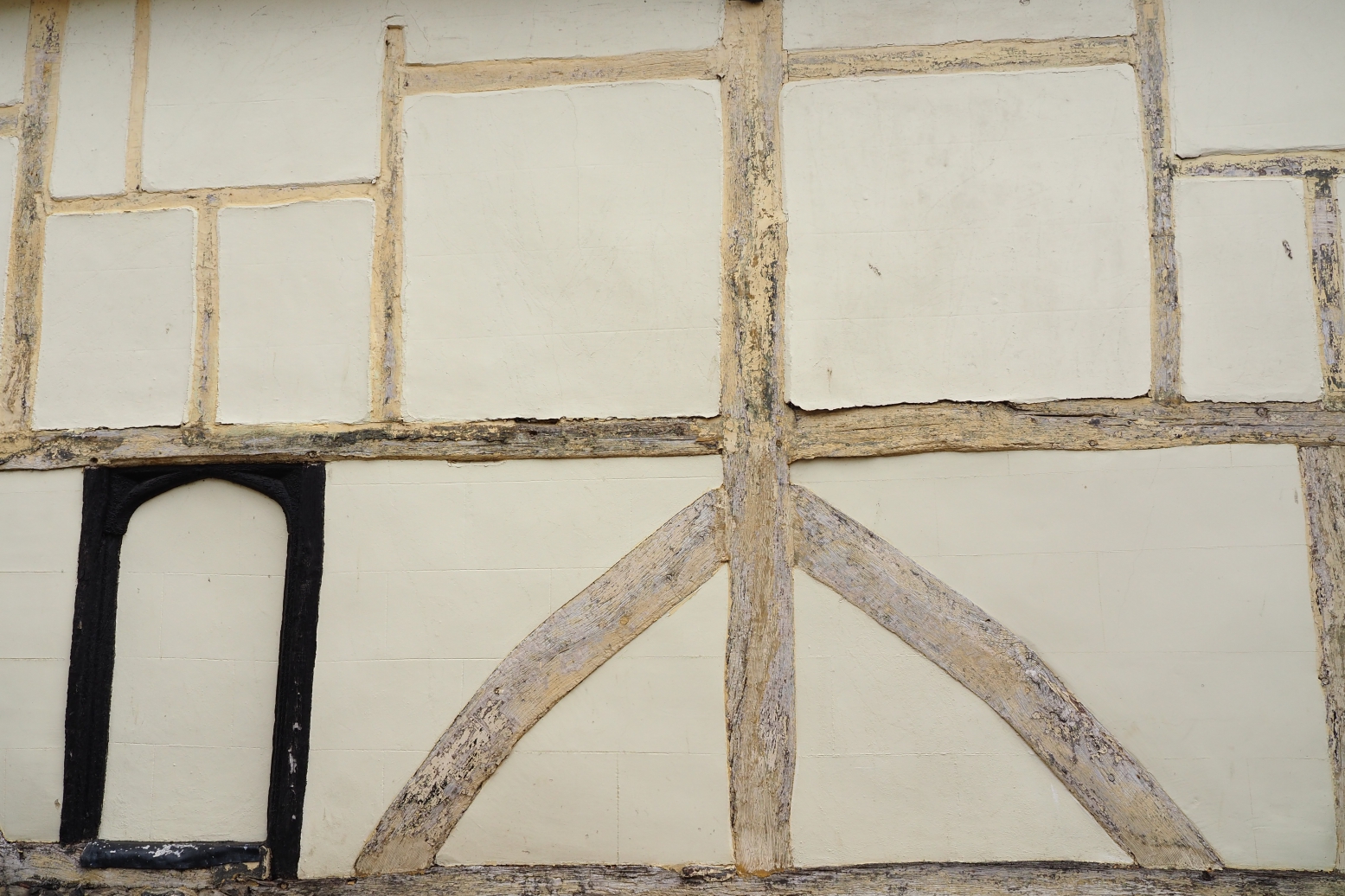
At the side you can see an old entrance way outlined in black. It’s a very small door.

These demons are designed to protect the building’s inhabitants from, well, demons I suppose. More of them to come in a later post. You can see where smaller, older windows have been filled in between them.

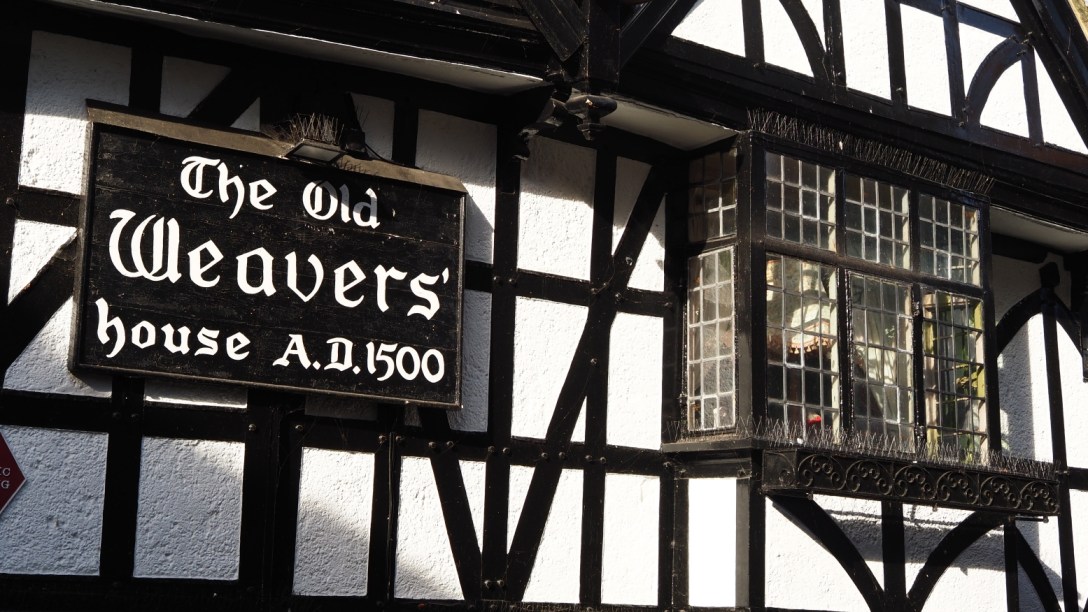
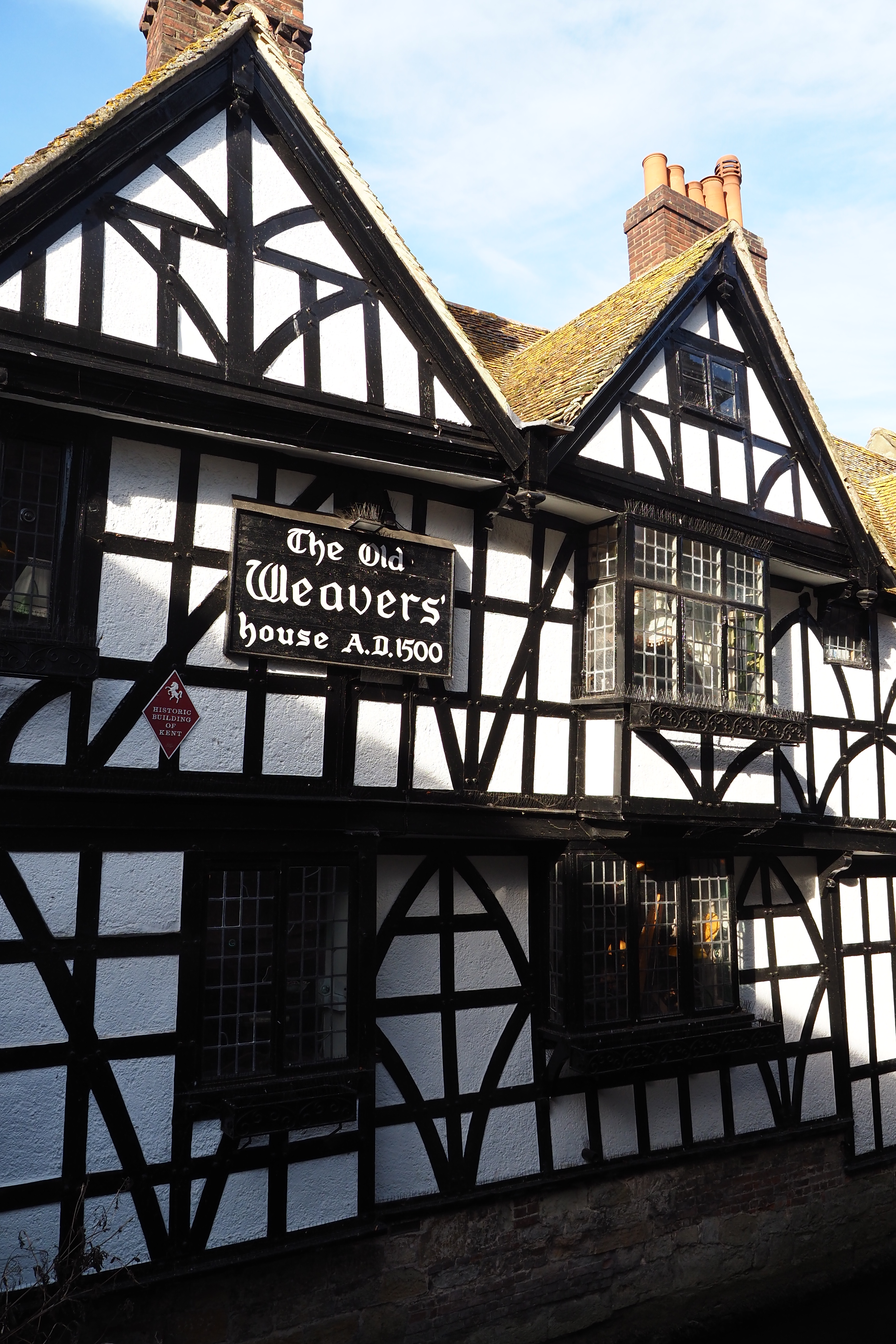
The Old Weavers’ house A.D. 1500. This is a well-photographed spot as it’s clearly visible from the bridge over the Great Stour where the boat tour company wait for business.

Here you can see the river. It has the feel of something out of Bruges, situated along a waterbody in this way. Interestingly it is thought to have been built to house weavers fleeing religious persecution in Flanders (i.e. Belgium)!

This is an possibly early 20th Century image of the building with a better view of the river, technically.

Thanks for reading.
More timbers

Follow @OakTimbers on Instagram

Fungi 🍄: March smatterings

Last week I went for a walk in rather grey and glowery weather. It was in hope of seeing some earlier spring signs but was more a reminder that winter persists.

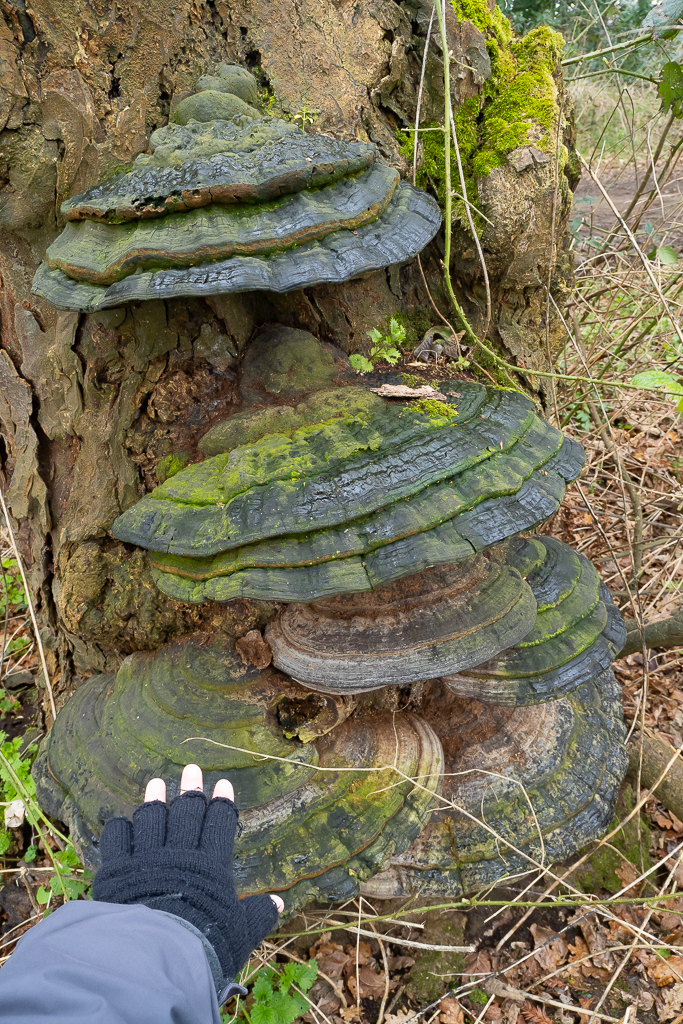
I found a small collection of glistening inkcaps, along with one of my favourite large brackets. Those are pictured here with my hand for scale.

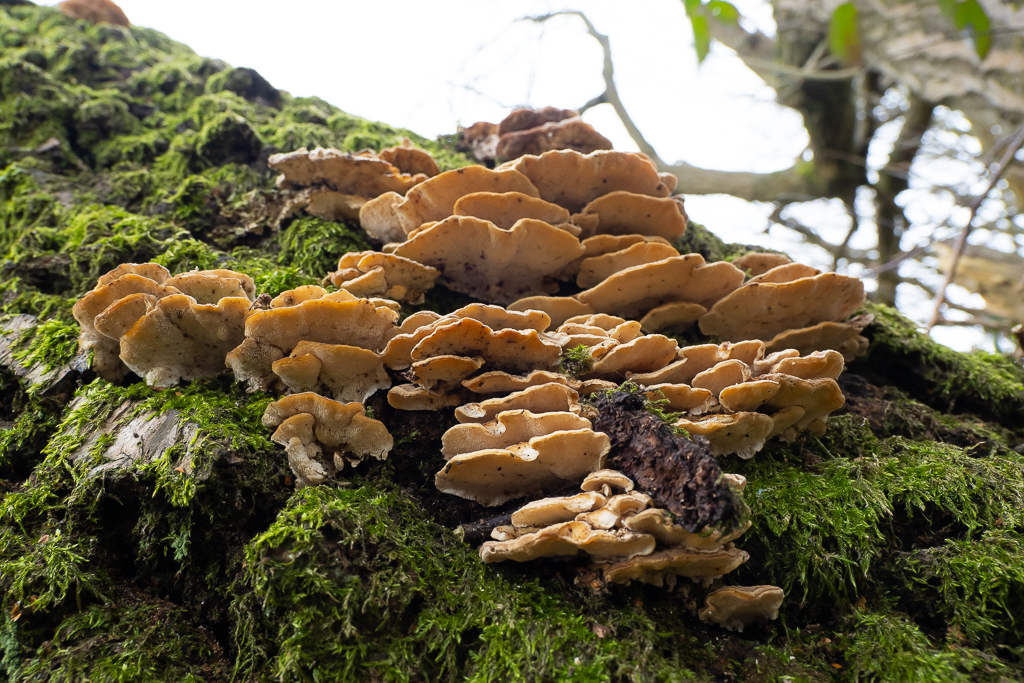
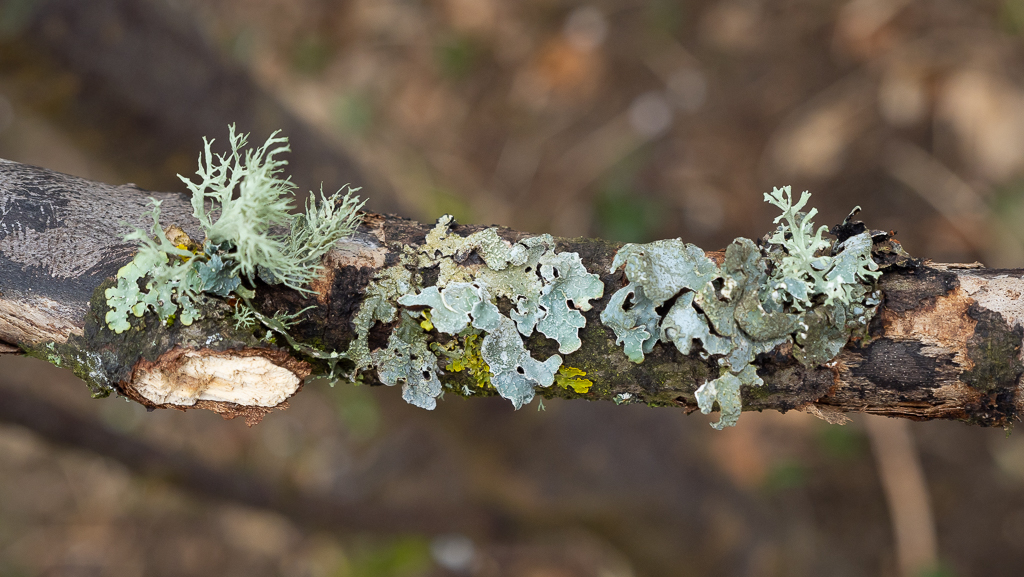
Otherwise there were some small polypores (probably turkey tail) and a few lichens that had been enriched by recent rain.

Life is rather full-on at the moment so I’m not finding the time or energy to write something longer or more detailed. It’s also a mental thing, just don’t have a lot to say. Photography will be the focus in posts for a little while.

Thanks for reading.

Solidarity with the people of Ukraine 🇺🇦

More mushrooms

Support for people in Ukraine 🇺🇦

Some ways to feel less helpless about Putin’s war-crimes/terrorism/illegal attacks in Ukraine:

Thanks. Stop the War. Solidarity with the people of Ukraine.