In 2008 I began experimenting with urban night photography. It shows how much things have changed for camera technology that I don’t even need a tripod now. Cameras today can capture much more light without reduce the image quality than they could in the 2000s.
As we’re now unable to leave the house for much other than essential things such as food and exercise, it’s drawn me closer to home. At this time of year I be looking to do some astro photography on these dark January nights. At the moment I can’t travel away from light pollution but I’m still trying to learn as much about the stars as I can. Maybe I will post some of those home images, it’s not like things are going to change anytime soon.
Usually this small town in West Sussex is bustling on a weekend night, with people visiting pubs and restaurants. On 10th January 2021 it was deserted but for people passing through.
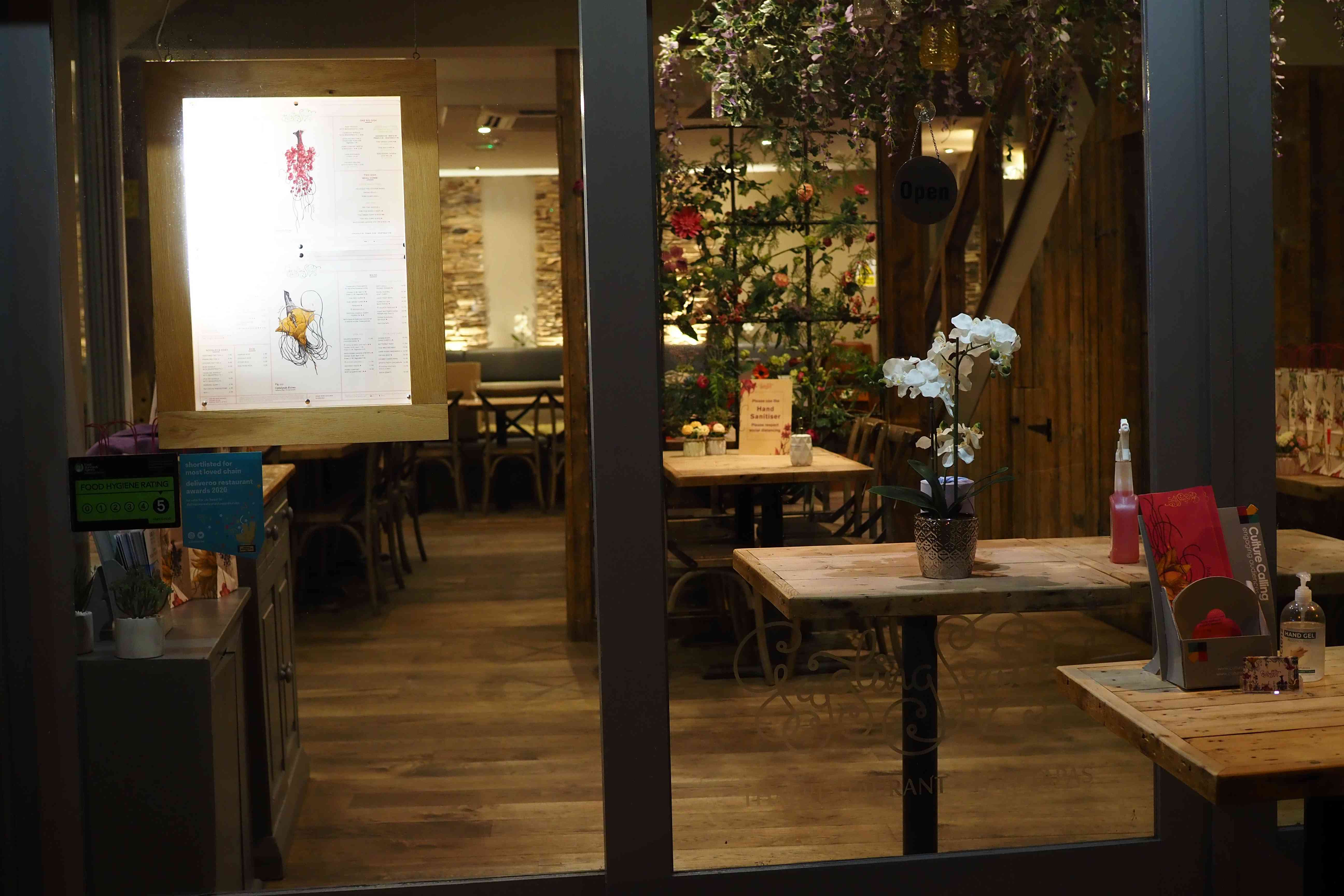
Restaurants that you might once have been unable to book a table for were empty and only offering a remote delivery service. Note the disinfectant indoors and hand sanitiser outside on the menu table. A sign of the times.
Elvis is also staying at home.
These large stickers urge people to keep to the left, but it seems to have very little impact. You would need to completely redesign the townscape to make it work. This is going on for so long, you wonder if that will begin to happen, especially for new developements?
The local shopping centre was still open to visitors, though everything essential had closed for the day. I wonder if these handsanitising units will remain in place permanently now.
Christmas lights are perfect for practicing bokeh, the blurry circles created when the camera is out of focus.
Businesses have been hit hard by the pandemic, but I wonder if some local shops are doing better in places where people used to commute.
This local statue at least offers a sense of humour to passersbys. We need it.
Dartmoor is renowned for its moorland and rocky hillscape in Devon, south-west England. It’s famous for its graphite outcrops or ‘tors’ which dot the landscape. It’s a very wet place, another reason why it’s so boggy. All in all a tremendous place for lichens and other moisture-loving organisms like mosses.
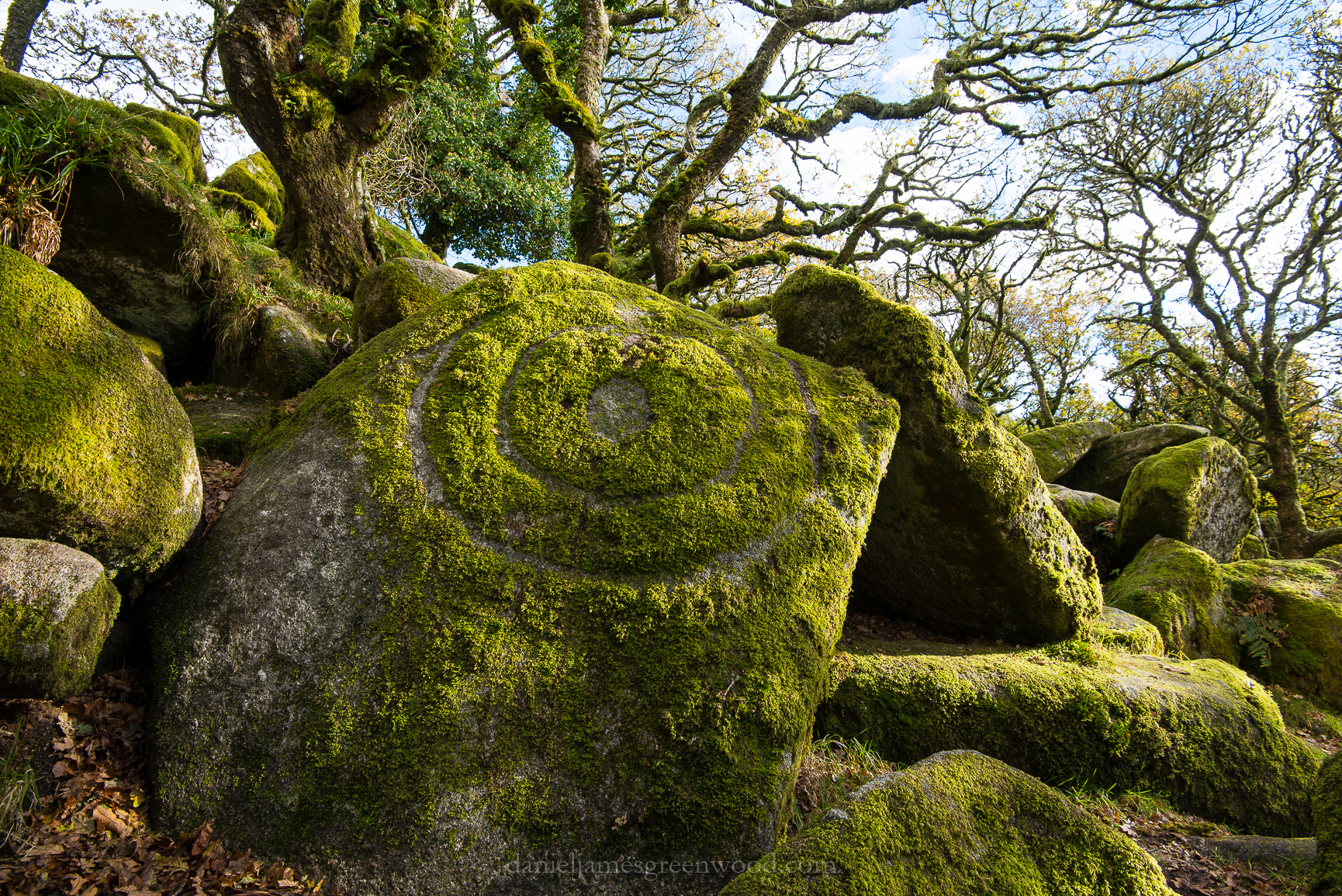
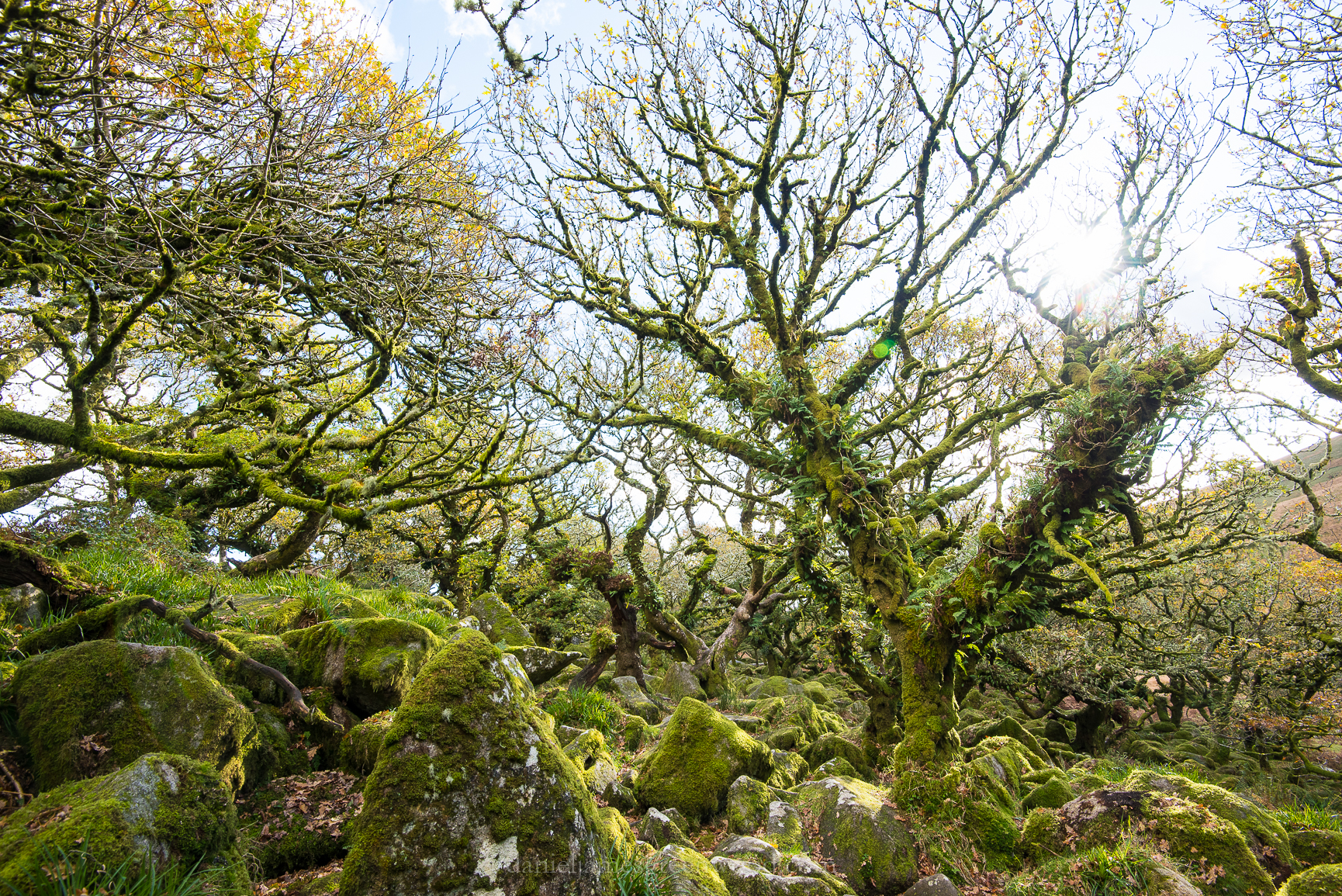
One of the most famous places in Dartmoor is a small area of woodland called Wistman’s Wood, a National Nature Reserve near Postbridge. This well-loved wood is home to scraggly oaks dripping in moss and lichen. These are also exceptional places for lichens. The wood itself is known for its misty scenes, with the trees clinging on to the moisture in the air. That is only a good thing for lichens and mosses.
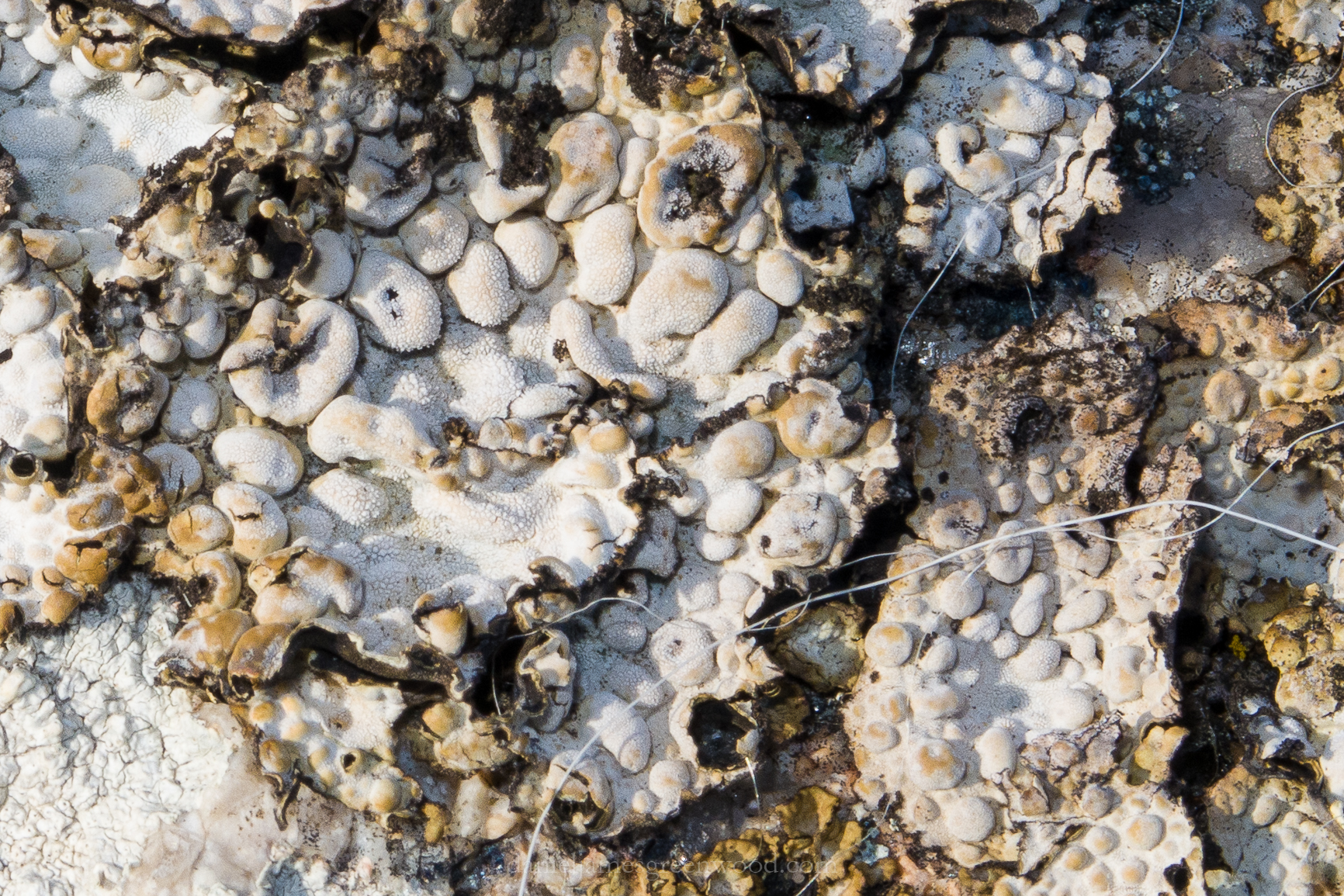
This bubbly-looking boulder lichen was growing on the approach to Wistman’s Wood. The threads in the lower right-hand part of the image are hairs from sheep or cattle which have squeezed past the rock.
Another boulder held a spidery community of foliose (leafy) lichens.
Mandarin duck with ducklings
Here is a rather nice example of a lichen-covered boulder in the river Dart. This is a female mandarin with her ducklings. This was in June and while rain isn’t unusual in Dartmoor in summer, you can see it has been warmer around the time of the photo because the mosses are blackened and dessicated.
Wistman’s Wood
The lichens in woodland like Wistman’s are found on rocky substrates and the branches of the trees. It’s interesting that these boulders are at great density in this woodland but not the same in the wider landscape. That is probably because the wider landscape has been cleared of woodland and then the boulders left behind, for livestock grazing. Woodland was cleared from Dartmoor long ago, mainly during the Bronze Age, from what I know.
This photo won’t display in portrait, but it’s an oak trunk covered in epiphytes – lichens, mosses and ferns coating the bark. This is the British and Irish equivalent of rainforest, or Atlantic oak woodland.
Dartmoor’s oak branches are rich in beard lichens, I think this is a species of usnea.
Some of the less flamboyant lichens, but probably more common, are these pore lichens. I think pore lichen is an American name, which isn’t used in Britain. I don’t really care and am always frustrated with the rigidity by which species recorders approach these issues. We need common names to encourage more interest in nature. I know Tyrannosaurus rex is a popular name, but Latin names do not capture the imagination in the way that common names do. Stinkhorn, anyone?
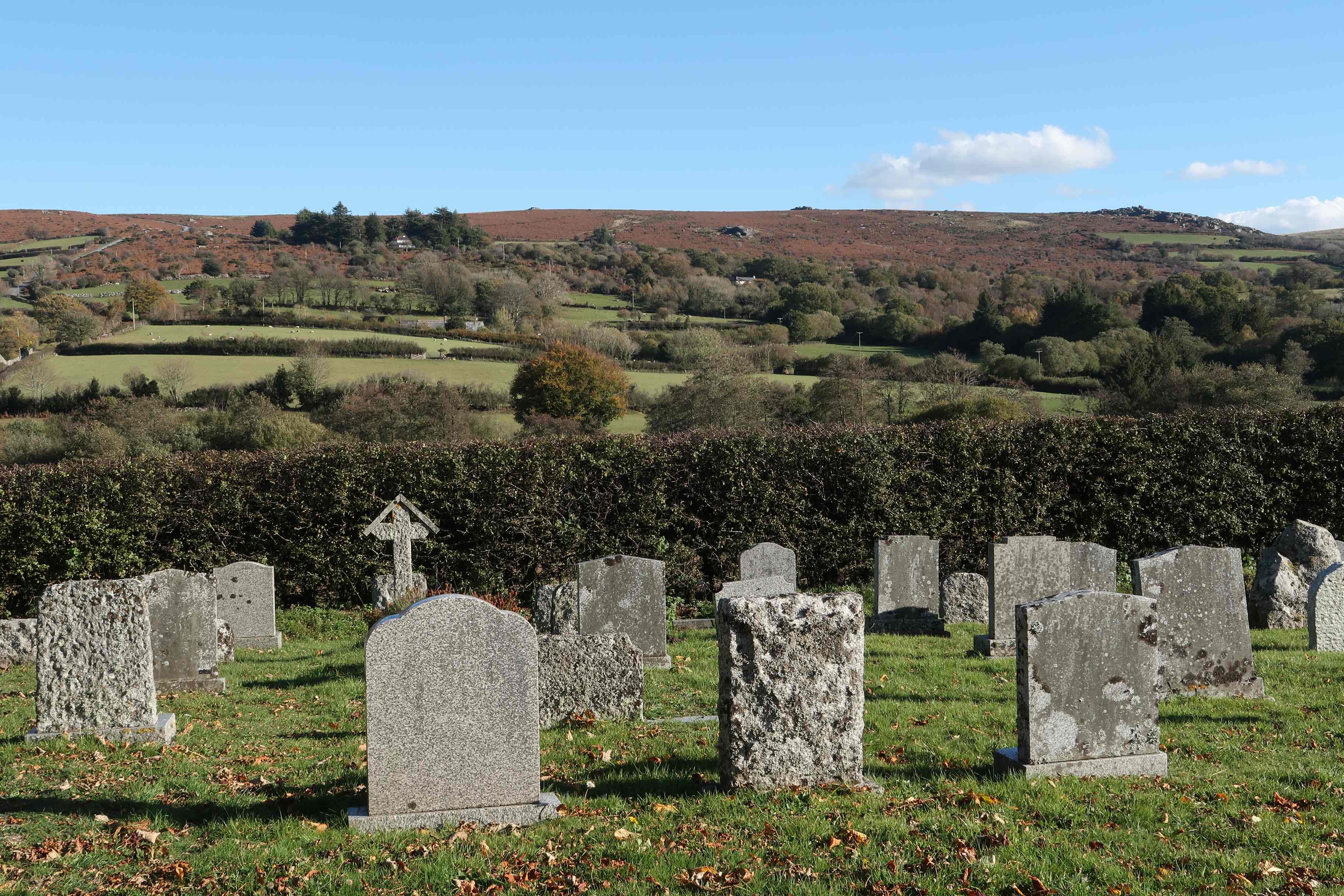
As someone who grew up in a city, cemeteries were some of the first places I began to notice wildlife. I think they are special places also because their atmosphere is so different to the rest of the built-upon or managed landscape. At Widecombe-in-the-Moor, there is one of the best lichen cemeteries I know. Not that they’re dead, they’re well and truly alive and kicking.
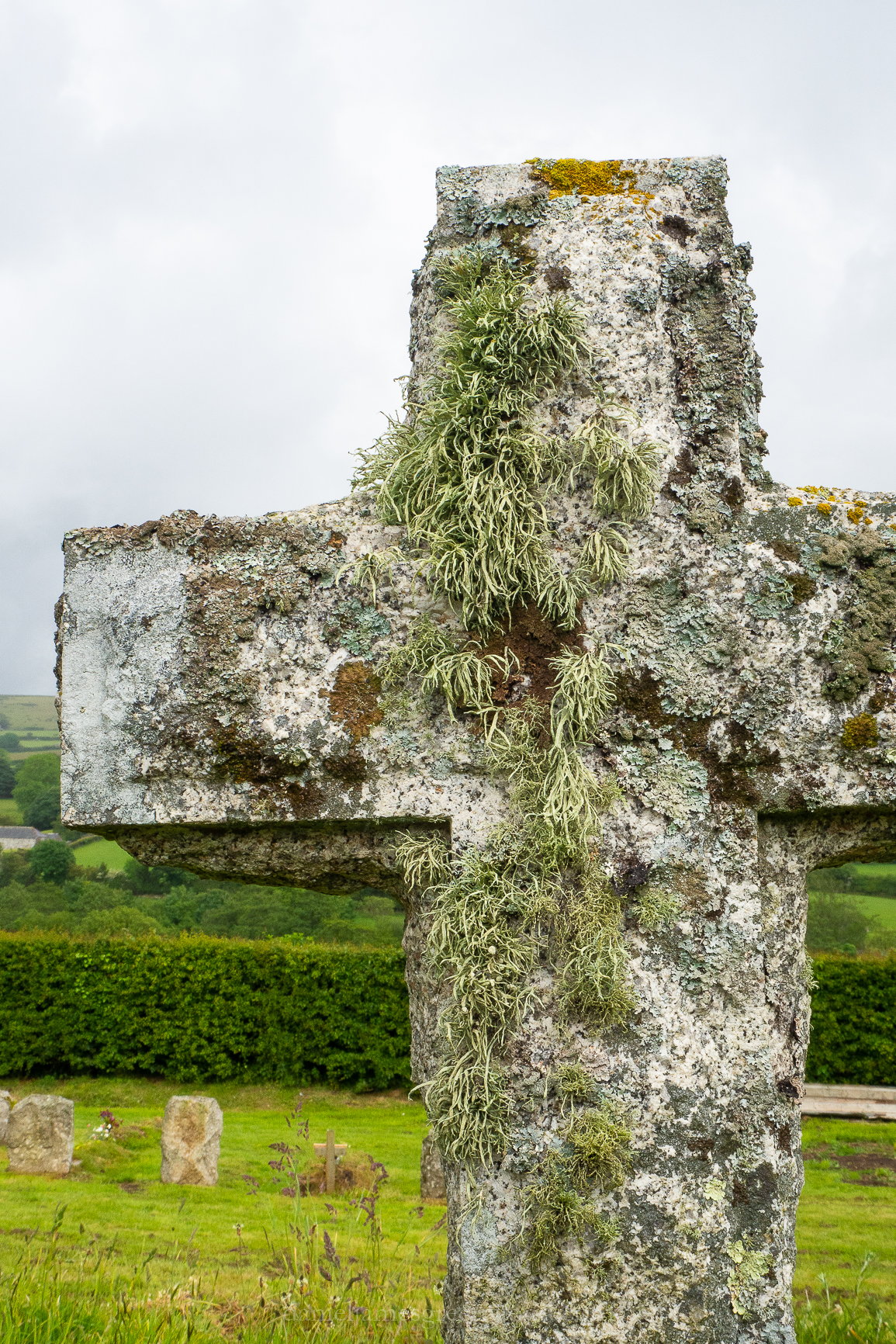
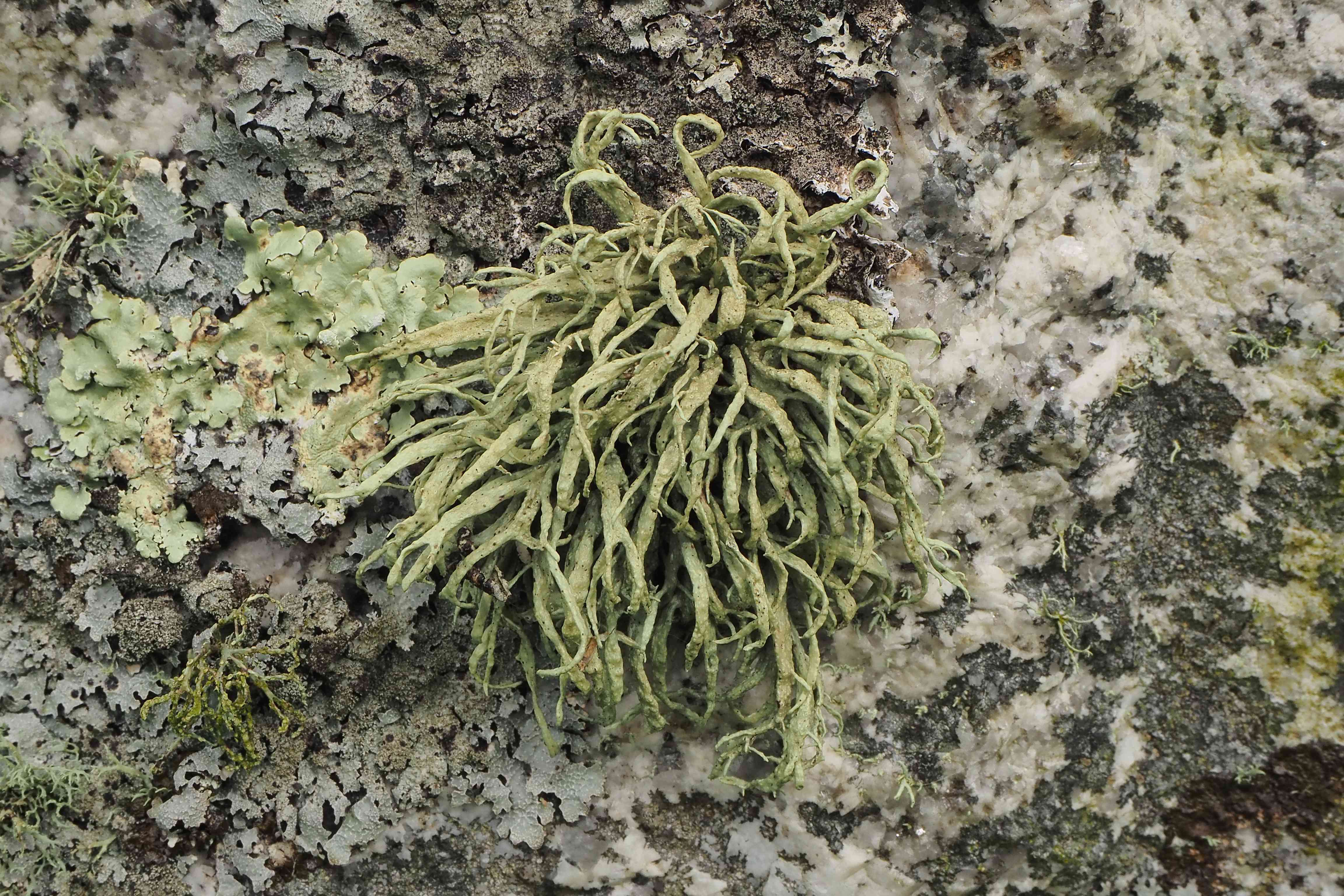
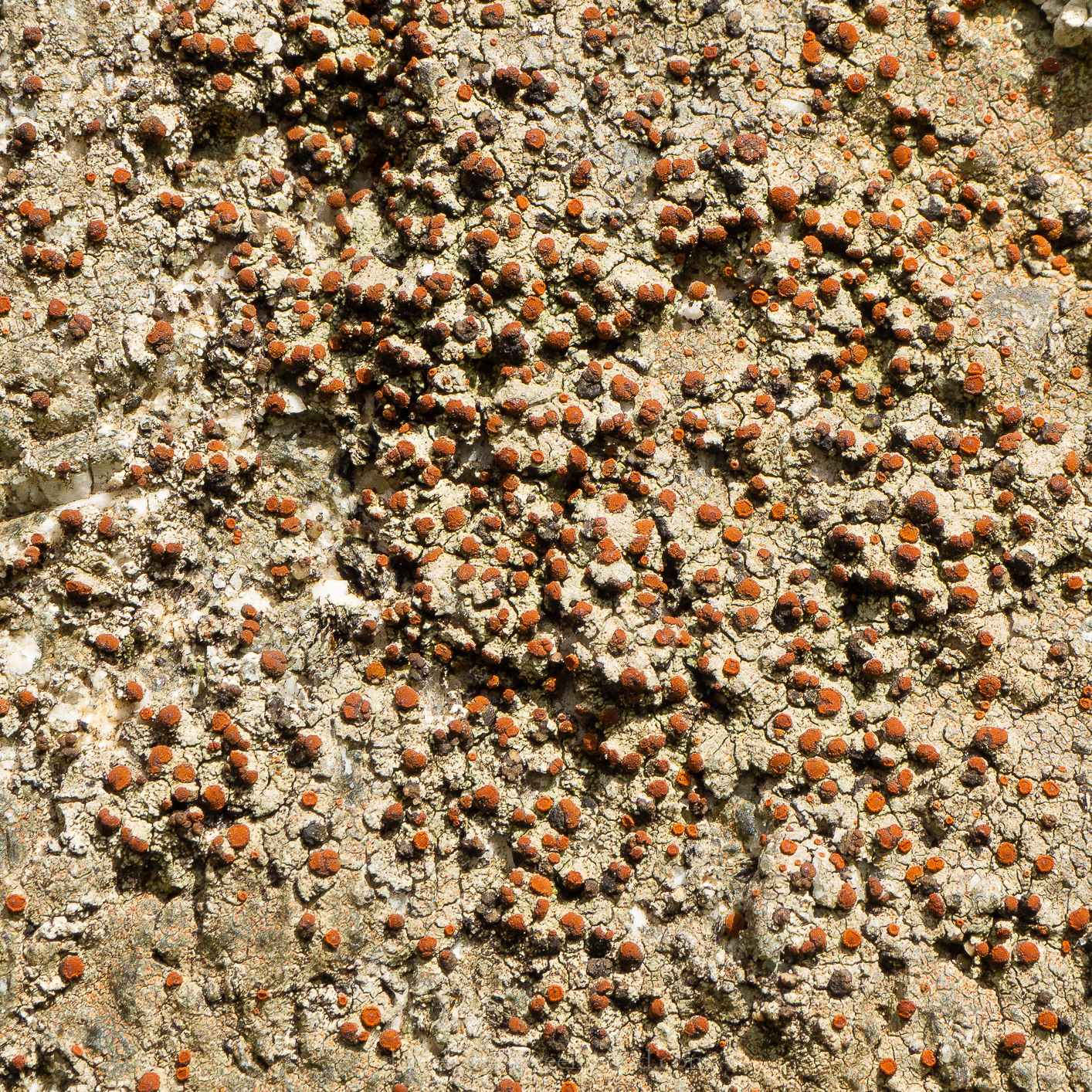
This cross is a dream. There are foliose and crustose lichens, and it hasn’t been tidied up by the cemetery managers (I don’t. The air quality is also excellent in this area, allowing for more species to find a place to live. Below is a selection of the species I found growing on gravestones in this cemetery:
I couldn’t let this woodlouse get away without being included along with these frosty fruiting cups.
Above is a really cool insect, a downlooker snipefly! I’ve also found this species on lichen-encrusted boulders in Western Ireland, a similar climate and landscape type.
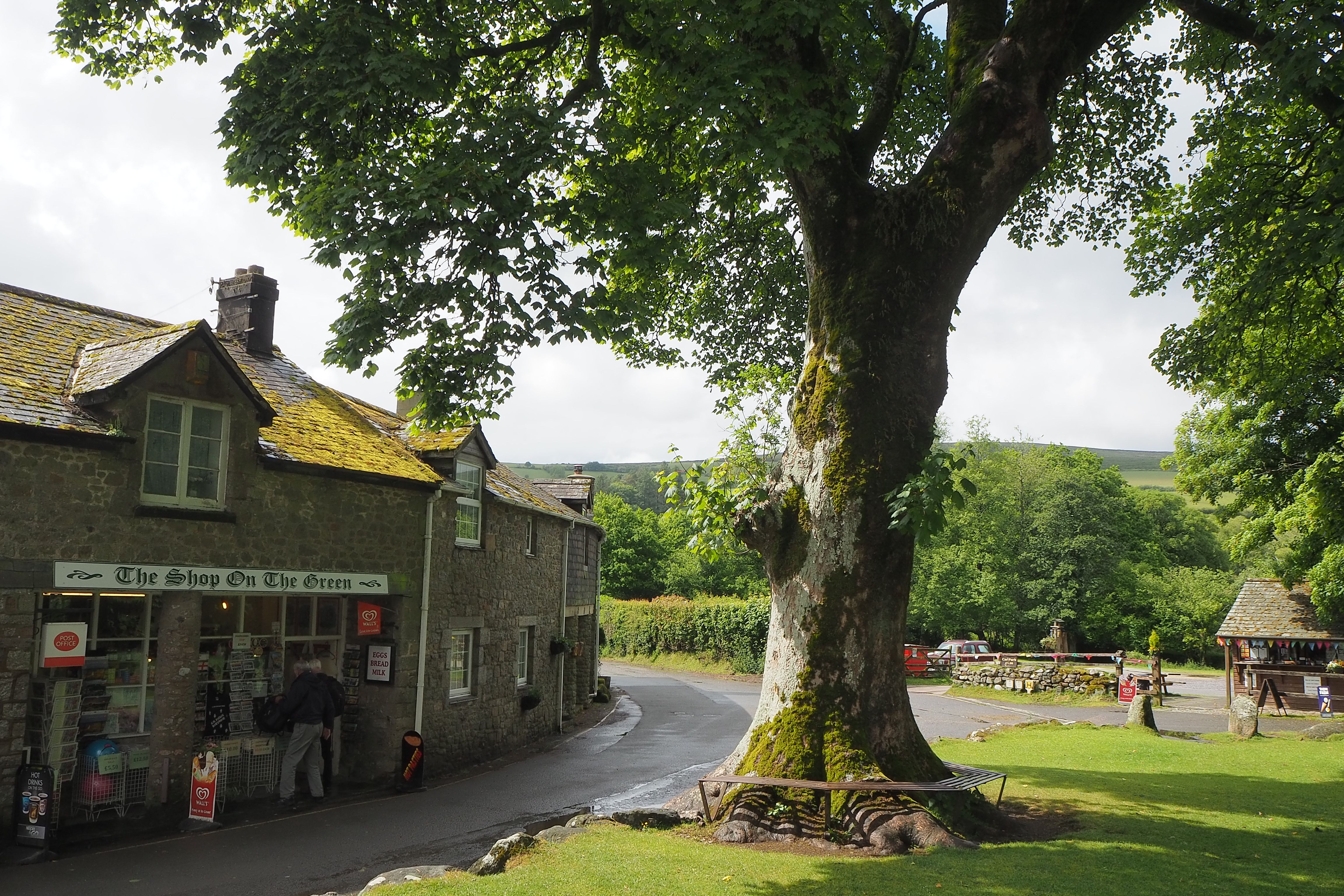
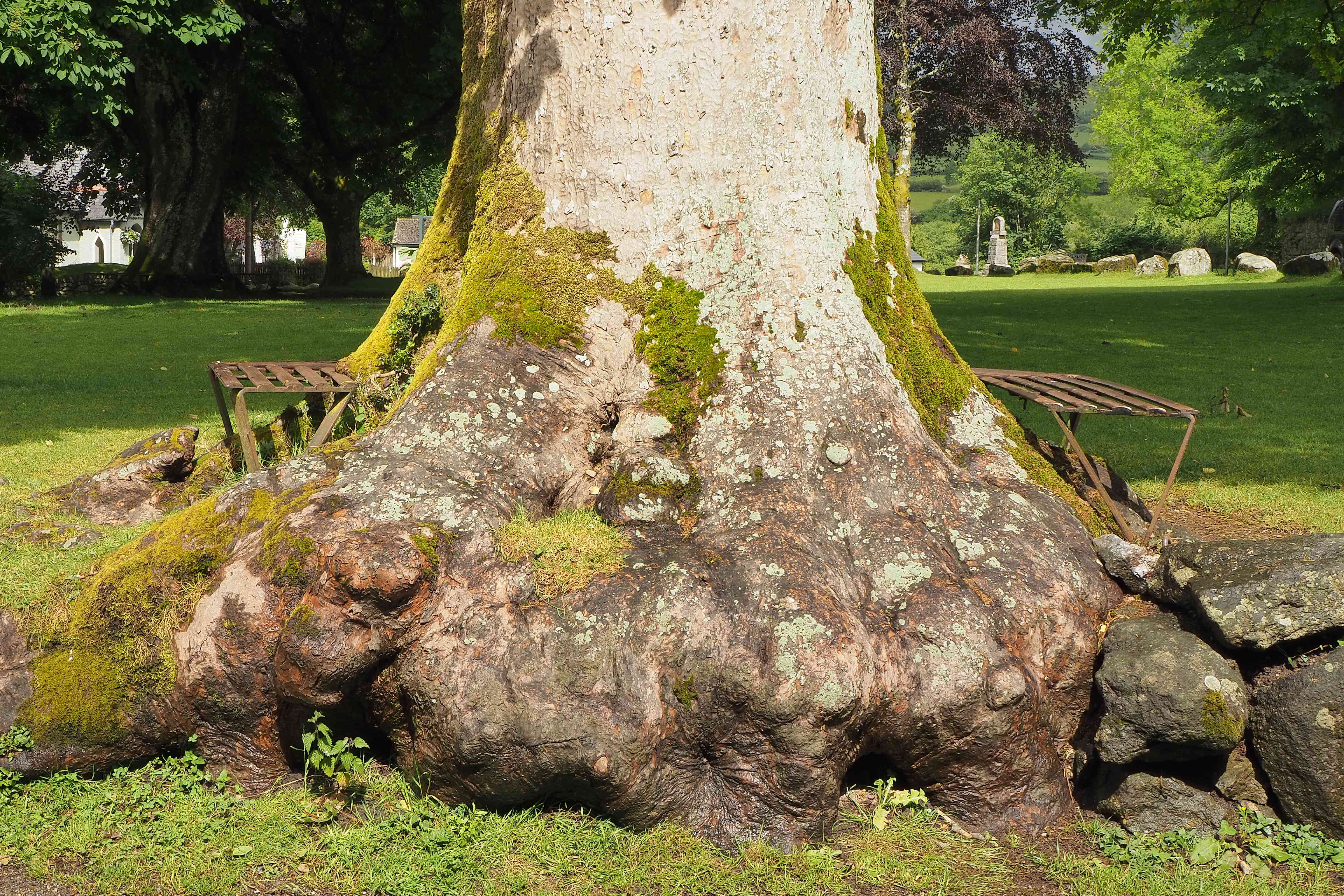
The village of Widecombe has a large sycamore growing on the edge of the green. This tree shows why scyamore (Acer pseudoplatanus) is a good wildlife tree, because it can provide habitat for lichens.
It looks like a perfect place to sit and cotemplate the amazing lichens you can find in Dartmoor.
This week it’s a continuation of #LichenJanuary. It’s a time of year when winter is at its deepest, more grey than snowy in southern England. In towns and cities lichens come to the fore. If you’re looking for something to take your mind of the wider world this month, lichens are your friend.
The other day I had the idea to post on Twitter asking for people to share their lichen photos from around the world. In a time when we are unable to travel anywhere and people are suffering, it felt like a positive thing to do:
Dear People of the World (cc #LichenTwitter): where are good places anywhere in the world to see lichens?
I will start. My mum's side are from a very rainy Western Ireland, where lichens are in charge.
After a little while, people from all over the world began to post their photos. Over night UK time there were a series of posts from Japanese lichen lovers. It is one of the most incredible things about social media and the Internet, that someone can post in Japanese and the software does a decent job of translating it. A couple of the Japanese tweets included Cladonia lichens, what in English we generally refer to as cup lichens:
My interest in lichen originates from my Irish roots. There is a track at the foot of the Ox Mountains in Mayo, western Ireland, that I have walked many times with my family. It is surrounded by old boulders and bogs, all drenched in lichens. Some of the species I got to know there were reindeer lichens, Cladonia portenosa.
Reindeer lichen, February 2012
Reindeer lichens seem to get their name from the fact their structure is like reindeer antlers. They are also known to be grazed by reindeer where they grow in Scandinavia. I believe they are also used as for dyeing cloth and as a delicacy in posh restaurants.
Lipstick lichens, May 2017
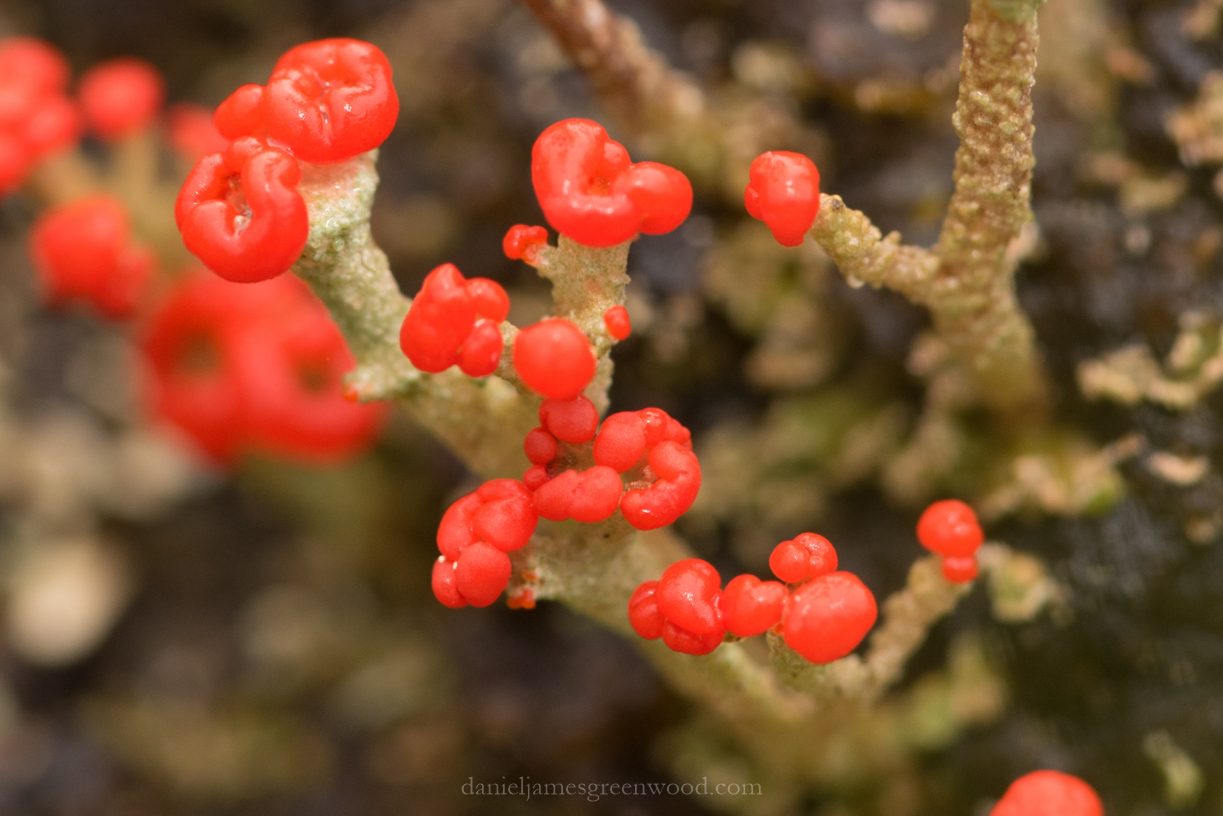
One Cladonia that catches the eye is Cladonia floerkeana, also known as devil’s matchstick lichen. Seriously, anything red is devilish?! I like the name lipstick lichens, and I will be calling them that.
Lipstick lichens, May 2017
These lichens were growing on top of the Ox Mountains (what are really hills when it comes to height). They are covered by boglands on the plateau. Mayo is a place with very high levels of annual rainfall, making it perfect for these moisture dependent organisms.
Lipstick lichens, March 2013
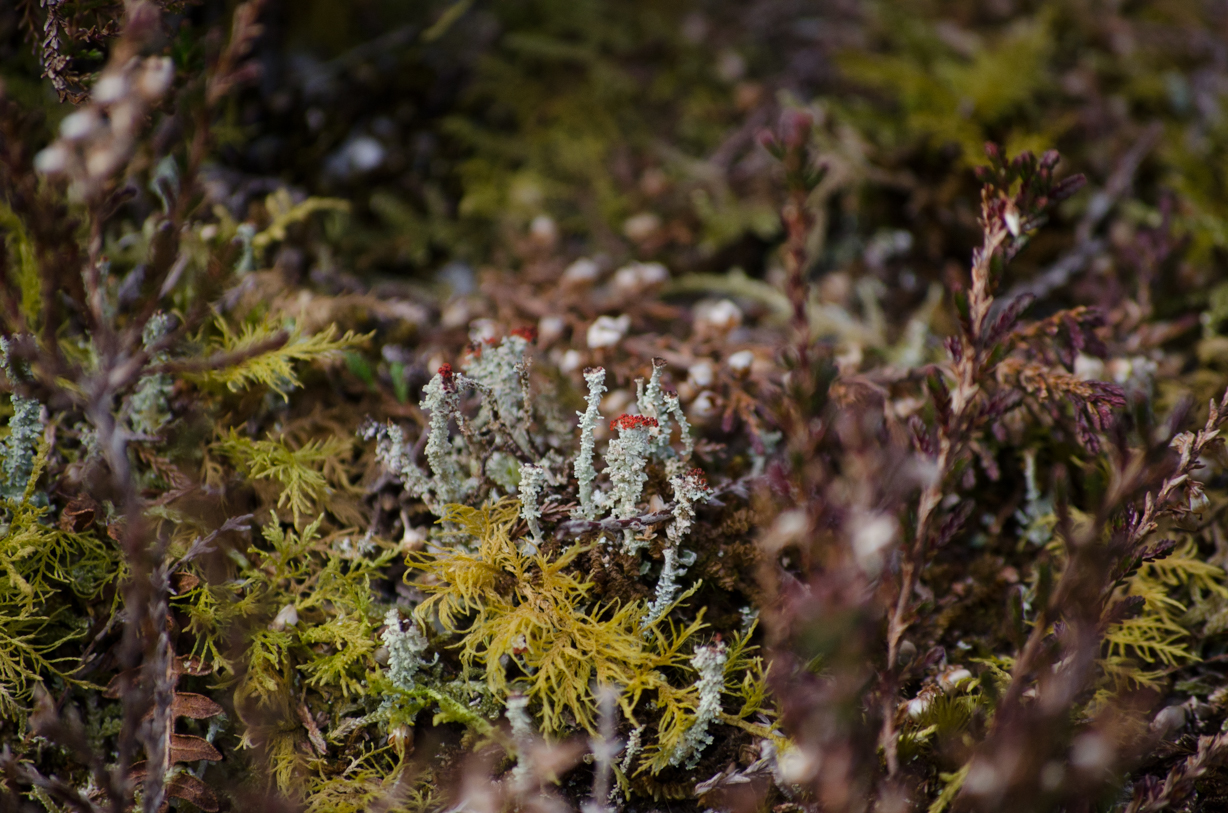
The lipstick lichens were growing on top of a boulder, while others could be found growing among vegetation in the bogs. I can’t wait to go back there and see what I can find. Here is an image from a few years earlier, when I didn’t own a macro lens. It gives a sense of their habitat.
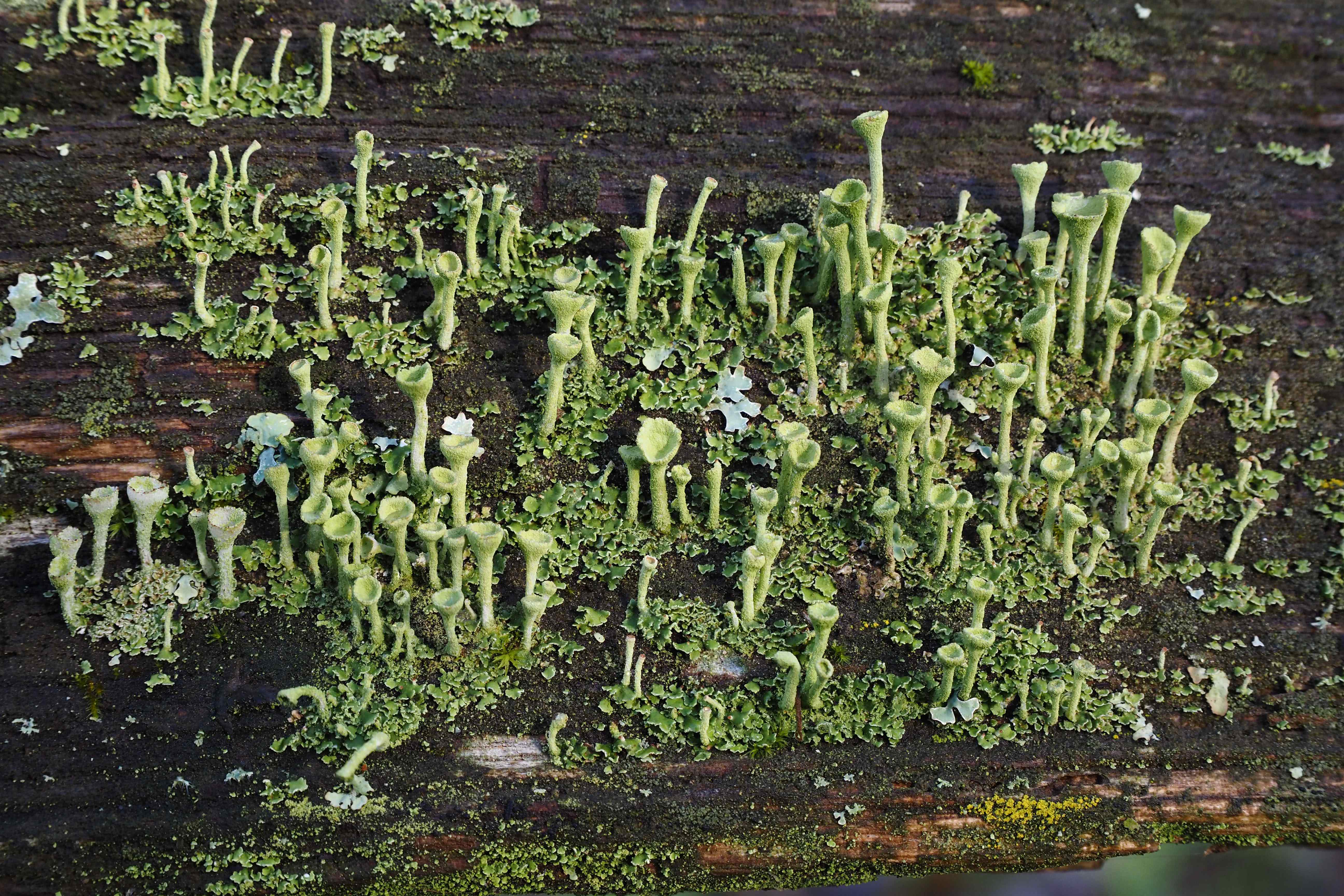
There is a farm near to where I live now in Sussex that has its own populations of cup lichens. I have noticed in recent years how fencing posts which are not treated with chemicals can important habitats for lichen, moss and fungi. The cup lichens above are very happy with their current abode.
Cup lichens, 2019, Sussex
These lichens seem to be noticed more than any other. They look splendid holding onto droplets of water in their cups, and their very nature of reaching upwards draws them to our attention. They are the quintessential ‘pixie’ cup lichens.
A storm has passed through overnight and in the morning the Arun is near flooding. All summer the river has been low, stagnant where managed by mini-dams installed to slow the flow through suburbia. On one footbridge where usually dogs jump in, chemicals and all, the river floods sections of the path, submerging the recently exposed roots of bankside alders. Those roots need to be underwater most of the time, and the storm had righted that wrong.
I speak to a man and a woman, armed with optics, on the footbridge. The river’s power is cause for relief. Even in 2020 these reminders of nature’s prowess can still be welcomed, even longed-for. They advise me on ways to avoid flooded footpaths, but I’m heading for higher ground anyway.
On the slopes silver birches stand in their ornamental regiments. They look like a stage set with their white trunks and even size. They bring forward mental images of Russian and other Eurasian art, hunters in the snow, or the main character feeling their way through the woods in an Andrei Tarkovsky movie. Above their white bark it’s blue sky.
Out and across the open parkland, water sits in the grass like mini-marsh. A great spotted woodpecker arrives in the branches of an oak. Quiet, it sits in that semi-diagonal pre-creep. Long-tailed tits pass across the open plain, re-tangling in brambles that shield a private fence and garden.
The trees change from oak to dotted limes, a probably ancient sweet chestnut – where a woman with a dog lingers beside its massive trunk – and the collapsed limbs of a red horse chestnut. In the spring lockdown, when everything stopped, a workman chainsawed the fallen logs for a man who stood close by with his young son. They were all way too close to the saw and without any protective equipment. Above the noise I could hear the father earmarking the limbs and branches for future firewood. The workman carried on, loading logs onto a small trailer attached to his car.
The red horse chestnut might be ancient but it is most certainly veteran. The fallen limbs are a key part of that. It holds dead and decaying wood, plus the many places wildlife can move into. It has a single limb of young growth that will keep it living for as long as time allows.
Around it the fallen wood is covered in silver-leaf fungus, which is pleasing to look at more because of its purple glow. The fallen branches have created niches of long grass where mossbell mushrooms fruit, as well as a pale brown cup fungus (Peziza) that looks like an ear. I think the man marking up his future firewood lived in the converted mansion house a hundred metres away from the tree. I hope he can come back with his son, witness the fungi, and have a change of heart. These logs provide life for species that need them more than we need firewood.
Across the parkland old furrow lines lead to views of the North Downs, so much woodier than their sisters to the south. Here the hill drops down into a bowl, rising back up again, before dropping once more to where the Arun rocks and rolls.
At the foot of the first decline water floods and I look to jump over the deepest stretch without making a complete idiot of myself. But the pause to make a choice is a blessing. The nearby road roars with surprising levels of traffic, seeing as we are subject to severe restrictions on movement due to the Coronavirus. A higher pitch cuts the drone, however. Looking closer at the water, it is not still, it is bubbling up. It’s a springline. This is the first one I’ve ever seen in the ‘wild’ sense. Perhaps the overnight deluge has driven water up through the aquifer to create the rural equivalent of a bubbling sewer. It’s not something I know much about.
A few metres up the hill another spring pushes from below the surface, calming tremors tickle the surface like moving clouds. Further towards the road and the spring bursts up from a large pool that has formed, bubbles resting in its wake. Without pause, the water spits and splatters like a fountain. The sun falls behind the hill and this winter springline turns an oceanic blue.
I’ve had a burst of American visitors in recent days (to my blog, not my house). So thanks for visiting, y’all, and sorry about the year you’ve had. You may have noticed I’ve slipped to monthly posts on here. Between April and October I posted blogs every Monday without pause, which is a tricky task…
Once again in England we have to stay at home to stop the spread of the horrific Coronavirus, with only one exercise trip outside allowed each day. When I’ve been heading out I’ve been passing through a local churchyard and cemetery on some days. These are the perfect places to find lichens, especially where there are old gravestones and trees. I thought I would kick off #LichenJanuary by looking at one of the most common lichens, which may help people to gain an interest and see that there is a way in. To identifying them, rather than becoming one.
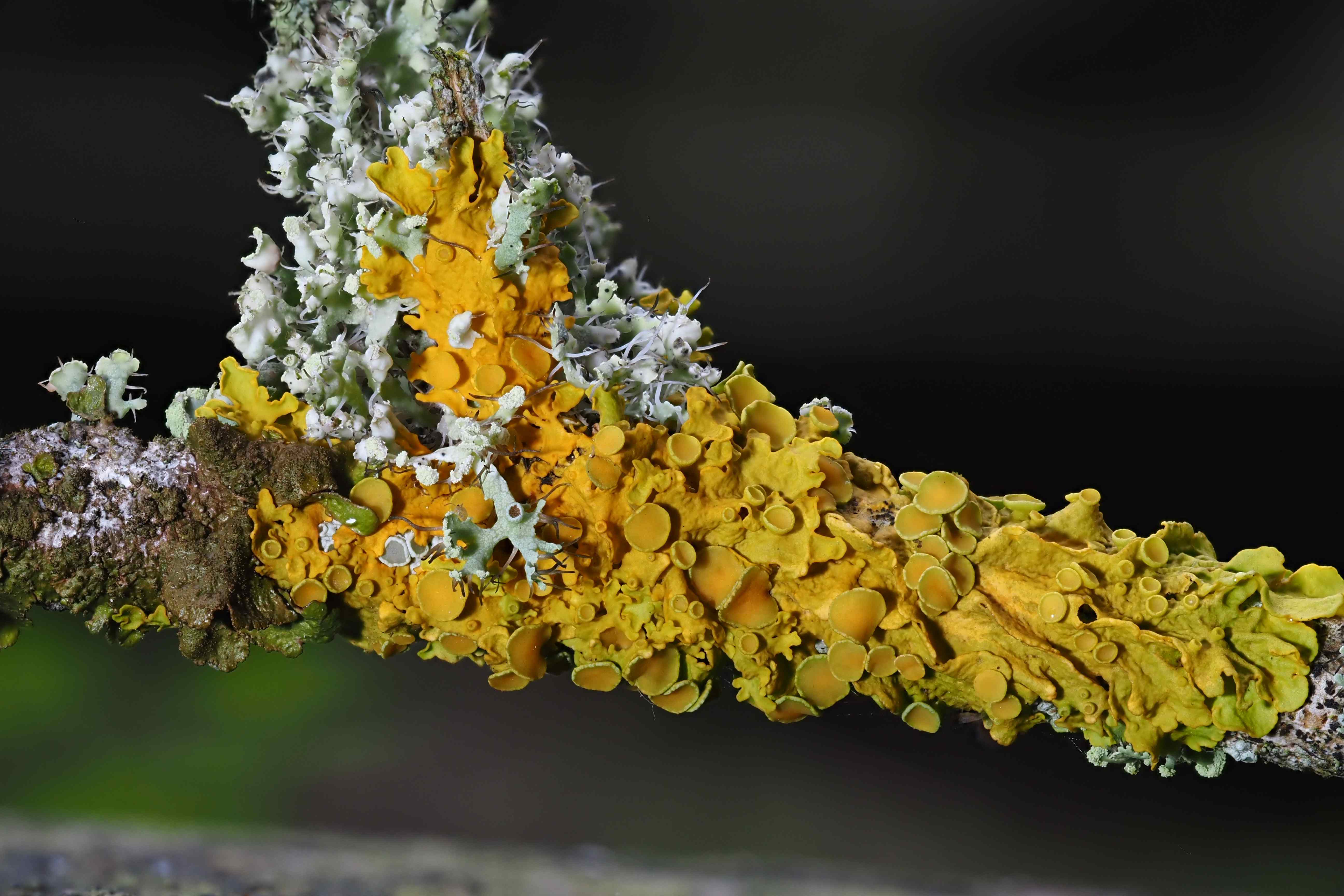
A quick intro to lichens. Lichens are a partnership of fungi with either algae or cyanobacteria. The fungus provides the physical structure for the organism and the algae or cyanobacteria turns sunlight into sugar through photosynthesis. Fungi, to my knowledge, are not able to photosynthesise. This is another reason why fungi partner with plants, which of course are able to harvest sunlight for food. There are a number of species on the branch seen here. The most prominent species is showing off its cup fungi, a type of ascomycete (ass-co-my-seat). Ascomycetes produce spores in the ‘ascus’ (singular) or ‘asci’ (plural) and shoot them out. Most mushroom-type fungi are basidiomycetes, which drop spores from the ‘basidia’ in the gills.
Now, fungi are hard to identify, and lichens can be even more difficult. That is such a massive understatement, because some fungi will never be seen and some lichens you just won’t ever notice. We’re talking generally of things you are likely to see in your life. Above and below is a common European lichen, tolerant of air pollution, which many lichens are not. It’s the golden shield lichen, Xanthoria parietina. If you want to learn more about lichen ID I would really recommend using iNaturalist which has good artificial intelligence and also some experts floating around who will help you to ID them.
Here’s another close-up of the golden shield lichen. It really can be found all over, and looking at its behaviour above, you can see why. It is a dominant species in urban areas.
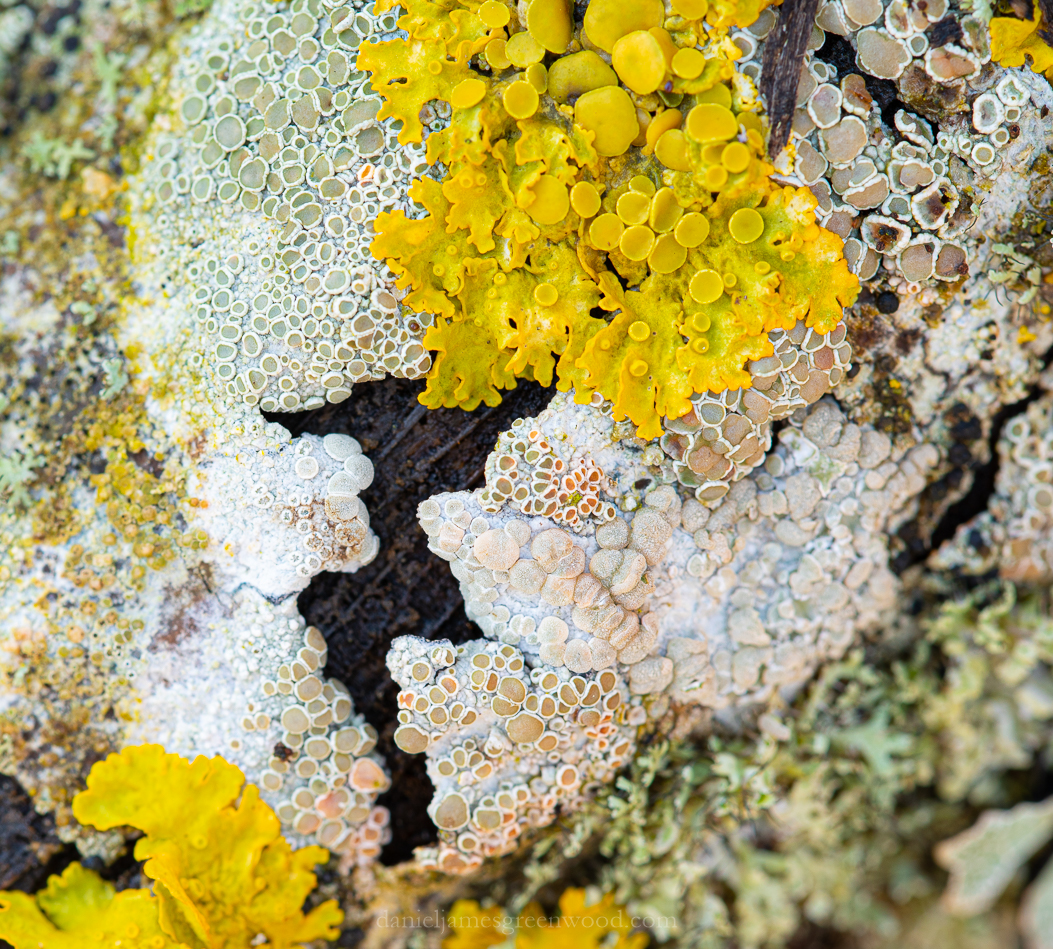
From the top of the image above you can see Xanthoria creeping in on some rather pretty lichens. This is my favourite ever lichen photo. I spotted this fallen poplar branch several days before I took this photo and returned again to capture it.
Here’s Xanthoria with a hint of its pale blue colouring. Like other species which benefit from the increase of nitrogen dioxide in the atmosphere and the soil, nettles and brambles, for example, I think Xanthoria is a symbol of our impact. As things change over time, I wonder how its dominance will shift over time.
Wishing you a pleasant New Year and hoping for more fun in 2021. I’d like to say thank you to everyone who stopped by in 2020 to read a post or to comment. I really enjoy reading your comments. The number of people visiting doubled in 2020 so it’s great to know what I’m sharing is being seen by some. People from all over the world are tuning in, so hello from my little corner of south-east England!
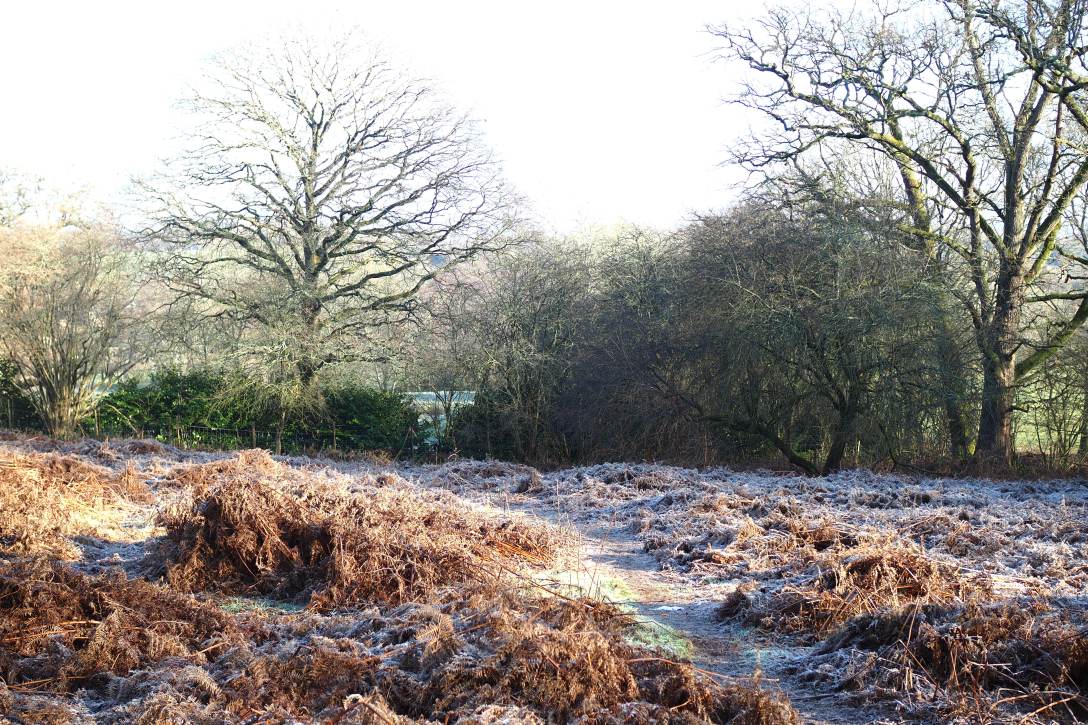
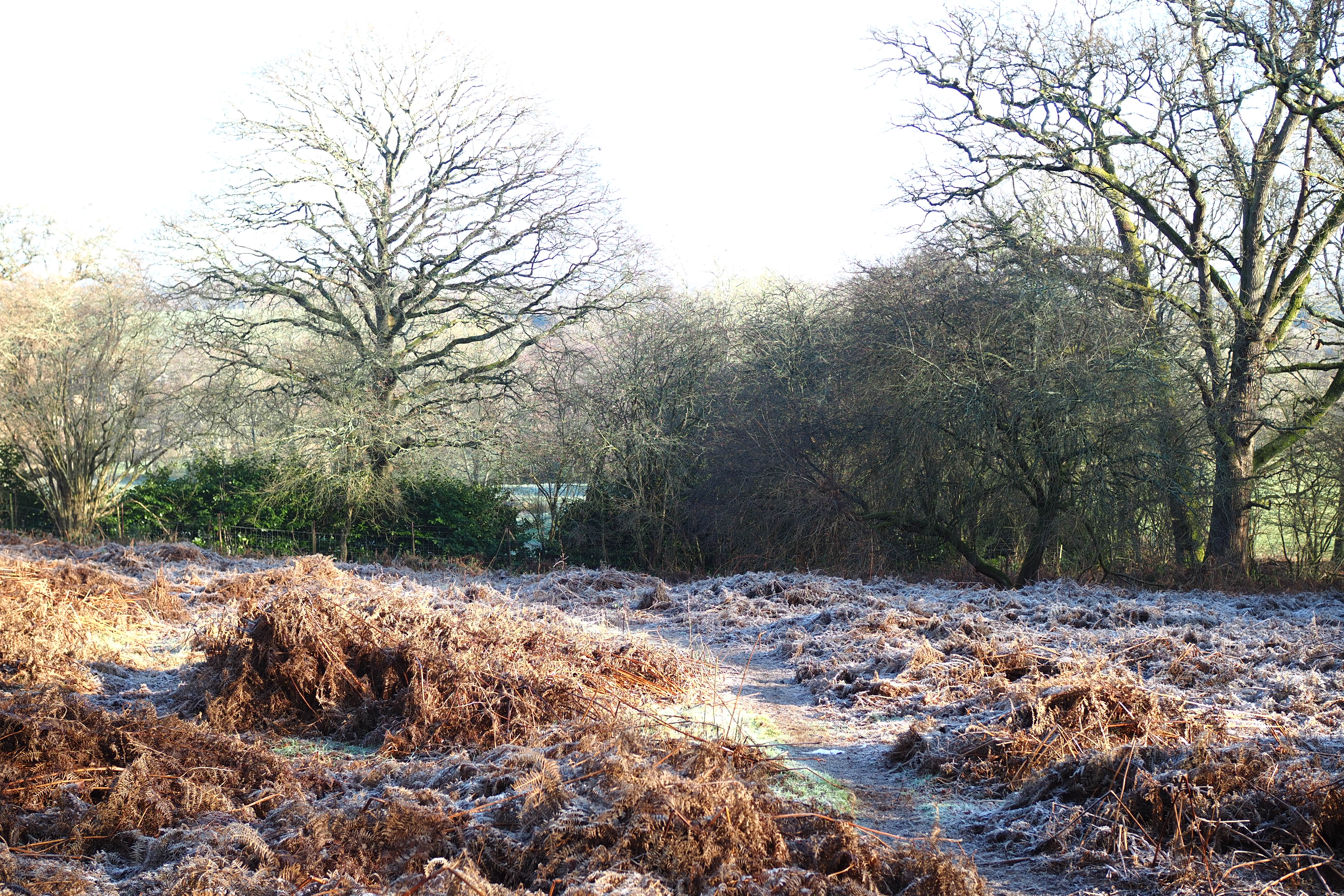
What better way to get started in 2021 than by looking at the smaller things in life, in the face of all the big things our tiny brains are having to compute at the moment. On New Year’s Eve I went out for a walk to my local patch and found it covered in frost.
When I was a child my dad told me that Jack Frost lived down the side of the bed and if you put your leg or hand down there he would get you. I had visions of some icy blue bloke living under my bed until I was old enough to know better. Thanks dad.
Thankfully Jack Frost wasn’t out on a walk at the same time on NYE.
Frost and ice are macro cliches, if there is such a thing. Regardless of how the photos may come out, it is fascinating to zoom in on the micro world when it’s covered in frost. Here was a birch seed frozen to the underside of a bramble leaf. I like how the seed looks like a butterfly. There are many similarities across nature in this way, the likeness of a natural river channel to the blood vessels or the structure of some vascular plants.
This area is covered in bracken in the summer. In the winter it falls into matts of vegetation which stop any trees or plants from breaking through. The woodland ecologist Oliver Rackham reckoned bracken was the most common plant in the UK and that its domination was due to the loss of roaming hogs (either as wild boar or commoner’s livestock) from the landscape, where they cause disturbance to the soil when rooting around. The thing about a lot of plants, regardless of their impact, is that they can be very beautiful. That’s why beauty is not often a good compass for how we treat the land. Rhododendrons, anyone?
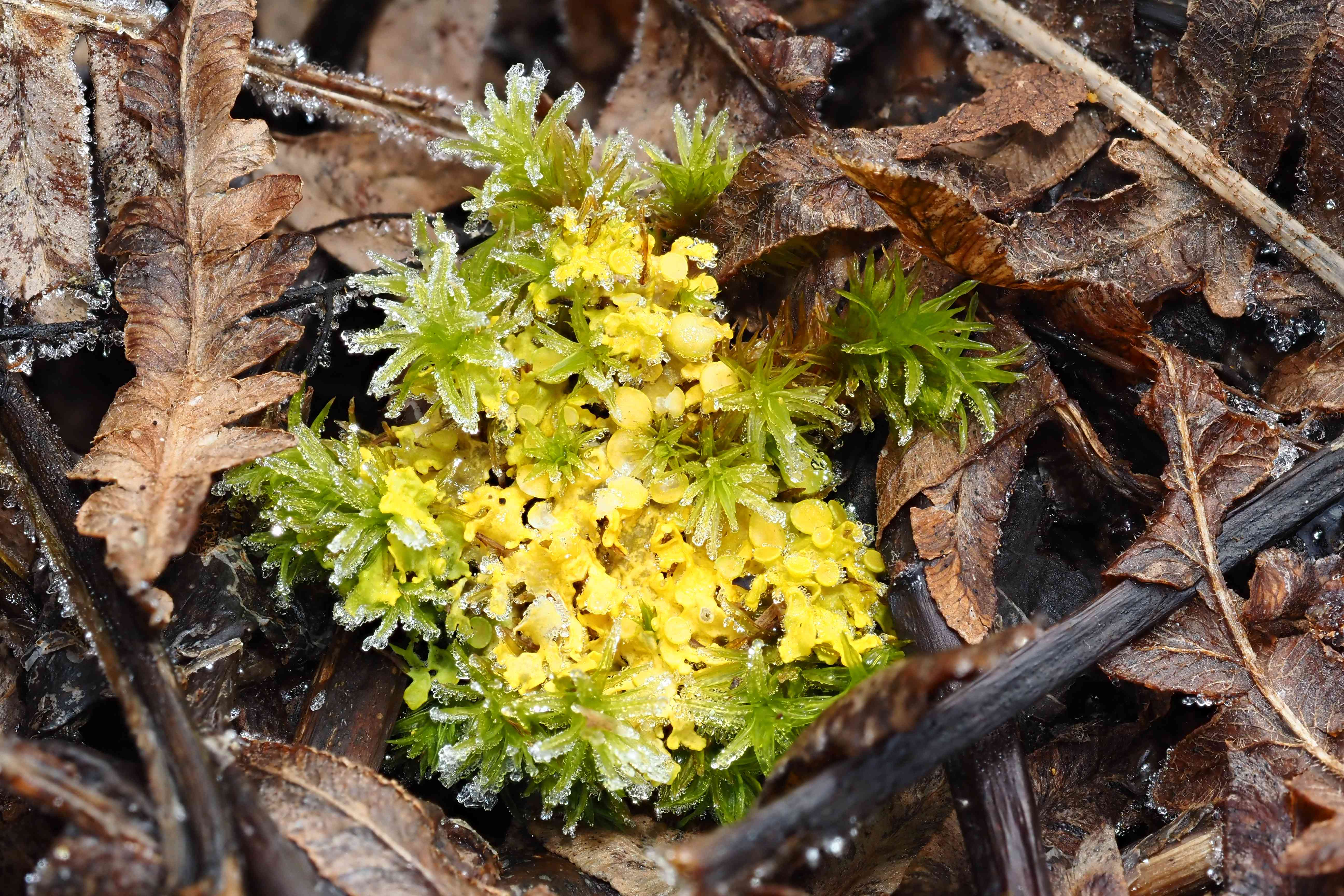
Mosses come into their own in the wetter winter months. They bring colour to otherwise dour landscapes. Woods are beautiful places but they can be grim in the December-January bind when the light is low and mud takes precedent. These are the sporophytes of what I think are a type of feather moss. They produce spores, like ferns and fungi, to reproduce. It’s an ancient form of reproduction which pre-dates insect pollination.
While I will leave the lichens to their #FungiFriday slot, I thought this lichen and moss bouquet was a lovely way to see out/in the old and new years.
A German New Year’s card – with symbols of good luck, including fly agaric
Fungi Friday 25th December 2020
Merry Christmas to you! I thought this would be a perfect opportunity to post a second piece about the Santa Claus and magic mushroom myth. I saw an Instagram post by Gordon Walker which criticised the oft-repeated story (oops) of Santa and fly agaric mushrooms. I asked for more info and he kindly suggested listening to a psychedelic mushroom podcast.
Just to warn you, it’s a bit sweary and the author, Tom Hatsis, is pretty angry about the ignorance he suggests maintains the myth of fly agaric and Santa. He describes the proponents of this idea as conspiracy theorists. There is also a lot of talk about psychedelic drug taking which is not quite the content I’m looking for. I think you might have to read the book for him to substantiate his argument against the story.
What I gleaned from this interview:
There is no evidence that Santa Claus was a shamanic figure who consumed fly agaric mushrooms or used them to herd reindeer
There are no Siberian reindeer-herding shamans
Fly agaric does not appear in authentic Germanic Christmas cards, they’re New Years cards which use fly agaric as a good luck symbol, alongside horse shoes and four-leaf clovers
Jesus was not a mushroom…
Fly agarics would not dry on trees (to release hallucinogenic chemicals) in the very cold temperatures of Siberia or northern Scandinavia
The cold has come to the woods, and with it, the silence of birds. It’s not all quiet. Rain has fallen overnight and there is a gushing to the hill as it wends its way through the woodland. Looking at the water I see the bare sandstone. The water, over a very long time, has cut through the soils and softer substrates. Walking here over several years I have wondered why the sandier heathlands rest high up and the ancient woodlands of oak, beech, hazel and holly grow only really in the clay gulleys. It’s here, the answer. The stream has cut through the sand and washed the gravel away to reach the sandstone.
I follow the twisting stream up hill, jumping from bank to bank, where vegetation blocks progress. In a slowed stretch something small and black is moving against the flow on the clay streambed. It’s an invertebrate, what I think is a caddisfly with a pack of debris on its back. It looks to be trying to grab at a small stone or piece of material on the streambed. It could be ready to attach itself to the stone and move to its next stage, the pupa, before becoming an adult insect for a month next year.
Ferns spool out from the freshly leaf-laden banks and the trees are drenched in moss. It dawns on me: this is south-east England’s rainforest.
Here’s my seasonal update of stuff you don’t need to know about, but then welcome to the Internet. What I’m writing Soon I will be self-publishing my third poetry collection, Fool’s Wood. It’s seven years since my last one and this collection has taken longer because of LIFE. There will be a booklet and also…
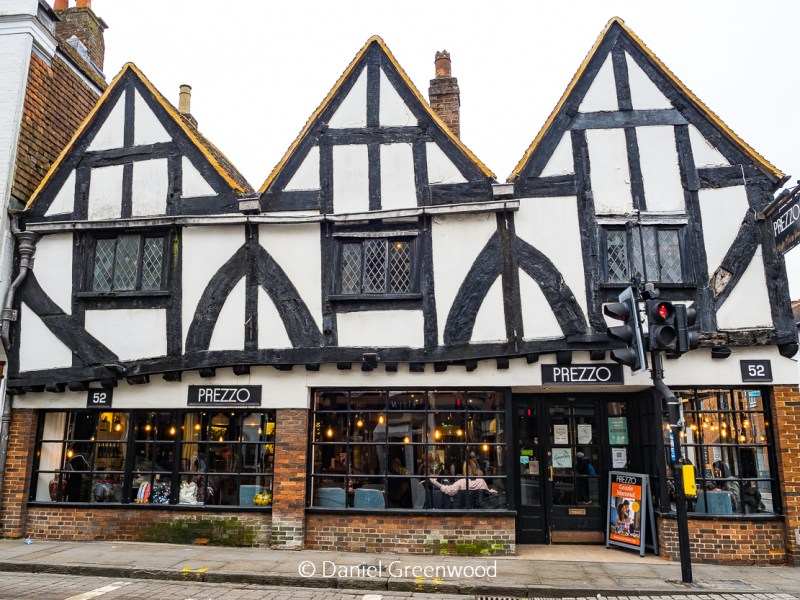
Here’s another entry in my slow-blogging Oak Timbers series. You can view my galleries and posts archive here. I visited Salisbury in Wiltshire (south-west England) for the first time in 2023 and was really charmed by the place. If you’re interested in this kind of thing, Salisbury is the place for you. Here’s a gallery…
I’m getting into more of a routine of recording and editing audio, so here is the latest episode of Unlocking Landscapes. Listen on Podbean or via the usual platforms. Also via YouTube: https://youtu.be/y1K9Pqx68to?si=B-Fdhf3sdDH35Z8w Following on from July’s rather optimistic fungi walk, I popped back to the same area of ancient Wealden woodland to see if…
Today is the winter solstice. The darkest and shortest day of the year is the perfect time to look back at one of my fondest summer macro memories. It might also cheer some of you to see photos of sunnier, warmer times, teeming with wildlife.
In August 2016 my friend Peter Beckenham and I travelled to South Moravia in Czechia. This trip was completed by train, with a route of London-Brussels, Brussels-Cologne, Cologne-Prague sleeper, Prague-Brno and back. I really recommend this (maybe not right now) as a much better way to travel than flying. You see more, go to more interesting places and reduce your environmental impact.
For macro photography I was using a Nikon D750 and Sigma 105mm f2.8 macro lens. Most of the photos seen here were taken at f11.
Moravia is home to varied landscapes, rivers, wetlands, mountains and woodlands. It of course suffers from the vagaries of intensive agriculture, particularly because of the impacts of the Soviet Union. But its protected landscape system is strong and there are many committed environmentalists who spend much of their free time recording species and promoting and educating people about nature.
The reason I know about these meadows is purely because of local ecologist, conservationist and educator Zuzana Veverkova. Zuzka has taught me so much about European nature, landscapes and cultural heritage. All the thanks here go to her.
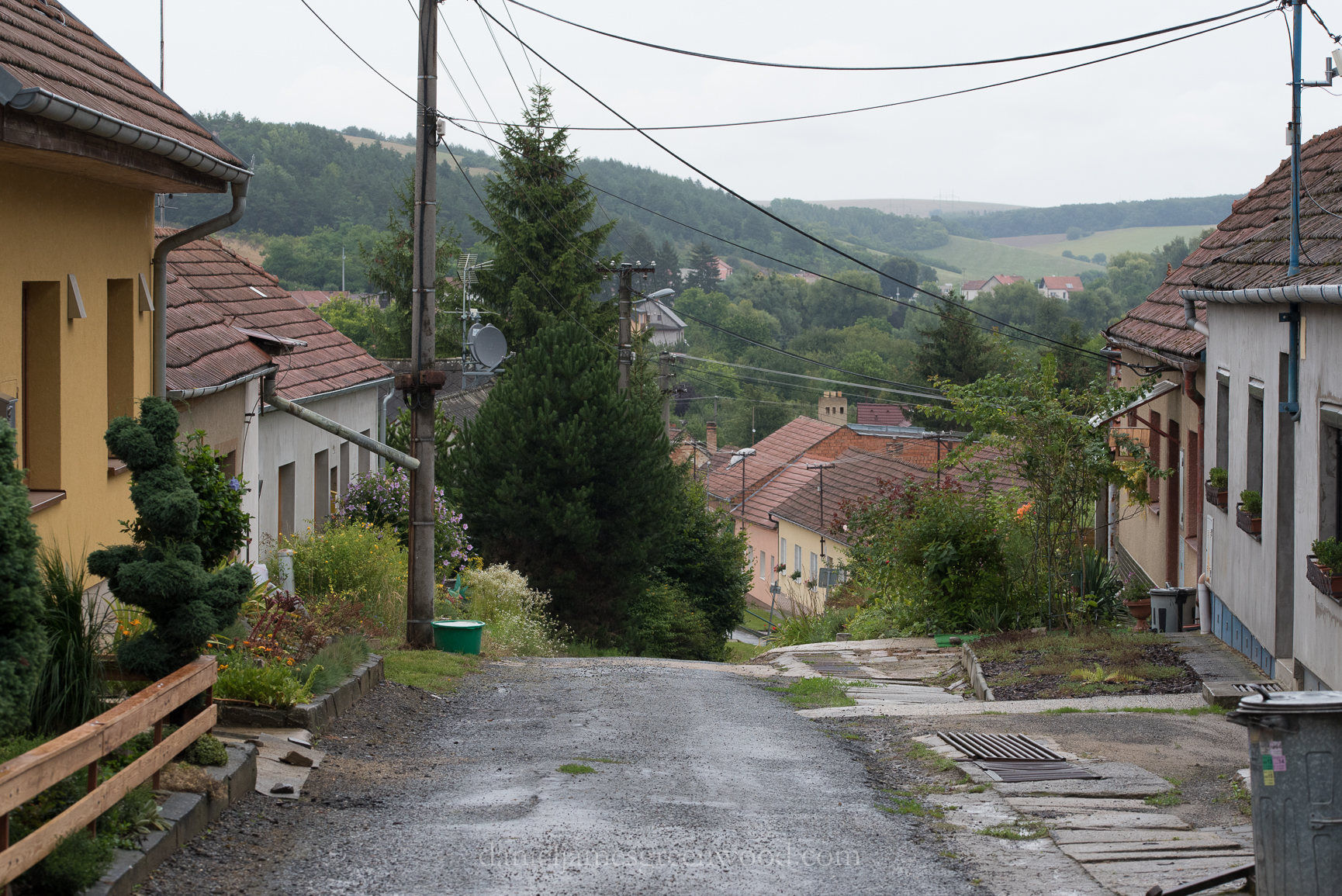
The meadow is at the end of a street in the Kyjovka valley. It is surrounded by woodlands, largely managed for forestry and intensive arable farms. Zuzka works to enhance the landscape by advising on the creation of meadows, orchards and other sustainable landscape models which will provide habitat for the rich biodiversity of the area.
You didn’t have to be in a meadow to find diverse invertebrate life. In Zuzka’s post box (attached to an external wall of the house) a colony of European paper wasps had built a nest. They are ready to sting you, so I observed from a distance. They were feeding on umbellifers in the slither of garden in front of the house. We don’t have this species in Britain.
Another species of wasp, but instead an ichneumon (probably a Gasteruption species) was foraging on the flowers.
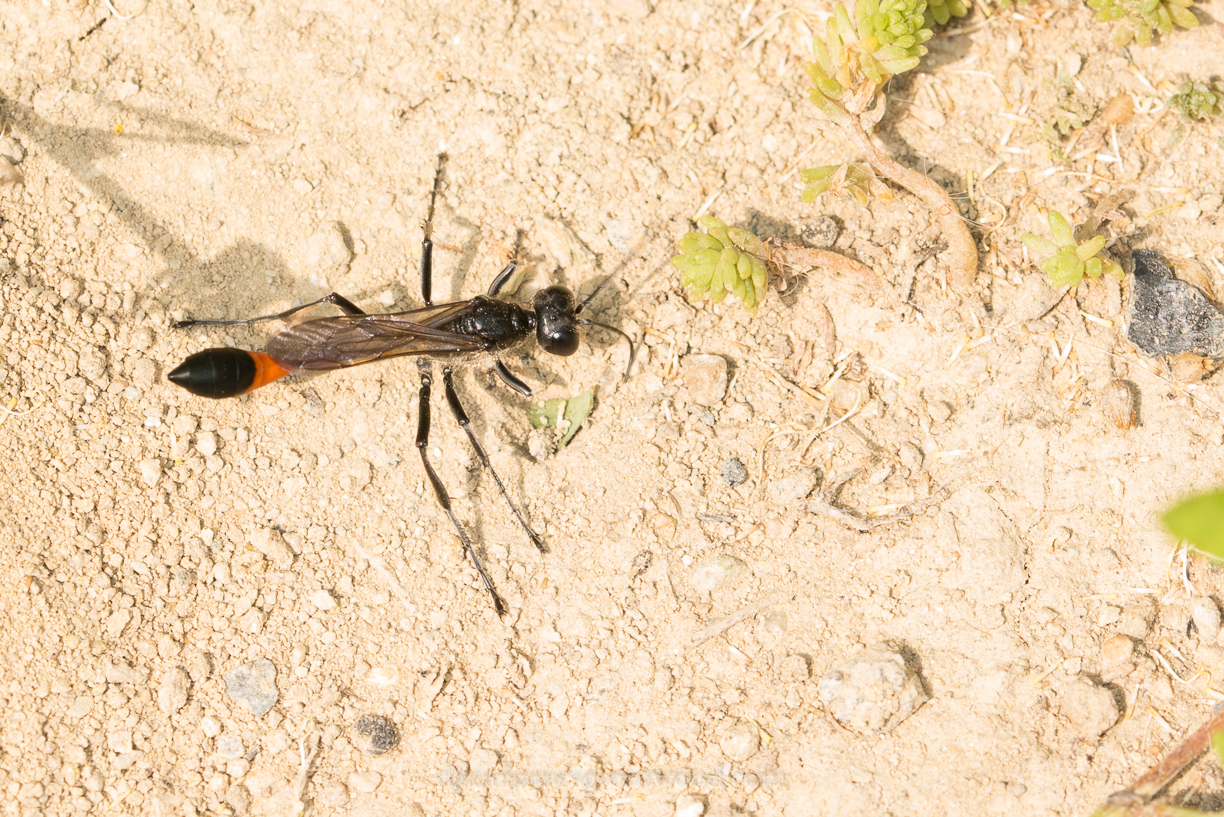
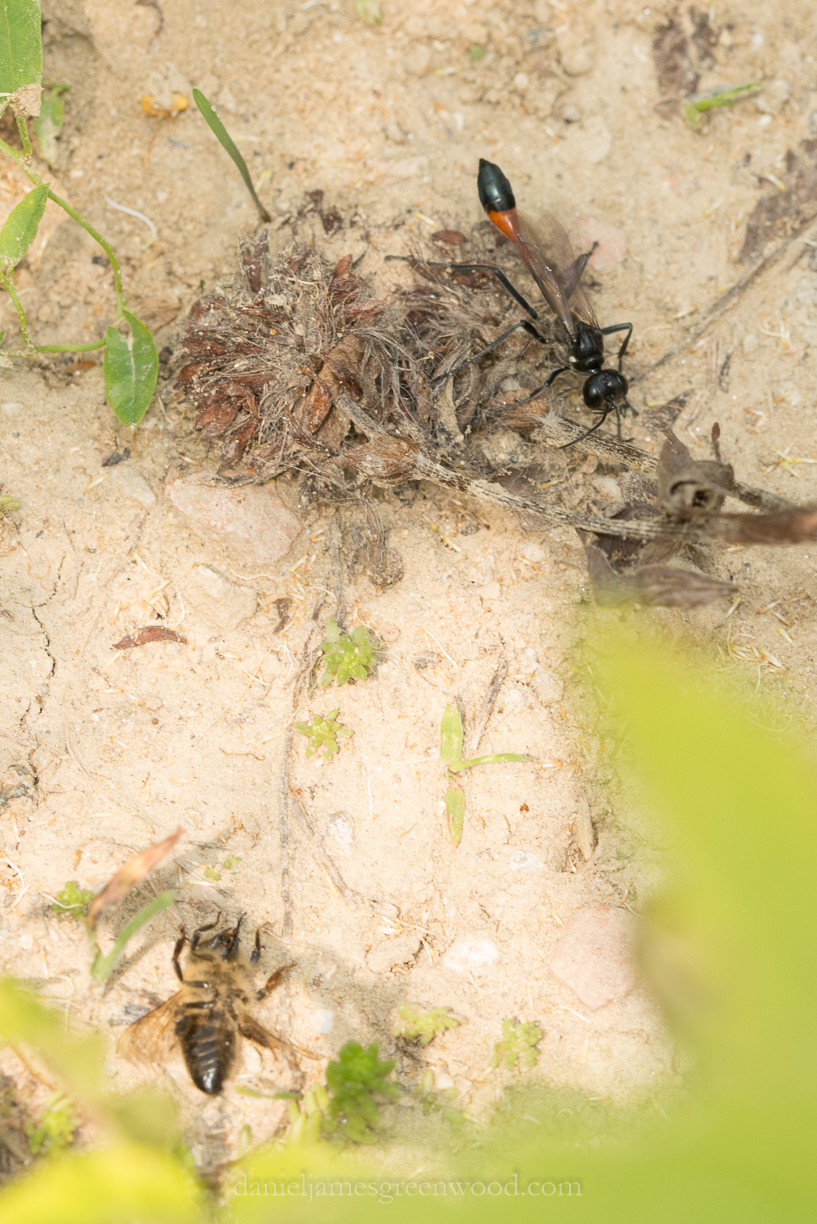
The wasp action didn’t end there. A red sand wasp had burrows in the soil. I’ve mainly seen this type of wasp on heathlands in the UK. They’re rare because of their dependence on a single habitat type, one of which, in heathlands, has seen a lot lost to forestry and development in the UK.
It was pretty incredible to see that the wasp had caught a honey bee as prey and was leaving it to one side while it went about its business.
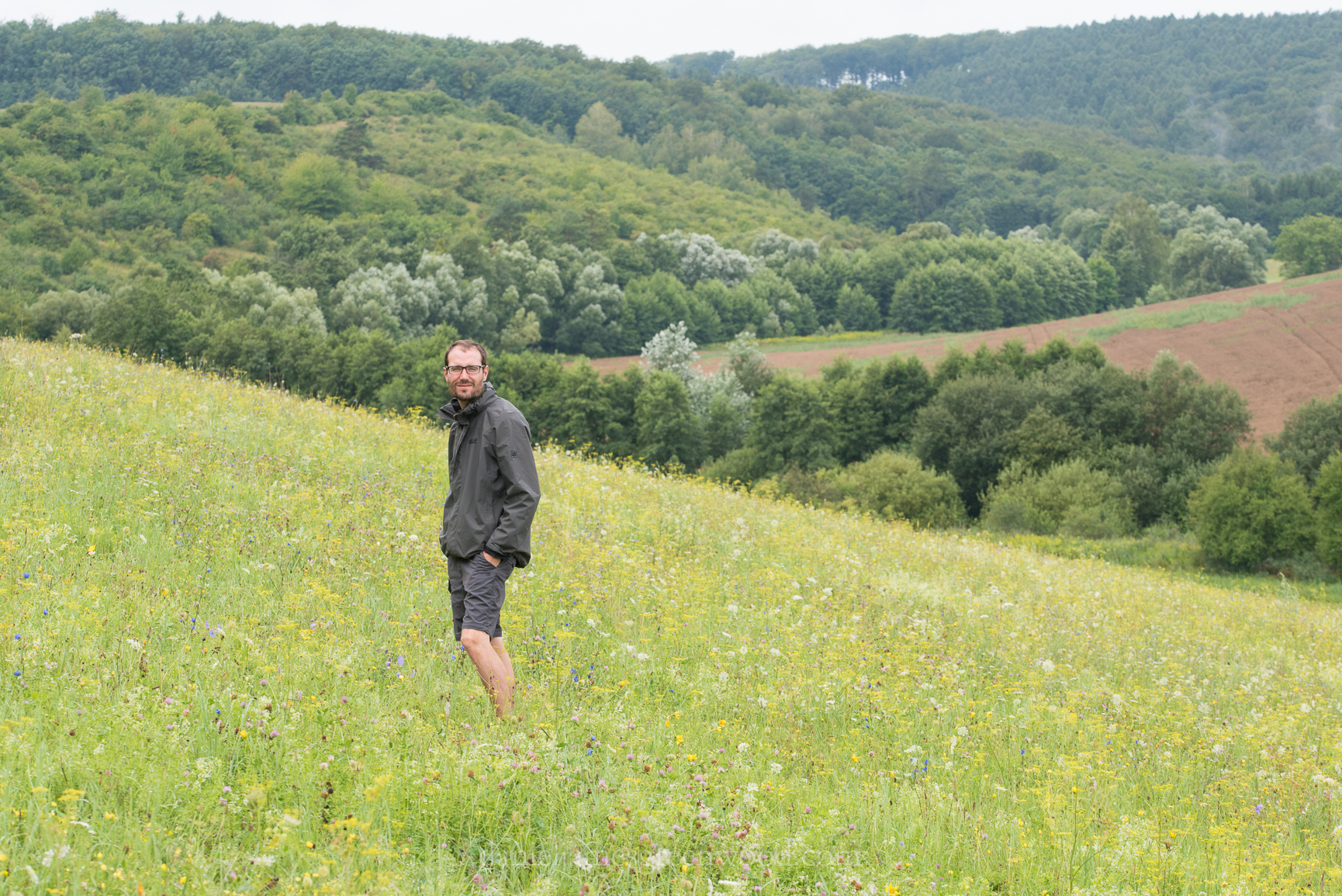
The meadow itself, where the ‘garden’ insects are likely to have been visiting on longer foraging trips, was not far away. Here is my friend Peter Beckenham pretending he lives in the meadow. Pete is a bird-nerd and he had plenty to find in this area. He heard a common rosefinch calling in the trees in the distance, a species I haven’t seen yet.
When Zuzka introduced us to the meadows, she immediately found something cool for us to see. This is a European praying mantis. I feel like the mantis could be mistaken for a puppet master here, directing the movements of Zuzka’s hand. They do of course have some sinister behaviour anyway.
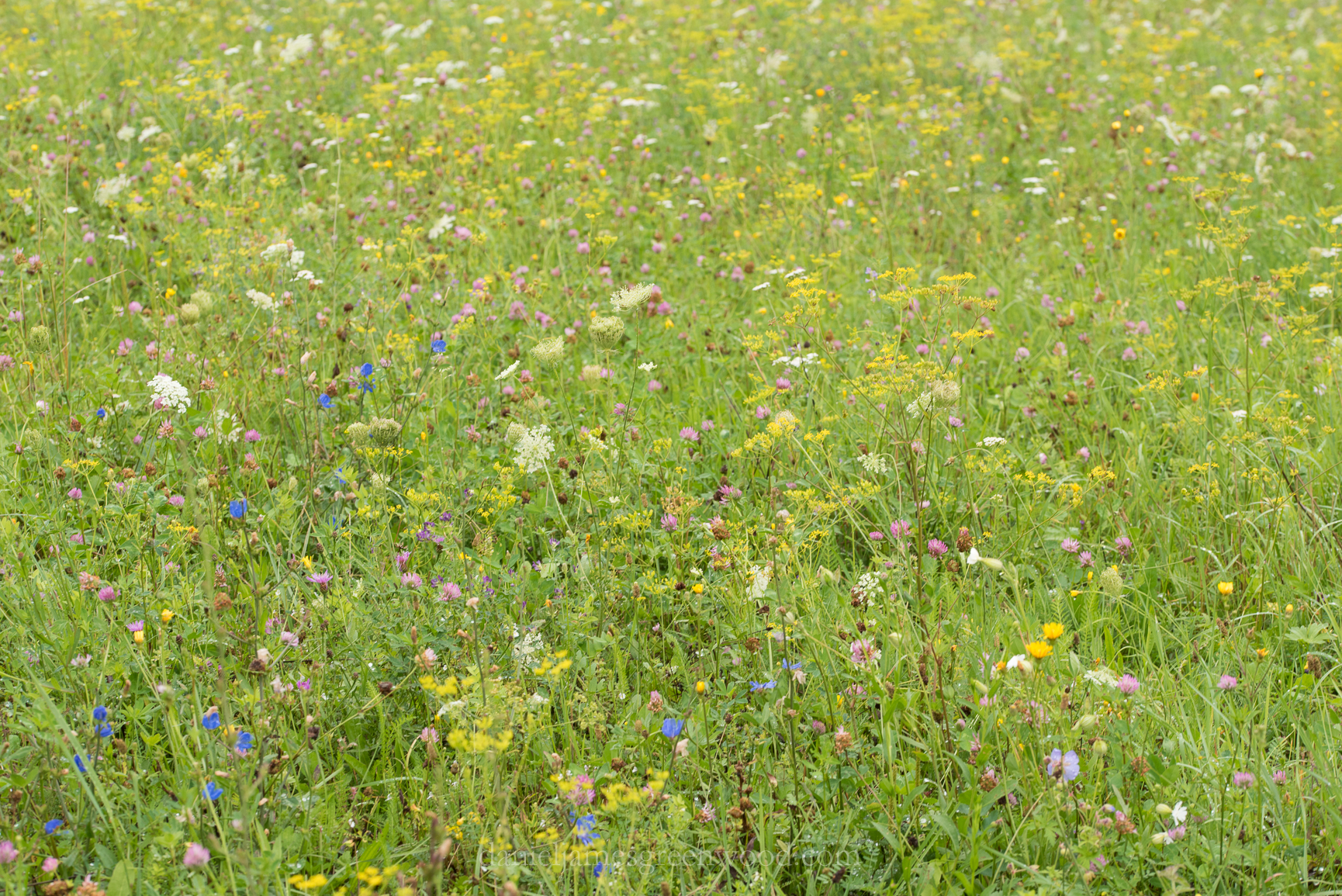
The meadows were kitted out with flowers, matching some of the most diverse grasslands Britain has to show, if not more so. Of course continental Europe has far richer grasslands than Britain due to geological processes, connectivity with a wider landmass and probably climactic reasons. We have also ploughed up 97% of ancient grasslands in the Britain. But this wasn’t even a nature reserve. In the UK people fight campaigns over much less diverse habitats, which is still very important.
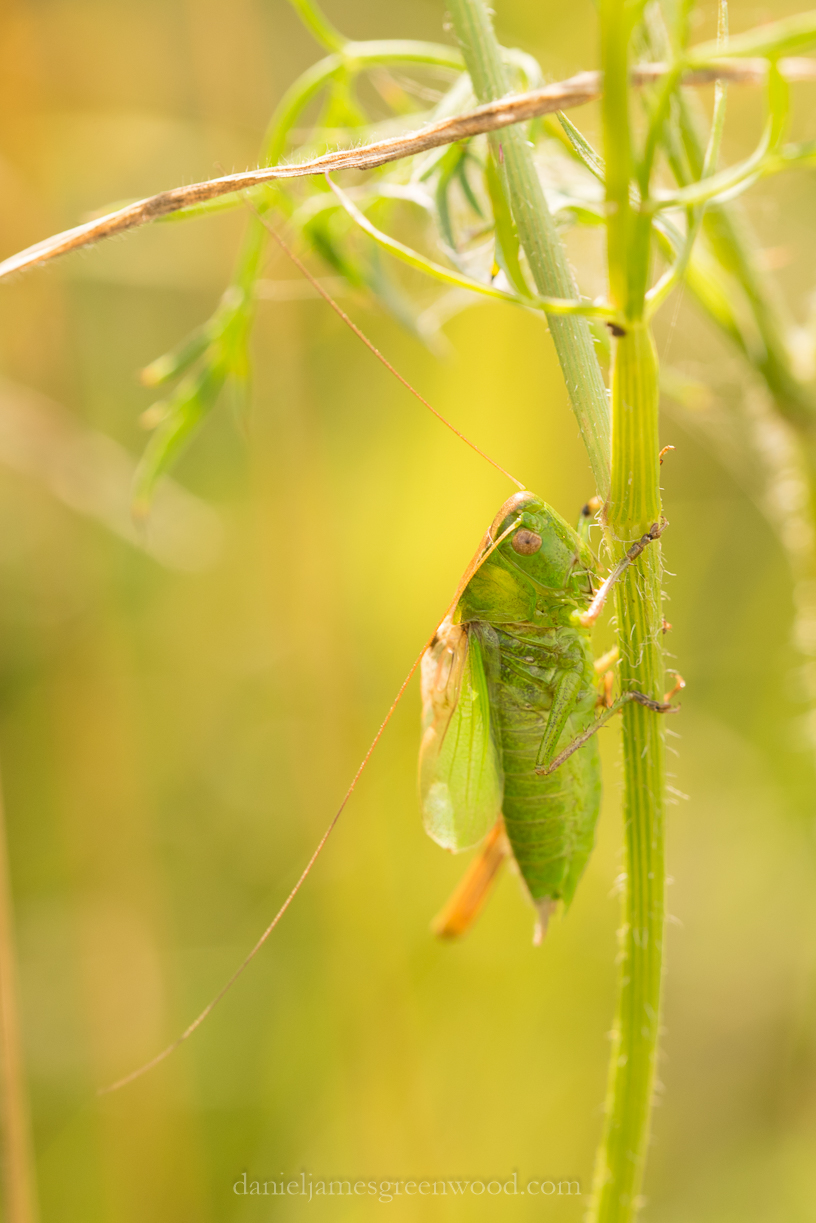
We visited in August, so there was some quite mild weather which meant the insects were less active. That is perfect for taking photos because the animals are slow and usually perched somewhere helpful. This is a cricket.
On a flower stem this cricket was poised, its wing casings apparent here in their translucent green.
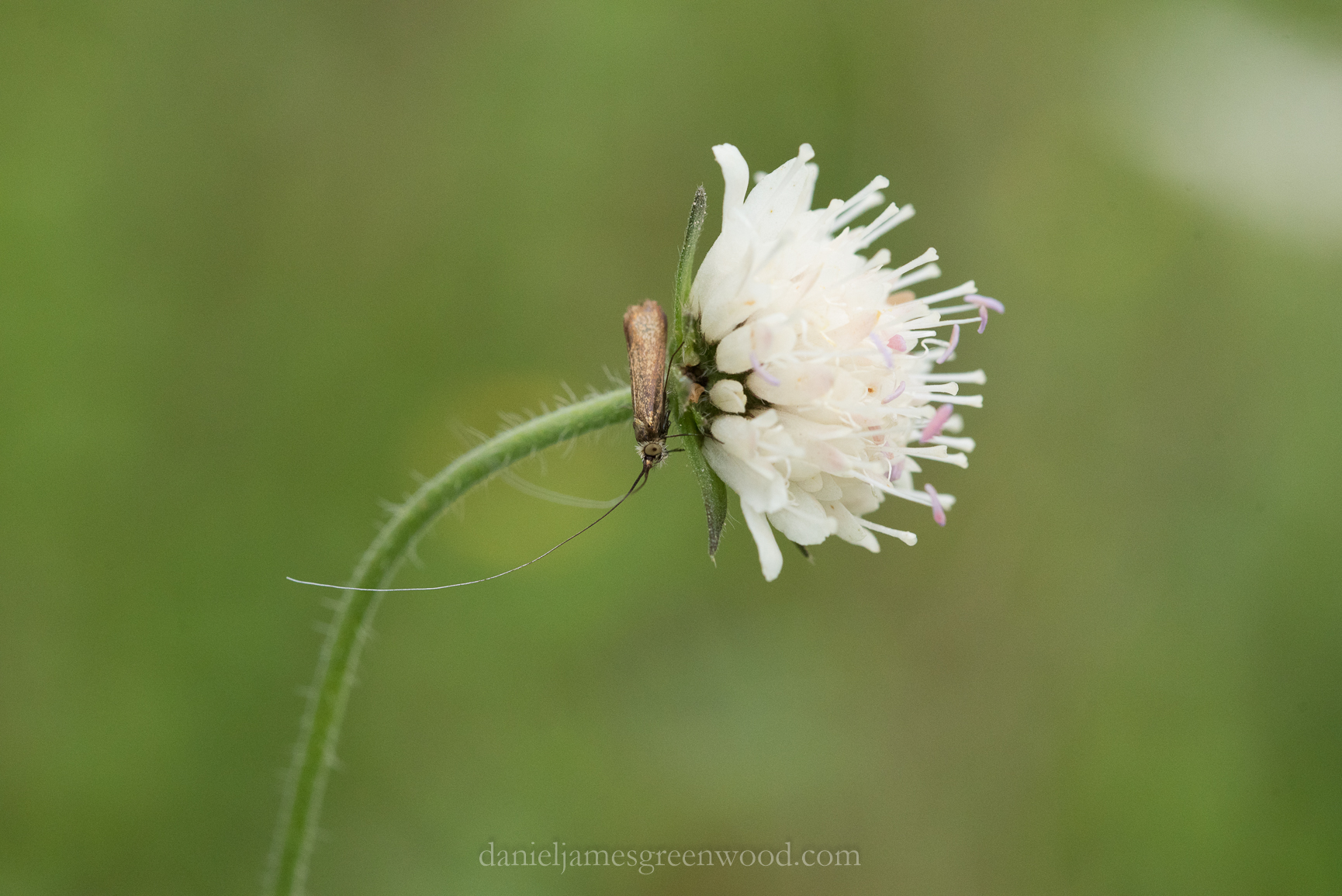
It was very easy to miss this long-horn moth, having attached itself to the sepals of this scabious flower. These are day-flying moths, which include some very beautiful species.
An ermine moth was nectaring on this umbellifer. They look like dalmatians.
I felt sorry for this shieldbug with a red spider mite attached to its head. iNaturalist suggests this is a species in the Carpocoris family.
Nearby was a green shieldbug hiding away in the florets of field cow wheat. I love the colours in this photo and it’s definitely one I consider a ‘portfolio’ image.
One morning in the meadow, after a night of rain, I found hundreds of small blue butterflies perched in grass heads. A Czech user on iNaturalist suggested this is silver-studded blue. I find some blue butterflies really difficult to identify. This image conveys the beauty of a macro lens: a sharp, thin field of view, with a dreamy blur of green in the background.
Far from being a wilderness, the meadow was on the edge of a municipal part of a village that was growing, but slowly. I spent my final morning of that trip taking photos in the meadow. What you can’t see in this image are swallows flying low across the top of the sward. A special memory! Then again, they were eating my subjects…
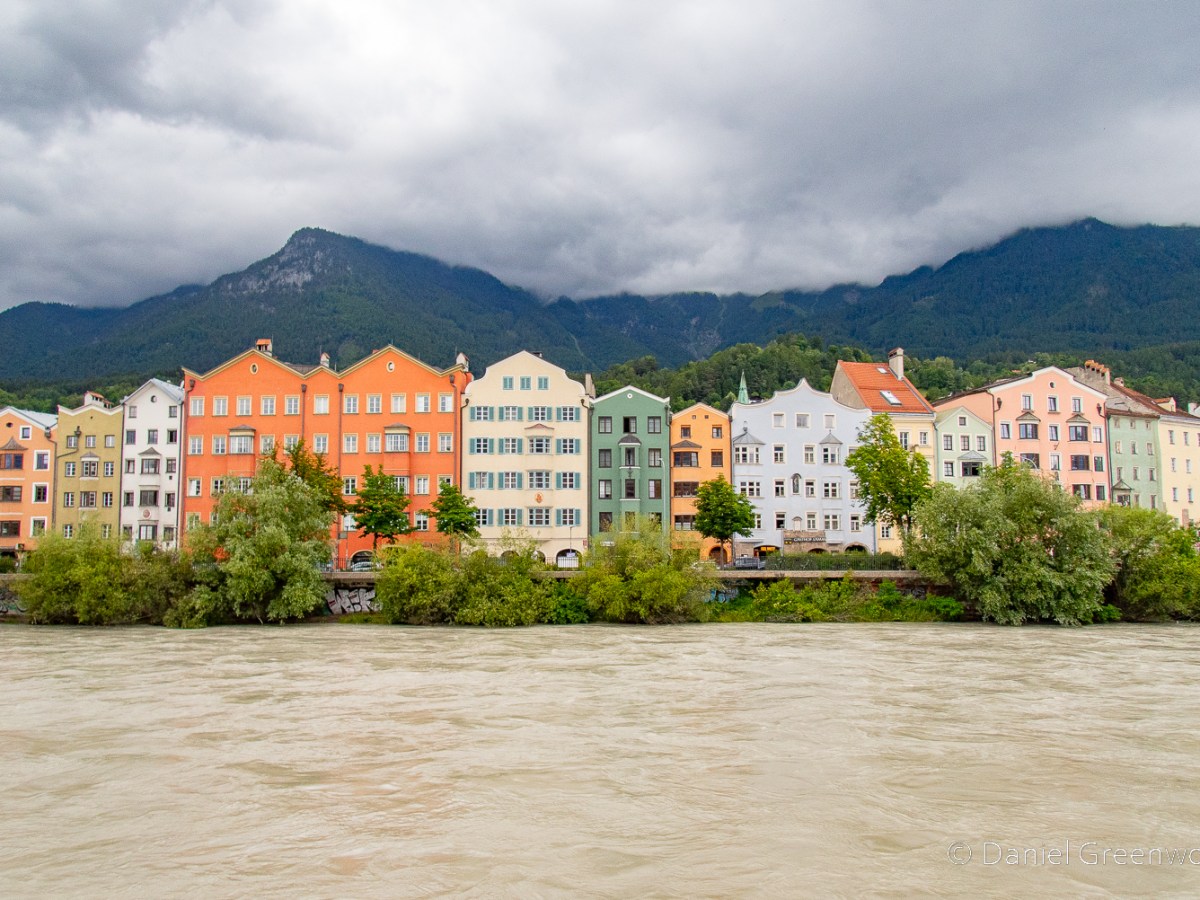
Innsbruck, Tyrol, Austria, June 2025 This is a longer post of the images I captured during a recent visit to Innsbruck in the Austrian Alps. We travelled to Innsbruck on a sleeper train from Amsterdam. It’s such a great experience and is significantly lower in carbon emissions compared with flying. If you consider the fact…
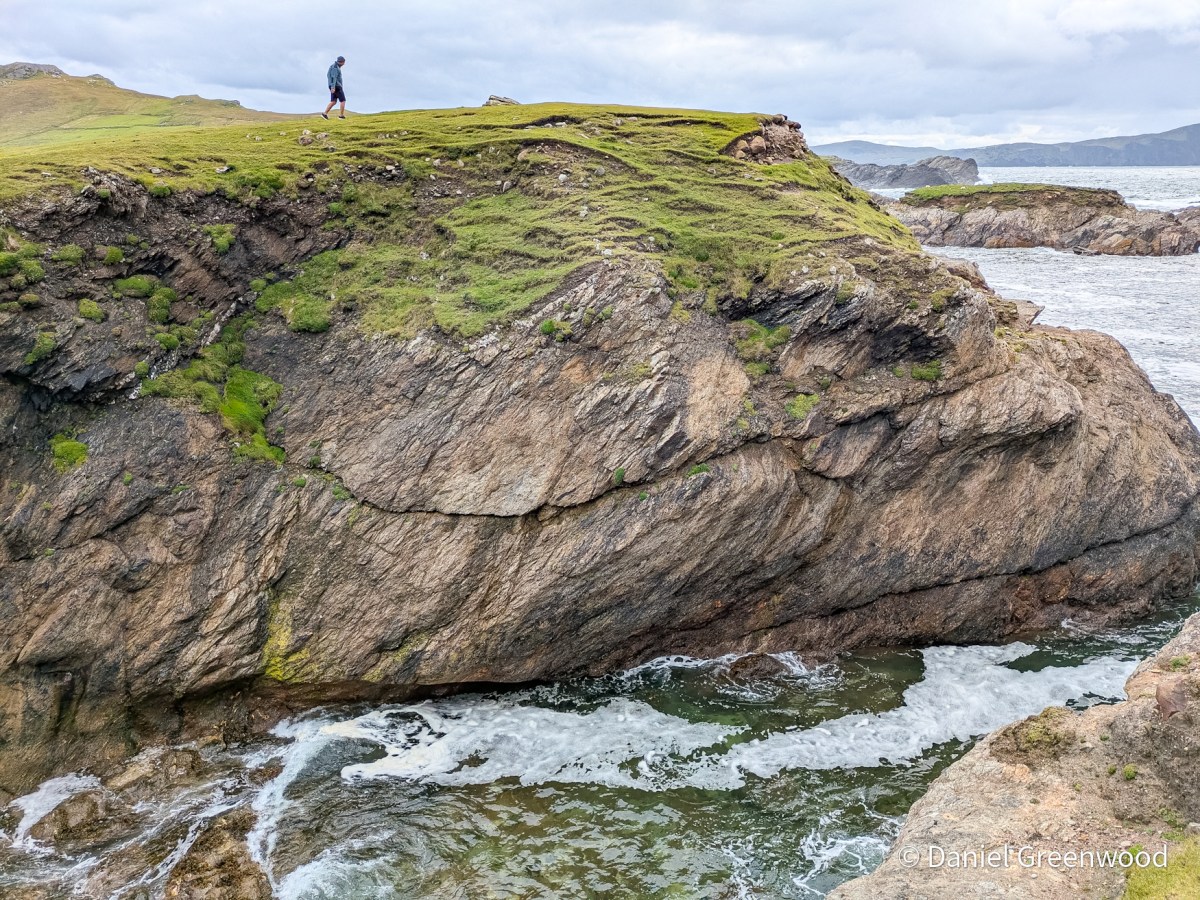
I’m back from my annual visit to the west of Ireland. I managed a couple of day trips to forage for photos, which will crystallise later this year into dedicated posts, all being well. Like many people I enjoy the Blind Boy Podcast, none more so when I have the headspace to take in all…
This is the first of a series of posts I’ve been working on covering national relationships with mushrooms. It’s just a bit of fun, but there’s definitely some interesting stuff to share.
The temperatures have crept up again after a period of freezing cold and foggy mornings. During one of those colder December days I visited a favourite place to find fungi. I was surprised by just how much had managed to fruit, though it was mostly quite small.
My first find was this common puffball mushroom, looking well nibbled and past its pomp. Almost all of the mushrooms I found and spent time trying to photograph were growing in beds of moss. That says to me that the mosses were providing a warmer, wetter platform to fruit from, protecting the mycelium of the fungus from the cold beyond its fronds.
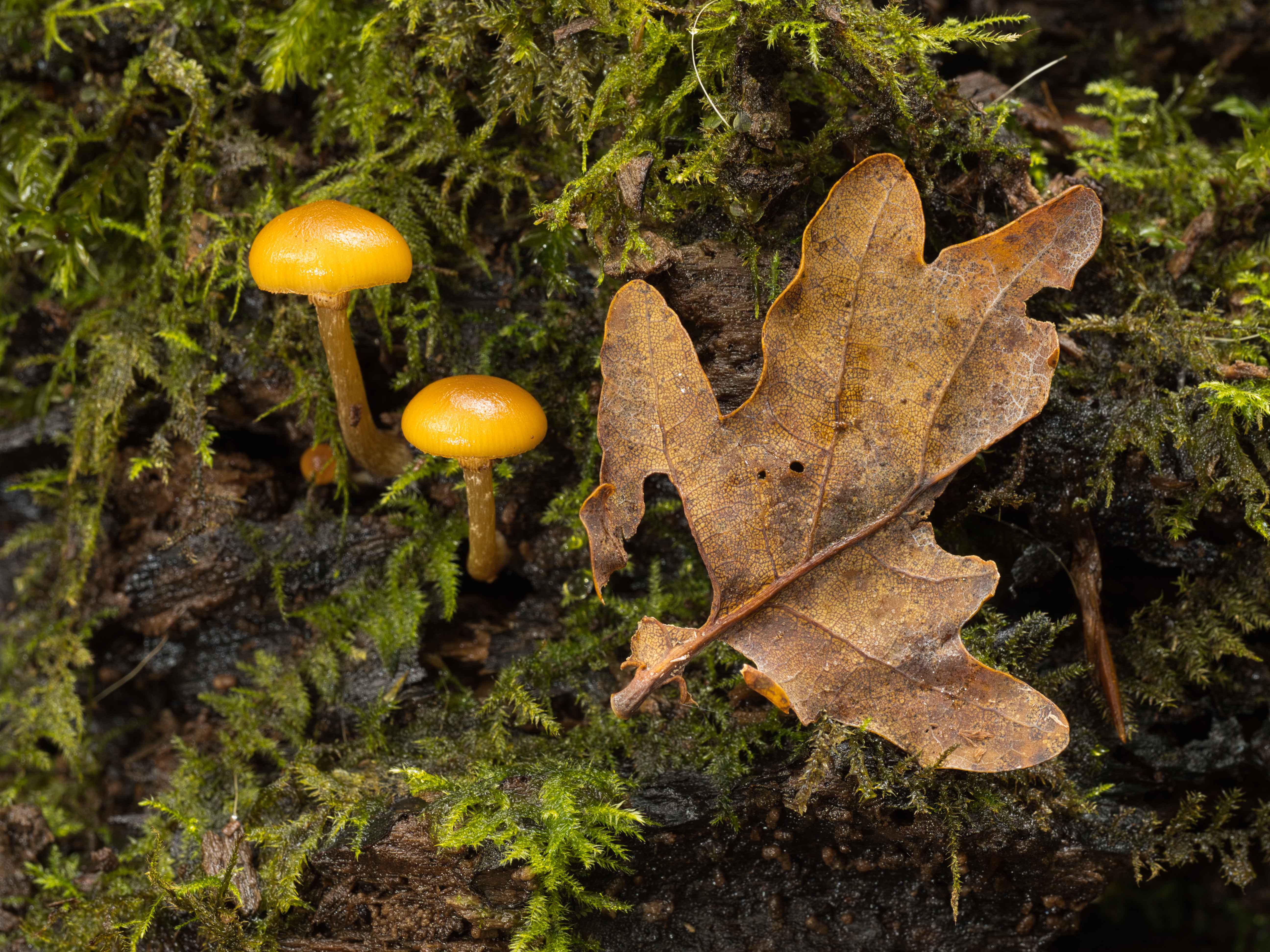
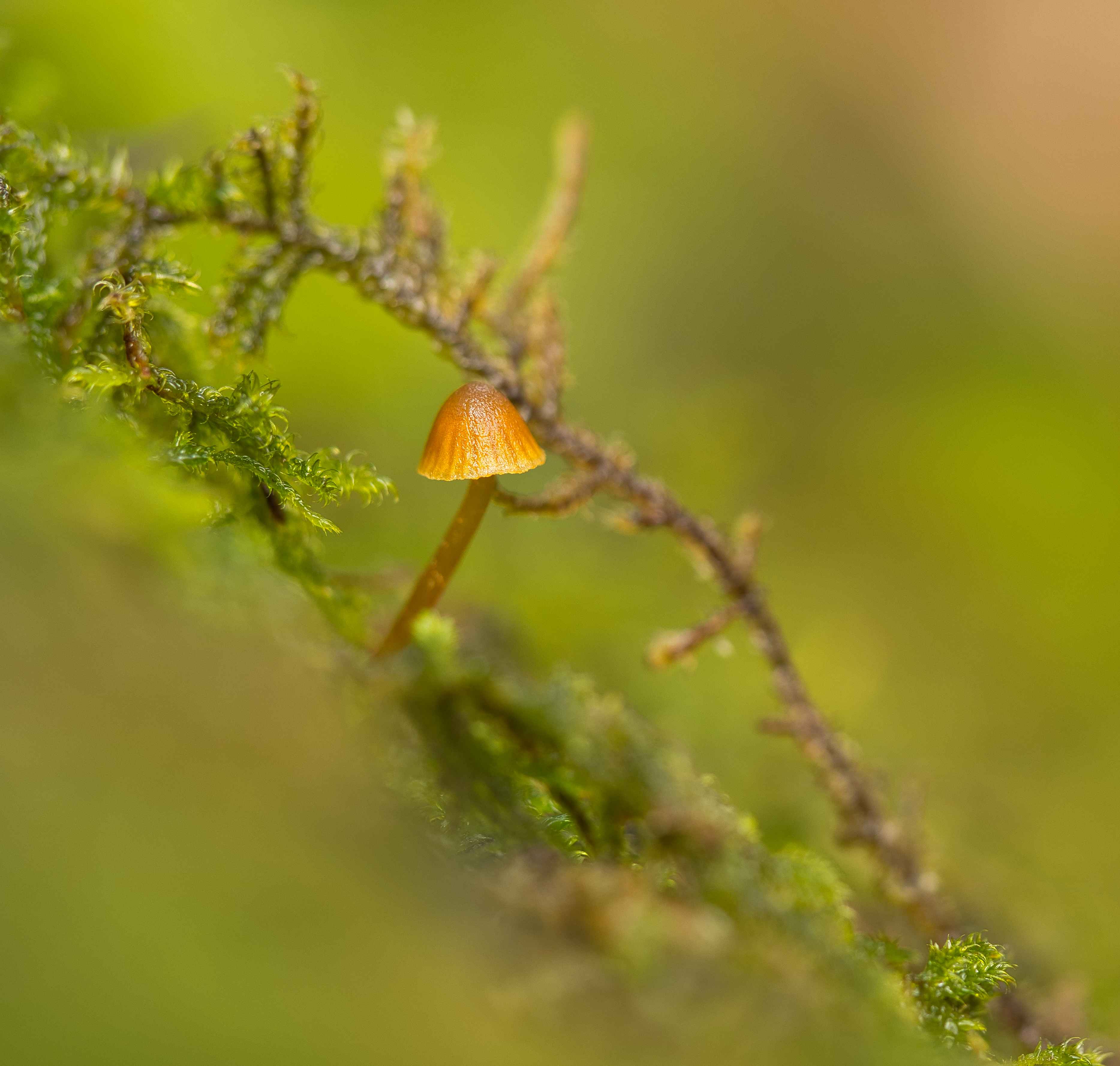
I had a lot of fun photographing galerina mushrooms, otherwise known as moss bells. One of the most famous mushrooms in this family is the funeral bell, for reasons you can probably guess. I am not at a point to identify moss well, but I do know this is common feather moss. And that is an old oak leaf.
I found some lovely moss bells as I worked my way further into the beech, oak, hazel and holly woodland. In England we don’t have much in the way of wooded ‘wilderness’ that North America or Russia is famed for. But in the south-east of England, the Sussex Weald is perhaps the closest thing we have to a vast woodland area. Woods in England are split up by private ownership and mixed land use, with many small woods cleared for agriculture or building. If you want to see what a fence looks like, come on over. However, the Weald to the east of Sussex is the most wooded area in England, and much of it is ancient, broad-leaved and ‘natural’ woodland.
Moss bells are actually parasitic on mosses, though they evidently do not cause it the kind of bother the word ‘parasite’ brings to mind. The submarine telescopes surrounding the shroom here are moss sporophytes, which release the spores to allow the mosses to reproduce elsewhere. Much like mushrooms!
Have a look on moss growing on fallen trees or on the trunks of trees. You might get lucky and find yourself a moss bell.
I’m annoyed with myself because I’ve seen this tiny mushroom with its Hellraiser-esque, spiny cap, but I didn’t take the chance to note it and now I’ve forgotten. It was growing in a crevice in a fallen tree. The veins in the decaying oak leaf show just how small it was. That’s the second time it’s made its way onto this blog without a name. Sorry no refunds.
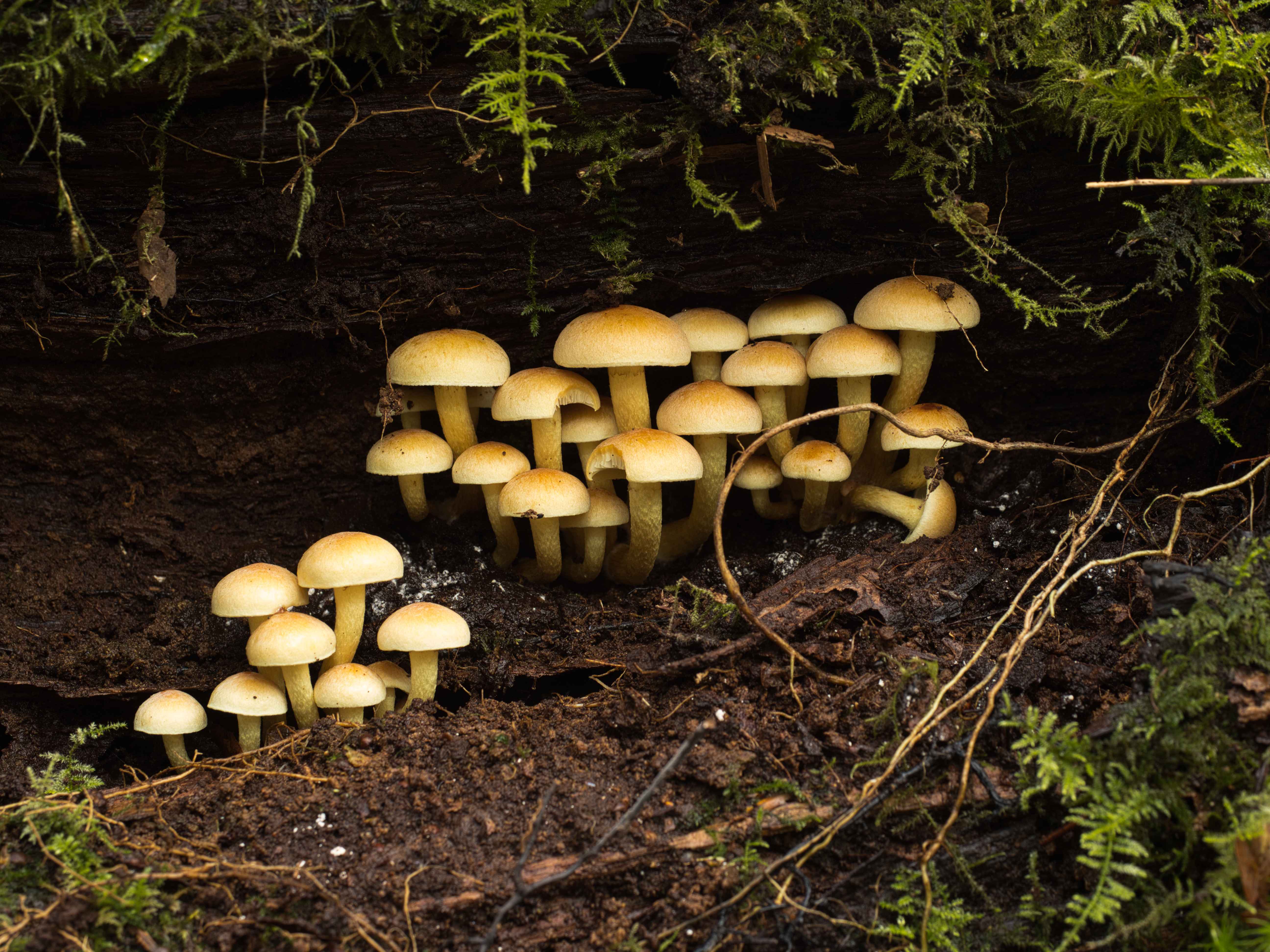
Another fallen tree was covered in mosses, ferns, lichens and, of course, a community of mushrooms. Sulphur tuft is a winter stalwart. So if you’re reading this, sulphur tuft, thank you. There are some other interesting things going on here, with the decaying wood already beginning to turn into something like soil, and the roots of something trailing across and feeding on the substrate. That’s life.
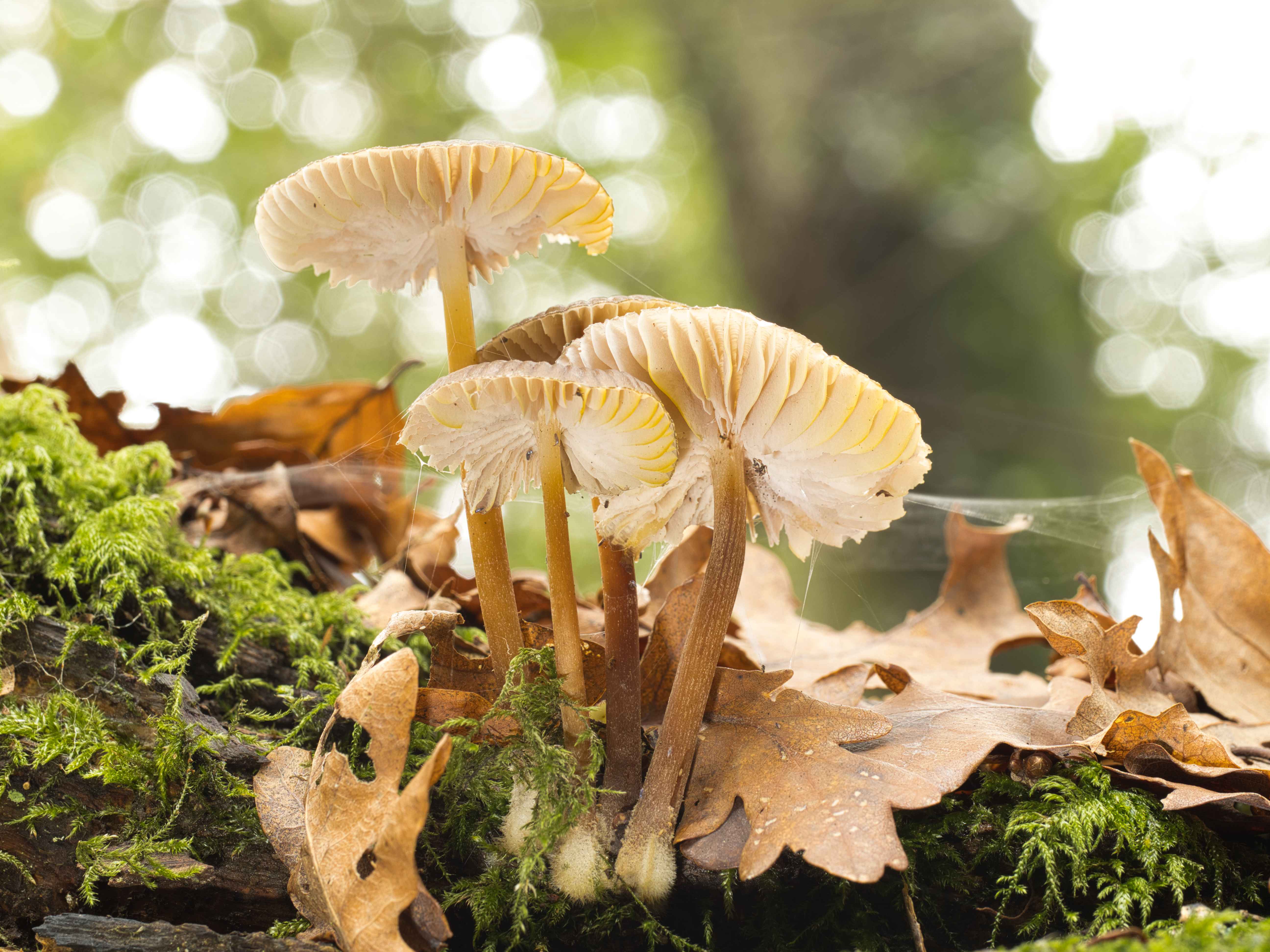
The final species group I found on mossy logs was the bonnets. They also seem able to handle the cold weather in the way that ground-based shrooms can’t.
I always forget that September can be a good month to find fungi, if it’s not too cold. Hopefully this blog, which has now been running for a year, does go to show how many things you can find throughout the year. Autumn is not the only time to find fungi. It’s everywhere, all of the time.
This woodland is quite heavily dominated by holly. For many people in the UK, that’s seen as a bad thing, with the idea that woods should be nothing but light. In the Sussex Weald, holly indicates ancient woodland and holly is a key species. At least one woodland was protected because of its populations of wild holly. I absolutely love it, having worked with it for several years. It coppices very well and the timber is great for small-scale green woodworking like fencing and posts. Of course at Christmas it makes lovely wreaths.
The holly was providing protection for areas of the woodland floor that seemed to be very rich in smaller fungi. This bizarre thing is a yellow club fungus. It was part of a community of many more.
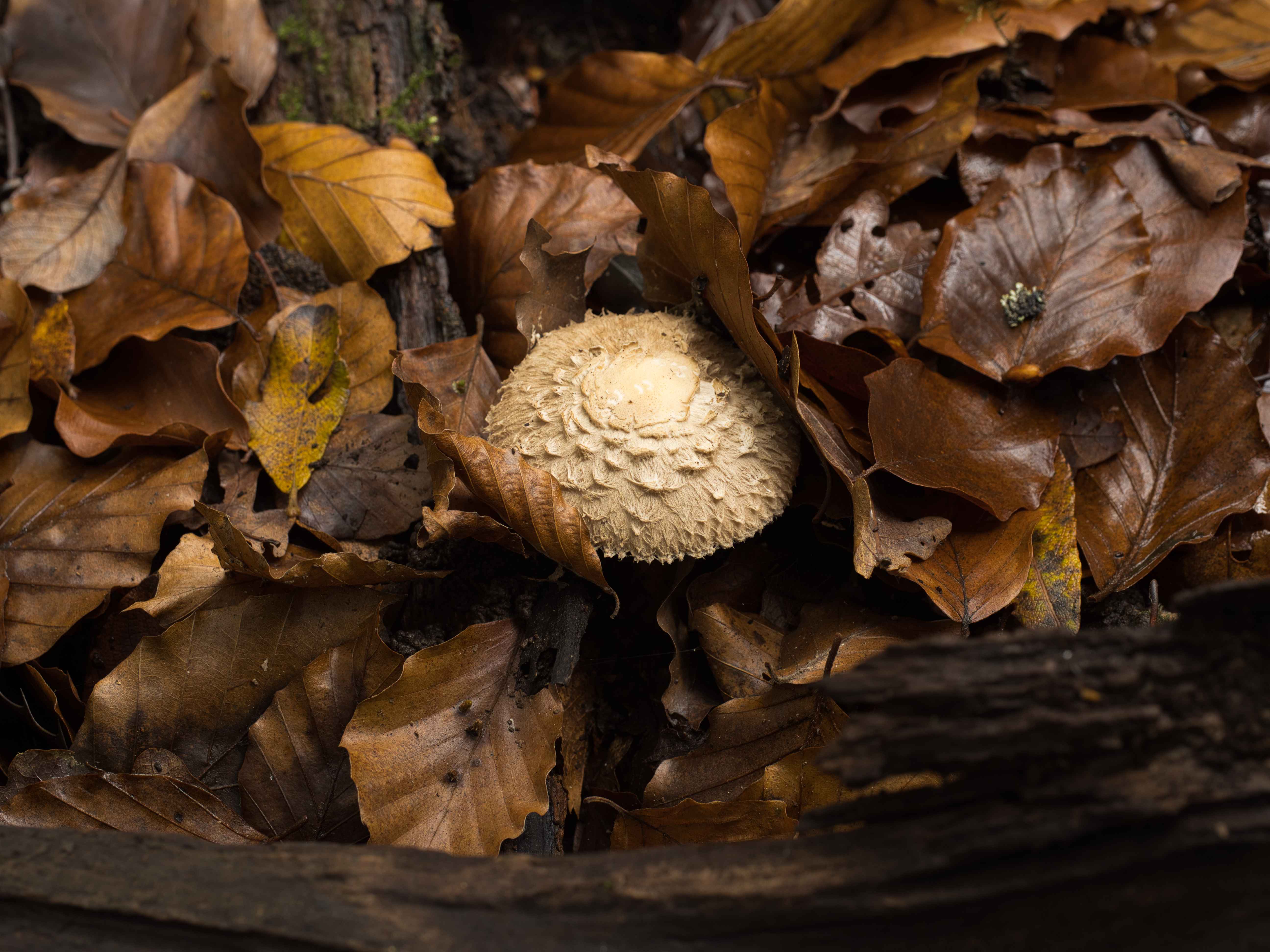
Though I’m not quite sure what this species is, probably a parasol relative of some kind, it was a surprise to see it. I wonder if the newly fallen beech leaves were providing a layer of warmth which protected the fungal mycelia in the soil from frost, allowing them to produce mushroom fruiting bodies?
I’ll end this week’s post with perhaps the most strange thing I found, down in the leaf litter again (but not without moss). Having looked at my massive fungus tome, I think this is a species of clavulina, which is not far away from a coral fungus. These fungi are ectomycohrizzal which means they have a symbiotic relationship with a plant. That means they have been able to agree a trade deal of things that they could not otherwise gain as standalone species. I hope the British and European toadstools in Brussels can take some inspiration. Though the trade between plant and fungus might have taken several million years to agree. Uh oh.





























.jpg)

















 Unlocking Landscapes