The Sussex Weald: the final trumpets of autumn

SLF - 30-11-2019 blog-11

St. Leonard’s Forest, West Sussex, November 2019

The last day of autumn. The final patches of beech, oak, hazel and birch leaves are all that resist the darkest greens and browns of a winter wood. The green leaflets of an elder dangle out across the path, the only ones left on the entire tree.

Grey squirrels round the trees in small groups, like people wrapping a maypole in its ribbons. They are elf-like in a place where little else moves. I stop to take a photo of a biscuit-brown pine tree and a woman waits alongside me.

‘I thought you’d seen an animal,’ she says when I look, her dog carrying on ahead of her.

‘Just squirrels,’ I say.

She laughs: ‘Oh, yes. Plenty of those!’

SLF - 30-11-2019 blog-7

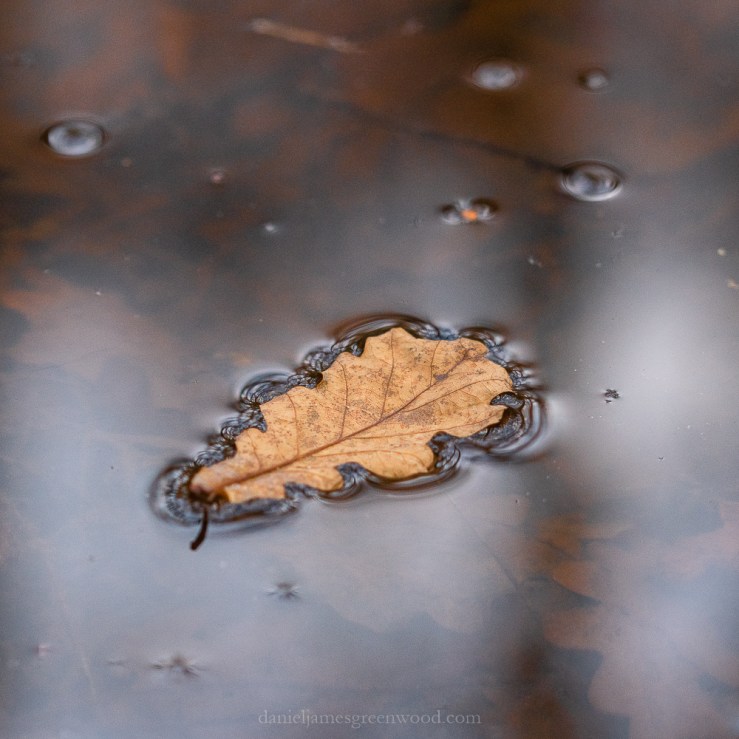
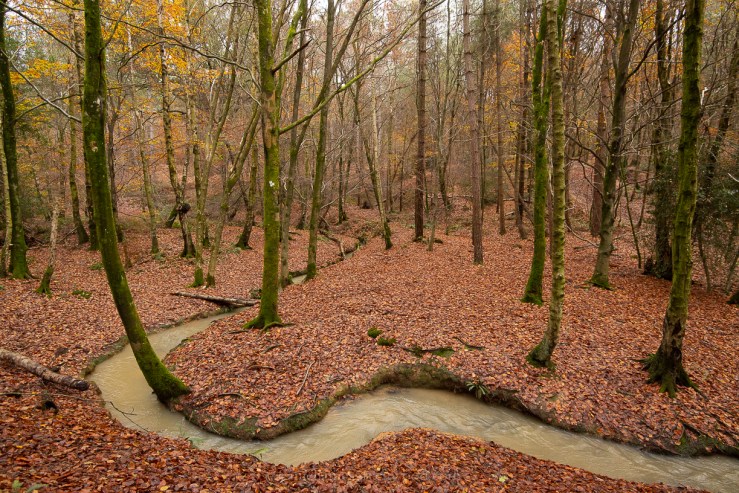
The gill is full as it slaloms down through the woods. In a pond at the edge of the path fallen oak leaves rest in perfect stillness.

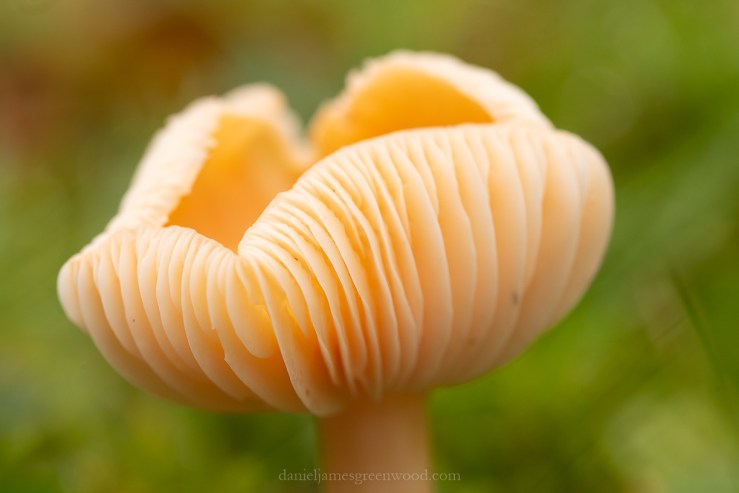
At the foot of the heath, golden mushrooms grow in the soil amidst the remains of bracken. They are so easy to miss. They’re trumpet chanterelles, a species as edible as the original. Like all the mushrooms I photograph, I’m not here to pick or eat them. Their trumpets curve out like gramophones, their stipes sinuous, yellow and tapering like a birch trunk.

SLF - 30-11-2019 blog-6

These are autumn’s final moments. The frosts are creeping in, our breaths stolen away on the air as they leave our lips.

The Sussex Weald

The Sussex Weald: birches fizz

SLF - 17-11-19 blog-38

St. Leonard’s Forest, West Sussex, November 2019

After so much recent rain, the water flows fast through the s-shaped streambed of Sheepwash Gill. Clouds have consumed a sunny morning, Wealden clay clogs under foot. I’m trying to cross the gill by treading across the buffed sandstone which is usually above water. This is no ‘Robert Macfarlane climbing a mountain up a stream in his pants’ kind of effort. The water runs ankle-high against my boots.  On the other side a dog bounds down off the leaf-littered slope and barks at me, stopping my crossing. It’s big. It jumps around at the water’s edge in that ‘I’m trying to pretend I’m going to eat you’ kind of way. Its owner calls it back and I find another way to cross.

A girl watches me as I find a short gap to hop over. The dog is her family’s. They’re gathered around dens made from branches and logs on the banks of the gill. The eldest man is grappling with a thirty-foot long birch tree that’s hung up in another tree. He’s getting advice from his young son on how to get it down. The man is wearing brown leather safety boots, a sure sign of a construction worker enjoying a Sunday with his family in the woods.

SLF - 17-11-19 blog-26.jpg

The birch won’t move much and he gives up. St. Leonard’s Forest is covered in birch. It’s the most westerly point of the High Weald’s heaths, much of which is covered by wild birch and gorse, or otherwise planted up with conifers for forestry. Birch is seen as an enemy or nuisance but it is a special tree that has benefited our species in our evolution. Its wood makes excellent spoons, its bark can be used as fire lighter, its sap tapped for syrup, its branches make brooms. Its Latin name ‘betula’ means ‘to beat’. Getting walloped by birch branches was once a recognised punishment, sometimes in public.

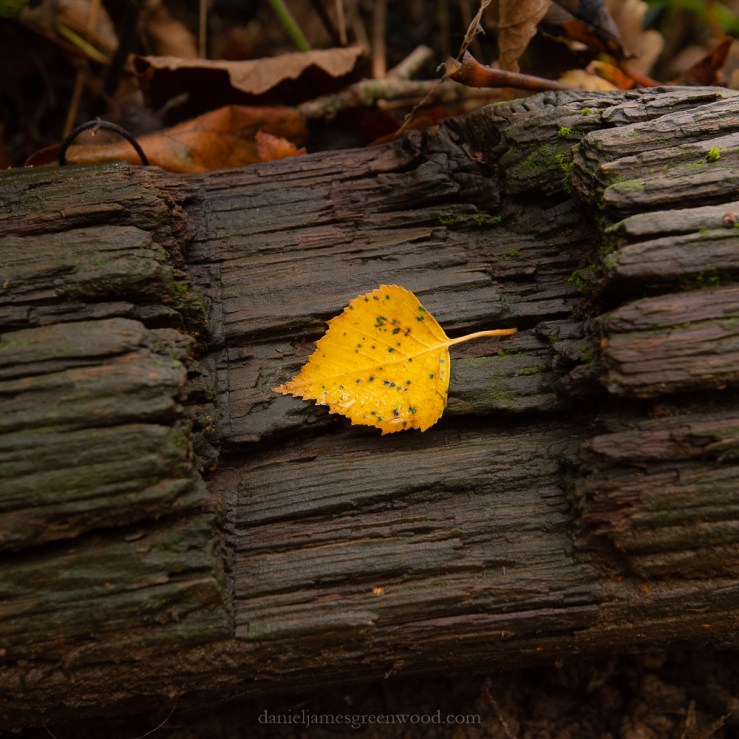
The birches are all yellowing and dropping now, turning to their deep, purple and leafless phase. The small yellow leaves catch by the petioles in mosses and on the splintered fibres of broken heartwood. In the dark pine plantations of St. Leonard’s Forest they fizz and spark.

SLF - 17-11-19 blog-49

Explore the Sussex Weald

The Sussex Weald: the glowing neon church

Ebernoe - 8-11-2019 blog-6.jpg

In memory of Joseph Reilly

Ebernoe, West Sussex, November 2019

At Ebernoe I enter the yard of a church with neon algae glowing on the brickwork. In among the graves meadow waxcap mushrooms grow, one with its cap curled up and over like a pale petalled poppy. ‘The church is open but the handle is stiff’ reads a sign on the door. I turn it and enter inside. That cold stone church air hits my skin, no one else is here. At least no one human.

There is a bird in here. It flies across the aisle and lands on a hanging lampshade, rocking with the force delivered by its flight. Then it moves to one of the windows clinging to the iron frame that separates panes of glass. It’s a blue tit. I wonder how long it’s been in here, perhaps overnight. I think for a few seconds of what to do and walk to the church door. I pull it wide open, moving away to give the bird space. Within seconds the little blue tit flies through the open church door and back out into the woods where it belongs.

I sit on the bench and experience silence but for the dripping of water on the roof. There is a peace in here that I only ever seem to find in places like this. In the stained glass windows images of Jesus Christ, stories depicted that I don’t remember from childhood. The glass’s vibrancy is at odds with the dark and glowering morning that has crept in over one of sun-drenched hedgerows and beech trees lit like fires. I write a word of thanks in the visitor book and make my way back out into the churchyard.

Explore the Sussex Weald

The Sussex Weald: Woolbeding to Midhurst in the Amazonian Weald

WB-MH - 29-8-2019 djg-5

Woolbeding to Midhurst on the New Lipchis Way, West Sussex, August 2019

Download my route for this walk on ViewRanger

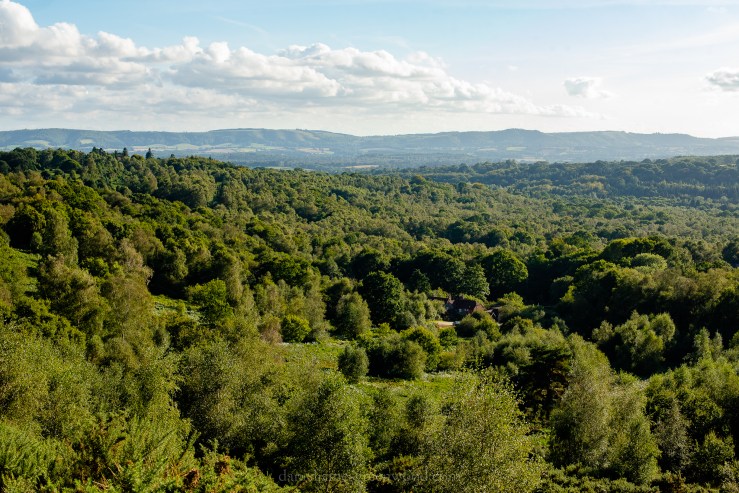
In late August 2019 a friend and I took an evening hike on a section of the New Lipchis Way. This was in addition to a previous walk from Midhurst to Singleton. The 7 mile walk began at Older Hill with astonishing views across the heathlands of the Sussex Weald to the hills of the South Downs. It’s easy to forget (or not even realise) how wooded southern England is. The stretches of woodland in the Weald are some of the most contiguous and largest in the UK. In these images they look like the Amazon rainforest. Against the foot of the Downs they offer awe-inspiring views.

WB-MH - 29-8-2019 djg-8

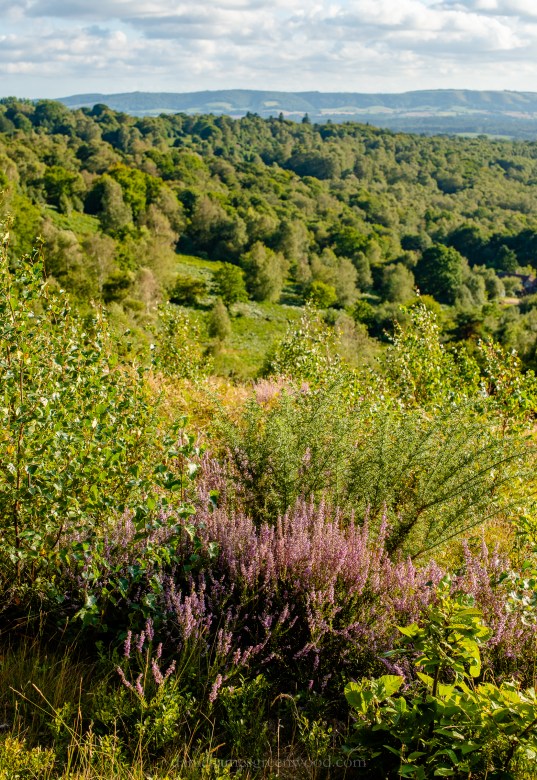
Above heather can be seen in flower, an icon of the Greensand Hills, with birch trees blending with oaks all the way to the Downs.

WB-MH - 29-8-2019 djg-12

Stedham Marsh is a very wet area in winter but we met it on a beautiful evening when a dry period had given us free reign over the tracks and paths.

WB-MH - 29-8-2019 djg-11

Mushrooms were beginning to fruit at this time. The woods were littered with brittlegills (Russula). You can see how dry it is here by the colour of the mushrooms (they’re usually more red) and the leaf litter is crisp.

WB-MH - 29-8-2019 djg-14

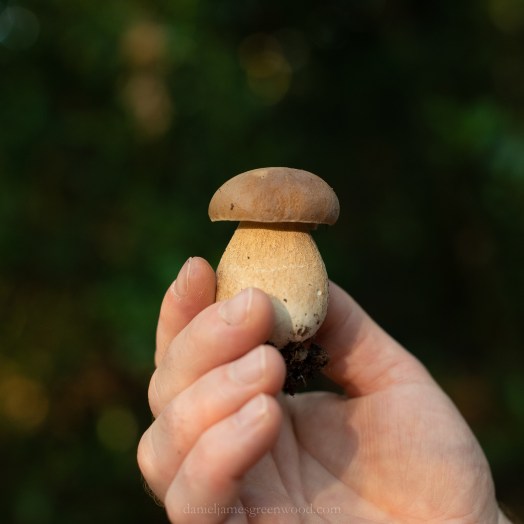
We weren’t foraging (and I’m not telling you that you have permission to do so here) but this boletus mushroom had already been uprooted and it made for a lovely image. There were hundreds of mushrooms on this walk.

WB-MH - 29-8-2019 djg-23

My walking buddy Jonathan agreed to pose under this huge Ganoderma bracket fungus.

WB-MH - 29-8-2019 djg-28

Another Boletus edulis along the way. They seem most happy in the drier progression into autumn, before the October storms when much of the leaf cover is pulled down.

WB-MH - 29-8-2019 djg-18

As with all walks in southern England, the walk crossed through farmsteads and settlements. This beautiful carriage was sitting at the side of a track like something from the days of John Clare when gypsies were free to roam the open landscapes of England.

WB-MH - 29-8-2019 djg-31

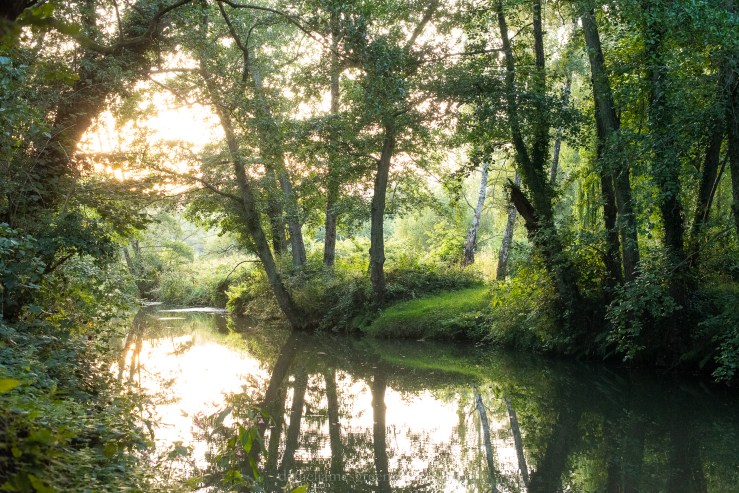
The Rother is one of the main features of this amazing walk. The river has much of its natural form, winding its way through the area. The sun created long shadows of alder trees in the water.

WB-MH - 29-8-2019 djg-33

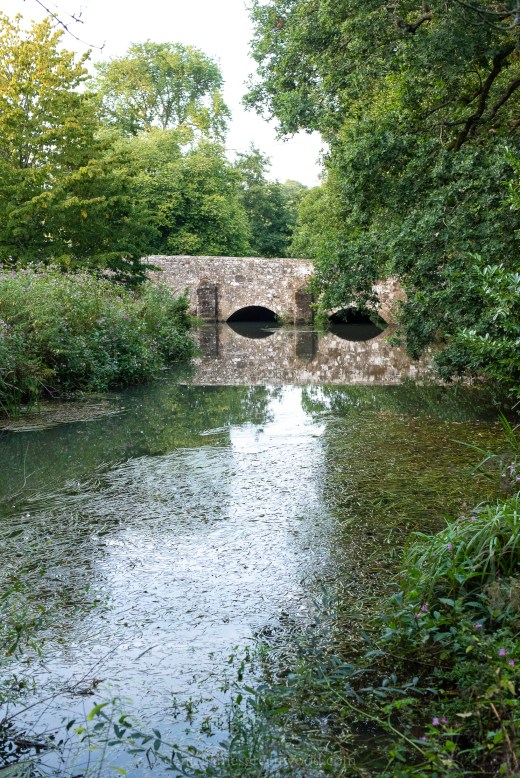
Iping bridge is a local icon dating from the 17th century. It reminds me a little bit of the Anglo-Saxon helmet found in the hoard at Sutton Hoo.

WB-MH - 29-8-2019 djg-34

This selection of milk churns is throwback to times past. One of the things you notice about villages in southern England is how they have lost their working class rural element and have become places for wealthier middle class people. If you were here in the early 1900s it would have been different but the shifting rural economies of the post-war period have changed these communities.

WB-MH - 29-8-2019 djg-35

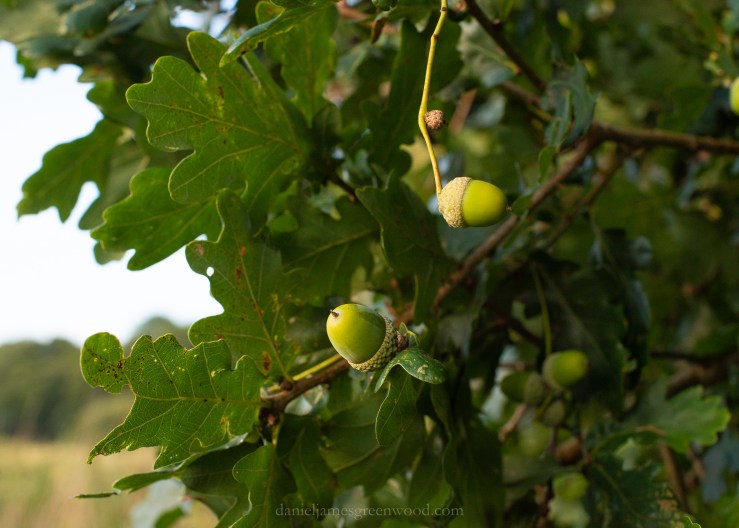
Walking in late August, the trees were heavy with acorns in what turned out to be a mast-year for oaks.

WB-MH - 29-8-2019 djg-36

Stedham Hall is pretty difficult to miss. It is a Victorian building built on top of something much older. How can people cope with so many rooms?

WB-MH - 29-8-2019 djg-40

The walk reaches Midhurst through Woolbeding, an area owned by the National Trust. Here we ended the walk under a pink and purple sky. Herdwick sheep grazed the grasslands between oak trees.

WB-MH - 29-8-2019 djg-44

Arriving in Midhurst you can find plenty of places to rest up after the near 7-mile walk.

The Sussex Weald

The Sussex Weald: the swelling night sky

Midhurst astro - 6-11-2019 blog-2

Midhurst, West Sussex, November 2019

Nightfall. The traffic throbs white and red along North Street. The streetlamps light a line of trees penning the cars in against the buildings that crowd one side of the road. The illuminated frame of a church window stands between two black trees like a section of the Taj Mahal.

I’m here to drink in the swelling night sky. Above Midhurst the Plough sits like an advert for something half-formed or untranslated. As the night deepens more stars cluster around iconic constellations I can’t put a name to.

People pass on a couple of occasions, one man greets me, his scotty dog with a green collar glowing around its neck in the dark. The night has not dimmed its senses, it seems enlivened, sniffing at the night with ears pricked up.

Midhurst astro - 6-11-2019 blog-4

Over the Rother, where it funnels past the Cowdray ruins, the moon draws up mist from the river, matched in the cloud that sits beneath its white beam. Who knows what could be creeping in towards me under that white veil.

Aeroplanes blink and roar in the sky, male pheasants clash in metal at the margins of the wet grasslands separating the Cowdray ruins from the Midhurst traffic. The stars seep through yet more.

Explore the Sussex Weald

The Sussex Weald: autumn crashes into view

Woolbeding - 6-11-2019 blog-1

The Rother, Midhurst, November 2019

Autumn is entering its deepest phase but summer’s life still has a breath. Along the Rother path a neon spider pushes across the mud into the wet grass. The young oaks stand like upright bonfires burning from green to gold. College students wile away their lunchbreaks on the urban netherlands of the Rother. One young woman sits on the exposed roots of a tree watching the sluice, while another rests her head on the concrete structure supporting a drainage pipe. Her male friend stands by, nervous, unsure of how to respond.
Woolbeding - 6-11-2019 blog-2

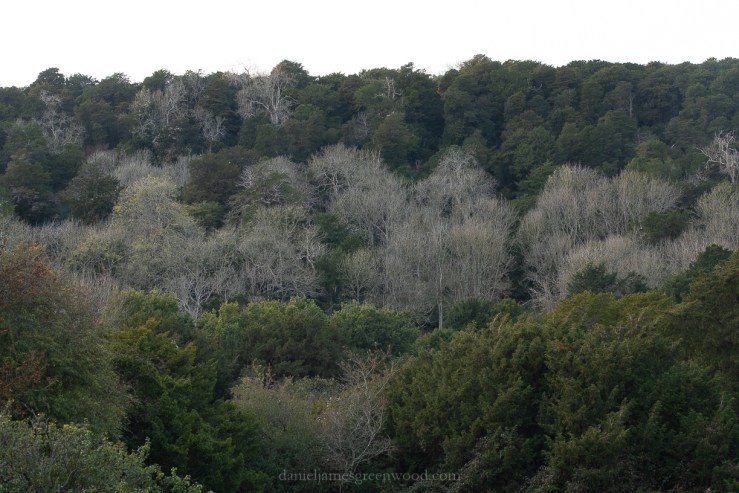
Passing through the woods the trunk of an ancient hornbeam has been revealed again from the screen of saplings and bramble. The latter’s leaves bright yellow with flecks of red like nicks of flesh. A small flock of tits, wrens and robins lift up at the arable edges, ticking into the green bowers of a mature oak. They cross the felled and repurposed trunk of an old conifer with electrical wires, warning: RISK OF DEATH KEEP OFF.
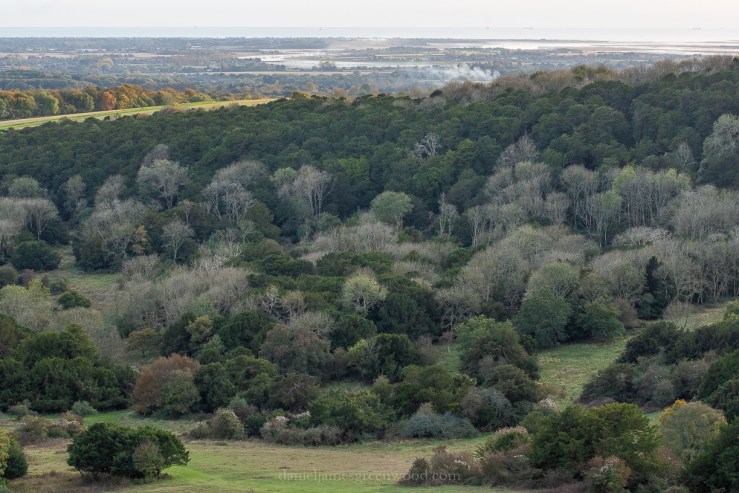
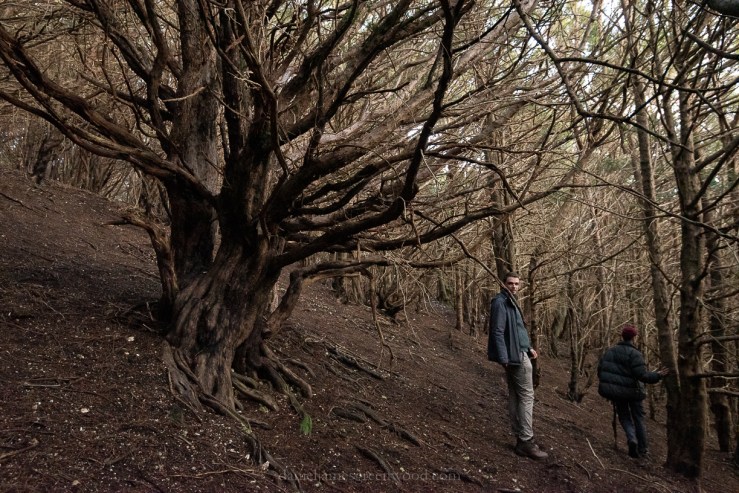
At the gate into Woolbeding autumn crashes into view. Reds, yellows, and browns glow in a break of the sun from clouds. The South Downs loom in silhouette beyond austere pine plantations on Midhurst Common, framing the autumn trees that edge the fields I’m entering. In the meadows dandelions and knapweeds flower in isolation. The air has warmed in recent days and these flowers have taken their chance.

Woolbeding - 6-11-2019 blog-3

Explore the Sussex Weald

The Sussex Weald: the safety of the Rother

Angels bonnets - Oct 2019 blog-1

River Rother, Midhurst, West Sussex, October 2019

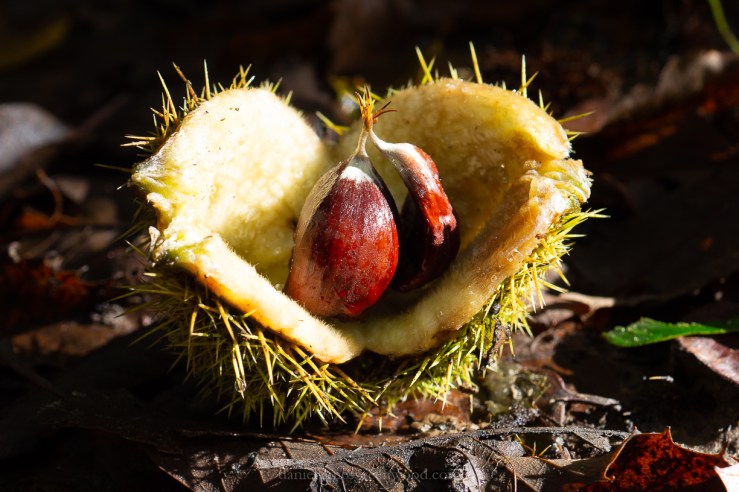
The Rother wends its way around the foot of St. Ann’s Hill, the site of a motte-and-bailey-castle probably built by the Normans in the 11th century. The water is high and brown after heavy rain that has fallen for several days. Atop the hill the ground is carpeted by the spiky cases of sweet chestnuts, freshly fallen from the huge trees that dominate the hill. The sun, shining on what feels a rare occasion, lights the open shells, their chestnut fruits glimmering where they lie.

Away from the hilltop I follow a path that whips back across the prow of the hill. Here dead oaks lie on either side of the path. Angel’s bonnet mushrooms grow in a cluster from crevices in the sinewy wood, their white caps used as a post by a dung fly. Under one mushroom cap I notice another fly’s head poking out as it rests on the stem.

Rother - Oct 2019 blog-1

I hear the loud clopping of a dog coming towards me on the path. In my stillness it doesn’t know I’m here. As it comes closer and closer into view, its legs are in fact long and thin. It’s a roe deer, young and carefree. It sees me at a distance of ten feet and splashes through ivy, hazel and brambles down to the safety of the winding Rother.

Explore the Sussex Weald

The South Downs: the otherworldly nature of Kingley Vale

Kingley Vale - 27-10-2019 blog-7

Kingley Vale, South Downs, West Sussex, October 2019

We enter the ashy woods of Kingley Vale, one of the most spellbinding places in the South Downs. Mushrooms are everywhere at the feet of yew, ash and oak trees as the season enters its peak.

Kingley Vale - 27-10-2019 blog-1

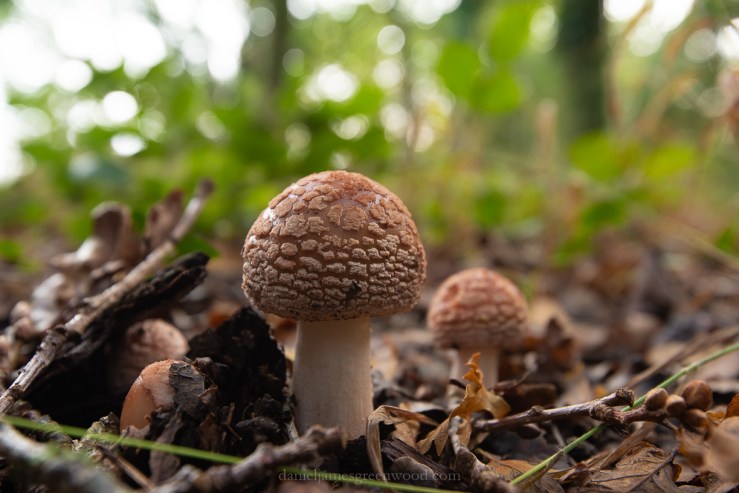
The light is weak so we kneel down next to the mushrooms to look more closely. We find blushers, ceps, deceivers and many brown species that are very difficult to identify.

Kingley Vale - 27-10-2019 blog-3

Archetypal mushrooms grow with black gills and caps that glow purple. Their collars hang loose like pastry over the edges of a tin.

Kingley Vale - 27-10-2019 blog-6

Kingley Vale is famed for its ancient yew trees, particularly one area that is heavily visited, the roots of the trees beginning to show above ground from the impacts of footfall eroding the ground around them. They feel like one of the most still and unmoving of tree species, owing to their hardness and strength. Their living tissue is some of the strongest in the plant kingdom and their heartwood is not at all needed for them to remain upright. Their roots can go on producing new trees even when those above ground have died, like the Borrowdale yews in the Lake District.

Kingley Vale - 27-10-2019 blog-8

Out from under the yews chalk grassland spreads to the foot of the ridge where yew and ash woods cover the hills. Many of the ash trees are succumbing to ash dieback disease, in a landscape where they are content. It is a tragedy but then it is our own fault for unchecked trade of wood products, combined with the eventual spread of fungal spores.

Kingley Vale - 27-10-2019 blog-9

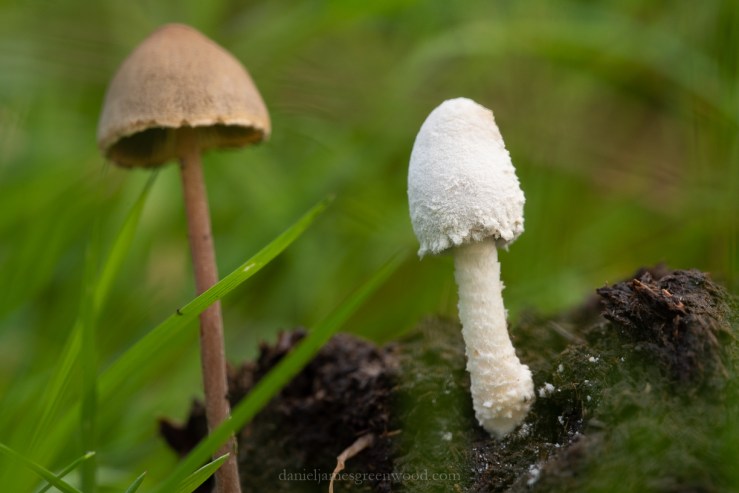
In the chalk grasslands we find a cowpat with mushrooms popping from the poo. One of them is snowy inkcap, a species I have never seen before, with its powdery cap and stem. It looks like something you might find in a snow globe.

Kingley Vale - 27-10-2019 blog-16

Climbing up onto the ridge the sun slips away in the west, casting a final glow across the chalky bowl of Kingley Vale.

Kingley Vale - 27-10-2019 blog-12

The grunting of a male deer echoes in the yew woods broken by the white stags of bare bone ash branches. Knowing some of these trees may be dead lends them a ghoulishness. Their brushheads are fading into history. Many will not be here in years to come.

Kingley Vale - 27-10-2019 blog-33

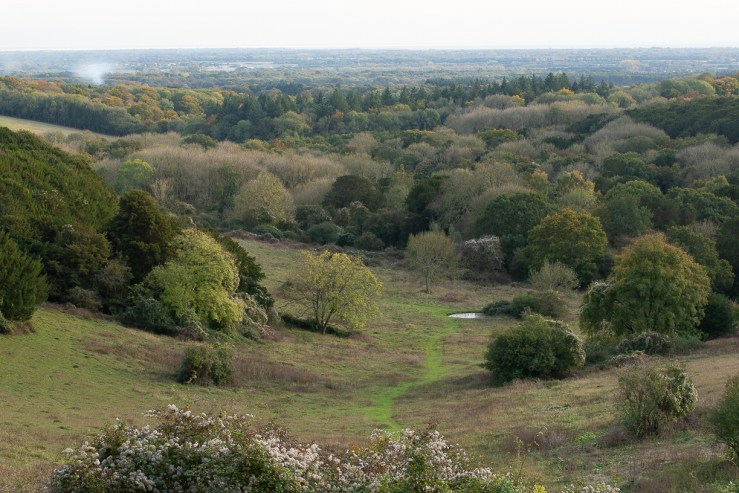
The sun glimmers in Chichester Harbour and the sea. A plume of smoke spirals into the evening sky.

Kingley Vale - 27-10-2019 blog-37

In the dense and dark yew woods on the slope we hear the strange, tropical bubbling of a tawny owl. Here yews reach out into the light at the edges like multi-limbed bodies sucked into a vortex. The yews have clarified the soil, no other plant can compete. Combined with the tawny’s song, the experience is otherwordly.

Kingley Vale - 27-10-2019 blog-42

At dusk rooks flock in a sea of black over a field-edge wood. Their cawing grows louder and closer as they envelop the sky above our heads, drawing in jackdaws, drifting back beyond the tops of the trees. On the darkening hilltops deer graze like slow-footed, four-legged people. We are left with so many questions.

Explore my Wood-Wide-Web

The Sussex Weald: A movement in the shadows

Warnham - 27-10-2019 blog-13

Warnham, West Sussex, October 2019

It’s so warm in the sun. Dragonflies touch the edge of the boardwalk as they mate in heavy flight. The sun glistens in the water. Flocks of tits have formed as winter approaches. I wait for one group to appear from shadowy alder carr but they keep their distance. Long-tailed tits chirrup and bounce between branches well beyond the boardwalk and space of water that separates us.

A couple of weeks ago we were shown harvest mice nests in the reeds and willows by a local ecologist. One of them is still here, the small bundle of grasses and leaves. Not much bigger than a cricket ball. I turn again to the alder woodland and a willow has crashed and fallen in the water. Its trunk has split, creating an entrance into its rotten core. The sun floods this wet woodland and the light brightens the dark glut of trees.

The broken willow again:
a movement in the shadows.
Whiskers and a pink nose.
Brown fur and paws.

It exits a hole where the heartwood used to be and slips back inside, down to water level. Out again it reveals itself on the willow bark with two paws spread out like furry stars, a white throat and breast. It turns its head to one side and sniffs the air. It dances back inside and disappears.

Warnham - 27-10-2019 blog-17

A couple approach me with caution. Aware I am now kneeling on the boardwalk I stand up and turn to them:

‘I’ve just seen an American mink,’ I say.

Explore the Sussex Weald

The Sussex Weald: a mushroom cloud rests over West Sussex

Ebernoe - 11-10-2019 djg-3

Ebernoe Common, Sussex Weald, October 2019

Last week I spent a drizzly and dark afternoon at Ebernoe Common, a National Nature Reserve managed by Sussex Wildlife Trust. It was raining not only water but mushrooms. The first signs of the good times came in the shape of a magpie inkcap. This is something I’ve only seen three times, twice at Ebernoe and once on the North Downs.

Ebernoe - 11-10-2019 djg-1

The word magpie relates to the English phrased ‘pied’ which means black and white. This species goes into the delicious state of deliquesce (an inky kind of melting), just like its relative the shaggy inkcap. Unlike the shaggy inkcap, though, it’s toxic so don’t eat it. The thing I like about this image is the glow of green in the background gradually turning to yellow as autumn progresses. Beech usually provides this kind of backdrop.

Ebernoe - 11-10-2019 djg-4

Porcelain fungus is a reliable species. It fruits in the same place, often en masse, each year. It is a beautiful species but the beauty, like so many things, lies underneath.

Ebernoe - 11-10-2019 djg-7

The gloopy glimmer of the cap is photogenic but the gills of porcelain fungus are stunning.

Ebernoe - 11-10-2019 djg-13

I use a small LED light to illuminate mushrooms in this way. I can’t tell you how much more character this can offer to photos. Actually I can: a lot more.

Ebernoe - 11-10-2019 djg-21

Here you can see my roving light (yes, I meant this!) mixing it with some delicious bokeh in the background. Leaves and branches create lovely bokeh because of the break of light in the gaps.

Ebernoe - 11-10-2019 djg-20

Here is one of ‘the finished images’. I like that the light circles can imitate the caps of mushrooms in photos and offer a deeper layer of resonance and reflection. Who knew.

Ebernoe - 11-10-2019 djg-38

In photography, macro is where the fun happens. There are so many amazing things happening at our feet that our eyes are incapable of seeing without the help of magnification. If you want to have a go at macro, don’t hesitate. Just do it. I call this one ‘Climb every mountain’. The piece of deadwood does have the appearance of a peak in this light. The mushroom is like a protagonist, playing on a theme of mushrooms as individuals or sentient beings throughout human history:

16a9e28079e352a3d6d8ff664898b820-christmas-themes-christmas-cards

5d58176f8caa8c1e9faf25e0ab9f6bc8-picture-postcards-mushrooms

This seems to be particularly prevalent in German culture and Christmas or New Year celebrations. Christmas has evolved from Pagan traditions (Paganism was once considered any religion which was non-Christian) and the place nature has in the human imagination is pretty clear here.

Ebernoe - 11-10-2019 djg-16

Back to life, back to reality. Honey fungus is enjoying its first boom phase and seems to be having a good year.

Ebernoe - 11-10-2019 djg-18

There is a dead veteran beech tree at Ebernoe Common which is basically where all the mushrooms live. This wide angle image shows just how many larger species were making a home within the tree. Here you can see giant polypore (bottom left), honey fungus in the middle and Ganoderma brackets everywhere. This is a stunning tree and of the highest ecological importance because of all the species, not just fungi, it supports. All of these species are contributing to the tree’s decay and recycling into organic matter (soil).

Ebernoe - 11-10-2019 djg-9

Not far away was a patch of hen-of-the-woods, an aggressive root-rotter (harsh). It’s said to smell like mice (more harsh).

Ebernoe - 11-10-2019 djg-42

You can imagine how I thought someone was playing a trick when I passed this. A swing made from a beech log that was covered in porcelain fungus. It was embarrassingly hard to photograph well. Thankfully only the mushrooms were looking and they haven’t evolved to use Twitter yet.

Ebernoe - 11-10-2019 djg-47

On my way out I spotted this slurp of fungus low on a log by the path.

Ebernoe - 11-10-2019 djg-50

Looking closely with the macro lens it has the appearance of something you might find in a coral reef. Then that’s the beauty of woodland, it has a depth to it that you have to dive in to experience for yourself.

Thanks for reading.


Read more:

The Sussex Weald

My Wood-Wide-Web