The Sussex Weald: a mushroom cloud rests over West Sussex

Ebernoe - 11-10-2019 djg-3

Ebernoe Common, Sussex Weald, October 2019

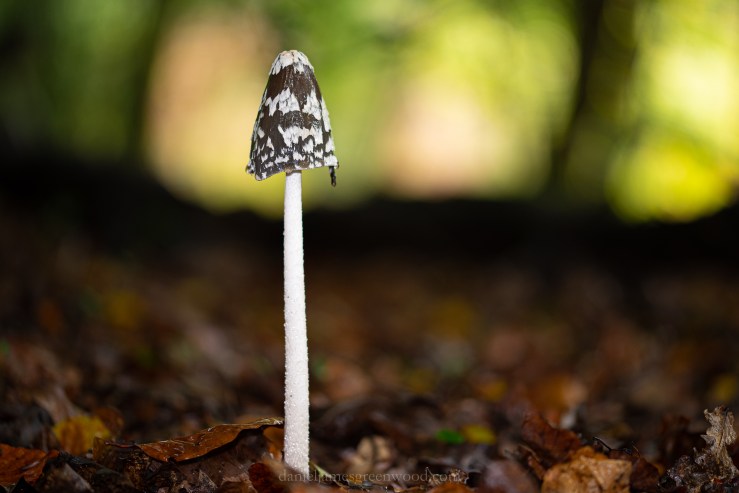
Last week I spent a drizzly and dark afternoon at Ebernoe Common, a National Nature Reserve managed by Sussex Wildlife Trust. It was raining not only water but mushrooms. The first signs of the good times came in the shape of a magpie inkcap. This is something I’ve only seen three times, twice at Ebernoe and once on the North Downs.

Ebernoe - 11-10-2019 djg-1

The word magpie relates to the English phrased ‘pied’ which means black and white. This species goes into the delicious state of deliquesce (an inky kind of melting), just like its relative the shaggy inkcap. Unlike the shaggy inkcap, though, it’s toxic so don’t eat it. The thing I like about this image is the glow of green in the background gradually turning to yellow as autumn progresses. Beech usually provides this kind of backdrop.
Ebernoe - 11-10-2019 djg-4

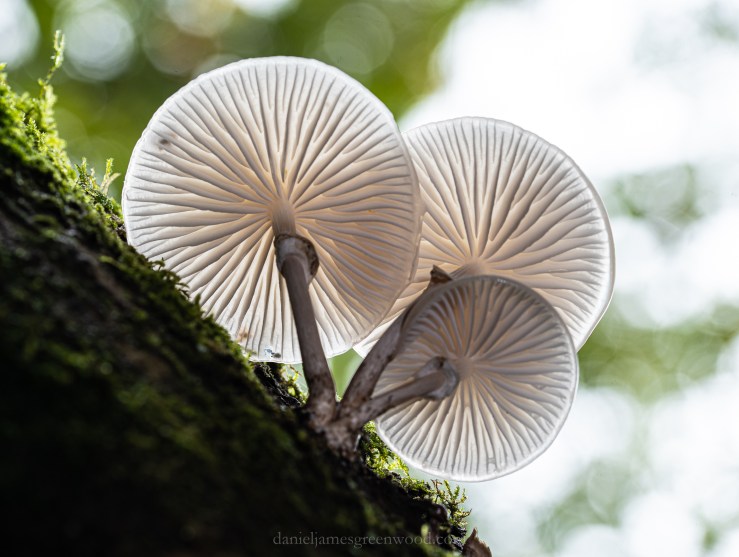
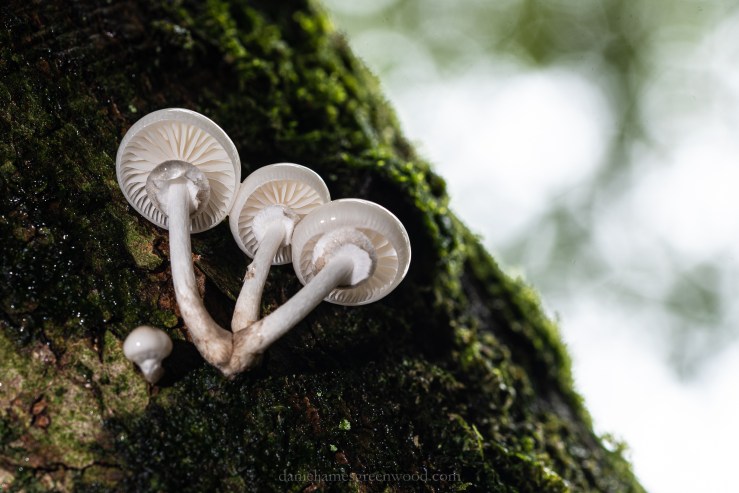
Porcelain fungus is a reliable species. It fruits in the same place, often en masse, each year. It is a beautiful species but the beauty, like so many things, lies underneath.
Ebernoe - 11-10-2019 djg-7

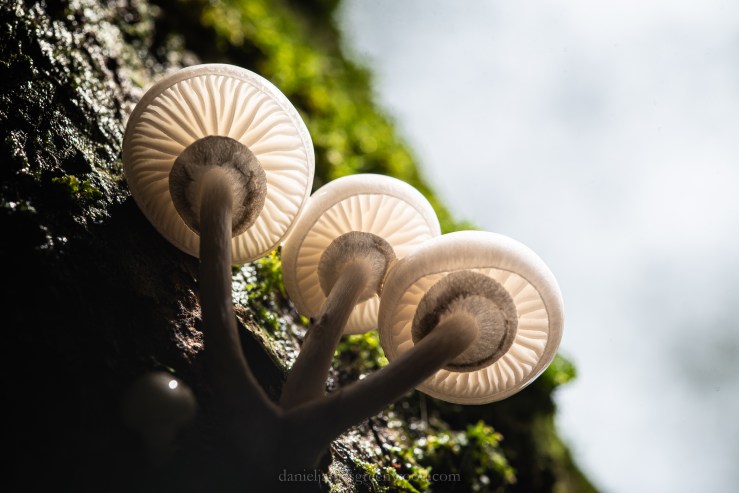
The gloopy glimmer of the cap is photogenic but the gills of porcelain fungus are stunning.
Ebernoe - 11-10-2019 djg-13

I use a small LED light to illuminate mushrooms in this way. I can’t tell you how much more character this can offer to photos. Actually I can: a lot more.
Ebernoe - 11-10-2019 djg-21

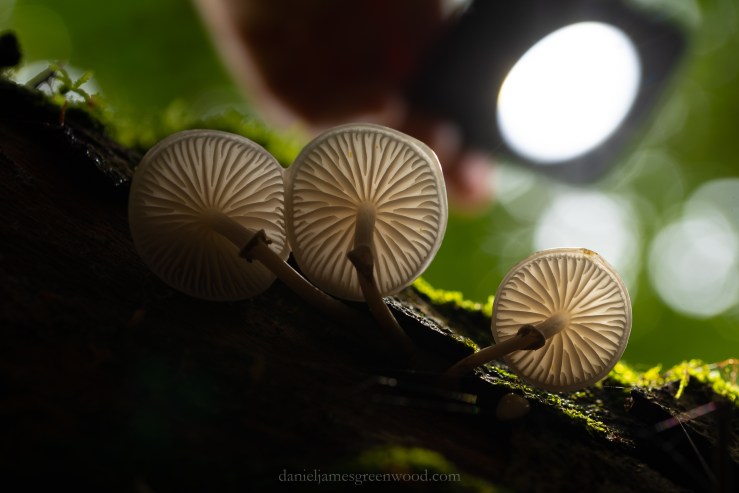
Here you can see my roving light (yes, I meant this!) mixing it with some delicious bokeh in the background. Leaves and branches create lovely bokeh because of the break of light in the gaps.
Ebernoe - 11-10-2019 djg-20

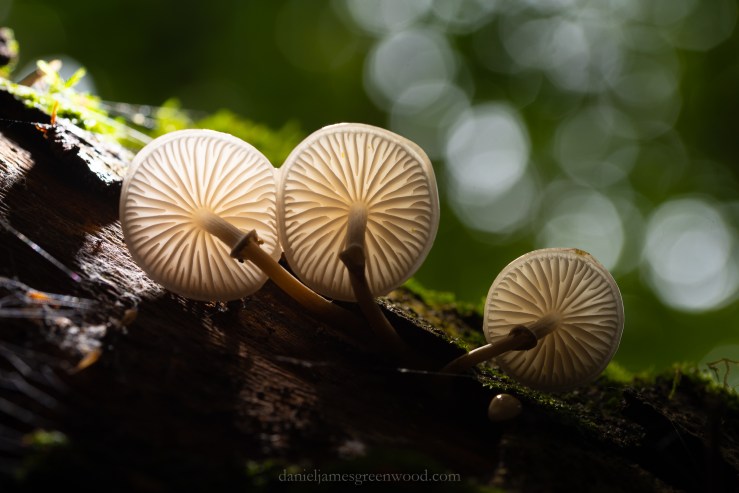
Here is one of ‘the finished images’. I like that the light circles can imitate the caps of mushrooms in photos and offer a deeper layer of resonance and reflection. Who knew.
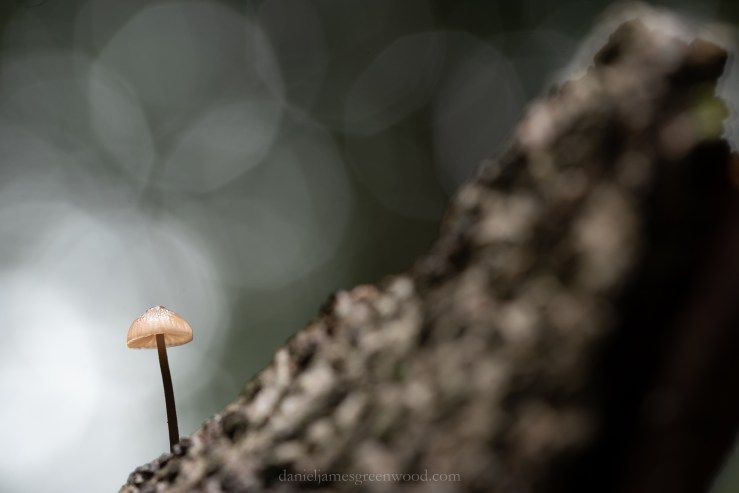
Ebernoe - 11-10-2019 djg-38

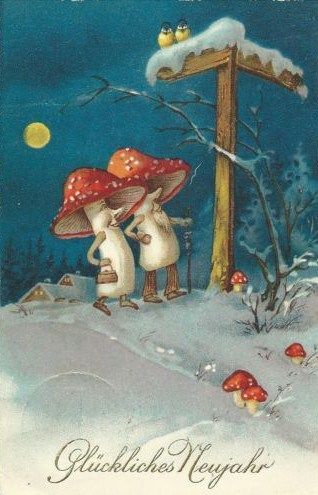
In photography, macro is where the fun happens. There are so many amazing things happening at our feet that our eyes are incapable of seeing without the help of magnification. If you want to have a go at macro, don’t hesitate. Just do it. I call this one ‘Climb every mountain’. The piece of deadwood does have the appearance of a peak in this light. The mushroom is like a protagonist, playing on a theme of mushrooms as individuals or sentient beings throughout human history:
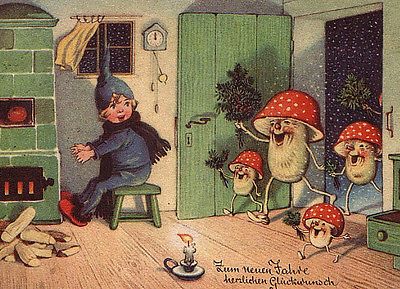
16a9e28079e352a3d6d8ff664898b820-christmas-themes-christmas-cards

5d58176f8caa8c1e9faf25e0ab9f6bc8-picture-postcards-mushrooms

This seems to be particularly prevalent in German culture and Christmas or New Year celebrations. Christmas has evolved from Pagan traditions (Paganism was once considered any religion which was non-Christian) and the place nature has in the human imagination is pretty clear here.
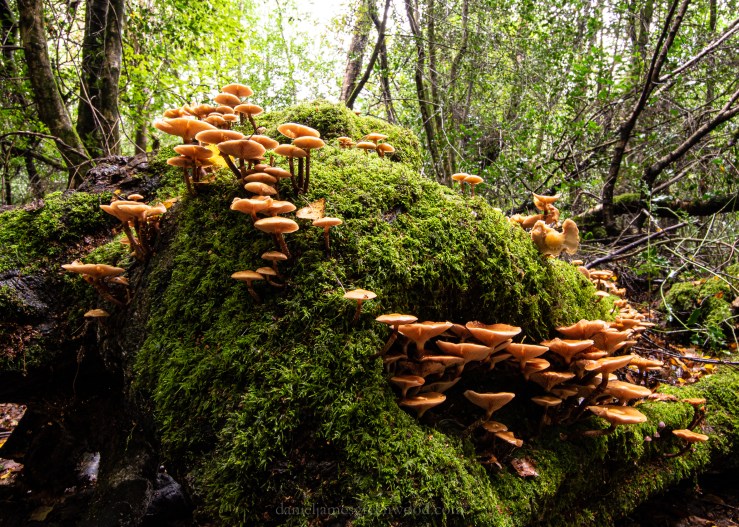
Ebernoe - 11-10-2019 djg-16

Back to life, back to reality. Honey fungus is enjoying its first boom phase and seems to be having a good year.

Ebernoe - 11-10-2019 djg-18

There is a dead veteran beech tree at Ebernoe Common which is basically where all the mushrooms live. This wide angle image shows just how many larger species were making a home within the tree. Here you can see giant polypore (bottom left), honey fungus in the middle and Ganoderma brackets everywhere. This is a stunning tree and of the highest ecological importance because of all the species, not just fungi, it supports. All of these species are contributing to the tree’s decay and recycling into organic matter (soil).
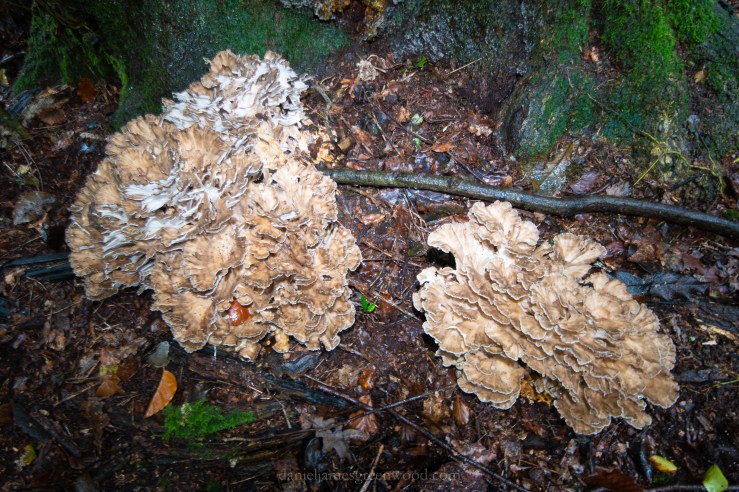
Ebernoe - 11-10-2019 djg-9

Not far away was a patch of hen-of-the-woods, an aggressive root-rotter (harsh). It’s said to smell like mice (more harsh).
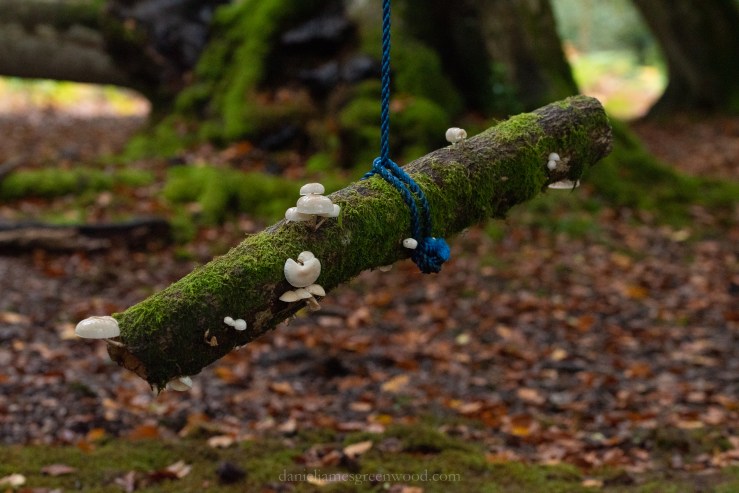
Ebernoe - 11-10-2019 djg-42

You can imagine how I thought someone was playing a trick when I passed this. A swing made from a beech log that was covered in porcelain fungus. It was embarrassingly hard to photograph well. Thankfully only the mushrooms were looking and they haven’t evolved to use Twitter yet.
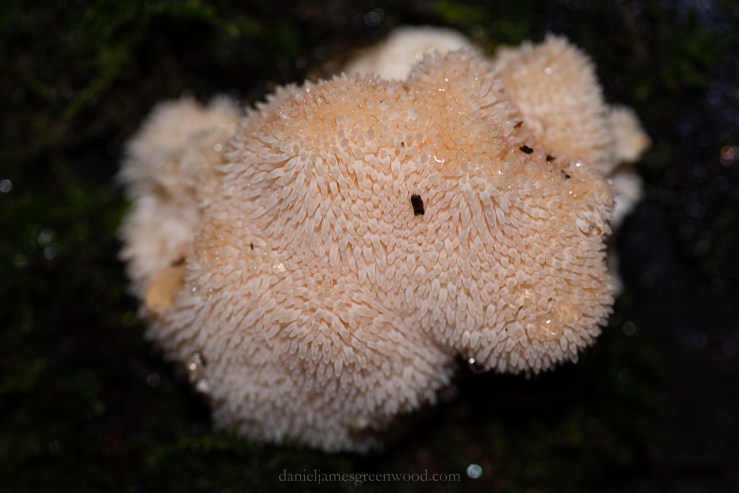
Ebernoe - 11-10-2019 djg-47

On my way out I spotted this slurp of fungus low on a log by the path.
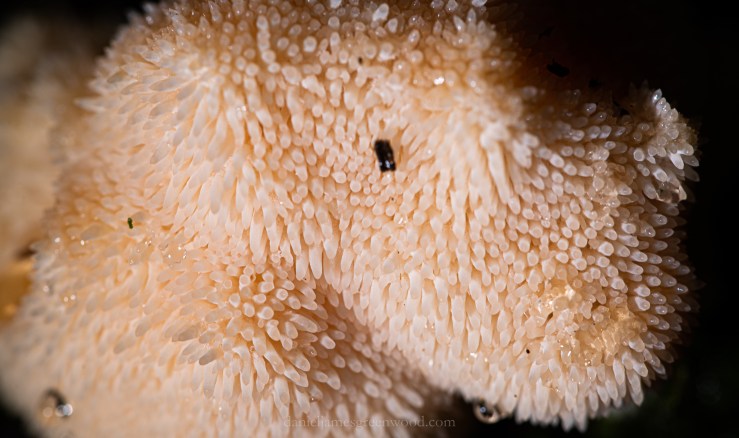
Ebernoe - 11-10-2019 djg-50

Looking closely with the macro lens it has the appearance of something you might find in a coral reef. Then that’s the beauty of woodland, it has a depth to it that you have to dive in to experience for yourself.

Thanks for reading.


Read more:

The Sussex Weald

My Wood-Wide-Web
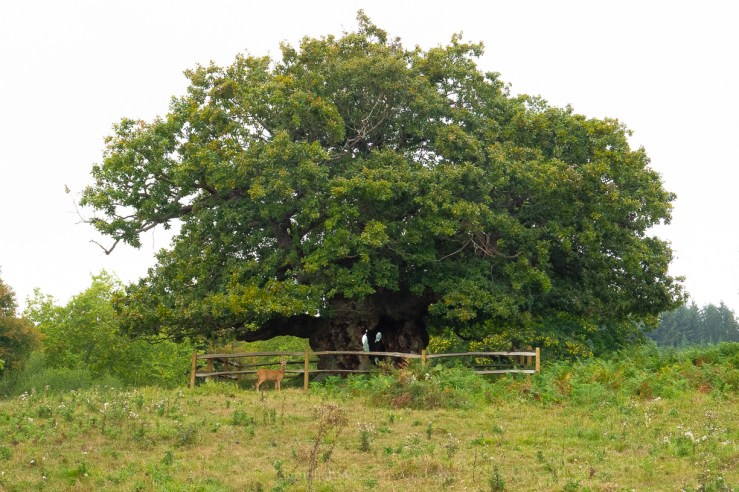
 

The Sussex Weald: Happy 800th autumn to you, old oak

Cowdray Park - 16-9-2019 djg lo-res-14

Cowdray Park, Sussex Weald, September 2019

It’s a grey and dark September evening. Robins sing solitary from trees in their autumnal fashion. Cars wash nearby on the A272, to and from the village of Easebourne. The bracken rests in stages of green, yellow and brown. In Cowdray Park a sign warns of the bull in the field, but there are no cattle. The only beasts are the trees sat across the undulating hillside of parkland. Here lives the 1000 year old Queen Elizabeth oak and the Cowdray Colossus, the biggest sweet chestnut in England.

I pass creeping thistle still in flower and others with their leaves thinning to a translucent yellowy green. Walking under one of the ancient oaks, it looks like a rabbit’s head, its heartwood torn out and lying on the ground. An alcove has become of its bark, like a doorway to another place. It’s a fair metaphor, the word oak derives from an old name for door.

Cowdray Park - 16-9-2019 djg lo-res-15

The second oldest oak sits on the hill, its heartwood also lost, mainly trampled out by cattle and people. But now it has a fence around it. In front of the fence stands a roe deer. It watches me in complete stillness. I approach one slow step at a time, taking a photo each time I get closer. Soon it turns on its heels and disappears off behind the tree, springing into the air. I see it rising up and down beyond the fence like a merry-go-round.

I approach the oak and see it is producing acorns. How many millions of acorns has this sessile oak tree produced in its 800 or so years of life. How many autumns has it lived through? Perhaps as many as 800. Our lives seem so small and precious, fragile in comparison to this natural treasure.

Cowdray Park - 16-9-2019 djg lo-res-16

Explore my Wealden archive

Video: The Magnificent South Downs Way

Devils Dyke - 2-8-2019 - djg-6

In August my oldest friend Adam George came home for the summer from where he lives in China. Adam makes videos about travel in China as well as his job as an English teacher out there. Having known him since we were about 4, I think his accent is now a lot less south London after 5 years in China! My friend Jamie however, still a Londoner.

Adam wanted to make a short travel video about the South Downs. We went to Devil’s Dyke in West Sussex and this is what he produced. You can see me talking about the Sussex Wealdย and suncream.

You can see Adam’s YouTube channel here.

The Sussex Weald: Seven miles of sunset hills in the Wealden Downs

Midhurst to Singleton on the New Lipchis Way, West Sussex, August 2019

Midhurst is a market town in rural West Sussex, right in the geographical heart of the South Downs National Park. A friend and I spent the evening walking a section of the New Lipchis Way that connects Midhurst and Singleton. It was a walk of 8 miles through several different habitats, undulating over varied geology. The New Lipchis Way sounds like something from Pagan Britain, but really it’s just that the walk begins in Liphook in Hampshire and ends in Chichester.

Mids-Singleton - 8-8-2019 djg-6

We began at Midhurst via the Cowdray Ruins, along the river Rother at the bottom of St. Ann’s Hill which once held a castle on its top. Remnants of the castle are still printed onto the hilltop. The way carries on through fields where ginormous sweet chestnuts are set in an avenue at the bottom of farmland. Soon the agricultural world is left behind for plantations imprinted on heathland around Heyshott and Ambersham Commons. Here the heather was beginning to bloom. The way crosses the old railway line that once served Midhurst.

Mids-Singleton - 8-8-2019 djg-13

Soon the South Downs break into view and the heathlands of the Greensand are left behind for Heyshott village. The use of the word ‘shot’ at the end of a placename usually refers to an extra piece of land extending from a settlement. Hence Aldershot and the variable Oakeshot. The church is a combination of chalk flint from the South Downs, oak timbers, sandstone blocks and clay tiles from the Weald and wooden panels and slats, presumably also from the Weald. The church probably dates from the 13th century.

Mids-Singleton - 8-8-2019 djg-14

I love the feeling of moving between settlements and countryside when walking and that drop-off in noise and activity for the stillness of an open or natural landscape. Here we passed through fields of wheat to reach the ridge of the South Downs at Heyshott. In the image above you can see the gradual dying back of ash trees on the ridge as the disease takes effect.

Mids-Singleton - 8-8-2019 djg-15

Looking back from the wheatfields you can see the ridge of Greensand Hills in the background, the woody heathlands in the middle and then the churchspire of Heyshott one layer closer.

Mids-Singleton - 8-8-2019 djg-16

Rising with the chalk, in the distance you can see Bexleyhill where the mast pokes out. These hills are part of the same Greensand ridge as Woolbeding Common, to the west or left hand side in this image. The river Rother runs from left to right (west-east) in this image, cutting between the distant hills and those of Heyshott and Ambersham Commons. Note the arrival of ash and whitebeam trees on either side on this rural chalky lane.

Midhurst-Singleton D750 - 8-8-2019 (99)

The light began to fade as the clouds came in and we made our ascent up onto the ridge of the South Downs. It was a dark, horsefly-occupied stretch which was so steep it shut any conversation down. Yew woods covered the northern slopes, such is their want on chalk. They give off an eerie vibe, light rarely breaks their cover. They are rare as woodlands.

Mids-Singleton - 8-8-2019 djg-17

Up on Heyshott Down we were met by some badger-faced sheep, evidently they get fed by passersby or people who, like us, get to this point and hit the deck. Heyshott Down is rich in chalk grassland flowers but also in burial mounds. I heard someone say once that the South Downs ridge, all 100 miles of it, was the equivalent of a really long, ancient graveyard.

Mids-Singleton - 8-8-2019 djg-18

The Lipchis Way then slips down through the non-stop beech plantation of Charlton Forest. Rain came in and the light was so low I took few pictures. We found this vast clearing where new conifers had been planted. You may be able to spot the hunting seats. This is the kind of heavily industrialised landscape that is found across Europe. It could be the Czech Republic, France or Scotland. It is a controlled landscape. Hunting and shooting are common past times in this part of West Sussex.

Mids-Singleton - 8-8-2019 djg-19

Leaving Charlton Forest behind after a good 20 minutes, you arrive at Levin Down, a Sussex Wildlife Trust nature reserve. On the edge of the reserve sits this twisted ash tree, recoiling from the woods and reaching out into the open landscape. This is another eerily open landscape, set against the wonderful diversity of Levin Down. The name derives from ‘Leave Alone’ because it was too steep to plough, thank God.

Mids-Singleton - 8-8-2019 djg-27

The light was so dull here that my camera’s excellent low-light skills came into action. Levin Down is chalk grassland with some stunning veteran juniper trees. Juniper would once have been much more common in areas of chalk downland. I have only ever seen it at Box Hill in the wild in the UK. In the White Carpathians of the Czech Republic, a landscape similar to the South Downs, they replant them to try and resurrect their populations.

Mids-Singleton - 8-8-2019 djg-25

Mids-Singleton - 8-8-2019 djg-24

Mids-Singleton - 8-8-2019 djg-23

You may know juniper from their berries because it is used to produce gin. The junipers on Levin Down are works of art. Like grim reapers their limbs look to be covered by overhanging sleeves, reaching out across the ground, rearing up like the pointed tips of hats. It feels like they’re pointing at you as they reach out to you from their place in the meadows.

Mids-Singleton - 8-8-2019 djg-30

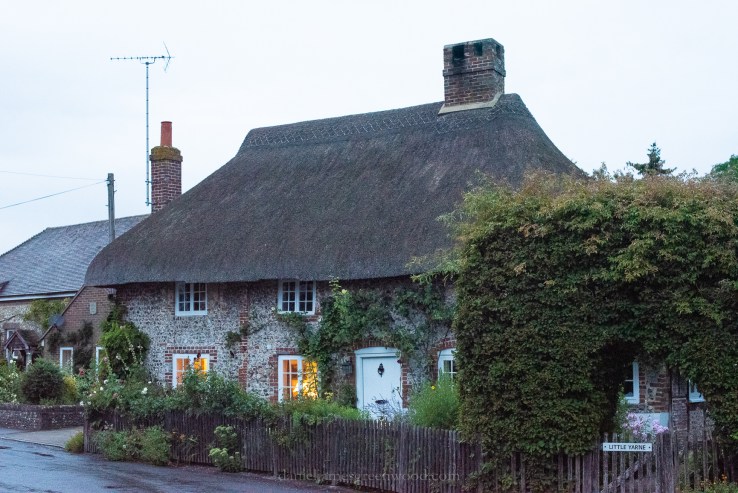
Leaving Levin Down behind, we dropped down through chalk heath (a super rare habitat), one of the most pungent meadows I’ve ever smelt due to the wild marjoram or oregano. The way drops into the old part of Singleton, a village known for the Weald and Downland Museum. Thatched cottages with chalk flints sit with windows showing a cosy inner glow. A lovely place to end the walk.

Mids-Singleton - 8-8-2019 djg-29

Explore my Wealden archive

The Sussex Weald: superstar butterflies at Knepp

Knepp 24-6-18 djg-15

Knepp, West Sussex, July 2019

The footpath runs off Countryman Lane behind a deer-proof gate. In this case itโ€™s keeping them in. On the gate a sign welcomes visitors to the Knepp Wildland Project. A woman with three dogs holds the gate open for us. Iโ€™m here with friends visiting for the day from London, where the Knepp narrative of rewilding lowland England and its successes for wildlife are influential. Weโ€™ve come for a circular walk on the public footpaths that cross the Knepp Estate.

Knepp is an ancient deer park that, with investment from government and the landownerโ€™s private wealth, is attempting to prove that farming can be done in a way that is much more sustainable and beneficial for wildlife. Critics say that most farmers lack the personal finances of the Knepp Estate and government investment to sustain the same, low-intensity measures to remain in business. Some people just don’t like change. Many farmers in Sussex are tenant farmers, not landowners, meaning they donโ€™t possess the same money to set up a rewilding project in the first place. Many proponents of rewilding argue that farming shouldnโ€™t happen anyway and the land should be allowed to re-establish natural states of woodland, grassland and wetland.

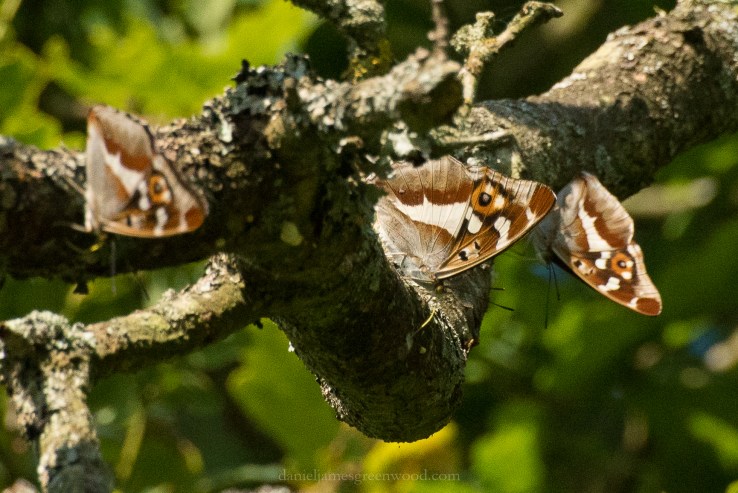
The footpath is lined with stringy hedges growing to a state of woodland. Large oak trees thrust up from the Wealden clay every few metres, the pillars that hold the Low Weald together. Trees like these run all the way west to the New Forest. In one of the hedges a bike has been locked up, purple ribbons are tied to hedge trees at intervals. Itโ€™s an indicator: we have arrived in purple emperor butterfly high season. A man with a large telephoto lens marches towards us, his tripod legs splayed like a broken umbrella. He sees that weโ€™re looking up at an oak, where the emperors fly high. He sets his kit up, eyes open wide in anticipation, mouth gaping. He barely acknowledges us.

We carry on, purple emperors flying lower and in pairs, the white markings on their wings translucent in the light as they pass over our heads. Behind a hedge where people are warned not to go, a couple with their dog asleep in the grass watch with craning necks yet more of these superstar butterflies. The man with the tripod reappears on the horizon, spotting the small group, he homes in again like an insect-seeking missile. Further ahead two vehicles are parked on the track, a group of men are standing around a film camera pointed up at the canopy of an oak. One of the men squints into the viewfinder and grips the equipment, ready to shift it when its subject moves. Another man stands back smoking a cigarette, possibly the filmโ€™s producer.

โ€˜Seen a blue tit?โ€™ I say.

The smoking man offers a wry smile in response. The camera man takes his eye away from the camera and grins.

Leaving the oaken lane and continuing along the public footpath, we follow a circuit around and meet a couple tuning in to a turtle dove singing beyond the crown of an oak. My friend has just heard her first ever turtle dove in the UK, in six decades of living here, and sheโ€™s touched by its turring. This is a bird on the edge of extinction in our great nation. The couple tell us theyโ€™re camping and that itโ€™s disappointing to hear the nearby A24. Their expectations of Knepp didnโ€™t include the sound of the combustion engine.

The man says a spotted flycatcher is hunting around the corner from a branch, and so it is, along with a juvenile. This is the first fledged juvenile spotted flycatcher that I have ever seen in the UK, and the first flycatcher in southern England. Like the nightingale and turtle dove, they seem at home here, indeed they have made this piece of the Sussex Weald just that. There is so much chin-scratching, speculation and opinion in nature conservation. When you see results such as these, itโ€™s hard to disagree with the state of a place.

View my Wealden archive

The Sussex Weald: under the trees mushrooms glow

SLF - 13-6-2019 djg-6

St. Leonardโ€™s Forest, Sussex Weald, June 2019

Gentle rain falls as dog walkers share tales in the car park. Squirrels saved from their petโ€™s jaws giving thanks with a bite of their own. Birdsong swells from the understorey, perhaps five song thrush sing to sure up territories. Either side of the track is a wall of green, from the shrubs to the canopy of oak, birch and beech.

There is a feeling of a deeply wooded landscape here, the continuity of the Weald stretching away east to Kent. Of course it has now been broken, so many times, but there is a sense of the wilderness that faced the Romans and later the Saxons upon their respective invasions of Britain. It is thought St. Leonardโ€™s Forest was part of a wooded landscape that stretched all the way to the New Forest, as recently as a thousand years ago.

The rain has drawn me out here. It is such a relief that this June is one of mini-monsoons, compared to last yearโ€™s heatwave hell. The nearby South Downs were rendered brown for months. At the side of the path, under the darkness of a beech, mushrooms glow. They sprout peach-coloured, or maybe apricots on sticks, from a tree stump. They are sulphur tuft, one of the most common species but very photogenic.

SLF - 13-6-2019 djg-3

Further into the forest chiffchaff sing from the pines, a distant willow warblerโ€™s melody decaying in the darkening evening air. There is a scale to this landscape that feels expansive. Woods challenge our human senses of depth and time. Moving along the footpaths the woodland shifts from clay where beech and oak prevail, to the pine and birch dominated sands where heathland once was kept open by local people expressing their rights of common.

Down a track through birch and holly a single flute-like note comes from the trees above my head: a bullfinch. It calls over and again. Itโ€™s a beautiful sound.

Returning round through dark areas of oaks and veteran beeches, I find a small toadstool uprooted at the edge of the footpath. Itโ€™s an amanita of some kind, a ring around its neck like Shakespeare or a ruff, patches of white webbing still on its grey-brown cap. Amanitas are a fearful family of mushrooms, being home to the deathcap and destroying angel, to name but the most potent. But Iโ€™m not here to eat these marvels of nature, so I take my photos, capturing memories to take back to the town, to ease the sense of dislocation from this ancient wooded landscape, its bullfinches and mushrooms.

Explore the Sussex Weald

The South Downs: a cuckoo’s see-saw song along the Arun

Bury - 2-5-2019 jpeg-2

Amberley, the South Downs, May 2019

Iโ€™m followed by a flock of dancing flies along the River Arun. I put out my hand to let them alight. Their bodies dance urgent as mayflies, their wings flutter soft as moths. They travel with me along the bend in the river.

Reed warblers are settling into spring song patches on the riverbanks. A reed bunting with his black warpaint holds a perch in green willow, delivering a simple, fractured tune.

Across the river a mighty willow sprawls dominant, dipping its branches into the flowing water.

An octopus returning to sea.

These great veterans stalk the Arun valley at Amberley, oaks replacing them where hedgerows arise.

A low note breaks the din of the A29 traffic and trains rattling through the chalk quarry at Amberley.

Kooโ€ฆkooโ€ฆkooโ€ฆkoo!

Itโ€™s a cuckoo.

The fields beyond the river lack trees, smudged by rushes creeping into pastures where cattle loaf. Crossing a shock of metal that bridges the banks, I canโ€™t see it.

Out here the cuckoo can target the nests of reed warblers, but thatโ€™s the female’s job. This cuckoo has a song to sing first.

Passing away from the river on a track, towards the chalk ridge of Bury Hill, telephone wires cross the landscape. Not far beyond them, where the track is white underfoot, the cuckoo sings again.

Turning back to look towards the Arun, the bird balances on a telephone wire.

Cuc-koo, cuc-koo, cuc-koo!

His tail fans as he rocks on the wire, the full thrust of his calling causing a see-sawing that could send him tumbling.

I wonder how many female cuckoos are out there in the Arun valley, listening. Are they perched in riverside willows or the ancient, dying ash woods in the steep escarpment of the chalk hills.

One of them, somewhere, has heard him.

Explore my South Downs archive

The Sussex Weald: gambling on a grey sky

Shelleys - 26-4-2019 djg-4

The Sussex Weald, West Sussex, April 2019

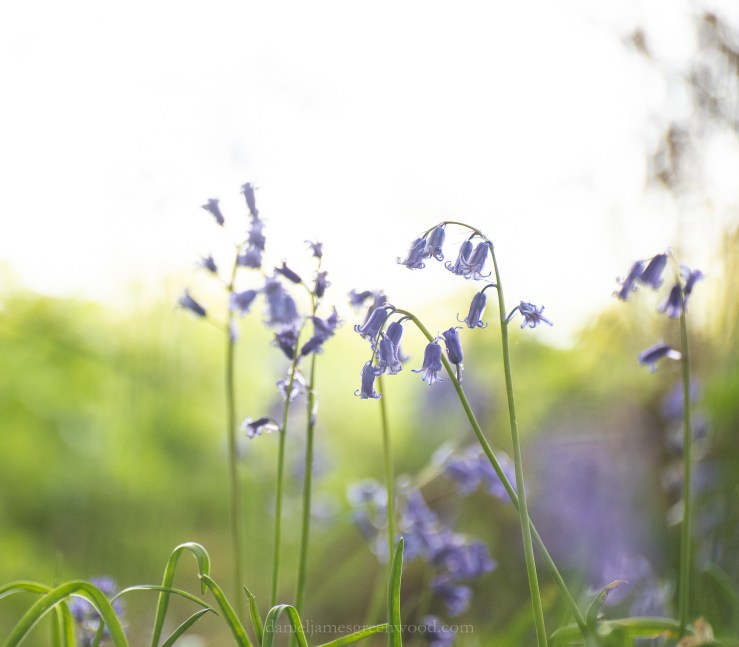
I visited a small woodland in the Sussex Weald after work to make the most of a break in the showers. My aim was to catch the bluebells in the early evening light when I think they look best. The forecast was for cloud but it was windy enough for some sunlight to break through. This woodland is coppiced and was where I photographed the wood anemones last month. It is the bluest bluebell woodland I’ve ever seen. My friend always tells me, ‘no, it’s purple!’. He’s right.

Shelleys - 26-4-2019 djg-70

Bluebells are a huge draw for anyone who has a camera (so that’s everyone). It’s part of the traditional spring experience to go to a bluebell wood, in most places that still have them. That’s something that shouldn’t be taken for granted, ancient woodlands like those in the Sussex Weald are being lost, despite the fact that they are irreplaceable habitats. Their species diversity has evolved over thousands of years. At a coppiced wood like this, their ecosystems have coalesced with our management of them for wood products. The oak above might be a coppice, but it could also be three oak saplings fused together.

Shelleys - 26-4-2019 djg-94

Something felt quite gentle and warming about this oak plugged in amongst bluebells. Perhaps it’s the slight lean, it’s almost an invitation to pass by. The mental and physical benefits of spending time in woodland are great.

Shelleys - 26-4-2019 djg-77

I’ve noticed the flush of new green oak leaves and how quickly that freshness is lost to the stiff darker shade.

Nymans - 20-4-2019 djg-6

Take these two oaks in the High Weald from a week earlier. Their new green is incredibly fresh but will now have darkened. You have to enjoy every moment of spring before it goes.

Shelleys - 26-4-2019 djg-37

Back to the wildflowers. Before visiting the wood I spoke to a colleague whose job it is to survey woods. He said he’d seen very few early purple orchids this year, possibly due to the colder than average January and then sudden heatwave in February. I said I would report back on my findings. I discovered a patch of about 10 flowering on the wood’s edge with plenty of other spotted leaves yet to produce flowers. I had seen them in the same patch a couple of years ago so knew where to go.

Shelleys - 26-4-2019 djg-32

I find orchids that grow in woods to be twice as exciting as those out in the open landscape. It’s a personal thing, because the diversity is far greater out there. There’s something about woodland versions of other species, birds or butterflies for example. There is something so interesting about the fact some species have made a niche for themselves in certain types of woodland only. Don’t get me started on firecrests. It’s even more interesting when these species, especially the wildflowers, escape out into the surrounding landscape.

Shelleys - 26-4-2019 djg-122

It’s not possible for the flowers to do much of that in this slither of the Sussex Weald because it’s surrounded by a monoculture of oilseed rape. On the contrary the farm is making its way into the woodland through the run off of fertiliser and water being piped in. You can see where the wildflowers are being pushed further into the woodland, away from the polluted areas. It’s something happening to almost every small woodland in England in one way or another.

Shelleys - 26-4-2019 djg-17

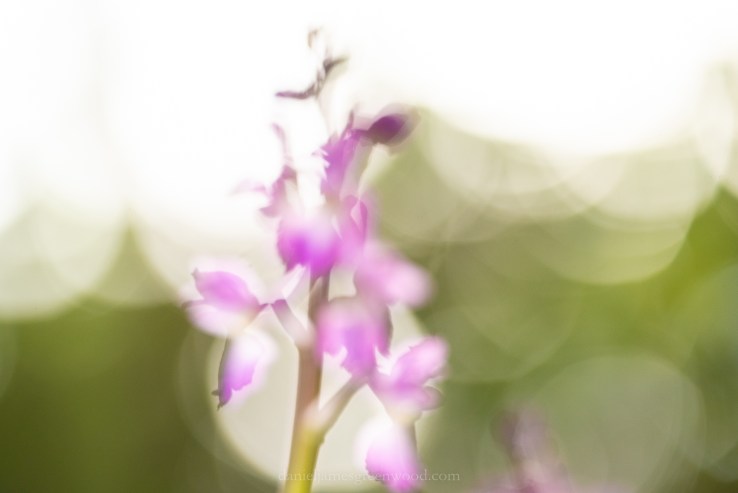
Photographing the orchids was tricky because it was windy, dull and the plants were small. I used a telephoto lens and tried to maximise the bokeh around the flower. These flowers are beautiful even when out of focus.

Shelleys - 26-4-2019 djg-40

The woodland flowers felt as if they were at their peak. Elsewhere yellow archangel spread amongst bluebells.

Shelleys - 26-4-2019 djg-14

The details of a wood at this time of year are incredible. If you look closely it’s not just the bluebells that will attract you, the fronds of bracken unfurling are worth investigating. These primitive plants reproduce through spores and pre-date flowering plants like bluebells by millions of years. It’s a tough plant and can be a bit invasive. Oliver Rackham reckoned it was the most common plant across the whole of the UK.

Shelleys - 26-4-2019 djg-99

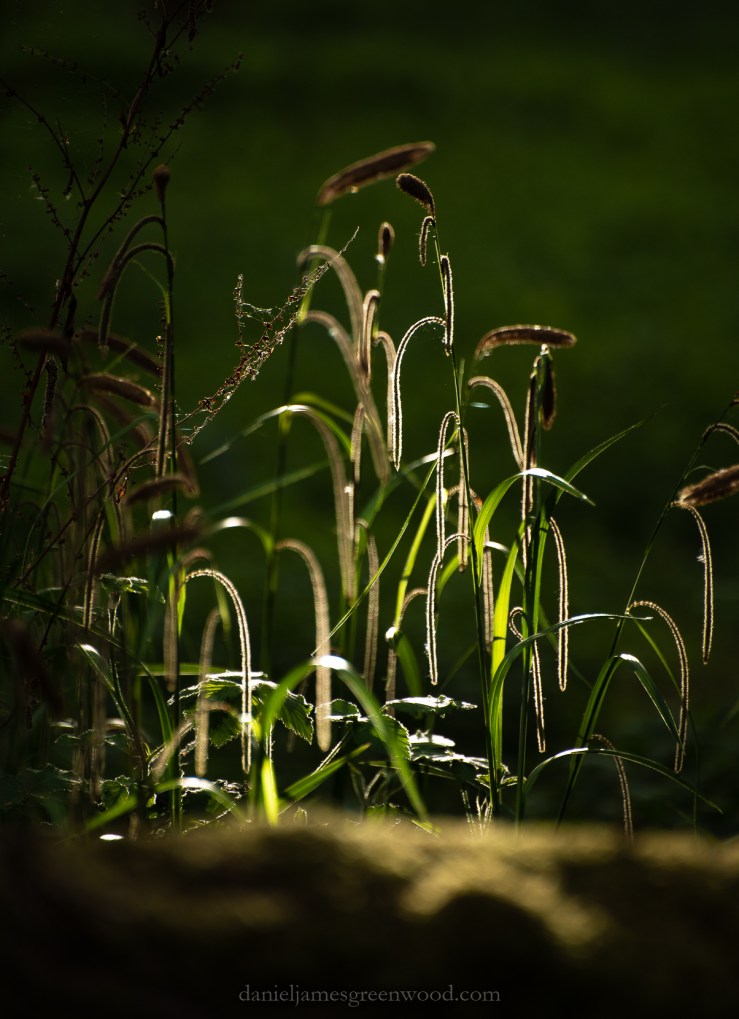
People often say they spend a lot of time trying to remove pendulous sedge from their gardens. It gets around. It’s actually a resident of ancient woodland and can be found in the wood. I passed this community of sedges on my way out as a few bands of sunlight broke through the clouds and lit their drooping seedheads.

Shelleys - 26-4-2019 djg-110

That light broke free as I made my way out again, illuminating bluebells either side of tree trunks. It was a reward for gambling on a grey sky.

View my Wealden archive

Photography: Hawthorns on a hazy day up on the South Downs

Storrington, The South Downs, April 2019

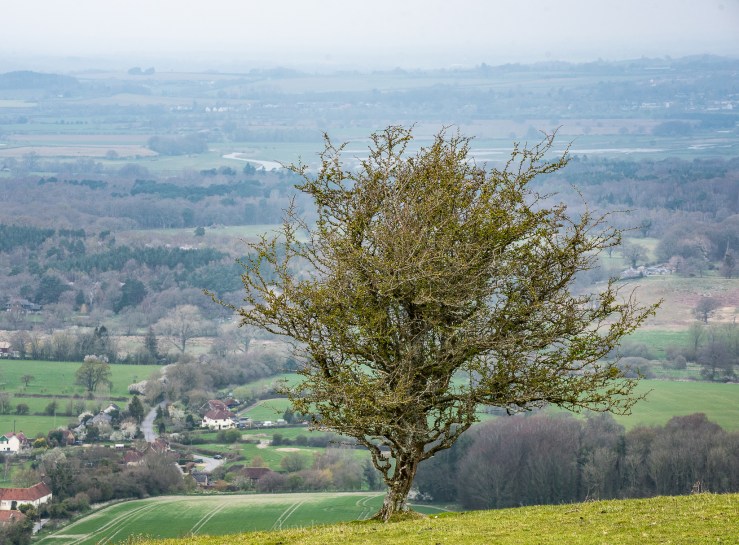
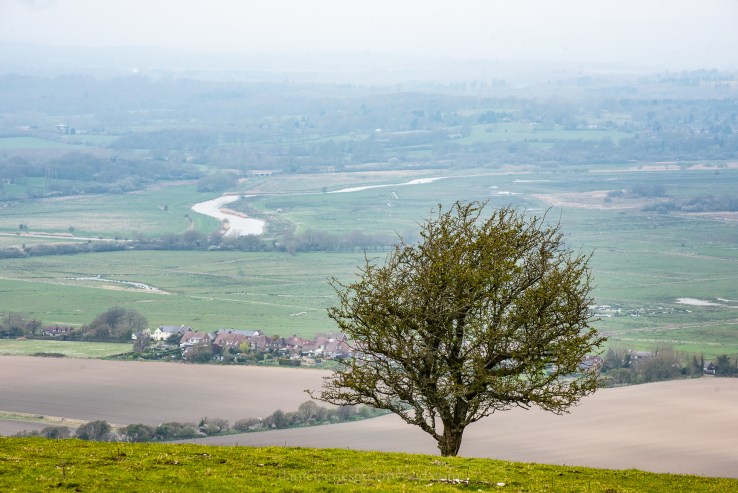
A recent walk along the the South Downs on a hazy day with hawthorns. They tough it out in some of the most intensively managed landscapes the UK has to offer.

A hawthorn stands alone, overlooking the folding Downs as they run deeper into West Sussex.

This hawthorn faces out over the Arun Valley towards Pulborough. The Low Weald is hidden by mist in the north.

Along the South Downs Way the trees show signs of pathway lopping, or an extreme politeness to the thousands of users of the National Trail.

A hawthorn obscuring a village built along spring-lines. The Arun snakes away in the background.


A tanker sits in an open field. I think that’s a hawthorn splodged against the South Downs Way towards Amberley.

Chantry Hill - 7-4-2019 djg-31

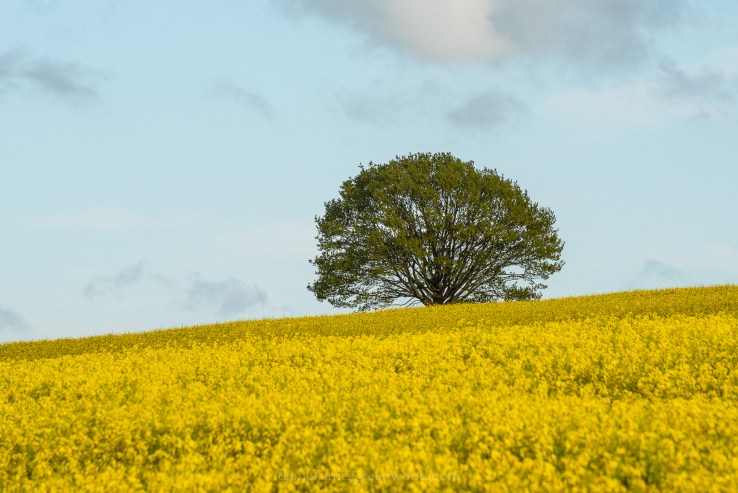
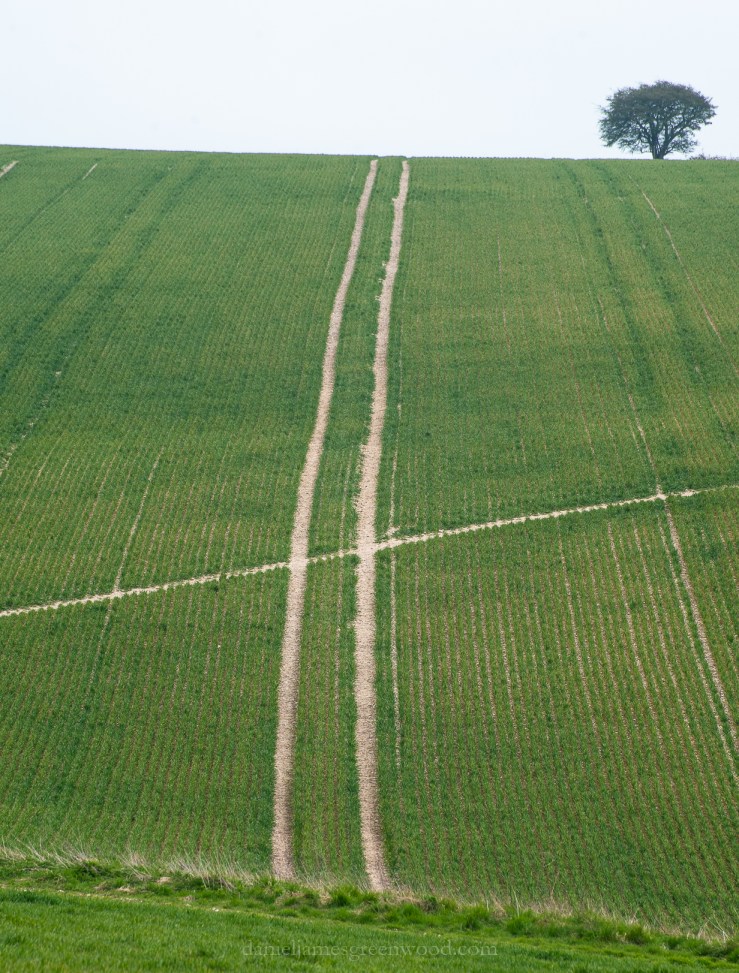
A monoculture of wheat (I think) with a single oak on the horizon. Wheat has been grown in the South Downs for thousands of years. It has only become mechanised and intensified in the past 100 years. We may idealise the days of horse and plough in the South Downs but it was a harsh and unforgiving existence. Few people could cope with it today. There were also fewer people to feed.

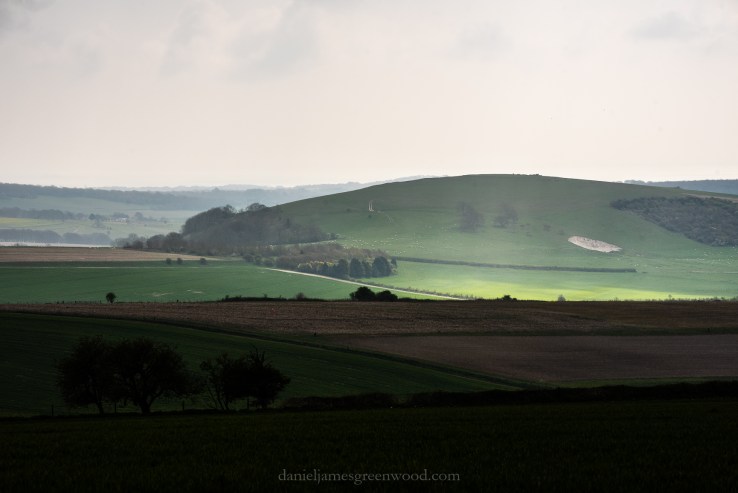
There was a single break of light over the Downs. The hazy nature of the day makes the photo look like a painting. My friend said it was good that the simple things matter to me, which apparently wasn’t an insult. I agree.


The Sussex Weald: an evening with wood anemones

The Sussex Weald, March 2019

My time in the woods has thinned. Just like the seasoned photographers in magazines tell you, planning your time is key to getting the photos you most enjoy. It also becomes dependent on weather forecasts. A few years ago a friend of mine was leading me around his favourite sites in the Czech Republic and he made a point I haven’t forgotten. Nothing matters more with photography than light. You could have the most amazing scene in front of you, but light is everything. It adds contrast, shadow and colour. It makes you feel good.

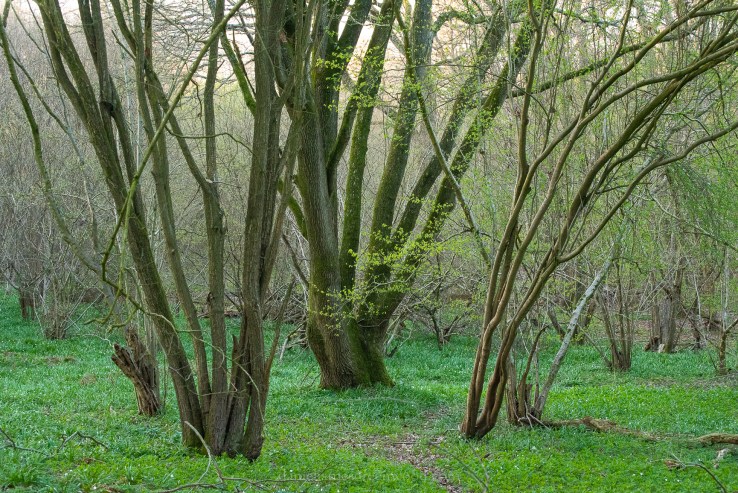
Bearing that in mind, I had a few hours in the afternoon before the sun went down to visit an ancient coppice woodland in the Sussex Weald. The Weald is a chunk of southern England that runs from the Hampshire border of West Sussex all the way to Kent in the east. It was once an ‘impenetrable forest’ but now is a large mosaic of oak-dominant woodland with a Conservation Board to protect it. Coppicing is the practice of cutting trees low to the ground to harvest the materials for wood products. It’s effectively farming the woods. Our ancestors have been doing it for thousands of years. Even beavers do it.

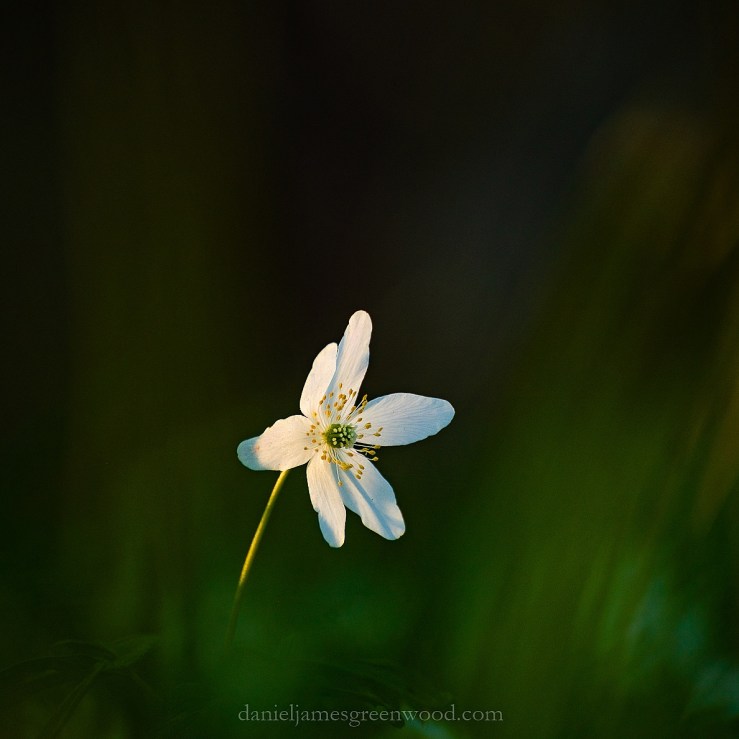
It produced the multi-stemmed trees see above and allows light to enter in, often resulting in a profusion of flowers indicative of a woodland that has remained there for over 400 years. March-May is the time when these flowers arrive, benefiting from the fact the canopy is still open. Wood anemones are the first of this swathe.

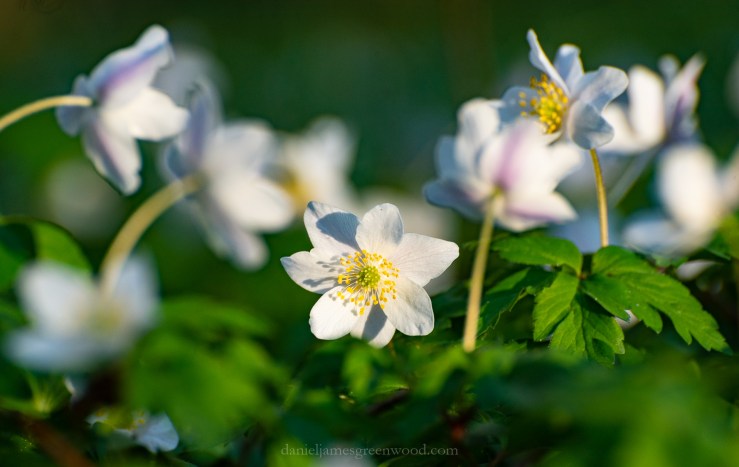
Like many people before (and after) me, I fell for this small white flower when I learned of its charming lifestyle. The petals close when the sun is gone and they are punished for this delicateness. It takes about 100 years to spread 2 metres across the ground. In the past it has been my job to try and protect wood anemones from trampling. I agonised over it.

Wood anemone is a member of the buttercup family. The similarity to buttercups is in the number of petals, the leaves and the reproductive parts of the flowers (the stamens and anthers) that protrude from the centre. At this time of year in continental Europe purple anemones push through crusts of snow that we don’t really have in the UK. Our friends in Europe have wood anemones, also.

Bluebells and anemones can create beautiful spreads of flowers in woods. But they don’t always make the photos you want. Anemones look wonderful with a bit of early morning or evening light passing through their petals. I went with that thought in mind to see the Sussex anemones.

This is a special time – perhaps the best in the year? – when winter has been overcome and the promise of longer days, of warmth and green is on the cusp. It could also be a genetic memory we have from our ancestors who found winter to be more uniformly cruel than we experience today.

It’s really important for me that photographing any wildlife does not add to disturbance. With woodland flowers it means taking photos from the path or sparse areas. I’ve already said how long it takes them to travel. The photo above may reinforce that: a vulnerable, delicate flower isolated in a darkening wood.

You sometimes find a single flower left over from a trampled population, like a single cottage left from an abandoned village.

Everywhere in wild corners of the UK ther are signs of a micro-shift in a season. The wood anemones hold the floor today, but the first bluebells are unfurling. In this old coppiced wood the bluebells will run rampant and the wood anemones will be squeezed. It’s just the natural order of things.

For now the windflowers, as they were once known, break out from beds of dead bracken in still leafless woods.