Blog

The Sussex Weald: thoughts turn to acorns

OLYMPUS DIGITAL CAMERA

Horsham, West Sussex, August 2020

It’s the hottest August day since 2003 so I’ve waited to go out until the evening. The sky holds all manner of clouds as the sun slips away. There is a purple hue to the sunset, a heft, as if the atmospheric pressure is close to breaking. Down in the valley where the Arun flows, a cloud hangs below the trees. I can’t work out whether it’s mist, surely not on a day like this.

OLYMPUS DIGITAL CAMERA

I glimpse the mist over the fields, but instead it’s a cloud of dust. On the horizon the sound of tractors rumble deep into the lingering evening heat. Following the old footway south I can see the tractor’s dust and so cover my face. With the advent of face coverings in shops and busy places due to Covid, it’s something I’m an expert in now. To the side, a tractor cuts the hay. I wonder what hay there is even to cut this year, it’s been so dry. The dust tells part of that story. I remember one of these fields back in April or May, brimming with buttercups, fresh and green. It lost its verdant glow so quickly as the rain dried up.

OLYMPUS DIGITAL CAMERA

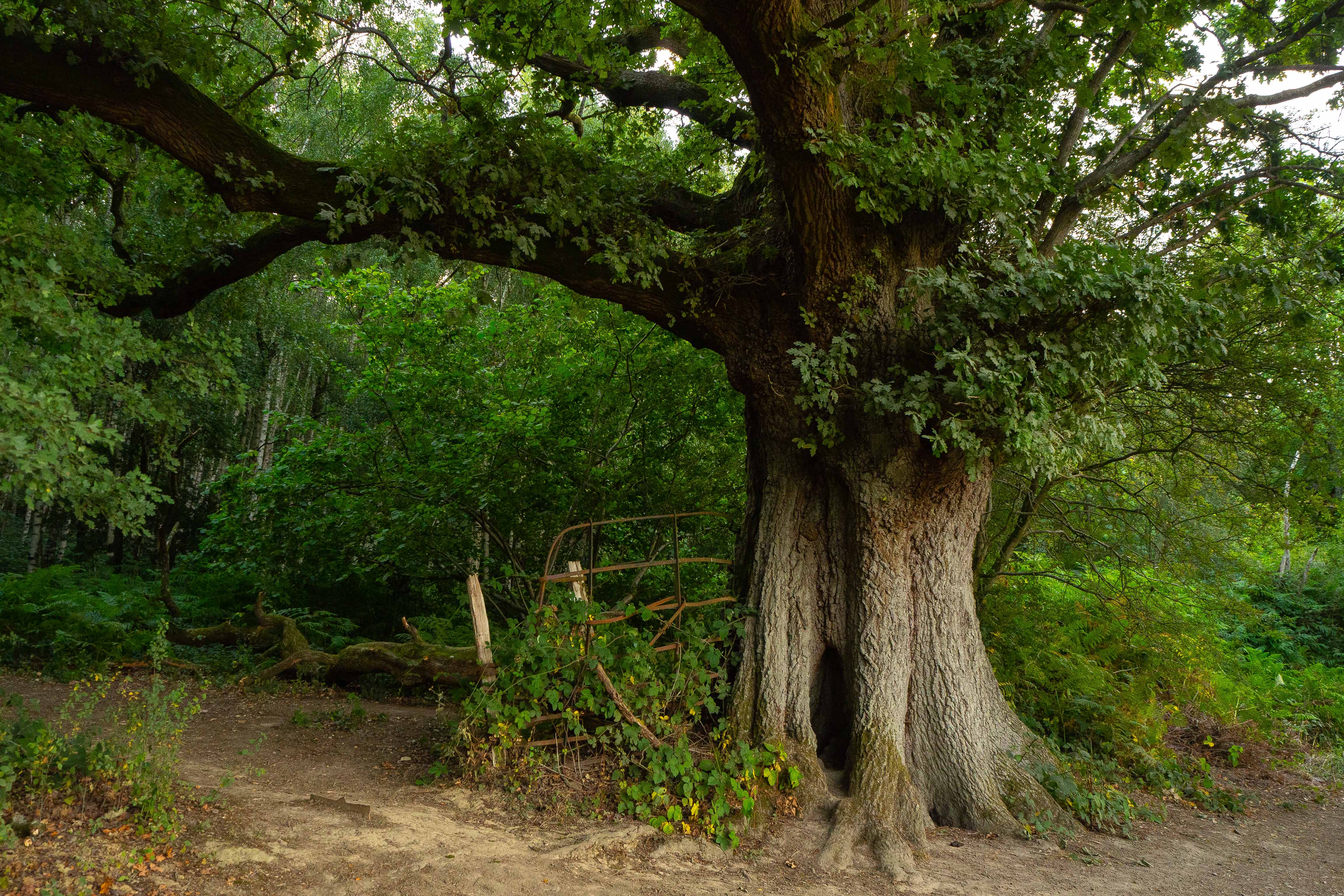
I follow the byway uphill, stepping out of the way of two older men roaring down the track on e-bikes like they’re either escaping or attending to a crimescene. I pass a favourite local oak and thoughts turn to the autumn. Along the side of the path a green metal fence has been put up to stop people and dogs, I presume, from accessing fields where sheep, horses, and jackdaws, graze. Each time I come here I watch another tree in the horses’ field get closer and closer to a full ring-barking. One ash tree has already died this year. Anxious, I look for an oak tree which otherwise could live for hundreds of years. This evening the horses are gathered around something at the fenceline. I can only guess that there isn’t the grass for them to eat and so they’re being given hay.

I follow this new green fence and cross away towards the old park, where ancient sweet chestnuts and aging oaks dot the open landscape. In the distance cattle are grazing like moons in the grasslands. On the clay track back down, oaks overhang, laden with thousands of acorns. It makes me think of all they were once used for: coffee, flour, their galls used to make the inks that mark the Magna Carta and American Declaration of Independence. In America acorns were the staple of ‘balanocultures’, Native American communities who stashed and cached acorns as resources.

OLYMPUS DIGITAL CAMERA
Spangle galls

Off the hill, the path is penned in by lush growth of grasses, brambles, St. John’s wort and knapweeds. There are oak saplings too. Their translucent green leaves are pocked with the pin cushions of spangle galls. These galls are home to the larvae of gall wasps. Next month the galls will fall to the ground and wasps will continue their development through winter, ready to hatch in April and begin the process once more. The seasons, they’re inescapable.

The Sussex Weald


Macro Monday: the wasp that made Darwin doubt God

GDN_2-8-2020_djg-1

Macro Monday 10th August 2020

Welcome to the weekly wasp.

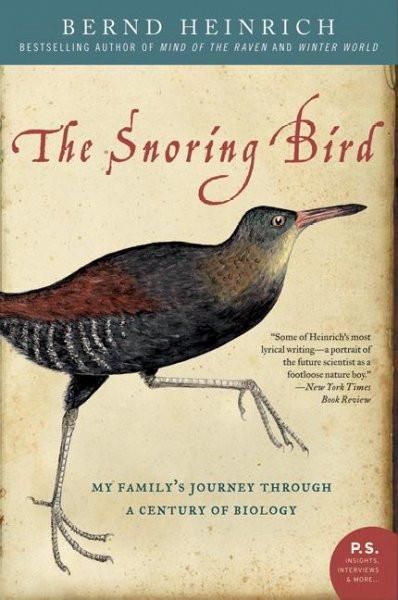
A couple of years ago my friend recommended a book called The Snoring Bird by Bernd Heinrich. The book is a memoir about Heinrich’s relationship with his father, Gerd, an entomologist who collected ichneumon wasps but who was never fully accepted by the scientific or academic community. Bernd tells the story of his father’s escape from the Red Army in 1945 and how he buries his collection of ichenumonids so they aren’t destroyed. Gerd travelled around the world collecting specimens.

986d14cb4c3f5974e3f4e6d3c7e93fd5

In Britain we have poorer biodiversity than even our closest continental neighbours because of physical separation from the European landmass, intensifying land management practices, the impact of successive ice ages and, furthermore, the fact our climate is not tropical. But even then, we still have over 2000 species, which you can’t say for other fauna like birds or butterflies.

Reading The Snoring Bird consolidated a personal fascination with wasps, one which has not really travelled beyond blogposts, photos and seeking them out where I can. I’m not a collector of anything other than images.

Ichneumons have what we perceive as an unpleasant ecology. Females use their needle-like ovipositor to ‘inject’ their eggs into the burrows of insects, into crevices in wood or, most appallingly to our species, caterpillars or the larvae of bees. The eggs hatch inside the live caterpillar and eat it. It’s probably where the inspiration for the Alien films came from. To balance things out, insects inspired the creation of Pokemon.

GDN_2-8-2020_djg-9

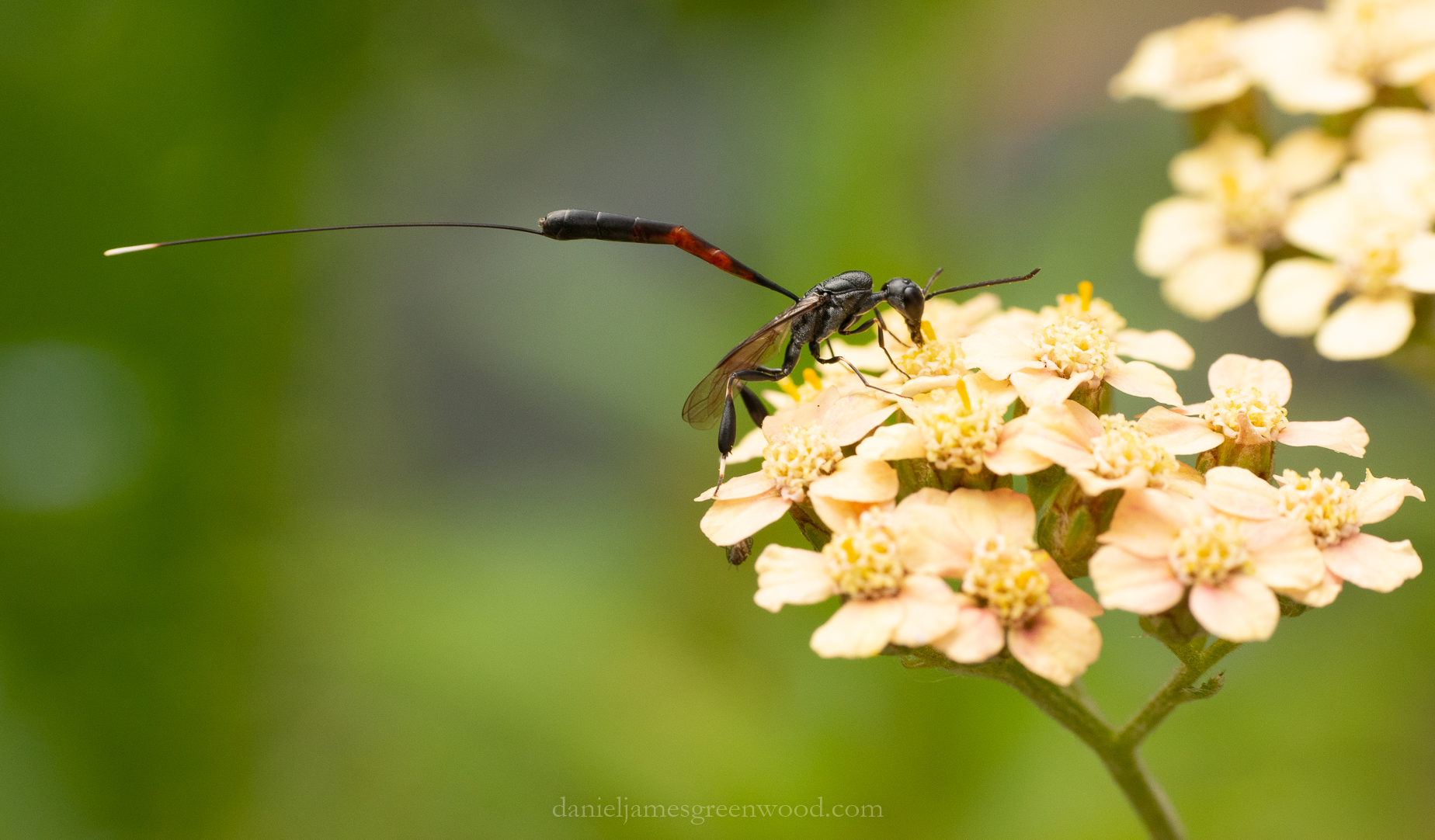
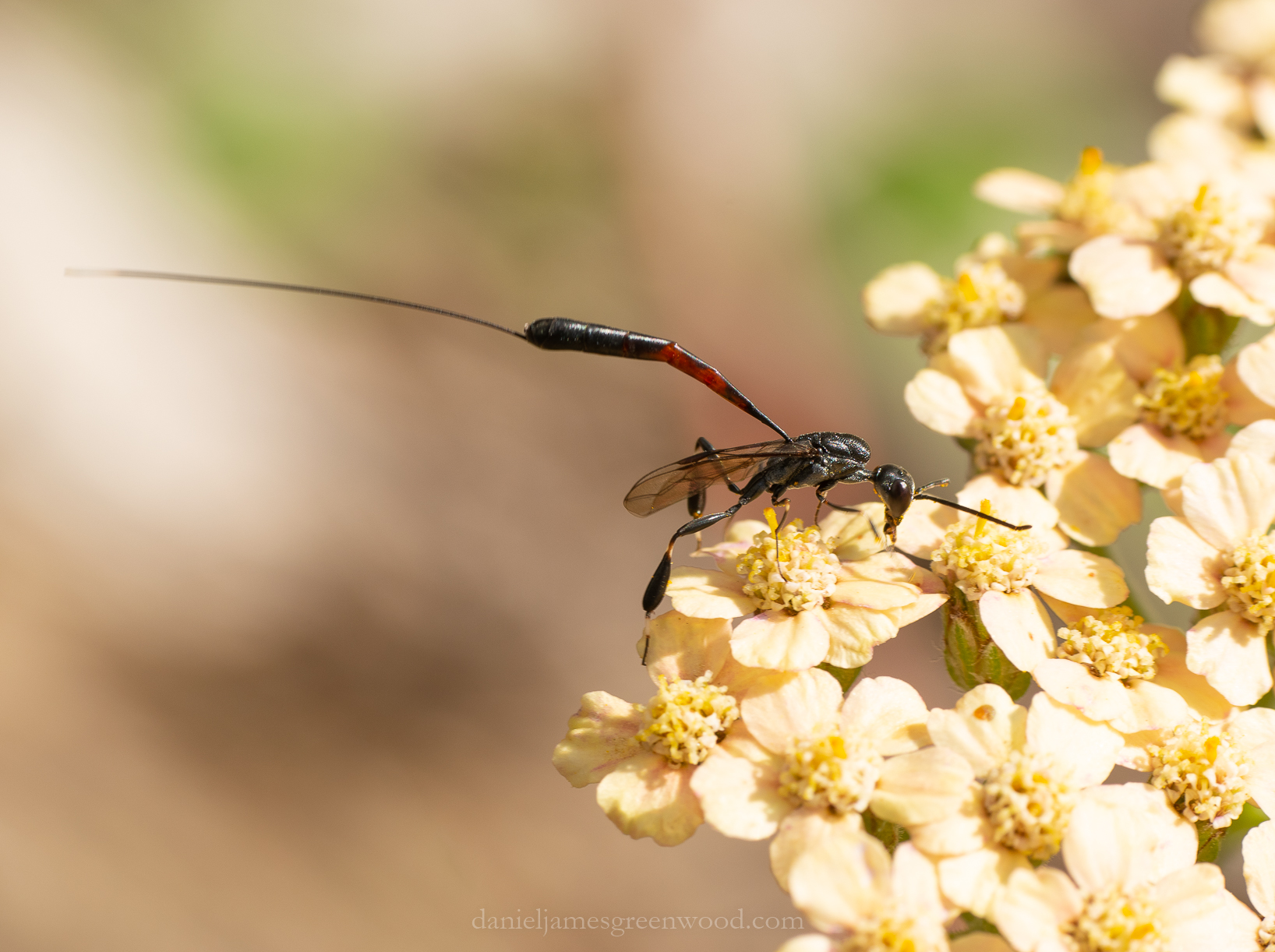
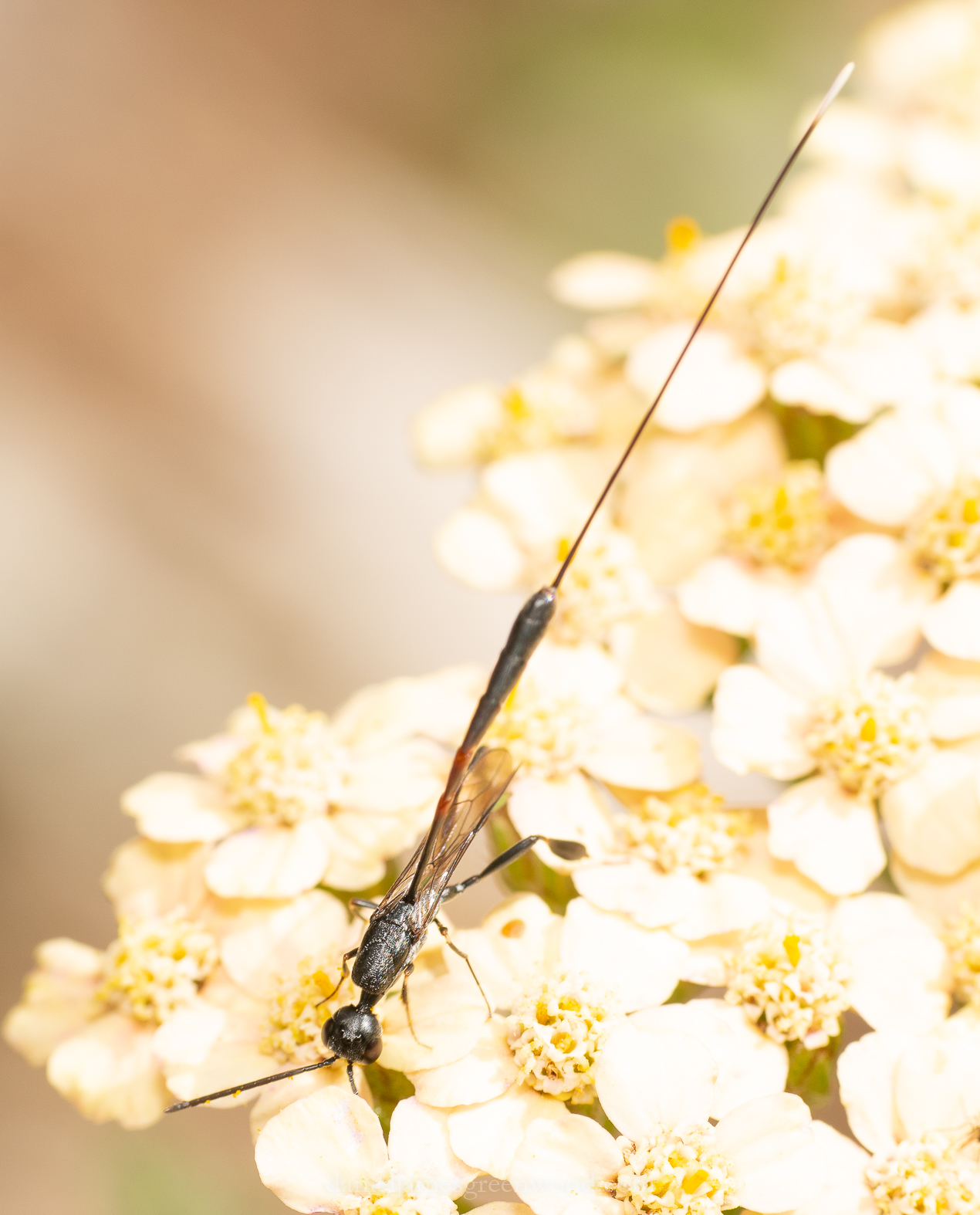
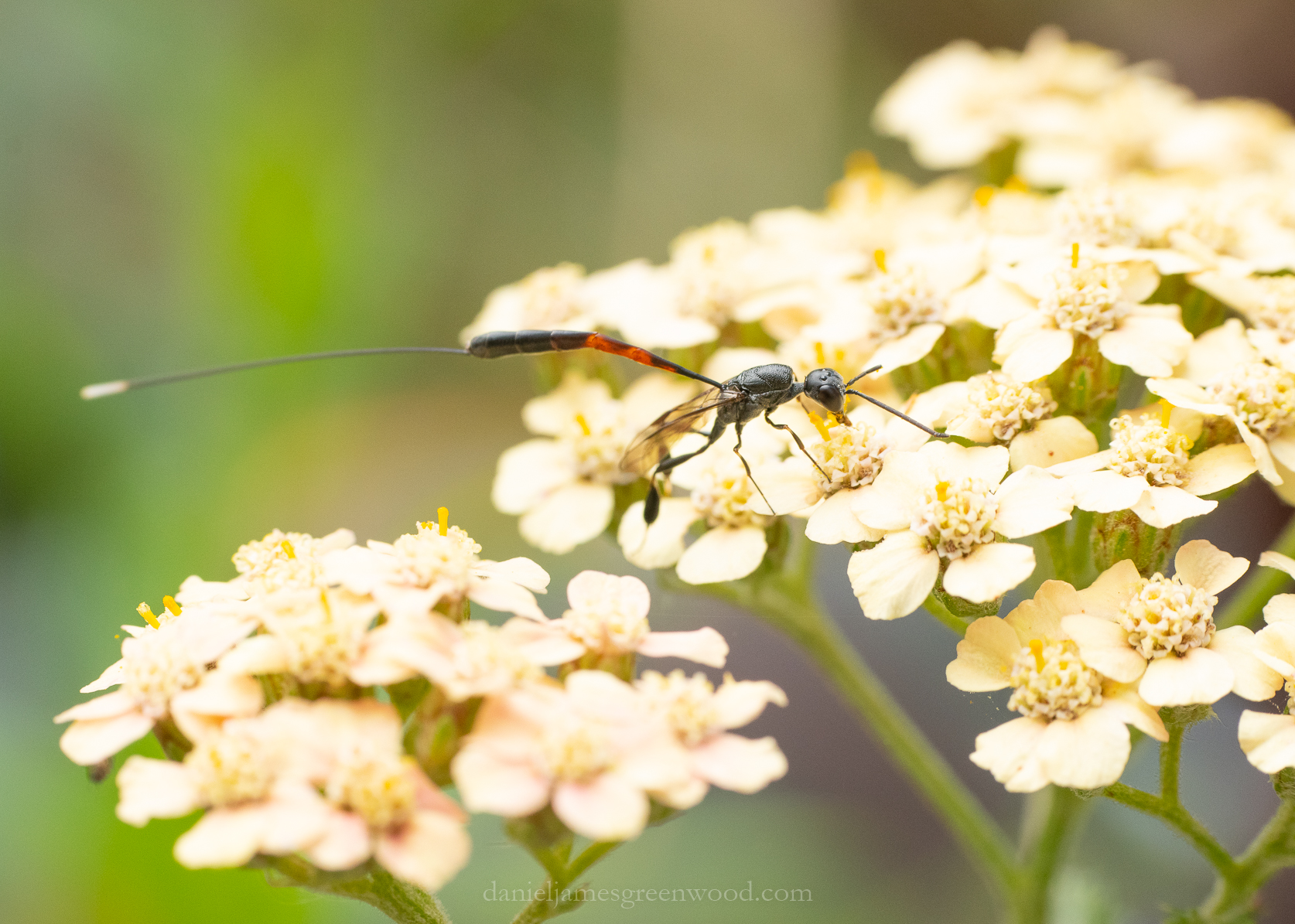
Last week I was sitting in my garden catching up with visiting family. I looked to my right at a pot of ornamental yarrow flowers (Achillea). I had noticed a bit of activity and glanced over to see a slender insect flying around the flowers. It was the equivalent of a video buffering over a poor quality internet connection. When it landed on one of the flowers I recognised it instantly as an ichneumon wasp. I ran inside to get my camera and managed to get some good photos: in focus, well lit and sharp enough.

GDN_2-8-2020_djg-10

I have always wanted to see this species. Its scientific name is Gasteruption jaculator. To find it in my garden was a real surprise and one of the highlights of my time seeking wildlife.

Why might it have visited? We actively garden for wildlife, insects particularly, and there is a log store that this kind of species will seek out. A couple of months ago I saw a similar species hovering around the logs, but I couldn’t get my camera quick enough and it moved on.

GDN_2-8-2020_djg-5

There are people whose first reaction to seeing this insect may be to kill it because of its ecology. That, to me, says everything about our misunderstanding of nature. A natural history lesson will tell us that without solitary wasps such as these we would have no social bees, a community of insects which prop up our dependencies on pollination of both crops and other flowering plants (including trees). Social bees evolved from solitaries wasps. The ichneumon’s ecological relationship with bees is one millions of years old, one small part of a web of life that has given human societies licence to develop through an abundance of food.

coulsdon-30-6-17-djg-42

However, this is an insect which has affected the way some of the science’s key thinkers have framed their own mortality. Darwin doubted that any benevolent God could have created animals which behaved in this way. Not sure about you, but I often think that about Donald Trump or Boris Johnson.

A few years ago I encountered a cousin of the ichneumon that visited me in my garden. It has a far shorter ovipositor and its scientific name is Gasteruption assectator. I was walking on the North Downs when I found the insect nectaring on hogweed flowers. A woman passed me and asked what I had found. I said I’d found the insect that made Darwin doubt God. She looked away with a knowing smile:

‘I remember reading about them,’ she said.

Thanks for reading.

More macro

Recent photos taken with Nikon D5600, Sigma 105mm F2.8 macro lens, Nikon SB700 flash and Raynox 250 adaptor.


#FungiFriday: a summer visit to Ebernoe Common

Ebernoe_1-8-2020_djg-4

Fungi Friday 7th August 2020

Since March I have owned a bicycle. Living in Sussex, you are largely dependent on a car to get around. My bike is the first one I’ve ever owned, and I’m in my 30s. Growing up on a hill, it never seemed like something I’d need. For the first time this year I drove further to visit a special nature reserve in the Low Weald of Sussex: Ebernoe Common.

Ebernoe_1-8-2020_djg-21

Ebernoe is a National Nature Reserve belonging to Sussex Wildlife Trust (SWT). It’s a very special place for bats and is rich in all kinds of fungi. It’s ancient wood pasture, with large meadowy areas dotted with trees. SWT don’t allow foraging on their nature reserves (from what I know) and so people should respect that. When I visited, the woods were very dry, as they were in the Wealden woods reachable by bike near where I live.

IMG_20200801_164242714_HDR

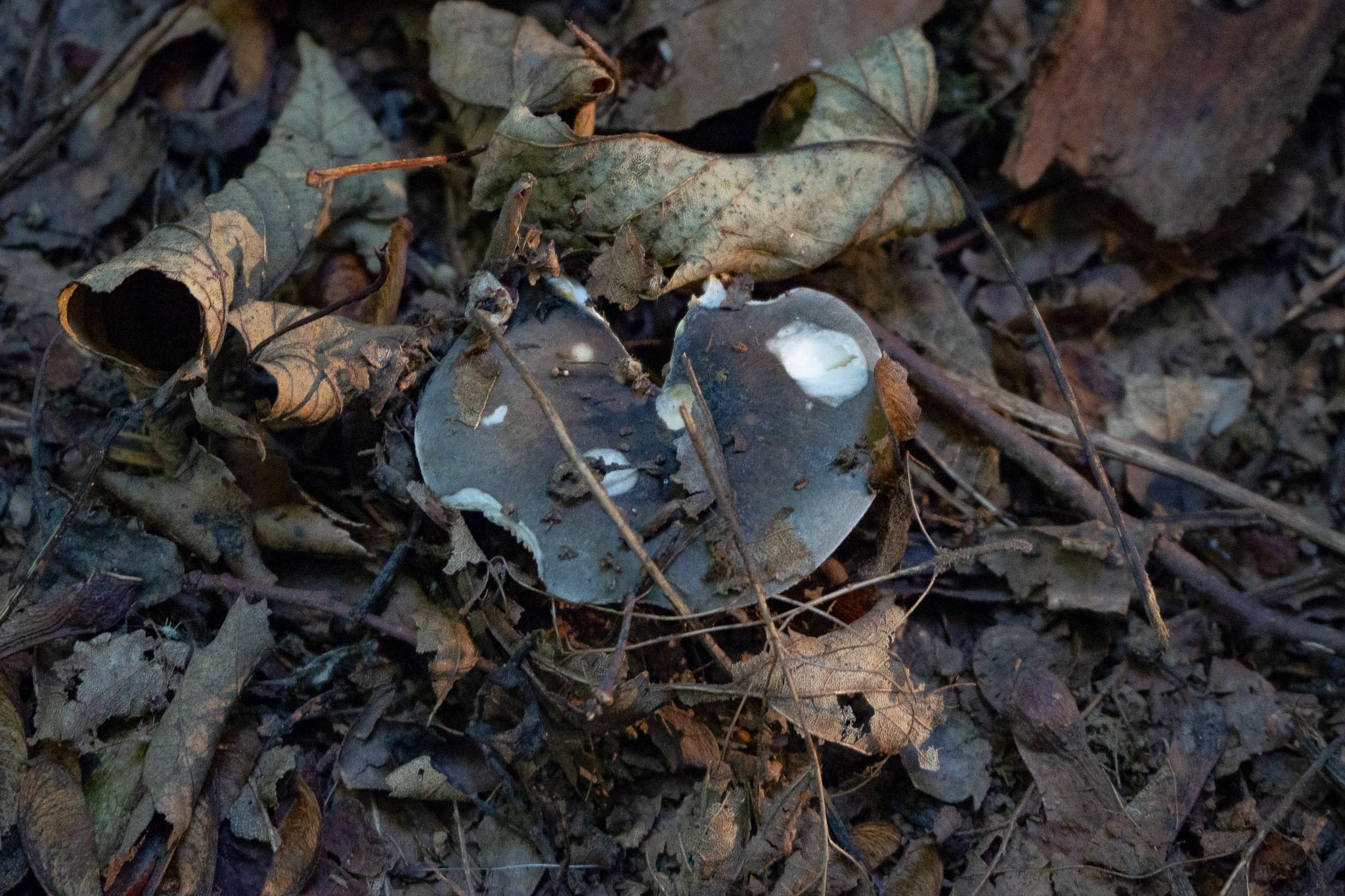
There were some mushrooms on the ground but most had dried up and split in the heat. I think the one above (a phone pic) is something like rooting shank. If it doesn’t make it past my phone, that’s a sign it’s not in great shape.

IMG_20200801_163754443_HDR

Something I wish I’d spent more time looking at and getting more than a phone pic of, was this fungal map of the world. This is a beech tree that had fallen over a footpath and been chainsawed across to re-open the path. This fungal effect on timber is quite desireable commerically, where it’s known as ‘spalting’. What you can see here are the zones of a fungal mycelium within the heartwood of the dead tree. It looks like a map of a country, perhaps the north-eastern corner of a nation like Sweden with its archipeligos. I’ve heard these patches referred to as ‘war zones’. They are certainly competing for territory.

Ebernoe_1-8-2020_djg-3

Like so many weeks over the summer stages of this blog, I found lots of bracket fungi. These were almost only Ganoderma species. The fruiting bodies were sticking out of the old rootplates of fallen trees like trainers or ‘sneakers’.

Ebernoe_1-8-2020_djg-1

I visited a heroic veteran beech tree that holds a gigantic bracket of the same species as above. This is a tree I visit in the autumn, when a huge number of species can be seen on it, as below:

Ebernoe - 11-10-2019 djg-18

Here I can see giant polypore on the bottom left, honey fungus in the middle and lots of Ganoderma on different levels. The softening of the tree’s remaining wood will provide habitat for a huge range of invertebrates and other life. This is a habitat we have lost so much of over the past 70 years, as woods have been tidied and aforested for commercial production. That seems to be changing.

Ebernoe_1-8-2020_djg-13

Beyond fungi, into a different species group but one that behaves in a similar fashion, I found a few slime moulds. This patch was splotched like someone’s old melted sandwich on a mossy log. Slime moulds are not in the fungal family. I learned recently that fungi were only separated from plants in 1969! Well done humans, literally a billion years later.

Ebernoe_1-8-2020_djg-14

Here was an older specimen of the previous slime mould. It had been broken into by something that was probably eating it. It looks like a meringue, to my eyes. Also looks like an eye.

Ebernoe_1-8-2020_djg-16

It was nice to head out further afield to seek out some ‘shrooms. But I have become so used to cycling or walking to the woods that it felt weird driving. It’s not lost on me that nitrogen dioxide, emitted by cars, is driving declines in fungal life as it alters the chemical make up of the soil. This is also impacted by air travel. I will make an effort to keep my emissions as low as possible. In terms of finding fungi, one of the problems with driving is that you cut yourself off completely from the world. When you’re walking or cycling somewhere, you’re immersed. I think I know what I prefer.

Thanks for reading.

More mushrooms


Macro Monday: the red wasp makes the raspberries

GDN_31-7-2020_djg-17

Macro Monday 3rd August 2020

Summer came back last week. The annual breach of 30 degrees celsius took place, with more forecast for the month ahead. The warm weather meant there was a lot of activity in my garden, with opportunities to find wildlife lasting until dark.

GDN_31-7-2020_djg-3

The hedge has seemed less active in recent weeks, whereas in early June I could sit in front of it and find too many insects to photograph. But this week I found this tiny sawfly, or at least I think that’s what it is.

GDN_31-7-2020_djg-6

It’s a relative of the bees, wasps and ants (Hymenoptera). I know this because of its eyes, both the compound side set and the ocelli on the top of the head. The antennae are long and wavy like an ichneumon wasp’s. I didn’t quite manage to get it perfectly in focus but I think the composition came out quite nicely.

GDN_31-7-2020_djg-8

I’ve noticed a number of amber-coloured beetles around the outside of my house and the garden. I also found one in the raspberry patch. I think it’s a hawthorn leaf beetle. It was nowhere near a hawthorn.

GDN_31-7-2020_djg-9

The other week I disturbed something in my garden that flew up from the grass and away into a small tree a few gardens away. It looked a bit like a flying fish. Picking raspberries one evening, under the only trees we have – small sycamore, rowan and a larger magnolia all crammed in – I noticed that this cricket was trying to remain hidden among the long grass. It’s a dark bush cricket.

GDN_31-7-2020_djg-13

One of the most important parts of managing my small garden for wildlife has been to allow the grass to grow long for a time. I’ve also found frogs at the back in a cooler, shadier area where the grass has grown. If you can leave some of your lawn to grow between May and mid-July, I would really recommend it. I only mowed mine this week, mainly because the rye grass is setting seed and my old sleepy cat seems to be allergic. Also, it’s the right time of year in the world of meadow management.

GDN_31-7-2020_djg-21

I’m starting to see more nymphs appearing, and I don’t mean the fairies. That’s another story. This is probably the nymph of a dock bug. Again, it’s in the raspberry patch, which is where this blog ends with a flourish.

GDN_31-7-2020_djg-14

As I mentioned earlier, the warmer days have meant that insects have been active longer. When we were out picking the day’s raspberries, I noticed an insect pollinating the raspberries at speed. I couldn’t get a proper look or get a decent pic.

GDN_31-7-2020_djg-15

Given some time, I saw that the insect, a type of wasp, was going to the same flowers in a cycle around the patch of raspberries. It didn’t mind me getting closer as time went on and the night drew in.

GDN_31-7-2020_djg-17

My first thought was actually quite extreme – Asian hornet! But this wasn’t an invasive non-native, “killer hornet”. It was a species of wasp. With more time to observe it I could see its red eyes and red striping to its body. It’s a red wasp. I love those eyes! Let’s also not forget that these wasps here are pollinating raspberries that my family and friends will later eat. Wasps are pollinators more than they are pests, the tide needs to turn on that damaging myth before our insect populations are harmed any further.

GDN_31-7-2020_djg-24

I know this blog is pretty much a wasp fanzine week after week, but these animals are so amazing. I had never expected to see this species in my garden. But it highlights the joy of this entire project. Each species seen here this week, bar the dock bug, is a new species for the garden list. Many of the species I’ve seen I will never be able to identify, but that feeling of newness and discovery is precious to me.

Next week: more wasps.

Thanks for reading.

Photos taken with a Nikon D5600, Sigma 105mm f2.8, Raynox 250 adaptor and Nikon SB-700 flashgun with diffuser.

More macro


#FungiFriday: this is not an omlette

SLF_30-7-2020_djg-1
This is not an omlette

Fungi Friday 30th July 2020

Welcome to one of those weeks that is little more than a lament at how dry southern England is. This week I’ve been in two different woods and the story is the same – the recent rain in Sussex has not given much of a boost to fungi. I managed to zoom round a local woodland one lunchtime and found a couple of things.

SLF_30-7-2020_djg-4

To give a sense of the impact of warm dry weather, even in the space of about ten days, check out the difference here. What is now a very dehydrated piece of birch wood was previously alive with slime moulds and all kinds of other life.

SLF_19-7-2020_djg-7

It is mainly a matter of rehydration, however, and when the temperatures drop and more rain arrives, the show can go on.

SLF_30-7-2020_djg-3

This is a species of Ganoderma bracket fungus growing on fallen wood. I only later noticed that a snail is hidden away in a nook of the fruiting body! You can tell I was in a rush. I wrote a lot more about brackets recently.

SLF_30-7-2020_djg-2

This is smoky bracket, not an omlette. I have seen this small community of brackets growing over the past few weeks. Again, it was only later that I noticed the other life, in this case a resting fly.

I was pretty disappointed in this mushroom hunt but then it was somewhere between 25-30 degrees (Celsius). The area which I’ve mentioned before, that has been opened up, is now experiencing more trampling, including mountain bikes coming through. From my experience of woodland management, that was predictable.

SLF_30-7-2020_djg-6

But some management that was really positive was the creation of dead hedges of logs and branches in a well-shaded area. This was where the mushrooms were hiding! I found a nice patch of oysters that were swamped/protected by brambles. This is a nice edible mushroom, not that I’m picking.

SLF_30-7-2020_djg-7

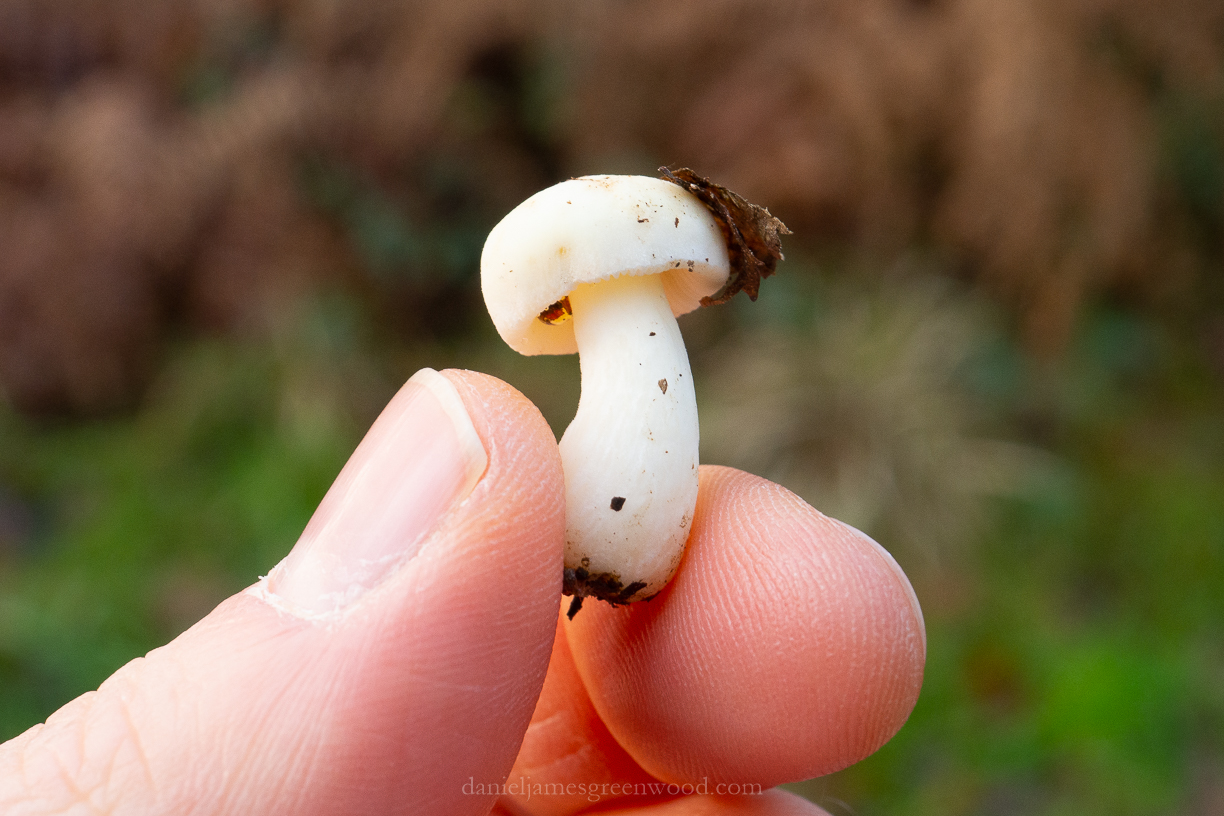
I also spotted this small mushroom, such a joy to find something. I like its veiny-cap and the reddishness. I’m not sure of the species.

Dry times such as these make alternative topics a pressing need. At the moment I’m researching an article on fungi and Chernobyl, so stay tuned for that.

Thanks for reading.

More mushrooms


The Sussex Weald: spring is a memory

SLF_21-7-2020-lo-res-8

St. Leonard’s Forest, West Sussex, July 2020

Evening. The sun kindles embers in dangling birch leaves. The songs of birds have gone, spring is a memory. I think of autumn: the cool that grows where the sun can no longer reach. My footsteps crunch and snap in the dry, leaf-littered banks beside the gill. This stream was dammed centuries ago for the Wealden iron industry. But it still runs, just not now. The hammer pond it’s been forced to feed is now the realm of private fishing.

The beeches twist and turn on the slopes, in this light you might have thought they’re creeping up behind your back. It is so quiet that any sound feels like a warning. I hear the first faint murmur of a tawny owl.

SLF_21-7-2020-lo-res-5

The bracken is high and it’s hard to see around the bend of this winding desire line. On the hill the sun lends the ranks of pines some splendour. But it’s the heather battling down in the bracken that holds most promise. Men have stolen the sun from this heath with forestry, but the pines have been forgotten. Nature lies in wait, its disruptive forces breaking rank in a way so slow it’s not known until it’s done. This place will not be the same in decades to come.

Blackbirds and thrushes shuffle song-less in the shrub layer. The dryness amplifies the sound of their size to large mammal. That old fear ticks and tocks in me. A barometer I forgot I had.

Out on the woodland ride the ditches promise an explosion of new flowers: fleabane, ragwort, valerian, hogweed, and hemp agrimony where small cream moths nectar. One is held aloft, frozen in mid-air. Peering round, I see the camouflage of a crab spider hidden among the florets.

The Sussex Weald

Macro Monday: do you really need to destroy that wasp’s nest?

GDN_25-7-2020-lo-res-43

Macro Monday 27th July 2020

The garden is very dry and the insects are becoming more scarce, but that can help to focus on a species and reach deeper into their ecology and the relationship we have with them. We’ll get to that in good time.

I’m writing this on a rainy day so hopefully summer won’t come to an end prematurely. I have one plant which I’m hoping will flower soon that my invertebrate friends will like.

GDN_25-7-2020-lo-res-14

I did a lunchtime circuit of my garden on a warmer, sunnier day and found pretty much nothing. I was just heading back into the house when I spotted this zebra-like patterning on a towel that was drying in the sun.

GDN_25-7-2020-lo-res-15

I realised it was a species of picture-winged fly! I think it’s a species of Urophora.

GDN_25-7-2020-lo-res-13

I snapped a few pics and luckily they focused in on the eye. Looking at a towel this close shows what we fail to see with the naked human eye in terms of microfibres.

GDN_25-7-2020-lo-res-08

The fly family were the most visible subjects in the past week. This is a species that seems not far from picture-winged flies. It’s probably Sepsis cynipsea, a scavenger fly. Its wings do this rotating movement as it hops around in the hedge. They’re known for their relationship with cattle dung, and there are farms about 2 miles away so maybe they travel into small towns as well for fun.

GDN_25-7-2020-lo-res-07

Another black and white fly but much larger than the other species above. I really like these flesh flies, their black and ash-white patterning, and bright red eyes are really attractive. I appreciate that is probably not to everyone’s taste.

GDN_25-7-2020-lo-res-12

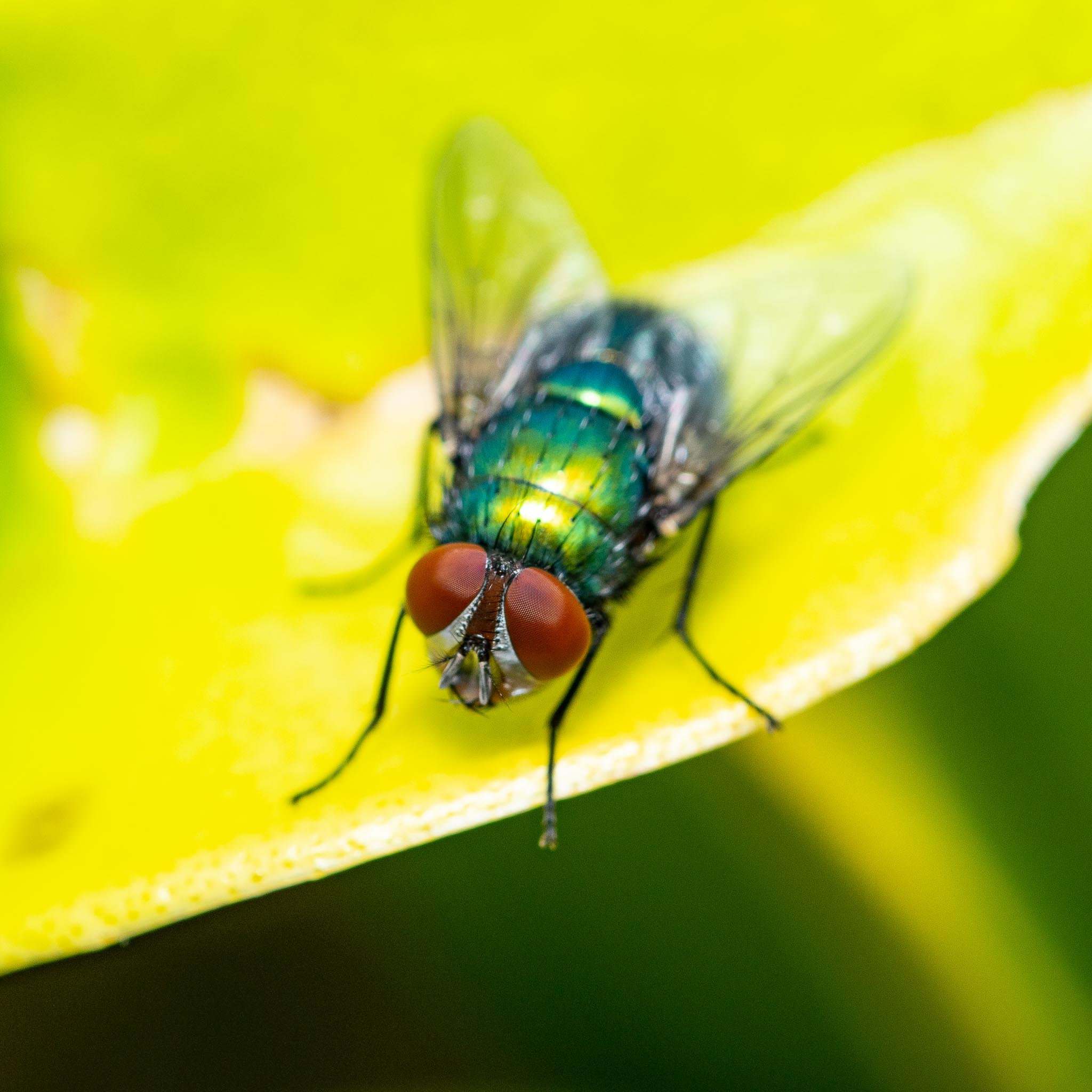
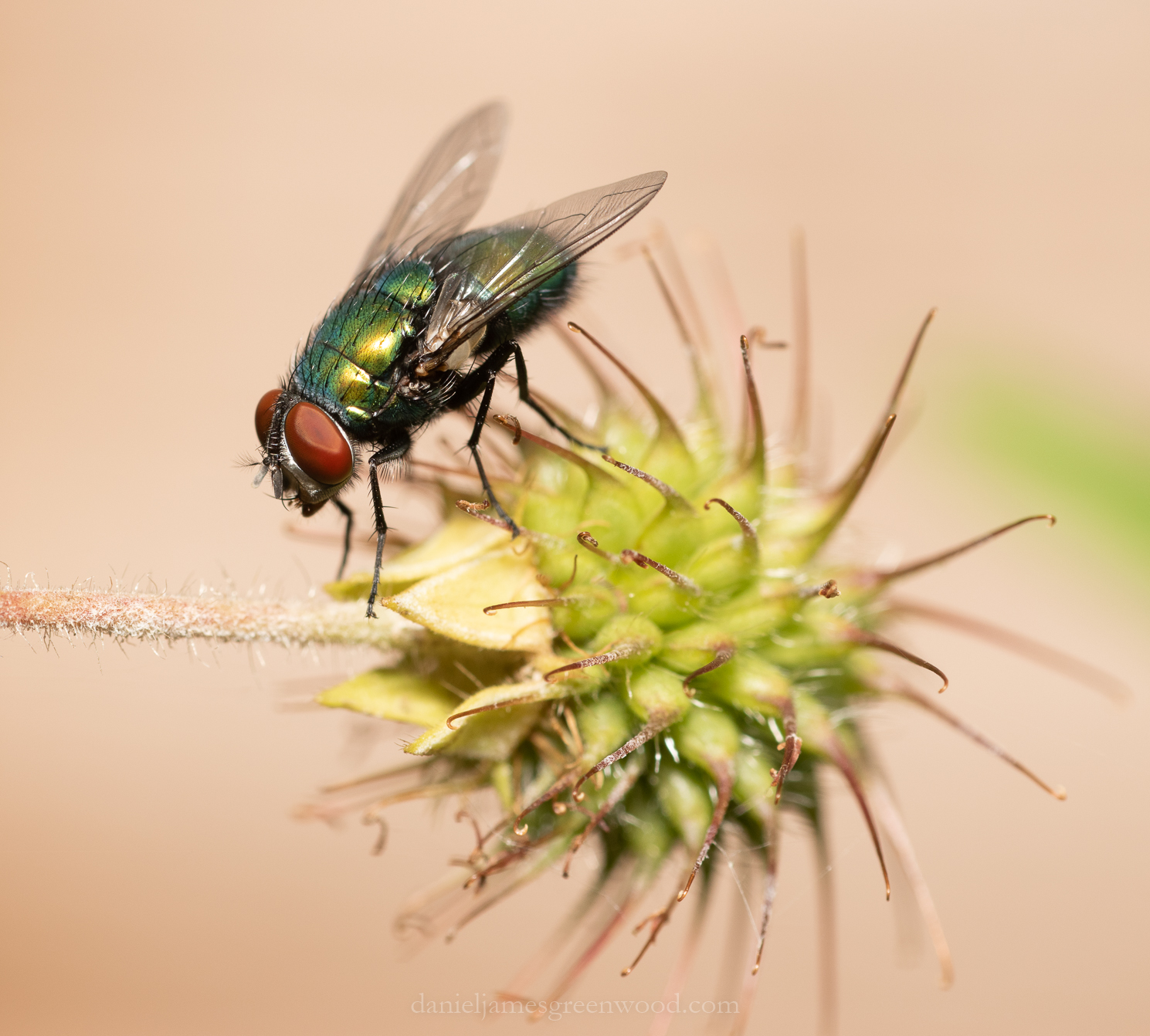
But of course, this blog would not be complete without checking in on those gorgeous greenbottles.

GDN_25-7-2020-lo-res-03

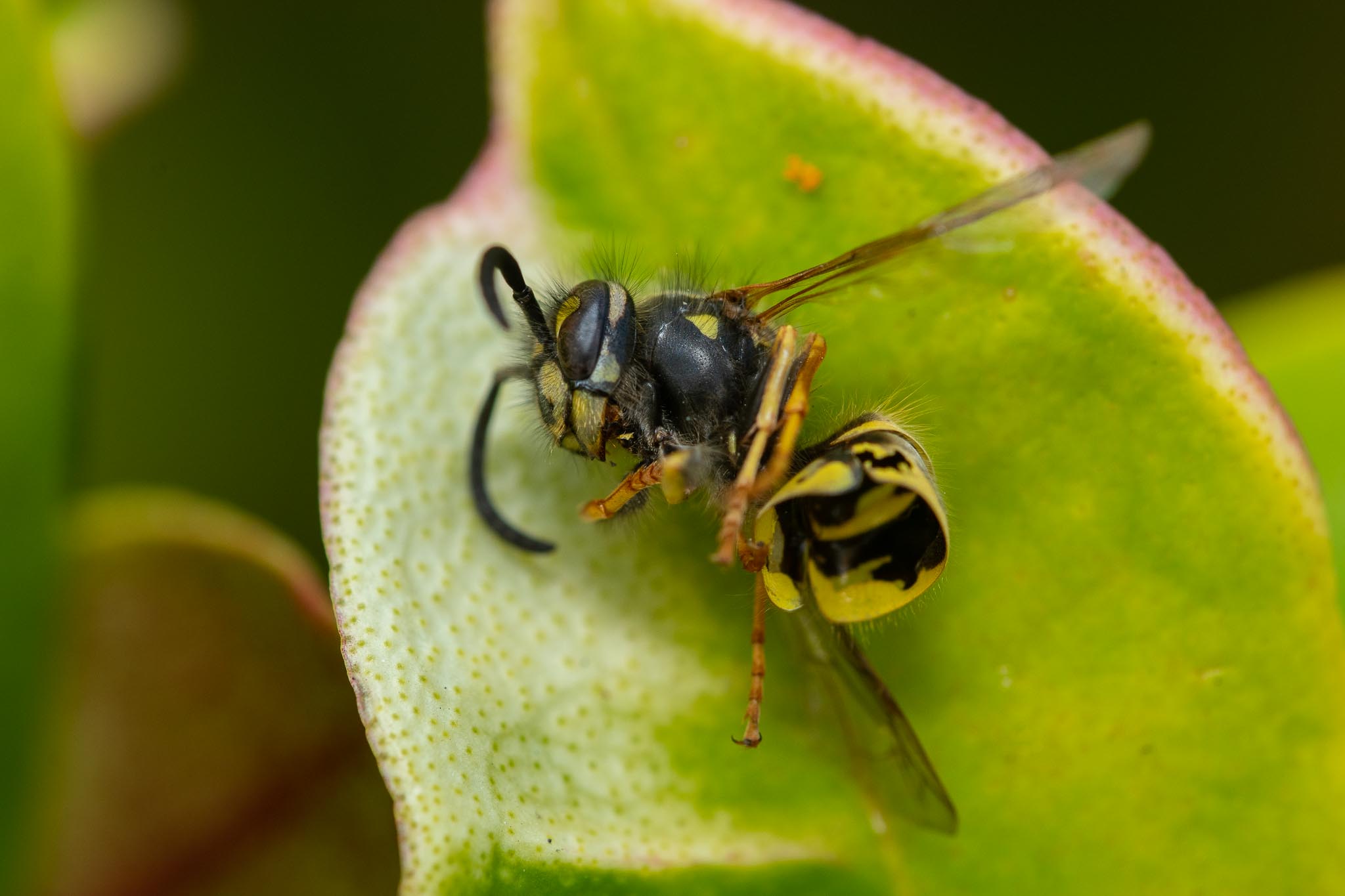
To The Man on the Street’s acute frustration, wasps are now active. I saw a wasp peeking out from behind a leaf in a hedge one lunchtime and found that it wasn’t moving. I picked it up and saw that it had been predated, with its lower abdomen missing. I think this was probably the work of a bird, as species like great tit are known to eat bumblebees by basically disemboweling them. House sparrows are also in good numbers in my garden and I often see them picking bees, flies and butterflies out of the air. In this case I’m praying that insects don’t feel pain 😦

GDN_25-7-2020-lo-res-43

Over on the other side of the garden, this wasp was doing its woodcarving work. These woody fibres will be taken away and used to build the stunning nests they make. For anyone who has read this blog series before, you’ll know that I love wasps and am keen to promote their conservation in any way I can. Let’s talk about their nests a bit.

Czechia August 2016 lo-res-1961

This probably isn’t a common wasp nest but it’s the best external image I have. It’s a nest in a protected landscape in Czechia, the White Carpathians. I think it’s a social wasp nest, rather than a solitary species because it’s a bit bigger but I could be wrong.

czech-rep-2016-blog-29

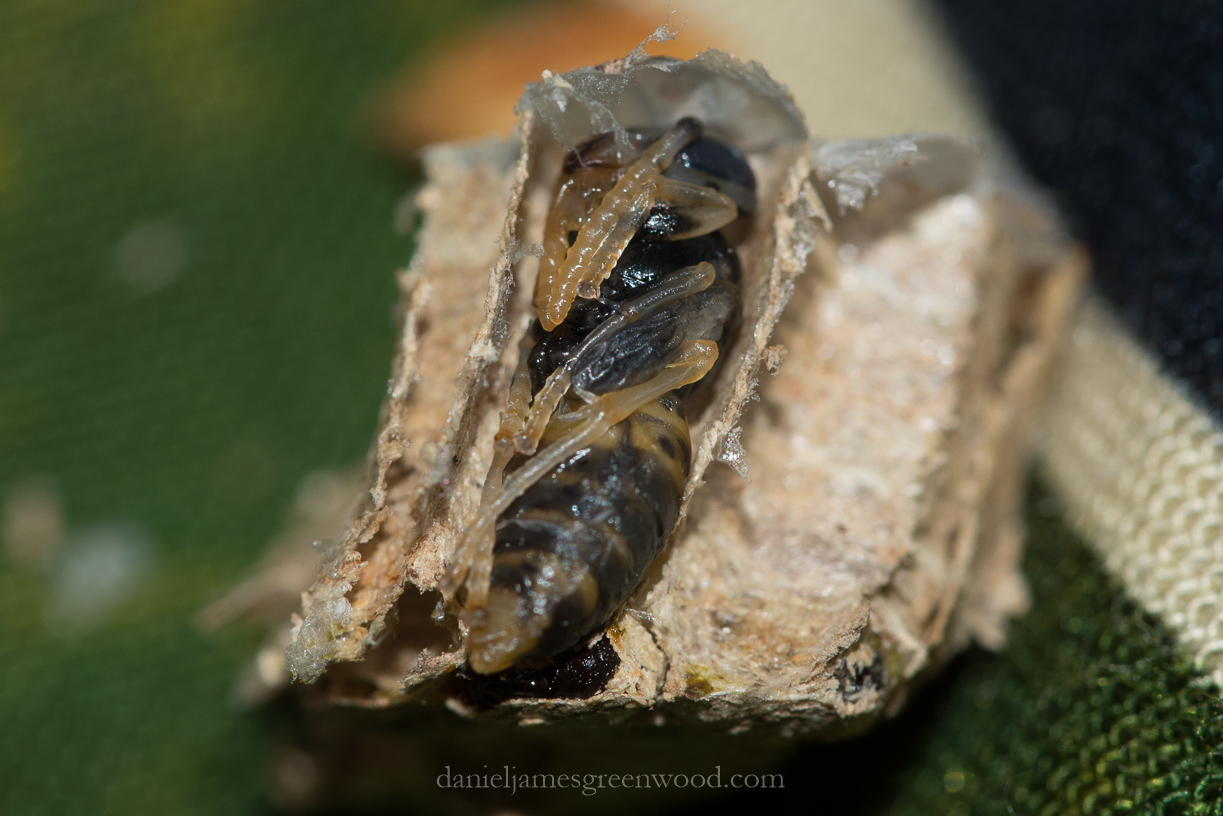
This was also taken in Czechia but in a different location. This is what it looks like inside a social wasp’s nest. Can you believe that this is built by wasps? It’s absolutely mind-blowing. We were walking along a forest road and it was sitting there on the ground. The best explanation we could come up with was that the nest had been predated by a honey buzzard and dropped in flight. Honey buzzards mainly eat this kind of thing. At least, that is the most spectacular explanation for why we found it.

Czech Rep 2016 blog-33.jpg

So next time you consider needlessly destroying a wasp nest, think about all the craft and insect-skills that went into it. Do you really need to harm it? Can you learn to accept them and keep a safe distance? Can you learn to love them?

Thanks for reading.

More macro


#FungiFriday: the charcoal burners

OLYMPUS DIGITAL CAMERA
Brittlegill mushrooms

#FungiFriday 25th July 2020

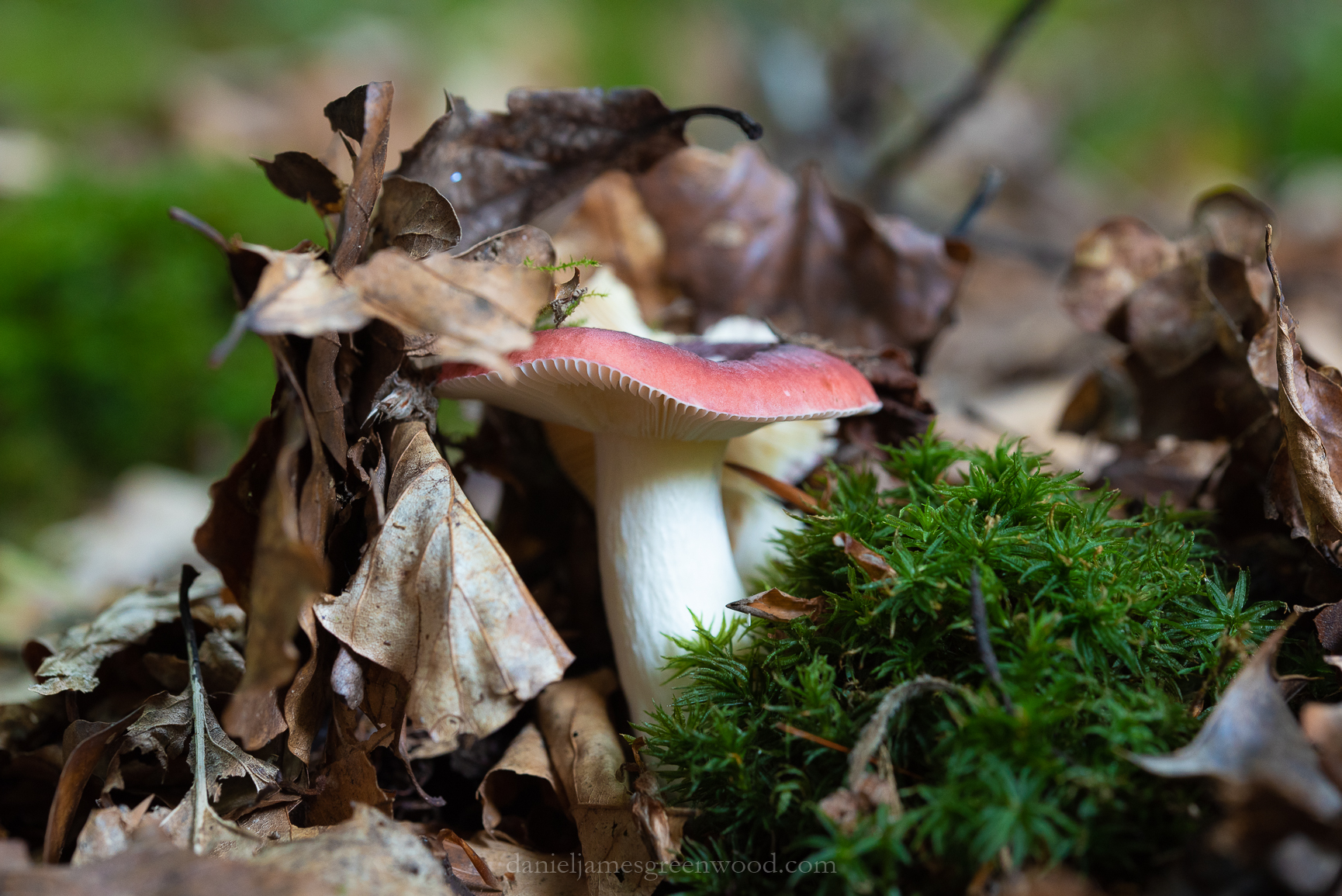
It’s a great relief to be able to share some fungi from the Wood Wide Web this week. There has been steady rainfall in recent weeks which gave the sense that some summer shrooms might be ready to appear. At this time of year I’m looking for the early indicators of autumn’s fungal moment, which appear in the form of brittlegills or Russulas, in scientific language.

OLYMPUS DIGITAL CAMERA
A mixed secondary/ancient woodland in the Sussex High Weald

The fungi described this week are garnered from two walks in the woods of the Sussex Weald in West Sussex. The first walk was a short evening wander to a mixed woodland with signs of ancient woodland flowers like bluebell, but with lots of birch, hazel and some oak. It then pretty abruptly turned to pine, which happens quite often in the Weald because of the arrival of sandier soils where the Weald clay ends, and the prevalence of forestry.

OLYMPUS DIGITAL CAMERA

It was much more dry than I had hoped but mushrooms are tenacious things. This nicely illustrated a new fungal phrase I learned in Robin Wall Kimmerer’s book Braiding Sweet Grass (p.112 in the ebook). You can listen to an interesting podcast with the author about mosses.Tthe Native American language of the Anishinaabe describes “the force which causes mushrooms to push up from the earth overnight” as ‘Puhpowee’. And so was this very small brittlegill pushing through the leaf litter.

I have never really tried to identify brittlegills to species level because they are so numerous and similar. I would guess this species is the charcoal burner. But I could be wrong about that.

The Mens - 21-8-2018 djg-13

This is one of the red brittlegills from August 2018 in the Weald, something to expect in August through to September.

OLYMPUS DIGITAL CAMERA

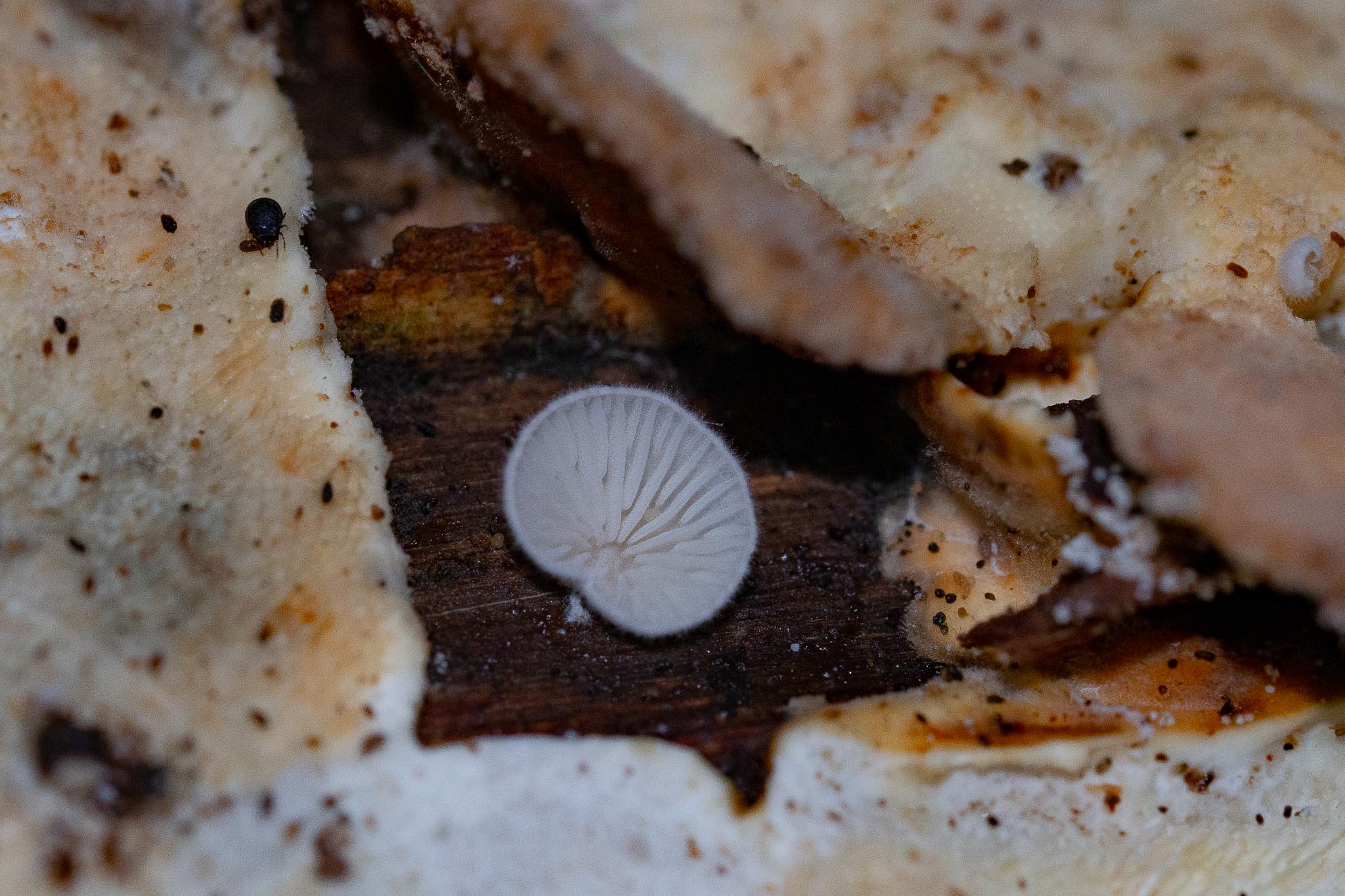
It’s a very dim view due to the light but my companion found this fungus within a fungus. It’s a species of oysterling. You can see a black springtail (or maybe even a tick?) on the left hand side for scale.

SLF_19-7-2020_djg-5

The second walk was in the afternoon at another Wealden woodland I am getting to know quite well. I recorded an Instagram story guided walk of this experience which you can see here. If you have the Gram.

SLF_19-7-2020_djg-2

Again it was well-nibbled brittlegills that could be found. This is probably the work of a small mammal with some input from a slug. I’ve seen grey squirrels pick these mushrooms, and spin them around by the stem and nibble down the gills. That interested me because grey squirrels are an American species. Brittlegills are also found in North America, so perhaps they are just returning to their roots. Does belittle the idea that grey squirrels don’t belong in European landscapes, the evidently do. Yes, I know about red squirrels.

SLF_19-7-2020_djg-18

I’m sure these species are not in any way appetising for the reader. This is probably one of the green brittlegills. It looks a bit ghoulish but I was pleased to find it. All these finds were just at the edge of footpaths.

SLF_19-7-2020_djg-13

A common summer mushroom is rooting shank, one of the toughshanks. ‘Shank’ has a pretty dark meaning in modern language, particularly in London, but it’s an old name for leg. That’s where the names of red or greenshank come from in the bird world. Americans call similar species ‘yellowlegs’. I prefer the olde Englishe names.

Czechia 2017 lo-res djg-33

Rooting shank is quite an abrupt shroom, it just shows up where it likes. You can find it from now through to September from the woodland floor to stumps and buttresses of trees. This dream of a shroom was in the White Carpathian mountains in the borders of Czechia/Slovakia but I first saw it in urban south-east London.

SLF_19-7-2020_djg-7

It’s not a fungus, but this dog vomit slime mould was a lovely find (believe it or not). This amazing video gives a much better explanation of what this slime mould is up to:

I have recently learned that slime moulds have memory!

SLF_19-7-2020_djg-9

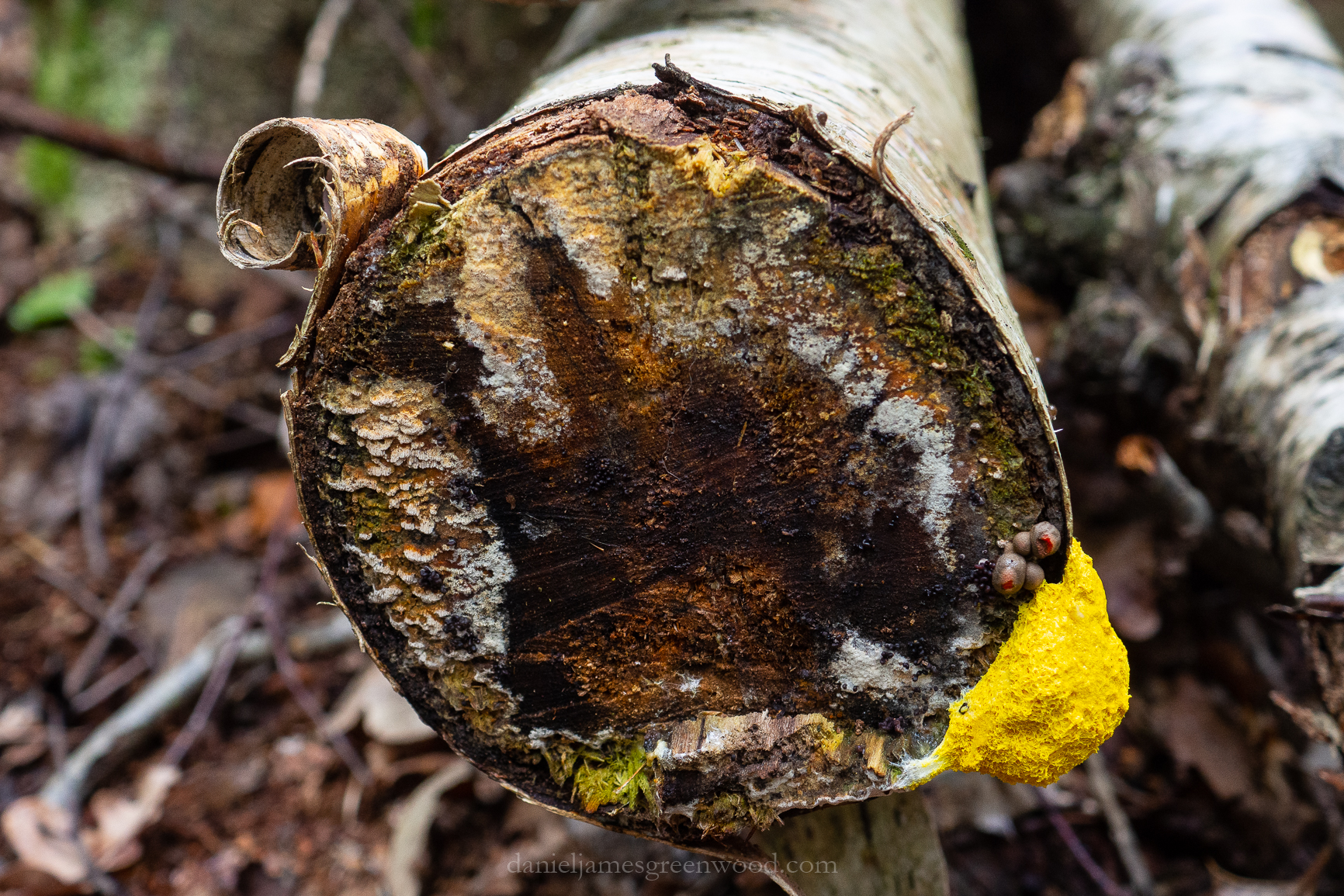
It was only after taking this photo of the slime mould’s birch log that I realised how much was happening. You can see the early stages of small polypore fungi moving in from the outer edge as the wood degrades. I think the greyish blobs next to the slime mould may be Lycogola species, sometimes known as wolf’s milk. Lyco means wolf. The puffballs, Lycoperdon mean ‘wolf’s fart’. Oh dear. And we don’t even have wolves in the UK anymore, just in Downing Street, LOL!

Thanks for reading.

More mushrooms

Macro Monday: now there’s a spider-hunting wasp in my living room

GDN - 15-6-2020 djg-11

Macro Monday 20th July 2020

Happy 4th month to this blog. I started it as a way to find some focus in the impending lockdown back in March. Since then I’ve taken probably some of my best macro photos, but not necessarily from an aesthetic point of view. I’ve been getting to know my small garden, this being the first year of living with it. I’ve had some amazing encounters with tiny wild animals, and this week was no exception.

GDN 18-7-2020-lo-res-1

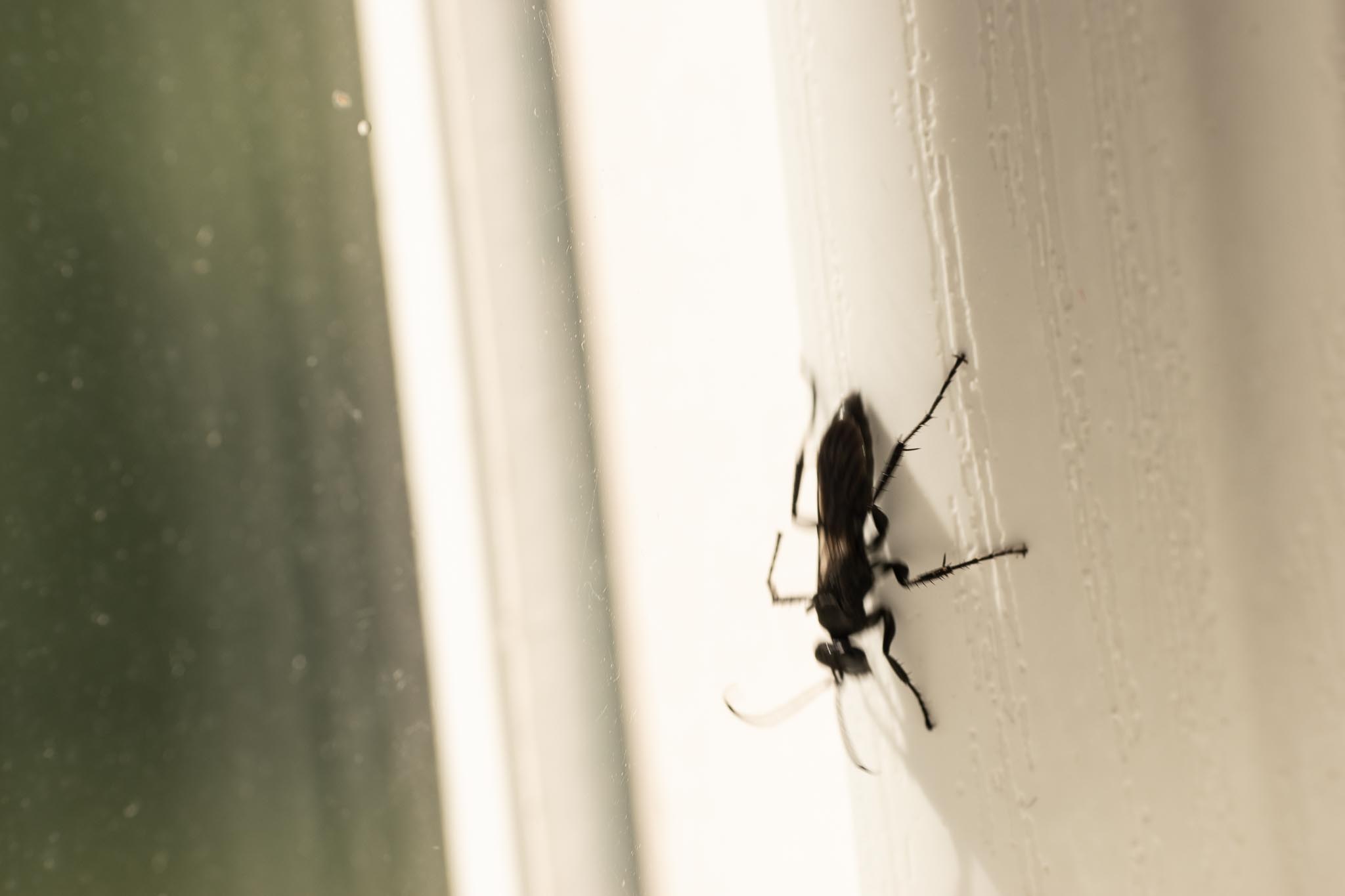
On Saturday morning we were sitting in our living room watching the latest episode of Ru Paul’s Drag Race All Stars (#TeamShea). The pause button was hit when I noticed a wasp-like creature trying to get out of the window.

GDN 18-7-2020-lo-res-2

This image gives a sense of how active the insect was. It was running non-stop, which gave me a hint at what type of insect it was – a spider-hunting wasp! Also note the very curly antennae. This was a great moment because it’s only the first of its kind I’ve seen in the UK. The only other time I’ve seen one is in Czechia. There are over 40 species of spider-hunting wasp in the UK and I’m not about to try and identify it! They get their name from their hunting of – you guessed it – woodlice. Kidding, spiders. I’ve never seen one with spider prey but I know they need to move fast. They paralyse spiders with a sting and then drag it to their burrow. It’s a tough life out there in macro world.

GDN 18-7-2020-lo-res-5

Earlier in the week it was a real pleasure to listen to a podcast featuring macro photographer Joseph Saunders. Joseph takes photos of amphibians and invertebrates. In the podcast he talks about the challenges of being a black man with a disability in America, but also his desire to work in conservation. Anyone who doesn’t think systemic racism is real needs to listen to what he has to say.

He’s an accomplished photographer who knows his stuff and has had a passion for amphibians in particular since a young age. It would be wonderful to see people like Joseph being given greater prominence in the photography and conservation world, as movements such as black birders and black botanists weeks have done in the United States.

Have a listen to the podcast, it’s excellent.

▶️ Aperiology (MACRO PHOTOGRAPHY) with Joseph Saunders 

Apparently macro photography now has its own ology – Aperiology, ‘to describe the tiny aperture used to keep these creatures in focus, and the huge world it opens up to us.’

Amen to that!

GDN - 15-6-2020 djg-34

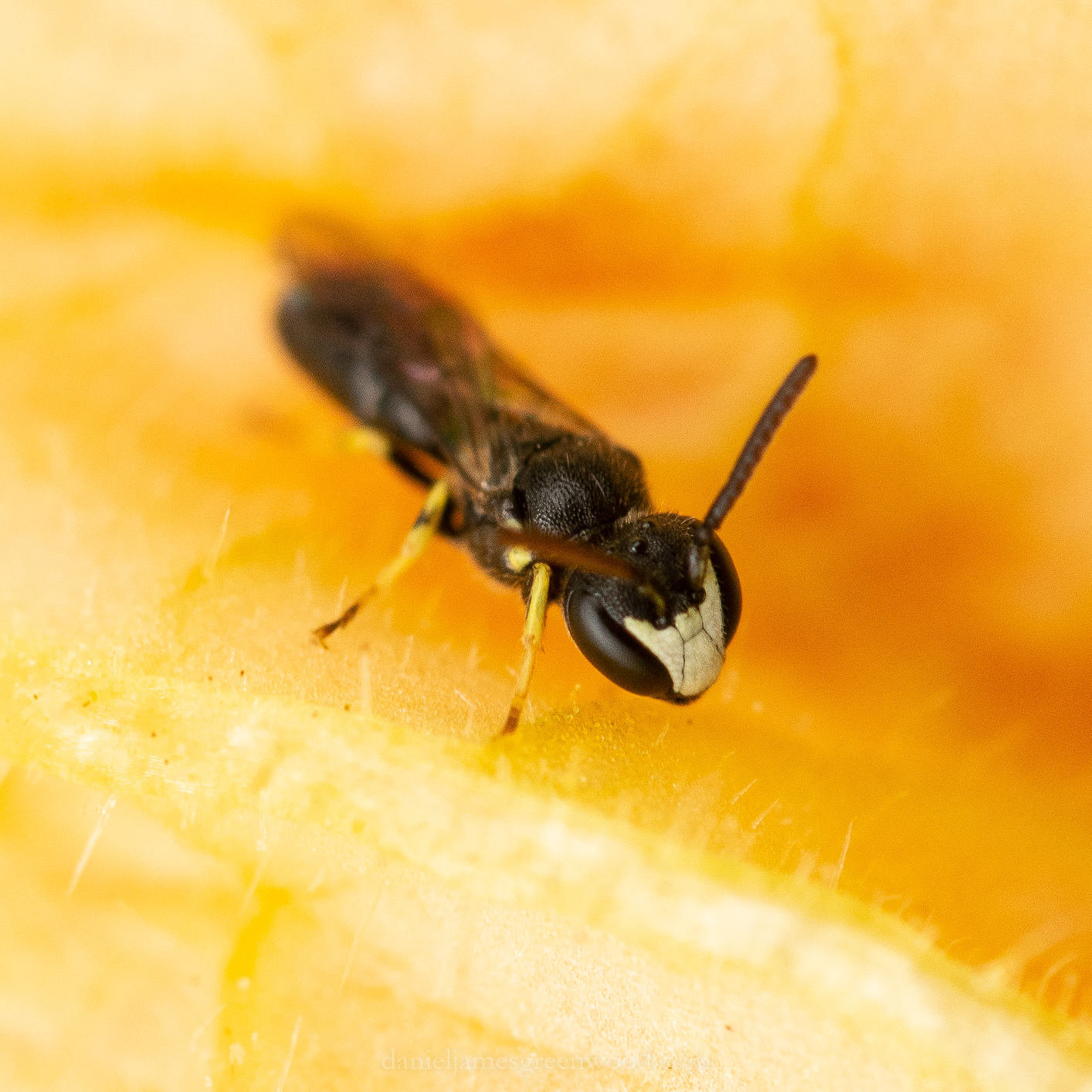
Now back to my garden, where I am failing to grow courgettes at every turn. However, the yellow flowers have proven attractive for small bees like this yellow-face bee. Not that I’ve seen them taking nectar or pollen from the flowers.

GDN - 15-6-2020 djg-5

There is a patch of cranesbill which has been the main lure for both pollinator and macro photographer in recent weeks (sounds like I’m talking about someone else – I mean me). The garden is drying out and many flowers have gone to seed, including the lamb’s ears, which has been such a feature this summer.

GDN - 15-6-2020 djg-11

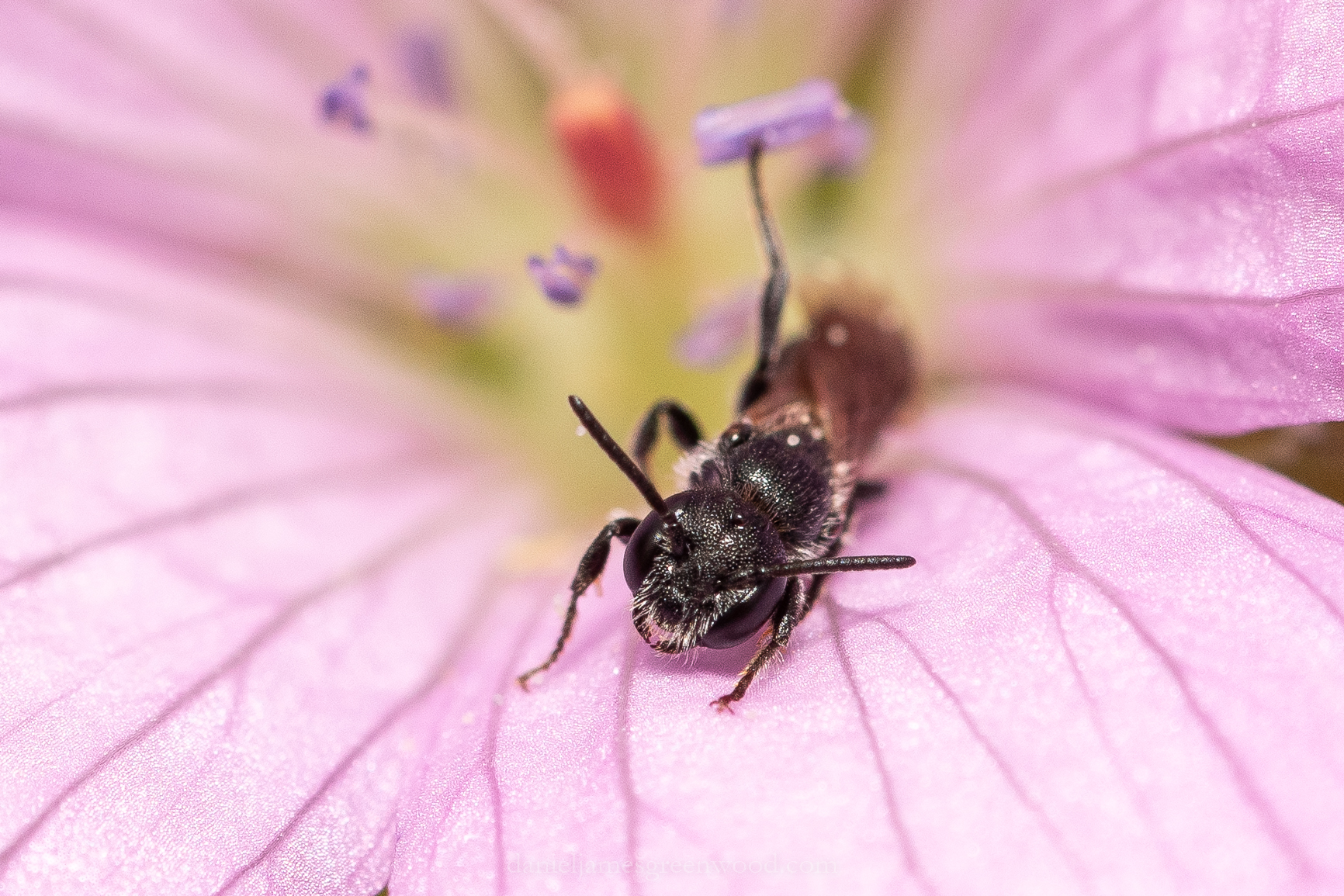
I didn’t get a chance to ID this bee, but I wonder if it might be a blood bee taking a break after pretty much decimating the populations of mining bees that had been in the lawn. That area has now grown silent. I expect it is also the end of their flight season.

GDN - 15-6-2020 djg-15

This tiny pollen beetle was trying to work out how to make its way down from the flower. I enjoy the little pollen grain attached to its back, as in previous weeks.

GDN - 15-6-2020 djg-2

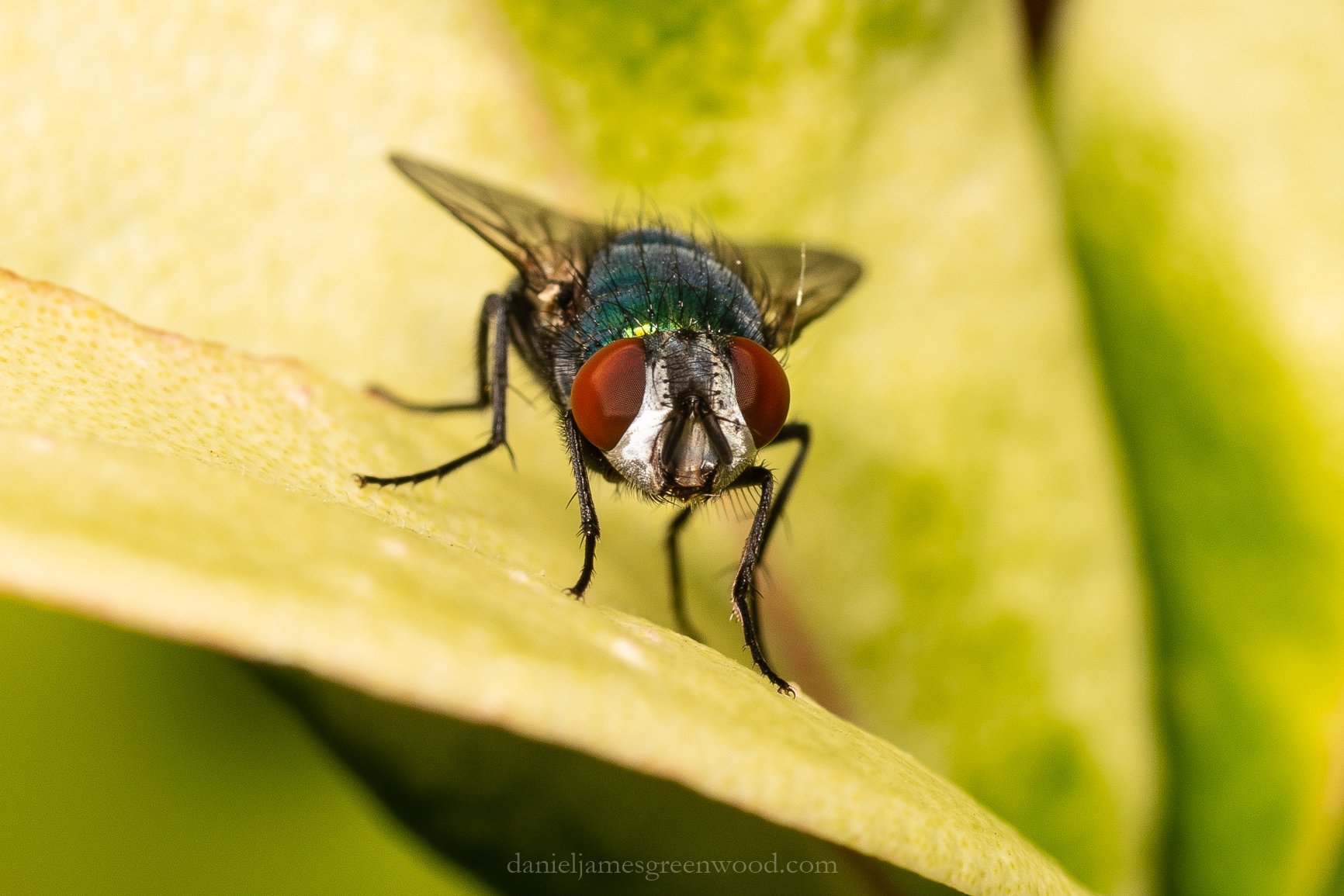
Greenbottles are one of the most common larger insects in my garden. I think they’re beautiful. Though their faces do have the look of a corset to them. I remember coming home from family holidays to Ireland after two weeks and finding loads of dead flies in our kitchen. We don’t get insect numbers like that anymore, likely due to the insect armageddon (‘insectageddon‘) we are working so hard on right now.

GDN - 15-6-2020 djg-19

They also can be very willing subjects. This greenbottle is perched on the seed-head of wood avens, which anyone with a cat will know well.

GDN - 15-6-2020 djg-1

Most of the time spent in the garden was under grey skies and low light. This small white butterfly was roosting in the hedge. I totally over-exposed it and had to under-expose it again in post-processing, which you may be able to tell from the harsh tones to the left-hand side. It’s nice and sharp on the butterfly’s eye though.

GDN - 15-6-2020 djg-23

Not far away a hoverfly was perched on the broken tip of a branch. Ther weather was cool enough to keep the hoverfly at bay, so I managed to get a couple of photos.

GDN - 15-6-2020 djg-31

Again, finding one place that is easy to get to is going to be where you will probably find most ‘success’ with macro photography. If you’re travelling a long way to a place you don’t know there are so many things to stop you from getting on with the fun stuff of actually finding things and photographing them. Macro should slow us down and cut out a lot of the messing around. You need to chill out.


Thanks for reading.

More macro

#FungiFriday: how hunter gatherers used fungi to make fire

horrible-histories-series-6-episode-2-awesome-alfred-the-great-king-alfred-song7
King Alfred (not a hunter gatherer) burning a woman’s cakes © BBC Horrible Histories

Fungi Friday 17th July 2020

I have been taking an online archaeology course through the website FutureLearn. You can imagine my sheer delight when one of the sections was focused on, you guessed it, FUNGI!

The course explores the Mesolithic (Middle Stone Age) archaeological site of Star Carr in Yorkshire. The fungi section of the course covers the species discovered at the site and what they might have been used for by the people living there between 15,000 and 5,000 years ago.

star_carr
Image of the Excavation site Star Carr located in North Yorkshire England. The image is a reconstruction Alan Sorrell’s reconstruction of Star Carr in 1951, Illustrated London News 3 (via Wikimedia Commons)

The Mesolithic followed the Paleaeolithic (Old Stone Age) in 13,000BC, ending with the Neolithic (New Stone Age) around 5,000BC.

The Neolithic is seen as the period where human populations became more settled after the development of farming. These agricultural developments are what gave us much of the world we live in today. Current European farming techniques originated in the Middle East, slowly spreading west to replace the old hunting and gathering of the Mesolithic.

map_of_the_spread_of_neolithic_farming_cultures_in_europe
Map of the spread of Neolithic farming cultures in Europe, dates in year BCE (via Wikimedia Commons)

But this isn’t Farmy Friday, so let’s get back to the pre-agricultural times when mushrooms were a key resource.

South Downs - 12-7-2018 Canon (7).JPG
King Alfred’s cakes

King Alfred’s cakes

The fungal finds at Star Carr have produced specimens of hoof fungus, willow bracket and birch polypore. This doesn’t include the species known as crampballs, King Alfred’s cakes, or in scientific language Daldinia concentrica. From experience, this is the fungus that people in Britain today most recognise as one which can be used in the process of making fire. This is probably because of the recent boom in bushcraft. The fungus gets its most evocative name of King Alfred’s cakes after an English folk story.

alfredandthecakes

To people outside the UK or without a grasp of English history, this name is quite meaningless. It is based on the tale of King Alfred who was exiled in the Somerset Levels during the Viking invasion of Winchester. Alfred failed to keep an eye on a woman’s loaves of bread that were on the fire and they burned. It is said that she had no idea he was the king, so far removed was he from his throne. Don’t worry, he eventually came back and pushed the Danes away a bit and established England.

Chaldon to Oxted - 17-10-2015-26.JPG
Birch polypore

Birch polypore

Last week I donated 1000 of my own words to the cause of bracket fungi. The findings from Star Carr have taught me about how these fungi were used by our ancient ancestors. Perhaps most interestingly, the fungi found were largely there because they had been foraged from elsewhere. Star Carr is a site next to a lake, so any woodland surrounding it will have been wet and it’s likely the people living there travelled to other places to gather fungi. There is evidence of the trading of ornaments and other items from across Europe, so people were not confined to the area itself in the way we live now.

SLF_LRCC_14-2-2020-07
Birch polypore in winter, West Sussex

Birch polypore or razorstrop fungus haunts me out there in the woods. It is the one that catches the corner of my eye and fools me into thinking it’s autumn. It is a very common species where it acts to control population density. It plays a crucial ecological role in that it breaks birch trees down into nutrients and minerals, and therefore a substrate which can become soil. Fungi in woodlands are life-giving organisms. As a resource it was once used to sharpen tools in the manner of a leather strop, but it is also very useful in its ability to burn slowly and for long periods. This would have been crucial for people who were travelling and needed to make regular camps as we know Mesolithic peoples did.

Warnham - 14-4-2019 djg-23
Birch trees coming into leaf in West Sussex

Birch trees

Birch is an incredible resource. Like fungi, it can be used to make fire. There is no doubt that birch will have been used by hunter-gatherers for this purpose. The bark was used to make slippers, matting, boxes, even canoes. At Star Carr birch bark rolls were discovered. The evidence is that they were cut from a tree and would have been used as torches. The ‘tar’ inside birch bark could have been extracted and used to secure flint arrow heads. Nowadays it’s known for being able to make birch wine when the sap begins to run in spring.
Bavarian Forest 2014 blog 2020-13
The Bavarian Forest

Hoof fungus and hunter gatherers

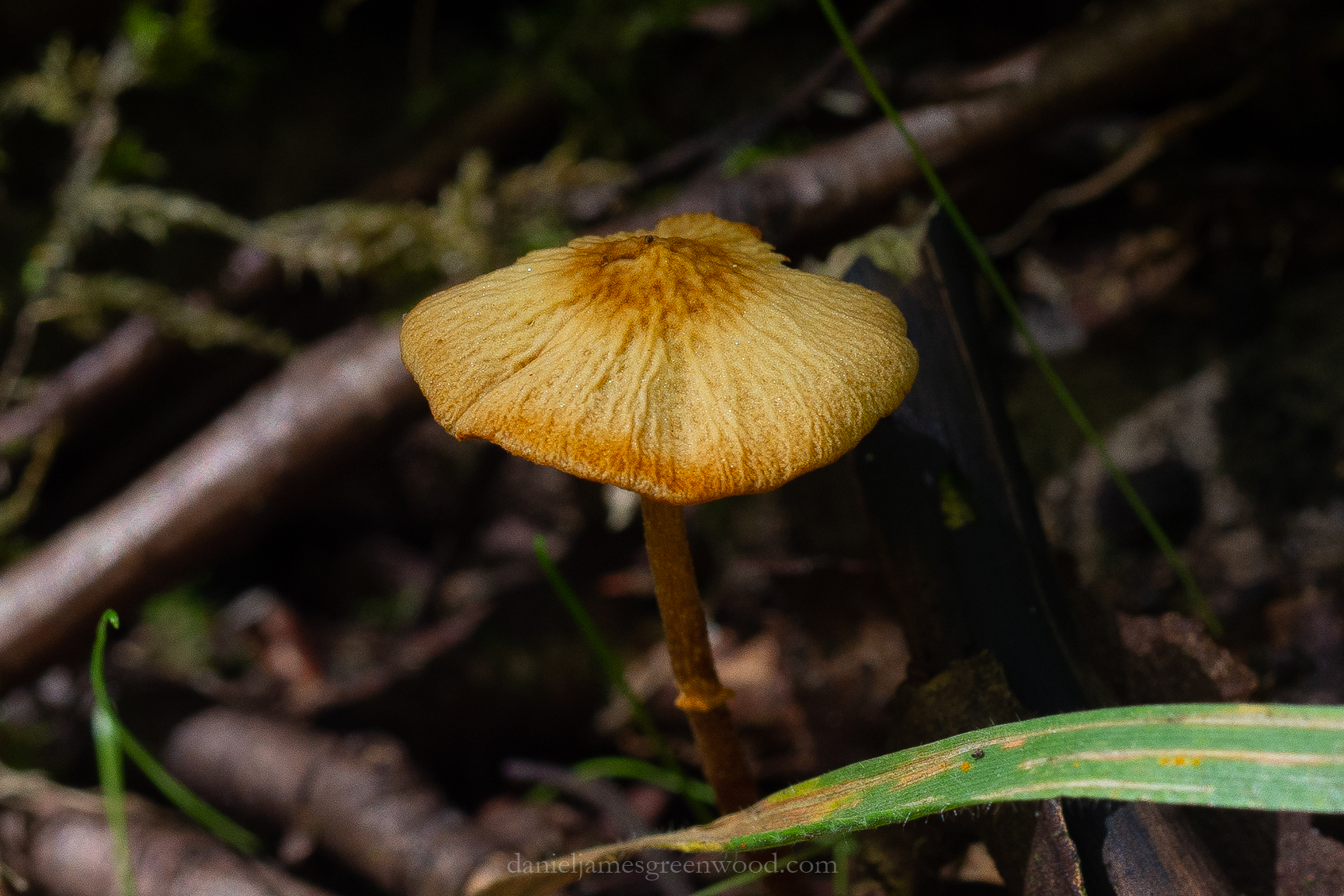
The image above is of a dead beech tree covered in bracket fungi. Hoof fungus, so named because it looks like a horse’s hoof, appears to be a key species in Mesolithic Europe. It’s present across the Northern Hemisphere so it will also have been of use to Native American peoples. It has another common name of tinder fungus. An important material deriving from hoof fungus is amadou. This is the spongy inside of hoof fungus that can be used to make embers. The video below by the team at Star Carr shows how it can be used, along with pyrite, to make a fire. This is exactly what people in Mesolithic times would have done.

It just goes to show how resourceful people were in the Stone Age. It also reminds us of how important fungi has been to us, not just on the ecological level of recycling organic matter and its place in the woodland ecosystem. It helped to keep people warm and therefore alive.

Thanks for reading!

More mushrooms