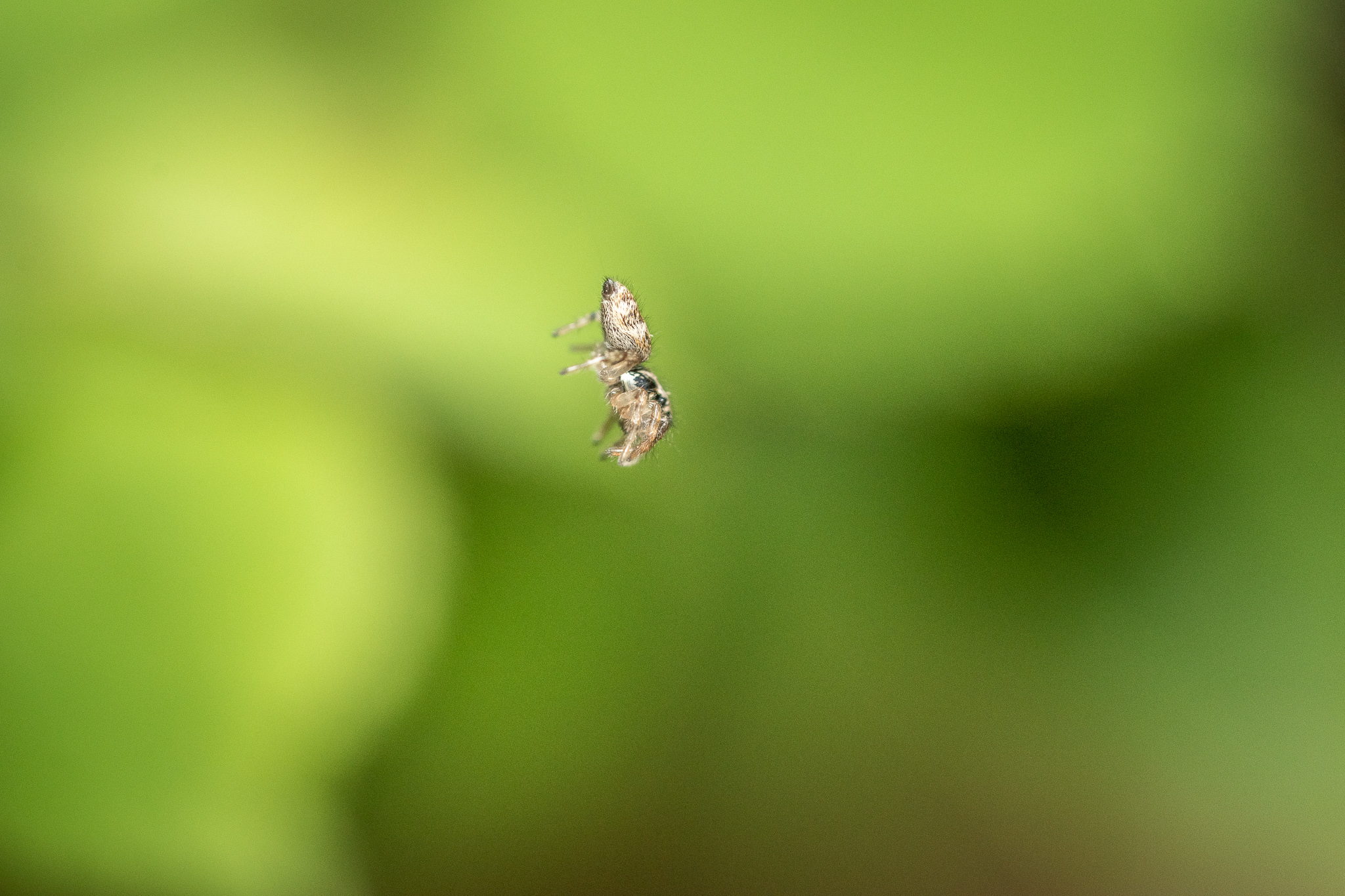
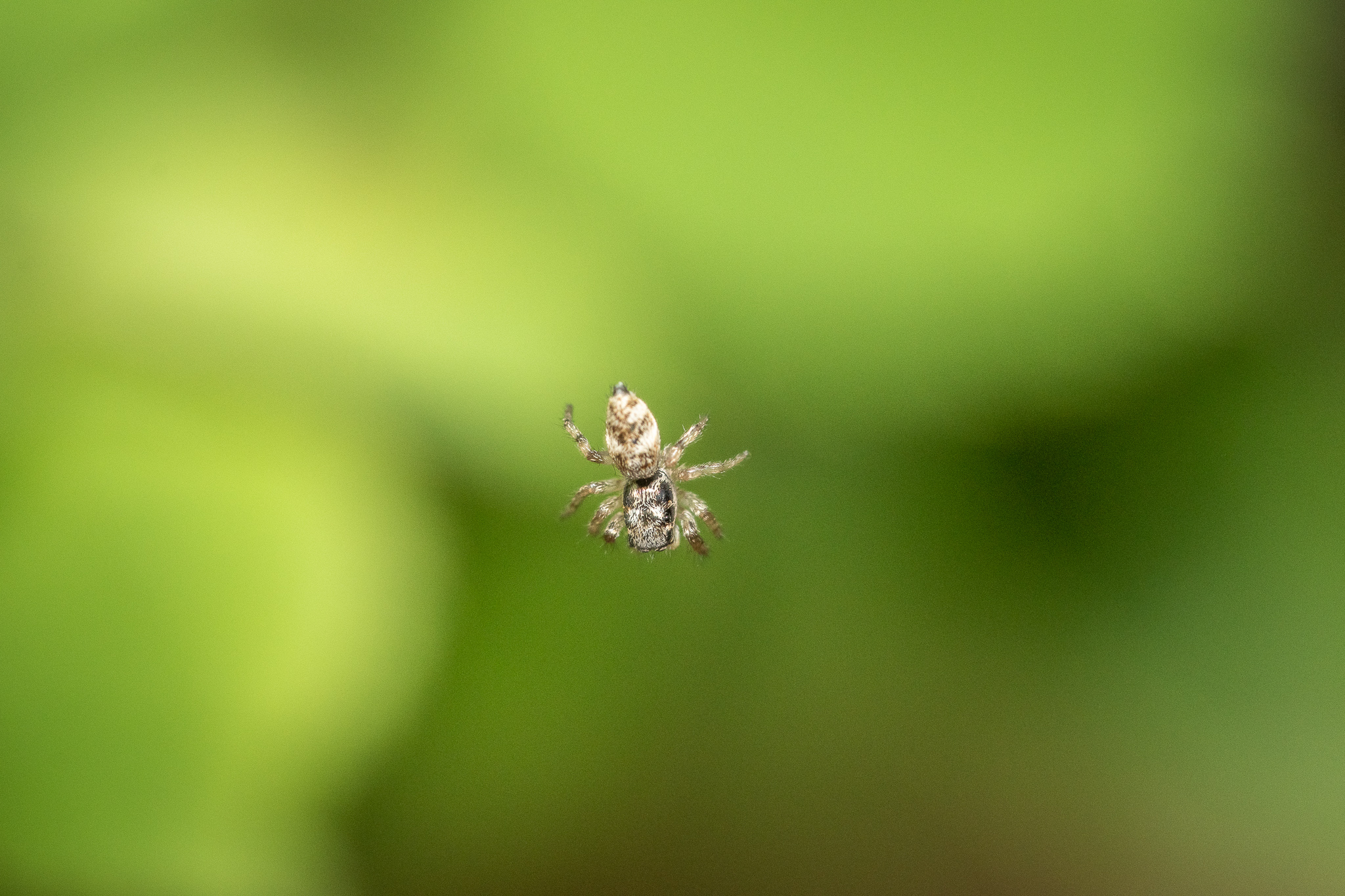
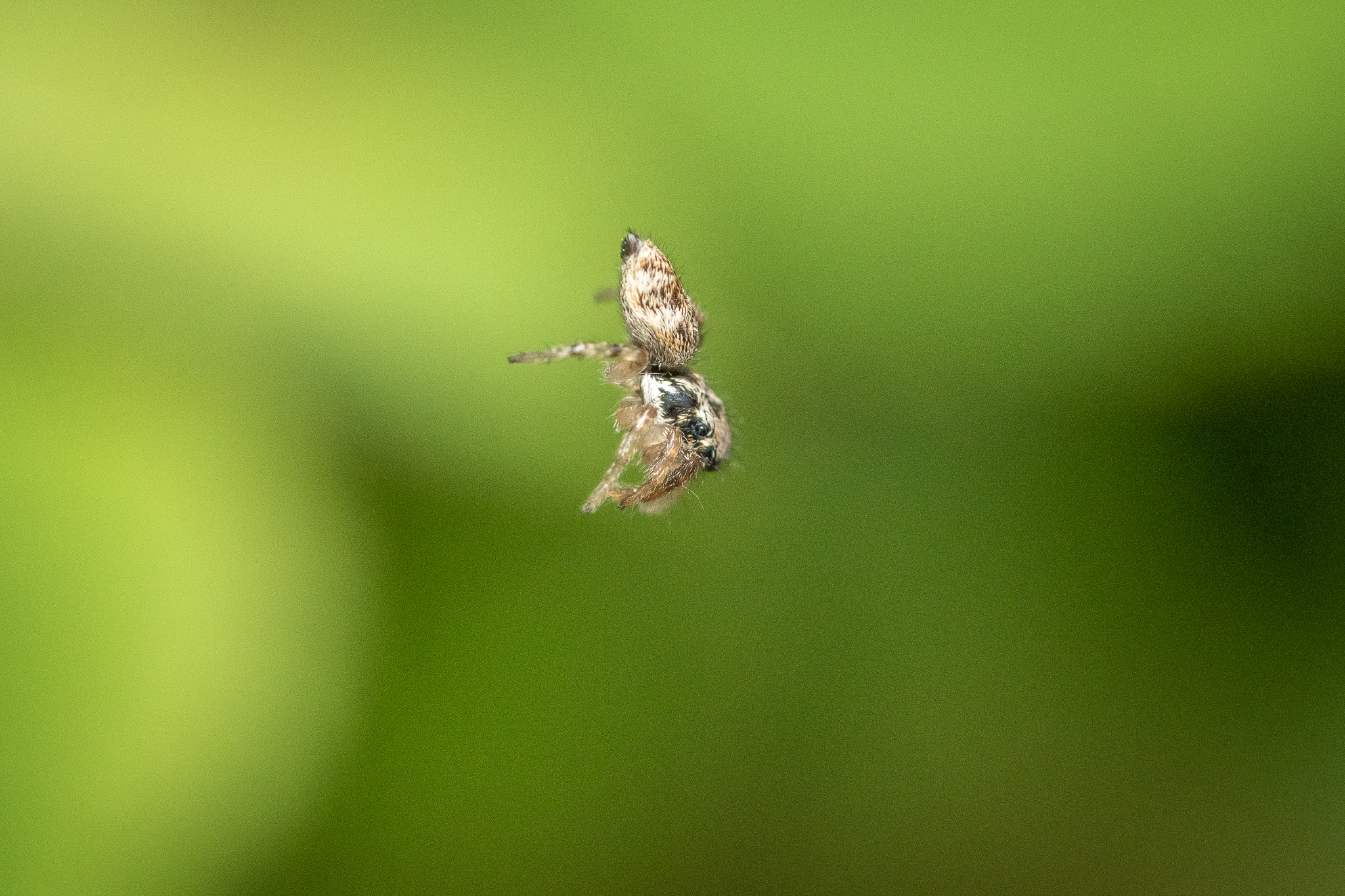
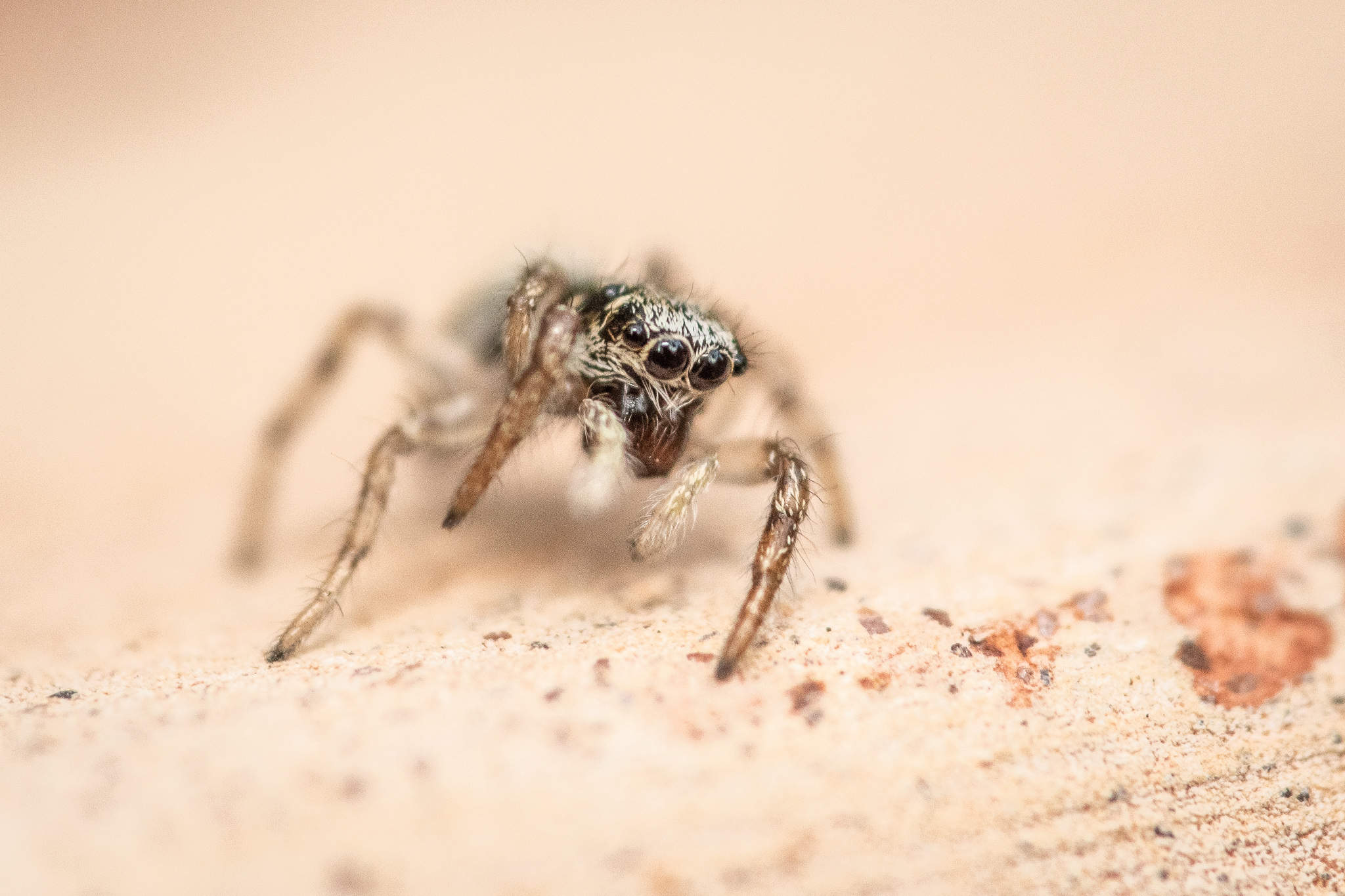
The insect world is winding down, it’s true, but September can be a great month to see invertebrates. This is especially true for spiders in gardens (and in your house!). At the beginning of the month I visited Suffolk Coast and Heaths Area of Outstanding Natural Beauty. This blog focuses on two locations, firstly the National Trust’s Sutton Hoo, near Ipswich.
Sutton Hoo is famous for its Anglo-Saxon ship burials which, on the eve of the Second World War in 1939, threw up one of the most incredible archaological finds in British history. An entire ship was found to have been buried, with much of the discovery based on the chemical shadow of what was once there. An amazing haul of items was discovered with the boat, thought to be that of King Rædwald of East Anglia, a pre-Christian Anglo-Saxon king who died in approximately 625 AD.
The boat he was buried in was probably hauled up here from the river Deben, where the boats are moored, by Anglo-Saxon warriors and buried under a mound of earth.
The National Trust have an exhibition centre which displays mainly replicas of some of the 3000 things found in the mounds. Museum collections are great for macro because they’re well lit and isolated by the darker backgrounds. This was a replica of one of the items found.
This gold pendant dates from the 4th-5th century AD, so 1600-1700 years ago.
Outside, I didn’t have macro in mind. I was carrying my micro four thirds camera and lenses which are so light they can be carried anywhere. Walking around the estate I noticed a feather on the ground, and that an insect was resting on it. I couldn’t believe it when I looked closer.
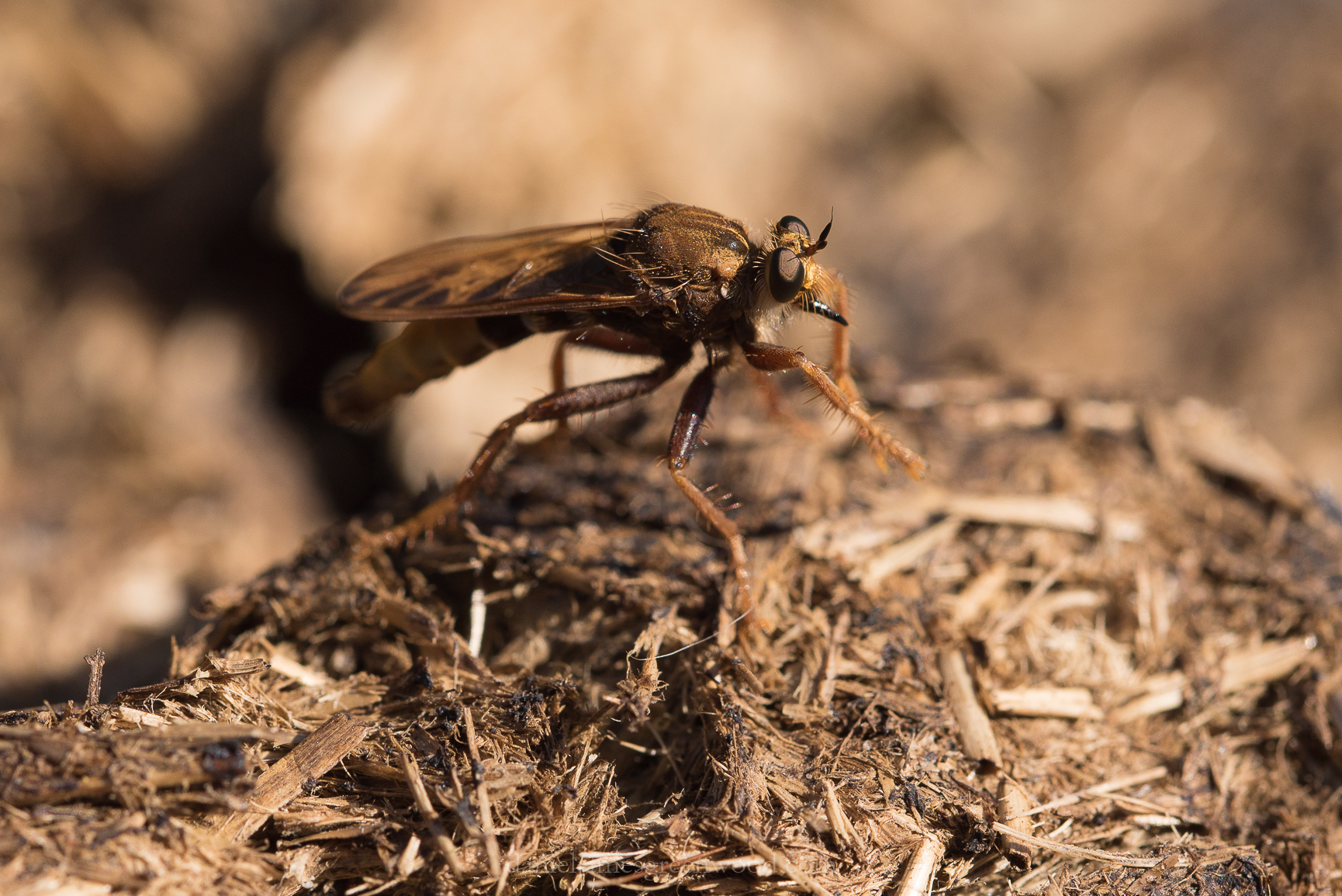
It was a robberfly, with prey in its spear-like mouth parts. Note here how I cropped to include the beautiful fronds of the feather.
The robberfly wasn’t bothered about me. When I got really close, I could see it had an ichenumon wasp as prey! Heathlands are exceptional landscapes for insect diversity, so there was always a thought in the back of my mind that something like this could crop up. This blog could not be posted without some reference to wasps.
This is an image which I hope I haven’t laboured, but it’s just an incredible thing to find resting on such a beautiful macro subject in its own right – a feather. You do see this kind of image again and again on Instagram, where I’m sure people are feeding prey to robberflies in order to get a photo in a studio. That’s not my style.
Walking around the burial mounds of Sutton Hoo, we found lots of red and orange caterpillars on the move. I’m not sure of the species! ID welcome in the comments please.
We then moved on to the Suffolk coast, which is just down the road from the Sutton Hoo estate (great job by the way, National Trust). In the long grass of one of the dunes this very similar black and orange moth was holding tight to a blade of grass.
He’s a pretty rad looking dude up close.
Coastal landscapes are something of a foreign language to me in ecological terms. A visit to the coast is far more an emotional or spiritual experience (I don’t swim), a reminder of childhood, or our vulnerability when faced with the vastness of the sea. A line was drawn in the sand.
I managed my first marine macro photo! This tiny crab was pointed out to me by my companian who was spending her time seeking out stones and other small things on the shoreline. Taking photos of tiny animals under moving water is a challenge I probably won’t have to take up again any time soon.
Thanks for reading.
Photos taken with Olympus OM-D EM10 MIII with 60mm f2.8 macro lens and 45mm f1.8 lens
Bradfield Woods is a National Nature Reserve. That’s a big deal. I have wanted to visit this place since reading Oliver Rackham’s books about woodlands, with Bradfield Woods being one of his most often mentioned, due to its ancient character. It’s a coppice-with-standards oak-hazel woodland. The oldest woods we have in England are woodlands managed in this way, with hazel trees cut to their base periodically and oak trees felled to be used for construction. The coppice stools can live for a very long time, as the coppicing does not kill the specific species of trees, namely hazel and ash in this case. The oldest woods are also the best for fungi because they have the most stable soil systems, despite the regular cutting of trees.
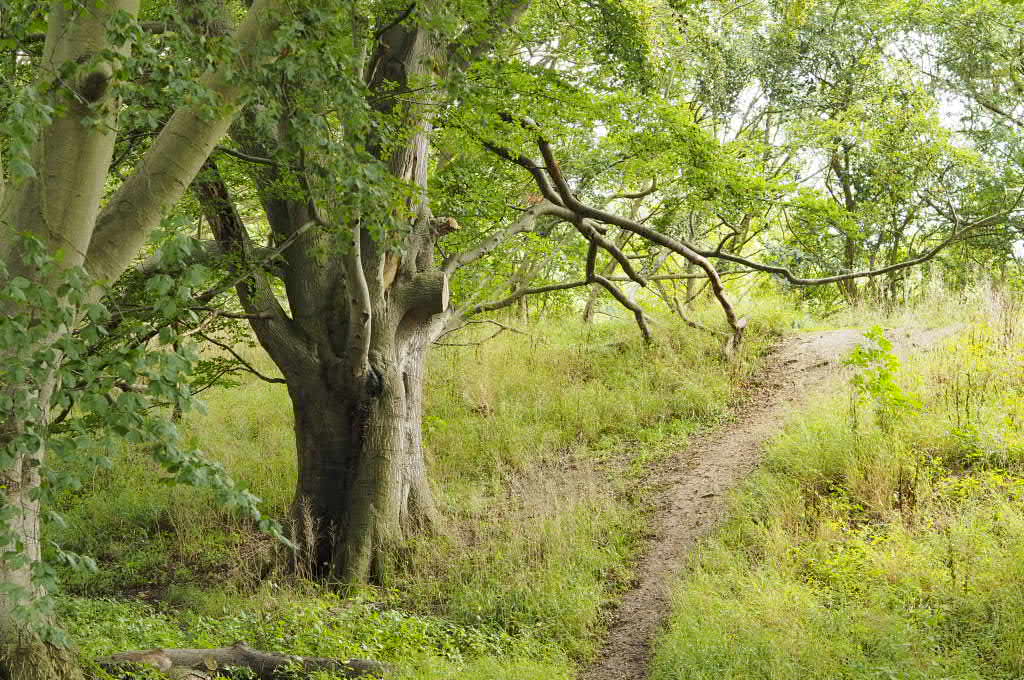
Bradfield Woods is a series of woodlands. English woods are small and often form a network of interlinked parcels, forests are large expanses of heathland, moorland and sometimes woodland. Bradfield Woods was saved in the 1960s (what is seen by Rackham as one of the most destructive periods for British woodland) from being destroyed for agriculture. But more woodland was lost at its edges, as the maps show, with this isolated chunk of woodland in a sea of farmland. This oak tree, not ancient, stood in a neighbouring field. The oak leaves at the top of the frame are in Bradfield Woods, perhaps willing it to return.
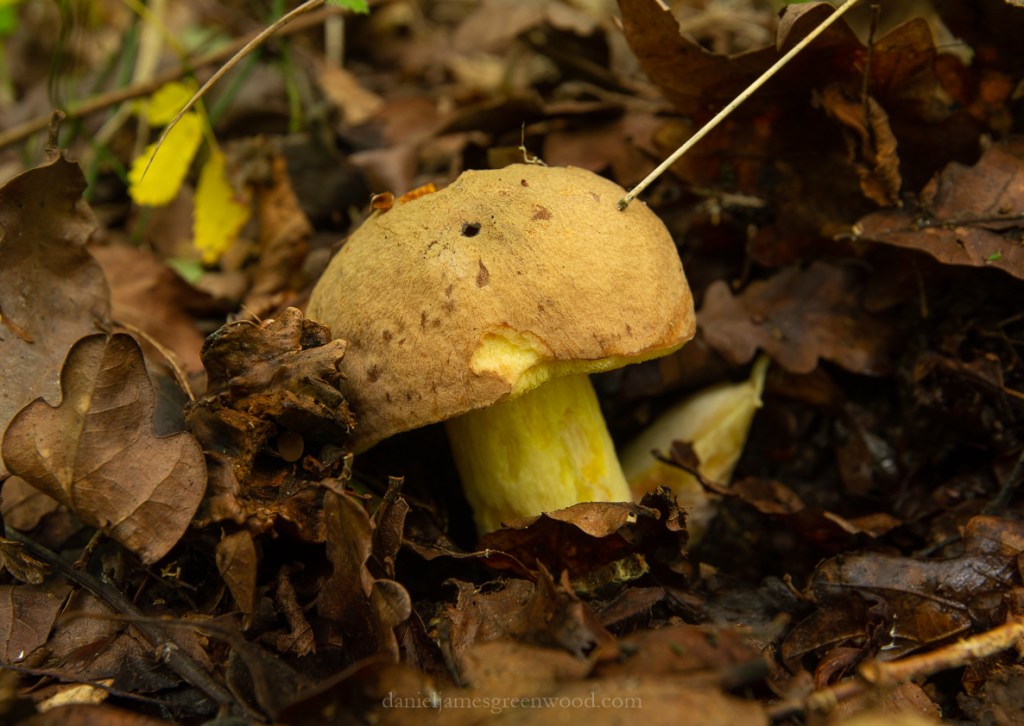
It was quite clear that we had visited at a great time because there were early signs that the conditions were right for fungi. The red-cracking bolete above was past its best, laying at the side of the main path. It’s a relative of the boletes, a Xerocomus species that is very often seen in oak woodland in August-September. It often has a reddish colour with yellow pores. In fact, the boletes and their relatives were out in force, released from a summer of lockdown:
This could be a suede bolete.
This could be another Xerocomus species.
There were lots of boletes along the path edges. It was reminiscent of summer 2016 when even in urban south London this type of mushroom was out in force.
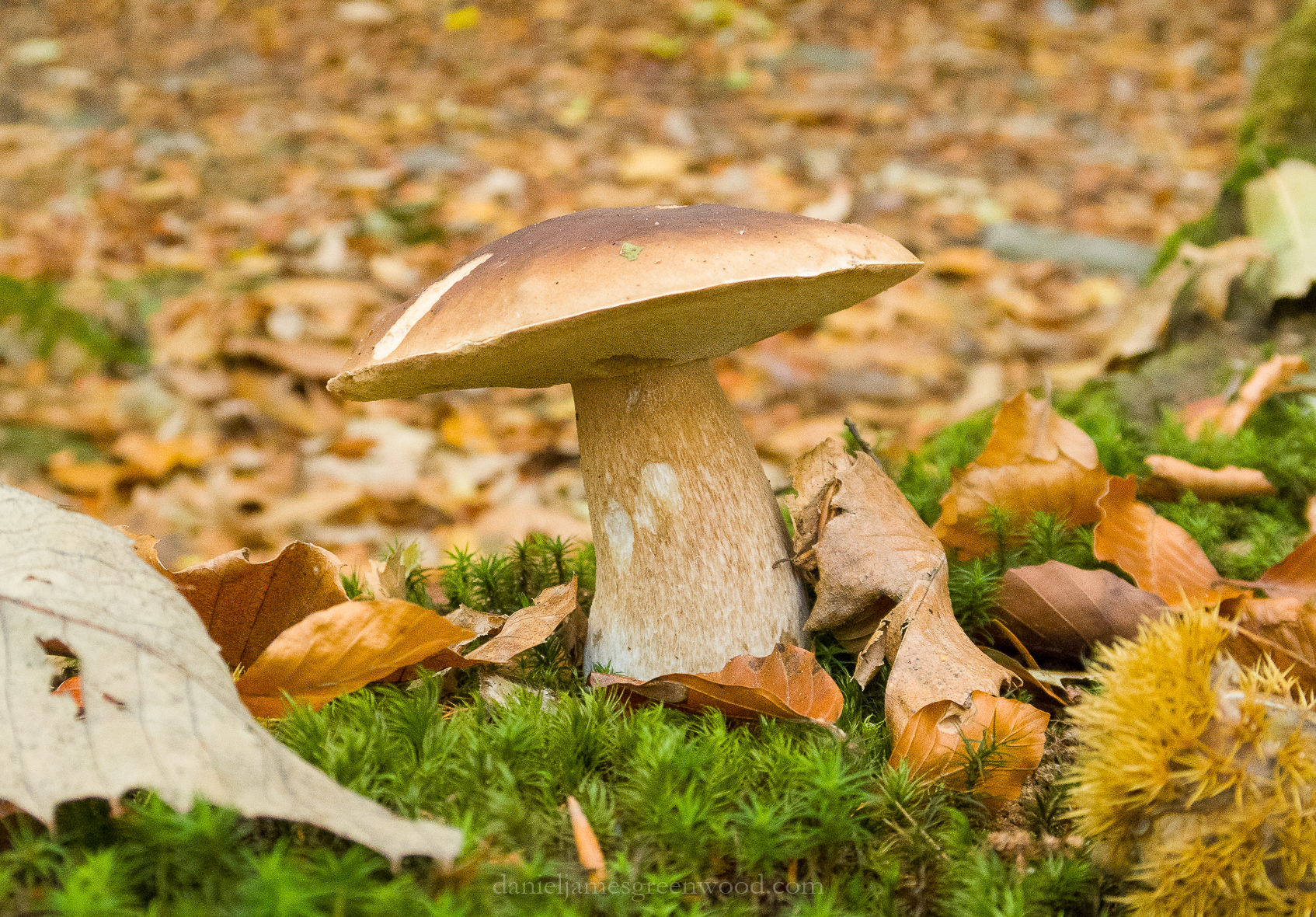
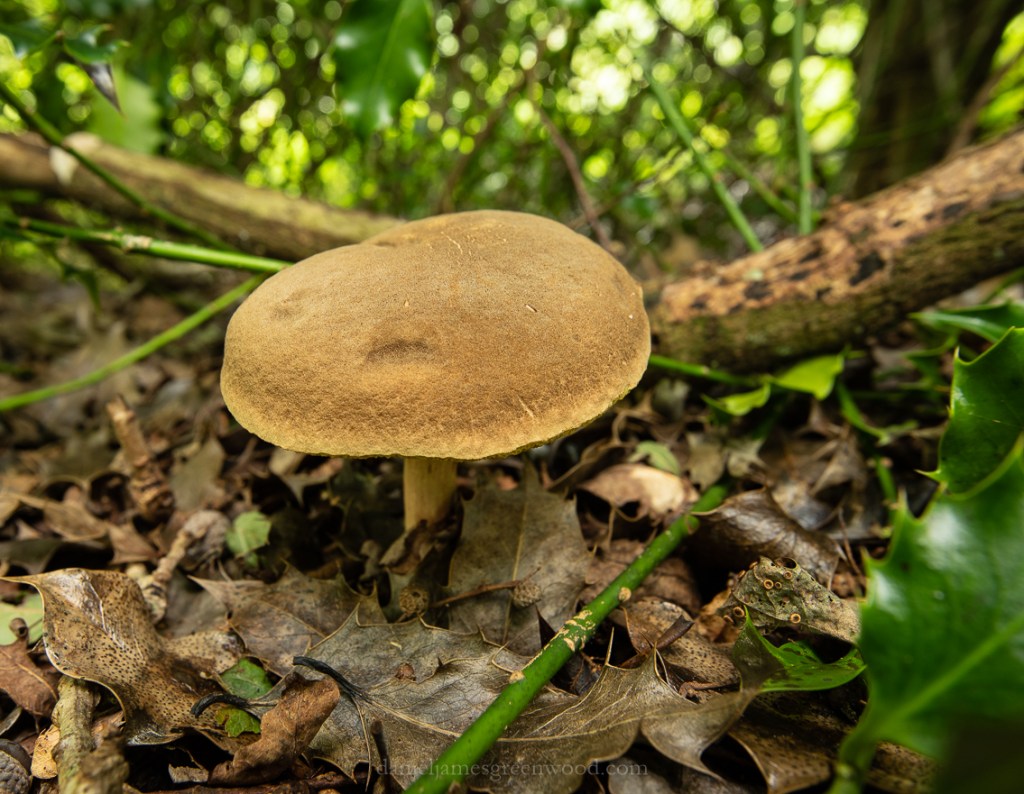
Boletes are renowned for their edibility but it was still funny to see the squirrel claw marks in the top of this mushroom. I think this is probably the cep, Boletus edulis. The one everyone wants to eat.
I think these are another bolete relative, in the Leccinum branch, where birch boletes reside.
These gorgeous boletes were lying at the path edge 💅
There was an abundance of fungi, something I’m not seeing down south in dry old Sussex. Note the smaller mushrooms surrounding these fallen shrooms, signs of a previous burst after decent rainfall.
A summer mushroom that pops up quickly after rainfall is the fairy inkcap. This explosion was at the foot of a dead, standing tree. Leaving dead trees standing is crucial to a healthy woodland.
They will last perhaps a day or two at best before deliquescing into the earth.
Dryad’s saddle is a reasonably common summer fungus, and an edible one at that. But I have never managed to see them in this bizarre early stage where the top looks so much like a mocha or cappucino.
Here you can see old and new dryad’s saddles. Dryad is an interesting word. It means wood nymph, but also means oak nymph. ‘Druid’ means ‘knower of the oak’, which relates to the ‘dry’ at the beginning of the word. The tree is an ash, not an oak!
The most impressive species was to come later. Once again, along the edges of a main pathway, I noticed an unusual fungus. As the cliche goes, it stopped me in my tracks.
‘This is a moment,’ I said.
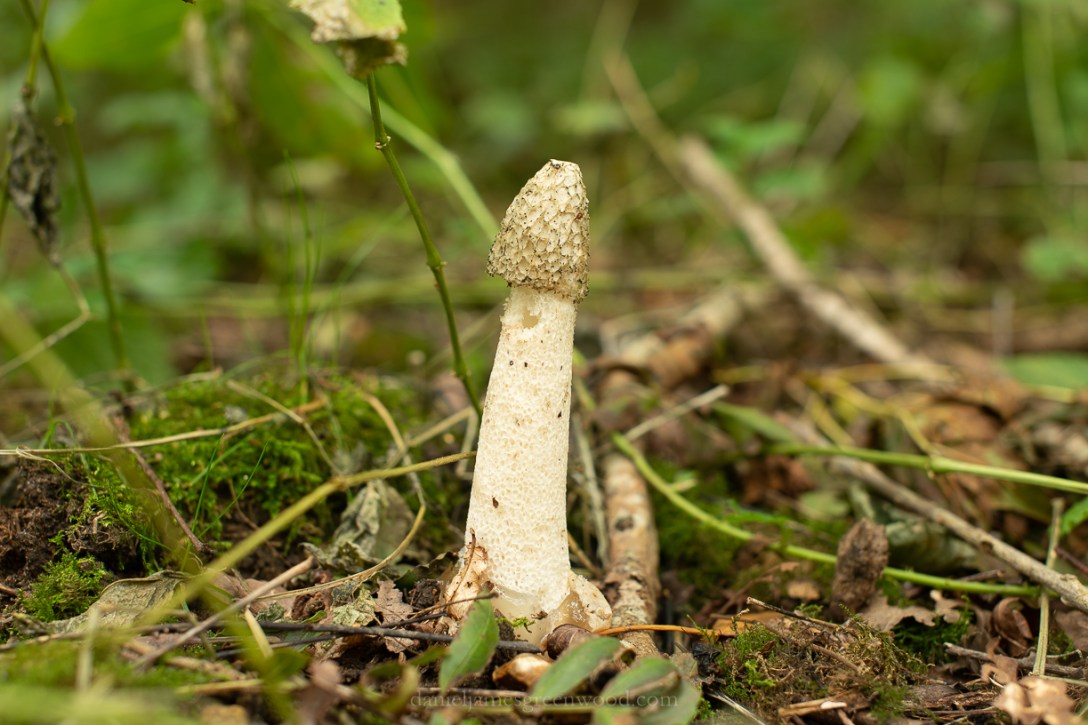
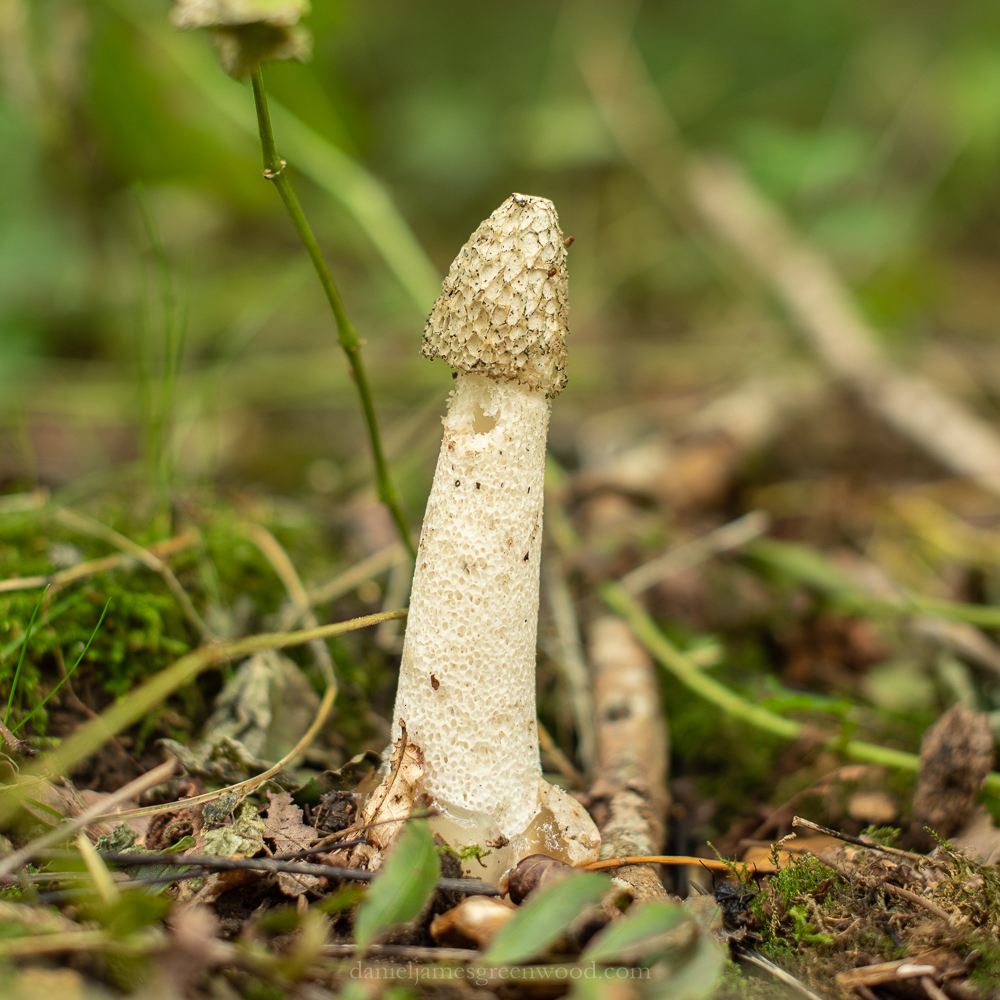
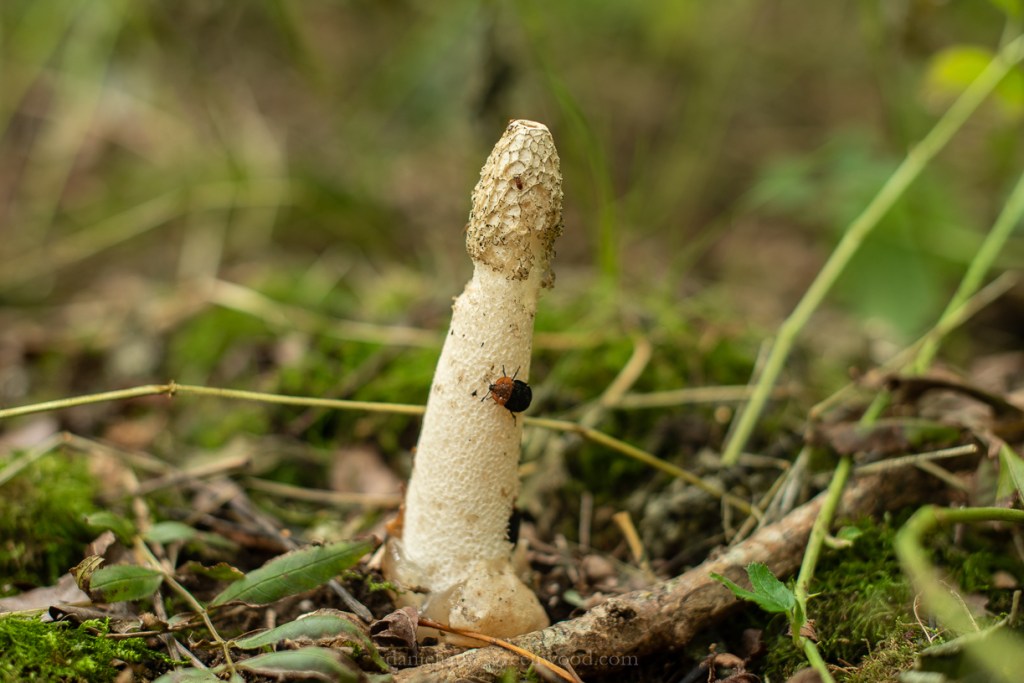
The mushroom was a stinkhorn, a species which appears from a sort of egg-like growth. It has a suitably unsuitable Latin name of Phallus impudicus. Probably going to leave that one there.
This fungus is renowned for its stench. ‘Rotting flesh’ is how it is most commonly described. It attracts flies and, in this instance, beetles. They were all over it, but took cover at the base of the shroom when I approached. It really did stink, the smell seemed to me to be similar to roadkill foxes I have had to dispose of when working as a woodland warden. The smell lingered and, gladly, it reminded me on leaving this spectacular woodland of a a very special and unexpected experience.
This week’s post is coming to you live from my phone. I’m on holiday, sans PC et laptop, blissfully. In fact, a friend has just sent me a pic of a fungus on WhatsApp, so it’s like a digital mycelium bristling onto life between my palms. Sounds so weird.
Suffolk is the stage for this week’s #FungiFriday, a county of underperforming football teams and myriad beautiful cottages. Not least the one where Harry Potter was born.
If Suffolk is the macrocosm, the National Trust’s Ickworth Park is the microcosm, where the fungi made their appearances to me in this week of weeks.
I only became a member of the Trust a couple of years ago but I now regularly visit their properties and estates because there are just so many in Sussex, compared to south London. I have come to know some of their employees and understand the work they do. I think there are few finer organisations in their sector.
In more recent developments their attempts to interrogate the role of slavery in their cultural archive makes me proud to be a member, alongside their commitment to welcoming everyone to their sites and properties. They are also exceptional when it comes to the conservation of and investment in ancient woodland landscapes, places I, like many across the world, have a deep personal affection for. In my view, The National Trust shows us that being rural and ‘traditional’ is no excuse for failing to champion diversity and inclusion, or to shine a light on the darker sides of British culture. If you feel like that ‘cancels your history’ then you won’t like my blog! 😬
Within minutes of entering Ickworth Park proper, I noticed an unusual growth from the side of a large oak tree. Seconds later it dawned on me – it was a fungus.
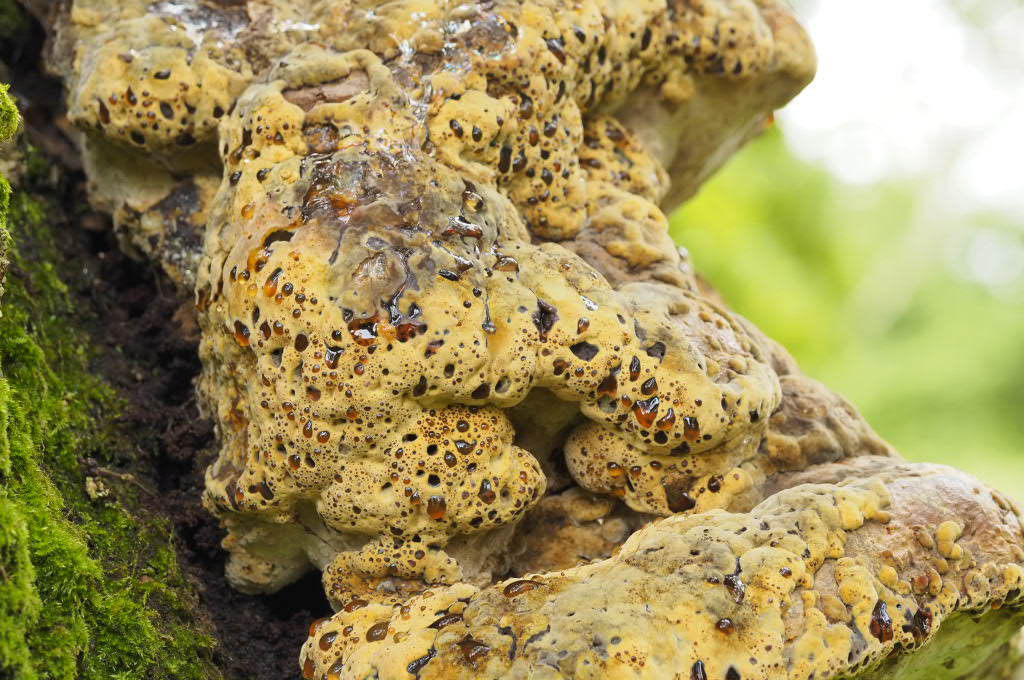
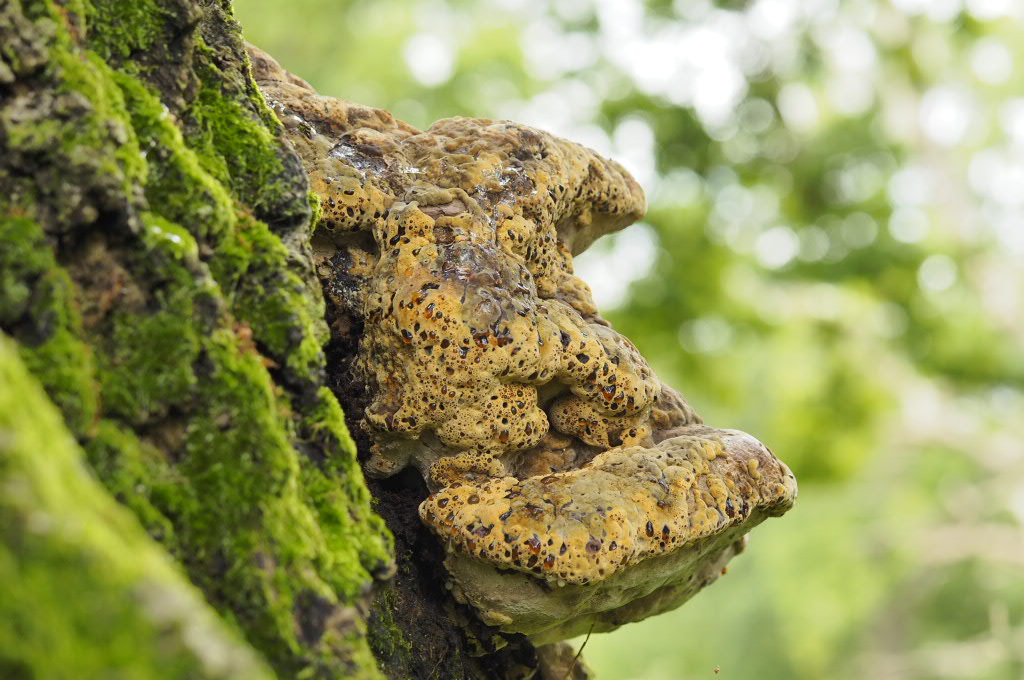
Upon closer inspection I found that this was a special fungus, one that comes to life at this time of year. It’s weeping conk, a bracket fungus that exudes the water it draws out from the tree/soil.
My companion approached this fungus with disgust but within 30 seconds was in complete awe of its caramel-coloured droplets. It goes to show how conditioned we are to find so much in nature disgusting, when really it is cause for fascination.
The more you look, the more it looks like dessert.
I even managed to get a bit of bokeh (blurred circles of light in the top right) in to garnish this special fungus.
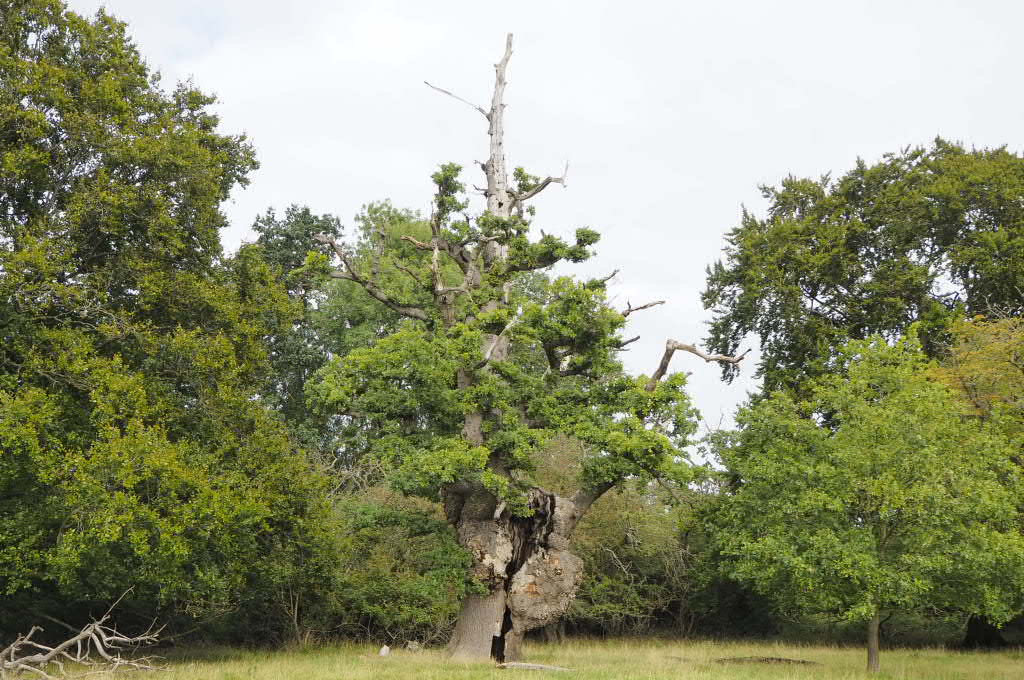
Ickworth was an exceptional site for ancient and veteran oak trees. In my experience, this equals fungi. This is because soils are often more ancient, undisturbed and stable, where fungi thrive along with all the other organisms they interlink with. The above was one of the larger old oaks that we passed by along the main paths.
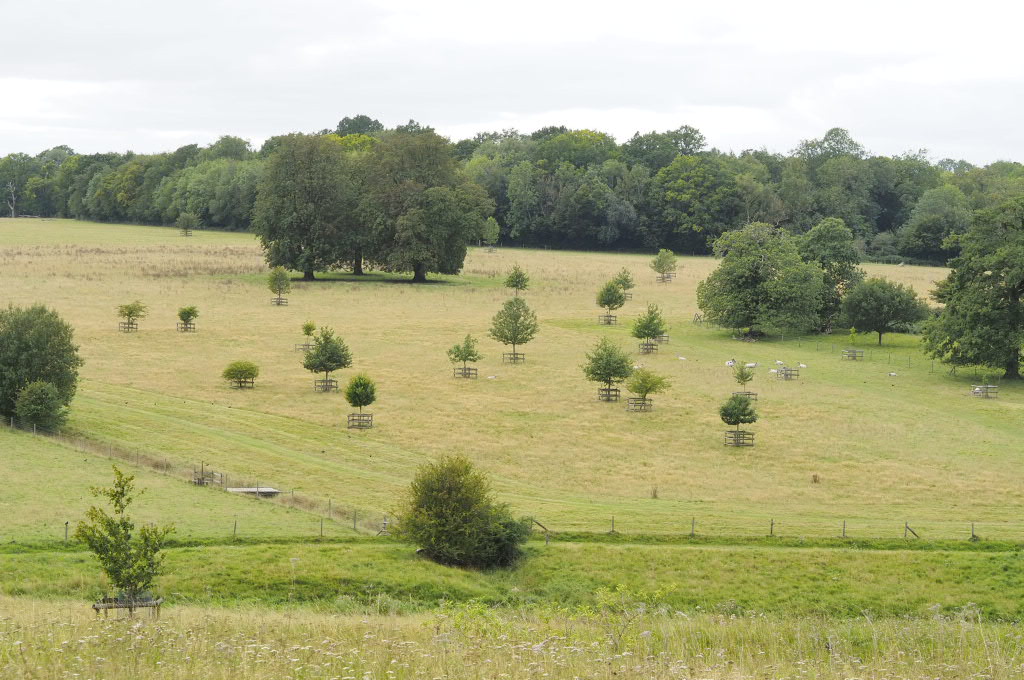
I said I thought the National Trust were excellent in managing ancient woodland landscapes and I flippin’ meant every word. One thing they understand so well is the need to plant to replace trees being lost now and in the next century.
Next week I’ll share some more finds from Suffolk, including an epic visit to Bradfield Woods. Things are popping up out there and autumn is showing its fruity signs.
Wishing you a happy Bank Holiday Monday if you’re actually able to have one because you’re either English, Welsh, Northern Irish or not having to work through it.
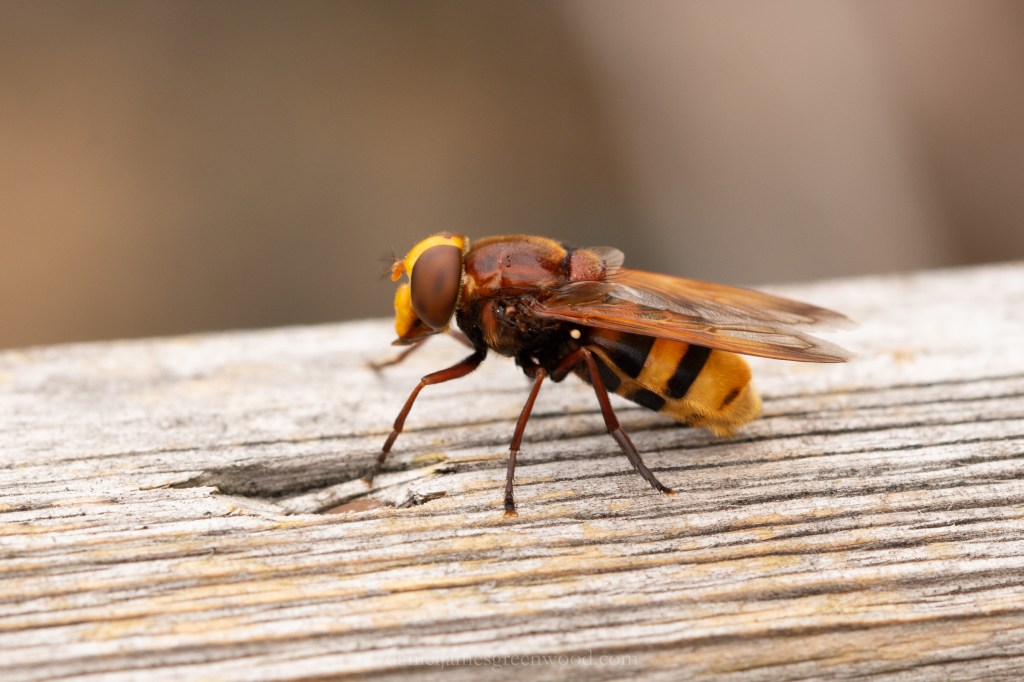
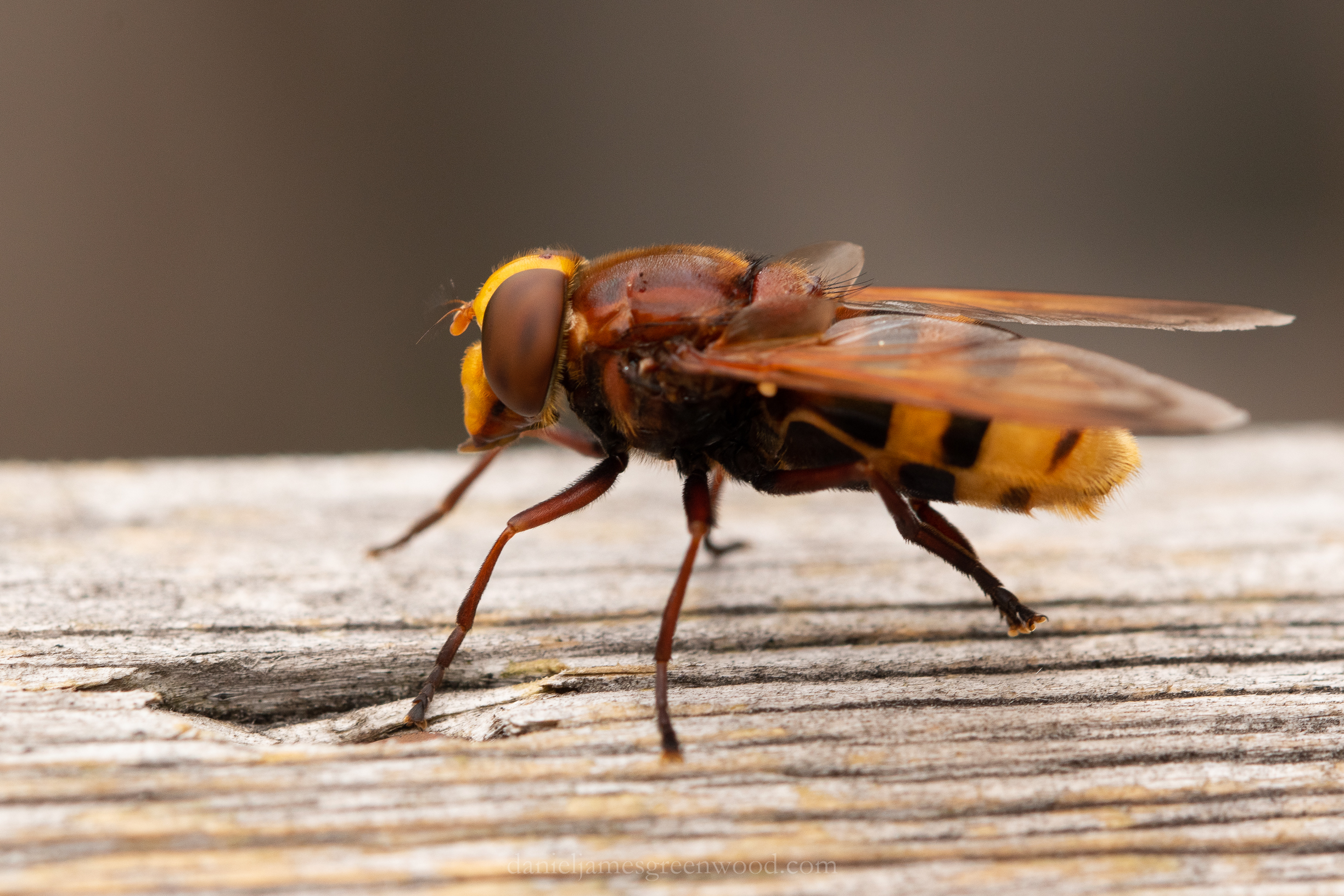
Back in the garden, after last week’s infidelity, it’s quietening down big time. I feel that autumn has come early in my garden. However, I was delighted to be visited by what we all at first thought was a hornet (come on, admit it) but turned out to be a hoverfly.
This is a hornet-mimic hoverfly with the scientific name Volucella zonaria. There’s a helpful guide to them here. These flies lay their eggs in the nests of social wasps, with their patterning probably helping them to fool wasps into thinking they’re also related.
This kind of mimicry is fairly common across the insect world, with all kinds of flies and beetles that mimic the yellow and black patterning of stinging insects like wasps and hornets. There’s even a hornet-mimic robberfly which is quite rare and found on heathlands like Thursley Common.
My parents once again have the ability to lure interesting insects into my garden when they visit, which end up headlining the Macro Monday stage on this blog. The main thing here is that this is a stunning insect with a fascinating ecology which I can only tell you a little bit about.
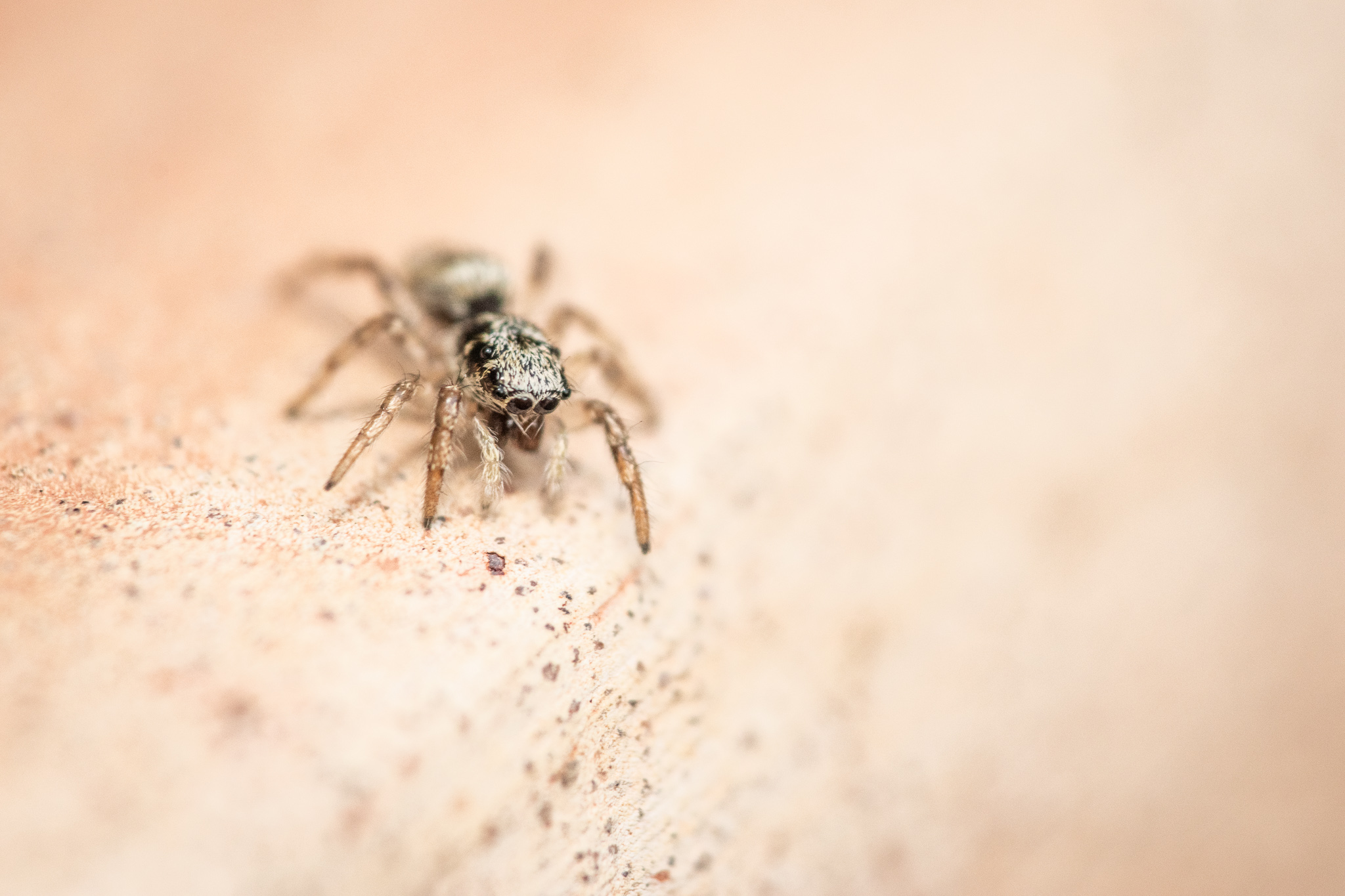
One arthropod that I spend more time with is my zebra jumping spider neighbour. This spider popped up during a garden lunchbreak. I’ve featured what could be the same spider several times this year. They are fiendishly difficult to get in focus and are much smaller than you might realise. I took about 100 out of focus pics of this spider before I got an injury time winner.
The spider was basking on the rim of a seed tray. It was only later that I saw the reflection in the plastic. It wasn’t a wet day, in fact it was quite sunny and warm. I was relieved to get at least one photo of this beautiful animal in focus to share here.
I’m away next week so may miss out on a post, but hopefully I will have something to share. I always have a macro lens with me wherever I go! Only a little one, mind you.
I stand on the long, straight track that cuts through the heart of St. Leonard’s Forest. I recently looked for it on a map from the 1870s. I thought it might have been a 20th Century addition to ease forestry operations. To my surprise, it was there cutting through what today remains a heavily wooded landscape.
Looking around, it’s probably even more wooded now. In the 1870s, the woodland was likely oak and beech with holly underneath. Where pines now stand abandoned to nature, heathland probably expanded over more open areas.
The name ‘forest’ actually denotes open land where laws once controlled gathering of natural resources and the hunting of animals, with brutal consequences for rule breakers. ”Aforestation’ was the implementation of Forest Law on more land, often at the expense of entire vilages of people.
At one point in history, a third of England was subject to Forest Law. It was a landscape of oppression, violently enforced by England’s Norman conquerers after 1066. The management and control of deer was a key part of the Norman forest landscape.
The track is endless in this crepuscular light. At the edges ditches are stuffed with bracken which has yellowed in the August heatwave. Sudden explosions of heather interrupt the vertebra-like leaves of the bracken.
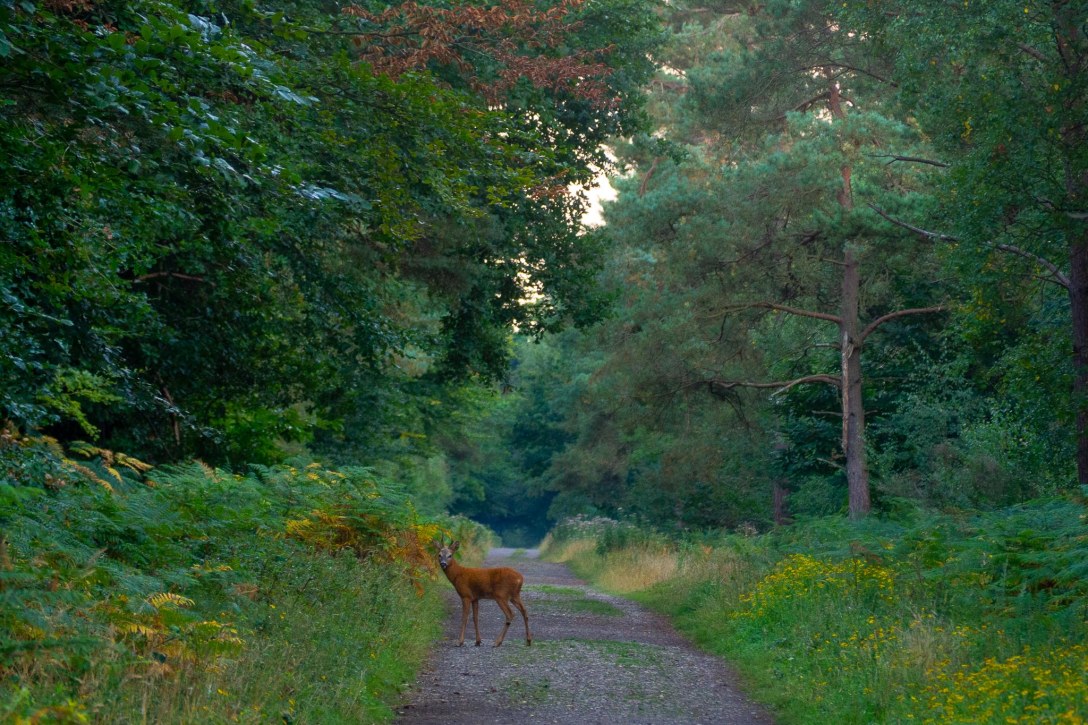
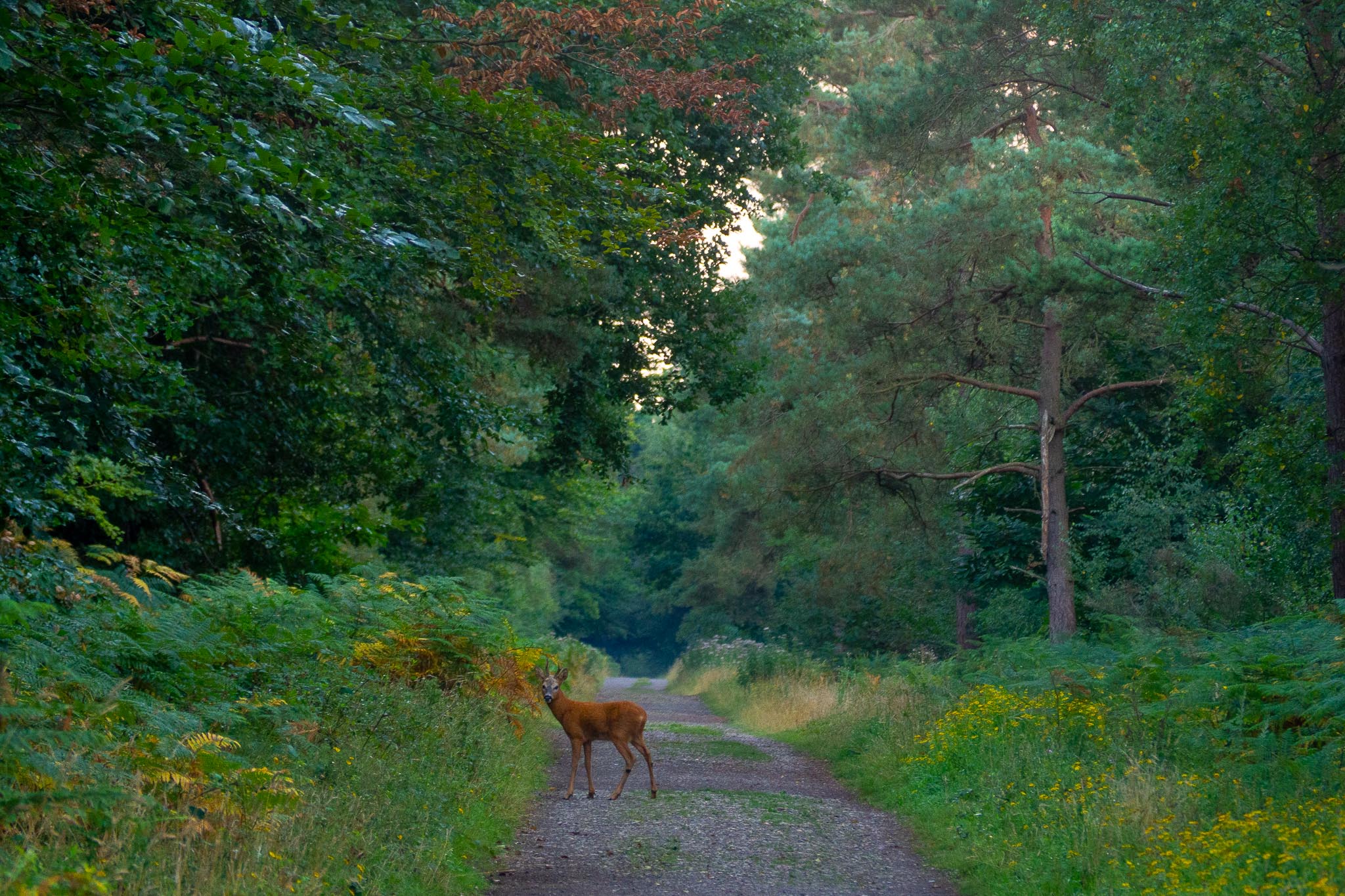
Ahead I can see two people or animals. The light is fading, the sun has slipped beyond the pines. As I get closer I can see one is a roe deer. The other figure has gone. The deer are grazing the edges of the ditches, stopping to check on my progress. I’m moving slowly, but hurrying with my hands to change the lens on my little camera to one with more reach. I get closer but it doesn’t fear me. It turns and walks away into the dark woodland.
Walking further down the old track, a pathway, broad and green appears on my left. Two fallow deer are looking at me. They must have been grazing with the calm roe I have just passed, but they are less accepting. They scarper, one zig-zagging and leaping to distract what is a would-be predator.
Then, from the bushes, a roe deer has been startled and lurches across the path into the undergrowth that the fallow deer has disappeared into. Squashed into that small green lane, that burst of animal limbs felt almost like watching a stampede.
2020 has been a challenge for all three of us fungi photographers down here in southern England. But we are starting to see a change in the weather. Therefore, something is stirring in the Kingdom of Fungi. On a side note, did you know that the fungi was only given its rightful place, taxonomically distinct from plants in 1969? 1billion years on Earth and they were only just recognised as being separate from plants 51 years ago! Obviously scientific study hasn’t been going for a billion years.
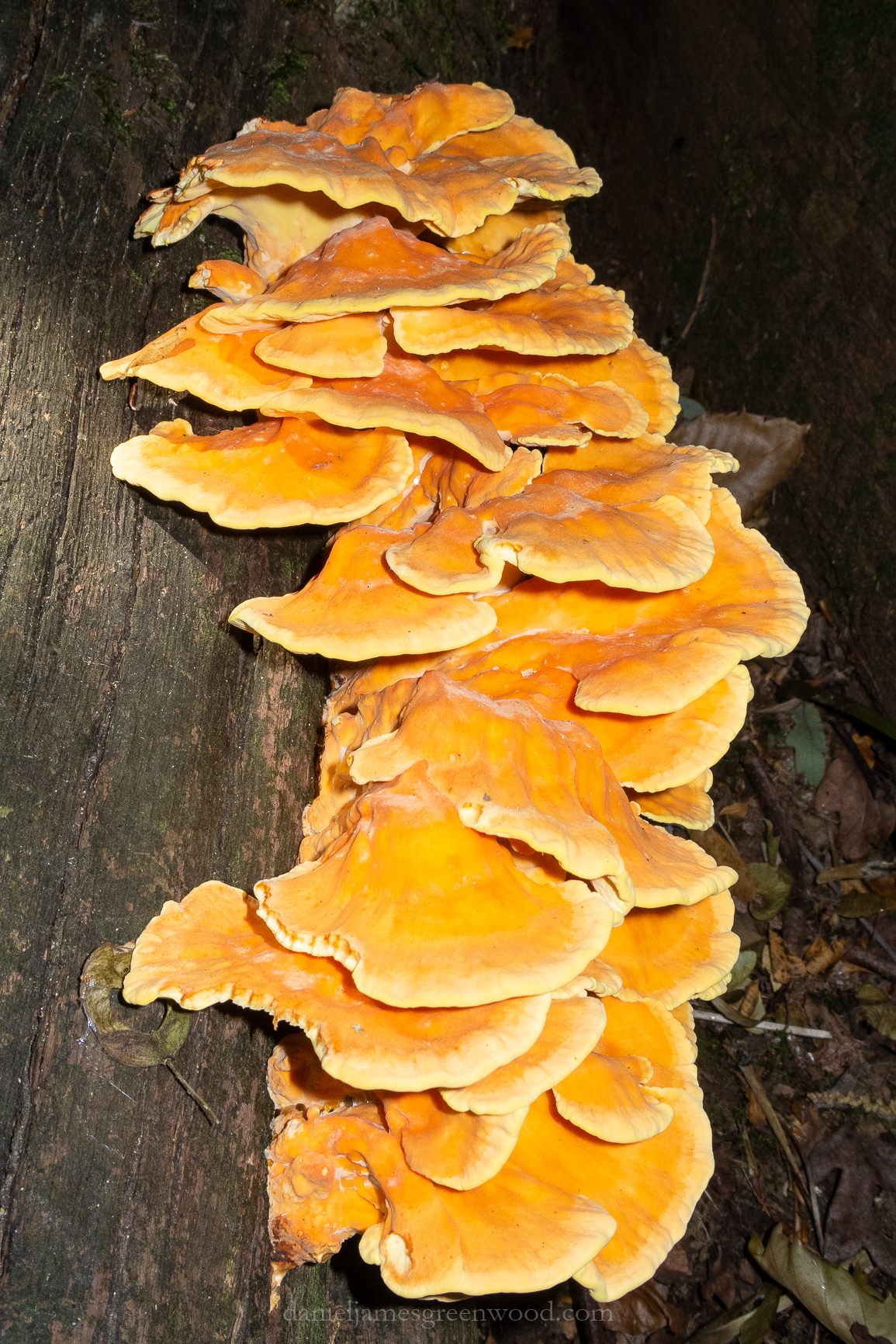
One species which has appeared after recent rain is chicken of the woods. I’ve seen it in two different places, but the same habitat which means the species is responding to wider atmospheric change, not localised. You will see better shows from this pretty outrageous fungus, the rain had actually made it more like scrambled eggs.
As so often with chicken of the woods, it was growing on a fallen tree trunk, sweet chestnut in this case, and its orange colour flashed into the corner of my eye from the deep shade where it was growing.
My second major recent sighting drew me back to where I first found an interest in fungi: trees. Storm Francis has thrown their toys out of the pram in recent days and I was pretty astonished to see that some sycamore trees, young ones, had lost their leaves already. I am guessing there is a link between a lack of spring/summer rain and an earlier autumn, in terms of trees shedding leaves. That’s based on observation only.
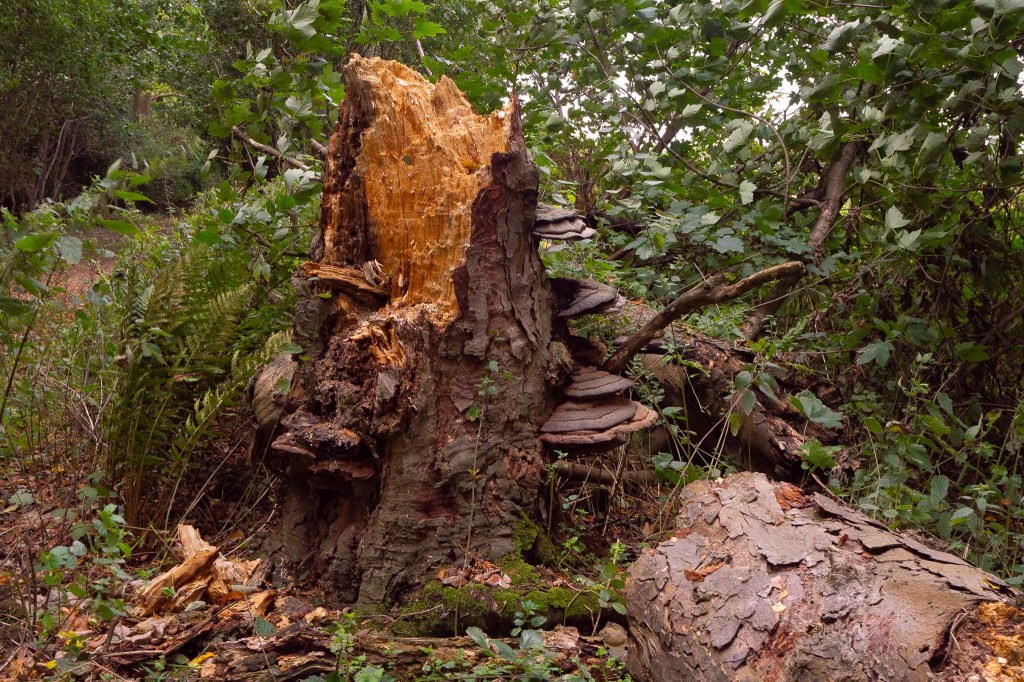
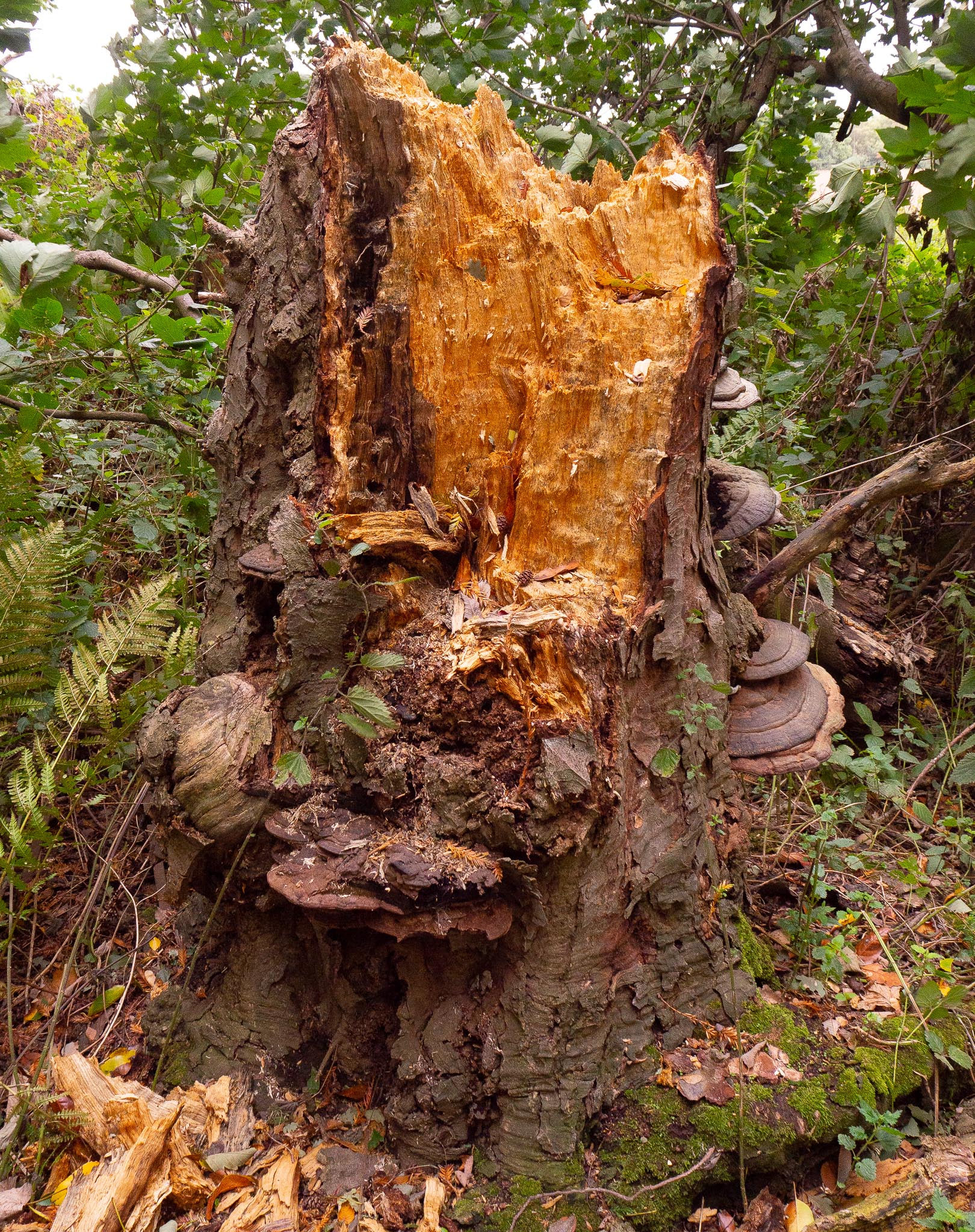
I don’t know if this is Francis’s work, but this standing dead horse chestnut has been brought down in the past week. It has some huge bracket fungi growing from one side, which will have softened the wood further. It’s important to remember that it’s rarely fungi that fell a tree, but the wind. Fungi just put in the groundwork. Great job.
I am sure this is a species of Ganoderma bracket fungus but I’m not sure which kind. I cycle past this every couple of weeks nowadays and always stop to feast my eyes on these gigantic fungi. If this is one single fungus, it could be 15 to 20 years old.
There probably won’t be a #FungiFriday for me next week as I’ll be on holiday. Don’t fret, autumn is afoot (ashroom?) now, so get ready for the good stuff!
Since the end of the heatwave my garden has been hammered by rain and wind. That is not what you need to write a weekly blog about taking macro photos. So I went to my local woodland and put the hard graft in to see what I could find.
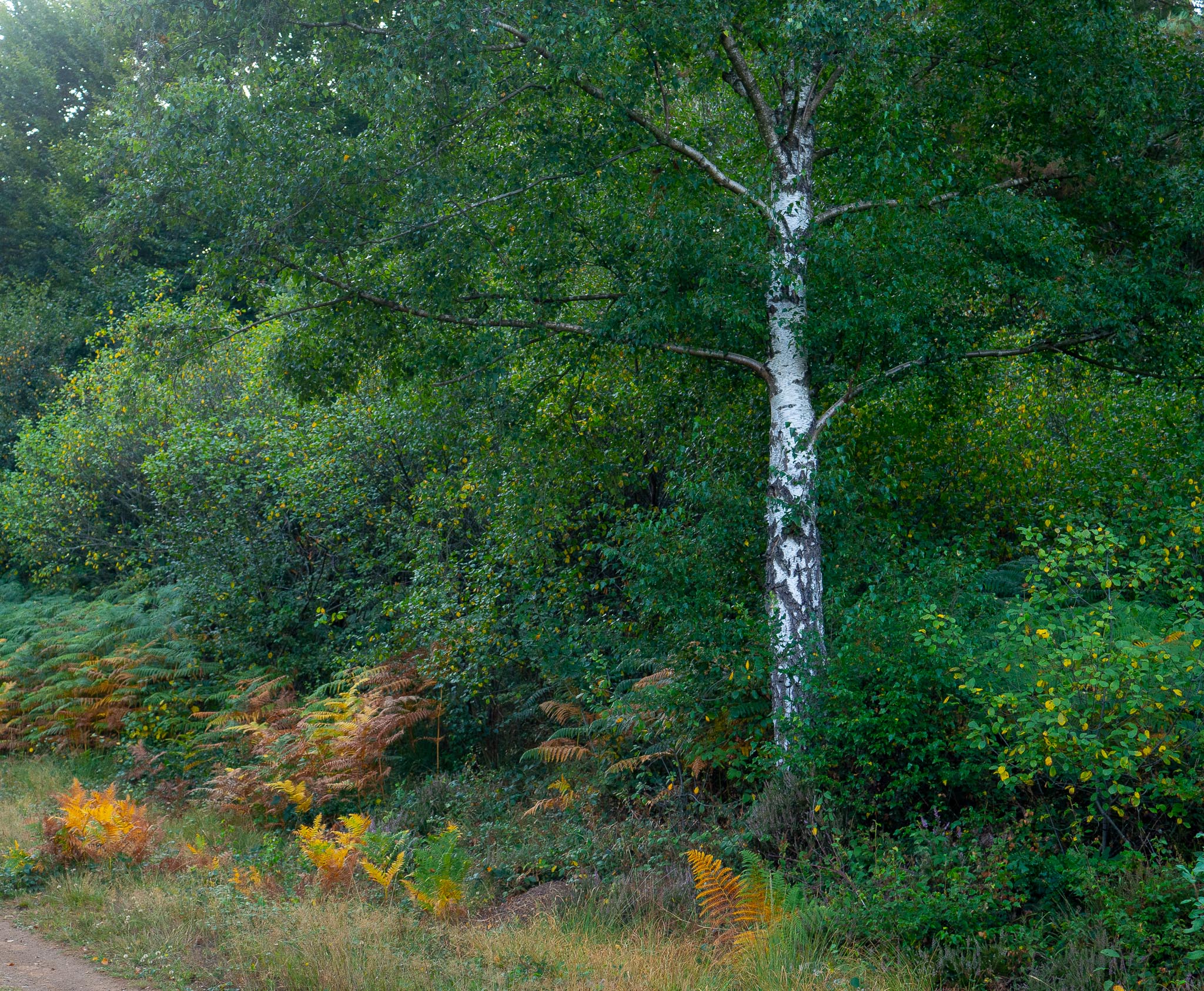
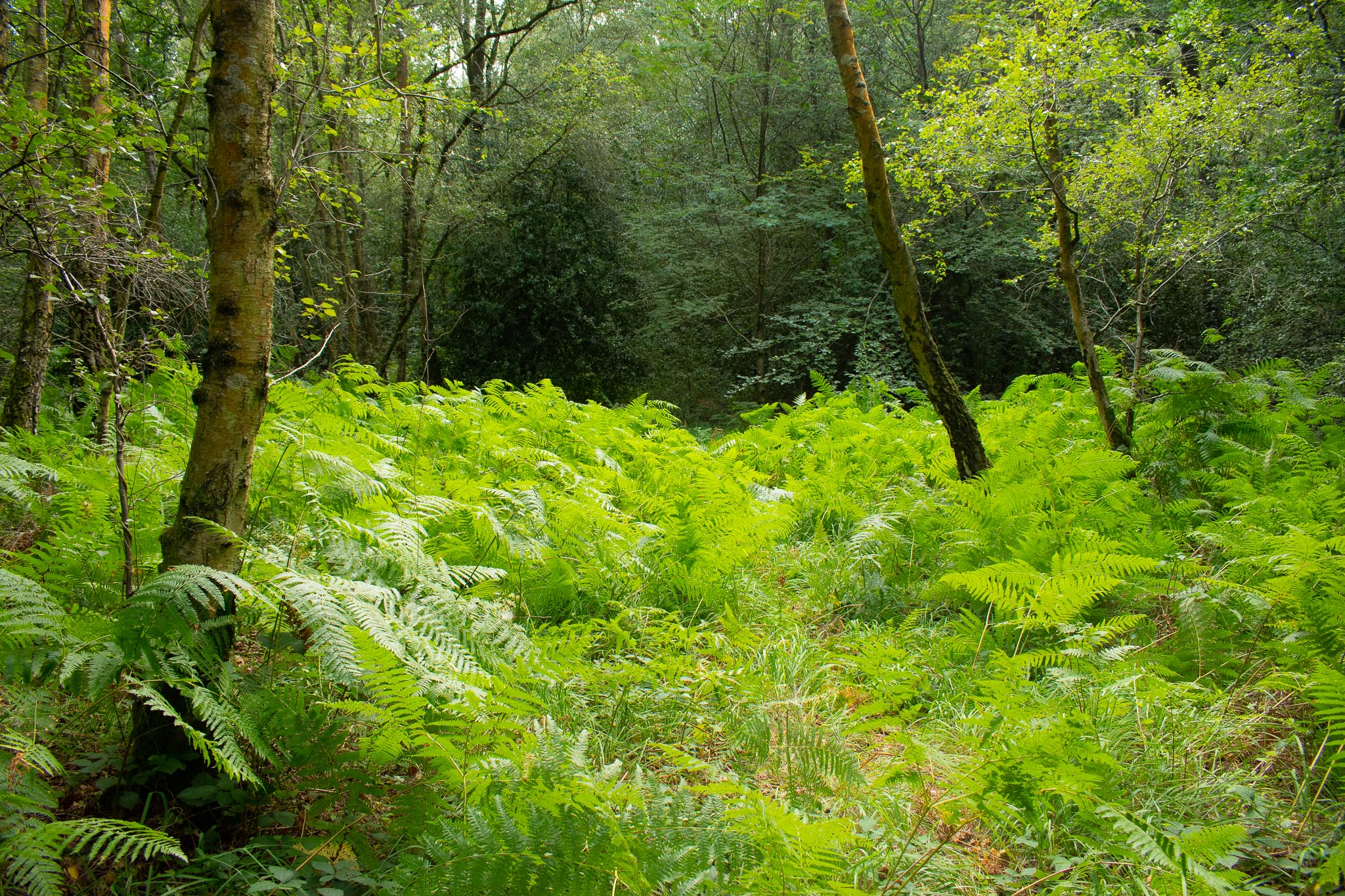
Bracken and birch glade
The place I visited is an area of oak woodland in the Sussex Weald. It was very windy, not the safest place to be in those conditions. I sought out a spot where I usually find fungi – of which there was nothing – and spent some time looking on the bark of trees and under leaves.
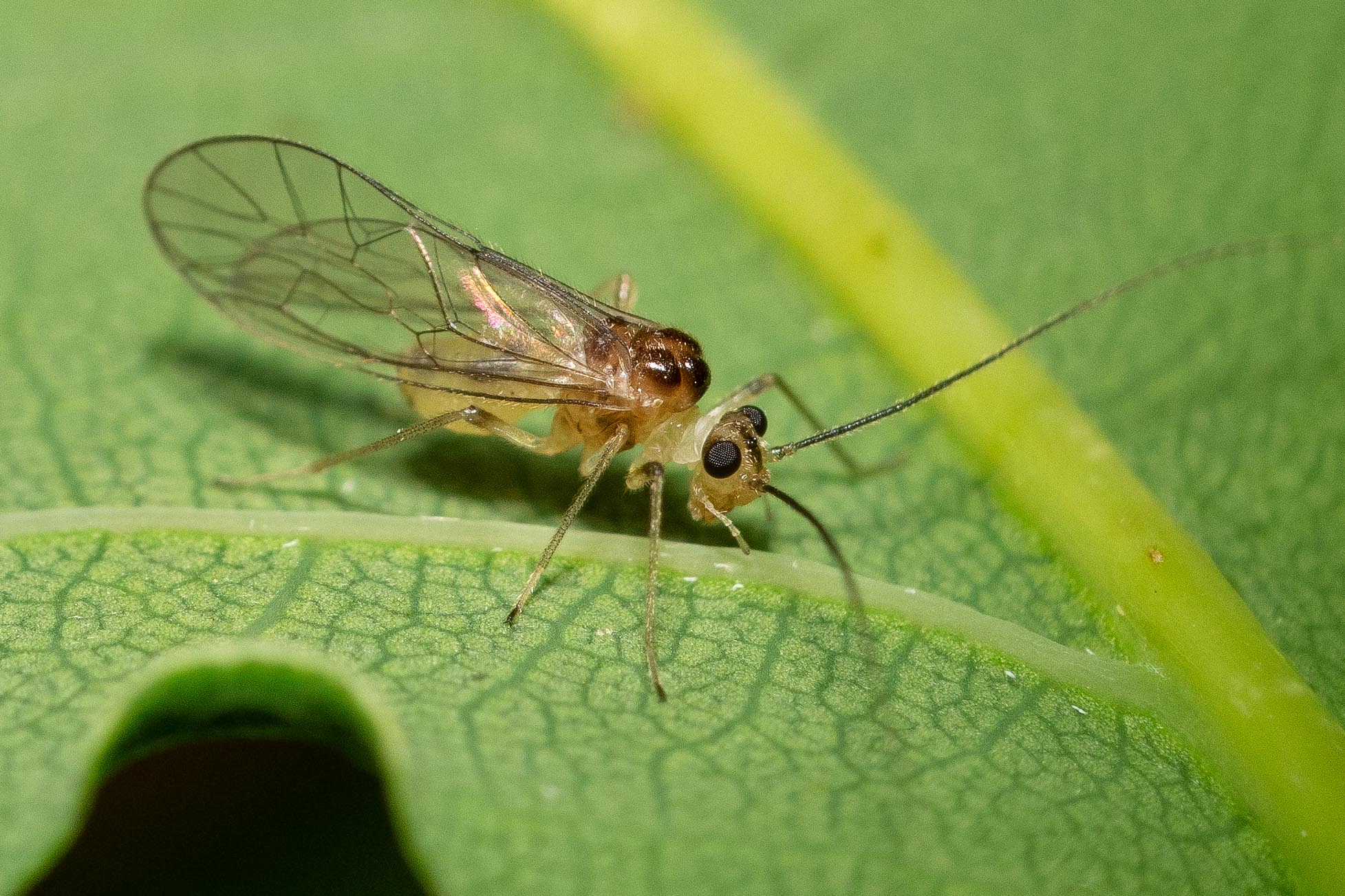
I carefully turned over oak leaves and my first find was this quite unusual flying insect. I’ve looked through my book and can’t find it in there. My instinct says it’s a lacewing relative. If you know, please comment below.
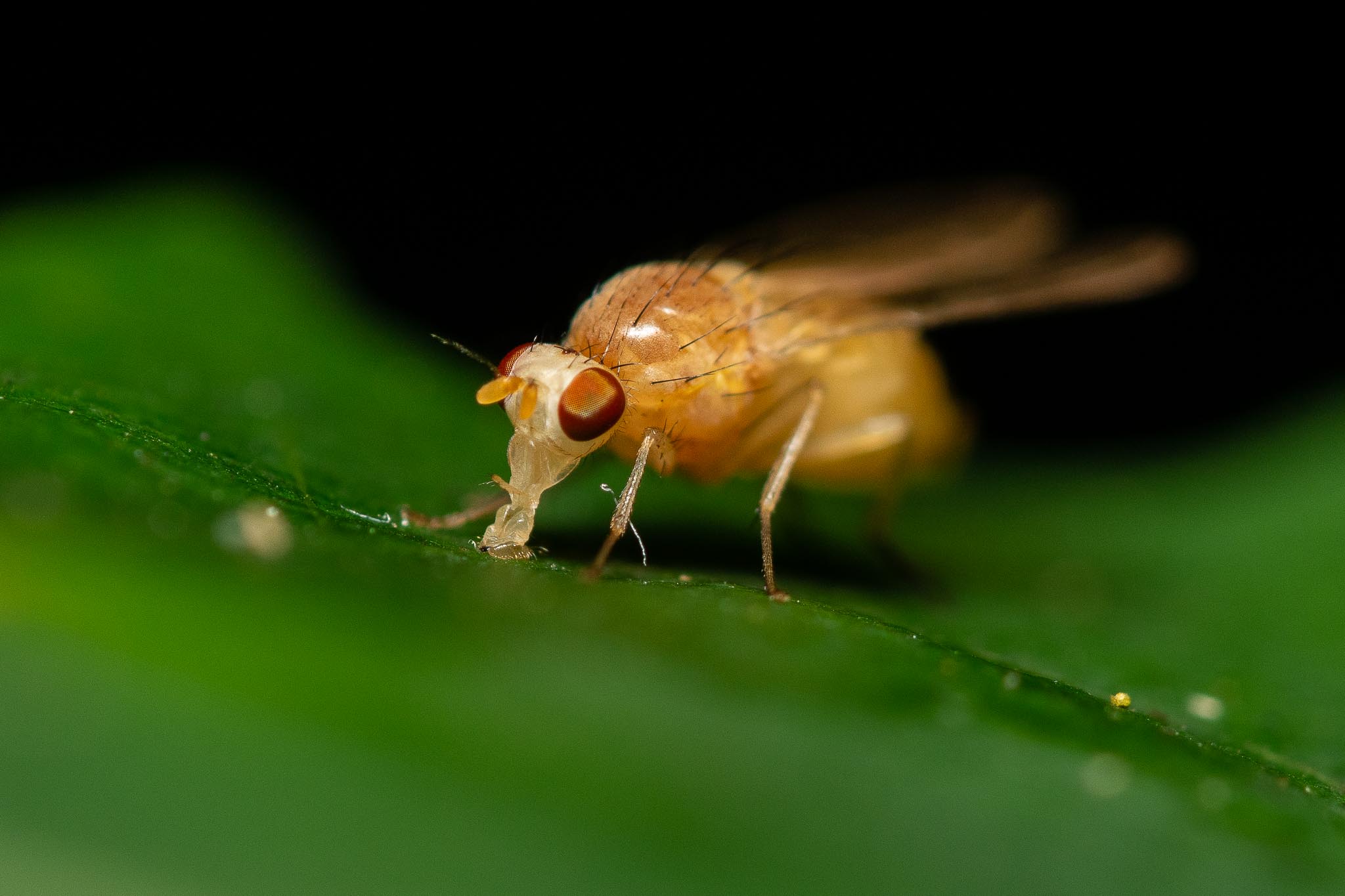
This capsule-shaped fly was hoovering up something tasty from the surface of an oak leaf. Soon I was to be haunted by similar mouthparts, on a very different kind of fly.
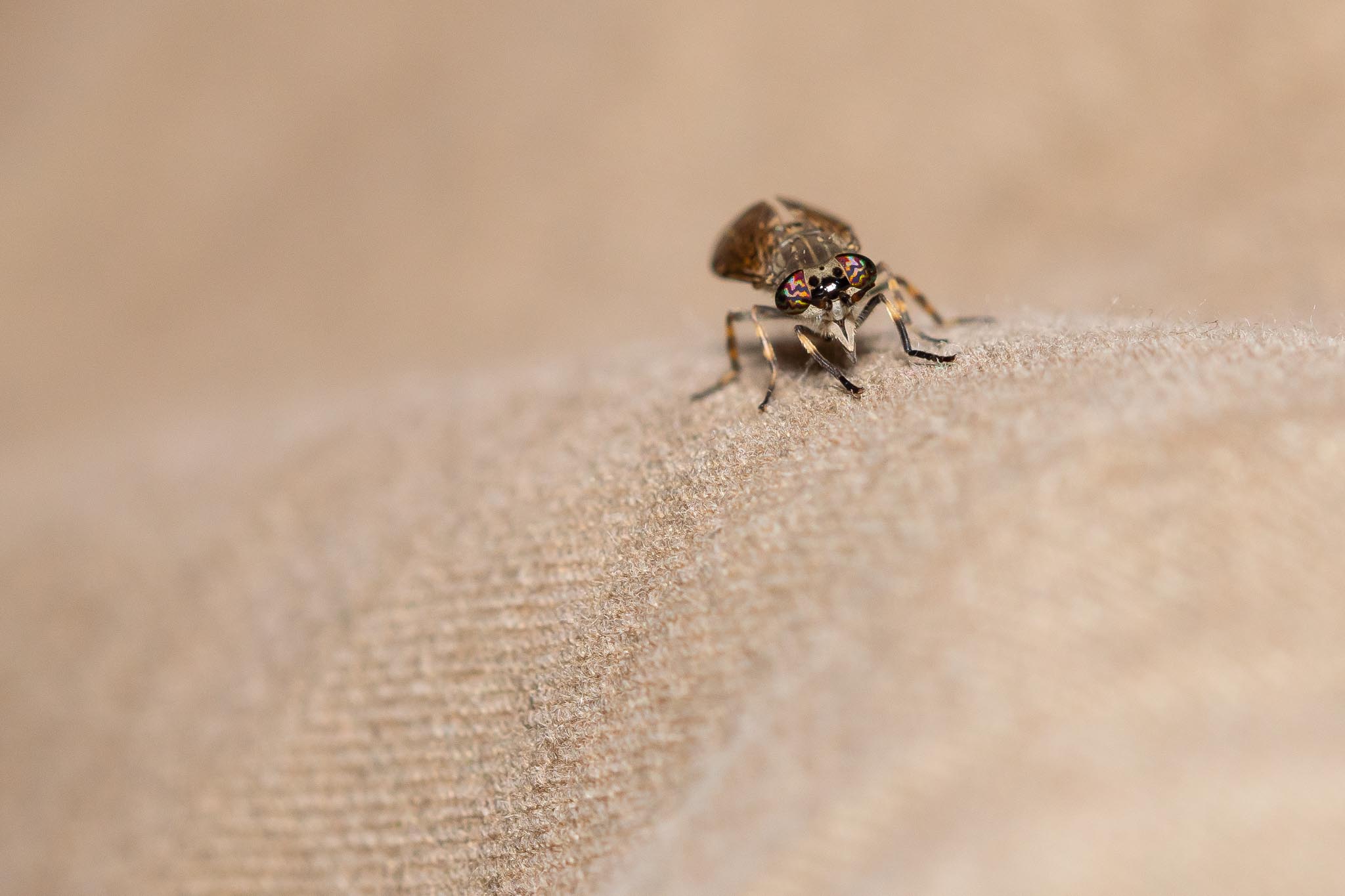
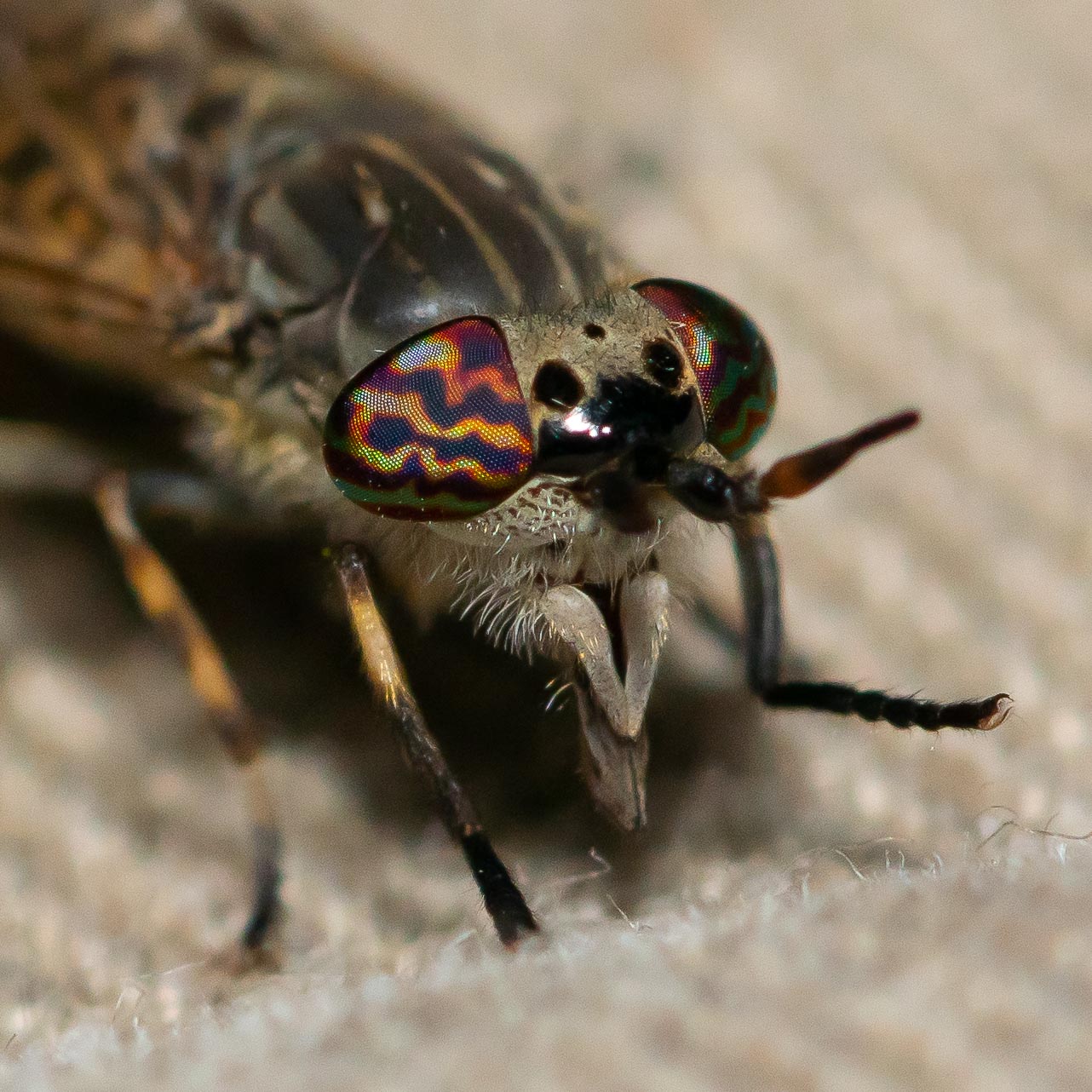
I don’t wear shorts in the woods I wear TROUSERS. This is why. In shady areas of woodland which are protected from wind and sun, biting insects lurk. With horseflies, sometimes you don’t know they’re there. I spotted this beautiful insect on my trouser leg by chance. This weird, nervous adrenaline begins to pump when I encounter one of these insects.
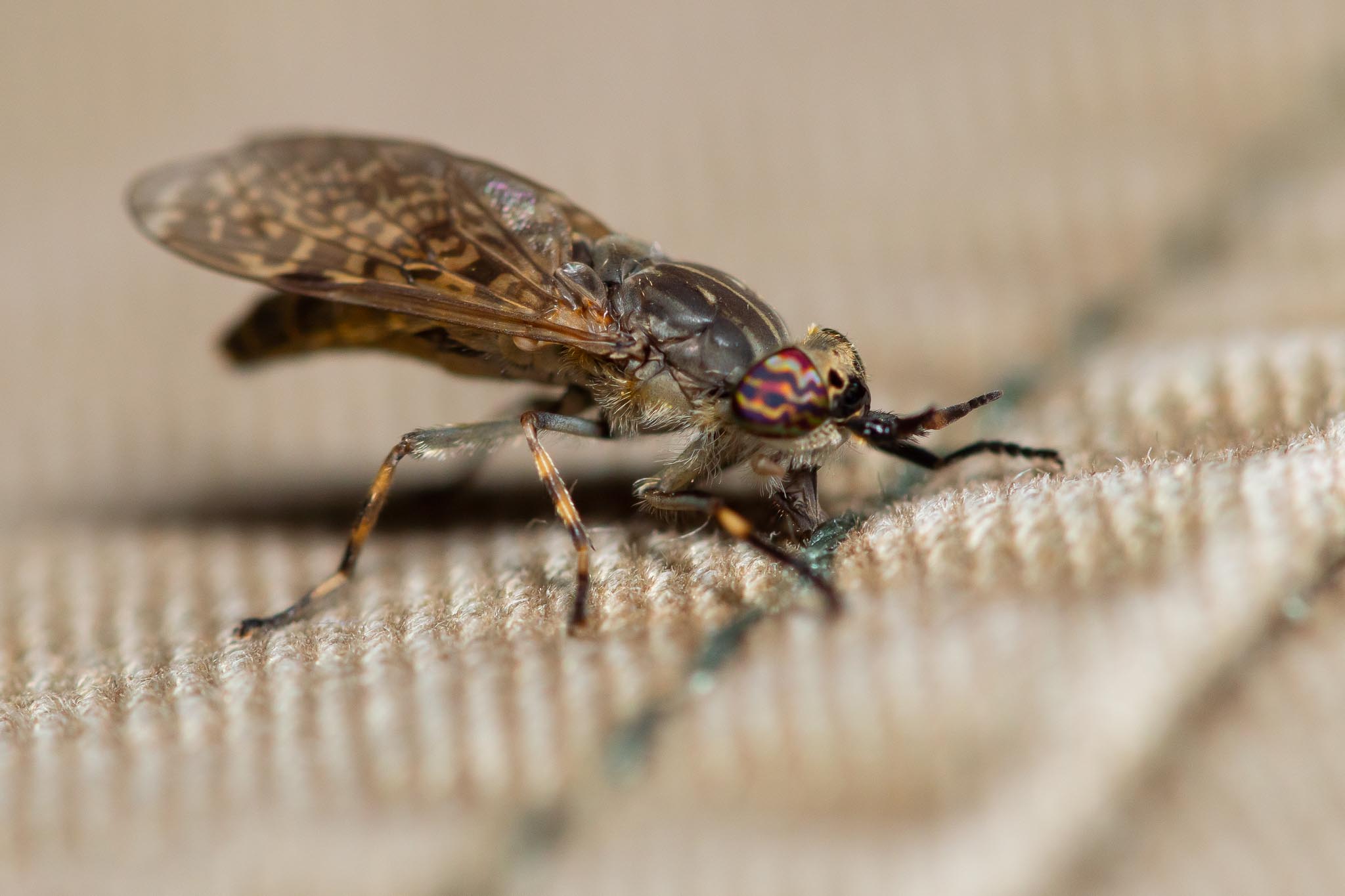
Horseflies have a nasty bite and there is something unsettling about their predatory focus on you. I was desperate to get a photo because of how beautiful and mesmeric their eyes are. I managed to lure the horsefly but keep the trousers away from my skin far enough to stop the bite. Above you can see how intelligent it is. It’s trying to bite through the seam in the trouser lining.
Unlucky for the horsefly, it didn’t manage to break through. After a while, it became so ‘annoyed’ that it started aiming for my face so I just left! The thing I always forget is that horseflies follow you and don’t give up easily. I did have the images I was hoping for, though.
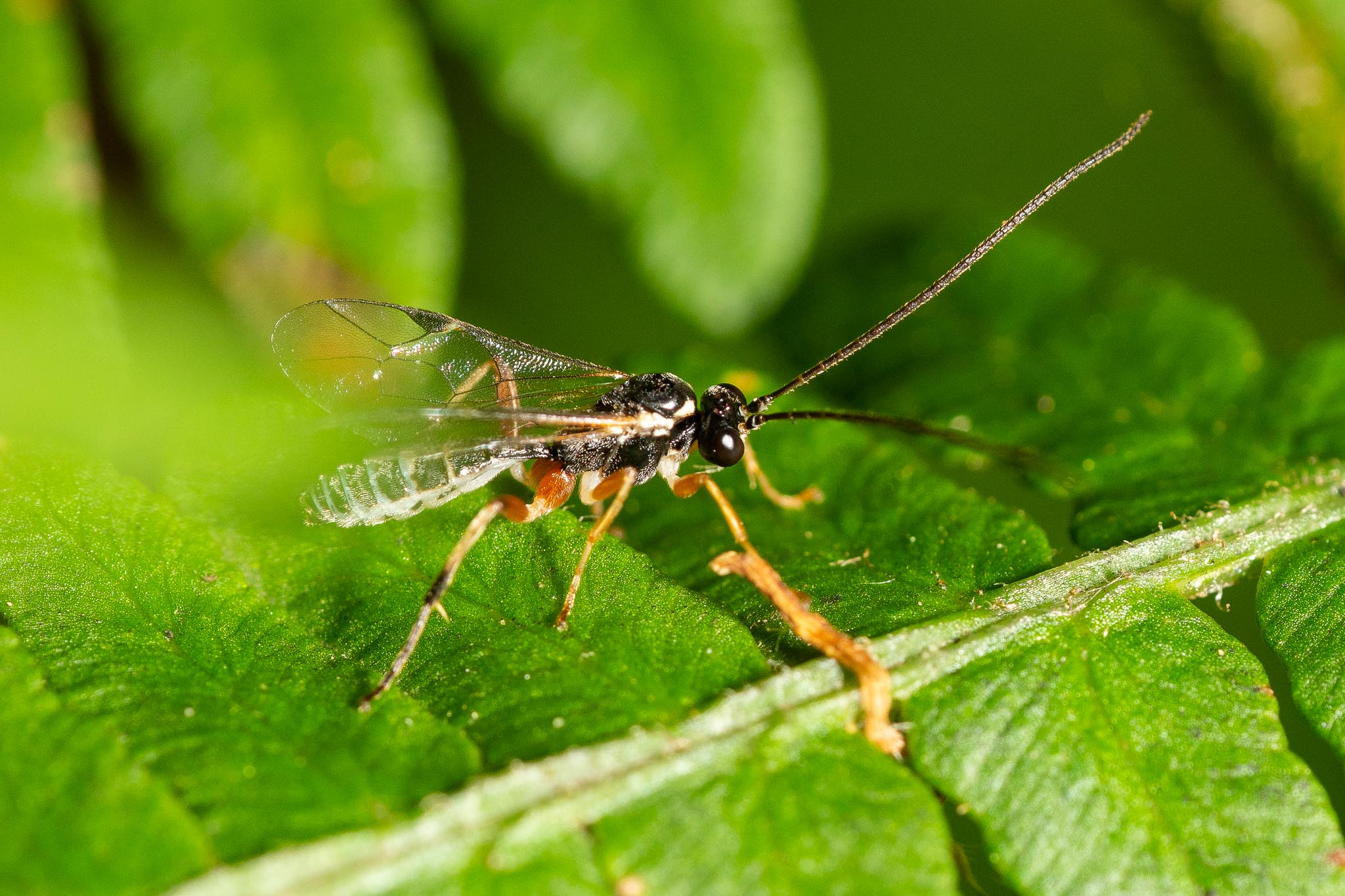
I haven’t mentioned wasps this week. But there are just so many species out there that it’s almost inevitable one will turn up. This is probably one of over 2000 species of ichneumon wasp that we have in the UK, which you can read more about here. Those long antennae are an indicator, for my untrained eye.
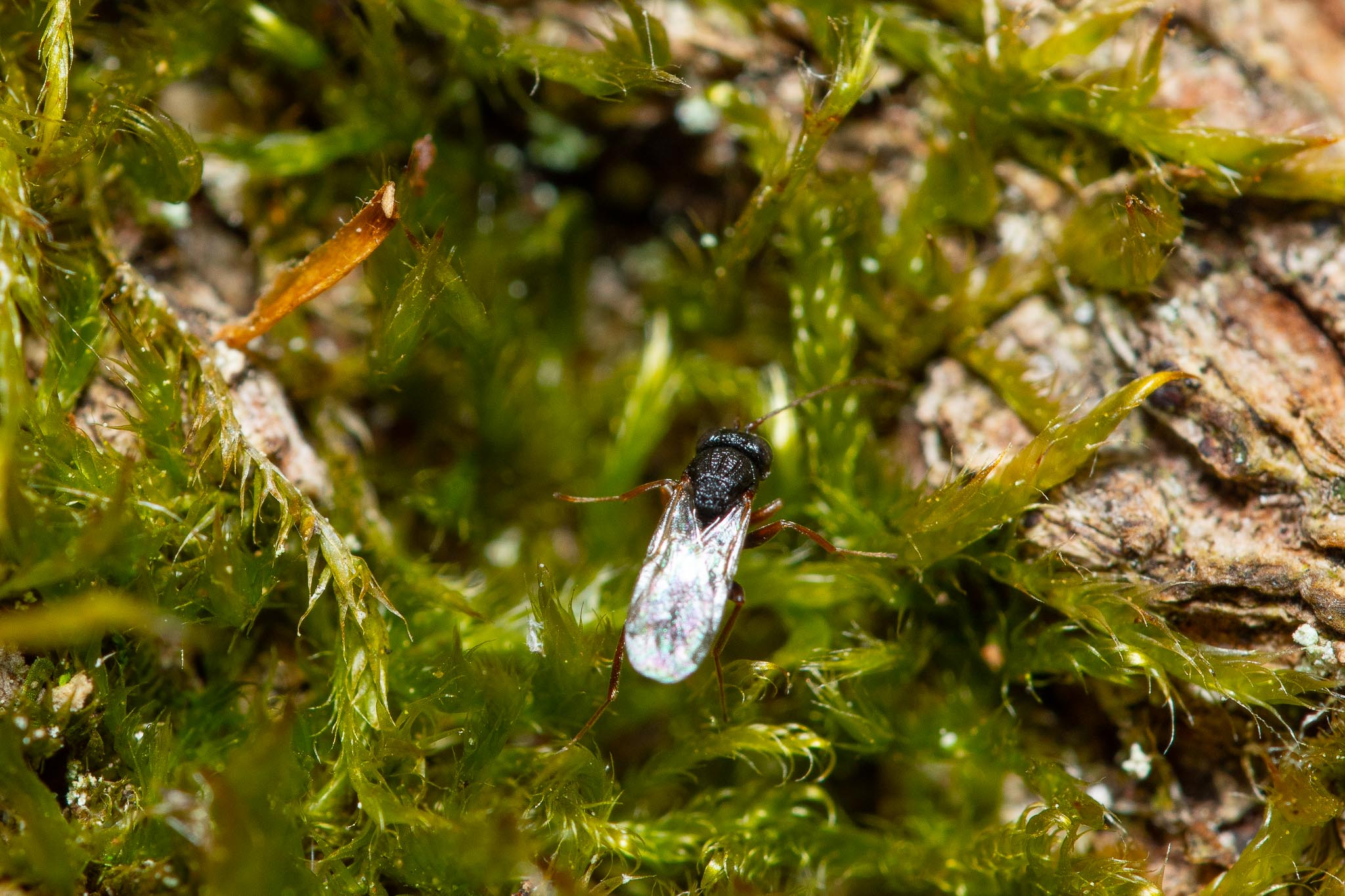
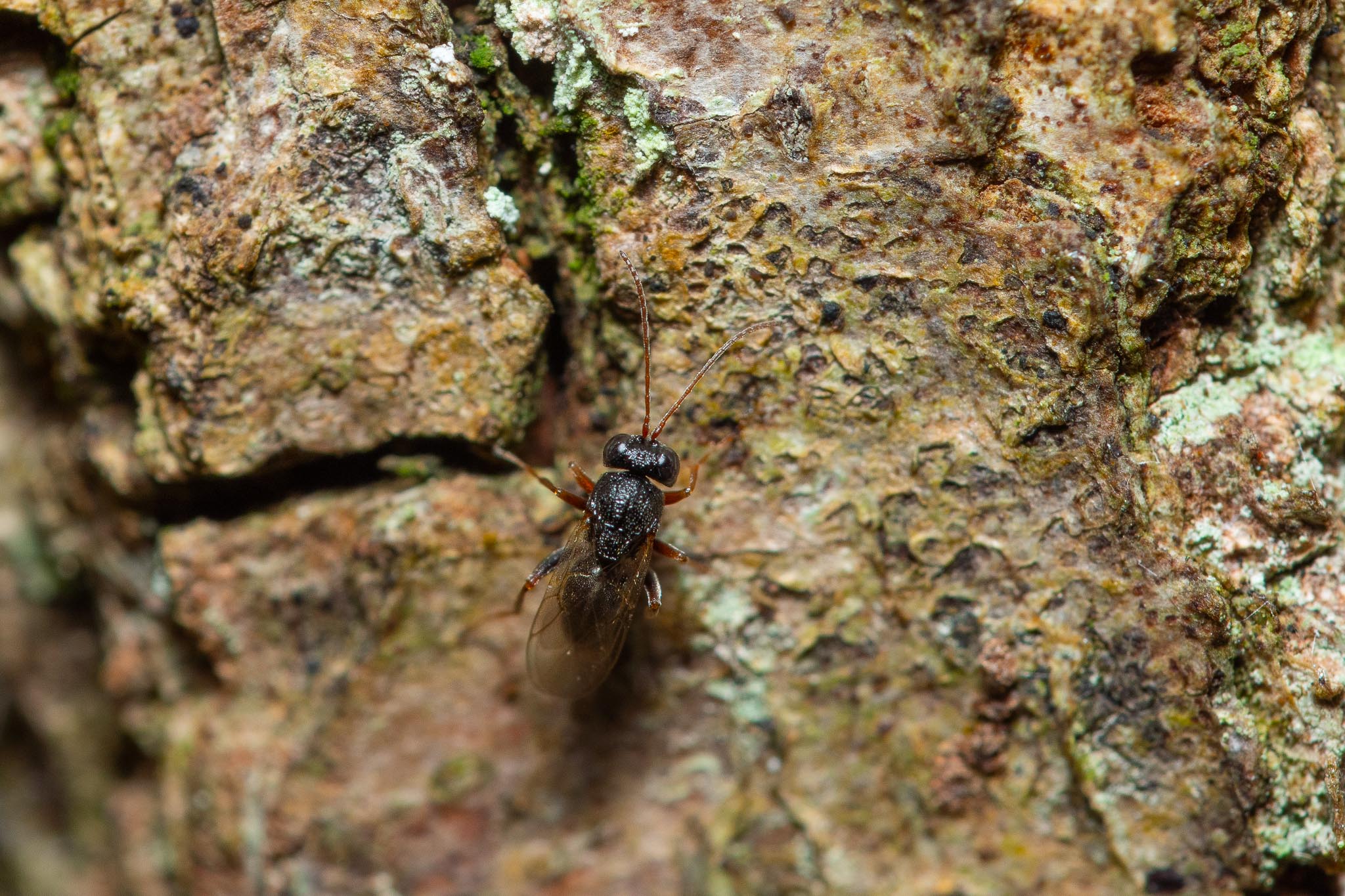
That wasn’t the last wasp I saw. I was checking out the trunk of an oak tree, having just watched Thomas Shahan’s latest video where he did the same (I’ll embed it at the bottom of the post, it’s worth watching). I saw a black fly-like insect about the size of a moss frond running up the trunk. It was really hard to photograph but I got some pics in focus.
I could see that it was a gall wasp, the first one I have ever managed to photograph. We should be thankful to these wasps because without them we would never have produced the major written works our own species has managed to produce so beautifully.
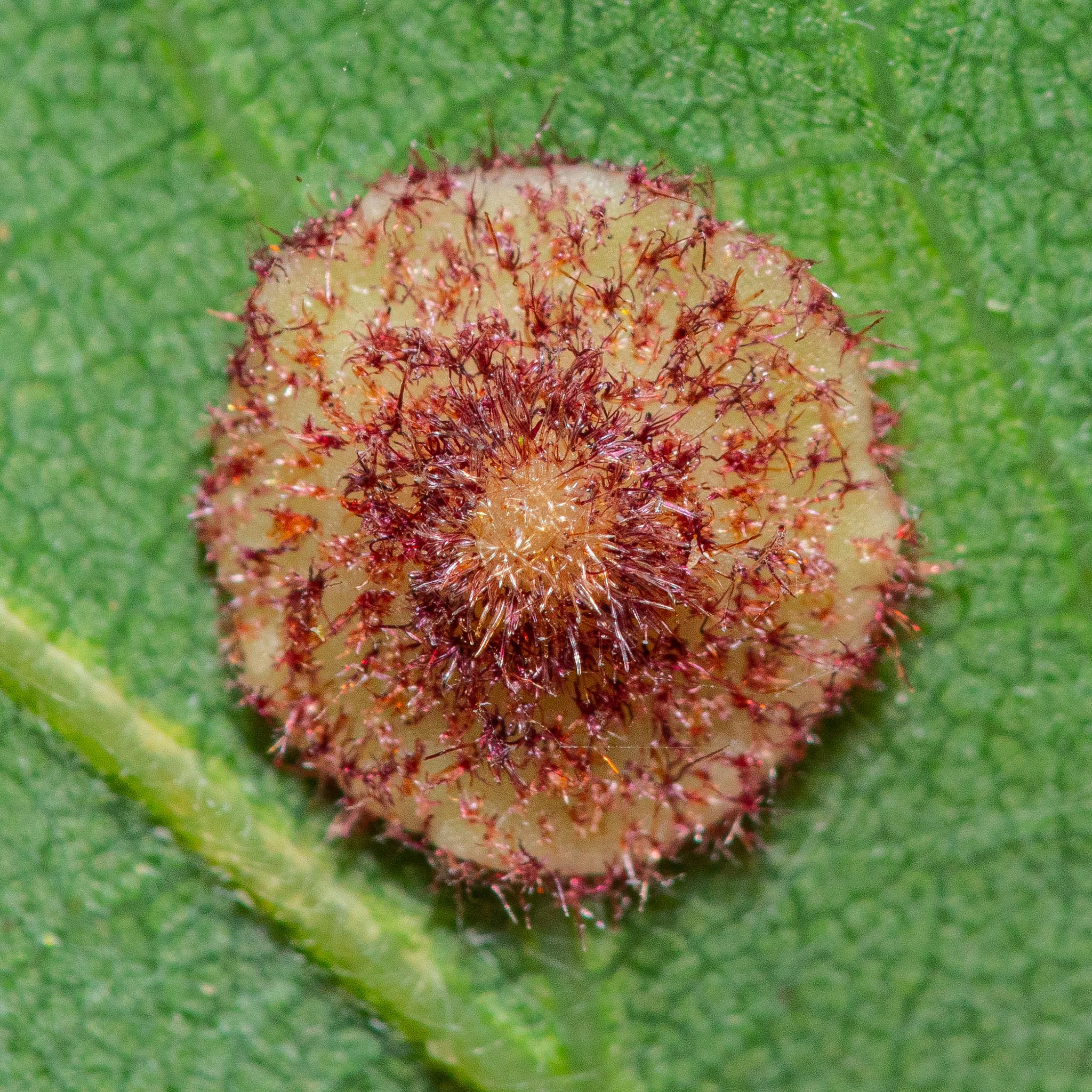
What am I on about? These are galls, a growth which forms on oak leaves. Within the protective casing you see above is the egg or developing larva of a gall wasp. In the autumn the casings will fall away and the insect will hatch out in the spring. Galls come in many shapes and sizes. Some oak galls are used to create ink, and have been used across the world in producing texts and other works for thousands of years.
Oak apple galls are the most famous (not pictured here). The galls are used to produce the inks that penned the American Declaration of Independence and the Magna Carta, among so many other important texts. Another thing to thank wasps for!
This week I thought I would write a post answering the most common question regarding fungi – which ones can you eat?
Disclaimer: I am not encouraging you to forage without following a code of respect for nature, wildlife, habitats and the environment. Your desire to eat wild food is not more important than the thing you are trying to forage or the habitats those species depend on to exist. Learn your foraging rights and exercise them with restraint. Respect habitats and know what you are picking.
There are few other places to start with edible mushrooms. This mushrooms is known in Italy as porcini, America as king bolete, France as cep and England as pennybun. When finding ceps you’ll need to ensure they haven’t been eaten through by larvae from the ground up. This is done by cutting the mushroom where it’s attached to the soil and looking at the condition of the stipe. Ceps can be eaten raw in salads and are also good in risotto. I’ve only ever eaten them in restaurants. They grow in woodlands, plantations and on heathlands.
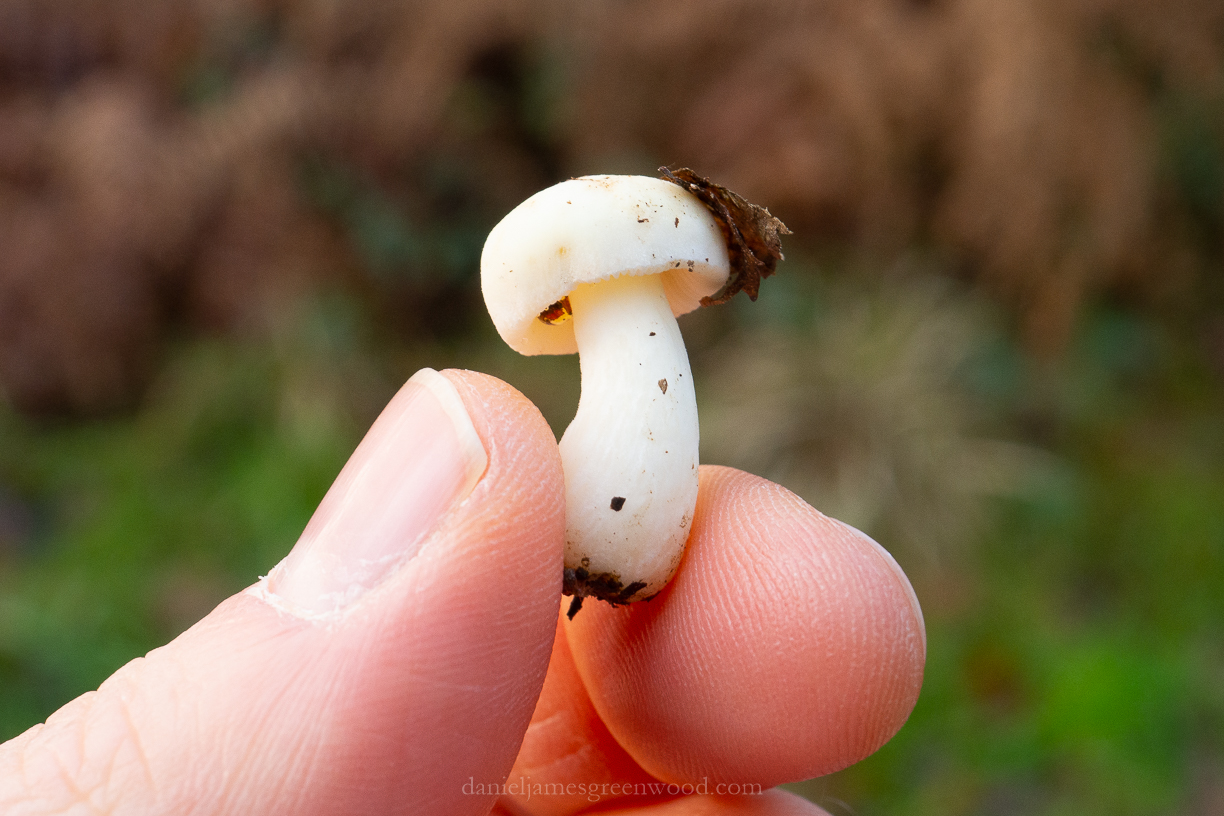
Chantarelles are a species I’ve only ever seen twice in the wild and I’ve never eaten one. I’ve eaten horn of plenty but they were a gift from Spain. This is the time of year to be looking for chantarelles (August-September). They are a yellowy-orange colour and look a bit like splattered egg yolk from above. People who reliably find chantarelles often have a patch that they return to each year. Not to be confused with false chantarelle. Later in the autumn trumpet chantarelles are another edible relative (that is a phrase you don’t hear often). I’ve found them growing on heathland.
Chicken of the woods (Laetiporus sulphureus)
I saw a couple of specimens of chicken of the woods this week, but the best time to find them is May-June. This is an easy to identify fungus which grows mostly on oak, but also on sweet chestnut and even yew. Often it grows on fallen tree trunks. Never, ever, eat this if it grows on yew. Yews are poisonous and the fungus will absorb the toxins. It’s important to know that some fungi absorb pollution, so be careful where you are picking things. They are best eaten when younger. This species is important for invertebrates so don’t hoover everything up. That should be the consideration at all times.
Amethyst deceiver (Laccaria amethystina)
This is a very small, common mushroom in woodland. Sometimes they are so small you completely miss them down in leaf litter. In 2019 on a single visit to a favourite woodland I found thousands of them growing. They are a beautifully photogenic species and when in good light they have a lovely amethyst glow. They can be found from August to November. They have to be picked in larger numbers to be worth cooking.
Giant puffballs are famous for the their unusual size and the fact you can, well, eat them. A smaller cousin of the giant puffball is the common puffball. This species grows on the woodland floor and can be found throughout the autumn. I often find them at the edges of footpaths, which are not great places to find anything you ever want to eat. I think common puffballs look like submarine bread rolls with their speckled caps.
*Warning*: as you may have guessed, this post contains spiders. Some people may find some of these photos unpleasant, but it may help you to learn to overcome your fear. I am not a spider-psychologist so this is not professional advice, as ever.
Well, what a week that was. Very high nightime temperatures and unbearable heat through the day. I barely spent any time outdoors, let alone in the garden. I really struggle in temperatures over 30 degrees. Most of the images this week come from the post-heatwave days towards the end of the week.
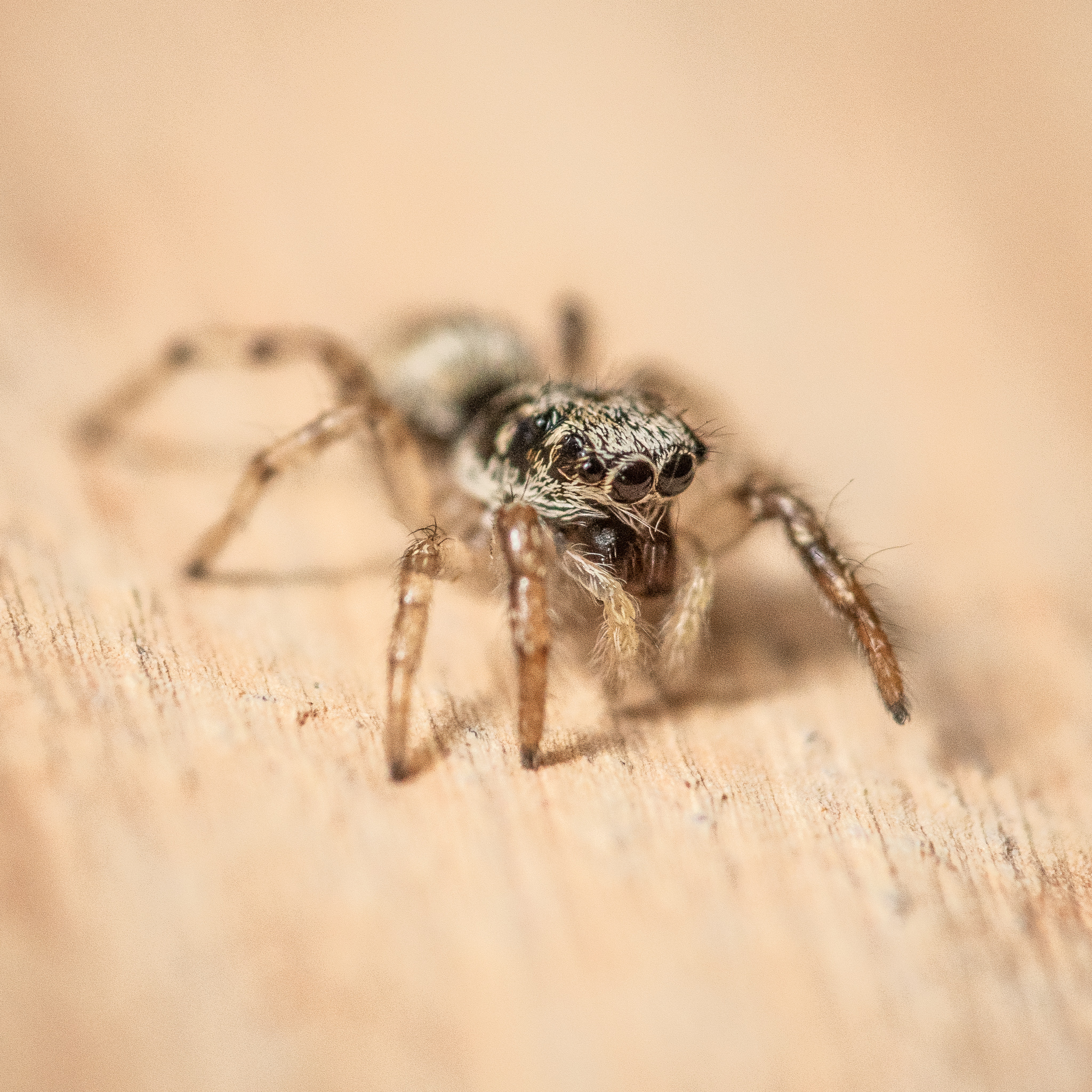
One evening, after the heat had largely dipped, I noticed some odd behaviour from a zebra jumping spider.
It was hanging from the leaf of a climbing rose we have growing from a terracotta pot on the front of our house.
I noticed there was another, smaller, zebra jumping spider (ZJS) lower down on the pot. I think this was some kind of territorial or even courting behaviour. Eventually the ZJS made it down to the terracotta.
It was running around on the edge of the pot, looking for the smaller ZJS. It was a total nightmare to get in focus.
There was also some time to clean its legs while it tried to find out what the other ZJS was up to.
I’ve seen these lovely spiders all throughout the spring, but much less so in the summer. It was nice to see them again.
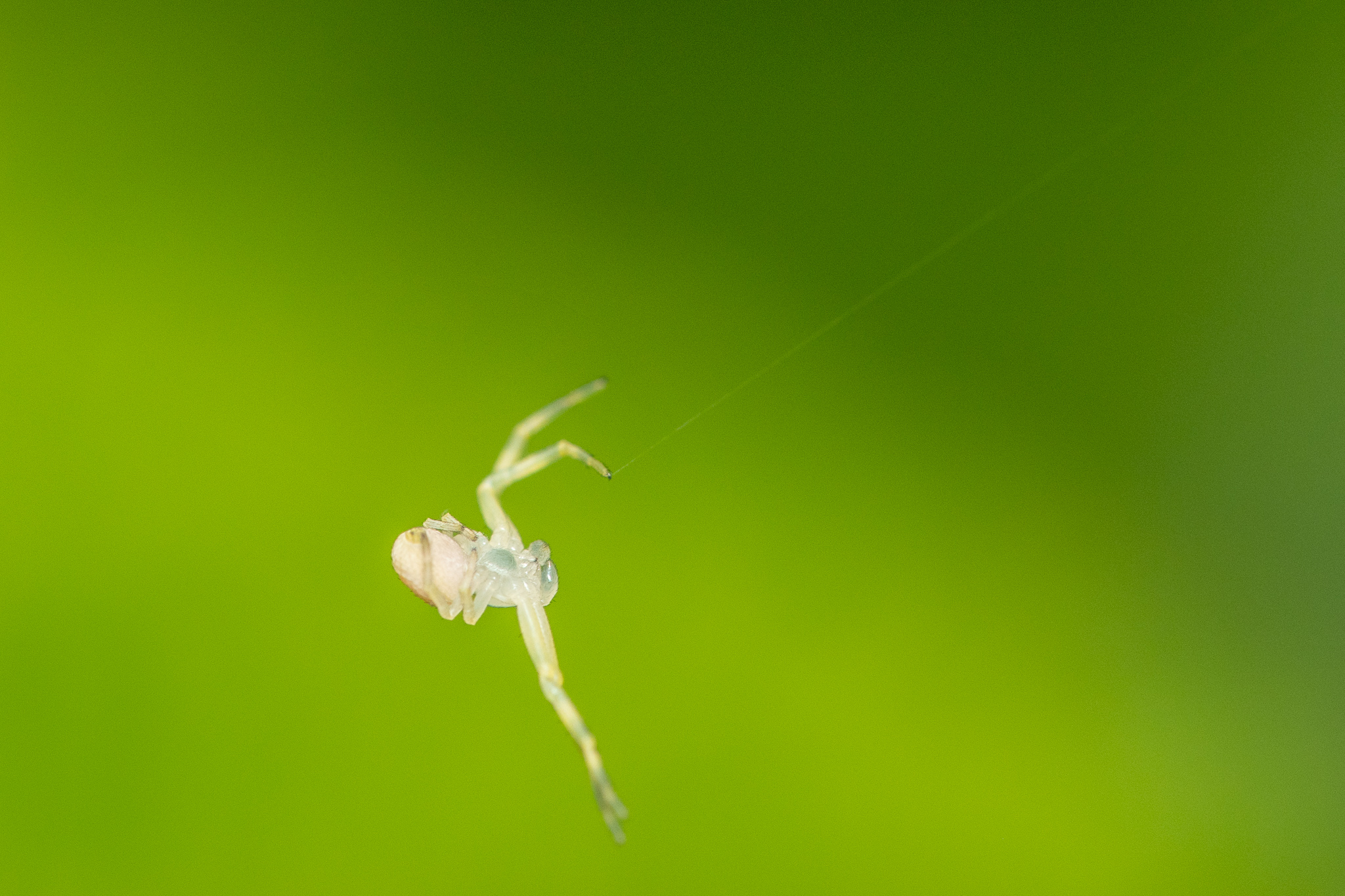
I also noticed this crab spider floating in midair on its silk. There is something quite weird about this image I think. The limbs look a bit like human or robot arms. This was a pure fluke of hoping it got into focus, even then you can’t really see the spider properly.
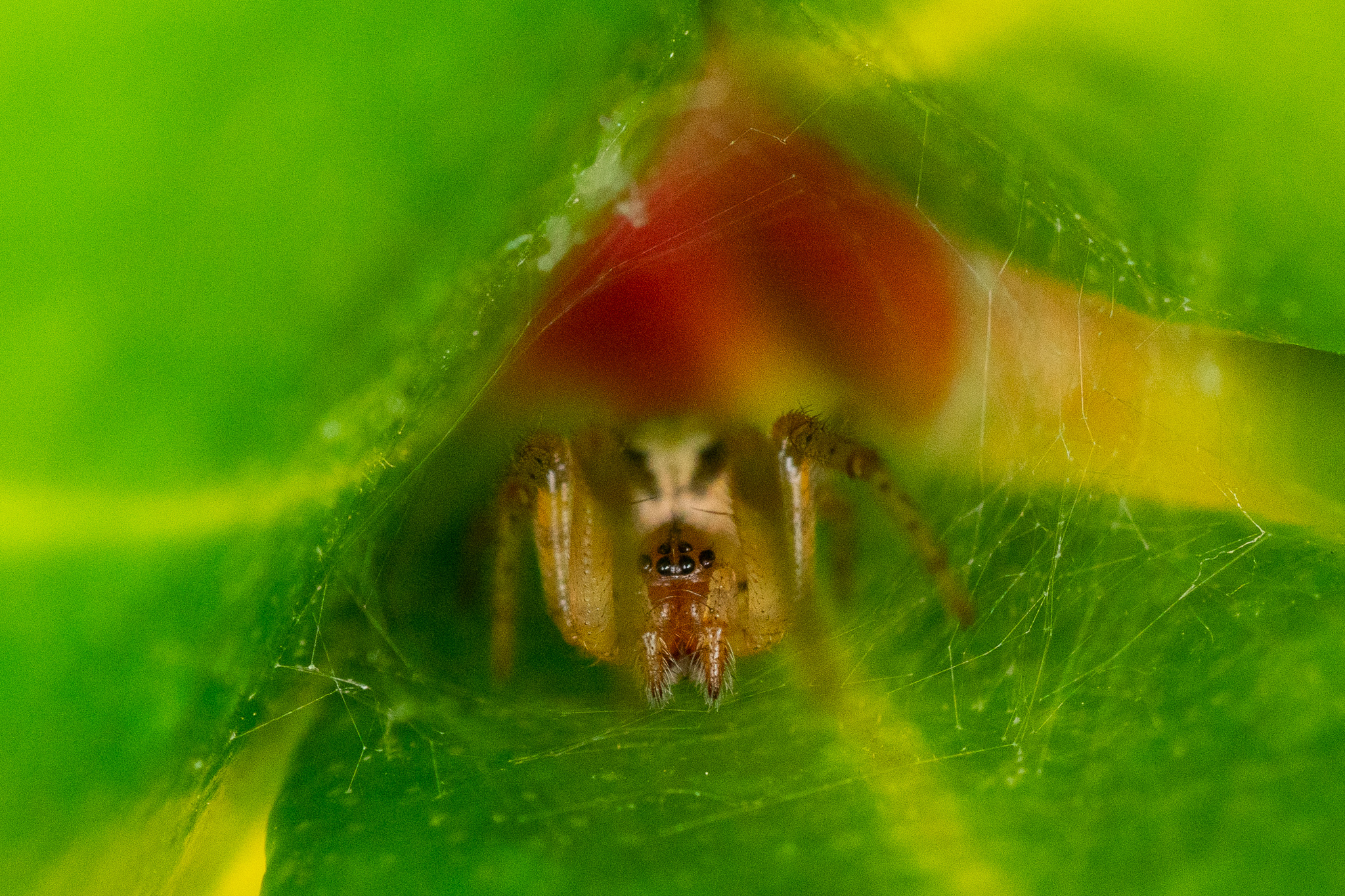
I’ve noticed far fewer insects in my garden, probably because the plants we have are largely over. I need to get some late-summer to autumn flowering species like stonecrop to keep things rocking and rolling. I had a look through the hedge while having an afternoon break after the storm took the heat away. I noticed this spider tucked away down in a bunch of leaves in the hedge. The silk is there to help catch prey but also it will react to movement, triggering the spider to attack.
I visited my family home for the first time in 6 months last weekend, a really special experience after such a long time away. My parents are avid readers of this (perhaps that should say, the readers) blog and my mum pointed out to me that there was a big spider in the bath that I might want to include here! YES MUM!
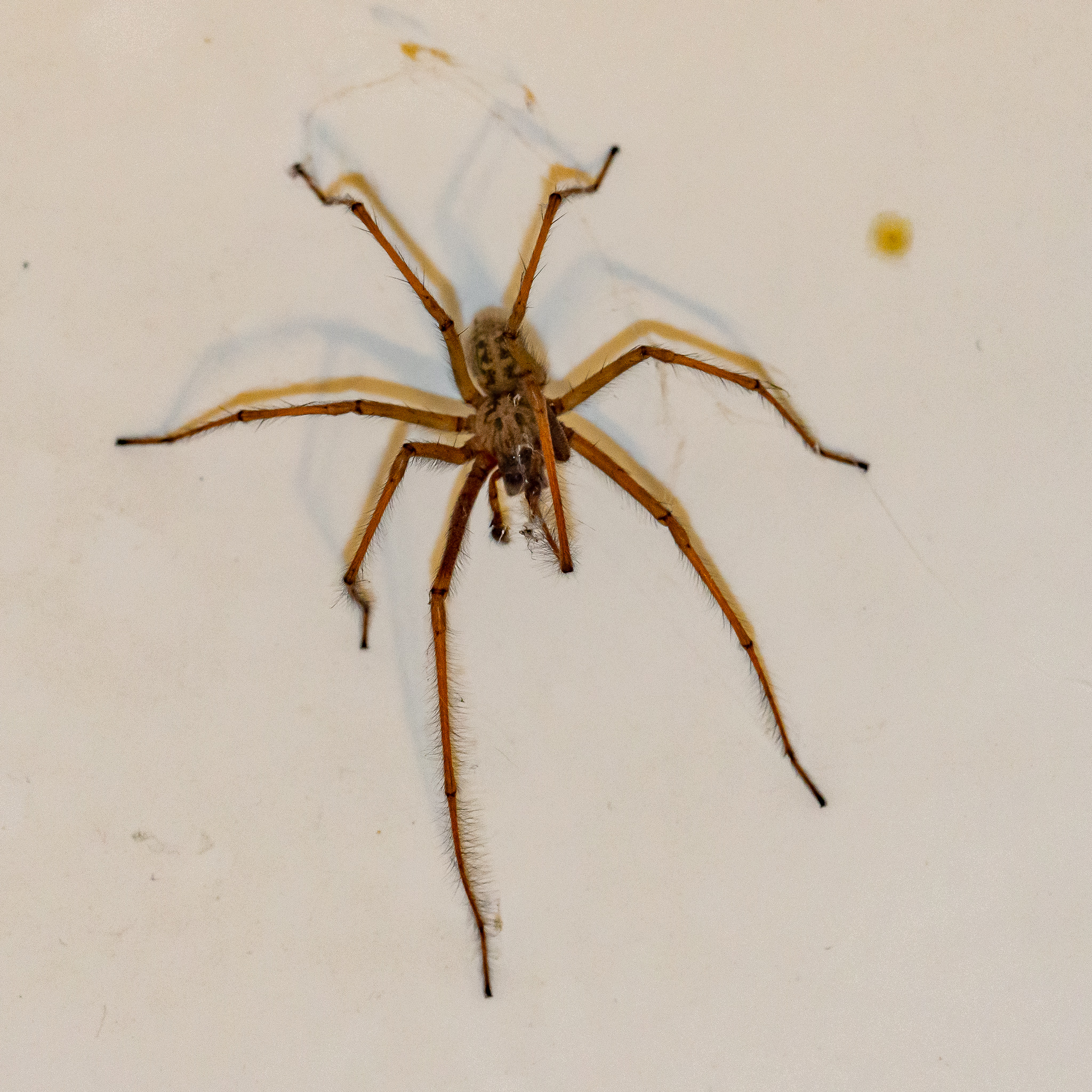
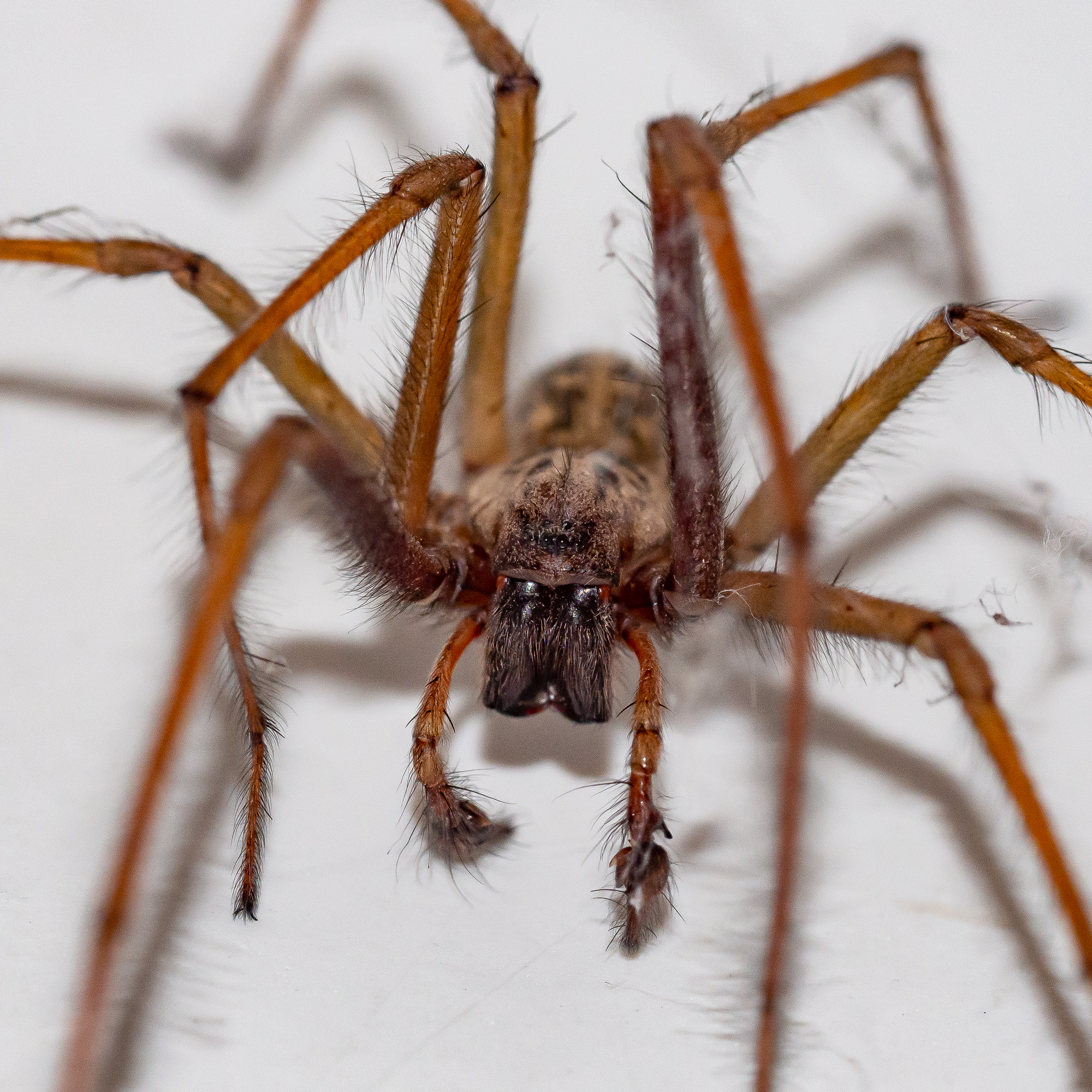
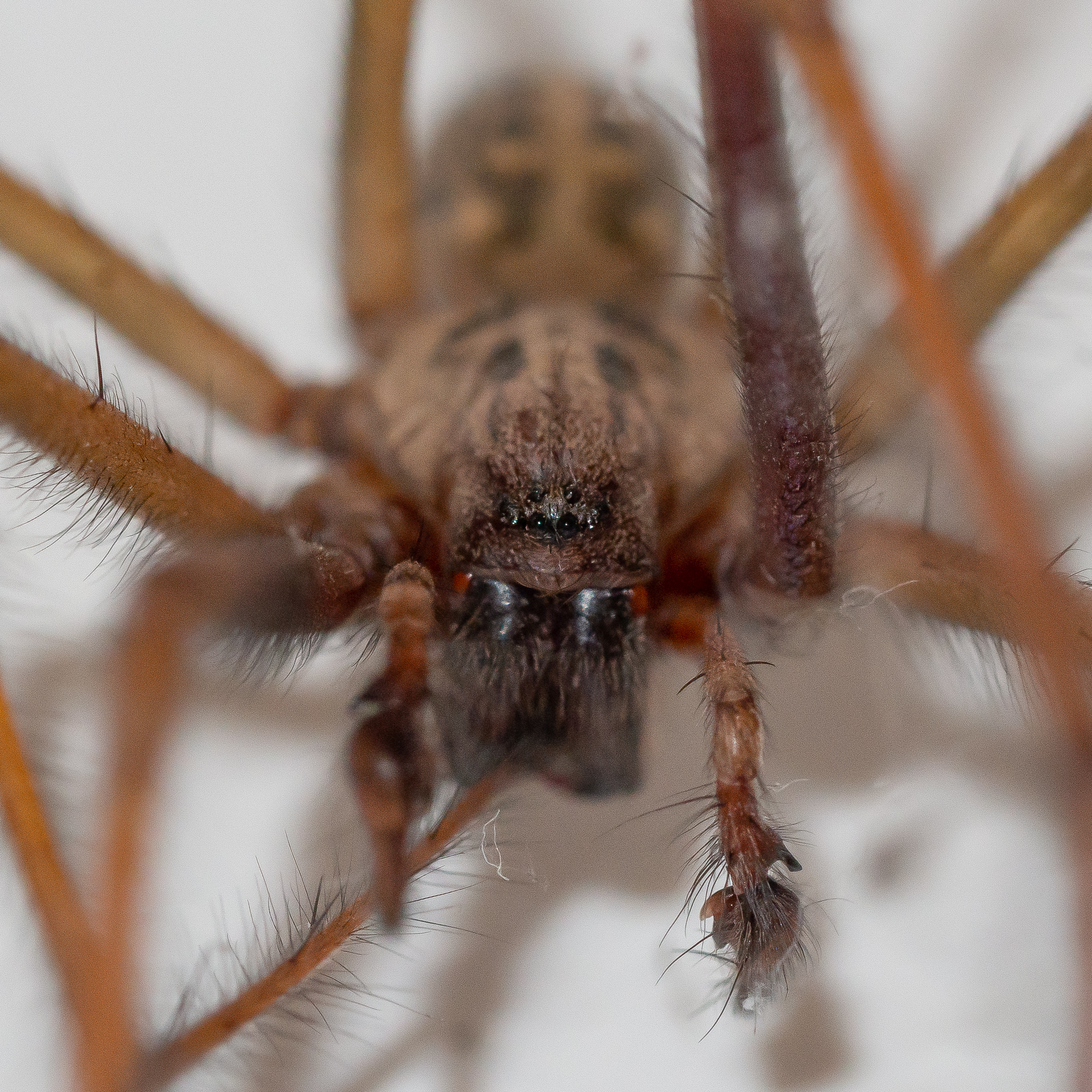
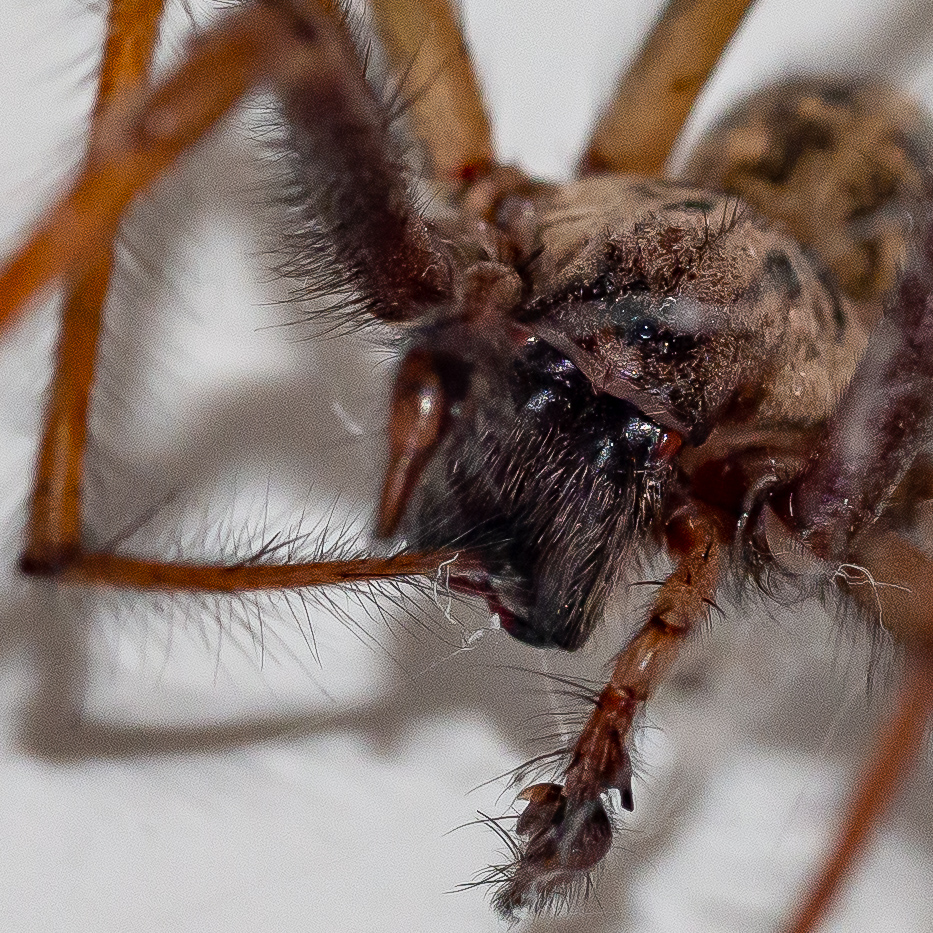
Now there have been several times this week when I’ve noticed out of the corner of my eye a shadow moving across the floor. This is something a lot of people are very unhappy about! But it’s the time of year when giant house spiders are becoming more evident. They are fiersome looking things yet they are harmless. They are more afraid of you than you are of it. They have every right to be afraid, because people will likely try and kill them when they see them, out of misplaced fear.
That said, they are a bit scary to look at and those mandibles are massive. I had my small mirrorless camera with me and a macro lens. The images are quite harsh and grainy because the light was so dank and the flash is a pop-up one without a diffuser.
The spider didn’t actually mind me at all. It was trying to remove some spider silk from its legs by running them through its mandibles.
Far from wanting to harm this animal, I am pleased that we can have such close encounters with big insects like these. If you let them go about their business, there’s no problem. No spider in Britain is venomous. This is not Australia!
Thanks for reading.
Photos taken with Nikon D5600 with Sigma 105mm f2.8 macro lens and SB-700 flash. Giant house spider photos taken with Olympus EM-10 MIII with 60mm f2.8 macro lens.
For a while I’ve wanted to draw attention to the amazing relationship Slavic people have with fungi, to shine a light on the troubles we have in the UK, especially in England. In ‘Slavic’ I include Russia, Ukraine, Poland and Czechia. Mycophilia (a love of fungi) also extends through more central European countries like Germany, France and further south to Italy.
Bear with me on this one, it’s quite a complex topic which I am trying to understand more about. Even though this blog is a long one, I intend to do more work on it in future.
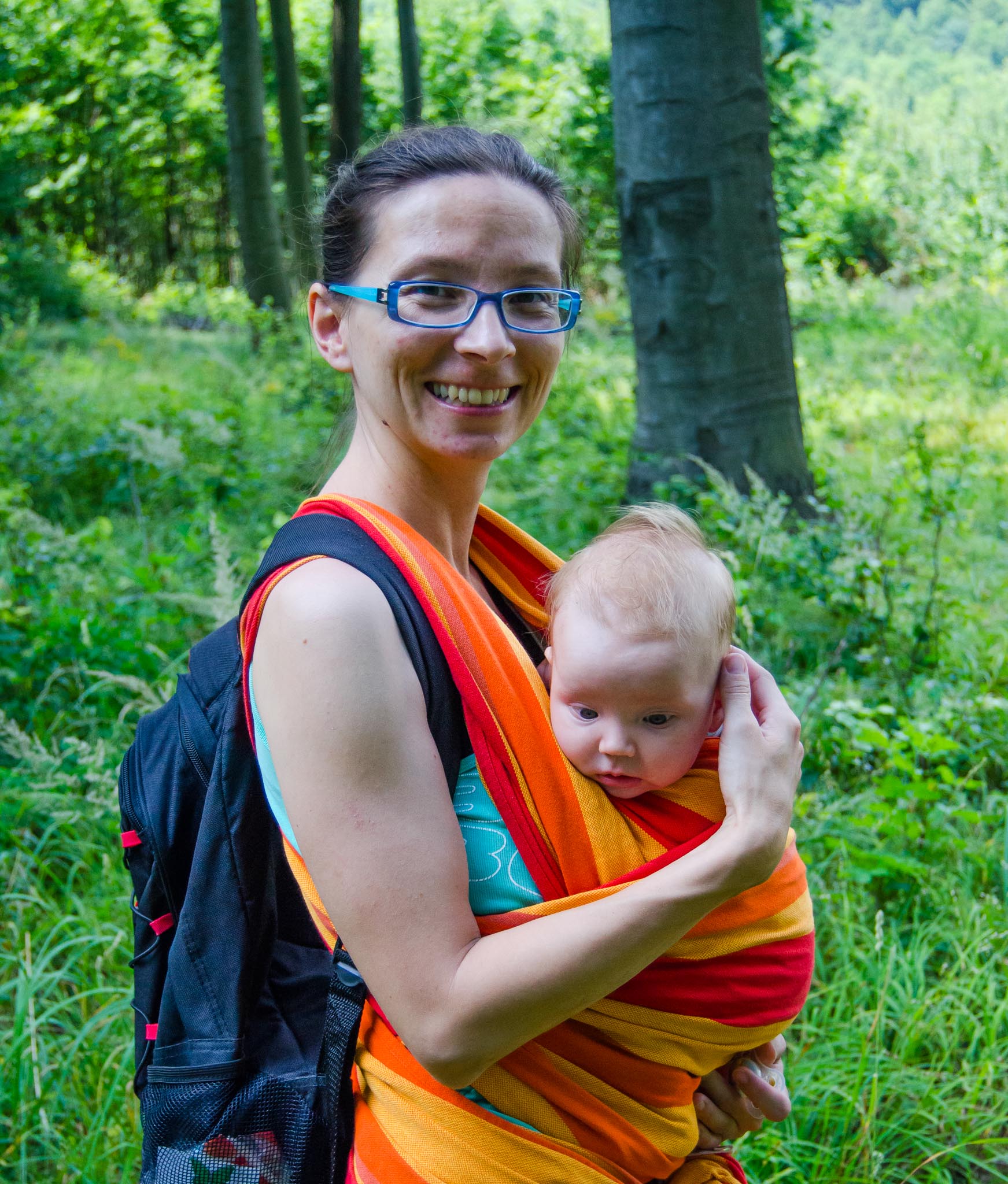
Zuzana Veverkova with baby Riza in Czechia
The only mushroom I’ve ever eaten was picked for me in Czechia by my friend and conservationist Zuzana Veverkova in a huge area of woodland known as Chriby. Zuzka covered it in breadcrumbs and fried it in butter. I don’t know what species it was, probably a parasol or an Agaricus species (like the larger white mushrooms you get in the supermarker), but it was absolutely delicious.
When she picked it I asked her if it was safe to do so. She glared at me:
“I have been picking this for my entire life!”
In England, there is an overriding sense of mycophobia, a fear of fungi. We also have a knee-jerk reaction to foraging, usually translated by right-wing tabloids as an eastern European criminal underworld stealing English mushrooms. It has been the case that people from other countries have been harrassed for foraging mushrooms in English parks, woods and the countryside.
In England we live in a nature-depleted country and people are disconnected from more natural landscapes and the wild plants, animals and, indeed, mushrooms that inhabit them. Could it also be that in Britain, higher standards of living have (in theory) been maintained due to a lack of war inland (1066 was the last land invasion) and we have not been subjected to the economic boom and bust resulting from the shifting between revolutionary communist and capitalist systems. What I mean by this is that our supplies of food have been industrialised and well-maintained without a dependency on foraged food. Then again, the impact Covid-19 has had in Britain suggests poverty is far more widespread than people realise, or Government would like to admit.
I know someone who is in their mid-80s and is fluent in Russian, a veritable Russophile. When they learned that I had an interest in fungi, they showed me a copy of a Russian medical book they own. Beyond pretty grisly images of physical ailments are pages of both edible and toxic fungi. Another thing people commonly have told me on public fungi walks I’ve led, is that you can go to pharmacies in countries like Italy and get an identification of a mushroom.
In England, you will never get anything of the kind. I wonder why that is. One of the main reasons could be that Slavic nations enjoy far greater woodland cover. In England we have 13% woodland cover, while nearly half of Russia’s vast landmass is covered by woodland.
Look at this graph and you’ll see how wood-depleted Britain is. I appreciate it’s complicated.
The Transylvanian Carpathians, Romania
In Britain our lack of reliance on foraging has led to a plummet in nature knowledge and species awareness, something which is improving. In Romania you will find some of the highest levels of plant ID knowledge among local communities, especially ethnic-Hungarians in Transylvania. This is because Transylvanian hay meadows, the botanically richest grasslands in Europe, if not the world, are managed by hand, cut with scythes and have been for a very long time. Knowledge is passed down from generation to generation.
My link to family who lived in a similar way goes back to my Irish grandfather who grew up on a farm in the 1920s in the West of Ireland. On the English side, it’s probably the 1800s when my family were sheep farmers near Hebden Bridge in Yorkshire.
I knew my Irish grandfather and I spent time with him in Ireland. But his generation moved beyond that old way of living without any whiff of nostalgia in later life, and he did not pass on farming or plant knowledge to me. Why would he? I lived in London and he spent most of his life working in construction. We didn’t talk about fungi, because he had dementia by the time I was involved with woodlands and he didn’t quite get what conservation was, more for cultural reasons of how he saw the land.
Some of the only people I know in Britain who have said they once ate mushrooms in a way that could be tied to a way of life, rather than a newly inspired, 21st century interest in nature, remember foraging mushrooms as children in fields. One of those people had an Irish mother who taught them how to forage!
Could a lack of knowledge be what drives that fear of fungi, like so many issues. If you have a basic level of species ID then you would know what is toxic and the uncertainty can be controlled. That fear also masks what is in fact a deep fascination, which is beginning to reignite in Britain just as we are perhaps losing our grip in the face of the climate and biodiversity emergencies.
Fungi don’t just appear in Russian medical books. I was astonished to see a thread on Twitter recently that showed a book by a Ukrainian illustrator Ohrim Sudomora entitled ‘War between fungi and beetles’.
The thread was published by Anton Savchenko:
As Savchenko notes in his thread, the species representation in the book is impressive. Looking at the illustrations I could identify milkcaps, boletes, brittlegills, chantarelles, morels and, of course, fly agaric. You can enjoy the book here. Unfortunately I’m not yet able to get a translation of the folk tale, but the pictures speak for themselves.
Savchenko points out that the illustrator, Sudomora, was interred in a gulag by Stalin, possibly because of these drawings! I studied Russian film at university which naturally led into literature. I know that the poet Osip Mandelstam died in the gulag after writing a poem describing Stalin’s ‘cockroach’ moustache. Likewise, Isaac Babel, one of the greatest short stories writers you’ve never heard of, also Jewish, was murdered by Stalin. He killed around 40,000,000 people.
Returning to the English distrust of fungi, two people have written an entire book about this issue and the contrast with Slavic cultures: Mushrooms, Russia and History. Interestingly, could the word ‘toadstool’ help to understand the Anglo-Saxon worries about fungi?
If ‘toad’ descends etymologically to us from toxicum, then in English as in the Breton tongue a ‘toadstool’ in its ultimate meaning is a ‘poison stool’, and the idea of poison, rather than the toad, may have been dominant in the minds of those who first applied this term to the wild fungi in the Anglo-Saxon world.
The Anglo-Saxons ruled England after the Romans left around AD 500. The Germanic tribes of the Angols and the Saxons arrived as pagan cultures, later becoming Christianised. It’s interesting that cultures that will have worshipped nature may also be the root of a deep-seated fear of fungi. To an Anglo-Irishman, it kind of makes sense.


















 Bracken and birch glade