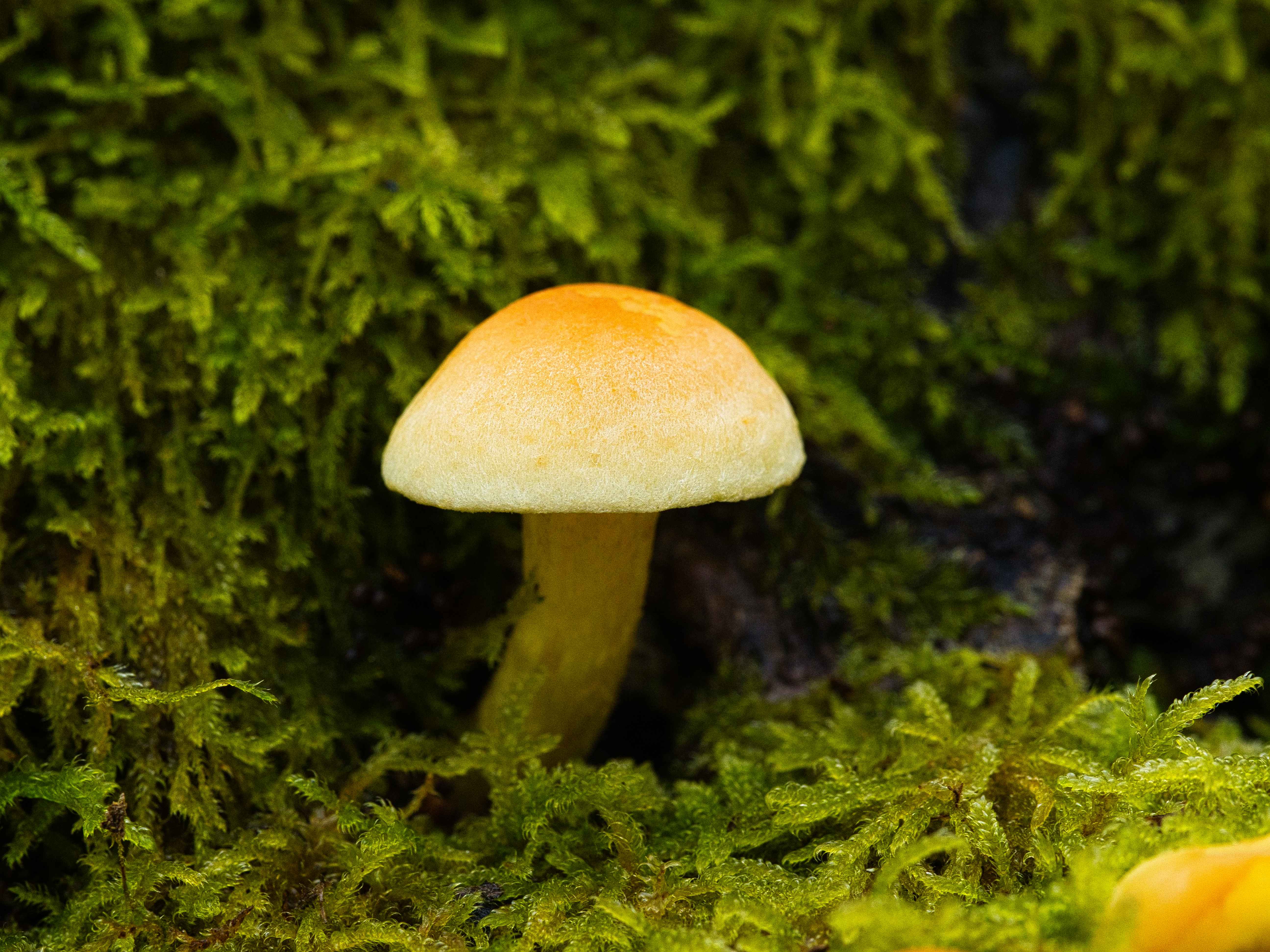
A German New Year’s card – with symbols of good luck, including fly agaric
Fungi Friday 25th December 2020
Merry Christmas to you! I thought this would be a perfect opportunity to post a second piece about the Santa Claus and magic mushroom myth. I saw an Instagram post by Gordon Walker which criticised the oft-repeated story (oops) of Santa and fly agaric mushrooms. I asked for more info and he kindly suggested listening to a psychedelic mushroom podcast.
Just to warn you, it’s a bit sweary and the author, Tom Hatsis, is pretty angry about the ignorance he suggests maintains the myth of fly agaric and Santa. He describes the proponents of this idea as conspiracy theorists. There is also a lot of talk about psychedelic drug taking which is not quite the content I’m looking for. I think you might have to read the book for him to substantiate his argument against the story.
What I gleaned from this interview:
There is no evidence that Santa Claus was a shamanic figure who consumed fly agaric mushrooms or used them to herd reindeer
There are no Siberian reindeer-herding shamans
Fly agaric does not appear in authentic Germanic Christmas cards, they’re New Years cards which use fly agaric as a good luck symbol, alongside horse shoes and four-leaf clovers
Jesus was not a mushroom…
Fly agarics would not dry on trees (to release hallucinogenic chemicals) in the very cold temperatures of Siberia or northern Scandinavia
The cold has come to the woods, and with it, the silence of birds. Itโs not all quiet. Rain has fallen overnight and there is a gushing to the hill as it wends its way through the woodland. Looking at the water I see the bare sandstone. The water, over a very long time, has cut through the soils and softer substrates. Walking here over several years I have wondered why the sandier heathlands rest high up and the ancient woodlands of oak, beech, hazel and holly grow only really in the clay gulleys. Itโs here, the answer. The stream has cut through the sand and washed the gravel away to reach the sandstone.
I follow the twisting stream up hill, jumping from bank to bank, where vegetation blocks progress. In a slowed stretch something small and black is moving against the flow on the clay streambed. It’s an invertebrate, what I think is a caddisfly with a pack of debris on its back. It looks to be trying to grab at a small stone or piece of material on the streambed. It could be ready to attach itself to the stone and move to its next stage, the pupa, before becoming an adult insect for a month next year.
Ferns spool out from the freshly leaf-laden banks and the trees are drenched in moss. It dawns on me: this is south-east Englandโs rainforest.
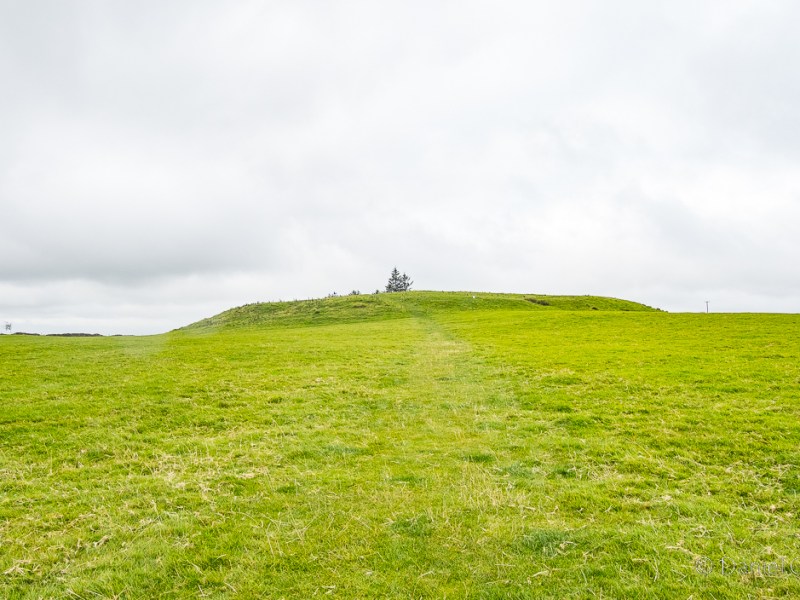
Rathcroghan, Roscommon, Ireland, September 2024 This short post shows some of the images I snaffled from a pit stop at the ancient Celtic landscape of Rathcroghan, while travelling from Mayo to Dublin. Apologies if I mangle any of the Irish mythology, it is not a subject I’m at all familiar with. Rathcroghan is one ofโฆ
Today is the winter solstice. The darkest and shortest day of the year is the perfect time to look back at one of my fondest summer macro memories. It might also cheer some of you to see photos of sunnier, warmer times, teeming with wildlife.
In August 2016 my friend Peter Beckenham and I travelled to South Moravia in Czechia. This trip was completed by train, with a route of London-Brussels, Brussels-Cologne, Cologne-Prague sleeper, Prague-Brno and back. I really recommend this (maybe not right now) as a much better way to travel than flying. You see more, go to more interesting places and reduce your environmental impact.
For macro photography I was using a Nikon D750 and Sigma 105mm f2.8 macro lens. Most of the photos seen here were taken at f11.
Moravia is home to varied landscapes, rivers, wetlands, mountains and woodlands. It of course suffers from the vagaries of intensive agriculture, particularly because of the impacts of the Soviet Union. But its protected landscape system is strong and there are many committed environmentalists who spend much of their free time recording species and promoting and educating people about nature.
The reason I know about these meadows is purely because of local ecologist, conservationist and educator Zuzana Veverkova. Zuzka has taught me so much about European nature, landscapes and cultural heritage. All the thanks here go to her.
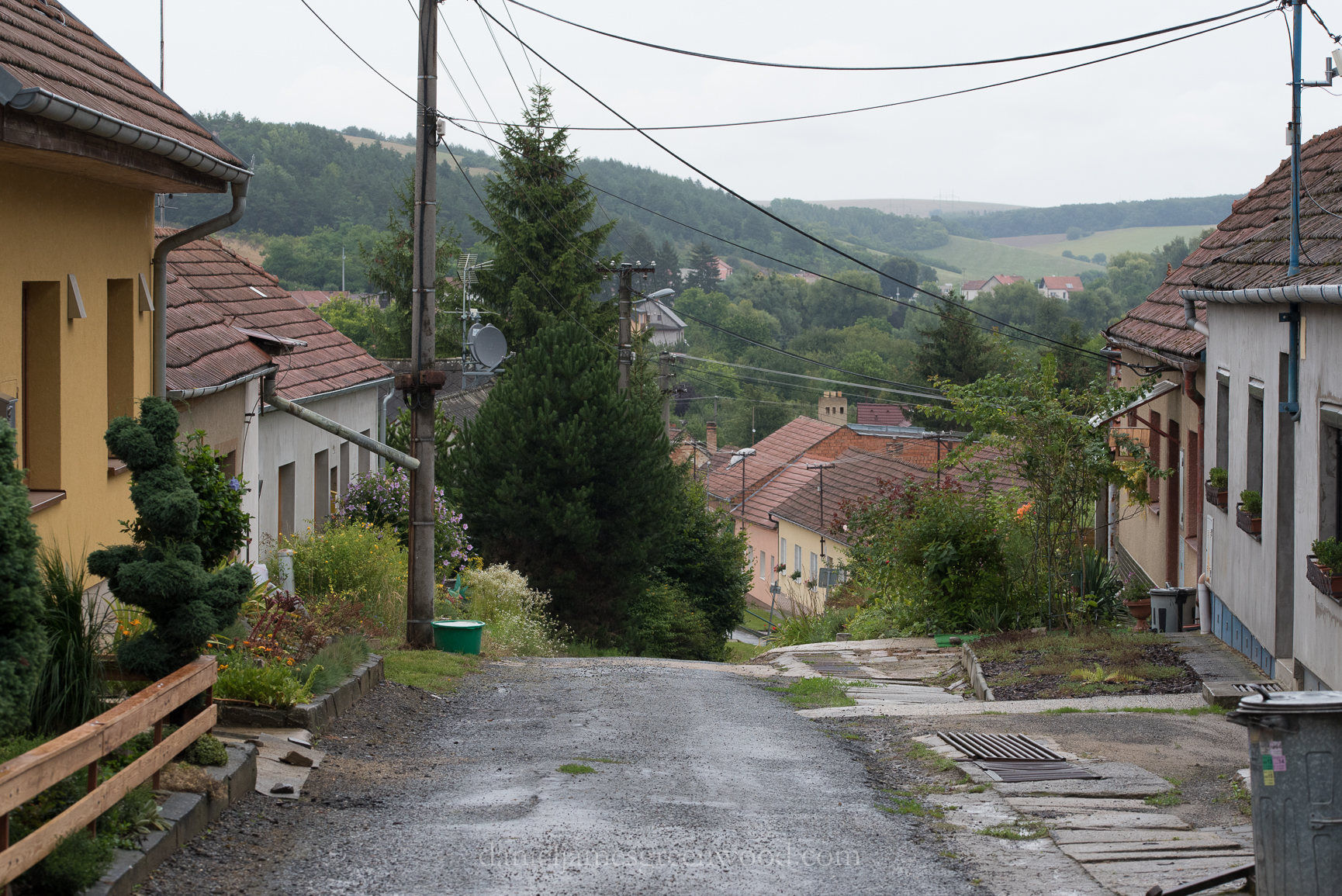
The meadow is at the end of a street in the Kyjovka valley. It is surrounded by woodlands, largely managed for forestry and intensive arable farms. Zuzka works to enhance the landscape by advising on the creation of meadows, orchards and other sustainable landscape models which will provide habitat for the rich biodiversity of the area.
You didnโt have to be in a meadow to find diverse invertebrate life. In Zuzkaโs post box (attached to an external wall of the house) a colony of European paper wasps had built a nest. They are ready to sting you, so I observed from a distance. They were feeding on umbellifers in the slither of garden in front of the house. We donโt have this species in Britain.
Another species of wasp, but instead an ichneumon (probably a Gasteruption species) was foraging on the flowers.
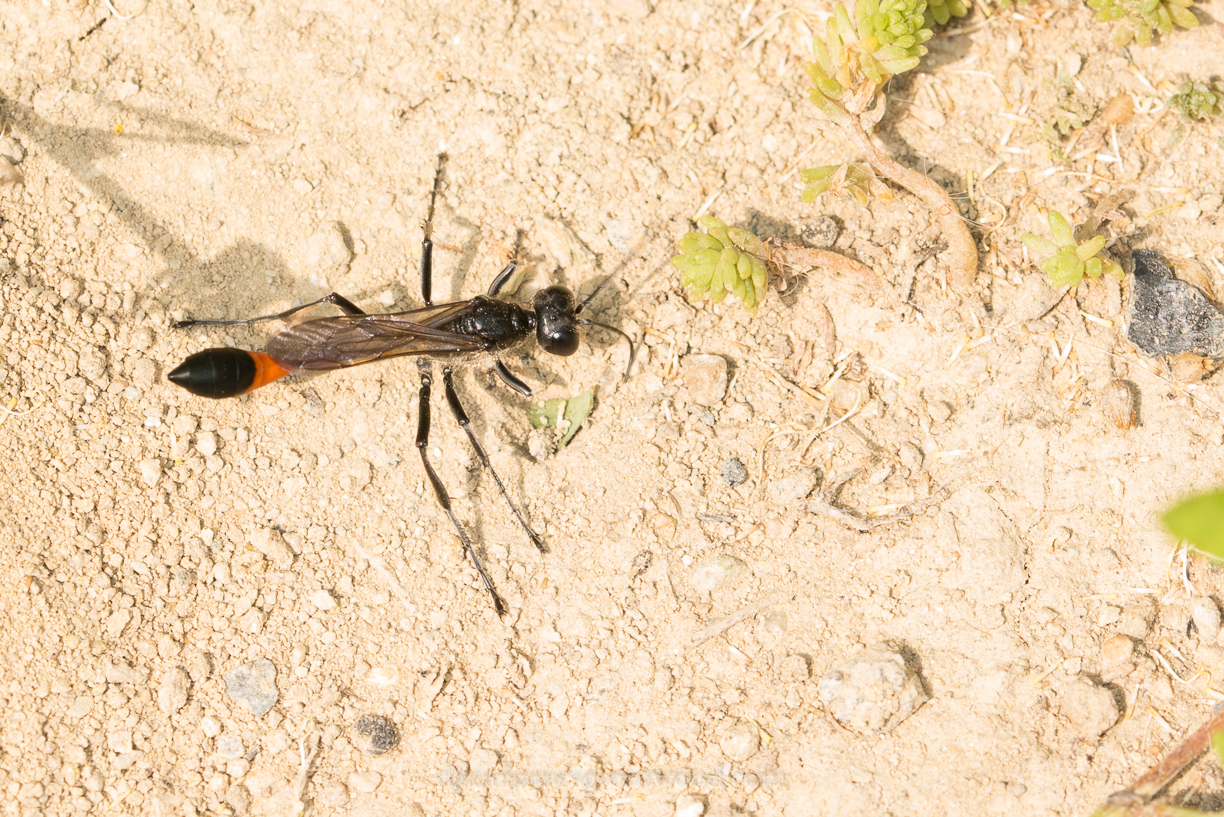
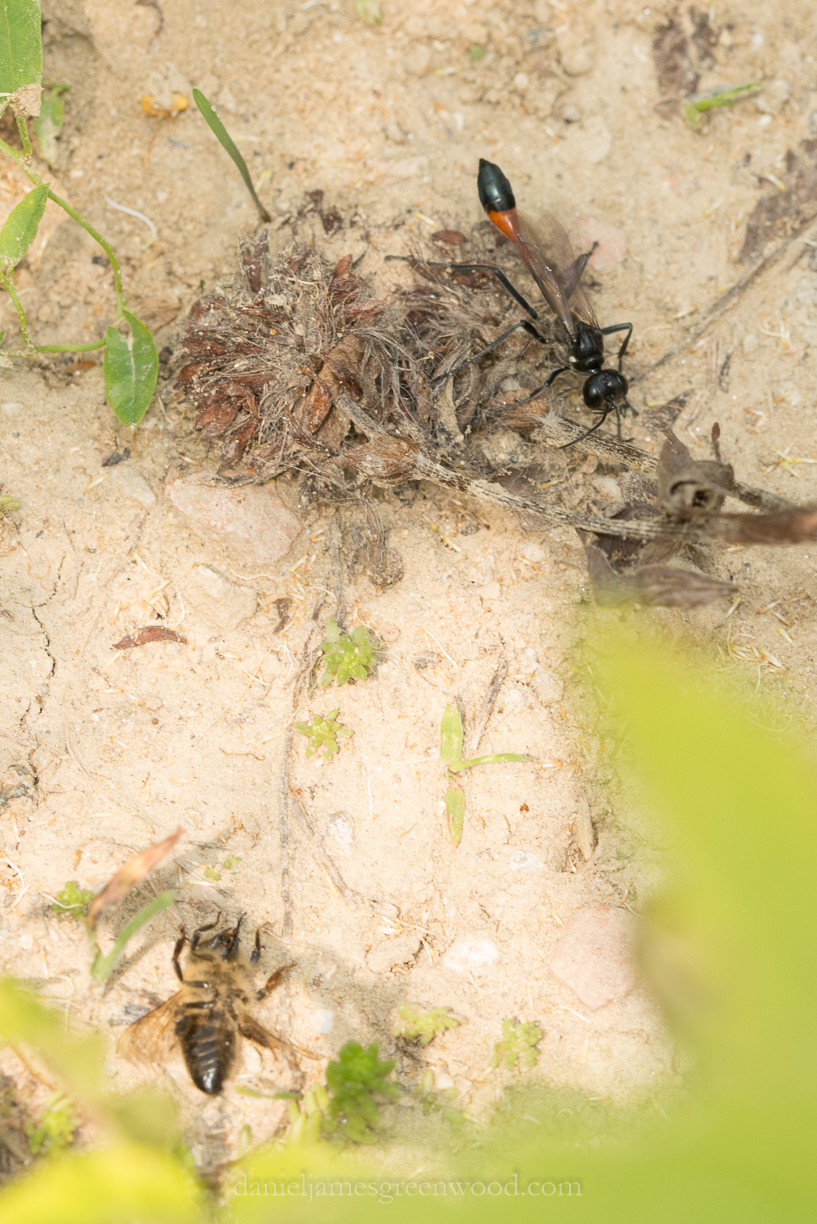
The wasp action didnโt end there. A red sand wasp had burrows in the soil. Iโve mainly seen this type of wasp on heathlands in the UK. Theyโre rare because of their dependence on a single habitat type, one of which, in heathlands, has seen a lot lost to forestry and development in the UK.
It was pretty incredible to see that the wasp had caught a honey bee as prey and was leaving it to one side while it went about its business.
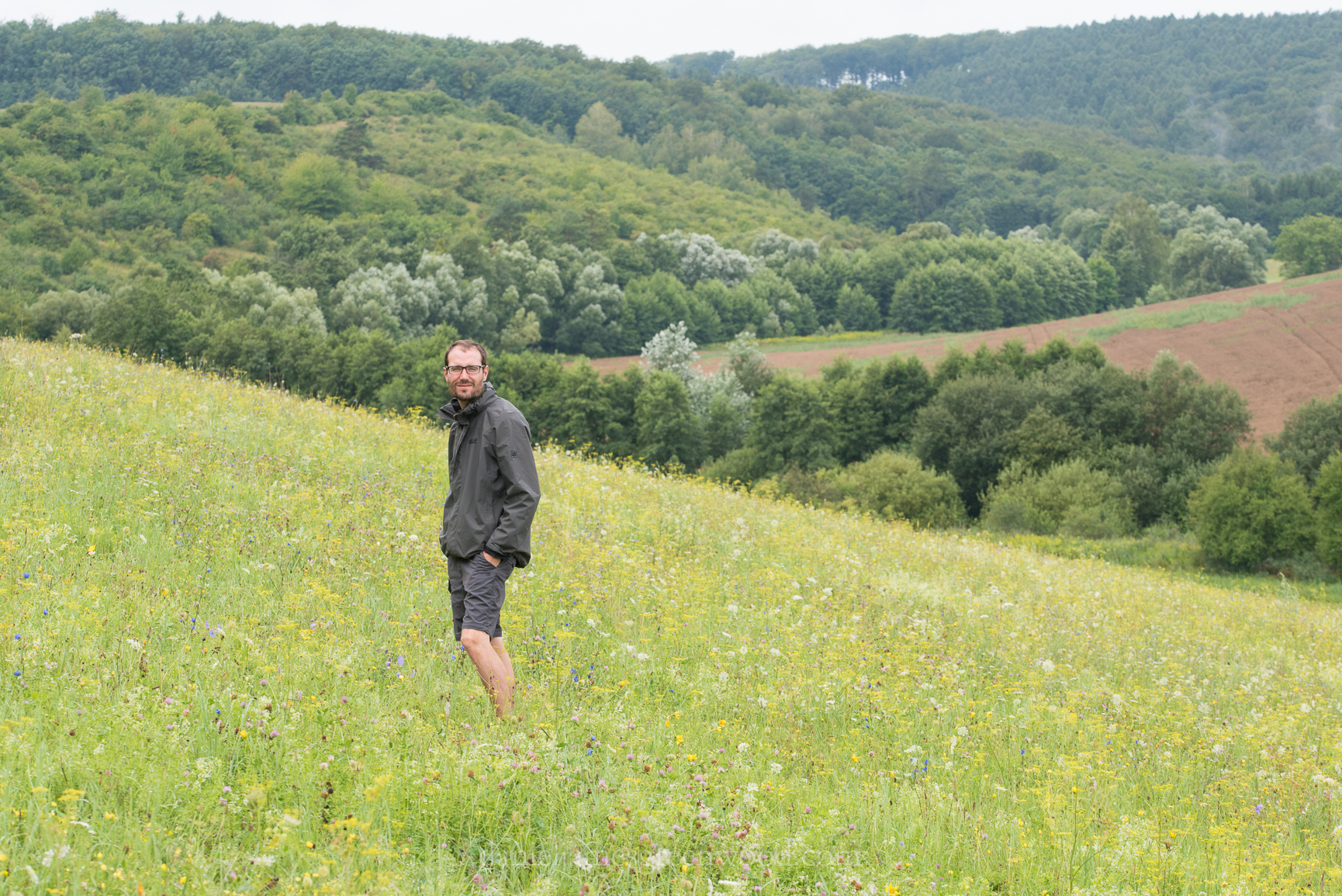
The meadow itself, where the ‘garden’ insects are likely to have been visiting on longer foraging trips, was not far away. Here is my friend Peter Beckenham pretending he lives in the meadow. Pete is a bird-nerd and he had plenty to find in this area. He heard a common rosefinch calling in the trees in the distance, a species I havenโt seen yet.
When Zuzka introduced us to the meadows, she immediately found something cool for us to see. This is a European praying mantis. I feel like the mantis could be mistaken for a puppet master here, directing the movements of Zuzkaโs hand. They do of course have some sinister behaviour anyway.
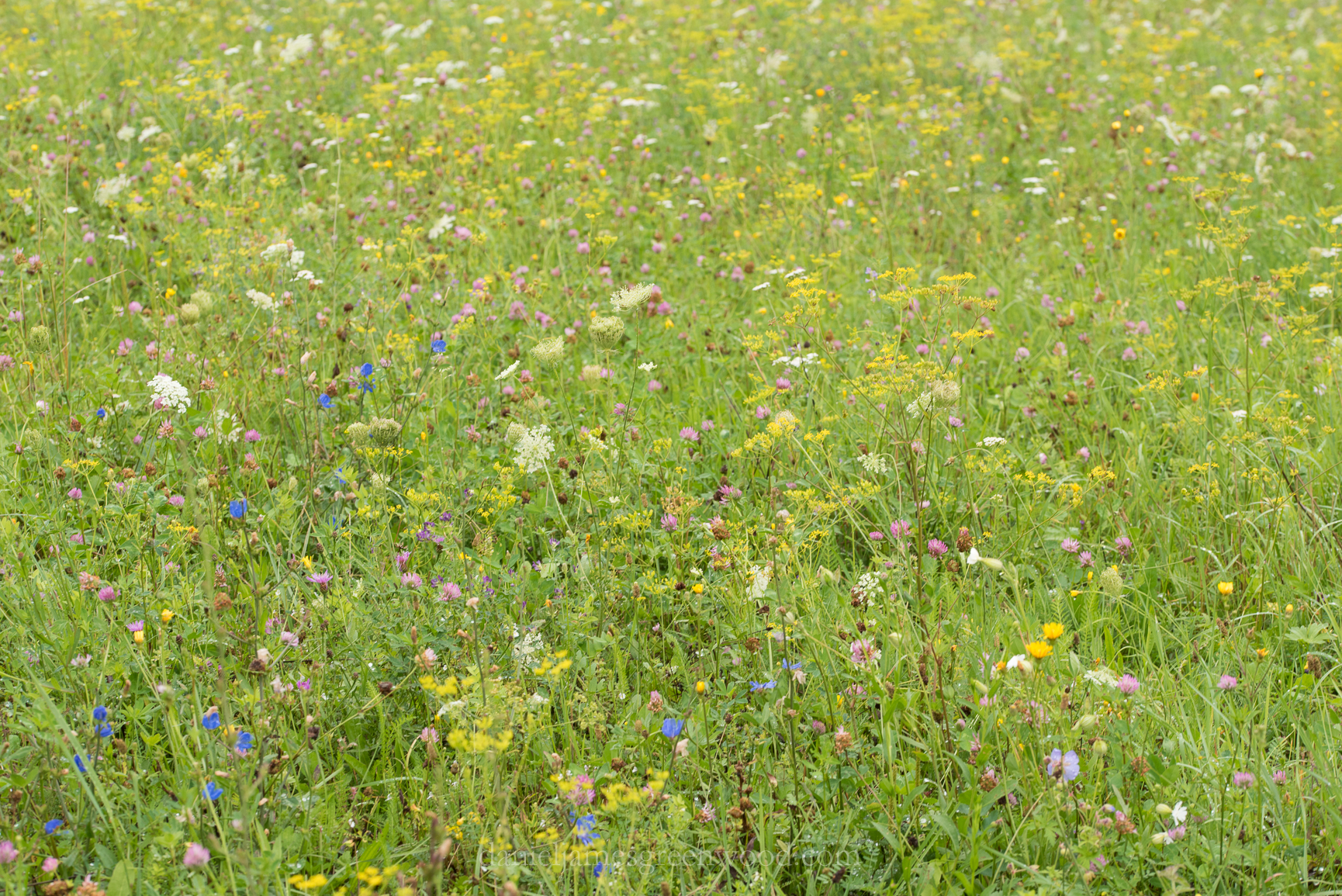
The meadows were kitted out with flowers, matching some of the most diverse grasslands Britain has to show, if not more so. Of course continental Europe has far richer grasslands than Britain due to geological processes, connectivity with a wider landmass and probably climactic reasons. We have also ploughed up 97% of ancient grasslands in the Britain. But this wasnโt even a nature reserve. In the UK people fight campaigns over much less diverse habitats, which is still very important.
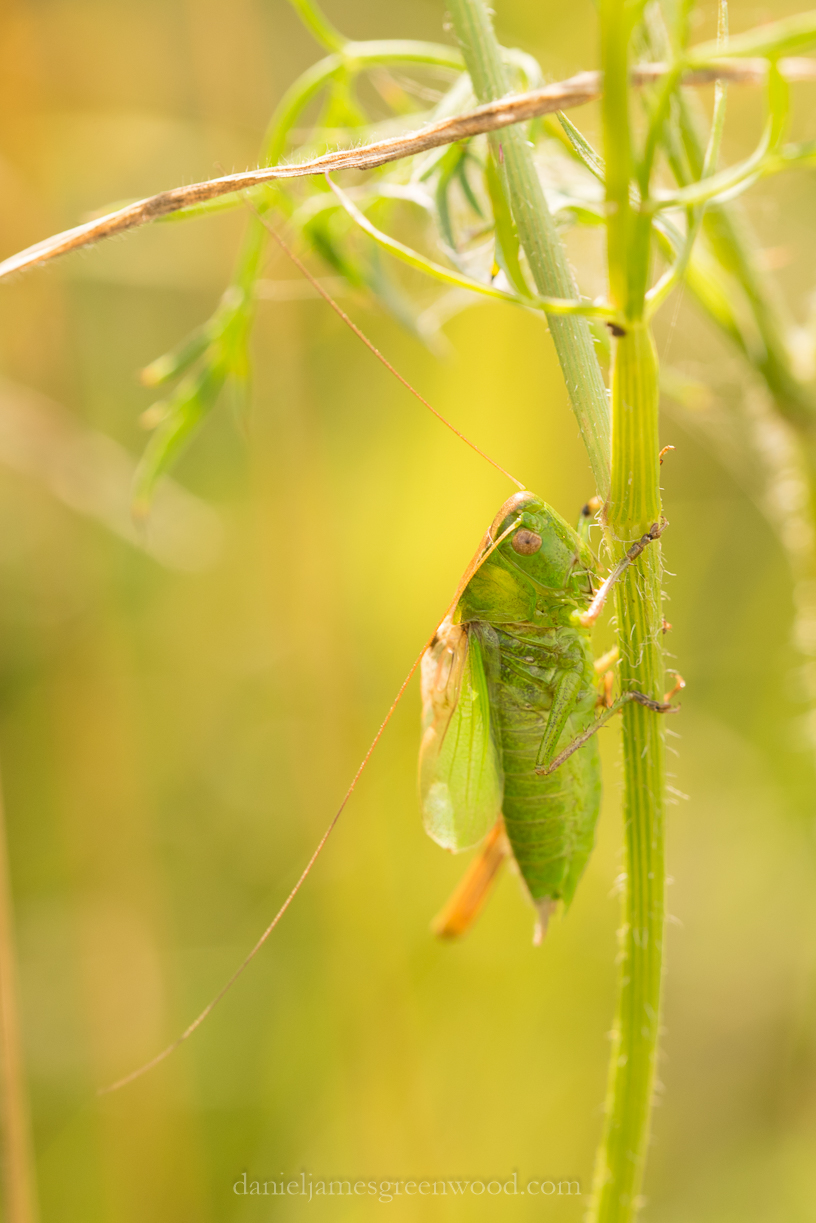
We visited in August, so there was some quite mild weather which meant the insects were less active. That is perfect for taking photos because the animals are slow and usually perched somewhere helpful. This is a cricket.
On a flower stem this cricket was poised, its wing casings apparent here in their translucent green.
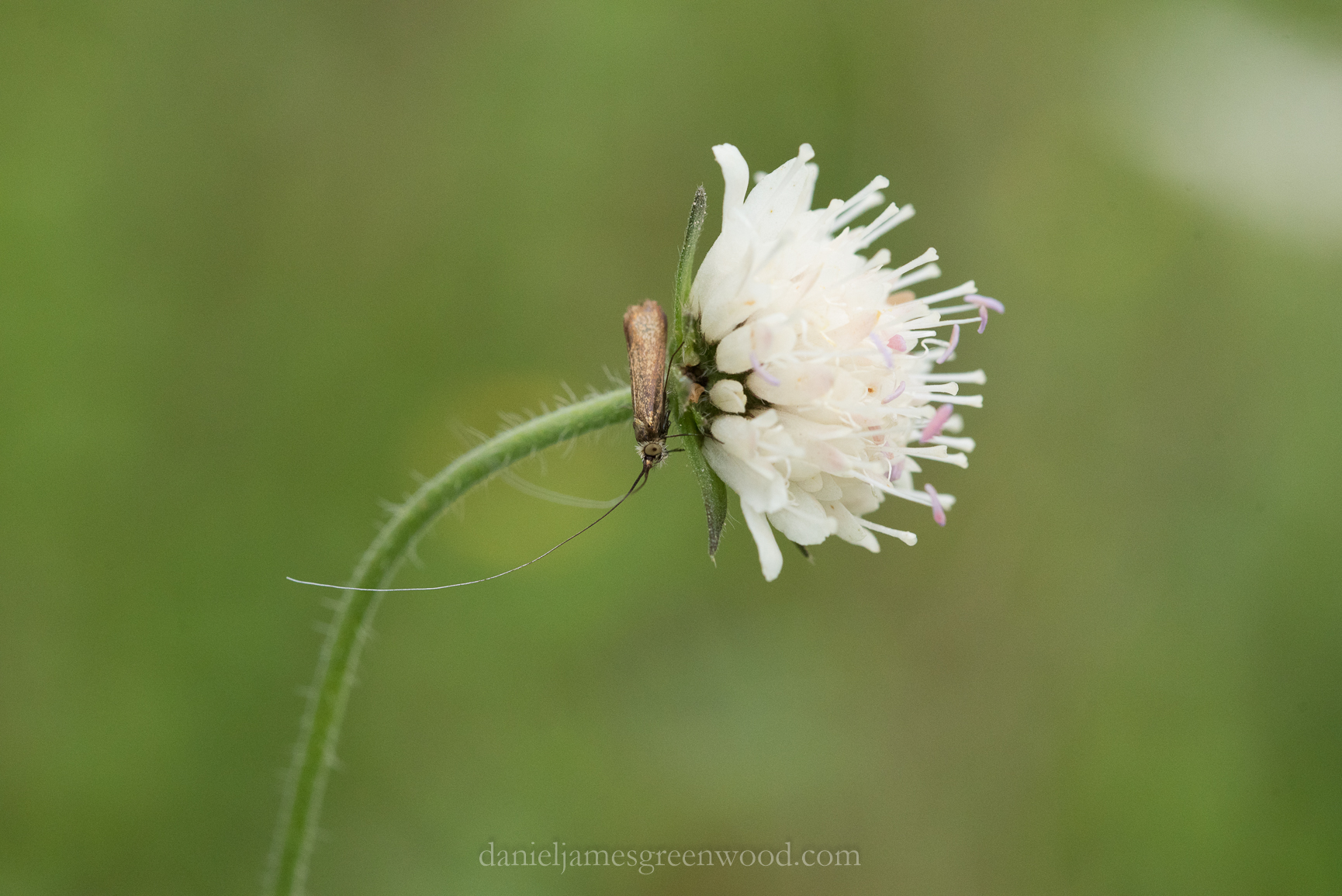
It was very easy to miss this long-horn moth, having attached itself to the sepals of this scabious flower. These are day-flying moths, which include some very beautiful species.
An ermine moth was nectaring on this umbellifer. They look like dalmatians.
I felt sorry for this shieldbug with a red spider mite attached to its head. iNaturalist suggests this is a species in the Carpocoris family.
Nearby was a green shieldbug hiding away in the florets of field cow wheat. I love the colours in this photo and itโs definitely one I consider a โportfolioโ image.
One morning in the meadow, after a night of rain, I found hundreds of small blue butterflies perched in grass heads. A Czech user on iNaturalist suggested this is silver-studded blue. I find some blue butterflies really difficult to identify. This image conveys the beauty of a macro lens: a sharp, thin field of view, with a dreamy blur of green in the background.
Far from being a wilderness, the meadow was on the edge of a municipal part of a village that was growing, but slowly. I spent my final morning of that trip taking photos in the meadow. What you canโt see in this image are swallows flying low across the top of the sward. A special memory! Then again, they were eating my subjects…
Amberley to Washington, West Sussex, 4th June 2024 The photos in this post are a mix of Olympus EM-1 MIII mirrorless camera images using a 12-100mm (24-200mm full-frame) lens, with a few phone pics for detail. The photos have been cropped, marked and enhanced in places using Adobe Lightroom. I do not purposefully use Generativeโฆ
The temperatures have crept up again after a period of freezing cold and foggy mornings. During one of those colder December days I visited a favourite place to find fungi. I was surprised by just how much had managed to fruit, though it was mostly quite small.
My first find was this common puffball mushroom, looking well nibbled and past its pomp. Almost all of the mushrooms I found and spent time trying to photograph were growing in beds of moss. That says to me that the mosses were providing a warmer, wetter platform to fruit from, protecting the mycelium of the fungus from the cold beyond its fronds.
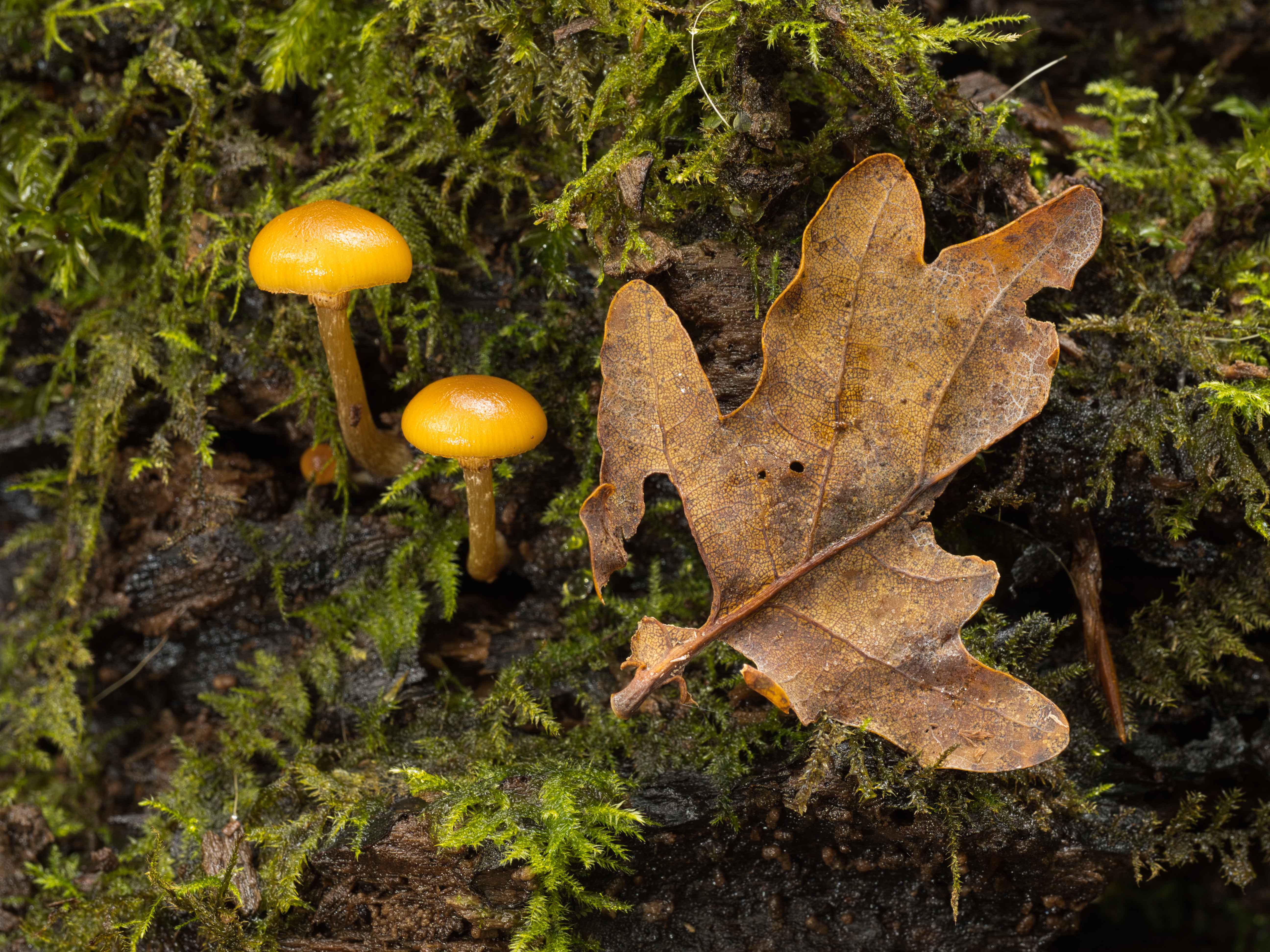
I had a lot of fun photographing galerina mushrooms, otherwise known as moss bells. One of the most famous mushrooms in this family is the funeral bell, for reasons you can probably guess. I am not at a point to identify moss well, but I do know this is common feather moss. And that is an old oak leaf.
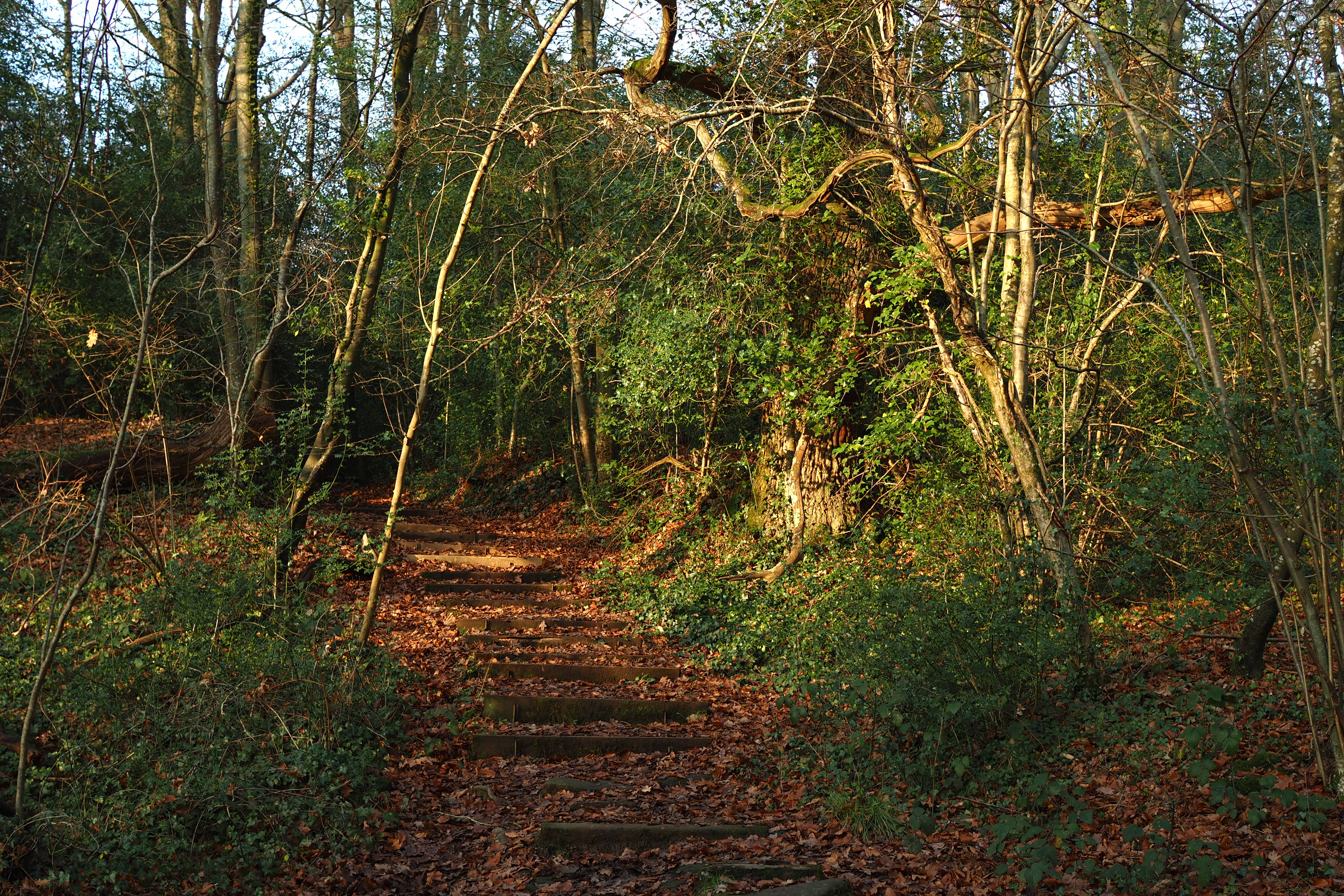
I found some lovely moss bells as I worked my way further into the beech, oak, hazel and holly woodland. In England we don’t have much in the way of wooded ‘wilderness’ that North America or Russia is famed for. But in the south-east of England, the Sussex Weald is perhaps the closest thing we have to a vast woodland area. Woods in England are split up by private ownership and mixed land use, with many small woods cleared for agriculture or building. If you want to see what a fence looks like, come on over. However, the Weald to the east of Sussex is the most wooded area in England, and much of it is ancient, broad-leaved and ‘natural’ woodland.
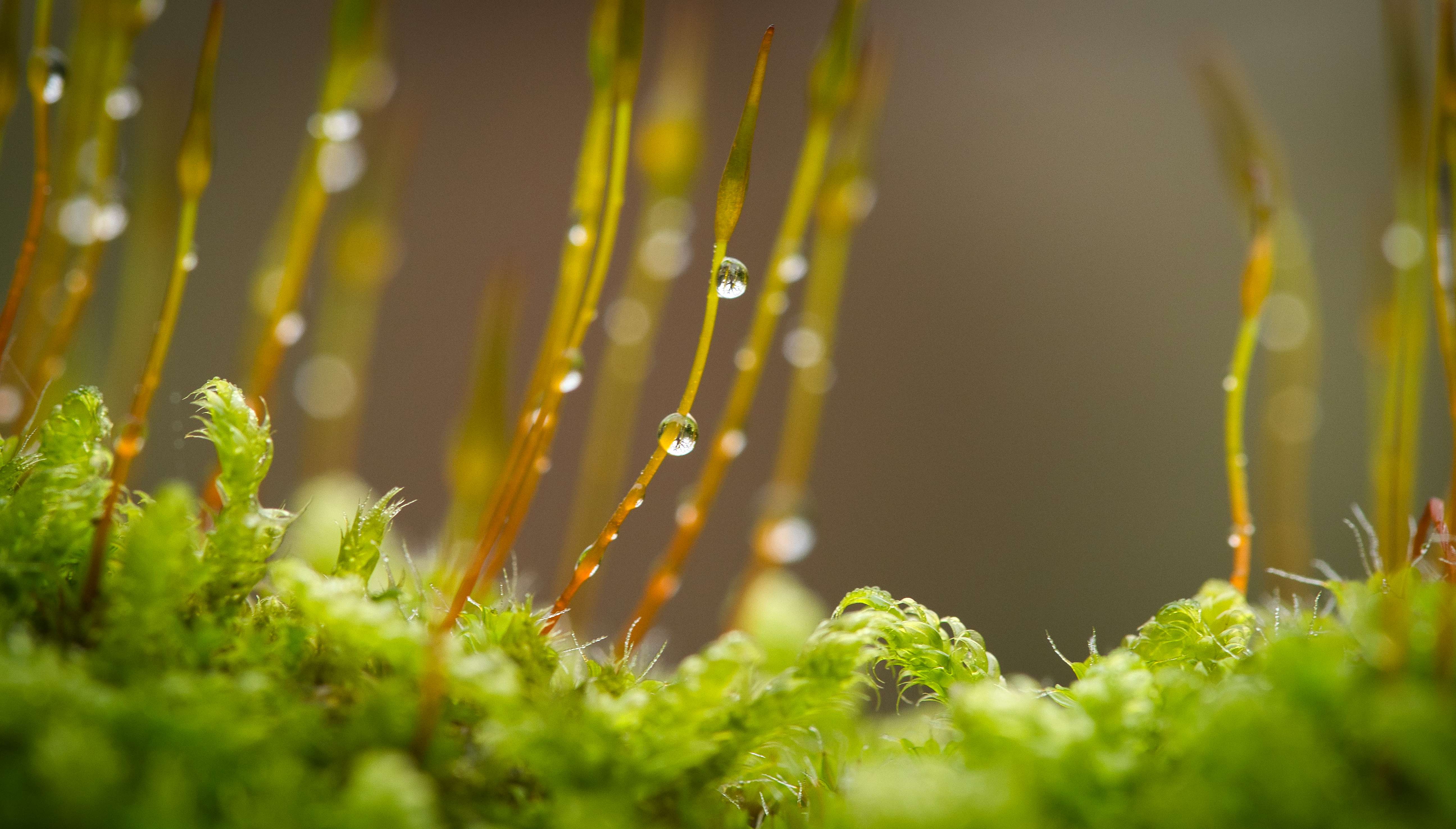
Moss bells are actually parasitic on mosses, though they evidently do not cause it the kind of bother the word ‘parasite’ brings to mind. The submarine telescopes surrounding the shroom here are moss sporophytes, which release the spores to allow the mosses to reproduce elsewhere. Much like mushrooms!
Have a look on moss growing on fallen trees or on the trunks of trees. You might get lucky and find yourself a moss bell.
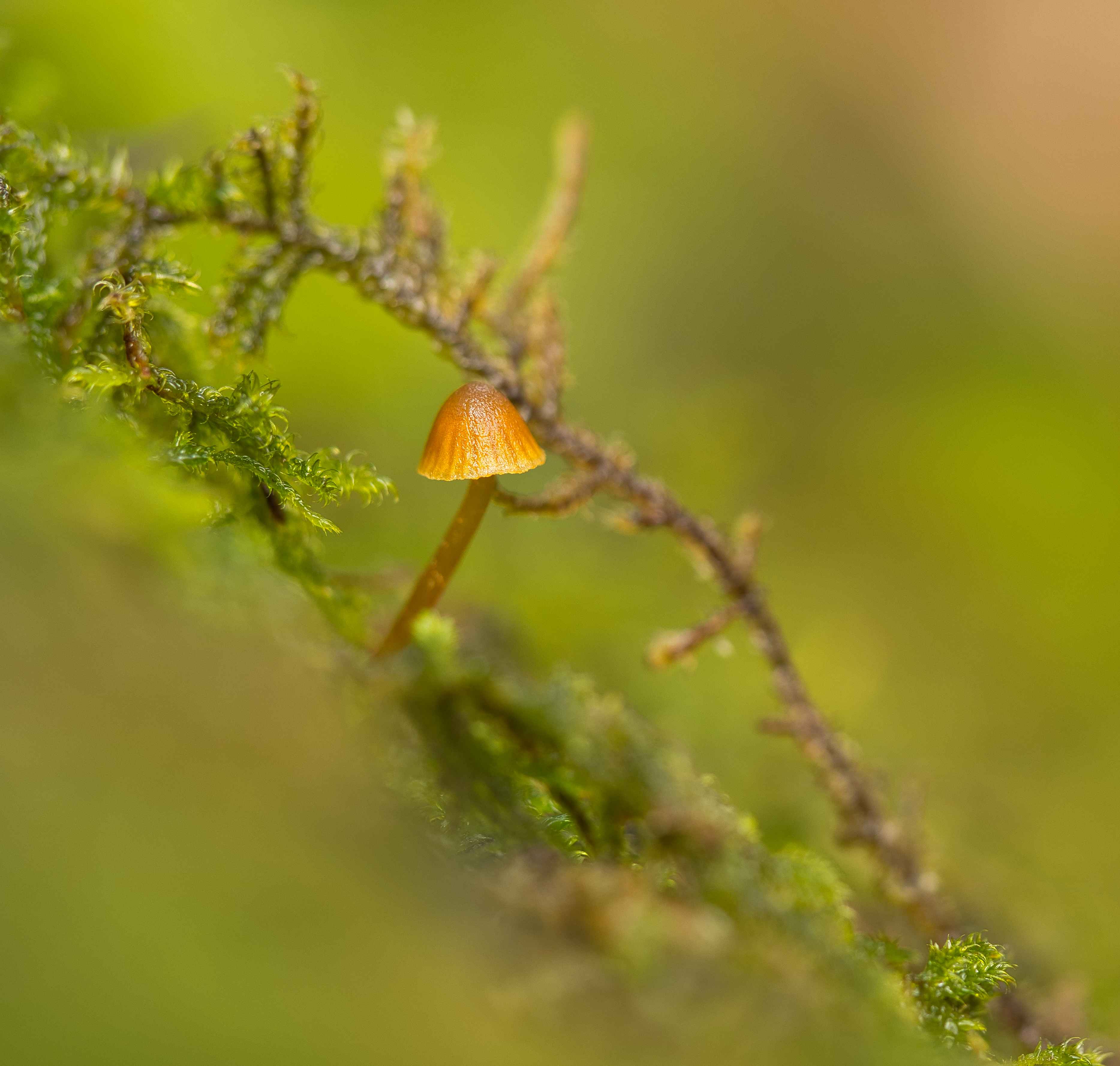
I’m annoyed with myself because I’ve seen this tiny mushroom with its Hellraiser-esque, spiny cap, but I didn’t take the chance to note it and now I’ve forgotten. It was growing in a crevice in a fallen tree. The veins in the decaying oak leaf show just how small it was. That’s the second time it’s made its way onto this blog without a name. Sorry no refunds.
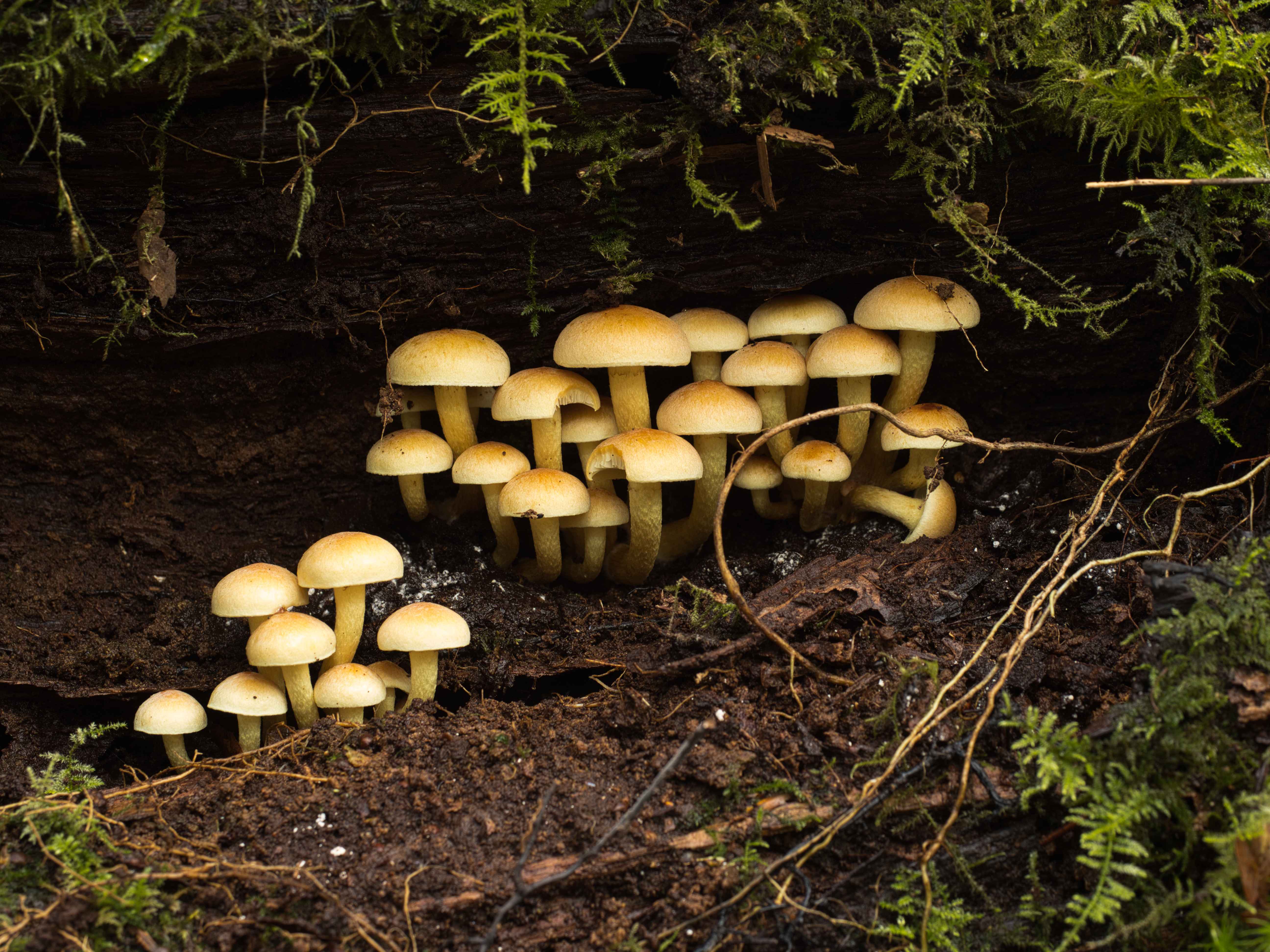
Another fallen tree was covered in mosses, ferns, lichens and, of course, a community of mushrooms. Sulphur tuft is a winter stalwart. So if you’re reading this, sulphur tuft, thank you. There are some other interesting things going on here, with the decaying wood already beginning to turn into something like soil, and the roots of something trailing across and feeding on the substrate. That’s life.
The final species group I found on mossy logs was the bonnets. They also seem able to handle the cold weather in the way that ground-based shrooms can’t.
I always forget that September can be a good month to find fungi, if it’s not too cold. Hopefully this blog, which has now been running for a year, does go to show how many things you can find throughout the year. Autumn is not the only time to find fungi. It’s everywhere, all of the time.
This woodland is quite heavily dominated by holly. For many people in the UK, that’s seen as a bad thing, with the idea that woods should be nothing but light. In the Sussex Weald, holly indicates ancient woodland and holly is a key species. At least one woodland was protected because of its populations of wild holly. I absolutely love it, having worked with it for several years. It coppices very well and the timber is great for small-scale green woodworking like fencing and posts. Of course at Christmas it makes lovely wreaths.
The holly was providing protection for areas of the woodland floor that seemed to be very rich in smaller fungi. This bizarre thing is a yellow club fungus. It was part of a community of many more.
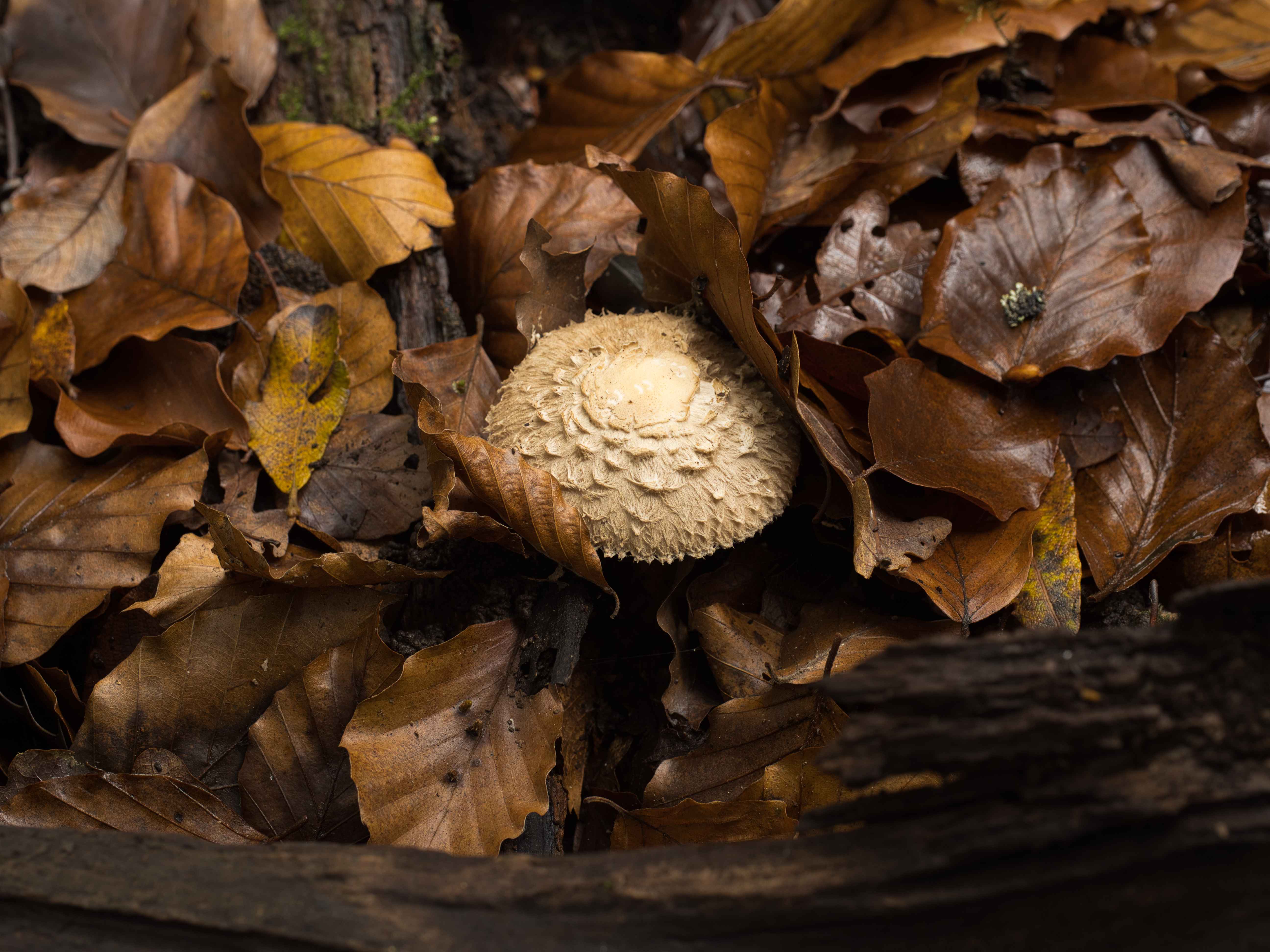
Though I’m not quite sure what this species is, probably a parasol relative of some kind, it was a surprise to see it. I wonder if the newly fallen beech leaves were providing a layer of warmth which protected the fungal mycelia in the soil from frost, allowing them to produce mushroom fruiting bodies?
I’ll end this week’s post with perhaps the most strange thing I found, down in the leaf litter again (but not without moss). Having looked at my massive fungus tome, I think this is a species of clavulina, which is not far away from a coral fungus. These fungi are ectomycohrizzal which means they have a symbiotic relationship with a plant. That means they have been able to agree a trade deal of things that they could not otherwise gain as standalone species. I hope the British and European toadstools in Brussels can take some inspiration. Though the trade between plant and fungus might have taken several million years to agree. Uh oh.
I’m in the process of editing a third booklet of poems. It takes me something like 2-4 years to get one finished because things need to be left to cool and develop, you need time away from it. I have a ghost document of poems that don’t quite fit in.
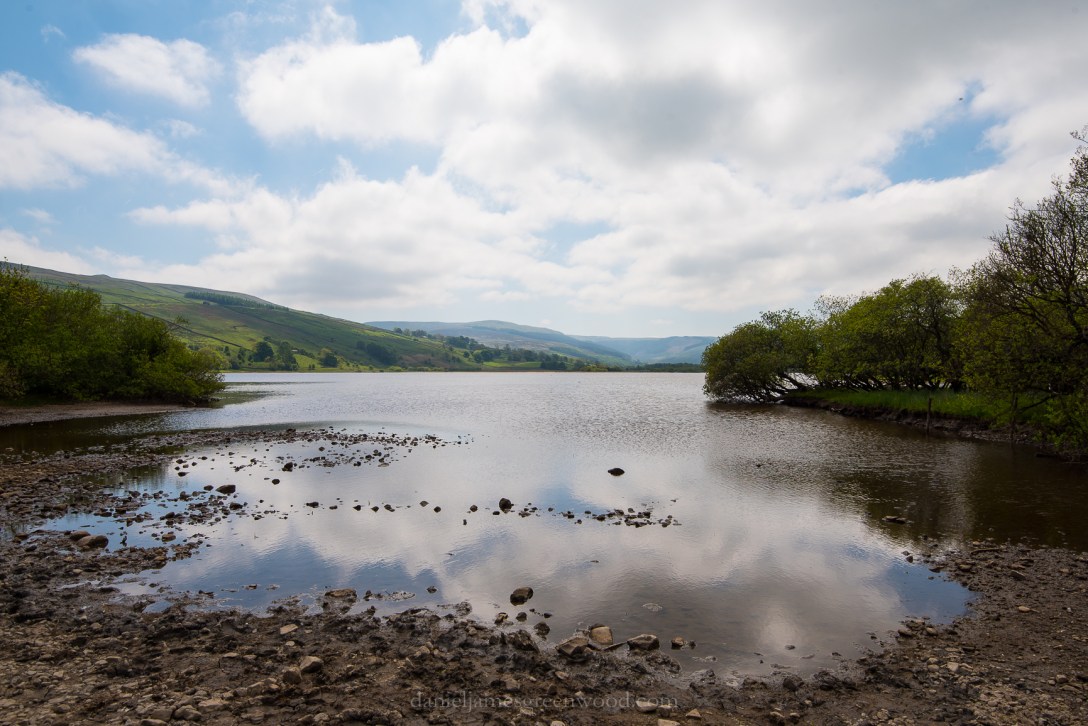
This is one of those poems. It’s about Semerwater, a lake in the Yorkshire Dales in north-east England that I visited in May 2018.
If you want to see more of my poems or buy yourself a booklet please head over here.
Semerwater
ย
She sleeps on the shoreline
ashes pulsing
to life in the hills
for the last time
ย
ruined barns
bake again
in the afternoon sun
ย
flies land
on my thumbs
ย
all by the lake
built by mistake
the dumping of
rocks and silt
ย
by forces without name
ย
forces without a prior reputation
for landscape-scale devastation
ย
a time before
we were there
to croon and
ascribe blame
at the sidelines
ย
or did we
ย
Semerwater
ย
at its edges
a hare
striding see-saw
of a thing.
ยฉ Daniel James Greenwood 2020
ย
As someone who works from home 9-5, I have to break up my days and get exercise through one or two short walks a day in the daylight hours. I often pass through a cemetery on one of those walks. Last week I noticed a double gravestone which was acting as a green wall. It was absolutely dripping in moss. I tweeted about it:
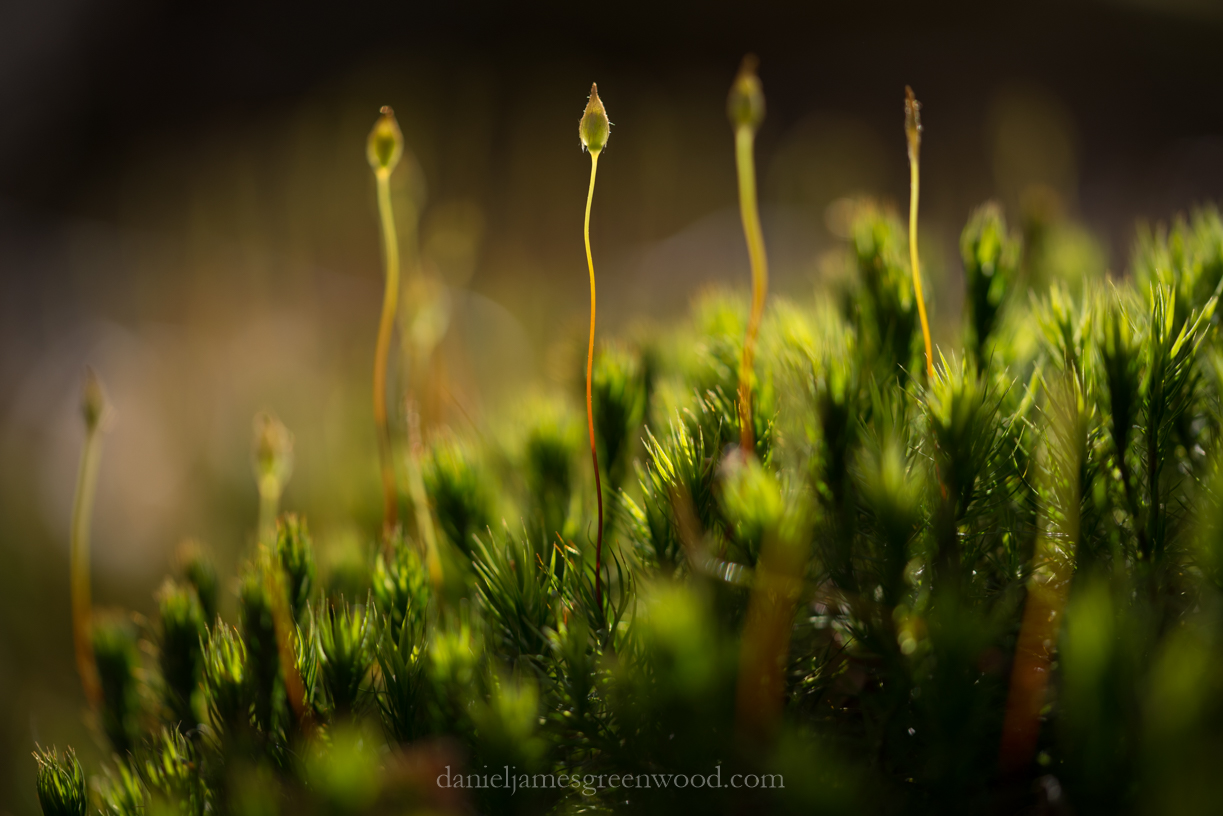
The best moss images I’ve managed to take have been in the New Forest National Park. This is juniper haircap moss, which I caught just as the evening sun was slipping away:
I liked the mossy cemetery scene so much, and even though I stepped in dog poo at the time, the next morning I headed back. This was the photo I had in mind:
I had about fifteen minutes and this was the best I could do at the time. I really need a tripod and more time to get this right. Nevertheless, when I looked closer at the stone itself, I noticed a herd of miniscule invertebrates:
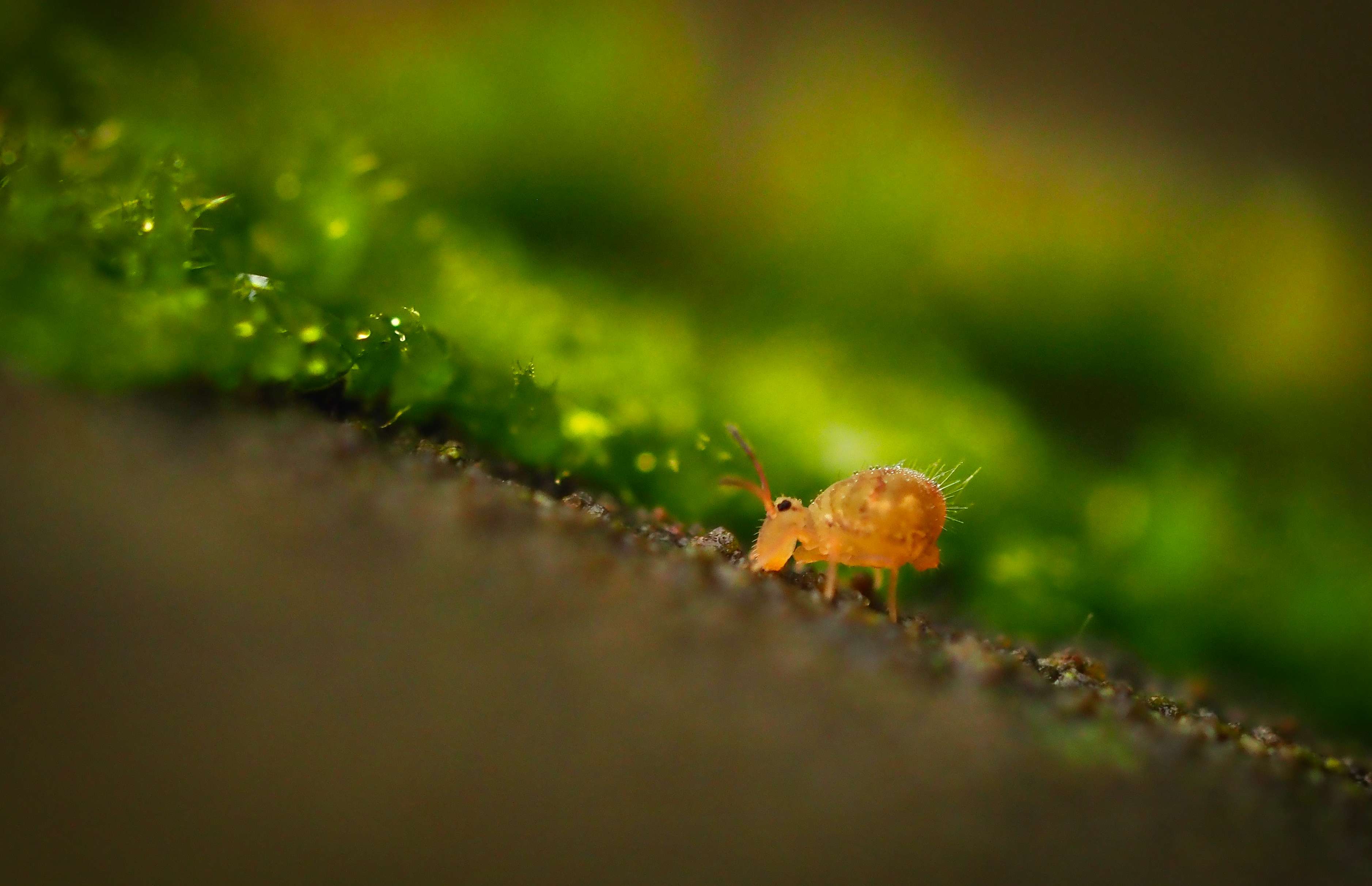
I recognised them as globular springtails. This is possibly my first attempt so hopefully I can get a clearer image in future. There’s a helpful guide to them here. Springtails are found in huge numbers in soils and are a key part of soil biodiversity. Apparently they also enjoy graveyards.
I think what the springtails are particularly interested in here are lichens. Thankfully, I am also interested in lichens and we’re about to move into that season. I was so enamoured with the springtails that I went back at lunchtime. It appeared then that the springies were actually grazing the lichens.
This is not over. (Technically for this week it is, but you know what I mean). Hopefully more springtails next week.
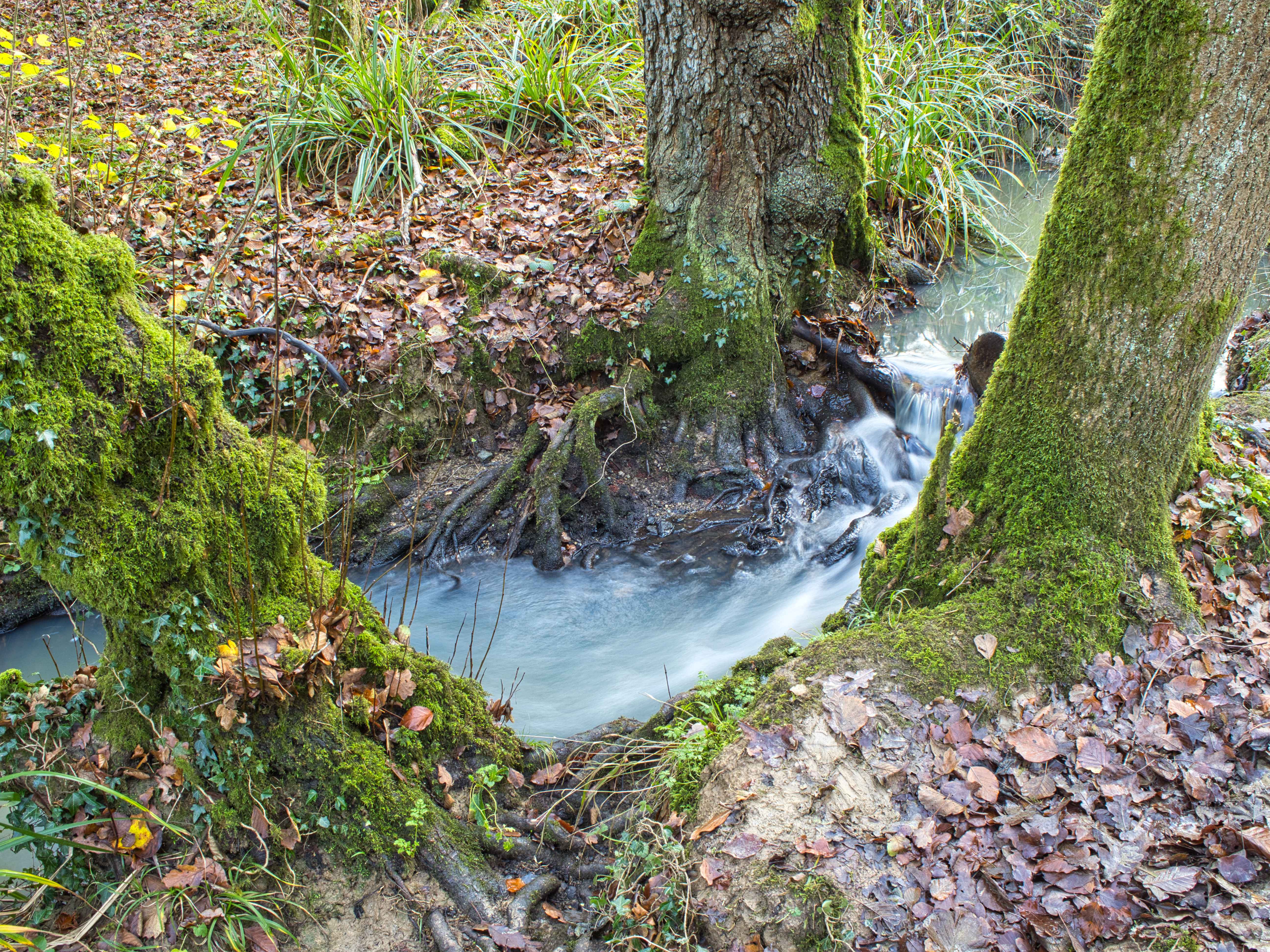
There is something special about woodlands in December. For wildlife, they can be a forbidding and barren place, which is why so many birds now move to warmer urban areas for food and shelter at this time of year. I’ve spent a good amount of time in woodland recently and the amount of fungi was a pleasant surprise. The gills in the Sussex Weald (a local name for a stream, plural) were gushing after lots of rain. They kept good company on their edges – mushrooms.
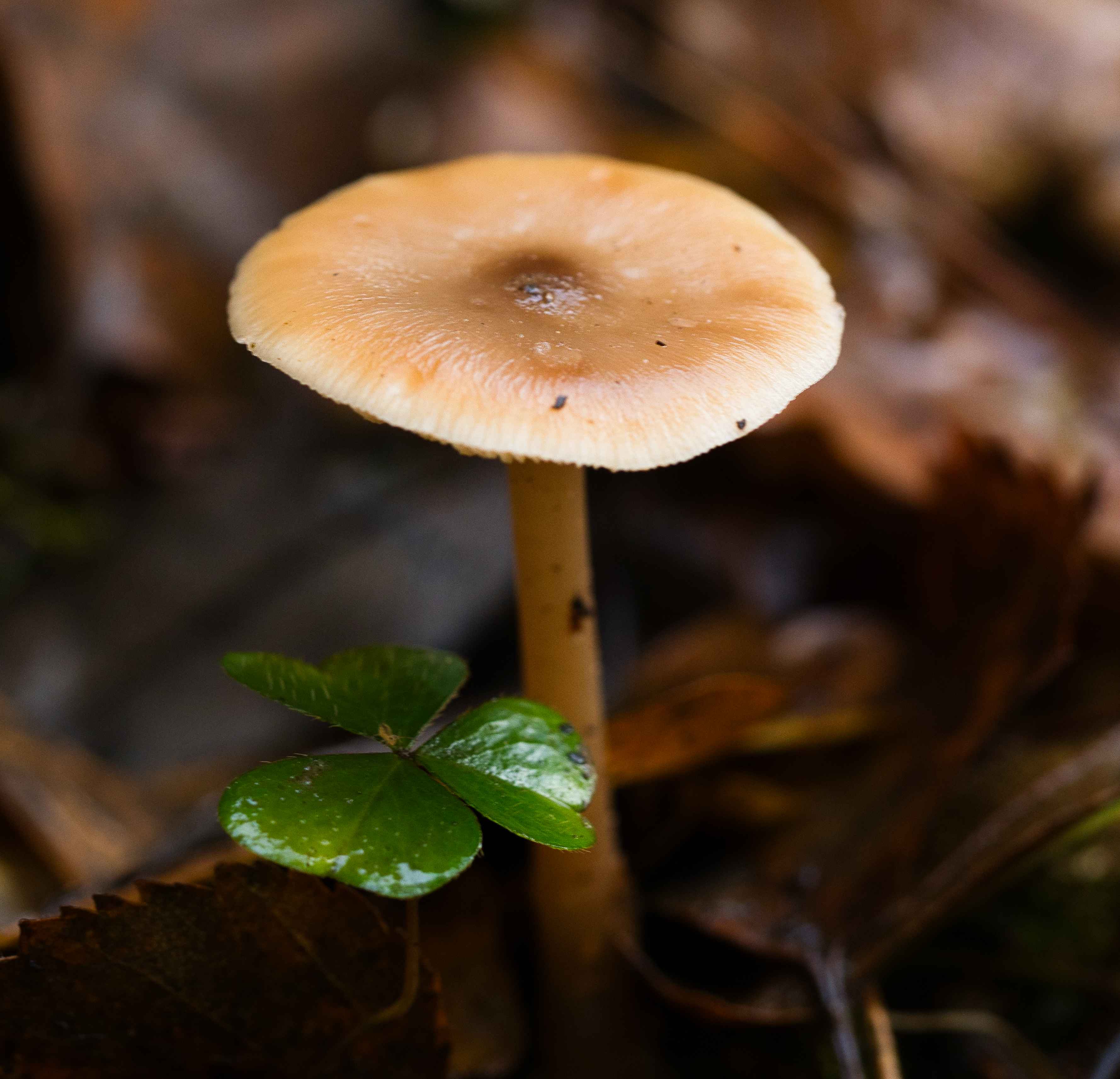
I spent a couple of hours following the edge of a network of Wealden gills. I found a number of smaller mushrooms along the edges of the gushing gills, like this very dapper looking mushroom with a wood sorrel bowtie. You may also notice a tiny springtail on the plant! The word gill is also used in Scotland and northern England, where it’s often spelled ‘ghyll’.
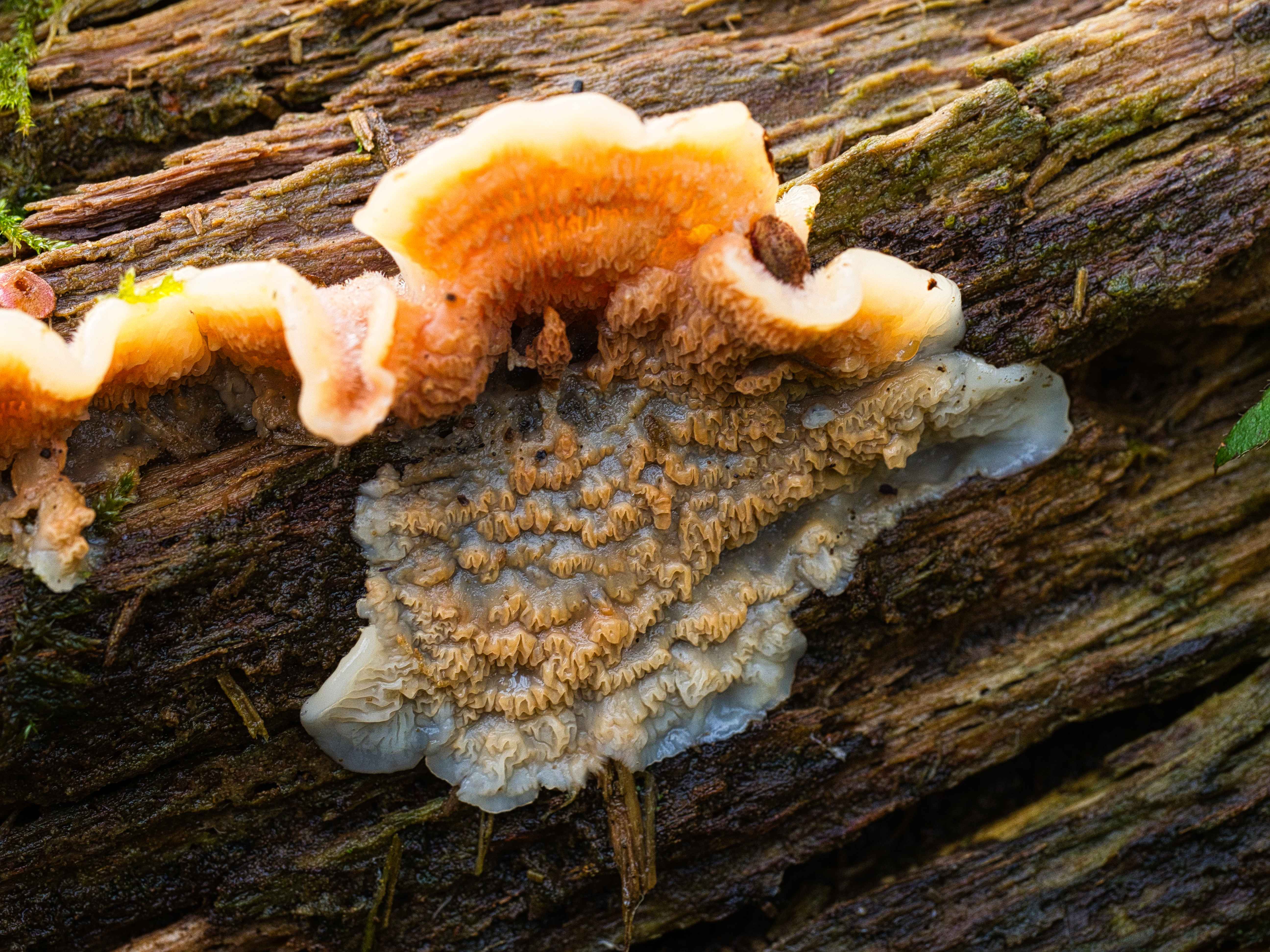
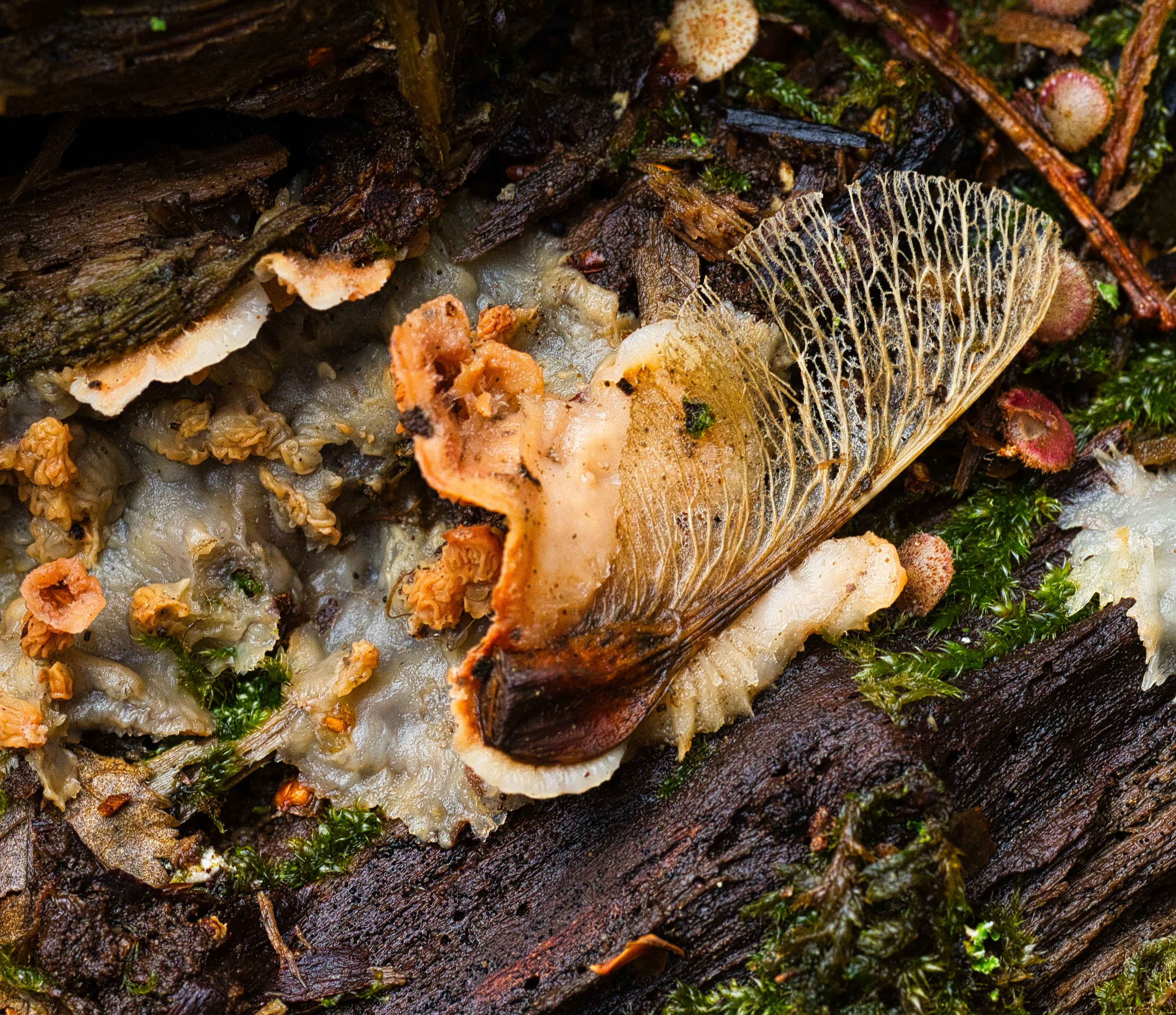
Something that really caught my eye was the work of this wrinkled crust fungus, which is its actual name.
Fungi’s main function (fungtion?) in a woodland is to break down organic matter into soil and other minerals and nutrients which can support other species. It was fascinating to see this fungus ingesting (perhaps) organic waste material in its path. In this case it was consuming a sycamore seed.
Nearby, another specimen of the fungus was getting to work on a sycamore leaf.
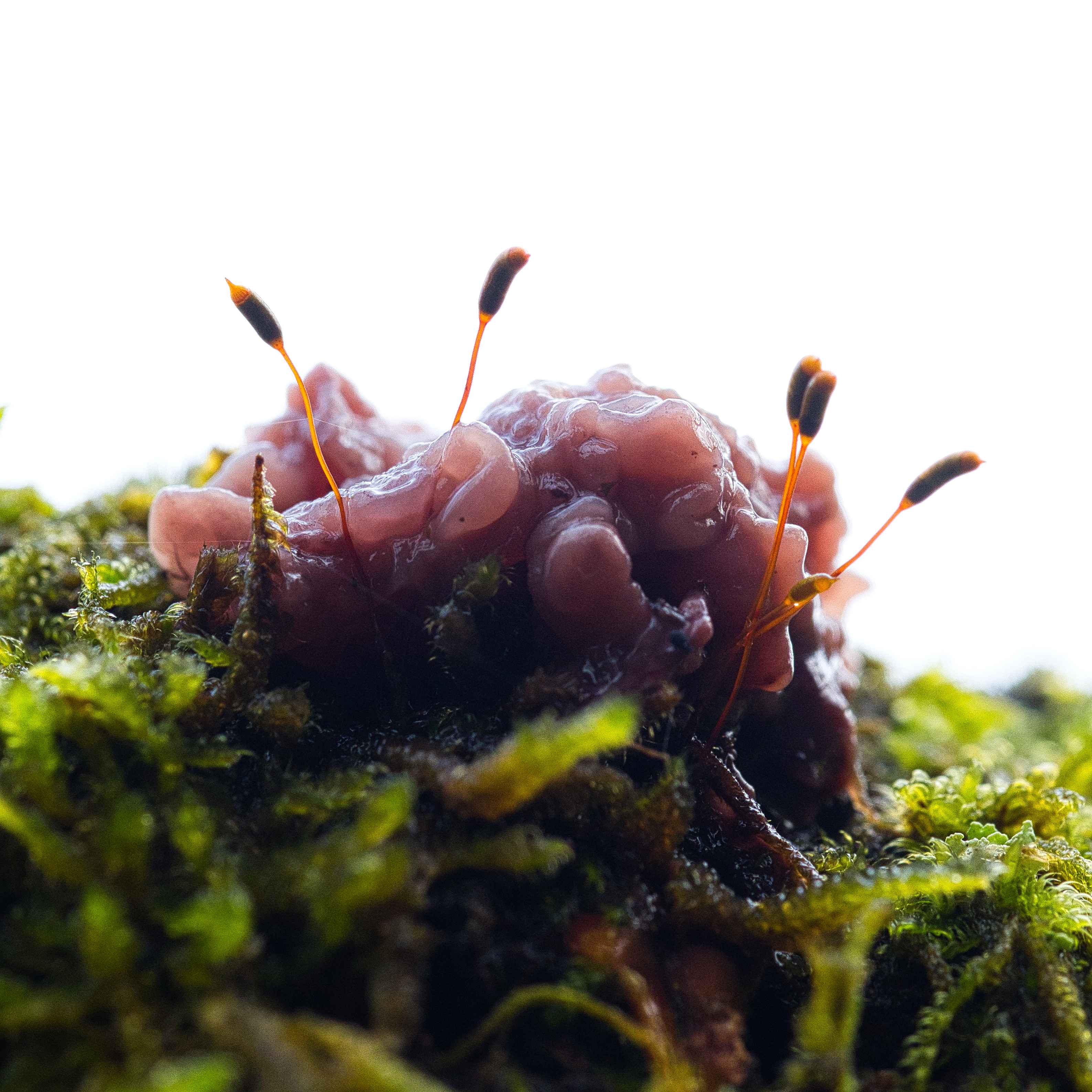
On a tree growing over the gill, this purply jellydisc looked like something out of a 1950s b-movie horror film. I think it’s the moss’s sporophytes that make it look so low-budget sci-fi.
I think you probably get what I mean.
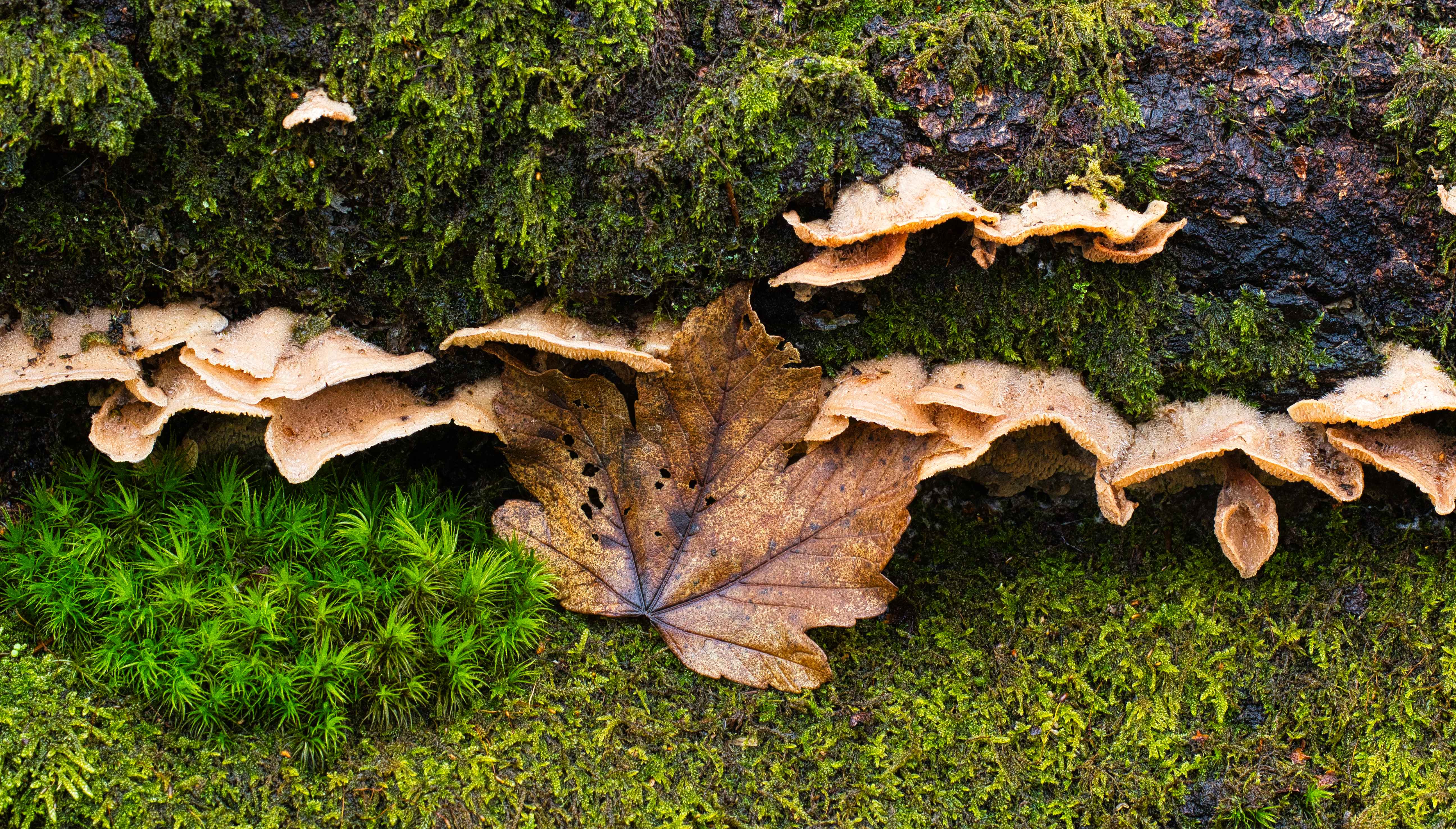
I had my binoculars with me for this walk and they were very useful in, unsurprisingly, spotting things from a distance. Without them I would have missed a fallen birch tree that was covered in many species of fungi, as well as slime moulds and mosses. Above is a species of either trametes or stereum, two kinds of smaller polypore.
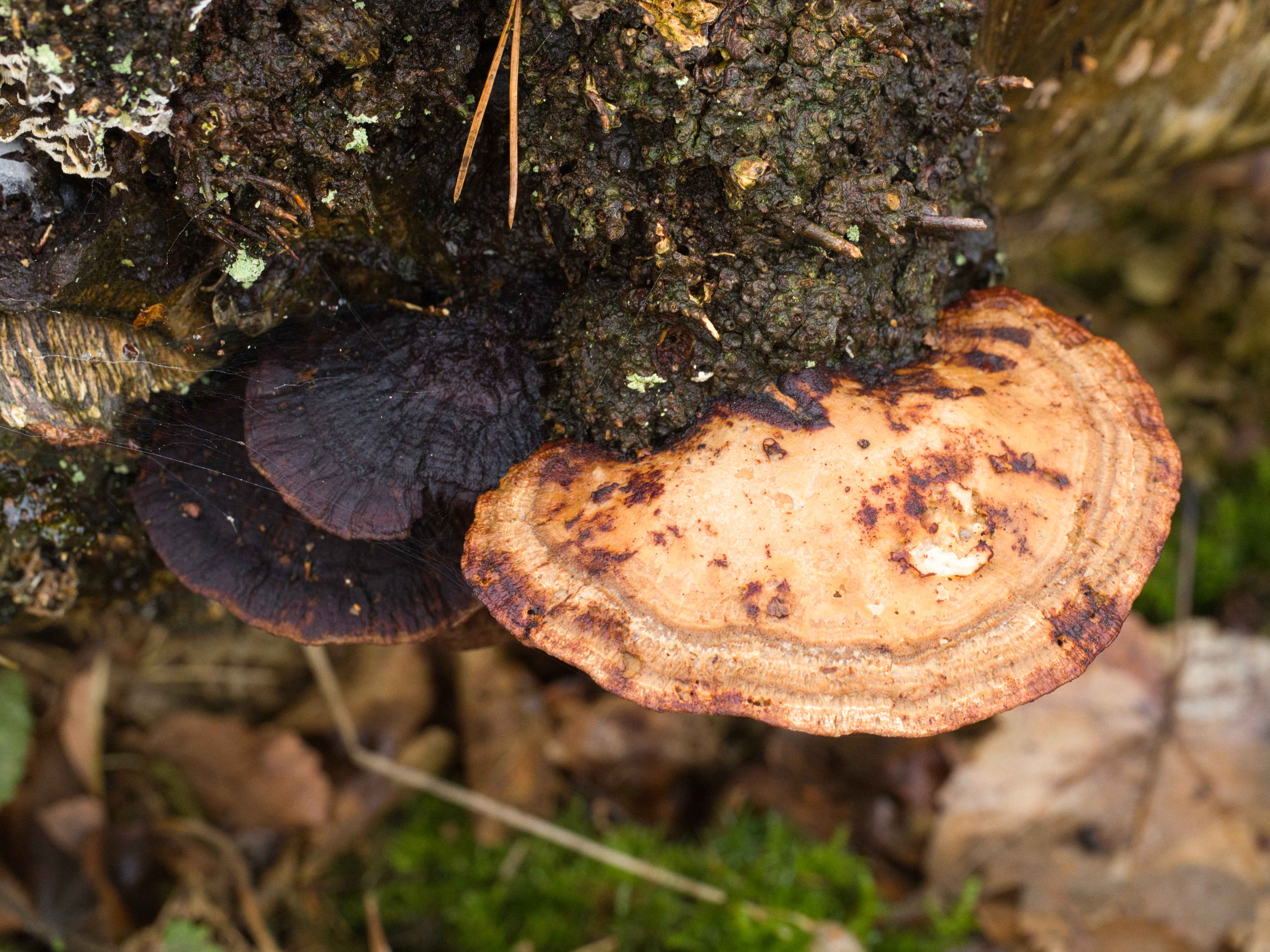
There was a helpful illustration of blushing bracket’s lifecycle, moving from a pale coloured fruiting body, to red and then something much darker. That’s a long blush.
Sulphur tuft is a very common species which seems able to tough it out through the colder months. I have seen so much of it recently.
Though it may look nice, it’s a toxic fungus, so don’t get any ideas.
Take nothing but photographs, in this instance. Give nothing but likes and nice comments.
I’m in the process of editing a third booklet of poems. It takes me something like 2-4 years to get one finished because things need to be left to cool and develop, you need time away from it. I have a ghost document of poems that don’t quite fit in. This is one about a walk on the South Downs between Firle and Itford in June 2019.
I really thought this one would work with the collection, but something changed and it’s going free.
As I progress towards finishing the third booklet, I’ll post some more of those which won’t be in it. Definitely interested in your views on them.
If you want to see more of my poems or buy yourself a booklet please head over here.
Heavy metal orchids
Barren Downs
broken by sea
tropical blue
and the sinking hint
of chalk reef
ย
Newhaven onion dome
and brown lagoon
toy town train services
honking on approach
up here you all look like
ants who have
gained human traits
ย
a thirst for farming
more than aphids
ย
up here skylarks translating
the silence of masts
stood in muted alarm
heavy metal orchids
so rare theyโre padlocked
in barbed wire cages
ย
at Lewes the ramparts
of Mount Caburn
like a bowl cut
but you promised
the reality was far
more blood-soaked
ย
Ouse water a
concrete slow worm
with seaweed on the side
and rusting iron cranks
crawling with a sea
of red spider-mites
ย
hare barely
breaking barley
her winging blues
and tortoiseshells
ย
the wooden bridge
where the crow
begs a toll like a child
ยฉ Daniel James Greenwood 2020
I did say this blog would make the odd appearance, outside of insect season. Here we go again! I’ve spent some decent stints in the woods recently. It always surprises me how much there is to see at a very small scale in woodlands at this time of year. That’s even before the frost, snow or ice has come into play. In southern England it looks like snow could be coming.
I was looking for fungi on both occasions but with less of a sense of expectation. It’s a better way to be, you’re more relaxed and open to finding new things. Though most plants have shed their leaves by December, there are many which are evergreen. Some plants look especially nice when there has been a bit of rain, with honeysuckle being one of them. This is a time of year when YouTube photographers will be posting videos about droplets.
Honeysuckle is a plant renowned for its scent, which is beautiful. I have fond memories of walking home from the train station at night in south London with the whiff of honeysuckle flowers coming from a local nature reserve. The leaves are tough, what you might expect from an evergreen plant. The cells are not allowing much movement of water molecules, or even gases, which means the water droplets sit on top. I may be wrong about that.
Oak leaves are not evergreen, but they are very tough. A fallen oak leaf is a great platform to find water droplets.
I think quite a lot about how weird some of the things I photograph are. I wouldn’t change that. Most of the well known photographers have massive tripods and are looking for the perfect light in some amazing landscape. Generally I am down in the leaf litter looking for the smaller things. It’s an incredible place to be.
You do find some very unusual things. I spotted this moth, species unknown to me, which had been predated perhaps, or had succumbed to the cold. It looked just like a leaf with an water droplet resting in its underwing. Leaf litter is such an important part of woodland, with the soil being the most important part of all. It’s where much of the magic happens. A UN report has warned about the need to protect soils without delay.
Soils are formed in woodland by decaying organic matter which is recycled by fungi, bacteria and invertebrates. Inside a fallen tree I found these slime moulds, another recycler and consumer of organic matter. I think these are a species of Trichia.
In Sussex we have now inched out of a national ‘lockdown’ and into more localised restrictions on hugs, walks and purchases. Not that fungi (if it could) cares a jot about any of these psychological blockades. They have enough on their hyphae feeding the world’s woods, trees and forests. I will admit that after seeing the mushrooms fading away into a typical ‘mush’ in my local woods (not actually mine) I had sweated on this post. Again, not literally. Temperatures are loitering around the five degrees Celsius mark (I learned this week that Celsius was an actual person) which means frost and therefore frozen fungi. Fungi are 90% water which means they can only really produce fruiting bodies above ground – it can be quite toasty in the soil, where they can remain active socialising with tree roots – when it’s warmer than this.
One thing I have noticed is that fungi are lingering longer in grasslands. Last week I saw inkcaps in golfing greens. Recently I passed a local cemetery and spotted some white mushrooms in the grasslands. On closer inspection I could see these were a white species of waxcap. Waxcaps are rare mushrooms which are largely dependent on ancient grasslands or those which are stable, i.e. not regularly ploughed up or disturbed. Among the white mushrooms I saw some stonking red ones – which iNaturalist helped me to ID as scarlet waxcap. I am put off identifying this family of shrooms because it is not always straightforward, a bit like webcaps, of which there are thousands of species, even in the nature-depleted UK.
These are gorgeous mushrooms. Cemeteries are a great place to find these fungi because the grasslands are sometimes as old as 300 years or more, do not suffer from the use of chemicals, and the lack of footfall out of respect, means the grasslands are soft and accommodating to species trying to move through them. There are lots of projects to monitor grasslands for waxcaps, such as this project from Plantlife and the very interesting charity Caring for God’s Acre.
My best find was this keeled-over meadow waxcap, fanning its gills like some feral peacock. It may have been the frost that has caused it to pose like an ancient tree, but it will probably help with the spread of its spores.
As you can see, waxcaps are incredibly beautiful fungi. If you see any on your travels please do submit species records to Plantlife or your local Wildlife Trust. You can also take a photo and submit it to iNaturalist or iRecord depending on your preference. Better still, inform the people who own the land – ‘do you know you have rare wildlife living on your land?’ – and ask them to take this into consideration when managing it.
Here’s a wider view where you can see just how big the meadow waxcap is! Those surrounding trees will not be great for the waxcaps due to shading, so for their benefit tree planting should be avoided and cutting of the grasslands is a priority.
It wasn’t just waxcaps though, I found something more suitably Gothic growing alongside a grave.
This is a species in a group known as the goblets! What a great name. I need to get myself a goblet.